NEW YORK (TIP): US pharmaceutical giant Pfizer said Wednesday it was abandoning plans for a $160 billion merger with Allergan, citing new US rules cracking down on tie ups aimed at saving on taxes.
The deal with the Irish-based firm would have created the world’s largest pharmaceutical company.
Pfizer said in a statement the two companies “terminated by mutual agreement” plans to merge.
“Pfizer approached this transaction from a position of strength and viewed the potential combination as an accelerator of existing strategies,” said company chairman and CEO Ian Read.
Pfizer also agreed to pay Allergan $150 million to reimburse its expenses linked to the planned merger.
The decision to call off the merger came after the US Treasury Department announced new rules to discourage mergers between US and foreign businesses designed to sharply lower the US company’s tax bill.
The New York-based pharmaceutical giant said it remains on track to report its 2016 first quarter earnings on May 3.
For all of 2015, Pfizer reported earnings of $7.7 billion, down 15.2 percent from 2014. Revenues dipped 1.5 percent to $48.9 billion.
Allergan CEO Brent Saunders said in a separate statement that while he is “disappointed” that the merger will not proceed, his company is nevertheless “poised to deliver strong, sustainable growth built on a set of powerful attributes.
NEW DELHI (TIP): Prime Minister Narendra Modi launched the Stand up India scheme to enable Scheduled Castes, Scheduled Tribes and women entrepreneurs to access loans, setting a target of creating 2.5 lakh such entrepreneurs across the country.
Under the scheme 1.25 lakh bank branches will provide loans up to Rs 1 crore. Each branch will be required to provide two such loans ranging from Rs 10 lakh to Rs 1 crore without collateral for setting up a new enterprise.
The PM said it is not possible for the government to provide jobs to everyone. The scheme will convert “job-seekers into job creators,” he said. “This scheme is going to transform the lives of people from dalit and tribal communities,” Modi said. Stand up India, he said, aims to empower every Indian and enable them to stand on their own feet. The scheme was announced by Modi in his Independence Day address last year.
At a function in Noida in Uttar Pradesh that also marked the birth anniversary of dalit leader and former Deputy Prime Minister Babu Jagjivan Ram, the PM also flagged off 5,100 e-rickshaws. Without naming anyone, Modi said that while poor people are generous and honest some rich borrowers look for ways to flee after taking loans.
“This nation has seen the generosity of poor. Rich borrowers look for ways to run away after borrowing money from banks,” he said.
Modi said that Prime Minister’s Jan Dhan Yojana encouraged people to open zero-balance account but they depositedRs 35,000 crore.
“Look at their honesty, their self-respect. They opted to put money into their accounts…Rs 50, 100, 200. The deposits exceeded Rs 35,000 crore. This is the generosity of our poor people,” Modi said. Finance Minister Arun Jaitley said his ministry, which is usually associated with big business houses, in the last two years has tried to work for the betterment of the poor people. He recalled various schemes of the government like Jan Dhan Yojana, insurance and pension and MUDRA Yojana to promote financial inclusion with the view to empower the poor.
Under the Stand up India scheme people from Scheduled Castes and Scheduled Tribes, and women entrepreneurs, will get support such as pre-loan training, facilitating loan, factoring and marketing. There will be a Rs 10,000 crore refinance window through Small Industries Development Bank of India (SIDBI) and the National Credit Guarantee Trustee Company Ltd (NCGTC) will create a corpus of Rs 5,000 crore.
SIDBI will engage with the Dalit Indian Chamber of Commerce and Industry and various other institutions to take the scheme forward. The offices of SIDBI and National Bank for Agriculture and Rural Development will be designated ‘Stand Up Connect Centres’.
Unbelievable. An astonishing end to a remarkable match. A thoroughly entertaining, enthralling competition was given a fitting finale with a display of stupendous strokes from West Indies’ Carlos Brathwaite.
All great tournaments should end with a fireworks display. Brathwaite’s final-over flourish provided the pyrotechnics — without the need for a closing ceremony.
With 19 required from the game’s last over, young Carlos rattled off the necessary runs in four clean, successive strikes that took the West Indies to the title.
Given the match situation, I doubt any of us has ever seen anything quite like it before.
The closest I can recall is the incredible assault of India’s Kapil Dev in the Lord’s Test vs England in 1990.
Faced with a deficit of twenty-four to avoid the follow-on, and with his side nine down –and only the feeble support of Narendra Hirwani at the non-striker’s end — Kapil targeted off-spinner Eddie Hemmings.
Back down the pitch he calmly prodded Hemmings’s first two deliveries of the over. Mere sighters. He was lining him up. Then bang: Six! Six!! Six!!! Six!!!! The last four balls of the over he drove high and mighty back over the bowler’s head into the ‘under-construction’ new Compton and Edrich stands at the nursery end. The crisis was averted; and Hirwani was lbw the very next ball.
“Only Kapil Dev could do that! Only Kapil Dev!!” exclaimed Sunil Gavaskar, commentating for BBC television. He was right of course — then. In Sunday’s breathtaking World T20 final a young Barbadian emulated him — arguably, at an even most testing moment.
Crisis? What crisis? West Indies cricket, we are told, is in turmoil. It is in the mire. Yet, how many international teams wish right now that they had Windies’ problems — and West Indies’ trophies?
Their recent Under-19 World Cup victory in Bangladesh was totally unexpected. Their women XI’s superb chase-down of Australia’s challenging total in Sunday’s earlier World T20 Women’s event was a huge upset. And their amazing victory later that night over England in the men’s version was a stupendous hat-trick.
Contract wrangles and disputes have spilled over into the public arena, severely disrupting tours and inconveniencing fellow cricket countries. Internal squabbles over the structure of the West Indies Cricket Board have gone so far as to involve the Prime Ministers of the Caribbean nations. Damning reports have emerged — the most recent calling for the immediate dissolution of the WICB.
Having now won the last three ICC World trophies across a variety of ages, sexes and formats, is that evidence of the absolute decline of Caribbean cricket still sound? If failure was proof positive of the WICB’s incompetence, then surely these triumphs are indicative of its effectiveness?
Some critics of the West Indies, will, sadly, not rejoice in this win because the West Indies Cricket Board will be understandably triumphalist. That is a shame. Politics, and confrontation between the opposing factions, ought to be put to one side. Tonight,tomorrow night — and for a few more evenings yet —calypso parties in the region should abound, wallowing in the win, soaking up the golden rays of glory.
Picture the scenes, if you will, unfolding in Bridgetown, Kingston, Port-of-Spain, Georgetown — indeed, throughout the whole Caribbean Islands. Imagine the dancing in the streets; hear the beat of the drums; sway with the reggae vibe; feel the rhythm of the celebration; taste the manna of victory; inhale the sweet smell of success.
That sensation can’t be taken away from them. They’ve earned it: the players, the supporters, the people. They can’t be denied. And they have every right to their revelry.
On the pages of Firstpost yesterday I said there was a good chance that a Bajan might be the match winner. It turned out that way. I also previously said that this was no ‘one-man team’. That was proved repeatedly. I also reported how several shrewd judges in the Caribbean seriously doubted whether Marlon Samuels still had it in him. How wrong we were.
The Man-of-the-Match did it again. In the World T20 final of 2012 he rescued his side from a dreadful start against Sri Lanka, posting 78 to take West Indies to a total of 137- 6 that proved to be enough. Back then, he added 59 for the third wicket with Dwayne Bravo in a sensible, measured, re-building operation. Four years on, it was these two again that did the spade work, digging the West Indies out of a hole of their own making— and keeping them in the game.
Samuels is an enigma. He distanced himself from his team-mates when he publicly declared he’d opposed the side’s ‘withdrawal of labour’ on the 2014 ODI tour of India. He was a reluctant, disengaged presence in their lacklustre late-2015 Test tour of Australia. And his form in general for the last 18 months has been woeful.
In this final, he brought out an array of dazzling shots, singlehandedly keeping West Indies alive, giving them a chance. He unfurled a series of thunderous straight-drives for four or six; he stepped-to-leg and made sufficient room to cut crucial boundaries; and he even managed to dip into the arcane: playing a late-adjusted ‘dog shot’ to force Liam Plunkett to the square-leg boundary — whipping the ball between his legs to find the fence. Nicholas Felix, a regular purveyor of this stroke (and its illustrator in his 1840’s batting manual), would have purred with delight.
Bravo, by contrast, did not have his best day. His bowling was below his usual high standards, and he was more expensive than his colleagues would expect. Likewise, Sulieman Benn. He’d bowled excellently throughout the tournament, but this was an off-day for him. So costly was his left-arm spin than captain Darren Sammy had to call upon himself to make up his quota: that over cost 14 runs. West Indies won the tournament, but I will always maintain that WI were a bowler short. Pragmatic supporters will say: ‘who cares?’
Elsewhere, Badree was superb; and Brathwaite and Andre Russell, the weak links in the attack, did sterling work, returning excellent figures. Batting wise, Gayle failed again; as did Johnson Charles, Lendl Simmons, Russell and Sammy. Collectively, those five batsmen made eight runs between them. Gayle’s figures for the tournament make for odd reading: 100 not out, did not bat, 4, 5, 4. Perhaps, even more curiously, the two semi-final match-winners, Simmons and England’s Jason Roy both scored 0 and faced three balls between them.
But this was the most unpredictable of finals; and the most fabulous of finishes.
Navaratri (“nava” + “ratri”) literally means “nine nights.” This ritual is observed twice a year, in spring and in autumn. “Vasanta Navaratri” or Spring Navaratri is nine days of fast and worship that Hindus undertake during spring every year. Swami Sivananda retells the legend behind this 9-day springtime ritual during which the devout Hindu seeks the blessings of the Mother Goddess.
“The Divine Mother or Devi is worshipped during the Vasanta Navaratri.
This occurs during the spring. She is worshipped by Her own command. You will find this in the following episode in the Devi Bhagavata.
The Origin of Vasanta Navaratri
In days long gone by, King Dhruvasindu was killed by a lion when he went out hunting. Preparations were made to crown the prince Sudarsana.
But, King Yudhajit of Ujjain, the father of Queen Lilavati, and King Virasena of Kalinga, the father of Queen Manorama, were each desirous of securing the Kosala throne for their respective grandsons. They fought with each other. King Virasena was killed in the battle. Manorama fled to the forest with Prince Sudarsana and a eunuch. They took refuge in the hermitage of Rishi Bharadwaja.
The victor, King Yudhajit, thereupon crowned his grandson, Satrujit, at Ayodhya, the capital of Kosala. He then went out in search of Manorama and her son. The Rishi said that he would not give up those who had sought protection under him. Yudhajit became furious. He wanted to attack the Rishi. But, his minister told him about the truth of the Rishi’s statement.
Yudhajit returned to his capital
Fortune smiled on Prince Sudarsana. A hermit’s son came one day and called the eunuch by his Sanskrit name Kleeba. The prince caught the first syllable Kli and began to pronounce it as Kleem. This syllable happened to be a powerful, sacred Mantra. It is the Bija Akshara (root syllable) of the Divine Mother.
The Prince obtained peace of mind and the Grace of the Divine Mother by the repeated utterance of this syllable. Devi appeared to him, blessed him and granted him divine weapons and an inexhaustible quiver.
The emissaries of the king of Benares or Varanasi passed through the Ashram of the Rishi and, when they saw the noble prince Sudarsana, they recommended him to Princess Sashikala, the daughter of the king of Benares.
The ceremony at which the princess was to choose her spouse was arranged. Sashikala at once chose Sudarsana. They were duly wedded. King Yudhajit, who had been present at the function, began to fight with the king of Benares. Devi helped Sudarsana and his father-in-law. Yudhajit mocked Her, upon which Devi promptly reduced Yudhajit and his army to ashes.
Thus Sudarsana, with his wife and his father-in-law, praised Devi. She was highly pleased and ordered them to perform Her worship with havan and other means during the Vasanta Navaratri. Then She disappeared.
Prince Sudarsana and Sashikala returned to the Ashram of Rishi Bharadwaja. The great Rishi blessed them and crowned Sudarsana as the king of Kosala. Sudarsana and Sashikala and the king of Benares implicitly carried out the commands of the Divine Mother and performed worship in a splendid manner during the Vasanta Navaratri.
Sudarsana’s descendants, namely, Sri Rama and Lakshmana, also performed worship of Devi during the Vasanta Navaratri and were blessed with Her assistance in the recovery of Sita.
Why Celebrate Vasanta Navaratri?
It is the duty of the devout Hindus to worship the Devi (Mother Goddess) for both material and spiritual welfare during the Vasanta Navaratri and follow the noble example set by Sudarsana and Sri Rama. He cannot achieve anything without the Divine Mother’s blessings. So, sing Her praise and repeat Her Mantra and Name. Meditate on Her form. Pray and obtain Her eternal Grace and blessings. May the Divine Mother bless you with all divine wealth!”
What’s the Significance of Navratri?
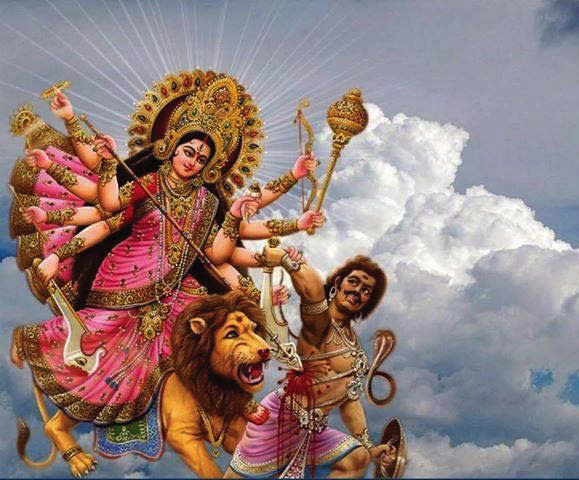
During Navaratri, we invoke the energy aspect of God in the form of the universal mother, commonly referred to as “Durga,” which literally means the remover of miseries of life. She is also referred to as “Devi” (goddess) or “Shakti” (energy or power).
It is this energy, which helps God to proceed with the work of creation, preservation and destruction. In other words, you can say that God is motionless, absolutely changeless, and the Divine Mother Durga, does everything. Truly speaking, our worship of Shakti re-confirms the scientific theory that energy is imperishable.
It cannot be created or destroyed. It is always there.
Why Worship the Mother Goddess?
We think this energy is only a form of the Divine Mother, who is the mother of all, and all of us are her children. “Why mother; why not father?”, you may ask. Let me just say that we believe that God’s glory, his cosmic energy, his greatness and supremacy can best be depicted as the motherhood aspect of God. Just as a child finds all these qualities in his or her mother, similarly, all of us look upon God as mother. In fact, Hinduism is the only religion in the world, which gives so much importance to the mother aspect of God because we believe that mother is the creative aspect of the absolute.
Why Twice a Year?
Every year the beginning of summer and the beginning of winter are two very important junctures of climatic change and solar influence These two junctions have been chosen as the sacred opportunities for the worship of the divine power because:
(1) We believe that it is the divine power that provides energy for the earth to move around the sun, causing the changes in the outer nature and that this divine power must be thanked for maintaining the correct balance of the universe.
(2) Due to the changes in the nature, the bodies and minds of people undergo a considerable change, and hence, we worship the divine power to bestow upon all of us enough potent powers to maintain our physical and mental balance.
Why Nine Nights & Days?
Navaratri is divided into sets of three days to adore different aspects of the supreme goddess. On the first three days, the Mother is invoked as powerful force called Durga in order to destroy all our impurities, vices and defects. The next three days, the Mother is adored as a giver of spiritual wealth, Lakshmi, who is considered to have the power of bestowing on her devotees the inexhaustible wealth. The final set of three days is spent in worshipping the mother as the goddess of wisdom, Saraswati. In order have all-round success in life, we need the blessings of all three aspects of the divine mother; hence, the worship for nine nights.
Why Do You Need the Power?
Thus, I suggest you join your parents in worshipping “Ma Durga” during the Navaratri. She will bestow on you wealth, auspiciousness, prosperity, knowledge, and other potent powers to cross every hurdle of life. Remember, everyone in this world worships power, i.e., Durga, because there is no one who does not love and long for power in some form or the other.
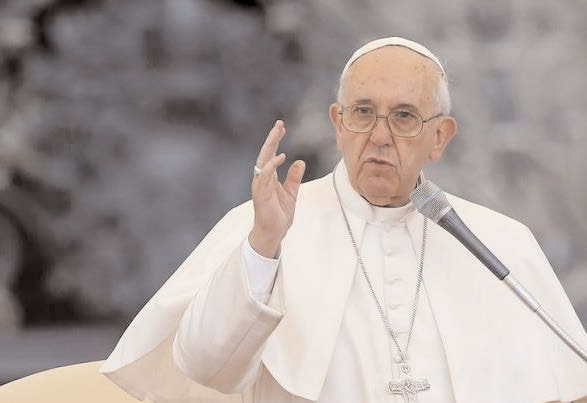
VATICAN CITY (TIP): : Pope Francis issues one of the most eagerly awaited documents of his pontificate on April 8, a treatise on marriage and the family following two gatherings of Catholic bishops that exposed divisions in the Church.
There is keen anticipation on what the 260-page document “Amoris Laetitia,” (The Joy of Love), will say about the full re-integration into the Church of Catholics who divorce and remarry in civil ceremonies.
Under current Church teaching they cannot receive communion unless they abstain from sex with their new partner, because their first marriage is still valid in the eyes of the Church and they are seen to be living in an adulterous state of sin.
The only way such Catholics can remarry is if they receive an annulment, a ruling that their first marriage never existed in the first place because of the lack of certain pre-requisites such as psychological maturity or free will.
Francis, who has made numerous calls for a more merciful Church, has changed procedures to make obtaining annulments less cumbersome and expensive.
Following an unprecedented poll of Catholics around the world, bishops held two summits, known as synods, at the Vatican in October 2014 and October 2015 to discuss family issues, such as why fewer Catholics are getting married and more are getting divorced.
The bishops’ final document at the second synod spoke of a so-called “internal forum” in which a priest or a bishop may work with a Catholic who has divorced and remarried to decide jointly, privately and on a case-by-case basis if he or she can be fully re-integrated and receive communion.
While progressives such as Cardinal Walter Kasper of Germany, who is one of Francis’ favourite theologians, favour this approach, it is opposed by conservatives, who say it would undermine the principle of the indissolubility of marriage that Jesus established.
At the end of the synod last year, Francis excoriated immovable Church leaders who he said “bury their heads in the sand” and hide behind rigid doctrine while families suffer.
The papal document, formally known as a Post-Synodal Apostolic Exhortation, is also expected to call for better programmes for marriage preparation and echo the synod’s stand that homosexual unions cannot be equated with heterosexual marriage.
BEIJING (TIP) : About 10 robots employed as chefs and waiters in restaurants in China have been fired after their owners found them not smart enough. Employing artificial intelligent robots in restaurants has not proved such a smart idea after all, media reports said. Restaurant owners claimed they were just not clever or sophisticated enough to do their jobs properly. The move comes only a few years after a catering business in Xiamen, in southern Fujian province, employed robots instead of people.
Another restaurant, which opened last October, made headlines for using four automated waiters that were able to take orders and deliver food to customers’ tables. Now only two of them remain, to greet customers, with the other two apparently canned. While the robot waiters were an excellent gimmick to woo customers, they were not quite so good at their programmed task of serving. “They were merely standing there to look fancy,” a worker said.
Another robot-themed restaurant closed down less than six months after its opening, with diners complaining that dishes prepared by the robot chefs were “unpalatable”. “The food was not tasty at all and the whole restaurant was very smoky because of the poor cooking skills of the robot chefs,” one diner said.
For a restaurant to employ a robot worker it has to pay about $7,700 for each and then several hundred dollars each month for its upkeep, including repairs, plus electricity. “Human beings can react to their environment effectively, but these robots are not able to do so,” Sun Qimin, chairman of Siert, another robotmaker, said.
The New York Indian Film Festival was the first festival in the United States devoted to Indian films and has grown to be the largest and most influential, helping to set up several other Indian Film festivals in the US. Claus Mueller speaks with the New York Film Festival Executive Director Aroon Shivdasani on the progress story and the problems encountered.
Celebrating its 16th anniversary from May 7-14, 2016,the New York Indian Film Festival was the first festival in the United States devoted to Indian films and has grown to be the largest and most influential, helping to set up several other Indian Film festivals in the US. It is part of a comprehensive program in the arts offered by the New York based Indo-American Arts Council. As other specialty or niche festivals, the NYIFF has a unique programming profile devoted to features,documentaries and shorts made in the Indian Diaspora, or by Indian independent film makers. Its goal is to foster an understanding of India and its culture and to contribute to improving US Indian relations. The festival is attracting a growing number of Americans. Individuals of Indian ancestry account for 60%of the audience. That group encompasses about 700.000 persons in the tristate area. As other Indian Americans they are characterized, according to census data, by a very high educational achievement and part of the richest ethnic group in the US with an average household income of about $100,000. As other programs initiated and organized by the IndoAmerican Arts Council theNew York Indian Film Festival has been growing. Whereas 53 films were screened in 2015 this year’s edition will show 79 films and added two more screening days. Yet in spite of this expansion of the program, inclusion of production from other South Asian countries and an opinion shaping upscale audience the festival faces challenges common to other niche festivals. First there is the perennial funding problem and second is the question of how to best serve the Indian American community and others interested in Indian culture. This interview with the festivals driving spirit, its executive director, Aroon Shivdasani, presents her perspectives.
Claus Mueller: What is the status of the New York Indian Film Festival?
AroonShivdasani, the festival’s driving spirit and its executive director
Aroon Shivdasani: We started this film festival in 2001 because we wanted to showcase Indian Independent and Diaspora films in the US -something that had not been done before. Less than two decades ago, nobody knew about real Indian Cinema in North America. We are the oldest Indian film festival in the US – older than any of the other Indian film festivals that have now cropped up all over the country, like those in Los Angeles, Chicago, Atlanta, Seattle, and many others. We started as an Indian Diaspora film festival screening films made by Indians living all over the world – outside India. We conceived of a program to which the North American audience could relate -before bringing in Indian independent, alternate and art house films. Our first festival opened with the Godfather of Indian diaspora cinema, Ismail Merchant. The Merchant-Ivory film SHAKESPEAREWALLAH had won a Silver Bear at the Berlin Film Festival and featured Madhur Jaffrey and Shashi Kapoor. We closed the festival with Mira Nair’s Monsoon Wedding to a packed audience of people sitting in the aisles and standing at the back.
CM: When you focused on a target audience whom did you start with?
AS: We wanted mainstream America to see these films. However, the first festival had an 80%audience from the Indian subcontinent.
C M: Is it currently still that high?
AS: No, it now reaches out to all film aficionados. However, we still have a South Asian audience of approximately 60% – the rest of the 40% is American. You must remember that I am including the second generation Indian-American in the South Asian audience. This demographic is actually American – people like my children who were born in the US.
CM: Has there been a significant change?
AS: Certainly, but there have been several other dramatic changes. The first couple of years most of the diaspora films we received were still immature. Less than two decades ago there were a handful of good Indian Diaspora film makers. Our first film festival had only twelve films because that was the number of good diaspora films we showed that year. Indian diaspora filmmakers have matured over the last 15 years and we now have a plethora of films submitted to our festival. However, we have also added films from all over the Indian subcontinent (India, Pakistan, Sri Lanka, Nepal, Bhutan, Bangladesh, and Afghanistan) which increased our annual submission rise to over 300 for each festival – giving us a problem that we enjoy – plenty of good films from which to choose our final program.
CM; So what is the mix of productions you show this year?
AS: We will screen 35 feature narratives, 36 short narratives, 5 feature documentaries and 3 short documentaries. Now we have more independent films than Diaspora films. Probably 60% are independent/art house/alternative productions and the remainder is from the Diaspora. Over the last years there have been great increases of independent films submitted from India and the rest of the Indian subcontinent, which are quite remarkable in content and quality as well as growth in the number of productions.
CM: How many films were submitted this year, including shorts?
AS: 190 productions were submitted
CM: Do you carry in your festival traditional commercial Indian films such as Bollywood productions?
AS: No – unless we were to program a retrospective of a great Indian Director who has made a significant contribution to Indian cinema. Our mission is to show the real India through our films, to give socially conscious films a platform, to encourage audiences to view a different kind of cinema. Bollywood does not need us to do this for them. They have a large captive audience of their own. We often screen films that have commercial Indian cinema stars or directors – however those films are in the independent stream – smaller budgets, socially conscious plots or plots reflecting real lives and stories. We screen features, documentaries and shorts. I would love to screen Aamir Khan films – I do believe he has turned the tide of popular Indian cinema. Bollywood audiences respond to his films because he is of that world despite the fact that he now produces films in the independent genre which means his independent films receive mass audiences. In addition, there seems to be a turning tide in Bollywood too.several commercial films are also looking at real issues in the Indian subcontinent.
CM: Let’s take another area. If you check the box office results of Indian films in the US, it seems to be limited. Among the top scoring 100 foreign language films ranked since 1980 by Mojo, you will find only three Indian titles, MONSOON WEDDING.PK and OM SHANTI OM. So what is the contribution of your festival to get high quality independent productions and Diaspora films into distribution in the US?
AS: First let us qualify your comment. High quality Indian independent and Diaspora films fall into the same category as the films shown in special venues such as the Film Forum, Lincoln center, IFC, Quad Cinemas, Sunshine and the Angelika. One cannot place “foreign” films in the same category as the top grossing American films – their markets are completely different. If we are talking about distribution, we need to keep in mind that our films are part of the foreign language film group that play in art house theaters, the alternative or specialty film markets. Both known and unknown Indian Diaspora films have had successful screenings in these theatres: Mira Nair’s Monsoon Wedding & Namesake, Deepa Mehta’s Water, Gurinder Chadha’s Bride & Prejudice, David Kaplan’s Today’s Special, Vikram Gandhi’s Kumare and a host of others. In fact, I would place Danny Boyle’s Slumdog Millionaire in the same category. We premiered it and it then became a runaway success!!
CM: But that market is also rather small. Foreign language films with box office receipts of more than$100,000 grossed only $ 63.9 million out of a total box office of $10.3 billion in 2014. In 2015 there was a decline. But it is significant that of all foreign language films released to date in 2015 and 2016 those from Indiahad with $16.63 million higher receipts than French and German films respectively. Indian films have a brief theatrical exposure rarely exceeding two weeks. Overall US box officereached $13.9 billion during the same period. Foreign language films continue to lose ground, possibly in part due to use of other platforms but there are no hard data as to their financial returns in alternative distribution.
It is indeed a specialty market. But looking at specialty distribution, have you been able to track the films you are showing with respect to their subsequent use by art houses or theaters specializing in foreign and/or Indian Films?
AS:Yes, recently we have started to track our films. It is still a rather small percentage of Indian films that have received distribution here. I mentioned some of them above – others include Mathew Joseph’s BOMBAY SUMMER, Rajnesh Domalpali’s VANEJA, Srinivas Krishna’s GANESH BOY WONDER, and Shonali Bose’s AMU. Several notable independent films from our program have been screened in mainstream independent cinemas – Mira Nair’ s RELUCTANT FUNDAMENTALIST, Deepa Mehta’s MIDNIGHT CHIDREN, Anurag Kashyap’s GANGS OF WASSEYPUR. I am sure many films from our 2013 & 2014 festivals will soon be in the cinemas such as Nitin Kakkar’s FILMISTAAN, Feroz Khan’s DEKH TAMASHA DEKH, Anurag Kashyap’s UGLY and Hansal Mehta’s SHADID.
CM: In some cases, did they have prior distribution deals?
AS: Absolutely! And, in other cases distributors picked them up at our festival e.g. VANEJA, GANESH BOY WONDER, TODAY’S SPECIAL, BOMBAY SUMMER, AMU, UGLY, GANGS OF WASSEYPUR ……actually a large percentage of films screened at our festivals for the last few years have wound up in theatres.
CM: Is there is a general problem cracking the specialty market, even if marketing support is provided?
AS: Correct, we encourage film makers to bring their contacts from the industry. We provide passes to distributors and film financiers but also use the festival to reinforce audience appeal, and work the media. Further the festival program ensures that there is always a post-screening discussion which gives filmmakers a chance to talk to the audience about their films and allows the industry to recognize and approach them.
CM: But you do have an advantage over let’s say Italian or French festival films? There is a sub circuit of Indian film theaters in the US films, not only lots of the mom and pop operations but also theaters that were acquired by the Reliance Theatre Circuit. I understand that the success of these theaters with the Indian language audience has led to neighboring main line theaters to play Indian films now.
AS : No, I don’t think so. For one, mainstream America is already familiar with Italian and French films and filmmakers. Indian Independent filmmakers are still in their infancy with regard to visibility in the “foreign film” audience. With regard to Indian mom and pop theaters – they are reluctant to play the productions we offer because they are not confident of the recurring audiences they get with Bollywood films. Reliance has closed most of their theatres!
CM: What if you have a commercially viable product?
AS: Well, I believe we have to start inviting movie theatre owners to our festival to show them the sold out houses for our films – in English, Hindi as well as all the other Indian regional languages. In fact, we have long lines of wait lists for several of our films.
CM: What about new distribution platforms, Video on Demand, Netflix, Hulu, special cable or satellite channels aimed at the Indian Diaspora audience, specialized circuits? Reliance figures that there are millions of people in this country speaking Indian languages. Have you ever explored these new platforms?
AS: Yes, we are increasingly aware of these platforms. I believe Star TV, Netflix and several other established online distribution platforms are already screening Indian films. Netflix carries about 70 feature films from India, though mostly Bollywood productions, they still have to recognize Indian independent productions. Several smaller ones have approached us to stream our films through them. In 2015 we continue to move in that direction. In 2012 Mela attended our festival to invite filmmakers to stream their films through them; Republic of Brown has approached our filmmakers as are big companies like SONY and MTV. Several small distribution companies have started checking out our festival to acquire films. The large ones have very strict rules of compliance whereas the smaller ones are more laissez faire. We have important Indian film content that can garner a whole new audience of film aficionados for these channels. These companies have approached us because they realize that we have become an important entry point for Indian content. I have heard Rediff.com is thinking along those lines too although I wouldn’t swear to that. Companies realize that there is a huge potential market in streaming good films that are not easily available after a one time screening at our film festival. The Asian Indian population is one of the fastest growing ethnic groups in the US, amounting to more than 3 million people now. People attending our festival frequently ask where they and their friends or relatives can view our films. We hope to give them concrete answers after our 2016 film festival.
CM: What about other exposure?
AS: We have been approached by the Museum of the Moving Image, the Indians of Long Island, EKAL, and the Indian Cultural Council of Greenwich to show a few of our NYIFF 2016 films at their venues immediately following our screenings. Also, all of the local Indian media cover the festival, TV Asia, ITV, India Abroad, News India Times, and several others.
CM: What is your current principal problem?
AS: Money. Funding has become a major problem. Indian and US corporations don’t seem particularly interested. We made some small steps this year. I hope their experience with our festival leads them to get more involved next year. They were really happy with the exposure they received, the festival itself, as well as our audiences. Limited funding precludes expansion and, equally important, it prevents providing better services to our audiences.
CM: What about public funding?
AS:We receive small amounts from the federal, state and city governments. However, they are extremely small amounts to start with, and have been further slashed due to the economy.
CM: Can you identify other potentials sources?
AS:We have approached several corporations; I hope some of them come through. Individual giving has, to date, been extremely important. This means individuals who believe in our organization, its mission and are equally pleased with the execution and results.
CM: What about official Indian agencies? They come to mind since I had a very positive response by government and private sector officials to a presentation I gave in New Delhi several years ago in New Delhi on the important role of Indian films in propagating Indian culture overseas through public diplomacy projects.
AS: ICCR (Indian Council for Cultural Relations) and the Consulate General of India. The ICCR used to send us artists – that has changed with new Indian and US Government rules. The Indian Consulate General gives us in-kind support by hosting some receptions, and the Indian Tourist Office (Incredible India) has, in the past, sponsored us with small amounts of cash. However, that too has stopped as per new orders from India. There is no significant monetary support from Indian Government agencies.
CM: Do you detect any shifts since India is rapidly becoming a major international power?
AS:Unfortunately, I don’t see any visible signs of change. In fact, besides verbal bravado, the small amounts of funding we previously received have also been cut off.
CM: Well, I do hope that this will be different in the future. Thank you very much for your reflections.
(Claus Mueller can be reached at filmexchange@gmail.com)
LUDHIANA (TIP): After Namdhari sect matriarch and the widow of former sect head Satguru Jagjit Singh was gunned down, many followers on blamed a “third party”, which purportedly wants the family running the sect to stay divided, for the murder.
Chand Kaur, 88, was shot by two unidentified assailants on a motorcycle outside Bhaini Sahib, the headquarters of Namdhari sect near Ludhiana, on Monday morning.
On April 5, there was a sea of supporters, clad in traditional white Namdhari attire, at Bhaini Sahib for Chand Kaur’s cremation, attended, among others, by Punjab Chief Minister Parkash Singh Badal and Ludhiana MP Ravneet Singh Bittu.
Kaur’s grandson Jai Singh (son of the matriarch’s daughter, Sahib Kaur) and Uttam Singh, son of present sect chief Thakur Uday Singh, lit the pyre.
Following Kaur’s death, a section of supporters of Uday Singh had alleged that his brother Dalip Singh could be behind the conspiracy — the brothers are Kaur’s nephews— and a group of protesters demanded his arrest. A bitter succession war had begun in the sect after Jagjit Singh’s death in 2012.
Chand Kaur backed Uday Singh to take over the reins from her late husband, while Dalip Singh wanted Kaur to be the satguru. Dalip Singh, who leads the sect’s dera in Jagjivan Nagar, in Sirsa district of Haryana, stands barred from entering the Namdharis’ Bhaini Sahib headquarters. Several cases have been filed by followers of the brothers against the
other group over the years. While a bhog ceremony for Chand Kaur, held as part of the funeral ceremony, will be organised at Bhaini Sahib on Sunday, Dalip Singh’s dera in Haryana will have a separate bhog a day before— on Saturday. On Tuesday, many followers at Bhaini Sahib called Chand Kaur’s murder a “third-party conspiracy” to polarise the sect and an attempt to widen the rift between Dalip Singh and Uday Singh. Several supporters claimed that more than a succession war, this has now become a “war among their people do want the family to unite”. Besides the succession issue, there is a huge financial empire at stake as well. The sect owns acres of land, schools, hospitals and other businesses across the country — all run in the name of Satguru Partap Singh, father of Jagjit Singh. Many Namdhari followers believe this, too, could be a possible reason for the murder. Dalip Singh said: “My mother had no enemies — she was the peacemaker in this family. I wanted her to be on gaddi (be the sect chief) because if I had accepted it, the family would have been divided…for me, she will always be our satguru. How can I even think of getting our satguru murdered?” About organising a separate bhog ceremony, Dalip Singh said, “I knew I will not be allowed to attend the last rites, or bhog (at Bhaini Sahib), and I do not want to enter forcibly and create a scene. So we will hold bhog on April 9 (Saturday).”
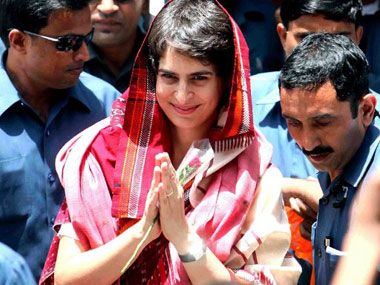
NEW DELHI (TIP): Backed by an internal survey that promised positive outcome, poll strategist Prashant Kishor held discussion with the Congress’s first family of Gandhis on the prospects of projecting Priyanka Gandhi Vadra as the face for 2017 UP polls.
About a fornight back, Kishore, hired by the Congress to work out a strategy for UP and Punjab elections after he delivered positive results for the JD-U in Bihar, he had a meeting with the Gandhi family in the national capital where Sonia and Rahul were also present. In that close door meeting, Kishore proposed the idea of pitching Priyanka in the elections as he felt that she would be bring good results for the Congress, said sources aware of the development.
Kishor, who had emerged as a backroom election manager after he aided Narendra Modi’s campaign, shared details of an internal survey with the Gandhis that indicated a ground swell for Priyanka. She is, however, reluctant to take the plunge into the electoral politics and is content with managing the constituencies of her mother Sonia Gandhi and brother Rahul in Uttar Pradesh. Sources said the Gandhis neither rejected nor gave their consent to an option of searching a credible face for the Congress that can be the joint mascot if the party decides to adopt Bihar model of having alliance to take on ruling Samajwadi Party and opposition BSP and BJP in a multi-cornered contest.
NEW DELHI (TIP): Congress and AAP on April 7 targeted finance minister Arun Jaitley on the Panama Papers issue, demanding a judicial probe into the allegations about some Indians setting up offshore entities in a tax haven and asking him to “recuse” from dealing with the matter.
The parties made their demands arguing that otherwise there cannot be a fair probe into reports linking sports promoter Lokesh Sharma to alleged entities floated in the tax haven of British Virgin Islands (BVI).
The demands came in the wake of reports in the Indian Express based on an investigation by it as well as International Consortium of Investigative Journalists (ICIJ) alleging that Sharma had two companies “of his own” registered in BVI.
However, Sharma, managing director of sports management major Twenty First Century Media (TCM) Pvt Ltd, said, that the companies in question “have been set up legitimately with due processes as provided by the laws of India.”
Besides raking up Sharma’s case, Congress leader Jairam Ramesh alleged at a press conference that ICIJ had done another investigation a year ago alleging that Abhishek Singh, BJP MP and son of Chhattisgarh chief minister Raman Singh, was holding offshore assets, a charge denied by the MP.
Ramesh demanded that Singh and his son should quit their posts, citing the case of Iceland Prime Minister who has stepped aside after his name figured in the Panama Papers.
Stepping up the Congress offensive on the leakage of the Panama Papers linking some 500 Indians to entities in the tax haven, Ramesh demanded that Jaitley “recuse” himself from any probe into the matter in the wake of reports about Sharma, whose “closeness to some senior BJP leaders is well known”.
Arvind Kejriwal’s AAP, which has a running battle with Jaitley, latched on to the Panama Papers leak to target Jaitley and demanded his resignation.
Reacting to the charges levelled by Congress and AAP, Sharma said it was unfortunate that a political twist was being given to investments which were “completely personal, totally legal and declared by us in our reporting to statutory bodies”.
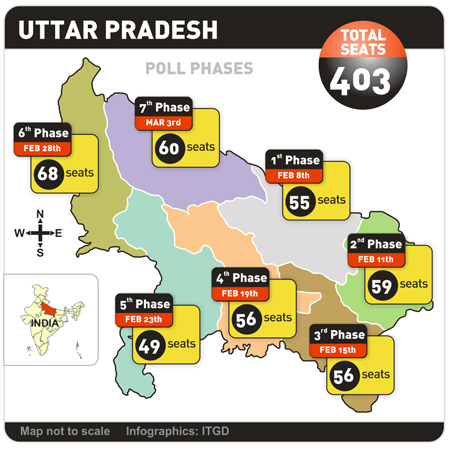
NEW DELHI (TIP): The forthcoming merger of Ajit Singh’s RLD with Nitish Kumar-led JD(U) is just the beginning of a larger experiment that may see the JD(U) and Congress trying to replicate a Bihar-like grand alliance in UP for the assembly elections next year, according to leaders involved in behind-the-scene strategising.
While RLD’s merger with JD(U) will lead to Singh occupying a senior position in the merged party at the national level, his son and former MP Jayant Chaudhary may be the UP unit president of the party, sources said. There are a number of political factors and interests that make the coming together of the merged JD(U) and Congress to form an alliance for UP poll inevitable.
Both parties recognise their mutual need to pool their resources to take on entrenched rivals such as the SP, BSP and BJP. Further, after SP leader Mulayam Singh Yadav ‘spoiled’ the Janata Parivar merger attempts last year, Kumar, Singh and Congress share a political aversion to Yadav, who also fielded SP candidates against the grand alliance in Bihar.
Further, the traditional rivalry RLD and Congress share with BSP makes their coming together to form an anti-BJP platform inevitable, a source said. Incidentally, Kumar’s campaign strategist-turned-advisor Prashant Kishor is the campaign strategist of Congress in UP.
“The merger is meant to expand our party by reinforcing the combined interests of the two parties and position effectively in the UP polls by tapping the joint strength,” said Sharad Yadav, who is set to step down as JD(U) president. Explaining his decision to step down from the presidentship, Yadav said: “I have completed my third consecutive full term as JD(U) president. Last time the party constitution, which had fixed cap on two consecutive terms for party president, had to be amended to extend my term. I don’t want to amend the constitution again, therefore, have chosen to step down.
ALTICE (TIP): A teacher who was jailed after she admitted sexual contact with three of her students has reportedly defended her relationship with one of the victims, saying she helped to improve his grades.
Brianne Altice, 36, was given a lengthy sentence of two to 30 years in prison in the high profile case in Utah last summer, after she pleaded guilty to forcible sexual abuse involving three 16- and 17-year-old boys.
Altice originally faced a range of 14 felony charges including five counts of rape, and a lawsuit has now been lodged against her and her former employer, Davis High School, by one of the victims and his parents.
According to the Salt Lake Tribune, Altice has now submitted a handwritten two-page document in federal court saying she had “no evil or malicious intent” in her relationship with the boy.
Altice wrote that she could not afford a lawyer, but insisted she had never been reprimanded by the school for her conduct in the classroom.
She said the boy had come to her for advice on his difficult relationship with his parents, and described how he would stand up for her in school by “thwart[ing] inappropriate comments directed at her”.
“Ms. Altice expressed and advised [the boy] to communicate with his parents and continue to do his best in school,” the teacher wrote, adding the boy’s grades showed improvement while she was his teacher.
The original complaint alleged that the school’s management was told about Altice’s inappropriate behaviour with her male students, but did not act on the information. The school has denied officials had any knowledge of what was going on.
The Tribune reported that no trial date had been set for the lawsuit.
WASHINGTON (TIP): The US Navy plans to conduct another passage near disputed islands in the South China Sea in early April, a source familiar with the plan said, the third in series of challenges that have drawn sharps rebukes from China. The exact timing of the exercise and which ship would travel inside a 12-nautical mile limit around a disputed island was not immediately clear.
The United States has conducted what it calls “freedom of navigation” exercises in recent months, sailing near disputed islands to underscore its right to navigate the seas. U.S. Navy officials have said they plan to conduct more and increasingly complex exercises in the future.
The USS Stennis carrier strike group is currently operating in the South China Sea. The next freedom of navigation exercise is unlikely to be conducted by a carrier like the Stennis, but rather by a smaller ship, the source said. Experts predict the next US challenge to the various claims in the South China Sea could occur near Mischief Reef, a feature claimed by the Philippines and which was submerged at high tide before China began a dredging project to turn it into an island in 2014.
WASHINGTON (TIP): US President Barack Obama has said Nato is “critical” to the security of America and its allies in Europe, a virtual rejection of Republican frontrunner Donald Trump’s views that the intergovernmental military alliance has outlived its utility.
“Nato continues to be the linchpin, the cornerstone of our collective defence and US security policy,” Obama told reporters on Monday along with Nato secretary general Jens Stoltenberg in the White House.
The Obama-Stoltenberg meeting came in the wake of Trump’s remarks.
White House press secretary Josh Earnest has termed such remarks as “ill-advised”. Obama, however, did not make any direct comment on Trump’s comments.
Obama said he had an excellent discussion that started with marking the tragedy that had taken place in Brussels, and reinforcing the importance of us staying focused on Islamic State (ISIS/ISIL) and countering the terrorism that has seeped up into Europe and around the world.
“We agreed that one of the most important functions that Nato is performing and can continue to perform is to help in the training and assisting process for troops in Iraq, in Jordan, in many of the areas in the region.
“And we are continuing to cooperate on an ongoing basis about operations potentially in areas like Libya, where you have the beginnings of a government and we can I think provide enormous help in helping to stabilize those countries,” Obama said. Obama and Stoltenberg also discussed situation in Afghanistan, Russia and Ukraine. “We continue to be united in supporting Ukraine in the wake of Russian incursions into Ukrainian territory. We continue to work in a train-and-assist fashion in helping support Ukraine develop its military capabilities defensively,” he said.
Stoltenberg said Nato is as “important as ever”.
“Because Nato has been able to adapt to a more dangerous world. We stand together in the fight against terrorism. Terrorism affects us all, from Brussels to San Bernardino, and all Nato allies contribute to the US-led efforts to degrade and destroy ISIL. And just last week, we started training Iraqi officers, and we will continue to support the efforts of the United States and other countries to fight ISIL,” he said.
The US value the contributions it received from the large number of Nato members who are a part of counter-ISIL coalition, Earnest said.
SAN FERNANDO (TIP) A man who allegedly left his baby daughter locked in a hot car while he got a lap dance has been charged with child abuse in the US.
Auwin Dargin, 24, pleaded not guilty to the offence at a Los Angeles court on Monday and faces up to six years in prison if convicted.
He was looking after his nine-month old child when he visited the Synn Gentlemen’s Club for roughly an hour on 9 March, prosecutors said.
Matthew Nadeau, the strip club’s assistant manager, told the LA Times he became suspicious after seeing Dargin repeatedly enter and leave the club at around 2pm.
He and a waitress went outside to the car park, where they heard a child’s cries coming from inside his locked car.
Describing the baby as visibly shaken, they broke into the vehicle through a window left cracked open and took the child into the shade and gave it water.
Mr Nadeau said he immediately informed his manager, who was allegedly confronted by an “angry” Dargin for interrupting his lap dance.
Staff called the police and refused to let the man take his daughter home, prompting a dispute that ended when Dargin left the club and his baby.
A spokesperson for the Los Angeles County District Attorney’s office said Dargin, from Van Nuys, had been charged with one count of child abuse.
He is due to appear at the San Fernando branch of Los Angeles County Superior Court on 3 May.
WASHINGTON (TIP): The Obama administration on Monday awarded a $170 million contract to Bell Helicopter of Texas to manufacture and deliver nine AH-1Z Viper attack helicopters to Pakistan, continuing the US policy of arming a country that many of its lawmakers say is two-faced about fighting terrorism.
The American reward for Pakistan came even as Islamabad continued to protect Masood Azhar, leader of the terrorist outfit Jaish-e-Mohammed, with Chinese support, while subverting New Delhi’s efforts to bring to justice Pakistani perpetrators of terrorists attacks in India.
Pakistani charges that India is staging terrorist attacks on itself to malign Islamabad evoked little interest in Washington, as the Pentagon signed off yet another consignment of lethal arms to the country that claims it is also a victim of terrorism, even as it continues to foster terrorist groups and protect leaders of such outfits.
Part of the US policy of continuing to arm Pakistan amid pious lectures about military doctrines and arms race has to do with the nature of the bloated US arms industry itself that feeds off such foreign military sales for profit and for creating local US jobs. The Pentagon notification disclosed that the contract for the helicopters and nine auxiliary fuel kits would be performed in Fort Worth and Amarillo in Texas.
As with Bell’s attack helicopters, the eight F-16s US has announced for Pakistan will also be manufactured in Fort Worth, Texas, ensuring that it has support of local lawmakers who are more concerned about the economy and jobs, even if they are wellinclined towards India. Both contracts are part of a $950 million arms package.
In fact, as per that notification, Pakistan had requested a possible sale of 15 AH-1Z Vipers, but the Obama administration appears to have signed off on only nine. Islamabad also has no money to pay for any of the arms it asks for, and they are usually supplied under concessional foreign military sales agreements.
Regional experts surmise that all these piecemeal supplies to Pakistan is aimed at keeping the country’s tin-pot generals happy while ensuring access and cooperation on the Afghan front, even at the risk of offending India.
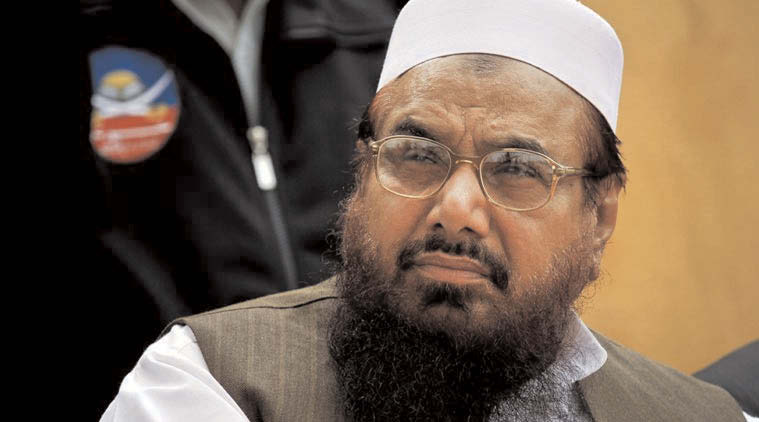
ISLAMABAD (TIP): Mumbai attack mastermind Hafiz Saeed-led Jamaat-ud-Dawa (JuD) has set up a Sharia court in Lahore to dispense “speedy justice”, taking up citizens’ complaints and issuing summons carrying a warning of strict action in case of non-compliance, Dawn reported on April 7 .This is the first such parallel judicial system in Pakistan’s Punjab province.
The JuD, a front for banned Lashkar-e-Taiba (LeT), claimed the court only offers arbitration and resolves disputes in accordance with the Islamic judicial system, but failed to justify the summons.One of the defendants recently refused to appear, and has challenged the court’s authority, calling the summons is sued to him unconstitutional, the report said.
Complainants approach the arbitration court, in the heart of Pakistan, with the hope of speedy justice as litigation, especially in civil cases, is a lengthy and expensive process in the constitutional courts, sources said.
The court has been established at the organisation’s headquarters, Jamia Qadsia, Chauburji, under a Qazi (judge) assisted by Khadmins or court associates. “The complaints are addressed to the chief of the religious organisation who later refers them to the Qazi for further proceedings,” the report said.
The report claimed that JuD’s “Arbitration Court of Sharia” has been summoning defendants in person or through a legal counsel with war nings of strict action under the Sharia laws in case of no response. The summons bear two monograms Darul Qaza Sharia, Jamatud Dawa Pakistan and Saalsi Sharai Adalati-Aalia or the arbitration court of Sharia. Earlier, Sharia courts were established in Kyber Pakhtaunkhawa province by pro-Taliban groups. JuD’s spokesperson Yahya Mujahid said that it was not a parallel system to the constitutional courts of the country .”It is an arbitration court to decide disputes with the consent of the parties,” Mujahid was quoted as saying.
He further said that disputes have been resolved in accordance with Islamic laws, and that offering arbitration to confronting parties is not illegal. He, however, failed to justify issuance of summons carrying a warning of strict action in case of non-compliance.
In one such case regarding a monetary dispute between two property developers, according to Dawn’s report, the Sharia Court has been issuing summons to the defendant, who has not appeared before the Qazi so far. He has written letters to judicial and executive authorities, including chief justice of Pakistan and prime minister, complaining about the unconstitutional summons being issued to him by the religious organisation, the report said. “The letters are yet to be answered whereas the JuD spokesman offers no explanation to the practice of serving summons,” it said.
DIG Haider Ashraf denied having any knowledge about the Sharia Court or any complaint against it. “The police will take action if they received any complaint as the law did not allow any parallel judicial system,” he reportedly said. The JuD claims rendering social welfare services besides running charitable schools and hospitals in calamityhit regions of the country.
DHAKA (TIP): A 28-year-old Bangladeshi law student who was critical of radical Islamists has been hacked to death here by machete-wielding militants, the latest in a series of attacks on secular bloggers and activists in the Muslim majority country.
Nazimuddin Samad, a masters student of the state-run Jagannath University’s law department, was killed by suspected Islamist militants in Old Dhaka’s Sutrapur area on Wednesday night.
He was attacked by three assailants while walking to his home in Gendaria with another youth after completing classes at the university near Bahadur Shah Park.
While murdering Samad, the killers shouted Allahu Akbar (God is Greatest), witnesses said.
The youth accompanying the victim has been missing since the incident, a police official said.
“They initially hacked him and then fired gunshots to confirm his death,” the official said.
Nazim, who hailed from Sylhet, was the information and research secretary of Sylhet district unit of Bangabandhu Jatiya Jubo Parishad. He was also an activist of Gonojagoron Moncho’s Sylhet wing.
His friends said Nazim used to campaign for secularism on Facebook and was critical of radical Islamists. A day before the murder, he expressed concerns over the country’s law and order in a Facebook post.
Businessmen in the area closed their shops immediately after hearing the gunshots. Police cordoned off the crime scene. They recovered a bullet shell from the spot.
Nurul Amin, assistant commissioner of Sutrapur division, was quoted as saying that police went to the spot and found the body in a pool of blood.
Nurul said it was clear that the assailants kept an eye on Nazim’s activities for long.
University Proctor Nur Mohammad said Nazim got admitted to the university two months ago.
“We have informed his family about the murder and are taking detailed information about him,” he said.
There have been systematic assaults in Bangladesh over the past six months specially targeting minorities, secular bloggers and foreigners.
Last month, a 65-year-old Christian convert was hacked to death in the northern Bangladeshi town of Kurigram by three motorbike-borne unidentified assailants. Last year, Bangladesh-born US blogger and science writer Avijit Roy, 42, was attacked just yards away from a book fair in Dhaka. A month later, fellow blogger Washiqur Rahman, 27, was hacked to death in broad daylight near his home in Dhaka’s Tejgaon area.
YANGON (TIP): Myanmar’s president signed a bill giving Aung San Suu Kyi a new role of state adviser, shoring up her influence across all branches of government despite vehement opposition from the still-powerful military.
Suu Kyi is determined to rule the former junta-run nation regardless of an army-scripted constitution that bars her from becoming president, as she strives to meet the aspirations of millions of voters who gave her pro-democracy party a landslide election victory last November.
She is already foreign minister and met her Chinese counterpart for talks yesterday, prioritising Beijing in her first foray into international diplomacy since her National League for Democracy officially took power last week.
The bill outlining her advisory role, which mentions the Nobel laureate by name, enables Suu Kyi to wield influence over parliament as well as in the cabinet in a position officially called “state counsellor”.
It was signed into law by President Htin Kyaw, Suu Kyi’s longtime aide and effective proxy, following debates in both houses of parliament that have seen protests by the army’s legislative representatives.
“The president has signed the state counsellor bill today,” president office deputy director-general Zaw Htay told AFP.
He declined to give further details on the legislation, which sped through both houses of parliament thanks to the NLD’s huge majority.
In a dramatic lower house session yesterday, unelected military MPs — who make up a quarter of the legislature because the constitution reserves seats for them — stood up to register a protest that their suggested amendments were being ignored. The bill was then sent straight to the president without a vote in the combined legislature because no clauses had been altered. One army MP, Brigadier General Maung Maung, complained to reporters after Tuesday’s session that the passage of the bill was “democratic bullying by majority”.
DHAKA (TIP): Bangladesh’s beleaguered former prime minister Khaleda Zia will surrender before a court here on Tuesday and seek bail in a case against her for instigating a deadly petrol bomb attack on a bus during an anti-government protest last year, her lawyer said on April 1.
“Khaleda will surrender before the Court of Metropolitan Sessions Judge on April 5,” Sanaullah Mia, one of her lawyers, told reporters here.
On March 30, the Metropolitan Sessions Judge’s Court of Dhaka passed the order against the 70-year-old chairperson of the main opposition outside parliament Bangladesh Nationalist Party (BNP) and 27 others from her party after accepting police’s chargesheet in the case.
Judge Kamrul Hossain Mollah, after accepting the charges against 38 people, including the 28, ordered Zia’s arrest in connection with the arson attack in Jatrabari area here in January last year when her party spearheaded a violent nationwide campaign to topple Prime Minister Sheikh Hasina’s Awami League government.
An official of the Metropolitan Sessions Judge’s court said that Judge Kamrul Hossain Mollah passed the order and asked police to execute the warrant and submit the compliance report by April 27.
Last year, Zia was charged by police with masterminding the arson attack on the bus that left one person dead and 30 others injured, nine critically, days after Hasina said the former premier could be put on trial for recent violence.
The incident was one of many bomb attacks that Bangladesh witnessed in the three months since early January last year when the BNP-led 20-party alliance started an indefinite blockade.
The arrest order was another blow to the embattled two-time former premier, who has described previous cases, including corruption-related, against her as politically motivated and aimed at keeping her out of the country’s politics.
ISLAMABAD (TIP): The Pakistani military in coordination with law enforcement agencies launched a new offensive in southern Punjab, officials announced april 6, weeks after a suicide bomber killed more than 70 people in Lahore.
“Coordinated operations are underway against terrorists and hardened criminals,” read a military statement.
The statement also included images of military helicopters hovering over the plains of Punjab and paramilitary troops loading ammunition into trucks and preparing for an operation.
The offensive comes after a Taliban suicide bomber killed 73 people in a popular Lahore park on Easter day. Jamaat-ul-Ahrar, the Taliban faction that carried out the bombing, said Christians were the target of the attack.
The incident illuminated festering extremism in Punjab, the home province of three-time Prime Minister Nawaz Sharif and provincial authorities said they would launch a crackdown against militant groups in the province long considered a bastion of the establishment.
Christians make up an estimated 1.6 percent of Pakistan’s 20 crore people and have long faced discrimination.
Twin suicide attacks against churches in Lahore killed 17 people in March last year, sparking two days of rioting by thousands of Christians.
The country is still scarred by a Taliban assault on a Peshawar school in 2014 that killed 150 people, mostly children.
A military operation targeting insurgents was stepped up in response. Last year the death toll from militant attacks was the lowest since the Pakistani Taliban was formed in 2007.
It was 6.45 p.m. and Neal Meyer was not sure how many people would turn up for the Jacobin reading group on a cold, rainy day. As the magazine’s outreach coordinator, he was used to seeing around 60 readers at their monthly session held in the New York City borough of Brooklyn.
But in the next 15 minutes, the ground floor hall of the venue, a neighborhood school, was crammed with at least 50 people. Many of them looked like regulars – men and women mostly in their late 20s or early 30s, including schoolteachers, coding professionals, union organizers, journalists, and graduate students.
In the five years since its launch, the New York-based publication, which prides itself in being a leading voice of the American Left, has made many within the U.S. and outside sit up and take notice. It has drawn high praise from the likes of Noam Chomsky who called the magazine “a bright light in dark times”.
Getting off the ivory tower
Mr. Meyer divided the crowd into four smaller groups and directed them into different classrooms, each with a facilitator. The group was going to discuss Erik Olin Wright’s essay ‘How to Be an Anticapitalist Today’ and Ralph Miliband’s classic ‘The Coup in Chile’.
Participants discussed the readings, often drawing parallels to social movements in the U.S. For them, reflecting on Miliband’s strategies for transitioning into socialism also meant using the analysis to think of ways to sustain the Bernie Sanders momentum at home. The discussion went on for an hour and a half.
“Don’t study collective action alone,” Jacobin exhorts its readers on its website. Clearly, the message has had the desired effect. Readers of the magazine now meet in over 40 cities in the U.S. and Canada, and in cities across Europe and Australia.
At 8.40 p.m., Mr. Meyer signaled us to wind up, assuring that the discussion would, as usual, continue at a pub a couple of blocks away. At one level, they intensely debated some contemporary political questions. At another, they were hanging out as if at a campus party, peppering their analysis with ready wit and sarcasm. In a sense, that’s also the vibe of the magazine – something its now 26-year-old founder-editor and publisher Bhaskar Sunkara has consciously cultivated.
“Jacobin draws on the old tradition of ‘No-bullshit Marxism’. Don’t talk about ‘dialectics’, [but] try to explain things as clearly as possible. We lay out our framework and then let people critique it,” Mr. Sunkara told me earlier, when I met him on the terrace of Jacobin’s red-paneled offices in Brooklyn.
Even the inspiration for the magazine’s name came from Trinidadian activist-writer C.L.R. James’s book on the Haitian revolution, The Black Jacobins, which Mr. Sunkara read as a school boy. He found it in his parents’ library – they were of Indian origin and lived in Trinidad before moving to the U.S. a year before he was born. It was George Orwell’s Animal Farm and 1984 that gradually led Mr. Sunkara, in his teens, to thinkers like Leon Trotsky. At 17, he was an active member of Democratic Socialists of America whose blog he edited.
The idea of Jacobin was born in the summer of 2010. Mr. Sunkara strongly felt the need for a publication that would present socialist ideas in an easy-to-read, jargon-free style. Today, the magazine is known for exactly that, in addition to sleek design and bold colors. Its contributors range from PhD students to seasoned scholars, all of them writing in an easy and engaging style. “I contrast that with the efforts of more academic Leftists or literary publications that came out of the Left in the past decade. They were consciously or unconsciously trying to speak to a more rarefied elite, whereas Jacobin strives to be more accessible.”
Its growing popularity is evidenced in the 15,000 paid subscriptions that the quarterly print edition of the magazine currently has, and the nearly one million unique visitors its website records every month. Subscriptions are the primary source of revenue driving the non-profit venture. The model, the amount of subscribers and online traffic, and the staff that Jacobin has been able to maintain – Mr. Sunkara thinks all that has been possible because they are drawing from beyond the existing Left in the country.
Sanders and the socialist surge
More so now, with the heightened interest in socialist ideas following Mr. Sanders’s surge. “We understood that the American people were just not exposed to these ideas…[or] to a politician who was willing to speak to their problems and also pose solutions in the form of actual, economic demands and redistribution.” The Vermont Senator, he said, deserved much credit for pushing income inequality to mainstream political discourse – an important shift in the U.S. where socialism and communism have for long been politically taboo and where even liberal voices are considered dangerously left wing.
The focus also shifted from the individual to broader structures and systems. “It is hard to overstate how personalized the American discourse was. When times are good, some of what is compelling about America is reflected in the bootstrap, individualistic rhetoric. When times are bad, it is often very sad to see people blaming themselves for things that are obviously not their fault, like massive unemployment.”
Mr. Sanders has been chiefly instrumental to such a shift, but that does not mean everything he says is appealing. Mr. Sunkara finds some aspects of Mr. Sanders’s platform to be “at best uninspiring and at worst slightly retrograde” – such as his “isolationist” foreign policy stance that lacks a wider critique of NATO (North Atlantic Treaty Organization) and the role of the U.S. “It is necessary to put pressure on Sanders on those platforms, especially if he has an outside chance of becoming the Democratic [presidential] nominee.”
Many supporters share his optimism, especially after Mr. Sanders made important gains in the primaries. Even though mainstream American media underplayed or, in many cases, dismissed them. “Many of the establishment liberal types, from whom a lot of the media classes are drawn, are concerned about losing control of their party or losing a general election.”
Mainstream U.S. media’s coverage of Mr. Sanders is hardly surprising, given its tendency to stay away from class analysis. Liberal publications have taken strong positions against racial discrimination from time to time, but Mr. Sunkara would qualify even that. “They are fine with race being used as long as it is kept as purely symbolic, or as long as it is connected to diversity without a class content. If I were to say we want more of black working-class kids in universities and we do that by massive programs of redistribution, I am sure that would elicit a different response.”
Despite all that, income inequality is a hot topic in this election and is politicizing thousands of young Americans. “Some of this is good. For example, the Sanders campaign or Black Lives Matter, [an activist movement that campaigns against violence towards black people], but others [are] bad – the kind of anger and resentment seething around the [Donald] Trump campaign, which is disproportionately drawing white working-class voters and others.” According to him, the only way these voters could be won over to the Left is if Mr. Sanders had a chance to speak to them in a general election.
Jacobin, however, will continue to speak to them. “In a country with such a small, explicitly socialist Left, we are the ambassadors for these sets of ideas,” Mr. Sunkara said.
By Meera Srinivasan – (The author was the IWMF Elizabeth Neuffer Fellow 2015-16)
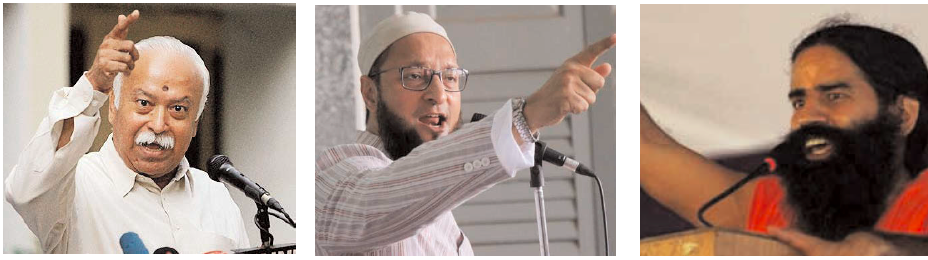
Controversy appears to be, currently, our national pastime. Controversies thrive on tit for tat. Asaduddin Owaisi’s taunt (on April 3) to Mohan Bhagwat that he would not chant a particular slogan even if a knife were held to his throat, was his pennyworth to the national repertoire of controversies.
Mr. Bhagwat saw it as such. Not Ramdev. He got carried away, and walked straight into the trap, highlighting an issue that merits urgent attention: the civilizational throwback of tit for tat as a response strategy in public life.
Consider, for a moment, Gandhi’s humiliation in Pietermaritzburg on June 7, 1893. A barrister, Gandhi could have reacted differently from the way he did. The aggressor could have been dragged to court, if not resisted by physical might.
Now consider a different, hypothetical illustration. Let us envisage the Hon’ble Chief Justice of India (CJI) travelling to court in the morning. The car stops at a signal point. A young lad, motivated by irrational mischief, sticks out his tongue at the CJI. How is he to respond? By the rule of tit for tat, the CJI must put his tongue out at the urchin. This is the very thing he should not do. The self-denigration grinning from this tit-for-tat model of self-defense far exceeds the insult value of the street urchin’s provocation. If the CJI reacts in terms of tit for tat, he will not only ruin what little respect there could still be in the mind of the naughty boy for him but also (a) justify, to some extent, the hooliganism of the boy, and (b) undermine his own self-respect completely.
The case for self-control
The tit-for-tat strategy belongs to a crude, prehistoric stage of human evolution. The curse of this strategy is that it keeps us vulnerable to external control. The essence of human progress through history is the shift from being controlled by external forces (including taunts, threats and provocations) to the human spirit controlling external forces and circumstances. That was how we developed our resources of imagination and inventiveness. In contrast, tit for tat requires no play of imagination or effort of mind or spirit. It is a crude, mechanistic and instinct-driven reaction.
Let us return to our analogy. The CJI putting his tongue out at the street urchin by way of tit for tat puts him, at best, on a par with the offender. He needs no qualities or mind, heart or spirit to react in this manner. Not so, if he were to respond as Gandhi did in Pietermaritzburg. The core issue is still different. So long as the Hon’ble Judge functions in terms of tit for tat, he will be at the mercy and control of the urchin. Tit for tat makes him vulnerable to further provocation from the urchin and the obligation to react even more awkwardly in response – clearly an unthinkable, degrading prospect.
Responses of this kind belong to the mindset of barbarism. The hallmark of barbarism is man’s enslavement to external forces. The savage is a slave of circumstances. Human progress has taken place along the axis of our growing self-control and our gradual mastery of external forces of every kind. This is the point of congruence between physical and spiritual forces.
One of the foremost dangers that modern man faces, wrote G.K. Chesterton a century ago, is the ‘slow return’ to barbarism. This has myriad faces. Whenever and wherever human beings find themselves controlled, enslaved and petrified by external forces, systems and circumstances, they are regressing towards the barbaric scheme of things, rather than a civilized way of life. Coercion is perforce barbaric.
A mindset of inequality
So, we need to be ever on our guard against the emergence of coercive mindsets, ideologies and dispensations. Coercion of every kind and in every context – including that of patriotism – does more harm than good to the nation. The agents of coercion may don the garb of patriotism, but their misconceived adventures are sure to undermine the country.
Granted, we need to be patriotic as well as promote the spirit of patriotism. The question is how. This revives the age-old debate on the coherence of means and ends. We have to be inspired patriots to be able to promote patriotism patriotically.
Patriotic slogans are like smiles – outward manifestations of an inner state. You cannot force people to be patriotic, just as you cannot force them to keep smiling for 10 years for reasons they know not. The mindset of coercion is driven by raw, adversarial power.
It bristles with hostility towards a person, group or community, not love for the country. The returns from forcing someone to shout a slogan of your choice are psychological, not political or patriotic. What is at work is the imposition of one’s will on the target of coercion.
It is unpatriotic to target individuals and communities. All the more so, if it is done in the name of Bharat Mata. The idea of requiring someone to shout Bharat Mata ki Jai is that Bharat is our common Mother.(Why should I shout Jai for someone else’s mother?) So, we are members of the same family, wherein love rules and coercion has no place.
Given the fact that Bharat is our Mother and we are one vast, extended Family, we belong together under a shared destiny. The first task of true patriotism is, therefore, to propagate a culture of pan-Indian unity, transcending divisive labels and barriers. So long as people are labelled, ghettoized, targeted or traumatized, the compulsion to thrust slogans on them coercively will remain. Coercion is a one-eyed monster. It can see only one side of the equation. That is as good as saying that it cannot see any equation. Equality is innate in equation. It is the mindset of inequality that valorizes coercion. But use of force is a recipe that has only worked, all through history, to the corruption and destruction of peoples and nations.
By Valson Thampu (The author is a former Principal of St. Stephen’s College, University of Delhi)
American medicine has long had the reputation ofbeing the most advanced in the world. But the UStoday faces a looming shortage of the versatiledoctors who form the backbone of its health system -generalists known as “primary care physicians” – a trendthat industry experts call a threat to the nation’s health.
If you look worldwide at the countries that have muchbetter scores on health care quality measures than theUnited States, almost all of them have a higher percentageof their physicians engaged in primary care. The US is projected to have 52,000 fewer primary carephysicians than needed by 2025, according to a reportpublished in the current issue of the medical journalAnnals of Family Medicine.
The shortage threatens to exacerbate alreadyskyrocketing medical costs in the US by diminishingaccess to the crucial preventative care offered by primarycare physicians and prompting patients to turn to priceyspecialists to treat routine maladies, health industryexperts say.
What’s more, such higher costs may actually result inworse outcomes for patients. If patients are bouncing fromspecialist to specialist, not only are the costs enormous,they get uncoordinated care. They get unnecessary tests,chase spurious information, and can get drug interactionsbecause people get some medication from one physician,and other medicine from another.
The value in primary care, medical professionals say, isthe holistic approach the doctor takes when assessing apatient’s health. Building a stable relationship with aprimary care doctor can help a person head off chronicdiseases that incur significant financial and quality-of-lifecosts, they say. There’s something to be said for having a place to go anda therapist who knows who the patient is. They don’t haveto go to see 20 different doctors and see 20 differentrecords. The knowledge about you is all in one place.
The increasing scarcity of primary care physicians isdriven in part by the projected population growth in theUS over the next two decades, as well as by the medicalneeds of an aging population and the tens of millions ofAmericans expected to be newly insured under theAffordable Care Act, US President Barack Obama’ssignature health care reform.
It is also driven by the growing income gap betweenprimary care physicians and their counterparts in morefinancially lucrative specialist fields such as cardiology,medical professionals say.
For many medical students weighed down withescalating levels of student debt, opting for a career as aspecialist is a no-brainer. When young people graduatefrom medical school $250,000 in debt and see they can make$150,000 a year as a primary care physician, or be acardiologist and make $450,000 a year, which one do theypick?
The average salary for a primary care doctor in the USin 2010 was $202,392 compared to $356,885 for medicalspecialists, according to the US Bureau of Labor andStatistics. The reasons for this disparity are varied. Onekey factor, however, is that the primary care is holistic andconsists of time-consuming patient encounters. Thesevisits, however, have lower reimbursement rates than mostmedical procedures.
According to a study published this week in theAmerican Medical Journal, just 22 percent of medicalstudents said they are planning a career in generalinternal medicine. Meanwhile, 64 percent of the 17,000students polled said they wanted to become a specialist infields such as oncology and dermatology.
It’s a sad picture because primary care is veryimportant. And it’s going to become even more importantover the next 20 to 30 years.
HOUSTON (TIP): An Indian-American professor and pharmaceutical department chair at a prestigious American university has been selected for the Fulbright Specialist Roster for his outstanding achievements in the field of pharmacy. Rajender R Aparasu is the first pharmacy faculty member at the University of Houston selected to be the candidate roster of the Fulbright Specialist Program, which helps US faculty share their academic expertise and develop linkages with non-US institutions on curriculum, assessment, faculty development and research training.
The Fulbright program which is funded by the Department of State’s Bureau of Educational and Cultural Affairs, serves to promote international engagement of academic scholarship and build linkages between US and overseas institutions.
“There are very few Fulbright specialists in pharmacy; I am really honored to be selected for Fulbright Specialist Roster,” said Aparasu, whose five-year term ends in 2021.
“This is a great opportunity to offer my expertise in developing professional and graduate pharmacy programs that involve pharmaceutical health outcomes and policy,” he said.
“I am looking forward to the opportunity to visit overseas pharmacy institutions to assist faculty and administrators with respect to academic and research programs in pharmaceutical outcomes research.”
Aparasu obtained his Bachelor of Pharmacy (BPharm) from Kakatiya University, and Master of Pharmacy (MPharm), from Jadavpur University, India.
Aparasu obtained his Ph. D in Pharmacy Administration, University of Louisiana, Monroe, LA and joined University of Texas in 2006 after serving on the faculty at the South Dakota State University for more than a decade.
His primary areas of expertise include geriatrics, pharmacoepidemiology, psychopharmacology and evidence-based medicine. His current research project, supported by a grant from the Agency for Healthcare Research and Quality (AHRQ), is evaluating safety profiles of anticholinergic medications in the elderly nursing home residents.
He has authored and co-authored nearly 100 peer-reviewed journal articles and seven book chapters, as well as served as editor or co-editor of two books (Principles of Research Design and Drug Literature and Research Methods for Pharmaceutical Practice and Policy).
Aparasu was recognized by his peers with the Fellow of the American Pharmacists Association (FAPhA) for his exemplary professional achievements and outstanding service and contribution to the pharmacy profession.
He holds editorial board appointments on six peer-review journals and has been recognized as an “exceptional” reviewer by five peer-review journals.
Signup to our Newsletter!
Don’t miss out on all the happenings around the world