Month: April 2016

  • EXERCISE IS YOUR MUSCLE’S FOUNTAIN OF YOUTH

    EXERCISE IS YOUR MUSCLE’S FOUNTAIN OF YOUTH

    You  may want start working out to turn back your ageing clock as a recent study has found that oldies, who exercise regularly, end up with metabolically younger muscles.

    University of Guelph’s Geoff Power showed that elderly people, who were elite athletes in their youth or later in life and who still compete as masters athletes, have much healthier muscles at the cellular level compared to those of non-athletes.

    The study compared world-class track and field athletes in their 80s with people of the same age who are living independently and found that athletes’ legs were 25 per cent stronger on average and had about 14 per cent more total muscle mass.

    In addition, the athletes had nearly one-third more motor units in their leg muscles than non-athletes. More motor units, consisting of nerve and muscle fibres, mean more muscle mass and subsequently greater strength.

    With normal aging, the nervous system lose motor neurons, leading to a loss of motor units, reduced muscle mass, less strength, speed and power. That process speeds up substantially past age 60.

    Power said, “Exercise is definitely an important contributor to functional performance,” adding that even non-athletes can benefit. “Staying active, even later in life, can help reduce muscle loss.”

    But, he added that further research is needed to determine whether muscle health in elite athletes comes from training or genes.

    How human body ages?

    Japanese researchers have discovered metabolites that are specifically related to aging and shed light on how the human body ages.

    Metabolites, substances that are created during metabolism, can provide a wealth of information about an individual’s health, disease, diet, and life-style.

    The results of the study identified some metabolites in the blood that increased or decreased in the older adults.

    The researchers found 14 age-related metabolites. Half of these decreased in elderly people and the other half increased.

    Antioxidants and metabolites related to muscle strength decreased in the elderly, whereas metabolites related to declining kidney and liver function increased.

    “Of the 14 compounds, half of the them had decreased in elderly people. The decrease was found in antioxidants and in compounds related to muscle strength. Therefore, elderly people had less antioxidants and less muscle strength,” said lead researcher Yanagida, professor at Okinawa Institute of Science and Technology Graduate University (OIST) in Japan. In addition, some of the age-related metabolites found on the same metabolic pathways have connected changes, which suggests that age affects them simultaneously.

    “Functionally related compounds show the same tendencies to increase or decrease with age, or in other words, they show similar correlations,” Yanagida noted, in the study published in the journal PNAS.

    The decline in antioxidants and muscle strength suggest that it is important for individuals to consume foods high in antioxidants and to continue exercising, especially after the age of 65.

  • COLA WITH MILK? UK BABIES ADDICTED TO JUNK FOOD EVEN BEFORE TEETHING

    COLA WITH MILK? UK BABIES ADDICTED TO JUNK FOOD EVEN BEFORE TEETHING

    LONDON (TIP): Young mothers in the UK are getting babies as young as five months old hooked on junk food even before they learn to chew, scientists, led by an Indian-origin researcher, have found.

    Researchers followed the diets of children aged 12 to 18 months in a two-year study of 1,250 babies who were born in the UK.

    “Some mums were giving children chips, crisps and sugary drinks at five months old,” said Professor Pinki Sahota, head of nutrition at Leeds Beckett University in the UK.

    “Low-educated younger mothers tended to be the worst. A lot of them have not got the cooking skills,” Sahota said.

    One mother quizzed by researchers about how much cooking she did at home said, “not much – we send them down the road to get burger, chips and a drink for 99 pence,” she said.

    Another child’s first teeth were already black when they came through as the infant had been given cola in the feeding bottle, the ‘Mirror’ reported.

    The mother of another boy, who had no teeth and was already overweight, would cut the ends off chips and squeeze the potato into his mouth, researchers said.

    “Parents are giving kids junk food because they are eating it themselves,” she said.

    “The fact children are having this kind of food at such an early age is concerning enough. But parents are establishing bad eating habits for life,” Delhi-born Sahota said.

    “Older, more educated parents knew the value of fruit and vegetables,” she said.

  • TAKE CARE OF YOUR FEET

    TAKE CARE OF YOUR FEET

    Constant exposure to dirt, grime and sun can wreak your feet. Wearing open sandals in this weather can not only make your feet to crack but also cause tanning. Here are a few ways you can take care of them –

    Wash your feet when you get back home and apply a moisturising lotion

    Right after you get into your house, make sure that you wash your feet and apply a thick layer of moisturising cream to protect it from getting cracked. Further, the cream will also take care of the cracks that you have already developed on your feet.

    Apply a layer of nourishing gel on your feet before you go off to bed.

    For those who have cracked heels, it is recommended to use a nourishing gel before you go off to bed every night. Once you apply the gel on your feet, you should ideally wear socks to protect it from bacteria present in the air.

    A pedicure in two weeks is a must. If you thought that pedicure is a treatment that should be done only once in a month, then you’re wrong. If you already suffer from cracked feet, it is recommended that you get a hydrating pedicure done at least once in every two weeks. A moisturising pedicure with aloe vera or chocolate is great for your feet.

    Get hold of a feet balm. There are plenty of products available in the market that ensure that your feet is free from bacteria and dead skin cells. One of them is a nourishing feet balm which protects your heels from getting cracked.

  • HOW TO TACKLE BEDROOM BOREDOM

    HOW TO TACKLE BEDROOM BOREDOM

    Do you find the spark in your marriage fading away but hear other couples with many years of marriage behind them talking about their active sex lives?Does it make you wonder what their secret is? Once you are done with the honeymoon period, your sex life could take a backseat, leading to other problems. Avoid falling into this trap by trying out these tricks in your bedroom for a satisfying sex life.

    Get intimate

    Maintaining intimacy is very important for a married couple, so never miss a chance to get cosy with your partner. Hugs and kisses should be part of your daily routine since physical contact is also a sign of commitment. Flirting with your partner will make them feel more wanted. Be spontaneous.

    Plan a steamy session

    Happy couples schedule and plan sex! With hectic lifestyles, you need to make time for this too. When you plan to spend quality time with each other, it strengthens your relationship and helps you get intimate with your partner in a better way, without resorting to excuses. Most couples admit that planned sex is a more enjoyable and satisfying experience.

    Keep yourself groomed all the time

    Couples who take care of their appearance and health always keep up the mojo in the bedroom. Take pride in your fitness levels and pay attention to your clothes and accessories. If you complain of bad health or lack of energy all the time, it will affect your partner’s mood. Even if you are to spend the evening at home, put some make-up on, wear a stunning dress or sexy lingerie and spray a perfume your partner loves.This will not only make you smell good and feel sexy yourself, it will not also make your partner notice you and want you more.

    Talk to your partner

    Good communication skills are needed for a satisfying sex life too. Understand your partner’s wants and needs, while getting to know how to maximise pleasure for each other. If you often hear excuses from your partner, talking about it might help.Also avoid being critical of each other; this might lead to a fight, which is a mood spoiler.

    Be ready to experiment

    Predictability in a marriage can kill the relationship, so try to find the right balance between being conservative and adding some adventure to your sex encounters. Familiarity in bed can become boring. Change of location or time can add that much needed spice. Once in a while, try to have the entire house to yourself or get adventurous by opting for a staycation in the city itself or plan an exciting getaway nearby.

    Perfect the art of a quickie

    A quickie can come to the rescue when things get challenging. Let your mind go back to the time when you had amazing sex and use this fantasy to make a mind-body connection to get into the mood quicker. Once you have perfected this art, a speedy sex session is the most uncomplicated thing to get done when you have the desire but are falling short of time.

    Build trust

    If you don’t share a good rapport with your partner, it is not easy to trust them in the bedroom. Uneasiness with each other means you can’t reveal your true feelings. Build up trust by doing small things for each other, by being helpful and supportive as and when the need arises. Confiding in each other and being reciprocative can lead to a fruitful sex life.

    Settle the kids

    If you are married and have children, make sure that they are in bed before you kick-start your own plans for the night. Have a definite schedule for their bedtime. Also, you should inculcate in your kids the habit of knocking on the door for permission before entering. A lock on the door in your bedroom will help avoid embarrassments.

  • China’s Nepal deal meant to tap Indian market

    China’s Nepal deal meant to tap Indian market

    BEIJING (TIP): China is looking at its recent deal on cross-border railway with Nepal as a starting point to tap the vast Indian market in future. It plans to extend the railway line from the China-Nepal border in order to connect with the Indian Railways at a later date, according to a government-run Chinese think tank.

    “The purpose is to connect the whole region. We hope to link the Chinese border to Nepal, and from there to India, Bangladesh and Myanmar,” Hu Shisheng, director of the Institute of South and Southeast Asian and Oceanic Studies, told TNN in an interview.

    “It would be possible to reach the Arabian Sea, and even the Indian Ocean through this route in future,” Hu said.

    China last week entered into a range of agreements with the visiting Nepal prime Minister K.P. Prasad Oli. They include plans to build a cross-border railway, and establish a rail network inside Nepal to connect its three major cities, Kathmandu, Pokhara and Lalitpur.

    “We also expect to shift some of the Chinese manufacturing capacity to Nepal where it may be less expensive to produce,” Hu said.

    But Oli’s critics see his moves in Beijing in a different vein. He is upset about the recent blockade on the India-Nepal border, which had resulted in severe shortages of petroleum and other essential commodities in Nepal.

    “Oli is merely trying to irritate India, and send a signal to New Delhi that he will open up an alternative route. But this is politics. He does not have a long-term plan to implement agreements signed with China,” Amreesh Singh, a member of parliament of the opposition Nepali Congress, told TNN.

    For China, the blockade in Nepal’s southern border and bitterness it caused against India in Nepal was an opportunity to move in. China quickly opened up its crossing in Nepal’s northern border, which had earlier been damaged by earthquake. It dispatched some amount of petroleum products to Nepal to ease shortages.

    “If the southern part of Nepal is blocked, then Nepalis can get some contribution and assistance from China in its northern side,” Hu said.

    China has also agreed to revive an unfulfilled promise of funding the construction of the Pokhara airport, and help Nepal in repairs of three major highways. The two countries have also taken the initial step to discuss a future free trade agreement.

    Pramod Jaiswal, senior research officer at Institute of Peace and Conflict Studies in New Delhi, said China is unlikely to start implementing the agreements it has signed with Nepal very soon.

    “China is not very keen on the tiny market of Nepal. It really wants a big share of the Indian market for its goods. It will do nothing in Nepal that would make India uncomfortable,” he said.

    Jaiswal said China will take carefully calibrated steps in Nepal keeping a close eye on India’s reactions.

    An important point is whether Oli has the mandate to implement the agreements he has signed in Beijing. Even when he was in China last week, an important partner in his coalition government, the United Communist Party of Nepal (Maoist) threatened to withdraw support on the plea that little has been done to construct shelters for one million people affected by earthquake that shook the Himalayan nation in April last year.

  • Strong 6.0-magnitude quake hits off Japan coast; no tsunami

    Strong 6.0-magnitude quake hits off Japan coast; no tsunami

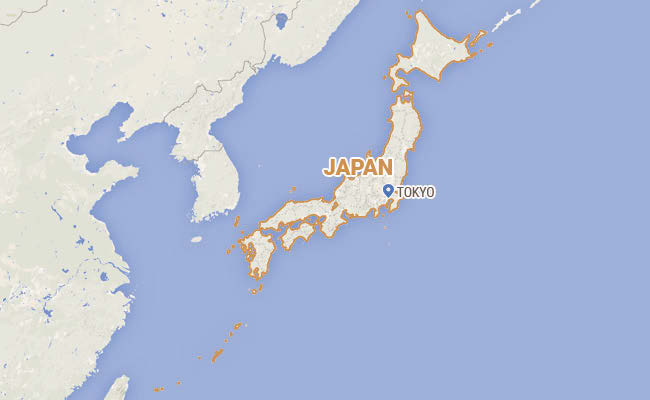
    TOKYO (TIP): A strong 6.0-magnitude earthquake struck off Japan’s southwest coast today, the US Geological Survey said, but local authorities said there was no danger of a tsunami.

    The quake hit at 11:39 am (0239 GMT) off the coast of Japan’s main Honshu island, at a location about 350 kilometres southwest of Tokyo, USGS and the Japan Meteorological Agency said.

    The quake was measured at a relatively shallow depth of 10 kilometres.

    No damage or injuries were immediately reported though heavy shaking forced some of the country’s bullet trains to temporarily stop running, public broadcaster NHK reported.

    Japan sits at the junction of four tectonic plates and experiences around 20 percent of the world’s most powerful earthquakes.

    But rigid building codes and strict enforcement mean even powerful tremors frequently do little damage.

    A massive undersea quake that hit in March 2011 sent a tsunami barrelling into Japan’s northeast coast, leaving 18,500 people dead or missing, and

    sending several reactors into meltdown at the Fukushima nuclear plant in the worst atomic accident in a generation.

  • McDonald’s to open 1,300 outlets in China

    McDonald’s to open 1,300 outlets in China

    WASHINGTON (TIP): Fast food giant McDonald’s has planned to open approximately 1,300 fast food restaurants in China over the next five years, CEO Steve Easterbrook announced. Easterbrook said that the firm wants to make China its second largest market worldwide, behind only the US, EFE news reported. Easterbrook said that the aim is to open some 250 restaurants this year, and to do that the firm will seek an investing partner to participate in broadening its franchise business in China, where McDonald’s currently operates some 2,200 stores.

    The firm’s expansion plans in China comes along with those of other multinationals such as coffee chain Starbucks, which plans to open some 500 coffee shops per year over the next five years in the Asian country, or sports retailer Adidas, which wants to open some 3,000 stores.

    Easterbrook also announced that given the rising interest among Chinese consumers in healthier food options, the company will include more items on its menus in China such as apple slices and whole wheat cupcakes.


  • Car bomb kills 7 policemen in Turkey’s Diyarbakir

    Car bomb kills 7 policemen in Turkey’s Diyarbakir

    ANKARA/DIYARBAKIR (Turkey) (TIP): A car bomb killed seven police officers and wounded around two dozen people in Turkey’s Diyarbakir on March 31, security sources and officials said, a day before the country’s prime minister is due to visit the biggest city in the largely Kurdish southeast.

    A parked car laden with explosives was detonated by remote control as a minibus carrying the police officers turned a corner on a busy street, the sources said, adding that civilians were also among the wounded.

    President Tayyip Erdogan, who is on a visit to Washington for a nuclear security summit, denounced the attack, saying it showed the “ugly face” of militants “as they are cornered”.

    “This shows terrorism’s ugly face again. The determination of our security forces will, God willing, put an end” to it, Erdogan said in a speech to the Brookings Institute.

    He said 27 people had also been wounded in the attack.

    The southeast has been scorched by violence since a ceasefire between the outlawed Kurdistan Workers Party (PKK) and the government collapsed last July. The government has said it has killed thousands of militants since then, while more than 350 members of the security forces have been killed in the fighting.

    Round-the-clock curfews have been instituted in parts of the southeast, where the economy also been devastated by the fighting. One of the hardest hit areas has been Diyarbakir’s historic Sur district, which is encircled by UNESCO-listed, Roman-era walls.

    Development minister Cevdet Yilmaz, in the area ahead of Prime Minister Ahmet Davutoglu’s visit, said the government wanted to rebuild the region.

    “We are here to rebuild Diyarbakir and make it beautiful, and they want to destroy it,” he said in comments broadcast live. “We will not retreat in fear.”

    The government has announced an ambitious restoration plan for the southeast.

    There was no immediate claim of responsibility for the bomb attack. A PKK offshoot has claimed two car bomb attacks this year in the capital Ankara.

    The first, on February 17, targeted a military bus and killed 29 people, mostly soldiers. The second, just under a month later, killed 37 in a crowded transport hub.

    NATO member Turkey faces multiple security threats.

    As part of a US-led coalition, it is fighting Islamic State in neighbouring Syria and Iraq.

    In Istanbul this month a suicide bomber, who the government said was a member of Islamic State, killed three Israeli tourists and an Iranian.

  • Batman v Superman: Dawn of Justice | MOVIE REVIEW

    Batman v Superman: Dawn of Justice | MOVIE REVIEW

    STORY: While Superman’s actions are undoubtedly heroic, Batman begins to feel that if Superman isn’t made to deal with his own mortality and put in his place, he will assume himself to be a god, an authority unto himself. As the action in Metropolis unfolds and these two icons of the superhero universe battle it out, Superman’s nemesis Lex Luthor creates a monster called Doomsday to destroy Metropolis. It’s only Batman, Superman and Wonder Woman who have a chance at stopping Luthor and Doomsday.

    REVIEW: It’s important to know that while all the usual elements of a superhero flick are in place, this is a somewhat different kind of superhero film. It’s also pretty dark (given that the Dark Knight series and Man of Steel were intense enough by themselves), and gradually builds up to a climactic conclusion.

    Bruce Wayne (Affleck) might have a somewhat inexplicable grudge against Clark Kent (Cavill), and in his anger, he has to be reminded by Alfred (Irons, superb) that taking on Superman would be suicide. After all, how does one defeat a man who cannot be harmed by anything – except kryptonite, of course. So Wayne dons his cowl, a considerably up-armored suit and levels the playing field a bit, with the help of an array of special gadgets and materials.

    Those aware about comic lore would know that these two have faced each other off before. But on the big screen, the fight sequences are furious. It’s also about a clash of their ideologies. It’s pretty heavy and this will put some off. However, Jesse Eisenberg’s Luthor is terrific -from his look, to his mannerisms; a psychotic, conniving villain straight out of hell, who quotes Nabokov. Gal Gadot, as smokin’ hot Wonder Woman is absolutely kickass. Affleck is good, but you’ll definitely miss Bale’s Batman.

    Characters are briefly introduced and there are certain scenes that might look random (Batman’s nightmares, for example) but all reference the DC Universe. The movie is packed with references – both visual and dialogue-wise – to classic comic lore. Underpinning everything is Hans Zimmer and Junkie XL’s score. An artillery barrage of action.

  • SARAH SILVERMAN JOINS ‘BATTLE OF THE SEXES’ CAST

    SARAH SILVERMAN JOINS ‘BATTLE OF THE SEXES’ CAST

    Actress-comedienne Sarah Silverman has joined the cast of ‘Battle of the Sexes,’ which stars Emma Stone and Steve Carell. Elisabeth Shue and Andrea Riseborough are also on board, with “Little Miss Sunshine” filmmakers Jonathan Dayton and Valerie Faris directing the project from a script by Simon Beaufoy, reports variety.com.

    Filmmaker Danny Boyle is producing ‘Battle of the Sexes’ under his Decibel Films banner along with Christian Colson and his company, Cloud Eight.

    The movie will follow the competition between tennis professionals Billie Jean King and Bobby Riggs.

    Silverman, who will play Gladys Heldman, the founder of World Tennis magazine, was last seen on screen in ‘I Smile Back’ and will next be seen in Universal’s comedy ‘Popstar: Never Stop Stopping.’

  • JENNIFER ANISTON’S INTENSE WORKOUT STORY

    JENNIFER ANISTON’S INTENSE WORKOUT STORY

    Actress Jennifer Aniston says she gets up early in the morning for her “pretty intense” workout session.

    The ‘Friends’ star shared her fitness mantra with Well+Good magazine. She also said that she has a personal trainer to make sure she is always exercising, reports mirror.co.uk.

    She said: “If I’m working, I’m up at 4:30 – 5 a.m. If not, between 8 and 9 a.m., because I’m a late-night person. But usually when I wake up, I’ll make my standard cup of hot water with a slice of lemon in there.

    “Then I’ll go do a workout of some sort. I have a trainer, a wonderful woman who I do this spin-yoga class (with). We spin for half an hour, and then do yoga for 40 minutes. That’s pretty intense.”

    The ‘Horrible Bosses’ actress added: “Then I go to a gym, where I do strength training or just my own thing on the treadmill, the bike, or the elliptical, just to change things up.”

    The actress also shared details about her breakfast routine, revealing she is a big fan of protein shakes.

    Aniston, who got married to Justin Theroux, said: “Usually I’ll have a shake, with some sort of pure protein, then bananas, blueberries, frozen cherries, stevia, a vegetable mix of dynamic greens that goes in there, maca powder, and a little cacao.

    “If I don’t have a shake, I’ll just have some toast and poached eggs with some avocado. Or millet cereal with almond milk and bananas – it’s really yummy, and you can get it hot for winter months.”

  • SONAM KAPOOR HINTS AT DOING ANOTHER WOMAN CENTRIC FILM

    SONAM KAPOOR HINTS AT DOING ANOTHER WOMAN CENTRIC FILM

    After winning accolades for her last release ‘Neerja’, actress Sonam Kapoor hinted at working once again in a woman centric film. In Ram Madhvani’s biopic, Sonam essayed the life of slain flight attendant Neerja Bhanot who died saving hundreds of passengers on a hijacked flight in 1986. When asked if audiences are once again going to see her reprising a strong female character on screen, Sonam said, “I will announce something soon. I can’t talk about it.”She did not divulge any further details of her next project. The ‘Raanjhana’ actress, when quizzed if she would also like to play historic female heroes, she said, “You see it. Hopefully I would like to play something like that.” Sonam was talking on the sidelines of event ‘Women of Worth Awards’.

    The 30-year-old actress on the occasion acknowledged the active role of many Indian women who helped build the nation but rued that unsung heroes like Neerja Bhanot got lost in history. “There are lot of Indian woman who have been modern heroes who have helped in building a better India. There are lot of Indian women in the history you look at like Mother Teresa, Sarojini Naidu, Lata Mangeshkar and others,” she said. “There are women who got lost in the page of history like Neerja Bhanot and it is sad. There is a wider variety of women that we are looking at and the more innovative things that they are doing which are cultural and scientific breakthroughs and artistic as well,” Sonam said.

    L’Oreal Paris in association with NDTV hosted the fifth edition of the award last evening to felicitate the achievements of eight exceptional women who have made a difference to the lives of others. Ambassadors for the beauty major Sonam, Aishwarya Rai Bachchan and Katrina Kaif were present to give away the awards.

  • KATRINA KAIF IDOLIZES INDIRA GANDHI

    KATRINA KAIF IDOLIZES INDIRA GANDHI

    Since recent times, Katrina Kaif has been in the news for her alleged breakup with Ranbir Kapoor. But now, she has made heads turn for something else. The gorgeous actress attended an event recently where women achievers were awarded. While interacting with the media, she said that the former Prime Minister of India, the Late Indira Gandhi is her inspiration and she looks up to her. When it comes to women from other countries, Katrina said that she admires Tennis superstar Serena Williams. The ‘Jab Tak Hai Jaan’ actress also said that she believes that education can help attain the goal of gender equality. Needless to say, people present at the event were impressed by Kat’s thoughts.

    In a recent interview, the actress confessed that though she’d prefer to be in the news for her professional achievements and not her personal life, she’s more or less unperturbed by the unwanted attention. The actress also added that though she wishes she was in the lime light for her work, she doesn’t take speculation as an invasion of privacy. Now that’s a very mature way to deal with the drawbacks of stardom.

  • Rocky Handsome | MOVIE REVIEW

    Rocky Handsome | MOVIE REVIEW

    Rocky HandsomeSTORY: Two bruised hearts, 8-year-old Naomi (Diya) and Kabir (John) find solace in each other. They are both lonely and nursing psychological scars and mysterious tragedy. Naomi’s mother is a drug addict-peddler and Kabir loses the only person he loves. The talkative kid-next-door becomes the reclusive pawn shop owner’s only reason to live. When her life is endangered, his soul is awakened once again.

    REVIEW: Set in Goa, Rocky Handsome seems promising and atmospheric in the beginning. The setting works. Non-linear narration evokes curiosity around the protagonist. But things go downhill as soon as conversation between Diya and John kicks in. Their rapport seems meaningless and forced. You don’t feel for either of them.

    Nishikant Kamat’s urge to utilise John Abraham’s ripped physique and expertise at combat scenes for an action thriller is evident. He does a spectacular job at that as expected. He moves and kills with conviction. However, one cannot solely depend on it, assuming it will make up for the lack of effective storytelling. Barring John’s past, nothing evokes sympathy for the lead characters or disdain for the villains. The director’s desperation to portray every bad guy as psychotic seems pointless. Casting is a major issue as actors don’t look or speak like they belong to Goa.

    Nishikant’s decision to play the mafia ganglord Kevin Pereira doesn’t help the film either. You miss the presence of a strong antagonist, who can stand up against the invincible John.

    Barring the fast-paced fist and knife fights, the movie fails on various grounds. It is a classic case of style over substance. And sadly, it doesn’t look stylish either. The Hindi remake of a Korean film struggles to blend action and emotion. Its need to infuse drama kills the thrill of its sleek and ruthless action. Also, the whole patriotic backstory for Kabir further spoils the aura of his mysterious hoodie sporting character. The climax is stretched for way too long.

    Shruti Haasan looks pretty in her special appearance, adding life to the lovely song Rehnuma. John Abraham as the lean, mean, killing machine is perfect for the role of Kabir. It’s the execution and poor dialogue that makes this film a damp squib.

  • PAKISTAN ACCEPTS INVOLVEMENT OF ITS NATIONALS IN PATHANKOT ATTACK

    PAKISTAN ACCEPTS INVOLVEMENT OF ITS NATIONALS IN PATHANKOT ATTACK

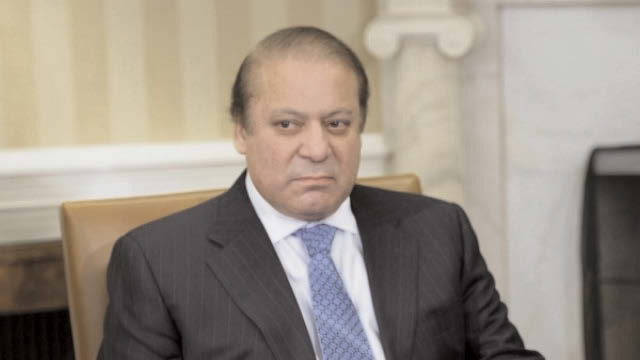
    NEW DELHI (TIP): In a major boost to the Indian probe into the Pathankot case, Pakistan has admitted the involvement of its nationals in the terror attack. It came in the form of the Pakistani joint investigation team (JIT)’s written request to the national investigation agency (NIA) for sharing evidence in the case. The request was made under Section 188 of the Pakistani CrPC, which applies to Pakistani nationals who commit crime outside the country, according to NIA officials.

    “The JIT submitted a written request to the NIA for sharing evidence in the Pathankot case , only then a process for providing them documents, witness statements and other information was started on Wednesday,” said a senior NIA official requesting anonymity.

    Section 188 of the Pakistani criminal procedure code applies for prosecuting those Pakistani nationals in Pakistan who have committed crime outside its jurisdiction. It is a formal acceptance of involvement of Pakistani nationals in the airbase attack,” said the official.

    The process of sharing evidence that began on Wednesday continued on Thursday as well with the JIT examining 13 witnesses in the case including Punjab’s superintendent of police Salwinder Singh, his cook Madan Gopal and jeweler friend Rajesh Verma.

    Singh, Gopal and Verma were travelling together in Punjab police official’s vehicle on the intervening night of December 31 and January 1 when four attackers overpowered them and snatched their vehicle to reach the airbase. Eight persons including seven security personnel were killed in the attack.

    A five-member JIT, including an officer of Pakistani spy agency ISI, has in India for the last five days to interact with the NIA officials who conducting probe here.

    “Examination of Salwinder happened in the presence of two officials each from the NIA and the JIT. Salwinder is being treated as witness in the case,” said another official of the NIA who also spoke on the condition of anonymity given the sensitive nature of case. The official added that the NIA probe converges with the investigation carried out in Pakistan at some place. The JIT has accepted that the attackers came from Pakistan. “The NIA and the JIT are probing same set of accused,” said the official. India probe has revealed that at least four attackers, who captured Salwinder Singh’s vehicle, had come from Pakistan after a conspiracy hatched by terror outfit Jaish-e-Mohammad, headed by Maulana Masood Azhar.

  • HARYANA ASSEMBLY PASSES JAT QUOTA BILL

    HARYANA ASSEMBLY PASSES JAT QUOTA BILL

    CHANDIGARH (TIP): The Haryana Assembly  passed the Haryana Backward Classes (Reservation in Services and Admission in Educational Institutions) Bill, 2016 to provide reservation for Jats and four other communities in government jobs and education.

    Haryana Chief Minister Manohar Lal Khattar moved the Bill in the House to give statutory status to Backward classes Block ‘A’, Backward classes Block ‘B’ and Backward classes Block ‘C’ — by enacting the Haryana Backward Classes (Reservation in Services and Admission in Educational Institutions) Act, 2016 and requested the Central government to include this Act in 9th Schedule read with Article 31B of the Constitution of India.

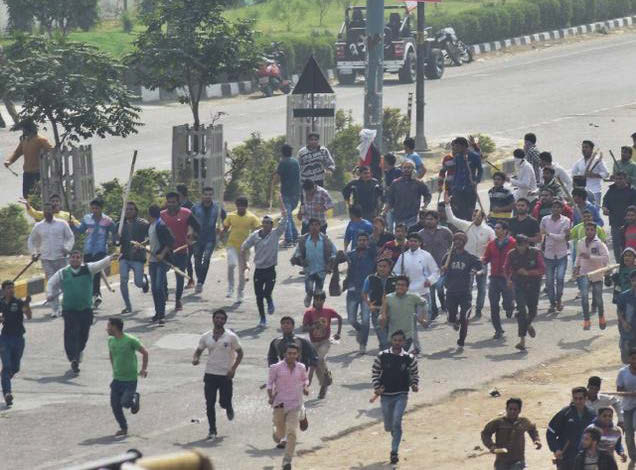
    It may be recalled that the Chief Minister had promised reservation for the Jat community and others that included Jat Sikhs, Rors, Bishnois and Tyagis, by bringing a Bill during the ongoing Budget Assembly session, following a violent Jat agitation that had left the State paralysed for over ten days in February 2016.

    The press communication issued by the government said the Bill provides for increase in percentage of reservation in Schedule I, II and III for Class I and II posts for BC ‘A’, BC ‘B’ and BC ‘C’ from 10 per cent, five per cent and five per cent to 11 per cent, six per cent and six per cent respectively.

    It was also ecided to increase the existing reservation of five per cent for Economically Backward Persons in General Caste Category in Class I and II posts from five per cent to seven per cent.

    The Bill states that notwithstanding anything contained in this Act, the state government may provide horizontal reservation for such category or categories of persons within Backward Classes, as it may deem necessary from time to time.

    After analysing the Justice (Retd.) K.C. Gupta Commission report (the Commission that was set-up to entertain, examine and recommend upon requests for inclusion and exclusion of castes in the list of backward classes), the state government is satisfied that the report of the Commission is based on quantifiable data and strong evidences, which indicates that not only the five
    castes/classes — Jat, Jat Sikh, Ror, Bishnoi and Tyagi are backward classes socially and educationally, but they also comply with all legal norms suggested in Indra Sawhney’s (CWP 930 of 1990) case, which has made it imperative for the state to provide these castes/classes ten percent reservation in relaxation of general rule of 50 percent in terms of paragraph 810 of the Indra Sawhney’s case.

    Notably, reservation in Haryana has already touched the 50 per cent threshold as prescribed by the Supreme Court of India, however the case law established by Indra Sawhney’s case does not limit the powers for providing reservation to classes by the executive or legislative Branches.

    As per the judgement, reservation should not “exceed 50 per cent of the appointments in a grade, cadre or service in any particular year. It is only for extraordinary reasons that this percentage may be exceeded.” However, every excess over 50 per cent will have to be justified on valid grounds which will have to be specifically made out, said the government statement.

  • KOLKATA FLYOVER FALLS, CRUSHES 25 TO DEATH

    KOLKATA FLYOVER FALLS, CRUSHES 25 TO DEATH

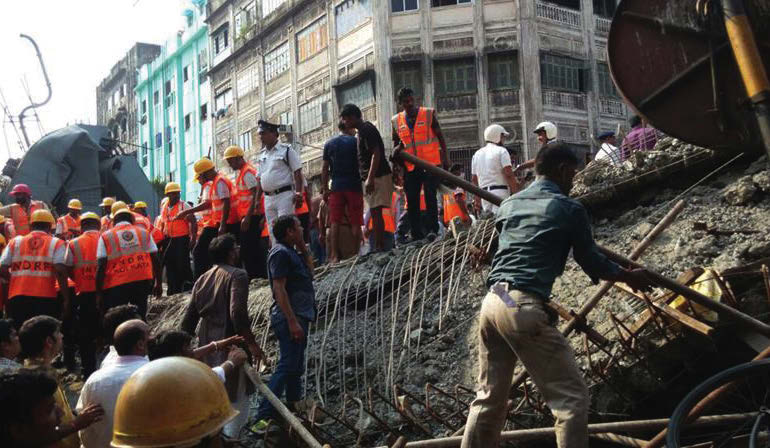
    KOLKATA (TIP): At least 25 people were killed as the flyover in the Burrabazar area in North Kolkata, which was still under construction, collapsed on March 31.

    Amidst the dust and debris, the big question was this: what led to the disaster? While a probe ordered by the government is expected to come up with answers, there were some clues on the ground.

    While local residents confirmed that work was on through day and night over the last few months, an injured worker receiving treatment at the Marwari Relief Society hospital said that last night, his supervisors had found that rivets on the flanks of the flyover were damaged.

    Said Partha Pratim Biswas, professor of construction engineering, Jadavpur University: “Wornout rivets or bolts could be a clear indication of the wear and tear, and rust, that the structure might have accumulated because of its long pendency.”

    Officials said that the Left Front government had first come up with the idea of a flyover to decongest this choked Burrabazar stretch. Work began in 2007 but stopped two years later because of shortage of funds.

    From the beginning, sources said, local residents were against the project because there was hardly a gap of a few feet between the flyover’s flanks and the balconies of some buildings on the side.

    KOLKATA FLYOVER FALLS1On Thursday, Army personnel engaged in rescue operations said they found that the iron sheets used as the base were “too thin and worn out”. “In some places, these iron sheets were twisted and did not appear to be of good quality,” said one of them.

    Rajat Kumar Dutta, a government medical officer whose office is located just 50 metres from the accident site, said that he saw helmet-clad workers doing welding work on the flyover minutes before the collapse. “Within seconds, I saw the structure come down with those workers being tossed in the air,” he said. According to government officials, the project was barely 80 per cent complete by November. It was only the Chief Minister’s “intervention” that allowed work to start on a 150-metre stretch where work was held up for six years because of lack of permission from the Calcutta Port Trust to build piers for a ramp.

  • SC BAN ON HIGH-END CARS, NEW SUVS IN NCR TO STAY

    SC BAN ON HIGH-END CARS, NEW SUVS IN NCR TO STAY

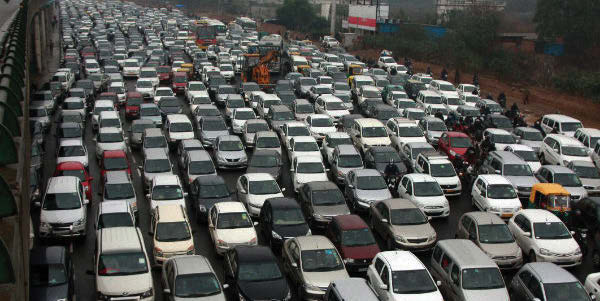
    NEW DELHI (TIP): The Supreme Court on March 31 ordered for continuance of ban on registration of new diesel-run Sports Utility Vehicles (SUVs) and high-end cars of 2000cc and above in the National Capital Region.

    A three-judge bench presided over by Chief Justice T S Thakur said the ban, imposed from December 16 till March 31, would remain in operation till it decided on the car manufacturers plea that their vehicles caused less pollution.

    The court also indicated for imposing pollution charge on buyers of bigger cars, in case it allowed their registration in the NCR which includes Ghaziabad, Gurgaon and Noida.

    The apex court, however, extended by April 30 the time for converting all taxis onto the CNG fuel platform.

    “We can modify our order but they (buyers) have to pay the cost to help the environment,” said the bench, also comprising Justices A K Sikri and R Banumathi.

    To a plea by a host of senior advocates, representing the car manufacturers, including Mercedes Benz, that there was no ground to assume that their vehicles crossed the pollution limit, the bench asked, “Can you give us any study that suggests that diesel caused less pollution than petrol?”

    “We have earlier ordered for converting public transport vehicles run on diesel to CNG. Do you want to re-invent wheel? Is it medically-advised to go for diesel cars,” the bench asked further.

    As senior advocate C A Sundaram claimed diesel cars were more fuel efficient, the bench said, “What class of people are buying these cars? Are they bothered about fuel efficiency? These are super-rich people, who want to show off.”

    Armed with a study done by IIT-Kanpur, Sundaram claimed there were many vehicles like Innova and Tata Sumo, which are run as taxis and complied with Bharat Stage norms, while causing less pollution due to fuel optimisation. He also submitted that the Delhi government proposed 4% cess on purchasing 1500 cc and above and 2.5%on less than 1500 cc vehicles. Senior advocate P Chidambaram, appearing for Maruti, contended that the court’s ban order affected the car manufacturer.

    The bench, however, said, “It is your city when you step out you also breathe air. You need to help in combating pollution.”

    “We are conscious of the fact that the ban order would affect economy and business of the companies. You should tell us possible alternatives as you are all responsible companies and should present consolidated views,” the bench told the counsel, adding that the matter would heard in detail on a Saturday for which the date would be announced later.

    During the hearing, as a counsel claimed the court’s previous order was being interpreted to extend the ban on registration of trucks and heavy commercial vehicles in Delhi, the bench observed: “There is no need for fresh registration of trucks. Is there any place for parking?Heaven will not fall if trucks are not registered here. There should be conjection charge also.”

  • Mehbooba to be sworn in as first woman CM of J-K on April 4

    Mehbooba to be sworn in as first woman CM of J-K on April 4

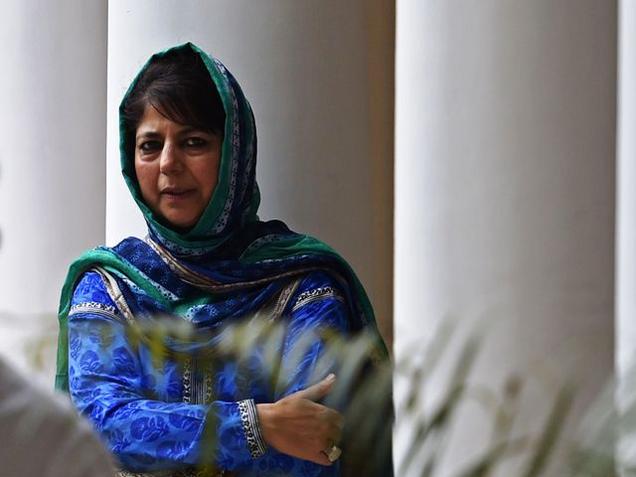
    SRINAGAR (TIP): PDP President Mehbooba Mufti will be sworn in as the first woman Chief Minister of Jammu and Kashmir on April 4, a party leader said.

    “Mehbooba Mufti sahiba will be sworn in as Chief Minister of J-K on April 4,” PDP leader Amitabh Mattoo said here. Mattoo, who worked as an advisor to former chief minister Mufti Mohammad Sayeed, expressed the hope that 56-year-old Mehbooba would usher in a new era of peace and prosperity in the region.

    Meanwhile, sources in PDP and its alliance partner BJP said they have also conveyed the mutually agreed date for the swearing-in ceremony to state Governor N N Vohra.

    The date for the oath ceremony of the new cabinet was decided after deliberations between the leadership of both the parties, they said.

    Asked whether there were any differences between the coalition partners which led to delay in the swearing-in ceremony, the sources said there were no differences but deliberations between alliance partners happen and they take time. PDP and BJP had staked claim for government formation on March 26, two days after Mehbooba was elected as PDP’s legislature party leader.

    After the death of her father, who headed PDP-BJP coalition government for 10 months from March 1, last year until his death on January 7, this year, Mehbooba had been reluctant to take over as CM of the PDP-BJP coalition government.

  • POLITICAL PUSH, TECH FAULT COULD BE CRASH CAUSE

    POLITICAL PUSH, TECH FAULT COULD BE CRASH CAUSE

    KOLKATA (TIP): The inordinate delay in executing the work and Mamata Banerjee’s subsequent rush to open the 2.2km Vivekananda Road flyover seem to be its undoing, literally.

    The 2.2-km Vivekananda Road flyover, being constructed since 2009, has been beset by delays. Has the delay caused fatigue in execution? Amid perpetual postponement, in November last year, chief minister Mamata Banerjee announced opening the flyover by February 2016, not caring that 24% of the work was still left.

    With an eye on the assembly elections, the chief minister in November last year-at a Jagaddhatri Puja event-had declared the inauguration of the flyover by February 2016, ostensibly not paying much thought to the fact that 24% of the work was left. Informed by her urban development minister Firhad Hakim that the deadline was implausible, she relented to postpone the date but maintained that it should be finished by September. As a result, immense pressure was apparently put on the implementing agency, KMDA, and builder IVRCL to meet the deadline, the 10th since the project started in 2009.

    Hyderabad-based IVRCL bagged the contract on a turnkey basis on February 24, 2009, with a budget of Rs 164 crore and the deadline set at the end of 18 months. But as the construction started in December 2009, the design for the overpass -intended to be one of the longest in the city, connecting Girish Park in north Kolkata to Howrah-had to be changed innumerable times, with around 22 underground utility cables at 35 places between Girish Park and Posta acting as major stumbling blocks. A little over four years later, in February 2014, IVRCL sought a bailout of Rs 74 crore from the state, claiming they found it difficult to manage, given the escalating cost owing to delays.

    After a little over six years, only 0.9km of the 2.2km flyover has been constructed, to add up to 59 spans. It is the 60th span that was being cast which collapsed on Thursday. The casting was on for two days, but the work, carried out from Wednesday midnight till 5am on Thursday, was faulty, engineers suspected.

  • Congress to challenge U’khand Budget ordinance

    Congress to challenge U’khand Budget ordinance

    NEW DELHI (TIP): The Congress on March 31 said it would move court if the Modi government issues an ordinance authorising expenditure from April 1 in Uttarakhand that has been placed under the President’s Rule.

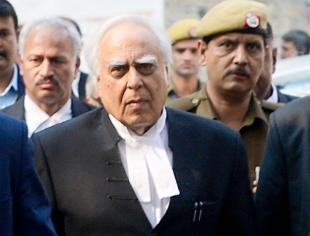
    Former law minister Kapil Sibal contested Centre’s claims that the Uttarakhand Assembly had failed to pass the state budget on March 18.

    “I would like to ask Prime Minister Narendra Modi on what basis have you declared that the Budget has not been passed in the Assembly,” Sibal said referring to the Union Cabinet recommendation to the President to promulgate the Uttarakhand Appropriation ordinance.

    He said promulgation of an ordinance to authorise expenditure would be“unprecedented and unconstitutional”.

    The senior Congress leader contended that the Uttarakhand speaker had declared that the Appropriation Bill was passed by a voice vote and that there was no petition in the court contesting it.

  • Pak trying to defame India using doctored video, says Rijiju

    Pak trying to defame India using doctored video, says Rijiju

    New Delhi (TIP): India on Wednesday accused Pakistan of trying to “defame” it by cooking up the story about involvement of its external intelligence agency in fomenting insurgency in the neighbouring country.

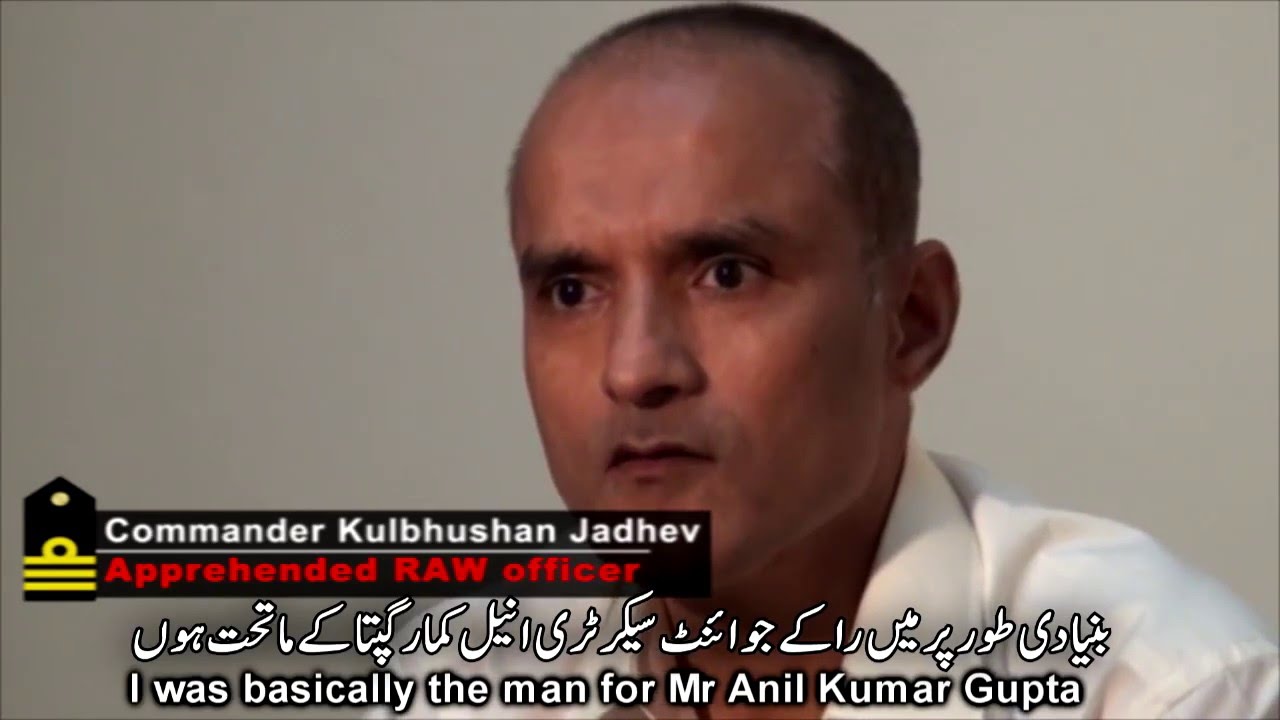
    Minister of State for Home Kiren Rijiju said that Islamabad on Tuesday released a “doctored” video of former Indian Navy officer Kul Bhushan Yadav, who is accused of working for India’s external spy agency —Research and Analytical Wing. “It was a completely doctored video, fake video made by Pakistan. They are just cooking up stories and doctoring videos to defame India,” said Rijiju. Yadav was running a cargo business in Iran after his “premature retirement” from the Indian Navy. He had possibly been abducted from Iran by a small outfit owing allegiance to al-Qaeda and handed over to Inter Services Intelligence (ISI) of Pakistan, sources in New Delhi said.

    Rijiju said that the allegations by Pakistan about India fomenting unrest in its territory would have no impact on international platforms. The video, released by Pakistan Army on Tuesday, has Yadav saying that he was still serving in the Indian Navy and would retire in 2022. It also has him saying that he began working as an intelligence agent after the attack on the Indian Parliament in 2001.

  • New sexual harassment case against Pachauri

    New sexual harassment case against Pachauri

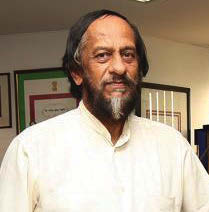
    NEW DELHI (TIP): A European woman has levelled sexual harassment charges against tainted environmentalist R K Pachauri, who faced similar accusations from two former employees of The Energy and Resources Institute (TERI).

    The woman made the complaint in a letter to advocate Vrinda Grover, who represents the complainants in the sexual harassment case against Pachauri. The foreigner said she worked at TERI as Pachauri’s secretary in 2008.

    Pachauri refused to comment. However, his lawyer Ashish Dixit termed the allegation a
    “conspiracy” to defame his client and questioned why every time such a case came up it was Grover who gave statements and there were no police complaints. “It is a conspiracy by Grover to defame Pachauri. Every time a woman is said to make allegations it is only through the press, not to police or court. Why is that every woman comes and reports to Vrinda Grover. There is some conspiracy. To prejudice the judges these types of reports are aired,” Dixit said.

    In an unsigned statement, released by Grover, the girl wrote, “From the beginning Pachauri would put his hands on my waist repeated times, he would hug me longer than felt comfortable, kissed me on the cheek and enquired about my private life. I started feeling insecure about his motives for hiring me, and felt extremely uncomfortable being around him.”

    The woman said the “tipping point” came when Pachauri asked her to join him at his summer residence outside Delhi in the absence of his wife.

    At that point of time, she claimed to have spoken out and asked him to behave professionally. Within days, she was transferred to another department of TERI and after four months Pachauri abruptly terminated her contract, though she was initially taken on a one-year contract.

  • Bihar passes liquor ban bill

    Bihar passes liquor ban bill

    PATNA (TIP): From April 1, anyone found consuming liquor at public place in Bihar will be put behind bars, with the jail term varying from 5 to 10 years.

    The excise rules have been overhauled after a gap of 101 years and the new law comes into force with effect from Friday onwards wherein stringent penal provisions have been inserted for those violating prohibition norms.

    The Bihar Excise (Amendment) Bill 2016, which was unanimously passed by the Bihar Assembly, has provisions for death sentence to those illicit liquor manufacturers whose brew will cause deaths.

    There is a provision for life sentence to those liquor makers whose brew causes permanent disability, while those involved in illegal liquor trade will face 10 years of imprisonment.

    Chief Minister Nitish Kumar, during 2015 Assembly poll campaign, had promised to ban liquor if voted to power. Soon after donning the mantle again, he fulfilled one of his main resolves.

  • ‘Terrorism is globally networked. But we still act only nationally to counter this threat’: PM Modi

    ‘Terrorism is globally networked. But we still act only nationally to counter this threat’: PM Modi

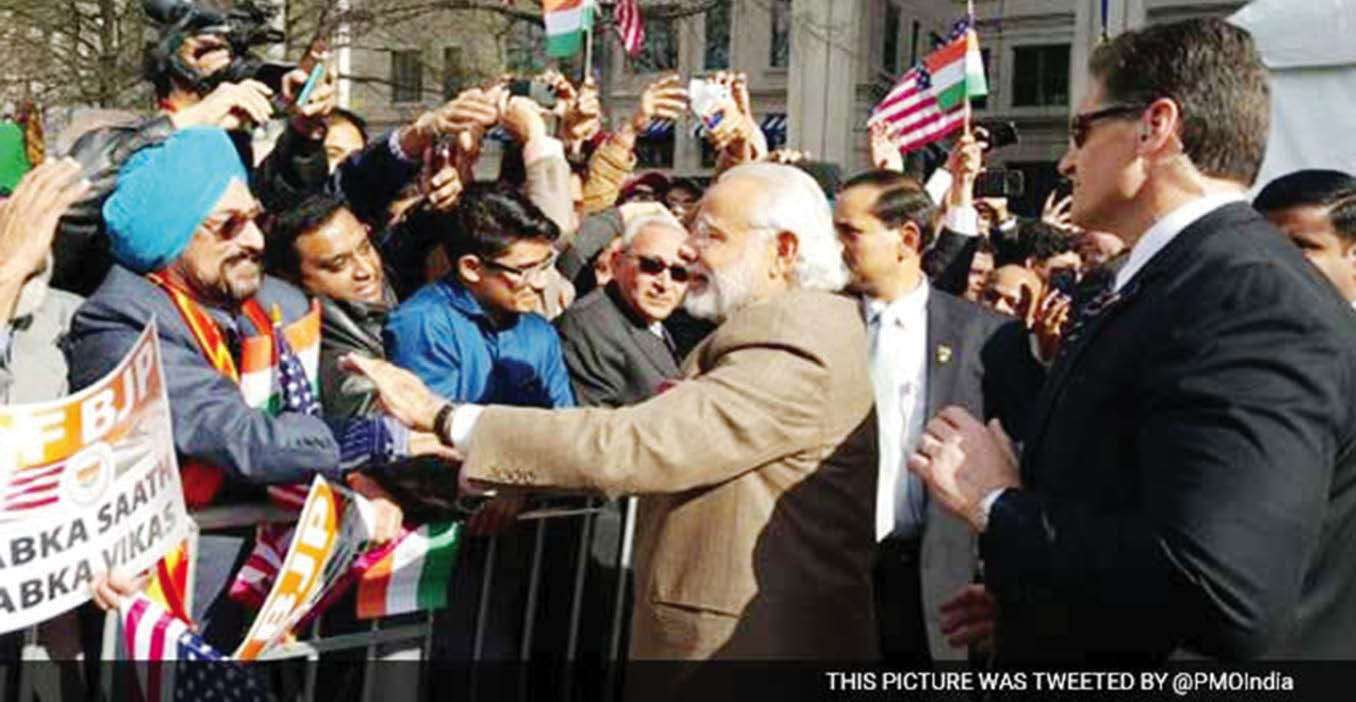
    WASHINGTON (TIP): India’s Prime Minister Narendra Modi who is on a three-nation visit of Belgium, the US and Saudi Arabia, arrived March 31 in Washington where, among many  other engagements, he is attending the Nuclear Security Summit.

    Speaking at the summit, Narendra Modi said: “Terrorism is globally networked. But, we still act only nationally to counter this threat. The reach and supply chains of terrorism are global, but genuine cooperation between nation states is not.”

    “Drop the notion that terrorism is someone else’s problem and that “his” terrorist is not “my” terrorist. Nuclear security must remain an abiding national priority for every country”, he added

    PM Modi praised President Obama for his vision and effort for nuclear security and said: “this legacy of President Obama must endure.”

    During his two-day stay in Washington, PM Modi is scheduled to interact with a number of world leaders including the host President Barack Obama.

    Prime Minister Narendra Modi had arrived in Washington DC on 31 March where he was received at the airport by US Ambassador to India, Richard Verma.

    Earlier in the day, Modi met a team of scientists, including 3 Indians, from the Laser Interferometer Gravitational Wave Observatory (LIGO), who proved gravitational waves theory.

    The team of scientists, was led by Dr France Cordova, Director of the National Science Foundation, who explained how India was extremely important for the future of the LIGO project. An MoU on the establishment of LIGO project in India was signed by Dr Cordova and Dr Sekhar Basu, Secretary, Department of Atomic Energy, India, which was witnessed by the Prime Minister himself.

    Brussels Visit

    Earlier, on March 30, Prime Minister Narendra Modi, arrived on his maiden state visit to Belgium and expressed India’s solidarity with the European nation for the tragedy that struck Brussels on 22 March.

    His daylong schedule in the city, which is still recovering from a terror attack last week that killed dozens of people, included attending the 13th India-European Union Summit and visiting a memorial at the Maalbeek metro station for the victims of the Brussels attacks, which included Indian engineer Raghavendra.

    Speaking in Brussels, Modi said, “India stands in full support and solidarity with Belgium.” He offered his sincere gratitude for the warm welcome he received despite it being a tough time for the country.

    Modi and Belgian Prime Minister Michel also had a bilateral meeting. The bilateral meeting between the two premiers was aimed at expanding trade, investment and high technology partnership with this important EU member. The meeting was also focused on stalled trade talks between the two sides as well as on investment, energy, climate, water and migration.

    Counter-terrorism was a key focus, particularly in the aftermath of the Brussels bombings. “We stand shoulder to shoulder with the people of Belgium in the wake of the horrific attacks in Brussels and share the grief of those who lost their loved ones,” Modi said.

    Over lunch, Modi met with a delegation of Belgian businessmen, an “opportunity for the him to encourage Belgian foreign direct investment into India.”

    Modi also met the Indian community outside his hotel on his arrival in Brussel.

    Saudi Arabia Visit 

    The Middle East, especially Saudi Arabia, has always played an important role in the India’s economic growth as well as relations with its querulous neighbor Pakistan.

    Prime Minister Narendra Modi and his government have been serious about cultivating ties with the middle east and within eight months of his visit to the United Arab Emirates, Modi is scheduled to visit the region again, this time to Saudi Arabia to strengthen Delhi’s close relations with the kingdom and loosen Saudi-Pakistani ties in the process.

    India is a major trade partner in the region, and Modi aims to position India globally so as to isolate Pakistan’s military-industrial complex and its policy of using terrorism as an instrument of state policy. The Saudis hope to leverage Indian expertise in IT and services to modernize and diversify a single-source economy dependent on oil.

    India’s ties with Saudi Arabia have grown over the last two decades based on burgeoning energy ties and the Indian diaspora – the largest group of foreign workers in the Saudi kingdom.

    Modi has already met King Salman of Saudi Arabia twice, and Saudi help was critical in the evacuation of Indian nationals from the Yemeni war zone. The 2012 deportation by the Saudis of Sayed Zabiuddin, also known as Abu Jundal, a suspect in 2008 Mumbai terrorist attacks, signaled a sea change in Saudi Arabia’s counterterrorism priorities.

    Saudi Arabia too is cautious in balancing ties between Pakistan and India. Ahead of Modi’s visit, Saudi Foreign Minister Adel al-Jubeir tried to alleviate concerns in Pakistan about budding Indo-Saudi ties and insisted that Saudi Arabia’s “relations with Pakistan do not come at the expense of [its] relations with India.” Adel al-Jubeir and Mohammad bin Salman, deputy crown prince and defense minister, visited Pakistan in January despite growing anger at Islamabad’s refusal to commit troops in Yemen and join the Saudi-led “coalition against terrorism” of 34 Islamic nations.

    For Indian strategists, any ally that can act as a counterweight to Pakistan in the Islamic world is useful. Saudi Arabia does the same with Iran, the two nations long competing for power and influence in the Gulf. As the regional balance of power between the two threatens to unravel in Iran’s favor, India has repeatedly emphasized a desire for stabilization in the region’s extant balance of power.

    The huge Indian diaspora in the country, nearly 3 million, makes India the largest recipient of foreign remittances from the kingdom at an estimated $11 billion. Pakistan, Bangladesh and Indonesia each send about 1.5 million foreign workers to Saudi Arabia

    Indian IT companies are building capacity in Saudi Arabia, including an all-women business process operations center run by TCS as one example.

    A hallmark of Modi’s foreign policy has been a self-confident assertion of Indian interests, marking a distinct break from unnecessary and counterproductive diffidence of the past. The prime minister is keen to see that Pakistan’s close allies apply pressure on Pakistan – and after limited success with the UAE, he will press the Saudis. While it’s unlikely that the Saudis will break with Pakistan, a declaration of opposition to state-sponsored terrorism would be considered a major step.

    To win such support, Modi most likely won’t be vocal about Saudi support for Wahhabism, a fundamentalist branch of Islam blamed by many in the international community for contributing to a spread of global terrorism.