Month: May 2017

  • BILKIS BANO CASE: HC SETS ASIDE ACQUITTAL OF 7

    BILKIS BANO CASE: HC SETS ASIDE ACQUITTAL OF 7

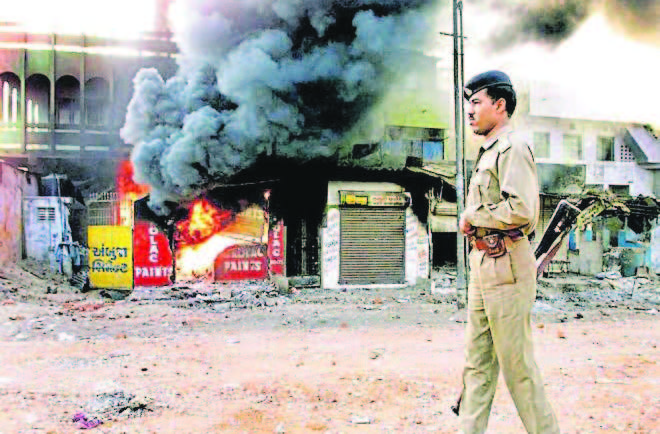
    MUMBAI (TIP): Setting aside the acquittal of seven persons, including five policemen and two doctors, the Bombay High Court on May 4 upheld the conviction and life imprisonment of 12 persons in the Bilkis Bano gangrape case. It, however, dismissed a CBI appeal seeking death penalty for three of the convicts on the grounds that they were the main perpetrators of the crime.

    Bilkis Bano said, “My rights, as a human being, as a citizen, woman, and mother were violated in the most brutal manner, but I had trust in the democratic institutions of our country. Now, my family and I feel we can begin to lead our lives again, free of fear.”

    A Division Bench of Justices K Tahilramani and Mridula Bhatkar, in a 430-page judgement, said while the probe conducted by the Gujarat Police was “flawed with a dishonest investigation”, the evidence and statements given by Bilkis Bano were “completely trustworthy”. Bilkis was gangraped in March 2002 at a time when she was pregnant. Seven of her family members were killed in Gujarat’s post-Godhra riots.

    “The appeal against conviction filed by the 11 convicts (one of them is dead) is dismissed. The conviction and sentence is upheld. The appeal filed by the prosecution against the acquittal of seven persons (in the case) is allowed. The acquittal is set aside,” the Bench announced.

    These seven persons — five policemen and two doctors — have been convicted for not performing their duty (Section 218) and for tampering with evidence (Section 201). Each of them were told to pay a fine of Rs 20,000 within eight weeks.

  • SUNIL JAKHAR APPOINTED PUNJAB CONG PRESIDENT

    SUNIL JAKHAR APPOINTED PUNJAB CONG PRESIDENT

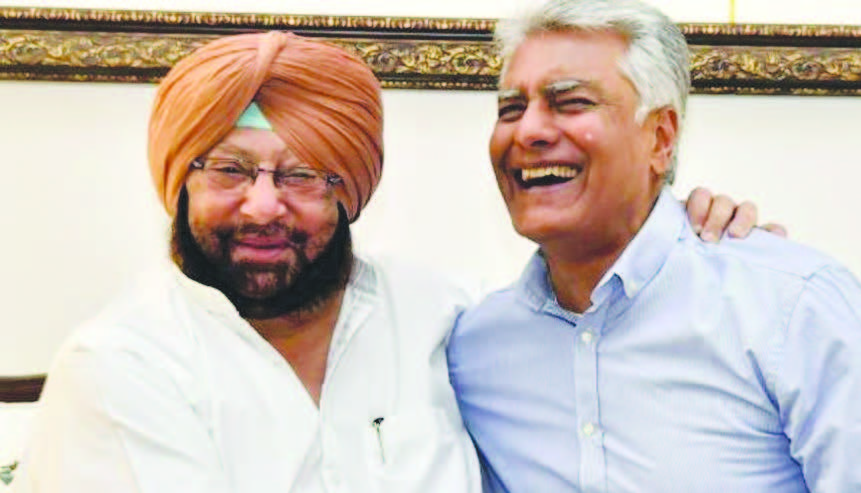
    NEW DELHI (TIP): Eyes on the 2019 Lok Sabha elections, the Congress on May 4 appointed Sunil Jakhar, former minister and a staunch Capt Amarinder Singh loyalist, as the new president of the Punjab unit. Jakhar, 63, who lost the Assembly election, will replace Capt Amarinder, who took oath as Chief Minister this March 17.

    Jakhar was Capt Amarinder’s choice for the post. Congress president Sonia Gandhi and party vice-president Rahul Gandhi both endorsed it.

    Jakhar said he would act as a bridge between the government and the party and ensure the grassroots connect of the Congress stayed intact.

    Jakhar’s appointment is strategic as the central leadership wants complete coordination between the government and the organisation to ensure a strong footing in the state where the party has only three Lok Sabha seats (Ludhiana, Amritsar and Jalandhar) of 13.

    “We have challenges ahead. The LS poll of 2019 are just two years away. The organisation has to be strengthened. I will endeavour equally to ensure that election manifesto promises are fulfilled,” Jakhar said.

    He said he had sought an appointment with Rahul Gandhi for tomorrow. A former minister in the Amarinder Singh cabinet, a three-time MLA from Abohar, and until recently Congress’ Legislature Party Leader in Punjab, Jakhar has been a diehard Amarinder loyalist.

    On the eve of Punjab elections, he was the one to consistently urge the Congress leadership to replace Partap Bajwa with Capt Amarinder as state chief. When that finally happened a year before the state polls, Jakhar was dropped as the CLP leader and Bajwa as state chief.

    While Rahul Gandhi sent Bajwa to Rajya Sabha, Jakhar was left in the cold only to be unsuitably placated later by being named party’s chief spokesperson in Punjab. In between, on poll eve, Jakhar was sour with his mentor Amarinder Singh, who today redeemed his friend politically.

    In Congress circles, Jakhar is known for his straight talk and is someone who has always spoken his mind frankly even in meetings chaired by Rahul Gandhi. His appointment, sources say, indicates that the Congress won’t ignore regional satraps anymore and will value their opinion. Besides, the move is important as the Congress has given Hindu leaders a pride of place in its Punjab scheme. The state has 45 per cent Hindus, who backed the Congress to victory this time.

    Jakhar, when asked how he saw his appointment, said, “I have received the affection of all communities. It’s up to you to analyse my appointment politically.” As the son of former LS Speaker Balram Jakhar, he realises he has a lot riding on him. His acid test will be organisational strengthening ahead of the 2019 LS poll.

    Source: The Tribune

  • CANADIAN PM’S PRESENCE AT EVENT WITH KHALISTANI FLAGS UPSETS INDIA

    CANADIAN PM’S PRESENCE AT EVENT WITH KHALISTANI FLAGS UPSETS INDIA

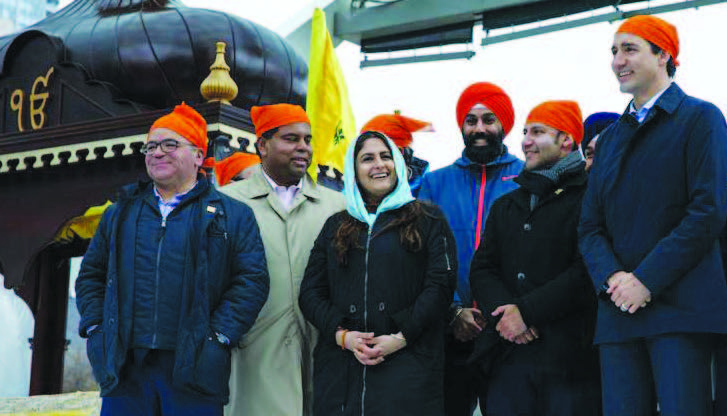
    NEW DELHI/ TORONTO (TIP): While vitriolic attacks on Punjab chief minister Captain Amarinder Singh at the annual nagar kirtan in Vancouver riled the Indian government, there is consternation over Canadian Prime Minister Justin Trudeau’s presence at a Toronto event that featured Khalistani flags and posters of Jarnail Singh Bhindranwale.

    The Toronto nagar kirtan on Sunday also celebrated the carrying of a motion in the Ontario assembly last month that described the 1984 anti-Sikh riots as “genocide”.

    A senior Indian official described Trudeau’s presence at the Khalsa Day event as “surely a matter of concern”.

    Trudeau was the first Canadian prime minister to attend the event since Paul Martin in 2005. Trudeau’s predecessor Stephen Harper had stayed away in previous years.

    Bhindranwale, an extremist leader who was at the forefront of the Khalistan movement in the 1980s, was killed when the Indian Army carried out Operation Blue Star in June 1984 to remove extremists who were holed up in the Golden Temple in Amritsar.

    Though defence minister Arun Jaitley had expressed India’s concerns about the Ontario assembly motion to his Canadian counterpart Harjit Sajjan last month, the organisers of the nagar kirtan in Toronto honoured Harinder Malhi, Liberal member of the provincial parliament or MPP (equivalent to an MLA), who moved the motion, during the event.

    The organisers, Ontario Sikhs and Gurdwara Council, also felicitated New Democratic Party MPP Jagmeet Singh, who had moved a similar motion in 2016 that was defeated.

    These developments have boosted the morale of pro-Khalistan groups in Canada. For instance, Sukhminder Singh Hansra, president of the Shiromani Akali Dal (A) Canada, said in response to an emailed query: “I am glad that the organisers who represent a larger segment of the Sikh community have reminded the world of the peaceful struggle for Khalistan.”

    Hansra further said: “In Toronto, all floats are prepared by the organisers, at least two floats were dedicated to the events of 1984, including flags and banners of Khalistan. I along with many others walked with these floats with Khalistani flags.”

    He described the honouring of the two lawmakers as “the highlight of the nagar kirtan” in Toronto.

    The Toronto celebration came in the wake of the event in Vancouver on April 22 where the Amarinder Singh was attacked in a speech.

    While the Indian government has notified Ottawa of its concern, Canada has consistently maintained that such a protest, as long as it remains peaceful, is part of freedom of expression.

    Source: HT

  • Pro-Khalistan groups to be reined in: UK

    Pro-Khalistan groups to be reined in: UK

    NEW DELHI (TIP): Britain on May 4 assured India that it would make efforts to rein in pro-Khalistan elements operating on its soil and also agreed to share information relating to them with Indian agencies.

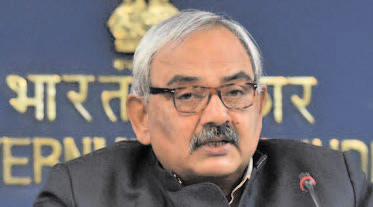
    Sharing details of the deliberations at the first “Home Affairs Dialogue” meeting here, Union Home Secretary Rajiv Mehrishi and UK’s Second Permanent Secretary, Home Office, Patsy Wilkinson, Adviser in the Ministry of Home Affairs Ashok Prasad said: “We discussed the issue of Khalistani militants based in the UK and they have promised to look into it.”

    Though Prasad refused to divulge details, which the Indian side shared with its UK counterparts, sources in the ministry indicated based on “our intelligence input”, the British officials were informed about how “some Sikh groups living in that country are trying to revive the Khalistan movement by providing terror training to the youth and funding hate propaganda against India”. Meanwhile, the major portion of the day-long deliberations revolved around the twin issue of “extradition and deportation” of respective citizens residing in each other’s territories. “On the issue of deportation, both sides agreed to work on identification framework, which both sides will sign in July as a memorandum of understanding (MoU), including on cybercrime and counter-terrorism,” a senior MHA official said.

    Mehrishi and Wilkinson agreed to expedite the processes of extraditing fugitives of the two countries, residing in each other’s territories, but Prasad said no specific name was discussed during the meeting.

    Sources, however, confirmed India “alluded” to a dozen Indian fugitives, including businessman Vijay Mallya, wanted in a Rs 9,000-crore bank default case involving his defunct Kingfisher Airlines.

    Source: The Tribune

  • RABINDRANATH TAGORE AND MANKIND: A LITERARY INTERFACE

    RABINDRANATH TAGORE AND MANKIND: A LITERARY INTERFACE

    A tribute to Gurudev Rabindranath Tagore on his 156th birth anniversary which falls on Sunday, May 7, 2017

    Rabindra Nath Tagore exists as one of most prominent figures in the literary and the philosophical world. Born in the nineteenth century India, Tagore through his writings has served as an emblematic figure who continues to inspire and influence masses across the globe in the contemporary era also. He is known as a complete man who encompassed everything in his poetry ranging from religion, aesthetics, education, nationalism, and social dynamics to internationalism and race relations. The paper attempts at exploring some of the substantial and recurring themes related to Mankind in the poetry of Tagore. His poetry is highly complex with regard to the volume and vastness that it becomes quite difficult to compartmentalize it. An attempt has been made to discuss some very important aspects with relation to his themes.


    Rabindra Nath Tagore was born on May 7, 1861 in central Calcutta. From the very childhood, the formal education did not suit him and he became a dropout at an early age. At home, he was subjected to a confined life where he could rarely move out, thereby, whetting his sensibility. However, there was a constant appeal that he found in Nature. To him, universe was as if wrapped in some mystery and he desired to approach and unlock it. An important aspect of his household life was that literature and music held an important place. Therefore, there was a scope for a literary growth and Tagore utilizing this at full started to write right from his teenage and then, there was no end to the output of his pen. His verses have never remained as a stagnant source of delight but they have moved and even continue to move and influence masses even today. Be they the lovers of nature, of god, of humans, of nations, Tagore gives a say to all. An important feature of Tagore?s poetry is the humanist spirit which pervades it throughout.

    According to humanist school of thought, man is the measure of everything and he is the means to reach the Divine. The relationship between “I and thou? holds an important space in this domain. Tagore became an epitome of the conduct of this belief. He saw men as men, devoid of the caste, color, sex, race or national distinctions. Though his poetry, therefore, he explored the relationship of man with God, of man with Nature and that of man with man. The presence of divine spirit in man granted him a status above the ordinary. Therefore, according to Tagore, every man was endowed with an ethical responsibility of serving other men at large for serving men was serving God. He advocated dedicating one’s life to the growth and flourishing of mankind through the path of love, knowledge and selflessness. Tagore was completely against the barriers which acted as the demarcating means among men. To him, all were equal anddeserved equal attention and appreciation. To work for the downtrodden was the primary lesson that he taught the world. He says himself being ever ready to work:

    “Here is thy foot stool and there rest

    Thy feet where live the poorest and lowliest”

    Tagore was the lover of people, the lover of life who responded to its delights as well as distress.

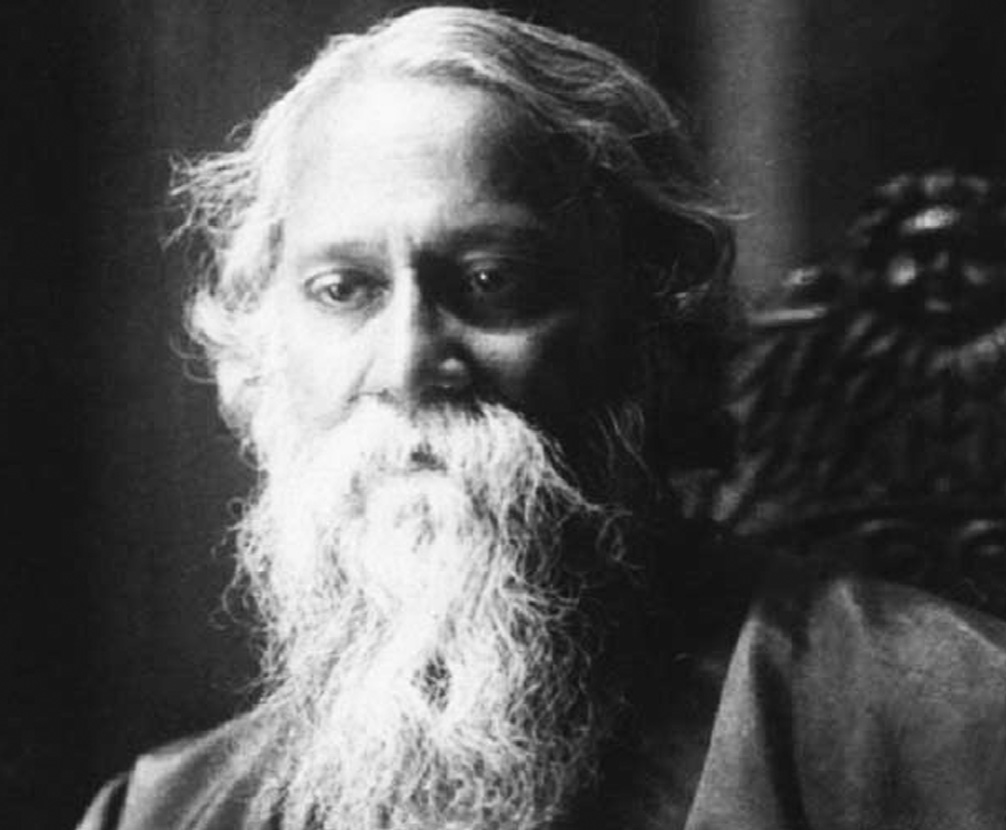
    Rabindranath Tagorein London in 1920. Tagore was a poet par excellence; he got India in the world map by becoming the first non-European to win a Nobel Prize for Literature.
    Rabindranath Tagorein London in 1920. Tagore was a poet par excellence; he got India in the world map by becoming the first non-European to win a Nobel Prize for Literature.

    Tagore had pledged his loyalty to all mankind. He strove for the rights of children, women, poor and ignorant and demanded an equal share for all. The religion that he preached was the religion of man. He sought a freedom from evil, greed, avarice, hatred and fought for the freedom of humans from the worldly strangles. The blind ego of man, the lust for power and the desire to exploit were all, targeted areas. In many of his works, Tagore has commented on the nature of Man discussing him in relation to Nature and other men.

    From his very childhood, Tagore shared an extraordinary relationship with the outside world. The rising of the sun, the chirping of birds, the tides in seas, and the moon in the night, everything had a special significance associated with it. Nature, to him, was never an alien identity but it was a manifestation of God and an aspect of man’s actual essence. The various manifestations of Nature in one way or the other were linked to man?s eternal being and therefore, laid an extraordinary influence upon the personality of man. The only need was to cultivate an eye that could perceive things in reality but because of the continuous involvement with the material world, man had lost touch with the Reality.

    According to Tagore, “All our knowledge of things is knowing them in their relation to the Universe, in that relation which is truth”. The involvement that contemporary beings have with the world has deprived them of the power to see and understand things in their true color. Tagore says, “we grow out of touch with this great truth, we forget to accept its invitation and its hospitality, when in quest of external success our works become unspiritual and unexpressive” (Tagore 9). Nature, according to Him, is the manifestation of the Supreme and in fact the self and nature actually are nothing but the twin aspects of the Absolute. It is nature which actually forms the backbone of human personality. In fact, they share a relation of collaboration and transcendence. Man is a bridge between the transcendent and the nature. He claims:

    “At one pole of my being I am one with stock and stones. There I have to acknowledge the rule of universal law. That is where the foundation of my existence lies, deep down below….But at the other pole of my being I am separate from all. There I have broken through the cordon of equality and stand alone as an individual. I am absolutely unique, I am I, I am incomparable.”

    The most important thing necessary to reach and perceive the Absolute was perseverance. It takes a lot of efforts, patience and strength to cross all hurdles successfully and reach the other shore.

    An important emphasis that Tagore lays upon is the religion for every man to achieve and arrive at his true nature. According to him, religion serves the purpose of bringing man into close contact with the Supreme. By religion he didn’t mean an orthodox set of principles but according to him:

    “… religion is too concrete a thing, though I have no right to speak about it. But if ever I have somehow come to realize God, or if the vision of God has ever been granted to me, I must have received the vision through this world, through men, through trees and birds and beasts, the dust and the soil.”

    What he believed in was that the ultimate end of humanity was achieving a harmony with everything around in this world and the inner world. According to Tagore, one could achieve harmony by recognizing the fact that ultimate Being doesn’t reside anywhere outside one’s self but instead is a part of one’s self only.

    Tagore looked at man both from inside and outside as well.

    The so called civilization and modernization according to Tagore can never create an influence to make man forget himself unless his actual conscience is alive. The only matter of distress to him was man?s inability to feel the inner pulse of action and the great truth within. According to Tagore, man possessed the power to play a role for the overall benefit of mankind. According to him, Salvation and freedom could be achieved upon realizing the divine voice within. The realization of god drew man on the way to enlightenment for it makes one aware of the pitfalls, limitations and all the constraints which in turn act as the harbingers of the unhampered union between the creator and the man.

    Tagore says:

    ‘Obstinate are trammels but my heart aches

    When I try to break them

    I am certain that priceless wealth is in thee

    And that thou are my best friend but I have not

    The heart to sweep away the tinsel that fills the room”. According to Tagore, what glorified man was the desire to grow instinctively. An important agency which Tagore believed to be useful for the enlightenment of humanity was education.

    According to him, there was a need for cultivating a proper environment which could shape the intellects and lead humans to emancipation both worldly as well as spiritual. The way a plant required care to grow and blossom in the same way minds required proper cultivation. “The best part of man as Tagore rightly thinks suffers terribly because the best of his thoughts die unborn and unexpressed”. However, the hollowness of the education andsocial systems leads to a deformed growth of humanity. To bring out the real potential andchannelize it, education plays a very substantial role. The primary agency for it was the schoolfor Tagore believed that man as a child existed in a pure form. The world never laid itsmaterialistic influences upon the childhood existence and by the time man grew, the worldweighed him over making him lose control over his spirit of freedom. In order to attain harmonywithin oneself, it was important to be one with the self, to be a man from within and to manmeant being in harmony with the real/divine world achieved through the union of soul.

    A release from the obsessions within and a union with the Ultimate was a constant point of emphasis for Tagore. The Ultimate exists as an unflinching identity, always there to show and guide a man to the right path. Oneness with the world and its diversities was the ideal concept of Man. The soul of everyman is of infinite value and therefore, every man should strive towards betterment with every passing day. A man is never just body and mind but more than passion and reason. In essence, he is a social being and therefore, he should never shirk away from the society but instead should try to learn from the social communion which is at large a collective creation. Tagore?s wisdom was that of the heart also and not only of head. It helped him to see the world without any personal bondage and helped him grow into a committed man without any caste, religious, community or tradition biases. This is an important feature which makes him survive even today. His works remain as the ever relevant and ever enlightening doctrine merge into the larger realms of human life.

    (The author is a Research scholar, Department of English, Central University of Kashmir and can be reached at wasia.mushtaq@gmail.com)(Source: Express, an International Journal of Multi Disciplinary Research. ISSN: 2348 – 2052, Vol. 1, Issue 6, June 2014. Available at: www.express-journal.com)

  • Hire the best: IT companies must seize the moment

    Hire the best: IT companies must seize the moment

    Indian IT companies have built their fortunes on outsourcing, but now their business model is under pressure because of a rising tide of nationalistic politics in several countries, particularly the US. The issue has escalated ever since President Donald Trump took over. He hit out at outsourcing during electioneering, and recently, norms regarding the grant of H-1B visas were tightened, making it more difficult for Indian IT workers to work in the US.

    Infosys CEO Vishal Sikka’s statement that the company will hire 10,000 American workers is a peace offering to the US political establishment. Alibaba founder Jack Ma, who pledged to create one million jobs in the US, took the lead and others followed suit. Out of two lakh or so workers that Infosys employs worldwide, only 25,000 work in the US on H-1B visas. Indian IT companies, including Infosys, typically focus on the lowest end of the food chain, and are thus squeezed tighter than others. Indian workers on H-1B visas may often have been paid less than their counterparts in the industry, but the work that they perform for their foreign clients is essential, while not particularly remunerative.

    There is no doubt that such workers will be needed, and may well be the mainstay of the outsourcing efforts of Indian IT companies. However, what Sikka and other IT CEOs need to focus on is raising the bar by hiring the best talent they can, and using it to improve their work profile. The base is strong, what is needed is a recalibration of effort and a focus on the aspects that deliver the most -social media, mobile, analytics and cloud. Major IT companies are putting in their best talent in these fields, and now that Indian IT companies are aggressively hiring Americans, they should try to get the top talent and build high-end products. The challenges posed by the new visa regime can be turned into opportunities, given the right leadership and long-term perspective on the part of the investors.

  • 85 South Asian films screened at the 17th NYIFF

    85 South Asian films screened at the 17th NYIFF

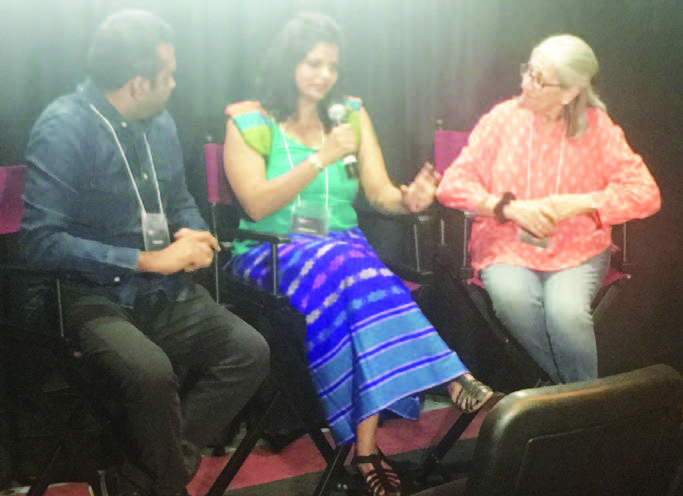
    NEW YORK (TIP): The 17th annual New York Indian Film Festival is a celebration of off-the-track movies produced in South Asia. Launched on April 30 with the screening of ‘Lipstick under my Burkha’, a story of struggle of women fighting for their freedom and aspirations, the festival was well appreciated by New Yorkers. Approximately 85 shorts, documentaries and feature films from South Asian countries (India, Pakistan, Sri Lanka & Bangladesh), made in Hindi, English and seven regional languages (Tamil, Malayalam, Kannada, Punjabi, Marathi, Gujarati and Bengali) were entered in the festival.

    ‘Gypsy’, is based on Mulay’s autobiographical work ‘Maati, Pankh and Akash’, a celebrated Marathi literary work, depicting the struggle of a boy born in a remote village in Maharashtra. It is the story of a poet who rose to the post of the Consul General of India in New York with sheer hard work and perseverance.

    Ambassador Dnyaneshwar Mulay is a true son of the soil. He calls his journey as that of a gypsy, who travelled to Tokyo, Syria and New York negotiating meanings out of political and diplomatic developments, engaging in as a competent diplomat with a poetic flavor, winning the hearts of Indian settlers as well as counterparts in the host countries. With his vision deeply rooted in the socio-cultural domain of India, Mulay, currently Secretary in-charge of Overseas Indian affairs in the Ministry of External Affairs, represents the aspirations of all Indians who belong to the impoverished strata of India, an India that lacks drinking water and nutritious food even after 75 years of India’s independence. Mulay’s success is an indicator that kids from the poorest economic levels can succeed and rise to the top.

    But does the movie, ‘Gypsy’, succeed in presenting the true colors of Mulay’s personality? Dhananjay, the young filmmaker from Maharashtra, captures a few touching moments of Mulay’s childhood life in Laat village of Kolhapur district, where he inherited traditional poverty and cultural richness, that was passed on to him from his teachers. He continued studying major literatures of the world during his teenage. The black and white visuals in the movie recreate social poverty and cultural richness of the village. We see Mulay walking around the streets of his native village where his school remains deprived of repair and his people continued living with traditions. We see ribbon cutting Mulay, and a number of his child hood friends and admirers including his mother, speaking highly about him as a young boy. The movie further depicts Mulay as an adult officer who pursued his dreams of joining the ranks of the bureaucrats of Delhi. He does well in UPSC interviews demonstrating his deep knowledge and understanding of Maharashtra’s socio-cultural traditions and relevance of Indian democracy. Finally, he joins the ranks of IFS officers rising to the position of an Ambassador.

    Other than breaking the traditions to joining the elite club of Indian bureaucracy, what are the major contributions of Mulay as a diplomat? What did he do to raise India’s prestige abroad? He handled difficult situations during the two-week-long refuge of President Mohamed Nasheed in the Indian High Commission in Male’. As Ravi Batra, a leading New York attorney, said after the screening of the movie, the high points in Mulay’s diplomatic career came in the second decade of 21st century, first at Male, and then in New York during his tenure as the Consul General, when the then Deputy Consul General of India in New York was arrested and strip searched. Mulay is credited with handling both situations aptly that helped raise the prestige of India. Mulay is too modest to talk about these incidents in the movie or in public. However, it shouldn’t have prevented the filmmaker of ‘Gypsy’ from projecting it in the movie, through the professional voice-over that Tom Alter provided so well.

    The movie also fails to underscore Mulay’s role in initiating the yearly organization of International Hindi Conferences in USA, now in its fifth year. It was an effort to reestablish the profile and importance of Hindi internationally that no other Consul General did in the past.

    The filmmaker of ‘Gypsy’, who seemed very conscious about Mulay’s roots in Maharashtra, fails to depict him as a national symbol of India’s aspirations, an India that lives in the villages. We are left to watch Mulay’s friends talking and not what Mulay thinks today about his people’s ongoing struggle, especially in Maharashtra and India, where farmers and students are unable to face their failures, only resorting to actions like suicides.

    NYIFF presented remarkable movies, such as, ‘A Death in the Gunj’, directed by Konkona Sen Sharma. The movie pays tribute to the late Om Puri, one of India’s most versatile character actors who starred in more than 147 films during his illustrious career and was awarded the Padma Shri in 1990.

    The closing movie, ‘You are my Sunday’, is a story of five young men in Mumbai who share same goal to play football (soccer) at Juhu Beach every Sunday. While each one has his reason to look forward to the Sunday morning, there’s no doubt it’s a high point of their week. One Sunday, as a result of the actions of a senile old stranger who joins their game, a ban is issued on playing games at Juhu Beach. The group now has to look for a new place to play in the crowded city of Mumbai. More than just football, the film is about each of their lives and how each one deals with their own physical and emotional space.

    NYIFF presented a rich fare for which Aroon Sivadasani and her colleagues on board of directors deserve all appreciation. Here is a list of NYIFF 2017 National Award Winners.

    • Best Films – “Kaasav (Turtle)”
    • Best Director – Rajesh Mapuskar -“Ventilator”
    • Best Editing – “Ventilator”
    • Best Recordist For Final Mixed Track – “Ventilator”
    • Best Gujarati Film – “Wrong Side Raju”
    • Best Short Film – “Aaba”
    • Best Child Actors – “Colours of Innocence”
    • Special Mention – Adil Hussain – “Mukti Bhawan (Hotel Salvation)”

    The 17th New York Film Festival in Pictures

    Aahana Kumra, lead actress of the Opening night film, "Lipstick under my BurkhaThe New York Indian Film Festival (NYIFF) is the oldest, most prestigious film festival screening premieres of feature, documentary and short films made from, of, and about the Indian subcontinent in the Independent, arthouse, alternate and diaspora genres. Seven days of screenings, post-screening discussions, industry panels, award ceremony, special events, nightly networking parties, red carpet galas, media attention and packed audiences build an awareness of Indian cinema, entertain & educate North Americans about the real India, and add to the amazing cultural diversity of New York City.

    The 17th IAFF was held from April 30 to May 7, 2017 in New York City. A total of 85 entries were received.

    Aroon Sivadasani, President and Executive Director heads a team of people deeply committed to promotion of cinema. Eminent persons from the world of arts and cinema which include Salman Rushdie, Shashi Throop, Mira Nair, Shabana Azmi, Deepa Mehta, Shyam Benegal, Mani Ratnam, Madhur Jaffrey, Sabrina Dhawan and Sakina Jaffrey are on the advisory board of the film festival.

    Aahana Kumra, lead actress of the Opening night film, "Lipstick under my BurkhaThe Indo-American Arts Council, the organization which organizes the film festival says its missionis to promote and build the awareness, creation, production, exhibition, publication and performance of Indian and cross-cultural art forms in North America.

    The Mission statement further says: “The IAAC supports all artistic disciplines in the classical, fusion, folk and innovative forms influenced by the arts of India. We work cooperatively with colleagues around the United States to broaden our collective audiences and to create a network for shared information, resources and funding.

    “Our focus is to work with artists and arts organizations in North America as well as to facilitate artists and arts organizations from India to exhibit, perform and produce their works here”.

    Well known photographer Jay Mandal who was on assignment with the IAFF 2017 has come up with some wonderful pictures of the event which we are happy to share with the readers of The Indian Panorama.


  • The 17th New York Film Festival in Pictures

    The 17th New York Film Festival in Pictures

    Aahana Kumra, lead actress of the Opening night film, "Lipstick under my BurkhaThe New York Indian Film Festival (NYIFF) is the oldest, most prestigious film festival screening premieres of feature, documentary and short films made from, of, and about the Indian subcontinent in the Independent, arthouse, alternate and diaspora genres. Seven days of screenings, post-screening discussions, industry panels, award ceremony, special events, nightly networking parties, red carpet galas, media attention and packed audiences build an awareness of Indian cinema, entertain & educate North Americans about the real India, and add to the amazing cultural diversity of New York City.

    The 17th IAFF was held from April 30 to May 7, 2017 in New York City. A total of 85 entries were received.

    Aroon Sivadasani, President and Executive Director heads a team of people deeply committed to promotion of cinema. Eminent persons from the world of arts and cinema which include Salman Rushdie, Shashi Throop, Mira Nair, Shabana Azmi, Deepa Mehta, Shyam Benegal, Mani Ratnam, Madhur Jaffrey, Sabrina Dhawan and Sakina Jaffrey are on the advisory board of the film festival.

    Aahana Kumra, lead actress of the Opening night film, "Lipstick under my BurkhaThe Indo-American Arts Council, the organization which organizes the film festival says its missionis to promote and build the awareness, creation, production, exhibition, publication and performance of Indian and cross-cultural art forms in North America.

    The Mission statement further says: “The IAAC supports all artistic disciplines in the classical, fusion, folk and innovative forms influenced by the arts of India. We work cooperatively with colleagues around the United States to broaden our collective audiences and to create a network for shared information, resources and funding.

    “Our focus is to work with artists and arts organizations in North America as well as to facilitate artists and arts organizations from India to exhibit, perform and produce their works here”.

    Well known photographer Jay Mandal who was on assignment with the IAFF 2017 has come up with some wonderful pictures of the event which we are happy to share with the readers of The Indian Panorama.


    "Gypsy", a documentary on the life of Ambassador Dnyaneshwar M Mulay, made by Dhananjay Bhawalekar and Sawani Arjun was selected for screening. The documentary received mixed reaction.
    “Gypsy”, a documentary on the life of Ambassador Dnyaneshwar M Mulay, made by Dhananjay Bhawalekar and Sawani Arjun was selected for screening. The documentary received mixed reaction.

    85 South Asian films screened at the 17thNYIFF

    ‘Gypsy’: Story of a village kid who rose to the top of Indian Bureaucracy received mixed reactions

    By Ashok Ojha NEW YORK (TIP): The 17th annual New York Indian Film Festival is a celebration of off-the-track movies produced in South Asia. Launched on April 30 with the screening of ‘Lipstick under my Burkha’, a story of struggle of women fighting for their freedom and aspirations, the festival was well appreciated by New Yorkers. Approximately 85 shorts, documentaries and feature films from South Asian countries (India, Pakistan, Sri Lanka & Bangladesh), made in Hindi, English and seven regional languages (Tamil, Malayalam, Kannada, Punjabi, Marathi, Gujarati and Bengali) were entered in the festival.

    ‘Gypsy’, is based on Mulay’s autobiographical work ‘Maati, Pankh and Akash’, a celebrated Marathi literary work, depicting the struggle of a boy born in a remote village in Maharashtra. It is the story of a poet who rose to the post of the Consul General of India in New York with sheer hard work and perseverance.

    Ambassador Dnyaneshwar Mulay is a true son of the soil. He calls his journey as that of a gypsy, who travelled to Tokyo, Syria and New York negotiating meanings out of political and diplomatic developments, engaging in as a competent diplomat with a poetic flavor, winning the hearts of Indian settlers as well as counterparts in the host countries. With his vision deeply rooted in the socio-cultural domain of India, Mulay, currently Secretary in-charge of Overseas Indian affairs in the Ministry of External Affairs, represents the aspirations of all Indians who belong to the impoverished strata of India, an India that lacks drinking water and nutritious food even after 75 years of India’s independence. Mulay’s success is an indicator that kids from the poorest economic levels can succeed and rise to the top.

    But does the movie, ‘Gypsy’, succeed in presenting the true colors of Mulay’s personality? Dhananjay, the young filmmaker from Maharashtra, captures a few touching moments of Mulay’s childhood life in Laat village of Kolhapur district, where he inherited traditional poverty and cultural richness, that was passed on to him from his teachers. He continued studying major literatures of the world during his teenage. The black and white visuals in the movie recreate social poverty and cultural richness of the village. We see Mulay walking around the streets of his native village where his school remains deprived of repair and his people continued living with traditions. We see ribbon cutting Mulay, and a number of his child hood friends and admirers including his mother, speaking highly about him as a young boy. The movie further depicts Mulay as an adult officer who pursued his dreams of joining the ranks of the bureaucrats of Delhi. He does well in UPSC interviews demonstrating his deep knowledge and understanding of Maharashtra’s socio-cultural traditions and relevance of Indian democracy. Finally, he joins the ranks of IFS officers rising to the position of an Ambassador.

    Other than breaking the traditions to joining the elite club of Indian bureaucracy, what are the major contributions of Mulay as a diplomat? What did he do to raise India’s prestige abroad? He handled difficult situations during the two-week-long refuge of President Mohamed Nasheed in the Indian High Commission in Male’. As Ravi Batra, a leading New York attorney, said after the screening of the movie, the high points in Mulay’s diplomatic career came in the second decade of 21st century, first at Male, and then in New York during his tenure as the Consul General, when the then Deputy Consul General of India in New York was arrested and strip searched. Mulay is credited with handling both situations aptly that helped raise the prestige of India. Mulay is too modest to talk about these incidents in the movie or in public. However, it shouldn’t have prevented the filmmaker of ‘Gypsy’ from projecting it in the movie, through the professional voice-over that Tom Alter provided so well.

    The movie also fails to underscore Mulay’s role in initiating the yearly organization of International Hindi Conferences in USA, now in its fifth year. It was an effort to reestablish the profile and importance of Hindi internationally that no other Consul General did in the past.

    The filmmaker of ‘Gypsy’, who seemed very conscious about Mulay’s roots in Maharashtra, fails to depict him as a national symbol of India’s aspirations, an India that lives in the villages. We are left to watch Mulay’s friends talking and not what Mulay thinks today about his people’s ongoing struggle, especially in Maharashtra and India, where farmers and students are unable to face their failures, only resorting to actions like suicides.

    NYIFF presented remarkable movies, such as, ‘A Death in the Gunj’, directed by Konkona Sen Sharma. The movie pays tribute to the late Om Puri, one of India’s most versatile character actors who starred in more than 147 films during his illustrious career and was awarded the Padma Shri in 1990.

    The closing movie, ‘You are my Sunday’, is a story of five young men in Mumbai who share same goal to play football (soccer) at Juhu Beach every Sunday. While each one has his reason to look forward to the Sunday morning, there’s no doubt it’s a high point of their week. One Sunday, as a result of the actions of a senile old stranger who joins their game, a ban is issued on playing games at Juhu Beach. The group now has to look for a new place to play in the crowded city of Mumbai. More than just football, the film is about each of their lives and how each one deals with their own physical and emotional space.

    NYIFF presented a rich fare for which Aroon Sivadasani and her colleagues on board of directors deserve all appreciation. Here is a list of NYIFF 2017 National Award Winners.

    • Best Films – “Kaasav (Turtle)”
    • Best Director – Rajesh Mapuskar -“Ventilator”
    • Best Editing – “Ventilator”
    • Best Recordist For Final Mixed Track – “Ventilator”
    • Best Gujarati Film – “Wrong Side Raju”
    • Best Short Film – “Aaba”
    • Best Child Actors – “Colours of Innocence”
    • Special Mention – Adil Hussain – “Mukti Bhawan (Hotel Salvation)”
  • Panjab University, Chandigarh Professor Emeritus Padma Shri Harkishan Singh

    Panjab University, Chandigarh Professor Emeritus Padma Shri Harkishan Singh

    Professor Emeritus at the PU, is a Prof Harkishan Singh is a well-known pharmaceutical academic, medicinal chemist and renowned science historian
    Professor Emeritus at the PU, is a Prof Harkishan Singh is a well-known pharmaceutical academic, medicinal chemist and renowned science historian

    Prof Harkishan Singh is a well-known pharmaceutical academic, prominent medicinal chemist and renowned science historian.

    On being asked for his reaction on the announcement of Padma Shri to him, 89-year-old Prof Harkishan Singh said, “I am pleased to receive this honor, but I was not working for awards. It is my passion to research and invent something fruitful for society.”

    Prof Harkishan Singh is a renowned personality in the pharmacy industry not because of his books on research but for his rarest accomplishments, including the discovery of a clinically useful drug, Chandonium Iodide (HS-310), which was later named by the World Health Organisation (WHO) as Candocuronium Iodide. Candocuronium is the only drug discovered by any Indian University till date.

    Over 350 publications, 18 books and 14 patents are testimony to the outcome of his work. He mentored over 50 doctoral and master theses too.

    One of his sons, Harry S Panaser who is settled in New Jersey State of USA said he was pleased that his father was selected by government of India for one of the highest civilian awards of India and added that his father was never after any awards and honors. All he wanted was to work to his ability to contribute his bit to humanity.

    Professor Harkishan Singh was born on 25 November, 1928. He is a well-recognized pharmaceutical academic, medicinal chemistry researcher and science historian. He has experience of over half a century to his credit. He has worked at the Banaras Hindu University, University of Saugar, and the Panjab University in India, and abroad at the University of Maryland, University of Mississippi and the University of London.

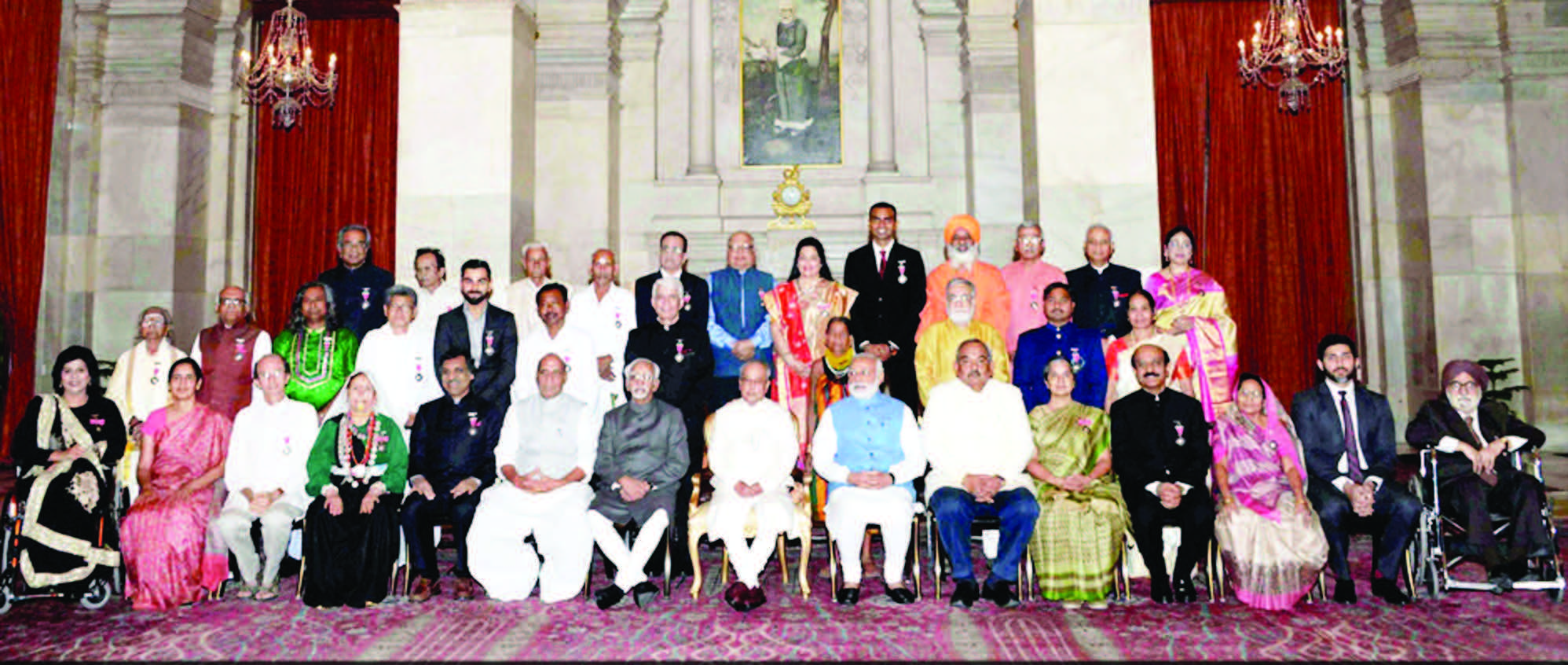
    Prof. Harkishan Singh is one of the Padma awardees who were conferred the honor by the President of India, Pranab Mukherjee at Rashtrapati Bhavan on March 30, 2017
    Prof. Harkishan Singh is one of the Padma awardees who were
    conferred the honor by the President of India, Pranab Mukherjee at Rashtrapati Bhavan on March 30, 2017

    His scientific research has been in organic chemistry, medicinal chemistry and natural products. Nearly 50 master and doctoral theses have been completed under his supervision. There have been published 125 original scientific research papers. 14 patents have been obtained. His research group has been successful in designing a clinically useful drug candocuronium iodide (INN) (chandonium iodide, HS-310), which is a synthetic azasteroid. Dr Singh has lectured on his research at several of the institutions and conferences in India, United States of America, Canada, United Kingdom and China. He delivered invited lectures at the Harvard School of Medicine and at the International Symposium on Molecular Structure sponsored by the International Union of Crystallography at Beijing.

    As a science historian Professor Singh has examined the history of pharmaceutical developments in India of the nineteenth and twentieth centuries. His history research studies have been on pharmacopoeias and formularies, pharmaceutical education, pharmacy practice, biographies of pharmaceutical luminaries, and pharmaceutical journalism. He has published over fifty articles.

    In addition to his scientific and history research papers, Dr Singh has authored and/or coauthored twelve books and nearly two dozen of review articles, including several book chapters. He has written extensively on educational, scientific, historical and professional issues. All told his total publications come well to over 300.

    Prof. Singh (seated) with family. L to R: Alicia, Dr Manjeet, Ajooni Kaur and H S Panaser
    Prof. Singh (seated) with family. L to R: Alicia, Dr Manjeet, Ajooni Kaur and H S Panaser

    Professor Singh has been on many academic, scientific, professional and governmental bodies. He was a member of the Committee on Education in Medicinal Chemistry of the International Union of Pure and Applied Chemistry, which prepared the Report on the International Education of Medicinal Chemists (IUPAC Technical Reports Number 13; 1974).

    His affiliations with several scientific and professional organizations include emeritus membership of the American Chemical Society, life memberships of the Indian Pharmaceutical Association and Association of Pharmaceutical Teachers of India, and memberships of the American Institute of History of Pharmacy and British Society for History of Pharmacy.

    Dr Manjeet Kaur, H S Panaser, Dr. Amarjit Singh, IAS with Prof Harkishan Singh
    Dr Manjeet Kaur, H S Panaser, Dr. Amarjit Singh, IAS with Prof Harkishan Singh

    Professor Harkishan Singh is recipient of several scientific and professional awards and recognitions. He has been a National Fellow of the University Grants Commission, New Delhi. He has been General President of the Indian Pharmaceutical Congress. He received Eminent Pharmacist Award of the Indian Pharmaceutical Association. Dr Singh’s standing as historian has been recognized through his election to the Academie Internationale d’Histoire de la Pharacie. The University of the Sciences in Philadelphia conferred upon Professor Harkishan Singh the degree of Doctor of Science (Honoris Causa) in recognition of his distinguished academic career and outstanding contributions to scientific research in organic and medicinal chemistry and the history of pharmacy.

    The Indian Panorama has a special reason to celebrate the honor to Prof. Harkishan Singh. The Chief Editor Prof. Indrajit Singh Saluja shares with Dr. Singh an association with Banaras Hindu University (BHU), where he studied for two years, and with Panjab University, Chandigarh, where he was a Member of Languages Faculty for a couple of years.

  • China vows friendship despite North Korean media attack

    China vows friendship despite North Korean media attack

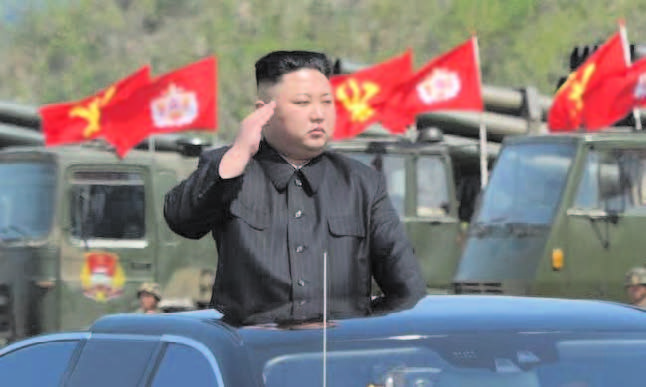
    BEIJING (TIP): China vowed to remain a good neighbour to North Korea on May 4, despite a rare and stinging critique in Pyongyang’s state media of its main diplomatic protector and economic benefactor.

    Beijing offered a measured response to a signed commentary carried by the Korean Central News Agency (KCNA), which lashed out at China and said it should be grateful to Pyongyang for its protection.

    The bylined article warned of of “grave consequences” if North Korea’s patience is tested further.

    China’s Global Times newspaper retorted that the nuclear-armed North was in the grip of “some form of irrational logic” over its weapons programmes.

    But Chinese foreign ministry spokesperson Geng Shuang took a conciliatory tone when asked about KCNA’s commentary at a press briefing, saying Beijing has a consistent position of “developing good neighbourly and friendly cooperation” with North Korea.

    Geng, however, also said China was “firmly committed”  to the denuclearisation of the Korean peninsula through dialogue and consultation.

    Beijing and Pyongyang have a relationship forged in the blood of the Korean War, and the Asian giant remains its wayward neighbour’s main provider of aid and trade.

    But ties have begun to fray in recent years, with China increasingly exasperated by the North’s nuclear antics and fearful of a regional crisis. North Korean leader Kim Jong-Un is yet to visit Beijing, more than five years after taking power.

    The media spat is a sign of the level to which ties between the two have deteriorated. KCNA regularly carries vivid denunciations of the US, Japan, and the South Korean authorities, but it is rare for it to turn its ire on China.

    Beijing regularly calls for parties to avoid raising tensions — remarks that can apply to both Washington and Pyongyang — and in February it announced the suspension of coal imports from the North for the rest of the year, a crucial foreign currency earner for the authorities.

    Chinese state-run media have called for harsher sanctions against the North in the event of a fresh atomic test, urged Pyongyang to “avoid making mistakes”, and spoken of the need for it to abandon its nuclear programmes.

    The KCNA commentary denounced the People’s Daily, the official mouthpiece of the Chinese Communist party, and the Global Times, which sometimes reflects the thinking of the leadership, as having “raised lame excuses for the base acts of dancing to the tune of the US”.

    Chinese suggestions that the North give up its weapons crossed a “red line” and were “ego-driven theory based on big-power chauvinism” said the article, bylined “Kim Chol” — believed to be a pseudonym. “The DPRK will never beg for the maintenance of friendship with China, risking its nuclear programme which is as precious as its own life,” it said, referring to the North by its official name, the Democratic People’s Republic of Korea.

    Pyongyang had acted as a buffer between Beijing and Washington since the Korean War in the 1950s and “contributed to protecting peace and security of China”, it said, adding that its ally should “thank the DPRK for it”.

    Beijing should not try to test the limits of the North’s patience, it said, warning: “China had better ponder over the grave consequences to be entailed by its reckless act of chopping down the pillar of the DPRK-China relations.”

    In its response Thursday, the Global Times — which can sometimes stridently espouse what it sees as China’s interests — dismissed the KCNA article as “nothing more than a hyper-aggressive piece completely filled with nationalistic passion”.

    “Pyongyang obviously is grappling with some form of irrational logic over its nuclear programme,” it added.

    Beijing “should also make Pyongyang aware that it will react in unprecedented fashion if Pyongyang conducts another nuclear test”, it said.

    “The more editorials KCNA publishes, the better Chinese society will be able to understand how Pyongyang thinks, and how hard it is to solve this nuclear issue,” the Global Times said. (AFP)

  • UK to streamline payments to boost bank competition

    UK to streamline payments to boost bank competition

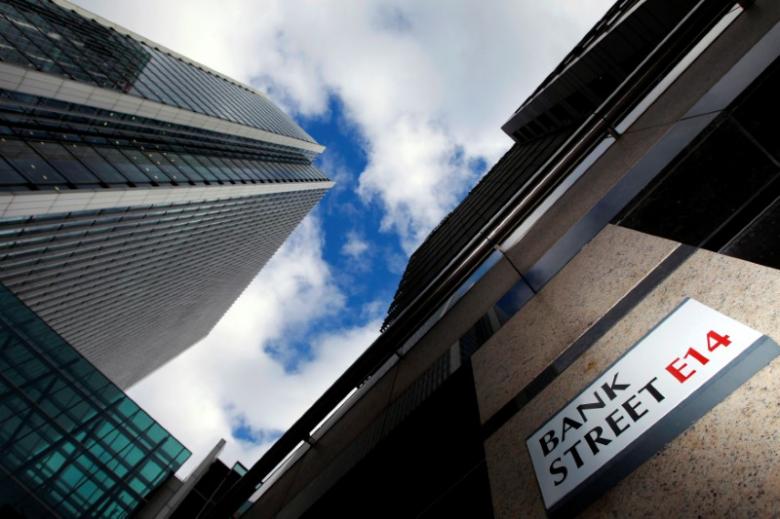
    LONDON (TIP): Britain’s multi-trillion pound system for shuffling payments and cheques will be streamlined under plans announced on Thursday to help newcomers compete more easily with long established banks and improve services to customers.

    Britain is keen to increase competition in banking, a sector dominated by the “Big Four” lenders – Lloyds, HSBC, Barclays and RBS. Any new banks have to use existing payments systems, largely set up by the big lenders, for a fee.

    A group created by the Payment Systems Regulator (PSR) and Bank of England recommended on Thursday that the three retail payment systems, Bacs, Cheque and Credit Clearing Company, and Faster Payments Scheme be consolidated under one roof.

    That would mean new banks will only have to make one application to use all the three systems, thereby speeding up the process and cutting costs.

    “The consolidation would be an important first step towards a generational change in UK payments,” PSR Managing Director, Hannah Nixon, said in a statement.

    “Consumers will also benefit from new entrants coming into the market and offering users of payment services new, innovative products.”

    Although only a recommendation, in practice the three payments firms have little choice but to accept the proposal by the regulator and the BoE.

    The PSR has powers to force through changes.

    “We welcome the report, and look forward to seeing its recommendations taken forward in a way which promotes an orderly and smooth transition,” said David Bailey, the BoE’s director for financial market infrastructure.

    It is expected that the consolidation will be substantially completed by the end of 2017, the PSR said.

    “While good progress has been made, support from across the industry is vital and significant collaborative work still needs to be done if the plan is to be delivered successfully and the benefits of the consolidation unlocked,” said Robert Stansbury, who chairs the joint BoE, regulator, delivery group. (Reuters)


  • Le Pen, Macron clash in fiery final French debate

    Le Pen, Macron clash in fiery final French debate

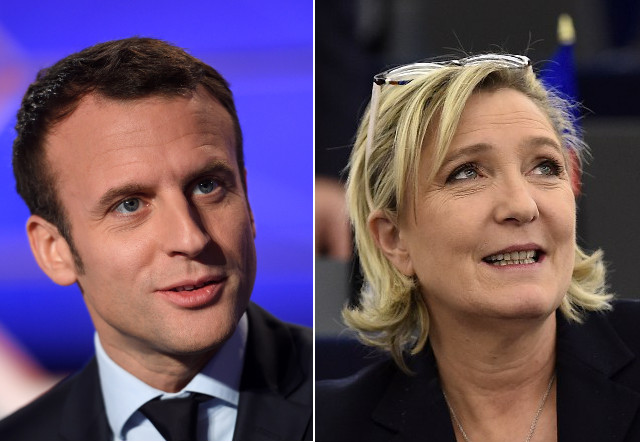
    PARIS (TIP): French centrist Emmanuel Macron and his far-right presidential rival Marine Le Pen clashed over terrorism, the economy and Europe in a bad-tempered TV debate on Wednesday, that laid bare their profoundly different visions for the country.

    The duel ahead of this Sunday’s election was billed as a confrontation between Macron’s call for openness and pro-market reforms and Le Pen’s France-first nationalism.

    The tone was set in the opening minutes, with Le Pen branding the former economy minister and investment banker “the candidate of the elite” and the “darling of the system”.

    Macron replied that Le Pen, the 48-year-old scion of the National Front (FN) party, was “the heir of a system which has prospered from the fury of the French people for decades”, adding: “You play with fear.”

    The 39-year-old frequently branded Le Pen a liar and even a “parasite of the system”, who he said lived off the frustrations of France’s blocked political system.

    On Europe, Le Pen accused Macron of being “submissive” towards German Chancellor Angela Merkel, saying: “France will be led by a woman, either me or Mrs Merkel.”

    She also accused Macron of an “indulgent attitude” towards Islamic fundamentalism and constantly sought to remind viewers of his role as a minister in unpopular President Francois Hollande’s Socialist government.

    But Macron was in combative form throughout, repeatedly portraying Le Pen’s proposals as simplistic, defeatist or dangerous and targeting her proposals to withdraw France from the euro in particular.

    The euro policy “was the big nonsense of Marine Le Pen’s programme,” he said midway through the 140-minute debate.

    Le Pen called the euro, shared by 19 countries in the European Union and blamed by some in France for a rise in prices, as “the currency of bankers, it’s not the people’s currency.” Trailing in the polls, the debate was probably her last chance to change the dynamics of the race ahead of the final weekend of a long and unpredictable campaign.

    A poll by the Elabe group for the BFM channel immediately afterwards showed that 63 percent of people interviewed found Macron the most convincing versus 34 percent for Le Pen. (AFP)

  • Israel shows off F-35 stealth fighters for first time

    Israel shows off F-35 stealth fighters for first time

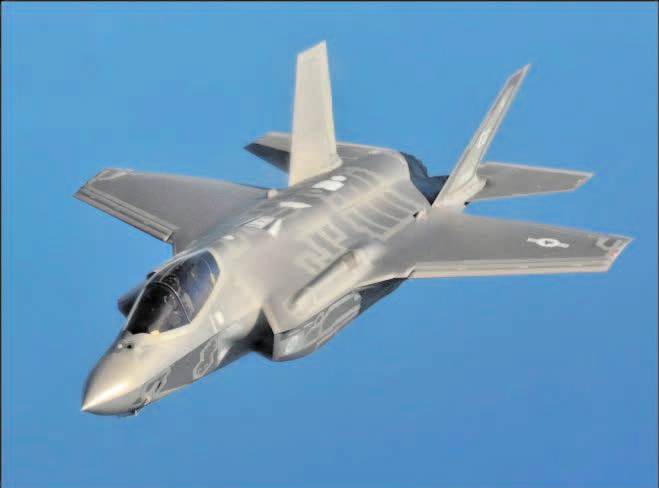
    TEL AVIV (TIP): Israel on May 1 showed off its new F-35 stealth fighter jets recently delivered from the United States as part of an air show marking its annual Independence Day celebrations.

    Three of Israel’s five stealth fighters took to the skies along the Mediterranean coast off Tel Aviv as thousands of people gathered at the waterfront to watch.

    The F-35s, made by US-based Lockheed Martin, were the highlight of the show, which marked 69 years of Israeli independence.

    Israel has received the initial five jets since December with the aim of allowing it to maintain its military superiority in the turbulent Middle East, particularly regarding its arch-foe Iran.

    It plans to purchase a total of 50 F-35s. Its first jets are to be operational this year.

    While other countries have ordered the planes, Israel – which receives more than USD 3 billion a year in US defence aid – says it will be the first outside the United States with an operational F-35 squadron. Among its main features are advanced stealth capabilities to help pilots evade sophisticated missile systems. The pilot’s ultra-high-tech helmet, at a cost of about $400,000 each, includes its own operating system, with data that appears on the visor and is also shared elsewhere.

    Thermal and night vision as well as 360-degree views are possible with cameras mounted on the plane. (AFP)

  • THE BLACK PRINCE, TRUE STORY OF THE LAST MAHARAJAH OF PUNJAB, DULEEP SINGH

    THE BLACK PRINCE, TRUE STORY OF THE LAST MAHARAJAH OF PUNJAB, DULEEP SINGH

    LONDON/ HOUSTON (TIP): THE BLACK PRINCE, a historical drama based upon the true story of MaharajaDuleep Singh, the boy who became king of Punjab shortly before it was annexed to the British empire, was awarded the Special Jury Remi Award, May 2, at the 50th annual WorldFest International Film Festival in Houston. The event’s Gold Remi was also awarded to the film’s Natalie O’Connor for achievement in Art Direction.

    Maharaja Duleep Singh was exiled by the British to a privileged life in England when he was only 15 years old, and was shortly thereafter converted to Christianity. Reuniting with his long-lost mother after more than a decade, Duleep begins a daring journey of self-discovery in order to reclaim his faith and the kingdom that is rightfully his. His struggle inspired Sikhs to continue their fight for freedom until India regained its independence from British Imperialism in 1947, and the Sikh kingdom was divided into India and Pakistan.

    Produced by Brillstein Entertainment (12 Years a Slave), THE BLACK PRINCE was written and directed by Hollywood filmmaker Kavi Raz and filmed widely across the U.K. and India.

    Satinder Sartaaj plays Duleep Singh and Amanda Root, Queen Victoria
    Satinder Sartaaj plays Duleep Singh and Amanda Root, Queen Victoria

    Acclaimed singer-poet Satinder Sartaaj marks his acting debut in THE BLACK PRINCE, and is joined by an esteemed cast of British acting stalwarts including Jason Flemyng (Lock, Stock and Two Smoking Barrels, Snatch) as Dr. Login, the foster parent for the Maharaja, English stage and screen actress Amanda Root (The Iron Lady), who portrays Queen Victoria, and veteran Indian actress Shabana Azmi (City of Joy), as Maharani Jindan, the exiled king’s mother. The film also features Keith Duffy, David Essex, Canadian actor Rup Magon and Sophie Stevens in supporting roles.

    “This powerful chapter of Indian history has been poorly documented but it is a chapter that needs to be re-examined. When I received the opportunity to be part of this wonderful journey and to share this amazing but tragic story with the world, I made a promise that I share the epic nature of the life of the boy king of the mighty Kingdom of Punjab, but I would also share something of myself as well-my heart and my soul-what moves and inspires me,” said writer-director Kavi Raz upon receiving the Special Jury Remi Award. “It’s the history of my ancestors, of a land where I find my roots firmly and deeply planted.”

    WorldFest Houston is the world’s largest independent film festival. The 2017 event concluded last night with the participation of 74 countries. Out of 500 feature film submissions, a total of 63 films were selected for presentation.

    THE BLACK PRINCE made separate debuts at the CineQuest Film Festival in San Jose, California and the Manchester Film Festival in England, both in March of this year. The film will next be unveiled at the Bentonville Film Festival in Arkansas and at the International Film Festival of South Asian films (IFFSA) in Toronto in May.

    THE BLACK PRINCE releases in cinemas on 21st July, in the English, Punjabi and Hindi languages.

  • Hundreds show their support for Virendra Sharma at his Election campaign launch

    Hundreds show their support for Virendra Sharma at his Election campaign launch

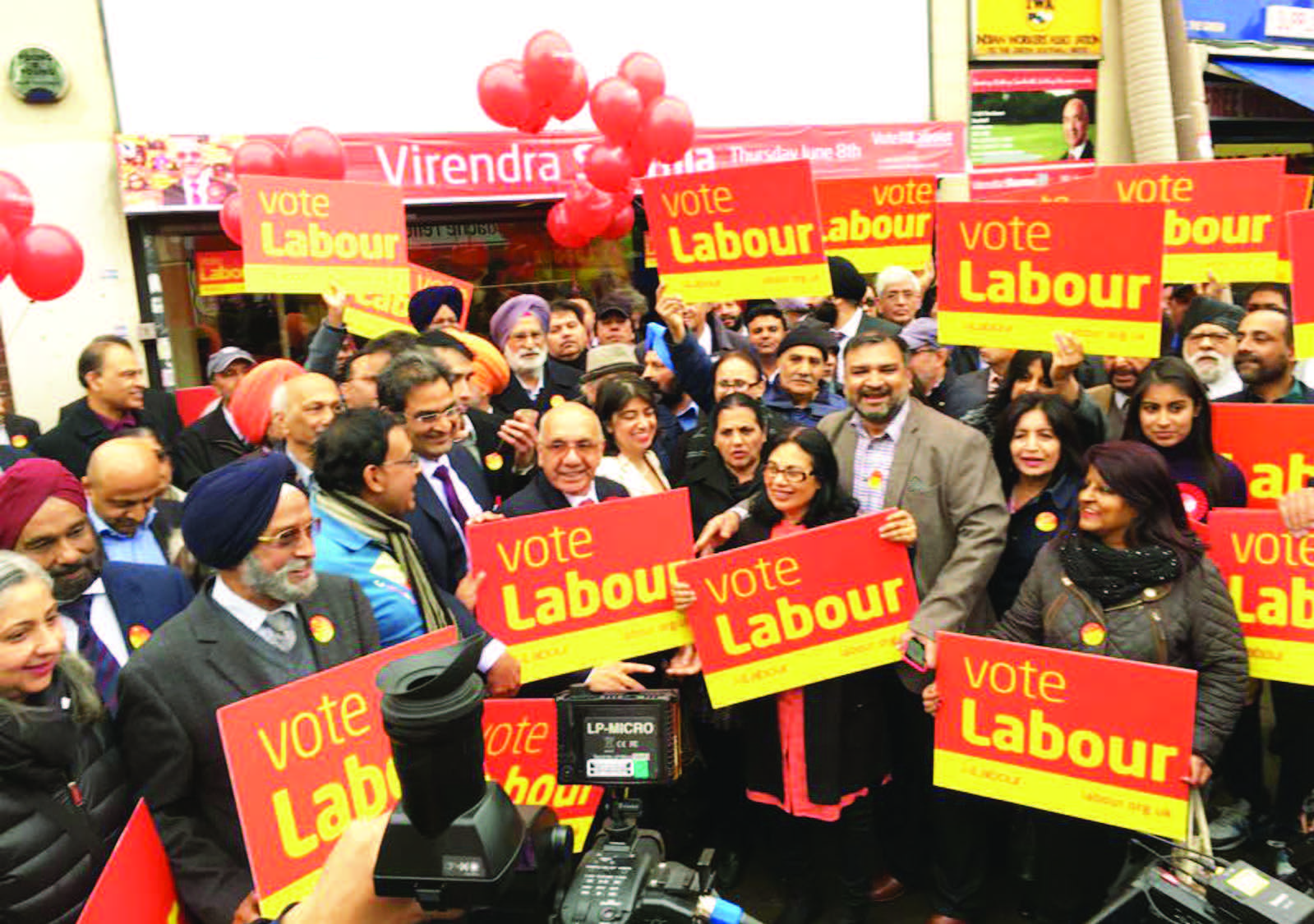
    LONDON (TIP): Hundreds showed up, May 3, in Ealing – Southall to show their support at Virendra Sharma’s election campaign launch. Following the shock announcement of a snap general election, today, on the day parliament dissolves, Virendra Sharma launched his campaign to continue as MP for Ealing -Southall, West London.

    The event was introduced by Dr Onkar Sahota, GLA member for Ealing and Hillingdon, other contributions were made by Steve Pound from Ealing North, Seema Malhota from Feltham and Heston, and Cllr Julian Bell Leader of Ealing Council, West London.

    Speaking at the launch Virendra Sharma said:”I am proud to represent the area I have lived in for the last 49 years and my campaign will focus on our community and how much we can achieve. This election must be about bringing people together, improving people’s lives and turning our backs on the politics of division.

    This is a British election, and we should be debating British values, not old community conflicts, ancient arguments and squabbles from half a world away and half a century ago. Ealing Southall should be a standard bearer for tolerance and integration. We achieve so much more when we cooperate, when we unite and when we come together. It harms our community when we see ourselves as different and live separate lives.

    I believe in the freedom of speech, I believe in debate and I believe in the ballot box. We only damage ourselves when we resort to scare tactics and when we try to silence dissenting opinion. I will represent all of Ealing Southall, I will represent every religion, every culture and those unsure of where they belong.”

    With dozens of community groups represented at the launch Virendra Sharma’s campaign is one of community unity and people coming together.

    Organizations represented at the launch included:Shri Guru Singh Sabha Southall; Sri Ram Mandir Temple; Miri Piri Gurudwara; Sri Guru Nanak Gurudwara; Abu Bakar Mosque; Sri Guru Ravidass Gurudwara; Vishwa Hindu Kendra; Sri Guru Amardas Gurudwara; Ramgarhia Sabha Southall; Sri Guru Nanak Darbar; Afghan Hindu Society; Rajpoot Society; Haryana Association; South Indian Associations; Rajasthan Society; Kashmiri Pandits; Councillors from Hounslow, Hillingdon, Brent, Harrow and of course Ealing, and many more prominent individuals from of all communities.

    Not even a shower of rain could dampen the excitement, and the groups came together with one voice in support of Virendra Sharma and his message of tolerance, democracy and secularism.

  • NEW STUDY FINDS HOW AIR POLLUTION LEADS TO HEART ATTACK, STROKE

    NEW STUDY FINDS HOW AIR POLLUTION LEADS TO HEART ATTACK, STROKE

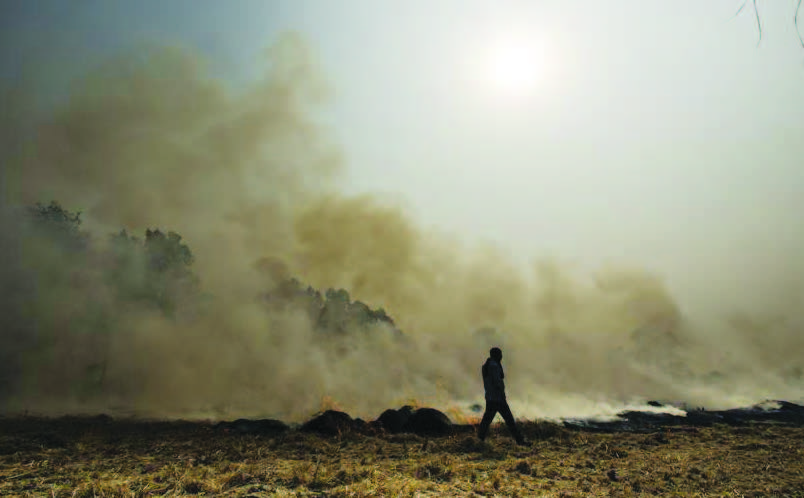
    British researchers have found inhaled nanoparticles, especially those coming out of vehicles, enter the bloodstream through the lungs and build up in vessels over a period of time, which runs the risk of a heart attack or stroke.

    The new findings, published on Wednesday in the journal ACS Nano, build on previous evidence show the particles we breathe get into our blood and are carried to different parts of the body, including arteries, blood vessels and the heart.

    Researchers said these nanoparticles tend to build up in damaged blood vessels of people who already suffer from coronary heart disease – the condition that causes heart attacks – and make it worse.

    Experts have long known that air pollution causes serious health risks and can trigger fatal heart attacks and strokes. But until now scientists were not sure how particles inhaled into the lungs go on to affect heart health.

    “There is no doubt that air pollution is a killer, and this study brings us a step closer to solving the mystery of how air pollution damages our cardiovascular health,” said Jeremy Pearson, a professor and associate medical director at the British Heart Foundation charity that part-funded the study.

    According to a Centre for Science and Environment report, more than 6 lakh people die in India each year due to outdoor air pollution.

    “When pollution levels go up, people living with chronic respiratory illnesses like asthma and bronchitis, experience an aggravation of symptoms. Pollution also results in hypertension, increasing the risk of heart attack and stroke. This study is just another proof,” Dr Srikant Sharma, senior consultant physician at Delhi’s Moolchand Hospital, said.

  • ARE YOUR KNEES MAKING A WEIRD NOISE? YOU MAY BE AT RISK OF OSTEOARTHRITIS

    ARE YOUR KNEES MAKING A WEIRD NOISE? YOU MAY BE AT RISK OF OSTEOARTHRITIS

    Hear grating, cracking or popping sounds when you bend your knees? You may be at an increased risk of developing osteoarthritis, a new study suggests.

    Osteoarthritis is a type of arthritis that occurs when flexible tissue at the ends of bones wears down.

    Researchers from Baylor College of Medicine in the US analysed data from about 3,500 participants who were at high risk for developing knee osteoarthritis.

    They found that people who heard grating, cracking, or popping sounds in or around their knee joint may be at an increased risk of developing knee osteoarthritis.

    Researchers also found that people who developed osteoarthritis within a year, more than 75 per cent had signs of osteoarthritis on radiographic images but no frequent knee pain at the start of the study.

    “This study suggests that if these people have noisy knees, they are at higher risk for developing pain within the next year compared with the people who do not have noisy knees,” said Grace Lo, assistant professor at Baylor College of Medicine.

    “Many people who have signs of osteoarthritis on x-rays do not necessarily complain of pain, and there are no known strategies for preventing the development of pain in this group of people,” Lo said.

    Future studies that target people who have x-ray signs of osteoarthritis, and who do not complain of pain but do report noisy knees, hold the promise of identifying interventions that can prevent knee pain, researchers said.

  • ANTIBIOTICS MAY UP MISCARRIAGE RISK

    ANTIBIOTICS MAY UP MISCARRIAGE RISK

    Women who take common antibiotics to treat infections during the early stages of pregnancy may be at a two-fold higher risk of suffering a miscarriage, a new study warns.

    Researchers from the Universite de Montreal in Canada looked at data from about 8,702 cases, defined as clinically detected spontaneous abortions, which were matched with 87,020 controls. The mean gestational age at the time of miscarriage was 14 weeks.

    Researchers found that many classes of common antibiotics, such as macrolides, quinolones, tetracyclines, sulfonamides and metronidazole, were associated with increased risk of miscarriage in early pregnancy.

    Erythromycin and nitrofurantoin, often used to treat urinary tract infections in pregnant women, were not associated with increased risk, the researchers said.These findings may be useful for policy-makers to update guidelines for the treatment of infections during pregnancy , the researchers noted.

  • WHATSAPP FOR ANDROID GETS ‘NEW’ USER INTERFACE

    WHATSAPP FOR ANDROID GETS ‘NEW’ USER INTERFACE

    Facebook-owned WhatsApp has rolled out a new update for its Android app. Bearing version number 2.17.146, the update introduces some user interface changes to the app.

    After the update, WhatsApp’s Android app has a separate button for video calling. The placement of the attachment button has also been changed. A new video calling button is placed next to the voice calling button, on the top left corner of the upper bar.

    The attachment button now sits next to the camera icon in the text bar. Moreover, the shape of the text input field has been tweaked. It now has rounded corners instead of being rectangular in shape.

    Recently, an online report suggested that WhatsApp will soon introduce a new feature that’ll enable users to pin individual or group chats. The chat-pinning feature is available in WhatsApp for Android’s beta version 2.17.162 or 2.17.163.

    The feature allows users to select up to three chats (including individual or group chats) on top of the list, so that they don’t get lost. To pin a chat, users can long press on it and tap on the pin icon seen on the top bar. The icon is accompanied by other icons which can be used to access other options such as delete, mute or archive.

    The same method can also be used to unpin chats. Users will need to long press on the chat once again and tap the pin icon on the top to unpin it.

  • CHINESE SCIENTISTS TAKE QUANTUM LEAP IN COMPUTING

    CHINESE SCIENTISTS TAKE QUANTUM LEAP IN COMPUTING

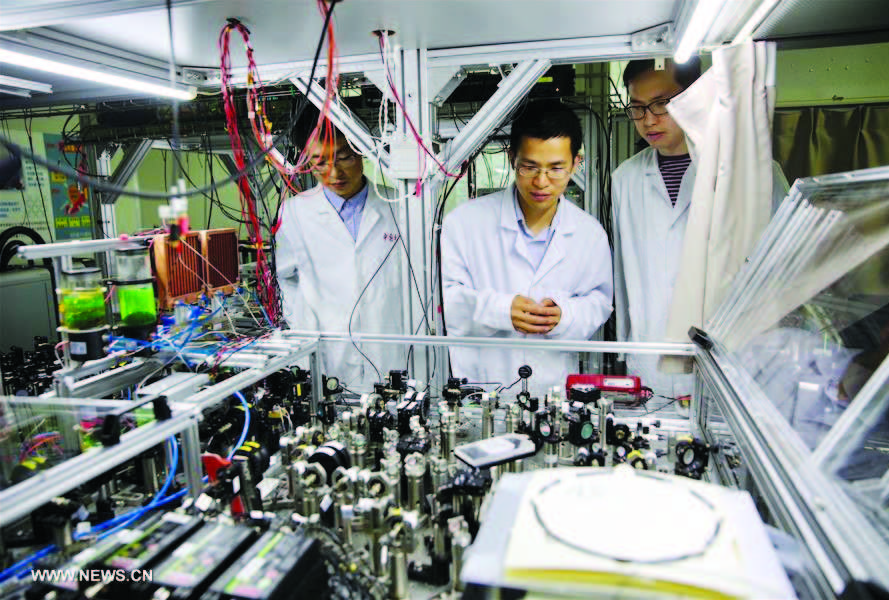
    BEIJING (TIP): Chinese scientists have built the world’s first quantum computing machine that goes beyond the early conventional or classical computers, paving way to the realisation of quantum computing.

    Scientists announced their achievement at the Shanghai Institute for Advanced Studies of University of Science and Technology of China on Wednesday, Xinhua news agency reported.

    They believe quantum computing could in some ways dwarf the processing power of supercomputers. One analogy to explain the concept of quantum computing is that it is like being able to read all the books in a library at the same time, whereas conventional computing is like having to read them one after another.

    Pan Jianwei, an academician of the Chinese Academy of Sciences and a leading quantum physicist, said quantum computing exploits the fundamental quantum superposition principle to enable ultra-fast parallel calculation and simulation capabilities.

    In normal silicon computer chips, data is rendered in one of two states: 0 or 1. However, in quantum computers, data could exist in both states simultaneously, holding exponentially more information.

    The computing power of a quantum computer grows exponentially with the number of quantum bits that can be manipulated. This could effectively solve large-scale computation problems that are beyond the ability of current classical computers, Pan said.

    Due to the enormous potential of quantum computing, Europe and the US are actively collaborating in their research. High-tech companies, such as Google, Microsoft and IBM, also have massive interests in quantum computing research.

    The research team is exploring three technical routes: systems based on single photons, ultra-cold atoms and superconducting circuits.

    Pan explained that manipulation of multi-particle entanglement is the core of quantum computing technology and has been the focus of international competition in quantum computing research. In the photonic system, his team has achieved the first 5, 6, 8 and 10 entangled photons in the world and is at the forefront of developments. Pan said quantum computers could, in principle, solve certain problems faster than classical computers.

  • Indian-origin scientist helps develop robot drill for 50 times faster skull surgery

    Indian-origin scientist helps develop robot drill for 50 times faster skull surgery

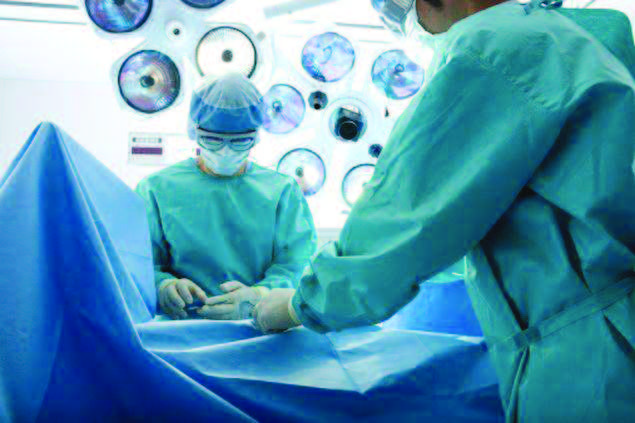
    WASHINGTON (TIP): A new computer-driven robotic drill that can make a type of complex cranial surgery 50 times faster than standard procedures has been developed by scientists including one of Indian origin.

    The automated drill, similar to those used in machine auto parts, produces fast, clean and safe cuts, reducing the time the wound is open and the patient is anaesthetised.

    This can decrease the incidence of infection, human error, and surgical cost, according to the findings published in the journal Neurosurgical Focus.

    To perform complex surgeries, especially cranial surgeries, surgeons typically use hand drills to make intricate openings, adding hours to a procedure. The automated drill reduces the time for bone removal from two hours using a hand drill to 2.5 minutes. “It was like doing archaeology. We had to slowly take away the bone to avoid sensitive structures,” said William Couldwell, a neurosurgeon at University of Utah in the US.

    “I was interested in developing a low-cost drill that could do a lot of the grunt work to reduce surgeon fatigue,” said A K Balaji, associate professor at University of Utah.

    The patient is first is imaged using a CT scan to gather bone data and identify the exact location of sensitive structures, such as nerves and major veins and arteries that must be avoided.

    Surgeons use this information to programme the cutting path of the drill.

    “The software lets the surgeon choose the optimum path from point A to point B, like Google Maps,” said Balaji.

    In addition, the surgeon can programme safety barriers along the cutting path within one millimetre of sensitive structures.

    The drill does the heavy lifting by removing most of the bone, similar to a mill, accurately and rapidly.

    The translabyrinthine surgery is performed thousands of times a year to expose slow-growing, benign tumours that form around the auditory nerves, researchers said.

    This cut is not only difficult, the cutting path also must avoid several sensitive features, including facial nerves and the venous sinus, a large vein that drains blood from the brain. Risks of this surgery include loss of facial movement.

    The device also has an automatic emergency shut-off switch. During surgery, the facial nerve is monitored for any signs of irritation.

  • SquareTrade tests find Samsung Galaxy S8 phones more prone to screen cracks, damages

    SquareTrade tests find Samsung Galaxy S8 phones more prone to screen cracks, damages

    Samsung’s latest phones feature big wraparound screens and lots of glass. They also appear to break more easily, according to tests run by SquareTrade, a company that sells gadget-repair plans.

    The nearly all-glass design of Samsung’s Galaxy S8 and S8 Plus makes them beautiful, SquareTrade said, but also “extremely susceptible to cracking when dropped from any angle.” Samsung had no comment.

    The new phones have received positive reviews from The Associated Press and other outlets. Samsung says advanced orders for the S8 were 30 percent higher than that for the Galaxy S7 phones. The company didn’t release specific figures. The S8 starts at $750, which is about $100 higher than the S7.

    SquareTrade said Monday that cracks appeared on screens of both the S8 and S8 Plus after just one face-down drop onto a sidewalk from six feet. The phones had similar problems when dropped on the backs and sides.

    Unsurprisingly, both models did well in water-drop tests. The phones had some audio distortion, but that is typical and temporary. The S8 has water-resistance features.

    SquareTrade didn’t test the phones’ battery, the source of problems that led to a recall of Samsung’s Galaxy Note 7 phone.


  • INDIA’S REVENUE RECEIPTS TO HIT RS 30 LAKH CRORE IN 2 YEARS ON INFRA PUSH

    INDIA’S REVENUE RECEIPTS TO HIT RS 30 LAKH CRORE IN 2 YEARS ON INFRA PUSH

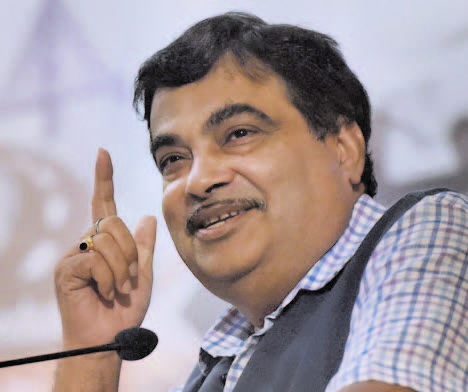
    NEW DELHI (TIP): An integrated policy is on the anvil to ramp up infrastructure at a time when India’s revenue receipts are set to touch the Rs 30 lakh-crore mark in the next two years, Union minister Nitin Gadkari said.

    “An integrated policy for the sector will be formulated and placed before the nation to bolster its economic growth. Unlike the precedent of working in silos, various ministries like road, port, rail, aviation and shipping would closely coordinate,” said Gadkari, who holds the portfolio of road transport, highways and shipping, after inaugurating the India Integrated Transport and Logistics Summit 2017 here.

    The maiden IITL summit saw various government departments come together on a single platform.

    Gadkari said such a huge initiative is taken for the first time and various departments will hold meetings to chalk out a policy which could be placed before the Cabinet or the Prime Minister.

    This is seen as a step towards realising the Prime Minister’s vision of holistic development as augmenting infrastructure, the topmost priority of the government, will help eradicate poverty.

    The minister is optimistic that the three-day summit, which got under way today, would garner Rs 2 lakh crore investment.

    The summit is in line with the government’s plans to have an effective multi-modal logistics and transport sector to make Indian economy more competitive.

    Claiming that this government is “pro-poor”, the minister added that extensive planning to boost infrastructure will not only reduce the high logistics cost, but realise the dream of double-digit growth soon.

    “If we have to wipe out poverty, if we want to achieve double-digit growth, we will have to augment infrastructure in an integrated manner and we are focusing on developing a network of waterways, railways and highways,” Gadkari said.

    Terming GST as “a historic decision”, the minister exuded confidence that the major tax reform coupled with demonetisation are bound to give a push to the country’s total revenue receipts.

    “Post-demonetisation and GST regime, India’s revenue receipts are likely to touch Rs 28-30 lakh crore in the next two years coupled with steps to strengthen infrastructure,” Gadkari said.

    When the NDA government took over in 2014, the revenue receipts read Rs 13 lakh crore, which could scale up to Rs 20 lakh crore during the three years of the present regime, the minister pointed out.

    He also touched on employment part, saying holistic development of a massive network of roads, ports, rail and aviation will create more jobs.

    His ministry, Gadkari said, is taking the length of National Highways to 2 lakh km soon and is committed to achieving a target of building 40 km of roads a day from the current 23 km.

    Thirteen expressways are on the anvil and work has been initiated on five of them with a target of completing the Rs 12,000 crore Eastern Peripheral Expressway by August 15 this year.

  • INDIA NOTIFIES PHASED MANUFACTURING PLAN FOR MOBILE PHONES

    INDIA NOTIFIES PHASED MANUFACTURING PLAN FOR MOBILE PHONES

    NEW DELHI (TIP): The Ministry of Electronics and IT has notified phased manufacturing programme to boost indigenous production of mobile phones by providing tax relief and other incentives on components and accessories used for the devices.

    “The Phased Manufacturing Programme has been notified with the objective of substantially increasing the domestic value addition for establishment of a robust Cellular mobile handsets manufacturing eco-system in India,” an official statement said.

    The programme will enable the Cellular mobile handset and related sub-assembly and component industry to plan their investments in the sector, it further said.

    With the implementation of PMP, the value addition or share of indigenously procured components in manufacturing of feature phones will go up from about 15 to 37 per cent and the same for smart phones will move up from about 10 to 26 per cent.

    “This initiative will help in building a robust indigenous mobile manufacturing ecosystem in India, and we believe that it will incentivise large scale manufacturing.

    “It is our road map to ensure an increase in the domestic value addition in manufacturing of mobile handsets,” Ministry of Electronics and Information Technology (MeitY) Secretary Aruna Sundararajan said.

    The phased manufacturing programme was proposed by a joint panel, Fast Track Task Force, of the industry and the government.

    “This programme will be rolled out over a period of time… The focus is to ensure that through appropriate fiscal and financial incentives, indigenous manufacturing of cellular mobile handsets and various sub-assemblies, which go into manufacturing of handsets, can be promoted over a period of time,” the statement said.

    The phase-wise programme covers mechanics, die cut parts, microphone and receiver, key pad and USB cable in the current financial year.

    It also aims to promote the indigenous manufacturing of populated printed circuit boards, camera modules and connectors in 2018-19, and display assembly, touch panels, vibrator motor and ringer in 2019-20.

    “The programme will be extended to parts, sub-parts, inputs for aforesaid sub assemblies as the manufacturing ecosystem evolves over the next few years,” the statement said.

    The government is also in process of formulating second phase of PMP which it expects will enhance value addition to 58.3 per cent in feature phones and 39.6 per cent in smartphones.

    “PMP-II is currently under preparation by the Fast Track Task Force, set up by MeitY,” the statement said.

    Fast Track Task Force Chairman Pankaj Mohindroo said the mobile industry is on a robust path of enterprise creation and developing a world-scale industry.

    “We will not get entrapped by protectionism, but will create deep competencies, both cost and skills, which will create a globally benchmarked workforce and complementary industries intertwined with the global mobile phone and component ecosystem equally encouraging global and domestic enterprises,” Mohindroo said.

  • Uber in US court to fight on possible shutdown of self-driving program

    Uber in US court to fight on possible shutdown of self-driving program

    SAN FRANSISCO (TIP): Uber Technologies Inc goes before a U.S. judge on Wednesday to fight for the right to continue work on its self-driving car program, the latest phase in a courtroom battle over trade secrets that threatens to topple a central pillar of Uber’s growth strategy.

    The ride-services company is contesting a lawsuit by Alphabet Inc’s self-driving car unit, Waymo, which accused former Waymo engineer and current Uber executive Anthony Levandowski of taking technical secrets from Waymo and using them to help Uber’s self-driving car development.

    If it were proven that Levandowski and Uber conspired in taking the information, that could have dire consequences for Uber, say legal and ride-hailing industry experts. Uber’s $68 billion valuation is propped up in part by investors’ belief it will be a dominant player in the emerging business of self-driving cars. At issue on Wednesday is Waymo’s demand that U.S. District Court Judge William Alsup in San Francisco issue an injunction barring Uber from using any of the technology that Waymo said was stolen. If Alsup issues a broadly worded order against Uber, it could all but shut down Uber’s self-driving car program while court proceedings continue. Alsup is not expected to rule immediately on Wednesday, but he may intimate which way he is leaning. At a hearing last month, Alsup warned Uber that it may face an injunction, saying of the evidence amassed by Waymo: “I’ve never seen a record this strong in 42 years.”

    Uber Chief Executive Officer Travis Kalanick has said that autonomous vehicles, though still in their infancy, are critical to the company’s long-term success and future growth.