Month: May 2017

  • Times Square car crash: Driver was US Navy veteran, had ‘history of drunk driving’

    Times Square car crash: Driver was US Navy veteran, had ‘history of drunk driving’

    NEW YORK (TIP): One person died and 12 others injured when a car plowed into pedestrians in New York’s busy Times Square today, with authorities saying the driver of the vehicle, a US Navy veteran, has a criminal history and record of drunk driving.

    Authorities identified the driver of the vehicle as 26- year Bronx resident Richard Rojas, who was immediately taken into custody.

    New York City Mayor Bill de Blasio stressed that there was no indication the incident was an act of terror. He told reporters at the scene that Rojas is a US citizen and a former member of the armed forces with the US Navy.

    “He has a criminal history,” the mayor said. He said that out of an “abundance of caution”, security across key locations around the city will be stepped up and major sites in the city will get additional police coverage from the anti-terror units.

    Describing the incident as “horrible”, de Blasio said “it is a tough day for New York City but as usual the people of New York City will stand firm and will be resilient.” The incident that occurred around noon today left one woman dead and 22 others injured, who were rushed to local area hospitals. Four of them remain in critical condition, suffering from various traumatic injuries, including open fractures. However none of the four seem to have life threatening injuries, authorities said.

    New York Police Commissioner James O’Neill said preliminary information revealed that Rojas had been arrested in the past and two of those arrests were due to driving while intoxicated. Detectives are currently reviewing any other criminal history Rojas may have.

    The Police chief said Rojas was driving his Honda car at a “high rate of speed” around noon along the sidewalk through three streets, hitting pedestrians along the way before coming to a stop after colliding with metal railings at a street corner.

    Smoke was coming out of the car’s hood and the vehicle was slightly overturned on a barrier at a sidewalk in Times Square. O’Neill reiterated that at the moment there is no indication that the incident is “terror related.”

    The incident occurred around lunchtime at the crowded Times Square in the heart of Manhattan and among the most popular tourist destinations in the world. At any given point, hundreds of thousands of people are in Times Square, including tourists, city residents, commuters and employees. Apart from a plethora of stores, broadway theatres and high-rises, Times Square is also home to offices of several financial, entertainment and media firms. (AP)

  • US envoy: North Korea is intimidating the entire world

    US envoy: North Korea is intimidating the entire world

    UNITED NATIONS: US Ambassador Nikki Haley accused North Korea on Tuesday of intimidating the entire international community with its nuclear program, military ability and cyberattacks, and said any country that doesn’t implement UN sanctions is supporting Pyongyang’s actions.

    “No one is immune to the threat of North Korea,” she told reporters before emergency closed-door consultations by the UN Security Council on the North’s weekend ballistic missile launch, which experts said demonstrated a significant technological jump with the rocket flying higher and for a longer period of time.

    “We’re not going to continue to just say go ahead and test as often as you want,” Haley said, flanked by the South Korean and Japanese ambassadors. “This is a true threat to every country in the world. … We’re going to make sure we put the pressure on them economically, diplomatically, politically and internationally.”

    Haley said the US and China have been working on “a unified plan” on how to approach North Korea that would include stronger implementation of existing sanctions and tougher new sanctions.

    She indicated Washington and Beijing had agreed they would take action if a new test looked to be long range and leaning toward an intercontinental ballistic missile that could reach the United States.

    The latest launch appeared to fulfill both criteria, Haley said, “so I believe that China will stay true to that, and that we’ll come together on how we’re going to do that.” The Security Council, which has imposed six rounds of sanctions on the North, discussed possible further action at Tuesday’s meeting. Haley previously indicated that new sanctions could target oil, a critical import for North Korea mainly from China, and she said Tuesday the US also wants sanctions on organizations and businesses in third countries that are helping Pyongyang.

    Uruguayan Ambassador Elbio Rosselli, the current council president, said after the meeting that members are united in condemning the latest missile launch as “a serious threat to international peace.” He said the council is exploring many different avenues to proceed and “clearly sanctions are a way to go,” but also diplomacy.

    Council diplomats, speaking on condition of anonymity because the consultations were private, said China never mentioned working with the US on a new sanctions resolution, and both China and Russia said they support a negotiated solution through dialogue.

    Haley was asked about comments by Russian President Vladimir Putin in Beijing on Monday who called North Korea’s nuclear and missile tests “unacceptable” but also said the United States should stop intimidating Pyongyang.

    “We need to return to dialogue with the Democratic People’s Republic of Korea, stop intimidating it and find ways to solve these problems peacefully,” Putin was quoted as saying, using North Korea’s official name. “Is it possible or not? I think it is possible.”

    Haley answered Putin and others who have made similar comments about the United States: “What about North Korea intimidating us? They’re intimidating the entire international community. They’re trying to strengthen their muscle with no cause. There is no reason for North Korea to be having these actions outside of the fact they just choose to do so.”

    Haley noted that this weekend’s missile came within 60 miles of Russia’s border and said Russia is “all wrong.” “It is actually North Korea trying to intimidate the international community,” Haley said, “and Russia itself should be concerned because that ballistic missile test was a signal to South Korea for their new elections, it was a signal to Russia in how close it got, it was a signal to Japan being in the region, and it was a signal to us.”

    The US ambassador said Russia has the same decision to make as the rest of the international community: “You either support North Korea or you don’t, but you have to choose. You have to pick a side.”

    She said North Korean leader Kim Jong Un is “paranoid” and thinks that the United States is trying to promote regime change and that there are people trying to assassinate him. “We’re not trying to do any of those things,” she said. “What we are saying is that for peace on the Korean peninsula, he has to stop his testing. He has to stop any nuclear programs that he has. The US, we are willing to talk — but not until we see a total stop of the nuclear process and any tests there.”

    Haley said the Security Council is going to send a strong and unified message to North Korea that “the international community wants to support you but as long as you test, and as long as you continue your nuclear program, you are on an island by yourself.” (AP)

  • US Justice department names special counsel to probe Trump campaign Russia ties

    US Justice department names special counsel to probe Trump campaign Russia ties

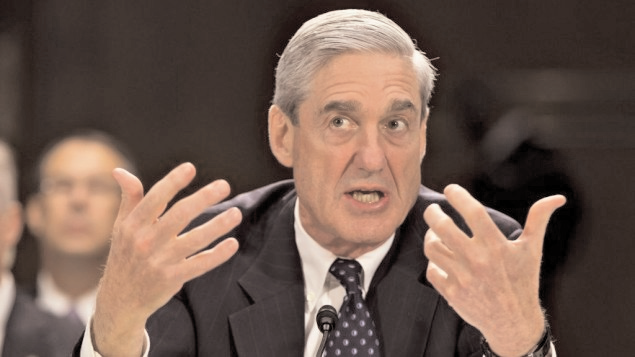
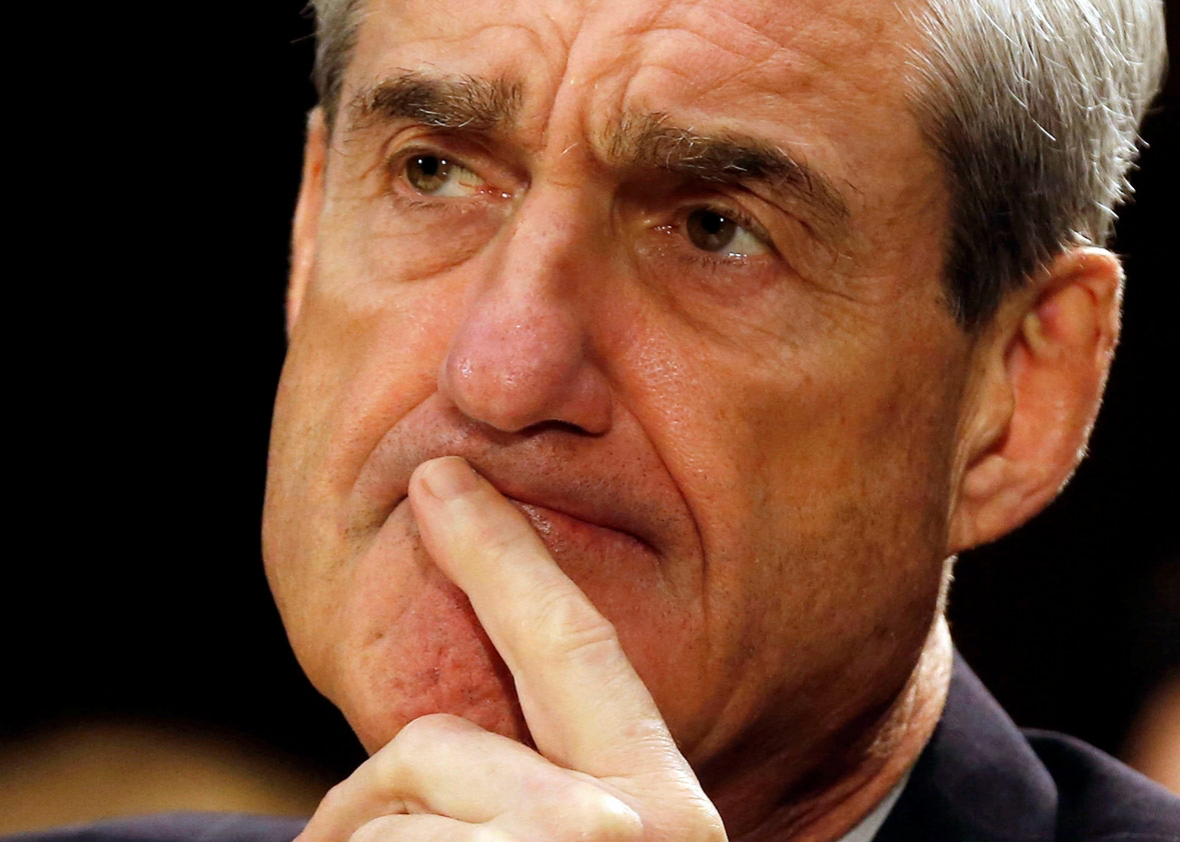
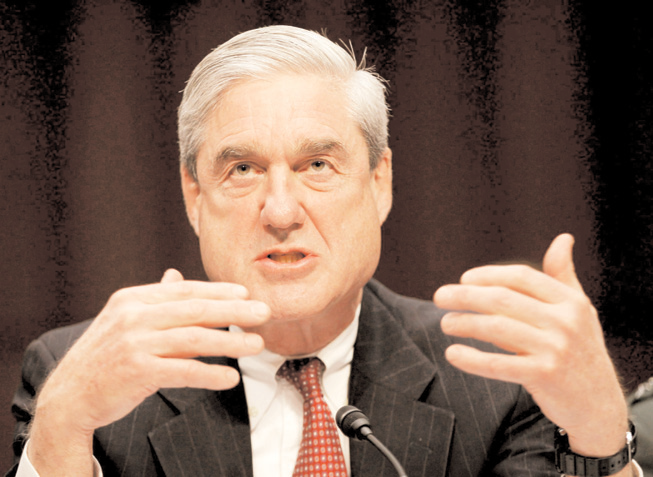
    WASHINGTON (TIP): The US Justice Department on May 17 independently named former FBI Director Robert Mueller as special counsel to investigate ties between President Trump’s campaign and Russian officials, sending the four month old Presidency into a deeper crisis.

    The appointment, apparently made by an independent-minded Deputy Attorney General Rod Rosenstein without prior knowledge of or intimation to the White House, drew a sharp reaction from President Trump even as it gathered bipartisan support for its impartial nature given Mueller’s reputation as a fair investigator.

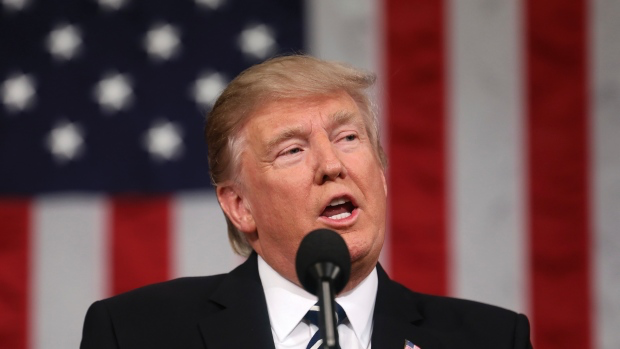
    ”This is the single greatest witch hunt of a politician in American history!” Trump complained in a Twitter post to much derision soon after the Justice Department announcement. He pointed out that ”With all of the illegal acts that took place in the Clinton campaign & Obama Administration, there was never a special councel (sic) appointed!”

    The announcement of a special counsel came amid new reports that the Trump campaign had at least 18 previously undisclosed contacts with Russian officials in the seven months prior to the 2016 Presidential elections. Conversations between disgraced and fired National Security Advisor Michael Flynn and Russian ambassador Sergei Kislyak accelerated after the November 8 vote as the two discussed establishing a back channel for communication between Trump and Russian President Vladimir Putin that could bypass the U.S. national security bureaucracy, which both sides considered hostile to improved relations, Reuters reported, quoting four current U.S. officials.

    At first blush there appeared to be nothing illegal in the contacts, but such extensive and intensive exchanges with a historic foe, and the pace and secrecy with which it was done, has riled the traditional Washington establishment — Republican and Democratic — that remains leery of Moscow.

    In fact, even as news of appointment of the special prosecutor and previously undisclosed Russia contacts broke on Wednesday, the Trump dispensation and Republicans supporting him had the mortification of another embarrassing disclosure. A key GOP leader reportedly alleged at a party meeting during the 2016 campaign that Trump was on Russian leader Putin’s payroll.

    ”There’s two people I think Putin pays: Rohrabacher and Trump,” Republican House Majority leader said at the meeting according to a recording of the June 2016 exchange first reported in Washington Post, which along with the New York Times has been relentlessly landing a one-two on the Trump Presidency over the past several days. Rohrabacher is a California Republican who is a staunch defender of Putin. Republican lawmakers at the meeting laughed at McCarthy’s comment, presumably seeing it as a joke, at which point McCarthy added, “swear to God.”

    The party leadership, notably Speaker Paul Ryan, quickly stepped in to ensure the matter was not leaked to the media. On Thursday, McCarthy, who like Speaker Ryan later joined the Trump camp after initial reservations, maintained that the remark was a joke and nothing further should be read into it. (PTI)

  • Hillary Clinton launches new political action group

    Hillary Clinton launches new political action group

    WASHINGTON (TIP): Former Democratic presidential candidate Hillary Clinton has launched a new political action organisation to fight against US President Donald Trump’s agenda and raise funds for five prominent progressive groups.

    “I believe more fiercely than ever that citizen engagement at every level is central to a strong and vibrant democracy,” Clinton said announcing the launch of her group ‘Onward Together’. “More than ever, I believe citizen engagement is vital to our democracy. I’m so inspired by everyone stepping up to organise and lead,” the former Secretary of State, said to her supporters as she urged them to contribute to the “remarkable” spirit of political activism.

    The announcement comes as Clinton, 69, works to find a new role in an evolving political landscape.

    The new group’s website said it aimed to advance progressive values and reminded visitors that Clinton had won nearly 66 million votes in November’s showdown with Trump. (PTI)

  • Basquiat painting fetches record $110.5 million at NY auction

    Basquiat painting fetches record $110.5 million at NY auction

    NEW YORK (TIP): An artwork by Jean-Michel Basquiat (zhahn mee-SHEHL’ BAH’-skee-aht) sold for a record $110.5 million at auction in New York.

    Sotheby’s said the sale of “Untitled” Thursday night in Manhattan was an auction record for the artist. It also set a record price for an American artist at auction. The 1982 painting depicts a face in the shape of a skull.

    The piece was purchased by noted Japanese collector and entrepreneur Yusaku Maezawa after a 10-minute bidding war. He says he plans to eventually display the painting in his museum in Chiba, Japan.

    The previous auction record for the artist was set last May when “Untitled, 1982” sold for $57.3 million, also to Maezawa. Basquiat died of a drug overdose in 1988 at age 27. (AP)

  • Five dead, 19 missing after Haiti rains, flooding

    Five dead, 19 missing after Haiti rains, flooding

    PORT-AU-PRINCE, HAITI (TIP): Five people were killed and 9 missing on Thursday after torrential rains and flooding hit Haiti, its Department of Civil Protection said. Streams, rivers and ravines overflowed causing the casualties and some damage to infrastructure, the government authority said in a statement.

    Nineteen fishermen were missing from two towns in the coastal Grande-Anse region of southern Haiti, it said, adding that in the same region 322 people were staying in shelters and 20 people sought shelter in the Nord-Ouest department.

    Haiti has been grappling with a heavy rainy season this year and is recovering from Category-4 Hurricane Matthew, which devastated much of the country’s southwest last October. The impoverished nation is in a hurricane-prone area and is especially susceptible to natural disasters because of poor infrastructure and a lack of government resources. (Reuters)


  • Newly freed Chelsea Manning: ‘I’m figuring things out’

    Newly freed Chelsea Manning: ‘I’m figuring things out’

    KANSAS CITY (TIP): Pvt Chelsea Manning, the soldier who was sentenced to 35 years in a military prison for giving classified materials to WikiLeaks, said today that she’s excited about what lies ahead, just hours after she walked free after serving seven years behind bars.

    “I’m figuring things out right now – which is exciting, awkward, fun, and all new for me,” Manning said in an emailed statement. She tweeted a picture of her feet in tennis shoes – with the caption “First steps of freedom!!” – after walking away from the Fort Leavenworth lockup in Kansas.

    Manning’s immediate plans, including living arrangements, remained unclear. Manning tweeted after then-President Barack Obama granted her clemency in January that she planned to move to Maryland, where she has an aunt. Manning originally comes from Crescent, Oklahoma.

    “After another anxious four months of waiting, the day has finally arrived,” Manning said in Wednesday’s statement. “I am looking forward to so much! Whatever is ahead of me is far more important than the past.” Manning, who is transgender and was known as Bradley Manning before she transitioned in prison, was convicted in 2013 of 20 counts, including six Espionage Act violations, theft and computer fraud. She was acquitted of the most serious charge of aiding the enemy.

    Manning, a former intelligence analyst in Iraq, has acknowledged leaking the materials, which included battlefield video. She said she wanted to expose what she considered to be the US military’s disregard of the effects of war on civilians and that she released information that she didn’t believe would harm the US.

    Critics said the leaks laid bare some of the nation’s most-sensitive secrets and endangered information sources, prompting the State Department to help some of those people move to protect their safety. Several ambassadors were recalled, expelled or reassigned because of embarrassing disclosures.

    Manning, who was arrested in 2010, filed a transgender rights lawsuit in prison and attempted suicide twice last year, according to her lawyers. “We can all finally truly celebrate the strength and heroism she has shown in surviving and sharing her truth and life with all of us,” Chase Strangio, Manning’s attorney with the American Civil Liberties Union, said in today’s statement that included Manning’s post-release comments. (AP)

  • Donald Trump claims witch hunt, says he’s most hounded leader ever

    Donald Trump claims witch hunt, says he’s most hounded leader ever

    WASHINGTON (TIP): Brimming with resentment, President Donald Trump fervently denied on May 18 that his campaign had collaborated with Russia or that he’d tried to kill an FBI probe of the issue, contending that “even my enemies” recognize his innocence and declaring himself the most unfairly hounded president in history.

    Asked point-blank if he’d done anything that might merit prosecution or even impeachment, he said no and then added concerning the allegations and questions that have mounted as he nears the four-month mark of his presidency: “I think it’s totally ridiculous. Everybody thinks so.”

    Not quite everybody. While Trump tweeted and voiced his indignation at the White House, Deputy Attorney General Rod Rosenstein, who appointed an independent special counsel to lead a heightened federal Trump-Russia investigation the day before, briefed the entire Senate behind closed doors at the Capitol. By several senators’ accounts, he contradicted Trump’s statements that Rosenstein’s written criticism of FBI Director James Comey had been a factor in Comey’s recent firing by the president.

    Trump is leaving Friday for his first foreign trip, to the Mideast and beyond, and aides had hoped the disarray at home would have been calmed if not resolved, allowing the White House to refocus and move ahead. Republicans on Capitol Hill hoped the same, reasoning that the appointment of a special counsel could free them to work on a major tax overhaul and other matters without constant distractions.

    Trump said he was about to name a replacement for Comey, another move to settle the waters. Former Connecticut Senator Joe Lieberman was seen as the front-runner.

    But calmness seemed far off. Trump clearly knew what he wanted to say as he took a few questions at a news briefing with visiting Colombian  President Juan Manuel Santos.

    Did he urge Comey at a February meeting to drop his probe of the Russia connections of Trump’s national security adviser, Michael Flynn?

    “No. No. Next question.”

    Did he in fact collude with Russia in his campaign to defeat Democrat Hillary Clinton?

    “Everybody, even my enemies, have said there is no collusion,” he maintained.

    However another answer on that subject seemed both more specific and perhaps ambiguous.

    “There is no collusion between certainly myself and my campaign — but I can only speak for myself — and the Russians. Zero.”

    “The entire thing has been a witch hunt,” he declared, echoing one of the tweets he’d sent out just after dawn: “This is the single greatest witch hunt of a politician in American history!”

    He said he respected the special counsel appointment but also said it “hurts our country terribly.”

    At the other end of Pennsylvania Avenue, Rosenstein was briefing the Senate about his decision to appoint former FBI Director Robert Mueller to lead the independent Trump-Russia probe.

    Senators said that Rosenstein steered clear of specifics while making clear that Mueller has wide latitude to pursue the investigation wherever it leads, including potentially criminal charges. Despite the president’s furious reaction, some fellow Republicans welcomed Mueller’s appointment and expressed hopes it would restore some composure to a capital plunged in chaos.

    “We’ll get rid of the smoke and see where the actual issues lie,” said Sen. Tim Scott, R-S.C. “I do think that the special prosecutor provides a sense of calm and confidence perhaps for the American people, which is incredibly important.”

    One striking piece of news emerged from Rosenstein’s briefing: He told senators that he had already known Comey was getting fired even as he wrote the memo that Trump cited as a significant justification for the FBI director’s dismissal. Trump himself had already contradicted that explanation, telling interviewers earlier that he had already decided to dismiss Comey.

    He offered new justifications for his decision Thursday, even while referring to the Rosenstein memo as “a very, very strong recommendation.

    Trump referred to Comey’s testimony at a recent Capitol Hill hearing after which the Justice Department ended up having to amend part of his testimony regarding last year’s probe of Hillary Clinton’s email practices.

    “That was a poor, poor performance,” Trump said. “And then on top of that, after the Wednesday performance by Director Comey, you had a person come and have to readjust the record, which many people have never seen before, because there were misstatements made.”(AP)

  • Gunmen attack state TV station in Afghanistan, 2 civilians among 4 killed

    Gunmen attack state TV station in Afghanistan, 2 civilians among 4 killed

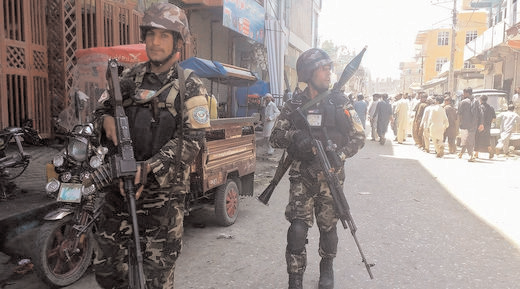
    JALALABAD (TIP): Suicide bombers stormed the national television station in the eastern Afghan city of Jalalabad today, triggering gunfights and explosions as journalists remained trapped inside the building, officials and eyewitnesses said.

    At least two people were killed and 14 others wounded in the ongoing assault, which underscores the growing dangers faced by media workers in Afghanistan.

    No insurgent group has so far claimed responsibility for the raid in Nangarhar province, a hotbed of Islamic State jihadists, where the US military dropped its largest non- nuclear bomb last month in an unprecedented attack.

    “Four attackers entered the RTA (Radio Television Afghanistan) building this morning. Two blew themselves up and two others are still resisting,” government spokesman Attaullah Khogyani told AFP. He had earlier said there were three attackers.

    “At least two civilians have been killed and 14 others wounded so far,” Kohgyani said, with a health worker telling AFP that many of those brought to hospital suffered gunshot wounds.

    An RTA photographer said he fled the building as soon as the gunfight erupted, but many of his colleagues were still stuck inside. Unconfirmed reports said that Islamic State militants have claimed responsibility for the attack.

    Islamic State insurgents are active in Nangarhar province, of which Jalalabad is the capital.

    The US military last month dropped the GBU-43/B Massive Ordnance Air Blast bomb- dubbed the “Mother Of All Bombs”- on IS positions in Nangarhar, killing dozens of jihadists.

    The bombing triggered global shock waves, with some condemning the use of Afghanistan as what they called a testing ground for the weapon, and against a militant group that is not considered as big a threat as the resurgent Taliban.

    According to the US Forces- Afghanistan, defections and recent battlefield losses have reduced the local IS presence from a peak of as many as 3,000 fighters to a maximum of 800.

    The Pentagon has reportedly asked the White House to send thousands more troops to Afghanistan to break the deadlocked fight against the Taliban.

    (AFP)

  • PM Modi attends Vesak Day celebrations in Sri Lanka

    PM Modi attends Vesak Day celebrations in Sri Lanka

    COLOMBO (TIP): Prime Minister Narendra Modi on Friday participated in the International Vesak Day celebrations in the Sri Lankan capital, the biggest festival of Buddhists.

    Modi, on his second visit to Sri Lanka in two years, was received by his Sri Lankan counterpart Ranil Wickremesinghe at the venue amid traditional fanfare. The Prime Minister, who is the chief guest at the event, lit lamps – a traditional practice. Sri Lankan President Maithripala Srisena was also present on the occasion.

    Several Buddhist monks chanted prayers during which Modi closed his eyes and kept his hands folded.

    Speaking at the event, Wickremesinghe thanked Modi for being the chief guest at the event. (PTI)

  • Nepal in talks with China to build $8 bn cross-border rail link

    Nepal in talks with China to build $8 bn cross-border rail link

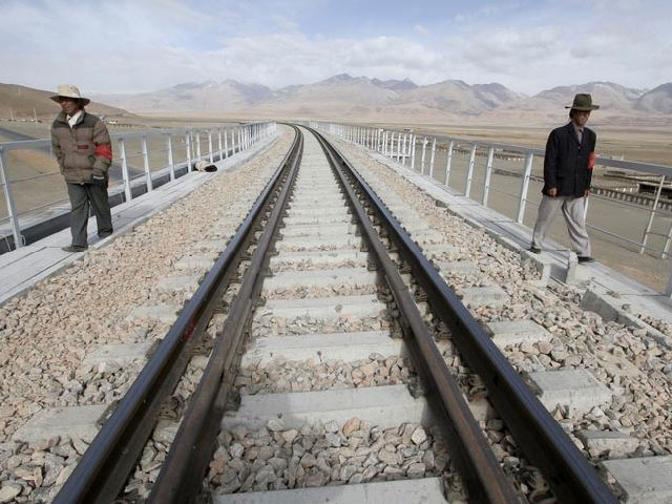
    BEIJING (TIP): Nepal is in talks with China to build a cross-border rail link that may cost up to $8 billion, and funding could be expected after Nepal formally signed up to Beijing’s Belt and Road initiative, a Nepali finance ministry official said on May 14.

    Yug Raj Pandey, an under-secretary at Nepal’s ministry of finance, told Reuters the proposed 550 kilometre-long railway would connect China’s western Tibet region to Nepal’s capital of Kathmandu and will carry goods and passengers.

    The Himalayan nation officially signed an agreement two days ago to be part of President Xi Jinping’s ambitious plan to build a new Silk Road, he said on the sidelines of the Belt and Road Forum in Beijing.

    “Now we are a member of (the initiative) we can get some specific project assistance from China’s government. We expect it for the railway,” he said. “Once we connect by railway then we can increase our trade and invite more tourists to Nepal.”

    Pandey said the two countries had been in discussions for the past five months about the project, which could cost $7-8 billion and take up to eight years to complete.

    He said Nepal planned to start preparing a detailed project report for the railway, and that they had yet to decide how much funding they will seek from China.

    The railway will travel over 400 kilometres in China to the Nepal border, and then about another 150 kilometres from the Nepali border to Kathmandu, he said.

    (Reuters)

  • For us, ICJ ruling has changed nothing, says Pakistan AG

    For us, ICJ ruling has changed nothing, says Pakistan AG

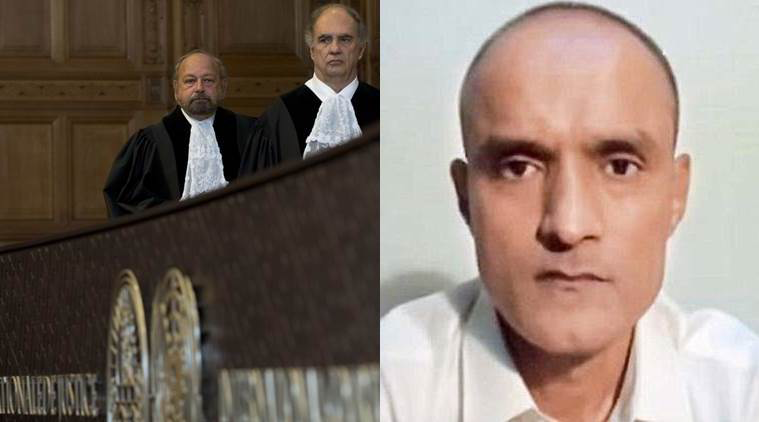
    ISLAMABAD (TIP): Pakistan’s attorney general Ashtar Ausaf said on Thursday that the ICJ had asked Islamabad to maintain the status quo in the case.

    “The Court has clearly underscored that the provisional measures are without prejudice to the final determination of the merits and jurisdiction of the case,” Ausaf said in a written statement.

    “The provisional measures are a procedural process only to enable the court to have full consideration at a later hearing,” he said. “These measures have no bearing whatsoever on the final decision of the Court,” he pointed out.

    Responding to critics that Pakistan should not have accepted the ICJ’s jurisdiction, Ausaf said: “Pakistan attended the hearing out of its utmost respect for the court and pursuant to the established jurisprudence that the challenge to jurisdiction can be made via appearance and not by abstaining.”

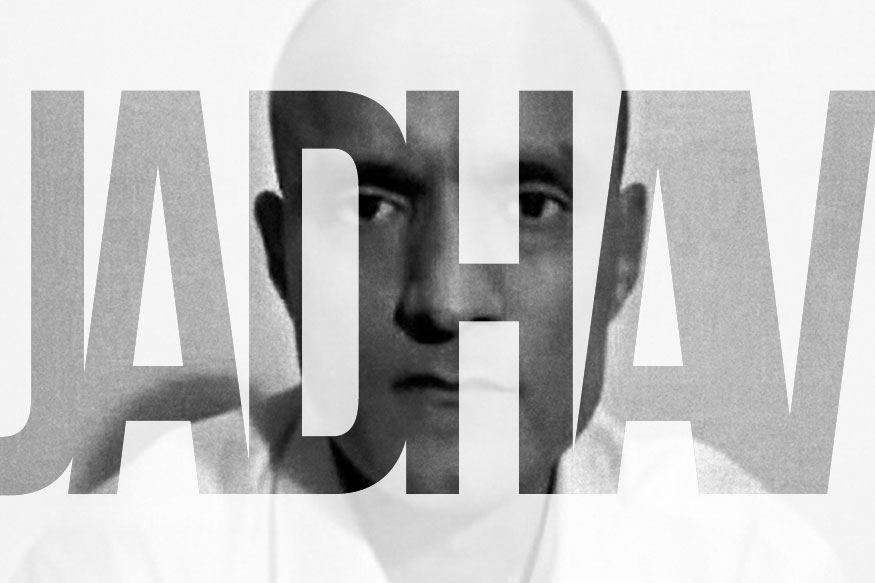
    He further stated, ” As far as Pakistan is concerned, the decision today hasn’t changed the status of Commander Jadhav’s case in any manner. In our submissions on 15 May, we had assured the court unambiguously that Jadhav would be provided every opportunity and remedy available under law to defend his case. He still has ample time to petition for clemency”

    Earlier, Nafees Zakaria, the foreign office spokesman, said the decision to challenge the ICJ jurisdiction was taken after consultation with all the institutions and agencies. He said the foreign office has also requested access to Jadhav’s accomplices. “India, however, did not give a positive response to Pakistan’s request regarding access to Jadhav’s accomplices,” Zakaria said, adding that India weaved a humanitarian angle to divert the world’s attention from his real actions of fomenting terror in Pakistan. (PTI)

  • Pakistan at crossroads in terror fight, must decide: Army chief

    Pakistan at crossroads in terror fight, must decide: Army chief

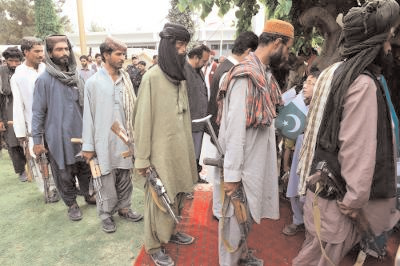
    ISLAMABAD (TIP): Pakistan stands at a “crossroads” in its fight against extremism and must decide whether it wants to enjoy the benefits of its young demography or suffer at the hands of terrorism, Army chief Gen Qamar Javed Bajwa said on May 19.

    Gen Bajwa, speaking on the role of ‘Youth In Rejecting Extremism’ here, said the Army would defeat terrorists but it needed the support of the nation to wipe out extremism from the society.

    “Please remember, while the Army fights terrorists, terrorism and extremism is fought by law enforcing agencies and society,” he said.

    Pakistan is a young nation, the army chief said, adding that demographically, more than 50 per cent of population is projected to be less than 25 years of age.

    “We are standing at a crossroads; ten year down the line, we will either be enjoying the fruits of a youth dividend or suffering at the hands of a youth bulge, especially with the youth which remains vulnerable to extremism,” he said.

    “A youth driven towards extremism is a youth without a clear idea of his values and identity,” Gen Bajwa said.

    Talking about India caught in extremism, he said: “Just next door, India seems to have given in to extremism to such an extent that it has become the new normal. Hate has been mainstreamed in India and it is distorting there national outlook.”

    “The Hindutva extremism of the RSS and their GaoRakshaks, deprivation of Palestinians, the burning and desecration of mosques or gurdwaras in western capitals, the rise of hyper nationalists and the monster of racism, are all manifestations of extremism.”

    He said Pakistani youth is getting exploited due to poor governance and lack of justice in the society.

    “Our challenges are very real but there are positive sides to the picture as well. Not only have we survived the worst onslaught of terrorism in modern history, we have reversed the tide. In fact, security has now achieved conditions to help development take off,” he said. He accused enemies of Pakistan for waging war.

    “Our enemies, both state and non state, are actively pursuing divisive tendencies in society. Let me say that they are waging the biggest and most sustained ‘Hybrid War’ against us from multiple directions and using multiple ways,” he said.

    He said said the “enemy” was using social media to achieve its objective.

    “We are being targeted by not only terrorists but also spin masters of multiple hostile agencies, trying to subvert our minds, particularly that of our youth. Being denied opportunities in the mainstream media, they are using faceless platforms on the internet and smart phones,” he said.

    He said the Indian leadership has made no secret of its involvement in proxy struggle in the erstwhile East Pakistan (which later became Bangladesh) and now in Balochistan.

    He said Pakistan took action affiant “terrorists of all hues and colours” and ensured the writ of state in the farthest and remotest corners of the country. “Today there are no safe havens for any miscreants in Pakistan,” he said.

    He vowed that extremism will also be defeated as terrorism was defeated in Pakistan. (PTI)

  • 7 questions that explain the special counsel

    7 questions that explain the special counsel

    A closer look at how Robert Mueller’s investigation into Trump and Russia will play out.

    By Josh Gerstein


    The Justice Department’s decision to name former FBI Director Robert Mueller to investigate possible collusion with Russia by Donald Trump’s presidential campaign rocked an already reeling capital Wednesday, May 17.

    While there are a variety of investigative arms available in Washington, the specific provision Deputy Attorney General Rod Rosenstein used to tap Mueller has been dormant for nearly two decades.

    The rarely invoked rules provide answers to some key questions about Mueller’s new, high profile post.

    1) What powers does Mueller have?

    Mueller will have all the authority of a typical U.S. attorney to convene grand juries, issue subpoenas, file criminal charges and pursue those charges to trial, if he deems it appropriate. In practice, he’ll probably have more control over the FBI agents involved in his probe than most prosecutors do.

    The regulations under which Mueller was appointed oblige him to “comply with the rules, regulations, procedures, practices and policies of the Department of Justice.” However, he could seek Rosenstein’s approval to shortcut or waive some of those procedures. Past special counsels have sometimes bypassed certain procedures, like internal reviews for subpoenas directed to journalists.

    2) What is the scope of the investigation and could Mueller expand it?

    Mueller has been assigned to probe Russia’s alleged interference in the 2016 election, which the FBI had been pursuing, with Justice Department approval. Mueller’s authority specifically includes “any links and/or coordination between the Russian government and individuals associated with the campaign of President Donald Trump.” Rosenstein’s directive also says Mueller can pursue “any matters that arose or may arise directly from the investigation,” including crimes like perjury or obstruction of justice.

    Mueller’s mandate seems broad enough to capture matters like Trump’s alleged entreaties to Comey to end the inquiry into former National Security Adviser Michael Flynn. If Mueller wants more clarity on whether a matter is in his purview he could come back to Rosenstein and ask. But past outside investigators have been criticized for expanding the scope of their investigation.


    3) Who does Mueller report to and can Trump fire him?

    Normally, a special counsel would report to the attorney general, but because Attorney General Jeff Sessions has recused himself from the Russia-election probe, Rosenstein is acting in that role. He’ll supervise Mueller, although the rules state: “The Special Counsel shall not be subject to the day-to-day supervision of any official of the Department.”

    According to the regulations, Rosenstein can block major investigative steps by Mueller, but must report to Congress if that happens. Rosenstein can fire Mueller “for misconduct, dereliction of duty, incapacity, conflict of interest, or for other good cause.” Trump can’t fire Mueller directly, but in theory could order Rosenstein to dismiss Mueller and could fire Rosenstein if he didn’t comply. The president could then seek out someone who would dismiss the special prosecutor.

    This is the scenario that played out during Watergate in 1973 in the so-called Saturday Night Massacre.

    Trump could also tell Sessions to repeal the regulations under which Mueller was appointed, freeing officials of any limits on firing him.

    4) What sort of budget does Mueller get, and what does his operation look like?

    Mueller has 60 days to propose a budget, which will be worked out with Justice Department finance officials and is subject to approval by Rosenstein. The special counsel must return by July of each year with a new budget plan. Mueller may hire some of his own lawyers and staff on a temporary basis, but typically many of those involved are “detailed” from other Justice Department offices. He’ll have access to the same FBI investigators already working on the probe, but can seek more resources if he wants them.

    5) Is there a set length of time for the inquiry?

    There’s no fixed duration for the investigation. It’s probable that getting Mueller and his team into place will cause some delay as they hire staff and get up to speed on work that’s already been done. Given the sensitivity of the intelligence matters, those newly-assigned to the case will need special security clearances and approvals.

    The investigation could well enter a relatively quiet period for a while until Mueller decides whether to take steps likely to draw public attention, like summoning witnesses to a grand jury.

    6) What impact will there be on Congressional investigations?

    Mueller is likely to be given effective control over what information the Justice Department shares with Congress about the probe and what requests it makes to Congressional committees to defer questioning sensitive witnesses or avoid publicizing potential leads in the investigation.

    In the short term, the decision to tap Mueller could slow down or freeze such cooperation as he tries to get read in on the various aspects of the investigation. Ultimately, Congress can do what it wants to demand witnesses and evidence, but lawmakers are typically leery of taking steps that could jeopardize the criminal probe.

    “The Senate Select Committee on Intelligence will continue its own investigation and to the extent any deconfliction is required, we will engage with Director Mueller and our expectation is that he will engage with the Committee as well,” Senate Intelligence Committee Chairman Richard Burr (R-N.C.) and Vice Chair Mark Warner (D-Va.) said in a joint statement Wednesday night.

    7) Will Mueller issue a final report?

    Yes, but it may not be made public. The regulations call for Mueller to prepare a report for Rosenstein on the reasons for decisions to prosecute or not prosecute. The rules also say the Justice Department must report to Congress on the grounds for closing the investigation. Rosenstein can decide whether or not to make that report public, but it may be a moot point since official notifications to the Hill are often promptly leaked.

    (Source: Politico)


  • The Threat from Problematic Organizations and Cults

    The Threat from Problematic Organizations and Cults

    “I remain hopeful that proper actions can be undertaken to help preserve a welcoming, ethical, tolerant, and legal religious environment in the USA. We are a religious nation, yet also a nation of laws. Religious freedom must not be used as an excuse or cover to inflict abuse and commit crimes. That is not what our laws provide for”, says the anonymous author.

    BY AN ANONYMOUS AMERICAN HINDU

    I was born a Hindu in India, in a traditional Hindu family. A temple offered me some of my earliest memories. I became a US Citizen many years ago along with my parents. My parents were first generation immigrants to America, who arrived in the 70’s after my father was accepted into a PHD program. I now reside in Houston, Texas along with my immediate and extended family.We have had a long journey and a good life overall. While we are all American through and through, we have remained very traditional in many respects.

    My parents always stressed that we should all take the best from two cultures, two countries, while doing our best to keep out the bad. Therefore, I was very fortunate to have been raised in a traditional Hindu family as the son of Indian immigrants who stressed family, education, and traditional Hindu family/spiritual values.

    I have watched how the Indian community in the US has grown and changed from the early 1970’s. Our faith is vital to our daily lives and we seek to engage in right action (karma) and to do our duty in life (dharma). Things have changed drastically over the years in the Indian American/Hindu community overall. Many traditional Hindus such as myself find have lived in America for many years. Meanwhile, a wave of “New Religious Movements” (NRM’s) has flooded America. Many of these groups are in fact “destructive cults”, operating fraudulent charities (501c’s) here in the US and globally. Is this Hinduism or any other religion per se? No. Many of them only use the “cloak of religion”. An extreme example is ISIS, which has very little to do with religion at all. ISIS is in fact a destructive cult, with brainwashing as a key ingredient in its power to mold impressionable minds.

    Allowing this plethora of destructive “guru” cults has very damaging economic, social, and religious impacts for America and all Americans. They have the potential to lead to a national if not global crisis. These are not just questions of faith. This also has national security implications, especially since criminality is involved. Many of these groups work with criminal elements within the US. Meanwhile, Americans and primarily Indian Americans continue to be harmed and divided. Our society must not allow for such negative influences here in the United States of America. Tremendous negative consequences will ensue if we do nothing and allow this to persist. Even American companies and prestigious academic institutions are being severely influenced by the propaganda and money that is used to fund these operations. Some even have “MOUs” with these destructive organizations or cults. So, there are such business alliances involved. It is a very sophisticated web that has been woven, especially since the late 1980’s. Yet, the roots go back much further back into at least the late 1800’s. There are billions of dollars and deep seated corruption linked to many of these NRM’s/cults. They are receiving assistance from many special interests and political allies.

    Meanwhile, social media and even IT hackers play key roles in “recruitment”, as well as systematic harassment of those that oppose their efforts. Those that are critical or acting to stop their criminal enterprises are often targeted by illegal means, so law enforcement must by brought in to mount the effort to combat them. Many people in authority, in government and otherwise, have seemingly been swayed or lured into providing begrudging support. Other are simply looking the other way, in purposeful ignorance. Some in our community are going along with all this simply for political or monetary reasons. This is away to grab power as well. Many first-generation immigrants from India and South Asia have always known full well what has been occurring. Now, their children are also getting wrapped up in this nexus.

    These groups with connections to India have formed a strategic alliance with New Religious Movements (NRMs). These cults often have Indian “gurus” (teachers) as leaders/figureheads of the destructive cults. In this way, the Indian community here in the US is being split badly and harmed. There is much corruption, fraud, and in fact criminal activity connected with many of these 501(c) organizations. They are typically for profit businesses hiding behind charity/non-profit status. Often the 501(c) have devotees run businesses as registered agents, and then the money simply gets funneled back to the 501(c). The businesses run by such fraudulent 501(c)’s are utilized for recruitment as well financial and tax fraud. There is also immigration fraud, tax fraud, slave labor and much criminal activity linked to many of these destructive cults. In this way, they do significant personal damage to their followers or devotees. They also thereby harm extended families and friends of devotees, who are slowly transformed into slaves of the organization. Even God and family slowly comes second to the destructive cult.

    These problematic organizations take in huge cash donations and they do not have independently audited financial statements. They also take in donations such as gold and ask for property to be willed to these so-called charities. Just how much “charity” is actually being done? Are the donations being audited and traced from source to destination? No, they are not. If there is a way to make money off their devotees and their lives, these groups will do it. Then, where is that money going? What are the money flows globally? A complete list of these destructive groups would be very long. There are many splinter groups or small groups that copy the formulas of the largest most lucrative destructive cults. Many of these groups in fact disparage “traditional” or “Vedic” Hinduism, or simply copy the principle and text from ancient texts in the public domain. They then monetize it all. There are groups in the USA now attempting to recast Hinduism in a new problematic way here in the USA, in India, and worldwide. This is part of a larger effort to make spirituality more lucrative for a select few, at the expense of the general Hindu population. The future of the Hindu religion is at stake in the US. Many honest and devout Hindus simply want to practice our ancient faith, which has been passed down from thousands of years ago by our ancestors. Such Hindus are traditional in their practice of the faith, in that they do not attempt to convert others into their faith and they cannot be converted to some other faith. Traditionally, Hinduism is simply not a missionary religion. That is one of its strengths and key features. In this manner, it has influenced all the other major religions of the world, through sheer strength of the ideas contained in the world’s most ancient religion.

    Sanskrit, the language of the Hindu texts, is the world’s oldest surviving language.Will we allow Hinduism to be taken over by powerful, money interests and fake gurus while it heads towards a future of continued corruption and serious crimes? The damage would certainly not be easily contained to our Indian American community, since active Americans in these cults are very often Americans born in the USA. These cults impact and influence the communities around them in a myriad of ways, fostering criminal activity, significant social costs, and the weakening of the fabric of our society. What are we leaving behind for our children that are growing up in the USA? What will be left for them to aspire to? How will they practice Hinduism if we are not good stewards of our faith? This entire nexus that I speak of uses “religion” or “spirituality” to cloak very bad motives and efforts. Yet, this will not be allowed to continue if enough Americans stand up and say no, not in the U.S.A., not in our country. The US Constitution allows for religious freedom, yet not when such organizations engage in criminal behavior and actively harm devotees, by utilizing brainwashing, fraud and various concerted, systematic efforts. There are many devotees today that are secretly being abused and they have no voice. No one is helping these folks. I also suspect that many minors are being harmed, especially the ones who have parents that live at the sites of these organizations. Many children end up with no protection at all and are abused unfortunately, by gurus and others. Unless corrective actions are taken to change these dynamics and shut down such organizations, we will pay huge societal costs as a nation. Meanwhile, some reap rewards while many do absolutely nothing. There are those too afraid to even speak out, for fear of retribution, especially since they may have friends and family involved with such groups. These cults are also very vindictive by their very nature, casting those that are critics as being biased, dishonest, or intolerant of other “faiths”. Yet, freedom of religion does not offer protection for criminal and civil wrongs in America. The American public and the citizens that are served by our Government has a right to know these things and to be fully informed of what exactly is at play. For far too long, there has not been a proper airing of these issues. They should be exposed to the light of day, especially since many end up unwittingly giving their money and lives to these groups. Our community and society at large has a fundamental, legal right to be protected from these groups. This issue cuts across all religions and countries. It impacts Hindus, Jews, Christians, Buddhists, and Muslims alike.

    This problem has only continued for decades now, especially since the 50’s and 60’s when there was a large uptick in destructive cult activity. The USA has more cults per capita than any other country in the world. Please reference the exhaustive work done by Drs. Lifton and Singer. Dr. Robert Lifton is an American psychiatrist and noted author. His studies of destructive cults, the psychological causes and effects of war and political violence, as well as his theory of thought reform are very pertinent to the study of these organizations. Dr. Lifton is also an expert on psychohistory. Meanwhile, Dr. Margaret Singer was a clinical psychologist and researcher. She was a very prominent figure in the study of undue influence in social and religious contexts. Dr. Singer interviewed over 3,000 cult followers, family members of cult followers, and friends of cult followers while contributing so much to our understanding of how destructive cults operate. Dr. Singer’s primary areas of research included coercive persuasion, schizophrenia, family therapy, and brainwashing. Also, see the legal work done by famous Attorney Paul Morantz as background research. He has prosecuted numerous cults over the last several decades. Also see the information outlined by the “Cult Education Institute” run by Dr. Rick Ross, and the international group, ICSA. The Rick Ross website has the largest archive of information on cults available online. Both Rick Ross and Paul Morantz are certified experts in this field. Both are FBI consultants as well.

    Relying on academia, such as religious scholars and “spiritual leaders” is not sufficient, since these issues involve other disciplines such as the legal field, psychiatry, psychology, and sociology as well. Furthermore, many religious scholars are muted in their criticism of such groups, since academia in the USA has been infiltrated by them, through moneyed interests. Furthermore, “spiritual leaders” are often protective of NRM’s that use the very same destructive cult formulas they employ. Commonly these destructive cults put their devotees through four stages: love bombing, then confessional, followed by indoctrination/brainwashing, and finally significant “exit costs”. Once immersed in such groups, followers find it very difficult to return to their “old lives”, especially since their old self has been obliterated and cognitive dissonance has set in. Information that is contrary to their new belief system is often simply disregarded by cult followers. Followers of destructive cults must be treated with sympathy as they are victims of these organizations, yet it is critical to understand how these groups and their followers operate.

    The brainwashing of many people by such cults or “spiritual organizations” continues, and there are Westerners, Indians, and people from all backgrounds being harmed spiritually, financially, physically and emotionally. This nexus that operates and in effect harms and subverts Hinduism and the Indian community in America is now being exposed through books, articles, and social media. Yet, awareness is not enough. More must be done, through corrective action as well. Many victims are simply silenced and too afraid to even report the crimes involved. These are uncomfortable truths. There are so many silent victims, searching and eager for a way out. Meanwhile, many are striving to install as many cult leaders as possible and to grow their “followings” through internet recruitment and direct personal contact, often in social settings or even at temples and community events. Much of this is driven by the billions of dollars being generated and the significant corruption that is intertwined with it all. I remain hopeful that proper actions can be undertaken to help preserve a welcoming, ethical, tolerant, and legal religious environment in the USA. We are a religious nation, yet also a nation of laws. Religious freedom must not be used as an excuse or cover to inflict abuse and commit crimes. That is not what our laws provide for. Thank you for taking the time to hear me out and read this article. May God bless us all, no matter the religion, and may God bless the United States of America!

  • Why the Special Counsel may be Good News for Republicans and Bad News for Trump

    Why the Special Counsel may be Good News for Republicans and Bad News for Trump

    By Perry Bacon Jr.


    “The Mueller appointment and the surrounding
    controversy around Trump and Russia remains as
    much a political issue as a legal one”, says the author.


    The appointment of ex-FBI director Robert Mueller as special counsel overseeing an investigation into Russian interference in the 2016 election – and potential Russian connections to President Trump and his allies – is another surprising development after a week full of them. Consider: Trump fired FBI Director James Comey, who was investigating the potential Russia-Trump ties, only to now have Comey’s predecessor at the FBI take over the investigation. And Trump’s deputy attorney general, Rod Rosenstein, who was being mocked by Democrats for his role in Comey’s firing, has now made an appointment that is being praised by Eric Holder, Barack Obama’s attorney general. The president, whose aides were advocating that the Russia investigation end soon, must now watch as Mueller quits his law firm job to devote himself full time to this assignment.

    So, what does this all mean? We won’t ultimately know for some time. But the Mueller appointment and the surrounding controversy around Trump and Russia remains as much a political issue as a legal one. So, let’s look at how this affects the relevant political players.

    Why this is good for Trump:

    Although the simple case is that Mueller’s appointment is not welcome news for Trump – the White House was surprised by the announcement – it does have some plausible benefits for the president, especially in the near term. The Russia investigation had been dogging the Trump administration, and his firing of Comey had turned into a debacle.

    Trump can now say there is an independent investigation going on, by someone he did not personally appoint and who is not beholden to his party. And Mueller has very strong credentials. The president and his team, in theory, can turn the focus to governing, while deferring questions about the investigation. And maybe Comey, who appears to have notes of every conversation he has had with the president, will share them with Mueller and not The New York Times. (That said, as of late Wednesday, Trump had not yet reacted to Mueller’s appointment – a poorly worded Twitter rant could mitigate any short-term benefit for Trump.)

    It’s also possible Mueller will interpret his mandate as limited to Russia and the election. It’s not clear Mueller would be investigating, for example, the details of Comey’s firing. That would be to Trump’s benefit.

    Most importantly, Mueller can exonerate the president. If this is a high risk development for Trump, it also comes with a big reward if Trump hasn’t done anything seriously wrong.

    Why this is bad for Trump:

    Mueller’s appointment ensures that the Russia controversy won’t just go away – at least not anytime soon. And he could gravely threaten Trump’s presidency if he finds clear, improper connections between the president’s campaign and Russian officials. There was a reason that Republicans on Capitol Hill and the Trump administration were trying to stop the appointment of a special counsel. Prosecutors with broad authority to investigate can cause major problems. Just ask Bill Clinton.

    Trump could in theory order Rosenstein to fire Mueller. But that would be exactly what Richard Nixon did, ordering his Justice Department to dump the special prosecutor investigating the president.

    Why this is good for congressional Republicans:

    Republican members were being repeatedly asked about the Trump investigation. Like Trump, they can now defer to Mueller’s probe. This will make them very happy. And in the long run, Mueller helps them avoid the awkward circumstance of investigating their own president. A damning report will make it easier to call for Trump’s resignation, if strong evidence emerges. Alternatively, a report that absolves Trump could take the Russia issue off the table without Republicans looking like they’d engaged in a partisan cover-up.

    More importantly, Republicans now have more room to get back to their policy goals, such as tax reform and Obamacare repeal. Mueller’s investigation is likely to take months. While that unfolds, Trump can sign into law bills passed by Republicans in the House and the Senate.

    Why this is bad for congressional Republicans:

    We’re not going to do fake balance here. This may or may not end up as good news for Trump – but it’s almost certainly good news for congressional Republicans.

    The one problem?

    Mueller is only investigating the Russia issue. It’s likely Trump will do something else controversial – in the past two weeks alone, he allegedly shared highly classified intelligence with the Russians, and he fired Comey in a clumsy way that created all kinds of political problems. Republicans will still have to answer for Trump’s other controversial moves.

    Why this is good for Democrats:

    Just reread the “bad news for Trump” paragraph from above. An investigation of the 2016 election, Trump and his allies could turn up damaging information. A report written by Mueller will have credibility. It’s far more likely that Mueller, as opposed to GOP-led congressional committees, will release information damaging to the president. And the timing of the investigation could be good for Democrats, keeping Russia in the news through the midterm year, even if it results in a slowdown in headlines now.

    But we should not ignore real-world impacts or lose sight of the big picture. Democrats strongly disagree with Republicans like Mitch McConnell and Paul Ryan on policy, including on sweeping issues currently on the congressional docket such as health care and taxes. In the eyes of many Democrats, Trump and the potential laws he might sign could damage the country for years to come. A process that could (in the long run) lead to Trump’s removal from office is a major step for liberals.

    Why this is bad for Democrats:

    In the short term, they may have lost an issue. Polls showed an overwhelming majority of Americans (78 percent, according to a recent NBC News/Wall Street Journal survey) wanted some kind of investigation of Trump’s alleged ties to Russia from outside of Congress. Democrats could have pounded Trump and Republicans on their lack of accountability every day till next year’s midterms.

    Mueller has a reputation for independence, like Comey. How he approaches this investigation is unpredictable, and that has risks for Democrats. (Ask Hillary Clinton.) And because Democrats have effusively praised Mueller’s appointment, they’ll have trouble criticizing him later on – or re-litigating the Russia issue – if he exonerates Trump.

    What would have been more predictable?

    A House Judiciary Committee investigation in 2019 led by Democratic Chairman John Conyers, being cheered on by Democratic Speaker Nancy Pelosi. Make no mistake: If Democrats had won control of Congress next year and Trump had blocked a special counsel up until then, impeachment would have been on the table. Now, Democrats have to wait and see what Mueller concludes.

    Why this is good for the public. By all accounts, Mueller seems to be respected by all sides.

    The author is a senior writer for FiveThirtyEight. (Source: Five ThirtyEight)


  • A reprieve for Jadhav

    A reprieve for Jadhav

    Time to activate other channels

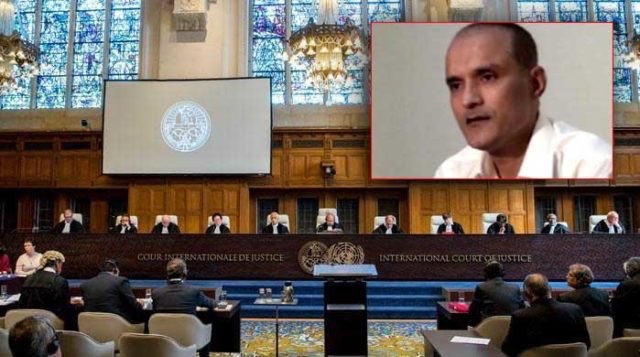
    India has collectively heaved a sigh of relief after the International Court of Justice (ICJ) provisionally stayed the death sentence on Kulbhushan Jadhav till its final verdict in August. This `victory’ should not waterproof India against the harsh reality that even if Jadhav escapes the noose, he would spend his lifetime in Pakistani prisons. The Indian appeal was limited to ensuring Jadhav gets all due courtesies enshrined in the Vienna Convention. At some stage, New Delhi will have to consider the staple recourse in such situations – backchannel diplomacy – to get our man back. That option suffered a setback when two Indian security personnel were beheaded on the border with Pakistan. The general wisdom is that the calculated mutilation was its army’s response to sabotage Prime Minister Narendra Modi’s attempt to open back-channel negotiations with his Pakistani counterpart, Nawaz Sharif, via an industrialist.

    Prime Minister Modi will reap the benefits of popular adulation because the Indian media treated the entire process at the ICJ like a 20:20 cricket match. In sports parlance, India is leading at half time. Foreign Minister Sushma Swaraj has indicated that much when she said while the verdict has brought relief to Jadhav’s family, India will leave no stone unturned to save him. Pakistani prisons are notorious for their rough treatment of Indians. Jadhav’s wellbeing could be in danger because Pakistan has labelled him a spy and tried to hang a number of numbing terrorist incidents around his neck even though the Tehrike Taliban Pakistan had earlier taken responsibility for them.

    Sooner or later, India may want to try its hand at exploring creative possibilities of diplomacy to resolve a number of issues, including the Jadhav case. After the legal arguments are over, its soft power will have to take charge. It is hard to predict when this will take place because Union Home Minister Rajnath Singh has indicated that India is yet to settle the scores for the beheading of its two security personnel. Time is always a great healer. Once Jadhav is let off the death row, as it seems he might well be, a quid pro quo may become a workable proposition.

    (The Tribune)


  • Trump Sends Nafta Renegotiation Notice to Congress

    Trump Sends Nafta Renegotiation Notice to Congress

    WASHINGTON (TIP): The Trump administration gave Congress official notice on Thursday that it plans to renegotiate Nafta, but provided only the vaguest of hints about modest changes President Trump would seek to an agreement that he has called “the worst trade deal ever.” In a brief letter to lawmakers, Robert Lighthizer, the newly confirmed United States trade representative, said the administration aimed to support better-paying jobs and economic growth through unspecified improvements to Nafta that would modernize the 23-year-old agreement. But the notice – a drastically scaled-back version of a draft the administration circulated this year – promised no major modifications of the sort that the president has hinted he will seek.

    Mr. Trump had threatened to withdraw completely from the agreement, only to relent in late April when the leaders of Canada and Mexico, the other parties to the deal, called and asked him to renegotiate instead.

    The president, whose campaign trail vows to tear up Nafta appealed to his base of disaffected working-class voters aggrieved by globalization, is under mounting pressure to follow through on his pledge. But Mr. Trump faces stiff resistance from business-minded Republicans in Congress and sectors that fear major changes would harm their bottom lines.”Today, President Trump fulfilled one of his key promises to the American people,” Mr. Lighthizer said on Thursday. “For years, politicians have called for the renegotiation of this agreement, but President Trump is the first to follow through with that promise.”

    The move was met with skepticism by organizations that have long pressed for major changes to Nafta and have argued that Mr. Trump had already fallen short of his promises on trade.

  • Hindus urge all Utah schools to offer yoga like some Salt Lake City schools

    Hindus urge all Utah schools to offer yoga like some Salt Lake City schools

    SALT LAKE CITY (TIP): Hindus have commended Salt Lake City School District (SLCSD) in Utah for offering yoga in its various schools, calling it a step in the positive direction.

    Course Catalog (2017-2018) of its East High School (EHS) offers Yoga I (9-12), whose description includes: “In this course students will unite the mind and body with the spirit, creating a more whole person” and it includes “meditation”. Its list of yoga benefits includes “self-realization” and “inner peace”. It also offers Yoga II (10-12), whose description includes enhancing “mind/body connection”.

    Yoga was also offered in EHS, West High School and Highland High School of SLCSD as a course in 2016-2017. Yoga was reportedly one of the electives in Nibley Park School (K-8) and in 2015 – 2016, several teachers used “Yoga Me Do” in Newman Elementary School. Third graders at Lincoln Elementary School have been practicing yoga, and according to a write-up on SLCSD website: “At the end of each session, when the entire room shares a long “Om,” it is amazing to feel the unity, calm, and peace pervade the space.” Grades 11-12 Course Catalog (2017-2018) of neighboring Park City High School includes Yoga, whose description includes “mind-body connectivity” and meditation exercises.

    Hindu statesman Rajan Zed, in a statement from Nevada applauded SLCSD for coming forward and providing an opportunity to students to avail the multiple benefits yoga offered.

    Zed, who is President of Universal Society of Hinduism, exhorted all public, private, charter and independent schools of Utah to adopt yoga as part of their curriculum so that students did not miss a learning opportunity in this competitive world.

    Rajan Zed also urged Utah Governor Gary R. Herbert, Utah State Board of Education Chair Mark Huntsman and Utah Superintendent of Public Instruction Dr. Sydnee Dickson; to work towards formally introducing yoga as a part of curriculum in all the public schools of the state, thus incorporating highly beneficial yoga in the lives of Utah’s students.

    Yoga, referred as “a living fossil”, was a mental and physical discipline, for everybody to share and benefit from, whose traces went back to around 2,000 BCE to Indus Valley civilization, Ze pointed out.

    Rajan Zed further said that yoga, although introduced and nourished by Hinduism, was a world heritage and liberation powerhouse to be utilized by all. According to Patanjali who codified it in Yoga Sutra, yoga was a methodical effort to attain perfection, through the control of the different elements of human nature, physical and psychical.

    According to US National Institutes of Health, yoga may help one to feel more relaxed, be more flexible, improve posture, breathe deeply, and get rid of stress. According to a “2016 Yoga in America Study”, about 37 million Americans (which included many celebrities) now practice yoga; and yoga is strongly correlated with having a positive self-image. Yoga was the repository of something basic in the human soul and psyche, Zed added. Tagline of SLCSD, said to be the oldest public school district in Utah with one of its high school founded in 1890, is “Your Best Choice”. Heather Bennett and Dr. Lexi Cunningham are its Board President and Superintendent respectively.

  • Upholding majesty of international law

    Upholding majesty of international law

    BY BHARAT H DESAI & BALRAJ K SIDHU

    India’s moving the International Court of Justice to seek justice for Kulbhushan Jadhav, a former naval officer who was sentenced to death by a Pakistani military court vindicates the majesty of international law. It also vindicates the need for India to take international law more seriously across the board as an instrument of state policy.

    Long arm of law: Hopefully, the ICJ action in the Jadhav case will bring about sobriety in Pakistan”s behavior and it will back off from the brink.

    India has made a deft move to the International Court of Justice (ICJ) seeking justice for its national, Kulbhushan Jadhav, a former naval officer, who was sentenced to death by a Pakistani military court. This is the first such action by India as it had hitherto refrained from taking any bilateral issue to international forums or judicial bodies (courts and tribunals). This action has been triggered by the consistent denial by Pakistan of “consular access”, a minimal courtesy exercised by all civilized states, to Jadhav as a national of India. India expressed determination to rescue Jadhav from the Pakistani custody as it viewed the case as stage-managed abduction, slapping of false espionage charges and secretive military trial leading to imposition of death penalty.

    Notwithstanding lack of “compulsory” jurisdiction of ICJ, India sought to tap the legal remedy available under Article 36 (1) of the ICJ Statute (all matters provided for in treaties and conventions in force) and Article 1 of the Optional Protocol Concerning the Compulsory Settlement of Disputes (1963) to the Vienna Convention on Consular Relations (1963). The Optional Protocol provides that “unless some other form of settlement has been agreed upon by the parties…Disputes arising out of the interpretation or application of the Convention shall lie within the compulsory jurisdiction of the International Court of Justice and may accordingly be brought before the Court by an application made by any party to the dispute being a Party to the present Protocol”. As of May 2016, the Protocol was ratified by 51 states and, amazingly, included both India and Pakistan!

    This represents a growing trend, wherein a state party seeks to raise issue of breach of specific treaty obligation by another state. For instance, Ukraine has taken the Russian Federation to ICJ for breach of Convention for the Suppression of the Financing of Terrorism and the Convention on Elimination of all Forms of Racial Discrimination.

    It is the first such resolute support provided by India to rescue a national, accused of violations of local law in another country. Due to the unusual situation prevailing in Pakistan as well as regular incidents of aiding and abatement of cross-border terror chain of pinpricks, India has been forced to bypass time tested rule of “exhaustion of local remedies” as they are in any case not available due to the current impasse.

    The Indian action has been buttressed by turning down of more than 15 requests for consular action by the Pakistani authorities. In a petition filed in the registry of the ICJ in The Hague, India underscored the urgency of this situation. It referred to the provisions of Article 75 of the Rules of Court, asked the Court to indicate forthwith, and without holding any hearing, provisional measures proprio motu. As laid down by the ICJ  Vienna Convention on Consular Relations case (Paraguay v. USA case; April 9, 1998), the Court could order interim measures if there is possibility of “irreparable prejudice…to rights which are the subject of dispute…”. As a corollary, in a swift move, the President Rony Abraham issued an order to Pakistan to “act in such a way so as to enable the court to enforce any decision it takes on the Indian plea.”

    As a founding member of the United Nations, India has been forced to move to ICJ not for violations of sovereignty per se but breach of an international treaty obligation – the Vienna Convention on Consular Relations, 1963. India has otherwise consistently denied efforts of countries like Pakistan to drag her to ICJ on the basis of the “Commonwealth Clause” in declaration under Article 36 (2) of the Statute of ICJ. Pakistan’s steadfast refusal to allow consular access to Jadhav has lent credence to Indian claim about “fixing” of Jadhav, circumstances of his alleged abduction and “sale” in early 2016 to elements in Pakistan and slapping of “espionage” case even though it was proved he was carrying an Indian passport. This, as India argued, “has prevented India from exercising its rights under the Convention and has deprived the Indian national from the protection accorded under the Convention”. The issue at stake has been the nationality of Jadhav and the prevalent right of India to provide diplomatic/consular protection to Jadhav. The case has assumed grim proportions since efforts were stonewalled by Pakistan to allow consular access to him. Demarche issued to the Pakistan High Commissioner were ignored and all pleas at the highest level fell on deaf ears. It has placed bilateral relations in serious jeopardy.

    The Indian contention in the Jadhav case is rooted in Article 36 (1) of the Vienna Convention that guarantees unimpeded consular communication, access and providing of legal representation by a ‘sending state’ to its nationals who are arrested or committed to prison pending trial or detained in any other manner. Pakistan’s consistent and willful denial of India’s right to provide consular protection to Jadhav has led to the ICJ to underline sanctity of the Convention as well as efficacy of the remedy available under the Optional Protocol. Indian legal recourse is a cogent step to obtain judicial restraint of Pakistan’s aberrant conduct resulting in not only gross violation of India’s consular right but also basic human right of Jadhav under Article 6 of the International Covenant on Civil and Political Rights. This provides every human being the inherent right to life.

    Generally, the UN member states take matters to ICJ on issues concerning territorial integrity and sovereignty like delimitation of land and maritime borders or other violations. It is rare that states contend before ICJ issues concerning rights of a corporate entity (Interhandle case by Switzerland against USA) or individuals (Asylum case by Columbia against Peru). In 1980, the USA also had to ICJ against Iranian revolutionary guards’ seizure of the US Embassy in Tehran. In the famous LaGrand case (1999), the ICJ upheld German contention that the USA violated the Vienna Convention on Consular Relations by not advising its national Karl and Walter LaGrand on their right to consular access that prevented Germany from obtaining effective trial counsel for them. In spite of repeated German assertions Karl La Grand was executed in the state of Arizona on February 24, 1999. The ICJ did grant urgent provisional measures and stayed the execution of Walter LaGrand that was slated for March 3, 1999.

    India had no choice amidst the groundswell of domestic public opinion as well as to counter Pakistan’s compulsive “irritation” campaign to ward off international isolation. The decisions given by the ICJ are binding on the parties to the dispute. There are glaring cases of defiance in the past by countries such as USA (Nicaragua case) and Iran (Hostages case). Still Pakistan can defy ICJ only at its own peril and at the cost of irreversibly damaging India-Pakistan relations. In this grim scenario, Indian recourse to this international law remedy has brought about a glimmer of hope. It provides a robust message that it will work wonders if India takes this vital instrument more seriously in internal governance structure as well as in the conduct of external affairs and, in turn, for maintenance of international peace and security.

    (Bharat H Desai is Chairman of Centre for International Legal Studies, JNU. Balraj K Sidhu is faculty member of RGSOIPL, Indian Institute of Technology-Kharagpur)


  • Comptroller Maragos and Hofstra University Promote Business Opportunities for Women and Minorities

    Comptroller Maragos and Hofstra University Promote Business Opportunities for Women and Minorities

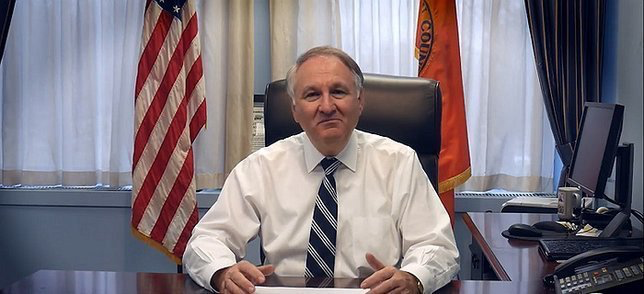
    MINEOLA, NY (TIP): Nassau County Comptroller George Maragos and Hofstra University hosted a Minority and Women Owned Business Enterprise (MWBE) Forum on May 17th at the Sondra & David Mack Student Center to promote MWBE opportunities. This first collaboration between Hofstra University and the Nassau County Comptroller’s office attracted over 100 participants from throughout the County. Judith Tyne, Associate Dean and EAP Director of Hofstra’s Scott Skodnek Business Development Center was the guest speaker. The main focus was of the forum was to provide assistance to MWBEs in becoming certified through programs offered by Hofstra. Additionally, the latest contracting opportunities available through Nassau County Government.

    “I am delighted to see the robust participation of MWBE businesses at today’s meeting.,” said Comptroller George Maragos. “I thank Hofstra University for offering a great program which is badly needed by many women and minority firms in order to be become certified as MWBEs. About 50% of the attendees were looking for assistance to become certified.”

    The meeting was part of Comptroller Maragos’ monthly MWBE advisory meeting which aims to assist MWBE firms to become certified, and to match them with contract procurement opportunities within the County.

  • George Siberon Declares Independent Candidacy for Democratic Legislator in 5th District Serving Freeport, Baldwin and South Hempstead

    George Siberon Declares Independent Candidacy for Democratic Legislator in 5th District Serving Freeport, Baldwin and South Hempstead

    BALDWIN, NY (TIP): Mr. George Siberon, announced his candidacy for the Nassau County Legislature – District 5, offering his extensive knowledge and experience, in working with minorities, the disadvantaged and those neglected by government. George is running as an Independent Democrat for the Democratic Party nomination.

    “I am running for Nassau County Legislator because I want to bring integrity to the Nassau County Legislature, said George Siberon. I am tired of hearing of our elected officials being indicted, and our communities losing faith and trust in government. I am tired of the “pay to play” politics. I am running because we have a very serious drug epidemic that is not adequately being addressed with over 575 Long Islanders having died of opiate overdoses. As a legislator, I would coordinate an educational campaign to parents on early detection and treatment of drug use. I would also advocate for community based organizations to receive funding to assist persons with drug issues, and I will travel to Albany with educational advocates for an equitable share of state funding for our schools.”

    “I am honored to support Mr. George Siberon for Legislator in the 5th District, said George Maragos. Mr. Siberon, is a genuine person who understands the many issues facing our less privileged residents in Freeport, Baldwin and South Hempstead, He has always been a strong activist for social justice, affordable housing, public education and a fully funded public bus transportation system. Mr. Siberon is a person of unquestionable integrity, and independence whose only interest is to honorably serve the community,”

    About GEORGE SIBERON, M.P.A.,M.S.W.

    George Siberon is the Executive Director of the Hempstead Civic Association, a not for profit, community based organization that has been providing services to the residents of Hempstead and surrounding communities for over 30 years. Mr. Siberon is responsible for ensuring that services provided by the HHCA (English as a second language, after school tutoring, summer camp, affordable housing and tenant advocacy) are provided in a professional, culturally sensitive manner. George has over 40 years of administrative experience as Executive Director of the Nassau County Youth Board, District Manager for Congresswoman Nydia Velazquez, Deputy Acting Executive Director of ASPIRA of New York, and Psychiatric Social Workers of Puerto Rican Family Institute.

    George has a Bachelor of Arts Degree, Queens College, a Master of Social Work Degree, Fordham University and a Master of Public Administration Degree, Baruch College, where he graduated with honors. George is a graduate of the prestigious National Urban Fellows’ Program and is a member of Phi Alpha Alpha, the national honor society for public affairs and administration. George has received numerous honors; top advocate for Latino empowerment, community service award, NAACP-Freeport/Roosevelt branch, the Long Island Progressive Coalition, the Hispanic Brotherhood of Rockville Centre and from the Circulo De La Hispanidad George lives in Baldwin, New York with his wife, Dr. Margarita Lopez-Siberon and their daughter Tanya.

  • Miracle plant breeder Dilbagh Athwal passes away at 88

    Miracle plant breeder Dilbagh Athwal passes away at 88

    NEW JERSEY (TIP): Dr Dilbagh Singh Athwal, a “miracle plant breeder” who was among those who laid the foundation of the Green Revolution in the 1960s, passed away in New Jersey (USA), May 15 evening. He was 88. His family, including his two sons, were by his side when he breathed his last.

    Athwal, whose work was much appreciated by Nobel laureate and “father of global Green Revolution”, the late Dr Norman Borlaug, first developed hybrid “bajra” (millet) in the early 1960s and later segregated PV-18 and Kalayan-227, two high-yielding wheat varieties, from the material provided by Mexico’s International Maize and Wheat Improvement Centre, also known as CIMMYT.

    Recipient of Padma Bhushan, Shanti Swarup Bhatnagar Memorial Award and several national and international honors, Athwal was bestowed with the highest honor in 1967, when a wheat variety – Kalyan-227 – was christened after his Kalyan village, located on the outskirts of Jalandhar city.

    The Kalyan variety, commercially released in 1967-68, not only provided the country salvation from hunger, but India also became wheat-surplus soon thereafter. In fact, the production in 1970s went up so rapidly that there was not enough space to stock wheat. As a temporary arrangement, the stock had to be kept on school premises.

    While Athwal was working on the wheat production improvement program at Punjab Agricultural University, Borlaug visited him in Ludhiana. In 1967, he got an offer from the International Rice Research Institute (IRRI), Philippines. Many state leaders and MLAs requested him to stay back at PAU. The then Prime Minister Indira Gandhi even wrote to the Punjab CM to persuade him not to leave India, but he had already made a commitment to the IRRI authorities.

    In 1977, he joined the International Agriculture Development Services created by the Rockefeller Foundation that later merged with Winrok International Institute.

    He retired as a senior vice-president of Winrok in 1991, but remained in touch with Borlaug. Both co-authored some research papers.

  • New Jersey Leadership Program Launches Politics and Spice Podcast to Highlight South Asian Success in the United States

    New Jersey Leadership Program Launches Politics and Spice Podcast to Highlight South Asian Success in the United States

    JERSEY CITY, NJ (TIP): The New Jersey Leadership Program (NJLP) announced the official launch of its podcast called “Politics and Spice.” The podcast will interview South Asian Americans throughout various sectors that have been successful in their field, including politics, government, media, business and more.

    “Through the Politics and Spice podcast, we hope to highlight the amazing successes and contributions of South Asians in their respective professions,” said President of the New Jersey Leadership Program, Amit Jani. “Hopefully this will also show South Asian youth that they can also take part in generally underrepresented professions within the community such as politics, government and media, as well as other sectors.”

    Current guests on the podcast have included elected officials including Congressman Frank Pallone, Jr. and New Jersey’s Edison Councilwoman Sapana Shah, Chief Policy Advisor to Vice President Dick Cheney and Founder of the Daily Cally Neil Patel, Senior Advisor to President Barack Obama Vikrum Aiyer, and TV Asia News Director Rohit Vyas.

    The podcast runs every other Monday on a bi-monthly basis. Politics and Spice can be found on all major podcast providers including iTunes, Google Play, Stitcher and more.

    The New Jersey Leadership Program (NJLP) is a non-partisan, nonprofit 501(c)3 organization dedicated to promoting South Asian American youth participation and education at the local level of government in the State of New Jersey. NJLP and its fellowship program focus on developing leadership skills, building public policy knowledge, and filling the pipeline for South Asian Americans to work in government or pursue public office at the local, state, and federal levels. To learn more about NJLP, please visit www.njlead.org

  • INDIAN-ORIGIN MAN IS LOUGHTON MAYOR IN UK

    INDIAN-ORIGIN MAN IS LOUGHTON MAYOR IN UK

    LONDON (TIP): An Indian origin councilor has been elected as the mayor of populous Loughton town in the UK. Philip Abraham has been serving as the deputy mayor for the last one year. He has taken over the role from previous mayor Carol Davis. Loughton is the most populous town in the Epping Forest District of Essex. The Mayor represents the town at civic occasions, as well as at events held by the town’s schools, clubs and other community and charitable organizations. “I am absolutely thrilled to have been elected as the mayor,” he said after the election.

    (Source: PTI)