Month: June 2017

  • Call it – jimnastik day

    Call it – jimnastik day

    By Bhartendu Sood

    I have no misgiving if our entire country assembles to perform exercises with leaders of saffron outfits, leading them from the front, with the hidden aim of pleasing our PM, but my rant is for calling it ‘Yoga Day’.

    No doubt, these exercises, aimed at toning up the body and muscles, constitute one of the eight-fold stages of ashtanga yoga called asana, as enunciated by sage Patanjali, but it can’t be called yoga unless one follows the other seven stages in a certain order. When performed without embracing the other equally important dictates of ashtanga yoga, these are mere physical exercises, as one performs in a gym, and these yoga gurus are, at best, physical instructors. These asanas can improve your looks and improve your internal systems, but it will be a fallacy to think that asanas can turn you into a better human — what real yoga aims at.

    The eight stages of ashtanga yoga are yam, niyam, asana, pranayama, pratihara, dhyana, dharana and samadhi. The five yamas are: non-violence, truthfulness, non-stealing, celibacy and non-covetousness. The five niyamas are: cleanliness, contentment, austerity, self-study and surrender to God. Yam and niyam advise self-restraint. Asana is the third stage. Patanjali expected a yogi to embrace yam and niyam before coming to asana. In other words, asana is only an exercise and not yoga if it is not preceded by yam and niyam. These are the codes for moral, physical, spiritual uplift (macrocosm and microcosm development). Thus, yoga involves conditioning and cultivation of both mind and body. The first five stages are concerned with the body and the brain and the last three with reconditioning the mind. They help the yogi attain enlightenment or the full realization of oneness with God.

    Enlightenment or samadhi is synonymous with spirituality while a flat tummy or toned muscles can be obtained by many methods, not necessarily having any bearing on the character, conduct or thinking of a human. The Gita also speaks of yoga as a state of equanimity, a detached outlook, serenity of mind, skill in action and the ability to stay attuned to the glory of the self (atman) and the Supreme Being (Bhagvan).

    The irony is that our so-called yoga gurus are well aware of it. They don’t need a lesson from me, but they continue with the business of fooling the masses. We have read about the appointment of yoga gurus in schools to appease the saffron brigade. All I can say is that we don’t need them when we already have physical instructors who are well equipped to perform these exercises.

    We are fast reaching a stage when in our government schools, where incidentally ‘the children of a lesser God’ study, there will be a huge pile of yoga and Sanskrit teachers, but hardly any English or maths teacher, as one can see in Haryana. I shall be happy if my piece puts things in a perspective and the name is changed from ‘Yoga Day’ to ‘jimnastik day’.

  • Sting journalism is not investigative journalism

    Sting journalism is not investigative journalism

    By A.S. Panneerselvan

    Perspective

    Sting journalism is a lazy substitute to meticulous reporting. It may create a buzz but can never examine anything in depth, says the author.

    In this age of digital storage of information, one is not sure whether it is the power of the search engines or their own stupendous memory that helps readers to remember and recollect information and pose questions. Whatever be the case, the fact remains that the printed word, which has now entered cyberspace, seems to have acquired a much-longer shelf life since Johannes Gutenberg’s invention of the printing press.

    Some of the readers wanted to know whether the latest sting involving AIADMK MLAs taking money for switching factional affiliations has changed my opinion on sting journalism. They wanted to know whether, as a Readers’ Editor, I would recommend undercover journalism and deployment of spy cameras for The Hindu. They cited two of my earlier columns — “The dilemmas of sting journalism” (December 16, 2013) and “Means and ends matter” (September 22, 2014) — in which I had strongly repudiated the idea of ‘sting’.

    My reservation against sting journalism goes back to the days when Tehelka ventured into ‘Operation West End’ that looked at murky deals in defense procurement. I am convinced that sting journalism is a lazy substitute to meticulous investigative reporting. It is true that some of the defense deals are murky. However, the investigations that have had some sort of national resonance are the ones that have deployed conventional investigative modes. For instance, the Bofors investigation by this newspaper was a long-haul exercise that involved meticulous documentation, first-hand interviews and, in the words of Columbia Journalism School, “evidence of a qualitatively new, unimpeachable kind”.

    The ubiquitous 24×7 news channels do not understand the rigors of serious investigative journalism. The moment they access a sheet of paper coming from officials, they think they have unearthed a scam, and their decibel levels reach a crescendo, only to be lost following the discovery of another sheet of paper, to proclaim another exclusive expose. In 2008, Aidan White wrote an excellent handbook, To Tell You the Truth, in which he laid down the ground rules for journalism to remain a trustworthy endeavor. “Fierce competition and a lack of regulation have created a dangerously competitive environment in which ethical and professional standards have been sidelined. In broadcasting, for instance, where 40 television news channels compete for viewers in one of the world’s most crowded media markets, ‘sting journalism’ — some might call it voyeurism and entrapment — has come to dominate the news mix,” he wrote about Indian television channels. Now, with numbers of channels going up, the downward spiral in standards seems to be touching a new low.

    In public interest?

    One of the defenses advanced by sting journalists is that the subterfuge is in public interest; hence, it should be accepted as a normal journalistic practice to bring out the truth. I can cite at least ten outstanding investigative reports for each decade since Emergency. For instance, in the mid-1980s, Praful Bidwai explained the huge gap between the claims and reality in the functioning of the Indian nuclear establishment. Unlike the garrulous AIADMK MLAs, the Indian nuclear establishment is known for maintaining its secrecy — remember how the West was hoodwinked about Pokhran-1 in 1974? — and has a powerful legal cover in the form of the Atomic Energy Act, 1962.

    The Department of Atomic Energy (DAE) had made a claim that nuclear energy had become a major source of energy. Bidwai collected data on the quantum of power purchased from the DAE by various State electricity boards and established that the DAE’s figures were highly overstated. Sucheta Dalal’s investigative stories — which broke the securities scam in 1992, India’s biggest financial scandal until then — still remain a touchstone on how to look at data from the financial institutions.

    The Saturday special of this newspaper, Ground Zero, is a contemporary version of ethical investigation that is rigorous, fact-checked, and in public interest. The stories are not based on hit-and-run, off-the-cuff, surreptitious recordings of a gullible single source, but involve painstaking suturing together of facts culled from multiple sources that make up our interlocking public.

    Is it possible to do a sting to replicate Tony Joseph’s “How genetics is settling the Aryan migration debate” (June 17, 2017)? Lord Leveson’s voluminous report refers to sting journalism as “journalistic dark arts”. Sting journalism may create a buzz, but its logic is never to examine anything in depth but to just skim the surface till it finds a new villain of the day.

    (Source: The Hindu)

  • The PM’s meeting with Trump gives India a chance to study its options in a changed world

    The PM’s meeting with Trump gives India a chance to study its options in a changed world

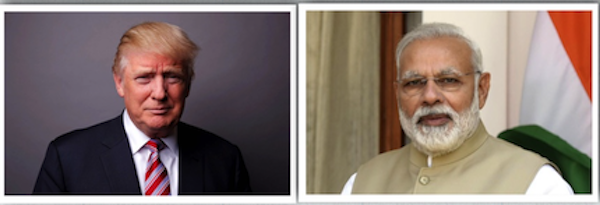
    Three years after his first visit to meet U.S. President Barack Obama, Prime Minister Narendra Modi will travel to Washington for his first meeting with the new President, Donald Trump, on June 26. His visit in 2014 was made easier by a strong Indo-U.S. relationship built steadily over the previous two decades, and grounded in Mr. Obama’s personal commitment to enhancing strategic ties. It also benefited from Mr. Modi’s willingness to let bygones be bygones, over the earlier denial to him of a visa to the U.S., in order to build a new relationship, and his show of diaspora strength in the U.S. Mr. Modi now goes to Washington as a seasoned interlocutor, not the ‘new kid on the world leadership block’ he was in previous visits. But the situation in 2017 is different. In the five months since his inauguration, Mr. Trump has made it clear that no international relationship can be taken for granted, and it will be difficult to predict which American foreign policy principles will be adhered to in the new administration, and which will be dropped without ceremony. On the partnership with India, few will be willing to hazard a guess on what Mr. Trump has in mind. As President he has spoken to Mr. Modi twice, and sent his National Security Adviser to the region. But he has also criticized India on a tough tariff regime, on immigration and professional visas, and while withdrawing from the Paris climate accord, accused India of taking “billions and billions” of U.S. aid to fund its commitments. India has not been the biggest priority on Mr. Trump’s list of meetings with world leaders; the focus has been on America’s closest alliances in Europe and Japan, and problem areas such as China and Turkey.

    Given the changed circumstances, officials in both India and the U.S. have reportedly set aside any formal agenda for the meeting on Monday, placing the emphasis on how the one-on-one meeting between the two leaders goes. Both sides have also, appropriately, toned down expectations of any big announcements. There are indications of likely agreements to be announced on counter-terror cooperation, maritime traffic facilitation and trade. However, it would be wise to put off more substantive decisions, on military cooperation, large defense purchases, Afghanistan and fighting regional terror, and the long-pending operationalization of the nuclear deal to the next bilateral meeting, and focus instead on firming up the ground rules of engagement. That will allow Mr. Modi to get a true sense of what Mr. Trump’s commitment to the relationship is, while India studies its options on how to chart its course amid the new uncertainty in world politics. That he is getting a sense of the changed U.S. administration may be clear from the decision not to hold any large gatherings of the Indian-American community this time, presumably in deference to the prevailing sentiment in Washington over immigration.

    (The Hindu)

  • Tete-a-tete with Trump: Modi’s upcoming US visit will make clear India’s place on priority list

    Tete-a-tete with Trump: Modi’s upcoming US visit will make clear India’s place on priority list

      By KC Singh

    As I See It What India is seeking needs to be prioritised taking into account Trump’s predilections. Issues flowing from his electoral promises are least negotiable. For instance, the H-1 B visas are best left alone except to explain how their tweaking can benefit both nations. Perhaps a promise can be extracted for examination by experts, says the author.

    Public attention this week rivets on the offices of the Presidents of the US and India — the most powerful and the most populous democracies, respectively. The oath of office of both shares a phrase: “will to the best of my ability, preserve, protect and defend the Constitution….” Despite the Indian President’s role modelled on the British sovereign, the borrowing from the US is deliberate, something the Prime Minister’s oath lacks.

    The next President of India’s election assumes importance as not since Rajiv Gandhi’s prime ministership ended in 1989, has India had a single-party government under an assertive leader ideologically attuned to the RSS. In the last three years, the positioning of individuals with a similar ideological slant in educational, cultural and even scientific institutions indicates a concerted attempt to foist on India a Hindutva model. Who becomes the next President is thus of more than academic interest. It can hasten or check the trajectory towards majoritarianism.

    Having finessed the Indian presidential election, PM Modi heads to the US on June 25-26 to handle the mercurial US President. It is not a simple resumption of bilateral engagement from where Trump’s two previous predecessors left it. The new President has signaled retreat from the Asia-Pacific, cavalierly withdrawing from the US initiative for linking 10 select economies via the Trans-Pacific Partnership. His flip-flops on the relevance of NATO, blatant interference in the domestic politics of European allies by his snide remarks about their refugee policy or lauding Britain’s Brexit vote, and finally, his rejection of the Paris climate accord are part of his erratic policy making.

    Trump has careened around the world, leaving in his wake controversy, or even turbulence. The first development of concern to India flows from his Riyadh visit on May 25-26 for a summit with principal “Sunni” Arab nations. Saudis marketed it as an alliance to counter Iran and the ISIS. Pakistan PM Nawaz Sharif attended the summit. While Trump had been debunking the P5+1 nuclear deal with Iran incessantly during his campaign, in Riyadh, he clearly aligned with the Sunni Arabs against it.

    On June 5, a fortnight after the Riyadh summit, Saudi Arabia and the UAE led Bahrain, Egypt and Yemen to sever relations with Qatar, alleging terror abetment. Trump instantly lauded action against “funding of radical ideology”. A MSNBC report claimed that Trump was unaware at that stage that Qatar hosts the largest US air base in the region at Al-Udeid with 11,000 servicemen and 100 aircraft. The region split along Shia-Sunni and Arab-non Arab lines as Iran and Sunni Turkey aligned with Qatar. The result is an uneasy stalemate, but US back-pedaled, sending ships for a joint exercise with the Qatari navy and signing a $12 billion arms sale. Saudi King Salman has now replaced the Crown Prince by his own son. This follows the overturning of the earlier succession plan ordained by the late King Abdullah. The widened fissures in the Saudi ruling family augur ill for the region.

    The second development is President Trump delegating power to his generals to decide on additional troops for Afghanistan. Currently, 6,700 US troops are training and advising, besides 2,100 are engaged in counter-terror operations. NATO has 6,500 troops for training. The US may now induct another 3,000-5,000 troops. Critics argue that US Presidents must not leave such decisions to generals, but Trump probably chose that methodology as troop enhancement counters his election rhetoric. The more substantive critique is that induction cannot precede clarity about Trump’s Afghan strategy.

    Modi sets forth for the US against this unsettled regional background, besides tension with China and Pakistan. Modi’s visit, the media is told, is to establish an equation with Trump. While this is standard desire at summits, but Trump is a transactional being, constantly bargain-hunting. The Chinese managed to neutralize his venom by interposing his family between them and flinging diverse investment offers. Trump veers away from the big strategic picture whenever distracted by the “deal”. The question then is:  what does Modi have in his bag to offer?

    What India is seeking needs to be prioritised taking into account Trump’s predilections. Issues flowing from his electoral promises are least negotiable. For instance, the H-1 B visas are best left alone except to explain how their tweaking can benefit both nations. Perhaps a promise can be extracted for examination by experts.

    Trade imbalance is not as severe as the Sino-US one, but Trump will seek more access to Indian market, particularly the financial and insurance sectors, as indeed concessions on intellectual property. Modi’s “Make in India” and Trump’s “America First” are on the surface paradoxical. The government must have done homework on how to bridge that divide. Linked is the transfer of technology issue, on which two decades of Indian diplomacy was expended to deconstruct US’ technology denial regime created after India’s 1974 nuclear test. The Tata group has reportedly signed a co-production agreement for F-16 aircraft in India. India will have to ascertain whether Trump is even willing to let older generation military hardware be manufactured abroad in exchange for market access.

    Trump can also be expected to pay less heed to India seeking NSG membership or reform of the UN Security Council. He may, on the contrary, ask Modi how India can share the security burden of the US. India may be required to clarify its stand on Iran as indeed, in turn, the US must adumbrate its Afghanistan policy. Significantly, the US has dropped the phrase Af-Pak, signifying the de-hyphenation of India from the issue, employing now “South Asia policy”. The danger is, as sounded by the US PR to UN, Nikki Haley, that Trump may argue that Kashmir issue settlement is a condition precedent to an Afghan-Pakistan settlement.

    Thus, Modi’s US visit, followed by another trek through a distracted Europe, on the vacuous pretext of lobbying for NSG membership, and eventually the G-20 meeting, where host Germany is preparing to confront Trump with free trade rhetoric, are testing times for Indian diplomacy. That this time there is no Madison Square Garden-level hoopla shows the reality of the xenophobic and anti-globalization US catching up with Modi, the strutting showman. Modi may find the US President less easy to ensnare than Indian presidency.

    (The author is a former Secretary, Ministry of External Affairs, Government of India)

  • ASHTA VINAYAKA – EIGHT FORMS OF LORD GANESHA

    ASHTA VINAYAKA – EIGHT FORMS OF LORD GANESHA

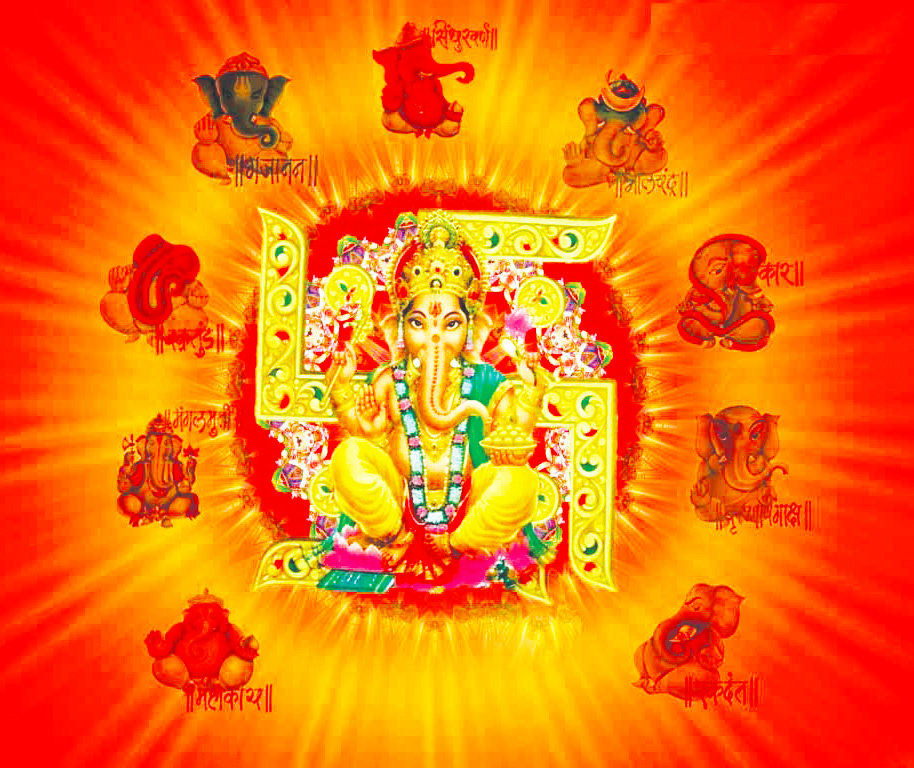
    Vakratunda

    Ganesha’s first avatara is of Vakratunda (twisted trunk) an embodiment of the Absolute Impersonal aspect of Godhood called Brahman in the form of Ganesha. A demon named Matsara was born out of the Pramaada (Heedlessness) of Indra, the king of Gods.

    This demon performed severe penance and invoked the grace of Lord Shiva and obtained the boon of fearlessness from Him. Having obtained the boon he went about conquering all the three worlds,” He was coronated as the king of Asuras by their preceptor Sukracharya. The defeated gods went to Kailasa and prayed to Lord Shiva for protection. On hearing the mission of gods, Matsara went to Kailas and vaniquished Lord Shiva also.

    When the gods were at their wit’s end to know what to do next. Lord Dattatreya came there. He advised the gods to invoke the grace of Lord Vakratunda and imparted to them the secret of the monosyllable mantra Gam. All the gods including Shiva did penance accordingly and at last Lord Vakratunda appeared and assured them that he would subdue the demon. The demon was so terrified at the sight of Vakratunda that he surrendered to Him and sought refuge at His feet. The Lord forgave him, and restored the lost glory and kingdoms to the gods, and to the various kings on earth.

    Ekadanta

    The next incarnation was in the form of Ekadanta (single tusked) who defeated the demon Madasura. The famous sage Chyavana created Madasura. The Asura sought his father’s permission and went to Sukracharya, who was Chyavana’s brother as well as the preceptor of the Asuras. He prostrated to the Guru and expressed his desire to become the ruler of the whole universe. Sukracharya was pleased with his nephew’s submission and initiated him into the Shakti Mantra Hrim. Madasura did penance on this mantra for thousands of years.

    At last the deity of Shakti, appeared, before him and blessed him with the fulfillment of all his desires. Thereafter the demon went about raging battles against all the kings and the gods, and was victorious everywhere. He thus became the ruler of all the three worlds.

    In his reign, all virtues and righteousness disappeared from the world. He married Saalasa the daughter of Pramada Asura and begot three children in her, viz. Vilasi, Lolupa and Dhanapriya. The worried gods approached Sanat kumara and sought his advice to overcome their plight Sanatkumara instructed them to propitiate Lord Ekadanta and seek his protection.

    He also described the glory of Ekadanta thus “Eka stands for Maya the “embodied”. and Danta for Truth (Satta). Thus Ekadanta represents the Supreme Truth which wields the Maya.” The Devas then meditated upon the Lord Ekadanta for hundreds of years. Pleased by their devotion the Lord appeared before them and assured them that He would remove their miseries. Narada, the celestial saint, promptly informed Madasura of the boon given to the gods by the Lord and prompted him to wage war against Ekadanta The demon got ready for a battle with the Lord. But alas as soon as he reached the battlefield and beheld the terrible form of Ekadanta, all his courage drained away and he surrendered to the Lord.

    The demon then gave up the worlds held under his reign, and sought the Lord’s protection. The Lord then told Madasura : “Don’t stay in a place where I am worshipped in a Satwic manner. You are free to enjoy the fruits of all actions done with Asuric Bhava”.

    Mahodara

    The third incarnation was of Mahodara who vanquished Mohasura, the demon of Delusion and Confusion. Once again the mouse was the mount of Ganesha. The confused nature of this tale makes it difficult to understand exactly what was going  on. It seems that once Shiva was sunk in meditation for ages and showing no signs of coming out of it. Meanwhile, the gods were in need of help. Parvati therefore assumed an alluring form and wandered round his meditating spot. Shiva was brought back to normal wakeful consciousness by this act and she abandoned the alluring ‘cover’ so as to speak. This abandoned energy form became a demon in its own right over the ages and Ganesha subdued it.

    Gajanana

    Equally perplexing in the tangled web of intergenerational sexuality is the next tale, of the avatar of Gajanana or Gajavaktra who defeated the demon Lobhasura (Greed or Covetousness).

    Gajanana means “the Lord with an elephant face”, and Lobha was the demon of greed. Kubera, the Treasurer of the heavens, once visited Kailasa, the abode of Lord Shiva. There he was blessed with the vision of the Lord and Goddess Parvati. Parvati was so beautiful that Kubera looked at Her with lustful eyes. The Mother became angry at this, and Kubera shivered with fear. From the fear of Kubera, there manifested a demon named Lobhasura. Lobhasura descended to the world of Asuras, where he received his education from Sukracharya, the guru of Asuras.

    Lambhodara

    Once upon a time Lord Vishnu had assumed the form of Mohini, the enchantress, to delude the demons. When Lord Shiva beheld this seductive form. He was struck with passion. Vishnu immediately gave up the Mohini form and assumed His usual form. Shiva became sad and angry. Out of the seeds of His disappointment was born a terrible demon Krodhasura.

    This demon invoked the grace of the Lord Sun and became a powerful king. He married “Preeti” the beautiful daughter of Sambara and begot two sons in her—- Harsha and Soka. The gods undertook penance to invoke the grace of Lord Ganesha in the form of Lambodara. The Lord appeared before them and for the sake of the world, subdued Krodhasura.

    Vikata

    His next incarnation was of Vikata(”The mishappen”), who subdued Kama, the demon of desire. The demon named Kamasura, i.e. the embodiment of lust, was born out of the seeds of Lord Vishnu. Like all other demons he was accepted by the preceptor Sukracharya as his disciple. Kamasura performed penance on Lord Shiva and after long and arduous austerities he was blessed by the Lord.

    He became the supreme ruler of the three worlds. He was ceremoniously married to Trishna, the daughter of Mahishasura, and begot two sons in her, viz. Soshana and Dushpoora.

    The Devas, tormented by his rule, approached Mudgala Rishi for showing them a way out. The teacher advised them to meditate on the mantra OM at a place called Mayuresa Kshetra. Pleased by their devotion. Lord Ganesha appeared to them in the form of Vikata, and brought about their salvation.

    Vighnaraja

    The 7th incarnation of Ganesha Vighnaraja had a very unusual mode of conveyance – a Sheshnaag or Shasha. In this lifetime Ganesha managed to subdue the demon Mamasur (also known as Mamtasur or Mama), the demon of the ego.

    This is His (Ganesha’s) most popular incarnation, known as The Remover of Obstacles. Riding his vehicle called Sheshnag, a serpent, he strode into battle with Mamtasur, and overcame him.” Parvati Devi, the daughter of Himavan, was married to Lord Shiva.

    After the marriage, one day when She was relaxing in the company of Her friends. She burst out in laughter in a playful mood, and out of Her laughter was born a handsome male form He prostrated to the Mother She was surprised at this manifestation of the form and asked him who he was and what he wanted. He said that he was born from Her laughter and asked Her as to how he could serve Her. She named him Mama, as he was born out of her outburst, when She was swayed by “Maan”, the sense of I-ness, Ego. She then instructed him to remember Lord Ganesha always, who would fulfill all his desires.

    Dhoomravarna

    Ganesha has a mouse as his mount here. His life mission this time around was to defeat the demon Ahamkarasur, the demon of selfinfatuation. Once, Brahmaji, the grandsire, bestowed on the Sun deity, the lordship over the ‘world of activities’. One day, a thought dawned in the mind of Sun: “All the worlds are governed by Karma—-activities; and by virtue of my being the Lord of Karma Rajya, I can consider myself to be the supreme governor of all the worlds.

    As this thought passed his mind, he happened to sneeze and out of the sneeze there arose a demon. He went down to the world of Asuras and Sukracharya gave him the name “Aham” on account of his birth from the ego of Sun. He meditated on Lord Ganesha, who appeared before him in the form of Dhumravarna and blessed him to be the sovereign ruler of all the three worlds.

    Aham married “Mamata”, daughter of Pramadasura, and begot two sons in her named Garva and Sreshta. Tired of the demonic rule of Aham, the Devas meditated upon Lord Ganesha for salvation, and the Lord descended to their rescue- Ere long, Lord Ganesha in the form of Dhoomravarna subdued the demon Aham.


  • KUMBLE SET FOR BITTER EXIT AFTER CHAMPIONS TROPHY

    KUMBLE SET FOR BITTER EXIT AFTER CHAMPIONS TROPHY

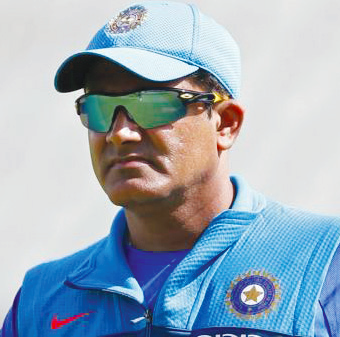
    MUMBAI (TIP): Anil Kumble appears to have decided to walk away as India coach at the end of the ICC Champions Trophy campaign when his one year contract will come to an end.

    With reports of major differences between Kumble and skipper Virat Kohli having marred the build-up to India’s opening match against archrivals Pakistan at Edgbaston, Birmingham on Sunday, there were indications that efforts for any patch up had not borne fruit.

    Although the BCCI has given Kumble direct entry while seeking applications for a new coach, it was learnt on Friday that the BCCI may not renew the contract of India’s leading Test bowler despite his doing an excellent job since taking over as India coach in July 2016.

    It is understood that given the current mood within the team, Kumble may even opt out of the race at the end of India’s campaign in the tournament in UK. According to sources, after failing in the initial bid to bring about a patch up between Kohli and Kumble, effort currently is on by the BCCI officials in England and the Cricket Advisory Committee (Sachin Tendulkar, Sourav Ganguly and VVS Laxman) to keep Kumble and skipper Kohli on the same page till the tournament is over, and ensure the two handle the issue in a professional manner.

    Ramchandra Guha, who resigned from the COA on Thursday, was scathing in his remark with the way Kohli-Kumble issue was handled. The Indian coach-captain saga has been the talking point in the team’s preparation for the crucial ICC Champions Trophy.

  • Sohail accuses Pakistan of fixing their way into final

    Sohail accuses Pakistan of fixing their way into final

    “Sarfraz needs to be told that you have not done anything great. Someone has helped you to win these matches…There is no reason for you (Sarfraz) to rejoice.”

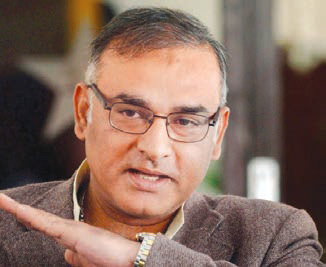
    KARACHI (TIP): Just two days ahead of the high-octane Champions Trophy final against arch-rivals India, former Pakistan skipper Aamer Sohail has indirectly accused his national side of fixing matches in the ongoing eight team marquee event. While speaking on a Pakistani news channel, Sohail created a storm by saying that skipper Sarfraz Ahmed and his boys have no reason to rejoice as they have made it to the finals with the help of “external factors”, not by genuine performance.

    “Sarfraz needs to be told that you have not done anything great. Someone has helped you to win these matches,” said Sohail. “There is no reason for you (Sarfraz) to rejoice. We all know what happens behind the scenes. I can’t tell you who have won them the games. If asked, I will say that the prayers of the fans and God have won them the games. They have been brought to the final due to external factors and not on the basis of their performances.”

    The former opener warned the players to concentrate on their game and remain level-headed if they wanted to survive. “The boys now need to be level-headed and focussed on playing good cricket. We all are well aware of everyone’s calibre. If you do something wrong, then we will tell you about the same. If you do something correct, we will appreciate you. So, they should keep themselves level-headed, otherwise they would not be able to go much ahead.”

    U-Turn

    After hinting that the side had made the final by fixing matches, Sohail issued a clarification wherein he said that he had lost his cool after learning that Sarfraz had refused to dedicate the victory against Sri Lanka to former captain Javed Miandad, who was celebrating his 60th birthday on that day.

    “My comments were made after I heard of Sarfraz’s refusal to dedicate the win to Miandad, and him saying that Miandad criticises the team too much,” Sohail said. “The other thing I said was that the facilitators of the win cannot be named; however, I said nothing about match-fixing or any other foul play, my statement was misunderstood.”

    Source: Agencies

  • M O V I E  R E V I E W – THE MUMMY

    M O V I E R E V I E W – THE MUMMY

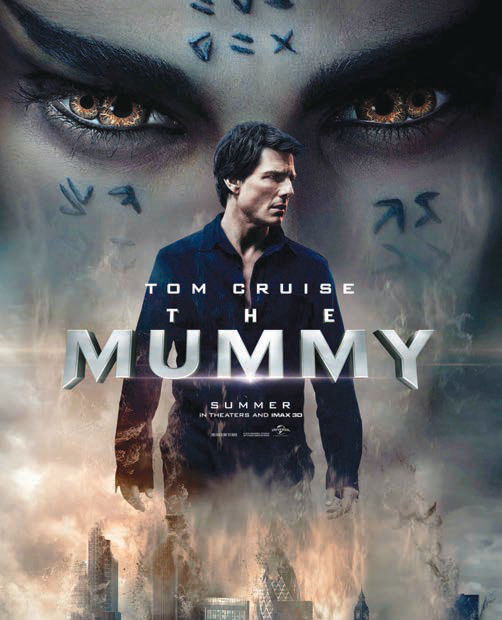
    CAST: Tom Cruise, Sofia Boutella, Annabelle Wallis, Jake Johnson, Courtney B. Vance, Russell Crowe
    DIRECTION: Alex Kurtzman
    GENRE: Action
    DURATION: 1 hour 50 minutes

    STORY

    Millennia after being denied her fate, a betrayed Egyptian princess is back from the dead to take revenge. Determined to reclaim all that should have been hers, she unleashes terrors beyond human understanding.

    REVIEW

    Tom Cruise manages to stay fit at the age of 54 because he spends a lot of time running in his action movies. He also endures copious amounts of physical abuse, ranging from getting beaten up to thrown around; all for our viewing pleasure, while he gets a hefty paycheck in return. It’s a fair trade for the most part – these are popcorn blockbusters that are mindless fun, and everyone is reasonably entertained. So it’s hardly a shocker that Cruise ends up going through his tried and tested ‘Mission Impossible’ motions in ‘The Mummy’.

    Unfortunately, the entertainment value in this franchise building reboot is thinly spread, leaving you feeling deprived if not cheated. This is a shoddy stab at merging action, mythology, horror and comedy resulting in conflicting tonality.

    Even the occasionally surprising, massive set pieces with elements flying at you in 3D, are interspersed between two dimensional characters who exist merely to cater to movie tropes.

    Cruise’s protagonist is his version of a lovable rogue, in the same vein as Indiana Jones, making some seriously questionable decisions throughout the movie. Annabelle Wallis wanders around as the damsel-in-distress in need of constant rescuing. Russell Crowe hams it up as a Nick Fury-ish leader with ambiguous motives spewing campy exposition. There’s even the sidekick (Jack Johnson) whose weary sense of humour brings out eye-rolls, amongst even more exposition. If there’s one character your eyes will be glued to, it’s Sophia Boutella. Adequately mesmerising as Ahmanet a.k.a. the mummy, she transitions from a creepy, violent monster to a seductive goddess with ease, but her impact is reduced by the screen time devoted to convincing us of Cruise and Wallis’ love angle, even though that’s devoid of any chemistry.

    There’s enough gruesome eye candy, and in-your-face action to enjoy in ‘The Mummy’ if you ignore the plot holes and frustrating characters. But the first entry in Universal Pictures’ monster franchise comes across as a desperate attempt by the studio to capitalise on Hollywood’s current world-building frenzy.

  • NICOLE KIDMAN READY TO EMBRACE HER 50S

    NICOLE KIDMAN READY TO EMBRACE HER 50S

    Actress Nicole Kidman said she is enjoying every bit about ageing and is geared up to embrace turning 50.

    The 49-year-old actress, who turns a year older on June 20, said she is taking life as it comes at this point of time. “I’m absolutely embracing it. I try to embrace all parts of my life now because I think you just go ‘wow. I’m so lucky,so blessed,” said Kidman.

    The ‘Big Little Lies’ actress adds she is looking forward to her birthday celebrations that will include a trip back to her native Australia.

    “I’m making an effort to go back and see my mum in Australia and spend time with her. I’ve got the whole summer off so I’m just kind of relaxing,” she adds.

    She plans to celebrate her 50th birthday with her “divine” husband Keith Urban and children. “(I want) to hang with my divine husband and my kids and my sister,” Kidman said. Nicole and the country music star share two daughters: Sunday, 8, and Faith, 6. Her younger sister Antonia Kidman will be part of the celebrations too.

    Nicole said, “I’ve already been to Australia and saw my mom and it’s too far for her to travel but my sister is coming over with all her children. She has six kids.”

    The actress kept most details hush-hush though it seems she will most likely spend the day at home with friends and family.

    “That’s it for me,” the Oscar winner said. “I don’t need any big parties; I just need my family around me. If I have my family around me, I am happy.”

  • CHARLIZE THERON’S KIDS FEEL SHE DOES HALLOWEEN FOR LIVING

    CHARLIZE THERON’S KIDS FEEL SHE DOES HALLOWEEN FOR LIVING

    Actress Charlize Theron’s kids describe her career as “playing Halloween.” During her recent visit to the ‘Jimmy Kimmel Live’, the’41-year-old actress opened up about her children’s perception’of her career.

    “At a very young age, someone asked my eldest, ‘What does your mom do for a living? He just straight up was like, ‘Uh,she does Halloween for a living’…I realise that they’ve just seen me do such crazy stuff,” Theron said.

    Later in the show the actress also embraced her South African roots using a korf ball to shoot some hoops for the Kimmel audience.

    Source: PTI

  • M O V I E  R E V I E W – RAABTA

    M O V I E R E V I E W – RAABTA

    CAST: Sushant Singh Rajput, Kriti Sanon, Jim Sarbh
    DIRECTION: Dinesh Vijan
    GENRE: Romance
    DURATION: 2 hours 34 minutes

    STORY

    Shiv and Saira are drawn to each other like long lost lovers, mostly because they are. Their love dates back centuries, and the reason why they drifted apart, has drifted back into their lives.

    REVIEW

    The most common advice writers get is: “Show, don’t tell.” It means that a storyteller is expected to paint a picture as opposed to describing things mechanically. Raabta spends a lot of time telling you things, and not nearly enough in making them seem believable.

    So we’re told that Shiv (Singh Rajput) is a ladykiller. But the next girl he lays eyes on, Saira (Sanon), will kill his long streak. She talks to herself in the mirror and tells us, by its way, that she’s been experiencing weird tribal nightmares. As they get infatuated and verbalize to each other that it’s all happening too soon, Saira starts feeling the same connection with Zakir (Sarbh) – another blast-from-way-past. We’re then told that in a previous lifetime, Zakir and Saira were in love, until a savage warrior seduced her away.

    Writers Siddharth-Garima and debut director Dinesh Vijan’s conviction isn’t questionable, but it doesn’t quite translate to the screen. Even though the movie is technically sound and looks great, it is missing the raw passion required to sell a love story. Especially one that’s been brewing for 800 years!

    There are too many obvious influences: the saccharine first half is full of walk-and-talks in a beautifully shot European city (Before Sunset); the tribal past is right out of Game Of Thrones — Dothrakis are replaced by Murakis and astronomy is given similar importance; a scene towards the end is a forced throwback to Titanic.

    As much as you can force influences into a love story, you can’t force love itself. Neither with good-looking actors flirting with chocolates and flowers. Nor with an ambitious flashback that adds years as opposed to maturity to the plot.

    But Raabta relies on this kind of forced love rather than the force of love. Sushant Singh Rajput is a fine actor but lacks the casual charm required to make the self-important Shiv lovable. Jim Sarbh’s dialogue delivery is painfully awkward; he doesn’t have the gravitas required for spouting those evil-genius kind of lines in Hindi. Kriti Sanon surprises. She looks good and seems to have honed her acting skills.

  • DIANA PENTY GETS CRACKING ON HER NEXT ROLE

    DIANA PENTY GETS CRACKING ON HER NEXT ROLE

    It’s always an actor’s dream and endeavor to do different, challenging roles. Diana Penty is no exception. She is excited about her new film because she gets to kick and punch on screen for the first time. She began her prep by watching movies like ‘Zero Dark Thirty’, ‘X-Files’, ‘Salt’ and ‘Sicario’, in which women are performing stunts.

    Apparently, she pauses and replays the action scenes to observe the actress’ body language and makes her notes. Next, she will start training with a professional. While her regular workout involved weight training, she has now introduced kick-boxing to her workouts to achieve stance, agility, technique and speed which will be required of her when she performs her action scenes which will be fast-paced and gritty.

    Source: TOI

  • TAAPSEE PANNU STARTS SHOOTING FOR ‘JUDWAA 2’ IN MUMBAI

    TAAPSEE PANNU STARTS SHOOTING FOR ‘JUDWAA 2’ IN MUMBAI

    Actress Taapsee Pannu on Wednesday started shooting the Mumbai schedule of ‘Judwaa 2’. Last month, Taapsee had wrapped up the London schedule of the movie, in which she features with Varun Dhawan. Now she has started shooting at the Film City here.

    “We will have a song and a few scenes to be shot here before we leave for Portugal next month. The song ‘Tan tana tan’ will be shot on a set. We are almost approaching the final leg of filming and can’t wait for the fun to unfold on screen,” Taapsee said in a statement.

    The film marks the actress’s second collaboration with director David Dhawan, who gave her a debut role in ‘Chashme Baddoo’.With ‘Judwaa 2’, another entertaining side of Taapsee’s acting skills will be seen after intense dramas like ‘Baby’, ‘Pink’ and ‘Naam Shabana’.

  • INDIA MAUL BANGLADESH TO SET UP DREAM FINAL WITH PAKISTAN

    INDIA MAUL BANGLADESH TO SET UP DREAM FINAL WITH PAKISTAN

    India and Pakistan will lock horns on Sunday for the title clash at The Oval. India are seeking to defend their crown while Pakistan, on the other side, are looking to win their first Champions Trophy.

    BIRMINGHAM (TIP): Rohit Sharma stamped his class with an authoritative hundred in the company of magnificent Virat Kohli as India annihilated Bangladesh by nine wickets to set up a bumper summit showdown with arch-rivals Pakistan in the Champions Trophy, here on June 15 (Thursday).

    The lazy elegance of Rohit (123 no off 129 balls) coupled with the unmatched swagger of skipper Kohli (96 no off 78 balls) ensured India treat Bangladesh’s attack with utter disdain, knocking off a modest target of 265 in 40.1 overs.

    This was after some inspired bowling changes from Kohli, including the introduction of part-time off-spinner Kedar Jadhav, which changed the complexion of the game with Bangladesh managing only 264 for seven in 50 overs.

    A miracle was needed for the over-rated mediocre pace attack to stop the Indian lineup. That didn’t happen as Rohit and Shikhar Dhawan (46) added 87 for the opening wicket. And then came skipper Kohli, who treated the opposition attack as a bunch of net bowlers, adding 178 runs for the second wicket off 153 balls.

    The Indian captain also reached a personal milestone of 8,000 ODI runs in his 183rd match. Rohit’s innings will be remembered for those pull shots and the amount of time he had to execute each one of them.

    But Kohli’s innings will be specifically remembered for two shots, or rather two pushes, off Mustafizur Rahaman—they were the best of the Indian innings.

    Virat Kohli and Rohit Sharma added an unbroken 178 for the second wicket, Bangladesh v India,
    Champions Trophy 2017, Edgbaston, June 15.

    One that went straight past the bowler and the other was pushed through the vacant mid off area. It was the best way of showing who the boss is. The gulf between the two teams was evident in the manner the Indian batsmen toyed with the Bangladesh attack.

    Anything short outside the off-stump was cut with ferocity. If the short ball was on leg and middle, it was dutifully pulled by Rohit, Kohli or Dhawan. They played all sorts of pull shots – Rohit primarily hit behind the square, Dhawan through the square and Virat in front of the square. Rohit, who is playing his first international tournament in six months, once again showed during his 11th ODI hundred as to why he is so highly rated. There were 15 boundaries and a hooked six off Mustafizur brought up his hundred. Kohli, who finished the match with a boundary, hit 13 of them in all.

    Earlier, Jadhav’s ‘golden arm’ provided decisive twin blows, helping India restrict Bangladesh opting to bowl. Jadhav’s 2/22 in six overs brought India back in the game as he took the crucial wickets of Tamim Iqbal (70) and Mushfiqur Rahim (61) with his fastish off-breaks.

    The two wickets proved to be the difference as Bangladesh only crossed the 260-mark instead of a projected 310 after Tamim and Rahim had added 123 runs for the second wicket in 21.1 overs.

    Once Kedar was done with his job, Jasprit Bumrah (2/40 in 10 overs) played his regular part to perfection, stifling the opposition with as many as 40 dot balls. The third powerplay (41-50) saw Bangladesh scoring only 62 runs, primarily due to a cameo from skipper Mashrafe Mortaza (30 no off 25 balls).

    Bumrah’s senior partner Bhuvneshwar Kumar (2/53) complemented him well with a couple of dismissals first up.

    Source: PTI

  • Infosys president quits, top execs come under pressure

    Infosys president quits, top execs come under pressure

    Sandeep Dadlani

    BENGALURU (TIP): Infosys president and head of Americas Sandeep Dadlani has resigned, a sudden development that some attributed to growing pressures on the company’s top executives to deliver, following a series of unimpressive quarterly performances.

    Dadlani, who has been with Infosys since 2001 and who was also the global head of its manufacturing, retail, CPG (consumer & packaged goods) and logistics vertical, posted on LinkedIn that an “out-of-the-world assignment” was awaiting him.

    Sources close to the development said he may be joining Virginia-based confectionery and pet food company Mars, makers of the brands Snickers, M&M’s, Twix and Wrigley , in a digital transformation role. An email sent to Mars and Dadlani did not elicit a response.

    Peter Bendor-Samuel, CEO of US-based IT advisory Everest Group, believes Dadlani’s departure is part of the increased pressure on leadership combined with a market eager to hire Infosys talent which is highly regarded. Brokerage firm Edelweiss said Dadlani’s exit yet again raises the stability issue at Infosys, and portends the risk of more exits.

    Infosys announced on Friday that Dadlani’s responsibilities would be divided between Karmesh Vaswani, who will be global head of retail, CPG & logistics, and Nitesh Banga, who will be global head of manufacturing. Vaswani was previously the head of Europe for retail, CPG and logistics.

    Infosys is expected to fill up the global sales head position that fell vacant in 2013 following the exit of Basab Pradhan. Sources said Infosys president and head of banking, financial services & insurance (BFSI), healthcare and life sciences Mohit Joshi is likely to be given the responsibility.Infosys declined to comment saying it is speculation.

  • AIR BAG MAKER TAKATA TO FILE FOR BANKRUPTCY

    AIR BAG MAKER TAKATA TO FILE FOR BANKRUPTCY

    NEW YORK (TIP): Takata Corp , the Japanese company facing billions in liabilities stemming from its defective air bag inflators, is preparing to file for bankruptcy as early as next week as it works toward a deal for financial backing from US auto parts maker Key Safety Systems Inc, sources said on Thursday.

    Takata, one of the world’s biggest automotive suppliers, has been working for months to complete a deal with Key Safety. A person briefed on the matter told Reuters Key was expected to acquire Takata assets as part of a restructuring in bankruptcy. The Nikkei business daily reported that a new company created under Key will purchase Takata operations for about 180 billion yen ($1.6 billion) and continue supplying air bags, seat belts and other products, leaving liabilities behind in a separate entity.

    Source: Reuters

  • AMAZON BUYS WHOLE FOODS FOR $13.7 BN

    AMAZON BUYS WHOLE FOODS FOR $13.7 BN

    NEW YORK (TIP): Amazon.com Inc said on June 17 (Friday) it would buy US organic supermarket chain Whole Foods Market Inc for $13.7 billion, including debt, marking the internet retailer’s largest deal and biggest foray into the brick-and-mortar retail sector.

    The deal, which puts a 27% premium on Whole Foods’ closing share price on Thursday, could give the grocer a major competitive edge by allowing it to tap into Amazon’s massive power to buy and sell goods at a lower cost.

    Source: Reuters

  • BLACK MONEY – Switzerland ratifies auto info sharing

    BLACK MONEY – Switzerland ratifies auto info sharing

    First set of data in 2019

    • ? Switzerland has been long perceived as one of the safest havens for the illicit wealth allegedly stashed abroad by Indians
    • ? The exchange of information will be carried out based on the Multilateral Competent Authority Agreement on the Automatic Exchange of Financial Account Information.
    •   The Swiss Federal Council said the implementation is planned for 2018 and the first set of data should be exchanged in 2019

    BERNE/NEW DELHI (TIP): Switzerland today ratified automatic exchange of financial account information with India and 40 other jurisdictions to facilitate immediate sharing of details about suspected black money even as it sought strict adherence to confidentiality and data security.

    As per the draft notification approved by the council in its meeting today, the decision is not subject to any referendum — which means there should be no further procedural delay in its implementation.

    Today’s decision follows hectic parleys between India and Switzerland for introduction of the AEOI (Automatic Exchange of Information) on tax matters under the guidance of G20, OECD and other global organisations.

    The council said the proposal to introduce AEOI with India and others “met with widespread approval from the interested parties who voiced their opinions in the consultations”.

    “In concrete terms, the AEOI will be activated with each individual state or territory by means of a specific federal decree within the framework of this dispatch,” it added.

    The council said it will prepare a situation report before the first exchange of data, which is planned for autumn 2019. “In the process, it will be checked whether the states and territories concerned effectively meet the requirements under the standard, especially those concerning confidentiality and data security.

    “It is important for the Federal Council that a level playing field be created among states and that all major financial centres, in particular, be included. This year, Switzerland has introduced the AEOI with 38 states and territories, including all EU member states, and data will start to be exchanged with them in 2018,” it added. Switzerland is satisfied with various regulations in India, including changes in the Information Technology Act, with respect to ensuring protection of privacy, according to a document released by the Swiss government.

    Source: PTI

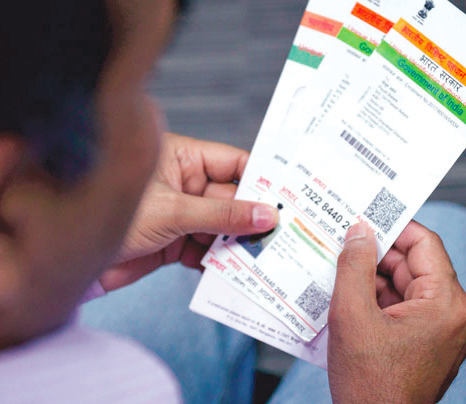
  • GOVT MAKES AADHAAR MUST FOR BANK A/CS, HIGH VALUE TRANSACTIONS

    GOVT MAKES AADHAAR MUST FOR BANK A/CS, HIGH VALUE TRANSACTIONS

    HIGHLIGHTS

    • ? Aadhaar card has been made mandatory for opening bank accounts and conducting financial transactions of Rs 50,000 and above.
    • ? Those with existing accounts will also have to submit their unique identification number by the end of December.
    • ? Not disclosing it by December 31 will lead to suspension of the account.

    NEW DELHI (TIP): The government has made the Aadhaar card mandatory for opening bank accounts and conducting financial transactions of Rs 50,000 and above.

    Those with existing accounts will also have to submit their unique identification number by the end of December. Not disclosing it by December 31 will lead to suspension of the account.

    While the income tax department had earlier announced the decision to make Aadhaar mandatory for banking and financial purposes, the new regulations were notified through amendments to rules related to maintenance of records under the Prevention of Money Laundering Act.

    The move came around the time the Supreme Court upheld the validity of an I-T Act provision, making Aadhaar a must for allotment of PAN cards and for filing income tax returns.

    The apex court had granted “partial relief” to those who do not have an Aadhaar number or an Aadhaar enrolment ID, ruling that the PAN of such individuals will not be cancelled for the time being.

    The notification mandated quoting of Aadhaar along with PAN or Form 60 by individuals, companies and partnership firms for all financial transactions of Rs 50,000 or above with effect from June 1.

    After June 1, if a person does not have an Aadhaar number at the time of opening of account, then he has to furnish proof of application of enrolment for Aadhaar and submit the Aadhaar number to the bank within six months of opening of the bank account.

    Till now, it was mandatory to provide PAN number or Form 60 to banks while opening accounts or for high value transactions. For companies opening bank accounts, Aadhaar number of managers or employees holding an attorney to transact on the company’s behalf will have to be provided.

    In all other cases, identity should be verified while carrying out transaction of an amount equal to or exceeding Rs 50,000, and in any international money transfer operation.

    Source: TOI

  • News, sports sites vulnerable to cyber attacks

    News, sports sites vulnerable to cyber attacks

    LONDON (TIP): News and sports websites have some of the lowest levels of security adoption, making them vulnerable to cyber attacks, a new study has found.

    Researchers looked at the security protocols used by the top 500 sites in various industries and online sectors. They found that fewer than 10 per cent of news and sports websites used basic security protocols such as Transport Layer Security (TLS).

    Even those that do are not always using the “latest or strongest protocols”, researchers said. “It is like news and sport content providers do not value the security of their content,” said Professor Alan Woodward, a cyber-security expert at the University of Surrey in the UK.

    “They are leaving themselves vulnerable to attacks like cross-site scripting, where an attacker can pretend something has come from a website when it has not,” said Woodward. The study shows that some sectors seem much more security conscious than others, ‘BBC News’ reported. The websites of computer and technology companies and financial organisations showed a much higher level of adoption than shopping and gaming sites, for example.

    A quarter of the shopping sites studied were using TLS, which offers tools including digital certificates, remote passwords, and a choice of ciphers to encrypt traffic between a website and its visitors.

    The study was published in the Journal of Cyber Security Technology.

    Source: PTI

  • IIT Kharagpur develops wearable tech from silk

    KOLKATA (TIP): Just imagine India-made smart textiles that can sense what goes on around you, store data and communicate for necessary action! Well, scientists have inched closer to indigenously built wearable electronic devices, thanks to unique properties of silk.

    A team of experts at the Indian Institute of Technology – Kharagpur has fashioned a hybrid material based on silk protein called silk fibroin. This novel material has the potential to spawn prototype textile-based smart electronic devices for soldiers and defence personnel as well as for biomedical applications.

    “We have designed a hybrid photo detector using zinc oxide nanostructures on gold nanoparticle-embedded silk protein for applications that combine electronics and light,” Samit K. Ray, currently officiating as the Director of S.N. Bose National Centre for Basic Sciences, Kolkata (on lien), told IANS.

    A photo detector operates by converting light signals to a voltage or current. “The hybrid material can store data and can detect light, both in the ultraviolet and visible wavelength range, thereby offering greater sensitivity and scope of detection,” Ray said.

    The USP of the hybrid material is its flexibility, stretchability, biocompatibility and biodegradability. “These properties are due to a combination of silk fibroin and semi-conducting zinc oxide in presence of gold nanoparticles,” Ray noted.

    “Bombyx mori silk worms are the main producers of silk fibroins worldwide in the form of cocoons. These fibroins are attractive due to their high mechanical strength, toughness, thermal stability and biocompatibility/ biodegradability,” elaborated Ray. Although 95 per cent of commercial electronics and computing systems deploy silicon as the semi-conductor material, the team opted for zinc oxide instead, Ray said.

    “Conventional silicon chip is usually considered to be rigid, as brittle and breakable as window glass. Zinc oxide nanorod array embedded in silk platform is flexible and can withstand mechanical stress and bending.

    Source: IANS

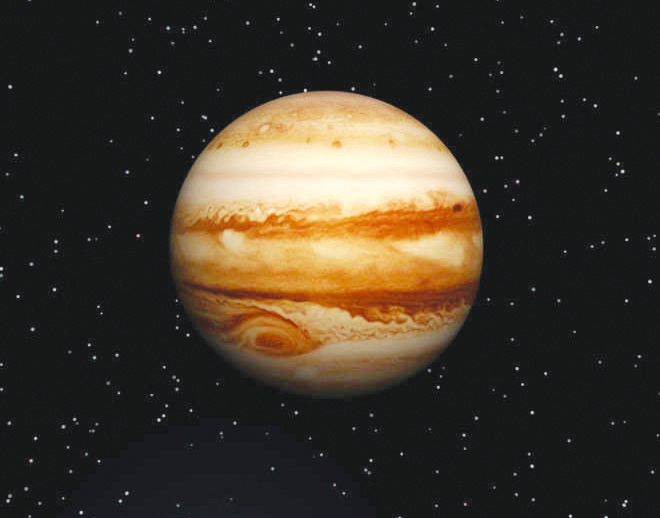
  • JUPITER IS THE OLDEST PLANET IN SOLAR SYSTEM

    JUPITER IS THE OLDEST PLANET IN SOLAR SYSTEM

    WASHINGTON (TIP): Jupiter – the largest planet in our solar system – is also the oldest, say scientists who found that the gas giant formed within four million years after the formation of the Sun.

    Knowing the age of Jupiter is key for understanding how the solar system evolved towards its present-day architecture.

    Although models predict that Jupiter formed relatively early, until now, its formation has never been dated. “We do not have any samples from Jupiter (in contrast to other bodies like the Earth, Mars, the moon and asteroids),” said Thomas Kruijer, from Lawrence Livermore National Laboratory (LLNL) in the US.

    “In our study,we use isotope signatures of meteorites (which are derived from asteroids) to infer Jupiter’s age,” said Kruijer lead author of the study published in the Proceedings of the National Academy of Sciences.

    By looking at tungsten and molybdenum isotopes on iron meteorites, scientists found that meteorites are made up from two genetically distinct nebular reservoirs that coexisted but remained separated between one million and 3-4 million years after the solar system formed.

    “The most plausible mechanism for this efficient separation is the formation of Jupiter, opening a gap in the disc and preventing the exchange of material between the two reservoirs,” said Kruijer.

    “Jupiter is the oldest planet of the solar system, and its solid core formed well before the solar nebula gas dissipated, consistent with the core accretion model for giant planet formation,” he said.

    Jupiter is the most massive planet of  the solar system and its presence had an immense effect on the dynamics of the solar accretion disk.

    Scientists showed through isotope analyses of meteorites that Jupiter’s solid core formed within only about one million years after the start of the solar system history, making it the oldest planet.

    Through its rapid formation, Jupiter acted as an effective barrier against inward transport of material across the disk, potentially explaining why our solar system lacks any super-Earths (an extrasolar planet with a mass higher than Earth’s).

    The team found that Jupiter’s core grew to about 20 Earth masses within one million years, followed by a more prolonged growth to 50 Earth masses until at least 3-4 million years after the solar system formed.

    The earlier theories proposed thatgas-giant planets such as Jupiter and Saturn involved the growth of large solid cores of about 10 to 20 Earth masses, followed by the accumulation of gas onto these cores.

    So the conclusion was the gas-giant cores must have formed before dissipation of the solar nebula – the gaseous circumstellar disk surrounding the young sun – which likely occurred between 1 million years and 10 million years after the solar system formed.

    “We’re able to date Jupiter much more precisely within 1 million years using the isotopic signatures of meteorites,” researchers said. Although this rapid accretion of the cores has been modelled, it had not been possible to date their formation.

    “Our measurements show that the growth of Jupiter can be dated using the distinct genetic heritage and formation times of meteorites,” Kruijer said. Source: PTI

  • INSTAGRAM TO ADD LABEL FOR PAID PRODUCT ENDORSEMENTS

    INSTAGRAM TO ADD LABEL FOR PAID PRODUCT ENDORSEMENTS

    SAN FRANCISCO (TIP): Photo-sharing app Instagram plans to roll out a feature on Wednesday that will make it easier to label posts as paid promotions, taking what it called a step toward transparency in an area that has drawn attention from US authorities.

    Product endorsements have become more common on Instagram, owned by Facebook Inc, as celebrities and others with large followings on the social network have struck deals to talk up clothing, food and other items.

    Known inside the industry as “influencers,” people promoting products are required under truth-in-advertising rules to tell fans about their compensation, according to the US Federal Trade Commission (FTC). It is not clear how many do. Instagram said in a statement that it would begin allowing people who are posting a picture to add a “paid partnership with” label that would appear above the picture.

    Users can already add such disclosures below a picture. “As more and more partnerships form on Instagram, it’s important to ensure the community is able to easily recognize when someone they follow is paid to post content,” the company said.

  • Be healthy: Small price to pay for an extra 14 years

    Be healthy: Small price to pay for an extra 14 years

    If you had the foresight during middle age to exercise, eat plenty of fruits and vegetables, drink alcohol in moderation, and not smoke, you may have added up to 14 years to your life. Writing in an online journal (PLoS Medicine), British researchers showed that people who didn’t do any of these had the same chance of dying over a decade-long followed-up period and those 14 years older who did all of them. Much of the gain came from a reduction in deaths from cardiovascular disease. Even if middle age is behind you, doing any or all of these can help you live better and maybe longer.

    VK Raju would add: Eat Right, Exercise Right, and Don’t take yourself too seriously (Ayurveda) (Dr. Raju can be reached at Cell: 304-288-2080; Home: 304-599-0705; email; vkr@vkraju.com)

  • REGULAR ASPIRIN USE INCREASES BLEEDING RISK IN ELDERLY STROKE PATIENTS

    Long-term, daily use of aspirin to prevent blood clots in very elderly patients leads to an increased risk of serious or fatal internal bleeding, say researchers.

    Heartburn medication allows people 75 years and older to keep the preventative benefits of aspirin while avoiding its dangerous side-effects, says the report in the medical journal The Lancet.

    Even among people with no history of heart problems or stroke, the risk of gastrointestinal bleeding goes up with age for aspirin users, other research has shown. Roughly half of all adults 75 (and over) in the US and Europe take small daily doses of aspirin – ranging from 75 to 150 milligrams – or other clot-inhibiting drugs. A normal dose for a headache is 325 to 600mg.