We live in an age when you cannot do with staring at the computer screen, or your smartphone. Ophthalmologists suggest the best way to avoid computer vision syndrome is to give your eyes a rest frequently. Constant staring can lead to eye strain and can blur your vision temporarily. Looking into the distance once in a while can help too. Doctors suggest that closing eyes for a few minutes after every 20-30 minutes, can help to lubricate and moisten your eyes.
Your glasses do not weaken eyesight
Just because your glasses need to be changed every few years does not mean that they are weakening your eyesight. Glasses only make you see better. The changes happen only as you age.
Make-up debris can injure eyes
You need to be careful when you are volumising your lashes or applying kajal in the waterline of your eyes. Experts say that the make-up debris that gets trapped under the outer layer of the eye can cause eye issues. There are remedies say doctors and you could also use antibiotic drops.
Smoking damages your vision
Quit smoking, because it simply increases your risk of macular degeneration. And that is one of the leading causes of blindness. The harmful after effects of smoking include damage to the small blood vessels of the retina and optic nerve. This kind of damage to internal parts of the eye can cause loss of eyesight.
Don’t wear lenses overnight
Even if your lens pack states that it is good enough to be worn overnight, you should never do it, say eye doctors. Caring for your lens in the right way is crucial, or it might lead to loss of eyesight. One must soak lens in disinfectant solution overnight, touch them only with squeaky clean hands and store them in a clean case.
Vision loss is inevitable
At some point in your life you will definitely need to wear glasses, contact lenses or get an eye surgery done. Studies however have found that spending more time outdoors, among nature could help one to have better vision.
Scientists are developing a new system that can predict if a car driver is about to have a heart attack, a feature that would help avoid road accidents due to an unexpected cardiac event.
“A large number of traffic incidents are caused by (drivers suffering) medical conditions while driving, specifically cardiovascular events, such as myocardial infarction and myocardial ischemia,” said Kayvan Najarian, from University of Michigan in the US.
To avoid such accidents, the researchers have teamed up with Japanese automotive manufacturer Toyota to develop technology that can monitor and analyse the physiology of the driver and predict if they are going to suffer adverse cardiac events. To this end, they are creating a system that can be placed in the vehicle. “We would like to test hardware we had previously identified, and improve and validate our algorithmic solutions to see what it will take to generate a system that could look at the physiology of a person, provided by high density electrocardiogram (ECG) measurements, as well as other medical measurements,” Najarian said. Researchers are using machine-learning models to analyse data collected from in-hospital and invehicle subjects. The team plans to use heart monitors, which are patches placed on a driver’s chest, to analyse physiological data in real time, and hopes to report results in 2020.
Infertility in men is increasing at an alarming rate. Medical reasons aside, even some foods can play havoc with a man’s fertility.We list down some of the foods that men should avoid to improve their sperm quality.
Carbonated beverages
Sipping on carbonated beverages, like soft drinks or sports drink can impact your sperm count. A study published in Human Reproduction, regular drinking of carbonated beverages is linked to poor sperm motility.
Processed meat
Eating processed meat can compromise your sperm count. According to a Harvard study (2014), men who consumed processed meat in excess had 23 per cent lower sperm quality than guys who ate it in small quantities. In another study of journal of Epidemiology, it was found that processed meat was associated with lower sperm count.
Alcohol
This is another reason to ditch your glass of alcohol. The more you drink, the more it impacts your sperm count. In fact, according to some studies, even if you drink in moderation, you are compromising on your sperm quality.
Cheese and full cream milk
According to a study done in Human Reproduction in 2013, excess consumption of cheese and full fat milk may impact sperm count. Dairy products do add protein and essential nutrients required by the body but full fat dairy products, especially cheese and full fat milk should be avoided.
FOODS THAT CAN INCREASE YOUR SPERM COUNT
Eating healthy and fresh foods are not only beneficial for overall health but also for the health of your sperm. Here are some superfoods that you should include in your diet to improve your sperm count.
Bananas
It has been found that bananas improve male libido and regulate sex hormones. As they are rich in vitamin C, A and B1, they boost fertility in men.
Broccoli
Broccoli is said to increase sperm count. It is rich in vitamin A, just as carrots, spinach, apricots, sweet potatoes and carrots.
Walnuts
Another nutrient important for healthy sperms is omega-3 fatty acids. Walnuts are packed with omega 3 fatty acids that boost blood flow to the genitals, which in turn increases male fertility.
Garlic
Garlic does wonders in boosting male fertility. The allicin and selenium present in garlic, protect sperms from damage and improve their quality.
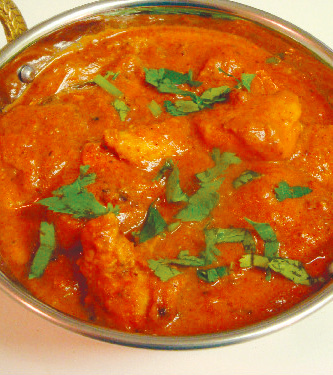
Salt as required, 1 tablespoon ginger paste, 1/2 tablespoon black pepper, 1 tablespoon garlic paste
Method
Cut the chicken in pieces and marinate with ginger-garlic paste, black pepper powder and salt for about 30 minutes. In the meantime, dry roast the spices one by one on low flame for about 4-5 minutes. Leave it to cool and make a fine powder.
Then, add oil in a heavy-bottomed cooking vessel and shallow fry the marinated chicken pieces in a single layer. Add up to 5- 6 chicken pieces at a time depending on the size of the vessel.
Fry for 6-8 minutes per side or until the pieces are nice light brown. Remove using tongs on to a plate and repeat the process until all the pieces are done.
Drain the oil and take 2 tablespoons of oil from the drained oil and add to a heavy-bottomed vessel. Add brown onion paste and tomato puree. Fry for 2 minutes and add red chili powder, turmeric powder and roasted spice powder. Fry on low till oil starts to leave from sides.
Now add, the shallow fried chicken pieces one by one. Using a spoon gently fold the chicken pieces into the masala. Add half cup of water and let it cook for 15-20 minutes.
Now prepare the almond paste for a thicker and yummy gravy for the dish. For the same, soak 10 almonds in lukewarm water and after 15 minutes, remove the skin. Grind to smooth paste by adding little water.
When the chicken pieces are cooked, now add almond paste and give the curry nice stir. Cook for another 2-3 minutes and add cream if using along with fresh minced coriander leaves. Stir and turn off the flame. Serve with roomali roti, rice or naan.
While age sneaks up on you, it’s best to have a few tricks up your sleeve to keep looking younger. Here are some tips that will conceal and even undo many of the signs of ageing from your face and body, so that you continue to look your youthful best.
Skip heavy foundation
A thick layer of foundation will end up into the cracks, revealing the fine lines you are trying to cover. Begin with a moisturiser followed by a primer and then a light liquid foundation or BB cream. You can also use skin plumping serum after the moisturiser for a youthful glow.
Moisturise the eyelids
While doing your moisturising regimen, include the eyelids. Dry eyelids will show fine lines and will crease your eyeshadow, making the signs of ageing more prominent. Priming your eyelids before applying eye makeup is another way to conceal signs of ageing.
Groom the brows
A good set of eyebrows can make you look young in a jiffy, so take care of them. Find the right brow shape that suits your face. If the eyebrows have become thin or grey, groom them with an eyebrow pencil.
Exfoliate and moisturise the lips
Well moisturised and soft lips not only look youthful, but also make your lipstick perform better. Ensure to exfoliate your lips every two weeks to get rid of loose skin and keep your lipstick from bleeding. Keep your lips moisturised at all times to avoid cracks showing on the lips.
Plum up those lips
Succulent, plum lips are associated with youthfulness. Before applying a lipstick, apply foundation lightly on the lips. Line and fill the lips with a lip liner. Now apply a lip-plumping lipstick or apply a layer of gloss over your regular lipstick for that plumping effect.
Work on tired eyes
Tired looking eyes instantly add years to the face. Get adequate rest and stay hydrated to keep the eyes from looking tired. Apart from that, use cucumber or raw potato slices to rejuvenate the eyes and reduce puffiness.
Diminish dark circles
Dark circles can make you look aged beyond years. Apart from getting enough sleep, use good quality under-eye cream or natural oils like sweet almond oil to dwindle those dark circles and pigmentation under the eyes.
Put volume back in the hair
You might experience hair thinning with age. Give more body to your hair by styling it to look more voluminous. Use rollers to boost the hair volume or give the hair a lift by using a large round brush.
Moisturise your hands and feet
Signs of ageing easily show on the hands and feet in the form of wrinkles. Do not forget to moisturise your hands and feet every day and avoid too much exposure to water and harsh detergents as they can dry out the skin easily.
Women are more likely to have a “mind-reading” gene mutation that gives them the ability to read a person’s thoughts and emotions by looking at his or her eyes, scientists have found.
Scientists at the University of Cambridge in the UK conducted a test of cognitive empathy called the “Reading the Mind in the Eyes” Test on 89,000 people across the world. The study has earlier shown that people can rapidly interpret what another person is thinking or feeling by looking at their eyes alone.
Researchers found that women on average score better on this test and identified genetic variants in women that are linked to the abili ty to “read the mind in the eyes.”
Previous studies have found that people with autism and anorexia tend to score lower on the Eyes Test. The team found that genetic variants that contribute to higher scores on the test also increase the risk for anorexia, but not autism.
They speculate that this may be because autism involves both social and non-social traits, and this test only measures a social trait.
“This is the largest ever study of this test of cognitive empathy in the world. This is also the first study to attempt to correlate performance on this test with variation in the human genome,” said Varun Warrier, a PhD student at Cambridge. “This is an important step forward for the field of social neuroscience and adds one more piece to the puzzle of what may cause variation in cognitive empathy,” said Warrier. “This new study demonstrates that empathy is partly genetic, but we should not lose sight of other important social factors such as early upbringing and postnatal experience,” he said.
“We are excited by this new discovery, and are now testing if the results replicate, and exploring precisely what these genetic variants do in the brain, to give rise to individual differences in cognitive empathy,” said Simon Baron-Cohen, at the University of Cambridge in the UK.
“This new study takes us one step closer in understanding such variation in the population,” said Baron-Cohen.
BEIRUT (TIP): A diplomatic crisis pitting Saudi Arabia against Qatar has put Syrian rebels in a difficult position, analysts say, after rivalries between Gulf backers had already weakened the opposition.
Both Sunni-ruled monarchies sided with the protesters in March 2011, when the war started with the brutal repression of anti-government demonstrations.
They continued supporting the mostly Sunni rebels when unrest spiralled into conflict between the armed opposition and troops loyal to President Bashar al- Assad, who hails from the country’s Alawite Shiite minority and is backed by Saudi Arabia’s arch-rival Iran.
But six years later, the rebellion has been plagued by rivalries between Riyadh and Doha, as well as weakened by Russia’s military intervention in support of Assad’s forces. Moscow’s support for regime forces led to a series of setbacks for the rebels, including their landmark loss in December of second city Aleppo.
Last week, Saudi Arabia and allies, including the United Arab Emirates, severed or reduced diplomatic ties with Qatar over accusations the emirate supports extremism, claims Doha has denied. “The current rupture puts the Syrian opposition in a very awkward position politically, as nobody wants to have to take sides publicly nor can afford to alienate either side,” said Yezid Sayigh, a senior fellow at the Carnegie Middle East Centre. A rebel official in the opposition stronghold of Eastern Ghouta outside Damascus said he hoped the crisis between Doha and Riyadh was just “a temporary storm”.
‘SENSITIVE’ ISSUE :
“Qatar, Saudi Arabia, Turkey, Jordan and the United Arab Emirates have supported the revolution of the Syrian people and shown solidarity throughout years of tragedy,” the rebel official said.
In a sign of the embarrassment the crisis is causing, several rebel groups approached by AFP refused to comment, saying it was a “sensitive” issue. But Sayigh said the latest flare-up in relations between Qatar and Saudi Arabia will have a limited impact on the Syrian conflict. “It probably won’t have a major financial impact, nor a military one since the US and Turkey have stepped up their support for factions that previously were close to Qatar or to Saudi Arabia,” Sayigh said.
Riyadh “reduced its funding sharply starting” from the summer of 2015 “after it launched its intervention in Yemen” earlier in the year, he said.
Six years into the war, Syria’s fractured rebellion controls just around 10 percent of the war-torn country, with backing from Saudi Arabia, Qatar, Turkey, Jordan and the United States. (AFP)
LONDON (TIP): Brewster, the longest serving police dog in the UK whose “incredible nose” detected drugs, cash and weapons across the country, has died after a brief illness following 11 years of service.
The 13-year-old, 91 in dog years, brown and white English Springer Spaniel, served with the Bedfordshire, Cambridgeshire and Hertfordshire Dog Unit with his handler Police Constable Dave Pert.
But just months after formally hanging up his lead, the police pooch has passed away following a short illness, the Daily Express reported.
“We are so grateful that Brewster came into our lives. He was truly a legendary dog, renowned across the three counties for his incredible nose,” Pert said while paying tributes to his long-term companion.
“Indeed, officers were still requesting his services long after he retired. He was a brilliant asset to the unit and I am glad he had time with us to enjoy his retirement,” he said. Pert said he loved coming with them in the caravan and particularly enjoyed people watching.
“Thankfully his illness was brief, but we will miss him terribly as he was a huge part of our lives,” he said. Brewster was gifted to the police after his previous owners from North Yorkshire realized he had too much energy for them.
Within three weeks of earning his stripes, the naturally inquisitive canine was fully trained and licensed as a drugs, cash and weapons detection dog. (AP)
WASHINGTON (TIP): Stopping short of a complete turnabout, President Donald Trump is expected today to announce a revised Cuba policy aimed at stopping the flow of US cash to the country’s military and security services while maintaining diplomatic relations and allowing US airlines and cruise ships to continue service to the island.
In a speech today at a Miami theater associated with Cuban exiles, Trump will cast the policy moves as fulfillment of a promise he made during last year’s presidential campaign to reverse then-President Barack Obama’s diplomatic reengagement with the island after decades of estrangement.
Senior White House officials who briefed reporters on Thursday on the coming announcement said Obama’s overtures had enriched Cuba’s military while repression increased on the island.
The officials spoke on condition of anonymity to discuss the policy before Trump announces it, despite the president’s regular criticism of the use of anonymous sources. The moves to be announced by Trump are only a partial reversal of Obama’s policies, however. And they will saddle the US government with the complicated task of policing US travel to Cuba to make sure there are no transactions with the military-linked conglomerate that runs much of the Cuban economy.
By restricting individual US travel to Cuba, the new policy also risks cutting off a major source of income for Cuba’s private business sector, which the policy is meant to support. Under the expected changes, the US will ban American financial transactions with the dozens of enterprises run by the military-linked corporation GAESA, which operates dozens of hotels, tour buses, restaurants and other facilities.
Most US travelers to Cuba will again be required to visit the island as part of organized tour groups run by American companies. The rules also require a daylong schedule of activities designed to expose the travelers to ordinary Cubans. But because Cuban rules requires tour groups to have government guides and use state-run tour buses, the requirement has given the Cuban government near-total control of travelers’ itineraries and funneled much of their spending to state enterprises.
Obama eliminated the tour requirement, allowing tens of thousands of Americans to book solo trips and spend their money with individual bed-and-breakfast owners, restaurants and taxi drivers.
The US Embassy in Havana, which reopened in August 2015, will remain as a full-fledged diplomatic outpost. Trump isn’t overturning Obama’s decision to end the “wet foot, dry foot” policy that allowed most Cuban migrants who made it onto US soil to stay and eventually become legal permanent residents.
Also not expected are any changes to US regulations governing what items Americans can bring back from Cuba, including the rum and cigars produced by state-run enterprises. (AP)
MOSCOW (TIP): Russia has climbed out of recession despite continuing Western sanctions, President Vladimir Putin said on Thursday, adding that the restrictions have forced the country to “switch on our brains” to reduce its dependence on energy exports.
Speaking in a live call-in show televised nationwide, Putin deplored the US Senate’s decision yesterday to impose new sanctions on Russia as a reflection of Western efforts to “contain” Russia, but insisted that the measures only have made the country stronger.
The Republican-led Senate voted Wednesday to punish Moscow for interfering in the 2016 election by approving a wide-ranging package of sanctions that targets key sectors of Russia’s economy and individuals who carried out cyberattacks.
The Senate bill follows up on several rounds of other sanctions imposed by the United States and the European Union over Russia’s annexation of Ukraine’s Crimean Peninsula and its support for pro-Russia insurgents in eastern Ukraine.
Putin argued that Russia has done nothing to warrant the Senate’s move, saying it highlights the West’s policy of containing Russia and also reflects domestic infighting in the United States. “It’s evidence of a continuing internal political struggle in the US,” he said. Putin said that the sanctions have given Russia an incentive to shed its dependence on oil and gas exports and “switch on our brains and talents” to develop other industries. He emphasised that electronics, aerospace industries and agriculture have all received a boost. Russia has responded to the US and EU sanctions by halting most Western food imports, a move that has helped increase Russian agricultural output.
Russian farmers have pleaded with the Kremlin to keep the import ban even if the West lifts its sanctions, but Putin said that if “our partners lift the sanctions against our economy, we will respond in kind.”
The Russian leader claimed that the “crisis is over,” pointing at modest economic growth over the past nine months, low inflation and rising currency reserves. Putin said that a slump in oil prices had been a more important factor in Russia’s economic slowdown than the sanctions.
He acknowledged that the Russian economy hasn’t yet shed its dependence on exports of raw materials, but noted that non-energy exports have been growing. Putin recognised that people’s incomes have fallen and 13.5 per cent of Russians now live below the poverty line currently equivalent to $170.
Most of the questions during the tightly-choreographed show were about low salaries, decrepit housing, failing health care and other social problems.
Like in the past, Putin chided local officials for failing to provide due care for people and ordered them to quickly fix the flaws. Even before the show ended, local officials rushed to report that they are looking into the problems.
Putin also offered a glimpse into his closely guarded private life, saying he has two grandchildren whose privacy he wants to respect. Putin, who in 2013 announced on state television that he was divorcing his wife, has two daughters in their early 30s who haven’t been seen in public for years and became a subject of rumours. One of Putin’s daughters was reported to be in charge of a lucrative project to build a Silicon Valley-like community under the auspices of Moscow State University.
Putin said during the show that both of his daughters live in Moscow and “work in science and education.” He said one of his grandchildren goes to pre-school and the other, a boy, has just been born. He said he doesn’t want to give details about his family for fear of hurting their privacy (AP)
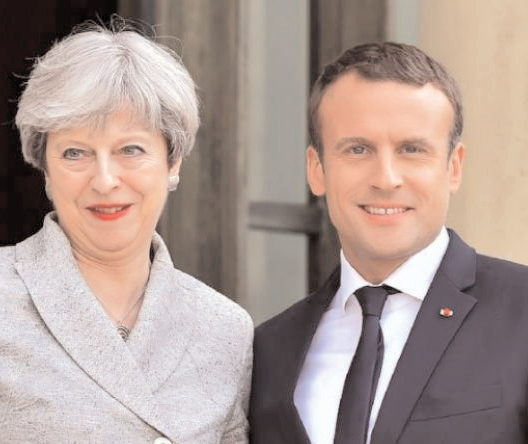
PARIS (TIP): The leaders of France and Britain on June 14 announced an antiterror action plan to crack down on radicalisation through social media.
After talks with British Prime Minister Theresa May in Paris, French President Emmanuel Macron said both countries agreed that social networks were not doing enough to stamp out terror propaganda.
Speaking after terror attacks in Manchester and London, Macron said the two countries had worked on a “very concrete” action plan. He said one of the key measures would aim at preventing the incitement of “hate and terrorism” on the internet.
May said she and Macron agreed that “more should be done to tackle the terrorist threat online”. She said the British and French campaign was aimed to “ensure the internet cannot… be used to host the radicalizing material that leads to so much harm.”
May said the British government was already working with social media companies “to halt the spread of extremist material and poisonous propaganda that warps young minds”, adding: “But we know they need to do more.
“Today we can announce that the UK and France will work together to encourage organisations to do more and abide by their social responsibility to step up their efforts to remove harmful content from their networks.”The campaign includes exploring the possibility of legal penalties against tech companies if they fail to take the necessary action to remove unacceptable content, May said.
Britain was rocked by a suicide bombing at a pop concert in Manchester on May 22 which killed 22 people, including children, followed two weeks later by a knife and van attack in central London, which left eight dead.
France has been a constant target for jihadist attacks since 2015, with more than 230 people killed. After their press conference the two leaders headed to the Stade de France to watch a friendly match between the French and English football teams. (AFP)
BEIJING TIP: A court in northern China has sentenced three employees working for fugitive real estate billionaire Guo Wengui, who has been locked in a high-stakes political feud with the ruling Communist Party.
The Dalian Xigang People’s Court on Friday announced prison terms of less than three years for three employees who prosecutors said were ordered by Guo to falsify financial documents to obtain loans from a state bank.
Guo’s development firm Beijing Pangu Investment Co. was also fined $36 million. Guo fled China and now lives in a $68 million apartment overlooking New York’s Central Park. He has cultivated a vast social media following and vowed to expose sensitive information concerning top party officials unless the government frees his employees and family members held in China. (AP)
BERLIN (TIP): Former German Chancellor Helmut Kohl, the architect of German reunification, died on Friday, the mass-selling newspaper Bild reported. He was 87.
Bild reported in its online edition that Kohl died in the morning at his home in Ludwigshafen, in western Germany. “We mourn,” Kohl’s Christian Democratic Union party (CDU) tweeted with a picture of the former chancellor. Germany’s longest serving post-war chancellor from 1982 to 1998, Kohl was a driving force behind the introduction of the euro currency, convincing sceptical Germans to give up their cherished deutschemark.
An imposing figure who formed a close relationship with French President Francois Mitterrand in pushing for closer European integration, Kohl had been frail and wheelchair-bound since suffering a bad fall in 2008.
At home, he is celebrated above all as the father of German reunification, which he achieved after the 1989 fall of the Berlin Wall despite resistance from partners such as British Prime Minister Margaret Thatcher and Soviet leader Mikhail Gorbachev.
He won voters in communist East Germany by promising them “flourishing landscapes”. Shortly after leaving office, Kohl’s reputation was tarnished by a financing scandal in his centre-right party, the Christian Democratic Union (CDU), now led by Chancellor Angela Merkel. Kohl mentored Merkel early in her career, appointing her to her first ministerial post. Until his death, Kohl refused to identify the donors, saying he had given them his word. (Reuters)
LONDON (TIP): A man with a knife has been arrested outside the British parliament on Friday, police said, adding that there were no reports of any casualties. “The man, aged in his 30s, was arrested on suspicion of possession of a knife,” London’s Scotland Yard police headquarters said in a statement.
A parliamentary spokesman said: “We are aware of an incident outside the Palace of Westminster, which is being dealt with by the Metropolitan Police.” On March 22, knifeman Khalid Masood drove into pedestrians on Westminster Bridge, killing four, and fatally stabbed a policeman guarding the gates of parliament before being shot dead by armed officers.
On April 27, a man was arrested across the street from parliament. Police said knives were recovered from him. Khalid Mohammed Omar Ali, 27, of north London, was charged with the intention of committing acts of terrorism engaged in conduct in preparation for giving effect to that intention.
He was also charged with two counts relating to explosive substances in Afghanistan in 2012. Friday’s arrest comes on the first anniversary of the murder of MP Jo Cox, who was shot and stabbed to death in her constituency by a man with links to neo-Nazi organisations.
More than 110,000 events were to take place around Britain between Friday and Sunday for “The Great Get Together” in honour of Cox, celebrating her belief that “we have far more in common than that which divides us”. (AP)
LONDON (TIP): The death toll from the London fire stands at 30, and is still climbing. Some victims may never be identified, officials said. The Metropolitan Police said on Friday that at least 30 people were known to have died in the Grenfell Tower blaze, including one person who died in hospital. The bodies of 12 people have been recovered. The other deceased remain inside the building.
The BBC estimates about 76 people are missing based on social media and missing posters, which could include some of the 30 confirmed dead. London Police commander Stuart Cundy said that the conditions inside Grenfell Tower mean that the search operation to recover the victims was extremely challenging. “The sad reality is that this work will stretch into many weeks,” he said.
A total of 24 people remain in hospital, with 12 in critical care. They have all been identified and their families informed. The majority of residents in the flat were Muslims and came from Egypt, Algeria, Morocco, Eritrea. Somalia, Sudan, Syrian, Afghanistan and Pakistan. A Bangladeshi family of five, who lived on the 16th floor, is among those missing.
Al Manar, a mosque in North Kensington where Grenfell Tower is located, has cancelled i’tikaaf (retreat in a mosque during Ramzan) so that victims can stay there. “We have cancelled the spiritual retreat so that we can offer bedding to people,” said Tabassum Awan, who is volunteering at the mosque. “It’s chaos – we have had restaurants phoning up all the time offering to deliver hot food here. One rang up and offered to deliver 1,000 hot meals,” she said.
One Moroccan woman in the mosque, Habiba, said she was looking for a 16-year-old Moroccan school girl Nur Huda El Wahabi who is missing, who is best friends with her son Abdul.
By Thursday night the fire in the 24- storey building was totally extinguished. What was left was a light grey ash coloured shell – towering in a ghostly fashion above the nearby pubs and houses. (PTI)
“We look forward to seeing you in Atlantic City, New Jersey: Dr. Ajay Lodha,AAPI President
Representing the interests of the over 100,000 physicians of Indian origin, leaders of American Association of Physicians of Indian Origin (AAPI), the largest ethnic organization of physicians, for 35 years, AAPI Convention provides a platform to the medical fraternity to discuss issues relating to their profession, including assessing their role in the ever evolving situations – medical, political and social. The annual convention this year, from June 21 to 25 at Harrah’s Resort in Atlantic City, is being organized by AAPI’s New York Chapter. Those responsible for the big event are Convention Chair, Dr. Raj Bhayani, Co-chairs, Drs. Vinod Sanchetti, Kishen Kumar, Jayesh Kanuga, and Kusum Punjabi; Convention Advisory Committee Chair, Shashi Shah; and Drs. Hetal Gor, Jagdish Gupta, and Himanshu Pandya. AAPI’s new executive committee includes Dr. Gautam Samadder President, Dr. Naresh Parikh, Vice President; Dr. Suresh Reddy, Secretary; Dr. Manju Sachdev, Treasurer; Dr. Madhu Agarwal, Chairman of the Board of Trustees; Aditya Desai, YPS president; and Atul Nakhasi, MSRF President. The Indian Panorama is introducing here two of the incoming leaders of the American Association of Physicians of Indian Origin. One is the Presidentelect Dr. Gautam Samadder, and the other, Dr. Ashok Jain Elected Chair, BOT of AAPI.
Dr. Gautam Samadder, President Elect of AAPI
“AAPI must be responsive to members, supportive of leadership and a true advocate for our mission”
“AAPI must be responsive to its members, supportive of the leadership and a true advocate for our mission,” Dr. Gautam Samadder, President of American Association of Physicians of Indian Origin, says. “I am committed to unify AAPI by breaking down the barriers of various regions, languages, medical education within the organization and bringing everyone together as a whole organization rather than separate fragments of the organization,” Dr. Samadder says.
At AAPI, where he will assume charge as the president of AAPI at the annual convention in Atlantic City on June 25th, Dr. Gautam Samadder rose through the ranks due to his hard work and dedication. He was a Regional Director for the AAPI NE Central-II Region, and had served as the Editor-in-Chief of AAPI Journal, a quarterly published by the American Association of Physicians of Indian origin (AAPI). He was instrumental in reviving the journal and turning it around to a ‘sought-after’ publication.
“My leadership involvement with the AAPI started during my Global Health Summit trip to India in Rajasthan in the year of 2010 although I have been a patron member of AAPI for more than 20 years. I had the opportunity to know Dr. Ajit Singhvi, who had encouraged me to take on a leadership role at AAPI and here I am seven years later.”
According to him, “One thing is clear, if you are a team player, hardworking, and willing to serve in the best interests of the organization. There is always a leadership opportunity for you in AAPI.”
The Incoming President Dr. Gautam Samadder and family L to R: Dr.Samadder, wife, son and daughter
Dr. Samadder was elected as Secretary of AAPI in 2014. Prior to this, he served as the Regional Director in Ohio and Michigan for two consecutive years in 2010 and 2011. “I have been involved in the grass-root level to form all Ohio AAPI chapter which includes (AIPO) local chapters from Columbus Cleveland Cincinnati Dayton, Youngstown, and Toledo and served as the president in 2012. In addition, I have been the president of the local Chapter of AAPI Central Ohio (Columbus) from 2008-2010.
Working with his dedicated executive committee, Dr. Gautam wants to “establish a strategic plan for AAPI that can sustain change in leadership. “AAPI members should be at the table during planning and implementation stages of the health care reforms,” Dr. Samadder says. “I want to encourage medical students, residents, and fellows and all second-generation Indian American physicians to be actively involved in both local and national level. Efforts go to building a strong association focusing on leader development and strengthening our professional relations.”
“In my capacity as the President of national AAPI, I want to support the growth of global and Indo-US relationship and to support and promote charitable activities through AAPI both in the US and India,” Dr. Samadder says.
“As I have shown over the past decades in my roles as a Regional Director, Treasurer, Secretary, Vice President and President Elect of AAPI, and now as the President, I will continue to work to create advocacy and community services, escalating profitability, productivity and popularity of AAPI.
“I will also promote globalization of education as well as work towards creating awareness and promote the level of involvement of the Indian American Medical Community and to foster the increasing strength and grown of our beloved Nation.
While working in close cooperation with AAPI at all levels, we will together address the issues affecting the physicians at the state and national level. I envision promoting health care advocacy and community services, escalating profitability, productivity and popularity of AAPI,” he adds.
Dr. Samadder wants to “amplify participation among young physicians and medical students, strengthen AAPI’s financial security through profitable corporate sponsorships and facilitate collegial cooperation between local and state chapters, as this will increase AAPI’s global stature and eminence, which will ultimately make healthcare more efficient and effective in USA and India.”
His “work ethic, integrity and self-reliance will help propagate AAPI’s mission and instill renewed energy and participation. My leadership experience demonstrates in the private and nonprofit sectors will be advantageous in increasing participation, chapter cooperation and awareness of exchange programs. I am dedicated to helping chart a course toward AAPI’s true mission.”
Under his leadership, Dr. Gautam will strive to make AAPI an organization where people feel proud to contribute their time and energy for the greater good of the members and the society. “AAPI is a platform to cherish their achievement and creating a platform to further enhance and provide opportunities to our budding physicians to be successful in academic medicine and to the rest of the world, and to India in particular.Leading a major organization like AAPI and providing a forum to its members to collectively work together to meet their diverse needs is a major challenge.”
Dr. Samadder’s presidency will start with AAPI’s family trip to South Africa, Zimbabwe and Botswana from August 4-13, 2017, which will provide twelve hours CME credits and include a jungle safari at a world famous resort and extensive site seeing opportunities.
The AAPI Global Healthcare Summit (GHS) from December 28-31, 2017 in the beautiful city of joy, Kolkata (West Bengal, India), will continue to make progress on AAPI’s past initiatives, including the traumatic brain injury (TBI) guidelines dissemination, training of first responders, and engaging local authorities to help address one of the major causes of road fatalities by pursuing four key aspects which are awareness, free hospital care, in hospital, and rehab.
According to him, the GHS will serve as a sounding board for many health care leader to freely exchange ideas, and help resolve challenges that are addressed during the very effective CEO forums usually chaired by MOH officials and leading CEOs. This will help in attracting investments, advanced training, and setting up hospitals, medical institutions, etc. AAPI GHS will continue the International Research Competition, EP, Cardiology, Urology, and other workshops that will help in training several India based physicians. Finally, the women’s forum under the banner of women’s leadership forum will serve as an inspiration for aspiring female leaders to see and hear from their role models.
Gautam spends most of his life in the private sector and is presently the CEO and managing director of Columbus Sleep Consultants, which he has built up from the ground. He was instrumental in the formation of Indian Sleep Society, with the objective of promoting sleep research and publications within Asian Indian communities. He is a speaker for several pharmaceutical companies and the physician advisor to several medical technology companies and recently collaborated with Fisher and Paykel to establish diagnostic centers in several major cities in India.
Born and growing up in Jabalpur, Madhya Pradesh, young Gautam was always eager to learn and develop the talents and skills, overcoming numerous obstacles and turning them into small town opportunities, he took on the challenge of pursuing his career in Medicine by competing in the medical admission process and graduated from Rani Durgawati Medical College, Jabalpur.
With his passion for knowledge, determination, perseverance, and success, Dr. Samadder came to the United States in 1985 for higher education. After completing his Residency in Internal Medicine at Mount Sinai affiliate hospital-North General, New York, he did his Pulmonary Fellowship at SUNY affiliate-Brookdale Hospital, New York and Sleep Fellowship at Medical College of Pennsylvania, Philadelphia.
Subsequently, he moved to Ohio in 1995. “While doing pulmonary fellowship, I was very intrigued with obstructive sleep apnea – a very dangerous medical condition but an easily treatable condition,” recalls Dr. Gautam Samadder, Founder and CEO of Columbus Sleep Consultants. “Also, this is one of the rare specialties, where patient satisfaction is enormous because of the successful outcome of the treatment.”
With aspirations to develop and become an entrepreneur, he took on the challenge of opening an independent practice of Pulmonary and Sleep medicine in 1997. His hard work and dedication paid off. He was successful in expanding the practice to be one of the biggest networking of independent sleep labs in Ohio, employing more than 50 employees, including three physicians and two physician assistants. Currently, he serves as the Medical Director at a multi-locational and Multispecialty Sleep facility, Columbus Sleep Consultants.
Dr. Gautam Samadder built his career on hard and dedicated work in the private and public sectors. He spearheaded the formation of Indian Sleep Society (AAPIOS) and is actively involved in promoting Sleep Research and Awareness both nationally and Internationally including India. He recently collaborated with Fisher & Paykel to establish diagnostic centers in major Indian cities.
Even though working as an entrepreneur, owning a large sub-specialty involving community service, he had a deep desire to give back to the community. Having worked with the local and state medical society, being the regional director and local chapter president of AAPI he has a deep desire to give back to this extra ordinary organization (AAPI).
He is actively involved with the Indian community and member at large of the Asian Indian Alliance, which actively participates in a bipartisan way to support and fund electoral candidates. He is actively involved with the Bharatiya Hindu Temple and free health clinics.
Serving as a core member of the Advisory Board of the Ohio State University Gateway Project, which supports Exchange programs between USA and India including student’s scholarships, Dr. Samadder is also an active member of the Ohio State Medical Association and was the first counselor of the International Medical Graduates for the state of Ohio. Dr. Samadder was a Clinical Assistant Professor at Ohio State University.
“These experiences, along with others, have provided me with a strong foundation from which I can offer fresh ideas and responsible leadership,” he says. For someone who in his own words is “always looking to strengthen AAPI”, a set of more responsibilities would certainly be welcome. “Having worked with Dr.Narendra Kumar on the 9- city tour event, I would like to lead AAPI with my dream team to new heights.” he says. “I am always looking for opportunities to help AAPI in making it powerful so that members get benefit they deserve, and spread awareness at local and state level and unite local chapters.”
Among the many mentors, who had inspired him, Dr. Samadder has been impressed by Dr. Kumar and Dr. Ajit Singhvi, past Presidents of AAPI. “I have been especially fascinated by the commitment of Dr. Kumar. He is fortunately in the same specialty as me and I have had several interactions with him. When I see him working for AAPI, his unselfish commitment, time and family wise, I am so awestruck. If I can replicate that, I will be blessed,” he says with modesty.
His wife is a practicing gastroenterologist in Columbus. The couple have been married for about 25 years now. They have a son who is in medical school and their daughter is in high school.
“AAPI has a mandate to help disseminate our medical knowledge, our expertise and technological advances to the entire world,” Dr. Samadder says. Utilizing AAPI membership, AAPI, Dr. Samadder wants to create and lobby for the legislative agenda at the federal level, supporting the policies and programs benefitting AAPI members. He wants to bring in second generation Indian American members into AAPI leadership roles and positions, and thus “ushering in a new era of cooperation, stability, and sustained growth for AAPI.”
Years of health care management experience: Dr. Ashok Jain Elected Chair, BOT of AAPI
Dr. Ashok Jain, Chairman elect of AAPI BOT
DrAshok Jain, M.D., M.S., FACR, chief medical officer for Beaumont Hospital, Wayne, MI, has been elected Chairman of Board of Trustees, American Association of Physicians of Indian Origin for the year 2017-18.
Soft spoken, caring, gentle, intelligent, and committed to give back to the society, and gentle in his approach, Dr. Jain has been associated with AAPI since its initial launch over 35 years ago. “I have been involved with AAPI since its inception in 1983 as a young physician who had just started practicing in Michigan.” Ever since, he has been actively associated with AAPI and worked hard to the growth of this organization since its inception.
As a young physician filled with love and commitment, he had worked with Wayne County Medical Society and Michigan State Society for the establishment of first IMG section at state level in Michigan.
One of his contributions, Dr. Jain feels very proud of today is that, “I worked for keeping same criteria for IMG’s and AMG’s for state medical licensure.” Dr. Jain was elected as MAPI President in 1994, and had served at the AAPI Executive Committee as the Regional Director in 1995-1996.
His connections with the political leaders from India and the US made Dr. Jain more popular and much sought after. Dr. Jain served as the Alumni Committee Chair, and AAPI’s prestigious Legislative Affairs Committee Chair in 2004- 2005.
All along his life, Dr. Jain was filled with passion for giving back to the society. He was elected to serve as the MAPI Board of Trustees Chair and the Foundation of MAPI (FOMAPI) Chair in 2015. His visionary and leadership skills were seen all over as Dr. Jain, helped FOMAPI raise $180,000 for MAPI free clinic, serving the less privileged. In the 1980’s Dr. Jain raised $500,000 in five years benefiting Nargis Dutt Foundation for cancer patients for different charities in India.
His love for his country of birth was seen in Dr. Jain building and running Girls High School in his village in Rajasthan in 1997, where 650 girls study year until they complete High School. Dr. Ashok Jain had also served as a member of the Board of Trustee of Jain Temple in Detroit.
Dr. Ashok Jain, who serves as the Senior Vice President at Beaumont Health and as the Chief Medical Officer at Beaumont Hospital in Wayne, MI, has a Master of Science Degree in Medical Practice Management. Dr. Jain has served as a member of Board of Trustee at Oakwood Health Care System and now at the Beaumont Health. Dr. Jain serves as Chief of Medical Staff of Beaumont Hospital, Wayne from 2011 onwards.
Dr. Jain is married to his beautiful wife, who is also involved with MAPI auxiliary. His son finishing medical school and his daughter has a degree in MHA, Masters in Healthcare Administration, and is Trinity Health in Ann Arbor, MI. Beaumont Hospital, where Dr. Jain serves as the Chief Medical Officer, is a 185?bed teaching hospital that is part of Beaumont Health, Michigan’s largest health care system, based on inpatient admissions and net patient revenue. Dr. Jain was appointed to this role at Beaumont, Wayne in 2015. He closely collaborates with medical and hospital leadership, including its Medical Executive Committee, hospital president and elected chief of staff.
Dr. Jain is responsible for overall hospital performance and developing the vision and strategic plan for clinical activities. He also serves as the hospital’s patient safety officer and oversees site?related patient safety and quality activities.
A practicing radiologist, Dr. Jain joined Beaumont Hospital, Wayne in 1982 and was elected chief of staff in 2011. Dr. Jain is a graduate of the M.S. University of Baroda Medical College and completed a residency in radiology and fellowship in ultrasound/CT through the Wayne State University School of Medicine. Ashok Jain, M.D., M.S., FACR Senior Vice President & Chief Medical Officer Beaumont Hospital, Wayne Beaumont Health is a not-for-profit organization formed in 2014 by Beaumont Health System, Botsford Hospital and Oakwood Healthcare to provide patients and families with compassionate, extraordinary care, no matter where they live in Southeast Michigan. It consists of eight hospitals with 3,429 beds, 174 outpatient sites, nearly 5,000 physicians, 36,000 employees and 3,500 volunteers. In 2016, the organization had $4.4 billion in net revenue with nearly 178,000 inpatient discharges, 568,000 emergency visits and more than 17,500 births.
“I bring years of health care management experience, organized medicine leadership experience to AAPI,” Dr. Jain says the newly elected Chair of AAPI BOT. “My goal as the BOT, AAPI in the coming year is to formalize and create AAPI leadership academy working with American college of physician executives for development of leadership roles for all AAPI membership. I want to work hard to engage young physician and attract them to AAPI. They are the future of AAPI.”
JAIPUR (TIP): A 55-year-old man was today allegedly thrashed to death by civic body employees in Pratapargh district when he reportedly stopped them from taking photographs of women defecating in the open.
Zafar Khan, a social worker, was assaulted by five MC employees, his brother Noor Mohammad told the media. “The employees, shaming those defecating in the open, scared away some tribal women by taking their photographs. When my brother intervened, they attacked him. As soon as we learnt about the incident, we rushed to the hospital.We were told he was brought dead,” he said.
The police have lodged a case of murder against the five employees and the Commissioner of the Pratapgarh municipality who, according to an eyewitness, was on the spot when Zafar Khan was thrashed. Family members of the deceased and locals staged a protest outside the mortuary, demanding that the “killers” be arrested. They blocked the national highway for several hours. Members of the CPI-ML (Liberation), with whom Zafar was associated, said he had paid with his life for opposing “bullying”.
SRINAGAR (TIP): Six policemen, including a Station House Officer of the Achabal police station, were killed when militants ambushed their vehicle at Thajiwara Achabal in south Kashmir’s Anantnag district on June 16 (Friday) evening. Officials said that around 6:30 pm, Station House Officer, Achabal, Sub Inspector Firoz Ahmad Dar and five constables were in a Tata Sumo vehicle travelling towards Anantnag town when a group of at least five militants ambushed their vehicle and fired at the police party. In the attack, all the policemen were killed. Soon Army and police cordoned off the area but the militants escaped. The attack took place 17 km from the spot in Arwani where an encounter between militants and security forces was in progress and barely 5 km from the Army’s Khandru camp, one of the most fortified installations in south Kashmir.
Officials said that the militants took away rifles from the slain policemen. Before fleeing, the militants are believed to have disfigured the bodies of the cops by firing on them from close range.
J&K Director General of Police S P Vaid told The Indian Express that militants ambushed the vehicle of SHO Achabal at Thajiwara. “They fired at the policemen from very close range and later escaped with five AK-47 rifles,’’ Vaid said, adding that the militants were the local Lashkar-e-Toiba module operating in the area.
HYDERABAD (TIP): TDP MP JC Diwakar Reddy, who has been banned by all domestic airlines from flying over his alleged unruly behaviour at the Visakhapatnam airport, flew to Europe on June 16 (Friday) night as part of his annual family vacation.
According to JC Prabhakar Reddy, brother of the Anantapur MP, the tour was planned well in advance. It is something the family did every year, he said. “He and his family left for vacation on Friday night. I was also supposed to go along with them. But I could not go due to personal work. What is wrong in his foreign tour? He got his visa long ago. It was not planned yesterday,” Prabhakar, a TDP MLA from Anantapur told PTI on Saturday.
He, however, did not disclose the holiday destination as well as the airline his brother took for the overseas trip. Though the exact duration of the vacation is not known, a TDP leader said it might last seven to 10 days.
Following the June 15 episode, in a show of unity, all major domestic airlines have barred the MP from taking their flights–similar to the action taken by the carriers after the incident involving Shiv Sena MP Ravindra Gaikwad earlier this year. On Thursday, Reddy was scheduled to fly IndiGo’s flight 6E-608, which departs from Visakhapatnam at 8.10 am, to Hyderabad. But he reached just 28 minutes before the scheduled departure, according to the airline.
NEW DELHI (TIP): Moscow endorsed New Delhi’s view that India and Pakistan should resolve all outstanding disputes through bilateral talks in accordance with the Simla Agreement of 1972 and the Lahore Declaration of 1999.
After New Delhi dismissed Islamabad’s claim that Russian President Vladimir Putin recently offered to mediate between India and Pakistan, Moscow, too, made it clear that no third party had any role in resolving the dispute between the two South Asian neighbours.
A spokesperson of the Ministry of Foreign Affairs of the Russian government emphasised that Moscow’s “principled” position on resolving India-Pakistan differences remained “unchanged”. “The differences between Islamabad and New Delhi should be resolved by them on a bilateral basis in accordance with the provisions of the Simla Agreement of 1972 and the Lahore Declaration of 1999,” said a spokesperson of the Ministry of Foreign Affairs of the Russian government.
The statement came after media reports quoted Nafees Zakaria, spokesperson of the Ministry of Foreign Affairs of the Pakistan government, saying that Putin offered to mediate between New Delhi and Islamabad.
NEW DELHI (TIP): India last week provided the United Kingdom the documents required to be submitted in a London court for the extradition of fugitive business tycoon Vijay Mallya.
The Ministry of External Affairs (MEA) handed over the documents received from the probe agencies to the British High Commission in New Delhi last week. The documents will be submitted to the court of the Chief Magistrate at Westminster in London. The business tycoon is wanted in India for his now-defunct Kingfisher Airlines’ default on loans worth nearly Rs 9,000 crore.
“These papers were required in connection with the hearing in the extradition matter which, as I said, is subjudice in the court in London and these papers were handed over to the British High Commission (in New Delhi) last week.
This is a huge bunch of papers,” Gopal Baglay, spokesperson of the Ministry of External Affairs, said on Friday. The documents the MEA handed over to the British High Commission on June 9 included a supplementary charge sheet filed by the CBI against Mallya in a court in Mumbai on June 2, and a sworn affidavit by the superintendent of police in charge of the Special Investigation Team of the agency.
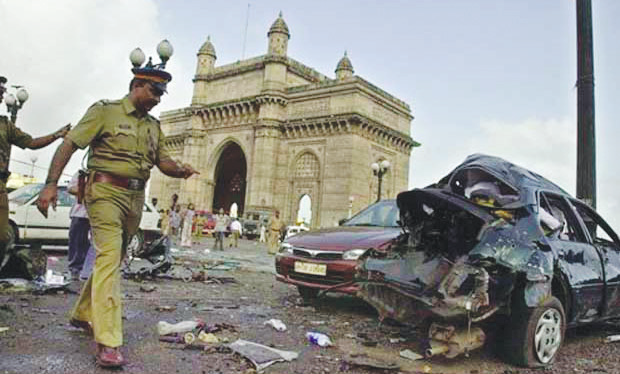
MUMBAI (TIP): Twenty-four years after 12 blasts rocked the city killing 257 and leaving 713 grievously injured, a special Terrorist and Disruptive Activities (Prevention) Act court on Friday convicted six out of the seven accused, including Abu Salem and Mustafa Dossa. In the dock is a second batch of accused, tried by special judge Govind A Sanap, after the main trial of 123 accused ended in 2006 with the conviction of 100.
The court has set the next hearing date on June 19 (Monday) to decide the date for argument on quantum of sentence.
Others who were convicted include Feroz Khan, Taher Merchant, Riyaz Siddiqui, Karimulla Khan. The court pronounced the sentence after hearing arguments from the defence and the prosecution. Out of the six convicted by the Tada court, only five face the gallows. Riyaz Siddiqui will only attract life sentence as he is not held guilty of criminal conspiracy.
Abdul Qayyum Shaikh who has been acquitted by the court had allegedly sent arms and ammunition from abroad which landed at Dighi Jerry. He also had allegedly sold a licensed revolver to Sanjay Dutt in September 1992.
Special CBI counsel Deepak Salvi said trial for the seven, arrested between 2003 and 2010, had to be separated as they were nabbed after a substantial portion of the previous trial was completed.
With no other accused currently in custody, the Friday verdict was the last in the case for now. Thirty-three accused are absconding, including key conspirators Dawood Ibrahim, his brother Anees Ibrahim, Mustafa’s brother Mohammed Dossa and Tiger Memon.
Abu Salem
Salem was extradited in November 2005 from Portugal. His confession led to the arrests of Siddiqui and Shaikh. Mustafa was named in 1995 by a coaccused and arrested in 2003 after he arrived in Delhi from Dubai.
The CBI submitted the attacks were planned to avenge the demolition of the Babri Masjid on December 6, 1992, and the riots in its aftermath. The lesser known Taher (60) also has a predominant role. A resident of Kambekar Street in central Mumbai, he grew up with Dawood and his brothers and was said to be the don’s trusted aide.
He allegedly motivated associates to arrange men from Mumbai for training in handling of arms and ammunition in Pakistan. Taher is also accused of collecting funds to procure arms and ammunition. He was extradited from Abu Dhabi in 2010. The 12 coordinated attacks between 1.30 pm and 3.40 pm on March 12, 1993, planned over 15 meetings across UAE and India, also destroyed property worth Rs 27 crore. Special CBI counsel Deepak Salvi told the court in his opening arguments that “this was the first ever terrorist attack in the world where RDX was used on such a large scale after the Second World War.”
Special judge Sanap took over the trial in 2011 and the proceedings concluded in March this year.The trial was stayed after both the accused and the prosecution moved the apex court challenging various legalities.Dossa’s lawyer Rizwan Merchant challenged the applicability of the voluminous evidence of 686 witnesses from the previous trial.
The House opened with legislators unanimously electing Congress MLA from Malout, Ajaib Singh Bhatti, a Dalit leader, as deputy speaker of the 15th Vidhan Sabha. Bhatti said his family and he were indebted to CM Amarinder Singh who recommended him for the coveted post.
Amarinder congratulated Bhatti for his elevation and said that Bhatti’s long administrative and political experience would further enhance the glory of the august chair.
He said that politics was in Bhatti’s blood, as he inherited it from his father late Arjan Singh, who contested assembly election from the erstwhile combined constituency Nihal Singh Wala in 1957.
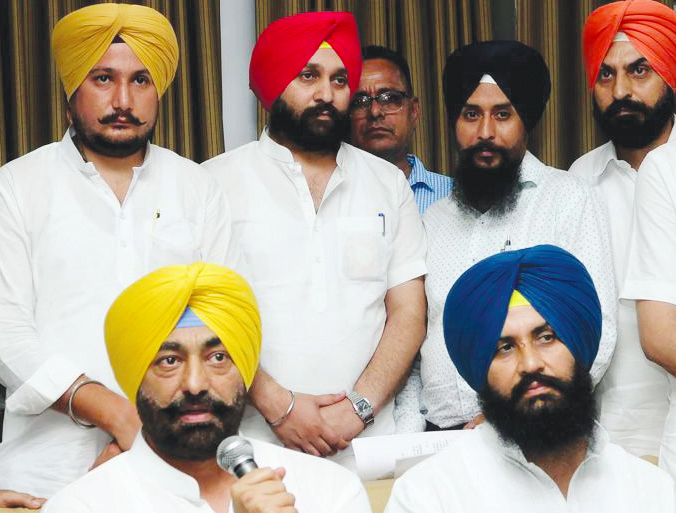
CHANDIGARH (TIP): Shiromani Akali Dal (SAD) legislators, raising slogans inside the Punjab Vidhan Sabha, on June 16 attacked the Congress government for its “failure” to announce a loan waiver for farmers. Some were seen in a cantankerous spat with Congress MLAs. But it was AAP’s Bholath MLA Sukhpal Khaira who was suspended by Speaker Rana KP Singh for the rest of the session for uploading a video of the unruly scenes on Facebook.
With Khaira recording the heated exchanges between Akali and Congress MLAs, that ensued after an outburst by Minister for Local Bodies Navjot Singh Sidhu, Congress MLAs, who were led by Kuljit Singh Nagra, raised objections. Subsequently, Minister for Parliamentary Affairs Brahm Mohindra moved a motion and Khaira was suspended for the session. The AAP MLA refused to hand over his cellphone, arguing that other MLAs were carrying phones as well, that House proceedings were not in progress when he had shot the video and that similar incidents had occurred in the past too. As AAP MLAs, led by Leader of the Opposition HS Phoolka, protested the decision, the Speaker adjourned the House.
“I equate the unfair attitude of the Speaker with the Abdalis, Duranis and Mughals who mercilessly executed people, denying them an opportunity to defend themselves,” a defiant Khaira said. Tempers ran high during question hour as SAD and Congress MLAs entered into a spat over the “unparliamentary” language used for Tourism and Culture Minister. Congress MLAs Amrinder Singh Raja Warring, Nagra, Parminder Singh Pinky and Rana Sodhi stormed into the well of the House and nearly came to blows with Akali members. SAD’s Rozy Barkandi was pushed by Ghanaur MLA Thekedar Madan Lal Jalalpura.
There were at least two adjournments and two walkouts. Earlier as the session began, SAD-BJP MLAs, including Pawan Kumar Tinu, Ajit Singh Kohar, NK Sharma, HPS Chandumajra and Arun Narang, rushed to the House well, raising slogans over “unkept” poll promises. The protests became louder as Sidhu got up to reply.
The minister lost his cool while responding to a query on the Harike project after certain remarks were made against him. An enraged Sidhu then spoke of the “illegal activities” of the Badal family, blaming them for the Rs 350 crore PRTC loss.
Addressing the Assembly on the third day of the Budget session, CM Amarinder Singh reiterated his government’s commitment to fulfilling all poll promises, including a loan waiver and “kurki” (auction) abolition for the debt-ridden farmers. Over repeated disruptions, he said: “The prestige of the Speaker’s office has never been lowered like this by throwing paper missiles at him.”
As consultation starts within the saffron party and with the Opposition for the prez election, the ruling side wants a President who has strong BJP affiliation
NEW DELHI (TIP): India’s next President is likely to be a dyed-in-thewool BJP leader, contrary to speculation that the ruling party might field a technocrat or some apolitical candidate.
Prime Minister Narendra Modi is yet to discuss his preference with party leaders , but ruling party said the leadership is not inclined to repeat the 2002 experiment when it had to fielded an ‘outsider’, APJ Abdul Kalam, for the top post.
As consultation starts within the BJP and with the Opposition for the July 17 election, the ruling side wants a President who has “strong BJP affiliation”.
On June 16 (Friday), Union ministers Rajnath Singh and Venkaiah Naidu drove to the residence of BJP patriarch LK Advani and also called on Murli Manohar Joshi. Although the two members of the BJP’s Margdarshak Mandal were seen as possible contenders, sources said that Friday’s meetings with the two were to seek their views on the party’s presidential candidate. Advani and Joshi had fallen out of favour with the party leadership earlier. They are unlikely to be considered for the post, said party sources. Finance minister Arun Jaitley is returning from abroad on Saturday and is expected to touch base with socialist parties over the next few days.
Kalam was a surprise candidate in 2002 for a greater consensus, but the changed scenario in 2017 gives the BJP more manoeuvring space to pick candidate from among its leaders. India elects its President through a complex voting pattern involving all parliamentarians and members of legislative assemblies – each of them having a different vote value. An MP has the highest vote value.
Today, BJP has a clear majority in the Lok Sabha and government in more than a dozen states. NDA’s total strength in Parliament is over 400 out of total 776. “Such mandate is not to choose an ‘outsider’ for the top post,” a government leader said. The Rashtriya Swayamsevak Sangh, too, is averse to a Kalam-type experiment.
This position rules out chances for the likes of agricultural scientist MS Swaminathan, whose name has been proposed by the National Democratic Alliance partner Shiv Sena, or the Metro-man, E Sreedharan.
The BJP is likely to announce the name of its candidate on June 22 and the nomination is expected the next day. Sure of its victory, the BJP will also choose its candidate with an aim to break the new found unity in the Opposition. A divide in the camp can take the fizz out of campaign to bring anti-BJP forces under one umbrella. “It will be a success for us, even if we manage to wean away one or two major parties from the Opposition camp,” a Union minister said. Source: HT
Signup to our Newsletter!
Don’t miss out on all the happenings around the world