Year: 2017

  • Amritsar Medical and Dental Alumni Association of North America holds 39th Annual Convention in Chicago

    Amritsar Medical and Dental Alumni Association of North America holds 39th Annual Convention in Chicago

    CHICAGO (TIP):  The Amritsar Medical Dental Association of North America (AMDAANA) held its 39th annual convention from July 13 to 17, 2017 at Hilton Oak brook resort & Conference Center, Oak Brook.  Delegates came to a full house from all over the world.

    AMDAANA is a largest umbrella organization in North America of nonresident Indian medical (NRI) professionals largely from Amritsar, Punjab area.  This was one of the largest AMDAANA conventions outside India attended by over 250 delegates from USA Canada, and Europe, along with dignitaries and the faculty members from India. The AMDAANA’s mission goal is to foster for delegates to have platform to network, exchange ideas, attend educational seminars, hold business meeting and listen to renowned speakers along with memorable pleasurable entertaining and tranquil experience.

    The need to belong and find one’s roots is an age-old human desire. It was the motivating force behind formation of Amritsar Medical & Dental Alumni Association of North America (AMDAANA). The idea of forming an association of Amritsar Medical graduates had repeatedly been mentioned at different occasions but lack of follow up action prevented its materialization. The subject surfaced once again at a dinner in Dayton, Ohio at the residence of Satinder and Raj Gupta on April 7, 1979. Besides the hosts, the following Amritsar graduates were present: Sher S Guleria, Kuldip Kaur, Nirmala Guleria, Amrit Chadha, Sukh Dev Sharma, Satwant Singh, Ved Vyas Gossain and Ravinder Pandhi. A serious discussion followed. It was felt that the time was ripe for action. Satwant Singh was “volunteered” to pursue the matter actively. The organization was tentatively named Amritsar Medical Alumni Association. A feeler was mailed on April 27, 1979 to prospective members. The response was slow but overwhelmingly positive. A follow up meeting was held at the residence of Sher & Nirmala Guleria in Urbana, Ohio on July 22, 1979. AMDAANA took its final form, with great pomp and show, on October 27, 1979 at the first annual meeting in Seven Springs, PA. Realization of this dream is a tribute to untiring efforts of all members, most of whom worked anonymously to spread the word around and recruit members.

    On July 13th in open air patio of golf club, welcoming dinner was held. Friday events were highlighted by demonstration of Yoga by Nadja Lalvani, participated by many delegates. Evening was for social gathering meeting, exchanging sharing and entertaining nostalgic reminiscences from home etc.

    Saturday, July 15th was highlighted by General Body meeting. Dr. Satwant Singh apprised every one of ongoing progress and current ongoing projects profiled by AMDAANA including financial assistance provided for enhancing educational to the needy students in the field of healthcare, providing charitable assistance to the various institutions providing healthcare and social assistance to deprive.

    Dr. Jaspreet Kaur was nominated and unanimously elected as secretary for year 2019. Cooking class demonstration by celebrity chef Anupy Singla, golf outing and continuing medical education seminars were also held during the day. Elegant banquet in the evening was highlighted by participation by dignitary from medical faculty members from Medical and Dental collage of Amritsar. DR Navneet Kaur, vice president in her speech highlighted current state of affairs and progress of the Alma Mater. She was honored with a bouquet of flowers by executive members including immediate past president Dr. Inderjit Singh, President Raveen Kaur, Vice president Ripu Singh, Secretary Singh, Dr. Harjinder Khaira and secretary elect Dr. Rakesh Mehta. A life time achievement award was awarded to Dr. Sarjit Sigh who passed away recently. The award was received by his wife.

    Other invited community leaders present included Businessman Darshan Dhaliwal, Dr. Bhupender Saini, Dr. Hargurmukhpal Singh, Dr. Sarabjit Bhandal, Dr. Mukhtiar Nandra, Hardial Deol  and others. Mayor of Oakbrook Dr. Gopal Lalmalani welcomed all participants and thanked AMDAANA to hold the convention in his home town.

    Audiences enjoying live music including mesmerizing engaging recreation by Dhol Music
    Suresh Bodiwala

    Curtain fell after live music including mesmerizing engaging recreation by Dhol Music and vibrant colorful folk Punjabi dance by Ministry of Bhangra.

    Next executive committee was announced, with President Dr Ripu Singh, Vice President Dr Harjinder Khaira, and Secretary Dr Rakesh Mehta. Entire event was broadcast live on You Tube by Asian Media USA, Suresh Bodiwala, Chairman.

    The next conventions in New York/New Jersey area will be hosted by secretary elect Dr Rakesh Mehta.

    Further information can be obtained from the website -www.amdaana.com.

    (Photographs and Press release by Asian Media USA)

  • The empire strikes back

    The empire strikes back

    By Rakesh Sood

    The ‘deep state’ has always worked with a king’s party, and there have always been politicians willing to oblige. Gen. Musharraf had encouraged Chaudhry Shujaat Hussain to set up PML(Q) to wean away Punjab during Mr. Sharif’s exile; Gen. Zia had helped form the PML(F) under Pir Pagara and later Mr. Sharif himself had been a beneficiary. This time, Imran Khan’s Pakistan Tehreek-e-Insaf played the role of the king’s party and the Supreme Court legitimized the ouster. But he too is under investigation. Coups in Pakistan come in different forms and this was a judicial coup, of a judgment reached before the trial was done. But behind it is the ‘deep state’ which exposes the fundamental fault line in Pakistan, of building a state based on faith while denying its civilizational roots.

    Had Nawaz Sharif continued as Prime Minister till 2018, he would have created history by becoming the first Prime Minister to have completed a full five-year term in Pakistan’s 70-year history. As it happens, he still created history, though of a different sort. When he resigned on July 28, he became the only thrice elected Prime Minister who had his tenure cut short each time by ‘the empire’, or the deep state in Pakistan.

    Panamagate

    The Panama Papers leaks in April last year consisted of more than 11 million documents, from the law firm Mossack Fonseca, containing confidential attorney-client information dealing mostly with off-shore entities and bank accounts. Of these, eight pertained to Mr. Sharif, his sons Hassan and Hussain and his daughter and political heir Maryam.

    These revealed four property purchases by the family in London in the 1990s, hardly a secret in Pakistan. Opposition leader, the cricketer-turned-politician Imran Khan, immediately dubbed it ‘Panamagate’ and demanded Mr. Sharif’s resignation.

    As protests mounted, Mr. Khan threatened a ‘lockdown’ in Islamabad. The government imposed Section 144, setting the stage for a confrontation. The situation was similar to the 2014 protests, also led by Mr. Khan together with the cleric-turned-politician Tahir-ul-Qadri, alleging rigging in the 2013 elections that had brought Mr. Sharif to power for the third time. At that time, the army played a role in diffusing the situation. This time, the Supreme Court stepped in to announce the setting up of a five-member bench to hear a bunch of petitions filed by opposition politicians seeking Mr. Sharif’s disqualification on grounds of corruption.

    On April 20 this year, the Supreme Court came out with a split verdict. Two of the judges felt that Mr. Sharif should be disqualified, but the majority view found the evidence insufficient and recommended setting up a Joint Investigation Team (JIT) to examine the issue and submit a report within sixty days.

    Establishment of the JIT was unprecedented in Pakistan’s judicial history. The team included officials from the Federal Investigation Agency, the National Accountability Bureau, State Bank of Pakistan, the Securities and Exchange Commission of Pakistan, and interestingly, an officer each from the Inter-Services Intelligence (ISI) and the Military Intelligence. The 10-volume report, submitted to the Supreme Court on July 10 highlighted irregular movements of large sums of money in the form of loans and gifts between offshore entities in Saudi Arabia, the United Arab Emirates (UAE) and the United Kingdom and recommended re-opening of a number of earlier cases while initiating a clutch of new inquiries.

    The Supreme Court bench reconvened and this time, reached a unanimous verdict, disqualifying Mr. Sharif and Finance Minister Ishaq Dar (his son is married to Mr. Sharif’s daughter) and directing the National Accountability Bureau (NAB) to initiate cases against them, together with Hassan, Hussain, Maryam and her husband Capt. Safdar. Further, NAB is to complete its task within six months, before the elections next year.

    A judicial coup

    Ironically, after all the investigations, the disqualification verdict is based on a technicality. Mr. Sharif stood disqualified for having violated Article 62 of the Constitution which specifies that any member of Pakistan’s National Assembly must be ‘sagacious, righteous and non-profligate, honest and upright’, a provision that had been introduced by General Zia-ul-Haq. The verdict was based on the JIT discovery that Mr. Sharif had been Chairman of Capital FZE, a Dubai-based entity, from August 2006 to April 2014, at a monthly remuneration of 10,000 Dirhams, and this disclosure was missing in the asset declaration filed for the 2013 elections. The Supreme Court had therefore judged Mr. Sharif not to be ‘honest and upright’ and therefore ‘disqualified’ to be a member of the National Assembly. The defense lawyers had pointed out that the company belonged to his son Hassan, that Mr. Sharif had never drawn any remuneration, and the remuneration was notional, needed for the visa when Mr. Sharif was in political exile in the UAE. The Supreme Court interpreted differently; the amount was a ‘receivable’ and therefore ‘an asset’ that should have been declared!

    The NAB will uncover many more skeletons, pertaining to money laundering and corruption, which could lead to imprisonment and fines unless Mr. Sharif is able to go into exile or do a deal. This is why he needs to keep control within the family. Former Petroleum Minister Shahid Khaqan Abbasi has been appointed interim Prime Minister for 45 days while Mr. Sharif’s younger brother Shahbaz resigns from his position as Chief Minister of Punjab, enters the National Assembly and takes over as Prime Minister. In Punjab, there is talk that Shahbaz Sharif’s son Hamza, who is a member of the provincial assembly, will take over as Chief Minister. With 209 seats in the 342-member National Assembly, Mr. Sharif can call the shots as long as the Pakistan Muslim League-Nawaz or PML(N) rallies behind the family. At stake is the Sharif legacy compounded because of lack of clarity about whether the disqualification is permanent or for a finite period. Article 63, also introduced by Gen. Zia, provides for disqualification of an elected member for five years on grounds of ‘contempt of court’ (this was used to dismiss Yousaf Raza Gillani in 2012) but Article 62 does not specify any time frame.

    The irony is that Nawaz Sharif had started his political career with the blessings of the army in the Zia days. He became the Chief Minister of Punjab in 1985 and the ISI helped him cobble together the Islami Jamhoori Ittehad (IJI) coalition which won him his first term as Prime Minister in 1990. Since then, his differences with the Army and the ‘deep state’ have only grown. In 1993, amid increasing differences with Gen. Abdul Waheed Kakar, President Ghulam Ishaq Khan dismissed his government, but Mr. Sharif fought back, and the Supreme Court restored his position. The army then brokered a deal under which both he and the President resigned, ending his first stint. His second stint in 1997-1999 was more turbulent. The nuclear tests of 1998 encouraged him to respond favorably to Prime Minister Atal Bihari Vajpayee’s peace overtures which were derailed by the Kargil conflict. His botched-up attempt to replace Gen. Pervez Musharraf led to the coup in 1999 and the exile for eight years.

    Basic Fault line

    Like Generals Kakar and Musharraf earlier, Gen. Raheel Sharif too was his choice but differences emerged. The army had to dissuade him from going after Gen. Musharraf and he later blamed the army for encouraging Imran Khan’s agitational politics, aimed at weakening the PML(N) hold in Punjab, the largest province which accounts for 183 seats in the 342-member National Assembly. Panamagate was already unfolding when relations with the army worsened with the Dawnleaks incident last October for which the army held his office responsible. His Information Minister resigned and after a prolonged inquiry, his Adviser, Tariq Fatemi, too had to go. Differences on policy approaches with India and Afghanistan had become more pronounced. He wanted to claim credit for the projects under the China-Pakistan Economic Corridor to ensure his re-election in 2018. He had to go.

    The ‘deep state’ has always worked with a king’s party, and there have always been politicians willing to oblige. Gen. Musharraf had encouraged Chaudhry Shujaat Hussain to set up PML(Q) to wean away Punjab during Mr. Sharif’s exile; Gen. Zia had helped form the PML(F) under Pir Pagara and later Mr. Sharif himself had been a beneficiary. This time, Imran Khan’s Pakistan Tehreek-e-Insaf played the role of the king’s party and the Supreme Court legitimized the ouster. But he too is under investigation. Coups in Pakistan come in different forms and this was a judicial coup, of a judgment reached before the trial was done. But behind it is the ‘deep state’ which exposes the fundamental fault line in Pakistan, of building a state based on faith while denying its civilizational roots.

    (The author is a former Indian diplomat, columnist, writer and expert on foreign affairs)

  • A case of judicial overreach Inculcating patriotism under court orders

    A case of judicial overreach Inculcating patriotism under court orders

    By Faizan Mustafa

    “Mature democracies do not punish apostasy and blasphemy. Let us see how America dealt with the issue of national symbols. The classic American case is that of Texas v. Johnson where the Supreme Court opined that burning of the American flag is protected by the freedom of speech. The court observed that “the right to differ is the centerpiece of our First Amendment freedoms.”  Nothing is more important in terms of national symbols than the flag of a country. It is indeed the most visible manifestation of nationhood. Forty-eight of the 50 American States had flag protection laws and all these laws were held as unconstitutional”, says the author.

    There is a difference between ‘patriotism’ and ‘nationalism’. It is the former which is compatible with universal liberalism and is an antidote to ‘nationalism’. ‘Constitutional patriotism’ has the potential to reunite India, Pakistan and Bangladesh as for Habermas citizenship does not require that all citizens share the same language or the same religious, ethical or cultural origins. Rabindranath Tagore, author of the national anthem, too did not hesitate in telling Gandhiji that there was a thin line between nationalism and xenophobia and went on to say that to worship my country as God is to bring curse upon it. Tagore was opposed to the triumph of patriotism over humanity and universalism. He was even for ‘destroying nationalism’ to achieve ‘unity of man’.  Thus, Dinanath Batra’s suggestion to the Modi government to drop all references to Tagore in textbooks.

    How other mature democracies respond to the refusal of saluting the national flag, refusal to sing the national anthem and even burning of the national flag needs to be discussed as Justice Murlidharan of the Madras High Court in order to promote patriotism has made singing of the national song mandatory in all schools, universities and even corporate offices. Neither corporates nor universities have the concept of daily assemblies like schools.

    The Madras High Court order is not only an example of judicial overreach but is also based on the flawed idea that patriotism can be inculcated by the force of law. Doubting any citizen’s patriotism is a punishable offence under Section 153B of the Indian Penal Code. In 2016, the apex court had made the playing of the national anthem compulsory in cinema halls but had refused to make the national song singing compulsory. Thus, the Madras High Court went against the Supreme Court and violated the judicial discipline. The court does make an exception for those who have language difficulties or valid objections. But in an era of mob lynching, this exemption will not work. In any case, who will decide on the validity of objections?

    In this case the petitioner was just seeking the award of one mark for correctly answering a question in the teacher’s recruitment examination that Bengali is the language in which Vande Matram was originally written. The answer key had wrongly provided Sanskrit as the correct answer. The court rightly ordered the award of one mark to the petitioner but doing anything beyond this was unnecessary.

    There are sections of the population   which refuse to sing the national anthem and the national song like the Zehovah Witness sect of Christians.  While this author personally has no objection, some Muslims do believe that while singing the national anthem does not violate any fundamental belief of Islam, singing the national song would impinge on their religious beliefs under which they cannot worship anyone other than just one God. Not singing the national anthem does not mean that one is not patriotic. In fact, love for one’s country is indeed half of religion in Islam. The test of patriotism is the sacrifice one is willing to make for one’s country. The freedom of religion guaranteed under our Constitution to not only citizens but even to foreigners does permit them to follow core beliefs of their religion. Followers of Jehovah Witness sect do not sing any national anthem anywhere in the world. Do we have any right to impose our views on them? Can courts compel people to change their religious beliefs?

    Moreover, Vande Matram was not written for India but for the undivided Bengal which includes today’s Bangladesh. The poem was composed by Bankim Chandra Chattopadhya in 1870 and was included in his novel Anandmath in 1881. In fact, Aurobindo had called it the national anthem of ‘Bengal’. It was first sung by Rabindranath Tagore at the session of the Indian National Congress in 1896. We may disagree with those who are opposed to the singing of Vande Matram but we cannot impose our will on them.

    Mature democracies do not punish apostasy and blasphemy. Let us see how America dealt with the issue of national symbols. The classic American case is that of Texas v. Johnson where the Supreme Court opined that burning of the American flag is protected by the freedom of speech. The court observed that “the right to differ is the centerpiece of our First Amendment freedoms.”  Nothing is more important in terms of national symbols than the flag of a country. It is indeed the most visible manifestation of nationhood. Forty-eight of the 50 American States had flag protection laws and all these laws were held as unconstitutional.

    In certain cases, in America attaching a peace sign to the flag; refusal to salute the flag; and displaying a red flag were also protected. In Smith v. Goguen, wearing pants with a small flag sewn into their seat was held as expressive conduct. The Supreme Court held “neither the United States nor any State may require any individual to salute or express favorable attitudes toward the flag.”

    We need not go this far in India. The citizen’s fundamental duties under the Constitution do not mention the national song but talk of reverence to the national anthem. The Prevention of Insults to National Honors Act, 1971, neither mandates ‘standing’ nor ‘signing’ of the national anthem. But it explicitly punishes the burning of the national flag any disrespect to the flag in words or conduct and the national flag includes even a picture or painting of the flag. No Indian disagrees with these provisions.  The Indian law has not yet made the singing of even the national anthem compulsory, what to talk of the national song.  In the Bijoy Emmanul case three students belonging to the Zehovah Witness sect were expelled from the school for not singing the national anthem. The Supreme Court held that these children were exercising their ‘right to silence’ which is implicit in the freedom of speech. The court said: ‘Our tradition teaches tolerance; our Constitution preaches tolerance. Let us not dilute it.’ Though their expulsion was held bad in law, these children subsequently withdrew from the school and never went to any other school. What a disastrous consequence.

    (The author is the Vice-Chancellor of NALSAR University of Law, Hyderabad)

  • Dangerous Escalation

    Dangerous Escalation

    Russia’s expulsion of U.S. mission staff could lock the two countries into a retaliatory spiral.

    Russian President Vladimir Putin’s decision to cut the U.S. diplomatic presence in the country by 755 signals a serious escalation in tensions between the two superpowers. His move came three days after the U.S. Senate passed a sanctions Bill targeting Moscow and allies. The scale of the cut is unprecedented and is comparable to the shutdown of the American diplomatic mission in Russia after the 1917 Bolshevik revolution. The decision also signals that Mr. Putin, who had pinned hopes on the Donald Trump administration to improve ties, is losing heart about such a reset. When Barack Obama expelled Russian diplomats in the last leg of his presidency over Moscow’s alleged interference in the presidential election, Mr. Putin did not retaliate, apparently hoping to strike a new beginning with the incoming administration. During his campaign, Mr. Trump himself had expressed interest in building stronger ties with Moscow. But despite Mr. Trump’s overtures, the U.S. establishment has continued to take a hardline position towards Moscow. While the investigation into the allegations of Russia’s election-time interference is still under way, Congress went ahead preparing the sanctions Bill. Passed by both Houses of Congress with a near-total majority, the Bill also seeks to limit Mr. Trump’s ability to suspend or lift sanctions on Russia. After the White House said the President would sign the Bill, Moscow retaliated.

    The new sanctions will add to Russia’s economic troubles at a time it is already battling sanctions imposed by Europe and the U.S., and dealing with a commodities meltdown. Mr. Putin could impose counter-sanctions, but the chances of winning a trade war with the world’s largest economy are slim. Hence, Russia’s formal declaration of a diplomatic war to show that it can hurt America’s geopolitical interests elsewhere. Whenever Russia and the U.S. joined hands to address the world’s pressing problems in recent years, there were results. The Iran nuclear deal is one example. The Trump administration’s willingness to work with the Russians in Syria has also helped calm parts of the war-ravaged country. The ceasefire brokered by Moscow and Washington between the Syrian regime and rebels in July is still holding, raising hopes for a sustainable political solution to the crisis. Besides, if the U.S. wants to address the North Korean nuclear crisis diplomatically, which is perhaps the biggest foreign policy challenge before the Trump administration today, it could do with Russia’s help. Russia is also crucial to stabilizing Afghanistan, where it is reportedly arming the Taliban. But instead of expanding their cooperation and addressing these challenges as responsible global leaders, the nuclear-armed powers seem to have fallen into the old Cold War-era spiral of irrational mutual hostility.

    (The Hindu)

  • Indian American Surgeon receives Healthcare Visionary of the Decade Award

    Indian American Surgeon receives Healthcare Visionary of the Decade Award

    MUMBAI (TIP): Internationally acclaimed Indian American Cardiac Surgeon Dr Mukesh Hariawala was recently honored with prestigious “Indian Healthcare Visionary of the Decade” award at 4th Annual Business Leadership Conclave in Mumbai. He was felicitated along with industrialists Ratan Tata, who received the Transformational Leader of the Decade award and Mukesh Ambani, who received with Millennium Business Leader of the Decade award.

    Dr Hariawala is a national award winning and internationally acclaimed celebrity Indian American Cardiac Surgeon, Research Scientist & Healthcare Economist. In 1977, he went to medical school in India, then trained in cardiac surgery in London, UK and graduated with an FRCS from the prestigious Royal College of Surgeons of England. He was then subsequently invited in 1994 to USA. He then went on to also become a Fellow of the American College of Surgeons.

    At the Harvard & Tufts affiliated hospitals in Boston, USA, Dr Hariawala has done pioneering research work in the field of Cardiac Angiogenesis, a topic on which he is frequently invited to deliver keynote lectures at worldwide academic medical conferences. He spearheads the implementation of novel economical cardiac treatments like Non Invasive Shockwave Therapy, Stem Cells at international hospitals including at Jaslok Hospital in Mumbai, India where he is an Honorary Visiting Cardiac Surgeon.

    In 2009, Dr Hariawala acquired supplementary business education at University of Tennessee where he graduated with Honors and completed an Healthcare Executive MBA program. He has since been appointed on Faculty as Adjunct Professor at few MBA schools in US specialized in teaching International Healthcare.

    In recognition of his scientific excellence, in 2012 Dr Hariawala was conferred ‘India’s Most Admired Surgeon’ by Governor of Maharashtra.

     Dr Hariawala was an integral member of John Wright’s surgical team that performed the first Bypass Surgery on Prime Minister Manmohan Singh at the Harley Street Clinic in 1990. He has operated on many celebrities and is also a visiting Honorary Cardiac Surgeon at Mumbai’s Jaslok Hospital where he intends to launch many revolutionary cardiac therapies in the country like Heartmate 2 – VAD (Ventricular Assist Device), Angiogenesis, Stem Cells and the Non Invasive Modulith SLC Shockwave therapy for the heart.

    In the corporate world, Dr Mukesh Hariawala is the Chairman of American Healthcare International and sits on the Board of Directors of a few other corporations. Additionally, he is a Brand Ambassador for top US & European cardiac medical devices.

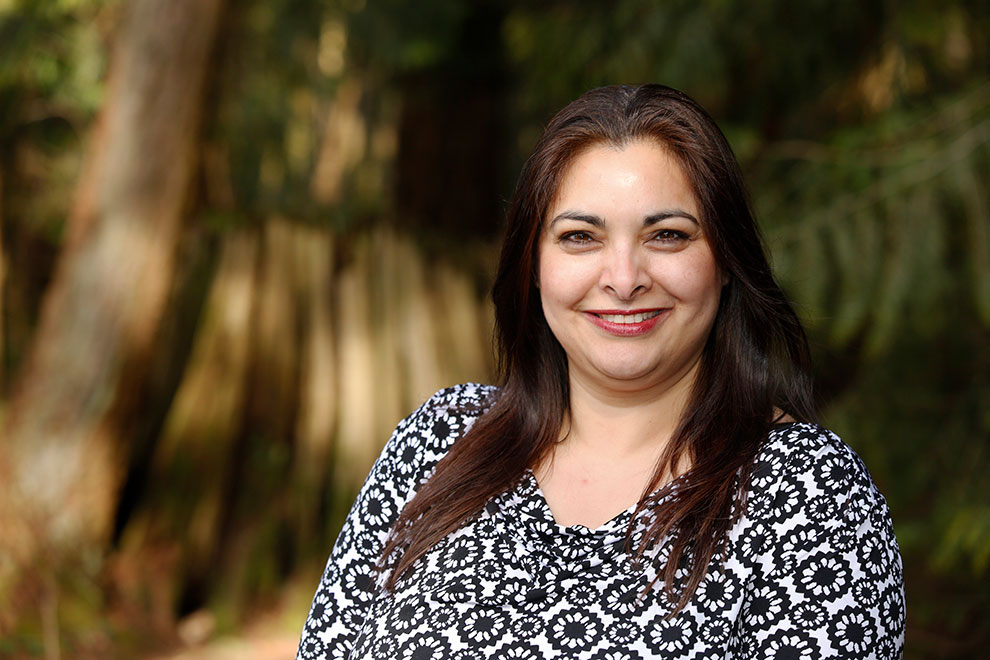
  • Indian American Democrat wins Washington State Senate primary from 45th District

    Indian American Democrat wins Washington State Senate primary from 45th District

    WASHINGTON (TIP): Manka Dhingra, an Indian-American Democrat, has won the August 1 primary for the state Senate seat in Washington’s 45th Legislative District, defeating her Republican contender Jinyoung Lee Englund.

    Dhingra is a senior deputy prosecutor in King County who supervises the Regional Mental Health Court and oversees the Veterans Court. Manka Dhingra is dedicated to improving Washington’s 45th District, the community she calls home. A King County prosecutor since 2000, Dhingra serves as Chair of the Therapeutic Alternative Unit. In this position, she helps the county’s most vulnerable citizens access mental health and substance abuse prevention services to prevent recidivism in the criminal justice system.

    Prior to becoming a King County Deputy Prosecuting Attorney, she interned with the State Attorney General’s Office in their Criminal Division assisting with Sexually Violent Predator cases.  She also clerked for Justice Barbara Madsen at the Washington State Supreme Court from September 1997 to June 1998.

    As an instructor for law enforcement in crisis intervention training, Dhingra has been a key player in changing racial policing practices. Dhingra’s unwavering support for women’s and immigrant’s rights is clearly demonstrated by her work on the Seattle Police Department’s Muslim, Arab, and Sikh Advisory Council and by her founding of API Chaya, an organization that works to end domestic violence in the South Asian community.

    Dhingra earned her J.D. from the University of Washington School of Law. A mother of two children who attend Redmond Middle School and Redmond High School, Manka received the PTSA Golden Acorn Award for her work at Redmond Elementary School and remains a proud Girl Scout cookie mom. Manka and her husband, Harjit Singh, a Distinguished Engineer at SpaceX, live in the Education Hill neighborhood of Redmond.

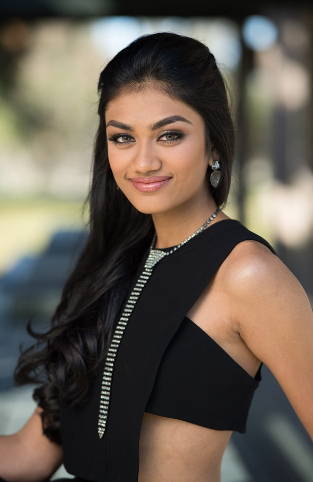
  • Indian American Jaanu Patel makes it to Top 5 in Miss Teen USA Beauty Pageant

    Indian American Jaanu Patel makes it to Top 5 in Miss Teen USA Beauty Pageant

    SACRAMENTO (TIP): An Indian-American student who was crowned ‘Miss California Teen USA’ last year, has been selected as one of the top five contestants in the Miss Teen USA 2017 beauty pageant.

    Jaanu Patel, 16, was among the top five in the Miss Teen USA 2017 which was won by Sophia Dominguez-Heithoff of Missouri, in Phoenix, Arizona.

    Patel, a junior at Huntington Beach High School, was crowned Miss California Teen USA for 2017 at the December 4, 2016, pageant at the Long Beach Terrace Theater, reported the Los Angeles Times.

    It was her first time competing in a statewide beauty pageant and she didn’t expect to win, though she had already won the Miss Huntington Beach Teen crown in February.

    “I feel like beauty is having a sense of pride in completing your goals,” Patel was quoted as saying by the Times, then. “Beauty on the outside is important. It’s a form of respect in how you represent yourself to the world. But you’re not going to be somebody unless you complete the goals you set for yourself.”

    Ever since she was four, Patel has been dancing to the tunes of Bollywood music at NDM Bollywood Dance Studios run by Nakul Dev Mahajan, which has made her an award-winning, competitive Bollywood Dancer and has been learning Kathak for 10 years.

    She has been to 16 countries including Italy, New Zealand, Turkey and Uganda, where her father was born and wants everyone to travel internationally at least once in their lifetime.

    In her junior year at Huntington Beach High School, Patel visited Montreal last year during a Model UN trip where she took interest in topics such as women’s rights and deprivation of education with the desire to see an improvement in the education system over the next 10 years.

    “I want students to get more hands on training outside of the classroom,” Patel said in her YouTube video for the Miss Teen USA beauty pageant.

    Patel aspires to become a pediatrician and is currently volunteering with Kaiser Permanente in her maternity ward.


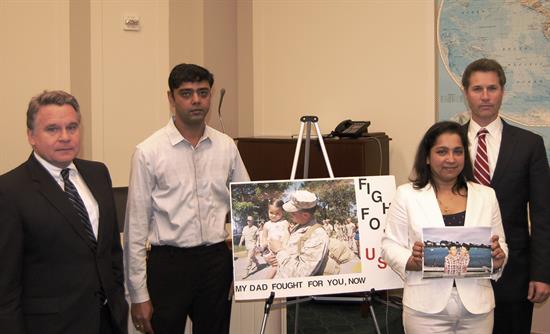
  • Indian American Mother honored with Anti-child abduction bill named after her in US Congress

    Indian American Mother honored with Anti-child abduction bill named after her in US Congress

    WASHINGTON (TIP): Chris Smith, Republican representative from New Jersey, and author of the Sean and David Goldman International Child Abduction Prevention and Return Act (P.L 113-150), introduced a new bill in Congress on July 28, naming it after Indian American Bindu Philips who is fighting to reclaim custody of her twins abducted by her ex-husband.

    The bill will automatically remove tariff benefits for countries that are found to be out of compliance in returning children home—the “Bindu Philips and Devon Davenport International Child Abduction Return Act of 2017.”

     “Bindu Philips fought valiantly in India for over eight years for the return of her abducted twin sons, only to be given the incessant delays in India’s courts and little support from the Obama Administration,” said Smith, Chair of the House panel on global human rights. “Just recently, she was finally granted a short visit with her children in India, but the children’s father marred the time with harassment and monitoring, refusing to let the children and mother leave a hotel for 7 days.

     “Devon Davenport has had a return order for his daughter, Nadia, from Brazil since 2009. He has won every single one of the 24 appeals against the order—but Brazil still will not enforce its own return order.

     “Shockingly, 11 of the 13 countries found to be non-compliant in the annual Goldman Report by the U.S. State Department in the return of abducted American children are still receiving billions of dollars in tariff exemptions under the Generalized System of Preferences. We must cease rewarding countries that aid abductors. When is enough finally enough?”

    In 2016, 629 American children were taken from the United States by one parent without the consent of the other, often in direct violation of valid United States court orders, United States criminal law and The Hague Convention on the Civil Aspects of International Child Abduction. The Obama Administration’s refusal to apply sanctions against countries that fail to return abducted children has led to a rate of return of only 16%.

    “For years, the U.S. government response to abductions has been an engraved invitation to abductors,” said Smith. “Abductors have an 84% chance of no penalty for ripping their child from home and family in the United States. It is my hope and expectation that this year, the State Department will begin to act more decisively on behalf of American families so that more children come home.”

    The new bill amends the Generalized System of Preferences, a trade program designed to promote economic growth in the developing world through duty free entry for some products, so that any country named as non-compliant in the prompted resolutions of abductions would lose trade benefits granted by the United States. The new legislation ensures that the loss of trade preference would be automatic and not dependent on the Executive Branch applying sanctions.

    Abducted children in a foreign country are often blocked from any contact with the American parent, losing half of their family and heritage.  Such children are also at grave risk of serious emotional and psychological problems. Many such children experience anxiety, eating problems, nightmares, mood swings, aggressive behavior, resentment and fear. Every day the abduction continues only compounds these harms.

  • Indian American Aakash Dalal gets 35 years prison sentence for fire bombing synagogues

    Indian American Aakash Dalal gets 35 years prison sentence for fire bombing synagogues

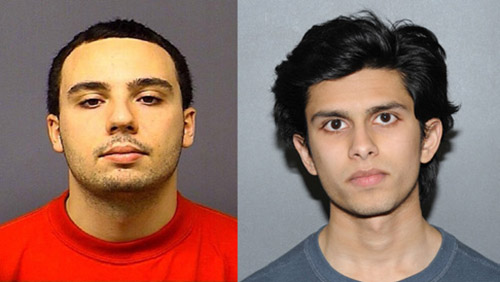
    HACKENSACK, NJ (TIP): Aakash Dalal, an Indian-American youth in New Jersey was sentenced July 28, to 35 years in prison on terrorism charges for firebombing synagogues along with his friend Anthony Graziano. The two were convicted last year of spray-painting anti-Semitic graffiti at synagogues in Maywood and Hackensack, attempting to burn down synagogues in Paramus and Rutherford and throwing Molotov cocktails into a rabbi’s home in Rutherford.

    Graziano and Dalal were charged on a 30-count indictment in 2013 with arson and bias-related incidents that occurred from Dec. 11, 2011 to Jan. 11, 2012 in Paramus, Rutherford, Maywood and Hackensack.

    The indictment included nine charges for the attempted murder of Rabbi Neil Schuman and his family and the associated firebombing of Temple Beth El Synagogue in Rutherford.

    The men were also charged with the Jan. 3, 2012 firebombing of Temple K’Hal Adath Jushrun in Paramus and the attempted arson of Jewish Community Center in Paramus on Jan. 7, 2012. The bias intimidation offenses related to Temple Beth Israel in Maywood and Temple Beth El in Hackensack.

    Dalal, a former student at Rutgers University, was arrested in March 2012. Dalal, who authorities said of the brainchild behind the firebombings, was convicted of terrorism in November last year. Dalal showed Anthony Graziano how to make the molotov cocktails used in the firebombings. They have known each other since middle school.

  • BERLIN SYNDROME MOVIE REVIEW

    BERLIN SYNDROME MOVIE REVIEW

    CAST: Teresa Palmer, Max Riemelt, Matthias Habich

    DIRECTION: Cate Shortland

    GENRE: Mystery

    DURATION: 1 hour 56 minutes

    Review

    Clare (Teresa Palmer) is an explorer in search of a new beginning. Andi (Max Riemelt), a mysterious and charming young man catches her fancy on a busy Berlin street. She’s a photographer from Australia. He’s a German native, who teaches English. After an instant attraction, their intriguing story takes an unlikely turn when the girl discovers there’s more to him than meets the eye.

    Story

    Berlin Syndrome works on your mind. Cate Shortland’s slow-moving arthouse thriller manages to suffocate you with its creepy and unpredictable nature and atmospheric execution. Shot within the confines of a secluded house, the intense cinematography makes you feel claustrophobic, evoking a sense of paranoia. The psychological thriller manages to instil fear and will make you think twice before trusting strangers or walking into strange homes. You might also rethink your exotic fantasies of ‘falling for a stranger in a foreign country’.

    The concept isn’t original per se as various foreign indie films have played around a similar theme – a film revolving around a trapped protagonist. However, Shortland’s nuanced interpretation of her characters and their psyche is what makes the difference. She makes you wonder how everything can be subjective; including one’s perception of ‘abnormal’.

    Interestingly, there are no character clichés per se. You often wonder if Clare would be ‘institutionalised’ eventually, after being trapped in Andi’s house for the longest time. The twists and turns keep you guessing and wondering if the lead pair’s strange relationship might actually have a deeper meaning. Speaking of the pair, the film solely rests on the shoulders of its two lead actors – Teresa Palmer (who looks and acts exactly like Kristen Stewart) and Max Riemelt. They portray their characters’ vulnerabilities, fear and erraticism with utmost conviction.

    Overall, this one’s creepy and unsettling but will largely appeal to a niche audience, owing to its languid pace and world cinema sensibilities.

  • CHARLIZE THERON WANTS TO DO ANOTHER MAD MAX MOVIE

    CHARLIZE THERON WANTS TO DO ANOTHER MAD MAX MOVIE

    Actress Charlize Theron wants to return for a ‘Mad Max’ movie based on her character Furiosa.

    The 41-year-old actress said she knows more of the character’s backstory, including how she lost her arm, but will wait for director George Miller to be ready. “But I’m going to be 42 in August, so let’s get to it,” she said.

    Theron, who was speaking at the Comic-con, will next be seen in ‘Atomic Blonde’, and the actress opened up about her wish to essay an unrepentant woman who plays by the rules men get to play by. “Women in film typically need a reason to become warriors losing a child or husband. They can just be warriors,” she said.

    “That’s what Atomic Blonde is supposed to portray. Lorraine is simply herself. There’s no explanation for why the way she is the way she is,” she added.

    Source: PTI

  • ANNE HATHAWAY TO STAR IN NEXT BARBIE MOVIE?

    ANNE HATHAWAY TO STAR IN NEXT BARBIE MOVIE?

    Anne Hathaway may be the next one to get behind the wheel of the pink dream convertible for a Barbie movie.

    The Oscar winner is in negotiations to star in the longin- the-works feature project, putting on the outfit that was originally going to be worn by Amy Schumer, reports the Hollywood Reporter.

    On that note, Schumer was announced to star in December, but dropped out in March, citing “scheduling conflicts.”

    Along with this, rising Australian director Alethea Jones is in talks to helm the flick, after being handpicked by Hathaway, who was integral in the search for a filmmaker.

    Reports further say, Sony is hesitant to move the release date, which has already been scheduled to be June 29, 2018, and “there’s a chance that if Hathaway’s schedule isn’t worked out in a satisfactory way, a deal may not be made.”

    Hathaway was last seen in the indie Colossal and will next be seen palling around with Rihanna and Sarah Paulson in ‘Ocean’s 8’ and with Rebel Wilson in ‘Nasty Women,’ MGM’s remake of ‘Dirty Rotten Scoundrels.

    Source: ANI

  • RAAG DESH MOVIE REVIEW

    RAAG DESH MOVIE REVIEW

    CAST: Kunal Kapoor, Amit Sadh, Mohit Marwah

    DIRECTION: Tigmanshu Dhulia

    GENRE: History

    DURATION: 2 hours 17 minutes

    STORY

    Three officers of the Indian National Army are on trial for treason. An ailing lawyer must help them face the consequence of their courage.

    REVIEW

    We are living in the time of terrific national pride. If your patriotism doesn’t reflect in your attitude, your cuisine, your movie-theatre etiquette and your twitter feed, its existence is called into question. And while we jump to conclusions faster than we can say ‘India’, we often forget the people who fought actual blood-and-bullet wars (as opposed to shouting matches on news shows) to get us where we are today.

    Raag Desh takes us back to these heroes. It tells the story of Maj. Gen. Shahnawaaz Khan (Kunal Kapoor), Lt. Col. Gurbaksh Singh Dhillon (Amit Sadh) and Col. Prem Sahgal (Mohit Marwah), three officers of Subhash Chandra Bose’s Indian National Army, who put everything on the line and gathered troops to re-enter India to take down the British after the Second World War. Khan, Dhillon and Sahgal are captured and tried in court for conspiring against the British Indian Army, while their lawyer, Bhulabhai Desai (Kenneth Desai), tries to twist facts to free them of the charges.

    Writer-Director Tigmanshu Dhulia has chosen to narrate an incredibly interesting anecdote from our freedom struggle. The hard work of his four-member research team and two-member writing team is evident. Whether the story needed to be told in a non-linear fashion is debatable, but it mostly gets the point across. In a lot of ways, it educates you about the socio-political climate of the time. However, its educational quality is its bane.

    Even though Dhulia painstakingly recreates the pre independence era with researched costumes and sets, and employs multiple languages (the Japanese speak Japanese, the British speak English; no shady dubbing here) to maintain authenticity, the movie proceeds with the mechanical tone of a disinterested college professor. It gives you numbers and dates and facts and suddenly introduces relatives of the protagonists who have stories of their own.

    It’s death by information. Had the movie been freed of its half-hearted side-tracks it would have made for great infotainment. It is only half of that word now.

  • PARINEETI CHOPRA DYING TO START NAMASTEY CANADA

    PARINEETI CHOPRA DYING TO START NAMASTEY CANADA

    Actress Parineeti Chopra said she is “dying” to start working on the film ‘Namastey Canada’. “A desi film with a videsi heart! my kind of film! Dying to start ‘Namastey Canada’,” Parineeti tweeted on Tuesday.

    The film is directed by Vipul Amrutlal Shah and also stars Arjun Kapoor with Parineeti. This will be the second time the two will be seen sharing screen space after ‘Ishaqzaade’.

    ‘Namastey Canada’ is not a sequel to the Akshay Kumar and Sonakshi Sinha starrer ‘Namastey London’.

  • ANUSHKA SAYS SHE INSTANTLY SAID YES TO JAB HARRY MET SEJAL

    ANUSHKA SAYS SHE INSTANTLY SAID YES TO JAB HARRY MET SEJAL

    Actress Anushka Sharma said she wanted to work with filmmaker Imtiaz Ali since a long time and thats why she instantly agreed to be part of forthcoming film ‘Jab Harry Met Sejal’. “The first film he (Ali) offered to me, I instantly said yes to it, which is ‘Jab Harry Met Sejal’. In fact, I have been wanting to work with Imtiaz for the longest time,” Anushka said in a statement.

    “So, yes, this (‘Jab Harry Met Sejal’) is something I always wanted to do with Imtiaz and this just seemed like a film which I would really enjoy having a great time, so this is the one film,” she added. ‘Jab Harry Met Sejal’ features Anushka with Bollywood superstar Shah Rukh Khan. The film is slated for release on August 4.

    ’Shah Rukh can even romance a microphone’

    Anushka Sharma, who will be seen opposite Shah Rukh Khan in their upcoming ‘Jab Harry Met Sejal’ say romancing the superstar was quite easy and that he can even romance a microphone.

    Both of them came along with music director Pritam and film director Imtiaz Ali for the launch of the new song “Hawayeina” on Wednesday. Asked about how was it romancing Shah Rukh third time, on-screen, Anushka said: “Extremely easy! There is a genuineness in his eyes that we all can see – that reflects on-screen. In my opinion, he even can romance a microphone.”

    To this, Shah Rukh replied: “As long as you are holding the mic, darling!” The evening started with a live performance by Pritam where he sang the song live and went on to show it on the big screen.

    Two of the songs of the film ‘Radha’ and ‘Beech Beech Mein’ has already been released and gained popularity. Asked what is his favourite genre of films, Shah Rukh, who is known for his romantic films but in an earlier interview had said that he is not a fan of love stories, said: “No no, I think that was misinterpreted. I like a love story also but I like comedy more.”

  • NEW 4D CAMERA TO BOOST ROBOT VISION, VIRTUAL REALITY

    NEW 4D CAMERA TO BOOST ROBOT VISION, VIRTUAL REALITY

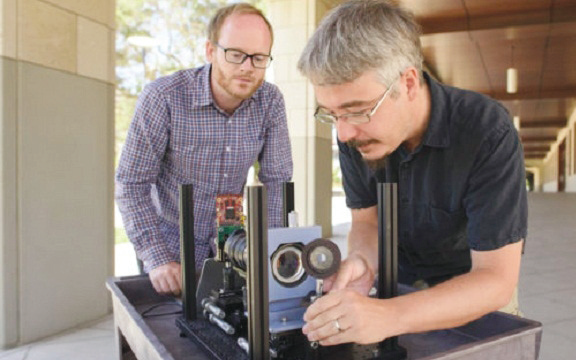
    BOSTON (TIP): Stanford scientists have developed a first-of-its-kind camera which can generate information-rich four dimensional (4D) images that robots need to navigate the world.

    The camera, which captures nearly 140 degrees of information, can be better than current options for close-up robotic vision and augmented reality, researchers said.

    “We want to consider what would be the right camera for a robot that drives or delivers packages by air. We are great at making cameras for humans but do robots need to see the way humans do?

    Probably not,” said Donald Dansereau, a postdoctoral fellow at Stanford University in the US.

    The robots have to move around, gathering different perspectives, if they want to understand certain aspects of their environment, such as movement and material composition of different objects.

    The new camera could allow them to gather much the same information in a single image. The researchers also see this being used in autonomous vehicles and augmented and virtual reality technologies.

    The difference between looking through a normal camera and the new design is like the difference between looking through a peephole and a window, the scientists said.

    “A 2D photo is like a peephole because you cannot move your head around to gain more information about depth, translucency or light scattering,” Dansereau said.

    “Looking through a window, you can move and, as a result, identify features like shape, transparency and shininess,” he said. That additional information comes from a type of photography called light field photography, first described in 1996 by Stanford researchers.

    Light field photography captures the same image as a conventional 2D camera plus information about the direction and distance of the light hitting the lens, creating what is known as a 4D image.

    A well-known feature of light field photography is that it allows users to refocus images after they are taken because the images include information about the light position and direction.

    Robots might use this to see through rain and other things that could obscure their vision. This camera system’s wide field of view, detailed depth information and potential compact size are all desirable features for imaging systems incorporated in wearables, robotics, autonomous vehicles and augmented and virtual reality.

    “It could enable various types of artificially intelligent technology to understand how far away objects are, whether they are moving and what they have made of,” said Gordon Wetzstein, assistant professor at Stanford.

    “This system could be helpful in any situation where you have limited space and you want the computer to understand the entire world around it,” Wetzstein said. Source: PTI

  • Moon’s interior may contain water say researchers

    Moon’s interior may contain water say researchers

    NEW YORK (TIP): There may be substantial amounts of trapped water in the interior of the moon, researchers have said.

    By analysing satellite data, researchers at Brown University in the US discovered rich amounts of indigenous water within the volcanic deposits or within layers of rocks spread across the lunar surface after ancient volcanoes erupted on the moon, Xinhua news agency reported.

    This suggests that water may be rich in the moon’s mantle, the layer between the crust and the core, according to the study published in the journal Nature Geoscience.

    The study’s lead author, Ralph Milliken, said past findings of water on the moon did not appear to come from indigenous sources.

    The moon is believed to have been formed from debris of an object that hit the Earth early in the solar system’s history, but the essential hydrogen to form water could hardly survive the heat in the formation of the moon. Li Shuai, who coauthored the story, said, “Water did somehow survive or that it was brought in shortly after the impact by asteroids or comets before the moon had completely solidified. The exact origin of water in the lunar interior is still a big question.”

    The finding also sheds light on future lunar exploration as water could potentially be extracted from volcanic deposits.

  • Microsoft Paint brushed aside

    Microsoft Paint brushed aside

    SAN FRANCISCO (TIP): Microsoft has announced the end of days for its pioneering Paint application as it focuses on software for 3- D drawing.

    Paint drawing and image processing software that made its debut in 1985 with the Windows operating system was among the applications listed as “removed or deprecated” in a Windows 10 Fall Creators Update set for release later this year.

    Features or functions on the list “are not in active development and might be removed in future releases,” according to the US technology company.

    For decades, Paint was among applications installed by default on Windows-powered personal computers and drew a strong following.

    Fans of the application will be able to take solace in a Paint 3-D version launched early this year. Source: AFP

  • USER INTERACTIVE COLOR CHANGING ELECTRONIC SKIN DEVELOPED

    USER INTERACTIVE COLOR CHANGING ELECTRONIC SKIN DEVELOPED

    BEIJING (TIP): Scientists have developed a user interactive colour changing electronic skin inspired by chameleons that could be used in robotics, prosthetics and wearables.

    While science has been able to replicate the ability of animals such as chameleons, octopus and squids to change colour with artificial skin, the colour changes are often only visible to the naked eye when the material is put under huge mechanical strain.

    Now, researchers from Tsinghua University in China have developed a new type of user-interactive electronic skin, with a colour change perceptible to the human eye, and achieved it with a much-reduced level of strain.

    The team employed flexible electronics made from graphene, in the form of a highly-sensitive resistive strain sensor, combined with a stretchable organic electrochromic device.

    Researchers explored the substrate (underlying) effect on the electromechanical behaviour of graphene. To obtain good performance with a simple process and reduced cost, they designed a structure to use graphene as both the highly sensitive strain-sensing element and the insensitive stretchable electrode of the electric current density (ECD) layer.

    “We found subtle strain – between zero and 10 per cent – was enough to cause an obvious colour change, and the RGB (red green blue) value of the colour quantified the magnitude of the applied strain,” said Tingting Yang from Tsinghua University.

    “Graphene, with its high transparency, rapid carrier transport, flexibility and large specific surface area, shows application potential for flexible electronics, including stretchable electrodes, super capacitor, sensors, and optical devices,” said Hongwei Zhu, professor at Tsinghua University.

    However, our results also show that the mechanical property of the substrate was strongly relevant to the performance of the strain sensing materials, Zhu said. “It’s important to note that the capability we found for interactive colour changes with such a small strain range has been rarely reported before. This user-interactive e-skin should be promising for applications in wearable devices, robots and prosthetics in the future,” Yang added.

    Source: PTI

  • AXIS BANK BUYS SNAPDEAL’S FREECHARGE FOR RS 385 CRORE

    AXIS BANK BUYS SNAPDEAL’S FREECHARGE FOR RS 385 CRORE

    Deal dynamics

    • ? The sale price is huge markdown for Snapdeal, which acquired payment wallet FreeCharge for $400 m in 2015

    • ? The deal will help the third largest private sector lender to double the customer base and address the digitally savvy people

    • ? FreeCharge clocked revenues of Rs 80 crore last year, and has a gross merchandise value of Rs 2,700 crore. Its 200 employees will be retained by Axis Bank as part of the deal

    MUMBAI (TIP): After nearly a year of scouting for a buyer, struggling ecommerce firm Snapdeal today agreed to sell its payment wallet FreeCharge to Axis Bank for Rs 385 crore, almost 90 per cent lower than what it had paid for the firm in 2015.

    The price paid by the third largest private sector lender for the acquisition — which will help it double the customer base and address the digitally savvy people — is also higher than what was reportedly offered by other suitors.

    According to some reports, others were offering $15-20 million for FreeCharge, which was acquired by Snapdeal for $400 million in 2015 during heady days for the e-commerce sector in the country.

    Rival e-commerce company and wallet Paytm had made an offer $10-20 million for FreeCharge, while Amazon also made a late bid for the digital payments platform.

    From business as well as value addition angles, the deal does not make much sense as other banks have been going slow in investing in wallets after the RBI-promoted National Payments Corporation has launched UPI and IMPS applications.

    Echoing similar views, Sandy Shen, a research director at Gartner, said, “Though the acquisition will give Axis Bank a jump-start in customer acquisition, whether the bank can keep growing that number is a question.”

    “Digital wallet is a highly competitive space with dozens of players and it takes lots of efforts and resources to increase merchant acceptance and offer good services, which is key in winning over the customers,” he said.

    Stating that it is difficult to put a price tag for such buys, Axis Bank MD and Chief Executive Shikha Sharma said, “What we are excited about is its tech platform, its capabilities, customer base and the brand. We’d certainly like to continue with the brand.”

    The announcement comes at a time when sale of parent Snapdeal to Flipkart is in the final lap and will give it headroom. “This is a win-win deal that allows Snapdeal to further focus on our core e-commerce business, while giving Axis Bank some of the most agile and innovative capabilities in the financial services space,” Kunal Bahl, Snapdeal co-founder and chief executive, said in a video call. Source: PTI

    Shikha Sharma

    Axis Bank boss gets 3-yr extension

    ? Seeking to rest speculation, Axis Bank on Thursday re-appointed Shikha Sharma as the managing director and chief executive of the third largest private lender for a third term that will last till June 2021 ? “The board, at its meeting held on Wednesday, approved the re-appointment of Shikha Sharma as the managing director and chief executive of the bank for three years, with effect from June 1, 2018,”the bank said.

    ? The unusual announcement comes over 11 months ahead of the 59-year-old banker’s current term. The veteran banker is serving the second term that comes to an end in June 2018. She joined Axis Bank in 2009 with a five-year mandate which was subsequently extended

    ? A section of the media had first reported appointment of an executive search firm by the bank to find her successor, which was followed by another report that Tata Sons sounded her out with an offer

  • JIO EFFECT TANKS 75% AIRTEL Q1 PROFIT

    JIO EFFECT TANKS 75% AIRTEL Q1 PROFIT

    NEW DELHI (TIP): Country’s largest telecom company, Bharti Airtel today posted 74.89% decline in consolidated net profit to Rs 367 crore for the June quarter of the current fiscal, hit hard by the disruptive pricing of newcomer Reliance Jio.

    In contrast, its net income was Rs 1,462 crore in the April- June quarter of last fiscal, 2016-17. Total revenue fell 14% to Rs 21,958 crore in the first quarter of 2017-18, from Rs 25,546 crore in the year-ago period.“The pricing disruption in the Indian telecom market caused by the entry of a new operator continued with industry revenues declining over 15% year-onyear, creating further stress on sector profitability, cash flows and leverage,” Gopal Vittal, MD and CEO, India & South Asia, Bharti Airtel said.

    Hero MotoCorp Q1 net up at Rs 914.04 crore

    Riding on its best-ever quarterly unit sales, two-wheeler market leader Hero MotoCorp on Tuesday reported a 3.5% increase in profit after tax at Rs 914.04 crore for the April-June quarter. Revenue from operations during the period under review stood at Rs 8,612.91 crore as against Rs 8,010.66 crore in the year-ago quarter, up 7.52%.

    Vedanta profit doubles to Rs 1,525 crore

    Mining conglomerate Vedanta Ltd’s consolidated profit after tax doubled to Rs 1,525 crore for the quarter through June, driven by strong show in zinc and oil and gas businesses, the company said on Tuesday. Total income during the quarter was at Rs 20,397 crore, an increase of 23 per cent over a year ago. The quantum jump in profit during the April-June quarter was on account of volumes and improved zinc pricing.

  • Diageo asks Vijay Mallya to return $40 m

    Diageo asks Vijay Mallya to return $40 m

    LONDON/NEW DELHI (TIP): British liquor giant Diageo said it had asked beleaguered businessman Vijay Mallya to return $40 million paid to him as part of the $75 million (Rs 515 crore) sweetheart deal for his exit from United Spirits Ltd (USL).

    Diageo has stopped payment of $7 million a year to Mallya as part of the deal and sought compensation for the losses incurred by it.

    The British firm had agreed to pay Mallya, who now lives in the UK after Indian banks approached courts to recover money lent to his now defunct airline, $75 million over five years as global non-compete and non-interference fee post his exit from USL.

    Citing violation of the agreement by Mallya, Diageo has also ruled out the future instalments to him, saying “it was not liable to pay such amount”. “Diageo and other group companies have demanded from Mallya the repayment of $40 million which was paid by Diageo on 25 February, 2016, and also sought compensation from him for various losses incurred by the relevant members of the Diageo group on account of the breaches committed by him,” Diageo said.

    Diageo has paid $40 million of the total $75 million on signing of the pact on February 25, 2016, while the balance $35 million was to be paid in equal instalments of $7 million a year over five years. This was subject to and conditional on Mallya’s compliance, with certain terms, it said. Source: PTI

  • DIWALI AT Times Square

    [vc_row][vc_column][vc_single_image image=”86600″ img_size=”full” add_caption=”yes” alignment=”center”][/vc_column][/vc_row]

  • 26 Afghan soldiers killed in Taliban attack on Kandahar base says Defence ministry

    26 Afghan soldiers killed in Taliban attack on Kandahar base says Defence ministry

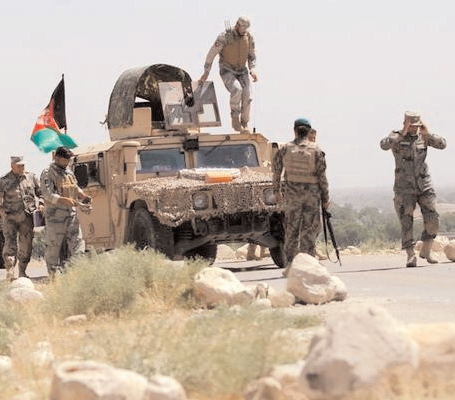
    KANDAHAR (TIP): At least 26 Afghan soldiers have been killed and 13 wounded in a Taliban attack on a military base in Kandahar province, the defence ministry said on July 26, the latest blow to struggling security forces.

    The militants “attacked an army camp in Karzali area of Khakrez district of Kandahar last night,” MoD spokesman General Dawlat Waziri said. Afghan soldiers “bravely resisted”, he said, killing more than 80 insurgents.

    Residents in the area described an hours-long attack launched by a 30- strong convoy carrying “hundreds” of Taliban who assaulted the base from multiple directions. Air support was called in, several residents said, though that was not immediately confirmed by officials.

    The insurgents claimed the attack via their Twitter account. The resurgent Taliban have been ramping up their campaign against beleaguered government forces, underscoring rising insecurity in the war-torn country throughout the warmer weather fighting season.

    Afghan security forces, beset by killings, desertions and non-existent “ghost soldiers” on the payroll, have been struggling to beat back insurgents since US-led NATO troops ended their combat mission in December 2014.

    According to US watchdog SIGAR, casualties among Afghan security forces soared by 35 percent in 2016, with 6,800 soldiers and police killed. The insurgents have carried out more complex attacks against security forces in 2017.

    In April more than 140 soldiers are believed to have been killed on a base outside the northern city of Mazar-i- Sharif, one of the deadliest ever Taliban attacks on a military installation.

    While in early March gunmen disguised as doctors stormed the Sardar Daud Khan hospital — the country’s largest military hospital — in Kabul, killing dozens. (AFP)

  • Myanmar insists no North Korea  links as US envoy visits

    Myanmar insists no North Korea links as US envoy visits

    YANGON (TIP): Myanmar has no military ties with North Korea, a Myanmar official said on Monday, as a US diplomat responsible for North Korea arrived for talks in which he is likely to seek assurances on efforts to isolate it.

    Ambassador Joseph Yun was set to meet Myanmar’s State Counsellor Aung San Suu Kyi and the military’s commander in chief in the capital, Naypyitaw, on Monday, according to the U.S. Embassy in Yangon. Yun attended a conference in Singapore over the weekend focusing on tension on the Korean peninsula over the North’s unrelenting nuclear and missile programmes. Ambassador Joseph Yun’s trip to Asia was announced after North Korea’s test on July 4 of on intercontinental ballistic missile that it says can carry a large nuclear warhead and some experts believe has the range to reach Alaska. Myanmar is the only other stop on his trip, pointing to concern in Washington that Myanmar’s army, which used to have ties with North Korea, continues to give succour to Kim Jong Il’s regime. (Reuters)