It was so pleasing to watch beautiful rendition of Urdu poetry through a classical dance by Anupma Sharda, student of guru Purvi Bhatt from Dance School, wearing traditional dress. This song was from1981 Urdu film, Umrao Jaan, which has a deep connection with Urdu literature and the Aligarh Muslim University. This and other songs in the film were written by Urdu poet Shaheryaar from the University and the film was directed by another Aligarian Muzaffar Ali, who excelled in promoting Urdu literature. The presentation of this song at this event also conveyed a message to the audience that they would be coming to these Urdu promotion events, like this Urdu Mela, again and again. Is anjuman mein aap ko aana hai baar, baar Deevaar-o-dar ko gaur se pehchaan lijiye.
Nuzaira Azam, Master of Ceremony
This first Urdu Cultural Mela was the brain child of Tahira Anwar and Dr. Razi Raziuddin. Held on 20thMay, 2017 at the Seneca Valley High School, Germantown, Maryland, it attracted a large number of people from Metropolitan Washington area. It was organized by the Urdu Academy of Maryland with the collaboration of the Aligarh Alumni Association Metropolitan Washington and Pakistan Association of Metropolitan Washington. and also present a bouquet of activities to give glimpses of Urdu culture to the audience. The main purpose of mela was to making aware the community of the richness of Urdu culture and heritage.
Audience
Tahira Anwar, who started the Urdu Academy of Maryland in 2013, said that the Academy has succeeded in launching Urdu teaching in two schools of Montgomery County. She was very happy to announce that she was receiving requests for expanding the program to other schools. However, due to lack of resources she was not able to meet the demand. She is hopeful that the program could be expanded to other schools in Montgomery County and nearby other counties with help from the community. “In addition to preservation of cultural heritage, learning of mother tongue helps strengthen family and friendship bonds. Recent research has also shown that children growing up with multiple languages perform much better in highly competitive society,” she added. Activities of the Academy are available at: www.uamd.og.
Dr. A. Abdullah—a stalwart worker of Urdu spoke about origin and significance of Urdu in the Indian Subcontinent and now in North America. He praised the work initiated by the Urdu Academy of Maryland in Montgomery County of Maryland and expressed confidence that the work started by the Academy will establish its roots, spread its branches like a banyan tree and others will get benefit from it. In the beginning it does require sacrifice, hard work, and patience, however.
Shilpa Sharma and Sheikh Abdur Rahman presenting ghazals
Shoaib Ali Hasan eloquently presented Idgah—a classic short story by Munshi Premchand. This powerful story about a 4-years old orphan boy conveys a strong message how affection, motherhood, care, sacrifice, and satisfaction bring happiness.
Farheen Abdullah helped organize a colorful cultural show depicting traditional dresses representing different regions of India, Pakistan, and Bangladesh.
Regional costumes showRegional costumes show
Mrs. Shilpa Sharma, a physical therapist by professions and Dr. Abdur Rehman, a scientist at the National Institutes of Health, respectively, presented ghazals from notable Urdu poets. The program also included several boutiques for ladies to do Eid shopping and delicious food and Urdu books for sale.
Program organizers (L to R): Rahat Yususf, A. Abdullah, Farheen Abdullah, Firoza Salahuddin, and Tahira Anwer.
Nuzaira Azam was the Master of Ceremony. Mohammad Akbar, president, Aligarh Alumni Association, Washington-DC thanked the organizers and participants of the program, and the audience.
I spent a part of my impressionable years, that is to say, my boyhood school days in Islamabad, West Punjab, Pakistan. During my stay there, I made memorable visits mostly to the northern regions of Pakistan. I also visited the cosmopolitan cities of Karachi and Lahore. I was particularly enamored of Lahore, once a fabled city of the grand Mughals, Sikhs and later of the British Raj where Sikhs, Hindus, Muslims and other ethnic minorities once coexisted amidst great harmony and amity. Lahore in the British colonial days had rightly earned the enviable sobriquet as, “Paris of the Orient” (see the engrossing book, LAHORE: A SENTIMENTAL JOURNEY by PRAN NEVILE, 1993). Even in the late 1960s, it exuded a charm of its own with its Mughal monuments and gardens – the Lahore fort, Shalimar and Shahdara Baghs, Badshahi and Wazir Khan’s mosques, mausoleums of Jahangir and Nur Jahan, Anarkali bazaar and the tree lined Mall, to name a few. However, besides the “Ajab Ghar” (Lahore museum) and “Kim’s Gun” (Zamzama) made famous by Rudyard Kipling, the old Lahore fort along with its Sikh era exhibits which included the priceless collection of the last Sikh Maharaja Dalip Singh’s daughter, Princess Bamba Sutherland, attracted me the most.
On my very first visit to the Lahore fort, I was drawn to remnants of some interesting, fading Sikh murals on a wall in an inner courtyard. It looked somewhat incongruous in its setting and thus attracted my attention. However, the guide could not say much beyond reluctantly conceding with a grimace that,” woh Sikho ka hai” (those are of the Sikhs). He was neither interested nor knowledgeable in Sikh history. Such a peculiar mindset – one of disdain and denial – was understandable given that in wake of the Partition of British India in 1947, the horrors that befell the Punjab were still fresh. Furthermore, the guide was too eager to point out the Mughal features of the fort in which he was also ill informed. Leaving the fort, I went to see the adjacent, elegant Samadhi (tomb) of the Sikh Maharaja Ranjit Singh (1780-1839), the “one-eyed lion” of the Punjab. My abiding interest in the magnificent, yet short lived Sikh kingdom (1799-1849), and the history of the brave, hardy and industrious Sikhs of the Punjab had begun.
The Gurdwara seen in a fairly pristine condition in 1950, from the northeast. The architectural details on the exterior of the building can be clearly noted.
Ranjit Singh was a born ruler. He united the various Sikh misls (tribes) and built a powerful empire in the Punjab, with Lahore as his capital. At its zenith the whole of Punjab, Peshawar up to Khyber Pass, Kashmir, western Tibet (Ladakh) and Sindh was under his sway. In the context of his time, Ranjit arguably possessed the most formidable modern army in South Asia, trained and commanded by some legendary foreign mercenaries – Neapolitan and French officers – some of whom had once served in Napoleon’s army. However, the Sikh court politics and culture remained in a modern era, essentially medieval in character, with its penchant for intrigue, assassination, and dissension and reckless adventurism – initiating the disastrous wars with the East India Company. As a result, the once powerful Sikh kingdom was eventually annexed by the Company in 1849, following the Anglo-Sikh wars, only ten years after Ranjit’s death in 1839.
Since long, I have been reading up on the history of the Sikhs. Consequently, I have developed a great admiration for a brave, colorful, vibrant, enterprising and gregarious people. Even from the rusticity of the villagers in East Punjab emanate an endearing warmth, gaiety and celebration of life, especially, through their songs and dances during various festivals. On the other hand, the somber, sonorous and lilting devotional Kirtans sung in the Sikh Gurdwara are soulful, seemingly a constant reminder of their past sufferings as a people and their enduring quest for the unity of faith and appeal to the universal brotherhood of Man.
A distant view of the Gurdwaras, center, seen from the south. Auxiliary buildings and substantial landed property of the Gurdwara can also be observed in this rare photo taken in 1950.
A word about the Sikh religion. Sikhism is a monotheistic religion which originated in the Punjab in the 15th century, as propounded by Guru Nanak, its founder and first Guru or spiritual teacher. He was succeeded by nine other Gurus. On the death of the 10th Guru, Gobind Singh, the Sikh holy book, Guru Granth Sahib, was declared as the eternal Guru, whereby, its scriptures have become the embodiment of the temporal and spiritual guide of the Sikhs.
In Bangladesh, there are approximately 7 Sikh Gurdwara (temple) in Dhaka, Mymensingh, Chittagong and Sylhet. There are 10-12 million adherents to the Sikh faith worldwide.
In May 2016, Bangladesh Forum for Heritage Studies, an organization dedicated to the promotion of cultural heritage, handed over 4 rare photographs taken in 1950 of the Gurdwara Nanak Shahi (Sikh temple) at Nilkhet, Dhaka, to the Gurdwara Management Committee in a simple ceremony.
The 4 rare photographs of the Gurdwara of 1950, taken soon after the partition of British India in 1947, documents the main Gurdwara built in 1830, during the East India Company era. The adjacent auxiliary or support buildings, which then housed the Langar-khana (community kitchen and place for free distribution of food) and Musafir-khana (rest-house for guests/pilgrims), were probably also built during the same time as the Gurdwara, as evident from the same architectural pattern. The Gurdwara and the adjacent buildings as seen in these pictures of 1950, appear to have been in a pristine condition then.
The pictures show the main Gurdwara, a Company era building, with its distinctive Indo-Mughal architectural features (especially the interior). In one of the photos it is interesting to note the presence of Sikh Samadhis (graves) on the compound at the rear end of the Gurdwara. Also, in the pictures can be seen a few male Sikhs. One such photo probably show the then lone Granthi (priest), the brave and dedicated, Bhai Swaran Singh, sitting on an ornate wicker chair with his long, loose hair after a bath. Bhai Swaran Singh stayed back after the partition of 1947, to look after the Gurdwara, when all else had left for India. Sadly, he along with his Bengali Muslim friend were brutally killed during 1971, by the collaborators of the Pakistani Army.
Photographs collected by the author
Rear view of the Gurdwara, showing old Sikh Samadhis on the grounds. Closer inspection of the Gurdwara show intricate designs on the building.
Known today as the Gurdwara Nanak Shahi located in Nilkhet, on the Dhaka University Campus, the original Gurdwara was erected on this spot much earlier as it was deemed a sacred place by the Sikhs. Legend has it that Guru Nanak (1469-1539) on his visit to Dhaka, had stayed at this place to preach Sikhism. And, so did the 6th Guru Teg Bahadur (1621-1675) after him, who also lived in Dhaka for two years. The place was then a Mughal mohallah (locality) and fell under the Sujatpur mouza. A humble Gurdwara was first constructed here by a Sikh devotee, Bhai Natha, during the time of the 6th Guru. The Gurdwara in the photographs date from 1830, when the earlier old Gurdwara buildings were rebuilt along with additional ancillary edifices. Thus, this Gurdwara in Dhaka, is considered by the Sikhs as one of the oldest and holiest in the subcontinent.
From 1947 until 1964, the Gurdwara somehow managed to stay functional with financial help from local devotees and Sikh pilgrims from India. Monetary donations, however paltry, were also had from Sikh personnel working for UN agencies in Dhaka and the Indian Consulate and overseas Sikhs. However, such funds were insufficient for the overall physical upkeep of the Gurdwara buildings and premises. Consequently, the Gurdwara complex soon started to show signs of neglect and suffered from lack of repair. But the real downturn in the fortune of the Gurdwara started with the state sponsored communal riots in the then East Pakistan in 1964, followed by the Indo-Pak war of 1965, after which hostilities stopped all Sikh pilgrims from India. Therefore, regular funds were seriously affected. Within a very short time the Gurdwara complex bore a dilapidated, forlorn and abandoned look. Invasive vegetation and adverse climatic conditions made things worse. Through all this Bhai Swaran Singh prevailed until killed in 1971.
On the liberation of Bangladesh, when the Indian Army entered Dhaka on December 16, 1971, Sikh officers and soldiers prayed (gave thanksgiving) in this ruinous Gurdwara. During 1972 some funds were made available, and rudimentary efforts at restoration and cleaning up were conducted. In 1973 some laborers started to demolish a ruined portion of the Gurdwara adjacent to the Arts faculty of Dhaka University. Thankfully, it was stopped before any major damage was done to the remnants of the Gurdwara.
Finally, through the noble initiative of Sardar Harbans Singh, the then Chairman, International Jute Organization in Dhaka, a major restoration project of the Gurdwara was undertaken in 1988 and completed in 1989. Thus, the Gurdwara was made fully functional as a place of visitation and worship. Funds for this major restoration project were procured by the relentless efforts of Harbans Singh, from overseas Sikh donations. However, while the exterior façade of the Gurdwara has undergone major structural changes, care was taken to preserve the attractive original interior with some changes made in the layout, like the added Parkarma verandah around the holy inner sanctum to provide overall protection to the Sri Darbar Sahib, where the Sri Guru Granth Sahib (holy book) is kept on a new, beautifully carved, high marble kiosk. Wahe Guru! Sat Sri Akal!
(By Waqar A. Khan –The author is founder, Bangladesh Forum for Heritage Studies) (Source: The Daily Star / Bangladesh)
Governor McAuliffe, Mayor Bowser Join Indian Ambassador to the U.S. and MWAA Officials for Morning Flight Arrival and Press Conference
WASHINGTON (TIP): Washington Dulles International Airport and Air India will host a delegation from the Commonwealth of Virginia, the District of Columbia and the Indian Embassy on Friday, July 7, to celebrate the first ever nonstop connection between New Delhi and the National Capital Region. The morning event will include escorted airside views of the Boeing 777-200LR arrival, a ceremonial water cannon salute and a press conference with Indian Ambassador Navtej Sarna, Governor Terry McAuliffe and Mayor Muriel Bowser.
PROGRAM
Morning of Friday, July 7, 2017
o Escorted Airside Arrival: Arrival is scheduled for Friday, July 7, at 7:15 a.m., though an early arrival is expected. Media planning to attend for the escorted airside arrival must check-in at the Main Terminal by 6:00 a.m. RSVP by 3:00 p.m. on Thursday, July 6, to publicaffairs@mwaa.com or (703) 417-8370.
Press Conference: Scheduled to start at 8:30 a.m.
Press conference will include remarks from: –
o H.E. Navtej Sarna, Ambassador to the United States, Government of India
o Terry McAuliffe, Governor, Commonwealth of Virginia
o Muriel Bowser, Mayor, District of Columbia
o Ashwani Lohani, Chairman and Managing Director, Air India
o Pankaj Srivastava, Director of Commercial, Air India
o Margaret E. McKeough, Executive Vice President and Chief Operating Officer, MWAA
o Jerome L. Davis, Executive Vice President and Chief Revenue Officer, MWAA
o Mike Stewart, Vice President of Air Service Development, MWAA
Air India’s inaugural flight is the first nonstop route between the National Capital Region and New Delhi, directly connecting the world’s strongest democracy and the world’s largest democracy with three weekly round-trip flights.
The move comes after New Jersey lawmakers failed to pass a budget by the annual deadline
By I.S. Saluja
TRENTON, NJ (TIP): As if the existing woes were not enough for Chris Christie who is heading into his final six months as governor, a crisis in the form of government shutdown has added to his worries. Described as New Jersey’s biggest government crisis in more than a decade, the shutdown will literally turn the lights out in Trenton, beginning July 1. What a way to prepare for celebration of 4th of July!
New Jersey lawmakers failed to pass a budget by the annual deadline at midnight of June 30th, as required and Christie promptly issued an order prompting closure of “government offices and services deemed non-essential”. State parks and beaches are also closed, as will motor vehicle offices. Courts could be closed from Monday. Tens of thousands of state government employees will be furloughed.
And while the origins of the shutdown are complex, only one person is likely to bear the blame in the public eye: Governor Chris Christie.
“It’s all going to come down to when folks get up tomorrow for the July 4th weekend and drive down to Island Beach State Park to spend the day and a sign says it’s closed,” said Patrick Murray, director of the Monmouth University Polling Institute. “They’re going to blame Gov. Christie and nobody else.”
“I’m not happy about this,” Christie said in a press conference just eight hours before the shutdown deadline. “This is completely avoidable.”
After two terms that saw his rise to GOP superstardom derailed by Bridgegate and then a fallout with the Trump team, Christie — the least popular governor in New Jersey recorded history, with an approval rating at 15 percent — is already so politically toxic that his own lieutenant governor, Kim Guadagno, is running away from him while campaigning to succeed him.
Such a fiscal debacle had been avoided since 2006, when New Jersey Democrats shut down the government in an argument over raising the state sales tax despite controlling the governorship and both chambers of the Legislature.
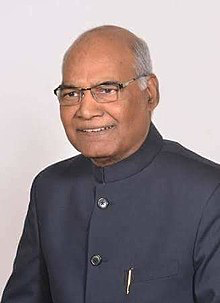
NEW DELHI (TIP): NDA nominee Ram Nath Kovind and Opposition candidate Meira Kumar are the only two contestants in the race for the President’s post, with the nomination of around 90-plus other hopefuls being rejected today on the day of scrutiny.
Former Bihar Governor Kovind will face former Lok Sabha Speaker Kumar in the July 17 elections to the top post.
The final scrutiny led to the rejection of a majority of hopefuls because they did not fulfil the basic requirements.
NEW DELHI (TIP): With incumbent Vice-President Hamid Ansari’s term ending on August 10, the Election Commission today announced the election to the post on August 5 and the counting of votes the same day. Members of both the Houses of Parliament constitute the electoral college to elect the Vice-President, where nominated members — Rajya Sabha (12) and Lok Sabha (2) also have the right to vote. Altogether, 790 MPs will exercise their right to vote.
The NDA, which has a majority in the Lok Sabha and received support of parties such as AIADMK and BJD in the presidential polls, will find it easy to place its candidate as the Vice-President. Chief Election Commissioner Nasim Zaidi said the notification for the election would be issued on July 4 and nominations could be submitted by July 18.
The scrutiny will take place on July 19 and the last date for withdrawing is July 21. He said polling, if required, would take place on August 5.
A candidate requires 20 proposers and 20 seconders from the members of the electoral college. As the method of electing the Vice-President is done through proportional representation by means of single transferable votes, the legitimate electorate would be required to mark their preferences on the ballot paper using special pens designate by the EC. No whip can be issued by parties as the poll is through a secret ballot, the CEC said.
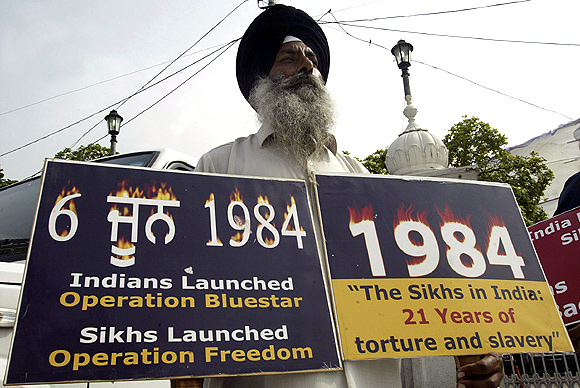
NEW DELHI (TIP): The hearing will continue on the bail plea filed by 1984 anti-Sikh riots convict retired naval officer Captain Bhagmal, who was held guilty in a case relating to the murder of a family of five in Raj Nagar area of Delhi Cantonment on November 1, 1984 after the assassination of then prime minister Indira Gandhi.
Earlier on May 11, the Delhi High Court granted bail for a week to a convict serving life term in a 1984 anti-Sikh riots case to enable him look after his wife, who underwent an operation last month.
A bench of Acting Chief Justice Gita Mittal and Justice Anu Malhotra released former Congress councillor Balwan Khokhar on bail as his wife is slated to undergo an operation at the AIIMS. Khokhar, Captain Bhagmal, Girdhari Lal and two others were held guilty in a case relating to the murder of five members of a family.
They had challenged their conviction and the award of life sentence by the trial court in May 2013. The trial court had acquitted Congress leader Sajjan Kumar, but awarded life term to Khokhar, Bhagmal and Girdhari Lal and three-year jail term to two others–former MLA Mahender Yadav and Kishan Khokhar.
The convicts had filed appeals before the High Court, while the CBI too had filed an appeal alleging that they were engaged in “a planned communal riot” and “religious cleansing”. The agency has also appealed against acquittal of Sajjan Kumar.
AHMEDABAD (TIP): Prime Minister Narendra Modi today said that the killing of people by cow vigilantes is unacceptable; hours later, a man was killed in Jharkhand for allegedly carrying beef and his van was set on fire.
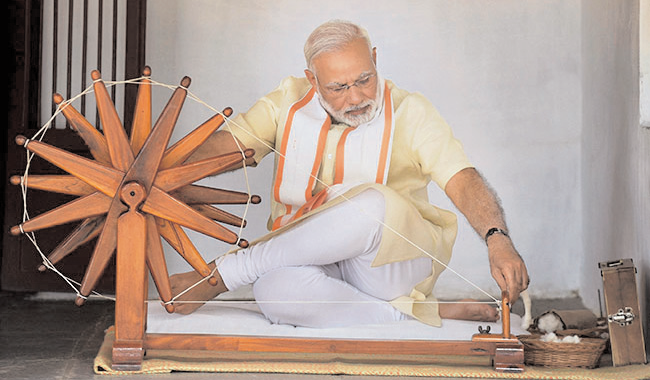
“Killing people in the name of Gau Bhakti is not acceptable,” said PM Modi. “No person in this nation has the right to take the law in his or her own hands in this country.” While saying that protecting cows, sacred for Hindus, is needed – “No one spoke about protecting cows more than Mahatma Gandhi and Acharya Vinoba Bhave,” he said – “this (violence) is not something Mahatma Gandhi would approve of.”
Today’s mob attack in Jharkhand comes two days after a Muslim man was attacked in the same state after a dead cow was found near his house, parts of which were set on fire by a mob.
PM Modi last admonished cow vigilantes nearly a year ago in August. His remarks today were made at Mahatma Gandhi’s Sabarmati Ashram in Gujarat, his home state, which votes soon, and a day after people across the country protested against mob attacks. Last week, a group of people on a train killed 16-year-old Junaid Khan, who was travelling home to his village in Haryana with his brother and two cousins after a shopping excursion to Delhi ahead of Eid.
NEW DELHI (TIP): Prime Minister Narendra Modi will head to Hamburg, Germany, to attend the G20 Summit after wrapping up his highly-anticipated Israel visit next week.
The Prime Minister will be in Israel from July 4 to 6 and then he heads to Germany for a two-day visit starting July 7. The G20 Summit will see a ‘leaders retreat’ on the morning of July 7 where the agenda on discussion will be fighting terrorism. However, while India will put forth its concerns on terrorism, the background will be the larger canvass and that of Europe which has been badly hit by terror attacks of late.
Modi met Chancellor Merkel two months ago. The two leaders were able to agree on the need to continue with their commitments to the 2015 Paris Climate Change Agreement, despite the US retracting from it.
The G20 Summit will see the attendance of Merkel and US President Donald Trump. Germany has indicated that it will make climate change, free trade and the management of forced mass global migration the key themes of the G20 summit in Hamburg next week, putting the two leaders on a collision course.
ISRAELI PM’S RECIPROCAL VISIT LIKELY BY YEAR-END
Israeli Prime Minister Benjamin Netanyahu is likely to pay a reciprocal visit to India by the year-end, a senior External Affairs Ministry official said on Thursday.
Netanyahu’s India visit will follow PM Narendra Modi’s three-day tour of the Jewish state from July 4. Modi’s visit will be the first by an Indian premier to Israel.
ZURICH/NEW DELHI (TIP): Money parked by Indians in Switzerland’s banks nearly halved to 676 Swiss francs (about Rs 4,500 crore) in 2016 to hit a record low amid a continuing clampdown on the suspected black money stashed behind their famed secrecy walls.
In comparison, the total funds held by all foreign clients of Swiss banks somewhat rose to CHF 1.42 trillion or about Rs 96 lakh crore (from CHF 1.41 trillion a year ago).
The total funds held by Indians directly with Swiss banks stood at CHF 664.8 million at the end of 2016, while the same held through fiduciaries was nearly $11 million, as per the latest data published on Thursday by the country’s central banking authority SNB (Swiss National Bank).
The total money of Indians fell by 45%?during 2016 to CHF 675.75 million, marking the biggest ever yearly decline in such funds.
This included nearly CHF 377 million in form of customer deposits, about CHF 98 million owed to Indians through other banks and CHF 190 million in form of other ‘liabilities’.
The figures fell sharply across all categories last year, the SNB data showed. This is the lowest amount of funds held by Indians in the Swiss banks ever since the Alpine nation began making the data public in 1987 and marks the third straight year of decline.
The funds held through fiduciaries or wealth managers alone used to be in billions till 2007 but has been falling amid fears of regulatory crackdown.
The funds held by Indians with Swiss banks stood at a record high of CHF 6.5 billion (Rs 23,000 crore) at 2006-end, but has now come down to nearly one-tenth of that level in about a decade.
The quantum of these funds has been falling since then, except for in 2011 and in 2013 when Indians’ money had risen by over 12 per cent and 42 per cent, respectively.
NEW DELHI (TIP): Liquor baron Vijay Mallya never intended to repay the loans he took for Kingfisher Airlines, the Central Bureau of Investigation (CBI) claimed in its supplementary charge sheet,which it filed against the embattled businessman and 10 others earlier this month.
In the supplementary charge sheet, the CBI alleged that Kingfisher Airlines Ltd, its corporate guarantor United Breweries (Holding) Ltd and personal Guarantor Vijay Mallya misled banks and obtained loans with the intention of cheating. The agency claimed that evidence it had gathered showed that “Mallya and UBHL had dishonest intention not to repay the dues of the bank from the inception”.
By 2009, Kingfisher had taken loans totalling Rs 4998.5 crore from various banks and needed another Rs 2,500 crore, of which a consortium of 17 banks sanctioned a loan of Rs 2,000 crore. The charge sheet lists number of allegedly false claims made by Mallya while obtaining these loans.
The CBI said the first thing KFA lied about was how the money would be invested in KFA. According to the CBI, while obtaining a loan of Rs 950 crore from IDBI Bank, KFA they would infuse Rs 200 crore of this in the company in three years. “It was repeatedly conveyed by KFA that additional equity of $ 400 million would be infused though strategic investors,” CBI claimed in the charge sheet.
“Investigation further revealed that KFA were making such false promises of equity infusion to various banks from as early as January 2006, without any real intentions of fulfilling such promises,” read the charge sheet. The second lie was about inflated value of the Kingfisher Airlines brand.
The airline claimed to have obtained brand valuation reports from two firms, Grant Thornton and Brand Finance.
CBI claimed that Grand Thornton had assigned a “highly exaggerated and inflated” value of Rs 3406.3 crore to KFA while Brand Finance said it was worth Rs 1,911 crore.
The CBI alleged that Mallya quoted Grant Thornton’s figure when he used KFA’s brand value as collateral against a loan from SBI and “deliberately concealed” Brand Finance’s valuation.
The charge sheet read, “Mallya and KFA, with a view to induce the bank to sanction a higher loan, used the said inflated and exaggerated valuation report of Grant Thronton,while a report based on more realistic projections prepared by Brand Finance was deliberately concealed from the bank.”
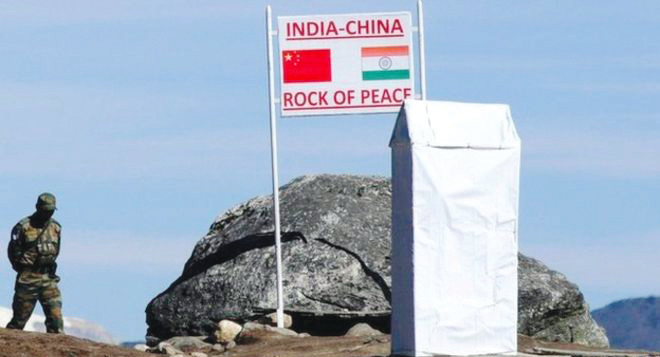
NEW DELHI (TIP): Beijing on July 29 hardened its stance on the standoff with Indian troops, with the Chinese foreign ministry asking India to withdraw its troops from the Donglong area in Sikkim sector as a precondition for a “meaningful dialogue”.
China went a step further and in a reference to the 1962 war said India should learn “historical lessons”. The Chinese defence ministry joined ranks with the foreign ministry and dismissed the protests by Bhutan that People’s Liberation Army soldiers violated its territory in Donglong, saying its troops operated on “Chinese territory” and also asked India to “correct” its “wrongdoing”.
In effect, this also means that the pilgrimage to Kailash Mansarovar, which China has put off given the tensions, is unlikely to resume anytime soon. Chinese foreign ministry spokesman Lu Kang displayed a photograph of the Indian “incursion” into Donglong area.
Later, the ministry uploaded two photographs on its website. “The diplomatic channel for communication remains unimpeded. We urged the Indian side to withdraw troops back to the Indian side of the boundary immediately. This is the precondition for the settlement of this incident and also the basis for any meaningful dialogue,” Lu said.
In a parallel briefing, Chinese defence ministry spokesperson Col Wu Qian dismissed Bhutan’s protests and said, “I have to correct when you say Chinese personnel entered Bhutan’s territory. Chinese troops operated on Chinese territory.”
Both sides are not willing to budge from their positions. Flag meetings between the rival commanders have not worked. India has made it clear that it will not allow China to construct a motorable road till the tri-junction through the Bhutanese territory
FACE-OFF
Two rival armies deployed around 3,000 troops each in a virtually eyeball-toeyeball confrontation
? Bhutan, too, has issued a demarche to China over the construction of the road
? Flag meetings and other talks between the rival commanders have not worked till now
NEW DELHI (TIP): The ongoing troop face-off between India and China on the Sikkim-Bhutan-Tibet tri-junction has emerged as the biggest such confrontation in the region in decades, with both sides continuing to pump in reinforcements to the remote border region.
Even as Army chief General Bipin Rawat reviewed the ground situation by visiting the headquarters of the 17 Mountain Division in Gangtok and 27 Mountain Division in Kalimpong on June 29 (Thursday), sources said the two rival armies had strengthened their positions at the tri-junction by deploying around 3,000 troops each in a virtually eyeballto- eyeball confrontation.
The Indian Army, on its part, refused to say anything. But sources said though there had been other troop standoffs at the tri-junction over the years, the latest one at the Doka La general area was clearly the most serious.
“Both sides are as yet not willing to budge from their positions. Flag meetings and other talks between the rival commanders have not worked till now,” a source said.
During his visit, General Rawat especially concentrated on the deployments of the 17 Division, which is responsible for the defense of eastern Sikkim with four brigades (each with over 3,000 soldiers) under its command.
“All top officers, including the 33 Corps and 17 Division commanders, were present during the extensive discussions. Undeterred by Beijing’s aggressive posturing, India has made it clear that it will not allow China to construct a motorable road till the tri-junction through the Bhutanese territory of Doklam plateau.
Bhutan, too, has issued a demarche to China over the construction of the road towards its army camp at Zomplri in the Doklam plateau, asking Beijing to restore status quo by stopping work immediately.
“China is trying to build a ‘Class-40 road’ in the Doklam plateau that can take the weight of military vehicles weighing up to 40 tones, which include light battle tanks, artillery guns and the like,” the source said.
Interestingly, the People’s Liberation Army declared in Beijing on Thursday that it had conducted trials of a new 35-tonne tank in the plains of Tibet, though it added that “it was not targeted against any country”. The Indian defense establishment is concerned at the “creeping territorial aggression” by China, which aims to progressively swallow the 269 sq km Doklam plateau to add “strategic width” to its adjoining but narrow Chumbi Valley, which juts in between Sikkim and Bhutan.
China has also been pushing Bhutan hard for the last two decades to go in for a “package deal”.
Under it, Beijing wants Thimphu to cede control over Doklam plateau, while it surrenders claims to the 495 sq km of territory in Jakurlung and Pasamlung valleys in northern Bhutan.
But India is militarily “very sensitive” about the Doklam plateau, especially the Zomplri Ridge area because it overlooks the strategically-vulnerable Siliguri corridor or the ‘Chicken’s Neck’ area.
India has progressively strengthened its defenses in the Siliguri corridor, the narrow strip of land that connects the rest of India with its north-eastern states, to stem any Chinese ingress. “But it remains a geographical vulnerability. China has constructed several feeder roads from Tibet to the border with Bhutan, and is also trying to extend its railway line in the region,” the source said. Source: TOI
WASHINGTON (TIP): US President Donald Trump will press South Korean President Moon Jae-in to solve trade differences over cars and steel in meetings in Washington focusing on the nuclear threat from North Korea.
Concerns about the US military’s THAAD missile defense system and China’s role in the region also are likely to come up in talks between Trump and Moon at the White House.
Moon, making his first trip to the United States since becoming his country’s president in May, joined Trump and his wife, Melania, for dinner in the White House State Dining Room on Thursday evening ahead of further talks on Friday.
“I know you’ve been discussing with our people some of the complexities of North Korea and trade and other things, and we’ll be discussing them all as we progress, and it could be very well late into the evening,” Trump told Moon. “I’d like to also congratulate you upon your election victory. It was a great victory, and you did a fantastic job. A lot of people didn’t expect that, and I did expect it. I thought that was going to happen.”
Both men have an interest in building a strong relationship but tensions could puncture that effort. Trump has spoken harshly about US trade imbalances with South Korea and threatened to tear up a trade agreement with the country. Moon has taken a wary stance on the Terminal High Altitude Area Defense (THAAD) system that the United States deployed in South Korea in March.
“I think they’ll have a friendly and frank discussion about the trade relationship,” a White House official told reporters on Wednesday, noting concerns about barriers to US auto sales and surplus Chinese steel that arrives in the United States via South Korea.
After the dinner, Trump tweeted that he had a “very good meeting” with Moon and that “many subjects (were) discussed including North Korea and new trade deal!”
The US goods trade deficit with South Korea has more than doubled since the KORUS pact took effect in 2012, from $13.2 billion in 2011 to $27.7 billion in 2016. It was forecast to boost US exports by $10 billion a year but they were $3 billion lower in 2016 than in 2011.
In an interview with Reuters in April, Trump called the 5-year-old trade deal “horrible” and said he would either renegotiate or terminate it.
During remarks at the US Chamber of Commerce on Wednesday, Moon said unfair trade practices would be eradicated and factors that limited competition, such as market entry barriers and price regulations, would be re-evaluated under his administration. (Reuters)
LAS CRUCES, NEW MEXICO (TIP): A murder suspect wanted in League City, Texas was arrested at the Border Patrol checkpoint in between Las Cruces and Hatch, according to the League City Police Department.
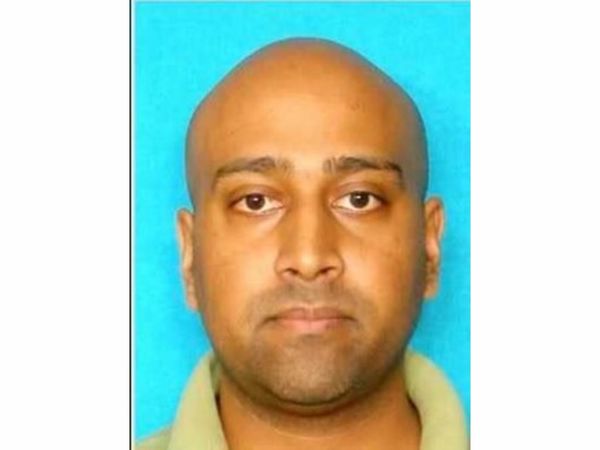
Sayantan Ghose, 41, is awaiting extradition to Texas to face charges for the murder of 43-year-old Clarence Wayne Harris II.
Jail records show Ghose was booked into the Dona Ana County Detention Center on a “fugitive from justice” charge.
League City police said the shooting happened Wednesday night.
The ABC affiliate in Houston reports police officers located the body of Harris II in a driveway alongside 36-year-old Amanda Harris.
The woman was shot twice and is reportedly recovering at a nearby hospital. Police told the ABC affiliate Ghose is Amanda’s ex-husband.
DALLAS (TIP): Three states spent more than $75,000 to buy a banned execution drug from India. The FDA blocked the shipments, a court fight ensued, and last month the drugs expired.
Three-thousand vials of a banned execution drug that Texas, Arizona, and Nebraska have been fighting for the right to use have now expired, and Texas has vowed to buy more.
The states paid $75,000 for the drug — sodium thiopental, a powerful anesthetic — two years ago despite a warning from federal officials that it would not be allowed into the country. The shipments were seized, and since that time, the states have been engaged in a legal standoff with the Food and Drug Administration, arguing that they should be permitted to use the drug for “law enforcement purpose only.”
While the sides fought in court, however, the drugs expired and may no longer be effective. Texas has indicated that it plans to buy more.
Doing so is not a simple matter.
Outlawed in the United States, sodium thiopental is still used in other countries, but most reputable drug makers have enacted stringent measures to keep their products from being used for executions. Which is what led the three states, last time around, to a supplier in India named Chris Harris.
Harris has billed himself as a manufacturer of the drug, but a BuzzFeed News investigation cast doubt on his claims. He has no scientific expertise. He has listed two Indian facilities with the FDA and the Drug Enforcement Administration — one is a small rented office space, and the other is an old apartment that he left still owing rent on.
Instead, Harris purchased the drugs from another manufacturer in India, slapped his label on the vials, and then resold them at a massive profit.
Harris has repeatedly declined to speak with BuzzFeed News. “I think you people don’t understand English,” Harris wrote in 2015. “I have said I won’t waste my time replying to you as you will write whatever you want anyways. STOP SENDING ME MAILS.”
According to FDA documents obtained by BuzzFeed News through an open records request, his drugs expired in May 2017.
A spokesperson for the Texas Department of Criminal Justice said the lawsuit would continue.
In an affidavit, last year that has not been made public until now, a state official whose name was redacted wrote that Texas “intends to continue importing thiopental sodium from the same foreign source, and with the same labeling, as the entry that FDA is currently detaining.”
A TDCJ spokesperson said that the state had not yet purchased “any further drug from this supplier,” and would “reevaluate the situation at the conclusion of this case.”
In 2013, a federal appeals court found that the FDA had “a mandatory obligation” to block all illegal shipments of the drug. Since then, the FDA has maintained that it is “required to refuse entry” to the shipments.
Last time around, Texas initially planned to buy from another Indian supplier, but the deal fell through when the supplier was raided by the Indian government. Its employees were all arrested for allegedly selling opioids and party drugs illegally to Americans and Europeans.
DALLAS (TIP): Texas A&M University has won a U.S. Department of Energy grant to help India improve its electrical power grid and add energy storage capacity.
A&M is part of a team of scientists from U.S. and Indian government, universities and private companies that received almost $30 million to install new smart grid and energy storage technology to build an “advanced distribution grid.”
The energy department grant is worth $7.5 million. India’s Ministry of Science and Technology covers the rest, officials said.
The technology will help both countries modernize power grids, department of energy officials said.“This new consortium demonstrates the U.S. and Indian commitments to ensuring access to affordable and reliable energy in both countries,” Energy Secretary Rick Perry said in a statement.
U.S. participants include Texas A&M, Washington State University, MIT, University of Hawaii, Idaho National Laboratory, Lawrence Berkeley National Laboratory, the Snohomish County, Wash., Public Utility District, Washington power company Avista Corp., Kansas City engineering firm Burns and McDonnell, California-based power design company ETAP Operation Technology, Paris-based GE Grid Solutions, California solar and storage firm Clean Energy Storage, Zurich-based digital industrial conglomerate ABB, the Philadelphia Industrial Development Corporation, and the National Rural Electric Cooperative Association.
HOUSTON (TIP): Students from the University of Petroleum and Energy Studies (UPES) have emerged as winners at the global aerospace competition CanSat held in Texas. They left behind 39 teams from across the world to obtain the first position.
Students from the University of Petroleum and Energy Studies (UPES) have emerged as winners at the global aerospace competition CanSat held in Texas, US. They left behind 39 teams from across the world to obtain the first position. The 23-member multi-domain team included engineering students of various streams including aerospace, electronics, computer science, material science, instrumentation and control engineering and design studies.
What is CanSat?
CanSat is a prestigious annual design-build-fly competition with space related themes organized by American Astronautical Society (AAS) and American Institute of Aeronautics and Astronautics (AIAA)
It tests students’ analytical, creative, decision-making, problem-solving and collaborative skills besides their domain knowledge and expertise
It also calls for the utilization of unique skills from different disciplines, which help to augment the multi-disciplinal skills of the contestants
As per an Indian Express report, the winning team had worked under the guidance of their professors – Ugur Guven and Zozimus Labana. “UPES students winning CanSat parallels the recent successes of the Indian space program and prepares students for the role they will have to play when they eventually join the booming aerospace sector,” Guven said in a statement released on Wednesday.
Various prestigious institutions like Princeton University, University of Manchester, University of Alabama, VIT University and National Aviation Academy had participated in the competition.
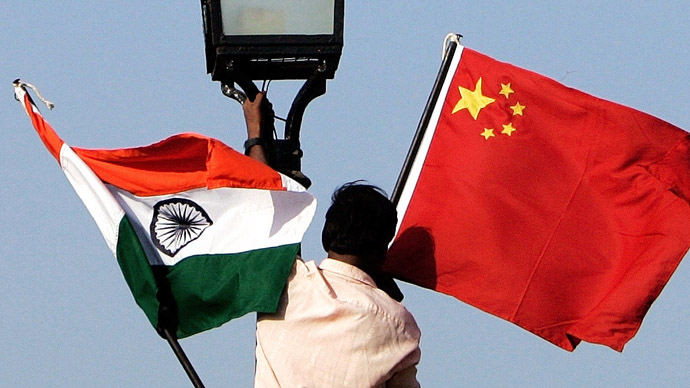
Scrimmages between the Indian and Chinese border troops on YouTube make for an amusing viewing. With rifles strapped securely on their backs, the soldiers carefully calibrate their firmness to ensure it does not deteriorate into aggression. It is this restraint, built up by patient diplomatic footwork over decades, that has led Prime Minister Narendra Modi to reiterate his predecessor’s observation of not a single shot having been fired on the Sino-Indian border in the last 40 years. Twice recently the Chinese troops have squatted for days on territory claimed by India. In both cases, India and China ensured the disagreement did not impact bilateral ties in other spheres. But it is for the first time that China has retaliated by closing one of the routes to the revered Mansarovar Lake that passes close to the ongoing site of confrontation.
Over the past three years, Sino-Indian ties have developed new frictions. Chinese suspicions about India acting as the US’ cat’s paw have deepened. South Block in turn believes that the Chinese ‘String of Pearls’ strategy of encircling India, once dismissed as the work of a fevered intern, is becoming a reality. The fall in the frequency of high-level interactions suggests bilateral strategic disagreements are hardening. India feels the intensive Chinese dalliance with Pakistan has reached the point of no return. China sees a reverse String of Pearls of getting encircled from the emerging India-US-Japan partnership with Australia and South Korea as partly interested players.
The easier task in foreign affairs is to manage relationships with countries at a distance. The challenge is to keep ties with neighbors on an even keel. The Modi government has tripped on that count. China and Pakistan are not the only irritants in the mix. Bangladesh has opted for Chinese weapons and Nepal wants to join the OBOR. Fresh from the US, the PM has his task cut out. The first priority is to ensure China’s block on Mansarovar Yatra should not deteriorate into a series of retaliatory actions. The second, and the longer haul, is to overhaul the current emphasis on militarism in current policy.
“It is now time for India to work with Japan, the US and the EU to coordinate their efforts to actively promote alternatives to Chinese economic exploitation in Asia and Africa. Moreover, Russia needs to be coopted bilaterally and through funding by institutions like the BRICS Bank and the Asian Infrastructure Development Bank, for constructing transport corridors through Iran to Afghanistan, the Caspian and Central Asia”, says the author.
China has got accustomed to violating India’s territorial integrity in J&K and Arunachal Pradesh. It transgresses international norms by supplying Pakistan with knowhow and designs of nuclear weapons and missiles. Its provocative behavior includes protests over visits by Indian dignitaries to Arunachal Pradesh. China, meanwhile, welcomes political figures from POK and Gilgit-Baltistan on official visits. Beijing also seeks to undermine India’s relations with South Asian neighbors like Sri Lanka, Nepal, Maldives and Bangladesh, backing politicians and political parties known to be less than friendly to India. New Delhi is, however, now reacting in a more measured manner to China’s policy of “strategic containment”.
Ignoring warnings from China, India reinforced its claims to Arunachal Pradesh by encouraging a high-profile visit to the state by the Dalai Lama, who acknowledges it is an integral part of India. The Dalai Lama pointedly visited Tawang, which has special spiritual significance for Tibetans. But the proverbial last straw on the Indian camel’s back is the China-Pakistan Economic Corridor (CPEC), involving an investment of around $51 billion. CPEC challenges Indian sovereignty by traversing through Gilgit-Baltistan, as part of Beijing’s larger Eurasian OBOR project.
India cannot ignore the security threat that this project poses as an integral part of a China-Pakistan axis to contain India across the Indian Ocean region. Accompanying this project, has been the laying of a fiber-optic cable connecting China’s PLA in Kashgar in its Xinjiang province and the Pakistan army’s GHQ in Rawalpindi. CPEC enhances the communications between the armies of China and Pakistan. It provides Beijing the road link to the Port of Gwadar, which has been handed over to it by Pakistan. China has also agreed to provide Pakistan with a large number of frigates and submarines. Gwadar is significantly located alongside the maritime routes for oil supplies to India from the Persian Gulf. China’s Maritime Silk Route, which complements OBOR, traverses across India’s shores in the Indian Ocean from the Straits of Malacca to the Gulf of Aden. China is evidently seeking to surround India with a “string of pearls” comprising base facilities at Kyaukpyu in Myanmar, Hambantota in Sri Lanka, Gwadar in Pakistan, Mombasa in Kenya and Djibouti in the Gulf of Aden. The Chinese modus operandi is clear from what transpired in Sri Lanka. China undertook financially unviable projects in President Rajapakse’s constituency and pushed Sri Lanka into a debt trap. Unable to repay the debt, Sri Lanka was compelled to hand over both the port and neighboring industrial area to China in a debt/equity swap. Despite this having triggered protest riots in Sri Lanka, China sought to berth a submarine in Colombo when Mr Modi was visiting the island.
After carefully graduating its response to CPEC, India finally came out publicly with a statement which objected to not just the fact that CPEC violates our territorial integrity, but also appears to be a project whose exploitative terms would render the recipients bankrupt. The External Affairs Ministry’s spokesman suggested, just prior to the OBOR Summit in Beijing, that the project was not based on “universally recognized international norms”, adding that it appeared to violate international norms of “openness, transparency and equality”. The statement also suggested that the project does not meet principles of financial responsibility which require avoidance of creating unsustainable debt in recipient countries. India noted that connectivity projects should involve transfer of skills and technology and respect “sovereignty and territorial integrity”. Like its decision on taking the Kulbhushan Jadhav case to the ICJ, the government’s decision to not attend the OBOR Summit in Beijing was predictably criticized by the same critics. Ominous warnings were voiced that India would now find itself “isolated” by taking on an all-powerful China.
What transpired was somewhat different. Only 20 countries, mostly from South and Southeast Asia and Africa, attended the conference at the summit level. Given his dependence on China, President Putin was the only major world leader present. This, despite the fact that Russian academics and others had expressed serious reservations on the OBOR traversing through the Eurasian belt, major portions of which have historically been regarded by the Russians as their backyard. Chinese pettiness and petulance was evident when they expressed their displeasure by not inviting the respected PM of Singapore, Lee Hsien Loong, who had the courage to say that territorial disputes in the South China Sea should be settled according to international law. The navies of India and Singapore held joint exercises in the South China Sea shortly thereafter. Moreover, within the OBOR conference, the Europeans and some others were quite vociferous.
The EU has strongly criticized China’s international trade and economic assistance policies. Senior EU leaders have made it clear that they believe that the OBOR project lacks a formal structure and that China has shown lack of transparency. The EU is skeptical about China’s motivations and its terms of trade and economic cooperation. EU functionaries feel Chinese policies are mercantilist. The UN Economic and Social Commission for Asia and Pacific has, meanwhile, warned of high financial risks in several OBOR projects. There are now voices even in Pakistan, warning that CPEC is going to result in Pakistan being confronted with an unsustainable debt burden, with apprehensions that it will be forced to go the Sri Lanka way. More importantly, there is growing realization internationally that China is not a 21st century Santa Claus and that the OBOR project is predominantly an effort by China to rebalance its economy and provide jobs for the vast labor and construction industry that it has developed which are now running out of opportunities and business within the country.
It is now time for India to work with Japan, the US and the EU to coordinate their efforts to actively promote alternatives to Chinese economic exploitation in Asia and Africa. Moreover, Russia needs to be coopted bilaterally and through funding by institutions like the BRICS Bank and the Asian Infrastructure Development Bank, for constructing transport corridors through Iran to Afghanistan, the Caspian and Central Asia. The US has renewed its proposal for a “New Silk Route” across Asia, which India had welcomed. Finally, India and Japan should jointly build a transportation and industrial corridor to the shores of East Africa, where Mr Modi’s visits have set the stage for expanding economic, industrial and energy cooperation across the Indian Ocean. China will have to learn that true economic development comes from transparent multilateral cooperation and not bilateral economic exploitation.
The Centre should sell its entire stake in Air India, even if in stages
With the Union Cabinet’s ‘in-principle’ approval for the sale of Air India and five of its subsidiaries, a long-standing demand on the reform checklist has been ticked. The rationale for the government to shovel in huge sums of money to keep the loss-making airline afloat was weakening by the year. Today, such life support, as Finance Minister Arun Jaitley recently noted, was being given when competing private airlines already cater to well over 85% of the air travel demand in the country. Government money that keeps Air India from going bankrupt would be much better used to fund important social and infrastructure programs that are starved of precious capital each year. Air India has been surviving on a ₹30,000-crore bailout package put together by the United Progressive Alliance government in 2012 to help its turnaround, and the debt relief provided by public sector banks. The airline has a debt load of over ₹50,000 crore on its books, and it is estimated that even a well-executed asset sale may not fully cover its present liabilities. So in the event of a sale, taxpayers may have to foot at least some part of the loss — either directly in case the government pays off the airline’s creditors, or indirectly if the public sector banks write off their loans to the airline. However, it is more likely that the government may divest its three profit-making subsidiaries separately, with the proceeds going to Air India to help deal with its liabilities.
It is not yet clear whether the airline will be fully privatized or how its eventual sale will be executed. A ministerial panel under Mr. Jaitley is expected to begin working on the details soon. But having taken the politically courageous decision to privatize Air India, the government would do well to go for the sale of its entire stake, even if it is done in a gradual manner. Eventually, the aim of the sale should be to get the best price for the airline. One good way to achieve this would be to allow both domestic and foreign buyers to bid freely for stakes. For this, the government will have to re-tune its FDI policy to allow foreign investors to buy a stake in Air India. The Civil Aviation Ministry has made a case for the sale of non-core assets first to pay off existing creditors, so that the airline becomes more attractive to private buyers. But this assumes that private buyers would not otherwise see the value in Air India’s assets. IndiGo has already expressed interest in buying a stake in Air India, with other domestic airlines reported to be serious about making a bid too. Finding a way to deal with Air India’s debt load will be the main challenge for Mr. Jaitley’s panel. How this process goes will be vital not just for Air India. If it goes relatively smoothly, that would make the task of moving forward on the disinvestment of other public sector units that much easier.
“Narendra Modi has realized that India will not get a free pass from the dealmaker in the White House. India must make its markets and commercial laws US-friendly to upgrade bilateral ties. Till then, the existing approach suits both sides fine”, says the author.
Prime Minister Narendra Modi’s three top-level interactions in Washington would have provided a fair understanding of India’s position in Donald Trump’s scheme of rearranging international relations in Asia.
Trump is forthright, some would say non-statesmanlike, in conducting state business, making it easier for the side at the other end of the negotiating table to understand the underlying motives and expectations. His chief consiglieres, the ministers for Defense and Foreign Affairs, have a similarly unvarnished approach of laying out their cards.
These three policy-marker meetings have made it clear that the White House retains the Obama era policy of encouraging India to concentrate on its eastern approach. This means American help for building trade bridges with the four US allies — ASEAN, Australia, South Korea and Japan — as well as in positioning India as a neutralizer of China’s increasing maritime presence. The Trump era disinterest in the US “Pivot to Asia” does not yet translate into India losing its usefulness as a major naval force in the Indo-Pacific. With Japan and Australia also stepping up their maritime presence, the US Deep State believes this quadrilateral should be kept in readiness as a formidable armada off China’s southern and eastern coasts.
The Indo-Pacific Economic Corridor that would cut a road link across Bangladesh/Myanmar, Thailand and Vietnam not just reopens a route for India that has remained closed ever since the Europeans initiated hostilities with the Japanese, it also fits in with the American plan to checkmate transport corridors descending from China into these countries. This battle of corridors – west-east (India to Vietnam) pitted against China’s north-south (Myanmar, Bangladesh and Thailand) – and the contest of the seas will ensure India remains embedded in American economic-military strategy despite waxing and waning of this concept’s importance among successive White House Administrations. This realization explains India’s alignment with the US position on the North Korean missile tests. It also pleases South Korea, emerging as a prominent supplier of defense equipment.
But on the west, especially in Pakistan and Afghanistan, India has to strike alliances on its own. The MEA spokesperson’s choice of phraseology after the PM met US Secretary of Defense John Mattis indicated that the CIA/Pentagon would prefer to do business in Afghanistan without the India-Pakistan zero-sum contest. Another reason for US opposition to a dust-up is it plans to push a gas pipeline from Turkmenistan to permanently kill any prospects of Iranian gas finding a market in the region. This US disinclination to hostilities brought about a softened Modi. He did touch upon the surgical strikes during a town hall with the Indian diaspora, but unlike at the previous G-20 and SCO summits, there was no laundering of neighborhood animosities from the pulpit. Instead, the PM spoke of a peaceful neighborhood and the sharing of India’s growth spoils with the world.
India earned two endorsements of its position on regional security. The Trump-Modi joint statement threw Pakistan down the stairs for fostering violent militant groups. It was burnished with the US naming a Pakistan based Kashmiri militant leader as a global terrorist. But too much is being read into the joint statement’s suspicions about the OBOR. The businessman in Trump would have to balance the multi-billion dollar contracts being won by American companies with the US military-intelligence establishment’s suspicions of the strategic game plan wrapped in China’s OBOR trade-only claims. Clearly opportunities from the $ 1 trillion OBOR infrastructure development pie do not put US opposition on the same footing as that of India, which is also suffering the anxiety of encirclement.
Trump has suggested in no uncertain terms that the US needs more Indian business to get it more interested in Indian strategic priorities. With a $ 500 billion trade deficit, Trump is looking at Indian efforts to reduce its trade surplus with America. These mean creating the right tariff environment for its capital goods and opening up the Indian market for American IT and agricultural products. It also means killing all Indian expectations of a liberal visa regime and if possible handing Westinghouse with a $ 50 billion contract for six nuclear reactors. Trump also explained that India was not getting access to sensitive and closely held technology because its intellectual property regime does not measure up to Pentagon’s expectations.
Without this to-do list, India’s aspiration to ride on American technology to sharpen its military edge and backing to enter NSG may have to remain on hold. The US has given that indication by slowing down work on an ambitious military co-production project of building an aircraft carrier. The official explanation could not be weaker: the US Navy team earmarked for the project is busy de-commissioning USS Enterprise. The implication is India’s attempt to reach aircraft carrier parity with China gets delayed.
On the eve of his departure to the US, PM Modi had signaled India’s willingness to qualitatively improve its surveillance of the Indian Ocean – which primarily means keeping an eye on Chinese vessels – with products bought from American companies. His $ 2 billion order pales in comparison to Qatar’s $ 13 billion and Saudi Arabia’s $ 110 contracts for US military equipment. Clearly, Indian foreign policy will have to keep its multi-vector approach alive. It will be too expensive to have Trump as the sole ally.
(The author can be reached at sandeep4731@gmail.com)
GARDEN CITY, NY (TIP): On Sunday, June 18th, 2017, the Nartan Rang Dance Academy of Bharatiya Vidya Bhavan presented its annual dance showcase, Nritya Ranjani (now in its 16th year) at the Adelphi University Performing Arts Center on Long Island.
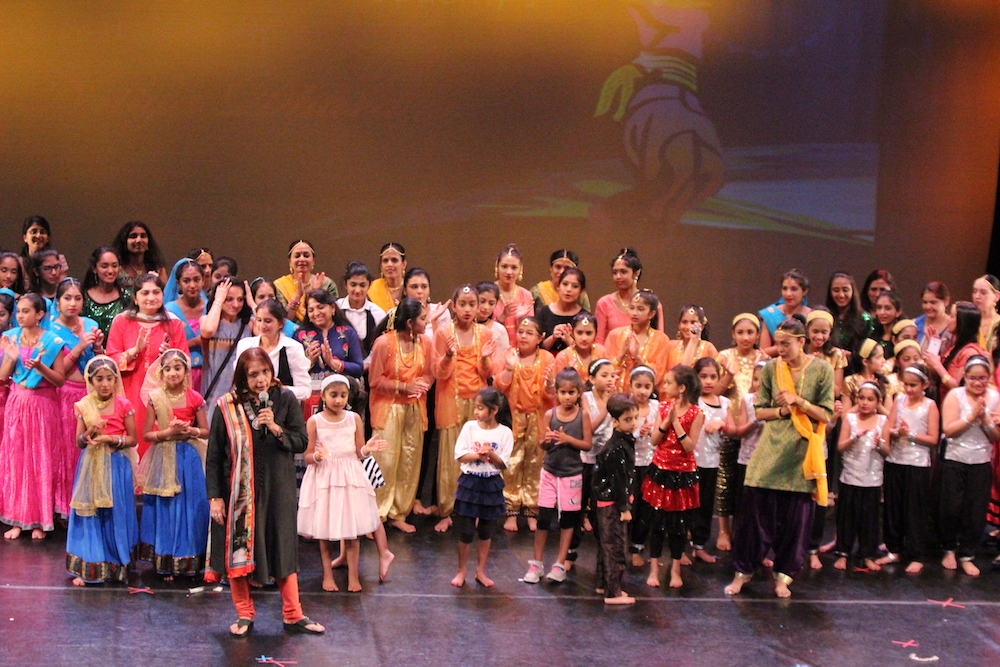
A grand tribute to Bollywood’s golden oldies, fusion and classical dances. These dances were showcased in grand style with glittering eye-catching costumes. Nritya Dhara (Stream of Dances) was truly a spectacular extravaganza. Over 75 students participated ranging in ages from 4 to 60!
Delightful performances
Choreographed by Swati Vaishnav & Siddhi Vaishnav. The school, which works under the umbrella of renowned non-profit organization Bharatiya Vidya Bhavan. Opening the show was a prayer dance Bappa performed by dancer choreographer Siddhi Vaishnav and Senior/Alumni group from the movie Banjo.
The show was well appreciated by a full house audience encouraging their children and grandchildren said artistic director Swati Vaishnav, “We wanted to have a little bit of something for everyone this year & we wanted to make sure our students learn various forms of dance, while still being enriched by the traditional styles from our South Asian heritage & culture.”
Delightful performances
The show was ably emceed by Monty Kataria and Shiv Vaishnav.
A well-known community leader and Philanthropist Mr. Amit Doshi was honored and recognized for his services to the community by a proclamation from Nassau County by Mr. Dilip Chauhan, Senior Advisor, with Nassau County Comptroller Mr. George Maragos.
MINEOLA, NY (TIP): Commuters across Nassau County are suffering on a daily basis from an endless array of problems with the Long Island Railroad (LIRR) including broken rails, derailments, and signal problems causing service delays, and train cancellations. The public is entitled to answers regarding whether the approximately $28.5 million in taxpayer money paid annually to the Metropolitan Transportation Authority (MTA) for LIRR station operations and maintenance is well spent. With this objective, Nassau County Comptroller George Maragos sent an audit engagement letter to the MTA, on June 19, 2017. A start date of July 12, 2017 was recently mutually agreed. The $28.5 million annual payment is only a portion of the $143.3 million paid in 2016 to the MTA by Nassau County taxpayers excluding train fares.
“The litany of service delays, train cancellations, derailments and overcrowding appears to represent a failure of management, inadequate maintenance, poor planning and lack of investment in the LIRR,” said Comptroller George Maragos. The inadequate service is affecting our local economy by reducing productivity, and increasing traffic congestion and pollution. The economy will continue to be adversely affected unless we restore reliable LIRR service. Our audit will attempt to look at how well taxpayer money is spent by the LIRR in operating and maintaining the Nassau County system and by extension all of the LIRR system.”
The intent of the audit is to specifically examine how effectively Nassau County taxpayer money is spent by the MTA in providing the County’s LIRR rail operations and its associated management practices. The audit is expected to be completed in about 3-4 months assuming the MTA and LIRR cooperate.
Under New York State County Law § 577, a County Comptroller is granted the authority to “have general superintendence over the fiscal affairs of the county” as well as the authority to “audit all claims, accounts and demands that are lawful county charges”. Nassau County makes millions of dollars of payments to the MTA for the operation, maintenance and use of LIRR Stations located in Nassau County, as well as millions for the County’s matching portion for its State Transportation Operating Assistance (STOA) program for MTA’s commuter rail operations. This limited review will examine whether certain funds are being utilized in accordance with the law.
Signup to our Newsletter!
Don’t miss out on all the happenings around the world