Month: January 2018

  • Trump Tax Bill Is Pro-Growth & Pro-People

    Trump Tax Bill Is Pro-Growth & Pro-People

    By Dave Makkar

    After more than three decades, Congress under President Trump, finally passed much-needed and long-overdue tax relief for millions of individuals, families and businesses. While the new tax bill is still not perfect, but it will go a long way in helping individuals, families, small to medium businesses as well as big corporations practically in every sector to be more competitive domestically as well as internationally. Consumers will receive much-needed tax relief and therefore, increase discretionary income. This Tax Bill will create still not too perfect but some what a fairer tax code that will trigger reinvestment in practically every state of America to create more jobs and better wages. This will boost the spending power of consumers and take America on the path of more prosperity, says the author.

    Personally, I have failed to understand the logics of Democrats that the Trump Tax Bill is anti-growth and anti-common person. The fact is this bill is pro-growth and pro-people. There is no doubt that the residents like me of high property and state tax states like New Jersey, New York, California etc.  will be affected to a certain extent because of the $10,000 cap on property tax and state tax deduction but not a whole lot because of the doubling up of standard deduction.

    As an resident of New Jersey since 1996, I can simply say if the property taxes are exorbitantly high; it is the residents that are to be blamed for allowing unionized politicians posing as Republicans & Democrats to govern 8.5 mil people in 8,000 sq. miles with 588 governments with over 10,000 elected/appointed politicians and 660,000 employees with no or little work. Unless the residents revolt to cut down the number of governments, elected/appointed politicians as well as the employees; they will see every year their property and state taxes going up to financially feed the monstrous size 588 governments of New Jersey.

    Democrats are ignoring the fact that about 70 percent of Americans take the standard deduction. Trump Tax Bill has doubled that deduction to $12,000 for individuals, 18,000 for heads of household, and $24,000 for joint filers combined with some more generous 7 tax brackets and rates. It would mean less tax taken from most individuals’ and families’ paychecks. Child tax credit has been increased from $1,000 to $2,000 per child. A portion $1,400 would be refundable. That is, taxpayers could get up to $1,400 back from the government, even if they owed no tax. The Bill also raises the income limit for child credit, so families with higher incomes can qualify. Families also could claim a new, $500 “family” tax credit for non-child dependents. That credit is non-refundable. The Bill would increase the amount that could be contributed to tax-favored ABLE savings accounts, designed to save for the needs of disabled adults and children. Contributions could also make the beneficiary of an ABLE account eligible for the saver’s credit, intended to supplement savings for lower-income people. This Bill also provides a temporary break to low-earning people, applying the lowest, 10% rate to more of their taxable income (individuals would get an additional $200 in income taxed at 10 percent; joint filers would get an additional $400 taxed at that rate). For Tax payers subject to the alternative minimum tax, for individuals the exemption from current first $54.300 has been raised to $70,300. For married couples filing jointly the limit from $54,500 has been raised to first $109,400 of income. Under the new Tax Bill by one estimate, a family of four with an income of roughly $73,000 would save $1,500 each year in taxes. In nut shell under this Tax Bill, it would mean less tax taken from most individual’s and families’ paychecks.

     Lower Property & state taxes deduction: A maximum $10,000 deduction for state and local taxes could be split between property taxes, and either state income or sales taxes. That’s compared with an unlimited deduction in the current tax code is certainly a setback for residents of high property & local tax states. This $10,000 cap applies to both singles and married couples filing jointly, though married people filing separately could deduct a maximum of only $5,000 each. People who run home businesses could still deduct the portion of state and local taxes, including property tax, that applies to that business. Interest on up to $750,000 in mortgage debt on a newly purchased primary home could be deducted; that’s a drop from the $1 million allowed now. The interest on home-equity loans and line of credit would no longer be deductible, regardless of what it’s used for.

    Upper-Middle Class Tax payers/investors with passive income.  Will get a significant tax break on a portion of qualifying income. According to a  research paper authored by 13 tax experts notes, certain wealthy individuals might be able to incorporate themselves and pay tax on interest income at the corporate rate of 21 percent, not the top 37 percent they’d pay as individuals.

    Coming to the rich, the heirs of wealthy people’s surviving spouses would continue to pay no estate tax. The estate tax exemption would double; currently non-spousal heirs would avoid a 40 percent tax on the first $5.49 million inherited from one individual and $10.98 million inherited from two.

    The main villain for the Tax Bill critics “The Corporations”: Their tax rate would drop to 21 percent from a top 35 percent rate; decline of a whopping 40 percent! Also allows fully allowable deductions for capital expenses and lower levies on repatriating overseas profits.

     Real Estate Businesses: can claim a new tax break that’s planned for partnerships, limited liability companies and other so-called “pass-through” entities.

    Technology: U.S. Tech companies are sitting on $3.1 trillion in overseas earnings, according to an estimate from Goldman Sachs. The largest stockpile belongs to Apple at $252 billion – 94% of its total cash. Microsoft, Cisco Systems, Google parent Alphabet Inc. and Oracle round out the top five, data compiled by Bloomberg show. One caveat is that the repatriation provision could generate a large tax bill. In Apple’s case, a 14.5 percent rate would equate to $36.6 billion in taxes, or about $7 a share, according to Bloomberg Intelligence.

    Banks: The earnings of big U.S. banks will be boosted by an average of 13 percent, according to Goldman Sachs. Leading the way will be Wells Fargo (17%) and PNC Financial Services Group Inc. (15%).

    Autos: The industry’s biggest companies, including General Motors and Ford, will benefit from the rate cut and the reduction on levies for repatriating overseas profits, according to UBS.

    Consumer products/retail: Retailers are big winners from the rate cut because many generate all, or at least an overwhelming majority, of their income in the U.S. and pay the highest tax rates of any industry. Most tax breaks and loopholes are not applicable to retail. Total sales from the nearly 3.8 million retail establishments in the United States reached about $2.6 trillion in 2016. Retailers employ almost 29 million, and support more than 42 million jobs in the U.S. That increases the prospect for better wages for existing employees in this sector and more jobs.

    Full and immediate deductions on capital expenditures could allow at least one retailer to not owe any federal taxes the next two years. Aaron’s Inc., which leases televisions and refrigerators to consumers at more than 1,700 stores, will be able to use deductions on buying inventory, which are considered capital investments, to wipe out its tax bill in 2018 and 2019, according to Stifel Nicolaus & Co.

    Chains and consumer brands also expect the tax bill to boost demand for their goods and services. Many of those companies rely on middle- and low-income shoppers for the bulk of their sales, and changes to individual taxes — such as doubling the standard deduction — will increase discretionary income.

    Industrials: In machinery, trucking is likely to see the biggest impact, according to Jefferies. The corporate rate cut would give U.S. transportation companies of all sizes more money to upgrade their fleets with fuel-efficient vehicles. The bill’s increased deductions for capital spending would add another incentive to buy new 18-wheelers, a potential boon for truck makers like Paccar Inc. and Navistar International Corp.

    Energy: oil-and-gas companies will be big winners because they pay the second-highest effective tax rate of any sector, at 37 percent, according to Bloomberg Intelligence. But a number of oil explorers and equipment providers won’t benefit because their operations are unprofitable.

    Hospitals and insurers: The bill is estimated to boost insurance companies’ profits by as much as 15 percent because they pay high rates, according Ana Gupte, an analyst at Leerink Partners.

     Pharmaceuticals: U.S. drug makers will be one of the biggest beneficiaries of the repatriation portion of the bill. They’ve been sitting on billions of dollars in overseas earnings and can now bring home that cash at a reduced rate. Biotech and pharma companies will get a smaller tax credit for developing drugs for rare diseases. Under current law, they can deduct 50 percent of the cost of testing drugs for rare or orphan diseases that affect only small numbers of patients. The revised bill cuts that amount to 25 percent, raising government revenue by $32.5 billion over a decade.

    Chris Martin in his article “Hidden Benefit to U.S. Corporate Tax Cuts: Lower Utility Bills” in Bloomberg wrote that there’s one place where every American may benefit from lower corporate income-tax rates: utility bills. Regulated utilities may pass tax savings on to ratepayers, consumers may get share of estimated 15% cut to utility tax. An average consumer could see a reduction of about 5 percent off their monthly bill, according to Rhame.

    After more than three decades, Congress under President Trump, finally passed much-needed and long-overdue tax relief for millions of individuals, families and businesses. While the new tax bill is still not perfect but it will go a long way in helping individuals, families, small to medium businesses as well as big corporations practically in every sector to be more competitive domestically as well as internationally. Consumers will receive much-needed tax relief and therefore, increase discretionary income. This Tax Bill will create still not too perfect but some what a fairer tax code that will trigger reinvestment in practically every state of America to create more jobs and better wages. This will boosts the spending power of consumers and take America on the path of more prosperity.

    If we want sustained and continuous economic growth and prosperity for all with low levels of poverty, the corporations must come up with a solution for equitable distribution of nation’s economic prosperity by voluntarily defining what should be the maximum or reasonable pay, perks and retirement packages for its executives. Corporations must stop creating high levels of economic inequalities by fraudulently defining the minimum wages for its workers that have if not equal; at least equitable contributions in creating the wealth for corporations and the nation. An Economy of exclusions, gross economic injustice with very high inequalities cannot continue forever because it can bring down the country with a massive class war   between the “Haves” and the “Have Nots”.

    (Data Compiled from various sources)

    (The author is a social activist and is a regular contributor to The Indian Panorama. He can be reached at davemakkar@yahoo.com)


  • Natural disasters caused record $306 billion in damage to U.S. in 2017

    Natural disasters caused record $306 billion in damage to U.S. in 2017

    An Associated Press report published on January 8 in USA Today said that a trio of monster hurricanes and a ferocious wildfire season led to the costliest year for natural disasters on record in the U.S. in 2017, with nearly a third of a trillion dollars in damage, the National Oceanic and Atmospheric Administration announced Monday, January9.

    The U.S. endured 16 separate weather and climate disasters with losses that each exceeded $1 billion last year, with total costs of about $306 billion, a new record for the country. It broke the previous record set in 2005, when Hurricane Katrina and other disasters caused $215 billion in damage to the U.S.

    Last year’s disasters killed 362 people in the U.S., including Puerto Rico, NOAA said. However, NOAA climatologist Adam Smith said the death toll could increase based on information that continues to come in from Puerto Rico.

    It was also the most expensive hurricane season on record at $265 billion and the costliest wildfire season on record at $18 billion, Smith said.

    The news comes only weeks after the House passed an $81 billion disaster aid package. The Senate did not take up the bill and is working on its own version.

    Hurricane Harvey racked up total damage costs of $125 billion, second only to Hurricane Katrina in the 38-year period of record keeping for billion-dollar disasters. Rainfall from Harvey caused massive flooding that displaced more than 30,000 people and damaged or destroyed more than 200,000 homes and businesses, NOAA said.

    Hurricanes Maria and Irma totaled $90 billion and $50 billion in damage, respectively. Maria now ranks as the third-costliest weather and climate disaster on record for the nation and Irma ranks as the fifth-costliest.

    The total of last year’s disaster costs is nearly the same as Denmark’s gross domestic product, which the World Bank tallied at $306.9 billion in 2016.

    Climate change is “playing an increasing role in the increasing frequency of some types of extreme weather that lead to billion-dollar disasters, most notably the rise in vulnerability to drought, lengthening wildfire seasons and the potential for extremely heavy rainfall and inland flooding,” Smith said.

    Another expert, University of Georgia meteorology professor Marshall Shepherd, said that “while we have to be careful about knee-jerk cause-effect discussions, the National Academy of Science and recent peer-reviewed literature continue to show that some of today’s extremes have climate change fingerprints on them.”

    The announcement came at the annual meeting of the American Meteorological Society in Austin.

    As for temperatures in 2017, the U.S. sweltered through its 3rd-warmest year on record, trailing only 2012 and 2016, NOAA said.

    For the third consecutive year, every state across the contiguous U.S. and Alaska was warmer than average.

    Five states — Arizona, Georgia, New Mexico, North Carolina and South Carolina — experienced their warmest year on record. Thirty-two additional states, including Alaska, had annual temperatures that ranked among the 10 warmest on record.

    “While the weather can change on a dime, our climate is steadily warming,” said Shaun Martin of the World Wildlife Fund. “Each year provides another piece of evidence in what science has already confirmed — the consequences of rising temperatures are putting people and wildlife at risk.”

    “In the U.S., we’re seeing more severe droughts, wildfires, crop losses and more frequent coastal storms with deadly impacts,” Martin added.

    Global temperature data for 2017 will be released on Jan. 18 by NOAA and NASA.

  • Tired Titan: Who, after Modi?

    Tired Titan: Who, after Modi?

    By Virendra Pandit

    Within three years, however, the BJP is huffing and puffing, tired of its own baggage of successes, whereas the much pilloried and humbled Congress is seen as rejuvenating like a fallen Arnold ‘Terminator’ Schwarzenegger being revived by his emergency batteries. If in the early 1960s, India faced the huge question mark, ‘Who, after Nehru?’, and in the 1970s, ‘Who, after Indira Gandhi? the year 2018 has arrived with ‘Who, after Modi?’

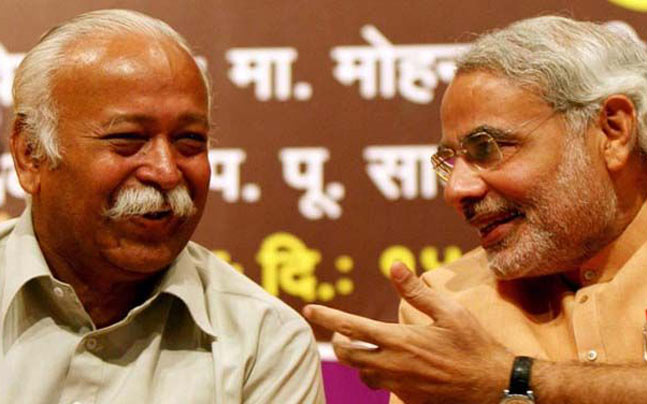
    Bhagwat, who succeeded K S Sudarshan as the RSS chief in March 2009, has been junior to Modi in the Sangh Pariwar hierarchy and seen as the one unable to tame the man who now helms India from 7, Race Course Road in New Delhi. On the contrary, Bhagwat is seen as a Modi-acolyte and many of the RSS subsidiaries—the Vishwa Hindu Parishad (VHP), the Bharatiya Mazdoor Sangh (BMS), Swadeshi Jagaran Manch (SJM) etc.—have, from time to time, raised the standard of rebellion ostensibly against the Government’s failures to deliver on the promises and also, indirectly, against the Modi-Bhagwat stranglehold that may pull down the entire edifice built since the founding of the RSS in 1925. RSS is the “socio-cultural-spiritual” parent of the BJP, its political front, which is part of dozens of organizations having Hindutva ideological affinities with the Grand Master across India.

    In 2014, when Narendra Modi, 64, became India’s 16th Prime Minister, he, and many, believed and boasted that he would continue to helm the affairs at least until 2024, what with the decimated main Opposition party, the Indian National Congress, touching the nadir of its entire political existence since 1885. Managing to win a measly 44 seats, out of 543, in the Lok Sabha (Lower House of Parliament), the corruption-accused, Jurassic Era’s Grand Old Party (GOP) had become laughing stock of the nation. Modi was the flavor of the season, the Knight-in-Shining-Armor, the Messiah…the very God Who Could Do No Wrong…

    The ‘belief’ that the right-wing Bharatiya Janata Party (BJP), led by a ‘youthful’ and energetic Modi as the fulcrum of National Democratic Alliance (NDA), had finally arrived as an effective alternative to the Congress was further buttressed with the BJP winning a series of State Assembly elections across India, replacing the Congress everywhere. Indeed, a gloating Modi himself has been talking about how to make India celebrate the Diamond Jubilee of her Independence in 2022 and, hinting, how he will continue to helm India until 2024!

    Within three years, however, the BJP is huffing and puffing, tired of its own baggage of successes, whereas the much pilloried and humbled Congress is seen as rejuvenating like a fallen Arnold ‘Terminator’ Schwarzenegger being revived by his emergency batteries. If in the early 1960s, India faced the huge question mark, ‘Who, after Nehru?’, and in the 1970s, ‘Who, after Indira Gandhi? the year 2018 has arrived with ‘Who, after Modi?’.

    For, all these three towering leaders, suffering with narcissism, would leave no second line of leaders who could replace or succeed them—but Mother India has been fecund enough to nurture a successor silently, even if via transitional leaders until the NextGen was crowned. So, Lal Bahadur Shastri succeeded Nehru while Indira was by her son Rajiv Gandhi. The Mother could, therefore, be trusted to be silently nurturing a successor to Modi as well! Next year, 2019, he will face the Lok Sabha election with a heavy baggage from the past; and his possible successor, if he loses the elections, is not visible yet!

    But why has this huge question mark emerged in the last few weeks? Has the Modi rhetoric run its course? Has his mystic and charisma seen a steep and sudden decline? Since 2014, he strode like a Colossus across not only India’s political firmament but also globally. He scripted many foreign policy firsts and successes, as millions of Indians looked with amazement at this fashion-designed Prime Minister making India proud both on national and global fronts. What has changed now, and so spectacularly?

    In November 2014, RSS chief Mohan Bhagwat compared Modi with the Mahabharata’s Abhimanyu, Arjuna’s valiant son who knew how to enter a Chakravyuha (the enemy’s phalanx in concentric circles with openings only at opposite sides) but not how to come out of it, and was, therefore, slain by seven Kaurava warriors. Modi, buffeted as he is now encircled by seven enemies, may have stepped into Abhimanyu’s shoes!

    His first enemy is, of course, the Indian economy. Only on January 5, the Central Statistical Organization (CSO) said the country’s growth in economy in 2017-18 slowed down to a four-year low of 6.5%, dragged down by sluggish manufacturing and farm sectors and the impact of the rollout of demonetization and Goods and Services Tax (GST) in the last one year. Clearly, an overall job-loss, farm distress shown by farmers’ suicides, youth unrest and the like have dragged down the people’s confidence in the government’s ability to deliver on its promises. Few, if any, are interested in what Moody’s says about Modi.

    A year on, the double whammy of demonetization and GST have begun to impact politics. In Modi’s home state of Gujarat, the recent Assembly elections left the BJP with, at best, a pyrrhic victory with the saffron party winning only 99 of the 182 seats, lowest since 1995. This steep decline in Modi’s image emboldened the BJP’s own leaders to virtually blackmail the party leadership and extract their pound of flesh! Clearly, the Modi charisma began to fade, first of all, in his own state. Successful event managements, circus-like extravaganzas, and sound-and-light razzmatazz, all at the expense of the exchequer, cannot replace good politics!

    His second enemy is India’s upwardly mobile and irreverent youth, nearly 100 million of them unemployed due to a variety of reasons. While battling for Prime Ministership in 2013-2014, Modi never tired of talking about this ‘demographic dividend’, what with 65% of the voters being in the 18-35-year age-group. He also drafted a series of plans for the youth, gave them dreams to live for and support him. But they remained pipedreams, and turned into nightmares for many. Empty promises disillusioned them, triggered youth rebellion, giving rise to the emergence of a formidable trio of Young Turks—Hardik Patel, Alpesh Thakore and Jignesh Mewani—in Modi’s own Gujarat. Together, they left the BJP with its bloodiest nose in 22 years and produced green-shoots in a Congress that lay comatose for a long time.

    With these three youths, the caste-centric politics of the 1990s has returned to India. This return to India’s basic, chaotic politics is the third enemy of Modi, who seemed to have replaced the Mandal-Kamandal era of the BJP with his own brand of vikas-centric politics that sought to stress on socio-economic development. Due to lack of resources to fund development, his boastful brand of politics collapsed, first of all, in his home state of Gujarat in the December 2017 Assembly elections. The assertive-aspirational politics of the caste-conscious youth, soon, found expression in neighboring BJP-ruled Maharashtra where the Dalits (Suppressed Castes) raised a banner of rebellion against the Upper Castes, they saw as represented by the BJP’s Chief Minister Devendra Fadanavis.

    Modi’s fourth enemy is the coming Assembly elections in eight states in 2018. Three of them are large states—Rajasthan, Madhya Pradesh and Chhattisgarh—and are BJP-ruled for years where the saffron party is expected to face a strong anti-incumbency and reverses. This is due to the BJP evolving itself as an ‘alternative’ to the Congress, i.e. as corrupt! The fourth state, Karnataka, hub of India’s IT revolution, also has little chances of going the BJP way. A caste-based social-re-engineering is now at work across the states and the “vote-banks” of yore are disintegrating everywhere, in the great socio-economic churning current in the cauldron called Modern India. Even the Muslims no longer remain a solid ‘vote-bank” as Muslim women saw in the ‘enemy’ BJP their emancipators, thanks to its support to them on the divorce issue, as evidenced in Gujarat by their large vote for the saffron party!

    With these new emerging trends reshaping Indian politics, Modi’s fifth enemy is the likely revival of the erstwhile United Progressive Alliance (UPA), led by a revivified Congress under a combative Rahul Gandhi. If the BJP fails to win back the major states this year, and with one state slipping after another from the saffron fold, the NDA itself may come apart. Some of its current regional partners may even join the UPA bandwagon. Only a few months ago, the UPA seemed to be disintegrating what with Bihar’s Nitish Kumar joining the NDA; no longer. India’s politics has entered its most mercurial state and equations change quickly.

    His sixth enemy is the overall disillusionment among the people with the political class as a whole. Modi came to power promising Achche Din (Better Days Ahead) and punishment to the corrupt UPA leaders but each one of them have been acquitted by the courts, and they are back hounding and howling at him. The general apathy of the voters for politicians of all hues, including Modi, was demonstrated by over 500,000 people who voted for the “None-Of-The-Above” (NOTA) option in Gujarat. This option, introduced by the Election Commission for the first time in an Assembly election, impacted the outcome in nearly 30 Assembly seats, out of 182, in Gujarat. It harmed both the BJP and the Congress as the number of NOTA votes were, in those 30 constituencies, more than the winning or losing margins.

    And his seventh enemy is from within: the disgruntled Sangh Pariwar (Saffron Brotherhood) and its many constituents. In 2014, the entire Pariwar, with over 25 million workers, had helped Modi climb the steps of Raisina Hills in New Delhi and take oath as the Prime Minister of an aspirational India. Three years down the line, with few results to show on the ground, his promises galore remain hollow, his bravado seems melting away, his 56-inch chest losing muscle. His recent election speeches in Gujarat showed him as a tired titan. Promising a better future, he emerged from Bharat but surrendered to India.

    But it is not Modi, the Abhimanyu, who alone may lose out. His “Krishna”, Mohan Bhagwat, having travelled with Modi so far and shielded him unconditionally, may also face heat from within the RSS rank-and-file for putting all the Hindutva eggs in Modi’s Nehru jacket.

    Their relationship, to say the list, is interesting. Bhagwat, who succeeded K S Sudarshan as the RSS chief in March 2009, has been junior to Modi in the Sangh Pariwar hierarchy and seen as the one unable to tame the man who now helms India from 7, Race Course Road in New Delhi. On the contrary, Bhagwat is seen as a Modi-acolyte and many of the RSS subsidiaries—the Vishwa Hindu Parishad (VHP), the Bharatiya Mazdoor Sangh (BMS), Swadeshi Jagaran Manch (SJM) etc—have, from time to time, raised the standard of rebellion ostensibly against the Government’s failures to deliver on the promises and also, indirectly, against the Modi-Bhagwat stranglehold that may pull down the entire edifice built since the founding of the RSS in 1925. RSS is the “socio-cultural-spiritual” parent of the BJP, its political front, which is part of dozens of organizations having Hindutva ideological affinities with the Grand Master across India.

    In a way, Modi himself may have undermined Bhagwat’s authority. In TV interviews, Modi had boasted in 2014 about his relations with Mohan’s father, Madhukar Rao, thus indirectly hinting that he (Modi) was senior to the Bhagwat Junior in the RSS hierarchy!

    It is this internal dynamics of the RSS that helped bring Modi to power in 2014. And it is this internal dynamics of the RSS that may also defeat him at the hustings in 2019, what with most of the RSS workers remaining aloof from elections, as in Gujarat recently.

    In 2014, the RSS had Modi to support. Who will it support in 2019?

     (The author is a journalist since 1983 and has worked with newspapers, news agencies and magazines in English and Hindi languages. He has contributed articles on diverse subjects. Currently, he is working as Consulting Editor with Business Line, the business daily of The Hindu Group of Publications in India. He is based in Ahmedabad in Gujarat, India. He can be reached at virendra.pandit@gmail.com)

  • Hindu Americans welcome Jewish Federation offering free yoga in Massachusetts for “Peace of Mind”

    Hindu Americans welcome Jewish Federation offering free yoga in Massachusetts for “Peace of Mind”

    NEW YORK (TIP): Jewish Federation of the Berkshires is offering free Chair Yoga to the community “for Flexibility, Mobility and Peace of Mind” in Pittsfield (Massachusetts) on January 8.

    Announcement says: “Yoga is good for ALL BODIES.” Linda Novick, professional level Kripalu Yoga teacher, is the instructor. Her approach to yoga “encourages everyone to listen and love their body”. Yoga instruction will be followed by a kosher hot lunch.

    Welcoming the Jewish Federation of the Berkshires for offering free yoga, distinguished Hindu statesman Rajan Zed, in a statement in Nevada Jan 6, urged all such community groups in USA to launch multi-beneficial yoga programs, including offering some free classes to low income enthusiasts.

    Yoga, referred as “a living fossil”, was a mental and physical discipline, for everybody to share and benefit from, whose traces went back to around 2,000 BCE to Indus Valley civilization, Zed, who is President of Universal Society of Hinduism, noted.

    Rajan Zed further said that yoga, although introduced and nourished by Hinduism, was a world heritage and liberation powerhouse to be utilized by all. According to Patanjali who codified it in Yoga Sutra, yoga was a methodical effort to attain perfection, through the control of the different elements of human nature, physical and psychical.

    According to US National Institutes of Health, yoga may help one to feel more relaxed, be more flexible, improve posture, breathe deeply, and get rid of stress. According to “2016 Yoga in America Study”, about 37 million Americans (which included many celebrities) now practice yoga; and yoga is strongly correlated with having a positive self image.  Yoga was the repository of something basic in the human soul and psyche, Zed added.

    “Guided by our Jewish values, the Jewish Federation of the Berkshires brings together the Berkshire Jewish community”. Judy Usow is the President

  • Indian American Dr. Sukant Misra is the new Vice Provost for International Affairs at Texas Tech University

    Indian American Dr. Sukant Misra is the new Vice Provost for International Affairs at Texas Tech University

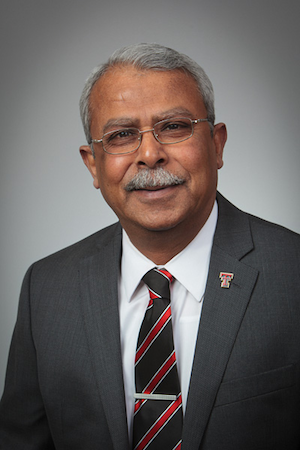
    LUBBOCK, TX (TIP): Indian American educator Dr. Sukanth Misra has been appointed as the new Vice Provost for the Office of International Affairs at Texas Tech University.

    Misra has replaced Ambassador Tibor Nagy, who was serving as the Vice Provost since 2003. Misra began his new role on January 1, 2018.

    “I am humbled and deeply honored to be selected to serve as the Vice Provost for International Affairs and provide leadership of the international mission for this great university,” Misra said, Texas Tech University reported. “I have been with Texas Tech University for more than 23 years, and it has been thoroughly gratifying. One of the university’s goals is to comprehensively internationalize our campus, and great strides have been made over the last few years toward this vision.”

    Misra said his priorities in the new position include the internationalization of the Texas Tech student body and the curricula to prepare productive citizens for the global community, the globalization of the university’s research enterprise to empower faculty to innovate and the universalization of outreach efforts to promote long-term, sustainable development locally as well as in other countries.

    Lawrence Schovanac, the Texas Tech president said, “Sukant Misra has done an excellent job in enhancing the recruitment and support of international students, as well as in the global branding of the university,” he said. “Under Dr. Misra’s leadership, I am confident the Office of International Affairs will continue to advance the globalization of Texas Tech, and provide excellent service and support to our international community on campus and in Lubbock.”

    Misra praised Nagy for his contributions to Texas Tech’s past internationalization accomplishments during his 14-year stint with the OIA.

    “I have worked with Ambassador Nagy since he joined Texas Tech University, and over the years, we have developed a bond that is founded on both professional and personal levels,” Misra said. “He has been an invaluable mentor and friend to me and was instrumental in making internationalization a priority for the university.”

    Prior to his current position, Misra has served as an Associate Vice Provost at Texas Tech University. He has also served as the Associate Dean for Research for the College of Agricultural Sciences and Natural Resources from 2002 to 2014. Before joining the Texas Tech University, he was a researcher at the University of Georgia for three years. He has served in several local, state, regional, and national organizations involved in the advancement of higher education.

    Misra completed his bachelor’s and master’s degrees in Analytical and Applied Economics from Utkal University in India. He then completed his doctorate in Agricultural Economics from Mississippi State University.

    A recipient of more than $2.2 million in external funding as a principal and co-principal investigator, Misra has published more than 100 peer-reviewed journal articles, technical and invited papers, and book chapters.


  • Indian IT Professionals in thousands Stare at ‘Self-Deportation’ in view of   Trump’s ‘no extension to H-1B visa’ proposal

    Indian IT Professionals in thousands Stare at ‘Self-Deportation’ in view of Trump’s ‘no extension to H-1B visa’ proposal

    Lawmakers, professionals criticize Proposal as harmful for America

    The H1B visa is a non-immigrant visa that allows US companies to employ foreign workers in specialty occupations that require theoretical or technical expertise. It is typically issued for three to six years to employers to hire a foreign worker. But H-1B holders who have begun the green card process can often renew their work visas indefinitely.

    HIGHLIGHTS

    • H-1B visa issued for 3-6 years to employers to hire a foreign worker
    • US move could affect hundreds of thousands of foreign workers
    • Proposal a part of Donald Trump’s “Buy American, Hire American” initiative

    WASHINGTON (TIP): US is considering new regulations aimed at preventing the extension of H-1B visas, predominantly used by Indian IT professionals, as part of president Donald Trump’s “Buy American, Hire American” initiative, a media report has said.

    The move could directly stop hundreds of thousands of foreign workers from keeping their H-1B visas while their green card applications are pending.

    The proposal, which is being shared between the Department of Homeland Security Department (DHS) heads, is part of President Trump’s “Buy American, Hire American” initiative promised during the 2016 campaign, US-based news agency McClatchy’s DC Bureau reported.

    It aims to impose new restrictions to prevent abuse and misuse of H-1B visas, besides ending the provision of granting extension for those who already have a green card.

    “The act currently allows the administration to extend the H-1B visas for thousands of immigrants, predominantly Indian immigrants, beyond the allowed two three-year terms if a green card is pending,” the report said.

    “The idea is to create a sort of ‘self- deportation’ of hundreds of thousands of Indian tech workers in the United States to open up those jobs for Americans,” it said, quoting a source briefed by Homeland Security officials.

    “The agency is considering a number of policy and regulatory changes to carry out the President’s Buy American, Hire American Executive Order, including a thorough review of employment-based visa programs,” said Jonathan Withington, chief of media relations for United States Citizenship and Immigration Services (USCIS).

    The H1B visa is a non-immigrant visa that allows US companies to employ foreign workers in specialty occupations that require theoretical or technical expertise.

    It is typically issued for three to six years to employers to hire a foreign worker. But H-1B holders who have begun the green card process can often renew their work visas indefinitely.

    The technology companies depend on it to hire tens of thousands of employees each year from countries like India and China.

    The proposed changes would have a dramatic effect particularly on Indian visa holders considering more than half of all H-1B visas have been awarded to Indian nationals, the report said, quoting the Pew Research Center report.

    “This would be a major catastrophic development as many people have been waiting in line for green cards for over a decade, have US citizen children, own a home,” said Leon Fresco, who served as a deputy assistant attorney general for the Justice Department in the Obama administration who now represent H-1B workers.

    Fresco estimates more than 1 million H1-B visa holders in the country are waiting for green cards, many of whom are from India and have been waiting for more than a decade.

    Software body Nasscom has flagged its concerns over visa-related issues and has taken it up with Senators, Congressmen and the administration. “That formulation has conditions which are extremely onerous and makes it very difficult for people to not just get the visa but also on how they can be used,” R Chandrashekhar, President, National Association for Software and Services Companies (Nasscom) told PTI.

    Influential Democratic Congresswoman Tulsi Gabbard said: “Imposing these draconian restrictions on H-1B visa holders will tear families apart, drain our society of talent and expertise, and damage our relationship with an important partner, India.

    “This proposal could lead to the deportation of an estimated 500,000 to 750,000 Indian H-1B visa holders, many of whom are small business owners and job creators who are helping to build and strengthen our US economy. his brain drain will stifle innovation and decrease our ability to compete in the global 21st century economy,” Gabbard said.

    In a statement the Hindu American Foundation (HAF) sounded alarm over the Trump administration’s proposal to deny extensions of H-1B visas to green card applicants and leaving them with no choice but to return to the country of origin or be deported.

    “It’s a baffling calculation. How would deporting hundreds of thousands of skilled workers, the very backbone of our STEM industries, in any way advance an ‘America First’ agenda?” Shukla asked.

    Indian-American Congressman Raja Krishnamoorthi said while priority must continue to be improving advanced training for domestic workforce, ending H-1B visa extensions would kneecap American economy and encourage companies to further offshore jobs, instead of making those investments here.

    “I hope the administration immediately rejects this proposal,” he said.

    Congressman Ro Khanna said the proposal was “anti- immigrant”.

    “My parents came here on green cards. So did @sundarpichai, @elonmusk, @satyanadella. Trump is saying to immigrants and their kids we don’t have a place in America. It’s not just wrong. It’s dumb. Mr President, would America really be greater without us?” he asked in a tweet.

    According to Aman Kapoor of Immigration Voice, H-1B extension change would be just wrong at every level.

    “It will be a catastrophe of epic proportion for Indian- American community leading to mass exodus of close to 1.5 million people (around 750,000 primary applicants on H-1B visa and another 750,000+ spouses and children),” he said.

    Tsion Chudnovsky, an immigration and business lawyer in California said: “Given the dramatic effect this proposal could have on the Technology industry, it doesn’t seem likely it could garner enough support to be enacted as stated.”


  • Indian Girl Sherin Mathews Died of “Homicidal Violence”, Reveals Autopsy

    Indian Girl Sherin Mathews Died of “Homicidal Violence”, Reveals Autopsy

    DALLAS, TX (TIP): Sherin Mathews, the 3-year-old Indian girl whose body was found in a culvert in Dallas, died of “homicidal violence”, according to her autopsy report. According to the police official who spoke to the WFAA TV station, an exact cause of death could not be determined due to extensive decomposition.

    Sherin Mathews was reported missing by her Indian-American foster father on October 7, who said he had left her outside their house for not drinking her milk. Police found her body on October 22 in a culvert about 1 km from her home in suburban Dallas during a massive search for the toddler.

    Wesley Mathews, her foster father, later changed his statement and said that she died after choking while he was forcing her to drink her milk.

    The police later reported that Wesley Mathews bundled her “stiff and cold” body in the back of his car along with a bag of trash and hid the corpse in the culvert.

    A doctor testified before the court saying that Sherin showed signs of abuse, including a series of broken bones and injuries in various stages of healing.

    Wesley Mathews was arrested in October and has been charged with injury to a child, a first-degree felony punishable by up to life in prison, and is being held on a $1 million bond. He and his wife, Sini Mathews, have also lost all rights to see their biological daughter, who was put into foster care and later placed with a Houston family.

    Sherin Mathews was given a private burial, and the Dallas gravesite was later made public.


  • Indian American NJ Senator-Elect Vin Gopal joins fellow lawmakers and community in Fight Back against Trump Offshore Drilling Proposal

    Indian American NJ Senator-Elect Vin Gopal joins fellow lawmakers and community in Fight Back against Trump Offshore Drilling Proposal

    LONG BRANCH, NJ (TIP): NJ Senator-elect Vin Gopal, Assemblyman Eric Houghtaling and Assemblywoman Joann Downey were joined today, January 5, by Senator Menendez, Congressman Frank Pallone, Governor-Elect Phil Murphy and members of the shore community to speak out against a renewed effort by the Trump Administration to expand offshore drilling off the coast of New Jersey.

    Legislators Houghtaling, Downey, and Gopal spoke fervently against the proposal, citing high risk for catastrophe and the severe impact an oil spill could have on New Jersey’s $44 billion tourism industry.

    In August, Assembly Members Houghtaling and Downey submitted a letter in opposition of the plan to the Department of the Interior.

    “We’ve seen environmental disaster over and over again, and so many of these catastrophes are directly linked to decisions like,” said Houghtaling (D-Monmouth), “We have a multitude of energy options available. The federal government needs to invest in our infrastructure, not put our environment and our economy at risk with dangerous moves like this.”

    “The risks are clear and so is the public’s opposition,” said Downey (D-Monmouth), “Year after year we’re seeing oil spills around the country. As recent as April, thousands of gallons of oil were spilled in a once pristine bay of Alaska. Tens of thousands of New Jerseyans have voiced their opposition to this policy and the Trump Administration needs to heed those calls before they put us in danger.”

    “Not only could an oil spill be an environmental catastrophe, but, in New Jersey, it could be an economic catastrophe as well,” said Gopal (D-Monmouth), “Thousands of small business owners and their employees rely on New Jersey’s beaches and tourism for their livelihood. This is how they put food on the table and this policy puts that $44 billion industry at risk.”

  • Indian American NJ Senator-Elect Vin Gopal to host a Swearing-in Reception on Jan 9

    Indian American NJ Senator-Elect Vin Gopal to host a Swearing-in Reception on Jan 9

    Harinder Panaser, President, Global Haryana Chamber of Commerce, and CEO, Harman Wellness Professionals Inc characterized victories of Indian Americans, like Vin Gopal and Ravi Bhalla, who has been elected Mayor of Hoboken, as indicative of the growing involvement of Indian American community in the political process of the country, which, he said, is good for both the community and the country.

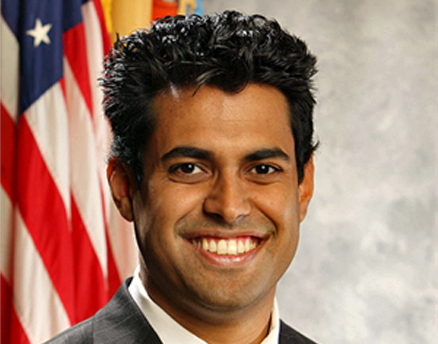
    ASBURY PARK, NJ (TIP): New Jersey Senator-Elect Vin Gopal will host a swearing-in reception on Tuesday, January 9th, 2017 in Asbury Park, in celebration of his official swearing-in as the newest State Senator representing New Jersey’s 11th District.

    Gopal became the first Democrat in 30 years to win the 11th District seat and at 32 years old, will be the youngest legislator in New Jersey’s upper-house. He will take the oath of office on the morning of January 9th at the State House in Trenton.

    “I know taking the oath of office will be one of the proudest moments of my life, and I cannot wait to get to work serving the people of Monmouth County,” Gopal said, “I look forward to personally thanking the supporters, elected officials, and community leaders who have stood by me every step of the way.”

    The Swearing-in reception on January 9, from 7 to 10 PM. at Wonder Bar, 1213 Ocean Avenue, Asbury Park, NJ 07712 will be attended by Assemblywoman Joann Downey, Assemblyman Eric Houghtaling, other local elected officials, and community members.

    Vin Gopal, the former Monmouth County Democratic chairman with deep roots in the party there, defeated longtime state Sen. Jennifer Beck in the state’s 11th legislative district.

    According to unofficial results from the Monmouth County Clerk’s Office, Gopal defeated Beck 28,750 votes to 25,108 votes.

    The Indian American community is really excited at the electoral victory of a large number of their members in the State of New Jersey.

    Harinder Panaser, President, Global Haryana Chamber of Commerce, and CEO, Harman Wellness Professionals Inc characterized victories of Indian Americans, like Vin Gopal and Ravi Bhalla, who has been elected Mayor of Hoboken, as indicative of the growing involvement of Indian American community in the political process of the country, which, he said, is good for both the community and the country.

    Vin is a lifelong Monmouth County resident, born in Neptune Township and raised in Freehold. After earning a Bachelor of Arts from Penn State, he spent years building his business from the ground up and now has 14 employees, based out of his Tinton Falls and Hazlet offices.

    “I’ve felt the crushing burden that over-regulation and red tape can have on a small business in Monmouth County’s local economy. It’s a waste of time and a waste of hard earned dollars. When I get to Trenton, the first thing I promise to do is cut the red-tape and work to get businesses growing and hiring again. Enough is enough.”

    A successful local small-business owner, Vin previously served on the Board of Directors for the now Monmouth County Chamber of Commerce where he chaired the Chamber’s Government Affairs Committee. He is a past-President of the Hazlet Township Business Owners Association and a past-Board member of Big Brothers Big Sisters of Monmouth County. Vin previously served as a volunteer EMT for the Colts Neck and Freehold First Aid Squads, responding to hundreds of 911 emergencies.

  • New Jersey Symphony Orchestra presents Handel’s Messiah

    New Jersey Symphony Orchestra presents Handel’s Messiah

                                                              By Mabel Pais

    Members of the New Jersey Symphony Orchestra with the Montclair State University Singers and a quartet of vocal soloists performed Handel’s Messiah December 15 and 17 in Princeton and Newark, respectively.

    Music Director Xian Zhang conducts Monclair State University choir. Bass-baritone Michael Sumuel performs his solo piece.
    Photo / Fred Stucker.

    Music Director Xian Zhang conducted Handel’s masterwork—a Christmastime tradition in concert halls across the world.

    Soprano Erin Wall, mezzo-soprano Nancy Moultsby, tenor Miles Mykkanen and bass-baritone Michael Sumuel joined the Orchestra and choir.

    The Star-Ledger has praised the NJSO’s performances of the masterwork with the Montclair State University Singers, writing that the choir “sounded stunningly professional under the direction of Heather J. Buchanan” and praising the Orchestra for “an elegant, heartfelt performance … Together, orchestra, chorus, conductor and soloists brought out the work’s many shades, and delivered that one particular seasonal requirement, a rousing ‘Hallelujah.’”

    The Orchestra invited the audience to participate in the centuries-old tradition of standing at the beginning of the Messiah’s “Hallelujah Chorus.”

    (Mabel Pais is a freelance writer.  She writes on The Arts and Entertainment, Social Issues, Health and Wellness, and Spirituality)

  • Theater : SCI-FI SPECTACULAR

    Theater : SCI-FI SPECTACULAR

                                                                By Mabel Pais

    New Jersey Symphony Orchestra presents Sci-Fi Spectacular: Music from Star Wars, Star Trek and Beyond

    Star Trek: The Next Generation and the 4 feature films that followed, will be presented by The NJ Symphony Orchestra (NJSO), an out-of-this-world night of film music on January 6-7, 2018 in Newark and New Brunswick, New Jersey.

    Marina Sirtis, best known as counselor Deanna Troi on the television series, hosts.

    The audience will be transported and enthralled when the orchestra blasts off to music of memorable themes of Star Wars, Star Trek, The Day The Earth Stood Still, Close Encounters Of The Third Kind, E.T. the Extraterrestrial, 2001: A Space Odyssey and more.

    The music of composers like John Williams, Bernard Herrmann and others who have made great moments in science fiction come alive.

    The program features vocalist Kristen Plumley and the Paper Mill Playhouse Broadway Show Choir; Bob Bernhardt conducts.

    Marina Sirtis: Host
    Host of Sci-Fi Spectacular, Marina Sirtis. Sirtis stars as Deanna Troi in Star Trek
    Photo / NJ Symphony Orchestra

    Known to “Star Trek” fans the world over for her role as counselor Deanna Troi, English-born Marina Sirtis began her acting career as a member of a West Sussex repertory company at the Connaught Theater.

    Counselor Troi was one of the respected and trusted characters in “The Next Generation,” and Sirtis’ portrayal endeared her to fans through seven television seasons and four feature films.

    Beyond her live-action work, animation and gaming fans will recognize Sirtis’ voice from her roles in the fondly remembered Disney series “Gargoyles,” as well as “Adventure Time,” “Family Guy,” “Young Justice” and the hit “Mass Effect” gaming franchise.

    Sirtis can next be seen in the comedy series “Internity” and the feature film 5th Passenger.

    To learn more, visit www.marinasirtis.tv.

    Bob Bernhardt:  Conductor
    Sci-Fi Spectacular: Conducting with Light Saber (Jedi sword).
    Photo / NJ Symphony Orchestra

    With 31 years of experience as a music director, 35 years as a pops conductor and 33 years in the opera pit, Bob Bernhardt brings a unique perspective and ability each time he is on the podium.

    In 2015, Bernhardt was named principal pops conductor of the Grand Rapids Symphony.

    In the world of pops, he has worked with scores of stars from Broadway, rock & roll and the American Songbook, from Brian Stokes Mitchell and Kelli O’Hara to the Beach Boys and Wynonna to Jason Alexander and Megan Hilty.

    Kristen Plumley, vocalist

    Connecticut native Kristen Plumley enjoys singing everything from opera’s light lyric roles to oratorio to pops classics.

    She also greatly enjoys pops concerts, and her favorite is Sci-Fi Spectacular, which she has performed with the Cleveland, Indianapolis, Seattle, Baltimore, Edmonton and Ottawa symphonies. In 2011, Plumley performed in the North American premiere of Handel’s first opera, Almira, with opera mission in New York.

    More information is available at www.kristenplumley.com.

    Paper Mill Playhouse Broadway Show Choir

    The award-winning Paper Mill Playhouse Broadway Show Choir (Shayne Austin Miller, director) consists of 80 young performing artists ages 15–22. Over the past five years, the show choir has delighted more than 500,000 people across the region with their rousing renditions of Broadway, pop and classics.

    More information about the Paper Mill Playhouse Broadway Show Choir and their upcoming tour performance schedule is available at www.PaperMill.org/showchoir.

    NEW JERSEY SYMPHONY ORCHESTRA

    Named “a vital, artistically significant musical organization” by The Wall Street Journal, the New Jersey Symphony Orchestra embodies that vitality through its statewide presence and critically acclaimed performances, education partnerships and unparalleled access to music and the Orchestra’s superb musicians.

    Music Director Xian Zhang – a “dynamic podium presence”…The New York Times has praised for her “technical abilities, musicianship and maturity”—continues her acclaimed leadership of the NJSO. The Orchestra presents classical, pops and family programs, as well as outdoor summer concerts and special events. Embracing its legacy as a statewide orchestra, the NJSO, the resident orchestra of the New Jersey Performing Arts Center in Newark, regularly performs at Theaters around the State.

    To learn more about NJSO, visit www.njsymphony.org.

    NJSO Accents: Cosplay Contest

    NJSO Accent events include a cosplay contest for audience members who dress up as their favorite sci-fi movie characters, beginning one hour before each performance.

    Cosplay Competition—Sat, Jan 6 and Sun, Jan 7, one hour before the concert.

    Dress up as your favorite sci-fi movie character and beam yourself into our costume parade and contest.

    CONCERT PROGRAM

    Sci-Fi Spectacular: Music from Star Wars, Star Trek and Beyond

    Saturday, January 6, at 8 pm | NJPAC in Newark

    Sunday, January 7, at 3 pm | State Theatre New Jersey in New Brunswick

    Marina Sirtis, host

    Bob Bernhardt, conductor

    Kristen Plumley, vocalist

    Paper Mill Playhouse Broadway Show Choir | Shayne Austin Miller, director

    New Jersey Symphony Orchestra

    Additional information is available at www.njsymphony.org/scifi.

    Single tickets start at $20 and are available from the NJSO online at www.njsymphony.org, by phone at 1. 800.ALLEGRO (255.3476) or in person.

    The NJSO Patron Services office is located at 60 Park Place, 9th floor, in Newark; hours are Monday–Friday, 9 am to 5 pm, and concert Saturdays, 11 am to 5 pm.

    Tickets for the January 7 performance are also available from State Theatre New Jersey online at www.STNJ.org, by phone at 732. 246.SHOW (7469) or in person.

    (Mabel Pais is a freelance writer.  She writes on The Arts and Entertainment, Social Issues, Health and Wellness, and Spirituality)