Month: February 2018

  • Indian American pleads guilty to passport fraud

    Indian American pleads guilty to passport fraud

    Shivam Patel of Williamsburg, VA, did not disclose his foreign trips when he applied to join the army.

     An Indian American man, who was arrested last year for making false statements in his application to join the US Army and Air Force, has pleaded guilty to passport fraud and to making false statements.

    According to a press release issued by the US Justice Department, Shivam Patel from Williamsburg, Virginia, did not disclose his foreign trips when he applied to join the army and fraudulently applied for a new passport for concealing such foreign trips.

    According to court documents, Shivam Patel, 28, was working in China in the summer of 2016, when he flew to the Kingdom of Jordan, from where he was arrested, detained, and then returned to the United States. Patel is alleged to have told an undercover agent and a confidential source that he wanted to join a “Muslim army” and commit jihad.

    After returning to the United States, he applied to join the US Army and Air Force. When asked about his prior foreign travel as part of his applications, Patel did not disclose his trips to China or Jordan.

    After he was asked to show an Army recruiter his passport, which would have revealed his prior travel, he applied for a new passport, falsely claiming that he had accidentally thrown his old passport away. Special agents from the FBI recovered that passport, which documented his undisclosed travel, when they arrested him in July 2017.

    “Patel pleaded guilty to false statements and passport application fraud. He faces a maximum penalty of 15 years in prison. He will be sentenced on June 4. Actual sentences for federal crimes are typically less than the maximum penalties.

    A federal district court judge will determine any sentence after taking into account the US Sentencing Guidelines and other statutory factors,” said the Justice Department.

    Tracy Doherty-McCormick, Acting U.S. Attorney for the Eastern District of Virginia, Edward C. O’Callaghan, Acting Assistant Attorney General for National Security, and Martin Culbreth, Special Agent in Charge of the FBI’s Norfolk Field Office, made the announcement after US Magistrate Judge Lawrence Leonard accepted the plea.

    Assistant U.S. Attorney Andrew C. Bosse and Trial Attorney Justin Sher of the National Security Division’s Counterterrorism Section are prosecuting the case.

    Source : AB Wire


  • Indian Origin Man On Death Row For Drug Charges Wins Acquittal By Singapore’s Top Court

    Indian Origin Man On Death Row For Drug Charges Wins Acquittal By Singapore’s Top Court

    According to the judgement on February 12th , Gopu Jaya Raman successfully proved that he did not know that controlled drugs were hidden in the motorcycle he was riding.

    Singapore (TIP):An Indian origin Malaysian on death row in Singapore for possessing drugs has been acquitted by the country’ top court.

    According to the judgement on February 12th , Gopu Jaya Raman successfully proved that he did not know that controlled drugs were hidden in the motorcycle he was riding into Singapore.

    On March 24, 2014, Gopu was arrested after he entered Singapore through Woodlands Checkpoint on the north with three black bundles of diamorphine hidden in his motorcycle’s fender.

    Diamorphine, also known as Heroin, is an opioid most commonly used as a recreational drug for its euphoric effects.

    When immigration officers stopped him and found the drugs, he said he did not know the drugs were hidden in the motorcycle.

    Gopu also claimed the motorcycle was not his.

    Tay Yong Kwang, the sole dissenting judge in Monday’s judgement, noted that Gopu had trafficked drugs into Singapore on two other occasions before he was caught on March 24, 2014.

    He had been trying to repay a 4,000 Malaysian Ringgit loan.

    He was not convinced by Gopu’s reasons for entering Singapore or how he came to possess the motorcycle.

    He said Gopu’s admission to trafficking drugs into Singapore on the same motorcycle on two other occasions did not bolster his credibility.

    After the authorities found the drugs, they got Gopu’s help to try to nab others in the ring who might turn up to collect the drugs, the judgement stated. The operation, however, was called off when no one turned up.

    Authorities monitored his conversation with the man who had helped to get him the motorcycle.

    After listening to a number of exchanges, officers told Gopu to send a message, indicating that he had no knowledge of the drugs.

    In the judgement, Chief Justice Sundaresh Menon and Judge of Appeal Judith Prakash found that Gopu would have missed the drugs when he was checking for them, given the bundles’ “size and dark colour”.


  • Indian Origin Man Jailed For Threatening To Kill His Wife

    Indian Origin Man Jailed For Threatening To Kill His Wife

    Saying that Mr. Ramachandran was “totally incorrigible”, Community Court Judge Eddy Tham said it was really disturbing that the moment he came out from prison, he started terrorizing his family members.

    SINGAPORE (TIP):  An Indian origin man, who had threatened to kill his wife irrespective of the consequences, was  jailed on February 14th for over an year.

    Ramachandran Maniam, 48, will be spending more than one year and two months behind bars, after admitting to criminal intimidation by threatening to harm his estranged wife, reported The Straits Times.
    As he had committed the offence in breach of his remission order for an earlier conviction, he was sentenced today to an enhanced punishment of 372 days in jail on top of two months’ jail for criminal intimidation.

    Mr. Ramachandran was placed on the mandatory aftercare scheme from October 16-27 last year.

    He was housed at halfway house under the scheme for inmates released under the conditional remission system and deemed to be at higher risk of recidivism.

    The court heard that on October 19, Mr. Ramachandran went to look for his wife. He called out to his son, 21, in a garden near a public housing estate apartment block, and said he wanted to speak to his wife.

    When told that she was at work, he insisted on speaking to her and uttered, “I am going to beat your mother one good one and if I will go prison, I don’t mind”.

    In a separate incident on October 28, Mr Ramachandran was given time off to go out of the halfway house but had to return by 10pm. But he stayed away for more than 24 hours and returned only at 1.25am on October 30.

    Deputy Public Prosecutor Selene Yap said that by failing to remain indoors as required for an accumulative period of more than 24 hours, he had committed a serious breach of his mandatory aftercare conditions.

    Saying that Mr. Ramachandran was “totally incorrigible”, Community Court Judge Eddy Tham said it was really disturbing that the moment he came out from prison, he started terrorizing his family members.

    Mr. Ramachandran added that his divorce is ongoing and he wanted to spend time with his ailing 75-year-old father.


  • Indian Americans become Fellows of the American Academy of Microbiology

    Indian Americans become Fellows of the American Academy of Microbiology

    NEW YORK (TIP) : On Jan. 16, The American Academy of Microbiology announced it’s 2018 Fellows amongst which four are Indian Americansout of 96 , according to a press release.

    The Indian American Fellows are Ashok Chopra, Atin Datta, Rajeev Misra and Reeta Rao.

    Ashok Chopra is a professor at the University of Texas Medical Branch in the microbiology and immunology department.

    Atin Datta is a supervisory research microbiologist and branch chief for the Department of Health and Human Services since November 2006.

    Rajeev Misra is a microbial geneticist who studies how proteins, synthesized in the cytoplasm, are targeted to the bacterial outer membrane and is a professor at Arizona State University’s School of Life Sciences.

    Reeta Rao is an associate professor in biology and biotechnology at Worcester

    According to a press release, AAM Fellows are elected annually through a highly-selective, peer review process, based on their records of scientific achievement and original contributions that have advanced microbiology.

    There are over 2,400 Fellows representing all subspecialties of the microbial sciences and involved in basic and applied research, teaching, public health, industry and government service, according to a press release.


  • Thirty-Six Defendants Indicted For Alleged Roles In Transnational Criminal Organization Responsible For More Than $530 Million In Losses From Cybercrimes

    Thirty-Six Defendants Indicted For Alleged Roles In Transnational Criminal Organization Responsible For More Than $530 Million In Losses From Cybercrimes

    Law Enforcement Dismantles Forum Used to Victimize Millions in all 50 States and Worldwide in One of the Largest Cyberfraud Enterprises Ever Prosecuted by the Department of Justice

    LAS VEGAS, Nev. (TIP) – A federal indictment was unsealed on February 7th charging 36 individuals for their alleged roles in the Infraud Organization, an Internet-based cybercriminal enterprise engaged in the large-scale acquisition, sale, and dissemination of stolen identities, compromised debit and credit cards, personally identifiable information, financial and banking information, computer malware, and other contraband.

    Following the return of a nine-count superseding indictment by a Las Vegas, Nevada, grand jury alleging racketeering conspiracy and other crimes, federal, state, local, and international law enforcement authorities arrested 13 defendants from the United States and six countries: Australia, the United Kingdom, France, Italy, Kosovo and Serbia.

    Acting Assistant Attorney General John P. Cronan of the Justice Department’s Criminal Division, U.S. Attorney Dayle Elieson of the District of Nevada, and Acting Executive Associate Director Derek N. Benner of U.S. Immigration and Customs Enforcement’s Homeland Security Investigations (HSI) made the announcement.

    “Today’s indictment and arrests mark one of the largest cyberfraud enterprise prosecutions ever undertaken by the Department of Justice,” said Acting Assistant Attorney General Cronan.  “As alleged in the indictment, Infraud operated like a business to facilitate cyberfraud on a global scale.  Its members allegedly caused more than $530 million in actual losses to consumers, businesses, and financial institutions alike—and it is alleged that the losses they intended to cause amounted to more than $2.2 billion.  The Department of Justice refuses to allow these cybercriminals to use the perceived anonymity of the Internet as a shield for their crimes.  We are committed to working closely with our international counterparts to identify, investigate, and bring to justice the perpetrators of these crimes, wherever in the world they operate.”

    “The U.S. Attorney’s Office is steadfastly committed to protecting America’s national and economic security,” said U.S. Attorney Elieson. “Criminals cannot hide behind their computer screens. We are working vigilantly with American and international law enforcement partners to identify and disrupt transnational cybercrime organizations, such as the Infraud Organization.”

    “Criminal cyber organizations like Infraud threaten not just U.S. citizens but people in every corner of the globe,” said HSI Acting Executive Associate Director Benner. “The actions of computer hackers and identity thieves not only harm countless innocent Americans, but the threat they pose to our financial system and global commerce cannot be overstated.  The criminals involved in such schemes may think they can escape detection by hiding behind their computer screens here and overseas, but as this case shows, cyberspace is not a refuge from justice.  HSI will continue working with our law enforcement partners in this country and around the world to aggressively target cyber thieves to ensure the perpetrators face the full weight of the law.”

    According to the indictment, the Infraud Organization was created in October 2010 by Svyatoslav Bondarenko aka “Obnon,” aka “Rector,” aka “Helkern,” 34, of Ukraine, to promote and grow interest in the Infraud Organization as the premier destination for carding—purchasing retail items with counterfeit or stolen credit card information—on the Internet.  Under the slogan, “In Fraud We Trust,” the organization directed traffic and potential purchasers to the automated vending sites of its members, which served as online conduits to traffic in stolen means of identification, stolen financial and banking information, malware, and other illicit goods.  It also provided an escrow service to facilitate illicit digital currency transactions among its members and employed screening protocols that purported to ensure only high quality vendors of stolen cards, personally identifiable information, and other contraband were permitted to advertise to members.

    According to the indictment, Infraud members held defined roles within the organization’s hierarchy.  “Administrators” managed day-to-day operation of and strategic planning for the organization, approved and monitored membership, and meted out punishments and rewards to members.  “Super Moderators” oversaw and administered specific subject-matter areas within their expertise.  “Moderators” moderated one or two specific sub-forums within their areas of subject-matter expertise.  “Vendors” sold illicit products and services to Infraud members.  Finally, “VIP Members” and “Members” used the Infraud forum to gather information and to facilitate their criminal activities.  As of March 2017, there were 10,901 registered members of the Infraud Organization.

    During the course of its seven-year history, the Infraud Organization inflicted approximately $2.2 billion in intended losses, and more than $530 million in actual losses, on a wide swath of financial institutions, merchants, and private individuals, and would have continued to do so for the foreseeable future if left unchecked.

    The defendants indicted for their alleged roles in the Infraud Organization’s transnational racketeering conspiracy include:

    • Svyatoslav Bondarkeno of Ukraine;
    • Amjad Ali aka “Amjad Ali Chaudary,” aka “RedruMZ,” aka “Amjad Chaudary,” 35, of Pakistan;
    • Roland Patrick N’Djimbi Tchikaya aka “Darker,” aka “dark3r.cvv,” 37, of France;
    • Miroslav Kovacevic aka “Goldjunge,” 32, of Serbia;
    • Frederick Thomas aka “Mosto,” aka “1stunna,” aka “Bestssn,” 37, of Alabama;
    • Osama Abdelhamed aka “MrShrnofr,” aka “DrOsama,” aka “DrOsama1,” 27, of Egypt;
    • Besart Hoxha aka “Pizza,” 25, of Kosovo;
    • Raihan Ahmed aka “Chan,” aka “Cyber Hacker,” aka “Mae Tony,” aka “Tony,” 26, of Bangladesh;
    • Andrey Sergeevich Novak aka “Unicc,” aka “Faaxxx,” aka “Faxtrod” of the Russian Federation;
    • Valerian Chiochiu aka “Onassis,” aka “Flagler,” aka “Socrate,” aka “Eclessiastes,” 28, of Moldova;
    • John Doe #8 aka “Aimless88;”
    • Gennaro Fioretti aka “DannyLogort,” aka “Genny Fioretti,” 56, of Italy;
    • Edgar Rojas aka “Edgar Andres Viloria Rojas,” aka “Guapo,” aka “Guapo1988,” aka “Onlyshop,” 27, of Australia;
    • John Telusma aka “John Westley Telusma,” aka “Peterelliot,” aka “Pete,” aka “Pette,” 33, of Brooklyn, New York;
    • Rami Fawaz aka “Rami Imad Fawaz,” aka “Validshop,” aka “Th3d,” aka “Zatcher,” aka “Darkeyes,” 26, of Ivory Coast;
    • Muhammad Shiraz aka “Moviestar,” aka “Leslie” of Pakistan;
    • Jose Gamboa aka “Jose Gamboa-Soto,” aka “Rafael Garcia,” aka “Rafael101,” aka “Memberplex2006” aka “Knowledge,” 29, of Los Angeles, California;
    • Alexey Klimenko aka “Grandhost,” 34, of Ukraine;
    • Edward Lavoile aka “Eddie Lavoie,” aka “Skizo,” aka “Eddy Lavoile,” 29, of Canada;
    • Anthony Nnamdi Okeakpu aka “Aslike1,” aka “Aslike,” aka “Moneymafia,” aka “Shilonng,” 29, of the United Kingdom;
    • Pius Sushil Wilson aka “FDIC,” aka “TheRealGuru,” aka “TheRealGuruNYC,” aka “RealGuru,” aka “Po1son,” aka “1nfection,” aka “1nfected,” 31, of Flushing, New York;
    • Muhammad Khan aka “CoolJ2,” aka “CoolJ,” aka “Secureroot,” aka “Secureroot1,” aka “Secureroot2,” aka “Mohammed Khan,” 41, of Pakistan;
    • John Doe #7 aka “Muad’Dib;”
    • John Doe #1 aka “Carlitos,” aka “TonyMontana;”
    • David Jonathan Vargas aka “Cashmoneyinc,” aka “Avb,” aka “Poony,” aka “Renegade11,” aka “DvdSVrgs,” 33, of San Diego, California;
    • John Doe #2;
    • Marko Leopard aka “Leopardmk,” 28, of Macedonia;
    • John Doe #4 aka “Best4Best,” aka “Wazo,” aka “Modmod,” aka “Alone1,” aka“Shadow,” aka “Banderas,” aka “Banadoura;”
    • Liridon Musliu aka “Ccstore,” aka “Bowl,” aka “Hulk,” 26, of Kosovo;
    • John Doe #5 aka “Deputat,” aka “Zo0mer;”
    • Mena Mouries Abd El-Malak aka “Mina Morris,” aka “Source,” aka “Mena2341,” aka “MenaSex,” 34, of Egypt; and
    • John Doe #6 aka “Goldenshop,”aka “Malov.”

    In addition, Novak and “Goldenshop” are charged with three counts each and “Deputat” and Musliu one count each of possession of 15 or more counterfeit and unauthorized access devices.

    The superseding indictment is the result of an investigation conducted by the Las Vegas Office of Homeland Security Investigations; the Henderson, Nevada, Police Department; the Criminal Division’s Organized Crime and Gang Section; and the U.S. Attorney’s Office for the District of Nevada.

    The international operation to dismantle the Infraud Organization would have been impossible without the significant efforts and timely cooperation of the Justice Department’s Office of International Affairs and International Organized Crime Intelligence and Operations Center; Interpol Rome; Interpol Tirana; the Italian National Police (Postal and Communications Police); the Australian Federal Police  and the International Crime Cooperation Central Authority, Australian Government Attorney-General’s Department; the U.S. Diplomatic Security Service, Regional Security Office at U.S. Embassy Tirana, Albania; the City of London Police, DCPCU; the French Ministry of Justice, the Paris Prosecutor, L’Office Central de Lutte contre la Criminalité liée aux Technologies de l’Information et de la Communication; the judicial and police authorities of the Grand Duchy of Luxembourg; the Directorate for Organized Crime Investigation, Sector for Cyber Crime Investigation; the Basic Prosecution Office Pristina, Kosovo; and the Ministry of Justice of the Republic of Kosova, Department for International Legal Cooperation and the Special Prosecution Office for High-Tech Crime of the Republic of Serbia.

    The charges in the indictment are merely allegations, and the defendants are presumed innocent until proven guilty beyond a reasonable doubt in a court of law.

    Trial Attorneys Kelly Pearson and Chimaobim Nwachukwu of the Criminal Division’s Organized Crime and Gang Section and Assistant U.S. Attorney Chad W. McHenry of the District of Nevada are prosecuting the case.

    Press Release: DOJ


  • Russian passenger plane crashes outside Moscow

    Russian passenger plane crashes outside Moscow

    Saratov Airlines flight carrying 71 people crashes after take off from Domodedovo airport

    Moscow (TIP): More than 70 people died when a Russian passenger plane crashed shortly after take-off from Moscow’s Domodedovo airport on Sunday, the 11th of Feb, officials say.

    Saratov Airlines flight 6W703 was heading to Orsk, a city near Russia’s border with Kazakhstan, when it went down near the town of Argunovo, about 50 miles south-east of Moscow. Witnesses said the plane, an Antonov An-148 aircraft, was in flames as it fell from the sky.

    The plane was carrying 71 people – 65 passengers and six crew members. Emergency services officials told the Tass news agency there were no survivors. Wreckage from the plane was reported to be spread over a large area. It was unclear if there were any casualties among people on the ground at the crash site.

    Russia’s gazeta.ru website cited unnamed investigators as saying the pilot had reported a technical malfunction on board the plane and asked for clearance for an emergency landing at the nearby Zhukovsky International Airport. Officials have not confirmed the report. Other reports said one of the plane’s engines may have exploded before the crash.

    The flight-tracking site Flightradar24 tweeted that the seven-year-old passenger jet had gone into a steep descent of 1,000 metres (3,300ft) a minute five minutes after take-off, after which it had vanished from radars.

    The Russian president, Vladimir Putin, expressed his condolences to the families and friends of those who had died in the crash and tasked the government with setting up a special commission to investigate.

    A source from Russia’s emergency services told Interfax the 71 people on board had no chance of survival.

    Russian state television aired a video of the crash site, showing parts of the wreckage in the snow. Russia has experienced record snowfalls in recent days and visibility was reportedly poor.

    The Russian-made plane had been bought by Saratov from another Russian airline a year ago.

    Russian media reported that the emergency services had been unable to reach the crash site by road and rescue workers had walked to the scene on foot. Emergency services said in a statement that more than 150 rescue workers had been deployed.

    The Russian transport minister was on his way to the crash site, agencies reported. The transport ministry said several causes for the crash were being considered, including weather conditions and human error.

    The governor of the Orenburg region, which the plane was flying to, told Russian media more than 60 people on the plane were from the region.

    Local media website Ural56.ru in the Orenburg region showed footage of distressed relatives at Orsk airport, where the plane was due to land. Andrei Odintsov, the mayor of the city of Orsk, near Russia’s border with Kazakhstan, told Russian state television that six psychologists and four ambulances with medics are working with the relatives in the small airport.


  • Indian American Rockefeller Foundation president to visit India to help the government electrify villages across the country

    Indian American Rockefeller Foundation president to visit India to help the government electrify villages across the country

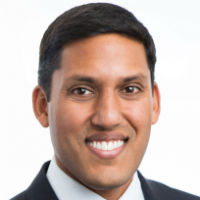
    Cambridge, US (TIP) : Rajiv J Shah, the Indian American president of the Rockefeller Foundation, will visit India on February 12th  as part of the US-based philanthropic organization’s efforts to help the government electrify villages across the country.

    The Rockefeller Foundation is one of America’s largest and most influential philanthropies which commits USD 200 million every year towards social and philanthropic causes globally, including India.

    “We have been working on what we think is the next big challenge to end poverty in India and that is bringing power and energy to rural communities that otherwise don’t have sufficient access to power,” Shah, 44, told PTI ahead of his maiden India visit in this capacity.

    Formerly the head of USAID under former US president Barack Obama, Shah is the first-ever Indian American to serve as the president of the foundation which played a key role in India’s green revolution in the 1960s.

    “We have an effort called Smart Power India that is helping to electrify villages across the country. That works with the government and private entrepreneurs who are bringing a solar mini grids and other new technologies to help families move themselves out of poverty by using electricity,” he said.

    For several years, the foundation and its non-profit subsidiary Smart Power India have worked with a network of partners and private energy service companies to build rural mini-grids that serve off-grid populations for both domestic and productive uses.

    As of now, more than 130 mini-grids are energizing more than 5,000 enterprises in India’s most energy-starved states, transforming the lives of over 45,000 Indians.

    It’s the largest cohort of mini-grids in India and by some counts the world.

    He said the purpose of his India visit from February 12 to 15 is to review progress in the foundation’s effort in this regard and advance partnerships with the government and other funders to “ensure that we can work to really fulfil Prime Minister (Narendra) Modi’s vision to end energy poverty” in India.

    “And to make sure every single Indian family has access to power and electricity and therefore the ability to connect to a modern global economy,” Shah said.

    He is also planning to meet and work with new philanthropists across the country who would like to partner with the foundation to extend the reach of their own philanthropic effort.

    While in India, Shah will focus on engaging with the government, multilateral, corporate and philanthropists.

    The overarching theme of his visit will be to underline the power of partnerships and collaboration in helping achieve India’s development goals across various areas – from health, to energy access, to ‘Digital India’.

    His India visit will focus on ‘Power of Partnerships’.

    The Rockefeller Foundation has had a tremendous history in India for many years working to improve the lives of vulnerable children and families, he said.

    “We were a big part in helping India achieve green revolution that helped to dramatically improve food production and save millions of people from hunger and starvation many decades ago,” Shah said.

    During his four-day visit, he would travel to New Delhi, Bengaluru and Mumbai, and meet key government and political leaders and other significant philanthropists to discuss areas of interest such as energy, health, urban resilience and co- investment.

    He is scheduled to deliver a keynote address at the India Energy Access Summit where he will be making a couple of financial announcements in the energy sector and renewing the foundation’s commitment to working with the government’s Power for All agenda.

    Shah said the first thing that India needs to do is to set a very high ambition which also requires a very significant investment and participation from the government as well as the private sectors.

    “So, we hope that the State and the federal government in India will expand their approach to public-private partnerships and accelerate a collaboration with us and others in order to reach more families and difficult to reach areas with power, electricity,” he said.

    Observing that India is making tremendous progress in bringing new power generation to the grid system, Shah said while the foundation’s work right now focuses on community that don’t have access to the grid, he hopes India will expand its grid and transmission system more aggressively into lower income communities.

    India has dramatically increased the contribution of wind power and solar power to its total power sourcing, he said.

    In India last spring, wholesale solar power prices reached a record low, dropping 40 per cent in a year to only 2.62 Rs per kilowatt hour.

    Electricity can now be so abundant, low-cost and reliable that every person on the Earth should be able to access and consume as much as they need, he said, adding that it has also increased the use of coal.

    “When you look at it, the cost of renewable power, in India, the tariff is now for some of the solar projects three cents per kilowatt hour or lower. That is very, very inexpensive, very efficient power.

    “The technology curve in renewable energy is so powerful that in a few years it’s going to be so incredibly cheap and consistent and environmentally healthy to bring power to everybody that we really do believe that is the long-term and medium-term solution,” Shah said.

    India has the chance to be on the technology frontier in renewable energy and they have suggested they want to be for the last many years, he said.

    Renewable generation capacity has doubled over the last five years, with solar power capacity alone increasing more than 12-fold in that time.

    A decade ago India had only 12 gigawatt of renewable capacity, and last year that number rose to over 60 gigawatt.

    Overall, new capacity built under the 12th ‘Five Year Plan’ exceeded the target for the first time in decades – adding over 100 gigawatt of generation capacity against a goal of 89 gigawatt.

    This helped reduce India’s energy supply deficit so much that in 2017 India enjoyed an energy surplus for the first time.

    Source PTI

  • Indian Origin Student Commits Suicide At University In UAE

    Indian Origin Student Commits Suicide At University In UAE

    The Dubai Police said that the victim had jumped from the fifth floor of the building at the Murdoch University campus.

    DUBAI (TIP):  A 19-year-old Indian Origin boy has committed suicide by allegedly jumping from a building at a university campus in the UAE, a media report said today.

    Officials found the student lying in a pool of blood and pronounced him dead, Khaleej Times reported.

    The Dubai Police said that he had jumped from the fifth floor of the building at the Murdoch University campus.

    The identity of the victim was not revealed by the police.

    According to a friend of the student, he had come to the university with his father to pay his fees and told his father that he wanted to use the washroom. It was after this that he jumped from the building.

    “He was absolutely normal when he spoke to me last night before the incident,” the friend said, adding that he did not notice any signs of depression.

    The police are currently carrying out an investigation to ascertain the cause of his extreme step and ruled out any criminal motive behind the incident.

    In a statement, Murdoch University, Dubai said: “We wish to express our sincere condolences to family members, friends and colleagues.

    “We are working closely with the relevant authorities.

    The University is also providing counselling services to all students and staff”.


  • Fortis promoters Malvinder, Shivinder Singh resign from company’s board

    Fortis promoters Malvinder, Shivinder Singh resign from company’s board

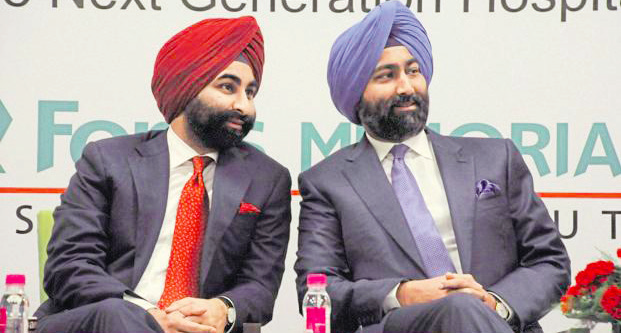
    NEW DELHI (TIP): Fortis Healthcare promoters Malvinder Mohan Singh and Shivinder Mohan Singh have resigned as directors from the company’s board following the Delhi high court order upholding the Rs 3,500 crore arbitral award in favour of Daiichi Sankyo.

    The Singh brothers have jointly tendered their resignation to the Board of Fortis Healthcare, which will discuss it in the meeting on February 13, the company said in a filing to the BSE.

    “Malvinder Mohan Singh, executive chairman and Shivinder Mohan Singh, non-executive vice-vhairman have tendered their resignation from the directorships of the company,” Fortis Healthcare said.

    The resignation is intended to free the organisation from any encumbrances that may be linked to the promoters, the letter said.

    “In light of the recent high court judgement upholding the plea of Daiichi Sankyo to enforce the arbitration award, we believe this is in the interest of propriety and good governance,” it said.

    The Delhi HC had on January 31 upheld an international arbitral award of Rs 3,500 crore passed in favour of Japanese pharma major Daiichi Sankyo, which has alleged that the former promoters of India’s Ranbaxy Laboratories had concealed information about proceedings against them by American food and drug department.

    A tribunal in Singapore had passed the verdict in favour of Daiichi, holding that the former Ranbaxy promoters and brothers, Malvinder Singh and Shivinder Singh, had concealed information that the Indian company was facing a probe by the US Food and Drug Administration and the Department of Justice, while selling its shares.

    With the resignation of the promoters, the board will be “better enabled and empowered to guide the future direction of the organisation without anyway being hampered by the Daiichi Sankyo judgement and our association at the Board,” the letter said.

    “The members of the board are also requested to look into all inter-group transactions and distance the promoter group from Fortis Healthcare Ltd in a manner that enables continuity of the operations of the organisation and deliver on its mission of enriching and saving lives,” the Singh brothers wrote in the letter.

    The high court order paved the way for enforcement of the 2016 arbitral award passed by the Singapore tribunal against the Singh brothers who had sold their shares in Ranbaxy to Daiichi in 2008 for Rs 9,576.1 crore. Sun Pharmaceuticals Ltd later acquired the company from Daiichi.

    Daiichi had approached the high court in 2016 to seek the enforcement of a Rs 2,562 crore Singapore arbitral award passed in April 2016, along with an additional claim of interest and lawyers’ fees incurred in connection with the proceedings.

    The tribunal’s award had come after the Japanese company invoked alleging that they concealed important information while selling Ranbaxy in 2008.

    Daiichi had entered into a settlement agreement with the US Department of Justice, agreeing to pay $500 million penalty to resolve potential, civil and criminal liability.

    The company had then sold its stake in Ranbaxy to Sun Pharmaceuticals for Rs 22,679 crore in 2015.

    Source: PTI

  • CCI slaps Rs 136-crore fine on Google

    CCI slaps Rs 136-crore fine on Google

    NEW DELHI (TIP): The Competition Commission on Thursday imposed a fine of Rs 136 crore on internet giant Google for unfair business practices in the Indian market for online search.

    After a detailed probe on the complaints filed in 2012, the regulator through a majority order said the penalty is being imposed on Google for “infringing anti-trust conduct”.

    On the CCI ruling, a Google spokesperson said the company is “reviewing the narrow concerns identified by the Commission and will assess our next steps”.

    Globally, this is one of the rare cases where Google has been penalised for unfair business ways, even as it has been under probe in several countries.

    It was alleged that Google is indulging in abuse of dominant position in the market for online search through practices leading to search bias and search manipulation, among others.

    For this case, the Competition Commission of India (CCI) considered markets in India for online general web search services and for online search advertising services as the relevant ones.

    The penalty amount of Rs 135.86 crore translates to 5 per cent of the company’s average total revenue generated from India operations from its different business segments for the financial years 2013, 2014 and 2015, according to the CCI order. The ruling has come on complaints filed by Matrimony.com and Consumer Unity & Trust Society (CUTS) — back in 2012 — against Google LLC, Google India Pvt Ltd and Google Ireland Ltd.

    Source: PTI

  • Bitcoin drops below $6,200 for first time in three months

    Bitcoin drops below $6,200 for first time in three months

    TOKYO (TIP): Bitcoin plunged 20 per cent to a three-month low, its latest sharp loss following a series of setbacks for the cryptocurrency that, with a collapse across global mainstream markets adding to the selling.

    The virtual currency fell to $6,190 for the first time since mid- November, according to Bloomberg News, and represents the latest hammering for a unit that saw a stratospheric 26-fold rise last year.

    Today’s collapse comes just six weeks after bitcoin hit a record high of $19,511, fuelled by a flood of speculators looking to make a quick buck, with warnings it could fall another 50 per cent. Since those heady days the cryptomarket — which includes dozens of other units — has been pounded by news of crackdowns by governments including in China, Russia and South Korea, one of the biggest markets for the sector. On Thursday, India said it would “take all measures to eliminate” cryptocurrencies’ use as part of a payment system and in funding illegitimate activities, while Japanese authorities raided a virtual currency exchange after it lost $530 million to hackers.

  • HARLEY-DAVIDSON RECALLS 1.75 LAKH BIKES IN US

    HARLEY-DAVIDSON RECALLS 1.75 LAKH BIKES IN US

    WASHINGTON (TIP): Harley-Davidson is recalling nearly 175,000 bikes in the US due to fears the brakes could fail, a government regulator said. If brake fluid is not replaced for a “prolonged period” beyond the recommended two-year schedule, deposits may form on internal components “reducing braking ability and increasing the risk of a crash,” the National Highway Traffic Safety Administration said.

    Source: AFP

  • SHARK SKIN INSPIRES DESIGN FOR BETTER DRONES, PLANES

    SHARK SKIN INSPIRES DESIGN FOR BETTER DRONES, PLANES

    BOSTON (TIP): Harvard scientists have developed a new structure inspired by shark skin that could improve the aerodynamic performance of planes, wind turbines, drones and cars.

    The study published in the Journal of the Royal Society Interface sheds light on a decades-old mystery about sharkskin.

    Sharks and airplanes are not actually all that different.

    Both are designed to efficiently move through fluid (water and air), using the shape of their bodies to generate lift and decrease drag, researchers said.

    The difference is that sharks have about a 400 million- year head start on the design process, they said.

    “The skin of sharks is covered by thousands and thousands of small scales, or denticles, which vary in shape and size around the body,” said George Lauder, professor at Harvard University in the US.

    “We know a lot about the structure of these denticles – which are very similar to human teeth – but the function has been debated,” said Lauder.

    Most research has focused on the drag reducing properties of denticles but Lauder and his team wondered if there was more to the story.

    “We asked, what if instead of mainly reducing drag, these particular shapes were actually better suited for increasing lift,” said Mehdi Saadat, a postdoctoral fellow at Harvard, who holds a joint appointment at the University of South Carolina.

    For inspiration, they turned to the shortfin mako, the fastest shark in the world. The mako’s denticles have three raised ridges, like a trident.

    Using micro-CT scanning, the team imaged and modelled the denticles in three dimensions. Next, they 3D printed the shapes on the surface of a wing with a curved aerodynamic cross-section, known as an airfoil.

    “Airfoils are a primary component of all aerial devices,” said August Domel, a PhD student at Harvard.

    “We wanted to test these structures on airfoils as a way of measuring their effect on lift and drag for applications in the design of various aerial devices such as drones, airplanes, and wind turbines,” said Domel.

    The researchers tested 20 different configurations of denticle sizes, rows and row positions on airfoils inside a water flow tank.

    They found that in addition to reducing drag, the denticle shaped structures significantly increased lift, acting as high powered, low-profile vortex generators.

    Cars and planes are equipped with these small, passive devices designed to alter the air flow over the surface of a moving object to make it more aerodynamic.

    Most vortex generators in the field today have a simple, blade-like design.

    Source: PTI

  • Microsoft enhances real-time translation for three Indian languages

    Microsoft enhances real-time translation for three Indian languages

    NEW DELHI (TIP): To make technology accessible and productive for all Indians, Microsoft on Feb 7 announced the integration of Artificial Intelligence (AI) and Deep Neural Networks (DNN) to improve real-time language translation for Hindi, Bengali and Tamil languages.

    This technology will help users in getting results that are more accurate and natural while surfing the Internet across any website on the Microsoft Edge browser, on Bing search, Bing Translator website, as well Microsoft Office 365 products like Word, Excel, PowerPoint, Outlook and Skype.

    “We are committed to empower every citizen and business in India by bringing the power of AI into their daily life and become a driving force for Digital India,” Sundar Srinivasan, General Manager-AI and Research at Microsoft India, said in a statement.

    “We have supported Indian languages in computing for over two decades and more recently have made significant strides on voice based access and machine translation across languages,” Srinivasan added.

    The translator is equipped with “TrueText”—a satellite DNN-based system that filters repetition, pauses, and indifferent words, enhancing the translation’s contextual appropriateness.

    DNN have the capability of encoding more granular concepts like gender (feminine, masculine, neutral), politeness level (slang, casual, written, formal) and type of word (verb, noun, adjective).

    The technology is also available for Android and iOS devices users through Microsoft Translator app which can recognise and translate languages from text, speech and even photos.

    For its partners and customers, Microsoft also provides APIs on Azure that they can use in their products.

    According to Microsoft, while facing complexities for translating Indian languages, especially of Dravidian and Aryan subdivisions and a dearth of digital content in Indian languages, DNN powered translation systems have shown at least a 20 per cent improvement in translation quality for all Indic languages which are currently supported.

    The company also supports text input in all 22 constitutionally recognised Indian languages across its products and Windows interface in 12 languages.

    Source: IANS

  • Prince Harry and Meghan Markle’s Pre-Valentine’s Day Plans Revealed

    Prince Harry and Meghan Markle’s Pre-Valentine’s Day Plans Revealed

    Valentine’s Day is just around the corner, and Prince Harry and Meghan Markle already have big plans for that week.

    Kensington Palace announced the couple will visit Edinburgh Feb. 13 for their first official joint visit to Scotland. It looks like the two already have a pretty packed itinerary.

    They will begin their day by visiting the Esplanade in front of the famous Edinburgh Castle. There, they will be greeted by the Royal Marines Scotland Band. Harry took over the role as Captain General of the Royal Marines from Prince Philip back in December. Then, the couple will watch the firing of the One O’clock Gun—a tradition that dates back to 1861.

    After witnessing the gun firing, the couple will head to Social Bite, a sandwich shop that donates its profits to social causes, such as homelessness. During their visit, Harry and Meghan will learn about the organization’s work, meet the staff and get a tour of the kitchen.

    At the end of their visit, the two lovebirds will attend a reception at the Palace of Holyroodhouse. There, they will celebrate the achievements of the country’s youth for Scotland’s Year of Young People 2018. The Year of Young People gives people 8 to 26 years old a platform to voice their opinions about social issues and showcase their talents.

    Kensington Palace did not reveal whether Harry and Meghan will stay in Scotland for Valentine’s Day. However, given his romantic proposal, we’re sure Harry has something special for his future bride. After all, Meghan is a big fan of the holiday. Even before her days as a future royal, the former Suits star celebrated the romantic occasion and encouraged others to do the same—even if it meant “being your own Valentine.”

    “I think you need to cook that beautiful dinner even when it’s just you, wear your favorite outfit, buy yourself some flowers, and celebrate the self love that often gets muddled when we focus on what we don’t have,” the actress wrote back in 2016 via her blog The Tig.

    This also won’t be the first time Meghan has traveled for the holiday. Back in 2016, the actress took a trip to New York to celebrate the occasion with her friends.

    “This Valentine’s Day I will be with friends, running amok through the streets of New York, likely imbibing some cocktail that’s oddly pink, and jumping over icy mounds in my new shoes through the salted snowy streets of the West Village,” she wrote via her blog.

  • NATALIE PORTMAN ON HOLLYWOOD SEXUAL ABUSE: ‘I HAVE 100 STORIES’

    NATALIE PORTMAN ON HOLLYWOOD SEXUAL ABUSE: ‘I HAVE 100 STORIES’

    Natalie Portman has revealed she has “100 stories” of sexual harassment in Hollywood – including receiving “rape fantasy fan mail” when she was just 13-yearsold.

    The Oscar-winning actress opened up about her experiences in an interview with Porter Magazine, explaining she had endured harassment and manipulation from studio executives throughout her career.

    And her problematic experiences began when she was a child star, with one so-called fan sending her a rape fantasy.

    At 18, a local radio station made a countdown for her birthday – “the date I would be legal to sleep with” – and endured movie reviewers commenting on her “budding breasts” in their articles. Because she didn’t want to do “kissing scenes” earlier in her career, Portman also explained she was perceived “prudish, conservative, nerdy, serious, in an attempt to feel like my body was safe and my voice would be listened to.”

    “I felt the need to cover my body and to inhibit my expression and my work in order to send my own message to the world that I’m someone worth of safety and respect,” she said.

    “The response to my expression, from small comments about my body to more threatening deliberate statements, served to control my behaviour through an environment of sexual terrorism.”

  • PARIS HILTON MAY HAVE THREE WEDDING DRESSES ON HER BIG DAY

    PARIS HILTON MAY HAVE THREE WEDDING DRESSES ON HER BIG DAY

    Just over a month after Paris Hilton announced she was engaged to Chris Zylka, fans want to know any and all details regarding her upcoming wedding day.

    As the businesswoman is finding out, planning a ceremony is easier said than done.

    “I’ve been traveling a lot since I got engaged so I’m going to have a meeting with my mom soon,” Paris revealed while celebrating the Rachel Zoe Fall 2018 Presentation with Belvedere Vodka. “We’ve been on the phone all the time just trying to figure out where we want to do it and the date. It’s a lot to plan.”

    She continued, “It’s so hard to plan something like this. My schedule is so crazy. I have friends and family all over the world and I really want it to be the perfect day. Hopefully somewhere close so that everyone can make it from my family.”

    One thing fashion lovers are curious to find out is which famous designer will have the honor of dressing Paris when she says “I Do.”

    According to the former Simple Life star, she hasn’t made a decision just yet. At the same time, one look likely won’t be enough.

    “I’m getting so many different calls from designers. Now I’m looking through all the designs and trying to pick which one but there are so many gorgeous choices. It’s hard to pick,”

  • EU doubts 2020 Brexit vision, sees longer goodbye

    EU doubts 2020 Brexit vision, sees longer goodbye

    BRUSSELS (TIP): Senior EU figures have told Reuters Britain will not be ready to make a full break from the European Union by the end of 2020 as Brexit transition plans foresee and the bloc is bracing for a much longer goodbye.

    The British government may be thinking on similar lines.

    Several diplomats and Brussels officials familiar with the discussions said a host of unresolved issues, including the Irish border, and British in-fighting over what kind of future trade relationship to ask for left many convinced the transition will end up being longer.

    Two senior EU officials said British negotiators appeared to be sounding out other governments’ attitudes to an extension to the 21- month transition currently on offer, although others said they believed British Prime Minister Theresa May still aims to have a free trade deal negotiated to start in January 2021.

    May has publicly denied looking for extra time. The EU says it is willing to be “flexible”, though France and other EU governments have been clear they oppose Britain staying in the half-way house for years, fearing the arrangement would become permanent and a basis for a messy, long-term compromise.

    As formal talks on the transition got under way in Brussels this week, EU diplomats said any extension would be agreed only after Britain formally leaves in March 2019, so that London would remain under pressure to conclude a trade deal or face its economy going off a “cliff edge” from 2021.

    ‘LEVERAGE’: “Nobody believes in transition until the end of 2020,” one person said. “But we don’t want to propose an extension straight away – that is a leverage we have over London in the talks.”

    They acknowledge May cannot say she might prolong a transition which, by binding London to EU rules and budgets without having a say on them, is deeply unpopular with Brexit supporters: “To ask for an extension now would be to upset the Brexiteers who want out swiftly and at any cost.” Michel Barnier, the EU chief negotiator who will brief the media on Friday on the outcome of this week’s talks, has said he believes Britain can negotiate a free trade deal in under three years. EU and British officials note that while an EU deal with, say, South Korea took seven years, Britain has regulations in line with the EU now, substantially cutting the need for change.

    Concluding a transition deal by March was supposed to be an easy part of Brexit negotiations after months spent last year cajoling London into committing to pay tens of billions of euros in outstanding commitments to Brussels and hammering out a deal to give lifetime rights to 3 million EU citizens in Britain. (Reuters)

  • No secret detention, torture camps in Lanka: President to Tamils

    No secret detention, torture camps in Lanka: President to Tamils

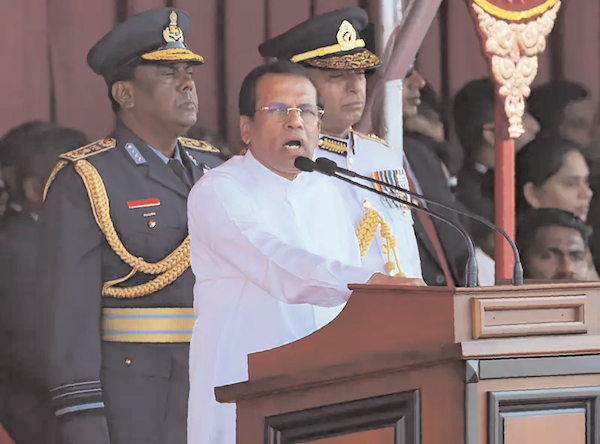
    COLOMBO (TIP): Sri Lankan President Maithripala Sirisena on Monday assured the minority Tamil community that his government was not running any secret detention and torture camps in the country.

    Sirisena said he was concerned about the people who are still missing years after the end of nearly three-decade-long brutal civil war.

    “I have several times met the relatives of the disappeared persons. I am concerned about the problem of their missing relatives,” Sirisena said while campaigning in the Tamil dominated Jaffna city for the February 10 local council election.

    “They have told me that the missing people are being held by the government in secret detention camps. I made inquiries and I tell them on behalf of the government that there are no such camps run by the government,” he said.

    Sirisena said his government had addressed the concerns of the Tamils by returning to them their land that had been held for military purposes since the mid 1980s.

    The Tamil and international rights groups had blamed the former Mahinda Rajapaksa government of running secret detention and torture camps.

    The relatives of the missing persons have regularly held public demonstrations, demanding urgent government attention to their concerns.

    The government has set up an Office of Missing Persons (OMP) which is yet to become operational.

    The OMP was one of the accountability mechanisms advocated in UN Human Rights Council resolutions on Sri Lanka since 2013.

    The UN panel called for the establishment of independent international court to probe alleged war crimes committed by both the Liberation Tigers of Tamil Eelam (LTTE) and the government troops during the last stages of the civil war which ended in 2009.

    According to the government estimates, around 20,000 people are still missing due to various conflicts including the 30-year-long separatist war with Lankan Tamils in the north and east which claimed the lives of at least 100,000 people.

    The LTTE, which led the separatist war for a separate Tamil homeland, was finally crushed by the Lankan military in 2009 with the death of its supremo Velupillai Prabhakaran.

    (PTI)

  • I was in a committed relationship, but for a year, I’ve been single: Priyanka

    I was in a committed relationship, but for a year, I’ve been single: Priyanka

    She has made a smooth transition from Bollywood to Hollywood, but it’s not just her work that’s keeping Priyanka Chopra in news these days. The Baywatch actor, who is all set to return to Hindi films, recently opened up on her relationship status.

    For the longest time, Priyanka has remained tight-lipped about her relationship status. Back in 2016, when she was asked about her marriage plans, she said in an interview, “When there is a ring on my finger, which is actually given to me, then Ill tell the world. Till then no one can claim me.”

    Cut to 2018, Priyanka in an interview to Filmfare admitted that she was in a very committed relationship until last year.

    “I’m a serial monogamist. I was in a very committed relationship. But since almost a year, I’ve been single. I’ve met a bunch of people. I’ve gone out with people. I let someone woo me but no. My mind hasn’t exploded, not yet!,” Priyanka told the magazine.

    The 35-year-old actor says that she is single after a long time and is getting a lot of attention. But she’s not in the right frame of find to get into a relation. “I’ve been single after a really really long time. I get a lot of attention. But I don’t know what to do with it. Of course, I like it. I’m a girl and I’m vain,” she added.

    On the work front, Priyanka has two Hollywood films in pipeline – A Kid Like Jake and Isn’t It Romantic?

  • I’M A HOARDER: KAREENA ON FASHION

    I’M A HOARDER: KAREENA ON FASHION

    Actor Kareena Kapoor said she would not want to make any changes to her wardrobe as she considers herself a “hoarder”.

    The actor, who returned to the ramp at the grand finale of the Lakme Fashion Week Summer/Resort 2018 yesterday, said it would not be possible for her to do away with the hobby of collecting things anytime soon.

    When asked if she would want to modify her personal collection, Kareena told the reporters, “I don’t think I’ll change anything in my wardrobe. I (still) hoard my jeans from the time, probably, when I was 20-21. I’m a hoarder. I like to collect things. So getting rid of something…

    That’s not happening any time soon.”

    The actor turned showstopper for Anamika Khanna’s “Nudes Reinvented” collection with Lakme Absolute. She added that with changing times actors have started paying more attention to how they dress.

    “Actors have become fashion conscious. I think it’s amazing. Well as long as you’re comfortable in what you wear. Once you’re comfortable with what you’re wearing, I think you’re automatically considered stylish and fashionable,” she said.

    Source: PTI

  • SALMAN CHOOSES WARINA HUSSAIN OVER ISABELLE KAIF FOR LOVERATRI

    SALMAN CHOOSES WARINA HUSSAIN OVER ISABELLE KAIF FOR LOVERATRI

    Salman Khan introduced Warina Hussain, as his brother-in-law Aayush Sharma’s leading lady in the film Loveratri, which is a Salman Khan production.

    According to a report in SpotBoyE, Salman wanted his rumoured ex-girlfriend, Katrina Kaif’s younger sister, Isabelle to play the lead.

    Isabelle has been trying to make her way into showbiz for a while now. She even moved to Mumbai, and Salman has been trying to make her feel settled.

    Back to Loveratri, Salman was keen on casting Isabelle opposite Aayush Sharma.

    Though Isabelle cleared the look test, she wasn’t able to give a satisfactory audition.

    According to the report, Isabelle was still not used to cameras, and she wasn’t comfortable in Hindi. A source said that the role required a strong fluency in Gujarati and Hindi.

    Meanwhile, Salman Khan and Katrina Kaif are riding high on the success of their film, Tiger Zinda Hai, which crossed Rs 300 crore in India. Salman is now working on Race 3, and Katrina is busy with Shah Rukh Khan’s Zero.

  • The Grounding of Air India

    The Grounding of Air India

    By Pulapre Balakrishnan

    “If Air India, nationalized in the 1950s, is now privatized, we would have come full circle. However, its case is more symbolic than substantive. Today there is no dearth of air-travel service providers in India, and the public airline reportedly has less than 15% market share. This is not the case in some other areas of the economy where public provision is fundamental. Take rail travel, which has no substitute. For it to serve its public purpose, the financial health of the Indian Railways is vital”.

    Having announced its decision to sell Air India, the government is making arrangements to do so. The move itself has come after multiple efforts by successive governments to resurrect the national airline. Though there has been news of it finally turning in an operating profit under a determined CEO, its debt, reportedly a staggering $8.5 billion, must weigh on the minds of a public drawn into a discussion of its future.

    The beginnings

    It is unfortunate that so iconic an entity, once feistily steered by J.R.D. Tata, has met this fate, but it is not uncommon in the history of India’s public sector. To understand this ending, we would have to start at the beginning, and that was with the transformation of the economy attempted in the 1950s. While there were monumental gaps in that attempt, there were also creative innovations, the most important being the public sector. By design, the public sector was to exist along with a private one resulting in what had been referred to as ‘the mixed economy’. To those hankering after institutional purity this was no more than a joke, an arrangement that had strengths of neither full-bodied American-style capitalism nor of out-and-out Soviet-era communism. Half a century later, the Soviet empire imploded and for a brief moment in 2008, the American one teetered on the brink, having been taken there by its vanguard, finance capital. We can now see that the mixed economy, combining the public and private sectors, is superior to one located at either extreme.

    So, if the public sector is a force for the good, why is it that we see Air India, and a section of the rest of the Indian public sector, in so unsound a financial condition? In its early days, the public sector had been quite healthy. This need hardly come as a surprise when we recognize the then Indian leadership’s motive for building one. Stripped of its somewhat ideological construction as straddling ‘the commanding heights’ of the economy, it was to have a central role in the quickening of the economy after 1947. Wrecked by two centuries of colonialism, India’s economy was moribund. The post-colonial Indian leadership had envisaged the public sector as the ship that would steer the economy out of the morass. And they were not wrong.

    Under Nehru, India’s economy rose spectacularly, and public investment was the principal engine of growth in that remarkable phase. Used as we are to Air India having to, at times, borrow even to finance its working capital, it may come as a surprise to know that it was still making profit into the second half of the 1960s. As for the public sector as a whole, during the Nehru era its savings had grown faster than that of the private corporate sector. Actually, to an extent India’s public sector had financed itself.

    Nehru’s speech at the inauguration of the second plant of the Hindustan Machine Tools (HMT) in Bangalore in 1962 is instructive in this regard. He congratulated the workers of HMT for having produced a second plant entirely out of the surplus of the first one. In one stroke, this conveys the rationale imagined for India’s public sector at the moment of its conception. It had been imagined as a source of investible funds for the public purpose. Underlying this was the belief that the private sector may not generate the necessary surplus, especially if the economy was not first quickened through public investment.

    It is noteworthy that in the heyday of the public sector, India’s private corporate sector had not done badly at all. Its investment rose at least much as that of the public, demonstrating that claims of its suppression due to the license-permit raj are exaggerated. It is true that some entities had been excluded by licensing. Licensing was necessary to ensure that resources were used in accordance with the plan for industrialization, but it was the case that private firms receiving licenses benefited greatly from the expansion of the market resulting from public investment. It is perhaps not known widely enough that in the Nehru era India grew faster than China.

    What went wrong?

     So, if the public sector had such a central role in lifting India out of a morass, why are we where we are today? Why is Air India awaiting the gavel? This has entirely to do with politics. Politics underwent a sea change in the second half of the 1960s and with this the de facto status of the public sector was to change. It became the handmaiden of Indira Gandhi’s attempt to gain absolute control. Performance no longer counted, and the public sector was now validated by its very existence. Intimation of the changed policy stance appears in the form of an entry in an ‘Economic Survey’ from the 1980s emphasizing that a large section of employees of the public sector were those absorbed from loss-making units. This was to be a point of no return as the public sector was no longer treated as the fulcrum of the economy but as a political instrument. It was not as if some successes, such as of Maruti Udyog, were not to come yet but the original sense of purpose was lost.

    If Air India, nationalized in the 1950s, is now privatized, we would have come full circle. However, its case is more symbolic than substantive. Today there is no dearth of air-travel service providers in India, and the public airline reportedly has less than 15% market share. This is not the case in some other areas of the economy where public provision is fundamental. Take rail travel, which has no substitute. For it to serve its public purpose, the financial health of the Indian Railways is vital.

    We have reason to believe that this is threatened. The present Minister for Railways has announced that the decay of the capital stock has contributed to reduced safety. In particular that the recent spate of derailments has to do with inadequate signaling equipment and damaged tracks. Scarcity of funds for proper maintenance of the capital stock is directly related to populism. The replacement in 2012 by his party supremo Mamata Banerjee of a Railways Minister who had raised passenger fares demonstrates the role of politics in running India’s public sector into the ground. Unlike the airlines, the railways are a life-line for a large number of Indians, and maintaining their good health is vital to their interest. It is naïve to imagine that the public sector can remain immune to inflation in the economy.

    Meanwhile, an effort to turn around the public sector has come from an unlikely section. The Communists of Kerala, prone to rationalizing inefficiency when it suits their politics, have now embarked upon a revival of the State’s public sector undertakings. This has met with success in a short time, with at least some loss-making units turning profitable. The parlous state of public finances may have forced this political party’s hand but the move itself shows maturity. Hopefully it will serve as a model for the rest of the country. The public sector would be a jewel when worn in the public interest. When it is not, as was the case with Air India, it turns into a millstone around our necks.

    (The author is Professor of Economics of Ashoka University and Senior Fellow of the IIM Kozhikode)


  • Building Strong Schools Through Community Engagement

    Building Strong Schools Through Community Engagement

    By Carmen Fariña

    “School buildings are neighborhood hubs and I encourage you to get involved, spend time at your local school and invest in the next generation of leaders”, says the author.

    With over 50 years of experience as an educator, I know that it truly takes a village to deliver for students. In each school community, that village is made up of teachers, administrators, support staff, outside partners and of course, families. While I often say it all comes down to what happens in the classroom, when it comes to building strong school communities, families are critical partners.

    That’s why, as Chancellor, I’ve made family engagement a priority for all of our schools, and there has been an unprecedented investment in families. Whether we’re bringing parents into the classroom to teach robotics, inviting parents to learn English alongside their children, or providing professional development to parent leaders, we’re constantly rolling out innovative programs that provide unique opportunities for parents to get involved in schools.

    My message to all parents, grandparents, family members or alumni reading this: school buildings are neighborhood hubs and I encourage you to get involved, spend time at your local school and invest in the next generation of leaders. From PA/PTA President to field trip chaperone to mentor, only when the village is engaged in school-based activities, events and decision-making, can we foster the development of a community deeply committed to the success of our students.

    And when we invest in families, they want to invest in us. That’s why we’ve increased our outreach to families. When I became Chancellor four years ago, requiring all schools to host at least one Parent-Teacher Conference at night and extending meeting time to accommodate working families were no-brainers. As a result of these efforts, the number of parents attending family conferences increased by 43 percent since 2013. We’ve also removed barriers for families that speak a language other than English at home by expanding our translation and interpretation services in over 200 languages.

    The opportunities in New York City are endless, and Career Day events, mentorship programs and beautification projects help us bring those opportunities into schools and classrooms, and expose our students to endless possibilities. For example, alumni from the Bronx spent a Saturday morning painting classrooms and planting a garden at the Longwood Preparatory Academy. This is one of many ways the millions of former New York City public school students are getting involved through P.S. Alumni.

    All across the world, our alumni are doing amazing things: starting businesses, investing in their communities and raising families. P.S. Alumni taps into the incredible network of mentors, volunteers and advocates ready to give back and help students find success.

    For alumni who are also parents of current public school students, it’s time to get involved. You know firsthand the important role that education plays throughout your life and why it’s so important to build a strong foundation. Whether you’re volunteering to do a read-aloud in your child’s class, or speaking at your alma mater for College Awareness Day, now is the time to share your experience and help shape the next class into the future leaders of this City and of the world.

    That work starts in your neighborhood and at your local school. The doors are always open.

    (The author is New York City Schools Chancellor)


  • Donald Trump Jr to visit India later this month

    Donald Trump Jr to visit India later this month

    NEW DELHI (TIP): Donald Trump Jr, Executive Vice President of the Trump Organization, is expected to visit India in late February to officially launch Trump Towers in Gurugram and Kolkata.

    Trump Jr is scheduled to visit four Indian cities to cover the sprawling Trump portfolio. He will also attend Global Business Summit in the national capital.

    Global realty brand Trump Towers is making its debut in North India through real estate firms M3M India and Tribeca Developers, which launched a luxury housing project last month in Gurugram entailing investments of Rs 1,200 crore.

    Commenting on his upcoming visit, Donald Trump Jr said: “India is such an incredible country and our brand has enjoyed tremendous success in the region for many years”.

    “This trip is a celebration of all we have achieved, including the launch of the Trump developments in Kolkata and Delhi which have been underway for many months. The teams in India have been working very hard to deliver residences that are truly second to none and I am looking forward to visiting these spectacular projects very soon,” Trump Jr said.