Month: February 2018

  • Coldest PyeongChang greets Winter athletes with warmth

    Coldest PyeongChang greets Winter athletes with warmth

    3000 athletes from 95 nations will march in the presence of several heads of States at the Opening, February 9

    By Prabhjot Singh in PyeongChang

    PYEONGCHANG (TIP): Nearly 3000 athletes from 95 nations will march in unison in the presence of several heads of States, including the US Vice President Mike Pence, Canada’s Governor General Julie Payette, Japan’s Prime Minister Shinzo Abe, to give a warm and colorful to the PyeongChang 2018 Winter Olympic Games on Friday, February 9. Because of the extremely cold weather, perhaps the coldest of the past four editions, the organizers have done everything at their command, including providing blankets, to those who want to be part of the colorful bash that showcases South Korea.

    A special stadium erected for only opening and closing ceremonies here in PyeongChang is without a roof and has no physical barriers to prevent strong chilly winds sweeping the venue with the temperature expected to be around seven degrees Fahrenheit.

    The previous coldest Winter Olympic Games were in Lillehammer, Norway, in 1994 while the last two editions – Sochi and Vancouver – were clubbed in the warmer winter category.

    The 23rd edition of the Winter Olympic Games being held in northeastern South Korea, including the hilly PyeongChang, the coastal area of Gangneung and Jeongseon, have been the biggest ever.

    Opening ceremony will be a virtual fashion parade on a cold windy evening

    Since the venue of the opening ceremony is at a higher latitude than the other Olympic venue sites, PyeongChang draws severe cold weather. The stadium can seat about 35,000 spectators. There are not   many Koreans keen to attend the opening ceremony. They rather prefer to watch it on Television in little warmer environs.

    Looking at past records, PyeongChang has been one of the coldest regions in South Korea as it is located at nearly a half mile above sea level. It is also notorious for its biting winds that come sweeping in from the Manchurian Plain and Siberia.

    The Organizing Committee of PyeongChang Olympic Committee spent about $58 million to build the PyeongChang Olympic Stadium without a roof. As a part of cost-cutting, even no central heating has been provided because it would have been too expensive.

    To keep the spectators attracted, the organizers provided spectators with heating pads, a blanket, and a raincoat, besides other things. according to the AP. They also put up polycarbonate walls along the highest points of the stadium to block winds and portable gas heaters between rows. People could also buy hot drinks and food to keep themselves warm in the stadium.

    The meteorologists predicted that temperature during the Olympic Games would be lower than temperatures recorded during the 1994 Lillehammer Games in Norway, which has the record for the coldest Olympics thus far, at negative 11 degrees Celsius, or about 12 degrees Fahrenheit.

    The 2018 Winter Olympics may set several new records, including being the coldest. But it’s not the first recent Winter Olympics to have weather issues — the 2010 Winter Olympics in Vancouver and the 2014 Games in Sochi became famous for not being cold enough during their respective games. Temperatures were above freezing during the competitions, causing snow to melt.

    Both Canada and the US besides the hosts South Korea with substantial number of athletes would be cynosure of all eyes. Many athletes who had events before or immediately after the ceremony naturally gave a miss to the ceremony.

    Tale of two cities
    PyeongChang Olympics beckon

    We all know about two Punjabs, two Bengals and two Koreas. Do we know about two Pyeongs?

    If you google search “Pyeong”, the expected answer would be “PyeongChang is very different from Pyongyang. Do not confuse, please.”

    Intriguingly, the same answer was given by the Governor of South Korea’s Gangwon province, Choi Moon-Soon, when he addressed international media some time ago.

    History is full of instances, when cities, provinces and even nations had similar names. There was East Berlin and West Berlin but now one unified Berlin. There was East Germany and West Germany but now a unified Germany.

    The German example apart, there are hardly any other instances when cities, provinces or nations with similar names merged.

    The case of Koreas is an example.

     It is not an uncommon mistake to confuse PyeongChang and Pyongyang even though the two cities representing South Korea and North Korea have slight variation in their spellings.

    Both PyeongChang and Pyongyang have been hawking newspaper headlines for different reasons.

    PyeongChang has been in the news as the host city of the 2018 Winter Olympic Games. And it will also enter history books as the host of coldest Winter Games in past several decades.

    And Pyongyang have been in headlines about a possible nuclear war threatening the world in general and the US in particular.

    PyeongChang is a county in South Korea’s Gangwon province in the east of the Korean Peninsula while Pyongyang is the capital city of North Korea in the west of the Korean peninsula.

    While the Olympic host county has a small population of 44,000, its North Korean name sake has 2.8 million inhabitants.

    While PyeongChang has the slogan of “Happy700 Pyeongchang” referring to the country’s elevation of 700m, the North Korean capital is listed at 38m and has the slogan “Dynamic Labors”.

    The South Korean county is the official host of the 2018 Olympic Winter Games, the earlier speculation of North Korea sharing hosting duties of some events were rejected due to a lack of time to prepare the possible venue.

    Interestingly when South Korea hosted the 1988 summer Olympic Games at Seoul, North Korea boycotted the games.

    South Korea’s current Winter Olympic medal count is far more impressive with 26 gold, 17 silver and 10 bronze than North Korea with 0 gold, 1 silver and 1 bronze.

    As host nation, South Korea is guaranteed entry in all sports on the 2018 Winter Olympic program while North Korea agreed to participate in the PyeongChang 2018 games following negotiations with South Korea. North Korea has sent 22 athletes, including 12 members for a unified Korean women’s hockey team.

    Kimchi, a must for all Korean food, is much spicier in South Korea. In addition, South Koreans have access to American fast food giants, that are barred from doing business in the North.  “Cold noodles” or naengmyeon is a classic North Korean dish.

    Popular destinations in PyeongChang include Woljeongsa Temple, the exciting Ocean 700 Water Park or the Korea Botanic Garden. while in Pyongyang popular tourist destinations are the State Circus, the Victorious Fatherland Liberation War Museum or The Metro and all tours in Pyongyang must be guided and officially sanctioned.

    Six nations – Ecuador, Eritrea, Kosovo, Malaysia, Nigeria and Singapore – are making their debut at PyeongChang 2018.  They will be mostly represented by their expatriate athletes in speed skating, cross country skiing, alpine skiing, figure skating and two-woman bobsleigh.

    Klaus Jungbluth Rodriguez, 38, will represent Ecuador at its first Winter Games. He is known as the “Tarmac Skier”, given his training on roller skis in the city of Guayaquil and now in Australia.

    “This is how we will enter the stadium on 9. February 2018,” declared Team Deutschland on its Facebook page (Photo/ Team Deutschland).
    This is expected to be France’s Opening Ceremony outfit at PyeongChang 2018. Needless to say, France is the fashion capital of the world.

    A PhD student in sports sciences at the University of the Sunshine Coast in Queensland, Australia, Rodriguez began by creating an Ecuadorian Ski Federation from scratch with the help of his National Olympic Committee (NOC), in order to be able to compete in cross country skiing events under the aegis of the International Ski Federation (FIS).

    Canadian-Eritrean Shannon-Ogbani Abeda will not be the first African to take to the Alpine skiing slopes at the Olympic Winter Games, but he opens the way for Eritrea, the East African country where his parents are from. Born in Alberta on 15 May 1996 and having grown up and studied IT sciences in the Olympic city of Calgary, Abeba began his trailblazing career by competing at the Winter Youth Olympic Games in Innsbruck in 2012which, he says, opened his eyes to the top international level. He did not manage to qualify for the Sochi Games in 2014, but several top 20 places on the FIS circuit over the past couple of years have helped him earn a place at PyeongChang 2018, in the slalom and giant slalom events.

    Kosovo made a magnificent Olympic Summer Games debut with a gold medal won by judoka Majlinda Kelmendi in the -52kg category in Rio in 2016. Now it is the turn of Alpine skier Albin Tahiri to gift his country with its first participation in the Winter Games.

    USA sportspersons will look like this
    USA sportspersons will look like this
    The Norwegians probably have an official Olympic uniform, but that doesn’t matter. All eyes are on what their curlers will wear. Once known just for their colorful pants started at Vancouver 2010, Norway’s men’s curling team returns with a full checkered suit this time.

    Indeed, he is going to compete in all of the Alpine skiing disciplines, even if he is in fact more of a specialist in the speed events. Albin has skied since he was a child in Slovenia, the country in which he grew up, and where Alpine skiing is very popular. His presence in PyeongChang represents more for him and his country as he becomes the first athlete from Kosovo to compete in Winter Olympics.

    The tropical State of Malaysia is making its Winter Games debut with not one, but two competitors. Chronologically, it was young skier Jeffrey Webb, 18, who secured the first ticket to PyeongChang, in the slalom and giant slalom events.

    Very much inspired by his idol, Marcel Hirscher, he was also the first Malaysian to compete at the Asian Winter Games, in Sapporo in 2017. Based in the US, he has skied from a young age. His two races in YongPyong have given him experience at the highest international level.

    At the end of September 2017, skater Julian Yee posted on social media a photo of himself in front of the Olympic rings at Gangneung Olympic Park, where he will perform his short and freestyle programs in the men’s figure skating events at the PyeongChang Games on 16 and 17 February. The photo was posted with this comment: “It has been a long, tiring, and meaningful journey. The milestone has been achieved and Malaysia will for sure be at the 2018 Winter Olympics! I’ve finally made it! Thank you to everyone who has supported me and given me the strength. Without you guys, it would be impossible.”

    Julian qualified on 29 September when he finished in 6th place in the 49th Nebelhorn Trophy, an international competition that is part of the “ISU Challenger Series” staged in Oberhof, Germany. He is also a four-time Malaysian champion, and winner in August 2017 at the South East Asian Games, organized at the national skating rink in Kuala Lumpur.

    Pilot Seun Adigun and her team-mates Ngozi Onwumere and Akuoma Omeoga grew up and studied in the US and are all former high-level sprinters. Under the Nigerian flag, Adigun competed in the 100m hurdles at London 2012. Onwumere won medals at the African Games in 2015 in the 200m and 4x100m relay. Omeoga, meanwhile, competed for the University of Minnesota in the 100m and 200m.

    In 2014, Adigun turned to bobsleigh with the aim of reaching the Olympic Winter Games PyeongChang 2018. She recruited Onwumere and Omeoga, and the pioneering African women trained in Houston, Texas, in a wooden luge that they nicknamed “The Mayflower”. They then launched a crowdfunding campaign to raise the finances needed for their participation in the World Cup (equipment, accommodation, travel expenses), and also attracted the attention of Worldwide Olympic Partner Visa, which lent its support and made them members of “Team Visa”. Their journey on toboggans on ice at the IBSF World Cup 2017-18 led to the first Olympic qualification of an African bobsleigh team.

    At 18, Cheyenne Goh becomes the first Singaporean athlete to compete at the Winter Games. Based in Canada since the age of 4, she began practicing ice hockey, then turned to speed skating. A fruitful decision as now, having competed in four ISU World Cup events with a best result of 20th place in the 1500m in Shanghai, Goh clocked up enough points to allow her to write this page in her country’s history.

    Besides these expatriates, mostly Americans or Canadians, the United States has the biggest contingent of overseas athletes here.  Needless to say, that the hosts South Korea (Korea) will have the biggest contingent. The US squad has 240 athletes, including 107 women. Canada follows next with 227 competitors, including 103 women.

    Among Asian countries, Japan is sending 124 athletes (72 women) while China has 81 (46 women) in their contingents. Coming to Europeans, Germany’s contingent will have 157 athletes (61 women) while Switzerland will have 169 (71 women). There will be 23 women athletes in the Australian squad of 51.

    Both India and Pakistan are sending two men athletes each.

    Prabhjot Singh, Executive Editor, PTC News, is currently in PyeongChang for the 2018 Winter Olympic Games


    (Article /Courtesy PTC News)


  • Xavier University School of Medicine holds its 42nd White Coat Ceremony

    Xavier University School of Medicine holds its 42nd White Coat Ceremony

    34 students presented White Coat and administered the Medical Student Pledge of Professional Conduct

    ARUBA (TIP): Xavier University School of Medicine held its 42nd White Coat Ceremony on Friday, January 19th, 2018.   34 students were presented with their White Coats and they took the Medical Student Pledge of Professional Conduct.

    President Ravishankar Bhooplapur addressed the audience of students, their family members, faculty, and staff at this momentous occasion. He welcomed the first lady Prime Minister of Aruba, Honorable Mrs. Evelyn Wever-Croes, and congratulated her on her election and in taking over the beautiful, happy island.

    Ravi Bhooplapur addresses: President Ravishankar Bhooplapur addresses the audience at the White Coat Ceremony.

    In his address, President Ravishankar Bhooplapur commended the students on choosing the right medical school and for entering this most noble profession. He emphasized the importance of their studies, and assured commitment from the most qualified faculty to provide them with a superb education. He also brought to everyone’s attention Xavier’s success of a 90% first time USMLE passing rate, and a 70% residency rate. President Bhooplapur thanked Xavier’s faculty and staff, as well as the government of Aruba, for welcoming them with open hearts. He believes Aruba is the best island in the Caribbean, and a wonderful tourist destination. President Bhooplapur stated that Xavier is a “feather in the cap” of Aruba, in that is has a special place on the island. Finally, he thanked the Chair, Board of Trustees, and trustee Mr. Frank Croes for his continued guidance in Aruba.

    PM addresses: The first female Prime Minister of Aruba, Honorable Mrs. Evelyn Wever-Croes, addresses the audience at the White Coat Ceremony.

    Following the President’s address, Prime Minister, Honorable Mrs. Evelyn Wever-Croes, spoke. She explained how she wanted to attend medical school after high school, but her only option at the time was to go to Costa Rica to study. While she said the country was beautiful and her studies went well, she missed home. Ultimately, she came back to Aruba, where her father decided she would study law. Mrs. Wever-Croes was excited when Xavier first came to the happy island of Aruba, as her dreams of a medical school on the island had come true. She assured continued support for Xavier, and appreciated that the school awarded an Aruban student a scholarship. She concluded by congratulating the students on receiving their White Coats.

    Xavier is fortunate and thankful that the Honorable Mrs. Evelyn Wever-Croes was in attendance at such a special event.

    President Ravishankar Bhooplapur presents Prime Minister, Honorable Mrs. Evelyn Wever-Croes with a gift.

    Xavier University School of Medicine has received accreditation from two accrediting bodies: CAAM-HP (Caribbean Accreditation Authority for Education in Medicine and other Health Professions), and ACCM (Accreditation Commission on Colleges of Medicine). We offer special scholarships for Aruban students. We have provincial loans for Canadian students, as well as loan programs for U.S. citizens and green card holders.

    (Press Release)

  • Indian Origin Anesthetist Commits Suicide over Divorce in UK

    Indian Origin Anesthetist Commits Suicide over Divorce in UK

    LONDON (TIP):  An Indian origin anesthetist who was heartbroken after receiving divorce papers from his wife committed suicide by taking an overdose of a cocktail of drugs in the East Midlands region of England, a probe into his death concluded.

    The 41-year-old George Eapen had separated from his general practitioner wife Amy after undergoing counselling to deal with angry outbursts and mood swings that had strained their relationship.

    Born in India George Eapen had completed his medical studies in Chennai and worked at a Mumbai hospital before moving to the UK in 2001.

    The 41-year-old had separated from his general practitioner wife Amy after undergoing counselling to deal with angry outbursts and mood swings that had strained their relationship, ‘Daily Mirror’ reported.

    “George made a number of attempts at reconciliation, with letters and phone calls, clearly he had a great deal of difficulty accepting it (separation), said Derbyshire Assistant Coroner Peter Nieto.

    It was when he received divorce papers in the post in October last year, that Eapen text some friends to say he was going to kill himself. He drove to a secluded area of Derbyshire s picturesque tourist spot known as Peak District, where he was discovered too late to be resuscitated, Chesterfield Coroners Court was told.

    Eapen worked as a consultant neuro-anesthetist at the Sheffield Teaching Hospitals NHS Trust and was also a university lecturer.

    It is said that he had been hurt when his first marriage ended within a year back in 2007. He met Amy in 2012 and the couple married two years later.

    The widow sobbed in court as the details of Eapen’s suicide were recounted at the probe.

    The couple had separated over his anger management issues, with Amy moving out of their home in the suburb of Totley, Sheffield, last year.

    On October 14, when Eapen found the divorce papers from his wife, he went to work and then drove to the spot where he was later found dead.

    He sent some texts to friends outlining his intentions, leading them to alert the police and form a search party to try and track him down.

    Paramedics also arrived on the scene but they could not resuscitate the doctor, who was rushed to Chesterfield Royal Hospital where he was pronounced dead.

    “It was clear George was unhappy, but he had not contacted anyone prior to his actions or close enough to those actions to allow anyone to intervene. It‘s my view that he has done what he has done with the intention of committing suicide, said the coroner, who felt the anesthetist had the expert knowledge necessary to administer a toxic dose in the most effective way.

    The combination of the drugs he took caused acute respiratory arrest, leading to his death. The coroner added that there was no proof he had taken the drugs from his hospital workplace earlier in the day, but it was “reasonable” to assume that was the case.


  • Indian American Philanthropist’s SM Sehgal Foundation makes presentation at 56th Session of the UN Commission for Social Development

    Indian American Philanthropist’s SM Sehgal Foundation makes presentation at 56th Session of the UN Commission for Social Development

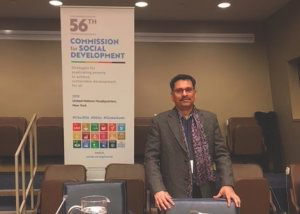
    NEW YORK (TIP): When citizens work towards moving up on the ladder of prosperity, development goals are automatically met, Ajay Pandey, the CEO of the SM Sehgal Foundation, told the United Nations’ 56th Session of the Commission for Social Development in New York on February 5.

    Making a presentation on the foundation’s work with communities on rural development, he said engaging all groups segregated by varied factors is imperative to achieve impact.

    The 10-day 56th Session of the Commission for Social Development, which began on January 29, concludes on February 7. It is primarily discussing “strategies for eradicating poverty to achieve sustainable development for all.”

    Founded by the Indian American philanthropist crop scientist and entrepreneur Suri Sehgal, the Gurugram, India, -based SM Sehgal Foundation is present in some 700 Indian villages, impacting more than 230,000 villagers in five states. More than 50 percent of the people the foundation is working with are women.

    Pandey named women, the elderly, the youth and the infirm as vulnerable groups, and said it is important to recognize the role of local government institutions and engagement of citizenry in initiating and affecting any development initiative.

    “A prudent policy mix is therefore required that would strive for inclusive growth,” he said in the written statement submitted before the Commission for Social Development. “One that could provide the opportunities and improve capabilities of ‘the farthest behind’ so as to enable them to participate in a sustainable growth process,” he added.

    Speaking from his experience in India and South Asia, Pandey said “investment in social capital can thrust sustainable social development.”

    The work of the SM Sehgal Foundation among the rural poor shows that “an effective amalgamation of empowered citizenry and accountable institutions of governance can create inclusive spaces for equitable development, he said.

    “Bringing in innovations in water security, food security and social justice, we have developed technologies and models such as the high pressure recharge well, bio sand filters and salt resilient crop varieties, some of which have been recognized by the United Nations as adaptable and scalable solutions,” he said. “These models are now being adapted in several continents across the globe to create better future for all. Success of these models is however reliant on the foundational aspects of program designing which works on the principle of creating constructive democratic spaces for all. It is the good rural governance initiative of the foundation that forms the basis of every innovation or intervention, thus planned.”

    Pandey said the foundation, through its 15,000 trained volunteers, who work as effective citizen participants in addressing the disconnect between promises of law and their grassroots reality, is helping bridge the ever-widening gap between policy and people.

    “The foundation is working tirelessly to develop this initiative nationally and globally such that law and policies become people-centric in every sense — their formulations, implementation, correction should all be inclusive of masses,” he said. “Through this initiative, communities work to secure good governance as they participate to strengthen democracy, rule of law, and justice. All this to break the difficulties that law, its language, its structures and their language together weave against the common people.”

    (Source: AB Wire)


  • Indian American Sikh man’s Gas Station vandalized in Kentucky

    Indian American Sikh man’s Gas Station vandalized in Kentucky

    KENTUCKY (TIP): A gas station and convenience store owned by an Indian American Sikh man in Greenup County, Kentucky, was defaced with racial slurs, and “white power” symbols and “swastikas.”

    According to the WSAZ news channel, the store owner Gary Singh was shocked to see his store walls sprayed with highly racist and offensive graffiti.

    “I’m just really shocked that somebody is doing that,” Singh told WSAZ.

    He said he came to know about vandalism of his store from an employee on February 1st morning.

    Police officers who checked the CCTV footage of the store found a ski masked man moving toward the store after 11:30 pm.

    “I was really nervous about that,” Singh told the channel. “It happened to me for the first time in this store in four years’ time. I’ve never done wrong to the community here. I try to help the community all the time.”

    Singh told the channel that he came to the United States in the 90s to fulfill American dream and what happened to his store on Thursday was more than a nightmare.

    The police have registered a case against the unknown miscreants and also seeking the opinion of county prosecutors on whether charges of hate crime can be registered.

    Singh told the channel that he is ready to forgive the vandals and hoped that they don’t mess with his livelihood in the future.

    “Please don’t do it to anybody else,” Singh said. “Don’t hurt anybody’s feelings. Let them work and enjoy their life.”

    This is not the first time that the store is getting vandalized. In 2014, a few former employees, whom Singh fired following a petty robbery, had vandalized the store.


  • Indian Origin Hotelier in Nepal Arrested for Drug Trafficking

    Indian Origin Hotelier in Nepal Arrested for Drug Trafficking

    KATHMANDU (TIP):  An Indian Origin hotelier in Nepal who was wanted by the Interpol, was arrested on February 3rd, on charges of drug trafficking. Mashkoor Ahmad Lari was arrested from the Maharajgunj area of Kathmandu, said a senior police officer at the Kathmandu Metropolitan Police Office.

    The police were searching for the hotelier after drugs were found inside a package dispatched by him from Kathmandu to the Netherlands during a security check at Germany’s Frankfurt Airport, the police said.

    Mr Lari is the owner of Kathmandu’s five-star Everest Hotel which was closed the building developed major cracks in the 2015 earthquakes.

    He has been operating the hotel in Kathmandu for the last 30 years.

    The police have filed a case for trafficking drugs against Mr Lari in the Kathmandu District Court after taking him into custody.


  • Indian Origin Girl Cracks UK’s Math Hall of Fame

    Indian Origin Girl Cracks UK’s Math Hall of Fame

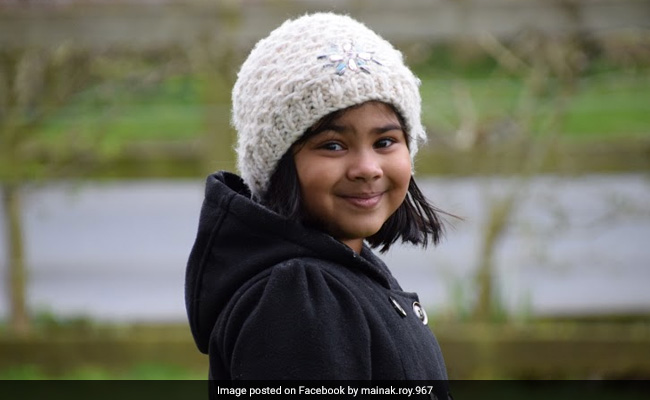
    LONDON (TIP):  An eight-year-old Indian origin school girl has entered the UK’s Mathletics Hall of Fame, an online mathematics based competitive tool aimed at primary school pupils.

    Sohini Roy Chowdhury competed with primary school pupils from across Britain and other countries to also make it into the top 100 World Hall of Fame after solving mathematical puzzles with speed and accuracy.

    “She feels really excited to solve math in an online learning environment to earn a place on the live World Hall of Fame,” said her father Mainak Roy Chowdhury, an accountant by profession with an MBA in finance.

    “Sohini’s great grandfather, D N Roy, was a qualified locomotive engineer from Scotland and worked for the Indian Railways. I would say Sohini has inherited her interest in math genetically,” he added.

    Mathletics is described as an engaging, supportive online learning resource targeted at primary school level math curriculum, allowing children to play live mental arithmetic games against other children from all over the world. Their scores are constantly updated and only the world’s 100 best make it to the leader-board.

    New Delhi born Sohini joined in the competition this year as a student of Nelson Primary School in Birmingham.

    “Sohini has displayed some higher-level understanding of the math covered this year. She applies herself to all her learning and this has been reflected in her attainment this year,” said her school teacher in reference to the Mathletics achievement.

    The school girl wishes to become a doctor when she grows up.

  • The Philadelphia Eagles defy odds at Super Bowl LII

    The Philadelphia Eagles defy odds at Super Bowl LII

    By Marvi Sajid

    NEW YORK (TIP): The Philadelphia Eagles rallied for a comeback against the New England Patriots with a 41-33 win for their epic championship victory. Coming into Super Bowl LII Tom Brady and his patriots were the clear favorite, but that wasn’t enough to close the door on the real Cinderella story Nick Foles.

    The 29-year-old back up quarter-back may have just become one of the most legendary stories in Philadelphia sports history. Nick Foles, started his NFL season uncertain about what was to come. In fact, the QB almost quit his NFL career 18 months ago but decided to give it one last shot. He signed with the Philadelphia Eagles as a backup quarterback to Carson Wentz. Little did we know that moment would change his entire career.

    Carson Wentz injured his right knee mid-December as the NFL regular season was coming to a close. That ensured Nick Foles the opportunity of a life time as the fairytale came against five time champion and three time MVP Tom Brady. But the story only gets better, as Nick Foles stamped his mark in history as the first player in a Super Bowl to make a pass and catch one. Overall Foles, converted on 28 of his 43 passes tallying 373 yards and 3 touchdowns.

    The Super Bowl champ spoke about his take on the game, and what lead him to one of the greatest Sports stories of all time:

    “The big thing that helped me was knowing that I didn’t have to be Superman,” he said. “I have amazing teammates, amazing coaches around me, and all I have to do is go play as hard as I could and play for one another, play for those guys and not look at the scoreboard, not look at the time. Just go out there and play. Don’t worry about it and we came away with a victory. It doesn’t get any bigger than this.”

    And for those of us who have not gotten enough of the Eagles QB, rumor has it this is far from the last time we see this Philadelphia Hero.


  • Indian American High School Girl Nominated as 2018 US Presidential Scholar in the Arts

    Indian American High School Girl Nominated as 2018 US Presidential Scholar in the Arts

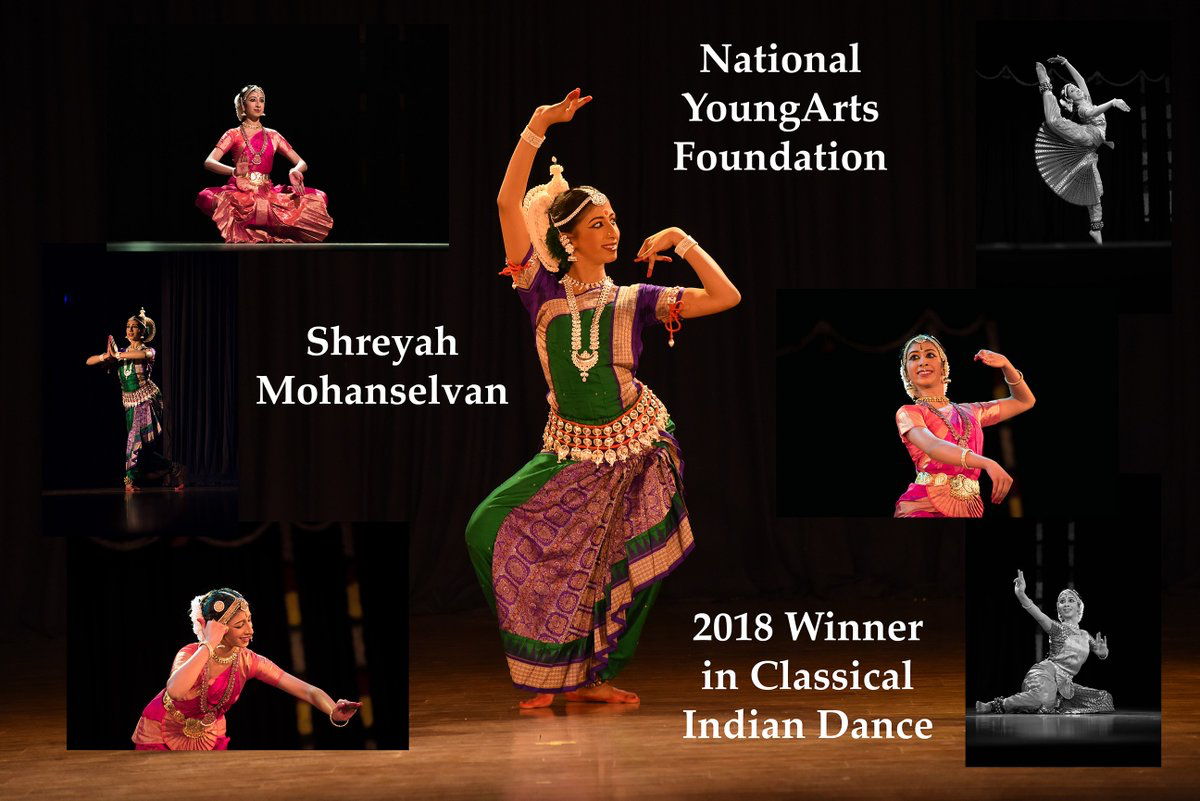
    WASHINGTON DC (TIP): Indian American Shreyah Mohanselvan of Gahanna, Ohio, has been nominated in the Dance discipline amongst the nine artistic disciplines, chosen by YoungArts, the sole nominating agency for 2018 US Presidential Scholar in the Arts.

    Shreyah Mohanselvan, who has lived in New Albany her entire life, is a senior at Columbus Academy, where she has been a student since kindergarten. She has been involved with student government since middle school, was president of her class both her sophomore and junior years, and is focused on communication, spirit and community, and efficiency and organization in 2017 as student council president.

    In addition to student government, Mohanselvan plays the violin in the Columbus Academy Advanced Orchestra, serves as a student orientation leader for new students transitioning into the school and is an editor of the yearbook, a group she has been a part of since her freshman year.

    All of this adds up to Mohanselvan being an exceptional high school student – one that her school community at Columbus Academy and her home community of New Albany can be immensely proud of. But Mohanselvan is actually best known for something else.

    Her dancing.

    “Dance has always been my passion,” she says. “I started learning ballet when I was 4 years old at the New Albany Ballet Company. Shortly thereafter, I started learning the Indian classical dance form of Bharatanatyam.”

    Bharatanatyam and Odissi, a second form of classical Indian dancing that Mohanselvan performs, are, as she explains, ancient art forms that were originally performed in temples. The dance depicts Hindu stories and are dedicated to gods and goddesses.

    “The two dance forms have differences and similarities, and sometimes it is difficult to force the body to be true to both of these two conflicting dance forms,” she says.

    Mohanselvan isn’t simply a dancer, though; she’s an award-winning dancer. She has won first place in the Federation of Indian Associations of Central Ohio’s Indian solo dance competition for three consecutive years. Additionally, Mohanselvan has three first place and two second place finishes since 2013 in the Vindhya Cultural Association in Columbus, a competition that attracts talent from all across the state. In 2017, she was presented with a National Young Arts Winner Honorable Mention Award in Indian/classical dance.

    Mohanselvan’s talent for dance has taken her to perform at venues all across the state, including many times at the Jeanne B. McCoy Community Center for the Arts, a place she says, “always feels like home.”

    And now she is nominated as 2018 US Presidential Scholar in the Arts

    About 2018 U.S. Presidential Scholars in the Arts and the YoungArts

     2018 U.S. Presidential Scholars in the Arts is one of the nation’s highest honors for high school students who exemplify academic and artistic excellence. YoungArts is the sole nominating agency for this high honor and the 60 candidates, representing 25 states and nine artistic disciplines, are all YoungArts winners. These students have been nominated to the U.S. Presidential Scholars Program for their artistic achievements.

    The candidate applications will be reviewed by the White House Commission on Presidential Scholars, which will ultimately select 20 high school seniors to be recognized as U.S. Presidential Scholars in the Arts for their academic and artistic accomplishments, demonstrated leadership, community service and outreach initiatives, and overall creativity. In June, the 20 arts scholars will join the other 141 U.S. Presidential Scholars from across the country in Washington, D.C. for the National Recognition Program. During the program, all scholars receive a Presidential Medallion presented on behalf of the President of the United States and participate in several recognition activities while in Washington, D.C.

    “The National YoungArts Foundation is proud to partner with the U.S. Presidential Scholars Program to acknowledge our nation’s most talented graduating high school seniors,” said Carolina García Jayaram, YoungArts President and CEO. “These young leaders excel in everything that they do, from their artistry and inquisitiveness, to their academics and activism. YoungArts congratulates each of the nominees on their accomplishments, and we look forward to announcing the selected arts scholars this spring.”


  • INDIAN AMERICANS AMONG OAKLAND COUNTY’S ELITE 40 UNDER 40

    INDIAN AMERICANS AMONG OAKLAND COUNTY’S ELITE 40 UNDER 40

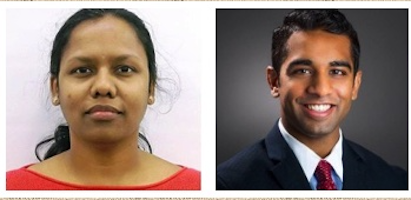
    OAKLAND (TIP):  Indian Americans Shantha Kumari Rajendran, 36, and Adi Sethi, 27, have been named among Oakland County’s Elite 40 Under 40.

    According to the information posted on the county’s website, County Executive L. Brooks Patterson’s seven-year-old initiative “recognizes and spotlights dynamic leaders under the age of 40 who are making a difference in Oakland County and beyond.”

    Rajendran, who is a Staff Engineer-Systems Lead for Panasonic Automotive, is a 15-year veteran of the automotive industry as an Embedded Systems Engineer. She specializes in Human Machine Interface and User Experience and has filed 10 automotive patents, two of which were recently approved. She has submitted several technical papers to Society for Automotive Engineers (SAE) and Society for Information Displays (SID) conferences and is an active SAE volunteer.

    “Shantha was the first woman in her family to finish school, university, become an engineer, work in the USA, get a master’s degree with honors,” her husband Ganapathy Lakshmanaperumal writes. “She has great balance between her career and family.”

    Rajendran holds a bachelor’s degree in Computer Science Engineering and a master’s in Management. A Stanford Certified Project Manager, she is pursuing her second master’s degree at Harvard University.

    Another Indian American Adi Sathi, 27, serves as the director of Asian Pacific American engagement at the Republican National Committee and the chief of staff of the Young Republican National Federation.

    After completing both his bachelor’s and master’s degrees at the University of Michigan, Adi was elected in February 2015 to a two year term as a statewide Vice Chair of the Michigan Republican Party at the age of 24. For his work in this role, he was recognized in both 2016 and 2017 on Newsmax’s annual list of 30 Most Influential Republicans Under 30. Over the last eight years, Adi has managed or advised on numerous successful political campaigns at the local, state, and federal level.

    As a student, he was elected to serve as the Executive Director of the Association of Big Ten Students, an organization that consists of the 14 Big Ten schools from 11 different states and represents over 540,000 students. For his work in this role, he was invited to the 2013 White House Youth Summit and recognized by Red Alert Politics on their 2014 ’30 Under 30′ list. Most recently Adi was a 2016 Fellow in the Michigan Political Leadership Program through Michigan State University’s Institute of Public Policy and Social Research. He was previously an APAICS Legislative Fellow in the Office of Senator Orrin G. Hatch who serves as both the President Pro Tempore of the U.S.

    Senate as well as the Chairman of the Senate Finance Committee. In his free time, Adi enjoys cheering on Michigan sports teams, working out, and watching Netflix documentaries.

    The Oakland County Executive’s Elite 40 Under 40 program is an initiative of County Executive L. Brooks Patterson that recognizes and spotlights dynamic leaders under the age of 40 who are making a difference in Oakland County and beyond. In its seventh year, the program is open to individuals who live or work in Oakland County and are born AFTER December 31, 1978.


  • Indian American Researcher at University of Arizona named Regents’ Professor

    Indian American Researcher at University of Arizona named Regents’ Professor

    TUSCAN, AZ (TIP): An Indian America, Hoshin Gupta, researcher at the University of Arizona has been named Regents’ Professor, the state’s highest faculty rank. He has been a member of the faculty of the Department of Hydrology and Atmospheric Sciences at the university and was among three professors recently elevated as Regents’ Professor recently.

    Gupta was inducted at the annual ceremony held at the university on January 11, 2018.

    Gupta is a hydrologist, systems theorist and philosopher with strong technical skills in complex algorithm development. His ideas, methods, and vision have set the standard in his field for 30 years and enhanced the ability to use models for learning and prediction in hydrology.

    Gupta has tackled some of the most fundamental challenges of hydrologic modeling throughout his career. His multiple path-breaking contributions have enabled researchers to improve model parameterization, hydrologic modeling, and model evaluation.

    An internationally reputed scientist, Gupta’s research across disciplines has contributed to the enhanced understanding of human-natural system interactions.

    Gupta’s work is highly recognized nationally and internationally. One of his papers has been cited more than 1,500 times, and total citations for all of this work exceed 27,000 in Google Scholar. He has published 10 books and more than 170 peer-reviewed papers, and his work is among the most cited in the field of hydrology.

    In the 2000s, Gupta was Executive Director of the SAHRA science and technology center to bridge water science with decision making. He was elected a fellow of the American Geophysical Union in 2009.

    Gupta has received several awards and honors including the European Geophysical Union’s 2014 Dalton Medal and the American Meteorological Society’s 2017 RE Horton Lecture Award. In 2013, he was elected Tucson Electric Power Fellow of the Galileo Circle of the University of Arizona.

    He has been selected by students as the winner of the department’s annual award for teaching excellence on five separate occasions. Additionally, he was recognized by the University of Arizona with the 2014-2015 Graduate College Graduate and Professional Education Teaching and Mentoring Award.

    “Being a member of the UA community for almost 34 years has been a rewarding and enriching experience,” Gupta said. “To be recognized and valued in this way is very gratifying, not to mention extremely motivating.”

    The award goes to full professors who have demonstrated achievements resulting in national or international recognition. Regents’ Professors are expected to exemplify the highest objectives and standards of the University through their scholarship, research or creative activities, and teaching.


  • World Cancer Day observed with Inauguration of the first Radiation Free Thermo Mammography Machine at Parmarth Niketan, Rishikesh

    World Cancer Day observed with Inauguration of the first Radiation Free Thermo Mammography Machine at Parmarth Niketan, Rishikesh

    Chief Minister of Uttarakhand, Trivendra Singh Rawat and Swami Chidanand Saraswati, President of Parmarth Niketan join Can Protect Foundation members in prayers & pledge for a Cancer Free World 

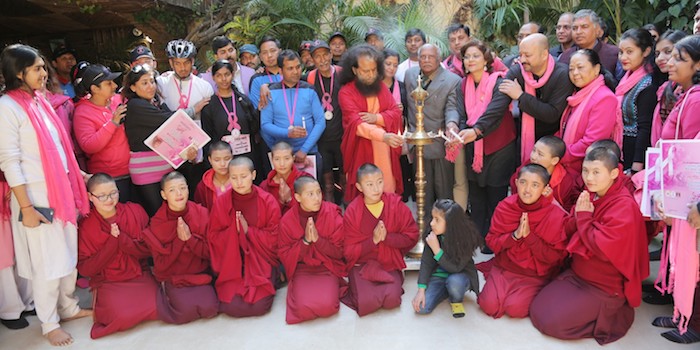
    RISHIKESH (TIP): Swami Chidanand Saraswati, President of Parmarth Niketan (Rishikesh), Founder of the Divine Shakti Foundation, was joined by Chief Minister of Uttarakhand, Trivendra Singh Rawat for a special Ganga Aarti on the occasion of World Cancer Day and the inauguration, during the world-renowned ceremony, of the first Radiation Free Thermo Mammography Machine in Northern India.

    Chief Minister Singh was pleased to hear about huge participation in the Cycle Awareness Rally that started in the morning at 6:45 am from Gandhi Maidan, Dehradun and arrived in Rishikesh at 12 pm to be blessed and welcomed by Swami Chidanand Saraswati who met and congratulated the cyclists during the Ganga Aarti for their commitment to raising awareness on these critical issues.

    Swami Saraswati and CM met with many of the women who had received free medical screenings, and check-ups done at the Parmarth Hospital earlier in the day.  Hundreds of these women joined for the Ganga Aarti and pledged to work together for a cancer free world.

    Speaking on the occasion, Swami Chidanand Saraswati said, “When we build a support system and strengthen the spirit that we are one family, addressing these issues and serving this cause in solidarity and oneness, then even if we are not able to fully end cancer we can dramatically increase survival rates. I think today we need to, as a society, celebrate and honor our cancer survivors as well as simultaneously encourage women, especially, to take their health issue on a priority, because when they are healthy, their families are healthy, thereby the nation and the world can be healthier and happier.”

    Members of Can Protect Foundation taking pledge of a plastic free life style

    The event provided a platform for women to stand in solidarity in the face of this crucial issues in women’s health for the security of India’s families and their future. According to statistics, breast cancer numbers are on the rise in India, and it is projected that by the year 2020, 76,000 Indian women will lose their lives to breast cancer.  The average age of these women is between 30 -50 years, but with early diagnosis higher survival rates can be achieved.

    Dr. Sumita Prabhakar, President of the Can Protect Foundation, said, “Our organization is so blessed to have Pujya Swamiji’s and the Hon’ble CM’s support for this cause, as well as the support of generous donors like Dr PK Dattaji who have donated the machine for the service of humanity. It is with the association of the Divine Shakti Foundation- Parmarth Niketan that we have been able to raise greater awareness on the need for pre-screenings and check-ups to help prevent breast and cervical cancer. We strongly believe that prevention and pre-screenings are the best way to create a cancer free, healthier and happier world.”

  • Indian American and another Sentenced to Prison in International $200 Million Credit Card Fraud Conspiracy

    Indian American and another Sentenced to Prison in International $200 Million Credit Card Fraud Conspiracy

    Last of 22 Defendants Convicted and Sentenced

    TRENTON, N.J. (TIP): An Indian American from Iselin, New Jersey and another man from New York were sentenced ton January 30, to federal prison terms for their respective roles in one of the largest credit card fraud schemes ever charged by the Justice, U.S. Attorney Craig Carpenito announced.

    Qaiser Khan, 53, of Valley Stream, New York, previously pleaded guilty to an information charging him with one count of conspiracy to commit bank fraud. He was sentenced to six months in prison. Sat Verma, 65, of Iselin, New Jersey, previously pleaded guilty to an information charging him with one count of access device fraud. He was sentenced to one year in prison. U.S. District Judge Anne E. Thompson imposed both sentences, January 30, in Trenton federal court.

    According to documents filed in this case and statements made in court, Khan and Verma were originally charged in February 2013 as part of a conspiracy to fabricate more than 7,000 false identities to obtain tens of thousands of credit cards. They are the last of 22 defendants to be sentenced in this scheme.

    The scheme involved a three-step process in which the defendants would make up a false identity by creating fraudulent identification documents and a phony credit profile with the major credit bureaus; pump up the credit of the false identity by providing bogus information about that identity’s creditworthiness; then borrow or spend as much as they could without repaying the debts. The scheme caused more than $200 million in confirmed losses to businesses and financial institutions.

    The scope of the criminal fraud enterprise required the conspirators to construct an elaborate network of false identities. Across the country, the conspirators maintained more than 1,800 “drop addresses,” including houses, apartments and post office boxes, which they used as the mailing addresses for the false identities.

    Khan admitted he helped obtain credit cards in the name of third parties – many of which were fictional – then directed the credit cards to be mailed to addresses controlled by members of the conspiracy. He also admitted they knew the cards would be used fraudulently at businesses. Verma admitted he effected transactions with access devices issued to another person.

    In addition to the prison terms, Judge Thompson sentenced Qaiser to five years of supervised release and fined him $10,000. Verma was sentenced to three years of supervised release, ordered to forfeit $270,000 and fined $1,000.

    This case was brought in coordination with the Financial Fraud Enforcement Task Force, which was established to wage an aggressive, coordinated and proactive effort to investigate and prosecute financial crimes. With more than 20 federal agencies, 94 U.S. Attorneys’ offices and state and local partners, it’s the broadest coalition of law enforcement, investigatory and regulatory agencies ever assembled to combat fraud. Since its formation, the task force has made great strides in facilitating increased investigation and prosecution of financial crimes; enhancing coordination and cooperation among federal, state and local authorities; addressing discrimination in the lending and financial markets and conducting outreach to the public, victims, financial institutions and other organizations. Over the past three fiscal years, the Justice Department has filed nearly 10,000 financial fraud cases against nearly 15,000 defendants including more than 2,900 mortgage fraud defendants. For more information on the task force, please visit www.stopfraud.gov.

  • Indian American community marches in support of Trump’s immigration policy

    Indian American community marches in support of Trump’s immigration policy

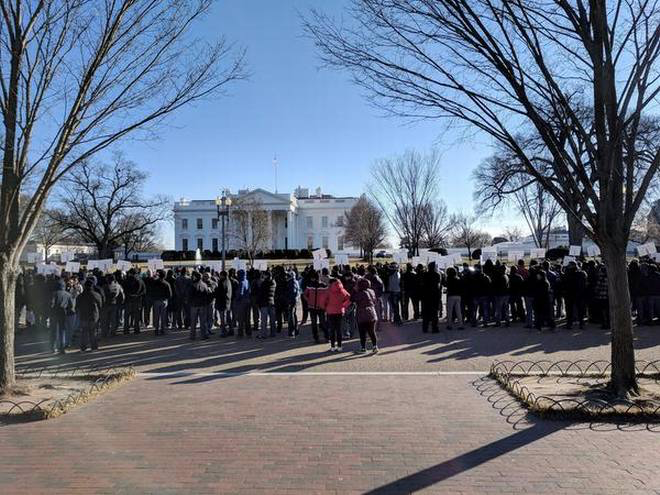
    WASHINGTON  DC (TIP): At least 800 Indian Americans participated in a march outside the White House on Saturday, February 3rd , raising slogans in support of U.S. President Donald Trump’s proposal to implement a “merit-based” immigration system in the country and demanding discontinuation of country quotas for Green Card approvals.

    Marchers in front of the White House said the President’s declared preference for “merit-based” immigration would tilt the balance in their favor.

    “Trump loves Hindus,” “Trump loves India,” “Trump bringing Ram Rajya,” “Indians love Trump,” said the slogans at the march organized under the banner of the Republican Hindu Coalition (RHC), an organization led by Chicago-based businessman Shalabh Kumar who is believed to be close to Trump. The marchers were all Indian technology workers who had come from all over the U.S. — California, Texas, North Carolina, South Carolina, New Jersey, Illinois and New York.

    Krishna Bansal, National Policy and Political Director of RHC, said Trump’s proposal to end family unification immigration would open up more space for Indian skilled workers. Nearly half of the one million Green Cards issued every year goes to close relatives of American citizens regardless of their skills and the Trump administration wants to restrict this practice.

    “Thirty per cent of the country’s skilled immigrants come from India, but they have to wait several decades before being eligible for Green Cards. These are aspirants who are already here, contributing to the economy, paying their taxes and raising their families,” he said. He said the group supported the proposal for building a wall on the U.S. southern border with Mexico and ending the diversity lottery program for Green Card allotment. The marchers supported the ending of what the administration calls ‘chain migration.’

    Krishna Mullakuri, whose application for Green Card is pending for five years, agreed with the view. He said the emphasis on merit as the primary criteria for allowing new entrants into the country would work to India’s advantage.

    The march on Saturday, while endorsing. Trump’s approach to immigration, was to highlight the issues concerning the legal residents who are already in the country. “While the current discussion is primarily focusing on those who illegally entered the country, we are working with the lawmakers to get some attention on this group that reached this country legally but face uncertainty now,” said Mr. Bansal.

    The marchers supported this policy. “Dreamers pay for the wall,” and “Make American strong again,” they shouted.  Bansal said the President’s proposals were generous and those being offered a path to citizenship would be happy to pay a fee that would fund the wall.

    An issue of particular concern for several of the marchers was the future of their children, who will lose their dependency status when they turn 21. “These are legal dreamers. Colleges are reluctant to admit them as their visa status has to be changed midway through the course. And once they are graduates, they go back to the end of the queue, again starting with an H-1B application,” said Ramesh Ramanath, who grew up in Chennai. “While they address the issue of dreamers, this question also should get priority,” he said.

  • Indian American President of USIBC is pleased with the Indian budget

    Indian American President of USIBC is pleased with the Indian budget

    WASHINGTON DC (TIP):  US-India Business Council on Friday, February 2, praised the Union Budget 2018-19 calling it a move by the Modi government to leverage the growth and prosperity of India in the coming years.

    The organization said, in a press release, that it is pleased that the budget contains many of its recommendations in critical areas such as infrastructure development, access to health care, affordable housing, energy, and education for all citizens form the backbone of any growing economy.

    “American industry is committed to growing, strengthening, and sustaining these areas of collaboration with India,” it said.

    The three years of Modi-led government has given shape to a robust economy, which is on a growth path backed by strong reform agenda, the group said.

    For the current year, USIBC has put the priority on ensuring greater ease of doing business, promoting certainty, transparency, and predictability in decision-making to ultimately, unlock greater growth and investment opportunities for businesses in both US and India whereby strengthening the US-India commercial partnership, it added.

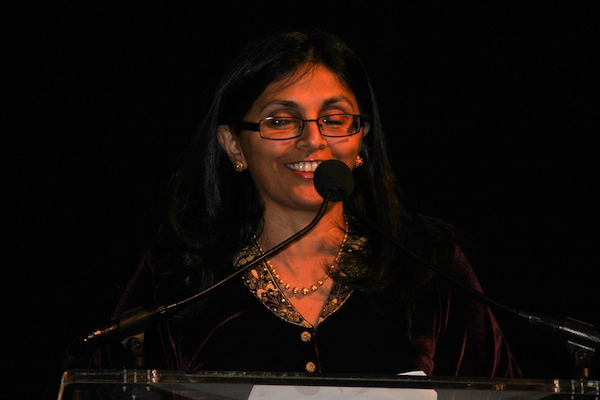
    “[The] American industry is committed to growing, strengthening, and sustaining these areas of collaboration with India,” said USIBC President Nisha Biswal.

    “In the last three years, India has been on a robust path to growth, backed by a strong economic reform agenda. USIBC’s goal is to keep up the momentum of the US-India commercial partnership to ultimately, unlock greater growth and investment opportunities for businesses in both nations,” she added.

    The USIBC, an advocacy organization, consists of 350 top-tier U.S. and Indian companies doing business in both the United States and India. It is part of the US Chamber of Commerce, the world’s largest business federation.


  • Indian Origin Man in UK Jailed for 18 years for Killing Ex- Wife

    Indian Origin Man in UK Jailed for 18 years for Killing Ex- Wife

    LONDON (TIp): An Indian origin man in UK on trial for killing his ex-wife and then stuffing her body into a suitcase was sentenced on Friday, February 2, to at least 18 years in jail for murder.

    Ashwin Daudia, 51, had denied the murder charge, claiming he lost his temper during an argument with Kiran Daudia at their home in Leicester last January and did not attack her deliberately. The prosecution, however, claimed that Mr Daudia, who followed the court proceedings through a Gujarati interpreter, had continued to lie about the circumstances surrounding the killing and had committed the murder after growing increasingly resentful of his ex-wife, who had joined a dating agency to meet other men.

    “I was angry, I lost control,” he told the Leicester Crown Court, adding that Kiran Daudia had initially assaulted him and to silence her, he put his hand over her mouth and then forcefully squeezed her neck.

    However, the jury did not accept his version of events and found him guilty of killing his 46-year-old ex-wife.

    He admitted in court that he had lied to his two sons, relatives and the police and told them that his ex-wife did not return home from a morning shift at the call center she worked at and hid her body in a suitcase to prevent his younger son from seeing it. The suitcase, along with the dead body, was discovered by the local police a day after the murder.

    The accused was caught on CCTV dragging his ex-wife’s body in a suitcase before dumping it in an alleyway.

    The couple, who had an arranged marriage in India in 1988, were divorced in 2014 but continued living separate lives under the same roof.

    The factory worker husband was to move out of the family home on January 16, 2017, when the attack occurred, the Leicester Mercury reported.

    The victim’s sister had bought the couple’s family home in Leicester to ensure that Ms Daudia could continue living there without her ex-husband after the divorce.

    Their two sons chose to “side” with their mother and had relatively little to do with their father.

    During the two-week murder trial which concluded on Friday, Ashwin Daudia claimed he lost his temper when his ex-wife shouted at him because he had not packed his bags or moved out. He claimed she swore at him and told him to go and die in India.

    He denied the prosecution’s suggestion that he had waited for his ex-wife to return home from work to deliberately kill her.

    “I didn’t do it deliberately, at that time my mind wasn’t working,” he told the court.


  • Indian origin Google AR director will lead Facebook’s AR platform

    Indian origin Google AR director will lead Facebook’s AR platform

    MENLO PARK, CA (TIP): Indian origin Nikhil Chandhok, Director of Product for Augmented Reality (AR) at Google, has joined Facebook to lead product management of its camera team working on AR.

    Chandhok took to social media on January 29th with the announcement and shared a post on Facebook saying, “I want to share an exciting update. Today is my first day at Facebook!”

    “Now, as I join the Camera/AR team at Facebook, I’m especially interested in building more conversation and momentum in cross-platform camera services,” Chandhok posted.

    “While I’m leaving the team at Daydream and Google, I’m proud of the work we did together. We gave developers ARCore and expanded access to augmented reality tools,” he said.

    “We also designed foundational aspects of AR platforms and explored how people use AR now and how they’ll use it in the future,” Chandhok added.

    He also tweeted on January 30th, “Today is my 1st day at Facebook! There are massive opportunities ahead for AR and I look fwd to joining Facebook as we bring more AR experiences to life – for more people!”

    Google, in a bid to bring the AR experience closer to Android users, in August 2017 released a new software development kit (SDK) called “ARCore”. The platform renders AR capabilities to existing and future Android phones.

    The company built on the fundamental technologies used in Tango, another AR platform by Google but ARCore is scalable across the Android ecosystem as it doesn’t require any additional hardware.


  • Indian American Woman & Son Found Shot Dead in Virginia Home

    Indian American Woman & Son Found Shot Dead in Virginia Home

    The police were notified by a caller on Wednesday, February 1st, that a co-worker who lives in the 25000 block of Tomey Court had not come to work this week.

    WASHINGTON (TIP):  An Indian American woman and her son have been found dead at their home in a Virginia suburb of Washington, local police said.

    The police have launched a manhunt to arrest the alleged killers who shot Mala Manwani, 65, and her son Rishi Manwani, 32.

    The police were notified by a caller on Wednesday, February 1, that a co-worker who lives in the 25000 block of Tomey Court had not come to work this week.

    “Deputies checked the residence and the adult in question and another adult were found deceased inside. Both appear to have died from gunshot wounds,” said the Loudoun County Sheriff Office.

    COMMENTS

    “The case does not appear to be a random act and there is no indication of any threat to the public,” police said.

    The mother and son were the only ones living at the location.


  • Indian American lawyer is the primary author of Republican memo

    Indian American lawyer is the primary author of Republican memo

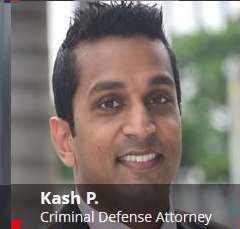
    WASHINGTON (TIP): A controversial Republican memo that accuses the FBI of political bias has primarily been written by Indian American lawyer Kashyap “Kash” Patel is ruling the news as according to a media report.

    The “Kash memo” portrays the FBI in a negative light, alleging that the agency helped the Democratic party and its presidential candidate Hillary Clinton against Donald Trump, the eventual winner of the 2016 presidential elections, The New York Times reported.

    The report said the explosive memo was primarily written by Patel, a committee staff member for Representative Devin Nunes, Republican of California and the chairman of the Intelligence Committee.

    The office of Congressman Nunes where Patel works has refuted the report that he is the author of the memo which they assert is a collective and team effort.

    “The problem is the lack of facts. Kash being the ‘driving force’ behind the memo is not a fact. Kash being the ‘pusher of the memo’ is not a fact. Unnamed people referring to ‘the Kash memo’ is not a fact,” Jack Langer, a spokesperson for Nunes was quoted as saying by the Daily Beast.

    Patel did not immediately respond to a PTI query on this.

    In an email to The New York Times, Damon Nelson, staff director of the House Select Committee on Intelligence said that no single member was responsible for the memo and that its creation was a “team effort” that involved investigators who had access to source material.

    “The clamor to identify ‘an author’ is indicative of an alarming trend by opponents of our investigation which is to promote spurious allegations against committee members and staff. They will not impact the committee’s focus and commitment to continue this investigation,” Nelson was quoted as saying.

    At the same time, he praised Patel, saying, “We value Kash’s dedication and his contributions to the committee’s oversight efforts”.

    Patel did not immediately respond to a PTI query on this.

    According to media reports, Patel attracted media attention early this summer when he travelled to London along with another staffer in search of Christopher Steele, author of a controversial dossier on Trump.

    However, he could not succeed in his effort.

    Patel, 37, who grew up in New York, graduated from the University of Richmond in 2002. He is the chairman of the House Select Committee on Intelligence. He is senior counsel on counter terrorism.

    Before joining the House Select Committee on Intelligence, Patel was a trial attorney in the National Security Division of the Justice Department.


  • Indian American Founders of Medical Firm Step Down as Part of Settlement Deal

    Indian American Founders of Medical Firm Step Down as Part of Settlement Deal

    CHICAGO, IL (TIP): Indian American entrepreneurs Rishi Shah and Shradha Agarwal, the chief executive officer and president, respectively, will be stepping down from their positions at Outcome Health to settle allegations of fraud.

    The company, which provides health education technology to improve patient outcomes at physician practices nationwide, announced on Jan. 26 that it has settled all litigation with its investors. The company places digital screens in doctors’ offices that run health-related content as well as advertisements from drug companies.

    “As a result of the settlement, the equity investors, lenders and company’s founders are recommitting $159 million to Outcome Health, which will be used to reduce the company’s debt by $77 million and further strengthen and scale its technology platform, automated processes and overall customer operations. Founders Rishi Shah and Shradha Agarwal have moved into the roles of Chairman and Vice Chair of the Board of Directors from their previous positions. The expanded Board of Directors, which also includes three new independent directors and two investor representatives, is launching a search for a new CEO,” the statement from the company said.

    The founders raised $225 million in funding last year, which was reportedly set aside by Shah and Agarwal. The $159 million will be part of the $225 million they had raised, the Chicago Tribune reported. The Indian American duo was barred in November from using the $225 million after the investors sued them. A court filing on Jan. 26 said that the money will be used for settlement with the investors, the report added.

    The company raised $500 million in July 2017 but after the Wall Street Journal reported that the company had overcharged clients by misleading them about their reach and manipulated campaign results, the investors, including Goldman Sachs and Google and a fund co-founded by Illinois gubernatorial candidate J.B. Pritzker, sued the company in November 2017. Outcome Health denied the allegations and said that the lawsuit was without cause.

    The company has so far lost 200 of its 535 employees and shelved its plan of moving to a different headquarters.

    Shah had made it to Forbes 400 list as the 206th richest American in October 2017. The net worth of the 31-year-old college dropout was estimated to be $3.6 billion. He was also named as one of the richest Americans under the age of 40.

    Shah and Agarwal, both 32, were also included in the Fortune magazine’s list of ‘40 Under 40’ in 2017. The annual ranking list of influential young people under 40, who the magazine calls “disruptors, innovators, rebels and artists” inspiring others, featured them on rank 38.


  • Four students injured in classroom shooting at L.A. middle school; 12-year-old girl in custody

    Four students injured in classroom shooting at L.A. middle school; 12-year-old girl in custody

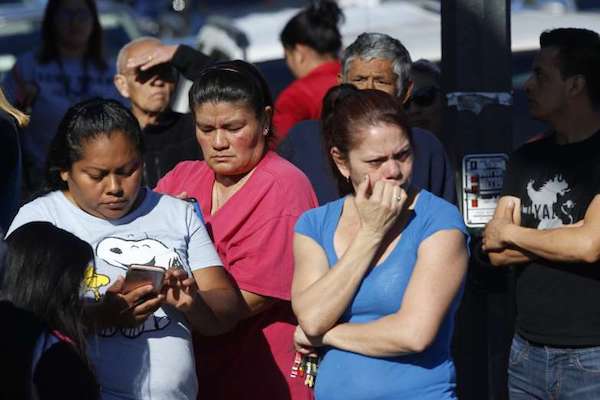
    Washington (TIP): Parents receive information on children and officials discuss the Salvador Castro Middle School shooting in which two students were injured by gunfire, one critically.

    A 12-year-old girl was in police custody Thursday after a shooting at Sal Castro Middle School injured four students.
    The gunfire erupted in a classroom at the school in the Westlake neighborhood shortly after the opening bell and caused numerous students to run from the area, according to Los Angeles police Officer Drake Madison.
    At least one student told a reporter they were in the classroom at the time of the shooting and said it was unintentional.
    “Someone decided to bring a gun, I guess someone was accidentally playing around with it,” said Benjamin, a 13-year-old 7th grader, whose guardian asked that his last name not be used. “They thought it was a fake gun.”
    When authorities responded around 8:55 a.m., they found a 15-year-old boy with a gunshot wound to the head and a 15-year-old girl shot in the wrist and three others with minor injuries.
    The boy, who was shot in the temple, was in stable condition Thursday afternoon, and was expected to fully recover, according to Dr. Carl Chudnofsky, of L.A. County-USC Medical Center. The girl, who was shot in the left wrist, was in fair condition.
    Three others — a 30-year-old woman, an 11-year-old boy and a 12-year-old girl — also suffered minor injuries, including two from gunshots, health officials said.
    At a news conference outside the hospital on Thursday, Dr. Aaron Strumwasser said the 15-year-old boy was extremely lucky because the bullet wound failed to cause serious damage. “I think he will do fine,” Strumwasser said.
    The suspected shooter was taken into custody and a firearm was recovered, officials said. Helicopter news footage showed two officers leading a handcuffed girl with long hair, jeans and a sweatshirt to a waiting squad car. Robert Arcos, a deputy chief with the Los Angeles Police Department, said it was too early to determine a motive in the shooting.
    Investigators were still conducting interviews to determine whether the shooting was intentional or a “terrible accident,” he said.
    In a morning news conference, Los Angeles School Police Chief Steve Zipperman said he did not know how a young person got access to a gun and brought it to campus, but warned gun owners to keep their weapons secure and away from children.
    “Los Angeles has a law about the safe storage of weapons,” L.A. City Atty. Mike Feuer added. “Every responsible gun owner needs to take heed.”
    There was no longer any danger at the school, Zipperman said, but the campus remained on lockdown. School officials directed parents to an information center at Belmont Avenue and Beverly Boulevard, or asked them to call (213) 241-1000 for information.
    Students are to be dismissed on the school’s regular schedule, but parents can pick up their children earlier if they wish.
    Throughout the morning and early afternoon Thursday, scores of parents anxiously awaited word on their children.
    Tyresha McNair got to the school Thursday morning with her young niece. She had seen news of the shooting on TV and came to get her daughter, who is a student at the middle school.
    “I saw it on the news and I came here to get my baby,” she said.
    At the front gate of the school, McNair said she was directed to the back, which was blocked off. She said she had been texting her daughter, but hadn’t heard back.
    “Any other time my baby would respond and she’s not responding,” McNair said. “I just want my daughter. I want my daughter.”
    It was sometime after 9 a.m. when Rosario Hernandez, 41, got a phone call from her 16-year-son, Jimmy Romero, telling her a shooting had occurred at his brother’s school. Jimmy attends Belmont High School, which is across the street.
    Hernandez left work and sped to the school campus.
    She texted her 14-year-old son, Johnny Romero, whose number was listed under “Johnny baby,” and asked him if was OK.
    When he finally responded, he told her they were still on lockdown and said the shooting had happened inside a seventh-grade classroom.
    “She shot a girl and a boy,” he wrote.
    “OMG,” Hernandez responded. “But why mijo.”
    “I don’t know. Mom go home, I will tell you when we are not in lockdown.”
    Hernandez said there are problems at the school, including bullying and gangs. She sat waiting with worried parents at a baseball field. Nearby, Laura Gonzalez waited to get Information from police and school district officials.
    Read full story on www.theindianpanorama.news
  • February 2 New York & Dallas Print Editions

    February 2 New York & Dallas Print Editions

    [vc_row][vc_column][vc_column_text]

    Print Replica ~ Digitally

    E-Editions

    [/vc_column_text][/vc_column][/vc_row][vc_row][vc_column width=”1/3″][vc_custom_heading text=”New York Edition” font_container=”tag:h2|text_align:center” google_fonts=”font_family:Istok%20Web%3Aregular%2Citalic%2C700%2C700italic|font_style:700%20bold%20regular%3A700%3Anormal” link=”url:https%3A%2F%2Fwww.theindianpanorama.news%2Fwp-content%2Fuploads%2F2018%2F02%2FTIP-February-2-NYC.pdf|||”][vc_single_image image=”90570″ img_size=”full” add_caption=”yes” onclick=”custom_link” link=”https://www.theindianpanorama.news/wp-content/uploads/2018/02/TIP-February-2-NYC.pdf”][/vc_column][vc_column width=”1/3″][vc_custom_heading text=”Dallas, Texas Edition” font_container=”tag:h2|text_align:center” google_fonts=”font_family:Istok%20Web%3Aregular%2Citalic%2C700%2C700italic|font_style:700%20bold%20regular%3A700%3Anormal” link=”url:https%3A%2F%2Fwww.theindianpanorama.news%2Fwp-content%2Fuploads%2F2018%2F02%2FTIP-February-2-Dallas-TX.pdf|||”][vc_single_image image=”90568″ img_size=”full” add_caption=”yes” alignment=”center” onclick=”custom_link” link=”https://www.theindianpanorama.news/wp-content/uploads/2018/02/TIP-February-2-Dallas-TX.pdf”][/vc_column][vc_column width=”1/3″][vc_single_image image=”82828″ img_size=”medium” alignment=”center” onclick=”custom_link” link=”https://www.theindianpanorama.news/advertising-media-kit-portal-indian-panorama/”][vc_single_image image=”82829″ img_size=”medium” alignment=”center” onclick=”custom_link” link=”https://www.theindianpanorama.news/advertising-media-kit-portal-indian-panorama/”][/vc_column][/vc_row][vc_row][vc_column][td_block_ad_box spot_id=”custom_ad_3″][/vc_column][/vc_row][vc_row][vc_column width=”2/3″][vc_custom_heading text=”Lead Stories This Week” font_container=”tag:h2|text_align:center” google_fonts=”font_family:Istok%20Web%3Aregular%2Citalic%2C700%2C700italic|font_style:700%20bold%20regular%3A700%3Anormal” link=”url:https%3A%2F%2Fwww.theindianpanorama.news%2F|||”][td_block_5 limit=”8″][/vc_column][vc_column width=”1/3″][vc_widget_sidebar sidebar_id=”td-default”][/vc_column][/vc_row]

  • Indian Americans celebrate Republic Day with enthusiasm across US

    Indian Americans celebrate Republic Day with enthusiasm across US

    WASHINGTON (TIP): The Indian American community in the US celebrated the 69th Republic Day of India with much enthusiasm. From a small township in mid-West or down South to mega cities of New York, Los Angeles, Chicago and Washington, Republic Day celebrations were organized by the Indian missions, Indian community activists and organizations.

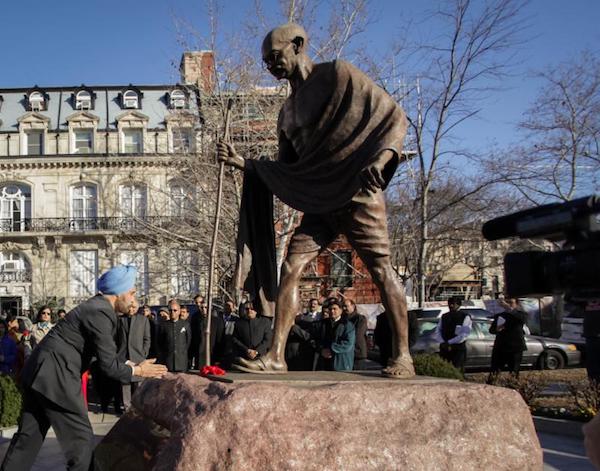
    In Washington, Indian Embassy celebrated Republic Day at Embassy premises. Ambassador Navtej Sarna paid floral tribute to the statue of Mahatma Gandhi in front of the Embassy. Thereafter, Ambassador unfurled the National Flag. The National Anthem was sung. Ambassador addressed the guests and read out the Address of President of India. This was followed by singing of patriotic songs by young Indian Americans. Over 200 members of the Indian American community attended the celebrations.

    Consul General Sandeep Chakravorty unfurls the National Flag at the Indian Consulate in New York

    In New York, Consul General Sandeep Chakravorty unfurled the National Flag and read out the President’s address to the nation. A cultural program was also presented. The over 150 guests included Consul Generals of Italy, Mexico, Israel, Nigeria and Lithuania.

    Speaking on the occasion, Ambassador Chakravorty highlighted the growth story of India and valuable contribution in it of the Indian diaspora. He praised the Indian American community for their hard work and love of both the country of their origin and of their adoption.

    He assured the community of the best services by the Consulate General.

    Ambassador Syed Akbaruddin speaking at the Permanent Mission of India
    Photo / Mohammed Jaffer-SnapsIndia

    The Permanent Mission of India to the United Nations also held a celebration to mark the 69th Republic Day of India. Ambassador Syed Akbaruddin unfurled the national Flag at the Permanent Mission of India in midtown Manhattan in the presence of a large number of staff and guests. Later, in the evening a reception was organized at the United Nations which was attended by a large number of guests which included, besides the Indian American community members, diplomats from various countries. The highlight of the reception was presentation of Indian traditional music and dance.

    Lighting of the lamp ceremony with guests at the United Nations Reception in celebration of Republic Day
    Photo / Mohammed Jaffer-SnapsIndia
    Glimpses of the Reception organized by the PMI at the UN
    Photos / Mohammed Jaffer-SnapsIndia
    Glimpses of the Reception organized by the PMI at the UN
    Photos / Mohammed Jaffer-SnapsIndia
    Glimpses of the Reception organized by the PMI at the UN
    Photos / Mohammed Jaffer-SnapsIndia
    Glimpses of the Reception organized by the PMI at the UN
    Photos / Mohammed Jaffer-SnapsIndia
    Glimpses of the Reception organized by the PMI at the UN
    Photos / Mohammed Jaffer-SnapsIndia

    Various organizations in New York organized Republic Day celebrations. India Association of Long Island organized one with great enthusiasm. Nassau county Executive Laura Curran and Oyster Bay Town Supervisor Joseph Saladino were among the several guests at the event. IALI President Mrs. Gunjan Rastogi honored Veterans of Indian Armed Forces Wing Commander S.H Butani, Squadron Leader D. K Nagia, Major D. Gulati and Mr. P. Shilagani.

    A Cultural program presented on the occasion featured patriotic songs by IALI members and admirably enacted performance by seniors of Happy Seniors Home, dances by young children from Arya Dance and Krishna Arts dance schools.

    The Federation of Indian Associations (FIA) of the Tristate (New York, New Jersey and Connecticut), celebrated the Republic Day with its annual dance competition, “Dance Pe Chance”, at the prestigious State Theatre in New Brunswick, New Jersey.

    FIA has been celebrating Republic Day for over 40 years now, meticulously promoting the opulent culture and various dance styles of India.

    The FIA’s incoming executive committee of 2018 was administered the oath of office by Sandeep Chakravorty. The committee included Srujal Parikh (President), Alok Kumar (Executive Vice-President), Chhavi Dharayan (Vice President), Daxa Amin (Secretary), Himanshu Bhatia (Treasurer), Haresh Shah (Joint Secretary) and Andy Bhatia (Immediate Past President).
    Photos / Paresh Gandhi- Official Photographer
    Winners all

  • Expanding Bilingual Programs for Our Youngest Learners

    Expanding Bilingual Programs for Our Youngest Learners

    By Chancellor Carmen Fariña

    When it comes to our children’s education, the sooner we start the better. An extra year of education can change the course of a young life. Children absorb a great deal of information in the first several years of their lives – they’re like sponges, soaking up all the words they hear, the interactions they have, and the many things they see. The learning they do in their earliest years is the building block for success in school and in life. If we don’t reach them when they’re three and four years old, we’ve missed the opportunity to support the development of important skills, particularly the ability to learn a second language. We’ve also missed an opportunity to bring families into the classroom.

    That’s why New York City has built Pre-K for All – providing free, full-day high quality pre-K for every four-year-old. That means nearly 70,000 four-year-olds are getting that critical foundation – like learning 1,000 new words, experiencing how to interact and play well with others, and getting ready for kindergarten. Now, we’re expanding our investment in early learning through 3-K for All, which will bring free, full-day education to every three-year-old in the City.

    Every time I visit an elementary school across the City I ask to see the pre-K classrooms. I see children working in centers around the classroom, doing art and science projects and even practicing a second language.

    This year, there are 30 Dual Language Pre-K programs, setting some of our City’s youngest learners on the path to success in a multilingual, multicultural world. I’m thrilled that next year, we are doubling that number to 63 programs that will be available in Spanish, Bengali, Chinese, Russian, and Italian this fall across all five boroughs.

    In a Dual Language classroom, half of the students in the classroom speak the language the class is learning, and half are English-proficient. Students receive instruction in English and a second language with the goal of becoming bilingual and biliterate. Dual Language classes foster a learning environment that encourages sharing of vocabulary, cultures and traditions.

    Being able to speak and read in a different language – and understand a different culture, too – is a game-changer for our students and families. As a first-generation American who started school without speaking English, I know firsthand the struggles many of our English Language Learners face when they first step foot in a classroom. But they pale in comparison to the many benefits that growing up bilingual brought me, and continue to bring me as an educator, mother and grandmother, and especially as a leader. In a global City and a global society, our next generation of leaders – in business and in our government – will need to know and understand more than just one language and culture.

    Dual Language education also brings parents into the classroom. Each month, families come together to learn what is happening in school and share ideas of how they can better support their child at home. Pre-K also has given tens of thousands of parents the opportunity to go back to work while saving money that would have been spent on child care. This is a win-win for students and families.

    As I visit schools across the City, I often hear from families asking for new Dual Language programs, including in pre-K. By doubling our Dual Language Pre-K programs, more families will see the benefits of Dual Language sooner in their child’s academic career than ever before. And our children will get that critical early education foundation in two languages, rather than just one.

    Expanding Pre-K Dual Language education is an important part of the work we’re doing across New York City schools – embracing the diversity of our students and families, making the right investments in early childhood education, and preparing our students for success in college and careers. Now, more of our City’s future leaders than ever before will get a head start on becoming global citizens.

    (The author is the New York City Schools Chancellor)

  • New American Moment

    New American Moment

    American State of the Union address to the Congress has conventionally been designed to enable the President to spell out his grand agenda for audience at home and abroad. Donald Trump’s State of the Union performance on Wednesday turned out, mostly, to be a sum total of all the tweets and other verbal fusillades he had fired. He declared, in a self-satisfying manner, that there was a “new American moment” and that he had restored American “greatness” and “strength.” In particular, he was uncompromising in what he calls “America first” stance, which turns out to be a call to return to protectionist policies as well as a litany of complaints about unfair and unequal global trade practices and deals. Like an accomplished demagogue, he invokes the American farmer, the American taxpayer and the American consumer. His implicit message was that the world must reorient itself to his understanding of fairness and reciprocity.

    On the domestic front, President Trump largely stood his ground on immigration, hinting broadly at tweaking some rules, without diluting his rant against the “illegal” immigrant. He reiterated his solution of building a wall to keep the undesirable and the unwanted immigrant out.  He chanted the mantra of homeland security, declared that Guantanamo Bay base would not be closed down, and that the United States would “annihilate” terrorism and was more than ready to deal with pinpricks from North Korea or the ISIS.

    In this longish State of the Union, President Donald Trump failed in his endeavor to sound presidential; he remains miles away from gravitas. And, given the fact that he is an addictive Twitter-junkie, the quasi-sobriety of the Union address will evaporate next week. And, though Donald Trump tried to suggest that as the President of the United States he was committed to the “citizens of every background, color and creed”, his first year in the White House has left America a deeply fault-lined country. There is lesson for demagogues all over the world: it is easy to divide but very difficult to heal; it is easier to be partisan than to elicit cooperation and bi-partisanship.