Year: 2018

  • Indian-Origin Man Sentenced for Cyber Crime in US

    Indian-Origin Man Sentenced for Cyber Crime in US

    NEW YORK(TIP): An Indian-origin man has been sentenced along with three others for their roles in staging a cyberattack that brought down huge swathes of the internet and infected over 100,000 US-based computing devices.

    Paras Jha, 22, of New Jersey, Josiah White, 21, of Pennsylvania and Dalton Norman, 22, of Louisiana, were sentenced on Tuesday, September 25  by Chief US District Judge Timothy Burgess.

    They created Mirai Botnet, a powerful malware that knocked out thousands of websites in the Northeast, California, and Western Europe in September 2016.

    After cooperating extensively with the FBI, Jha, White, and Norman were each sentenced to serve a five-year period of probation, 2,500 hours of community service, ordered to pay restitution in the amount of USD 127,000, and have voluntarily abandoned significant amounts of cryptocurrency seized during the course of the investigation.

    In December last year, Jha, White, and Norman pleaded guilty to criminal Information in the District of Alaska charging them each with conspiracy to violate the Computer Fraud & Abuse Act in operating the Mirai Botnet. Jha and Norman also pleaded guilty to two counts each of the same charge, one in relation to the Mirai botnet and the other in relation to the Clickfraud botnet.

    As part of their sentences, Jha, White, and Norman must continue to cooperate with the FBI on cybercrime and cybersecurity matters, as well as continued cooperation with and assistance to law enforcement and the broader research community.

    According to court documents, the defendants have provided assistance that substantially contributed to active complex cybercrime investigations as well as the broader defensive effort by law enforcement and the cybersecurity research community.

    Jha, White, and Norman became subjects of a federal investigation when, in the summer and fall of 2016, they created a powerful botnet – a collection of computers infected with malicious software and controlled as a group without the knowledge or permission of the computers’ owners. The Mirai Botnet targeted IoT devices – non-traditional computing devices that were connected to the Internet, including wireless cameras, routers, and digital video recorders.

    Internet of Things (IOT) is an ecosystem of connected physical objects that are accessible through the internet.

    Additionally, from December 2016 to February 2017, the defendants successfully infected over 100,000 primarily US-based computing devices, such as home Internet routers, with malicious software. That malware caused the hijacked home Internet routers and other devices to form a powerful botnet.

    “Cybercrime is a worldwide epidemic that reaches many Alaskans,” said US Attorney Bryan Schroder.

    “The perpetrators count on being technologically one step ahead of law enforcement officials. The plea agreement with the young offenders in this case was a unique opportunity for law enforcement officers and will give FBI investigators the knowledge and tools they need to stay ahead of cyber criminals around the world.”

    (Source: DOJ)


  • Peace, security in S Asia essential for progress: Swaraj at SAARC meet; Pakistan says India obstructing

    Peace, security in S Asia essential for progress: Swaraj at SAARC meet; Pakistan says India obstructing

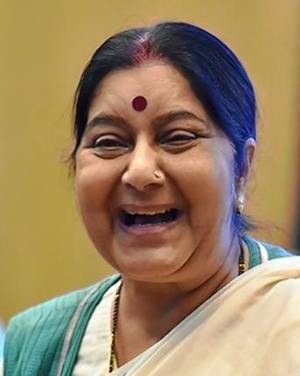
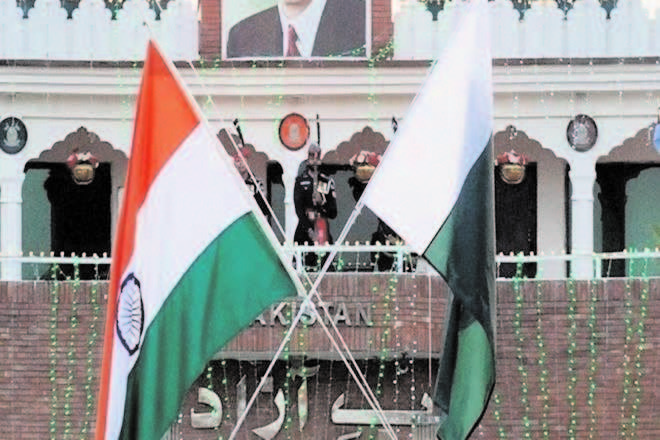
    NEW YORK(TIP): External Affairs Minister Sushma Swaraj emphasized to SAARC countries that an environment of peace and security in South Asia is essential for cooperation and economic development, but Pakistan accused India of obstructing the region’s progress and prosperity.

    Ms. Swaraj’s statement on Thursday, September 27, came at a meeting of South Asian Association for Regional Cooperation on the sidelines of the ongoing United Nations General Assembly session in New York.

    The SAARC grouping includes India, Pakistan and six other regional countries. It was established in December 1985 with an aim to promote the welfare of the peoples of South Asia.

    “An environment of peace and security is essential for regional cooperation to progress and achieve economic development and prosperity of our people,” Ms. Swaraj said at the SAARC Ministers Meeting.

    She said the number of incidents endangering South Asia are on the rise and terrorism remains the single-largest threat to peace and stability in the geopolitical region, and the world.

    “It is necessary that we eliminate the scourge of terrorism in all its forms, without any discrimination, and end the ecosystem of its support,” she said according to sources.

    Shortly after her statement, Pakistan Foreign Minister Shah Mehmood Qureshi told reporters that Pakistan wants to see SAARC become result-oriented.

    “We have to decide the next step. I have no hesitation in saying that in the way of SAARC’s progress and in the way of the region’s connectivity and prosperity, there is only one obstruction and one attitude. The attitude of one nation is making the spirit of SAARC and the spirit of the founding fathers of SAARC unfulfilled,” he said, without naming India.

    Asked if he had talks with Ms. Swaraj at the meeting, Mr. Qureshi denied. “She left the meeting mid-way, maybe she was not feeling well,” he said.

    He said Ms. Swaraj talked about regional cooperation, but “my question is how will regional cooperation be possible when the regional nations are ready to sit together, and you are the obstruction in that dialogue and discussion.”

    Mr. Qureshi said a majority of the members present in the meeting understands the significance of SAARC. “They want to move on. I can’t speak for them, but I can deduce from their body language, disappointment; because if you do not move on and if you do not sit and convene meetings how do you move on,” he said.

    He cited other regional groupings such as ASEAN and the EU and said “look at this (SAARC) atmosphere”

    He called Ms. Swaraj’s statement at the meeting “very vague”.

    He said “you said the next summit will not happen until there is conducive environment. How do you define what conducive environment is? It can vary from country to country.”

    Mr. Qureshi’s remarks came days after New Delhi cancelled a proposed meeting between foreign ministers of India and Pakistan in New York.

    India cited attacks by Islamabad-backed groups in Jammu and Kashmir and stamps released by Pakistan glorifying Kashmiri terrorists as reasons for cancellation of the proposed talks.

    SAARC member-states have previously said they view the strained relations between India and Pakistan as one of the reasons for the little progress achieved by the geopolitical grouping in recent years.

    Nepal And Sri Lanka have expressed interest in reviving the summit postponed in 2016 after New Delhi pulled out over Islamabad’s unrelenting support to terrorist activities in India and after Pakistan-based terrorists attack an Indian Army base in Uri.

    Bhutan, Bangladesh and Afghanistan had also joined India in boycotting the summit.

    SAARC summits are usually held biennially. The member-state hosting the summit assumes the Chair of the association. The last SAARC Summit in 2014 was held in Kathmandu, which was attended by Prime Minister Narendra Modi.

    (Source: PTI)

  • Trump says he prefers to keep Deputy A-G Rosenstein: Thursday Meeting postponed: White House

    Trump says he prefers to keep Deputy A-G Rosenstein: Thursday Meeting postponed: White House

    WASHINGTON(TIP): President Donald Trump has postponed his planned meeting with Deputy Attorney General Rod Rosenstein until next week, the White House announced on Thursday, September 27.

    White House press secretary Sarah Sanders said Trump spoke briefly with Rosenstein on Thursday and the two men agreed to meet next week to avoid interfering with the focus on the Senate Judiciary Committee’s hearings with Supreme Court nominee Judge Brett Kavanaugh and Christine Blasey Ford, who has accused Kavanaugh of sexually assaulting her when they were teenagers.

    “They do not want to do anything to interfere with the hearing,” Sanders said in a statement.

    Trump and Rosenstein were set to meet Thursday in person to discuss Rosenstein’s future in the administration after The New York Times reported last week that Rosenstein suggested secretly recording the President and attempting to remove him from office via the 25th Amendment.

    Trump signaled during a news conference on Wednesday that he might delay his meeting with Rosenstein, saying he might “ask for a little bit of a delay to the meeting, because I don’t want to do anything that gets in the way of this very important Supreme Court pick.”

    “I don’t want it competing and hurting the decision, one way or the other,” Trump said.

    Trump declined to say whether he had made up his mind on Rosenstein’s future in his administration but said he “would much prefer keeping Rod Rosenstein.”

    “We’ve had a good talk. He said he never said it, he said he doesn’t believe it. He said he has a lot of respect for me, and he was very nice and we’ll see,” Trump said. “We have caught people doing things that are terrible. I would much prefer keeping Rod Rosenstein, much prefer.”


  • India unhappy over Pak raising Kashmir at OIC

    India unhappy over Pak raising Kashmir at OIC

    NEW YORK(TIP): India has raised objections over Pakistan raking up the Kashmir issue at the Organization of Islamic Cooperation (OIC) meeting, saying it is completely “unwarranted” for the grouping as well as its member countries to discuss matters related to India’s internal affairs in any multilateral set up.

    Pakistan raked up the Kashmir issue at the OIC Contact Group meeting held Wednesday, September 26, on the sidelines of the 73rd session of the UN General Assembly.

    “We always note with regret that the matter which is very internal to Indian affairs was again discussed at the OIC,” Ministry of External Affairs spokesperson Raveesh Kumar told reporters here when asked about Pakistan raising the issue at the OIC meeting. He said India rejects such references to a matter which is very internal to it.

    “We have said in the past that OIC has no locus standi to comment on India’s internal affairs” and it is completely unwarranted for OIC as well as its member countries to discuss matters related to India’s internal affairs in any multi-organization set up.

    When asked about Pakistan’s Foreign Minister Shah Mehmood Qureshi also raising the Kashmir issue in his bilateral meetings on the sidelines of the UN General Assembly, Kumar said Islamabad has been doing this for a long time.

    “It is not the first time they are raising the issue in their bilateral meetings. You would note that what they come up with is their side of the story. What they share and what they say has no acceptance anywhere in the international community,” he said. He said Pakistan has realized its “falsehood” and what it has been projecting had already been rejected by the global community.

    (Source: PTI)

  • Ayodhya dispute: SC declines to refer to larger bench whether mosque is integral to Islam

    Ayodhya dispute: SC declines to refer to larger bench whether mosque is integral to Islam

    Hindu groups hail Supreme Court verdict.   ‘High-powered’ saints’ panel to decide future action on Oct 5

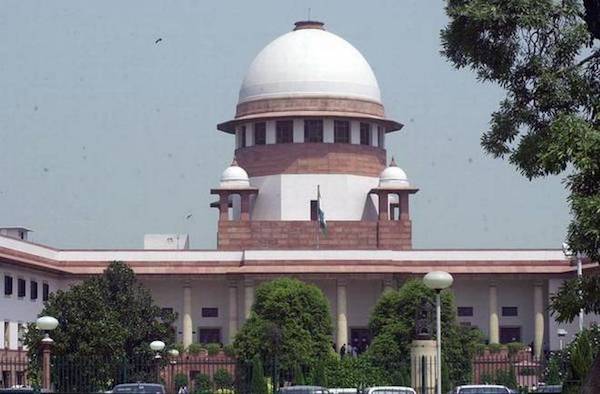
    NEW DELHI(TIP):  Hindu groups welcomed, September 28, the Supreme Court decision refusing to refer to a larger Bench its 1994 verdict that said mosque is not integral to Islam, thereby weakening the Sunni Wakf Board’s claim over the disputed land.

    The BJP’s ideological fountainhead RSS and its affiliate Vishwa Hindu Parishad expressed satisfaction while hoping for an early decision on the matter. Stating that all sorts of impediments to “delay the matter” (construction of a Ram temple at Ayodhya) have now been removed, VHP president Alok Kumar said the next course of action would be decided at a high-powered committee of saints on October 5.

    “I am satisfied that this impediment has been removed and the way is now clear for hearing of appeals in the title suits on Ram janmabhoomi. We feel all sorts of impediments were being put up to delay the main matter (construction of Ram temple), including pleas that the matter be heard after the 2019 Lok Sabha elections. We understand that the next hearing on the case has been fixed for October 29. The matter has been pending in the Supreme Court for long. We hope and expect that the SC will expeditiously hear the pleas,” he said.

    On whether the construction of the temple would begin before the 2019 elections, he said the two issues “were not related”. A high-powered committee comprising saints associated with the Ram janmabhoomi issue will gather on October 5 and take a call on the next course of action, he said.

    RSS office-bearers are expected to be present at the meeting to decide whether the matter should be left to the SC, Parliament or required fresh impetus. Notably, the issue related to the 1994 ruling has delayed the hearing in the title case. Now that the hearing will start on October 29, the most important implication of Thursday’s order could be speeding up of the title case. With less than a year to go for the polls, political observers see it as a “favorable” situation for the BJP, which had promised a “grand Ram temple “in its manifesto.

    Recently, RSS chief Mohan Bhagwat, while speaking at a Sangh conclave “Bhavishya Ka Bharat — An RSS Perspective”, was also clear that a grand Ram temple should be constructed at Ayodhya as soon as possible. Rather, it should have been built by now, he had said.

    “It (Ram temple) is the question of faith of crores of Hindus, it should have happened by now. It is only right that a grand Ram mandir is built at the place Bhagwan Ram was born. The building of the temple will end a major issue of friction between Hindus and Muslims. And if it is done amicably, it will automatically silence those who point fingers at the Muslim community,” Bhagwat had said.


  • She said, He Said at Senate Judiciary Committee Hearing of the Accuser and the Accused

    She said, He Said at Senate Judiciary Committee Hearing of the Accuser and the Accused

    Feared being raped, killed’, says the accuser Dr. Ford. The accused SC Nominee Kavanaugh proclaims innocence, terms it a smear campaign against him

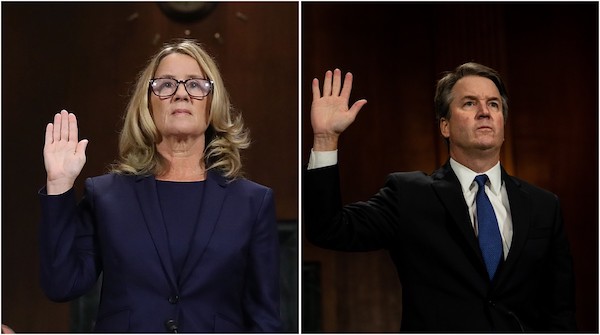
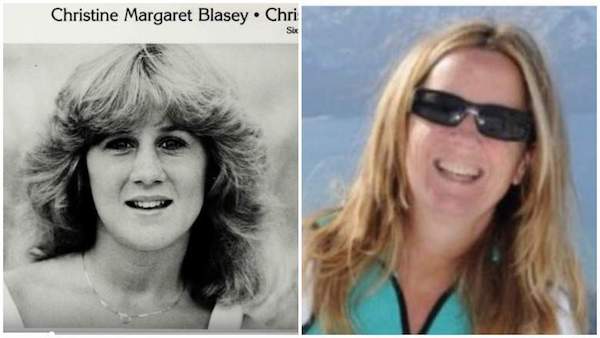
    WASHINGTON(TIP): Dr. Christine Blasey Ford, a university professor on Thursday, September 27, detailed her allegations that Brett Kavanaugh, President Donald Trump’s Supreme Court nominee, sexually assaulted her 36 years ago, saying she thought he was going to rape and perhaps accidentally kill her, during a dramatic US Senate Judiciary Committee hearing.

    Christine Blasey Ford, whose voice sometimes cracked with emotion, testified to the Senate Judiciary Committee during a hearing that could determine whether Kavanaugh will be confirmed to the lifetime job after a pitched political battle between Trump’s fellow Republicans and Democrats who oppose the nominee.

    “With what degree of certainty do you believe Brett Kavanaugh assaulted you?” Democratic Senator Richard Durbin asked Ford. “One hundred per cent,” she replied, remaining firm and unruffled through hours of questioning.

    Ford said “absolutely not” when Democratic Senator Dianne Feinstein asked her if it could be a case of mistaken identity.  The hearing, which has riveted Americans and intensified the political polarization in the United States, occurred against the backdrop of the #MeToo movement against sexual harassment and assault. Kavanaugh has been accused of sexual misconduct by two other women as well. He has denied all the allegations.

    While some Republicans and Trump have called the allegations by Ford and two other women against Kavanaugh part of a smear campaign, Ford told the committee, “I am an independent person and I am no pawn.”

    Democratic senators, who praised the credibility of her testimony and called her brave for coming forward, sought to score political points during their five minutes apiece of questioning Ford. The panel’s Republican senators, all men, did not question her, assigning that task to Rachel Mitchell, a sex crimes prosecutor.

    While Mitchell sought to probe Ford’s account including any gaps in her story, her questioning seemed disjointed because she took turns with the Democratic senators to ask questions in five-minute segments, disrupting her flow.

    “The first thing that struck me from your statement this morning was that you are terrified. And I just wanted to let you know, I’m very sorry. That’s not right,” Mitchell said.

    Ford, a psychology professor at Palo Alto University in California, said a drunken Kavanaugh attacked her and tried to remove her clothing at a gathering of teenagers in Maryland when he was 17 years old and she was 15.

    Brett groped me and tried to take off my clothes… he was very inebriated. I believed he was going to rape me. I tried to yell for help. Brett put his hand over my mouth. — Christine Blasey Ford

    Under questioning from Feinstein, Ford said she has suffered from claustrophobia and anxiety, adding her strongest memory of the incident was the “uproarious laughter between the two (Kavanaugh and Judge) and their having fun at my expense.”

    Judge Brett Kavanaugh, in his testimony before the Senate Judiciary Committee, proclaimed his innocence.

    In a passionate defense, the 53-year-old conservative judge insisted before the Senate Judiciary Committee that it never happened, accused Democrats of destroying his reputation and condemned his confirmation battle as a “national disgrace” and a “circus.”

    “Judge Kavanaugh showed America exactly why I nominated him,” the President tweeted just minutes after the close of the hearing.

    “His testimony was powerful, honest and riveting,” Mr. Trump said. “Democrats’ search and destroy strategy is disgraceful and this process has been a total sham and effort to delay, obstruct and resist. The Senate must vote!”

    Senate Majority Leader Mitch McConnell said Mr. Trump would get his wish, with the Judiciary Committee — which has 11 Republicans and 10 Democrats — set to vote on its recommendation Friday before the nomination goes to the full Senate, where Republicans hold a slim 51-49 edge.

    “We’re going to vote in the morning and we’re going to move forward,” Mr. McConnell told journalists.


  • September 28 New York & Dallas Print Editions

    September 28 New York & Dallas Print Editions

    [vc_row][vc_column][vc_column_text]

    Print Replica ~ Digitally

    E-Editions

    [/vc_column_text][/vc_column][/vc_row][vc_row][vc_column width=”1/3″][vc_custom_heading text=”New York Edition” font_container=”tag:h2|text_align:center” google_fonts=”font_family:Istok%20Web%3Aregular%2Citalic%2C700%2C700italic|font_style:700%20bold%20regular%3A700%3Anormal” link=”url:https%3A%2F%2Fwww.theindianpanorama.news%2Fwp-content%2Fuploads%2F2018%2F09%2FTIP-September-28-NYC.pdf|||”][vc_single_image image=”94727″ img_size=”full” add_caption=”yes” alignment=”center” onclick=”custom_link” link=”https://www.theindianpanorama.news/wp-content/uploads/2018/09/TIP-September-28-NYC.pdf”][/vc_column][vc_column width=”1/3″][vc_custom_heading text=”Dallas, Texas Edition” font_container=”tag:h2|text_align:center” google_fonts=”font_family:Istok%20Web%3Aregular%2Citalic%2C700%2C700italic|font_style:700%20bold%20regular%3A700%3Anormal” link=”url:https%3A%2F%2Fwww.theindianpanorama.news%2Fwp-content%2Fuploads%2F2018%2F09%2FTIP-September-28-Dallas-TX.pdf|||”][vc_single_image image=”94728″ img_size=”full” add_caption=”yes” alignment=”center” onclick=”custom_link” link=”https://www.theindianpanorama.news/wp-content/uploads/2018/09/TIP-September-28-Dallas-TX.pdf”][/vc_column][vc_column width=”1/3″][vc_single_image image=”82828″ img_size=”medium” alignment=”center” onclick=”custom_link” link=”https://www.theindianpanorama.news/advertising-media-kit-portal-indian-panorama/”][vc_single_image image=”82829″ img_size=”medium” alignment=”center” onclick=”custom_link” link=”https://www.theindianpanorama.news/advertising-media-kit-portal-indian-panorama/”][/vc_column][/vc_row][vc_row][vc_column][td_block_ad_box spot_id=”custom_ad_3″ tdc_css=””][/vc_column][/vc_row][vc_row][vc_column width=”2/3″][vc_custom_heading text=”Lead Stories This Week” font_container=”tag:h2|text_align:center” google_fonts=”font_family:Istok%20Web%3Aregular%2Citalic%2C700%2C700italic|font_style:700%20bold%20regular%3A700%3Anormal” link=”url:https%3A%2F%2Fwww.theindianpanorama.news%2F|||”][td_block_5 separator=”” limit=”12″ tdc_css=””][/vc_column][vc_column width=”1/3″][vc_widget_sidebar sidebar_id=”td-default”][/vc_column][/vc_row]

  • The Curious Case of Constellation Healthcare  Criminal Investigation

    The Curious Case of Constellation Healthcare Criminal Investigation

    EDISON, NJ (TIP): Paul Parmar, the embattled ex-CEO of bankrupt Constellation Healthcare Technologies Inc, alleges he has been the victim of a sophisticated investor’s takeover scheme that has roots in profiting from a “fraudulent” bankruptcy.

    Parmar of Colts Neck, NJ, along with former Constellation CFO Sotirios Zaharis and Ravi Chivukula, a former executive director of the company, was charged in May this year by the U.S. Securities and Exchange Commission with conspiracy to commit securities fraud and securities fraud. Parmar’s charges included the scheme to falsely inflate Constellation’s value to induce an investment firm to buy his company.

    Chinh Chu, a former Blackstone senior executive, purchased Constellation last year, through his investment firm CC Capital.

    Constellation filed for bankruptcy in March 2018, claiming that some of the businesses it had purchased while Parmar was in charge were fictitious.

    Parmar alleges in court documents that Chu pushed Constellation into bankruptcy and then rigged the subsequent auction of assets to his benefit, so he could purchase Constellation after bankruptcy proceedings at a fraction of the actual value.

    The SEC has launched a parallel civil action into Parmar and his associates. Separately, the United States has filed a civil complaint seeking forfeiture of four properties that Parmar owns or controls, including a house in Colt’s Neck, NJ and three apartments in New York City.

    “There is more than what meets the eye,” says Parmar’s attorney Timothy Parlatore. “The direction and intent of Chinh Chu and CC Capital’s various court actions raise more questions than answers.”

    In court documents, Parlatore, says “rather than conducting a full, complete and independent investigation, the DOJ and SEC were hoodwinked by Chu into bringing these specious claims against Mr. Parmar.”

    Parlatore further explains the case against his client in what he believes involves a unique set of intriguing circumstances.

    Firstly, despite the government bringing a separate civil suit against Parmar, Parlatore says in court documents, that the DOJ is now surprisingly seeking a stay in the civil case on the theory that if the SEC were required to respond to a motion to dismiss by Parmar, their response would damage the “integrity” of the criminal prosecution.

    “It is understandable that the Government is concerned that the more expansive rules of discovery that the civil rules permits would significantly decrease their chances of convicting Mr. Parmar because a full discovery process will help to establish that Mr. Chu is the true architect of the fraud, not Mr. Parmar,” Parlatore submitted in his brief to the US District Court in New Jersey.

    He also pointed out that it was highly implausible and strategically convenient that a highly sophisticated investor like Chinh Chu could spend $7 million on due diligence and then make an investment decision to acquire Constellation based just on a few inaccurate statements made very early in the process by Parmar, rather than the mountains of data that were subsequently provided. What Parlatore implied was how an investor could just rely on any management reports or documents after such an extensive due diligence?

    In court papers, Parmar’s lawyers have also laid out what they believe is a critical omission on part of Chinh Chu. In the middle of the due diligence process, Constellation received a series of questions from a reporter at the Financial Timesasking about the legitimacy of the acquisitions made earlier by Constellation. Once the Financial Timesarticle was published, it discussed the empty shells, concluding that “the cat’s cradle of corporate entities and generalized opacity across Constellation’s operations could be seen as a red flag to potential investors and financial journalists alike.”

    While such an article would normally cause a deal like this to be derailed or delayed to perform additional due diligence, Chinh Chu incredibly had the opposite reaction, demanding to immediately close the deal. Apparently, Chinh Chu felt no fiduciary duty to either the banks or his investors to investigate and assess the allegations raised in the article, court documents say.

    Interestingly, just as reported in the Financial Timesarticle, Parlatore says in court documents, that while Chinh Chu was alleging fraud in his court submission about Parmar’s empty shell companies, he conveniently failed to mention that subsequently, Parmar bought four more companies without raising any additional funds and the combined financials of these acquisitions were far greater than the “empty shells.”

    “Chu wants the government and the world to focus on a selective time window where his allegations might look real, but in a larger context those allegations are baseless” Parlatore replied when asked to comment about the case.

    Parlatore also pointed out that while Parmar was arrested on May 16, 2018, there had been no progress in the ensuing four months and that the Government had not yet obtained an indictment of Parmar.  Although the time to file an indictment had been extended twice, no discussions have occurred, and the Government had made no offers to settle the case.

    Parlatore said he is also seeking to dismiss the federal forfeiture claim against Parmar, and that Parmar’s bankruptcy counsel is working to dismiss adversary claims against him in bankruptcy court over the merger and the alleged fraud.

    In the government’s forfeiture claim, Parlatore points out what he believes is gross misrepresentation. Although the government seeks forfeiture of four properties based on a theory that they represent the proceeds of illegal activity, amounting to securities fraud and money laundering, in court filings it is clearly established that three out of these four properties were purchased or refinanced prior to any alleged violation of US law.

    At press time, representatives of CC Capital, and Chinh Chu did not immediately respond to requests for comments.

  • International Peace Bridge Connecting Kartarpur in Pakistan and Dera Baba Nanak in India

    International Peace Bridge Connecting Kartarpur in Pakistan and Dera Baba Nanak in India

    By Harbans Lal, Ph.D.; D.Litt. (Hons)

    World will be celebrating 550thbirth anniversary of the Fist Master of the Sikhs, Shri Guru Nanak Dev Ji in the year 2019. The Indian Panorama is launching from the current edition a series of articles by eminent scholars on Guru Nanak.

    The first in the series is an article by eminent Sikh scholar Dr. Harbans Lal.

    Dr. Lal in the present article pleads for a corridor to connect Gurdwara Darbar Sahib at Kartarpur in Pakistan’s Narowal district with Gurdwara Dera Baba Nanak Sahib on the Eastern side of the river Ravi, saying it will be a befitting tribute to Guru Nanak on his 550th birth anniversary in the Year 2019.  – Editor        

    In the past few days, Punjab minister Navjot Singh Sidhu brought good news. He announced that the Pakistan Army Chief Gen Qamar Javed Bajwa had told him that Islamabad would open a corridor to connect Gurdwara Darbar Sahib at Kartarpur in Pakistan’s Narowal district with Gurdwara Dera Sahib on the Eastern side of the river Ravi. This was a gesture on the 550th birth anniversary of Guru Nanak in the Year 2019.

    General Bajwa’s announcement expressed the honest and far-sighted view of the newly elected Pakistan Prime Minister, Imran Khan – who confirmed the promise soon after by a direct statement from the Prime Minister’s office.

    Navjot was not alone, the Chief Minister of Punjab Sardar Amarinder Singh was right behind the long-awaited gestor between the two countries. They have already submitted a letter of proposal to the Government of India on their corridor plan.

    India and Pakistan have been at each other’s throat for the past seven decades. The wounds of partition were not tending to heal. Instead, they were waiting for the skies to open to shower any healing balm from the above. The 550th year of Guru Nanak’s advent may well be such a juncture.

    Gurdwara Karatapur Sahib

     Guru Nanak was born at Talwandi that was later named after him as Nanakana. It is only 170 km from the West banks of the river Ravi, where Guru Nanak established the town of Kartarpur and spent last 18 years of his life. There, he founded a worldwide movement which is now known as Sikhism.  That, in turn, made Kartarpur Gurdwara as the Sikhs’ most sacred and most historic Gurdwara, akin to Holy Medina for the Muslim world. Besides, Kartarpur is holy to not only Sikhs but to civil societies at large because of the universal peace message that its unique history imparts for all civil societies.

    Kartarpur is situated on the Western banks of river Ravi. Across from Kartarpur on the Eastern banks of Ravi is the town of Dera Baba Nanak, where Guru Nanak visited often. His in-laws lived there, and Guru Nanak’s family was taken care in the same city during his long journeys.

    Gurdwara Dera Baba Nanak Sahib

    For centuries during and after the days of Guru Nanak, devotees routinely traveled both ways on the bridge across Ravi to pay obeisance to Gurdwaras in Kartarpur and Dera Baba Nanak. They visited there for daily prayers and inspirations as well as to touch the dust of the land where Guru Nanak ingrained his footsteps.

    A Painting of Kartarpur Bridge. The road and railroad bridge connecting the two holy shrines was constructed by the British Govt, around 1927 AD.

    However, the war between Pakistan and India broke out, and this sacred bridge became a casualty; the air-force bombed it for defense reasons. Although the war was only short-lived, the loss of the bridge was forever to the agony of all lovers of Guru Nanak; the offending government never rebuilt the fatally damaged bridge. Soon after the war, Sri Nanakana Sahib Foundation under the leadership of Sardar Ganga Singh made as its agenda to restore the corridor bridge.

    At the Annual meeting of the Nanakana Foundation at its 25th Anniversary in Lahore, we resolved to ask for the reconstruction of the bridge and constituted a delegation under the leadership of Sardar Ganga Singh to meet with the President of Pakistan and other Pakistani authorities. It was so done. The Sikh delegation met with the President of Pakistan and other Pakistani authorities to move forward our proposal. Similarly, we held a National conference of the Pakistani Muslim Ulemas (Islamic religious scholars) in Lahore to establish the Muslim-Sikh Itehad (unity) organization in order to promote the issue further

    International delegation of Sikhs in Pakistan

    The international representatives who took active part in the deliberations in Lahore meetings included, Col. Chaudhary Hamid Ali, President Nanakana Foundation, Sardar Ganga Singh Dhillon, Dr. Bhai Harbans Lal, Sardar Joginder Singh advocate, Sardar Hukam Singh, Sardar Harbhajan Singh, Sardar Kesar Singh Dhaliwal, Sardar and Sardarni Bawa Ujagar Singh, Bibi Kanwaljit Kaur, Sardar Balwant Singh Goraya, Sardar Kesar Singh, Sardar Kartar Singh Bal, Sardar Bhupinder Singh, Sardar Satnam Singh Bhugra, Sardar Gyan Singh, Sardar Harpal Singh Bhullar, Sardar Perminder Singh Soch and others.

    (My apology for the names that I have forgotten since the Lahore conference, and group photos including everyone that I do not have in my records-HL).

    Among other issues of the free excess to the Sikh shrines in Pakistan, we asked that a corridor bridge is built and designated as the Baba Nanak International Peace Bridge.  We explored various avenues for the construction and financing the International Peace Bridge on Ravi to connect the two Sikh historical sight. At this time, the Pakistan Govt had already announced the formation of the Pakistan Sikh Gurdwara Parbandhak (management) Committee. The Govt. thus was friendly towards our proposals.

    It is at about the same time; the then Indian Prime Minister Atal Bihari Vajpayee visited Pakistan on the opening of the Delhi-Lahore bus service. His inner circles told us that he talked about the corridor issue with Pakistan Government. Obviously, these conversations were perhaps off the record. Perhaps because of all these pressures that, in November 2000, on the birthday of Guru Nanak, a proclamation was held in Lahore that the Government of Pakistan was ready to make collaboration on the corridor project if there was a positive response from the Government of India.

    It was on that occasion that with the help of Sardar Harbhajan Singh of the World Bank office in Washington DC, our delegation also met with the World Bank authorities in Pakistan. There, in response to our proposal of the Guru Nanak International Peace Bridge, we were told that the World Blank could advance a loan of up to 15 million dollars to build the International Peace Bridge. The caviar was that both Pakistan and India had to consent and apply for the loan together. Initial inquiries told us that it would not be possible to have Govt. of India to support the bridge on account of security concerns.

    There was no follow up of the proposals and announcements of those years on the governmental level to my knowledge. Despite all demands, due to a non-mutual agreement between the two sides, the joint corridor has not been undertaken. Although, it is often claimed that both the governments of the two sides are showing strenuous efforts to initiate a peace process. Since the diplomatic view of both sides is not clear, the plan for this project is not succeeding.

    In 2001, an old colleague of the All India Sikh Students’ Federation, Jathedar Kuldeep Singh Wadala founded ‘Kartarpur Sahib-Ravi Darshan Abhalashashi Sanstha’ in order to raise the public consciousness in both Punjabs. He spoke at numerous public meetings and widely distributed literature supporting this issue. After this, nearly half-a-dozen organizations sprang up into action to realize this goal of building the corridor.

    Waiting for three-quarters of a century to travel around two miles, the news from our current Sikh Punjab ministers, Navjot Singh and Amarinder Singh, is very welcome news. Nearly 300 million admirers of Guru Nanak all over the world are very jubilant; they will be more so when they walk over the peace bridge in the name of Guru Nanak.

    Presently Sikhs in India visit the Indian side of the river Ravi to have a glimpse of the Gurdwara Kartarpur located on the Pakistani side of the river. They use binoculars provided by the security forces. This is all because of the wrangles in obtaining visas. The Baba Nanak International Bridge will be not only a welcome gesture for the Sikhs all over the world, but it will enhance the psyche of the peace process in the subcontinent.

    Let us pray that Pakistani Naval Chief General Qamar Javed Bajwa and Punjab Cabinet Minister Navjot Singh Sidhu succeed in the efforts they jointly initiated. When the bridge is complete, its name as The Baba Nanak International Peace Bridge will be very appropriate. Sri Nanakana Sahib Foundation conceived this name in 2000 to pay homage to the Guru Nanak’s efforts across the continents to unite the warring communities in South East Asia and the Islamic countries.

    Visit for articles on Sikhism, Dr. Harbans Lal’s Blog https://seekingwisdomblog.wordpress.com/

    Dr. Lal can be reached at Japji2050@gmail.com


  • The UN Shudders as ‘Trump Week’ Closes in

    The UN Shudders as ‘Trump Week’ Closes in

    NEW YORK(TIP): A year after his bombastic debut at the United Nations as president of the United States, Donald Trump returns on Monday, Sept. 24, to lead a US effort to spur global action to stem the narcotics and opioid plagues. Could the US be asking the UN for help this time?

    The morning meeting on drugs on Monday, in which Secretary-General António Guterres is also scheduled to speak, may be a soft landing in New York for Trump. On Tuesday morning, Sept. 25, he will address the opening session of the 73rd General Assembly, the centerpiece of his visit and his opportunity to vent about his enemies, his friends and the organizations he disparages. The audience will be politely hunkered down.

    On Wednesday, Sept. 26, however, diplomats and commentators expect a potentially explosive scene in the Security Council when Trump will take the Council president’s chair, coincidentally held by the US for September. He could turn the occasion into a sustained attack on Iran and a defense of his decision to withdraw from an internationally backed nuclear deal with the Iranians.

    On Sept. 4, Nikki Haley, Trump’s loyal ambassador and accomplice at the UN, told reporters in a televised briefing there that the Sept. 26 Council meeting would be solely about Iran. She acknowledged that under Council rules the meeting would give the Iranians the right to speak in their defense.

    A personal confrontation between Trump and an Iranian official, possibly President Hassan Rouhani, and tense arguments with Europeans and other supporters of the Iranian deal apparently caused a scramble in the White House to change how to define the Council meeting. The scramble seems to confirm recent reports that high-ranking officials close to the president have been working behind the scenes to curb his worst instincts for his compulsive behavior and combative language — especially weeks before the US midterm elections.

    The description of the Council meeting has been broadened to circumvent a direct Iranian role. “In addition to addressing Iran’s destabilizing aggression and sponsorship of terrorism, the President will address a broader range of issues given the challenges facing the world at this time,” the US mission at the UN says. “During the Security Council meeting, the President will address the proliferation of weapons of mass destruction, including chemical, biological, and nuclear weapons and ballistic missiles.”

    That change doesn’t guarantee there won’t be arguments over the 2015 Iran nuclear agreement, formally titled the Joint Comprehensive Plan of Action, which took five years to negotiate as the best hope for curtailing nuclear-weapons development by Iran. The deal is supported by all four other permanent Council members — Britain, China, France and Russia– and the European Union well as Japan. The US has also reimposed sanctions on Iran unilaterally, ignoring Council resolutions.

    If Trump expects to change opinions on his Iran policy, which is strongly opposed by many critics among member nations and officials of the UN, he is likely to meet a stone wall from the agreement’s supporters, who are struggling to save the deal. Even President Vladimir Putin of Russia expressed his opposition to Trump’s policy publicly after meeting Trump in Helsinki on July 16.

    The Reuters news agency reported recently that Russia’s Deputy Foreign Minister Sergei Ryabkov said early in September that Washington was “mistaken” if it thinks it can change any minds. He predicted that “the Americans won’t have an easy walk at this meeting.”

    In addition, European firms that stop doing business with Iran because of reimposed US sanctions could be sanctioned by the European Union, a special adviser to the bloc’s top diplomat warned in August.

    It would not be an overstatement to say that Trump’s reputation for erratic pronouncements, his often-voiced contempt for international institutions and bullying will make his presence a focus of much attention at UN headquarters. The UN has never known an American president quite like Trump.

    Sacha Sergio Llorentty Soliz, the ambassador of Bolivia to the UN, a  current Security Council member from a country frequently critical of the US, said in an interview with PassBlue that he didn’t want to speculate how Trump could be received, “But for us, regardless of what he says, what we’ve seen in the last year and a half is a complete disregard of international law, multilateralism and the use of the UN as a lemon so to speak: they squeeze it, get as much as they can and throw it away.”

    Stephen Schlesinger, who wrote the classic history of the founding of the UN, “Act of Creation,” and a leading analyst of the organization’s story over seven decades since, is not optimistic about Trump’s visit.

    “Trump’s appearance at the UN is going to be a bizarre and troubling spectacle for the organization — perhaps somewhat like Hugo Chavez’s strange and erratic performance at the UN when he claimed he smelled sulfur in the room in reference to George W. Bush,” Schlesinger said in an email exchange.

    “By now, most member nations of the UN know that Donald Trump, the leader of the most powerful nation on earth, is a troubled man with a disordered mind,” he added. “He is a proven liar, a compulsive braggart and a thoroughly unpredictable chief executive. These are not the traits normally associated with the individual who runs one of the greatest democracies on the planet.”

    “It is clear that Trump intends to focus all of his energies in his UN appearances on condemning Iran, using the presidency of the Security Council as his base of attack,” Schlesinger added. “He openly plans to step into a hornet’s nest of opposition from practically all the members of the Council.”

    On US policies and actions in the Middle East — which Secretary-General Guterres has said disqualify the Trump administration from being an impartial mediator — Trump has aligned the US squarely behind the Israeli government of Prime Minister Benjamin Netanyahu, including on Iran. The US has also cut off most aid to Palestinians and closed their office in Washington. These actions are being criticized from within the American Jewish population by the liberal pro-Israeli, pro-peace group J Street, which also opposed the recognition of Jerusalem as Israel’s capital and the relocation of the US Embassy there, moves overwhelmingly rejected by UN member nations in a vote in the General Assembly last December.

    Media reports and polls testing what effect Trump foreign policies may have on his mostly conservative, largely rural voting base in the US are suggesting that voters in agricultural states, while mainly supportive of the president’s tough-guy approach, are concerned about loss of income from corn, soybeans and pork exports as Trump’s self-imposed tariff wars begin to backfire on them. The impact, or not, of this issue will be tested in the midterm American elections in early November, when members of Congress are up for election. He needs distractions.

    “Most of all Trump’s address to the UN is about appealing to his conservative voter base,” Schlesinger wrote. “He will assert that his policies have reversed all of the weak-kneed actions of the Obama Administration; that he has rebuilt the US military; that he has re-established US primacy and prestige around the globe. But, for the UN, his delusional avows of ‘winning’ around the globe, most UN delegates will privately shake their heads at his nonsensical claims and just try to figure out how best to get through the next two years of his term without suffering too much further damage to themselves and to the UN.”

    On the domestic American scene generally, there is increasing alarm about a very different issue: the opioid crisis that is killing more people every year. This is where Trump’s sideline event on Sept. 24 on drugs and crime fits into his UN headquarters agenda, and where the US is asking — indeed demanding — the world’s help.

    The grandly titled “Global Call to Action on the World Drug Problem,” the subject of the US event, has 33 co-sponsors from mostly Asian, African and Latin American nations, a number of which vote reliably with the US at the UN. The document they are promoting essentially if subtly accuses other countries and UN convention-monitoring bodies and drug agencies of not doing enough to stop the manufacture and transfer of drugs.

    No mention is made in the call to action about the consumer market in the US that feeds much of the illicit manufacture and export abroad; there is only a glancing reference to reducing demand everywhere.

    The demand the US will make at the UN echoes a three-pronged US national program unveiled by the White House in March, calling for improvements in education and prevention, treatment and recovery and law enforcement and interdiction, including across borders. Early this year, the US Department of Justice unveiled its first indictments against Chinese makers of Fentanyl, a powerful narcotic painkiller that, when abused, leads to addiction.

    At the Sept. 24 UN meeting called by the Trump administration, according to the draft program circulated among UN diplomatic missions, there will be a few speeches and a group photograph: good for the Trump base. In the 45 minutes scheduled for the morning event, the US will commit, at least on paper, to global cooperation after more than a year of insulting, belittling and threatening international institutions. As of this writing, 113 nations have backed the Trump event, including Mexico but not Canada.

    As Trump Week approaches, the 193 member nations of the UN and organization officials have no illusions about the US president’s unpredictably, irrationality and capacity to offend — changing his mind and his targets, at will. Last year, Kim Jong Un, the abusive dictator of North Korea, was “little rocket man” on a suicide mission and in peril of having his country wiped off the face of the earth. This year, Kim is an honorable man and trustworthy buddy, with a second summit being planned. (Kim is not scheduled to speak at the UN General Assembly.)

    The US State Department just announced that Secretary of State Mike Pompeo intends to lead a UN Security Council meeting on North Korea on Sept. 27, to reinforce UN sanctions.

    Repeating his America First mantra to the world in the General Assembly in 2017, Trump extended his fierce defense of national sovereignty for all counties but not to ones he did not like, freely threatening them. He left some government leaders and diplomats in the audience gasping.

    This year, when Trump is again reported to speak about sovereignty, the audience in the General Assembly will be on guard, more so because when Trump arrives in New York, he will be leaving behind a White House in administrative shambles, rocked by scandals and shadowed by an unprecedented investigation into possible acceptance of Russian aid in securing a win in the 2016 presidential election.

    He could choose to air his litany of grievances with the rest of the world, but he wouldn’t find much sympathy.

    (Source: Passblue.com)


  • Indian American former US ambassador comes out in support of Preston Kulkarni

    Indian American former US ambassador comes out in support of Preston Kulkarni

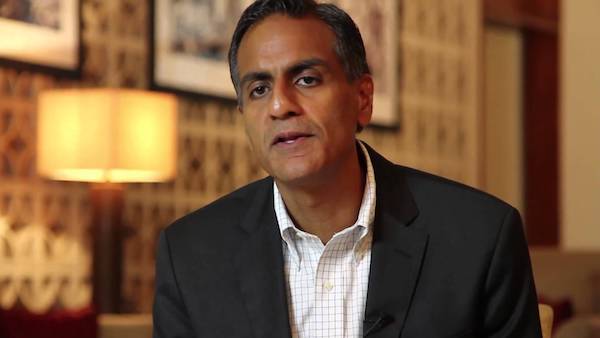
    HOUSTON, TX(TIP): Indian American Democrat Sri Kulkarni has received a helping hand from an ex-colleague at Foggy Bottom, former US Ambassador to India Richard Verma.

    Verma, the first and the only Indian American who served as a US ambassador in India, Wednesday, September 19,  sent out an email on behalf of Kulkarni requesting campaign donation and help to elect the Texan.

    Highlighting Kulkarni’s 14-year stint at the Department of State, Verma stated in the email, “Today, more than ever, we need leaders like Sri who will champion diplomatic solutions and put country over politics.”

    The 22nd district, which includes several Houston suburbs, has the largest Indian American population in the state. A quarter of the district’s population is Hispanic and Asian Americans comprise 18 percent.

    If he wins, Kulkarni will become the first Indian American congressman from Texas.

    Verma served as US ambassador to India from 2014 to 2017. He is currently a vice chairman and partner at The Asia Group, which provides strategic and business advisory services to companies and organizations working in Asia.

    Verma’s email:

    “I want to tell you about my friend, Sri Kulkarni. Sri and I both served at the State Department together when I was the U.S. Ambassador to India — Sri is a proven leader who has served his family, community, and country for his entire life.

    Sri represented America for 14 years as a Foreign Service Officer with overseas tours in Iraq, Israel, Russia, Taiwan and Jamaica. He then served as a foreign policy and defense advisor on Capitol Hill assisting Senator Kirsten Gillibrand on the Senate Armed Services Committee.

    Sri has spent his career fighting to ensure that American values are represented in our foreign policy. Now, he’s returned to Texas to fight for them here at home.

    Today more than ever, we need leaders like Sri who will champion diplomatic solutions and put country over politics. Make a contribution of $25, $50 or $100 right now to help Sri share his message with voters in TX-22 and bring his diplomatic experience to Congress.

    Sri isn’t just talking about our values: he’s acting on them right now. His team is committed to expanding voter turnout in their district and has volunteers reaching out to people in over a dozen languages. He is committed to making sure that everyone’s voice is heard in our democracy.

    But with only 48 days left until the election, we’re running out of time to make sure everyone in Sri’s district hears his message. Make a contribution of $25, $50, $100 or whatever you can, and let’s help Sri fight for our values in Congress.

    Rich Verma

    United States Ambassador to India, 2014-2017”

  • Illegal immigrants among 8 killed in Arizona head-on crash, officials say

    Illegal immigrants among 8 killed in Arizona head-on crash, officials say

    NEW YORK (TIP): A head-on collision in Arizona Wednesday, September 19 night killed eight people, including some undocumented immigrants, officials said.

    The two-vehicle crash happened around 10 p.m. on State Route 79 south of Florence, Arizona, a news release from the state’s Department of Public Safety said. The area is more than 120 miles north of the Mexico border.

    A Chevy Suburban with nine individuals inside was driving north on the highway before a Buick traveling the opposite direction slammed into it, officials said.

    “It is unknown why the southbound Buick went left of center and collided head on with the Suburban,” officials said.

    The deceased individuals in the Chevy Suburban were the driver, front seat passenger and four other riders – who were illegal immigrants, according to the news release.

    The remaining three passengers – also illegal immigrants – sustained “serious to life-threatening injuries” and were transported to nearby hospitals, officials said.

    “Of the nine occupants in the Suburban, the driver, front seat passenger and four additional passengers were killed as a result. Three other passengers are at area hospitals with serious to life-threatening injuries,” the news release said. “The driver and front seat passenger are U.S. citizens and the additional seven occupants are undocumented immigrants.”

    Authorities, with the help of the Department of Homeland Security (DHS), are trying to identify the deceased individuals in order to notify their families.

    Two people in the Buick – the driver and the person riding in the front seat – also died, officials said, adding that “troopers are working to make next-of-kin notifications.”

    (Source: Fox News)


  • Florida architect building home from old shipping containers: report

    Florida architect building home from old shipping containers: report

    NEW YORK(TIP): It was a few years ago, in 2011, when a Bangalore-based sports instructor, Kameshwar Rao, decided to build a house with containers, which are used to haul cargo in ships. He felt it was better than building an RCC house.

    And now it is a man in Florida, USA  in 2018, Asghar Fathi who is building a dwelling house with containers in Davie, Florida, which he plans to live in alongside his family, he told the Sun Sentinel in a report Wednesday, September 19.

    Elizabeth Zwirz of Fox news in a story quoted Fathi as describing the project materials as “recycling,” Fathi said he was hoping “to make an example” of the house.

    “It’s my own home,” he told the outlet. “I am going to live in it.”

    After the 3,000-square-foot residence is finished in a few months, it’ll have several bedrooms and living spaces, as well as a carport and an outdoor deck, according to the Sentinel. It’ll also reportedly be constructed to withstand natural forces, like a hurricane.

    “This is sustainable, economical and easy to put together if you have the right crew,’’ Fathi said. “It will be hurricane- and termite-proof.”

    And with the addition of windows and stucco to the home’s exterior, “you won’t be able to tell there was a container here,” Fathi said.

    The shipping container home has become a “passion” for Fathi, who told the outlet that he pulled from the work of architect Frank Lloyd Wright.

    “He tried to standardize materials, so everyone can do it,” Fathi said. “I am basically following his footsteps with a different material so people can have a home without spending millions and millions of dollars.”

    The price tag for the venture is anticipated to come in at around $250,000 at completion, he told the Sun Sentinel.

  • Film Maker, Entrepreneur and Ayurveda Speaker Tirlok Malik speaks to senior citizens:  Understand golden years and retirement, and be better lovers of life

    Film Maker, Entrepreneur and Ayurveda Speaker Tirlok Malik speaks to senior citizens: Understand golden years and retirement, and be better lovers of life

    LONG ISLAND, NY(TIP): The Indian American Forum, one of the oldest organizations of Indian Americans on Long Island, NY has organized a seminar for senior citizens on September 25, 2018, from 10 AM. at Bethpage Senior Community Center, located at 103 West Gruman Road, Bethpage, NY 11714.

    Tirlok Malik, an Ayurveda Lifestyle Speaker and Motivational Guide, will speak to the Seniors and tell them how to use the tools of Ayurveda for complete balance—mind, body, and spirit—as well as how to apply the concept of Indian Philosophy to achieve, health and happiness.

    Tirlok Malik lives a healthy lifestyle. He is the creator of the successful Ayurveda Café New York in 1998. He also had Ayurveda Center on the Upper West Side of Manhattan for 15 years and has been a speaker at various events and expos.

    As the CEO of Apple Productions, he has produced many films since 1990 starting with “Lonely In America” which was shown in 74 countries, as well as on HBO and at 37 international film festivals.

    For more information about the seminar, please contact:

    Nirmala Rametra (631 269 1144); Anu Gulati (516 795 1588); Vijay Goswamy      (516 731 5250)

    Tirlok Malik can be reached at appleproduction1@gmail.com


  • Vijay Jolly, BJP Leader from India meets with local BJP leaders

    Vijay Jolly, BJP Leader from India meets with local BJP leaders

    BJP Leader Vijay Jolly with American -Indian BJP leaders including New York State Assembly Member Andrew P. Raia at Chai pe Charcha on Modi Govt.’s Achievements in USA, September 15
    Photos / Jay Mandal-on assignment
    American Indian Muslim Leader Selman Khan welcoming BJP Leader Vijay Jolly at New York Namo Tea Party in USA, September 15
    Photos / Jay Mandal-on assignment
  • Jaipur Literature Festival New York Debuts at New York Asia Society – Thursday, September 20, 2018

    Jaipur Literature Festival New York Debuts at New York Asia Society – Thursday, September 20, 2018

    “The greatest literary show on Earth”, brought an iconic event – JLF at New York – featuring internationally acclaimed authors and thinkers. JLF at New York runs from September 19-20 with a range of provocative panels and debates to discuss the issues that shape our thoughts and perspectives.

    Sufi Singer Zila Khan Performs during Jaipur Literature Festival (JLF) event at Asia Society in NY City, September 20, 2018
    Member of Parliament and Acclaimed writer, Shashi Tharoor in conversation with Namita Gokhale, Director, JLF at Asia Society in New York, September 20, 2017
    Photo:-Jay Mandal/On Assignment
    Ambassador Navtej Sarna in conversation with Navina Haidar, Curator of Islamic Art at the MET Museum and Historian William Dairymple at JLF event at Asia Society, Sept 20, 2018
    photo:- Jay Mandal/On Assignment
    L to R: Consul General of India in New York Sandeep Chakravorty, Shashi Tharoor and Ambassador Navtej Sarna enjoying a lighter moment at the festival
    Photos / Jay Mandal-on assignment


  • Success without Stress:  Free Lecture series in NJ

    Success without Stress: Free Lecture series in NJ

    NEW BRUNSWICK, NJ(TIP): Teresa Lopez announced, September 21, a fascinating lecture series on the theme of ancient wisdom and its role in everyday life. The speaker is the eminent philosopher from India Sunandaji, who is the daughter-disciple of world- renowned Guru and author Swami Parthasarathy.

    The topic is “The Perfect Action” from Chapter 3 of the Bhagavad Gita, which explains the art of making your actions more dynamic, focused and productive, while remaining mentally peaceful and stress-free.

    To be held at the beautiful Trayes Hall in Rutgers University, New Brunswick from September 28th to 30th, this series is organized as a service to the community and is free to the public. Everyone is invited to take advantage of this wonderful opportunity to benefit from this timeless wisdom.

    Where:Trayes Hall at Rutgers University, 100 George Street, New Brunswick, NJ

    When:September 28 to 30, 2018, 6.30 pm to 8.00 pm.

    Free Admission.All are welcome.

    More information and RSVP: www.vedantausa.org

  • American Hindus Plan to Celebrate 125th Anniversary of Vivekananda’s Chicago Speech in 100 US Cities

    American Hindus Plan to Celebrate 125th Anniversary of Vivekananda’s Chicago Speech in 100 US Cities

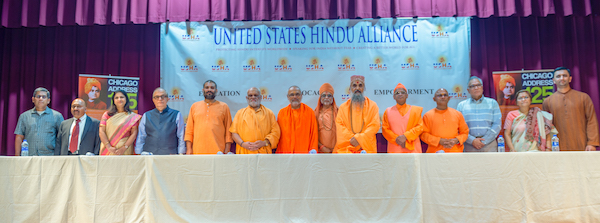
    CHICAGO, IL(TIP):  The United States Hindu Alliance (USHA), a national Hindu advocacy organization, announced a one year 100 city celebration of the 125th anniversary of the historic speech of Swami Vivekananda on September 11, 1893 at the World Parliament of Religions in Chicago.

    The parliament was a landmark event in the history of religions. More than 7,000 religious leaders representing various religions, faiths and Dharma traditions from all over the world took part in the event, including the young Swami Vivekananda from India who represented Hindu Dharma. By virtue of his message, that advanced ideas of tolerance, acceptance, harmony and co-existence, he became an instant celebrity within and outside the parliament. According to the Smithsonian Institute, he is one of the 25 most influential leaders who have ever visited the United States.

    The launch event took place on September 11, 2018 at the Hindu Temple of Greater Chicago, the first Hindu temple of Chicago.

    Among the eminent personalities who addressed the audience included 4 senior leaders of the Hindu Dharma Acharya Sabha, the apex body of all the Heads of Hindu monastic orders (Sanyasi Paramparas) of India, representing more than 1.7 million Hindu monks. Poojya Swami Paramatmananda Saraswatiji, General Secretary of the Hindu Dharma Acharya Sabha, Poojya Swami Vishweshwarananda Giriji Maharajji, Poojya Madhavapriya Das Swamiji and Poojya Acharya Shri Krishnamaniji Maharaj addressed the audience. In addition, Poojya Swami Vigyananandaji, Chairman of World Hindu Foundation, Neeta Bhushan, Consul General of India in Chicago, Rajiv Malhotra, author and founder of Infinity Foundation, Poojya Swami Sharananandaji of Chinmaya Mission and Gokul Kunnath, President of USHA spoke at the event.

    Chicago Address 125 is a yearlong celebration organized by the United States Hindu Alliance, in partnership with Hindu temples and associations nationwide to promote the message of Swami Vivekananda. Vivekananda emboldened the Hindu spirit by promoting Hindu identity, Hindu unity and Hindu empowerment. He galvanized India’s Hindus to work towards the freedom of India. Apart from its outreach to the Hindu communities across the country, USHA has also decided to strengthen the interfaith movement by promoting the vision inherent in the Chicago address. To achieve this goal, USHA has developed 5 themes that will celebrate Swami Vivekananda’s message to the world.

    The five themes are “Inner peace leads to world peace”, “Dialogue leads to reconciliation”, “Mutual respect leads to religious harmony”, “United action leads to preservation of the planet” and “Freedom leads to diversity”.

    For more information on USHA, please visit www.ushaonline.org

    The United States Hindu Alliance (USHA) is a national grass roots Hindu advocacy organization to protect the rights and interests of Hindus in America and worldwide. USHA is a 501 (C) (3) tax-exempt, non-profit, non-partisan, non-sectarian organization representing several million Hindus in the United States.

     (Photograph and Press release by Asian Media USA)

  • Acclaimed Kathak dancer Anindita dazzled the audience with her spectacular performance

    Acclaimed Kathak dancer Anindita dazzled the audience with her spectacular performance

    CHICAGO, IL(TIP):  The two – day colorful Indian classical dance festival, Nritya Samarpana 2018 concluded on Sept 15-16, 2018 at Sri Venkateswara Swami (Balaji) Temple here. It was a breathtaking festival which featured top artists from different states of USA and India. There were total 9 featured performers along with performances by the veteran teachers of the Chicagoland area like Gauri Jog, Sobha Tamanna, Ipsita Satpathy and Asha Adiga with their students. It was a glorious two days of vivid showcase of extremely talented artists. The fest showcased artists from classical Indian dances including Kathak, Bharatnatyam, Kuchipudi, Mohiniattam, Odissi and so on.

    Each year, this dance festival is organized by Balaji cultural committee at the Veluchamy Auditorium of Sri Venkateswara Balaji temple in Aurora Illinois and admired by art lovers. This illustrious dance festival attracts innumerable viewers and art connoisseurs across states. Balaji temple has been in the forefront of preserving Indian cultural arts and celebrates the various art forms. Robust Indian classical dance programs like Nritya Samarpana festival is a great platform for nurturing such traditional arts which are face of our Indian heritage.

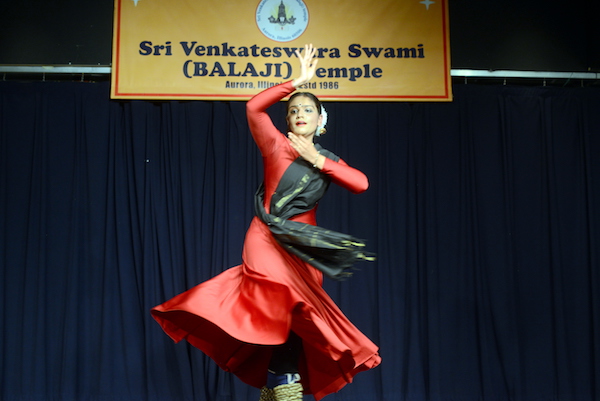
    Anindita Neogy is an International Kathak danseuse who featured as a solo performer in the prestigious Indian Classical Dance Festival, Nritya Samarpana 2018 in Chicago. She mesmerized the viewers with her powerful performance. Recipient of Shri Jayadev National Youth Award 2018 given for excellence in Kathak Dance by National Cultural Mission and Indian government of Odisha, Anindita is a dancer par excellence.

    She started with a Durga Bhajan (evoking the Goddess Durga) set in 16 beat teentaal, and presented the piece with so much grace and intricate details of the Abhinaya or facial expressions. Her details to the movements were so delicate that one couldn’t take eyes off her.

    Second part of her performance consisted of pure Nritta Paksha or the technical side of Kathak where she presented todas, tukdas which are geometrical patterns of moves, sublime body gestures folded with charm and grace. The richness and sharpness of the footwork enchanted the audience. The whole auditorium was echoing with the metal bells and thudding sound of her rhythmically singing footsteps. With every ‘Sam’, which gives a silence of a second built the momentum of pure thrill and excitement and people couldn’t stop applauding her brilliant recital. Her red fabric dress and gleaming ornaments were phosphorescent. It was nothing less than a pure magic on stage. Her swift pirouettes brought power and speed to the stage.

    The third and final portion of her contemporary Kathak displayed Poet Jayadev’s Geet Govinda where she portrayed the myriad emotions of gopikas and Radha waiting eagerly for beloved Krishna, the Lord of love and charm as the spring seasons comes to a full bloom. Anindita impeccably captivated the emotions of a forlorn woman sitting for her lover to return to her and also the Krishna who is chasing them and playing pranks on them. As a seasoned dancer, she enacted variable characters with touch of ease. Her virtuosity turns and her entire expression of limbs, torso and especially hands perfectly married to the theme. She was a wizard on the stage. The sculptural firmness of her body language and such delicate and vivid gestures were nothing short of eloquent beauty. It was an enriching evening of mellifluous dance concert.

    Anindita has performed in major festivals in India and abroad including Theater am Faden (Germany), Birju Maharaj Parampara Utsav (India), Kundan Lal Gangani Festival (India), Sharad Utsav (India), Logging and Heritage Festival (Wi), Rhythms of the world (Appleton fox cities), Out to lunch Event (Marinette Wi), BAGC Chicago Banga Sammelan (where she shared stage with Grammy award winner Pt Vishwa Mohan Bhatt), Celebrate Diversity Event Menasha and so on.

    Anindita is a student of Pt Rajendra Gangani (Jaipur school of Kathak) and Pt Jai Kishan Maharaj (Lucknow school of Kathak) and adept in both the styles. She is known for her graceful movements with a swift pace and shows immense proficiency in both traditional and fusion choreographies of Kathak.

    (Photograph and Press release by Asian Media USA)

  • Autumn Adventures rolling in with three excursions; Rails of Terror premieres; Fall Flyer and Pumpkin Express return

    Autumn Adventures rolling in with three excursions; Rails of Terror premieres; Fall Flyer and Pumpkin Express return

    NEW YORK(TIP): With Halloween not far away, Catskill Mountain Railroad has rolled out attractive rides. Take a ride on the dark side of the tracks on Catskill Mountain Railroad’s Rails of Terror with spook-tacular hostess Lady Eloise. When the train leaves the safety of Kingston passengers are tossed into the hands of the unknown with creatures sure to frighten and tales of local ghosts sure to haunt. This event is recommended for teens and adults.

    Rails of Terror

    Catskill Mountain Railroad’s Fall Flyer and Pumpkin Express return with host and ancestor of famed Jack-O-Lantern are fun for adults and children! Take a spectacular journey unveiling the fictional legend behind the Jack-O-Lantern and learn details of the historic lineage of the Catskill O’Lanterns. See the natural beauty of the Catskills from our railroad’s unique perspective aboard Ulster County’s scenic train. Come ride in one of our vintage coaches, or enjoy the fresh air and beautiful views from our open cars. Pumpkin Express trains have added bonus – Passengers will be able to select their own pumpkin to take home and decorate. Wear your Halloween costumes and join the fun!

    Pumpkin Express

    All trains are round trip departing from the Westbrook Station in the Kingston Plaza and travel through the Hurley Flats and return. Children under 2 ride free with paid adult fare. An adult must accompany all children.

    FALL SCHEDULE: Catskill Fall Flyer – September 29-30, October 6-7-8 & 13-14 (11am, 1pm & 3pm) $14.00- Adults, $ 8.00 – Children (ages 2-12), $13.00 – Discount Adult (Senior/Military/Veteran).  Pumpkin Express – October 20-22 & 27-28 (11am, 1pm & 3pm) $18.00- Adults, $12.00 – Children (ages 2-12), $16.00 – Discount Adult (Senior/Military/Veteran). Rails of Terror – October 12-13, 19-20, 26-27 (6pm and 7:30pm) $38.00 – Adults, $30.00 – Children (ages 2-12), $36.00 – Discount Adult (Senior/Military/Veteran)

    For more information and to purchase tickets please visit our website www.CatskillMountainRailroad.com or call our office (845) 332-4854 or e-mail us at reservations@CatskillMountainRailroad.com. The fun doesn’t stop with our Autumn Adventures; Polar Express begins November 16th! For our current schedule of events please visitwww.CatskillMountainRailroad.com/Excursions.

    (Based on a press release issued by Rob Gaston)

  • Mayor Bill de Blasio appoints Amy Peterson as Director of the Mayor’s Office of Workforce Development

    Mayor Bill de Blasio appoints Amy Peterson as Director of the Mayor’s Office of Workforce Development

    NEW YORK CITY(TIP): Mayor Bill de Blasio appointed Amy Peterson as the Director of the Mayor’s Office of Workforce Development. The office is responsible for equipping New Yorkers with a variety of skills and connecting them to quality jobs across the city. Peterson will continue to lead the Mayor’s Office of Housing Recovery and Build it Back as the office and program enter the final stages of their Sandy recovery efforts.

    “When I was elected, the Build it Back program suffered from bureaucratic entanglement, and thousands of New Yorkers were left to fend for themselves. Then Amy Peterson took over, streamlined the program and people finally began getting the help they needed to recover,” said Mayor Bill de Blasio. “Amy has nearly worked herself out of a job, and she managed to do this while training and connecting over 1,600 New Yorkers affected by Hurricane Sandy to quality jobs. I’m confident Amy will continue this great work at the Office of Workforce Development and connect countless more New Yorkers to high quality jobs, taking us a step closer to creating the fairest big city in America.”

    “The Mayor’s Office of Workforce Development will create opportunities for all New Yorkers to build and benefit from our economy,” said Deputy Mayor for Strategic Policy Initiatives Phillip Thompson. “Amy Peterson has a track-record of delivering results by engaging communities, which I know will be key to our success moving forward.”

    “Mayor de Blasio’s commitment to creating the fairest big city in America has resulted in remarkable progress over the last four years. His initiatives, stemming from Career Pathways to the numerous initiatives launched across City agencies, have taken us steps closer to building a more inclusive economy that works for all. I’m excited by the challenge that lies ahead and look forward to working with Deputy Mayor Thompson to build on these efforts and to continue helping New Yorkers find a pathway to the middle class,” said Amy Peterson, Director of the Mayor’s Office Housing Recovery and the Office of Workforce Development.

    Amy Peterson will lead the Mayor’s Office of Workforce Development and build on the work of the last four years to fully align the City’s work in advancing opportunities for New Yorkers. Some of her priorities include bringing together the many workforce initiatives across City agencies; establishing new initiatives that will provide good jobs for New Yorkers and setting ambitious goals focused on training and employment. Peterson also will engage with communities directly to build initiatives across neighborhoods linking community based-organizations, City agencies and local businesses in efforts to expand opportunities across the City. She will continue to lead the Office of Housing Recovery as it completes the Build It Back program and focus on priorities for recovery preparedness for the future.

    To date, 95 percent of 8,300 homeowners affected by Hurricane Sandy are back in their homes, received reimbursement or have sold their homes to the City. 99 percent of City managed construction projects are complete. The City currently is working to complete the final most complicated elevations and rebuilds in Coney Island, Sheepshead Bay Courts and Queens.

    Under Peterson, over 1,600 New Yorkers were connected to high quality jobs through the Build it Back and Sandy Recovery Workforce1 programs. These jobs include union construction careers as roofers, plumbers, electricians and carpenters. Peterson also created the Sandy Recovery Hiring Plan which focused on training and connecting Sandy-impacted residents to construction jobs. Over 20 percent of trades workers in Build It Back were residents affected by Sandy.

    “Congratulations go to Amy Peterson on her new position in Mayor de Blasio’s administration. She has been an outstanding administrator of the Build it Back program, working tirelessly to help victims of super storm Sandy get their lives back together. She will do a great job,” said Council Member Alan N. Maisel.

    “The Build It Back program was an absolute nightmare when Amy Peterson took over and she turned the program completely around to deliver real results for more than 8,000 homes and provide thousands of New Yorkers with the training to sustain long-term quality employment,” said Council Member Donovan Richards. “In her new role as Director of the Mayor’s Office of Workforce Development, I have no doubt she will bring her hard work and expertise to the job to help turn the tide for many more New Yorkers struggling to find a good job.”

    About Amy Peterson:

    Prior to her time at the Office of Housing Recovery, Amy Peterson managed workforce development programs at the New York City Human Resources Administration where she oversaw the implementation of the Workforce Investment Act, a federal program designed to help job seekers access employment, education and workforce training. She also oversaw the launch of new City contracts which assessed training and employment opportunities for New Yorkers. From 2007 to 2014, Peterson was President of Nontraditional Employment for Women (NEW), which prepares, trains and places women in careers in the skilled construction, utility and maintenance trades, helping women achieve economic independence and a secure future. Amy Peterson was appointed Director of the Office of Housing Recovery in 2014.


  • SKN Foundation to host Annual Gala to highlight the South Asian Diabetes Education and Resource Center to address Diabetes Epidemic

    SKN Foundation to host Annual Gala to highlight the South Asian Diabetes Education and Resource Center to address Diabetes Epidemic

    NEW BRUNSWICK, NJ(TIP):  The 2018 Shri Krishna Nidhi (SKN) Foundation Gala for Diabetes Care is being held to highlight the South Asian Diabetes Education and Resource Center, at Marigold Hotel in Somerset, NJ on Friday, September 28th starting at 6:00pm

    Special Guests for the evening include Vikas Khanna, Celebrity Chef, restaurateur, cookbook author, filmmaker, humanitarian and TV judge for Master Chef India, along with Charlie Kimball, IndyCar series driver with type 1 diabetes, and celebrity host Indian Actress and Fashion designer, Mandira Bedi.

    Shri Krishna Nidhi (SKN) Foundation is a not-for-profit organization with a mission to promote total wellness of the person and community through education. In alignment with its mission, the SKN Foundation, in partnership with Saint Peter’s Healthcare System, operates the South Asian Diabetes Education and Resource Center a comprehensive prevention program with academic, clinical and community support. The program is relevant to all South Asian people as the prevalence of Diabetes has mounted to 80 million people where one out of two do not know they have it.

    The SKN South Asian Diabetes Education and Resource Center is located in the Department Medicine, Saint Peter’s University Hospital, 254 Easton Avenue, CARES Building, 4th Floor, New Brunswick, NJ 08901. As part of this partnership with Saint Peter’s, SKN Foundation develops awareness and outreach programs on various chronic illnesses, beginning with a diabetes risk assessment in the South Asian community; facilitates access to early detection, self-management and care programs at the South Asian Institute at Saint Peter’s. It also directs and coordinates research on chronic disease at the South Asian Institute, creating South Asian specific educational materials.

    “The SKN resource center is designed to enhance culturally appropriate care to South Asians in New Jersey,” Dr. Naveen Mehrotra said, “which is an ongoing need within this community. Disease among South Asians is greatly influenced by genetics and cultural beliefs, each of which can be addressed to positively affect health outcomes through research, education and promotion of equitable patient care.”

    Saint Peter’s Thyroid and Diabetes Center, now enhanced by SKN resources, offers early screening with a focus on prevention, comprehensive consultation and management, specialized care for women, Diabetes self-management education, nutritional guidance specific to South Asian diet and South Asian support groups.  The center’s Director and a key advisor for SKN Foundation, Dr. Meena Murthy noted: “South Asians residing in the US have the highest burden of diabetes with the prevalence reaching up to 25% in this population, the highest of any ethnic group in USA. More than half are undiagnosed. A silent killer, diabetes leads to premature disability and death with more than half of the deaths in South Asians occurring before age 60.”

    Murthy added: “At the Saint Peter’s South Asian Institute we meet the unique health challenges faced by the South Asian people. Our holistic approach is based on respect for the patient’s cultural background, spiritual needs and healthcare values.”

    About SKN Foundation: SKN Foundation is a non-profit organization under Section 501(C) (3) of the Internal Revenue Service code. “Shri Krishna Nidhi (SKN) mission is to promote total wellness of the person and community through education. This mission is accomplished through coordinating volunteer activities, raising funds to provide health related educational resources, and working with other organizations focused on the community. For more information about SKN, visit www.sknfoundation.org or call (908)643-1744.

    Tickets for the gala start at $175 and can be purchased at https://sknfoundation.org/hope-gala-2018/

    To learn more about SKN Foundation and how you can help, please visit: https://sknfoundation.org/

    (Based on a press release issued by Neerja Patel)

  • Why did Christine Blasey Ford wait so long? I’ll tell you …

    Why did Christine Blasey Ford wait so long? I’ll tell you …

    By Leslie Marshall

    “Remaining silent doesn’t mean forgetting. It just means suffering in silence”, says the author.

    Christine Blasey Ford has publicly accused Donald Trump’s Supreme Court nominee Brett Kavanaugh of sexual assault decades ago. A look at what she is saying and how top lawmakers are responding.

    The nomination of Judge Brett Kavanaugh seemed all but certain a few days ago, until a woman named Christine Blasey Ford came forward accusing him of sexual assault when they were in high school. The alleged crime having taken place decades ago has prompted many to ask: Why did she wait so long?

    I can tell you why.

    In a word … Fear

    In my freshman year of college, I was the victim of something quite similar, on my 18th birthday. I understand why Dr. Ford remained silent. She was afraid. Afraid that no one would believe her – after all, she had been drinking. Fear if it went to court, her sex life would be revealed. Fear she would be judged. Fear her name would be dragged through the mud. And she’s not alone.

    Rape and sexual assault are the most underreported crimes in our nation. Worldwide, one in three women experience some sexual violence in their lifetime, according to the World Health Organization. Yet it is fear that keeps them from coming forward.

    Remaining silent doesn’t mean forgetting. It just means suffering in silence.

    We judge victims of sexual violence harshly in our society. Juries have at times acquitted the accused simply based on the way a woman was dressed.

    The issue of how much time has lapsed has even been the subject of a landmark legal case: 1994’s People v. Brown.

    But remaining silent doesn’t mean forgetting. It just means suffering in silence. Dr. Ford spoke of the psychological trauma. If you Google “psychological factors that inhibit reporting of sexual violence” you’ll find there are numerous articles and studies on this very issue. But the question still remains: Does the length of time that has lapsed after the alleged incident lessen the significance of a victim’s claim?

    It shouldn’t, but it does.

    And should she or any other victim be believed? Well the National Sexual Violence Resource Center states that 2 to 10 percent of victims’ claims are false. Meaning at least 90 percent are telling the truth.

    So, if fear prevented her from reporting this, why come forward now?  Well for any woman who has been abused by a man and sees that individual gain influence and power years later, it hits you in the face like a bucket of cold water. It’s shocking, startling, unjust. And it’s a reminder. A reminder of the incident, a reminder of the pain and a reminder that you remained silent.  Even in light of the #MeToo movement, only a handful will come forward like Dr. Ford. For the rest, the silence continues.

    I am guilty of that silence. Just last year, someone from college re-connected with me on Facebook. We talked about what some of our classmates are doing now, including the one from my 18th birthday.  When I found out he is a successful professional in chosen career, it sickened me. I wanted to tell someone. But I didn’t. Fear prevented me from picking up the phone.

    In coming forward, Dr. Ford is overcoming her fear. And that, I would imagine, will truly help her to heal.

    I only wish I could be as brave.

    (The author joined Fox News Channel as a contributor in 2009; providing analysis on both political and social issues from a liberal point of view. A nationally syndicated talk host, whose program, “The Leslie Marshall Show” can be heard on radio, stream, “Tune In,” “The Progressive Voices Radio Network,” and “The Armed Forces Radio Network.”)

    (Source: Facebook)

  • Where Goes the Rupee?

    Where Goes the Rupee?

    By Bhaskar Dutta

    There are several moderate but effective instruments available to the government to help the rupee find an equilibrium, says the author.

    The travails of the rupee have dominated newspaper headlines over the last fortnight. Its value has fallen precipitously against the dollar and is now hovering around the 72 level; it was just under 64 at the beginning of the year. There is now intense debate in the media on whether the Reserve Bank of India (RBI) should step in and take steps to defend the dollar.

     The U.S. honeypot

    Finance Minister Arun Jaitley has rightly observed that external factors are the cause. In particular, global capital and perhaps currency speculators have been flocking to the American economy. This is not really surprising because the U.S. economy has become a very attractive option. Some months ago, U.S. President Donald Trump announced a massive decrease in corporate tax rates. More recently, the U.S. Federal Reserve has also increased interest rates. The icing on the global investors’ cake is the booming U.S. economy.

    Not surprisingly, the dollar has appreciated sharply against practically all other currencies too. For instance, it has moved up against both the euro and the pound. Developing economies are typically even harder hit since global portfolio investors tend to withdraw from these markets, perhaps because their economic or political fundamentals are relatively more unstable. Countries such as Turkey and South Africa have experienced significantly higher rates of devaluation than India.

    A long time ago, the ‘standard’ or textbook prescription for countries with severe balance of payments deficits was to devalue their currencies. The underlying rationale was that devaluation decreases the price of exports in foreign countries and so provides a boost to exports by making them more competitive. Correspondingly, imports become more expensive in the domestic economy, in turn reducing the volume of imports. Unfortunately, this seemingly plausible reasoning does not always work. For instance, if several countries are devaluing at the same time — as it seems to be happening now — then none of these countries benefit from their exports being cheaper abroad. In other words, there may not be any surge in Indian exports following the current round of devaluation. Neither will there be a huge fall in imports. Crude oil is by far the biggest item in the list of Indian imports, and this is price-inelastic. Imports from China now constitute a tenth of overall imports. Since the yuan has also depreciated against the dollar, there is not much reason to believe that Chinese imports will be costlier than earlier.

    Ripple effects

    Fortunately, the RBI has a huge stock of foreign exchange reserves and so the balance of payments situation is not (at least in the immediate future) the main cause of anxiety for the steady decline in the value of the rupee. What must concern policy-makers is that the slide in the rupee can have adverse effects on the domestic economy. For instance, the surge in the landed price of crude oil has already resulted in a steep rise in the prices of petroleum and diesel. Diesel price hikes increase the cost of transportation of goods being transported by road. Unfortunately, many food items fall in this category. Obviously, any increase in food prices must set alarm bells ringing in the Union Finance Ministry. The devaluation will also increase prices of imported inputs, particularly those for which there are no alternative domestic sources of supply. This can have some effect on output expansion. Many domestic companies that have taken dollar loans will also face significantly higher servicing costs.

    Corrective options

    What are appropriate policy responses in such a situation? Should the monetary and fiscal authorities sit tight, hope and pray that self-correcting mechanisms will gradually cause the rupee to appreciate against the dollar? Or should the RBI and the government come out with guns blazing? Certainly, neither the government nor the RBI can afford the option of inaction. The other extreme of knee-jerk, overkill options must also be avoided. Luckily, there are several moderate but effective instruments available to the government.

    Consider, for instance, the problems caused by the spiraling prices of petroleum products. Both the Central and State governments earn huge revenues from excise duties and value-added tax (VAT) on petrol and diesel. In fact, excise duties were raised in the recent past by the Central government when crude oil prices were low, merely as a revenue-gathering device. Now that the rupee cost of crude has shot through the roof, the Centre should certainly lower duties. Rates of VAT should also be lowered by State governments. A small reduction in VAT may even be revenue neutral since VAT is levied as a percentage of price paid by dealer. Some State governments have done so. However, the Centre and most States are busy passing on the buck, because no one wants to part with tax revenue.

    The RBI has several policy options. It could, of course, take the most direct route — of offloading large amounts of dollars. This would increase the supply of dollars and so check the appreciation of the dollar, but at the cost of decreased liquidity. Clearly, this weapon has to be used with caution. Of course, the RBI does intervene in the foreign exchange market from time to time to manage a soft landing for the rupee, and this has to continue.

    The Central bank now has an explicit inflation target of 4%, a level that is almost certain to be breached if the rupee remains at its current level. This is very likely to induce the Monetary Policy Committee (MPC) of the RBI to raise interest rates again in order to dampen inflationary tendencies. But, the MPC must moderate any rate increase. Any sharp increase has an obvious downside risk to it — any increase in interest rates can have an adverse effect on growth. This can actually backfire if profitability of companies goes down. Any ‘big’ negative change in profitability may make foreign portfolio investors pull out of Indian stocks and actually exacerbate the rupee’s woes.

    The NRI route again

    Perhaps the best option for the government would be to borrow from non-resident Indians (NRIs) by floating special NRI bonds that have to be purchased with foreign exchange, and with maturity periods of at least three years. Interest rates have to be attractive, and investors must of course be protected from exchange rate fluctuations. Since interest rates in countries like the U.K. and even the U.S. are quite low, the promised interest rate does not really have to be very high by prevailing Indian levels.

    This has been tried before, the last time being in 2013 when too the rupee was under stress. It worked then and there is no reason why it should not work again.

    Hopefully, the storm will pass over and the rupee will soon find an equilibrium. In the near future, the rupee is unlikely to return to anything below 70 to the dollar. This should not be cause for much concern because the economy will adjust to the lower value of the rupee. What must be avoided is any sharp fluctuation in the exchange rate — in either direction. Much will depend on whether the economy can continue to grow at a reasonably high rate, for this will steady the nerves of portfolio investors and prevent them from pulling out of the Indian stock market.

    (The author is Professor with Ashoka University. He can be reached at bhaskar.dutta@ashoka.edu.in)


  • Leveraging China vis-a-vis Uncle Sam

    Leveraging China vis-a-vis Uncle Sam

    By G Parthasarathy

    It would be naive to infer any change in China’s efforts to undermine India’s influence across its Indian Ocean neighborhood or moderate its support for Pakistan and terrorist groups like the Jaish-e-Mohammed. But it does indicate that China would not like Doklam-like tensions again. Also, it gives India more space to deal with Trump’s US., says the author.

    While public attention was focused on the highly publicized 2+2 Dialogue between the Foreign and Defense Ministers of India and the US, two interesting developments took place in India’s relations with China. The first was a remarkably warm meeting that Prime Minister Modi had with the visiting Chinese Defense Minister, General Wei Fenghe, on August 21. The Prime Minister appreciated that differences between the two countries were being handled with “sensitivity and maturity”, which was evident from the prevailing peace along the China-India borders. He also welcomed the growing cooperation between the two countries, including in areas of defense and military exchanges.

    Unlike its earlier behavior, which resulted in three million people being stranded and 130 killed in floods in Assam last year, China provided India information on the rising levels of the Brahmaputra, this year well in advance. This enabled India to deal with the flood situation effectively. It would, however, be naïve to infer that these developments signal any change in China’s efforts to undermine India’s influence across its Indian Ocean neighborhood, or moderate its economic, diplomatic and military support for Pakistan and terrorist groups like the Jaish-e-Mohammed. But it does indicate that after the Modi-Xi Jinping summit in Wuhan last year, China would not like tensions like those witnessed in Doklam last year, to arise again, in the near future.

    These developments give India more diplomatic space to deal with Trump’s US, which has offended friends and foes alike. The Trump Administration has unilaterally renounced many past American bilateral, regional and global commitments, with its “America First” policies. It is an Administration that has offended and dealt arbitrarily, even with long-term allies like Canada, Germany and Japan. India needs to be totally realistic in dealing with the Trump Administration. Even before commencing discussions with New Delhi, the Trump Administration filed a complaint against India in the World Trade Organization challenging our export programs. Ironically, this move came at a time, when the US had levied heavy duties on India’s exports of steel and aluminum.

    The Americans are indicating a desire for an early, face-saving exit, from Afghanistan. The Afghan armed Forces will, hopefully, continue to be armed, equipped and financed to meet challenges posed by the Pakistan-backed Taliban. A far more active engagement by India, with parties that respect the Constitution in Afghanistan, is imperative, so that the Afghans can ensure that Pakistan does not lead the Americans up the garden path, with a promise of good behavior, by the Taliban. Russia and China, for different reasons, now have a cozy relationship with the Taliban. They evidently hope that the Taliban will join them in taking on the Islamic state. Neither the Russians nor the Chinese, however, have a past record of understanding Afghanistan and its people objectively. China will also inevitably face the consequences of brutal suppression of its Muslim population in Xinjiang, bordering Afghanistan.

    Military cooperation between India and the US received a boost during the Pompeo-Mattis visit, with the establishment of formal links between India’s Western Naval Command and the American Fifth Fleet, based in Bahrain. Maritime cooperation with this Fleet would be very helpful, in events affecting the safety and security of over six million Indians, living in the Gulf region. Moreover, the Communications and Security Agreement signed during the recent talks would give India access to valuable intelligence information that Americans could provide. The US and India have shared concerns about growing Chinese assertiveness across the Western Pacific and Indian Oceans. These include Beijing seeking the establishment of a “string of pearls” across sea-lanes, from Kyaukpyu in Myanmar, to Djibouti. India, the US and Japan have been carrying out tripartite naval exercises. These exercises should now be extended across India’s west coast.

    Recent US legislation, popularly alluded to as CAATSA, enables it to impose sanctions on countries, which have “significant transactions” with Russian arms industries. These would adversely affect all banks having dollar transactions, which virtually all major Indian banks have. After strong lobbying by India, the Trump Administration got the legislation amended to enable it to exempt countries like India, Indonesia and Vietnam from its provisions. India has also been affected by recent sanctions imposed by the Trump Administration on oil purchases from Iran, a major supplier, after the Obama Administration revoked UN sanctions. With the reintroduction of sanctions on Iran by the Trump Administration, New Delhi would have to get a sanctions waiver from President Trump, for oil imports from Iran, after November.

    China escapes the effect of these sanctions, because it has a largely balanced trade with Iran and Russia and no dollar transfers are required. India has trade deficits and cannot arrange payments through bilateral settlement mechanisms, with either Russia or Iran. These are the two most crucial issues, affecting India-US relations presently. But what is interesting is that not a word was uttered officially about these crucial issues, by either side, after the recent 2+2 Dialogue. The American move, imposing sanctions on purchase of Russian arms, are obviously as motivated by a desire to promote its own arms sales, as by geopolitical considerations, to pressurize Russia. India will lose face internationally if it backs off from getting crucial S400 air defense missiles from Russia, for which negotiations have been completed.

    India could consider devising measures to modify its arms relationship with Russia, to one linked to its “Make in India” program. Payments will, of course, be made easier, if the Russians import more from India, by resorting to rupee trade, like the Soviet Union did. While US sanctions are not likely to be applied for India’s Chabahar port project in Iran, New Delhi will inevitably have to progressively reduce oil imports from Iran, after persuading the US not to oppose dollar payments, for a specified time, beyond November.

    In a long-term perspective, international cooperation has to be sought, if the US is to be prevented from acting in an arbitrary manner. Even its allies like Germany, which could face US sanctions for gas imports from Russia, may not be averse to considering such actions, to end the dominance of the US dollar, in international transactions.

    (The author is a former Indian diplomat.)