Year: 2018

  • Indian-Origin Man Killed Brother-in-Law in UK

    Indian-Origin Man Killed Brother-in-Law in UK

    LONDON (TIP): An Indian-origin paranoid, schizophrenic man, who was allowed into the UK following “an administrative error “, has been sentenced to five years in jail for murdering his brother-in-law.

    Sukhwinder Singh, 41, became delusional and stabbed his brother-in-law to death before driving the dead body to West Bromwich police station in the West Midlands and handing himself in August 2017.

    The man was jailed after pleading guilty to manslaughter on the grounds of diminished responsibility at Wolverhampton Crown Court on June 29 and is set to receive psychiatric treatment before starting his sentence.

    At the end of his prison term, Sukhwinder Singh will be deported to India.

    “I have to say the circumstances of this offence lead me to conclude without hesitation that you are an extremely dangerous individual,” Judge Michael Challinor said at the sentencing hearing.

    Sukhwinder Singh had killed his 39-year-old brother-in-law in August last year over suspicions that he was having an affair with his wife.

    The UK court heard how Singh had killed a student union president in Jalandhar in 1998. He had been released from a Punjab jail after serving seven years for the murder. He was out on bail pending an appeal when he fled to the UK in 2007, on a six-month visa.

    Following “an administrative error” by British authorities, Sukhwinder Singh was granted indefinite leave to remain (ILR) in the UK and successfully applied for British citizenship in 2011.

    “You were illegally in this country, having fled India, where you should have been in prison serving a sentence for murder, and then you killed for a second time using a similar weapon, namely a knife,” the judge noted.

    Prosecutors told the court that Sukhwinder Singh used heroin and crack cocaine which added to his paranoia.

    Prosecutor Nigel Power told the court: “On the morning of Thursday, August 10, 2017, the defendant went into the front office of West Bromwich police station and said, ‘I have a dead body in the car’. He was telling the truth.

    “The deceased was in the front passenger seat of his BMW car and had been killed by a single stab wound to the chest, which also cut the seat-belt almost in half.”

    Sukhwinder Singh’s wife had voiced concerns over his mental health to the police and social services. On the day of the killing she was moving to a women’s refuge.

    Detective Inspector Harry Harrison, from West Midlands Police’s homicide team, said: “This was an unusual case as Singh brought his victim to us; casually walking into the station to reveal Kumar was dead in his passenger seat. He had been driving around with Kumar dead next to him for hours before deciding to come to police. It was quickly established he had been responsible for the stabbing, and he will now serve time in prison to reflect that.”


  • Houston based entrepreneur Amit Bhandari donates $50,000 to Ekal’s Digital Literacy Program

    Houston based entrepreneur Amit Bhandari donates $50,000 to Ekal’s Digital Literacy Program

    By Manu Shah

    HOUSTON (TIP): Houston based entrepreneur Amit Bhandari and his wife Arpita shaped their own American dream but along the way they also nurtured the aspirations of thousands of children, whether in the remote village of Rampura or the slums of Mumbai.

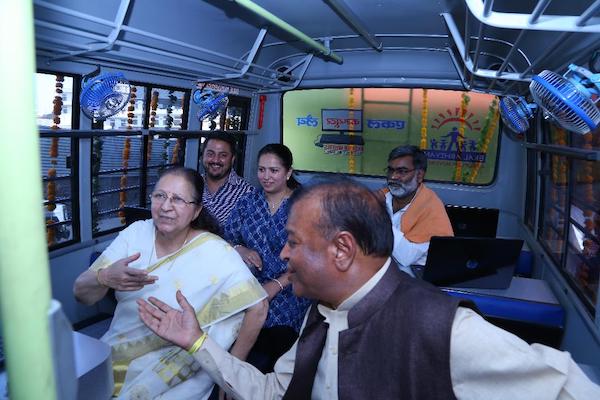
    Ekal was one of the first charities the Bhandaris supported and they have consistently raised this support. They recently topped it by donating $50,000 dollars to outfit a bus with 10 laptops for the Ekal-on-Wheels Mobile Computer Labs program.

    The Ekal movement which started in 1989 to transform India, one village at a time, today, has a school in 70,000 villages offering free schooling, vocational training, digital competence and agricultural education. It has impacted 4 million children and 10 million families to date.

    The Mobile Computer Labs initiative is working to enhance digital literacy and has helped over 50,000 children become computer literate. The solar powered bus has pre-installed self-learning software developed by IIT, Mumbai and accommodates two students per computer. One dedicated trainer, assisted by the local Ekal teacher provides two and a half hours of training in one village.

    The bus, which will serve the Khargone district of Madhya Pradesh near Indore, was inaugurated by Amit and Lok Sabha Speaker Sumitra Mahajan. Amit was impressed by how “coachable and open to learning the children were.”

    However, this isn’t the first time the Bhandaris have opened their checkbook. They support the Jain Society of Houston, donated six acres of land for the Gujarati Samaj center in Houston, wrote a quarter million dollar check to Houston Mayor Sylvester Turner’s Fund for Hurricane Harvey relief work, paid off the loans of a temple in Phoenix and raised $3 million for Magic Bus, an NGO that is deeply personal to them and aims to bring children out of poverty through a unique sports based curriculum.

    Amit attributes this empathy to his modest upbringing. He is a native of Indore, Madhya Pradesh. His parents were professors but the family was always stretched financially. Despite this, his parents supported a handicapped school and were always ready to provide a helping hand.

    Amit’s entrepreneurial leanings kicked in as early as middle school when he and a friend made paper bags and sold them to local vendors. At 17, he was accepted in the Rotary Student Exchange Program and attended High School in Hicksville, Ohio. America turned out to be “a tremendous experience” so much so that he got his aunt to sponsor his green card. He headed to Drexel University in Philadelphia for Chemical engineering and footed his tuition by waiting on tables. The job was a formative lesson in “time management, juggling priorities and dealing with people.”

    The engineering degree landed him a job at ExxonMobil but Amit’s afterhours were spent scouting for a good business idea. He plunked his savings into a daycare, rental properties and a convenience store and in 2006, started his own company BioUrja (Urja in Hindi means energy.)  The company trades in ethanol, petroleum products, crude oil, grains, metal tubing for the oil production sector and now renewable energy. It is ranked as one of the most successful companies in Texas.

    There’s parental pride in his voice when he talks of his daughter and son who spent weeks as Magic Bus Youth Leaders in slums and villages engaging with the children. The experience moved Aanya, 16, to present a paper at the United Nations outlining ways of providing nutritious food and educating farmers on employing better agricultural methods. Ansh, 14, on his part, is looking forward to spending more of his summers supporting Magic Bus programs worldwide.


  • The bilateral limits of hype: on India-U.S. relations

    The bilateral limits of hype: on India-U.S. relations

    By Varghese K. George

    But India-U.S. relations will be better off without hype and grand theories, often encouraged by the government. Otherwise, every rescheduling of a meeting will be interpreted as the collapse of ties. Similarly, avoiding the hyperbole could help manage India’s troubles with Pakistan and China better. The U.S. has overlapping interests with China, and India has overlapping interests with both. The trouble with big-chest, small-heart hyper-nationalism in foreign policy is that it also causes short sightedness. The audacity of hype has its limits.”

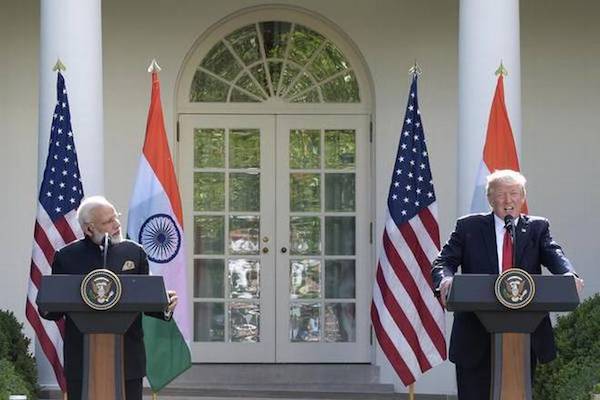
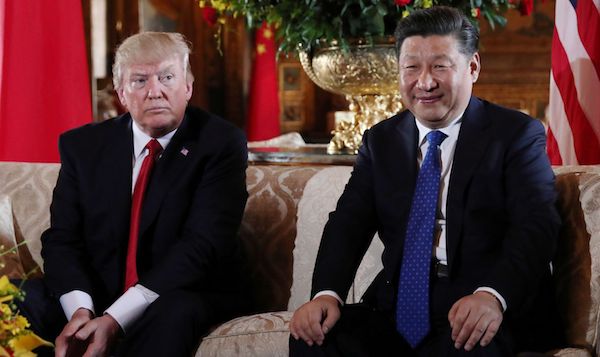
    Prime Minister Narendra Modi and U.S. President Donald Trump have both built their politics on the promise of making their countries great again. Placing India and the U.S., respectively, as leaders on the world stage is the stated objective of their foreign policy. The project of regaining national glory is based on another assumption that they inherited a mess from their respective predecessors. Yet another shared trait is their love for spectacle over meticulous, prolonged and often frustrating pursuit of strategic goals.

    Theatre as strategy

    The postponement of the India-U.S. 2+2 dialogue between the Foreign and Defense Ministers of both countries, that had been scheduled for this week, has to be understood in the context of the similar personality traits of Mr. Trump and Mr. Modi. Hugging Mr. Trump may be a good spectacle for Mr. Modi, but the same may not be true for the former. Mr. Trump has set his eyes on spectacles that suit him. Mr. Trump, still basking in the denuclearization deal that he’s said to have struck with North Korea’s Kim Jong-un, is now looking forward to the next big event: a summit meeting with Russian President Vladimir Putin. His every move on the global stage enrages his domestic political opponents and the professional strategic community alike and he is happy, as this keeps his political base constantly on the boil.

    North Korea, Syria, Afghanistan, trade deficit, and all global challenges before America are the faults of his predecessors, he repeatedly tells supporters. Most recently, at the G7 summit in Canada in June, he declared: “I blame our past leaders for allowing this to happen (trade deficits) …You can go back 50 years, frankly.” Such rhetoric may sound familiar to Indians. In Mr. Trump’s war on the legacy of all Presidents before him, India is on the wrong side. The remarkable growth in India-U.S. relations since the turn of the century had been nurtured by three U.S. Presidents, Bill Clinton, George W. Bush and Barack Obama, two Democrats and one Republican who have all been the target of Mr. Trump’s ire. India neither promises him the opportunity of a spectacle nor offers the grounds for destructing the legacy of a predecessor. So, he told Secretary of State Mike Pompeo to deal with North Korea and Russia, and 2+2 with India could wait. “Nobody wakes up in DC daily thinking of India,” says a former U.S. ambassador to India, pointing out that 16 months into the new administration, there is no Assistant Secretary of State for South and Central Asia in the State Department.

    Impact on ties

    To buttress one’s own claim to be a trailblazer by denying the achievements of predecessors may be good political tactics for these leaders but trying to wish away history itself is not a sustainable strategy. Against the backdrop of a programmatic negation of history in both countries, Mr. Trump’s bursts of unhinged rhetoric against China and Pakistan lend themselves to easy and convenient interpretations by supporters of improved U.S.-India ties as moments of enlightenment for the U.S., even as turning points.

    But Mr. Trump cannot undo all the legacy with a magic tweet. U.S. relations with Pakistan and China took shape during the Cold War. Pakistan might be the longest ally of the U.S. after the U.K., first in the fight against communism, and then in the fight against terror that was created in the first fight. China used the Cold War to its own advantage in its ties with the U.S.

    China today threatens the dominance of the U.S., but the America’s security establishment and political elite are obsessed with Russia. India gets caught in that internal American fight too, such as in the case of an American law that now requires the President to impose sanctions on any country that has significant security relations with Russia.

    Mr. Trump sees the challenges posed by China, but not in a manner helpful for India. For, India and China are in the same basket for Mr. Trump on many issues that agitate him. He has repeatedly mentioned India and China in the same breath as countries that duped his predecessors on climate and trade deals. His administration considers India and China as violators of intellectual property laws, as countries that put barriers to trade and subsidize exports and use state power to control markets. The nationalists in the Trump administration, including U.S. Trade Representative Robert Lighthizer, Commerce Secretary Wilbur Ross and White House National Trade Council Director Peter Navarro are all gunning for China, and India is in the same firing line. Many Americans who think that China took the U.S. for a ride — many Democrats among them — suspect that India is trying to do the same thing.

    But there are two constituencies in the U.S. that promote India against China: the Pentagon and the U.S. arms industry. This works to India’s favor. While the Obama administration could not overcome State Department objections to offer India even unarmed drones, the Trump administration has done so, offering armed drones. Here, Mr. Trump is not guided by any grand theories of ‘rule-based order’, etc. that professional strategists talk about, but by the opportunity to sell.

    Given Mr. Trump’s views on trade, American companies that used to argue China’s case are now guarded in their approach. Still, companies such as General Motors and Ford have come out against a trade war with China. This has implications for India too. American companies that eye the Indian market are allies in the pushback against Mr. Trump’s nationalist trade policies. Mr. Modi has realized this dynamic that puts India and China in the same corner in Mr. Trump’s perspective — and that significantly explains his Wuhan summit with Chinese President Xi Jinping, the third big leader who is gaming for the glory of his country.

    War against legacy

    The enlightenment that Mr. Trump purportedly brought on America’s Af-Pak policy also appears to have been short-lived. If one looks at the tough messages from Nikki Haley, U.S. Ambassador to the UN, in New Delhi recently on Pakistan and Iran, it is clear where the political priorities of the Trump administration lies. Here again, Mr. Trump is determined to gut his predecessor’s legacy, a key component of which was rapprochement with Iran. The war in Afghanistan is the worst optics for Mr. Trump’s showman politics, and his administration’s approach has been to sweep it under the carpet. The Pentagon has restricted release of data on the war, but a report last month paints a picture of a deteriorating situation. The U.S.’s ability to arm-twist Pakistan has been limited anyway, and Mr. Trump’s determination to turn the screws on Iran makes it tougher. National Security Adviser John Bolton, who had advocated bombing Iran, believes that a hardline policy against Pakistan is not desirable.

    All told, Mr. Trump might accept Mr. Modi’s invitation to be the chief guest at the 2019 Republic Day parade just ahead of the Lok Sabha campaign, triggering another round of commentary on their ‘body language’ and ‘chemistry’. A series of significant defense purchases and agreements could be concluded in coming months. But India-U.S. relations will be better off without hype and grand theories, often encouraged by the government. Otherwise, every rescheduling of a meeting will be interpreted as the collapse of ties. Similarly, avoiding the hyperbole could help manage India’s troubles with Pakistan and China better. The U.S. has overlapping interests with China, and India has overlapping interests with both. The trouble with big-chest, small-heart hyper-nationalism in foreign policy is that it also causes short sightedness. The audacity of hype has its limits.

    (The author is an assistant editor with The Hindu. He can be reached at varghese.g@thehindu.co.in)

    (Source: The Hindu)


  • Stay, Afghanistan needs you…

    Stay, Afghanistan needs you…

    Filled with remorse, an anguished Afghan hopes Sikhs, Hindus won’t flee what’s their home too

    By Saad Mohseni
    I am not certain if the community can tolerate more pain, but we don’t want them to forget that they represent a legacy that stretches back a thousand years in Afghan history.

    It was a black day. On July 1, a suicide bomber tore into a crowd of Hindus and Sikhs who had collected to meet President Ashraf Ghani in Jalalabad, resulting in the massacre of 19 persons; 10 were badly injured. The pain has been felt and shared by every Afghan I have come in contact with since the attack. The brutal attack claimed the lives of two of the Sikh community’s favorite sons, Avtar Singh Khalsa, the only Sikh candidate running for Parliament in October; and Rawail Singh, a vibrant member of our trying-to-be-more-civil society. We all feel incredible shame that it has come to such a pass.

    I vividly recall Harandar Singh and Amarjeet Singh, my Sikh classmates in primary school at the French Lycee Isteqlal in Kabul, Afghanistan, in the late 1970s. As first cousins, they were inseparable: gossiping, laughing, switching between Farsi and Punjabi without missing a beat. One was quite tall and slim, while the other was darker, shorter and slightly chubby — although I can’t recall which one was which. What I do recall is that their parents, like many Sikhs in Kabul, were involved in the textile business. Anil Kumar, our lone Hindu classmate, came from a well-known family that operated one of Kabul’s better-known movie theatres.

    I would often walk with Harandar and Amarjeet the mile-long distance from our bus stop to school, going past the homes of the few remaining Jewish families adjacent to Flower Street. In the late 1970s, Kabul was a city that peacefully housed Indian communities. The same was true of Ghazni, Kandahar, Jalalabad and all other urban centers of Afghanistan.

    I viewed these boys as lucky to evade religious studies at school, they didn’t have to be subjected to the less-than-competent religious studies teacher, a character who once pulled his belt out to whip a student, only to see his pants fall to his knees. But other than their ‘exotic’ turbans and absence from the compulsory Islamic studies class, Harandar, Amarjeet and Anil were no different to my other friends in Kabul in those years of innocence.

    The 5 lakh-strong community of Sikhs and Hindus was a robust contributor to the private sector: trade, banking, textiles, food and retail. Throughout the city, they left a distinctive mark: an enduring signifier that Afghanistan was once a true crossroads between the Middle East and South Asia. How can I ever forget the exquisite jalebis sold in the Karte Parwan district of Kabul by a Hindu merchant? Or the lively Punjabi music and the bountiful spice shops that were a routine stopover for every Kabul cook. But what was special about them was their ownership of Afghanistan. They seemed to embrace the hybrid identity and took genuine pride in the link to this remote country. They belonged there.

    Afghan historians believe that the first wave of ‘modern’ Hindus arrived during Mahmood Ghaznavi’s reign over a thousand ago. Of course, it should also be noted that huge swathes of modern Afghanistan were ‘Hindu’ prior to the arrival of Islam in the 7th and 8th centuries, alongside Zoroastrianism, Buddhism and paganism.

    The Soviet invasion of Afghanistan and the civil war that ensued brought misery to millions of Afghans — Muslims, Hindus, Sikhs, Jews. Many members of the community were forced to flee the country, but some of them stayed, resolutely. Those who were forced to take refuge outside of Afghanistan took pains to identify themselves as Afghans. This endeared them even more to their fellow Afghans.

    The post-Soviet civil war that devastated Kabul and resulted in the lawlessness that destroyed the social, moral and economic fabric of the nation compelled more Hindus and Sikhs to flee their homes. But again, some of them stayed back.

    The arrival of the Taliban only brought more wretchedness. Hindus and Sikhs were initially forced to wear yellow dresses and turbans and raise a yellow flag on their rooftops. Many, feeling vulnerable, decided that it was finally time to leave. But despite this intolerant and violent environment, some of them still stayed put.

    The defeat of the Taliban regime and the emergence of an independent government in Kabul, committed to the rule of law, gave hope; encouraging many Afghans to believe that this was a new beginning for the country. In 2003, a brave Sikh gentleman stood before a Loya Jirga (grand assembly) of mostly Islamic commanders, politicians and clerics and screamed: ‘It is you Muslims that have ruined my Afghanistan.’ He received a standing ovation because we all knew that he was right.

    The rule of law of the post Karzai era was more myth than reality. Many of their properties, namely in the Karte Parwan district of Kabul, were squatted on and confiscated by warlords or Afghans with strong connections. Given that the community had survived for a millennium through peaceful means, there was no warlord to protect them. Many of them decided to leave the country. But again, some chose to stay.

    There were moments of optimism. To Hamid Karzai’s credit, he appointed Shamlal Bhatija Bhatia, an Afghan Hindu, as Ambassador to Canada — a first in the country’s history, despite the fact that Mr Bhatia’s family had resided in the city of Kandahar for over 350 years. Mr Bhatia regularly pointed out that Ahmad Shah Durrani, the Kandahari founder of modern-day Afghanistan, had based the concept of Afghanistan on inclusion.

    Forty years after I last shared a class with Harandar, Amarjeet and Anil, their community has dwindled from 5 lakhs to only 1,300 — scattered across three Afghan cities. Their numbers, which coexisted with Afghans of all faiths for centuries, has now shrunk to almost nothing.

    I am not certain if the community can tolerate more pain, but we don’t want them to forget that they represent a legacy that stretches back a thousand years in Afghan history.

    And more than ever, Afghanistan needs them to stay.

    (The author is Chairman of Moby Group, the largest media company in Afghanistan)

  • Sunanda case: Tharoor gets anticipatory bail

    Sunanda case: Tharoor gets anticipatory bail

    NEW DELHI (TIP): Congress leader and lawmaker Shashi Tharoor was today granted anticipatory bail by a Delhi court in a case relating to his wife Sunanda Pushkar’s death almost four years ago in a luxury hotel here.

    The Thiruvananthapuram MP, who has been summoned as an accused on July 7 in the case, had moved the court for anticipatory bail apprehending arrest. Pushkar was found dead in a suite of a luxury hotel in the city on the night of January 17, 2014. The couple was staying in the hotel as Tharoor’s official bungalow was being renovated then.

    Observing that the prosecution’s apprehensions that Tharoor may flee offshore or influence witnesses were “without any basis”, Special Judge Arvind Kumar granted relief and asked him to furnish a personal bond and a surety of Rs 1 lakh each while imposing certain conditions.

    In his plea for anticipatory bail, Tharoor had submitted that the chargesheet in the case was filed and the SIT had categorically stated that the probe was concluded and his custodial interrogation was not required.

    The court had summoned him as an accused in the case on June 5, asking him to appear before it on July 7, observing there was sufficient ground to proceed against him.

    Can’t leave country

    A Delhi court asked Shashi Tharoor to furnish a personal bond and a surety of Rs 1 lakh each while imposing certain conditions, including that he would not tamper with the evidence or leave the country without the court’s prior approval.

    Source: PTI

  • Punjab’s war on drugs

    Punjab’s war on drugs

    Giving a societal push to the Punjab Government’s war on the hydra-headed drug menace, are the villagers — the common people suffering the effects of the consumption blowback. There is hardly any home in the countryside that does not have a family shattered by an addict whose only interest is how to get his next fix, even going to desperate and often deadly extremes. His treatment leaves them penniless, and the children crying and uncared for, and at times, even orphaned. Shattered by the ruin and misery unleashed by drugs over the years, some villages have taken upon themselves the task of eradicating this deadly menace through vigilantism. They are nabbing alleged drug peddlers and handing them over to the police. A political leader has also spearheaded one such campaign.

    However well-meaning this practice may be, it is not without pitfalls. While being vigilant against a potential supplier of drugs, the people need to guard against going over the top. In mob fury lies the inherent danger of individuals tipping over to the side of vigilantism in the heat of the moment and taking law into their hands. The examples of recent lynchings in Maharashtra over rumors of child-lifting as well as some innocent people becoming victims of cow vigilantes are fresh. Rather than even one innocent person being victimized, law enforcement is best left to the government. After all, only the law enforcement agencies are equipped to tackle the drug mafia. Bringing the small fry in the net will not end the menace.

    The Amarinder Singh government has in the past couple of days unveiled a heady mix of strategies that promise to take on the problem of intoxication. Regular dope tests for all 3.25 lakh Punjab Government employees have been made mandatory as cases of drug-tainted officers, especially in the police, are coming to the fore with shocking regularity. Death penalty has been sought for the peddlers of illicit substances as an alarming number of people are becoming addicted to drugs as well as dying from them. Treatment and rehabilitation of addicts with a renewed goal figure high on its mission. Instead of the death penalty, a strict implementation of the existing NDPS laws is sufficient to take the problem head on.

    (Tribune, India)

  • Supreme Court seeks response from Sajjan Kumar in 1984 anti-Sikh riots cases

    Supreme Court seeks response from Sajjan Kumar in 1984 anti-Sikh riots cases

    The Supreme Court on Thursday sought response from Congress leader Sajjan Kumar, accused in the 1984 anti-Sikh riots cases, on a plea filed by SIT challenging the anticipatory bail granted to him by Delhi HC. The apex court said it is high time that these cases are tried at the earliest

    NEW DELHI (TIP): The Supreme Court on July 5 sought response from Congress leader Sajjan Kumar, accused in the 1984 anti-Sikh riots cases, on a plea filed by the Special Investigation Team (SIT) challenging the anticipatory bail granted to him by Delhi high court.

    A bench of Justice AK Sikri and Ashok Bhushan said it is high time that these cases are tried at the earliest.

    The bench said it was an over 30- year-old case and it took around “200 pages” for the high court to grant anticipatory bail when it could have been done in just “40-50 pages”.

    Additional solicitor general Maninder Singh, appearing for the SIT, said the investigation started against Kumar only in 2016 and now he has come armed with a battery of lawyers and dictates his statement to the investigating officer of the case.

    The ASG said that while granting anticipatory bail to him, the high court had said that everything will be tested in trial of the case but at the end it granted him the relief saying there was no evidence.

    To this, the bench said whether all this was considered at the time of anticipatory bail. Singh said, “Yes. This is totally contrary to the established procedure of law.” The bench then issued notice.

    The Delhi HC had on February 22 upheld a trial court order granting anticipatory bail to Kumar in two anti- Sikh riots cases of 1984, saying that according to records, he was available throughout the investigation.

    The Congress leader was granted anticipatory bail by the trial court on December 21, 2016, in two cases of killing of three Sikhs during the riots which had occurred after the assassination of then prime minister Indira Gandhi.

    Kumar had submitted that his name was never taken earlier and it was a case of fresh allegations coming up after 32 years.

    Source: PTI

  • Indian appointed head of top Chinese biz institute

    Indian appointed head of top Chinese biz institute

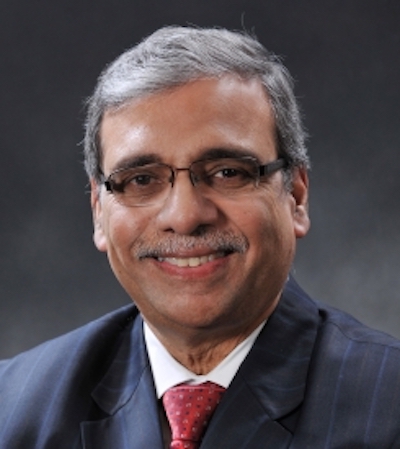
    BEIJING(TIP): Dr. Dipak Jain, a prominent Indian professor in the US, has been appointed as the new head of a top global business school in China, according to a media report. Jain, 61, will take over as the European president of the Shanghai-based China Europe International Business School (CEIBS), replacing Pedro Nueno who held the position for 28 years.

    Dr.  Jain is the European President-Designate, Professor of Marketing and Global advisor at CEIBS. He is a globally recognized marketing and innovation expert whose insights have inspired a generation of business leaders to pursue success with significance. Dr. Jain’s influential career spans nearly four decades as an educator, a senior business school administrator, and a consultant to corporations and governments. Throughout his career, he had furthered a pedagogical model that combines academic excellence and business relevance to produce high-impact results with social significance.

    Prior to being named Sasin’s Director in 2014, he served from 2011 to 2013 as Dean of INSEAD, an international business school with campuses in France, Singapore and Abu Dhabi. Before joining INSEAD, Dr. Jain was Dean of Northwestern University’s Kellogg School of Management from 2001 to 2009. In recognition of his many scholarly achievements and outstanding teaching, he also was named the Sandy and Morton Goldman Professor of Entrepreneurial Studies and Professor of Marketing at Kellogg, whose Marketing Department he joined as a faculty member in 1986.

    Dr. Jain’s academic career began as a student in Tezpur, Assam India. He earned his bachelor’s degree in statistics (1976) with Honors from Gauhati University, where he taught for four years before enrolling in the University of Texas (Dallas), where he completed his Ph. D in Marketing in 1986.

    An award-winning scholar in his own right, Dr. Jain’s areas of research expertise include the marketing of high-tech products; market segmentation and competitive market structure analysis; cross-cultural issues in global product diffusion; new product innovation; and forecasting models. He has published more than 60 articles in leading academic journals and has earned the prestigious John D.C. Little Best Paper Award. Among the many distinctions for his teaching and service, Dr. Jain received the Pravasi Bharatiya Samman from the Prime Minister of India, an award that recognizes exceptional leadership contributions of overseas Indians.

    Jain, a former dean of two of the world’s leading business schools, the Kellogg School of Management and INSEAD, will work alongside his Chinese counterpart Li Mingjun.  Brought up in Assam, Jain, who lives in Chicago and works in Shanghai for 10 to 15 days each month, has been teaching marketing at CEIBS since September last year when he took on the president-designate role.

    (With inputs from CEIBS)

  • ISIS claims suicide bomb attack on Sikhs and Hindus in Afghanistan

    ISIS claims suicide bomb attack on Sikhs and Hindus in Afghanistan

    KABUL(TIP): ISIS has claimed responsibility for a suicide bombing in eastern Afghanistan on July 1 that killed at least 19 people, mostly Sikhs and Hindus.

    The bomber targeted a delegation from the minority communities as it was traveling to the governor’s residence in the eastern city of Jalalabad on Sunday for a meeting with President Ashraf Ghani.

    Avtar Singh Khalsa, a long-time leader of the Sikh community, was among those killed. Another 20 people were wounded.

    In a statement released on Monday, ISIS said it had targeted a group of “polytheists.”

    Sikhs and Hindus face discrimination in the conservative Muslim country and have been targeted by Islamic extremists in the past, leading many to emigrate. The community numbered more than 80,000 in the 1970s, but today only about 1,000 remain.

    Under Taliban rule in the late 1990s, they were told to identify themselves by wearing yellow armbands, but the dictate was not wholly enforced. In recent years, large numbers of Sikhs and Hindus have sought asylum in India, which has a Hindu majority and a large Sikh population.

    Afghan President Ashraf Ghani arrived in Jalalabad earlier on Sunday to open a hospital, part of a two-day visit to the province bordering Pakistan.

    Mr Ghani’s spokesman said the president was still in Nangarhar but was “away from danger”.

    The attack came a day after Mr Ghani ordered Afghan security forces to resume offensive operations against the Taliban following the expiry of the government’s 18-day ceasefire.

    The government’s unilateral truce overlapped with the Taliban’s three-day ceasefire for Eid, but the militants refused to prolong it.

    The unprecedented ceasefire over the holiday capping Ramadan triggered spontaneous street celebrations involving Taliban fighters, security forces, and war-weary civilians.

    ISIS, which has an affiliate in the province, was not part of the ceasefire. The group fights both government forces and the Taliban, which has shown no sign of letting up its campaign of violence.

  • EPA Administrator Scott Pruitt Resigns in the face of ethics issues

    EPA Administrator Scott Pruitt Resigns in the face of ethics issues

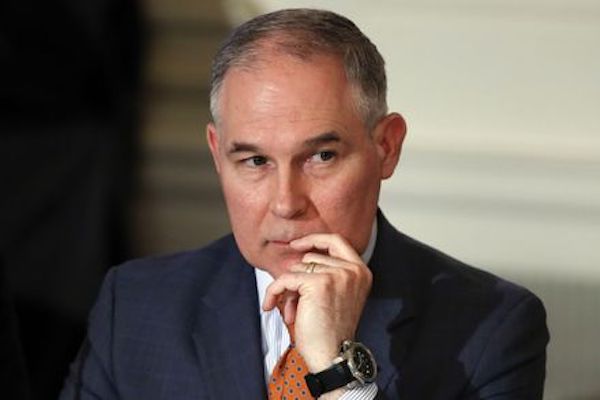
    WASHINGTON(TIP): Scott Pruitt, the administrator of the Environmental Protection Agency who was key to implementing President Trump’s conservative agenda but came under intense scrutiny for a series of questionable ethical decisions, resigned Thursday, July 5 afternoon. Pruitt’s deputy at the EPA, Andrew Wheeler, will serve as the agency’s acting administrator starting Monday, President Trump said in a tweet.

    “I have no doubt that Andy will continue on with our great and lasting EPA agenda,” Mr. Trump tweeted. “We have made tremendous progress and the future of the EPA is very bright!” 

    Donald J. Trump

    @realDonaldTrump

     I have accepted the resignation of Scott Pruitt as the Administrator of the Environmental Protection Agency. Within the Agency Scott has done an outstanding job, and I will always be thankful to him for this. The Senate confirmed Deputy at EPA, Andrew Wheeler, will…

    3:37 PM – Jul 5, 2018

    Pruitt had been the subject of a seemingly endless deluge of stories about his behavior and spending practices. It began earlier this year when it was revealed that Pruitt had rented a room at a favorable rate from a well-connected energy lobbyist. Pruitt’s lavish spending on his own security then came under scrutiny, as did his decision to install a $43,00 private phone booth in his office. There were also allegations that Pruitt had created a toxic professional atmosphere at the EPA that penalized his critics.

    Pruitt said his decision to leave the EPA was a hard one in his resignation letter to Mr. Trump.

    “It is extremely difficult for me to cease serving you in this role first because I count it a blessing to be serving you in any capacity, but also, because of the transformative work that is occurring,” Pruitt wrote. “However, the unrelenting attacks on me personally, my family, are unprecedented and have taken a sizable toll on all of us.”

    Mr. Trump defended Pruitt Thursday evening while speaking to reporters on Air Force One. He said there was “no final straw” and that he had not requested Pruitt’s resignation.

    “Scott Pruitt did an outstanding job inside of the EPA,” the president said. “We’ve gotten rid of record breaking regulations and it’s been really. You know, obviously, the controversies with Scott — but within the agency we were extremely happy. His deputy has been with me actually a long time. He was very much an early Trump supporter. He was with us on the campaign. He is a very environmental person. He’s a big believer, and he’s going to do a fantastic job.”

    The government had launched numerous investigations and probes into Pruitt’s behavior, although he continued to insist that he had done nothing wrong. At the time of Pruitt’s resignation, the EPA inspector general was looking into his protective service detail, his traveling at taxpayer expense, and the allegedly excessive raises he gave to some members of his staff. Swamped by requests and stretched thin by the sheer number of audits into Pruitt, the EPA inspector general had also agreed to look into his housing arrangements and allegations that he had staff members perform his personal errands, among other issues.

    Pruitt is the fifth member of Mr. Trump’s cabinet to resign or be fired since he took office. The others were former Acting Attorney General Sally Yates, former Health and Human Services secretary Tom Price, former Secretary of State Rex Tillerson, and former Veterans Affairs secretary David Shulkin.

    (Source: CBS News)

  • US-China Trade War Begins

    US-China Trade War Begins

    Beijing vows to strike back against tariffs on US$34 billion worth of Chinese goods

    NEW YORK(TIP): The big question is now that the first shots have been fired, what goods will be affected, who will pay the price and what could happen next?

    China’s Ministry of Commerce, on July 5 (July 6 in China) said China will fight back against the US and report to the World Trade Organisation.

    The remarks were in response to Washington’s decision to impose 25 per cent duties on a similar amount of Chinese imports, which also came into effect on Friday.

    US President Donald Trump had threatened to target another US$400 billion in Chinese products with tariffs if Beijing continued to hit back.

    On top of that, each country has prepared a second tariff list of goods worth about US$16 billion. The effective dates are pending as the office of the US trade representative is in the midst of a public comment period on its list.

    The trade war became official after Trump repeatedly said he wanted to reverse the United States’ massive trade deficit with China, which rose to about US$375 billion last year. That number is US$100 billion higher than China’s own calculation.

    In an updated list published on June 15, Washington dropped many China-made consumer goods, such as TVs and flat panel screens, and added more intermediary products like semiconductors and plastics, after opposition during a public hearing in May.

    The second tariff list, which is still under review, focuses particularly on “Made in China 2025”, a Chinese industrial policy aimed at getting ahead in hi-tech industries. It includes electronic integrated circuits and the machines that produce them.

    Washington has dropped many China-made consumer goods, such as TVs and flat panel screens, and added more intermediary products like semiconductors and plastics to its tariff list. Photo: Reuters

    China struck back in April with a list of US$50 billion worth of US imports, many of which were agricultural products. Beijing later removed US$16.3 billion worth of US aircraft from the list and added more food such as fish and nuts.

    The primary US goods affected are soybeans and vehicles, while it is mostly Chinese industrial goods hit by US tariffs.

    Who bears the brunt of these rounds of tariffs? Eventually consumers.

    Analysts said imposing tariffs on Chinese goods such as semiconductors would eventually increase prices for American consumers because they were key components of electronic products. And it’s not an easy business decision for US manufacturers to shift sourcing after tariffs are in place.

    “Alternative sources do exist for most of the Chinese products on the targeted list, but less expensive products purchased by less affluent consumers are likely to see larger price hikes as manufacturers substitute more expensive parts for Chinese inputs facing tariffs,” Mary Lovely, a senior fellow at the Washington-based Peterson Institute for International Economics, wrote.

    “These consumers may not see much difference in performance due to one higher-quality part, but they are likely to see a difference at the cash register.”

    Chinese consumers, on the other hand, could pay higher prices for imported seafood and fruit.

    It is just the beginning. What happens in the longer run will impact economic policies of many countries across the world.


  • July 06 New York & Dallas Print Editions

    July 06 New York & Dallas Print Editions

    [vc_row][vc_column][vc_column_text]

    Print Replica ~ Digitally

    E-Editions

    [/vc_column_text][/vc_column][/vc_row][vc_row][vc_column width=”1/3″][vc_custom_heading text=”New York Edition” font_container=”tag:h2|text_align:center” google_fonts=”font_family:Istok%20Web%3Aregular%2Citalic%2C700%2C700italic|font_style:700%20bold%20regular%3A700%3Anormal” link=”url:https%3A%2F%2Fwww.theindianpanorama.news%2Fwp-content%2Fuploads%2F2018%2F07%2FTIP-July-6-NYC.pdf|||”][vc_single_image image=”93532″ img_size=”full” add_caption=”yes” alignment=”center” onclick=”custom_link” link=”https://www.theindianpanorama.news/wp-content/uploads/2018/07/TIP-July-6-NYC.pdf”][/vc_column][vc_column width=”1/3″][vc_custom_heading text=”Dallas, Texas Edition” font_container=”tag:h2|text_align:center” google_fonts=”font_family:Istok%20Web%3Aregular%2Citalic%2C700%2C700italic|font_style:700%20bold%20regular%3A700%3Anormal” link=”url:https%3A%2F%2Fwww.theindianpanorama.news%2Fwp-content%2Fuploads%2F2018%2F07%2FTIP-July-6-Dallas-TX.pdf|||”][vc_single_image image=”93533″ img_size=”full” add_caption=”yes” alignment=”center” onclick=”custom_link” link=”https://www.theindianpanorama.news/wp-content/uploads/2018/07/TIP-July-6-Dallas-TX.pdf”][/vc_column][vc_column width=”1/3″][vc_single_image image=”82828″ img_size=”medium” alignment=”center” onclick=”custom_link” link=”https://www.theindianpanorama.news/advertising-media-kit-portal-indian-panorama/”][vc_single_image image=”82829″ img_size=”medium” alignment=”center” onclick=”custom_link” link=”https://www.theindianpanorama.news/advertising-media-kit-portal-indian-panorama/”][/vc_column][/vc_row][vc_row][vc_column][td_block_ad_box spot_id=”custom_ad_3″ tdc_css=””][/vc_column][/vc_row][vc_row][vc_column width=”2/3″][vc_custom_heading text=”Lead Stories This Week” font_container=”tag:h2|text_align:center” google_fonts=”font_family:Istok%20Web%3Aregular%2Citalic%2C700%2C700italic|font_style:700%20bold%20regular%3A700%3Anormal” link=”url:https%3A%2F%2Fwww.theindianpanorama.news%2F|||”][td_block_5 separator=”” limit=”12″ tdc_css=””][/vc_column][vc_column width=”1/3″][vc_widget_sidebar sidebar_id=”td-default”][/vc_column][/vc_row]

  • Schools to stay closed in 7 districts of New York state on Diwali day

    Schools to stay closed in 7 districts of New York state on Diwali day

    NEW YORK(TIP): Seven school districts in New York state will reportedly stay closed on November seven, the day of most popular Hindu festival Diwali; while another one has announced “student recess” on November seven.

    Schools in East Meadow School District (Westbury), East Williston Union Free School District (Old Westbury), Half Hollow Hills Central School District (Dix Hills), Herricks Public Schools (New Hyde Park), Hicksville Public Schools (Hicksville), Jericho School District (Jericho), Syosset Central School District (Syosset), will stay closed on November seven (Diwali day); while Port Washington Union Free School District (Port Washington) has announced “student recess” on November seven; reports suggest.

    Hindu statesman Rajan Zed, who has been actively supporting inclusion of Diwali holiday in New York state schools, in a statement, called closing schools on Diwali day by these New York school districts “a step in the positive direction”. He urged all public school districts and private-charter-independent schools in New York state to close on Diwali; as it was important to meet the religious and spiritual needs of Hindu pupils.

    Zed, who is President of Universal Society of Hinduism, indicated that since it was important for Hindu families to celebrate Diwali day together at home with their children; closing schools on Diwali would ensure that and would also display how respectful and accommodating New York schools were to their faith.

    If schools had declared other religious holidays, why not Diwali, Rajan Zed asked. Holidays of all major religions should be honored, and no one should be penalized for practicing their religion, Zed added.

    Zed suggested that all New York state schools, public-private-charter-independent, to seriously look into declaring Diwali as an official holiday, thus recognizing the intersection of spirituality and education. Zed noted that awareness about other religions thus created by such holidays like Diwali would make New York students well-nurtured, well-balanced, and enlightened citizens of tomorrow.

    Rajan Zed urged New York Governor Andrew M. Cuomo, New York State Education Department Board of Regents Chancellor Betty A. Rosa and New York State Commissioner of Education MaryEllen Elia; to work towards adding Diwali as an official holiday in all the 733 public school districts and persuading the private-charter-independent schools to follow.

    Zed states that Hinduism is rich in festivals and religious festivals are very dear and sacred to Hindus. Diwali, the festival of lights, aims at dispelling the darkness and lighting up the lives and symbolizes the victory of good over evil.

    Hinduism is oldest and third largest religion of the world with about 1.1 billion adherents and moksh (liberation) is its ultimate goal. There are about three million Hindus in USA.

  • Consuls in NYC Team Up to Call for Family Reunification

    Consuls in NYC Team Up to Call for Family Reunification

    NEW YORK(TIP): On Tuesday, the New York-based consuls of Mexico, El Salvador, Honduras, Guatemala and Costa Rica joined Mayor Bill de Blasio and Gov. Andrew Cuomo in demanding the Trump administration provide “complete and transparent” information on the migrant children who have been separated from their parents at the border and sent to New York.

    The Central American diplomats created a common front to protect the children and analyze the tools with which they hope to be able to access the federal data but warned that a prompt reunification will be difficult if Washington continues to refuse to release the information.

    “This goes beyond policies and countries; it is about human dignity, and what we need to do is ask the government to clarify the information and promote reunification,” said Juan Diego Zelaya, consul of Honduras, adding that so far, they know there are 449 minors from his country in New York City.

    The diplomat said that he has already met with a number of children who are under the care of the Cayuga Center in Manhattan. There, he was told that the center has information on each one of the minors but is prevented from sharing it without federal authorization.

    “[They said that] when a child is detained at the border and has been separated from their father and mother, there is a special file detailing where the parent and the child were sent, and we requested access to that information to be able to help,” added Zelaya.

    Similarly, Guatemala’s consul Pedro Tzunún said that there are 692 Guatemalan minors in New York, 500 of them male and mostly teenagers. He added that it is painful to know that they are away from their families.

    “It is hard to see that the kids don’t even know or understand what is happening. The youngest is a 5-year-old girl. She does not talk much, but you can see the sadness in her, and it hurts to see that they will end up traumatized,” said the consul, who also asked to have access to the children’s data.

    Mexican Consul Diego Gómez Pickering said that there are three minors from his country in New York and that the joint effort of the diplomatic delegations is meant to create channels of cooperation to help the minors.

    For his part, José Vicente Chinchilla, consul of El Salvador, mentioned that the information his office has received is so vague that they only have an estimate of between 100 and 150 Salvadoran children separated from their parents in the country, with no specific information on how many of them are in New York.

    “Without that information, we cannot operate. We believe that, ideally, the children should travel with their parents. We intend to have the families reunited, but we want to make it clear that we respect the laws of this country, even when we do not share this decision to separate them,” said the Salvadoran diplomat.

    The consul of Costa Rica, Rolando Madrigal, said that he only knows of one minor from his country in the city.

    While the consuls agreed that everything is uncertain at the moment due to the federal administration’s refusal to share the children’s data in a “transparent and clear” manner, Council member Carlos Menchaca warned that many of the children – particularly the youngest – may get lost in the system and never see their parents again unless swift action is taken.

    “That might happen if nothing is done,” said the chair of the City Council’s Committee on Immigration. He added that he is especially concerned about the fate of a 9-month-old baby who is currently in New York City.

    “It is so jarring that this is happening now, and we need to focus on that child – who is 9 months old and can’t even talk – and bring justice. We need to reunite [the baby] with the parents immediately because they have rights, and not even the government can take those rights away,” said Menchaca.

    The politicians also said that if the federal government fails to promptly provide the data the group is requesting, they may consider taking legal action.

    “We are going to explore every option to stop this administration, which is creating a humanitarian crisis with these children, and we are going to use the courts, but our priority right now is to get a hold of the information because at the moment, we don’t even know how many children there are or where their parents are,” said Menchaca.

    (Source: El Diario)

  • QUEENS UNVEILS TECH ZONE STRATEGIC PLAN

    QUEENS UNVEILS TECH ZONE STRATEGIC PLAN

    Roadmap for Equitable Job Growth in NYC’s Future Tech Hub

    QUEENS, NY(TIP):  Borough President Melinda Katz, the Western Queens Tech Task Force, Coalition for Queens and HR&A Advisors unveiled the long-anticipated Western Queens Tech Zone Strategic Plan (“Tech Plan”) – entitled Live, Work, Create: A Roadmap for Equitable Growth of the Western Queens Tech Ecosystem – during an event held today at WeWork Queens Plaza in Long Island City. The Tech Plan offers a roadmap for equitable job growth within the tech economy of Western Queens along the East River waterfront. Borough President Katz also announced the formation of the Western Queens Tech Council, charged with implementing the Tech Plan, identifying a tech-driven brand for the area and promoting a coordinated strategy for the tech district.

    The Tech Plan identifies strategic opportunities to build upon the area’s burgeoning tech ecosystem and proposes six initiatives to support its future growth as New York City’s future tech hub. The creation of the Tech Plan was first initiated by the Western Queens Tech Task Force in 2011 and funded by the New York State Department of State under Title 11 of the Environmental Protection Fund. The Tech Plan can be viewed in its entirety here.

    “Tech jobs, on average, pay more and are growing at a faster clip than jobs citywide,” said Borough President KATZ. “Western Queens offers a coveted, dynamic mixed-use community where workers can live, ideas can synergize, and businesses can thrive. We commissioned the Tech Plan to facilitate a more equitable growth of this emerging global innovation hub and the City’s next leading tech ecosystem. By leveraging its inherent assets, as well as training locally and hiring locally, we will steer our borough into a more competitive lane of the digital age.”

    “Through smart development and innovative planning, Western Queens is on the verge of something great,” said ROSSANA ROSADO, New York Secretary of State. “The New York Department of State is proud to have put forth $150,000 toward these important projects that will embrace the growing tech market and promote economic growth across the Borough.”

    “As we enter the phases of implementation, our success in reaching the Tech Plan milestones will hinge upon continued engagement from all stakeholders vested in Western Queens’ growth, including those entrusted on the Tech Council,” Borough President KATZ said.

    The 21 individuals appointed to the Western Queens Tech Council are: Tristan Bel, NYDesigns; Karen Bhatia, NYC Economic Development; Seth Bornstein, Queens Economic Development Corporation; Tracy Capune, Kaufman Astoria Studios; Carol Conslato, ConEd; Samuel Cooper, Mayor’s Office of Chief Technology Officer; Samantha Dolgoff, NYC Department of Transportation; Commissioner Nicole Garcia, NYC Department of Transportation; Thomas J. Grech, Queens Chamber of Commerce; Jukay Hsu, C4Q; Michael Hulbert, Estee Lauder; Saeed Jabbar, Inclusion; Bill Keller, Queens College; Paula C. Kirby, Plaxall; Debbie Markell Kleinert, Queens Community Board 2; Tara Lannen-Stanton, Queens Library; Elizabeth Lusskin, Long Island City Partnership; Gail Mellow, LaGuardia Community College; Brian Shoicket, Uncubed; Jane Swanson, Cornell NYC Tech; John Young, NYC Department of City Planning.

    The Tech Plan’s six initiatives are grouped into three focal points and laid out in immediate, intermediate-term and long-term steps aimed at creating equitable access to tech jobs:

    People-Focused Initiatives (supporting talent pool growth and development of robust and stable workforce pipeline):

    • Prepare disadvantaged residents to succeed in existing tech training programs. Secure federal and state funding to leverage and expand pre-training programs designed to help close gaps between existing tech training programs and Western Queens residents, with an emphasis on supporting people underrepresented in the area’s tech ecosystem.
    • Strengthen the tech workforce pipeline to better align with job placement opportunities. Build stronger partnerships between City and tech employers to develop a shared understanding of their needs and expand opportunities for on-the-job practical training.

    Place-Based Initiatives (fostering the creation of new tech-supportive physical spaces):

    • Define 300 acres of strategic nodes to focus investment. Create a density of activity to attract and link residents, students and tech firms, boosting the Western Queens tech ecosystem and encouraging informal connections.
    • Develop a 40,000 – 60,000 square feet physical hub for tech and innovation open to the entire community. Build a central tech hub to expand access to tools, training and affordable office space and increase connections between the tech ecosystem and the broader community.

    Programmatic Initiatives (incentivizing tech growth in Western Queens and on clearly articulating the value of the area):

    • Expand marketing of Western Queens tech opportunities. Create a recognizable brand for Western Queens that leverages its growing tech ecosystem, as well as the many opportunities that the area offers to grow tech businesses, through targeted outreach campaigns for residents and developers.
    • Customize regulatory tools and incentives to attract more tech firms. Create new economic development tools to incentivize private sector investments and job creation, such as increasing the existent 10-20 percent State tax credit for investments into qualified firms, as well tapping into the NYC Entrepreneurial Investment Fund.

    The partners on the Western Queens Tech Task Force who made the Tech Plan possible were: 500 Startups; Association for a Better New York (ABNY); Center for an Urban Future; Citigroup; Coalition for Queens; Con Edison; Cornell Tech; Flux Factory; Google; IBM; Inclusion; JetBlue; Kaufmann Astoria Studios; LaGuardia Community College; Local Data; Long Island City Partnership; Mayor’s Office of Tech and Innovation; Noguchi Museum; NYC Department of Buildings; NYC Department of City Planning; NYC Department of Education; NYC Department of Transportation; NYC Digital; NYC Economic Development Corporation; NYCHA; NYDesigns; NY Tech Meetup; Office of Councilman Jimmy Van Bramer; Ontodia; Open Tech Institute; Partnership for New York City; Plaxall; Queens Chamber of Commerce; Queens College; Queens Community Board 1; Queens Community Board 2; Queens Economic Development Corporation; Queens Public Library System; Queens Vocational & Technical High School; Queensbridge Residents Association; REES Neighborhood Zone (NYCHA); Roosevelt Island; Shapeways; Tech:NYC; TF Cornerstone; Uber; Uncubed; Urban Upbound (ERDA); Verizon.

    Follow Borough President Katz via @melindakatz or www.facebook.com/queensbpkatz

  • A hard outlook will have pitfalls in Kashmir

    A hard outlook will have pitfalls in Kashmir

     By Arun Joshi

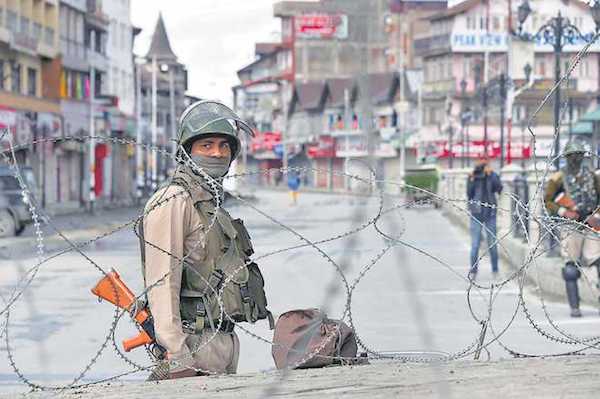
    The state is hurting. Some degree of sensitivity and a ‘highly disciplined’ approach will possibly yield better results. The security forces must remain calm in the event of any provocation.

    Kashmiris happy, somewhat. The PDP-BJP split was much awaited; by people who were unable to reconcile to the rule of the saffron party by proxy. Fear was deeply entrenched in the minds of the locals that right-wing Hindutva forces, with the high pitch for the abrogation of Article 370, may succeed in undermining Kashmir’s special status. Naturally, Kashmiri Muslims were insecure after the alliance came about. And so, it became easier to support the forces of violence, as for them, the PDP had committed an unpardonable sin by shaking hands with the BJP; and getting nothing in return. The first shocker came when the Centre delayed the flood relief package by more than a year after the devastating floods in the autumn of 2014, a couple of months before the Assembly elections that year.

    The PDP-BJP government has disappeared from the corridors of power, but the apprehensions of Kashmiris have not. Aware of political expediencies and vulnerabilities of the parties, they suspect more political compromises may be in the offing. They are waiting and watching the developments very closely. The street mood will be determined by the governance they get, and the way they are treated at their homes, and out on the streets. Kashmiris have become hyper-sensitive about their identity and dignity — siding with secessionist forces is a manifestation of that emotion.

    Some voices in the BJP are linking a ‘hard approach’ toward militants as a way of pulling out Kashmir from the vicious cycle of violence it finds itself in. They believe the militants would/should be hunted and neutralized but forget that this approach prevailed earlier too, and nothing came of it.

    What is really needed is to take into account the attendant pressing matters that have come into play over the past two years — the civilian population, mostly youth with rocks thronging encounter sites and disrupting anti-militancy operations; and the clashes that follow as a result of accidental civilian killings, or what is seen as ‘collateral damage’. Over these two years, the civilian population has identified itself with militants, primarily for two reasons. First, many militants are locals. They are boys they saw in the neighborhood, hence the affinity which exists in the well-knit Muslim society.

    Second, they do not perceive the violent acts as being out of sync with their newly-acquired ethos of resistance. It is a big shift — this ‘new-found’ relationship between the civilians and the militants. In the 1990s, the militants were seen as mujahideen (warriors). There were no doubts. They had picked up the gun and should be ready for the consequences — to die fighting the security forces. Sympathy and sentiment was surely with them, but it was not manifested in the desperate and visible attempts to save them while risking their own lives; as we see now. This is the fundamental truth of the changed situation in Kashmir. The psyche of the common Kashmiri has undergone a sea change.

    Today, the way of looking at the militants has changed, almost hero-like: their arms training may be limited to few weeks, even less, but they are hardened. They have shown their will and grit to fight unto the last. What is more, there is societal approval of their ‘sacrifices’.  Some of them have spurned appeals of their parents to return home.

    Some extraordinary real-life visuals have paled the reel-life images — the mother of Saddam Padder, a top militant of Shopian in South Kashmir recently killed in an encounter, giving a gun salute to her slain son. Her gesture left a deep impact on the minds of youngsters who watched the video that went viral on social media; and is seen as a universal endorsement of militancy by their mothers.

    In such circumstances, reckless actions, with the rhetoric of hard approach, (BJP general secretary Ram Madhav has distanced his party from it) — without taking into account the fallout — have the potential to blow up in the face. The way forward should be specific operations without making much noise. It will help keep civilians out of harm’s way. This is important, because there is widespread impression that the security forces will be striking hard, not necessarily a militant-specific action. It will be deemed as an action against the people who would come to defend them. Stone-throwers will not only seek to disrupt the cordon and search operations — a prelude to the actual gunfight with militants — but also attack patrol parties.

    This phenomenon is interlinked. Militants attack convoys of security forces even as stone-throwers use tactics to distract, thereby creating situations where the Army and police either suffer casualties or inflict casualties. At times, both sides suffer casualties, speeding up the cycle of killings.

    Kashmir-centric parties, the PDP and the National Conference are convinced that the hard approach is not the answer to the problem. Other ways can be found to ease the situation without making the hard approach visible: the security forces must change their attitude towards the public at large. Treating the common Kashmiri with contempt and suspicion will only breed a psyche of resistance and rebellion. A highly disciplined approach would yield better results. Effort should be made to stay calm in the event of any provocation.

    The past cannot be reversed, but the future can be built on, with a new and sophisticated approach.

    (The author can be reached at ajoshi57@gmail.com)


  • Enthusiastic Celebration Of IDY In Tri-State Area

    Enthusiastic Celebration Of IDY In Tri-State Area

    Yoga is an ancient physical, mental and spiritual practice, for humankind, that originated in India thousands of years ago. The word ‘yoga’ derives from Sanskrit and means to join or to unite, symbolizing the union of body and consciousness.

    Today it is practiced in various forms around the world and continues to grow in popularity.

    Recognizing its universal appeal, on 11 December 2014, the United Nations proclaimed 21 June as the International Day of Yoga by resolution 69/131. 193-member nations approved the proposal with a record of 177 countries establishing Summer Solstice as the IDY.  Since then the IDY has been celebrated annually by member countries of the UN with great enthusiasm.

    The International Day of Yoga aims to raise awareness worldwide of the many benefits of practicing yoga.

    Yoga had gained worldwide popularity due to its immense health benefits. It is in keeping with that thought that the theme of the event this year is ‘Let Yoga Govern Your Life.’

    “Yoga” derives from Sanskrit and means to join or to unite, symbolizing the union of body and consciousness.

    To celebrate the 4th International Day of Yoga (Yoga Day) on 16th June 2018, the Indian Consulate had a Yoga Day event at the historic Governor’s Island, New York.  About 200 were in attendance.  People of all ages enthusiastically celebrated the day.

    The historic setting of Governor’s Island, a 72-acre island in the New York harbor, in many ways exemplified the eternal values of yoga.  Perhaps, signifying the global influence of yoga, the famous skyline of downtown Manhattan and the Statue of Liberty formed the backdrop of the event.

    US Congresswoman Carolyn Maloney was the chief guest for the event.  While complimenting the organizers, she spoke of the benefits that yoga has on contemporary lifestyles.  The event featured performances from the Hindu Temple, Indian Cultural Association, Mallakhambh Federation, Sam Katz (David Lynch Foundation), The Art of Living Foundation, The Isha Foundation, the World Yoga Community and the Battery Dance Company.

    The performances included demonstration of yoga mudra, salutations, common yoga protocol, Yoga asanas on the pole, Transcendental Meditation, desktop yoga, Yogic music and musical performances from the Salon Di Virtuosi and a dance performance by the Battery Dance Company.

    Various organizations have independently celebrated the International Day of Yoga (Yoga Day) in New Jersey since 2015, the year of its inception.  In 2018, the 4th Year of Yoga Day, for the first time, many like-minded organizations had formed a coalition to celebrate the Day with more fervor and strength. So was born the concept of a Yogafest NJ 2018!

    As a continuation of Yoga Day celebrations, many events were held in the NJ and NY areas between June 21 and 24.

    Mayor Brian C. Wahler (Township of Piscataway) reading the citation for YogaFest

    Yogafest New Jersey 2018

    On 24th June 2018, New Jersey saw one of its largest 4th International Day of Yoga Day celebrations. This year for the first time, many like-minded organizations formed a coalition to celebrate Yogafest New Jersey.

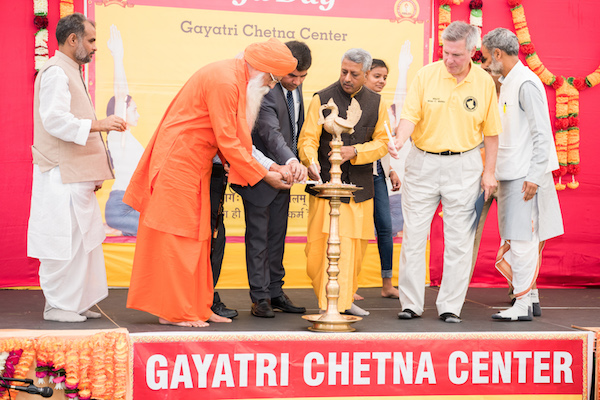
    This Yogafest 2018 was held at the Gayatri Chetna Center, Piscataway, NJ. The event started with a lamp lighting ceremony in the presence of representatives of Ananda Marg (a global spiritual and social service organization), India; Consulate General of India, New York; Mayor of Piscataway and council representatives of the township of Piscataway; Representatives of Edison Township and, Representative from Woodbridge township board of Ed.

    Citations for the event were presented to the partnering organizations by Townships of Piscataway and Edison.

    Representatives of partner and supporting organizations: (left to right): Vijay Mallapati (Sewa); Pradeep & Poonam Gupta (Let’s Do Yoga); Mahesh Wani (Mallakambh Federation of USA); Vijay Kumar (Vihangam Yoga), Ganesh Ramakrishnan (Hindu Swayamsevak Sangh), Rajashree Kotekar (Isha Foundation), Parth Desai (Gayatri Chetna Center)

    Over 600 people attended this event. Volunteers from partnering organizations joined hands with Gayatri Parivar volunteers to organize and setup the event.

    The 2-hour long free event had parallel sessions running for adults in the outdoor tent, for kids in the temple hall and for seniors in the classroom.

    Kids following Pranayama instruction at YogaFest
    Participants meditating at YogaFest

    The yoga and meditation sessions were presented by yoga proponents from various partner organizations. There was also a demonstration from Mallakhamb.

    Light snacks, lunch / Prasadam was served by the Gayatri Parivar.

    The event was well covered by media: TV Asia, Ebox TV, V6 News Telugu and Telugu NRI Radio.

    Partnering organizations were Gayatri Pariwar, Hindu Swayamsevak Sangh (HSS), Vegetarian Vision, Isha Foundation, Mallakhamb Federation of USA and Vihangam Yoga.

    Further support was given by the Vishwa Hindu Parishad of America, Sewa International, Hasya Yoga, Consulate General of India, Township of Piscataway, Township of Edison and Township of Woodbridge.

    Yoga Day Celebrations in the Catskills Mountains

    Participants of Yoga Day celebrations at Peace Village, NY
    Photos / Vaibhav Nakhawa

    To celebrate and reflect on Yoga Day 2018, as in the past, the International Organization of the Brahmakumaris (BKs) hosted and organized a Yoga Retreat at Peace Village in the Catskills Mountains, New York, a 3-day event from June 21 to 23.  The theme of this year’s event was The Power of Yoga: A Day to Reclaim Your Inner Spirit.

    The program was facilitated by BK Susan, Raja Yoga teacher at Peace Village.  Sr. Binny of the BKs of the Mount Abu, India, headquarters and international speaker-mentor Dr. Paula Fellingham were chief guests.  Dr. Paula Fellingham and several other Brahmakumaris from India and the USA, at the workshops, shared their experiences of reclaiming inner strength through Yoga.  BK Rick spoke and conducted a variety of excellent yoga exercises.  BK Dorothy, Program Director at Peace Village, explained and conducted a meditation of Raja Yoga, and Carrie Dugo (a local resident) and family conducted a silent healing yogic walk around the Peace Village labyrinth.  A local student continued to enhance the atmosphere with her singing bowls and powerful vibrational gong.

    Toli (sweet) and blessings cards were given to every attendee as a finale to the spiritual program enjoyed by all.

    Sadhguru on Yoga Day: Yoga for Soldiers

    The Isha Foundation Salutes Our Soldiers

    “Those who live for the nation, those who are willing to die for the nation must get the maximum empowerment that can happen” – Sadhguru

    #YogaForSoldiers @BSF_India

    On the International Day of Yoga, Isha Foundation salutes our Indian soldiers who are protecting the nation.

    Since December 2017, over 300 soldiers have been trained by Isha Foundation to teach Hatha Yoga within the armed forces #yogaforsoldiers

    Watch the following bi-lingual video, initiated by mystic-yogi Sadhguru, where the Inspector General of the Border Security Forces (BSF) and India’s brave soldiers, speak of their experiences using yoga to do their onerous task at India’s borders.

    “Those who live for the nation, those who are willing to die for the nation must get the maximum empowerment that can happen” – Sadhguru

    #YogaForSoldiers @BSF_India

    (Mabel Pais writes on The Arts and Entertainment, Social Issues, Health and Wellness, and Spirituality)


  • Indian-Origin Gang men Jailed For Hacking British Sikh Man To Death In London

    Indian-Origin Gang men Jailed For Hacking British Sikh Man To Death In London

    LONDON(TIP): Indian-origin gang men found guilty of hacking a British Sikh man to death as revenge for sleeping with one of their wives have been sentenced to over 90 years in prison at the Old Bailey court in London.

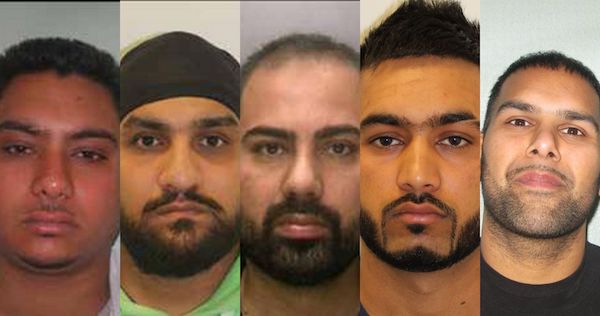
    Amandeep Sandhu, 31, and Ravinder Singh-Shergil, 32, had been convicted of the brutal murder of 33-year-old Sukhjinder Singh aka Gurinder Singh, earlier this month. Vishal Soba, 32, was cleared of murder, but found guilty of manslaughter and assisting an offender. Kuldeep Dhillon, 26, was also cleared of murder by the jury but convicted of manslaughter and intimidation.

    “The nature of weapons used and ferocity of the attack, it is obvious you intended to kill,” said Judge Christopher Moss, after a trial heard how the masked gang men chopped off the victim’s fingers with knives and swords and went on to attack him with a wooden club and a hammer in Southall, West London, in July 2016.

    Sandhu was sentenced to 26-and-a-half years’ of imprisonment for murder and also sentenced to five years for assisting an offender, to run concurrently, and Singh-Shergil was sentenced to 26 years and nine months of imprisonment for murder at a hearing on June 22.

    Soba was sentenced to 16 years’ imprisonment after being found guilty of manslaughter and was also sentenced to five years for assisting an offender. Dhillon was also sentenced to 16 years’ imprisonment for manslaughter and was also sentenced to three years for witness intimidation, to run concurrently.

    A fifth man, 36-year-old Palwinder Multani, was sentenced to five years and nine months after he pleaded guilty to manslaughter and becoming the key witness for the prosecution in the case.

    “I hope these sentences bring some comfort to Gurinder’s family and friends, following his untimely death. These men used an appalling level of violence to execute their revenge on Gurinder, following a bitter feud.”

    “The attack was meticulously planned; right down to the time, location and the disposal of the weapons,” said Detective Inspector James Stevenson, of Scotland Yard’s Homicide and Major Crime Command.

    “While we now have five men behind bars, there are still more individuals we would like to speak to in regards to this killing, and I would like to reiterate my appeal for anyone with information to come forward,” he added.

    Earlier, the court heard how the four gang men used multitude of weapons that included knives, swords and baseball bats to attack the victim.

    It emerged during the trial that as far back as August 2013, there was a rivalry that existed between the victim and a group of men within the local Southall-based British Sikh community.

    The rivalry escalated in July 2016 when Gurinder had been boasting about an assault he had committed on Dhillon at a religious festival in Birmingham. Dhillon also wanted revenge as he also found out that Gurinder had been sleeping with his wife.

    On July 30, 2016, Gurinder was ambushed and violently attacked on Spikes Bridge Road in Southall by a group of men with multiple weapons. The men chased, beat up and stabbed Singh a number of times. Police were called and Gurinder was found suffering from a number of stab injuries.

    He was taken to a hospital by the London Ambulance Service, where he was pronounced dead the next morning. A post-mortem examination gave the cause of death as multiple stab wounds.


  • Indian Americans Charged In $16 Million US Postal Service Fraud

    Indian Americans Charged In $16 Million US Postal Service Fraud

    WASHINGTON(TIP): Indian Americans owners of a bulk-mailing company in suburban Chicago, were today charged for swindling the US Postal Service of at least $16 million.

    Owner and operator of Prodigy Mailing Services, Yogesh Patel and Arvind Lakkamsani, defrauded USPS by forging documents and secretly using an official date stamp to fraudulently authenticate payment of postage for than 80 million pieces of mail, according to criminal charges filed by the US Attorney’s Office in Chicago.

    According to the charges, Mr Patel and Mr Lakkamsani schemed with a third defendant, David Gargano, to fraudulently cause the USPS to deliver numerous bulk mailings without payment.

    The trio forged a USPS clerk’s signature on the verification forms and secretly used an official postal service date stamp to make it falsely appear that the clerk had authenticated postage, the charges allege.

    From 2010 to 2015, the defendants caused a loss to the postal service of at least $16 million, according to the charges.

    Each of the three defendants – Mr Patel, 58, of Orlando, Florida, Mr Lakkamsani, 57, of Northbrook, Illinois and Mr Gargano, 51, of Barrington, Illinois – have been charged with one count of mail fraud. Arraignments in the US District Court in Chicago have not yet been scheduled, a media release said.

    According to the charges, Mr Gargano-owned and Illinois-based Direct Mail Resources Inc, which collected a fee to match customers seeking to make bulk mailings with companies who could perform those services, such as Prodigy. Mr Gargano referred two energy companies to Prodigy for bulk mailing services.

    The two energy companies provided millions of dollars to the defendants to pay the postage for the companies’ bulk mailings. Instead of using those funds to pay the postage, the defendants split the money among themselves and used it for their own benefit, the charges allege.

    Federal prosecutors alleged that the defendants made the mailings but kept the postage money from the energy companies without paying postage to the postal service.

    Mr Patel and Mr Lakkamsani fraudulently maintained a key to a postal service mail unit, which was located inside Prodigy’s facility, and used the key to secretly access an official date-stamp without the USPS’ knowledge or approval, the release said.

    By forging the postal clerk’s signature and fraudulently stamping the mailings, the two India Americans made it falsely appear that the verification forms – which identified the amount of postage paid for the bulk mailings – were authentic and that postage had been appropriately paid, federal prosecutors alleged.


  • Indian-Origin British Sikh Football Fan Faces Racism

    Indian-Origin British Sikh Football Fan Faces Racism

    LONDON (TIP): An Indian-origin Sikh football fan, Gagan, was targeted in a vile and racist letter due to his “skin color” after he put up British flags on his shop window, according to media reports.

    Gagan, 31, received the anonymous letter last week which claimed he should not support for England during the World Cup because he is Indian – and it is ‘betraying the Asian community’, the reports further stated.

    Gagan works as a manager of GMS Heating & Plumbing. In the poison pen letter he was accused of forgetting his motherland and his skin color.

    He raised the flag for the first time on June 20that the store in Ilford, East London, and received the note the following day.

    “You have put (the) wrong flag outside your shop when you have come from India. Have you forgot your skin color? You should put the Pakistan flag outside your shop not British,” the letter said.

    Bizarrely, the letter also addressed as ‘Dear Uncle’, according to Gagan, was filled with spelling mistakes of grammatical errors, as well as the hateful content.

    “If National Front skinheads saw this flag outside they will kick you back to India without your trousers on,” the letter said.

    The defiant business owner said his father immediately went out to purchase four more flags after opening the letter.

    He said: “We’re just trying to have some fun and people want to ruin it by saying it should not be done. It should be done.”

    “I find this mentality really stupid to be honest – what we can’t support the country that we’re living in?”

    The business owner said they always put out St George flags for major sporting events and refuse to back down.

    “We have lived in this country for around 40 years and we love this country otherwise we would not be here,” he said.

    “Supporting England during the football is enjoyable and all part of the fun – and some people seem to think it is wrong for us to do because we are Indian?” he further added.

  • Weekly Horoscope July 2 – July 8, 2018

    Weekly Horoscope July 2 – July 8, 2018

    By Astrologer Bejan Daruwalla

    Aries:Ganesha says Balance, peace, a sense of equipoise are all there for you from the beginning. You are in greater harmony with your environment – both at home and at work. There is far less tension as a result. Loved ones, family and spouse see the tender, caring side of you and love it, as you do! You’re virtually willing to go out on a limb to do things for those who matter to you. It makes the domestic scene comfortable, happy, relaxed.

    Taurus:This period it’s all about people, your reactions to, as well as interaction with them. There’s a greater depth in all relationships. Even if you don’t get on with someone, you will be intense about it. So also with those you love / care for / are affectionate with, there is greater intensity. In any case, you have to think about and keep busy with your own keenness, not only to handle money matters, but to create / explore new avenues of earning.

    Gemini:Hard work is your mainstay now. You want to get places – and in a real hurry, too. You’re happy at the workplace and it’s easy to put in your best. Effort and enterprise fuse beautifully. It’s all the result of your own changed attitude which is more attuned to, and in harmony with, those around you. A good start, indeed, says Ganesha. Harmony at work reflects on the home front too.

    Cancer:You’re thinking big, and operations are now definitely on the mega – scale for you, says Ganesha. Larger financial issues like funds / loans / taxes / stock options are handled, perhaps for the office / business. You need to continue to be realistic and also gentle in your handling of all this. However, the main trend for this month is strongly and squarely on family and money matters, though not necessarily in that order.

    Leo: You realize that your future happiness depends on choices made now – it is your own attitude that will decide whether you’re a winner or not. It is in this context that you will deal with finances, too. Once again, there will be a preoccupation with extra income – you think of extra work, moonlighting, even a job – switch if it will help matters. BUT there is no selfish motive in the spurt in your creativity and inventiveness – it’s all for others, whom you love and care for. You gain much in terms of strength and support as well as inspiration.

    Virgo:An about – turn seems to come over you in this phase. Your mood is one of rashness, or certainly a keenness to take calculated risks, in an attempt to brighten future prospects. This will apply almost equally to matters that affect your pocket and your heart. Perhaps you need to think seriously and pray for inspiration to make the right choices. It’s not a time for bluster and bravado. You are convinced that you (and by extension your family) want a better lifestyle and so embark seriously on shifting to a better house / locality.

    Libra:Ganesha sends you a time in which you will bend every sinew to get things just right. Ideas flood in and preoccupy your mind greatly, mainly regarding new ventures / deals. You enjoy challenges at work, too, and are extremely realistic in the stance you take if / when problems arise. Not bad going at all, applauds Ganesha. Your thinking has put you dead – center on the right track! It will reflect most strongly in those aspects of life where equality of partners is desirable – both love / marriage and business. Also, in striving to balance income and expenditure.

    Scorpio:You’re energized, enthusiastic, forward – looking. In this phase, your plans may go into top gear. A marvelous boost to your creativity as I’ve just said. You also derive strength and support as well as inspiration from close friends, family and your spouse / partner. Closeness, bonding, “good vibes”, and therefore, meaningful achievements all come to you. You are open to new ideas, new approaches.

    Sagittarius:A time when you will re – think your priorities, and two strong concerns – achievements at work, and pleasurable times with family – emerge as equally balanced. You experience a sense of satisfaction in both and what could be better? It’s what most people strive for. You continue to be more restrained, more low – key in all your activities. Funds and finances are low – key, but are approaching a point of either clearer investment or shared use so that there is a sense of achievement.

    Capricorn:  A period of daring, courage and determination. You are willing, even eager, to take risks, chance your arm and your heart. You are willing to lay down your heart for your sweetheart to trample over, if it gets you what you want, but it just may not. A lot of hurt comes from such attitudes; they also go unappreciated for the most part. This realization will come and it mellows you, so that you will be less demanding and more reasonable in your approach to both work and relationships.

    Aquarius:Courage came to you last period, and the testing times comes now. A fraught and hectic period that keeps you on your toes. The reasons are: a) sky – high expenses and outflow of money; b) extra assignments, perhaps even a stint of moonlighting to cope with expenses; in short, extra work, c) putting yourself out on a limb in your efforts to help someone else whom you have sympathy for. Risks and chances need to be weighed carefully.

    Pisces:A sense of ease and relaxation come to you in this phase; you are far less keyed – up, much more laid – back than before. It could be because the theme of the new monthly trend is family, and family matters. This is partly because of your own sympathetic handling of matters that pertain to your property, house and home, ancestral property / wealth / assets shared with other members / relatives / kin.

  • Indian Origin Amul Thapar among Potential Supreme Court nominees to replace Justice Kennedy

    Indian Origin Amul Thapar among Potential Supreme Court nominees to replace Justice Kennedy

    WASHINGTON(TIP): Indian Origin Amul Thapar, 49 is one of the potential Supreme Court nominees to replace Justice Kennedy.

     Amul Thapar, 49, a McConnell favorite, was handpicked by Senate Majority Leader Mitch McConnell to serve as the US attorney for the Eastern District of Kentucky. In 2006, he went on to a seat on the US District Court for the Eastern District of Kentucky.

    Trump nominated Thapar to the 6th US Circuit Court of Appeals in 2017. He was born in Michigan and served in government as well as private practice. In 2007, Thapar was the first American of South Asian descent to be named to an Article III federal judgeship.

    Justice Anthony Kennedy, a longtime member of the Supreme Court and frequent swing vote, announced Wednesday that he will retire, giving President Donald Trump the chance to fill his seat.

    The opportunity will allow Trump to make a major, lasting mark on the nation’s highest court by putting in place a second justice, after his choice to elevate Neil Gorsuch to the Supreme Court last year following the death of Justice Antonin Scalia in 2016.

    Trump, reacting to the news at the White House, said he had spoken with Kennedy earlier Wednesday and asked the outgoing justice about possible contenders to replace him.

    “(We) had a very deep discussion. I got his ideas on things,” Trump said in the Oval Office. “I asked him if he had certain people he had great respect for that could potentially take his seat.”

    During his remarks, Trump pointed to a list of potential picks for the court that he had maintained during the campaign and updated last fall.

    Here are a few names of possible contenders for the vacancy.  Brett Kavanaugh, former Kennedy clerk; Amy Coney Barrett, former Notre Dame professor; Raymond Kethledge, former Kennedy clerk; Mike Lee, Utah senator; and Thomas Hardiman, runner-up for Gorsuch seat.


  • Indian-Origin Sikh Lawyer Appointed as the Judicial Commissioner of Singapore’s Apex Court

    Indian-Origin Sikh Lawyer Appointed as the Judicial Commissioner of Singapore’s Apex Court

    SINGAPORE(TIP): Dedar Singh Gill, an Indian-origin leading intellectual property lawyer of Singapore has been appointed as a judicial commissioner of the country’s Supreme Court, according to an official statement.

    Gill, 59, has been appointed by President Halimah Yacob as the apex court’s judicial commissioner for a period of two years.

    Mr Gill will begin his role on August 1 for a period of two years, a statement from the Prime Minister’s Office said on June 26.

    He will be sworn in on August 3.

    A graduate of National University of Singapore (1983), Mr. Gill was previously managing director of intellectual property department of the law firm Drew and Napier LLC, where he spent most of his career since graduation.

    A lawyer with over 30 years of experience, he is one of Singapore’s top intellectual property (IP) litigators, representing corporate clients who are household names.

    He is former president of the Asian Patent Attorneys Association (Singapore Group) and was also appointed as deputy president of the Copyright Tribunal.

    With Mr Gill’s appointment, the Supreme Court will now have a total of 21 judges – including four judges of appeal and the chief justice – six judicial commissioners, four senior judges and 15 international judges.

  • Indian American Aruna Miller loses Democratic primary in Maryland’s 6th Congressional District

    Indian American Aruna Miller loses Democratic primary in Maryland’s 6th Congressional District

    MARYLAND (TIP): Indian American Aruna Miller lost the Democratic primary for the state’s open sixth congressional district on June 26.

    Miller finished second with 17,315 votes, roughly 5,000 fewer than the winner, businessman David Trone.

    Only 55,000 registered voters cast their votes in the Democratic primary. The presence of two Asian Americans — pediatrician and author Nadia Hashimi and State Sen. Roger Manno — did not help Miller’s cause.

    Hashimi received 4,764 votes, Manno got 4,245 votes.

    Trone, founder of Total Wine & More, reportedly spent $12 million of his own money for the campaign, vastly outspending Miller, who raised $1.5 million.

    Trone had spent more than $10 million in the Democratic primary from the neighboring 8th district in 2016, when he finished second behind Jamie Raskin, who now represents the district in Congress.

    Speaking to roughly 200 of her friends and supporters at a Gaithersburg, MD, restaurant, the candidate vowed to continue to fight for the issues she ran on.

    “When I first started out this journey to run for Congress people said to me… ‘Aruna look you really want to give up a safe seat in the House of Delegates and take on this role of running for Congress?’ I said you know what you better believe it. I do, and the reason why is because our democracy, our future and our liberties for every one of the kids that are here today, it’s worth fighting for and risking everything for and I don’t regret it one bit.”

    She said the campaign was about “what we fight together, what we’re seeking together,” she said. “Tomorrow, we’re gonna get up and we’re gonna fight for democracy. We never take our eye off that. It is something worth fighting for. People have marched for and died for so we, you and I, could have the liberties and the freedoms and all the things that we have today. And that’s our responsibility to do that for the future generation.”

    Miller also thanked the Indian American community for its support.

    “They’ve been incredibly supportive and I’m grateful for that support,” she said. “I think the Indian American community, along with the nation, has woken up from their political slumber after the presidential election and are beginning to understand now why it’s important to be politically engaged.”

    Miller further added in her speech the way forward.

    I’m sure most of you know the story — and every immigrant knows his story — that my mom and dad risked it all came to the United States, stepped out of their comfort zone in order to give greater opportunities for their children. And I’m thankful for that. … They taught me a lesson in that that you should always step out of your comfort zone. That’s when life really begins. Get comfortable with the jagged edges, get comfortable with being uncomfortable. That’s what my mom and dad and every immigrant that comes to this nation has taught me and that’s something that I hope you can take away no matter what you do in life.

    I just want to say: Look, it isn’t over [tonight] … Life is full of disappointments. This is only one data point in that we’re gonna get up tomorrow, we’re gonna fight for democracy, we’re gonna make sure, as we move forward, that it’s about an inclusive America that we want to create. You know I spent my entire life, and I’m sure some of you have also been in this space, trying to fit into a space that didn’t have me in mind right and that’s not what America is about. We’re about expanding that space, so everyone belongs and that’s what I want to work towards.

    She went ahead and congratulated all.

    I want to congratulate every one of the people that ran in [the 6th] congressional district, to all the candidates who gave up their self, their time, their energy and gave the best of themselves to share with the voters. And the voters you know made a decision and they elected an individual and you know we’re gonna have to get up tomorrow morning, we’re gonna have to get up again to work towards something bigger than ourselves, something more important just than our campaign. It’s about moving the ball forward. It’s about moving that needle more towards progress. Progress comes in incremental steps. It’s never over. There is no final destination, but it’s about moving towards it little at a time. And I hope that you will all join us in making sure that we do this.


  • Indian-Origin Woman allegedly Murdered by Maid in Singapore

    Indian-Origin Woman allegedly Murdered by Maid in Singapore

    SINGAPORE(TIP): A 70-year-old Indian-origin woman, Mehrotra Shashi, has been allegedly murdered at her home in Singapore by a maid from Myanmar, police said. She was found lying motionless in her 12th story unit in the Choa Chu Kang North housing estate on June 25.

    Zin Mar Nwe, 23, is accused of killing Mehrotra, as reported.

    Nwe appeared via a video-link from the Central Police Division, where she is being held in remand, the report said, adding that she is remanded for psychiatric evaluation for a week and has been denied bail.

    The alleged murder was discovered after police received a call, requesting for assistance at the unit. When officers arrived at the unit, they found Mehrotra lying motionless. Doctors pronounced her dead about 30 minutes later.    Nwe will be back in court on July 4.

    If found guilty of committing murder, she will face the death penalty under the Singaporean law.