Year: 2018

  • New York City Experiencing Record Job Growth, says DiNapoli

    New York City Experiencing Record Job Growth, says DiNapoli

    NEW YORK (TIP): Job growth in New York City has outpaced the nation and New York state since the end of the recession, according to a report released today by State Comptroller Thomas P. DiNapoli. The city added a total of 702,200 jobs between 2009 and 2017, more than during any other expansion.

    “New York City is undergoing the largest and longest expansion since World War II,” DiNapoli said. “Employment is at a record level and more jobs are being created in the boroughs outside of Manhattan than ever before.”

    Employment in New York City increased by 18.9 percent between 2009 and 2017, pushing employment to an unprecedented level of 4.4 million in 2017, breaking the pre-recession record by more than 600,000 jobs. The nation and New York state had job gains of 11.5 percent during this period.

    The city has been the driving force behind employment growth in the state, accounting for nearly three-quarters of the gains since 2009. While job growth slowed in each of the past three years, the city still posted a solid gain of 72,700 jobs in 2017.

    While the securities industry is still an important part of the city’s economy, its contribution to job growth has been modest in recent years. Instead, growth has been driven by health care, business services (particularly tech and media companies) and tourism-related businesses, such as restaurants.

    Job growth in New York City has become more geographically diversified than at any time in the past forty years. Nearly half of the gains since 2009 have been in the boroughs outside of Manhattan, the largest share since at least 1975. Brooklyn had the fastest rate of private sector job growth in the five boroughs since 2009 (38 percent), followed by Queens (24 percent), Manhattan (20 percent), Bronx (15 percent) and Staten Island (14 percent).

    Private sector employment in the city increased by 23 percent between 2009 and 2017. The revitalization of neighborhoods throughout the city have contributed to strong job growth. Ten neighborhoods had growth that exceeded 40 percent: Bedford-Stuyvesant; Borough Park; Flatbush; Sheepshead Bay/Gravesend; Central Harlem; Bensonhurst; Coney Island; Williamsburg/Greenpoint; Bay Ridge and Howard Beach/South Ozone Park. No neighborhood in the city lost jobs between 2009 and 2017.

    After peaking at 10.2 percent in October 2009 during the Great Recession, the unemployment rate in the city dropped to 4 percent in March 2017, the lowest level since the current data series was introduced 41 years earlier. Since March, the unemployment rate rose slightly to 4.3 percent in December 2017 as more people entered the work force, encouraged by the strong economy.

    DiNapoli’s report also found:

    • The business services sector was the largest source of new jobs during the expansion, adding 174,400 jobs from 2009 to 2017.
    • Health care is the only sector in New York City that has experienced gains every year since 1990 (when the current data series was established). The sector added 21,400 jobs in 2017, bringing total employment to 519,000, 28 percent more than in 2009.
    • The leisure and hospitality sector accounted for one-fifth of the gains between 2009 and 2017 (139,400 jobs). More than three-quarters of the gains were in bars and restaurants.
    • While the securities industry added 9,700 jobs since 2009, it is still 5 percent smaller than before the financial crisis.
    • The retail sector lost jobs in each of the past two years as brick and mortar stores face increased competition from online retailers. Despite losses in the past two years, the retail sector still accounted for 8 percent of the gains since 2009.

    The report noted that the 2017 unemployment rate for African-Americans (5.6 percent) and Hispanics (5.9 percent) was higher than for whites (3.1 percent) and Asians (3.7 percent). However, the unemployment rate for African-Americans was significantly lower than the 7.7 percent national average for this group, while the unemployment rate for Hispanics was moderately higher than the 5.1 percent national average.

    Read the report, or go to: http://osc.state.ny.us/osdc/rpt10-2018.pdf

  • What is in store for a Possible Dallas-Houston Bullet Train?

    What is in store for a Possible Dallas-Houston Bullet Train?

    DALLAS (TIP): The fight over Texas Central Railway — aka. the Texas Bullet Train — rests on many of the contentious fault lines that shape the Lone Star State. City interests versus rural identity. Urban dwellers versus people who want their stars at night to shine big and bright.

    Mostly, it is about land. Who controls it, what’s the best use for it and how much of it can the two metro areas — Houston and Dallas — claim so their economic futures are secure.

    “How do you achieve that balance?” Harris County Precinct 4 Commissioner Jack Cagle asked. He supports the project despite the strong opposition of many in his district. “They don’t want to have that next generation of development, and you have to be sensitive to that.”

    Sensitivity, however, has not dissuaded local officials from full-throated support of the project.

    Supporters call the project an honest attempt at taking Texas’ size and shrinking it, so the metro regions will prosper. The train and its tracks — 200 feet wide, 240 miles long — are an all-electric attempt and a new option for convenience and conveyance, for Americans.

    “It is just marvelous to go from the downtown of one city to the downtown of another city,” said Felix Madrigal, a Hutchins resident who came to support the train in Dallas at a Jan. 29 meeting held by the Federal Railroad Administration.

    When both metro areas have 10 million or more residents — which demographers expect over the next 25 to 30 years — Interstate 45 will be overloaded. Widening it won’t handle the anticipated travel demand, even with autonomous cars cruising at more than 90 mph.

    “It is false security to think automated technology will solve our travel,” said Sam Lott, an engineer and professor who has overseen dozens of rail plans and feasibility studies in a roughly 40-year career.

    Texas Central wants to build another way to move. It is seeking federal approval for a privately-funded high-speed rail line using Japanese Shinkansen trains. The line would be a sealed corridor between a station on the southern end of downtown Dallas and Northwest Mall in Houston at Loop 610 and U.S. 290.

    Trains would operate every 30 minutes, with the trip taking 90 minutes end-to-end. A third stop is planned in the Roans Prairie area northeast of Navasota, aimed at luring travelers from College Station and Huntsville.

    A ticket for the train would be comparable to airline prices, which average $199 each way for Houston-to-Dallas flights. Like airline tickets, prices would fluctuate based on sales and how early in advance someone purchases a fare.

    “We have different prices for families,” Texas Central CEO Carlos Aguilar said, noting his priority is making the trains tempting for all travelers.

    The company expects at least 5 million people to hop aboard annually, as airlines focus on other connections and travel times via I-45 prompt some to look for alternatives. A Federal Railroad Administration draft environmental report estimated ridership as high as 7.2 million a year.

    The ridership estimate, which opponents call preposterous, is ambitious, compared to the roughly 700,000 travelers who fly between the metro areas each year.

    (Source: NBC)


  • February 23 New York & Dallas Print Editions

    February 23 New York & Dallas Print Editions

    [vc_row][vc_column][vc_column_text]

    Print Replica ~ Digitally

    E-Editions

    [/vc_column_text][/vc_column][/vc_row][vc_row][vc_column width=”1/3″][vc_custom_heading text=”New York Edition” font_container=”tag:h2|text_align:center” google_fonts=”font_family:Istok%20Web%3Aregular%2Citalic%2C700%2C700italic|font_style:700%20bold%20regular%3A700%3Anormal” link=”url:https%3A%2F%2Fwww.theindianpanorama.news%2Fwp-content%2Fuploads%2F2018%2F02%2FTIP-February-23-NYC.pdf|||”][vc_single_image image=”91248″ img_size=”full” add_caption=”yes” alignment=”center” onclick=”custom_link” link=”https://www.theindianpanorama.news/wp-content/uploads/2018/02/TIP-February-23-NYC.pdf”][/vc_column][vc_column width=”1/3″][vc_custom_heading text=”Dallas, Texas Edition” font_container=”tag:h2|text_align:center” google_fonts=”font_family:Istok%20Web%3Aregular%2Citalic%2C700%2C700italic|font_style:700%20bold%20regular%3A700%3Anormal” link=”url:https%3A%2F%2Fwww.theindianpanorama.news%2Fwp-content%2Fuploads%2F2018%2F02%2FTIP-February-23-Dallas-TX.pdf|||”][vc_single_image image=”91247″ img_size=”full” add_caption=”yes” alignment=”center” onclick=”custom_link” link=”https://www.theindianpanorama.news/wp-content/uploads/2018/02/TIP-February-23-Dallas-TX.pdf”][/vc_column][vc_column width=”1/3″][vc_single_image image=”82828″ img_size=”medium” alignment=”center” onclick=”custom_link” link=”https://www.theindianpanorama.news/advertising-media-kit-portal-indian-panorama/”][vc_single_image image=”82829″ img_size=”medium” alignment=”center” onclick=”custom_link” link=”https://www.theindianpanorama.news/advertising-media-kit-portal-indian-panorama/”][/vc_column][/vc_row][vc_row][vc_column][td_block_ad_box spot_id=”custom_ad_3″ tdc_css=””][/vc_column][/vc_row][vc_row][vc_column width=”2/3″][vc_custom_heading text=”Lead Stories This Week” font_container=”tag:h2|text_align:center” google_fonts=”font_family:Istok%20Web%3Aregular%2Citalic%2C700%2C700italic|font_style:700%20bold%20regular%3A700%3Anormal” link=”url:https%3A%2F%2Fwww.theindianpanorama.news%2F|||”][td_block_5 separator=”” limit=”8″ tdc_css=””][/vc_column][vc_column width=”1/3″][vc_widget_sidebar sidebar_id=”td-default”][/vc_column][/vc_row]

  • From NY’s Broadway : The Parisian Woman (Play)

    From NY’s Broadway : The Parisian Woman (Play)

    By Mabel Pais

    “It was really after the 2016 election, that Beau (Willimon, playwright) went in and changed the political surround. And, what it did because the stakes of the world got higher, it just really raised the stakes… like the personal stakes of every single character.” Pam  McKinnon, director
     “Presidents are assets. They exist to be bought, sold and managed.” Martin Csokas, actor
    Uma Thurman & Josh Lucas in The Parisian Woman
    Photo / Ruven Afanador

    The Parisian Woman has gone through significant rewrites since its first production at South Coast Repertory (Costa Mesa, California). “After the 2016 election I felt the need to completely rework the play,” says playwright Beau Willimon. “The core remains the same, but given its setting and milieu, there was an opportunity to address our current political landscape through Chloe’s (Uma Thurman) lens…. to put a sharper edge on her journey….. It’s a different play than the version Pam MacKinnon and I originally put on stage. One of the things I love about the theater is that you can respond to the present moment in real time. We’re excited to take on that challenge.”

    Willimon’s inspiration for The Parisian Woman came from French dramatist Henri Becque’s controversial play, La Parisienne which debuted in Paris in 1885.

    The Parisian Woman, the electrifying new play by “House of Cards” creator Beau Willimon, directed by Tony Award winner Pam MacKinnon (“Who’s Afraid of Virginia Woolf?”, “Clybourne Park”) and starring Academy Award nominee Uma Thurman in her Broadway debut.  The play also marks the Broadway debut of playwright Beau Willimon.

    Beau Willimon, playwright
    Photo / Emilio Madrid-Kuser, Broadway.com

    Willimon sets The Parisian Woman in Washington, D.C., where powerful friends are the only kind worth having, especially after the 2016 election. At the center is Chloe (Uma Thurman), a socialite armed with charm and wit, coming to terms with politics, her past, her marriage and an uncertain future. Dark humor and drama collide at this pivotal moment in Chloe’s life, and in our nation’s, when the truth isn’t obvious and the stakes couldn’t be higher.

    “You need a really charismatic person to step into that role and that is Uma…. that is Uma Thurman. She’s an incredibly smart, incredibly well-read, and incredibly charismatic person. And that translates.”Pam McKinnon, director

     “I feel that this is the greatest challenge of my career.” I think (that) this is the perfect play for me. So, it is my best shot to set my first foot on Broadway.” Uma Thurman, actor

    The play also stars Josh Lucas (“Sweet Home Alabama,” “American Psycho,” “The Mysteries of Laura”), Tony Award winner Blair Brown (“Orange Is The New Black,” “Fringe,” “Copenhagen,” “Nikolai” and the Others), Marton Csokas (Loving, The Lord of the Rings) and Tony Award nominee Phillipa Soo (Hamilton, Amélie).

    The creative team for The Parisian Woman is Tony Award winner Derek McLane (scenic design), Tony Award winner Jane Greenwood (costume design), Tony Award winner Peter Kaczorowski (lighting design), three-time Drama Desk Award nominee Darrel Maloney (projections), and Broken Chord (sound design and original composition). Hair Design is by Tom Watson and Make-up Design is by Tommy Kurzman. Casting is by Telsey + Company, Will Cantler CSA.

    It is produced on Broadway by Marc Routh, Richard Frankel, Tom Viertel, Steven Baruch, and Steve Traxler, along with Grad/Ragy, Jam Theatricals, and Gabrielle Palitz; in association with Marvin Rosen, Andy Okoskyn/Ivanna de Benito, Peter and Susan Crampton Davis, Peggy Hill, Terence and Lori Street, Lucille Werlinich, Cecelia Joyce Johnson/Deep End Productions,

    Thomas Kranz/Robert Shelley, and Joe Watson.

    The Parisian Woman is running at Broadway’s Hudson Theatre (141 West 44th Street). Performances are scheduled to continue until March 11, 2018.

    Tickets are available through www.thehudsonbroadway.com or (855) 801-5876. For more information on the play, visit www.ParisianWomanBroadway.com.

    NJ’s Bollywood Boulevard

     New Jersey Performing Arts Center (NJPAC) presents Bollywood Boulevard: A Journey Through Hindi Cinema.

    Bollywood Boulevard Poster
    Photo/ MELA Productions.

    Experience all the artistry of India’s movie industry with Bollywood Boulevard, a spectacular fusion of live music, dance and multimedia imagery that leads audiences on a journey through Hindi cinema – from black-and-white classics and the timeless songs of Bollywood’s Golden Era to the colorful, foot-stomping blockbusters of today.

    Inspired by the music of R.D. Burman, Lata Mangeshkar and A.R. Rahman, the dance moves of superstars like Amitabh Bachchan and Priyanka Chopra, and the lush romance personified by big-screen actors like Raj Kapoor and directors like Yash Raj Chopra, this is Bollywood as you’ve never experienced it before.

    The cast of this exuberant stage show comes to NJPAC with all the spirit and romance of India’s grand palaces, mountain vistas, and sweeping mustard fields.

    Bollywood Boulevard invites lifelong fans and novices alike to fall in love with the vibrancy, sweeping emotions, and heart-pounding beats that continue to inspire the world’s largest entertainment industry.

    Bollywood Boulevard is a production of US-based executive producer, creator and dancer Heena Patel’s MELA Productions and India-based executive producer, creator, and music director Rushi Vakil’s Aaditaal Music Project.

    To learn more on the event, check out the link:

     http://www.njpac.org/events/detail/bollywood-boulevard

    Saturday, February 24, 2018….. 3:00 PM & 8:00 PM

     For tickets to see Bollywood Boulevard, visit NJPAC.org or the NJPAC Box Office, or call 888.GO.NJPAC (888.466.5722).

    (The author writes on The Arts and Entertainment, Social Issues, Health and Wellness, and Spirituality)

  • NiravGate: Another Case of Organized Loot

    NiravGate: Another Case of Organized Loot

    India’s biggest lender, State Bank of India has reported 1,069 loan fraud cases in the last five financial years but has not disclosed the amount. That is the magnitude of “accepted failure” in SBI under the Chairmanship of Arundhati Bhattacharya. That is perhaps why she wanted to decriminalize the NPAs so that the likes of Vijay Mallya, Nirav Modi and Mehul Choksi could lead their luxurious life at the expense of a common man.
    After PNB, Bank of Baroda had the highest amount of loan frauds reported, with 44.73 billion rupees from 389 cases. Bank of India ranked third, with loan frauds totaling 40.5 billion rupees from 231 cases.
    It is high time Government came down heavily on this organized loot and prosecuted the higher ups in the hierarchy rather than making a scapegoat of ordinary foot soldiers.

    Categorical Statement by whistleblower Dinesh Dubey on TV explaining how Nirav Modi and Mehul Choksi were helped by the entire Board of Allahabad Bank in 2012-2013 leaves no doubt that the same drama must have been enacted in other Banks at the highest level.

    Dinesh Dubey was the nominee director appointed by the UPA Government on the Board of Allahabad Bank. He had objected to the renewal of loans given to Mehul Choksi and Nirav Modi. His dissent note was not considered by the Board of the Allahabad Bank.

    Dinesh Dubey had written to then RBI Dy. Governor Chakravarty. Except praising Dubey for his alertness, the then Dy. Governor Chakravarty did precious little to stop this loan. Role of then RBI Governor Raghuram Rajan also needs to be probed. The man is conspicuous by his silence in this matter. The RBI also had its nominee Mr. Udgatha as Director on the Board. His reaction to the objections raised by Dinesh Dubey that such sanctions/disbursement do happen in rare cases are equally shocking.

    His charge against then Finance Secretary Takru that he forced him to resign as there was pressure from above is a testimony of involvement of powerful in this scam.

    This clearly shows the entire system was smoothly working to the advantage of scamster/ fraudster Nirav Modi and Mehul Choksi.

    Who were the higher ups who could influence the Finance Secretary?

    Was it Finance Minister Chidambaram? Or PM Dr Manmohan Singh? Or INC President and then de facto PM Sonia Gandhi?  Or Rahul Gandhi who had reportedly inaugurated Nirav Modi’s Delhi show room one day earlier? Or someone from the powerful coterie of Sonia Gandhi such as Ahmed Patel?

    Even as the Congress targeted PM Modi for being pictured at the World Economic Forum 2018 in Davos, Switzerland, Congress rebel and Rahul Gandhi baiter Shehzad Poonawalla alleged that the Congress President had attended Nirav Modi’s event in 2013:

    #PNBScam began with fraudulent LoUs & transactions which began in 2011 – Just FYI: Rahul Gandhi was spotted at Nirav Modi events – did not know he had interest in bridal jewelry – 2013 Imperial Hotel event in Delhi. SCAM began in 2011- should find out Nirav’s political links https://t.co/SfbIQyIosS

    — Shehzad Jai Hind (@Shehzad_Ind) February 15, 2018

    Challenge to @OfficeOfRG – was he not at Nirav Modi’s event in Delhi’s Imperial Hotel in 2013-SPG details will leave no doubt if made public- #PNBScam started in 2011;Nirav hobnobs with Rahul (whose govt in power) in 2013 ;Rahul had interest in women’s jewelry? Or something else https://t.co/kbg9U8Hr7i

    — Shehzad Jai Hind (@Shehzad_Ind) February 15, 2018

    A thorough, sincere and time bound investigation should reveal the brain and the collaborators in this fraud. This cannot be the brain of a mid-level Deputy Manager like Gokulnath Shetty or Kharat.

    The exposure of various banks is:

    Allahabad Bank: Rs. 4,000 crore

    Union Bank: Rs. 2,300 crore

    Axis Bank: Rs. 2,000 crore

    SBI: Rs.960 crore

    BOI: Rs.300 crore.

    Total: Rs. 9,560 crore.

    Raids on premises of Nirav Modi and Mehul Choksi yielded recovery of 294 fake LOUs and 224 fake LCs.

    It is said that the magnitude of fraud is around Rs. 35,000 crore and not Rs. 11,100 crore as is made out to be. Republic TV is carrying out expose in this regard.

    So far, only 18 PNB officials are suspended. No one has yet been arrested.

    No action has so far been initiated against the members of the Allahabad Bank Board, the then Finance Secretary Rajesh Takru, then Dy. Governor of RBI Chakravarty, RBI Governor Raghuram Rajan for acting as a moot spectator to this loot.

    No investigation has been ordered into other Banks mentioned above.

    Who was that higher authority that was forcing Finance Secretary Takru to silence the dissent towards disbursement of loans to Nirav Modi and Mehul Choksi team? It does not require much of intelligence to infer that similar influence must have been exerted on the Boards of other Banks. If not, they were clearly in cahoot with the fraudsters.

    If one applies for vehicle loan, the Banks cross check the proforma invoice with the dealer. In this case, no such cross verification that is known as ‘confirmation’ in banking parlance, was done by any of these Banks lending money on the basis of LOUs/LCs of PNB is difficult to digest. This cannot be brushed aside as mere failure – systemic or systematic.

    In a FICCI session that was held in Kolkata on July 10, 2017, Arundhati Bhattacharya, Chairman of State Bank of India made a jaw-dropping remark justifying emergence of NPAs: “In India NPA is treated as criminal, which it should not be. There is no permission for failures. Permission to fail is not given by the society. But failures will take place.”

    In its RTI request, Reuters sought data from 20 of India’s 21 state-run lenders and obtained 15 replies.

    PNB topped the list with 389 cases totaling 65.62 billion rupees ($1.03 billion) over the last five financial years, in terms of the total amounts involved. Reuters was unable to obtain a detailed breakdown on the exact nature and method of the loan frauds the banks reported to RBI over the last five financial years.

    After PNB, Bank of Baroda had the highest amount of loan frauds reported, with 44.73 billion rupees from 389 cases. Bank of India ranked third, with loan frauds totaling 40.5 billion rupees from 231 cases.

    India’s biggest lender, State Bank of India has reported 1,069 loan fraud cases in the last five financial years but has not disclosed the amount. That is the magnitude of “accepted failure” in SBI under the Chairmanship of Arundhati Bhattacharya.

    That is perhaps why she wanted to decriminalize the NPAs so that the likes of Vijay Mallya, Nirav Modi and Mehul Choksi could lead their luxurious life at the expense of a common man. And SBI has mastered that skill. SBI has already recovered Rs. 1,772 crore from small depositors in the form of penal charges for not maintaining minimum balance in their savings account during the period April 2017 to November 2017. Tax the poor to pay for the Failure.

    It is high time Government came down heavily on this organized loot and prosecuted the higher ups in the hierarchy rather than making a scapegoat of ordinary foot soldiers.

    (The author is a Chartered Accountant based in Mumbai, India)


  • Billy Graham: The Most Influential Spiritual Leader of the Modern World

    Billy Graham: The Most Influential Spiritual Leader of the Modern World

    By Rev. Wilson Jose

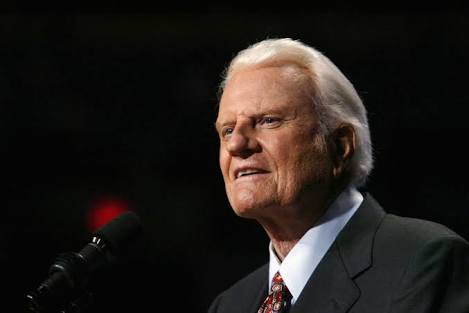
    Billy Graham played multiple roles on the world stage as a spiritual leader. He was the most admired religious leader in the world. He was considered to be America’s pastor and a pastor to US presidents.

    When the Rev. Billy Graham passed on to eternity on Wednesday, February 21, 2018 one of the most influential spiritual leaders of the twentieth century left the world scene. There are not many parallels to the spiritual legacy that he leaves behind. William Franklin Graham Jr. was on November 7, 1918 in Charlotte, North Carolina to parents who were farmers.

    Billy Graham rose to prominence through his successful large indoor and outdoor rallies which were broadcast through radio and television. He became the pioneer tele-evangelist proclaiming the Gospel to a global audience. Graham preached to live audiences of nearly 250 million people in more than 185 countries through his evangelistic campaigns. He also reached hundreds of millions more through television, video, film and webcasts. Billy Graham’s life time audience is estimated to be over 2.5 billion.

    Graham’s message of peace, reconciliation and hope was mainly based on the Bible verse found in the Gospel of John Chapter 3:16 “God so loved the world that He gave His only begotten Son, that whoever believes in Him should not perish but have everlasting life”. His messages were simple, clear, direct and passionate. They brought hope for a fallen sinful humanity to find peace and reconciliation with their creator through Jesus Christ, the Savior of the world.

    Billy Graham was a spiritual counselor to US presidents from Harry Truman to Donald Trump. During major personal, national and international crisis they turned to him for advice and prayer. Political leaders belonging to both Democratic and Republican parties held him in high esteem. He repudiated segregation and was instrumental in bringing Christians of all backgrounds together for humanitarian purposes and evangelism. World leaders sought his counsel and prayer.

    Graham’s first visit to India was in 1956 and he maintained a very close relationship with the Christian leadership in India. He had a heart for the Indian sub-continent and had personal friendship with many political and religious leaders in India.

    Billy Graham played multiple roles on the world stage as a spiritual leader. He was the most admired religious leader in the world. He was considered to be America’s pastor and a pastor to US presidents.

    Graham was married to his Wheaton classmate Ruth Bell on August 13, 1943. Ruth Graham went to her eternal rest on June 14, 2007 at the age of 87. Graham and his wife had five children. His son Franklin Graham is the president of Billy Graham Evangelistic Association and he is also the president of the international relief organization, Samaritan Purse.

    Billy Graham will be remembered as a preacher who brought hope to millions around the world and as a spiritual icon who touched the lives of those who lived in palaces as well as in huts!

    May his Soul Rest in Peace!


  • Liberating India’s best colleges: HRD minister Javadekar just announced the most far reaching reforms in higher education

    Liberating India’s best colleges: HRD minister Javadekar just announced the most far reaching reforms in higher education

    By Arvind Panagariya and B Venkatesh Kumar

    With approximately one year left before voting for the next Lok Sabha elections begins, you would expect the government to be seized by populism. Not the Modi government. On the heels of a pragmatic Budget, the human resource development (HRD) minister Prakash Javadekar has now announced the most far-reaching reforms in higher education. One of us (Panagariya) had lamented for long that the reforms in this important area had been cursed, with HRD minister after HRD minister failing to bring about fundamental change. Magically, Javadekar has broken that curse.

    By way of background, during past several years, multiple commissions and committees have recommended reforms but failed to bring about any substantive change in the core regulations under the University Grants Commission (UGC) Act. Undeterred, in June 2017, the Prime Minister’s Office (PMO) appointed a committee at the Niti Aayog to recommend how progress could be made in this important area. One of us chaired that committee while the other joined it as an invited expert member.

    It is nothing short of a miracle that Niti committee was successful in forging a consensus around the reforms among its members, which included the top officials of Niti Aayog, HRD ministry, UGC and All India Council of Technical Education (AICTE). The committee submitted its report to the PMO at the end of August 2017.

    Illustration / Chad Crowe

    The announcement by the HRD minister has translated the recommendations by Niti committee into action in the areas of autonomy to universities and colleges. The far-reaching changes are contained in two separate Gazette notifications: Graded Autonomy Regulations (GARs) 2018; and Autonomous Colleges Regulations (ACRs) 2018. Recommendations by Niti committee in a third area, accreditation, have received approval by UGC but await a nod from the HRD ministry.

    GARs break away from decades long tradition of one-size-fits-all regulations for our universities. Based on National Assessment and Accreditation Council (NAAC) scores, they divide universities into three categories: those receiving more than 3.5 in NAAC scores (Category I); those receiving NAAC scores above 3.25 but not exceeding 3.5 (Category II); and those receiving NAAC score of 3.25 or less (Category III). Category I universities also include universities listed among the top 500 in international rankings such as the Times Higher Education and QS. Universities in Categories I and II are granted considerable autonomy while those in Category III remain subject to existing rules.

    Under GARs, universities in Categories I and II are entirely free to start new courses, programs, departments, schools and centers and open constituent colleges within their geographical jurisdiction in self-financing mode. They are also exempt from UGC inspections, can offer courses in open and distance mode, build in an incentive structure to attract talented faculty from their own resources and engage in international collaborations including hiring foreign faculty. Decision making authority has been shifted from UGC to statutory bodies of the university such as the finance committee, academic council and governing board.

    Category I universities will additionally automatically come under Section 12B of the UGC Act without a UGC inspection. They will also have the freedom to open research parks, incubation centers and university society linkage centers.

    ACRs, the rules governing autonomy to colleges, extend autonomy to a larger set of colleges so that they may evolve into high-performing institutions, even independent universities. Historically, process roadblocks at the level of the affiliating university, concerned state government and UGC have discouraged colleges from seeking autonomy. Therefore, ideally, autonomy should be automatically conferred once a college is deemed eligible for it. But the existing technical difficulties forbid this path. Consequently, as a compromise solution, the new regulations make a conscious effort to minimize the roadblocks that the affiliating university, the state government and UGC can place in the path to autonomy once an eligible college applies for it.

    Turning to accreditation, reforms recommended by Niti committee and approved by UGC propose to throw the door wide open to independent accreditation agencies. Despite efforts, NAAC and National Board of Accreditation have not been able to achieve the scale and credibility necessary to make a success of accreditation process. Many more entities and resources are required to correct this situation.

    Under the reforms awaiting HRD ministry approval, an advisory council consisting of public figures and distinguished academics of unimpeachable integrity would be charged with empaneling the accreditation agencies. To ensure that universities and colleges are not able to influence accreditation agencies, they will be required to contribute the fees to a central pool from which the accreditation agencies would be paid.

    Some would argue that we must grant autonomy to all institutions. An argument in favor of the graded autonomy in the initial round, however, is that the reform must gain credibility among stakeholders. This is best accomplished by producing success among the top-ranking institutions. There would be every reason to extend the autonomy to all universities and colleges over time.

    To make these reforms permanent, the government will need to bring a new legislation to replace the UGC Act, 1956. Absent such legislation, the risk of a future government reverting to old rules remains. The new legislation would also provide the occasion to replace UGC by a less intrusive and more independent regulatory body.

    (Arvind Panagariya is former Vice Chair, Niti Aayog. Venkatesh Kumar is Chair, Centre for Public Policy and Governance, TISS)

  • Ashok Vyas launches ‘Dialogue Generation Square’ – a Bridge Across Generations

    Ashok Vyas launches ‘Dialogue Generation Square’ – a Bridge Across Generations

    The first videographed discussion took place at a senior center in New York

     By Mukund Mehta, President, Indo-American Senior Center, New York

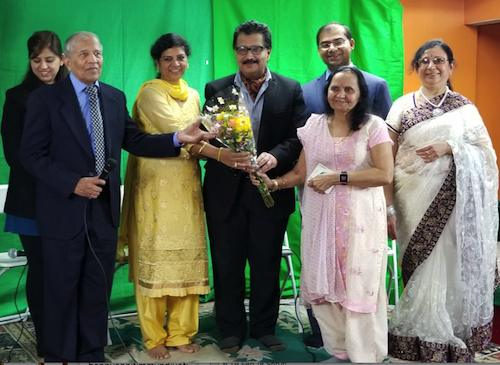
    NEW YORK (TIP): Ashok Vyas, President of Insight for Creativity LLC — dedicated to spread ideas of peace and harmony through creative video programs – and Program Director with ITV Gold since the turn of this millennium, has launched an innovative televised program titled ‘’Dialogue Generation Square’. This lively forum for two-way communication between generations took place at Indo-American Senior Center in Queens earlier this month. Mukund Mehta, President of the center, said he bucked the prior trend of having senior guest speakers addressing their members on subjects like taxes, Medicare/Medicaid, health, and legal issues, and instead helped organize the program focused on riveting discussion of divergent views and opinions between two generations, namely, seniors and youths.

    The program elicited frank dialogue between seniors and youths on two topics – ‘Generation Gap and Technology’, and ‘Respect for Age or Knowledge?’ — involving participation by two seniors and two youths for each episode. The participants for the first episode were Dr. Himanshu Pandya and Mukund Mehta as seniors and Neil Zaveri (finance) and Ms. Rajni Raghunath (office manager) as young participants. Dr. Nilesh Soni and Mrs. Gopi Udeshi as seniors and Shamik Shah (3rd year student at Stony Brook University) and Sapna Vyas (software engineer) were the participants for the second episode.

    Ashok Vyas stressed the necessity of community events involving seniors and youths for better understanding and bridging the gap between generations. He appreciated the senior center’s enthusiasm and cooperation for participating in the project. Acknowledging his viewpoints, Mukund Mehta assured him that the inaugural discussion would provide impetus to undertake more social events in the future.

    In the two-hour recorded TV program, Ashok Vyas posed interesting questions to the panelists on a myriad of issues relating to the two episodes’ topics generating candid responses which brought out dissimilar viewpoints on certain issues between the two generations. It was evident that the rapid technological developments influenced heavily the younger generation’s quick adaptability to the technology compared to the previous generation. The unchecked use of smart phones, texting, and social media by the millennials shaped their thinking and made them logic-oriented compared to tradition-oriented previous generations of baby boomers and generation X.

    During the lively conversation on the topic whether technology bridged or widened the gap between the generations, panelists opined that flexibility, understanding, involvement and adaptability initiated by the older generation would bridge the gap. Although knowledge is vital to command respect, the panelists concurred that age should equally be respected, which is an accepted norm in our Indian culture and tradition. Interesting divergent views were expressed on multi-tasking since a young participant fond of multi-tasking personally argued against it whereas a senior favored it due to time constraints resulting from a full-time job, traveling, social events and household chores.

    Frank dialogue between seniors and youths divulging their personal life experiences, family events, family structure, cultural divide between India and the U.S. and the impact and influence of technology stimulated the program. Mr. Paresh Shah of PareShah Financial Services, and the father of Shamik Shah, the young participant, addressed the audience praising the program and reinforcing the necessity of having more dialogues on community issues.

    Ashok Vyas’s lucid and humorous style of shepherding the debate kept the audience spellbound and glued to their seats for two hours. President Mukund Mehta thanked him for his innovative concept to get together seniors and youths to air their views and to bring along his production team of camerapersons on a Sunday.

    Ashok Vyas in his concluding remarks thanked Indo American Senior Center, and Sathya Viswanath, Chairperson of ITV Gold, for supporting this project.

    Insight for Creativity plans to organize ‘Dialogue Generation Square’ series every month in collaboration with various organizations. This will be available on Facebook and YouTube. The first two episodes will be shown on ITV as a part of the ongoing series ‘Insight Tonight with Ashok Vyas’ on 26th Feb & 27th Feb at 7:30pm.

    Insight for Creativity LLC is founded by Ashok & Sheila Vyas to create and promote positive video content. Anybody willing to participate / help in coordinating or sponsoring this interesting series may approach Ashok Vyas at insight4creativity@gmail.com or Ph: 917 573 7775


  • Students Launch a Movement from Town Hall to Washington “Never Again”

    Students Launch a Movement from Town Hall to Washington “Never Again”

    NRA: Guns are the problem, do something

    SUNRISE, FLORIDA (TIP): Survivors of the massacre at Stoneman Douglas High School in Parkland, Florida, took center stage, Feb 21, at a town hall hosted by CNN as thousands of community members cheered on the young people thrust into the national spotlight by a massacre that killed 17 people.

    Moderated by CNN anchor Jake Tapper, the Town Hall featured students from Marjory Stoneman Douglas High School, parents and community members. The event was closed to the general public.

    The students-turned-gun-control advocates, their teachers and parents asked frank questions of Sens. Marco Rubio and Bill Nelson and Rep. Ted Deutch about whether they would support banning certain assault-style rifles and refuse to take money from the NRA. National Rifle Association national spokeswoman Dana Loesch also participated in the discussion.

    Sen Marco Rubio was the only Republican at the Town Hall. President Trump had declined to come. Republican Governor of Florida Rick Scott, too, stayed away as did other State lawmakers. Marco Rubio came in for much attack as did the NRA Spokeswoman Dana Loesch.

    “We would like to know why do we have to be the ones to do this? Why do we have to speak out to the (state) Capitol? Why do we have to march on Washington, just to save innocent lives?” asked senior Ryan Deitsch, his voice rising with each question.

    A face off: Sheriff Scott Israel and NRA Spokeswoman Dana Loesch

    The Stoneman Douglas students and parents also confronted NRA spokeswoman Dana Loesch, who said the organization feels the system for buying firearms is flawed and too many people who shouldn’t be able to buy guns are getting through the cracks.

    The town hall on Wednesday, Feb 21 night followed days of sit-ins, walkouts and demonstrations in solidarity with survivors of the massacre.

    Avery Anger, 14, who hid in a closet during the shooting, said she didn’t know what to think after the town hall. “It was more of a debate than a discussion,” she said. She entered the town hall with one question — “is it going to be safe for me to go back to school?” By the end, she still was unsure. “I don’t feel like they answered the question.”

    The shooting reignited the passionate national discussion on gun laws and how to keep communities safe, catalyzing a protest movement led by the young students from Marjory Stoneman Douglas High School.

    Fred Guttenberg, whose daughter Jaime was killed, angrily addressed Rubio, wanting the senator to agree that semiautomatic rifles like the AR-15 type used in the shooting were the problem.

    “Sen. Rubio, I want to like you. Here’s the problem. … Your comments this week and those of our President have been pathetically weak,” he said to lasting applause and cheers. “Look at me and tell me guns were the factor in the hunting of our kids in the school this week.”

    Guttenberg called on the senator to do something about guns, to work with the people affected by the massacre. Rubio, a Republican, replied, “I’m saying that the problems we are facing here today cannot be solved by gun laws alone.”

    Cameron Kasky, a junior at the school, asked Rubio to turn down campaign contributions from the National Rifle Association

    Cameron Kasky, a junior at the school, asked Rubio to turn down campaign contributions from the National Rifle Association.

    Rubio said he supports the Second Amendment, but he also stood for school safety. He wouldn’t say he would turn down an NRA contribution.

    “The influence of these groups comes not from money,” he said, “You can ask that question and I can say that people buy into my agenda.”

    Loesch, the National Rifle Association spokeswoman, told the audience she was fighting for them and that people who shouldn’t own guns should be reported by states to a national background check system.

    “I don’t believe this insane monster should have ever been able to obtain a firearm,” Loesch said Wednesday night, calling the suspect “nuts.”

    While some in the crowd yelled, “You’re a murderer,” Loesch said the system to buy firearms is flawed.

    Student Emma Gonzalez, who has been outspoken about her opposition to semiautomatic rifles, asked Loesch what the NRA’s position was on bump stocks and making it more difficult to buy certain weapons.

    Loesch replied the NRA is waiting on the Justice Department to make a ruling on bump stocks.

    Robert Runcie, the Broward County school system superintendent, told the audience that teachers should be armed with more money, not with guns.

    Broward County Sheriff Scott Israel interrupted Loesch, saying he knew she was standing up for the NRA.

    “But you just told this group you were standing up for them,” he said. “You’re not standing up for them until you say I want less weapons.”

    Deitsch told Rubio he had been doing active shooter drills since he was in elementary school. When he was in fifth grade he had to hide in a bathroom for three hours when his school went on lockdown because there were reports of a shooter in the town.

    “Now seven years later, I am in a closet with 19 other kids waiting, fearing for my own life,” he said.

    Why do we have to lead the change, he asked?

    Rubio said change can come when people on different sides, who have strong feelings, can agree on a way to make progress.

    He said he has proposed a concept called a gun violence restraining order that would allow people to go to authorities with concerns about someone who should not have a gun. Police would be able to take away weapons, he said.

    “I do appreciate your words there but that feels like the first step of a 5K run,” Deitsch said.

    Earlier in the day, President Donald Trump, who declined to participate in the town hall, suggested at a listening session at the White House that part of the solution to preventing school shootings could be having some armed, trained teachers on campus.

    None of the politicians at the town hall was sympathetic to the thought.

    Nelson, a Democrat said, “I think it is a terrible idea.”

    Rubio and Deutch agreed.

    Robert Runcie, the Broward County school system superintendent, told the audience beforehand that teachers should be armed with more money.

    Before the event, Israel fired up the crowd in the arena, saying, “My generation, we did not get it done. You will get it done.”

    Runcie told the Stoneman Douglas students that they have started a movement.

    “These are the young people that are going to change the world for the better. And let me tell you, our students are ready for this moment. They have been preparing for this moment,” he said.

    Some of the student participants came straight from the state Capitol in Tallahassee after lobbying state lawmakers for tougher restrictions on weapons like the one used to kill their friends and teachers.

    A view of the gathering
    Photos / CNN screenshots

    The evening closed with poignant moments, one involving the words of Alex Schachter, one of the students who died.

    Read by his dad, Max Schachter, the poem was about roller coasters. Alex loved them.

    “He wasn’t writing about his life and had no idea his poem would become the future,” Max Schachter said.

    In the poem, Alex compared the ups and downs of life to a roller coaster.

    “It may be too much for you at times. The twists, the turns, the upside downs, but you get back up. You keep chugging along,” he wrote.
    The program closed with a song, “Shine,” performed by members of the Stoneman Douglas drama club.
    The song was addressed to the shooter, who is in jail.
    You may have hurt us
    But I promise we are not going to let you in
    We’re putting up a fight
    You may have brought the dark but together we will shine a light
    And we will be something special
    We’re going to shine, shine
    Different students said these lines between verses:
    We refuse to be ignored by those who will not listen.
    There are so many things you can do to become involved.
    Reach out to your congressmen, mail, call and tweet.
    The smallest of words can make the biggest difference.
    Be the voice for those who don’t have one.

    The President pledged to go to work after the meeting ended. “We don’t want others to go through the kind of pain you have gone through. It wouldn’t be right,” he said.

    The father of Meadow Pollack, who was killed last week, said he was speaking at Wednesday’s session because his daughter couldn’t.

    “We as a country failed our children,” Andrew Pollack said.

    (Source: CNN)

  • School officer waited outside building for 4 minutes as killings happened, Sheriff Israel says

    School officer waited outside building for 4 minutes as killings happened, Sheriff Israel says

    TALLAHASSEE (TIP): A Marjory Stoneman Douglas school resource officer has been suspended without pay after Broward County Sheriff Scott Israel said video shows him taking up a defensive position during the shooting but never entering the school.

    Israel announced Thursday that the decision to suspend Deputy Scot Peterson was made after reviewing video from the shooting and taking statements from witnesses and Peterson himself, Israel said.

    “He should have went in, addressed the killer, killed the killer,” Israel said.

  • Special Counsel Mueller Files New Charges against Manafort and Gates

    Special Counsel Mueller Files New Charges against Manafort and Gates

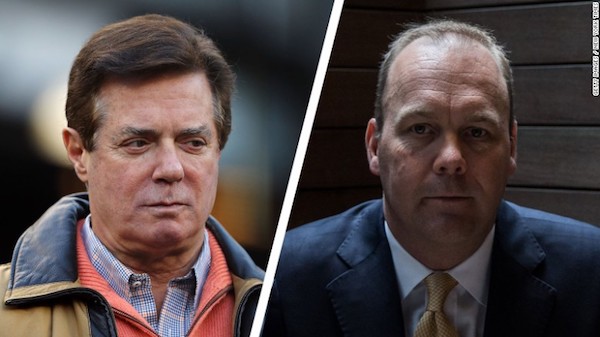
    WASHINGTON (TIP): Special Counsel Robert Mueller filed, February 22, new fraud and money-laundering charges against former Trump campaign chairman Paul Manafort and his associate Rick Gates.

    In the 37-page indictment, prosecutors describe a “scheme” in which the two longtime business partners allegedly laundered $30 million, failed to pay taxes for almost 10 years and used real estate they owned to fraudulently secure more than $20 million in loans.

    The indictments show increasing pressure from Mueller on the former top Trump campaign officials and highlight his aggressive effort to investigate Russian interference in the 2016 presidential election and any related matters uncovered during the investigation.

    Last Friday, the special counsel produced grand jury indictments for 13 Russian nationals, accusing them of operating a misinformation campaign to hurt Hillary Clinton’s presidential effort.

    In the indictment released Thursday, prosecutors allege Manafort and Gates “hid the existence and ownership of the foreign companies and bank accounts” they oversaw and laundered more than $30 million in income.

    Some of the fraud was possible because the men disguised their income as “loans” from shell corporations they ran, the prosecutors said.

    More than $75 million dollars flowed through offshore accounts the men had set up in foreign countries, including Cyprus, St. Vincent and the Grenadines and the Seychelles, the indictment alleges. These are small island nations where local laws make it easy to park money.

    Manafort used some of the money to buy real estate in the US, and they both used the money on home improvement and to refinance their mortgages, the indictment alleges. They also allegedly used money from their offshore accounts to pay for luxury goods, and, in Gates’ case, for his mortgage and children’s tuition.

    They were able to defraud banks because of the tens of millions of dollars they earned doing Ukrainian political work and lobbying from 2006 until 2015, the prosecutors allege.

    Manafort faces 18 new charges in Virginia, while Gates faces 23 new charges.

    Already, the pair face a combined 12 criminal charges in federal court in Washington for alleged money laundering and failing to disclose banking information and foreign lobbying work they did prior to 2015. Those charges are also connected to the offshore accounts in the new indictment.

    Manafort and Gates pleaded not guilty to those charges in October.

    Thursday’s indictment adds more pressure on Manafort and Gates as their Washington trial approaches this year. With mounting legal expenses and the potential for lengthy prison sentences, Manafort and Gates might reconsider cutting a deal with Mueller’s team.

    But they can only make a deal if they have valuable information that Mueller can use in other prosecutions. Gates could testify against Manafort, and Manafort could testify about any potential crimes he witnessed during Trump’s presidential campaign — if any occurred.

  • Trudeau’s India visit mired in controversy over dinner invite to “convicted Khalistani terrorist”

    Trudeau’s India visit mired in controversy over dinner invite to “convicted Khalistani terrorist”

    NEW DELHI (TIP): Canadian Prime Minister Justin Trudeau’s India visit kicked off with rather a cold reception by government of India. Prime Minister Narendra Modi who has been very warm to visiting heads of state and government who he received warmly on arrival, sent in a junior minister to receive the visiting Prime Minister of Canada, ostensibly to convey the displeasure of his government for his assumed close proximity to Sikh separatists in Canada.  And, on February 22, Canadian Prime Minister’s maiden India visit plunged into yet another controversy over a dinner invitation to a convicted Khalistani terrorist Jaspal Atwal by the Canadian High Commissioner to India.

    Swiftly moving to control damage, High Commissioner Nadir Patel cancelled the invite for the dinner, hosted for Trudeau, while the external affairs ministry said it will “ascertain” how Atwal entered India.

    “The High Commission has rescinded Mr Atwal’s invitation. We do not comment of matters relating to the PM’s security,” the Canadian mission said in a statement.

    Reacting to the controversy, Trudeau told reporters “Obviously we take this situation extremely seriously. The individual in question never should have received an invitation and, as soon as we found out, we rescinded the invitation immediately… The member of Parliament who included this individual has, and will, assume full responsibility for his actions.”

    The Canadian PMO also said in a statement that Atwal was not part of Trudeau’s official delegation.

    Atwal was convicted for trying to kill the then Punjab minister Malkiat Singh Sidhu in Vancouver in 1986.

    When asked how Atwal got a visa, external affairs ministry spokesperson Raveesh Kumar said the government is “ascertaining” details how he got a visa to enter India.

    “There are two aspects of this. One is his presence at the event. I think this is something which should be addressed by the Canadian side. They have said that it was an oversight. And that is the reason the invitation for the reception tonight has been withdrawn.”

    “On the visa part, I cannot immediately say how that happened. There are different ways of people coming into India, whether you are an Indian national, or OCI card holder. We are ascertaining details from our mission. We will have to see how this happened,” Kumar told reporters.

    He also said that the fact the ministry issued a visa means that Atwal is not an Indian national.

    On whether Atwal can be arrested in India, Kumar said there were cases against him for which he has served his sentence. The ministry is not aware whether there are cases against him in India, that has to be checked with the law-enforcement agencies, he added.

    Union home ministry officials said Atwal no longer figured in the government’s blacklist of Sikh extremists.

    The invite cancellation comes at a time when Trudeau’s pro-Khalistan approach is being criticized by many including Punjab Chief Minister Amarinder Singh, who raised the issue with the Canadian prime minister during a meeting.

    On his part, Trudeau had assured Singh that his country does not support separatism in India or elsewhere.

    Reacting to the controversy involving him, Atwal told Canada’s Postmedia that he did not plan to attend the dinner as he was in Mumbai on business, The Vancouver Sun reported.

    He also said it was unfair to raise his criminal conviction for shooting a visiting Punjabi cabinet minister on Vancouver Island in 1986 given how long ago the crime occurred.

    (With inputs from PTI)


  • US Women’s Hockey Team Beats Canada 3-2 for Gold at PyeongChang Olympics

    US Women’s Hockey Team Beats Canada 3-2 for Gold at PyeongChang Olympics

    GANGNEUNG, SOUTH KOREA (TIP): US Women’s Hockey team gave a shock to the fancied Canadians by winning the Gold in a thrilling penalty shootout 3 to 2.

    Jocelyne Lamoureux-Davidson, the sixth U.S. shooter in a shootout, skated slowly toward the net, faked a shot, shifted the puck left, then pulled it right before tucking the puck past the outstretched glove of diving Canada goalie Shannon Szabados.

    “I knew she was going to pull something,” forward Kendall Coyne said. “She is phenomenal in shootouts. She always had something up her sleeve.”

    Lamoureux-Davidson said the move is called “Oops, I did it again” and she has practiced it “thousands of times.”

    “I butchered it a thousand times,” she said. “Just glad it worked this time.”

    That was the game-winner in a 3-2 victory that ends Canada’s streak of four consecutive Olympic women’s hockey gold medals and perhaps changes the course of U.S. women’s hockey for years to come.

    “This is greater than a trophy and a medal,” said U.S. center Gigi Marvin, a three-time Olympian who also scored in a shootout.

    The fact that the Americans won the game in dramatic fashion merely adds to its historical significance. The game was played on Feb. 22, 38 years to the day after Herb Brooks’ team downed the Soviets on Mike Eruzione’s goal in the “Miracle on Ice.”

  • Students, Parents, Teachers Implore President Trump to Ensure School Safety

    Students, Parents, Teachers Implore President Trump to Ensure School Safety

    Trump mulls arming teachers, increasing age for gun purchases

    WASHINGTON (TIP): A week after the shooting at Marjory Stoneman Douglas High School in Parkland in which 17 students were killed, President Donald Trump hosted a listening session with a group of survivors, parents and teachers. On hand were Vice President Mike Pence and Education Secretary Betsy DeVos.

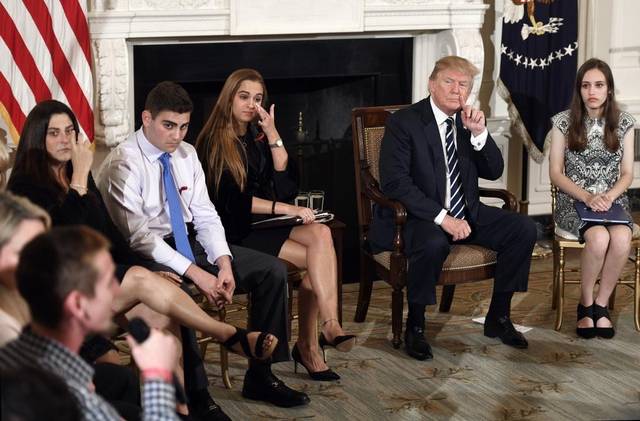
    Trump held an emotional, hour-long meeting with students who survived the Florida shooting and a parent whose child did not. He said arming teachers and other school staff could help prevent future mass shootings, voicing support for an idea backed by the powerful National Rifle Association gun lobby.

    Trump sat in the middle of a semi-circle in the White House State Dining Room. Photographers captured images of his handwritten note card with questions and responses such as: “What would you most want me to know about your experience?” and “I hear you.” Trump said he wants to hear suggestions for addressing the issue, saying, “After I listen, we’re going to get things done.”

    Trump listened intently to ideas from about 40 people, including those from six students who survived the Florida shooting.

    The students, many weeping, described the trauma of the shootings and pleaded that the government bring an end to gun violence.

    The Republican president, who has championed gun rights and was endorsed by the NRA during the 2016 campaign, said he would move quickly to tighten background checks for gun buyers and would consider raising the age for buying certain types of guns.

    He said he had “many ideas” and promised, “We’re going to be very strong on background checks.”

    Trump spoke at length during the televised White House “listening session.

    “If you had a teacher … who was adept at firearms, they could very well end the attack very quickly,” he said, while acknowledging the proposal was controversial. Some of the meeting participants indicated support. Others were opposed.

    Mark Barden, whose son was killed in the 2012 Sandy Hook Elementary School shooting in Connecticut, said his wife, Jackie, a teacher “will tell you that school teachers have more than enough responsibilities right now than to have to have the awesome responsibility of lethal force to take a life.”

    “I don’t understand why I could still go in a store and buy a weapon of war,” said Sam Zeif, 18, sobbing after he described texting his family members during the attack. “Let’s never let this happen again, please, please.”


  • Indian Origin Canada’s Defense Minister Harjit Singh Sajjan Says He Faced Discrimination In Canadian Military

    Indian Origin Canada’s Defense Minister Harjit Singh Sajjan Says He Faced Discrimination In Canadian Military

    New Delhi (TIP): Indian origin Canada’s Defense Minister Harjit Singh Sajjan said he “faced discrimination” in that country’s military because he “looked different”.

    Sajjan, who moved to Canada as a young boy, said this in the presence of Sophie Gregoire Trudeau, wife of Prime Minister Justin Trudeau, currently on a week-long visit to India.

    “I was born in India and moved to Canada, when I was five… When I was 18 and joined the military there, I faced discrimination, even though I am a Canadian…because I looked different,” he said, during the Asia launch of the global campaign — ‘She Will Grow Into It’ here.

    Sajjan is travelling along with Trudeau and his wife, and they visited Amritsar and even offered ‘sewa‘ (volunteer service).

    “I hail from a small village and lived a very simple life, before migrating to Canada,” he said.

    Sajjan, who became the Defense minister in 2015, also shared an anecdote from his youth days to underline the message of equality.

    “I was 12, and I came across a girl in India, with round, beautiful eyes, who came towards me begging for money and I asked her to go away…Years later in Canada, when I faced discrimination, her face flashed in front of my eyes, and I realized she was begging because she was hungry,” he said.

    The Canadian minister said that then he realized how it felt to be treated unequal.

    “Sixty per cent of the world’s malnourished people are women, and this campaign seeks to fill the gap,” Sajjan said.

    During his interaction with young women from high schools, he described them as “powerful agents of change”.

    “Every child has a gift and endeavor to accomplish your inner potential and realize what you dream to become,” he said, adding, that “But, when you find you dream and success, go back and serve people”.

    The campaign, led by Canada-based non-profit organization Nutrition International, was launched globally in Ottawa on the International Day of the Girl Child.


  • Indian American student to build a primary health clinic in Uttar Pradesh village

    Indian American student to build a primary health clinic in Uttar Pradesh village

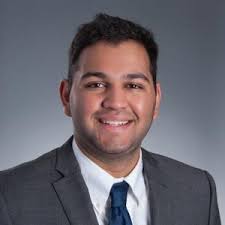
    MARYLAND (TIP): An Indian American student at Towson University is leading an effort to build a primary health clinic in a remote village in Uttar Pradesh.

    Mohammad Siddiqi, 21, is helping to build a clinic in the village of Santokha, in the Sandila district, 50 miles to the southwest of Lucknow. Siddiqi’s parents Akhlaq and Anjum Siddiqi were born and grew up in the area before they moved to the United States decades ago.

    There are no healthcare facilities in Santokha and villagers are forced to see quack doctors with no medical background that recommend hazardous “treatments,” Mohammad Siddiqi said.His mission is to provide quality healthcare to the poor people in the village and neighboring areas, he added.

    “After visiting my parents’ village for the first time, I realized there is very limited access to emergency medical services as well as a need for basic education regarding health practices in different situations, such as prenatal and postnatal care,” he said. “I hope to tackle these two needs with this clinic, which is already well into its development.”

    Siddiqi, who is currently studying at Towson University with a major in accounting while interning part-time at Morgan Stanley as a finance analyst, has been able to raise $75,000 for the construction of the clinic so far.

    His father, Akhlaq Siddiqi, works for the US Patent Office and his mother Anjum Siddiqi runs an assisted living facility in Gaithersburg, MD.

    Although his studies and career plans are centered around accounting and finance — upon completing his undergraduate degree in May 2018, he plans to start an internship with Deloitte for Summer 2018 before pursuing a Master’s in Finance — Mohammad Siddiqi said he has developed a passion to help others not as fortunate.

    Among other things, the clinic will screen patients for serious illnesses, such as heart diseases, cancer, blood diseases, eye diseases and kidney diseases, as well as treat common diseases including fever, malaria, tuberculosis, gastroenteritis, respiratory diseases and infections, he said. It will have curative, education and prevention programs.

    Eventually, the clinic will have state-of-the-art diagnostic services, including X-ray, ultrasound and ECG, he added.

    Siddiqi said a current challenge is building relationships with the local government as well as NGOs and healthcare professionals. Involvement of the local community and other stakeholders will ensure long-term viability of the project, he said.

    Citing the assisted living facility his mother runs, Siddiqi said healthcare is a field that his family deeply cares about and has expertise in, and, considering his parents’ roots in the area, starting a clinic in the Sandila region was quite natural.

    His father Akhlaq Siddiqi said the family has a strong emotional bond with the village and wanted to do something for the area. After a family visit a few years ago, Mohammad saw the condition of the villagers and decided to take the initiative in building the clinic, he said.

    “In future we plan to build similar clinic in other parts of Uttar Pradesh by mobilizing other people of Uttar Pradesh origin,” Akhlaq Siddiqi said.


  • Indian Origin Sikh Man’s Turban Pulled Out Outside UK Parliament

    Indian Origin Sikh Man’s Turban Pulled Out Outside UK Parliament

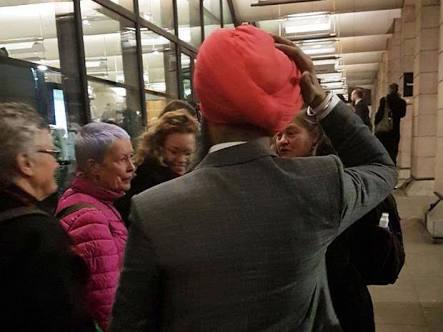
    LONDON (TIP) :  An Indian Origin Sikh man’s turban was pulled out  by a white man shouting “Muslim go back” in an apparent racist attack outside the UK parliament, according to a media report.

    Ravneet Singh, 37, from Punjab, was waiting to enter the Portcullis House, part of the British Parliamentary Estate, to meet Sikh Labor MP Tanmanjeet Singh Dhesi when the assault took place on February 21st .

    Mr. Singh said he was waiting in the queue when the man, who was shouting “Muslim go back”, approached him and tried to remove his turban, a religious headgear.

    “I was in the queue outside Portcullis House and this guy ran up to us. Just before we got to the entrance he came up to me and attacked me. He was pulling at my turban strongly. It half moved and I grabbed it. Before he could do anything else I shouted at him and he ran,” Mr Singh was quoted as saying by The Independent.

    Mr. Singh said the man made a “racist comment” in another language that he did not understand.

    “He was a white man, but he didn’t sound English. He said something like ‘Muslim go back’,” he added.

    Mr. Dhesi, who was to host Mr. Singh, expressed “disgust” at the incident and sought action against the culprit.

    “Disgusted to discover today that someone filled with hatred tried to pull off the turban of one of my guests standing in line outside @UKParliament. I hope the @metpoliceuk /authorities will take urgent action,” Mr Dhesi tweeted.

    According to the report, the police have confirmed being alerted at 5.20 pm about the assault outside the building adjacent to the Houses of Parliament, which is home to offices for MPs and their staff.

    Police said no arrest has been made so far and they were probing the case.

    The Sikh community in the UK has often been the mistaken target of hate crimes against Muslims that surged after the 9/11 attack in the US.


  • Indian American from California adopts village in Telangana

    Indian American from California adopts village in Telangana

    CALIFORNIA (TIP): Indian American Annapareddy Appi Reddy from California has adopted the remote Dondapadu village in Suryapet district as a part of Digithon Digital Village initiated by the Telangana Information Technology Association (TITA).

    Till a few months ago, residents of the village believed a computer was just another gadget meant for students and the educated. But this initiative helps villagers understand banking, agriculture and even access anything beyond their village.

    218 villagers are selected to be given basic computer training that equipped them to conduct digital transactions and be financially literate. The team selected participants who did not have access to a smartphone and trained them. They were introduced to E-Sage, an agriculture knowledge platform developed by the IIIT-Hyderabad, where they could learn new methods of farming and understand the market to sell their produce at apt prices.

    While the team provided ground-level support, TITA president Sundeep Kumar Makthala said more than 40 NRIs responded to their call to adopt their villages under the Digithon programme.

    TITA, a non-profit and non-governmental organisation working for the welfare of Telangana IT students, was started in 2013 by IT veterans who hail from Telangana region.


  • World Sikh Organization Of Canada Not Happy With Quebec’s Top Court Decision Against Kirpan Ban

    World Sikh Organization Of Canada Not Happy With Quebec’s Top Court Decision Against Kirpan Ban

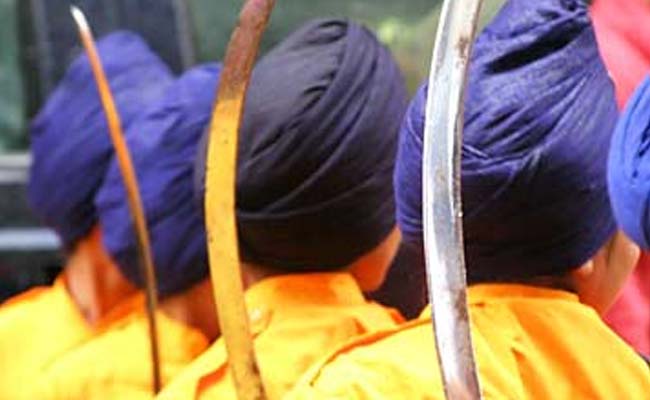
    TORONTO (TIP):  A Canadian court has upheld the right of Quebec’s national assembly to prohibit people from entering the building with a kirpan, an article of faith for the Sikhs, media reports said.

    Two members of the World Sikh Organization of Canada were challenging a unanimous motion adopted in the national assembly in February 2011.

    Balpreet Singh and Harminder Kaur did not want to part with their kirpans as they headed into a legislature hearing to submit a brief in January 2011.

    The motion stated that security personnel had the right to refuse entry to anyone who did not want to remove the religious symbol.

    Originally, they argued the motion was unconstitutional but then changed their position to say it was legal but non-binding.

    But Quebec Court of Appeal Justice Patrick Healy rejected their arguments in a decision on February 19th as he upheld a lower-court ruling that said the national assembly has the right to establish its own rules in accordance with parliamentary privilege, The Toronto Star reported yesterday.

    The court ruling coincided with Prime Minister Justin Trudeau’s visit to India where his government is reaching out to the minority community to mend fences.

    Superior Court Justice Pierre Journet affirmed the authority of the legislature to “exclude kirpans from its precincts as an assertion of parliamentary privilege over the exclusion of strangers,” the report said.

    In his decision, Mr. Healy referred to a Supreme Court ruling that said a provincial legislature could invoke the privilege to exclude strangers to prevent journalists from filming in the precincts of the assembly.

    “The Supreme Court confirmed that these general principles formed part of Canadian constitutional law and held specifically that the privilege to exclude strangers is entrenched in the Canadian Constitution,” Mr. Healy wrote on behalf of a three-member panel.

    “I make no comment whether the assembly’s exercise of the privilege to exclude the kirpan is a wise decision. I say only that it is a legal exercise of this category of privilege. If the appellants wish to challenge it, the proper forum is the assembly itself,” it said.

    Yesterday, Mr. Singh said an appeal is being considered.

    “We haven’t reached a decision, he said in an interview. Obviously, the judgment just came out on Monday and we received it late in the day yesterday, so we’re still reviewing it. But an appeal is certainly one of our options and we’re considering it very seriously,” Mr. Singh said.

    Julius Grey, one of the lawyers who represented the plaintiffs, also said he is not ruling out an appeal with the Supreme Court.

    “I don’t agree with the judgement and I believe it is highly appealable,” Mr. Grey said.

    In 2011, several Sikhs were denied entry into the Quebec legislature amid a heated debate over multiculturalism and where to draw the line when it comes to tolerating cultural practices.

    Security officials at the Assemble Nationale refused to let them in because they were wearing kirpans.

    The Canadian prime minister is on week-long visit to India where he will be meeting Punjab chief minister Captain Amarinder Singh.

    The Trudeau government is reaching out to mend fences with Mr. Singh who has accused it of including Sikh separatists in its Cabinet, CBC News.com reported.

    Sikhs make up less than two per cent of India’s population. But among Indian-Canadians, they form the largest group and have the greatest political clout; all four of Trudeau’s Indian-Canadian ministers are of Sikh origin.


  • Indian American NUMC surgeon from Long Island walks free of all criminal charges

    Indian American NUMC surgeon from Long Island walks free of all criminal charges

    LONG ISLAND (TIP) : Indian American surgeon Dr. Venkatesh Sasthakonar has been cleared of all criminal charges by a judge in Nassau County, Long Island, according to news reports.

    The well-known surgeon was accused by a nurse of allegedly trying to strangle her with an ‘elastic cord’ following differences over some medical procedures. But a judge exonerated him on Feb. 20, and police said there was insufficient evidence that any crime occurred after examining videos and talking to colleagues at the hospital. The 44-year old doctor is a veteran weight-loss surgeon. He  had consistently maintained his innocence. News reports quoted the doctor’s attorney saying the nurse’s story was a complete lie.

    Outside the courtroom after the judge pronounced the verdict, Dr. Sasthakonar was surrounded by friends and well-wishers . He occasionally became emotional as he recounted his traumatic experience.

    “What happened to me didn’t hurt me,” he is quoted saying in the abc7ny report, adding, “What happened to (my wife) and the kids is what hurt me…I thought being a good person could protect you against bad things happening to you, against evil. I don’t trust that anymore.” Dr. Sasthakonar is married to an internal medicine physician.

    “I hope nobody goes through this hell including the person who started all this,” Sasthakonar’s wife is quoted saying in the cbslocal.com report, adding, “What happened in the past month was a nightmare.”

    “After thoroughly reviewing this case, interviewing witnesses and analyzing surveillance video, it has been determined there is not enough evidence to support that a crime occurred,” Brendan Brosh, a spokesman for Nassau County District Attorney’s office, is quoted saying in a statement on cbslocal.com.


  • Indian American Executive at Ford dismissed with immediate effect over ‘Inappropriate Behavior’

    Indian American Executive at Ford dismissed with immediate effect over ‘Inappropriate Behavior’

    MICHIGAN (TIP): Ford Motor Company announced on Feb. 21 that Raj Nair, the executive vice president and president, North America, is departing from the company effective immediately.

    The announcement follows an internal investigation that was conducted recently after reports of his inappropriate behavior surfaced.

    The review determined that certain behavior by Nair, 53, was inconsistent with the company’s code of conduct, Ford said in a statement.

    “We made this decision after a thorough review and careful consideration,” said Ford President and CEO Jim Hackett said. “Ford is deeply committed to providing and nurturing a safe and respectful culture and we expect our leaders to fully uphold these values,” he added.

    “I sincerely regret that there have been instances where I have not exhibited leadership behaviors consistent with the principles that the Company and I have always espoused. I continue to have the utmost faith in the people of Ford Motor Company and wish them continued success in the future,” Nair, who is of Indian origin, said.

    The company did not mention the details of the internal investigation or the reports against Nair, who was often called a rising star in Ford and a potential future chief executive. Ford will divide Nair’s responsibilities among Kumar Galhotra, the firm’s chief marketing officer and head of the Lincoln brand, and Stuart Rowley, the vice president of strategy.

    Nair had been working with Ford since 1987 after he graduated from college. He was Ford’s CTO and head of global product development before assuming the executive vice president role in June 2017.

    He had been instrumental in changing the focus of Ford towards self-driving cars, phone-savvy infotainment and mobility services, according to Engadget.

    The high-level dismissal is one of the most prominent in an industry other than media and entertainment after sexual harassment at workplaces started to be taken seriously. Companies have started enforcing zero tolerance harassment policies, although it is not known if Nair was dismissed over charges of sexual harassment.


  • AAPI’s 36th annual Convention & Scientific Assembly to be held at Columbus Convention Center, OH, July 4-8, 2018

    AAPI’s 36th annual Convention & Scientific Assembly to be held at Columbus Convention Center, OH, July 4-8, 2018

    COLUMBUS, OH (TIP): “The 36th Annual Convention & Scientific Assembly of the American Association of Physicians of Indian Origin (AAPI) will be held at the at Columbus Convention Center, OH July 4-8, 2018,” Dr. Gautam Samadder, President of AAPI, announced her, February 18. “The 2018 AAPI Convention offers a rare platform to interact with leading physicians, health professionals, academicians, and scientists of Indian origin,” he added.

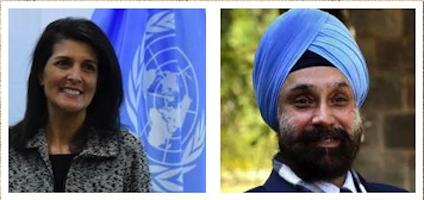
    Ambassador Nikki Haley, the top American diplomat and US Ambassador to the United Nations, and Ambassador Navtej Singh Sarna, an Indian author-columnist, diplomat and current Indian Ambassador to the US, have agreed to attend the AAPI convention and address the delegates, Dr. Samadder announced.

    AAPI’s mission is to provide a forum to facilitate and enable Indian American physicians to excel in patient care, teaching and research, and to pursue their aspirations in professional and community affairs. For 36 years, the AAPI Convention has provided a venue for medical education programs and symposia with world renowned physicians on the cutting edge of medicine.

    The annual convention this year is being organized by the Ohio Chapter and is led by Convention Chair, Dr. John A. Johnson, a physician, business executive, private equity/venture capital investor, and philanthropist. A pool of dedicated AAPI leaders are working hard to make the Convention a unique event for all the participants.

    “We have been working hard to put together an attractive program for our annual get together, educational activity and family enjoyment. I and the Co-Chairs are fortunate to have a dedicated team of convention committee members from the Tri-State region helping us. We are expecting a record turnout and hence I would encourage early registration to avoid later disappointment,” Dr. Johnson said.

    “The preliminary program is in place, the major attractions include 12 hours of cutting-edge CME with renowned speakers, CEO Forum, Innovation Forum, Entrepreneur Forum, Women’s Forum, Men’s Forum, and Product Theaters to highlight the newest advances in patient care and medical technology. Alumni meetings for networking, also an AAPI-India Strategic Engagement Forum to showcase the AAPI initiatives in India like Trauma Brain Injury Guidelines, MoU on TB Eradication in India and recognition of AAPI Award winners will make this Convention unique,” Dr. Ashok Jain, Chair, Board of Trustees, said.

    “Many of the physicians who will attend this convention have excelled in different specialties and subspecialties and occupy high positions as faculty members of medical schools, heads of departments, and executives of hospital staff. The AAPI Convention offers an opportunity to meet directly with these physicians who are leaders in their fields and play an integral part in the decision-making process regarding new products and services,” Dr. Yashwant Reddy, Treasurer of AAPI Convention 2018, said.

    In addition to the exhibition hall featuring large exhibit booth spaces in which the healthcare industry will have the opportunity to engage, inform and educate the physicians directly through one on one, hands on product demonstrations and discussions, there will be focused group and specialty Product Theater, Interactive Medical Device Trade Show, and special exhibition area for new innovations by young physicians.

    Physicians of Indian origin are well known around the world for their compassion, passion for patient care, medical skills, research, and leadership. Not satisfied with their own professional growth and the service they provide to their patients around the world, they are in the forefront, sharing their knowledge and expertise with others, especially those physicians and leaders in the medical field from India.

    Representing the interests of the over 100,000 physicians of Indian origin, leaders of American Association of Physicians of Indian Origin (AAPI), the largest ethnic organization of physicians, for 36 years, AAPI Convention has provided a venue for medical education programs and symposia with world renowned physicians on the cutting edge of medicine.

    AAPI is an umbrella organization which has nearly 90 local chapters, specialty societies and alumni organizations. Almost 10%-12% of medical students entering US schools are of Indian origin. AAPI represents the interests of over 60,000 physicians and 25,000medical students and residents of Indian heritage in the United States. AAPI, the largest ethnic medical organization in the nation, and serves as an umbrella organization.

    The AAPI Convention offers an opportunity to meet directly with these physicians who are leaders in their fields and play an integral part in the decision-making process regarding new products and services.

     “Physicians and healthcare professionals from across the country and internationally will convene and participate in the scholarly exchange of medical advances, to develop health policy agendas, and to encourage legislative priorities in the coming year. We look forward to seeing you in Columbus, OHIO!” said Dr. Gautam Samadder.  For more details, and sponsorship opportunities, please visit:  www.aapiconvention.org; and www.aapiusa.org

  • “Double” Olympians in limelight

    “Double” Olympians in limelight

    By Prabhjot Singh in PyeongChang.

    PyeongChang (TIP): One of the toughest things in sports is to be an Olympian. On an average, every four years only 5,000 to 7,000 sportsmen and women qualify to be Olympians and less than 1 per cent of them distinguish themselves and become Olympic medalists.

    Naturally, it becomes much tougher to be both Winter and Summer Olympian. Though there are not many instances when athletes have competed in both summer and winter Olympic Games, yet few sportsmen and women, with their hard work and dedication, have scripted success stories in these mega sports events held within two years of each other.

    Most recent case is of Kaillie Humphries and Phylicia George of Canada who won a bronze medal at PyeongChang.

    Pita Taufatofua decided immediately after finding out he would be Tonga’s flag-bearer that he would wear traditional Tongan dress instead of the usual team uniform at the opening ceremony.
    Photo / courtesy TODAY

    Who does not remember Tonga’s Pita Taufatofua who became a global sensation overnight when he arrived shirtless in freezing cold of the opening ceremony of the PyeongChang 2018 winter Olympic Games. He belongs to a select band of those athletes who have competed in successive summer and winter Olympic Games.

    He competed in Taekwondo event in the 2016 summer Olympic Games in Rio and finished 114th in 15 km Cross-country skiing here.

    It may be more than a dream for those who make it. It is the reality for a number of athletes from Canada who are competing here at PyeongChang.  Two of them, Phylicia George and Seyi Smith, moved from track and field to Bobsleigh, an event that has also attracted some African athletes, including all-woman Nigerian team, to Winter Olympic Games.

    “I started cross country skiing in 2017 and the training was perhaps the hardest I have ever done in my life,” Pita told media. “Races where we hope we could do well were getting cancelled and we had to book last minute one way ticket to the race where myself and German Madrazo of Mexico could finally qualify for PyeongChang 2018.”

    Pita’s story is for those who after setting a target stay determined to achieve it.

    “I was one of those people who thought I could sort of walk on and continue doing what I was doing before,” says Canadian track and field star Smith, who competed in the 4 x 100m relay at London 2012. “The overlap between track and bobsled is not as much as people think.”

    Phylicia George, who competed in the 100m hurdles at London 2012 and Rio 2016, echoes Smith’s sentiment about bobsleigh being a whole lot more than just running fast on ice.

    “The biggest thing was getting stronger, lifting a lot heavier,” says George. “I think I did not respect how much strength played a role and how much stronger I needed to get to be able to find the positions that I needed behind the sled.”

    Seyi Smith, moved from track and field to Bobsleigh

    Beyond the need for physical strength, Smith and George also needed to dip into their reserves of psychological strength to overcome the inevitable obstacles of adapting to a whole new athletic discipline.

    For Smith, though, there was never serious thought given to abandoning the quest.

    “Everybody warned me when I first started out, saying, ‘You better watch out, Seyi, this is not track, there is not the glamour, you are going to be working in the cold and lifting sleds,’’” says Smith.

    “It has been quite the opposite. Every month I have liked it more and more. I told one of the guys that the only time I actually said that I was having fun out loud is right before we crashed in training. So, I don’t say it out loud anymore. But inside, I am still enjoying myself quite a bit.”

    George fared a bit differently, having competed at the Summer Games less than two years ago, and still being active in track and field. She says getting started in bobsleigh was “very rough” and she definitely second-guessed her decision.

    But having been recruited to bobsleigh by Kaillie Humphries, the two-time reigning Olympic champion in the two-women event, it was perhaps inevitable that George’s competitive spirit would eventually win the day.

    “There definitely were days when I was like, ‘man, what am I doing out here?’” says George. “But seeing myself get better and being a part of a team was a really cool and interesting aspect for me, where I’m used to being an individual. … I am really happy I stuck with it and saw my potential through.”

    Kaillie Humphries (right), and Phylicia George after winning bronze in women’s bobsleigh on Wednesday, February 21

    It is not a usual combination that would end on Olympic podium. While one had two Olympic medals to her belt, she gets a new partner who happens to be veteran of two summer Olympic Games, and the new combination ends with Olympic Bobsleigh bronze.

    The pair is none other than mentor Kaillie Humphries and her new partner Phylicia George, otherwise Hurdler in Track and Field.

    For Kaillie it has been her third straight Olympic bobsleigh medal.

    With this medal, Canada has taken its tally to 21 with nine golds and is currently placed at overall number three position.

    Humphries and George had been in fifth place after the first two runs, but were just four-one hundredths of a second out of a podium position. They made up that ground in their third run, moving into third place with a cumulative time of 2:32.12. That gave them a buffer of 0.05 on fourth-placed Americans Jamie Greubel Poser and Aja Evans.

    In the final run, Humphries steered the sled down the track in 50.77 seconds for a four-run total time of 3:22.89, ensuring a podium finish with just the two leading tandems to go.

    Humphries came to PyeongChang as the two-time reigning Olympic champion. She is now the first Canadian bobsledder to win three Olympic medals.

    For George, it is her first Olympic medal and it comes in her Winter Olympic debut after she competed at two Summer Games in the 100m hurdles, making the final at both London 2012 and Rio 2016. She began bobsleigh training late last summer and competed in her first international race just this past November. She and Humphries won World Cup gold and silver together in January.

    Slovenian Ice Hockey player tests positive for doping

    As the PyeongChang 2018 Winter Olympic Games are inching towards a close, another case of violation of doping controls saw a Slovenia Ice Hockey player voluntarily accepting the charge and offered to quit the Olympic village.

    The Anti-doping Division of the Court of Arbitration for Sport (CAS ADD) at the Pyeongchang 2018 Olympic Winter Games (OWG) announced that it has registered a new case.

    Further to a request from the International Olympic Committee (IOC), and based upon the agreement of the parties, the CAS ADD has issued the following decision:

    Zika Jeglic, Ice Hockey, Slovenia, tested positive in-competition test with fenoterol (beta-2 agonist; specified substance). He accepted an anti-doping rule violation. As a consequence, the athlete is suspended from competing in the remainder of the Olympic Winter Games Pyeongchang 2018; the athlete will leave the Olympic Village within 24 hours; the procedure will continue and the CAS ADD will issue a final award after the conclusion of the Games.

    At the start of the second week of the Games, the Anti-doping Division of the Court of Arbitration for Sport, started procedure involving the athlete Aleksandr Krushelnitckii (mixed curling; OAR).

    Though a date has been fixed for hearing, yet no further information is being provided at this point.

    Earlier, a Japanese athlete also tested positive for doping and was suspended.

    -Courtesy PTC News

  • Evangelist Reverend Billy Graham dies at 99 on February 21st

    Evangelist Reverend Billy Graham dies at 99 on February 21st

    NORTH CAROLINA (TIP): The Rev. Billy Graham, counselor to presidents and the most widely heard Christian evangelist in history, has died at age 99.

    Graham died on February 21st morning at his home in Montreat, North Carolina.

    He had been treated in recent years for cancer, pneumonia and other ailments. His wife, Ruth, died in 2007. Graham reached more than 200 million through his appearances and millions more through his pioneering use of television and radio.

    Unlike many traditional evangelists, he abandoned narrow fundamentalism to engage broader society. His message and service to U.S. presidents from Dwight Eisenhower to George W. Bush earned him the nickname “America’s Pastor.” In 1995 his Evangelistic Association designated his son William Franklin Graham III as the ministry’s leader.


  • Indian American Vandana Jhingan removed from Illinois Republican primary ballot in Illinois

    Indian American Vandana Jhingan removed from Illinois Republican primary ballot in Illinois

    Illinois (TIP): Indian American Vandana Jhingan, the Republican Hindu Coalition-backed candidate , has been removed from the official list of Republican primary ballot in Illinois’ 8th Congressional District.

    Jhingan was one of the two Indian American Republicans vying for the GOP nomination to run against the incumbent Democrat Raja Krishnamoorthi in the November election.

    Jhingan was disqualified after a constituent, Steven Anderson, filed a complaint that many signatories to her nomination were not residents of the district.

    Nonresidents, who are not registered voters, cannot be considered as signatories while filing the nomination.

    According to election general counsel, Ken Menzel who spoke to the local Daily Herald, a second complaint was also filed against the Jhingan alleging improper circulation of the petition.

    The paper said she lacked enough signatures and thus failed to make it to the official ballot.

    Jhingan, a Chicago-based journalist, is the Midwest Bureau Chief of the Indian American cable network TV Asia.

    Another Indian American candidate Jitendra Digavker is on the ballot in the Republican primary. He is a businessman and runs a successful credit card process firm based in Schaumburg, which provides processing services to all types of businesses.

    Krishnamoorthi, an attorney-turned-businessman, was elected to the US House of Representatives from the district in November 2016, defeating Republican Peter DiCianni.