Year: 2018

  • Indian Origin Girl Cracks UK’s Math Hall of Fame

    Indian Origin Girl Cracks UK’s Math Hall of Fame

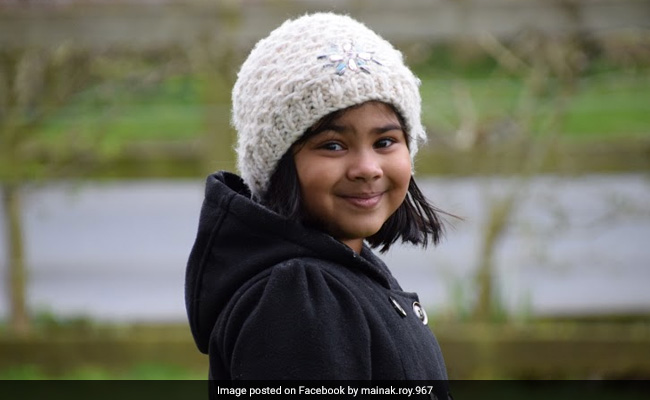
    LONDON (TIP):  An eight-year-old Indian origin school girl has entered the UK’s Mathletics Hall of Fame, an online mathematics based competitive tool aimed at primary school pupils.

    Sohini Roy Chowdhury competed with primary school pupils from across Britain and other countries to also make it into the top 100 World Hall of Fame after solving mathematical puzzles with speed and accuracy.

    “She feels really excited to solve math in an online learning environment to earn a place on the live World Hall of Fame,” said her father Mainak Roy Chowdhury, an accountant by profession with an MBA in finance.

    “Sohini’s great grandfather, D N Roy, was a qualified locomotive engineer from Scotland and worked for the Indian Railways. I would say Sohini has inherited her interest in math genetically,” he added.

    Mathletics is described as an engaging, supportive online learning resource targeted at primary school level math curriculum, allowing children to play live mental arithmetic games against other children from all over the world. Their scores are constantly updated and only the world’s 100 best make it to the leader-board.

    New Delhi born Sohini joined in the competition this year as a student of Nelson Primary School in Birmingham.

    “Sohini has displayed some higher-level understanding of the math covered this year. She applies herself to all her learning and this has been reflected in her attainment this year,” said her school teacher in reference to the Mathletics achievement.

    The school girl wishes to become a doctor when she grows up.

  • The Philadelphia Eagles defy odds at Super Bowl LII

    The Philadelphia Eagles defy odds at Super Bowl LII

    By Marvi Sajid

    NEW YORK (TIP): The Philadelphia Eagles rallied for a comeback against the New England Patriots with a 41-33 win for their epic championship victory. Coming into Super Bowl LII Tom Brady and his patriots were the clear favorite, but that wasn’t enough to close the door on the real Cinderella story Nick Foles.

    The 29-year-old back up quarter-back may have just become one of the most legendary stories in Philadelphia sports history. Nick Foles, started his NFL season uncertain about what was to come. In fact, the QB almost quit his NFL career 18 months ago but decided to give it one last shot. He signed with the Philadelphia Eagles as a backup quarterback to Carson Wentz. Little did we know that moment would change his entire career.

    Carson Wentz injured his right knee mid-December as the NFL regular season was coming to a close. That ensured Nick Foles the opportunity of a life time as the fairytale came against five time champion and three time MVP Tom Brady. But the story only gets better, as Nick Foles stamped his mark in history as the first player in a Super Bowl to make a pass and catch one. Overall Foles, converted on 28 of his 43 passes tallying 373 yards and 3 touchdowns.

    The Super Bowl champ spoke about his take on the game, and what lead him to one of the greatest Sports stories of all time:

    “The big thing that helped me was knowing that I didn’t have to be Superman,” he said. “I have amazing teammates, amazing coaches around me, and all I have to do is go play as hard as I could and play for one another, play for those guys and not look at the scoreboard, not look at the time. Just go out there and play. Don’t worry about it and we came away with a victory. It doesn’t get any bigger than this.”

    And for those of us who have not gotten enough of the Eagles QB, rumor has it this is far from the last time we see this Philadelphia Hero.


  • Indian American High School Girl Nominated as 2018 US Presidential Scholar in the Arts

    Indian American High School Girl Nominated as 2018 US Presidential Scholar in the Arts

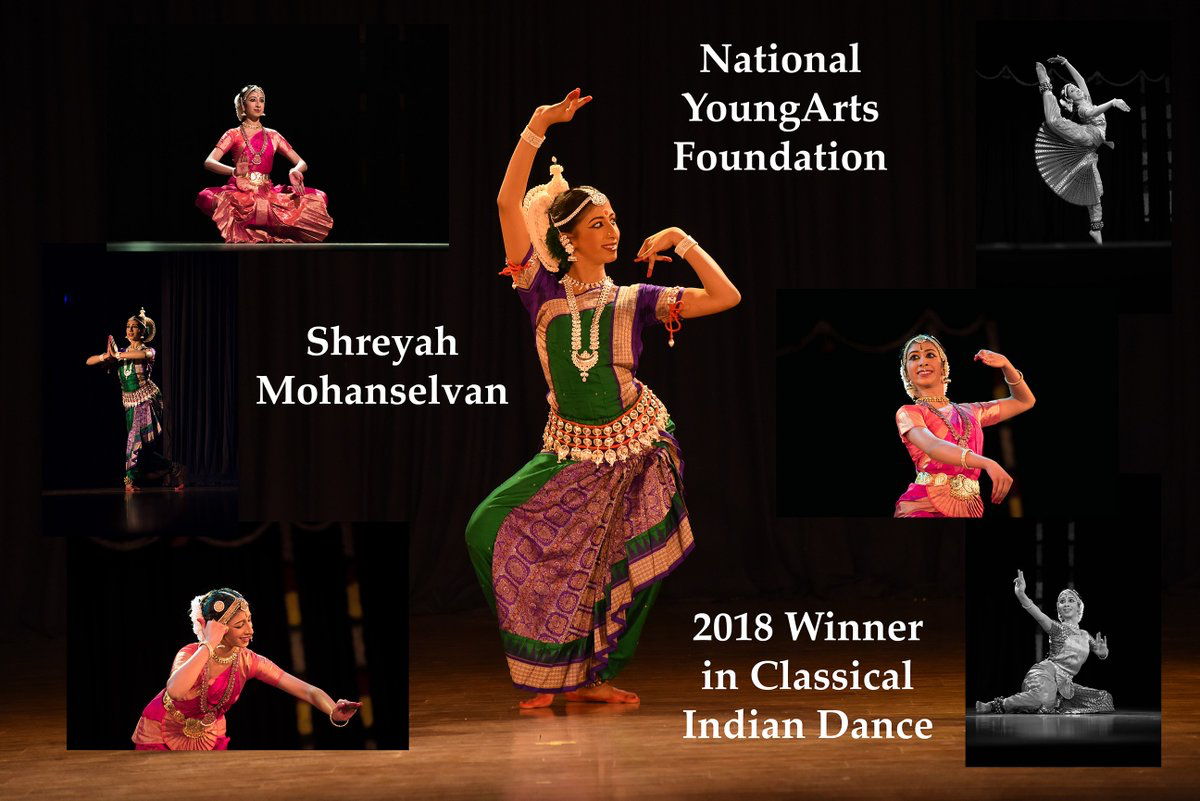
    WASHINGTON DC (TIP): Indian American Shreyah Mohanselvan of Gahanna, Ohio, has been nominated in the Dance discipline amongst the nine artistic disciplines, chosen by YoungArts, the sole nominating agency for 2018 US Presidential Scholar in the Arts.

    Shreyah Mohanselvan, who has lived in New Albany her entire life, is a senior at Columbus Academy, where she has been a student since kindergarten. She has been involved with student government since middle school, was president of her class both her sophomore and junior years, and is focused on communication, spirit and community, and efficiency and organization in 2017 as student council president.

    In addition to student government, Mohanselvan plays the violin in the Columbus Academy Advanced Orchestra, serves as a student orientation leader for new students transitioning into the school and is an editor of the yearbook, a group she has been a part of since her freshman year.

    All of this adds up to Mohanselvan being an exceptional high school student – one that her school community at Columbus Academy and her home community of New Albany can be immensely proud of. But Mohanselvan is actually best known for something else.

    Her dancing.

    “Dance has always been my passion,” she says. “I started learning ballet when I was 4 years old at the New Albany Ballet Company. Shortly thereafter, I started learning the Indian classical dance form of Bharatanatyam.”

    Bharatanatyam and Odissi, a second form of classical Indian dancing that Mohanselvan performs, are, as she explains, ancient art forms that were originally performed in temples. The dance depicts Hindu stories and are dedicated to gods and goddesses.

    “The two dance forms have differences and similarities, and sometimes it is difficult to force the body to be true to both of these two conflicting dance forms,” she says.

    Mohanselvan isn’t simply a dancer, though; she’s an award-winning dancer. She has won first place in the Federation of Indian Associations of Central Ohio’s Indian solo dance competition for three consecutive years. Additionally, Mohanselvan has three first place and two second place finishes since 2013 in the Vindhya Cultural Association in Columbus, a competition that attracts talent from all across the state. In 2017, she was presented with a National Young Arts Winner Honorable Mention Award in Indian/classical dance.

    Mohanselvan’s talent for dance has taken her to perform at venues all across the state, including many times at the Jeanne B. McCoy Community Center for the Arts, a place she says, “always feels like home.”

    And now she is nominated as 2018 US Presidential Scholar in the Arts

    About 2018 U.S. Presidential Scholars in the Arts and the YoungArts

     2018 U.S. Presidential Scholars in the Arts is one of the nation’s highest honors for high school students who exemplify academic and artistic excellence. YoungArts is the sole nominating agency for this high honor and the 60 candidates, representing 25 states and nine artistic disciplines, are all YoungArts winners. These students have been nominated to the U.S. Presidential Scholars Program for their artistic achievements.

    The candidate applications will be reviewed by the White House Commission on Presidential Scholars, which will ultimately select 20 high school seniors to be recognized as U.S. Presidential Scholars in the Arts for their academic and artistic accomplishments, demonstrated leadership, community service and outreach initiatives, and overall creativity. In June, the 20 arts scholars will join the other 141 U.S. Presidential Scholars from across the country in Washington, D.C. for the National Recognition Program. During the program, all scholars receive a Presidential Medallion presented on behalf of the President of the United States and participate in several recognition activities while in Washington, D.C.

    “The National YoungArts Foundation is proud to partner with the U.S. Presidential Scholars Program to acknowledge our nation’s most talented graduating high school seniors,” said Carolina García Jayaram, YoungArts President and CEO. “These young leaders excel in everything that they do, from their artistry and inquisitiveness, to their academics and activism. YoungArts congratulates each of the nominees on their accomplishments, and we look forward to announcing the selected arts scholars this spring.”


  • INDIAN AMERICANS AMONG OAKLAND COUNTY’S ELITE 40 UNDER 40

    INDIAN AMERICANS AMONG OAKLAND COUNTY’S ELITE 40 UNDER 40

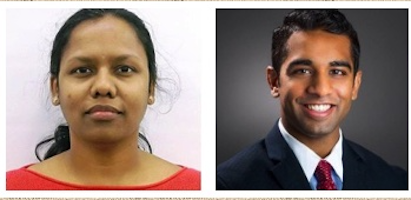
    OAKLAND (TIP):  Indian Americans Shantha Kumari Rajendran, 36, and Adi Sethi, 27, have been named among Oakland County’s Elite 40 Under 40.

    According to the information posted on the county’s website, County Executive L. Brooks Patterson’s seven-year-old initiative “recognizes and spotlights dynamic leaders under the age of 40 who are making a difference in Oakland County and beyond.”

    Rajendran, who is a Staff Engineer-Systems Lead for Panasonic Automotive, is a 15-year veteran of the automotive industry as an Embedded Systems Engineer. She specializes in Human Machine Interface and User Experience and has filed 10 automotive patents, two of which were recently approved. She has submitted several technical papers to Society for Automotive Engineers (SAE) and Society for Information Displays (SID) conferences and is an active SAE volunteer.

    “Shantha was the first woman in her family to finish school, university, become an engineer, work in the USA, get a master’s degree with honors,” her husband Ganapathy Lakshmanaperumal writes. “She has great balance between her career and family.”

    Rajendran holds a bachelor’s degree in Computer Science Engineering and a master’s in Management. A Stanford Certified Project Manager, she is pursuing her second master’s degree at Harvard University.

    Another Indian American Adi Sathi, 27, serves as the director of Asian Pacific American engagement at the Republican National Committee and the chief of staff of the Young Republican National Federation.

    After completing both his bachelor’s and master’s degrees at the University of Michigan, Adi was elected in February 2015 to a two year term as a statewide Vice Chair of the Michigan Republican Party at the age of 24. For his work in this role, he was recognized in both 2016 and 2017 on Newsmax’s annual list of 30 Most Influential Republicans Under 30. Over the last eight years, Adi has managed or advised on numerous successful political campaigns at the local, state, and federal level.

    As a student, he was elected to serve as the Executive Director of the Association of Big Ten Students, an organization that consists of the 14 Big Ten schools from 11 different states and represents over 540,000 students. For his work in this role, he was invited to the 2013 White House Youth Summit and recognized by Red Alert Politics on their 2014 ’30 Under 30′ list. Most recently Adi was a 2016 Fellow in the Michigan Political Leadership Program through Michigan State University’s Institute of Public Policy and Social Research. He was previously an APAICS Legislative Fellow in the Office of Senator Orrin G. Hatch who serves as both the President Pro Tempore of the U.S.

    Senate as well as the Chairman of the Senate Finance Committee. In his free time, Adi enjoys cheering on Michigan sports teams, working out, and watching Netflix documentaries.

    The Oakland County Executive’s Elite 40 Under 40 program is an initiative of County Executive L. Brooks Patterson that recognizes and spotlights dynamic leaders under the age of 40 who are making a difference in Oakland County and beyond. In its seventh year, the program is open to individuals who live or work in Oakland County and are born AFTER December 31, 1978.


  • Indian American Researcher at University of Arizona named Regents’ Professor

    Indian American Researcher at University of Arizona named Regents’ Professor

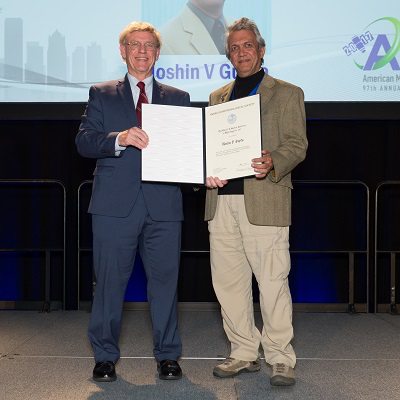
    TUSCAN, AZ (TIP): An Indian America, Hoshin Gupta, researcher at the University of Arizona has been named Regents’ Professor, the state’s highest faculty rank. He has been a member of the faculty of the Department of Hydrology and Atmospheric Sciences at the university and was among three professors recently elevated as Regents’ Professor recently.

    Gupta was inducted at the annual ceremony held at the university on January 11, 2018.

    Gupta is a hydrologist, systems theorist and philosopher with strong technical skills in complex algorithm development. His ideas, methods, and vision have set the standard in his field for 30 years and enhanced the ability to use models for learning and prediction in hydrology.

    Gupta has tackled some of the most fundamental challenges of hydrologic modeling throughout his career. His multiple path-breaking contributions have enabled researchers to improve model parameterization, hydrologic modeling, and model evaluation.

    An internationally reputed scientist, Gupta’s research across disciplines has contributed to the enhanced understanding of human-natural system interactions.

    Gupta’s work is highly recognized nationally and internationally. One of his papers has been cited more than 1,500 times, and total citations for all of this work exceed 27,000 in Google Scholar. He has published 10 books and more than 170 peer-reviewed papers, and his work is among the most cited in the field of hydrology.

    In the 2000s, Gupta was Executive Director of the SAHRA science and technology center to bridge water science with decision making. He was elected a fellow of the American Geophysical Union in 2009.

    Gupta has received several awards and honors including the European Geophysical Union’s 2014 Dalton Medal and the American Meteorological Society’s 2017 RE Horton Lecture Award. In 2013, he was elected Tucson Electric Power Fellow of the Galileo Circle of the University of Arizona.

    He has been selected by students as the winner of the department’s annual award for teaching excellence on five separate occasions. Additionally, he was recognized by the University of Arizona with the 2014-2015 Graduate College Graduate and Professional Education Teaching and Mentoring Award.

    “Being a member of the UA community for almost 34 years has been a rewarding and enriching experience,” Gupta said. “To be recognized and valued in this way is very gratifying, not to mention extremely motivating.”

    The award goes to full professors who have demonstrated achievements resulting in national or international recognition. Regents’ Professors are expected to exemplify the highest objectives and standards of the University through their scholarship, research or creative activities, and teaching.


  • World Cancer Day observed with Inauguration of the first Radiation Free Thermo Mammography Machine at Parmarth Niketan, Rishikesh

    World Cancer Day observed with Inauguration of the first Radiation Free Thermo Mammography Machine at Parmarth Niketan, Rishikesh

    Chief Minister of Uttarakhand, Trivendra Singh Rawat and Swami Chidanand Saraswati, President of Parmarth Niketan join Can Protect Foundation members in prayers & pledge for a Cancer Free World 

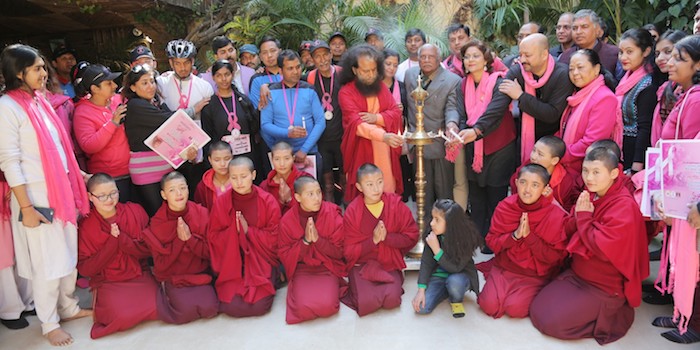
    RISHIKESH (TIP): Swami Chidanand Saraswati, President of Parmarth Niketan (Rishikesh), Founder of the Divine Shakti Foundation, was joined by Chief Minister of Uttarakhand, Trivendra Singh Rawat for a special Ganga Aarti on the occasion of World Cancer Day and the inauguration, during the world-renowned ceremony, of the first Radiation Free Thermo Mammography Machine in Northern India.

    Chief Minister Singh was pleased to hear about huge participation in the Cycle Awareness Rally that started in the morning at 6:45 am from Gandhi Maidan, Dehradun and arrived in Rishikesh at 12 pm to be blessed and welcomed by Swami Chidanand Saraswati who met and congratulated the cyclists during the Ganga Aarti for their commitment to raising awareness on these critical issues.

    Swami Saraswati and CM met with many of the women who had received free medical screenings, and check-ups done at the Parmarth Hospital earlier in the day.  Hundreds of these women joined for the Ganga Aarti and pledged to work together for a cancer free world.

    Speaking on the occasion, Swami Chidanand Saraswati said, “When we build a support system and strengthen the spirit that we are one family, addressing these issues and serving this cause in solidarity and oneness, then even if we are not able to fully end cancer we can dramatically increase survival rates. I think today we need to, as a society, celebrate and honor our cancer survivors as well as simultaneously encourage women, especially, to take their health issue on a priority, because when they are healthy, their families are healthy, thereby the nation and the world can be healthier and happier.”

    Members of Can Protect Foundation taking pledge of a plastic free life style

    The event provided a platform for women to stand in solidarity in the face of this crucial issues in women’s health for the security of India’s families and their future. According to statistics, breast cancer numbers are on the rise in India, and it is projected that by the year 2020, 76,000 Indian women will lose their lives to breast cancer.  The average age of these women is between 30 -50 years, but with early diagnosis higher survival rates can be achieved.

    Dr. Sumita Prabhakar, President of the Can Protect Foundation, said, “Our organization is so blessed to have Pujya Swamiji’s and the Hon’ble CM’s support for this cause, as well as the support of generous donors like Dr PK Dattaji who have donated the machine for the service of humanity. It is with the association of the Divine Shakti Foundation- Parmarth Niketan that we have been able to raise greater awareness on the need for pre-screenings and check-ups to help prevent breast and cervical cancer. We strongly believe that prevention and pre-screenings are the best way to create a cancer free, healthier and happier world.”

  • Indian American and another Sentenced to Prison in International $200 Million Credit Card Fraud Conspiracy

    Indian American and another Sentenced to Prison in International $200 Million Credit Card Fraud Conspiracy

    Last of 22 Defendants Convicted and Sentenced

    TRENTON, N.J. (TIP): An Indian American from Iselin, New Jersey and another man from New York were sentenced ton January 30, to federal prison terms for their respective roles in one of the largest credit card fraud schemes ever charged by the Justice, U.S. Attorney Craig Carpenito announced.

    Qaiser Khan, 53, of Valley Stream, New York, previously pleaded guilty to an information charging him with one count of conspiracy to commit bank fraud. He was sentenced to six months in prison. Sat Verma, 65, of Iselin, New Jersey, previously pleaded guilty to an information charging him with one count of access device fraud. He was sentenced to one year in prison. U.S. District Judge Anne E. Thompson imposed both sentences, January 30, in Trenton federal court.

    According to documents filed in this case and statements made in court, Khan and Verma were originally charged in February 2013 as part of a conspiracy to fabricate more than 7,000 false identities to obtain tens of thousands of credit cards. They are the last of 22 defendants to be sentenced in this scheme.

    The scheme involved a three-step process in which the defendants would make up a false identity by creating fraudulent identification documents and a phony credit profile with the major credit bureaus; pump up the credit of the false identity by providing bogus information about that identity’s creditworthiness; then borrow or spend as much as they could without repaying the debts. The scheme caused more than $200 million in confirmed losses to businesses and financial institutions.

    The scope of the criminal fraud enterprise required the conspirators to construct an elaborate network of false identities. Across the country, the conspirators maintained more than 1,800 “drop addresses,” including houses, apartments and post office boxes, which they used as the mailing addresses for the false identities.

    Khan admitted he helped obtain credit cards in the name of third parties – many of which were fictional – then directed the credit cards to be mailed to addresses controlled by members of the conspiracy. He also admitted they knew the cards would be used fraudulently at businesses. Verma admitted he effected transactions with access devices issued to another person.

    In addition to the prison terms, Judge Thompson sentenced Qaiser to five years of supervised release and fined him $10,000. Verma was sentenced to three years of supervised release, ordered to forfeit $270,000 and fined $1,000.

    This case was brought in coordination with the Financial Fraud Enforcement Task Force, which was established to wage an aggressive, coordinated and proactive effort to investigate and prosecute financial crimes. With more than 20 federal agencies, 94 U.S. Attorneys’ offices and state and local partners, it’s the broadest coalition of law enforcement, investigatory and regulatory agencies ever assembled to combat fraud. Since its formation, the task force has made great strides in facilitating increased investigation and prosecution of financial crimes; enhancing coordination and cooperation among federal, state and local authorities; addressing discrimination in the lending and financial markets and conducting outreach to the public, victims, financial institutions and other organizations. Over the past three fiscal years, the Justice Department has filed nearly 10,000 financial fraud cases against nearly 15,000 defendants including more than 2,900 mortgage fraud defendants. For more information on the task force, please visit www.stopfraud.gov.

  • Indian American community marches in support of Trump’s immigration policy

    Indian American community marches in support of Trump’s immigration policy

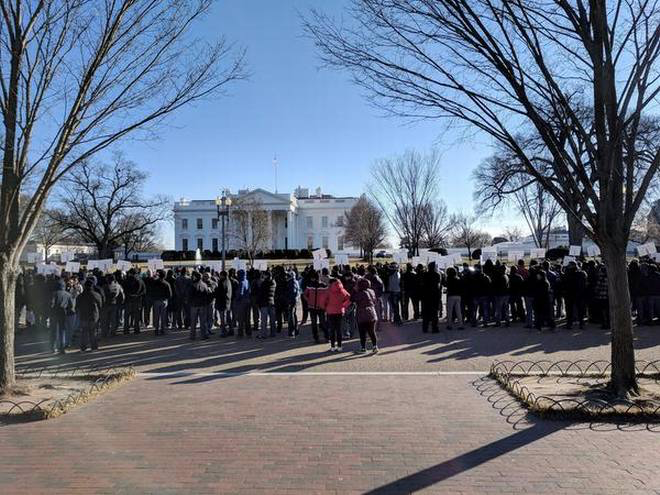
    WASHINGTON  DC (TIP): At least 800 Indian Americans participated in a march outside the White House on Saturday, February 3rd , raising slogans in support of U.S. President Donald Trump’s proposal to implement a “merit-based” immigration system in the country and demanding discontinuation of country quotas for Green Card approvals.

    Marchers in front of the White House said the President’s declared preference for “merit-based” immigration would tilt the balance in their favor.

    “Trump loves Hindus,” “Trump loves India,” “Trump bringing Ram Rajya,” “Indians love Trump,” said the slogans at the march organized under the banner of the Republican Hindu Coalition (RHC), an organization led by Chicago-based businessman Shalabh Kumar who is believed to be close to Trump. The marchers were all Indian technology workers who had come from all over the U.S. — California, Texas, North Carolina, South Carolina, New Jersey, Illinois and New York.

    Krishna Bansal, National Policy and Political Director of RHC, said Trump’s proposal to end family unification immigration would open up more space for Indian skilled workers. Nearly half of the one million Green Cards issued every year goes to close relatives of American citizens regardless of their skills and the Trump administration wants to restrict this practice.

    “Thirty per cent of the country’s skilled immigrants come from India, but they have to wait several decades before being eligible for Green Cards. These are aspirants who are already here, contributing to the economy, paying their taxes and raising their families,” he said. He said the group supported the proposal for building a wall on the U.S. southern border with Mexico and ending the diversity lottery program for Green Card allotment. The marchers supported the ending of what the administration calls ‘chain migration.’

    Krishna Mullakuri, whose application for Green Card is pending for five years, agreed with the view. He said the emphasis on merit as the primary criteria for allowing new entrants into the country would work to India’s advantage.

    The march on Saturday, while endorsing. Trump’s approach to immigration, was to highlight the issues concerning the legal residents who are already in the country. “While the current discussion is primarily focusing on those who illegally entered the country, we are working with the lawmakers to get some attention on this group that reached this country legally but face uncertainty now,” said Mr. Bansal.

    The marchers supported this policy. “Dreamers pay for the wall,” and “Make American strong again,” they shouted.  Bansal said the President’s proposals were generous and those being offered a path to citizenship would be happy to pay a fee that would fund the wall.

    An issue of particular concern for several of the marchers was the future of their children, who will lose their dependency status when they turn 21. “These are legal dreamers. Colleges are reluctant to admit them as their visa status has to be changed midway through the course. And once they are graduates, they go back to the end of the queue, again starting with an H-1B application,” said Ramesh Ramanath, who grew up in Chennai. “While they address the issue of dreamers, this question also should get priority,” he said.

  • Indian American President of USIBC is pleased with the Indian budget

    Indian American President of USIBC is pleased with the Indian budget

    WASHINGTON DC (TIP):  US-India Business Council on Friday, February 2, praised the Union Budget 2018-19 calling it a move by the Modi government to leverage the growth and prosperity of India in the coming years.

    The organization said, in a press release, that it is pleased that the budget contains many of its recommendations in critical areas such as infrastructure development, access to health care, affordable housing, energy, and education for all citizens form the backbone of any growing economy.

    “American industry is committed to growing, strengthening, and sustaining these areas of collaboration with India,” it said.

    The three years of Modi-led government has given shape to a robust economy, which is on a growth path backed by strong reform agenda, the group said.

    For the current year, USIBC has put the priority on ensuring greater ease of doing business, promoting certainty, transparency, and predictability in decision-making to ultimately, unlock greater growth and investment opportunities for businesses in both US and India whereby strengthening the US-India commercial partnership, it added.

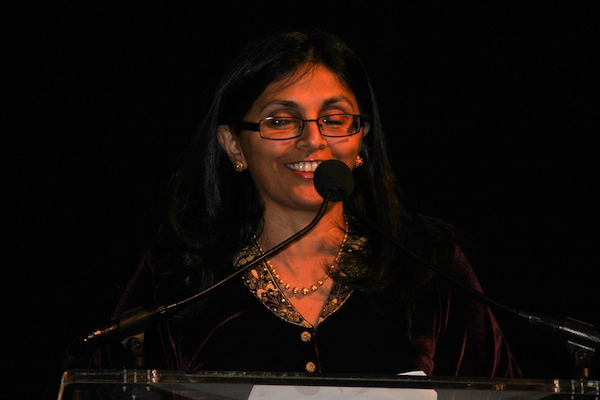
    “[The] American industry is committed to growing, strengthening, and sustaining these areas of collaboration with India,” said USIBC President Nisha Biswal.

    “In the last three years, India has been on a robust path to growth, backed by a strong economic reform agenda. USIBC’s goal is to keep up the momentum of the US-India commercial partnership to ultimately, unlock greater growth and investment opportunities for businesses in both nations,” she added.

    The USIBC, an advocacy organization, consists of 350 top-tier U.S. and Indian companies doing business in both the United States and India. It is part of the US Chamber of Commerce, the world’s largest business federation.


  • Indian Origin Man in UK Jailed for 18 years for Killing Ex- Wife

    Indian Origin Man in UK Jailed for 18 years for Killing Ex- Wife

    LONDON (TIp): An Indian origin man in UK on trial for killing his ex-wife and then stuffing her body into a suitcase was sentenced on Friday, February 2, to at least 18 years in jail for murder.

    Ashwin Daudia, 51, had denied the murder charge, claiming he lost his temper during an argument with Kiran Daudia at their home in Leicester last January and did not attack her deliberately. The prosecution, however, claimed that Mr Daudia, who followed the court proceedings through a Gujarati interpreter, had continued to lie about the circumstances surrounding the killing and had committed the murder after growing increasingly resentful of his ex-wife, who had joined a dating agency to meet other men.

    “I was angry, I lost control,” he told the Leicester Crown Court, adding that Kiran Daudia had initially assaulted him and to silence her, he put his hand over her mouth and then forcefully squeezed her neck.

    However, the jury did not accept his version of events and found him guilty of killing his 46-year-old ex-wife.

    He admitted in court that he had lied to his two sons, relatives and the police and told them that his ex-wife did not return home from a morning shift at the call center she worked at and hid her body in a suitcase to prevent his younger son from seeing it. The suitcase, along with the dead body, was discovered by the local police a day after the murder.

    The accused was caught on CCTV dragging his ex-wife’s body in a suitcase before dumping it in an alleyway.

    The couple, who had an arranged marriage in India in 1988, were divorced in 2014 but continued living separate lives under the same roof.

    The factory worker husband was to move out of the family home on January 16, 2017, when the attack occurred, the Leicester Mercury reported.

    The victim’s sister had bought the couple’s family home in Leicester to ensure that Ms Daudia could continue living there without her ex-husband after the divorce.

    Their two sons chose to “side” with their mother and had relatively little to do with their father.

    During the two-week murder trial which concluded on Friday, Ashwin Daudia claimed he lost his temper when his ex-wife shouted at him because he had not packed his bags or moved out. He claimed she swore at him and told him to go and die in India.

    He denied the prosecution’s suggestion that he had waited for his ex-wife to return home from work to deliberately kill her.

    “I didn’t do it deliberately, at that time my mind wasn’t working,” he told the court.


  • Indian origin Google AR director will lead Facebook’s AR platform

    Indian origin Google AR director will lead Facebook’s AR platform

    MENLO PARK, CA (TIP): Indian origin Nikhil Chandhok, Director of Product for Augmented Reality (AR) at Google, has joined Facebook to lead product management of its camera team working on AR.

    Chandhok took to social media on January 29th with the announcement and shared a post on Facebook saying, “I want to share an exciting update. Today is my first day at Facebook!”

    “Now, as I join the Camera/AR team at Facebook, I’m especially interested in building more conversation and momentum in cross-platform camera services,” Chandhok posted.

    “While I’m leaving the team at Daydream and Google, I’m proud of the work we did together. We gave developers ARCore and expanded access to augmented reality tools,” he said.

    “We also designed foundational aspects of AR platforms and explored how people use AR now and how they’ll use it in the future,” Chandhok added.

    He also tweeted on January 30th, “Today is my 1st day at Facebook! There are massive opportunities ahead for AR and I look fwd to joining Facebook as we bring more AR experiences to life – for more people!”

    Google, in a bid to bring the AR experience closer to Android users, in August 2017 released a new software development kit (SDK) called “ARCore”. The platform renders AR capabilities to existing and future Android phones.

    The company built on the fundamental technologies used in Tango, another AR platform by Google but ARCore is scalable across the Android ecosystem as it doesn’t require any additional hardware.


  • Indian American Woman & Son Found Shot Dead in Virginia Home

    Indian American Woman & Son Found Shot Dead in Virginia Home

    The police were notified by a caller on Wednesday, February 1st, that a co-worker who lives in the 25000 block of Tomey Court had not come to work this week.

    WASHINGTON (TIP):  An Indian American woman and her son have been found dead at their home in a Virginia suburb of Washington, local police said.

    The police have launched a manhunt to arrest the alleged killers who shot Mala Manwani, 65, and her son Rishi Manwani, 32.

    The police were notified by a caller on Wednesday, February 1, that a co-worker who lives in the 25000 block of Tomey Court had not come to work this week.

    “Deputies checked the residence and the adult in question and another adult were found deceased inside. Both appear to have died from gunshot wounds,” said the Loudoun County Sheriff Office.

    COMMENTS

    “The case does not appear to be a random act and there is no indication of any threat to the public,” police said.

    The mother and son were the only ones living at the location.


  • Indian American lawyer is the primary author of Republican memo

    Indian American lawyer is the primary author of Republican memo

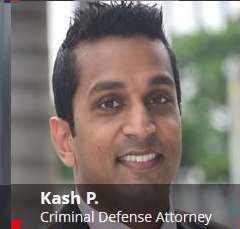
    WASHINGTON (TIP): A controversial Republican memo that accuses the FBI of political bias has primarily been written by Indian American lawyer Kashyap “Kash” Patel is ruling the news as according to a media report.

    The “Kash memo” portrays the FBI in a negative light, alleging that the agency helped the Democratic party and its presidential candidate Hillary Clinton against Donald Trump, the eventual winner of the 2016 presidential elections, The New York Times reported.

    The report said the explosive memo was primarily written by Patel, a committee staff member for Representative Devin Nunes, Republican of California and the chairman of the Intelligence Committee.

    The office of Congressman Nunes where Patel works has refuted the report that he is the author of the memo which they assert is a collective and team effort.

    “The problem is the lack of facts. Kash being the ‘driving force’ behind the memo is not a fact. Kash being the ‘pusher of the memo’ is not a fact. Unnamed people referring to ‘the Kash memo’ is not a fact,” Jack Langer, a spokesperson for Nunes was quoted as saying by the Daily Beast.

    Patel did not immediately respond to a PTI query on this.

    In an email to The New York Times, Damon Nelson, staff director of the House Select Committee on Intelligence said that no single member was responsible for the memo and that its creation was a “team effort” that involved investigators who had access to source material.

    “The clamor to identify ‘an author’ is indicative of an alarming trend by opponents of our investigation which is to promote spurious allegations against committee members and staff. They will not impact the committee’s focus and commitment to continue this investigation,” Nelson was quoted as saying.

    At the same time, he praised Patel, saying, “We value Kash’s dedication and his contributions to the committee’s oversight efforts”.

    Patel did not immediately respond to a PTI query on this.

    According to media reports, Patel attracted media attention early this summer when he travelled to London along with another staffer in search of Christopher Steele, author of a controversial dossier on Trump.

    However, he could not succeed in his effort.

    Patel, 37, who grew up in New York, graduated from the University of Richmond in 2002. He is the chairman of the House Select Committee on Intelligence. He is senior counsel on counter terrorism.

    Before joining the House Select Committee on Intelligence, Patel was a trial attorney in the National Security Division of the Justice Department.


  • Indian American Founders of Medical Firm Step Down as Part of Settlement Deal

    Indian American Founders of Medical Firm Step Down as Part of Settlement Deal

    CHICAGO, IL (TIP): Indian American entrepreneurs Rishi Shah and Shradha Agarwal, the chief executive officer and president, respectively, will be stepping down from their positions at Outcome Health to settle allegations of fraud.

    The company, which provides health education technology to improve patient outcomes at physician practices nationwide, announced on Jan. 26 that it has settled all litigation with its investors. The company places digital screens in doctors’ offices that run health-related content as well as advertisements from drug companies.

    “As a result of the settlement, the equity investors, lenders and company’s founders are recommitting $159 million to Outcome Health, which will be used to reduce the company’s debt by $77 million and further strengthen and scale its technology platform, automated processes and overall customer operations. Founders Rishi Shah and Shradha Agarwal have moved into the roles of Chairman and Vice Chair of the Board of Directors from their previous positions. The expanded Board of Directors, which also includes three new independent directors and two investor representatives, is launching a search for a new CEO,” the statement from the company said.

    The founders raised $225 million in funding last year, which was reportedly set aside by Shah and Agarwal. The $159 million will be part of the $225 million they had raised, the Chicago Tribune reported. The Indian American duo was barred in November from using the $225 million after the investors sued them. A court filing on Jan. 26 said that the money will be used for settlement with the investors, the report added.

    The company raised $500 million in July 2017 but after the Wall Street Journal reported that the company had overcharged clients by misleading them about their reach and manipulated campaign results, the investors, including Goldman Sachs and Google and a fund co-founded by Illinois gubernatorial candidate J.B. Pritzker, sued the company in November 2017. Outcome Health denied the allegations and said that the lawsuit was without cause.

    The company has so far lost 200 of its 535 employees and shelved its plan of moving to a different headquarters.

    Shah had made it to Forbes 400 list as the 206th richest American in October 2017. The net worth of the 31-year-old college dropout was estimated to be $3.6 billion. He was also named as one of the richest Americans under the age of 40.

    Shah and Agarwal, both 32, were also included in the Fortune magazine’s list of ‘40 Under 40’ in 2017. The annual ranking list of influential young people under 40, who the magazine calls “disruptors, innovators, rebels and artists” inspiring others, featured them on rank 38.


  • Four students injured in classroom shooting at L.A. middle school; 12-year-old girl in custody

    Four students injured in classroom shooting at L.A. middle school; 12-year-old girl in custody

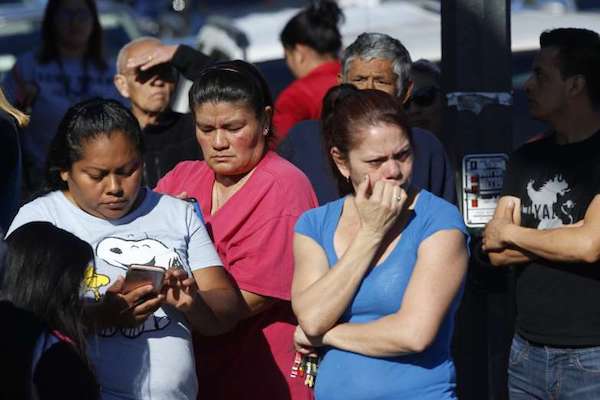
    Washington (TIP): Parents receive information on children and officials discuss the Salvador Castro Middle School shooting in which two students were injured by gunfire, one critically.

    A 12-year-old girl was in police custody Thursday after a shooting at Sal Castro Middle School injured four students.
    The gunfire erupted in a classroom at the school in the Westlake neighborhood shortly after the opening bell and caused numerous students to run from the area, according to Los Angeles police Officer Drake Madison.
    At least one student told a reporter they were in the classroom at the time of the shooting and said it was unintentional.
    “Someone decided to bring a gun, I guess someone was accidentally playing around with it,” said Benjamin, a 13-year-old 7th grader, whose guardian asked that his last name not be used. “They thought it was a fake gun.”
    When authorities responded around 8:55 a.m., they found a 15-year-old boy with a gunshot wound to the head and a 15-year-old girl shot in the wrist and three others with minor injuries.
    The boy, who was shot in the temple, was in stable condition Thursday afternoon, and was expected to fully recover, according to Dr. Carl Chudnofsky, of L.A. County-USC Medical Center. The girl, who was shot in the left wrist, was in fair condition.
    Three others — a 30-year-old woman, an 11-year-old boy and a 12-year-old girl — also suffered minor injuries, including two from gunshots, health officials said.
    At a news conference outside the hospital on Thursday, Dr. Aaron Strumwasser said the 15-year-old boy was extremely lucky because the bullet wound failed to cause serious damage. “I think he will do fine,” Strumwasser said.
    The suspected shooter was taken into custody and a firearm was recovered, officials said. Helicopter news footage showed two officers leading a handcuffed girl with long hair, jeans and a sweatshirt to a waiting squad car. Robert Arcos, a deputy chief with the Los Angeles Police Department, said it was too early to determine a motive in the shooting.
    Investigators were still conducting interviews to determine whether the shooting was intentional or a “terrible accident,” he said.
    In a morning news conference, Los Angeles School Police Chief Steve Zipperman said he did not know how a young person got access to a gun and brought it to campus, but warned gun owners to keep their weapons secure and away from children.
    “Los Angeles has a law about the safe storage of weapons,” L.A. City Atty. Mike Feuer added. “Every responsible gun owner needs to take heed.”
    There was no longer any danger at the school, Zipperman said, but the campus remained on lockdown. School officials directed parents to an information center at Belmont Avenue and Beverly Boulevard, or asked them to call (213) 241-1000 for information.
    Students are to be dismissed on the school’s regular schedule, but parents can pick up their children earlier if they wish.
    Throughout the morning and early afternoon Thursday, scores of parents anxiously awaited word on their children.
    Tyresha McNair got to the school Thursday morning with her young niece. She had seen news of the shooting on TV and came to get her daughter, who is a student at the middle school.
    “I saw it on the news and I came here to get my baby,” she said.
    At the front gate of the school, McNair said she was directed to the back, which was blocked off. She said she had been texting her daughter, but hadn’t heard back.
    “Any other time my baby would respond and she’s not responding,” McNair said. “I just want my daughter. I want my daughter.”
    It was sometime after 9 a.m. when Rosario Hernandez, 41, got a phone call from her 16-year-son, Jimmy Romero, telling her a shooting had occurred at his brother’s school. Jimmy attends Belmont High School, which is across the street.
    Hernandez left work and sped to the school campus.
    She texted her 14-year-old son, Johnny Romero, whose number was listed under “Johnny baby,” and asked him if was OK.
    When he finally responded, he told her they were still on lockdown and said the shooting had happened inside a seventh-grade classroom.
    “She shot a girl and a boy,” he wrote.
    “OMG,” Hernandez responded. “But why mijo.”
    “I don’t know. Mom go home, I will tell you when we are not in lockdown.”
    Hernandez said there are problems at the school, including bullying and gangs. She sat waiting with worried parents at a baseball field. Nearby, Laura Gonzalez waited to get Information from police and school district officials.
    Read full story on www.theindianpanorama.news
  • February 2 New York & Dallas Print Editions

    February 2 New York & Dallas Print Editions

    [vc_row][vc_column][vc_column_text]

    Print Replica ~ Digitally

    E-Editions

    [/vc_column_text][/vc_column][/vc_row][vc_row][vc_column width=”1/3″][vc_custom_heading text=”New York Edition” font_container=”tag:h2|text_align:center” google_fonts=”font_family:Istok%20Web%3Aregular%2Citalic%2C700%2C700italic|font_style:700%20bold%20regular%3A700%3Anormal” link=”url:https%3A%2F%2Fwww.theindianpanorama.news%2Fwp-content%2Fuploads%2F2018%2F02%2FTIP-February-2-NYC.pdf|||”][vc_single_image image=”90570″ img_size=”full” add_caption=”yes” onclick=”custom_link” link=”https://www.theindianpanorama.news/wp-content/uploads/2018/02/TIP-February-2-NYC.pdf”][/vc_column][vc_column width=”1/3″][vc_custom_heading text=”Dallas, Texas Edition” font_container=”tag:h2|text_align:center” google_fonts=”font_family:Istok%20Web%3Aregular%2Citalic%2C700%2C700italic|font_style:700%20bold%20regular%3A700%3Anormal” link=”url:https%3A%2F%2Fwww.theindianpanorama.news%2Fwp-content%2Fuploads%2F2018%2F02%2FTIP-February-2-Dallas-TX.pdf|||”][vc_single_image image=”90568″ img_size=”full” add_caption=”yes” alignment=”center” onclick=”custom_link” link=”https://www.theindianpanorama.news/wp-content/uploads/2018/02/TIP-February-2-Dallas-TX.pdf”][/vc_column][vc_column width=”1/3″][vc_single_image image=”82828″ img_size=”medium” alignment=”center” onclick=”custom_link” link=”https://www.theindianpanorama.news/advertising-media-kit-portal-indian-panorama/”][vc_single_image image=”82829″ img_size=”medium” alignment=”center” onclick=”custom_link” link=”https://www.theindianpanorama.news/advertising-media-kit-portal-indian-panorama/”][/vc_column][/vc_row][vc_row][vc_column][td_block_ad_box spot_id=”custom_ad_3″][/vc_column][/vc_row][vc_row][vc_column width=”2/3″][vc_custom_heading text=”Lead Stories This Week” font_container=”tag:h2|text_align:center” google_fonts=”font_family:Istok%20Web%3Aregular%2Citalic%2C700%2C700italic|font_style:700%20bold%20regular%3A700%3Anormal” link=”url:https%3A%2F%2Fwww.theindianpanorama.news%2F|||”][td_block_5 limit=”8″][/vc_column][vc_column width=”1/3″][vc_widget_sidebar sidebar_id=”td-default”][/vc_column][/vc_row]

  • Indian Americans celebrate Republic Day with enthusiasm across US

    Indian Americans celebrate Republic Day with enthusiasm across US

    WASHINGTON (TIP): The Indian American community in the US celebrated the 69th Republic Day of India with much enthusiasm. From a small township in mid-West or down South to mega cities of New York, Los Angeles, Chicago and Washington, Republic Day celebrations were organized by the Indian missions, Indian community activists and organizations.

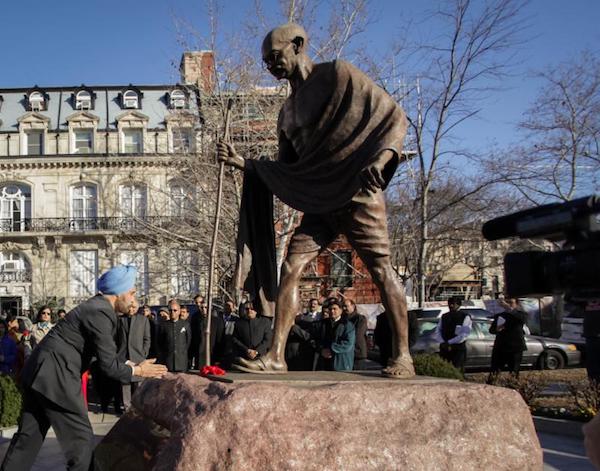
    In Washington, Indian Embassy celebrated Republic Day at Embassy premises. Ambassador Navtej Sarna paid floral tribute to the statue of Mahatma Gandhi in front of the Embassy. Thereafter, Ambassador unfurled the National Flag. The National Anthem was sung. Ambassador addressed the guests and read out the Address of President of India. This was followed by singing of patriotic songs by young Indian Americans. Over 200 members of the Indian American community attended the celebrations.

    Consul General Sandeep Chakravorty unfurls the National Flag at the Indian Consulate in New York

    In New York, Consul General Sandeep Chakravorty unfurled the National Flag and read out the President’s address to the nation. A cultural program was also presented. The over 150 guests included Consul Generals of Italy, Mexico, Israel, Nigeria and Lithuania.

    Speaking on the occasion, Ambassador Chakravorty highlighted the growth story of India and valuable contribution in it of the Indian diaspora. He praised the Indian American community for their hard work and love of both the country of their origin and of their adoption.

    He assured the community of the best services by the Consulate General.

    Ambassador Syed Akbaruddin speaking at the Permanent Mission of India
    Photo / Mohammed Jaffer-SnapsIndia

    The Permanent Mission of India to the United Nations also held a celebration to mark the 69th Republic Day of India. Ambassador Syed Akbaruddin unfurled the national Flag at the Permanent Mission of India in midtown Manhattan in the presence of a large number of staff and guests. Later, in the evening a reception was organized at the United Nations which was attended by a large number of guests which included, besides the Indian American community members, diplomats from various countries. The highlight of the reception was presentation of Indian traditional music and dance.

    Lighting of the lamp ceremony with guests at the United Nations Reception in celebration of Republic Day
    Photo / Mohammed Jaffer-SnapsIndia
    Glimpses of the Reception organized by the PMI at the UN
    Photos / Mohammed Jaffer-SnapsIndia
    Glimpses of the Reception organized by the PMI at the UN
    Photos / Mohammed Jaffer-SnapsIndia
    Glimpses of the Reception organized by the PMI at the UN
    Photos / Mohammed Jaffer-SnapsIndia
    Glimpses of the Reception organized by the PMI at the UN
    Photos / Mohammed Jaffer-SnapsIndia
    Glimpses of the Reception organized by the PMI at the UN
    Photos / Mohammed Jaffer-SnapsIndia

    Various organizations in New York organized Republic Day celebrations. India Association of Long Island organized one with great enthusiasm. Nassau county Executive Laura Curran and Oyster Bay Town Supervisor Joseph Saladino were among the several guests at the event. IALI President Mrs. Gunjan Rastogi honored Veterans of Indian Armed Forces Wing Commander S.H Butani, Squadron Leader D. K Nagia, Major D. Gulati and Mr. P. Shilagani.

    A Cultural program presented on the occasion featured patriotic songs by IALI members and admirably enacted performance by seniors of Happy Seniors Home, dances by young children from Arya Dance and Krishna Arts dance schools.

    The Federation of Indian Associations (FIA) of the Tristate (New York, New Jersey and Connecticut), celebrated the Republic Day with its annual dance competition, “Dance Pe Chance”, at the prestigious State Theatre in New Brunswick, New Jersey.

    FIA has been celebrating Republic Day for over 40 years now, meticulously promoting the opulent culture and various dance styles of India.

    The FIA’s incoming executive committee of 2018 was administered the oath of office by Sandeep Chakravorty. The committee included Srujal Parikh (President), Alok Kumar (Executive Vice-President), Chhavi Dharayan (Vice President), Daxa Amin (Secretary), Himanshu Bhatia (Treasurer), Haresh Shah (Joint Secretary) and Andy Bhatia (Immediate Past President).
    Photos / Paresh Gandhi- Official Photographer
    Winners all

  • Expanding Bilingual Programs for Our Youngest Learners

    Expanding Bilingual Programs for Our Youngest Learners

    By Chancellor Carmen Fariña

    When it comes to our children’s education, the sooner we start the better. An extra year of education can change the course of a young life. Children absorb a great deal of information in the first several years of their lives – they’re like sponges, soaking up all the words they hear, the interactions they have, and the many things they see. The learning they do in their earliest years is the building block for success in school and in life. If we don’t reach them when they’re three and four years old, we’ve missed the opportunity to support the development of important skills, particularly the ability to learn a second language. We’ve also missed an opportunity to bring families into the classroom.

    That’s why New York City has built Pre-K for All – providing free, full-day high quality pre-K for every four-year-old. That means nearly 70,000 four-year-olds are getting that critical foundation – like learning 1,000 new words, experiencing how to interact and play well with others, and getting ready for kindergarten. Now, we’re expanding our investment in early learning through 3-K for All, which will bring free, full-day education to every three-year-old in the City.

    Every time I visit an elementary school across the City I ask to see the pre-K classrooms. I see children working in centers around the classroom, doing art and science projects and even practicing a second language.

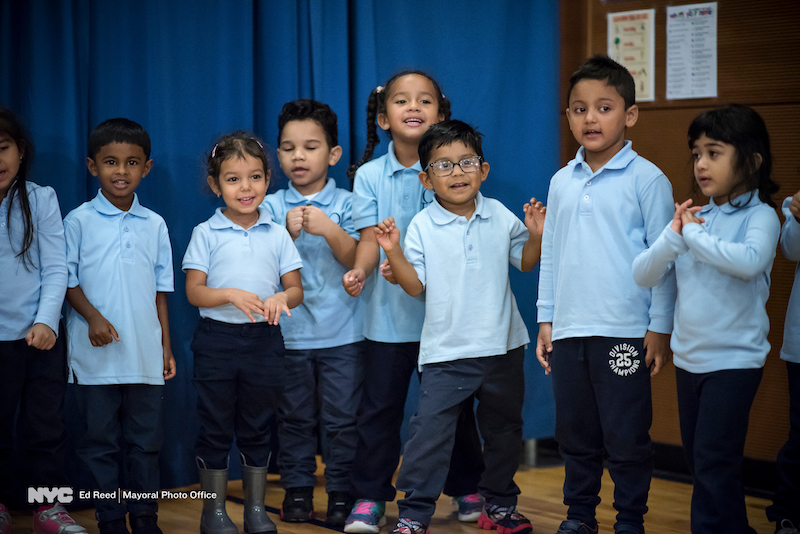
    This year, there are 30 Dual Language Pre-K programs, setting some of our City’s youngest learners on the path to success in a multilingual, multicultural world. I’m thrilled that next year, we are doubling that number to 63 programs that will be available in Spanish, Bengali, Chinese, Russian, and Italian this fall across all five boroughs.

    In a Dual Language classroom, half of the students in the classroom speak the language the class is learning, and half are English-proficient. Students receive instruction in English and a second language with the goal of becoming bilingual and biliterate. Dual Language classes foster a learning environment that encourages sharing of vocabulary, cultures and traditions.

    Being able to speak and read in a different language – and understand a different culture, too – is a game-changer for our students and families. As a first-generation American who started school without speaking English, I know firsthand the struggles many of our English Language Learners face when they first step foot in a classroom. But they pale in comparison to the many benefits that growing up bilingual brought me, and continue to bring me as an educator, mother and grandmother, and especially as a leader. In a global City and a global society, our next generation of leaders – in business and in our government – will need to know and understand more than just one language and culture.

    Dual Language education also brings parents into the classroom. Each month, families come together to learn what is happening in school and share ideas of how they can better support their child at home. Pre-K also has given tens of thousands of parents the opportunity to go back to work while saving money that would have been spent on child care. This is a win-win for students and families.

    As I visit schools across the City, I often hear from families asking for new Dual Language programs, including in pre-K. By doubling our Dual Language Pre-K programs, more families will see the benefits of Dual Language sooner in their child’s academic career than ever before. And our children will get that critical early education foundation in two languages, rather than just one.

    Expanding Pre-K Dual Language education is an important part of the work we’re doing across New York City schools – embracing the diversity of our students and families, making the right investments in early childhood education, and preparing our students for success in college and careers. Now, more of our City’s future leaders than ever before will get a head start on becoming global citizens.

    (The author is the New York City Schools Chancellor)

  • New American Moment

    New American Moment

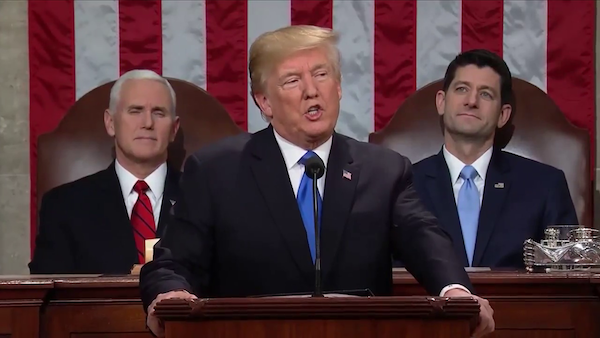
    American State of the Union address to the Congress has conventionally been designed to enable the President to spell out his grand agenda for audience at home and abroad. Donald Trump’s State of the Union performance on Wednesday turned out, mostly, to be a sum total of all the tweets and other verbal fusillades he had fired. He declared, in a self-satisfying manner, that there was a “new American moment” and that he had restored American “greatness” and “strength.” In particular, he was uncompromising in what he calls “America first” stance, which turns out to be a call to return to protectionist policies as well as a litany of complaints about unfair and unequal global trade practices and deals. Like an accomplished demagogue, he invokes the American farmer, the American taxpayer and the American consumer. His implicit message was that the world must reorient itself to his understanding of fairness and reciprocity.

    On the domestic front, President Trump largely stood his ground on immigration, hinting broadly at tweaking some rules, without diluting his rant against the “illegal” immigrant. He reiterated his solution of building a wall to keep the undesirable and the unwanted immigrant out.  He chanted the mantra of homeland security, declared that Guantanamo Bay base would not be closed down, and that the United States would “annihilate” terrorism and was more than ready to deal with pinpricks from North Korea or the ISIS.

    In this longish State of the Union, President Donald Trump failed in his endeavor to sound presidential; he remains miles away from gravitas. And, given the fact that he is an addictive Twitter-junkie, the quasi-sobriety of the Union address will evaporate next week. And, though Donald Trump tried to suggest that as the President of the United States he was committed to the “citizens of every background, color and creed”, his first year in the White House has left America a deeply fault-lined country. There is lesson for demagogues all over the world: it is easy to divide but very difficult to heal; it is easier to be partisan than to elicit cooperation and bi-partisanship.

  • Predictions For February 5 – February 11, 2018 – Horoscope & Astrology By Bejan Daruwala

    Predictions For February 5 – February 11, 2018 – Horoscope & Astrology By Bejan Daruwala

    By Astrologer Bejan Daruwalla , Contact no: +91 8141234275

    Aries: Ganesha says this period in your own sign brings many unusual aspects into the light of day. The period is slowly coming to a close and it is a good time for reflection. You started off with ambition and grand plans on the work front and then saw a platter full of goodies coming to you. There have been twists and turns ranging from strange esoteric pursuits, to flights of fancy, the supernatural and even the supra natural, interest in spirits, witches and other occult phenomena.

    Taurus: You have put in a lot in terms of ideas, effort and commitment and this is the time for reaping the harvest. You like the sweet sound of good money in the bank and the social standing and perquisites that come in the form of pleasing symbols of success. You enjoy it all without a second thought, and why not? They bring joy to you and your family. You look back on the period and even seek to expand on the good fortune coming to you from time well spent.

    Gemini: You are in an introspection mode. You even look at parapsychology and / or psychic insights and ability. Nursing, healing, welfare interests, medicare, healing minds and bodies, charities will take your time and energy and quite happily too. You have many desires to be fulfilled and are filled with a new mindset of inquiry. Right now, Ganesha gives you a time of calm, introspection, thought. There is a good chance that you will also be involved in trade and travel.

    Cancer: You are pressured by commitments to work and family. Both will need hard work and effort. There will also be investments and outlays, both financial and with time. You will have a lot of coping to do as they are all linked. It can be a heavy burden and so guard against overdoing it. But, whatever you do now, the results that follow will be pleasant. I must also tell you now that this is a special time and is filled with favours coming your way. No more guessing and hoping for the best.

    Leo: You are enriched and Ganesha’s blessings are with you. Happy times are finally here and you are certainly on top of the world. Go for whatever you need but remember the saying: “There’s no such things as a free lunch”. But don’t let this deter you. Take your chances and plan for the future. Ganesha also tell you to read the fine print. There could be hidden clauses that could be less than favorable in the long run; watch out for deceit.

    Virgo: You are enthusiastic and energized with all that is happening in your life right now. You will be a human dynamo, a powerhouse of energy, ready to attain targets you’ve only been hoping to achieve. You make glorious plans for the future leading to great success and joy. There is new zest in your attitude to life itself, and you work exceptionally hard. You will achieve success in all spheres of life and will ride the wave. The world is your oyster, right now.

    Libra: There is free time and also a strong inclination to indulge in all kinds of mental activity. It will be back to mind games for you Librans, but of a very different sort. Once again, you look for fresh avenues of self – expression and of exploring new areas of both knowledge and experience. The family and work angles are both energized but there is a certain restlessness that might prove dangerous if it is not channelized properly. Despite it all, you do make sure that you manage all your commitments to the people who matter in your life.

    Scorpio: The trends are encouraging as the period draws to its end. You have had material rewards. Now you reach out for greater love and warmth in relationships and are appreciated, valued and cherished. Family life will be on a high and your children will give great joy. There is a good chance of an engagement or marriage happening in this period. It could be either yours or that of someone dear to you. You are in an adventurous mood and would like to try out new things. Nothing ventured, nothing gained!

    Sagittarius: The period may be approaching its end, but your energy remains undiminished. You are on the go all time and are filled with a sense of fulfilment and self-realization. Family and marital bonds are honored with deep commitment and genuine caring. You have introspected a lot and have arrived at this point in your life after a great deal of soul searching. Expenses continue to mount but you are not complaining, as you are confident you can cope.

    Capricorn: The tide changes here. Once again, from all the gusto and go, you get meditative. You look at the spiritual and the meditative areas with both sincerity and much commitment. Life’s meaning and, strangely enough, law and the social order, research, philosophical pursuits and even questions of justice keep you busy through the reaming period. You will still mesh beautifully with others and make gains in other spheres of life. Your ideas, ingenuity will set the stage of for stupendous achievements.

    Aquarius: Your confidence and charisma – 2 great C’s – will be at an all-time high. They will be reflected in your interactions, and your attitude to friends, colleagues, and family. Having achieved your targets, you look at the lighter, more pleasant side of life. You decide to have fun, relax, let your hair down. You dabble in the creative arts and make more contacts. Expression is the key word here and you also go all out to reach out to others. Your life is filled with an assortment of activities and you are enjoying them all.

    Pisces: You ­­­­­­­consciously go slow but can’t escape the intensity of the period. Finance and family will be well looked after, but there may also be a new love interest that takes a lot of your time and energy. Don’t overstep the line and hurt loved ones in the process. Tread softly, says Ganesha. It may just be a passing fancy and overindulgence may cost you dear. Don’t rock the boat where family harmony is concerned. You will have visitors and a lot of merrymaking. You will be the force behind the social whirligig. Enjoy!

  • Turning the diplomatic prism

    Turning the diplomatic prism

    Dealing with Pakistan; renewing ties with Canada

    By KC Singh
    Pakistan, Trudeau and Khalistanis need to be engaged not pilloried, while detoxifying the nation of bigotry and falsehood”, says the author.
     The one issue that still rankles bilateral relations is the activities of “Khalistani” elements in Canada and their links, if any, with Pakistan’s ISI. It played last year into the visit of Canadian defense minister, Lt Col Harjit Sajjan, when Capt Amarinder Singh literally boycotted him, piqued over the Canadian government denying him a visa before the Punjab election last year.”

    India-Pakistan relations under the Modi government are in a cryogenic state. A muscular response, advocated by PM Narendra Modi, has become not a means, but an end in itself. Despite “surgical strikes” and periodic cease-fire violations, the Pakistan army remains defiant. With elections around the corner in Pakistan and rumors Modi may advance the Lok Sabha elections, the scope for any meaningful dialogue appears bleak.

    India draws much solace from President Donald Trump’s periodic verbal assaults on the duplicity of Pakistani state and military. The US withholding military aid, amounting to $2 billion, including $900 million in coalition support funds to compensate Pakistan for its counter-terrorism operations along the Durand Line (Pak-Afghan border), is a first step to ratchet up pressure on Pakistan. US government sources are telling the media that there is an escalation plan if Pakistan does not heed the warnings. The action that the US seeks is Pakistan severing links with the Taliban and the deadly Haqqani network. The same source told Washington Post that there was “immense” frustration over Pakistan continuing to deny that there were any Pakistani safe havens for these groups.

    Senior US officials touring India recently displayed guarded optimism over change in Pakistani attitude. They take the cue from Pakistan not threatening to disrupt US supply routes via Pakistan. But recent terror attacks in Kabul, where an ambulance bomb caused severe casualties, negate that finding. Earlier a hotel was attacked, frequented by Afghan government officials and foreigners, in which among others, a senior police commander and a member of the High Peace Council were killed. The hotel attack on the topmost floor indicated that the attackers were well briefed as that floor normally is reserved for officials holding sensitive positions.

    Meanwhile, Pakistan blocked access to Hafiz Saeed when a team deputed by the UN Security Council sanctions committee arrived to assess Pakistan’s handling of a listed terror mastermind. Reports keep resurfacing that Pakistan was in the process of allowing the India-specific terror syndicates to enter the political field. This could be a double-edged sword to both legitimize the groups and undercut the Sharif brothers, who control the Pakistan Muslim League (N), in the forthcoming parliament election. China has been more forthrightly defending Pakistani credentials as a nation fighting terror and not abetting it.

    Against this background, two events invite attention. First, the Economist carried a story earlier this month on the reform of Pakistan’s school education. This has gone unnoticed in India as the dominant narrative is that Pakistan is a collapsing state which will soon end up in a big Islamic heap. The story holds a lesson for our Punjab. Under the direct leadership of chief minister Shahbaz Sharif, a private-public partnership (PPP) has successfully developed to rectify the skewed school completion data. The richest Pakistanis have 60 per cent completing nine years of schooling. For the poor, the number is 5 per cent and for the middle income group, a mere 25 per cent. A donation-based citizens’ foundation today has over 2 lakh students in its schools. Similarly, the Punjab Education Foundation, a quasi-independent body, is doing the same work even on a larger scale.

    The PPP works with the Shahbaz government handing over public schools to private partners and then closely monitoring their work while providing some subsidy. A Harvard University study shows that village schools saw 30 per cent higher enrolment after private parties were brought in. It has also been discovered by other studies that teachers on contract, who are paid less, produce as good or better results. A similar revamp of the primary and secondary school education in our Punjab is long overdue. CM Shahbaz takes a three-monthly meeting of all stakeholders to monitor the progress of this reform. Can the Punjab CM, Capt Amarinder Singh, do likewise?

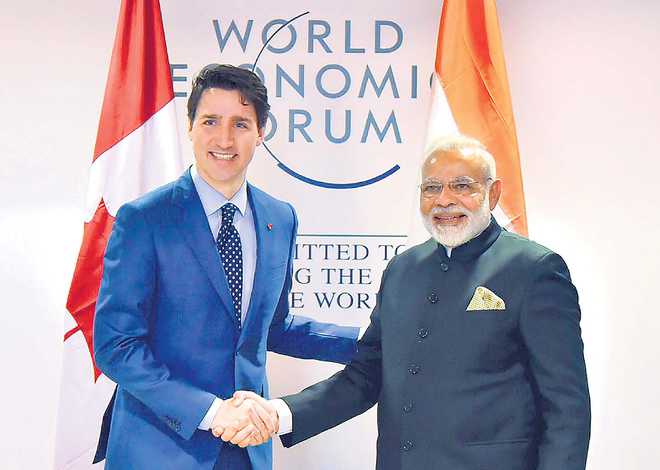
    The other event is the expected arrival of Canadian Prime Minister Justin Trudeau on a five-day visit on February 17. Among other cities he would be visiting Amritsar. The one issue that still rankles bilateral relations is the activities of “Khalistani” elements in Canada and their links, if any, with Pakistan’s ISI. It played last year into the visit of Canadian defense minister, Lt Col Harjit Sajjan, when Capt Amarinder Singh literally boycotted him, piqued over the Canadian government denying him a visa before the Punjab election last year.

    Trudeau’s visit provides a good opportunity for Capt Amarinder to bury the past. Sikhs constitute almost 40 per cent of the total population of Indian diaspora in Canada which numbers over a million. That huge number needs to be engaged and their energies channelized to contribute to Punjab’s development. The population profile of the Canadian Sikh diaspora is different from that in the US. The Canadian Sikhs are more closely linked to peasantry in Punjab. A number of episodes have riled Delhi as the Canadian government is seen as handling mischief-makers with kid gloves. When I dealt with them in 2006-07, the Canadian explanation was that they monitor the goings-on but would only step in if violence or terrorism was imminent. Slogans in favor of Khalistan are really solitary cries for attention. The Canadian Sikh fringe needs to be politically dealt with. Banning their entry into India will only exacerbate the situation.

    If Punjab was the laboratory of the Green Revolution, it now needs to reinvent itself. A revamped education system, a shift away from the rice-wheat agrarian model, laying of food-chain supply network and conservation of water aquifers and adoption of sustainable development goals. It is not a surprise that a recent study showed that South Indian states, which have the advantage of coastlines for connectivity, have cornered the export businesses of India. A new Punjab model could become the 21st century template for the land-locked and largely agrarian economy states of the North.

    The Modi government, having largely ignored rural distress, has awakened post-Gujarat election. Udayan Mukherjee wrote in another newspaper that the Modi government’s strategy was: “more wealth for the rich, Hindutva for the poor”. Religion may be, as Karl Marx quipped, the opiate of the masses. But when used to polarize for electoral gains it can be catastrophic. Thus Pakistan, Trudeau and Khalistanis need to be engaged not pilloried, while detoxifying the nation of bigotry and falsehood.

     (The author is a former Secretary, Ministry of External Affairs)

  • How Trump is making China and India great again

    How Trump is making China and India great again

    With his constant tirades against immigrants, particularly from what he calls “shithole countries”, Donald Trump is giving many countries the greatest gift of all: causing the trickle of returning talent to become a flood”.
    By Vivek Wadhwa
    At the same time, I also realized that protectionist demands by nativists were causing American political leaders to advocate immigration policies that were (and are) choking US innovation and economic growth. The government would constantly expand the number of H1-B visas in response to the demands of businesses but never the number of green cards, which were limited to 140,000 for the so-called key employment categories. The result? The queues kept increasing. I estimate that today there are around 1.5 million skilled workers and their families stuck in immigration limbo, and that more than a third of these are Indians”, says the author.

    “Thank you for what you are doing for America; your successes have put India in very positive light and shown us what is possible in India” said Atal Behari Vajpayee to me in a one-on-one meeting during his visit to the White House in September 2000. He added that he would love to see Indian-American entrepreneurs return home to help build India’s nascent technology industry.

    Bill Clinton and George W. Bush granted him his wish with their flawed immigration policies. The U.S. admitted hundreds of thousands of foreign students and engineers on temporary visas but did not have the fortitude to expand the numbers of green cards. The result was that the waiting time for permanent resident visas began to exceed 10 years for Indian and Chinese immigrants. Some began returning home.

    Now with his constant tirades against immigrants, particularly from what he calls “shithole countries”, Donald Trump is giving many countries the greatest gift of all: causing the trickle of returning talent to become a flood.

    For India, the timing could not be better. With hundreds of millions of people now gaining access to the Internet through inexpensive smartphones, India is about to experience a technology boom that will transform the country itself. And with the influx of capital and talent, it will be able to challenge Silicon Valley—just as China is doing.

    This is the irony of America’s rising nativism and protectionism.

    When I met Prime Minister Vajpayee, I was the CEO of a technology startup in North Carolina. Later, I became an academic and started researching why Silicon Valley was the most innovative place on this planet.

    I learnt that it was diversity and openness that gave Silicon Valley its global advantage; foreign-born people were dominating its entrepreneurial ecosystem and fueling innovation and job growth. My research teams at Duke, the University of California at Berkeley, New York University, and Harvard documented that between 1995 and 2005, immigrants founded 52% of Silicon Valley’s technology companies. The founders came from almost every nation in the world: Australia to Zimbabwe. Immigrants also contributed to the majority of patents filed by leading US companies in that period: 72% of the total at Qualcomm, 65% at Merck, 64% at General Electric, and 60% at Cisco Systems. Surprisingly, 40% of the international patent applications filed by the US government also had foreign-national authors.

    Indians have achieved the most extraordinary success in Silicon Valley. They have founded more start-ups than the next four immigrant groups, from Britain, China, Taiwan, and Japan, combined. Despite comprising only 6% of the Valley’s population and 1% of the nations, Indians founded 15.5% of Silicon Valley startups and contributed to 14% of US global patents.

    At the same time, I also realized that protectionist demands by nativists were causing American political leaders to advocate immigration policies that were (and are) choking US innovation and economic growth. The government would constantly expand the number of H1-B visas in response to the demands of businesses but never the number of green cards, which were limited to 140,000 for the so-called key employment categories. The result? The queues kept increasing. I estimate that today there are around 1.5 million skilled workers and their families stuck in immigration limbo, and that more than a third of these are Indians.

    Meanwhile, I have witnessed a rapid change in the aspirations among international students. The norm would be for students from China and India to stay in the US permanently because there were hardly any opportunities back home. This changed.

    My engineering students began to seek short-term employment in the US to gain experience after they graduated but their ultimate goal was to return home to their families and friends. Human resource directors of companies in India and China increasingly reported that they were flooded with resumés from US graduates.

    For students, the prospect of returning home and working for a hot company such as Baidu, Alibaba, Paytm, or Flipkart is far more enticing than working for an American company. You cannot blame them, especially given that delays in visa processing will lock them into a menial position for at least a decade during the most productive parts of their careers.

    This has been an incredible boon for China. One measure of the globalization of innovation is the number of technology start-ups with post-money valuations of $1 billion or higher. These companies are commonly called “unicorns”. As recently as 2000, nearly all of these were in the US; countries such as China and India could only dream of being home to a Google, Amazon, or Facebook.

    Now, according to South China Morning Post, China has 98 unicorns, which is 39% of the world’s 252 unicorns. In comparison, America has 106, or 42%, and India has 10 unicorns, 4%. An analysis by the National Foundation for American Policy revealed that 51% of the unicorns in the US have at least one immigrant founder. It is clear how shortsighted the US government has been.

    With the clouds of nativism circling the White House, things will only get worse. America’s share of successful technology startups will continue to shrink and Silicon Valley will see competition like never before.

    America’s loss is India’s gain.

    (The author is a Distinguished Fellow at Carnegie Mellon University at Silicon Valley and author of The Driver in the Driverless Car: How Our Technology Choices Will Create the Future)


  • Emergency and Now

    Emergency and Now

    By MG Devasahayam


    The author was District Magistrate of Chandigarh when Lok Nayak Jayprakash Narayan was incarcerated at PGI during Emergency. Over a time, he became an admirer of Lok Nayak and the two exchanged views quite often. -EDITOR

    “As the four senior most judges of the Supreme Court flagged their concern about the institution, it was reminiscent of the Emergency. Most people are these days moving in hushed silence, stunned and traumatized by the goings-on.”

    As I sat glued to the ‘idiot box’ watching the ‘historic’ event of four senior most judges of the Supreme Court ‘paying their debt to the nation’ and placing their case before ‘We, the People’, I was touched by two poignant references by Justice Jasti Chelameswar: “We are all…four of us are convinced that unless this institution is preserved and it maintains its equanimity, democracy will not survive in this country.” And: “We are left with no choice except to communicate it to the nation that ‘please take care of the institution and take care of the nation’… I don’t want another 20 years later some very wise men in this country blame that Chelameswar, Ranjan Gogoi, Madan Lokur and Kurian Joseph sold their souls and didn’t take care of this institution, they didn’t take care of the interest of this nation.”

    My thoughts went back to the special ward in the PGI, Chandigarh, and my conversations with Lok Nayak Jayaprakash Narayan (JP) who was incarcerated there during the Emergency. It was August 6, 1975. As was my wont, I had gone to see JP that morning. He asked me what the date was and I told him. He mumbled to himself that the Supreme Court hearing of the Prime Minister’s appeal against her disqualification by the Allahabad High Court was on the 11th. He asked me about the report of the case. He also asked me as to what was happening in Parliament.

    I could not mislead him by saying that there was nothing special. Hence, I told him about the amendments to the Representation of the People Act by Parliament the day before. He was upset as I narrated one by one the six amendments that had been made. The most prominent was the amendment granting immunity to the PM’s election from being challenged in a court of law. He looked sad and said with a deep sigh that there was no hope now. “Everything is finished. She will be there forever.”

    I also informed him of the convening of the state assemblies on August 8 and 9 and also the likely amendment of the Constitution rendering the elections of President, Vice-President, Prime Minister and Speaker of the Lok Sabha non-justiciable. He was more upset now. He said in a very sad tone: “Democracy is finished completely,” and after a pause, “at least for the present.” He said that his only hope was in the Supreme Court and that too had been shattered. “Now there is nothing to hope for and nothing to live for. This lady has demolished the very edifice of democracy so painfully constructed by her father and myriad others.” I was touched by his sentiments and the way he expressed it. I told him that this was inevitable and one could see it coming.

    But JP did not take it lying down. On August 10, he addressed a letter to the Prime Minister which was delivered to me around noon. In the letter, he had declared that from August 25, he would start a fast-unto-death unless the Emergency was revoked and all detainees released within two weeks. He would not take anything, except water, sour lemon and medicine meant only for ill health. Realizing its disastrous consequences, I rushed to JP immediately and after a sharp wordy duel lasting over two hours, dissuaded him from taking this extreme step. But not before he said these extremely anguished words: “I do not want to live to see the death of democracy before my very eyes. The least I could do would be to deny me that unparalleled agony and die before democracy is dead.”

    Be that as it may, the accuracy of JP’s prediction about the Supreme Court is narrated by Nayantara Sahgal in her book ‘Indira Gandhi’s Emergence and Style’: “The essence of Emergency was the pinnacle-power — a position above the multitude, unaccountable and unchallengeable — it sought to guarantee the Prime Minister. This was accomplished by three amendments to the Constitution and an Act of Parliament. The 38th Amendment put the declaration of Emergency beyond the scrutiny of the courts. The 39th Amendment made election disputes relating to the Prime Minister, President, Vice President and the Speaker non-justiciable. This wiped out the Allahabad High Court judgment with retrospective effect and ensured a Supreme Court judgment in her favor. On 7 November 1975, a 5-judge bench of the Supreme Court upheld the amendments and Indira’s 1971 election to Parliament.”

    Supreme Court judges then had not ‘taken care of the interest of the nation’ and some of them perhaps had ‘sold their soul’. This judgment shattered JP’s will to live and under intense agony and mental pressure, his kidneys, which were already under stress, failed. He took seriously ill which could have been life-threatening. Realizing the enormity of the situation, I initiated a ‘pincer movement’ to pressure the Union Home Ministry and PMO, got JP released on November 12 and sent him post haste to Bombay’s Jaslok Hospital just in time for his kidneys to be treated and life saved. JP lived for four more years, defeated the Emergency and returned India back to democracy.

    Since then, democracy has been limping and in recent years, again in dire danger. Basic violations of the democratic spirit and the crude attempts to legitimize a new type of regime and new criteria of allocation of rights and obligations continue unabated. There is no sense of boundary or restraint in the exercise of power, and there is a striking growth of arbitrariness and arrogance with which citizens are being turned into subjects, meekly accepting party/government diktats. Polarizing agenda, communal hatred, violence, demonetization and Aadhaar are the tools used.

    Reminiscent of the Emergency, most people are moving in hushed silence, stunned and traumatized by the goings-on. There is fear and anxiety all around. Across the nation, groveling administrators, media anchors, academicians, advocates and accountants are vying with each other to sing paeans to the rulers. The bulk of the civil service is crawling when only asked to bend. Higher echelons of the judiciary bow to the rulers and are willing to decree the way they want. Politicians of all hue and color, barring honorable exceptions, lay supine and inactive.

    In the event, India’s precious democracy is in peril again as openly stated by the four wise men of the highest court of the land. As an ordinary citizen, all I can do is to wail in the manner of our forefathers: “Democracy is in peril, defend it with all your might.” And, also salute these four men who have stood high and tall when most others have fallen asunder!

    (The author is a Former IAS officer and District Magistrate, Chandigarh)

  • A Political Storm imminent in the wake of release of classified Nunes memo

    A Political Storm imminent in the wake of release of classified Nunes memo

    WASHINGTON (TIP): Despite objections of Democrats and the FBI, President Trump is expected to make public Friday, February 2, a classified memo about the Russia investigation, which was written by the chairman of the House Intelligence Committee, which is bound to result in a political storm.

    The impending release of the memo has touched raw nerves in Washington. Throughout the day on Thursday, February 1 the White House batted down rumors FBI Director Christopher Wray was going to resign in protest

    Releasing the information, which is based on classified intelligence, would be unusual.

    The memo covers events during the 2016 campaign, when the FBI and the Department of Justice went to the Foreign Intelligence Surveillance Court (FISA) to get a warrant to monitor then-Trump campaign advisor Carter Page, who was suspected of having illegal contacts with Russian operatives.

    The four-page memo, authored by Republican Rep. Devin Nunes, the chairman of the Intelligence Committee, outlines alleged surveillance abuses. It has deepened a severe partisan divide.

    Rep. Adam Schiff, the top Democrat on the committee, says the document presents a distorted and unfair picture of how the FBI behaved, and jeopardizes the special counsel’s Russia investigation.

    “They ought to be sending the message instead to the White House that were the president to fire Bob Mueller or Rod Rosenstein, that would be considered obstruction of justice and it would bring down the administration,” Schiff said, referring to the special counsel and the deputy attorney general, who is overseeing the Russia probe.

    House Speaker Paul Ryan denied the memo is politically motivated.

    “The memo is not an indictment of the FBI, the Department of Justice,” Ryan said at a GOP retreat Thursday. “What it is, is Congress’ legitimate function of oversight to make sure the FISA process is being used correctly.”

    Thursday evening, former FBI Director James Comey — who was fired by the president — weighed in:

    James Comey

    @Comey

    All should appreciate the FBI speaking up. I wish more of our leaders would. But take heart: American history shows that, in the long run, weasels and liars never hold the field, so long as good people stand up. Not a lot of schools or streets named for Joe McCarthy.

    5:51 PM – Feb 1, 2018

    That is a reflection of how tense this controversy has become.

    (Source: CBS)

  • Trump calls for bipartisanship even as he sticks to his avowed agenda in State of the Union address

    Trump calls for bipartisanship even as he sticks to his avowed agenda in State of the Union address

    Immigration, border wall, infrastructure, strong military among priorities

    WASHINGTON DC (TIP):  In his lengthy State of the Union address on January 30 night, Trump doubled down on themes which he has embraced since his campaign for the presidency. He again pushed for stricter immigration laws and the building of a “great wall” along the U.S. border with Mexico. He also repeated his call for an end to family-based immigration, connecting immigration to crime, saying that “loopholes” in the immigration system had allowed gangs to proliferate. Democrats and many in his own party may not agree with this view though.

    But in a marked departure from his earlier rhetoric, Trump also tried to sound enthusiastic about working with Democrats. At times, the speech even took on the feel of a pep rally for America, with Republicans briefly chanting “USA!” as the president spoke.

    “To every citizen watching at home tonight — no matter where you have been, or where you come from, this is your time,” Trump said. “If you work hard, if you believe in yourself, if you believe in America, then you can dream anything, you can be anything, and together, we can achieve anything.”

    At the top of the speech, Trump celebrated the booming economy, attributing the bullish stock market of recent months to his policies. He also took time to advertise the recent tax cuts championed by his administration, arguing that it would soon pay dividends for working Americans.

    “And just as I promised the American people from this podium 11 months ago, we enacted the biggest tax cuts and reforms in American history,” Trump said. “Our massive tax cuts provide tremendous relief for the middle class and small businesses. A typical family of four making $75,000 will see their tax bill reduced by $2,000 — slashing their tax bill in half. This April will be the last time you ever file under the old broken system — and millions of Americans will have more take-home pay starting next month.”

    As expected, the president also called for a massive infrastructure package, which he said he hopes will attract bipartisan support.

    “America is a nation of builders,” Trump said. “We built the Empire State Building in just one year – isn’t it a disgrace that it can now take 10 years just to get a minor permit approved for the building of a simple road?”

    “I am asking both parties to come together to give us safe, fast, reliable, and modern infrastructure that our economy needs, and our people deserve.”

    The tail end of the speech, which lasted over an hour, was devoted to military issues, with Trump calling for an end to spending caps for the military and the modernization of the U.S. nuclear arsenal. He also promised the final defeat of ISIS.

    “We will continue our fight until ISIS is defeated,” Trump said after touting recent victories in the war with the terror group.

    Trump also discussed North Korea’s nuclear provocations and its treatment of both its own citizens and Otto Warmbier, an American student who was arrested in the country. Warmbier was sentenced to 15 years of hard labor for allegedly taking a political sign from a hotel and died shortly after he was released from captivity.

    Various polls post the address indicated that Trump’s speech was well received by Americans. 72% Americans who watched the speech said they approved of it, with just over a quarter saying they did not.

    The days ahead are quite crucial. The DACA issue, the impending release of Republican Memo on FBI and Department of Justice, the budget approval, Mueller investigation -are some of the knotty issues to be tackled. Given the tough postures adopted by both the Republicans and the Democrats, the coming days indicate some interesting fireworks.