Year: 2019

  • Federal Government Shutdown Ends after a 35 –day Stand off

    Federal Government Shutdown Ends after a 35 –day Stand off

    Trump Signs Bill Reopening Government for 3 Weeks through February 15

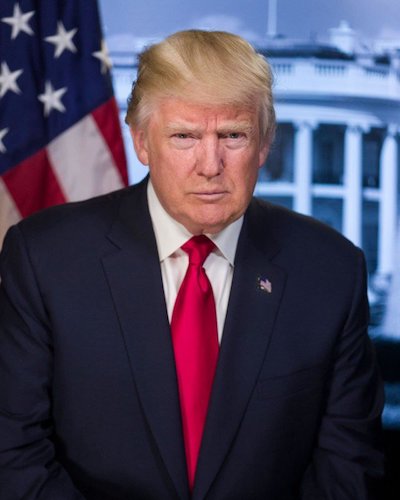
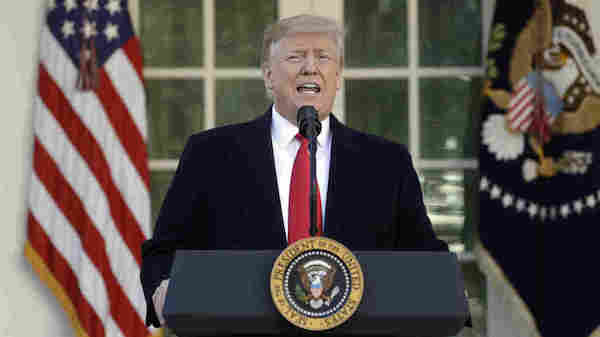
    WASHINGTON (TIP): The House and Senate both approved a measure Friday, January 25 to temporarily reopen the federal government with a short-term spending bill that does not include President Donald Trump’s requested $5.7 billion for a border wall, CNN reported.

    The measure — a three-week stop-gap spending bill  would reopen shuttered parts of the government through February 15 with President having signed the Bill.

    Congressional approval of the measure came quickly after the President conceded earlier Friday to mounting pressure over the ongoing shutdown, agreeing to a temporary funding measure that would allow federal employees to return to work.

    “I will sign a bill to open our government for three weeks,” the President said in an address on Friday, saying that he was announcing that “we have reached a deal to end the shutdown.”

    Trump said that “a bipartisan conference committee of House and Senate lawmakers and leaders” will work to “put together a homeland security package for me to shortly sign into law.”

    “Over the next 21 days, I expect that both Democrats and Republicans will operate in good faith,” the President said.

    Democrats have insisted throughout the shutdown that the President should sign a measure to reopen the government before they proceed to a debate on border wall funding. After weeks of resistance, Trump agreed to just that on Friday, paving the way for congressional Democrats and Republicans to approve a stop-gap funding bill.

    The action on Capitol Hill comes after weeks of negotiations largely going nowhere. And it is not yet clear what kind of a deal can be struck between Democrats and Republicans in the weeks to come over border security.

    Senate Democratic leader Chuck Schumer suggested at a news conference on Friday that the President’s decision to accept a stop-gap funding measure amounted to a validation of the position taken by Democrats during the shutdown fight.

    “The President has agreed to our request to open the government and then debate border security,” Schumer said.

    Schumer appeared optimistic that a resolution over border security can be reached once the government is reopened.

    “We in Congress will roll up our sleeves and try to find some agreement on border security,” Schumer said.

    Democrats have maintained throughout the shutdown fight that they support border security measures, but not new funding for a border wall, a signature promise of Trump’s campaign for the White House.

    “We don’t agree on some of the specifics of border security. Democrats are firmly against the wall,” Schumer said on Friday.

    “But we agree on many things such as the need for drug inspection technology, humanitarian aid, strengthening security at our ports of entry. And that bodes well for finding an eventual agreement,” he added.

    In his Rose Garden remarks, Trump did not appear conciliatory nor did he concede defeat. Instead, he continued to paint the matter as a national security crisis and said another shutdown is possible if lawmakers cannot agree to new border wall funding.

    “As everyone knows I have a very powerful alternative but I’m not going to use it at this time,” Trump said after declaring he’d struck a deal to reopen government. CNN reported exclusively on Thursday that a national emergency proclamation had been drafted that would allow for potentially billions of federal dollars to be put toward wall construction.

    “If we don’t get a fair deal from Congress, the government will either shut down on February 15 again, or I will use the powers afforded to me under the laws and the Constitution of the United States to address this emergency,” Trump said. “We will have great security.”

    Nearly his entire Cabinet and many of his senior advisers had assembled along the Rose Garden colonnade to listen to Trump speak. They offered enthusiastic applause during his speech, which Trump opened by saying he was “very proud to announce today that we have reached a deal to end the shutdown and reopen the federal government.”

    “I will make sure that all employees receive their back pay very quickly or as soon as possible. It’ll happen fast,” Trump said.

    “When I say make America great again — it could never be done without you,” Trump said, calling federal workers “great people.”

  • Dr. Raju honored for his four-decade crusade to eradicate avoidable blindness in India

    Dr. Raju honored for his four-decade crusade to eradicate avoidable blindness in India

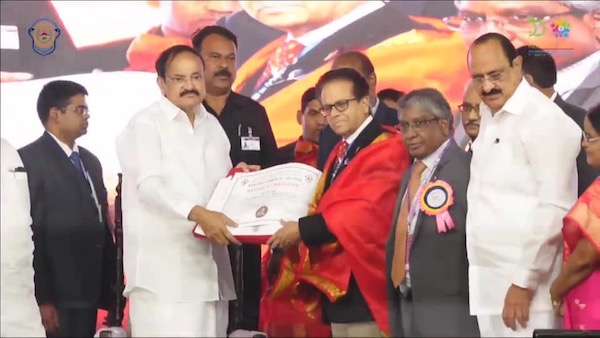
    KAKINADA, AP(TIP): Dr. V.K. Raju, an eminent ophthalmologist based in Morgantown, West Virginia, USA was honored  for his over 40 years work to eradicate avoidable blindness in India during  the Diamond  Jubilee celebrations of Rangaraya Medical College in Kakinada on Saturday, January 5. The award was presented to him by the Vice President of Indi, M Venkaiah Naidu who was the chief guest. This award adds to a long list of awards and honors conferred on Dr. Raju.

    Dr. V.K. Raju is  founder and president of the Eye Foundation of America, a nearly 40-year-old not-for-profit engaged in the work of eradication of preventable blindness across the world. (www.eyefoundationofamerica.org)

    Dr. V.K. Raju was on a visit to India to attend a couple of conferences and speak at some events. He was in Mumbai on December 28 to attend the AAPI-GAPIO Summit where he spoke on Diabetics & its Pandemic health consequences.

    In Kolkata on January 1, Dr. Raju spoke at  Kolkata Rotary Club, which is the oldest Rotary Club in India and which will be  celebrating its centenary towards the end of 2019. Dr. Raju was the keynote speaker on childhood blindness.

    Addressing the Rotarians he complimented them for their tremendous achievement in “wiping out Polio in 28 years. He  exhorted them to evince the same zeal in respect of preventing avoidable blindness from the face of India.

    “If Rotary puts in its effort for as many years, we can have a world without blindness, he said, reminding that “80% of our learning comes through vision”. It needs only three wills- political will, professional will, and people’s will to achieve the desired goal. He quoted US Ambassador Galbraith, the hyper educated economist of the world who underscored the importance of education when he said, “Education is the most effective equalizer”.

    While in Kolkata, he took the opportunity of spending 2 days at the Asiatic Library  where he studied the original Bowerman manuscripts dealing with Yoga.

    Dr. Raju delivered a lecture at Andhra Medical College at Vishakhapatnam on January 2. He also attended a meeting at the Eye Bank where he pointed out that corneal blindness which  is rampant in India, is preventable. In fact, 70% of it can be prevented through education and affordable primary care in every village.

    Next, in Kakinada on January 5, Dr. Raju attended the  Diamond Jubilee celebrations of Rangaraya Medical College where he was honored for his work by the Vice President of India.

    However, the most absorbing engagement for Dr. Raju was lecturing to staff and examining patients at the Eye Foundation of America supported  Goutami Eye Institute in Rajahmundry. Over a period of 5 days, Dr. Raju worked day and night with the Goutami Eye Institute staff, examining hundreds of patients who have great faith in Dr. Raju and Goutami Eye Institute.

  • 15th Edition of Pravasi Bharatiya Divas Concludes

    15th Edition of Pravasi Bharatiya Divas Concludes

    President confers Pravasi Bharatiya awards on 28 overseas Indians and two organizations

    Chandra Shekhar Mishra, Gita Gopinath, Gitesh Jayantilal, Prakash Madhavdas Heda from the US are among the Honorees

    VARANASI(TIP): The three-day Pravasi Bharatiya Divas Sammelan concluded here on January 23, with President Ram Nath Kovind delivering the valedictory address and conferring the Pravasi Bharatiya Samman awards on 28 eminent personalities and two organizations of the Indian diaspora for their contributions and achievements in various fields.

    “Happy to have conferred the Pravasi Bharatiya Samman on 30 members of our diaspora. We value your committed efforts to promote India and to work for the welfare of Indian community abroad. You are a living bridge between India and the world,” President said.

    According to a list provided by the External Affairs Ministry, the awards were conferred in the fields of social, community and public service, business, business management, entrepreneurship, chartered accountancy, training and simulation, science, medical science, engineering, technology, architecture, academics, arts and diplomacy.

    Nihal Singh Agar, known for his services to the Hindu community in Australia, was conferred the award under the category of social service.

    Two organizations — Indian Community Association of Egypt and Guyana Hindu Dharmic Sabha — and Swami Saradaprabhananda of the Ramakrishna Centre of South Africa, got the award for community service.

    Himanshu Gulati, a Member of Parliament in Norway, and Shamim Parkar Khan of the United Arab Emirates (UAE) were honored for public service.

    Under the business category, Ramesh Chotai of Canada, Amit Waikar of China, Bitthal Das Maheswari of Italy, Bhavdeep Singh Dhillon of New Zealand, Vinodan Verambally Thazhikuniyil of Oman and Girish Pand and Surender Singh Kandhari of the UAE were honored.

    President Ram Nath Kovind presenting Pravasi Bharatiya Samman to an honoree.

    While Banwarilal Satya Narayan Goenka was conferred the award in the field of business management, Rajesh Chaplot of Uganda got it for chartered accountancy, Jagdeshwar Rao Maddukuri of Poland for entrepreneurship, and Purnendu Chandra Tiwary of Qatar for training and simulation.

    In the field of medical science, Guna Sekhar Muppuri of Jamaica, Prakash Madhavdas Heda of the US, and Zulekha Daud of the UAE were honoured.

    Rajendra Kumar Joshi of Switzerland and Chandrashekhar Mishra of the US were honoured for their contributions in the field of science.

    Rajinder Nath Khazanchi of Bhutan got the award for civil engineering, Gitesh Jayantilal Desai of the US for structural engineering, P.V. Sambasiva Rao of Kenya for technology and Rajpal Tyagi of Kuwait for architecture.

    Malini Ranganathan of France and Gita Gopinath of the US were honoured for their contributions in the fields of academics and arts.

    Veteran South African diplomat Anil Sookal was conferred the award in the field of diplomacy.

    Earlier, the PBD  got off to a start on January 21, with the External Affairs Minister inaugurating the Youth PBD.

    External Affairs Minister is speaking at the Youth PBD on January 21. UP Chief Minister Yogi Adityanath is seen on left.

    In her inaugural address, the External Affairs Minister said India is a land of limitless opportunities,  and Pravasi Bharatiyas are and will continue to be partners in  progress of our motherland. She emphasized that shared identity and shared commonness are the key features which bind us together which will grow manifold in years to come. The Minister said that the story of Pravasi Bharatiyas is a tale of courage, determination and  character and cited the examples of  Google CEO, Sunder Pichai, Microsoft COO Satya Nadella, IMF Chief Economist Gita Gopinath to name a few. She thanked the diaspora for kindling a new wave for India abroad

    Union Minister of State Information and Broadcasting (independent Charge) and Sports and Youth Affairs, Col. Rajyavardhan Rathore spoke about the unique and binding force of Indian identity and said Pravasi Bharatiya community is India’s best Ambassador. He urged them to join in the building of a New India. The Minister lauded the role of NRIs in preserving their cultural values and respect for the motherland.

    Chief Minister of Uttar Pradesh, Yogi Adityanath said Uttar Pradesh looks up to the diaspora community for its valued contribution. 30-year-old Norwegian MP, Himanshu Gulati recalled the journey of his parents from India to Norway 40 years ago. He said that natural resource are our biggest assets and youth must imbibe the values of Mahatma Gandhi, ‘Be the change you want to see’.

    Guest of Honor, MP from New Zealand, Kanwaljeet Singh Bakshi said  Agriculture and Horticulture are key areas in which India and New Zealand can collaborate. The MP put up the request for Dual citizenship and Nomination of NRIs to Rajya Sabha for active participation in politics. He urged people to take pride in their culture and heritage. Youth Pravasi Bharatiya Divas has been organized with a view to share the ideas for a New India among the NRI  youth  and the generation next back home

    Prime Minister  Narendra Modi inaugurated the PBD Convention on January 22. The Convention deliberated on the theme- Role of Indian Diaspora  in building  New India.

    Prime Minister Narendra Modi ready to light a lamp to inaugurate the Convention in the presence of Prime Minister of Mauritius, Pravind Jugnauth (extreme left). EAM Sushma Swaraj is seen on the right.

    Observing that his government helped changed perceptions regarding the country in the last four and half years, Modi said, “Earlier, people used to say India cannot change… but we have changed that perception and this mindset itself.” Addressing the over 4,000 NRI delegates from about 85 countries, he said that India is the fastest growing economy in the world and also urged the Indian diaspora across the to participate in the building of new India.

    A group of honorees with President Kovind

    Mauritius Prime Minister Pravind Jugnauth, the chief guest this year, surprised the audience by speaking in Hindi. Addressing the audience yesterday, Prime Minister Narendra Modi described NRIs as brand ambassadors of the country. While observing that people of Indian origin are in leadership roles in many countries including Mauritius, Portugal and Ireland, he said, “I consider NRIs to be India’s brand ambassadors. They are the symbols of our capacities and capabilities.”

    The 15th edition of the PBD was organized by the External Affairs Ministry in partnership with the government of Uttar Pradesh.


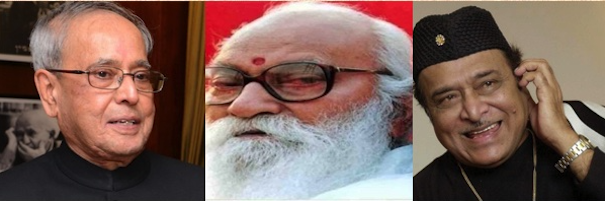
  • Bharat Ratna for former President Pranab Mukherji, Nanaji Deshmukh (posthumous), Bhupen Hazarika (posthumous)

    Bharat Ratna for former President Pranab Mukherji, Nanaji Deshmukh (posthumous), Bhupen Hazarika (posthumous)

    Padma Vibhushan for 4; Padma Bhushan for 14; Padma Shri for 94 

    NEW DELHI(TIP): Bharat Ratna and the Padma Awards for the year 2019 were announced here  on Friday, January 25.

    One of the highest civilian Awards of the country, the Padma awards are conferred in three categories, namely, Padma Vibhushan, Padma Bhushan and Padma Shri.

    The awards are given in various disciplines or fields of activities: social work, public affairs, science and engineering, trade and industry, medicine, literature and education, sports, civil service, etc. The Padma Vibhushan is awarded for exceptional and distinguished service; the Padma Bhushan for distinguished service of high order and the Padma Shri for distinguished service in any field. The awards are announced on the occasion of Republic Day every year.

    These awards are conferred by the President of India at ceremonial functions which are held at Rashtrapati Bhawan usually around March or April every year. This year the President of India Ram Nath Kovind approved conferment of 112 Padma Awards including one duo case (in a duo case, the Award is counted as one). The list comprises 4 Padma Vibhushan, 14 Padma Bhushan and 94 Padma Shri Awards.  21 of the awardees are women and the list also includes 11 persons from the category of Foreigners/NRI/PIO/OCI, 3 Posthumous awardees and 1 transgender person.

    Here is the full list of awardees:

    Padma Vibhushan

    Ms. Teejan Bai (Art-Vocals-Folk)

    Shri Ismail Omar Guelleh (Public Affairs)  Djibouti

    Shri Anilkumar Manibhai Naik (Trade & Industry-Infrastructure)

    Shri Balwant Moreshwar Purandare (Art-Acting-Theatre)

    Padma Bhushan

    Shri John Chambers (Trade & Industry-Technology)

    Shri Sukhdev Singh Dhindsa (Public Affairs)

    Shri Pravin Gordhan (Foreigner) for Public Affairs

    Shri Mahashay Dharam Pal Gulati (Trade & Industry-Food Processing)

    Shri Darshan Lal Jain (Social Work)

    Shri Ashok Laxmanrao Kukade (Medicine-Affordable Healthcare)

    Shri Kariya Munda (Public Affairs)

    Shri Budhaditya Mukherjee (Art-Music-Sitar)

    Shri Mohanlal Viswanathan Nair (Art-Acting-Film)

    Shri S Nambi Narayan (Science & Engineering-Space)

    Shri Kuldip Nayar (Posthumous) for Literature & Education (Journalism)

    Ms. Bachendri Pal (Sports-Mountaineering)

    Shri V K Shunglu (Civil Service)

    Shri Hukumdev Narayan Yadav (Public Affairs)

    Padma Shri

    Shri Rajeshwar Acharya (Art-Vocal-Hindustani)

    Shri Bangaru Adigalar(Others-Spiritualism)

    Shri Illias Ali (Medicine-Surgery)

    Shri Manoj Bajpayee (Art-Acting-Films)

    Shri Uddhab Kumar Bharali (Science & Engineering-Grassroots Innovation)

    Shri Omesh Kumar Bharti (Medicine-Rabies)

    Shri Pritam Bhartwan (Art-Vocals-Folk)

    Shri Jyoti Bhatt (Art-Painting)

    Shri Dilip Chakravarty (Others-Archaeology)

    Shri Mammen Chandy (Medicine-Hematology)

    Shri Swapan Chaudhuri (Art-Music-Tabla)

    Shri Kanwal Singh Chauhan

    Shri Sunil Chhetri (Sports-Football)

    Shri Dinyar Contractor (Art-Acting-Theatre)

    Ms. Muktaben Pankajkumar Dagli (Social Work-Divyang Welfare)

    Shri Babulal Dahiya (Others-Agriculture)

    Shri Thanga Darlong (Art-Music-Flute)

    Shri Prabhu Deva (Art-Dance)

    Ms. Rajkumari Devi (Others-Agriculture)

    Ms. Bhagirathi Devi (Public Affairs)

    Shri Baldev Singh Dhillon (Science & Engineering-Agriculture)

    Ms. Harika Dronavalli (Sports-Chess)

    Ms. Godawari Dutta (Art-Painting)

    Shri Gautam Gambhir (Sports-Cricket)

    Ms. Draupadi Ghimiray (Social Work-Divyang Welfare)

    Ms. Rohini Godbole (Science & Engineering-Nuclear)

    Shri Sandeep Guleria (Medicine-Surgery)

    Shri Pratap Singh Hardia (Medicine- Ophthmology)

    Shri Bulu Imam (Social Work-Culture)

    Ms. Friederike Irina (Foreigner) (Social Work-Animal Welfare)

    Shri Joravarsinh Jadav (Art-Dance Folk)

    Shri S Jaishankar (Civil Service)

    Shri Narsingh Dev Jamwal (Literature & Education)

    Shri Fayaz Ahmad Jan (Art-Craft-Papier Mache)

    Shri K G Jayan (Art-Music-Bhakti)

    Shri Subhash Kak (Foreigner) (Science & Engineering-Technology)

    Shri Sharath Kamal (Sports-Table Tennis)

    Shri Rajani Kant (Social Work)

    Shri Sudam Kate (Medicine-Sickle Cell)

    Shri Waman Kendre (Art-Acting-Theatre)

    Shri Kader Khan (Posthumous-Foreigner) (Art-Acting-Films)

    Shri Abdul Gafur Khatri (Art-Painting)

    Shri Ravindra Kolhe and Ms. Smita Kolhe (Medicine-Affordable Healthcare)

    Ms. Bombayla Devi Laishram (Sports-Archery)

    Shri Kailash Madbaiya (Literature & Education)

    Shri Ramesh Babaji Maharaj (Social Work-Animal Welfare)

    Shri Vallabhbhai Vasrambhai Marvaniya (Others-Agriculture)

    Ms. Gita Mehta (Foreigner) (Literature & Education)

    Shri Shadab Mohammad (Medicine-Dentistry)

    Shri K Muhammed (Others-Archaeology)

    Shri Shyama Prasad Mukherjee (Medicine-Affordable Healthcare)

    Shri Daitari Naik (Social Work)

    Shri Shankar Mahadevan Narayan (Art-Vocals-Films)

    Shri Shantanu Narayen (Foreigner) (Trade & Industry-Technology)

    Nartaki Natraj (Art-Dance-Bharatnatyam)

    Shri Tsering Norboo (Medicine-Surgery)

    Shri Anup Ranjan Pandey (Art-Music)

    Shri Jagdish Prasad Parikh (Others-Agriculture)

    Shri Ganpatbhai Patel (Foreigner) (Literature & Education)

    Shri Bimal Patel (Others-Architecture)

    Shri Hukumchand Patidar (Others-Agriculture)

    Shri Harvinder Singh Phoolka (Public Affairs)

    Ms. Madurai Chinna Pillai (Social Work-Microfinance)

    Ms. Tao Porchon-Lynch (Foreigner) (Others-Yoga)

    Ms. Kamala Pujhari (Others-Agriculture)

    Shri Bajrang Punia (Sports-Wrestling)

    Shri Jagat Ram (Medicine-Ophthalmology)

    Shri R V Ramani (Medicine-Ophthalmology)

    Shri Devarapalli Prakash Rao (Social Work-Affordable Education)

    Shri Anup Sah (Art-Photography)

    Ms. Milena Salvini (Foreigner) (Art-Dance-Kathakali)

    Shri Nagindas Sanghavi (Literature & Education-Journalism)

    Shri Sirivennela Seetharama Sastry (Art-Lyrics)

    Shri Shabbir Sayyad (Social Work-Animal Welfare)

    Shri Mahesh Sharma (Social Work-Tribal Welfare)

    Shri Mohammad Hanif Khan Shastri (Literature & Education)

    Shri Brijesh Kumar Shukla (Literature & Education)

    Shri Narendra Singh (Others-Animal Husbandry)

    Ms. Prashanti Singh (Sports-Basketball)

    Shri Sultan Singh (Others-Animal Husbandry)

    Shri Jyoti Kumar Sinha (Social Work-Affordable Education)

    Shri Anandan Sivamani (Art-Music)

    Ms. Sharada Srinivasan (Others-Archaeology)

    Shri Devendra Swarup (Posthumous) (Literature & Education-Journalism)

    Shri Ajay Thakur (Sports-Kabaddi)

    Shri Rajeev Tharanath (Art-Music-Sarod)

    Ms. Saalumarada Thimmakka (Social Work-Environment)

    Ms. Jamuna Tudu (Social Work-Environment)

    Shri Bharat Bhushan Tyagi (Others-Agriculture)

    Shri Ramaswami Venkataswami (Medicine-Surgery)

    Shri Ram Saran Verma (Others-Agriculture)

    Shri Swami Vishudhananda (Others-Spiritualism)

    Shri Hiralal Yadav (Art-Vocals-Folk)

    Shri Venkateswara Rao Yadlapalli (Others-Agriculture)

  • The State of the Indian Republic

    The State of the Indian Republic

    By Prof I.S.Saluja

    India is celebrating 70thRepublic Day. What a day! Congratulations!

    Indians celebrate the Constitution of India- the most well written Constitution in the world, it is said. There is a plethora of rights and guarantees for all citizens of a wonderful country, gifted with Nature’s bounty. God’s own country, one may as well say. And Indians are legitimately proud of the work done by Dr. Bhimrao Ambedkar and his colleagues in giving them  a wonderful Constitution.

    India has a political system which has weathered all kinds of storms. India has a system of governance which can be functional under any person and party. India is growing in numbers, in wealth, in influence in the world. India truly is progressing. And Indians must be proud of the achievements India can boast of.

    India has some of the world’s wealthiest people. Indians  have  the best brains. They may not have opportunities in India. But they are all over the world. Some of them head the largest companies in the world. Some are the top scientists. Some others are the best-known academics. Name any profession, they are among the top.

    But then how it is that India is hungry, 73 years after independence, and 70 years after becoming a Republic? When you have the manpower, intellectual power, wealth and all kinds of means in your armor, how is it that there is so much poverty in India?  In 2012, the Indian government stated 22% of its population is below its official poverty limit. The World Bank, in 2011 based on 2005’s PPPs International Comparison Program, estimated 23.6% of Indian population, or about 276 million people, lived below $1.25 per day on purchasing power parity.

    According to Global Wealth Report 2016 compiled by Credit Suisse Research Institute, India is the second most unequal country in the world with the top one per cent of the population owning 58% of the total wealth. And this gap is widening, day by day.

    On this Republic Day, I will like our political and thought leaders to please put their heads together and find ways to end poverty, and, next the unjust economic inequality,  in the interest of the great nation that India is and the equally great people that Indians are.

  • UN Peacekeeping: India’s Contributions

    UN Peacekeeping: India’s Contributions

    By Asoke Kumar Mukerji

    As an “original” founder-member of the United Nations, India has not hesitated to respond to the calls of the UN to contribute troops for maintaining international peace and security. In 1950, soon after India’s independence, the 60 Parachute Field Ambulance of the Indian Army was sent to provide medical cover to U.S./R.O.K. and UN forces engaged in the Korean War. The unit served in Korea for a total of three and a half years (November 1950- May 1954), the longest single tenure by any military unit under the UN flag.

    India’s contributions to UN peacekeeping operations (UNPKOs) have been underscored by the experience and professionalism of India’s armed forces. Speaking at the September 2015 Leaders’ Summit in New York on UN Peacekeeping, Prime Minister Shri Narendra Modi had said: “The foundations of the United Nations were laid by the brave soldiers on the battlefields of the Second World War. By 1945, they included 2.5 million men of the Indian Army, the largest volunteer force in history.” India today is the largest contributor of troops to UNPKOs. More than 200,000 Indian troops have served in 49 of the 71 UNPKOs deployed so far.

    As an “original” founder-member of the United Nations, India has not hesitated to respond to the calls of the UN to contribute troops for maintaining international peace and security. In 1950, soon after India’s independence, the 60 Parachute Field Ambulance of the Indian Army was sent to provide medical cover to U.S./R.O.K. and UN forces engaged in the Korean War. The unit served in Korea for a total of three and a half years (November 1950- May 1954), the longest single tenure by any military unit under the UN flag.

    From 15 November 1956 to 19 May 1967, eleven infantry battalions from India served by rotation in the UN Emergency Force (UNEF 1) to ensure the withdrawal of France, U.K. and Israel from Egyptian territory and to sustain the peace between Israel and her Arab neighbors. 27 Indian UN peacekeepers lost their lives in this operation.

    In 1960, the Congo requested for deployment of UN peacekeepers to counter secession and re-integrate the country after Belgian rule. Between 14 July 1960 and 30 June 1964, two Indian brigades participated in ONUC UNPKO. The rules of engagement were modified to cater for use of force in defense of the mandate, in carrying out humanitarian tasks, and in countering mercenaries. 39 Indian personnel lost their lives in the operation. Captain Gurbachan Singh Salaria became the only UN peacekeeper to receive the Param Vir Chakra, India’s highest military award, for laying down his life in defense of the UN mandate in the Congo.

    India’s participation in the initial UNPKOs resulted in a growing pool of Indian military officers seconded to the UN whose professionalism and experience have contributed to UN peacekeeping doctrine. The contribution of Major-General

    I.J. Rikhye, appointed as the first Military Adviser to the UN Secretary General between 1960-1967, was seminal in this context. The three core principles of effective UN peacekeeping were identified based on the experience of UNPKOs on the ground. These are deployment with the consent of the parties, impartiality in operations, and non-use of force except in self-defense and defense of the mandate.

    Subsequent contributions to UN peacekeeping doctrine by Indian military officers have built on this, both at UN Headquarters (where two Indian Generals have served as Military Advisers in recent years) and in the field (where 15 Indian Generals have acted as Force Commanders with distinction).

    The end of the Cold War resulted in a mushrooming of crises. More than 20 new UNPKOs were deployed between 1989-1994 alone. India’s contributions to these new operations rose significantly. Three broad areas have emerged where India’s contributions have made a difference.

    The first area is in making use of UN peacekeeping across the world to ensure a political transition to peace. Such UNPKOs include UNPROFOR in the former Yugoslavia, whose first Force Commander was India’s Lt. General Satish Nambiar; UNTAC in Cambodia; ONUSAL in El Salvador; ONUMOZ in Mozambique; UNOSOM in Somalia; UNAVEM in Angola; UNAMSIL in Sierra Leone; UNMEE in Ethiopia-Eritrea; and UNMIT in East Timor.

    The second area is in augmenting peacebuilding activities by encouraging and mentoring the strengthening of national governance institutions. UNTAG saw Indian peacekeepers assist in the creation of the institutions of an independent Namibia. India became the first country to demonstrate the effectiveness of women as UN peacekeepers in peacebuilding with the deployment of the first all-female formed police unit (FFPU) to the UNPKO in Liberia (UNMIL) in 2007. When UNMIL was wound up in February 2018, President Sirleaf of Liberia commented: “The contribution you have made in inspiring Liberian women, imparting in them the spirit of professionalism and encouraging them to join operations that protect the nation, for that we will always be grateful.”

    The third area is in leading the ground level response to new challenges, while the UN Security Council remains ineffective in implementing its decisions, due to reasons set out unanimously by world leaders at the 2005 UN World Summit which mandated reforms of the Security Council. The protection of civilians caught in intra- state conflicts is one issue where India’s UN peacekeepers have made a positive difference, especially in complex UNPKOs like MONUSCO in the Democratic Republic of Congo and UNMISS in South Sudan. Going beyond the call of duty, Indian UN peacekeepers have volunteered medical services, including veterinary support, and engineering services, in these UNPKOs, which has contributed to sustaining the livelihood of conflict-impacted local communities.

    The challenges faced by India’s troops contributed to UNPKOs today include terrorist threats to the UN by non-state actors. In UNDOF, deployed on the Golan Heights of Syria, Indian UN military officers were the first to confront such challenges by the Jabhat al-Nusra terrorist group which took UN peacekeepers hostage in 2014.

    A bigger challenge for troop-contributing countries like India is the denial by the permanent members of the Security Council to participate in “decisions of the Security Council” concerning the deployment of her troops, as provided for in Article 44 of the UN Charter.

    3802 troops from UN member-states have given their lives defending the UN Charter between 1948-2018. The highest number (164) are from India. India has launched a virtual wall of remembrance for her peacekeepers. The UN General Assembly has approved constructing a Memorial to all fallen UN peacekeepers. As Prime Minister Shri Narendra Modi has emphasized: “It would be most fitting if the proposed memorial wall to the fallen peacekeepers is created quickly.”

    (The author, a retired diplomat,  is a Former Permanent Representative of India to the United Nations)

  • India celebrates 70th Republic Day

    India celebrates 70th Republic Day

    South African President Cyril Ramaphosa attends as Chief Guest

    Impressive Parade and enthusiasm mark the celebration

    PM lays a wreath at Amar Jawan Jyoti and pays tribute to martyrs

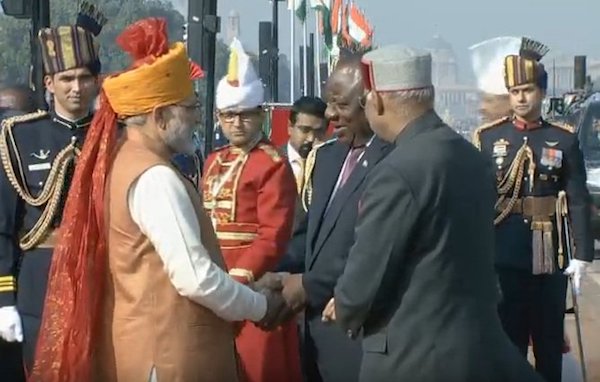
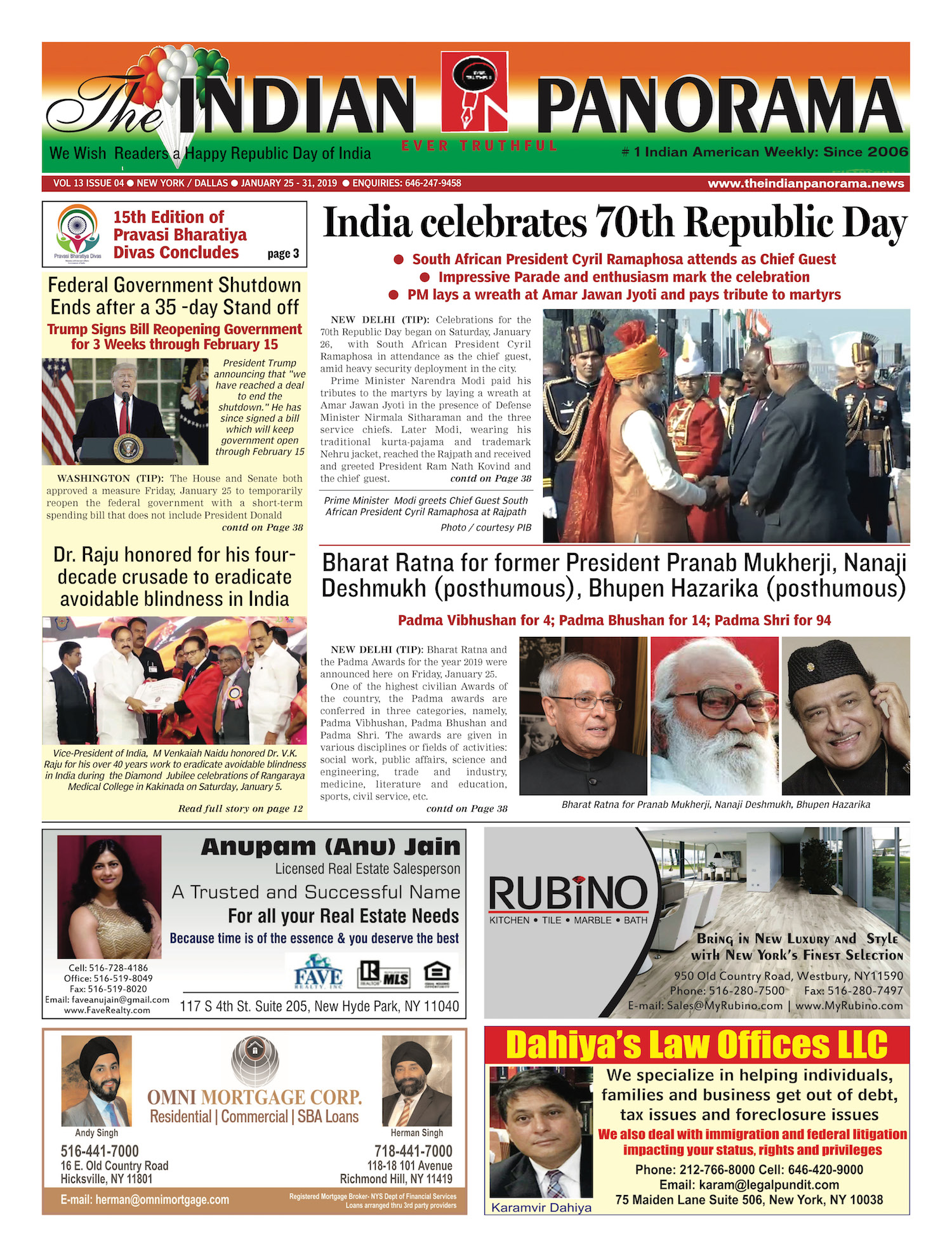
    NEW DELHI  (TIP): Celebrations for the 70th Republic Day began on Saturday, January 26,  with South African President Cyril Ramaphosa in attendance as the chief guest, amid heavy security deployment in the city.

    Prime Minister Narendra Modi paid his tributes to the martyrs by laying a wreath at Amar Jawan Jyoti in the presence of Defense Minister Nirmala Sitharaman and the three service chiefs.

    Later Modi, wearing his traditional kurta-pajama and trademark Nehru jacket, reached the Rajpath and received and greeted President Ram Nath Kovind and the chief guest.

    At the unfurling of the Tricolor, the band played the national anthem with a 21-gun salute fired in the background.

    In a display of woman power, Lt. Ambika Sudhakaran leads Indian Navy’s marching regiment at Republic Day 2019 parade
    Photo /courtesy PIB

    Most of the ministers of the Modi government, including Home Minister Rajnath Singh and External Affairs Minister Sushma Swaraj, former prime ministers Manmohan Singh and Deve Gowda, and Congress veteran Ghulam Nabi Azad were among those present on the occasion.

    The overall theme for the Republic Day celebrations this year is the 150th birth anniversary of Mahatma Gandhi and tableaux of many states, themed on the iconic freedom fighter, were  lined up for the occasion.

    (Source: PTI)

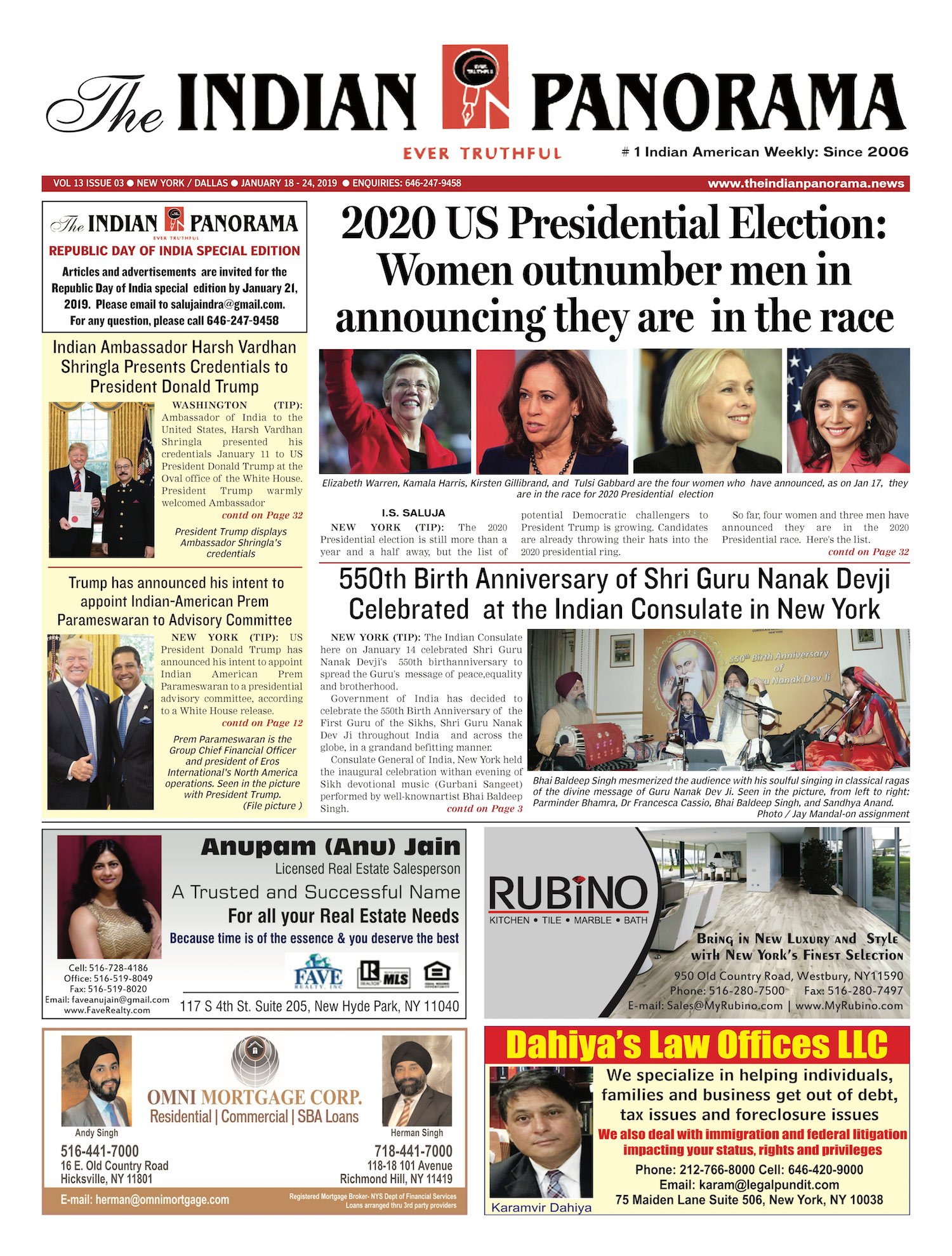
  • January 25 New York & Dallas Print Editions

    January 25 New York & Dallas Print Editions

    [vc_row][vc_column][vc_column_text]

    Print Replica ~ Digitally

    E-Editions

    [/vc_column_text][/vc_column][/vc_row][vc_row][vc_column width=”1/3″][vc_custom_heading text=”New York Edition” font_container=”tag:h2|text_align:center” google_fonts=”font_family:Istok%20Web%3Aregular%2Citalic%2C700%2C700italic|font_style:700%20bold%20regular%3A700%3Anormal” link=”url:https%3A%2F%2Fwww.theindianpanorama.news%2Fwp-content%2Fuploads%2F2019%2F01%2FTIP-January-25-NYC.pdf|||”][vc_single_image image=”95897″ img_size=”full” add_caption=”yes” alignment=”center” onclick=”custom_link” link=”https://www.theindianpanorama.news/wp-content/uploads/2019/01/TIP-January-25-NYC.pdf”][/vc_column][vc_column width=”1/3″][vc_custom_heading text=”Dallas, Texas Edition” font_container=”tag:h2|text_align:center” google_fonts=”font_family:Istok%20Web%3Aregular%2Citalic%2C700%2C700italic|font_style:700%20bold%20regular%3A700%3Anormal” link=”url:https%3A%2F%2Fwww.theindianpanorama.news%2Fwp-content%2Fuploads%2F2019%2F01%2FTIP-January-25-Dallas-TX.pdf|||”][vc_single_image image=”95898″ img_size=”full” add_caption=”yes” alignment=”center” onclick=”custom_link” link=”https://www.theindianpanorama.news/wp-content/uploads/2019/01/TIP-January-25-Dallas-TX.pdf”][/vc_column][vc_column width=”1/3″][vc_single_image image=”82828″ img_size=”medium” alignment=”center” onclick=”custom_link” link=”https://www.theindianpanorama.news/advertising-media-kit-portal-indian-panorama/”][vc_single_image image=”82829″ img_size=”medium” alignment=”center” onclick=”custom_link” link=”https://www.theindianpanorama.news/advertising-media-kit-portal-indian-panorama/”][/vc_column][/vc_row][vc_row][vc_column][td_block_ad_box spot_id=”custom_ad_3″ tdc_css=””][/vc_column][/vc_row][vc_row][vc_column width=”2/3″][vc_custom_heading text=”Lead Stories This Week” font_container=”tag:h2|text_align:center” google_fonts=”font_family:Istok%20Web%3Aregular%2Citalic%2C700%2C700italic|font_style:700%20bold%20regular%3A700%3Anormal” link=”url:https%3A%2F%2Fwww.theindianpanorama.news%2F|||”][td_block_5 separator=”” limit=”12″ tdc_css=””][/vc_column][vc_column width=”1/3″][vc_widget_sidebar sidebar_id=”td-default”][/vc_column][/vc_row]

  • Will India Take a Cue from China to Launch an Economic Revolution?

    Will India Take a Cue from China to Launch an Economic Revolution?

    By Ven Parameswaran

    Mao-Tse-Tung established Peoples Republic of China in 1949.  It was backward and far  behind India.  China continued to be behind India till 1979.  The USA opened diplomatic relations with China in 1979.  President Reagan offered friendship and full cooperation to help and develop China.  He sent his Treasury Secretary, Don Regan, former CEO of Merrill Lynch to China to offer investment in building infrastructure and modernizing China in exchange for China opening up and liberalizing its economy.

    China gave carte blanche to the U.S.  and allowed the U.S. business to implant capitalistic tools.  The U.S. and China built huge large-scale factories to manufacture consumer and industrial goods for export to the U.S. and other countries. As there was no holds bar, the U.S. private industry was able to establish its presence in China.  China, unmindful of its communist ideology did not hesitate to plant capitalism in China.  This process, in the next twenty years from 1980 to 2000 brought prosperity to China.  China had a comparative advantage with the U.S. resulting in the U.S. closing much of its manufacturing.  The U.S. relied on importing from China everything it wanted at a lower price.

    From almost nothing, China became the second global economic superpower, thanks to the U.S.A. and capitalism.    China became the most modern nation.  Everyone who has visited China is highly impressed and pleasantly shocked with the gigantic progress China has made within a short period of two decades.

    India’s opportunity

    President Trump has made India America’s  closest ally on a par with the U.K.   He has offered 100% transfer of U.S. technology.  He has also made deals for joint military and naval exercises and drills. Because of comparative advantage and oversupply of professional managers, engineers and scientists , the US is eager to set up large scale manufacturing in India to produce military hardware, planes, missiles, etc.

    The U.S. is ready and willing to replicate with  India what it did with China.  India does not have to invent a new wheel.   The big question is whether India is willing to open and liberalize its economy as China did?

    India needs to set up large scale factories to manufacture consumer, industrial and military goods for export and domestic consumption.   This will create huge employment opportunities.  India needs to find at least 10 million new jobs every year.

    Progress and development contribute to democracy.  If India is failing to feed the poor, it is no democracy.  India has a comparative advantage with China now.  Wages in India are much lower than in China.  India is the largest English-speaking country in the world.  It has a large supply of cheap labor and professional engineers and managers.

    President Trump is interested in diversifying  US imports from China to India.  There has never been a better opportunity for India.

    If the path is well trodden, India can legitimately hope to grow @ 12% for the next decade.

    (Ven Parameswaran, MBA, Columbia Business School, was President & CEO, First Asian Securities Corporation, New York; Senior Adviser to Imagindia Institute, a think tank in New Delhi.   He can be reached at vpwaren@gmail.com)


  • Give us back friendliness of late 1970s

    Give us back friendliness of late 1970s

    By Shahzad Raza

    Both nuclear rivals have almost tried all options — wars, dialogues and trade — but to no avail. The two sensitive issues, Kashmir and terrorism, have been hampering progress in other areas for long……… In 2009, at Sharm-el-Sheikh, Pakistan’s former Prime Minister Yousaf Raza Gillani and his Indian counterpart Manmohan Singh agreed to cooperate on fighting terrorism together. That was the most remarkable development after the deadly Mumbai attacks.

    Pakistani schoolchildren of the 1980s had a great fascination with Indian classic Mahabharat, which was telecast on Doordarshan and used to reach TV sets across the border through analogue antennas. The character of Bheem was quite popular among viewers.

    That generation of the late 1970s or early 1980s, which had no remorse watching Indian entertainment shows, transferred the same fascination to their children who had Chotta Bheem to enjoy. Those who had access to PTV in India would still remember the character of Chaudhry Hashmat Ali of one of the greatest Pakistani drama, Waris.

    People were then beginning to forget the horrific memories of the Partition and two unfortunate wars. Pakistani agencies were not meddling in the Kashmir affairs and their Indian counterparts were not colluding with Afghans to fan separatism in Balochistan. Osama bin Laden and his jihadis were preparing to defeat the Red Army. Uncomprehending then was the frequent stalemates on multiple issues, including Kashmir, water, visas, trade, etc. India granted Pakistan MFN status, vying for access to Afghanistan and Central Asia. However, Pakistani policy makers did not respond.

    Things changed drastically after the collapse of the Soviet Union, leaving Pakistan to bear the burden of refugees and radical ideologies. The jihadis had no inclination to return to their barracks like a regular army. Many of them joined Kashmir separatist groups, sparking serious tension between the two neighbors.

    The complexities of proxy war were not suitable for both India and Pakistan, given their proximity, economies and cultural bonds. Yet, the two countries have been exhausting themselves since the end of the first Afghan war.

    Both nuclear rivals have almost tried all options — wars, dialogues and trade — but to no avail. The two sensitive issues, Kashmir and terrorism, have been hampering progress in other areas for long. During Gen Pervez Musharraf’s regime, a remarkable progress was made on the Kashmir issue. The last People’s Party government almost convinced the then Indian government to stop accusing Pakistan of sponsoring terrorism. In 2009, at Sharm-el-Sheikh, former Prime Minister Yousaf Raza Gillani and his Indian counterpart Manmohan Singh agreed to cooperate on fighting terrorism together. That was the most remarkable development after the deadly Mumbai attacks.

    The successive PML-Nawaz government took several bold initiatives but for one reason or other things went back to square one. For a long time, Indian policy makers kept on pressing Pakistan to leave the issue of Kashmir until there was a congenial atmosphere. Pakistani establishment was not listening. Now both civilian and military leaderships in Pakistan are talking about building the same atmosphere through economic and cultural ties. The Indians are not listening, perhaps because of the impending General Election.

    Musharraf and his PM Shaukat Aziz envisioned if the bilateral trade was increased it would diminish the state-level animosity. They often cited the example of Germany and France that how the World War-II rivals rebuilt their relations through trade. The incumbent government of PTI in Pakistan feels the same. Germany and France are a classic example for the neighboring countries to repair the fractured relations. The South Asian rivals have their own Alsace-Lorraine — Kashmir. The nature of conflict and emotional attachment with the beautiful territory cannot be underestimated.

    Both have their stakes in Afghanistan. What if the two sides, somehow, start considering that barren land their Alsace-Lorraine. What if Pakistan and India take over the process of rebuilding Afghanistan together? Dialogue with the Taliban seems to have entered the final stage. Pakistan can still use whatever leverage left over Taliban. And India can pull strings and make Afghani establishment toe the line. Together, the two countries could do wonders in Afghanistan. While shifting their joint interests into a third country, both neighbors must revive once strong cultural ties.

    Warmongers need to take a back seat. The next course should be determined by the likes of late Asma Jehangir and Arundhati Roy. Can’t Pakistan’s real estate tycoon Malik Riaz build urban metropolises in Afghanistan, with steel provided by Lakshmi Mittal? Otherwise, dare one can say that sudden death is much better than prolonged and painful illness through slow poisoning.

    (Source: Tribune India)

  • Lok Sabha elections 2019: The contours of contest ahead

    Lok Sabha elections 2019: The contours of contest ahead

    By Mahesh Rangarajan

    In the Lok Sabha election, voters will assess whether they are better off today than they were five years ago

    This summer will see a carnival of democracy in the general election. Much has changed in just five years. The elan of Narendra Modi’s party is more muted this time. Last weekend, key opponents, the Samajwadi Party and the Bahujan Samaj Party, joined forces in Uttar Pradesh, making the contest real and not a walkover. The Index of Opposition Unity cannot predict outcomes, but no one can afford to ignore it.

    The Congress’s victories in the Assembly elections in three north Indian States have given it a shot in the arm. Equally important, the older party is firming up alliances in the southern States. The 131 Lok Sabha seats in five States (Andhra Pradesh, Karnataka, Kerala, Tamil Nadu and Telangana) and two Union Territories (Lakshadweep and Puducherry) have been critical to it in times of trouble.

    The Telangana poll outcome was sobering for both the large national parties. Regional nationalism is not new to Indian politics: Jammu and Kashmir and Tamil Nadu were precursors. Regional formations have long governed West Bengal, Odisha and now Telangana. They may well hold the keys to power in New Delhi.

    In 2014, it was the Bharatiya Janata Party (BJP) that led in securing allies. Between then and now, BJP president Amit Shah has helped expand its footprint. Not only does it have more MLAs than the Congress, but its cadre fights every election like there is no tomorrow.

    The challenge lies elsewhere. The Congress may have lost in 2014 and come down to a historic low of less than one in five votes cast. Yet, only a decade age, in May 2009, the roles had been in reverse. It was Congress that had then polled 29% and the BJP just 19% of the popular vote.

    Pages of political history

    This time is different. It is 1971 that will be the textbook case for the ruling party. When the Grand Alliance said it would oust Indira Gandhi, she replied she wished to banish poverty. She won hands down.

    Mrs. Gandhi did not have to contend with a powerful Dalit-led formation in the Ganga valley which commands 20% of the vote. Many of today’s regional parties were yet to be formed. She captured the public imagination. It was a gamble and she won hands down. Mr. Modi too will fight to the last voter. He will try to be the issue. He has sounded the tocsin against dynasty, caste and corruption. Hence the record in getting visible benefits to the individual and the family. The gas cylinder, the light bulb, that rural road: each will, he hopes, add to his appeal.

    History has another instance too. The 2004 general election was held early. Atal Bihari Vajpayee was confident that ‘India was Shining’. The dream came apart on counting day. Rather than a unified Opposition (for there was none in the all-important State of Uttar Pradesh), ground-level discontent denied the ruling alliance another chance.

    And yet, there is the cloud of the horizon. Even in 2004, the Congress was only a whisker ahead of the BJP — just seven seats more in the Lok Sabha. The Congress had 145 seats to the BJP’s 138. The key was on the ground, where the mood had shifted. The economic upturn began in 2003, but voters did not see gains early enough for the ruling bloc to reap an electoral harvest.

    The poll planks

    In 2014, the challenger drew on the tiredness with a decade of a Congress-led government and promised a fresh start. Runaway inflation and the specter of corruption undercut the appeal of the Congress. This time the issues have changed. It is the squeeze on farm incomes and rural debt that are the key poll planks. Similarly, the issue of jobs is more pressing than ever. Cultivators across all strata and young people seeking productive employment want answers.

    Two States are key. Maharashtra, a State critical in the histories of both the Congress and the BJP, is not only seeing a coming together of Opposition forces; it is undergoing drought and rural distress. Ominously, key farmer-led allies have walked across. Uttar Pradesh, a bastion of the BJP, has rival Dalit- and Mandal-led parties coalesce for the first time in a quarter century. Both States have something in common. In both, sugarcane cultivation is a determinant of electoral fortunes.

    Cane (not caste) and jobs (not community slogans) may hold the key. Ganna and Naukri, not reservations or the emotive Mandir issue. What matters more: bread or identity? Even when both count what takes precedence?

    Government policy has had a key role in this denouement. By according priority to consumers in cities (who want low prices for cereals, oil seeds and pulses), the government did not have to pay heed to rural residents who need to earn more. The latter, as producers, are larger in number and percentage than in any other democracy.

    India still lives and votes in its villages. Under Mr. Shah, the cadre, organization and outreach have made the BJP a vastly larger party than any other. But economic policies can strain such organizational gains.

    Democracy is about more than development. In a polity where people can throw their rulers out, it is centrally about politics. Since 1999, there has been a bi-nodal system, and the choice is not simply between Mr. Modi and Congress president Rahul Gandhi.

    The battle lines

    We have effectively a one-party government with a firm hand on the wheel (but with the danger of an over-centralization of power). Against this, is ranged a looser coalition in which regional forces and rural interests have more play. Needless to add, the latter will be rockier, more contentious and tough to manage in a coherent fashion.

    The Modi government is driven by ideology and not pragmatism on a range of issues. This is the first ever BJP government with a view of culture, history and politics that seeks to remake history as much as the future. Is this the party’s agenda or the country’s? This is a question in the background: if the Ram temple issue comes to the fore, it will be a major choice for the voter.

    The pluralism and Hindutva debate have another dimension more so than ever, namely the federal question. Across the Northeast (including Sikkim), far more important to the country than its 25 Lok Sabha seats indicate, the idea of citizenship is at variance with the new Citizenship Bill passed by the Lok Sabha. Across the country, State-level parties see an accretion of powers in the federal government unseen since the 1980s.

    True, Mr. Modi has a wider mass appeal than any one since Mrs. Gandhi. But history is witness that such appeal can also have limits if voters decide that enough is enough. Has that point been reached? We simply do not know.

    More central is the question of questions. Are you better off than you were five years ago, and if not, why not? If so, and even if not, do you think we are moving in the right direction?

    In 2014, The Economist observed that if India had the per capita wealth of Gujarat, the country would rank with Spain. Has that dream come true or it is unravelling and fast? How voters answer that will show who they stand with.

    (The author  is Professor of History and Environmental Studies at Ashoka University, Haryana)

  • Wall of shame: on Mexico border wall

    Wall of shame: on Mexico border wall

    The shutdown over the Mexico wall demand will long define Donald Trump’s presidency

    It began as a populist campaign promise that brought President Donald Trump’s supporters cheering to their feet and paved the way for his election. Now, the border wall with Mexico has become a morass of partisan bickering that has stalemated the U.S. federal government into a three-week-long shutdown, leaving nearly 800,000 public sector workers furloughed without pay. At the heart of this political crisis is the increasingly bitter polarization of public opinion over immigration. On the one hand, Mr. Trump has steadily contributed to the strident and crude anti-migrant rhetoric, characterizing prospective migrants from Latin America as drug-dealers, rapists and violent criminals and shutting down the U.S. border to travelers from certain Muslim-majority countries. On the other, his insistence that he will not sign any appropriations bill to break the funding logjam in Congress and end what could soon become the longest shutdown in U.S. history, unless that bill includes $5.7 billion in financing for a border wall, has gone down badly with Democrats, who control the House. Matters took a darker turn as Mr. Trump doubled down on his refusal to negotiate over funding for the wall and said he may declare a state of national emergency over this uncomfortable status quo.

    There are disquieting questions about the veracity of some of Mr. Trump’s claims: migrant border crossings have been in decline for the best part of two decades; it is through legal ports of entry and not unauthorized crossing points that hard drugs such as heroin enter the U.S.; and even the State Department has admitted that no terror operatives have entered the U.S. through Mexico. Then there is the more blatantly flawed reasoning touted by the President that “Mexico will pay” for the wall. Now it appears that even Mr. Trump is backing down on his claim, arguing that Mexico would only “indirectly” fund it through trade deals. It is well-known that only corporations pay tariffs under these deals, not governments, and hence no such payment will come from Mexico. Even as the acerbic back-and-forth between Mr. Trump and Congressional Democrats continues, the deeper malaise is a profound disagreement among Americans on what their nation’s very soul stands for. Is the U.S. truly a melting pot, a country built on the prowess of entrepreneurship and technology, in large part driven by immigrants seeking the “American dream”? Or is it a declining world power that has squandered too much to other nations and peoples and is readying itself for an uncompromising battle to claw back what it reckons it has lost? If it is the latter, then we could expect Mr. Trump’s vision to succeed, but if not, a course correction is in order.

    (The Hindu)

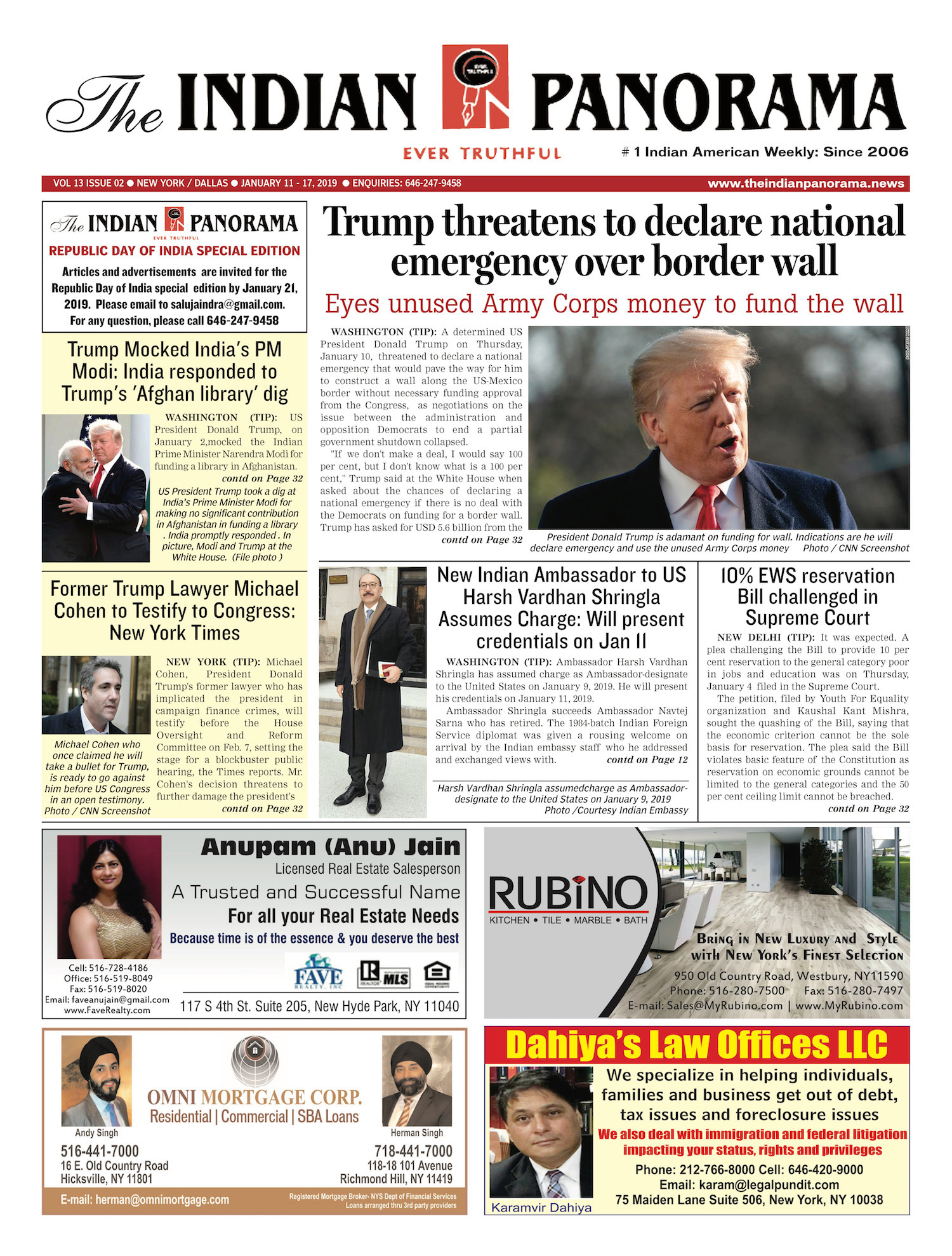
  • January 18 New York & Dallas Print Editions

    January 18 New York & Dallas Print Editions

    [vc_row][vc_column][vc_column_text]

    Print Replica ~ Digitally

    E-Editions

    [/vc_column_text][/vc_column][/vc_row][vc_row][vc_column width=”1/3″][vc_custom_heading text=”New York Edition” font_container=”tag:h2|text_align:center” google_fonts=”font_family:Istok%20Web%3Aregular%2Citalic%2C700%2C700italic|font_style:700%20bold%20regular%3A700%3Anormal” link=”url:https%3A%2F%2Fwww.theindianpanorama.news%2Fwp-content%2Fuploads%2F2019%2F01%2FTIP-January-18-NYC.pdf|||”][vc_single_image image=”95871″ img_size=”full” add_caption=”yes” alignment=”center” onclick=”custom_link” link=”https://www.theindianpanorama.news/wp-content/uploads/2019/01/TIP-January-18-NYC.pdf”][/vc_column][vc_column width=”1/3″][vc_custom_heading text=”Dallas, Texas Edition” font_container=”tag:h2|text_align:center” google_fonts=”font_family:Istok%20Web%3Aregular%2Citalic%2C700%2C700italic|font_style:700%20bold%20regular%3A700%3Anormal” link=”url:https%3A%2F%2Fwww.theindianpanorama.news%2Fwp-content%2Fuploads%2F2019%2F01%2FTIP-January-18-Dallas-TX.pdf|||”][vc_single_image image=”95872″ img_size=”full” add_caption=”yes” alignment=”center” onclick=”custom_link” link=”https://www.theindianpanorama.news/wp-content/uploads/2019/01/TIP-January-18-Dallas-TX.pdf”][/vc_column][vc_column width=”1/3″][vc_single_image image=”82828″ img_size=”medium” alignment=”center” onclick=”custom_link” link=”https://www.theindianpanorama.news/advertising-media-kit-portal-indian-panorama/”][vc_single_image image=”82829″ img_size=”medium” alignment=”center” onclick=”custom_link” link=”https://www.theindianpanorama.news/advertising-media-kit-portal-indian-panorama/”][/vc_column][/vc_row][vc_row][vc_column][td_block_ad_box spot_id=”custom_ad_3″ tdc_css=””][/vc_column][/vc_row][vc_row][vc_column width=”2/3″][vc_custom_heading text=”Lead Stories This Week” font_container=”tag:h2|text_align:center” google_fonts=”font_family:Istok%20Web%3Aregular%2Citalic%2C700%2C700italic|font_style:700%20bold%20regular%3A700%3Anormal” link=”url:https%3A%2F%2Fwww.theindianpanorama.news%2F|||”][td_block_5 separator=”” limit=”12″ tdc_css=””][/vc_column][vc_column width=”1/3″][vc_widget_sidebar sidebar_id=”td-default”][/vc_column][/vc_row]

  • “I want Eros to be Pre-eminent in the US”: Prem Parameswaran

    “I want Eros to be Pre-eminent in the US”: Prem Parameswaran

    Prem Parameswaran is an institution in himself. A financial wizard, Prem achieved phenomenal success as investment banker. In his 23 -year career in Investment Banking, Prem became one of the top Media and Telecom bankers on Wall Street.  He advised clients and many Fortune 10 companies on mergers and acquisitions, as well as both public and private equity and debt financings.

    Prem with US President Trump

    In 2015, after a long and successful career as an investment banker in the Global Media and Telecom sector Prem Parameswaran joined Eros as the Group Chief Financial Officer (CFO) and President of Eros International’s North America Operations.  A new feather was added to his crown when on December 20, 2018 Eros announced that Prem has been appointed to the Company’s Board of Directors.

    Prem with Priyanka Chopra at the Bajirao Mastani Press Conference

    Established in 1977, Eros is a respected global brand name in the Indian cinema world, which focuses on distributing films and other content through various mediums. Its relatively new OTT (Over-the-Top Service) platform, Eros Now, has over 128 million registered users globally with over 13 million monthly subscribers as of September 30, 2018. People term Eros Now as the “Netflix” of India, which owns rights for about 11, 000 films from Bollywood and regional languages of India spanning several decades. No other company in the world has such a rich and vast Indian content to offer to its viewers.

    Prior to joining Eros, Prem had served as the Global Head of Media and Telecommunications Investment Banking at Jefferies LLC. Prior to Jefferies he was the Americas Head of Media and Telecom Investment Banking at Deutsche Bank Securities Inc.  He had been with Goldman Sachs for 7 years prior to joining Deutsche Bank, where he was a Vice President and Head of the Integrated Communications Providers within Investment Banking.  Prior to Goldman Sachs, Prem started his career at Salomon Brothers where he worked his way up from an Analyst to a Vice President.

    Prem graduated from Columbia University with a BA and received an MBA from Columbia Business School.  He was awarded Indian American Businessman of the Year in 2012 by the Asian American Republican Committee.  He also serves on the Boards of Columbia University Alumni Trustee Nominating Committee and The Program for Financial Studies at Columbia Business School.  Prem is a member of very exclusive Winged Foot Golf Club and The Golf Club of Purchase.

    Prem with daughters Trinity (13), Kayla (10), and son Hudson (8)
    Son Hudson on field at Yankee Stadium
    Ven Parameswaran, Priscilla, Hudson, Prem Parameswaran
    Prem with daughter Trinity at Manchester United
    Hudson at NY Rangers Practice Facility

    Prem’s inspiration is his father Ven Parameswaran who came to USA in 1954 on a boat with less than $100 in his pocket and an academic scholarship to Farleigh Dickinson University in New Jersey. He worked three jobs to make ends meet and received a master’s degree from Columbia Business School. Later she earned a PhD also. He served as secretary to the legendary Krishna Menon, Defense Minister of India and chairman of Indian Delegation to the UN. He was also president and CEO of First Asian Securities after working with Merrill Lynch, Bear Stearns and Morgan Stanley.

    Later, Ven Parameswaran moved to Wall Street and became the first Indian family to move to Scarsdale, Upstate New York. His wife Priscilla too had come as a student. They are among the earliest political activists from the community in America. Active in the Republican Party, Priscilla founded the New York Asian American Republican Committee three decades ago, which is still very active.

    Prem grew up in Scarsdale, New York but currently resides in Purchase, New York with his three children, Trinity, Kayla and Hudson. Like his parents, Prem is a staunch Republican. He was invited to the White House Oval Office Reception for Diwali in 2017 with President Trump.

    Father-son duo: Prem with his inspiration, dad Ven
    The Family

    So much about the brief biography of the man who, at a relatively young age, has distinguished himself in his profession.

    There is much more to know and learn from this gentleman. So, The Indian Panorama requested him for an interview to know about his vision, plans, and views on any thing and everything under the Sun which may interest him. He did not disappoint. So, two days before the end of 2018, on December 29, to be exact, the chief editor of The Indian Panorama Prof. Indrajit S Saluja walked in to his Purchase, NY big house to speak with him.

    Prem and Derek Jeter
    Prem and Tino Martinez
    Prem is with Bruce Springsteen
    Golfing with NY Rangers – Marc Staal, Kevin Hayes, Kevin Shattenkirk and Brady Skjei

    We will bring to our readers the rather longish interview in our India’s Republic Day special edition on Friday, January 25. Please do look for the enlightened views of Mr. Prem Parameswaran, a man who is a synonym of success.

  • January 11 New York & Dallas Print Editions

    January 11 New York & Dallas Print Editions

    [vc_row][vc_column][vc_column_text]

    Print Replica ~ Digitally

    E-Editions

    [/vc_column_text][/vc_column][/vc_row][vc_row][vc_column width=”1/3″][vc_custom_heading text=”New York Edition” font_container=”tag:h2|text_align:center” google_fonts=”font_family:Istok%20Web%3Aregular%2Citalic%2C700%2C700italic|font_style:700%20bold%20regular%3A700%3Anormal” link=”url:https%3A%2F%2Fwww.theindianpanorama.news%2Fwp-content%2Fuploads%2F2019%2F01%2FTIP-January-11-NYC.pdf|||”][vc_single_image image=”95839″ img_size=”full” add_caption=”yes” alignment=”center” onclick=”custom_link” link=”https://www.theindianpanorama.news/wp-content/uploads/2019/01/TIP-January-11-NYC.pdf”][/vc_column][vc_column width=”1/3″][vc_custom_heading text=”Dallas, Texas Edition” font_container=”tag:h2|text_align:center” google_fonts=”font_family:Istok%20Web%3Aregular%2Citalic%2C700%2C700italic|font_style:700%20bold%20regular%3A700%3Anormal” link=”url:https%3A%2F%2Fwww.theindianpanorama.news%2Fwp-content%2Fuploads%2F2019%2F01%2FTIP-January-11-Dallas-TX.pdf|||”][vc_single_image image=”95838″ img_size=”full” add_caption=”yes” alignment=”center” onclick=”custom_link” link=”https://www.theindianpanorama.news/wp-content/uploads/2019/01/TIP-January-11-Dallas-TX.pdf”][/vc_column][vc_column width=”1/3″][vc_single_image image=”82828″ img_size=”medium” alignment=”center” onclick=”custom_link” link=”https://www.theindianpanorama.news/advertising-media-kit-portal-indian-panorama/”][vc_single_image image=”82829″ img_size=”medium” alignment=”center” onclick=”custom_link” link=”https://www.theindianpanorama.news/advertising-media-kit-portal-indian-panorama/”][/vc_column][/vc_row][vc_row][vc_column][td_block_ad_box spot_id=”custom_ad_3″ tdc_css=””][/vc_column][/vc_row][vc_row][vc_column width=”2/3″][vc_custom_heading text=”Lead Stories This Week” font_container=”tag:h2|text_align:center” google_fonts=”font_family:Istok%20Web%3Aregular%2Citalic%2C700%2C700italic|font_style:700%20bold%20regular%3A700%3Anormal” link=”url:https%3A%2F%2Fwww.theindianpanorama.news%2F|||”][td_block_5 separator=”” limit=”12″ tdc_css=””][/vc_column][vc_column width=”1/3″][vc_widget_sidebar sidebar_id=”td-default”][/vc_column][/vc_row]

  • January 4 New Year Special Edition

    January 4 New Year Special Edition

    [vc_row][vc_column][vc_column_text]

    Print Replica ~ Digitally

    E-Editions

    [/vc_column_text][/vc_column][/vc_row][vc_row][vc_column width=”2/3″][vc_custom_heading text=”New Year Special Edition” font_container=”tag:h2|text_align:center” google_fonts=”font_family:Istok%20Web%3Aregular%2Citalic%2C700%2C700italic|font_style:700%20bold%20regular%3A700%3Anormal” link=”url:https%3A%2F%2Fwww.theindianpanorama.news%2Fwp-content%2Fuploads%2F2019%2F01%2FTIP-January-4-NYC.pdf|||”][vc_single_image image=”95821″ img_size=”full” add_caption=”yes” alignment=”center” onclick=”custom_link” link=”https://www.theindianpanorama.news/wp-content/uploads/2019/01/TIP-January-4-NYC.pdf”][/vc_column][vc_column width=”1/3″][vc_single_image image=”82828″ img_size=”medium” alignment=”center” onclick=”custom_link” link=”https://www.theindianpanorama.news/advertising-media-kit-portal-indian-panorama/”][vc_single_image image=”82829″ img_size=”medium” alignment=”center” onclick=”custom_link” link=”https://www.theindianpanorama.news/advertising-media-kit-portal-indian-panorama/”][/vc_column][/vc_row][vc_row][vc_column][td_block_ad_box spot_id=”custom_ad_3″ tdc_css=””][/vc_column][/vc_row][vc_row][vc_column width=”2/3″][vc_custom_heading text=”Lead Stories This Week” font_container=”tag:h2|text_align:center” google_fonts=”font_family:Istok%20Web%3Aregular%2Citalic%2C700%2C700italic|font_style:700%20bold%20regular%3A700%3Anormal” link=”url:https%3A%2F%2Fwww.theindianpanorama.news%2F|||”][td_block_5 separator=”” limit=”12″ tdc_css=””][/vc_column][vc_column width=”1/3″][vc_widget_sidebar sidebar_id=”td-default”][/vc_column][/vc_row]