Month: May 2022

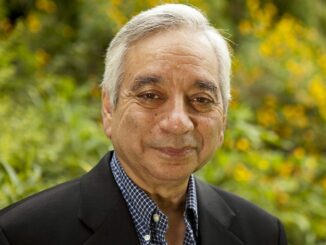
  • Pandit Shiv Kumar Sharma: More than just an exponent of Hindustani classical music

    Pandit Shiv Kumar Sharma: More than just an exponent of Hindustani classical music

    It’s common to use words such as ‘legendary’, ‘greatest’, and ‘iconic’ to describe the life and times of illustrious artists. In most cases, the tributes are often befitting, and if anything, the words fall short, but how does one find words to summarise a stalwart such as Pandit Shiv Kumar Sharma. One of the all-time greats in every sense of the word, Pandit ji was more than an exponent of Hindustani classical music. His death on 10 May 2022 at 84 from a cardiac arrest – Pandit ji had suffered kidney failure and had been undergoing dialysis for a while – marks not just the end of an exemplary career but also the end of an incredible journey that elevated the santoor. Born in Jammu on 13 January 1938, Shiv Kumar Sharma’s family was instrumental in reviving the santoor’s fortunes and popularising it. Pandit ji’s father, Uma Dutt Sharma, a renowned vocalist, became obsessed with the santoor, which at the time was mostly associated with Kashmir folk music and an accompaniment to Sufi vocals. He entrusted the young Shiv Kumar Sharma with the mission to make the strains of the santoor be heard across the world.

    Like his father, Shiv Kumar Sharma also played the tabla, but it was the santoor that he committed his life to and gave it mainstream recognition and acceptance. Pandit ji made several modifications to the basic santoor — he extended its range to a full three octaves and ‘created a smoother glissando to allow the player to sustain and slide between notes in perfect emulation of the ‘human voice.’ He also developed a style of performing all the ragas and also created ‘rhythmic intricacies.’

    For a film-crazy nation such as ours, once a musician is associated with film music, much of their ‘other’ work often remains underappreciated or under-celebrated. Pandit Shiv Kumar Sharma was a rare exception. He composed the background score for a few scenes in V Shantaram’s Jhanak Jhanak Payal Baje (1955) and soon became one of the most sought-after session players for leading music composers. SD Burman also insisted that Pandit ji play the tabla on Guide’s (1965) ‘Moh se chhal.’ Through the 1960s and 1970s, Pandit ji toured the world and recorded his first solo album Santoor & Guitar, with Brij Bhushan Kabra. A few years later, Shiv Kumar Sharma collaborated with the equally illustrious Pandit Hariprasad Chaurasia on the epoch-making Call of the Valley (1967), which became platinum. The album remained one of the highest selling Indian classical records of all time and a perennial favourite of several musicians, including Bob Dylan. Three decades later, both Shiv Kumar Sharma and Hariprasad Chaurasia came out with the sequel, The Valley Recalls — In Search of Peace, Love & Harmony.

    In the 1980s, Pandit Shiv Kumar Sharma and Pandit Hariprasad Chaurasia collaborated to compose film music, starting with Yash Chopra’s Silsila (1981). The two came to be known as ‘Shiv-Hari’, and ushered in a new chapter in film music in the 1980s, a decade that needed all the inspiration in the world. Pandit Shiv Kumar Sharma’s film work might have introduced him to a broader audience, the kind who might not have approached classical music on their own. Still, unlike the norm, Pandit ji did a greater favour to India’s popular culture than what it could have possibly offered him.

    This was an era where RD Burman, Laxmikant-Pyarelal and Kalyanji Anandji were the first names that came to mind when thinking of film music. Shiv-Hari’s compositions in Silsila were rooted in classic Indian melody and were blessed with an arrangement style that made it accessible. One would have imagined that Yash Chopra took a significant risk with the two. Younger composers such as Rajesh Roshan were breaking new ground, and the understated Khayyam and Jaidev were in a league of their own. Still, Chopra went ahead with the two, and Silsila broke new ground in more ways than expected. For one, it had Javed Akhtar’s lyrics, an experiment as good as any, and featured Amitabh Bachchan’s vocals on many tracks, but Shiv-Hari merged the best of all worlds to come up with an album that remains one of the best in the history of Hindi films.

    Silsila’s commercial failure made Shiv-Hari a somewhat ‘exclusive’ brand. In Hindi films, a film’s inability to set the cash registers ringing often leads to the talent associated with it getting blamed. In any case, Shiv-Hari were not the kind of composers that would chase producers, but one wonders if Silsila and the subsequent Chopra releases, Faasle (1985), a platinum disc in terms of sales, and Vijay (1988), the lowest ebb in Yash Chopra’s career, had been triumphant would it have changed the course of Pandit Shiv Kumar Sharma and Pandit Hari Prasad Chaurasia’s film works. Their biggest success in films was Chandni (1989). This film revived the career of Yash Chopra and also contributed to the revival of melody in film music along with Anand-Milind’s Qayamat Se Qayamat Tak (1988) and Raam-Laxman’s Maine Pyar Kiya (1989).

    Shiv-Hari composed music for two more Yash Chopra films — Darr (1993) and Parampara (1993) — both were action-dominated scripts, but the music did exceptionally well. The last film that they collaborated on was Sahibaan (1993). While fans of Shiv-Hari might not rate either Darr or Parampara highly, the two albums had songs that weren’t standard Shiv-Hari compositions but completed the bouquet of their film sojourn. Parampara’s ‘Aadhi raat ko’ and the Qawwali ‘Mujhe ishq ho gaya’ (both penned by Anand Bakshi) are vastly underrated. While Darr’s ‘Jadu teri nazar’ remains eternally popular, thanks to being Shah Rukh Khan’s breakthrough, it’s the perfect cocktail of melody and an underlying fear in ‘Tu mere saamne’ (Udit Narayan, Lata Mangeshkar, Anand Bakshi) that speaks volumes about Shiv-Hari.

    When one looks back at Pandit Shiv Kumar Sharma’s life, one sees how he shall remain an integral part of our conscious memory. What more could an artist ask than his name being synonymous with the instrument he played. A true crossover artist, Pandit ji created a sound that shall remain unparalleled and as unique as one can imagine. (Source: Firstpost)

    The writer, Gautam Chintamani, is a noted film historian and author.

    Soulful music tracks composed for Bollywood movies : Beginning with a background score for Shantaram’s ‘Jhanak Jhanak Baje Payal’, Pandit Shiv Sharma went on to compose music for several films directed by filmmaker Yash Chopra, including ‘Silsila’, ‘Lamhe’ and ‘Chandni’.

    Pandit Shiv Kumar Sharma and Hariprasad Chaurasia began their collaboration under the name Shiv-Hari and recorded their first album titled ‘Call Of The Valley’ in 1967. The duo teamed up for around 8 Bollywood movies from 1981-1993. They even bagged four Filmfare Awards in the ‘Best Music Director’ category for Yash Raj Films’ ‘Silsila’, ‘Chandni’, ‘Lamhe’ and ‘Darr’. Here is a list of the songs composed by the legendary duo Shiv-Hari, that breathed a fresh air into Bollywood music:

    Rang Barse Bhige Chunar Wali (Silsila)

    This lively song infused with the festive fervour gives Holi, the festival of colours, a different meaning altogether. The music perfectly blends with Amitabh Bachchan’s masculine voice. This song is still a must on the occasion of Holi.

    Tere Mere Hotho Pe… (Chandni)

    The soulful romantic track featuring late actors Rishi Kapoor and Sridevi in the exotic and picturesque landscape of Switzerland is still one of the favourites for music lovers and die-hard romantics. There could not have been a better rendition of this iconic song.

    Mere Haathon Mein Nau-Nau.. (Chandni)

    Remembered as one of the most iconic songs of late Sridevi, the song is infused with a different energy. Lata Mangeshkar’s voice and music by Shiv-Hari is a perfect blend of passion, longing and notoriety.

    Jaadu Teri Nazar, Khushbu… (Darr)

    Marking Shah Rukh Khan’s iconic performance in a negative role, the film received equal accolades for its soulful music. The duo Shiv-Hari went on to win the Filmfare Award in the ‘Best Music Director’ category.

    Dekha Ek KHwab To Ye… (Silsila)

    The film starring Amitabh Bachchan, Rekha, Jaya Bachchan and late Sanjeev Kumar, still remains a blockbuster for its gripping storyline and its iconic music score. The song ‘Yeh Kahan Aa Gaye Hum’ still has the power to transport the listener in a valley full of tulips while the song ‘Rang Barse’ makes everyone groove. ‘Dekha Ek Khwab To Ye Silsile Hue’ is a track that is liked by love-struck couples, even today.

  • Indian student dies in Missouri car crash

    Indian student dies in Missouri car crash

    HYDERABAD (TIP): In a tragic incident, a postgraduate student from Telangana died when the car in which he was travelling was hit by a truck near the city of Warrensburg in Johnson County of state of Missouri. He was declared dead by doctors who attended him after being taken to the hospital.

    Identified as Sareddy Kranthi Kiran Reddy (25), the boy hailed from Annaram village in Miryalaguda Mandal of Nalgonda district. According to family sources, who received the news from the university, Reddy was travelling with three other friends in his car when they were hit by a truck. He is said to have succumbed to his injuries almost instantly after the accident.

    The accident occurred on Monday, and the family was informed on Tuesday morning. Kranthi Kiran’s brother Chandrakanth is also studying in the USA. The University, where Kranthi Kiran studied, informed the victim’s parents, Srinivas Reddy and Aruna, about the tragedy. The family is in shock and has asked the state government for help to bring the deceased’s body back from the US for last rites.

    (Source: TNS)

  • Indian-origin man jailed for 20 years for violent robbery in London

    Indian-origin man jailed for 20 years for violent robbery in London

    LONDON (TIP): An Indian-origin man who was found guilty of a violent robbery in east London has been sentenced to 20 years’ imprisonment along with two of his accomplices. Ajaypal Singh, 28, had pleaded guilty to the charge of possession with intent to supply and possession of a pointed/bladed article and was found guilty of robbery at a trial in November last year. He was sentenced at Snaresbrook Crown Court on Friday to 20 years, with an extended license period of five years allowing for a further term dependent on conduct.

    “This result is the conclusion of a complex investigation into a serious and violent crime that had a significant impact on the local community,” said Detective Constable (DC) Darren Warner from the Specialist Crime Command of the Metropolitan Police, who conducted the investigation.

    “It also left a family, including a young child, terrified. They will never be able to forget what happened to them that night. I am grateful to the members of the public who came forward to assist the investigation – in the Metropolitan Police we know that we are most effective when we police with the support of the public, working together to tackle those causing the most harm,” he said. In her sentencing remarks on Friday, Judge Patricia Lees commended DC Warner for his “intelligent, honest and reasonable” approach to the investigation.

    “It is clear to me that he is an outstanding officer of whom the MPS should be proud,” she said.

    On May 1, 2020, police were called to a residential property in Upminster in east London and found an 11-year-old boy who was in a serious condition with a gunshot wound. A man, aged in his 40s, had also sustained stab wounds to his head. They were both taken to hospital by the London Ambulance Service.

    Detectives established that the man had opened the front door to a person who was later identified as Sargent. He had claimed to be a delivery driver and had left a parcel on the doorstep. As he bent down to collect the parcel, he was knocked to the ground by a group of men who forced entry to the property.

    They demanded the homeowner hand over any money he had at the address and threatened to harm his 11-year-old son if the demands were not met. During the robbery, a shotgun that was legally held at the address was discharged, resulting in a gunshot wound to the child’s shoulder. The injuries were not life-threatening or life changing. The group left the property with around GBP 20,000 worth of jewelry and watches.

    (Source: PTI)

  • Indian-origin Dr. Kamal Bawa elected to US National Academy of Sciences

    Indian-origin Dr. Kamal Bawa elected to US National Academy of Sciences

    BENGALURU (TIP): Dr. Kamaljit S. Bawa, aka  Kamal Bawa, a noted, Indian born, conservation biologist and President of the Bengaluru, India-based Ashoka Trust for Research and Ecology and Environment (ATREE) has been elected to the US National Academy of Sciences. Election to the 170-year-old Academy is a recognition of the significant contributions to science by its members, ATREE said in a press release on May 5. Bawa is also an elected fellow of the Royal Society (London) and the American Philosophical Society.

    “The election is the reaffirmation of our important work on the ecology, conservation, and management of tropical forests that are declining all over the world but are critical to humanity’s well-being,” said Bawa.

    Biodiversity in tropical forests and other natural habitats is an important source of many ecosystem services and for the mitigation of climate change. ATREE, founded by Bawa is well recognized for its work on assessing and managing biodiversity, climate change, and water.

    A Distinguished Professor of Biology at the University of Massachusetts Boston, Bawa has done extensive work in the Himalaya for a number of years on a wide range of issues from biodiversity conservation to climate change.

    A few years ago, Dr. Bawa brought together scientists from India’s leading institutions to develop the National Mission on Biodiversity and Human Wellbeing under the banner of the Biodiversity Collaborative.

    The effort was supported by the office of the Principal Scientific Adviser to the Government of India and is currently funded by the Rohini Nilekani Philanthropies. “Biodiversity is an integral part of our lives and the ways we can enhance and use it to secure food and nutrition, fight climate change, and restore our degraded landscapes are some of the important goals of the Mission in making,” said Rohini Nilekani.

    “Kamal Bawa’s election underscores the importance of our biodiversity and ATREE’s important work in this crucial area that is so important for our future,” remarked Professor P. Balaram, former Director of the Indian Institute of Science, and Co-Chair of ATREE’s Board of Trustees. Bawa has published more than 200 papers and has authored or edited more than 10 books, and special issues of journals. His latest coffee table book Himalaya: The Mountains of Life, a companion volume to Sahyadri: India’s Western Ghats, was published in 2013.

  • Indian American Kris Kolluri tapped to lead NY & NJ’s Gateway Program

    Indian American Kris Kolluri tapped to lead NY & NJ’s Gateway Program

    NEW YORK (TIP): Kris Kolluri, an Indian American infrastructure management expert, has been tapped to lead New York and New Jersey’s Gateway Program, including redevelopment of the Portal North Bridge and a new Hudson River tunnel. New York Governor Kathy Hochul and New Jersey Governor Phil Murphy jointly announced the nomination of Kolluri as the CEO of the Gateway Development Commission, on May 6. The Commission is a partnership between New York, New Jersey and Amtrak that coordinates delivery of the Gateway Program with its partner agencies, including the Port Authority of New York and New Jersey and NJ TRANSIT.

    Kolluri will be considered by the Gateway Development Commission’s Board at its next upcoming meeting, anticipated on May 16, according to a press release from the New York governor’s office.

    “With his extensive resume, Kris Kolluri brings an extraordinary record of public service and I am confident he will serve New York and New Jersey well as CEO of the Gateway Development Commission,” Hochul said.

    “The Gateway Hudson Tunnel is critical to the Northeast corridor serving more than 800,000 passengers daily and is a key component of our plan to build back stronger than ever,” she said.

    “Moving the Gateway Program, and specifically the Hudson Tunnel Project, forward is critically important for our region, and I am confident that Kris Kolluri’s leadership will help us realize these much-needed projects,” said Murphy. “Kris has years of infrastructure management and operations experience, as well as years of government experience, that will be vital as we continue working with our federal partners to get the Gateway Program fully funded and completed.” “I am honored to be nominated by Governors Phil Murphy and Kathy Hochul to be Chief Executive Officer of the Gateway Development Commission. I look forward to meeting the Commissioners and supporting their important work,” said Kolluri.

    “There is a clear and present opportunity and desire among federal, state, and bi-state partners to advance the Hudson Tunnel Project and the Gateway Program,” he said. “In the short term, the HTP is poised to move forward and the Commission has a critical role in overseeing the successful delivery of this project.”

    “Should my candidacy be approved by the Commissioners, I commit to being singularly focused on ensuring that this collaborative effort results in HTP’s fruition,” said Kolluri. Kolluri served as the Commissioner of the New Jersey Department of Transportation (DOT) from January 2006 until December 2008.

    In his capacity as DOT Commissioner, Kolluri served as Chairman of NJ TRANSIT, the New Jersey Turnpike Authority, and the South Jersey Transportation Authority. While at DOT, Kolluri played an instrumental role in helping develop a funding strategy to meet New Jersey’s contribution towards the ARC project, a nationally significant rail tunnel project that would have connected New Jersey and New York.

    At DOT, Kolluri oversaw a total of 17,000 employees, more than $3.6 billion in capital funds, and over $2 billion in operating funds.

    Kolluri currently serves as the President & CEO of Camden Community Partnership, Inc., an economic and community development non-profit. He previously served as the CEO of the Rowan University/Rutgers – Camden Board of Governors (Joint Board).

    Prior to his appointment as CEO of the Joint Board, he served as Counsel at the law firm of Windels Marx Lane and Mittendorf, where he advised clients on transportation and economic development matters.

    Kris also served as the CEO of the New Jersey Schools Development Authority from December 2008 to January 2010.

    Before serving as DOT Commissioner, Kris specialized in redevelopment and transportation law as an attorney at Parker McCay of Marlton. Kris has a Bachelor of Science from Rutgers University – Camden and a Juris Doctor degree from Georgetown University. He lives in Haddonfield, New Jersey.

  • California Sikh faces racial slurs and threats in his neighborhood

    California Sikh faces racial slurs and threats in his neighborhood

    Paramjit Singh Aujla

    SACRAMENTO (TIP): For a first generation Sikh American father, Rouble Paul Claire, Sutter in California has been home for decades. The family has been living in the neighborhood since 1973.

    Naturally for most immigrants in America, having lived so long in a place, the country feels like a natural home. However, Claire and his family were in for a rude shock when he found himself confronted with racism in his very neighborhood. The incidents began surfacing in 2021, when a woman shouted and called Claire a F*cking Hindu and then he woke up to find racial graffiti written on his driveway calling him N*gger.

    In 2021, he was accosted by a woman in his neighborhood while at South Butte Market, a local grocery store. The woman shouted and cursed at Claire -including by calling him a “f*cking Hindu”- threatened to “ram” him with her car, and then got in her car and sped towards him in a parking lot, only swerving away at the last moment.

    Later that day, another woman connected to the assailant in the first incident wrote the word “Sand N*gger” in chalk on the sidewalk outside Claire’s house and in his driveway, and called him “N*gger.”

    Claire, 66, immediately notified the Sutter County Sheriff’s Office (SCSO). But after months of delay and inconsistent responses, he has now retained the Sikh Coalition, a civic service organization providing free legal help to victims of racism. Claire says, “I have been subject to threats, harassment, and racial slurs – yet almost a full year later, no one has been held accountable.” He adds, “For months after immediately reporting these hateful acts, I sat in silence waiting for action that never came. I did not want to have to take legal action against anyone, but I believe that this failure of justice is unacceptable: No one in our community should have to face this kind of hate and bigotry.” The Sikh Coalition is now urging Sutter County District Attorney’s Office (SCDAO) to bring criminal charges in the first case. Simultaneously, Claire has filed a civil suit against officers of the SCSO, Sutter County, and the individual who threatened him.

    Despite repeatedly appealing to the SCSO for help, Claire received little aid. One deputy who responded to the chalking incident used his own water bottle in an attempt to wash away the evidence before taking photos for the office. Another advised him not to drive on his own street to avoid any confrontation.

    For months, Claire’s requests for action, charges, or even a police report documenting the incidents, repeatedly fell on deaf ears. After the Sikh Coalition was retained, its attorneys met with SCSO Sheriff Brandon Barnes in Dec 2021 and January this year.

    In those conversations, Sheriff Barnes acknowledged that his deputies failed to follow proper investigatory protocol in the course of these cases and confirmed that one deputy had received additional training as a result.

    Eventually, they also secured a police report detailing Claire’s experiences – in which the SCSO recommended criminal charges against the woman who threatened him at the store six months after the incident.

    The SCDAO, however refused to press charges aside from minimizing the danger of the altercation and ignoring the hateful slurs and vandalism Claire was subjected to both at the market and at his home.

    They cited the amount of time that had elapsed between the incidents and the police finally calling for charges as reason not to move the case forward – despite the fact that this delay was due to the SCSO’s failure to properly investigate and act.

    The Sikh Coalition is calling on the SCDAO to bring charges of criminal threats, assault, assault with a deadly weapon against the woman who initially threatened Claire with her car.

    The coalition says it also remains extremely concerned about the utter inaction of local law enforcement in response to the racial slurs and graffiti on and around Claire’s property – and broader allegations of a pattern of inaction by the SCDAO in cases targeting members of marginalized communities.

    “No one deserves to feel threatened in their own community, and law enforcement- both police and prosecutors- simply must do better,” said Amrith Kaur Aakre, Sikh Coalition Legal Director. “Tragically, we have seen time and again that hateful interactions can lead to violent results. The case of Khalid Jabara, killed in Oklahoma in 2016 after months of verbal, bias-based harassment from a neighbor, comes to mind.”

    “The large Sikh population in this area is only more reason to ensure that all members of this community feel safe and secure,” Aakre added. “It is unacceptable that the law enforcement authorities sworn to protect Claire did so little over such a long time–and then ultimately refused to pursue the justice that he deserves,” said attorney Sean Tamura-Sato who is representing the case. “This civil suit is a first step to remedying that failure, as well as taking legal action against the women who threatened and harassed him, who have faced no consequences whatsoever due to Sutter County’s practice of inadequately investigating and prosecuting hate crimes against racial and ethnic minorities,” said attorney Gina Szeto-Wong.

    Sikhs are members of an independent faith tradition that is the world’s fifth largest religion, and California is home to roughly half of the 500,000 Sikhs in the United States. Sikhs remain among the top five most frequently targeted religious groups in the country for hate crimes and bias incidents, according to the FBI.

  • Indian American Dr. Arun Majumdar named inaugural dean of Stanford University’s new school on climate change and sustainability

    Indian American Dr. Arun Majumdar named inaugural dean of Stanford University’s new school on climate change and sustainability

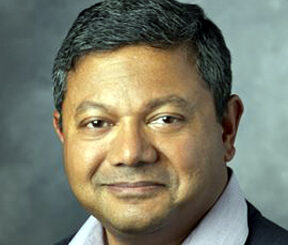
    STANFORD, CA  (TIP): Dr Arun Majumdar, Indian-American material scientist, engineer and professor, has been named the inaugural dean of Stanford University’s new school that focuses on climate change and sustainability.

    Stanford Doerr School of Sustainability, the university’s first new school in 70 years, which aims to accelerate solutions to the global climate crisis, will be launched on September 1, according to Stanford news.

    Majumdar, currently the Jay Precourt Provostial Chair Professor, a faculty member of the Departments of Mechanical Engineering and Materials Science and Engineering, and Senior Fellow and former director of the Precourt Institute for Energy, will assume his new position on June 15. Originally from Kolkata, Majumdar received his bachelor’s degree in mechanical engineering at the Indian Institute of Technology, Bombay, in 1985 and his PhD from the University of California, Berkeley, in 1989. He was nominated to the position of Under Secretary of Energy in the United States between November 30, 2011 and May 15, 2012 but then the nomination was retracted.

    After leaving Washington DC, Majumdar was the vice president for energy at Google, where he assembled a team to create technologies and businesses at the intersection of data, computing, and electricity grid.

    Majumdar joined Stanford in 2014. He was the founding director of the Advanced Research Projects Agency – Energy (ARPA-E), and currently serves as the chair of the advisory board to the US Secretary of Energy. “I am deeply honored and humbled by the opportunity to serve as the inaugural dean,” Majumdar said in the release.

  • Judi Tyabji & Sandi Hawkins played pioneers

    • Canadian Politics

    More women of Indian descent preferred federal politics than provincial politics. But Judi Tyabji and Sandi Hawkins were exceptions.

    Judeline Kim Mary Tyabji
    By Prabhjot Singh

    Judeline Kim Mary Tyabji, also known as Judi Tyabji,  was the first woman of Indian origin to be elected to any legislature in Canada. In 1991, Judi Tyabji was declared successful from the newly created Riding of Okanagan East. Representing Liberals, she defeated a sitting Cabinet Minister and senior NDP leader. She was not only the youngest MLA on record till that time but also the only successful Liberal candidate from the entire interior region of the province. She also had the distinction of being the first legislator to give birth to a child. Though her first attempt to get into the British Columbia legislature in a byelection from Boundary Similkameen and then re-election in 1996 as a nominee of a party (Progressive Democratic Alliance)  she and her second husband Gordon Wilson had floated, were unsuccessful, she remained active on the political front. She subsequently contested municipal elections and won. Born in Kolkata (then Calcutta) on January 2, 1965, to English and Indian parents, she moved to Canada in mid 70s and graduated from University of Victoria and joined Liberal party. Her father Alan Tyabji was into wine business. After retiring from politics, she took to writing, broadcasting and print media.

    Sandi Hawkins

    In 1996 when Judi Tyabji failed to get into British Columbia for the second successive time, another woman of Indian descent, Satinder Kaur Ahluwalia, popular as Sandi Hawkins in provincial politics, was elected on Liberal ticket from Okanagan East. She was re-elected in 2001 in the new riding of Kelowna-Mission, and elected for  a third term in 2005. Before her election to the Legislative Assembly, Ms. Hawkins worked as a registered nurse in general duty, intensive care, management, education and consulting. She set up her own company as a lawyer with an interest in medical-legal issues. She received both her Bachelor of Nursing and her Bachelor of Law degrees from the University of Calgary. Ms. Hawkins had a post-graduate certificate in neuroscience nursing from the Montreal Neurological Hospital. She was recognized as one of the first nurses in Canada to be certified in neuroscience nursing by the Canadian Nurses Association.

    A nurse, lawyer and politician, Sindi Hawkins was a warm-hearted woman with a ribald sense of humor  who was later diagnosed with leukemia in 2004. Once cancer was detected, she decided not to contest the 2009 elections and died in September  2010 at the age of 52. During her treatment, it was her sister who was the donor twice for bone marrow transfusion. Hawkins was passionate about high-quality health care and launched her own golf tournament to raise money for cancer. As a result of her public fight with the disease, the B.C. Southern Interior Cancer Centre was renamed the Sindi Ahluwalia Hawkins Cancer Centre.

    She ran for the legislature in 1996 and became the first Sikh woman elected in the province’s history. She held two ministerial positions, including the head of intergovernmental affairs and minister of health planning. As a member of the cabinet, she fought to increase the number of nurses in B.C. Under her watch, the province expanded medical campuses at the University of Victoria, University of Northern British Columbia and in the University of British Columbia Okanagan. After Judi Tyabji and Sandi Hawkins, a number of women of Indian descent made a remarkable entry to Provincial politics. In British Columbia, the third woman of Indian origin to make it to the Provincial Parliament was  Patty Sahota, also a Liberal.

    In Ontario, it was Amrit Mangat who had the distinction of becoming the first Sikh woman to sit in the Provincial Assembly. In Alberta, Leela Aheer was first elected in 2015 and again in 2019. Other women of Indian origin to sit in the Alberta Provincial Assembly are Rakhi Pancholi of NDP and Rajan Sawhney of United Conservative. Rajan Sawhney also happens to be the Minister for Transportation,

    She is also the Vice-President of the Sikh Society of Calgary and Director of Guru Nanak Public School. After Amrit Mangat, a number of South Asian migrant women have been represented in the Ontario Provincial Assembly. They include Dipika Damerla, Indira Naidu Harris, Harinder Malhi, Nina Tangri (Associate Minister in Doug Ford government), Sara Singh, Goldie Ghamari (Parliamentary Assistant), and  Doly Begum (from Bangladesh).

    In British Columbia, Jinny Jogindera Sims has become the first South Asian migrant to remain Member of Parliament as well as Member of Provincial Parliament and a Cabinet Minister in her province. Rachna Singh, Nikki Sharma and Harwinder Sandhu are among other South Asian migrant women to sit in BC Assembly.

    Provinces like Manitoba and Saskatchewan are yet to elect their first South Asian migrant woman MPP or MLA.

    (Prabhjot Singh is a veteran journalist with over three decades of experience covering a wide spectrum of subjects and stories. He has covered  Punjab and Sikh affairs for more than three decades besides covering seven Olympics and several major sporting events and hosting TV shows. For more in-depth analysis please visit probingeye.com  or follow him on Twitter.com/probingeye. He can be reached at prabhjot416@gmail.com)

  • Revisiting Roe vs Wade

    By Justice Markandey Katju

    “The job of a judge is to interpret the law made by the legislature, and apply it to specific cases, but not to make law. Roe vs Wade ( and Planned Parenthood vs Casey ) clearly made law, which was the function of the legislature. Hence it should be reversed.”

    A controversy is raging in America over Justice Alito’s leaked draft judgment proposing to overturn the US Supreme Court’s verdict in Roe vs Wade delivered in 1973 regarding the right of abortion. It is believed 4 other judges in the court intend to concur with Justice Alito, making it a majority judgment.

    I believe Justice Alito’s view is correct and would like to give my reasons. Of course, it is only a draft opinion, but knowing the judicial philosophy of the majority judges it is highly likely it will be confirmed in the final verdict.

    In Roe vs Wade the US Supreme Court set up a trimester system of pregnancy in women. In the first trimester ( the first 3 months of pregnancy ) no restrictions could be placed on a woman to abort. In the second trimester, too, abortion was permissible, though the state could put some restrictions e.g., it should be done by qualified medical personnel, in licensed clinics, etc. In the third trimester no abortion  was permissible unless a qualified doctor certified that the life of the woman would be in danger without abortion.

    In Planned Parenthood vs Casey, 1992, the right to abortion enunciated in Roe was reiterated, but the trimester system was replaced by the viability test ( i.e., at what stage of the pregnancy would the fetus be able to survive outside the woman’s womb ), and the undue burden test ( i.e., does the restriction on abortion place an undue burden on the pregnant woman e.g., taking the husband’s consent ).

    I am not going into the questions as to when does life begin, when is a fetus viable, what are undue burdens, etc.

    My simple point is that under the separation of powers theory ( that each of the 3 organs of the state have their own spheres of operation and should not encroach into each other’s domains ), it is for the legislature, not the judiciary, to make laws, and both Roe vs Wade as well as Planned Parenthood vs Casey made laws.

    I am personally in favor of the right to abortion, but then this right should be enacted by the legislature, not created by judges. There is nothing specific in the US Constitution which gives a right to abortion. Some states in America have enacted this right, but others have not.

    The rights of people in the US Constitution are mentioned in the Bill of Rights and several Amendments to the Constitution, e.g., the 14th Amendment, but the right to abortion is nowhere contained therein. Of course, there is a theory of ‘unenumerated rights’, i.e., there are some rights which though not expressly mentioned in the Constitution can be said to be part of it, but I do not subscribe to this view. To accept it would mean that any judge, according to his whim and fancy, can declare anything as an ‘unenumerated right’ and enforce it. This would lead to chaos.

    In his book, ‘ The Nature of the Judicial Process ‘ Justice Cardozo of the US Supreme Court observed ” A judge is not a Knight Errant roaming at will in pursuit of his own ideal of beauty and goodness”.

    In his dissenting judgment in Griswold vs Connecticut, Justice Hugo Black warned that ‘ unbounded judicial creativity will make this Court a day-to-day National Convention ‘.

    In Lochner vs New York the celebrated Justice Holmes of the US Supreme Court in his dissenting judgment criticized the majority of the court for becoming a super legislature by inventing a ‘liberty of contract’ theory thereby enforcing its particular laissez faire economic philosophy. The job of a judge is to interpret the law made by the legislature, and apply it to specific cases, but not to make law. Roe vs Wade ( and Planned Parenthood vs Casey ) clearly made law, which was the function of the legislature. Hence it should be reversed.

    (Justice Katju, is a former Judge, Supreme Court of India)

  • The Murky Business of Citations and Proclamations

    By Dave Makkar

    “An elected Representative of a State or Municipality can get a Citation or Proclamation for a contribution to his/her election fund. These representatives do not have to understand the cause, history or purpose or how these Citations will be used by an individual or an organization in USA or in India.”

    Indian community organizations and its owners/leaders are quick to grab any opportunity that can bring money to them and undue recognition to a person or event that may not be of any benefit to the community living in USA. The latest fad is getting Citations and  Proclamations for individuals including themselves like community service,  or to visiting Religious Gurus from India or for celebrations of an event in a state of USA.

    For years, a  number of India Day Parades are organized in various parts of USA with  additions  of more joining this rat race. If we take a quick look the only purpose of these Parades is to make a quick name as well as quick money,  or monetary favors for the organizers or to dispense monetary favors to the favorite vendors; with the least amount of effort,  as well as a chance for them to be close to Bollywood celebrities, local officials and politicians. In nutshell, none of these organizations have anything to do with the rich culture and traditions of India or its 30 states or its religious diversity. All they do is parade themselves, their families, friends, vendors, Bollywood stars, local officials and US politicians in these “Insult India Parades”. Some of them being paraded have taken Political Asylum in USA by labeling India as a tormentor state and some are of Pakistani origin.

    The other murky business that Indian organizations and its owners/leaders love is conferring  “Lifetime Achievement Awards” on  individuals for picking up the full or partial tab of the event as w donation to their organization. Basically , this award is given to an individual for taking care of his own business and family!

    Yet another manifestation of the murky business for last 3-4 years is  getting Citations or Proclamations and it has been  spreading very fast in America. An elected Representative of a State or Municipality can get a Citation or Proclamation for a contribution to his/her election fund. These representatives do not have to understand the cause, history or purpose or how these Citations will be used by an individual or an organization in USA or in India. Till 2020 most popular  Citation was for a community service to an individual or organization or for an event organized in honor of a visiting religious Guru from India.

    A new chapter on Nov. 28, 2021 was added to this murky business of Citations by  Sunil Hali & Nilesh Dasondi the Publisher & CEO of “The Indian Eye” by getting a Citation to the movie maker of The Kashmir Files from  Mayor Thomas Lankey of Edison in New Jersey. This duo did the marketing of the film as “Truth Unfold” when in the very first scene of the TKF there is a Disclaimer: “Based on Fiction.”. Even if one looked  into the background of Vivek Agnihotri the maker of TKF; he has  mostly made C-grade erotica and D-grade propaganda films only. He uses the following trick throughout the movie: he lures you with facts — such as the horrific exodus of Kashmiri Pandits — then distorts reality, mocks it, throws around  some facts, distorts them, and so on. TKF is nothing but ‘hatred, bigotry and untruth made to demonize Muslims & promote radical Hindutva as preached by Modi, BJP, RSS, VHP & other radical organizations. Hindutva has nothing to do with Hinduism.

    Not  to be left behind, FIA (Federation of Indian Associations) also got a Citation for film maker Agnihotri on Dec 9, 2022 from Rhode Island by using the services of Rep. Brian Kennedy for his yet to be worldwide release film “The Kashmir Files.” Eventually the film was released on March 11, 2022 in India and other countries.

    In Dec 2021, Ohio State Senator Niraj Antani a Modi sympathizer also got a Citation from Ohio state for the film maker Vivek Agnihotri for his yet to be publicly released  film, “TKF”.

    There are 2 more  recent examples that these Citations or Proclamations are easily available:

    1. Sikh Independence Citation: State of Connecticut General Assembly recognize April 29th as 36th Anniversary of “The Declaration of Sikh Independence”…!! The Consulate has expressed displeasure over the Citation congratulating on Sikh Declaration of Independence. The same Consulate never objected to film maker Agnihotri getting multiple Citations…!!

    1. Darshan Day Proclamation: Mayor of Mckinney City in Texas (USA) gave a Proclamation on the request of Mahesh Chamaria of Hindu Swayamsevak Singh (HSS) aka RSS declaring April 30th, 2022 as “DARSHAN DAY” for Photo Exhibition showing Hindu History…!!

    Agnihotri received the Citations in Nov. & Dec. 2021 and he along with Hindu Organizations and BJP’s IT cell extensively used them in India and worldwide to promote his film KTF that was finally released on 630 screens on March 11, 2022 but later on it was increased to 4,000 screens after India’s PM Modi , the main actor of 2002 Muslim massacre in Gujarat; himself praised the film for “bringing out the truth” and “presenting history in its correct perspective” before the country since this has been long “suppressed” by the “poori jamaat” (entire group).

    A hate movie with a disclaimer “WORK OF FICTION”  marketed as real story “TRUTH UNFOLD”: made with a sole purpose to demonize Muslims intended to arouse  the feelings of one community against another, and cash on the sentiment. The Kashmir Files box office collection in 31 Days: Rs. 331 Cr with the Endorsement of  MODI, Top Brass of BJP, RSS, VHP, other fringe Hindu organizations, entire  BJP ruled state govt.’s  Machinery, Tax Free status & BJP IT cell promoting it 24×7. In the Indian State of Madhya Pradesh,  the Chief Minister granted half-day paid leave to policemen to watch the film. Fanatic Hindu Organizations, individual leaders arranged Free Shows in India & Indian Embassy’s & Consulates doing PR in Foreign countries AND Free Shows, transport & snacks in USA has helped Vivek Agnihotri to make millions of Dollars from TKF based on ‘Hatred, bigotry and untruth’ to demonize Kashmiri Muslims…!! On the other hand, without any kind of help that was given to TKF or by demonizing a particular community; an ENTERTAINER: RRR collected over Rs 900 Cr in 11 days in box office collections……!!

    On March 14, 2022; Agnihotri Tweeted along with the Citation received from Rhode Island via FIA on Dec 9, 2021, “Historic- First time in 32years any state in the world, the democratic liberal state of USA – Rhode Island, has officially recognized Kashmiri Genocide due to a small film. Pl read and decide who is the Prosecutor and who should get Punishment. This is #NewIndia.

    On March 15, 2022, a US based independent Kashmiri journalist Naik, spoke to the staffer of RI’s speaker of the House K. Joseph Shekarchi, He responded that “Speaker Shekarchi was not aware of this citation that was requested by Rep. Brian Kennedy in off-session. It is not official position of the House. All citations requested by House members carry the pre-printed names of the Speaker and the two leaders.”

    Representative Brian Patrick Kennedy wrote in a statement to Naik: “I was contacted in December 2021 by an Indian-American from East Greenwich who is involved with the Federation of Indian Organizations of New England regarding securing a citation for Vivek Ranjan Agnihotri for the premiere of his film “The Kashmir Files” that was being presented at Rhode Island College on Dec. 9, 2021.” “The description (written on Citation) was provided in the press information that was provided by the same Indian that had contacted me.”

    “The citation from the State was to simply recognize the premiere of this movie. I have not met the director nor was I present to view the movie. A citation is simply the acknowledgement of a special event. It does NOT hold the weight of a Resolution approved by the members of the House. This citation was strictly given to the movie director for the premiere of his movie. It is nothing more and it is NOT an endorsement of the State of Rhode Island and the House of Representatives.” On March 30, 2022, Organiser Weekly reported that “British Parliament invites film maker Vivek Agnihotri to speak about the plight of Kashmiri Hindus.”

    This writer got a written reply from British House of Commons on April 4, 2022 that “we are not aware of any invitation by the House of Commons to the film maker.”

    Pathetically,  in Tri-state area media  promoted a work of Fiction as “Truth Unfold”. Publisher & CEO of a publication himself  promoted the film to support Islamophobia in India and spread it among the Indian American community. Media outlets seem to have forgotten the basic principle of journalism that journalism is to educate and galvanize public with hard-hitting accuracy for holding those in power accountable for their actions. They seem to be working as wholly owned subsidiary of Sudarshan TV, India in promoting half-truth and lies.

    Through the Indian Panorama’s especially its Publisher Prof. Saluja’s gracious efforts to honor “Freedom of Expression” I make an humble appeal to the Indian American community living in USA; Please write to your state, county and municipal representatives to STOP this corrupt practice of issuing Citations & Proclamations for personal agenda and self-publicity.

    (Dave Makkar is a social activist)

  • Opposition cedes space as Congress in decline

    Opposition cedes space as Congress in decline

    By Saba Naqvi

    “The Opposition space is so badly fragmented that it seems incapable of reaching the critical mass necessary to take on the BJP. At the heart of the problem is the thinly-spread-out Congress that has a notional presence across the country but lacks depth and gets quickly uprooted. Hence, it keeps losing bases to regional forces, such as the recent loss of Punjab to AAP. Attempts to stay afloat in the face of regional powerhouses have also produced dismal results as in Bengal and UP……………

    Rational thought demands that the Congress and regional forces unite. It necessitates that the Congress pull itself up by its bootstraps and tie up with strong regional parties — ruling or in the Opposition in the states. But the irrational is happening. Last week, Rahul Gandhi travelled to Telangana, where he launched a scathing attack on Chief Minister K. Chandrashekar Rao. KCR, he tweeted, had single-handedly destroyed the dream of the people of Telangana when statehood was granted. He also said that Telangana was not ruled by the CM but by a ‘Raja’.”

    It has been a year since two significant states, West Bengal and Tamil Nadu, were won by two big regional parties, the TMC and DMK, even as the Left Front retained Kerala, giving rise to speculation that some kind of national Opposition could be mustered against the BJP in 2024. But a year down the line, after the BJP’s recent win in state polls in Uttar Pradesh, Uttarakhand, Goa and Manipur, and the continued disarray in the Congress, the vision of a grand Opposition coalition against the BJP has evaporated. Indeed, one may well say that in 2022, two years before the next General Election, the world’s largest democracy is a country without a national Opposition.

    This is cause for great concern in Opposition-ruled states: they are owed huge amounts in GST arrears and complain of being deliberately overlooked by the Centre. With inflation skyrocketing, they are coping with increased costs for infrastructure and development schemes even as avenues for raising revenue have shrunk since the roll-out of the GST. While they struggle for funds, both at the party and government levels, the BJP/RSS project of expanding to each part of the country, continues

    with purpose and is well funded. For instance, the BJP is opening offices in the districts of Tamil Nadu, a state where they have no real presence, yet are investing in the long game. Opposition states are living through a particularly difficult era as all the niceties of cooperative federalism have been abandoned by the current Central dispensation. The onslaught is pretty ruthless and states not ruled by the national party, complain of being treated as hostile entities with enforcement wings of the Centre routinely used against them. For instance, in Maharashtra, two ministers of the ruling coalition are in jail, while a dozen are being investigated by Central agencies.

    As prices soar in India and jobs are not created, in normal times the Opposition should have been emerging with strength and purpose. Instead, political narratives appear to be getting delinked from economic issues. Equally, the Opposition space is so badly fragmented that it seems incapable of reaching the critical mass necessary to take on the BJP. At the heart of the problem is the thinly-spread-out Congress that has a notional national presence across the country but lacks depth and gets quickly uprooted. Hence, it keeps losing bases to regional forces, such as the recent loss of Punjab to AAP. Attempts to stay afloat in the face of regional powerhouses have also produced dismal results, such as getting zero seats in Bengal and one in Uttar Pradesh. And when it comes to Congress vs BJP, even if the Congress wins, the BJP has a high strike rate in toppling the regimes through defections.

    Rational thought demands that the Congress and regional forces unite. It necessitates that the Congress pull itself up by its bootstraps and tie up with strong regional parties – ruling or in the Opposition in the states. But the irrational is happening. Last week, Rahul Gandhi travelled to Telangana, where he launched a scathing attack on Chief Minister K. Chandrashekar Rao. KCR, he tweeted, had single-handedly destroyed the dream of the people of Telangana when statehood was granted. He also said that Telangana was not ruled by the CM but by a ‘Raja’.

    It may be recalled that it was the Sonia Gandhi-led Congress that took political decisions that effectively destroyed the party’s own bases in erstwhile Andhra Pradesh (the largest chunk of Congress MPs during the decade of UPA rule came from undivided Andhra Pradesh). Central to this success was chief minister YSR Reddy, a pioneer in designing popular welfare schemes (and having links with big business donors). But YSR’s death in a plane crash in 2009, led to chaos that in turn resulted in the Congress national leadership taking decisions that in hindsight only finished them off in both Telangana, carved out of the state in 2014, and in Andhra Pradesh where YSR’s son Jagan Mohan Reddy, denied power by the Congress, is now in power with his party named YSR Congress.

    It’s entirely possible that Rahul Gandhi feels compelled to speak up for what remains of his party in those parts; just as he would have been asked to do so by the Congress in Bengal. But surely it is time for the Congress leadership to get a reality check and recognize that ‘the party is over’ in many parts of India and the only way forward is to make arrangements with regional forces even if that involves giving up on what remains in the debris (the best template actually exists in Tamil Nadu where the Congress is the junior partner in the DMK-led alliance).

    Presumably, political consultant Prashant Kishor had offered the blueprint of a national plan when he was negotiating to join the Congress last month. It may not have worked but the data with which the consultancy I-PAC, founded by Kishor, works would have been valuable as could have been the professionalism in calibrating other aspects of elections. Ironically, TRS is now reportedly a client of I-PAC just as Jagan Reddy was during the campaign that won him the state. But Kishor, meanwhile, after his talks with the Congress failed, has taken off for his home state Bihar where he has announced a padayatra and the beginning of a process that can culminate in the foundation of another political party/front.

    Indeed, the great irony is that while there is not much of a national Opposition, the space is also getting very crowded. AAP is set to contest the Assembly elections in Gujarat and Himachal Pradesh later this year. The TMC has plans in the North-east, even as a foray into Goa was a disaster that did nothing to improve relations with the Congress. Kishor, consultant to various parties, has also begun a political process in Bihar where Chief Minister Nitish Kumar is again making enigmatic moves.

    The Congress, meanwhile, has not revealed any plan. Rahul Gandhi is reportedly deeply interested in philosophies of the world and perhaps believes in the live-life-one-day-at-a-time and what-will-be-will-be approach. Currently, the hopes seem to exist on a wing and a prayer, a phrase that comes from a fighter pilot trying to land his aircraft in World War II after a wing was destroyed. The Congress will have a brainstorming meeting in Udaipur between May 13 and 15. Let’s hope the party leaders won’t spend all the time trying to chase their own tails. The expectations are very low, so perhaps they can pull a surprise.

    (The author is a senior journalist)

  • Reforming WHO

    More needs to be done to enhance WHO’s ability to respond to disease outbreaks

    In the third year of the COVID-19 pandemic, Prime Minister Narendra Modi once again brought up the much-discussed issue of reforming the World Health Organization while addressing the heads of countries at the second global COVID-19 summit. That reforms are urgently needed to strengthen the global health body and its ability to respond to novel and known disease outbreaks in order to limit the harm caused to the global community is beyond debate. The long delay and the reluctance of China to readily and quickly share vital information regarding the novel coronavirus, including the viral outbreak in Wuhan, and its stubborn refusal to allow the global agency to investigate, freely and fairly, the origin of the virus have highlighted the need to strengthen WHO. But any attempt to build a stronger WHO must first begin with increased mandatory funding by member states. For several years, the mandatory contribution has accounted for less than a fourth of the total budget, thus reducing the level of predictability in WHO’s responses; the bulk of the funding is through voluntary contribution. Importantly, it is time to provide the agency with more powers to demand that member states comply with the norms and to alert WHO in case of disease outbreaks that could cause global harm. Under the legally binding international health regulations, member states are expected to have in place core capacities to identify, report and respond to public health emergencies. Ironically, member states do not face penalties for non-compliance. This has to change for any meaningful protection from future disease outbreaks.

    While Mr. Modi has been right in calling for reforms in WHO, the demand for a review of the health agency’s processes on vaccine approvals is far removed from reality. Covaxin is not the first vaccine from India to be approved by WHO, and the manufacturer of this vaccine has in the past successfully traversed the approval processes without any glitch. The demand for a review of the vaccine approval process is based on the assumption that the emergency use listing (EUL) of Covaxin was intentionally delayed by the health agency, which has no basis. That the technical advisory group had regularly asked for additional data from the company only underscores the incompleteness of the data presented by the company. As a senior WHO official said, the timeline for granting an EUL for a vaccine depends “99% on manufacturers, the speed, the completeness” of the data. To believe that the agency was influenced more by media reports than the data submitted by the company is naive; the media were only critical of the Indian regulator approving the vaccine even in the absence of efficacy data. Also, the rolling submission began in July 2021 after the company had completed the final analysis of the phase-3 data. Any reform in WHO should not dilute the vaccine approval process already in place.

    (The Hindu)

  • Progressive leap, courtesy SC

    The pursuit of justice has no limits in a democracy

    Chief Justice of India NV Ramana has yet again fastened the people’s faith in judiciary and its highest office by underscoring the ‘requirement to balance’ security interests of the State with civil liberties of its citizens in Wednesday’s order putting the sedition law on hold. Section 124A of the Indian Penal Code has no place in a civilized society, as is evident from cases slapped by various state governments against their political opponents — the latest being the Shiv Sena government’s case against BJP leaders in Maharashtra. The continuance of a law used by the colonial administration to throttle freedom fighters is itself a matter of shame; and then for Independent India’s rulers to misuse this very law to settle political scores is an assault on the basic tenets of the rule of law. The British had used this law to lock up for life all those who expressed hatred against the alien government. Section 124A is as illegitimate as the colonial rule.

    The government’s response to the progressive leap taken finally by the CJI, after 75 long years of India’s Independence, is disappointing. The applicability and the contextuality of the law are not only within the Supreme Court’s remit, but it is entirely a justiciable issue for the apex court. There have been previous instances of judicial transgression into legislative and executive spheres, but not this. Who else but the Supreme Court would decide the merits of a law that governments love and the Opposition hates? Then for the government to remind the CJI of the Lakshman rekha over this order was most inopportune as the pursuit of justice has no limits in a democracy.

    Last year, the SC Bench of Justices Sanjay Kishan Kaul and Hemant Gupta had ordered that dissent is not sedition, while dismissing a petition filed against Farooq Abdullah. Now, the Bench of CJI Ramana, Justices Surya Kant and Hima Kohli has taken the judicial review forward by offering relief to all those who have been incarcerated under this vague and repressive law. It is the Centre’s responsibility to ensure that the police do not breach the Lakshman rekha of the spirit of this order.

    (Tribune)

  • HRWFF RETURNS WITH 33RD EDITION

    By Mabel Pais

    The Human Rights Watch Film Festival (HRWFF), now in its 33rd year, will present a hybrid full edition of 10 groundbreaking new films, available both in-person and online nationwide in the U.S., from May 20 to 26, 2022.

    For the first time in two years, the New York festival will be back with a full program of in-person screenings at Film at Lincoln Center and IFC Center, with in-depth discussions with filmmakers, film participants, activists and Human Rights Watch researchers. The festival will continue to offer the opportunity to watch all 10 new films online across the U.S. with a full digital edition of the film festival.

    This year’s edition highlights activism and features courageous individuals around the world standing up to powerful forces and demanding change. John Biaggi, Director of the Human Rights Watch Film Festival, said, “We are thrilled to be back in theaters after two years away, bringing our audience a full slate of powerful films tackling urgent human rights issues including China, Russia, the climate crisis and reproductive rights.” Lesli Klainberg, President of Film at Lincoln Center said, “History has shown that film not only empowers understanding, but also ignites urgent public dialogues about how to help the most vulnerable.” John Vanco, Senior Vice President and General Manager at IFC Center said, “IFC Center is proud to continue our partnership with the Human Rights Watch Film Festival and support their mission to use cinema to shine a light on important issues.”

    FILM LINEUP

    REBELLION – OPENING NIGHT

    U.S. Premiere

    Dirs: Maia Kenworthy & Elena Sanchez Bellot l 2021 l UK, Poland l Eng l Doc l 1h 22m

    Opening Film (Photo / www.ff.hrw.org, 2022.)

    “Rebellion” brings viewers behind-the-scenes with Extinction Rebellion (XR), as the group confronts the climate emergency – reminding the world there is no time to wait. Emerging as action on climate change dangerously slipped from the political agenda, XR took bold steps to break through the deadlock: mass civil disobedience. It worked. “Rebellion” reminds viewers to question white Western environmentalism and push back against a fight that ignores structural racism and oppression.

    In-person screening:

    Friday, May 20, 7:00pm, Film at Lincoln Center, Walter Reade Theater

    THE JANES – CLOSING NIGHT

    Dirs: Tia Lessin & Emma Pildes l 2022 l USA l Eng l Doc l 1h 41m

    Grand Jury Prize Documentary Nominee, Sundance Festival, 2022

    Closing Film. (Photo / www.ff.hrw.org, 2022.)

    Seven women were part of a clandestine network that built an underground service for women seeking safe, affordable abortions in the pre-Roe v. Wade era. They called themselves “The Janes.” This galvanizing documentary tells the story of the past and, potentially, the future.

    In-person screening:

    Thursday, May 26, 7:00pm, IFC Center

    CLARISSA’S BATTLE         

    World Premiere

    Dir: Tamara Perkins l 2022 l USA l Eng l Doc l 1h 30m

    Single mother and organizer Clarissa Doutherd is building a powerful coalition of parents fighting for childcare and early education funds, from her own experience of losing childcare and becoming unhoused, desperately needed by low-and middle-income parents and children across the United States. “Clarissa’s Battle” offers an insight into an erupting movement, as communities across the country follow Clarissa’s successes, setbacks and indomitable resilience.

    In-person screenings:

    Saturday, May 21, 8:00pm, Film at Lincoln Center, Elinor Bunin Munroe Film Center

    Sunday, May 22, 5:15pm, Film at Lincoln Center, Elinor Bunin Munroe Film Center

    DELIKADO          

    New York Premiere

    Dir: Karl Malakunas l 2022 l Philippines, Hong Kong, Australia, USA, UK l Eng, Filipino l Doc l 1h 34m

    Official Selection, Hot Docs 2022

    A small network of environmental crusaders, Bobby, Tata and Nieves – a charismatic lawyer, a former illegal logger and a fearless politician – are three magnetic leaders fighting to stop corporations and governments seeking to plunder increasingly valuable natural resources in Palawan in the Philippines.

    In-person screenings:

    Sunday, May 22, 8:00pm, Film at Lincoln Center, Elinor Bunin Munroe Film Center

    Tuesday, May 24, 9:00pm, IFC Center

    ETERNAL SPRING     

    U.S. Premiere

    Dir: Jason Loftus l 2022 l Canada l Eng, Mandarin Chinese l Doc l 1h 26m

    In March 2002, members of the outlawed spiritual group Falun Gong hijacked a state TV station in China. Their goal was to counter the government narrative about their practice. In the aftermath, police raids sweep Changchun City, and comic book illustrator, Daxiong (Justice League, Star Wars), a Falun Gong practitioner, is forced to flee.

    In-person screenings:

    Monday, May 23, 6:15pm, Film at Lincoln Center, Elinor Bunin Munroe Film Center

    Tuesday, May 24, 6:30pm, IFC Center

    MIDWIVES     

    New York Premiere

    Dir: Snow Hnin Ei Hlaing l 2022 l Myanmar, Germany, Canada l Rohingya, Rakhine, Burmese l Doc l 1h 31m

    Winner, World Cinema Documentary Special Jury Award: Excellence in Verité Filmmaking, Sundance 2022

    Hla is a Buddhist and the owner of an under-resourced medical clinic in western Myanmar, where the Rohingya (a Muslim minority community) are persecuted and denied basic rights. Nyo is a Rohingya and an apprentice midwife who acts as assistant and translator at the clinic. Risking her own safety daily by helping Muslim patients, she is determined to become a steady healthcare provider and resource for the families who desperately need her.

    In-person screenings:

    Saturday, May 21, 5:15pm, Film at Lincoln Center, Elinor Bunin Munroe Film Center

    Monday, May 23, 6:30pm, IFC Center

    THE NEW GREATNESS CASE

    World Premiere

    Dir: Anna Shishova l 2022 l Finland, Croatia, Norway l Russian l Doc l 1h 32m

    In “The New Greatness Case” with hidden camera footage, and an intimate relationship with the protagonists, the director, Anna Shishova, shows the complete repression of present-day Russia, and how young, free-thinking people are seen as a threat to the government.

    In-person screenings:

    Tuesday, May 24, 9:00pm, Film at Lincoln Center, Elinor Bunin Munroe Film Center

    Wednesday, May 25, 6:30pm, IFC Center

    NO U-TURN

    New York Premiere

    Dir: Ike Nnaebue l 2022 l France, Nigeria, South Africa, Germany l Eng, Igbo, French, Nigerian Pidgin l Doc l 1h 34m

    Special Mention, Documentary Award, Berlinale 2022

    In his first documentary, “No U-Turn,” Nigerian director Ike Nnaebue retraces the life-changing journey he made over 20 years ago. Overlaid with a powerful poetic commentary, this self-reflective travelog hints at the deep longing of an entire generation for a better life.

    In-person screenings:

    Tuesday, May 24, 6:15pm, Film at Lincoln Center, Elinor Bunin Munroe Film Center

    Wednesday, May 25, 9:00pm, IFC Center

    UP TO G-CUP

    World Premiere

    Dir: Jacqueline van Vugt l 2022 l Netherlands l Kurdish, Arabic l Doc l 1h 20m

    Northern Iraq’s first lingerie store not only sells underwear, but also acts as a meeting place where women connect to their bodies and sensuality after overcoming the traumas of oppression, war, and conservative morality. Director Jacqueline van Vugt captures intimate stories about love, sex, shame, and war.

    In-person screenings:

    Monday, May 23, 9:00pm, IFC Center

    Wednesday, May 25, 9:00pm, Film at Lincoln Center, Elinor Bunin Munroe Film Center

    YOU RESEMBLE ME

    New York Premiere

    Dir: Dina Amer l 2021 l  France,Egypt,USA l Arabic, French l Drama l 1h 31m

    Who was Hasna Aït Boulahcen? After the November 2015 Paris bombings, she was labelled “Europe’s first female suicide bomber.” Director Dina Amer, in this nuanced drama shows what happens when society fails to protect a child, and how discrimination, poverty, and abuse facing young people can allow radicalization to plant roots and grow, with devastating impact on the wider community.

    Digital Screenings:

    DIGITAL SCREENINGS for each film are available to watch at your own pace, any time between May 20-26, 2022 on the festival’s digital streaming platform.

    TICKETS

    TICKETS can be purchased at the IFC Center, Film at Lincoln Center and Human Rights Watch. In-Theater tickets are available online or at the Film at Lincoln Center (FLC) and the IFC box offices. For individual film tickets or a Festival Pass at a discounted price, visit ff.hrw.org/newyork, filmlinc.org or ifccenter.com. The entire Festival can be rented on the festival streaming site May 20, 9 a.m. EDT until May 26, 11:59 PST. For more information and accessibility options for each digital presentation, visit ff.hrw.org.

    HUMAN RIGHTS WATCH FILM FESTIVAL

    For Details and Program updates, visit ff.hrw.org. For more information and accessibility options for each digital presentation, visit ff.hrw.org.

    FESTIVAL IN-PERSON SAFETY PROTOCOLS

    For Festival disclaimers, and other Safety Protocols, visit ff.hrw.org

    (Mabel Pais writes on Social Issues, The Arts and Entertainment, Cuisine, Health & Wellness and Spirituality)

  • ACLU SOLIDARITY TEAM DISCUSSES CRUCIAL ISSUES FACING AAPI

    ACLU SOLIDARITY TEAM DISCUSSES CRUCIAL ISSUES FACING AAPI

    By Mabel Pais

    EVENT DESCRIPTION

    In New Jersey and across the country, we have seen an alarming rise in hate and bias incidents against Asian Americans and Pacific Islanders. As we witness more verbal assaults, social media harassment, racist discourse in politics and media, and physical violence including murder — what can we do to better protect our AAPI communities and allow all of us to thrive?

    Join The American Civil Liberties Union-NJ (ACLU-NJ) at NJPAC for this gathering of experts, advocates and grassroots activists as they discuss the community, artistic and policy responses to these crucial issues. The event is curated by the American Civil Liberties Union of New Jersey.

    MODERATOR

    Amol Sinha, Moderator. (Photo / Courtesy NJPAC)

     Amol Sinha, Executive Director of The American Civil Liberties Union of New Jersey (ACLU-NJ), moderates a panel discussion of experts, advocates and grassroot activists on the topic. To learn more about Amol, visit aclu-nj.org/en/biographies/amol-sinha

    OPENING REMARKS

    Matthew Platkin, NJ Acting Attorney General

    PANELISTS

    Rose Cuison-Villazor, Interim Dean, Professor of Law and Chancellor’s Social Justice Scholar at Rutgers University School of Law in Newark.

    Jeena Moon, Esq., board member of AAPI Montclair, Visa corporate attorney and member of Visa’s Inclusion & Diversity Committee.

    Jafreen Uddin, Executive Director of Asian American Writers’ Workshop and Chair of the Adult Internship Committee for We Need Diverse Books.

    Julie Xu, Senior Chinatown Tenants Union Organizer for CAAAV Organizing Asian Communities.

    WHEN

    Monday, May 16, 2022 @ 07:00 PM, virtual

    HOW

    To participate FREE,

    Register at njpac-org.zoom.us/webinar/register/WN_xBz8tcnCSQqmoN9sYFHBfA

    Look out, prior to the panel, for an email that contains a film link to watch on your own time.

    (Mabel Pais writes on Social Issues, The Arts and Entertainment, Cuisine, Health & Wellness and Spirituality) 

  • Eid-Ul-Fitr Celebrations Bring over 8000 Devout Muslims toIslamic Center of Naperville

    Eid-Ul-Fitr Celebrations Bring over 8000 Devout Muslims toIslamic Center of Naperville

    ICN leadership team with the President, Kashif Fakhruddin.

    ICN community youth at the Eid celebration.

    Kashif Fakhruddin, President, ICN Naperville Extends Warmest Wishes to Muslims in the United States and around the World Celebrating Eid-ul-Fitr

    CHICAGO,  IL(TIP): On Monday May 2nd,2022 Muslims from all over Naperville and suburbs joyfully bustled into the Embassy suites and two locations of ICN to join the celebrations of Eid Ul-Fitr. While there were various venues that held Eid prayers throughout the region, the largest turnouts were at Naperville where arrangements for Eid prayers were made by the Islamic Center of Naperville (ICN) in five spells, at 7:30 am, at 8:30 am, at 9:00 am, at 10: 00 am, and at 11:30 am.

    The Imam for the first session of the Eid prayers was Shayakh Ismail Al-Qadhi, Shayakh Omar Hedroug, for the second session, Dr. Abdullah Ansari for the third session, Shayakh Rizwan Ali for the fourth session and Wali Khan for the fifth session. Over 8000 devout Muslims, including prominent Businessmen, Professionals, and Community Leaders, attended the Eid prayers.

    Women in vibrant colored dresses, men in ethnic outfits and children, smiling and laughing, filled the parking lots and poured into all the three locations. Volunteers of the Eid Committee of the ICN open-heartedly welcomed the incoming persons so as to ensure that every one of them was able to partake in the Eid prayers, without any inconvenience. Despite the large numbers, the volunteers of the ICN and board members were able to direct the crowds effortlessly and efficiently. Imam and Residential Scholar of the ICN, Rizwan Ali, delivered an inspiring talk the peace and tranquility people achieved during the month of Ramadan. This happiness was due to many factors, but he emphasized the importance of leaving sin and being consistent, sincere, and dedicated to continuing the good deeds established during Ramadan. He gave practical ways that people can make fasting, attending the Mosques, reciting the Quran, and giving charity part of their lives even after Ramadan. He also prayed for the volunteers that made Ramadan possible in the community and those who were sick and unable to attend, and those facing difficulties and hardships locally and abroad. He ended by encouraging the congregation to rejoice and celebrate the day of Eid by giving gifts and having fun.

    Mr. Kashif Fakhruddin, President, ICN, stated that the month of Ramadan is a blessed month in which the Holy Quran was revealed. He stated that the month of Ramadan is an occasion for spiritual uplifting, softening the heart and humbling oneself, sharing and caring, seeking forgiveness from Allah SWT, extending forgiveness to others, and seeking mercy of Allah SWT and praying for the same to others. “The ICN community, which comprises over 4,500 families, representing heritages from many different countries, addresses the needs of Muslims as well as those who belong to other religions. ICN works very closely with people of other faiths to serve humanity and encourages its members to follow the principles of Tolerance, Justice, Peace and Progress”, added Kashif Fakhruddin.

    “The sacred month of Ramadan is a time of sacrifice and reflection. Ramadan offers an opportunity to reaffirm our commitment to peace and justice through the power of faith. Ramadan reminds us that our common bonds far outweigh our differences. I wish everyone a blessed and meaningful Eid-ul-Fitr.  We extend our warmest wishes to the Muslim community of Illinois on this occasion”, said Board members of ICN.

    (Photographs and Press release / Asian Media USA)

  • Queen to attend UK Jubilee celebrations, but snubs for Andrew and Harry

    Queen to attend UK Jubilee celebrations, but snubs for Andrew and Harry

    London (TIP): Queen Elizabeth plans to attend major celebrations to mark her 70 years on the British throne next month, Buckingham Palace said on May 7, but two out-of-favour royals, Princes Andrew and Harry, will be excluded from one traditional event. The 96-year-old, Britain’s longest-reigning monarch, marked seven decades as queen in February, and four days of “Platinum Jubilee” events to recognise that landmark are being held at the start of June.

    Elizabeth has been struggling with mobility issues, meaning most of her recent public engagements have had to be cancelled, but Buckingham Palace said she did plan to be at a number of events.

    “Her majesty is looking forward to the weekend and will be taking part in the celebrations, but her presence will not be confirmed until much nearer to the time or even on the day itself,” a palace spokesperson said.

    The four days of events start on June 2 with the annual “Trooping the Colour” military parade in central London, followed by a thanksgiving service at St Paul’s Cathedral, a concert outside Buckingham Palace, and a pageant through the British capital on subsequent days.

    One feature of all major royal occasions is the gathering of the royal family to wave at crowds from the palace balcony. But, the queen has decided neither her son Prince Andrew nor grandson Prince Harry will be there this time.

    Andrew’s stock has plummeted after he settled a U.S. lawsuit in which he was accused of sexually abusing Virginia Giuffre when she was a teenager in February. He had already stepped down from public duties because of his connections to the late convicted US sex offender Jeffrey Epstein, and has been stripped of military titles and royal patronages and is no longer known as “His Royal Highness”.

    Harry, younger son of heir Prince Charles, also gave up royal duties and lost his patronages after moving with his American wife Meghan to Los Angeles, from where they have delivered barbs and accusations of racism against the royal household. “After careful consideration, the Queen has decided this year’s traditional Trooping the Colour balcony appearance …will be limited to her majesty and those members of the royal family who are currently undertaking official public duties on behalf of the queen,” the palace spokesperson said. (Reuters)

  • 22 killed in blast at iconic Havana hotel; gas leak blamed

    22 killed in blast at iconic Havana hotel; gas leak blamed

    Havana (TIP): A powerful explosion apparently caused by a natural gas leak killed at least 22 people, including a child, and injured dozens when it blew away outer walls from a luxury hotel in the heart of Cuba’s capital.

    No tourists were staying at Havana’s 96-room Hotel Saratoga because it was undergoing renovations, Havana Gov. ReinaldoGarcía Zapata told the Communist Party newspaper Granma.

    “It’s not a bomb or an attack. It is a tragic accident,” President Miguel Díaz-Canel, who visited the site, said in a tweet.

    Dr Julio Guerra Izquierdo, chief of hospital services at the Ministry of Health, told reporters that at least 74 people had been injured on May 7. Among them were 14 children, according to a tweet from Díaz-Canel’s office.

    Díaz-Canel said families in buildings near the hotel affected by the explosion had been transferred to safer locations.

    Cuban state TV reported the explosion was caused by a truck that had been supplying natural gas to the hotel, but did not provide details on how the gas ignited. A white tanker truck was seen being removed from the site as rescue workers hosed it down with water.

    The blast sent smoke billowing into the air around the hotel with people on the street staring in awe, one saying “Oh my God,” and cars honking their horns as they sped away from the scene, video showed. It happened as Cuba is struggling to revive its key tourism sector that was devastated by the coronavirus pandemic.

    Cuba’s national health minister, José Ángel Portal, told The Associated Press the number of injured could rise as the search continues for people who may be trapped in the rubble of the 19th century structure in the Old Havana neighbourhood of the city.

    “We are still looking for a large group of people who may be under the rubble,” Lt. Col. Noel Silva of the Fire Department said.

    A 300-student school next to the hotel was evacuated. García said five of the students suffered minor injuries. Police cordoned off the area as firefighters and rescue workers toiled inside the wreckage of the emblematic hotel about 110 yards (100 metres) from Cuba’s Capitol building.

    The hotel was first renovated in 2005 as part of the Cuban government’s revival of Old Havana and is owned by the Cuban military’s tourism business arm, Grupo de TurismoGaviota SA. The company said it was investigating the cause of the blast and did not immediately respond to an email seeking more details about the hotel and the renovation it was undergoing.

    The Hotel Saratoga has been used frequently by visiting VIPs and political figures, including high-ranking US government delegations. Beyoncé and Jay-Z stayed there during a 2013 visit to Cuba.

    Photographer Michel Figueroa said he was walking past the hotel when “the explosion threw me to the ground, and my head still hurts…. Everything was very fast.”

    Worried relatives of people who had been working at the hotel showed up at a hospital in the afternoon to look for them. Among them was Beatriz CéspedesCobas, who was tearfully searching for her sister.

    “She had to work today. She is a housekeeper,” she said. “I work two blocks away. I felt the noise, and at first, I didn’t even associate” the explosion with the hotel.

    Yazira de la Caridad said the explosion shook her home a block from the hotel: “The whole building moved. I thought it was an earthquake.” Besides the pandemic’s impact on Cuba’s tourism sector, the country was already struggling with the sanctions imposed by the former US President Donald Trump that have been kept in place the Biden administration. The sanctions limited visits by US tourists to the islands and restricted remittances from Cubans in the US to their families in Cuba. (AP)

  • Israeli security forces launch massive search for two Palestinians who killed 3 in mass stabbing

    Tel Aviv (TIP): Israeli security forces on May 7 launched a massive manhunt for two Palestinians suspected of carrying out a stabbing rampage that killed three Israelis in the predominantly ultra-orthodox town of Elad on Israel’s Independence Day, the latest in a series of deadly assaults deep inside the country in recent weeks.

    Police have launched a massive search operation for the assailants, identified as As’ad Al-Rafa’ani, 19 and SabhiabuShakir, 20, both residents of Jenin area in the West Bank, setting up roadblocks and dispatching a helicopter.

    The stabbing on Thursday night, Israel’s Independence Day, is the seventh such incident in the past 45 days, taking the death toll from such attacks in Israel to 19, police said. It came as Israeli-Palestinian tensions were already heightened by violence at a major holy site in Jerusalem sacred to Jews and Muslims.

    On Friday, Israeli Police and the Shin Bet security services released the names of the two suspects and said both are residents of Jenin area in the West Bank. Jenin and its surrounding areas have witnessed frequent Israeli military raids and clashes between forces and Palestinian militants in recent weeks. The three victims in the attack were identified as Yonatan Habakuk (40), Boaz Gol (40) and Oren Ben Yiftach, (35).

    According to eyewitness accounts, the two assailants carried out their attacks in several areas within the city, including in an amphitheatre park and on the main street, where civilians were celebrating Israel’s Independence Day on Thursday, a festive national holiday. “Both attackers were reportedly armed with sharp weapons, one an axe and the other an axe or a knife,” they said.

    “One of the wounded was in critical condition and another was in serious condition following the attack. Another person was moderately wounded, and a fourth was lightly wounded,” medics said.

    “We will get our hands on the terrorists and their supportive environment, and they will pay the price,” Israeli Prime Minister Naftali Bennett warned during consultations with top security officials. The Al-Aqsa Mosque compound situated in Jerusalem’s Old City, is the third hzliest site in Islam and is built on a hilltop that is the holiest site for Jews, who refer to it as the Temple Mount. It’s the heart of the conflict, and Palestinians and Israeli police have clashed there repeatedly in recent weeks. Elad’s municipality has urged people to stay at homes and report suspicious vehicles or people to the authorities. Defence Minister Benny Gantz has ordered an extension of the closure on the West Bank imposed ahead of the holiday, to remain in effect until Sunday. Palestinian Authority President, Mahmoud Abbas, whose government controls the West Bank area condemned the attack.

    (PTI)

  • Beijing kicks off fresh round of Covid tests as Shanghai postpones crucial exams

    Shanghai (TIP): China’s capital Beijing kicked off a fresh round of mass testing for COVID-19 on May 3 and shut more bus routes and metro stations, as it seeks to avert the fate of Shanghai, where millions of residents have been locked down for over a month. The draconian movement curbs on Shanghai, an economic and financial hub, have caused frustration among its 25 million residents and triggered rare protests over issues such as access to food and medical care as well as loss of income.

    While some people have been let out for light and air in recent weeks, residents for the most part say they still cannot leave their housing compounds. Shanghai cases have fallen for eight straight days and the city says its outbreak is under effective control, allowing it to shut some of the makeshift hospitals it raced to build as case numbers ballooned. But authorities have also indicated that a full easing is still far off and warn against complacency to stick to China’s zero-COVID goal. In a Saturday announcement underscoring that expectation, Shanghai officials postponed the “gaokao” university entrance exam for city students by a month. The last time that happened was in 2020, during the initial virus outbreak.

    The city’s top Communist Party official, Li Qiang, a close ally of President Xi Jinping, told a Friday government meeting that it was “necessary to issue military orders at all levels, and take more resolute and powerful actions to overcome the great war and great tests,” according to an official statement. The number of infections in Shanghai outside areas under lockdown – a gauge of whether the city can further reopen – fell to 18 on Friday from 23 the day before. Total new cases declined slightly to around 4,000, data released on Saturday showed.

    Shanghai is also building thousands of permanent PCR testing stations, in line with other cities, as China looks to make regular testing a feature of everyday life. China’s COVID policy is increasingly out of step with much of the rest of the world, where governments have eased restrictions, or dropped them altogether, in a bid to “live with COVID” even as infections spread. But Chinese leaders this week reiterated their resolve to battle the virus and threatened action against critics of their strict measures. Beyond Shanghai, dozens of cities have imposed full or partial lockdowns, relaxing and tightening curbs at various times.

    (Reuters)

  • Boris-led Conservatives lose key London seatsin local elections

    Boris-led Conservatives lose key London seatsin local elections

    London (TIP): The British Prime Minister Boris Johnson-led Conservative Party on May 7 suffered some key losses in the local elections after the Opposition Labour won some of the traditional Tory strongholds in London. Labour leader Sir KeirStarmer said the party had reached a “turning point” and was “back on track” to succeed at the next General Election after grabbing the councils of Westminster, Wandsworth and Barnet in London. The Tories had held the Westminster council in the heart of London since its creation in 1964 and Wandsworth in south London since 1978. “This is a big turning point. From the depths of the 2019 general election, we’re back on track. We’ve sent a message to the Prime Minister: Britain deserves better,” Starmer said, during a visit to Barnet on May 6. “We’ve had some difficult results and we can see that in London… but it does not demonstrate that Labour has the momentum to form the next government,” Conservative Party co-chair Oliver Dowden said. – PTI

  • Growing African mangrove forests aim to combat climate woes

    Mombasa (Kenya) (TIP): In a bid to protect coastal communities from climate change and encourage investment, African nations are increasingly turning to mangrove restoration projects, with Mozambique becoming the latest addition to the growing list of countries with large scale mangrove initiatives.

    Mozambique’s effort follows projects across the continent — including projects in Kenya, Madagascar, Gambia and Senegal — and is touted as the world’s largest coastal or marine ecosystem carbon storage project.

    Known as blue carbon, carbon captured by these ecosystems can sequester, or remove carbon dioxide from the atmosphere at a faster rate than forests, despite being smaller in size.

    Mozambique’s mangrove restoration project — announced in February alongside its UAE-based partner Blue Forest Solutions — hopes to turn 1,85,000 hectares (4,57,100 acres) in the central Zambezia and southern Sofala provinces into a forest which could capture up to 5 lakh tonnes of carbon dioxide, according to project leaders.

    “Blue carbon can be utilised not only to sequester tonnes of carbon dioxide but to also improve the lives of coastal communities,” VahidFotuhi, the Chief Executive officer of Blue Forest, told the Associated Press. He added these projects would create green jobs and promote biodiversity.

    Africa’s major mangrove forests have been decimated in recent decades due to logging, fish farming, coastal development, and pollution, leading to increased blue carbon emissions and greater exposure of vulnerable coastal communities to flooding and other threats to livelihood.

    But the continent’s growing attention on mangrove restoration can be attributed in part to the successful MikokoPamoja project, initiated in 2013 in Kenya’s Gazi Bay, which protected 117 hectares (289 acres) of mangrove forest and replanted 4,000 trees annually, spurring other countries to also address their damaged coastal land and recreate its success. In Senegal, 79 million replanted mangrove trees are projected to store 5 lakh tonnes of carbon over the next 20 years. Neighboring Gambia launched its own reforestation effort in 2017, with Madagascar following suit with its own preservation project two years later. Egypt is planning its mangrove restoration project ahead of hosting the United Nations climate conference in November this year. The projects have sparked a clamor for the sale of carbon credits, a type of permit that allows for a certain amount of emissions as remuneration for forest restoration or other carbon offset projects. (AP)

  • Taliban stops issuing driving licences to women in Afghanistan: Report

    Taliban stops issuing driving licences to women in Afghanistan: Report

    Kabul (TIP): The Taliban regime in Afghanistan has now stopped issuing driving licences to women and other provinces of the land-locked country, news agency ANI quoted Afghan media reports. Before the Taliban took over Afghanistan, women could be seen driving in some of the major cities including Kabul. But now the regime has imposed this restriction. The human rights situation in Afghanistan has worsened since the Taliban’s return to power last year. From banning girls from schools above sixth grade to not allowing women to take trips alone, there have been reports of women rights being snatched away by the new government. Here’s a look at some of the restrictions Taliban has imposed on women since capturing Afghanistan.

    –            On March 23, the Taliban regime shut schools for girls for secondary classes across the country, just hours after they had reopened for the first time since the new regime took over. In 2021, just a month after takeover, the Taliban had allowed some schools for girls up to class 6 to reopen. The move evoked stern response from the United Nations. The UN Security Council had said, “Security Council members reaffirmed the right to education for all Afghans, including girls, and called on the Taliban to respect the right to education and adhere to their commitments to reopen schools for all female students without further delay.” The Taliban’s Ministry of Education (MoE) said the Islamic Emirate is close to a solution for reopening the school for girls.

    –             Barely a month after it took over, the Taliban administration barred women from effectively working in government offices, banks, media companies and other work places. WaheedullahHashimi, a senior figure in the Taliban, said the regime will fully implement sharia law, while adding that women should not work alongside men.

    –             In December last year, the Taliban ruled that women seeking to travel anything other than short distances must not be offered transport unless escorted by close male relative. Also, the regime called on vehicle owners to offer rides only to women wearing hijabs. (HT)

  • Indian mountaineer dies while trying to scale Mt Kanchenjunga in Nepal

    Kathmandu (TIP): A 52 year-old Indian climber died while ascending the peak of Mt Kanchenjunga in Nepal, according to the organiser of the expedition. Narayanan Iyer, a resident of Maharashtra, died on May 6 at 8,200 metre altitude of the world’s third highest mountain peak lying at the India-Nepal border, NiveshKarki, executive director of the Pioneer Adventure, the organiser of the expedition, told PTI. According to the preliminary report, the Indian climber died due to high-altitude sickness, some 386 metre below the 8,586 metre high peak. The climber refused to descend when the organisers “asked him to descend when he fell sick” while scaling the mountain, which led to his death, Karki told PTI. (PTI)

  • Lankan Prezreimposes state of emergency

    Colombo (TIP): Sri Lankan President GotabayaRajapaksa declared a state of emergency with effect from May 7 midnight, said the presidential media division. The state of emergency gives the police and security forces the power to arbitrarily arrest and detain people. The decision has been taken to ensure public security and maintain essential services, the presidential media division said. The move comes amid weeks of public protests demanding the resignation of the President and the government. Sri Lanka is going through its worst economic crisis in its history. Rajapaksa had declared emergency on April 1 also after a mass protest near his residence. He had revoked it on April 5. (PTI)