Month: November 2023

  • India to Guatemala: Proposed direct sealine by Safesea Group

    GUATEMALA CITY (TIP): As Indian corporates line up significant investments in the oil, mining, IT and pharmaceutical sectors in the Central America and Latin American Countries, the Indian Embassy in Guatemala organised a visit to the country by Dr. S.V. Anchan, Chairman of the Safesea Group. The Safesea Group is a global provider of shipping and logistics services with headquarters in the USA, offices across North America, Europe, and Asia, and a presence in over 100 countries.

    During his visit to Guatemala from 31 October -2 November 2023, Dr. Anchan attended Business Meet organized by the Embassy on 31st October 2023. He shared his insights into his company’s prospects in the Central American region. Dr. Anchan highlighted the company’s interest in expanding its operations to the Central American market, with Guatemala as a strategic hub. He expressed that his company could be a game-changer in connecting India and Guatemala for exporting products from India. Dr. Anchan also encouraged Guatemalan companies to actively participate in this venture, emphasizing the mutual benefits of this collaboration in expanding trade ties.

    During his visit, Dr. S.V. Anchan had a significant meeting with representatives from Mayan University, which holds a pivotal place in Guatemala’s educational landscape. The aim of this meeting was to explore opportunities for collaboration and support in the field of education and student development. During the meeting, Dr. Anchan showcased his commitment to promoting education and uplifting students. He offered an assistance package of US$10,000, reflecting his dedication to encouraging and empowering students associated with Mayan University. This contribution is not merely a financial one; it symbolizes his belief in the potential and talent of the younger generation in Guatemala. This commitment to supporting education aligns with broader efforts to strengthen the ties between India and Guatemala by fostering cooperation and goodwill across various sectors.

    Ambassador Dr. Manoj Kumar Mohapatra and Dr. S.V. Anchan meeting with Vice President Castillo Reys of Guatemala.

    Dr. S.V. Anchan’s meeting with Vice President Castillo Reys was a significant step towards enhancing India-Guatemala trade, with a primary focus on the shipping industry. During this meeting, Dr. Anchan presented various proposals and shared his vision for expanding trade relations between the two countries. The Vice President was highly impressed by these proposals, showing a keen interest in further exploring these avenues.

    Ambassador Dr. Manoj Kumar Mohapatra and Dr. SV Anchan meeting with Congressman Jonathan Menkos Zeissig.
    Meeting of Ambassador Dr. Manoj Kumar Mohapatra and Dr. SV Anchan with Congressman Manuel Eduardo Conde Orellana.

    Dr. Anchan also met Congressman Manuel Eduardo Conde Orellana and Congressman Jonathan Menkos Zeissig (designated Finance Minister in the administration of President elect Mr. Arevalo). The meetings held significant importance in the context of exploring opportunities in the shipping and maritime industry. During this meeting, they discussed two crucial aspects: the establishment of a direct shipping line and the shipbreaking industry. The establishment of a direct shipping line between India and Guatemala initiative holds the potential to significantly boost trade and commerce between the two nations. By creating a direct shipping route, it becomes more efficient and cost-effective to transport goods, fostering stronger economic ties. Another vital topic of conversation was the shipbreaking industry. Shipbreaking involves the dismantling and recycling of ships that have reached the end of their operational life. This sector can be an essential component of a country’s economy, offering numerous economic and environmental benefits. The establishment of a direct shipping line can streamline trade, while engaging in responsible shipbreaking practices can lead to sustainable economic and environmental outcomes.

  • Indian American New Jersey state Senator Vin Gopal re-elected for third term

    Indian American New Jersey state Senator Vin Gopal re-elected for third term

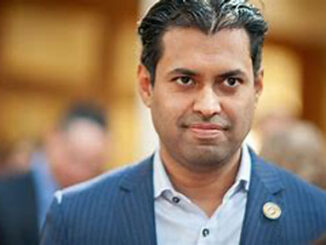
    TRENTON, NJ (TIP): Indian American state senator Vin Gopal has been reelected for a third term in the New Jersey Senate, winning the most expensive legislative races in state history.
    The 38-year-old democrat senator defeated his republican challenger, Steve Dnistrian, in New Jersey’s 11th Congressional District on Tuesday, garnering nearly 60 per cent of the vote over Dnistrian.
    Gopal is currently the youngest member of the New Jersey State Senate and the first South-Asian American to be elected to the Senate in the state’s history, according to his campaign.
    Polls were open in at least 37 states of the US. New Jersey’s legislature comprises the state Senate and Assembly and has 120 members from 40 districts. Each district has one representative in the Senate and two in the Assembly who serve four and two-year terms, respectively.
    All 120 seats are on the ballot in November’s general election.
    The Republican-leaning 11th District had been a focus of the Republicans this year, with Republicans hoping that a campaign centered on offshore wind and LGBTQ issues in schools would doom the Democrats.
    Gopal’s seat in the district was one of the top targets of the Republican Party this year.
    Until October, Democrats raised USD 3.4 million and spent USD 3.5 million, while Republicans raised only USD 4,60,339 and spent USD 4,44,970. Several outside groups also poured money into the battle, according to the report. Gopal, first elected in 2017 and reelected in 2021, received 58 per cent of the votes to 38 per cent for Dnistrian. He attributed his success to his constituent services and bipartisanship.
    “You all tonight made history!” Gopal was quoted as saying in the report after the results were announced.
    Gopal currently chairs the Senate Education Committee and is the Senate Majority Conference Leader. He previously served as the Chair of the Senate Military and Veterans Affairs Committee, according to his campaign.
    He is also the Vice-Chair of the Senate Government, Wagering, Tourism & Historic Preservation Committee and a member of the Health, Human Services, and Senior Citizens Committee.
    During the COVID-19 pandemic, he created a districtwide organization of business, community, church, and non-profit leaders to address the challenges of the coronavirus to the local economy.
    Born and raised in New Jersey, Gopal holds a master’s in public administration from Rutgers University and a Bachelor’s degree from Pennsylvania State University.

  • Indian Overseas Congress Celebrates New Leadership and Committee Members in New Jersey

    Indian Overseas Congress Celebrates New Leadership and Committee Members in New Jersey

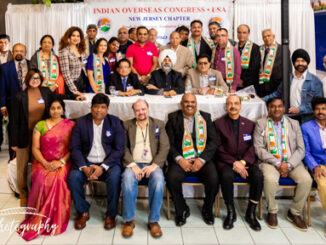
    FORDS, NJ (TIP): According to a belated report, the Indian Overseas Congress (IOC), on October 8, gathered in New Jersey to observe and commend their recently appointed leaders and committee members. Held at Alberts Palace, this event signifies a noteworthy milestone for the IOC, symbolizing a phase of consolidation under the dynamic guidance of Chairman Sam Pitroda and President Mohinder Singh Gilzian.

    In his virtual address to the audience, IOC Chairman Sam Pitroda extended warm congratulations, demonstrating unwavering confidence in their joint mission to combat oppression and social injustice. He also affirmed his presence at the upcoming grand congress event scheduled for November 17 in New Jersey. In a departure from the virtual format, IOC President Mohinder Singh Gilzian was physically present at the event, emphasizing the pressing need to strengthen the IOC’s presence both nationally and internationally, while expanding its reach.

    During his inaugural address, Pradip (Peter) Kothari, President of the Indian Overseas Congress New Jersey, stressed the paramount importance of fortifying India, the Indian National Congress, and advancing Gandhian ideals rooted in democracy, solidarity, and humanity. Kothari firmly stated that fidelity to these values was non-negotiable and advocated for an inclusive approach to reinforce Indian democracy. Mr. Harkesh Thakur, Chairman of IOC NJ, pledged steadfast support, vowing to continue enhancing the party’s influence across the nation while upholding its core tenets.

    A diverse array of leaders from various backgrounds were acknowledged by IOC President Mohinder Singh Gilzian, Pradip (Peter) Kothari, and Harkesh Thakur. This varied group included Mukesh Maid as Vice Chairman, Bharat Patel, Mahesh Patel, Anil Patel, Tanzeem Ansari, and Manmit Singh Vasdev as Vice Presidents, and Qayam Masumi as Secretary for the IOC NJ Chapter. These leaders addressed ongoing challenges related to secularism and democracy in the nation, urging others to step forward and support the Indian National Congress in the upcoming 2024 elections. Arjumand Juweria and Suresh Kamath took on roles as Joint Secretaries, with Rajesh Desai assuming the position of Treasurer, supported by Pompose Shaikh and Kamesh Purohit as Joint Treasurers.

    Dipak Valsadia and Harvender Pal Singh were appointed as Public Relations Officers. Special recognition was accorded to Ram Gadula and Dr. Jayesh Patel for their longstanding dedication and contributions to the Indian National Congress. The newly formed Executive Committee, consisting of Raj Macwan, Vihari Patel, Neeraj Gamadia, Kirit Jakaria, Nandini Kothari, Nina Thakur, Jyoti Ruben, Dave Makkar, Chandrakant Bhatt, Sandeep Bhambri, and Vimal Shah, was also acknowledged. Their diverse expertise holds the promise of contributing a wealth of experience to the IOC NJ Chapter.

    Mohinder Singh Gilzian expressed gratitude for the invaluable contributions of the newly appointed leaders and conveyed confidence in their efforts to expand the organization’s membership base. He emphasized the pivotal role played by the IOC in upholding the core values and principles of the Congress Party, especially as India approaches critical elections. He called upon all those who hold India dear to stand in solidarity with the Congress and its principles, underscoring the historic juncture in India’s trajectory where the future of democracy hangs in the balance. He issued an impassioned appeal to Congress members to rally behind the youthful leader, Rahul Gandhi. The event drew participation from party workers, intellectuals, and media partners. It evolved into an impassioned campaign meeting in support of the Congress Party, both on foreign shores and within India.
    (Report by Qayum Masumi)

    FORDS, NJ (TIP): The Indian Overseas Congress (IOC) convened at Alberts Palace in New Jersey to commend their recently appointed leaders and committee members, marking a pivotal moment in the organization’s journey. Under the dynamic guidance of Sam Pitroda (Chair), Mohinder Singh Gilzian (President), and New Jersey Chapter President Pradip (Peter) Kothari, along with Chairman Harkesh Thakur, the IOC stands poised for a new era, says a TIO report. Addressing the gathering virtually, IOC Chairman Sam Pitroda warmly congratulated Pradip Kothari (President) and Harkesh Thakur (Chairman), acknowledging the diverse and dynamic team they lead. Pitroda also shared astute perspectives on the ongoing Israel-Palestine crisis, rallying attendees for the forthcoming elections while championing the cause of fortifying Indian democracy. He expressed resounding optimism in their collective endeavor against oppression and social injustice, assuring his presence at the grand congress event slated for November 17 in New Jersey. Meanwhile, IOC President Mohinder Singh Gilzian delivered his remarks in person, stressing the urgency to strengthen the IOC both within the nation and on the global stage, emphasizing that every member’s outreach can mobilize entire families, highlighting the need to dedicate time for the nation’s welfare each day.

    In his inaugural address, Pradip (Peter) Kothari, President of the Indian Overseas Congress New Jersey, underscored the critical need to fortify India, the Indian National Congress, and the propagation of Gandhian principles rooted in democracy, solidarity, and humanity. He emphasized that these values are non-negotiable and called for an inclusive approach to empower Indian democracy. Assuring unwavering support, Mr. Harkesh Thakur, Chairman IOC NJ, pledged to continue strengthening the party’s foundations nationwide while upholding its core tenets, extending well-wishes to his team for future missions.

    The newly appointed leaders and members from various fields were celebrated by IOC President Mohinder Singh Gilzian, Pradip (Peter) Kothari, and Harkesh Thakur. This diverse group includes Mukesh Maid as Vice Chairman, Bharat Patel, Mahesh Patel, Anil Patel, Tanzeem Ansari, and Manmit Singh Vasdev as Vice Presidents. They all echoed the sentiments of fortifying Indian democracy and upholding its constitutional values.

    Originating from Bihar and a graduate of TISS, Qayam Masumi assumed the role of Secretary within the organization. He confronted the enduring challenges concerning secularism and democracy in the nation, passionately urging fellow citizens to rise up and advocate for social justice. He fervently rallied behind the Indian National Congress in the critical 2024 elections, emphasizing the importance of preserving India from communal discord and upholding principles of peace and equality.

    Arjumand Juweria and Suresh Kamath were appointed as Joint Secretaries, while Rajesh Desai assumed the role of Treasurer, with Pompose Shaikh and Kamesh Purohit as Joint Treasurers. Dipak Valsadia and Harvender Singh were designated as Public Relations Officers.

    Ram Gadula and Dr. Jayesh Patel received special recognition for their longstanding support and contributions to the Indian National Congress. The newly formed Executive Committee, comprising Raj Macwan, Vihari Patel, Neeraj Gamadia, Kirit Jakaria, Nandini Kothari, Nina Thakur, Jyoti Ruben, Dave Makkar, Chandrakant Bhatt, Sandeep Bhambri, and Vimal Shah, were also acknowledged. Their diverse expertise promises to enrich the IOC NJ Chapter and IOC. Mohinder Singh Gilzian lauded the invaluable contributions of the new leaders and expressed confidence in their efforts to expand the organization with a broader membership base. He emphasized the pivotal role the IOC plays in upholding the values and principles of the Congress Party, particularly in the upcoming elections. He urged all who hold India dear to stand by the Congress and its principles, underscoring the critical juncture in India’s history. The fate of democracy, he noted, hangs in the balance, urging all Indians to support Congress and the I.N.D.I.A alliance.

    The event, attended by party workers, intellectuals, and media outlets including India Abroad, TIO, and others, evolved into an enthusiastic campaign meeting in support of the Congress Party both overseas and in India. The leaders of IOC NJ expressed gratitude for the trust placed in them by the IOC leadership and pledged to work tirelessly to strengthen the party nationwide while upholding its core principles.
    (Source: The Indian Observer)

  • Indian American Educationist Uma Sengupta honored with street sign in New York

    Indian American Educationist Uma Sengupta honored with street sign in New York

    NEW YORK (TIP) : Uma Sengupta, an Indian American educationist, activist, and community leader, who died in March last year, has been honored with a street sign bearing her name in Queens, New York.
    Elected officials as well as friends and family of the trailblazer attended the street co-naming ceremony on Oct 16 at the intersection of 152nd Street and Union Turnpike in the Briarwood section of Queens.
    New York Attorney General Letitia James also attended the event. “I was proud to attend the street renaming to honor Uma Sengupta today,” she wrote on X. “Uma spent decades fighting for social, racial and economic justice. She embodied the very spirit of Queens, and now her legacy will not be forgotten.”
    City Council member James F. Gennaro, who authored the Council resolution to honor Sengupta, said “well known for her activism and decades of community service,” she was a trailblazer in the political scene here in Queens and beyond.” “It is my hope that anytime someone comes down 152nd Street and Union Turnpike, they are reminded of the great legacy she leaves behind.”
    Sengupta’s son Sumit described his mother as “a pioneer for women, educators and underserved as well as emerging immigrant groups. She was “affectionately known as the ‘mother of the community.”
    The family hopes that the street sign will help “New Yorkers and visitors feel the warmth of a mother’s words of encouragement, inspiring them to continue in my mother’s legacy of community development, philanthropic service and progress for society,” he said.
    Sengupta came to New York over 60 years ago with her husband — the late Suprabhat Sengupta — and three children to build a new life.
    She founded a Montessori School that provided high-quality early childhood education and ran in Flushing for over 38 years. She is also remembered for her work in the community in which she diligently worked for Indian Americans to have a voice, access, and equity.
    Sengupta made history in January 2004, by becoming the first Indian American woman to be sworn in as the Democratic Party District Leader of the 25th Assembly District, Part B, in Queens.

  • Ashok Bansal’s book “ MITTI NU PHAROL JOGIA” released in New York

    Ashok Bansal’s book “ MITTI NU PHAROL JOGIA” released in New York

    RICHMOND HILL, NY (TIP): A group of litterateurs, media persons and community leaders attended a book release event organized by Balwinder Singh Bajwa as part of Punjab Day celebrations on November 5 at Richie Rich Banquet in Richmond Hill, New York.

    The book titled “ MITTI NU PHAROL JOGIA” by Ashok Bansal of Mansa in Punjab, India features his research on poets and lyricists who gave memorable songs but have remained obscure. The author spent years trying to gather information about their life and work. While the work by the author deserves to be looked into and enjoyed, it also is a subject to inspire further research to unearth more Punjabi literary artists who have probably been lying buried under the sand of the time, and need to be unearthed, as Ashok Bansal has done in respect of some in his incredible book “MITTI NU FAROL JOGIA”. I was impressed with the passion of Ashok Bansal for the mother tongue Punjabi. He very rightly emphasized the unifying power of a language which binds people of diverse faiths and beliefs together, rather than being an instrument of divisions. Love of one’s mother tongue should be as spontaneous and natural as love for one’s mother.

    I wish and recommend more literary events of the nature organized by Bajwa ji to bring Punjabi loving people together to express their admiration, respect and love of their mother tongue.

    Assemblywoman Jenifer Rajkumar who claims proudly her Punjabi roots made an appearance and shared her thoughts . Incidentally, she does not understand Punjabi.

  • IRS provides tax inflation adjustments for tax year 2024

    IRS provides tax inflation adjustments for tax year 2024

    WASHINGTON D.C. (TIP):  The Internal Revenue Service today announced the annual inflation adjustments for more than 60 tax provisions for tax year 2024, including the tax rate schedules and other tax changes. Revenue Procedure 2023-34 provides detailed information about these annual adjustments.

    Starting in calendar year 2023, the Inflation Reduction Act reinstates the Hazardous Substance Superfund financing rate for crude oil received at U.S. refineries, and petroleum products that entered into the United States for consumption, use or warehousing. The tax rate is the sum of the Hazardous Substance Superfund rate and the Oil Spill Liability Trust Fund financing rate. For calendar years beginning in 2024, the Hazardous Substance Superfund financing rate is adjusted for inflation. For calendar year 2024 crude oil or petroleum products entered after Dec. 31, 2016, will have a tax rate of $0.26 cents a barrel.

    Highlights of changes in Revenue Procedure 2023-34

    The tax year 2024 adjustments described below generally apply to income tax returns filed in 2025. The tax items for tax year 2024 of greatest interest to most taxpayers include the following dollar amounts:

    The standard deduction for married couples filing jointly for tax year 2024 rises to $29,200, an increase of $1,500 from tax year 2023. For single taxpayers and married individuals filing separately, the standard deduction rises to $14,600 for 2024, an increase of $750 from 2023; and for heads of households, the standard deduction will be $21,900 for tax year 2024, an increase of $1,100 from the amount for tax year 2023.

    Marginal rates: For tax year 2024, the top tax rate remains 37% for individual single taxpayers with incomes greater than $609,350 ($731,200 for married couples filing jointly). The other rates are:

    35% for incomes over $243,725 ($487,450 for married couples filing jointly).

    32% for incomes over $191,950 ($383,900 for married couples filing jointly).

    24% for incomes over $100,525 ($201,050 for married couples filing jointly).

    22% for incomes over $47,150 ($94,300 for married couples filing jointly).

    12% for incomes over $11,600 ($23,200 for married couples filing jointly).

    The lowest rate is 10% for incomes of single individuals with incomes of $11,600 or less ($23,200 for married couples filing jointly).

    The Alternative Minimum Tax exemption amount for tax year 2024 is $85,700 and begins to phase out at $609,350 ($133,300 for married couples filing jointly for whom the exemption begins to phase out at $1,218,700). For comparison, the 2023 exemption amount was $81,300 and began to phase out at $578,150 ($126,500 for married couples filing jointly for whom the exemption began to phase out at $1,156,300).

    The tax year 2024 maximum Earned Income Tax Credit amount is $7,830 for qualifying taxpayers who have three or more qualifying children, an increase of from $7,430 for tax year 2023. The revenue procedure contains a table providing maximum EITC amount for other categories, income thresholds and phase-outs.

    For tax year 2024, the monthly limitation for the qualified transportation fringe benefit and the monthly limitation for qualified parking increases to $315, an increase of $15 from the limit for 2023.

    For the taxable years beginning in 2024, the dollar limitation for employee salary reductions for contributions to health flexible spending arrangements increases to $3,200. For cafeteria plans that permit the carryover of unused amounts, the maximum carryover amount is $640, an increase of $30 from taxable years beginning in 2023.

    For tax year 2024, participants who have self-only coverage in a Medical Savings Account, the plan must have an annual deductible that is not less than $2,800, an increase of $150 from tax year 2023, but not more than $4,150, an increase of $200 from tax year 2023. For self-only coverage, the maximum out-of-pocket expense amount is $5,550, an increase of $250 from 2023. For tax year 2024, for family coverage, the annual deductible is not less than $5,550, an increase of $200 from tax year 2023; however, the deductible cannot be more than $8,350, an increase of $450 versus the limit for tax year 2023. For family coverage, the out-of-pocket expense limit is $10,200 for tax year 2024, an increase of $550 from tax year 2023.

    For tax year 2024, the foreign earned income exclusion is $126,500, increased from $120,000 for tax year 2023.

    Estates of decedents who die during 2024 have a basic exclusion amount of $13,610,000, increased from $12,920,000 for estates of decedents who died in 2023. The annual exclusion for gifts increases to $18,000 for calendar year 2024, increased from $17,000 for calendar year 2023.

    The maximum credit allowed for adoptions for tax year 2024 is the amount of qualified adoption expenses up to $16,810, increased from $15,950 for 2023.

    Items unaffected by indexing

    By statute, certain items that were indexed for inflation in the past are currently not adjusted.

    The personal exemption for tax year 2024 remains at 0, as it was for 2023. This elimination of the personal exemption was a provision in the Tax Cuts and Jobs Act.

    For 2024, as in 2023, 2022, 2021, 2020, 2019 and 2018, there is no limitation on itemized deductions, as that limitation was eliminated by the Tax Cuts and Jobs Act.

    The modified adjusted gross income amount used by taxpayers to determine the reduction in the Lifetime Learning Credit provided in § 25A(d)(2) is not adjusted for inflation for taxable years beginning after Dec. 31, 2020. The Lifetime Learning Credit is phased out for taxpayers with modified adjusted gross income in excess of $80,000 ($160,000 for joint returns).

  • Indian American Susheela Jayapal running for Congress from Oregon

    Indian American Susheela Jayapal running for Congress from Oregon

    OREGON (TIP) : Susheela Jayapal, the sister of Rep. Pramila Jayapal, the first Indian American woman to serve in the US House of Representatives, has announced her run for Oregon’s 3rd Congressional District.
    She stepped down as Multnomah County Commissioner, a post she held since 2019, to enter the race after longtime Congressman Earl Blumenauer announced his retirement.
    It is “more important than ever that we have an unwavering progressive voice in Congress,” Jayapal, 61, said announcing her candidacy on Nov 1. She cited community health and safety, abortion rights, climate change, and “standing up to election deniers” as her signature issues.
    “I truly believe this is a pivotal time for the district, for the state, for the country in so many different ways,” Jayapal told Oregon Public Broadcasting (OPB). “We came through the pandemic, and where we have landed is in a place where there is more divisiveness than before. At the same time, we’ve got these challenges here locally where we need federal action and federal help.”
    Oregon’s 3rd District stretches from inner Portland to Hood River and is considered one of the safest Democratic seats in the US House, according to OPB.
    Jayapal believes her pragmatic approach to governance is right for the job, despite having only four years of experience in politics.
    If elected, she’d be in rare company serving alongside her younger sister, Pramila Jayapal, who is a member of the US House from Washington state and chair of the Congressional Progressive Caucus.
    Jayapal was elected to represent District 2 on the county board in 2019, making her the first Indian American to win an elected county office in Oregon.
    She won a reelection campaign last year. Before joining the board, Jayapal worked as a corporate lawyer, most recently working as the general counsel for Adidas America.
    As a commissioner, Jayapal has pushed for immigration refugee services, racial justice programs, homelessness prevention policies and eviction defense support.
    In the past year, she’s focused on updating the county’s contracting practices with nonprofits to ensure that staff are compensated. Most recently, Jayapal has called on the city of Portland to ban the use of lead diesel at the city-run Portland International Raceway.
    Jayapal said she’s especially proud of her work at the start of the Covid-19 pandemic when she pushed the state to provide equitable access to testing and vaccines in Multnomah County.
    She is considering finalizing a contract with an online database company that helps property owners list vacant apartments, making them easier for homeless service providers to find as another top accomplishment.
    Jayapal believes limits to her achievements at the county can be overcome by working at the federal level.
    “The roots of our homelessness crisis lie in federal disinvestment over decades,” Jayapal told OPB. “And we need the federal government to come back into that space in serious ways.”
    Jayapal believes heightened federal investments in public housing could help begin to dig the Portland metro area out of its expansive homelessness crisis.
    If elected to Congress, Jayapal said she’d also want to focus on gun control, access to abortion, LGBTQ+ civil rights and combating climate change.
    Jayapal has a unique perspective on the inner workings of Congress due to her sister’s six years on Capitol Hill. She said Pramila’s experience has offered her a window into the realities of the job — like the frustrations over partisan gridlock, the frequent flights between Seattle and Washington, DC and the vulnerability of being a woman of color on the national stage. “It is appalling, frankly, what I hear,” Jayapal said. “But I also see upfront how worthwhile it feels to be standing up and fighting for the things that you believe in. So, I go into this realistically and also really clear that it’s what I want to do.”
    While her sister’s experience and resources in DC may help guide her through a major campaign, Jayapal is resolute that it’s her name on the ballot, not her sister’s.
    “At the end of the day, the campaign is about me, and the campaign is about whether I’m the strongest candidate, whether my values align with the voters,” she said.
    One of the first people to endorse Susheela Jayapal was her sister. “My incredible sister Susheela just launched her campaign for Congress!” Rep. Jayapal wrote on X.
    In addition to her sister’s backing, she rolled out endorsements from a state senator, two state representatives, and dozens of local politicians and community leaders. Rep. Linda Sanchez (D-Calif.) and former Rep. Loretta Sanchez (D-Calif.) were the first sisters to serve in Congress simultaneously.

  • Framed purely for political reasons: Opposition members of ethics panel in dissent notes on action against TMC MP Moitra

    Framed purely for political reasons: Opposition members of ethics panel in dissent notes on action against TMC MP Moitra

    NEW DELHI (TIP): Five opposition MPs submitted dissent notes against the adoption of a report by the Lok Sabha Ethics Committee recommending the expulsion of TMC MP Mahua Moitra from the House in the ‘cash-for-query’ matter, alleging that it was “erroneous” and framed “purely for political reasons”, sources said on Thursday.

    In their dissent notes, the opposition members alleged that the inquiry process is a “farce” and a “proverbial kangaroo court”. Five opposition members of the panel — PR Natarajan (CPIM), Danish Ali (BSP), Ve Vaithilingam (Congress), Uttam Kumar Reddy (Congress) and Girdhari Yadav (JDU) — submitted dissent notes against the adoption of the committee report.

    While Natarajan, Ali, Yadav and Vaithilingam were physically present at the meeting of the ethics panel where the report was adopted, Reddy — who is contesting the assembly polls in Telangana — emailed his dissent note.

    The sources said the opposition members in their dissent notes said the complaint against Moitra has “no merit, is unfounded and without a shred of evidence, and is being used to malign and defame a Lady Member of the Lok Sabha”. The recommendation is “erroneous” and has been framed “purely for political reasons”, the opposition members contended in their notes, which were more or less similar in their content, the sources said.

    An opposition member, the sources said, also raised the issue of a news channel accessing the draft report. The conclusion of this inquiry and this draft report was a “fixed match” from day one, a member was quoted as saying by the sources in his dissent note.

    The opposition MPs in their dissent notes asked why a “totally unsubstantiated” allegation without any evidence against an MP by an interested party, with a “previously well-known personal animosity and desire for vendetta”, was allowed to be forwarded by another MP, with a similar history of animosity, to the committee by the Speaker.

    They argued that the first rule of an ethics complaint is it cannot be “false, frivolous, vexatious” and has to be made in good faith. This will set a dangerous precedent and open up MPs to all sorts of harassment by interested parties in future, they claimed. On the charge of cash and gifts, the opposition members contended that “no documentary evidence” of any cash or kind in bribe, being either given or taken, was provided by the complainant either in the written complaint or at the oral hearing on October 26.

    The opposition members also asked how the committee is recommending “admonishing” Ali for speaking against the “derogatory questioning” of Moitra.

    “All of us walked out in protest and it was incumbent upon us to make people aware of the unparliamentary method of enquiry being adopted inside. Kunwar Danish Ali cannot be singled out for breach of Rule 275(2) because you yourself have breached this rule by speaking to the press repeatedly,” the opposition members were quoted as saying. The committee, headed by BJP MP Vinod Kumar Sonkar, met here and adopted its report recommending Moitra’s expulsion. After the meeting, Sonkar told reporters that six members of the panel supported adoption of the report and four opposed it.

    Four opposition members said the panel’s recommendation was “prejudiced” and “incorrect”. According to sources, suspended Congress MP Preneet Kaur is believed to have voted in support of the report.
    (Source: PTI)

  • India’s EAM Jaishankar, U.S. Secretary of State Blinken hold talks ahead of ‘2+2’ dialogue

    India’s EAM Jaishankar, U.S. Secretary of State Blinken hold talks ahead of ‘2+2’ dialogue

    NEW DELHI (TIP): External Affairs Minister S Jaishankar and U.S. Secretary of State Antony Blinken held talks on November 10 morning ahead of the high profile ‘2+2’ ministerial dialogue.

    Mr. Blinken and U.S. Defense Secretary Lloyd Austin are in Delhi for the fifth edition of the ‘2+2’ foreign and defense ministerial dialogue which is aimed at taking forward India-U.S. futuristic roadmap for deeper strategic cooperation. The Indian delegation at the talks will be led by Defense Minister Rajnath Singh and Mr. Jaishankar.

    The Defense Ministry said a number of strategic, defense and technology issues are expected to be discussed at the ‘2+2’ dialogue and the bilateral meeting between Mr. Singh and Mr. Austin.

    On November 9, the Ministry of External Affairs (MEA) said the ‘2+2’ dialogue will enable a high-level review of progress being made in cross-cutting aspects of defense and security cooperation, technology value chain collaborations and people-to-people ties.

    “The Ministers will take the opportunity to progress the futuristic roadmap for the India-U.S. partnership as envisioned by Prime Minister Narendra Modi and President Joseph Biden, in their discussions in June and September this year,” the MEA said in a statement. It said both sides will also take stock of contemporary regional issues and exchange views about shared priorities for augmenting cooperation in multilateral platforms, and through frameworks such as Quad.
    (Source: PTI)

  • The Real Message of Diwali: “Dispel the Inner Darkness through the Light of Knowledge”

    The Real Message of Diwali: “Dispel the Inner Darkness through the Light of Knowledge”

    A line up of dignitaries, with Neeta Bhasin, founder of Diwali at Times Square, addressing
    A vibrant Bhangra performance.

    NEW YORK CITY (TIP):  Gopi Dairy Diwali at Times Square, presented by KIA, 2023, brought the heart of Times Square alive with a celebration of cultural diversity, equity, and inclusion. The event coincided with the celebration of the NYC Diwali school holiday, providing an ideal backdrop for the festivities.

    Diwali, Indian festival of Lights, traditionally symbolizes the triumph of good over evil and light over darkness. However. Diwali at Times Square, 2023, emphasized the importance of illuminating the inner self and promoting unity, enlightenment, love, peace, and harmony to create a more peaceful world.

    “The festival prioritized including children and teaching them to be responsible citizens, compassionate individuals, and good neighbors. Recognizing America as a nation of immigrants, the event aimed to unite people from diverse backgrounds, focusing on education to foster unity and diversity”, said the Founder of Diwali at Times Square, Neeta Bhasin.

    KIA America, the presenting sponsor of Gopi Diwali at Times Square, proudly shares their support for this vibrant event: “Diwali’s core values of balance, harmony, and joy are mutual guiding principles of Kia’s ‘Opposites United’ design philosophy, which takes inspiration from the contrasts found in nature and humanity,” said Steven Center, COO & EVP, Kia America. “That’s why Kia is proud to participate as presenting sponsor of Diwali in Times Square and recognize the festival of lights.”

    The title sponsor of this year’s festival was Gopi, a family run dairy company from California, serving the South Asian community for over a decade. Annie Keropian-Dilsizian, Marketing Manager for Gopi expressed the significance of such a historic event and the importance of spreading the universal message of peace and love through Diwali, the festival of light, knowledge, family and food. “Let Gopi Dairy illuminate your kitchen with purity and tradition, infusing your Diwali with joy and delight!” To reinforce the message, festival goers in attendance were given complimentary full-size product samples of Gopi Lassi in Mango, Rosewater and Original as well as Gopi Paneer to cook and enjoy at home.

    One of the evening’s highlights was the grand Diya (lamp) lighting on stage, synchronized with the countdown on the One Times Square tower. The ceremony drew distinguished guests, including Eric Adams, NYC Mayor, Senator Chuck Schumer, Deputy Mayor Meera Joshi, Consul General of India Randhir Jaiswal, Assemblywoman Jenifer Rajkumar, Justice Karen Gopee, and various esteemed dignitaries. The event featured an awards segment to recognize individuals who have made substantial contributions in their respective fields.

    Neera Tanden, Director of US Domestic Policy Council, was honored with the “Woman of the Year Award in Public Service,”

    Shailesh Jejurikar, the COO of Procter and Gamble, received the “Man of the Year in Private Service.”

    Assemblywoman Jenifer Rajkumar, instrumental in establishing the NYC school holiday and a strong supporter of Diwali at Times Square, was presented with the Samman Award.

    NYC Mayor Eric Adams said “It’s our responsibility to let the light triumph over darkness, and that’s what this celebration symbolizes.

    Assemblywoman Jenifer Rajkumar expressed her joy, “With your support, we successfully made Diwali a public-school holiday in NY City, enshrining this important cultural celebration into law”.

    Senator Chuck Schumer said he loves the Indian community. He further said ‘I wrote laws to allow more Indians to come to America and New York. The more Indians are in New York, the better New York is. I will change the law to make it more so’.

    Randhir Jaiswal, the Consul General of India, NY stated, “As we celebrate Diwali in Times Square, we mark not just a festival but a milestone in the recognition of our culture, as Diwali becomes a public holiday in schools.”

    The “Light Up Concert” featured Bollywood sensation Mika Singh, Indian American singer Shuba, and local talent, making it a musical spectacle. The event showcased the city’s vibrant cultural diversity and celebrated individuals who have left an enduring impact on society.

    A R Helping Hands Diwali at Times Square is an annual event that celebrates Diwali with grandeur, bringing together people from diverse backgrounds to embrace unity in diversity, honor outstanding achievements, and celebrate the festival of lights.

    For further information, visit https://diwalitimessquare.com or contact 212.216.9305.

    A western dance performance.
    An Indian dance performance
    A presentation of Shakti
  • Ten Indian Americans win state and local elections in US

    Ten Indian Americans win state and local elections in US

    WASHINGTON, D.C. (TIP): At least ten Indian Americans, almost all of them Democrats, have won local and state-level elections held in several parts of the country, reflecting the growing political empowerment of the ethnic community that constitutes a little over one per cent of the US population.
    In Virginia, Hyderabad-born Ghazala Hashmi was re-elected to the State Senate for a third consecutive term. She was the first-ever Indian American woman and a Muslim to be elected to the Virginia State legislation.
    Suhas Subramanyam was re-elected to the Virginia State Senate. He was elected to the House of Delegates for two terms in 2019 and 2021. A former technology policy advisor in the White House during the Obama Administration, Houston-born Subramanian is the first Hindu to be elected to the Virginia House.
    Business leader Kannan Srinivasan, who immigrated from India in the 90s, was elected to the Virginia House of Delegates from the India-American dominated Loudon County area. All three winners in Virginia are from the Democratic party as are the three winners from New Jersey.
    In New Jersey, Indian Americans Vin Gopal and Raj Mukherji, both from the Democratic Party, were elected to the State Senate. Indian American Balvir Singh, a teacher, was re-elected to New Jersey’s Burlington County Board of County Commissioner.
    In Pennsylvania, Neil Makhija, a Democrat, won the coveted position of Montgomery County Commissioner, while Indian American physician Dr Anita Joshi won the West District seat for Carmel City Council seat in Indiana.
    Makhija is the first-ever Indian American or AAPI (Asian Americans and Pacific Islanders) to serve on a county’s board of commissioners in the Commonwealth’s 342-year history. Dr Joshi is the only Democrat to have won in the Republican bastion. Born and raised in the United States, Indian-American Priya Tamilarasan won the election for Gahanna City Attorney in Ohio. Non-profit Land Bank CEO Arunan Arulampalam of Indian origin who immigrated from Zimbabwe was elected as the Mayor of Hartford in Connecticut.
    After their electoral victories, all the 10 Indian American candidates pledged to work for their constituents.

  • Officers and Board Members of Rotary Club of North Shore District 7255 NY sworn in

    Officers and Board Members of Rotary Club of North Shore District 7255 NY sworn in

    Naveen Shah and Nilima Madan honored

    Officers and Board Members Taking Oath.

    HICKSVILLE, NY (TIP): It was a special evening at Antun’s on October 29,2023. The Installation of Newly formed Rotary Charter the Rotary club of North Shore, which was initiated by the Rotary Club of Hicksville was held at the Antun’s, LI. Rotary District 7255, District Governor Tom Crowley officiated the Oath ceremony of the Rotary Club of North Shore President Dr. Mamta Shaha along with her slate of officers, board members and founding members to serve the club for fiscal year 2023-24.
    President thanked all members for putting their trust in as their Charter president. She talked about the importance of the Rotary motto of “Service Above Self” and added that Honesty, Integrity, and Transparency will be the guiding principles for this club. She mentioned the work of the club for the year will be focused on 1) Feeding Hungry 2) Protecting Environment and 3) Mentoring and education of children. She thanked Rotary district Governor Tom Crowley and his team. Special thanks were given to the host club-Rotary Club of Hicksville South, the charter President and Past District Governor Mr. Kamalesh Mehta, current President Mr. Mizan Rehman for their help through the process.
    Big special thanks go to Ms. Nilima Madan- Past President of the Rotary club of Hicksville South. She is also Stewardship Chair of District 7255. She had the vision of starting a new club which came to fruition on October 29,2023. She has been a great mentor and guide to all of us throughout the process.
    At this occasion Indian Consul General Mr. Randhir Jaiswal was conferred upon the honorary membership of Rotary Club of North Shore. The Honorable Consul general was not able to attend. He will be presented with the plaque soon. Mr. Naveen Shah of the Navika Capital Inc. was honored with a plaque for his leadership and philanthropy in the community.
    Ms. Nilima Madan was honored with a plaque for her mentorship and guidance.
    It was an honor to have the following dignitaries, in attendance- North Hempstead Supervisor, Jennifer S. DeSena; North Hempstead Town Clerk Ragini Srivastava ; Nassau County Minority Affairs Executive Director, Lionel Chitty; Town of Oyster Bay Asian American Affairs Director. They all presented the Citations to the Rotary Club of North Shore and the awardees. All the members of the club celebrated by cutting a cake. The beautiful evening concluded with musical entertainment and dinner.
    (Press release)

    Cake Cutting by the founding members of Rotary Club of North Shore.
    President Mamta Shaha with Honoree Naveen Shah and Elected Officials.
  • ‘Tabula Rasa (Kora Kagazz)’ wins the Best Film Award at Big Apple Film Festival, New York

    ‘Tabula Rasa (Kora Kagazz)’ wins the Best Film Award at Big Apple Film Festival, New York

    The Latin term “Tabula Rasa” translates to “blank slate.”

    Rajat Kapoor, Swastika Mukherjee, and Aishani Yadav starrer ‘Tabula Rasa (Kora Kagazz)’ won the Best Film Award at Big Apple Film Festival, New York

    NEW YORK (TIP): ‘Tabula Rasa (Kora Kagazz)’ has won the Best Film Award at Big Apple Film Festival, New York on November 9. Directed by Nawneet Ranjan, with Rajat Kapoor, Swastika Mukherjee, and Aishani Yadav as the leading cast, Tabula Rasa (Kora Kagazz) is the story of three lost souls who find a home away from home. Divya, a juvenile home warden, and Vivek, an actor struggling to create art, meet Sandhya, a 14-year-old girl with a mysterious dark past. Together they rise above the hardship, grief, trauma and the complexities of family bonds.

    Audience comments: –
    “It’s a family film which is entertaining, inspiring and goes deep into the realm of our consciousness and sub-consciousness. Everyone must watch! “– Teresa Mayer

    “The narrative is so well directed and layered with the complexities of life that it triggers a lot of questions. It’s worth several views as I deciphered new layers in my second viewing at this festival.
    Hope it gets global theatrical and streaming deal soon so that more families can watch and experience it.” – Manisha Das

    Renowned critic Archika Khurana of The Times of India lauds the film, stating, “‘Kora Kagazz’ deserves to be seen for its sincere efforts of telling a heartfelt story.”

    “A well-made cinematic narrative for global audience which plays well on several levels. It is a must watch. It should get a global theatrical and streaming distribution.”
    – Diane Baker, acclaimed actress in Silence of the Lambs

  • Embassy of India in Guatemala in collaboration with the Eye Foundation of America organizes eye surgery camps

    Embassy of India in Guatemala in collaboration with the Eye Foundation of America organizes eye surgery camps

    Before having their eye surgeries, the patients had thorough check-ups to make sure they were healthy and ready for the procedures.

    GUATEMALA CITY (TIP): The Embassy of India in Guatemala in collaboration with Eye Foundation of America, Hospital Privado in Peten and CONJUVE Guatemala jointly hosted eye camp in Peten, Guatemala from 6-9 November 2023. The camps aimed to provide much-needed cataract eye surgeries to patients from Peten and surrounding areas who have previously participated in Embassy’s preliminary ophthalmology camp in April 2023, where around 400 patients received essential eye assessments to identify those in need of further medical attention. During the eye camp in Peten, a significant milestone was achieved as a high number of patients underwent life-changing eye surgeries.

    This mission builds upon the foundation laid during the Embassy’s preliminary ophthalmology camp in April 2023. During this preliminary camp, the focus was on offering basic eye medical assistance to patients. It was also a critical phase for identifying individuals in need of further eye treatment, including essential eye surgery. Organized in two phases, this eye camp reflected the unwavering commitment of these organizations to improve the visual health and overall quality of life of the patients in Peten. Careful planning and execution were paramount, ensuring that those in need received prompt and comprehensive eye care. This eye camp reflected the unwavering commitment of these organizations to improve the visual health and overall quality of life of the patients in Guatemala.

    The preliminary eye camp in April and surgical procedures from 6-9 November 2023 were carried out by the Eye Foundation of America, led by Dr. V.K. Raju, accompanying by Dr. Rakesh Shakya, along with a team of Guatemalan professional ophthalmologists and an anaesthesiologist, all of whom are generously offering their services free of charge. In a remarkable display of community support, Dr. Edgar Lopez, General Physician from Herrera Llerandi Hospital in Guatemala City, offered his local expertise to the endeavor. He joined Dr. Marroquin, an ophthalmologist from Peten Hospital, in contributing to the eye camp’s success. The eye camp took place at Hospital Privado Universitario de Peten.

    The Hospital Privado Universitario de Peten’s role in partnering the cause was commendable and its invaluable in facilitating this eye camp to help the needy and poor people to get essential eye surgeries. The hospital’s commitment to providing comprehensive pre-medical check-ups before surgeries underscores its dedication to patient well-being. Furthermore, the seamless arrangement of essential medical equipment, the setup of advanced microscopes for surgical procedures, and the meticulous logistics coordination within the hospital played a pivotal role in ensuring the success of this noble initiative. The hospital’s unwavering support and collaborative spirit have been instrumental in transforming the lives of the patients and fostering community health in the region. Their exceptional contributions to this mission have not only uplifted the quality of healthcare services in Peten but have also become a shining example of humanitarian healthcare efforts.

    Doctors, alongside their medical team, performing eye surgeries with expertise and care.
    Dr. VK Raju and Dr. Rakesh Shakya, skilled hands at work, performing surgery procedures with precision and care.

    The Embassy is dedicated to realizing the vision of Hon’ble Prime Minister Modi, who aims to make healthcare accessible and affordable, not only for our citizens but for the whole world. These eye camps conducted in collaboration with Eye Foundation of America and CONJUVE in various parts of Guatemala have succeeded in bringing positive changes in the lives of the Guatemalan population. These camps have provided essential health care services, including eye care, to those who lack access to proper medical facilities. The successful execution of these eye camps showcases the Embassy’s dedication to making a substantial impact on the lives of those in need. By organizing these camps in a meticulously planned, phased manner, the Embassy has demonstrated Government of India’s profound dedication to enhancing the vision and quality of life for underprivileged individuals in Peten and surrounding areas. Their proactive approach in partnering with local experts, hospitals, and organizations reflects their steadfast commitment to fostering community well-being and combating eye diseases.

    During eye camp, Ambassador Dr. Manoj Kumar Mohapatra also visited a local rural school where preliminary eye checkups were done for more than a hundred students. The camp was organized by Mayor of Flores, Ms. Mayra Altán Palencia.

    During the visit, the Embassy also organized a visit to a local rural school where preliminary eye checkups were done for more than a hundred students. Similarly, to select patients for future eye camps in the country, the Embassy with the help of local Municipality, Hon’ble Mayor of Flores and Hospital Privado in Peten organized a preliminary eye checkup for the people from the north-east region of Guatemala. Around 200 people participated in the camp.

    The Embassy of India and the Eye Foundation of America remain committed in their dedication to collaborating with the local community to combat eye diseases and extend access to high-quality medical care. With a successful completion of eye camp in Peten, Guatemala, the Embassy and its partners are committed to continuing this endeavour in the future. Furthermore, the Embassy is actively engaged in discussions with relevant government authorities to facilitate the provision of artificial limbs to individuals in the local Guatemalan community, with plans for an upcoming camp focused on this essential aspect of healthcare. It is anticipated that this initiative will be organized in the near future.

  • Embassy of India in Guatemala in collaboration with Plexconcil hosts Buyers-Sellers Meet

    Embassy of India in Guatemala in collaboration with Plexconcil hosts Buyers-Sellers Meet

    Ambassador Dr. Manoj Kumar Mohapatra, Mr. Hemant Minocha, Chairman Plexconcil, Mr. Marcos Aroany, AGEXPORT; and Ms. Mellany Diaz, Executive Director of COGUAPLAST with visiting Indian companies
    Indian companies made presentations to showcase their products and capabilities.

    GUATEMALA CITY (TIP): The Embassy of India, Guatemala City, in collaboration with Plexconcil (Plastic & Polymer Industry) from India, successfully hosted two Buyer Seller Meets on November 3, 2023. First event took place in the morning at the Holiday Inn Hotel in Guatemala City wherein a delegation of Indian companies, led by Mr. Heman Minocha, Chairman of Plexconcil engaged in face-to-face interactions with local Guatemalan companies. Additionally, the team conducted a virtual Buyer Seller Meet with companies from El Salvador and Honduras in the evening. The BSM featured physical participation from over 45-50 companies from Guatemala along with 12 participating companies from India who made presentations of their respective plastic products. The evening BSM was attended by approximately 40 companies from El Salvador and Honduras.

    The event was chaired by H.E. Dr. Manoj Kumar Mohapatra, the Ambassador of India along with Mr. Hemant Minocha, Chairman of Plexconcil; Mr. Sribash Dasmohapatra, Executive Director of Plexconcil, India; Mr. Ing Marcos Aroany from AGEXPORT, Guatemala and Ms. Mellany Diaz, Executive Director of COGUAPLAST in the morning. While the virtual BSM in the evening was chaired by Mr Jorge Hasbun, Head for Camara de Comercio, El Salvador, Ambassador Ariel Andrade, former Ambassador to India from El Salvador and Mr Arturo Zacapa, Managing Partner, Denton from El Salvadore and Honduras.

    In his opening speech, Dr. Manoj Kumar Mohapatra emphasized the Government of India’s dedication to cultivating a strong and prosperous relationship between India and Guatemala. He particularly highlighted the immense potential offered by the Central American market. This region, strategically positioned near the United States, presents a unique opportunity for economic growth and trade partnerships. Dr. Mohapatra stressed the importance of leveraging this geographical advantage and fostering closer ties between India and Guatemala to promote trade, technology transfer, and cooperation across various sectors.

    The Buyer-Seller Meet on plastic received an overwhelming response from the Guatemalan companies, who attended in large numbers.
    The visiting Indian companies had another BSM on Plastics with El Salvadorian and Honduran companies in the evening.

    Mr. Hemant Minocha, Chairman of Plexconcil, during his address, emphasized the vast potential for trade between India and Central America. He encouraged Indian companies to set their sights on the Central American market and underscored the pivotal role that Guatemala plays in the regional plastic industry. Mr. Minocha presented an insightful overview of the Indian Plastic Industry and introduced the Indian companies participating in the event. He extended an invitation to Guatemalan companies to participate in Plexconnect, PLEXCONCIL’s flagship event scheduled for June 2024 in Mumbai, India. The event also featured addresses by Mr. Ing Marcos Aroany from AGEXPORT and Ms. Mellany Diaz, Executive Director of AGEXPORT, Guatemala. They reiterated their commitment to support and facilitate the growth of trade in plastic and polymer products between India and Guatemala. Their presence and participation underscored the significance of this initiative and the positive impact it holds for strengthening trade relations between the two countries.

    Following the presentations in the morning, a series of engaging Business-to-Business meetings were conducted between potential buyers from Guatemala and Indian companies. These meetings provided a hands-on opportunity for Indian companies to showcase their diverse range of plastic and polymer products. This direct interaction allowed Indian businesses to present their offerings, understand the specific needs and requirements of Guatemalan buyers, and explore potential collaborations. These B2B meetings were instrumental in not only forging new business relationships but also in creating a deeper understanding of the market dynamics, quality standards, and customer preferences in Guatemala. This personal engagement further reinforced the commitment of both parties to develop fruitful trade partnerships and to explore avenues for mutual growth in the plastic industry.

    The Buyer Seller Meet showcased the immense potential for trade in the plastic and polymer industry between India and Guatemala. With India’s growing expertise in the plastic manufacturing sector and its capacity to supply a wide range of plastic and polymer products, the event provided a platform for Indian companies to explore new trade avenues in the Guatemalan market. Guatemala’s robust economy and the increasing demand for plastic products in various sectors, including agriculture, packaging, and manufacturing, make it an attractive destination for Indian plastic manufacturers. The event fostered productive discussions and laid the foundation for strengthening trade relations in this sector, benefiting both nations.

    Ambassador Dr. Manoj Kumar Mohapatra addressed the El Salvadorian and Honduran companies
    A series of engaging Business-to-Business meetings were held between potential buyers from Guatemala and Indian companies.
  • Lessons from Hitler’s 1923 Munich putsch

    Lessons from Hitler’s 1923 Munich putsch

    Ironically, the victims of the Holocaust are now spurring another genocide and this time it’s the Palestinians in the midst of the second Nakba.

    In the last 50 years, has the world progressed on matters of constitutional democracy, or are we stalled — or even moving backward? Are democracies sliding into a cold-blooded sectarianism that borders on repression that can little bear other religions or ways of life? Racial intolerance has indeed raised its ugly head far more starkly than ever before. Innumerable Munichs around the world transmute from liberal diverse societies into cities of discrimination and violence.

    “We must realize that we live in an era of recrudescent nationalism and jingoism. It, therefore, becomes important to remember that “Those who forget history are doomed to repeat it”, as stated by Spanish-American philosopher George Santayana. The case is before us particularly at this juncture of the revival of ethno-nationalist politics across the world, and particularly in Russia and Israel. The leadership in Israel has begun, like the Nazi party, to wear the crest of a star on their lapel with the words ‘Not Again’ written on it. Ironically, the victims of the Holocaust are now spurring another genocide and this time it is the Palestinians in the midst of the second Nakba.”

    By Shelley Walia

    November 8 is an ominously historic day. On this day, 100 years ago, 34-year-old Adolf Hitler, inspired by Benito Mussolini’s march on Rome in October 1922, accompanied 2,000 armed volunteers to reach Bürgerbräukeller, a beer hall in the Bavarian city of Munich. Apparently, his intention was to seize power in the Bavarian capital to destroy the German federal government, a democratically established Weimar Republic, and supplant it with a dictatorial establishment unswerving in its ideology of violence and rabid anti-Semitism. Dismissing all Jews in the government service and executing anyone assisting Jews were to be his priorities. His plan was to establish a government to oversee the creation of a unified Greater German Reich.

    From the Munich bar, Hitler moved his troops on November 9 to Odeonsplatz, where the Bavarian forces successfully resisted the putschists, killing a few. A bullet missed him by an inch. The history of the world would have been different had Hitler died that morning. But the future Führer survived. Undaunted by the defeat at the hands of the police, he would return to the same spot as Chancellor of Germany 10 years later, with his following having swelled to thousands, and the manifesto in his pocket that would end the very idea of democracy in Germany.

    Surrounded by adoring crowds, there was complete silence when he bowed his head in remembrance of those who had sacrificed their lives for the love of their country. The most damaging political programme in European history was underway. His coming to power reveals a resounding lesson for humanity: if the institutions of liberal democracy are shaken and weakened, even a disorganized mutiny in a beer pub may not remain a failure for long. Moreover, his entry into Munich must also shake up those credulous enough to fall into the trap of contrived lies and make an unquestionable commitment to forces that silently work towards genocidal politics and the wearying of the fabric of constitutional democracy.

    The understanding of the putsch’s significance is relevant to the future of our ideas of democracy, justice and freedom. Pausing for a moment on the genesis of Nazism, we can go to the heart of the crisis of the current damage to democracy and the rule of law with an overriding vision that prescribes a fearsome struggle for the survival of the values and ideals that remain dear to the freedom-loving people dreaming of peaceful coexistence.

    We must realize that we live in an era of recrudescent nationalism and jingoism. It, therefore, becomes important to remember that “Those who forget history are doomed to repeat it”, as stated by Spanish-American philosopher George Santayana. The case is before us particularly at this juncture of the revival of ethno-nationalist politics across the world, and particularly in Russia and Israel. The leadership in Israel has begun, like the Nazi party, to wear the crest of a star on their lapel with the words ‘Not Again’ written on it. Ironically, the victims of the Holocaust are now spurring another genocide and this time it is the Palestinians in the midst of the second Nakba.

    Understandably, right-wing populism leading to modern-day tribalism is rising again around the world, and it is hard not to look for lessons in the nightmare of Nazism. Albert Speer, Reich Minister of Armaments and War Production for Nazi Germany, underscored Hitler’s notion of “personal unhappiness caused by the breakdown of the economy”, which he tactfully replaced “by a frenzy that demanded victims”. He turned history “into a reservoir of resentments”. With the Mark having sunk to an abysmal low in the 1920s, Germany experienced the first instance of hyperinflation in a modern industrial state. The conditions were ripe for a civil war and Hitler waited in the wings to take the reins of the most brutal tyranny that the world had ever seen. Paramilitaries from the anti-democratic south were taking up arms against working-class soldiers and pro-democratic forces from the more liberal north. Germany was smoldering in a state of civil war.

    Hitler’s return to Munich following the armistice to his calamitous putsch in 1923, therefore, demonstrates why the city’s transformation is crucial for understanding the Nazi era and the tragedy of the Holocaust. The conservative government of Bavaria systematically identified Jews with left-wing radicalism and spearheaded racist attacks on the basis of religion, thereby setting up a fertile breeding ground for the establishment of Nazism and an anti-Semitic ideology. Munich became a hotbed of right-wing extremism, with synagogues under attack and Jews battered in the streets. It was here that Hitler established the Nazi movement and developed his anti-Semitic ideas. Bavaria’s capital city became the decadent laboratory for Nazism and the Final Solution.

    The Reich government would soon pass the Enabling Act of 1933 that gave autocratic powers to the governing party to bypass Parliament. This legislation gave the underlying impetus to Nazism, thereby buttressing its narrative of challenging a ‘Jewish-Bolshevik global conspiracy’. Hitler and his followers began to terrorize Munich’s Jews and were aided by politicians, judges, police and ordinary residents. The Jews, in turn, responded to the anti-Semitic backlash in different ways — by declaring their loyalty to the state, by avoiding public life, or by abandoning the city altogether.

    To think of the centenary, therefore, might help impede the continuing collapse of democracies across the world. Liberal democracies across the world are germinating into absolutism, and unbridled racism spurs the rise of a political elite, making way for populist demagogues. It is surprising that what took place in Munich and Nazi Germany is repeating itself in many democratic countries, which deem themselves to be egalitarian.

    At such a time, it is important to ask: In the last 50 years, has the world progressed on matters of constitutional democracy, or are we stalled — or even moving backward? Are democracies sliding into a cold-blooded sectarianism that borders on repression that can little bear other religions or ways of life? Racial intolerance has indeed raised its ugly head far more starkly than ever before. Innumerable Munichs around the world transmute from liberal diverse societies into cities of discrimination and violence.
    (The author is Professor, Dept of English and Cultural Studies, Panjab University, Chandigarh, India)

  • Cleanse the system

    Cleanse the system

    “If business interests are to be kept away from the political system, another method of financing political parties and their election campaigns has to be evolved. It could entail state sponsorship as well as allowing individuals to donate to the party of their choice. Transparency has to be the key in formulating any such system. The present scheme of electoral bonds lacks this basic element. It tried to shift from siphoning off unaccounted funds into campaign chests but failed to fulfil the other basic criteria of providing transparency to the general public. It is difficult to sustain the argument that purchases of bonds are kept confidential to ensure voters’ privacy. In the case of institutions or business organizations especially, this defense is not adequate. Shareholders, for instance, are surely entitled to know the way in which the company’s resources are being utilized. Similarly, consumers need to know as it could influence purchasing decisions.”

    By Sushma Ramachandran

    Financing of political parties has always been a problematic issue. For many decades, there was tacit acceptance of the fact that illicit money would be used in this process. The image of the politician receiving wads of cash in suitcases has defined the concept of electoral funding. Despite much debate over the need for electoral reforms as well as a system of campaign funding, there was little interest among the political class in changing the status quo. It thus seemed like a breath of fresh air when then Finance Minister Arun Jaitley, during a speech in Parliament in 2017, argued for reforming the structure of electoral funding. This paved the way for several legislative amendments and the introduction of the now-controversial electoral bond scheme.

    It is this scheme that has now gone up for consideration by the apex court. The bonds themselves are a relatively simple concept. These are interest-free banking instruments that function like promissory notes and can be bought by an individual or institution. They can be redeemed within 15 days in the bank account of a registered political party. The aim of creating this instrument was ostensibly to shift from the anonymous cash system to one that used recognized banking channels instead. In other words, avoiding the use of illicit funds or what is termed as ‘black money’.

    The fatal flaw in the scheme is the anonymity given to the donor in this process. The information about the donor’s name is confined to the public sector bank concerned and such data is available for access by the Central Government. The general public, thus, remains in the dark about the donors to various political parties. This has been justified on the grounds of enabling voters to maintain secrecy over their electoral preferences.

    Such an argument is possible for individuals but certainly not for corporates donating to political parties. Industrial houses have traditionally been agnostic as far as ideologies are concerned though there is always a preference for political parties that could represent stability. This is primarily because the fate of investments and the progress of business interests depends largely on a stable and peaceful political environment. Given the all-pervasive role of the government in determining economic policies right from Independence, it has also always been in the best interests of corporates to maintain a close and harmonious relationship with the government of the day. A reflection of this is the unstinted praise of government policies by chambers of commerce even if decisions taken in the annual Budget, for instance, are privately termed as onerous or unsettling.

    In a bid to hedge bets prior to an election also, there has been a tendency for business houses in the past to provide financial support to political parties across the spectrum. It is learnt that sometimes several contestants in a particular constituency have been provided funds. Companies, therefore, cannot be compared with individuals in terms of voter preferences.

    The situation has now altered considerably as the government and thus the ruling party are aware of the source of purchasers of electoral bonds. Such knowledge is bound to make corporates wary of supporting Opposition parties and thus creates a skewed political landscape. The data is revealing. According to the Association for Democratic Reforms, the Bharatiya Janata Party received Rs 5,271.9 crore from electoral bonds from 2016-17 to 2021-22 compared to Rs 1,783.9 crore for all other national parties combined. In the case of direct corporate donations, the BJP received Rs 3,299 crore, followed by the Congress with Rs 406 crore.

    In this backdrop, the argument can be made that corporates should not be allowed to give donations to political parties. An article in the Harvard Business Review (January 2022) delved deep into this issue. It concluded that in the US, as in India, allowing direct corporate donations to political parties implied that such funds were meant to elect candidates that would do the industry’s bidding or support specific causes. It contended it also went against shareholders’ interests as most were generally unaware of the nitty-gritty of corporate operations, including donations to political parties. This is also true of Indian companies, where shareholders have extremely limited knowledge about firms in which investments have been made.

    Doing away with corporate financing, however, would mean that a more transparent process of funding needs to be established as part of electoral reform. It cannot be carried out in a vacuum. In this context, one has to recall the ban imposed on corporate donations to political parties imposed in 1969 by then Prime Minister Indira Gandhi. The only effect this 16-year ban had was to drive campaign funding underground and enhance the role of black money.

    If business interests are to be kept away from the political system, another method of financing political parties and their election campaigns has to be evolved. It could entail state sponsorship as well as allowing individuals to donate to the party of their choice. Transparency has to be the key in formulating any such system. The present scheme of electoral bonds lacks this basic element. It tried to shift from siphoning off unaccounted funds into campaign chests but failed to fulfil the other basic criteria of providing transparency to the general public. It is difficult to sustain the argument that purchases of bonds are kept confidential to ensure voters’ privacy. In the case of institutions or business organizations especially, this defense is not adequate. Shareholders, for instance, are surely entitled to know the way in which the company’s resources are being utilized. Similarly, consumers need to know as it could influence purchasing decisions.

    The onus of devising a transparent system of political financing lies with the political class as well as the Election Commission of India. The present government took a bold step in 2017 by bringing funds meant for election campaigns into the light of day. It needs to complete the process of reforms. If it seeks to stick to electoral bonds, then it has to bring in transparency in terms of giving out the source of donations to the public. If it truly seeks to cleanse the system, however, it should be more ambitious and keep big business out of politics.
    (The author is Senior Financial Journalist)

  • Promises, populism and welfare politics at play

    Promises, populism and welfare politics at play

    Kickerline: South India has a history of populism in which the prelude to polls is signified by unrolling expensive freebies such as white goods

    “Doubtless, the crowning stroke was Prime Minister Narendra Modi’s announcement while campaigning in Madhya Pradesh and Chhattisgarh that the Centre would continue handing out free foodgrains to the targeted beneficiaries under the National Food Security Act, 2013, for the next five years. The declaration was intended to counter the munificence held out by the Congress in its manifestos. The PM’s proclamation was expectedly denounced by the Opposition. While the Congress alleged that the scheme mirrored “the continuing high level of economic distress and growing inequalities”, the Trinamool Congress maintained that the timing and the occasion were meant to “influence the electorate ahead of the elections and defeat the idea of a level playing field”. Ironically, had a Congress dispensation introduced such a scheme, it’s doubtful that it would have called it off midway citing improved economic standards.”

    By Radhika Ramaseshan

    It’s that time of the year when Santa Claus descends from his north Finland abode on a reindeer-powered sleigh, bearing a sackful of gifts for the hopefuls after prudently assessing who gets what and how much so that no soul is left disgruntled on Christmas Eve. The mythical correlative comes close to explaining the milieu prevailing in the five states voting this month. The ‘horn of plenty’ is overflowing with plentiful populist promises, even as the governments voted to power five years ago on copious pledges are being held accountable for the unfulfilled or partially realized ones, showing the hollowness of a ritualistic enactment in the election season.

    Doubtless, the crowning stroke was Prime Minister Narendra Modi’s announcement while campaigning in Madhya Pradesh and Chhattisgarh that the Centre would continue handing out free foodgrains to the targeted beneficiaries under the National Food Security Act, 2013, for the next five years. The declaration was intended to counter the munificence held out by the Congress in its manifestos. The PM’s proclamation was expectedly denounced by the Opposition. While the Congress alleged that the scheme mirrored “the continuing high level of economic distress and growing inequalities”, the Trinamool Congress maintained that the timing and the occasion were meant to “influence the electorate ahead of the elections and defeat the idea of a level playing field”. Ironically, had a Congress dispensation introduced such a scheme, it’s doubtful that it would have called it off midway citing improved economic standards.

    However, the Opposition justifiably questioned Modi’s frequent use of the term revdi politics to run down the non-BJP parties when pre-poll promises were unrolled. As long as he was the Gujarat CM, doling out freebies was ruled out. In the 2012 Uttar Pradesh Assembly elections, when the Samajwadi Party was voted in on the back of a slew of avowals that included an unemployment dole and free laptops to students, those close to Modi asked if such sops would not undermine the confidence of young people by creating a ‘parasitic’ order. Now, the parasites are acceptable to the BJP.

    Ostensibly inspired by the success of its five mantras in Karnataka, the Congress reprised the incantation in its campaign, notably in Telangana, where it is playing for high stakes as part of a larger game plan to retrieve its southern base. The Congress is up against the ruling Bharat Rashtra Samithi (BRS), which honed populism to a fine political skill to overcome anti-incumbency in 2018. The south has a history of populism in which the prelude to the polls is signified by unrolling expensive freebies such as white goods that are later gifted away.

    Other factors such as the creation of Telangana out of Andhra Pradesh, caste equations and personalities will count in the elections, but populism has been a hallmark of the south. Sonia Gandhi took it upon herself to unspool six guarantees at a rally in Telangana’s Tukkuguda, covering the entire social gamut from women, peasantry, the homeless, households, freedom fighters to students and pensioners. There was something substantial, at least notionally, for everyone. The BRS, riddled with corruption insinuations against its first family and patchy governance, must rely on its foundation of welfare politics to win a third term. Hence, its slew of sops and doles, included 5 kg of fortified (not normal) rice through the public distribution system, a life insurance cover for those below the poverty line with the government paying the premium, enhanced amounts for virtually every section and a raise in the flagship Aarogyasri health insurance scheme. Enough for a measure-for-measure play against the Congress? It’s a tough call.

    Populism panned out differently in the states, because objective circumstances shaped its play. In Madhya Pradesh, a traditional BJP stronghold since the Bharatiya Jana Sangh era, Hindutva has always cast a long shadow over electioneering. The BJP trumpeted the completion of the Ram temple in Ayodhya, the Congress’s predicament over its ally DMK’s in-your-face remarks on Sanatan Dharma and the development of religious corridors in MP’s pilgrim centres, while the Congress exhibited its own form of Hindutva, manifest in its CM candidate Kamal Nath’s recall of then PM Rajiv Gandhi’s decision to unlock the gates of the Babri mosque and allow Hindus to worship the Rama idol ensconced in the ‘sanctum sanctorum’.

    The spotlight on Hindutva did not preclude the significance of populism in the MP polls. The welfare agendas of the BJP and the Congress are undergirded on gender justice, targeting women. The BJP’s CM, Shivraj Singh Chouhan, unveiled several measures for women, including 35 per cent reservation in government jobs and 50 per cent of teaching positions, not to forget the string of Ladli schemes, encompassing women of all age groups. As a counter, the Congress listed a slew of promises for women in its manifesto, which includes Rs 1,500 monthly assistance, LPG cylinders at Rs 500, loans, housing for rural women and free travel on city buses, following the Karnataka template.

    The Congress did not lose sight of the changing demography reflected in the aspirations of the young. Its manifesto promised an MP IPL team, an artificial intelligence center and a dole for the jobless.

    Like Telangana, the Congress governments in Rajasthan and Chhattisgarh, led by Ashok Gehlot and Bhupesh Baghel, respectively, have had to battle perceptions of anti-incumbency, not necessarily against the CMs but their legislators, corruption and an uneven spread of their welfare programs. The answer to welfare is a heavier dose of welfare and Rajasthan and Chhattisgarh have not fallen short of promising the moon to the voters. The joust on welfare boils down to finessing the details. In Chhattisgarh, if the Congress vowed to waive farm loans, offer a higher paddy price and free higher education, the BJP wrapped its manifesto under the title of ‘Modi ki guarantee 2023’ and resolved to offer annual financial help to married women and LPG cylinders at Rs 500 each.

    The question remains: can manifestos help parties reach the finish line first?
    (The author is a senior journalist)

  • Defection business: On party-hopping as a feature of Indian politics

    Party-hopping seems set to stay as parties choose candidates with resources

    Even as party campaigns are in full swing and candidates are announced in poll-bound Chhattisgarh, Madhya Pradesh, Mizoram, Rajasthan and Telangana, one development that seems to be common to these elections and those held recently is the last minute defection of leaders from one party to another. Elections in India have become expensive and most parties, except those from the Left, tend to field candidates not just based on their dint of work or popularity but, increasingly, on their abilities to mobilize resources for campaigns. So, electoral politics has thrown up a set of politicians who are in it to build a career more out of patronage and less out of ideological conviction. This allows for a large degree of malleability in party affiliation for this set, many of whom engage in party-hopping as they have a good sense of the way electoral winds are blowing. Joining them too are incumbents who do so if not given another chance by their parties, and also rebels. The politics of patronage can be frowned upon as being less representative of interests and demands in a constituency and more of a transaction between the candidate and the voter — the voter gets goods and services from the winning candidate for voting in favor while the legislator uses the post to create an elaborate spoils system, usually to benefit from it as well. This system of patronage can also be seen as an outcome of the larger democratization of the polity itself, as it throws up representatives catering to specific demands of voters, making the process meaningful for them, bypassing the party structure.

    The by-product of this system is the presence of careerist politicians who are in it more for transactional purposes than principled or ideological reasons. A reason why the Congress has lost out to the Bharatiya Janata Party (BJP) in pre-eminence nationally is because of large-scale defections to the BJP, which has managed to articulate a clear ideological stance of right-wing conservatism through its leadership while providing a platform for those seeking to use the electoral system for patronage. As the Congress tries to rejuvenate itself, the party has sought to distinguish itself from the BJP not just in terms of what it represents in secular terms but also as a vehicle of welfare through electoral guarantees. This has allowed itself to play host to last-minute defectors from the BJP and regional parties in Madhya Pradesh, Rajasthan and Telangana, but this also throws up a challenge in retaining these malleable legislators. Alas, defections will remain a feature of Indian politics unless voters punish the defectors for repeated party-hopping and see no longer term interest in choosing a representative with tenuous ideological affiliation.
    (The Hindu)

  • Embracing the True Spirit of Diwali – Victory of Good over Evil

    In the radiant glow of a thousand lamps and the resounding echoes of joyous celebrations, Diwali, the festival of lights, brings together people from diverse cultures and backgrounds. Beyond the dazzling fireworks and opulent feasts, there lies a profound message that transcends borders and resonates with the very essence of humanity – the triumph of good over evil.

    Diwali, deeply rooted in Hindu mythology, symbolizes the victory of light over darkness, knowledge over ignorance, and righteousness over wrongdoing. It is a celebration that extends far beyond the boundaries of religion, inviting everyone to reflect on the universal theme of conquering the forces of malevolence with the power of virtue.

    In a world often marred by conflicts, it becomes crucial to recognize the authentic spirit of Diwali. This festival encourages us to introspect and question the wars we wage, both on a personal and global scale. Are these battles truly aimed at upholding the principles of good over evil, or do they inadvertently perpetuate a cycle of dark evil ?

    Wars fought in the name of justice or righteousness sometimes lose sight of their initial noble intentions, turning into instruments of oppression and injustice. The pursuit of power, wealth, and dominance often overshadows the quest for a just and equitable society. In these instances, the very essence of Diwali, the celebration of good triumphing over evil, seems to be forgotten.

    Take, for instance, the numerous conflicts that have scarred our history. While some wars may have been waged with the intention of establishing justice and order, the means employed to achieve these ends have often been tainted with corruption, violence, and exploitation. The collateral damage inflicted upon innocent lives raises the question: Can the victory achieved through such means truly be considered a triumph of good?

    Diwali beckons us to examine the motivations behind our actions and the methods we employ to achieve our goals. It urges us to seek a path that aligns with the principles of justice, compassion, and integrity rather than succumbing to the allure of power and dominance. True victory lies not in the subjugation of others but in the elevation of the collective human spirit.

    In the pursuit of genuine goodness, it becomes imperative to foster understanding, tolerance, and empathy. Diwali encourages us to illuminate the darkest corners of our hearts and minds, dispelling the shadows of hatred and prejudice. It challenges us to find common ground amidst diversity, recognizing that true unity arises from the celebration of our shared humanity.

    Also, Diwali invites us to consider the impact of our actions on the environment and the world at large. The extravagant displays of fireworks, while visually stunning, contribute to air and noise pollution, posing a threat to the well-being of the planet. Embracing the true spirit of Diwali involves celebrating responsibly, with an awareness of the ecological consequences of our festivities.

    As we light the lamps to dispel dark without, let us remember that the true essence of Diwali lies in dispelling the dark forces of hatred and bigotry within us, and look upon the entire humanity as one, as the Sikh Gurus rightly preached and practiced.
    Happy Diwali!
    Happy Bandi Chhod Divas!

  • Cease fire: On the danger of Israel turning Gaza into an open prison on fire

    From being a victim of terrorism, Israel has turned into a ruthless aggressor

    Israel’s bombing of Gaza is entering its second month, and the tiny Mediterranean strip of 2.3 million people has been turned into what the UN has called a “graveyard for thousands of children” and “a living hell for everyone else”. According to the Gaza Health Ministry, at least 10,000 people, many of them women and children, have been killed in Israel’s onslaught, which began after Hamas’s October 7 cross-border raid, killing at least 1,400 Israelis. Israel’s attack has also displaced some 1.5 million people. Israel ordered more than a million Gazans to move south and then continued to bomb the enclave. High-rises have been levelled and northern Gaza’s neighborhoods turned into rubble. Refugee camps, schools, hospitals and ambulances are not being spared, which led to frantic calls from the UN Secretary-General António Guterres for a ceasefire and respect for international humanitarian laws. According to the UN, 89 UN aid workers were among those killed in Gaza in four weeks, the highest “in any comparable period in the history of our organization”. The war has also triggered massive protests across the world, especially in the Arab street. But Israel’s Prime Minister, Benjamin Netanyahu, has rejected calls for even a humanitarian pause, let alone a ceasefire.

    Israeli troops have now encircled Gaza city, a densely populated Hamas stronghold, and are involved in street battles with militants. The objective appears to be to topple the Hamas government, kill its commanders, destroy its military infrastructure and rescue the hostages seized by Hamas on October 7. In the past, Israel had taken quick victories against conventional armies in the region, but its track record in asymmetric wars is mixed. It has lost at least 30 soldiers, and once the fighting enters Gaza city, it is expected to be bloodier. If Israel presses on, turning the rest of Gaza into an open prison on fire, it can have disastrous consequences for West Asia. Yemen’s Houthis have already launched attacks against Israel. The Israeli-Lebanese border remains tense with Hezbollah saying all “options are open”. The only country that can rein Israel in is its patron, the U.S. But unfortunately, the Biden administration, despite all its rhetoric about rights and a rules-based order, is yet to act. This is an opportunity for the U.S. to show the moral leadership which it always preaches about. It should tell Israel, and use pressure if needed, that it cannot continue to kill Palestinian civilians in the name of its right to defend itself. Israel must be made to cease fire immediately.
    (The Hindu)

  • Indian American Krystle Kaul running for Congress to inspire young Indian American girls

    Indian American Krystle Kaul running for Congress to inspire young Indian American girls

    VIRGINIA (TIP): Krystle Kaul, a noted Indian American defense and national security expert, is running for Congress from Virginia’s 10th District in the Democratic primary to inspire the next generation of young Indian American girls. Kaul with a 20-plus-year career with the Department of Defense and Intelligence Community, says she is seeking to bring her wealth of national security knowledge and experience to the halls of Congress.
    Her campaign is driven by a passion for public service, a commitment to ensuring the safety and security of our nation, and a desire to shape a better future for her constituents and the country, she says.
    Currently, Kaul runs a defense technology company helping small to large tech companies work with the government. Her clients include startups owned and controlled by socially and economically disadvantaged individuals, disabled veteran-owned and women-owned companies, medium-sized businesses and large companies, including Bank of New York Mellon, McKinsey, Intel Corporation and Bain & Company.
    Virginia’s 10th Congressional district includes all of Rappahannock County, Fauquier County, and Loudoun County, parts of Fairfax County and Prince William County, as well as the independent cities of Manassas and Manassas Park.
    “My motivation to run for Congress stems from my desire to be an inspiration for the next generation of young Indian American girls,” she told The American Bazaar. “I aim to empower them to pursue any leadership role they set their sights on in life.”
    “I was publishing articles about getting more Indian Americans into politics while working on Capitol Hill when I was 19 years old participating in the Washington Leadership Program,” recalled Kaul.
    “Indian Americans have succeeded in virtually all industries in the US, but they are vastly underrepresented in politics,” she said.
    “I believe our government system is broken and we need more authentic leaders with moderate voices to help foster an environment of dialogue and effect change for this generation and the next generation to come.”
    Asked why she thought she was the best candidate, Kaul said, “As a fervent proponent of defense and national security, with a 20+ year career with the Department of Defense and Intelligence Community I have committed my career to protecting the homeland.”
    “As such, I am committed to upholding the importance of defense and security in District 10 which is the predominant industry considering most constituents work in the US defense space,” she said.
    “I understand the issues the constituents face because I have walked in their shoes and understand the daily challenges of working in the US defense industrial base,” Kaul said.
    “I commit my career to public service where I can make a difference in the lives of our military, veterans, government officials, government contractors, small businesses, minority groups and all of District 10.”
    “I am committed to bettering our education, health care and public safety in VA District 10 because our elected officials have not adequately served the people in the VA House,” Kaul added.
    According to her website, Kaul has played pivotal roles in shaping the way America approaches its most critical security challenges, particularly through her work with the Department of Defense and the Intelligence Community. Throughout her career, she has demonstrated an unwavering commitment to public service and a deep passion for shaping the future of our nation, it says.
    As the former Director of Strategic Communications (GS-15) at the Defense Threat Reduction Agency, Krystle demonstrated her ability to navigate complex national security communication strategies. Her leadership in this role exemplified her dedication to safeguarding the nation and ensuring the clear, effective communication of vital security information.
    She also served as the Chief of the Political-Military Intelligence Night Cell on the Department of Defense’s ISIS Crisis Group under Secretary Lloyd Austin at US Central Command contributing significantly to the defense of the homeland during a time of war, the website says.
    Notably, she has also contributed her expertise to the National Counterproliferation Center at the Office of the Director of National Intelligence as Senior Advisor.
    In this capacity, she played a critical role in addressing proliferation threats, reinforcing the security of the nation, and fostering collaboration between intelligence agencies.
    Her service as a Senior Advisor to the Joint Artificial Intelligence Center underscores her forward-thinking approach to tackling emerging technology-related national security challenges.
    Her contributions to projects such as the Office of the Secretary of Defense (OSD) and the Federal Emergency Management Agency (FEMA) Project Salus, an AI predictive modeling effort aimed at combatting the COVID-19 pandemic demonstrate her dedication to crisis management and public safety.
    Krystle holds double MA degrees from Brown University and Johns Hopkins School of Advanced International Studies. She was working on her PhD at Brown University in Political Science. Kaul has participated in 12 competitive fellowships with the Department of Homeland Security and others.
    She also participated in seven elite delegations to India, Israel, China and several other countries. She has in-country experience in 71 countries.
    She speaks eight languages, including Hindi, Urdu, Spanish, Arabic, Punjabi, Italian and Dari. Kaul holds an active Top Secret/SCI security clearance with a polygraph.

  • Indian American Shanya Gill wins $25,000 top award in Junior Innovators Challenge

    Indian American Shanya Gill wins $25,000 top award in Junior Innovators Challenge

    SAN JOSE, CA (TIP): Shanya Gill, a 12-year-old Indian American student from San Jose, California won the top $25,000 Thermo Fisher Scientific ASCEND (Aspiring Scientists Cultivating Exciting New Discoveries) Award, at the inaugural Thermo Fisher Scientific Junior Innovators Challenge.
    Three other Indian American students also won top prizes in the nation’s premier middle school science, technology, engineering and math (STEM) competition run by Thermo Fisher Scientific and Society for Science.
    In addition to the top prizes, six Indian American students were among first- and second-place winners in each of the STEM categories of Science, Technology, Engineering and Math, as well as the competition’s Team Award.
    Shanya was inspired to create a fire-detection system after a fire destroyed a restaurant behind her house in the summer of 2022, according to a Society press.
    She connected an affordable thermal camera to a compact computer and then programmed the system to differentiate between people–which were identified as warm objects moving horizontally–and heat sources, such as an active gas burner, which were identified as hot objects that remained stationary.
    Shanya then programmed the system to send a text message when it detected a heat source but no human presence for a continuous 10-minute period. Shanya’s system accurately detected human presence 98% of the time and heat sources 97% of the time.
    The Thermo Fisher JIC, a program of Society for Science, reaches 65,000 middle schoolers nationwide and inspires them to follow their personal STEM passions to exciting college and career paths.
    The 30 finalists are counted among the nation’s brightest students, with several, including Shanya, collectively accepting more than $100,000 at an award ceremony at The Kennedy Center in Washington, DC on Nov 1.
    Each of the 30 finalists participated in team challenges in addition to being judged on their science research projects. The challenges leveraged project-based learning and tested their critical thinking, communication, creativity and collaboration skills in each of the STEM areas.
    During the team challenges, the finalists designed devices to study the Chesapeake Bay’s oyster reef ecosystem and investigated the spread of a “zombie pathogen” to find solutions and identify mitigation or eradication strategies.
    The finalists also employed block coding and construction skills to create an interactive minigolf hole.
    “The top winners of the Thermo Fisher Scientific Junior Innovators Challenge have exhibited boundless curiosity,” said Maya Ajmera, President and CEO of Society for Science and Executive Publisher of Science News Media Group. “Their remarkable research not only reflects their talent but also paves the way for an exciting new future.”
    Shanya Gill, 12, San Jose, Calif.; won the $25,000 ASCEND Award for her project designing a fire detection system as well as the leadership, collaboration and critical thinking skills she demonstrated through the course of her research project and Finals Week challenges.
    Keshvee Sekhda, 14, Sugar Hill, Ga.; won the $10,000 Broadcom Coding with CommitmentTM Award for combining coding with STEM knowledge to create a solution that improves one’s community and aligns with the 17 Sustainable Development Goals of the United Nations.
    Keshvee and her teammate Nyambura Sallinen developed a smartphone app called IdentiCan to identify breast, lung and skin cancer. It uses photos or health scans, sound clips and personal health information to predict diagnoses.
    Maya Gandhi, 14, Anaheim, Calif.; won the $10,000 DoD STEM Talent Award for demonstrating excellence in science, technology, engineering or math, along with the leadership and technical skills necessary to excel in the 21st Century STEM workforce and build a better community for tomorrow.
    Maya explored different substances to boost energy output of plant microbial fuel cells, which generate electricity using living plants and microbes.
    Adyant Bhavsar, 13, San Jose, California; won the $10,000 Lemelson Award for Invention, awarded by The Lemelson Foundation to a young inventor creating promising product-based solutions to real-world problems.
    Adyant created a low-cost, eco-friendly version of a triboelectric nanogenerator. This device generates electricity from the mechanical energy of two touching objects when they separate.
    First- and second-place winners of STEM Awards, including six Indian American students, demonstrated acumen and promise in science, technology, engineering and math, according to the release.
    First-place winners were awarded $3,500 and second-place winners received $2,500 to support their choice of a STEM summer camp experience in the US. All STEM Award winners received an iPad.
    Technology Award:
    First place: Advait Badrish, HeartNN: A High-Accuracy Neural Network for Cardiac Auscultation
    Engineering Award:
    First place: Krishna Bhatt, A Novel Wearable for Active Prevention of Falls Through GRU-Based Gyroscopic Inference and Center of Mass Manipulation
    Mathematics Award:
    Second place: Amritha Praveen, Improving Mental Health Using Artificial Intelligence-Powered Music Therapy
    Team Award, sponsored by TIES: Each member of the Finals Week challenge team that best demonstrates their ability to work together and solve problems through shared decision-making, communication and scientific and engineering collaboration received a $200 science supply company gift card to support their interests in STEM.
    Silver Team: Colin Beckner, Adyant Bhavsar, Shanya Gill, Akshadha Mehta, Venice Parnell
    Thermo Fisher Scientific Leadership Award went to Maya Gandhi for Optimizing Plant Microbial Fuel Cell Energy Output: The Effect of Anodic Substance and Configuration.
    The award recognizes one finalist elected by their peers to speak on behalf of their Thermo Fisher JIC class at the Awards Ceremony. The Class Speaker demonstrates the collegiality and spirited leadership that has earned the collective esteem of the class and united them around common goals.

  • Indian student critically injured in stabbing at US gym dies

    Indian student critically injured in stabbing at US gym dies

    WASHINGTON D.C. (TIP): Varun Raj Pucha, the 24-year-old Indian student who was stabbed at a fitness center in the US state of Indiana, has succumbed to his injuries, the university where he was studying has said.

    Varun, a computer science student at Valparaiso University, was stabbed in the head with a knife by the assailant Jordan Andrade, 24, at the public gym on October 29 for reasons that the authorities are still investigating.

    “It is with heavy hearts that we share the passing of Varun Raj Pucha. Our campus community has lost one of its own, and our thoughts and prayers go out to Varun’s family and friends as we mourn this devastating loss,” Valparaiso University, a private university in Valparaiso, Indiana, near Chicago said in a statement on Wednesday.

    Following the incident, the attacker was arrested and is facing charges of aggravated battery with a deadly weapon and attempted murder. “The university continues to be in contact with Varun’s family, and we will continue to offer assistance and support wherever possible as they navigate this extremely difficult time. We ask that you join us in keeping them in your thoughts and prayers,” the university said.

    A service of remembrance and memorial for Varun is being planned on campus for November 16.

    “Our university gives the family and friends of Varun Raj Pucha our deepest condolences. Our thoughts are with his family, and we pray for their healing,” said the university.

    Varun had been pursuing an MS in Computer Science and left for the US in August 2022. He was expected to return home (Telangana’s Khammam) after completion of his course next year.

    His cousin told ABC7 Chicago that his condition did not improve after the incident. He only had movement on one side of his body and remained unconscious at a hospital in Fort Wayne before his death. Anile Balleboyne is one of just a couple of relatives the student had in the US as his parents and the rest of the family are in India. She said he came to Indiana about a year and a half ago in hopes of getting a good education.

    “It’s very difficult because no one would expect this kind of situation for their kids. He had many dreams. He came with many dreams, to financially and emotionally support his family,” Balleboyne said. By Wednesday, the North American Telugu Society had raised USD 90,000 through GoFundMe for Varun’s family.
    (Source: PTI)

  • Indo-Canadian Sikh poet Rupi Kaur rejects Biden admin’s Diwali invite over Gaza

    Indo-Canadian Sikh poet Rupi Kaur rejects Biden admin’s Diwali invite over Gaza

    TORONTO (TIP): Indo-Canadian Sikh poet Rupi Kaur has declined an invitation for a Diwali event on Wednesday from US President Joe Biden’s administration over its response to the situation in Gaza.
    “I decline any invitation from an institution that supports the collective punishment of a trapped civilian population—50 per cent of whom are children,” Kaur, 31, wrote in a statement posted on X on Monday, November 6. “I’m surprised this administration finds it acceptable to celebrate Diwali, when their support of the current atrocities against Palestinians represent the exact opposite of what this holiday means to many of us,” the author of “Milk and Honey” said.
    Gaza’s Ministry of Health said on Monday that the Palestinian death toll has crossed 10,000, including 4,104 children, with no signs of a ceasefire in the besieged enclave.
    In addition, 16 of Gaza’s 35 hospitals, running low on fuel supplies, have been forced to suspend operations, and according to the UN, more than 1.5 million people — more than half of Gaza’s population — have been displaced since Hamas launched its war against Israel on October 7.
    Kaur implored other South Asians in the US to do the same and hold the Biden administration accountable in the wake of the spiraling civilian death toll.
    “I implore my South Asian community to hold this administration accountable. As a Sikh woman, I will not allow my likeness to be used in whitewashing this administration’s actions.”
    Kaur, who immigrated to Canada from Punjab at the age of four with her parents, said: “We must not be tokenized by their photo-ops. When a government’s actions dehumanize people anywhere in the world, it is our moral imperative to call for justice.”
    The Diwali event is being hosted by America’s Indian-origin Vice President Kamala Harris.
    Among Sikhs, Diwali is celebrated as Bandi Chhor Divas (Day of Liberation), commemorating their sixth guru, Guru Hargobind Sahib, who helped free 52 fellow political prisoners from unjust imprisonment by a Mughal emperor. “I have always used this day to reflect on what it means to fight for freedom against oppression. Today, the American government is not only funding the bombardment of Gaza, but they also continue to justify this genocide against Palestinians regardless of how many refugee camps, health facilities, and places of worship are blown to bits,” Kaur wrote.
    Kaur, whose work encompasses love, loss, trauma, healing, femininity, and migration, also urged her followers to sign petitions, join boycotts and attend protests in support of a ceasefire.
    Her collections have sold over 11 million copies and have been translated into over 43 languages, with “Milk and Honey” surpassing Homer’s “Odyssey” as the best-selling poetry of all time. She was also regarded as “writer of the decade” by the New Republic and recognized on the Forbes 30 under 30 list.
    In 2022, Kaur released her fourth book, “Healing Through Word”. Earlier this year, her X account (formerly Twitter) was withheld in India over the Khalistan issue.