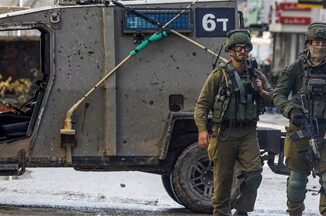
JERUSALEM (TIP): The Israeli parliament passed an amended 2023 budget on December 14 with new funds for the war against Hamas, following a bitter debate over money for settlements and ultra-Orthodox communities.
The additional fiscal measures, which total around 30 billion shekels ($8 billion), passed with 59 votes in favour and 44 against in the 120-seat parliament.
Of the additional funds, 17 billion shekels are earmarked for supporting Israel’s war effort.
The remaining 13.5 billion shekels will support civilians impacted by the conflict.
It comes three months into Israel’s war against Hamas in the Gaza Strip, aimed at destroying the militant group after its shock October 7 attacks which Israeli officials say killed around 1,200 people, mostly civilians.
The Hamas-run health ministry in the Palestinian territory says more than 18,700 people, mostly women and children, have been killed in the conflict.
Most of the civilian funding is earmarked for residents of southern Israeli communities targeted by Hamas in its attacks. However, some has been allocated to inhabitants of areas near the Lebanon border, who have been subjected to almost daily rocket attacks by Hezbollah, the Lebanese militant group allied to Hamas. Around 250,000 people living in these “active combat zones” have been evacuated. That funding will cover both security and other needs, including shelters, hospitals and emergency services.
The overall 2023 budget, which totals around 600 billion shekels, had been the subject of tense discussions with far-right and religious coalition partners before elements of the centre-right opposition joined to form a national unity administration.
The budget was denounced by opposition leader Yair Lapid, who previously rejected an offer to join the emergency government.
At the heart of the controversy is a discretionary fund of 14 billion shekels shared between the parties of the pre-war government.
Hundreds of millions of shekels from that fund have been earmarked for ultra-Orthodox communities as well as Jewish settlements in the occupied West Bank, which are considered illegal under international law. (AFP)
Month: December 2023
-

Israel parliament passes new wartime budget
-

UK court finds Mirror Group newspapers guilty of hacking Prince Harry’s phone
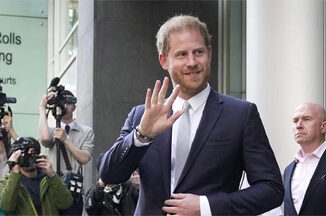
LONDON (TIP): Prince Harry won his historic phone hacking lawsuit on December 15 against the publisher of the Daily Mirror and was awarded over 140,000 pounds ($180,000) in the first of several lawsuits against British tabloids to go to trial in his battles with the press.
Justice Timothy Fancourt in the High Court found phone hacking was “widespread and habitual” at Mirror Group Newspapers over many years and private investigators “were an integral part of the system” to gather information unlawfully on Harry and his associates.
He said executives at the papers were aware of the practice and covered it up.
Fancourt found the newspapers had invaded the Duke of Sussex’s privacy by using unlawful information gathering to produce 15 of the 33 newspaper articles examined at trial as a representative sampling from nearly 150 Harry cited. Harry said the ruling was “vindicating and affirming” and should serve as a warning to other news media that used similar practices, an overt reference to two tabloid publishers that face upcoming trials in lawsuits that make nearly identical allegations.“Today is a great day for truth, as well as accountability,” Harry said in a statement read by his lawyer outside court.
“I’ve been told that slaying dragons will get you burned. But in light of today’s victory and the importance of doing what is needed for a free and honest press, it is a worthwhile price to pay. The mission continues,” Harry’s statement read.
Fancourt awarded the duke damages for the distress he suffered and a further sum for aggravated damages to “reflect the particular hurt and sense of outrage” over the fact that two directors at Trinity Mirror knew about the activity and didn’t stop it. “Instead of doing so, they turned a blind eye to what was going on and positively concealed it,” Fancourt said. “Had the illegal conduct been stopped, the misuse of the duke’s private information would have ended much sooner.”
Harry, the estranged younger son of King Charles III, had sought 440,000 pounds ($560,000) as part of a crusade against the British media that bucked his family’s longstanding aversion to litigation and made him the first senior member of the royal family to testify in court in over a century.
His appearance in the witness box over two days in June created a spectacle as he lobbed allegations that Mirror Group Newspapers had employed journalists who eavesdropped on voicemails and hired private investigators to use deception and unlawful means to learn about him and other family members.
“I believe that phone hacking was at an industrial scale across at least three of the papers at the time,” Harry asserted in the High Court. “That is beyond any doubt.”
Harry had a tendency in his testimony “to assume that everything published was the product of voicemail interception,” which was not the case, the judge said. He said Mirror Group was “not responsible for all of the unlawful activity directed at the duke.” (AP) -
Hungry, thirsty and humiliated: Israel’s mass arrest campaign sows fear in northern Gaza
DEIR AL-BALAH (TIP): The Israeli military has rounded up hundreds of Palestinians across the northern Gaza Strip, separating families and forcing men to strip to their underwear before trucking some to a detention camp on the beach, where they spent hours, in some cases days, subjected to hunger and cold, according to human rights activists, distraught relatives and released detainees themselves.
Palestinians detained in the shattered town of Beit Lahiya, the urban refugee camp of Jabaliya and neighbourhoods of Gaza City said they were bound, blindfolded and bundled into the backs of trucks. Some said they were taken to the camp at an undisclosed location, nearly naked and with little water.
“We were treated like cattle, they even wrote numbers on our hands,” said Ibrahim Lubbad, a 30-year-old computer engineer arrested in Beit Lahiya on Dec. 7 with a dozen other family members and held overnight. “We could feel their hatred.” The roundups have laid bare an emerging tactic in Israel’s ground offensive in Gaza, experts say, as the military seeks to solidify control in evacuated areas in the north and collect intelligence about Hamas operations nearly 10 weeks after the group’s deadly Oct. 7 attack on southern Israel. Militants killed about 1,200 people and abducted over 240 that day.
In response to questions about alleged mistreatment, the Israeli military said that detainees were “treated according to protocol” and were given enough food and water. The army spokesman, Rear Adm. Daniel Hagari, said the men are questioned and then told to dress, and that in cases where this didn’t happen, the military would ensure it doesn’t occur again. Those believed to have ties to Hamas are taken away for further interrogation, and dozens of Hamas members have been arrested so far, he said.
Photos and video showing Palestinian men kneeling in the streets, heads bowed and hands bound behind their backs sparked outrage after spreading on social media.
To Palestinians, it is a stinging indignity. Among those rounded up were boys as young as 12 and men as old as 70, and they included civilians who lived ordinary lives before the war, according to interviews with 15 families of detainees. “My only crime is not having enough money to flee to the south,” said Abu Adnan al-Kahlout, an unemployed 45-year-old with diabetes and high blood pressure in Beit Lahiya. He was detained Dec. 8 and released after several hours when soldiers saw he was too faint and nauseated to be interrogated.
Palestinians cowered with their families for days as Israel poured heavy machine-gun fire into Beit Lahiya and Jabaliya, the firefights with Hamas militants stranding families in their homes without electricity, running water, fuel or communications and internet service. (AP) -
515 injured in a Beijing rail collision as heavy snow hits the Chinese capital
BEIJING (TIP): Two subway trains collided in heavy snow in Beijing, sending 515 people to the hospital, including 102 with broken bones, authorities said on December 15.
The accident occurred Thursday evening in Beijing’s mountainous west on an above-ground portion of the sprawling subway system’s Changping line.
Slippery tracks prompted automatic braking on the leading train. A train following from behind was on a descending section and went into a skid and was unable to brake in time, the city transport authority said in a statement Friday on its social media account.
Emergency medical personnel, police and transport authorities responded, and all passengers were evacuated by about 11 p.m., it said. Twenty-five passengers were under observation and 67 remained hospitalized on Friday morning, the authority said.
Unusually heavy snow that began falling on Wednesday has prompted the suspension of some train operations and school closures.
Alerts remain in place for icy roads, extreme cold and further snowfall. Temperatures were due to fall to minus 11 C (12 F) overnight. No fatalities have been reported from the winter storms that have struck a wide swath of northern China. Beijing’s winters tend to be bitterly cold, but heavy snowfall is rare. (AP) -
Tens of thousands rally in Georgia to celebrate European Union candidate status
TBILISI (GEORGIA) (TIP): Tens of thousands took to the streets of the Georgian capital Tbilisi on December 15 to celebrate the European Union’s decision to put the EU-aspirant country on a formal membership path.
At a summit in Brussels on Thursday, European Union leaders agreed to grant Georgia long-awaited official candidate status and to open accession talks with Ukraine and Moldova.
Waving Georgian and EU flags, cheering crowds flooded Tbilisi’s central Freedom Square on Friday evening, an AFP journalist at the scene reported.
“I congratulate you on this historic event. Long live united, strong, European Georgia!” Prime Minister Irakli Garibashvili told the crowd.
An orchestra performed Georgia’s national anthem and the EU’s Ode to Joy.
Highlighting the deep polarization that mars Georgia’s political landscape, President Salome Zurabishvili, who is at loggerheads with the ruling Georgian Dream party, was not invited onto the podium.Instead, she stood in the crowd. “This is a great celebration,” she told reporters. “We made a very important step towards (joining) the EU.”
Georgia, Moldova, and Ukraine applied to join the 27-nation bloc after the Kremlin unleashed its all-out war on Ukraine last year.
The EU granted candidate status to Kyiv and Chisinau at that time but urged Tbilisi to first reform its judicial and electoral systems, reduce political polarisation, improve press freedom, and curtail the power of oligarchs.
In November, the European Commission recommended that EU leaders grant Georgia official candidate status — with the caveat that the Tbilisi government introduces reforms.
EU membership is enshrined in Georgia’s constitution and supported –- according to opinion polls –- by around 80 percent of the population. (AFP) -

Two attacks launched by Yemen’s Houthi rebels strike container ships in vital Red Sea corridor
DUBAI (TIP): A ballistic missile fired by Yemen’s Houthi rebels slammed into a cargo ship on December 15 in the Red Sea near the strategic Bab el-Mandeb Strait, following another attack only hours earlier that struck a separate vessel, authorities said.
The missile attack on the MSC Palatium III and the earlier assault on the Al Jasrah escalated a maritime campaign by the Iranian-backed Houthis. The attacks also endanger ships travelling through a vital corridor for cargo and energy shipments for both Europe and Asia from the Suez Canal out to the Indian Ocean.
The Houthis say their attacks aim to end the pounding Israeli air-and-ground offensive targeting the Gaza Strip amid that country’s war on Hamas. However, the links to the ships targeted in the rebel assaults have grown more tenuous as the attacks continue.
“The Yemeni armed forces confirm they will continue to prevent all ships heading to Israeli ports from navigating in the (Red Sea) until they bring in the food and medicine that our steadfast brothers in the Gaza Strip need,” the Houthi military spokesman, Brig. Gen. Yahya Saree said in a statement claiming responsibility for Friday’s attacks.
In his statement, military spokesman Saree claimed the Houthis targeted the Palatium III and the Alanya, and not the Al Jasrah. It wasn’t immediately clear why he erroneously identified the second ship.
The recent attacks led Maersk, the world’s biggest shipping company, to announce Friday that it’s told all of its vessels planning to pass through the Bab el-Mandeb Strait to “pause their journey until further notice.” German-based shipper Hapag-Lloyd which was operating the Al Jasrah also said it was pausing all its container ship traffic through the Red Sea until Monday.
A U.S. defence official and the private intelligence firm Ambrey said the MSC Palatium III, a Liberian-flagged container ship, caught fire after the strike. It wasn’t immediately clear if anyone on board the vessel had been hurt.
The attacks Friday further escalated a campaign by the Houthi rebels, who have claimed responsibility for a series of missile assaults in recent days that just missed shipping in the Red Sea and its strategic Bab el-Mandeb Strait.
On Thursday, the Houthis fired a ballistic missile that missed a container ship travelling through the strait. The day before that, two missiles fired from Houthi-held territory missed a commercial tanker loaded with Indian-manufactured jet fuel near the Bab el-Mandeb Strait. Also near the strait, a missile fired by Houthis on Monday night slammed into a Norwegian-flagged tanker in the Red Sea.
Global shipping has increasingly been targeted as the Israel-Hamas war threatens to become a wider regional conflict — even during a brief pause in fighting during which Hamas exchanged hostages for Palestinian prisoners held by Israel. The collapse of the truce has raised the risk of more sea attacks.
In November, Houthis seized a vehicle transport ship linked to Israel in the Red Sea off Yemen. The rebels still hold the vessel near the port city of Hodeida. (AP) -

Robocalls wake up government finally
WASHINGTON, D.C. (TIP): Anyone with a mobile phone knows the unpleasant sensation of answering a call from an unfamiliar number only to hear a pre-recorded marketing or scam pitch from a company you have no interest in patronizing. Around 33 million robocalls are made each day to Americans, according to the National Consumer Law Center (NCLC)—more than 50 billion a year, says a Times report.
This is more than just an annoyance; in 2022, around 68 million Americans lost over $29 billion to scam callers, according to NCLC. These calls also make people less likely to answer their phone or trust valid phone calls they do receive, making the nation’s significant telecommunications infrastructure less valuable.
One of the most frustrating things about these calls, says Margot Saunders, senior counsel at NCLC, is that they are largely illegal. Government regulations say that a telemarketing call is only legal to a cell phone or residential line if the recipient of the call has provided “prior express written consent” to that call. (This is similar to rules of the National Do Not Call Registry, though consumers must opt in to that registry through the website of the Federal Trade Commission.) But often, the sellers and the telemarketers calling for them don’t have this consent.
The reason they’re getting away with continuing to make these calls is that the sellers, often big well-known companies, hire telemarketing firms to make the calls on their behalf. Often, these telemarketing firms buy consumer information—and, they argue, consent—from other companies, in a billion-dollar business called lead generation. Lead generators typically take one agreement from a consumer providing consent and sell that agreement to many different callers and sellers, who themselves resell it to many others. A consumer might have signed up to receive a call from one seller—say a car insurance quote—and then unwittingly clicked a box agreeing to be contacted by hundreds or thousands of companies loosely affiliated with the car insurance company.
On Wednesday, Dec. 13, the government made it much harder for sellers to make calls to numbers obtained from the lead generation industry. In a 4-to-1 vote, the Federal Communications Commission approved regulations that explicitly say that telemarketing robocalls are allowed only if the actual seller, not just the telemarketing company, has gotten written consent from the specific consumer.
“Today we put an end to this loophole,” FCC Chairwoman Jessica Rosenworcel said, at the FCC meeting. “That means consumers get back the power to pick who they want to communicate with and when.”
The vote should help cut down on the number of robocalls made. Each illegal call, according to Congress, can lead to $500 in damages. “It will be much more difficult for sellers to try and escape responsibility,” Saunders says. The Electronic Privacy Information Center projected that the vote would eliminate the “great majority” of unwanted telemarketing calls and texts.
Of course, it could be a little while before anything changes. If companies continue to flaunt the rules, regulators may need consumers to turn them in and file lawsuits to hold those companies accountable. That’s not easy to do, says Saunders—you’d have to answer a robocall, find out who the seller is, and then file a lawsuit under the Telephone Consumer Protection Act. Many consumers may not have the time or the patience for that.
Still, the industry is preparing for a wave of new lawsuits under the Act. A defense attorney told Reuters that he expected to see lawsuit filings double or even triple going forward.
(Source: Time) -

Inspiring Afternoon with Samosa Caucus Congressmen in Lexington, Massachusetts
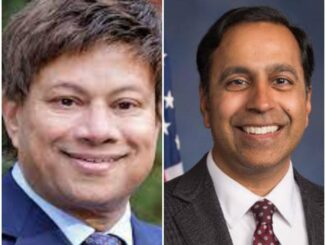
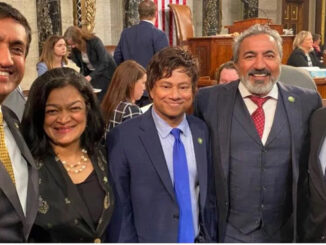
LEXINGTON, MA (TIP): On a rainy yet inspiring afternoon in Lexington, Massachusetts, two esteemed members of the Samosa Caucus, Congressman Shri Thanedar (U.S. Representative from Michigan’s 13th Congressional District) and Congressman Raja Krishnamoorthi (U.S. Representative for Illinois’s 8th Congressional District), captivated a diverse audience with their compelling stories and insights.
Arranged under the guidance of Mr. Ramesh Kapur, President of the US India Security Council, the gathering was hosted and Co-Chaired by Amar and Deepika Sawhney. Additional Co-chairs were Abhishek Singh, Ashok Patel, Vickram Rajadhyaksha, Nar Koppula, Priya Samant, Sanjay Gokhale, and Vivek Sharma, the event provided a warm and welcoming atmosphere for all attendees.
Congressman Thanedar shared his American journey as a young student, bringing with him the aspirations of a bright future. His narrative, a poignant tale of tragedy and triumph, stirred emotions in the audience, showcasing the resilience and determination that propelled him forward. In contrast, Congressman Krishnamoorthi stated that his connection with the U.S. dates back to his toddler years, symbolizing the early roots embedded in the American experience. Despite arriving as a three-year-old, his story resonates with a unique blend of cultural heritage and American identity. Adding a touch of humor to the event, Krishnamoorthi shared the entertaining tidbit of coining the term “Samosa Caucus,” sparking an uproar of laughter that echoed through the room.
Both Congressmen transitioned from successful careers in the private sector to roles in public service, united by a shared commitment to serve their communities and contribute to the greater good. Their narratives served as powerful testaments to the opportunities and challenges inherent in the American experience, ultimately reflecting the strength and diversity that define the nation’s fabric.
The audience, spanning generations, engaged in a lively Q&A session, covering topics from reconciling the Democratic party on common grounds among members with diverse viewpoints and addressing the mounting U.S. debt to border control, immigration, and funding for arts programs. Even the youngest attendees posed questions about public speaking in a televised setting. Despite time constraints, both Congressmen addressed every query posed by the eager crowd, emphasizing the importance of the upcoming elections and fostering unity. The event left an indelible mark, showcasing the power of community engagement and the shared commitment to shaping a better future. -

US reaches H-1B cap for fiscal year 2024
WASHINGTON, D.C. (TIP): The US has received a sufficient number of petitions needed to reach a cap for the much-sought-after H-1B foreign work visas for the fiscal year 2024, a federal agency has announced.
The H-1B visa is a non-immigrant visa that allows US companies to employ foreign workers in speciality occupations that require theoretical or technical expertise. Technology companies depend on it to hire tens of thousands of employees each year from countries like India and China.
US Citizenship and Immigration Services (USCIS) in a statement on Thursday, December 14, said it has received a sufficient number of petitions needed to reach the congressionally mandated 65,000 H-1B visa regular cap and the 20,000 H-1B visa US advanced degree exemption, known as the master’s cap, for fiscal year 2024.
The US federal government’s fiscal year runs from October 1 to September 30. “We will send non-selection notices to registrants through their online accounts over the next few days,” USCIS said.
USCIS said it will continue to accept and process petitions that are otherwise exempt from the cap.
Petitions filed for current H-1B workers who have been counted previously against the cap and who still retain their cap number are exempt from the FY 2024 H-1B cap. The federal agency will continue to accept and process petitions filed to extend the amount of time a current H-1B worker may remain in the United States; change the terms of employment for current H-1B workers; allow current H-1B workers to change employers; and allow current H-1B workers to work concurrently in additional H-1B positions.
-

IRS reminds taxpayers, Jan. 16 due date for final 2023 quarterly estimated tax payments
WASHINGTON D.C. (TIP): The Internal Revenue Service reminded taxpayers who didn’t pay enough tax in 2023 to make a fourth quarter tax payment on or before Jan. 16 to avoid a possible penalty or tax bill when filing in 2024. Taxes are normally paid throughout the year by withholding tax from paychecks, by making quarterly estimated tax payments to the IRS or by a combination of both. This is done because taxpayers need to pay most of their tax during the year as income is earned or received.
Who needs to make a payment?
Taxpayers who earn income not subject to tax withholding such as self-employed people or independent contractors should pay their taxes quarterly to the IRS.
In addition, people who owed tax when they filed their current year tax return often find themselves in the same situation again when they file the next year. Taxpayers in this situation normally include:
Those who itemized in the past but are now taking the standard deduction,
Two wage-earner households,
Employees with non-wage sources of income such as dividends,
Those with complex tax situations and/or
Those who failed to increase their tax withholding.
What income is taxable?
The IRS reminds taxpayers that most income is taxable, whether it’s unemployment income, refund interest or income from the gig economy and digital assets. When estimating quarterly tax payments, taxpayers should include all forms of earned income, including from part-time work, side jobs or the sale of goods.
Also, various financial transactions, especially late in the year, can often have an unexpected tax impact. Examples include year-end and holiday bonuses, lottery winnings, stock dividends, capital gain distributions from mutual funds, stocks, bonds, virtual currency, real estate or other property sold at a profit.
Delay in requirement for Forms 1099-K
After feedback from taxpayers, tax professionals and payment processors the IRS announced that calendar year 2023 will be treated as another transition year for the reduced reporting threshold of $600. For calendar year 2023, third-party settlement organizations that issue Forms 1099-K are only required to report transactions where gross payments exceed $20,000 and there are more than 200 transactions. The IRS also issued a fact sheet to help people who may receive Forms 1099-K.
How to make an estimated tax payment
The fastest and easiest way to make an estimated tax payment is to do so electronically. Taxpayers have options when paying electronically from their bank account.
Pay using IRS Direct Pay. This option allows taxpayers to schedule a payment in advance of the Jan. 16 deadline.
Pay using IRS Online Account. This option allows taxpayers to view their payment history, pending or recent payments and other tax information.
Pay using Electronic Filing Tax Payment System, or EFTPS. EFTPS is a free system which offers selections such as scheduling payments a year in advance, paying estimated tax payments and tracking and changing scheduled payments.
Taxpayers also have the option to pay with their debit or credit card. The card processors, not the IRS, charge a fee for the service.
Using these or other electronic payment options ensures that a payment gets credited promptly. More information on other payment options is available at IRS.gov/payments.
Use the Tax Withholding Estimator to keep track
The Tax Withholding Estimator, available on IRS.gov, can often help taxpayers determine if they need to make an estimated tax payment. It also helps them calculate the correct amount of tax to withhold throughout the year based on their complete set of tax facts and circumstances.
Alternatively, taxpayers can use the worksheet included with Form 1040-ES, Estimated Tax for Individuals, or read through Publication 505, Tax Withholding and Estimated Tax, available on IRS.gov.
Plan ahead
It’s never too early to get ready for the tax-filing season. For more tips and resources, check out the Get Ready and Estimated Tax pages on IRS.gov.
-

Mazi Melesa Pilip is Republican Nominee for NY Congressional District 3 Special Election
GREAT NECK, NY (TIP) : Nassau County Republicans have chosen Legislator Mazi Melesa Pilip as their nominee in the Feb. 13 special election to replace George Santos. Pilip will be facing former Rep. Tom Suozzi (D-Glen Cove), who held the seat from 2017 to 2023. Pilip is Jewish, and originally from Ethiopia. She emigrated to Israel and served in the Israeli Defense Forces (IDF) before coming to the United States.
Pilip won election to the Nassau County Legislature in 2021 and won re-election for the seat in November.
“Mazi Pilip is a formidable candidate with a unique biography: a former IDF paratrooper and mother of seven,” National Republican Congressional Committee Chairman Richard Hudson said in a statement. Mazi’s incredible life of service stands in stark contrast to career politician Tom Suozzi, who uses his office to make life better for himself instead of his community. With Mazi in Congress, Long Islanders will have a representative who stands up to the extreme Hochul-Suozzi agenda making New York less safe and more expensive.”
Although she holds office as a Republican, Politico reported that she has been a registered Democrat since 2012.
Kim Devlin, an advisor for Suozzi’s campaign, did not mention Pilip in response to Republicans choosing her.
“People are sick and tired of the circus in Congress,” Devlin said. “Tom Suozzi has a proven record that he will work every day to try and bring common sense back to Washington by working across party lines, like he’s always done. His focus is on helping families get ahead, improving veteran health care, cleaning our air and water, and protecting our suburban quality of life.”
-

Legislators-Elect Davis and Koslow Ring in Holiday Season At Nassau Coliseum Toys for Tots Drive
UNIONDALE, N.Y. (TIP): Nassau County Legislators-Elect Scott Davis (D-Rockville Centre) and Seth Koslow (D – Merrick) rang in the holiday season at one of the nation’s largest one-day Toys for Tots collection drives, which was held outside Nassau Veterans Memorial Coliseum on Sunday, Dec. 3
Undeterred by steady, cold rainfall throughout the morning, a steady stream of donors contributed more than 150,000 individual donations during the event, which was launched 13 years ago by Glen Cove’s Joe LaPadula and Jon Holzer of Martino Auto Concepts with support from Nassau County Legislature Minority Leader-Elect Delia DeRiggi-Whitton (D – Glen Cove). The rain-soaked 13th annual edition of this event was presented by Glen Cove-based not-for-profit First City Project and supported an array of corporate and community sponsors, many of whom are from the automotive world.
With the culmination of the holiday season fast approaching, Legislators-Elect Davis and Koslow are working with community leaders in their forthcoming districts to identify families and agencies that would benefit from Toys for Tots contributions.

Photos by Peter M. Budraitis “The rain was no match for the tremendous holiday cheer and extraordinary spirit of generosity in the air all around Nassau Veterans Memorial Coliseum,” Legislator-Elect Davis said. “It was a pleasure to be a part of a wonderful tradition that supports such a worthy cause, and I am excited by how these toys will brighten the holidays of so many deserving families in Nassau County and throughout our region.”
“What the organizers of this Toys for Tots drive accomplish every year is nothing short of awe-inspiring,” Legislator-Elect Koslow said. “Their philanthropic drive will help provide thousands of families and children with new toys this holiday season – toys that are a symbol of hope for a better future. It was wonderful to see the generosity of Nassau County’s residents and the magic of the holidays on full display at this remarkable event.”
-
Gandhian Society and NYC Discuss Landmark Museum Collaboration
NEW YORK, NY (TIP): In a historic meeting today, Gandhian Society board members Sravan Natakala and founder Bhadra Butala met with New York City officials to discuss exciting collaboration opportunities towards peace, nonviolence, and social justice. The meeting included Deputy Commissioner for International Affairs Dilip Chauhan and Commissioner Edward Mermelstein, who expressed the City’s full support for a groundbreaking initiative: a permanent museum dedicated to the life and legacies of Mahatma Gandhi and Martin Luther King Jr.
“This potential partnership represents a monumental step forward in promoting the values of peace and equality that both Gandhi and King championed,” said Sravan Natakala, Gandhian Society board member. “By showcasing their shared message of nonviolent resistance and social justice, this museum would serve as a beacon of inspiration for generations to come.”
The proposed museum would be a first-of-its-kind institution, offering a unique platform for education, dialogue, and action. It would delve into the remarkable lives of Gandhi and King, highlighting their unwavering commitment to justice and their transformative impact on the world stage.
“We are honored by the City’s enthusiastic support for this important initiative,” said Bhadra Butala, founder of the Gandhian Society. “A permanent museum in New York City would not only celebrate the legacies of Gandhi and King, but also inspire future generations to embrace their principles and strive for a more just and peaceful world.” Both the Gandhian Society and New York City officials are committed to moving forward with this ambitious project. A follow-up meeting is scheduled to finalize the details of collaboration and set the stage for the museum’s development.
About the Gandhian Society: The Gandhian Society is a non-profit organization dedicated to promoting the principles of Mahatma Gandhi in the United States. Through education, dialogue, and community service, the Society fosters understanding and appreciation for Gandhi’s message of nonviolence, truth, and social justice.
-

SENATOR LIU TO HOST JOLLYFEST HOLIDAY PARADE IN FLUSHING
FLUSHING, NY (TIP): In celebration of the holiday season, Senator John Liu will kick off his inaugural Jollyfest Holiday Parade in downtown Flushing. The event will take place on Sunday, December 17, 2023. Children and families are invited to attend and march in the parade where kids will receive a free holiday hat and register for a toy giveaway while supplies last. The parade will feature antique cars, marching bands, community organizations, and several opening ceremony performances.
Senator John Liu stated, “The holidays are here and we’re kicking off the season with our first Jollyfest Parade in downtown Flushing to give children in our community a chance to celebrate with friends, family, and lots of community spirit. We hope all will come out to take part in this community parade, and enjoy this celebration of the holidays together.”
The event is being organized in conjunction with Better Chinatown Society, Tangram, Flushing Business Improvement District, and NYPD. The parade will begin at Main Street and Franklin Avenue in Flushing where children are asked to register to march in the parade as well as for a toy giveaway at the parade’s conclusion at Tangram mall, located at 133-33 39th Ave., Flushing.
-

Srinu Maddula, Eye Foundation of America board member offers a matching donation of $250,000
NEW YORK (TIP): Since EFA is not hosting an in-person event this year, Mr. Maddula graciously offered a matching donation of $250,000. This act of generosity will significantly enhance our ability to continue providing vital eye care services, a press release from the Eye Foundation of America said. .
To contribute to this meaningful cause, we invite you to make a tax-deductible donation:
- By check , save on fees!
- Directly online by visiting https://eyefoundationofamerica.org
Checks may be sent to the following address:
Eye Foundation of America
695 Westview Avenue
Morgantown, WV 26505
Your friendship and commitment have been instrumental in advancing our shared vision of creating a World Without Childhood Blindness.
Thank you once again for your generosity and continued partnership.
-

More grave than the attack 22 years ago
This time, the delinquents managed to reach the virtual heart of Parliament while the proceedings were going on in the Lok Sabha.
“Officially, the new building’s five-tier security is foolproof: Visitors’ entry is through the ‘reception’ near the Rail Bhavan. Also, verification of credentials is done at the security post on Raisina Road before they reach the ‘reception’. There is a stipulation that before entering, all electronic gadgets, bags and wallets must be deposited in a designated cloak room. The visitors are screened at the reception, their passes are verified again, and they are checked again near the entry gate of the new building. The visitors are then grouped into those going to the Lok Sabha or the Rajya Sabha and checked again at two gates. Before entering the respective visitors’ galleries, they are checked once more.”

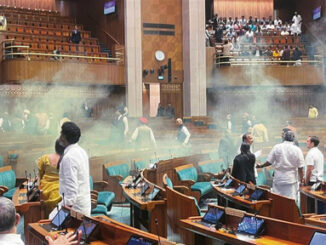
By Vappala Balachandran There is an important difference between the Pakistan-sponsored terror attack on Parliament on December 13, 2001, and the intrusion into the new Parliament building by miscreants on December 13, 2023. This time, the delinquents managed to reach the virtual heart of Parliament while the proceedings were going on in the Lok Sabha. That makes the incident much more serious than the one in 2001, when terrorists could not enter the building. In 2001, the terrorists were fortuitously intercepted by an alert security officer in charge of the escort vehicle of the Vice-President, whereas on Wednesday the security staff was blissfully unaware of the intruders’ presence, putting the onus of resistance on the MPs. Remarkably, the security personnel were not spotted when the miscreants started spraying gas from canisters hidden in their shoes.
Also, the intruders seemed to have taken advantage of the layout of the complex, jumping into the Lok Sabha hall quite easily from the visitors’ gallery. The distance between the gallery and the hall seems to have been reduced in the new building, going by what some MPs said immediately after the incident. Another important point revealed by them was that the new system of entry into the building through a single access point as against three or four entry points in the old building seemed to have burdened the security apparatus.
That perhaps might have been the reason why the miscreants could hide the canisters in their shoes despite the much-touted five-tier security system in the new building. We can only imagine the horror that could have happened had they carried grenades instead of gas canisters. This incident was somewhat like what happened at Raj Ghat on October 2, 1986. Several VIPs, including the President, the Prime Minister and MPs had been saved, not by their security staff, but only because Karamjit Singh — an assailant who had hidden himself in tree branches despite a prior intelligence alert — possessed only a primitive muzzle-loading gun. Like in 1986, we cannot depend on providence for our VIP security.
In 2001, according to the Supreme Court’s records, a white Ambassador car with a red beacon on top entered the Parliament complex around 11:30 am and arrived at the point where the convoy of the Vice-President was waiting near Gate No. 11. Inside the car were persons dressed in some sort of uniform. Since the escort vehicle was blocking its way, the suspect car turned away. This made the ASI in charge of the Vice-President’s escort vehicle suspicious and he told the car driver to stop.
Instead, the driver reversed the vehicle and tried to move away. In the process, it hit the Vice-President’s car. The ASI and the Vice-President’s driver ran towards the suspect car and caught hold of the driver by the collar. Five Pakistani terrorists then got out of the car and started laying wires and detonators.
Seeing this, the ASI fired a shot, hitting the leg of one of the terrorists. The terrorist fired back, injuring the ASI in his right thigh. This exchange of fire alerted the police and special forces in the Parliament complex and a gunbattle started. The terrorists went from gate to gate within the complex, firing at the security men, and the latter returned fire.
Then BJP MP Ram Naik had told the media that there were three gates: Gate No. 12, through which the Vice-President — who is also the Rajya Sabha chairman — entered; Gate No. 1, from where the MPs usually came in; and Gate No. 5, from where the Prime Minister entered. He said the terrorists fired at all these three gates but could not enter the building as CRPF constable Kamlesh Kumari Yadav had closed the main entrance. According to reports, she died after being hit by 11 bullets.
None of this happened on Wednesday. The entry of the offenders was smooth. After the incident, several complaints were made by Opposition members: the Joint Parliamentary Committee on Security has not been constituted during the 17th Lok Sabha; there is ‘political bias’ in issuing visitor passes; there is increased presence of private security guards, who have allegedly replaced official parliamentary security guards and Central police forces in the new building.
Officially, the new building’s five-tier security is foolproof: Visitors’ entry is through the ‘reception’ near the Rail Bhavan. Also, verification of credentials is done at the security post on Raisina Road before they reach the ‘reception’. There is a stipulation that before entering, all electronic gadgets, bags and wallets must be deposited in a designated cloak room. The visitors are screened at the reception, their passes are verified again, and they are checked again near the entry gate of the new building. The visitors are then grouped into those going to the Lok Sabha or the Rajya Sabha and checked again at two gates. Before entering the respective visitors’ galleries, they are checked once more.
None of this prevented the entry of these determined intruders. This audacious security breach, which comes weeks after Sikhs for Justice founder Gurpatwant Singh Pannun’s threat to Air India, speaks very poorly of the overall security of our sensitive institutions. Did our security managers assume that only Air India needed to be protected after that threat?
Any student of terrorism history would know that terrorists often change tactics to cause confusion. After the 26/11 attacks in 2008, we were getting ready to face fidayeen strikes while the terrorists reverted to improvised explosive devices and killed 21 people at three places in Mumbai in July 2011.
(The author is a former Special Secretary, Cabinet Secretariat, government of India) -

Challenge for India to align policies with COP28 outcomes
- The key existential need is to move away from coal to renewables. To be able to do so, developing nations will need finance that must not add to their debt burden.
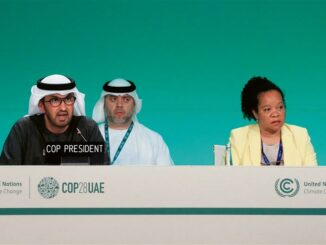
“The final outcome, thrashed out during the conference which went into overtime, does, however, represent a small step forward that needs to be noted. The unanimous decision at the conference was to begin reducing the global consumption of fossil fuels and achieve net-zero by 2050, the first such binding decision ever taken. This signals the eventual demise of the age of fossil fuels — coal, oil and gas. It, thereby, sends a key signal to policymakers, including those in India, who have been somewhat brazenly continuing with policies to support investment in coal, to change tack. It also sends signals to coal investors to get out as quickly as they can and make no further commitments, irrespective of any contrary signals from policymakers.”

By Subir Roy How useful has COP28, the Conference of the Parties held in Dubai, been in taking forward the initiative which began with the 2015 Paris Agreement to address climate change, its mitigation and adaptation and securing the finance needed for the whole process? Typically, a lot of the right kind of noises have been made, as also promises to deliver, while seeking to leave commitments as open-ended as possible so that short-term national imperatives can be addressed even while working on and swearing allegiance to the overall goals.
The final outcome, thrashed out during the conference which went into overtime, does, however, represent a small step forward that needs to be noted. The unanimous decision at the conference was to begin reducing the global consumption of fossil fuels and achieve net-zero by 2050, the first such binding decision ever taken. This signals the eventual demise of the age of fossil fuels — coal, oil and gas. It, thereby, sends a key signal to policymakers, including those in India, who have been somewhat brazenly continuing with policies to support investment in coal, to change tack. It also sends signals to coal investors to get out as quickly as they can and make no further commitments, irrespective of any contrary signals from policymakers.
The member countries also reached a historic agreement to triple renewable energy capacity globally by 2030, again a decision which has run counter to the Indian position. The timeline, barely seven years away, is important as India and China, the two large economies with rapidly rising emission levels, had decided early during the conference to stay out of such an agreement to mitigate present climate trends by tripling the world’s renewable energy output and doubling energy efficiency by that date. This is despite 118 countries agreeing to join the pact.
The International Energy Agency says the tripling is needed to keep in sight the goal of driving down the demand for fossil fuels and keeping global warming to 1.5°C above pre-industrial levels by the end of the century. The focus of action will be on phasing out coal-fired power plants and curbing the use of oil and gas.
Should Indian policymakers see these outcomes as somewhat excessively binding, they have reason to be happy about one key decision which emerged early during the two weeks over which the conference lasted. A ‘loss and damage’ fund to help vulnerable countries cope with the impact of climate change will be created. This is the right thing to do, but the giveaway is the size, albeit initial, of the fund — a mere $475 million, with the US commitment being just $17.5 million. This needs to be set against the $525 billion combined loss that the 55 most vulnerable countries have suffered from climate change in the last 20 years. The loss will reach $580 billion by 2030.
Of course, further contributions will come as the work of the fund, to be initially overseen by the World Bank, progresses. It will help poor countries cope with the cascading effects of climate change, such as rising sea levels, floods, droughts and cyclones. The moral justification for asking for such a fund is that the rich countries, whose industrial growth since 1850 resulted in greenhouse gas accumulation, global warming and the climate crisis, should now help the poor countries, who are the most vulnerable victims, combat it.
India’s approach so far has been that without making any fresh commitment, it wishes to abide by the nationally determined targets it has already announced. In journeying towards that, a sea change will come in sectors like steelmaking, vehicles design and manufacturing, building design and construction processes, not to speak of cookstoves used by households. The drive towards using more clean energy will affect businesses of all sizes, ranging from micro, small and medium enterprises to large corporates.
What is critical is that the investment to enable this energy transition needs to be forthcoming. At present, investment in the fossil fuel sector continues to outstrip that directed towards promoting a clean economy. An advisory panel for COP28 has recommended that a two-pronged strategy be adopted — tax polluting activities and cut fossil fuel subsidies. One area where carbon taxes can be introduced relatively smoothly is transportation — maritime and aviation. But overall, cutting subsidies where they are deeply entrenched will be politically challenging. Farmers will not like fertilizer subsidy to be cut and it will need a brave state government to go back on supplying free a minimum load of electricity to every household.
A particular culprit, a term the panel did not explicitly use, is large oil and gas companies which have made windfall profits from the quick rise in energy prices as a result of the Ukraine war. But it will be difficult to put a punitive tax on them as many of them are either state-owned (like Coal India, NTPC and West Asian giants) or have political clout, like those in the US.
Overall, the key global existential need is to move away from coal to renewables. Rich countries that have moved away from coal to natural gas are balking at helping the rest of the world do so. Hence, coal is the whipping boy, but it is also the fuel used by countries which have not moved to gas, which is somewhat cleaner. To be able to do so, developing countries will need finance that must not add to their debt burden.
What are the corrective measures that Indian policymakers will have to take in view of the conference’s outcomes? They will have to speed up the creation of greater capacity of renewable energy like solar and wind power. There is much talk about producing hydrogen of various hues, but it is worth remembering that the only hydrogen which passes muster is green hydrogen that is made from renewable energy itself. Besides, huge battery banks will have to be set up and transmission lines strengthened so that wind and solar power can be transmitted from areas where they can be produced to those which are deficient in the necessary climatic and geographical requirements.
COP28 has forged a global consensus on the path the planet must take to save itself. This has posed a double challenge for a country like India, which has to both grow rapidly to overcome poverty as also do away with an abundant natural source of energy like coal. If India’s politicians do not rise to this challenge, they risk pulling both themselves and the country down.
(The author is a Senior economic analyst) -

Seal of approval on Art 370 abrogation
Various stakeholders should make efforts to rebuild J&K as a full-fledged state
“The verdict is historic as it aims to rectify past blunders, such as appointing Lord Mountbatten Chairman of the Defense Committee at the start of the 1947-48 Kashmir war, when the Army Generals on both sides (India and Pakistan) were British; referring the matter to the United Nations; accepting a ceasefire when the Indian Army was in a winning position; and finally, accepting a plebiscite proposal on Mountbatten’s advice. Article 370 was in continuation of these blunders. Even though the Article was inserted as a temporary provision to enable full federalization on a par with other states, the provision was kept alive, leading to calls for a settlement with Pakistan and the involvement of the Hurriyat Conference. And in this backdrop, terrorism took root. It was on August 5, 2019, that the Modi government scrapped Article 370; this led to litigation challenging the constitutional validity of the decision.”
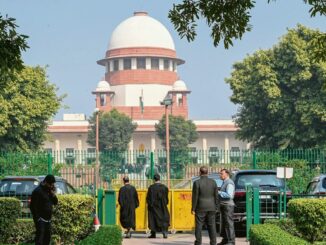
By Rakesh Dwivedi In a landmark verdict, the Supreme Court upheld the Centre’s decision to abrogate Article 370 of the Constitution. The judgment put the judicial seal of approval on the proclamations issued by the President over four years ago that not only de-operationalized Article 370 but also applied provisions of the Constitution to Jammu and Kashmir as are applicable to other states. It also affirmed the proclamation under Article 356 and the creation of the UT of Ladakh. The court allowed the UT of Jammu and Kashmir to continue as such for some time in view of the Solicitor General’s statement that withdrawal of statehood was a temporary measure.
Justice Kaul has recommended the constitution of a Truth and Reconciliation Commission for giving a hearing to the people of J&K. The lead judgment was authored by Chief Justice of India (CJI) DY Chandrachud on behalf of himself, Justice Surya Kant and Justice BR Gavai. Justice Sanjay Kishan Kaul and Justice Sanjiv Khanna concurred with the judgment.
The verdict is historic as it aims to rectify past blunders, such as appointing Lord Mountbatten Chairman of the Defense Committee at the start of the 1947-48 Kashmir war, when the Army Generals on both sides (India and Pakistan) were British; referring the matter to the United Nations; accepting a ceasefire when the Indian Army was in a winning position; and finally, accepting a plebiscite proposal on Mountbatten’s advice. Article 370 was in continuation of these blunders. Even though the Article was inserted as a temporary provision to enable full federalization on a par with other states, the provision was kept alive, leading to calls for a settlement with Pakistan and the involvement of the Hurriyat Conference. And in this backdrop, terrorism took root. It was on August 5, 2019, that the Modi government scrapped Article 370; this led to litigation challenging the constitutional validity of the decision.
A major issue was whether Article 370 was permanent and could not be abrogated. One contention was that it was the result of a formal compact. The court negated the contention and held that in view of its locus in the Constitution and the marginal note, Article 370 was a temporary provision. Its objective was to gradually bring J&K on a par with other states. The court referred to a series of previous orders issued by the President to apply more and more provisions of the Constitution to J&K and said that those orders also supported the inference that Article 370 was temporary.
Another major contention was that Maharaja Hari Singh, while acceding on three subjects, had reserved residuary sovereignty, and the J&K Constitution was a product of a sovereign J&K Constituent Assembly; hence, the President’s order could not abrogate Article 370 so as to annul the J&K Constitution. This, too, did not find favor with the court. The CJI stated that after the execution of the Instrument of Accession and the issuance of the proclamation of November 1949, the state of J&K became fully integrated with India and was part of its territory; thus, no sovereignty was left with Yuvraj Karan Singh. The J&K Constitution was held to be subservient to the Constitution of India and would, therefore, automatically get erased upon abrogation of Article 370. Justice Kaul accepted that there was some internal sovereignty left with J&K, but agreed that this would stand terminated upon the issuance of the proclamation by the President under Article 370(3). This provision does not require any consultation with the J&K government, and the proviso about the recommendation of the J&K Constituent Assembly ceased after its dissolution. But the cessation of the Constituent Assembly did not have the effect of taking away the power of the President in the main part. So, the President validly issued the impugned constitutional orders (272 and 273). He could order the application of all provisions of the Constitution to J&K.
The court also upheld the proclamation under Article 356, while accepting that it was subject to judicial review on the grounds mentioned in the SR Bommai case. The court noted that none of the proclamations could be said to be issued mala fide. The court, however, struck down paragraph 2 of constitutional order 272, which sought to amend the proviso to Article 370 by substituting the Legislative Assembly of J&K for the Constituent Assembly, saying that such an amendment was not permissible. This would have no impact on the abrogation proclamation as that was sustainable under Article 370(3) itself.
Citing Article 3 of the Constitution, the court upheld the creation of the UT of Ladakh, but it left open the question of law about the conversion of a state in view of the basic features of federalism and representative democracy, even as the Solicitor General stated that the deprivation was temporary and statehood of J&K would be restored soon. The court directed holding of elections by September 2024 and restoration of statehood at the earliest.
Justice Kaul, who hails from J&K, wrote an interesting epilogue recommending the constitution of a Truth and Reconciliation Commission on the pattern of South Africa or some such mechanism, wherein people of J&K could be given a hearing in order to resolve their grievances. This was a recommendatory observation, which was not echoed by other judges.
It is hoped that various stakeholders would accept the new situation and move on to rebuild J&K as a full-fledged state like the others, with citizens enjoying constitutional rights.
(The author is a Senior Advocate, Supreme Court of India) -
Principled shift: On India’s stand on Gaza
- India must take a more vocal position on Gaza with Israel
Two months after Israel’s bombardment of Gaza residents in retaliation for the October 7 terror attacks by Hamas began, India joined its voice to the global call to stop the bombing, voting in favor of a resolution at the UN General Assembly (UNGA) along with 152 other nations. The resolution demanded an immediate humanitarian ceasefire, an observance of international humanitarian law, the unconditional release of all hostages, as well as “ensuring humanitarian access”. India’s vote was a shift from its previous vote at the last such UNGA resolution on October 27, when despite the death of 8,000 Gazans, India had decided to abstain from voting for a resolution that called for a ceasefire. The government and the MEA explained this to be a matter of principle, as part of India’s “zero-tolerance” approach towards terrorism, as the earlier resolution did not contain an “explicit condemnation” of the October 7 attacks. However, while the UNGA resolution passed on December 12 bears no direct mention of the terror attacks, India has voted in favor. Although the government has yet to detail the rationale, there could be several reasons: casualty figures have risen relentlessly, with 18,000 dead and the highest such toll of nearly 90 journalists. More than 80% of the entire population is homeless. Even the U.S., Israel’s biggest ally, estimates that nearly half of the 29,000 air-to-ground munitions deployed by Israel thus far are “unguided” or indiscriminate missiles. Second, Israeli Defense Forces have gone far beyond their original mandate of eliminating Hamas capacity and freeing the hostages to a large-scale flattening of Gaza and forced occupation of more territory. More than 100 Israeli hostages remain in Hamas custody. Third, global opinion, including Indian public opinion, has moved decidedly from sympathy with Israel, to horror at the unfolding aftermath, and New Delhi could not have been immune to entreaties by Palestine and the Gulf States to take a relook at its vote, even as India stood isolated in South Asia and the Global South for its previous abstention.
It may be too early to see India’s UNGA vote as a reversal of its earlier position and a reversion to its original position in the conflict, where it has traditionally called for peace. Much will depend on the role India chooses for itself in ensuring the ceasefire is effected and holds, given that Israel has already rejected the UNGA resolution. Having proven its credentials as a friend to Israel following the terror attacks, as well as the odium of enabling the civilian deaths, the Modi government must be more vocal in helping the Netanyahu government out of the strategic cul de sac it has bombarded its way into, one which could cause regional instability and insecurity for decades.
(The Hindu) -
Fund crunch : Centre must liberally aid Punjab in its drug fight
At the first National Conference of Heads of Anti-Narcotics Task Force of States and Union Territories held in April, Union Home Minister Amit Shah outlined the broad set of strategies to achieve the goal of making India drug-free by 2047. Among the impressive plans, the need for all states to fight the battle in a coordinated manner, rising above politics, stood out. Towards this end, he advised the states to optimally use not only the central funds available for narcotics control but also those from the police modernization kitty to carry out narco-related upgradation of forensic science laboratories.
However, the ground reality points to disparity in the grant of funds in the past five years. Punjab, Delhi and Chhattisgarh — all non-BJP-ruled states — were deprived of grants for narcotics control during this period, as per data shared in Parliament. Haryana and Himachal Pradesh got substantial amounts to tackle the drug menace, even though Punjab, being a border state, is more vulnerable to narco-terror. This is amply clear from the grim statistics of 2022 — after Kerala, Punjab saw the second highest number of arrests under the Narcotic Drugs and Psychotropic Substances (NDPS) Act.
Punjab should step up efforts to secure its due share of the central funds, while the Centre must loosen its purse strings for this endeavor. It will give a much-needed boost to the multi-pronged fight against the menace. The combat encompasses a slew of activities, ranging from catching the drug lords to rehabilitating the unfortunate youth addicted to substance abuse and scientifically disposing of the huge amounts of drugs seized by various agencies. Funds are the key to the success of any anti-drug campaign.
(Tribune, India) -
Security breach: Take exemplary action against MP, House staff
Less than three months after hosting its first House session, the new Parliament complex witnessed a major security breach when two intruders jumped into the Lok Sabha hall from the visitors’ gallery and opened smoke canisters. Even more shocking was their audacity to cause chaos in the House on the 22nd anniversary of the 2001 Parliament terror attack, which had claimed the lives of nine securitymen and staff. The Lok Sabha Secretariat has suspended eight security personnel for lapses, even as a probe has been initiated on the orders of the Ministry of Home Affairs. The intruders and their accomplices have been arrested and booked under the anti-terror law UAPA (Unlawful Activities Prevention Act).
The incident has glaringly exposed the vulnerability of the parliamentary security system, which needs to be dismantled and replaced with a professional force. The intruders had gained access to the gallery through visitor passes arranged by BJP MP Pratap Simha. Parliamentarians invariably entertain requests for such passes from members of their constituencies. As per the Parliament rulebook, the MP has to certify that ‘the visitor is my relation/personal friend/known to me personally and I take full responsibility for her/him’. It is apparent that due diligence was not exercised by the MP and his personal staff while processing applications.
That the duo managed to sneak in smoke canisters shows criminal laxity. The security gaps, if not plugged at the earliest, can be exploited by terror groups and other anti-India elements — to the detriment of national security. The entry of visitors needs to be tightly regulated, even as all MPs and their staff must closely scrutinize every application they receive. There should be zero tolerance to any lawmaker’s irresponsible conduct that imperils Parliament’s physical or digital security. Trinamool Congress MP Mahua Moitra was recently expelled from the Lok Sabha for sharing her parliamentary login with an unauthorized person. Exemplary action should be taken against Simha as well.
(Tribune, India) -
The Indian Panorama Endorses Tom Suozzi, the Ideal Advocate for NY’s 3rd Congressional District

Tom Suozzi is a seasoned politician. What sets him apart is his comprehensive understanding of both local and federal governance, and his supreme desire to serve his constituents as their best friend. (X photo) Representing constituents in any congressional district requires a unique blend of experience, dedication, and an unwavering commitment to bettering the lives of those you serve. In the case of New York’s 3rd Congressional District, Tom Suozzi emerges as the epitome of a public servant dedicated to the welfare of his constituents.
Suozzi’s illustrious career in public service speaks volumes about his suitability for this role. With a rich administrative background as the Mayor of the Town of Glen Cove and Chief Executive of Nassau County, Suozzi brings invaluable hands-on experience in local governance, understanding the pulse of communities, and addressing their needs at the grassroots level.
What sets Suozzi apart is his comprehensive understanding of both local and federal governance. Serving three terms as a Congressman, Suozzi has seamlessly transitioned from local leadership to the national stage. His tenure has been defined by a no-nonsense, result-oriented approach. He has consistently delivered for his constituents, irrespective of partisan divides, emphasizing pragmatic solutions over political posturing.
One of Suozzi’s distinctive traits is his commitment to transcending partisan lines. In an era marked by political polarization, Suozzi’s dedication to collaboration and bipartisanship stands as a beacon of hope. He understands that progress often requires a willingness to work across the aisle, forging alliances to achieve tangible results that benefit the lives of those he represents.
Despite the 3rd Congressional District leaning more Republican, Suozzi has earned the trust and admiration of constituents due to his track record. His proven ability to deliver results, coupled with a sincere and tireless approach to addressing community concerns, has garnered widespread support. This support transcends party affiliations, as constituents recognize Suozzi’s genuine commitment to their well-being.
The constituents’ inclination to re-elect Suozzi is rooted in their belief that he is the embodiment of effective representation. Suozzi’s tenure has been characterized by his unwavering dedication to tackling issues that matter most to the people – healthcare accessibility, economic growth, infrastructure development, and education, among others. His ability to translate promises into actionable policies has earned him the faith of those he serves.
Tom Suozzi’s re-election to Congress is not merely about rewarding past accomplishments; it’s a testament to the trust and confidence constituents have in his ability to continue championing their causes. His presence in Congress is seen as a crucial asset for the district, a guarantee that their voices will be heard and their concerns will be addressed with diligence and empathy.
In essence, Tom Suozzi’s candidacy for the representative of NY’s 3rd Congressional District is not just about his impressive resume. It’s about recognizing a leader who embodies the essence of public service – a leader who has consistently put the interests of his constituents above partisan politics, delivering tangible results and fostering a sense of unity and progress within the community.
As constituents head to the polls, they carry with them the hope of having a steadfast advocate in Congress, a leader who will tirelessly fight for their interests. Tom Suozzi has proven time and again that he is that leader. His dedication, experience, and bipartisan approach make him the most suitable candidate to continue representing the people of the 3rd Congressional District in Congress
Therefore, The Indian Panorama is pleased to endorse Tom Suozzi for Congress.
-

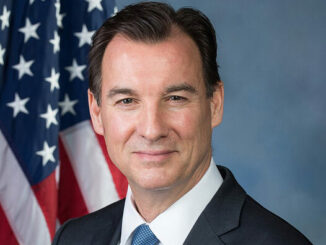
Tom Suozzi is poised to win the New York District 3 special election in February
By Prof. Indrajit Saluja and Parveen Chopra
The early bird gets the worm, goes the saying. Indeed, even as Republicans took time to announce their candidate for the seat in New York that fell vacant by the expulsion from Congress of the disgraced Geroge Santos, Democrat Tom Suozzi hit the ground running. So, the former Nassau County Executive and three-term Congressman (2017-2022) who represented the same District 3, has placed himself in a position of advantage.
Announced by New York Governor Kathy Hochul, the special election is scheduled for February 13. District 3 encompasses large parts of Nassau County, and a part of Queens, with a fair proportion of the well-to-do Indian community residing there.
Tom Suozzi gave an exclusive interview last weekend to The Indian Panorama. It was his first engagement after the Democratic party nominated him as the ideal candidate to flip the seat. I was particularly impressed with his reply to my question why he chose to seek election to Congress. Here is what he said: “America is an idea that all men and women are created equal. And if you embrace that, you’re just as American as anybody else. And that idea is under threat. One of the reasons I’m getting back into public service is to try and address that threat.”

The interviewer Prof. Indrajit Saluja and the interviewee Mr. Tom Suozzi pose for a photograph (Photo : Courtesy Parveen Chopra) Here are excerpts from the interview.
TIP: Welcome, Mr. Suozzi. We want a Congressman who has been an achiever, who has already done a lot of work for his constituents. And we want you in Washington again. We are sure that notwithstanding the Republican challenge and the fact that Long Island has largely turned red, you will make sure that a Democrat represents us in the US House.
So, first, tell our readers why you think you are the best candidate for them.
Tom Suozzi: For our Indian American constituents, let me first say Namaste, and for the Sikh friends, Sat Sri Akal.
I think that I’m the best person for this job because we’ve got a lot of distrust that exists in politics these days. And people want someone they feel comfortable with, somebody that they respect, and that they won’t be surprised by their behavior.
That’s not to say that everybody likes me or likes everything I’ve done, but at least they know me. And I’ve got a record of getting things done to help make people’s lives better.
People have a sense of dread about what’s going on in the world these days. They’re concerned about the cost of living. They’re concerned about the immigration crisis in America. They’re concerned about crime and public safety. A lot of violence has been directed towards turban-wearing American Sikhs, other South Asians, and Asians.
Then there is the climate crisis and wars in Israel and Ukraine. People look to Washington DC to our leaders, and they say, “What are you doing to address the things I’m concerned about? What are you doing to address the problems that affect my life? All I see you doing is pointing fingers at each other and attacking each other.” You know, they (the Republicans) kicked the Speaker out. They can’t fund the government, endangering a government shutdown. ‘Do nothing Congress’ they have turned it into. And people are getting more and more frustrated. Then you had the disgraced George Santos in that seat.
Remember that I have a record of getting things done. I brought money back to the district. I cleaned up the pollution. I helped people with their constituent issues related to the federal government: immigration, Social Security, and healthcare. During COVID-19, I fought for the state and brought more money and aid to New York and our hospitals.
I also have a record of working across party lines. I was on the problem solvers caucus. This race is not going to be just about Democrat versus Republican. If it was, that probably wouldn’t be good for me because, as you said, Republicans have been winning on Long Island and I’m a Democrat. But to serve the people I’ll work with anybody – Republican, Democrat, or Progressive. I’ll try and find common ground. We passed the bipartisan multibillion-dollar infrastructure bill for roads and bridges and trains and airports and the ports.
TIP: That is why, Mr. Suozzi, you always get the support of a large majority of voters who see what a candidate can do for them rather than go by party affiliation.
Tom Suozzi: Yes. I think the time is right for that message right now. And it’s always been my message and people are hungering for that because every problem we face in the country is complicated. But you cannot solve complicated problems in an environment of fear and anger, where everybody is yelling at each other. You need people of goodwill to sit down across the table to try and find common ground.
TIP: You are well regarded by the Indian American community in Nassau County.
Tom Suozzi: I’ve got a very warm feeling for the Indian Americans starting from my days as Glen Cove Mayor way back in the 1990s. My story is that my father came to the US as a young boy from Italy and became a success story. He went to Fordham University and fought in World War Two as a navigator. Graduating from Harvard Law School, he couldn’t get a job at a law firm because nobody liked the Italians after Mussolini teamed up with Hitler. Not disheartened, he went on to get elected as city court judge at age 28.
So, when I think of the Indian American experience, I see the same story and I see the same striving to succeed in their adopted country. You still love your native land, and celebrate the culture, food, and history. But you’ve adopted the idea of America and made it your own.
America is an idea that all men and women are created equal. And if you embrace that, you’re just as American as anybody else. And that idea is under threat. One of the reasons I’m getting back into public service is to try and address that threat. But I’ve always found that like Italian Americans, and Irish Americans from my mother’s side, Indian Americans have that same love of America, that same sense of hard work and opportunity, the same love for their fellow human beings, and the love of family.
I’ve enjoyed learning about the Indian American community, and its diversity. I’ve got tremendous friends in the community.
TIP: The Indian American community has done very well for themselves, but now they are getting worried about safety and security. Some believe that it is the GOP which is harder on crime. How do you address their concerns?
Tom Suozzi: Yes, your community has done spectacularly well. They are hardworking, well-educated, and very entrepreneurial. I’m conscious of their concern. But I want both the Democrats and the Republicans to vote for me as I’m very committed to public safety. The priority of the government is to make sure that the citizenry is safe.
As mayor of the city of Glen Cove, I oversaw the Police Department and we were one of the safest communities in the country. Later, as executive of Nassau County, I ran the 12th largest police department in the country and we were the safest place for over 500,000 people. We saw record crime decreases every year when I was in office.
Later, when I was in Congress, protests against the police erupted in the wake of the horrific murder of George Floyd. Bad behavior by police officers must be called out. But during that same period, I honored police officers from my district for their service. That was not easy to do amid the protests, but I wanted the police to always know that I supported them. We can’t let a few bad actors ruin the reputation of the overwhelmingly good police, which is so important to our safety and our quality of life.
TIP: You visited India as part of a Congressional delegation. What were your impressions of the country?

Tom Suozzi with Prime Minister of India Narendra Modi in New Delhi Tom Suozzi: I had a wonderful time during that brief official trip in 2018. We met Prime Minister Narendra Modi. In Delhi, we visited the BAPS temple (Akshardham). Of course, we went to see the Taj Mahal, which I never knew was a Muslim burial site.
I got the impression that India is moving forward very rapidly. I see more and more success there because India has embraced democracy as well as capitalism, the two best systems that can be.
This is what I talk about in America also. Capitalism is taking more people out of poverty and has resulted in more innovation than any system in the world. But its competitive underpinning results in some people doing very well and some others doing very poorly. So, we say, okay, we got another system. It’s called democracy, where we set up protections so that nobody is to be relegated to a life of hunger and homelessness. The challenge is, how do you find a balance between these two systems?
Somehow, in recent years and decades in America, the middle class has been hollowed out with more people making tremendous amounts of wealth, and a lot more people not even able to make ends meet. So, we have to do a better job of rebuilding the middle class in America.
I helped pass the bipartisan Chips Act to try and bring semiconductors back to America. We must restart manufacturing items ourselves, and you’ll see more supply chains and so on.
TIP: What do you promise to your constituents in NY District 3? Why should they vote for you?

Tom on the campaign trail. “I promise you that I will be open and accessible and will treat everyone in my constituency as though I was the best friend they ever had”. Tom Suozzi: I promise my constituents that I will work as hard as I can. Every single day. I have to try and make their lives better, and to help them solve the problems they face in their lives to the extent that I can. I promise my constituents that I will never embarrass them or make them ashamed that I’m their representative. And I promise them that I will be open and accessible and will treat everyone in my constituency as though I was the best friend they ever had.
TIP: How are you getting the word out about this special election, which is likely to see a low turnout, and getting the vote out for you?
Tom Suozzi: The election is on February 13. So, it’s a very short period from now. My campaign has divided the Congressional District of 790,000 people into 16 regions as different regions have different characteristics and different groups of people. For example, in Hicksville, there are a lot of longtime residents as well as a lot of newcomers from India and Pakistan. So, we are going to have outreach to all those different communities.
I have a great advantage, I think, in this race, because I’ve been around here a long time and because of the good things that I’ve tried to do, and I have high name recognition. My opponents will spend millions of dollars trying to make me look bad but because people know me and because of the work we’re going to do during this campaign, we’ll be able to get people to come out and vote for me.
I take the ground campaign seriously, that’s person-to-person, getting people to talk to their friends, relatives, and coworkers to spread the word. And that’s going to be a highly organized effort, with some very professional people helping me to pull that together. My team is already in place.
I am confident of winning the race and will restore sanity to Washington.
(Prof Indrajit Saluja is the Editor-in-Chief of The Indian Panorama, and Parveen Chopra, the former editor of The South Asian Times, is the founder-editor of ALotusInTheMud.com) -

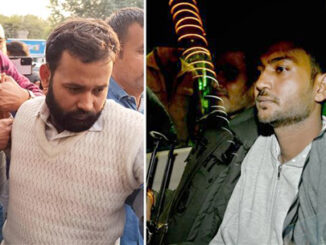
Parliament security breach: Intruder Sagar Sharma talked about ‘dying for nation’ in his diary, mastermind Lalit Jha sent to 7-day police custody
LUCKNOW (TIP): Sagar Sharma, one of the two men who had jumped into the Lok Sabha chamber and set off smoke canisters, maintained for some years a diary in which he often wrote “Inquilab Zindabad” on top of the page and at one stage talked about “dying for the nation”.
“I have given my life to the nation. I have taken a step towards freedom. Now the turn will come to die for the nation. I have already rested a lot,” he wrote in Hindi on June 13, 2015.
Sharma (28), a resident of Ramnagar in Lucknow, maintained the diary from 2015 to 2021, keeping it along with his books that included crime novels and a Hindi translation of Adolf Hitler’s Mein Kampf, police officials said.
Family members of Sharma gave the diary to the local police who then handed it over to their Delhi counterparts investigating Wednesday’s security breach in Parliament. The diary entries are not regular. It included his thoughts on society, poems and couplets by revolutionaries and freedom fighters.
In one such entry, Sharma wrote “Sarfaroshi ki tamanna ab hamaare dil mein hai, dekhna hai zor kitna baazu-e-qaatil mein hai”— a couplet that was made famous by Ram Prasad Bismil as a war cry during the British rule.
On February 6, 2021, Sharma wrote, “Ghar se vida lene ka samay najdik aa gaya hai (It’s almost time to bid adieu to home). On one hand, there is a fear and on the other the fiery determination to go through anything.”
“I have waited every moment of five years for the time when I will move towards my duty. The strongest person in the world is not one who knows how to snatch but the one who can give up everything,” he added.
In a diary entry on June 12, 2015, Sharma wrote, “The modesty of daughters is being looted in the open here. Then why are we sitting patiently with folded hands?”
The very next day, he wrote about giving his life for the nation. Police sources, quoting the family members, said that Sharma studied till class 12 and tried to join the army but failed despite several attempts. He later moved to Bengaluru for a few years. After returning home a few months ago, Sagar began driving an e-rickshaw.
According to the family members, while leaving home on Monday, Sagar told them that he was going to Delhi to take part in a protest. His kin claimed that were unaware of his involvement in the Parliament security breach.
Satyam Singh, a friend of Sagar said that he wanted to study more after class 12 and talked about financial constraints. “He wanted to do something for his family. He talked of earning an honest living without harming anyone. I find it hard to believe that he took such an extreme measure of causing a ruckus inside Parliament,” he said. According to the police, Sagar’s father Roshan Lal is a carpenter while his mother Rani is a homemaker. The family hails from the Unnao district of Uttar Pradesh but has been living in a rented accommodation in Lucknow for over a decade. A Delhi court on Friday, December 14 sent Lalit Jha, arrested in the Parliament security breach case, to 7-day custody of the Delhi Police that claimed he was the “mastermind” of the shocking incident.
In a major security breach on the anniversary of the 2001 Parliament terror attack on Wednesday, Sagar Sharma and Manoranjan D jumped into the Lok Sabha chamber from the public gallery during Zero Hour, released yellow smoke from canisters and shouted slogans before being overpowered by MPs.
Around the same time, two others, including a woman, raised slogans and released yellow smoke from canisters outside the Parliament premises, prompting police to round up the duo. The four persons have been arrested and slapped with terror charges under the Unlawful Activities (Prevention) Act.
(Source: PTI) -

India must address US concerns on murder plot against Gurpatwant Pannun, say 5 Indian-American US Lawmakers
White House gives classified briefing on alleged murder plot
- I.S. Saluja
WASHINGTON, D.C. (TIP): Indian-American lawmakers have expressed deep concern over an Indian being charged with an alleged plot to kill Khalistani Gurpatwant Singh Pannun, an American-Canadian citizen.
If the issue is not addressed appropriately, it could cause significant damage to the US-India partnership, they warned after a classified briefing by the Biden administration on Nikhil Gupta’s indictment.
Gupta was detained at the Prague airport in June in an action that came at the request of the US, the Czech government spokesman said on Friday, December 15. The US had submitted an extradition request two months later, they said. Friday’s classified briefings were attended by US Representatives Ami Bera, Pramila Jayapal, Ro Khanna, Raja Krishnamoorthi, and Shri Thanedar.
“We believe the US-India partnership has made meaningful impact on the lives of both of our people, but we are concerned that the actions outlined in the indictment could, if not appropriately addressed, cause significant damage to this very consequential partnership,” they said in a statement.
The US Congress members said the charges were deeply concerning and the safety of their constituents are their most important priority. They welcomed India’s move to form an enquiry committee but said it should assure the US that such incidents will not happen again.
“We welcome the Government of India’s announcement of a Committee of Enquiry to investigate the murder plot and it is critical that India fully investigate, hold those responsible, including Indian government officials, accountable, and provide assurances that this will not happen again,” they said.
Gupta, 52, moved the Supreme Court on Friday, December 15, via a family member and claimed multiple violations of fundamental rights, including threats to himself and his family, and requested the Indian government to intervene in his extradition to the US. The hearing has been adjourned till January 4.
He claimed he was intercepted by “American agents” on his arrival in Prague, then bundled into a black SUV and interrogated for three hours while being driven around the foreign city. He claimed he was “forced” to eat only pork and beef during his first few days in the prison.
Nikhil Gupta has been charged by US federal prosecutors with working with an Indian government employee in the foiled plot to kill Pannun, a designated terrorist in India.
In September, Canadian Prime Minister Justin Trudeau had alleged the role of Indian agents in the June murder of another Khalistani terrorist, Hardeep Singh Nijjar, a Canadian citizen. India had rejected the allegations as “motivated”. However, the murder plot of another Khalistani, Gurpatwant Singh Pannun in the US, and US administration’s tough stand on the issue, has lent credence to the claims of Canadian Prime Minister that Indian agents were responsible for Nijjar’s murder. More and more people as also governments across the world do not seem to buy India government’s denials of involvement.
(With inputs from agencies)