The Lok Sabha on December 21 passed the Press and Registration of Periodicals Bill, 2023, repealing the colonial era law of the Press and Registration of Books Act, 1867. The Bill has already been passed by the Rajya Sabha in the monsoon session and will now go for the Presidential accent before it becomes a law. The new Bill allows facsimile editions of a foreign periodical to be printed in India with prior approval of the Central government and its registration with the Press Registrar General. Books which were part of the British-era PRB Act, 1867, have been taken away from the purview of the new Bill.
Introducing the Bill in the Lok Sabha, Minister for Information & Broadcasting Anurag Thakur said: “The Bill reflects yet another step of the Modi Government towards jettisoning mentality of slavery and bringing new laws for new India.”
Month: December 2023
-
Now, foreign dailies can have India edition
-
Sirhind Martyrdom of Mata Gujri and Younger Sahibzade
During the night flight from besieged Anandpur, 81-year-old mother of Tenth Guru Gobind Singh, Mata Gujri and her grandsons the two younger sahibzade, Zarowar Singh (Jujhar) age 9, and Fateh Singh age 6, struggled across the stormy floodwaters of River Sarsa together. The dark raging turbulence swept away people and possessions alike and many Sikhs did not survive the crossing. Mata Gujri and the young sahibzade became separated from the rest of their family. Wet, chilled, and exhausted, they accepted help from Brahmin Gangu, a former cook servant who had been discharged from Guru Gobind Singh’s household. Gangu led them to his village Saheri, not far from Morinda (present-day district Ropar) and gave them shelter in his home. While she and her grandsons slept, Gangu pilfered her belongings looking for valuables. He found and took a bag of coins Mata Gujri had carried with her. He buried them and then when she discovered the theft, to cover his actions he fabricated a story about thieves heard prowling about. Not believing the story, she confronted him asking him to return her money. Gangu became angry, protested his innocence and accused her of being ungrateful and then turned her out into the streets with her grandsons.
Capture
Hopeful for a reward, Gangu ran immediately to the local chaudhri official and told him that Guru Gobind Singh’s mother and her grandsons had just arrived at his home, seeking shelter. He convinced the official that they would be rewarded by the Mughal authorities in Miranda for the capture of the Guru’s mother, and together they informed officers Jani Khan and Mani Khan of Mata Gujri’s and the Guru’s sons whereabouts. On December 8, 1705 A.D., the officers captured and arrested Mata Gujri and the younger sahibzade and carried them to Sirhind. Still hoping for reward, Gangu accompanied them.
Imprisonment
On December 9, 1705 A.D., Nawab Wazir Khan, the head official of Sirhind, imprisoned Mata Gurjri and the younger sahibzade. Despite the chilly winter weather, he locked the old women and her young grandsons in an open summer tower or Thanda Burj. meaning “cold tower,” built to escape the searing heat of the summer months. Exposed to the elements with only the clothes they wore, the grandmother and her little grandsons had little protection from sun, wind, or nighttime temperatures. Their cruel captors gave no food or drink to warm or sustain them. Curious local folk gathered to gawk at them. Sachanand Khatri, whose offer of his daughter as wife to one of Guru Gobind Singh’s elder sons had been repeatedly spurned, turned his anger towards the younger sahibzade vengefully declaring them to be the offspring of a poisonous serpent who would grow to be as dangerous as their father if allowed to live.
Separation
Wazir Khan ordered the sahibzade brought before him but wished Mata Gujri to be kept confined in the tower, hoping that separation would increase their vulnerability to his ploys. The Ranghar, or governor, of Murinda went to fetch them, cunningly assuring Mata Gujri that he would return the children safely. She hid her grandsons behind her not wanting to let them go. The elder took the younger one’s hand and bravely declared they should meet their enemy, Wazir Khan. Once he had separated the Sahibzade from their grandmother, the Ranghar, hoping to shake their resolve, told them their father and elder brothers had been killed. The sahibzade accused the Ranghar of lying, insisting their father the Guru to be invincible.
Test of Faith
When the younger sahibzade stood before Wazir Khan, he told them their troubles would be over if they accepted Islam. He promised them riches and rank if they would denounce their father’s faith. He made it clear, however, that they had no other choice, and should otherwise surely face death. The two innocent children faced their adversary courageously, vowing to remain steadfast in their faith. Advising them to consider carefully, the Wazir ordered them returned to the open air tower, informing them their death sentence would be carried out in two days time if they did not repent.
Martyrdom
As the date of execution neared, Mata Gurji comforted her grandsons, rallying their spirits with stories of their father’s heroic deeds. She reminded them of how their Grandfather Ninth Guru Teg Bahadar fearlessly faced his own martyrdom, and of their illustrious ancestor Fifth Guru Arjun Dev’s unfailing spirit when martyred.
On December 11, 1705 A.D., Wazir Khan offered the sahibzade a second opportunity to renounce their faith and embrace Islam. When they refused, he ordered that they be bricked up alive. Nawab Sher Muhammed of Malerkotl registered a formal protest. insisting that the Quran did not condone the murder of innocents. Ignoring his advice, the Wazir implemented his order. The sahibzade remained faithful as brick cemented upon brick rose about them, forming a wall which rose chest high to suffocate them. As their air supply diminished, the wall gave way and collapsed.
On December 12, 1705 A.D., the Wazir gave the sahibizade one final opportunity to convert to Islam. The stalwart sons of Guru Gobind Singh withstood temptation, declared their undying devotion to the Khalsa Panth and denounced the Wazir’s forcible attempts to sway them. Determined to see them die, the Wazir, ordered the heads of the innocent 7- and 9-year-old sahibzade to be severed from their bodies. When Mata Gujri learned of her grandsons’ fate, she collapsed. Guru Gobind Singh’s mother could not be revived. Four days and nights of exposure to the elements in the open tower and the shock of hearing that her beloved grandsons had been cruelly beheaded proved fatal.
On December 13, 1705 A.D., merchant Seth Todar Mal of Sirhind obtained permission to perform last rites when he offered to cover the ground where the bodies lay outside the fort wall with gold coins. The merchant respectfully cremated the bodies of Guru Gobind Singh’s mother and young sons.
Historic Commemorative Shrines
The place where the bodies of Mata Gujri and the sahibzade lay overnight is known as Bimangarh. Three shrines near Sirhind are dedicated to their memory: Gurdwara Burj Mata Gujri, Gurdwara Shahid Ganj and Gurdwara Fatehgarh. -

‘Veer Baal Diwas’: A tribute to younger sons of Guru Gobind Singh
Prime Minister Narendra Modi on January 09, 2022, declared that December 26 shall henceforth be marked as “Veer Baal Diwas” to pay homage to the courage of the “Sahibzades”, four sons of Guru Gobind Singh, the last Sikh guru. While all four were martyred, the date has been chosen as it was the day observed as the martyrdom day of the Sahibzadas Zorawar Singh and Fateh Singh, who were killed at the tender age of six and nine in Sirhind by Mughal forces.
Announcing his decision in a series of tweets, Prime Minister Modi said: “Today, on the auspicious occasion of the Parkash Purab of Sri Guru Gobind Singhji, I am honoured to share that starting this year, December 26 shall be marked as ‘Veer Baal Diwas.’ This is a fitting tribute to the courage of the Sahibzades and their quest for justice.”
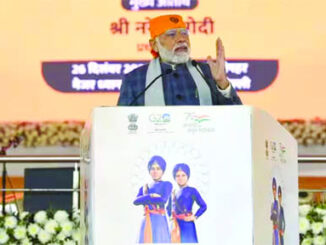
On December 26, 2022, Prime Ministeri Narendra Modi participated in a historic programme marking ‘Veer Bal Diwas’ at Major Dhyan Chand National Stadium in Delhi. During the programme, the Prime Minister attended a ‘Shabad Kirtan’ performed by about three hundred Baal Kirtanis. The Prime Minister also flagged off a march-past by about three thousand children in Delhi on this momentous occasion.
On 9th January 2022, the day of the Prakash Purab of Sri Guru Gobind Singh Ji, the Prime Minister had announced that 26th December would be observed as ‘Veer Bal Diwas’, to mark the martyrdom of sons of Sri Guru Gobind Singh – Sahibzadas Baba Zorawar Singh Ji and Baba Fateh Singh Ji.
Addressing the gathering, the Prime Minister remarked that India is celebrating the first Veer Bal Diwas, today. It is a day of a new beginning for the nation when we all come together to bow our heads for the sacrifices laid down in the past. “Shaheedi Saptah and Veer Bal Diwas is not just a cauldron of emotions but a source of infinite inspiration”, the Prime Minister said.
The Prime Minister said that Veer Bal Diwas will remind us Age does not matter when it comes to extreme valour and sacrifice. Veer Bal Diwas will remind us of the immense contribution of ten Sikh gurus and the sacrifice of the Sikh tradition for protecting the honour of the nation. “Veer Bal Diwas will tell us what is India and what is its identity and every year, Veer Bal Diwas will inspire us to recognize our past and make our future. This will also remind everyone about the strength of our young generation”, the Prime Minister Added. The Prime Minister paid grateful tributes to the Veer Sahibzades, Gurus and Mata Gurjari. “I consider it to be the good fortune of our government that we got the opportunity to declare 26th December as Veer Bal Diwas”, he said.
The Prime Minister pointed out that the thousand-year-old history of the world is filled with chapters of gruesome cruelty. He mentioned that wherever we come across the violent faces of cruelty, it is the character of our heroes that overshines them throughout the pages of history. The Prime Minister recalled that whatever happened in the wars of Chamkaur and Sirhind can never be forgotten. He further added that these incidents occurred only three centuries ago on the soil of this land. “On one hand there was the mighty Mughal Sultanate blinded by religious fanaticism, while on the other hand there were our Gurus gleaming in the knowledge and living by the ancient principles of India”, the Prime Minister continued, “On one hand there were heights of terror and religious fanaticism, while on the other hand, there was the pinnacle of spirituality and kindness to see God in every human being. The Prime Minister further informed that in the midst of all this, the Mughals possessed an army of millions, while the Veer Sahebzades of Guru had their courage. They did not bow down to the Mughals even though they were alone. This is when the Mughals walled them in alive. It is their bravery that has been a source of inspiration for centuries.
The Prime Minister said that any country with such a glorious history must be full of self-confidence and self-respect however, he lamented, concocted narratives were taught. and created a sense of inferiority in the country. Despite this local traditions and society kept these tales of glory alive. The Prime Minister emphasised the need to get free from the narrow interpretation of the past in order to move forward. That is why, said the Prime Minister, the country has taken the pledge of removing all traces of slave mentality in the Azadi ka Amrit Kaal. “Veer Bal Diwas is like a life force for the Panch Prans”, the Prime Minister added.
The Prime Minister also highlighted the importance of determination and bravery of Veer Sahibzade as they showed the tyranny of Aurangzeb and his people that the young generation was not ready to buckle under the cruelty and stood firm to protect the morale of the country. This establishes the role of the young generation in the destiny of a nation. The Prime Minister said today’s young generation is also taking India forward with the same determination. This makes the role of Veer Bal Diwas on every 26th December all the more important, he said.
Paying tribute to Sikh Guru Parampara the Prime Minister said that it is not just a tradition of spirituality and sacrifice but also a source of inspiration for the concept of Ek Bharat Shreshtha Bharat’. The biggest example is the cosmopolitan and inclusive character of Sri Guru Granth Sahib where preachings and commentary of saints from all over India are included. The life journey of Guru Gobind Singh Ji also exemplifies this trait, the Prime Minister said. Referring to the fact that ‘Panch Pyare’ came from all parts of the country, the Prime Minister exuded pride that one of the original Panch Pyara was from Dwarka, land from where the Prime Minister also hails.
The Prime Minister said, “Resolution of ‘Rastra Pratham’- country first, was the unshakable resolve of Guru Gobind Singh Ji”. Shri Modi corroborated the point by recounting the immense personal sacrifice of his family. “This tradition of ‘Nation First’ is a huge inspiration for us”, the Prime Minister stressed.
Modi commented that the future of India’s coming generations will depend upon their source of inspiration. Recounting innumerable examples of inspiring children like Bharat, Bhakt Pruhlaad, Nachiketa and Dhruv, Bal Ram, Luv-Kush and Bal Krishna, the Prime Minister said that from ancient times to the modern period brave boys and girls have been a reflection of India’s valor.
The Prime Minister said with assurance that the new India is correcting the mistakes of the bygone decades by restoring its long-lost legacy. Adding that any country is identified by its principles, the Prime Minister highlighted that when the core values of a nation go through a transformation, the future of the nation changes with time. He emphasised that the values of a nation can be preserved only when the present generations have clarity about the history of the land. “The youth always seek a role model to learn and find inspiration. That’s the reason we believe in the ideals of Lord Ram, find inspiration from Gautam Buddha and Lord Mahavir, and make an attempt to live through the sayings of Guru Nanak Dev Ji, while also studying the ways of Maharana Pratap and Chhatrapati Veer Shivaji”, the Prime Minister remarked. Highlighting the culture and traditions of India that believes in religion and spirituality, the Prime Minister said that the ancestors of our land gave shape to an Indian culture that associates with festivals and beliefs. The Prime Minister said that we need to make that consciousness eternal, and that is why the country is trying to revive the glory of the history of the freedom struggle during the Azadi ka Amrit Mahotsav. Work is going on to take the contribution of brave men and women and the tribal community to every person. He expressed happiness about the huge participation from every part of the country in the competitions and events organised for Veer Bal Diwas. He reiterated the need to take the message of the life of Veer Sahibzadas to the world with full determination. -

The unparalleled sacrifice of Sahibzadas: A historic time for the Sikh community
As December unfolds, the Sikh community commemorates a pivotal chapter in their history, a poignant moment that resonates with the spirit of sacrifice and valor. These upcoming days hold profound significance,marking the tribute to the supreme and unparalleled martyrdom of Sahibzadas, the revered sons of Guru Gobind Singh Ji. Their sacrifice remains etched in the annals of time, an indelible testament to unwavering faith and unparalleled bravery.The legacy of Sahibzadas—Sahibzada Ajit Singh, Sahibzada Jujhar Singh, Sahibzada Zorawar Singh, and Sahibzada Fateh Singh—echoes through generations, inspiring millions with their unyielding commitment torighteousness and fearlessness. Their story isn’t just a chapter in history; it is a beacon of courage that continues to guide and uplift humanity.
Chhotte Sahibzade, younger sons of Guru Gobind Singh, tenth master of the Sikhs, attained martyrdom on 26 December 1705 at a very young age of 9 and 6 only. This is known as Saka Sirhind or the Chhotte Sahibzada Saka. Every year on 24 to 26 December, Shaheedi Jor Mela, also known as Shaheedi Jor Mel/Sabha, is organized at Fatehgarh Sahib Punjab, India, to commemorate the supreme sacrifice at the place of their martyrdom. “I have sacrificed my four sons for Sikh Panth, So, what if my four sons are dead, when thousands of my Gursikhs are alive”
These are the words of Guru Gobind Singh Ji after he lost his four younger Sahibzada. Guru Gobind Singh Ji ,10th Guru of Sikhs is known for his supreme sacrifice of his whole family just for his country and nation. As the year approaches the end, the global world Sikh community commemorates the martyrdom of youngest in the history of the world. This month is to mourn and sadness for whole nation and especially Sikh community who lost their beloved Sahibzadas to cruel rulers.
A martyr is one who chooses to suffer death rather than renounce his faith. To sacrifice one’s life to uphold dharma has been an integral part of the Sikh faith. A shahid or martyr, by his supreme sacrifice for the right cause, bears testimony to its truth and to his own commitment to it. To ensure justice and to see that no one is oppressed is enjoined as a duty of every Sikh. As says the Guru, “Listen O mind, that person who fears nothing nor gives anyone cause to fear, has alone obtained true knowledge.” Sikh history is replete with incidents of martyrdom and the Sikh gurus set the example for the Sikhs by sacrificing their life. Among the supreme martyrs are four sons of Guru Gobind Singh, char sahibzade. The “vaade sahibzade” or the older sons, aged 18 and 14, died fighting a battle at Chamkaur Sahib. The younger sons, “chotte sahibzade” attained martyrdom at the ages of six and nine.
While describing the importance of the land of Chamkaur, Allah Yaar Khan Jogi penned these immortal lines in his historical account.” Bas Ek Hii Hind Mein Tirth Hai Yatra Ke Liye, Katai Baap Ne Betey Jahan Khuda Ke Liye” There is only one place of worship in this part of the world where a father sacrificed his sons for humanity”.
At the age when kids are supposed to play with toys, the younger sons of Guru Gobind Singh, Sahibzaada Fateh Singh (Age 6) and Sahibzaada Zorawar Singh (Age 9) attained martyrdom at Sirhind, Punjab. They along with their grandmother Mata Gujri Ji were tortured for days and were bricked alive.
Ajit Singh, the eldest son of Guru Gobind Singh, was born on January 25, 1687. He was taught Sikh theology, history and philosophy as well as martial arts like swordsmanship, horse-riding and archery. He fought his first battle when he was only 12 years of age. Ajit Singh laid down his life fighting heroically in the battle of Chamkaur. The second sahibzada, Jujhar Singh, born on March 14, 1691, was fearless and a great warrior. He also, like his brother, sacrificed his life, fighting for a noble cause. Zorawar Singh, the third son of Guru Gobind Singh, born on November 17, 1696, was only nine years of age when he attained martyrdom. Fateh Singh, the youngest son, was born on February 25, 1699 but lost his mother in 1700. He was very close to his grandmother, Mata Gujri, who brought him up inculcating typical Sikh values. When all appeasement failed, the then Governor of Sirhind ordered their execution by bricking them alive. Mata Gujri Ji, their grandmother, was all aware of the times ahead and with a heavy heart dressed up the young warriors like grooms. Their unshaken faith, courage, steadfastness and determination was of such high order they did not budge an inch despite several threats meted out and allurements offered over a three-day period to break their faith and spirit. They walked backwards through the small door so they would enter the court without their head bowed towards their tormentors. Their grandmother who had accompanied them gave them courage to stay the path. There is no parallel to such martyrdom in the annals of human history.
The governor refused to do their last rites on their land and said the land would have to be bought and laid with gold coins. A local Diwan Todar Mal sold his property to do so; his successive generations are revered till today in Punjab. There is a Diwan Todar Mal Marg today in Fatehgarh Sahib. Historians believe this is the most valuable place in the world. Diwan Todar Mal (who was himself a Hindu) had bought the place by laying 7800 gold coins on the ground. According to the price of gold, the value of these 4 square meters of land is 2,50,00,000,000 (2.5 billion).Thus, the younger sons of Guru Gobind Singh stood strong to the true principles of Sikhism and sacrificed their lives for Humanity.
We need to even prepare ourselves to even understand the Greatness of Guru Gobind Singh Sahib. The world has never seen a man, a divine messenger, a warrior, a prophet, a poet, a emperor as great as Guru Gobind Singh Ji. We have may hear great stories of sacrifice but among all the sacrifice made by Guru Gobind Singh Ji stands tall of all. Sacrifing your whole family for your nation is something which is seen very less .Guru Gobind Singh Ji ,10th Guru of Sikhs is known for his supreme sacrifice of his whole family just for his country and nation
Till date, the true adherent of Sikhi in Anandpur Sahib and Sirhind, commemorate these days by sleeping on the floor, without any blanket. They bare the same cold harsh winter just like the way our Sahibzaade and Mata Gujri witnessed it. Martyrs are source of inspiration and symbol of heroism, courage and extreme devotion in every religious tradition. They play influential role in deciding the fate of their communities. Their death for religious cause encourages the future generation to fight for religious cause. Martyrdom is a central concept in Sikhism. In Sikhism, martyrdom is the culmination of one’s devotion and fulfillment of socio-religious obligations.
A true Sikh accepts death for the sake of religion and country as a divine blessing and divine command of the Supreme Being. He is always ready to die for upholding the eternal message of Sikh Gurus. In Sikh history, there are countless martyrs, who sacrificed their life in their struggle against foreign invaders and barbaric rulers. The Sikh martyrs had opposed the political absolutism, religious fundamentalism and violation of human rights. Sikh Gurus laid down the supreme sacrifices for the sake of victims of political tyranny and religious bigotry and they suffered unendurable persecution.
They fought for religion and liberation of vulnerable, demoralized people, suffer death in their holy struggle against political oppressors, and choose death at the time when they were asked to choose between life and death.
The story of the Sahibzadas’, needs to be disseminated far and wide within India and across the world as a true example of standing up for what is just and righteous. Effort needs to be directed towards this end by the Sikh community and its institutions as also by the Indian government and other cultural bodies of the nation. There is a need of institute studies, create literature and make all efforts to disseminate the historical facts in a manner that they motivate all humanity.
Even thinking of about the courage of such young Sahibzada of guru who sacrificed their life but did not bow in front of wrong brings goose bumps and tear in the eyes of us all .In addition to mourn the martyrdom of sahibzade we should all learn from their sense of belief in God and love for country and religion that we all should also teach to our younger generation. -

Christmas: Celebrating the birth of Jesus
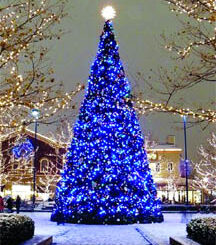
As we near the end of 2023, we approach the holiday season. It means welcoming the most joyous festival of the year – Christmas. It is marked annually on December 25, and the celebrations begin on December 24, known as Christmas eve. The day commemorates the birth of Jesus Christ and is celebrated as a religious and commercial holiday. It is one of the most sacred days in Christianity and is spent singing carols, eating delicious food, exchanging gifts, visiting friends, spending time with family, and so much more. People also decorate their homes by hanging mistletoes and wreaths on their doors and placing a Christmas tree inside their homes adorned with ornaments and lights. Though the festival holds significance in the Christian community, it is marked with enthusiasm by non-Christians.
Christmas marks the birth of Jesus Christ, who was born in Bethlehem to his parents, Joseph and Mary. It is believed that Christ was conceived through the Holy Spirit and was born when Mother Mary was still engaged to Joseph. However, there is no proof that he was born on December 25, as the Gregorian calendar did not exist back then. The Bible also doesn’t mention the exact date.
Various countries around the world have different names for festivals. It is referred to as Yuletide in Germany, Navidad in Spanish, Natale in Italian, and Noël in French.
The festival of Christmas is more than a religious day. It also commemorates the nativity of Jesus and attempts to attain purity and devotion. People believe that on this day, God sent his son on earth to redeem people from their sins and show them the right path.
There are several rituals associated with Christmas. Apart from bringing home a Christmas tree and decorating it with ornaments, people sing carols, hang mistletoes to symbolise love, donate to the needy, attend midnight mass at the Church on Christmas eve, exchange gifts, bake cookies and spend the day with loved ones.
Another popular ritual involves children leaving warm milk and cookies for Santa at night in the hope of receiving gifts from him. For a long time, Christmas has been associated with the mythical figure of Santa Claus. He is based on the traditions associated with Saint Nicholas, a 4th Century Saint. It is believed that Santa Claus lives in the North Pole with his many helper elves. Each year, on Christmas Eve, Santa Claus rides on his sleigh from the North Pole to give gifts to children.
History
The first time the birth of Jesus Christ was attributed to the date December 25 was in the 4th century, according to early Roman history. Early celebrations of Christmas are thought to have derived from Roman and other European festivals that marked the end of the harvest, and the winter solstice.
Some customs from those celebrations that have endured include decorating homes with greenery, giving gifts, singing songs, and eating special foods.
The holiday developed further with the legend of St. Nicholas. Although much of his history is unconfirmed, the man who became St. Nicholas lived in the 4th century and is believed to have been a bishop in Asia Minor.
Many miracles attributed to him are dubious at best. Nevertheless, some countries named him their patron saint. He also is considered the patron saint of, among others, children (for protecting them), sailors (whom he reputedly saved at sea), and the poor (to whom he generously gave gifts).
In his honor, the Feast of St. Nicholas was marked on December 6 and gifts given the night before. The tradition was well established in many European countries by the 12th century. Eventually, because St. Nicholas’ Day and Christmas Day are so close together, their traditions generally were combined.
St. Nicholas took on different personas in different countries. For example, The Netherlands have Sinter Klaas; Father Christmas gives gifts in Great Britain; Père Noël does the same in France; and in Germany St. Nicholas has had many names including Klaasbuur, Burklaas, Rauklas, Bullerklaas, and Sunnercla, although Father Christmas is becoming more popular. In the United States, the Dutch settlers’ Sinter Klaas evolved into Santa Claus.
How Did Christmas Start?
The middle of winter has long been a time of celebration around the world. Centuries before the arrival of the man called Jesus, early Europeans celebrated light and birth in the darkest days of winter. Many peoples rejoiced during the winter solstice, when the worst of the winter was behind them and they could look forward to longer days and extended hours of sunlight.
In Scandinavia, the Norse celebrated Yule from December 21, the winter solstice, through January. In recognition of the return of the sun, fathers and sons would bring home large logs, which they would set on fire. The people would feast until the log burned out, which could take as many as 12 days. The Norse believed that each spark from the fire represented a new pig or calf that would be born during the coming year.
The end of December was a perfect time for celebration in most areas of Europe. At that time of year, most cattle were slaughtered so they would not have to be fed during the winter. For many, it was the only time of year when they had a supply of fresh meat. In addition, most wine and beer made during the year was finally fermented and ready for drinking.
In Germany, people honored the pagan god Oden during the mid-winter holiday. Germans were terrified of Oden, as they believed he made nocturnal flights through the sky to observe his people, and then decide who would prosper or perish. Because of his presence, many people chose to stay inside.
Saturnalia and Christmas
In Rome, where winters were not as harsh as those in the far north, Saturnalia—a holiday in honor of Saturn, the god of agriculture—was celebrated. Beginning in the week leading up to the winter solstice and continuing for a full month, Saturnalia was a hedonistic time, when food and drink were plentiful and the normal Roman social order was turned upside down. For a month, enslaved people were given temporary freedom and treated as equals. Business and schools were closed so that everyone could participate in the holiday’s festivities.
Also around the time of the winter solstice, Romans observed Juvenalia, a feast honoring the children of Rome. In addition, members of the upper classes often celebrated the birthday of Mithra, the god of the unconquerable sun, on December 25. It was believed that Mithra, an infant god, was born of a rock. For some Romans, Mithra’s birthday was the most sacred day of the year.
Is Christmas the Day Jesus Was Born?
In the early years of Christianity, Easter was the main holiday; the birth of Jesus was not celebrated. In the fourth century, church officials decided to institute the birth of Jesus as a holiday. Unfortunately, the Bible does not mention date for his birth (a fact Puritans later pointed out in order to deny the legitimacy of the celebration). Although some evidence suggests that his birth may have occurred in the spring (why would shepherds be herding in the middle of winter?), Pope Julius I chose December 25. It is commonly believed that the church chose this date in an effort to adopt and absorb the traditions of the pagan Saturnalia festival. First called the Feast of the Nativity, the custom spread to Egypt by 432 and to England by the end of the sixth century.
By holding Christmas at the same time as traditional winter solstice festivals, church leaders increased the chances that Christmas would be popularly embraced, but gave up the ability to dictate how it was celebrated. By the Middle Ages, Christianity had, for the most part, replaced pagan religion.
On Christmas, believers attended church, then celebrated raucously in a drunken, carnival-like atmosphere similar to today’s Mardi Gras. Each year, a beggar or student would be crowned the “lord of misrule” and eager celebrants played the part of his subjects. The poor would go to the houses of the rich and demand their best food and drink. If owners failed to comply, their visitors would most likely terrorize them with mischief. Christmas became the time of year when the upper classes could repay their real or imagined “debt” to society by entertaining less fortunate citizens.
When Christmas Was Cancelled
In the early 17th century, a wave of religious reform changed the way Christmas was celebrated in Europe. When Oliver Cromwell and his Puritan forces took over England in 1645, they vowed to rid England of decadence and, as part of their effort, cancelled Christmas. By popular demand, Charles II was restored to the throne and, with him, came the return of the popular holiday.
The pilgrims, English separatists that came to America in 1620, were even more orthodox in their Puritan beliefs than Cromwell. As a result, Christmas was not a holiday in early America. From 1659 to 1681, the celebration of Christmas was actually outlawed in Boston. Anyone exhibiting the Christmas spirit was fined five shillings. By contrast, in the Jamestown settlement, Captain John Smith reported that Christmas was enjoyed by all and passed without incident.
After the American Revolution, English customs fell out of favor, including Christmas. In fact, Christmas wasn’t declared a federal holiday until June 26, 1870.
Who Invented Santa Claus?
The legend of Santa Claus can be traced back to a monk named St. Nicholas who was born in Turkey around A. D. 280. St. Nicholas gave away all of his inherited wealth and traveled the countryside helping the poor and sick, becoming known as the protector of children and sailors.
St. Nicholas first entered American popular culture in the late 18th century in New York, when Dutch families gathered to honor the anniversary of the death of “Sint Nikolaas” (Dutch for Saint Nicholas), or “Sinter Klaas” for short. “Santa Claus” draws his name from this abbreviation.
In 1822, Episcopal minister Clement Clarke Moore wrote a Christmas poem called “An Account of a Visit from St. Nicholas,” more popularly known today by it’s first line: “‘Twas The Night Before Christmas.” The poem depicted Santa Claus as a jolly man who flies from home to home on a sled driven by reindeer to deliver toys.
The iconic version of Santa Claus as a jolly man in red with a white beard and a sack of toys was immortalized in 1881, when political cartoonist Thomas Nast drew on Moore’s poem to create the image of Old Saint Nick we know today.
Christmas carol
A Christmas carol is a carol (a song or hymn) on the theme of Christmas, traditionally sung at Christmas itself or during the surrounding Christmas holiday season. The term noel has sometimes been used, especially for carols of French origin. Christmas carols may be regarded as a subset of the broader category of Christmas music.
Carols were first sung in Europe thousands of years ago, but these were not Christmas carols as we know them
These were pagan songs sung at winter solstice celebrations, as people danced around stone circles. The word carol comes from the old French word ‘carole’, which meant a popular circle dance accompanied by singing.
The ancient Roman pagan festival of Saturnalia, which honoured the agricultural god Saturn, took placed near the winter solstice. Due to when this holiday occurred, Saturnalia celebrations are said to be the source of many of the traditions we now associate with Christmas, such as wreaths, candles, feasting and gift-giving.
It was only later that carols began to be sung in church and to be specifically associated with Christmas.
In the 9th and 10th centuries, Northern European monasteries developed the Christmas hymn into a sequence of rhymed stanzas. The Parisian monk Adam of Saint Victor began to derive music from popular songs in the 12th century, which introduced something closer to the traditional Christmas carol.
Early Christianity turned the pagan solstice tradition into a celebration for Christmas and gave people Christian songs to sing. In 129, a Roman Bishop said that a song called Angel’s Hymn should be sung at a Christmas service in Rome.
Christmas celebrations
Nowadays, the most common is the exchange of gifts and cards with beloved ones, Christmas dinner, Christmas carols and other celebrations alongside local traditions, bringing together each place’s custom to this time of the year. -

Imran Khan’s participation in elections uncertain as Pakistan court dismisses his plea in Toshakhana case
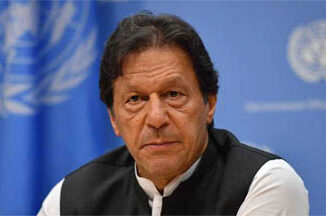
Islamabad (TIP): A high court in Pakistan on December 21 dismissed Imran Khan’s plea seeking suspension of the trial court’s verdict in the Toshakhana corruption case, in a fresh setback to the jailed former prime minister whose participation in the February 8 general elections is now uncertain. On August 5, the 71-year-old former cricketer-turned-politician was convicted by the Islamabad-based trial court in the Toshakhana case which was about the concealment of details of state gifts. The verdict meant the founding chairman of the Pakistan Tehreek-e-Insaf (PTI) party was disqualified from contesting elections for five years.
Khan challenged his conviction in the Islamabad High Court (IHC) which on August 28 suspended his three-year sentence and granted him bail. However, his conviction has not been set aside so far, making him ineligible for any public office.
The ex-premier subsequently filed a plea in the IHC seeking suspension of the trial court verdict in the case. On Thursday, the Islamabad High Court (IHC) dismissed his plea seeking suspension of the trial court’s verdict in the Toshakhana case.
In a nine-page detailed verdict, IHC Chief Justice Amir Farooq and Justice Tariq Mahmour Jahangiri ruled that the instant application is not maintainable and is accordingly dismissed. “In the instant case, no specific plea was raised and subsequent application has been made to cover up the omission. Even no extraordinary or exceptional circumstances were mentioned in the earlier application though they existed in the form of the notification dated 08.08.2023 when the application for suspension of the sentence was filed,” the verdict said.
“Bare reading of the application for suspension filed by the appellant shows that it was for suspension of the sentence only,” it said.
It said Khan had invoked a specific provision in his petition but did not “specifically pray in the same for suspension of the conviction”.
The dismissal of the plea comes at a crucial juncture as Khan’s party announced that he would contest election from three constituencies, which may not be possible until his conviction by the trial court is either suspended or overturned by the high court.
Separately, the IHC issued a notice to the Federal Investigation Agency on Khan’s plea against an in-camera trial in the cipher case. The case pertains to a diplomatic document that was allegedly mishandled, constituting a violation of the secret laws of the country.
After issuing notices and hearing arguments by Khan’s lawyer, the court adjourned the hearing till Friday. Apart from Khan, former foreign minister Shah Mehmood Qureshi is also accused in the case. Both leaders are in the Adiala Jail where they were indicted for a second time on December 13. Khan, who served as prime minister of Pakistan from August 2018 to April 2022, was removed through a vote of no-confidence in April 2022. More than 150 cases have been filed against Khan since his ouster from power. (PTI) -

Top Bhutan honour for former Punjab cadre bureaucrat Poonam Khetrapal
Thimphu (TIP): Poonam Khetrapal Singh, Regional Director WHO South-East Asia, and a retired Punjab cadre IAS officer of 1975 batch, has been awarded Bhutan’s prestigious National Order of Merit Gold Medal for her distinguished services to the country.
The King of Bhutan Jigme Khesar Namgyel Wangchuk honoured Singh at Bhutan’s 116th National Day celebration here. “Dr Poonam Khetrapal Singh, the first woman Regional Director of WHO South-East Asia Region, played a pivotal role in supporting transformative healthcare leadership in Bhutan from 2014 to 2024. Her tenure witnessed remarkable strides, including Bhutan becoming one of the first countries to eliminate measles and rubella ahead of schedule. She made significant contributions to help Bhutan excel in COVID-19 vaccination,” the King said.
“Khetrapal Singh’s impactful strategies extended across communicable diseases, reproductive health, health systems, and social determinants, and had a lasting positive impact on Bhutan’s public health services,” he said.
In a video message post the award ceremony, Singh thanked Jigme Khesar Namgyel Wangchuk for the award. She said, “As Regional Director for WHO South-East Asia for the last decade, it has been my vision to address priority health issues through eight flagship programmes, and promote health and well-being for everyone, everywhere.”
The Regional Director said Bhutan’s efforts and achievements in the last decade have been exceptional – eliminating polio, maternal and neonatal tetanus, eliminating measles and rubella, taking the lead in WHO South-East Asia Region for addressing mental health and making efforts to eliminate cervical cancer by expanding HPV vaccination and screening.
Poonam Khetrapal Singh became the first Indian to be elected as the Regional Director of WHO South-East Asia. After a five-year term beginning February 2014, she was unanimously re-elected by the 11 Member countries of the Region, home to one quarter of the world’s population, for another five-year term from February 2019. During her decade-long term, the Region eradicated polio and eliminated maternal and neonatal tetanus. Bhutan and four other countries eliminated measles and rubella. The Region’s share in global measles deaths dropped from 40% in 2014 to 8% by the end of 2021.
Countries initiated mainstreaming screening, diagnosing and treatment for non-communicable diseases at the primary health care level and rolled out multi-sectoral responses to address key risk factors for non-communicable diseases.
Between 2010 and 2021, the Region recorded 69% decline in maternal mortality, the steepest globally; 45% decline in under five mortality, 39% decline in neonatal mortality and 54% decline in stillbirths. Availability of doctors, nurses and midwives increased by over 30.6% since 2014. Singh identified elimination of neglected tropical diseases (NTD) as a regional flagship. Six countries have eliminated at least one NTD. Two countries eliminated malaria. Three eliminated mother-to-child transmission of syphilis and HIV. Four countries achieved hepatitis B control through vaccination. (TNS) -
India pushes for inclusive govt, women’s rights in Afghanistan
Kabul (TIP): Describing the situation in Afghanistan as still one of concern, India has said the formation of an inclusive and representative government structure, combating terrorism, and preserving the rights of women, children, and minorities in Afghanistan was an “immediate priority” for it. Addressing a Security Council meeting on the topic of ‘Situation in Afghanistan’ on December 20, India’s Permanent Representative at the UN Ruchira Kamboj said as a neighbour to Afghanistan, a friend to its people and as a country with direct stakes in ensuring peace and stability in Afghanistan, India was still concerned over the situation in the country. “Our common and immediate priorities include providing humanitarian assistance to Afghans, formation of an inclusive and representative government structure, combating terrorism and drug trafficking, and preserving the rights of women, children and minorities,” Kamboj said. India has not yet recognised the Taliban set-up and has been pitching for the formation of a truly inclusive government in Kabul, besides insisting that Afghan soil must not be used for any terrorist activities against any country.
Since seizing power in August 2021, the Taliban government has not honoured their earlier promises to give women the right to work and study. (PTI) -

Group turned away at Mexican holiday party returned with gunmen killing 11, say investigators
Mexico City (TIP): Survivors of a Sunday massacre in central Mexico told investigators that a group of people turned away from a holiday party returned later with gunmen who killed 11 and wounded 14, authorities said on December 19.
Navigio Agustín Gallardo Romero, a Guanajuato state prosecutor, said nine men and two women were killed. The state prosecutor’s office had revised the death toll down to 11 Monday night from 12, explaining that there was confusion with a victim from a separate case at the hospital. Authorities recovered shells from seven different guns at the scene, Gallardo said in a recorded video message. He said investigators are focusing on a group that operates in the area without providing more detail. Families carried the caskets of some of the victims through the streets of Salvatierra on Tuesday. Guanajuato has been the scene of bloody turf battles between the Jalisco cartel and local gangs backed by the Sinaloa cartel. The state has long had the highest number of homicides in Mexico.
On Monday, Mexico’s President Andres Manuel López Obrador called for Guanajuato’s state prosecutor to step down. (AP) -

North Korea, Russia clash with US, South Korea and allies over Pyongyang’s latest missile launch
United nations (TIP): North Korea and Russia clashed with the United States, South Korea and their allies at an emergency UN Security Council meeting on December 19 on Pyongyang’s latest intercontinental ballistic missile launch, which it called “a warning counter-measure” to threats from the US and other hostile forces.
North Korean Ambassador Kim Song said this is “the most dangerous year” in the military-security landscape on the Korean Peninsula, pointing to stepped up US-South Korean military exercises and the US deployment of nuclear-powered submarines and other nuclear assets to the area that have raised a “nuclear war danger”.
The US and nine allies pointed to five North Korean ICBM launches, over 25 ballistic missiles launches and three satellite launches using ballistic missile technology this year, violating multiple Security Council resolutions and threatening “the peace and stability of its neighbours and the international community”.
In a statement read just before the council meeting by US deputy ambassador Robert Wood, surrounded by diplomats from the other countries, the 10 countries condemned the latest ICBM launch on December 17 and all launches before it.
North Korea’s Song urged the international community to think about North Korea’s security concerns, calling its counter-measures an “absolutely reasonable, normal and reflective response” in exercise of its legitimate right to self-defence.
He warned the US and South Korea that if they continue “with their reckless and irresponsible military threat”, North Korea’s armed forces “will never remain an onlooker to it and the provokers will be held entirely responsible for all the consequences”.
North Korea will also “continue to build up its strategic power of a more advanced type to contain and control any threat from the US and its followers with immediate, overwhelming and decisive counter-measures”, Song warned.
The Security Council imposed sanctions after North Korea’s first nuclear test explosion in 2006 and tightened them over the years in a total of 10 resolutions seeking — so far unsuccessfully — to cut funds and curb its nuclear and ballistic missile programmes.
The last sanctions resolution was adopted by the council in December 2017. China and Russia vetoed a US-sponsored resolution in May 2022 that would have imposed new sanctions over a spate of intercontinental ballistic missile launches. And the two veto-wielding council members have blocked any council action, including media statements, since then.
The 10 countries — Albania, Ecuador, France, Japan, Malta, South Korea, Slovenia, Switzerland, the United Kingdom and the United States — said silence from the Security Council “sends the wrong message to Pyongyang and all proliferators.”
They urged North Korea to abandon its unlawful nuclear and ballistic missile programs, “and instead invest in feeding the people in North Korea” and engage in diplomacy. They also urged all Security Council members to overcome their prolonged silence and uphold the nuclear nonproliferation regime. Russia’s deputy UN ambassador Anna Evstigneeva called attempts to condemn Pyongyang “a one-sided approach”.
She warned that the situation is escalating “to a dangerous brink”, pointing to both Pyongyang and Seoul justifying their hostile moves as self-defense. And she accused the United States of deploying its massive military machine in the region, saying this looks “more and more like preparations for an offensive operation”, even though the US says it has no hostile intentions.
Evstigneeva said Russia again calls for a peaceful settlement of all issues on the Korean Peninsula through political and diplomatic means “without external pressure”.
Wood, the US deputy ambassador, countered that US military exercises are defensive and it’s North Korea that has violated UN sanctions — not South Korea, Japan or the US.
And he said the United States has tried repeatedly to have an unconditional dialogue with Pyongyang but it has refused. (AP) -

Lava flows from Iceland volcano slow as heavy snow sets in
Reykjavik (TIP): Lava flows from a volcano in Iceland were slowing on December 20 as heavy snows cloaked the area, reducing visibility of an eruption that for now looks set to spare a nearby town that was evacuated following weeks of earthquakes.
The eruption late on Monday on the Reykjanes peninsula in southwest Iceland spewed lava and smoke more than 100 metres (330 feet) into the air in a dramatic finale to weeks of waiting after the alarm was first raised over the seismic activity.
The government has said flights were unlikely to be impacted, easing worries of a repeat of the international travel chaos caused by the ash from another Icelandic volcanic eruption in 2010 just as the busy holiday travel season kicks in.
“It is difficult to see exactly what is going on, but when you get some glimpses through the snow it is obvious that it is just less and less lava flow,” said Halldor Geirsson, associate professor at the Institute of Earth Sciences at the University of Iceland.
The eruption in the Svartsengi volcanic system might end over the weekend or next week, he added, or lava flows could continue at a slow rate for weeks or months similar to what happened at the nearby Fagradalsfjall system in 2021.
“I would think the most likely scenario is that it just stops,” he said. “But if that happens, the pressure will start building again in the magma chamber, which is likely to trigger another eruption after a few weeks.”
Authorities last month evacuated the nearly 4,000 inhabitants of the fishing town of Grindavik about 40 km (25 miles) southwest of capital city Reykjavik, allowing them back intermittently to check on homes put at risk by the tremors.
Meanwhile, gases associated with the eruption briefly spiked on the peninsula on the southwestern tip of Iceland, which also accommodates the island’s main international airport, which remained open though some flights suffered delays due to the heavy snowfall, an airport spokesman said.
The level of sulphur dioxide in the air near the town of Keflavik, where the airport is located, rose from 0.2 micrograms per cubic meter at 0650 GMT to above 1,300 an hour later, according to Iceland’s environmental agency.
The levels soon returned to normal. Sulphur dioxide can be harmful to health at high concentrations and officials had cautioned that gas pollution could occur in the area of nearby Reykjavik late on Tuesday or Wednesday morning.
The government has said the eruption does not present a threat to life. (Reuters) -

Israeli strikes on Gaza intensify even as truce talks grow ‘serious’
Gaza (TIP): Fighting in the Gaza Strip escalated on December 21 with what residents described as some of the most intense Israeli bombardment of the war, even as the enemies held what Washington called “very serious discussions” on a new truce.
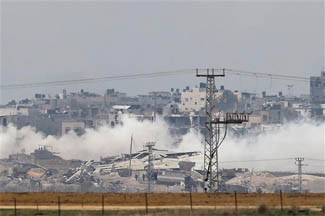
Bombing was at its most intense over the northern part of the Gaza Strip where orange flashes of explosions and black smoke could be seen as morning broke from across the fence in Israel. Planes roared overhead and the booms of air strikes thundered every few seconds, punctuated by rattling gunfire. In the south, where hundreds of thousands of people are sheltering from war that has laid much of Gaza to waste, Hamas said an Israeli strike killed the commander of the main checkpoint opened just days ago to let in aid.
Residents in Jabalia in the north of the Strip close to the Israeli border said the area was now completely cut off with Israeli snipers now firing on anyone trying to escape. “It was one of the worst nights in terms of the occupation bombings. Also we could hear heavy fighting despite that,” said one Jabalia resident who asked not to be identified for fear of reprisal.
With Gaza’s communications links shut down for a second day, the resident spoke to Reuters by phone using an electronic SIM card to access the Israeli mobile network across the fence.
Gazans say such cuts to communication links have typically heralded Israeli assaults.
Ismail Haniyeh, leader of Hamas, the Iran-backed militant group that controls Gaza, was in Egypt for a second day on Thursday for negotiations, a rare personal intervention which in the past has signalled important stages in diplomacy. Islamic Jihad, another militant group, said its leader was also headed there. The talks appear to be the most serious since a week-long ceasefire collapsed at the start of the month, but the public positions of the opposing sides are far apart. Israel says it will negotiate only on a temporary pause in fighting to free hostages; Hamas says it is interested only in negotiations that will lead to a permanent end to fighting. “These are very serious discussions and negotiations, and we hope that they lead somewhere,” White House spokesperson John Kirby told reporters aboard Air Force One on Wednesday. (Reuters) -
Death toll in China’s earthquake rises to 131; victims pulled to safety in subfreezing weather
Haidong, Qinghai (TIP): Braving below-freezing conditions, rescuers pulled to safety victims of an earthquake that rocked a remote area in China’s northwestern Gansu province more than a day ago, while survivors faced months of uncertainty ahead without permanent shelter. The 6.2-magnitude earthquake jolted Jishishan county near the border straddling Gansu and Qinghai provinces a minute before midnight on December 19, sending frightened residents out of homes into the cold in the dead of the night, damaging roads, power and water lines as well as agricultural production facilities, and triggering land and mudslides.
In Gansu, 113 people had been found dead as of 9 a.m. on Wednesday (0100 GMT), and 782 were injured, authorities said. The death toll in neighbouring Qinghai province rose to 18 with 198 injured as of 5:30 a.m. on Wednesday. Seventy-eight people have been found alive in Gansu, where rescue operations ended on December 19 afternoon, Chinese media said, as focus shifted to treating the wounded and resettling residents as a months-long winter loomed. It was not immediately clear whether the search in Qinghai had ended or not. In Gansu, more than 207,000 homes were wrecked and nearly 15,000 houses collapsed, affecting more than 145,000 people. More than 128,000 emergency supply items including tents, quilts, tent lights and folding beds, were delivered while food such as steamed buns and instant noodles were provided to the victims. (Reuters) -
Beijing warns Manila against S China Sea ‘miscalculation’
BEIJING/MANILA (TIP): Chinese Foreign Minister Wang Yi warned the Philippines that any miscalculation in their escalating dispute in the South China Sea would bring a resolute response, and urged dialogue to address “serious difficulties” between the two neighbours. Beijing and Manila have traded sharp accusations in recent months over a succession of run-ins in the South China Sea, including charges that China rammed a ship earlier this month carrying the Philippine armed forces chief of staff.
China in turn has accused the Philippines of trespassing on its territory. The souring of relations coincides with Manila’s moves to boost military ties with Japan and the US, its former colonial power and defence ally of seven decades. — Reuters -
15 killed as gunman goes on rampage in Prague varsity, shot
PRAGUE (TIP) : A gunman killed at least 15 people and wounded 24 others at a Prague university on December 21 before he was “eliminated”, marking the country’s worst-ever mass shooting. The Czech police responded to the shooting at Charles University’s faculty of arts building in Jan Palach Square shortly after 3 pm (1400 GMT). The police said the father of the shooter – a student at the faculty – was found dead earlier on Thursday. Gun crime is relatively rare in the Czech Republic. In December 2019, a 42-year-old gunman killed six persons at a hospital waiting room in the eastern Czech city of Ostrava before fleeing and fatally shooting himself, the police said. In 2015, a man fatally shot eight persons and then killed himself at a restaurant in Uhersky Brod. “We always thought that this was a thing that did not concern us. Now it turns out that, unfortunately, our world is also changing and the problem of the individual shooter is emerging here as well,” Prague Mayor Bohuslav Svoboda said. Petr Nedoma, director of the Rudolfinum Gallery at a concert hall across Palach Square, told Czech TV he saw the shooter. “I saw a young person on the gallery who had some weapon in his hand, like and automatic weapon, and shooting toward the Manes Bridge. Repeatedly, with some interruptions, then I saw as he shot, put hands up and threw the weapon down on the street, it lay there on the pedestrian crossing,” he said. Reuters
-

MAYOR’S OFFICE OF IMMIGRANT AFFAIRS DELIVERS KEY RESOURCES TO IMMIGRANT COMMUNITIES
NEW YORK CITY (TIP): New York City Mayor’s Office of Immigrant Affairs (MOIA) Commissioner Manuel Castro, on December 21, released a list of key wins for immigrant New Yorkers. A comprehensive list of accomplishments and services delivered for the immigrant community will be released in MOIA’s 2023 Report on the City’s Immigrant Population and Office Initiatives. “This year, our office continued to work alongside city agencies, faith-based institutions and community partners to meet the needs of the asylum seeker humanitarian crisis, while still serving long time immigrant New Yorkers,” said MOIA Commissioner Manuel Castro. “I am proud to serve our immigrant communities and we will lead to fight for the rights and supports that immigrant New Yorkers need.”
MOIA delivered key resources to immigrant communities, including:
Releasing Informational Videos to Assist Asylum Seekers Navigate the Federal Immigration Process: In response to more than 150,000 migrants arriving to New York City, MOIA created informational videos to assist asylum seekers when navigating the federal immigration process. The instructional videos covered topics such as: “ice check-ins, immigration documents, and going to court.”
Creating the Asylum Seeker Legal Assistance Network: In the absence of a national strategy to support asylum seekers with their legal needs as they enter the country, MOIA launched the Asylum Seeker Legal Assistance Network (ASLAN), a $5 million investment to expand non-profit organizations’ capacity to provide immigration legal assistance for newly arrived asylum seekers. Through this network the contracted partners provided a combination of orientation sessions, legal screenings, application assistance, pro se assistance clinics, self-help materials, and other services.
Funding the Asylum Seeker Resource Satellite Sites: To continue to support asylum seekers with in-person social service, MOIA extended funding to the asylum seeker resources satellite sites. The satellite sites are in all five boroughs and provided services including job readiness training, comprehensive case management, and immigrant rights workshops in multiple languages.
Funding the Haitian Response Initiative: To continue to support Haitian community members, MOIA extended $1.3 million in funding to the Haitian Response Initiative. The Haitian Response Initiative consists of seven Haitian-led nonprofit organizations rooted in the Haitian community that provide community members with social and support services, and a Citywide immigration legal service provider that provides legal assistance to community members and capacity building trainings to CBOs.
Hosting a National Convening to Discuss the Asylum Seeker Response: MOIA hosted a national convening of over 23 cities to discuss how to advocate for additional federal support for the asylum seeker humanitarian crisis. Advocacy points included providing cities with more financial resources, expediting work authorizations for additional recent arrivals, and enacting a national decompression and resettlement strategy. Unveiling Immigrant Heritage Plaza: Originally known as “Public Place” within Bowling Green Park, MOIA renamed the historic space “Immigrant Heritage Plaza.” The plaza was renamed to honor all immigrants who built New York City, beginning with the first historically recorded immigrant who arrived, Juan Rodriguez. In addition to the receiving a commemorative plaque, the space will be used for immigrant related events.
Releasing an Immigrant Resource Road Map in Over 50 Languages: To ensure immigrant New Yorkers have information on city resources, MOIA released an immigrant resource road map in over 50 languages. The roadmap included a list of city resources and protected rights for all New Yorkers, regardless of their immigration status.
Hosting 35 Flag Raising Ceremonies: As the ultimate city of immigrants, MOIA along with the Mayor’s Office of International Affairs and Community Affairs, hosted 35 flag raising ceremonies. The flag raising ceremonies included cultural celebrations for countries including Nepal, Mexico, Kenya, and much more.
Kicking Off We Love Immigrant NYC Campaign: As part of our annual immigrant heritage celebration, MOIA launched the “We Love Immigrant NYC” campaign. The campaign aimed to highlight over 20 immigrant neighborhoods across the city.
-
UNSC observes a minute of silence to mourn Kuwait’s late Amir Sheikh Nawaf Al-Ahmad Al-Jaber Al-Sabah

United Nations Security Council members mourn and honor Kuwait’s late Amir Sheikh Nawaf Al-Ahmad Al-Jaber Al-Sabah. (Photo : Mohammed Jaffer-SnapsIndia) UNITED NATIONS (TIP): Members of the United Nations Security Council observed Tuesday a minute of silence to mourn and honor Kuwait’s late Amir Sheikh Nawaf Al-Ahmad Al-Jaber Al-Sabah.
The UN lowered its flag to half-mast at its New York headquarters in honor of the late Amir on Monday, December 18.
The UN paid tribute to the late Amir describing him as a distinguished statesman, who contributed to the growth of understanding and cooperation in the Gulf and beyond, and pursued strengthened relations in support of peace and stability in the region and around the world. The ruling emir of the oil-rich nation Kuwait, Sheikh Nawaf Al Ahmad Al Sabah, has died at the age of 86, just over three years after assuming power, Kuwaiti state TV announced.His cause of death has not been revealed although the ruling emir was hospitalized last month “due to an emergency health problem” but was later reported to be in stable condition.
The small Mideast nation, which is the holder of the world’s seventh-largest oil reserve, borders Iraq to the north and Saudi Arabia to the south, has seen internal power struggles behind palace doors.
Kuwait state television broke into programming with Quranic verses just before a somber official made the announcement.
“With great sadness and sorrow, we — the Kuwaiti people, the Arab and Islamic nations, and the friendly peoples of the world — mourn the late His Highness the emir, Sheikh Nawaf Al Ahmad Al Jaber Al Sabah, who passed away to his Lord today,” said Sheikh Mohammed Abdullah Al Sabah, the minister of his emiri court, who read the brief statement.
State-run news previously reported that he had traveled to the United States for unspecified medical checks in March 2021.
Sheikh Nawaf was named crown prince in 2006 and became emir in September 2020 following the death of his brother, Sheikh Sabah, who had ruled for more than a decade and shaped the state’s foreign policy for over 50 years.
Sheikh Nawaf was the nation’s defense minister when Iraq invaded and occupied Kuwait in 1990, sparking the beginning of the first Gulf War. Kuwait has been a strong U.S. ally since then. Since he took over in 2020, Sheikh Nawaf has maintained a foreign policy that balanced ties with those neighbors, whilst domestically, eight governments were formed under his rule.
Sheikh Nawaf’s term was focused on domestic issues as the nation struggled through political disputes — including the overhaul of Kuwait’s welfare system — which prevented the sheikhdom from taking on debt. That policy left it with little in its coffers to pay bloated public sector salaries, despite generating immense wealth from its oil reserves.
In 2021, Sheikh Nawaf issued a long-awaited amnesty decree, pardoning and reducing the sentences of nearly three dozen Kuwaiti dissidents in a move aimed at defusing a major government standoff. He issued another just before his illness, aiming to resolve that political impasse that also saw Kuwait hold three separate parliamentary elections under his rule.
-

SENATOR LIU, CHAMPIONS MARTIAL ARTS INTL, OPERATION CHILD RESCUE, JIBARITOS WITH TROOPS, PRESENT TOY DONATIONS TO MILITARY FAMILIES
BAYSIDE, NY (TIP): Senator John Liu, on December 20, concluded his 2023 Holiday Toy Drive with thousands of toy donations for families of soldiers at the 77th Sustainment Brigade in Fort Totten, Queens. Toy donations were collected throughout the month of December at the office of Senator Liu in Bayside, Champions Martial Arts schools and Operation Child Rescue.
State Senator John Liu stated, “Many thanks to all who chipped in this year to brighten the spirits of children in our community. Many of our local military families stationed at Fort Totten have family members deployed overseas and are unable to spend the holidays together, so we are grateful for this tremendous outpouring of support for our hometown heroes!”
Michael Ro (노찬훈), Head Master of Flushing Champions Martial Arts, stated, “I want to thank all the Champions Martial Arts schools for participating in this year’s toy drive. We are especially grateful to everyone who donated toys so the families of our military men and women can have a joyful holiday season.”
William Dobie, President of Operation Cr Inc., stated, “I am so thankful to be a part of Senator Liu’s toy drive this year and to have participated in his event for the past five years. To be able to provide the children of soldiers actively serving with hundreds of toys each holiday season is such an honor. I could not do it without Champions Martial Arts and their dedication to giving back to the community. They are the reason why we are able to have successful toy drives each and every year.”
Former Staff Sergeant and Founder of Jibaritos With Troops, Amee Hernandez, stated, “Jibaritos With Troops have been feeding and taking care of families as they leave for deployment and personally delivering toys to the troops. We want to thank everyone in our community who took time to give back this year.”
Toys were collected at different Champions Martial Arts locations throughout Queens, Brooklyn and Long Island including locations in Flushing, Bayside, Forest Hills, College Point, Long Island City, Ozone Park, Kew Gardens, Copiague, Astoria, Ridgewood, East Meadow and 18th Avenue. Donations will benefit hundreds of military families stationed out of the 77th Sustainment Brigade at Fort Totten in Bayside, Queens. The majority of soldiers will be deployed this holiday season.
-

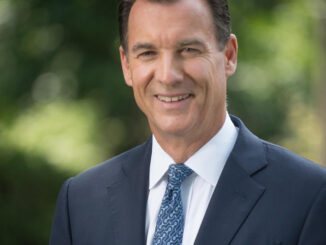
Suozzi Unveils 10-Point Plan to Help Restore Sanity to Washington and Get Things Done
GLEN COVE, NEW YORK (TIP): Former Congressman Tom Suozzi, on December 19, unveiled a 10-point plan to help restore sanity to Washington and get things done. The intention of Suozzi rolling out his plan is to demonstrate his belief that Congress needs to move beyond petty, partisan, and performative finger-pointing and focus on working across the aisle to get things done for the people he serves. Suozzi has a long record of working with Democrats and Republicans to tackle the problems that the people of Nassau and Queens face. Suozzi’s 10-Point Plan is in sharp contrast to his opponent Mazi Pilip’s refusing to answer reporter’s questions about her positions on the issues.
“Throughout my career, I have always prioritized delivering results for the people over petty partisan politics,” said Suozzi. “The growing influence of the far right and far left has led to gridlock in Congress. My 10-point plan is a blueprint to address the real concerns people face and my intention to work with anyone of goodwill who has the same objective of actually addressing challenging problems and working together to come up with a solution.”The plan details Suozzi’s blueprint to:
1. Lower the Cost of Living, Repeal the SALT Cap, and Further Reduce Prescription Drug Prices
2. Address the Immigration Crisis by Passing the Tom Suozzi-Peter King Compromise
3. Protect the Long Island Sound, Provide Clean Drinking Water, and Address Climate Change
4. Improve Public Safety and Get Guns off the Streets
5. Stand Up to Extreme Attacks on Reproductive Freedom
6. Support Israel and Ukraine
7. Never Forget the Vet
8. Expand Affordable Health Care and Long-Term Care, and Protect Social Security and Medicare
9. Defend Democracy
10. “No Wrong Door”: Comprehensive, Wraparound Social Services for K-12 StudentsThe special election is on February 13th, 2024.
-

Middlesex County announces winners for Picture Middlesex County photography contest
Participants submitted hundreds of photos showcasing community, nature, and culture in Middlesex County
MIDDLESEX COUNTY, NJ (TIP): Middlesex County is proud to announce the winners for the fall edition of Picture Middlesex County, which was open to all amateur and professional photographers who live in New Jersey from September 21–November 30, 2023. Overall winners include Brian Dohn in first place, Fallon Jasovsky in second place, and Sara Maher in third place. The winners of the fall edition of Picture Middlesex County were chosen by an anonymous judging committee and were announced on the Middlesex County Facebook, Instagram, and X pages, as well as on the Picture Middlesex County landing page.“On behalf of the Board of County Commissioners, I want to offer my heartfelt congratulations to the winners of the much-anticipated fall 2023 edition of Picture Middlesex County, and my gratitude to all of the participants,” said Middlesex County Commissioner Director Ronald G. Rios.

Second place winner: Fallon Jasovsky- Perth Amboy “Each entry captured the beauty and vibrance in our community, creating a showcase of the various perspectives of life right here in Middlesex County.”
Stay tuned for the next round of Picture Middlesex County this upcoming spring 2024! For more information, please visit: discovermiddlesex.com/picture-middlesex-county/
MIDDLESEX COUNTY, NJ
Middlesex County is home to numerous Fortune 500 companies, three universities, 19 park systems, and world-class healthcare and research facilities making it one of the nation’s most dynamic regions and a leader in technology, transportation, the arts, and food innovation. As one of the most diverse populations in the country, Middlesex County is home to over 860,000 residents living throughout 25 municipalities. The County’s award-winning Middlesex County Magnet Schools system and two-year Middlesex College uphold its position as #1 in the state for best schools, offering secondary and postsecondary education and workforce development programs that create a unique ecosystem where opportunities abound. Conveniently located between New York and Philadelphia, Middlesex County is a leading destination for businesses and residents alike to live, work, and play – and has been since the 17th century. For more information, visit middlesexcountynj.gov and find us on Facebook, Instagram, and LinkedIn.
Third place winner: Sara Maher- Dunellen -

IRS New Voluntary Disclosure Program lets employers who received questionable Employee Retention Credits pay them back at discounted rate; interested taxpayers must apply by March 22
WASHINGTON, D.C. (TIP): As part of an ongoing initiative aimed at combating dubious Employee Retention Credit (ERC) claims, the Internal Revenue Service, on December 21, launched a new Voluntary Disclosure Program to help businesses who want to pay back the money they received after filing ERC claims in error.
The new disclosure program, which has been in the works for several months, is part of a larger effort at the IRS to stop aggressive marketing around ERC that misled some employers into filing claims. The special disclosure program runs through March 22, 2024, and the IRS added provisions allowing repayment of 80% of the claim received.
The IRS also continues to urge employers with pending ERC claims to consider a separate withdrawal program that allows them to remove a pending ERC claim with no interest or penalty. The IRS has already received more than $100 million in withdrawals as the agency continues intensifying audits and criminal investigation work in this area.
As these special initiatives for ERC continue, the IRS will provide an update in the new year on the status of the moratorium. Additionally, the IRS mailed out 20,000 denial letters to ERC claimants earlier this month.
“The disclosure program provides a much-needed option for employers who were pulled into these claims and now realize they shouldn’t have applied,” said IRS Commissioner Danny Werfel. “From discussions we have had with taxpayers and tax professionals around the country, we understand that there are many employers eager to correct their error, but who remain concerned about their ability to pay back the portion of the credit that has been lost to the promoter that brought them into this mess. This new option, with an opportunity to get right with a lower financial cost, provides the relief these taxpayers requested. The new initiative will also help with our ongoing efforts to gather information on promoters who created this situation by aggressively pushing people to apply for the credit.”
Interested employers must apply to the ERC Voluntary Disclosure Program by March 22, 2024. Those that the IRS accepts into the program will need to repay only 80% of the credit they received. If the IRS paid interest on the employer’s ERC refund claim, the employer doesn’t need to repay that interest. Employers who are unable to repay the required 80% of the credit may be considered for an installment agreement on a case-by-case basis, pending submission and review of a Form 433-B, Collection Information Statement for Businesses, available on IRS.gov, and all required supporting documentation.
The IRS will not charge program participants interest or penalties on any credits they repay. However, if the employer is unable to repay the required 80% of the credit at the time of signing their closing agreement, then the employer will be required to pay penalties and interest in connection with entering into an installment agreement.
The IRS selected an 80% repayment because many of the ERC promoters charged a percentage fee that they collected at the time of payment or in advance of the payment, and the recipients never received the full amount.
To qualify for this program, the employer must provide the IRS with the names, addresses and telephone numbers of any advisors or tax preparers who advised or assisted them with their claim and details about the services provided. Further qualifications and program details are in Announcement 2024-3, posted today on IRS.gov.
As part of this expanding effort for employers that claimed an erroneous or excessive ERC, the IRS also announced today it has started sending up to 20,000 letters with proposed tax adjustments that will recapture the erroneously claimed ERC. These mailings – which are on top of the 20,000 denial letters announced earlier in December – are currently just for tax year 2020, and work continues for tax year 2021, with additional mailings planned. If the IRS identifies an employer that has received excessive or erroneous ERC, the agency will reclaim that ERC through normal tax assessment and collection procedures.
“These letters are another incentive for businesses that believe they received an erroneous Employee Retention Credit payment to come forward and participate in the disclosure program,” Werfel said. “Our compliance activities involving these payments continue to accelerate, and the disclosure program’s 80% repayment figure is much more generous than later IRS action, which includes steeper costs and greater risk. We hope these taxpayers take advantage of this window now.”
ERC Voluntary Disclosure Program: Who can apply?
A variety of ERC recipients can apply. Any employer who already received the ERC for a tax period but isn’t entitled to it can apply if the following are also true:
The employer is not under criminal investigation and has not been notified that they are under criminal investigation.
The employer is not under an IRS employment tax examination for the tax period for which they’re applying to the Voluntary Disclosure Program.
The employer has not received an IRS notice and demand for repayment of part or all of the ERC.
The IRS has not received information from a third party that the taxpayer is not in compliance or has not acquired information directly related to the noncompliance from an enforcement action.
How to applyTo apply, the employer must first file Form 15434, Application for Employee Retention Credit Voluntary Disclosure Program, available on IRS.gov. This form must be submitted using the IRS Document Upload Tool. Employers will be expected to repay their full ERC, minus the 20% reduction allowed through the Voluntary Disclosure Program. Employers who are not able to pay the amount in full will have the option to set up an installment agreement under certain conditions.
Employers who outsource their payroll must apply through the third party
Many employers outsource their payroll obligations to a third party who reports, collects and pays employment taxes on the employer’s behalf using the third party’s Employer Identification Number. In this situation, the third-party, not the employer, must file Form 15434. See the form and its instructions for details.
Help options for those considering applying
As part of a larger set of information on ERC, the IRS has provided a set of Frequently Asked Questions to help employers understand the terms of the program.
Once the employer has applied to the program and submitted their Form 15434, an IRS employee will contact them to go over the application and answer any questions.
Next steps after an application is approved
If the IRS approves the employer’s application, they will mail the employer a closing agreement. The employer must then repay 80% of the ERC they received, either online or by phone, using the Electronic Federal Tax Payment System (EFTPS). EFTPS is the Treasury Department system that most businesses already use to pay various federal tax obligations.
If the taxpayer is unable to pay the amount in full, they may enter into an installment agreement with the IRS to pay overtime. However, under the standard installment agreement policy, penalties and interest will apply, so the IRS encourages those who cannot pay in full to consider obtaining a loan from a financial institution to avoid the costs of an installment agreement with the IRS. Once payment has been made, the employer must return the signed closing agreement to the IRS.
Ongoing ERC initiatives
The new Voluntary Disclosure Program is just the latest step taken by the IRS in its ongoing fight against ERC fraud.
In July, the IRS said it was shifting its focus to review ERC claims for compliance concerns, including intensifying audit work and criminal investigations on promoters and businesses filing dubious claims. The IRS has hundreds of criminal cases being worked, and thousands of ERC claims have been referred for audit.
Following concerns about aggressive ERC marketing from tax professionals and others, the IRS announced Sept. 14 a moratorium on processing new ERC claims. Enhanced compliance reviews of existing claims submitted before the moratorium is critical to protect against fraud and also to protect businesses and organizations from facing penalties or interest payments stemming from bad claims pushed by promoters.
Then, earlier this month, the IRS began sending an initial round of more than 20,000 letters to employers disallowing their ERC claims either because their business did not exist, or they didn’t have employees for the period covered by their claim.
As mentioned earlier, the IRS also announced today it has started sending letters to up to 20,000 employers that claimed an erroneous or excessive ERC that propose tax adjustments that will remove the ERC.
In addition to these efforts, IRS audit and Criminal Investigation work involving ERC continues to expand involving dubious claims. The IRS has more than 300 criminal cases being worked with claims worth almost $3 billion, and thousands of ERC claims have been referred for audit.
IRS reminder: Still time to withdraw pending ERC claimsThe IRS is also continuing to accept and process requests to withdraw an employer’s full ERC claim under the special withdrawal process. Employers have until at least the end of the year to request a withdrawal.
The IRS continues to see a large amount of interest in the withdrawals, with more than $100 million from pending applicants withdrawn by early December. With the announcement of the Voluntary Disclosure Program today, the IRS continues to urge pending applicants to review their claims.
This withdrawal option allows certain employers that filed an ERC claim but have not yet received a refund to withdraw their submission and avoid future repayment, interest and penalties. Employers that submitted an ERC claim that has not yet been paid can withdraw their claim and avoid the possibility of getting a refund for which they’re ineligible. They can also withdraw their claim if they’ve received a check but have not yet deposited or cashed it.
The IRS created the withdrawal option to help small business owners and others who were pressured or misled by ERC marketers or promoters into filing ineligible claims. Claims that are withdrawn will be treated as if they were never filed. The IRS will not impose penalties or interest. During this period, the IRS warns taxpayers to use extreme caution before applying for the ERC as aggressive maneuvers continue by marketers and scammers. In addition, the IRS continues to urge employers who submitted claims to review the ERC requirements and talk to a trusted tax professional about their eligibility amid misleading marketing around the credit.
When properly claimed, the ERC is a refundable tax credit designed for businesses that continued paying employees during the COVID-19 pandemic while their business operations were either fully or partially suspended due to a government order, or had a decline or significant decline in gross receipts during the eligibility periods.
For more information on ERC eligibility, see the ERC frequently asked questions and the ERC Eligibility Checklist, which is available as an interactive tool or as a printable guide.
-

IRS expands Business Tax Account access to S corporations, partnerships; adds ability to view business tax transcripts
WASHINGTON, D.C. (TIP): As part of continuing transformation work, the Internal Revenue Service, on December 18, announced the launch of the second phase of a new online self-service tool for businesses that expands the business tax account capabilities and eligible entity types. As a result, individual partners of partnerships and individual shareholders of S corporation businesses are now eligible for a Business Tax Account in addition to sole proprietors.
Available at IRS.gov/businessaccount, the new business tax account is a key part of the agency’s continuing service improvement initiative. This is part of the larger effort under last year’s Inflation Reduction Act (IRA) and described in the multi-year Strategic Operating Plan released this spring.
“This is part of the ongoing IRS modernization effort to make improvements for business taxpayers and others,” said IRS Commissioner Danny Werfel. “This next step in the evolution of the Business Tax Account will help these businesses download transcripts and other features. Ultimately, these new online options will help make interactions easier for businesses while reducing paper-based processes and the need to call the IRS.”
This phase of Business Tax Account also adds new features:
Users can now download a PDF of a business tax transcript:
For sole proprietors, this includes Forms: 940, 941, 943, 944, 945, 8752, 8288, 11-C, 730, 2290.
For S corporations, this includes Forms: 940, 941, 943, 944, 945, 8752, 8288, 11-C, 730, 1120S, 2290.
For partnerships, this includes Forms: 940, 941, 943, 944, 945, 1065, 8752, 8288, 8804, 11-C, 730, 2290.
Sole proprietors can also view certain notices:
CP080: Reminder – We Have Not Received Your Return, Credits May be on Your Account.
CP136: Annual Notification of Federal Tax Deposit (FTD) Requirements (Forms: 941, 941-SS).
CP216F: Application for Extension of Time to File an Employee Plan Return – Approved.
Individual partners and individual shareholders will be able to access Business Tax Account information once they have filed a business return with the Schedule K-1 and it is processed by the IRS. To access Business Tax Account, individuals must have a Schedule K-1 for a minimum of one year during the 2019-2022 period on file. They will only be able to view information for the year(s) they have a Schedule K-1 on file. New businesses won’t have access until a business return is submitted, processed, and on file with the IRS.Sole proprietors with an Employer Identification Number (EIN) qualify to access their Business Tax Account. Also known as self-employed individuals, sole proprietors with EINs are those who file a business return under their EIN, such as reporting payroll taxes and reporting the highway use tax on trucks and buses.
Sole proprietors who have already set up an individual account under their SSN or ITIN, and have an EIN linked to their SSN or ITIN, can use their existing login to access their Business Tax Account. At this time, sole proprietors who do not have an EIN are not eligible to set up a Business Tax Account. Instead, they can access their tax records by setting up an IRS individual Online Account.
Over time, Business Tax Account will be a one-stop application that provides business taxpayers a suite of digital products and services, including access to viewing letters or notices, requesting tax transcripts, adding third parties for power of attorney or Tax Information Authorization, and storing bank account information to manage tax payments.
It will help users manage their tax obligations, reducing the burden on taxpayers who would otherwise need to call or mail the IRS.
To set up a new Business Tax Account, or for more information about this app, visit www.IRS.gov/businessaccount.
-

IRS issues guidance on the incremental cost for the Commercial Clean Vehicle Credit
WASHINGTON, D.C. (TIP): The Treasury Department and Internal Revenue Service, on December 20, issued Notice 2024-05 regarding the commercial clean vehicle credit for commercial vehicles placed in service in 2024.
The guidance provides a safe harbor for certain qualified commercial clean vehicles placed in service in calendar year 2024, which allows for reliance on the Department of Energy (“DOE”) analysis of incremental costs. The analysis shows that the incremental cost of all street electric vehicles (other than in the case of compact car PHEVs) that have a gross vehicle weight rating of less than 14,000 pounds will be greater than $7,500 in calendar year 2024.
Accordingly, the incremental cost will not limit the available credit amount for street electric vehicles that have a gross vehicle weight rating of less than 14,000 pounds and are placed in service in calendar year 2024. For compact car plug-in electric hybrids placed in service during calendar year 2024, for which the incremental cost was calculated to be less than $7,500, the IRS will accept a taxpayer’s use, when calculating the credit amount, of the incremental cost published by the DOE.
In addition, the DOE analysis provided an incremental cost analysis of current costs for several representative classes of street electric vehicles with a gross vehicle weight rating of 14,000 pounds or more. For those vehicles placed in service during calendar year 2024, the IRS will accept a taxpayer’s use, in calculating the credit amount, of the incremental cost published by the DOE.