Year: 2023

  • FIACONA requests release of Santhosh Abraham and Jiji from detention

    FIACONA requests release of Santhosh Abraham and Jiji from detention

    WASHINGTON, D.C. (TIP): Federation of Indian Christian Associations in North America (FIACONA), an advocacy organization focusing on Religious Freedom, demands the release of Rev. Santhosh Abraham and his wife Jiji from detention in Ghaziabad, Uttar Pradesh, based on the spurious charges of forced conversions lodged by a Bajrang Dal functionary. The judicial system appeared to have doubled down on this carriage of injustice by sending the couple back to detention when the accuser failed to show up for the scheduled court hearings. “This points to the sad reality that religious freedom and constitutional rights are increasingly under serious threat in India,” said George Koshy, President of the FIACONA. “It should also be noted that there was hardly anybody ever convicted of forced conversions in India, and this harassment and intimidation of Indian Christians constitutes a violation of their human rights, and authorities in India are engaged in a grave injustice being silent accomplices to this ongoing debacle” added Mr. Koshy.

    It appears that any Sangh Parivar guy could walk into a police station and file a complaint of forced conversion, and innocent people may be incarcerated indefinitely. It is as if the burden of proof in this regard has shifted to the accused, where he/she is now presumed to be guilty and compelled to prove their innocence. It runs counter to the letter and spirit of the constitution that has guaranteed one’s right to practice any religion. The efforts to intimidate and marginalize the Christian community is on the cards, and the Sangh Parivar activists have taken up that mission with utmost zeal and possibly with the silent approval of the authorities who run the country today.
    FIACONA urges the authorities to intervene and release Rev. Abraham and his wife, Jiji, immediately from detention and grant due process to prove their case.

  • Indiaspora to organize its third annual Climate Summit virtually

    Indiaspora to organize its third annual Climate Summit virtually

    SAN FRANCISCO CA/WASHINGTON, DC (TIP): Indiaspora, a nonprofit member organization of global Indian diaspora leaders, announced on March 23 that registration is now open for its third annual Climate Summit. This virtual event will take place on Wednesday April 5th at 9:00 am PST |12:00 pm EST | 9:30 pm IST, with a second session on April 5th at 10:00 pm PST | April 6th 10:30 am IST.
    Indiaspora’s Climate Summit will bring together a variety of experts in policy, advocacy, academia and more to share their perspectives regarding how we can collectively combat the climate crisis. The event will include panel discussions, fireside chats, and other discussions with opportunities for audience questions and participation.
    Presenters:
    Mark Tercek Former CEO Nature Conservancy
    Suriya Evans-Pritchard Jayanti Senior Fellow- Atlantic Council, Eurasia Center
    Varun Sivaram SVP for Strategy & Innovation, Orsted
    Shruti M Deorah Senior Energy Policy Specialist, UC Berkeley
    Kiran Bhatraju CEO, Arcadia
    Rudra Dalmia Co Managing Partner, Green Frontier Capital
    Sushant Palakurthi Rao Managing Director for Global Relations, Agility
    Amol Phadke Moderator Senior Scientist, UC Berkeley
    Jane Burston Executive Director, Clean Air Fund
    Dr. Arunabha Ghosh Founder and CEO of Council on Energy, Environment and Water (CEEW)
    Anita Arjundas Executive Director, ATREE
    Sameer Shishodia CEO, Rainmatter Foundation
    Shloka Nath Acting CEO, India Climate Collaborative
    Gaurav Gupta (Moderator) Global Managing Partner, Dalberg Advisors
    Arun Sharma Head of Sustainability & Climate Change, Adani Group
    Veena Sahajwalla Director of the Centre for Sustainable Materials Research & Technology at UNSW
    Prachi Shevgaonkar Founder, Cool The Globe
    REGISTRATION:
    Session I: https://us02web.zoom.us/meeting/register/tZAkf-mrrTkuHNY8g3KTUkS_eDk0zsm-hnWh
    Session II: https://us02web.zoom.us/meeting/register/tZYtd-2hpz4uGNMkEmgtRvK5aAWWeSUPsWm1
    There is no cost to attend. Open to the public.
    About Indiaspora:
    Indiaspora (www.indiaspora.org) is a nonprofit community of powerful global Indian leaders from diverse backgrounds and professions who are committed to inspiring the diaspora to be a force for positive impact by providing a platform to collaborate, engage, and catalyze social change.

  • ‘Not a crime. Not a misdemeanor’: former U.S. President Donald Trump alleges witch hunt

    ‘Not a crime. Not a misdemeanor’: former U.S. President Donald Trump alleges witch hunt

    WASHINGTON, D.C. (TIP)- Former U.S. President Donald Trump on March 25, 2023 shrugged off his possible indictment as he used his first presidential campaign rally for the 2024 election to take aim at his political opponents. “The district attorney of New York under the auspices and direction of the ‘department of injustice’ in Washington DC was investigating me for something that is not a crime, not a misdemeanor, not an affair,” he told supporters in Waco, Texas.
    Manhattan District Attorney Alvin Bragg is investigating a $130,000 payment from Mr. Trump’s office to pornographic actress Stormy Daniels in the weeks leading up to the 2016 presidential election.
    “I never liked ‘Horse Face’,” Mr. Trump said, using his derogatory name for Daniels.
    “That wouldn’t be the one. There is no one. We have a great First Lady.”
    Mr. Trump had said he would be arrested last week, warning that his indictment could result in “potential death & destruction,” apparently from angry supporters.
    He would become the first former or sitting President to ever be charged with a crime if the grand jury, a panel of citizens convened by Bragg, decides to indict.
    Followers flock rally at Waco
    Die-hard followers of Donald Trump flocked to the ex-president’s election rally in Waco, Texas, on Saturday, brimming with defiance as their favored candidate faced overlapping threats of criminal indictment.
    Several thousand Trump supporters lined up outside the Waco Regional Airport waiting to go through security and enter the event, with the first speaker scheduled for 2 p.m. CDT (1900 GMT). The crowd, many wearing Trump T-shirts and hats, broke into applause when Republican lawmaker Marjorie Taylor Greene, one of Trump’s most vocal supporters in Congress, walked into the venue.
    Fifty-seven-year-old Laurie Hansen said Mr. Trump was “the best President ever.”
    “He’s the only one who can bring our country back,” she said. “We are at a precipice. It’s time to put our foot down and say, ‘No more.’”
    Like others at the rally, Hansen dismissed talk that Trump might be prosecuted over allegations he violated campaign finance laws for paying hush money to an adult film actress, or hoarded top-secret documents, or masterminded a plot seeking to overturn the 2020 election. “They’re all political witch hunts,” said Hansen, a sales coordinator who drove three hours from Sherman, Texas. “We all know that.”

    (Source: Agencies)

  • Florida Governor reappoints Indian American to University of Central Florida Board of Trustees

    Florida Governor reappoints Indian American to University of Central Florida Board of Trustees

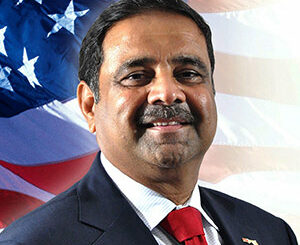
    WASHINGTON, D.C. (TIP)A prominent Indian American businessman and community leader was on Friday, March 24 reappointed by Florida Governor Ron DeSantis to the board of trustees of the prestigious University of Florida.
    “Today, Governor Ron DeSantis announced the reappointment of Digvijay “Danny” Gaekwad to the University of Central Florida Board of Trustees,” the Governor’s office said in a statement.
    Gaekwad, of Ocala, is the Founder and Chief Executive Officer of NDS USA, the Founder of Danny G Management, the Founder of Danny Development and Investments, and the Owner of DG Hospitality.
    “He is the immediate past Chair of the Visit Florida Board of Directors and currently serves on the Enterprise Florida and Space Florida Board of Directors,” the media release said. Born in Baroda as the son of a Judge and grandson of a Colonel in the Indian Army, he graduated in Political Science from the Maharaja Sayajirao University of Baroda. He arrived in the United States with his wife Manisha in 1987 to live the American Dream.

  • When society is held hostage to fundamentalism

    When society is held hostage to fundamentalism

    A political discourse that foregrounds the interests of the majority and denigrates the minorities on the basis of religion forgets that religion escapes any attempt to use it instrumentally as a means of retaining power. Why, after all these years, has the bogey of Khalistan resurfaced in the political arena? Is it because the politics of Hindutva has legitimized the subordination of politics to religion?

    “The vocal supporters of Hindutva fail to recognize the distinction between religion as a faith and religion as a form of power politics. Hinduism is a complex creed. It has nothing to do with Hindutva, which has reduced a sophisticated system of faith to garish temples and rituals. I wish worship at temples and genuflections before the Brahmanical caste could wipe out hunger and want, eradicate inequality, teach its devotees respect for other religions, and, thus, deliver to all people a secure life led with dignity. But sadly, this has not happened in history. So, we have to look for other ways to hold a multi-religious community together.”

    By Neera Chandhoke

    The claim that India is distinguished by pluralism and tolerance has now achieved the dubious status of a platitude — a statement that is repeated so often that it has lost meaning and become insipid. The proposition that India is constituted as a plural society does not lead to the proposition that the ruling class values pluralism. From the late 1980s to the 1990s, literature on the need to respect multiculturalism came to us from largely immigrant societies — Canada, the US and Australia. India has been historically constituted as a plural society, but the literature gained traction in academia.

    Towards the end of the 1990s, a number of political theorists recognized that it is not enough to posit multiculturalism, for minority cultures will always be at risk in a society dominated by one community, its language, its vision of what is good and its goals. The notion of multiculturalism, or the idea that one political community contains within its boundaries a number of different faiths, was thereon buttressed by the idea of minority rights. The theoretical exercise was redundant for India, where the notion of minority rights had been incorporated into the vision of the leaders of the freedom struggle, and the authors of our Constitution. The moment the Hindutva movement began to consolidate around the objective of destroying the Babri Masjid, the issue of the rights of minorities came in the forefront of academic agendas. At the same time, it was submerged by the rush of majoritarianism.

    We learnt that plural societies are often divided societies. The division is not only between different conceptions of the good. They get divided when communities/political parties disagree on the norms that can arbitrate/regulate different conceptions of the good. Secularism provides one such norm: in the public sphere, no religion shall be advantaged and no religion shall be disadvantaged. But we live in strange times. Right-wingers believe that the majority religion should dominate the lives of all religious communities.

    The vocal supporters of Hindutva fail to recognize the distinction between religion as a faith and religion as a form of power politics. Hinduism is a complex creed. It has nothing to do with Hindutva, which has reduced a sophisticated system of faith to garish temples and rituals. I wish worship at temples and genuflections before the Brahmanical caste could wipe out hunger and want, eradicate inequality, teach its devotees respect for other religions, and, thus, deliver to all people a secure life led with dignity. But sadly, this has not happened in history. So, we have to look for other ways to hold a multi-religious community together.

    One such way, perhaps, is to recreate a political discourse that is neutral to different notions of the good. A political discourse is always public, and public discourses are based upon shared understandings. A democratic political discourse has to ensure that all interests are accommodated: the right to freedom of conscience, the right to practice one’s religion, and, above all, the obligation to allow others to do so.

    A political discourse that foregrounds the interests of the majority and denigrates as well as demeans the minorities on the basis of religion forgets that religion escapes any attempt to use it instrumentally as a means of retaining power.

    Why, after all these years, has the bogey of Khalistan resurfaced in the political arena? Why is it that, once again, this ‘failed project’ poses a potent threat to the unity of the country? Is it because the politics of Hindutva has legitimized the subordination of politics to religion?

    Our rulers fail to recognize that the instrumental use of religious violence is invariably replicated in different forms. Have they learnt nothing from the processes of competitive religious mobilization that led to the partition of India? And have citizens not understood that religious violence does not hurt the powerful who barricade themselves with iron fences? It does not harm politicians protected by cavalcades against the ravages generated by their cynical politics. Religious violence harms ordinary people, they die in bomb blasts on buses and trains, they die because they are lynched by mobs and they die because of political mobilization anchored in the most vulgarized forms of religion. Statesmen learn to hold their plural society together through political inventiveness and compassion for the people who have elected them to power. Politicians who possess inferior sensibilities divide us — we, who have learnt to live together, speak the same language, worship at dargahs of Sufi saints, share folk music and rituals, and who collectively dream of better futures for our children. Our future is at stake when once again the Indian society is held hostage to fundamentalism of any kind, whether by the merchants of Hindutva or those of Khalistan.

    For too long we have been spectators of violence against our own people by our own people. It is time to reflect on what violence has done to us, and what we have done to encourage it. In 1867, defender of freedom John Stuart Mill had said in his inaugural address at the University of St Andrews: “He is not a good man who, without a protest, allows a wrong to be committed in his name, and with the means which he helps to supply, because he will not take the trouble himself to use his mind on the subject.” This is exactly what is happening in India.
    (The author is a political scientist)


  • The limits of American power in West Asia

    The limits of American power in West Asia

    The United States has made many mistakes in West Asia, leading to a decline in its overall influence and, in turn, a policy recalibration by its allies.

    “The Carter doctrine would continue to guide the policy of successive administrations towards the Gulf and ensure that the region remained an exclusive American sphere of influence — until recently. Of late, there has been much talk about the shifting sands of Arabia. It was, however, on full display when Saudi Arabia and Iran reached an agreement earlier this month, in secret talks hosted by China, to normalize relations. Put it in context: the U.S. remained a spectator when its global rival (China) brought together one of its allies (Saudi Arabia) and a sworn enemy (Iran) to reach a potential game-changing pact in a region (Gulf) which it considered as an exclusive sphere of influence. It practically marked an end to the Carter Doctrine.”

    By Stanly Johny

    In 1980, faced with the prospect of the Soviet Union expanding its reach to the Gulf, the Carter administration in the United States came up with an aggressive approach. In the previous year, the U.S. had suffered twin setbacks in Asia — in February, the Shah’s regime in Iran, one of the pillars of America’s West Asia policy, collapsed; and in December, the Soviets sent the Red Army to Afghanistan. Outlining his policy, framed by Zbigniew Brzezinski, President Jimmy Carter had said in his State of the Union address on January 23, 1980, that “any outside force to gain control of the Persian Gulf region will be regarded as an assault on the vital interests of the U.S., and such an assault will be repelled by any means necessary, including military force”.

    The Carter doctrine would continue to guide the policy of successive administrations towards the Gulf and ensure that the region remained an exclusive American sphere of influence — until recently. Of late, there has been much talk about the shifting sands of Arabia. It was, however, on full display when Saudi Arabia and Iran reached an agreement earlier this month, in secret talks hosted by China, to normalize relations. Put it in context: the U.S. remained a spectator when its global rival (China) brought together one of its allies (Saudi Arabia) and a sworn enemy (Iran) to reach a potential game-changing pact in a region (Gulf) which it considered as an exclusive sphere of influence. It practically marked an end to the Carter Doctrine.

    Past mistakes
    This did not happen overnight. Over the past 20 years, the U.S. has made a host of mistakes in West Asia, which has led to a decline in its overall influence and an associated policy recalibration by its allies. Take the cases of Iraq, Syria and Iran — one, a country the U.S. invaded, brought regime change and occupied; two, a country where it sought regime change without a full-scale invasion; and three, a country which it sought to both contain and engage.

    When the U.S. invaded Iraq (ground), on March 20, 2003, it was at the peak of its power. America’s Arab allies lined up to support the war. But what they saw, from a security perspective, was the mindless destruction of the Iraqi state, which triggered sectarian bloodshed and led to the rise of radical Islamist outfits such as al Qaeda in Iraq, which later transformed into the Islamic State, further destabilizing the region. From a geopolitical point of view, the Iraq invasion took down a buffer that the Sunni Arab Gulf monarchies had between themselves and a Shia theocratic Iran and offered post-Saddam Iraq on a platter to Shia parties that had had historical ties with Tehran.

    When the Syrian civil war broke out, Arab monarchies found it an opportunity to push Iran back by taking out the regime in Damascus. The U.S. supported the regime change bloc, called for President Bashar al-Assad to go, offered aid to the rebels, and launched a secretive Central Intelligence Agency (CIA) programme. But, having burnt its fingers in Afghanistan, Iraq and Libya, the U.S.’s appetite for another full-scale military intervention was already diminishing. When the U.S. stopped short of an intervention in Syria, Russia and Iran moved fast, turning around the civil war. America’s allies, from Saudi Arabia to Jordan and Qatar to Turkey, who all had bet on anti-Assad forces, helplessly watched as the Syrian Army and Iran-trained militias, covered by Russian jets, destroyed the rebellion.

    American President Barack Obama, who realized that the U.S.’s endless entanglements in the region were slowing down its attempts to address emerging conventional challenges, reached out to Iran and struck a multilateral deal on its nuclear programme. The Obama plan was to reach a détente with Iran and persuade America’s Arab allies and Tehran to “share” the region. But the U.S. cutting a deal with Tehran at a time when the U.S.’s own actions had made Iran stronger angered both its Gulf allies and Israel. When U.S. President Donald Trump destroyed the nuclear deal, they welcomed it. But Mr. Trump did not have an alternative to check Iran’s immediate conventional military power. When Tehran responded to Mr. Trump’s “maximum pressure” with maximum resistance, particularly targeting Saudi Arabia and the United Arab Emirates (UAE), the U.S. looked away.

    Current limitations
    Today, the U.S. is aware of its limitations. It is also facing bigger conventional challenges elsewhere. So, to address this task of retaining America’s influence in West Asia with reduced commitments, the U.S. came up with the proposal of collectivizing its alliances — bringing Arab allies and Israel closer so that Israel can take a larger security role in a collective front against Iran.

    But this approach has at least three problems. One, with its reprioritization of West Asia, the U.S.’s leverage over its allies is slipping, which is emboldening the allies to take their own foreign decisions.

    Second, Israel’s continuing occupation of the Palestinian territories could play a spoiler in the bid to collectivize alliances. The UAE not only agreed to normalize ties with Israel through the Abraham Accords but also amended ties with Iran and warmed up to Syria and Turkey. Saudi Arabia, on the other side, resisted embracing Israel. Instead, the Kingdom, arguably the most powerful Arab country, saw an alternative for stability in the China-mediated peace plan with Iran. Third, Israel, the lynchpin of America’s collectivization strategy, itself is resisting American influence. Israel’s new government is moving ahead with its judicial overhaul plan despite pressure from Washington. Israel also refused to join the western sanctions against Russia and refused to send weapons to Ukraine.

    Multi-pillar region
    As the U.S.’s reprioritization of West Asia is leaving behind a vacuum, its allies are trying to establish more predictable ties with friends and foes, creating their own spheres of influence and emerging as the new pillars of the region. Israel wants to strengthen its ties with the Arab world to face down Iran without compromising on Palestine. Iran wants to break out of the economic chokehold of sanctions and realize its true potential. Turkey wants to swing back to a region which it once dominated, and Saudi Arabia wants to become the natural leader of the Arab world. And China, the new superpower on the block, wants to make sure that its economic interests are protected.

    This does not mean that America is going to retreat from the region. The U.S. has several bases and tens of thousands of troops deployed across the region, and it will continue to play a major security role. But the Gulf or the larger West Asia is no longer an exclusive American sphere of influence, as Mr. Carter and Zbigniew Brzezinski had imagined. It is too early to say whether the regional realignments, including the Saudi-Iran reconciliation, would survive the infamously fractious geopolitics of West Asia. But there are three constants in this whirlwind — America’s declining ability to shape geopolitical outcomes in the region, China’s continued rise and a growing appetite for the U.S.’s allies to make autonomous foreign policy choices. This is new terrain for America in West Asia.

    (The author is an editor with The Hindu)

  • Renuka Chowdhury to file defamation case against PM Modi over alleged ‘Surpanakha’ remark

    Renuka Chowdhury to file defamation case against PM Modi over alleged ‘Surpanakha’ remark

    NEW DELHI (TIP): Congress leader Renuka Chowdhury has said that she will be filing a defamation case against PM Modi over his alleged ‘Surpanakha’ remark made in Parliament back in 2018. The ex-MP took to Twitter to share a video of Modi’s speech where he linked her laughter to the Hindu epic Ramayana.
    Watch the video: https://twitter.com/i/status/1638927867018092545
    Chowdhury wrote, “This classless megalomaniac referred to me as Surpanakha on the floor of the house. I will file a defamation case against him. Let’s see how fast courts will act now.” In the video, PM Modi purportedly addresses other BJP parliamentarians where he asks them to let Chowdhury continue speaking as since the Ramayana serial, it is only today that they have got the privilege to hear the same famous laughter.
    Chowdhury’s charge against PM Modi comes amid the guilty verdict handed by a Surat court against Rahul Gandhi in the 2019 criminal defamation case over his Modi surname remark. He was disqualified as a lawmaker after a Surat court found him guilty of defamation and sentenced him to two years in prison, according to a Parliament notice.
    The case was filed against Gandhi for his alleged “how come all the thieves have Modi as the common surname?” comments on a complaint lodged by BJP MLA and former Gujarat minister Purnesh Modi. The court granted him bail and suspended the sentence for 30 days to allow him to appeal in a higher court, the Congress leader’s lawyer Babu Mangukiya said. The Lok Sabha MP from Wayanad made the remarks while addressing a rally at Kolar in Karnataka on April 13, 2019, during Lok Sabha poll campaigning.

  • Disqualify me for life, will keep fighting for democracy: Rahul

    Disqualify me for life, will keep fighting for democracy: Rahul

    Opposition holds protest march alleging ‘democracy in danger’; seeks JPC probe into Adani issue

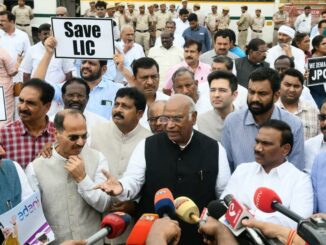
    NEW DELHI (TIP): After losing his Lok Sabha membership following a two-year sentence in a 2019 defamation case, Congress leaders Rahul Gandhi told the media on Saturday, March 25 that he was disqualified because Prime Minister Narendra Modi was “scared of his next speech in Parliament on industrialist Gautam Adani”.
    I’m Gandhi, not Savarkar
    My name is not Savarkar, my name is Gandhi and Gandhi does not offer an apology to anyone.Declaring that he was not scared of disqualification or going to jail, Rahul (52) said he would keep asking questions even if that meant disqualification for life.
    “Disqualify me for life or put me in jail, I will keep fighting for democracy. I will not stop,” he said.
    Rahul alleged that they (BJP government) did not want him to attend Parliament. “The PM was terrified of my next speech. I see fear in his eyes. That’s the reason for the ‘distraction’ in Parliament and now my disqualification,” the former Wayanad MP said at a press conference at the AICC headquarters with top leaders, including Chief Ministers Ashok Gehlot and Bhupesh Baghel, flanking him. Claiming that he was here defending the democratic voice of the Indian people, he said, “I will continue to do that. I am not scared of these threats, disqualifications, allegations or prison sentences. These people don’t understand me yet, I am not scared of them.”
    While the Congress top brass later held a strategy meeting and vowed to take the fight to the ground, Rahul termed the developments as a “panic reaction by the government”. “They have given the Opposition the biggest weapon,” he noted, thanking other parties for rallying behind him and urging them to work together.
    The former Congress chief was, however, evasive about the BJP spinning his defamatory remarks “How come all thieves have Modi surname” into an anti-OBC narrative. “Everything the government is doing, including the OBC narrative, is meant to distract from the main question about the relationship between PM and Adani and about whose Rs 20,000 crore are invested in Adani’s shell companies,” he said. Rahul reiterated his London remarks today saying “democracy had been finished in India”.
    The Congress leader, who plans to start the second leg of his ‘Bharat Jodo Yatra’ soon, alleged that Union ministers lied that he sought foreign intervention to save Indian democracy. “I never said foreign powers should help us. I said fixing democracy is our own issue but I was not allowed to respond in the Lok Sabha. When I met Speaker Om Birla to seek permission, he smiled and said he could not do anything,” he said, refusing to comment on his legal strategy.
    Maintaining that he would not apologize, he said, “My name is not Savarkar, my name is Gandhi and Gandhi does not offer an apology to anyone.” He said during his ‘yatra’, he had spoken of bringing all segments together (in reference to BJP’s anti-OBC offensive).
    Rahul, who had tendered an unconditional apology to the apex court for attributing “Chowkidar chor hai” comments to the SC, also said that he did not care whether or not he was an MP. “My mission is to speak the truth and I will continue with my ‘tapasya’ (mission),” he said. Rahul is said to be planning to soon write a letter to the people of Wayanad explaining how he felt about the turn of events. The Congress will hold a ‘satyagrah’ across the country on Sunday, March 26.
    (Source: TNS)

  • India, US condemn assault on senior  journalist Lalit K. Jha by Khalistani protestors in Washington

    India, US condemn assault on senior journalist Lalit K. Jha by Khalistani protestors in Washington

    WASHINGTON, D.C. (TIP): After a Washington DC-based Indian journalist was allegedly attacked by Khalistan supporters, the Indian embassy in the United States has condemned the incident in a statement released on Saturday, March 25. “We condemn such a grave and unwarranted attack on a senior journalist. Such activities only underscore the violent and anti-social tendencies of the so-called ‘Khalistani protestors’ and their supporters, who routinely engage in wanton violence and vandalism,” the statement from the Indian embassy said.
    “We have seen disturbing visuals of a senior Indian journalist from the Press Trust of India being abused, threatened & assaulted physically while covering so-called ‘Khalistan protest’ in Washington DC earlier today,” the Indian embassy in U.S. said in a press release on Saturday, March 25.
    The statement said, “We understand that the journalist was first verbally intimidated, then physically assaulted, and fearing for his personal safety and well-being, had to call in law enforcement agencies, who responded promptly.” The Indian embassy in their statement also thanked the law enforcement agencies for their prompt response in the matter.
    Mr. Jha on Sunday thanked U.S. Secret Service for protecting him and helping him do his job. He said he was hit on his left ear with two sticks by pro-Khalistan supporters. He also shared a video of the Khalistani supporters on his Twitter handle. “Thank you @SecretService 4 my protection 2day 4 helping do my job, otherwise I would have been writing this from the hospital. The gentleman below hit my left ear with these 2 sticks & earlier I had to call 9/11 & rushed 2 police van 4 safety fearing physical assault,” Mr. Jha tweeted on Sunday.
    “At one point I felt so threatened that I called 911. I then spotted Secret Service officers and narrated the incident to them,” Mr. Jha told ANI. However, the journalist decided to take no action against those who heckled him. “The pro-Khalistan protestors in support of Amritpal Singh waved Khalistan flags and descended upon the embassy in the presence of the US Secret Service. They even openly threatened to vandalize the embassy and threatened the Indian Ambassador Taranjit Singh Sandhu,” Mr. Jha told ANI.
    The protesters came in from different parts of the DC-Maryland-Virginia (DMV) area. Multiple events of protests by supporters of Khalistan have been staged outside the Indian embassy and the San Francisco Consulate. Earlier this week the Indian Consulate in San Francisco was also attacked on March 20. Visuals shared online show a huge mob brandishing Khalistan flags mounted on wooden poles, using them to smash glass doors and windows of the consulate building. They raised pro-Khalistan slogans as they broke through makeshift security barriers raised by the city police and installed two Khalistan flags inside the premises.
    The United States strongly condemned the attack on the Indian consulate in San Francisco by a group of separatist Sikhs, terming it absolutely unacceptable. The United States has condemned the attack on the Indian Consulate in San Francisco and any attack against diplomatic facilities within the U.S.
    The U.S. has pledged to defend the safety and security of these facilities as well as the diplomats who work within them. “The United States condemns the attack against the Indian Consulate and any attack against diplomatic facilities within the United States. We pledge to defend the safety and security of these facilities as well as the diplomats who work within them,” U.S. State Department spokesperson told ANI.
    U.S. National Security Advisor Jake Sullivan said via Twitter that the U.S. condemns the acts of violence against the Indian Consulate in San Francisco. He further said that the U.S. is committed to the safety and security of Indian diplomats. Prof. Indrajit S Saluja, President, Journalists Beyond Borders, an international association of journalists, condemned the dastardly assault on senior fellow journalist Lalit K. Jha by the protesting Khalistanis , and has demanded from the administration prompt action, under the law, against the assailants. He said while everyone had the freedom of expression and the right to protest, nobody under the US law is allowed to physically assault a person.

  • Eric Garcetti sworn in as US envoy to India

    Eric Garcetti sworn in as US envoy to India

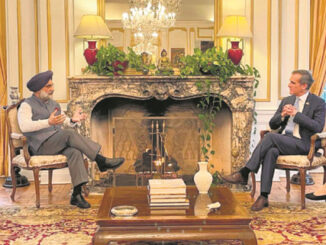
    WASHINGTON, D.C. (TIP): US Vice-President Kamala Harris on Friday, March 24, swore in her fellow Californian, Eric Garcetti, as the next US Ambassador to India. “Ambassador Garcetti is a committed public servant and will play a critical role in strengthening our partnership with the people of India,” said Harris in a Twitter post shortly after the swearing-in ceremony. External Affairs Ministry spokesperson Arindam Bagchi said at a media briefing, “We welcome the confirmation of Eric Garcetti as the US Ambassador to India. We look forward to working with him to take forward the multifaceted bilateral relations.” India’s envoy to the US Taranjit Singh Sandhu met Garcetti and discussed the immediate priorities in deepening the bilateral strategic partnership. “As he prepares to depart for India, we discussed some immediate priorities in deepening the bilateral partnership in line with our leaders’ vision,” tweeted Sandhu.
    Garcetti was not confirmed for two years due to concerns by some lawmakers that he had not adequately handled allegations of sexual assault and harassment against a former senior adviser.
    Garcetti’s nomination was also welcomed by a large number of politicians, entrepreneurs as well as India-American businessmen working on the Indo-US trade circuit.
    Mayor of Los Angeles since 2013, Garcetti served for 12 years as an Intelligence Officer in the US Navy Reserve Component, including a stint with the Pacific Fleet and the Defense Intelligence Agency.
    He was also a City Council member for 12 years and oversaw the busiest container port in the Western Hemisphere, the largest municipal utility in the country, and one of the busiest airports in the world. He led LA’s successful bid to return the summer Olympic Games to American soil for the first time in three decades. He currently chairs LA Metro, the country’s second-busiest transit agency, which is building or extending 15 new transit lines and shifting to an all-electric fleet, said a White House brief.

  • Misplaced priorities

    Misplaced priorities

    The Congress leader erred, but it does not justify the stalling of Parliament

    The temple of democracy, Parliament, is locked down to satiate bruised egos. The people are deprived of their right to hear arguments advanced by proponents and opponents. Instead, an outrageous demand is made that their bête noir be banished from the Lok Sabha! That will mollify egos, but will it get Parliament to function?

    “It is true that he works 24×7, that he has achieved a lot, especially in the area of infrastructure development. But it is not correct for him, and his efficient propaganda machine, to constantly repeat that nothing was done or achieved before his arrival on the scene. The pace has certainly picked up since 2014, but the work had begun in 1947! If Modi had been presented with an India that existed in 1947, untouched by the Nehru-Gandhis, or other Prime Ministers who followed, he would not have accomplished what we now see in 2023. It is a work in progress and that work will certainly continue after his term.”

    By Julio Ribeiro

    Rahul Gandhi has been in the news. The ruling party, which has been entrusted with the job of running Parliament, did exactly the opposite all through last week. It did not permit Parliament to function over its demand for an apology from Rahul for his ‘anti-national’ speech during his recent visit to the UK. Rahul had made some uncalled-for remarks which he should not have made. They were provocative and unpardonable.

    No head of state rails against his political opponents when she or he travels on our soil. Why is it that Modi and Rahul indulge in such unbecoming talk overseas?

    It is easy to twist words that disparage you or the ideology you represent. It is sycophancy of the worst form to say that ‘Modi is India’, just as it had once been proclaimed that ‘Indira is India and India is Indira’. The Congress president in those days was a known sycophant. I cannot make the same accusation against the BJP’s president but I can say with all certitude that the BJP has the most effective, well-oiled propaganda machine that can make innocents believe the untruths it disseminates. Rahul gave the BJP’s propaganda cell a lot of ammunition to trouble him!

    Let us examine what Rahul said, where he said it and when. At Chatham House in London, where a local think-tank is headquartered, he said: ‘Democracy in India is a global, public good. It impacts way further than our boundaries. If Indian democracy collapses, in my view, democracy on the planet suffers a very serious, possibly fatal blow. So, it is important for us. We will deal with our problem, but you must be aware that this problem is going to play out on a global scale!’ But at Cambridge University and other fora, his utterances were childish. To say that Sikhs were being treated as second-class citizens by our government is not only incorrect, but also very, very dangerous!

    But can you find anything particularly anti-national about what he said? The Goebbelsian lie that was sought to be disseminated, that he appealed to foreign countries to intervene, is just simply what it was meant to be — a lie. Perhaps, he could have put it somewhat differently. His statements have been twisted to ensure that Parliament was immobilized. That is probably what the ruling party wanted — a relief from discussing contentious issues.

    Instead of talking about the Opposition’s woes in foreign lands, Rahul should concentrate on the recipe for success against a formidable opponent like Narendra Modi. He has to sit down and strategize for a victory at the hustings. His party has lost even the two northeastern states where earlier it had a major say for decades!

    The Bharat Jodo march was easily the best thing he had attempted. It opened up the possibility of dividends which, unfortunately, he failed to exploit. Of course, it is easier to talk about his travails at gatherings in Cambridge and assorted think-tanks in the UK than revitalize grassroots Congress cells. The BJP has been working on it for years. It now dominates the political scene. It will take more than Opposition unity to remove it from its pole position.

    Unless the BJP loses power, the travails of the leaders of other parties in the Opposition will continue to haunt them. They should not be surprised if the ED, the CBI or the taxman comes knocking. The BJP has rewritten the rules of the game. The Congress and the parties that preceded  it into office did not use Central agencies against political opponents as is being done today. Many known offenders cross over to the BJP to get off the radar of the investigative agencies. Since many politicians have their hands soiled, it will be the BJP that soon will be stacked with these ‘converted’ newcomers of uncertain integrity.

    It is interesting that the AAP has not lost any of its legislators or leaders to the BJP. Except the leftists, who are ideologically committed, most other parties have hemorrhaged. The Congress has parted with the biggest slice of ‘Gaya Rams’. With its coffers full and pliable Central agencies at its beck and call, the BJP today calls the shots. To its credit, it has worked hard and maintained an iron hold on its cadres. The ‘Aaya Rams’ may not hold out if and when it loses power in the distant future.

    But let us revert to the speeches of our political leaders when travelling abroad. Our PM leads the pack. At home, he never fails to denigrate the dynasty spawned by Jawaharlal Nehru. Does he do this abroad also? When he first travelled abroad as PM, it was reported in the media that he had disparaged those who preceded him in office! He never fails to tell the world that all the progress the country has made started only in 2014, the year he was installed as PM.

    It is true that he works 24×7, that he has achieved a lot, especially in the area of infrastructure development. But it is not correct for him, and his efficient propaganda machine, to constantly repeat that nothing was done or achieved before his arrival on the scene. The pace has certainly picked up since 2014, but the work had begun in 1947! If Modi had been presented with an India that existed in 1947, untouched by the Nehru-Gandhis, or other Prime Ministers who followed, he would not have accomplished what we now see in 2023. It is a work in progress and that work will certainly continue after his term.

    I have never heard a visiting head of state rail against his political opponents on our soil. Why is it that our PM and Rahul Gandhi indulge in such unbecoming talk when visiting foreign lands? It is peevish and undignified.

    To add insult to injury, the people of this nation suffer for no fault of theirs. The temple of democracy, Parliament, is locked down to satiate bruised egos. The people are deprived of their right to hear arguments advanced by proponents and opponents. Instead, an outrageous demand is made that their bête noir be banished from the Lok Sabha! That will mollify egos, but will it get Parliament to function?

    (The author is a former governor and a retired Indian Police Service officer)

  • Chilling effect: On defamation, free speech and the Rahul Gandhi case

    Congress leader Rahul Gandhi’s conviction and jail term flags need to abolish criminal defamation

    The rigors of the law and the tribulations of politics have come together to bedevil Congress leader Rahul Gandhi. An election-time jibe he had made in 2019 — ‘how come all of these thieves have Modi in their names?’ — has been declared by a court in Surat to be defamatory. Mr. Gandhi has been sentenced to two years in prison, the maximum sentence for criminal defamation, and disqualified from his membership in the Lok Sabha. Both the conviction and sentence raise legal questions. Does the remark amount to defaming anyone in particular, or to people with the surname ‘Modi’ as a group? Case law indicates that the expression ‘collection of persons’ used in Section 499 of the IPC, with reference to those who can be defamed, has to be an identifiable class or group and that the particular member who initiates criminal proceedings for defamation must demonstrate personal harm or injury by the alleged defamatory statement. It is difficult to sustain the argument that all those with the surname, and not merely the three individuals including Prime Minister Narendra Modi who were referred to, can be aggrieved persons. Also, it is not clear if the complainant, BJP MLA Purnesh Modi, had shown that he was aggrieved by the alleged slur either personally or as a member of the ‘Modi’ group.

    The maximum sentence is also troubling. Statutes prescribe maximum jail terms so that trial courts use their discretion to award punishments in proportion to the gravity of the crime. It is questionable whether attacking an indeterminate set of people with a general remark will amount to defamation, and even if it did, whether it is so grave as to warrant the maximum sentence. The correctness of the judgment will be decided on appeal, but the political cost to Mr. Gandhi in the form of disqualification from the House and from electoral contest will have a lasting impact, unless he obtains a stay on the conviction rather than mere suspension of sentence. In a country that often frets over criminalization of politics, corruption and hate speeches, it is ironic that criminal defamation should overwhelm the political career of a prominent leader. A modern democracy should not treat defamation as a criminal offence at all. It is a legacy of an era in which questioning authority was considered a grave crime. In contemporary times, criminal defamation mainly acts as a tool to suppress criticism of public servants and corporate misdeeds. In 2016, the Supreme Court upheld criminal defamation without adequate regard to the chilling effect it has on free speech, and to that, one must now add, political opposition and dissent. Opposition parties expressing dismay at the verdict against Mr. Gandhi should include abolishing criminal defamation in their agenda.

    (The Hindu)

  • No to sealed cover

    Apex court advocates transparency and fairness

    The Supreme Court’s refusal to accept the Centre’s sealed note about its views on One Rank, One Pension arrears follows a similar rejection of a sealed envelope that contained the government’s report on suggestions about an expert panel regarding the Hindenburg row. Former Chief Justice of India (CJI) Ramana was critical of the sealed-cover practice, and now the disapproval by CJI Chandrachud marks a welcome step forward. Though the apex court itself gave legitimacy to the practice over the years, there appears to be a shift in the stance, for it undermines the cause of transparency and fairness in the judicial process. There’s a need to put an end to this as it makes the process of adjudication opaque and vague, setting a dangerous precedent, a Bench stated recently.

    Sealed covers have been accepted by courts in cases involving departmental inquiries, sexual assault, sharing of state secrets, personal liberty and terrorism. Based on the principle of confidentiality, the submission of information without making it available to the parties involved in the case or the public, however, has been a matter of debate. A sealed cover, it has been argued, is relevant only when state privilege is claimed, but the bar to claim it has to be set high. Selective censoring of information can amount to violating the right to a fair trial. The practice of sealed covers has drawn criticism for often being used when the government feels uncomfortable about revealing its views or information. An oral observation in the apex court addressed the concerns by noting that the measure of non-disclosure of sensitive information in exceptional circumstances must be proportionate to the purpose the non-disclosure seeks to serve.For cases of a sensitive nature, in-camera proceedings are always an option. The other side not knowing what has been shown to the court would not conform to the principle of fair play and justice.

    (Tribune, India)

  • Fed delivers small rate hike, says ‘some additional’ tightening possible

    Fed delivers small rate hike, says ‘some additional’ tightening possible

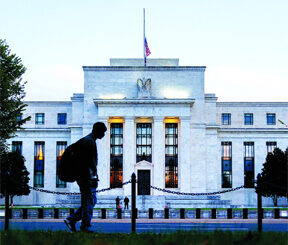
    Washington (TIP)- The Federal Reserve on Wednesday, March 22, raised interest rates by a quarter of a percentage point, but indicated it was on the verge of pausing further increases in borrowing costs amid recent turmoil in financial markets spurred by the collapse of two U.S. banks. The move set the U.S. central bank’s benchmark overnight interest rate in the 4.75%-5.00% range, with updated projections showing 10 of 18 Fed policymakers still expect rates to rise another quarter of a percentage point by the end of this year, the same endpoint seen in the December projections.
    But in a key shift driven by the sudden failures this month of Silicon Valley Bank (SVB) and Signature Bank, the Fed’s latest policy statement no longer says that “ongoing increases” in rates will likely be appropriate. That language had been in every policy statement since the March 16, 2022 decision to start the rate hiking cycle.
    Instead, the policy-setting Federal Open Market Committee said only that “some additional policy firming may be appropriate,” leaving open the chance that one more quarter-of-a-percentage-point rate increase, perhaps at the Fed’s next meeting, would represent at least an initial stopping point for the rate hikes.
    Though the policy statement said the U.S. banking system is “sound and resilient,” it also noted that recent stress in the banking sector is “likely to result in tighter credit conditions for households and businesses and to weigh on economic activity, hiring, and inflation.”
    There were no dissents on the policy decision.
    The document made no presumption that the battle with inflation has been won. The new statement dropped language saying that inflation “has eased” and replaced it with the declaration that inflation “remains elevated.”
    Job gains are “robust,” according to the Fed. Officials projected the unemployment rate to end the year at 4.5%, slightly below the 4.6% seen as of December, while the outlook for economic growth fell slightly to 0.4% from 0.5% in the previous projections. Inflation is now seen ending the year at 3.3%, compared to 3.1% in the last projections.
    The outcome of the two-day meeting this week marks an abrupt repositioning of the central bank’s strategy from just two weeks ago, when Fed Chair Jerome Powell testified in Congress that hotter-than-expected inflation would likely force the central bank to raise interest rates higher and possibly faster than expected.
    The March 10 collapse of California-based SVB and the subsequent collapse of New York-based Signature Bank highlighted broader concerns about the health of the banking sector, and raised the possibility that further Fed rate increases might tip the economy towards a financial crisis. Source: Reuters

  • Unlike global economy, India will not slow down, says RBI

    Unlike global economy, India will not slow down, says RBI

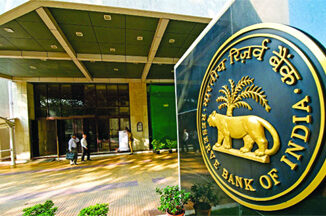
    Mumbai (TIP)-Unlike the global economy, India would not slow down and maintain the pace of expansion achieved in 2022-23, an RBI article said. “We remain optimistic about India, whatever the odds,” said the article on the state of the economy published in the March edition of the Reserve Bank bulletin.
    The NSO’s end-February data release indicates that the Indian economy is intrinsically better positioned than many parts of the world to head into a challenging year ahead, mainly because of its demonstrated resilience and its reliance on domestic drivers, it said.
    Even as global growth is set to slow down or even enter a recession in 2023 as global financial markets wager, India has emerged from the pandemic years stronger than initially thought, with a steady gathering of momentum since the second quarter of the current financial year, it said.
    “Year-on-year growth rates do not reflect this pick-up of pace because by construction they are saddled with statistical base effects, and instead suggest a sequential slowing down through successive quarters of 2022-23 to an unsuspecting reader,” said the article.
    The article has been authored by a team led by RBI Deputy Governor Michael Debabrata Patra.
    The authors further said India’s real GDP can go up from Rs 159.7 lakh crore in 2022-23 to Rs 170.9 lakh crore against the current projection of Rs 169.7 lakh crore in 2023-24.
    “This is simple arithmetic; hardly a hurray at half-time. Also, unlike the global economy, India would not slow down – it would maintain the pace of expansion achieved in 2022-23. We remain optimistic about India, whatever the odds,” the article said. Source: PTI

  • Hindenburg: Adani’s wealth down 60%

    Hindenburg: Adani’s wealth down 60%

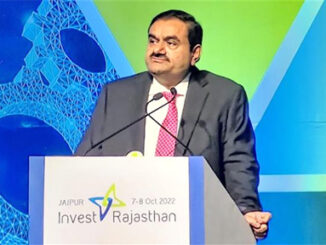
    Industrialist Gautam Adani’s fortunes have suffered a severe setback on concerns over corporate governance and accounting fraud, leading to Reliance Industries’ Mukesh Ambani replacing the Ahmedabad-based industrialist as the richest Indian. Adani lost Rs 3,000 crore of wealth every week over the last year and his overall networth is down 60% from its peak, as per the M3M Hurun Global Rich List, which pegged Adani’s overall fortune at $53 billion as of mid-March. Ambani also suffered a decline in his fortune but could displace Adani as the richest Indian as his networth declined by 20% to $82 billion.
    Earlier, US-based short-seller Hindenburg Research published a report accusing the Adani group of large-scale accounting fraud and stock manipulation, leading to serious concerns and a free fall in Adani Group companies’ share prices. The Gautam Adani-led conglomerate has denied these allegations.

  • Bank of England ups rates by .25%

    Notwithstanding a surprising increase in inflation revealed on Wednesday, the Bank of England increased interest rates by another quarter of a percentage point on Thursday and stated that it anticipates the British inflation spike to subside more quickly than before. The BoE’s nine rate-setters voted 7-2 to raise the Bank Rate by 25 basis points, to 4.25%, sounding more optimistic about the outlook for the modest rate of economic development in the nation. Although it was the smallest jump since June of last year, that was its 11th straight increase in borrowing prices since December 2021. Swati Dhingra and Silvana Tenreyro of the Monetary Policy Committee voted against hiking rates, but Catherine Mann supported the very modest 25 basis-point rise. Mann has been the committee’s biggest proponent of raising rates gradually.
    The BoE maintained its message that the MPC saw less urgency about extending its quick run of rate hikes. The BoE is seeking to combine a dismal economic forecast and concerns about global banks with stubbornly high inflation. The tightness of labor market conditions, the behavior of wage growth, and the inflation of services are all indicators of ongoing inflationary pressures, according to the BoE.

  • Two of Uranus’ Moons may have active oceans, says NASA

    Two of Uranus’ Moons may have active oceans, says NASA

    One or two of Uranus’ 27 moons — Ariel and/or Miranda — likely have oceans beneath their icy surfaces and are actively spewing material into the space environment, according to a study by NASA. Previously, Jupiter, Saturn and Neptune were found as hosts to at least one icy moon that’s pumping particles into its planetary system.
    In the study led by the Johns Hopkins Applied Physics Laboratory (APL) in Maryland, US, researchers reanalysed nearly 40-year-old energetic particle and magnetic field data taken by NASA’s Voyager 2 spacecraft — the only spacecraft so far to have gone to Uranus.
    They found a trapped population of energetic particles the spacecraft had observed while departing Uranus — the turquoise, tilted oddball of the solar system.
    “What was interesting was that these particles were so extremely confined near Uranus’ magnetic equator,” said lead author Ian Cohen, a space scientist at APL.
    Magnetic waves within the system would normally cause them to spread out in latitude, he explained, but these particles were all cramped near the equator between the moons Ariel and Miranda.
    Scientists originally attributed these features to Voyager 2’s possibly having flown through a chance stream of plasma being “injected” from the distant tail of the planet’s magnetosphere. But that explanation doesn’t hold, Cohen said. “An injection would normally have a much broader spread of particles than what was observed.” The team suspects the particles arise from Ariel and/or Miranda through either a vapour plume similar to that seen on Enceladus or through sputtering — a process where high-energy particles hit a surface, ejecting other particles into space.
    Yet scientists have already suspected Uranus’ five largest moons — Ariel and Miranda included — may have subsurface oceans. Voyager 2 images of both moons show physical signs of geologic resurfacing, including possible eruptions of water that froze on the surface.
    Source: IANS

  • Google begins opening access to its ChatGPT competitor Bard

    Google begins opening access to its ChatGPT competitor Bard

    Alphabet Inc’s Google began the public release of its chatbot Bard, seeking users and feedback to gain ground on Microsoft Corp in a fast-moving race on artificial intelligence technology.
    Starting in the US and the UK, consumers can join a waitlist for English-language access to Bard, a programme previously open to approved testers only. Google describes Bard as an experiment allowing collaboration with generative AI, technology that relies on past data to create rather than identify content. The release last year of ChatGPT, a chatbot from the Microsoft-backed startup OpenAI, has caused a sprint in the technology sector to put AI into more users’ hands. The hope is to reshape how people work and win business in the process.
    Just last week, Google and Microsoft made a flurry of announcements on AI, two days apart. The companies are putting draft-writing technology into their word processors and other collaboration software, as well as marketing related tools for web developers to build their own AI-based applications. Asked whether competitive dynamics were behind Bard’s rollout, Jack Krawczyk, a senior product director, said Google was focused on users. Internal and external testers have turned to Bard for “boosting their productivity, accelerating their ideas, really fueling their curiosity,” he said. In a demonstration of the site bard.google.com to Reuters, Krawczyk showed how the program produces blocks of text in an instant, different from how ChatGPT types out answers word by word.
    Bard also included a feature showing three different versions or “drafts” of any given answer among which users could toggle, and it displayed a button stating “Google it,” should a user desire web results for a query.
    Accuracy, however, is still a concern. “Bard will not always get it right,” a Google pop-up notice warned during the demo. Last month, a promotional video for Bard showed the program answering a question incorrectly, helping shave $100 billion off Alphabet’s market value.
    Google highlighted a couple mistakes during this week’s demo to Reuters, for instance saying Bard wrongly claimed ferns required bright, indirect light in response to one query.
    Bard also produced nine paragraphs of text when asked for four in another question. After that answer, Krawczyk clicked a thumbs-down feedback button in response.

    Source: Reuters

  • SpaceX Starship may take 1st flight in April: Elon Musk

    Long awaited, SpaceX Starship vehicle could launch on its first-ever orbital test flight by the end of April this year, according to CEO Elon Musk. However, the first flight depends on licence approval from the US Federal Aviation Administration (FAA). “SpaceX will be ready to launch Starship in a few weeks, then launch timing depends on FAA licence approval,” Musk wrote on Twitter. “Assuming that takes a few weeks, the first launch attempt will be near the end of the third week of April,” he added.
    Starship consists of a giant first-stage booster called Super Heavy and a 50 metres upper-stage spacecraft known as Starship. Both stainless-steel vehicles are designed to be fully and rapidly reusable, and both are powered by SpaceX’s next-gen Raptor engine — 33 for Super Heavy and six for Starship.
    Musk said recently that there is only a 50 per cent chance that the first-ever orbital mission of SpaceX’s huge Starship vehicle will be a success.
    But he also stressed that SpaceX is building multiple Starship vehicles at the South Texas site. These will be launched in relatively quick succession over the coming months, and there’s about an 80 per cent chance one of them will reach orbit this year.
    “So I think we’ve got, hopefully, about an 80 per cent chance of reaching orbit this year,” Musk said during an interview at the Morgan Stanley Conference.
    “It’ll probably take us a couple more years to achieve full and rapid reusability.” The giant, stainless-steel vehicle will be the most powerful rocket ever to fly, featuring about 2.5 times more thrust at liftoff than NASA’s iconic Saturn V, Space.com reported Musk as saying at the conference.

  • Whatsapp rolling out ‘Groups in common’ section within search bar on beta

    Meta-owned messaging platform WhatsApp is rolling out a new feature for some beta testers on Android and iOS, which allows users to see a list of groups they have in common with the contact they are searching for.
    Beta users will see a new ‘Groups in common’ section when searching for contacts within the search bar, reports WABetaInfo. The new feature gives users more information when searching for contacts within the search bar.
    It is currently available for some testers, and is expected to be rolled out to more users over the coming days, the report said.
    This feature is the same as the one rolled out on WhatsApp Desktop, which allows users to see the groups they have in common with their contacts without opening their chat information to see the list of groups in common.
    Meanwhile, last week, it was reported that the messaging platform was rolling out a new “approve new participants” feature in group settings for some beta testers on Android and iOS.

  • Eating almonds before meals may improve blood sugar in prediabetics

    Eating almonds before meals may improve blood sugar in prediabetics

    Snacking on almonds before meals improved blood sugar control in overweight and obese people with prediabetes, according to two new studies conducted in Indian participants. The first study conducted over three days was published in the European Journal of Clinical Nutrition and the second carried over three months appears in the journal Clinical Nutrition ESPEN.
    The researchers found that three-month almond intervention reversed prediabetes, or glucose intolerance, to normal blood sugar levels in nearly one quarter (23.3 per cent) of the people studied.
    In both the studies, 60 people ate 20 grammes of almonds, around a small handful, 30 minutes before breakfast, lunch, and dinner throughout the study durations.
    They found better glucose control over time through dietary strategies like including almonds could help stave off diabetes progression, the researchers said.
    “Results from our studies indicate almonds might be a key differentiator in helping regulate blood glucose levels as part of a dietary strategy,” said study lead author Anoop Misra, Professor and Chairman, Fortis-C-DOC Centre of Excellence for Diabetes, Metabolic Diseases, and Endocrinology, New Delhi.
    “These results showcase that the simple addition of a small portion of almonds before each meal can quickly and drastically improve glycemic control in Asian Indians in India with prediabetes in just three days,” Misra said.
    Almonds’ nutritional makeup of fibre, monounsaturated fats, zinc, and magnesium work together to help provide better glycemic control and reduce hunger, the researchers said. Seema Gulati, head, Nutrition Research Group, National Diabetes, Obesity, and Cholesterol Foundation, and co-author of the studies, noted that in view of the increasing prevalence of diabetes, dietary strategies like consuming almonds 30 minutes before major meals offers a good option to decrease the spike in blood glucose levels after meals.
    The study participants were randomised into either the almond treatment group or into the control group. Both were provided with diet and exercise counselling as well as home-use glucometers to measure their glucose levels, which were recorded in diaries along with dietary intake and exercise.
    Eating 20 grammes of almonds ahead of breakfast, lunch, and dinner, for three months resulted in statistically significant reductions for the treatment group in body weight, body mass index, waist circumference, skinfold tests for shoulder and hip areas, as well as improved handgrip strength, the researchers said. Source: PTI

  • Mediterranean diet may cut heart disease, death risk in women by 25%

    Mediterranean diet may cut heart disease, death risk in women by 25%

    Women follow a Mediterranean diet to improve your heart health and reduce your risks of cardiovascular disease and death by nearly 25 percent, suggests a study.
    The Mediterranean diet is rich in wholegrains, vegetables, fruit, legumes, nuts, and extra virgin olive oil; moderate in fish/shellfish; low to moderate in wine; and low in red/processed meats, dairy products, animal fat, and processed foods. Cardiovascular disease accounts for more than a third of all deaths in women around the world. While a healthy diet, including Mediterranean diet, has been a key plank of prevention, most relevant clinical trials have included relatively few women or haven’t reported the results by sex, the researchers said.
    The new study, published in the journal Heart, is the first to focus on the association between a Mediterranean diet and incident CVD and death, specific to women.
    “We found that a Mediterranean diet was beneficial in women, with a 24 per cent lower risk of CVD and a 23 per cent lower risk of total mortality,” said researchers including from the University of Sydney.
    The risk of coronary heart disease was 25 per cent lower, while that of stroke was also lower, although not statistically significant, in those who most closely followed this diet compared with those who did so the least.
    The Mediterranean diet’s antioxidant and gut microbiome effects on inflammation and cardiovascular risk factors are among the possible explanations for the observed associations, the researchers said.
    In addition, the diet’s various components, such as polyphenols, nitrates, omega-3 fatty acids, increased fibre intake and reduced glycaemic load, may all separately contribute to a better cardiovascular risk profile.
    “However, mechanisms explaining the sex specific effect of the Mediterranean diet on (cardiovascular disease) and death remain unclear,” they note, adding that the findings reinforce the need for more sex specific research in cardiology.
    “Female specific cardiovascular risk factors, including premature menopause, pre-eclampsia and gestational diabetes, or female predominant risk factors, such as systemic lupus, can all independently increase (cardiovascular disease) risk,” the researchers said. Source: IANS

  • Study finds how lymph nodes boost tumor cells after success of immunotherapy

    Study finds how lymph nodes boost tumor cells after success of immunotherapy

    According to new research, therapies may cause lymph nodes to produce tumour-fighting T cells.Typically, lymph nodes close to the tumour are removed as part of cancer treatment in case they harbour metastatic cancer cells. Nevertheless, recent study from a clinical trial conducted by Gladstone Institutes and UC San Francisco researchers demonstrates that immunotherapy can activate tumour-fighting T cells in surrounding lymph nodes.
    The study, published in Cell, suggests that leaving lymph nodes intact until after immunotherapy could boost efficacy against solid tumors, only a small fraction of which currently respond to these newer types of treatments.
    Most immunotherapies are aimed only at reinvigorating T cells in the tumor, where they often become exhausted battling the tumor’s cancer cells. But the new research shows that allowing the treatment to activate the immune response of the lymph nodes as well can play an important role in driving positive response to immunotherapy.
    “This work really changes our thinking about the importance of keeping lymph nodes in the body during treatment,” said Matt Spitzer, PhD, an investigator for the Parker Institute for Cancer Immunotherapy and Gladstone-UCSF Institute of Genomic Immunology and senior author of the study. Lymph nodes are often removed because they are typically the first place metastatic cancer cells appear, and without surgery, it can be difficult to determine whether the nodes contain metastases.
    “Immunotherapy is designed to jump start the immune response, but when we take out nearby lymph nodes before treatment, we’re essentially removing the key locations where T cells live and can be activated,” Spitzer said, noting that the evidence supporting the removal of lymph nodes is from older studies that predate the use of today’s immunotherapies. Aim for the Lymph Nodes, Not the Tumor Researchers have largely been working under the assumption that cancer immunotherapy works by stimulating the immune cells within the tumor, Spitzer said. But in a 2017 study in mice, Spitzer showed that immunotherapy drugs are actually activating the lymph nodes. “That study changed our understanding of how these therapies might be working,” said Spitzer.
    Source: ANI

  • Natural ways to make your hair grow faster

    Natural ways to make your hair grow faster

    Who doesn’t yearn for long lustrous hair? But often due to inadequate nourishment and damage, our natural hair growth is hindered. So what can we do so as to increase the pace of our hair growth? Just follow these simple tips and see the astounding results on your own.
    Trimming to the rescue
    Regular trimming of hair every eight to ten weeks ensures fast hair growth. What happens is that due to excessive dirt and sun, the end of the hair usually gets damaged and rough, inducing split ends. When you regularly trim your hair, those split ends get cut off, leaving your hair to breathe and grow without any hurdle.
    Make conditioner your friend
    You might have noticed that often the ends of the hair are thinner and damaged when compared to the root end connecting to the scalp. This is because the lower end doesn’t get nourished well. Conditioning after every hair wash helps seal the cuticle at the end and prevents the hair from further damage. This makes your hair healthier; and healthier hair grows faster.
    Relaxing hot oil massages
    A good hot oil massage can be a perfect stress buster for you. Massaging your hair with a good hot oil every week ensures that your hair is healthy and there are no more hair strands lying on your floor or brush. Try using coconut, olive or lavender oil so as to bring that beautiful luster to your hair and help you hair grow.
    Regular brushing every night
    You must have heard that excessive brushing can cause hair fall and physically harm your hair. Well, not always. It simply depends on the brush your use. Using synthetic bristles can create friction in hair and thus actually damage hair. Instead, using the right brush such as the boar bristle brush can actually increase the blood circulation of the scalp. Make sure that you are combing your hair for at least 50 times before you retire for the night. Brushing the hair makes your roots stronger and hair grow faster.
    Don’t wrap your wet hair in towel
    Most of us have a habit of wrapping our wet hairs in a towel just after shampooing, little realizing about the drawbacks of this habit. Wet hair is prone to even more hair fall and wrapping them in a towel can make this even worse. Our hairs get rubbed with those massive towel fibers making those strands of hair to fall. Instead, go for a microfiber towel, if you simply can’t resist this habit.
    Flipping your hair upside down
    It might sound strange but flipping the hair upside down can actually do wonders when it comes to growing long hair. Nothing tedious, this tip just requires flipping your hair upside down for 3 minutes daily. This induces better circulation and thus result in increased pace of hair growth.
    Say good bye to stress
    Stress can have n number of ill effects to your health; hair fall is one of them. Excessive stress due to work or personal problems can disrupt the hair cycle, refraining fast hair growth. Luxuriate in the pleasure of meditation, yoga or other breathing exercises to overcome stress which can be a hurdle in your hair growth.