Year: 2023

  • Vicky Kaushal concludes shooting for ‘Sam Bahadur’

    Vicky Kaushal concludes shooting for ‘Sam Bahadur’

    Actor Vicky Kaushal on Tuesday announced that he has wrapped the shooting of his next feature project “Sam Bahadur”, directed by Meghna Gulzar. “Sam Bahadur” is based on the life and times of Field Marshal Sam Manekshaw, one of India’s greatest war heroes. The movie, set to be released in theatres on December 1, 2023, is produced by RSVP Movies. Kaushal shared the news of the film wrap on Instagram, posting a photo with Gulzar, who earlier directed the actor in her 2018 directorial “Raazi”. The 34-year-old actor said he is grateful to have played a “true legend” on the big screen.
    “Gratitude, gratitude and only gratitude… to be a part of this process to depict the life of a true legend, to be a part of this team which truly gave it their all. So much I got to live, so much I got to learn… so much there is to bring to you all,” Kaushal wrote.

  • Google searches for ‘Naatu Naatu’ skyrocket 1,105 percent after Oscar feat

    Google searches for ‘Naatu Naatu’ skyrocket 1,105 percent after Oscar feat

    Online searches for ‘Naatu Naatu’ on Google skyrocketed by a whopping 1,105 per cent worldwide after the super-hit song from the Telugu blockbuster ‘RRR’ won the Best Original Song at the 95th Academy Awards.
    The finding by Japanese online casino guide 6Takarakuji, after sifting through Google Search trend data, revealed that online interest for ‘Naatu Naatu’ multiplied over 10 times the average volume, just hours after the Telugu-language film swept the Oscar award. “The Indian song has become a popular sensation on TikTok, with 52.6 million views since its release in March last year,” the findings showed. The song presents a high-tempo rhythm and a dance battle between the legendary revolutionaries and their colonial masters.
    “History was made during this year’s Oscars ceremony, as aNaatu Naatu’ became the first song from an Indian film to win in the Best Song category,” said a spokesperson for 6Takarakuji.
    The song won over the likes of music legends such as Lady Gaga and Rihanna, which is a testament to the song’s huge popularity, as highlighted by the huge spike in this data.
    “During the Oscars ceremony, the electrifying live performance of the song by singers Rahul Sipligunj and Kaala Bhairava received a standing ovation from the crowd, and this historic win will give ‘RRR’ and ‘Naatu Naatu’ some well-deserved exposure,” the spokesperson added.
    Bhairava and Rahul were on cloud nine after meeting Rihanna on the sidelines of the 95th Academy Awards.
    Bhairava shared a picture taken with the nine-time Grammy Award winner. Sipligunj and choreographer Prem Rakshith were also seen with the superstar singer.
    Prime Minister Narendra Modi also congratulated music director M.M. Keeravani and lyricist Chandra Bose after their song won the prestigious Oscar award. Source: IANS

  • I enjoy doing romantic films with Shah Rukh Khan, says Rani Mukerji

    Sony Entertainment Television’s singing reality show Indian Idol 13 celebrated Rani Mukerji in the ‘dream finale’ episode in the presence of the actress herself. Making an appearance for the first time on the show, Rani not only promoted her upcoming film, Mrs. Chatterjee V/s Norway, but also enjoyed the performances by the top seven contestants. Bidipta Singh from Kolkata impressed everyone by singing Tumhi Dekho Na and Chup Chup Ke from the movies Kabhi Alvida Na Kehna and Bunty Aur Babli, respectively. Rani said, “I’ve done a variety of films but my favourite genre is romance. I enjoy doing romantic films with my hero; the one and only Shah Rukh Khan. The first song you sang, Tumhi Dekho Na, is one of my career’s best. We had filmed Kabhi Alvida Na Kehna in New York, and I remember that it was extremely cold in September.”

  • Bar council finally allows entry of foreign lawyers and firms in India

    Bar council finally allows entry of foreign lawyers and firms in India

    New Delhi (TIP)- The Bar Council of India (BCI) — the country’s apex disciplinary and regulatory body for legal education and profession — has finally allowed foreign law firms and lawyers to practise in India, but in a restricted manner and on reciprocity basis.
    The BCI had opposed the entry of foreign law firms and lawyers for years.
    On 10 March, the BCI released the Bar Council of India Rules For Registration and Regulation of Foreign Lawyers and Foreign Law Firms in India, 2022, to facilitate the registration and practice of international lawyers in India.
    This comes 5 years after the Supreme Court permitted the entry of foreign lawyers and firms on a temporary basis, but left it to the BCI to frame appropriate rules.
    From restricting foreign lawyers and firms to playing only advisory roles to their clients in India to making renewal of registration mandatory every 5 years, the BCI has framed the rules in such a way that it does not jeopardise the prospects of Indian lawyers.
    “Time has come to take a call on the issue. BCI is of the view that opening up of law practice in India to foreign lawyers in the field of practice of foreign law; diverse international legal issues in non litigious matters and in international arbitration cases would go a long way in helping legal profession/domain grow in India to the benefit of lawyers in India too,” said the BCI notification on the rules.
    It added, “Taking an all-inclusive view, the BCI resolves to implement these rules enabling foreign lawyers and foreign law firms to practice foreign law and diverse international law and international arbitration matters in India on the principle of reciprocity in a well-defined, regulated and controlled manner.”
    BCI officials, who were part of the committee that drafted the rules, told ThePrint that, subject to their registration, the lawyers and legal firms from abroad shall be allowed to take up only non-litigious work, that too in an advisory role. However, exceptions are given with regard to international arbitration cases.
    The rules restrict such advocates and firms from appearing before a judicial forum including tribunals and other statutory or regulatory authorities. They would be permitted only to render advice about the law of the country of their primary qualification, and allowed to practise on transactional work/corporate work such as joint ventures, mergers and acquisitions, intellectual property matters, drafting of contracts and other related matters on reciprocal basis.
    Source: The Print

  • CBI books Sisodia in snooping case, Kejriwal says PM plans to keep him behind bars

    CBI books Sisodia in snooping case, Kejriwal says PM plans to keep him behind bars

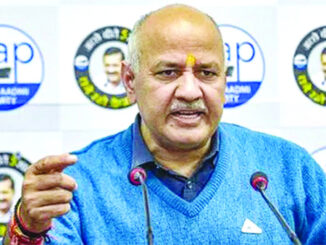
    New Delhi (TIP)- The Central Bureau of Investigation has registered a first information report against jailed Aam Aadmi Party leader Manish Sisodia in connection with an alleged case of snooping on political opponents, reported The Indian Express.
    The former Delhi deputy chief minister was arrested by the central agency on February 26 in a case related to alleged irregularities in the national capital’s now-scrapped liquor policy.
    A fresh case was filed weeks after the home ministry, acting on a recommendation of the Lieutenant Governor VK Saxena, gave sanction to prosecute Sisodia. The Central Bureau of Investigation has alleged that the Aam Aadmi Party gathered “political intelligence” through its feedback unit that was set up in 2015.
    It said that the feedback unit was set up to strengthen the Delhi government’s Vigilance Department. However, a substantial number of reports submitted by the feedback unit pertained not to actionable information on corruption in the Delhi government, but to “political activities of persons, political entities and political issues touching political interest of Aam Aadmi Party, BJP [Bharatiya Janata Party]”, the central agency alleged.
    Besides Sisodia, the FIR has named Sukesh Kumar Jain, a 1992-batch Indian Revenue Service officer who was then secretary of vigilance, Rakesh Kumar Sinha who was working as special advisor to Chief Minister Arvind Kejriwal and joint director of the feedback unit, former joint deputy director of Intelligence Bureau Pradeep Kumar Punj, who was working as deputy director of the Feedback Unit, Satish Khetrapal, working as feedback officer and Gopal Mohan, anti-corruption advisor to Kejriwal. All of them have been booked under the Prevention of Corruption Act as well as Indian Penal Code Sections 120-B (criminal conspiracy), 403 (dishonest misappropriation of property), 409 (criminal breach of trust by public servant), 468 (forgery), 471 (using as genuine a forged document or electronic record) and 477A (falsification of accounts).
    “The inquiry also revealed that Sisodia gave approval for the special allowance for FBU [Feedback Unit] on a proposal moved by PK Punj vide a note dated April 22, 2016,” the complaint said, reported The Indian Express. “As described above the unlawful manner of creation and working of the FBU has caused wrongful loss to the government exchequer to the tune of approximately Rs 36 lakh.”
    According to the Central Bureau of Investigation, 60% of the reports generated by the feedback unit pertained to matters related to the vigilance department, while 40% were about political intelligence.
    On Thursday, March 16, Kejriwal said that another case against Sisodia is part of the BJP’s plan to keep the politician in jail for a long time. Sisodia is currently in the custody of the Enforcement Directorate, which is investigating a money laundering angle in the Delhi excise policy case based on the first information report filed by the Central Bureau of Investigation.

  • Man reaches agreement with two wives, will spend 3 days a week with each, free to choose on Sunday

    Man reaches agreement with two wives, will spend 3 days a week with each, free to choose on Sunday

    New Delhi (TIP)- A 28-year-old software engineer from Madhya Pradesh’s Gwalior arrived at an agreement with his two wives and divided his time between the two women. He agreed to spend three days of the week with one of his wives and the next three with the other. He is free to spend Sunday with either of the women. The man also had to provide separate flats to each woman. He has fathered children with both women.
    Advocate Harish Dewan, the counsellor appointed by the Gwalior Family Court in January 2023 to resolve the issue, said that a 26-year-old woman married the man in May 2018. The man worked at a company in Gurugram and the couple lived in the city for two years. They also had a son together.
    In 2020, the couple came to Gwalior after the pandemic began and the man started working from home. However, he went back to Gurugram after spending a few days in Gwalior. He did not come back for his wife and child even when the situation improved.
    The wife told him that she would come to Gurugram from Gwalior and her family found out that in 2021, the man had married his co-worker from the same company. The second wife also gave birth to a girl.
    The woman filed a case in a family court in Gwalior for alimony. The court asked advocate and counsellor Harish Dewan to attempt to reach a compromise before the hearing which was scheduled to take place on Tuesday.
    Dewan talked to the man and told him that getting married to another woman without divorcing the first wife is punishable under the Hindu marriage act. The lawyer also told the man that he could also lose his job if the first wife filed an FIR.
    The three parties then agreed to reach an agreement outside court. Under the agreement, the man has to spend three days of the week with one of his wives and the next three with the other. He is free to spend Sunday with whoever he chooses. According to Dewan, the first wife can move court if the contract is violated.
    Source: India Today

  • India is ready, Japan to take a call on expanding defence cooperation

    India is ready, Japan to take a call on expanding defence cooperation

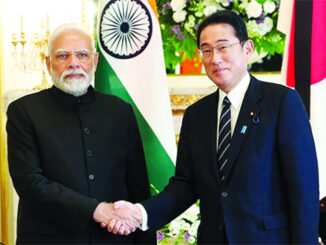
    New Delhi (TIP)- Japan Prime Minister Fumio Kishida will have a full plate in the Capital next Monday with Indo-Pacific, QUAD summit and G7-G20 on the agenda when he meets Prime Minister Narendra Modi.
    The Japanese view on the Indo-Pacific and on expanding ties with India will be revealed when PM Kishida delivers a lecture on bilateral relations at the Sushma Swaraj Institute on March 20. Japan will host the G-7 summit in Kishida’s constituency Hiroshima on May 19-21, which will be attended by PM Modi with the QUAD summit in Sydney taking place the same month.
    New Delhi will be hosting the SCO Summit on July 4 with G-20 Summit scheduled for September this year.
    While the Chinese belligerents in the Indo-Pacific with Beijing having military friction with Tokyo over Senkaku Islands and in East Ladakh with India on top of the agenda, PM Modi and PM Kishida will have a discussion on the G-7, QUAD and G-20 summits later this year. Key to these discussions will be how the two leaders are able to harmonize their positions over the Ukraine war as the impact of G-7 and QUAD summit communique will be felt on the G-20 summit being hosted by India in September this year. Japan is with the Anglo-Saxon powers over Ukraine and wants to punish Russia, India on its part wants the war to end without taking an anti-Russia stand.
    Although India and Japan have a successful economic relationship, New Delhi is looking towards Tokyo to see whether PM Kishida wants to expand the bilateral ties to security and defence sectors. Even though Japan has doubled its capital defence spending in wake of China-Russia aggression in East China Sea and Sea of Japan, the country has still to shed off its pacificist doctrine and is diffident in deepening security ties with India. The situation gets even more complicated as PM Kishida represents Hiroshima, which was nuked and destroyed by the US in World War II, in the House of Representatives.
    Even though Japan is a leader in specific defence technologies and cyber-security, PM Kishida is still mulling over whether to expand the bilateral relationship in these sectors and its impact on adversary China. From the statement emanating from Beijing on Taiwan, it is quite evident that Japan will have to be prepared for a military emergency in Taipei as some Japanese Islands in the Okinawa Prefecture are in close proximity to Taiwan.
    With Chinese President Xi Jinping expected to hold a summit with Russian President Vladimir Putin next week in Moscow, the Japanese situation will get more critical as the two “no limits allies” are already holding military exercises near Japan. While India has made up its mind over its strategic choices in a rapidly changing political world, the bilateral relations with Japan will only grow if Tokyo is clear on where it stands vis-à-vis China and Russia.
    Source: HT

  • MoD okays new artillery gun, long-range weapon for Sukhoi

    New Delhi (TIP)- The Defence Acquisition Council (DAC), the apex decision-making body of the Ministry of Defence, has approved the “need to procure” a new artillery gun, long-range weapons for Sukhoi 30 MKI jets and marine diesel engines. The “need to procure” is termed Acceptance of Necessity (AoN) for the defence equipment. It is the first step in the acquisition process of the MoD and is like a green light to the armed forces to frame tenders for procurement. The DAC accorded approval to the procurement proposals at a meeting chaired by Defence Minister Rajnath Singh here on Thursday, the ministry said.
    The DAC accorded AoN for capital acquisition amounting to more than Rs 70,500 crore and these will be under the “indigenously designed, developed and manufactured” category of procurement. Of the total proposals, Navy’s proposals constitute more than Rs 56,000 crore, which largely includes indigenous BrahMos missiles, Shakti Electronic Warfare systems and maritime utility helicopters. The additional procurement of BrahMos missile system will enhance the maritime strike capabilities and anti-surface warfare operations.
    For the Coast Guard, the DAC approved Advanced Light Helicopter MK-III from Hindustan Aeronautics Limited. The helicopter will carry a suite of surveillance sensors. Source: TNS

  • Khalistan referendum is work of ISI: Sikh separatist leader

    Former pro-Khalistan leader and founder of Dal Khalsa Jaswant Singh Thakedar said the Khalistan referendum campaign being organised in few western countries is a doing of ‘Pakistan’s ISI’ and it has nothing to do with Sikhs in India. He added that ‘some Sikhs are working as tools’ for the Pakistan government. He also said that Prime Minister Narendra Modi worked on ‘major demands’ by the Sikh community.
    The UK-based Sikh separatist leader was being interviewed by news agency ANI and he was referring to a referendum campaign kickstarted by the US-based secessionist group called Sikhs for Justice (SFJ), headed by Gurpatwant Singh Pannun, in 2020 seeking consensus among Sikhs in a bid to secede Punjab from India.
    Thakedar said those in Punjab don’t demand the referendum and added that people in Canada, US or Britain don’t have the right to vote for the secession. “It is ‘pakhand’ (sham) to mislead people. People are understanding it a source of income for them,” he was quoted as saying by ANI.
    Pointing out the incident of defacing the Indian Consulate in San Francisco last year allegedly by some pro-Khalistani miscreants, Thakedar said ‘there is no hand of Sikhs in this’.

  • Seven men, including Delhi cops, thrash meat vendors, urinate on them

    Two meat vendors were allegedly beaten up and robbed by seven men, including three Delhi Police personnel, in east Delhi’s Shahdara, a senior officer said. The incident took place in Anand Vihar area on March 7 when the two meat vendors were travelling in their car and hit a scooter. The accused, alleged to be ‘gau rakshaks’, urinated on the victims’ faces and threatened to kill them, the police said on Thursday, March 16.
    Reportedly, a case was registered four days later, even though the victims had approached the police immediately.
    All the seven men involved in the incident were booked and the three policemen, one of them an assistant sub-inspector, were suspended, the police said. Nawab, who supplies meat to the Ghazipur slaughterhouse and a resident of Mustafabad, was headed home in his car with his cousin Shoaib when he hit a scooter near Anand Vihar. They were carrying meat in the car, according to the FIR.

  • No woman chief justice at any high courts in country: Govt to Parliament

    The ministry of law and justice informed Parliament on Thursday, March 16, that there is no woman chief justice at any high courts of the country. Women judges make up 9.5% of the total strength of high courts, the ministry said, referring to data provided by the Bar Council of India (BCI).
    As of now, there are 775 working judges, out of which, 106 are women.
    The government said out of 15 lakh advocates from the country, nearly 2 lakh were women, accounting for almost 15.31% of the total advocates enrolled.
    Answering questions raised by the Bharatiya Janata Party (BJP) MP Rakesh Sinha, the minister of law and justice Kiren Rijiju told Parliament that so far, 11 women judges have been appointed in the Supreme Court, and only 30% of subordinate judges are female.
    “The representation of women in the judiciary has increased in the last 70 years, but much distance needs to be traversed to address the needs of providing diversity in the higher courts,” Rijiju had said while attending a valedictory function at Supreme Court last year.
    “Over the past seven decades of India’s journey as an independent nation, the representation of women as judges has increased,” he added.
    After President Droupadi Murmu’s approval last month, the strength of judges in the top court rose to 32.
    Source: HT

  • March 17 New York & Dallas E – Edition

    [vc_row][vc_column][vc_custom_heading text=”E-Edition” font_container=”tag:h2|text_align:center” google_fonts=”font_family:Istok%20Web%3Aregular%2Citalic%2C700%2C700italic|font_style:700%20bold%20regular%3A700%3Anormal” link=”url:https%3A%2F%2Fwww.theindianpanorama.news%2Fwp-content%2Fuploads%2F2023%2F03%2FTIP-March-17-E-Edition.pdf”][vc_single_image image=”140077″ img_size=”full” alignment=”center” onclick=”custom_link” link=”https://www.theindianpanorama.news/wp-content/uploads/2023/03/TIP-March-17-E-Edition.pdf”][/vc_column][/vc_row][vc_row][vc_column width=”2/3″][vc_custom_heading text=”Lead Stories This Week” google_fonts=”font_family:Istok%20Web%3Aregular%2Citalic%2C700%2C700italic|font_style:700%20bold%20regular%3A700%3Anormal” link=”url:https%3A%2F%2Fwww.theindianpanorama.news%2F”][vc_wp_posts number=”5″ show_date=”1″][/vc_column][vc_column width=”1/3″][vc_single_image image=”82828″ img_size=”medium” alignment=”center” onclick=”custom_link” link=”https://www.theindianpanorama.news/advertising-media-kit-portal-indian-panorama/”][vc_single_image image=”82829″ img_size=”medium” alignment=”center” onclick=”custom_link” link=”https://www.theindianpanorama.news/advertising-media-kit-portal-indian-panorama/”][/vc_column][/vc_row]

  • Residential parking permits to help the M.T.A.

    Residential parking permits to help the M.T.A.

    Ashook Ramsaran

    NEW YORK (TIP): New York Governor Hochul had proposed a multipronged plan to help fill the Metropolitan Transportation Authority’s budget gap of nearly $3 billion by 2025 through a mix of new revenue streams, including $500 million a year from New York City.

    But lawmakers shot down the pillars of her plan. Both the Senate and Assembly opposed her proposal to raise payroll taxes on businesses that benefit from the transit network, as well as the $500 million yearly contribution from the city. The Senate also rejected her move to divert revenues from three planned casinos in the New York City region to help the authority. Instead, the Senate proposed giving the New York City Council the authority to create a parking permit system in the city’s residential neighborhoods, an idea that has been floated by some transit advocates for years but has failed to gain traction.

    The city would be allowed to charge up to $30 a month for a permit, and the revenues would be dedicated to the M.T.A. The proposal would give the Council the power to require permits in certain areas, with the aim of easing the difficulty that many residents have in finding street parking.

  • WHARTON’S ANNUAL GALA HONORS TWO AWARDEES

    By Mabel Pais

    Wharton Arts at its Annual Gala on Thursday, March 9, 2023, honored former New Jersey Youth Symphony (NJYS) Artistic Director and Conductor Barbara Barstow posthumously with the Education Award. The award was presented by Artistic Director and Principal Conductor Helen H. Cha-Pyo and accepted by Barstow’s husband, Bill Barstow. The event featured a tribute performance of Karl Jenkin’s ‘Palladio’ by a string ensemble of current NJYS students and alumni in addition to a live auction during a three-course dinner.

    Barbara Barstow was the second Artistic Director of New Jersey Youth Symphony (2000-2009) and longtime conductor (1981-2009) who spearheaded the start of the youth orchestra program’s Preparatory Orchestra, Junior Strings, and Orchestral Strings Training Ensemble (OSTE), as well as the annual NJYS summer camp and Playathon. Her dedication and visionary leadership for nearly three decades helped shape the organization into the thriving musical community that it is today.

    Barbara Barstow (left), husband Bill Barstow.

    Said Cha-Pyo, “We cannot express enough our gratitude for Barbara’s unwavering commitment to NJYS, which has been instrumental in transforming it into the dynamic and flourishing musical community of 15 ensembles that it is today. By honoring Barbara with this year’s Education Award, we also celebrate the countless musicians and music lovers whose lives she has deeply touched over the years. As we approach NJYS’ 45th anniversary season, we look forward to continuing this celebration with our NJYS alumni and carrying on Barbara’s legacy of excellence in music education.”

    The 2023 Wharton Arts Lifetime Achievement Awardee Angel Blue, Grammy award-winning opera soprano was also honored. Angel Blue has taken the opera world by storm with historic performances as Violetta in Verdi’s ‘La Traviata’ and, despite being told it would never happen, Ms. Blue was the first black woman to ever sing the fully staged role in Italy at Teatro alla Scala. She currently sings the role of Violetta Valéry in the new Metropolitan Opera production of ‘La Traviata.’

    Angel Blue.Angel Blue

    Peter H. Gistelinck, Executive Director of Wharton Arts, shared his enthusiasm for the honoree and said, “Angel Blue is not only an amazing internationally-recognized and celebrated opera singer with huge credentials, but also represents the tenacity and courage necessary to persist in the professional world of classical music. Her career and life path are testimonies to this, and she definitely is an example to all of us.”

    “I am so honored to be recognized with the 2023 Lifetime Achievement Award of Wharton Arts, an organization I admire for their work and creative mission of offering accessible, high quality performing arts education that sparks personal growth and builds stronger communities,” said Angel Blue.

    The Gala was held at the Westmount Country Club in Woodland Park, NJ. To find out more about the event and tribute to Barbara Barstow, visit WhartonArtsGala.org.

    ————————————

    WHARTON WITH YMCA INSTILLS SIGNIFICANCE OF COMMUNITY FOR SENIORS
    By Mabel Pais

    Wharton Arts, New Jersey’s largest non-profit performing arts education center partners with the Summit Area YMCA to offer programs for adults aged 55 and over beginning March 20, 2023.

    Seniors CAFÉ Choir.(Credit : Wharton Arts.)

    The Wharton CAFÉ (Creative Aging for Everyone) Choir is a free eight-week choir program that will culminate with a public performance in New Providence on May 9. The program is a continuation of a pre-pandemic rendering made possible through funding from the National Guild for Community Arts Education.

    In the fall of 2017, Wharton Arts was one of 20 organizations selected for the National Guild for Community Arts Education’s Catalyzing Creative Aging Program, a multi-phase initiative that supports the establishment of new creative aging programs at nonprofit arts education organizations nationwide. With the support of the Guild, Wharton Arts piloted its first CAFÉ (Creative Aging for Everyone) Choir in 2019 with 30 participants from Brighton Gardens of Mountainside and Sunrise of Madison. The free 12-week program culminated in a final concert at the Chatham United Methodist Church, where the choir performed popular standards from Rodgers and Hammerstein to Henry Mancini and Johnny Mercer.

    When asked to complete a program evaluation, more than 70% of the choir respondents indicated that CAFÉ Choir increased their appreciation of the arts and their interest in learning more about singing and the performing arts. The majority of respondents also indicated that the program increased their confidence, mental engagement, and confidence in creating art, and half of the respondents indicated that this program encouraged them to take part in other community activities.

    “In response to the growing community’s need for more and better opportunities to improve quality of life and outlets to stay fulfilled and connected throughout one’s lifetime, Wharton Arts cultivated several avenues of creative expression for adults of all ability levels,” said Cha-Pyo.

    This season’s CAFÉ Choir differs from the initial rendition in that it is a shorter, 8-week course open to the public, but the program is still completely free to participants. Classes take place at two area YMCA locations: the Summit Area Y and the Berkeley Heights YMCA.

    Said Summit Area YMCA Program Coordinator Mary Grace McCann, “As a member of the Diversity, Inclusion and Global Innovation Network, the Summit Area YMCA is committed to bridge building and encouraging a welcoming atmosphere within the community. The Y is made up of people from all walks of life who are joined together by a shared commitment to ensure that everyone has the opportunity to learn, grow, and thrive.”

    Both Wharton Arts and the Summit Area YMCA hope that promoting this free opportunity among their over-10,000 combined members in an area spanning the communities of Berkeley Heights, New Providence, Millburn, Springfield, Short Hills, Summit, Gillette, Stirling, and beyond will offer meaningful social engagement with peers, family, and communities, further contributing to an improved quality of life for participants to feel valued and empowered as they make connections between art and their own life experiences.

    As the older adult population in NJ increases exponentially in the coming years, the development of accessible, high-quality programs and resources that improve quality of life are essential. Research shows the positive impacts of arts participation for older adult audiences who often experience extreme social isolation. For example, Dr. Gene Cohen, a leader in the field of geriatric psychiatry, demonstrated that older adults who participate in community-based cultural programs report better physical health, fewer doctor visits, less medication use, and higher morale than study participants who did not engage in such programs. The sense of empowerment that comes with skill development is also linked to improvements in physical and mental health in older adults.

    The COVID-19 pandemic has exacerbated the need for engagement and connection among these audiences, and Wharton Arts hopes to meet this incredible need by engaging adults 55+ through a variety of Lifelong Learning programs. For more information about the Wharton CAFÉ Choir, visit WhartonArts.org.

    Wharton Arts

    Learn more about Wharton Arts at WhartonArts.org.

    (Mabel Pais writes on Social Issues, The Arts and Entertainment, Health & Wellness, Cuisine and Spirituality)

  • China’s growing influence

    China’s growing influence

    China is playing a notable role in developments across the Indo-Pacific and the Gulf

    “China is now playing a notable role in developments across the Indo-Pacific. It has undermined US influence in the Gulf Region by getting Saudi Arabia and Iran to re-establish diplomatic relations. Moreover, with Russia flexing its muscles and expanding its influence by using its vast energy resources, Washington has been forced to acknowledge the reality that even friendly democracies like India will not join its boycott of Russia, especially when its energy interests are at stake. Both the US and India, however, have a shared interest in dealing with the growing Chinese maritime and economic power across the Indo-Pacific Region.”

    By G Parthasarathy

    As an assertive and re-elected Xi Jinping flexes his muscles to challenge the predominance of US power across Asia, and globally, India will have to strengthen its defenses along its borders with China. The recent Chinese intrusion in Arunachal Pradesh and its earlier intrusions in Ladakh now require strong attention across and beyond our land and maritime frontiers. There is a need for particular focus on Chinese moves in the Indian Ocean. It also needs to be borne in mind that the Biden administration has made a mess of US policies in the oil-rich Persian Gulf. Washington has ineptly and insensitively dealt with its vital relations with Saudi Arabia, amidst its continuing hostile relations with Iran. Beijing has, meanwhile, fostered a rapprochement between Saudi Arabia and Iran. Building on its ties with Sri Lanka, India must take steps to promote rupee payments in trade, travel and investment.

    China is now playing a notable role in developments across the Indo-Pacific. It has undermined US influence in the Gulf Region by getting Saudi Arabia and Iran to re-establish diplomatic relations. Moreover, with Russia flexing its muscles and expanding its influence by using its vast energy resources, Washington has been forced to acknowledge the reality that even friendly democracies like India will not join its boycott of Russia, especially when its energy interests are at stake. Both the US and India, however, have a shared interest in dealing with the growing Chinese maritime and economic power across the Indo-Pacific Region. In these complex circumstances, India has maneuvered skillfully in dealing with two important South Asian neighbors, Pakistan and Sri Lanka, whose close ties with China have obvious implications for India’s security.

    The Sino-Pakistan relationship is primarily directed against India. It is a relationship which includes arms transfers, both conventional and nuclear. Pakistan’s nuclear weapons and ballistic missiles that can target Indian territory from New Delhi to the Andaman and Nicobar Islands are of Chinese design.

    Sri Lanka’s suspicions of India were accentuated during the Sinhala-Tamil ethnic conflict in the 1980s, when there were strong apprehensions of India’s links with the LTTE. Indians sometimes tend to forget that the ethnic conflict was confined to northern Sri Lanka, where Tamils lived for centuries. It did not involve the ‘plantation Tamils’ living in the country’s South. Southern Tamils in Colombo are full of praise for PM Modi after they met him during his visit to Sri Lanka.

    Sri Lanka is going through an acute economic crisis, akin to what Pakistan is facing. The virtually bankrupt Colombo government was overwhelmed when Modi announced that India would contribute $4 billion to enable Sri Lanka to tide over its foreign exchange problems in imports of crucial items like fuel, oil and medicines. China stepped in rather late in the day, with a meagre pledge of $1 billion. The Export-Import Bank of China has offered Sri Lanka a two-year moratorium on debt repayments and said it would support the country’s efforts to secure a $2.9 billion loan from the IMF. But in real terms, China has done little to reduce the debt burden it has foisted on Sri Lanka.

    What is important is that China has led Sri Lanka, like many other nations, into a debt trap. This situation arose primarily because of Sri Lankan borrowings for China’s construction of a number of projects in Sri Lanka, led by the Hambantota Port on its southern shores. There was a reckless disregard of the port’s financial viability. The port is located in the constituency of former President Mahinda Rajapaksa. Beijing now has a free run at the port for berthing its warships and submarines moving across the Indian Ocean. New Delhi has responded strongly to the Chinese presence at the port, through which large amounts of goods, including sensitive equipment for India, transit. The Adani Group has, meanwhile, secured separate port facilities designated as West Container Terminal for transit of all imports and exports by India, with a reported investment of around $700 million. Amidst growing public anger against former President Gotabaya Rajapaksa and the entire Rajapaksa family, Sri Lanka’s Parliament endorsed the appointment of veteran politician Ranil Wickremesinghe as the new President last year. He has moved carefully and effectively in dealing with the virtual collapse of the Sri Lankan economy. There has also been fulsome praise for India’s External Affairs Minister and Finance Minister for swiftly delivering assistance.

    Talking to Sri Lankan friends during a recent visit to Colombo, I was struck by the goodwill that India has earned in Sri Lanka in recent days. This must be complemented by moving ahead on a number of issues. As devout Buddhists, the Sinhala population seeks better facilities for pilgrimages to Bodh Gaya. It is imperative to improve train services for the pilgrims, while jointly examining measures for improvement of facilities for their stay in India. A number of measures are needed to promote rupee payments in trade, travel and investment. The Talaimannar-Rameshwaram ferry needs to be revived for facilitating travel.

    Most importantly, new economic opportunities are set to arise as the Trincomalee Port becomes functional in the coming months. New Delhi and Colombo need to move imaginatively in encouraging and promoting private sector investment from India in this region of the Bay of Bengal. There are also large opportunities for private investment and cooperation in areas like airports, hospitality and higher education, even as India’s High Commissioner Gopal Baglay prepares to complete a difficult, eventful and successful tenure in Colombo.
    (The author is Chancellor, Jammu Central University & former High Commissioner to Pakistan)

  • Oscars won, Indian cinema poised for greater glory

    Oscars won, Indian cinema poised for greater glory

    Naysayers are likely to attribute reasons other than quality to India’s ascent on the Oscars stage. That we are not only a huge movie-producing country but also a voracious entertainment-consuming one is often attributed as the trigger behind our growing eminence. That this is why Hollywood ropes in our big stars in its films and, now, series too, is not a statement but almost an aspersion. In Netflix looking for new markets, too, we can sense a plan behind the India push.

    By Nonika Singh

    India shines at the Oscars — the words seem surreal. In a dream-come-true moment as India has picked up not one but two Oscars (Best Original Song and Best Documentary Short) out of three nominations, it’s not just the makers of RRR and The Elephant Whisperers who stand proud. The electrifying feeling of joy in sync with the infectious beats of Naatu Naatu, composed by MM Keeravani, has spread across the country and the whisper is loud and clear — India can do it.

    RRR roars once again and Guneet Monga, producer of the Kartiki Gonsalves-directed The Elephant Whisperers, beams, “We as two women from India stood on that global stage making this historical win! 1.4 billion Indians, this is for you. We’ve all manifested this together.”

    Indeed, magical! How and why? Before we answer that, the more important question is why India, one of the largest film producers in the world, couldn’t crack the code earlier.

    Year after year, we have lamented over why India can’t win an Oscar and reams have been written about our dismal (near blank) record at the prestigious Academy Awards, often considered the hallmark of excellence and gold standard of recognition. Experts have time and again rued that if countries like Iran and South Korea can take home Oscars, what stops India, where there is no dearth of quality cinema. If India-centric films such as Life of Pi, the survival saga of an Indian boy, could win its director Ang Lee the coveted Best Director statuette, why can’t our storytellers get it right?

    Often, the blame has been laid at the door of our official selections. This year, too, much hue and cry was made when Pan Nalin’s acclaimed film Last Film Show was chosen as India’s official entry to the Oscars. Objections were raised by certain sections to the film, which, after making it to the shortlist, fell out of the race. In fact, similar has been the fate of our entries each year, leaving us to draw comfort in the few that have come our way.

    Costume designer Bhanu Athaiya, composer AR Rahman, lyricist Gulzar, sound engineer Resul Pookutty and legendary filmmaker Satyajit Ray, who received an honorary award, are part of the select Oscar club.

    But what makes this year’s win truly delicious is that, for once, Oscars are for Indian films by Indian production houses. So far, our Oscar victories have been limited to India-centric films by foreign producers and directors. If back in time, it was Richard Attenborough’s Gandhi that fetched costume designer Bhanu Athaiya an Oscar, making her the first Indian to get it, Danny Boyle’s Slumdog Millionaire gave us the chance to chorus Jai Ho. But Naatu Naatu gives us a greater reason to rejoice and break into a hook step that has the world hooked in pure frenzy. In fact, the world has been dancing to the tunes of the ebullient Telugu song for quite some time now.

    Prior to its Oscar win, SS Rajamouli’s blockbuster RRR picked up the Golden Globe award for Best Original Song, too. The resounding success of the song is not hard to decode. From lilting lyrics to its catchy beats and dance steps and the way it has been picturized, all elements tick the right boxes. What is even sweeter is that it puts to rest all skepticism about India’s naach-gaana brand of cinema and proves that music and dance are our USP, not Achilles’ heel.

    But, does the twin Oscar victory mean India has arrived on the world map of cinema? Judging by the standing ovation that the Naatu Naatu performance by its singers Rahul Sipligunj and Kaala Bhairava got at the 95th Academy Awards, one is tempted to say yes. The Elephant Whisperers’ maiden victory for India in the Documentary Short Subject category, too, makes us nod emphatically.

    Of course, naysayers are likely to attribute reasons other than quality to India’s ascent on the Oscars stage. The fact that we are not only a huge movie-producing country but also a voracious entertainment-consuming one is often attributed as the trigger behind our growing eminence. That this is why Hollywood ropes in our big stars in its films and, now, series too, is not a statement but almost an aspersion. In Netflix, a major OTT player, looking for new markets, too, we can sense a plan and method behind the India push.

    Add to it the fact that diversity and inclusivity have been pushed to the forefront in Hollywood for quite some time now. More than one Oscar ceremony has created history. In 2020, South Korean film Parasite became the first foreign language film to win the Best Picture Award at the Oscars, thus breaking the “one-inch-tall barrier of subtitles.” Take this year’s Best Film Award-winning Everything Everywhere All At Once. The Best Actress trophy for its lead actress Michelle Yeoh makes her the first woman of Asian descent to win the award. Clearly, India could not have been ignored for too long. RRR makers have been making the right kind of noises ever since the film figured in the Oscar nomination list. Let’s admit it — winning an Oscar is as much a marketing strategy, perhaps popular appeal too, as it is a litmus test of excellence.

    Of course, the tumultuous response that RRR has generated overseas can’t be orchestrated through a media blitzkrieg alone. India might still be far from winning the best film in even the International Feature category, let alone the overall one. The closest we have come are Lagaan, Salaam Bombay and Mother India making it to the prestigious final-five list of nominees.

    Thus, there is no discounting the history we have created this year. It is more than heartening that Naatu Naatu beat top contenders like Rihanna’s Lift Me Up from Black Panther: Wakanda Forever and Lady Gaga’s Hold My Hand from Top Gun: Maverick among other nominees and The Elephant Whisperers defeated acclaimed competitors like Jay Rosenblatt’s How Do You Measure A Year? To borrow from the words of Michelle Yeoh, the new tidings at the Academy Awards “is indeed a beacon of hope and possibilities” and, as our very own star of RRR, Jr NTR, said, “It’s only a beginning.” On the red (sorry, champagne) carpet, his co-star Ram Charan remarked, “We are not just coming as ourselves but we are coming as India today.”

    So, watch out, world, here we come! With our diversity, cultural specificity and inclusivity intact.
    (The author is an Assistant Editor of The Tribune, Chandigarh)

  • Banks Are Failing: Is My Money Safe?

    Banks Are Failing: Is My Money Safe?

    Most investments – but not all – are protected by a web of insurance

    Rising interest rates can be harmful to bank earnings. Silicon Valley Bank had a large portfolio of mortgage-backed securities with very low yields. As the Federal Reserve pushed interest rates up, those securities lost value. And as depositors demanded their money back, the bank had to sell those securities at a loss.

    By John Waggoner John Waggoner

    Recessions don’t always follow bank collapses, but the recent failures of Silicon Valley Bank and Signature Bank have pushed recession fears up a few notches. For retirees, this means added worry about the safety of their money. With that in mind, let’s take some time and review the financial safety nets you have — and those you may not. Before the creation of the Federal Deposit Insurance Corporation (FDIC) in 1933, depositors often got back only pennies on the dollar — if that — when a bank failed. Today the FDIC insures most bank deposits up to $250,000. If you have more than $250,000, you can get the additional funds covered by opening an account at a different bank, or by opening a different type of account, such as an individual retirement account (IRA), at the same bank. You can find out how much of your deposits are insured through the FDIC’s Electronic Deposit Insurance Estimator.

    The banking industry funds the FDIC via insurance premiums, which go into the Deposit Insurance Fund (DIF), whose assets are equal to about 1.3 percent of insured deposits. The FDIC also has a $100 billion line of credit with the U.S. Treasury in case losses exceed the DIF’s assets.

    Of course, banks aren’t the only financial institutions in the world. Here are some answers to common questions about the protections you have — or don’t — in case of financial disasters. How shaky is the banking sector? It’s always a bit hard to tell: Banks can carry bad loans on their books for months before selling them off, and it takes a while for good loans to go bad in the first place. A spate of bad loans may not show up in a bank’s earnings until well after they have gone bad. Rising interest rates can be harmful to bank earnings. Silicon Valley Bank had a large portfolio of mortgage-backed securities with very low yields. As the Federal Reserve pushed interest rates up, those securities lost value. And as depositors demanded their money back, the bank had to sell those securities at a loss.

    Wall Street has slashed the stock prices of many regional banks. In the past 30 days, financial stocks have fallen about 12 percent and regional bank stocks have tumbled 31 percent through March 14, according to Morningstar, the Chicago investment trackers.

    At least so far, the banks’ problems seem fairly limited. The Federal Reserve Bank of New York noted in November that the banking system is well capitalized, meaning that most banks have enough reserves to weather a downturn. S&P Global Ratings noted that it has “not seen evidence that unmanageable deposit outflows experienced at a few banks have widely spread across rated banks.”

    Some questions answered.

    Are there uninsured banks? Yes. You can check to see if your bank is covered by the FDIC by calling the agency’s toll-free number (877-275-3342) or using its online tool. In the rare instance that your bank is uninsured, you should consider moving your money to an insured institution.

    Are savings and loan associations insured by the FDIC? Yes. Savings and loan associations (S&Ls) went through a near-death experience in the 1980s and were insured by the Federal Savings and Loan Insurance Corporation. S&Ls are now fully covered by the FDIC, with the same insurance levels as

    Are credit unions insured by the FDIC? No. They are insured by the National Credit Union Share Insurance Fund at the same level (up to $250,000 in deposits) as FDIC coverage.

    Is my safe deposit box federally insured? No. The contents of your safe deposit boxes are not insured by the FDIC for theft or damage, and they are typically not insured by banks. You can, however, buy private insurance for safe deposit boxes.

    Are people who invest directly in a bank insured? No. If you buy a bank’s stock, you’re not protected in a failure. Bonds are loans, however, and if you own a failed bank’s bonds, you may recover some of your investment in court.

    Is my brokerage account federally insured? No. Most brokerages are insured by the Securities Investor Protection Corporation (SIPC) for up to $500,000 if their brokerage fails. SIPC insurance includes up to $250,000 in protection for cash in your account.

    SIPC does not protect you against market losses, nor does it protect you against shysters who sell worthless securities. If a brokerage fails and you discover that some of your holdings are missing, SIPC works to replace those holdings at the current market price, which is not necessarily the same as their price when the brokerage failed.

    SIPC doesn’t handle quarrels between you and your broker. That’s the domain of the Financial Industry Regulatory Authority (FINRA), the U.S. Securities and Exchange Commission or your state securities regulator.

    Is my retirement account federally insured? It depends on how the money in your account is invested.

    If an individual retirement account (IRA) or a 401(k) plan includes deposit accounts such as CDs and money markets held at an FDIC-covered bank, that money is insured up to $250,000 per bank.

    However, most retirement accounts are made up of investment assets such as stocks, bonds and mutual funds, which the FDIC does not cover. As with standard brokerage accounts, those investments may have SIPC protection, with the limits noted above.

    Is my life insurance federally insured? No. Life insurance is insured by state guaranty funds, which cover life insurance policies and annuities if the insurer goes out of business. Laws vary by state, but most offer at least $300,000 in life insurance death benefits and long-term care policies. Annuities are covered up to $250,000.

    State guaranty pools are funded by the companies that sell policies in that state. You can find your state guaranty association through the National Organization of Life and Health Insurance Guaranty Associations.

    Is my cryptocurrency federally insured? No. If your crypto gets stolen, there’s no FDIC, credit card issuer or bank to make you whole. Your money is gone.

    (John Waggoner covers all things financial for AARP, from budgeting and taxes to retirement planning and Social Security. Previously he was a reporter for Kiplinger’s Personal Finance and  USA Today.)

    (Source: AARP)

  • US banking crisis: Lapses in regulatory oversight led to the collapse

    The US authorities are scrambling to protect depositors’ money after the back-to-back collapse of Silicon Valley Bank (SVB), Silvergate Capital Corporation and Signature Bank, which were major lenders to the crypto sector and tech startups. In a desperate bid to affirm the stability and credibility of the American banking system, the Joe Biden administration has granted SVB customers access to their money. Depositors of Signature Bank, which was closed on Sunday by the New York state financial regulator, have been promised compensation ‘at no loss to the taxpayer’. Silvergate has said that it would be winding down operations and liquidating its bank.

    SVB was among the top 20 American commercial banks till last year. It is the largest bank to be shut in the US since the 2008 financial meltdown, whose prime casualties included Washington Mutual and the Lehman Brothers’ global investment bank. A link between them has surfaced: SVB’s Chief Administrative Officer Joseph Gentile had worked with Lehman Brothers as Chief Financial Officer until he quit in 2007, a year before the 158-year-old giant went bankrupt, nearly bringing down the global financial system.

    President Biden has stated that he is ‘firmly committed to holding those responsible for this mess fully accountable and to continuing our efforts to strengthen oversight of larger banks so that we are not in this position again.’ It is evident that lapses in regulation — coupled with an aggressive, risk-prone monetary policy aimed at taming inflation — brought things to such a pass. The writing was on the wall, but it was ignored. Short-seller William C Martin, former manager of a now-closed hedge fund, had already warned in January that SVB would blow up sooner rather than later. The fiasco holds a bitter lesson for US regulators and stakeholders: set your own house in order before losing sleep over smaller yet fast-growing economies. The key takeaway for India, which was rocked by the Punjab National Bank scam in 2018, is that no one can afford to ignore the warning signs. The regulatory system needs to be proactive rather than reactive to prevent a financial bloodbath and ensure the safety of people’s deposits.

    (Tribune, India)


  • Dangerous maneuvering: On the Black Sea encounter and the risks posed by the Ukraine war

    The United States should find stability in ties with Russia to help end Ukraine war

    The high-altitude maneuvering between two Russian fighter jets and an American drone over the Black Sea, which resulted in the splashing down of the U.S. MQ-9 Reaper drone on Tuesday, March 16  morning, has underscored the dangerous risks of the Ukraine war. In conflicting narratives about the incident, the Pentagon says the Russian Su-27s intercepted the surveillance drone in international airspace, dumping fuel on the drone, colliding with it and forcing it down. But the Russian Defense Ministry said its jets were scrambled after a U.S. drone violated its “temporary airspace” off the Crimean peninsula (declared for its war in Ukraine) and that the American aerial vehicle “lost altitude” in “sharp maneuvering”. The MQ-9 recorded the incident. The video has been declassified and would help establish the truth. But whatever the reason, the fact that the U.S. lost a drone in the Black Sea, where it does not even have a naval presence, is a grave reminder of how close the nuclear powers have come to a conflict. While both sides have responded with maturity, the underlying situation that triggered this crisis remains unchanged.

    The U.S. has provided over $30 billion in military assistance, including advanced defensive and offensive weapons, to Ukraine since the Russian invasion began, and imposed tough sanctions on Moscow. Washington says it is not directly involved in the war but is helping Ukraine defend its territories, while Russia alleges that the “collective West” is seeking to destroy it. As the war drags on, with Russia’s failure to take a quick victory, the relationship between Washington and Moscow has broken down. Last month, Russia suspended its participation in the New START nuclear arms control treaty, the last of the Cold War-era weapons control mechanisms between the two countries. Steadily deepening mutual distrust amid an ongoing conflict is a perfect recipe for disaster in great power rivalries. Even if the Biden administration has clearly ruled out a direct conflict with Russia, irresponsible and high-risk maneuvering or even accidents could lead to, as the Pentagon said, “miscalculation and unintended escalation”. The U.S. and Russia already have a deconfliction hotline to avoid mid-air collisions in different theatres where they operate. They should use that mechanism around Ukraine as well to avoid a repeat of incidents such as the Black Sea one. But a bigger challenge is to arrest the deterioration of their bilateral ties, which is now reminiscent of the bilateral hostility of the first two decades of the Cold War. If the U.S. and Russia address this problem and find some stability between themselves, it would help them bring the war in Ukraine to an end.

    (The Hindu)

  • Chip pact with US: Boost to larger role for India in global supply chain

    From being a battle of corporate giants, the incredibly costly, complex and high-stakes business of making semiconductor chips has assumed the form of a geopolitical weapon. As governments respond to national security concerns brought out starkly by pandemic-era shortages and shifts in the global supply chain, India, too, has been paying more attention to ratchet up its nascent semiconductor industry with production-linked incentives. Last year, Foxconn, the Taiwanese firm that assembles Apple’s iPhones, and mining company Vedanta teamed up to build a chip-making facility in Gujarat. The memorandum of understanding with the US on information-sharing on the semiconductor policy, commercial avenues and innovation is a boost for India’s goal to have a larger role in the electronics supply chain. Leveraging complementary strengths would work to the advantage of both countries.

    The Biden administration has been proactive in pursuing a policy shift to end the heavy reliance on China and Taiwan for critical technological components. Expanding cooperation in advanced weaponry, supercomputing, semiconductors and other high-tech fields with India could be a part of its plan of ‘friendshoring’ or shifting the manufacturing of certain critical components to friendly countries. It’s an opportunity not to be missed. New Delhi’s central focus has to be on powering growth through collaborative energy and strategic alliances. Going forward, that would mean asking the US to ease restrictions on transferring defense-related and cutting-edge technology.

    India would be circumspect of the voices sounding a note of caution to avoid falling into a trap of entering restrictive economic trade blocs. These apprehensions could be a false alarm since many of the Indo-US technology partnerships would hinge on new connections in the private sector, and nothing more. The India-US Commercial Dialogue’s common goals include increasing supply chain resilience, enhancing energy security and reducing overall greenhouse gas emissions. Investment in emerging technology should be welcomed.

    (Tribune, India)


  • Indian-origin teen Neel Moudgal wins $250K US science prize

    Indian-origin teen Neel Moudgal wins $250K US science prize

    NEW YORK (TIP): An Indian-origin teen has won a prestigious high schoolers’ science prize of $250,000 for developing a computer model to predict the structure of RNA molecules that can aid in quickly diagnosing diseases. Neel Moudgal, 17, was announced the winner of the Regeneron Science Talent competition on Tuesday, March 14. Ambika Grover, 17, was ranked sixth for an $80,000 award and Siddhu Pachipala, 18, placed ninth for a $50,000 prize. About 2,000 high school students competed in the Science Talent Search with 40 selected for the final round. According to the Society for Science that ran the competition sponsored by Regeneron Pharmaceuticals, Moudgal’s computational biology and bioinformatics project “can rapidly and reliably predict the structure of various RNA molecules to facilitate the development of novel diagnostics and therapeutic drugs for diseases such as cancer, autoimmune diseases and viral infections”.

    Grover developed an injectable micro-bubble to break up blood clots and treat stroke victims by restoring the blood flow to the brain.

    Pachipala used machine learning to assess a patient’s suicide risk. By analyzing a patient’s journal entries, the semantics in an individual’s writing could be correlated with their psychological health and risk of suicide.

    Pachipala, who was chosen by the finalists as most exemplifying them, also was given the Seaborg Award.

    The winners of the Science Talent Search program originally sponsored by Westinghouse and now associated with the current sponsor Regeneron have gone on to win 11 Nobel Prizes and two Fields Medals for mathematics.


  • Five eminent Indian-origin women honored at the Indian Consulate  on International Women’s Day

    Five eminent Indian-origin women honored at the Indian Consulate on International Women’s Day

    NEW YORK CITY(TIP): Five eminent Indian-origin women were honored at the Indian Consulate on  the occasion of the International Women’s Day.

    The Federation of Indian Associations, in association with the Consulate General of India in New York held its fifth annual International Women’s Day celebrations on March 8 and honored five women for their outstanding achievements.

    Among the awardees was Deputy Mayor of New York City, Meera Joshi, an attorney by profession, who in her current role has accomplished several significant achievements, including transport innovations and equity cabinet. She also played a key role in implementing New York City’s Vision Zero program — a comprehensive strategy aimed at reducing traffic fatalities and injuries, the statement said. The other awardee was Radha Subramanyam, president and chief research and analytics officer at CBS – TV Net Corp. An award-winning media executive, Subramanyam has also been recognized as one of the ‘100 Leading Women in the North American Auto Industry’ by Automotive News.

    Hina Patel is a TEDx speaker and executive leader leading a 200-employee engineering firm in three states. FIA said Patel is an advocate of women’s rights in workplaces and has worked towards gender equity.

    Padmini Murthy is a physician and global health leader at the American Medical Women’s Association (AMWA) and has worked tirelessly to improve access to healthcare services, particularly for underserved women, the FIA said.

    She has initiated several global health programs that focus on women’s health such as the women’s eye health taskforce and the Global Health council’s Maternal, Newborn and Child Health initiative.

    Grammy Award winning singer and songwriter Falu Shah was also honored at the event that was also addressed by Dr Abha Jaiswal. Shah was, however, unable to attend the function as she was in India where she performed at the inauguration of the cricket test match between India and Australia at the Narendra Modi Stadium in Ahmedabad, which was attended by Prime Minister Narendra Modi and his Australian counterpart Anthony Albanese. Consul General of India in New York, Randhir Jaiswal, congratulated the 2023 recipients and encouraged the community to engage in more meaningful and community-impacting events.


  • Indian American musician SANJ releases new fusion album named Nightingale

    Indian American musician SANJ releases new fusion album named Nightingale

    NEW YORK (TIP): For New York City based musician Sanjana Nayak, who goes by the name SANJ, the release of her debut album Nightingale just a few days ago is a culmination of a passion project.

    SANJ’s music can be best defined as a fusion of silky Indian vocals that tap into her two decades of classical music training. She says that her music reflects sultry R&B flows inspired by songs that she grew up listening to.
    As an artist in America with South Asian roots, she believes her music pushes the boundaries of traditional fusion music. She says about her debut album, “My music also highlights my creative ethos in a way I haven’t tapped into before.”

    She describes herself as an Indian-American innovative. Bred in Chicago and based in NYC, SANJ has been a lifelong singer, songwriter, and musician, and folds her passion for music into many facets of her life.
    Her new wave of songwriting showcases her vision for sultry Desi-R&B, whilst still maintaining her stark colors and classic nostalgic sound that have won the hearts of many.

    By day, SANJ works in advertising strategy at Google, and performs often in venues across NYC by night. Already a social media star, SANJ has a following of over 150,000+ listeners across several platforms, and her Spotify saw 999% growth in 2022.


  • Indian-American flight test engineer Ravi Chaudhary is confirmed by the US Senate  as Assistant Secretary of Air Force

    Indian-American flight test engineer Ravi Chaudhary is confirmed by the US Senate as Assistant Secretary of Air Force

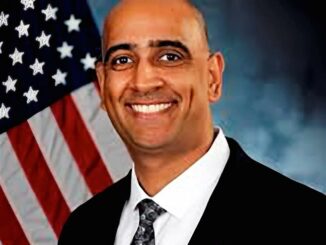
    WASHINGTON, D.C. (TIP): The US Senate has confirmed Indian-American flight test engineer Ravi Chaudhary as the Assistant Secretary of Defense for the US Air Force, one of the top civilian leadership positions in the Pentagon.

    The Senate on Wednesday, March 15,  voted 65-29 to confirm the former Air Force officer’s nomination with more than a dozen votes being cast by the opposition Republican Party. Chaudhary previously served as a Senior Executive at the US Department of Transportation where he was Director of Advanced Programs and Innovation, Office of Commercial Space at the Federal Aviation Administration (FAA). He was responsible for the execution of advanced development and research programs in support of the FAA’s commercial space transportation mission. While at the transportation department, he also served as the executive director of the regions and center operations, where he looked over the integration and support of aviation operations in nine regions.

    During his service in the US Air Force from 1993 to 2015, Chaudhary completed a variety of operational, engineering, and senior staff assignments. As a C-17 pilot, he conducted global flight operations, including numerous combat missions in Afghanistan and Iraq, as well as ground deployment as the director of the personnel recovery center at multi-national corps in Iraq.

    As a flight test engineer, he was responsible for flight certification of military avionics and hardware for the force’s modernization programs supporting flight safety. Earlier in his career, he supported space launch operations for the global positioning system (GPS) and led third-stage and flight safety activities to ensure the full operational capability of the first GPS constellation. As a systems engineer, Chaudhary supported NASA’s International Space Station protection activities to ensure the safety of NASA astronauts. He also served as a member of the President’s Advisory Commission on Asian Americans and Pacific Islanders during the Obama administration. In this role, he advised the president on executive branch efforts to improve veterans’ support for the AAPI community.

    Chaudhary holds a Doctorate specializing in executive leadership and Innovation from the Georgetown University D.L.S. Program, an M.S. in Industrial Engineering from St. Mary’s University as a NASA graduate fellow, an M.A. in Operational Arts and Military Science from Air University, and a B.S. in Aeronautical Engineering from the US Air Force Academy.

    He is a graduate of the Federal Executive Institute and holds Department of Defense acquisition certifications in programme management, test and evaluation, and systems engineering.

  • Aussie radicals block entry to Indian consulate in Brisbane

    Aussie radicals block entry to Indian consulate in Brisbane

    NEW DELHI / NEW YORK (TIP): India’s honorary consulate in Brisbane was forced to close briefly on Wednesday, March 15 after pro-Khalistan supporters blocked its entrance. Earlier on February 21, pro-Khalistan supporters, said to be from the outlawed Sikhs for Justice (SFJ), had fixed a flag outside the same building, which was later confiscated by the police.

    The incident comes after several temples, especially in Melbourne, were daubed in recent weeks with offensive graffiti by pro-Khalistan supporters. There is a heavy police presence in the area. Following the incident, the police and community leaders had a meeting with Indian-Australian leaders to assure them that the authorities were committed to upholding law and order. Some reports alleged that a Brisbane Sikh shrine bus was used to transport the protesters.

    The blocking of the honorary consulate comes days after Australian PM Anthony Albanese had assured PM Narendra Modi in Delhi that Australia will curb anti-India elements and also not tolerate any extreme actions or attacks on religious buildings.

    “It is a matter of regret that reports of attacks on temples have come regularly from Australia over the past few weeks,” PM Modi had said shortly after talks with Albanese last Friday. Foreign Secretary Vinay Mohan Kwatra last Friday said, “PM Albanese assured PM Modi that his government had a deep understanding and appreciation of India’s concern and would take all necessary measures to ensure that peace prevailed in their society.” The Australia Today quoted Sarah Gates of Hindu Human Rights as stating that “slogans were raised against Hindus calling them supremacists along with slogans of Khalistan Zindabad”. The Indian diaspora is now the second-largest immigrant community in Australia.

    (Source: TNS)