WASHINGTON, D.C. (TIP): Though External Affairs Ministry is pushing at the UN the need to recognize Hinduphobia a crime, facts on the ground in the US indicate that it is the Sikh community which is facing the increasing brunt of hate crimes. From around 60 incidents of hate crimes against Sikhs reported to the US Federal Bureau of Investigation in 2018, the number increased to 89 in 2020 and jumped to whopping 214 incidents in 2021.
From being the third most commonly targeted religious group after Jews and Muslims in the US in 2018, Sikhs became the second most targeted group four years later. Jews remain the biggest victims of hate crimes in the US.
According to the FBI, 91 hate crimes were reported against other religions, including 12 against Hindus and 10 against Buddhists.
SEATTLE (TIP): Seattle has become the first US city to add caste discrimination to its non-discrimination policy, two years after Indian-American counselor Kshama Sawant on Tuesday , February 21 successfully quarterbacked a resolution through the Seattle city council to outlaw caste discrimination.
The resolution moved by Sawant was approved by the Seattle City Council by six to one vote. Two council members were absent during the voting. “This bill is not technically complicated, it’s a very simple question: Should discrimination based on caste be allowed to continue in Seattle?” noted Sawant.
In a 6-1 vote on Tuesday, February 21st, Seattle City Council voted to add caste as a protected category in Seattle. The City Council made history by making the city the first in the US to ban caste discrimination. Councilmember Kshama Sawant introduced the ordinance earlier this year to add caste to the city’s anti-discrimination laws. As a Hindu American organization whose members and leadership come from diverse caste backgrounds, Hindus for Human Rights congratulates Councilmember Sawant and the coalition of organizations that fought to achieve this win.
As progressive Hindus, it is our duty to dismantle caste and fight caste discrimination. To this end, Hindus for Human Rights Board Members, Staff, and Community Members provided public comment and endorsement of the caste protection ordinance:
Sravya Tadepalli: I am a proud Hindu and board member of Hindus for Human Rights, a nonprofit that works to combat Hindu nationalism and caste from a Hindu faith perspective. As a Hindu, our most important belief is that God is present in every human being, and we must work to protect that equality. This law would ensure that every individual is treated equally under the law, regardless of their caste. I urge you, as a Hindu, to vote YES on the bill to ban caste discrimination. – Councilmember Sawant referenced Sravya’s quote in her testimony on Tuesday!
Raju Rajagopal: I am Raju Rajagopal and I represent Hindus for Human Rights, which strongly supports this ordinance. We disagree with claims that this ordinance will “mainstream hate against the South Asian community” and that existing laws are adequate. Let’s remember history: We heard many similar claims during the 60’s debate that the Civil Rights legislation would unfairly target all White people. The issue of caste discrimination is no more complex than race and gender discrimination for those who have the resolve to fight it. We join caste-oppressed communities in urging the Council to unanimously pass this historic resolution without any delay.
Ria Chakrabarty: On behalf of Hindus for Human Rights, I urge the City Council to unanimously vote yes on Councilmember Sawant’s caste discrimination ordinance without delay. This ordinance will not discriminate against Hindu Americans and this narrative by far right, upper-caste organizations like the VHPA intentionally and violently erases the many Hindus who experience casteism. Instead, the OCR will be able to help residents pursue justice when they experience caste-based discrimination. HfHR urges you to listen to our Dalit and Adivasi siblings and vote yes on this resolution without delay.
Sathvik Nair: Respected Seattle city council members, I urge you to vote YES on the ordinance to ban caste discrimination. I am a caste privileged Hindu male with Hindus for Human Rights. Since I’ve seen caste discrimination in a tech workplace and even among my US-born peers, I am worried that we are using the excuse of the complexity of caste to prevent concrete actions that will explicitly implement protections against caste discrimination. Casteism is no more complex than racial or gender-based discrimination. City Councilmembers should be very familiar with the issue after having heard many heart- wrenching stories and testimonies directly from caste-oppressed people. The argument of complexity is often employed by opponents of social justice to try and cloud real issues, create doubt, and resist progressive measures that aim to address oppressive systems. If you truly believe in Seattle’s vision as a progressive city, you will vote YES on the measure.
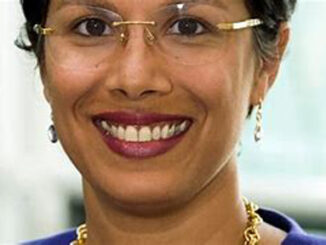
LONDON (TIP): Professor Meghana Pandit, a leading Indian-origin medic was appointed the chief executive officer (CEO) of the Oxford University Hospitals NHS Foundation Trust, one of the UK’s largest teaching hospitals.
Pandit becomes the trust’s first female chief, and she is also the first person of Indian heritage to be appointed CEO of any National Health Service (NHS) trust in the Shelford Group, which represents some of the biggest teaching hospitals in the country.
Pandit, who was serving as the interim CEO at Oxford University Hospitals (OUH) since July 2022, was permanently appointed to the post following a “rigorous and competitive process,” which concluded after what OUH described as an extensive national and international recruitment search.
“It is a privilege to be asked to lead OUH on a permanent basis and I look forward to continue working with colleagues at OUH, our partners in the health and social care system in Oxfordshire and across the BOB Integrated Care System, our partner universities, and Oxford Hospitals Charity, to ensure the highest quality of research and innovation enabled care for our patients and populations,” said Pandit.
“I am proud to have the opportunity to continue leading with compassion and respect for others, with a desire for excellence,” she said.
Pandit got trained in Obstetrics and Gynecology in the Oxford Deanery and was a visiting lecturer in Urogynecology at the University of Michigan in the US.
She has served as Chief Medical Officer (CMO) within the NHS trusts and led the development of a clinical strategy with the responsibility of overseeing hundreds of doctors.
She is an Honorary Professor at Warwick University and an Associate Fellow at Green Templeton College, University of Oxford.
According to OUH, all members of the interview panel unanimously agreed that she was the preferred candidate for appointment and this recommendation was approved at a meeting of the Council of Governors earlier this week.
The interview panel included the Trust’s Chair, Professor Sir Jonathan Montgomery, two other non-executive directors and lead governor, and also the chair of the Buckinghamshire, Oxfordshire and Berkshire West Integrated Care Board (BOB ICB) and the Regional Director for NHS England’s Southeast region.
“I am delighted that Meghana has now been appointed to the CEO role on a permanent basis and I am looking forward to working with her personally in what promises to be an exciting new era under her leadership,” said Montgomery. “She gave an outstanding interview which demonstrated her preparation, passion, and desire to take on the role of Chief Executive Officer on a permanent basis,” Montgomery said.
Meghana has a strong focus on staff engagement and building the patient voice into the strategic development of the Trust and her approach is strongly aligned with our trust values and with our vision of delivering compassionate excellence to our patients,” he said.
The CEO of the NHS trust is personally responsible, along with the NHS Chief Executive, as the parliamentary accountable officer for ensuring that the organization works effectively in accordance with national policy and public service values and maintains proper financial stewardship.
The CEO is also personally accountable for clinical governance and partnerships.
NEW YORK (TIP): Karthik Subramaniam, an Indian-origin software engineer in the US and a hobbyist photographer, has won the prestigious National Geographic’s ‘Pictures of The Year’ award with his photograph titled ‘Dance of the Eagles’.
Selected from nearly 5,000 entries, Subramaniam’s picture won the grand prize on Friday, earning him a feature in the magazine’s May issue alongside Nat Geo’s leading photographers. The award-winning photograph captured a bald eagle intimidating its peers to claim a prime log while salmon hunting in the Chilkat Bald Eagle Preserve in Alaska.
“Every year in November, hundreds of bald eagles gather at Chilkat Bald Eagle Preserve near Haines, Alaska, to feast on salmon. I visited there last November to photograph them,” Subramaniam was quoted as saying in the statement. Camped in the preserve, waiting for the perfect click, Subramaniam’s motto was, “Wherever there’s salmon there’s going to be chaos.”
The California-based software engineer started experimenting with wildlife photography only after being grounded by the pandemic in 2020, before which he used to capture landscapes and his travels.
The prize-winning picture was captured on the final day of his week-long photography trip to Alaska, in Eagle Preserve, where he watched bald eagles catch salmon from the water.
“They (the eagles) also seemed to have some favorite spots to hang out, and usually, commotion ensues when an eagle wants an already occupied spot. This photo was taken during one such commotion,” Subramaniam was quoted as saying in the statement.
“Hours of observing their patterns and behavior helped me capture moments like these,” he added.
According to the statement, he titled the photograph ‘Dance of the Eagles’ as a homage to a fictional dragon war in George RR Martin’s novel ‘A Dance with Dragons’. In recognition of his work, Subramaniam also received a six-month digital subscription to the magazine. Tied to the annual ‘Pictures of the Year’ list featuring National Geographic’s top images of the year — 118 out of more than 2 million total — the photo contest invited aspiring photographers from across the country to submit the favorite image they captured in 2022, broken into four categories: Nature, People, Places and Animals, the statement said.
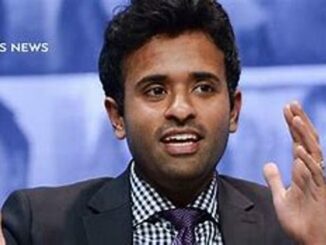
WASHINGTON, D.C. (TIP): Vivek Ramaswamy, the multi-millionaire biotech entrepreneur and self-described intellectual godfather of the anti-woke movement, announced on Tuesday, February 21 that he is running for president.
“We are in the middle of a national identity crisis,” he declared in an online video launching his campaign, offering that the current political climate constituted a form of “psychological slavery.”
Speaking straight to the camera, with an American flag draped in the background and a flag pin on his lapel, Ramaswamy framed his campaign as a broad counteroffensive to what he called the “woke left” — describing it as a threat to open speech, the free exchanging of ideas and American exceptionalism itself.
Ramaswamy is the third high-profile candidate to declare for the presidency in 2024. Though he filed forms with the FEC declaring he would be running on the Republican side of the aisle, his announcement video made no mention of the party itself — an indication that he hopes to frame his candidacy as outside the conventional political framework.
He has already done barnstorming in early nominating states, including Iowa, where he was well received even as some of the state’s political bigwigs professed to not having familiarity with the planks on which he was running.
Ramaswamy made his fortune in biotech investing, but he is best known for his appearances on Fox News and for the New York Times bestselling book he has written.
While his chances of securing the nomination are certainly long, Ramaswamy’s entry into the contest was greeted with a traditional flare from opposition Democrats. Shortly after he appeared on Fox News to elaborate on his decision to run, the Democratic National Committee sent out a statement. “As Vivek Ramaswamy uses Tucker Carlson’s show to announce his campaign for president, one thing is clear: The race for the MAGA base is getting messier and more crowded by the day,” it read. “Over the next few months, Republicans are guaranteed to take exceedingly extreme positions on everything from banning abortion to cutting Social Security and Medicare and we look forward to continuing to ensure every American knows just how extreme the MAGA agenda is.”
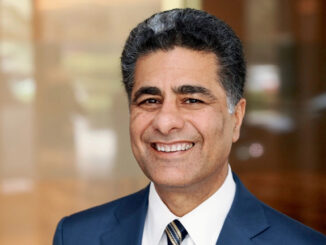
WASHINGTON, D.C. (TIP): Indian-American businessman and former Deloitte Global CEO is being considered to be the next chairman of SAP SE, a Germany-based European multinational software company.
The Supervisory Board of SAP has nominated Renjen to stand for election as a new member of the Supervisory Board and proposes him as the designated successor to Chairman Hasso Plattner.
With his nomination, Plattner, 79, and the Supervisory Board have initiated the succession process.
With an impeccable track record, Renjen is highly qualified to join the Supervisory Board of SAP and would be an excellent candidate to eventually take the chair at a time when SAP is undergoing the most fundamental strategic transformation in its 50-year history, the company said in a statement.
“I am very pleased to be considered for a role at SAP – an iconic company with a key role in the global economy. At a time when the company is successfully transforming into an enterprise application leader in the cloud and delivering on Hasso Plattner’s original vision of helping the world run better and improving people’s lives, I could not be more excited at the opportunity to help shape the future of a company that has unmatched relevance for global business,” Renjen said.
Renjen, 61, served as Deloitte Global CEO from 2015 until his retirement on December 31.
As Global CEO, he developed and executed a strategy that resulted in Deloitte revenues growing from USD 35 billion to more than USD 59 billion in just seven years. If approved by the board, Renjen would be the first non-German and also the first Indian to chair a DAX40 company.
The DAX 40 is a German stock market index comprising the 40 biggest companies – by market capitalization and liquidity – trading on the Frankfurt Stock Exchange (FSE).
The next step is Renjen’s candidacy for the Supervisory Board, which the shareholders will decide upon at the Annual General Meeting on May 11, 2023. Upon election to the SAP Supervisory Board, the handover process by Plattner to Renjen would begin. Plattner’s term expires in May 2024, the company said. “We are excited to propose Punit Renjen as a new member of the SAP Supervisory Board for a four-year term at the AGM in May 2023. This initiates a structured transition at the helm of the Supervisory Board, ensuring the continuity necessary for our company’s ongoing growth,” said Plattner. “With extensive experience as a highly successful CEO of one of the world’s largest consulting firms, Punit brings valuable insights and expertise to the board. His deep understanding of our customers’ needs, and the broader industry make him an ideal candidate for Chairman of the Supervisory Board from 2024 onwards,” he said. Renjen is a member of the Leadership Council of the World Economic Forum (WEF), and the International Business Council.
India today appears to be more divided than it ever was. In the 80 years that I have been on this planet, with sixty years of my life spent in India, I can say with an amount of certainty that the vibrant democracy I had known in my younger days seems to be taking a flight from India. During those days the nation was not as polarized on religious and communal lines as it is today. I do not recall there ever was any widespread distrust or animosity on religious lines. But for the last couple of years, India appears to have witnessed a loss of trust between communities. In fact, there is an atmosphere of hatred which is created and promoted by Indian politicians, particularly those in power.
One can understand that politics is all about gaining power , exercising power and staying in power, but then it is expected that those in power will work for the welfare of the people, and surely injecting hatred in religious and social groups does not contribute to the welfare of the people.
Indeed, the policy of dividing the people in order to rule was once attributed to the British colonial rulers, and the British were condemned for practicing it. But now the same policy is being practiced more enthusiastically than the Britishers ever did. Looking at what is going on in India today, it’s not difficult to understand that India’s democracy is dysfunctional, with the government divesting people of their rights with each passing day. Democracy in India is getting fragile day by day. One shudders to think what may happen to India a few years from now. It is the sacred duty of the opposition parties in India to oppose the government’s attacks on democracy for the sake of the people who have put their faith in democracy and the people who they trust to protect their liberties and rights. The opposition parties which are so divided and weak need to come together and raise their voice against the slaughter of democratic values. If they fail in their duty now, history will not forgive them for their inaction. Let the opposition parties of India have only one aim – to safeguard the hard earned democracy against the attacks on it by the present government of India.
The strategic visit by US President Joe Biden to Kyiv, days before the first anniversary of the Russian war on Ukraine, has only hardened the battle lines and made it obvious that America is in no mood to facilitate an early resolution of Europe’s biggest conflict since World War II. Even as Biden and Ukrainian President Volodymyr Zelenskyy walked together to a cathedral, the US State Department announced an additional $460-million aid to Ukraine, including artillery ammunition, anti-armor systems and air defense radars worth $450 million and the rest for energy infrastructure. Ukraine is set to receive large supplies of western weaponry over the next few months in an attempt to sharpen its counteroffensive, leaving no room for doubt that this war is not going to end anytime soon.
Biden is busy doing chest-thumping and saber-rattling on European soil; in his opinion, Russian President Vladimir Putin was ‘dead wrong’ in presuming that ‘Ukraine was weak and the West was divided.’ A defiant Putin has reaffirmed that sanctions-hit Moscow is ready for the long haul, even as he has accused the US-led West of stoking a global war to destroy Russia. Biden’s overzealousness has also given China, a key Russian ally, ample fodder to take potshots at the US. Beijing has urged ‘certain countries’ to immediately stop fueling the fire. Not to be left behind, Zelenskyy has warned that a world war would break out if China supports Russia militarily against Ukraine.
Given the geopolitical complications, the volatile situation is inevitably going to worsen. It is clearly evident to the international community that the US is no peacemaker and can never be one. Indeed, it was America’s overreach for NATO’s eastern expansion that provoked Russia and led to the invasion of Ukraine a year ago. Countries such as India, the current G20 president, need to play a proactive role in bringing both sides to the negotiating table and calling out the nations that are hell bent on prolonging this mutually destructive war and jeopardizing world peace.
The real challenge before the nation is how to make citizens, now bystanders, aware of their duties to defend the Constitution
The nation stands polarized on religious and caste lines, resulting in the creation of deep distrust, if not animosity. The party in power at the Centre is unwilling to cede an inch to the Opposition to maintain a vibrant democracy. There is a constant targeting of the Opposition, as verbal attacks and political destabilization of governments in Opposition-ruled States, through political machinations and “raids” and “checks” by several core central agencies.
By Dushyant Dave (Twitter photo)
The nation may have celebrated “Azadi ka Amrit Mahotsav”, on the completion of 75 years of Independence and the 74th anniversary of the founding of the Republic, but there are still deep contradictions in the country. Abject poverty prevails, there is a deepening divide between the rich and the poor, precarious conditions affect the rule of law, and not-so-good governance poses grave challenges to the very existence of democracy and the republic.
The nation stands polarized on religious and caste lines, resulting in the creation of deep distrust, if not animosity. The party in power at the Centre is unwilling to cede an inch to the Opposition to maintain a vibrant democracy. There is a constant targeting of the Opposition, as verbal attacks and political destabilization of governments in Opposition-ruled States, through political machinations and “raids” and “checks” by several core central agencies.
With weakened constitutional safeguards and institutions, the judiciary, including the Supreme Court of India, has been slow to stop these attacks. For example, the floor test that the judiciary applies only seems to aid the efforts of the ruling party in bringing down Opposition governments, and is a completely futile judicial weapon. The judiciary needs to innovate to stop the luring of elected MLAs, in order to protect the power of the “little man” in a democracy, as Sir Winston Churchill described it.
So, where is the Amrit? Our constitutional framers had envisaged a different India, as Constitutional Assembly debates show. H.V. Kamath on November 5, 1948, had said, “I hope that we in India will go forward and try to make the State exist for the individual rather than the individual for the State…At least let us try to bring about this empire of the spirit in our own political institutions. If we do not do this, our attempt today in this Assembly would not truly reflect the political genius of the Indian people… India of the ages is not dead nor has she spoken her last creative word; she lives and has still something to do for herself and for the human family.”
Have we marched in this direction over seven decades? For those who perpetuate polarization, an incident narrated by H.V. Kamath is the answer. Referring to the 1927 Congress session in Madras, he narrates, “Pandit Madam Mohan Malviya asked Muslims, ‘What safeguards did you ask from the Secretary of State for India or from the Government of India? We are here. What better safeguards do you want?’” After that speech, Maulana Muhammad Ali came to the rostrum, embraced Pandit Malaviya and said, “I do not want any safeguards. We want to live as Indians, as part of the Indian body politic. We want no safeguards from the British Government. Pandit Malaviya is our best safeguard.”
Constitutionally, the republic that was envisioned by the framers was what George Grote the historian had desired. B.R. Ambedkar quotes him reverentially (on November 4, 1948), “a paramount reverence for the forms of the Constitution, enforcing obedience to authority acting under and within these forms yet combined with the habit of open speech, of action subject only to definite legal control, and unrestrained censure of those very authorities as to all their public acts combined too with a perfect confidence in the bosom of every citizen amidst the bitterness of party contest that the forms of the Constitution will not be less sacred in the eyes of his opponents than in his own”. But then, B.R. Ambedkar expresses his fear thereupon, saying, “The other is that it is perfectly possible to prevent the Constitution, without changing its form by merely changing the form of the administration and making it inconsistent and opposed to the spirit of the Constitution. The question is, can we presume such a diffusion of Constitutional morality? Constitutional morality is not a natural sentiment. It has to be cultivated. We must realize that our people have yet to learn it. Democracy in India is only a top-dressing on Indian soil, which is essentially undemocratic.”
The failure of the constitutional and administrative authorities to work as per the letter and spirit of the Constitution shows how undemocratic India is. Discussing the importance of Opposition members of the Constituent Assembly, Z.H. Lari, said on May 20, 1949, “… everyone knows that power corrupts and absolute power corrupts absolutely… It is also a truism to say that every party that comes into power tries to make its hold permanent. The only check on the degeneration of party government into despotism is the existence of another party that keeps a strict eye on the doings of the cabinet and the party and thereby prevents the degeneration of a party government into a dictatorship. Besides, there cannot be a proper functioning of any party government unless there is constant criticism of the doings of that party.”
T.T. Krishnamachari said, “I have no doubt the future parliament and those who are going to be in charge of the destinies of this country would bear in mind the suggestion of Mr. Lari to pay a salary to the Leader of the Opposition, if that would encourage the creation of an Opposition, of a healthy Opposition Party.”
M.A. Ayyangar said, “I agree there ought to be a healthy opposition… I am really surprised to see … the very protagonist of this healthy opposition had ample opportunity and I do not know why he did not start an opposition… Are their actions calculated to improve the welfare of the Country, much better than what the Congress party has stated in its manifesto?” Biswanath Das felt that the “opposition is a necessary evil and that the function of the opposition is to give the party in power full work”.
The Congress, which dominated this country for almost four decades, sought to perpetuate its power, post-Independence, by preventing a healthy Opposition. The dismissal of governments in Opposition-ruled States was its key weapon. Yet, today, the Congress and other members of the Opposition have been forced to complain about the state of democracy.
But are they collectively a healthy opposition? Their utterances and actions cause bewilderment. Are their actions calculated to improve the welfare of the country? Their not speaking in one voice only leaves a clear path for the ruling party to win election after election.
The challenge before the nation is how to make citizens aware of their duties to defend the Constitution. People are now just bystanders before the political class which is making freedom irrelevant. In Israel, the proposals of Prime Minister Benjamin Netanyahu to undermine the judiciary are being strongly resisted. But what do we have in our nation today?
The failure to have a strong and healthy Opposition is causing the ruling party to perpetuate its position in a dictatorial manner. Constant attacks on the Supreme Court of India by Ministers and others show the scant regard for a healthy democracy. The ruling party must remember what Ram Narayan Singh once said, “In this country we have just got freedom, and our own party, i.e., the Congress Party, has got no opposition to it. I have seen how things have been going on here and I feel that there must be a strong opposition to criticize our actions and review them…. A Government which does not like opposition and always wants to be in power is not a patriotic but a traitor Government.”
Let us hope and pray that the party in power and the Opposition will realize their duties and responsibilities towards the Constitution, respect the wishes of the framers of the Constitution, and work for the welfare of the people of India.
(Dushyant Dave is Senior Advocate in the Supreme Court of India and former President of the Supreme Court Bar Association)
About 50,000 of Russia’s newly mobilized troops are already at the front and another 2,50,000 are under training. The occupation of the Luhansk and Donetsk regions will continue, but a major Russian breakthrough is less likely.
“The steady flow of arms and equipment through its western borders into Ukraine has greatly aided its war effort. However, President Volodymyr Zelenskyy’s desperate calls for fighter jets (about 200-odd F-16s) remain unheeded so far. The UK and Germany are providing a meagre squadron worth each of Challenger and Leopard 2 tanks and the US, while citing the extensive training and maintenance required, is expected to send about 30 M1 Abrams tanks. However, a missing element for offensive operations is air power which is unlikely to materialize anytime soon. The visit of the US President to Kyiv was highly symbolic and came with the promise of providing ammunition and air defense radars as well as further sanctions on Russia, but it fell short of Zelenskyy’s wish list of weapon systems and aircraft. The Munich security conference was in much the same vein, with the UK baulking at directly supplying fighter jets.”
By Lt Gen Pradeep Bali (retd)
President Vladimir Putin launched Russia’s invasion of Ukraine in the early hours of February 24, 2022, describing it as a ‘special military operation’ with the aim to ‘demilitarize and de-Nazify Ukraine’ and stop the ‘genocide’ of ethnic Russians in eastern Donbas. Moscow-backed separatists had tried to break away from Kyiv’s control by setting up the Donetsk and Luhansk People’s Republic and were opposed by groups like the Azov Regiment, rooted in far-right ideology. Putin also linked the invasion to checking NATO’s eastward expansion for gaining a ‘military foothold’ in Ukraine.
A refreshingly honest comment about this war came from the Pontiff in Rome. Pope Francis remarked that Moscow’s invasion of Ukraine was ‘perhaps somehow provoked’ as he recalled a conversation with a head of state who had mentioned to him that NATO was “barking at the gates of Russia”. The Pope also warned against what he said was a fairy-tale perception of the conflict as a battle of good versus evil.
There have been no serious attempts to curtail this conflict by the West by acknowledging Russian security concerns in its immediate neighborhood. However, within NATO itself there are discordant voices colored by dependence of some member countries on Russian energy exports. While direct talks between the Russian and Ukrainian Presidents have been suggested by India, among others, a few nations, including Turkey, had made offers of mediation. Apart from death and destruction, this war has led to an acute food shortage in many countries as Ukraine and Russia are major exporters of foodgrains and the conflict has disrupted supply chains. Russia is also an exporter of energy to Europe and has cut oil and gas supplies in response to sanctions, fueling inflation and increased cost of living.
The US, UK, European Union, Japan and Australia, among others, have all backed Kyiv with military aid worth billions of dollars. Many NATO allies have been at the forefront of efforts to arm Kyiv with weaponry for repelling Russia’s forces.
Russia’s main supporter is its neighbor and close ally, Belarus, whose territory was also used as a launch pad for the invasion and it is now providing considerable ammunition stocks for Russian forces. Many other countries, including China, India and Turkey, have avoided openly supporting either side.
At the commencement of the invasion, Russia deployed about 2,00,000 soldiers into Ukraine from the north, east and south. After the Russian advance faltered, its troops regrouped in Ukraine’s east and Putin recast the Kremlin’s goal as ‘the liberation of Donbas’. By September, Moscow had annexed four partly occupied territories – Donetsk, Luhansk, Kherson and Zaporizhia. Meanwhile, the Ukrainian forces, aided by western arms supplies, were busy staging counterattacks. By mid-November, they had recaptured the southern city of Kherson. Since then, both sides have been locked in bloody battles for the control of territory in the Donbas.
This year, the key determinant will be the fate of Russia’s spring offensive. About 50,000 of its newly mobilized troops are already at the front and another 2,50,000 are under training. The occupation of the Luhansk and Donetsk regions will continue, but a major Russian breakthrough is less likely. A continuation of current tactics, slow grinding of Ukrainian forces on limited fronts and a steady advance while targeting Ukrainian energy infrastructure and heavy artillery and missile barrages in the rear, will mark this war of attrition.
Crossing over to the east side of the Dnipro River to pressure Russia’s vulnerable road and rail links into Crimea might be too demanding. But the possibility of Kyiv launching a surprise new offensive can never be ruled out.
For the Ukrainians, the strategically valuable direction is south, to Melitopol or Berdyansk, aiming to cut the Russian mainland corridor to Crimea. That would be a major Ukrainian victory, and that is exactly why the Russians are fortifying Melitopol.
A short and unstable ceasefire is the only other prospect. Putin has made it clear that he will not stop and Ukraine has asserted that it is fighting to recapture what has been lost, including the Crimea. This is an intense contest in political, economic, diplomatic and military domains. It is hard to escape the sense that as 2022 came to a close, an ‘iron curtain’ had once again been drawn across Europe, but this time from the West, aiming to contain Russia. Despite Russia’s sizeable budget deficit and other impacts of western sanctions, Moscow will probably have enough reserves and money to keep its war against Ukraine going. This does not mean the sanctions imposed by the West are not effective but only that it would be “naive to think that sanctions alone could end the war,” in the words of Harvard economist Kenneth Rogoff.
The steady flow of arms and equipment through its western borders into Ukraine has greatly aided its war effort. However, President Volodymyr Zelenskyy’s desperate calls for fighter jets (about 200-odd F-16s) remain unheeded so far. The UK and Germany are providing a meagre squadron worth each of Challenger and Leopard 2 tanks and the US, while citing the extensive training and maintenance required, is expected to send about 30 M1 Abrams tanks. However, a missing element for offensive operations is air power which is unlikely to materialize anytime soon.
The visit of the US President to Kyiv was highly symbolic and came with the promise of providing ammunition and air defense radars as well as further sanctions on Russia, but it fell short of Zelenskyy’s wish list of weapon systems and aircraft. The Munich security conference was in much the same vein, with the UK baulking at directly supplying fighter jets. As far as India is concerned, Prime Minister Modi’s advice to Putin, “Today’s era is not an era of war”, should be a pointer for Indian diplomacy to take the lead in resolving this conflict. New Delhi needs to reach out to the major players as a mediator. Its long-standing strategic ties with Russia, an ostensibly neutral stance with no ulterior motives unlike China, combined with its capabilities and capacities as the G20 president, make it ideally suited for this role. Ukraine Foreign Minister Dmytro Kuleba had stated as much in what was nothing short of a direct invitation. The Ukraine war offers our diplomacy an ideal opportunity to play the roles of a peacemaker and a dealmaker.
Faces political uncertainty, economic bankruptcy and Taliban violence
“Pakistan is presently fully engrossed in avoiding bankruptcy and focusing on talks with the IMF. Islamabad has been forced to accept some very tough conditions before international financial institutions like the World Bank, Asian Development Bank, and the oil-rich Arab countries step in again to bail it out. Pakistan will hopefully realize that a rapidly progressing India has the potential to further strengthen relations with both the US and Russia. It has lost the proposed Russian economic assistance on oil supplies by inexplicably supplying military hardware to Ukraine. Rawalpindi will also have to remember that terrorism and meaningful talks with India cannot go hand in hand.”
By G Parthasarathy
Pakistan finds itself today in an unenviable position as its economic situation worsens and its foreign exchange reserves fall below $2 billion. Desperate, it has sought assistance from the IMF, international banks and donors to escape total bankruptcy. In the meantime, verbal warfare continues between Imran Khan and the Shehbaz Sharif government. Pro-US General Bajwa has arranged for one of his proteges, Lt Gen Syed Asim Munir, to succeed him. The army will continue to court the US. Even as the country was engrossed in a bid to avoid bankruptcy, the Islamabad High Court ordered an investigation into corruption charges against the former President, Gen Pervez Musharraf, for allotting military lands arbitrarily. Musharraf, who had been ailing, died amidst the political turmoil, at a hospital in the UAE. His burial in Karachi, with full military honors, was not attended by a single prominent political leader.
In the meantime, Imran Khan, who shows little interest on addressing the country’s serious economic crisis, has asked President Alvi to order an inquiry against his bête noire, Gen Qamar Javed Bajwa. He accused Bajwa of conspiring to oust him from office. Pakistan’s politicians have, however, never showed the inclination or ability to get together in dealing with radical Islamic groups, including the Taliban. Pakistan is paying the price for the support it rendered to radical Islamic groups in Afghanistan, and even within its own borders. Moreover, even after it was known that Pakistan was working hand in glove with the Taliban, the US looked the other way, and ultimately left Afghanistan ignominiously. Imran Khan is popularly known in Pakistan as ‘Taliban Khan’.
The Afghan Taliban has for long worked in concert with its Pakistani counterpart, Tehreek-e-Taliban-e-Pakistan, which now aspires to seize control of north-western Pakistan. In keeping with its long-term policy of helping the people of Afghanistan, India has moved to provide its people with wheat and medicines. Pakistan, on the other hand, is waging a war on its territory against the Tehreek-e-Taliban, which enjoys the support of its Pashtun brethren in Pakistan’s Khyber Pakhtunkhwa province. Many in the US and Russia will be amused to observe the Pakistan army engrossed in fighting its erstwhile Taliban proteges that the ISI had used for over two decades in their battles against Russian and US forces in Afghanistan. The ISI even used Taliban assistance during the hijacking of IC 814 to Kabul.
The sustained economic and educational assistance that India provided to Afghanistan before the Taliban takeover is widely appreciated across all sections of its people. However, now India has to route essential supplies to Afghanistan by air or through the Iranian port of Chabahar. India’s Afghan friends are, however, said to be disappointed that even elderly Afghans requiring visas for life-saving medical treatment in India are denied visas. This should be addressed positively. In the meantime, differences are clearly growing between Taliban’s supreme leader Haibatullah Akhundzada and ISI’s favorite Taliban leader, Sirajuddin Haqqani. There are indications that disputes between Pakistan and the Taliban could flare up across the Durand Line.
The recent demise of Musharraf has revived interest in what transpired in his days as President. He collaborated closely with the Taliban during the hijacking of IC 814. But his attitude towards India changed with the passage of time, especially after his visit to India in 2005. What followed was serious ‘back channel’ negotiations between Special Envoys of the two countries on the issue of J&K. The Indian delegation was led by the late Satinder Lambah, who was earlier India’s High Commissioner to Pakistan. India rejected any process that did not guarantee an end to terrorism, with both sides respecting the sanctity of existing borders. The then PM, Manmohan Singh, had asserted: ‘Borders cannot be redrawn.’
While there have been statements by eminent Pakistanis like former foreign minister Khurshid Kasuri, supporting the broad agreement that the two sides reached on J&K, there have been no comments on the contents of that dialogue by India. There have, however, been reports that the understanding reached was premised on an end to support for terrorism by Pakistan. The visit of PM Modi to Lahore in December 2015 to attend a family wedding hosted by PM Nawaz Sharif raised optimism about progress on bilateral issues and an end to terrorism. These hopes were shattered by the Pathankot airbase terror attack a week later; subsequently, terrorists from the ISI-backed Jaish-e-Mohammed (JeM) attacked a convoy of CRPF personnel in 2019, killing 40 Indian security personnel. While the perpetrator of the suicide attack was also killed, India-Pakistan standoff followed. On February 26, 2020, India retaliated with an air strike on a training camp of the JeM in Balakot, across the LOC.
There is little prospect of any meaningful dialogue with Pakistan anytime soon. Whether Pakistan will abide by what was agreed to in the back-channel talks remains to be seen. Moreover, Pakistan is presently fully engrossed in avoiding bankruptcy and focusing on talks with the IMF. Islamabad has been forced to accept some very tough conditions before international financial institutions like the World Bank, Asian Development Bank, and the oil-rich Arab countries step in again to bail it out. Pakistan will hopefully realize that a rapidly progressing India has the potential to further strengthen relations with both the US and Russia. It has lost the proposed Russian economic assistance on oil supplies by inexplicably supplying military hardware to Ukraine. Rawalpindi will also have to remember that terrorism and meaningful talks with India cannot go hand in hand.
(The author is Chancellor, Jammu Central University & former High Commissioner to Pakistan)
The resolution got 141 votes in favor and seven against; India was among the 32 countries that abstained
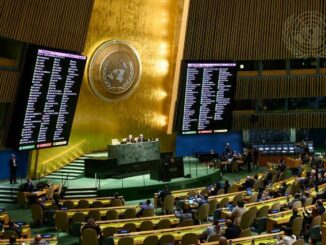
UNITED NATIONS (TIP): India abstained in the U.N. General Assembly on February 23 on a resolution that underscored the need to reach as soon as possible a “comprehensive, just and lasting peace” in Ukraine in line with the principles of the U.N. Charter.
The 193-member General Assembly adopted the draft resolution, put forward by Ukraine and its supporters, titled Principles of the Charter of the United Nations underlying a comprehensive, just and lasting peace in Ukraine. The resolution, which got 141 votes in favor and seven against, “underscores the need to reach, as soon as possible, a comprehensive, just and lasting peace in Ukraine in line with the principles of the Charter of the United Nations.” India was among the 32 countries that abstained.
The resolution called upon member states and international organizations to redouble support for diplomatic efforts to achieve a comprehensive, just and lasting peace in Ukraine, consistent with the Charter.
It reaffirmed its commitment to the sovereignty, independence, unity and territorial integrity of Ukraine within its internationally recognized borders, extending to its territorial waters and reiterated its demand that Russia immediately, completely and unconditionally withdraw all of its military forces from the territory of Ukraine within its internationally recognized borders, and calls for a cessation of hostilities. In the year since Russia’s February 24, 2022 invasion of Ukraine, several U.N. resolutions — in the General Assembly, Security Council and Human Rights Council, have condemned the invasion and underlined the commitment to the sovereignty, independence, unity and territorial integrity of Ukraine.
India has abstained on the U.N. resolutions on Ukraine and consistently underlined the need to respect the U.N. Charter, international law and the sovereignty and territorial integrity of states.
New Delhi has also urged that all efforts be made for an immediate cessation of hostilities and an urgent return to the path of dialogue and diplomacy.
In September 2022, External Affairs Minister S. Jaishankar said in his address to the high-level U.N. General Assembly session that in this conflict, India is on the side of peace and dialogue and diplomacy.
“As the Ukraine conflict continues to rage, we are often asked whose side are we on. And our answer, each time, is straight and honest. India is on the side of peace and will remain firmly there. We are on the side that respects the UN Charter and its founding principles. We are on the side that calls for dialogue and diplomacy as the only way out,” Jaishankar had said, adding that it is in the collective interest to work constructively, both within the United Nations and outside, in finding an early resolution to this conflict.
India has also consistently underlined that in the conflict, the entire global South has suffered “substantial collateral damage” and developing countries are facing the brunt of the conflict’s consequences on food, fuel and fertilizer supplies.
Jaishankar had said that India is on the side of those that are “struggling to make ends meet, even as they stare at the escalating costs of food, of fuel and fertilizers.” The UNGA resolution called for an immediate cessation of the attacks on the critical infrastructure of Ukraine and any deliberate attacks on civilian objects, including those that are residences, schools and hospitals.
It urged all member states to cooperate in the spirit of solidarity to address the global impacts of the war on food security, energy, finance, the environment and nuclear security and safety and underscored that arrangements for a comprehensive, just and lasting peace in Ukraine should take into account these factors.
U.N. Secretary-General Antonio Guterres told the emergency special session of the General Assembly that resumed on February 22 that Russia’s invasion of Ukraine is “an affront to our collective conscience” and said it is “high time” to step back from the brink.
“The one-year mark of Russia’s invasion of Ukraine stands as a grim milestone — for the people of Ukraine and for the international community. That invasion is an affront to our collective conscience. It is a violation of the United Nations Charter and international law,” Mr. Guterres said adding that the invasion is having dramatic humanitarian and human rights consequences.
In a strong message, Mr. Guterres said the war is fanning regional instability and fueling global tensions and divisions while diverting attention and resources from other crises and pressing global issues. “Meanwhile, we have heard implicit threats to use nuclear weapons. The so-called tactical use of nuclear weapons is utterly unacceptable. It is high time to step back from the brink,” he said.
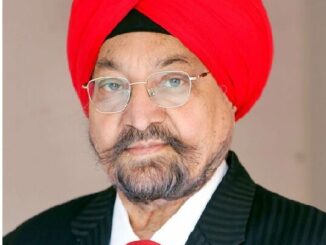
HICKSVILLE, NY (TIP): The 17-year-old English language weekly The Indian Panorama publisher and editor Prof. Indrajit Singh Saluja turns 80 today. The family decided to celebrate the day with Thanksgiving prayers at Gurdwara Guru Nanak Darbar in Hicksville.
Prof. Saluja expressed his gratitude to his family, friends, patrons, and advertisers and readers of The Indian Panorama for their immense love and cooperation, and pledged to remain “ever truthful” in his journalistic obligations.
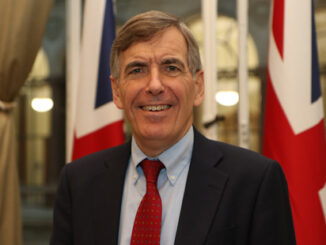
LONDON (TIP): The British government has strongly defended the BBC and its editorial freedom in Parliament after the Income-Tax department’s survey operations on the UK-headquartered media corporation’s New Delhi and Mumbai offices over three days last week. A Foreign, Commonwealth and Development Office (FCDO) junior minister responded to an urgent question raised in the House of Commons on Tuesday, February 21, to say that the government cannot comment on the allegations made by the I-T department over an “ongoing investigation” but stressed that media freedom and freedom of speech are essential elements of “robust democracies”.
David Rutley, Parliamentary Under-Secretary of the FCDO, pointed to a “broad and deep relationship” with India which meant the UK was able to discuss a wide range of issues in a “constructive manner”.
“We stand up for the BBC. We fund the BBC. We think the BBC World Service is vital. We want the BBC to have that editorial freedom,” said Rutley. “It criticizes us (government), it criticizes the (Opposition) Labour party, and it has that freedom that we believe is so important. That freedom is key, and we want to be able to communicate its importance to our friends across the world, including the government in India,” he said.
Updating the Commons on the issue, the minister said India’s I-T department conducted what has been described as a survey on the BBC’s offices in New Delhi and Mumbai, beginning on February 14 and finishing after three days, on February 16.
Highlighting that the BBC is “operationally and editorially independent”, the minister said the public broadcaster plays an important role and the FCDO funds services in 12 languages, including four Indian languages: Gujarati, Marathi, Punjabi and Telugu.
“It will continue to do so, because it is important to ensure that our voice — and an independent voice, through the BBC — is heard throughout the world,” he said.
Pressed on by Opposition MPs on the “deeply worrying raids” and asked about discussions with the Indian government, the minister added: “It is because of our broad and deep relationship with India that we are able to discuss a wide range of issues in a constructive manner with its government. As part of those conversations, this issue has been raised and we continue to monitor the situation.” The urgent question was raised by Northern Ireland MP Jim Shannon, who branded the action a “deliberate act of intimidation following the release of an unflattering documentary about the country’s leader” and sharply criticized the UK government for failing to make a statement on the issue.
“The raids happened seven days ago. Since then — I say this respectfully — there has been silence from the Foreign, Commonwealth and Development Office. No government statements have been issued, and it has taken an urgent question to encourage the government to condemn this blatant attack on press freedoms,” said Shannon, a member of Parliament for the Democratic Unionist Party (DUP). British Sikh Labour MP Tanmanjeet Singh Dhesi expressed his concerns that “India, a nation with which we have shared values of democracy and press freedoms, decided to conduct a raid on the BBC offices after the airing of a documentary critical of the Indian Prime Minister’s actions”. “These issues have absolutely been raised as part of those conversations,” the minister responded.
Other Labour MPs pointed out that it was not the first time that the authorities in India had undertaken such “investigations into media organizations that are critical of the current government”.
“We need to ensure that our views on media freedom are communicated clearly with other governments. We have those conversations not only with the government of India, but across the world. We think these are very important principles and, as I said, they are essential elements for robust democracies,” the minister said.
“Our broad and deep relationship, guided by the comprehensive strategic partnership and the 2030 road map for India-UK future relations, allows us to discuss a wide range of issues in a constructive manner with the government of India. We continue to follow the matter closely,” he added.
Conservative Party MP Bob Blackman, a vocal supporter of the Indian government, asked the minister to confirm if the I-T authorities in India have been investigating the BBC for seven years.
The minister, however, declined to comment on “an ongoing investigation that the BBC is actively engaged in”.
The I-T department said in a statement following the survey that the income and profits disclosed by the organization’s units were “not commensurate with the scale of operations in India”.
WASHINGTON, D.C. (TIP): A strong India-US relationship is a must for democracy, advancement in technology and a robust world economy, a top American senator has said, emphasizing that close bilateral ties will be a crucial counterweight to outcompete China.
Describing India as one of the “leading powers” of the world, Senator Chuck Schumer said close India-US ties would also be key to responding to China’s authoritarianism. The Senate Majority Leader is leading a high-powered Congressional delegation of senators to India. The delegation, led by Schumer, called on Prime Minister Narendra Modi in New Delhi on Monday, February 20. They discussed new opportunities for consolidating the India-US ties in critical technologies, clean energy transition, joint development and production, and trusted and resilient supply chains.
The prime minister welcomed the Congressional delegation to India and appreciated the consistent and bipartisan support of the US Congress for deepening India-US bilateral ties, his office said in a statement.
“We need nations such as India, the world’s largest democracy, to work with us to strengthen democracies in Asia and around the globe,” Schumer said in a statement issued here on Monday following his hour-long meeting with Prime Minister Modi in New Delhi.
“In our meeting with Prime Minister Modi, we stressed that close ties between our two countries would be a crucial counterweight to outcompete China and respond to its authoritarianism,” he said.
India is one of the “leading powers” of the world and a strong US-India relationship is a must for democracy, technology advancement, and a strong world economy, he said.
“I made India my first Congressional Member Delegation (CODEL) as Majority Leader to show my commitment to the important US-India relationship,” he said in the statement.
Other members of the delegation are Senators Ron Wyden, Jack Reed, Maria Cantwell, Amy Klobuchar, Mark Warner, Gary Peters, Catherine Cortez-Masto, and Peter Welch.All are from the ruling Democratic Party.
“I am proud that the senators in our delegation are strong representatives of America’s commitment to the US-Indian economic and security partnership,” he said. Schumer said, in his meeting with Modi, they discussed the growing US-India relationship and the common interests that unite the two largest democracies in the world.
“It was a substantive and productive conversation about strengthening ties on our shared strategic interests including outcompeting China, combating climate change, increasing trade, and deepening bonds between our two countries,” he said.
“We stressed that close cooperation between the US and India in areas such as AI, green hydrogen, and advanced tech manufacturing will give our two countries the advantage for decades to come. I strongly believe the continued and strengthened US-India relationship will be the great story that will define the 21st century,” he said.
All the senators expressed their commitment to continue working with the Indian government to deepen the bilateral relationship to advance their mutual interest, he added.
(Inputs from PTI and Press release from Schumer’s office)
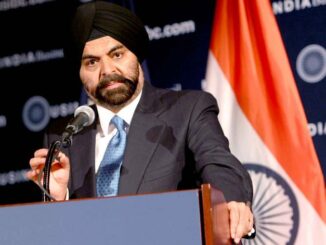
WASHINGTON, D.C. (TIP): President Joe Biden on Thursday, February 23, announced that the US is nominating Ajay Banga to lead the World Bank, saying the Indian-American business leader is uniquely equipped to lead the global institution at “this critical moment in history”. If confirmed by the World Bank Board of Directors, Banga would be the first-ever Indian-American and Sikh-American to head either of the two top international financial institutions: International Monetary Fund and the World Bank.
Banga, 63, currently serves as Vice Chairman at General Atlantic. Previously, he was President and CEO of Mastercard, leading the company through a strategic, technological and cultural transformation. He was awarded the Padma Shri in 2016.
“Ajay is uniquely equipped to lead the World Bank at this critical moment in history,” President Biden said in a statement.
“He has spent more than three decades building and managing successful, global companies that create jobs and bring investment to developing economies, and guiding organizations through periods of fundamental change,” Biden said.
Banga has a proven track record managing people and systems, and partnering with global leaders around the world to deliver results, he said. He also has critical experience mobilizing public-private resources “to tackle the most urgent challenges of our time, including climate change,” the US President said. Raised in India, Banga has a unique perspective on the opportunities and challenges facing developing countries and how the World Bank can deliver on its ambitious agenda to reduce poverty and expand prosperity, he added.
The White House said Banga is a business leader with extensive experience leading successful organizations in developing countries and forging public-private partnerships to address financial inclusion and climate change.
According to the White House, over the course of his career, Banga has become a global leader in technology, data, financial services and innovating for inclusion. He is honorary chairman of the International Chamber of Commerce, serving as chairman from 2020-2022. He is also chairman of Exor and independent director at Temasek. He became an advisor to General Atlantic’s climate-focused fund, BeyondNetZero, at its inception in 2021.
He previously served on the Boards of the American Red Cross, Kraft Foods and Dow Inc. Ajay has worked closely with Vice President Kamala Harris as the Co-Chair of the Partnership for Central America.
He is a member of the Trilateral Commission, a founding trustee of the US-India Strategic Partnership Forum, a former member of the National Committee on United States-China Relations, and Chairman Emeritus of the American India Foundation.
Banga is a co-founder of The Cyber Readiness Institute, Vice Chair of the Economic Club of New York and served as a member of President Barack Obama’s Commission on Enhancing National Cybersecurity. He is a past member of the US President’s Advisory Committee for Trade Policy and Negotiations.
He was awarded the Foreign Policy Association Medal in 2012, the Ellis Island Medal of Honor and the Business Council for International Understanding’s Global Leadership Award in 2019, and the Distinguished Friends of Singapore Public Service Star in 2021.
According to health experts, the usual risk factors for heart attack are high blood pressure, uncontrolled diabetes, hypercholesterolemia, smoking, drug abuse and lack of physical activity. These are the major reasons for causing coronary artery diseases at an early age.
In an interview with HT Lifestyle, Dr Sharath Reddy Annam, Senior Consultant Interventional Cardiologist, Director of Cath Lab, Director of CTO and Complex Coronary interventions, TAVR and Structural Heart interventions at Medicover Hospitals, suggested, “To prevent heart attacks, especially in the early age group (40 years), we recommend at least one complete comprehensive metabolic profile check around 35 years of age which makes us understand to devise individual specific preventive strategies.”
Insisting that lifestyle changes constitute the main stay of preventing early heart attacks, he advised, “Smoking is the most common reason for heart attack in early age groups, which needs to be quit completely. Alcohol, though some studies favoured controlled intake would reduce coronary artery disease, is not recommended in general as it has adverse impact on many other organs. Lack of physical activity is contributing significantly to heart attack in young. Regular physical activity, atleast ½ hour per day or 15 min twice a day for 5 days a week is well studied in preventing heart disease. Therefore, that is the minimum exercise recommended for all the individuals to prevent heart attacks at a young age.”
According to him, other modifiable risk factors like hypertension, diabetes and high cholesterol can be diagnosed early by having regular yearly checkups and treating them adequately to achieve recommended goals of therapy. He recommended, “Follow-ups are paramount in bringing these metabolic abnormalities under recommended control, which are neglected by the majority of patients. Blood pressure medications are titrated in such a way to bring it below 130/ 80 mmhg for patients having diabetes or renal issues and <140/90 mmhg for other patients. For diabetes titration of medicines is done to bring fasting sugars to < 140 mg/dl, post prandial sugar to < 180 to 200, and HBA1C < 6.5 or 7. In familial hypercholesterolemia we initiate therapy when levels are more than 190 mg/dl to bring LDL levels to < 100mg/dl. However, in patients who had heart attacks or underwent stenting or bypass treatment is stepped up till LDL level drops below 70 or 50. Hence, periodic follow ups are crucial to assess and titrate medication to achieve recommended clinical goals to reduce heart attacks efficiently.”
Higher intake of free or added sugars present in sugary drinks, sweets and fruit juice is associated with a higher risk of cardiovascular disease, a study has found.
The findings, published in the journal BMC Medicine, strengthen the evidence for the global dietary recommendation to reduce free sugar consumption to below five per cent of total daily energy.
Researchers at the University of Oxford analysed data from 110,497 individuals from the UK Biobank who had completed at least two dietary assessments.
They tracked individuals for approximately 9.4 years, and during this time, total cardiovascular disease — heart disease and stroke combined — heart disease, and stroke occurred in 4,188, 3,138, and 1,124 participants, respectively.
The study found total carbohydrate intake was not associated with cardiovascular disease outcomes.
However, when looking at the types and sources of carbohydrates consumed, the researchers found that higher free sugar intake from foods such as sugary drinks, fruit juice and sweets was associated with increased risk of all cardiovascular disease outcomes.
For each 5 per cent higher total energy from free sugars, the associated risk of total cardiovascular disease was seven per cent higher, according to the researchers.
The team found that the risk of heart disease was six per cent higher, while the risk of stroke was 10 per cent higher.
Consuming five grammes more fibre per day was associated with 4 per cent lower risk of total cardiovascular disease, but this association did not remain significant after accounting for body mass index (BMI).
The researchers suggest that replacing free sugars with non-free sugars –mostly those naturally occurring in whole fruits and vegetables — and a higher fibre intake may help protect against cardiovascular disease. Source: PTI
A study has found that eating smaller meals was more beneficial than intermittent fasting for losing weight. The study was published in a journal, ‘American Heart Association’.
According to the senior study author Wendy L. Bennett, M.D., M.P.H., an associate professor of medicine at Johns Hopkins University School of Medicine in Baltimore, although ‘time-restricted eating patterns’ — known as intermittent fasting — are popular, rigorously designed studies have not yet determined whether limiting the total eating window during the day helps to control weight.
This study evaluated the association between time from the first meal to last meal with weight change. Nearly 550 adults (18 years old or older) from three health systems in Maryland and Pennsylvania with electronic health records were enrolled in the study. Participants had at least one weight and height measurement registered in the two years prior to the study’s enrollment period (Feb.-July 2019).
Overall, most participants (80 per cent) reported they were white adults; 12 per cent self-reported as Black adults; and about 3 per cent self-identified as Asian adults. Most participants reported having a college education or higher; the average age was 51 years; and the average body mass index was 30.8, which is considered obese. The average follow-up time for weight recorded in the electronic health record was 6.3 years.
Participants with a higher body mass index at enrollment were more likely to be Black adults, older, have Type 2 diabetes or high blood pressure, have a lower education level, exercise less, eat fewer fruits and vegetables, have a longer duration from last mealtime to sleep and a shorter duration from first to last meal, compared to the adults who had a lower body mass index. The research team created a mobile application, Daily24, for participants to catalog sleeping, eating and wake up time for each 24-hour window in real-time. Emails, text messages and in-app notifications encouraged participants to use the app as much as possible during the first month and again during “power weeks” — one week per month for the six-month intervention portion of the study.
Based on the timing of sleeping and eating each day recorded in the mobile app, researchers were able to measure:- the time from the first meal to the last meal each day;- the time lapse from waking to first meal; and- the interval from the last meal to sleep. Source: ANI
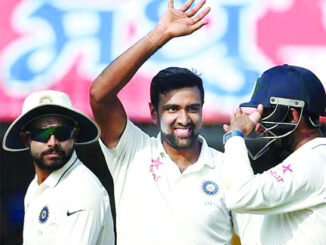
Ashwin rises to 2nd spot in ICC Test bowlers’ rankings
Dubai (TIP)- India off-spinner Ravichandran Ashwin on Wednesday, February 15, jumped to the second spot in the ICC Men’s Test Bowlers Rankings following his eight-wicket show against Australia in the opening Test in Nagpur.
Left-arm spinner Ravindra Jadeja, who made a successful comeback after almost five months due to a knee injury, has moved up to the 16th position, courtesy his player-of-the-match winning effort in the Border-Gavaskar Trophy series-opener.
The spin duo haunted Australia in the first Test by sharing 15 wickets between them as India won by an innings and 132 runs inside three days. Ashwin ensured India wrapped up a stunning victory before tea on the third day, as the veteran off-spinner took 5/37 in the second innings to go with 3/42 earlier in the match. The 36-year-old is 21 rating points behind Australia captain Pat Cummins and is in contention to return to the No 1 ranking for the first time since 2017. While Ashwin stepped up in what turned out to be the last session of the Test, Jadeja did the damage on the first day with 5/47, including the prized wickets of Steve Smith and Marnus Labuschagne.
Jadeja then took 2/34 in the second Australian innings. Australia were bowled out for just 91.
Among other Indian bowlers, pacer Jasprit Bumrah, who too has been out of action since September last due to a lower back stress fracture, is placed fifth.
In the Test batting chart, India captain Rohit Sharma has been rewarded for his match-defining ton in Nagpur. He gained two spots to be at number eight. Rohit came to the crease after Australia were all out for 177 in their first innings, then made the wicket look all-but tame with an assured 120 that set the tone for the rest of the match.
Wicket-keeper Rishabh Pant, who will be out of action for an indefinite period following his horrific car accident, is the other Indian batter in top 10. He is placed seventh. In contrast, Australian openers David Warner and Usman Khawaja have paid the price for being dismissed cheaply twice.
Warner has fallen six places to 20th after his scores of 1 and 10, while Khawaja has dropped two spots to 10th after making only 1 and 5 in the first Test.Australian duo of Marnus Labuschagne and Steve Smith occupy the top two positions with Pakistan captain Babar Azam in the third spot. India all-rounder Axar Patel has leaped six places to seventh in Test all-rounder rankings after coming to the crease at a tense 240 for 7. He hit a patient 84 for his highest score in the format.
Royal Challengers Bangalore announced on Wednesday that they were naming Indian tennis legend Sania Mirza as the mentor of their women’s team for the inaugural season of the Women’s Premier League.
A winner of six Grand Slam titles, Sania has has a 20-year-long career which has seen her win 43 WTA Titles. RCB said in a statement that Sania’s “global stature as one of the leading role models for innumerable women prompted the RCB team management to get her on board, to motivate and encourage the women’s team of RCB. Sania is someone whom the players can relate and respond to easily in a team environment.”
In the recently-concluded WPL auctions, RCB picked star names like India batter Smriti Mandhana, Australian all-rounder Ellyse Perry, Australian medium pacer Megan Schutt, New Zealand captain Sophie Devine, England skipper Heather Knight, South African all-rounder Dane Van Niekerk and India under-19-star Richa Ghosh.
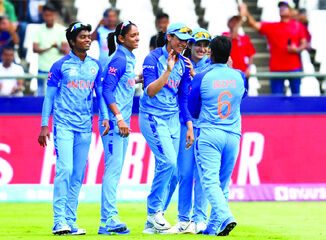
Cape Town (TIP)- Deepti Sharma shone with the ball before Richa Ghosh led India to a six-wicket win over West Indies in their Women’s T20 World Cup Group 2 match here on Wednesday, February 15.
Deepti spun a web around the West Indies batters to restrict them to 118 for six after being asked to bowl.
The seasoned off-spinner (3/15) picked three wickets to become the first Indian to get to 100 women’s T20I wickets. Ghosh (44 not out) and captain Harmanpreet Kaur (33) then put up a vital 72-run stand to take India to their second victory of the tournament with 11 balls to spare.
Needing less than run a ball, India were off to an electric start with openers Shafali Verma (28) and Smriti Madhana (10) taking the team total to 31 in four overs on the back of six fours.
But India lost the momentum as slow bowling did the trick for West Indies.
Mandhana missed off-spinner Karishma Ramharack’s (2/14) ball completely, resulting in an easy stumping for wicketkeeper Rasha Williams.
Last game match-winner Jemimah Rodrigues (1) became Hayley Matthews (1/12) first and only victim of the day as the skipper took a stellar catch of her own bowling.
After two low-scoring overs, Shafali tried to up the ante only to be caught at long leg and West Indies picked three wickets in quick succession.
Harmanpreet took her time to settle down before hitting back-to-back fours off Afy Fletcher (0/24) in the ninth over. The India skipper’s knock came off 42 balls with the help of three boundaries.
Ghosh did what she does best—finish the game.
The youngster hit five fours, including one to finish off the match in her unbeaten 32-ball innings. She took India to 119 for 4 in 18.1 overs. Earlier, Pooja Vastrakar (1/21), opening with the new ball, gave India the early breakthrough, getting rid of the dangerous Hayley Matthew (2), striking on her very first ball.
The West Indies skipper was done in by the extra bounce as Richa Ghosh completed a regulation catch.
Pooja continued to put pressure on the West Indies, bowling a wicket maiden. Shemaine Campbelle (30) hit West Indies’ first boundary in the third over, slapping a Renuka Singh (1/22) delivery past square leg.
The introduction of spin led to West Indies collecting 12 runs, including two fours from Rajeshwari Gayakwad’s over.
West Indies were 53 for 1 at the halfway mark. Campbelle and Stefanie Taylor (42) steadied the West Indies innings as they slowly but steadily stitched a 73-run partnership. The two shared nine boundaries between them.
However, twin strikes from the ever-reliable Deepti led to a mini batting collapse. The off-spinner first punished Campbelle for going for a reverse sweep with Smriti Mandhana completing a lovely catch at short third. Source: PTI
Israeli and Gospel Musicians Celebrate Fellowship in a Groundbreaking “Symphony of Brotherhood” musical experience.
Miri Ben-Ari. (Photo : Courtesy NJPAC)
The New Jersey-Israel Commission brings to us a groundbreaking and unforgettable musical experience celebrating the shared fellowship of Black, Jewish and Christian communities on Sunday, February 26 at 6pm at Wells Cathedral Church, 672 Dr. Martin Luther King Jr Blvd. in Newark, NJ in honor of Black History Month.
The concert, titled ‘Symphony of Brotherhood,’ is a production by Israeli American Grammy Award winning artist Miri Ben-Ari, in collaboration with world-renowned gospel performer Derrick Starks. This special event will fuse cultures, musical genres, and soulful sounds.
“Symphony of Brotherhood,” the name of Ben-Ari’s latest hit (featuring Flo Rida), also includes special performances by the reputable Melonie Daniels, Lena Starks, kr3ts dance company, and Dr. Pauline Plummer, Founder of Covenant Daughters International, in an evening of love and harmony.
Government officials and community leaders from across the state will attend the event, including New Jersey Secretary of State Tahesha Way, New Jersey-Israel Commission leadership, Church of God in Christ (COGIC) Bishop of Israel and the first African American bishop ever to reside in Israel Glenn Plummer, and Bishop Kevin Knight.
FREE EVENT
WHEN: Sunday, February 26th at 6PM
WHERE: Wells Cathedral Church, 672 Dr. MLK Jr Blvd., Newark, NJ
REGISTRATION
The event is FREE, but advanced registration is requested at eventbrite.com/e/symphony-of-brotherhood-tickets-533791042377.
“Music has the unique capacity to unite our communities and remind us of the power and strength of friendship,” said Ben-Ari, also a member of the New Jersey-Israel Commission. “The goal of our event is to celebrate Black History Month together, a collaboration between local Christian, Black, Jewish and Israeli-American communities coming together in unity.”
“New Jersey is celebrated as a melting pot of so many various cultures, and the New Jersey-Israel Commission has, once again, created an initiative to unite our communities,” said Secretary of State Tahesha Way. “I am thrilled to be celebrating Black History Month by attending this one-of-a-kind ‘Symphony of Brotherhood’ concert and we are looking forward to seeing how this unique performance will unite our communities and deepen friendships for the people of New Jersey.”
Miri Ben-Ari
Miri Ben-Ari is a Grammy Award-winning violinist, producer, humanitarian, “Goodwill Ambassador of Music” to the United Nations, TED speaker, and member of the New Jersey-Israel Commission. She is a classically trained violinist, who once studied under the late classical master Isaac Stern, Ben-Ari has helped to sell millions of records by collaborating with Grammy award-winning artists such and graciously will share her knowledge and experience, inspiring the young musicians.
“We need tolerance now more than ever” says Miri Ben-Ari (miribenari.com), who has consistently broken barriers with her music and philanthropic endeavors. Miri Ben-Ari is the co-founder and CEO of Gedenk gedenkmovement.org
“Symphony of Brotherhood,” is a non-profit organization that runs creative programs for young people to promote tolerance. It is her love for music that fuels her passion to provide quality and educational experiences teaching tolerance through music to young musicians. The young musicians will perform to Miri Ben-Ari’s piece “Symphony of Brotherhood,” to Dr. Martin Luther King Jr.’s timeless speech “I Have A Dream.” For more information about Miri Ben-Ari, miribenari.com
Watch the video – youtube.com/watch?v=X8SJ9V9DVMo&feature=youtu.be
The New Jersey-Israel Commission
The New Jersey-Israel Commission was established in 1989 to implement the goals of the New Jersey-Israel Sister State Agreement and is under the administration of the New Jersey Department of State. The Commission promotes the development of trade, culture and educational exchanges; encourages the development of capital investment and joint business ventures; and fosters a spirit of cooperation between the citizens of the State of Israel and the State of New Jersey.
—————————————–
FAITH MEETS CITY & CELEBRITY AT THE SHEEN CENTER, NY
Reverend A.R. Bernard and Rabbi Joseph Potasnik. (Photo Credit : Sheen Center)
By Mabel Pais
Join the Sheen Center with Special Guests…..
New York City Mayor, Eric Adams & Actor-Singer-Author, Vanessa Williams
Reverend A.R. Bernard and Rabbi Joseph Potasnik – co-hosts of the popular WABC Radio Sunday morning talk show, “The Rev & the Rabbi” – bring their signature brand of wit and wisdom to the Sheen Center’s stage in front of a live audience on February 23 at 6 pm at the Sheen Center, New York. The evening will feature an intimate conversation with New York City Mayor, Eric Adams, as he shares how his faith journey has informed his life of public service, as a member of the NYPD, as an elected official, and as the mayor of the largest, most religiously-diverse city in the United States. Learn how Mayor Adam’s faith sustained him during these difficult past two years; how it inspires in him hope and healing for our divided city; and the relevant role faith-based partnerships play in his administration. You don’t want to miss it. The evening will also feature a conversation with multi-hyphenate performer Vanessa Williams, who will discuss how her faith has informed and guided her career on stage and screen, as an award-winning singer and actress.
PROGRAM
WHAT: The Rev and the Rabbi
WHEN: February 23, 2023 @ 6 PM (Doors open 30 minutes before showtime)
WHERE: The Sheen Center, 18 Bleecker Street, New York City 10012
After hearing Ya Girl, a high school student with more than one million followers on Instagram, struggle to make sense of today’s tumultuous world, Melba Pattillo steps out of history to share the story of her battle to integrate Little Rock Central High School in 1957. Ya Girl learns to see herself in Melba – and in all the young warriors who came before her who raised their hands and made a difference.
Inspired by Dr. Melba Pattillo Beale’s memoir, ‘Little Rock Nine,’ ‘Warriors Don’t Cry,’ is a catalyst for deeper discourse, social media, and community engagement.
PROGRAM
WHEN: February 25, 2023 @ 11 am & 2 pm
WHERE: The Sheen Center, 18 Bleecker Street, New York City (Doors open about 30 minutes before performance)
Recommended Ages: Grades 6 to 12
Watch the trailer – youtu.be/ekIcSX0LnfU
TICKETS
Purchase tickets for the 11 am show
@ ci.ovationtix.com/34409/production/1148072?performanceId=11215011 and
Join the New Jersey Symphony while it performs the music of one of cinema’s greatest masterminds!
John Williams, (right) Damon Gupton. (Photo Credit : NJ Symphony)
Celebrate the music of iconic composer John Williams as your New Jersey Symphony (NJS) brings to life some of his most legendary film scores. Relive the magic themes of Harry Potter, Jaws, Star Wars, Jurassic Park and more!
Hearing Williams’ music performed live is a true symphonic treat. Invite your family and friends for an awesome concert experience. Learn more at njsymphony.org/events/detail/the-best-of-john-williams.
PROGRAM
The Best of John Williams
Friday, February 24 at 8 pm, Count Basie Center for the Arts in Red Bank
Saturday, February 25 at 8 pm, New Jersey Performing Arts Center in Newark
Sunday, February 26 at 3 pm, State Theatre New Jersey in New Brunswick
Damon Gupton conductor
New Jersey Symphony
John Williams Superman March
Shark Theme from Jaws
Theme from Jurassic Park
“Viktor’s Tale” from The Terminal
“Devil’s Dance” from The Witches of Eastwick
Excerpts from Close Encounters of the Third Kind
Cowboys Overture
“Harry’s Wondrous World” from Harry Potter and the Sorcerer’s Stone
Selections from Star Wars
“Across the Stars” from Star Wars Episode II: Attack of the Clones
“Anakin’s Theme” from Star Wars Episode I: The Phantom Menace
“Imperial March” from Star Wars Episode V: The Empire Strikes Back
“March” from 1941
“With Malice Toward None” from Lincoln
“Adventures on Earth” from E.T.: The Extra Terrestrial
Young Friends Happy Hour
Saturday, February 25, at 6:30 pm at NJPAC
Join your fellow Young Friends for a fun happy hour event before the performance at NICO Kitchen + Bar, including free appetizers and a meet-and-greet with New Jersey Symphony musicians.
Register at fs10.formsite.com/NJSO/cvxec7gapz/index
Please note: Registration for the reception is free for Young Professionals aged 21-40 with the purchase of a Best of John Williams concert ticket. Learn more at njsymphony.org/concerts-and-events/deals-discounts/young-friends.
Concert Prelude
Saturday, February 25, at 7 pm at NJPAC
Enjoy a performance by the New Jersey Symphony Youth Orchestra’s String Ensemble, led by New Jersey Symphony violinist Naomi Youngstein.
Teen Connect
Sunday, February 26, at 2 pm at the State Theatre New Jersey, New Brunswick
This special experience offers teen musicians a meet-and-greet with New Jersey Symphony musicians, plus discounted concert tickets.
Purchase tickets at njsymphony.org/teenconnect.
TICKETS
For tickets to the concert, visit www.njsymphony.org or call 1.800.ALLEGRO (255.3476).
John Williams
Learn about John Williams at johnwilliams.org
Damon Gupton
Learn about Damon Gupton at damongupton.com
Note: John Williams does not appear in this performance. This concert features selections from John Williams’ scores; no film projection.
—————————————
XIAN ZHANG CONDUCTS IN HER FAVORITE PIECE OF MUSIC
Xian Zhang with NJ Symphony. (Photo Credit : NJ Symphony)
By Mabel Pais
Music Director Xian Zhang leads the New Jersey Symphony (NJS) in her favorite piece of music, Mahler’s Symphony No. 3, on March 3 and 5 with mezzo-soprano Kelley O’Connor, Montclair State University Prima Voce, and Starry Arts Group Children’s Chorus at the New Jersey Performing Arts Center (NJPAC), Newark, New Jersey.
PROGRAM
Mahler’s Symphony No. 3
Friday, March 3, 8 pm @ NJPAC, Newark
Sunday, March 5, 3 pm @ NJPAC, Newark
Xian Zhang conductor
Kelley O’Connor mezzo soprano
Montclair State University Prima Voce | Heather J Buchanan, director
Starry Arts Group Children’s Chorus | Rebecca Shen, director
New Jersey Symphony
Gustav Mahler Symphony No. 3
GUSTAV MAHLER
Gustav Mahler (1860-1911) was an Austro-Bohemian composer and conductor of the late-Romantic era. His compositions often draw on his Jewish heritage, and he is known for symphonic works of great scale and power. He is routinely described by modern scholars as one of the most important and innovative composers of the Romantic period. Mahler’s Third Symphony is his longest and most expansive symphony, with a total performance duration of around 100 minutes. It is also noted for its use of both a solo mezzo-soprano and a chorus of women and children, which was fairly unusual for symphonies of this period. Symphony No. 3 is often considered to be one of the peaks of Mahler’s output and is among his most highly regarded works.
Kelley O’Connor
Grammy Award-winner Kelley O’Connor is an acclaimed American mezzo-soprano. She is known for her powerful and expressive voice, as well as her compelling stage presence. She has performed a multitude of roles in opera, including the Duchess of the King’s Company in Donizetti’s Maria Stuarda and Adalgisa in Bellini’s Norma. Additionally, she has been praised for her performances of music from the 20th and 21st century. Kelley O’Connor continues to delight audiences with her captivating singing and enthralling stage presence. Learn more at kellyoconnor.com
Montclair State University (MSU) Prima Voce
Heather Buchanan. (Photo Credit : NJ Symphony)
Montclair State University Prima Voce, led by director Heather J Buchanan, is an award-winning, student-run a cappella group that has been making music since 2006. The group sings a wide range of genres from classic rock to barbershop and gospel. They are known for their exciting performances, high energy, and engaging crowd interactions. Prima Voce performs around the Montclair area, often at campus events and charity shows, and have also traveled to other parts of the country for competitions and showcases. Learn more at monclair.edu.
The Starry Arts Group
The Starry Arts Group of Eastern Cultural Exchange Association (ECEA) has provided an opportunity for children in New Jersey to show their artistic talent. The Starry Arts Group has performed at Huaxia Chinese School’s Christmas Gala, Chinese Culture Night and Mid-Autumn Festival every year. A special children’s choir from Starry Arts Group has performed as part of the New Jersey Symphony’s Chinese and Lunar New Year Celebrations since 2019. For more information, visit njsymphony.org/events/detail/mahlers-symphony-no-3
TICKETS
For Tickets, visit njsymphony.org or call 1.800.ALLEGRO (255.3476).
The New Jersey Symphony (NJS)
The Emmy and Grammy Award-winning New Jersey Symphony, celebrating its Centennial Season in 2022–23, is redefining what it means to be a nationally leading, relevant orchestra in the 21st century.
The centennial season opened in October with concerts featuring Rachmaninoff’s Third Piano Concerto with soloist Yefim Bronfman; Jessie Montgomery’s Banner; Nimbus Dance performing original choreography to Copland’s Appalachian Spring Suite; Strauss’ Burleske for Piano and Orchestra with soloist Michelle Cann; Brahms’ Fourth Symphony; and Dorothy Chang’s Northern Star. The centennial season will conclude in June 2023 with Zhang leading the orchestra and violinist Joshua Bell in Bruch’s Violin Concerto No. 1, Stravinsky’s Rite of Spring and a commissioned world premiere by Daniel Bernard Roumain.
For more information about the New Jersey Symphony, visit njsymphony.org or email information@njsymphony.org.
(Mabel Pais writes on The Arts and Entertainment, Social Issues, Health & Wellness, Cuisine and Spirituality)
The welcome note was given by Arvind Vora who was instrumental in getting the Gandhi statue installed in the foyer of the HL Dennison building, the seat of Suffolk County.The author led a short meditation at multifaith prayers offered at Mahatma Gandhi’s Punya Tithi.
Parveen Chopra
LONG ISLAND, NY (TIP): Is there God? What about the afterlife? There is no conclusive answer or consensus on such questions. So, it is best to change the subject. As we do in ALotusInTheMud.com that I founded recently. In this web magazine, we try to curate content that people can use in their lives to be happier, healthier, productive and peaceful. So too when I was invited by Shanti Fund to do a presentation on my wellness + spirituality webzine at their Gandhi Punya Tithi prayers event on January 30, I skipped the speech and did something else altogether.
The venue of the event co-hosted by Long Island Multi Faith Forum (LIMFF) was the foyer of H L Dennison building, seat of the Suffolk County, where a life size statue of Mahatma Gandhi welcomes you. The 150 strong gathering was multi-religious. Multifaith prayers followed one after the other, Christian, Hindu, Jain, Buddhist, Jewish, Muslim, Sikh, even Zoroastrian, Brahma Kumaris, and Bahai’s as well as by an eclectic group called Gathering of Light. Towards the end of the program when I was given the mike, I gave people the shortest meditation instruction possible: Close your eyes. Choose a short monosyllabic mantra, or name of your favorite deity or any name of God in your religion. Start repeating that word or mantra softly, mentally only. Continue till the mantra goes away and thoughts arise. When you become aware that you’ve lost your mantra, return to it gently. Don’t fight with thoughts or try to drive them away. It was a brief meditation session, 5-6 minutes only. But suddenly there was pin drop silence, suffused with spirituality. It was nice, some people told me at the vegetarian dinner that followed.
A highlight of the program was Chui Chai Dance, from the Thai dramatic and dance repertoire.
In his welcome note at the event, Arvind Vora, Chairman of LIMFF, mentioned that besides the Punya Tithi another annual event held in memory of Gandhi Ji at this location is the Mahatma’s birthday on October 2. Bakul Matalia of Shanti Fund conducted the program which began with the Mahatma’s favorite bhajan, ‘Vaishnav Jan to Tene Kahiye’ (Real devotees of God are those who feel the pain of others, who help those who are in misery but never let ego or conceit enter their mind), by Volunteers of Gayatri Pariwar. Organizers aimed for youth participation to get them exposed to the diversity of different faiths. Indeed, three presentations were made by youths – a Bahai group, Gayatri Gyan Kendra Youth and Look N Learn Jain Gyan Dhama.
What I enjoyed the most was singing, and drum beat during the Jewish presentation by Cantor Lisa Ann Wharton and Akiva the Believer. They had the audience sing along and clap rhythmically. A highlight of the program was Chui Chai Dance, from the Thai dramatic and dance repertoire. It followed the Buddhist Presentation of Metta Sutta by two Thai monks. While rooted in your own cultural or religious tradition and yet be able to admire, interact with and learn about others’ traditions is what interfaith is – much needed in the multicultural polity and world we are living in.
(small logo of Alotusinthemud.com. Parveen Chopra is the founder of ALotusInTheMud.com, a wellness and spirituality web magazine launched recently. He can be contacted at editor@alotusinthemud.com, Ph 5167100508.)
Signup to our Newsletter!
Don’t miss out on all the happenings around the world