Year: 2023

  • Indian-American Republican leader Nikki Haley formally launched her 2024 presidential bid

    Indian-American Republican leader Nikki Haley formally launched her 2024 presidential bid

    CHARLESTON, SC (TIP): Pitching for a strong and proud America, Indian-origin Republican leader Nikki Haley formally launched her 2024 presidential bid on Wednesday, casting herself as a younger and fresher alternative to the 20th century politicians like her one-time boss and former president Donald Trump.
    Haley, 51, is the two-term Governor of South Carolina and the former US Ambassador to the United Nations.
    Addressing her enthusiastic supporters at a well-attended event here in South Carolina, she declared: “For a strong America… For a proud America… I am running for President of the United States of America!”.
    “When America is distracted, the world is less safe… And today, our enemies think the American era has passed. They’re wrong. America is not past its prime. It’s just that our politicians are past theirs! “We won’t win the fight for the 21st Century if we keep trusting politicians from the 20th Century. And so, I have an announcement to make. I stand before you as the daughter of immigrants – as a proud wife of a combat veteran – and as the mom of two amazing children,” she said at the event with a huge ‘NikkiHaley For President’ backdrop.
    Her formal declaration means she will be the first contender to join the contest against her former 76-year-old boss Trump, who announced his third bid for the White House late last year.
    Before entering the presidential ballot, Haley has to win the Republican Party’s presidential primary which will start in January next year.
    The next US presidential election is scheduled to be held on November 5, 2024.
    US President Joe Biden, a Democrat, has not yet indicated if he will seek reelection.
    Biden, 80, is the oldest sitting US president.
    “We’re ready to move past the stale ideas and faded names of the past… And we are more than ready for a new generation to lead us into the future!” Haley said.
    Haley launched a scathing attack on Biden and Vice President Kamala Harris, who is also of Indian origin.
    “On Biden and Harris’s watch, a self-loathing has swept our country,” she alleged. “They have us spiraling toward socialism, with a new trillion-dollar spending bill every few months, and a national debt over 30 trillion dollars,” she said.
    “Make no mistake: This is not the America I will leave to my children! We must stop socialism, before it’s too late. It’s weakening America from within,” said Haley, who if elected would be the first Indian-American and first woman to be elected US president.
    Haley was born Nimrata Nikki Randhawa in Bamberg, South Carolina in 1972 to Sikh parents Ajit Singh Randhawa and Raj Kaur Randhawa, who emigrated from Punjab to Canada and then to the US in the 1960s.
    She is the third Indian-American to run for the US presidency in three consecutive election cycles.
    Bobby Jindal ran in 2016 and Vice President Kamala Harris in 2020.
    She is the second woman of color to ever seek the Republican Party’s nomination for the White House.
    The first was Angel Joy Chavis Rocker, a school counsellor from Florida, who entered the 2000 presidential race, becoming the first African-American to do so.
    Haley, in her speech, said real national unity comes from boldly proclaiming national purpose, asserting that “America is not a racist country”.
    “My purpose is to save our country from the downward spiral of socialism and defeatism. I aim to move America upward toward freedom and strength,” she said.
    At 39, she was the youngest governor in the US when she took office in January 2011, and made history as South Carolina’s first female governor. She was also the state’s first Indian-American governor and would go on to serve for two terms. From January 2017 to December 2018, she served as the 29th US ambassador to the United Nations. “I have a particular message for my fellow Republicans. We’ve lost the popular vote in seven of the last eight presidential elections. Our cause is right, but we have failed to win the confidence of a majority of Americans. Well, that ends today,” she said.
    “If you’re tired of losing, then put your trust in a new generation. And if you want to win – not just as a party, but as a country – then stand with me!” she added.
    Haley had famously said previously that she would not challenge Trump if he ran again, before changing her stance, arguing the US needs to look towards a different path.
    “It’s time for a new generation. It’s time for new leadership. And it’s time to take our country back. America is worth the fight — and we’re just getting started,” she tweeted last month.
    In an interview with Fox News last month, she said the US needs a “new leader” who can take the country in a new direction. “We cannot have another term of Joe Biden. And we have to remember, too, we have lost the last seven out of eight popular votes for president. It is time that we get a Republican in there that can lead and can win a general election,” she had said.
    The top pro-Trump super PAC acknowledged on Tuesday former ambassador Haley’s presidential campaign announcement, dismissing her as a “career politician.”
    Make America Great Again Inc. executive and former Trump spokesman Taylor Budowich released a statement on behalf of the super PAC mocking Haley and her presidential bid.
    “Nikki Haley is just another career politician,” Budowich said.
    “She started out as a Never Trumper before resigning to serve in the Trump admin. She then resigned early to go rake in money on corporate boards,” Budowich was quoted as saying by Fox News.
    (Source: PTI)

  • Between BBC, Boeing and Airbus, PM Modi sets terms of engagement with the West

    Between BBC, Boeing and Airbus, PM Modi sets terms of engagement with the West

    Modi has repeatedly referred to three Ds – Democracy, Demand, and Demography – as factors that make India an attractive place for the West to engage and do business with

    “Mr. Modi has repeatedly referred to three Ds – Democracy, Demand, and Demography – as factors that make India an attractive place for the West to engage and do business with. When Mr. Modi began talking about 3D in 2014, the U.S. was happily doing business with China. In the years that followed, U.S. relations with China nosedived, and Russia invaded Ukraine. The Biden administration now wants to frame international politics as a fundamental ideological cleft between democracy and autocracy.”

    By Varghese K George

    As it happened, on the same day the Tata Group-owned Air India announced orders for 470 aircraft from American manufacturer Boeing and French manufacturer Airbus, Indian Income Tax authorities dropped by at the offices of the BBC. Just as Prime Minister Narendra Modi spoke about deepening strategic partnerships with the U.S. and France, BJP functionaries, including Union ministers, accused the BBC of running an anti-India agenda with the support of Opposition parties. Mr. Modi had French President Emmanuel Macron on a video call, and U.S. President Joe Biden on an audio call to celebrate the aircraft deal, while U.K. Prime Minister Rishi Sunak, whose country is also a beneficiary of the deal in which Rolls-Royce will be making the engines for Airbus aircraft, tweeted out his ebullience. All this taken together reflects the terms of engagement that Mr. Modi wants to set with the West — a “Hindutva strategic doctrine” for India’s engagement with the world.

    Mr. Modi has repeatedly referred to three Ds – Democracy, Demand, and Demography – as factors that make India an attractive place for the West to engage and do business with. When Mr. Modi began talking about 3D in 2014, the U.S. was happily doing business with China. In the years that followed, U.S. relations with China nosedived, and Russia invaded Ukraine. The Biden administration now wants to frame international politics as a fundamental ideological cleft between democracy and autocracy.

    On Tuesday, Mr. Modi invited western companies to use the opportunities of India’s expanding civil aviation market. On the first D, western governments murmur occasional protests, but they cannot hide their excitement when it comes to the second D. The Air India order was Boeing’s third largest sale of all time, in dollar value, and it is second of all time in quantity.

    “This purchase will support over 1 million American jobs across 44 states, and many will not require a four-year college degree,” U.S. President Joe Biden said, according to a White House release.“ This announcement also reflects the strength of the U.S.-India economic partnership. Together with Prime Minister Modi, I look forward to deepening our partnership even further as we continue to confront shared global challenges.” According to Mr. Sunak, the aircraft order will create “better-paid jobs and new opportunities in manufacturing hubs from Derby to Wales,” which will help the U.K. to “grow the economy and support our agenda to level up”. Mr. Macron was described by Mr. Modi as a friend, and both hailed the “strategic partnership” between the two countries. The lure of the Indian market, powered by its demography, seems stronger than that of the second D – Democracy.

    While the British government has so far remained silent on IT action on BBC, U.S. State Department Spokesperson Ned Price did not want to make a judgment other than declaring the importance of free media in a democracy. On whether the action went against democratic values, Mr. Price said, “I couldn’t say. We’re aware of the facts of these searches, but I’m just not in a position to offer a judgment.” The BJP’s position is that the BBC is not free media, but a foreign agent that is working with an anti-India agenda. That is a familiar logic for western democracies actually. The U.S. and EU have imposed a range of restrictions on Russian media on the same grounds.

    The Modi government had reminded the Biden administration of the rioters at Capitol Hill when it was questioned about police action against protesting farmers running amok in New Delhi, in January 2021. There are many contradictions in the narrative about a global contest between democracies and autocracies, and the turmoil within democratic countries is significant, undermining any claims of western superiority on this front. The Hindutva strategic doctrine seeks western support and cooperation for its nationalist ambitions. Hence, western technology and investment are solicited, but there is stiff resistance to western prescriptions on domestic political questions. On the other side, when required to choose between a tangible commercial opportunity and an abstract moral objective, western governments have never been confused.

  • Adani issue puts Opposition unity to test

    Adani issue puts Opposition unity to test

    The Opposition cannot function as a cohesive entity sporadically, especially a year before the next Lok Sabha polls, if it is to take on the BJP/NDA. Bringing the parties together into a front seems impossible now because it entails swaps and trade-offs, which the Congress is not willing to transact with the regional forces.

    “Apart from assailing Modi for his alleged nepotism, the Opposition picked on the money invested by the Life Insurance Corporation of India and the State Bank of India — two traditional sources of financial security for the middle class — in the Adani group as examples of ‘cronyism’ at the cost of jeopardizing the interests of the vulnerable salaried sections. The stress on the middle classes was significant, considering that they formed a strong support base of the BJP. Indeed, the Union Budget was billed as a bonanza for the middle-income groups. It has to be seen if the Congress and the Opposition sustain the momentum they generated in Parliament in the interregnum before the next leg of the Budget session.”

    By  Radhika Ramaseshan

    Bofors was the last major financial shell game with profound implications for the country’s security to shake up and eventually unseat a powerful ruling party, the Congress, and its leader Rajiv Gandhi. The over three years between the signing of the Rs 1,437-crore deal on March 24, 1986, with AB Bofors, a Swedish arms manufacturer, for the supply of 400 155-mm Howitzer guns for the Army and the Congress’s downfall in November 1989 were bestrewn with dramatic developments which foreshadowed the denouement.

    On April 16, 1987, a Swedish radio channel alleged that kickbacks were paid to sweeten the deal. That was enough of a spur to an Opposition — that had been squeezed into one corner of the Lok Sabha after the Congress earned a record mandate in the 1984 elections — to go for the jugular with whatever resources it had. The Opposition persistently clamored for a joint parliamentary committee (JPC) to investigate the charges.

    Then Prime Minister Rajiv Gandhi was unyielding to begin with and on April 20, 1987, he informed Parliament that no bribes were paid and no middlemen were involved. On August 6, 1987, the government relented and set up a JPC under former Union minister B Shankaranand. In February 1988, Indian investigators landed in Sweden to probe the issue. On July 18, 1989, the JPC submitted its findings. Soon thereafter, the CAG drilled the final nail in the Bofors coffin, questioning the process of selection and purchase of the gun. The last straw for Rajiv Gandhi came when Opposition MPs, including those from the BJP and the Left, resigned en masse, prompting Socialist leader Madhu Dandavate to indulge in hyperbole. “Now we need Comrade Vajpayee and Pandit Namboodiripad to work together to oust Rajiv,” Dandavate remarked.

    It is useful to chronicle the Bofors saga from a political perspective because the events proved that even a thundering popular mandate could wound a party irreparably and claim its leader. Maybe 1989 was a black swan event, like that of Indira Gandhi’s ouster in 1977.

    The Congress and Rahul Gandhi tried hard to implicate the Narendra Modi government in the purchase of 36 Rafale multi-role fighter aircraft from French manufacturer Dassault Aviation before the 2019 elections, but the charge of receiving huge bribes came unstuck. The Congress stood isolated in its campaign against Modi because there were no takers in the Opposition.

    There are harbingers that the Gautam Adani-Hindenburg issue — which principally concerns the alleged and overt patronage extended by the Modi government to Ahmedabad-based industrialist Adani whose spectacular rise and entry into the global club of who’s who provoked the West’s attention, interest and investigation — could regroup the Opposition in Parliament.

    Two factors have apparently catalyzed the situation. One, even regional parties that were considered ‘pro-Centre’ and ‘pro-Modi’, notably the Bharat Rashtra Samithi (BRS), find themselves pitted on their turfs against a rejuvenated BJP. In Telangana, for example, the BRS has Modi as its principal adversary and not a regional BJP leader or the Congress even in the Assembly election this year. Likewise, Mamata Banerjee, no friend of the BJP, is pitted against Modi in West Bengal. As much as Rahul and the Congress, provincial leaders, too, have looked for an opportune moment to corner Modi and they believe that the Adani case has given them the context to launch a campaign against the PM.

    Two, Rahul Gandhi, in a vastly amended — and some say refurbished — version of his old self after his Bharat Jodo Yatra, played his cards in Parliament tactfully. He ensured that Congress president and Rajya Sabha Opposition leader M Mallikarjun Kharge mobilized the Opposition parties before and during the now-adjourned Parliament session and stayed in the background so that nobody could call him an ‘entitled legatee’. However, he articulated the Congress’s views on Adani-BJP in his speech in the Lok Sabha and asked searing questions on the businessman’s alleged close relations with Modi that went unanswered. It appeared as though the Opposition, including the BRS and the Aam Aadmi Party, otherwise antagonistic towards the Congress, was happy to pass the baton of the attack on the BJP and Modi to Rahul. There were no suggestions that Rahul was feckless and inattentive towards Parliament. Of course, the question of allowing the Congress and him to helm an Opposition front closer to 2024 is another matter and one riddled with complications.

    Apart from assailing Modi for his alleged nepotism, the Opposition picked on the money invested by the Life Insurance Corporation of India and the State Bank of India — two traditional sources of financial security for the middle class — in the Adani group as examples of ‘cronyism’ at the cost of jeopardizing the interests of the vulnerable salaried sections. The stress on the middle classes was significant, considering that they formed a strong support base of the BJP. Indeed, the Union Budget was billed as a bonanza for the middle-income groups. It has to be seen if the Congress and the Opposition sustain the momentum they generated in Parliament in the interregnum before the next leg of the Budget session.

    The Opposition cannot function as a cohesive entity sporadically, especially a year before the next Lok Sabha polls, if it is to take on the BJP/NDA. The endeavor of bringing the parties together into a front seems impossible right now because it entails swaps and trade-offs, which the Congress is not willing to transact with the regional forces.

    The outcome of the elections that follow this year will demonstrate if the political messaging from the Adani controversy has percolated down to people the country over or if Modi and the BJP have retained popular goodwill and support.

    (The author is a senior journalist)


  • BBC on Income Tax Radar

    Prove Wrongdoing to Dispel Notion of Vindictive Action

    The Income Tax Department’s survey at the offices of the British Broadcasting Corporation (BBC) in Delhi and Mumbai has not only triggered a war of words between the ruling BJP and the Opposition but also subjected the Indian Government’s actions and motives to international scrutiny. The survey, dubbed by some political parties as an assault on the freedom of the Press, comes weeks after UK’s national broadcaster telecast a controversial documentary, ‘India: The Modi Question’, on the 2002 Gujarat riots. The Centre had been quick to dismiss it as a ‘propaganda piece’ designed to push a ‘discredited narrative’ and had even tried to restrict access to it. The government had remarked that the BBC’s ‘bias, lack of objectivity and continuing colonial mindset are blatantly visible.’

    According to the I-T authorities, the survey is aimed at delving deep into issues regarding international taxation and transfer pricing of BBC’s subsidiary companies. There are allegations that the broadcaster has been heavily diverting its profits and has dealt evasively with past notices served by the department. With questions being raised about the timing of the survey, I-T officials must thoroughly probe all aspects of the matter; if concrete evidence of any wrongdoing is found, it should be made public at the earliest so as to dispel the notion that this entire operation is vindictive.

    The misuse of Central agencies to punish dissenters or detractors is not uncommon in present-day India. At stake here are the country’s democratic credentials, which will take a huge hit if the I-T department is unable to establish a convincing case against the BBC. It’s no secret that the British broadcaster has often taken a jaundiced view of post-colonial happenings in the subcontinent; the charges of financial irregularities, if proved, will have a bearing on its credibility and transparency. The developments are significant for Indian media houses too. The I-T survey, in case it is retaliatory, will be construed as a warning to them: remain pliant or face the consequences. The prospect of being targeted by one agency or the other for taking an anti-establishment line has grave implications for journalistic freedom in the country.

    (Tribune, India)


  • Honor of office: On new Governors of States appointed by the Center

    Those required to stay away from partisan politics in current role must not be made Governors

    A former judge of the Supreme Court of India and a former Indian Army commander are among the new Governors of States appointed by the Centre on Sunday. The Governors of several States and the Lieutenant-Governor of a Union Territory were also shuffled. In recent years, Governors have sought to play a political role in States such as Jharkhand, Kerala, Tamil Nadu and West Bengal, creating a train of controversies. Judiciary reasons, the roles of the military and the judiciary too are topics of interest, particularly with regard to their relationship with the political executive. The executive government’s eagerness to control judicial appointments, besides the debate on the collegium system of judges appointing judges, is evident. It has selectively delayed and accelerated appointments recommended by the collegium, effectively exercising powers that it does not have in appointing judges. The Bharatiya Janata Party (BJP) has also faced charges of using the armed forces to further its political narratives. Earlier too, retired police and intelligence officers went on to occupy Raj Bhavans, but it was the appointment of a retired Chief Justice of India (CJI) as a Governor in 2014 that created a new precedent. Another retired CJI was nominated to the Rajya Sabha, in 2020, raising eyebrows.

    The institution of the Governor is a legacy of the British imperial governance structure. The legitimacy of a nominated Governor in a democracy was the topic of a heated debate in the Constituent Assembly, but it was carried on into the new republic nevertheless. The Governor was to act as a dynamic link between the Centre and the State, but the makers of the Constitution were clear that the posts must remain ornamental, except in very narrowly defined situations in which they were allowed discretion in decision-making. Over the decades, the overreach of Governors has become a serious question in Centre-State relations and democracy in general. The dominance of the BJP at the Centre since 2014 has added fresh tensions with the States. The BJP has a vision of national unity that causes anxiety among regional interest groups. The office of the Governor was to be embellished by the personalities of those who would occupy it. Opening it as a post-retirement possibility for those who are required to stay aloof from partisan politics in their current roles, lowers the dignity of the offices that they leave behind and what they go on to occupy.

    (The Hindu)

  • Post-retirement appointments: a danger to judicial independence

    Justice S. Abdul Nazeer. (Photo Credit/ The Hindu)

    Post retirement, the judicial community should take a concerted decision not to accept any job stemming from political patronage

    Justice Y.V. Chandrachud had said that the greatest danger to the judiciary lies within. Members of the judiciary cannot compromise judicial independence by trading it for a plum post-retirement sinecure. When one becomes a judge, one signs up to fulfil a promise of ensuring a fair and independent judiciary; this promise cannot be compromised at any cost. Our judges need to be gently reminded of this unwritten contract they have with the Indian people.

    By A.P. SHAH

    Within a month of retiring from the Supreme Court of India, Justice S. Abdul Nazeer has been appointed Governor of Andhra Pradesh. Like many others, I believe it is no coincidence that he was a part of the Constitution Bench that decided the Ayodhya Ram Mandir land issue. In the tenure of the Narendra Modi-led government since 2014, he is the third Supreme Court judge who has received a high-profile political appointment soon after retirement, the other two being Justice P. Sathasivam (who was appointed Governor of Kerala), and Justice Ranjan P. Gogoi (who was appointed member of the Rajya Sabha).

     These appointments are all signalling on the part of the government, letting the members of the higher judiciary know that they will be suitably rewarded if they issue favorable decisions. Dangling such a proverbial carrot is akin to corrupting the judges, and encouraging a culture of sycophancy even, as we are increasingly seeing among some judges in the apex court. Worse, this also makes the public have less faith in the judiciary itself. In 1980, Justice V. D. Tulzapurkar had said that “if judges start sending bouquets or congratulatory letters to a political leader on his political victory, eulogizing him on assumption of high office in adulatory terms, the people’s confidence in the judiciary will be shaken.”

    Chipping away at judiciary

    While a Governor’s position may seem largely ceremonial, it is in fact a squarely political appointment. In any event, this appears to be a part of the ruling party’s strategic mission — a long game, if you will — to destabilize the judiciary, chipping away in small and big ways at various aspects of its functioning. If you step back and observe, the judiciary is slowly but surely being subtly weakened.

    To be fair, this is not the first government that has ventured so far as to corrupt the judges in this fashion. Congress-led governments, notably under Indira Gandhi and Rajiv Gandhi, have done it too. But it is a cowardly defense that the Opposition party was equally guilty, and past precedent does not justify present transgressions. The larger objective, for any reasonable executive, should be to ensure the independence of the other arms of the governing mechanism, and that democratic values are preserved in all circumstances. However, a conclusively majoritarian mandate can make one heady with power, and compel the exploration of creative ways in which that power can be maintained and consolidated further. This is entirely the case with the Indian government today.

    Hypocritical behavior

    The government’s behavior is also hypocritical for it is deliberately paying no heed to its own manifesto articulated by its late leader, Arun Jaitley, that such post-retirement judicial appointments should be avoided. In fact, ‘inducing the judges’ by such appointments was a specific allegation directed by the Bharatiya Janata Party (BJP) against the Congress-led coalition.

     The judiciary is no less culpable in this situation. Ideally, I would like to believe that Indian judges are made of stronger stuff, and not ones to be seduced thus. Judges should show moral responsibility and character, as Justice Akil Kureishi most recently did. After being unceremoniously disregarded for elevation, and shoved across the country to various High Courts, upon retirement, he said that the government’s stated ‘negative perceptions’ about him were a ‘certificate of independence’, and he was leaving the judiciary with ‘his pride intact’.

    Judges must recognize that handouts from the government, in the form of such political appointments, are not one-way: there is a giver and there is a receiver. The Indian judiciary must distinguish between political favors and other post-retirement employment opportunities.

    Demarcation of roles

    There needs to be a demarcation between roles where the presence of a judicial authority is clearly valuable and even necessary, such as in a tribunal or a commission, and where it is not. Justice Gogoi, upon his appointment to the Rajya Sabha, had famously proclaimed that he intended to bridge the gap between the judiciary and the legislature, but his attendance record and public participation in parliamentary affairs suggest nothing of the sort. Similarly, Justice Sathasivam had said he had wanted to serve the people in his role as Governor, but surely, he could have achieved the same objective through other appointments, that would be more befitting of someone who had held the office of the Chief Justice of India.

     Ideally, the judicial community should take a concerted decision on this, say, in the Chief Justices’ conference. The plenary should agree that judges should not take up any appointments upon retirement stemming from political patronage (with the nature of such appointments being clearly defined). Additionally, a cooling period of about two years should be considered a mandatory minimum before a judge agrees to take on any post-retirement adjudicatory role, in any case.

    Justice Y.V. Chandrachud had said that the greatest danger to the judiciary lies within. Members of the judiciary cannot compromise judicial independence by trading it for a plum post-retirement sinecure. When one becomes a judge, one signs up to fulfil a promise of ensuring a fair and independent judiciary; this promise cannot be compromised at any cost. Our judges need to be gently reminded of this unwritten contract they have with the Indian people.

     (A.P. Shah is former Chief Justice, Delhi High Court and Former Chairperson, Law Commission of India)

  • Valentine’s Day

    Valentine’s Day

    Love and romance. Candy and flowers. Cards and gifts. Dinner and dancing. Valentine’s Day comes along with a whole host of plans and accoutrements that are meant to all boil down to one thing: Love. And it all comes in the name of one man, St. Valentine, who was an interesting (and perhaps slightly misunderstood) character in history.

    But why exactly do we celebrate Valentine’s Day and why does it fall on February 14? Well, we’ve trawled through the history books to find out the real reasons so you don’t have to – and the background casts a very different light on the holiday.

    How did Valentine’s Day start?

    Valentine’s Day is a fixed day on the calendar that got lumped into a mid-February holiday on the ancient Roman calendar called Lupercalia—which some historians believe is what led to Valentine’s Day being all about love. Lupercalia celebrated fertility, and may have included a ritual in which men and women were paired off by choosing names from a jar. In Ancient Greece, people observed a mid-winter celebration for the marriage of the god Zeus and the goddess Hera.

    Why is Valentine’s Day celebrated on February 14th?

    In general, early Christians often opted to celebrate holidays on days that coincide with existing festivals and celebrations (like Christmas and winter solstice), so they placed Valentine’s Day on February 14th, while Lupercalia was celebrated on February 15th.

    Who was Saint Valentine? (And what does he have to do with chocolate hearts?)

    Not much, it turns out. St. Valentine’s Day was a feast day in the Catholic religion, added to the liturgical calendar around 500 AD. The day was commemorated for martyred saints named—you guessed it—Valentine. Differing legends celebrate three different saints called Valentine or Valentinus, but since very little was known about these men and there were conflicting reports of the St. Valentine Day story, the feast day was removed from the Christian liturgical calendar in 1969.

    But even though not much is known about the real history of the Saint Valentines on whom the holiday is based, the legend of Saint Valentine has several tellings. One legend says that Saint Valentine refused to convert to paganism and was executed by Roman Emperor Claudius II. Prior to his execution, he was able to miraculously heal the daughter of his jailer, who then converted to Christianity along with his family. Another legend says a bishop called Saint Valentine of Terni is the true namesake of the holiday; this Saint Valentine was also executed.

    But according to others—and this is how Saint Valentine became affiliated with a love-focused holiday—Saint Valentine was a Roman priest who performed weddings for soldiers forbidden to marry, because of a Roman emperor’s edict decreeing married soldiers did not make good warriors and thus young men could not marry. This Saint Valentine wore a ring with a Cupid on it—a symbol of love—that helped soldiers recognize him. And, in a precursor to greeting cards, he handed out paper hearts to remind Christians of their love for God. Because of this legend, Saint Valentine became known as the patron saint of love. The Saint Valentine prayer asks Saint Valentine to connect lovers together, so that two become one, and the couple remembers their devotion to God. While the Saint Valentine story set the groundwork for establishing the day as a holiday for romantic love, what truly solidified the connection between Saint Valentine and love was a poem by medieval author Geoffrey Chaucer in 1375, which historians consider the origin of the “modern” celebration of Valentine’s Day, where we celebrate our romantic partnership with one other person.

    Why do we celebrate Valentine’s Day?

    Chaucer lived in the Middle Ages, the era of courtly love, when broad, romantic statements of devotion—poems, songs, paintings—celebrated partnership. By the end of the 15th century, the word “valentine” was being used to describe a lover in poems and songs of the day, and in the 18th century, a book called The Young Man’s Valentine Writer was published in England. By the mid-19th century, mass-produced paper Valentine’s Cards were being created (though DIY Valentine card ideas are still worth trying), and Valentine’s Day as we know it was born.

    The truth about Valentine’s Day history is that the romantic holiday isn’t immune to tragedy. During Prohibition in Chicago, seven men were killed by a gang organized by Al Capone on Feb. 14, 1929. The Valentine’s Day Massacre became a flashpoint in Prohibition history, with police and lawmakers going after the gangs and mobs that had formed in cities to control then-illegal substances like alcohol.

    What is Galentine’s Day, and how is it related to Valentine’s Day?

    A modern (and fun!) take on Valentine’s Day, Galentine’s Day seems to have been popularized by Amy Poehler’s character Leslie Knope on Parks and Recreation. It’s a day to celebrate the friends that you love. It’s celebrated on February 13 (leaving you plenty of time to celebrate your mate on official Valentine’s Day the following day). Galentine’s Day gifts have become a nice way to celebrate the people who mean so much to you.

    What is the meaning of Valentine’s Day?

    Over the years (and centuries), Valentine’s Day has been a religious celebration, an ancient ritual day, and a commercial holiday. All that change means the meaning of Valentine’s Day is truly whatever you want it to be: You can skip the celebrations completely, buy yourself some chocolate or flowers, or express your love and appreciation for the people in your life, whether they’re co-workers, romantic partners, friends, or family members.

    How to Celebrate Valentine’s Day

    Celebrating Valentine’s Day comes with all sorts of inherited romantic traditions which can certainly be fun and bring lots of joy! But this is also a great way to get creative with showing people how much they are loved–even if it isn’t a romantic relationship.

    Try out some of these ideas for celebrating Valentine’s Day:

    Make a Card or Gift for Someone

    Whether it’s a romantic partner or just a friend, Valentine’s Day is a great day to say “I Love You”. Hand made cards and gifts are especially welcome when it comes to showing someone how much they are cared for. January is a dark and quiet month anyway, so there’s plenty of time to prepare homemade gifts from a hobby like knitting a scarf, braiding a friendship bracelet, embroidering a towel, painting a picture or simply making a card.

    Send Roses for Valentine’s Day

    With delivery services abounding in almost every town, getting flowers delivered has never been easier! Choose to send red roses that stand for passion; yellow for friendship; pink for sweetness; peach for sincerity or gratefulness; white for purity or loyalty; ivory for perfection; and lavender for a crush (or love at first sight!).

    Make Dinner Reservations

    It’s likely that a last minute idea for going out to dinner will result in ordering takeout to eat at home, because restaurants are basically always full on Valentine’s Day. But, think ahead (sometimes months ahead, depending on the popularity of the restaurant) and make a reservation for two at a romantic place.

    Enjoy a Story About Love

    Head over to a local bookstore or library and browse the selection of novels or biographies that might feature stories about love. Or, it might even be interesting to read a biography about the guys named Valentine!

    Valentine’s Day thing of past? Indian govt says celebrate ‘Cow Hug Day’ on Feb 14

    The Animal Welfare Board of India has issued a notice appealing cow lovers to celebrate February 14 – a day celebrated across the world as Valentine’s Day – as ‘Cow Hug Day’. The government advisory body said that hugging a cow will bring “emotional richness” and will increase “individual and collective happiness”.

    Criticising the “dazzle of western civilisation”, the board said that vedic traditions are “almost on the verge of extinction due to the progress of west culture over time.”

    “In view of the immense benefit of the cow, hugging with cow will bring emotional richness hence will increase our individual & collective happiness. Therefore, all the cow lovers may also celebrate the February 14 as Cow Hug day keeping in mind the importance of mother cow and make life happy and full of positive energy,” the advisory said.

    The welfare board called cow the “backbone of Indian culture and rural economy”, adding that the animal represent “cattle wealth and biodiversity.”

    “It is known as “Kamdhenu” and “Gaumata” because of its nourishing nature like mother, the giver of all providing riches to humanity,” it said.

    The board said that the advisory was issued on the direction of the Department of Animal Husbandry and Dairying under ministry of Fisheries, Animal Husbandry and Dairying.

  • Suryakumar Yadav continues to lead ICC T20 batting chart, Shubman Gill achieves career-best position

    Suryakumar Yadav continues to lead ICC T20 batting chart, Shubman Gill achieves career-best position

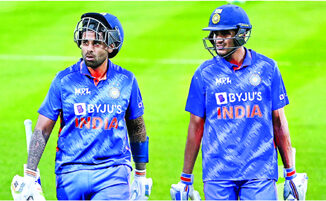
    Dubai (TIP)- India’s Suryakumar Yadav remained static at the top spot, while compatriot Shubman Gill shot up to a career-best 30th position in the batting chart of the ICC Men’s T20I Player Rankings released on Wednesday, February 8. Surya continues to lead the batting list with 906 rating points.

    Gill achieved a career-best position after smashing a match-winning century against New Zealand in the third and final T20I in Ahmedabad recently.

    Gill’s 126 not out off 63 balls that contributed to India’s huge 168-run victory and helped the home team seal the series 2-1 lifted him an incredible 168 slots.

    The 23-year-old, who has now slammed centuries in all three formats of the game, is ranked sixth in ODIs and 62nd in Tests.

    Besides, Virat Kohli has dropped a rung to the 15th position among batters, while KL Rahul slid two places (27th) and skipper Rohit Sharma was further behind in the 29th spot.

    Young left-handed wicket-keeper batter Ishan Kishan has also dropped three places to 48th.

    No Indian bowler, however, features in the top 10 T20 bowlers’ list.

    But left-arm pacer Arshdeep Singh moved eight slots to reach a career-best 13th position after finishing with two for 16 in Ahmedabad.

    Bhuvneshwar Kumar dropped a place to 21st, while Ravichandran Ashwin and Axar Patel are static at 29th and 30th spots, respectively.

    All-rounder Hardik Pandya, who grabbed four for 16 and smashed a 17-ball 30, has progressed in all three lists.

    He has moved up from 53rd to 50th among batters, 66th to 46th among bowlers and is in second place among all-rounders, only a couple of rating points behind Bangladesh’s Shakib Al Hassan.

    Source: PTI

  • Real Madrid beat Al Ahly 4-1 to reach Club World Cup final

    Real Madrid beat Al Ahly 4-1 to reach Club World Cup final

    Real Madrid reached the Club World Cup final after goals from Vinicius Jr, Federico Valverde, Rodrygo and Sergio Arribas secured a 4-1 win over Egypt’s Al Ahly in Morocco on Wednesday.

    Playing without several key starters, Real Madrid struggled to break the deadlock against Al Ahly’s well organised defence but opened the scoring right on halftime with a close-range strike by Vinicius.

    Real extended their lead just after the break when Valverde tapped into an empty net from a rebound.

    The Spanish side wasted opportunities to extend the lead and Al Ahly received a lifeline when Eduardo Camavinga tripped Hussein El Shahat inside the area in the 65th minute and defender Ali Maaloul tucked away the penalty.

    Real Madrid’s Luka Modric missed a penalty three minutes from the end of the game but Rodrygo and substitute Arribas completed a comfortable win in stoppage time.

    Real will face Saudi Arabia’s Al Hilal in the final in Rabat on Saturday after they shocked South American champions Flamengo 3-2 in the first semi-final.

    Source: Reuters

  • Jadeja makes heroic comeback, takes 11th five-wicket haul

    Jadeja makes heroic comeback, takes 11th five-wicket haul

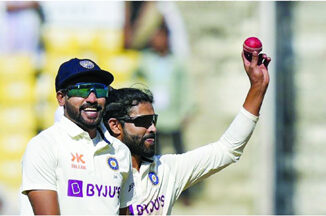
    Nagpur (TIP)- India all-rounder Ravindra Jadeja on Thursday, February 9,  bagged a five-wicket haul in the first innings of the ongoing first Test against Australia in Nagpur. Returning to the team after a long injury lay-off, Jadeja scalped his 11th Test five-for to put India in a commanding positions. Jadeja returned figures of five for 42 as Australia were bowled out for a paltry total of 177 in the first innings after opting to bat first at the Vidarbha Cricket Association Stadium. Resuming play at tea on 174/8, Jadeja and Ashwin struck in quick succession as India bowled out Australia for cheap.

    Jadeja was the wrecker-in-chief during the second session as he broke the 82-run stand between Steve Smith (37) and Marnus Labuschagne (49) before trapping Matt Renshaw and Todd Murphy.

    Jadeja (5/47) then trapped Peter Handscomb (31) in the final session of the day as Australia were bowled out in 63.5 overs.

    Alex Carrey scored a 33-ball 36 before veteran off-spinner Ravichandran Ashwin (3/42), who was the other wicket-taker for India in the second session, ended his stay in the middle.

    Earlier, pacers Mohammed Shami (1/18) and Mohammed Siraj (1/30) dealt early blows to the visitors, removing openers Usman Khwaja (1) and David Warner (1) within the first three overs.

    Australia, led by Pat Cummins, dropped left-hander Travis Head and gave off-spinner Todd Murphy his international debut.

    Rohit Sharma’s India handed Test caps to Twenty20 sensation Suryakumar Yadav and wicketkeeper Srikar Bharat.

    India eye a fourth straight Border-Gavaskar Trophy win over Australia. They also eye a place in the World Test Championship (WTC) final.

    Jadeja applies ‘ointment on sore finger’, triggers debate

    Ravindra Jadeja drew attention not only for demolishing Australia with his fifer on the opening day of the first Test but also for applying something on his spinning finger, triggering a debate on what it was.

    A video made way to social media, showing Jadeja receiving something from his teammate Mohammed Siraj and then applying and rubbing that on his left index finger, something that had Australian media and a former player interested.

    When a fan shared the footage with former Australia captain Tim Paine, he replied, “interesting”.

    However, a BCCI source told PTI that it was an “ointment for pain relief for the sore finger”.

    David Warner and Steve Smith, who are part of the visiting side, served bans for their role in the ball-tampering scandal in 2018 in South Africa.

  • Spiti, a virgin paradise

    Spiti, a virgin paradise

    Long winding roads and valleys that present unforgettable glimpses of cold desert and snow-crowned mountains welcome you when you set foot into Spiti Valley. Bordered on all sides by the Himalayas, Spiti Valley, located in Himachal Pradesh, has an altitude of 12,500 feet above sea level, and gets just around 250 days of sunshine in the year, making it one of the coldest places in the country. With the thick Himalayan snow cutting Spiti off from the rest of the country for around 6 months a year, the summer months are the only time Spiti is directly accessible via motorway.

    The term Spiti means ‘The Middle Land’, as Spiti Valley separates India from Tibet. Scantily populated, Spiti is an adventure lover’s paradise, with a number of trekking trails that tourists can choose from. All of these treks start from Kaza (Spiti’s capital from where you make your base camp) to various peaks from where you can get panoramic views of the Himalayan mountains. An easy 1.5-kilometre trek along the Spiti River from Dhankar Monastery to Dhankar Lake promises gorgeous views of the villages below. The Dhankar Lake itself is a place where you can sit back and relax amidst the cool mountain air.

    How to reach?

    Travel by the preferred route from Manali isn’t possible in the snowy winters of Spiti due to closure of Rohtang Jot and Kunzum La pass. Flying to Spiti isn’t an option because there is no airport in Spiti. A few years ago, people thought of Spiti as a summer destination and very few still dare to venture out in the bone-chilling cold of the winters. The only possible way of arriving in Spiti is by the road route from Shimla through NH-22 via Kinnaur and then to Spiti.

    The road from Shimla to Kaza is open throughout the year and it is only in case of a major snowfall when the stretch from Tabo to Kaza is closed from a few hours to a few days. It is also to be noted that this route automatically affords gradual acclimatisation if the journey is broken in parts. Rohtang Jot and Kunzum La are officially closed for the season from October 15th and open around May-June.

    Shimla is an Inter-State Bus Terminal (ISBT) and has excellent connectivity to the bus stations of Rampur and Reckong Peo in Kinnaur. SUVs and other vehicles can also be rented from Shimla for the entire duration of the trip. The charges for the same may be a bit higher than in the summer months because the engine needs to be kept warm in the cold nights and extra fuel is burnt thereby. Shared taxis also ply sometimes from Rampur to Kaza.’

    Places that can and cannot be visited

    Some internal roads in Spiti are open in the winter. So it is possible to visit most places in Spiti, even in the stark cold winter. Roads to Demul, Langza, Kibber, Hikkim, Komic, Gue, Pin Valley, Nako and Chango (in Upper Kinnaur), Tabo etc may be open and accessible. It is also possible to visit Lhalung, Dhankar and Losar if the roads are not deemed too dangerous to ply on.

    It is important to know that in case of heavy snowfall, there are chances of roads being closed for a day or two or even a week which may hamper your plans. It is better to keep a buffer of a day or two in your plans as snowfall at over 4000 m can cause the road to be shut for vehicular traffic.

    The weather is bitterly cold in the high altitude villages of Spiti and the unbearable cold (sometimes -40 degrees Celsius) makes visiting the villages a difficult proposition in the winters.

    While travelling, it is advisable to keep the window panes in the vehicle closed so that there is minimal contact with the frigid air.

    Remember to always check with locals in Kaza and nearby villages about the prevailing weather and road conditions for the places you are heading to before embarking on a journey in wintry Spiti.

    Major attractions in winters

    The change in landscape means it is quite possible to think of Spiti as an entirely different land as compared to summers. There are frozen waterfalls, azure blue skies, trees devoid of leaves, pristine freezing rivers in the winter that make Spiti a more beautiful and novel experience.

    It is a good idea to first get acclimatised to the bare cold and high altitude of Kaza (3700 m) before exploring the various sites in the region. While coming from the Shimla route, the monastery of Nako coupled with a walk to the frozen or semi-frozen Nako Lake will help in acclimatisation and getting used to the cold. The oldest monastery in India, Tabo Gompa complex can be explored at leisure before making the final run to Kaza.

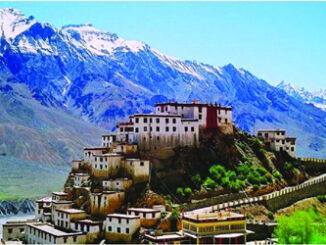
    Apart from these places, there are other noteworthy monasteries in Spiti, including the Sakya Gompa in Kaza, Ki Monastery, Dhankar Monastery and Dhankar Lake, Komic Gompa, Giu Monastery, Lhalung Gompa and Kungri Monastery, all being amazing experiences in the winter. Keep in mind that, depending on the amount of snow, the roads to these places may or may not be open. If the roads are closed, it is possible to trek to these villages on foot in the snow; it is advised not to trek by yourself and have a local guide or villager around.

    Major Spiti Valley attraction in the winters is the possibility of walking on the frozen Spiti and Pin rivers; keep in mind that there have been instances of people drowning in the past and any attempts are off the recommended list. A visit to high altitude Spitian village is another major attraction,; you will get to see local life and experience how it goes on in spite of the unbearable freezing temperatures.

    Reaching the village of Losar is a big upcoming attraction in Spitian winters. It is the biggest and farthest of all the Spitian villages and is a cultural delight. Locals celebrate festivals and folk dances by singing traditional Spitian songs. To revive the tradition, winters also see young men learn the art of carving Buddhist prayers on mane stones. In Kaza, locals can be seen playing the favourite Spitian game of ‘Cholo’.

    The road to Losar is almost unbelievable in the winter and the landscape is covered in a blanket of white. While the poplar trees are bare in Spiti, there may be blossoms of various colours on almond, plum, peach and apricot trees along the route in February/March. Celebrating the festivals of Dechang and Losar is another big attraction in the winters.

    Source: Happytrips

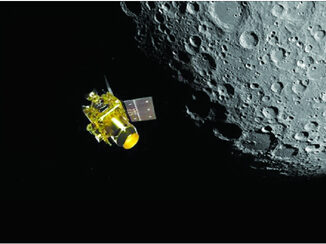
  • What will Chandrayaan-3 do on the Moon?

    What will Chandrayaan-3 do on the Moon?

    As the Indian Space Research Organisation (ISRO) gears up to launch the Chandrayaan-3 mission to the Moon, the world is awaiting the discoveries that it will unravel on the lunar surface. The mission is likely to be launched this year and Isro has learned from the failure of the previous mission.

    Chandrayaan-3 is a follow-up to the Chandrayan-2 mission that will demonstrate end-to-end capability in safe landing and roving on the lunar surface and consists of a lander-rover configuration. The mission will be launched aboard India’s most powerful rocket, the LVM-III, from the Satish Dhawan Space Centre in Sriharikota.

    While the Indian space agency is yet to say anything about the final launch dates, it is likely to be in the second or third quarter of 2023.

    The mission is aimed at better understanding the Moon’s composition. Isro has laid out three main objectives for the mission, which include demonstrating a safe and soft landing on the lunar surface, demonstrating the rover’s roving capabilities on the moon and performing in-situ scientific observations. Isro said that the mission’s Chandra Surface Thermophysical Experiment (ChaSTE) will measure the thermal conductivity and temperature, while the Instrument for Lunar Seismic Activity (ILSA) will measure the seismicity around the landing site. The Langmuir Probe (LP) will estimate the plasma density and its variations and a passive Laser Retroreflector Array from NASA is accommodated on the mission for lunar laser ranging studies.

    “Chandrayaan-3 consists of an indigenous Lander module (LM), Propulsion module (PM), and a Rover with the objective of developing and demonstrating new technologies required for Interplanetary missions. The Lander will have the capability to soft land at a specified lunar site and deploy the Rover which will carry out in-situ chemical analysis of the lunar surface during the course of its mobility. The Lander and the Rover have scientific payloads to carry out experiments on the lunar surface,” Isro said in new detail.

                    Source: India Today

  • WhatsApp brings ‘Voice Status’, ‘Status Reactions’ features

    WhatsApp brings ‘Voice Status’, ‘Status Reactions’ features

    Meta-owned messaging platform WhatsApp on Tuesday announced new features coming to its status, including ‘Voice Status’, ‘Status Reactions’ and much more. The new features have started rolling out to users globally and will be available to everyone in the coming weeks, the company said in a statement. The ‘Voice Status’ feature allows users to record and share voice messages for up to 30 seconds on WhatsApp status.

    On the other hand, ‘Status Reactions’ allows users to give a quick and easy way to respond to status updates from their friends and close contacts.

    “This was the #1 feature users wanted, following the launch of Reactions last year. You can now quickly reply to any status by swiping up and tapping on one of eight emojis. You can of course still reply to a status with text, voice message, stickers and more,” the platform said.

    The company also introduced other features including ‘Private Audience Selector’, ‘Status Profile Rings for New Updates’ and ‘Link Previews on Status’.

    With the ‘Private Audience Selector’, users can update their privacy settings per status so that they can choose who views their status each time they update it. Moreover, the most recent audience selection will be used as the default for the users’ next status. “With the new status profile ring you’ll never miss a status from a loved one. This ring will be present around your contact’s profile picture whenever they share a status update. It will be visible in the chat lists, group participant lists, and contact info,” the platform said.

    Now when users post a link on their status, they will see a visual preview of the link content, similar to when users send a message, thanks to the ‘Link Previews on Status’ feature. “Status is a popular way to share ephemeral updates with friends and close contacts on WhatsApp. They disappear in 24 hours and may include photos, videos, GIFs, text, and more,” the company said. “Just like your personal chats and calls, your WhatsApp status is protected by end-to-end encryption so you can share privately and securely,” it added.

    WhatsApp rolling out feature to let users share up to 100 media on Android beta

    WhatsApp is reportedly rolling out a new feature which will allow users to share up to 100 media within the chats, on Android beta.

    With the new feature, beta users can now select up to 100 media in the media picker within the application, which was earlier limited to only 30, reports WABetaInfo.

    This feature is useful as users will finally be able to share entire albums, making it easier to share memories and moments. Moreover, it will help users to avoid selecting the same photo or video more than once when they have to send a lot of media files.

    The ability to share up to 100 media within the chats is available for some beta testers and is expected to roll out to more people over the coming days, the report said.

    Last week, it was reported that the messaging platform was rolling out longer group subjects and descriptions on Android beta.

    While the characters of the group subject have been increased from 25 to 100 to provide group admins more freedom when naming their groups, the group description increased from 512 characters to 2048 characters.        Source: IANS

  • Google introduces AI service ‘Bard’ to compete with ChatGPT

    Google introduces AI service ‘Bard’ to compete with ChatGPT

    Google has unveiled its new artificial intelligence (AI) service ‘Bard’ to compete against OpenAI’s ChatGPT, which is now opened up to “trusted testers” before the company makes it “more widely available to the public in the coming weeks”. Bard is an “experimental conversational AI service” which is powered by Language Model for Dialogue Applications (LaMDA), Google CEO Sundar Pichai said in a blogpost on.

    The tool aims to combine the depth of the “world’s knowledge with the power, intelligence and creativity of our large language models”. It uses data from the web to provide fresh, high-quality responses.

    “Bard can be an outlet for creativity, and a launchpad for curiosity, helping you to explain new discoveries from NASA’s James Webb Space Telescope to a 9-year-old, or learn more about the best strikers in football right now, and then get drills to build your skills,” Pichai explained.

    The tech giant is initially releasing it using LaMDA’s lightweight model version. This much smaller model requires significantly less computing power, allowing the company to scale to more users, resulting in more feedback.

    Google will combine the external feedback with its own internal testing to make sure that Bard’s responses “meet a high bar for quality, safety and groundedness in real-world information”, Pichai mentioned.

                    Source: IANS

  • Tridevi – Three supreme Goddesses

    Tridevi – Three supreme Goddesses

    Tridevi “three goddesses” is a trinity of the supreme deity in Hinduism, combining a trio of distinguished goddesses as either a feminine version of the Trimurti or as consorts of a masculine Trimurti. Typically, Saraswati, Lakshmi, and Parvati, three Hindu goddesses, represent this trinity. These three goddesses are representations of Mula-Prakriti or Adi Parashakti in the Shaktism religion. The Tridevi goddesses serve as consorts and auxiliary deities to the more prominent masculine Trimurti gods in the traditional androcentric Hindu faiths. In Shaktism, the masculine Trimurti gods are demoted to the status of additional deities as agents of the feminine Tridevi. In contrast, the feminine Tridevi goddesses are given the prominent roles of creator (Mahasaraswati), preserver (Mahalakshmi), and destroyer (Mahakali). Here we have talked about Three supreme goddesses in Hindu mythology.

    Mahalakshmi – The Goddess of Wealth

    The Hindu goddess of wealth, auspiciousness, purity, prosperity, and generosity is known as Sri Mahalakshmi or Lakshmi. She exudes grace, attractiveness, and charm as well. Indian mythology features the strong and well-known Goddess Lakshmi. In actuality, Lakshmi, or Shri, is depicted in Buddhist and Jain monuments as well. Buddhist temples include the first ancient depictions of Devi Shri. The basic form laksa in Sanskrit, which means to see or perceive, is where the term “Lakshmi” originates. This also has the same meaning as “laksa,” which means aim, goal, or objective. Thus, Lakshmi is a Goddess who is revered as a tool for achieving a number of objectives, chief among them being a financial success.

    Lakshmi, Sri Maha Vishnu’s consort, also takes on the guises of Sita during Rama’s avatar and Rukmini and Radha during Krishna’s manifestation. As Lakshmi, she is frequently shown as an unbelievably beautiful woman sitting on a fully blossomed lotus, holding pots of gold in her third hand, lotus buds in her other two hands, and benevolently rewarding all people who approach her for help. Elephants stand on either side of her, signifying her royal rank.

    Being the Goddess of Wealth, Lakshmi is also seen wearing luxurious crimson silk and being completely adorned with gold and beautiful stones. The four hands of Lakshmi stand for four spiritual virtues. She is seated on a fully opened lotus, which stands for the throne of Divine Truth. Her joyful radiance represents mental and spiritual harmony. Around her, there is perpetual peace and prosperity. Along with her Consort, Vishnu, Sri Mahalakshmi is also seen lying on the Adishesha (bed of snakes). Lakshmi can be seen pressing Vishnu’s feet as he is in the Ananta Shayan (reclining) stance.

    Parvati – The Goddess of Power

    The ultimate feminine deity, Shakti, is represented by Parvati Devi in Hindu mythology. Despite being a kind mother goddess, she is renowned for showing all of her strength and power when things are most dire. She is regarded by the Shaktas as the supreme manifestation of Divine Shakti and the source of all cosmological force. The mother of Ganesha (the Elephant-Headed Lord), and Kartikeya is Parvati, the daughter of Himavan, the monarch of the Himalayas, who is an incarnation of Sati, Lord Shiva’s first spouse (Muruga or Skanda).

    The Devi is frequently pictured as having two arms and sitting on a lion or tiger. Generally peaceful, this goddess is also reputed to assume more threatening personas like Kali, Durga, Chandi, and Mahavidyas. Despite the fact that Parvati is absent from Vedic literature, Uma-Haimavati, the feminine essence of the Supreme Brahman, is discussed in the Kena Upanishad. The Vedic triad of Agni, Vayu, and Indra learn about Brahman from her. Both the Mahabharata and the Ramayana refer to Parvati as Shiva’s consort. The Puranas, which date from the fourth to the thirteenth centuries, and Kalidasa, who lived in the fifth century, both relate the tales of Sati-Parvati and Shiva in great detail. At her father Daksha’s Yagna, Sati, Parvati’s former self, commits suicide (sacrificial ritual). When Sati visits the Yagna against her husband’s desires, Daksha taunts her in addition to refusing to recognize Shiva as his son-in-law.

    When Shiva finds out about Sati’s passing, he gets indignant. He loses interest because of his grief, and isolates himself in the mountains. In the meanwhile Sati again reborn as Parvati (Daughter of Himavat and Mainavati). She frequently goes to the cave where Shiva is doing penance, cleans it up, and does daily puja there. But she is so heartbroken that she chooses to perform a painful penance herself in an effort to appease him when he doesn’t even open his eyes to look at her. She strips off her clothes, denies food and drink, and then begins to perform penance in the arid Himalayan environment. Shiva approves of her love for him and consents to marry her. After there, they continue to live on to Mount Kailas, the home of Shiva.

    Saraswati – The Goddess of Learning and Knowledge

    The Hindu goddess of education, learning, music and the arts is Saraswati. The Vedic Saraswati River has also been used to symbolize and compare Saraswati. She is Brahma’s spouse, the Hindu creator god. She completes the set of the divine Tridevi (the three goddesses, just as the heavenly Trinity) along with Parvati and Lakshmi. The Vedas are considered to be Saraswati’s progeny in Hinduism. In India, the goddess Saraswati is revered as a means of obtaining learning and understanding. Additionally, Saraswati is an important figure in Mahayana Buddhism. She first appears in a Mahayana Sutra, the Golden Radiance Sutra from the late 4th or early 5th Century.

    Devi Saraswati is frequently shown as a stunning, white-skinned woman wearing just white clothing while sitting on a white Nelumbo nucifera lotus. The swan serves as her vahana, or chariot, and represents the fact that she is rooted in the knowledge of the Absolute Truth. She thereby possesses both knowledge and first-hand experience of the Highest Reality. White is the hue most often associated with Saraswati because it represents the purity of real wisdom. She is also sometimes linked to the color yellow, which is the hue of the mustard plant’s blossoms, which bloom during her celebration in the spring. In contrast to the goddess Lakshmi, Saraswati is depicted as wearing very modest clothing, maybe as a representation of her.

    Typically, Saraswati is depicted with four limbs, each of which stands for one of the four learning-related facets of human personality: mind, intellect, awareness, and ego. As an alternative, the four arms could alternatively stand in for the four Vedas, which are the main holy texts for Hindus. The three literary genres are each represented by one of the Vedas: Poetry is represented by the hymns found in the Rigveda; prose is found in the Yajurveda, and music is represented by the Samaveda. The book on the one hand represents prose, the crystal rosary represents poetry, and the veena represents music. The holy water pot stands for purity in all three of them, or their capacity to purify human thought.

    Near her feet is frequently a white swan. It is stated that the sacred swan can only drink milk when given a combination of milk and water. Thus, the distinction between the good and the wicked or the eternal and the ephemeral is represented by the swan. Goddess Saraswati is also known as Hamsa-Vahini, which translates to “she who has a swan as her vehicle” due to her connection to the swan. On occasion, a peacock is depicted next to the deity. With a peacock as her horse, the Goddess encourages Hindus to be intelligent in regards to the everlasting truth and to not be concerned with outward appearance, which the peacock symbolizes as arrogance and vanity over its beauty.

  • Adani to prepay $500 million loan as banks balk at refinancing

    Adani to prepay $500 million loan as banks balk at refinancing

    New Delhi (TIP)- The Adani Group plans to prepay a $500 million bridge loan due next month after some banks balked at refinancing the debt following a short seller attack that sent the group’s assets tumbling.

    Barclays Plc, Standard Chartered Plc and Deutsche Bank AG are among banks that lent Adani $4.5 billion to finance the purchase of Holcim Ltd. cement assets last year. A portion of that loan is due March 9.

    The lenders were in talks to refinance the loan up to a week before the critical report from Hindenburg Research was published, according to people familiar with the matter. Those talks stalled after the report alleging fraud led to a massive selloff, the people said, asking not to be identified discussing a private matter.

    An Adani spokesperson said the conglomerate had been in talks with the banks to refinance part of the loan but the group plans to prepay it. The spokesperson said discussions with the banks have not stalled. Representatives for Barclays and Deutsche Bank declined to comment. A representative for Standard Chartered wasn’t immediately available. This marks the second time in a week that the group has taken steps to prepay debt as it fights to regain investor confidence and stem the stock rout. Billionaire Gautam Adani and his family have prepaid $1.11 billion worth of borrowings backed by shares, the group said.

    Adani faced a margin call of more than $500 million on that loan, prompting the Indian tycoon to repay the whole debt, Financial Times reported Wednesday. The Adani Group said it didn’t receive a formal request for a margin call and that the loan was repaid early “per our prepayment planning,” the paper reported.

    Global banks are ramping up their scrutiny of the group following the Hindenburg report. Citigroup Inc.’s wealth arm has stopped accepting Adani securities as collateral for margin loans, following a similar move by Credit Suisse Group AG. The corporate empire of Adani, once the world’s second-richest person, has been thrown into a tailspin after the Hindenburg report on alleged malpractices. Ten Adani group companies including Adani Total Gas Ltd., Adani Enterprises Ltd. and Adani Transmission Ltd. at one point erased $117 billion from their combined market value in the selloff.

    MFs had doubts over Adani debt: Report

    Shares of the Adani Group have been on a rebound for the past two days but the voting pattern of mutual funds in resolution of its listed companies shows their unease over at least three issues that were red-flagged in the Hindenburg Research report.

    Mutual funds are large block investors and recent SEBI directions have made them more active participants in governance. One of these directions in 2021 made it compulsory for the MFs to vote on all corporate resolutions. No longer can MF representatives, especially from state-owned companies, afford to not turn up for Board meetings. The disclosures by the MFs about their voting patterns have shown that many of them had reservations on three issues: related party transactions among Adani companies (there were over 6,000 in 21-22 alone), taking on substantial debt and appointment of Adani family members in key positions. Disclosures by mutual funds show many of them had reservations on related party transactions among Adani firms, taking on substantial debt and appointment of Adani family members in key positions.

  • RBI hikes interest rates, projects moderate inflation, growth in next fiscal

    RBI hikes interest rates, projects moderate inflation, growth in next fiscal

    London (TIP)- The Reserve Bank of India hiked the repo rate by 25 per cent to 6.5 per cent and forecast slower economic growth of 6.4 per cent during next fiscal as compared to the estimation of 7 per cent during the current fiscal year. The Union Budget pegs the actual growth rate for 2023-24 at a marginally higher 6.5 per cent and the Economic Survey estimates the real growth rate to be between 6 and 6.8 per cent.

    Announcing the bi-monthly monetary policy in Mumbai on Wednesday, RBI Governor Shaktikanta Das said the Monetary Policy Committee (MPC) decided on a sixth successive hike in the repo rate, or the interest rate at which the Central Bank lends to banks, by a 4:2 split decision.

    Faced with finding a balance between hiking interest rates to check inflation and not affecting industry’s growth, Das justified the hike on the basis of the RBI’s internal surveys which said manufacturing, services and infrastructure sector firms are optimistic of the business outlook.

    “Emerging market economies are facing sharp trade-offs between supporting economic activity and controlling inflation while preserving policy credibility,” said Das in this respect. The repo rate at 6.5 per cent still trails the pre-pandemic level and core inflation (manufacturing) remains sticky, he added.

    Growth during 2023-24 would, however, be weighed down by geo-political tensions and tightening global financial condition, Das cautioned.

    The MPC resolved to keep a close watch on inflation, which will remain above the comfort band of 6 per cent during the current fiscal but moderate to 5.3 per cent during the next fiscal.

    Quarterly inflation rates will decline to 5.7 during the ongoing fourth quarter of 2022-23 and further to 5 per cent, 5.4 per cent, 5.4 per cent and 5.6 per cent during the four quarters of 23-24. Quarterly GDP growth rates are projected at 7.8 per cent, 6.2 per cent, 6 per cent and 5.8 per cent during the four quarters of 2023-24.

    After the repo rate hike, the standing deposit facility (SDF) rate has been adjusted to 6.25 per cent, and the marginal standing facility (MSF) rate and the Bank Rate to 6.75 per cent.

    Das said it is now proposed to permit all inbound travellers to use UPI payments for their merchant payments while they are in India. To begin with, the facility will be extended to travellers from G20 countries arriving at select international airports.

    The RBI Governor also announced a new facility, the ability to use UPI at coin-vending machines instead of tendering physical bank notes. “These vending machines will dispense coins against debit to the customer’s account using UPI instead of physical tendering of bank notes. This will enhance the ease of accessibility to coins,” he said.               Source: TNS

  • Govt gets 33.44% stake in Vodafone Idea

    Debt-ridden telecom operator Vodafone Idea (Vi)  said its Board has approved the allotment of equity shares worth Rs 16,133 crore to the government, which post-allocation holds a 33.44% stake in the company.

    The shares have been allocated to the government in lieu of conversion of interest dues arising from deferment of adjusted gross revenue and spectrum auction payments, the company said in a regulatory filing.

  • Disney to cut 7,000 jobs in major revamp by CEO Iger

    Walt Disney Co on Wednesday announced a sweeping restructuring under recently reinstated CEO Bob Iger, cutting 7,000 jobs as part of an effort to save $5.5 billion in costs and make its streaming business profitable.

    The layoffs represent an estimated 3.6% of Disney’s global workforce.

    Shares of Disney rose 4.7% to $117.22 in after-hours trading. The steps, including a promise to reinstate a dividend for shareholders, addressed some of the criticism from activist investor Nelson Peltz that the Mouse House was overspending on streaming.

    “We are pleased that Disney is listening,” a spokesperson for Peltz’s Trian Group said in a statement.

    Under a plan to cut costs and return power to creative executives, the company will restructure into three segments: an entertainment unit that encompasses film, television and streaming; a sports-focused ESPN unit; and Disney parks, experiences and products.

    “This reorganization will result in a more cost-effective, coordinated approach to our operations,” Iger told analysts on a conference call. “We are committed to running efficiently, especially in a challenging environment.”

    Iger said streaming remained Disney’s top priority.

    He said the company would “focus even more on our core brands and franchises” and “aggressively curate our general entertainment content.”

    e-rupee to be piloted by 5 more banks

    Five more banks will join the pilot on the central bank digital currency or e-rupee for retail customers and the project will be extended to nine additional cities, the Reserve Bank said on Wednesday, February 8.

    The RBI, which began piloting the central bank digital currency or e-rupee for retail customers in early December, stressed it does not want to rush with it but favours a slow and steady adoption.

  • Everyday tips to keep your gums healthy

    Are bleeding gums coming in the way if you brushing your teeth well? Does the sensitivity in your teeth prevent you eating your favourite ice cream? Are you not smiling because you are conscious of your swollen gums?

    The one-stop solution to all your problems is to improve the health of your gums! Celebrity dentist Kshama Chandan, founder of House of Tooth in Mumbai shares everyday tips for your gums.

    Healthy gums are pink, and firm, do not bleed and fit snugly around your teeth. Your lifestyle can greatly impact your gum health which includes your- diet, age, and oral care. How do you know if your gums are healthy? “If your gums are sensitive, swollen, red, or bleeding, these are an indication that your gums are not as healthy as they ideally should be,” says Chandan.

    Here are some tips

    Brush your teeth properly

    –              Brushing is the key to having a healthy mouth and gums.

    –              Brush your teeth at least twice a day using a medium-soft toothbrush, and use Fluoridated toothpaste.

    –              Change your toothbrush every few months.

    –              Change your toothbrush if the bristles start fraying.

    –              Hold the toothbrush at a 45-degree angle to the hums while brushing—Do not scrub your teeth while brushing, instead use short strokes.

    Floss daily

    Flossing every day helps to loosen the food that gets stuck between your teeth and hence causes gum irritation. It also helps to remove plaque from areas that are hard for the brush to reach. If the food and plaque stay in this area for a long time, this leads to tartar hard build-up of bacteria that cannot be removed by regular brushing. You can Schedule an appointment with your dentist to get rid of this stubborn layer of tartar.

    Quit smoking

    Smoking and other tobacco products like paan, gutka, etc. lead to gum disease. Tobacco also limits blood flow which makes it hard for a wound to heal quickly. Making sure you quit Smoking should be your priority if you’re suffering from bleeding gums.

    Look what you are eating

    We all know that whatever food we eat has an impact on our health. Food items that are high in sugar content are more likely to cause cavities in the teeth. Whereas healthy vegetables and proteins are good for your oral health. Adding vitamins and minerals to your diet also helps to improve your oral health.

    Regular dental check-ups

    Dental check-ups include a cleaning of the mouth. Getting your teeth professionally cleaned is the only way to remove tartar from the teeth. Professional cleaning also helps to remove the plaque which cannot be removed by normal tooth brushing.             Source: IANS

  • Intermittent fasting might reverse type 2 diabetes, reveals study

    Intermittent fasting might reverse type 2 diabetes, reveals study

    According to a recent study published in the Journal of Clinical Endocrinology & Metabolism of the Endocrine Society, patients who underwent an intermittent fasting diet intervention achieved complete diabetes remission, which is defined as a HbA1c (average blood sugar) level of less than 6.5% at least one year after stopping diabetes medication. Intermittent fasting diets have become popular in recent years as an effective weight loss method. With intermittent fasting, you only eat during a specific window of time. Fasting for a certain number of hours each day or eating just one meal a couple of days a week can help your body burn fat. Research shows intermittent fasting can lower your risk of diabetes and heart disease.

    “Type 2 diabetes is not necessarily a permanent, lifelong disease. Diabetes remission is possible if patients lose weight by changing their diet and exercise habits,” said Dongbo Liu, Ph.D., of Hunan Agricultural University in Changsha, China. “Our research shows an intermittent fasting, Chinese Medical Nutrition Therapy (CMNT), can lead to diabetes remission in people with type 2 diabetes, and these findings could have a major impact on the over 537 million adults worldwide who suffer from the disease.” The researchers conducted a 3-month intermittent fasting diet intervention among 36 people with diabetes and found almost 90% of participants, including those who took blood sugar-lowering agents and insulin, reduced their diabetes medication intake after intermittent fasting. Fifty-five percent of these people experienced diabetes remission, discontinued their diabetes medication and maintained it for at least one year.

    The study challenges the conventional view that diabetes remission can only be achieved in those with a shorter diabetes duration (0-6 years). Sixty-five percent of the study participants who achieved diabetes remission had a diabetes duration of more than 6 years (6-11 years).

  • Age-related abdominal fat may lead to less effective muscle function

    Age-related abdominal fat may lead to less effective muscle function

    A recent study published in the Journal of Clinical Endocrinology and Metabolism links age-related abdominal fat increase to decreased muscle density. Low muscle density means that the muscle is fattier, which may result in less effective athletic activity and, as a result, more falls.

    Individuals with the greatest six-year accumulation of visceral adipose tissue (VAT) in the belly had significantly lower muscle density, according to the study. These findings add to the growing dangers of body fat storage, as VAT accumulation is a preventable risk factor for poor musculoskeletal outcomes associated with ageing.

    Entitled “Accumulation in Visceral Adipose Tissue Over 6 Years Is Associated With Lower Paraspinal Muscle Density,” it is the first large, longitudinal study of the association between changes in VAT and muscle density.

    “Most obesity research has focused on metabolic and cardiovascular outcomes such as diabetes, hyperlipidemia, hypertension, coronary heart disease, and osteoarthritis. But there is considerably less consensus on the role of obesity on the risk for low muscle mass or muscle density,” said Lead Author Ching-Ti Liu, PhD, Professor in the Department of Biostatistics at Boston University School of Public Health, and Senior Author Douglas P. Kiel, M.D., M.P.H., Director, Musculoskeletal Research Center and Senior Scientist, Hinda and Arthur Marcus Institute for Aging Research. The study found that VAT may represent a modifiable risk factor for poor musculoskeletal outcomes with ageing. “The study adds important new information to public health efforts to reverse the trend of the growing obesity problem in the United States and worldwide,” the authors said. “Fat that accumulates in the abdomen sometimes referred to as the ‘male pattern,’ was shown to produce less dense muscle surrounding the spine, resulting in less-effective muscle function.”

    The other researchers on the study were Timothy Tsai, M.P.H., Research Software Engineer II at the Hinda and Arthur Marcus Institute for Aging Research; Brett T. Allaire, Research Assistant III at the Center for Advanced Orthopedic Studies, Beth Israel Deaconess Medical Center; Mary L. Bouxsein, PhD, Professor of Orthopedic Surgery, Center for Advanced Orthopedic Studies, Beth Israel Deaconess Medical Center; Marian T. Hannan, D.Sc., M.P.H., Senior Scientist, Hinda and Arthur Marcus Institute for Aging Research; and Thomas G. Travison, Ph.D., Director of Biostatistics and Data Sciences, Co-Director of the Interventional Studies in Aging Center, Senior Scientist, Hinda and Arthur Marcus Institute for Aging Research.

  • Pepper Roast Chicken

    Pepper Roast Chicken

    INGREDIENTS

    8 chicken thighs, 1 teaspoon black pepper, 1 teaspoon, coriander powder, salt as required, 40 curry leaves, 1/2 teaspoon black mustard seeds, 1 teaspoon tamarind extract, 1 tablespoon finely chopped curry leaves, 4 tablespoon coconut oil, 1 teaspoon cumin powder, 1 teaspoon turmeric, 2 cloves, minced garlic, 2 sliced green chilli, 1 medium chopped onion, 1/4 cup chopped coriander leaves

    METHOD

    • Preheat oven to 420F. Line a baking tray with parchment. In large mixing bowl combine chicken, 2 tbsp oil, 1/2 tsp of black pepper, turmeric, cumin and coriander.
    • Add salt to taste, half of the garlic, ginger and curry leaves. Mix well, cover and marinate in refrigerator for 1/2 hour.
    • To cook chicken, spread it in a single layer on baking tray, scraping up all the marinade over it. Oven roast for 20 min or until lightly browned and crisped.
    • Warm remaining oil in deep skillet over medium heat. Add mustard seeds, let splutter 30 sec. Add remaining garlic, ginger, curry leaves, saute for 1 min.
    • Add onions, saute for 5-7 min until they are softened and lightly browned. Add remaining turmeric, black pepper, cumin and coriander as well as more salt if necessary. Cook 1 min.
    • Mix in the tamarind extract or lemon juice, water and chicken with all it’s juices. Reduce heat to low and cook covered for 12 – 15 min, stirring occasionally.
    • The sauce should be very thick and clingy at this point. Fold in the fresh coriander, slivered curry leaves and fresh sliced chili, serve.
  • Why aloe vera is your best beauty bet

    Why aloe vera is your best beauty bet

    Soothes inflammation, burns

    Aloe vera works wonders on inflamed areas as it has a cooling effect. Says dermatologist Dr Soma Sarkar, “It’s a must to have at home as you can use it on burn areas or even for irritation. It soothes the area for the time being. But avoid using it on open cuts. Aloe is also a good moisturising gel. It’s also used for post-laser treatments as it can cool down the skin.”

    Removes tan

    With summer coming up, it may be a good idea to keep a tube or jar of aloe handy in your purse as it effectively removes skin tan. Laser expert Dr Apratim Goel says, “Aloe hydrates the epidermal cells and balloons them. Tanning is nothing but the redistribution of pigment (melanin) in the skin. When you apply aloe vera on the skin it becomes lighter due to this effect and the epidermal skin starts shedding out. Aloe also contains vitamin A, C and E (vitamin C helps to lighten the skin). I’d advise adding other sources of vitamin C to it, too, like lime juice, to aid brightening and tan removal. Anyone can try this.”

    Face packs and masks

    Says dermatologist Dr Shefali Trasi Nerurkar, “Aloe vera has a calming action and is apt for irritated and dry skin. The gel also helps battle inflamed acne (red coloured pimples). One of aloe’s biggest advantages is that it is accepted by most skin types. When used in face packs, it soothes down the face. It can be used in a variety of preparations, depending on the skin type, like with honey or with fruit pulp or even with yoghurt. But you have to see what suits you best. It can also be used in anti-aging cream as it builds the water content of the skin.”

    In eye gels

    To treat tired and wrinkled skin under the eyes, gently rub aloe gel or cream into the skin area. It reduces puffiness and moisturises the skin, keeping it supple and smooth.

  • Lose weight without going to the gym

    Lose weight without going to the gym

    Going to the gym can seem overwhelming and confusing for a beginner. The settings and different pieces of machinery may seem too complicated. Although they are easy to learn, one might prefer working outside the gym. If you wish to lose or maintain weight, it is important to recognise the importance of a proper diet, workout, and lifestyle. In this article, we discuss some easy ways to help you lose or maintain weight without going to the gym.

    How to workout?

    If you are someone who wants to lose weight without going to the gym. Here are some easy-to-follow activities that can help you lose weight.

    Walk

    Walking is one of the easiest ways to introduce physical activities to your routine. You can increase the intensity by incorporating jogging and running.

    Skipping rope

    Skipping rope is a very effective way to lose weight and introduce physical activity in the body while staying at home. You can increase the intensity by increasing the number of sets.

    Exercise at home

    You can indulge in exercises at home if you wish to not go to the gym. Exercises such as squats, mountain climbers, crunches, jumping jacks, lunges, and so on can be easily practiced at home.

    Yoga

    Yoga is another effective way to lose weight if you don’t like gyms. You can practice it at home and the intensity can be modified as per your convenience.

    Take stairs

    Making small changes in your routine can also help you lose weight. Taking stairs instead of elevators is another great way to squeeze in a little workout.

    Dance

    Dancing is another very fun way to lose weight if you don’t like to go to the gyms. Exercising in the gym can be monotonous and boring. Dancing is a great workout when incorporated with the music of your choice. It also helps you burn calories very quickly.

    Pick up house chores

    Helping cleaning around the house is another great way to add some physical movement to your routine.

    What to eat?

    –              Divide your 3 meals into 6 smaller meals

    –              Eat metabolism-boosting foods such as green tea, ginger, chilies, etc.

    –              Eat more protein

    –              Count and lower your daily calorie intake

    –              Drink enough water before each meal

    –              Avoid junk food and highly processed foods completely

    –              Try intermittent fasting

    –              Eat without distractions such as the phone, tv, etc.

    –              Have black coffee before exercising for an energy boost

    –              Go for low-fat dairy products

    –              Go for low-calorie alcohol

    Other things to keep in mind

    Besides your diet and workout routine, there are various other factors that influence your weight. If you wish to lose weight, make sure to avoid habits such as drinking alcohol, smoking, and substance abuse. These habits not only slow down weight loss but also deteriorate the body. You must also make sure you are getting enough sleep daily. Sleep has a great influence on our weight.

    In conclusion, you can easily lose weight without having to go to the gym. Although as you lose more and more weight, your body takes longer to burn fat. In this case, you are encouraged to try more extensive workout exercises. All of this can be easily achieved without going to the gym.

    Source: NDTV