Year: 2023

  • Indian American social activist and community leader aims to combat gun violence in Chicago

    Indian American social activist and community leader aims to combat gun violence in Chicago

    CHICAGO (TIP): An Indian American social activist and community leader has taken some concrete steps to work towards combating the menace of gun violence especially in Chicago city.
    Dr Vijay Prabhakar has conceptualized and initiated the Gandhi King Center for Non-Violence. The center that was launched this week aims to restore the reputation of Chicago as a city known for its impressive overarching skyline and beautiful landscapes that have helped it to secure a top spot in the World’s Best Cities list.
    It’s no longer a Chicago secret, that the local residents struggle with violence and gun related crimes. Shooting incidents are a common occurrence taking place at the South Side of Chicago’s Downtown area.
    The Englewood Community has especially suffered greatly in the past few years marred with similar incidents. Just in time and to commemorate the Black History Month, the Gandhi King Center for Non-Violence NFP, a first of its kind institution was launched at Englewood, Illinois.
    Prabhakar, a public health professional hopes that this initiative will bring some long-term benefits in working towards the root cause of gun violence in the city.
    The initiative would also provide services like meditation, yoga, music therapy, color therapy, basketball coaching, group therapy, mobile food trailer, mental health services, mediation – crisis intervention and wellness screenings to reduce violence and crime.
    Additionally, focus will be on getting city vacant lands to be developed for vocational skill development. A 24-hour crisis hotline is also part of the center’s mission. Dr Twin Green, Chairperson, the Gandhi King Center for Non-Violence, said that the Englewood community can now breathe!
    “There have been so many opportunities, businesses and providers that have come to Englewood with the intent to do very, very well,” she said. “Then the air will go out and deflate but not the Gandhi King Center for Nonviolence.” “The resources that are going to come to this community are not going to deflate. We’re going to give the people of Englewood the opportunity to stabilize, to be able to receive the civil and economic rights that they deserve to have.”

  • Utah State Senate passes resolution honoring the Sikh community

    Utah State Senate passes resolution honoring the Sikh community

    • Before Utah, 15 other states, including New Jersey and Pennsylvania, have recognized the Sikh community for their services

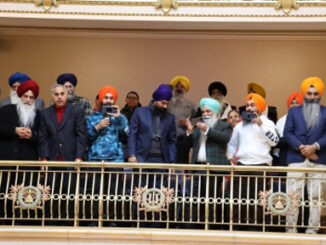
    SALT LAKE CITY (TIP): The Utah State Senate unanimously passed a resolution highlighting the history and significant contributions of the Sikh community.

    The resolution, which was passed last week, appreciated the Sikhs for their humanitarian services, despite receiving hate and facing oppression for their faith worldwide.

    “The Senate unanimously passed H.J.R (House Joint Resolution) 4, a resolution highlighting the history and significant contributions of the Sikh community. We were joined by members of Utah’s Sikh community as well as those from India and other parts of the world,” a tweet from the Utah Senate read.

    The resolution was moved by Representative Angela Romero and Senator Luz Escamilla from Salt Lake City.

    It noted Sikhism as one of the largest religions in the world focused on “loving service to humanity,” but has for long faced “oppression and discrimination throughout the world”.

    “The state of Utah seeks to further the diversity of its community and afford all residents the opportunity to better understand, recognize, and appreciate the rich history and shared experiences of Sikhs to enforce laws for access to equal opportunity of humans, irrespective of their caste, creed, color, or appearance,” the resolution stated.

    Before Utah, 15 other states, including New Jersey and Pennsylvania, have recognized the Sikh community for their service. In December, Utah became the 15th state in the US to include information about Sikhism, Sikh practices, and traditions in their schools’ social studies syllabi.

    Sikhism is the fifth largest religion in the world and the community has contributed to American society for over 125 years in the fields of civil rights, politics, agriculture, engineering, and medicine.

    (Source: IANS )

  • Indian-origin Sikh boy asked to remove turban during football match in Spain

    Indian-origin Sikh boy asked to remove turban during football match in Spain

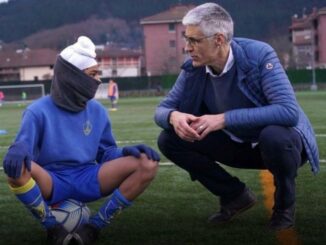
    MADRID (TIP): In Spain, a Sikh boy was asked by a referee to remove his turban during a football match. The whole situation was “humiliating” for 15-year-old Gurpreet Singh. The reason given to Gurpreet Singh from Arratia C team was that wearing “a hat” is prohibited as per the game rules.
    However, in all previous games, referees had allowed him to wear his turban.
    A post by Sikhexpo on Instagram read: “15-year-old Gurpreet Singh from Spain was told to remove his Patka during a football (soccer) match between Arratia C and a local rival Padura de Arrigorriaga. “The Arratia players interceded to explain that it is an element linked to his religion, with which he has always played. The referee insisted on his criteria. And both the players and the Arratia coach kept their pulse: they decided to leave the field of play as a sign of solidarity.”
    According to a local newspaper:
    The referee justified his decision by alluding to the fact that the 15-year-old was wearing “a hat”, and explained to the players that it is prohibited according to the regulations. Before this match, however, other referees allowed the youngster to play and have avoided that interpretation.
    This is how Pedro Ormazabal, president of Arratia, explains it: “He has been playing normally for at least five years, even in his first year as cadets and so far, this season. We have never had the slightest problem. It has been something that has been carried out with absolute normality. The first year we warned that he played like that, and everyone understood it.
    In the past day, however, the situation was even “humiliating” for the youngster. “It was the first minutes of the second half and, as soon as he left, the referee turned to him and urged him to take off his turban. In front of the whole world: of all the families, of the players… A matter like this cannot be left to the interpretation of the referees because what happened in Arrigorriaga could happen”, indicates Ormazabal.
    Fortunately for Gurpreet, his companions did not hesitate to side with him decisively. “The kids were the first to support him. The coach was also very clear. They decided to withdraw. Afterwards, he received the support of the rival team, especially through the coach, and from the families that had attended the game,” adds the president of the Arratian club.
    This Saturday, however, he returns to the competition. The Biscayan club is confident that the painful situation that occurred at the Padura facilities will not be repeated. And they are clear that they will not leave Gurpreet alone.”
    According to a FIFA ruling, men football players can wear turbans during matches.

  • Indian American Arvind Raman named dean of Purdue engineering college

    Indian American Arvind Raman named dean of Purdue engineering college

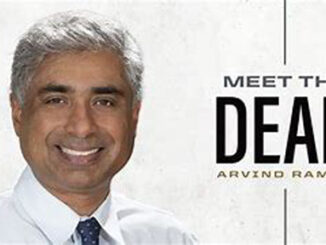
    WEST LAFAYETTE, IN (TIP): Arvind Raman, a longtime Indian American administrator and faculty member at Purdue University has been appointed the new John A. Edwardson Dean of the College of Engineering effective April 1.
    An Indian Institute of Technology Delhi graduate, Raman is currently the university’s executive associate dean of engineering and the Robert V. Adams Professor in Mechanical Engineering. He succeeds Mark Lundstrom who has served as interim dean of the college since July 1, 2022.
    Raman brings an impressive record of academic leadership experience to this new role, said Patrick Wolfe, Purdue provost and executive vice president for academic affairs and diversity, announcing his appointment on Feb 6.
    “Professor Raman is passionate about the role of engineering in creating innovative solutions for people and society. We’re confident that as our next engineering dean, he will lead the college to new levels of excellence and impact,” Wolfe said.
    “It is truly an honor to be selected to lead the nation’s largest top-ranked college of engineering at a university with a tremendous legacy and a record of innovation and impact on a global scale,” said Raman.
    It’s an especially exciting time for Purdue and engineering, he said noting the transformative development underway for Purdue’s presence in Indianapolis and the momentum from a decade of unprecedented success and growth for engineering and across the Purdue campus.
    “The College of Engineering, in partnership with our faculty, students, staff, alumni and industry partners, is poised for excellence at scale and the promise to pursue and lead truly game-changing initiatives that will impact the state, nation and world,” Raman said.
    In his role as executive associate dean since December 2019, Raman has led activities aimed at recruiting excellent and diverse faculty talent, enhancing the success of faculty and staff programs, elevating the prestige of Purdue engineering, and supporting the overall quality of academic programs and faculty development, according to a university press release. He also oversaw the offices of graduate and undergraduate education. Prior, he was the inaugural associate dean for global engineering programs, where, within three years, he helped more than double the number of international experiences taken by engineering students, and established new partnerships in Latin America, sub-Saharan Africa, Europe, and Asia.
    Raman was named a Purdue University Faculty Scholar from 2008-12 and a fellow of the American Society of Mechanical Engineers in 2012. He also has a courtesy professorship appointment in materials engineering.
    His research interests are in nonlinear dynamics and its applications to atomic force microscopy, human biomechanics, and roll-to-roll flexible electronics manufacturing.
    In addition, he is co-founder of the Shah Family Global Innovation Lab, which has supported over 30 faculty-led technology development and scale-up projects with top nongovernmental organizations for sustainable development.
    He also served as director of the USAID-funded LASER (Long-term Assistance and Services for Research) PULSE (Partners for University-Led Solutions Engine) consortium, leading the five-year, $70 million program.
    Through its partners Catholic Relief Services, Indiana University, Makerere University and the University of Notre Dame, LASER delivered research-driven solutions to field-sourced development challenges in USAID (United States Agency for International Development) partner countries.
    Raman is a fellow of the American Society of Mechanical Engineers and an ASME Gustus Larson Memorial Award recipient, as well as a Keeley fellow (Oxford), College of Engineering outstanding young investigator awardee, and a National Science Foundation CAREER awardee. Through the Purdue-led nanoHUB, Raman’s atomic force microscopy simulation tools are used by thousands of researchers worldwide.
    He received his PhD in mechanical engineering from the University of California, Berkeley, a master’s degree, also in mechanical engineering, from Purdue and a Bachelor of Technology degree from the Indian Institute of Technology in Delhi.
    Purdue’s undergraduate and graduate engineering programs are among the top 10 and top five in the country, according to the last two years of the US News and World Report college rankings. Roughly 30% of Purdue undergraduates are enrolled in the engineering college, according to the release.

  • Indian American artist’s contribution behind America’s first art tunnel

    Indian American artist’s contribution behind America’s first art tunnel

    HOUSTON (TIP): When traveling between terminals D and E at the George Bush International Airport in Houston, Texas you will be amazed to see an immersive audio-visual treat.
    Unveiled earlier this year, the Aquarius Art Tunnel is a 240-feet-long art experience. The tunnel showcases species of fish, coral, sharks, dolphins, barracudas, lobsters, manta rays, and, even, oil rigs, among other ocean creatures.
    The floor of the tunnel is a coral carpet, and the accompanying sounds are a combination of classical music and the artist’s own meditative, underwater breath, created by Andrew Karnavas.
    The brainchild behind the art experience is Indian American artist Janavi Mahimtura Folmsbee. As perhaps the first ever project spearheaded by an artist of color that represents contemporary art in America, the Aquarius project is special in many ways.
    Mahimtura Folmsbee herself said at the launch that the tunnel also has a special significance for her as it is where she, and countless others, take the flight home to India.
    The Aquarius Art Tunnel is a 240 feet immersive Art tunnel Installation. It comprises two unique 240 by 9 feet fine art murals. The hallway is approximately 20 feet wide, and currently covered with 700 yards of custom designed sea anemone and abstract inspired carpet design.
    There are 15 unique lenticular works of art in the ceiling that have lighting components and three unique images in each lenticular work. A total of 116 custom handcrafted lighting fixtures of side lighting reflect light on quartz crystal pigment in the paint on the murals, 58 for each side of the tunnel.
    There is also a sound component and an augmented reality experience through an instagram filter. This work of art is not just a mural. It is truly an experience for any visitor from all walks of life.

  • Indian American Apsara Iyer named President of Harvard Law Review

    Indian American Apsara Iyer named President of Harvard Law Review

    BOSTON (TIP): The Harvard Law Review has elected Apsara Iyer as its 137th president, making her the first Indian American woman to head the prestigious publication in its 136-year history.
    The 29-year-old Harvard Law School student, who has been investigating art crime and repatriation since 2018, succeeds Priscila Coronado.
    “Since joining the Law Review, I have been inspired by her (Priscila’s) skillful management, compassion, and capacity to build vibrant, inclusive communities. I am so grateful that we ‘Volume 137’ inherit her legacy, and I am honored to continue building on this important work over the next year,” Iyer said in a statement announcing her appointment.
    Iyer graduated from Yale in 2016 with a B.A. in Economics and Math, and Spanish. Her dedication to archaeology and indigenous communities led her to pursue an MPhil at Oxford as a Clarendon Scholar and, in 2018, to join the Manhattan District Attorney’s Antiquities Trafficking Unit (ATU), a Harvard Law Review release said.
    At the ATU, she investigated art crime, coordinating with international and federal law-enforcement authorities to repatriate more than 1,100 stolen works of art to 15 different countries.
    Iyer enrolled at Harvard Law School in the fall of 2020, where she is a student in the International Human Rights Clinic and member of the South Asian Law Students Association.
    Committed to fighting illicit antiquities trafficking, Iyer took a leave of absence from Harvard Law School in 2021-22 to return to the DA’s Office, where she worked on an international antiquity trafficking investigation and rose to be the deputy of the ATU.
    “Apsara has changed the lives of many editors for the better, and I know she will continue to do so. From the start, she has impressed her fellow editors with her remarkable intelligence, thoughtfulness, warmth, and fierce advocacy. The Law Review is extremely lucky to have her lead this institution,” Iyer’s predecessor, Coronado, said.
    The Law Review, founded in 1887 by future Supreme Court Justice Louis D. Brandeis, LLB 1887, is an entirely student-edited journal with the largest circulation of any law journal in the world.
    Former President Barack Obama was the journal’s first Black president.

  • First Indian-origin officer of US’ Milwaukee police retires after 21 years

    First Indian-origin officer of US’ Milwaukee police retires after 21 years

    MILWAUKI , WI (TIP): The first Indian police officer of Milwaukee city in the United States has retired after serving 21 years in the force, a media report said.
    Balbir Mahay was honored, and his career was celebrated on Sunday at the Oak Creek gurdwara in Wisconsin, where a tragic shootout in 2012 killed six people.
    “Thank you to my community, my Indian community, and my Milwaukee Police Department, friends, and families to bring me here and give this much respect that I was able to retire. I’m happy with that,” the report quoted him as saying.
    Milwaukee Mayor Cavalier Johnson, who attended the ceremony, took to Twitter on Monday and said, “Yesterday, I was able to go to the @SikhTempleWi to honor Balbir Mahay – the first Indian police officer employed by the @MilwaukeePolice Department. Thank you, Balbir, for your over 20 years of dedicated service to our city!”
    Mahay, who is a member of the gurdwara, came to the US in 1999 and worked for the Milwaukee County Sheriff’s Office for a year before joining the Milwaukee Police.
    On August 5, 2012, a white supremacist opened fire inside the Oak Creek gurdwara, killing six people.
    A Sikh priest, who received injuries in the shootout that left him paralyzed, also passed away eventually.

  • Off-duty NYPD cop Adeed Fayaz dies three days after being shot

    Off-duty NYPD cop Adeed Fayaz dies three days after being shot

    NEW YORK (TIP): The off-duty NYPD cop and married father of two who was shot and critically wounded during a botched robbery attempt in Brooklyn over the weekend was declared dead on Tuesday, February 7, law enforcement sources said.
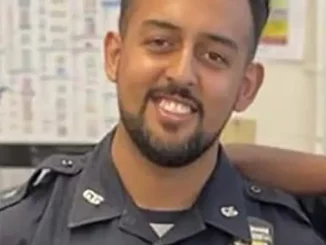
    Officer Adeed Fayaz, 26, a five-year veteran of the NYPD, had been on life support at Brookdale Hospital since the cowardly attack in East New York on Saturday, February 4 evening.
    He was pronounced dead at 3:25 p.m., sources said. Flags were later seen flying at half-mast at his 66th Precinct stationhouse in Borough Park.
    NYPD Commissioner Keechant Sewell and both rank-and-file and brass from the department were at the hospital throughout the day, comforting grieving relatives, including several who flew in from Pakistan.
    “What can you say about a police officer, it’s someone who dedicated their life to serve and protect,” said retired cop Ahmed Nasser, who knew Fayaz from the NYPD Muslim Officer’s Society.
    “To me, it’s a family,” Nasser said. “It doesn’t matter if I know them. A cop is a family.”
    Hundreds of cops, including top NYPD brass, lined the streets outside of the hospital as officer Fayaz’s body was led into the back of an ambulance destined for the city Medical Examiner’s Office shortly before 7 p.m.
    His grieving relatives held onto Fayaz’s two young sons during the somber scene.
    A fellow police officer and friend of Fayaz who was outside the hospital described the slain cop as “my own nephew.” Police Benevolent Association President Patrick Lynch said Fayaz’s family was at his bedside when he was taken off life support.
    “It’s a difficult day. You see police officers standing shoulder to shoulder with tears in their eyes,” said Lynch.
    “This was a police officer who loved his job. Since he was a young person, he wanted to become not just a police officer, but a New York City police officer. He was viciously gunned down in the streets of Brooklyn.”
    “The hole in their heart will never go away,” he said about the family. “There is no such thing as closure.”
    Fayaz was shot once in the head after he and his brother-in-law responded to a Facebook Marketplace ad for a Honda Pilot and the two were ambushed by an armed would-be robber. The pair had $24,000 in cash on them at the time, police sources said.
    The gunman, identified by police on Tuesday as Randy “Popper” Jones, 38, of Harlem, was charged with murder and attempted robbery in the attack, according to police officials.
    Jones allegedly lured Fayaz and his relative down a dark alley on Ruby Street, pulled a gun and demanded money — opening fire “almost immediately.”
    The cop was struck once in his left temple, with the bullet exiting the back of his skull, and went down.
    His brother-in-law then pulled the gun from the cop’s holster and returned fire as the shooter fled.
    Jones fled but cops tracked him down to a Rockland County hotel — where they took him into custody on Monday, February 6, using Fayaz’s handcuffs.
    Police found the getaway vehicle, a black BMW SUV registered to Jones’ mother, on 129th Street and Park Avenue on Sunday and impounded it, with crime-scene detectives examining it at the 75th Precinct in Brooklyn on Monday.
    Randy “Popper” Jones, 38, of Harlem, is now expected to face murder charges in the attack.

  • Dr Kavitha P Das is a national DentaQuest award Honoree for 2022

    Dr Kavitha P Das is a national DentaQuest award Honoree for 2022

    • Renee Mehra

    NEW YORK (TIP): Dr. Kavitha P. Das is one of the winners of the national DentaQuest award for 2022. She was selected from a national pool of outstanding candidates to be awarded this prestigious award. She has worked as a health disruptor in the health system for 15 years and focused on interdisciplinary research which can lead to equitable access to care and focused on oral-systemic health connections.

    For this award, DentaQuest selected forward-thinking agents of change, and they created the national Health Equity Hero program eight years ago to celebrate individuals and organizations responsible for extraordinary work that champions equitable access to health care (medical, oral health, behavioral health) and optimal overall health outcomes. Health heroes taking action to transform health systems in their communities in an effort to remedy long-standing disparities.
    Dr. Das is a dentist who is an interdisciplinary health researcher, academic, and healthcare innovator. She has been working in the space of increasing access to care with diverse communities to improve the health and well-being of residents of diverse urban communities which have a predisposition to a number of chronic diseases that have lifetime consequences. She has worked at Columbia University, NYU, Yale University, and Icahn School of Medicine at Mount Sinai as an academic and in research. She leads a health equity-focused community-based organization to implement programs to have equitable access to care. Her goal is to change the inevitability of chronic diseases (diabetes, heart disease, oral diseases, and oral cancer) for children and families with a focus on prevention. Das leads unique research projects, public health policy, works with key stakeholders such as academics, school and community leaders, and clergy groups to highlight the opportunity for change, align on what can be done, and create an action plan that builds trust and engagement within the community.

    DentaQuest manages dental and vision benefits for 30 million Americans and provides care directly through a national network of clinics. Their mission is to improve oral health for all Americans, to make it more affordable and easier to have equitable access to care with an emphasis on prevention. They use a multi-pronged approach to revolutionize oral health in ways that make the community healthier. They understand how to align incentives to drive better outcomes and lower costs. They have provided more than $230 million in funding for research and grant programs to advance oral health in communities across the country.

  • Meet Mikhael Simmonds, the new Center for Community Media (CCM) Executive Director

    Meet Mikhael Simmonds, the new Center for Community Media (CCM) Executive Director

    NEW YORK (TIP): Mikhael Simmonds has taken over as the new Executive Director of Center for Community Media. Before joining CCM, Simmonds served as the director of new relationships at the Solutions Journalism Network, where he co-led operations, strategy, and execution around how SJN trained journalists, developed teaching products and coached news outlets. As a regional manager, he co-developed and managed solutions journalism projects with news partners in Kenya, Nigeria, and the U.S.
    In an interview with CCM, Mikhael Simmonds said he has been working in international affairs and journalism for a decade. One of his earlier jobs was at the Amsterdam News. He later moved on to Solutions Journalism [Network]. And there it was very much international, but also based in New York. His interest in CCM really came from that duality – people who have multiple identities, multiple nationalities, multiple cultures living next to each other and telling relevant news for their audiences – and having conversations with each other, among each other. So, when the opportunity to work with CCM came up, he was like, ‘oh, you’re speaking my language!’

    Simmonds said he is an immigrant (from Trinidad). He went to undergrad at CUNY, grad school at CUNY. His undergrad was international affairs, with a bunch of different immigrants at City College. They all talked about multiple identities, multiple spaces issues. Now there’s a job where he can get to work deeply in that.
    Welcome, Mr. Simmonds.

  • 2024 H-1B Cap Registration period opens March 1

    2024 H-1B Cap Registration period opens March 1

    NEW YORK (TIP): U.S. Citizenship and Immigration Services (USCIS) announced that the initial registration period for the fiscal year 2023 H-1B cap will open at 12 p.m. EST on March 1 and extend to 12 p.m. EST on March 17, 2023. During this period, prospective petitioners and representatives will be able to complete and submit their registrations using the USCIS online H-1B registration system.

    Prospective H-1B cap-subject petitioners or their representatives are required to use a myUSCIS online account to register each beneficiary for the selection process and pay the associated $10 H-1B registration fee for each registration. Prospective petitioners submitting their own registrations (i.e., U.S. employers and U.S. agents) will use a “registrant” account. Registrants will be able to create new accounts beginning at 12 p.m. ET on Feb. 21. Of note, the USCIS confirmation number assigned to each registrant is used solely to track registrations and cannot be used to track the case status in Case Status Online.

    Moreover, representatives may add clients to their accounts at any time, but both representatives and registrants must wait until March 1 to enter beneficiary information and submit the registration with the $10 fee. Through the account, prospective petitioners will be able to prepare, edit, and store draft registrations prior to final payment and submission of each registration.

    After the registration period is completed, USCIS will begin the H-1B cap selection process. Petitioners will be notified of the selected registrants via selection notifications sent to their my USCIS online accounts through March 31. An H-1B cap-subject petition, including a petition for a beneficiary who is eligible for the advanced degree exemption, may only be filed by a petitioner whose registration for the beneficiary named in the H-1B petition was selected in the H-1B registration process.

  • An Even Deadlier Pandemic Could Soon Be Here

    An Even Deadlier Pandemic Could Soon Be Here

    NEW YORK (TIP): “As the world is just beginning to recover from the devastation of Covid-19, it is facing the possibility of a pandemic of a far more deadly pathogen”, writes Zenep Tufekci, in an opinion column in New York Times, published February 3. Bird flu – known more formally as avian influenza – has long hovered on the horizons of scientists’ fears. This pathogen, especially the H5N1 strain, hasn’t often infected humans, but when it has, 56 percent of those known to have contracted it have died. Its inability to spread easily, if at all, from one person to another has kept it from causing a pandemic.

    But things are changing. The virus, which has long caused outbreaks among poultry, is infecting more and more migratory birds, allowing it to spread more widely, even to various mammals, raising the risk that a new variant could spread to and among people, Tufecci writes.

  • State of affairs: On Joe Biden’s second State of the Union address

    • United States President Joe Biden knows he must focus on both the U.S. economy and global challenges

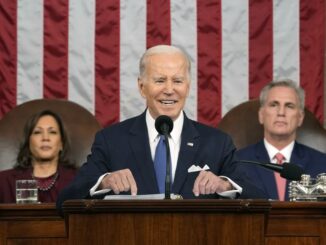
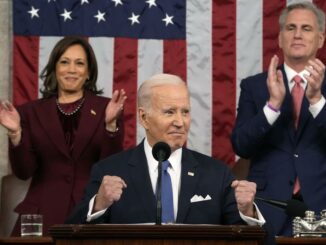
    In his second State of the Union address, U.S. President Joe Biden tried to articulate several messages under one big theme — his administration was committed to rebuilding America’s economy while standing up to its challenges abroad. Much of the 72-minute speech was on the domestic agenda, particularly his economic optimism. The speech saw self-appreciation, ideas and rhetoric — he took pride in his economic policies, emphasizing the low unemployment rate and easing inflation, repeated the calls for taxing the super rich and bringing down prices of essential drugs, promised not to cut Social Security and Medicare and declared that democracies have become stronger and autocracies weaker.

    While there was no major policy shift, the 80-year-old President repeated the phrase “finish the job”, indicating that he needed more time to build on what he has already done — seen as a pitch for his re-election campaign. Mr. Biden also referred to Russia and China as key foreign policy challenges — the Ukraine invasion as “a test for America”, and that America “will act to protect our country” if its sovereignty is threatened, an indirect reference to the balloon incident.

    If Mr. Biden used the speech to defend his legacy and lay his vision, it also laid bare his administration’s critical challenges. To be sure, the unemployment rate fell to the lowest level since 1969 — to 3.4% in January 2023 — and inflation continued to ease in the month. Still, most Americans (58% as in a recent survey), burdened by high energy prices and slow growth in wages, remain unhappy with his handling of the economy. The President may have plans for re-election, but only 37% Democrats back him. Mr. Biden will also face growing resistance to his policies from Congress in a Republican-controlled House.

    On foreign policy, the U.S. has so far stood resolutely behind Ukraine, but, as the war grinds on, there are rising questions about a possible endgame. A bigger challenge for Mr. Biden is how to handle ties with China at a time when the two superpowers compete for global influence. The balloon incident suggests that it is not an easy task. Half of Mr. Biden’s first term is over. As the election season is heating up, time is running short and his task is cut out — he has to act more decisively on the economic front if he wants to build a fair order of competition and opportunities, work towards ending the war in Ukraine without compromising on America’s standing in Europe, and put in place stronger guardrails in U.S.-China relations to check an escalation in tensions and deterioration in ties.

    (The Hindu)

  • Chinese eye in sky

    • ‘Spy balloon’ underlines need for constant alertness

    Days after a US Air Force fighter jet shot down a Chinese surveillance balloon — which the US claimed was a ‘spy balloon’ — off the South Carolina coast, it has been reported that China operates a fleet of such balloons and has targeted several countries, including India and Japan, in the past. A US media report, quoting several unnamed defense and intelligence officials, alleged that the spy balloon project has been operating for several years, and ‘has collected information on military assets in countries and areas of emerging strategic interest to China including Japan, India, Vietnam, Taiwan and the Philippines’. Senior US officials are reported to have briefed ‘nearly 150 foreign diplomats across 40 embassies’ in the US and Beijing, explaining its action of shooting down the balloon, presenting reasons why it was not a ‘civilian’ weather balloon, as China claimed, but an intelligence-gathering device.

    It seems counterintuitive to use an apparently low-tech method such as a balloon for intelligence-gathering when high-resolution satellite images of the earth’s surface are easily available, but such debates are best left to techint experts. Also, China keeping a spying eye on its neighbors and adversaries is not a significant point — it’s a fact that all countries engage in intelligence-gathering, or spying, even if not one would admit it publicly. What is really remarkable about the Chinese balloon is that if it were indeed spying, it was doing so in a very brazen manner; and if it indeed was a ‘civilian airship’ intended for ‘meteorological research’, China’s secretiveness about it is quite inexplicable.

    One takeaway for India from this episode is that it must keep its eyes open — it’s not quite a new lesson but the reinforcement of one, because China’s increased aggressiveness at the borders during the last few years has already underlined the need for India to always keep its guard up. For the countries that are concerned over China’s hegemonistic ambitions, it is imperative to share technology and intelligence in order to not be outsmarted and outmaneuvered in geopolitical games.

    (Tribune, India)

  • Defend Constitution against predatory politicians

    Defend Constitution against predatory politicians

    “The issue of the ‘basic structure’ of the Constitution is a fight about the fundamental rights included in Part III of the Constitution. The Kesavananda Bharati case also shows that there is no conflict between the fundamental rights of Part III and the directive principles of state policy of Part IV, and that fundamental rights do not have to give way to create an egalitarian polity. The Preamble eloquently states the ideals of justice, liberty, equality and fraternity. The legal hair-splitting over the status of the Preamble, whether it is part of the Constitution or not seems unnecessary. The Constitution has served as a torchbearer of democratic freedoms in the last 72 years, and it is necessary to defend the Constitution against predatory politicians.”

    By Parsa Venkateshwar Rao Jr.

    Addressing the 83rd Presiding Officers’ Conference in Jaipur last month, Vice-President and Rajya Sabha Chairman Jagdeep Dhankhar said the legislature’s autonomy could not be encroached either by the judiciary or the executive. And it is in this context that he questioned the ‘basic structure’ doctrine that the Supreme Court had expounded in the 1973 Kesavananda Bharati case.

    Without offending the constitutional status that he holds as the Chairman of the Rajya Sabha, it seems that Dhankhar has misunderstood the intent and purport of the Kesavananda Bharati case, which spelt the ‘basic structure’ of the Constitution principle, and sought to make it into a criterion for reviewing the constitutional amendments passed by Parliament. It is not about the courts coming in the way of legislature and restricting the scope of the legislatures to enact laws. It is not about Parliament pitted against the judiciary or the other way round. It might sound like a doctrine, but it is not one. It is a thumb rule evolved by the Supreme Court for purposes of judicial review.

    The Kesavananda Bharati case also did not set out a new principle of interpretation. It was following the distinctions made in the earlier pronouncements of the Supreme Court in the cases of Sankari Prasad Deo vs Union of India and State of Bihar (1952), Sajjan Singh vs State of Rajasthan (1965), and the definitive direction laid down in the IC Golaknath vs State of Punjab (1965) case. The issue was whether Parliament can amend the fundamental rights of Part III of the Constitution. There were no unanimous answers from the court. While some of the judges felt that that powers of Parliament to amend the Constitution given in Article 368 were unrestricted, and that Parliament can abridge, and even abrogate, fundamental rights, there were others who felt that the fundamental rights should remain inviolable.

    It is necessary to remember that all these cases arose from challenges to the land reforms legislation in different states, and these laws were passed by the state legislatures, and these were protected by the constitutional amendments brought in by Parliament.

    Article 31, which was about the right to property, and which was part of Part III or fundamental rights, was removed from the section through the 44th Amendment of the Constitution in 1978, but the questions that came up before the court in the above cases were related to the ‘right to property’. The courts discussed it in terms of fundamental rights and not specifically about the right to property.

    In the Sajjan Singh case of 1965, then Chief Justice PB Gajendragadkar, who wrote the majority judgment, said: “The power conferred by Article 368 includes the power to take away the fundamental rights guaranteed by Part III…The fundamental rights guaranteed by Part III could not have been intended to be eternal, inviolate and beyond the reach of Article 368 for, even if the powers to amend the fundamental rights were not included in the Article, Parliament can by a suitable amendment of the Article take those powers.” It would seem that Gajendragadkar and the court were concerned about the social and economic challenges faced by a government in a developing country, and the view was that necessary social and economic reforms should not be obstructed by taking shelter behind fundamental rights. It was a dangerous position that the Gajendragadkar court had adopted. Fundamental rights were not just about the right to property.

    It is in the Golaknath case that the court of Chief Justice Koka Subba Rao took a firm position on the issue of fundamental rights, or was it confined to the issue of the right to property? The majority statement delivered by Subba Rao is crystal clear on the issue: “Our Constitution accepted the theory that the right to property is a fundamental right though perhaps it was an error to do so if socialization was desired. It treated property rights as inviolable except through law for public good and payment of compensation….As there is apprehension that the erosion of right to property may be practiced against other fundamental rights, it is necessary to call a halt. An attempt to abridge or take away fundamental rights by a constituted Parliament even through an amendment of the Constitution can be declared void. The court has the power and the jurisdiction to do so. The opposite view expressed in the Sajjan Singh’s case is wrong.”

    In the Kesavananda Bharati case, Chief Justice Sikri reiterated the essential point of the Golaknath case that fundamental rights are important and though Parliament has extensive powers to amend the Constitution, it cannot encroach upon the fundamental rights of the people. Sikri delivering the majority judgment wrote: “On a careful consideration of the various aspects of the case, we are convinced that Parliament has no power to abrogate or emasculate the basic elements or fundamental features of the Constitution such as the sovereignty of India, the democratic character of our polity, the unity of the country and the essential features of the individual freedoms secured to the citizens. Nor has Parliament the power to revoke the mandate to build a welfare state and egalitarian society. These limitations are only illustrative and not exhaustive.”

    Between Golaknath and Kesavananda Bharati judgments, it is the Golaknath judgment that underscores fundamental rights as the raison d’etre of a democratic polity in an unambiguous language. Indians will have to choose between Gajendragadkar who had argued that fundamental rights are not eternal and not inviolable on the one side, and Subba Rao and Sikri on the other who had underlined the importance of democratic rights of people against the potential political tyranny of parliamentary majorities.

    The issue of the ‘basic structure’ of the Constitution is a fight about the fundamental rights included in Part III of the Constitution. The Kesavananda Bharati case also shows that there is no conflict between the fundamental rights of Part III and the directive principles of state policy of Part IV, and that fundamental rights do not have to give way to create an egalitarian polity. The Preamble eloquently states the ideals of justice, liberty, equality and fraternity. The legal hair-splitting over the status of the Preamble, whether it is part of the Constitution or not seems unnecessary. The Constitution has served as a torchbearer of democratic freedoms in the last 72 years, and it is necessary to defend the Constitution against predatory politicians.

    (The author is a senior journalist)

  • New IRS features allow taxpayers electronically filing amended returns to choose direct deposit to speed refunds

    New IRS features allow taxpayers electronically filing amended returns to choose direct deposit to speed refunds

    WASHINGTON, D.C. (TIP): In the latest improvement for taxpayers, the Internal Revenue Service announced today, February 9, that people electronically filing their Form 1040-X, Amended U.S Individual Income Tax Return, will for the first time be able to select direct deposit for any resulting refund.
    Previously, taxpayers who filed Form 1040-X with the IRS had to wait for a paper check for any refund, a step that added time onto the amended return process. Now, anyone who electronically files the Form 1040-X can select direct deposit and enter their banking or financial institution information for quicker delivery of refunds. Taxpayers file a total of approximately 3 million amended returns each year.
    “This is a big win for taxpayers and another achievement as we transform the IRS to improve taxpayer experiences,” said IRS Acting Commissioner Doug O’Donnell. “This important update will cut refund time and reduce inconvenience for people who file amended returns. We always encourage direct deposit whenever possible. Getting tax refunds into taxpayers’ hands quickly without worry of a lost or stolen paper check just makes sense.”
    The IRS began accepting the Form 1040-X electronically in 2020 but until now did not offer direct deposit as an option for a refund. Following IRS system updates, those filing amended returns can now enjoy the same speed and security of direct deposit as those filing an original Form 1040 tax return. Taxpayers filing an original tax return using tax preparation software can file an electronic Form 1040-X if the software manufacturer offers that service. This is the latest step the IRS is taking to improve service this tax filing season. As part of funding for the Inflation Reduction Act, the IRS has hired more than 5,000 new telephone assistors and is adding staff to IRS Taxpayer Assistance Centers (TACs). The IRS also plans special service hours at dozens of TACS across the country on four Saturdays between February and May.
    No matter how a taxpayer files the amended return, they can still use the “Where’s My Amended Return?” online tool to check the status.
    Taxpayers still have the option to submit a paper version of the Form 1040-X and receive a paper check. They should follow the instructions for preparing and submitting the paper form. Direct deposit is not available on amended returns submitted on paper.
    Current processing time is more than 20 weeks for both paper and electronically filed amended returns, as processing an amended return remains a manual process even if it’s filed electronically. However, filing electronically cuts out the mail time, and including direct deposit information on an electronically submitted form provides a convenient and secure way to receive refunds faster.

  • Tackling Gun Violence in the Chicago Neighborhoods: The Gandhi King Center for Non-Violence NFP Launched at Englewood, IL

    Tackling Gun Violence in the Chicago Neighborhoods: The Gandhi King Center for Non-Violence NFP Launched at Englewood, IL

    CHICAGO, IL (TIP): Chicago City’s impressive overarching skyline and beautiful landscapes have helped it to secure a top spot in the World’s Best Cities list, but the local residents also know how their beautiful city struggles with violence and gun related crimes. These shooting incidents are a common occurrence taking place at the South Side of Chicago’s Downtown area and if you hear the news, you’ll know that the Englewood Community especially has suffered greatly in the past few years marred with similar incidents. And at this sensitive juncture, realizing the need of the hour, and to commemorate the Black History Month, the Gandhi King Center for Non-Violence NFP, a first of its kind institution was launched at Englewood, IL on February 01, 2023.

    The Gandhi King Center for Non-Violence NFP was conceptualized and initiated by Dr Vijay Prabhakar, fondly known as Dr VGP is a very highly acclaimed and a proven community leader who has always strived to bring social justice and equality across different ethnic and religious groups and is a big profounder of peace and harmony in the community. He is a Public Health Professional and a Graduate from Madras Medical College, 1982, MBBS, CPH, MPH, DD. He is also Chairman of GSA and Founder for AMEC Commission & MEATF community organizations.

    Toni Preckwinkle is Cook County Board President and was the honorary guest at this glorious celebration. She cut the ribbon to open the mobile community food pantry, which will also provide services like meditation, yoga, music therapy, color therapy, basketball coaching, group therapy, mobile food trailer, mental health services, mediation – crisis intervention and wellness screenings to reduce Violence and Crimes. Additionally focus will be on getting City Vacant lands to be developed, Vocational Skill Development and 24-hour Crisis hotline are part of the Center’s mission.

    Taking the stage, the Master of the Ceremony, Ambassador, Dr. Twin Green, Founder and President – The Link & Option Center, Inc., South Holland, Chairperson, the Gandhi King Center for Non-Violence, Ambassador for the Citizens Alliance of Behavioral Health, declared that the Englewood community can now breathe! She added, “There have been so many opportunities, businesses and providers that have come to Englewood with the intent to do very, very well. Then the air will go out and deflate but not the Gandhi King Center for Nonviolence. The resources that are going to come to this community are not going to deflate. We’re going to give the people of Englewood the opportunity to stabilize, to be able to receive the civil and economic rights that they deserve to have.” To begin the program, Interfaith Prayers were held, which included, Christian Prayer by Chaplain Ylysses Ruff, Shepherd’s Hope; Islamic Prayer by Brother Dion, Community Activist; Hindu Prayer by Councilman Acharya Rohit Joshi, MEATF-7th CD-IL. Brian Anderson, Founder-CEO Shepherd’s Hope, was invited to deliver the Welcome Address. And the Opening Remarks were shared by Brother R-Raheen, Founding Director – Midwest Coalition to Stop Violence, Chicago. A solemn Tribute: was presented Christiana Gray 11-Year-Old Poet and Student – Calvin Christian Academy, South Holland.

    Toni Preckwinkle Cook County Board President, Dr Vijay Prabhakar Chairman of GSA and Founder for AMEC Commission & MEATF and Neal Patel, CEO Medstar Laboratories with invited guests.

    There were several Keynote Speakers invited at the event: Dr. Sriam Sonty, Vice President, Gandhi Memorial Foundation, who presented Deep Insights Into The Gandhi-King Legacy; Donald Dew, CEO Habilitative Systems, Inc., presented Perspective of the Plague of Violence in Chicago’s Englewood Area and the Westside of Chicago, Zoey Ma, Outreach Director-Brigitte G. House of Hope Foundation-Tri-Taylor Area, Chicago, spoke on How Vacant Lots Breed Crime & Violence in the Community. Dr. Abha Agarwal, Chief Medical Office of Humboldt Park Health, spoke on How Health Inequity Contributes to Violence & Crime, Dr Zenobia Sowel, Chair Bethel Mennonite Community Church, spoke on Inadequate Affordable Housing & Food Insecurity Spikes Violence & Crime In Chicago, Blue Pachecco-Cornejo, Founder Coach 3-B Basketball by Blue, spoke on Engaging Neighborhood Students & Youth.

    An impactful Presidential Address – Role of “The Gandhi King Center for Non-Violence” was delivered by Dr. Vijay G. Prabhakar, President-American Multiethnic Coalition, USA. He explained that the Action Speaks Louder Than the Words and now all the community work will definitely create a much needed harmony in the Englewood community and eventually other neighboring communities. He explained the Gandhi King Center for Non-Violence strives to provide innovative resources to the community gatekeepers to reduce violence and promote peace in neighborhoods. He also acknowledged the generous contribution, a $10,000 Check to Shepherd’s Hope – by Neal Patel, CEO Medstar Laboratories.

    Dr Prabhakar then called upon the Guest of Honor, Cook County Board President Toni Preckwinkles, who was invited for her support of gun violence reduction programs and her deft handling of the COVID-19 pandemic prompted him to confer the title “the Iron Lady of America.”.

    Regarding the choice of which individual should be chosen to launch the Gandhi King Center for Non Violence NFP, Dr VGP explained that, “We all decided we should have somebody who really believes and (walks the walk) of the principles of Gandhi and King, and that’s none other than the Iron Lady of America.”

    Guest of Honor Preckwinkle said nearly half of Cook County’s $8 billion budget goes toward health care, and that Cook County hospitals have some of the most well-regarded emergency room trauma centers in the country. “We train young people in the Navy for combat in our emergency room. The Navy sends young people to our emergency room to be trained so they will know what it’s like to treat combat wounds,” she said. “Now, we’re pleased that we’re able to help our military in this way. But it’s a tragedy that we have a hospital that’s equivalent to a military hospital where you’re treating gunshot wounds.”

    Preckwinkle’s spokesman Nicholas Mathiowdis said that although Cook County did not directly provide funds for this nonviolence center, the county does want to support and uplift gun violence prevention programs. “The county has re-imagined the way we look at gun violence, instead of looking at it as a crime and law issue, we are looking at it as a public health crisis,” said Mathiowdis.

    Cook County received $1 billion from the federal government through the American Rescue Plan Act and has laid out plans for spending it on health and wellness, economic development and criminal justice.

    It is interesting to know that the Gandhi King Center for Non-Violence NFP was launched in February, very close in heels with significance to both the leaders, Mahatma Gandhi ji’s Shraddhanjali which was on Jan 30, 2023 and Martin Luther King, Jr’s Day on Jan 16 2023, this year. These two heroes with their message of Peace & Non-Violence are still relevant to our world today and we need them even more and they continue to inspire us with their strength and tenacity to endure and be brave to stand up against inequality and injustice violence and crime! Let us hope the Gandhi King Center for Non-Violence NFP helps reduce gun violence, not just in Englewood, but also in the adjoining neighboring communities and eventually brings peace to the City of Chicago, and all US and the entire World at large!

    (Photographs and Press release by Asian Media USA)

  • US President Biden seeks comprehensive immigration reform in State of the Union address

    US President Biden seeks comprehensive immigration reform in State of the Union address

    WASHINGTON, D.C. (TIP): President Joe Biden has urged the US Congress to pass a comprehensive immigration reform, a move which would provide a path to citizenship to not only illegal immigrants but also those who entered the country legally, like those on H-1B visas. In the 118th Congress, where the Opposition Republicans enjoy a majority in the House of Representatives, such an ask might not be an easy one.

    Biden acknowledged it indirectly though. “If you won’t pass my comprehensive immigration reform, at least pass my plan to provide the equipment and officers to secure the border,” Biden said in his second State of the Union Address before a Joint Session of the US Congress.

    “And a pathway to citizenship for Dreamers, those on temporary status, farm workers, and essential workers. Here in the people’s House, it’s our duty to protect all the people’s rights and freedoms,” said the president amidst applause from the Democratic lawmakers of the Congress.

    Dreamers are undocumented immigrants who enter the US as children with parents.

    Millions of illegal immigrants are looking for a pathway to citizenship, and so do a large number of those who entered the country legally with visas like H-1B and are having years waiting for a Green Card.

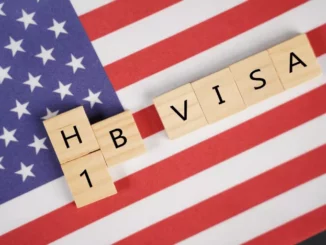
    The H1B visa is a non-immigrant visa that allows US companies to employ foreign workers in specialty occupations that require theoretical or technical expertise. Technology companies depend on it to hire tens of thousands of employees each year from countries like India and China.

    A Green Card, known officially as a Permanent Resident Card, is a document issued to immigrants to the US as evidence that the bearer has been granted the privilege of residing permanently.

    In his address that lasted for more than 75 minutes, Biden urged Congress to come together on immigration and make immigration a bipartisan issue like it was before.

    “We now have a record number of personnel working to secure the border, arresting 8,000 human smugglers and seizing over 23,000 pounds of fentanyl in just the last several months,” he said. “Since we launched our new border plan last month, unlawful migration from Cuba, Haiti, Nicaragua, and Venezuela has come down 97 per cent. But America’s border problems won’t be fixed until Congress acts,” Biden said.

    (Source: PTI)

  • Online petition launched to extend grace period for H-1B visa holders to 12 months

    Online petition launched to extend grace period for H-1B visa holders to 12 months

    WASHINGTON, D.C. (TIP): Amidst massive layoffs in the American tech sector that have resulted in a large number of Indian professionals being jobless, two Indian-American organizations have launched an online petition urging President Joe Biden to extend the grace period of H-1B visas holders from two months to a year.

    This means that once fired from a job, a foreign tech worker on H-1B visas would have one year to find a new job instead of the existing duration of 60 days, after which they have to leave the country.

    The H-1B visa is a non-immigrant visa that allows US companies to employ foreign workers in specialty occupations that require theoretical or technical expertise. Technology companies depend on it to hire tens of thousands of employees each year from countries like India and China.

    “On behalf of immigrants (from the world, mainly from India and China) as well as naturalized citizens like Indian-Americans, Foundation for India and Indian Diaspora Studies and Global Technology Professionals Association (GITPRO) has submitted an appeal to the President of the United States, the Secretary of DHS (Department of Homeland Security) and the director of USCIS (US Citizenship and Immigration Services) to extend the current grace period from 60 days to 1 year (minimum 6 months),” the online petition said.

    “We join the appeal and request to sympathetically consider the impact of the families on humanitarian grounds. We believe that this extension will pause this brain drain and ensure that the US will continue to be a world leader in technology and innovation. We also request elected officials to support this extension and if needed introduce a bill in the House of Representatives,” said the online petition that has been signed by more than 2,200 people so far. According to LayoffTracker.com, 91,000 were laid off just in January 2023 and this number may grow in the coming months. This has a huge impact on them, and their families, especially on the H-1B holders who would need to leave the US immediately within 10 days beyond the H-1B grace period, the petition said.

    In addition to the impact on them and their families, this is also a long-term impact on the talent that the US has. For example, 70 per cent of startup founders are immigrants. About 50+ CEOs of public companies are of Indian origin. Hence, the exodus of this talent from the US is harmful for the long-term interests of the US, especially in the modern age of Artificial Intelligence competition, it said.

    “The laid-off H-1B holders currently have about 60 days to find another employer to file for the H-1B transfer or leave the country. During the current economic situation, it would be impossible for these hardworking, tax-paying and talented people to get hired till the economy recovers,” said the petition.

    Meanwhile, a Facebook group of overseas Indians has launched a petition urging the Indian government to hire the laid-off Indian tech workers in the US. “Considering the ongoing layoff situation, we are requesting you to consider hiring the recently laid-off and returning Indian IT workers as consultants as part of the digitization initiatives undertaken by your ministries,” said the letter addressed to Ashwini Vaishnav, the Minister of Electronics and Information Technology.

    (Source: PTI)

  • Over 21,000 dead from quake in Turkey and Syria

    Over 21,000 dead from quake in Turkey and Syria

    ISTANBUL (TIP): More than 21,000 people have died in Turkey and Syria after earthquakes swept through the region Monday. Rescue workers are now racing against time to pull survivors from the rubble of collapsed buildings in freezing winter conditions. At least 78,124 people were injured across both countries, according to authorities.
    The 7.8 magnitude quake struck 23 kilometers (14.2 miles) east of Nurdagi, in Turkey’s Gaziantep province, at a depth of 24.1 kilometers (14.9 miles), the United States Geological Survey (USGS) said.
    The natural disaster is one of the deadliest earthquakes in two decades.
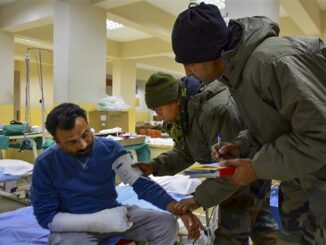
    Nations around the world working to get aid to Syria: France on Thursday, February 9, pledged to give 12 million euros ($12.92 million) to Syrians impacted by the quake, the foreign ministry said. The aid will be channeled through the United Nations and nongovernmental organizations “working directly with affected populations in all of the areas struck by the earthquake,” it said. Many Western nations have refused to send aid directly to the Syrian regime, which is under sanctions. The United Kingdom pledged an additional 3 million pounds ($3.64 million) in funding to the White Helmets to support rescue and emergency relief operations in northwest Syria. Britain has so far given a total of 3.8 million pounds ($4.62 million) to the White Helmets, a volunteer organization of humanitarian responders. The United States will provide $85 million for humanitarian assistance in Turkey and Syria. Indian Army’s field hospital has started functioning in quake-ravaged Turkey. India has sent more than 250 personnel, specialized equipment and other relief material amounting to more than 135 tons to Turkey on five C-17 IAF aircraft.
    UN working to open more pathways to deliver aid to Syria: A UN aid convoy crossed from Turkey into northwestern Syria on Thursday, February 9, for the first time since the earthquake hit. The six trucks carrying shelter items and Non-Food Items (NFI) drove through the Bab Al Hawa border crossing, according to the United Nations Office for the Coordination of Humanitarian Affairs. UN Secretary-General António Guterres said he is open to the idea of delivering aid via additional border crossings, other than the Bab al-Hawa, which is the only humanitarian aid corridor approved by the United Nations between Turkey and rebel-held areas of northern Syria.

    (Agencies)

  • ISRO rocket with three satellites lifts off from Sriharikota

    ISRO rocket with three satellites lifts off from Sriharikota

    SRIHARIKOTA (TIP): ISRO’s LV D2 carrying EOS-07 satellite and two co-passenger payloads lifted off from the spaceport here on Friday, February 10. In its second developmental flight, LV D2 carried EOS-07, an earth observation satellite as its main payload and two others — Janus-1 built by US-based Antaris and Chennai-headquartered Space Kidz India’s Azaadi SAT-2. This was ISRO’s maiden mission this year. At the end of a six-and-a-half hour countdown, the 34-metre-tall rocket lifted off from the Satish Dhawan Space Centre here, even as ISRO has pinned hopes on it to lead the space agency to success in tapping the small satellite launch vehicle market.

    The maiden flight of LV on August 7, 2022 was a partial failure due to an orbit anomaly and deviation in the flight path of the rocket. LV caters to the launch of up to 500kg satellites to low earth orbits on ‘launch-on-demand’ basis. It provides low-cost access to space, offers low turn-around time and flexibility in accommodating multiple satellites, and demands minimal launch infrastructure.

    EOS-07 is a 156.3kg satellite which has been designed, developed and realized by ISRO. New experiments include mm-Wave Humidity Sounder and Spectrum Monitoring Payload. While Janus-1 is a 10.2kg satellite, the 8.7kg AzaadiSAT-2 is a combined effort of about 750 girl students across India guided by Space Kidz India, Chennai.

    The mission objective is to inject these satellites in a 450-km circular orbit.

    (Source: PTI)

  • US President Biden touts  administration’s economic policies in State of the Union address

    US President Biden touts administration’s economic policies in State of the Union address

    • Asserts  that his administration is building an economy where no one is left behind

    WASHINGTON, D.C. (TIP): America today is in a much better shape than it was two years ago when its economy was “reeling”, President Joe Biden has asserted, touting his administration’s economic accomplishments in his State of the Union address as he laid the groundwork for his 2024 White House run.

    The economy is coming back, even if there’s more to do on inflation, Biden told Americans on Tuesday, February 7,  in his primetime address to the nation, his second since assuming the presidency in 2021.

    The economy was reeling two years ago, he said, adding that today the unemployment rate is at a 50-year low.

    “We’ve been sent here to finish the job,” Biden said, a phrase he used repeatedly as he laid out his agenda for the next two years.

    In his 72-minute speech, 80-year-old Biden, the oldest sitting US President, touted areas of bipartisan agreement, telling Republicans that “there’s no reason we can’t work together” after the Republican Party took control of the House of Representatives in the midterm elections. His remarks amounted to the opening of a re-election campaign he plans to announce by this spring, The New York Times Newspaper reported.

    “Two years ago, our economy was reeling. As I stand here tonight, we have created a record 12 million new jobs, more jobs created in two years than any president has ever created in four years,” he said before the joint session of the US Congress.

    “Two years ago, COVID had shut down our businesses, closed our schools, and robbed us of so much. Today, COVID no longer controls our lives. And two years ago, our democracy faced its greatest threat since the Civil War. Today, though bruised, our democracy remains unbowed and unbroken,” Biden said.

    Confronting a divided Congress for the first time since taking office, Biden talked back as Republicans heckled him from the floor of the House of Representatives they now control.

    Biden told the lawmakers that as they gather at the US Capitol they are writing the next chapter in the great American story, a story of progress and resilience.

    “When world leaders ask me to define America, I define our country in one word: Possibilities. You know, we’re often told that Democrats and Republicans can’t work together. But over these past two years, we proved the cynics and the naysayers wrong,” he said.

    “Yes, we disagreed plenty. And yes, there were times when Democrats had to go it alone. But time and again, Democrats and Republicans came together. Came together to defend a stronger and safer Europe,” he said.

    “Came together to pass a once-in-a-generation infrastructure law, building bridges to connect our nation and people. Came together to pass one of the most significant laws ever, helping veterans exposed to toxic burn pits,” he said amidst applause from the Congressmen. Biden told Congress that the State of the Union is strong.

    “As I stand here tonight, I have never been more optimistic about the future of America. We just have to remember who we are,” he said. Biden used the phrase “finish the job” 13 times in his address — calling on Congress to do everything from capping the price of insulin at USD 35 per month to imposing new taxes on the wealthiest Americans to passing a ban on assault weapons.

    He said he would not let Republicans “take the economy hostage” over the debt ceiling,

    Biden asserted that his administration is building an economy where no one is left behind.

    “Jobs are coming back, pride is coming back, because of the choices we made in the last two years. This is a blue-collar blueprint to rebuild America and make a real difference in your lives,” he said.

    Biden asserted that manufacturing has been one of the top priorities of his administration.

    “For too many decades, we imported products and exported jobs. Now, thanks to all we’ve done, we’re exporting American products and creating American jobs,” he said.

    “Inflation has been a global problem because of the pandemic that disrupted supply chains and (Russian President Vladimir) Putin’s war (against Ukraine) that disrupted energy and food supplies,” Biden said.

    But the United States is better positioned than any country on Earth, he insisted.

    Acknowledging that his administration has more to do, “but here at home, inflation is coming down”, he said.

    Gas prices are down USD 1.50 a gallon since their peak. Food inflation is coming down, he said.

    Inflation has fallen every month for the last six months while take-home pay has gone up, he added.

    Biden said that his administration is making sure the supply chain for America begins in America.

    “We’ve already created 800,000 manufacturing jobs even without this law. With this new law, we will create hundreds of thousands of new jobs across the country,” he said.

    “That’s going to come from companies that have announced more than USD 300 billion in investments in American manufacturing in the last two years,” Biden said.

    He said that “Made in America” is the top priority of his administration and announced that bridges, roads and highways in the country will be made with American construction materials.

    To maintain the strongest economy in the world, the US also needs the best infrastructure in the world.

    The US used to be number 1 in the world in infrastructure, but then it fell to number 13th, he said.

    “Now we’re coming back because we came together to pass the Bipartisan Infrastructure Law, the largest investment in infrastructure since President Eisenhower’s Interstate Highway System,” he said.

    He said ‘Buy American’ has been the law of the land since 1933.

    “But for too long, past administrations have found ways to get around it. Not anymore,” Biden said in his joint address to the US Congress. “Tonight, I’m also announcing new standards to require all construction materials used in federal infrastructure projects to be made in America. American-made lumber, glass, drywall, fiber optic cables,” he said.

    He said under his watch, American roads, bridges and highways will be made with American products.

    (With inputs from PTI)

  • China may play spoilsport

    China may play spoilsport

    • India prepares to host G20, SCO summits amidst regional rivalries

     “The G20 Summit will be bringing together leaders of countries which constitute two-thirds of the world’s population, while providing 90% of global GDP and 80% of global trade. The year 2023 is set to become the most complex and busy period in India’s diplomatic history. It is also going to be a period when the country’s logistical and organizational strengths will be tested. The forthcoming summits will test our ability in bringing countries together in a constructive and harmonious cooperation at the highest level. The summits are coming in the wake of tensions arising from the military standoff in Arunachal Pradesh.

    The issue of special interest will be whether Xi Jinping will participate in the forthcoming summits in the background of the current state of Sino-Indian ties.”

    By G Parthasarathy

    India’s foreign policy and national security establishments are going to be deeply tied up this year in meetings with members of the Shanghai Cooperation Organisation (SCO) and the G20 grouping. They will have to meticulously prepare for the summit meetings which India will be hosting later this year. The SCO includes eight members, six ‘Dialogue Partners’, and four ‘Observer States’. The G20 Summit will be bringing together leaders of countries which constitute two-thirds of the world’s population, while providing 90% of global GDP and 80% of global trade. The year 2023 is set to become the most complex and busy period in India’s diplomatic history. It is also going to be a period when the country’s logistical and organizational strengths will be tested. The forthcoming summits will test our ability in bringing countries together in a constructive and harmonious cooperation at the highest level. The summits are coming in the wake of tensions arising from the military standoff in Arunachal Pradesh.

    The issue of special interest will be whether Xi Jinping will participate in the forthcoming summits in the background of the current state of Sino-Indian ties.

    There are a few points that New Delhi should bear in mind. It will enjoy unstinted support in the conferences from virtually all members of the G20 and Quad. Both Pakistan and China will be present in the SCO. Pakistan is now engrossed in dealing with its collapsing economy. It also has serious problems with Taliban-ruled Afghanistan, and its own jihadis, the Tehreek-e-Taliban, across its 2,600 km border with Afghanistan and Iran. Given Afghanistan’s strategic location abutting Central Asia, China is keen to secure access to its mineral resources and keep in touch with its radical Islamist Taliban regime, especially in the light of its own tensions with its disaffected Uighur Muslims.

    Chinese President Xi Jinping has displayed continuing hostility towards India. China is focusing attention on the joint production of its much-touted JF-17 fighter aircraft in Pakistan and in strengthening the Pakistan navy. The Gwadar Port in Balochistan has a growing Chinese presence, but Pakistan has more serious problems to deal with, with its dwindling foreign exchange resources. In the meantime, the IMF is insisting on stringent conditions before international assistance can flow in. Even Saudi Arabia and the UAE, which have always been more than generous in bailing out Pakistan, are now making it clear that they will open their purse strings only after Pakistan fully meets IMF conditionalities. Across the world, many governments are recognizing that the economic mess that Pakistan is now in flows from its own blunders.

    There has, meanwhile, been a growing feeling in India that much of the tensions with China flow from deliberate actions of the Xi Jinping government, despite India having rolled out the red carpet during his India visit. It has been interesting to see a comprehensive assessment of India’s policies by Liu Zongyi of the Shanghai Institute of International Studies. Liu is one of China’s most prominent experts on South Asian studies. He has visited both India and Pakistan. In a recent article, which has received due attention in academic circles in our eastern neighborhood, he has bluntly spelt out what China thinks about India and its policies. Senior scholars in China do not speak out of turn. They are a convenient medium to convey the thinking of the country’s Communist Party and government.

    His study, titled ‘India’s Rising Great Power Strategy’, is multifaceted. On India’s domestic political issues, it alludes to the ascendancy of ‘Hindu nationalism’. On economic issues, he describes the ‘Make in India’ strategy as an effort to take over China’s place in the global supply chain. India’s strategy, according to him, will be to target China by building bases in Indian Ocean states, advancing the integration of India’s armed forces and improving border infrastructure, including in the Andaman and Nicobar Islands. It also includes building military bases by India in small Indian Ocean islands.

    In his conclusion, he notes: ‘Thus, the biggest divide between India and China is no longer related to border issues. In fact, border issues have now been instrumentalized. For the Indians, the biggest issue between India and China is the battle for the regional and global order. It is a geopolitical conflict, because India is a country that places a lot of emphasis on the idea of spheres of influence.’ Regarding India hosting the G20 and Quad summits, he notes: ‘Ultimately, the G20 Summit cannot be a success without China’s active participation. Even though the West lavishes praise on India, and even though India presents itself as the so-called poster child of developing countries, and the leader of the South, it will most certainly not succeed without China’s support.’ One cannot think of this as anything but a warning, bordering on threat.

    Liu betrays an obsession with the growth of India-US relations. He avers that it is India’s strategy to work with the US to undermine and counter China’s Belt and Road Initiative to prevent the emergence of a ‘China led’ regional order. This is accompanied by his strong justification of recent Chinese military intrusions in Ladakh and Arunachal Pradesh. Liu expresses serious concerns about India’s relations with the US and its involvement in groupings like Quad and I2U2. He conveniently forgets how China has been deliberately seeking to undermine India’s relations with neighbors across South Asia, notably with Sri Lanka, Bangladesh, Nepal and the Maldives. He even forgets the impact of China’s continuing and growing military relations with Rawalpindi, including its transfer of nuclear weapons and missile capabilities to Pakistan.

    Under these circumstances, the issue of special interest in the coming months will be whether Xi Jinping will participate in the forthcoming summits in the background of the current state of Sino-Indian relations, and the widespread concerns in India about his assertive policies.

    (The author is Chancellor, Jammu Central University & Former High Commissioner to Pakistan)

  • Education: Private vs  foreign universities and changing concepts of higher education

    Education: Private vs foreign universities and changing concepts of higher education

    There has been a phenomenal growth of education infrastructure in the country in general and Punjab in particular. The number of private universities, including technical universities, have multiplied many times. The State is dotted with medical, dental, engineering, education and engineering colleges.

    By Prabhjot Singh

    Education has it all. The simple test for gauging the progress of a state or a nation. is to look at its education standards. From Kindergarten to higher education, it is a single continuous process that chat while responding to societal and national requirements changes rapidly. From curriculums to methodology, from classroom teaching to use of technology and from textbooks to on training have all been part of the changing face of education. Today, education has become global as regional, territorial or geographical boundaries have become irrelevant in transfer and transmission of learning procedures and technologies.

    The concept of tie-ups between local, regional and national institutions on one hand and foreign universities has become the trend of the day. A part of your degree course can be in the educational institution on your home turf while the other half or part of it can be in an overseas institution.

    For many, education has grown beyond the sanctity of a sacred profession and become more of a business especially in the domains of providing quality education in sophisticated air-conditioned environs of lavishly built high rise or multistoried modern complexes.

    While developing nations are facing a major problem of brain drain, the developed and advanced nations appear to be instant beneficiaries. Last week, the Indian Parliament was told that the number of students going abroad for post-secondary or higher education has been rising rapidly.  The number has almost doubled in the last one decade.

    There has been a phenomenal growth of education infrastructure in the country in general and Punjab in particular. The number of private universities, including technical universities, have multiplied many times. The State is dotted with medical, dental, engineering, education and engineering colleges.

    Intriguingly, a large number of seats in these privately run or managed institutions remain vacant. The disturbing trend is that the number of these vacant seats has been increasing year after year.

    Almost all major prestigious Boys Colleges in the State had to shed their “gender” to remain operational. They are now co-educational institutions with more than 50 per cent of their seats going to girl students. The exclusive girls colleges are doing well though their admissions, too, have come down over the years.

    Though existing institutions and established universities are fighting a losing battle, private institutions and universities have shown phenomenal growth. Examples of Lovely Professional University, Chandigarh University or Chitkara University are all before us.

    What is wrong with the State sponsored education system? Why is it losing out fast?

     The reasons may be many.

    After a long debate, the Union Government has given its nod for elite foreign universities to set up their Indian campuses. It has met with mixed responses. Some have hailed it while others have gone all out to assail this change in policy as a direct invasion of core educational values of the traditional Indian education system. The debate continues unabated.

    Convinced  that education is a flourishing business, many States, including Punjab, Haryana, Himachal Pradesh and even Union Territory of Chandigarh came out with the concept of Education Cities by providing the adequate basic infrastructure.

    Besides major private players as mentioned above, a few others, claiming themselves to have pioneered quality education in the country, too, are spreading their network. Narsee Monjee Institute of Management and Amity University  are among them.

    Narsee Monjee Institute of Management (NMIMS)  has set up  its first campus in the country’s northern belt. Set up in Chandigarh, the first private deemed university in Chandigarh in 2021, it has been trying to make a name for itself with its state-of-the-art infrastructure, highly qualified staff, and unique pedagogy and curriculum in line with NMIMS.

    The campus, says Dr Jaskiran Kaur,  its Director, has brought new opportunities to the region by  setting a new standard in higher education. It offers a variety of programs, including Commerce, Law, and Engineering, with the mission to prepare students to be lifelong learners through thoughtful mentoring, assuring their success.

    NMIMS University’s one-of-a-kind approach to education is enhanced by its efficient multi-campus coordination, leading to seamless content delivery to improve students’ skills by harnessing their potential. The profound impact of learning at the University leaves such an indelible mark on the students that even after they leave the campus precincts, they continue to carry the legacy and culture of the institute.

    Aligning with the University’s philosophy of holistic development, the campus also provides students with clubs and societies to participate in co-curricular activities, furthering their overall development and preparing them for the future.

    The fee charged by NMIMS may be on a slightly higher side with an average of Rs 2.1 to Rs 2.5 lakh a year.

    Dr Jaskiran Kaur emphasizes the overall development of its students that encompasses physical, intellectual, ethical, and philosophical enhancement. “India has always been at the forefront of quality education. This philosophy has been followed by India since the days of yore. At the Chandigarh campus, we believe in bringing the Indian ethos of teaching by following indigenous teaching methodology ingrained in our DNA,” she says.

    Dr. Jaskiran Kaur expressed her pride in the rapid progress made by the campus and its standing as a leading higher education institution in Chandigarh.  “Since its inception in the academic year 2021-22, it has made rapid progress, with a focus on employability rather than employment. Our faculty members are outstanding scholars in their respective disciplines, and the curriculum is developed through industry and academic integration. We are committed to continuing the more than 41-year-old legacy of NMIMS and its focus on providing quality education and excellence in technological and management research through our ever-evolving pedagogy. We believe in providing our students with the best resources and opportunities to help them succeed and become the leaders of tomorrow.”

    Established in 1981, the Narsee Monjee Institute of Management Studies (NMIMS) is today recognized as a globally reputed university with strong industry linkages. It has duly earned every coveted accreditation and top ranking over the years, making its credibility unshakeable. It offers multiple disciplines across eight campuses that consist of 17 specialized schools, more than 17,000 full-time students, and about 800+ full-time faculty members, including ten faculty members with the Fulbright and Humboldt Scholarships for post-doctoral research.

    (The author is a senior journalist)

  • INDO-AMERICAN DESIGNS THE ONE-MINUTE SAREE BRAND

    • By Mabel Pais

    Calling All “I-Love-Wearing-Saree” Women!
    Do you wish to wear the elegance of the Indian saree without the draping hassle?
    Indo-American Sasha Revankar has found the answer.

    One Minute Saree. (Credit : oneminutesaree.com)
    Sasha Revankar. (Credit : oneminutesaree.com)

    Asia’s largest and most prominent showcase for young designers, India Beach Fashion Week (IBFW), has selected only ONE Indian American brand for its 2023 runway show on Goa’s private Divar Island on February 13 and 14, 2023. ‘One Minute Saree,’ a direct-to-consumer, online saree brand founded by Indo-American Sasha Revankar (originally from Goa) in early 2022, will unveil its eclectic collection on a fashion ramp for the first time at IBFW on Valentine’s Day 2023.

    Rooted in tradition but crafted for the modern woman, ‘One Minute Saree’ is the fashion revolution for which the next generation of Indophiles has been awaiting. The desire to embody celeb-like grace in stunning sarees at weddings without the fear of tripping over a long pallu or sporting uneven pleats is an all-too-real fear for any millennial. ‘One Minute Saree’ ends the saree enthusiast’s draping woes with custom-stitched, pre-draped sarees that perfectly fit each time and leave wearers feeling as immaculate as they look, all under one minute!

    Founded by sheer necessity, Revankar says: “After having been a bit traumatized from the experience of wearing a saree to a wedding while handling two little kids in 2018, I had basically given up on the idea of ever putting one on again. Even though I spent an hour perfecting my drape, the saree repeatedly came loose throughout the evening. It was a bit disheartening because I love the concept of a saree for the tradition and elegance it represents, but it was just too complicated, especially for someone living in the States – and where would I even go to buy a petticoat!”

    Enter – ONE MINUTE SAREE! It is not a skirt or dress-type saree; it is still a wraparound cloth that fits adjustable sizes and maintains the flow and drape of the garment. Unlike other options, the goal is to stay true to the authenticity of sarees such as the traditional Nivi Sarees, Gujarati Sarees, and Kanjivaram Sarees, with inclusive sizes for all body types from extra small to extra-large.

    The founders of India Beach Fashion Week had never seen a more practical way to wear a saree, and for this reason, they decided to include the line in their destination-wedding-themed fashion show. “We have always believed in the power of the young and the bold and have created a niche in the fashion segment since 2015. This season, IBFW positions itself as a platform for the daring fashion enthusiasts, entrepreneurs, designers, content creators, artists, fresh graduates, and early innovators who are changing the world with their creative outlook, vision, design aesthetics, and technology on a daily basis. ‘One Minute Saree’ is exactly the kind of avant-garde game-changer that will excite fashionistas and claim its rightful space in the millennial market,” said co-founders Pallav Ojha and Neha Asthana Ojha. The brand will present 14 looks on the runway on February 14th (Valentine’s Day) in Goa, and founder Revankar will also participate in a panel discussion on the Future of Indian Fashion for a Global Marketplace. For more information and to order your own piece from the collection, visit oneminutesaree.com.

    —————————————————–

    NIMBUS DANCE MAKES AN OFFER YOU CANNOT REFUSE

    Nimbus Dance students
    (Inset): Samuel Pott. (Credit : oneminutesaree.com)

    By Mabel Pais 

    Interested in learning dance that integrates attention to a range of movement styles including contemporary dance, ballet, somatic work and dance theater?

    You are invited for a free hybrid contemporary dance class with Samuel Pott, founding artistic director of Nimbus Dance. Don’t miss this special opportunity to learn from one of New Jersey’s leading choreographers.

    Samuel Pott, founding artistic director of contemporary dance company Nimbus, teaches two master classes featuring choreography from his company’s repertory. Pott will teach two master classes, for beginners and intermediate/advanced dancers, featuring choreography from his company’s repertory. Each class integrates Nimbus’ principles and approach to movement, which include attention to detail, partnering, self-awareness and technique. During each class, Pott will guide dancers through a floor warm-up, improvisational exercises and choreographed sequences representing a range of movement styles including contemporary dance, ballet, somatic work and dance theater.

    The intermediate/advanced class will be held from 12 – 1:30PM, followed by the beginner class at 2 – 3:30PM, at Nimbus Arts Center in Jersey City. You may also choose to tune in to either class virtually. Don’t miss this special opportunity to learn from one of New Jersey’s leading choreographers on February 18!

    SCHEDULE

    Sat, Feb 18 @ 12 & 2PM
    Hybrid (In-person and virtual)
    Nimbus Arts Center
    329 Warren St, Jersey City, NJ 07302

    2 classes:
    1 Intermediate/Advanced class – 12 PM – 1:30 PM

    VIRTUAL RSVP: njpac.tfaforms.net/145?id=a2F8X000008za2wUAA

    IN-PERSON RSVP: njpac.tfaforms.net/145?id=a2F8X000008za2WUAQ

    1 Beginner Class 2:00 PM – 3:30 PM

    VIRTUAL RSVP: njpac.tfaforms.net/145?id=a2F8X000008zaUQUAY

    IN-PERSON RSVP: njpac.tfaforms.net/145?id=a2F8X000008zaTSUAY

    In person classes will take place at Nimbus Arts Center. To learn more and for directions to Nimbus, visit nimbusdance.org.

    Samuel Pott

    Samuel Pott, founding artistic director of contemporary dance company Nimbus, teaches two master classes featuring choreography from his company’s repertory. Each class integrates Nimbus principles and approach to movement, these include attention to detail, partnering, self-awareness and technique. During the one hour and a half class, Pott will guide dancers through a floor warm-up, improvisational exercises and choreographed sequences representing a range of movement styles including contemporary dance, ballet, somatic work and dance theater.

    ————————————————————-

    RESTORED FILM COMES TO USA
    By Mabel Pais

    IRREVERSIBLE: STRAIGHT CUT
    Dir/Writ: Gaspar Noé l 2020 l 1h 26m l French w/Eng Subs

    One night. An unforgivable act. A tale told in reverse.

    Gaspar Noé’s infamous director’s re-cut has taken the notorious revenge film and ‘re-reversed’ it so that it now plays in chronological order. A restored version of the original film will play concurrently in select cities, and makes for an interesting double feature.

    Nearly 20 years after the original film’s release, Noé world premiered IRREVERSIBLE: STRAIGHT CUT at the Venice Film Festival in 2019, and this release marks the U.S. theatrical premiere of his radically revised director’s re-cut.

    Now available for the first time theatrically in the U.S., IRREVERSIBLE: STRAIGHT CUT – along with a restored original version in both digital and a new 35mm print format – provides an opportunity to see Noé’s potent account of humanity at its worst from multiple perspectives, and the unshakable understanding that time, indeed, reveals all things.

    Not for the faint of heart, easily offended, or anyone with photosensitivity, this is Noé’s dark masterpiece, now in reverse and ‘re-reversed’ versions.

    Watch the Trailer: vimeo.com/756509485/281f38e5f8

    Release: Runs Feb 10-16 at the IFC Center, New York City and Landmark’s Nuart Theatre (Los Angeles, CA). Learn more at alteredinnocence.net/irreversible.

    (Mabel Pais writes on The Arts and Entertainment, Social Issues, Health & Wellness, Cuisine and Spirituality)