Year: 2023

  • Sunny Deol wields a hammer in first poster of ‘Gadar 2’

    Sunny Deol wields a hammer in first poster of ‘Gadar 2’

    The makers of ‘Gadar 2’ on the occasion of Republic Day unveiled the first look of Sunny Deol, one of its lead stars in the upcoming romantic period action drama. A sequel of the superhit 2001 film ‘Gadar: Ek Prem Katha’, the movie will also see other original stars Ameesha Patel and Utkarsh Sharma reprise their roles. Filmmaker Anil Sharma, who also helmed the original, has directed the follow-up which is produced by Zee Studios.

    The first poster of the film shows Deol as the muscular Tara Singh wielding a big hammer amid destruction, with the tagline ‘Hindustan Zindabad’. Sharma said the team is “thrilled” to launch the first poster of ‘Gadar 2’.

    “‘Gadar – Ek Prem Katha’ isn’t my film but it’s a people’s film and dynamically shifted the paradigm of the Indian film industry. It went on to become a cult icon wherein people breathed Tara Singh and Sakina’s love story,” the director said in a statement. The first movie followed the love story of Tara Singh (Deol), an Indian Sikh man, and Sakina (Patel), a Pakistani Muslim woman, during the turbulent times of Partition.                Source: PTI

  • Marlee Matlin and other Sundance jury members leave Magazine Dreams screening after captions fail

    Marlee Matlin and other Sundance jury members leave Magazine Dreams screening after captions fail

    Sundance Film Festival jurors Marlee Matlin, Jeremy O Harris and Eliza Hittman walked out of the world premiere of Magazine Dreams in Park City, Utah after the closed captioning device for Marlee, who is deaf, malfunctioned on Friday night. The boxing drama, starring Jonathan Majors, was shown in part of the US Dramatic Competition of the festival. The device was fixed a few hours later and the festival reported that the jurors will screen the film again before it ends on January 29.

    Directed by Elijah Bynum, Magazine Dreams revolves around Jonathan’s character, a Black bodybuilder with self-destructive qualities. The actor has already received raves for his performance and commitment to the role.In a statement shared with The Associated Press, Sundance Institute CEO Joana Vicente said on Saturday, “Our team immediately worked with the devices in that venue to test them again for the next screening and the device worked without any malfunction. Our goal is to make all experiences (in person and online) as accessible as possible for all participants. Our accessibility efforts are, admittedly, always evolving and feedback helps drive it forward for the community as a whole.”

    “We are committed to improving experiences & belonging for all festival attendees,” the statement continued. “We consider accessibility as one of the primary drivers of institutional excellence and this work is done in partnership with film teams.” Joana shared that captioning device, which works on Wi-Fi, had been tested prior to the screening, but malfunctioned during the screening nonetheless. The movie will be screened again for the jurors before the festival ends.

    Marlee, who lost her hearing as a toddler, has not yet commented on the incident. She won the Oscar for Best Actress for her acting debut in Children of a Lesser God (1986). She also starred in last year’s coming-of-age drama CODA which also won the Best Picture Oscar.

    The Hindustan Times review of Magazine Dreams stated, “Bynum, who also wrote Magazine Dreams, conjures up an excruciatingly intense character study that is almost unbearably hard to watch at times. More than the violence, its the anticipation of it that powers the narrative, as Maddox’s obsession takes a full swing over him. The last 20 minutes in specific become agonizing to sit through – as Bynum dares the audience to leave his side. It all works because of Jonathan Majors, who gives the performance of a lifetime as Killian Maddox.”       Source: HT

  • Paris Hilton is now mom to a baby boy

    Paris Hilton is now mom to a baby boy

    Socialite and entrepreneur Paris Hilton, 41, has welcomed her first child with her husband Carter Reum. The diva took to Instagram to share the joyous life update. She posted an adorable picture featuring her newborn son and wrote, “You are already loved beyond words.”

    In the picture, Hilton is seen holding her little baby’s tiny hands.

    The social media mogul confirmed the arrival of her baby son to People magazine and said, ”It’s always been my dream to be a mother and I’m so happy that Carter and I found each other. We are so excited to start our family together and our hearts are exploding with love for our baby boy.” Soon after she shared the Instagram post, it was flooded with congratulatory messages. Kim Kardashian also took to the comments section and expressed joy. “So happy for you guys,” she wrote. The new mom, however, did not share any further details about the birth of their first child. Several media reports suggest that the baby boy has been born via surrogate. Paris Hilton has previously opened up about the couple’s plan to have a baby. In an interview in December, she revealed that she and Reum began the IVF process during Covid-19.

  • Beyonce sparks pregnancy rumors after Dubai concert

    Beyonce sparks pregnancy rumors after Dubai concert

    Grammy-winner Beyonce Knowles continues to make headlines following her concert in Dubai, but this time is for a different reason. The R&B diva is rumoured to be pregnant with her and rapper Jay-Z’s child again after photos and videos from the show at Atlantis The Royal resort leaked online, reports aceshowbiz.com.

    For a portion of the private show, the mother of three rocked a short pink dress with bejeweled details completed with matching gloves and stockings. While she looked relatively fit and trim throughout her body, her belly appeared to stick out a little more than usual, prompting the pregnancy speculation.

    “Is Beyonce pregnant… or has she just gained weight?” a curious fan asked on Twitter.

    Another user tweeted, “There has been opinions circulating that people think Beyonce is pregnant during performance in Dubai. Is Beyonce baking a bun?”

    Many others have since weighed in on it, with one wishing the best for Bey and her supposed pregnancy.

    “Yes she looks baby bump healthy bless her,” the said fan wrote.

    Another simply commented, “pregnant,” while another agreed as saying, “Yes I agree looks like she is pregnant.”

    Some others begged to differ though. “She’s said in the past her weight fluctuates, so we’ll just have to wait and see,” one person argued. Another claimed, “Probably just holiday weight.”

    Someone quipped, “That’s that Popeyes chicken,” as another brought up reports of Bey’s reported recent foot surgery as the possible cause of her sticking out belly, “At first I thought so too, but after hearing about her foot surgery, it’s probably just a little extra weight because she can’t exercise. Still looks great.”

    The pregnancy rumours aside, Beyonce faced backlash following her performance in Dubai, a country that has zero tolerance to LGBTQ+.

    The 71-year-old insisted that his daughter has “always stood for inclusiveness” and would never do anything to “deliberately hurt someone”.

  • Newlyweds Masaba Gupta and Satyadeep Misra party with Neena Gupta, Vivian Richards

    Actor, fashion designer Masaba Gupta and actor Satyadeep Misra made their first public appearance as husband and wife after tying the knot in secret. The newlywed couple was also joined by their family members in front of the paparazzi. Among them were Masaba’s mom Neena Gupta, her father Vivian Richards, Neena’s husband Vivek Mehra, Satyadeep’s mother Nalini and his sister Chinmaya. The family hosted a party in Mumbai to celebrate Masaba and Satyadeep’s wedding. In a video, Masaba is seen arriving at the venue with dad Vivian. She wore a black full-sleeve top, paired with a blue draped skirt with a slit. Vivian arrived in a dark grey suit. On Friday, January 27,  morning, Masaba and Satyadeep announced their wedding on social media.

    Source: HT

  • Indian American astronaut nominated by Joe Biden for appointment to grade of Air Force brigadier general

    Indian American astronaut nominated by Joe Biden for appointment to grade of Air Force brigadier general

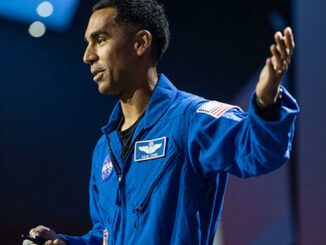
    WASHINGTON, D.C. (TIP): Indian American astronaut Raja J Chari has been nominated by President Joe Biden for the appointment to the grade of Air Force brigadier general.

    The nomination was announced on Thursday and will have to be confirmed by the Senate which approves all senior civilian and military appointments, according to the US Defense Department.

    Air Force Colonel Chari, 45, was nominated for the appointment to the grade of brigadier general, it said in a statement.

    Chari is currently serving as the Crew-3 commander and astronaut, the National Aeronautics and Space Administration, Johnson Space Centre, Texas. He earned a master’s degree in aeronautics from the Massachusetts Institute of Technology and graduated from the US Naval Test Pilot School in Patuxent River, Maryland. Chari served as the commander of the 461st Flight Test Squadron and is the director of the F-35 Integrated Test Force at Edwards Air Force Base in California.

  • January 27 New York & Dallas E – Edition

    [vc_row][vc_column][vc_custom_heading text=”E-Edition” font_container=”tag:h2|text_align:center” google_fonts=”font_family:Istok%20Web%3Aregular%2Citalic%2C700%2C700italic|font_style:700%20bold%20regular%3A700%3Anormal” link=”url:https%3A%2F%2Fwww.theindianpanorama.news%2Fwp-content%2Fuploads%2F2023%2F01%2FTIP-January-27-E-Edition.pdf”][vc_single_image image=”137413″ img_size=”full” alignment=”center” onclick=”custom_link” link=”https://www.theindianpanorama.news/wp-content/uploads/2023/01/TIP-January-27-E-Edition.pdf”][/vc_column][/vc_row][vc_row][vc_column width=”2/3″][vc_custom_heading text=”Lead Stories This Week” google_fonts=”font_family:Istok%20Web%3Aregular%2Citalic%2C700%2C700italic|font_style:700%20bold%20regular%3A700%3Anormal” link=”url:https%3A%2F%2Fwww.theindianpanorama.news%2F”][vc_wp_posts title=”” number=”5″ show_date=”1″][/vc_column][vc_column width=”1/3″][vc_single_image image=”82828″ img_size=”medium” alignment=”center” onclick=”custom_link” link=”https://www.theindianpanorama.news/advertising-media-kit-portal-indian-panorama/”][vc_single_image image=”82829″ img_size=”medium” alignment=”center” onclick=”custom_link” link=”https://www.theindianpanorama.news/advertising-media-kit-portal-indian-panorama/”][/vc_column][/vc_row]

  • Indian American City Council member Kshama Sawant introduces first law to ban caste discrimination

    Indian American City Council member Kshama Sawant introduces first law to ban caste discrimination

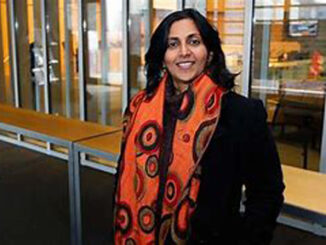
    SEATTLE, WA (TIP):  Seattle City Council’s lone socialist Indian American member Kshama Sawant has introduced first-in-the-nation legislation for the city to ban caste-based discrimination, in solidarity with its South Asian and other immigrant communities.

    If approved by the City Council, the legislation will ban caste-based discrimination in our city,” Mumbai born Sawant, 46, who has represented District 3, Central Seattle in the council since 2013, stated Tuesday, January 24.

    The legislation will prohibit businesses from discriminating based on caste with respect to hiring, tenure, promotion, workplace conditions, or wages, she stated. It will ban discrimination based on caste in places of public accommodation, such as hotels, public transportation, public restrooms, or retail establishments. The law will also prohibit housing discrimination based on caste in rental housing leases, property sales, and mortgage loans.

    “Caste discrimination doesn’t only take place in other countries. It is faced by South Asian American and other immigrant working people in their workplaces, including in the tech sector, in Seattle and in cities around the country,” Sawant stated.

    “That’s why my office is proud to bring forward first-in-the-nation legislation for our city to ban caste-based discrimination, in solidarity with our South Asian and other immigrant community members, and all working people,” she stated.

    “With over 167,000 people from South Asia living in Washington, largely concentrated in the Greater Seattle area, the region must address caste discrimination, and not allow it to remain invisible and unaddressed,” Sawant added.

    Sawant said that caste discrimination has been growing in the United States across many industries, including technology, construction, restaurants and the service industry, and in domestic work.

    “Caste discrimination is increasingly a grave contributor to workplace discrimination and bias—data from Equality Labs show that one in four caste-oppressed people faced physical and verbal assault, one in three faced education discrimination, and two in three (67%) faced workplace discrimination,” she stated. “Seattle is one of the cities where caste discrimination “remains a largely hidden and unreported issue,” Sawant stated citing a recent article in Real Change. It quotes a spokesperson from the City of Seattle Office of Civil Rights as saying, “Caste Status is not a recognized protected class in the City of Seattle and if our office were to receive a complaint based solely on caste discrimination, we would not be able to investigate it…”

    “This is exactly why City Council Democrats must vote ‘Yes’ on the legislation from my office,” Sawant stated noting, “If the City Council supports our bill, Seattle will become the first city in the nation to outlaw caste discrimination!”

    Sawant drafted the legislation alongside South Asian community leaders.

    Thenmozhi Sounderarajan of Equality Labs commented, “Equality Labs is proud to join Councilmember Kshama Sawant and Seattle citizens in this historic ordinance to add caste as a protected category to its non-discrimination policy.

    “As a national Dalit civil rights organization that has worked with many institutions around the country to add caste as a protected category, this act is the necessary first step to ensure the rights of all Seattle citizens.”

    Shahira Kaur from Equality Labs said, “Through the proposed ordinance making caste discrimination illegal, Seattle is taking the lead in a historical battle for caste equity and is ensuring that the necessary protections are in place for caste-oppressed Americans.”

    “The cancer of caste is very much present in the US,” said Anil Wagde of the Ambedkar International Center, “and the ordinance will provide much-needed teeth for the victims of caste discrimination to confront the perpetrators of caste violence. It will also play a big role in paving the way for future nationwide legislation.”

    “With growing numbers of South Asians in the USA, the number of caste atrocities are growing, too,” said Maya Kamble from the Ambedkar Association of North America. “So, adding caste as a protected category is the need of the hour and a welcome step for caste oppressed communities.” “Legal protection is the only means to guard the vulnerable from caste exploitation in places where dominant castes have privilege and preponderance,” said Karthik of the Ambedkar King Study Circle.

    “The Seattle city ordinance sponsored by Kshama Sawant to outlaw caste discrimination will set a strong precedent for the rest of the United States,” he said urging the City Council to pass the legislation.

    “The struggle against racial and gender oppression in Seattle and all across America needs to be linked with the fight against all oppression, and against economic exploitation of the majority of working people,” added Sawant.

  • Indian-Americans charged with fraud, conspiracy

    Indian-Americans charged with fraud, conspiracy

    WASHINGTON, D.C. (TIP): Twelve people, including nine Indian-Americans and Indian nationals, were charged in the US state of Pennsylvania for allegedly engaging in a multi-faceted racketeering conspiracy through a multi-state network of dental practices and related dental businesses.

    According to court documents, the 12 individuals operated and participated in a series of dental practices and related companies (the Savani Group) that engaged in visa fraud, health care fraud, wire fraud involving federal tax evasion, and money-laundering.

    Six of them have been charged with being part of a racketeer-influenced corrupt organization (RICO) conspiracy based on their roles in the Savani Group, and another three charged with obstruction of justice, according to the US Department of Justice press release issued on Wednesday. Bhaskar Savani, 57, and Niranjan Savani, 51, from Pennsylvania and both licensed dentists, owned and controlled the Savani Group dental practices. Arun Savani, 55, owned and managed the Savani Group companies and was responsible for the Savani Group’s financial affairs, the press release said.

    The three brothers – Bhaskar, Niranjan, and Arun – allegedly conspired to recruit foreign workers for US work visas while concealing the workers’ true job titles and responsibilities.

    The three made their initial court appearances on January 20. Sunil Philip, 57, was an outside accountant for the Savani Group and personal accountant of Bhaskar, Arun and Niranjan.

    Philip, along with Bhaskar, Arun and Niranjan, allegedly engaged in a wire fraud scheme to evade federal taxes, federal prosecutors charged, it said. Amen Dhyllon, 44, was a licensed dentist for the Savani Group. Aleksandra Radomiak, 45, was an employee and dental practice manager of the Savani Group.

  • British-Sikh engineer wins PM Rishi Sunak’s Points of Light Award for low-cost invention

    British-Sikh engineer wins PM Rishi Sunak’s Points of Light Award for low-cost invention

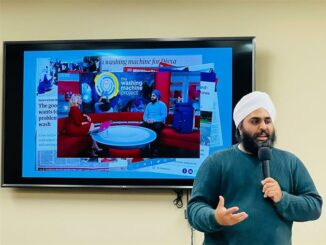
    LONDON (TIP): A British Sikh engineer behind an energy-efficient manual washing machine for low-income groups around the world, inspired by his volunteering work in India, has won Prime Minister Rishi Sunak’s Points of Light Award.

    Navjot Sawhney, who set up his Washing Machine Project around four years ago, was honored for his hand-cranked machine invention which can be operated in regions without electricity.

    Sawhney described the experience of winning the award from Sunak, announced earlier this month, as “surreal” after the British Indian leader praised his “ingenuity and compassion”.

    “You have used your professional skills as an engineer to help thousands of people around the world who don’t have access to electric washing machines,” Sunak wrote in a personal letter to Sawhney.

    “Your innovative, hand-cranked washing machines are giving families the dignity of clean clothes and the time you are saving them is empowering many women who have been held back from education and employment,” he said.

    “I know that your machines are also helping Ukrainian families who have been forced to flee their homes and are currently living in humanitarian aid centers. Your ingenuity, compassion and dedication to improving the lives of others is an inspiration to us all,” he added.

    Previously employed by Dyson, the technology firm well known for vacuum cleaners, Sawhney wanted to use his skills to improve the quality of life for disadvantaged communities.

    It was while volunteering in southern India with “Engineers Without Borders” that he saw the disproportionate burden placed on women to carry out handwashing, inspiring him to design a manual, off-grid and fully sustainable machine which saves 50 per cent on water compared to handwashing, and 75 per cent on time.

    He named his first machines after his neighbor Divya and the Washing Machine Project was created to manufacture the “Divya” devices on a wider scale, with over 300 machines so far distributed worldwide to places including refugee camps, schools and orphanages.

    “Winning the Points of Light award and getting recognized by the Prime Minister is a phenomenal privilege,” said London-born Sawhney.

    “The Washing Machine Project’s mission is to alleviate the burden of unpaid labor, mainly on women and children. I’m so proud that giving back the dignity of clean clothes to those who hand wash them is getting the recognition it deserves.

    “Thank you to our team, volunteers, partners and beneficiaries who work tirelessly daily to make our mission a success,” he said.

    According to Downing Street, his hand-cranked washing machines have benefitted over 1,000 families without access to an electric machine in underdeveloped countries or refugee camps, including humanitarian aid centers in Poland for Ukrainian refugees.

    The Washing Machine Project’s Go Fund Me crowdfunding campaign has raised over 91,000 pounds since July 2021.

    Points of Light are outstanding individual volunteers and people seen as making a change in their community and are regularly honored by the British Prime Minister to recognize their inspirational work.

    (Source: PTI)


  • Five Indian Americans amongst 40 finalists in Regeneron Science Talent Search

    Five Indian Americans amongst 40 finalists in Regeneron Science Talent Search

    WASHINGTON, D.C. (TIP): Five Indian American students are among 40 finalists in the Regeneron Science Talent Search, America’s oldest and most prestigious science and math competition for high school seniors, vying for over $1.8 million in prizes.

    Finalists were selected by a national jury of professional scientists from a pool of 300 scholars from 34 schools across 14 states, based on their projects’ scientific rigor and their potential to become world-changing scientific leaders, according to a press release from Regeneron Pharmaceuticals and Society for Science.

    The 2023 finalists’ research projects showcase their breadth of knowledge, their commitment to addressing issues important to modern society, and their passion for STEM, the release said.

    Five Indian American students —Ambika Grover from Connecticut, Neel Moudgal from Michigan, Ishika Nag and Lavanya Natarajan from Florida and Siddhu Pachipala from Texas — will now compete with other finalists for a top prize of $250,000.

    Grover of Greenwich High School, Greenwich, Connecticut, had a project titled: Design of a Novel, Dual-Functioning, Tissue Plasminogen Activator and Factor XI-Inhibiting Anticoagulant Therapeutic for Rapid Ischemic Stroke Treatment.

    Moudgal of Saline High School, Saline, Michigan, had a project titled: Using Unassigned NMR Chemical Shifts to Model RNA Secondary Structure.

    Nag of Oviedo High School, Oviedo, Florida, had a project titled: Development of an Engineered Face Mask with Optimized Nanoparticle Layering for Filtration of Air Pollutants and Viral Pathogens.

    Lavanya Natarajan of Viera High School, Viera, Florida had a project titled: A Prescriptive IoT Solution to Detect and Mitigate Fugitive Methane Gas in Landfills via a Supervisory Control and Data Acquisition System.

    Siddhu Pachipala of The Woodlands College Park High School, The Woodlands, Texas had a project titled: SuiSensor: A Novel, Low-Cost Machine Learning System for Real-Time Suicide Risk Identification and Treatment Optimization via Computational Linguistics.

    “We are thrilled to welcome this inspiring and highly talented class of Regeneron Science Talent Search finalists,” said Maya Ajmera, President and CEO, Society for Science and Executive Publisher, Science News.

    “I am certain these extraordinary students will be following in the footsteps of our many accomplished alumni who are the forefront of breakthrough discoveries. The 2023 finalists will be using their leadership, intellect, creativity and STEM skills to solve our world’s most intractable challenges.”

    Finalists will participate in a week-long competition in March 2023, during which they will undergo a rigorous judging process that goes beyond their own research to encompass other scientific disciplines and compete for more than $1.8 million in awards.

    They will also have an opportunity to interact with leading scientists and share their research during a virtual “Public Day” event on March 12. The top 10 Regeneron Science Talent Search 2023 winners will be announced during an awards ceremony on March 14, streamed live from Washington, DC.

    In total, more than $3 million in awards will be distributed throughout the Regeneron Science Talent Search. The finalists are each awarded at least $25,000, and the top 10 awards range from $40,000 to $250,000.

    Finalists may use their award prize money solely for educational purposes and can choose for those funds to be released directly to their college or university.

    The top 300 scholars, each of whom receive $2,000, may use their awards as they see fit; each of their schools are also awarded $2,000 to support math and science programs, a critical investment toward their future in STEM, and our country’s future as a hub of innovation and progress.

    Multiple students chose to explore research topics on climate change; for instance, one studied the environmental potential of human-made materials such as cement to help reduce emissions, and another evaluated the correlation between air pollution and Covid-19 cases, according to the release.

    Some students invented health monitoring devices, like a color-changing sensor to help detect the presence of illicit drugs in drinks; others explored topics related to space, including a new method to test for the existence of large populations of black holes.

    Other finalists dove into social and political issues, including an examination of media coverage about violent crimes to understand its impact on societal perceptions, and an evaluation of linguistic features in writing to predict suicide risk.

    “Congratulations to an exceptional group of Regeneron Science Talent Search 2023 finalists,” said George D. Yancopoulos, M.D., Ph.D., Co-founder, President and Chief Scientific Officer of Regeneron, and a 1976 Science Talent Search finalist and top winner.

    “Inspiring and equipping the brightest minds to take on the world’s most pressing issues is one of the most important ways we can ensure the scientific advancements necessary to better our society. We know the future is bright for these young scientists and are excited to see the positive impact they will make.”


  • Founding ideals: On President Murmu’s first Republic Day address to the nation

    Adherence to basic principles of the Constitution is what unifies India

    In her first and customary Republic Day address to the nation, President Draupadi Murmu reiterated the founding ideals of the Republic on the eve of the 74th anniversary of the adoption of its Constitution. As the first tribal woman to occupy the highest office in the country, the 15th President of India is emblematic of the Republic’s continuing journey of democracy, pluralism and empowerment of the weaker sections. The values of fraternity and democracy that its founding leaders etched into the genetic makeup of the modern nation were derived from the learnings of an ancient civilization. Ms. Murmu underscored this quality of the Republic — the amalgamation of the old and the new, the traditional and the modern. A unified and unifying struggle against British imperialism, as the President noted, was “as much about winning Independence as about rediscovering our own ideals”. Ms. Murmu laid emphasis on the “essence of India” — which is profound and predictable at once. “We have succeeded… because so many creeds and so many languages have not divided us, they have only united us.” A commitment to this creed has sustained the modern nation, and the long and ancient civilization that evolved and reformed over millennia.

    It can be argued that the Republic is continuously in formation, as thoughts and ideas emerge. As new ambitions inspire the country, some foundational principles must remain the timeless codes for survival and success. Ms. Murmu’s address reiterated those, while celebrating India’s successes in various fields, particularly the economy. While noting India’s emergence as an influential leader in global affairs, she underscored the principles of Sarvodaya and Atmanirbhar Bharat — uplift of all, and self-reliance — which are guiding the government as they have the earlier ones. Oppression and debilitating poverty continue to shackle vast sections, and India must constantly remember this fact, and certainly on occasions when it reflects on its progress. At various points, challenges to the ideals of the Constitution and the national movement arose in the form of political authoritarianism, sectarian extremism, and separatism, but India overcame them — a reason for satisfaction but also a call for constant vigil. Ms. Murmu’s reiteration of the founding principles of the Republic, and her reassurance to fellow citizens come at a time when the sanctity of the Constitution is under attack. While debate about the Constitution is also part of the democracy it establishes, adherence to its basic principles is what unifies the people of India. Ms. Murmu made that point.

    (The Hindu)

  • Big Tech layoffs: Chance to turn adversity into opportunity

    Thanks  to the enormous balance sheets, Big Tech has historically been a resilient industry, absorbing most of the economic shocks. It is also considered a bellwether for decisions on corporate spending and hiring. As the growth-oriented technology industry confronts one of its worst contractions, with mass layoffs over the span of a few months, there is a sense of panic and anxiety. The shakeout is being viewed as an instance of social contagion — companies imitating what others are doing. Facing criticism, the tech giants are projecting the staff sackings as a course correction following a period of aggressive scaling up and bolstering of workforce during the pandemic. Amid predictions of a recession and a severe economic downturn in the West, the belt-tightening, it is argued, sends a message to shareholders of putting the brakes on any needless spending. The jury is out on whether the approach is prudent or myopic.

    When the world’s most valuable and cash-rich firms resort to large-scale job cuts, worries of a ripple effect are inevitable. Knock-on consequences are expected in the consulting, marketing, advertising and manufacturing spaces. The developments are also bound to have an impact on India’s export prospects, especially in the information technology sector. The consolation, if any, is that most people losing jobs are highly employable professionals, given their education and work experience credentials. Salaries may deflate, but the tech industry is still a big employer. Competitive re-hiring may be back with a vengeance sooner rather than later.

    There are calls in the US Congress to offer assistance to immigrants who have been laid off. As things stand today, it’s a grim scenario, but adversity can be turned into opportunity. For the Indian techies bearing the brunt abroad and the firms based in the country, it’s a chance to explore new beginnings and collaborations. It’s an opportune time to attract the talent back home, offer a slew of incentives and gain an impactful foothold in the global tech space.

    (Tribune, India)

  • A betrayal of the very idea of the Mahatma

    A betrayal of the very idea of the Mahatma

    The principles Gandhiji stood for represent an ideal that is being weakened every day by those in power who are pushing their agenda of bigotry

    “The contradiction is mirrored in the attitude of the Hindutva-inspired Bharatiya Janata Party (BJP) government of Prime Minister Narendra Modi. Mr. Modi was schooled, like other Rashtriya Swayamsevak Sangh (RSS) pracharaks, in an intense dislike of Mahatma Gandhi, whose message of tolerance and pluralism was emphatically rejected as minority appeasement by the Sangh Parivar, and whose credo of non-violence, or ahimsa, was seen as an admission of weakness unworthy of manly Hindus. Hindutva ideologue V.D. Savarkar, whom Mr. Modi has described as one of his heroes, had expressed contempt for Gandhiji’s ‘perverse doctrine of non-violence and truth’ and claimed it ‘was bound to destroy the power of the country’. But Prime Minister Modi, for all his Hindutva mindset, his admiration of Savarkar and his lifetime affiliation to the Sangh Parivar, has embraced Gandhiji, hailing the Mahatma and even using his glasses as a symbol of the Swachh Bharat campaign, linking it to a call to revive Gandhiji’s idea of seva through the recent ‘Swachhata Hi Seva’ campaign.”

    By Shashi Tharoor

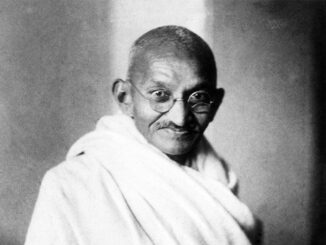
    This year marks the 75th anniversary of Mahatma Gandhi’s assassination (January 30, 1948) by a Hindu fanatic who thought the Mahatma was too soft on Muslims. The momentous anniversary comes at a time when his legacy, the very idea of Gandhi, stands challenged by the prevailing ideological currents. At a time when the standing of his historic detractors, whose descendants now form the ruling dispensation in the country, is at an all-time high, Gandhiji has been criticized for weakness, for having bent over too far to accommodate Muslim interests, and for his pacifism, which is seen by the jingoistic Hindutva movement as unmanly.

    The Mahatma was killed, with the name of Rama on his lips, for being too pro-Muslim; indeed, he had just come out of a fast he had conducted to coerce his own followers, the Ministers of the new Indian government, to transfer a larger share than they had intended of the assets of undivided India to the new state of Pakistan. Gandhiji had also announced his intention to spurn the country he had failed to keep united and to spend the rest of his years in Pakistan, a prospect that had made the government of Pakistan collectively choke.

    But that was the enigma of Gandhiji in a nutshell: idealistic, quirky, quixotic, and determined, a man who answered to the beat of no other drummer, but got everyone else to march to his tune. Someone once called him a cross between a saint and a Tammany Hall politician; like the best crossbreeds, he managed to distil all the qualities of both and yet transcend their contradictions.

    Explaining a contradiction now

    Hinduism and Hindutva, as I have argued in my book Why I Am a Hindu, represent two very distinct and contrasting ideas, with vitally different implications for nationalism and the role of the Hindu faith. The principles Gandhiji stood for and the way in which he asserted them are easier to admire than to follow. But they represented an ideal that is betrayed every day by those who distort Hinduism to promote a narrow, exclusionary bigotry.

    The contradiction is mirrored in the attitude of the Hindutva-inspired Bharatiya Janata Party (BJP) government of Prime Minister Narendra Modi. Mr. Modi was schooled, like other Rashtriya Swayamsevak Sangh (RSS) pracharaks, in an intense dislike of Mahatma Gandhi, whose message of tolerance and pluralism was emphatically rejected as minority appeasement by the Sangh Parivar, and whose credo of non-violence, or ahimsa, was seen as an admission of weakness unworthy of manly Hindus. Hindutva ideologue V.D. Savarkar, whom Mr. Modi has described as one of his heroes, had expressed contempt for Gandhiji’s ‘perverse doctrine of non-violence and truth’ and claimed it ‘was bound to destroy the power of the country’. But Prime Minister Modi, for all his Hindutva mindset, his admiration of Savarkar and his lifetime affiliation to the Sangh Parivar, has embraced Gandhiji, hailing the Mahatma and even using his glasses as a symbol of the Swachh Bharat campaign, linking it to a call to revive Gandhiji’s idea of seva through the recent ‘Swachhata Hi Seva’ campaign.

    This may, or may not, represent a sincere conversion to Gandhism. The Prime Minister is hardly unaware of the tremendous worldwide reputation that Mahatma Gandhi enjoys, and is too savvy a marketing genius not to recognize the soft-power opportunity evoking Gandhiji provides, not to mention the global public relations disaster that would ensue if he were to denounce an Indian so universally admired. There may, therefore, be an element of insincerity to his newfound love for the Mahatma, as well as a shrewd domestic political calculation.

    But the ambivalence speaks volumes: when many members of Mr. Modi’s BJP call for replacing Gandhiji’s statues across the country with those of his assassin, Nathuram Godse, the Prime Minister seeks to lay claim to the mantle of his fellow Gujarati for his own political benefit. At the same time, there is also a tangible dissonance between the official governmental embrace of Gandhiji and the unofficial ideological distaste for this icon, that is privately promoted by members and supporters of the present ruling dispensation, some of whose members have not hidden their view that his assassination was, in their eyes, a patriotic act.

    The vision of the Mahatma

    It is a well understood reality that the vision of Gandhiji, an openly practicing Hindu, differed greatly from that of Veer Savarkar and M.S. Golwalkar, the principal ideologues of the Hindu Mahasabha and its more militarized alter ego in the post-Independence era, the R SS and eventually, the BJP (formerly the Jana Sangh).

    Gandhiji embodied the central approach of Advait Vedanta, which preached an inclusive universal religion. Gandhiji saw Hinduism as a faith that respected and embraced all other faiths. He was profoundly influenced by the principles of ahimsa and satya and gave both a profound meaning when he applied them to the nationalist cause. He was a synthesizer of cultural belief systems: his signature bhajan of ‘Raghupati Raghava Raja Ram’ had another line, ‘Ishwara Allah Tero naam’. This practice emerged from his Vedantic belief in the oneness of all human beings, who share the same atman and, therefore, should be treated equally.

    Such behavior did not endear him to every Hindu. In his treatise on ‘Gandhi’s Hinduism and Savarkar’s Hindutva’, the social scientist Rudolf C. Heredia places his two protagonists within an ongoing debate between heterogeneity versus homogeneity in the Hindu faith, pointing out that while Gandhi’s response is inclusive and ethical, Savarkar politicizes Hinduism as a majoritarian creed.

    But Gandhiji’s own understanding of religion, in Heredia’s words, “transcended religiosity, Hindu as well as that of any other tradition. It is essentially a spiritual quest for moksha but one rooted in the reality of service to the last and least in the world”. Unlike Savarkar, who believed in conformity, Gandhiji was a synthesizer like no other who took care to include Indians of other faiths in his capacious and agglomerative understanding of religion. He took inspiration from not just Advaita Vedanta but also the Jain concept of ‘Anekantavada’ — the notion that truth and reality are perceived differently by different people from their own different points of view, and that, therefore, no single perception can constitute the complete truth. This led him to once declare that ‘I am a Hindu, a Muslim, a Christian, a Parsi, a Jew’.

    Hinduism and Hindutva, as I have argued in my book Why I Am a Hindu, represent two very distinct and contrasting ideas, with vitally different implications for nationalism and the role of the Hindu faith. The principles Gandhiji stood for and the way in which he asserted them are easier to admire than to follow. But they represented an ideal that is betrayed every day by those who distort Hinduism to promote a narrow, exclusionary bigotry.

    (The author is a  former senior UN official and a senior Congress leader)

  • Constitution as ‘North Star’

    Constitution as ‘North Star’

    CJI turns spotlight on issues critical to democratic endurance of Indian State

    “In a democracy, the winning of elections is not a license to dispense with the rule of law. Nor does it mean rule by the majority, because then this would violate the principle of equality before law. Secularism is part of the basic character of the Constitution, because ours is a multi-religious country and only secularism can ensure equality, irrespective of religious beliefs. Fraternity, which is a principle enshrined in the Preamble to the Constitution, is also part of its basic character, because without empathy and sense of togetherness, how can there be national unity and solidarity?

    “The framers of the Indian Constitution acknowledged the diversity of India but sought to build a united country, not by suppressing its multiple identities but by transcending them in a larger and overarching brotherhood of equal citizenship. This is why we have individual-based rights which cannot be abridged by community identities. The temptation to appeal to communal identities for political and electoral gain can only undermine democracy in the long run by fragmenting society. Fraternity is as key an attribute of democracy as are liberty and equality. It is also the basis of national unity.”

    By Shyam SaranShyam Saran

    It  was reassuring to hear the Chief Justice of India, DY Chandrachud, unreservedly defend the ‘basic structure’ of the Indian Constitution as the ‘North Star’ which ‘guides and gives direction to its interpreters and implementers, when the path is convoluted’. This rejects the argument that Parliament, which itself is a creature of the Constitution, has the authority, by virtue of being representative of the people’s will through popular elections, to alter, amend and modify the Constitution in any manner it deems fit.

    As India is celebrating 75 years of Independence, it is a good time to reflect upon the many triumphs of our democracy and its vulnerabilities as well.

    I derived three key takeaways from his remarks: One, that the Constitution is supreme and the three organs of the State — the legislature, executive and judiciary — each derives its status and authority from the Constitution. Two, that while the Constitution could be amended through the procedure laid down in its various provisions, its ‘basic character’ could not be infringed. The basic character derives from the nature of the Indian State as a secular democracy assuring justice, liberty, equality and fraternity to all its citizens; and three, that only an independent judiciary can uphold the basic character of the Constitution.

    These are important remarks by the Chief Justice and should put to rest the ongoing controversy over whether the notion of ‘basic character’ of the Constitution has any validity and the related question of the role of the executive in judicial appointments, which may compromise the independence of the judiciary. The notion of the basic character of the Constitution has become the bastion of citizens against a constant erosion of her fundamental rights by both the legislature and the executive. In a democracy, the winning of elections is not a license to dispense with the rule of law. Nor does it mean rule by the majority, because then this would violate the principle of equality before law. Secularism is part of the basic character of the Constitution, because ours is a multi-religious country and only secularism can ensure equality, irrespective of religious beliefs. Fraternity, which is a principle enshrined in the Preamble to the Constitution, is also part of its basic character, because without empathy and sense of togetherness, how can there be national unity and solidarity?

    The Constitution has assured its citizens certain fundamental rights, such as right to freedom of expression and association, equality, religion and privacy. Since the Constitution came into force in 1950, there have been repeated attempts by successive political dispensations to limit, if not, erase these rights, either in the purported pursuit of social or economic goals or in the name of national security or defense. The notion of the basic character evolved to check this attempted erosion of the rights of citizens against a predatory state.

    Justice Chandrachud’s remarks were made in a speech honoring the memory of one of India’s great jurists, Nani Palkhivala.

    Palkhivala was a passionate defender of the fundamental rights of citizens, and to him goes the credit for the doctrine of the basic character of the Constitution becoming an accepted legal principle. In his arguments in favor of the doctrine, Palkhivala pointed to the post war constitutions of both Japan and Germany, which had made fundamental rights of citizens, eternal, inalienable and inviolable. This was done, he pointed out, to prevent in future the ‘extreme amendments’ which had enabled the snuffing out of democratic institutions and processes, for example, in Nazi Germany. Another eminent former judge of the SC, Justice Rohinton Nariman, had in a speech a few years ago, given an example of the danger of similar ‘extreme amendment’ in India. When the Emergency was declared by Indira Gandhi in 1975, she proposed a constitutional amendment which would have made the President, PM and Speaker of Lok Sabha exempt from any judicial proceedings for their lifetime by virtue of the office they occupied. A later version added Governors to this list. While these were dismissed as being incompatible with the principle of equality before law, one can see how this danger to democracy is always lurking.

    What is heartening is that though there have been several instances when India’s democracy has been under threat, there were eminent political, legal and civil society figures who emerged as sentinels of the rights of our citizens. Palkhivala was one of them. If PM Modi is able to rightfully proclaim India as the ‘mother of democracy’ today, the credit must also go to the brave defenders of the constitutional order.

    We live in a globalized world where the density of engagement and interaction among people of different ethnicities, speaking different languages, adhering to different religious and cultural identities and professing different ideologies, is unprecedented. The future will belong to societies that are able to handle immense diversity, which celebrate plurality and possess an innate cosmopolitan temperament. India is one such society and its success in managing diversity is inseparable from its democratic dispensation.

    The framers of the Indian Constitution acknowledged the diversity of India but sought to build a united country, not by suppressing its multiple identities but by transcending them in a larger and overarching brotherhood of equal citizenship. This is why we have individual-based rights which cannot be abridged by community identities. The temptation to appeal to communal identities for political and electoral gain can only undermine democracy in the long run by fragmenting society. Fraternity is as key an attribute of democracy as are liberty and equality. It is also the basis of national unity.

    India is celebrating 75 years of its Independence. This is a good time to reflect upon the many triumphs of our democracy and its vulnerabilities as well. We should thank the Chief Justice for turning the spotlight on issues which are critical to the democratic endurance of the Indian State.

    (The author is Former Foreign Secretary and Senior Fellow, Centre for Policy Research)

  • Punjab has to move on to a New Model

    Punjab has to move on to a New Model

    “Multinational companies like Hindustan Lever that had a major industrial complex in Rajpura conveniently moved all its manufacturing to Baddi and Nalagarh. A number of major hosiery companies, instead of expanding in Punjab, looked for green pastures elsewhere where the hilly States, supported by BJP-led coalition government to reeled out a wholesome package offering a plethora of concessions, including relaxation in central duties and income tax. It wreaked havoc with industry in Punjab. The governments of those times did protest but were not strong enough to persuade the Centre to adopt at least “even play field for all” policy so that it could prevent flight of industrial houses to their new hilly abodes.”

    By: Prabhjot Singh

    Change, they say, is the only thing that is permanent. And to usher in change, it needs a lot of courage, initiative and planning. Only those who are bold  and ready to take challenges of tomorrow progress.

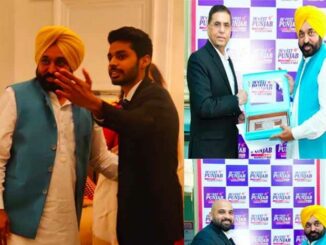
    Punjab Chief Minister Bhagwant Mann has shown those traits of courage and initiative to put the State firmly back on its rails. His recent visit to Mumbai and interaction with three leading industrial houses – Mafatlals, Hindustan Lever and Mahindra and Mahindra – besides the young and enterprising cyber security icon  Trishneet Arora – look steps in the desired direction.

    Besides seeking their patronage and lavish investments in the State, he has extended to them personal invitations for the INvestPunjab conclave scheduled to be held in Mohali next month.

    Punjab, once the most progressive and number one State in the country, has been grappling  for a long time with serious social and economic problems. Its agrarian model of economics has been blunted, reminding one of an old machines that eats up a lot of money in repairs and upkeep rather than serving the master as his earning tool.

    Debates over reviving the sagging economy have been both animated and inconclusive. The State has to take some hard decisions to open new vistas of development and economic prosperity. One most quoted and accepted argument has been to move at a firm and affordable pace from agrarian model to mixed model of economics. It would need all-out support not only from the government of the time but also from the populace as the future lies only in economic viability.

    If Punjab is at fiscal crossroads, it is primarily because of  two reasons. First and foremost has been its failure to keep its industry firmly  rooted. And the second it also failed to read what was written on the wall – change its economic model to changing needs of time.

    It goes without saying that agriculture will remain the mainstay of Punjab. To sustain it, it needs firm and solid support from the industry.

    Besides the flight of the industry, the State is caught in a quagmire situation..  It is faced with endless brain and brawn drain. Hundreds of thousands of young men and women are heading for advanced Western nations for secure their future.

    When young Trishneet Arora,  founder and Chief Executive Officer of TAC security, a US-based company with offices in Mumbai, Mohali and other places, met Chief Minister Mann during his recent visit, bonhomie marked their interaction. Bhagwant Mann profusely hugged him and invited him to the 2023 Mohali Invest Punjab summit. It was not invitation alone but the earnest desire of the Chief Minister to seek help and guidance of one of the youngest Cyber security experts to help his home State not only to check brain and brawn drain but also suggest alternatives, especially in the IT and cyber sectors that can gainfully employ the youth.

    Convinced that the future of the State lies in its rapid industrialization, the Chief Minister Bhagwant Mann, has been frequenting industrial hubs, both within and outside the country, to convince captains of the industry to invest in Punjab. Working in earnest, he was in Mumbai early this week to speak to top executives  of select industries that suit best to the needs of the State.

    If the State has abundance of Cotton in its Malwa belt, it wants big cotton giants to set up their milling units in Fazilka and adjoining areas. It is unfortunate that efforts to set up ginning and spinning units in the cotton belt in the post State’s Reorganization period did not get or produce the results expected of them. There were limitless reasons for the public sector undertaking Spinfed  to be wound up. A couple of other big names in the textile industry also chose to say goodbye to the State rather than struggle through the troubled times for problems well known to everyone.

    CM Bhagwant Mann called on Arvind Mafatlal of the Mafatlal group to consider setting up a cotton mill in Fazilka by promising him all out support of the State Government. No industry can survive in the present competitive times without the support of the State.

    Punjab was once known as the home of power presses, agricultural implements, motor parts, bicycles and bicycle parts, machine tools and hosiery. Since the state struggled through a dark phase of terrorism, it lost most of its industry to neighboring States, including Haryana,  and Himachal Pradesh.

    Multinational companies like Hindustan Lever that had a major industrial complex in Rajpura conveniently moved all its manufacturing to Baddi and Nalagarh. A number of major hosiery companies, instead of expanding in Punjab, looked for green pastures elsewhere where the hilly States, supported by BJP-led coalition government to reeled out a wholesome package offering a plethora of concessions, including relaxation in central duties and income tax. It wreaked havoc with industry in Punjab. The governments of those times did protest but were not strong enough to persuade the Centre to adopt at least “even play field for all” policy so that it could prevent flight of industrial houses to their new hilly abodes. Bhagwant Mann met top executives of Hindustan Lever to assure them that tomatoes needed for the ketch up processing industry in Nabha would now onwards be supplied by farmers of the State. At present, the unit is getting its raw material – tomatoes – from Nashik in Maharashtra.

    Punjab has a huge potential for promoting tourism in general and pilgrimage tourism in particular. It is why Bhagwant Mann made it a point to call on the top brass of Mahindra and Mahindra for taking some initiative in the tourism sector in Punjab. Mahindra and Mahindra run a massive holiday homes service that creates and provides accommodation to holiday revelers at reasonable rates.

    Besides, Mahindra and Mahindra is also all set to roll out tractors from its new manufacturing and assembly line in Lalru, near Chandigarh. The company executives wanted the Chief Minister to be guest of honor at the launch ceremony. In return, the Chief Minister solicited Mahindra and Mahindra participation in the INvestPunjab conclave.

    The Mumbai visit needs a close and sincere follow up. The hype so created has to be converted into opportunities that can help Punjab to get back into the lead role as both industrial and agricultural leader in the country.

    (Prabhjot Singh is a veteran journalist with over three decades of experience of 14 years with Reuters News and 30 years with The Tribune Group, covering a wide spectrum of subjects and stories. He has covered Punjab and Sikh affairs for more than three decades besides covering seven Olympics and several major sporting events and hosting TV shows.)

  • Egypt considering allocating land to Indian industries in Suez Canal Economic Zone

    Egypt considering allocating land to Indian industries in Suez Canal Economic Zone

    New Delhi (TIP)- India and Egypt have reaffirmed their commitment to the founding values of the Non-Aligned Movement (NAM), international law and respect for the sovereignty and territorial integrity of all states.

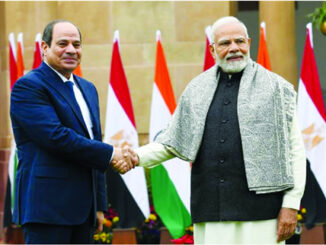
    It was mentioned in a joint statement released on Thursday, January 26, a day after Prime Minister Narendra Modi and visiting Egyptian President Abdel Fattah El-Sisi held wide-ranging talks covering bilateral, regional and global issues of mutual interest. On economic ties, the statement mentioned that the Egyptian side is considering the possibility of allocating a special area of land for the Indian industries in the Suez Canal Economic Zone (SCEZ), adding that “the Indian side can arrange for the master plan”.

    The Suez Canal, connecting the Mediterranean Sea with the Red Sea, is one of the world’s busiest trade routes. About 12 per cent of the global trade passes through the canal each day. The statement said India would encourage its companies, which have the potential to establish overseas investments, to make use of the available investment opportunities in Egypt.

    “In this context, the Egyptian side considers the possibility of allocating a special area of land for the Indian industries in the (SCEZ) and the Indian side can arrange for the master plan,” it said.  The Egyptian president, who arrived here on a three-day visit on Tuesday, attended the Republic Day celebrations as the chief guest.

    Source: PTI

  • India issues notice to Pak for modification of Indus Waters Treaty

    India issues notice to Pak for modification of Indus Waters Treaty

    New Delhi (TIP)- India has issued a notice to Pakistan for modification of the Indus Waters Treaty (IWT) in view of Islamabad’s “intransigence” in the implementation of the pact, inked over six decades back for matters relating to cross-border rivers, government sources said on Friday, January 27. The notice sent on January 25 through respective commissioners for Indus waters, is set to open up the process for making changes to the treaty that was inked on September 19, 1960, they said.

    India and Pakistan signed the treaty after nine years of negotiations, with the World Bank being a signatory of the pact which sets out a mechanism for cooperation and information exchange between the two sides on the use of waters of a number of cross-border rivers.

    “The objective of the notice for modification is to provide Pakistan an opportunity to enter into intergovernmental negotiations within 90 days to rectify the material breach of IWT. This process would also update IWT to incorporate the lessons learned over the last 62 years,” said a source. It is learnt that India issued the notice in view of Pakistan’s “intransigence” on a solution to the differences over the Kishenganga and Ratle Hydro Electric Projects. The notice was sent as per provisions of Article XII (3) of IWT. India has always been a steadfast supporter and a responsible partner in implementing IWT in letter and spirit, sources asserted.

    “However, Pakistan’s actions have adversely impinged on the provisions of IWT and their implementation, and forced India to issue an appropriate notice for modification of the pact,” said another source.

    In 2015, Pakistan requested the appointment of a neutral expert to examine its technical objections to India’s Kishenganga and Ratle Hydro Electric Projects (HEPs). In 2016, Pakistan unilaterally retracted this request and proposed that a Court of Arbitration adjudicate on its objections, the sources said. They said this “unilateral action” by Pakistan is in contravention of the graded dispute settlement mechanism envisaged by Article IX of IWT.

    Accordingly, India made a separate request for the matter to be referred to a neutral expert.

    “The initiation of two simultaneous processes on the same questions and the potential of their inconsistent or contradictory outcomes creates an unprecedented and legally untenable situation, which risks endangering IWT itself,” the source said.

    “The World Bank acknowledged this itself in 2016, and took a decision to ‘pause’ the initiation of two parallel processes and request India and Pakistan to seek an amicable way out,” it said.

    According to sources, despite repeated efforts by India to find a mutually agreeable way forward, Pakistan refused to discuss the issue during the five meetings of the Permanent Indus Commission from 2017 to 2022.

    They said that at Pakistan’s continuing insistence, the World Bank has recently initiated actions on both the neutral expert and Court of Arbitration processes.

    The sources added that such parallel consideration of the same issues is not covered under any provision of IWT.

    “Faced with such violation of IWT provisions, India has been compelled to issue a notice of modification,” the source cited above said.

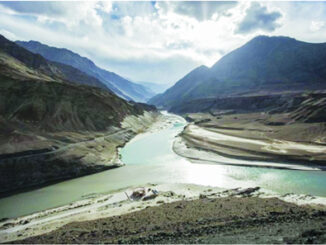
    Under the Indus Water Treaty, all the waters of the eastern rivers — Sutlej, Beas, and Ravi — amounting to around 33 million acre-feet (MAF) annually are allocated to India for unrestricted use.

    The waters of western rivers – Indus, Jhelum, and Chenab – amounting to around 135 MAF annually have been assigned largely to Pakistan. India is permitted to construct the run of the river plants on western rivers with limited storage as per criteria specified in the treaty.

    Under the provisions of Article VIII(5) of the Indus Waters Treaty, the Permanent Indus Commission is required to meet at least once a year.             Source: PTI


  • Go First airline fined Rs 10 lakh for leaving 55 flyers behind at Bengaluru airport

    The Directorate General of Civil Aviation (DGCA) on January 27 imposed a Rs 10 lakh fine on Wadia-Group-owned airline GoFirst (formerly known as GoAir) for failure to ensure adequate arrangements for ground handling for the flight.

    “The airline failed to ensure adequate arrangement for ground handling, preparation of load and trim sheet, flight dispatch and passenger/cargo handling,” the aviation regulator said in a notice.

    On January 9, 55 passengers who were bound for New Delhi from Bengaluru on a 0630 IST GoFirst flight G8 116 were left behind in a bus. The stranded passengers were later accommodated on another flight a few hours later. The DGCA on January 10 sent a show cause notice to the carrier, highlighting “multiple mistakes” that could be easily avoided.

    Following the incident, GoFirst announced that the airline will offer one free ticket to all affected passengers for travel to any domestic sector in India in the next 12 months.

    Further, the airline pointed out that all concerned staff (would be) off the roster till the inquiry is going on.

    GoFirst submitted a response to DGCA’s show cause notice on January 25.

    The airline also issued an apology saying that the shocking error occurred due to an “inadvertent oversight”.

    Two IAF aircraft crash near Madhya Pradesh’s Morena

    Two Indian Air Force fighter aircraft crashed in Pahadgarh area of Morena in Madhya Pradesh on Saturday. Morena additional superintendent of police Rai Singh Narwariya said, “An air force team is reaching the spot to confirm about the plane and number of people present in it. Police found a hand near the plane.”

    News agency ANI reported citing defence sources that a Sukhoi-30 and Mirage 2000 aircraft were involved in the crash.

    The two aircraft had taken off from the Gwalior air base in Madhya Pradesh where an exercise was going on.

  • ISI pushing militancy in India with US arms left behind in Kabul: Intel

    New Delhi (TIP)- Security and intelligence agencies have flagged concern over the illegal arms market along the Afghanistan-Pakistan border. Most of the arms sourced from there are US-made and are being dropped with the help of drones on the Indian side in Jammu & Kashmir and Punjab. Sources in the government said the agencies in their report revealed that when the US forces left Afghanistan, they left behind a major chunk of their arms and ammunition. “The weapons left behind are being sold in the illegal arms market that has come up in the north-west part of Pakistan along its borders with Afghanistan,” a source in the know of the development said.

    The sources said the ISI was buying weapons from the black market and giving them to Khalistani and Islamic terrorists present in Pakistan. In turn, such elements (handlers) were providing weapons and ammunition to their operatives in India. Security agencies have found that in the majority of cases of drones dropping arms in Punjab and Jammu and Kashmir, the weapons were made in the United States. Incidentally, apart from Islamic terrorist organisations active in Pakistan and exporting terrorism in India, several Khalistani terrorists like Wadhwa Singh Babbar, Harvinder Singh Rinda, Ranjit Singh Neeta and Lakhbir Singh Rode were roaming freely in Pakistan and the ISI was using them to fan trouble in India, particularly in Punjab, the sources said.

    Drugs are also being supplied to India with the help of Khalistani terrorists living in Pakistan, the sources said, adding that conspiracies are also being hatched for anti-India activities in the US, Canada and the UK.             Source:TNS

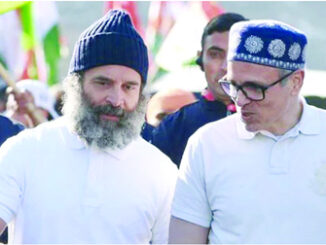
  • Mehbooba Mufti joins Rahul Gandhi in Bharat Jodo Yatra day after ‘security lapse’

    Mehbooba Mufti joins Rahul Gandhi in Bharat Jodo Yatra day after ‘security lapse’

    Awantipora (TIP)- Congress’s Bharat Jodo Yatra resumed from Awantipora in Jammu and Kashmir on Saturday, January 28,  with PDP chief Mehbooba Mufti joining Rahul Gandhi and other Congress leaders, a day after the yatra was halted due to alleged security lapses. Mufti, along with a number of women, are walking with Rahul Gandhi from Chursu. There will be a tea break near the Birla International School, Pampore and the night halt will be at the truck yard in Pantha Chowk in the outskirts of Srinagar.

    On January 29, the Yatra will resume from Pantha Chowk and walk up to Nehru Park on the Boulevard Road. Rahul Gandhi will address a press conference there.

    Rahul Gandhi had to cancel his walk on Friday after it entered Kashmir Valley, as the party alleged a security lapse and claimed the police arrangements by the Union territory administration “completely collapsed”.

    The Gandhi scion, who began his yatra from Banihal in Jammu region on Friday, crossed the Jawahar Tunnel into the valley in Qazigund in a bulletproof vehicle. While the yatra got a rousing reception on this side of the tunnel, the security forces found it difficult to control and manage the crowd of hundreds of party supporters. The yatra was cancelled for the day.

    The Jammu and Kashmir Police rejected the Congress charge and said there was no security lapse at the Bharat Jodo Yatra and that the organisers had not informed the police about a large crowd joining the march from Banihal. The Congress, however, put out a video purportedly showing police personnel withdrawing from the site.

    Now Congress president Mallikarjun Kharge has written to Home Minister Amit Shah seeking adequate protection on the day of the culmination of Rahul Gandhi-led Bharat Jodo Yatra on January 30 in Srinagar.

    In his letter, Kharge said the party welcomed the Jammu and Kashmir Police statement on ensuring complete security and said a huge gathering is expected on the day the yatra ends in Srinagar.

  • BBC documentary on PM Modi: Delhi Police detains 24 students from DU for planning to screen film

    BBC documentary on PM Modi: Delhi Police detains 24 students from DU for planning to screen film

    New Delhi (TIP)- Delhi Police on Friday, January 27,  detained 24 students from the Delhi University’s Arts Faculty for planning to screen the controversial BBC documentary on the 2002 Godhra riots. The action comes days after similar protests occurred at Delhi’s Jawaharlal Nehru University and Jamia Millia Islamia over the documentary’s screening.

    Reacting to the detaining of students over the screening of the BBC documentary in DU, Rajni Abbi, Delhi University proctor, said, “Whatever the course the Police have to take, they will take it. No permission had ever been sought from us, no permission was given.”

    In a statement, Deputy Commissioner of Police (North) Sagar Singh Kalsi said, “Around 4 pm, some 20 people came outside the Arts Faculty gate to screen the banned BBC documentary. As it can cause disturbance of peace and tranquility in the area, they were asked to disperse from there… When they did not, they were peacefully detained. A total of 24 people were detained.”

    When asked, another official said Section 144 was imposed on the campus in December. “Section 144 was imposed in December till February 28 to prevent any law and order problems at the university,” the official told PTI. Police officials, however, said they were visiting all college and university campuses in the district to ensure peace and tranquility in the area. Earlier in the day, the varsity authorities had also written to the Delhi Police about the proposed screening. Delhi University Proctor Rajni Abbi said they would not allow the screening and stressed that the students’ outfits had not sought the administration’s permission.

    The Left-affiliated SFI alleged that the screening could not be held as the administration of the government-run varsity disconnected power supply. However a QR code with a link to the film was shared with students so that they could watch it on their personal devices.

    Tharoor targets people in ‘secular camp’ over ‘move on’ charge

    Congress leader Shashi Tharoor on Saturday said he never asked people of India to “move on” from the 2002 Gujarat riots as a BBC documentary on Prime Minister Narendra Modi brought the violent chapter back in news. Tharoor said the wounds of Gujarat riots have not fully healed but stressed there was little to gain from debating the issue “when so many urgent contemporary matters need to be addressed.”

    Speaking to an online news portal, the Lok Sabha member from Thiruvananthapuram had said that India has “moved on from this tragedy” and people feel the matter should be “put behind” as two decades have passed and the Supreme Court has also given its judgment. The Congress leader, however, added that he was not “casting aspersions on those who believe that the full truth was not indeed revealed by the official investigations.”

  • Remembering Mahatma Gandhi on his death anniversary

    Martyrs’ Day is observed on January 30 to commemorate the death of Mahatma Gandhi, who was assassinated on the same day in 1948

    Born Mohandas Karamchand Gandhi, he is widely regarded as ‘Bapu’, or ‘Father of the nation’ in India. Gandhi, regarded as one of the most iconic figures of the 20th century, bravely led his country to freedom — but was killed by the bullets of violent extremists. Indians commemorate the day by remembering his ultimate sacrifice to the nation and preaching his values of non-violence, unity, and morality.

    Martyrs’ Day is observed on the death anniversary of Mahatma Gandhi, who successfully led his country to freedom from the British Empire. Born in the small town of Gujarat, Gandhi studied to become a barrister and lived a pretty austere life, until he made his first trip to South Africa, and everything changed.

    Life in South Africa exposed him to the deep class divisions of society and the evils of inequality. Gandhi’s life experiences shaped his worldviews. The discrimination he suffered in South Africa inspired him to fight for equality, the pain of losing his first child at the age of 16 made him a furious opponent of child marriage, and so on.

    During India’s struggle for freedom, Gandhi advocated for peaceful demonstrations and inspired everyone to lead by example. He negotiated many peace treaties with the Britishers, before giving them the final ultimatum of departure. As the Indian constitution came into ratification, Gandhi took on the impossible task of building a country out of many provinces and territories.

    Gandhi was vehemently opposed to the idea of partition of India. Even after the declaration of independence, he held regular demonstrations to establish his resistance. Gandhi’s objection to the partition was met harshly with Hindu nationalists, who accused him of appeasing the Muslims. On the eve of January 30, Nathuram Vinayak Godse, a notorious Hindu nationalist, shot Gandhi three times at point-blank.

    Gandhi’s lifelong quest for non-violence ended with a bullet in his chest. On Martyrs’ Day, Indians from all around the world come together to celebrate the legacy of a great hero and acknowledge the futile destruction caused by violent extremism.

    Monhandas Karamchand Gandhi was born in the small town of Porbandar, on the west coast of India, on October 2 1869. He belonged by birth to the Vaishya, or trading caste. His father died when he was 15 years old, and apart from that time, his mother became the greatest influence in his life. Her spiritual teacher was a Jain devotee. Among the Jains in India the central doctrine is the “sanctity of all life,” or Ahimsa, which is often translated as “non-violence.” This teaching remained paramount with Gandhi.

    In South Africa

    When 19, he came to London, qualified as a barrister (being “called” at the Inner Temple), and, returning to Bombay in 1892, set up a practice.

    In 1896 he went to the Transvaal to help a client in a legal suit. That visit changed the whole course of his life. Seeing the social and political disabilities of his fellow-countrymen in South Africa, he decided to stay and help them and soon he had become their political leader and adviser. Meanwhile a religious conflict was taking place in within him. He read Tolstoy and corresponded with him: the result was an experiment in the simple communal life conducted by a small band of enthusiasts whom he had gathered together. He became an ascetic of the most rigorous type, setting great store by fasting and every form of self-denial. To the end of his life he remained a devout Hindu, but declared if ever “untouchability” were made part of Hinduism he would cease to be a Hindu. Perhaps the greatest religious effort of his life was to break down “untouchability.”

    He went on steadily preparing his followers in South Africa for the struggle which was to end the indignities under which they suffered. Three times he went to prison. Little by little, the Indians gained the respect of the Europeans in South Africa by the faith with which they obeyed their leader in his campaigns of passive resistance. The summer of 1914 brought victory for the cause, and in July of that year the Gandhi-Smuts Settlement was signed.

    When the war of 1914-18 broke out he came to Britain to organise an Indian ambulance corps (he had done ambulance work in both the Zulu campaign and the Boer War), but was taken so seriously ill the doctors sent him back to India. He founded a religious retreat on Tolstoyan lines near Ahmedabad, the Viceroy conferred on him the Kalsar-Hind Gold Medal for distinguished humanitarian work in South Africa, and, by general consent, he began to be called by the name Mahatma, which means literally “Great Soul.”

    Non-Co-operation

    A series of events quickly following each other at the end of the war brought him back into political leadership. The first was the passing of the Rowlatt Act, the second the tragedy of the Punjab and Amritsar, the third was what was regarded in India as the betrayal of the Indian Moslems by the Treaty of Sevres. He launched a non-co-operation movement in September,1920, but the non-violence which he demanded from his followers was broken. Congress revolted against his authority and the government selected the moment for eliminating him from the political scene. He was arrested, brought to trial for promoting disaffection, and sentenced to six years imprisonment.

    On his return to politics he found himself a stranger in the existing atmosphere of disillusioned realism. He yielded the leadership to C.R. Das and Motilal Nehru, and retired to hand-spinning and the editing of his weekly paper. He showed no desire to resume his old position as dictator, and for that reason his moral supremacy was recognised even by his political rivals. So when at the time of the Simon Commission the old Congress leaders found that the young men were heading for revolution they decided that the only remedy was to call him back.The last phase

    The last phase

    His internment ended in April, 1945. He was then 76 and though his hold over the country was unshaken, he allowed the leadership in policies to pass increasingly into the hands of Mr. Patel and Nehru. After the election of the Labour Government, Great Britain made absolutely clear that it would lay down its power in India, and the principal question was whether it should transfer power to a unitary India or to two separate Governments of Hindu and Moslem India. Mr. Gandhi was known to believe that the division of India would be a calamity. At one time in the negotiations between Congress and the British he seemed to acquiesce in division, as the price of freedom, but later he reverted to unqualified opposition. Opinion in the Congress Working Committee was, however, for division as the only solution, and Mr. Gandhi therefore stood aside and left the decision to the younger men, believing that they were taking a disastrous course, but believing too that the leadership must now be in their hands.

    His last few months he spent in continuous and not unsuccessful attempts to restore peace in one area after another as communal hostility flared up into massacre and calamity after the withdrawal of the British power. With a number of disciples he made a progress through the disturbed parts of Bengal, awing the excited masses into peace by the prestige of his name and his asceticism. His reply to a renewal of violence in Calcutta in September was a complete fast from everything but water. After three days peace was restored and his fast was broken. Again early this month he met communal disturbances in Delhi with another fast – of five days – which had great moral effect and led to solemn assurances of consideration for the Moslem minority. Less than a fortnight later he was to meet his death while engaged in religious observances.

    Thus at the end of his career he appeared more than ever before in his life a being strayed out of the Middle Ages. And these last few months of his life, a kind of coda, may have touched the Indian imagination more creatively than any previous actions and have larger consequences.

  • Strongly oppose unilateral bids to advance territorial claims at LAC: US

    The United States (US) has said it opposes any “unilateral attempts” and incursions across the Line of Actual Control (LAC), days after Chinese President Xi Jinping met People’s Liberation Army (PLA) soldiers stationed at the India-China border to “inspect combat readiness”. In response to a question by HT at a regular State Department press briefing on Friday on Xi’s comments to PLA troops, the Department’s principal deputy press spokesperson Vedant Patel said that the US is closely monitoring the situation.

    “We strongly oppose any unilateral attempts to advance territorial claims by incursions, military or civilian, across the border or the established Line of Actual Control,” said Patel.

    The US encourages India and China to utilise “existing bilateral channels to discuss disputed boundaries”, Patel added.

    Ahead of the first high level dialogue of the initiative on critical and emerging technology between the national security adviser Ajit Doval and his US counterpart Jake Sullivan in Washington DC next week, the State Department also highlighted the importance of the tech cooperation with India. Technology-sharing has been a contentious issue in the past in the relationship.       Source: HT

  • India is the fastest growing economy: Ambassador Jaiswal

    India is the fastest growing economy: Ambassador Jaiswal

    The Indian Panorama Editor Indrajit Saluja interviewed Ambassador Randhir Kumar Jaiswal, Consul General of India at New York. This is the fifth and concluding  part of the interview.

    Consul General of India at New York Mr. Randhir Kumar Jaiswal, a few days after joining the present position on 19th July 2020  in an interview with The Indian Panorama, had spelt out  in brief  his  priorities which included nourishing and  strengthening the already strong bonds between India and the US, and exploring  new areas of cooperation and relationship in diverse fields of  economy, trade, technology, and   culture etc. Ambassador Jaiswal added  that serving the Indian Diaspora remained the primary focused concern of  the Consulate. The strengthening of multi-stake holders relationship will be another priority, he said.

    The Indian Panorama interviewed him a couple of times, and each time, Mr. Jaiswal was forthcoming on all issues raised ,and questions asked.

    Three days to the end of the year 2022, Mr. Jaiswal agreed to sit with the editor of The Indian Panorama to share for the readers of the publication his thoughts. It was a long interview in which Ambassador Jaiswal touched upon all the aforementioned areas.

    In the first of the interview published two weeks ago, Ambassador Jaiswal focused on the vibrant Indian American community and its contribution. In the second part of the interview, we brought  to readers Ambassador’s perspective on Indian students as a powerhouse of knowledge, catalysts of  national integration, and promoters  of Indian arts, culture and values.

    In the third part of the interview, Ambassador Jaiswal spoke  about promoting economic relations between the two nations as one of the important functions of the Consulate, besides reiterating what he had said in the first part of the interview that the Consulate is “committed to public service”.

    In the  fourth part of the interview, Ambassador Jaiswal outlined the big events planned in the year 2023.

    In this fifth and concluding part of the interview, Ambassador Jaiswal speaks of the growth of India at a fast pace which will enable the nation to become the third largest economy in the world.

    Here are some excerpts from the interview.

    “I’m sure with the kind of support we have from our friends here, partners here, we  will continue on  that path and soon will become the third largest economy in the world overtaking Germany  and Japan. So that will be a huge change, huge impact. It will have a huge impact globally. And finally,  to all your readers: stay healthy, stay together. stay united. Let’s think as one,  for therein lies our welfare, our wellbeing. The  motto of India’s G 20  presidency is  ”One World, One Family, One Future”.  Let’s live  it together.”- Ambassador Jaiswal

    TIP: Do you think you would be doing something special on the coming August 15th?

    Ambassador:15th August will be special one way or the otherbecause it will be  culmination of the 75th year of Independence.

    TIP: What else is on the calendar?

    Ambassador:  We have Holi coming up in early March. It’s a popular festival of colors. Don’t miss out on 21st June International Yoga Day. Each time we do a huge celebration at Times Square. And we also use that occasion to promote a more sustainable and  healthy way of living. We promote a lot of Indian products. We have a  one district one product project, and a  lot of superfoods,  a lot of wellness products are available  on the side of the yoga sessions that we hold. We will try to do International Yoga Day in style this time.  Apart from Times Square, we’ll also look for some other innovative ways of celebrating International Yoga Day. We want to reach out and do International Yoga Day in universities so that we can bring the youth closer to yoga. Yoga is something which is helpful to everybody.  We are It helps you to look inside. All your senses are directed outwards. Yoga helps to you to look inwards, and that is a harmony that brings greater happiness and bliss in life.

    Yoga at Times Square, June 21, 2022. Indian Consulate senior staff leads. Front row, from L to R: Consul (Pol & PIC) Vipul Dev, Mrs. Dev, Mrs. and Ambassador Jaiswal, Deputy Consul General Varun Jeph, Head of Chancery Suman Singh, Mrs. Jeph. (TIP Photo)Suman Singh, Mrs. Jeph.

    TIP: I was in Guatemala. It was a pleasant surprise to find Yoga being taught and practiced. India’s ambassador Manoj Mohapatra had me witness one of the Yoga sessions. Later on, I am told a Yoga camp with 5000 was held successfully. This speaks for acceptance and popularity of Yoga in many parts of the world.

    Ambassador:So, you know, today yoga has a true global embrace. Everybody understands the benefits of Yoga. It’s an attraction for people and it has helped them. And, for that reason, we have, regular classes on yoga, because we want  to connect with the yoga community here. Look  at the number of Yoga Studios. You  go to any gym in New York,  or any part of the United States , or any  part of the world, there  will be a session on yoga on a daily basis.

    TIP: I wish you all the best,  sir, I wish India all the best  in the coming years and we have seen how the graph of India has been rising across the world in terms of politics, in terms of diplomacy, in terms of economy, in terms of invention, in almost every field, and hopefully we will have better news in 2023 from you again, and with that only one last thing as we always do. We would like you to give a message to readers of the Indian Panorama.

    Ambassador: Before  I give the message I would like to highlight four data points. One, India is the fastest growing major economy in the world. We should be signing off the year at  6 to 7% .  . Vaccination of  2.2 billion.  14 million bank accounts.  60 million get cleantap water connections, and  so on so forth. Second data point.  40% of digital payments globally is happening in India. That itself will tell you the kind of vibrancy that is there. Third  data point. We have seen a huge expansion as far as connectivity is concerned both on the physical and digital  sides- Roads, expressways. But just to give you an example, in 2014 or thereabout we had 70 airports. Today we have doubled that capacity. We  are looking at around 440  airports in India’s  huge expansion. Fourth data point. Recently, India has become the fifth largest economy in the world, overtaking UK . I’m sure with the kind of support we have from our friends here, partners here, we  will continue on  that path and soon will become the third largest economy in the world overtaking Germany  and Japan. So that will be a huge change, huge impact. It will have a huge impact globally.

    And finally,  to all your readers: stay healthy, stay together. stay united. Let’s think as one,  for therein lies our welfare, our wellbeing. The  motto of India’s G20 presidency is  ”One World, One Family, One Future”.  Let’s live  it together.

    CONCLUDED…