Year: 2023

  • Tiger Shroff’s first look from ‘Bade Miyan Chote Miya Out’, actor’s macho look will leave you intriguied

    Tiger Shroff’s first look from ‘Bade Miyan Chote Miya Out’, actor’s macho look will leave you intriguied

    Bollywood star Tiger Shroff’s glimpses from his upcoming action entertainer film ‘Bade Miyan Chote Miyan’ are gaining momentum on social media. The film also stars Akshay Kumar, who had a rough patch on the professional front in 2022. In the pictures, Tiger can be seen doing what he does best – high octane action sequences and acrobatics. Dressed in a sleeveless jacket, Tiger effortlessly fits his part as an action hero.

    The film is set to be one of the biggest films this year with ‘Bade Miyan Chote Miyan’ presenting the new squad of Akshay Kumar, Tiger Shroff, and Prithviraj Sukumaran in some of the larger-than-life visuals. Prithviraj Sukumaran will play the antagonist in the film.

    Produced by Vashu Bhagnani, Jackky Bhagnani and Deepshikha Deshmukh under the banner of Pooja Entertainment, ‘Bade Miyan Chote Miyan’ has been directed by Ali Abbas Zafar, who has earlier helmed films like ‘Tiger Zinda Hai‘ and ‘Sultan’ and Tiger Shroff’s fans are looking forward to it.

    Source: IANS

  • Ekta Kapoor to enter ‘Bigg Boss 16’’house to cast a new face for film

    Ekta Kapoor to enter ‘Bigg Boss 16’’house to cast a new face for film

    TV czarina Ekta Kapoor has announced that she will be casting a new face for her upcoming film and would enter the ‘Bigg Boss 16’ house to look for the cast. Ekta also bid adieu to Tejasswi Prakash, who had bagged Ekta’s ‘Naagin’ Season 6 while she was in the Bigg Boss 15 house last season. As the show’s sixth season is wrapping up, Ekta penned an emotional note for Tejasswi, whom she tagged as Nagina.

    Ekta wrote, “Lots of love for this nagina! Found her in the bigg boss house n in throes of corona n high fever n cough forced @colors n Manisha that I wanted to cast her!”

    She is also excited to enter Bigg Boss 16 house to cast a new face for an upcoming film.

    “Hopefully going to big boss for an exciting film announcement, let’s see who we find there this time #byebyyenagin.” In another video, sharing the promo of Naagin 6, she bid adieu to the show.

  • Priyanka launches her first make-up collection with Max Factor

    Priyanka Chopra has officially launched her first make-up collection with Max Factor. The launch took place in the UK. The collection includes the Masterpiece Eye Palette, nine Colour Elixir Lipsticks and eight Miracle Pure Nail Polishes. Priyanka Chopra looked the epitome of glamour in the campaign shoot.

    “Inclusivity is the backbone of this collection and to help women feel confident and as a woman of colour, I am all too aware of the struggles many people can have when searching for the right make-up for them,” said Priyanka Chopra, as reported by Independent UK. She added, “I know the transformative impact it can have not just on my appearance, but on my self-confidence. For me, make-up has always been a tool of discovery and self-expression, and a way to feel like the best version of myself.” Back in 2020, Priyanka Chopra was announced as the new face of Max Factor, who will serve as global ambassador and consultant for the make-up giant.

    On the professional front, the 40-year-old actress has a bunch of projects in the pipeline; Love Again, Citadel (web series), and Ending Things to name a few. She also has a Farhan Akhtar film in her kitty, titled Jee Le Zaraa, which stars Katrina Kaif and Alia Bhatt.

  • James Cameron slams streaming releases amid Avatar’s record box-office success

    James Cameron slams streaming releases amid Avatar’s record box-office success

    James Cameron’s Avatar: The Way of Water is still going strong at the global box office, even after multiple weeks of release and is nearing the $2 billion mark. The film which released on December 16, had crossed $1 billion within 12 days of release. Now director James Cameron has said that he is not in the mood to entertain any ideas of the film eyeing a digital release so soon.

    During an interview with Variety at the Golden Globes red carpet, where Avatar The Way of Water was nominated for Best Motion Picture (Drama) and Best Director (it lost both to Steven Spielberg’s The Fablemans), James Cameron addressed the enthusiasm of the audience to go to the theatres and watch a movie on the big screen rather than move in for a streaming date. The director was reminded in the same interview that the sequel to his 2009 original has now emerged to be the seventh biggest movie of all time and is showing no such signs of slowing down. Also, James Cameron has now directed three of the top 10 biggest movies ever, including the first Avatar and Titanic.

    To this James responded, “I’m not thinking of it in those terms, I’m thinking of it more in the terms of, we’re back to theaters around the world. People are going back to theaters. They’re even going back to theaters in China where they’re having this huge COVID surge. We’re seeing as a society we need this, we need to go to movie theaters and have that experience. Enough with the streaming already! I’m tired of sitting on my a**.”

  • The Complete List of Winners At The 2023 Golden Globes

    The Complete List of Winners At The 2023 Golden Globes

    The Golden Globes made a comeback as films, from Steven Spielberg’s “The Fabelmans” to “Top Gun” and “Avatar” sequels, competes for top honours. The awards were taken off air last year amid controversy over ethical lapses and a lack of diversity in the Hollywood Foreign Press Association, which organises the Beverly Hills gala.

    Here is the full list of winners at the 80th annual Golden Globe Awards:

    FILM

    –              Best film, drama: “The Fabelmans”

    –              Best film, musical or comedy: “The Banshees of Inisherin

    –              Best director: Steven Spielberg, “The Fabelmans”

    –              Best actor, drama: Austin Butler, “Elvis”

    –              Best actress, drama: Cate Blanchett, “Tar”

    –              Best actor, musical or comedy: Colin Farrell, “The Banshees of Inisherin”

    –              Best actress, musical or comedy: Michelle Yeoh, “Everything Everywhere All at Once”

    –              Best supporting actor: Ke Huy Quan, “Everything Everywhere All at Once”

    –              Best supporting actress: Angela Bassett, “Black Panther: Wakanda Forever”

    –              Best screenplay: Martin McDonagh, “The Banshees of Inisherin”

    –              Best music, original score: Justin Hurwitz, “Babylon”

    –              Best music, original song: “Naatu Naatu” from “RRR”

    –              Best non-English language film: “Argentina, 1985”

    –              Best animated feature: “Guillermo del Toro’s Pinocchio”

    TV

    –              Best drama series: “House of the Dragon”

    –              Best drama actor: Kevin Costner, “Yellowstone”

    –              Best drama actress: Zendaya, “Euphoria”

    –              Best musical or comedy series: “Abbott Elementary”

    –              Best musical or comedy actor: Jeremy Allen White, “The Bear”

    –              Best musical or comedy actress: Quinta Brunson, “Abbott Elementary”

    –              Best supporting actor, television: Tyler James Williams, “Abbott Elementary”

    –              Best supporting actress, television: Julia Garner, “Ozark”

    –              Best limited series or TV movie: “The White Lotus”

    –              Best limited series or TV movie actor: Evan Peters, “Dahmer – Monster: The Jeffrey Dahmer Story”


  • Lisa Marie Presley passes away at 54

    Lisa Marie Presley, singer-songwriter and daughter of Elvis and Priscilla Presley, passed away aged 54. People confirmed the news with a statement shared by Priscilla where she said, “It is with a heavy heart that I must share the devastating news that my beautiful daughter Lisa Marie has left us” on Thursday, January 12. Lisa Marie’s mother further paid her a tribute calling her “passionate strong and loving woman” she has ever known.

    The news of Lisa Marie Presley’s passing comes after it was reported on Thursday morning that she had been rushed to the hospital following a possible cardiac arrest. A spokesperson for the Los Angeles County Sheriff’s Department confirmed to People that paramedics responded to the 5900 block of Normandy drive in Calabasas to treat a woman in her 50s who was not breathing. The statement mentioned that after the paramedics began CPR and, upon noting the patient had “signs of life,” transferred her to medical care.

  • Hugh Jackman passed on steroids for Wolverine role

    Hugh Jackman has denied ever taking any steroids to bulk himself for his superhero characters. He will be returning to play his most iconic character Logan aka Wolverine in the upcoming superhero film Deadpool 3 with his good friend, actor Ryan Reynolds. The actor is currently on Broadway for The Music Man; his final performance will be on January 15, 2023 before he has to get into shape back again for Wolverine.

    The actor broke through in Hollywood with X-Men (2000) where he first played Logan, alongside co-stars Patrick Stewart, James Marsden, Famke Janssen and Ian McKellen in the comic book adaptation. Since the, Hugh has played Wolverine in X2 (2003), X-Men: The Last Stand (2006), X-Men Origins: Wolverine (2009), X-Men: First Class (2011), The Wolverine (2011), X-Men: Days Of Future Past (2014), X-Men: Apocalypse (2016) and Logan (2017).

    In a new interview on HBO’s talk show Who’s Talking to Chris Wallace, the actor responded to claims that if he had even taken any steroids in order to transform into the character. The journalist asked him that over the years, people have wondered, “Did he juice?” Hugh replied, “No, I love my job. And I love Wolverine. I got to be careful what I say here, but I had been told anecdotally what the side effects are of that. And I was like, ‘I don’t love it that much.’ So no, I just did it the old school way. And I tell you, I’ve eaten more chickens — I’m so sorry to all the vegans and vegetarians and to the chickens of the world. Literally the karma is not good for me. If the deity has anything related to chickens, I’m in trouble.”

  • India keen to present views of ‘global south’ at G-20: FM Sitharaman

    India keen to present views of ‘global south’ at G-20: FM Sitharaman

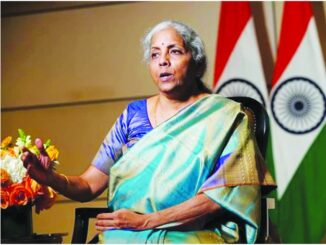
    New Delhi (TIP)- G20 President India is keen to put forward the development issues of the Global South in order to make the world economic order more equitable, including through reforms in multilateral institutions, Finance Minister Nirmala Sitharaman said on Thursday, January 12.

    Sitharaman was speaking at the Voice of Global South Summit, a virtual summit spearheaded by Prime Minister Narendra Modi, with the aim of presenting at the G20 the issues and challenges of emerging and low-income nations from Asia, Africa, and Latin America. Around 120 nations are attending the summit. It is an initiative by India to include the voice of nations who are not part of G-20.

    “India appreciates the contribution of multilateral institutions and development banks in dealing with global challenges. However, the hardships posed by the pandemic have exposed vulnerabilities at all levels and shown that a major scale-up of response mechanisms is required so that the support provided by these institutions is responsive to country-specific needs,” Sitharaman said.

    “We believe strengthening multilateral development banks is a key to addressing the global challenges of the 21st century,” she said, adding that the recent geopolitical tensions and the pandemic have aggravated global debt vulnerabilities. Sitharaman said India will use the G20 Presidency to encourage collective solutions to deal with the numerous challenges facing the world, like economic slowdown, rising inflation, threat of resurgence of pandemic, and risks emerging from geopolitical conflicts.

    “We strongly believe there should not be any first world or a third world, but just one world with a shared understanding for a common future,” Sitharaman said.

    India has repeatedly stated that one of its aims as G20 president will be to push for reforms in the likes of International Monetary Fund and World Bank to make them more attuned to the needs of the developing world. ‘Global South’ is a term used to describe emerging and poorer nations in Asia, Africa, Latin America, and Oceania, as opposed to the ‘Global North’, which are primarily developed nations from North America and Europe. Sitharaman said the global debt crisis is one of the biggest challenges that the world faces today, as many low-income countries are stuck between servicing outstanding sovereign debt and providing basic services for their citizens. As the world rebuilds itself from the pandemic, the Global South needs to exhibit “strong solidarity” to deal with challenges like pandemic, climate change, and geopolitical tensions, which are affecting efforts for development and economic growth.

    “If left unaddressed, these mounting debt vulnerabilities can trigger global recession and push millions to extreme poverty. Under India’s G20 presidency, financing for the social dimension of sustainable development is an important priority,” Sitharaman said.

                    Source: Business Standard

  • India, US agree to focus on trade, resolving WTO issues

    India, US agree to focus on trade, resolving WTO issues

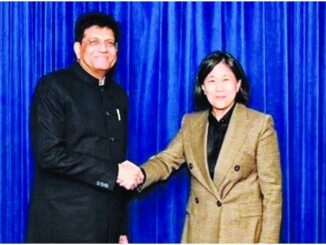
    Washington (TIP)- Committing themselves to expanding their already growing trade relationship, India and the United States (US) have decided to build on the environment of trust to create resilient supply chains, resolve their existing trade disputes at the World Trade Organisation (WTO) through bilateral mechanisms, work on expanding market access for each other’s products, and intensify their engagement through meetings of specific trade-related working groups on a quarterly basis.

    At the 13th Trade Policy Forum (TPF) ministerial talks held in Washington DC on Wednesday, January 11, Union minister for commerce and industry Piyush Goyal and US Trade Representative Katherine Tai hailed the fact that bilateral trade in goods and services had reached $160 billion in 2021, but also recognised that the full potential of the trade relationship remained “unfulfilled”, according to a joint statement released at the end of the talks.

    Goyal told reporters that the TPF, since its relaunch in November 2021, had evolved into a “robust and outcome-oriented discussion” and was helping create a “smoother, more friendly and trusted environment for businesses to expand their trade and investment between the two countries”.

    US welcomes draft data law

    Goyal said that the US has welcomed India’s draft Digital Personal Data Protection Bill that was released for public consultations at the end of November and appreciated American suggestions in the regard.

    Goyal said, “I must place on record our deep appreciation for the many guidance notes or suggestions we have received from the US from time to time on our digital laws and data protection and privacy laws so that we can align them with the needs of the world and help Indian businesses with their outreach with digital technologies.”

    Pointing out that India is one of the largest suppliers on the information technology services side to the US, and that there is a “shared interest on both sides” to have a greater flow of data, Goyal said, “The new law placed for public consultations by the ministry of electronics and information technology (Meity) was very very much appreciated by the US side and they do see that our effort to align the needs of industry, while maintaining the highest standards of data protection and privacy, has been brought out beautifully in the new law. The US side has expressed their prima facie satisfaction with the new law and will continue to engage with Meity.”

    Besides highlighting the importance of a conducive environment for digital trade, the joint statement said that Goyal highlighted India’s interest in the potential of digital health, “particularly telemedicine services as an element of continuity of care during health emergencies.”

    Trade outcomes

    Wednesday’s talks opened up the prospect of the export of wild caught shrimps from India to the US. The joint statement said that both sides had welcomed the finalisation of the turtle excluder device (TED) design, whose trials will help minimise the impact of fishing on sea-turtle populations. Goyal explained that wild caught shrimp exports had been banned by the US because of the concerns of the impact on turtles. “We hope that these trials in India will complete in the coming few months so that wild caught shrimps can be exported to the US.”

    India and the US have also agreed to create a new working group on resilient trade.

    The group, according to the joint statement, will focus on trade facilitation “which is particularly relevant to the construction of durable and resilient supply chains”; sustainable and inclusive growth “including cooperative engagement to promote labour rights and workforce development”; expanding dialogue on “good regulatory practices”; and the role of trade in contributing to environmental protection, including issues related to “mobilisation of sustainable finance and scaling up of clean technologies”, circular economy, and sustainable lifestyle choices.

    India also highlighted, according to the joint statement, its interest in restoration of its beneficiary status under the US Generalized System of Preferences (GSP), which was revoked by the Donald Trump administration. But Goyal said that while he had placed the demand on record, it was not an issue that ranked high up on Indian priorities.

                   Source: HT

  • LAC situation stable but unpredictable: Army Chief

    Army Chief Gen Manoj Pande on Thursday said the security situation along the northern borders (with China) was stable but remained unpredictable. Addressing a press conference ahead of Army Day (Jan 15), the Army Chief said: “We have resolved five of the seven friction points along the Line of Actual Control (LAC) in eastern Ladakh.” The pending friction points are at Depsang and Demchok in eastern Ladakh, sources said. General Pande praised the troops on the ground for being able to maintain a “robust defensive posture” to prevent the adversary from changing the status quo along the LAC, the de facto boundary with China.

    On China’s aggression, the Army Chief said there was a slight increase in the number of troops of the People’s Liberation Army (PLA) facing the Eastern Command. “Their (Chinese) troops which came for training have remained,” the General said, adding that “we have adequate deployment and we have the reserves to meet any challenge.” The Army has decided to go in for transformation in five key domains. These include force re-structuring and optimisation; modernisation and technology infusion; manpower management like Agnipath; jointness with other forces; and refining own systems and processes.

    General Pande said 2023 would be the year of transformation and the force had laid out a specific roadmap aiming for certain outcomes that could be achieved. “This process will continue beyond the current year.”

    On modernisation, General Pande said: “As of now, 45 per cent of our equipment is vintage, 41 per cent is of current technology and some 12 to 15 per cent is state-of-the-art. “By 2030, we aim to have 45 per cent equipment in the state-of-the-art category and 35 per cent of current technology.”

  • PM flags off Ganga Vilas, inaugurates Tent City in Varanasi

    PM flags off Ganga Vilas, inaugurates Tent City in Varanasi

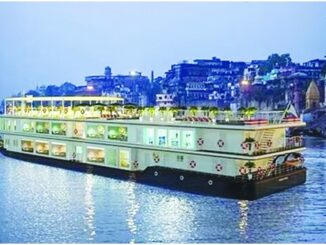
    New Delhi (TIP)- Prime Minister Narendra Modi on Friday flagged off MV Ganga Vilas, the world’s longest river Cruise, and inaugurated Tent City in Varanasi via video conferencing. During the event, the prime minister also laid the foundation stones for several other inland waterways projects worth over ?1000 crores. Minister for Ports, Shipping and Waterways Sarbananda Sonowal, Uttar Pradesh chief minister Yogi Adityanath, Assam chief minister Himanta Biswa Sarma, Bihar deputy chief minister Tejashwi Yadav, besides other ministers and senior officials from various ministries and departments were present at the event.  Speaking at the event, Prime Minister Narendra Modi said that the beginning of the world’s longest river cruise service on river Ganga is a landmark moment, asserting that the project will herald a new age of tourism in India.

    All you need to know about Ganga Vilas cruise:

    Operated by Antara Cruises, MV Ganga Vilas will traverse 3,200km through five states in India and parts of Bangladesh over 51 days. It will begin its journey from Varanasi in Uttar Pradesh and reach Dibrugarh in Assam via Bangladesh. The vessel with three decks is 62 metres wide and 12 metres in breadth.

    Besides connecting National Waterway 1 (NW1) which includes Ganga and National Waterway 2 (NW2) on Brahmaputra, the cruise will cross 27 river systems.

    It has 18 suites on board with a capacity of 36 tourists, with all the luxury amenities. The suites have soothing interiors, furnished with numerous amenities such as French balconies, LED TVs, safes, smoke detectors, and convertible beds, according to a UP tourism department official.

    The cruise ship also has a 40-seater restaurant on the main deck, a spa, and a sun deck. The upper deck features a bar. The 51 days cruise is planned with visits to 50 tourist spots including World Heritage Sites, National Parks, River Ghats, and major cities like Patna in Bihar, Sahibganj in Jharkhand, Kolkata in West Bengal, Dhaka in Bangladesh and Guwahati in Assam.

    Sonowal said the journey will give foreign tourists an opportunity to embark upon an experiential voyage and indulge in the art, culture, history, and spirituality of India and Bangladesh.

    The maiden voyage has 32 tourists from Switzerland signing up for the entire length of the journey.

    The cruise was to reach Varanasi on January 6 but weather conditions and poor visibility meant that it reached Ghazipur, 65km from Varanasi, on January 8.

    The tourists were taken to the tomb of Lord Cornwallis in Ghazipur, the Ganga Aarti at the Dashashwamedh Ghat, and the newly renovated Kashi Vishwanath corridor.      Source: HT

  • ISRO report shows entire Joshimath may sink; town sank by 5.4 cm in last 12 days

    ISRO report shows entire Joshimath may sink; town sank by 5.4 cm in last 12 days

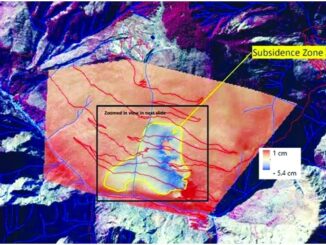
    Dehradun (TIP)- The National Remote Sensing Centre (NRSC) of the Indian Space Research Organisation (ISRO) has released satellite images of Joshimath and a preliminary report on land subsidence which shows that the entire town may sink. The pictures are taken from the Cartosat-2S satellite.

    Hyderabad-based NRSC has released the satellite images of areas that are sinking.

    In images, the entire town, including the Army’s helipad and the Narasimha temple, has been marked as sensitive zone.

    On the basis of ISRO’s preliminary report, Uttarakhand government is conducting rescue operation in danger-prone areas and the people in these areas are being shifted to safer places on priority.

    According to the report, the land subsidence was slow between April and November 2022, during which Joshimath had sunk by 8.9 cm. But between December 27, 2022 and January 8, 2023, the intensity of land subsidence increased and the town sank by 5.4 cm in these 12 days.

    The satellite images show that the Joshimath-Auli road is also going to collapse due to the land subsidence. Although scientists are still studying the cracks that appeared in the houses and roads after the land subsidence in the town, the findings in the primary report of ISRO are frightening.

    Joshimath has been declared a land-subsidence zone by the Chamoli district administration after hundred of houses developed cracks within a few days and families had to be relocated as their residences have been identified as dangerous. While the government has announced an interim relief package of Rs 1.5 lakh and working on a rehabilitation package, the demolition of two hotels began on Thursday, January 12,  but was again halted because of bad weather. The mechanical demolition was earlier stalled for a few days because of the protest of the locals and residents.

    Only hotel Malari Inn and Mount View Hotel will be demolished as their existence is dangerous for the surrounding structures, the administration said assuring that no other houses will be demolished as of now. Several expert teams have been roped in to analyse the sinking of Joshimath, while tunnelling work for NTPC hydel project is being blamed by the experts. NTPC, however, issued a statement and claimed that their tunnel is not passing under Joshimath.

  • Ex-minister, Bihar stalwart Sharad Yadav dies aged 75

    Ex-minister, Bihar stalwart Sharad Yadav dies aged 75

    Former Union minister and once the Janata Dal (United)’s chief Sharad Yadav died at a hospital in Gurugram late on Thursday, January 12, with tributes pouring in for the 75-year-old veteran politician who was regarded as an impactful orator. Yadav is survived by his wife, a daughter, and a son. A statement from the Fortis Memorial Research Institute said Yadav was brought to the emergency ward in an unconscious and unresponsive state.

    “On examination, he did not have any pulse or recordable blood pressure. He underwent CPR as per ACLS protocols. Despite best efforts, he could not be revived and was declared dead at 10.19pm,” the statement said.

    Yadav’s daughter Subhashini Sharad Yadav posted on Facebook: “Papa nahi rahe (Papa is no more)”.

    “Pained by the passing away of Shri Sharad Yadav Ji. In his long years in public life, he distinguished himself as MP and Minister. He was greatly inspired by Dr. Lohia’s ideals. I will always cherish our interactions. Condolences to his family and admirers. Om Shanti,” Prime Minister Narendra Modi tweeted on Thursday night.

  • President Murmu confers Pravasi Bharatiya Samman Awards 2023 at PBD convention in Indore

    President Murmu confers Pravasi Bharatiya Samman Awards 2023 at PBD convention in Indore

    President Droupadi Murmu on January 10 graced the valedictory session of the 17th Pravasi Bharatiya Divas Convention and conferred the Pravasi Bhartiya Samman Awards today here upon 27 overseas Indians as part of the Pravasi Bharatiya Divas Convention on Non-Resident Indians, Persons of Indian Origin, or an organization established and run by Non-Resident Indians in recognition of their outstanding achievements both in India and abroad. Speaking to ANI, the awardees expressed their contentment and gratification over receiving the prestigious awards and said that the Indian diaspora is giving examples of shining in foreign lands that they moved to with India in their hearts.

    “This award has been amazing. First of all coming home, coming to India and my family, it is already humbling, and then to receive an award from the President herself has been a truly magical moment and a very big honour in my life,” said Archana Sharma from Switzerland who received the awards in the field of Science and Technology.

    “The Indian diaspora is shining diamonds in Switzerland because in Switzerland we have a very – very highly skilled and highly educated Indian diaspora and they are actually dotting very key positions. For example, in the United Nations, the WHO, and in all these kinds of international organizations in multinationals, and in the business community as well. So, we have a sterling diaspora in Switzerland and they are all very connected with India”, added the awardee. Thanking the Government of India for this honour, Reena Vinod Pushkarna from Israel who got the award in the field of business and community welfare said that she was delighted that the government did not forget them even when they leave their Motherland and go to other places.

    “Very honoured, extremely touched. My parents up in heaven must be very happy today. It started with food, led to culture then led to diplomacy. Now, there are so many exchange programs, between the citizens of India and Israel, and it all started with just two simple people so I thank the government of India for not forgetting its people and this is what PBD stands for, that they don’t forget their Indians even when they leave their Motherland and go to other places to carry on our journeys but with India in their hearts”, said Reena.

    Another awardee from Canada said that he was honoured to receive the award from his Matribhoomi and he will continue to serve both in Canada and India.

    “It is a privilege that I got this award from Bharat Mata our Mataribhumi and I will continue to offer our services I am blessed to be able to continue my service, for contributing to the field of education, health care, and clean technology, and continue to serve both Canada and India”, said Vaikuntam Iyer Lakshmanan.

    Getting the award for community welfare from Sri Lanka, Sivakumar Nadesan said that we can do better with the quality of life, improve it and make larger jobs and skills.

    “I got the award for community welfare. They have also mentioned that I have done media. So, I think that it is the combination of both. But especially on the community welfare side, we are talking about the Indian origin people who went there four generations ago and they have planted tea, worked on the bridges, worked on the roads and actually done lot of development for Sri Lanka during their lifetime. But I think we can do better with the quality of life, improve it and kind of make them more free to make a larger jobs and skills and housing”, he said.

    The 17th edition of the Pravasi Bharatiya Divas Convention was held at Indore in Madhya Pradesh. The awards were conferred by the President during the valedictory session of the Pravasi Bharatiya Divas celebrations. The recipients were chosen by a jury-cum-awards committee chaired by the vice-president with the External affairs minister S Jaishankar as the vice-chair of the panel, whose other members are drawn from various walks of life.

    Addressing the gathering, the President said that the Indian Diaspora today has become an important and unique force in the global system. It has grown into an energetic and confident community in every region and is making stellar contributions to world affairs in leadership positions.

    Referring the theme of this year’s Pravasi Bharatiya Divas Convention – “Diaspora: Reliable Partners for India’s Progress in Amrit Kaal”, the President said that it reflects India’s desire to make its Diaspora a partner in the achievement of its national developmental goals.

    In the next 25 years, India is going to embark on an ambitious journey of collective hard work, sacrifice, and intensive development to transform into a self-reliant world leader by 2047, when we would be celebrating the centenary of our independence, she said.

    Source: ANI

  • World looking up to India: PM Modi

    Prime minister Narendra Modi on January 9 addressed the 17th edition of the Pravasi Bharatiya Divas convention – this time in Madhya Pradesh’s Indore – and declared himself happy to see it organised in ‘the heart of India’. This year’s Pravasi Bharatitya Divyas theme is ‘Diaspora: Reliable partners for India’s progress in Amrit Kaal’.

    Chandrikapersad Santokhi, the president of the Republic of Suriname, and Dr Mohamed Irfaan Ali, the president of the Cooperative Republic of Guyana, were among the special guests, as was Madhya Pradesh chief minister Shivraj Singh Chouhan. More than 3,500 diaspora members – from 70 countries – registered for the event, news agency ANI said.

    Here are prime minister Modi’s top quotes from his address at the Pravasi Bharatiya Divas:

    1. This Pravasi Bharatiya Divas is special in many ways. The nation has entered ‘Amrit Kaal’ for the next 25 years and our Pravasi Bhartiya community has a significant role to play in further elevating India’s role on global levels.
    2. Each and every Pravasi Bhartiya present here has achieved unprecedented success in their respective fields. I’m happy that the Pravasi Bhartiya Divas is being organised in Madhya Pradesh, which also is called the ‘Heart of India’.
    3. I would like you all to relish food in Indore – a city which is known for its delicacies from namkeen to poha; everything here has an unforgettable taste. Chappan dukan is highly famous and the Sarafa market is a world-renowned venue.
    4. The digital exhibition displaying our freedom struggle has been organised here and it brings the glorious era in front of you all again.
    5. ‘Swadesho Bhuvantrayam’ means ‘for us, the whole world is our country, only human beings are our brothers and sisters’. It was on this ideological foundation that our forefathers shaped the cultural expansion of India.

    About the Pravasi Bharatiya Samman

    The Pravasi Bharatiya Samman (Overseas Indian Honour/Award) is the highest Indian award for Non-resident Indian and Overseas Citizen of India or an organisation or institution established and run by Non-Resident Indians or Persons of Indian Origin, constituted by the Ministry of Overseas Indian Affairs, Government of India in conjunction with the Pravasi Bharatiya Divas (Non-Resident Indian Day), to honour exceptional and meritorious contribution in their chosen field/profession. The award is given by the President of India. Since 2016, the Government of India has doubled the number of awardees each year to 30 after a decision to grant the award once every two years.

    “A jury-cum-awards committee, with (the) Vice President as the chairman and External Affairs Minister as the vice-chair and other distinguished members from various walks of life considered the nominations…and unanimously selected the awardees,” the Ministry of External Affairs stated in a release.

    When Pravasi Bharatiya Divas started?

    A High-Level Committee on Indian Diaspora, headed by jurist and Parliamentarian LM Singhvi, had recommended in January 2002 that the government must renew and strengthen linkages of overseas Indians to their place of origin, and with each other.

    The committee recommended that a Pravasi Bharatiya Bhavan should be set up to emerge as the focal point for networking between India and its overseas Indian community; and as a suitable place which to commemorate the stories of the Indian Diaspora. The idea of a day to have the government recognise the community flowed from this, and was held in 2003.

    January 9 was selected as it was the date when Mahatma Gandhi returned to India from South Africa in 1915. Over the years, he has often been described as the first non-resident Indian of the most famous NRI by various politicians, including PM Modi and Congress leader Rahul Gandhi. Since 2015, the centenary year of Gandhi’s return, the format was revised for the meeting to be held once every two years. Since the pandemic, this will be the first in-person meeting.

    List of Overseas Indians given the honor

    Sr. No.                        Person                                                Country                                 Field

    1                      Jagadish Chennupati                           Australia                    Science & Tech/ Education

    2                      Sanjeev Mehta                                   Bhutan                        Education

    3                      Dilip Loundo                                       Brazil                         Art & Culture/Education

    4                      Alexander Maliakel John                   Brunei                         Medicine

    5                      Vaikuntam Iyer Lakshmanan              Canada                       Community Welfare

    6                      Joginder Singh Nijjar                          Croatia                       Art & Culture/Education

    7                      Ramjee Prasad                                    Denmark                    Information Technology

    8                      Kannan Ambalam                               Ethiopia                      Community Welfare

    9                      Amal Kumar Mukhopadhyay             Germany                     Community Welfare

    10                    Mohamed Irfaan Ali                           Guyana                        Community Welfare

    11                    Reena Vinod Pushkarna                     Israel                           Business

    12                    Maqsooda Sarfi Shiotani                    Japan                          Education

    13                    Rajagopal                                            Mexico                       Education

    14                    Amit Kailash Chandra Lath                Poland                          Business

    15                    Parmanand Sukhumal Daswani          Congo                         Community Welfare

    16                    Piyush Gupta                                      Singapore                   Business

    17                    Mohanlal Hira                                     South Africa               Community Welfare

    18                    Sanjaykumar Shivabhai Patel              South Sudan              Business

    19                    Sivakumar Nadesan                            Sri Lanka                     Community Welfare

    20                    Dewanchandrebhose Sharman            Suriname                   Community Welfare

    21                    Archana Sharma                                  Switzerland                 Science & Technology

    22                    Frank Arthur Seepersad                      Trinidad                      Education

    23                    Siddharth Balachandran                     UAE                            Business

    24                    Chandrakant Babubhai Patel              UK                              Media

    25                    Darshan Singh Dhaliwal                     USA                            Community Welfare

    26                    Rajesh Subramaniam                           USA                           Business

    27                    Ashok Kumar Tiwary                         Uzbekistan                   Business

  • Maghi Mela at Muktsar

    Maghi Mela at Muktsar

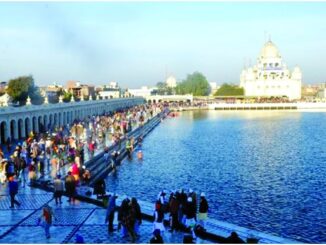
    Maghi is the occassion when Sikhs commemorate the sacrifice of forty Sikhs, who fought for Guru Gobind Singh, the tenth Sikh master.

    Maghi, Makara Sankranti, the first day of the month of Magh. The eve of Maghi is the common Indian festival of Lohri when bonfires are lit in Hindu homes to greet the birth of sons in the families and alms are distributed. In the morning, people go out for an early-hour dip in nearby tanks.

    For Sikhs, Maghi means primarily the festival at Muktsar, a district town of the Punjab, in commemoration of the heroic fight of the Chali Mukte, literally, the Forty Liberated Ones, who laid down their lives warding off an attack by an imperial army marching in pursuit of Guru Gobind Singh.

    Mela Maghi, held at the holy city of Sri Muktsar Sahib each year in January, or the month of Magh according to Nanakshahi calendar is one of the most important melas (fairs) of India and the most important of all religiously significant gatherings of the Sikhs.

    Etymologically, mukta from Sanskrit mukt means ‘liberated, delivered, emancipated,’ especially from the cycle of birth and death. Mukti (liberation, emancipation) in Sikhism is the highest spiritual goal of human existence, and mukt or mukta is the one who has achieved this state of final beatitude. Mukta, also means a pearl, and the word would thus signify a title or epithet of distinction. It was probably in this sense that the five Sikhs, who on 30 March 1699 received the vows of the Khalsa immediately after the first five Panj Piare (q.v.), were blessed with the title mukta, plural mukte.

    The term Chali Mukte is also used sometimes for the martyrs whom were attacked by a huge army, which had been in pursuit of the 40 Sikhs, their Guru and the two older Sahibzadas since the evacuation of Anandpur by Guru Gobind Singh during the night 5-6 December. Encircled and hopelessly outnumbered at Chamkaur on 7 December, they engaged the enemy in small sorties throughout the day. Two of those sorties were led by their Guru’s two oldest sons the Sahibzadas.

    The Guru had previously created the Khalsa making his men his equal. Now Sri Guru Gobind Singh Ji told the survivors of his plan to challenge his attackers the next morning joining his sons, the Sahibzadas, in Sach Khand. The five remaining Singhs were Bhai Dharam Singh, (the two remaining Panj Pyare), Bhai Man Singh, Bhai Sangat Singh and finally Bhai Sant Singh. They begged Guru Ji to escape, they said, “At Kesgarh Sahib we watched you beseeching the five beloved ones to initiate you with Amrit. You had said then, I am of the Khalsa, and the Khalsa is mine. Today we ask in the capacity of the Khalsa beseeching you to leave Chamkaur and escape to a safer place.”

    Guru Saheb had no choice now but to accept their demands. It was decided that Guru Ji, Man Singh and the two Panj Pyare would leave the fort and that they would dress Sant Singh to look like Guru Ji because he had an uncanny resemblence to Guru Saheb. Guru Ji killed the few soldiers that were on watch. Then they left in the pitch dark the Guru clapped his hands three times saying “PeerÚ Hind Rahaavat” (“The “Peer” of India is Leaving”).

    They all shouted Sat Sri Akal and scattered in different directions. The mughals who couldn’t see where anyone was, ended up killing several of their own while Guru Ji and the three Sikhs escaped.

    Wazir Khan, the faujdar of Sirhind, denied the next day of the prize he had so eagerly and treacherously hounded, must have been furious. He would soon release that fury on the Guru’s remaining sons and their grandmother who, betrayed by their old family cook Gangu, soon fell into his hands back at Sirhind.

    While there is no unanimity over the names of the martyrs of Sri Muktsar Sahib and Chamkaur Sahib, the five Muktas who comprised the first batch of Sikhs to receive amrit at the hands of the Panj Piare are given in Rahitnama by Bhai Daya Singh as Ram Singh, Fateh Singh, Deva Singh, Tahil Singh and Isar Singh. No other details of these five are available except that an old manuscript of Bhai Prahlad Singh’s Rahitnama is said to contain a note associating Ram Singh and Deva Singh with the village of Bughiana, Tahil Singh and Isar Singh with Dall-Van and Fateh Singh with Kurdpur Mangat.

    According to Bhai Chaupa Singh, his Rahitnama or code of conduct was drafted by muktas. The text is said to have received Guru Gobind Singh’s approval on 7 Jeth 1757 Bk / 5 May 1700. It appears that the title of mukta was bestowed subsequently also on persons other than the original five. The number of muktas is recorded variously in old Sikh texts. For instance, Kesar Singh Chhibbar, Bansavallnama Dasan Patshahlan Ka, mentions 14, and Kuir Singh, gurbilas Patshahi X, 25.

    But the muktas universally celebrated in the Sikh tradition are the forty martyrs of Sri Muktsar Sahib who earned this title by sacrificing their lives for the Guru and who redeemed their past apostasy of having disowned their Guru and deserted him, when driven to desperation by the prolonged siege of Anandpur by the Rajput hill chiefs and Mughal forces by having their disclaimer torn by the Guru.

    Sikhs celebrate the Maghi with an end to end recital of the holy Guru Granth Sahib and religious rituals in all the Sikh Gurudwaras. On the eve of Maghi falls the common Indian festival called the Lohri when bonfires are lighted in Hindu homes and alms are also distributed. . however The largest assembly, however, takes place at Muktsar (Punjab) where big fairs are organized and pilgrims take a holy dip in the sacred waters of sarovar and also visit several shrines. A mahala or big march of pilgrims from the main shrine to gurdwara Tibbi Sahib, sacred to Guru Gobind Singh, concludes the three-day celebration.

  • Sikh History This Week-January 13, 2023, to January 19, 2023

    13th January

    1588:     Foundation stone of Sri Darbar Sahib, Amritsar, laid by Sain Mia Mir.

    Foundation stone of Sri Harmandir Sahib, Amritsar, was laid down by the renowned Sufi Saint of Qadiry order, Mir Mohamed Khan, popularly known as Hazarat Mian Mir of Lahore. Sri Harimandir Sahib, unlike any other place of worship, was built at a lower level than the surrounding area. It has doors on all four sides, signifying both humanity and universalism and that it was open to people of all the denominations.

    1761:     Janam Din Akali Phula Singh Ji.

    PHULA SINGH AKALI was son of Siha village (Bangar) resident Eshwar Singh. After being introduced to amrit through Nihangh Singh (of Naena Singh Shaheedhi misl), he assumed the name Phula Singh. He was one of the precious flowers of Kalgidhar’s Akali garden. He led the Akali movement in restoration of our Gurudwaras and general improvement of the whole Panth. He traveled extensively in pursuit of Gurudwara reforms. However, he maintained his residence in Amritsar. Even today there is a “burgh” and an establishment, named after him, in Amritsar. Akali Phula Singh helped Maharaja Ranjit Singh fight and successfully win numerous wars. He was so true to his faith and strong in his principles that he did not hesitate in pointing Maharaja Ranjit Singh’s lapses in public forums. Further he actively sought appropriate punishment (Tankha) for such lapses.

    1764:     Conquest of Sirhind by the Khalsa Dal.

    Sirhind was attacked and successfully conquered by the Khalsa Dal. The city was plundered and the walls of the fort were pulled down. Sirhind is the place where the younger sahibzadas, Baba Zorawar Singh Ji and Fateh Singh Ji, were bricked alive at this place. Ahmed Shah Abdali’s proclation to blow up Sri Harminder Sahib was answered by the total demolition of Sirhind.

    1849:     Battle of ChellianWala fought between Khalsa Army and East India Company resulting in tremendous loss of lives on both sides.

    1913:     Walls of the Gurudwara RakabGanj forcibly demolished by the British Government.

    1974:     Harbhajan Singh Yogi was honored with the title of “Bhai Sahib” at Sri Akal Takhat, Amritsar. He had been honored for his contributions for the American Sikh movement that accounted for 500,000 of American decent.

    14th January

    1553: Guru Amar Das visits Kurukshetra.

    The solar eclipse of “Abijit Nakshatra (recurring after about 25 years) brought Guru Amar Das and his Sikhs to Kurukshetra for preaching Guru Nanak’s mission to the vast multitude. It led to discussions with yogis, naked ascetics, sanyasis and the followers of all the six schools of Hindu philosophy. The earlier solar eclipse had taken Guru Nanak to Kurukshetra, known as a big centre for pilgrimage on such an occasion.

    1705: Mela Maaghi (Muktsar) in remembrance of 40 Muktas.

    Mela is observed every year at Muktsar. Guru Gobind Singh cast off the blue dress that he used for his escape at Dhilmi. He then moved on to Talwandi and was at Rohi when a group of 40 Sikhs from Majha, accompanied by Mata Bhag Kaur, visited him. They were visiting to convey their condolences at the death of his four sons and his mother, and also to offer their services to mediate a compromise between the Guru and the Mughal authorities. However, the Guru put them on the defensive by narrating the series of Mughal atrocities from Guru Arjan’s martyrdom through Guru Hargobind’s incarceration for several years at Gawalior, Guru Tegh Bahadhur’s martyrdom to the laying of the seige of Anandpur.

    1761: Abdali destoyed Panipat but the Sikhs faced him in Goindwal and rescued their honor.

    15th January

    1350: Bhagat Namdev Ji passed away. Annual mela observations are held in village Ghumaan, district Gurdaspur.

    16th January

    1766:     Sirdar Chadat Singh Sukarchakia killed Hameed Khan and captured Gujrawala.

    1841:     Chand Kaur defended Lahore against Sher Singh’s attack with the help of Gulab Singh. Fort was well defended by Gulab Singh and Gardner. Dhian Singh returned to Lahore. Sher Singh lost about 5000 men. And Gulab Singh left fort and Lahore and carried away great wealth.

    1923:     First abortive attempt is made to kill Arjan Singh Patwari of Haripur. He was alledged to be responsible for Master Mota Singh’s arrest.

    17th January

    1766:     Jahan Khan, the Commander of Ahmed Shah Abdali’s forces, attacked Amritsar. The united forces of the Sikh Misls, faced Jahan Khan and successfully deafeated the enemy forces at Putlighar, on the outskirts of Amritsar.1846   The Khalsa Army of Ranjit Singh ransacked a garrision of East India Company at Ludhiana.

    1872:     Baba Ram Singh, Naamdhari Leader, was arrested by the British government. He was subsequently exiled from India.

    1872:     42 Naamdhari GurSikhs, accused of seccisionist acts, were bown-up at Malaerkotla, after being tied with the cannons while one boy was cut to pieces. These executions were carried out under orders of Mr. L. Cowan, Deputy Commissioner Ludhiana, Malaerkotla.

    1922:     All Akalis arrested in connection with the Keys agitation are released.

    1925:     A jatha of 500 Akali Sikhs, led by Lakha Singh JahanShah (Gujran Wala), ready to lay down their lives was stooped from proceeding to Gangsar, Jaito – the place of Sikh agitation, and arrested.

    19th January

    1908: First Gurdwara Sahib in Canada 19th,1908 the was officially opened at 1866 west 2nd Avenue Vancouver B.C., under the management of the Khalsa Diwan Society. This Gurdwara Sahib served the Greater Vancouver Sikh community until new Gurdwara Sahib was occupied on April 25th,1970. The 2nd Avenue property was sold for $100,000 to build a bigger (present) Gurdwara Sahib. It was very unfortunate to lose this historical Sikh monument.

  • Lohri – The Bonfire Festival

    Lohri – The Bonfire Festival

    India, the land of festivals,  and Lohri is the harvest festival of the breadbasket of India, i.e. Punjab. Lohri falls in the month of Magh and during the auspicious period of Uttarayan when the Sun moves northwards from the Tropic of Capricorn towards the Tropic of Cancer. It is usually celebrated on January 12 or 13 as per the Gregorian calendar.

    Lohri marks the culmination of the winter season and is celebrated by worshipping the fire which is symbolic of the Sun God. This festival is also celebrated in Delhi, Haryana and parts of Himachal Pradesh. Natives of these states celebrate this festival with great fervour, gaiety and splendour. During this time, the fields of these Northern states gleam with the harvest of wheat, the main crop of this region, and the festival honours the elements of nature like the fire and the sun as a mark of gratefulness.

    The festival is named Lohri because of the following reasons:

    –              Some believe that the name is derived from Loi, wife of the Sufi Saint Sant Kabir.

    –              Loh in Punjab means the pan used for making rotis during community feasts. Since Lohri is a community festival, the name has been derived from the word Loh.

    –              Lohri was also the sister of Holika.

    –              The main ingredients used for making sweets in this festival are gajak and rewri, or til and rohri. Thus the name Lohri is a combination of these two words.

    The Origin of Lohri

    The history of the celebration of Lohri finds its roots back in the era of Akbar. As per legends, Dulha Batti was a Muslim robber, who during the rule of Akbar, would steal from the rich and distribute the loot among the underprivileged of the society. He was indeed the Robin Hood of that era for he also helped girls who were being taken away against their wish. Dulha Batti, was contemporary in his thinking and would arrange inter-caste marriages between Muslim girls and Hindu boys. Thus the people of Punjab loved and respected him and sang songs in his praise to express their gratitude. These songs are still sung during the celebration of Lohri.

    Customs and Traditions

    The joyous occasion of Lohri is marked by many age-old customs and traditions. Some of them include:

    The celebrations start a few days prior to Lohri with young girls of the village going from house to house collecting cow-dung cakes which act as the fuel for the bonfire to be lit on the day of the festival. The young girls sing a song asking for the cow-dung cakes.

    –              On the day of the festival an idol of goddess Lohri is decorated and the bonfire is lit before this idol. Songs are sung in the praise of Goddess Lohri.

    –              January is the time to harvest sugarcane and thus the products made from sugarcane like jaggery find an important place in the celebrations.

    –              The bonfire is symbolic of the most important element of nature – the Sun God – and is lit after sunset. It is believed that sun is the source of all life on the earth and represents both the physical as well as the spiritual energy in man. The bonfires can be seen burning in the wheat fields as well as at the porches of houses where people get together as a community to celebrate Lohri.

    –              People circle the fire as a mark of respect and offer sesame seeds, jaggery, sugar-candy, puffed rice, popcorn and rewaries to the sacred fire.

    –              The prasaad of til, gajak, jaggery, peanuts, and popcorn are then exchanged among family and friends along with gifts and wishes.

    –              People chant the words ‘Aadar aye dilather jaye’ which literally means “May honour come and poverty depart”.

    –              Popular folk songs are sung and people perform the Bhangra and the Gidda, the traditional folk dances of Punjab to the beats of Dhol.

    –              The dying embers and ashes of the sacred bonfire are taken home by the people as ithey are considered to bring in wealth and prosperity.

    –              The til is of great significance in this festival. As the people throw sesame seeds into the fire, they pray for as many sons in the family as the number of sesame seeds offered to the sacred fire. Sons are important especially in the agrarian culture of rural Punjab as they are expected to act as farmhands and eventually take over the farms.

    –              Lohri is also considered to be the beginning of the financial year by the Sikh community.

    The First Lohri

    The first Lohri after a wedding or the birth of a child is of great importance. The new bride and groom, and the new born baby are showered with gifts by family and friends. A grand celebration is organised with a feast as family and friends gather to wish the newly-wed couple or the newborn.

    The Modern Version

    With changing times and more awareness among people about the ongoing global warming, Lohri has now donned a contemporary outlook. With the aim towards a green and a clean environment, people have started planting saplings to replenish the trees that are cut for wood that serves as fuel to the sacred bonfire. Today, the people are indeed very conscious about the environment and in order to sustain it they are working towards growing more trees as a community.

    Be it Lohri, or Makar Sankranti, or Pongal, these festivals are indeed a celebration of life and are markers of the common man’s gratitude towards the various forces of nature. Happy Lohri!!

    Religious Fact

    As per the Hindu calendar, in the mid-January, the earth starts its journey towards the sun bringing end to Paush, the coldest month of the year. According to the Shrimad Bhagawad Gita, Lord Krishna manifests his full divinity during the period of Lohri. A day later, the auspicious Makara Sankranthi helds which marks the end of the winter season. Thousands of Hindus bath in the Ganges to nullify their sins.

    Social Fact

    Wheat is the main winter crop in the northern parts of India. This winter (rabi) crop is sown in the months of October and harvested in March or April. Farmers and their families celebrate Lohri during January (rest period) before the cutting of crops. Thus, Punjabis and Haryanavis celebrate Lohri as the “harvest festival”. Most farmers from rural Punjab consider the day after Lohri as the starting of new financial year. The Sindhi community popularly call Lohri as “Lal loee”. On the festive day, children request their grandparents and aunties for wood sticks which are burnt in the bonfire.

  • Joshimaths in the making:  Save Karnaprayag, McLeodganj before it’s too late

    Rampant construction activity in callous disregard for the red flags and warnings flashed by geologists ever since land sinking was first noticed 50 years ago in Uttarakhand’s strategically located, ecologically fragile and landslide-sensitive zone in which Joshimath is located has come at a great cost. It has claimed a large part of the town, causing irreversible damage. Even as the authorities are trying to prevent an ominous human tragedy by evacuating the affected residents to safety, cracks have appeared in some houses at Karnaprayag, another municipality of Chamoli district, triggering fears of land subsidence there too.

    Meanwhile, the unfolding Uttarakhand disaster — sadly a manmade and preventable one — has put the spotlight on a similar hazardous situation prevailing at McLeodganj in the neighboring Himachal Pradesh. The alarm bells are ringing loud as attention is directed towards the increasing occurrences of landslides, sinking of the main McLeodganj-Dharamsala road, the recent cave-in of a market and the yet-to-be-rectified drainage system. Urgent heed must be paid to these warning signs to avoid another Joshimath.

    The Joshimath land subsidence underscores the imperativeness of preventive measures. Nature must be respected; it is only in its protection and sustainability that humans can survive. If the balance is tilted in favor of ‘development’ and ‘progress’, things cannot last for long. Hundreds of houses, hotels and roads are to be razed in Joshimath due to its foundational land subsiding and becoming incapable of carrying the weight of the buildings that have proliferated there. Declared as an unsafe zone, it will deprive around 30,000 people living in nearly 700 houses, identified as dangerous so far, of the emotional security of having a home. The government authorities are conducting a massive rescue and relief operation as the affected families are being shifted to temporary relief camps and compensated for their loss. But can there ever be enough recompense for people suffering that sinking feeling one gets when one is rendered homeless? The only way out is learning a lesson and preventing more such tragedies.

    (Tribune, India)

  • Peru in peril: On the political crisis in the South American country

    The government and opposition must agree on an early date for fresh elections

    With the killing of 17 civilians and one police officer on Monday amid anti-government protests, the month-long political crisis in Peru has crossed a bloody threshold and could trigger more waves of violence. The incident shows not only the barbarity of the country’s security personnel in dealing with protests, but also the failure of President Dina Boluarte and of her predecessor Pedro Castillo in uniting and stabilizing the country during the periods they have been in power. The crisis is the result of a power struggle between Mr. Castillo and Congress. Mr. Castillo, a former schoolteacher and a trade unionist, was elected President in 2021 on promises such as ensuring political stability, fighting corruption and addressing chronic inequality. But without any administrative and political experience, Mr. Castillo found it hard to negotiate the maze of Peruvian polity. As he struggled to get a grip on governance, a hostile Congress and the wealthy classes lined up against him. Corruption scandals and alleged links with criminal syndicates weakened Mr. Castillo’s position in Lima. Congress voted to fire him twice, but failed to garner enough support. As a third vote was due in December last year, Mr. Castillo made the drastic announcement of dissolving Congress, which also triggered his impeachment.

    But if Mr. Castillo, currently in jail, miscalculated the consequences of his decision to dissolve Parliament, his successor and legislators misjudged the leftist leader’s support among the poor. Violent protests broke out in Peru’s highlands demanding Mr. Castillo’s restoration or early elections. Mr. Castillo called Ms. Boluarte “usurper”, while his supporters said the president they voted for was not allowed to complete his legitimate term, which was to expire in 2026. At least 47 people, mostly civilians, have been killed in protests, ever since Mr. Castillo was ousted. As she came under enormous pressure, Ms. Boluarte promised to hold elections by April 2024 (pending approval from Congress), but this was dismissed by Mr. Castillo and his supporters, leaving the country in disarray. Both sides have a hand in the current crisis and should come together to find a way out. Restoring Mr. Castillo may not be practically and constitutionally possible, but Ms. Boluarte’s government could release him from prison in return for peace. To end the current impasse, the government, the opposition and Congress should agree on the earliest possible date for fresh elections. Peru’s political class should also be ready for broader constitutional reforms that allow the presidency and the legislature to function without confrontation.

    (The Hindu)

  • New York City needs attention of CityAdministration

    One of the world’s most populous megacities, with  over 8.5 million people New York City is a global cultural, financial, entertainment, and media center with a significant influence on commerce, health care and life sciences, research, technology, education, politics, tourism, dining, art, fashion, and sports. Home to the headquarters of the United Nations, New York is an important center for international diplomacy, an established safe haven for global investors, and is sometimes described as the capital of the world.

    The  name of the City creates visions of beauty, splendor  and grandeur in the minds of people across the world. It will not be an exaggeration to say that  it is the dream of every tourist in any part of the world  to see New York. They dream of a beautiful  New York with expansive gardens, walks along the Hudson, tall buildings, historic monuments, and endless sources of entertainment, exquisite shopping malls, and  a cultural variety not to be found anywhere else in the world.

    However, the majority is disappointed. It is not the Hudson River walks or the expansive gardens which  are missing. It is not that tall buildings and monuments are not there. It is not that the numerous entertainments are unavailable. It is the broken roads with potholes; it is the dirt and filth in the streets, including the Times Square area where the daily footfall numbers an astounding  330,000, many of them tourists, while over 460,000 pedestrians walk through Times Square on its busiest days. What do they see? Stinking garbage. Hardly any greenery. And, on top of that, there is ever-growing lawlessness. Times Square is no longer secure. In fact, the whole of New York is having to face insecurity. It is but natural that tourists will be reluctant to come, as do many who live in New York State itself.

    It appears that insanitary conditions- dirt, filth and garbage, broken roads with potholes ,  the barren, lifeless pavements , and the rising crime are the identity of New York.

    We wish the City administration  takes care of  once “the greatest city on the Earth”  before the conditions go from bad to worse , and a restoration becomes the more difficult.

  • Russia replaces Ukraine war commander; Soledar battle on

    Russia replaces Ukraine war commander; Soledar battle on

    Kyiv (TIP): Moscow has named Chief of the General Staff Valery Gerasimov as new commander for its invasion of Ukraine. At the same time, Ukraine said its troops were holding out despite heavy fighting on a battlefield littered with bodies in a salt mining town in eastern Ukraine, where Russian private military firm Wagner Group had claimed Moscow’s first significant gain in half a year.

    Russian Defence Minister Sergei Shoigu on January 11 appointed Valery Gerasimov as the overall commander for what Moscow calls its “special military operation” in Ukraine, now in its 11th month.

    The change effectively demoted General Sergei Surovikin, who was appointed in October to lead the invasion and oversaw heavy attacks on Ukraine’s energy infrastructure. The ultra-nationalist contract militia Wagner, run by an ally of President Vladimir Putin outside the main chain of military command, claims to have taken Soledar after intense fighting that it said had left the town strewn with Ukrainian dead. But Moscow has held off officially proclaiming victory. “There are still some small pockets of resistance in Soledar,” Andrei Bayevsky, a Russian-installed politician, said in an online broadcast.

    Ukraine has acknowledged Russian advances but Deputy Defence Minister Hanna Malyar told a briefing on Thursday that fighting was still fierce. Malyar said Russia had increased the number of units in Ukraine to 280 from 250 in the past week as it seeks to regain the initiative. Kremlin-watchers were poring over Russia’s latest switch of battlefield leadership, a day after Valery Gerasimov, chief of the military’s general staff, was unexpectedly given direct command of the invasion. The previous commander of three months’ standing, Army General Sergei Surovikin, was effectively demoted to become one of Gerasimov’s three deputies. Russia explained the decision, third abrupt change of commander in the 11-month conflict, as a response to campaign’s growing importance. — Reuters

  • UK police investigating uranium-tainted cargo at London’s Heathrow Airport

    UK police investigating uranium-tainted cargo at London’s Heathrow Airport

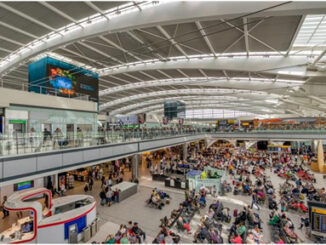
    London (TIP): British counterterrorism police are investigating after border officers seized cargo contaminated with uranium at London’s Heathrow Airport. The Metropolitan Police force said January 11 that “a very small amount of contaminated material was identified after routine screening within a package incoming to the U.K.” on Dec. 29.

    It said the force’s Counterterrorism Command is investigating. There have been no arrests.

    The BBC reported that the uranium was in a shipment of scrap metal. The Sun, which first reported the story, said the shipment originated in Pakistan and arrived on a flight from Oman. Police Commander Richard Smith said the amount of contaminated material was “extremely small and has been assessed by experts as posing no threat to the public.” He said it “does not appear to be linked to any direct threat,” but the investigation continues.

    “We will of course, follow every avenue to see what the background to this was and satisfy ourselves that there’s no further threat,” he said. Prime Minister Rishi Sunak’s spokesman declined to comment on an ongoing police operation. AP

  • Japan, South Korea protest China visa stoppage amid Covid spat

    Japan, South Korea protest China visa stoppage amid Covid spat

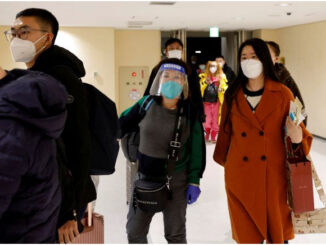
    Tokyo (TIP): Japan and South Korea defended public health restrictions on travellers from China on January 11, a day after China stopped issuing new visas in both countries in apparent retaliation.

    Chinese embassies stopped issuing new visas for South Koreans and Japanese on Tuesday. It wasn’t clear whether China would expand the visa suspensions to other countries that have imposed stricter virus testing on passengers from China following its Covid-19 surge.

    South Korean Foreign Minister Park Jin said on Wednesday he finds “significantly regrettable” that China stopped issuing short-term visas to South Koreans and called for China to align its pandemic steps with “scientific and objective facts”.

    According to South Korea’s Disease Control and Prevention Agency, about 17 per cent of the 2,550 short-term travellers from China from January 2 to Tuesday have tested positive. South Korea has stopped issuing most short-term visas at its consulates in China through the end of January while also requiring all passengers from China, Hong Kong and Macau to submit proofs of negative tests taken within 48 hours of their arrival in addition to Covid-19 tests at the airport.

    Japanese Chief Cabinet Secretary Hirokazu Matsuno criticised China for “one-sidedly” restricting visa issuances to the Japanese nationals “because of a reason that is not related to Covid-19 measures”.

    Tokyo protested and demanded China scrap the measures and that Japan will “respond appropriately while closely watching China’s infection situation and how information disclosures are handled by the Chinese side”, Matsuno said.

    Matsuno said Japan had to take temporary measures to avoid rapid inflow of infections into Japan because of China’s spreading infections and lack of transparency about the situation.

    He said that Japanese border measures are purely aimed at preventing infections and have aimed to limit effects on international travel. “It is extremely regrettable that China has one-sidedly restricted visa issuances.” The Chinese embassies in Tokyo and Seoul announced the suspensions in brief online notices, without providing reasons or details such as when visa issuances will resume.

    China’s Foreign Ministry threatened countermeasures last week against countries that had announced new virus testing requirements for travelers from China. At least 10 governments in Europe, North America and Asia have done so recently.

    Meanwhile, Thailand sent three ministers to Bangkok’s Suvarnabhumi Airport to welcome the country’s first planeload of Chinese tourists in years, in a bid to revive inbound tourism.

    Japan reopened its borders for individual tourism in October. Most travellers can show proof of vaccination instead of testing at the airport, unless they show symptoms, but since December 30 travellers from China must show pre-departure negative tests and take an additional test upon arrival. Those who test positive must quarantine at designated facilities for up to seven days. (AP)

  • 7.6 quake damages buildings in Indonesia, felt in Australia

    7.6 quake damages buildings in Indonesia, felt in Australia

    Jakarta (TIP): A powerful deep-sea earthquake damaged village buildings in a lightly populated island chain in eastern Indonesia early on January 10, and its substantial shaking was widely felt in northern Australia. Two school buildings and 15 houses were damaged in the Tanimbar islands, with one of the homes heavily damaged and three moderately damaged. Only one injured resident was reported.

    “Local residents felt strong tremors for three to five seconds. There was panic when the quake shook so the residents left their houses,” Abdul Muhari, spokesperson of the National Disaster Mitigation Agency, said in a statement, citing the local agency.

    The epicentre of the magnitude 7.6 temblor was in the Banda Sea, nearest the Tanimbar islands in Maluku province that have about 127,000 residents, according to 2021 data. Tremors were felt in several regions, including Papua and East Nusa Tenggara provinces, as well as in northern Australia. Indonesia’s Meteorology, Climatology, and Geophysical Agency issued a tsunami warning that was lifted three hours later. “Based on four tide gauge observations around the centre of the earthquake, it did not show any significant anomaly or change in sea level,” agency head Dwikorita Karnawati said.

    The US Geological Survey said the quake’s epicentre was at a depth of 105 kilometres (65 miles) not far from Australia’s northern tip. Deeper quakes tend to cause less surface damage than shallow shaking but are more widely felt. More than 1,000 people in northern Australia, including in the city of Darwin, reported to Geoscience Australia that they felt the quake. The Joint Australian Tsunami Warning Centre said the quake didn’t pose a tsunami threat to the mainland or any islands or territories. (AP)