Year: 2023

  • India bans People’s Anti-Fascist Front, a proxy of Jaish-e-Mohammed

    India bans People’s Anti-Fascist Front, a proxy of Jaish-e-Mohammed

    New Delhi (TIP)- The Centre has banned the People’s Anti-Fascist Front (PAFF), a proxy outfit of the terror group Jaish-e-Mohammed, for its involvement in terror acts in Jammu and Kashmir and elsewhere. The Union Home Ministry on Friday, January 6,  also designated Arbaz Ahmad Mir, a Lashkar-e-Taiba member, as an individual terrorist under the stringent anti-terror law Unlawful Activities (Prevention) Act, 1967. In a notification, the ministry said the PAFF had been regularly issuing threats to security forces, political leaders and civilians working in Jammu and Kashmir from other states.

    The PAFF, along with other organisations, is involved in pro-actively conspiring both physically and on social media to undertake violent terrorist acts in Jammu and Kashmir and major cities in India, it said. Along with other organisations, the PAFF is indulging in radicalisation of impressionable youth for recruitment and training in handling guns, ammunition and explosives. The group has also been involved in terrorism. It has committed and participated in various acts of terrorism in India, the ministry said.

    Therefore, exercising the powers conferred by clause (a) of sub-section (1) of Section 35 of the Unlawful Activities (Prevention) Act, 1967, the central government declared the PAFF a banned organisation, it said.

    Source: PTI

  • MCD House adjourned without electing Mayor after AAP, BJP clash

    Amid a clash between the councillors of the Aam Aadmi Party (AAP) and the Bharatiya Janata Party (BJP), the maiden meeting of the newly elected Municipal Corporation of Delhi House on Friday, January 6, was adjourned without electing the mayor and the deputy mayor. The Arvind Kejriwal-led party also accused the BJP of trying to win the mayoral polls through “wrong means”. The BJP, in response, said that “AAP doesn’t have faith in the established rules and norms.” According to NDTV, AAP and BJP workers were seen hitting and pushing each other, falling and climbing on desks inside the MCD Civic Centre, at the meeting.

    The protests on Friday erupted after BJP councillor Satya Sharma, the presiding officer overseeing the process, invited an alderman – a person over the age of 25 who is nominated to the corporation by the Lieutenant Governor (L-G) – to take oath. AAP MLAs and councillors rushed to the centre of the House, saying that elected councillors should have been sworn in before the nominated members.

  • India to host Global South summit for 120 nations

    India will host a two-day virtual meeting of more than 120 nations next week titled “Voice of Global South Summit” which will provide important insights for the deliberations of the G20 summit, Foreign Secretary Vinay Mohan Kwatra said here on Friday, January 6.

    “India’s G20 Presidency will be shaped in consultation with member states and countries that are not part of the G20, but have an ecosystem of concerns, priorities and interests that are crucial for the success of G20. Evidence will show that relevant mechanisms that are supposed to take on board their concerns and mitigate them, both in multilateral and plurilateral settings, have proved inadequate,” said the Foreign Secretary. “Countries of the Global South often do not receive due attention and space on the global stage. The relevant existing international platforms are inadequate to address these challenges,” said Kwatra. The Global South largely refers to developing countries in Asia, Africa and South America.

    The two-day summit will begin on January 12 with an inaugural session to be addressed by PM Narendra Modi. Several heads of government will attend the summit.    Source: TNS

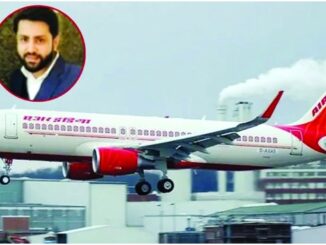
  • Air India passenger, who ‘urinated’ on woman, arrested

    Air India passenger, who ‘urinated’ on woman, arrested

    New Delhi (TIP)- Shankar Mishra, the Air India flyer who had allegedly urinated on a co-passenger while being drunk on a flight from New York to Delhi, has been arrested in Bengaluru, Delhi Police officials said. Mishra has been brought to Delhi from Bengaluru, the officials added. He had been on the run since he left his Bengaluru residence. Mishra had also switched off his mobile phone after learning about the police case against him.

    After the incident of Mishra allegedly urinating on his co-passenger was reported, the Delhi Police on January 5 had issued a look out notice to the concerned authorities after filing a case of sexual harassment and obscenity against him.

    According to a PTI report, the Bengaluru police assisted Delhi police in arresting Shankar Mishra from Sanjay Nagar area in city. The accused is said to have been staying in his sister’s place.

    On Friday, the Directorate General of Civil Aviation (DGCA) in an advisory asked the airlines to file a complaint anytime a passenger has been found to be unruly on board. The aviation regulator warned them of strict actions if found not complying with the regulations on flight safety.

    Accused gets fired from job

    Shankar Mishra, the man accused of urinating on his co-passenger on a New York-Delhi Air India flight, has been fired by his employer Wells Fargo on Friday. “Wells Fargo holds employees to the highest standards of professional and personal behavior and we find these allegations deeply disturbing. This individual has been terminated from Wells Fargo. We are cooperating with law enforcement and ask that any additional inquiries be directed to them,” the American bank said in a statement.

    According to his LinkedIn profile, the accused is a management professional who graduated from Narsee Monjee Institute and went on to work with the leading American financial services company, Citi Bank for 10 years where he started as a trainee analyst and rose to the position of Vice President. In his written article of 2015, he described the job as ‘demanding’ which stretches “self beyond the normal working hours”. Recently in February 2021, he took up the role of Vice President at Wells Fargo.

    A day after Delhi Police asked the authority concerned to issue a Look Out Circular (LOC), the Delhi Police has on Friday reached out to the US-based Wells Fargo company’s legal department to cooperate with investigations. The Directorate General of Civil Aviation (DGCA) also issued show-cause notices to Air India officials and cabin crew of the New York-Delhi flight, asking why action should not be taken against them for “dereliction” of duty while handling the November 26 ‘urination’ incident.

    The aviation regulator said Air India’s conduct appeared to be “unprofessional”, and that prima facie, it seemed that provisions related to the handling of unruly passengers were not complied with.

  • Joshimath sinking: Uttarakhand CM orders evacuation of 600 families

    Joshimath sinking: Uttarakhand CM orders evacuation of 600 families

    Dehradun (TIP)- Uttarakhand Chief Minister Pushkar Singh Dhami has ordered immediate evacuation of around 600 families living in houses which have developed huge cracks and are at risk in sinking Joshimath town. He also reviewed the situation in the sinking town with officials via video conference. Speaking to media persons here, the chief minister said, “Saving lives is our first priority. Officials have been asked to shift around 600 families living in endangered houses in Joshimath to safe locations.”

    “We are also working on short and long-term plans to address the situation in Joshimath,” he said, as quoted by news agency PTI.

    CM Dhami will visit Joshimath today, Saturday, to meet the affected people and hold a meeting with officials.

    He further informed that Garhwal Commissioner Sushil Kumar and secretary, disaster management, Ranjit Kumar Sinha along with a team of experts are camping on the ground to constantly monitor the situation.

    The chief minister also directed that relocation of people from the affected areas should be done expeditiously and medical treatment facilities should be available on ground and arrangements for airlifting people should also be made, PTI reported.

    An immediate action plan as well as a long-term action plan should be prepared and work on both should be started in right earnest, Dhami said, adding that procedures should be simplified to expedite work on treatment of danger zones, sewer and drainage.

    Huge cracks have appeared in scores of houses while many have suffered subsidence.

    Nearly 50 families have been moved to safer locations, officials said. Apart from them, 60 families living in a colony meant for Vishnu Prayag Jal Vidyut Pariyojana employees have been shifted elsewhere, its director Pankaj Chauhan said.

    Marwari area, where an aquifer burst three days ago, is the worst hit as water is constantly coming down from it.

    All construction activities related to mega projects like the Char Dham all-weather road and the National Thermal Power Corporation’s hydel project have been stopped till further orders on the demand of residents. The Auli ropeway, which is Asia’s biggest, has been stopped after a huge crack developed beneath it, former president of the local municipality Rishi Prasad Sati said. Land subsidence has been going on for more than a year but the problem has aggravated over the past fortnight, he said.

  • Uniform laws on marriage, divorce matter for Parliament to decide: Supreme Court

    Having uniform laws on marriage, divorce, succession, adoption and maintenance is a matter for Parliament to decide and not for the courts to determine, the Supreme Court said on Friday, January 6. A three-judge bench headed by Chief Justice of India (CJI) Dhananjaya Y Chandrachud was hearing a clutch of petitions, including the one by Bhartiya Janata Party (BJP) leader and lawyer Ashwini Kumar Upadhyay, who filed the petition in 2020 seeking uniform laws on the issue of marriage, divorce, adoption, maintenance and guardianship. “This is a matter for Parliament to decide. We cannot make laws. This falls within Parliament’s sovereignty. We cannot tell the Parliament you shall enact a law,” said the bench also comprising justices PS Narasimha and JB Pardiwala.

    In his petition, Upadhyay pointed out the dichotomy that exists between laws applicable to different religions on the issue of marriage, divorce, adoption, maintenance and guardianship. Later, several other petitions were filed, some by Muslim women who were aggrieved by the discriminatory forms of divorce practiced under Muslim personal law.

    Senior advocate Huzefa Ahmadi, along with advocate MR Shamshad, appearing for the Muslim Personal Law Board, informed the court that Upadhyay in 2015 had raised similar prayers in a writ petition filed in the top court, which he withdrew. He later filed a petition seeking enforcement of a Uniform Civil Code (UCC) before the Delhi high court which is still pending.

    Source: HT

  • 17th Pravasi Bharatiya Divas Convention 2023 is being held  at Indore, India

    17th Pravasi Bharatiya Divas Convention 2023 is being held  at Indore, India

    • Chief Guest, H.E. Dr. Mohamed Irfaan Ali, Hon’ble  President of Cooperative Republic of Guyana
    • Special Guest of Honor, H.E. Mr. Chandrikapersad Santokhi, Hon’ble President of the Republic of Suriname

    NEW YORK (TIP): Pravasi Bharatiya Divas (PBD) Convention is the flagship event of the Government of India. It provides an important platform to engage and connect with the overseas Indians and to enable the diaspora to interact with each other. The 17th Pravasi Bharatiya Divas Convention is being organized in partnership with the Madhya Pradesh Government from 08-10 January 2023 in Indore. The theme of this PBD Convention is “Diaspora: Reliable partners for India’s progress in Amrit Kaal”. Over 3,500 diaspora members from nearly 70 different countries have registered for the PBD Convention.

    PBD Convention will have three segments. On 08 January 2023, the inauguration of the Youth Pravasi Bharatiya Divas will be held in partnership with Ministry of Youth affairs and Sports. H.E. Ms. Zaneta Mascarenhas, Member of Parliament of Australia, will be the Guest of Honor at the Youth Pravasi Bharatiya Divas.

    On 09 January 2023, the PBD Convention will be inaugurated by Shri Narendra Modi, Hon’ble Prime Minister of India and will feature addresses by the Chief Guest, H.E. Dr. Mohamed Irfaan Ali, the President of Cooperative Republic of Guyana, and the Special Guest of Honor, H.E. Mr. Chandrikapersad Santokhi, Hon’ble President of the Republic of Suriname.

    A Commemorative Postal Stamp ‘Surakshit Jaayen, Prashikshit Jaayen’ will be released to underline the importance of safe, legal, orderly and skilled migration. Hon’ble Prime Minister will also inaugurate the first-ever digital PBD Exhibition on theme “Azadi Ka Amrit Mahotsav – Contribution of Diaspora in Indian Freedom Struggle” to highlight the contribution of our diaspora freedom fighters in India’s Independence. In view of India’s ongoing Presidency of the G20, a special Town Hall will also be organized on January 09.

    On 10 January 2023, Hon’ble Rashtrapati ji, Smt. Droupadi Murmu will confer Pravasi Bharatiya Samman Awards 2023 and preside over the Valedictory Session. Pravasi Bharatiya Samman Awards are conferred to select Indian diaspora members to recognize their achievements and honor their contributions to various fields, both in India and abroad.

    The PBD Convention will have five thematic Plenary sessions-

    Indore beckons NRIs.
    • First Plenary on ‘Role of Diaspora Youth in Innovations and new Technologies’, chaired by Minister of Youth Affairs & Sports, Shri Anurag Singh Thakur.
    • Second Plenary on ‘Role of Indian Diaspora in promoting Indian Healthcare Eco-system in Amrit Kaal: Vision @2047’, chaired by Minister of Health & Family Welfare, Dr. Mansukh Mandaviya and co-chaired by Minister of State for External Affairs, Dr. Rajkumar Ranjan Singh.
    • Third Plenary on ‘Leveraging the soft power of India – Goodwill through craft, cuisine & creativity’, chaired by Minister of State for External Affairs, Smt. Meenakashi Lekhi.
    • Fourth Plenary on ‘Enabling global mobility of Indian workforce – Role of Indian Diaspora’, chaired by Minister of Education, Skill Development & Entrepreneurship, Shri Dharmendra Pradhan.
    • Fifth Plenary on ‘Harnessing the potential of diaspora entrepreneurs towards an inclusive approach to nation building’, chaired by Minister of Finance, Smt. Nirmala Sitharaman.

    All the Plenary Sessions will feature panel discussions inviting eminent diaspora experts.

    The forthcoming 17th PBD Convention holds significance as it is being organized as a physical event after a gap of four years and first after the onset of Covid-19 pandemic. The last PBD Convention in 2021 was held virtually during the Pandemic.

    The event would be webcast live on PBD website http://www.pbdindia.gov.in and https://www.youtube.com/user/MEAIndia.

    (Source: PIB)

  • Pak PM Shehbaz Sharif holds talks with IMF chief Kristalina Georgieva to break deadlock over next tranche of assistance

    Pak PM Shehbaz Sharif holds talks with IMF chief Kristalina Georgieva to break deadlock over next tranche of assistance

    Islamabad (TIP): Pakistan Prime Minister Shehbaz Sharif on January 6 held talks with the International Monetary Fund (IMF) chief Kristalina Georgieva to break the deadlock over the release of the next tranche of assistance for the cash-strapped country.

    The contact was made four days before an expected face-to-face meeting between the prime minister and the IMF chief on the sidelines of the Geneva Conference for flood victims.

    Addressing a business gathering here on Friday, Sharif confirmed he received a call from IMF Managing Director Georgieva and they discussed the issue of disbursement of an already pledged loan.

    “I told the IMF that we cannot put more burden on our masses. I also urged that the IMF should send its delegation to Pakistan for talks,” he said, adding that the delegation was expected to arrive over the next three or four days to discuss various issues.

    The global lender has refused to issue the new instalment of the already agreed loan since Pakistan was not living up to the promises it made when the stalled loan of USD 6 billion was restored last year.

    Prime Minister Sharif also sought relaxation in the demand to increase electricity prices to compensate for the deviation of around Rs 500 billion from the annual circular debt management plan.

    These remain the major stumbling blocks in reaching an initial understanding of a staff-level visit by the IMF to Pakistan. “However, the government stood ready to impose flood levy and windfall income tax on commercial banks,” sources said. There was also a resolve from the Pakistani side to increase the energy prices in future against any further deviation. Pakistan and the IMF had a round of engagement on November 18 last year, but could not finalise a schedule for formal talks on the overdue ninth review.

    The IMF board in August last year approved the seventh and eighth reviews of Pakistan’s bailout programme, allowing for a release of over USD 1.1 billion. The much-needed bailout package from the IMF helped Pakistan avert an imminent default, amidst the persisting political uncertainty and the devastating floods that have displaced more than 33 million people.

    As the economy remains under pressure, the premier also made calls to the Chinese counterpart, Li Keqiang, seeking Beijing’s help to avert a looming default while army chief General Asim Munir met the Saudi defence minister in Riyadh.

    The contacts were made as the official foreign exchange reserves dipped to USD 5.6 billion.

    In what appeared to be an alternative to the IMF, Finance Minister Ishaq Dar, a day earlier, expressed hope of receiving a USD 3 billion second bailout from Saudi Arabia within days, vowing to raise money through the sale of assets to beef up the critically-low foreign exchange reserves. But the Saudi cash assistance can only delay the default, as it cannot permanently solve the problem.

    The finance minister had said that the government was committed to the IMF programme.

    But at the same time, he added: “We will not take measures that may increase the burden on the common man.” The IMF had earlier asked for a plan to end the additional Rs 500 billion circular debt, increase energy prices, imposition of new taxes, let the rupee gain its real value and achieve the primary budget surplus targets, excluding flood-related expenses – the conditions that will stoke inflation that is already standing at 25 per cent, the Express Tribune reported. (PTI)

  • General Bajwa wanted to get me killed, alleges Imran Khan

    General Bajwa wanted to get me killed, alleges Imran Khan

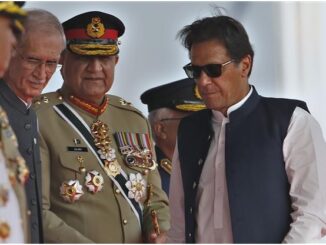
    Lahore (TIP): In a fresh attack on Gen Qamar Javed Bajwa (retd), Pakistan’s ousted prime minister Imran Khan has alleged that the former army chief wanted to have him murdered and impose a state of emergency in the country.

    Khan, the chairman of the Pakistan Tehreek-e-Insaf party, made the startling allegation during an interview with private Bol News channel in Lahore. Khan, 70, had been at loggerheads with Bajwa ever since his ouster from power in April by a no-confidence motion.

    He suffered bullet injuries in the right leg on November 3 when two gunmen fired a volley of bullets at him and others standing on a container-mounted truck in the Wazirabad area, some 150 km from Lahore, where he was leading the long march to press for snap polls. Khan said he was being told by many to stop levelling allegations against Bajwa as he had retired, but he could not cover up “the crimes that Gen Bajwa had committed”, the Dawn newspaper reported, quoting the channel’s Lahore bureau chief.

    According to the report, Khan, in the as-yet unaired interview, claimed that Bajwa “wanted me dead”.

    Khan has attacked Bajwa in the past. Bajwa is now the main target of Khan who not only sees him as the sole reason for all his failures in the government but also alleges that the retired general had toppled his government as part of a US conspiracy.

    Last month, Khan accused Bajwa of playing a “double game” against his government and said that he committed a “big mistake” by extending the tenure of the then military chief in 2019.

    Gen Bajwa, 61, retired on November 29 after getting a three-year extension in 2019 by the then Prime Minister Khan.  (PTI)

  • Taliban kill 8 in raids on IS hideouts

    Islamabad (TIP): Afghanistan’s ruling Taliban killed eight Islamic State militants and arrested nine others in raids targeting key figures in a spate of attacks in Kabul, a Taliban government spokesman said on January 5. Zabihullah Mujahid, spokesman for the government, said the raids on Wednesday targeted militants who organised recent attacks on Kabul’s Longan Hotel, Pakistan’s embassy and the military airport. “These members had a main role in the attack on the Chinese hotel and paved the way for IS members to come to Afghanistan,” Mujahid tweeted. — AP

  • Elections this year, says Myanmar army leader

    Bangkok (TIP): Myanmar’s ruling military leader, Senior General Min Aung Hlaing, presented a plan for an election later this year. He gave the details in a speech today during a ceremony at Naypyitaw, marking the 75th anniversary of the country’s independence. “Upon accomplishing the provisions of the state of emergency, free and fair elections will be held in line with the 2008 Constitution, and further work will be undertaken to hand over state duties to the winning party in accordance with the democratic standards,” Min Aung Hlaing said. (AP)

  • Beijing intimidates female journalists for critical coverage of China

    Beijing intimidates female journalists for critical coverage of China

    Beijing (TIP): China has been intimidating women journalists and researchers online to silence them and discredit their critical coverage of China, according to think tank Australian Strategic Policy Institute (ASPI). The increased harassment over the past year directed at women analysts of Asian descent is likely the result of an orchestrated campaign by the Chinese government, research by a think tank said. China is not going to stop trolling journalists because of an advocacy campaign,” Hoffman wrote. “What we can do is put in place strong digital safety measures and online abuse policies in newsrooms that will help to mitigate the impact of these attacks.”

    A 2022 report by the International Center for Journalists found nearly three-quarters of women journalists it surveyed had experienced online threats. Of those, 30 per cent said they self-censored on social media and 20 per cent had quit posting entirely. Some said the harassment led them to quit their jobs or even their profession altogether. Harassment largely ranged from insults about an individual’s appearance to accusations of being a traitor or threats of violence and rape.

    The harassment “illustrates how online attacks can be used by authoritarian governments beyond borders to intimidate and silence journalists,” Nadine Hoffman, deputy director of the Washington-based International Women’s Media Foundation (IWMF), wrote in an email to VOA. According to June and November reports from ASPI, a network popularly dubbed Spamouflage is likely behind the harassment.

    “Spamouflage” refers to an extensive network of Beijing-linked accounts first identified in 2019. Activity from the network has been focused on Hong Kong pro-democracy protests, as well as Taiwan, COVID-19 and human rights abuses in Xinjiang, it reported.

    But embassy spokesperson Liu Pengyu told VOA in June that “China condemns the harassment of female groups and opposes linking it to the Chinese government without evidence.” Twitter first attributed a “significant state-backed” operation to China in 2019 when the social media company identified over 900 accounts it said were linked to Beijing.

    And in June 2022, a Twitter spokesperson told VOA that the activity ASPI identified was part of the “Spamouflage” network, and the company had suspended more than 400 accounts in response.

    According to VOA,the latest report from ASPI determined that graphic online depictions of sexual assault, as well as homophobia, racist imagery and life-threatening intimidation — like telling targets to kill themselves — “are a growing part of the Chinese Communist Party’s toolkit of digital transnational repression.” “People like you who betray the motherland, smear and slander at will, are really inferior to dogs,” one tweet cited in the report said. Another read, “I advise you not to run around. Stray dogs are easy to kill.” Journalists and researchers who concentrate on China are familiar with the pattern of abuse.

    Yaqiu Wang, who focuses on issues including internet censorship for Human Rights Watch (HRW), has experienced online harassment over her work. The IWMF has found similar results in its research. As well as self-censorship, the IWMF has seen negative mental health repercussions for those targeted, Hoffman said.

    “Online violence is a tool intended to silence women’s voices in public spaces, whether by misogynists, authoritarian governments or other kinds of trolls,” Hoffman wrote. “And, it works.” (ANI)

  • Virgin Orbit set for historic satellite launch from Britain on Monday

    Virgin Orbit set for historic satellite launch from Britain on Monday

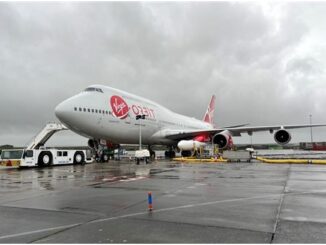
    London (TIP): The first orbital satellite to set off for space from western Europe will be launched from Cornwall in southwest England on January 5. Virgin Orbit, part-owned by billionaire Richard Branson, who founded the Virgin Atlantic airline, plans to use a modified Boeing 747 with a rocket attached under its wing for the first time outside the company’s base in the United States.

    Once the plane is at around 35,000 feet, the rocket will be released over the Atlantic, taking small satellites from seven customers into orbit in what is known as a horizontal launch.

    The mission has been given a window for take-off from 2216 GMT on Monday but that is dependent on the weather plus other scheduling and system issues, and Virgin Orbit said there are back-up dates in mid and late January. A successful ground test known as a “wet dress rehearsal”, which involves fuelling the rocket inside a special safety zone, was held on Thursday, officials involved in the launch said. The idea of releasing a rocket from a converted jetliner, pioneered by Orbital Sciences in the 1990s, is designed to offer a flexible and low-cost route to orbit as the number of small satellites in low Earth orbit grows dramatically. The mission highlights an emerging small-launch sector just as Europe faces a growing crisis due to the Ukraine war, cutting access to Russian Soyuz vehicles, as well as Ariane 6 delays and the grounding of Vega rockets after a failed launch last month.

    Britain has a large space industry employing 47,000 people, who build more satellites than anywhere outside the United States, but those have had to travel to spaceports in the United States, French Guiana or Kazakhstan before they can make it into orbit.

    With two vertical micro-launch sites planned in Scotland, Britain now faces competition from Scandinavia and Germany in a new market for small launchers carrying miniature “cubesat” payloads to low Earth orbit, but believes it has an advantage due to its proximity to less congested oceanic airspace.

    Even so, the launch was delayed in part due to the myriad regulatory clearances needed on the inaugural flight.

    ‘START ME UP’

    “When you look at the way that the low Earth orbit economy is developing, it’s the place that everybody is looking to put their satellites, whether it be for climate change, observation or urban development, or indeed for security purposes,” Ian Annett, deputy CEO of the UK Space Agency told Reuters.

    “The ability to access low Earth orbit with micro-launches is definitely not a static market – it is one that is continuing to grow,” he said.

    The European Space Agency recently embraced the use of small launchers for some missions, though commentators such as Peter de Selding, co-founder of SpaceIntelReport.com, have questioned whether there is enough demand in Europe for multiple types.

    (Reuters)

  • Operation to capture drug lord El Chapo’s son leaves 29 dead in Mexico

    Operation to capture drug lord El Chapo’s son leaves 29 dead in Mexico

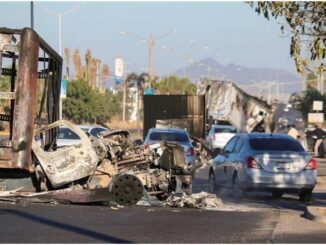
    Mexico City (TIP): At least 29 people were killed in clashes sparked by an operation to capture a son of jailed Mexican drug lord Joaquin “El Chapo” Guzman in northwest Mexico’s Sinaloa state, Defence Minister Luis Cresencio Sandoval has confirmed.

    The capture of Ovidio Guzman on January 5 left 19 assailants and 10 military troops dead and 35 others wounded, Sandoval was quoted as saying by Xinhua news agency. Army and National Guard troops led the operation to capture Ovidio Guzman, a leader of the Sinaloa drug cartel, leading to armed clashes and the exchange of heavy gunfire in the Jesus Maria district of the city of Culiacan.

    According to Interior Minister Adan Augusto Lopez, Ovidio Guzman was arrested for a range of crimes, including possession of military weapons and attempted homicide. Meanwhile, Foreign Affairs Minister Marcelo Ebrard confirmed that the US requested Ovidio Guzman’s extradition back in September 2019, adding that the process could take several weeks.

    Mexican law requires US authorities to first submit the evidence they have against Ovidio Guzman to a Mexican judge, who will then decide whether to proceed with the extradition request, Mexican President Andres Manuel Lopez Obrador said. Ovidio Guzman faces charges of conspiracy to distribute cocaine, methamphetamine and marijuana in the US, media reports said. (IANS)

  • 6-year-old boy shoots teacher in Virginia school

    Norfolk (TIP): A six-year-old student shot and wounded a teacher at his school in Virginia during an altercation inside a first-grade classroom on January 6, police and school officials in the city of Newport News said. No students were injured in the shooting at Richneck Elementary School, police said. The teacher — a woman in her 30s — suffered life-threatening injuries. Her condition had improved somewhat by late afternoon, Newport News Police Chief Steve Drew said.

    “We did not have a situation where someone was going around the school shooting,” Drew told reporters, later adding that the gunshot was not an accident. Drew said the student and teacher had known in each other in a classroom setting.

    He said the boy had a handgun in the classroom, and investigators were trying to figure out where he obtained it. The police chief did not provide further details about the shooting or what happened inside the school. Joselin Glover, whose son is in fourth grade, told The Virginian-Pilot newspaper she got a text from the school stating that one person was shot and another was in custody.

    “My heart stopped,” she said. “I was freaking out, very nervous. Just wondering if that one person was my son.” Carlos, her 9-year-old, was at recess. But he said he and his classmates were soon holed up in the back of a classroom. “Most of the whole class was crying,” Carlos told the newspaper. Parents and students were reunited at a gymnasium door, Newport News Public Schools said via Facebook. The police chief did not specifically address questions about whether authorities were in touch with the boy’s parents, but said members of the police department were handling that investigation. “We have been in contact with our commonwealth’s attorney (local prosecutor) and some other entities to help us best get services to this young man,” Drew said.

    Newport News is a city of about 185,000 people in southeastern Virginia known for its shipyard, which builds the nation’s aircraft carriers and other U.S. Navy vessels.

    Richneck has about 550 students who are in kindergarten through fifth grade, according to the Virginia Department of Education’s website. School officials have already said that there will be no classes at the school on Monday. “Today our students got a lesson in gun violence,” said George Parker III, Newport News schools superintendent, “and what guns can do to disrupt, not only an educational environment, but also a family, a community.” (AP)

  • Ukraine pleads with allies to send tanks as fighting grinds on in east

    Kyiv (TIP): Ukrainian and Russian troops battled in eastern regions on January 5 as Kyiv tried to push back occupying forces, while President Volodymyr Zelenskyy urged the West to provide his army with heavy tanks to boost their firepower.

    The Ukrainian military said the Russians were focused on an offensive in the Bakhmut sector of the Donetsk region, but their attacks in the Avdiivka and Kupiansk sectors were unsuccessful.

    The governor of neighbouring Luhansk region, meanwhile, said Ukrainian troops were recapturing areas there “step-by-step” but cautioned it was “not happening fast”. Luhansk and Donetsk make up the Donbas region, Ukraine’s industrial heartland, parts of which were seized by Russian-backed proxies in 2014.

    Russia declared Donetsk, Luhansk, Kherson and Zaporizhzhia regions as part of its territory in September after referendums condemned by Ukraine and Western countries. Russia does not fully control any of the four regions.

    Bakhmut, which is now largely in ruins after months of battering by Russian artillery, is important because the Russian leadership wants to have a success to hold up to the Russian public after a series of setbacks in the war. It is located on a strategic supply line between the Donetsk and Luhansk regions. Gaining control of the city, with a pre-war population of 70,000-80,000 that has shrunk to close to 10,000, could give Russia a stepping stone to advance on two bigger cities – Kramatorsk and Sloviansk.

    Fighting has been particularly tough there, with commanders on both sides describing it as a “meat grinder”. (Reuters)

  • Indian citizen sentenced to 29 months of imprisonment in US for being involved in call center scam

    Indian citizen sentenced to 29 months of imprisonment in US for being involved in call center scam

    WASHINGTON, D.C. (TIP): An Indian citizen has been sentenced to 29 months of imprisonment for being involved in a call center scam.

    Moin Idrishbhai Pinjara had pleaded guilty on November 30 and is expected to face removal proceedings following his imprisonment. US District Judge Andrew Hanen ordered him to pay USD 6,35,103 in restitution to the victims of the conspiracy. US Attorney Alamdar S Hamdani said that between December 2019 and July 2020, Pinjara was a “runner” in an Indian-based call center scam. Callers in India would contact potential victims in the United States to extort money from them. Pinjara would then use aliases and fake identification documents to pick up parcels containing cash which the victims had mailed.

    (Source: PTI)

  • Indian American Democrat takes oath as Texas county judge

    Indian American Democrat takes oath as Texas county judge

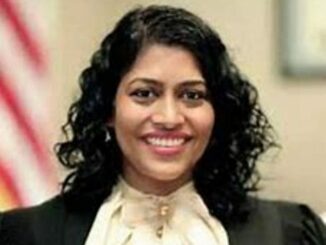
    FORT BEND COUNTY, TX (TIP): Indian American Democrat Juli A. Mathew took oath as a judge in Fort Bend County, Texas, for a second consecutive term. Mathew, a native of Thiruvalla in Kerala, was sworn-in via videoconferencing from Bheemanady in Kasaragod and will continue to serve as presiding judge for Number 3 of the Fort Bend County Court for a period of four years.

    She ran for re-election and won with 123,116 votes, beating Republican Andrew Dornburg. “I’m grateful for every supporter, prayer warrior, and voter during this journey,” Mathew said in a Facebook post after winning the election.

    “However, it is bittersweet this morning. Many qualified and outstanding candidates and colleagues that I know made huge sacrifices to run and some have not obtained the office they were seeking while others are still awaiting results. Thank you for standing up to accept the call of public service and your work and time is always remembered and honored,” she wrote.

    Mathew won her 2018 electoral bid for the bench against Republican Tricia Krenek by an impressive 8.24 per cent margin, making history as the first Indian American woman elected to the bench in the US.

    A practicing attorney for 15 years with experience in mass tort, civil litigation, probate, and criminal matters, Mathew also heads the first Juvenile Intervention and Mental Health Court.

    Judge Mathew grew up in Philadelphia and attended Penn State University before attending Delaware Law School for her Juris Doctorate. A few of her academic achievements include — in January 2021, she founded the Juvenile Intervention and Mental Health Court to assist young people with mental health issues.

    Fort Bend has a large population of Indians, including Malayalis. According to Mathews, 28.6 per cent of Fort Bend County are foreign born and of those 51 per cent are Asian-American.

    The state of Texas had the most Indian Americans running for judicial positions in the November 8, 2022, midterms. Apart from Mathew, two other Democrats — Judge K.P. George and Sonia Rash — won their re-election bids from Fort Bend County. A month prior to the election, the three had her campaign signs stolen, defaced and vandalized. Sharing photos of her vandalized campaign signs on social media, Mathew wrote: “What happened to integrity, sportsmanship, being fair… This just makes me work even harder.”

  • Indian American businessman Darshan Singh Dhaliwal to get Pravasi Bharatiya Samman

    Indian American businessman Darshan Singh Dhaliwal to get Pravasi Bharatiya Samman

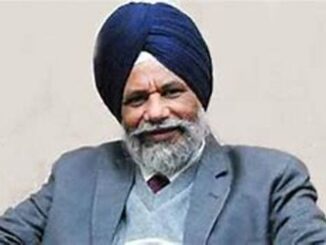
    Darshan Singh Dhaliwal, a US-based businessman and a philanthropist, has been selected for the Pravasi Bharatiya Samman, the highest honor given by the Indian government to its settlers in foreign countries. Dhaliwal, who hails from Patiala, will be conferred the award during the Pravasi Bharatiya Diwas in Indore. Dhaliwal is known for his philanthropy in India and abroad. An incident had grabbed eyeballs when he was denied permission to enter India during the farmers’ protest the now-repealed three farm laws. He was running a ‘langar’ at the Delhi border but had to return to the US.

    Dhaliwal had moved to the US as a student of mechanical engineering in 1972. He married and settled there. He along with his brothers has business in gasoline and real estate sectors in the US.

    Dhaliwal’s father Subedar Kartar Singh Dhaliwal was also involved in social work. His family said, “Wisconsin University in the US has a chair in the name of our father Subedar Kartar Singh Dhaliwal. Till date, the chair has sponsored education of over 400 to 500 students from Punjab who are working in different sectors in the US.” He also organized the World Punjabi Conference in the US in 1997, which was attended by individuals from across the globe. While talking to media, Dhaliwal said he felt honored that the Indian government was going to confer an award. Asserting that he felt proud to be an Indian, the businessman said he was invited to the PM’s residence for a Sadbhavna event organized in 2019. Dhaliwal has helped over 1,000 people from India get jobs and set up business in the US. He said, “We have contributed millions for social causes. We are planning to start an initiative on indoor farming which uses 5 per cent water and gives 10 times the result. We plan to start it in Punjab.”

  • First Indian American Kavi Sharma American Girl’s ‘2023 Girl of the Year’ doll

    First Indian American Kavi Sharma American Girl’s ‘2023 Girl of the Year’ doll

    METUCHEN, NJ (TIP): Kavi Sharma is the newest Indian American cultural product and the American Girl’s “2023 Girl of the Year” doll. She is 12 years old and lives in Metuchen, NJ. Her hobbies are singing, dancing and yoga. She aspires to attend Princeton University.

    Since its first line of dolls was introduced in 1986, American Girl has launched a series of dolls from different ethnic groups, religions, and social classes. The company sells its dolls and books that accompany them in its stores and online.

    Kavi is the first Indian American and South Asian American doll released by the company. It is available for purchase on the company’s website.

    The introduction of Kavi is a testament to the growing importance of the nearly 5 million-strong Indian American community.

    In a blog post introducing Kavi, bestselling author Varsha Bajaj writes about the importance of Kavi’s story. “Kavi is a trailblazer as American Girl’s first Indian American doll,” she writes. “The story is important to all the young girls who will see parts of their lives represented. Stories can be both mirrors and windows, allowing readers to see themselves and others who are different from them, and I hope that Kavi’s story is a welcoming window for girls who might be unfamiliar with Kavi’s world.”

    It is no surprise that Kavi came from New Jersey. The state has the largest concentration of Indian Americans. They consist of 4.35 percent of the state’s population. Nearly 72 percent of the Garden State’s Indian American population is first-generation immigrants who were born in India or another country.

    The borough was quick to embrace Kavi.

    Mayor Jonathan M. Busch tweeted on Thursday: “We are so excited that American Girl chose Metuchen. Our Borough is a diverse, vibrant community with residents and programming that reflect the world around us.  Kavi is a welcome addition to the ‘Brainy Borough’ and we can’t wait for the children in our community to share her and their Metuchen stories with the rest of the country.”

    Bajaj, who has written a journal and a novel based on the Indian American doll, writes that Kavi is a proud Indian American.

    “Kavi’s family celebrates their Indian American culture through dance, food, clothing, and holidays,” she writes. “Kavi takes weekly classes in classic Indian dance, and her favorite holiday to celebrate with her family is Diwali, which lasts five days every fall. Kavi also shares her culture in meaningful ways with her friends and classmates.”

    Kavi loves performing. She even choreographs a Bollywood routine with her friends for their school revue! And whether she’s heading to dance practice or off to Broadway with her grandmother, she keeps her favorite accessories close at hand.

    Kavi’s features, according to the American Girl website, include “a huggable cloth body, brown eyes that open and close, medium-length layered dark-brown hair styled in a half ponytail, and a movable head and limbs made of smooth vinyl. Kavi arrives wearing a layered, cropped mesh top with a multicolored print; cotton underwear; silver jogger-style pants; and pink tennis shoes.”

    Accessories include an “elephant good-luck charm, a hot-pink faux-fur bucket hat featuring an embroidered AG logo, a cuff bracelet, a black quilted-style purse that can be worn crossbody or over the shoulder, and a day planner.”

  • Indian – origin ex-minister Alok Sharma knighted in King’s New Year Honors List

    Indian – origin ex-minister Alok Sharma knighted in King’s New Year Honors List

    LONDON (TIP): Alok Sharma, an Indian-origin former UK minister, has been knighted for his contribution to combatting climate change through his leadership at the COP26 summit by King Charles III in his first New Year Honors list released here.

    Agra-born Sharma, 55, who was a Cabinet-level minister until October, is named on the “Overseas List” and leads a tally of over 30 Indian-origin campaigners, economists, academics, medics and philanthropists to be honored in the annual list issued in the name of the British monarch for their “incredible public service” across the UK and abroad. “Alok Sharma receives a Knighthood for his contribution to combatting climate change through his leadership at COP26 and driving the UK to agree a historic agreement from individual countries that will have a major impact in addressing climate change in the future,” reads a UK Foreign, Commonwealth and Development Office (FCDO) statement with reference to the list honoring overseas contributions.

    The UN Climate Change Conference in Glasgow (COP26) was held last year in Scotland from October 31 to November 13. Sharma was the president of the conference, the first since the Paris Agreement of COP21 that expected parties to make enhanced commitments towards mitigating climate change. “The UK’s impact around the world depends on exceptional people like those recognized in His Majesty the King’s New Year Honors list. I am grateful for their outstanding contribution,” said Sir Philip Barton, Permanent Under-Secretary at the FCDO and Head of the Diplomatic Service.

    In keeping with the climate theme, Professor Sir Partha Dasgupta received a Knights Grand Cross of the Order of the British Empire (GBE) for services to Economics and  Natural Environment.

  • Students are ambassadors of the country

    The Indian Panorama Editor Indrajit Saluja interviews Ambassador Randhir Kumar Jaiswal, Consul General of India at New York 

    Ambassador Jaiswal says Indian students here are promoters of “economic ties,technological ties, cultural ties.” (File Photo / TIP)

    Consul General of India at New York Mr. Randhir Kumar Jaiswal, a few days after joining the present position on 19th July 2020  in an interview with The Indian Panorama, had spelt out  in brief  his  priorities which included nourishing and  strengthening the already strong bonds between India and US, and exploring  new areas of cooperation and relationship in diverse fields of  economy, trade, technology, and   culture etc. Ambassador Jaiswal added  that serving the Indian Diaspora remained the primary focused concern of  the Consulate. The strengthening of multi-stake holders relationship will be another priority, he said.

    The Indian Panorama interviewed him a couple of times, and each time, Mr. Jaiswal was forthcoming on all issues raised ,and questions asked. Three days to the end of the year 2022, Mr. Jaiswal agreed to sit with the editor of The Indian Panorama to share for the readers of the publication his thoughts. It was a long interview in which Ambassador Jaiswal touched upon all the aforementioned areas.

    In the part 1 of the interview published last week, Ambassador Jaiswal focused on the vibrant Indian American community and its contribution. In this second  part of the interview, we bring to readers Ambassador’s perspective on Indian students as a powerhouse of knowledge, catalysts of  national integration, and promoters  of Indian arts, culture and values.

    Here are some excerpts from the interview.

    TIP: We have a large number of Indians studying in the US. A large chunk of them is on the East Coast where there are a number of prestigious educational institutions which are the preferred destinations for pursuing studies. They may need help from the Consulate in quite a few areas. How does your Consulate help them?

    Ambassador: We  have a very broad mandate. The consulate has a certain jurisdiction. Our jurisdiction  comprises 10 states in northeast of United States which include six of  New England- Connecticut, Maine, Massachusetts, New Hampshire, Rhode Island, and Vermont-, New York, New Jersey, Pennsylvania and Ohio. This is a conservative direction, in terms of rendering, consular services- Visa, passports, all sorts of documentation, which are required, and  power of attorney etc. That is a constitution. In addition, we have a large community here so we have to maintain community links, community relations, and we have to see as to how we can strengthen the links of India with the community here, not just strengthen, but also continue to add value to it. It’s a cross flow which helps all the stakeholders; it helps the country; it helps the community. So, that is a community part of our function.

    Then we have cultural relations that we have to maintain. We have this beautiful relationship. We have to promote cultural understanding. That cultural understanding enhances the value of our community here at the same time as it  enhances mutual cooperation between the people of America and our people. The  unity  binds us together and we have to see how we can build this relationship. So, cultural understanding and better appreciation  of each other are important.  And that was the third pillar.

    The fourth pillar, I would say is education. We  have a large number of students here who are studying in various universities. We have upwards of 220,000 students in the United States. This year, I think, 82,000 fresh Indian students have come which makes us the largest international cohort. We have to take care of the welfare of  students. We maintain close relations with the student bodies. They may have welfare issues. They may have several day-to-day issues which we have to attend every year. That’s why you know we try to have a meet and greet with the students. Obviously, the space is a limitation. We can’t invite 80,000 people but we do invite whoever we can, so that our student relations are smooth and efficient and cordial and we attend to their needs.

    Education has other aspects to it. Also, there is a very strong education cooperation between universities here  and universities in India on the research side,  on faculty exchange and academics. And now with the new education policy, we see that more and more universities in the United States want to do more and more things with universities in India on  research side, on finding ways to earn degrees. New programs are coming up . So,  that remains an important part of our function.

    TIP: Since you were speaking  about the understanding of India amongst the American people and all that,  do you think students can really play a major role in promoting an understanding about India here because they are in contact with the Americans, the mainstream Americans where they are studying? Do you think something should be done in the first place to have the students come under an umbrella and that umbrella organization gives them a feed on what is happening in India, and about Indian values,  and how they can probably pass on that kind of information to their friends in the colleges and the universities where they are studying? Have you ever had an idea that an organization of students under your jurisdiction should be created?

    A view of the gathering of new students at University of Connecticut meet and greet organized by GOPIO (File photo / Courtesy GOPIO-CT )

     Ambassador : So, you know, students are ambassadors of the country. They bring with them their cultural values, their ethos, their fairs and festivals. Each year, I go around universities where I find them  all celebrating  Holi, Diwali and other festivals. The Indian organizations  celebrate them.  We were in Ohio. Ohio State University has very strong links with Punjab and  Punjab Agricultural  University. So very interestingly in Ohio, apart from the Indian association, you also had  Punjabi Student Association. So, they celebrate fairs and festivals as per the calendar.  So, I see like the Indian diaspora, the Indian students who come here,  have a very important role to play as cultural ambassadors in the country.  They live the  American environment. So, they are very well placed to make an impact as far as understanding of India is concerned among the cohort, among the student groups and that has huge impact that will  go a long way in promoting India -US friendship. That’s on the cultural side.

    The second thing is, of the 220,000 Indian students who come here,  a majority of them are into STEM  areas. Now, when you are  an expert in data science or computer science  etc. you add competitive value to the local economy. You provide talent based to the local economy, which serves the interests of local society of local economy. It adds competitive value and that leads to a very strong appreciation of the kind of value that Indian talent and skills is today, adding to not just American economy, but global economy. So, overall, you know, the large number of students that we have, they then become the conveyor belt or the conduit through which they promote economic ties, technological ties, cultural ties.

                                    To be continued next week

  • Rising unemployment: Job creation is the biggest challenge for government

    That the unemployment rate in India surged to 8.3% in December 2022, the highest in 16 months, should be a cause for concern among the economic policy-makers. According to data published by the Mumbai-based Centre for Monitoring Indian Economy (CMIE), the unemployment rate had fallen to 6.4% in September — which was attributed to hiring around the holiday and festive season — but it rose steadily after that, to 7.8% in October and 8% in November. Among the states, Haryana’s unemployment rate stands at a staggering 37.4%, while it is 28.5% in Rajasthan and 20.8% in Delhi. This news, coupled with the warning by the International Monetary Fund (IMF) that a third of the world would be hit by recession in 2023, presents a sobering prognosis for the immediate future.

    According to the CMIE data, the urban unemployment rate rose from 8.96% in November to 10.09% in December, while the rural unemployment rate fell marginally during this period, from 7.55% to 7.44%. Experts say that the rise in unemployment cannot be explained by the seasonal movement of labor in and out of agriculture. One factor that has contributed to the rise is the increase in the labor participation rate — which takes into account people who are working or looking for work — to 40.48% in December. The agriculture sector had absorbed a large number of workers who lost their jobs during the Covid pandemic, but experts say that people who returned to the cities and towns still are either looking for jobs or are underemployed.

    While India remains one of the fastest-growing economies in the world, the fact remains that jobs have not been created at a steady pace and exports have fallen. The MSMEs have been struggling since 2016, as is borne out by the fact that the unemployment rate was about 5% five years ago as compared to 8.3% now. Overall, the picture does not look good — the country’s current account deficit reached an all-time high of $36.4 billion in the July-September quarter, the trade deficit with China has risen to record levels, and the rupee had a terrible year, falling from Rs 74.33 to Rs 82.72 to the US dollar in 2022, a decline of 10.14%. All this, along with the IMF warning, suggests that we are in for another difficult year.

    (Tribune, India)


  • Foreign varsities in India makes sense, but don’t forget public education

    Foreign universities setting up and operating campuses in India is a step closer to realization. A likely offshoot would be a slowdown in the flight of capital and precious human resource. A fewer number of students might opt to go abroad for higher studies. The draft regulations unveiled by the University Grants Commission give autonomy on deciding the admission process and the fee, even permitting cash remittances to the parent university. Insisting on some form of regulatory oversight would help in the long run. The cost structure for students could end up being on the higher side, but would expectedly be far less than what education in a foreign setting would entail. This could result in an uptick in the number of applicants. Courses that have gained a global reputation, new methods of teaching and evaluation, the high standards expected of the faculty and students, the focus on research and innovation, all these aspects augur well for the aspiring young Indians.

    Barring some legacy colleges and the highly-competitive top technology, medical, business institutions, the private sector’s shadow looms large in the higher education spectrum. The campuses may be impressive, their self-projection even more so, but not many can make the cut in quality education norms, or in nurturing a distinct ecosystem of student life that makes foreign universities a big draw. A campus is not just about buildings, it’s about the culture of the place, its academic landscape, the cross-culture vibes it invites, the values it nourishes, the possibilities it offers. The foreign institutions will bring in unique dynamics. A ripple effect, such as local universities adopting similar good practices, is possible. The reverse too — fee hikes matching the demands of the entrants.

    Where does it leave the public education system, considering the widening inequality? The entry of foreign universities makes sense, but it should enhance the debate and efforts on improving the standard of education and infrastructure in Indian universities. Vacancies, delayed salaries, crumbling infrastructure and lack of funding for student-related activities are commonplace. First and foremost, fix the existing institutions before announcing new ones.

    (Tribune, India)


  • An uncertain march

    An uncertain march

    Message against majoritarian exclusivism cannot be minority consolidation

    Creation of an inclusive polity can only be done with nationalism and equal contempt for all clergies. Unfortunately, Indian secularism only means proscribing modernity and proselytization of pre-modernity.

     “India’s Partition, four wars over the two-nation theory and the killing of lakhs of Hindus in East Pakistan do not make the creation of an inclusive polity easy. It can only be done with a heavy dose of rationalism and an equal contempt for all clergies. Unfortunately, Indian secularism only means proscribing modernity and proselytization of pre-modernity. Hindus will continue to get mobilized under the Hindutva exclusivist identity as long as the Ulama and the Church attempt to unify people using religious identity.”

    By Rajesh Ramachandran

    Former  Congress president Rahul Gandhi was kind enough to send a personal invitation for the Bharat Jodo Yatra as it enters our region. Had it not been for the lingering aches and pains of a terrible chikungunya infection, I would definitely have loved to become a yatri, particularly because he writes that ‘You, through all that you have done, are a valuable part of this conversation, and I would very much like to listen to you and share our perspectives. It doesn’t matter whether we agree or disagree. It’s important that we talk and listen in freedom.’ Even if it is a mere template for a polite invitation letter and even if everybody gets the same letter, it is indeed nicely worded. Creation of an inclusive polity can only be done with nationalism and equal contempt for all clergies. Unfortunately, Indian secularism only means proscribing modernity and proselytization of pre-modernity.

    As a journalist, wanting to walk along with Rahul has one very important reason: to find out how much of the crowd is dependent on the organizing skills of the Hoodas or Warrings (or the respective satraps in each state as the yatra goes through it) and how many have come to just look at Rahul, the celebrity politician, and how many want to ‘awaken the nation’s conscience to crippling inequality, brutal social polarization, and violent authoritarianism,’ as Rahul’s letter puts it. If he succeeds in mobilizing the masses and helping them to cleanse themselves of the hatred that has seeped into the soul of India, he would have succeeded in his endeavor, regardless of electoral outcome.

    But, while putting on record all the appreciation that Rahul deserves for undertaking this grueling journey from Kanyakumari to Kashmir, it has to be said that one cannot agree with him. Primarily, Rahul assumes that ‘the mainstream media has become an instrument that serves only the interests and destructive ideology of those in power.’ The Tribune is ‘the’ mainstream newspaper of the region, being its largest circulated daily, and it does not make sense to tar the mainstream media with such a terrible allegation in a letter of invitation to a mainstream media practitioner. It is an exhibition of ignorance of what the mainstream media is all about, or it is to mistake a few repugnant TV anchors for the mainstream.

    Rahul is a member of Parliament from the hilly, backward constituency of Wayanad in Kerala. Nearly nobody in his constituency watches English or Hindi news television. None of the mainstream media in Kerala has anything in common with those who had tricked Rahul into giving a terrible interview eight years ago. There are vibrant TV channels, nationally-renowned regional language newspapers, magazines, websites and whatnot reaching Rahul’s constituency, and some of them are sympathetic to him and definitely opposed to the BJP. Will he not term them mainstream? Every state has its own mainstream media in its local language or sometimes in English. A few rogue, moneyed TV anchors of Delhi or Mumbai do not represent the diversity of Indian journalism. In fact, a person out to protect and nurture the country’s diversity should learn more about its media diversity.

    Almost every regional party worth its symbol has attempted to create its own cultural space by creating newspapers, magazines and TV channels. Even the CPI (M), which is now electorally limited to Kerala, has a bouquet of entertainment and news channels in Malayalam. So does the DMK in Tamil Nadu or SAD in Punjab. And if the Congress cannot find good journalists to revive Jawaharlal Nehru’s National Herald and create its own ‘mainstream media’ in Hindi and English, its political rivals cannot be blamed. The attempt made by a former Congress MP to launch a TV channel anchored by a Radia Tapes-tainted veteran, borrowing the broadcast license from a Christian evangelist, was a hilarious episode, showing why the party is where it is.

    Another disturbing aspect about the Bharat Jodo Yatra is its messaging. With have-beens like a former RAW chief and failed political wannabes like Kamal Haasan thronging the liberal-secular mela, it is a grand photo-op for all those who failed to gain entry into the present ruling dispensation and are waiting for the Opposition to come to power to become relevant again. The message against Hindutva or religious exclusivism as a political tool is not being communicated because for its antithesis — a political philosophy of inclusivism — to be convincing, it has to be appealing to the Hindus. This was said by none other than Sonia Gandhi’s most trusted adviser and a former defense minister, who also happens to be a Catholic — AK Antony.

    Some of his Leftist detractors had immediately slammed Antony for pushing a soft-Hindutva line. But in his own laconic way, Antony was trying to address the biggest crisis in the Congress — losing Hindu votes in search of minority consolidation. The politics of tactical voting, minority consolidation, splintering of caste votes, and caste and communal alliances for electoral opportunism has run its course. The new secular and liberal politics ought to eschew caste and religious markers altogether. The Congress that banned Salman Rushdie, maximizing the political gains of the offence-taking socio-cultural industry, should apologize for the reversal of the Shah Bano verdict and inaugurate a new language in political communication for a new India where we can have a Charlie Hebdo-kind of a ‘mainstream’ magazine.

    India’s Partition, four wars over the two-nation theory and the killing of lakhs of Hindus in East Pakistan do not make the creation of an inclusive polity easy. It can only be done with a heavy dose of rationalism and an equal contempt for all clergies. Unfortunately, Indian secularism only means proscribing modernity and proselytization of pre-modernity. Hindus will continue to get mobilized under the Hindutva exclusivist identity as long as the Ulama and the Church attempt to unify people using religious identity. It’s worth noting that Rahul spent the longest in a state that witnessed Christian fanatics burning down a holy Hindu shrine long ago, and now sees Islamists of PFI threatening to kill Hindus and Christians.

    (The author is Editor-in-Chief of Tribune, Chandigarh)