Year: 2023

  • Ambassador Jaiswal bids farewell, promising to meet again – ‘Phir Milenge’

    Ambassador Randhir Jaiswal said to the gathering that his wife Dr. Abha Jaiswal joined him in thanking them and that he looked forward to meeting them again.
    A view of the gathering. Seen, among others , from L to R: Deputy Consul General Dr. Varun Jeph, Dr. Abha Jaiswal (3rd from left), Vikas Khanna, Prof. Indrajit Saluja, Harry Panaser, Ranju Batra, Dr. Sudhir Parikh, Jagdish Sewhani.

    I.S. Saluja

    NEW YORK CITY (TIP): Consul General Randhir Jaiswal and Dr. Abha Jaiswal hosted a get together to bid farewell to friends and community at the Consulate on November 29. Ambassador Jaiswal heaped praises on the Indian American community for their contribution to strengthening India in a number of ways. Their contribution to the growth of India and strengthening of relations between India and the US received his adulation. “ As India grows by leaps and bounds we will count on your support to take us forward”, he said.

    He attributed his success in ensuring efficient services to the community to his colleagues at the Consulate who were committed to their work.

    Ambassador Jaiswal thanked the gathering for their presence and said they would meet again (Phir Milenge).

  • Sikh organizations  across the world condemn heckling of Indian envoy Taranjit Singh Sandhu at Gurdwara Nanak Darbar in Hicksville, New York

    Sikh organizations across the world condemn heckling of Indian envoy Taranjit Singh Sandhu at Gurdwara Nanak Darbar in Hicksville, New York

    • I.S. Saluja

    NEW YORK (TIP): Sikh organizations across the world have condemned the recent incident of heckling of Indian Ambassador to the USA Taranjit Singh Sandhu at a gurdwara in New York by a small group of Khalistan sympathizers. In a statement issued on Monday, November 27 from Washington, D.C., Sikhs of America said gurdwaras are places of worship and should be free from personal political views.
    “We urge the management of the gurdwara to take strict action against these miscreants so that peace-loving Sikh community in New York can come to gurdwaras freely without any fear or pressure,” Sikhs of America’s founder and chairman Jasdip Singh Jassee and its president Kanwaljit Singh Soni said in the joint statement.
    “Ambassador Sandhu went to the gurdwara to pray and the management honored him with a siropa. After that, a handful of miscreants tried to disrespect him and violated the peace and sanctity of the gurdwara. Gurdwaras are places of worship and should be free from personal political views,” the statement said.
    “Sikhs of America, the leading Sikh organization in the US, strongly condemns the disrespect of a Sikh devotee, Ambassador of India to US Taranjit Singh Sandhu in a gurdwara in Long Island, New York, yesterday,” it said.

    Delhi Sikh Gurdwara Management Committee (DSGMC) president Harmeet Singh Kalka said this instance had dented the image of the entire Sikh community and should be condemned.

    “Sandhu, besides being an envoy of the Indian Government, has also been the representative of the Sikh community on foreign soil. Only a handful of Sikh community members have been vitiating the atmosphere by indulging in such incidents without realizing its repercussions and problems for the common Indians living abroad,” he said.

    The SGPC general secretary, Rajinder Singh Mehta, said at least the gurdwaras should be free of such political views as they were the places of worship. “There could be differences of opinion among the Sikh community, yet a gurdwara was not an appropriate place to rake up such an issue and insult the Indian diplomat. The Indian government too should clarify its stance on the issue of killing of Hardeep Singh Nijjar,” he said.

    Delhi Akali chief Paramjit Singh Sarna too slammed the incident. “Some of these persons with vested interests intend to bring disrepute to the entire Sikh community. No Sikh who is aware of Sandhu’s legacy could do what they did,” he said. ‘

    Sarna underscored Ambassador Sandhu’s lineage as a grandson of none other than Sikh stalwart Teja Singh Samundri, who had played a vital role in the Gurdwara Reform Movement during the British era. The SGPC’s headquarters in fact is housed in a building named after Teja Singh Samundri.

    “For the Sikhs, Sandhu is and will always command high respect not only because of his legacy, but also because of his high geopolitical competence. We condemn the hecklers,” he said.
    (With inputs from TNS and PTI)

  • Indian student charged with family members’ triple murder

    Indian student charged with family members’ triple murder

    TRENTON, NJ (TIP): A 23-year-old Indian student has been arrested and charged for allegedly murdering his grandparents and uncle inside a New Jersey condominium, police and US media reports said.

    Om Brahmbhatt is accused of shooting Dilipkumar Brahmbhatt, 72; Bindu Brahmbhatt, 72; and Yashkumar Brahmbhatt, 38, the South Plainfield Police Department and the Middlesex County Prosecutor’s Office said in a statement. Officers responded to the home on Coppola Drive off New Durham Road in South Plainfield around 9 am on Monday, November 27, after a neighbor reported hearing shots fired at the Traditions condo complex, the Middlesex County Prosecutor’s Office said in a press release.

    After arriving, officers found three people — two men and a woman — had suffered gunshot wounds.

    Married couple Dilipkumar and Bindu Brahmbhatt were found shot to death in the second-floor apartment, police said. Their son, Yashkumar Brahmbhatt, was also found to have suffered multiple gunshot wounds. He was taken to the hospital, where he died. A suspect was taken into custody for questioning at the scene and later charged. Om was charged with three counts of first-degree murder and second-degree weapon possession. Om, hailing from Gujarat, resided with the victims and was found at the residence when authorities arrived at the scene. Om had just moved to New Jersey within the past couple of months, sources said, and had been living at the condo, NBC New York reported.

    He was taken to the Middlesex County Adult Correctional Centre pending a pre-trial detention hearing; it wasn’t immediately clear whether he had an attorney and a listed number for him couldn’t be found.

    According to the complaint, the crime was committed with a handgun Om says he purchased online. Om had a seemingly calm demeanor during Tuesday’s court appearance. Police say he was the one who called 911 that morning and when asked about who did it, officials say Om stated, “It might be me”. It was not clear what led up to the shooting. A neighbor told NBC New York that it wasn’t the first time police had been called to the condo.

    “I didn’t really know them, I just know one time the police were there for a domestic violence call,” said neighbor Jim Short, who lives upstairs from the unit where the three people were found dead. “Can happen anywhere but it is really creepy, it’s right downstairs.”

    The Traditions apartment complex, home to many young families who emigrated from India, is equipped with dozens of security cameras that neighbors hoped could help police.

    “There’s cameras all over and there are cameras coming in and out of the complex and every building has cameras outside and inside the breezeway. So hopefully that can help,” said another neighbor, Victor Orozco.

    An investigation led by the South Plainfield Police Department is ongoing. Anyone with information regarding the shooting is asked to call town police or the Middlesex County Prosecutor’s Office.

    An investigation by South Plainfield Detective Thomas Rutter and Middlesex County Prosecutor’s Office Detective Javier Morillo determined that there was no threat to the public and this was not a random act of violence, according to the prosecutor’s office.
    (Source: PTI)

  • 13-year-old Indian-origin yoga prodigy, Ishwar Sharma, wins gold in Europe

    13-year-old Indian-origin yoga prodigy, Ishwar Sharma, wins gold in Europe

    LONDON (TIP): A 13-year-old Indian-origin yoga prodigy from south-east England with several awards under his belt has added another gold medal to his tally at the European Yoga Sports Championship in Sweden.
    Ishwar Sharma, from Sevenoaks in Kent, started taking up yoga when he was three after seeing his father practice daily and went on to win several World Yoga Championships. Last weekend, he bagged the Europe Cup 2023 in the Boys 12-14 category when he competed in the European competition organized by the International Yoga Sports Federation in collaboration with Swedish Yoga Sports Federation in Malmo.
    “Ishwar is passionate about spreading the message of yoga, especially for special needs children,” his family said in a statement, with reference to his autism and Attention Deficit Hyperactivity Disorder (ADHD).
    Sharma, who led daily yoga classes for 40 children across 14 countries during the coronavirus lockdown, was honored by then British Prime Minister Boris Johnson with the Points of Light award.
    “You have brought the joy of yoga to hundreds of children globally during lockdown. I was particularly inspired to hear how you have helped children with special needs enjoy the activity you enjoy and excel at,” Johnson said in a personal letter to Sharma at the time in June 2021. He has won five world championships and British Citizen Youth Award at the House of Lords for his contribution to yoga. Along with his father, Vishwanath, Ishwar runs IYoga Solutions to spread the word about Yoga and its many benefits in the UK.

  • First Indian-origin lawmaker in Australia’s Parliament Dave Sharma wins Senate seat

    First Indian-origin lawmaker in Australia’s Parliament Dave Sharma wins Senate seat

    CANBERRA (TIP) : Dave Sharma, who became the first Indian-origin lawmaker in Australia’s Parliament in 2019, will return to politics after his victory in the New South Wales Liberal Senate race. Sharma, 47, will replace ex-foreign minister Marise Payne, who has retired from the Senate, the local media reported. Sharma, who represented the Sydney seat of Wentworth until his defeat at the 2022 election, beat former New South Wales (NSW) minister Andrew Constance, a frontrunner backed by Opposition leader Peter Dutton.
    In a vote by the New South Wales Liberal Party members, Sharma defeated Constance 251-206 in the final ballot on Sunday, November 26, the media reported.
    Sharma, who served as Australia’s ambassador to Israel from 2013 to 2017, was backed by the moderates within the party. Asserting that taking over from former Senator Payne was a privilege, Sharma said, “I would like to thank the party members for the opportunity to hold the Albanese government to account in the Senate over its many missteps and wrong decisions, and to fight for the many households across NSW struggling to deal with Labor’s cost-of-living crisis.”
    “The opportunity to serve in the Senate will allow me to fight for our nation’s national security interests in a time of greater global turmoil,” he was quoted as saying in the report. Congratulating him on securing the NSW Senate position, Opposition leader Dutton said Sharma’s entry to the Senate would come at a crucial time.

  • The Heckling of Indian Ambassador by Khalistani Protesters Deserves Condemnation

    The Sikh community witnessed a deplorable incident that struck a dissonant chord—heckling directed at Mr. Taranjit Singh Sandhu, the Indian Ambassador to the US, by some Khalistani individuals. Their accusations, tied to the assassination of Nijjar in Canada and alleged involvement in a conspiracy against Gurpatwant Pannu of Sikhs For Justice, unfolded in a religious shrine. Such actions, regardless of political motives, exhibit poor taste and fail to resonate within the Sikh community who have rightly condemned the hecklers.

    The act of heckling within a religious setting not only violates the sanctity of the shrine but also contradicts the principles of respect and harmony deeply ingrained in Sikh values. Instead of garnering support or sympathy for their cause, these Khalistani hecklers inadvertently caused harm. Their actions alienated potential supporters and detracted from the credibility of their aspirations for an independent Khalistan.

    It is crucial for any movement or cause to win hearts and minds within its community. However, the recent conduct of the Khalistani hecklers exemplifies a counterproductive approach. Rather than fostering solidarity and unity, their actions sowed seeds of discord and disapproval among the Sikh populace.

    Ambassador Taranjit Singh Sandhu’s family history bears testament to their invaluable contributions to the Sikh community. His father, Sardar Bishan Singh Samundri, remains revered as a distinguished educationist and the founding Vice Chancellor of Guru Nanak Dev University, a beacon of academic excellence in India. Additionally, his grandfather, Sardar Teja Singh Samundri, played a pivotal role in the Gurudwara Reform movement, earning recognition with the naming of Teja Singh Samundri Hall within the Golden Temple complex in Amritsar.

    The legacy of such remarkable individuals deserves utmost reverence and admiration. Criticism and dissent can be expressed in civil and respectful ways without resorting to demeaning or vilifying the heroes and their families who have significantly contributed to the Sikh community’s growth and stature.

    It’s paramount for those advocating the Khalistan cause to understand that their actions reflect upon the movement as a whole. By engaging in disrespectful behavior, they not only tarnish their image but also undermine the credibility and legitimacy of their objectives.

    Respect for differing opinions and adherence to ethical conduct form the bedrock of any movement’s success. Therefore, the recent incident serves as a cautionary tale, emphasizing the importance of upholding decorum, dignity, and respect in pursuing one’s beliefs and aspirations.

    The Sikh community, known for its rich history and strong values, should prioritize unity and inclusivity. While advocating for political demands, it’s imperative to avoid actions that divide or disparage the community’s esteemed figures.

    The actions of the Khalistani hecklers, while driven by political fervor, have detracted from their cause. Respect, decorum, and reverence for Sikh heroes and their families are essential tenets that must be upheld, fostering unity rather than division within the community. It’s time for introspection and a recalibration of strategies to garner genuine support and respect for the Khalistan cause.

  • A lot at stake: On India and the impact of the indictment by the U.S. Department of Justice

    • India’s reputation as a principled power is at stake after the indictment

    The impact of the 15-page indictment filed by the U.S. Department of Justice against an Indian national, believed to be directed by an Indian government official for attempting an assassination plot against U.S.-based Khalistani separatist Gurpatwant Singh Pannun, is likely to be felt in more than just the U.S. and India. The indictment is based on details of communications between the accused, an illicit drugs and arms dealer, Nikhil Gupta, with a serving senior Indian government intelligence officer, who is identified but unnamed, as well as with two men in the U.S., who were allegedly engaged to kill Mr. Pannun. The twist in the tale, unreported on so far in the U.S., or Canada, is that the two U.S.-based men were working for U.S. law enforcement, making it clear that American agents have been following the investigation since at least May. There have been meetings between the U.S. President Joseph Biden and Prime Minister Narendra Modi — other senior officials have met too — since then. The allegations raise troubling questions about how much was shared between the two countries, and whether the Modi government, which had been outraged by similar allegations made by Canadian Prime Minister Trudeau, has been less than honest about what it knows. If the government had knowingly authorized the targeting of Sikh separatists who are on India’s UAPA terrorist designation list, then that implies a dramatic change in Indian policy, which it should be more upfront about. If top officials had no inkling about the “plots”, and as the Ministry of External Affairs has stated this is not “government policy”, it is also a matter of grave incompetence and ‘rogue’ officers. If, however, the U.S.’s and Canada’s allegations are unfounded, and Indian officials are not linked to the plots, then the government needs to furnish evidence. In any case, the management of public messaging in the matter, especially India’s reaction to Canada versus the U.S., appears inconsistent.

    Whatever the factors behind the government’s responses thus far, it is significant that it has now instituted a high-level inquiry committee to look into the U.S.’s allegations. Much hinges on its outcome. To begin with, India’s U.S. ties could be impacted by what transpires, as White House expects India’s full cooperation. India too, must ask the U.S., which is rightly placing such emphasis on the plot, why it is not keen on extraditing to India a man facing terror charges. Second, the U.S. and Canadian allegations will directly impact India’s ties with all “Five Eyes” intelligence partner countries, which must not be overshadowed by this one case. Finally, it is India’s reputation as a consistent and credible power — one which has earned respect worldwide for its sagacity and principled approach on such issues in the past — that hangs in the balance, and New Delhi must judge its next steps in the case extremely wisely.
    (The Hindu)

  • The contentious legacy of Henry Kissinger

    The contentious legacy of Henry Kissinger

    On Kissinger’s death on November 29, the NSAGWU published a ‘declassified obituary’ that highlighted his achievements, including détente with the USSR, the breakthrough with China and the West Asia shuttle diplomacy. The assessment also exposed his ‘darker side’, including the overthrow of democracy in Chile, which paved the way for a brutal dictatorship, his ‘disdain for human rights and support for dirty and even genocidal wars abroad’, the secret bombing in Southeast Asia and, finally, his involvement in the Richard Nixon administration’s criminal abuses, including ‘the secret wiretaps of his own top aides’.

    By Vappala Balachandran

    Henry Alfred Kissinger, born on May 27, 1923, in Bavaria as Heinz Alfred Kissinger, was an intellectual giant. He was also a very controversial person. Seymour Hersh’s The Price of Power: Kissinger in the Nixon White House (1983) marked the beginning of the controversies surrounding him.

    Since 2001, the Washington DC-based National Security Archive of the George Washington University (NSAGWU) had been making legal efforts to bring Kissinger’s papers into the public domain. This was because Kissinger had removed the recorded telephone conversations and office files from the State Department when he left office in 1976. To obtain these, the NSAGWU had to file suits under the Freedom of Information Act against Kissinger, the US State Department and the US Government’s National Archives and Record Administration.

    On Kissinger’s death on November 29, the NSAGWU published a ‘declassified obituary’ that highlighted his achievements, including détente with the USSR, the breakthrough with China and the West Asia shuttle diplomacy. The assessment also exposed his ‘darker side’, including the overthrow of democracy in Chile, which paved the way for a brutal dictatorship, his ‘disdain for human rights and support for dirty and even genocidal wars abroad’, the secret bombing in Southeast Asia and, finally, his involvement in the Richard Nixon administration’s criminal abuses, including ‘the secret wiretaps of his own top aides’.

    The assessment was also based on the colossal number of papers that the NSAGWU managed to reveal, including 30,000 pages of daily transcripts of Kissinger’s phone conversations, which he had secretly recorded and had made his secretaries transcribe. Most of these conversations were recorded without the other persons’ permission since, as told to the NSAGWU by his aides, Kissinger wanted to remember “which lie he told to whom”.

    I feel that his China diplomacy stands out among his achievements. It took a lot of time for Nixon and Kissinger to realign a new policy towards Beijing after diplomatic reverses in that region consequent to the 1970 US invasion of Cambodia. Earlier efforts to open a dialogue had reached nowhere. In September 1970, Nixon asked Kissinger to make one more effort. The opportunity came in October when Pakistan President Yahya Khan visited the US. Kissinger had tried through two more channels: one through Romanian President Nicolae Ceausescu and the other via his old friend WR Smyser, a former diplomat, who contacted ‘J’ (Jean) in Paris, who was friendly with the Chinese ambassador, a ‘Long March’ veteran.

    Ultimately, only the Pakistan channel worked. That elevated its status among the most dependable US allies. On December 9, 1970, a message from Khan was received by Pakistan Ambassador Agha Hilaly in Washington DC. He read out this message to Kissinger, which also contained a message from Chinese premier Zhou Enlai, conveying their agreement to hold talks with US President Nixon.

    Kissinger made his preparatory visit from July 9 to 11, 1971, through an elaborate subterfuge. First, he visited New Delhi on July 9; it did not go off very well. Not that it mattered to him since his destination was elsewhere. The same day, he reached Islamabad and complained of ‘Delhi belly’. Yahya advised him to rest at the hill station of Nathia Gali near Abbottabad in Khyber Pakhtunkhwa. Instead, Kissinger secretly drove to Islamabad to board a PIA airplane for Beijing.

    That was how the path-breaking initiative from Nixon had fructified. Pakistan had a great role in this. It is not that indirect US-China talks were not going on in the interregnum. Zhou mentioned to Kissinger on July 9 that their delegations had met 136 times during the last 16 years. However, there was no ‘intention’ to solve problems.

    In Beijing, Kissinger spent 17 hours with Zhou in five meetings (July 9-11), not to mention another four hours in drafting minutes and communications. The transcripts of these meetings, running into 102 pages, indicate how forceful, blunt and deep the Chinese diplomatic bargaining was, even at that time when they were considered comparatively weak. In his report to Nixon, Kissinger said the meetings were “the most searching, sweeping and most significant discussions I have ever had in the government”.

    He wrote, according to declassified documents: “The Chinese treated the entire visit with elaborate correctness and courtesy. They were extremely tough on substance and ideological in their approach, but their dealings were meticulous; they concentrated on essentials; they eschewed invective and haggling over details.”

    The next day (July 10), Zhou bluntly suggested to Kissinger that the US should withdraw all armed forces from the Taiwan area and the Taiwan Strait, recognize China as the sole representative of the Chinese people, declare Taiwan as a part of China, affirm the ‘One China’ policy, and stop the State Department policy of saying that ‘Taiwan’s status is undetermined’.

    India came in for criticism from both sides for being aggressive to Pakistan. Sympathies were with Yahya Khan and Pakistan. After this meeting, a separate secret channel was established through Gen Vernon Walters, US Military Attaché in Paris. Zhou’s final words to Kissinger on July 11 were: “Please tell Yahya Khan that if India commits aggression, we will support Pakistan.”

    However, China did not help Pakistan in the 1971 war. The US subsequently put out an explanation that Kissinger had misinterpreted Zhou’s remarks. What he meant was that China would not be an ‘idle spectator’.

    Nixon’s visit to Beijing came during February 21-28, 1972. Again, we must depend upon the NSAGWU’s efforts, 27 years after this epoch-making visit, to know how it happened. When one compares these declassified documents, it could be seen that much more was revealed by the NSAGWU than the accounts provided by Nixon and Kissinger in their memoirs. It was during these talks that we came to know why the Chinese were so angry with Jawaharlal Nehru. On February 22, Zhou denounced Khrushchev for inciting Nehru to ‘attack’ China in 1962. He also blamed Khrushchev for allegedly misleading India that China would not hit back, thus emboldening Nehru to take on China.
    (The author is a Former Special Secretary, Cabinet Secretariat, Government of India)

  • Making this Israeli-Palestinian war the last

    Making this Israeli-Palestinian war the last

    • The only lasting solution is for Israel to vacate its occupation of the West Bank and let a viable Palestinian state emerge

    “To ensure Israel’s legitimate concern for the safety of its people, the new state should be demilitarized. Other measures can be thought of to assure the Israelis of their safety. Israel’s neighboring Arab states should all be engaged in this process. The Abraham Accords provide a foundation. If Israel has the vision of living in harmony in the region with its Arab neighbors, this is the only way. When that happens, Iran will lose its proclaimed reason for its anti-Israel tirades; Hezbollah will, likewise, lose its most important plank for threatening Israel. For decades, Israeli-Palestinian relations have been locked in a never-ending cycle of death, destruction and misery. The war in Gaza is the latest iteration. It should be the last. The Middle East could, finally, enjoy stable peace and security.”

    By Chinmaya R. Gharekhan & Karl F. Inderfurth

    All wars end. The Israeli-Hamas war will also end. When and how are still to be determined. But doing so is urgent. The United Nations says 1.3 million of the 2.3 million residents of the Hamas-controlled Gaza Strip have been displaced, and almost half of all homes in Gaza have been damaged or destroyed.

    One outcome of a war is when both sides gain something of value to them. The Israeli-Hamas war is likely to end in that kind of scenario.

    Israel will win in military terms, no doubt about that. But Hamas is likely to win in terms of a greatly increased following among Arab populations everywhere, including, especially, in the occupied West Bank.

    The Palestine Authority, which has been ruling there for the past 30 years, has become vastly unpopular and corrupt. Palestine Authority President Mahmoud Abbas, the most moderate Palestine leader Israel could have ever hoped for, has failed singularly in making any progress towards the objective of establishing a Palestinian state in the West Bank. He is perceived as collaborating with Israel in its hunt for ‘terrorists’. The peace process has long been dead.

    ‘Right of self-defense’ and the reality
    As United Nations Secretary-General António Guterres has reminded the international community, the Hamas attack on Israel on October 7, 2023, condemnable and despicable as it was, did not happen in a vacuum. Under Article 51 of the Charter of the United Nations, Israel has the inherent right of self-defense. The same article lays down that after acting in self-defense, the state concerned must report the action taken by it to the UN Security Council (UNSC). This does not seem to have been done. In any case, self-defense does not authorize the disproportionate or indiscriminate use of force against civilians. It has been reported that Gaza’s rate of death during Israel’s assault has few precedents in this century — almost 15,000, a majority of them women and children. This goes well beyond the prevailing customary law of self-defense.

    The most important and troubling issue is: what happens when Hamas has been subdued? What takes its place? Some, including the U.S. President Joe Biden, have suggested that the Ramallah-based Palestine Authority should take over administering the Gaza Strip, once the situation becomes ready for that. ‘The rich Arab states’, a phrase widely cited in the media, would be asked to finance the rebuilding of Gaza. The only problem is that the Palestinians, in Gaza as well as in West Bank, do not want the Palestine Authority led by Mr. Abbas to rule anywhere, let alone Gaza.

    The only available option is to hold fresh elections, in Gaza as well as in the West Bank, under international supervision as and when the situation allows. The UN should be asked to deploy a peace-keeping contingent on the border between Gaza and Israel to ensure security for both. The suffocating blockade of Gaza would be lifted. Israel does not like the UN, and likes the UN Secretary-General even less. It should be remembered that it was the UN that gave birth and legitimacy to the insipient state of Israel. The U.S. will need to take the lead on this in the UNSC.

    Feasibility of two-state solution
    Meanwhile, the proposal for a two-state solution, long pushed aside, has come alive. Everyone seems to be repeating the two-state mantra.

    But how feasible is the two-state concept today?

    The 1993 Oslo Accord envisaged Palestine to be based in the West Bank. Today, the West Bank is heavily populated by Israeli settlers, 4,50,000 at latest count. No Israeli government will succeed in persuading the settlers to return. Force would be required. The land is like Swiss cheese, having settler roads and innumerable settlements, with more planned. The current Israeli Prime Minister, Benjamin Netanyahu, will never agree to a Palestinian state, however truncated.

    What is needed, as soon as conditions permit, is to have a reality check of the two-state proposal — what is feasible and what is not. Painful concessions will be required, including land swaps, and a monitoring mechanism established to hold each side to the commitments they make. The only lasting solution is for Israel to vacate its occupation of the West Bank and let a viable Palestinian state emerge.

    Abraham Accords are a foundation
    To ensure Israel’s legitimate concern for the safety of its people, the new state should be demilitarized. Other measures can be thought of to assure the Israelis of their safety. Israel’s neighboring Arab states should all be engaged in this process. The Abraham Accords provide a foundation.

    If Israel has the vision of living in harmony in the region with its Arab neighbors, this is the only way. When that happens, Iran will lose its proclaimed reason for its anti-Israel tirades; Hezbollah will, likewise, lose its most important plank for threatening Israel.

    For decades, Israeli-Palestinian relations have been locked in a never-ending cycle of death, destruction and misery. The war in Gaza is the latest iteration. It should be the last. The Middle East could, finally, enjoy stable peace and security.

    (Chinmaya R. Gharekhan served as India’s Ambassador to the United Nations and as India’s Special Envoy to the Middle East, 2005-09. Karl F. Inderfurth served as the United States Deputy Ambassador to the United Nations Security Council and was Assistant Secretary of State for South Asia, 1997-2001)

  • Towards a Brighter Tomorrow: India’s G20 Presidency and the Dawn of a New Multilateralism

    Towards a Brighter Tomorrow: India’s G20 Presidency and the Dawn of a New Multilateralism

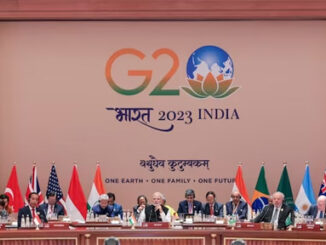
    “As India completes the G20 Presidency, penned a few thoughts on how the principles of Vasudhaiva Kutumbakam- OneEarth, One Family, One Future were reinforced in various ways through the year gone by. India focused on furthering sustainable development, empowering women, strengthening multilateralism and more”. Prime Minister Modi on X (formerly Twitter), November 30, 2023

    By Narendra Modi, Prime Minister of India

    Today marks 365 days since India assumed the G20 Presidency. It is a moment to reflect, recommit, and rejuvenate the spirit of ‘Vasudhaiva Kutumbakam, ‘One Earth, One Family, One Future.’

    As we undertook this responsibility last year, the global landscape grappled with multifaceted challenges: recovery from the Covid-19 pandemic, looming climate threats, financial instability, and debt distress in developing nations, all amid declining multilateralism. In the midst of conflicts and competition, development cooperation suffered, impeding progress.

    Assuming the G20 Chair, India sought to offer the world an alternative to status quo, a shift from a GDP-centric to human-centric progress. India aimed to remind the world of what unites us, rather than what divides us. Finally, the global conversation had to evolve – the interests of the few had to give way to the aspirations of the many. This required a fundamental reform of multilateralism as we knew it.
    Inclusive, ambitious, action-oriented, and decisive—these four words defined our approach as G20 president, and the New Delhi Leaders’ Declaration (NDLD), unanimously adopted by all G20 members, is testimony to our commitment to deliver on these principles.

    Inclusivity has been at the heart of our presidency. The inclusion of the African Union (AU) as a permanent member of the G20 integrated 55 African nations into the forum, expanding it to encompass 80% of the global population. This proactive stance has fostered a more comprehensive dialogue on global challenges and opportunities. The first-of-its-kind ‘Voice of the Global South Summit,’ convened by India in two editions, heralded a new dawn of multilateralism. India mainstreamed the Global South’s concerns in international discourse and has ushered in an era where developing countries take their rightful place in shaping the global narrative. Inclusivity also infused India’s domestic approach to G20, making it a People’s Presidency that befits that world’s largest democracy. Through “Jan Bhagidari” (people’s participation) events, G20 reached 1.4 billion citizens, involving all states and Union Territories (UTs) as partners. And on substantive elements, India ensured that international attention was directed to broader developmental aims, aligning with G20’s mandate.

    At the critical midpoint of the 2030 Agenda, India delivered the G20 2023 Action Plan to Accelerate Progress on the Sustainable Development Goals (SDGs), taking a crosscutting, action-oriented approach to interconnected issues, including health, education, gender equality and environmental sustainability.

    A key area driving this progress is robust Digital Public Infrastructure (DPI). Here, India was decisive in its recommendations, having witnessed the revolutionary impact of digital innovations like Aadhaar, UPI, and Digilocker first-hand. Through G20, we successfully completed the Digital Public Infrastructure Repository, a significant stride in global technological collaboration. This repository, featuring over 50 DPIs from 16 countries, will help the Global South build, adopt, and scale DPI to unlock the power of inclusive growth.

    For our One Earth, we introduced ambitious and inclusive aims to create urgent, lasting, and equitable change. The Declaration’s ‘Green Development Pact’ addresses the challenges of choosing between combating hunger and protecting the planet, by outlining a comprehensive roadmap where employment and ecosystems are complimentary, consumption is climate conscious, and production is planet-friendly.

    In tandem, the G20 Declaration calls for an ambitious tripling of global renewable energy capacity by 2030. Coupled with the establishment of the Global Biofuels Alliance and a concerted push for Green Hydrogen, the G20’s ambitions to build a cleaner, greener world is undeniable. This has always been India’s ethos, and through Lifestyles for Sustainable Development (LiFE), the world can benefit from our age-old sustainable traditions.

    Further, the Declaration underscores our commitment to climate justice and equity, urging substantial financial and technological support from the Global North.

    For the first time, there was a recognition of the quantum jump needed in the magnitude of development financing, moving from billions to trillions of dollars. G20 acknowledged that developing countries require $5.9 trillion to fulfil their Nationally Determined Contributions (NDCs) by 2030.

    Given the monumental resources required, G20 emphasised the importance of better, larger, and more effective Multilateral Development Banks. Concurrently, India is taking a leading role in UN reforms, especially in the restructuring of principal organs like the UN Security Council, that will ensure a more equitable global order.

    Gender equality took centre stage in the Declaration, culminating in the formation of a dedicated Working Group on the Empowerment of Women next year. India’s Women’s Reservation Bill 2023, reserving one-third of India’s Parliament and state legislative assembly seats for women epitomizes our commitment to women-led development.

    The New Delhi Declaration embodies a renewed spirit of collaboration across these key priorities, focusing on policy coherence, reliable trade, and ambitious climate action. It is a matter of pride that during our Presidency, G20 achieved 87 outcomes and 118 adopted documents, a marked rise from the past.

    During our G20 Presidency, India led deliberations on geopolitical issues and their impact on economic growth and development. Terrorism and the senseless killing of civilians is unacceptable, and we must address it with a policy of zero-tolerance. We must embody humanitarianism over hostility and reiterate that this is not an era of war. I am delighted that during our Presidency India achieved the extraordinary: it revitalised multilateralism, amplified the voice of the Global South, championed development, and fought for the empowerment of women, everywhere.

    As we hand over the G20 Presidency to Brazil, we do so with the conviction that our collective steps for people, planet, peace, and prosperity, will resonate for years to come.

  • First Indian American elected Ash Kalra named chair of California Assembly Judiciary Committee

    First Indian American elected Ash Kalra named chair of California Assembly Judiciary Committee

    • Parminder Aujla

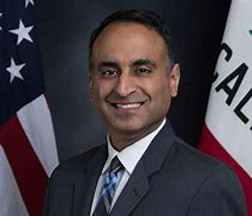
    SACRAMENTO (TIP): : Ash Kalra, the first Indian American elected to the California State Assembly, has been appointed Chair of the Assembly Committee on Judiciary by Speaker Robert Rivas.
    “At a time when California must be vigilant in protecting civil rights, fostering a just legal system, and ensuring everyday consumers are protected, it is an honor to serve as Chair of Judiciary Committee,” Kalra stated after his appointment on Nov 22.
    “Having served on this committee for the past seven years under Chairs Stone and Maienschein, I am grateful for their leadership and ready to hit the ground running,” he added. “I am thankful to Speaker Robert Rivas for his confidence and this opportunity to further serve the people of California.”
    “The justice system is foundational to keeping Californians safe and holding offenders accountable. I’m confident Assemblymember Kalra will fight for the rights of the people who matter most, while ensuring the system itself is just,” Rivas said. The Assembly Committee on Judiciary’s primary jurisdictions include family law, product liability, tort liability, Civil Code, and Evidence Code (excluding criminal procedure).
    Kalra had most recently served as Chair of the Assembly Labor and Employment Committee for the past five years.
    He was first elected in 2016, becoming the first Indian American to serve in the California Legislature in state history, and was re-elected to his fourth term in 2022.
    In the State Assembly, he has authored successful legislation promoting secure and peaceful communities for all residents, including protecting and preserving civil rights and civil liberties, and has dedicated his tenure in public service to equity and social justice issues, according to his website.
    Kalra represents California’s 25th Assembly District, which encompasses the majority of San José, including downtown and open space areas in southeast Santa Clara County.
    Kalra has a law degree from Georgetown University and was a Deputy Public Defender for Santa Clara County for 11 years. As a public defender, he represented indigent clients in both felony and misdemeanor matters.

  • Indian American Democratic Lawmaker Raja Krishnamoorthi featured as Foreign Policy ‘Mastermind’

    Indian American Democratic Lawmaker Raja Krishnamoorthi featured as Foreign Policy ‘Mastermind’

    WASHINGTON, D.C. (TIP): : The prestigious Foreign Policy magazine has portrayed Indian American Democratic lawmaker Raja Krishnamoorthi and Republican Rep. Mike Gallagher as ‘The Masterminds’ of Washington’s getting tough on China Policy.
    Gallagher and Krishnamoorthi, are the chair and ranking member of “what is basically the hottest ticket in Washington” — the House of Representatives’ China Committee, as the magazine put it. The Select Committee on the Chinese Communist Party, which is its full name, is focused exclusively on how to map out a new era of US competition with China. Describing the new era of US competition with China as “the most significant strategic shift in American foreign policy in decades,” Foreign Policy said “Gallagher and Krishnamoorthi are in the driver’s seat” insofar as Congress’ role in the action.
    Since the committee was first formed in January, Gallagher and Krishnamoorthi have held numerous high-profile hearings, issued a slew of reports, toured the country, and sent a flurry of letters to private companies and top Biden administration officials for their work, the magazine noted.
    The House China Committee has no lawmaking authority, but it can conduct investigations and lengthy research projects, issue subpoenas, issue policy recommendations, and seed all of its work into other House committees with authority over major budget and legislative issues, such as the House Armed Services Committee, Ways and Means Committee, or Finance Committee.
    “In short, this is the beating heart of Congress’s policy agenda on China, giving Gallagher and Krishnamoorthi outsized voices on what most in Washington consider the new, defining US foreign-policy challenge,” Foreign Policy wrote suggesting, “What the committee sets its sights on next is a good indication of where US policy will go.” There are three broad factors that make the House China Committee a bastion of bipartisanship and productivity, it said The first is the scale of the threat from China, at least in the sense of how 95 percent of Washington sees it—something most Republicans and Democrats, if not the rest of the world, agree on.
    The second is the fact that both Gallagher and Krishnamoorthi are from politically safe districts and are genuine policy wonks, as described by themselves as well as numerous other US lawmakers, Congressional aides, and officials interviewed for this story. Both are seasoned members of the House Intelligence Committee. (Gallagher, a Marine Corps veteran, also earned his PhD in international relations from Georgetown).
    Without uphill reelection battles, both say the House China Committee is a top priority in their jobs, according to Foreign Policy. “I devote my most productive hours such as they exist to this,” Gallagher told the magazine. “I don’t have to worry about the political side of things per se. So, it frees up time to focus on policy.”
    Krishnamoorthi agreed, saying he spends a lot of time on the committee’s work. “I don’t have a life,” he said.
    The third factor is that the two congressmen actually seem to get along, Foreign Policy said.


  • Indian American business owner Shivinder Singh running for Yorba Linda City Council

    Indian American business owner Shivinder Singh running for Yorba Linda City Council

    • Parminder Aujla

    SACRAMENTO (TIP): : Indian American business owner Shivinder Singh is running for City Council in Yorba Linda in northeastern Orange County, California vowing to prioritize preservation of Yorba Linda’s unique identity and empowering residents.
    Shivinder Singh, currently serving as the Chair Pro Tem of The Yorba Linda Planning Commission, brings decades of proven leadership and community activism to ensure Yorba Linda remains the “Land of Gracious Living,” according to his campaign website.
    Singh’s platform prioritizes the protection of local control, property rights, equestrian rights, parental rights, public safety, economic growth, transparency, accountability, and the promotion of community engagement through education and empowerment, it said. “He will work tirelessly to unite the residents and preserve Yorba Linda’s heritage and safeguard Yorba Linda’s exceptional quality of life!”
    A licensed Electrical Engineer with over 25 years of public service, a master’s degree in computer & electrical engineering, and certification in Project Management, he has a background in business and technology including artificial intelligence, active transportation and intelligent transportation systems.
    Singh’s core values revolve around family, faith, education, and liberty, firmly believing in the transformative power of education and emphasizing the importance of family and faith, his campaign states, according to his campaign.
    Singh is also a successful business owner and CEO for over 23 years. He serves as an appointed delegate from the 40th Congressional District. Dedicated to community service, Shivinder has held diverse roles.
    In the City of Brea, he served as the President and Secretary of a Homeowners Association and held a position on the Traffic Committee for four years. Singh served as Traffic Commissioner in the City and is currently contributing to the Community as a Planning Commissioner for the past three years.
    Active in local business and cultural spheres, Singh is a member of the Yorba Linda Chamber of Commerce, actively involved with the Richard Nixon Presidential Library, and a supporter and volunteer at various Yorba Linda events, according to his campaign.

  • Indian American man found lifeless in a planter in Los Angeles 

    Indian American man found lifeless in a planter in Los Angeles 

    LOS ANGELES (TIP): An investigation is on into the death of a 39-year-old Indian American man whose body was found in a planter in Los Angeles County. The coroner’s office has identified the man as Satish Dharmarajan. No further details are available at present. A formal pronouncement of Dharmarajan’s death was made on Nov. 25 at 9:37 am. Dharmarajan, who was born on March 6, 1984, was found lifeless in a planter. The manner and cause of death have not yet been determined, according to media reports.
    “It’s with great sorrow we inform you that Saji (39), son of Dharmarjan and Saraswathi, and brother of Sarita Kumar (@12404604343), brother-in-law to Anil Kumar (past KCS president), and uncle to Sohan and Anisha, left us for his heavenly abode yesterday (11/25) due to unforeseen circumstances,” his family announced in a social media post on Sunday. “Please give the family their privacy until we have additional details regarding services. Our hearts are heavy with sorrow, and our thoughts and prayers are with the family during this challenging time,” they added. In a similar case, a man’s body was found inside a container at Malibu Lagoon State Beach on July 31.
    Los Angeles County sheriff’s deputies responded to a report of a dead body found inside a 55-gallon drum on the beach at Malibu Lagoon State Beach. A maintenance worker first spotted the barrel in a shallow water inlet. He paddled out in a kayak and pulled the container to the shore but didn’t open it. The next day, a lifeguard saw the same barrel — now back in the lagoon — and swam out and brought it onto the beach, where he opened it and discovered the body.

  • Irish Prime Minister says Dublin rioters brought ‘shame’ on Ireland

    Irish Prime Minister says Dublin rioters brought ‘shame’ on Ireland

    LONDON (TIP): Irish Prime Minister Leo Varadkar said on November 24 that protesters who battled police and looted shops in Dublin after a school knife attack were motivated by “hate” and brought “shame on Ireland”. Thursday night’s violence in the Irish capital — which erupted after three children were wounded in the stabbings — was of a level not seen in decades, according to police, who arrested 34 people. “Those involved brought shame on Dublin, brought shame on Ireland and brought shame on their families and themselves,” a visibly angry Varadkar told reporters, describing the rioters as “criminals”.
    “They did not do what they did because they wanted to protect Irish people. They did not do it out of any sense of patriotism, however warped.”
    “They did so because they’re filled with hate. They love violence. They love chaos and they love causing pain to others,” he added. The unrest came after a five-year-old girl sustained serious injuries in a suspected stabbing in Parnell Square East, north central Dublin.
    Two other children and two adults — a woman and the suspected perpetrator of the attack — were taken to hospital after the incident at around 1:30 pm (1330 GMT).
    Rumours on social media about the nationality of the assailant, who police only described as a man in his fifties, helped fuel unrest following the attack.
    Police blamed a “complete lunatic faction driven by far-right ideology” for the violence.
    “As a country, we need to reclaim Ireland. We need to take it away from the cowards who hide behind masks and tried to terrify us with their violence,” said Varadkar.
    He promised that his government would use the “full resources of the law, the full machinery of the state to punish those involved in yesterday’s grotesque events”.
    Varadkar added that he would pass new laws in the coming weeks to enable police “to make better use” of CCTV evidence they collected during the unrest.
    He also said Ireland would “modernise” its laws regarding hate and incitement. (AFP)

  • China will allow visa-free entry for France, Germany, Italy, the Netherlands, Spain and Malaysia

    China will allow visa-free entry for France, Germany, Italy, the Netherlands, Spain and Malaysia

    BEIJING (TIP): China announced November 24 that it will allow visa-free entry for citizens of five European countries and Malaysia as it tries to encourage more people to visit for business and tourism. Starting Dec. 1, citizens of France, Germany, Italy, the Netherlands, Spain and Malaysia will be allowed to enter China for up to 15 days without a visa. The trial program will be in effect for one year.
    The aim is “to facilitate the high-quality development of Chinese and foreign personnel exchanges and high-level opening up to the outside world,” Foreign Ministry spokesperson Mao Ning said at a daily briefing.
    China’s strict pandemic measures, which included required quarantines for all arrivals, discouraged many people from visiting for nearly three years. The restrictions were lifted early this year, but international travel has yet to bounce back to pre-pandemic levels.
    China previously allowed citizens of Brunei, Japan and Singapore to enter without a visa but suspended that after the COVID-19 outbreak. It resumed visa-free entry for Brunei and Singapore in July but has not done so for Japan.
    In the first six months of the year, China recorded 8.4 million entries and exits by foreigners, according to immigration statistics. That compares to 977 million for all of 2019, the last year before the pandemic.
    The EU Chamber of Commerce in China welcomed the announcement and expressed hope that more European nations would be given visa-free access soon. In a statement, it called it “a tangible and practical improvement, which will also increase business confidence.”
    The Chinese government has been seeking foreign investment to help boost a sluggish economy, and some businesspeople have been coming for trade fairs and meetings, including Tesla’s Elon Musk and Apple’s Tim Cook. Foreign tourists are still a rare sight compared to before the pandemic. (AP)

  • Israeli army withdraws from Gaza hospital after truce: Hamas ministry

    Israeli army withdraws from Gaza hospital after truce: Hamas ministry

    GAZA (TIP): Israeli forces withdrew from Gaza’s largest hospital Al-Shifa on November 24, the Hamas-run health ministry said, on the first day of a temporary truce between Israel and the Palestinian militants.
    The Israeli military raided Al-Shifa last week, targeting what it said was a Hamas command centre in a tunnel complex beneath the medical facility. The Palestinian militant group and hospital officials have repeatedly denied the claim. Al-Shifa has been a major focus of Israel’s ground offensive in the Gaza Strip following attacks by Hamas across southern Israel on October 7, which Israeli officials say killed about 1,200 people.
    Since the Israeli raid, many of the estimated 2,300 patients, staff and displaced civilians sheltering in the Al-Shifa complex have been evacuated to the south of the Gaza Strip.
    But the World Health Organization was “extremely concerned” about the safety of the estimated 100 patients and health workers remaining at Al-Shifa, spokesman Christian Lindmeier said.
    Hamas health ministry spokesman Ashraf al-Qudra said the Israeli military had withdrawn but the people remaining at Al-Shifa were in a battered complex whose “main generator is destroyed along with numerous buildings”. The Israeli military did not immediately respond to an AFP request for comment.
    “We’re working on further evacuations from hospitals as soon as possible,” said Lindmeier, with recent Israeli operations focusing on the Indonesian Hospital, another medical facility in northern Gaza. Lindmeier said the latest evacuation convoy had left Al-Shifa with “73 severely ill or injured patients” including some in need of critical care.
    On Thursday, Israeli forces arrested Al-Shifa director Mohammad Abu Salmiya, who has been frequently quoted by international media about conditions inside the complex.
    Israeli soldiers escorted journalists to a tunnel shaft they said was part of an underground network used by Hamas.
    Al-Shifa Hospital has been the scene of an extended Israeli special forces operation as part of its war against Hamas in the Gaza Strip, where the Hamas-run government says nearly 15,000 people have been killed, most of them women and children.
    On Friday, a four-day truce in the Israel-Hamas war began, with hostages set to be released in exchange for Palestinian prisoners. “We hope that this humanitarian pause leads to a longer-term humanitarian ceasefire for the benefit of the people of Gaza, Israel and beyond,” said Jens Laerke, spokesman for the United Nations humanitarian agency OCHA. (AFP)

  • Four-day truce begins in Gaza; Israeli hostages, Palestinian prisoners released

    Four-day truce begins in Gaza; Israeli hostages, Palestinian prisoners released

    Palestinian NGO says 39 released from prison by Israel under truce agreement

    BEITUNIA (PALESTINIAN TERRITORIES) (TIP): A Palestinian NGO said November 24 that 39 prisoners had been released by Israeli authorities under a truce agreement to pause the fighting in Gaza after 13 hostages from Israel had been handed over. A total of 28 prisoners were released in the occupied West Bank, an AFP correspondent saw, while the other 11 were brought to annexed east Jerusalem, according to the Palestinian Prisoners’ Club advocacy group.
    Two white coaches, escorted by armoured vehicles, were seen leaving the Ofer military camp in the early evening.
    The Palestinian prisoners inside the buses in Beitunia were greeted by large crowds, many of whom chanted “God is great”, and bursts of firecrackers that lit up the night sky.
    The 39 were freed under a ceasefire agreement with the Palestinian Islamist movement Hamas, which released 13 women and child hostages seized in its attack on southern Israel on October 7.
    Israeli prison authorities confirmed 39 inmates had been released, describing them as “the first group of detainees freed under the plan to bring the hostages home”. The Detainees’ Affairs Department of the Palestinian Authority issued a list of 24 women and 15 minors being freed.
    They included Malak Salman, who was arrested seven years ago on her way to school, when she was 16, for trying to stab a policeman in Jerusalem.
    Now 23, she was returned to her home in Beit Safafa, in annexed east Jerusalem, under Israeli police escort.
    “The police are in our house and are stopping people coming to see us,” her mother Fatina told AFP.
    “My daughter is weak, she has not eaten since yesterday,” she added.
    Israeli police have issued orders banning celebrations in Jerusalem for released prisoners.
    White plumes of smoke were seen as authorities fired tear gas to disperse the crowds. (AP)

  • South African Olympic runner Oscar Pistorius granted parole 10 years after killing his girlfriend

    CAPE TOWN (TIP): Double-amputee Olympic runner Oscar Pistorius was granted parole on November 24, 10 years after shooting his girlfriend through a toilet door at his home in South Africa in a killing that jolted the world.
    Department of Corrections spokesperson Singabakho Nxumalo said Pistorius would be released from prison on Jan. 5. Pistorius, who turned 37 this week, has been in jail since late 2014 for the Valentine’s Day 2013 killing of model Reeva Steenkamp, although he was released for a period of house arrest in 2015 while one of the numerous appeals in his case was heard. He was ultimately convicted of murder and sentenced to 13 years and five months in prison.
    Serious offenders in South Africa must serve at least half of their sentence to be eligible for parole, which Pistorius has done. Pistorius was at the height of his fame and one of the world’s most admired athletes when he killed Steenkamp. He shot her multiple times in the bathroom of his Pretoria villa in the predawn hours with his licensed 9mm pistol. (AFP)

  • Pakistan court strikes down notification to keep former PM Imran Khan in judicial lockup

    ISLAMABAD (TIP): The Islamabad High Court on November 21 declared illegal the August 29 notification which had directed jail authorities to keep former Pakistan prime minister Imran Khan in “judicial lockup” in the cipher case, according to media reports. The court issued the directives while hearing an intra-court appeal filed by Khan against a single-member bench’s decision that had approved the ex-premier’s jail trial in the cipher case, according to the Dawn newspaper. Earlier in the morning, the two-member panel of Islamabad High Court reserved the judgement till evening. A single-judge bench of the same court had earlier turned down the Pakistan Tehreek-e-Insaf (PTI) chairman’s appeal against his trial in the Adiala Jail in Rawalpindi.
    The 71-year-old former premier has been kept in the Adiala Jail in Rawalpindi since September 26 when he was shifted there from the District Jail in Attock.
    The Ministry of Law issued a no-objection certificate (NOC) for the jail trial of the former prime minister as requested by the Interior Ministry and special court Judge Abual Hasnat Zulqarnain on August 29, Geo News reported.
    In March 2022, Khan and his foreign minister Shah Mahmood Qureshi were alleged to have violated the secret laws of the country while handling a communication (cipher) sent by Pakistan’s embassy in Washington.
    The diplomatic cable reportedly went missing from Khan’s possession.
    According to the former ruling party, the cable contained a threat from the United States to topple the PTI’s government.
    The duo was indicted on October 23 and their formal trial has already begun with the recording of statements by witnesses.
    The Islamabad High Court had upheld the indictment when challenged by the cricketer-turned-politician.
    However, it had stayed the trial until adjudication on the intra-court appeal. (PTI)

  • Bangladesh beauty queen brings ‘dawn of hope’ for trans women

    Bangladesh beauty queen brings ‘dawn of hope’ for trans women

    DHAKA (TIP): Bangladeshi trans woman Yasin Ahmed Sokal always wanted the freedom to dress like her sisters, but never in her wildest dreams did she imagine being showered with applause at a beauty pageant in her conservative homeland. For 24-year-old Sokal, her triumph in one of the South Asian nation’s most prestigious beauty contests was not only a personal victory but one that sent a message of hope. Sokal, whose name means “dawn” in Bengali, was this month named second runner-up in Miss Evergreen Bangladesh 2023. “I hope I’ve brought a dawn of hope for trans women in Bangladesh,” Sokol said in the capital Dhaka.
    “It is a victory for thousands of trans women and thousands of Sokals out there.”
    Among Bangladesh’s population of 170 million an estimated 1.5 million people are transgender, but they have long faced discrimination and violence.
    Stories are common of transgender people being abandoned by families and communities, forcing them to beg or be driven into the sex trade.
    “It sends a message of hope to all closeted transgender people that is: beauty doesn’t remain limited to men and women,” she said.
    “Beauty is everywhere, diversity is beauty, and beauty has no gender.”
    Attitudes in the Muslim-majority country towards trans people are slowly shifting, although the LGBTQ community still faces massive legal and societal discrimination.
    Homosexuality is criminalised under a colonial-era penal code.
    Sokal, a fashion student in Dhaka, grew up in a hostile world where her wish to be a woman was mocked.
    “I was born male, but I’d always realised I was growing up as a woman,” Sokal told AFP.
    Coming from a Muslim family from a rural village 60 kilometres (38 miles) east of the capital Dhaka, Sokal knew as a child she felt different. “I was a victim of bullying so many times in school and college,” she said, in a quiet voice. She described how she was refused enrolment into an English course “because of my gender identity”.
    For the beauty contest, which was open to only women, Sokal was questioned as her name sounds like a man’s. “It was only after I was able to convince them about my identity that they called me for the audition,” she said.
    “Victory in the Miss Evergreen Bangladesh is a testament that I am a woman. Thanks to the contest, finally people have appreciated my beauty.”
    While Sokal identifies as a trans woman, many in Bangladesh would identify her as a “hijra” — a South Asian term for a “third gender”.
    in Bangladesh, hijras have held a unique cultural position, with the popular belief they can confer luck or good health to others.
    In 2013, trans people were officially identified as a separate gender, and in 2018, they were allowed to vote and run in elections.
    Two transgender candidates have since won mayoral elections, while employers have slowly overcome earlier stigmas to recruit them to jobs.
    Islamic clerics have opened dozens of seminaries to trans students, expediting their social inclusion. (AFP)

  • Thailand’s Cabinet approves a marriage equality bill to grant same-sex couples equal rights

    Thailand’s Cabinet approves a marriage equality bill to grant same-sex couples equal rights

    BANGKOK (TIP): Thailand’s Cabinet on November 21 approved an amendment to its civil code to allow same-sex marriage, with an expectation for the draft to be submitted to Parliament next month. Karom Polpornklang, a deputy government spokesperson, said the amendment to the Civil and Commercial Code will change the words “men and women” and “husband and wife” to “individuals” and “marriage partners” for same-sex couples to be able to receive the same rights that heterosexual couples receive.
    He said the law would guarantee the right to form a family in a relationship between same-sex couples, adding that the next step will be an amendment to the pension fund law to recognize same-sex couples as well.
    Prime Minister Srettha Thavisin told reporters that the draft law is expected to be proposed to Parliament on Dec. 12. If it becomes law after Parliament’s approval and King Maha Vajiralongkorn’s endorsement, Thailand will be the third place in Asia, after Taiwan and Nepal, to allow same-sex marriage.
    While famous for being an LGBTQ+ friendly country, Thailand has struggled to pass a marriage equality law. Parliament last year debated several legal amendments to allow either marriage equality or civil unions, which do not grant same-sex couples all the same rights as heterosexual couples. All of the bills failed to be passed before the parliamentary session of the previous government ended.
    The new government led by the Pheu Thai party, which took office in August, revived the attempt to pass a marriage equality bill, which it had promised during its election campaign. (AP)

  • INDIE FILM FEST RETURNS FOR SECOND TIME TO NYC

    • By Mabel Pais

    DYLAN K NARANG’s ‘Tapawingo’ Opens Fest      

    Co-Director VINUSHU SUNDARESAN’s ‘The Blind Zone’                                                                            

    Co-Director DANIEL RASHID’s ‘Chauncey’

     RAVI STEVE KHAJURIA’s ‘The Pros And Cons Of Killing Yourself’

    MICAH KHAN’s ‘The Zombie Wedding’     

    MOHAMMAD ANWERZADA’s ‘Itch’

     NAZRIN CHOUDHURY’s Red, White And Blue

    Dances With Films (DWF – danceswithfilms.com), Los Angeles’ largest purely indie film-focused film festival over the past 26 years, heads to New York City for the 2nd year (November 30-December 3) featuring a film lineup nearly three times the size of last year’s NYC debut.

    Among DWF NYC’s lineup of 136 films, including 20 narrative features, 9 documentary features, 19 television and streaming pilots, and 88 short films (73 narrative and 15 documentaries), are an impressive number of world premieres. All screenings will take place, November 30-December 3, at the Regal Union Square at 850 Broadway, New York, NY 10003.

    After becoming the leading beacon for true indie films and filmmakers in Los Angeles over the past 26 years, this will mark Dances With Films’ return to New York City for the second year. Dances With Films’ Founders and Directors Leslee Scallon and Michael Trent, said, “This year’s theme is “the color of imagination” and that imagination, by its various definitions, exemplifies what ‘Dances With Films’ will be highlighting this December. We could not be more excited to return to NYC and debut so many wonderful films and help provide a platform for all our indie filmmakers and their projects under the spotlight of this great city.”

    DWF NYC also present a series of filmmaker panels focused on current real world issues faced by today’s indie filmmakers at The Stand (116 E. 16th Street) Panels will include “Distribution: Navigating the Marketplace as Well as Forecasting the Future”, which will be moderated by Scott Macauley (Filmmaker Magazine), and is slated to include executives from Magnolia Pictures, IFC, and STX Entertainment, “Making the Sale: The Producer/Sales Agent Dynamic” moderated by Kate Erbland (Indiewire), and includes Carylanna Taylor (Head of Sales Film Sales Corp), Josh Braun (Founder & President, Submarine), and Jason Ishikawa (Sr. Exec. & Co-head of Sales, Cinetic Media), and “The Casting Director/Producer Dynamic” moderated by Michael Sladik (SAGindie New York), and includes casting directors Shayna Markowitz, Bernie Telsey, and Paul Schnee.

    ‘DANCES WITH FILMS’ 2023 NYC EVENT LINEUP

    OPENING NIGHT

    ‘Tapawingo’

    Dir: Dylan K. Narang; USA; 1h 49m

    ‘Tapawingo,’ Opening Night. (Credit : danceswithfilms.com)

    An oddball becomes the bodyguard for a misfit teenager and finds himself in the crosshairs of the town’s family of bullies.

    CLOSING NIGHT

    ‘The Activated Man’ – World Premiere

    Dir: Nicholas Gyeney; USA; 1h 55m

    As Ors Gabriel struggles with the grief from losing his best friend and beloved dog to cancer, the trauma brings on strange visions only Ors can see.

    ‘The Pros and Cons of Killing Oneself.’ (Credit : danceswithfilms.com)

    ADDITIONAL NARRATIVE FEATURES

    ‘Advanced Chemistry’ – World Premiere

    Dir: Etana Jacobson; USA; 1h 36m

    The Bastard Sons – World Premiere

    Dir: Kevin Interdonato; USA; 1h 30m

    ‘Between The Lights’ – World Premiere

    Dir: Michael Groom; UK; 1h 44m

    ‘Bound’ – World Premiere

    Dir: Isaac Hirotsu Woofter; USA; 1h 41m

    Can’t Seem to Make You Mine – World Premiere

    Dirs: Sara Katarina Burke, Aaron Andrew Keene; USA; 1h 42m

    Daruma

    Director: Alexander Yellen; USA; 1h 44m

    Grounded

    Dir: Justin Chan; USA; 1h 24m

    Home Free

    Dir: Aaron Brown; USA; 1h 38m

    Influence – World Premiere

    Dir: Ryan Moore; USA; 1h 23m

    Katie’s Mom

    Dir: Tyrrell Shaffner; USA; 1h 51m

    M – North American Premiere

    Dir: Vardan Tozija; Macedonia/Croatia/Kosovo/France/Luxembourg; 1h 39m

    Nobody’s Home – World Premiere

    Dir: Michelle Bossy; USA; 1h 23m

    Palimpsest – North American Premiere

    Dir: Hanna Vastinsalo; Finland; 1h 49m

    Space Baby

    Dir: Rex Dean; USA; 1h 39m

    Tallywacker – World Premiere

    Dir: Brendan Boogie; USA; 1h 30m

    ‘The Zombie Wedding.’ (Credit : danceswithfilms.com)

    The Zombie Wedding – World Premiere

    Dir: Micah Khan; USA; 1h 39m

    DOCUMENTARY FEATURES

    44 Lights: Music from Ground Zero

    Dir: Barbara Blackburn Tuttle; USA; 1h 8m

    American Pot Story: Oaksterdam

    Dirs: Dan Katzir and Ravit Markus; USA; 1h 37m

    Brothers Broken

    Dirs: Geoff Levin, Lily Richards; USA; 1h 26m

    Denim Hunter – U.S. Premiere

    Dir: Emilio Di Stefano; Sweden; 1h 27m

    The Depths of My Despair

    Dir: Elizabeth Lawrence; USA; 1h 8m

    District Of Second Chances – World Premiere

    Dir: Wynette Yao; USA; 1h 16m

    Meet Me Where I Am

    Dir: Grant Garry; USA; 1h 26m

    Studio One Forever

    Dir: Marc Saltarelli; USA; 1h 26m

    Torched – The Story of Austin Torch

    Dir: Hoag Kepner; USA; 1h 6m 

    There are two MIDNIGHT FEATURES, nineteen TELEVISION AND WEB SERIES PILOTS, sixty NARRATIVE SHORTS, fifteen DOCUMENTARY SHORTS, and thirteen MIDNIGHT SHORTS.

    DANCES WITH FILMS

    Now in its 26th year, ‘Dances With Films’ champions the unflinching spirit at the very core of the independent film scene. With most film festivals relying heavily on celebrity, it has relied on innovation, talent, creativity, and sweat equity that revolutionized the entertainment industry. And that reliance continues to prove successful with alumni moving on to write, direct, and produce celebrity-studded vehicles, star in blockbuster movies, and television series, produce multi-million-dollar films and create hot TV shows.

    (Mabel Pais writes on The Arts and Entertainment, Social Issues, Spirituality, Education, Cuisine, Health & Wellness, and Business)

  • DESI FILMS OF NOTE

    • By Mabel Pais

    AMERICAN SIKH

    Dirs: Ryan Westra & Vishvajit Singh; USA; English; Short; 10m

    2023 Academy Award Winner GUNEET MONGA KAPOOR with

    Michelin-starred Chef and Filmmaker VIKAS KHANNA Executive Produce

    OSCAR® Qualified Animated Short AMERICAN SIKH

    ‘AMERICAN SIKH,’ directors Ryan Westra and Vishvajit Singh teamed up to bring more diverse representation and experiences into today’s media and to challenge perceptions of what an American (and a superhero) can look like.

    2023 Academy Award winner Guneet Monga Kapoor (‘The Elephant Whisperers’) and one of Vanity Fair’s top ten chefs Vikas Khanna serve as Executive Producers for this important film.

    Vishavjit Singh is publicly known for his Captain America persona — a Sikh man equipped with his turban and beard — fighting against bigotry, intolerance and perceptions of what an American should look like. But Singh, the only member of his family born in the U.S., didn’t always feel he could embrace his identity this way.

    The true and unlikely story of an American born, turban-wearing Sikh man, Vishavjit Singh, who after a lifetime of facing prejudice, self-doubt and violence, finally finds acceptance in a superhero costume.

    Guneet Monga Kapoor

    Guneet Monga Kapoor. (Credit : Sikhya Entertainment)

    Voted as one of the top 12 women achievers in the Global Entertainment industry by The Hollywood Reporter and among the top 50 Indians changing India by ‘India Today,’ Guneet has been a force to reckon with and a game-changing producer in Indian cinema. Guneet is an Indian film producer, a BAFTA nominee and amongst the first producers from India to be inducted in the Academy of Motion Picture Arts and Sciences. She is the recipient of the Global Media Makers fellowship by Film Independent and the US Department of State’s Bureau of Education and Cultural Affairs. In 2019, the Alfred P. Sloan Foundation awarded her the prestigious Sloan Science and Film grant. Guneet Monga Kapoor is a trailblazing filmmaker, not only is she the first producer in India to win an Academy Award for Best Documentary Short for ‘The Elephant Whisperers,’ she is also one of the first producers from India to be inducted into the Academy of Motion Pictures Arts and Science.

    Guneet is the founder of Sikhya Entertainment, a Mumbai-based production house. She has produced close to 30 feature films including ground-breaking cinema such as ‘Lunchbox,’ ‘Monsoon,’ ‘Shootout,’ and ‘Massan,’ to name a few. She was one of the Executive Producers behind ‘Period. End of Sentence.’ which won an Academy Award in 2019.

    Vikas Khanna

    Vikas Khanna is an internationally acclaimed Indian American Michelin-starred chef, filmmaker, and author. He is a James Beard nominee and one of the first Indian chefs to be awarded a Michelin Star in the U.S. He has been featured amongst the 10 most influential chefs in the world by Vanity Fair. Vikas is the author of 41 award winning books, and the creator of ‘Holy Kitchens’ creating awareness of Sikhism through community kitchens. ‘The Last Color’ marks Khanna’s debut as a film writer and director, which raised awareness of the disinheritance of widows, whilst ‘Barefoot Empress’ focussed on education for girls in India.

    Learn more about directors Ryan Westra, Vishvajit Singh and the film at americansikhfilm.com.

    ————————————————-

    AGAINST THE TIDE

    Dir: Sarvnik Kaur; Exec Prod: Mira Nair; 2023; India, France; Koli, Marathi, Hindi; 1h 37m

    Winner – Sundance Film Festival Special Jury Award

    Nominee – Gotham Award for Best Documentary

    Shortlisted – IDA Award for Best Feature Documentary

    Opens in New York City on November 24

    Koli Fishermen – Rakesh & Ganesh. (Credit : Courtesy, norget.com)

    ‘AGAINST THE TIDE’ is crafted from moments in the lives of Bombay fishermen Rakesh and Ganesh, inheritors of the great Koli knowledge system –  a way to harvest the sea by following the moon and the tides.

    Rakesh has kept faith in the traditional fishing methods while Ganesh has strayed away from them, embracing technology. ‘Against the Tide’ is a tale of friendship and rising resentment between the two men, as close as brothers, against the backdrop of an adoring sea, which is increasingly turning hostile because of climate change.

    Even as the fish become scarcer and the environment more hostile, the difference in their fishing techniques becomes the reflection of their different approach to life. Following the undulated life trajectories of Rakesh and Ganesh diligently and over a long period, the film weaves a story about the perpetuity and fragility of brotherhood, love, and a beautiful natural world that is being crushed under the menacing effects of climate change.

    Sarvnik Kaur

    Sarvnik’s grandparents were born in Pakistan when the country was part of British India. In 1947, India and Pakistan were divided and the two countries entered into a mortal conflict which continues today.

    Her grandfather’s family, Sikhs, fled Pakistan to a refugee camp in New Delhi, where her father was born. In 1984, her grandparents had managed to leave the camp and build a modest house, but it was completely destroyed during an anti-Sikh riot. She was one year old. Her family had to move again. She grew up with the trauma of these successive uprootings and a constant fear.

    For the past ten years, she had lived next to a Koli village. This has allowed her to get closer to them, to witness their daily concerns. In 2016, when the regional authorities decided to transform their market into a commercial complex without consulting them, the ‘Collective of Women Fish Sellers’ immediately put up resistance. Sarvnik became actively involved with them and made some short films that they used to conduct their campaign. This is how her journey with the Kolis began. She has spent the last five years with the Koli community and has come to understand their lives — the conflicts and the joys — as a filmmaker, as an ethnologist, and now as a friend. With time and patience, both Sarvnik and the Kolis have established a relationship of trust.

    By following the life of one and then the other, she hoped to make the film viewer question his own convictions and the choices he would have made himself if he had been in their place.

    (Mabel Pais writes on Social Issues, The Arts and Entertainment, Spirituality, Education, Cuisine, Health & Wellness, and Business)

  • HONORING INDIGENOUS PEOPLES MONTH

    HONORING INDIGENOUS PEOPLES MONTH

    • By Mabel Pais

    LAKOTA NATION VS. THE UNITED STATES

    Directed by Jesse Short Bull and Laura Tomaselli

    Produced by Phil Pinto and Benjamin Hedin

    ‘LAKOTA NATION VS. UNITED STATES’  is a powerful and thought-provoking documentary chronicling the ongoing current struggle and journey of the Lakota people to reclaim their land and sovereignty and the legal battle they have waged against the United States government.

    The Black Hills, the birthplace and life-giving land of the Lakota people, is the most sacred place on earth to them that has shaped thought, identity and philosophy for the Očéti Šakówiŋ since time immemorial.

    Yet with the arrival of the first Europeans in 1492, the sacred land has been the site of conflict between the people it has nurtured, and the settler state seeking to exploit and redefine it in its own image. This powerful new documentary is a searing testament to the strength of the Oyate and a visually stunning rejoinder to the distorted image of a people long shaped by Hollywood. ‘Lakota Nation vs. United States’ is a lyrical and provocative testament to a land and a people who have survived removal, exploitation and genocide–and whose best days are yet to come.

    Watch the official trailer – youtu.be/eV9Oeut62vw

    Learn more at lakotanationvsus.movie

    Jesse Short Bull (Co-Director)

    Jesse Short Bull, Director, wrote and produced the 2013 short ‘Istinma,’ set in the Pine Ridge Indian Reservation of South Dakota. A graduate of the Institute of American Indian Arts, Short Bull received a 2016 Sundance Institute Native American and Indigenous Program Development Grant

    and also attended the Creative Producing Summit at Sundance. In 2014 he was part of the effort to change the name of Shannon County to Oglala Lakota County in South Dakota. Currently employed by the Oglala Lakota tribal government, Short Bull is a member of the board of the Black Hills Film Festival. With the First Peoples Fund he leads youth filmmaking workshops in the Oglala Lakota Nation.

    “LAKOTA NATION VS. THE UNITED STATES” is a story that I have a powerful connection to. My great-great grandfather, Tatanka Ptchela (Short Bull) was an active witness to the conflict between the two nations in the mid and late nineteenth century. He refused to sign the 1868 Fort Laramie Treaty and lived his life resisting the encroachment of Lakota lands.

    Five generations later, as a member of the Oglala Tetonowan Oyate, and employee of the Oglala Sioux Tribe, I bear witness to the efforts of people committed to getting the Black Hills back.

    From the humblest of dreams, to the dedicated government-to-government conversations, I believe it is time to tell the story of America’s longest running failure to do the right thing,” said Jesse Short Bull.

    “With the (current) U.S. government leadership in place, there is a sense of urgency to tell this story. It is a real fear of mine that as time passes by, future generations will still be fighting for their right to their Sacred He Sapa (Black Hills). This story needs an end, and that end is the return of our relative, the Black Hills. The Lakota nations involved with the Black Hills land claim are those I will work my hardest to represent fully and accurately. My grandfather, Tatanka Ptechela, refused to accept anything for the Blacks Hills, and I will approach my work on this film with the same standard as he did, committed to the people and the advancement of their desires.”

    LAURA TOMASELLI (Co-Director/Editor)

    Laura Tomaselli, Director and Editor is a filmmaker with credits spanning narrative, documentary, and commercial projects. Most recently, she edited the documentary features MLK/FBI and Surge as well as the nonfiction shorts ‘Feathers’ and ‘Lowland Kids.’ For her work on MLK/FBI Tomaselli received a Cinema Eye Award Nomination for Outstanding Achievement in Editing. Her films have screened at Sundance, SXSW, the Museum of Modern Art, and the Toronto International Film Festival.

    She said, “While this history isn’t familiar to a majority of Americans, these landscapes certainly are. This rang true as our crew traveled through and around the Black Hills region on what felt like a surreal family vacation. Filming alongside tourists at sites like Mount Rushmore, the difference in our perspectives was consistently jarring. (The systematic extermination of the American buffalo is now a “Buffalo Hunt” roller- coaster adjacent to the set of Dances with Wolves.) From the outset of this project we felt a weight to visually represent the Black Hills as sacred and holy rather than a backdrop. In demolishing the sacred Six Grandfathers to make way for the construction of Mount Rushmore, interviewees would often invoke demolishing the Sistine Chapel as a metaphor. In this way our visual approach often became shortened to “film nature like a church.”

    “We’re all familiar with that phrase by Faulkner, “The past isn’t really past at all.” We were able to capture a number of ways in which Americans interact with this story in the present day—a reenactment of Custer’s Last Stand, a ceremony to demonstrate the effects of colonization on Turtle Island. This is a story about enduring Lakota resistance and existence, but it’s also a conversation with the present. History repeats itself until we actually learn the history.”

    (Mabel Pais writes on Social Issues, The Arts and Entertainment, Spirituality, Education, Cuisine, Health & Wellness, and Business)