Year: 2023

  • Indian Envoy Sanjay Verma urges Canada to release evidence to back up its allegations on Nijjar killing

    Indian Envoy Sanjay Verma urges Canada to release evidence to back up its allegations on Nijjar killing

    OTTAWA (TIP): Indian High Commissioner to Canada Sanjay Kumar Verma has said that New Delhi was “convicted” even as the investigation into the killing of Khalistani terrorist Hardeep Singh Nijjar on Canadian soil had not fully concluded. Urging Canada to release evidence to back up its allegations in connection with the killing, the Indian envoy maintained that New Delhi would look into anything “very specific and relevant” communicated to them to back up Justin Trudeau’s allegations.

    In an interview with CTV news channel, the high commissioner was asked about the allegations raised by Canadian Prime Minister Trudeau of possible Indian government’s involvement in Nijjar’s killing.

    Responding to this, Verma said, “There are two points on that. One is that, even without the investigation being concluded, India was convicted. Is that a rule of law?” On being asked “how was India convicted”, the high commissioner said, “Because India was asked to cooperate and if you look at the typical criminal terminology, when someone asks to cooperate, it means you have already been convicted and you better cooperate”.

    “So, we took it in a very different interpretation. But, we have always said that if there is anything very specific and relevant, and communicated to us, we will look into it,” the Indian envoy added.
    (Source; ANI)

  • CBI registers preliminary enquiry against TMC MP Mahua Moitra in cash for query case

    CBI registers preliminary enquiry against TMC MP Mahua Moitra in cash for query case

    NEW DELHI (TIP): The CBI on Saturday registered a preliminary enquiry against All India Trinamool Congress MP Mahua Moitra on a reference made to it by the Lokpal. The Lokpal reference came on a complaint made by BJP MP from Jharkhand Nishikant Dubey, who alleged that Mahua accepted monetary gains in lieu of questions she asked in the Lok Sabha against the Adani group of industries and with the motive to help Adani’s business rivals. Neither the CBI nor the Lokpal have issued any formal statement on the issue.

    The registration of a PE is important as it opens the doors for ascertainment of whether a criminal offence is made out. In case the anti-graft agency gathers smoke evidence at the PE stage it can convert the enquiry into an FIR.

    Meanwhile, Moitra took to ‘X’ and said that neither the Lokpal uploaded any referral order on its website as per the Lokpal Act nor the CBI put out anything official. “Hope Rs 13,000 crore Adani coal scam merits CBI PE before my witchhunt,” she posted. Moitra said she was “amused to see how headless Lokpal with no full-time Chairman referred” her case to the CBI.

    “RTI of 3/11/23 says Lokpal has no Chairman since May 2022 and 3 of 8 member posts also vacant! Maybe Jharkhand Branch of Pitbull Association also moonlighting as Lokpal Committee under BJP,” she said on X.

    Dubey in his complaint to the Lokpal also alleged that Moitra compromised national security.

    The Ethics Committee of the Lok Sabha is also looking into the same complaint against Moitra and has recommended Mahua’s expulsion from the house finding allegations made against her true.
    (Source: PTI)

  • November 24 New York & Dallas E – Edition

    [vc_row][vc_column][vc_custom_heading text=”E-Edition” font_container=”tag:h2|text_align:center” google_fonts=”font_family:Istok%20Web%3Aregular%2Citalic%2C700%2C700italic|font_style:700%20bold%20regular%3A700%3Anormal” link=”url:https%3A%2F%2Fwww.theindianpanorama.news%2Fwp-content%2Fuploads%2F2023%2F11%2FTIP-November-24-E-Edition.pdf”][vc_single_image image=”154516″ img_size=”full” alignment=”center” onclick=”custom_link” link=”https://www.theindianpanorama.news/wp-content/uploads/2023/11/TIP-November-24-E-Edition.pdf”][/vc_column][/vc_row][vc_row][vc_column width=”2/3″][vc_custom_heading text=”Lead Stories This Week” google_fonts=”font_family:Istok%20Web%3Aregular%2Citalic%2C700%2C700italic|font_style:700%20bold%20regular%3A700%3Anormal” link=”url:https%3A%2F%2Fwww.theindianpanorama.news%2F”][vc_wp_posts number=”5″ show_date=”1″][/vc_column][vc_column width=”1/3″][vc_single_image image=”82828″ img_size=”medium” alignment=”center” onclick=”custom_link” link=”https://www.theindianpanorama.news/advertising-media-kit-portal-indian-panorama/”][vc_single_image image=”82829″ img_size=”medium” alignment=”center” onclick=”custom_link” link=”https://www.theindianpanorama.news/advertising-media-kit-portal-indian-panorama/”][/vc_column][/vc_row]

  • Indian American business leader Balkrishan “BK” Kalra to replace Tiger Tyagarajan as Genpact CEO

    Indian American business leader Balkrishan “BK” Kalra to replace Tiger Tyagarajan as Genpact CEO

    NEW YORK (TIP): Indian American business leader Balkrishan “BK” Kalra, is set to take over as CEO of Genpact, A global professional services firm, effective Feb 9, 2024
    The company announced a leadership succession plan on Nov 8 after “Tiger” Tyagarajan, President and Chief Executive Officer, informed the Board of Directors of his intention to retire from the company.
    Kalra, currently Genpact’s Global Business Leader, Financial Services and Consumer & Healthcare, will join the company’s Board on Feb 9, 2024, and Tyagarajan will continue as a member of the Board of Directors.
    “Kalra is a transformative business leader, with more than 30 years of experience helping companies grow from early stage to large, globally competitive enterprises,” according to the company announcement.
    He joined Genpact in 1999 and has served in a variety of increasing leadership roles across the company. He leads Genpact’s global transformation efforts across the banking, capital markets, consumer goods, retail, life sciences and healthcare industries, helping companies better leverage technology and AI-enabled solutions.
    “We are delighted to announce BK as Genpact’s next CEO, a leader with a proven track record of delivering business results and fostering deep client relationships,” said James Madden, Chairman of Genpact’s Board of Directors.
    “In planning for Tiger’s retirement, the Board undertook a robust process, assessing a number of internal and external candidates. In the end, BK stood out as the natural successor. He understands the importance of investing in emerging trends and technologies with a particular focus on Genpact’s efforts around advanced analytics and AI-enabled solutions. BK’s strategic vision and deep understanding of our clients and business is exactly what Genpact needs as we enter this new chapter.”
    “I am honored to assume the CEO role and appreciate the confidence and trust that Tiger and the Board have placed in me,” said Kalra. “With an immensely talented workforce and a deep history of developing innovative solutions for our clients, Genpact has a unique opportunity to lead our industry.
    “I look forward to working closely with the Board and our leadership team to accelerate a new chapter of growth for Genpact, one with technology at the forefront of everything we do to unlock tremendous potential for our clients, employees, and shareholders alike.” Tyagarajan assumed the CEO role in 2011 and led Genpact through a period of tremendous growth. During that time, he helped transform the company into a recognized industry leader with more than $4.3 billion in annual 2022 revenue, leveraging data and technology to better serve its clients, according to a press release.
    “On behalf of the Board and the entire organization, I would like to express our sincere appreciation for Tiger’s leadership of Genpact over the last 12 years,” said Madden.
    “Tiger has built a strong, diverse, and global team, focused on a clear set of prioritized verticals, geographic markets, and services. We look forward to his continued contributions on the Board.”
    “Leading Genpact has been the highlight of my career, and I would like to thank the entire team for their support,” Tyagarajan said. “The world is rapidly changing around us, and I am incredibly proud of what we have achieved, staying ahead of the curve as a true partner to our clients around the world, empowering our employees, and transforming the communities in which we live and operate.
    “BK has been an integral part of Genpact’s success, and I am confident that, under his leadership, we are well positioned for the next phase of our journey and future growth,” he added.

  • Indian American businessman Vimal Patel running for Congress from Alabama

    Indian American businessman Vimal Patel running for Congress from Alabama

    MOBILE, AL (TIP): : Indian American businessman Vimal Patel is vying for Democratic nomination for US Congress from Alabama’s redrawn 2nd district which spans south Alabama and includes Montgomery County and a portion of Mobile County.
    Patel, 39, is one of 13 Democrats who joined the race after a federal court approved a new map that changed the 2nd District from safely Republican to one where a Democrat can win. The primary is March 5. There are eight Republicans running.
    Patel told Al.com the Great Recession of more than a decade ago taught him how to sustain his family businesses during lean times, skills that he believes would make him a problem-solver in Washington.
    Patel said he believes the business skills would make him effective in Congress and help tackle issues like the federal deficit and the long-range outlook for Social Security. He said those in Washington have responded to those foundational problems with complacency.
    “That’s ridiculous, for us to know the Titanic’s hitting the iceberg and to say that we’re just going let two political parties take us right into it,” Patel said.
    “The real issue is, what kind of changes need to take place to keep it solvent,” Patel said. “Right now, you’re just having people throw up bullets in the air. You’re going to want to elect people who have numbers in mind, who know how to do those things. You cannot spend money that you don’t have.”
    Patel ran for the 2nd District seat in 2022, losing in the Democratic primary to Phyllis Harvey-Hall, who is also running again this time.
    Patel said he has always leaned toward a Democratic viewpoint on certain issues. Patel supported the Affordable Care Act passed by Congress under former President Barack Obama and says its emphasis on preventive healthcare was commonsense.Patel disagrees with Republican candidates for Congress who call for abolishing the federal Department of Education. He said he thinks he knows why, but said the answer is to fix it, not eliminate it.
    Patel said he would support a federal initiative to improve education that would not take decision-making away from the state and local levels.
    Patel said if he goes to Congress, he will have a staff member whose job is to inform small businesses about federal programs that can help them.
    Patel said he saw the need for that effort during the Covid pandemic, when he said he only learned about a federal grant program from a chamber of commerce Facebook post.
    Patel manages his family’s hotels in Troy, Montgomery, and Dothan and a laundromat in Eufaula. He lives in an apartment built into one of the family hotels in Troy. He is married and has an 11-year-old daughter. He shares his home and office with his father, Pravin Patel, who built three of the hotels.
    Patel’s family immigrated from India in 1980. The first one in his family born in America, Vimal Patel graduated from Charles Henderson High School in Troy and earned a political science degree from Auburn in 2007.
    He said he assumed management responsibilities for the family businesses around 2009 to 2010, a time when the recession and its aftermath was squeezing the economy in Alabama and across the nation.

  • Celebrating the 554th birth anniversary of Shri Guru Nanak Dev Ji

    Celebrating the 554th birth anniversary of Shri Guru Nanak Dev Ji

    The nearly 30 million Sikhs across the world are in jubilation to celebrate the 554th birth anniversary of their First Master Shri Guru Nanak Dev Ji on November 27. 

    https://youtu.be/lO0Y-FBMt3A?si=svh9-ZdL98rdn4wf

    Guru Nanak, the founder of Sikhism and the first of the ten Sikh Gurus, was not merely a religious figure but a beacon of humanity, compassion, and social justice. His teachings reverberate through the corridors of time, transcending centuries to inspire and guide humanity towards a path of righteousness, equality, and enlightenment. Guru Nanak’s philosophy encompasses a profound humanism that remains remarkably pertinent in today’s world.

    At the heart of Guru Nanak’s teachings lies a resolute emphasis on the oneness of humanity. He propagated the concept of Ik Onkar, the belief in the unity of God, emphasizing that all human beings are equal regardless of their caste, creed, religion, or social status. In an era marred by deep-seated societal divisions and discriminatory practices, Guru Nanak’s message of equality and unity was revolutionary. He challenged the prevailing societal norms that fostered discrimination, and propagated the dignity of every individual.

    His teachings against blind faith and ritualism challenged the dogmas prevalent during his time. Guru Nanak emphasized the importance of spirituality over mere religious practices. He advocated for a direct connection with the divine through meditation, honest living, and serving humanity. His rejection of empty rituals and emphasis on genuine, heartfelt devotion resonates with the modern quest for spiritual authenticity.

    Guru Nanak was a vehement critic of social exploitation and oppression in all its forms. He spoke out against the oppressive caste system, societal hierarchies, and economic injustices prevalent in society. His teachings denounced the exploitation of the poor and marginalized, advocating for compassion, empathy, and sharing with those in need. He established the concept of langar, a community kitchen where people from all walks of life could sit together and share a meal, breaking down barriers of caste and class.

    The Guru’s humanitarian efforts extended beyond religious boundaries. He traveled extensively, engaging in dialogues with people from different faiths and backgrounds, promoting mutual respect and understanding among diverse communities. His messages of peace, love, and harmony resonate with the principles of tolerance and coexistence that are vital in today’s multicultural world.

    Guru Nanak’s teachings on women’s rights were revolutionary for his time. He advocated for gender equality, condemning the subjugation and mistreatment of women. He believed in the inherent dignity and equality of women, empowering them with equal rights and respect in society. His teachings emphasized the importance of education for both men and women, recognizing the crucial role of women in shaping a progressive society.

    The Guru’s legacy as a humanitarian and social reformer remains incredibly relevant in addressing contemporary global challenges. In an era marked by religious extremism, intolerance, and social inequality, Guru Nanak’s teachings offer a beacon of hope and guidance. His emphasis on compassion, selflessness, and service to humanity serves as a guiding principle for fostering a more inclusive and compassionate society.

    Furthermore, Guru Nanak’s teachings resonate strongly with the ideals of modern humanism. His emphasis on the inherent worth and dignity of every individual, irrespective of their background or beliefs, aligns with the core values of humanism. He encouraged critical thinking, rationality, and a quest for truth, challenging individuals to seek enlightenment through knowledge and introspection.

    Guru Nanak’s profound teachings as a great humanitarian, advocate against blind belief, and proponent of social justice transcend time and continue to hold immense relevance in the modern world. His legacy serves as a guiding light, inspiring individuals to strive for a more equitable, compassionate, and harmonious society. As we navigate the complexities of the contemporary world, the universal message of Guru Nanak stands as a testament to the enduring power of humanism, social justice, and the pursuit of a more enlightened humanity.

    Happy Guru Nanak Prakash Divas (birth anniversary) !


  • Birthday Horoscope- November 27 to December 3

    Birthday Horoscope- November 27 to December 3

    November 27

    Ganesha says today is the beginning of a voyage into the brightest parts of your own psyche. The energy of the universe is ideal for introspection and coming to know oneself better. You might find that you are drawn to life’s most profound concerns, which may lead you to investigate topics like purpose and personal development. It is the kind of day that is perfect for writing in a diary, since your thoughts will be able to flow freely onto the paper, and you will discover new insights that you had not noticed previously. Clarity and calm may also be gained through meditation or a solitary stroll in the fresh air. Embrace this mindset of introspection; you have a unique chance to make big personal discoveries and progress during this time.

    November 28

    Ganesha says today there is an increase in creative energies, making it an excellent day for artistic expression. The stars are aligned in a way that will boost your creative abilities, whether you’re an artist, a writer, a musician, or you simply like creative pastimes. You have the option of beginning a new project or returning to an old one today since your creative potential is at an all-time high. Even in mundane activities, you should make an effort to inject some creative thought. It’s possible to find artistic expression in the kitchen, in the garden, or even in rearrangement of your furniture. You should follow where your imagination takes you and not be hesitant to try out new things and concepts.

    November 29

    Ganesha says today is a day devoted to making and maintaining ties and communicating with others. Because you will feel in tune with those around you, today is a good day for having significant talks, whether they are with close friends, members of your family, or coworkers. Now that you have a greater capacity to explain yourself clearly, you should engage in the conversations that you have been putting off. It is also a wonderful day for making new connections and socializing with others. The relationships you cultivate in the present could pave the way for fascinating prospects in the foreseeable future. 

    November 30

    Ganesha says today’s focus is on maintaining equilibrium and harmony. It’s possible that you’ll experience a strong want to arrange and bring order to not only your surroundings but also your thoughts. Organizing one’s life, formulating plans, and establishing objectives are all productive activities for today. In your private life, make efforts to bring harmony to the connections you have. As today is a day in which even seemingly insignificant actions can have a significant effect, you should give some thought to reaching out to a person you care about with a kind remark or a helpful deed.

    December 1

    Ganesha says adventure calls on this day. It’s possible that you’ll get the overwhelming desire to do something out of the ordinary and shake up your usual routine. It could be something as easy as taking a different route to work, or it could be something as significant as making plans for a future vacation. The important thing is to welcome change and the enthusiasm that comes along with it. Maintain an open mind toward new experiences and allow spontaneity to direct your actions. It is also an excellent day for education, so today can be a good time to start reading a new book or researching something you’ve always been intrigued about.

    December 2

    Ganesha says a day for contemplation and expression of thanks. Spend some time reflecting on the past year and recalling all of the experiences you’ve had throughout that period. Keep your attention on the good and what you’ve gained from the experience. It is also a day to show appreciation for the people in your life and the experiences that have made you who you are today. Think about penning a note or sending a message to a person who has changed your life in some significant way, or just stop what you’re doing for a moment and appreciate the beauty that surrounds you every day.

    December 3

    Ganesha says you deserve some peace and quiet, so give yourself the gift of a relaxing activity like taking a long bath, reading a book, or going for a stroll at your own pace. Pay attention to what your mind and body want and offer them what they require to feel refreshed. It’s also a great day to engage in some low-intensity physical activity, like yoga or a leisurely bike ride, which can help you get your thoughts organised and improve your mood.

  • Weekly Horoscope- November 27 to December 3, 2023

    By Chirag Daruwalla – Son of Astrologer Bejan Daruwalla

    Aries

    Ganesha says that this week will prove to be auspicious for the people of Aries. If you have been suffering from some disease or any other physical pain for some time, then you will get relief from it this week. Your colleagues will prove to be very helpful in removing the obstacles coming into your work. Students engaged in the preparation of examination competitions can get some good news at the beginning of the week itself. During this, the journey undertaken in connection with career business will prove to be successful and profitable. If any of your money is stuck in the market or any scheme etc., it will come out unexpectedly. In the second half of the week, there will be chances of traveling to any religious or tourist place with the family. During this, most of the youth’s time will be spent in fun. Married life will remain happy. Health will be normal.

    Taurus

    Ganesha says that the people of Taurus will get full support of good luck this week. At the beginning of the week itself, you can have some big success related to your career or business, due to which there will be an atmosphere of happiness in the house. During this, religious-manglik programs will be held at home and your mind will be very busy in such works. Faith in God will increase and blessings of elders will be received. This time will prove to be auspicious for the people associated with studies and writing. From an economic point of view, the flow of money will be good at this time and there will be an increase in the accumulated wealth. If you have been planning to buy land, buildings, or vehicles for a long time, then by the end of this week your wish can be fulfilled. For those who were thinking of making their career abroad, the obstacles coming their way will be removed. People will appreciate your pair. Married life will also remain happy.

    Gemini

    Ganesha says that this week is going to bring new opportunities in life for the people of Gemini. If you were thinking of changing your job or business for a long time, then your dream can be fulfilled this week. You will get new employment opportunities. However, before taking any step forward, you must take advice from your well-wishers. This week you will get the full cooperation and support of your parents while finding a solution to any major family-related problem. Best friends will also provide their full cooperation. Long-distance travel is possible in connection with business in the middle of the week. The journey will prove to be pleasant and beneficial. This week the misunderstandings arising in your love affair will be removed. There will be a special contribution of a female friend in bringing the car of love back on track. For those who were still living a single life, someone can enter their life. To make married life happy, do not ignore the feelings of your spouse and take some time out of your busy schedule for him as well. Be aware of seasonal diseases.

    Cancer

    Ganesha says that this week will prove to be extremely favourable for Cancerians. Your work will be appreciated. It is possible that you may also get some important position or responsibility. For those who have been thinking of furthering their business for a long time, their dream can be fulfilled this week. The obstacles coming in the work related to power-government will be removed and money will be gained. With the help of an influential person, you will heave a sigh of relief when the matters related to the court are settled outside. The obstacles coming in getting the ancestral property will be removed. There will be full cooperation from brothers and sisters while solving family issues. In the second half of the week, working women will remain very busy and they may face some difficulties in balancing work and home. During this, avoid haste during work and drive carefully. Love relations will be normal. There will be better coordination with the life partner and there will be opportunities to spend a pleasant time with the family.

    Leo

    Ganesha says that the people of the Leo zodiac will have to avoid anger and arrogance this week, otherwise not only your ready-made works can get spoiled. Be careful in talking, otherwise, you can wash your hands of years-old relationships. In such a situation, while laughing and joking with someone, avoid making fun of others. This week you will need to take special care of your body along with work, otherwise, you may have to suffer physical and mental pain. The middle of the week will prove to be very auspicious for those working on contract and commission. During this time you will be able to earn profit from various sources. Those doing business or working abroad will get the desired benefits. At the end of the week, any major achievement related to the child side will be a big reason for your happiness and respect. In the second half of the week, you can go on a tourism or religious pilgrimage with your spouse. From the point of view of the love affair, you will need to step carefully this week, otherwise, you may have to face unnecessary stress or slander. Take special care of your health.

    Virgo

    Ganesha says that this week will prove to be normal for the people of Virgo. At the beginning of the week, there will be a lot of busyness regarding work. You may also have to bear the responsibility of others at work. You will do well with extra hard work and effort. If you were wandering in search of employment, then you may have to wait a little longer. In business, you will get the full support of your partner, due to which you will find your business progressing slowly but surely. In the second half of the week, you will need to take special care of your daily routine and food. During this time you will find yourself tired of both body and mind. You will remain worried about your mother’s health as well. During this, read any paper thoroughly before signing it. Love relations will be normal. Love partner will walk shoulder to shoulder with you in difficult times. Married life will remain happy. Your life partner will become your support in the ups and downs of life.

    Libra

    Ganesha says that the people of Libra will need to pay more attention to their relationship and health this week, because, at the beginning of the week, there may be a difference of opinion or debate with a dear member of the house. In such a situation, try to overcome any problem with a calm mind and understanding. At the beginning of the week, there will be financial worries if you spend more out of pocket on things related to home repair or amenities. Suddenly there will be chances of long or short-distance travel. Due to the expensive and tiring journey, the mind will remain a little disappointed and sad. However, in the second half of the week, someone related to the child will be found, due to which a wave of happiness will run in the house and he will get a chance to enjoy with the family. This time will also be auspicious from the business point of view. This time is going to be auspicious for you in terms of a love relationship. If the attraction of single people towards the opposite sex increases, then there will be strength in the already existing love relationship. The mind may remain a little worried about the health of the spouse.

    Scorpio

    Ganesha says that Scorpio sign people will get full results of the efforts and hard work put in by them this week. At the beginning of the week, the mind will be happy if there is a big opportunity related to career business. There will be an opportunity to work in association with a big scheme or organization. Employed people will get the full support of seniors and juniors in the field. The steps taken in connection with the business will prove to be correct and there will be desired progress in it. Investments made in the past in any scheme or business will prove beneficial. During this time, with the help of an influential person, it will help to solve any major problem related to life. The dispute related to land building will be resolved through talks. This week will prove to be very auspicious from the point of view of a love affair. If you were thinking of proposing to someone for a long time, then doing so this week will make your point. On the other hand, for those who are already in a love relationship, their love and harmony with their love partner will increase. Some good news will knock on the lives of married people, due to which there will be an atmosphere of happiness in the house.

    Sagittarius

    Ganesha says that the people of Sagittarius will remain busy with work this week. The journey will prove to be pleasant and beneficial. During this, there will be a meeting with an influential person, with whom you will get an opportunity to associate with profitable schemes in the future. People in whose work there was some upheaval going on, this week all things will be seen to be organized. Senior’s cooperation will be received and misunderstandings with Junior will be cleared. This week is going to be very auspicious for people associated with politics. Suddenly a big position or responsibility may come in his lap. In the middle of the week, you will feel relieved if any major confusion related to life is removed. During this, the decision in the matter related to the court will come in your Favor. Those doing business with foreign countries can get a big deal. This week is going to be very auspicious in terms of love relationships. Relatives can accept your love affair and put a seal of marriage on it. Married life will remain happy. The great achievement of the life partner will be a big reason for your respect.

    Capricorn

    Ganesha says that the people of Capricorn will need to be very careful this week from those people who often try to mislead. Be it workplace or home family, avoid taking any wrong step by being misled by someone. At the beginning of the week, the burden of additional work may come on the head of employed people. However, your friends will prove to be very helpful in handling it. This time will prove to be auspicious for students studying and writing. By the end of the week, they may get some good news. Businesspeople must take the advice of their well-wishers once while making a big deal in the middle of the week. Financially, this time can be a bit challenging for you. In such a situation, invest money in any scheme or business only after thinking. If any misunderstanding has arisen in the love relationship, try to remove it through dialogue instead of dispute, otherwise, the relationship may get worse.

    Aquarius

    Ganesha says that this week will prove to be mixed for the people of Aquarius. At the beginning of the week, any family-related problem will become a major cause of your troubles. This week, due to a dispute related to land-building or ancestral property, you may have to go to the court-court. At the same time, you may have to face the anger of your senior in the field of work. This week, avoid making any decisions in anger or by getting carried away by emotions. Avoid giving weight to the small things of colleagues in the workplace. In the second half of the week, you will need to pay special attention to your health. During this, you may come under the grip of seasonal diseases. Financial problems may come to the fore in the second half of the week. Due to this borrowing may have to be done. Take a step forward carefully in a love relationship and avoid glorifying it on social media etc., otherwise, you may have to face unnecessary problems. To make married life happy, respect the feelings of your spouse.

    Pisces

    Ganesha says that this week is going to be very auspicious for Pisces people. At the beginning of the week, all your planned work will be completed on time when good luck is with you. Employed people can get the desired promotion. Those who were thinking of a job change can get better opportunities. However, while making changes, do consult your well-wishers. This week, you will spend a lot of money on things related to comfort. There will be an atmosphere of happiness when the desired or much-awaited thing arrives in the house. For those who are doing business in partnership, this time will prove to be very auspicious. There will be chances of profit and progress in the business. Laziness has to be avoided in the second half of the week, otherwise, the opportunity at hand may slip away. During this, you also have to pay attention to your fitness. To maintain health, keep food and routine right. Marriage proposals may come for unmarried people this week. There will be strength in love relations and mutual trust will increase. Married life will remain happy.

    About Astrologer Chirag Daruwalla

    Celebrity Astrologer Chirag Daruwalla is the son of famous astrologer Bejan Daruwalla. He is known for his detailed astrological predictions on career, health, love, finance, and business. You can visit their website bejandaruwalla.com for guidance on problems related to your life and solve your problem with the help of expert astrologer Chirag Daruwalla. For guidance on problems related to your life you can speak with Astrologer Chirag Daruwalla on WhatsApp +91 9825470377 or e-mail to info@bejandaruwalla.com


  • Hardik Pandya set to return to Mumbai Indians for Rs 15 crore

    Hardik Pandya set to return to Mumbai Indians for Rs 15 crore

    Star all-rounder Hardik Pandya is set to cut ties with his current team, Gujarat Titans (GT), and return to his former franchise, Mumbai Indians, for the upcoming season of the Indian Premier League (IPL), as per ESPNcricinfo. The trade is an all-cash deal comprising the Mumbai-based franchise paying Rs 15 crore as the 30-year-old’s salary and an undisclosed transfer fee to the Titans. Hardik stands to earn up to 50% of the transfer fee, according to a report by ESPNcricinfo. If the move happens successfully then it will be considered the biggest player trade in IPL history. As of now, neither franchise has made it official.
    The all-rounder led the Gujarat-based franchise to win the title in the 2022 season of the IPL and was also named the ‘Player of the Match’ in the final game against Rajasthan Royals.
    In the previous edition of the IPL, GT confirmed their place in the IPL final for the second time in their first two seasons. However, in 2023 they lost against Chennai Super Kings and were runners-up.
    If the trade happens successfully, the 30-year-old will become the third skipper to be traded after Ravichandran Ashwin changed from Punjab Kings to Delhi Capitals. The second time was when Rajasthan Royals traded Ajinkya Rahane also to the Capitals in 2020.
    Hardik made his debut in the 2015 season. Following that he has played 123 matches in which he has scalped 53 wickets and scored 2,309 runs at a strike rate of 139.89.

  • India win: Surya ‘shines’ at night but Rinku once again finishes off in style

    India win: Surya ‘shines’ at night but Rinku once again finishes off in style

    Visakhapatnam (TIP)- Skipper Suryakumar Yadav shrugged off the disappointment of a World Cup final defeat with a captain’s knock but it was Rinku Singh’s composure that took a young Indian team to a thrilling two-wicket victory in the opening T20 International here on Thursday, November 22.
    This was India’s highest successful chase in T20 Internationals.
    The skipper was in belligerent mood making a mockery of a 209-run chase with 80 off just 42 balls but Rinku’s 22 not off 14 balls saved India from the blushes.
    India needed 14 off 12 balls after Surya departed but Axar Patel bungled big time and the likes of Ravi Bishnoi and Arshdeep Singh also were run-out in a jiffy.
    With a single needed off the final delivery, Sean Abbott was deposited into the stands by Rinku but to everyone’s delight, it turned out to be a big no-ball and hence the maximum wasn’t counted. India thus won with a ball to spare. However, what stood out was Rinku’s fearlessness and the sense of occasion and execution under pressure.
    Ishan Kishan also brushed aside initial rustiness to smack five sixes in his 39-ball-58 and was an ideal companion for his skipper in a run-chase which became easy due to a flat batting track, short boundaries although there wasn’t a lot of dew during the second innings.
    What the 112-run stand in 10 overs between Surya and Kishan did for India was keep them at par with Australia and in the hunt for a win. Rinku, the ‘designated finisher’ of T20 team, showed little nerves while lending the finishing touches with some lusty blows after Axar Patel’s 2 off 6 balls seemed like increasing tension in the dug-out. Kishan initially had only two runs off his first eight deliveries but once Surya played his customary pick-up short off Jason Behrendorff behind the keeper for a six, the keeper-batter seemed to gain some confidence as he lofted Sean Abbott over deep mid-wicket for a huge six.
    Surya lofted Abbott for a maximum and both got going as Kishan found his match-up in leg-break bowler Tanveer Sangha, who was sent on a leather-hunt.
    Sangha’s leg-breaks were literally long-hops coming into left-hander and three of Kishan’s five sixes were muscled in the same region but it was the hunger for a sixth six over extra cover that brought about his downfall. His skipper, however, hit the best six of the match when he brought about his first half-century with a lofted on-drive off Abbott.
    Earlier, India’s young bowling attack got a rude reality check as a dominant Josh Inglis smoked them to all parts of the ground with a cracking 110 off 50 balls, taking Australia to a healthy 208 for three. Surya’s decision to bowl first on a batting featherbed turned out to be a nightmare for the inexperienced Indian attack. They were taken to the cleaners by Inglis (110 off 50 balls), who hit as many as eight sixes, half a dozen of them off googly bowler Ravi Bishnoi. Source: PTI

  • Union minister Anurag Thakur announces first edition of Khelo India Para Games to be held from December 10 to 17

    Union minister Anurag Thakur announces first edition of Khelo India Para Games to be held from December 10 to 17

    New Delhi (TIP)- With a vision to identify talent and create an opportunity for young and aspiring para athletes to shine, Anurag Thakur, Union minister of youth affairs and sports, announced the first-ever Khelo India Para Games which will be held in New Delhi from 10th December to 17th December.
    Through a video message, Thakur said, “I am proud to announce that from December 10 to 17, the first-ever Khelo India Para Games will be held in various locations across New Delhi. A total of 7 disciplines will be held across three SAI (Sports Authority of India) Stadiums.”
    The announcement is a big shot in the arm towards the government’s initiative to develop para sports in the country, and the event will help in identifying talented para athletes who will be further aided with ample support from SAI and the Ministry of Youth Affairs and Sports to hone their skills.
    Over 1,350 participants from across 32 states and union territories including the Services Sports Control Board are expected to participate in the maiden Khelo India Para Games which will witness para athletes vie for honours in 7 disciplines including para athletics, para shooting, para archery, para football, para badminton, para table tennis, and para weight lifting. The events will be held across 3 SAI stadiums – the IG Stadium, Shooting Range in Tughlaqabad, and the JLN Stadium.
    Recent Hangzhou Asian Para Games stars Sheetal Devi, Bhavina Patel, Ekta Bhyan, Neeraj Yadav, Singhraj, Manish, Sonal, Rakesh Kumar, Sarita among others are expected to represent their respective states in the first edition of KheloIndia Para Games.
    Lauding the efforts of Indian para athletes who won an unprecedented 111 medals at the recently concluded Asian Para Games in Hangzhou, Thakur emphasized that the KheloIndia Para Games will aim to provide continuity to the para athletes with the annually held event. “Just a few weeks back, our para athletes created history as they ended their Hangzhou Asian Para Games campaign with an unprecedented 111 medals, the biggest haul for the country in any major international multi-sport event and now continuity of the Para Games and creating more development in the Paralympic sports remains our foremost agenda.”
    Since 2018, a total of 11 Khelo India Games have been successfully held. This includes 5 Khelo India Youth Games, 3 Khelo India University Games, and 3 Khelo India Winter Games. Thakur expressed that these Games have been instrumental in identifying talent across the country and have aided in India’s performance at the prestigious multi-discipline events.

  • Sikh shrines associated with Guru Nanak

    Sikh shrines associated with Guru Nanak

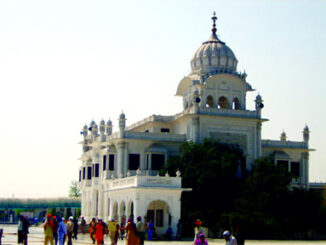
    Gurdwara Sri Ber Sahib
    This Gurdwara is situated on the banks of the river Kali Bein near Sultanpur Lodhi, in Punjab. Shri Guru Nanak Dev ji used to perform his ablutions in the river Bein. It was here that he meditated under a Ber (plum) tree for 14 years. According to legends, he disappeared under its waters one day only to emerge three days later as the enlightened Guru. His first words upon his emergence were that there is no Hindu, no Mussalman. The Gurdwara’s ground marks the place he entered the rivulet. Built by the Maharaja of Kapurthala in the mid 20th century, the Gurdwara has a three-storeyed building with a marble sanctum, octagonal pillars and stucco designs on its entrance.
    Gurdwara Khandh Sahib
    The name of this Gurudwara comes from ‘kachi khandh’ or mud wall which stood at the site of the Gurdwara in accordance with local traditions during Shri Guru Nanak Dev ji’s wedding. It is located at Kandhli gate, Batala Punjab. He sat beside the wall awaiting formal reception by his hosts. An old lady at the time had pointed out the dilapidated condition of the wall to which he reassured that it was safe. Thus, the wall became a revered object for his devotees. They even constructed a memorial in front of it. A mud wall encased in glass and plastered neatly next to Guru Granth Sahib is a symbolic representation of the previous one.
    Gurdwara Pathar Sahib
    25 miles away from Leh lies Gurdwara Pathar Sahib. It is situated on the Leh-Kargil road and is situated 12,000 ft above sea level. It was built in 1517 AD in order to commemorate Sri Guru Nanak Dev ji’s visit to Ladakh. During his lifetime, Shri Guru Nanak Dev traveled to many places and even went to Tibet. Some Tibetans even rever Guru Nanak Dev ji as a Buddhist monk with the name, Guru Gopka Maharaj, according to the Dalai Lama.
    Gurdwara Sri Reetha Sahib
    Situated near Diyuri village in the Champawat district of Uttarakhand this Gurudwara holds special significance for Sikhs. Along with Bhai Mardana ji, Shri Guru Nanak Dev ji himself visited the place. He asked Mardana ji to eat a reetha (soapnut) as they were sitting under its tree. Usually slightly bitter, the reetha had tasted sweet. Nearby ascetics got wonder-struck by this feat. Later, all reethas where Shri Guru Nanak Dev ji sat were found to have turned sweet.
    Gurdwara Shri Pehli Patshahi
    Gurdwara Shri Pehli Patshahi means the Gurdwara of the first master. It is situated near Lakhpat in Gujarat. Shri Guru Nanak Dev ji visited here during his first and fourth udasis (missionary journeys). He visited the site on his way towards Mecca during his fourth udasi. His rare personal possessions are retained in this Gurdwara. Thus, making it a must-visit place for any devotee.
    Darbar Sahib Gurdwara
    Gurdwara Darbar Sahib Kartarpur, also called Kartarpur Sahib, is a gurdwara in Kartarpur, located in Shakargarh, Narowal District of Punjab, Pakistan.
    It is built on the historic site where the founder of Sikhism, Guru Nanak, settled and assembled the Sikh community after his missionary travels (udasis to Haridwar, Mecca-Medina, Lanka, Baghdad, Kashmir and Nepal and lived for 18 years until his death in 1539. It is one of the holiest sites in Sikhism, alongside the Golden Temple in Amritsar and Gurdwara Janam Asthan in Nankana Sahib.
    The gurdwara is also notable for its location near the border between Pakistan and India. The shrine is visible from the Indian side of the border. Indian Sikhs gather in large numbers on bluffs to perform darshan, or sacred viewing of the site, from the Indian side of the border.
    The Kartarpur Corridor was opened by Pakistani Prime Minister Imran Khan on 9 November 2019, the anniversary of the fall of the Berlin Wall and just days before the 550th birth anniversary of Guru Nanak. This historic moment officially allowed Indian Sikh pilgrims rare visa-free access to the site in Pakistan. It is also claimed to be the largest gurdwara in the world. The gurdwara was built to commemorate the site where Guru Nanak, the founder of Sikhism, settled after his missionary work and did farming. Guru Nanak founded the Kartarpur town by Ravi River in 1504, plowing the fields and setting up a community kitchen, or Langar.He assembled a Sikh commune there, and lived for 18 years until his death on 22 September 1539. The gurdwara is built where Guru Nanak is said to have died.[5] It is therefore the second holiest site of the Sikh religion after Gurdwara Janam Asthan – the birthplace of Guru Nanak located in Nankana Sahib, Pakistan.
    Here, Guru Nanak gave the three principles of Kirat Karo, Naam Japo, Vand Chako, which means work hard for a livelihood, keep remembering God and share your bounties with the world. Guru’s teachings have been peace, harmony, and universal brotherhood. Guru Nanak believed in equality between castes, religions, and genders and gave the word Ik Onkar meaning there is only one God.
    According to Lahore-based art historian Fakr Syed Aijazuddin, the shrine houses the last copies of the original Guru Granth Sahib. A Sikh pilgrim remarked, “Every step here reminds us of the Guru’s life”. Indian Sikhs gather in large numbers on bluffs on the Indian side of the border to obtain darshan, or sacred viewing, of the site. As per popular legend, there was a dispute between the local Hindus and Muslims after Guru Nanak died. Muslims, who saw him as their pir, wanted to bury him while Hindus, who claimed Nanak as their guru, wanted to cremate his body. But the legend follows that Guru Nanak’s body was turned into flowers, which were then divided between the two communities.
    Gurdwara Sri Nankana Sahib
    Nankana Sahib is located in Pakistan about 50 miles west of Lahore. Originally known as Raipur, it went by the name of Rai Bhoi di Talwandi at the time of Guru Nanak’s birth. Nankana is the site of several historic gurdwaras built to commemorate miraculous occurrences during Guru Nanak’s life. The gurdwaras are surrounded by 18,750 acres of land bestowed to Guru Nanak by Rai Bular Bhatti, the Muslim headman of Talwandi village. His descendants have revered Guru Nanak through the centuries.
    Gurdwara Nankana (Janam Asthan) is built at the site of Guru Nanak Dev’s birthplace and childhood home. It is the most prominent of all the gurdwaras located in the town of Nankana, Pakistan. It is the host of annual gurpurab festivities commemorating Guru Nanak’s birth which are celebrated on the full moon in the latter part of the year.

  • Guru Nanak: The eternal traveler

    Guru Nanak: The eternal traveler

    By Navtej Sarna

    In a unique example of spiritual wanderlust, Guru Nanak spent more than 20 years on the road, spreading his message of love, compassion and equality of man. At a time when there were no quick or sophisticated means of travel, he undertook four long journeys, called udasis, signifying detachment. Though scholars have laid out detailed routes that he may have used, concrete evidence of the exact order of his travels is difficult to find. Indications of the places he visited as well as his experiences are contained in the janam-sakhis, written some decades after his passing. Some details can also be discerned from Guru Nanak’s own hymns as well as in the writings of Bhai Gurdas, the scholar and amanuensis who first inscribed the Adi Granth in Guru Arjan’s presence. Bhai Gurdas’s poetic vision describes Nanak’s immense travels thus: Babe tare char chak/ nau khand prithvi sacha dhoa (The Baba traversed the nine regions of the earth, as far as the land stretched).
    It is believed that Guru Nanak certainly travelled as far as Assam in the east, present-day Sri Lanka in the south, Mount Kailash in the north and Mecca-Medina in the west. Some speculative accounts take Nanak even further afield. His mission took him to snowy heights and across burning deserts, through little villages and mighty capitals, among the ordinary as well as learned, to fairs, festivals, to temples, mosques, khanaqahs. These travels gave him an opportunity to observe the workings of the religions of the day in actual practice and to debate and discuss these matters of the spirit with sages and seers and also to dispel ignorance and blind ritualism, of which there was no dearth. Bhai Gurdas puts it thus: Dithe Hindu Turaki sabhi pir paikambari kaumi katele/ Andhi andhe khuhe thele (I saw Hindus and Muslims, holy men of all kinds/ The blind pushing the blind into a well).
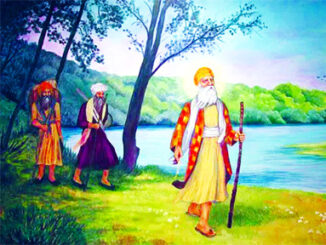
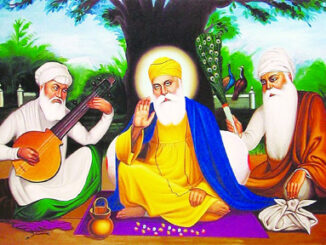
    Today, gurudwaras and shrines mark Nanak’s travels to these far-flung places; local legends further establish the fact that the Guru indeed travelled extensively. Nanak was accompanied by Mardana on his travels, who carried and played the rabab, and also became an interesting protagonist of the many sakhis that are attached to these travels. One cycle of janam-sakhis and several illustrations show another companion, Bhai Bala.
    According to some sources, Guru Nanak dressed in strange clothes that could not be identified with any sect and symbolised the universality of his message. He wore a loose long shirt of a Muslim dervish but of brownish-red colour of the Hindu sanyasi. Around his waist he wore a white cloth belt like a fakir. A short turban Babe bhek banaia udasi ki riti chalai/ Charhia sodhan dharth lukai (The Baba donned robes, and in the tradition of detachment/ Went to put humanity on the right path) partly covered a qalandar’s conical cap in the manner of Sufi wanderers. His slippers were often of two different colours and designs. Sometimes it is said he wore a garland of human bones around his neck. As Bhai Gurdas wrote: Guru Nanak’s first journey took him to the east, as far as Assam and Dhaka. On the way, he visited places of pilgrimage, including Haridwar, Ayodhya, Varanasi, Kedarnath, Badrinath and Gaya. The janam-sakhis tell several tales of his discourses with learned yogis.
    He also visited the Jagannath temple in Puri in Orissa. This temple is known for its annual procession when the idol is mounted on a huge chariot and the multitudes that gather vie with each other for the privilege of pulling the chariot. Here is one version of what happened there: when Guru Nanak and Mardana camped near the temple, their hymns and music attracted several devotees on their way to the temple, annoying the priests. One day, the chief priest came to Nanak and invited him to join the aarti (evening prayer) in the temple and Guru Nanak readily accompanied him. It was a beautiful ceremony, conducted at dusk. The priest placed earthen lamps filled with ghee on a bejeweled salver decorated with flower petals and sweet incense. They lit the wicks and swung the salver pendulum-like in front of the image while the congregation sang hymns, blew conches and tolled the bells. Nanak sat unmoved through the ceremony, and when the priests expressed their anger and surprise, he responded with a song now part of the Granth Sahib.
    The song describes the celestial aarti in which the sky, the sun, the moon, the stars, the wind, the forests and the unstruck music pay obeisance to the great Creator. This, according to Nanak, was the true aarti that could be offered to God:
    The sky the salver, the sun and moon the lamps, The stars studding the heavens are the pearls
    The fragrance of sandal is the incense Fanned by the winds, all for thee The great forests are the flowers
    What a beautiful aarti is being performed For you, O destroyer of fear.
    The second journey took Guru Nanak south, to present-day Sri Lanka. He was accompanied by two Jat followers: Saido and Gheho.
    The third udasi of Guru Nanak was to the north. He travelled widely in the Himalayas—several scholars have traced his steps to Himachal Pradesh, J&K, Uttar Pradesh, Sikkim, Ladakh and even Nepal and Tibet. The central event of this northern udasi is the visit to Mt Sumer, recorded in all the janam-sakhis and also by Bhai Gurdas—Mt Sumer is said to be none other than Mt Kailash, the abode of Shiv and Parvati. There took place his meeting with 84 siddhas, among them the ancient souls Goraknath, Machendranath and Charpat Nath, or perhaps their spiritual successors, who had meditated long and deep and possessed great power and wisdom.
    In Bhai Gurdas’s version of the meeting, the siddhas express amazement at seeing Nanak: O youthful one! What power brings you to these heights? Who is that you worship? And Guru Nanak replied: the eternal Lord alone.
    The siddhas ask him how the world below fared. Guru Nanak made no secret of what he felt. He said darkness, sin and injustice had taken over the world. Corruption was rampant; the fence itself had begun to eat the crop.
    Sidh chhapi baithe parabati kaunu jagat kau par utara (The wise siddhas have escaped into the remote caves and mountains—who will then redeem the world?)
    Guru Nanak had several meetings with siddhas and yogis, in particular with those of the kanphata (split-eared) sect. His discourse with these holy men, in question-and-answer form, is contained in his Siddha
    Gosht, comprised of 73 verses in the Granth Sahib. The entire discourse is conducted in a spirit of humility, intellectual inquiry and tolerance. In this discourse, the siddhas argue that it was not possible to be part of the world and follow the path of meditation and spirituality. Nanak replied that one had to be as a lotus or a duck—to stay in the water but still remain dry. One had to be part of the world and yet be unaffected by it through meditation on His name. The fourth udasi took Guru Nanak to the west and to Islamic countries and important centres such as Mecca and Baghdad. It is said that he dressed in a blue robe in the manner of a Haji and carried a book, a staff and a small carpet for saying his prayers.
    Phir Baba gaia Baghdad no bahari kia asthana/ Ik baba akal rupu duja rababi Mardana (Then Baba went to Baghdad and camped outside the city/ He himself one with the Timeless, and his rabab player Mardana).
    Baghdad was then a great centre of Islamic learning, art and culture. On the outskirts of the city, in a graveyard, Mardana strummed the strings of his rabab in holy melody and Nanak sang hymns. When this was reported to the Pir-e-dastgir of Baghdad as being against the teachings of Islam, he came out to meet Nanak and inquired: Puchhia phirikai Dastgir kaun phakir kis ka ghariana (What faith do you belong to, and what sect of fakirs do you come from)? Mardana replied: Nanak kal vich aia rab phakir iko pahichana/ Dharth akash chahudis jana (Nanak has come to this world in kalyug/ He has rejected all fakirs except the Supreme Being, who is all pervasive—in the heavens, the earth and all four directions).
    During his stay in Baghdad, the Guru also met another pir known as Bahlol who had several discourses with him. Finally, Bahlol and his son became followers of Nanak, who then stayed there for about four months. A shrine in Baghdad, also known as the tomb of Bahlol, marks the visit of Guru Nanak and his association with Bahlol.
    After these four long journeys, Guru Nanak settled down at Kartarpur on the banks of the river Ravi. He discarded his travelling robes and put on the garb of a householder. It was time to give practical shape to his ideals and to show that true salvation lies in righteous living in this world, not in renunciation. A community of men of all faiths and callings, high and low, gathered around him. Several important traditions, including those of spiritual gatherings to listen to the praise of the Creator and the langar, or communal kitchen, were born here. It was here too that Guru Nanak gave up his body in 1539 after anointing Lehna, or Guru Angad, as his spiritual successor. (Navtej Sarna is a former ambassador of India to the US and author of several books, including The Book of Nanak)
    Source: India Today

  • Relevance of Guru Nanak and his teachings

    Relevance of Guru Nanak and his teachings

    • By Jagrup Singh Sekhon

    The teachings of Guru Nanak Dev Ji and his philosophy of universalism are more relevant in contemporary times when humanity is passing through all shades of serious conflicts. The 554th birth anniversary of Sikhism’s founder has proved to be a watershed in the history of Indo-Pakistan ties in an era of bitterness and animosity.
    The decision to open the Kartarpur Corridor and the visa-free access to followers of his philosophy to the shrine at Kartarpur in Pakistan’s Narowal district—less than 4 km from Dera Baba Nanak, another revered place of Sikhs in Indian Punjab—is a testimony to Baba Nanak’s teachings of love, brotherhood and universalism. The Sikhs recite this prayer two times in a day, Jinha Gurdhama Tou Panth Nu Vichhodaya Gya Hi, Ohna De Sewa Sambhal Da Daan Pyare Khalsa Ji Nun Baksho (Dear God, bless the Sikh community to have uninterrupted access to religious places left behind in Pakistan as a result of division of the subcontinent in 1947).
    The teachings of Guru Nanak Dev show us the path of establishing a just social order. The social order of his time was based on inequality and injustice. He not only condemned but challenged that order in which the dominant forces of all shades were exploiting the marginalised sections. In this way, the ideology of Baba Nanak was deadly against the unjust order of the then Mughal ruler Babur. Baba Nanak condemned the caste structure and showed a path to his followers to rise above caste. His closest disciples Bhai Mardana and Bhai Bala belonged to lower castes.
    The dignity of women has a special place in the teaching of Guru Nanak. He not only talked about the equality of man and woman but gave special space to the woman as a creator. Women were considered very low in the social hierarchy and treated as men’s property. In these conditions Guru Nanak gave a very revolutionary idea by preaching equality of women with men. The dignity of women has been underlined in the following verses of Guru Nanak:
    Bhand jamiye bhand nimmiye, bhand mangan veaho / Bhando hovey dosti, bhando challe raho / Bhand mua bhand bhaliye, bhand hove bandhaan / So kyon mandaaakhieay jit jamme raajan Bhando hi bhand upje / Bhande baajh na koay / Nanak bhande bahra, eko sacha soay (From woman, man is born; Within woman, man is conceived; to women he is engaged and married. Woman becomes his friend; Through woman, the future generations come. When his woman dies, he seeks another woman; to woman he is bound. So why call her bad? From her, kings are born. From woman, woman is born; without woman, there would be no one at all. (Guru Nanak, Raag Aasaa Mehal 1, Page 473).
    The uniqueness of his deep philosophical insights gave birth to the concept of the word ‘secularism’. He was among the first who paid homage to the ideal of Na ko Hindu, na Musalman (there is no Hindu: there is no Musalman) and all are the creation of the Almighty. His conviction is that the entire universe is suffused with divine light. Leading an exemplary life, Guru Nanak presented a new vision of life to end dissension among people. His ideology was so simple, so compassionate and so practical that the disenchanted people found in him a Messiah who gave a new purpose to their lives.
    The philosophy of Baba Nanak, from the very beginning, devised an in-built system for the cooperative provision of free food (langar), accommodation and security for the needy. Before his death at Kartarpur, the Guru selected his successor from his followers and by the time he breathed his last the nucleus of a new social group had come into existence with an acknowledged Guru to guide its social and religious life. He built a community at his last place as a model of an egalitarian and sustainable society based on three principles— sangat, pangat and langar (congregation, sitting in row, free kitchen). This was to give practical shape to his teaching of oneness of mankind,to eliminate social distinctions and promote community ownership.
    Giving dignity to labour was one of the other important contributions of Guru Nanak’s philosophy as he said that “they alone who live by the fruits of their own labour and share its fruits with others have found the right faith”. It was a death blow to the then caste structure, social hierarchy and untouchability. This ideology laid emphasis on self-reliance achieved through hard work, which would be the source of one’s identity and self-respect. Primacy was given to building an equitable society where the deprived, the oppressed and the women could experience a new meaning to their existence
    It is in this context that the teaching of Guru Nanak has great relevance in contemporary times. His vision of environment i.e. Pawan Guru, Pani Pita, Mata Dharat Mahhat (Air is our guru, water our father and land our mother) about 500 years ago is a testimony to his vision of human existence and the challenges to it in times to come. He left his legacy to all of mankind; unfortunately it has not been sufficiently followed by the community that claims to be the inheritors of his teachings. The recent tussle between various Sikh groups while celebrating his birth anniversary shows that the community has yet to adhere to his ideals of brotherhood, castelessness and egalitarianism.
    (The author is Professor of Political Science at the Guru Nanak Dev University, Amritsar)
    Source: The New Indian Express

    Guru Nanak’s vision and philosophy
    Building an Egalitarian Society
    Even though India is an aspiring superpower, it’s caste hierarchy is still engraved in the societal order.
    – Guru Nanak Dev’s vision of a casteless society in which there is no caste hierarchy can help to establish an egalitarian society.
    – His idea of equality can be deduced by the following innovative social institutions, as given by him:
    Langar
    Collective cooking and sharing of food.
    Pangat
    Partaking food without distinctions of high and low caste.
    Sangat
    Collective decision making.
    – These egalitarian practices had directly challenged the untouchability and the caste system and continue to do so.
    Social Harmony
    Increased cases of intolerance, mob lynching and right-wing vigilantism, affects the secular nature and social harmony of the Indian society.
    – Guru Nanak Dev’s concept of “Jeeye kaa ik daata” can address these issues.
    – According to him, the whole world is God’s creation (Jeeye kaa ik daata) and all are born equal. There is only one universal creator i.e. “Ik Omkaar Satnaam.”
    – This spirit of equality began with Guru Nanak Dev’s clear recognition that there is no distinction between a Hindu and Muslim. For him, no country was foreign and no people were alien.
    – This philosophy is similar to the Sanskrit saying “Vasudhaiva Kutumbakam” that describes the whole world as one family.
    – Apart from it, forgiveness, patience, forbearance, and kindness are the core of Guru Nanak Dev’s teachings.
    Creating a Just Society
    Inequality is the root cause of all social evils.
    – Guru Nanak Dev placed the motto of “kirat karo, naam japo and vand chhako” (work, worship and share) before his disciples.
    – He stood for karma as the basis of dharma, and he transformed the idea of spiritualism into the ideology of social responsibility and social change.
    – He suggested that we earn by honest labour and share the earnings with the needy.
    – He advocated the concept of “dasvandh” or donating one-tenth of one’s earning among needy persons.
    – The selfless service to mankind known as “Seva” is central to the teaching of Sikhism.
    – These ideals can help us in establishing a just society today.
    Gender Equality
    Women have been the most oppressed sections of the society.
    – Guru Nanak Dev argued that “How can women be inferior when they give birth to men?”
    – According to him, “Women as well as men share the grace of God and are equally responsible for their actions to him.”
    – Respect for women and gender equality is perhaps the most important lesson to be learnt from Guru Nanak Dev’s life.
    According to Indian Philosophy, a Guru is the one who provides illumination, dispels doubt and shows the right path. In this context, the ideas of Guru Nanak Dev can help promote peace, equality and prosperity across the globe.
    Every person can learn a lot from the teachings of Guru Nanak Dev. Leaders of the world can also learn from his life and teachings so that meaningful dialogues between various communities can be initiated (especially in the conflict-ridden parts of the world). This will certainly propagate the ideas of peace, stability and cooperation, and make the world a better place to live in.

  • Guru Nanak: The First Master of Sikhs

    Guru Nanak: The First Master of Sikhs

    The founder of the Sikh faith, Guru Nanak, was born on April 15, 1469, in the Western Punjab village of Talwandi. He was born to a simple Hindu family. His father Mehta Kalian Das was an accountant in the employment of the local Muslim authorities. From an early age Guru Nanak made friends with both Hindu and Muslim children and was very inquisitive about the meaning of life. At the age of six he was sent to the village school teacher for schooling in reading and writing in Hindi and mathematics. He was then schooled in the study of Muslim literature and learned Persian and Arabic. He was an unusually gifted child who learned quickly and often question his teachers. At age 13 it was time for Guru Nanak to be invested with the sacred thread according to the traditional Hindu custom. At the ceremony which was attended by family and friends and to the disappointment of his family Guru Nanak refused to accept the sacred cotton thread from the Hindu priest. He sang the following poem;
    “Let mercy be the cotton, contentment the thread, Continence the knot and truth the twist. O priest! If you have such a thread, Do give it to me. It’ll not wear out, nor get soiled, nor burnt, nor lost. Says Nanak, blessed are those who go about wearing such a thread” (Rag Asa)
    As a young man herding the family cattle, Guru Nanak would spend long hours absorbed in meditation and in religious discussions with Muslim and Hindu holy men who lived in the forests surrounding the village. Thinking that if bound in marriage Guru Nanak might start taking interest in household affairs a suitable match was found for him. At age 16 he was married to Sulakhani daughter of a pious merchant. Guru Nanak did not object as he felt that married life did not conflict with spiritual pursuits. Guru Nanak was happily married, he loved his wife and eventually had two sons Sri Chand in 1494 and Lakshmi Chand three years later. Now that he had a family of his own Guru Nanak was persuaded by his parents to take a job as an accountant in charge of the stores of the Muslim governor of Sultanpur Daulat Khan Lodi. Guru Nanak agreed and was joined by his family and an old Muslim childhood friend Mardana, a musician by profession. Guru Nanak would work during the days, but early in the mornings and late at nights, he would meditate and sing hymns accompanied by Mardana on the rabab ( a string instrument). These sessions attracted a lot of attention and many people started joining the two.
    Early one morning accompanied by Mardana, Guru Nanak went to the river Bain for his bath. After plunging into the river, Guru Nanak did not surface and it was reported that he must have drowned. The villagers searched everywhere, but their was no trace of him. Guru Nanak was in holy communion with God. The Lord God revealed himself to Guru Nanak and enlightened him. In praise of the Lord, Guru Nanak uttered;
    “There is but One God, His name is Truth, He is the Creator, He fears none, he is without hate, He never dies, He is beyond the cycle of births and death, He is self illuminated, He is realized by the kindness of the True Guru. He was True in the beginning, He was True when the ages commenced and has ever been True, He is also True now.” (Japji)
    These words are enshrined at the beginning of the Sikh Holy Scriptures, the Guru Granth Sahib. Guru Nanak did not believe in a Trinity of Gods, or the belief that God can be born into human form.
    After three days Guru Nanak appeared at the same spot from where he had disappeared. He was no longer the same person he had been, there was a divine light in his eyes and his face was resplendent. He remained in a trance and said nothing. He gave up his job and distributed all of his belongings to the poor. When he finally broke his silence he uttered “There is no Hindu, no Muslim”. Daulat Khan asked what he meant when he said to Guru Nanak, “Perhaps the Hindus were no longer Hindus but the Muslims remain devout to their faith.” Guru Nanak replied,
    “Let God’s grace be the mosque, and devotion the prayer mat. Let the Quran be the good conduct. Let modesty be compassion, good manners fasting, you should be a Muslim the like of this. Let good deeds be your Kaaba and truth be your mentor. Your Kalma be your creed and prayer, God would then vindicate your honour.” (Majh)
    Guru Nanak was thirty years old at this time in 1499. The next stage of his life began with extensive travels to spread the message of God. Accompanied by his Muslim rabab player Mardana for company, Guru Nanak undertook long journeys to convey his message to the people in the form of musical hymns. Guru Nanak choose this medium to propagate his message because it was easily understood by the population of the time. Wherever he traveled he used the local language to convey his message to the people. He traveled throughout the Indian Subcontinent and further east, west, and north to spread his mission. Wherever he went he set up local cells called manjis, where his followers could gather to recite hymns and meditate.
    Once when Guru Nanak came to the small town of Saidpur in West Punjab he choose to stay there with Lalo, a low caste carpenter. At the same time the local chief of the town Malik Bhago, who was quite wealthy and a very proud man was holding a feast to which all holy men were invited. When Malik Bhago found out that Guru Nanak would not attend his feast but instead partook of the simple fare of his host Lalo, he was quite angry and had the Guru brought to him for questioning. When asked why he didn’t join in the feast, the Guru sent for the meal served by Malik Bhago and also some of the simple meal served by Lalo. Holding these in separate hands he squeezed them, blood appeared out of the rich food of Malik Bhago, while milk oozed out of Lalos simple fare. Malik Bhago was put to shame and realized that his riches had been amassed by exploiting the poor, while what Lalo offered was the milk of hard earned honest work.
    Another time while camped out at a town during the rainy season, several devotees would come to the Guru on a regular basis. One of them while on the way to see the Guru, came across a prostitute and was allured by her. Thereafter he would leave home on the pretext of going to see the Guru, but instead visited the prostitute. A few days later his friend who daily came to pay homage to the Guru was pricked by a thorn, while his neighbor, who visited the prostitute, found a gold coin in the street. The incident bewildered the Guru’s devotee who came every day religiously. He mentioned it in the morning prayer meeting where Guru Nanak heard it and was amused. He told the Sikh;
    “Your friend was destined to come across a treasure but due to his evil ways, it has been reduced to a single coin. While on the account of your past karma you were to have been impaled with a stake, but having reformed yourself, you have been let off with the mere prick of a thorn.” (Janamsakhi)
    When the Guru visited Kurukshetra in Haryana, a big fair was being held at the holy tank to celebrate the solar eclipse. There were a large number of pilgrims all over the country. On his arrival at the fair, Guru Nanak had Mardana cook them a meat dish of a deer presented to them by one of his followers. Upon finding that meat was being cooked on the holy premises, a large angry crowd gathered in anger to attack the Guru for what they thought amounted to sacrilege (Bhai Mani Singh, Gyan Ratnavali, pg. 123). Upon hearing the angry crowd Guru Nanak responded;
    “Only fools argue whether to eat meat or not. They don’t understand truth nor do they meditate on it. Who can define what is meat and what is plant? Who knows where the sin lies, being a vegetarian or a non- vegetarian?” (Malhar)
    When Guru Nanak stopped at Hardwar a pilgrimage center on the Ganges river he found a large gathering of devotees. They were taking ritual baths in the holy river and offering water to the sun. When the Guru asked “Why do you throw water like that?” The pilgrims replied that they were offering it to their ancestors. Guru Nanak upon hearing this started throwing water in the opposite direction towards the west. When the pilgrims asked him what he was doing?. Guru Nanak replied “I am sending water to my farm which is dry”. They asked, “How will water reach you crops so far away?”. Guru Nanak replied, “If your water can reach your ancestors in the region of the sun, why can’t mine reach my fields a short distance away?” The pilgrims realized their folly and fell at the Gurus feet.
    On an eastern journey Guru Nanak visited Gorakhmata where he discussed the true meaning of asceticism with some yogis;
    “Asceticism doesn’t lie in ascetic robes, or in walking staff, nor in the ashes. Asceticism doesn’t lie in the earring, nor in the shaven head, nor blowing a conch. Asceticism lies in remaining pure amidst impurities. Asceticism doesn’t lie in mere words; He is an ascetic who treats everyone alike. Asceticism doesn’t lie in visiting burial places, It lies not in wandering about, nor in bathing at places of pilgrimage. Asceticism is to remain pure amidst impurities. (Suhi)
    After his first long journey, Guru Nanak returned home after twelve years of propagating his message. He then set out on a second journey traveling as far south as Sri Lanka. On his return north he founded a settlement known as Kartarpur (the Abode of God) on the western banks of the Ravi river. Guru Nanak would one day settle down here in his old age. It was also here that he met a young devotee who would later go on to serve five of the following Gurus, Baba Buddha (the revered old one). On his third great journey Guru Nanak traveled as far north as Tibet. Wherever Guru Nanak traveled he always wore a combination of styles worn by Hindu and Muslim holy men and was always asked whether he was a Hindu or Muslim. Guru Nanak visited Sheikh Ibrahim the muslim successor of Baba Farid the great Sufi dervish of the twelfth century at Ajodhan. When asked by Ibrahim which of the two religions was the true way to attain God, Guru Nanak replied; “If there is one God, then there is only His way to attain Him, not another. One must follow that way and reject the other. Worship not him who is born only to die, but Him who is eternal and is contained in the whole universe.”
    On his fourth great journey in life Guru Nanak dressed in the blue garb of a Muslim pilgrim traveled to the west and visited Mecca, Medina and Baghdad. Arriving at Mecca, Guru Nanak fell asleep with his feet pointing towards the holy Kabba. When the watchman on his night rounds noticed this he kicked the Guru, saying, “How dare you turn your feet towards the house of God”. At this Guru Nanak woke up and said, “Good man, I am weary after a long journey. Kindly turn my feet in the direction where God is not.” When pilgrims and the holy men of the shrine gathered to hear Guru Nanak and question him, he sang in Persian;
    “I beseech you, O Lord! pray grant me a hearing. You are the truthful, the great, the merciful, and the faultless Creator. I know for certain, this world must perish, And death must come, I know this and nothing else. Neither wife, nor son, nor father, nor brothers shall be able to help. I must go in the end, none can undo what is my fate. I have spend days and nights in vanity, contemplating evil. Never have I thought of good; this is what I am. I am ill-starred, miserly, careless, short-sighted, and rude. But says Nanak, I am yours, the dust of the feet of your servants.” (Tilang)
    While in Baghdad contradicting the Muslim priests views that their were only seven upper and as many lower regions Guru Nanak shouted out his own prayer saying,
    “There are worlds and more worlds below them and there are a hundred thousand skies over them. No one has been able to find the limits and boundaries of God. If there be any account of God, than alone the mortal can write the same; but Gods account does not finish and the mortal himself dies while still writing. Nanak says that one should call Him great, and God Himself knows His ownself.” (Japji)
    In 1916 a tablet with the following inscription was uncovered in Baghdad, “In memory of the Guru, the holy Baba Nanak, King of holy men, this monument has been raised anew with the help of the seven saints.” The date on the tablet 927 Hijri corresponds to A.D. 1520-1521.
    On his return journey home he stopped at Saidpur in western Punjab during the invasion of the first Mughal Emperor Babar. On seeing the extent of the massacre by the invaders, Mardana asked Guru Nanak why so many innocent people were put to death along with those few who were guilty. Guru Nanak told Mardana to wait under a banyan tree and after a while he would return to answer his question. While sitting under the tree Mardana was suddenly bitten by an ant. In anger Mardana killed as many ants as he could with his feet. Guru Nanak said to him, “You know now Mardana, why do the innocents suffer along with the guilty?”
    Guru Nanak and Mardana were both taken prisoner by the Mughal’s. While in jail Guru Nanak sang a divine hymn about the senseless slaughter of the innocents by the Mughal invaders. Upon hearing it the jailer reported it to his king. Babar sent for the Guru and upon hearing him realized that Guru Nanak was a great religious figure. He asked for the Gurus forgiveness and set him free offering him a pouch of hashish. Guru Nanak refused saying the he was already intoxicated with the love and name of God.
    After having spent a lifetime of traveling abroad and setting up missions, an aged Guru Nanak returned home to Punjab. He settled down at Kartharpur with his wife and sons. Pilgrims came from far and near to hear the hymns and preaching of the Master. Here his followers would gather in the mornings and afternoons for religious services. He believed in a castless society without any distinctions based on birthright, religion or sex. He institutionalized the common kitchen called langar in Sikhism. Here all can sit together and share a common meal, whether they were kings or beggars.
    While working the fields one day in 1532 Guru Nanak was approached by a new devotee who said, “I am Lehna,” Guru Nanak looked at him and replied, “So you have arrived Lehna – the creditor. I have been waiting for you all these days. I must pay your debt.” (“Lehna” in Punjabi means debt or creditor.) Lehna was a great devotee of the Hindu God Durga. One day having hearing about Guru Nanak and his teachings, he decided to visit and see the Guru for himself. Once Lehna met Guru Nanak he left his previous beliefs and became an ardent disciple of the Guru. Lehna’s devotion to Guru Nanak was absolute, when he was not working on the farm, he would devote his spare time to the contemplation of God. Over time he became Guru Nanak’s most ardent disciple. Guru Nanak put his followers to many tests to see who was the most faithful. Once while accompanied by Lehna and his two sons Guru Nanak came across what looked like a corpse covered with a sheet. “Who would eat it?” asked Guru Nanak unexpectedly. His sons refused, thinking that their father was not in his senses. Lehna though agreed and as he removed the cover he found that it was a tray of sacred food. Lehna first offered it to Guru Nanak and his sons and then partook of the leftovers himself. Guru Nanak on seeing this replied;
    “Lehna, you were blessed with the sacred food because you could share it with others. If the people use the wealth bestowed on them by God for themselves alone or for treasuring it, it is like a corpse. But if they decide to share it with others, it becomes sacred food. You have known the secret. You are my image.” (Janamsakhi)
    Guru Nanak then blessed Lehna with his ang (hand) and gave him a new name, Angad, saying “you are a part of my body”. Guru Nanak placed five coins and a coconut in front of Guru Angad and then bowed before him. He then had Bahi Budhha anoint Angad with a saffron mark on his forehead. When Guru Nanak gathered his followers together for prayers he invited Angad to occupy the seat of the Guru. Thus Guru Angad was ordained as the successor to Guru Nanak. Feeling his end was near, the Hindus said we will cremate you, the Muslims said we will bury you. Guru Nanak said; “You place flowers on either side, Hindus on my right, Muslims on my left. Those whose flowers remain fresh tomorrow will have their way.” He then asked them to prey and lay down covering himself with a sheet. Thus on September 22, 1539 in the early hours of the morning Guru Nanak merged with the eternal light of the Creator. When the followers lifted the sheet they found nothing except the flowers which were all fresh. The Hindus took theirs and cremated them, while the Muslims took their flowers and buried them.
    Thus having spread the words of reform throughout his lifetime, Guru Nanak successfully challenged and questioned the existing religious tenants and laid the foundations of Sikhism.

  • Mukteshwar: Quaint hill town

    Mukteshwar: Quaint hill town

    Mukteshwar is a small hill town located around 50 km from Nainital in Uttarakhand. Known for adventure sports and a dazzling view of Himalayan ranges, Mukteshwar is named after the 350-year-old Shiva Temple housed here called Mukteshwar Dham.
    The quaint town got its name from the belief that Lord Shiva killed a demon here and gave him Mukti or salvation. With lush green trails and narrow lanes, Mukteshwar is a popular destination for trekking, apart from rock climbing and rappeling. Major attractions here are the picturesque orchards, coniferous forests, rolling meadows, and little cottages and homes built in quaint colonial style. The charm of Mukteshwar lies in spending tranquil time – enjoying nature and listening to the chirping of the birds.
    Places To Visit
    Sitla
    At 6000 ft, Sitla is a hill station popular for its colonial style bungalows. Tourists can engage in trekking expeditions of varying difficulty levels organised by the resorts in this area.
    Chauli ki Jaali
    Next to Mukteshwar temple is Chauli ki Jaali, and area where it is believed that a Demon and a Goddess fought a battle. The place is marked with what is believed to be faint outlines of a sword, a shield and a trunk of an elephant.
    People also hold it as a belief that women unable to bear children will be blessed with children when touched by the natural lattice around the rock.
    Mukteshwar Temple
    One of the most popular shrines, Mukteshwar temple, is an ancient temple which is almost 350 years old and is dedicated to Lord Shiva. Perched on top of the highest point in Mukteshwar (which is a beautiful hill station that got its name after the shrine), the temple lies approximately 2312 m above the sea level. This grand temple is identified as one of the eighteen most important temples dedicated to Lord Shiva in the Hindu scripture. The location of Mukteshwar Temple atop a hill makes it a perfect place for clicking some wonderful pictures and capturing memories. The nature lovers must surely visit the temple and enjoy the breathtaking view one is likely to get from there. A white marble Shiva Linga is also present here which has a copper yoni. In addition to the Shiva Linga, there are idols of other deities as well including Lord Ganesha, Brahma, Vishnu, Parvati, Hanuman, and Nandi. The Mukteshwar temple is considered vital and holds a lot of significance for the committee of iron ore miners known as ‘agaries’. This magnificent temple is believed to be home to Shri Mukteshwar Maharaj Ji which is also a suitable place to practice meditation. One can even trek to the hilltop where the temple is located. Also, since the trek is not very challenging and the way up to the hill is covered with fruits orchards and forests in use, it takes about 2 hours to reach there.
    Indian Veterinary Research Institute
    The Indian Veterinary Research Institute is a deemed university which was established in 1885. Its foundation was laid by the recommendation of Col. JHB Hallen. The campus at Mukteshwar covers an area of 3450 acres of land and comprises of Division of Virology and that of Temperate Animal Husbandry. Since it is situated at the height of 7620 ft on the intersection of Gagar and Lohaghat ranges of the Kumaon hills, the location adds to the scenic beauty of the place and makes it even more beautiful. This Institute aims at achieving objectives such as carrying out research on the various viruses and diseases which the livestock and poultry come across. It also has a goal of producing antigens, vaccinations, and nucleic acid probes so as to cure such diseases. It also wishes to carry out research related to the health, psychology and nutritional requirement of the various animals belonging to the temperate region. The different courses offered here include Master of Veterinary Science, National Diploma in Preventive Veterinary Medicine, National Diploma in Animal Husbandry, National Diploma in Veterinary Biological Products and National Diploma in Animal Reproduction.
    View of Nanda Devi
    Nanda Devi is the 2nd highest mountain peak in India and overall 23rd in the world. It stands as tall as 7,816 m above the sea level. This mountain peak is clearly visible from Mukteswar and tourists visiting Mukteswar must have a clear look at this mesmerizing beauty.
    Mukteshwar Inspection Bunglow
    Complete with scenic views of the sunrise across the Himalayas, the Mukteshwar Inspection Bungalow near the temple offers accommodation for a serene holiday.
    Paragliding
    Paragliding is one of the most exciting things to do in Mukteshwar. Besides giving you a feeling of euphoria, exhilaration and a high adrenaline rush, it is a surreal experience to float above the valley and glide amidst the clouds. In addition to offering gorgeous 360 degrees bird’s eye view of the place, it is an experience that will stay with you for a lifetime. It is usually offered with a camping package with several other adventure sports options.
    Trekking & Camping
    One of the most exciting things to do in Mukteshwar is trekking the winding trails. Enveloped in dense woods, the small hill town offers ample opportunities to scale the hills at trekking and hiking. You can also camp in or around the woods and light a bonfire. There are several camping options available for you. If not, you can set up one of your own. Camping in the tranquil atmosphere is going to be one of the most memorable experiences of your life. Source: Holidify.com

  • Kartik Purnima

    Kartik Purnima

    Kartik Purnima is an auspicious festival held on the Purnima of the Hindu month of Kartik. The date falls between the months of October and November. Kartik is regarded as the holiest month of the Hindu calendar.
    The victory of Lord Shiva over the demon Tripurasur is commemorated on Kartik Purnima, which is also known as ‘Tripuri Purnima’ or ‘Tripurari Purnima.’ When this auspicious day occurs in the ‘Krittika’ Nakshatra, it is referred to as ‘Maha Kartik’.
    Significance of Kartik Purnima
    The importance of Kartik Purnima is stated in many Sacred Scriptures in Hinduism. For Hindus, the day of Kartik Purnima is extremely religious and cultural. Devotees who worship Lord Vishnu on this day are said to gain immense fortune. The birthday of Vrinda (Tulsi Plant) is also held in Kartik Purnima, and on this day, the ceremonious Tulsi Vivaah is also held. The Kartik Snan, which is similar to performing 100 Ashvamedha Yagyas, is an important part of Kartik month. This day is so beneficial that any religious activity carried out on this day will gain many advantages.
    Kartik Purnima Story
    On this day, devotees of Lord Vishnu and Lord Shiva read the story about Kartik Purnima. According to Kartik Purnima Katha, three demons named Vidyunmali, Tarakaksha and Viryavana had conquered the whole world, defeated the Devatas and were collectively referred to as Tripurasur. Tripurasur created three Tripura cities in space after defeating the gods. Lord Shiva killed Tripurasur with a single arrow on Kartik Purnima to put an end to his rule. As Devatas heard this, they became happy and marked the day as a festival of enlightenment that is also called Dev Deepavali or Diwali for the gods.
    Vrinda’s (Holy Tulsi Plant) birthday is also celebrated on Kartik Purnima. Matsya, Lord Vishnu’s incarnation as the fish, was also born on this day. Kartik Purnima is also thought to be the birthday of Lord Shiva’s son, Kartikey. Fasting and rituals on Kartik Purnima pave the way to Dharma, Artha, Kama, and Moksha, according to Hindu mythology.
    Kartik Purnima Puja Vidhi and Rituals
    – On this day, worshippers take a holy bath by visiting pilgrimage sites during sunrise and moonrise. It is believed that this Kartik Snan is a vastly sacred bath.
    – One can also take bath at home by adding Ganga Jal in the bathwater. Then, in front of Lord Vishnu, light ghee or mustard oil Diya and worship him in a ceremonial manner.
    – This day, devotees are worshipping Lord Vishnu with great dedication. The Lord’s idol is worshipped with flowers, incense sticks and lamps. Offering prayers to Lord Vishnu on this day can help devotees overcome their worries and live a peaceful and happy life.
    – On the Kartik Purnima festival, devotees also observe a fast. The fast is called Satyanarayana Vrat and reads the Satyanarayana Katha.
    – In their homes, worshippers also perform ‘Rudrabhishek.’ Lord Shiva’s temples are brightly lighted on this day.
    – It is said that donating Diya is very beneficial. The day is also considered a blessing for reciting Vedic mantras and bhajans.
    – Mela, or fair, is held in Pushkar during this month to celebrate the wedding of Vrinda and Lord Vishnu. On this day, the fair comes to an end, and worshippers take a holy dip in the Pushkar Lake in order to gain salvation.
    – On Kartik Purnima, try to feed any brahmins who are poor or in need.
    Celebrations and Different Festivals on this Day
    In various parts of the country, the holy month of Kartik is celebrated with great zeal and dedication. Hindus consider performing a bathing ritual and worshipping their Gods and Goddesses to be auspicious. As per Hindu mythology, on this day the Hindu Gods have come down to the earth in the sacred rivers and, consequently, by taking a holy bath in a river, worshippers receive the blessings of all gods. Here’s how this auspicious day is celebrated in different communities:
    Kartik Purnima is celebrated for five days, because Ekadashi is the 11th day, and Purnima is the 15th day of Kartika month during Shukla Paksha. Tulsi Vivah, Bhishma Panchaka, Vaikunth Chaturdashi, and Dev Deepawali are some of the festivals that take place during this time. Tulsi Vivah is a Hindu festival that begins on Prabodhini Ekadashi and ends on Kartika Purnima. It can be observed on any day between Ekadashi and Kartika Purnima, according to Hindu scriptures. During this time, a large number of people participate in the wedding rituals of Tulasi Mata and Lord Shaligram.
    From Prabodhini Ekadashi to Kartik Poornima, Bhishma Panchak is observed. The Bhishma Panchak fast, which takes place during the last five days of this month, is considered extremely important by Vaishnav culture. One day before Kartik Purnima, Vaikuntha Chaturdashi is celebrated. To please Lord Vishnu, devotees fast and perform a special Puja ceremony. Lord Vishnu prayed Lord Shiva and offered a thousand Lotus Flowers on the day of Kartik Chaturdashi during Shukla Paksha. In many Hindu temples, Lord Vishnu and Lord Shiva are both worshipped.
    Dev Diwali is also celebrated on the day of Kartik Purnima. The killing of Tripurasur by Lord Shiva brought great happiness to the Gods. As a result, this day is observed in a similar manner to Diwali. Worshippers light earthen lamps and ‘Diyas’ to erase sorrow over hope and darkness over the light on the banks of the rivers.
    This day is known as the ‘Jain Festival of Light’ by those who follow Jainism.
    The day of Kartik Purnima is known among Sikhism devotees as Guru Nanak Jayanti or Gurpurab, as it represents Guru Nanak Dev’s birth anniversary.
    Kartik Purnima is known by many different names. The ultimate goal, however, remains the same. This festival’s main goal is to cleanse the soul from sins and invite positivity into life. Kartik is the holiest month among all lunar months. Performing specialised rituals on this auspicious day, one can get rid of the impact of malefic planets and planetary doshas.

  • Adani-Hindenburg case: ‘Don’t have to treat Hindenburg report as a statement of truth’: SC

    Adani-Hindenburg case: ‘Don’t have to treat Hindenburg report as a statement of truth’: SC

    New Delhi (TIP)- The Supreme Court on Friday, November 24, observed that the Hindenburg Research report should not be treated as a statement of truth. While hearing petitioners plea on the factual revelations made in the Hindenburg report, the apex court said: “We don’t have to treat Hindenburg report as being a statement of truth.”
    The top court further said that there are no means of testing veracity of the Hindenburg report, that’s why it had asked Sebi to probe the matter.
    “We don’t have to accept the Hindenburg report as ipso facto factually correct. That is why we asked Sebi to investigate,” the bench observed.
    The petitioners further said the actions of the market regulator are “suspicious” as they have had the details since 2014. The Directorate of Revenue Intelligence (DRI) had shared details with the SEBI Chairman in 2014, they claim.
    On Friday during the case hearing, Sebi said it had reached out to the Organized Crime and Corruption Reporting Project (OCCRP) for “key documents” , but it refused to share the documents. “They said we can get documents from Prashant Bhushan. Prashant Bhushan is getting a report made, and then pitching it before SC, this is a case of conflict.”
    The petitioners told the Supreme Court that the reports published by the Financial Times and Guardian show that certain funds were run by Gautam Adani’s brother Vinod Adani. “Sebi said we have completed investigation reports, but have not disclosed,” they added.
    The apex court said: “Can Sebi be asked to disclose findings, even before SEBI can initiate proceedings under law? How can we pre-judge SEBI findings?”
    The petitioners said that the top court should consider a court-appointed SIT, to which the Supreme Court observes, “Where is the material before us to doubt SEBI probe?”
    The SC bench further said that Sebi can’t be asked to take a story in a newspaper, even if in Financial Times, as gospel truth.

  • JP Morgan says unsecured loans to China developers a ‘risky move’

    JP Morgan says unsecured loans to China developers a ‘risky move’

    Beijing (TIP) – Any step by China to allow banks to provide unsecured loans to eligible developers “would be a risky move” for the lenders, JPMorgan Chase & Co has said.
    Such a measure “would be negative for banks as it would raise concerns about national-service risk and credit risk in the medium term,” the bank’s analysts wrote in a note. The analysts, including Katherine Lei and Karl Chan, added that implementation “would be challenging, as banks could circumvent such guidance due to credit-risk concerns”.
    China is considering allowing lenders to issue loans not backed up by collateral to some builders, which could potentially free up capital for debt repayment, Bloomberg News reported on Thursday (Nov 23), citing sources.
    Analysts have said that Beijing’s ramping up the pressure on banks to support the struggling real estate sector is a signal that President Xi Jinping’s tolerance for property sector pain is nearing its limit.
    The rescue moves are aimed at easing the real estate industry’s cash crunch, sources said, underscoring the anxiety among China’s top leadership over the protracted crisis. Beijing also wants to ensure developers have enough cash to finish the millions of homes under construction, even if it means added risks for its banks.
    The optimistic take is that if firms like Country Garden Holdings can use the cash infusion to finish homes and avoid more headline-grabbing defaults, buyers will regain confidence and sales will rebound. Banks could even avoid losses if the sector stabilises.
    The unprecedented move, part of a package of new measures, are aimed at tackling a crisis marked by numerous defaults and fears of contagion in financial markets. The authorities are reportedly finalising a draft list of 50 developers eligible for financial aid, including Country Garden Holdings and Sino-Ocean Group.
    Though the developments sparked a rally in property shares as well as the broader China market on Thursday, stocks fell again on Friday. A Bloomberg Intelligence gauge of developer stocks retreated more than 2 per cent on Friday; a broader index of Chinese stocks traded in Hong Kong dropped as much as 1.8 per cent.
    Bank shares have remained under pressure, as the latest report adds to investor concerns about their profitability and asset quality. Chinese lenders have been battling with shrinking margins and rising bad loans since they were drafted by the authorities to backstop the struggling economy and prevent risk spillover from the sluggish property sector.
    The brokerage suggests going long property shares and shorting banks if the report on unsecured loans eventually pans out. Continuous positive news flow may support property shares in the short-term, the analysts said, but they warned that it may not be sustainable. More liquidity support to private developers may come only selectively and conditionally, they added.
    Banks have been the weak link in China’s rescue attempts so far. Despite government exhortations since late last year for them to lend more, property loans fell year on year in the third quarter – the first time this has happened. Banks made 2.4 trillion yuan (S$450 billion) in property development loans in the first three quarters, according to China’s financial regulator. Source: Bloomberg

  • Govt set to miss divestment target by Rs 30,000 crore

    The government will struggle to raise even half the proceeds it had targeted from planned sales of state-run firms this year and will miss divestment targets for the fifth straight year, sources said, as elections shift government priorities. The government may fall short of its divestment goal by Rs 30,000 crore ($3.60 billion) in FY 2023-24, two government sources said. New Delhi had targeted Rs 51,000 crore from divestment proceeds for the current fiscal year that ends March, 2024.
    In the current fiscal, about Rs 30,000 crore of the Rs 51,000 crore target was expected through stake sales in IDBI Bank and the privatisation of state-owned NMDC Steel.
    However, delays in vetting of interested buyers for IDBI by the RBI have stretched the sale timeline beyond the 2024 General Election. The sale of NMDC Steel will not conclude this year due to state elections and General Election next summer. While it may still achieve some smaller divestments in the current fiscal year, it would still be well short of half its overall target.

  • Berkshire Hathaway exits Paytm; sells 2.46% stake for Rs 1,371 crore

    Billionaire Warren Buffet-backed Berkshire Hathaway Inc on Friday, November 24, divested its entire 2.46% stake in Paytm’s parent company One97 Communications for Rs 1,371 crore through an open market transaction.
    Berkshire Hathaway Inc through its affiliate BH International Holdings sold more than 1.56 crore shares of fintech company Paytm on the National Stock Exchange (NSE).
    According to the bulk deal data available with the NSE, BH International Holdings offloaded 1,56,23,529 shares, amounting to a 2.46% stake in Noida-headquartered Paytm. The shares were disposed of at an average price of Rs 877.29 apiece, taking the transaction value to Rs 1,370.63 crore. Meanwhile, Copthall Mauritius Investment picked up 75,75,529 shares and Ghisallo Master Fund LP acquired 42.75 lakh shares, amounting to a 1.19% and 0.67% stake in Paytm, respectively.
    The shares were purchased at an average price of Rs 877.20 per piece, taking the aggregate deal value to Rs 1,039.52 crore. Details of the other buyers could not be ascertained.
    Shares of One97 Communications declined 3.08% to close at Rs 895 apiece on the NSE on Friday. In October, Fintech company One97 Communications, which operates under the Paytm brand, reported the narrowing of consolidated loss to Rs 291.7 crore in the second quarter of the current fiscal.

  • AI system self organises to become more like human brain in a study

    AI system self organises to become more like human brain in a study

    Scientists at the University of Cambridge put physical constraints on an artificial intelligence system, similar to how human and other animal brains have to develop and operate with both physical and biological constructs. The system then developed some features of the brains of complex organisms to solve tasks.
    In a study published in the journal Nature Machine Intelligence today, Jascha Achterberg and Danyal Akarca from the Medical Research Council Cognition and Brain Sciences Unit (MRC CBSU) at the University of Cambridge worked with their colleagues to develop a simplified version of the brain and applied some physical constraints before giving the system tasks. This technology could potentially be used to develop more efficient AI systems and even understand the human brain itself better.
    Instead of using real neurons or brain cells, they used computational nodes. This is because both neurons and nodes have similar functions. They both take an input, transform it and produce and output. Also, a single node or neuron might connect to multiple others, with all of them outputting and inputting information.
    The physical constraint they placed on their system of computational nodes was similar to a constraint experienced by neurons in the brain—each node was given a specific location in a virtual space, and the further it was away from another, the more difficult it was for the two to communicate.
    After placing this constraint, they gave the system a task to complete. The task in this case was a simplified version of a maze navigation task that is typically given to animals like rats and monkeys when studying their brains. Basically, it was given multiple pieces of information to decide on the shortest route to reach the endpoint of the maze.
    Source: Indian Express