Year: 2023

  • Delhi wakes up to dense haze as air quality turns ‘severe’

    Delhi wakes up to dense haze as air quality turns ‘severe’

    The air quality in several parts of Delhi reeled under the ‘severe’ category on Friday, November 3, morning with Mundka recording the highest Air Quality Index (498), as per the Central Pollution Control Board (CPCB). As the quality of air deteriorated, a thick haze blanketed the skyline of the national capital. According to the CPCB, the AQI in the Lodhi Road area was recorded at 438, in Jahangirpuri at 491, in the RK Puram area and in IGI Airport (T3) at 486 and 473 respectively.
    Air Quality Index (AQI) is a tool for effective communication of air quality status to people in terms, which are easy to understand. It transforms complex air quality data of various pollutants into a single number (index value), nomenclature, and colour.
    The AQI from 0 to 100 is considered good, while from 100 to 200 it is moderate, from 200 to 300 it is poor, and from 300 to 400 it is said to be very poor and from 400 to 500 or above it is considered as severe, which affects healthy people and seriously impacts those with existing diseases.

  • iPhone snooping alert to Opposition leaders: Apple joins CERT-In probe

    iPhone snooping alert to Opposition leaders: Apple joins CERT-In probe

    New Delhi (TIP)- Apple on Thursday, November 2, joined the CERT-In (Indian Computer Emergency Response Team) — the government’s nodal agency on cyber security — in connection with the probe into allegations of attempts to hack the iPhones of some Opposition leaders. The controversy erupted after some of the leaders who use Apple phones received warnings of “state-sponsored attacks” on their devices from the company.
    The government, meanwhile, said the investigation is focused on “determining if the Apple products are secure and safe and can be trusted to protect the privacy of the consumers”.
    The IT Ministry had sent a notice to Apple, seeking an explanation on the alert sent to political leaders and a few mediapersons, warning them of “state-sponsored attackers who are remotely trying to compromise” their iPhones, said Union Minister of State for Electronics and Information Technology Rajeev Chandrasekhar.
    “The government is determined to get to the bottom of this. Our investigation is focused on determining if the Apple products are secure and safe and can be trusted to protect the privacy of the consumers,” Chandrasekhar told The Indian Express. “If Apple devices are safe… we want to know what those ‘threat notification messages’ were. We have asked them to explain. If their devices are secure and safe, they should be transparent and disclose the vulnerabilities to their consumers and the government,” the minister said.
    The MoS said Apple should join the investigation. “Since the threat notifications have gone to 150 countries, it’s important that Apple joins the investigation and explain honestly and transparently,” Chandrasekhar added.
    On Wednesday, November 1, Union IT minister Ashwini Vaishnaw told The Indian Express that the CERT-In has started an investigation. Sources in the government said that an Apple team joined the investigation on Thursday.
    Several political leaders, mainly from the Opposition, including Congress MP Shashi Tharoor, TMC’s Mahua Moitra and AAP’s Raghav Chadha, as well as a few journalists, claimed to have received a notification from Apple about “state-sponsored attackers” remotely trying to compromise their iPhones. While Opposition MPs in the IT Standing Committee have sought a meeting of the panel to discuss the issue, CPIM MP John Brittas has written to the committee chairman Pratap Rao Jadhav, seeking a meeting. However, BJP’s Nishikant Dubey, who is a member of the panel, pointed out that the committee does not discuss “day-to-day issues”.
    The CERT-In (Computer Emergency Response Team) had identified certain vulnerabilities in iPhone’s operating system iOS and issued a formal advisory on October 27, just ahead of Apple launching its new products.

  • Mahua Moitra says experience at Ethics Committee meeting akin to ‘Vastraharan’

    Mahua Moitra says experience at Ethics Committee meeting akin to ‘Vastraharan’

    Kolkata (TIP)- Trinamool Congress MP Mahua Moitra accused the Chairman of Parliament’s Ethics Committee of “sordid, unethical and prejudiced” conduct during the hearing in connection with the cash for query allegations against her.
    In a strongly worded letter to Lok Sabha Speaker Om Birla, Mahua Moitra likened Thursday’s (nOV 2) ethics panel proceeding to “vastraharan” (disrobing).
    “How shameful is it that I, as one of only 78 female members of Lok Sabha, are subjected to Vastraharan in the name of ‘Ethics Committee’ hearing by the Chairperson of the Committee?” Mahua Moitra said in the letter.
    Mahua Moitra had stormed out of the Parliamentary panel’s meeting during an enquiry on whether she accepted a Rs 2 crore bribe to pose questions in Parliament. During her walkout, she was joined by BSP’s Danish Ali, who seconded her stand on the panel’s cross-examination.
    “The committee ought to designate itself under a name other than Ethics Committee as it has no ethics and morality left. Instead of asking questions pertinent to the subject, the Chairman exhibited a preconceived bias by maliciously and clearly in a defamatory way questioning me, so much so that 5 of 11 members present walked out and boycotted the proceedings in protest at his shameful conduct,” Moitra’s letter read.
    Moitra alleged that the panel’s Chairman Vinod Sonkar “stooped to a sordid line of questioning while reading from a script”. She also alleged that the panel’s head asked her “detailed and extremely personal questions about her private life”.
    “He (Chairman) continued even after being warned multiple times by other members of the Committee to refrain from this filthy line of questioning,” Moitra said in her letter.
    The Trinamool MP further alleged a breach of her privacy. She said that as a female MP, the cross-examination was no less than “humiliation”.
    “One of these was, for example, about who I speak to at night, how many times and asking for those call details,” Moitra said in the letter.
    MAHUA MOITRA ON BRIBERY CHARGES
    Rebutting Darshan Hiranandani’s affidavit to the Lok Sabha secretariat wherein the businessman admitted to using her credentials to pose questions in Parliament, Mahua Moitra, in her letter, said that Hiranandani did not provide any “evidence of cash”. Earlier, Mahua Moitra questioned the credibility of Darshan Hiranandani’s affidavit which he submitted before the Ethics Committee of Parliament and alleged that the Prime Minister’s Office forced him to sign a white paper that “was leaked to the media”.
    Shortly after Mahua Moitra walked out of the parliamentary meeting on the cash-for-query matter, BJP MP Nishikant Dubey said the Trinamool MP had made her “own narrative” of the cross-examination session. Dubey, who had initiated the charges against Moitra, said he had enough evidence to establish that Moitra breached the protocols of Parliament.
    Meanwhile, another member of Lok Sabha Ethics panel Aparajita Sarangi, who is BJP MP from Bhubaneswar, said, “When questions were raised about Hiranandani’s affidavit, Mahua Moitra became furious. She was very aggressive, rude, defensive, and arrogant. Mahua Moitra used unparliamentary language in the Assembly.”

  • Nitish blames Congress for INDIA bloc losing steam

    Nitish blames Congress for INDIA bloc losing steam

    Patna (TIP)- Bihar Chief Minister Nitish Kumar on Thursday , November 2, blamed the Congress’ preoccupation with assembly polls in five states for the INDIA bloc’s inability to build on the momentum it had gained in recent months. Speaking at ‘BJP Hatao Desh Bachao’ rally organised by the Communist Party of India (CPI) in the state capital, Nitish said that Congress seems to be more busy with upcoming assembly polls in five states.
    In a guarded language, JD(U) leader, who had played a key role in bringing non-BJP parties together to give a befitting answer to BJP in the Lok Sabha polls, said, “We have been talking to them, pushing them forward in ‘INDIA’ alliance. But of late there has not been much progress on that front.” He, however, hastened to add that the constituents of the Opposition ‘INDIA’ bloc would meet again to decide the future course of action after the state polls.
    “The constituents of ‘INDIA’ would sit again after the assembly elections to decide its future course of action,” he added. In February, Nitish had advised Congress not to rest on its laurels after the ‘Bharat Jodo Yatra’ and use the momentum to ally with the opposition parties at the national convention of CPI (ML).
    The JD(U) leader lambasted the ruling BJP at the Centre for “trying to alter the country’s history, to hide the fact that it had played no role in the struggle for independence”.
    It may be noted that recently, Nitish had created a flutter in political circles by telling former union minister and BJP MP Radha Mohan Singh from a dais that he (BJP leader) would remain his friend till he was alive.
    “All the people present here are my friends. You will remain connected to me as long as I live,” CM had remarked while addressing the first convocation ceremony of Mahatma Gandhi Central University in Motihari.

  • ‘Summons politically motivated’: Delhi CM Arvind Kejriwal skips ED questioning

    ‘Summons politically motivated’: Delhi CM Arvind Kejriwal skips ED questioning

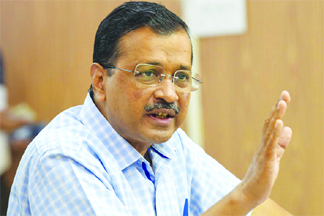
    New Delhi (TIP)- Delhi chief minister Arvind Kejriwal on Thursday skipped summons by the Enforcement Directorate (ED) in connection with the now-scrapped excise policy and flew to poll-bound Madhya Pradesh to address a rally, alleging that the agency was acting at the behest of the Bharatiya Janata Party (BJP) to malign his image.
    Kejriwal was summoned to appear before ED at its headquarters in connection with its money laundering probe in the excise policy. On April 16, the Central Bureau of Investigation (CBI) questioned Kejriwal in a parallel probe it is conducting into allegations of irregularities in the same policy. But the Aam Aadmi Party (AAP) chief wrote a letter to ED, saying that the summons were politically motivated and didn’t clarify whether he was called as a witness or an accused, as the chief minister of Delhi or the AAP chief.
    “It is apparent that the said summons was leaked to select BJP leaders to malign my image and reputation and has been issued at the behest of the ruling party at the Centre,” Kejriwal wrote in the two-page letter. “…please recall the said summons, which is to say the least, is vague and motivated and I am advised, unsustainable in law.”
    Kejriwal also wrote that the summons failed to do three things — clarify in what capacity he was being asked to come, as a witness or a subject in the investigation, provide reasons why he was summoned, and specify whether he was called in his individual capacity or official role as CM or AAP convener — and called it a “fishing and roving” inquiry.
    ED did not respond to Kejriwal’s letter.
    In the afternoon, he flew to Singrauli in Madhya Pradesh, which goes to the polls on November 17, and addressed a road show.
    “On the day of counting (December 3), I do not know whether I will be in jail or outside but wherever I will be everyone should say that Arvind Kejriwal had come to Singrauli and the people of Singrauli gave (AAP) a historic victory,” Kejriwal said, flanked by Punjab CM Bhagwant Mann and local AAP candidates.
    Kejriwal’s decision to skip the summons sparked a political controversy with the AAP calling it a “conspiracy” to keep the CM from campaigning in poll-bound states and the BJP alleging that he was “running away” from ED.

  • A world of order and stability belongs to the graveyard

    A world of order and stability belongs to the graveyard

    • Democracy is the only form of government that privileges the notion of a public realm where citizens can think of ‘what is’ and ‘what should be’

    “Politics is not only about elections and ascending to power. It is about agreement and disagreement, and more importantly, about the institutionalization of processes that enable conversations between individuals, groups and the state. Unless I express my particularity and you express yours, we will not realize ourselves as humans who have thoughts, ideas, ideologies and who agree to resolve differences through reasoned public debate. This is what Aristotle sought, a society marked by not only disagreement but also deliberation on how to resolve disagreement.”

    Democracy is the only form of government that privileges the notion of a public realm where citizens can metaphorically come together to think of ‘what is’ and ‘what should be’. The process of participating in a discussion is what ancient Greek philosophers called doing politics

    By Neera Chandhoke

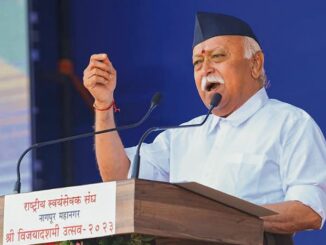
    In his Dussehra address at the Ramlila Maidan on October 24, PM Narendra Modi called for the uprooting of casteism and regionalism that threatened to fracture the unity of ‘Maa Bharati’. RSS chief Mohan Bhagwat, while addressing the Sangh’s annual Vijayadashami event in Nagpur, attacked ‘cultural Marxism’ or ‘wokeism’ that presumably controlled the media and universities. These forces, he said, were selfish, discriminatory and deceitful; they disrupted social cohesion, orderliness, morality, beneficence, culture, dignity and restraint in the world; they plunged education, culture, politics and social environment into confusion, chaos and corruption.

    The script sounds familiar. It seeks to suppress alternative perspectives, and thus make room for only one ideology, one sort of politics and one worldview which does not tolerate challenges. Ironically, thinkers who sought ‘a better world’, from Greek philosopher Plato to Sir Thomas More, to the utopian socialists from Robert Owen to Saint Simon, were skeptical of politics. They disapproved of factionalism, instability and contingency. Karl Marx’s socialist society and Gandhi’s notion of Swaraj are held to be utopias. The difference between an authoritarian project and a utopia is one of intent. The former seeks absolute power. The latter yearns for an ideal society in which humans can live a full life.

    In 1516, Sir Thomas More coined the term utopia to denote a society better than the one he lived in — in the court and then the jail of Henry the Eighth in 16th-century England. This work reflected the concerns of classical political thought that strove to seek the best order of human life. Gandhi’s search for a village republic was motivated by a sharp critique of Western industrial civilization, which focused on materiality and bodily well-being. This prevented self-knowledge and thus self-governance or Swaraj.

    Authoritarians do not seek a society in which individuals can realize the good life. They leave society as it is, unjust and unhappy. They only want a society where rival perspectives do not enable people to dream of a world that is far, far better than the one they inhabit. Curbing of imagination and the banning of dissent, even if society needs to be critiqued, distinguishes an authoritarian project from a utopia. True, both political projects result in a post-political society. But in political life, the consequences are often unintended. It is the intention that counts. So, let us set aside utopia and examine what authoritarianism does to a plural society.

    In a plural society, humans are distinct in their particularity. Even though ‘I’ am part of the ‘we’, I am distinct because I have different ideas of how our world should be organized. Therefore, some of us join political formations, others social movements, still others associations in civil society, and some rest content with expressing their opinions through social media, op-eds or letters to the editor. Each activity is fulfilling because, as Greek philosopher Aristotle had theorized, human beings are political animals. Politics is not only about elections and ascending to power. It is about agreement and disagreement, and more importantly, about the institutionalization of processes that enable conversations between individuals, groups and the state. Unless I express my particularity and you express yours, we will not realize ourselves as humans who have thoughts, ideas, ideologies and who agree to resolve differences through reasoned public debate. This is what Aristotle sought, a society marked by not only disagreement but also deliberation on how to resolve disagreement.

    Therefore, as eminent philosopher Hannah Arendt suggested in The Human Condition, attempts to subordinate plurality of ideas and action are against ‘democracy’. This inevitably turns into an argument against the essentials of politics. Plurality manifests itself in the public realm of debate and discussion. Attempts to do away with plurality are tantamount to the abolition of the public realm itself. The most obvious escape from plurality is a one-man rule in its many varieties, from outright tyranny of one against all to benevolent despotism. The problem with these forms of government is not that they are cruel, but that they might work too well. Tyrants may be kind and mild in everything. What they have in common is banishment of citizens from the public sphere and the insistence that whereas people mind their business, only rulers should attend to public affairs. Escape from the frailty of human affairs into the solidity of quiet and order has much to recommend it, Arendt suggests, but it is an escape from politics: “The hallmark of all such escapes is the concept of rule, that is, the notion that men can lawfully and politically live together when some are entitled to command and the others forced to obey.”

    Democracy is the only form of government that privileges the notion of a public realm where citizens can metaphorically come together to think of ‘what is’ and ‘what should be’. The process of participating in a discussion is what ancient Greek philosophers called doing politics. Think of how dismal and dreary a world without contestation will be. We can think of such a world in concentration camps, not in the rich plurality of India with its many traditions and varied philosophical doctrines, its colorful religious festivals and regional variety. We would never trade this messy but creative world for a world of order and stability. That world belongs to the graveyard.

    (The author is a political scientist)


  • Ethics, parliamentary conduct and the Indian MP

    Ethics, parliamentary conduct and the Indian MP

    A parliamentary probe against a Member of Parliament is not the same as a judicial probe

    By P.D.T. Achary

    The Lok Sabha Ethics Committee’s proceedings against the All India Trinamool Congress Member of Parliament (MP) from West Bengal, Mahua Moitra, have resulted in much public debate. A senior MP from the Bharatiya Janata Party, Nishikant Dubey, lodged a complaint with the Speaker alleging that Ms. Moitra had received money from a businessman for putting questions up in Parliament with a view to promoting the person’s business interests. The Speaker in turn referred the complaint to the Ethics Committee for examination and a report.

    Expulsion and instances

    It must be clarified at this point that if an MP takes money for putting questions up in Parliament, they will be guilty of breach of privilege and contempt of the House. Such complaints are invariably referred to the Committee of Privileges for investigation. This committee, after a proper investigation, submits its findings in a report along with the recommendation for action against the MP in question. If a case involving illegal gratification for conducting parliamentary work is proven, the MP may even be expelled from the House. There have been such instances in the Lok Sabha where MPs were expelled from the House on this ground.

    In the first case, in 1951, H.G. Mudgal, an MP of the Provisional Parliament, was found guilty of promoting the interests of a business association in return for financial benefits by putting questions up, and moving amendments to a Bill which affected the interests of that business association. A special committee of the House found that his conduct was derogatory to the dignity of the House and inconsistent with the standards which Parliament is entitled to expect of its members. But he resigned before he was expelled by the House (the action recommended was his expulsion). In 2005, a sting operation by a private channel showed 10 Members of the Lok Sabha accepting money for putting questions up in Parliament. Again, a special committee was appointed which found them guilty of conduct unbecoming of a member and recommended their expulsion which was accepted by the House. All the MPs were expelled. Thus, complaints of MPs accepting money for parliamentary work are referred to the privileges committee or special committees appointed by the House for that purpose. However, Ms. Moitra’s case has been referred to the Ethics committee although the allegation is about illegal gratification for doing parliamentary work.

    The Ethics Committee of the Lok Sabha is a relatively new committee which was set up in 2000, with a mandate to examine every complaint that related to the unethical conduct of MPs referred to it and to recommend action. It was also tasked with formulating a code of conduct for MPs.

    What is unethical is undefined

    An interesting aspect of this committee is that the term ‘unethical conduct’ has not been defined anywhere. It is left entirely to the committee to examine a particular act of conduct and decide whether it is unethical or not. A couple of cases decided in the past certainly point to the type of conduct which can be called unethical. In one instance, an MP took his close female companion along with him on a parliamentary tour, personating her as his wife. The committee found the MP guilty of unethical conduct and its recommendation was that he was to be suspended from 30 sittings of the House. He was also barred from taking any companion or his spouse on any official tour till the end of tenure of that Lok Sabha. Thus, the moral vagaries of MPs definitely come under scrutiny of the ethics committee.

    But there are also other cases of misconduct which were either examined by the ethics committee or special committees. For example, an MP misused the car parking label issued by Parliament. The case was referred to the Ethics Committee which, after examination of the case, closed it as the MP owned up to his mistake and apologized. In another case, an MP took along a woman and a boy on a foreign tour using the passports of his wife and son. This was treated as a serious case as it involved the violation of the Passports Act. This case was referred to a special inquiry committee which held him guilty of grave misconduct as well as contempt of the committee and recommended his expulsion. It must be noted here that more serious cases involving serious misconduct are dealt with by either the Committee of Privileges or special committees, and not by the ethics committee.

    In Ms. Moitra’s case, if the complaint is about her having accepted illegal gratification, then the case becomes a case of breach of privilege and cannot be dealt with by the ethics committee. Since a public servant accepting a bribe is a criminal offence; it is normally investigated by the criminal investigative agencies of the government. Parliamentary committees do not deal with criminal investigation. They decide on the basis of evidence whether the conduct of the MP is a breach of privilege or contempt of the House and punish them accordingly. But the punishment by the House relates to his functioning in the House. Otherwise, he will be liable to be punished for the criminal offence, as in the law. It may be remembered that the 10 MPs who were expelled from the Lok Sabha are still facing trial under the Prevention of Corruption Act.

    Cash for query: The Political storm surrounding Mahua Moitra

    A parliamentary probe is not the same as a judicial probe. A judicial body probes a matter as in the statutes and Rules, and is conducted by judicially trained persons. Parliamentary committees consist of Members of Parliament who are not experts. Since Parliament has the power to scrutinize the executive, which is accountable to it, it possesses investigative power also. It also has the power to punish those including its own members in order to protect its honor and dignity.

    But the methods followed by Parliament in investigating a matter are different from those of the judiciary. Parliament does the investigative work through its committees which function under the Rules of the House. The usual methods are examination of the written documents placed before the committee by the complainant and the witnesses, oral examination of all the relevant witnesses, deposition of experts, if deemed necessary, sifting of the whole volume of evidence placed before the committee, and arriving at findings on the basis of the evidence. If the committee examines a complaint against a member of the House, he can appear before it through an advocate and also cross-examine the complainant and other witnesses on permission by the chair. Findings are arrived at after the analysis of all the evidence made available to the committee. In the ultimate analysis, the committee takes a view on the basis of common sense. The findings of the committee of Parliament can be said to be on the basis of preponderance of probabilities. The rules of evidence under the Evidence Act are not applicable to a probe by a parliamentary committee. The question of the relevance of the evidence of a person or a document is finally decided by the Speaker only, and not according to the Evidence Act.

    Online submission of questions

    The issue of MPs sharing their password and login details with another person has come into focus now. In reality, MPs do not have the time to sit down and write out questions. So, they are said to be sharing the password with personal assistants, which can be called a practical necessity. Moreover, the Lok Sabha does not seem to have framed any rules to regulate the online submission of questions. Further, an MP is free to engage any person to do his parliamentary work. He also does not have any obligation to disclose the sources from where he gets information to do his parliamentary work. Article 105 of the Constitution gives them the freedom to say “anything” in the House. This right should be deemed to be extended to the tapping of any source for information for putting questions up or framing Bills or resolutions to be placed in Parliament. Therefore, an investigation into the sources of information of an MP may not have legal sanction. Otherwise, Parliament has the power to discipline its members.

    (The author is a  former Secretary-General, Lok Sabha)

  • Lost voice: On India’s abstention on the Gaza vote at the UN

    • India should have made efforts for a consensus on the Gaza vote at the UN

    India has explained its decision to abstain at last week’s vote at the UN General Assembly (UNGA) for a ceasefire in the Israel-Palestine conflict as its way of protesting the omission of any “explicit condemnation” of the heinous October 7 terror attack by Hamas militants on Israel. India’s principled stand on terrorism, which the Deputy Permanent Representative to the UN articulated, cannot be questioned. However, the death toll is rising and the need for global solidarity to stop the violence is imperative, a task that New Delhi, with its traditionally balanced position on the issue, and its recent G-20 role in bridging global divides, would have been well suited to play. Every other country in the neighborhood, in the extended BRICS grouping and much of the developing world, was part of the 120 countries that voted for the UNGA resolution on Friday. Regardless of its reasoning, New Delhi had other options which it overlooked or ignored. The resolution at the emergency special session entitled “Protection of civilians and upholding legal and humanitarian obligations” does include a paragraph “condemning all acts of violence aimed at Palestinian and Israeli civilians, including all acts of terrorism and indiscriminate attacks”. India could have played a prominent diplomatic role with countries proposing the resolution to ensure clearer mention of the October 7 attacks, including during Prime Minister Narendra Modi’s recent conversation with Jordan’s King Abdullah bin Al Hussein about the conflict. India’s leadership of such an amendment may have fared better than the Canadian proposal that failed to secure two-thirds of the UNGA membership present. Alternatively, India could have voted for the motion, while recording in its Explanation of Vote (EoV) that it regretted the omissions of the specific references to the October 7 attacks, which is what France did. In its EoV, India did not itself name Hamas for the terror attacks, nor has it so far designated Hamas as a terror group, leaving some doubt about the explicit mentions that New Delhi had wanted. On the other hand, if India wanted to convey a strong line on fighting terrorism, it could have voted against the resolution, along with the U.S., the U.K. and Israel.

    India’s abstention indicates a shift in the Modi government’s stand, seeking a ‘safe’ position, rather than taking a stand on the violence in Israel and Palestine. This is a departure from India’s UNGA vote in 2018 that called for Israel to cease “excessive force” in retaliatory strikes on Gaza at the time, and is more in line with its decision to abstain on votes at the UN in 2021 on resolutions critical of Russia’s war in Ukraine. The government lost an opportunity to make India’s voice heard in the growing geopolitical conflict. Abstaining on a matter of global importance without making efforts to forge a consensus is out of sync with a desire to be the voice of the Global South, or for a seat at the global high table.
    (The Hindu)

  • The Misuse of Government Agencies in India: A Threat to Democracy

    By Prof. Indrajit S. Saluja

    In recent years, there has been a growing concern over the alleged misuse of government agencies by the Modi government in India. The accusations revolve around the intimidation and implicating of opposition party politicians and governments in false cases, potentially to gain a stronger foothold for the Hindutva ideology. This trend has raised questions about the state of democracy in India and the potential threat it poses.Several government agencies, including the Central Bureau of Investigation (CBI), the Enforcement Directorate (ED), and the Income Tax Department, have come under scrutiny for their alleged misuse to target opposition figures. These agencies are intended to uphold the rule of law, maintain transparency, and ensure accountability. However, their recent actions have raised concerns about their independence and impartiality.

    These agencies have initiated investigations without substantial evidence, leading to the implication of opposition politicians and governments in false cases. Such actions erode public trust in these agencies and, by extension, the democratic institutions that are supposed to safeguard the nation’s interests.

    The timing of these investigations often coincides with significant political events, such as state elections. This raises suspicions of politically motivated actions intended to disrupt the opposition and consolidate the power of the ruling party.

    The alleged misuse of government agencies is closely tied to the promotion of the Hindutva ideology in India. Hindutva is a form of Hindu nationalism that seeks to establish the cultural and political dominance of Hindus. While it is distinct from Hinduism, the ideology has gained prominence in Indian politics in recent years.

    The Modi government, led by the Bharatiya Janata Party (BJP), is associated with Hindutva, and critics argue that this ideology is influencing the government’s actions. The use of government agencies to target political opponents is seen as part of a broader strategy to consolidate power and promote the Hindutva agenda.

    The implications for democracy are concerning. Democracy relies on the principles of pluralism, freedom of expression, and the protection of minority rights. The promotion of a singular cultural and political ideology at the expense of others threatens these democratic principles.

    A fundamental tenet of any democracy is the rule of law. It implies that all citizens, regardless of their political affiliation, are equal before the law. The alleged misuse of government agencies in India challenges this principle, as it appears that certain individuals are being selectively targeted for political purposes.

    Democracy also depends on the separation of powers, with the executive, legislative, and judicial branches acting independently to check and balance one another. When government agencies are used to target opposition figures, this balance is disrupted, and it raises concerns about the government’s ability to impartially uphold the law.

    To protect democracy in India, it is essential to address the alleged misuse of government agencies and promote transparency and accountability. This can be achieved through an independent oversight, judicial scrutiny, public awareness, and international scrutiny

  • The Long Struggle for Palestinian Statehood: Unjust Denial and the Tragedy in Gaza

    The Long Struggle for Palestinian Statehood: Unjust Denial and the Tragedy in Gaza

    The ongoing conflict between Israel and Palestine, the unjust denial of Palestinian statehood, and the tragic loss of innocent lives in Gaza are deeply troubling and require immediate attention. It is crucial to condemn the violence and human suffering that persist in this long-standing conflict while recognizing the legitimate rights and aspirations of both Israelis and Palestinians.

    By Prof. Indrajit S. Saluja

    The conflict between Israel and Palestine has been one of the most protracted and deeply rooted conflicts in modern history. It is a complex and multifaceted issue that has resulted in immense human suffering and a prolonged denial of statehood for the Palestinian people.

    The roots of the Israel-Palestine conflict can be traced back to the late 19th and early 20th centuries when Jewish immigration to Palestine increased as part of the Zionist movement, which sought to establish a Jewish homeland in the region. The decline of the Ottoman Empire and the subsequent British Mandate in Palestine further fueled tensions between Jewish and Arab communities.

    In 1947, the United Nations proposed the partition of Palestine into separate Jewish and Arab states, with Jerusalem under international administration. The plan was approved by the United Nations General Assembly but rejected by Arab states and Palestinian leaders, who saw it as an infringement on their right to self-determination and an unfair division of territory.

    The creation of the State of Israel in 1948 led to a war between the newly established Israel and its neighboring Arab states, including Jordan, Egypt, Syria, and Iraq. The outcome of this conflict, known as the 1948 Arab-Israeli War, left Israel in control of a significantly larger territory than initially allocated by the UN plan, and hundreds of thousands of Palestinian Arabs became refugees.

    Unjust Denial of Statehood

    The denial of statehood to the Palestinian people is a tragic and unjust aspect of the Israel-Palestine conflict. For over seven decades, Palestinians have been deprived of their right to self-determination, sovereignty, and a homeland of their own. This denial is not only a violation of international law but also a stark injustice that continues to fuel the conflict.

    Israel has maintained a military occupation of the West Bank, East Jerusalem, and Gaza Strip since the 1967 Six-Day War. During this period, Israeli settlements have expanded in the occupied territories, displacing Palestinian communities and hindering the prospects for a viable Palestinian state.

    Israel’s construction of a separation barrier, annexation of East Jerusalem, and imposition of restrictions on Palestinian movement have further undermined the prospects for Palestinian statehood.

    The lack of progress in peace negotiations has left the Palestinians in a state of political limbo, without a clear path to statehood. The ongoing conflict and distrust between both parties have hindered the peace process.

    The international community, particularly the United States, has played a significant role in enabling the denial of Palestinian statehood. Veto power in the United Nations Security Council has been used to shield Israel from international condemnation, making it difficult for the UN to enforce resolutions aimed at addressing the conflict.

    Tragic Loss of Innocent Lives

    The most heartbreaking aspect of the Israel-Palestine conflict is the loss of innocent lives, particularly in the Gaza Strip. The densely populated territory has been the epicenter of numerous military conflicts and Israeli military operations, resulting in significant civilian casualties. The situation in Gaza has been exacerbated by a crippling blockade that restricts the movement of people and goods, leaving its residents in dire humanitarian conditions. The blockade has had severe consequences for the delivery of basic services such as healthcare, education, and clean water.

    Israeli military operations in Gaza, particularly in 2008-2009, 2012, and 2014, have led to high civilian casualties, including women and children. These operations have raised concerns about proportionality and the indiscriminate use of force, leading to allegations of war crimes and human rights abuses.

    The tragedy in Gaza is a stark reminder of the urgent need for a resolution to the Israel-Palestine conflict, which includes addressing the humanitarian crisis and protecting the rights of innocent civilians.

    Role of the United Nations and the International Community

    The United Nations has played a central role in addressing the Israel-Palestine conflict since its inception. However, the UN’s efforts have been marred by political divisions, particularly in the Security Council, where the United States has consistently used its veto power to shield Israel from criticism and block resolutions aimed at addressing the conflict.

    Over the years, the United Nations has passed numerous resolutions aimed at addressing the conflict and promoting a two-state solution. UN Security Council Resolution 242 (1967) and Resolution 338 (1973) called for Israel’s withdrawal from territories occupied during the 1967 war and the need for negotiations. However, these resolutions have not been fully implemented.

    UN agencies, such as UNRWA (United Nations Relief and Works Agency for Palestine Refugees), have provided critical humanitarian assistance to Palestinian refugees and populations affected by conflict. These agencies have faced funding challenges, putting essential services at risk.

    The UN has hosted multiple peace initiatives and negotiations aimed at resolving the conflict, including the Oslo Accords and the Road Map for Peace. However, progress has been slow, and the fundamental issues remain unresolved.

    The UN has conducted inquiries into human rights violations and alleged war crimes committed during the conflict. These investigations have called for accountability for those responsible for violations of international law.

    The international community, including key actors like the United States, the European Union, and regional powers, has a significant role to play in addressing the Israel-Palestine conflict. Their influence can be used to encourage both parties to return to the negotiating table and work toward a just and lasting resolution.

    The ongoing conflict between Israel and Palestine, the unjust denial of Palestinian statehood, and the tragic loss of innocent lives in Gaza are deeply troubling and require immediate attention. It is crucial to condemn the violence and human suffering that persist in this long-standing conflict while recognizing the legitimate rights and aspirations of both Israelis and Palestinians.

    To address these issues, several steps need to be taken. To begin with, both sides must commit to ending the cycle of violence and adhering to international humanitarian law, which prohibits attacks on civilians and the use of disproportionate force. An immediate ceasefire is essential to protect innocent lives.

    A return to negotiations is the next step. Diplomatic efforts should be revived, and both parties should return to the negotiating table. A two-state solution, based on the 1967 borders with mutually agreed-upon land swaps, remains the most viable path to peace.

    Third, the international community should pressure Israel to ease the blockade on Gaza, allowing for the delivery of humanitarian aid, reconstruction efforts, and economic development. Four, allegations of war crimes and human rights abuses on both sides must be thoroughly investigated, and those responsible should be held accountable in accordance with international law. Five, the international community should provide political and financial support for peace initiatives, humanitarian assistance, and state-building efforts in Palestine.

    Finally, the United Nations should continue its efforts to promote a peaceful resolution to the conflict, uphold international law, and ensure that resolutions passed by the General Assembly and Security Council are implemented. The international community, including the United Nations, must work together to bring an end to the violence, ensure accountability for human rights violations, and support the aspirations of both Israelis and Palestinians for a peaceful and prosperous future. The denial of Palestinian statehood and the suffering of innocent civilians must not be tolerated, and the world should collectively strive for a resolution that guarantees the rights and dignity of all those living in the region.

  • F.B.I. Raids Home of Eric Adams’s Fund-Raising Chief

    F.B.I. Raids Home of Eric Adams’s Fund-Raising Chief

    • The raid at the home of Brianna Suggs was part of an inquiry into whether foreign money from Turkey was funneled into his campaign.

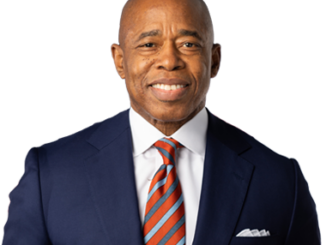
    NEW YORK (TIP): Federal prosecutors and the F.B.I. are conducting a broad public corruption investigation into whether Mayor Eric Adams’s 2021 election campaign conspired with the Turkish government to receive illegal foreign donations, according to New York Times which claimed it was in possession of a copy of the search warrant. The New York Times reported that the investigation burst into public view on Thursday, November 2,  when federal agents conducted an early-morning raid at the Brooklyn home of the mayor’s chief fund-raiser, Brianna Suggs. Ms. Suggs is a campaign consultant who is deeply entwined with efforts to advance the mayor’s agenda. Investigators also sought to learn more about the potential involvement of a Brooklyn construction company with ties to Turkey, as well as a small university in Washington, D.C., that also has ties to the country and to Mr. Adams. According to the search warrant, investigators were also focused on whether the mayor’s campaign kicked back benefits to the construction company’s officials and employees, and to Turkish officials.

    The agents seized three iPhones and two laptop computers, along with papers and other evidence, including something agents identified as “manila folder labeled Eric Adams,” seven “contribution card binders” and other materials, according to the documents. There was no indication that the investigation was targeting the mayor, and he is not accused of wrongdoing. Yet the raid apparently prompted him to abruptly cancel several meetings scheduled for Thursday morning in Washington, D.C., where he planned to speak with White House officials and members of Congress about the migrant crisis. Instead, he hurriedly returned to New York “to deal with a matter,” a spokesman for the mayor said.

    “The mayor heard of an issue related to the campaign and takes these issues seriously, so wanted to get back to New York as quickly as possible,” Fabien Levy, the deputy mayor for communications, said in a statement Thursday evening. “He plans to return to D.C. and reschedule these meetings as soon as he can.”

    The warrant suggested that some of the foreign campaign contributions were made as part of a straw donor scheme, where donations are made in the names of people who did not actually give money. Investigators sought evidence to support potential charges that included the theft of federal funds and conspiracy to steal federal funds, wire fraud and wire fraud conspiracy, as well as campaign contributions by foreign nationals and conspiracy to make such contributions. Mr. Adams has boasted of his ties to Turkey, most recently during a flag-raising he hosted for the country in Lower Manhattan last week. The mayor said that there were probably no other mayors in New York City history who had visited Turkey as frequently as he has.

    “I think I’m on my sixth or seventh visit,” he said. At least one of those visits happened while he was Brooklyn borough president, when the government of Turkey underwrote the excursion, The Daily News reported.

    Ms. Suggs, who could not be reached for comment, is an essential cog in Mr. Adams’s fund-raising machine, which has already raised more than $2.5 million for his 2025 re-election campaign.

    A person with knowledge of the raid said agents from one of the public corruption squads in the F.B.I.’s New York office questioned Ms. Suggs during the search of her home.

    An F.B.I. spokesman confirmed that “we are at that location carrying out law enforcement action,” referring to Ms. Suggs’s home in the Crown Heights section of Brooklyn.

    (With inputs from agencies)


  • India defends abstention in UNGA on ceasefire in Gaza

    India defends abstention in UNGA on ceasefire in Gaza

    NEW DELHI / NEW YORK (TIP): The government defended its decision to abstain in a U.N. General Assembly vote on resolution that called for a humanitarian truce and ceasefire in Gaza, saying it did not include “explicit condemnation” of the October 7 terror attacks in Israel. A note circulated by government sources responding to criticism from Opposition members about the vote said that since India’s concerns over omissions had not been covered by the final text of the resolution, it had decided to abstain. “There can be no equivocation on terror,” the sources said, calling India’s position “steadfast and consistent”.

    The resolution, titled the “Protection of civilians and upholding legal and humanitarian obligations”, proposed by Jordan on behalf of the Arab League and co-sponsored by about 40 countries, was passed in the UNGA on October 27 with 120 votes in favor, 14 including the U.S. and U.K. against, and 45 abstentions, including India. In its explanation of vote (EoV), France also objected to the omission of references to the October 7 attacks as well as the hostages taken, but in a break from its western allies, voted for the resolution saying “nothing can justify the suffering of civilians. All victims deserve our compassion, all lives are equal and there is no hierarchy between them”. The resolution adopted had condemned “all acts of violence aimed at Palestinian and Israeli civilians, including all acts of terrorism and indiscriminate attacks, as well as all acts of provocation, incitement and destruction”, without specifically referring to the terror attacks by Hamas earlier this month that left more than 1,400 Israelis dead and 229 taken hostage. In three weeks of retaliatory strikes by Israeli Defense Forces, the Health Ministry in Hamas-controlled Gaza has estimated that at least 7,700 Palestinians have been killed, around half of which are children.

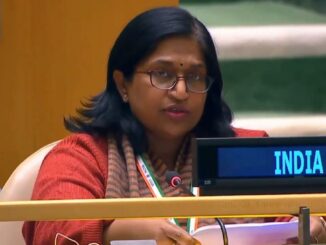
    In the EoV delivered by India’s Deputy Permanent Representative Yojana Patel, India had called for condemnation of the attacks and for the immediate and unconditional release of hostages.

    “Terrorism is a malignancy and knows no borders, nationality, or race. The world should not buy into any justification of terror acts,” Ms. Patel said, before addressing the death toll from the IDF bombardment of Gaza.

    “Casualties in the ongoing conflict in Gaza are a telling, serious, and continuing concern. Civilians, especially women and children are paying with their lives,” Ms. Patel said, referring to the aid efforts to help Palestinians who have been evacuated from North Gaza to the south, which India is also a part of.

    Significantly, in its own EoV, India did not name Hamas directly either. India had however backed an earlier amendment proposed by Canada to add a paragraph that would “unequivocally reject and condemn the terrorist attacks by Hamas that took place in Israel starting on 7 October 2023”, and call for hostages to be released. The amendment was not approved as only 88 countries, less than the two-thirds required, voted for it.

    India’s vote, that differed from a previous vote in favor of a UNGA resolution calling for a ceasefire in Gaza in 2018 and other similar votes in the past, was criticized by Opposition parties who accused the government of “refusing to take a stand”. “This is a humanitarian issue, not a political one,” said All India Majlis-E-Ittehadul Muslimeen (AIMIM) chief Asaduddin Owaisi, pointing out that India’s abstention stood “alone” and apart from the position of countries in the “Global South, in South Asia & in BRICS”, all of whom had voted for the resolution.

    “An eye for an eye makes the whole world blind”, said Congress leader Priyanka Gandhi-Vadra quoting Mahatma Gandhi. “To refuse to take a stand and watch in silence as every law of humanity is pulverized goes against everything our country has stood for throughout its life as a nation,” she wrote in a social media post. The Communist Party of India (Marxist)’s Sitaram Yechury and CPI’s D. Raja issued a joint statement, saying that India’s abstention “negates its long-standing support to the Palestinian cause”, accusing the government of following a foreign policy “shaped by being a subordinate ally of U.S. imperialism”

    Government sources said however that India had stressed its “consistent stand on Palestine”, saying in the EoV that India supports a negotiated two-state solution to the Israel-Palestine issue and the establishment of a sovereign, independent, and viable State of Palestine, urging the parties to de-escalate the violence, and return to direct peace negotiations.

    (Source: The Hindu)


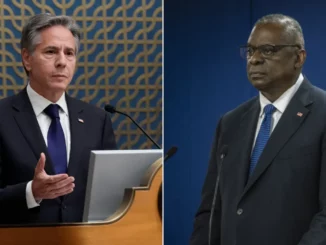
  • Antony Blinken and Llyod Austin to travel to India for 2 plus 2 ministerial dialogue

    Antony Blinken and Llyod Austin to travel to India for 2 plus 2 ministerial dialogue

    WASHINGTON, D.C. (TIP): US Secretary of State Antony Blinken and Defense Secretary Lloyd Austin would be travelling to India for the 2+2 Ministerial Dialogue with their Indian counterparts External Affairs Minister S Jaishankar and Defense Minister Rajnath Singh in New Delhi this month, the State Department has said.

    In a statement issued on Wednesday, , November 1, State Department Spokesperson Matthew Miller said that Blinken’s trip to India comes at the end of a more than a week-long trip – November 2 to November 10 – beginning with Israel and Jordan, following which he would continue with his Indo-Pacific travels to Japan, S Korea and India. The exact dates of his trips to these countries have not been announced. In New Delhi, the US delegation will participate in the 2+2 Ministerial Dialogue.

    “The delegation will meet with Minister for External Affairs S Jaishankar, Minister of Defense Rajnath Singh, and other senior Indian officials to discuss both bilateral and global concerns and developments in the Indo-Pacific,” Miller said. Blinken is leaving for Tel Aviv on Thursday.

    “In Israel, Blinken will reiterate US support for Israel’s right to defend itself against terrorism consistent with international humanitarian law and discuss efforts to safeguard US citizens in Israel, the West Bank, and Gaza, work to secure the immediate release of hostages, increase the pace and volume of humanitarian assistance entering Gaza for distribution to Palestinian civilians, and prevent the conflict from spreading,” Miller said.

    In Jordan, he will underscore the importance of protecting civilian lives and their shared commitment to facilitating the increased, sustained delivery of life-saving humanitarian assistance to civilians in Gaza, the resumption of essential services, and ensuring that Palestinians are not forcibly displaced outside of Gaza.

    “He will also discuss urgent mechanisms to stem violence, calm rhetoric, reduce regional tensions, and reaffirm the US commitment to working with partners to set the conditions necessary for a durable and sustainable peace in the Middle East, to include the establishment of a Palestinian state,” Miller said.

    Blinken will then lead US delegations to Tokyo, Seoul, and New Delhi to advance collaborative efforts to support a free and open Indo-Pacific region that is prosperous, secure, connected, and resilient.

    In Tokyo, he will participate in the second G7 Foreign Ministers’ Meeting of 2023, where G7 foreign ministers will build on the commitments made by leaders at the G7 Hiroshima Summit. Secretary Blinken will also thank Japan for its successful G7 presidency.

    Blinken will also have bilateral meetings with Prime Minister Kishida Fumio and Foreign Minister Kamikawa Yoko to discuss bilateral priorities, including supporting Ukraine’s economic recovery and energy needs and strengthening their cooperation in the Indo-Pacific, Miller said.

    Blinken will then travel to Seoul to meet with President Yoon Suk Yeol, Foreign Minister Park Jin, and National Security Advisor Cho Tae-yong. “The Secretary will discuss ways the United States and the ROK can respond to global challenges, including Russia’s war against Ukraine and Russia’s growing military cooperation with the DPRK, as well as instability in the Middle East. They will also discuss mutual efforts to support bilateral investment and economic security,” he said.

    “In Tokyo and in Seoul, the Secretary will underscore the United States’ ironclad commitment to the defense of Japan and ROK and reaffirm the importance of robust and sustained trilateral engagement following the historic Camp David Summit in August,” Miller said.

    (Source: PTI)

  • Angelina Jolie slams world leaders, says they are complicit in deaths of thousands in Palestine

    Angelina Jolie slams world leaders, says they are complicit in deaths of thousands in Palestine

    LOS ANGELES (TIP): Angelina Jolie, apart from being an acclaimed Hollywood actress, is also an activist and she has been keeping a close watch on Israel’s ongoing war with Hamas. Taking to her social media, the actress called world leaders complicit in the death of thousands of people in Gaza as they have refused to demand a ceasefire. On her Instagram, the ‘Mr. and Mrs. Smith’ actress shared a picture of the horrifying devastation that has taken place, and wrote a lengthy message critiquing the role of world leaders in their inability to stop the war.

    She wrote: “This is the deliberate bombing of a trapped population who have nowhere to flee. Gaza has been an open-air prison for nearly two decades and is fast becoming a mass grave.”

    She added: “40 per cent of those killed are innocent children. Whole families are being murdered. While the world watches and with the active support of many governments, millions of Palestinian civilians – children, women, families – are being collectively punished and dehumanized, all while being deprived food, medicine and humanitarian aid against international law. By refusing to demand a humanitarian ceasefire and blocking the UN Security Council from imposing one on both parties, world leaders are complicit in these crimes.”

    (Source: IANS)

  • Indian-origin author Nandini Das wins 2023 British Academy Book Prize

    Indian-origin author Nandini Das wins 2023 British Academy Book Prize

    LONDON (TIP): India-born author Nandini Das has been named the winner of the 2023 British Academy Book Prize for Global Cultural Understanding, a leading international non-fiction prize worth GBP 25,000, for her book ‘Courting India: England, Mughal India and the Origins of Empire’.

    The UK-based academic’s debut work, described as the “true origin story of Britain and India told through England’s first diplomatic mission to the Mughal courts”, was revealed as this year’s winner at a ceremony at the British Academy in London on Tuesday evening.

    As a Professor in the English faculty at the University of Oxford, the 49-year-old author has sought to present a new perspective on the origins of empire through the story of the arrival of the first English ambassador in India, Sir Thomas Roe, in the early 17th century. “By using contemporary sources by Indian and British political figures, officials and merchants she has given the story an unparalleled immediacy that brings to life these early encounters and the misunderstandings that sometimes threatened to wreck the whole endeavor,” said Professor Charles Tripp, Chair of the prize jury. “At the same time, she grants us a privileged vantage point from which we can appreciate how a measure of mutual understanding did begin to emerge, even though it was vulnerable to the ups and downs of Mughal politics and to the restless ambitions of the British,” he said.

    He described how through her beautiful writing and exceptional research, the jury was drawn to the contrast between an impoverished, insecure Britain and the flourishing, confident Mughal Empire and the often-amusing, sometimes querulous exchanges between their various representatives.

    The British Academy Book Prize, formerly known as the Nayef Al-Rodhan Prize, was established in 2013 to reward and celebrate the best works of non-fiction that demonstrate rigor and originality and have contributed to public understanding of other world cultures and their interaction. Das will receive GBP 25,000 for winning the prize.

  • Indian Punjabi girl murdered in UK; husband arrested

    Indian Punjabi girl murdered in UK; husband arrested

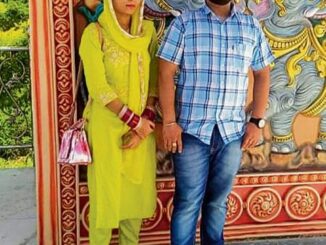
    CHANDIGARH (TIP): Relatives of Mehak Sharma (19), who was found murdered at her residence in Croydon in South London, have claimed that her husband had repeatedly been threatening her with dire consequences and, on Sunday, he murdered her. Mehak was a resident of Jogi Cheema village in Gurdaspur district of Punjab. She was married to Gurdaspur resident Sahil Sharma (23) on June 24 last year. The girl, according to her mother Madhu Bala, had gone to London five months after she tied the knot with Sahil.

    Sahil is a resident of New Sant Nagar in Gurdaspur.  He followed his wife to the UK on a spouse visa. Bala said her daughter had told her many times that Sahil had been ill-treating her.

    “Mehak used to ring me up every morning. However, on Sunday, October 29,  I did not receive any call. I thought she must be busy. However, when I did not get a call on Monday, I got panicky. I, subsequently, asked my relative, who lives about 150 km away from Croydon, to visit Mehak and inform me accordingly. It was in the evening that he rang me and told me that the London Metropolitan Police had taken Sahil into custody after being charged with murder of Mehak,” said Madhu Bala.

    Mehak was working as a caretaker with Fabulous Homecare Limited, a home care provider operating out of Croydon. Bala’s husband, Tarlok Chand, had died a few years ago.

    Mehak’s relatives say they have requested Chief Minister Bhagwant Mann to make arrangements to bring her body back from the UK. “I have requested the government to step in and ask the Indian High Commission in London to make preparations to ship the body to India,” she said. She added that she had got to know that the London Metropolitan Police had asked people living near Mehak’s house to come forward and provide information which could later help them in their investigations.

  • Indian American physician honored by Jewish group  for standing against antisemitism

    Indian American physician honored by Jewish group for standing against antisemitism

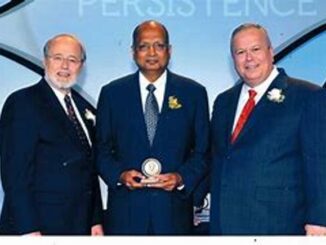
    CHICAGO (TIP): An influential Jewish group has felicitated Indian American physician Dr Bharat Barai for his relentless effort to strengthen ties between India, the US and Israel and his stand against antisemitism.

    “We stand with you, our Jewish brothers and sisters,” said Dr Bharat Barai, an ardent advocate of the India-Israel relationship who has made six trips to Israel, adding that the collaborative relationship between the Hindu and the Jewish communities has benefited both. Dr Barai was presented the award “for standing against antisemitism” at the “Campus Championship Gala” of StandWithUS on Sunday,  October 29.

    “Hindus all over the world, along with most of the civilized world have condemned these brutal barbarian Hamas, affirming their solidarity with the Jewish people, and supporting the right of Israel to defend itself and demolish the demand of mass,” Barai said amidst standing ovation from the hall full Jewish people in a suburb of Chicago.

    He hoped that after Hamas is eliminated by Israel, more countries from the Middle East would join the Abraham Accord. Referring to some of the news reports, he said these are by individuals who are misinformed or uninformed or hardcore religiously indoctrinated individuals. These are fabricated narratives, playing the victim card after committing a barbaric atrocity.

    Peggy Shapiro Director of Special Projects “Stand With US” praised Dr Barai for his relentless support of the Jewish communities and the relationship between India, the US and Israel. She referred to the ongoing atrocities against the Jews by Hamas this month.

    “That’s the special level of evil,” said Peggy Shapiro Director of Special Projects “Stand With US” referring to the recent brutalities and atrocities perpetrated by Hamas against innocent Jews in particular young children and calling for the destruction of the only Jewish State. “We are all here in solidarity,” she said, “Never again is not an expired slogan,” she asserted. Born in Mumbai, Dr Barai is a distinguished physician, a respected leader of the Hindu American community, and an outspoken Zionist who helped pave the road for closer ties between Israel and India as well as between the Hindu and Jewish American communities.

    “Dr Barai has been very active in promoting India, US, and Israel relations,” StandWithUS said.

    In his leadership role in the Indian American community, Dr Barai has made it a priority to establish and strengthen ties to the Jewish and Pro-Israel community, it said.

    Barai was instrumental in StandWithUs’s outreach. He made it possible for StandWithUs to host events such as “Ancient Cultures-Modern Miracles,” a community celebration of 65 years of India and Israel’s independence, a Hindu-Jewish Festival of Lights Celebrating Chanukah and Diwali, and dozens of programs, including a memorial for Daniel Pearl, underscoring the commonalities between the two communities, it said.

    “When Israel was under attack by Hamas and in the media, Dr Barai mobilized Hindu support for three Interfaith Vigils for the Victims of Hamas,” the organization said.

  • Indian American professor at Stanford Arogyaswami Joseph Paulraj wins Faraday Medal

    Indian American professor at Stanford Arogyaswami Joseph Paulraj wins Faraday Medal

    LONDON (TIP): The Institution of Engineering and Technology (IET) has awarded the prestigious Faraday Medal to Arogyaswami Joseph Paulraj, an Indian American professor at Stanford University for his contributions to wireless technology. Paulraj was among 11 of the world’s top engineering and technology talent honored by the UK-based multidisciplinary professional engineering institution for services to the industry, on Oct 23 at IET 2023 Achievement Awards. Described as “one of this year’s most significant awards, the Faraday Medal,” was awarded to Paulraj for the invention, advancement, and commercialization of Multiple-antenna Input, Multiple-antenna Output (MIMO) wireless technology, according to a media release.

    MIMO is a fundamental breakthrough technology that multiplied the link speed and improved the range and reliability of wireless networks. The performance of today’s extensive 4G/5G mobile and WiFi networks would not be possible without MIMO.

    On winning his award, Paulraj said, “The Faraday Medal is such an honor. I am humbled to be included in this distinguished cohort of former recipients. Though the prize is presented to an individual, it also recognizes the field of wireless communications systems and the thousands of researchers and engineers who contributed to MIMO technology for the benefit of humanity.”

    The IET Achievement Awards recognize individuals from all over the world who have made exceptional contributions to the advancement of engineering, technology and science in any sector. This can be through research and development in their respective technical field or through their leadership of an enterprise.

    Dr. Gopichand Katragadda, IET President, emphasized the importance of Engineering Excellence achieved through knowing and practicing the fundamentals, being systems-oriented and detailed, and having a delivery mindset while preparing for the next. “We’re honored to present these talented individuals with our Achievement Awards. Our medal winners are innovators and pioneers, making a difference to the world in which we live,” he said. Paulraj, Professor Emeritus Department of Electrical Engineering, Stanford University, a pioneer of MIMO wireless communications did his BE from Naval College of Engineering, Lonavala, and earned his PhD from Indian Institute of Technology, Delhi.

    He is the author of over 400 research papers, two textbooks, and a co-inventor in 80 US patents.

    Paulraj has won over a dozen awards, notably the National Inventors Hall of Fame (USPTO), Marconi Prize and Fellowship, 2014 and the IEEE Alexander Graham Bell Medal, 2011. He is a fellow of eight scientific / engineering national academies including the US, China, India, and Sweden.

    In 1999, Paulraj founded Iospan Wireless Inc. – which developed and established MIMO-OFDMA wireless as the core 4G technology. Iospan was acquired by Intel Corporation in 2003.

    In 2004, he co-founded Beceem Communications Inc. The company became the market leader in 4G-WiMAX semiconductors and was acquired by Broadcom Corp. in 2010. In 2014 he founded Rasa Networks to develop Machine Learning tools for WiFi Networks. The company was acquired by HPE in 2016. During his 30 years in the Indian (Navy) (1961-1991), he founded three national-level laboratories in India and headed one of India’s most successful military R&D projects – APSOH sonar. He received over a dozen awards (many at the national level) in India including the Padma Bhushan, Ati Vishist Seva Medal and the VASVIK Medal.

  • Indian-origin soldier Halel Solomon among Israelis killed in Gaza

    Indian-origin soldier Halel Solomon among Israelis killed in Gaza

    JERUSALEM (TIP): A 20-year-old Indian-origin Israeli soldier was among the Israeli combatants killed while fighting in Gaza, community members and the Mayor of the town said on Wednesday, November1.

    Staff-Sgt. Halel Solomon was from the southern Israeli town of Dimona. “It is with great sorrow and grief that we announce the death of a son of Dimona, Halel Solomon, in the battle in Gaza,” Dimona’s Mayor, Benny Bitton said in a Facebook post on Wednesday.

    “We share in the grief of the parents, Ronit and Mordechai, and the sisters: Yasmin, Hila, Vered, and Shaked …. Halel aspired to do meaningful service and enlisted in the Givati (Brigade). Halel was a devoted son and had respect for his parents always in his eyes. Possessing immense good qualities, he believed in endless giving, modesty, and humility. The whole city of Dimona is grieving his passing,” Bitton wrote.

    Dimona is a town in the south of Israel identified with Israel’s nuclear reactor, but some also describe it as “little India” given the large concentration of Jews from India in the township.

    Indian community members told PTI that he was “a young man with pleasant manners and a very bright future ahead.” They expressed huge sorrow at his passing away and at the loss of lives of other young Israelis “fighting a just war for Israel’s existence.”

    At least 11 Israeli soldiers have been killed in the battle in Gaza in what Prime Minister Benjamin Netanyahu described as a “difficult war” with “painful losses,” but vowed to continue “until victory.” “We are in a difficult war. This will be a long war. We have so many important achievements but also painful losses,” Netanyahu said.

    “We know that every soldier of ours is an entire world. The entire people of Israel embrace you, the families, from the depth of our hearts. We are all with you during your heavy sorrow. Our soldiers have fallen in the most just of wars, the war for our home,” the Israeli Prime Minister said.

    “I promise the citizens of Israel: We will complete the work – we will continue until victory,” he stressed.

    At least 1400 Israelis were killed in a deadly attack carried out by Hamas on Israel’s southern communities on October 7. They also took at least 240 people as hostages during that surprise infiltration. Israel, backed by the United States and some other Western nations, declared war against Hamas which has controlled the Gaza Strip since 2007 with two stated goals – elimination of the terror organization and freeing the hostages. More than 8,000 people have died in Gaza since Israel launched a counter-offensive by first carrying out widespread air strikes and then slowly launching ground incursions that have been intensifying over the last three days.

  • Indian American Dr. Shyam Kottilil gets Kerala Center’s lifetime achievement award

    Indian American Dr. Shyam Kottilil gets Kerala Center’s lifetime achievement award

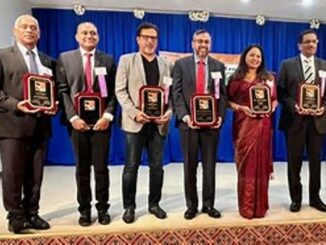
    NEW YORK (TIP): Indian American Kerala Cultural and Civic Center (The Kerala Center) has honored eight individuals for notable contributions in their professions and to society with selfless dedication.

    Dr. Shyam Kottilil from Baltimore was presented the Lifetime Achievement Award for his outstanding contributions in the field of virology and scientific research by New York Senator Kevin Thomas at the Center’s 31st Annual Awards Dinner in Elmont, New York on Oct 28.

    In his keynote speech, Kottilil explained the successes and failures of managing the Covid outbreak and how to prevent future outbreaks which according to him will certainly happen sometime in the future, according to a media release. The award for entrepreneurship went to Sajeeb Koya, the man behind the LED Façade lighting that lights up Burj Khalifa, the tallest building in the world. His company 3S International headquartered in Pickering, Ontario, Canada, has executed numerous vibrant Architectural and Media Façade LED projects all over the world. Koya said that his goal is to complete 100 such projects all over the world.

    The award for Media and Journalism went to Ajay Ghosh, Chief Editor and Co-Publisher of The Universal News Network (www/theunn.com). He serves as Media Coordinator for the American Association of Physicians of Indian Origin (AAPI) and ITServe Alliance. Ghosh was the founding President of Indo-American Press Club and is Secretary of its Board of Directors. The award for community service went to Gopala Pillai who has served as the President and Board Member of several organizations in Texas and Detroit and has been with the World Malayali Council from1995 as its Secretary, President, and Chairman. Through these organizations, he has been able to provide many services for the good of society.

    The award for outstanding achievements in Medicine went to Dr. Shelby Kutty, a physician-scientist and academic leader, serving as the Helen B. Taussig endowed professor and director of pediatric and congenital cardiology at the Johns Hopkins University School of Medicine.

    He also chairs the analytic intelligence program at Johns Hopkins and is one of the world’s preeminent experts on multimodality cardiovascular imaging.

    The award for contributions to Pravasi Malayalam Literature went to Jayant Kamicheril, a recipient of the Kerala Sahithya Academy award for 2022 for his book “Oru Kumarakom Karantay Kuruthamketta.”

    The award for excellence in Nursing went to Dr. Anna George, current president of the Indian Nurses Association of New York (INANY).

    She is a Nurse, a nurse practitioner, a human rights advocate, and a social activist. She is a leader who transformed the nursing professional organization INANY into a professional entity.

    The award for legal service went to Lata Menon, an accomplished barrister and solicitor and active community member, who has become a recognized name in the legal community in Ontario as well as the Indian states of Maharashtra, Karnataka, and Kerala, where she practiced as a lawyer before immigrating to Canada.

    Kerala Center president Alex K. Esthappan provided a brief description of the activities and goals of the Center.  New York Senator Kevin Thomas and Nassau County Legislator Carrie Solages presented the awards. They were introduced by Dr. Thomas Abraham, Chairman of the Trustee Board and Award Committee member.

    Sen. Thomas, a prior awardee himself, praised the Kerala Center for honoring individuals who excelled in their professions and served society with dedication.

    Legislator Solages remarked that students of Indian and Malayalee descent made him a better student and that helped him to go to George Town University.

    Dr. Madhu Bhaskaran, the chairman of the Award Committee and Board of Directors, explained the process of selecting the awardees. The ceremony was attended by leaders of many community organizations including FOMAA and FOKANA. As part of the Award Ceremony, a souvenir was released by the souvenir committee consisting of P.T. Paulose and Jose Kadapuram, by giving a copy to U. A. Naseer.

    Inaugurated in 1993 Kerala Center has honored over 200 individuals of Keralite descent who excelled in their profession and/or made great contributions to the larger society in the last 30 years.


  • Indian Origin  Sikh man who murdered his wife in London jailed for 15 years

    Indian Origin  Sikh man who murdered his wife in London jailed for 15 years

    LONDON (TIP): A 79-year-old Sikh man has been sentenced to life imprisonment with a minimum of 15 years after murdering his wife with a bat at their house in east London in May this year. Tarsame Singh was sentenced at Snaresbrook Crown Court on Wednesday after he pleaded guilty to killing his 77-year-old wife, Maya Devi. On May 2, Singh walked into the Romford police station and told the front desk that he had just killed his wife, following which officers immediately attended the house on Cowdray Way in Elm Park and found Maya unresponsive on the living room floor.

    The wooden bat was found nearby and a significant amount of blood staining was found on the carpet and nearby walls. Maya was pronounced dead at the scene and a post-mortem examination found the cause of death to be head injuries. Singh was charged the next day and remanded into custody.

    Met Police’s Detective Chief Inspector Mark Rogers, who led the investigation, said: “This is a tragic case and one which has left the couple’s three children utterly distraught. No-one should ever lose their mother in this way and we will continue to think of, and support them, at this difficult time.

    “Singh has never admitted what caused him to act in such a violent way that evening but we are pleased he has pleaded guilty and will now face a significant custodial sentence.”

    Singh ran a post office along with his wife in Rainham, an east London suburb close to his home, for years before retiring recently. Both Singh and Maya, parents of a son and two daughters, are originally from India but had been living in Britain for more than 50 years.

    (Source: IANS)

  • Indian-origin student stabbed at US gym battles for life

    Indian-origin student stabbed at US gym battles for life

    VALPRAISO, INDIANA (TIP):  Varun Raj Pucha, the 24-year-old Indian student who was stabbed at a fitness center in the US state of Indiana over the weekend, continues to be in a critical condition and is on life support, sources familiar with his treatment said.

    Varun Raj Pucha, a computer science student, was stabbed with a knife in the temple by assailant Jordan Andrade, 24, at the public gym on Sunday morning for reasons that the authorities are still investigating.

    “After three days of treatment, Varun continues to be on life support and has severe neurological impairment. He is likely to sustain permanent disability and have partial, if not complete, vision loss and left-sided weakness,” sources told media. Following the incident, Jordan was arrested and is facing charges of aggravated battery with a deadly weapon and attempted murder.

    Varun has now been transferred to Lutheran Hospital in Fort Wayne because of the serious nature of the injuries.

    Meanwhile, assailant Andrade, who appeared before Porter Superior Court Judge Jeffrey Clymer, pleaded not guilty to the charges of Level 1 felony, and a Level 3 felony.

    The judge set his bond at US$ 500,000 cash and US$ 500,000 surety. According to media reports, Andrade said he could afford a USD 300,000 bond. The judge deemed Andrade a flight risk.

    The university president expressed shock over the brutal attack on one of its students.

    “We are shocked and saddened by the attack on Varun Raj. At Valparaiso University, we consider each other’s family, and this incident is horrifying for us all. Our thoughts and prayers are with all his friends and family,” José Padilla, the university’s president, said in a statement provided to the media on Wednesday.

    “In addition to our thoughts and prayers, the University and Valpo Community are offering all assistance and resources available to help Varun’s family get to the United States as quickly as possible,” Michael Fenton said in an email to media, adding that the university also is providing full support to the ongoing investigation by the Valparaiso Police Department. The North American Telugu Society (NATS) has started a fundraiser on GoFund and by Wednesday, November 1  night raised over US$ 38,000.

    “Currently, he is in critical condition, battling for his life, and his family is facing a harrowing journey filled with uncertainty and overwhelming medical bills. We were contacted by the family with a heavy heart, asking for our support to cover his extensive medical expenses and travel expenses for his parents to the US,” NATS said.