Irish actor and film producer Pierce Brosnan, who’s best known for playing James Bond in such memorable films as ‘Golden Eye’ and ‘The World Is Not Enough’, has been slapped with a court date in Wyoming for allegedly wandering into ‘delicate’ and dangerous protected hot springs at Yellowstone National Park, according to ‘Daily Mail’. Brosnan stands accused of venturing off the permitted path and attempting to get a closer look at thermals in the Mammoth Terraces section.
He has been cited twice over the alleged violations on November 1, and is scheduled to appear before US Magistrate Judge Stephanie Hambrick on January 23.
Brosnan has been charged with Foot Travel in a Thermal Area and Closure Violation, according to court documents filed on Tuesday, and quoted by ‘Daily Mail’.
The Mammoth Terraces, notes ‘Daily Mail’, are a popular feature in Yellowstone, constantly changing in colour and activity. Federal rules stipulate visitors to national parks must stay on the designated walkways. Venturing off the boardwalk is punishable by up to six months in jail and a fine of up to $5,000.
Brosnan is just the latest tourist to try to bend the rules at the stunning park. At least 22 people have died from burns sustained in Yellowstone’s springs and geysers.
They include Colin Nathaniel Scott, who is thought to have dissolved in the hot acidic water after leaving the boardwalk at the park’s Norris Geyser Basin in search of a place to soak in 2015. Yellowstone National Park, a site of natural wonder and ecological significance, imposes regulations to protect its delicate ecosystem. Brosnan’s alleged breach into restricted areas underscores the importance of respecting such boundaries to preserve these natural landscapes. Yellowstone, established by the US Congress on March 1, 1872, stands as the United States’ inaugural national park—recognized as the oldest, among the largest, and most renowned in the nation.
Year: 2023
-

Hollywood star Pierce Brosnan cited for alleged trespassing
-

Hannah Waddingham reveals why she can’t stand Tom Cruise haters
Yet another co-star of Tom Cruise has nothing but praise for the actor. Ted Lasso star Hannah Waddingham appeared on ITV series James Martin’s Saturday Morning on Christmas Day when the topic of Tom Cruise came up. They will be seen together on Mission Impossible-Dead Reckoning’s sequel.
Hannah spoke about spending “five intense days” with Tom Cruise while shooting for the movie. By the end of it, she was such a big fan of the actor that she said, “I have to say, I have a real problem with anybody that goes at him now.”
“He is without doubt one of the loveliest and encouraging, positive and inspiring human beings I have ever met. Isn’t he gorgeous? I have no time for anyone saying anything about him,” she said. Hannah was likely referring to all the criticism that Tom faces from time to time due to his affiliations with Scientology. The controversial ‘cult’ is said to have intensely impacted and manoeuvred Tom’s personal and professional decisions. Tom is also infamous for his bad temper on film sets. -
Gwyneth Paltrow goes makeup free, wears bikini on holiday with her kids
Actress Gwyneth Paltrow showed off her toned figure in a bikini as she enjoyed a Christmas break with her children.
The actress was seen spending quality time with her family as she flaunted her taut midriff in the blue checked design swimwear, reports Mirror.co.uk.
Gwyneth wore her blonde hair down and slicked back, wet from taking a dip.
The actress, 51, displayed her natural beauty going makeup free while relaxing in the luxurious holiday resort she has been visiting for the festive period.
As per Mirror.co.uk, the ‘Iron Man’ star looked tanned and fresh-faced as she focused on spending time with her family. Gwyneth is currently holidaying in Mexico where she spent Christmas Day with her family indulging in a lavish beach day.
The family took to Mexico with Gwyneth’s husband Brad Falchuk, 52.
Gwyneth married Brad in 2018 and he has two children — Isabella Falchuk, and Brody Falchuk, from his previous marriage to Suzanne Bukinik.
Gwyneth shares Apple and Moses with her ex-husband and Coldplay lead singer, Chris Martin.
Back in November, Gwyneth proved things are still sweet with Chris as she joined him and his girlfriend Dakota Johnson as they enjoyed a Thanksgiving break in The Hamptons. -

Saif opens up on separation with Amrita Singh
Bollywood star Saif Ali Khan appeared on the latest episode of the streaming chat show ‘Koffee With Karan’ with his mom Sharmila Tagore, and opened up on his separation from actress Amrita Singh.
The actor spoke about the emotional complexities that surrounded the separation and how his mother was always supportive to him.
Talking about the same, Saif Ali Khan said, “Unfortunately, doing it (the marriage) at 20 is young and things change, but she was a great support, she was wonderful to me and she is the mother of two of my kids. I share a good relationship with her and it’s all respectful now. It’s very bad when these things don’t work out. Especially for children, you don’t want that for kids.”
Karan Johar asked, “At that point of time, I think your mother has seen so much of life, with her experience that even when it didn’t work out, I am sure she was immensely supportive of you.”
Responding to that, Saif shared, “You know, she was supportive when I did it, she has told a very nice version of this. She told me, I believe you are living with somebody and you are doing something, so I said, yes. She said, Just don’t get married. And I said, I got married yesterday. And a big tear fell out of her eye and she started crying. She said, “You have really hurt me, why didn’t you tell me?”
Saif further mentioned, “Also, with the separation, the first person I spoke to before the separation was my mother who took a deep breath and there was another pause on the phone and said that I am with you if that’s what you want.”
Sharmila said: “When you are together for so long and you have two lovely children, then no break up is easy. And then if it isn’t a harmonious break up; I mean I know it is difficult to have harmony at that stage, everybody is hurt, so that stage was not nice.”
Karan asked, “Did you continue your relationship with Amrita?”
Sharmila said, “Yes yes, I did. But that’s water under the bridge, she needed time to cool down and they worked it out together, it is just not staying away, there are a lot of things and it wasn’t a happy time for us because Ibrahim was just three and we were very fond of the children. Tiger was especially fond of Ibrahim. And he would say, well that’s a good lad. He didn’t get that time, and we felt deprived to lose Amrita and lose the two kids. So, it’s not just him, we also had to adjust to all that.” Source: IANS -

Arbaaz Khan marries makeup artist Sshura Khan
Actor-director Arbaaz Khan tied the knot with makeup artist Sshura Khan in Mumbai on Sunday, December 24, in the presence of close friends and family.
The couple shared pictures from their nikah ceremony on Instagram, seeking blessings of their well-wishers.
“In the presence of our loved ones, me and mine begin a lifetime of love and togetherness from this day on. Need all your blessings and good wishes on our special day,” wrote the 56-year-old filmmaker.
While Arbaz looked dapper in a floral bandhgala, Sshura rocked a peach-coloured embellished lehenga.
Filmmaker Farah Khan Kunder liked the post and commented, “Congratulations @arbaazkh anofficial it was truly wonderful n wishing you all happiness.”
The duo had reportedly met on the sets of Arbaaz’s latest project, Patna Shukla starring Raveena Tandon. The film is slated to hit the theatres in 2024.
Raveena was among the first ones to congratulate the couple on their wedding. She shared a video in which she can be seen dancing with Arbaaz to the tunes of Badshah’s song Abhi Toh Party Shuru Hui Hai.
“Mubarak Mubarak Mubarak!!! My darlings @sshurakhan and @arbaazkhanofficial. So surreal. So so Happy for both of you! Abhi toh party shuru hui hai. Mrs and Mr Shurra Arbaaz Khan,” wrote the 51-year-old actress on Instagram.
Arbaaz was previously married to actress-model Malaika Arora. The couple got divorced in 2017. They continue to co-parent their son, Arhaan Khan. Arbaaz had also dated actress Georgia Andriani for a few years. However, they called off their relationship for unstated reasons. -

Celebs wish Salman happy 58th birthday
As Salman Khan turned 58 on December 27, many Bollywood celebs took to social media and shared heartwarming wishes for the Tiger 3 star. Actor Ajay Devgn shared a picture from the movie Son Of Sardar, which he captioned, “Happy Birthday Tiger. Sending you a virtual hug.” His wife Kajol wished Salman too with a cute picture together from Kuch Kuch Hota Hai’s iconic song Sajan Ji Ghar Aaye. Along with the picture, she wrote, “Wishing the Sultan a very happy birthday.”
Sharing the picture from the birthday party, actor Riteish Deshmukh wished Salman too.
Neha Dhupia took to Instagram and shared some pictures from Salman’s birthday party, which was held in Mumbai. Neha attended the party alongside her husband and actor Angad Bedi. The pictures feature Salman, Bobby Deol, and Arpita Khan Sharma. Bigg Boss 13 fame Shehnaaz Gill posted a stunning portrait of Salman and captioned it, “Wishing this man with a generous heart a happy birthday!@beingsalmankhan Sir!”
Salman’s bodyguard Sheraa also penned a sweet note for the actor, which read, “Cheers to another year of greatness! Happy birthday my maalik @beingsalmankhan. May your journey be filled with endless happiness, success, and prosperity.”
Actor Katrina Kaif on Wednesday extended a heartfelt birthday wish to superstar Salman Khan. On his 58th birthday, Katrina took to her Instagram and shared a picture on her stories which she captioned, “Tiger Tiger Tiger May u always be just as you are …a true original…Happy birthday.” Source: ANI -

New York-based Emmy-nominated filmmaker Tirlok Malik dazzles as Special Guest on DD Morning Show’s Thursday Special Episode
NEW YORK (TIP): Esteemed Emmy-nominated filmmaker Tirlok Malik graced the screens as a special guest on the much-acclaimed Thursday Special episode of DD Morning Show, which airs on India’s prominent public broadcaster Doordarshan’s flagship channel, DD National, followed by repeat telecast on DD Bharati. Hosted by anchors Satyapriya and Richa, the captivating episode delved into Malik’s illustrious filmmaking journey, commencing with his 1990 masterpiece “Lonely in America.”
In this compelling conversation, Malik vividly portrayed the nuances of the American Dream and the arduous journey faced by the migrant Indian youth striving for cultural assimilation while grappling with societal challenges, despite having achieved financial stability. The filmmaker also shed light on his multifaceted career, encompassing his ventures into acting and his role as the esteemed US producer for an array of notable films featuring luminaries such as Rajnikanth, Kamal Haasan, Suriya, Mammootty, Sunny Deol, Sanjay Dutt, Manisha Koirala, and Kangana Ranaut, among others.
Excitement mounted as Malik offered a sneak peek into his upcoming Hollywood-Bollywood project, ‘I am Hanuman,’ set to be filmed across iconic locations including Ayodhya, New York, and various picturesque locales across India. Malik is currently in India putting together a team to make this epic film ‘I Am Hanuman.’
DD Morning Show, helmed by producers Pradeep Satija and Shrabani Dasgupta, is revered for its diverse programming segments, notably ‘Filmy Keeda,’ featuring the renowned Indian film critic Murtaza Ali Khan who appears as an expert and makes his weekly film and OTT recommendations. In this week’s episode honoring India’s first superstar Rajesh Khanna, Khan curated a compelling recommendation from the archives, urging audiences to revisit the timeless classic ‘Kati Patang,’ starring Rajesh Khanna and Asha Parekh.
Malik’s profound insights and the episode’s enthralling discussions underscored the show’s commitment to presenting captivating narratives and cinematic brilliance, captivating audiences worldwide. Tirlok Malik is an Emmy-nominated filmmaker based in New York renowned for his acclaimed works exploring cultural nuances and societal themes. With a diverse career spanning directing, acting, and prolific production roles, Malik continues to captivate audiences with his storytelling prowess and cinematic finesse. -

SUOZZI: ON THE GROUND IN ISRAEL
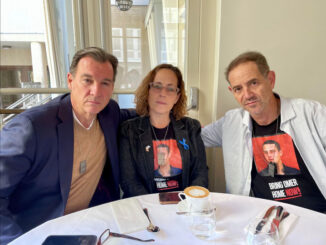
GLEN COVE, NY (TIP): While most Long Islanders were preparing for the long holiday weekend, Tom Suozzi was on the ground in Israel. “The reason I came here was to very clearly demonstrate my solidarity with Israel and with the Jewish people and learn first-hand, on the ground, of what exactly is happening in Israel,” explained Suozzi. The former Congressman met with his former constituents, Ronen and Orna Neutra, from Plainview, Long Island, whose son, Omer, an IDF tank commander, is being held hostage by Hamas terrorists.
“I can’t imagine what they are going through, incredible suffering, all the families of the hostages. Coming to Israel was an important way to bring attention to this issue,” Suozzi said.
Suozzi also met with Lt. Col. (Res.) Jonathan Conricus, the former International Spokesperson for the Israel Defense Forces to discuss the geopolitical overview of Israel and was given up-to-the-minute reports on the fighting. Suozzi then toured Kibbutz Kfar Azza, located a few kilometers from the Gaza border (the “Gaza envelope”), where, on the morning of October 7th, 2023, Hamas terrorists carried out a bloody massacre, killing 60 people, including women, children, and infants.
“It was just devastating to see the carnage, awful, between the bullet holes and the
bloodstained ground, the markings on the buildings, dots, indicating where the murders had taken place. I will never forget it as long as I live,” Suozzi said. “Barbaric. Words cannot describe the horror of what I heard.”“I hear sometimes that Hamas is described as a random, loose coalition of desert fighters. They are not. Hamas is a sophisticated, disciplined terrorist army that is intent on killing Jews everywhere and destroying the state of Israel, burning it to the ground,” Suozzi explained.
He said he was especially concerned about Hamas using human shields to protect their military assets. Suozzi referred to a bill that he had passed to penalize and sanction the use of these human shields.
“Hamas has amassed billions of dollars, and instead of building bridges for peace, they dug tunnels for terrorists,” said Suozzi. “It’s a very common practice here, part of the Hamas playbook, building a network of tunnels leading into hospitals and schools and apartment houses, hiding their weapons and bombs…they are the ones putting their people in harm’s way, they are killing their own people.”
“I’ve been hearing the slogan Free Palestine a lot lately. What we need to do is to ‘Free Palestine from Hamas,’ and figure out a way to bring peace to both sides.”“This war is not about revenge or retribution; it is about stopping Hamas just like the world did against Osama and Isis and Al Qaeda.” Suozzi made a point to say that America needs “pro-Israel Democrats” to balance those in the party who are “very loud” opposing Israeli efforts and to work with Republicans who support Israel.
“One of the keys to the future of Israel is that we maintain a strong, bipartisan support for the state. So, we need strong, outspoken pro-Israel Democrats in Congress,” he added.
Suozzi traveled to Tel Aviv to visit Hostage Square, outside the Art Museum, where families and others gather to support and promote awareness for returning the hostages.
And he dined with Amos Harel, one of Israel’s leading media experts on military and defense issues to discuss the broader issues of regional strategy, the relationship of Israel with its neighbors and the future of the Middle East.
This was Suozzi’s third visit to Israel in recent years. In his first term, Suozzi, then a member of the House Foreign Affairs and Armed Services Committee, visited in August 2017. Several years earlier, in 2002, during the Second Intifada, Suozzi traveled to Israel with the Jewish Community Relations Council (JCRC).
-

Senator John Liu shares his year-end thoughts with New Yorkers
BAYSIDE, NY (TIP): New York State Senator John Liu in a statement released to The Indian Panorama wished New Yorkers a Happy New Year and shared his thoughts with them
“As 2023 draws to a close, I wanted to take a moment to wish you and your family a happy and healthy New Year and joyous holiday season! I am honored to serve as your State Senator and wanted to take a moment to share some reflections with you as we turn the page on a new year.As Chair of the Senate Committee on NYC Education, NYC’s public school children were on the top of my agenda. We reached a historical milestone this year with the Senate’s passage of my legislation to require the instruction of Asian American history in public schools. While we are still working with the Assembly to pass the bill, passage in the senate is a huge step forward in our fight against anti-Asian hate with the understanding that Asian American history is American history. This year, and for the first time ever, the state fully funded Foundation Aid, which is the main source of funding for NYC public schools. As the city and state face looming financial challenges, this funding commitment is imperative for the city to be able to meet its mandates to provide a sound, basic education for all public school kids.
We also passed landmark legislation that will give all students statewide a day off from school for Lunar New Year and all students in New York City a day off for Diwali!
The coming year is among the most revered and auspicious in the Lunar New Year calendar – the Year of the Dragon, symbolizing power, nobility, honor, luck, and success. As we enter 2024, let’s resolve to reflect on what it means to be Americans and remain mindful of our responsibilities as New Yorkers and citizens of the world. For my part, I will continue to push for public policies that improve the quality of our public education system, and commit to supporting programs and services that uplift our diverse communities in the New Year and beyond.
Wishing you and your loved ones all the best in 2024!”
-
BJANA is gearing up for its 50th-anniversary celebration, with the newly elected president Sanjeev Singh

Sanjeev Singh brings a wealth of experience to his new role as President of BJANA NEW YORK (TIP): The Bihar Jharkhand Association of North America (BJANA) recently elected its new leadership for the 2-year term from 2024-2025. Sanjeev Singh, who has served BJANA in various capacities including as Secretary, and as Vice President, has been elected as the new President of BJANA. The other office-bearers include Priti Kashyap as Vice President, Sushant Krishen as Secretary, Vandana Kumar as Joint Secretary, and Priya Ranjan as Treasurer. Additionally, the elected executive members are Dr. Avishek Kumar, Akhilesh Azad, Sarika Dubey, Dipen Banerjee, Rahul Sahay, Ranjeet Kumar, Anish Anand, Bishwanath Sharma, and Saloni Sah. Under the leadership of the past president, Anurag Kumar, BJANA achieved significant milestones and provided valuable services to the people of Bihar and Jharkhand in the USA, and in India. Sanjeev Singh expressed his gratitude to Anurag Kumar for his guidance, and the opportunity to serve the community.
Anurag Kumar congratulated the newly elected president, Sanjeev Singh, expressed confidence in the new team, and wished them success. The BJANA Election Commission, consisting of Late Dr. Anil Kumar, Ranjit Sinha, and Rakesh Kumar, also congratulated the new team and the young leaders.
Several community leaders, including Dr. Avinash Gupta, Dr. Binod Sinha, Dr. Sudhanshu Prasad, Shashi Sinha, Rajiv Akhaury, Bhawesh Choudhary, Anjali Prasad, and Vinay Singh, extended their congratulations to the new team, and wished them well. Alok Kumar, the past president of the Federation of Indian Association, and a BJANA member, also conveyed his congratulations, and best wishes to the newly elected team.
Sanjeev Singh, born and raised in Bokaro Steel City with roots in Vaishali, Bihar, brings a wealth of experience to his new role. With a management and finance background, he has spent close to two decades in the USA, working with global consulting organizations, and serving Wall Street financial services firms. Despite living abroad, Sanjeev has remained connected to his roots, has actively participated in various community activities, and implemented many new ideas, including mentoring BJANA’s new generation and summer camp, working with local philanthropic organizations, building welfare partnerships in Bihar and Jharkhand, and establishing collaborations with local businesses in the USA to raise funds for BJANA’s charitable causes, and events.

The BJANA team for 2024-2025 As the newly appointed President of BJANA, Sanjeev Singh is excited to concentrate on enhancing the community’s youth development network, building a robust professional network, backing entrepreneurs, and startups in the USA. Further, fostering collaboration with colleges, and universities in Bihar & Jharkhand, and actively participating in community development initiatives related to economy, education, and health will also be on the radar. Established in 1975, BJANA boasts of a rich history of devoted service to the Bihar and Jharkhand communities in North America. With Sanjeev Singh’s passion for a revitalized vision focused on nurturing a stronger sense of community, the organization is steadfast in its commitment to continuing its philanthropic efforts. It’s noteworthy that the organization has set an ambitious goal to celebrate its grand golden jubilee, marking 50 years of service, and community engagement. The aspiration to have participation from all over North America indicates a desire to unite and involve a broad spectrum of individuals who share a connection with Bihar and Jharkhand.
-

A Cinematic Journey of Sikh Heritage and Diversity Captivates New York City Audience

Q&A with the team of Baywatana. (Photo : Jay Mandal- on assignment) NEW YORK, NY (TIP): In the bustling heart of the city that never sleeps, the Sikh International Film Festival 2023 unfurled a spellbinding tale of Sikh heritage and cultural diversity at the prestigious Rubin Museum on December 16th. This year’s festival treated the audience to an enchanting journey through impactful stories, with standout films like “Baywatana: Without a Country’, directed by high school students from Boston”, explored the plight of Sikhs and Hindus in Taliban-era Afghanistan.
“American Sikh”, is a true story of an Indian American Sikh who was trying to assimilate with the Americans. The Oscar qualified animated short film is a story of American Sikh Hero Vishvajit Singh and Produced by Guneet Monga Kapoor – Oscar-winning producer (The Elephant Whisperers) and Michelin-starred chef-filmmaker Vikas Khanna and directed and illustrated by American Sikh Hero Vishavjit Singh and Ryan Westra. Vikas Khanna said, “One of the highlights of screening ‘American Sikh’ at Sikh International Film Festival was engaging the little ones and the youth who could see themselves reflected in our film. Their dreams and hopes keep me inspired.”
“Colonel Kalsi: Beyond the Call”: is another true story of a Sikh Youngman Kamal Kalsi who fought to serve in the US Army with his turban and beard. The film explores themes of diversity, sacrifice, faith, identity and resilience. Colonel Kalsi expressed, “Serving in the Army with my unique camo turban and beard was a profound experience of celebrating my Sikh identity while embodying the spirit of American patriotism…”
As the curtains closed on these impactful narratives, the festival featured over 10 films, covering a diverse range of topics from current affairs to historical perspectives. Teji Bindra (Founder and President of Sikh Art & Film Foundation), Mandeep Sobti (Senior VP and Chair of Finance), Dr Paul Johar (Chair SAFF – Film Festival), Harmeet Bharara ( Former Chair FF and Gala), Hansdip Bindra ( Head of PR and Marketing), expressed their satisfaction with the films that captivated a packed auditorium at the Rubin Museum in Manhattan.
Teji Bindra emphasized, “Sikh Art & Film Foundation has been at the forefront in bringing better awareness of Sikhs through films and arts for the past 17 years. We are pleased with the fantastic movies showcased this year.”
Dr. Paul Johar added, “This year’s Sikh International Film Festival showcased a powerful lineup addressing contemporary Sikh Diaspora issues, delved into the challenges faced by the community. “Amardeep Singh’s documentary, “Oneness in Diversity: Elixir of Guru Nanak and the Indic Saints,” intertwined memories of Saints and Sufi mystics, emphasizing the essential theme of oneness and diversity. The festival, with its captivating stories and impactful quotes from filmmakers, not only celebrated Sikh culture but also provided a dynamic platform for filmmakers to showcase their artistry.The Sikh International Film Festival, originating in 2004, has been a cultural beacon, fostering awareness of Sikh culture through films and arts. As the curtains closed on this year’s festival, the organizers expressed gratitude to viewers for their unwavering support, marking a significant chapter in the festival’s journey. The success of SIFF 2023 promises an even brighter future, continuing to celebrate Sikh heritage and diversity through the captivating lens of cinema.
Website: http://sikharts.com/film-festival.html
Col Kamaljeet Singh Kalsi at SIFF in New York, December 16. (Photo : Jay Mandal- on assignment) 
SIFF organizers with team of American Sikh -Vishvajit Singh, Director Ryan Westra and Vikas Khanna. (Photo : Jay Mandal- on assignment) 
-

Indian Consulate in New York organizes Photo Exhibition to showcase valor of Guru Gobind Singh’s sons on Veer Bal Diwas

Visitors to the exhibition ( Photos : Jay Mandal- on assignment) NEW YORK CITY (TIP): An exhibition highlighting the valor and sacrifices of Sahibzada Zorawar Singh aged 9 and Sahibzada Fateh Singh aged 7, the sons of Guru Gobind Singh, was organized at the Indian Consulate here on Veer Bal Diwas. The exhibition on Tuesday, December 26 on Veer Bal Diwas was to “commemorate the extraordinary valor and unparalleled sacrifices” made by ‘Veer Sahibzadas’, sons of the tenth Sikh Guru, Guru Gobind Singh, a press release from the mission said.
“Honoring the exemplary courage and immortal sacrifice of Veer Sahibzaade, proud sons of Guru Gobind Singh ji,” the Consulate said in a post on X, adding that it hosted an “exhibition on the occasion of #VeerBaalDiwas, paying our tributes to the Bravehearts with unparalleled courage”. A large number of members from the Indian-American community attended the event to pay their homage and tributes to the ‘Veer Sahibzade’. The Consulate said that on the request of a local gurdwara priest and as a mark of respect, the exhibition would be displayed at the Consulate premises through December 28.

Acting Consul General of India in New York Dr. Varun Jeph partakes of langar with others at Gurdwara Baba Makhan Shah Lobana in Queens, New York where he had gone to pay obeisance to the Veer Sahibzadas on ‘Veer Bal Diwas’. Seen in the picture, from L to R: Consul, Community Affairs Vijaykrishnan, a former President of Gurdwara Baba Makhan Shah Lobana Himat Singh Sarpanch, Acting Consul General Dr. Varun Jeph, The Indian Panorama editor Prof. Indrajit S Saluja, a former president of the Gurdwara Gurmej Singh. Sukhjinder Singh, General Secretary of the Gurdwara is seen serving langar. (Photo : PTI) The exhibition will also be showcased at gurdwaras in New York, New Jersey and Connecticut.
Earlier in the day, Acting Consul General of India in New York Varun Jeph visited the Gurdwara Baba Makhan Shah Lobana in Queens and paid obeisance to the Veer Sahibzade.
He was joined by members of the gurdwara’s executive committee and local sangat in performing ardas and kirtan. He also joined the community members for langar at the gurdwara.
Special videos on Veer Bal Diwas are also being showcased at the gurdwara for young students attending winter camps there. The Consulate General of India in Houston also observed Veer Bal Diwas, “a day commemorating the valor and martyrdom of young heroes, Guru Gobind Singh Ji’s Sahibzade. A photo exhibition showcased their courage and resilience”.
The Indian Embassy in the US said in a post on X, “Shaheedi Samagam was held at Brookfield Gurdwara, Wisconsin. Leading Sikh and Indian American leaders along with senior Embassy officials participated.”
The Indian Embassy added, “A fitting tribute was given to the exemplary courage and sacrifice of ‘sahibzadas’ of Guru Gobind Singh marking #VeerBaalDiwas.”
(With inputs from PTI)
The Consulate staff with visitors to the Exhibition (Photo/ Jay Mandal- on assignment) -

Yearning for peace
When will we learn that there are no victors in war. Ultimately, we are all losers. I pray that peace returns to the embattled war zone
“Israel has weaponized its memories of the Holocaust so deeply that it has now raised an army of heartless avengers who have no compassion for those who had no role to play in the Nazi pogrom that exterminated their brethren decades ago. How long will they carry this legacy of revenge? Despite the severe criticism of their determination to reduce Palestine to dust, which has now shaped into unacceptable war crimes, Israel has not let up its hunting of Hamas. Not even after appeals from the WHO and the UN. When will we learn that there are no victors in war; ultimately, we are all losers. I pray that peace returns to this embattled war zone and that the true spirit of Christmas inspires them to restore peace and goodwill among men.”

By Ira Pande This is that special year that will end on a Sunday so that the new year will literally start on a fresh slate. Be that as it may, as I sit down to write my last column for 2023, my mind goes over some landmark events that have changed our world forever. Equally, it is a time to remember those dear souls who we will miss as we step into 2024 and those wars and strife that have scarred this year but will hopefully find resolution in the coming one.
All around me are the familiar scenes of X-mas celebrations: brightly lit streets, shopping arcades and shops. Fake fir trees garlanded with fairy lights and cheery Christmas decorations with a star or angel on its crown. Yet, is it not ironic that Bethlehem, Jerusalem and Palestine in general, where Christianity was literally born, are today drowning in darkness and death? A few years ago, on a visit to Israel, we attended the Midnight Mass in Bethlehem’s Church of Nativity. In this bitterly divided territory, Bethlehem is still zealously controlled by Palestine. However, since Christmas is a season for peace and goodwill, it allows access to Jews and pilgrims from countries across the world to its part of the Holy Land. Long lines of believers wait patiently to enter the birthplace of Christ the Redeemer. Even non-believers are moved by the carols that sing: ‘Away in a manger, no crib for a babe/The little child Jesus lay down his sweet head’ and that famous hymn, ‘Silent night, holy night’, acquires a different timbre when it is sung at that time of the year. The term ‘heavenly peace’ acquires a significant dimension if you hear it in Bethlehem, believe me.
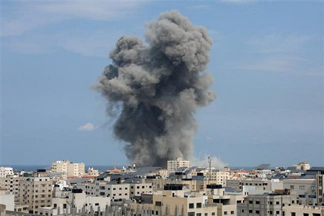
However, what we have seen in this land lately are flying missiles, drones bombing homes and settlements. Even hospitals have not been spared, nor children, women and the innocent citizens who are not Hamas. As I see news clips beamed from there, my eyes well up when I see terrified children, many who have lost their parents, grandparents and siblings in one day, running away from the rubble that was once a home. I cannot understand how those who carry out instructions to kill can bring themselves to destroy hospitals and kill children. If this is not the opposite of the spirit of peace and goodwill among men, what do you call it? Words fail me for even terms like dystopia cannot convey the horror of such bestial behavior.
Israel has weaponized its memories of the Holocaust so deeply that it has now raised an army of heartless avengers who have no compassion for those who had no role to play in the Nazi pogrom that exterminated their brethren decades ago. How long will they carry this legacy of revenge? Despite the severe criticism of their determination to reduce Palestine to dust, which has now shaped into unacceptable war crimes, Israel has not let up its hunting of Hamas. Not even after appeals from the WHO and the UN. When will we learn that there are no victors in war; ultimately, we are all losers. I pray that peace returns to this embattled war zone and that the true spirit of Christmas inspires them to restore peace and goodwill among men.
From there, let me turn to an incident that gave me such joy that I must share it with my readers. Every month or so, I do a story-telling session in our club for little children between the ages of four and 10. For an hour, I am alone with them and instead of reading ‘good’ stories from the classics, such as the Panchtantra, I make up characters and adventures that ignite their imagination. So the children become storytellers (you will be surprised when you hear how hilarious their suggestions are). Logic and reality are happily dispensed with as they join me in adventures that take them to forests where trees speak, owls and monkeys share their knowledge and where doing all the things forbidden to them by parents and teachers are allowed. I have always known that children love other naughty children for in making up stories about them, they are able to sublimate their hidden wishes. So, when they hear of a naughty chap called Agdum Bugdum, they giggle when they learn he wears his chaddis over his pants, eats from a chair while seated on a table and walks backwards when going to school.
By the end of the session, they were making up scenarios where Chunnu-Munnu smuggle a monkey into their home and teach their pet to steal mangoes from the garden of the crusty uncle next door. Or how the owl they meet one night in the forest outside their house has a friendly ghost who waits to serve them all kinds of goodies when they visit him. I have to confess that by the end of the session, the kids had taken over the storytelling and I was rocking with laughter at the improbable tales they thought up.
In our ‘normal’ world, there is a shrinking space for innocent fun. Parents are more concerned about their children learning how to sing, dance, play games and what have you. Remember what children love above all else is having fun with other children and being naughty. Keep moral lessons for later.
(The author is a columnist) -

Bumpy ride ahead
Despite promises of how the AI sector would boost economic development, India’s problems won’t disappear solely through GDP growth.
“To divert attention from the subdued economic growth, Prime Minister Modi has unveiled a new vision: India becoming a developed economy by the time Independent India turns 100 in 2047. In many of his public statements, he emphasises this goal, seemingly looking beyond the quarterly and annual growth rates, immediate inflation rates and immediate roadblocks. This is perfectly suited to fighting an election away from the irritants of what is really slow economic growth despite being much more than other countries in the world. As a matter of fact, there is an unstated caveat. A World Bank report had said India is the fastest-growing economy among its peers in the emerging market economies (EMEs) to avoid the false inference that India is growing faster than the US and China — the two top economies. China’s GDP is six times that of India, and that of the US eight times. It would not make much sense to claim that India’s growth is faster than that of the US and China.”

By Parsa Venateshwar Rao Jr. For much of 2022, Prime Minister Narendra Modi, Finance Minister Nirmala Sitharaman and many of the economists in the government had harped on the theme that India was the fastest-growing large economy in the world in the post-Covid period, and that this was no mean achievement. And it was also implied that if the country was the fastest-growing economy, then it cannot be the case that anything can be seriously wrong with the economy. But soon the little warts hidden by the big picture came to the forefront. The first issue of concern to emerge was that of inflation.
The Reserve Bank of India (RBI), which had been taking a fuzzy view of the economy, began to realise that inflation was getting to be a problem. This was something that could not be downplayed any more. And the RBI, which had wanted to keep interest rates low to boost the Covid-hit economy, had to make the hard decision to increase interest rates. This went unnoticed as attention shifted to the prospect of many businesses leaving China — an after-effect of the pandemic — and relocating to India. The narrative envisioned India emerging as the global hub of manufacturing, poised to assume the role previously held by China, the engine of global economic growth. But this did not turn out to be so in a big way. It was hoped that the Production-Linked Incentive (PLI) would be the magic wand to turn manufacturing around but it did not have the significant impact expected. The only sector that was growing in a way that translated into export earnings was the services, but it was still a modest growth because the global economy was stuttering.
To divert attention from the subdued economic growth, Prime Minister Modi has unveiled a new vision: India becoming a developed economy by the time Independent India turns 100 in 2047. In many of his public statements, he emphasises this goal, seemingly looking beyond the quarterly and annual growth rates, immediate inflation rates and immediate roadblocks. This is perfectly suited to fighting an election away from the irritants of what is really slow economic growth despite being much more than other countries in the world. As a matter of fact, there is an unstated caveat. A World Bank report had said India is the fastest-growing economy among its peers in the emerging market economies (EMEs) to avoid the false inference that India is growing faster than the US and China — the two top economies. China’s GDP is six times that of India, and that of the US eight times. It would not make much sense to claim that India’s growth is faster than that of the US and China.
The RBI has paused the interest rate hike at 6.5 per cent, and it hopes that the rate hike effected through 2022 would have a disinflationary impact, but the apprehension of volatile food prices and its effect on inflation remains. Though the inflation rate had stood at 4.9 per cent in October this year, it is expected to rise. The success that the Modi government had in the run-up to the 2019 Lok Sabha elections will not be there for the next summer’s General Election. Economists who had been supporting the government boasted of his achievement on the economic front of high growth and low inflation in the period between 2014 and 2018. The GDP growth rate in 2014 was 7.4 per cent and the inflation rate was 6.67 per cent; in 2015 the GDP grew at 8 per cent and the inflation rate was down to 4.91 per cent; in 2016 the GDP grew at 8.3 per cent and the inflation rate was 4.95 per cent; in 2017 the GDP growth rate was 6.8 per cent and the inflation rate 3.33 per cent; and in 2018 the GDP grew by 6.5 per cent and the inflation rate stood at 3.94 per cent. It is evident that in 2015 and in 2016, the growth rate was a respectable 8 per cent, and the inflation was just below 5 per cent. It is in 2017 and 2018 that the GDP growth rate moderated quite significantly, and the inflation rate was much below the 4 per cent range. The last five years have been bad in more ways than one. In 2019, the GDP growth rate was 3.87 per cent and the inflation rate was 3.73 per cent.
In the Covid year of 2020, the economy plunged; the GDP growth rate was – 5.8 per cent and the inflation stood at 6.62 per cent. In 2021, the economy bounced back, partly due to the low base effect, reaching 9.1 per cent growth, while inflation decreased to 5.13 per cent. And in 2022, the GDP growth rate was 7 per cent and the inflation rate was 6.7 per cent. The RBI projection for the GDP growth rate is pinned at 6.5 per cent, and there is uncertainty over the inflation rate. The central bank hopes that it will remain under 6 per cent in the mandated 2 per cent to 6 per cent range. But an inflation rate of 5 per cent and a GDP growth rate of 7 per cent cannot be termed a happy scenario. It could be that in the next five years, the situation could change, but 2024 does not promise to be the inflection point.
The global economy will continue to grapple with the challenge of regaining momentum lost in the post-pandemic period, amid the ongoing conflicts in Ukraine and Gaza that cast a grim shadow over the political outlook. It’s not surprising that Prime Minister Modi is directing attention towards the Ram temple in Ayodhya, providing free ration to 80 crore people for the next five years and distributing thousands of government appointment letters, given the less-than-promising job growth in the manufacturing sector. Then there are promises aplenty of how the AI (artificial intelligence) sector would boost economic growth in India, and the prospect of India rising to be the third largest economy in the world. India’s economic problems would not vanish by the growth of the GDP size. Double-digit growth, which could bring about perceptible change in the lives of the people, seems a distant dream.
(The author is a senior journalist) -
The US is no country for old men
Elderly Americans struggle to survive in a country that seeks to extract profit from them till the very end.

A lonely old man (File photo) To be sure, the loneliness and isolation that so often attends old age in the US does nothing to increase life expectancy; nor does the unique stigma that US “culture” attaches to ageing. As the American Psychological Association (APA) has noted, institutionalized ageism in the United States entails a “host of negative effects, for people’s physical and mental wellbeing and society as a whole”.

By Belén Fernández Shortly prior to his death from prostate cancer in August of this year at the age of 72, my father emerged from a state of muteness to recite, with a burst of energy, the 1927 poem, Sailing to Byzantium, by William Butler Yeats, which begins: “That is no country for old men.”
My mother, my uncle, and I were present for the impromptu performance, which took place in my father’s bed in Washington, DC, where he had commenced in-home hospice care after the chemotherapy treatments that had been forced upon him by profit-oriented doctors had accelerated his demise.
This was but one of many poems my father had memorized as a young man intent on honing his intellectual credentials; my mother and uncle – who in their youth had also fallen under the influence of my dad’s cerebral pursuits – joined in on the lines they remembered. Having completed his vehement recitation, my father resumed his generally mute state, which was thereafter punctuated only by intermittent outbursts about wanting to die.
I have no way of knowing what was going through my dad’s mind during that final poetic eruption, but the first line of the Yeats poem did seem to be a fitting commentary on the country in which we found ourselves – the one where we had all been born and the one my parents and I had spent years avoiding. My mom and dad had only relatively recently returned to reside in the homeland after nearly eight years in Barcelona; I had flown into Washington in August from Turkey, which was one of my regular stops in a 20-year self-imposed exile.
Indeed, my father’s final months had merely confirmed that the US is “no country for old men”. Counterproductive chemotherapy treatments were but one of the ways he had been milked for all he was worth, before being turned over as prey to the lucrative realm of funeral and cremation services.
For example, for a one-month prescription of the prostate cancer drug Xtandi, a medication developed with none other than US taxpayer money, my father had been charged $14,579.01 – i.e., more than many people in the United States earn in several months. For folks lacking the means to pursue healthcare and other basic needs, US capitalism can be deadly, too.
And while US society specializes in oppressing a wide range of demographics – minus, of course, the elite minority that thrives on acute inequality – the treatment of the elderly is particularly cynical. Having outlived their labor-based exploitability as cogs in the capitalist machine, older people become decaying objects from which profit must continue to be extracted until the very last minute.
According to the results of a West Health-Gallup survey published in 2022, approximately one in four Americans aged 65 and older and three in 10 Americans between the ages of 50 and 64 said they had sacrificed basic needs, such as food, to pay for healthcare.
The study found that older women and Black Americans were disproportionately affected and that punitive health care costs constituted a significant source of stress in the daily lives of older Americans, with stress naturally only exacerbating existing medical issues.
Add vampire-like insurance companies to the mix, and the panorama becomes ever more morbid. The prohibitive fees associated with many programs – coupled with insurance outfits’ frequent refusal to cover lifesaving treatments – means that life itself continues to be a privilege and not a right in the United States.
Then there’s the $34bn assisted-living industry, which a recent Washington Post investigation revealed to be plagued by wanton neglect despite charging an average of $6,000 a month per resident. Since 2018, the Post reported, more than 2,000 residents have wandered off unnoticed from such facilities, and nearly 100 of them have died after doing so.
So much for “assisted living”.
To be sure, the loneliness and isolation that so often attends old age in the US does nothing to increase life expectancy; nor does the unique stigma that US “culture” attaches to ageing. As the American Psychological Association (APA) has noted, institutionalized ageism in the United States entails a “host of negative effects, for people’s physical and mental wellbeing and society as a whole”.Granted, loneliness and isolation are often lifelong afflictions for inhabitants of the so-called “land of the free”, where the collective mental wellbeing is hardly helped by a dog-eat-dog insistence on individual success at the expense of communal and family bonds and the conversion of human beings into consumerist automatons.
And the cutthroat, transactional nature of existence in the US culminates, appropriately, with elderly bodies being put up for grabs by pharmaceutical companies, nursing homes, and the corporate racket known as the US healthcare system.
That said, the US is, in fact, a fine country for some old men – such as former warmongering diplomat Henry Kissinger, who perished at home in Connecticut in November at the ripe old age of 100 after spending a good part of his life causing the deaths of countless people worldwide.
Not long after my father’s death in August, I fell into conversation with a Bolivian man in his 50s who had resided in Washington for more than two decades and who expanded on the “no country” theme. He planned to stick it out for another 10 to 15 years before returning to his home city of Cochabamba, he told me, because he couldn’t afford to be old in the US.
And while the US may be “no country for old men”, it’s not much of a country for anyone else, either.
(Belén Fernández is an Al Jazeera columnist) -
“The old order changeth, yielding place to new”
As the curtains draw to a close on the year 2023, it’s a moment of reflection—a time to ponder upon the events that shaped the world, stirred emotions, and left indelible imprints on our collective conscience. The analogy of a cancelled check resonates aptly, for just like an invalidated financial transaction, the year holds experiences that cannot be rewritten yet linger vividly in our memories.Undoubtedly, the world has navigated through a labyrinth of trials and tribulations in these 365 days, testing the resilience and fortitude of humanity. The harrowing impact of the ongoing pandemic, while gradually easing its grip, continued to be a significant force shaping our lives. Waves of variant strains, sporadic resurgences, and the global pursuit of vaccination campaigns marked a year where hope warred against despair.
Pain and sorrow have seeped into the fabric of our existence, not only due to the pandemic but also owing to numerous crises that afflicted different corners of the globe. Natural disasters unleashed their fury, leaving devastation in their wake—torrential floods, raging wildfires, powerful hurricanes, and deadly earthquakes shattered communities and displaced populations, underscoring the urgent need for concerted climate action.
Conflicts and geopolitical tensions rumbled across several regions, deepening divides and causing untold suffering. War-torn nations grappled with the enduring scars of violence, with displaced populations seeking refuge and aid. Diplomatic negotiations often felt strained and inadequate, leaving many questioning the efficacy of global diplomacy in resolving complex disputes.
In the realm of global politics, the year unfolded against a backdrop of polarizing ideologies and power struggles. Nations grappled with internal strife and external pressures, balancing economic recovery with social welfare imperatives. Geopolitical alliances shifted, reshaping the dynamics of influence on the world stage.
The emergence of new leadership and the continuation of diplomatic dialogues offered glimpses of optimism, albeit against a backdrop of skepticism. International cooperation faced challenges, particularly in addressing issues that demanded unified global action, such as climate change, humanitarian crises, and health disparities.
The year 2023 was a crucible that tested the world’s collective resolve and highlighted the imperative for unity in the face of adversity. While challenges persisted, stories of resilience, compassion, and solidarity emerged, illustrating the unwavering human spirit.
Communities rallied together, offering support, aid, and compassion to those in need. Grassroots movements advocating for social justice, environmental conservation, and equality gained momentum, amplifying voices that demanded change and accountability from governing bodies and institutions.
Technology continued to redefine boundaries, accelerating innovation and connectivity while presenting ethical dilemmas and challenges regarding privacy, misinformation, and cybersecurity.
As we bid adieu to 2023, it becomes imperative to carry forward the lessons learned. The year, despite its adversities, taught us the significance of adaptability, empathy, and the interdependence of our global community. It emphasized the urgency of addressing systemic issues, nurturing inclusivity, and forging sustainable pathways for a better tomorrow.
Looking ahead, the dawn of a new year beckons—a canvas yet to be painted. It presents an opportunity to learn from the past, to chart a course that embodies resilience, compassion, and collective action. It is a time to nurture hope, to foster unity amidst diversity, and to strive for a world that is more equitable, peaceful, and sustainable for generations to come.
In the grand narrative of human history, the year 2023 will be remembered as a chapter that tested our mettle, unveiled our vulnerabilities, yet also showcased our capacity for resilience and unity in times of adversity. It beckons us to forge ahead, not forgetting the trials endured but harnessing their lessons as catalysts for a more compassionate and harmonious future.
As the clock ticks towards midnight, let us embrace the dawn of a new year with renewed hope, determination, and a collective commitment to shape a world where empathy triumphs over adversity, where diplomacy fosters understanding, and where humanity thrives.
In the annals of time, 2023 will linger as a testament to our shared experiences—a year that reshaped our narratives, leaving an indelible mark on the canvas of history. As we bid farewell to its trials and tribulations, let us stride forth with courage and conviction, guided by the lessons learned, towards a future that embodies the aspirations of a global community united in purpose and compassion.
As we stand at the threshold of a new year, 2024, it’s crucial to acknowledge the challenges ahead and consider the steps needed to foster a world that embodies peace, harmony, and universal happiness. Creating a global environment of unity, empathy, and conflict resolution requires a multifaceted approach that addresses various facets of human existence:
Open and respectful communication is the cornerstone of conflict resolution. Encouraging dialogue, fostering understanding, and embracing diversity can bridge divides among nations, cultures, and ideologies. Empathy and active listening are vital to comprehending differing perspectives and finding common ground.
Investing in education that promotes critical thinking, tolerance, and cultural appreciation from an early age is fundamental. Empowering individuals with knowledge and skills not only enhances opportunities but also nurtures a mindset of acceptance and cooperation.
Collaboration among nations on issues such as climate change, healthcare, poverty alleviation, and human rights is crucial. Enhanced cooperation through international organizations, treaties, and partnerships can address global challenges that transcend borders.
Combatting poverty, inequality, and social injustices is pivotal in creating a fair and inclusive world. Equitable distribution of resources, access to healthcare, education, and economic opportunities can alleviate tensions and foster societal harmony.
Preserving our planet is paramount for future generations. Adopting sustainable practices, reducing carbon emissions, protecting biodiversity, and promoting renewable energy sources are imperative steps toward a healthier and more sustainable world.
Upholding human rights principles and ensuring equality for all individuals, regardless of race, gender, religion, or sexual orientation, is essential for building a society based on fairness, justice, and respect.
Encouraging non-violent conflict resolution, promoting disarmament, and advocating for diplomacy over aggression are vital. Supporting initiatives that promote peacebuilding, reconciliation, and mediation can prevent conflicts and resolve existing tensions.
Prioritizing mental health and emotional well-being on a global scale is crucial. Providing access to mental health resources, reducing stigma, and fostering a culture that values emotional health contributes significantly to individual and societal happiness.
Harnessing Technology Ethically: Embracing technological advancements while ensuring ethical use is key. Regulating technology to protect privacy, combat misinformation, and harness innovations for the betterment of humanity is vital.
Encouraging acts of kindness, empathy, and compassion in everyday life can create ripples of positive change. Small gestures of kindness collectively contribute to nurturing a more empathetic and caring society.
Creating a world where conflicts are resolved peacefully, and happiness is a dominant gift, necessitates concerted efforts from individuals, communities, governments, and international bodies. It requires a commitment to shared values of understanding, empathy, and cooperation. Each person plays a role in fostering a culture of peace, harmony, and happiness.
By nurturing these values, advocating for justice and equality, embracing diversity, and working collaboratively to address global challenges, we can envision and strive towards a world where the inherent dignity of every individual is respected, conflicts are minimized, and happiness is a shared reality for all. While the path to global harmony may be challenging, the collective commitment to creating a better world can pave the way for a brighter, more peaceful future for generations to come.