Year: 2023

  • Pilot program allowing H-1B holders to renew visas without leaving US clears White House review; to benefit Indians

    Pilot program allowing H-1B holders to renew visas without leaving US clears White House review; to benefit Indians

    To begin with, 20,000 H-1B specialty occupation workers will be able to renew their visas in the US beginning from January next year

    NEW YORK (TIP): In a move likely to benefit Indian professionals, a pilot program allowing H-1B holders to renew visas without leaving the US, has cleared a review by the White House Office of Information and Regulatory Affairs.

    To begin with, 20,000 H-1B specialty occupation workers will be able to renew their visas in the US beginning from January next year.

    The Department of State is launching a pilot program for domestic renewal of H-1B visas, offering a significant development for qualified applicants. The program, active from January 29 to April 1, 2024, allows eligible H-1B visa holders to renew their visas within the United States, a departure from the standard process requiring renewal from outside the country.

    Eligibility and Application Details:

    Scope: Limited to H-1B visa renewals.
    Requirements: Applicants must meet specific criteria, including prior visa issuance by Mission Canada (from January 1, 2020, to April 1, 2023) or Mission India (from February 1, 2021, to September 30, 2021), among others.
    Application Process: Applicants can apply online at travel.state.gov.
    Aim of the Pilot: The pilot aims to test the feasibility of resuming domestic visa renewals and to assess its effectiveness in reducing global visa wait times. This move is aligned with the Administration’s commitment to improving federal service delivery and supporting U.S. industry partners.

    Application Procedure:

    Period: Online applications accepted from January 29, 2024.
    Limits: Weekly limits on applications based on the region of prior visa issuance.
    Processing Time: Expected to be 6-8 weeks from the receipt of required documents.
    Fees: Non-refundable and non-transferrable $205 MRV fee.

    Requirements for Participation:

    Includes criteria such as in-person interview waiver eligibility and maintaining H-1B status.
    Documentation Needed:

    A completed DS-160 form, a recent photograph, passport, Form I-797, and I-94.
    Important Notes:

    Visa issuance through this program is not guaranteed.
    Ineligible or incomplete applications will face refusal under INA section 221(g).
    This pilot is a temporary arrangement, and participation is voluntary.

    The pilot program cleared the Office of Information and Regulatory Affairs review on December 15, the final regulatory hurdle before publication. The development comes months after the White House announced a pilot program for domestic renewal of certain categories of H-1B visas during the state visit of Prime Minister Narendra Modi in June this year.

    It would allow H-1B holders to renew their visas by mailing them to the State Department rather than travel outside the US and face uncertain wait times to secure an appointment at an American consular office before returning.

    In countries like India, the largest source of H-1B workers, high visa wait times have added uncertainty to travel plans for those workers and their employers.

    An estimated 75 per cent of the H-1B visas granted in a year are known to go to workers from India, hired by some of the largest US tech giant such as Amazon, Microsoft, Google and Facebook.

    Due to heavy visa backlogs, some H-1B workers have pursued work-arounds such as travelling to nearby countries with fewer backlogs to secure appointments. The average wait time to secure a visa appointment for travel to the US fell to 130 days last year, a drop of 70 days from fiscal year 2022. The State Department considers acceptable wait times to be closer to 90 days.
    (Source: IANS)

  • Rudy Giuliani files for bankruptcy after $148m defamation verdict

    Rudy Giuliani files for bankruptcy after $148m defamation verdict

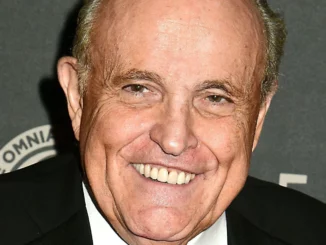
    NEW YORK (TIP): Rudy Giuliani, once famous as “Mayor of America” and a longtime associate of former President Donald Trump, has filed for bankruptcy just days after he was ordered to pay $148m (£116m) in a defamation case.

    He was ordered to pay the sum after a judge found he defamed two Georgia election workers over false claims they tampered with votes in 2020. The filing shows he owes millions of dollars in legal fees and unpaid taxes.

    A spokesman said the move should “be a surprise to no-one”. In a statement, the spokesman for Mr Giuliani, Ted Goodman, said “no person could have reasonably believed that [Mr Giuliani] would be able to pay such a high punitive amount”.

    He added that December 21 bankruptcy filing in New York would give Mr Giuliani the “opportunity and time to pursue an appeal, while providing transparency for his finances under the supervision of the bankruptcy court”.

    Mr Giuliani, 79, said earlier this year that he was having financial difficulties because of his increasing legal fees and expenses.

    Last week, an eight-person jury ordered him to pay $20m to Georgia poll workers Ruby Freeman and her daughter Wandrea “Shaye” Moss. The pair said Mr Giuliani’s false claim that they tampered with votes had a traumatizing impact on their lives. Ms Freeman said she would “always have to be careful” because of lingering fears she might be recognized publicly.

    Ms Freeman and Ms Moss were also awarded more than $16m each for emotional distress. Another payment of $75m in punitive damages was ordered to be split between them.

    Addressing reporters outside the court after he was ordered to pay the sum, Mr Giuliani said: “I don’t regret a damn thing.”

    On Wednesday, a judge ordered him to start paying the two women immediately and expressed concern he might not comply with the judgement. It is unclear how the bankruptcy declaration will impact on the payments, but US bankruptcy law does not allow the dissolution of debts stemming from “wilful and malicious injury” inflicted on another party.

    The bankruptcy filing lists nearly 20 creditors, including Ms Freeman, Ms Moss and Hunter Biden who sued him in September.

    Other creditors include the Internal Revenue Service (IRS), which he owes more than $700,000 in income tax, and two voting software companies that sued him over his false claims of election fraud.

    A law firm that previously represented Mr Giuliani, Davidoff Hutcher & Citron LLP, is also included. The firm sued Mr Giuliani for $1.4m in unpaid legal fees in September. Mr Giuliani still faces an indictment in Georgia on racketeering and conspiracy charges as well as a $10m lawsuit by a former business associate over sexual harassment claims.
    (Agencies)

  • Colorado Supreme Court bars  former president Donald Trump from running for President  over 2021 Capitol riots

    Colorado Supreme Court bars former president Donald Trump from running for President over 2021 Capitol riots

    Court ordered exclusion of his name from the state’s Republican presidential primary ballot.

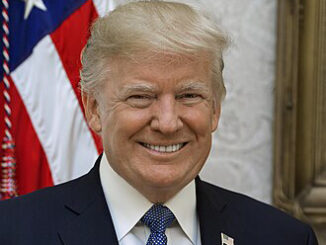
    WASHINGTON, D.C. (TIP): In a stunning verdict, the Colorado Supreme Court has barred Donald Trump from running for President next year in the state citing his role in the unprecedented attack on the US Capitol in 2021 and ordered exclusion of his name from the state’s Republican presidential primary ballot. The disqualification of the 77-year-old former President on Tuesday, December 19, was based on the Constitution’s 14th Amendment, which says officials who take an oath to support the US Constitution are banned from future office if they “engaged in insurrection.” The 4-3 ruling by the seven-member Colorado Supreme Court does not apply outside the state. Indian-American presidential candidates Nikki Haley and Vivek Ramaswamy on Wednesday, December 20, opposed the Supreme Court decision Haley said “the last thing we want” is judges deciding who can and cannot be on the presidential ballot
    Ramaswamy vowed to withdraw from Colorado Republican party primary ballot until Trump eligibility is restored
    Trump is currently the front-runner in the Republican Party’s nomination process for the race for the White House in 2024. Trump’s campaign has vowed to appeal against the “flawed” ruling by the Supreme Court of Colorado in the US Supreme Court.

    The Colorado Supreme Court upheld a trial judge’s decision that Trump engaged in the January 6, 2021, insurrection and also overturned her conclusion that the ban does not apply to the presidency.

    The landmark decision from the divided top state court marks the first time a court has found Trump ineligible to return to the White House due to his conduct surrounding the January 6, 2021, attack on the US Capitol, CBS News reported.

    Never before has a court determined that a presidential candidate is disqualified under the Civil War-era provision clause, it said.
    (Source: PTI)

  • French President Emmanuel Macron to be India’s Republic Day chief guest

    French President Emmanuel Macron to be India’s Republic Day chief guest

    NEW DELHI (TIP): French President Emmanuel Macron is set to be the chief guest at the Republic Day celebrations on January 26, people familiar with the development said on Friday, December 22. The development comes after the US was unable to accept India’s invitation for President Joe Biden to be the chief guest for the Republic Day. This will also be the sixth time that a French head of state will attend the celebrations as chief guest since 1976.

    The Indian side was put in the uncomfortable position of having to look for a world leader to be the chief guest for the Republic Day with a little more than six weeks to go for the event after the US didn’t take up the invitation, reportedly due to Biden’s focus on domestic politics, including the annual state of the union address and his re-election bid in 2024.

    There was speculation in diplomatic circles about the Indian side reaching out to other world leaders in recent days, with the names of UK Prime Minister Rishi Sunak and the heads of state of some West Asian countries doing the rounds.

    There was no word from Indian officials regarding Macron’s presence at the Republic Day celebrations, though the people cited above said the French president is expected to attend the event and that a formal announcement was expected soon.

    The French presidents who were guests at the Republic Day celebrations were Jacques Chirac (1976 and 1998), Valéry Giscard d’Estaing (1980), Nicolas Sarkozy (2008) and François Hollande (2016). Macron’s presence at next year’s event will also make France the country whose leaders have been chief guest at the event the maximum number of times. Until now, France and the UK were tied with five invitations each. Prime Minister Narendra Modi was the chief guest at the Bastille Day or French national day celebrations in Paris in July this year when an Indian tri-services contingent also participated in the parade.

    The development also comes at a time when France has reportedly submitted its bid to India’s defense ministry for selling 26 Rafale-Marine combat jets in a deal estimated to be worth Rs 50,000 crore. These jets are meant to bolster the Indian Navy’s combat capabilities and the Indian Air Force already operates 36 Rafale jets acquired under a Rs 59,000-crore deal finalized in 2016.

    Macron has a close relationship with Modi and France has emerged as one of India’s closest partners in Europe. Both countries are also part of trilateral partnerships with several countries that are focused on cooperation in areas such as maritime security and resilient supply chains. France is the only European power with significant naval assets in the Indian Ocean region because 93% its exclusive economic zone (EEZ) of more than 11 million sq km is in the Indo-Pacific. The navies of India and France exercise regularly and cooperate closely on maritime security.

    The two countries have also worked closely together on issues such as counter-terrorism and climate change at the United Nations.
    (Source: HT)

  • Sense of consensus eludes INDIA

    Sense of consensus eludes INDIA

    At core of predicament is Congress’s inability to mold itself into a leader of a heterogeneous bloc

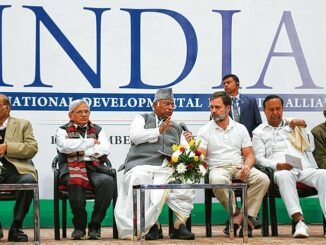
    “What do the circumstances portend for the Opposition’s coalition? The constituents of INDIA met in New Delhi on December 19, apparently to clear the air of disunity that had begun to cloud the coalition after its earlier sessions and following the differences over seat-sharing between the Congress and the Samajwadi Party, Janata Dal (United) and the Rashtriya Lok Dal before the recent state elections. A sense of cooperation and consensus among the parties —which included a Shiv Sena faction headed by Uddhav Thackeray, the Mandalised bloc from Uttar Pradesh and Bihar, the DMK and its allies and the Aam Aadmi Party — continued to be elusive. It still isn’t clear if the participants were out to score an own-goal by flagging issues that were earlier deemed as ‘irrelevant’ or quite happy to articulate their contradictions.”

    By Radhika Ramaseshan

    To see the glass as half full or half empty depends on how buoyant or cynical an observer is. Since its inception in June, the Indian National Developmental Inclusive Alliance (INDIA), comprising 28 parties, has envisaged roping in as many Opposition forces as it can mobilize in a joint front to fight the BJP in the 2024 General Election. The formation of the bloc, in which the Congress is as important an investor as the regional parties, was an admission on the part of the Gandhis that their political legacy was no longer remarkable enough to take on the BJP single-handedly. The series of meetings INDIA held iterated the Congress’s position as an equal and not a first among equals. It still isn’t clear if the participants were out to score an own-goal by flagging issues that were earlier deemed as ‘irrelevant’ or quite happy to articulate their contradictions.

    Ideally, recent events ought to have underscored the need for such a front even more deeply, especially for the Congress, because the favorable atmospherics that prevailed during INDIA’s first congregation at Patna had dissipated. Seven months before that, there was a sense of hope. Rahul Gandhi had completed his marathon Bharat Jodo Yatra, which went some way in reimagining popular perception of the leader who had been seen as a reluctant and naive politician. The Congress scored an impressive win over the BJP in Karnataka and decimated the Janata Dal (Secular), which went on to seek refuge in the NDA’s fold.

    With 2023 nearing its end, the scenario has turned depressing for the Opposition. The BJP swept the elections in three states in the Hindi heartland in a direct faceoff with the Congress. The Congress now exists in slivers in this region. In the ongoing winter session of Parliament, the BJP has reasserted its near-hegemonic position amid projections of a comeback in 2024. It has pulverized the Opposition, which had sought a statement from the government regarding the security breach in Parliament but was rebuffed. Not only did the government reject the suggestion of being accountable to elected MPs, it also passed Bills with far-reaching implications for data security and amendments in the criminal laws without debate and discussion. After the mass suspension of MPs, the Opposition’s presence in the Lok Sabha and Rajya Sabha has shrunk alarmingly. The picture which both Houses presented marked the culmination of a long-cherished RSS project to install an overbearing Centre with the states orbiting around it like satellites.

    What do the circumstances portend for the Opposition’s coalition? The constituents of INDIA met in New Delhi on December 19, apparently to clear the air of disunity that had begun to cloud the coalition after its earlier sessions and following the differences over seat-sharing between the Congress and the Samajwadi Party, Janata Dal (United) and the Rashtriya Lok Dal before the recent state elections. A sense of cooperation and consensus among the parties —which included a Shiv Sena faction headed by Uddhav Thackeray, the Mandalised bloc from Uttar Pradesh and Bihar, the DMK and its allies and the Aam Aadmi Party — continued to be elusive. It still isn’t clear if the participants were out to score an own-goal by flagging issues that were earlier deemed as ‘irrelevant’ or quite happy to articulate their contradictions.

    Mamata Banerjee of the Trinamool Congress and AAP’s Arvind Kejriwal proposed Congress president Mallikarjun Kharge’s name as INDIA’s prime-ministerial candidate. It seemed as if they had only discussed the matter among themselves, believing they could persuade their associates that the time was ripe to raise the pitch for India’s first Dalit PM and counterbalance the BJP’s strategy of consolidating the Other Backward Classes (OBCs). Although JD(U) leader and Bihar CM Nitish Kumar consistently maintained that he did not aspire for the PM’s post, his latent ambitions surfaced through statements by his colleagues in the past. A structured discussion on the PM candidate never took off, especially after Kharge scotched the idea, although some reports quoted him talking about his long years in public service and his conduct as a ‘fighter’ to mean that he was not averse to handling the Mamata-Kejriwal googly. Uddhav stressed that the question of electing a PM arose only if the coalition brought in enough MPs and what INDIA needed immediately was a convener to hold the grouping together.

    Certain red lines, accentuating the existence of a regional cleave and intra-state pinpricks, were drawn. When TR Baalu, a senior DMK representative, sought a translation of Nitish’s speech, he was snubbed by the Bihar CM, who demanded that Baalu should learn Hindi, a ‘national’ language. By juxtaposing the north-south divide that was displayed in Tuesday’s meeting with the BJP’s persistent attempts to shed the tag of being a Hindi-belt party, visible in Prime Minister Narendra Modi’s overtures to Tamil Nadu and Kerala, it becomes clear who — the NDA or INDIA — has the big picture in front and what correctives need to be made.

    While there was a general agreement that the seat-sharing process should be completed by the year-end, where do things stand now? Samajwadi leader Ram Gopal Yadav made it clear that his party would quit INDIA if there was a proposal to accommodate the Bahujan Samaj Party. As Mamata pitched for a year-end deadline, there was no indication from her of wanting to forge a broader alliance involving the TMC, the Left Front and the Congress. Given the mutual antagonism on the ground, it seems unlikely the idea would take off. In Maharashtra, it appears that while Uddhav’s Sena and Sharad Pawar’s Nationalist Congress Party have their terrain mapped out, the Congress is in a quandary over its strong areas, if indeed there are any.

    At the core of the predicament faced by INDIA is the Congress’ inability to mold itself into the leader of an admittedly heterogeneous formation, struggling for a helmsman and a narrative. While everybody conceded the need for a shared agenda and holding collective meetings that didn’t seem unwieldy, the question is: Who will hold the baton for INDIA?
    (The author is a senior journalist)

  • Questions aplenty over security breach

    Questions aplenty over security breach

    Need to thoroughly probe what prompted the intruders to cause a ruckus in the House
    “Is unemployment now a major factor in India and did the youth involved feel that they had to highlight the plight of the unemployed before those empowered by the voters to make laws? Was this the sole motive for the doomed escapade? Or was it something sinister? Could an Opposition party or the entire INDIA bloc be behind this parody? Remember also that the pro-Khalistan founder of Sikhs for Justice, Gurpatwant Singh Pannun, had threatened to strike back when he learnt from the disclosures made public by the US authorities that the Indian government or one of its accredited operatives was involved in a conspiracy to murder him. Pannun had threatened that December 13, the anniversary of the 2001 Parliament attack, would be the ‘day of reckoning’.”

    By Julio Ribeiro

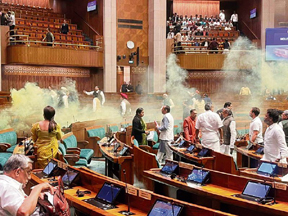
    What motivated Sagar Sharma and Manoranjan D to descend from the visitors’ gallery to the floor of the House and release smoke from canisters to cause a commotion? Both young men and their co-conspirators who protested outside the Parliament building had one thing in common — they were educated but unemployed. It is gracious of the Speaker to assume responsibility for what went wrong. The people, of course, may not appreciate these niceties.

    One of them had repeatedly appeared before Army and police recruitment boards, but failed to make the cut. A woman among them is well into her 30s. Though armed with academic degrees and certificates, she could not land a job as a primary or secondary school teacher. So, she took part in the farmers’ protest outside Delhi in 2020-21 and, later, in the sit-in organized by medal-winning women wrestlers protesting against a BJP MP, who was then the president of the Wrestling Federation of India.

    Is unemployment now a major factor in India and did the youth involved feel that they had to highlight the plight of the unemployed before those empowered by the voters to make laws? Was this the sole motive for the doomed escapade? Or was it something sinister? Could an Opposition party or the entire INDIA bloc be behind this parody? Remember also that the pro-Khalistan founder of Sikhs for Justice, Gurpatwant Singh Pannun, had threatened to strike back when he learnt from the disclosures made public by the US authorities that the Indian government or one of its accredited operatives was involved in a conspiracy to murder him. Pannun had threatened that December 13, the anniversary of the 2001 Parliament attack, would be the ‘day of reckoning’.

    There could be many reasons why these four desperate young people from different parts of the country, ranging from Haryana to Maharashtra, were brought together by Lalit Jha, who is also unemployed. All five youths had come to know each other through a Facebook group called ‘Bhagat Singh Fan Page’. Jha was arrested in Kolkata and is being questioned.

    Home Minister Amit Shah has not made a statement in the House about the obvious breach of security. The Opposition had demanded such a statement from him. It was to be followed by a discussion in the House. It could be that Shah is waiting for the outcome of Jha’s interrogation, but he has not specified that reason. Shah is reported to be sheltering under the Lok Sabha Speaker’s stand that he (Speaker) is the final arbiter on whatever occurs in the precincts of Parliament and the authorities have to act on his orders.

    Is the security of the Parliament House and its occupants, the MPs and officials, not the responsibility of the government of the day? Did then Home Minister not give a statement after the 2001 attack and the BJP, then in the Opposition, not condemn the shoddy security arrangements? It is the first time that citizens have been informed that even security in Parliament is the responsibility of the Speaker! The officials and the police were unaware of this new interpretation. It is gracious of the Speaker to assume responsibility for what went wrong and deflect it away from the Home Minister. The people, of course, may not appreciate these niceties.

    A question needs to be asked: How did Sharma and Manoranjan, who procured visitors’ passes from the BJP MP from Mysuru, manage to enter with smoke canisters hidden in their shoes? It is learnt that the young men ‘modified’ their shoes to accommodate a canister each! That would surely make it awkward for them to walk even a few steps! The bulging shoes should have immediately attracted the attention of the security personnel on duty.

    A media report states that leaflets carried by the intruders and thrown in the well of the House were also hidden in the shoes. How many leaflets can be carried in this fashion? The ‘modified’ shoes would have been spotted by other visitors to the Lok Sabha gallery, even if the security men were inattentive. There is a lot of explanation to do.

    The other sensational news in the past week was that the family of Nikhil Gupta, the man arrested in the Czech Republic at the behest of the US government for being involved in a conspiracy with an Indian government official to assassinate a US citizen (Pannun), has moved India’s Supreme Court. The family has pleaded that he should not be extradited to the US as he has not committed the crime in question. The Czechs are more likely to pay heed to the US government’s demand than submit themselves to the jurisdiction of an Indian court. I mentioned this ticklish matter in my column last week. I had wondered how our powerful and astute Prime Minister would pull India out of this mess. After the G20 summit, he is a global figure with clout on the world stage, but it is not enough to defy edicts or demands of a powerful country like the US. That country’s judicial system rotates on a different plane from ours. The judges there are presumably independent of the political executive. Gupta may run out of options if the facts disclosed by the Americans have a leg to stand on.

    Pannun has a following among some expatriate Sikhs. His views have cut no ice with Sikhs in India, particularly Punjab. But with this narrative of being targeted, he may gain some adherents among unemployed Sikhs.

    Prime Minister Modi’s economic policies have greatly benefited the ‘haves’ in our land. Since his party’s well-oiled propaganda machine and the absence of a credible Opposition leader have made a third term for him a near certainty, he can afford to reduce his own role in electioneering to concentrate on the economic needs of those at the bottom of the ladder. There are many states in the country over which unemployment looms large.

    (The author is a highly decorated retired Indian Police Services (IPS) Officer, and a former governor)

  • Indian American from Florida pleads guilty to threatening Jewish organization in New York

    Indian American from Florida pleads guilty to threatening Jewish organization in New York

    NEW YORK (TIP): A 21-year-old Indian-origin man has pleaded guilty to leaving a threatening voicemail targeting a Jewish organization in New York. Deep Alpesh Kumar Patel, a resident of Sarasota city in Florida, faces a maximum penalty of five years in prison if convicted, US Attorney Roger B. Handberg announced last week.
    He was arrested and charged last month for transmitting an interstate threat to injure.
    According to the plea agreement, on October 21 Patel had left a threatening voicemail at the World Jewish Congress in New York City in which he identified himself by name.
    Screaming numerous expletives, he said: “If I had a chance, I would kill every single one of you Israelis. Every single one of you! Cause mass genocide of every single Israeli.” Patel also admitted that he had called a synagogue in Temple Terrace, Florida, the same day, and left another expletive-laden voicemail threatening to close it down.
    He agreed to a special finding that he intentionally selected Jewish and/or Israeli individuals as the objects of his threat based on their actual or perceived race, religion, national origin, or ethnicity.
    When law enforcement officials visited Patel at his home October 24, he confirmed making the phone call to the World Jewish Congress but denied threatening anyone. While Patel’s sentencing date is yet to be set, his case was investigated by the Federal Bureau of Investigation’s Joint Terrorism Task Force and the Florida Department of Law Enforcement.

  • 22-year-old MS physiotherapy student dies following gas leak in car

    22-year-old MS physiotherapy student dies following gas leak in car

    CHICAGO (TIP): Shaik Zaheera Naaz, who was doing MS in physiotherapy, died in Chicago due to gas leak in a car in which she was travelling. According to information received by her family at Prasadampadu on the outskirts of Vijayawada, she fell unconscious along with the car driver following the gas leak. She was shifted to hospital, where doctors declared her brought dead. The incident occurred on Wednesday. Zaheera, who completed degree in physiotherapy in a college in Vijayawada, had gone to the US in August this year for MS. The family has appealed to the Centre and state governments in India to help bring home the body.
    (Source: IANS)

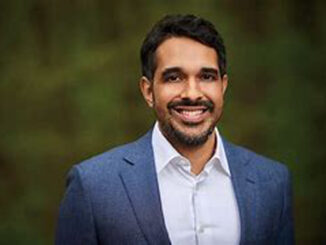
  • Indian American Venkat Kotla appointed CTO of cybersecurity firm Securonix

    Indian American Venkat Kotla appointed CTO of cybersecurity firm Securonix

    WASHINGTON, D.C. (TIP) : Leading cybersecurity firm Securonix has appointed two Indian Americans to key posts. Former Google executive Venkat Kotla has been named as Chief Technology Officer and former Onapsis executive Biju Muduli as Chief Marketing Officer. In his new role, Kotla is responsible for leading and scaling the company’s engineering function and fostering partnerships with leading technology organizations to support the growing demand for the company’s Unified Defense SIEM platform, the company announced. “I am thrilled to have Venkat join our executive leadership team,” said Nayaki Nayyar, Chief Executive Officer, Securonix. “As we continue to evolve and move into our next phase of growth, it is critical for our platform to scale with enterprise-grade reliability and meet the growing needs of modern enterprises charged with defending an expanding threat landscape.
    “Venkat’s deep experience with advanced technologies, including AI, successfully expanding technology partnerships and streamlining processes across multiple stakeholders will be invaluable in driving product development that protects our customers from internal and external threats.”
    With more than 25 years of experience at world class enterprise software companies, Kotla brings an established track record of driving engineering innovation at global organizations, the release stated.
    He most recently served as Vice President and Head of Engineering for Economy BU at Atlassian, a leader in workplace productivity tools such as Jira, Confluence, and Trello.
    Kotla helped grow the Economy line of business to more than $500 million ARR, which empowered global organizations to become more nimble, creative and aligned with the marketplace, ecosystem, partnerships, distribution and commerce billing platform.
    Prior to joining Atlassian, Kotla spent over 14 years in senior engineering leadership roles at Google. He spent more than three years at Google as the Senior Director of Engineering for Google Assistant and the Google Looker, a multi-cloud enterprise SaaS for business intelligence, data applications, and embedded analytics.
    “I’m excited to join a team that is hyper focused on product development and deeply committed to innovation,” said Kotla. “SIEM is the backbone of cybersecurity defenses, and Securonix has long been the industry’s premier solution provider. I look forward to working with the leadership team to incorporate advanced technologies into the platform and aggressively develop new partnerships with the world’s leading technology providers.”
    In her new role, Muduli will be responsible for the development, implementation and execution of marketing initiatives that will help drive Securonix’s next phase of growth and strengthen its position as one of the fastest-growing cybersecurity companies, according to a company release.
    “We are thrilled to welcome Biju to Securonix and our executive leadership team,” said Nayyar. “Biju is a strategic thinker with a passion for analyzing market trends, buying behaviors, and competitive landscapes.”
    “She has an outstanding record of formulating and executing successful global marketing strategies based on real metrics to achieve business goals. As we enter our next phase as a company, proven industry executives like Biju will play a key role in our continued growth, both internally and externally.”
    With more than 15 years of experience in strategic marketing and global operations, Muduli has created compelling brand messaging and value propositions for hypergrowth cybersecurity and enterprise software companies.
    She most recently served as the Chief Marketing Officer at Onapsis, the leader in SAP and Oracle business applications cybersecurity, where she oversaw the strategy and execution of global marketing initiatives across a rapidly scaling venture-backed security company.
    Prior to joining Onapsis, Muduli was the Vice President of Global Demand Generation & Field Marketing at Brightcove, a provider of cloud-based solutions for publishing and distributing professional media.
    During her time at Brightcove, Muduli led the company’s global marketing functions, which helped drive breakout growth across all regions, including the Americas, EMEA, APAC and Japan.
    She has also held global leadership roles at Carbonite, a data protection and cybersecurity company that was acquired by OpenText in 2019, and Dassault Systémes, a provider of collaborative virtual environments to imagine sustainable innovations.
    “I am excited to join a team of talented growth-focused executives that is committed to innovation and driving the future of cybersecurity,” said Muduli. “As the proven market leader with a history of market-defining innovations, Securonix has demonstrated the ability to understand the future of SIEM and execute its vision to serve customer needs better than anyone in the space. I look forward to working with Nayaki and the leadership team, enhancing our value proposition and helping our customers and partners stay ahead of cyber threats.”

  • Indian American MIT engineer led team designs heart’s robotic right chamber

    Indian American MIT engineer led team designs heart’s robotic right chamber

    BOSTON (TIP): Massachusetts Institute of Technology (MIT) engineers, including an Indian American, have developed a robotic replica of the heart’s right ventricle, which mimics the beating and blood-pumping action of live hearts.
    The robo-ventricle combines real heart tissue with synthetic, balloon-like artificial muscles that enable scientists to control the ventricle’s contractions while observing how its natural valves and other intricate structure’s function, according to a report.
    The artificial ventricle can be tuned to mimic healthy and diseased states. The team manipulated the model to simulate conditions of right ventricular dysfunction, including pulmonary hypertension and myocardial infarction.
    They also used the model to test cardiac devices. For instance, the team implanted a mechanical valve to repair a natural malfunctioning valve, then observed how the ventricle’s pumping changed in response.
    They say the new robotic right ventricle, or RRV, can be used as a realistic platform to study right ventricle disorders and test devices and therapies aimed at treating those disorders.
    “The right ventricle is particularly susceptible to dysfunction in intensive care unit settings, especially in patients on mechanical ventilation,” says Manisha Singh, a postdoc at MIT’s Institute for Medical Engineering and Science (IMES).
    “The RRV simulator can be used in the future to study the effects of mechanical ventilation on the right ventricle and to develop strategies to prevent right heart failure in these vulnerable patients.”
    Singh and her colleagues reported details of the new design in an open-access paper in Nature Cardiovascular Research.
    The right ventricle is one of the heart’s four chambers, along with the left ventricle and the left and right atria. Of the four chambers, the left ventricle is the heavy lifter, as its thick, cone-shaped musculature is built for pumping blood through the entire body. The right ventricle is a “ballerina” in comparison, as it handles a lighter though no-less-crucial load.
    Its anatomical complexity has made it difficult for clinicians to accurately observe and assess the right ventricle function in patients with heart disease.
    “Conventional tools often fail to capture the intricate mechanics and dynamics of the right ventricle, leading to potential misdiagnoses and inadequate treatment strategies,” Singh says. To improve understanding of the lesser-known chamber and speed the development of cardiac devices to treat its dysfunction, the team designed a realistic, functional model of the right ventricle that both captures its anatomical intricacies and reproduces its pumping function.
    The model includes real heart tissue, which the team chose to incorporate because it retains natural structures that are too complex to reproduce synthetically.
    “With its ability to accurately replicate tricuspid valve dysfunction, the RRV serves as an ideal training ground for surgeons and interventional cardiologists,” Singh says. “They can practice new surgical techniques for repairing or replacing the tricuspid valve on our model before performing them on actual patients.”
    Currently, the RRV can simulate realistic function over a few months. The team is working to extend that performance and enable the model to run continuously for longer stretches. They are also working with designers of implantable devices to test their prototypes on the artificial ventricle and possibly speed their path to patients.

  • Indian American Economist Bharat Ramamurti joins Economic Liberties as Senior Adviser

    Indian American Economist Bharat Ramamurti joins Economic Liberties as Senior Adviser

    WASHINGTON, D.C. (TIP): Indian American economist Bharat Ramamurti, former Deputy Director of the National Economic Council, has joined Economic Liberties Project, working to advance economic liberty, fair commerce, and a secure, inclusive democracy, as Senior Adviser for Economic Strategy.
    “Throughout his career, Ramamurti has been a vocal advocate for economic justice and has contributed significantly to legislative efforts aimed at creating a more competitive and equitable economic system,” the organization said announcing his appointment.
    “Bharat is one of the key architects of the Biden administration’s competition agenda, where he helped drive the President’s whole-of-government approach to tackling corporate concentration across the economy,” said Faiz Shakir, Interim Executive Director of the American Economic Liberties Project. “He understands that robust competition is the cornerstone of a healthy economy and the importance of returning antitrust back to the people. We’re thrilled to welcome his expertise, and excited to add someone who understands how to maneuver government authorities to make change happen.”
    “I’m excited to help advise an organization that has played a critical role in tackling one of the most important economic policy issues of our time: growing corporate concentration and its impact on prices, wages, and innovation across our economy,” said Ramamurti.
    “In its few short years, Economic Liberties has built an impressive team of strategists, researchers, and legal experts that has helped rein in junk fees across industries, allowed small businesses to compete on a more level playing field, and taken on anti-competitive conduct. “In my time at the White House, the Biden Administration took great strides to promote competition across industries, and I’m thrilled to try to build on that work.” Ramamurti previously worked at National Economic Council in the White House, where he served as Deputy Director from January 2021 to August 2023 under President Joe Biden.
    Prior to his tenure in the Biden administration, Ramamurti was senior counsel for Senator Elizabeth Warren, where he focused on issues related to economic fairness and financial accountability.
    In 2020, he was appointed by Majority Leader Chuck Schumer to the Congressional Oversight Commission for the CARES Act, tasked with overseeing a portion of the federal government’s economic response to the Covid-19 pandemic.

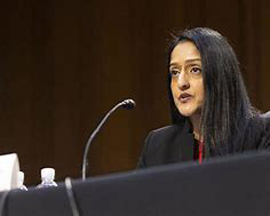
  • Indian American AAG Vanita Gupta to step down from DOJ

    Indian American AAG Vanita Gupta to step down from DOJ

    WASHINGTON, D.C. (TIP): Associated Attorney General Vanita Gupta will leave the Department of Justice at the beginning of February, Attorney General Merrick B. Garland announced on Thursday, December 21.
    “I am deeply grateful to Vanita for her extraordinary service as Associate Attorney General. Vanita’s commitment to the pursuit of justice, and her relentless focus on bringing people together to find common ground, has made her an incredibly effective leader in dealing with some of the most complex challenges facing the American people,” Garland said in a press release. “She has distinguished herself as the kind of leader who is also a partner to the career and non-career employees who work for her, to the stakeholders the Department works with, and to the public we all work for.”
    Gupta, 49, has been serving in the number three position at the Justice Department since April 2021.
    The seasoned civil rights lawyer is responsible for managing civil litigation under the guidance of Garland. Her portfolio encompasses various areas within the Justice Department, including civil rights, antitrust, environmental divisions, and the administration of over $5 billion in federal grants for public safety and criminal justice.
    In 2022, in the aftermath of the Supreme Court’s decision to strike down federal protections for abortion access, Garland entrusted Gupta with the leadership of a Justice Department reproductive rights task force. Under her leadership, federal authorities took legal action against Idaho for a restrictive abortion law and intensified prosecutions of antiabortion activists accused of impeding access to reproductive clinics.
    “As a trusted advisor and key member of the Department’s leadership team charged with overseeing all of our civil litigating components and grantmaking entities, Vanita has played an essential role in our work to fulfill DOJ’s mission to uphold the rule of law, keep our country safe, and protect civil rights,” a report said on Thursday. “Among her many accomplishments during her tenure, Vanita stood up and has led the Department’s Reproductive Rights Taskforce to defend the reproductive freedoms that are protected by federal law.” The attorney general said Gupta has “played an integral role” in the department’s “efforts to combat violent crime and gun violence and to support the victims of crime” and has facilitated its “efforts to advance a criminal justice system that keeps people safe and reflects our values.”
    A report said that the Indian American “has prioritized work that centers its impact on people.” He added, “We at the Justice Department will dearly miss our colleague and friend, but I am confident that her enormous contributions to the Department will continue to be felt long after her departure.”
    An alumnus of Yale University and New York University School of Law, Gupta has had a stellar career as a civil rights attorney and Justice Department official. Commencing her journey with two prominent civil and human rights organizations, the National Association for the Advancement of Colored People (NAACP) Legal Defense & Educational Fund and the American Civil Liberties Union (ACLU), she tackled significant cases. Notably, one of her initial victories involved arguing against the wrongful drug convictions of 38 African American individuals in Tulia, Texas, by all-white juries.
    During her tenure at the ACLU, Gupta spearheaded the Smart Justice Campaign, dedicated to ending mass incarceration.

  • Honoring the Unparalleled Sacrifice of Sahibzadas: A Historic Time for the Sikh Community

    As December unfolds, the Sikh community commemorates a pivotal chapter in their history, a poignant moment that resonates with the spirit of sacrifice and valor. These upcoming days hold profound significance, marking the tribute to the supreme and unparalleled martyrdom of Sahibzadas, the revered sons of Guru Gobind Singh Ji. Their sacrifice remains etched in the annals of time, an indelible testament to unwavering faith and unparalleled bravery.

    The legacy of Sahibzadas—Sahibzada Ajit Singh, Sahibzada Jujhar Singh, Sahibzada Zorawar Singh, and Sahibzada Fateh Singh—echoes through generations, inspiring millions with their unyielding commitment to righteousness and fearlessness. Their story isn’t just a chapter in history; it is a beacon of courage that continues to guide and uplift humanity.

    Guru Gobind Singh Ji, the tenth Sikh Guru, imbued his sons with principles of valor, selflessness, and devotion to justice. During a tumultuous period, these young souls fearlessly embraced their father’s teachings, standing unwavering against tyranny and oppression. Their sacrifice wasn’t merely a loss for the Sikh community; it was a profound statement against injustice and tyranny.

    The commemoration of their martyrdom is not just an event but a spiritual journey for Sikhs worldwide. It’s a time for reflection, introspection, and rekindling the values that Sahibzadas exemplified. Their unwavering commitment to their faith and principles, even in the face of extreme adversity, remains an awe-inspiring tale of courage and resilience.

    Sahibzadas’ sacrifice wasn’t confined to their individual selves; it symbolized a larger struggle for righteousness and freedom. Their unwavering resolve in upholding truth and righteousness against oppressive forces serves as an eternal reminder of the fight against injustice.

    In commemorating their sacrifice, the Sikh community gathers in prayer, reflection, and service, reinforcing the teachings espoused by Guru Gobind Singh Ji. It’s a time not only to honor their martyrdom but to emulate their virtues in everyday life—selflessness, bravery, and unwavering commitment to truth.

    The stories of Sahibzadas’ martyrdom transcend religious boundaries, serving as a testament to the resilience of the human spirit in the face of adversity. Their sacrifice is a beacon of hope, inspiring people worldwide to stand up against injustice and uphold the values of righteousness and compassion.

    As the Sikh community observes these historic days, it’s a reminder to humanity of the need for unity, compassion, and courage in the face of challenges. It’s a time to remember that the spirit of sacrifice and righteousness, exemplified by Sahibzadas, remains eternally relevant and serves as a guiding light for all.

    In essence, the commemoration of Sahibzadas’ supreme sacrifice isn’t just a historical event—it’s a timeless narrative of valor and selflessness that resonates with the core of human existence. It’s a reminder that their martyrdom shall forever remain etched in the collective consciousness, urging generations to uphold truth, justice, and humanity above all.

    As we pay tribute to the unparalleled martyrdom of Sahibzadas, let us ensure their legacy lives on by embodying their teachings and perpetuating their ideals of courage, compassion, and unwavering faith in the pursuit of righteousness.

  • Trump’s White House comeback plans hit Colorado hurdle

    The Colorado Supreme Court has ruled that former US President Donald Trump, the frontrunner for the 2024 Republican nomination, is not eligible to return to the White House because of his role in the attack on the US Capitol in 2021. The court has ordered the exclusion of his name from the state’s Republican presidential primary ballot. The 4-3 ruling came on a lawsuit that challenged Trump’s eligibility under Section 3 of the 14th Amendment, which deems former office-holders ineligible from running again if they have engaged in ‘insurrection or rebellion’ against the US despite having taken an oath to uphold the Constitution.

    The verdict, which will inevitably be reviewed by the US Supreme Court, is not applicable outside the state. And Colorado is not a high-stakes state for Trump as he had lost by a big margin there in the 2020 presidential election. Nevertheless, the judgment can have a bearing on the decisions of courts on petitions seeking Trump’s disqualification in ‘more competitive’ states. It will also buttress the Democrats’ argument that the January 6, 2021, riot was an insurrection bid carried out at Trump’s behest.

    The anarchic assault on the US Capitol had disgraced the much-vaunted American democracy. Trump allegedly resorted to brazen incitement to violence in a bid to prevent the US Congress from certifying the result of the 2020 election, which he had lost to Joe Biden. The Colorado court has rightly observed: ‘President Trump’s direct and express efforts, over several months, exhorting his supporters to march to the Capitol to prevent what he falsely characterized as an alleged fraud on the people of this country were indisputably overt and voluntary.’ Even though opinion is divided over whether a lawsuit is a fair method for determining Trump’s eligibility, he undoubtedly deserves no leniency for riding roughshod over constitutional norms. While Trump is again playing the victim card, the Colorado judgment has the potential to queer his presidential pitch.
    (Tribune, India)

  • Suspension spree

    Govt must reach out to the Opposition

    The indiscriminate suspension of 141 Opposition MPs — 78 on Monday, 49 on Tuesday and 14 last Thursday — has left parliamentary democracy in shock. The Congress has accused the BJP-led government of carrying out a purge to ensure the passage of ‘draconian’ Bills without a meaningful debate in Parliament. The two sides are locked in a bitter war of words over the December 13 security breach. In a newspaper interview published on Sunday, PM Modi admitted that it was a very serious incident. However, the Opposition’s demand that Home Minister Amit Shah make a statement in the House regarding the episode has not been taken seriously by the government.

    Parliamentary Affairs Minister Pralhad Joshi struck a discordant note when he accused the protesting MPs of being frustrated over the Assembly election results in the Hindi heartland. This is clearly a bid to obfuscate the key issue — the security breach — which warrants a detailed discussion in both Houses. Equating vociferous protests by Opposition lawmakers with attempts to disrupt House proceedings is uncalled for. The government owes an explanation to the nation over the lapses that led to the December 13 pandemonium. Maintaining an intransigent position and arbitrarily chucking out MPs from Parliament won’t absolve it of its responsibility.

    Only the lawmakers who were guilty of gross misconduct in the House should have been suspended. With the Lok Sabha and Rajya Sabha being adjourned repeatedly, the winter session is heading for an ignominious end. Unfortunately, the brand-new Parliament complex, which hosted its inaugural session in September, is making news for the wrong reasons. Animus and intolerance are precluding dialogue and debate. The government must reach out to the Opposition to save democratic discourse from becoming a casualty of highhandedness.
    (Tribune, India)

  • There is no alternative to green industrial strategy

    There is no alternative to green industrial strategy

    • Inclusive green industrial strategies belong neither to the left nor the right. They are about creating an economy that serves people and conserves the natural world on which we all depend

    “Equally important, the green transition will succeed only if it is also a “just transition.” To support the necessary shift of workers from brown to green jobs, governments can require businesses that receive public benefits to align their operations with climate goals, adopt fair labor policies, and reinvest profits in worker training and research and development. Moreover, policymakers should incentivize brown sectors to reduce their environmental footprint, and to mitigate the risk of stranded assets.”

    By Mariana Mazzucato and Greg Clark

    With the COP28 climate summit now wrapped up, the spotlight remains firmly on the global financing gap. It is estimated that achieving the 2030 Sustainable Development Goals (SDGs) will require a staggering $5-7 trillion per year. But not only must we urgently secure the necessary capital; we also must ensure that long-term patient investments are strategically directed toward ambitious goals. That means coordinating inter-sectoral responses across different supply chains, which in turn requires a robust industrial strategy. Countries around the world are doubling down on plans to revitalize their industrial sectors. It is critical that Britain does not lose ground to them. Earlier this year, Chancellor of the Exchequer Jeremy Hunt outlined an ambitious plan to position green industries as the engines of long-term growth. Strongly encouraging green businesses to ramp up their investments, he set an optimistic tone. Conservatives and Labour must act to ensure investors’ confidence in the stability of UK policy, so that projects with a life of decades are not vulnerable to uncertainty.

    The United Kingdom will need a clear, comprehensive vision for sustainable industrial development if it is to reap the economic opportunities presented by a world that is increasingly committed to achieving net-zero emissions. As the Independent Review of Net Zero warns, inconsistent policy approaches are bad not only for the planet, but also for business. After all, green industries could be worth more than $10 trillion globally by 2050.

    Industrial strategy thus holds a dual promise: helping to address climate change and revitalizing industry so that it can compete in the twenty-first century. We need not accept environmental protection as a trade-off against economic progress. The two can go hand in hand if green policies are deployed to fuel growth and innovation, and if sustainable practices are woven into the fabric of how we consume, move, invest, and build.

    We had the honor of working together on a UK industrial-strategy blueprint back in 2018, when one of us (Clark) was Secretary of State and the other (Mazzucato) was co-chair of University College London’s Commission for Mission-Oriented Innovation and Industrial Strategy. That work took a sector-based strategy (focused on automobiles, aerospace, finance, life sciences, and creative industries) and applied it to outcomes such as clean growth, healthy ageing, sustainable mobility, and an inclusive data economy.

    The point is not to pick winners or only to fix market failures, but to work with firms (from whatever sector) that are willing to join forces to solve problems and to create and shape new markets. Just as the original moon landing required innovation in domains ranging from aerospace to nutrition, electronics, materials, and software, today’s climate-related challenges call for innovation in multiple sectors – not just renewable energy.

    A mission-oriented approach leads to more than just completing the mission. The innovations it catalyzes can lead to a multiplier effect – with initial investments crowding in private investment and generating spillovers that amplify the impact on GDP. Through the process of solving smaller problems on the way to the moon, we created the technologies for today’s camera phones, foil blankets, baby formula, and a broad range of software applications.

    Public and private actors need to work well together. Reorienting public agencies around ambitious missions requires evaluation metrics to capture dynamic economy-wide spillovers. It will not do to continue obsessing over often spuriously precise cost-benefit calculations (which would have stopped the moon mission from ever getting off the ground).

    Equally important, partnerships between the public and private sectors should be symbiotic, and public funding should come with conditions to maximize public value by steering investments in an inclusive and sustainable direction. For example, conditionalities can require recipients to reduce the material content of their products and create greener supply chains.

    We know that such measures work. The German steel industry’s progress in adopting a climate-friendly circular-economy model owes much to that country’s industrial strategy. Public policies encouraged low-carbon processes among steel manufacturers and established markets for carbon-efficient steel, materials, and green hydrogen. All countries need broad, coherent plans to align public investments with commitments to decarbonize transportation and supply chains across the economy.

    Equally important, the green transition will succeed only if it is also a “just transition.” To support the necessary shift of workers from brown to green jobs, governments can require businesses that receive public benefits to align their operations with climate goals, adopt fair labor policies, and reinvest profits in worker training and research and development. Moreover, policymakers should incentivize brown sectors to reduce their environmental footprint, and to mitigate the risk of stranded assets.

    Inclusive green industrial strategies belong neither to the left nor the right. They are about creating an economy that serves people and conserves the natural world on which we all depend. The question is not whether we can afford to implement such policies; it is whether we can afford not to. British political leaders – Conservative and Labour alike – must recognize the profound potential that such strategies hold. — Project Syndicate

    About authors
    Mariana Mazzucato, Founding Director of the UCL Institute for Innovation and Public Purpose, is Chair of the World Health Organization’s Council on the Economics of Health for All. Greg Clark, a former UK secretary of state for business, energy, and industrial strategy, is a member of parliament for Tunbridge Wells and Chair of the Science and Technology Select Committee.

  • Revision sans vision: On the three Bills that replace the body of criminal laws in India

    New laws have positive features, but bring no path-breaking change in system

    Law-making in the absence of a significant number of Opposition members does not reflect well on the legislature. The three Bills that replace the body of criminal laws in India were passed by Parliament in its ongoing session in the absence of more than 140 members. Even though the revised versions of the Bharatiya Nyaya Sanhita (BNS, which will replace the IPC), the Bharatiya Nagarik Suraksha Sanhita (which will replace the CrPC) and the Bharatiya Sakshya Bill (instead of the Evidence Act) were introduced after scrutiny by a Parliamentary Standing Committee, they still required legislative deliberations in the full chambers, given their implications for the entire country. Many concerns that the Bills gave rise to could not be raised in Parliament as a result. A conspicuous aspect of the new codes is that barring reordering of the sections, much of the language and contents of the original laws have been retained. However, Union Home Minister Amit Shah’s claim that the colonial imprint of the IPC, CrPC and the Evidence Act has been replaced by a purely Indian legal framework may not be correct, as the new codes do not envisage any path-breaking change in the way the country is policed, crimes are investigated and protracted trials are conducted.

    The improvements in the BNS include the removal of the outdated sedition section, as exciting disaffection against the government or bringing it into hatred and contempt is no more an offence, and the introduction of mob lynching (including hate crimes such as causing death or grievous hurt on the ground of a person’s race, caste, community, sex, language or place of birth) as a separate offence. Another positive feature is the government ignoring the panel’s recommendation to bring back adultery, struck down by the Supreme Court, as a gender-neutral offence. However, it is questionable whether ‘terrorism’ should have been included in the general penal law when it is punishable under special legislation. Grave charges such as terrorism should not be lightly invoked. On the procedural side, some welcome features are the provision for FIRs to be registered by a police officer irrespective of where an offence took place and the boost sought to be given to use of forensics in investigation and videography of searches and seizures. A significant failure lies in not clarifying whether the new criminal procedure allows police custody beyond the 15-day limit, or it is just a provision that allows the 15-day period to spread across any days within the first 40 or 60 days of a person’s arrest. Revisions in law cannot be made without a vision for a legal framework that addresses all the inadequacies of the criminal justice system.
    (The Hindu)

  • Terror funding case: Indian held in UK extradited to United States

    Terror funding case: Indian held in UK extradited to United States

    LONDON (TIP): An Indian national arrested in London on a provisional American warrant as part of a US-UK coordinated action targeting terrorism financing has been extradited to the US after consenting to face trial in America, the British authorities said on Tuesday, December 19. Madurai-born Sundar Nagarajan (65) was arrested from Hayes in west London on April 18. The UK’s Crown Prosecution Service (CPS) told Westminster Magistrates’ Court at the time that Nagarajan, linked to the Hizballah terrorist organization, was a “requested person” (RP) by the US authorities for fraud and money laundering offences.
    (Source: PTI)

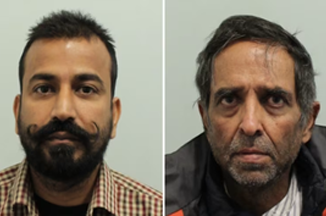
  • 2 Indian-origin men jailed for 34 years in UK for drug smuggling

    2 Indian-origin men jailed for 34 years in UK for drug smuggling

    LONDON (TIP): Two Indian-origin men have been sentenced to prison in the UK for smuggling cocaine, cannabis and cigarettes into the country hidden in shipments of perishable goods. Anand Tripathi (61) and Varun Bhardwaj (39) were both sentenced to 19 years and 15 years in jail, respectively, after they were convicted in November, following a 71-day trial at Isleworth Crown Court, the Crown Prosecution Service (CPS) said.
    They were also sentenced for not paying 9,774,220 pounds in import duties and VAT on 18.6 million cigarettes they smuggled on three dates, separate from the drug imports.

    The court heard that in total the men imported 272.86 kg of cocaine and 2,503.36 kg of cannabis across four shipments between September 2021 and November 2022. One shipment contained just over two tons of cannabis hidden amongst yams from Ghana. Another containing 49 kg of cocaine was concealed with oranges from South Africa. The drugs had an estimated street value of 28.9 million pounds but were all seized before they could be sold on and later destroyed by police. “These two men played vital roles in trying to flood UK streets with huge quantities of illegal drugs. The cost and damage to lives that drugs cause in our society is incalculable,” Richard Partridge from the CPS said. “This conspiracy was only made possible by Anand Tripathi’s experience in importation and customs clearance, and Varun Bhardwaj’s willingness to assume day-to-day management of their operation.”

    Partridge added that there were others involved in the scheme who haven’t yet been identified.

    The scheme involved the pair using their freight company as a cover to clear shipping containers that held drugs and cigarettes and diverting them from their intended destination to a warehouse they controlled.

    There they would be offloaded by organized crime groups, according to the CPS. It was exposed when they failed to divert one container which instead went to a farm in Somerset in April 2022. The farmer found plastic covered blocks of cocaine with a street value of 15 million pounds hidden amongst animal feed from Colombia.
    (Source: IANS)

  • Indian-origin undercover reporter Balakrishnan Balagopal finds exploitation of care workers in UK

    Indian-origin undercover reporter Balakrishnan Balagopal finds exploitation of care workers in UK

    LONDON (TIP): A UK-based reporter from Kerala who went undercover as a care assistant in a care home for the elderly in north-east England discovered worrying levels of exploitation of staff, many of them recruited from overseas countries such as India.
    Balakrishnan Balagopal’s report for the ‘BBC Panorama’ investigation, which will be telecast here on Monday, December 18 evening, found care givers being charged thousands of pounds by an Indian recruitment agency and nurses locked into lengthy contracts with a care home with financial penalties if they tried to leave jobs.
    According to official statistics for the past year, 140,000 visas were issued to overseas workers to come to the UK to meet staff shortages in the health and care industry and 39,000 of these went to people from India.
    “As I delved deeper into the lives of overseas caregivers, I heard a narrative of exploitation, debt, separation from family, and the constant fear of making mistakes,” Balagopal said in a statement.
    “The pursuit of a permanent visa became a tightrope walk, impacting the quality of care provided. The very individuals tasked with ensuring the happiness and well-being of residents found them entangled in a web of instability. Nurses and care workers from overseas eligible for a skilled worker visa need to be sponsored by an employer. In theory, they can switch jobs but within a limited timeframe, which can give employers a certain exploitative hold over them.
    The ‘Care Workers Under Pressure’ investigation for the BBC comes soon after the Migration Advisory Committee (MAC), the independent body advising the UK government on immigration, warned of exploitation in the country’s social care sector in its annual report released last week.
    “Underfunding and consequential low pay contributes to the exploitation of workers in the social care sector. Migrants in the sector on the H&CW (Health & Care Worker) visa are even more susceptible to exploitation as their right to reside in the UK is directly linked to their employer, creating a power imbalance,” the report notes.
    It issued a series of recommendations for the government to crack down on the exploitation of workers in the social care sector.
    “Government could consider greater support for migrants when they enter employment and when experiencing exploitation in the UK… such as creating a portal specifically for the care sector where vacancies that would allow migrants to switch employer are posted,” it said.
    MAC also called on the government to ensure higher wages for the sector on the whole in a bid to wean it off the over-reliance on lower-paid migrant workers.
    Earlier this month, the Home Office announced that such care workers on a visa will be banned from bringing any close family members as dependents from the New Year. The move has been categorized as “extremely unfair” by the British Association of Physicians of Indian Origin (BAPIO), the UK’s largest representative body for doctors and nurses of Indian origin. “For anyone to provide a satisfactory and good quality care service, they can’t be separated from their own family,” said BAPIO founder Dr Ramesh Mehta.

  • Eight-year-old British Indian schoolgirl chess prodigy named Europe’s best female player

    Eight-year-old British Indian schoolgirl chess prodigy named Europe’s best female player

    LONDON (TIP): An eight-year-old British Indian schoolgirl has made chess history after being named the “super talented” best female player at a European championship. Bodhana Sivanandan, from Harrow in north-west London, won the European Blitz Chess Championship in Zagreb, Croatia, over the weekend after a winning streak since she took up chess during the COVID pandemic lockdown.
    In the European championship, she went head-to-head with some of the best players in the world and defeated an international master to win her crown.
    “Eight-year-old super talented Bodhana Sivanandan made an astonishing result in the Blitz competition. She scored 8.5/13 points to win the first women prize and earn 211.2 blitz ELO points,” said the European Rapid and Blitz Chess Championships, which concluded in Croatia on Sunday.
    Praise for the chess prodigy has since been pouring in on social media, with leading professionals highlighting her “unbelievable” performance. “I always try my best to win, sometimes it happens and sometimes it doesn’t,” Bodhana told the media after her win.
    Father, Siva Sivanandan said his daughter was “trying her best and it has worked in favor of her”.
    “She likes chess and she likes travelling. We keep trying and keep going,” he said.
    A few months ago, Sivanandan was among a group of young chess enthusiasts invited by British Prime Minister Rishi Sunak to 10 Downing Street to mark the government’s major new GBP 1 million investment package for the game.The package has since been put in place to support children attending schools in disadvantaged areas across England to learn and play chess, improve visibility and availability of the game and fund elite playing.
    “I was struggling to support my son with the required chess tournaments and coaching instrumental to his development at such a young and crucial age,” said Jitendra Singh, father of another British Indian chess prodigy nine-year-old Shreyas Royal.
    “With this grant from the government we will be able to help more kids flourish at the game through the hard-working organizations of the English Chess Federation and chess in schools and communities. I believe that it is also a very beneficial hobby and would love to see more people getting into the game from this monumental announcement,” he said.
    As part of the package, the UK’s Department for Culture, Media and Sport (DCMS) says it will invest GBP 500,000 in the English Chess Federation (ECF) over two years in order to develop the next generation of world-class talent.
    Funds will support expert coaching, training camps and cutting-edge computer analysis for international events to assist current grandmasters and up-and-coming players.
    “We want to give more young people the opportunity to find the thing that they love and realize their potential. So, this package is focused on getting more young people playing chess and supporting them to develop their talent,” said UK Culture Secretary Lucy Frazer.
    “We’re also equipping our elite chess players with expert coaching to help them dominate at the highest levels of the global game and restore England’s reputation among the best in the world,” she said. Alongside the support committed to elite players, the Department for Levelling Up, Housing and Communities (DLUHC) will provide GBP 250,000 to 85 local authorities across England to install 100 new chess tables in public parks and outdoor green spaces, to allow more people to play, connect, tackle loneliness, and develop problem solving skills.
    In addition, the Sunak-led government has set out plans to encourage more primary school children, particularly girls, to learn to play the game. The UK Department for Education said it will award grants of up to GBP 2,000 to at least 100 schools in disadvantaged areas across England, subject to interest.

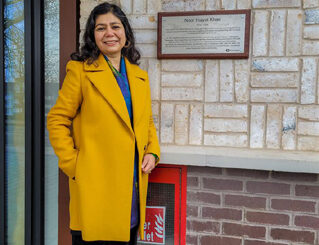
  • London housing block named after British Indian spy Noor Inayat Khan

    London housing block named after British Indian spy Noor Inayat Khan

    ‘It is wonderful that the residents of Camden voted to name the housing block after Noor Inayat Khan”- Khan’s biographer Shrabani Basu.

    LONDON (TIP): A council housing block in north London has been named after British Indian spy and descendent of Tipu Sultan, Noor Inayat Khan, following a ballot of local residents to choose from a shortlist of the area’s historic inhabitants. Camden Council unveiled the “Noor Inayat Khan House” at a ceremony on Wednesday, December 20, attended by local Labour Party MP and Opposition leader Keir Starmer, Khan’s biographer Shrabani Basu and Camden Council leaders and residents.

    Camden was the borough where young Noor lived with her family before she left for Nazi-occupied France in 1943 after being recruited as an undercover radio operator for Britain’s Special Operations Executive (SOE), becoming the first woman to be dropped behind enemy lines during the Second World War.

    “It is wonderful that the residents of Camden voted to name the housing block after Noor Inayat Khan; the people of Camden have truly taken Noor to heart, and she is known and loved in the borough,” said Basu, the London-based author of ‘Spy Princess: The Life of Noor Inayat Khan’.

    In her speech at the unveiling, she noted: “Today we remember Noor Inayat Khan as a heroine of the war, a young woman of Indian origin, who unhesitatingly gave her life in the fight against Fascism. But it is not just her bravery and loyalty that we remember. At a time when conflict is rife in the world, and countries and communities are divided by gunfire and walls, it is important to remember the values that Noor stood for.

    “She was a Sufi, she believed in religious tolerance, she believed in non-violence and peace between nations. Today, let us take away her message for peace and harmony.”

    In 2020, the English Heritage charity unveiled a Blue Plaque at 4 Taviton Street in Bloomsbury to commemorate Khan’s home in Camden, following a memorial installed nearby at Gordon Square by the Noor Inayat Khan Memorial Trust in 2012.

    The new housing block in the name of the war heroine shot dead aged just 30 at Dachau concentration camp in 1944 forms part of a social housing project to deliver more affordable homes in London.

    “This isn’t just about some bricks and some windows and a roof; this is about life chances, aspiration and equal opportunity for everyone. When I was growing up we didn’t have a lot of money, but we did have a house. And that gave me the security to go on and do some of the things that I’ve done in my life. I want every child to have that chance,” said Starmer, member of Parliament for Holborn and St. Pancras in Camden.

    Each of the three new residential buildings at the Maitland Park redevelopment has been named after prominent local figures as part of Camden Council’s strategy for diversity in the public spaces.

    Besides Noor Inayat Khan, a second block commemorates Mary Prince – the first black woman to have an autobiography published in Britain and a third is named after Antony Grey – an LGBTQ+ activist whose work led to decriminalization of homosexuality for men.

    “Residents have shaped the legacy of where they live by helping to choose three remarkable figures from our local community to name their new buildings after,” said Councillor Danny Beales, Camden Council Cabinet Member for New Homes, Jobs, and Community Investment.

    The council said the redevelopment at the Maitland Park Estate in Haverstock is the latest social housing project to reach completion in Camden since the council announced the expansion of its house-building programme by committing an extra GBP 1.3 billion investment towards building new homes for residents.

  • Indian American medical student Rijul Maini crowned Miss India USA 2023

    Indian American medical student Rijul Maini crowned Miss India USA 2023

    EDISON, NJ (TIP): Rijul Maini, an Indian American medical student from Michigan, has been crowned Miss India USA 2023 at the annual pageant held in New Jersey. Greeshma Bhat of Virginia was declared first runner-up and Ishita Pai Raikar of North Carolina was the second runner-up
    During the event, Sneha Nambiar from Massachusetts was declared as Mrs. India USA and Saloni Rammohan from Pennsylvania won the title of Miss Teen India USA.
    Maini, 24, a medical student and model, aspires to be a surgeon and hopes to serve as a role model to women everywhere, a press release said.
    “I am a third year medical student in MSUCOM’s class of 2025. This summer, after taking boards, I was able to participate in the Miss India Michigan 2023 pageant. I thought it would be something fun to do before starting hospital rotations,” Maini wrote on X, formerly Twitter.
    ‘It is so exciting to have won the title! I have always been a fan of fashion, art, and beauty, so to be able to celebrate those interests along with medical school has been a blessing,” she wrote.
    “Congratulations to MSUCOM student Rijul Maini for winning the title of Miss India Michigan 2023!” MSU College of Osteopathic Medicine@MSU_Osteopathic posted.
    This year marks the 41st anniversary of the pageant which is the longest running Indian pageant outside of India.
    It was started by New York-based Indian Americans Dharmatma and Neelam Saran under the banner of Worldwide Pageants. According to the organizers, 57 contestants from over 25 states participated in three different pageants – Miss India USA, Mrs. India USA and Miss Teen India USA.
    Winners of all three categories will be getting complimentary air tickets to take part in Miss- Mrs.-Teen India Worldwide organized by the same group.
    “I am very much thankful to Indian community around the world for their support over the years,” said Dharmatma Saran, founder and chairman of Worldwide Pageants.

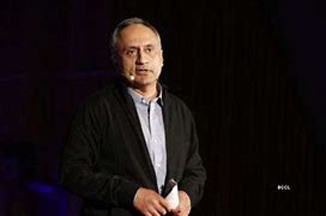
  • Indian American entrepreneur Manoj Bhargava named interim CEO of Sports Illustrated

    Indian American entrepreneur Manoj Bhargava named interim CEO of Sports Illustrated

    NEW YORK (TIP): Indian American entrepreneur Manoj Bhargava has been named interim CEO of Arena group, publisher of Sports Illustrated just weeks after the magazine was accused of publishing articles generated by artificial intelligence. He replaces Ross Levinsohn, who was terminated “to improve the operational efficiency and revenue” of the company, Arena Group announced Dec 11.
    Bhargava’s appointment comes amid a wider purge of a number of senior executives including operations president and COO Andrew Kraft at the company since the scandal broke.
    Bhargava is founder and CEO of Innovations Ventures, the company known for producing the 5-hour Energy drink. He bought a majority stake in Arena Group, publisher of more than 265 brands, including Sports Illustrated, TheStreet, Parade Media, Men’s Journal, and HubPages, in August.
    Bhargava has “experience in media and a track record for strong branding, and has made his fortune selling the popular caffeine brand,” Forbes then noted.
    The Lucknow-born Bhargava moved with his family to the US as a teenager, settling in a poor Philadelphia neighborhood, The Wall Street Journal said in a November 2015 profile.
    He attended the prestigious Hill School, prior to enrolling at Princeton. But he never earned a college degree. He dropped out and, after holding a string of odd jobs, returned to India to become a monk.
    This is where his “real education began,” he told The Journal. After more than a decade at the monastery, he moved back permanently to the US. He worked a number of odd jobs ranging from a taxi driver to a printing press operator. It was in 1990 that he would start his first company, a plastics company, that he built and sold to a private equity firm.
    In 2004, Bhargava was at a trade show and came across an energy drink. He dreamed of an energy drink without sugar, unknown stimulants, and with less fluid ounces. Out of his planning, he created a small, 2.49-ounce bottle, that provided 5 hours of energy.
    “Everyone asks, how did you do that,” he told The Journal. “I tell them, we weren’t that smart. We just didn’t do dumb stuff… and that pretty much differentiated us from all other corporations.”
    Besides Innovations Ventures LLC, Bhargava has founded and leads Simplify Inventions LLC, IV Media LLC and Bridge Media Networks LLC.
    He also owns or is a major investor in several other companies, including HANS Premium Water, Diagnostic Green, Stage2 Innovations, and Bleecker Street Entertainment.

  • Indian American author Maya Ajmera inducted into American Academy of Arts and Sciences

    Indian American author Maya Ajmera inducted into American Academy of Arts and Sciences

    NEW YORK (TIP): Maya Ajmera, Indian American President and CEO of Society for Science and Executive Publisher of Science News has been inducted into the American Academy of Arts and Sciences.
    Ajmera was elected in 2022, with 269 other accomplished individuals, drawn from academia, the arts, industry, policy, research and science, and include more than 40 International Honorary Members from 23 countries, according to a media release.
    “I am so honored to be inducted into American Academy of Arts and Sciences with such luminary individuals,” said Ajmera on her induction on Sep 30. “I look forward to working with the Academy members to address some of the most pressing issues facing our world.”
    In 1780, the Academy’s founders envisioned an organization that would recognize accomplished individuals and engage them in addressing the greatest challenges facing the young nation.
    The first members included Benjamin Franklin and George Washington. The members elected in 2022 also include historian Heather Cox Richardson, novelist Salman Rushdie and New York Times critic Wesley Morris.
    Prior to joining Society for Science, Ajmera founded the Global Fund for Children (GFC), a nonprofit a nonprofit organization that invests in innovative, community-based organizations working with some of the world’s most vulnerable children and youth, according to her official profile.
    Under Ajmera’s 18 years of leadership, GCF grew from a vision into one of the largest networks of grassroots organizations working on behalf of vulnerable children.
    Ajmera served as the inaugural Social Entrepreneur in Residence for Duke University and Visiting Professor for the Practice of Public Policy at The Sanford School of Public Policy at Duke.
    She was a Visiting Scholar and Professorial Lecturer at The Paul H. Nitze School of Advanced International Studies (SAIS) at Johns Hopkins University and continues to serve as an adjunct on the faculty of the International Development Program.
    She is also an award-winning children’s book author of more than 20 titles, including Back to School, Every Breath We Take, Children from Australia to Zimbabwe and To Be a Kid, with more than 5 million readers worldwide.
    Ajmera is the recipient of the 2020 National Science Board Public Service Award, recognized for her tremendous contribution to increasing the public’s understanding of science and engineering.
    She is also a recipient of the Henry Crown Fellowship at the Aspen Institute, the Echoing Green Fellowship, the William C. Friday Fellowship for Human Relations and the Rotary International Graduate Fellowship.
    Ajmera is a board member for Echoing Green, Kids in Need of Defense, Sibley Memorial Hospital/Johns Hopkins Medicine and the North Carolina School of Science and Mathematics Foundation. She holds an AB from Bryn Mawr College and an M.P.P. from The Sanford School of Public Policy at Duke University.