Month: May 2025

  • NYC budget: Mayor Adams unveils $115 billion re-election year plan flush with new spending

    NYC budget: Mayor Adams unveils $115 billion re-election year plan flush with new spending

    NEW YORK CITY (TIP): The mayor’s spending plan is up roughly $600 million from his $114.5 billion preliminary budget released in January and $3 billion from the Fiscal Year 2025 budget adopted last June. It comes at a time when the city faces President Trump’s threats of large-scale federal funding cuts and the looming possiblity of a recession, but does not add any new funds to the city’s $8.5 billion in reserves to the chagrin of several pols and good government groups.
    Adams has been framing the fiscal blueprint as the “best budget ever,” one that will help working-class New Yorkers like the students who attend Bayside High School and his late mother, Dorothy Mae Adams-Streeter. The framing dovetails with Adams’ re-election platform focused on affordability and public safety.

    “When my team and I came together to develop this budget, I thought of my younger self and how my mother worked three jobs just to put food on the table for me and my siblings,” Adams said during his Thursday budget address. “She was betrayed by the city. This budget is for her and it’s for young Eric, who struggled in life and in school. And for all of you, this budget makes sure that you don’t have to struggle the way that me and my family did.”

    With the release of Adams’ executive budget, negotiations will begin in earnest between his office and the City Council over the final shape of the spending plan, which must be passed by a July 1 deadline. The two sides of City Hall have had hard-fought battles over the budget in years past, a dynamic that could be exacerbated by City Council Speaker Adrienne Adams’ bid to unseat Mayor Adams, to whom she is not related, in this year’s election.

    In a departure from Adams’ previous budget announcements, many of which were marked by his wide-ranging cuts aimed at offsetting the city’s massive spending on migrants, he has made his re-election-year budget rollout a celebratory affair. Adams claims he is able to spend more on popular city programs this year because of his “strong fiscal management,” better than expected tax revenue, and success in cutting spending on the migrant crisis.

    The mayor’s Budget Director Jacques Jiha said they are also using money gleaned from past savings and tax revenues to cover $1 billion the city expected in migrant aid from the state that Gov. Kathy Hochul did not deliver.

    However, City Council leaders have often argued Adams made cuts unnecessarily because the city had enough money in its coffers all along. The plan still does not fully restore some funding cuts to levels championed by the City Council in its own budget plan released last month.

    Speaker Adams and Council Finance Chair Justin Brannan, in a joint statement, said Mayor Adams’ budget “for the first time” funds many of the priorities they included in their fiscal plan.

    “This is how the budget process should work, but it’s disappointing that it took three years for this administration to become tired of being entirely on the wrong side of doing right by New Yorkers,” they said. “There remains work to fill gaps in funding for programs left out of this budget, but this is a better start from the Executive Budget than past years.”

    The mayor’s rosiest budget presentation to date comes as he makes a long-shot bid for a second term in the November general election, after opting out of the Democratic primary and deciding to run as an independent. He is seeking to show New Yorkers why they should give him another four years in City Hall amid record-low job approval rating numbers and in the aftermath of his now-dismissed federal indictment.

    Before releasing the full budget on Thursday, Adams made separate announcements in which he touted its investments in supportive housing and tenant protection programs, the addition of free after-school seats in a new push to make the initiative universal, and the boosting of NYPD headcount to 35,000 next fall with new funding and policy changes .

    According to City Hall, the plan also commits $199 million in recurring funding—known as baselining—for education programs that were previously supported by now-expired COVID-19 stimulus dollars. The funding will go towards arts education in schools, teacher recruitment, and a mentorship program called “Project Pivot,“ among other areas.

    Furthermore, the budget allocates $1.4 billion in baselined funding for programs that were not funded in the upcoming fiscal year. Those areas include savings for CUNY, continuing the current level of litter basket collection, and increasing funding for cultural institutions.

    Although the plan allocates $15.7 million in new funding for the city’s three library systems, a frequent target of Adams’ budget cuts in previous cycles, it still does not reach the $62.5 million the council pushed for.

    The budget also restores dollars to areas where Adams previously made cuts and baselines the funding going forward. Those include $167 million for the city’s 3-K and universal Pre-K programs and $112 million in funding for senior centers and home-delivered meals.

    But that amount falls short of the $197 million the council says is needed for both 3-K and universal pre-K special education seats.

  • Final state budget includes Gov. Hochul’s affordability measures as she prepares for tough 2026 re-election fight

    Final state budget includes Gov. Hochul’s affordability measures as she prepares for tough 2026 re-election fight

    ALBANY (TIP): The long-overdue state budget deal includes several measures Gov. Kathy Hochul pushed to ease New York’s affordability crisis as she gears up for a tough re-election campaign next year. The $254 billion-plus Fiscal Year 2026 budget, which state lawmakers were still voting on Thursday, is chock-full of actions aimed at lowering everyday costs. The plan includes one-time inflation refund checks for over 8 million tax filers, a middle-class tax cut, universal free school lunches, and a statewide housing voucher pilot program.

    “I vowed to deliver on a sweeping affordability agenda that does something that is so profound, but yet so simple: putting more money back in your pockets,” Hochul said during an April 30 press conference. “And promises made, promises kept.”

    The governor will sign the affordability-focused fiscal plan just months before heading into what is shaping up to be a tough race for re-election. She has doubled down on combating rising costs, along with stemming fears around crime, as challengers on both the left and right are lining up to run against her next year.

    Her focus on the issue also appeared to be a response to the 2024 presidential election, in which many Americans cited high inflation and public safety concerns as reasons they voted for President Trump.

    Hochul’s rebate checks gambit promises to put a collective $2 million back in New Yorkers’ pockets. It will go to New Yorkers who filed a 2023 tax return and had a state adjusted-gross income of up to $150,000 if they were single filers, and up to $300,000 for joint filers.

    Individual filers who made up to $75,000 will get a $200 check, while those who made between $75,000 and $150,000 will get $150 checks. Joint filers who made up to $150,000 will receive a $400 check, while those who made between $150,000 and $300,000 will receive $300 checks.

    The governor is also cutting income taxes for 8.3 million middle-class New Yorkers, making up to $323,000 annually for joint filers.

    Her plan will also make free public school breakfasts and lunches universal, a move her office says will save families an estimated $165 a month on groceries.

    Critics decry ‘dubious’ savings

    However, the budget drew backlash from state lawmakers, charging that the governor’s affordability measures are surface-level and will not meaningfully lower costs for New Yorkers.

    Brooklyn state Sen. Andrew Gounardes, in a statement, charged the spending plan “nickels and dimes” vital social safety net programs, while spending billions on “dubious tax breaks and gimmicks.”

    “New Yorkers will get a paltry, one-time ‘rebate check’ for a few hundred dollars and a minuscule tax cut—eventually,” he said in a Thursday statement.

    Gounardes also blasted Hochul’s expansion of the state’s child tax credit, which promises to give families earning below a certain income threshold up to $1,000 per child under age four to cover expenses like groceries and rent. He said it falls far short of his own proposal to implement a so-called “Working Families Tax Credit” — legislation that would see the state give families up to $1,600 per child.

    “And while expanding the child tax credit for young children is better than nothing, the vast majority of families will get a credit that doesn’t come close to the rising cost of living that is pushing them to the brink,” he said.


  • Indian stars Shah Rukh Khan, Kiara Advani, and more shine bright at fashion’s grandest fest – Met Gala 2025

    Indian stars Shah Rukh Khan, Kiara Advani, and more shine bright at fashion’s grandest fest – Met Gala 2025

    The former VP of America Kamala Harris makes surprise debut in tailored Off-White gown

    The event, an annual fundraising affair for the Metropolitan Museum of Art’s Costume Institute, featured celebrities who were dressed as per the theme of this year’s edition: “Superfine: Tailoring Black Style”

    NEW YORK (TIP): Stars from film, music, and fashion converged at the Metropolitan Museum of Art in New York, United States, on Tuesday (May 6), for the Met Gala, dubbed as ‘fashion’s biggest night out.’ The event, set to raise funds for the Costume Institute, grabbed the attention of viewers all around the world, but this year’s edition was particularly special to India as some of its biggest stars made stunning appearances at the blue carpet.

    The event undoubtedly belonged to the ‘Baadshah of Bollywood,’ superstar Shah Rukh Khan, who made a grand debut to become the first-ever Indian male actor to attend the Met. One of the biggest living icons of Indian cinema, Khan dazzled on the Met carpet in a sublime black suit with gold accessories, a walking cane, a brooch and a long pendant bearing the letter K — for King Khan. Khan’s outfit was crafted by ace Indian designer Sabyasachi Mukherjee, who also joined Khan on the blue carpet.

    Meanwhile, Met Gala habitue Priyanka Chopra Jonas turned heads on the blue carpet with a tailored polka dot suit dress, a bespoke creation by Olivier Rousteing of Balmain. Accenting her gorgeous ensemble were dazzling high jewelry from Bvlgari, the luxury Italian house for which Chopra serves as a global ambassador. The star, accompanied by her husband and singer Nick Jonas, made her fifth appearance at the Met.

    Nick Jonas and Priyanka Chopra pose during the Met Gala, an annual fundraising gala held for the benefit of the Metropolitan Museum of Art’s Costume Institute with this year’s theme ‘Superfine: Tailoring Black Style,’ in New York City, New York, U.S., May 5, 2025.

    Bollywood fans who were glued to the live stream of the event also saw Indian actor Kiara Advani make her debut at the Met Gala. Kiara, an accomplished female star currently expecting her first child, glowed on the Met carpet in a stunning black-gold-white ensemble. In a tender celebration of motherhood, her black gown with gold embellishments and a long white trail bore a heart-shaped mini plate for the baby.

    Oh, how can we forget Diljit Dosanjh’s mesmerizing drip! The Indian pop star and actor, in his debut appearance at the Met Gala, wore a stunning royal Punjabi outfit. The custom-made number celebrating Diljit’s cultural roots is by ace designer Prabal Gurung.

    Met Gala 2025: Diljit Dosanjh brings royalty to New York. (L-R) Diljit Dosanjh and Prabal Gurung attend the 2025 Met Gala Celebrating “Superfine: Tailoring Black Style” at Metropolitan Museum of Art on May 05, 2025 in New York City.

    The costume was also a nod to the evening’s dress code, “Tailored To You,” which meant the guests were bringing a part of their own cultural flair to their attire. The theme of the Met Gala is selected per the theme of the Costume Institute’s latest exhibition. And this year, the theme was “Superfine: Tailoring Black Style,” inspired by Monica L. Miller’s book ‘Slaves to Fashion: Black Dandyism and the Styling of Black Diasporic Identity.’

    United States’ former Vice President Kamala Harris made a memorable appearance at the 2025 Met Gala, marking her debut at the fashion industry’s biggest event.

    Kamala Harris, wearing a gown designed by Off-White creative director IB Kamara (Photo Credit: @cameronsmithphoto/Instagram)

    According to The Hollywood Reporter, Harris stunned in a bespoke black-and-cream gown designed by Off-White creative director IB Kamara, perfectly capturing the essence of the evening’s theme, ‘Superfine: Tailoring Black Style.’

    Harris’s Met Gala look departed from her typical well-tailored pantsuits. The outfit, featuring a dramatic sleeve and silk scarf, was a masterclass in elegance and sophistication.

    Kamala Harris with Off-White creative director IB Kamara (Photo Credit: @cameronsmithphoto/Instagram)

    Kamara’s inspiration behind the design was to highlight Harris’s strength and confidence, qualities he believes are at the core of dandyism. “The precise simplicity of this black and cream look for Kamala D. Harris complements her own strength and confidence, two qualities I consider to be the core of dandyism,” Kamara said, as quoted by The Hollywood Reporter.

    The Met Gala is an annual fundraising affair for the Metropolitan Museum of Art’s Costume Institute. Started in 1948 by American fashion publicist Eleanor Lambert, the event has grown in prestige and scale over the years.
    (TIP)

  • Moody’s cuts India’s GDP forecast to 6.3%

    Moody’s cuts India’s GDP forecast to 6.3%

    Moody’s Ratings has cut India’s GDP growth projections for 2025 to 6.3 per cent, from 6.5 per cent, saying economies globally will see a slowdown on account of heightened US policy uncertainty and trade restrictions.
    In its Global Macro Outlook 2025-26 (May update), Moody’s said geopolitical stresses, like tension between India and Pakistan, also have a potential downside risk to its baseline growth forecasts. Costs to investors and businesses are likely to rise as they factor in new geopolitical configurations when deciding where to invest, expand, and/or source goods, Moody’s said.
    Moody’s cut India’s growth projections to 6.3 per cent for 2025 calendar year, but retained it at 6.5 per cent for 2026. This compares with a 6.7 per cent growth in 2024. Moody’s expects the Reserve Bank of India to lower benchmark policy rates further to support growth.
    “Economic growth was already set to slow this year back to its potential rate. We lowered our global growth projections for 2025 and 2026 further on account of the policy shifts and more intense policy uncertainty than we had previously expected, especially in the largest two economies, the US and China,” Moody’s said.
    Stating that policy uncertainty is further slowing growth in 2025, Moody’s said it is likely to take a toll on consumer, business, and financial activity. Despite a pause and reduction in some tariffs, policy uncertainty and trade tensions, especially between the US and China, are likely to dampen global trade and investment with consequences across the G-20.
    Moody’s lowered GDP growth projections for the US to 1 per cent in 2025 and 1.5 per cent in 2026 from 2 per cent and 1.8 per cent. That compares with growth of 2.8 per cent in 2024.
    For China, Moody’s expects growth to be 3.8 per cent in 2025 and 3.9 per cent in 2026, lower than 5 per cent in 2024.
    It said that in addition to trade policy uncertainties, Moody’s baseline forecasts incorporate a degree of financial market volatility and continued political tensions in multiple geographies.
    “In April, financial market metrics reflected uncertainty-induced risk aversion and repricing of some financial assets. Frequent bouts of intense financial market volatility that tighten liquidity and significantly raise the cost of capital could erode economic resilience, posing risks to growth,” Moody’s added.

  • Sensex, Nifty face heavy volatility after India avenges Pahalgam attack

    Equity benchmark indices Sensex and Nifty faced heavy volatility trade after India launched missile strikes on terrorist hideouts in Pakistan and Pakistan-Occupied Kashmir.
    The Sensex hit the day’s high of 80,844.63 and an intra-day low of 79,937.48. The NSE Nifty hit a high of 24,449.60 and a low of 24,220.
    Both the benchmark indices depicted range-bound trading during the morning trade. The BSE benchmark gauge traded 87.81 points lower at 80,553.26, and the Nifty quoted 16.55 points down at 24,365.05.
    Retaliating for the Pahalgam terror attack, Indian armed forces on early Wednesday carried out missile strikes on nine terror targets in Pakistan and Pakistan-Occupied Kashmir, including the Jaish-e-Mohammad stronghold of Bahawalpur and Lashkar-e-Taiba’s base in Muridke.
    “What stands out in ‘Operation Sindoor’ from the market perspective is its focused and non-escalatory nature. We have to wait and watch how the enemy reacts to these precision strikes by India. The market is unlikely to be impacted by the retaliatory strike by India since that was known and discounted by the market,” VK Vijayakumar, Chief Investment Strategist, Geojit Investments Limited, said.
    The main catalyst of the market resilience in India is the sustained FII buying of the last 14 trading days which has touched a cumulative figure of Rs 43,940 crore in the cash market, he said.
    “FIIs are focused on the global macros like weak dollar, slower growth in the US and China in 2025, and India’s potential outperformance in growth. This can keep the market resilient. However, investors have to watch the developments in the border,” Vijayakumar added.

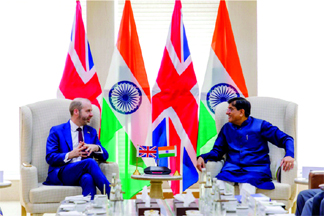
  • India, UK reach free trade deal, PM Modi calls it ‘historic milestone’

    India, UK reach free trade deal, PM Modi calls it ‘historic milestone’

    India and the United Kingdom have concluded an “ambitious and mutually beneficial” free trade agreement (FTA) that will deepen the bilateral comprehensive strategic partnership and catalyse trade and investment, Prime Minister Narendra Modi said after a conversation with his British counterpart Keir Starmer.
    The deal was finalised three years after Modi and his former British counterpart Boris Johnson set a target of concluding the FTA by October 2022. Since then, the negotiations had been affected by differences on a range of issues, including tariffs on alcohol and automobiles, and political turmoil in the UK.
    “Delighted to speak with my friend PM @Keir_Starmer. In a historic milestone, India and the UK have successfully concluded an ambitious and mutually beneficial Free Trade Agreement, along with a Double Contribution Convention,” PM Modi said in a post on X on Tuesday evening.
    “These landmark agreements will further deepen our Comprehensive Strategic Partnership, and catalyse trade, investment, growth, job creation, and innovation in both our economies. I look forward to welcoming PM Starmer to India soon,” he said.
    The two leaders described the development as a historic milestone that will foster trade, investment, innovation and job creation in both economies. They agreed that the agreements between the “two big and open market economies” will open new opportunities for businesses, strengthen economic linkages, and deepen people-to-people ties, according to a readout from the Indian side.
    Starmer said “strengthening alliances and reducing trade barriers with economies around the world” is part of the UK’s “Plan for Change” to deliver a stronger and more secure economy, the readout said.
    Further details about the trade deal were expected by Tuesday evening in the form of formal announcements by both sides. The breakthrough in the trade negotiations followed two back-to-back visits to the UK last week by commerce minister Piyush Goyal for meetings with British trade secretary Jonathan Reynolds to push the talks across the finish line.
    According to the UK government’s latest trade data, India was Britain’s 11th largest trading partner in the four quarters to the end of Q4 2024 and accounted for 2.4% of total UK trade.
    Total trade in goods and services between India and the UK was worth £42.6 billion in the four quarters to the end of Q4 2024, an increase of 8.3% from the four quarters to the end of Q4 2023. This included Indian exports to the UK worth £25.5 billion in the four quarters to the end of Q4 2024 (an increase of 10.1% compared to the four quarters to the end of Q4 2023), and UK exports to India amounted to £17.1 billion in the same period (an increase of 5.8% compared to the four quarters to the end of Q4 2023).

  • Google brings Gemini 2.5 Pro IO edition, it is tuned for coding and software development

    Google is set to host its annual event — Google I/O 2025 — on May 20. According to the rumours, the event will unveil several upcoming software updates, including Android 16, Android XR, and new Gemini AI features. However, a few days ahead of the event, Google DeepMind CEO, Demis Hassabis couldn’t wait and introduced improvements to its “most intelligent model”. Calling it “pre-I/O goodies”, Hassabis said that the Gemini 2.5 Pro (Preview) now has “massively improved coding capabilities”.
    Google Gemini 2.5 Pro (I/O Edition): New improvements
    Google has brought forward the release of an enhanced version of its Gemini 2.5 Pro model, now dubbed “Gemini 2.5 Pro (I/O Edition),” ahead of its initial unveiling planned for I/O 2025.
    The updated model—labelled gemini-2.5-pro-preview-05-06—features major upgrades in its ability to handle programming tasks. According to Google, it delivers marked improvements in “code transformation, code editing, and developing complex agentic workflows.” This version builds upon the first 2.5 Pro model, which launched in late March.
    Thanks to what Google describes as “overwhelming enthusiasm for this model,” the company chose to release it two weeks earlier than expected. The upgrade is now live within the Gemini app—where the Canvas workspace stands to gain the most—and is also available via the Gemini API through Google AI Studio and Vertex AI.
    Gemini 2.5 Pro AI model
    Google’s Gemini 2.5 Pro is the first model in the Gemini 2.5 family. Google says that every model in the Gemini 2.5 lineup — including those yet to come — has been built as a “thinking model, capable of reasoning through their thoughts before responding, resulting in enhanced performance and improved accuracy.” With the latest Gemini 2.5 Pro release, that design focus has been pushed further to handle more demanding and intricate tasks.
    The company highlights that the model “tops the LMArena leaderboard — which measures human preferences — by a significant margin.” It also leads the way in academic benchmarks, taking first place in both mathematics (AIME 2025) and science (GPQA diamond), doing so “without test-time techniques that increase cost, like majority voting.”
    Among its standout features is a major upgrade in programming performance, which Google describes as “a big leap over 2.0” with “more improvements to come.” The model is especially strong when it comes to building rich, interactive web apps and agent-driven code tools, in addition to its capabilities in “code transformation and editing.”
    In evaluations focused on autonomous software engineering, Gemini 2.5 Pro scored an impressive 63.8 per cent on SWE-Bench Verified, using a tailored agent-based approach — a result that underlines its growing competency in real-world coding challenges.

  • Astronomers discover Earth-like exoplanets common across the cosmos: Study

    Astronomers discover Earth-like exoplanets common across the cosmos: Study

    Astronomers have discovered that super-Earth exoplanets are more common across the universe than previously thought. While it can be relatively easy to locate worlds that orbit close to their star, planets with wider paths can be difficult to detect.
    Still, researchers estimated that for every three stars, there should be at least one super-Earth present with a Jupiter-like orbital period, suggesting these massive worlds are extremely prevalent across the universe.
    Using the Korea Microlensing Telescope Network (KMTNet), an international team of researchers has discovered that super-Earth exoplanets are more common across the universe than previously thought, according to a new study.
    By studying light anomalies made by the newly found planet’s host star and combining their results with a larger sample from a KMTNet microlensing survey, the team found that super-Earths can exist as far from their host star as our gas giants are from the sun, said Andrew Gould, co-author of the study and professor emeritus of astronomy at The Ohio State University.
    “Scientists knew there were more small planets than big planets, but in this study, we were able to show that within this overall pattern, there are excesses and deficits,” he said. “It’s very interesting.” While it can be relatively easy to locate worlds that orbit close to their star, planets with wider paths can be difficult to detect.
    Still, researchers further estimated that for every three stars, there should be at least one super-Earth present with a Jupiter-like orbital period, suggesting these massive worlds are extremely prevalent across the universe, said Gould, whose early theoretical research helped develop the field of planetary microlensing.
    The findings in this study were made via microlensing, an observational effect that occurs when the presence of mass warps the fabric of space-time to a detectable degree.
    When a foreground object, such as a star or planet, passes between an observer and a more distant star, light is curved from the source, causing an apparent increase in the object’s brightness that can last anywhere from a few hours to several months.

  • Elon Musk’s Neuralink patient makes YouTube video with brain implant

    Elon Musk’s Neuralink patient makes YouTube video with brain implant

    Brad Smith, a husband and father of two, has become the first nonverbal person with ALS to receive a Neuralink brain implant, offering a powerful glimpse into how technology is transforming lives once thought isolated by disease.
    Smith, diagnosed with amyotrophic lateral sclerosis (ALS) in 2020, has lost the ability to move or speak. Relying on a ventilator, he previously communicated using an eye-gaze device, which only worked in dark rooms and limited his interactions with the world.
    The Neuralink device, about the size of five stacked quarters, was implanted in Smith’s motor cortex and contains over 1,000 electrodes. It interprets his neural signals, allowing him to move a cursor on his MacBook Pro.
    While early training focused on imagining hand movements, Smith found more success by thinking about moving his tongue or clenching his jaw to control the cursor and click virtually.
    In a video posted online, Smith demonstrated how he used the BCI to edit footage and, with the help of AI trained on recordings from before he lost his voice, narrate the video in his own synthetic voice.
    “Neuralink has given me freedom, hope, and faster communication. It has improved my life so much. I’m so happy to be involved in something big that will help many people,” Smith said.
    The implant has also allowed Smith to play video games with his children and communicate outdoors-something impossible with his previous technology. While the system isn’t yet fast enough for real-time conversation, Smith’s progress signals hope for others with severe paralysis.
    Smith’s journey has not been without challenges, from extensive medical testing to the realities of living with a terminal illness. Yet, with the support of his wife and family, he remains optimistic.
    As Neuralink continues its clinical trials, Smith’s experience shows the possibilities of brain-computer interfaces, offering new hope to those living with ALS and other debilitating conditions.

  • Magnesium is the new star of supplements

    Magnesium is the new star of supplements

    The rising popularity of magnesium supplements, largely fuelled by wellness influencers, reflects a broader shift toward proactive and self-directed healthcare. These supplements have suddenly exploded into the market, with dozens of influencer-backed and celebrity-backed companies promising everything from ‘glowy skin’ to ‘increased productivity’ to ‘a better night’s sleep.’ According to the Global Wellness Economy Monitor 2024, the wellness industry reached a record $6.3 trillion in 2023 and is projected to hit $9 trillion by 2028.
    Where did this trend come from, and how did magnesium become the new star of supplements?
    While this trend has contributed to increased awareness about the importance of micronutrients like magnesium, it also raises concerns around misinformation and self-medication.
    But first, let’s break down what magnesium actually does in the body, and why it’s suddenly getting so much attention.
    What does magnesium do?
    Magnesium is an important mineral that is naturally present in the environment. The human body also contains a sufficient amount of magnesium that enables more than 300 enzymes to perform from the smallest to the greatest functions in the body.
    Magnesium is involved in protein synthesis, muscle and nerve function, blood glucose control, blood pressure regulation, energy production, oxidative phosphorylation, glycolysis (a function that helps break down glucose) and improving sleep quality.
    This mineral also transports other minerals like calcium and potassium to various cells to help maintain heart rhythm.
    Usually, an adult body contains 25 grams of magnesium, with 50% to 60% present in the bones and most of the rest in soft tissues.
    Since our bodies cannot make magnesium, we need to consume it from our diet.
    As much as this mineral is important for the body, a global study published in the British Medical Journal (BMJ) Nutrition, Prevention & Health, revealed that magnesium is the second-most common deficiency after vitamin D among Indians, particularly those who have diabetes.

  • Have plenty of curd daily to reduce anxiety

    Have plenty of curd daily to reduce anxiety

    Having probiotics can not only regulate gut bacteria—trillions of microorganisms in the gut which perform key functions in the immune system and metabolism—but also improve brain function and, thus, reduce anxiety, find researchers.
    Probiotics are living organisms found naturally in some foods that are also known as “good” or “friendly” bacteria because they fight against harmful bacteria and prevent them from settling in the gut.
    The research also suggests that mental disorders could be treated by regulating the intestinal microbiota, but there was no specific evidence to support this.
    “Gut microbiota can help regulate brain function through something called the ‘gut-brain axis,’” found the researchers from the Shanghai Jiao Tong University School of Medicine.
    To reach this conclusion, the researchers reviewed 21 studies that had looked at 1,503 people collectively.
    The team found that probiotic supplements in seven studies within their analysis contained only one kind of probiotic, two studies used a product that contained two kinds of probiotics, and the supplements used in the other five studies included at least three kinds.
    Overall, 11 of the 21 studies showed a positive effect on anxiety symptoms by regulating intestinal microbiota, meaning that more than half (52 per cent) of the studies showed this approach to be effective.
    Of the 14 studies that had used probiotics as the intervention, more than a third (36 per cent) found them to be effective in reducing anxiety symptoms, while six of the remaining seven studies that had used non-probiotics as interventions found those to be effective—a 86 per cent rate of effectiveness. Non-probiotic interventions were also more effective.
    Most of the studies did not report serious adverse events, and only four studies reported mild adverse effects such as dry mouth and diarrhoea.

  • Migraine drug to reduce depressive symptoms in patients

    Migraine drug to reduce depressive symptoms in patients

    A migraine drug has shown to significantly reduce symptoms of depression in patients—the first trial to show improvements in both the conditions using a single drug, researchers said.
    In the study involving 540 patients, ‘fremanezumab’ was found to reduce days of migraine in a month and symptoms of depression, compared to a placebo (inactive substance producing no effects). The drug, administered as an injection beneath the skin (subcutaneous), is available in India.
    Published in The Journal of the American Medical Association (JAMA) Neurology, the study is the first to demonstrate significant improvements in migraine and depressive symptoms—often seen to co-exist in patients—with a single drug, the researchers, including those from Albert Einstein College of Medicine, US, said. Patients of migraine—a common neurological condition marked by recurring headaches—have been studied to be two to four times more likely to develop depression. The two conditions are suggested to have common genetic basis and biological processes that control levels of brain chemicals, such as serotonin and glutamine.
    The researchers said that patients having migraine and depression are treated with antidepressants—which work by improving serotonin levels. Serotonin helps regulate mood, and low levels can cause sadness, anxiety and irritability.
    However, antidepressants are not uniformly effective for migraine. Further, data is limited on the efficacy of migraine therapy in people also experiencing psychiatric conditions.
    The trial was conducted over a 28-week period at 61 centres across 12 countries, including the US, UK, France, and Germany, between July, 2020, and August, 2022.
    The participants were randomly assigned to receive a monthly dose of fremanezumab (225 milligrams) or a placebo at the study’s start and at the end of week four and week eight.
    “Although treatment with fremanezumab and placebo both resulted in clinically meaningful reductions in depressive symptoms, fremanezumab achieved statistical significance vs placebo at week 8,” the authors wrote.
    They suggested that the reduced depressive symptoms could be an indirect effect of the drug actively treating migraine, although further analyses are required to understand this.
    The results “suggest that fremanezumab was effective in a difficult-to-treat clinical population with migraine and comorbid major depressive disorders and may also be effective in alleviating psychiatric comorbidities, therefore reducing the cumulative burden on patients.” Source: PTI

  • Multani mitti face packs for all types of skin

    Multani mitti face packs for all types of skin

    Multani mitti is very effective for skin glow. It is good cleanser that brightens our skin immediately. Multani mitti is a clay substance used as a cleanser, toner. Multani mitti is rich in magnesium chloride helps to reduce acne.
    Multani Mitti and Aloe Vera face pack
    Ingredients
    Multani mitti, Aloe vera gel
    Procedure
    – Mix multani mitti with some aloe vera gel to form a paste.
    – Apply it on your face and leave it for few minutes so that it dries.
    – Rinse with water.
    Multani mitti and Tomato face pack
    Ingredients
    – 2 tablespoons of tomato juice, 2 tablespoons of multani mitti
    Procedure
    – Mix multani mitti with tomato juice.
    – Apply it on your face and leave it for 10 minutes so the skin absorbs the needed nutrients.
    – Rinse with warm water.
    Multani Mitti and Honey face mask
    Ingredients
    – 1 spoon of multani mitti
    – 1-2 spoons of honey
    Procedure
    – Mix Multani mitti with honey to form a paste.
    – Apply it evenly on the face.
    – After a few minutes, rinse it.

  • Mango Kulfi

    Ingredients
    2 fresh, ripe, sweet mangoes (use 3 mangoes if they are not very pulpy), 1 1/2 cups evaporated milk, 2 1/2 cups thickened double cream, 1 3/4 cups sweetened condensed milk, 2 tablespoons almond meal
    Method
    – Remove the mango pulp carefully. Put all of the ingredients in a blender and mix them until they are completely smooth.
    – Pour the ice cream mixture into molds or bowls, or into one large bowl and freeze it until it is almost set.
    – Remove the bowl or bowls from the freezer and whisk it thoroughly until all of the lumps are gone. This prevents ice crystals from forming in the kulfi and gives it a smooth texture. Put the ice cream back into the freezer and leave it until it is set.

  • Mishti Doi

    Mishti Doi

    Mishti Doi is synonymous with Bengal in East India. The Bengalis are famous for their sweet preparations and Mishti Doi is among their most well-known desserts. Mishti Doi tastes great but is amazingly simple to make.
    Ingredients
    1 liter full cream/ whole milk, 3-4 tablespoons yogurt, 250 grams sugar,
    Method
    – Boil the milk in a heavy-bottomed pan, on a medium flame until it is reduced to half its original volume. Stir frequently to prevent the milk from scorching. When done, cool the milk till it is just lukewarm.
    – Put the sugar in another pan and heat over a low flame to melt. Allow the sugar to caramelize (brown). Remove from the fire when done, add the reduced milk to this caramelized sugar and mix well to blend.
    – When the milk and sugar are thoroughly mixed, add the yogurt to the mixture and stir gently to mix.
    – Pour into the desired container and keep in a warm dark spot for the Mishti Doi to set. The best taste results are achieved by setting the Mishti Doi in an earthenware pot.
    – When the Mishti Doi has set and is firm, chill for a few hours and serve.

  • Rules for saving your marriage

    Rules for saving your marriage

    If your marriage is in trouble, the chances are that you and your partner are stuck in trying to control rather than learn. Changing your intent can heal your marriage.
    – Be honest with yourself regarding your primary intention. Which category do you fall into – the intent to protect or the intent to learn?
    Is your primary intention to protect yourself from your fears with some form of controlling behavior – such as anger, blame, criticism, withdrawal of love, threats, compliance, or resistance? Is having power over your partner and winning more important to you than being loving to yourself and your partner? Do you make your partner responsible for your feelings? Are you more devoted to getting love and avoiding rejection rather than to mutuality, caring, and sharing love?
    Is your primary intention to learn about loving yourself and your partner? Are you more devoted to mutuality, caring and sharing love than to being right, winning, having your way, or making your partner responsible for your feelings? Is learning more important to you than whether or not you receive approval?
    Basic to all the other rules is being in the intent to learn about loving yourself and others. If your primary intent is to protect yourself from pain and rejection with controlling behavior, you will have no chance of improving your relationship. You will continue to create the very problems you are attempting to avoid with your controlling behavior.
    – Let go of the past. Hanging on to old grievances is part of the intent to protect – blaming your partner for your pain rather than taking responsibility for whatever choices you made that resulted in your unhappiness.
    – Disengage from conflict as soon as one person is not open to learning. There is no point in trying to talk out problems and issues until both people are open to learning. If you are open and your partner is not, then give up trying to solve problems by talking about them and unilaterally figure out how to take loving care of yourself in the face of your partner’s choices.
    – Keep your eyes on your own plate, sharing only about yourself and your own learning. Let go of analyzing or defining your partner. Let go of interrogating questions that are really attacks. These behaviors are controlling and invasive. Your job is to define yourself, not your partner! The more you define your own inner worth and let go of attempting to define your partner, the better your relationship will become.
    – Do your own Inner Bonding work to deal with your issues of abandonment and engulfment, and to define your own worth and lovability. Rather than making your partner responsible for your fears of abandonment or your fears of losing yourself, do your inner healing work to move beyond these fears. Take full 100% responsibility for these fears rather than making your partner responsible for causing them.
    – Accept your lack of control over the other person, choosing instead to see your partner as his or her own person. Learn to cherish the differences rather than try to make your partner into you. Support your partner in becoming all he or she came to this planet to be. Support your partner in what brings him or her joy, taking responsibility for whatever fears your partner’s independence brings up for you.
    – Make kindness to your self and others your guiding light, even when your fears are triggered.
    Once again, if you are stuck in the mindset of protection and control, you will not be able to make these choices. Your intent to learn is basic to being able to make these choices and improve your relationship. You are in charge of your intent and you always have the option to let go of the intent to protect/control and move into the intent to learn about loving yourself and your partner.

  • Sandra Bullock, Nicole Kidman reunite for ‘Practical Magic 2’

    Sandra Bullock, Nicole Kidman reunite for ‘Practical Magic 2’

    Warner Bros. has announced that the sequel to the beloved 1998 film ‘Practical Magic’, starring Sandra Bullock and Nicole Kidman, is set to hit theaters on September 18, 2026.
    The Hollywood Reporter has confirmed that Susanne Bier will direct the film, ‘Practical Magic 2,’ which will be written by Akiva Goldsman, who co-wrote the original film’s script.
    The sequel promises to bring back the magic of the original film, with Bullock and Kidman reprising their roles as Sally and Gillian Owens, two sisters from a line of witches.
    Denise Di Novi, the producer of the original film, will produce the sequel alongside Bullock and Kidman.
    Di Novi emphasised the importance of honouring the original film, stating that sequels often go wrong when they try to reinvent the wheel.
    While plot details for the sequel have not been shared, fans of the original film eagerly anticipate the Owens sisters’ return.
    The first film followed Sally and Gillian as they navigated love, family, and their magical powers.
    Despite the original film’s mixed reception, it has developed a cult following over the years.
    Interestingly, ‘Practical Magic 2’ will share its release date with another highly anticipated film, the Resident Evil reboot directed by Zach Cregger.
    “Practical Magic” received mixed reviews and flopped at the box office, but the supernatural story became a cult favorite in subsequent years. Warne Bros. tried to expand the “Practical Magic” property in 2019 with the prequel series “Rules of Magic,” but the HBO series was scrapped and never came to fruition.
    Susanne Bier is directing “Practical Magic 2” from a screenplay by Akiva Goldsman, who co-wrote the first movie. Though the production timeline is hazy, Kidman told Variety in February that the sequel is “moving ahead rapidly.” Bullock and Kidman, who each have collected Oscar statues in the decades following “Practical Magic,” will produce the sequel alongside the original film’s producer Denise Di Novi.

  • Halle Berry starved herself in the run-up to the Met Gala

    Halle Berry starved herself in the run-up to the Met Gala

    Hollywood actress Halle Berry didn’t eat “anything all day” in the build-up to the Met Gala. The 58-year-old actress arrived at fashion’s biggest event but admitted that after leaving the Metropolitan Museum of Art in New York.
    She treated herself to some fried chicken after starving herself all day so that she could fit into her somewhat revealing LaQuan Smith dress, reports ‘Female First UK’.
    She told E! News, “I haven’t eaten anything all day, trying to wear this dress. They told me I could have a little treat for myself, and come here and get some Cane’s chicken. So, I’m like, yes, I’m there”.
    As per ‘Female First UK’, the Academy Award-winning star was then asked when she was left most “star-struck” during the evening and revealed that her “jaw dropped” when she got to witness a performance given by ‘Isn’t She Lovely’ crooner Stevie Wonder. She said: “I didn’t know this would happen but Stevie Wonder performed tonight, and that was just a jaw-dropping moment, I had no idea that I would get to see it like that. He has such a good voice, it was just a real treat”.
    The ‘Never Let Go’ actress was dressed in a LaQuan original and explained that her personal “highlight” of the night came when she got to see several others wearing clothes also designed by him, more than a decade after she started working with the luxury fashion brand founder. She added, “I think seeing everybody out looking so dandy-ish and I think it was really special that I went with LaQuan , he designed my dress, I was his muse. To see him shine tonight and see his creations come to life on all the people he dressed was really special. It was so fun and so easy”.
    “He showed me some sketches. I chose two that I really liked, so he made two dresses. The dresses were gorgeous. I could hardly choose. I asked LaQuan, ‘Which one would you like me to wear?’ So, I chose his favourite”, she added.

  • Rihanna and Ciara end 14-year feud at 2025 Met Gala with heartfelt reunion

    Rihanna and Ciara end 14-year feud at 2025 Met Gala with heartfelt reunion

    Pop icons Rihanna and Ciara made headlines at the 2025 Met Gala as they publicly reunited 14 years after their Twitter spat. Both stars were seen smiling and photographed inside New York City’s Metropolitan Museum of Art on May 5, posing alongside their partners A$AP Rocky and NFL star Russell Wilson marking a moment of warmth and reconciliation.
    During the event, Ciara, 39, was seen joyfully placing her hand on Rihanna’s baby bump. The “Diamonds” singer, 37, had announced just hours earlier that she and A$AP Rocky were expecting their third child. Ciara later appeared on The Sherri Show on May 6, expressing her happiness about their encounter. “It was so sweet running into her I’m so proud of her,” she said. As reported by People, the once-tense relationship between the two singers dates back to a 2011 exchange sparked by Ciara’s comments on Fashion Police.
    After Rihanna responded sharply on Twitter, the two engaged in a brief war of words before Rihanna apologized. Though they had kept a low profile since, Ciara revealed to Sherri that Rihanna had sent her a “sweet DM” a few months ago, reigniting their friendship.

  • May 9 New York & Dallas E – Edition

    [vc_row][vc_column][vc_custom_heading text=”E-Edition” font_container=”tag:h2|text_align:center” google_fonts=”font_family:Istok%20Web%3Aregular%2Citalic%2C700%2C700italic|font_style:700%20bold%20regular%3A700%3Anormal” css=”” link=”url:https%3A%2F%2Fwww.theindianpanorama.news%2Fwp-content%2Fuploads%2F2025%2F05%2FTIP-May-9-E-Edition.pdf”][vc_single_image image=”183480″ img_size=”full” alignment=”center” onclick=”custom_link” css=”” link=”https://www.theindianpanorama.news/wp-content/uploads/2025/05/TIP-May-9-E-Edition.pdf”][/vc_column][/vc_row][vc_row][vc_column width=”2/3″][vc_custom_heading text=”Lead Stories This Week” google_fonts=”font_family:Istok%20Web%3Aregular%2Citalic%2C700%2C700italic|font_style:700%20bold%20regular%3A700%3Anormal” css=”” link=”url:https%3A%2F%2Fwww.theindianpanorama.news%2F”][vc_wp_posts number=”5″ show_date=”1″][/vc_column][vc_column width=”1/3″][vc_single_image image=”82828″ img_size=”medium” alignment=”center” onclick=”custom_link” css=”” link=”https://www.theindianpanorama.news/advertising-media-kit-portal-indian-panorama/ “][vc_single_image image=”82829″ img_size=”medium” alignment=”center” onclick=”custom_link” css=”” link=”https://www.theindianpanorama.news/advertising-media-kit-portal-indian-panorama/ “][/vc_column][/vc_row]

  • Ayushmann Khurrana, Rashmika Mandanna shoot final leg of Thama in Ooty

    Ayushmann Khurrana, Rashmika Mandanna shoot final leg of Thama in Ooty

    Ayushmann Khurrana and Rashmika Mandanna’s much-awaited vampire comedy, ‘Thama’ has reportedly entered its final phase of filming. Directed by Aditya Sarpotdar, the film’s last and most crucial schedule began on April 28 in the misty hillscapes of Ooty, Tamil Nadu, and will continue through May 25.
    According to a report in Mid-Day, the team is currently stationed around Doddabetta Peak in the Nilgiri forests, shooting important sequences involving the lead pair’s love story as well as the film’s climax. “Starting April 28, Ayushmann and Rashmika filmed their portions in the forests of Ooty. They are currently filming in and around Doddabetta Peak. In this leg, the director will shoot some portions of the love story between the leads. After Nawazuddin joins the unit in the third week of May, they will shoot the backstory of how he became a vampire, and the climax,” a source told the publication.
    Nawazuddin Siddiqui, who plays a vampire with a shadowy past, is expected to join the unit in mid-May. His character’s origin story, which is set in the past, is a key component of the film’s narrative and will be shot during this schedule.
    ‘Thama’, derived from the name Ashwatthama—the immortal warrior from the Mahabharata—is a genre-bending mix of comedy, horror, and mythology. The story revolves around a historian, played by Ayushmann, who sets out to uncover the mythological roots of vampirism in Indian folklore. Set across two time periods, the plot moves between modern-day India and the ancient kingdom of Vijayanagar, tied together by a haunting tale of unfulfilled love.
    Once the Ooty schedule wraps up, only two songs remain to be filmed. The makers, in their announcement video, revealed that they are aiming for a Diwali 2025 release.

  • Sreeleela to replace Janhvi in Dostana 2

    Sreeleela to replace Janhvi in Dostana 2

    Rewinding back to a fallout between Karan Johar and Kartik Aaryan in 2021, the makers of Dostana 2 shared an official post on a recasting to take place for the film. The official announcement by Dharma Productions confirmed that Kartik Aaryan was no longer a part of the project.
    For the unversed, Dostana 2 was set to be Lakshya’s big Bollywood debut. However, it was Kill in 2024, the action thriller that marked a promising debut by Lakshya.
    Now, according to an exclusive report by News18 Showsha, Sreeleela who has been gaining a lot of popularity lately, might replace Janhvi Kapoor in Dostana 2. Sreeleela is also currently busy shooting for Anurag Basu’s untitled musical with Kartik Aaryan. There is also a lot of online buzz about Kartik Aaryan and Sreeleela dating.
    A close source has told News18, “The story of Dostana 2 will remain the same but the cast and the director have been changed. Janhvi Kapoor, who was roped in to play the female lead earlier, is no longer a part of the film. Instead, the makers are considering Sreeleela for the part. Her dance number in Pushpa 2: The Rule has made her a much sought-after name in the movies. And the team of Dostana 2 are extremely keen on having her in the film.”
    The source further added, “There’s a lot of demand and positive word-of-mouth for Sreeleela, who is currently shooting for Anurag Basu’s next with Kartik Aaryan. The makers of Dostana 2 decided to recast the film, hoping to feature a set of actors who haven’t shared screen space in the past. It will indeed be interesting to see her chemistry with her co-stars.”
    The source concluded by saying that previously Collin D’Cunha of Call Me Bae fame was supposed to direct Dostana 2. But there are ongoing talks about Advait Chandan now taking over the director’s seat.

  • Bhumi Pednekar calls ‘The Royals’ a modern blend of ‘Bridgerton’ and ‘Schitt’s Creek’

    Bhumi Pednekar calls ‘The Royals’ a modern blend of ‘Bridgerton’ and ‘Schitt’s Creek’

    Actor Bhumi Pednekar says her debut web series “The Royals” is a blend of modern-day “Bridgerton” and “Schitt’s Creek”, capturing the dysfunctional dynamics of a royal family with a touch of comedy and romance. Billed as a modern-day rom-com, the Netflix show stars Ishaan Khatter as Aviraaj Singh, a reluctant new-age prince, and Pednekar as Sophia Shekhar, a self-made CEO of a start-up, who team up to transform the former’s haveli into a luxury B&B experience.
    As their journey unfolds, viewers can expect a rollercoaster ride of romance, comedy and a whole lot of drama, reads the official synopsis.
    “It is (like) a modern-day ‘Bridgerton’ because of the setting and the world that’s been created, but definitely a bit of ‘Schitt’s Creek’ because there’s the royal family and the dysfunctionality and everything that happens with them.
    “But I grew up reading ‘Mills & Boon’ (romance novels), and I’m a very, very big fan of it. This (‘The Royals’) is a very classic boy-girl romance. It’s just that there’s no damsel-in-distress. It’s refreshing,” Pednekar told PTI in an interview.
    “Bridgerton” is a British costume drama set in the 19th century’s regency era, whereas the Canadian show “Schitt’s Creek” follows the trials and tribulations of the formerly wealthy Rose family. Both series are available on Netflix.
    “The Royals” is created by Rangita and Ishita Pritish Nandy and directed by Priyanka Ghose and Nupur Asthana.
    While romance is at the core of “The Royals”, the series ambitiously delves into larger themes such as privilege, power dynamics, and the complexities of contemporary life, including the entourage trend and the use of artificial intelligence (AI).
    Calling AI a “disruptive” tool, Pednekar said one must use this technological innovation “responsibly”.

  • Mother’s Day: A celebration of maternal love and sacrifice

    Mother’s Day: A celebration of maternal love and sacrifice

    Mother’s Day is a holiday honoring motherhood that is observed in different forms throughout the world. In the United States, Mother’s Day 2025 falls on Sunday, May 11. The American incarnation of Mother’s Day was created by Anna Jarvis in 1908 and became an official U.S. holiday in 1914. Jarvis would later denounce the holiday’s commercialization and spent the latter part of her life trying to remove it from the calendar. While dates and celebrations vary, Mother’s Day traditionally involves presenting moms with flowers, cards and other gifts.
    What Is Mother’s Day?
    Celebrations of mothers and motherhood can be traced back to the ancient Greeks and Romans, who held festivals in honor of the mother goddesses Rhea and Cybele, but the clearest modern precedent for Mother’s Day is the early Christian festival known as “Mothering Sunday.”
    Once a major tradition in the United Kingdom and parts of Europe, this celebration fell on the fourth Sunday in Lent and was originally seen as a time when the faithful would return to their “mother church”—the main church in the vicinity of their home—for a special service.
    Over time the Mothering Sunday tradition shifted into a more secular holiday, and children would present their mothers with flowers and other tokens of appreciation. This custom eventually faded in popularity before merging with the American Mother’s Day in the 1930s and 1940s.
    Ancient Civilizations, Mother Worship
    A. Prehistoric Reverence
    – Early societies, as far back as 30,000 BCE, crafted mother goddess figurines, such as the Venus of Willendorf, signifying fertility and the power of life-giving femininity.
    – These symbols were associated not just with reproduction, but with sustenance, protection, and emotional well-being.
    Ancient Egypt
    – Isis, the Egyptian goddess, was considered the ideal mother. Myths described her as a devoted wife and a protective mother who resurrected her husband Osiris and raised her son Horus.
    – Annual rituals and hymns praised her as a divine caregiver and queen of heaven.
    Greek and Roman Civilizations
    – In Greece, Rhea, mother of the Olympians, was honored in spring festivals. Offerings were made at altars, often in outdoor natural settings symbolizing fertility.
    – Romans celebrated Hilaria around March 25, coinciding with the vernal equinox. People wore disguises, sang songs, and paraded to temples dedicated to Cybele, the “Great Mother.”
    Christianity and the Emergence of Mothering Sunday
    Mothering Sunday was originally a religious observance in parts of Europe during the 16th century.Celebrated on the fourth Sunday of Lent, it was when Christians returned to their “mother church” for worship.Over time, it evolved into a more secular tradition where children honored their biological mothers.The holiday became particularly popular among the working class, as it was often the only day domestic servants could reunite with family.
    Mother’s Day Origins in the United States
    The origins of Mother’s Day as celebrated in the United States date back to the 19th century. In the years before the Civil War, Ann Reeves Jarvis of West Virginia helped start “Mothers’ Day Work Clubs” to teach local women how to properly care for their children.
    These clubs later became a unifying force in a region of the country still divided over the Civil War. In 1868 Jarvis organized “Mothers’ Friendship Day,” at which mothers gathered with former Union and Confederate soldiers to promote reconciliation.
    Another precursor to Mother’s Day came from the abolitionist and suffragette Julia Ward Howe. In 1870 Howe wrote the “Mother’s Day Proclamation,” a call to action that asked mothers to unite in promoting world peace. In 1873 Howe campaigned for a “Mother’s Peace Day” to be celebrated every June 2.
    Other early Mother’s Day pioneers include Juliet Calhoun Blakely, a temperance activist who inspired a local Mother’s Day in Albion, Michigan, in the 1870s. The duo of Mary Towles Sasseen and Frank Hering, meanwhile, both worked to organize a Mothers’ Day in the late 19th and early 20th centuries. Some have even called Hering “the father of Mothers’ Day.”
    Anna Jarvis Turns Mother’s
    Day Into a National Holiday
    The official Mother’s Day holiday arose in the 1900s as a result of the efforts of Anna Jarvis, daughter of Ann Reeves Jarvis. Following her mother’s 1905 death, Anna Jarvis conceived of Mother’s Day as a way of honoring the sacrifices mothers made for their children.
    After gaining financial backing from a Philadelphia department store owner named John Wanamaker, in May 1908 she organized the first official Mother’s Day celebration at a Methodist church in Grafton, West Virginia. That same day also saw thousands of people attend a Mother’s Day event at one of Wanamaker’s retail stores in Philadelphia.
    Following the success of her first Mother’s Day, Jarvis—who remained unmarried and childless her whole life—resolved to see her holiday added to the national calendar.
    Arguing that American holidays were biased toward male achievements, she started a massive letter writing campaign to newspapers and prominent politicians urging the adoption of a special day honoring motherhood.
    By 1912 many states, towns and churches had adopted Mother’s Day as an annual holiday, and Jarvis had established the Mother’s Day International Association to help promote her cause. Her persistence paid off in 1914 when President Woodrow Wilson signed a measure officially establishing the second Sunday in May as Mother’s Day.
    Jarvis Decries Commercialized
    Mother’s Day
    Anna Jarvis had originally conceived of Mother’s Day as a day of personal celebration between mothers and families. Her version of the day involved wearing a white carnation as a badge and visiting one’s mother or attending church services. But once Mother’s Day became a national holiday, it was not long before florists, card companies and other merchants capitalized on its popularity. While Jarvis had initially worked with the floral industry to help raise Mother’s Day’s profile, by 1920 she had become disgusted with how the holiday had been commercialized. She outwardly denounced the transformation and urged people to stop buying Mother’s Day flowers, cards and candies.
    Jarvis eventually resorted to an open campaign against Mother’s Day profiteers, speaking out against confectioners, florists and even charities. She also launched countless lawsuits against groups that had used the name “Mother’s Day,” eventually spending most of her personal wealth in legal fees. By the time of her death in 1948 Jarvis had disowned the holiday altogether, and even actively lobbied the government to see it removed from the American calendar.
    Mother’s Day Traditions and Celebrations Around the World
    While versions of Mother’s Day are celebrated worldwide, traditions vary depending on the country. In Thailand, for example, Mother’s Day is always celebrated in August on the birthday of the current queen, Sirikit.
    Another alternative observance of Mother’s Day can be found in Ethiopia, where families gather each fall to sing songs and eat a large feast as part of Antrosht, a multi-day celebration honoring motherhood.
    In the United States, Mother’s Day continues to be celebrated by presenting mothers and other women with gifts and flowers, and it has become one of the biggest holidays for consumer spending. Families also celebrate by giving mothers a day off from activities like cooking or other household chores.
    At times, Mother’s Day has also been a date for launching political or feminist causes. In 1968 Coretta Scott King, wife of Martin Luther King Jr., used Mother’s Day to host a march in support of underprivileged women and children. In the 1970s women’s groups also used the holiday as a time to highlight the need for equal rights and access to childcare.
    In India, on Mother’s Day, families come together to honour the invaluable role that mothers play in their lives, celebrating the selfless love and sacrifices of mothers nationwide. Similarly, in the United Kingdom, children often present their mothers with flowers and cards as tokens of affection.
    In Japan, the carnation gifted to mothers symbolises love and gratitude, while Ethiopian families gather for large celebratory feasts. Mexicans honour mothers through serenades and poetry readings, and in Nepal, a special religious festival called Mata Tirtha Aunsi is observed.
    Regardless of the specific customs, the essence of Mother’s Day thus remains universal: it is a time to cherish and acknowledge the profound impact that mothers and maternal figures have on our lives.
    Role mothers play in our lives
    This Mother’s Day, the biggest tribute one can pay to their mother is to convey the heartiest thanks for everything they have done and have been doing for us.
    Raising her kid
    The first and foremost role a mother plays in this world is taking the responsibility of bearing her child. This is honestly an obligation that can never be repaid to her. It is said that it is easy to bear a child but it is extremely difficult to raise them well. But haven’t our mothers performed these tasks beautifully? It is certainly impossible to thank her enough.
    Her love and care is completely irreplaceable
    Nobody on this planet can match up to the love and care that a mother showers upon you. From being teary-eyed when we get hurt in childhood to waiting for us to eat food before her, a mother offers unconditional love and support. Be it any age and phase of your life, we all need mom’s words to overcome a bad situation.
    Proper environment for the right development
    There is no denying that a mother is responsible for what kind of environment her child is growing up in, since the very beginning. This has a direct or indirect impact on the kid’s mental health development. It is the mother, who needs to make sure that her child is getting an appropriate space for creativity, and studies.
    Behavioural development
    A mother has to make sure that her kid is getting the proper opportunity to explore his likeness and interests. It is only the mother who is very well versed with her child’s behaviour. She has to be all ears whenever her kid is speaking his heart out.
    Imparting routine and discipline
    Since day one of your school life, it is your mother who has told you to go to bed when it is bedtime. She has woken you up for school. These are very simple ways how a mother makes your routine. Once you are back from school, she tells you to sit for your homework before going out to play. These may seem like small things but they end up playing a big role instilling discipline.

  • India–Pakistan standoff after Pahalgam attack

    India–Pakistan standoff after Pahalgam attack

    On 23 April 2025, a standoff emerged between India and Pakistan, which was sparked by the 2025 Pahalgam attack, a terrorist attack in the Baisaran Valley of Jammu and Kashmir, killing 27 people, including 25 Hindu tourists, a Christian tourist, and a local Muslim, as well as injuring more than 20 others. The Resistance Front (TRF) initially claimed responsibility for the attack.
    Armed skirmishes between India and Pakistan were reported along the Line of Control (LoC) beginning on 24 April, raising fears of further escalation between the two nuclear-armed neighbors.
    The standoffs were followed by a diplomatic crisis which emerged between the two countries, as India accused Pakistan of sponsoring the attack. India initiated the expulsion of Pakistani diplomats, recalled its own diplomatic staff, suspended visa services, closed its borders, and announced its withdrawal from the Indus Waters Treaty, while Pakistan denied the allegations and responded with trade restrictions, closure of airspace and border crossings, and suspension of the Simla Agreement. India’s Cabinet Committee on Security (CCS) also strongly urged Indian citizens to avoid travelling to Pakistan, and called on those currently in the country to return at the earliest opportunity.
    Between 24 April and 6 May, Pakistan and India engaged in heavy skirmishes including cross-border firing and artillery shelling.
    On 7 May 2025, India launched missile strikes on Pakistan, codenamed Operation Sindoor. According to India, the missile strikes targeted the militant groups Jaish-e-Mohammed and Lashkar-e-Taiba. According to Pakistan, the Indian strikes targeted civilian areas, including mosques, killing 31 Pakistani civilians. In retaliation to the strikes, Pakistan said they had downed a number of Indian jets and damaged Indian infrastructure.
    On 8 May, India said that Pakistani army attempted a drone and missile strike across several Indian cities including Amritsar which were intercepted by the S-400 missile system. According to Indian authorities, the strike was negated. This claim was rejected by Pakistani governmental authorities and the Sikhs for Justice, both of whom stated that the Indian Army mistakenly struck itself in Amritsar and blamed it on Pakistan to fuel anti-Pakistan sentiment among Sikhs. The Indian Ministry of Defense said that it carried out SEAD/DEAD operations in response and claimed to have neutralized the air defense systems in Lahore.
    There were a number of misinformation campaigns across both the countries’ media outlets following the strike.
    Background
    An Islamist armed insurgency broke out in Jammu and Kashmir in the late 1980s, which resulted in the exodus of Kashmiri Hindus from the region and the insurgency has been ongoing since.
    On 22 April 2025, a terrorist attack at Baisaran Valley near Pahalgam in the Anantnag district of Indian-administered Jammu and Kashmir killed at least 26 tourists and injured more than 20 others. According to eyewitness testimonies provided to Indian media outlets, assailants reportedly questioned potential victims about their religious identity before opening fire, specifically targeting non-Muslims.
    The attack became among the deadliest attacks against Indian civilians in the region since 2000. The Resistance Front (TRF), believed to be an offshoot of the Pakistan-based, UN-designated terrorist group Lashkar-e-Taiba, initially claimed responsibility. They stated that the attack was in opposition to Indian government policy allowing Indian citizens to live and work in Kashmir, that resulted in non-local settlement in the region. Four days later, they retracted their claim.
    Diplomatic crisis
    On the night of 23 April 2025, the Indian foreign secretary Vikram Misri held a special press briefing after a meeting with the CCS. He announced India’s decision to temporarily suspend the Indus Waters Treaty with Pakistan with immediate effect until Pakistan ceases its support for cross-border terrorism. He further announced the closure of the integrated check post at Attari-Wagah Border, a travel ban for all Pakistani nationals to India under the SAARC Visa Exemption Scheme, and cancellation of all previously issued visas. Additionally, Pakistani military advisers at the Pakistan High Commission in New Delhi were expelled, while their Indian counterparts in Islamabad were withdrawn, and the staff strength of the Indian High Commission in Islamabad was reduced from 55 to a minimum of 30. The posts of such military advisors were deemed abolished.
    Pakistan’s Foreign Ministry expressed condolences to the families of the victims, and its defense minister Khawaja Asif dismissed the allegations of his country’s involvement in the attack and regarded such events as revolutions. However, in an interview with Sky News, while responding to allegations of terrorism, Asif said that Pakistan had backed terrorist activities at the direction of United States, Britain and the West going back three decades.
    Pakistan responded to the suspension of the treaty by describing it as inappropriate and lacking seriousness. Pakistan also warned India of a comprehensive retaliation in response to the actions announced by the Indian government in the aftermath of the incident, further stating that any action affecting water resources would be considered an act of war. On 24 April, Pakistan suspended visas issued to Indian nationals and closed its airspace to Indian aircraft, expelled Indian diplomats and instructed Indian military advisers to depart the country no later than the 30 April.
    Pakistan also cut off all trade with India. Pakistan also suspended the Simla Agreement, on 24 April 2025 in retaliation. The Attari-Wagah border ceremony was also reduced and the symbolic handshake did not take place. Cross-border families were affected where their visas revoked.
    Initial standoff
    A joint cordon and search operation was initiated by the Indian Army, paramilitary forces, and Jammu and Kashmir Police. A temporary lockdown was imposed in Pahalgam, and Indian Army helicopters were deployed to track down the militants, who reportedly fled to the upper reaches of the Pir Panjal range.
    On 25 April, soldiers demolished the family residences of two individuals suspected of involvement in the Pahalgam attack. An Indian soldier was killed and two other soldiers wounded during a gunfight with insurgents in the Basantgarh region of Udhampur. Senior Lashkar-e-Taiba Commander Altaf Lalli was also killed in the gunfight.
    Both Pakistani and Indian air forces conducted intensive flights near the LoC. An Indian Border Security Force soldier belonging to the 182nd battalion of the BSF was captured by Pakistan Rangers after he accidentally entered the Pakistani side of the Ferozepur border.
    Also on 24 April, the Indian XV Corps reported that it had thwarted an infiltration attempt by insurgents near Uri and killed 2 insurgents.
    Between 24 April and 5 May, Indian and Pakistani army engaged in skirmishes and exchanged small arms firing. Reportedly, Pakistan’s army initiated small arms firing across various sectors along the LoC, which was described as “unprovoked” by Indian media. The Pakistani army stated it shot down two Indian military quadcopter drones along the LoC in the Satwal sector and in the Manawar sector of Bhimber district.
    On 28 April, Pakistani Defense Minister Asif stated that an attack from the Indian armed forces was “imminent”. On 30 April, Pakistan claimed it has “credible intelligence” that India is going to launch military action within several hours. On the night of 29 April, Pakistani forces opened fire on the international border along Kashmir. On 1 May, Indian Home Minister Amit Shah said that no terrorist involved in the attack would be spared by India.
    On 3 May, a soldier from the Pakistan Rangers was captured by BSF after crossing the border to India.
    On 5 May, the Indian Ministry of Home Affairs announced an “effective civil defense in the event of a hostile attack” on 7 May across 7 states. Such drills were last conducted by India during 1971. As per reports, the drill includes operationalisation of Air Raid Warning Sirens, crash blackout measures, training of civilians on civil defense and evacuation plans.
    Release of river water
    Following the suspension of the Indus Waters Treaty of 1960 on 23 April 2025, local media in Muzaffarabad, Pakistan, reported on 26 and 27 April that India had released water from the Uri Dam into the Jhelum River unannounced, resulting in flooding. Additional reports indicated a sharp decline in water levels of the Chenab River in Sialkot, Pakistan, with satellite imagery showing significant drying of the riverbed. On 4 May 2025, India had closed the Baglihar Dam on the Chenab River and was planning a similar move at the Kishanganga Dam on the Neelum River.
    Operation Sindoor
    7 May
    On the night of 6/7 May, launched “Operation Sindoor” hitting “terrorist infrastructure” in Pakistan. The operation lasted 23 minutes and consisted of missile strikes carried out using combat jets. The Rafale fighter jet equipped with the SCALP cruise missile was used.
    The targets include Bahawalpur, Muridke, Gulpur, Bhimber, Chak Amru, Bagh, Kotli, Sialkot and Muzaffarabad. Reportedly, the Bahawalpur strike killed close aides and family members of Jaish-e-Mohammed chief Masood Azhar. Indian Defence Minister Rajnath Singh said on 8 May that at least 100 militants had been killed in the missile strikes.
    According to reports and witnesses, at least two aircraft were said to have gone down – one in India and another in Indian-administered Kashmir but analyzing witness photos from one wreckage site in the India-administered Kashmir, independent weapons researchers identified the debris as an external fuel tank for likely a Rafale or Mirage fighter jet. Pakistani sources later reported shooting down five Indian fighter jets over Indian airspace. The Pakistani Prime Minister Shehbaz Sharif called the attacks “cowardly” and vowed response.
    Afterwards, the Pakistan Army began heavy mortar firing targeting the town of Poonch, killing 15 civilians. Among the dead were Mohd Zain Khan, aged 10, and Zoya Khan aged 12. The shelling mainly targeted civilian infrastructure, including homes, vehicles, and public infrastructure.
    8 May
    On the following night, Pakistani authorities said that several Indian drones intruded in Pakistani airspace, and 12 Indian drones were shot down. As per Pakistan, these drones were sent into nine different locations including the cities of Karachi and Lahore, and one of the drones struck a Pakistani military facility near Lahore.
    Later, Pakistani army attempted a drone and missile strike across several Indian cities, including Amritsar which were intercepted by the S-400 missile system.
    According to Indian authorities, the strike was negated. In response, Indian army carried out SEAD/DEAD operations and claimed to have neutralized the air defense systems in Lahore. Additionally, Indian Armed Forces were reportedly “compelled to respond to bring Mortar and Artillery fire from Pakistan to a halt”.
    This was the first combat use of the Indian S-400 missile system or Sudarshan.
    Which countries back India? Which nations stand with Pak?
    UNITED STATES
    US President Donald Trump said that India and Pakistan had “gone tit-for-tat” and hoped that the two nuclear-armed Asian neighbours would avoid any further escalation. US Secretary of State Marco Rubio also discussed ways to ease tensions between India and Pakistan during a call with his Saudi Arabian counterpart on Wednesday, May 7.
    ISRAEL
    Israel extended strong support for India just hours after the precision strike in Pakistan and Pakistan-occupied Kashmir (PoK). Israel’s Ambassador to India, Reuven Azar, posted on X, saying that Israel backs India’s right to defend itself. “Terrorists should know there’s no place to hide from their heinous crimes against the innocent,” he added.
    UNITED KINGDOM
    British Prime Minister Keir Starmer said the UK is speaking to both India and Pakistan to encourage dialogue and help reduce tensions. “Rising tensions between India and Pakistan will be of serious concern for many across Britain,” Starmer told Parliament.
    TURKEY
    Turkey has shown strong support for Pakistan. The Turkish Ambassador to Pakistan met with Foreign Minister Ishaq Dar to express his country’s backing following what he called “India’s unprovoked violation of Pakistan’s sovereignty”.
    CHINA
    China has called on both India and Pakistan to show restraint and avoid any moves that could make the situation worse. Responding to India’s strikes on terror camps in Pakistan and Pakistan-occupied Kashmir (PoK), a spokesperson from China’s Foreign Ministry said: “China finds India’s military operation early this morning regrettable. We are concerned about the ongoing situation. India and Pakistan are and will always be each other’s neighbours. They’re both China’s neighbours as well.”

    RUSSIA
    Russian Foreign Minister Sergey Lavrov has urged both India and Pakistan to stay calm and avoid any steps that might make tensions worse. She said, “Russia resolutely condemns acts of terrorism as it opposes any manifestations of it and accentuates the need to join forces globally for an effective fight against this evil.”
    UAE
    UAE Deputy Prime Minister of Foreign Affairs Sheikh Abdullah bin Zayed Al Nahyan has called on India and Pakistan “to exercise restraint, de-escalate tensions, and avoid further escalation that could threaten regional and international peace.”