Month: May 2025

  • India vs Pakistan: Comparsion of military capabilities of two nations

    India vs Pakistan: Comparsion of military capabilities of two nations

    Amid heightened tensions following the Pahalgam attack that killed 26, India on Wednesday retaliated with strikes on nine terror sites in Pakistan and POK, maintaining it has shown ‘considerable restraint’ in selection of targets.
    “Justice is served”, the Indian Army tweeted earlier on Wednesday, May 7, as it announced the codename of the mission.
    According to reports, among the precise targets hit were the Markaz Subhan Allah at Bahawalpur, Sarjal at Tehra Kalan, Markaz Abbas in Kotli, and Syedna Bilal camp in Muzaffarabad, all linked to the banned Jaish-e-Mohammed.
    Other targets included the Markaz Taiba at Murdike, Markaz Ahle Hadith at Barnala, and Shwawai Nalla camp at Muzaffarabad, all associated with the banned Lashkar-e-Taiba.
    A report by India Today, Rafale jets armed with SCALP cruise missiles and HAMMER precision-guided munitions were used for the strikes on terror camps in Pakistan.
    Precision strike weapon systems from the Indian Army, Navy, and Air Force, including loitering munitions, were employed in Operation Sindoor, sources told ANI.
    The coordinates for the attacks were provided by intelligence agencies, and the strikes were carried out entirely from Indian soil.
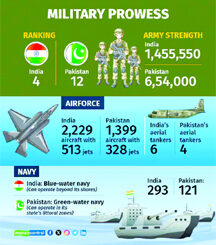
    According to Global Firepower Index 2025, which lists world’s most powerful armies, India secured fourth place while Pakistan slipped from ninth to twelfth position.
    The Global Firepower Index considers data from over 60 factors, which includes the country’s GDP, population, military strength, and purchasing power among other aspects to determine the fighting potential of a country.
    Here is a comparison showcasing the relative conventional fighting strengths of India and Pakistan in 2025.
    Defence budget
    India is the second most populated country in the world and Pakistan ranks at number five. India’s defence budget for 2025-26 has been set at Rs 6.8 lakh crore ($79 billion), reflecting a 9.5% increase over the previous fiscal’s budget estimates. Meanwhile, Pakistan is expected to increase its defence budget by Rs 159 billion for the fiscal year 2025–26, taking the total allocation to Rs2,281 billion, according to reports.
    Military strength
    In terms of soldiers, India ranks second globally, with 1,455,550 active personnel. Additionally, India possesses a reserve force of 1,155,000 soldiers, stated the index. Meanwhile, Pakistani army boasts 654,000 soldiers. India has 2,527,000 paramilitary forces while Pakistan has 500,000 paramilitary forces.
    India has 4,201 tanks while Pakistan has 2,627. India also boasts advanced systems such as T-90 Bhishma and Arjun tanks, BrahMos missiles, and the Pinaka rocket system.
    India has 148, 594 armoured vehicles, three times more than Pakistan.
    Pakistan also has more self-propelled artillery systems than – a staggering difference of 662 between the two nations.
    Airforce
    Pakistan possesses a total of 1,399 aircraft, including 328 fighter jets, stated the Index. Meanwhile, India has 2,229 aircraft with 513 jets. India has 6 aerial tankers while Pakistan has 4. In terms of helicopters, India has 899 while Pakistan has 373.

    Navy
    India has a long maritime border with economic and security interests in the Bay of Bengal, Arabian Sea and the Indian Ocean. Meanwhile, Pakistan has a maritime border along the Arabian Sea only. India has a much stronger and larger Navy than Pakistan with a fleet strength of 293 compared to its arch-rival’s 121.
    Two aircraft carriers – INS Vikramaditya and INS Vikrant and other platforms like destroyers, corvettes, frigates, and submarines, make India a Blue-water navy. It means India as a maritime force can operate globally and can bring its fighter jets and other lethal weapon systems to any part of the world with its carriers. The US Navy is the largest Blue Water Navy in the world.
    India has 18 submarines while the neighbouring country has 8. Pakistan also has zero destroyers.
    Meanwhile, Pakistan has zero aircraft carriers, and its limited strength makes it a ‘Green-water Navy’ that can operate in its region.
    According to News18, intel report said that the forensic analysis and survivor testimony confirmed the use of military-grade weapons and communication devices, indicating logistical support from trained handlers. Source: Moneycontrol

  • ‘Dangerous message’: India on IMF bailout to Pak, abstains from vote

    The International Monetary Fund (IMF) on Friday, May 9, cleared a loan of about $1 billion to Pakistan with India abstaining from the vote and describing the move as “dangerous”. India, an active IMF member, said rewarding continued sponsorship of cross-border terrorism “sends a dangerous message to the global community, exposes funding agencies and donors to reputational risks, and makes a mockery of global values”.
    India said while the concern that fungible inflows from international financial institutions, like the IMF, could be misused for military and state-sponsored cross-border terrorist purposes resonated with several member countries, “the IMF response is circumscribed by procedural and technical formalities”.
    “This is a serious gap highlighting the urgent need to ensure that moral values are given appropriate consideration in the procedures followed by global financial institutions. The IMF took note of the India’s statements and its abstention from the vote,” a statement from the Ministry of Finance said.
    The PTI, meanwhile, quoted the Pakistan PMO as saying that the IMF has approved immediate disbursement of about $1 billion to Pakistan under the ongoing Extended Fund Faci lity.
    “Prime Minister Shehbaz Sharif expressed satisfaction over the approval of a $1 billion instalment for Pakistan by the IMF and the failure of India’s high-handed tactics against it,” the PTI report said. India registered a very strong protest at the IMF and said Pakistan military’s deeply entrenched interference in economic affairs posed a significant risks of policy slippages and reversal of reforms.
    “Even when a civilian government is in power now, the army continues to play an outsized role in domestic politics and extends its tentacles deep into the economy. A 2021 UN report described military-linked businesses as the “largest conglomerate in Pakistan”. The situation has not changed for the better; rather the Pakistan Army now plays a leading role in the Special Investment Facilitation Council of Pakistan,” said India which is engaged in thrawting constant escalations by Pakistan.
    Ministry of Finance sources here said India abstained from the IMF vote on approving a loan to Pakistan not due to a lack of opposition, but because IMF rules do not permit a formal “no” vote. “By abstaining, India conveyed its strong dissent within the IMF’s constraints,” Indian government sources said.
    India questioned the effectiveness of ongoing IMF assistance, noting that Pakistan has received support in 28 of the past 35 years, including four programmes, in just the last five without meaningful or lasting reform. It firmly opposed providing funds to a country that continues to sponsor cross-border terrorism and warned that such support carries reputational risks for global institutions.

  • New low for Pak, it’s deliberately hitting religious sites: India’s foreign secretary

    New low for Pak, it’s deliberately hitting religious sites: India’s foreign secretary

    New Delhi (TIP)- Foreign Secretary Vikram Misri on May 9 took on Pakistan for deliberately firing at religious sites in India and also falsely accusing New Delhi of trying to hit Nankana Sahib, the birth place of Guru Nanak.
    Misri said Pakistan was targeting and shelling places of worship, including gurdwaras, convents and temples. “This is a new low even for Pakistan,” he said during a media briefing. The Foreign Secretary questioned Islamabad for denying having carried out last night’s attacks on India. This, he said, was “an official and blatantly farcical denial by Pakistan’s state machinery”. “The gurdwara in Poonch, in particular, was attacked by Pakistan and a few members of the Sikh community, including a gurdwara priest, lost their lives in the attack,” he said.
    Misri said Pakistan had been making “outrageous claims that India was itself targeting cities like Amritsar and putting blame on Islamabad”. “That we will attack our own cities is the kind of deranged fantasy that only Pakistan can come up with,” he said.

    The Foreign Secretary also mentioned how Pakistan was lying on India targeting the Nankana Sahib Gurdwara (west of Lahore) through a drone attack. “Pakistan is again trying to impart a communal hue to the situation to create discord.” Misri said the Christ School, run by the Carmelites of Mary Immaculate, was hit in Poonch and two students were killed.
    A Pakistani shell also struck a Christian Convent of Nuns belonging to the congregation of the Mother of Carmel.
    Kartarpur corridor closed indefinitely
    Misri said the services at the Kartarpur Sahib corridor had been suspended until further notice. The 4.7-km-long corridor connects Indian border in Gurdaspur with Gurdwara Darbar Sahib in Pakistan.

  • 7 Jaish terrorists killed while trying to infiltrate Jammu’s Samba

    The Border Security Force (BSF) foiled a major infiltration attempt along the International Border in Jammu and Kashmir’s Samba district killing seven terrorists suspected to be affiliated with Jaish-e-Mohammed (JeM), sources told India Today TV.
    The operation unfolded around 11 pm on May 8, when BSF troops detected suspicious movement near the Samba border. “At around 2300 hours on 8 May 2025, BSF foiled a major infiltration bid at the International Boundary in Samba district, J&K,” the BSF confirmed in a post on X.
    A video showed BSF troops causing extensive damage to Pakistani post Dhandhar while killing at least seven terrorists to foil a major infiltration bid. The incident came amid rapidly escalating military tensions between India and Pakistan. Earlier on Thursday, India thwarted a Pakistani attempt to target multiple military installations in Jammu, Pathankot, Udhampur using missiles and drones, signalling a dangerous uptick in hostilities. Pakistan’s attack came a day after India carried out strikes under Operation Sindoor on terror camps in Pakistan and Pakistan-Occupied Kashmir (POK) on May 7, killing around 100 terrorists.
    Senior govt official, toddler among 5 killed in Pakistani shelling across Jammu region
    Five persons, including a senior J&K government official and a two-year-old girl, were killed as intense mortar shelling and drone strikes by Pakistan hit Jammu region early Saturday, May 10, officials said.
    Residents of Jammu city and other major towns of the division woke up to air raid sirens and deafening sounds of explosions around 5 am, while the border residents spent a sleepless night in the wake of intense shelling from across the border.
    “Pakistan’s blatant attempt to violate India’s sovereignty and endanger civilians is unacceptable. Indian Army will thwart all enemy designs,” they said. Raj Kumar Thapa, Additional District Development Commissioner, Rajouri, and his two staff members were seriously injured when an artillery shell hit his official residence in Rajouri town, the officials said.
    They were rushed to the Government Medical College where Thapa succumbed to his injuries, they said.
    Condoling Thapa’s death, Chief Minister Omar Abdullah said in a post on X, “Devastating news from Rajouri. We have lost a dedicated officer of the J-K Administration Services.”

  • BSF destroys terrorist launch pad in Sialkot’s Looni in Pakistan

    BSF destroys terrorist launch pad in Sialkot’s Looni in Pakistan

    New Delhi (TIP) : In a strong retaliatory move after unprovoked firing by Pakistan Rangers on Friday, May 9, night, the Border Security Force (BSF) confirmed it had destroyed a terrorist launch pad in Looni, located in Pakistan’s Sialkot district across from Jammu’s Akhnoor sector.
    The action was a calibrated response to the ceasefire violation that began around 9 pm on May 9. “The terrorist launch pad at Looni was completely destroyed,” BSF said in a statement issued on Saturday, emphasising the force’s commitment to neutralising cross-border threats.
    This development marks a significant escalation in tensions along the International Boundary, even as Indian forces remain on high alert to ensure the nation’s security and sovereignty.
    India repels Pak attacks for second night in a row
    India hit back at Pakistan on Friday night after repelling Pakistani drone strikes at 26 locations in Jammu & Kashmir, Punjab, Rajasthan and Gujarat, as Islamabad ratcheted up hostilities for the second straight day, raising fears of a full-blown conflict. Three civilians were injured in an armed drone strike in Punjab’s Ferozepur town. Drones were sighted across a wide arc of locations – ranging from Baramulla and Srinagar in the north to Bhuj in the west – along both the international border and the Line of Control, the army said.
    “The Indian armed forces are maintaining a high state of alert, and all such aerial threats are being tracked and engaged using counter-drone systems. The situation is under close and constant watch, and prompt action is being taken wherever necessary,” the army said.
    The strikes came a day after Pakistan targeted 36 locations inside India with 300 to 400 Turkish-origin armed drones and used civilian airliners as a shield to attack military sites, prompting New Delhi to strike Islamabad’s air defence systems at four places and destroying one of them.
    On May 9 night, Indian forces launched an appropriate and proportionate counter-strike. A number of civilian flights were operating in airports such as Lahore and Islamabad at the time of the drone strikes, lending credence to India’s claim earlier in the day that Pakistan was using civilian flights as a shield to attack its neighbouring country.
    “An armed drone targeted a civilian area in Ferozpur, resulting in severe injuries to members of a local family. The injured have been provided medical assistance and the area has been sanitised by security forces,” said the army officials.
    The drones included suspected armed drones posing potential threats to civilian and military targets, said the officials.
    “Citizens, especially in border areas, are advised to remain indoors, limit unnecessary movement, and strictly follow safety instructions issued by local authorities. While there is no need for panic, heightened vigilance and precaution are essential,” the army said. The shower of drone strikes on military sites seen on May 9 night represented the third wave of attacks by Pakistan since India’s Operation Sindoor struck nine terror targets in Pakistan and Pakistan Occupied Kashmir in the early hours of Wednesday.
    On May 7 night, India had thwarted Pakistani attacks on 15 places and on Thursday night, repelled attacks at 36 locations. On all three occasions, New Delhi launched a swift counter-attack, inflicting damage on Pakistani air defence systems.
    The escalations represent the worst face-off between the two nuclear-armed neighbours in decades and ratcheted up fears of a full-blown conflict.
    Air raid sirens wailed and blackouts imposed across a wide swathe of cities and hamlets – from Srinagar to Jodhpur and Bilaspur to Ambala, just 200km away from the national capital. Visuals showed a shower of golden streaks across the night sky and bright flashes where defence systems engaged with incoming projectiles as loud bangs pierced the silence.

  • Pope Leo XIV: Robert Prevost, from Peru missionary to first American pontiff

    Pope Leo XIV: Robert Prevost, from Peru missionary to first American pontiff

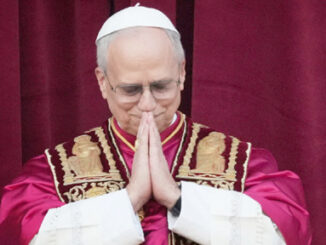
    US Cardinal Robert Prevost was elected the new leader of the Roman Catholic Church on Thursday, May 8, taking the name Pope Leo XIV. After serving as missionary and archbishop in Peru, Prevost presided over one of the most revolutionary reforms of Pope Francis’s pontificate, for the first time appointing women to an influential body involved in the nomination of bishops.

    Robert Francis Prevost – who has chosen the papal name Leo XIV – may not be the Latin American Jesuit wildcard that his predecessor, Pope Francis, was, but his election is similarly historic.
    In the figure of the 69-year-old former head of the Augustinian order, the Roman Catholic church has its very first US leader. Until Thursday evening, the idea of the fisherman’s ring being slipped on to a North American hand was seen as a fairly distant possibility. The Vatican’s longstanding opposition to a US pope stemmed largely from the optics of having a pontiff from a political superpower and a country with such a hegemonic cultural and secular global influence.
    But all that changed after a short conclave that chose a man who had been a cardinal for only a little more than two years. While his appointment is likely to be welcomed by progressive factions within the church, it was probably not the news that some of his more conservative, Trump-aligned US brother cardinals had been hoping for.
    Despite being born in Chicago on 14 September 1955, Prevost has never been a typical US Catholic cleric – not least because he also holds Peruvian citizenship. After giving his solemn vows in 1981 and studying in Rome, he was sent to a mission in Peru. He would go on to spend many years there as judicial vicar and as a professor of canon, patristic and moral law at a seminary in Peru’s third city, Trujillo, before being appointed bishop of another northern city, Chiclayo, in November 2014.
    Those who know him from his time in Peru – where the church has often been beset by tensions between leftwing proponents of liberation theology and uber-traditionalist Catholics – recall a calm and grounded leader who would sit down to breakfast with his fellow priests after morning prayers.
    “No matter how many problems he has, he maintains good humour and joy,” the Rev Fidel Purisaca Vigil, the communications director for Prevost’s old diocese in Chiclayo, told the Associated Press.
    As a recent profile in Crux noted, Prevost acquired a reputation over the years as a hard-working and “moderating influence” among Peru’s ideologically disparate bishops, a talent that will prove invaluable during his papacy.
    In January 2023, Francis – who himself had to manage competing theological strains during his time as leader of the Jesuits in the turbulent, violent and oppressive Argentina of the 1970s – made Prevost a cardinal.
    Until Thursday, May 8, evening, Prevost’s most high-profile Vatican roles had been as president of the Pontifical Commission for Latin America and as prefect of the Dicastery for Bishops, which oversees the selection of new bishops from around the world.

    His strong connection to Latin America, combined with his more recent roles at the top of the church, may have gone a long way in endearing him to those who would not usually countenance the idea of a US pope.
    Prevost’s recent CV also makes clear his proximity to Francis and he will doubtless be seen by many as a surprise, if welcome, kind of continuity candidate.
    Donald Trump, who hailed the appointment, calling the arrival of the first US pope “a Great Honor for our Country”, seldom saw eye-to-eye with Francis. The late pope was forthright in his criticism of Trump’s border and immigration policies – not least his desire to wall off Mexico.
    “A person who thinks only about building walls, wherever they may be, and not of building bridges, is not Christian,” Francis said in February 2016. “This is not the gospel.”
    The blunt rebuke did not land well with Trump. “For a religious leader to question a person’s faith is disgraceful,” he said in response. “No leader, especially a religious leader, has the right to question another man’s religion or faith.”
    Whether Trump is right to be looking forward to meeting Pope Leo XIV – “it will be a very meaningful moment!” – will depend on the degree to which the new bishop of Rome emulates his predecessor.
    Towards the beginning of his widely admired papacy, Francis insisted that the church should not be remote, nor cloistered, nor complacent in its relationship with the world.
    “‘Mere administration’ can no longer be enough,” he wrote. “Throughout the world, let us be ‘permanently in a state of mission’.” Francis was adamant that the church he led for 12 years would be a church for “todos, todos, todos” (everyone, everyone, everyone). He also said he preferred a church “which is bruised, hurting and dirty because it has been out on the streets, rather than a church which is unhealthy from being confined and from clinging to its own security”.
    More than a decade on, the streets – from Gaza and Ukraine to Sudan and Kashmir – have only become more bloody and more violent. As he addressed the world from the loggia of St Peter’s Basilica on Thursday, May 8, Pope Leo XIV’s first words were: “Peace be with you.”
    His subsequent message, stressing the importance of peace, dialogue and missionary evangelisation, befitted the former leader of a mendicant order dedicated to poverty, service and pastoral work. But in his plea for peace to “enter your hearts, to reach your families and all people, wherever they are”, there was also, perhaps, more than a trace of his much-loved and much-missed predecessor. Source: The Guardian

  • Three Indian-origin persons found dead after a shooting in Newcastle City

    Three Indian-origin persons found dead after a shooting in Newcastle City

    SEATTLE (TIP): Three Indian-origin people were found dead after a shooting at a home in the US state of Washington, according to local media reports.
    The incident took place on April 24 in Newcastle City.
    The dead were identified as Harshavardhana Kikkeri (44), Shwetha Panyam (41) and Dhruva Kikkeri (14), The Seattle Times reported on Tuesday.
    While the deaths of Shwetha and Dhruva were ruled as homicide by the police, Harshavardhana died by suicide, the report quoted the King County medical examiner’s office as saying.
    Neighbors told the local media that a young family lived in the home where the shooting took place.
    On the night of the shooting, authorities were called to the townhouse on 129th Street after receiving a 911 call. A television station said its crew saw a child being escorted from the home and comforted by investigators.
    Unconfirmed reports said Harshavardhana, alongside Shwetha, was the owner of an India-based AI tech company Holoworld.
    According to the company’s website, it was founded in 2018 by the two, with Harshavardhana serving as the CEO and CTO, and Shwetha as president.
    King County sheriff’s spokesperson Brandyn Hull said she could not comment on whether the case was believed to be a murder-suicide.
    “We understand many questions remain about the events that took place in Newcastle on April 24,” Hull was quoted as saying by Renton Reporter. “An investigation such as this takes time, and our detectives are working diligently to try and piece together what led to this incident. Until this work concludes, the Sheriff’s Office won’t have any further updates.”  No sign of the deaths’ motive or relationships among the deceased was released by the Sheriff’s Office, according to the report

  • Indian-origin UK based philanthropist  sets up four hospitals in Punjab

    Indian-origin UK based philanthropist sets up four hospitals in Punjab

    LONDON/JALANDHAR (TIP): Kulwant S Dhaliwal (67), a former cloth merchant in the UK, turned philanthropist after the tragic loss of his mother and father-in-law to cancer. This personal loss shifted his life’s mission towards the early detection of cancer and providing treatment to underprivileged patients.
    Nearly two decades ago, Dhaliwal retired early from his business to devote himself to his humanitarian work. He now spends more time in Punjab than in the UK, overseeing projects run by his NGO, the World Cancer Care Society. His efforts have led to the establishment of three cancer hospitals and one eye hospital across the state. Additionally, his NGO organizes free cancer diagnostic camps in almost 11,000 of Punjab’s 12,700 villages. He also operates over 18 mobile units equipped with mammography, cancer screening equipment, diabetes and blood pressure testing kits, ECGs, eye checkups and other medical tools. Through his NGO, Dhaliwal also runs a free medical langar, providing medicines to needy patients.
    The first cancer hospital was opened at Suchi Pind in Jalandhar, where it has been operating for over ten years. “I opened another hospital in Nanaksar near Ludhiana and construction is underway for a new hospital in Anandpur Sahib, which we expect to complete by the end of this year,” Dhaliwal shared. His eye hospital is in Lohian town, Jalandhar. Since January 1 of this year, through his eye camps, Dhaliwal’s team has screened over 100,000 patients and distributed many pairs of high-quality spectacles. Additionally, he has organized major health check-up camps in Mansa, Sangrur and Barnala, with support from large organizations like Trident. These camps are not limited to Punjab, as Dhaliwal’s team has also extended their outreach to parts of Uttar Pradesh, Rajasthan, Haryana and Himachal Pradesh.
    Dhaliwal’s exceptional philanthropic contributions were recently recognized by Punjab Governor Gulab Chand Kataria, who honored him for his charitable work. Speaking about his mission, Dhaliwal stated, “I’m fulfilling my mother’s wish to work for the cause of cancer. She was diagnosed too late to be saved and I am committed to raising awareness about early cancer symptoms to help others avoid the same fate. Wherever I go, I urge women to ensure they eat home-cooked food, as there is minimal exposure to pesticides and fertilizers. Pure food is essential.” He added that the Global Punjabi Association, of which he is an active member, has also been a major supporter of his cause.
    Dhaliwal, originally from Moga, studied at DAV College in Jalandhar and spent much of his early life in the city. He chose to establish his largest hospital setup near Jalandhar, in recognition of his roots and the community that supported him.

  • Indian-origin Dubai-based billionaire Balvinder Singh Sahni jailed for money laundering

    Indian-origin Dubai-based billionaire Balvinder Singh Sahni jailed for money laundering

    DUBAI (TIP): Indian businessman Balvinder Singh Sahni, also known as Abu Sabah, has been sentenced to five years in prison for money laundering and other financial crimes. A court in Dubai also fined him dinar 500,000 (around Rs 1.15 crore) and ordered him to give up assets worth dinar 150 million (around Rs 344 crore). After serving his jail term, he will be deported from the UAE.
    Sahni, 53, is the founder and chairman of the Raj Sahni Group (RSG), a real estate company with projects in the UAE, US, India, and other countries. His firm owns several properties in Dubai, including residential buildings, office spaces, and a luxury hotel.
    Well-known in Dubai’s elite circles, Sahni is famous for his luxury cars and flashy lifestyle. In 2016, he made headlines when he paid dinar 33 million for the car number plate “D5” for one of his Rolls-Royces. The case against Sahni and 33 others, including his son, began in 2024, according to reports in local media.
    Investigators found they were running a network of fake companies and using fake invoices to move money illegally. Some of the accused were tried in absentia. Others received lighter sentences, including one-year jail terms or fines. Despite his fame and charitable work in India, Sahni now faces a major fall from grace due to the serious financial crimes.

  • Growing Concerns Over Indian Parents Sending Children Unaccompanied to US Borders

    Growing Concerns Over Indian Parents Sending Children Unaccompanied to US Borders

    TUSCAN, AZ (TIP): A growing and deeply troubling trend is unfolding along the United States’ southern and northern borders: Indian families, particularly from Gujarat, are sending their minor children alone to U.S. border crossings, often with nothing more than a handwritten chit bearing contact details. The hope, according to officials and media reports, is that once inside the system, these children will pave the way for their parents to obtain legal status in the U.S.

    This alarming phenomenon has seen a sharp increase in recent years. According to a media report, between 2020 and 2023, the number of unaccompanied Indian children apprehended at U.S. borders rose by a staggering 233 percent. In the fiscal year 2023 alone, U.S. border authorities took 730 Indian minors into custody, most between the ages of 10 and 14. Some were as young as four. Nearly 1,700 such minors were intercepted between 2022 and November 2024.

    These children often arrive at the U.S.-Mexico border—popularly known as the “Donkey route”—though some are also encountered along the U.S.-Canada border. In many cases, they are left intentionally by smugglers or other migrants traveling with them, while the child carries only a piece of paper with a relative’s phone number.
    Human smuggling networks in Gujarat, particularly in Mehsana and Gandhinagar districts, are believed to be orchestrating many of these journeys. Families who are already in the U.S. illegally sometimes pay these smugglers to bring their children across, betting on the assumption that the U.S. government will place the minors in their custody. Once reunited, these parents may then attempt to adjust their own immigration status.
    In some of the more deceptive cases, unrelated children are paired with adults pretending to be their guardians. Once the border is crossed, the children are abandoned, creating a false narrative of a family unit in transit.
    The mental and physical toll on these children is immense. After being apprehended, they are placed in detention facilities with limited access to healthcare and legal assistance. According to another report, many suffer long-term psychological effects from the trauma of separation and the perilous journey.

    Legal experts and immigration advocates warn that this growing trend reveals the desperation of Indian families facing limited options for lawful migration. They are calling for stronger international cooperation to dismantle smuggling networks and for reforms that create safer, legal avenues for immigration.
    When a child who is not accompanied by a parent or legal guardian is apprehended by immigration authorities, the child is transferred to the care and custody of the Office of Refugee Resettlement (ORR).  Federal law requires that ORR feed, shelter, and provide medical care for unaccompanied alien children until it is able to release them to safe settings with sponsors (usually family members), while they await immigration proceedings. These sponsors live in many states.
    Sponsors are adults who are suitable to provide for the child’s physical and mental well-being and have not engaged in any activity that would indicate a potential risk to the child. All sponsors must pass a background check. The sponsor must agree to ensure the child’s presence at all future immigration proceedings. They also must agree to ensure the minor reports to ICE for removal from the United States if an immigration judge issues a removal order or voluntary departure order.
    (Source: PTI)


  • Indian American plastic surgeon helps remove spinal tumor through eye socket

    Indian American plastic surgeon helps remove spinal tumor through eye socket

    MARYLAND (TIP) : In a first-of-its-kind surgery, a team including an Indian American plastic surgeon has successfully removed a rare cancerous tumor wrapped around the spine and spinal cord of a 19-year-old woman – through her eye socket (orbit).
    Although surgeons use a “transorbital” approach to access tumors in the brain and sinuses, this is the first time it has ever been used to remove a spinal tumor, according to a University of Maryland Medical Center press release.
    In this case, the young woman had a slow-growing developmental bone tumor called a chordoma in her spine. Only about 300 chordomas are diagnosed in the United States every year.
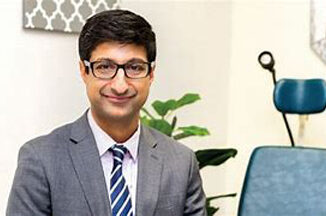
    The patient, who has no evidence of cancer, required multiple surgeries and received extraordinarily complex care from a multidisciplinary team led by Mohamed A.M. Labib, a UMMC neurosurgeon and Assistant Professor of Neurosurgery at the University of Maryland School of Medicine (UMSOM). The team included Indian American facial plastic and reconstructive surgeon, Kalpesh T. Vakharia,
    Dr. Labib developed the novel surgical plan to remove the spinal tumor after exploring the transorbital approach in the Department of Neurosurgery’s Skull Base 360° Laboratory using cadavers. He called the eye socket, “the third nostril,” in preliminary research looking at new ways to access hard-to-reach skull base tumors published in the Journal of Neurosurgery in October 2023.
    In addition to the three surgeries last spring, the patient, Karla Flores, now 20, of Rosedale, MD, was treated with proton radiation therapy to destroy any lingering cancer cells. A neurosurgeon also fused the C1 and C2 vertebrae in her neck to stabilize the spine.
    In other transorbital procedures, surgeons have made incisions next to or above the eye. In this case, Dr. Labib worked with Dr. Vakharia, who carefully cut through the conjunctiva, the transparent membrane protecting the eye, inside the lower eyelid without disturbing the eye. That process also involved making an incision inside the patient’s mouth. Dr. Vakharia removed the bottom of the eye socket, and a portion of the cheek bone, to carve out a large enough pathway for surgeons to thread surgical tools into the sinus to reach the cervical spine.
    “We wanted to develop a surgical plan where there would be no external scars and it would be impossible to tell that the patient even had surgery,” said Dr. Vakharia, Chief of Facial Plastic and Reconstructive Surgery in the Department of Otorhinolaryngology-Head and Neck Surgery and Director of the Facial Nerve Center at UMMC and an Associate Professor of Otorhinolaryngology-Head and Neck Surgery at UMSOM.
    Working in tandem with Dr. Andrea M. Hebert, a head and neck surgeon and an Associate Professor of Otorhinolaryngology-Head and Neck Surgery at UMSOM, Dr. Labib was able to drill through bone in the vertebrae to access the tumor and painstakingly dissect it, using a variety of surgical instruments.
    After the tumor was removed, Dr. Vakharia rebuilt the bottom of the eye socket using a titanium plate and rebuilt the cheek with bone from the patient’s hip. He said of the experience, “It was amazing to have had the opportunity to be part of surgery that had never been done before.”

  • Indian American entrepreneur Tejpaul Bhatia becomes Axiom Space CEO

    Indian American entrepreneur Tejpaul Bhatia becomes Axiom Space CEO

    SAN FRANCISCO (TIP): Tejpaul Bhatia, a former Indian American entrepreneur and Google executive, has been appointed as Chief Executive Officer of Axiom Space, a leader in commercial space infrastructure and human spaceflight services.
    Bhatia takes over after serving as Chief Revenue Officer for the company over the past four years and replaces previous CEO, executive chairman, and co-founder Dr. Kam Ghaffarian.
    Ghaffarian will continue as executive chairman of Axiom Space.
    Since joining Axiom Space in 2021, Bhatia has pioneered landmark deals and missions, notably leading the industry’s first-ever sovereign government purchases of commercial human spaceflight missions to the International Space Station, including the groundbreaking Axiom Mission-1 (Ax-1) through Axiom Mission-4 (Ax-4), according to a media release.
    He secured over $1 billion in contracts and oversaw Axiom Space’s four groundbreaking human spaceflight missions, transforming spaceflight into a repeatable and scalable commercial offering.
    He also oversaw high-impact, cross-industry collaborations, such as partnering with Prada on NASA-awarded, next-generation spacesuits for the Artemis III lunar mission, and with Nokia to integrate high-speed cellular connectivity into the lunar exploration spacesuits — establishing Axiom Space’s position as a leading innovator and commercial integrator for human space exploration.
    “I’ve been inspired by space exploration since childhood, and leading Axiom Space at this critical inflection point in human spaceflight is the realization of a lifelong ambition,” said Bhatia. “We are accelerating our investment in next-generation technologies — spacesuits, orbital infrastructure, and microgravity research and manufacturing — and we’re actively seeking passionate, visionary engineers, technologists, and entrepreneurs who want to help build humanity’s future in space.”
    As the commercial space industry’s only full-service orbital mission provider, Axiom Space helps nations and organizations build human spaceflight programs, develop astronaut selection programs, and provide expertise to expand the international community of space explorers to a larger and more diverse representation of humanity.
    “Axiom Space was founded to expand the boundaries of what’s possible in space, and Tej has been instrumental in turning that vision into a reality,” said Ghaffarian. “His blend of entrepreneurial drive, global perspective, and deep commitment to our mission will ensure Axiom Space’s leadership at the forefront of the rapidly growing commercial space market.”
    Bhatia brings more than two decades of experience as a seasoned technology and business leader and founder of three investor-backed startups with two acquisitions under his belt.
    He joined Axiom Space from Google, where he led strategic narrative and ecosystem management for Google Cloud, engaging Fortune 100 executives, venture capital firms, and startup founders, supporting over $4 billion in sales pipeline.
    As a founder and executive, he led startups Explain Everything, Chatwala, and Kaptur, and was an early pioneer in modern-day video streaming at ESPN, where he spearheaded the company’s international digital expansion across the United States, Mexico, Brazil, and Europe.
    Bhatia’s appointment comes at a critical inflection point as the space industry transitions from government-owned assets to commercial platforms, according to the release. This shift is unlocking unprecedented market demand that Axiom Space is uniquely positioned to capture through its unmatched relationships with sovereign and commercial customers.
    Under his leadership, Axiom Space will accelerate delivery of the world’s first commercial, human-rated space station, leveraging its exclusive authorization to connect its first module to the International Space Station in 2027.
    This next-generation orbital platform — Axiom Station — fosters groundbreaking innovation and research in microgravity, and cultivates the vibrant, global space economy of tomorrow, according to the release.

  • FDA names Indian American hematologist-oncologist Dr. Vinay Prasad as its new vaccine chief

    FDA names Indian American hematologist-oncologist Dr. Vinay Prasad as its new vaccine chief

    WASHINGTON, D.C. (TIP): The Food and Drug Administration (FDA) has named Indian American hematologist-oncologist Dr. Vinay Prasad, an outspoken critic of the agency’s decision to approve Covid shots in children, as its new vaccine chief.

    The FDA commissioner, Dr. Marty Makary, announced Tuesday Dr. Prasad would lead the Center for Biologics Evaluation and Research (CBER), the branch responsible for vaccine approvals and other biological products.
    A professor at the University of California, San Francisco, in Department of Epidemiology and Biostatistics, he will replace Dr. Peter Marks. Marks, who assisted in leading Operation Warp Speed during the Covid-19 pandemic, departed the FDA in March. The role has been occupied by an acting director since then.
    “Dr. Prasad brings the kind of scientific rigor, independence, and transparency we need at CBER — a significant step forward,” said Makary in a post on X.
    Dr. Prasad is well known for his strong views, especially his criticism of how the FDA handled Covid-19 vaccine boosters. He opposed the emergency use authorization of Covid-19 boosters, claiming there was not enough solid data from randomized clinical trials.
    In a 2021 blog post and an accompanying video, Prasad suggested the national response to Covid might bring on the collapse of democracy, invoking the rise of Hitler and the Third Reich in Germany.
    On the blog that year, Prasad downplayed the anti-vaccine activism of Robert F. Kennedy Jr. — now the secretary of health and human services — specifically his role in a 2019 measles outbreak in
    In 2024, he publicly criticized his predecessor, Dr. Marks, saying he was “either incompetent or corrupt to authorize a booster without clinical, randomized data.”
    After Marks left the FDA, Prasad didn’t hold back his opinion. “You could replace Peter Marks with a bobblehead doll that just stamps approval, and you would have the same outcome at FDA with lower administrative fees,” he posted online. He also called Marks “one of the most dangerous, pro-pharma regulators of the 21st century” and a “mediocre academic.”
    Prasad has also denounced the continued use of Covid vaccines in young children, calling it “absurd” and said changes in the virus strain may affect how well the vaccines work and how safe they are.

  • Celebrating their 75th anniversary in Canadian politics, East Indians send 25 of their nominees to Parliament

    Celebrating their 75th anniversary in Canadian politics, East Indians send 25 of their nominees to Parliament

    Prabhjot Paul Singh

    The rapidly growing East Indian community, as the Canadian regime of the early 20th century used to describe it, is rejoicing at its overwhelming success in the just-concluded federal elections.

    As almost every fourth of its candidates—25 of 96—was declared successful in the election to the 45th House of Commons, the community could not have asked for more in a country where its population is less than 4 per cent of the total 40 million.

    Riding a wave of political successes, both for the ruling Liberals and the main Opposition, the Conservatives, the community lost its sole national party leader when the New Democratic Party chief, Jagmeet Singh, was defeated in the Burnaby riding in British Columbia.

    Quick to admit his defeat, Jagmeet Singh has offered to step down from the leadership of the party. Another politician of the East Indian clan to lose the election has been federal minister Kamal Khera. She lost to a compatriot Conservative candidate, Amarjeet Gill from Brampton West.

    Since 1993, when the East Indians sent three of their nominees – Gurbax Singh Malhi, Herb Dhaliwal and Jag Bhaduria (all Liberals) – the community has never looked back, taking its strength to a record quarter century mark in the 45th House of Commons. These 25 East Indian MPs are almost equally divided between two major parties – the ruling Liberals and the main Opposition, the Conservatives. Liberals have 14 and the Conservatives remaining 11 in a House of 343. Their sole representative in the NDP – Jagmeet Singh – no more sits in the House of Commons.

    Never before have Conservatives had so many East Indian MPs.

    Interestingly, the Canadian voters have elected six Sikh MPs with the same surname – Gill. All of them belong to the Conservatives. They are Parm Gill, Harbinder Gill, Dalwinder Gill, Amanpreet Gill, Sukhman Gill and Amarjeet Gill.

    Incidentally, one of two Amarjeets – Amarjeet Sohi, a former Cabinet Minister in Justin Trudeau’s government – lost while trying to stage a comeback in federal politics. He is currently the Mayor of Edmonton. He lost to an East Indian and a Sikh candidate, Jagsharan Singh Mahal.

    Other former MP, Parm Gill, however, succeeded in re-entering the House of Commons from Ontario. He had been a minister in the previous Stephen Harper Conservative government.

    The results of the April 28 polls have shown that the ruling Liberal party, led by its new leader Mark Carney, will be four members short of a clear majority as it could win only 168 seats against 153 it had in the last House.

    The Conservatives performed better under their leader, Pierre Poilievre, by improving their tally from 120 in the previous House to 144, but had the misfortune of losing their leader from a riding – Carlton –  he had been representing for a long time.

    NDP led by Jagmeet Singh performed miserably as it could retain only 7 of its 24 seats. Jagmeet was among the losers. The third major political outfit, Bloc Québécois, too, performed below its expectations and ended with 23 seats, 10 short of its strength of 33 in the previous House.

    Though both the ruling Liberals (15) and the main Opposition Conservatives (24) gained numbers, neither could clear the majority mark, thus leaving the country to its third consecutive government. Though the first two minority Liberal governments in 2019 and again in 2021 were led by Justin Trudeau, this time a seasoned banker and a newcomer to electoral politics, Mark Carney, spearheaded the party campaign amidst threats of tariff war and repeated mocking by the US President Donald Trump to make Canada 51st state of his country.

    In 2004, when Liberals led a minority government with 135 members in a House of 301, things did not change much except for a majority government each by the Conservatives ( Stephen Harper in 2011 with 166 of 308 seats) and the Liberals ( Justin Trudeau in 2015 with 184 seats – the highest by any party in the current centennial). All the remaining – 2006 Conservatives,  2008 Conservatives,2019 Liberals and 2021 Liberals – were minority governments.

    Unlike many other democracies, Canada has successfully demonstrated over the years the concept and success of minority government, though none of these has completed its full term in office. The last Liberal government, first led by Justin Trudeau and then Mark Carney, survived a couple of no-confidence motions to survive for nearly three years, mainly due to an understanding with one of the Opposition parties – the NDP.

    How Mark Carney now manages a confidence vote on the Throne speech and financial bills would be an issue of animated interest. The defeated leader of the Conservatives, Pierre Poilievre, says that his party would continue to confront the minority government on issues of Canadians’ interest.

    How long the new Mark Carney government lasts is anybody’s guess. For the time being, the strong East Indian community is feeling relieved for its increased presence in the House of Commons and hopes that toxic issues like immigration, international students, and above all, relations with India, would be taken up on a priority basis for a lasting peace.

    The community would also be watching with tremendous interest as how many of its 14 Liberal MPs get represented in the new Cabinet of Mark Carney, with names of Anita Anand, Bardish Chagger, Maninder Sidhu, Randeep Serai,  and Anju Dhillon running high on the list.

    Here is the list of the  East Indians elected to sit in the 45th House of Commons:

    Liberal Party (14 MPs)

    1. Anita Anand – Oakville East / Ontario

    Re-elected. Former Defense and Treasury Board Minister. Academic and legal scholar with a University of Toronto background.

    1. Bardish Chagger – Waterloo / Ontario

    Fourth-term MP. Former Minister for Diversity, House Leader, and Small Business. Strong community credentials in Kitchener-Waterloo.

    1. Iqwinder Gaheer – Mississauga–Malton / Ontario

    Second-term MP. Harvard Law graduate; legal professional with a business background from the Schulich School of Business.

    1. Ruby Sahota – Brampton North / Ontario

    Fourth-term MP. Former Chief Government Whip and Minister. Lawyer by training; active in women’s and multicultural advocacy.

    1. Maninder Sidhu – Brampton East / Ontario

    Third-term MP. Entrepreneur and founder of The Kindness Movement Charity. Focused on education and international development.

    1. Sonia Sidhu – Brampton South / Ontario

    Worked in the healthcare field as a diabetes educator and research coordinator.

    1. Amandeep Sodhi – Brampton Centre / Ontario

    First-time MP. Limited background details available; emerged as a grassroots community choice.

    1. Param Bains – Richmond East–Steveston / British Columbia

    Second-term MP focus on youth engagement.

    1. Sukh Dhaliwal – Surrey Newton / British Columbia

    Re-elected. Veteran MP and businessman. Known for strong links with both Indian and Canadian diaspora groups.

    1. Gurbax Saini – Fleetwood–Port Kells / British Columbia

    First-time MP. Background yet to be fully detailed; described as a rising Liberal face in British Columbia

    1. Randeep Sarai – Surrey Centre / British Columbia

    Fourth-term MP. Lawyer, entrepreneur, and Chair of the Justice Committee. Longstanding civic involvement.

    1. Anju Dhillon – Dorval–Lachine / Quebec

    Re-elected. Among the early Punjabi women in federal politics. Legal and advocacy background.

    1. Gary Anandasangaree – Scarborough-Guildwood- Rogue Park

    Re-elected, former Minister

    1. Juanita Nathan – Pickering-Brooklyn

    First-time MP

    Conservative Party (11 MPs)

    1. Amarjeet Gill – Brampton West / Ontario

    First-time MP. Defeated sitting minister Kamal Khera. Known for grassroots organizing.

    1. Shuvaloy Majumdar – Calgary-Heritage

    Second time MP

    1. Harbinder Gill – Windsor West / Ontario

    First-time MP. Local economic campaigner with a focus on jobs and manufacturing revival.

    1. Parm Gill – Milton East / Ontario

    Returned to federal Parliament after serving provincially. Former Ontario minister. Experienced legislator.

    1. Arpan Khanna – Oxford / Ontario

    Second-term MP. First elected in a 2023 by-election. Focused on youth participation and infrastructure.

    1. Amanpreet Gill – Calgary Skyview / Alberta

    First-time MP. Background not publicly documented at the time of the election.

    1. Dalwinder Gill – Calgary McKnight / Alberta

    First-time MP. Veteran realtor and community activist. Known for neighborhood-level engagement.

    1. Jasraj Hallan – Calgary East / Alberta

    Re-elected. Advocate for affordable housing. Prominent voice on economic policy within the party.

    1. Jagsharan Mahal – Edmonton Southeast / Alberta

    First-time MP. Defeated former mayor Amarjeet Sohi. Known for education and interfaith outreach.

    1. Tim Uppal – Edmonton Gateway / Alberta

    Re-elected. Deputy Leader of the Conservative Party. Former Harper cabinet minister. MBA holder from Ivey.

    1. Sukhman Gill – Abbotsford South–Langley / British Columbia

    First-time MP. Farmer and agriculture advocate. Strong rural base and ties to Moga, Punjab.

     (Prabhjot Singh is a Toronto-based award-winning independent journalist. He

    was celebrated by AIPS, the international body of sports journalists, for

    covering ten Olympics, at its centennial celebrations held at UNESCO Centre

    in Paris during the 2024 Olympic Games. Besides, he has written extensively

    about business and the financial markets, the health industry, the public and

    private sectors, and aviation. He has worked as a political reporter besides

    covering Sikh and Punjab politics. He is particularly interested in Indian

    Diaspora and Sikh Diaspora in particular. His work has also appeared in

    various international and national newspapers, magazines, and journals. He

    can be reached at prabhjot416@gmail.com)

  • ALVIN AILEY DANCE COMPANY MAKES NATIONAL TOUR FINALE CELEBRATING MOTHER’S DAY WEEKEND AT NJPAC

    • By Mabel Pais

    ALVIN AILEY AMERICAN DANCE THEATER (alvinailey.org), one of the world’s most popular dance companies, will return to the New Jersey Performing Arts Center on Mother’s Day Weekend, Friday-Sunday, May 9-11, 2025, as the finale on its 2025 national tour.

    Judith Jamison in John Butler’s Facets (Credit: Jack Mitchell)

    This season the company celebrates the life and legacy of Artistic Director Emerita Judith Jamison (1943-2024). Led by Interim Artistic Director Matthew Rushing, the passionate spirit and extraordinary technique of Ailey’s dancers will be showcased in three exciting performances featuring world premieres, new productions, repertory favorites, and Ailey classics.

    Other NJPAC activities include Ailey Day — a free community day of dance classes (May 3), a Schooltime Performance for young students (May 9), a special panel discussion paying homage to Judith Jamison (May 9) and this summer, AileyCamp Newark returns July – August, providing students ages 11-14 a life-changing experience through dance and the arts and culminates with a final performance (August 6).

    Alvin Ailey Dancers (Credit: Courtesy, njpac.org)

    Ailey’s 32 dancers include two New Jersey natives: Montclair’s Chalvar Monteiro (chalvarmonteiro.com) and Newark’s Christopher Taylor (ailey.org/people/christopher-taylor); and three AileyCamp alumni: Solomon Dumas, De’Anthony Vaughan and Taylor, who attended the inaugural AileyCamp Newark in 2011.

    PROGRAM

    This year’s exciting world premieres include: Sacred Songs by Matthew Rushing, former AILEY dancers Jamar Roberts’s Al-Andalus Blues and Hope Boykin’s Finding Free, and Many Angels — the first premiere for the Company by Lar Lubovitch.

    ‘Sacred Songs’ features music used in the original 1960 premiere of Alvin Ailey’s seminal ‘Revelations’ but later omitted, resurrecting and reimaging those spirituals—with the collaboration of creative associate and musical director Du’Bois A’Keen—as an offering to our present need for lamentation, faith, and joy. To coincide with the tour, A’Keen has released a ‘Sacred Songs Suite’ album featuring his brilliant team of musicians in a live recording of the soundtrack, along with some bonus songs. The spirituals, influenced by the sounds of jazz, West African drums, gospel, hip hop, and calypso, are available to purchase as an album or individually and on all streaming platforms for free.

    ‘Al-Andalus Blues’ is an abstract ensemble piece that journeys back in time to the  golden age of Al-Andalus, evoking the northern African Moors who flourished in the south of present-day Spain prior to the Christian Reconquista. ‘Finding Free’ is an insightful collaboration with pianist Matthew Whitaker’s original score, examining the challenges and restrictions throughout life’s peaks and valleys. ‘Many Angels’ features Lubovitch’s renowned lush choreography and musicality set to Gustav Mahler’s Symphony No. 5, meditating on the question by 13th century theologian St. Thomas Aquinas ‘How many angels can dance on the head of a pin?’

    Additional productions include a special 25th anniversary production of Ronald K. Brown’s spellbinding ‘Grace.’ Set to Duke Ellington’s classic ‘Come Sunday,’ Peven Everett’s hit ‘Gabriel,’ and the irresistible pulse of Fela Kuti’s Afro-Pop, ‘Grace’ depicts individuals on a journey to the promised land, expanding from a single angel-like figure in white to the fireball intensity of 12 powerful dancers. In addition to ‘Grace,’ another favorite returning to the AILEY stage is Elisa Monte’s ‘Treading,’ a sculptural, mesmerizing duet featuring fluid, intricate movements that combine with Steve Reich’s evocative music to create an aura of mystery and sensuality.

    Newark audiences will be inspired by the power of Alvin Ailey’s must-see American masterpiece ‘Revelations,’ acclaimed around the world for sending hearts soaring and lifting audiences to their feet with its perfect blend of reverent grace and spiritual elation. Since its debut in 1960, ‘Revelations’ has been moving audiences with its powerful storytelling and soul-stirring music, evoking timeless themes of determination, hope, and transcendence. An intimate reflection of Mr. Ailey’s childhood memories of growing up in the South and attending services at Mount Olive Baptist Church in Texas, ‘Revelations’ pays homage to the rich cultural heritage of the African American community and explores the emotional spectrum of the human condition.

    The compelling story of the life, work, and legacy of Alvin Ailey is also the subject of ‘Portrait of Ailey,’ a new eight-part documentary series available for free on PBS LearningMedia. Created by Ailey II Artistic Director Emerita Sylvia Waters, ‘Portrait of Ailey’ uses rare historical film and still images as well as contemporary footage to create a sweeping narrative of Mr. Ailey as a performer, choreographer, celebrity, teacher, social activist, arts advocate, and the creator of an enduring institution. All eight chapters are currently available online, including a spotlight on Mr. Ailey’s muse, Judith Jamison (‘The Whole Dancer’ – ny.pbslearningmedia.org/resource/alvin-ailey-the-whole-dancer-video/portrait-of-ailey – chapter).

    Fri 5.09 @ 8:00 p.m. Public Performance (pre-show panel discussion @ 6:00pm)

    Grace / Finding Free / Cry (special excerpt) / Revelations

    Sat 5.10 @ 8:00 p.m. Public Performance

    Sacred Songs / Treading / Many Angels / Revelations

    Sun 5.11 @ 3:00 p.m. Public Performance

    Grace / Finding Free / Cry (special excerpt) / Revelations

    Additional Offerings:

    Sat 5.03 @ 10:00 a.m.–2:00 p.m. Ailey Day

    A favorite annual event for families in the Newark area, this free program offers dance classes for children and adults taught by professional artists, including Alvin Ailey American Dance Theater alumni, Ailey Arts In Education Teaching Artists and students, and more.

    Fri 5.09 @ 12:30 p.m. SchoolTime Performance

    Open to schools only (not the general public)

    Alvin Ailey American Dance Theater’s school-time performance introduces area students to the magic of Alvin Ailey’s must-see masterpiece ‘Revelations.’ The hour-long educational experience, moderated by one of Ailey’s dancers, also features excerpts of Ailey classics and an insider’s look behind-the-scenes to inspire young people.

    Fri 5.09 @ 6:00 p.m. Panel Discussion in Tribute to Judith Jamison

    A special pre-performance event paying homage to Judith Jamison with panelists to be announced soon. Available free to the evening’s performance ticket holders.

    Wed 8.06 @ 7:00 p.m. AileyCamp Newark Performance

    A unique summer day camp program for middle school students ages 11-14, AileyCamp will operate in 10 cities across the country, including Newark (July 1 – August 8; now accepting applications – ailey.org). In partnership with AILEY Arts In Education & Community Programs, NJPAC founded this six-week program for Newark kids in 2011. More than a dance program, AileyCamp provides young people a safe space to develop their self-esteem, creative expression, and critical thinking skills, ultimately helping them reach their unlimited potential. The 2025 summer camp culminates with a special performance by the students on the NJPAC stage on Wednesday, August 6 at 7pm.

    **Program subject to change.**

    TICKETS

    Tickets vary – FREE to $94. To purchase tickets, visit NJPAC.org/dance or the box office at One Center Street, Newark, NJ or call 1.888.GO.NJPAC (466.5722).

    Alvin Ailey American Dance Theater

    Alvin Ailey American Dance Theater (ailey.org), recognized by U.S. Congressional resolution as a vital American “Cultural Ambassador to the World,” grew from a now-fabled March 1958 performance in New York that changed forever the perception of American dance. Forged during a pivotal moment in the civil rights movement, the Company was established to uplift the African American experience while transcending boundaries of race, faith, and nationality with its universal humanity. Founded by Alvin Ailey, the posthumous recipient of the Presidential Medal of Freedom — the nation’s highest civilian honor. Before his untimely death in 1989, Mr. Ailey named Judith Jamison as his successor, and for 21 years she led the Company to unprecedented success. For more information, visit ailey.org.

    New Jersey Performing Arts Center (NJPAC)

    Learn more at NJPAC.org

    (Mabel Pais writes on The Arts and Entertainment, Education, Business, Social Issues, Health and Wellness, Spirituality, and Cuisine)

  • The Trump administration is considering suspending habeas corpus: Miller

    The Trump administration is considering suspending habeas corpus: Miller

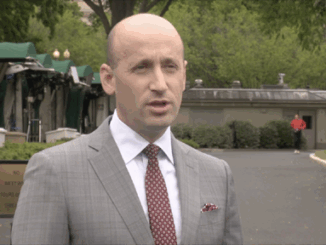
    WASHINGTON, D.C. (TIP): The Trump administration is looking to suspend habeas corpus to expedite the removal of migrants who are not legally in the country without giving them the right to challenge detention, according to White House Deputy Chief of Staff Stephen Miller.

    Habeas corpus is a legal procedure that allows people in custody to challenge the government’s decision to detain them before a court or judge, ensuring individuals cannot be imprisoned without due process of law.

    Miller’s comment echoes efforts by the administration to use the current state of illegal border crossings to claim there is an invasion.

    “Well, the Constitution is clear, and that, of course, is the supreme law of the land, that the privilege of the writ of habeas corpus can be suspended in a time of invasion. So, it’s an option we’re actively looking at. Look, a lot of it depends on whether the courts do the right thing or not,” Miller said to the press outside of the White House on Friday, May 9.

    In the United States, the writ of habeas corpus is enshrined in the Constitution. There are a number of pending cases challenging the Trump administration’s deportation of migrants based on habeas claims. It’s unclear whether the idea of suspending habeas corpus is currently under serious discussion at the White House.

  • Pakistan’s military actions will be met with a ‘very, very firm response’: EAM Jaishankar

    Pakistan’s military actions will be met with a ‘very, very firm response’: EAM Jaishankar

    External Affairs Minister Jaishankar warns Pakistan of “firm response”; meets with Iranian and Saudi counterparts in New Delhi

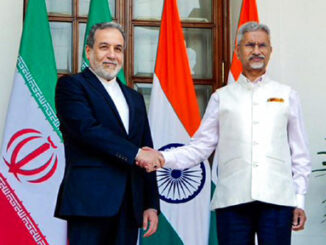
    NEW DELHI (TIP): Pakistan’s military actions will be met with a “very, very firm response”, said External Affairs Minister S. Jaishankar on Thursday, May 8. Mr Jaishankar conveyed this to his Iranian counterpart Seyed Abbas Araghchi during the 20th India-Iran Joint Commission Meeting held in New Delhi. He also hosted Saudi Arabia’s Minister of State for Foreign Affairs Adel al – Jubeir before meeting the Iranian delegation.

    “Our response was targeted and measured. It is not our intention to escalate this situation. However, if there are military attacks on us, there should be no doubt that it will be met with a very, very firm response,” said Mr. Jaishankar.

    Mr. Araghchi had earlier called for de-escalation of tension between India and Pakistan. Mr. Jaishankar described the April 22 Pahalgam attack as a “particularly barbaric terrorist attack”.

    Earlier, in a sign of quick-footed diplomacy, Mr. Al Jubeir arrived in New Delhi on Wednesday, May 7 night. His arrival coincided with the arrival of the Iranian Foreign Minister who was here for a day-long visit in the backdrop of India hitting terror targets inside Pakistan on Wednesday, May 7.

    “A good meeting with Adel Al Jubeir, Minister of State for Foreign Affairs of Saudi Arabia this morning. Shared India’s perspective on firmly countering terrorism,” said the External Affairs Minister after meeting with Mr. Al Jubeir. Official sources said. India did not seek mediation from either Saudi Arabia or Iran.

    India had briefed a number of foreign envoys about its findings into the Pahalgam attack and Saudi Arabia was among those countries whose envoys were kept informed by the Indian officials. Pakistan’s Foreign Minister Ishaq Dar had also spoken to Saudi Foreign Minister Prince Faisal Bin Farhan after India assured action following the Pahalgam terror attack.

  • Indo-Pak conflict ‘none of our business’, says USVP Vance

    Indo-Pak conflict ‘none of our business’, says USVP Vance

    WASHINGTON, D.C. (TIP): US Vice-President JD Vance on Friday, May 9, said the conflict between India and Pakistan is “fundamentally none of our business,” even as he added that America is urging both the countries to de-escalate.

    “What we can do is try to encourage these folks to de-escalate a little bit, but we’re not going to get involved in the middle of war that’s fundamentally none of our business and has nothing to do with America’s ability to control it. You know, America can’t tell the Indians to lay down their arms. We can’t tell the Pakistanis to lay down their arms. And so, we’re going to continue to pursue this thing through diplomatic channels,” Vance has said in an interview with Fox News.

    “Our hope and our expectation is that this is not going to spiral into a broader regional war or, God forbid, a nuclear conflict,” Vance said. “Right now, we don’t think that’s going to happen,” he added.

    The remarks by Vance are in line with the country’s President Trump’s “America first” foreign policy—calling for a retreat from America’s role as a mediator in foreign conflicts.

    The remarks by US Vice-President came as Pakistan made a failed attempt to attack military establishment in Jammu, Pathankot and several other cities. India’s air defense system intercepted and neutralized at least eight missiles launched by Pakistan.

    The drone strikes launched by Pakistan marked the latest round of tit-for-tat attacks between the two countries. India has maintained that it targeted “terrorist infrastructure” with its “Operation Sindoor” launched inside Pakistan and Pakistan-occupied Kashmir (PoK).

    Vance, Second Lady Usha Vance and their three children were on their first official visit to India when terrorists killed 26 people in Pahalgam in Jammu and Kashmir on April 22. Two weeks after the attack, India launched “Operation Sindoor” on May 7, targeting terror infrastructure in Pakistan and PoK.

    On Thursday night, US Secretary of State Marco Rubio spoke with External Affairs Minister S Jaishankar and Pakistan’s Prime Minister Shehbaz Sharif urging both the countries for an “immediate de-escalation”. Besides, Iranian and Saudi Arabia Foreign Ministers were also in New Delhi on Thursday.

    Vance, who has played a significant role in foreign policy in the new Trump administration, traveled to India last month, where he said that India could retaliate against “terrorists” in Pakistan but said the US did not want that to spiral into a broader regional conflict.
    (TNS)

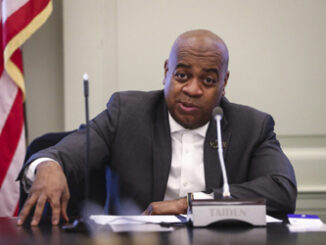
  • ICE Arrests and Releases Newark  Mayor at Immigrant Detention Facility Protest

    ICE Arrests and Releases Newark Mayor at Immigrant Detention Facility Protest

    NEWARK, NJ (TIP): Newark Mayor Ras Baraka was released Friday, May 9 night after being held following his arrest outside the gates of an immigrant detention facility.

    Baraka walked out of U.S. Custom Services in Newark shortly before 8 p.m.

    “This thing that’s happening right now in America is wrong,” the mayor told a large crowd of supporters waiting for his release. “It’s just an example of the work we have to do.“

    “My family and a lot of our families came here to Newark from the South, fleeing Jim Crow and deep segregation,” Baraka noted in a brief but emotional speech.

    “We were from the first undocumented people here. Our relationship to immigrants is clear,” he added, before he asked the crowd to clear the protest area and head home. Baraka was arrested earlier Friday afternoon by ICE officers outside the Delaney Hall immigrant detention facility in Newark after he was physically dragged through the gate and placed in handcuffs.

    On Friday evening, U.S. Judge Andre Espinosa, a federal magistrate judge, ordered Baraka immediately released, city officials said.

    Earlier, U.S. Attorney Alina Habba said Baraka was trespassing and “ignored multiple warnings” from Homeland Security Investigations to leave the property.

    “He has willingly chosen to disregard the law,” Habba, whom President Donald Trump appointed as the state’s interim top federal prosecutor, said on X. “That will not stand in this state. He has been taken into custody. NO ONE IS ABOVE THE LAW.”

    Baraka, who is a Democratic candidate for governor in the June primary election, was outside the gates of Delaney Hall, a facility he has opposed, on Friday afternoon.

    ICE officers arrest N.J. mayor outside immigrant detention center

    He had been with three members of New Jersey’s congressional delegation — U.S. Reps. Rob Menendez, LaMonica McIver, and Bonnie Watson Coleman — who had come to inspect the facility.

    Baraka was allowed to enter the gates to the facility but wasn’t allowed into the building with the other elected representatives. He was told he had to go outside the gate and an aide to one of the congresspeople informed Baraka that ICE were discussing arresting him.

    In an interview shortly after 9 p.m. on CNN, Baraka said he was treated well while in custody.

    “They (Homeland Security) treated me with dignity. And I appreciate that,” the mayor said.

    “It was a humiliating experience and uncomfortable for me overall,” he continued.

    Baraka said he was charged with federal trespassing. But he added: “I didn’t break any laws. I did not enter that place unlawfully.”

    Baraka disputed the contention that it was a publicity stunt as he runs for governor.

    “I think the publicity stunt is this idea that we should violate the court orders, violate the Constitution of the United States, that we should run roughshod over state and local laws,” he said.

    When asked if he had any regrets about what happened, Baraka said, “I went down there to support my congresspeople…I went down there to support them in a press conference, and I would do it again.” In a later interview on MSNBC, Baraka said he was considering his next steps.

    “I will confer with my lawyers to figure out what’s the best pathway forward on this,” he said. “I think they completely violated my rights … I have the right to go anywhere in this city, particularly in places where I think our laws are being violated.”

    Baraka and other city officials went to Delaney Hall to serve summonses on its private owner-operator, the GEO Group of Boca Ratón, Florida.

    The summonses assert that GEO has refused to grant fire and code officials access to Delaney Hall and has placed a padlock on the gate, violating state law.

    City officials had tried to serve the summonses on the GEO Group on Tuesday, Wednesday and Thursday, when a company representative refused to accept them each time, forcing city officials to leave them on the gate, a retractable chain link fence topped with razor wire.

    Opposition to Delaney Hall’s reopening intensified in February when ICE and the GEO Group announced they had reached a deal for the company to operate the facility under a 15-year contract worth $1 billion to the GEO Group.

    Baraka is running in a tightly packed six-way primary race for the Democratic gubernatorial nomination to succeed term-limited Democratic Gov. Phil Murphy. The mayor has a base in Newark, is making a big appeal to Black voters, and has gained support from progressive groups, most notably opponents of Trump’s immigration policies.

    Politicians, including almost all of the Democratic and Republican candidates for governor, took to social media Friday to comment on Booker’s arrest. His Democratic colleagues voiced support and called for his release, while Republicans condemned Baraka’s actions.

  • G-7 Foreign Ministers condemn the egregious terrorist attack in Pahalgam

    G-7 Foreign Ministers condemn the egregious terrorist attack in Pahalgam

    • By Prabhjot Singh

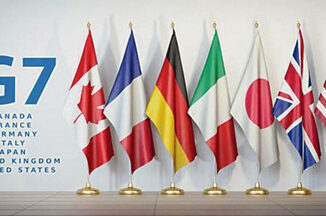
    TORONTO (TIP): Canada and the US joined the foreign ministers of G-7 and the High Representative of the European Union in condemning the egregious terrorist attack at Pahalgam while appealing to both India and Pakistan to de-escalate military operations.

    The Foreign Ministers’ issued a joint statement on Friday, May 9 saying: ‘We, the G7 Foreign Ministers of Canada, France, Germany, Italy, Japan, the United Kingdom, the United States of America and the High Representative of the European Union strongly condemn the egregious terrorist attack in Pahalgam on April 22 and urge maximum restraint from both India and Pakistan. Further military escalation poses a serious threat to regional stability. We are deeply concerned for the safety of civilians on both sides.

    “We call for immediate de-escalation and encourage both countries to engage in direct dialogue towards a peaceful outcome. We continue to monitor events closely and express our support for a swift and lasting diplomatic resolution,” the statement said.

    Interestingly, Canada has refrained from issuing any statement or making its stand public on the ongoing armed conflict in the South Asian subcontinent.

    However, condemnation of egregious terrorist attack on innocent tourists at Pahalagam in Kashmir on April 22 has been well received in diplomatic circles.

    Prime Minister Mark Carney has exercised restraint in making any statement on contentious issues like Canada-India bilateral relations that touched a new low during his predecessor Justin Trudeau’s time. Early this week, he visited the US for a meeting with President Donald Trump.

    Canada has strong segments of immigrants from both India and Pakistan.

    Economists say an escalation in military operations would impact not only the economy of the Indian subcontinent but also have a cascading effect on geopolitics and the global economy.

    Though the G-7 Foreign Ministers have appealed to both India and Pakistan for exercising utmost restraint to de-escalate military operations, the situation continues to be grim and tense with neither of the sides willing to scale down the hostilities.

    The United States, the United Kingdom, France and other G-7 nations have been cautious and guarded in their statements without getting drawn into any controversy over blame game for the present crisis.

  • Welcoming the First American Pope: A Beacon of Hope in a Divided World

    Welcoming the First American Pope: A Beacon of Hope in a Divided World

    By Prof. Indrajit S Saluja
    By Prof. Indrajit S Saluja

    The election of the first American Pope marks a truly historic moment not just for the Roman Catholic Church, but for the entire world. At a time when humanity is torn by conflicts, weighed down by prejudice, and fractured by divisions of race, religion, and ideology, the emergence of a spiritual leader from the Americas offers a fresh ray of hope.

    The Indian Panorama warmly welcomes Pope Leo XIV and prays for his success in guiding not only the 1.4 billion Catholics under his care, but also in offering moral and spiritual leadership to the global community.

    It is expected that this new Pontiff will rise to the occasion and lend his voice to the urgent cause of peace, tolerance, and compassion. His American origins may well infuse his papacy with a new sense of openness, cultural diversity, and a deep understanding of the contemporary struggles facing the world. We hope he will use his immense moral authority to remind world leaders and ordinary citizens alike that our shared humanity is far more powerful than any division we create.

    The Indian Panorama has always upheld the belief that the world is one family—Vasudhaiva Kutumbakam. We have consistently advocated that all people are equal in the eyes of God, that no one should be discriminated against based on race, color, religion, caste, or creed. The God who created us did so in His own image—not to divide us, but to unite us in love, dignity, and respect.

    At a time when hate speech, extremism, and violence are escalating across continents—from wars in the Middle East to racial and religious intolerance in liberal democracies—the moral clarity of a global spiritual leader is desperately needed. The Pope’s voice must rise above the cacophony of conflict and call for unity, justice, and mercy.

    As he begins his pontificate, The Indian Panorama hopes and prays that the new Pope will become a tireless advocate for peace, a defender of the marginalized, and a unifier of divided communities. Let his sermons echo with the virtues of humility, fraternity, and service. Let his leadership bring people together—not just Catholics, but all faiths and all nations—under the shared banner of human dignity.

    May his papacy be remembered as a turning point in our collective journey toward a world more just, more compassionate, and more at peace.

  • A Tragic Cycle Repeats: India-Pakistan Hostilities and the Need for Lasting Peace

    By Prof. Indrajit S Saluja
    By Prof. Indrajit S Saluja

    The renewed hostilities between India and Pakistan have once again cast a dark shadow over South Asia. The April 22 massacre of 28 Hindu tourists in Kashmir—allegedly by Pakistan-backed terrorists—has shaken the region and reawakened the ghosts of a tragic past. Once again, we find ourselves trapped in the vicious cycle of violence, retaliation, and brinkmanship. This cycle is not just a South Asian concern—it is a danger to global peace.

    In 1947, the partition of British India tore apart a united land of shared heritage, culture, and kinship. India, embracing secularism and pluralism, set out to be a diverse democracy. Pakistan, born as an Islamic republic, built its identity partly in opposition to India. The conflict over Jammu & Kashmir—a Muslim-majority region ruled by a Hindu monarch—ignited the first Indo-Pak war. Two more wars followed, in 1965 and 1971, the latter resulting in the creation of Bangladesh.

    Despite international attempts at mediation and decades of diplomacy, Kashmir remains a flashpoint, fueling both nationalistic fervor and militant agendas.

    Pakistan’s long-standing policy of backing non-state actors in Kashmir has resulted in years of insurgency and civilian suffering. In 2019, the Indian government revoked Article 370, stripping Jammu & Kashmir of its special status. While seen as a nationalistic victory by many in India, the move provoked discontent among Kashmir’s Muslims and was widely criticized abroad. Pakistan responded with renewed political rhetoric and continued support for terror networks.

    Meanwhile, India’s domestic politics have become increasingly polarized, with accusations that the ruling establishment is undermining secularism and marginalizing minorities. This ideological shift has made constructive dialogue with Pakistan nearly impossible.

    The April 22 massacre was a heinous act—targeting innocent tourists who had come to experience Kashmir’s natural beauty. The loss of these 28 lives is a stark reminder of how civilians are caught in the crossfire of unresolved political and religious tensions.

    India’s response was swift. Precision strikes were launched against known terrorist camps in Pakistan-occupied territory, carefully avoiding civilian and military targets. Yet, Pakistan retaliated, interpreting this as an act of aggression—thus escalating an already volatile situation.

    Neither country can afford another war. Pakistan’s economy is in crisis—beset with inflation, debt, and weak governance. Its military obsession has drained public welfare, leaving hospitals under-resourced, schools underfunded, and millions of youth without opportunities.

    India, while rising economically, still faces vast internal challenges—poverty, unemployment, malnutrition, and an overburdened healthcare system. A military conflict would drain resources better spent on human development.

    The future demands a different vision. India must reclaim its secular, inclusive identity and resist the allure of majoritarian politics. Pakistan must dismantle its terror infrastructure and cease viewing Kashmir solely through a religious and military lens.

    The global community must play a more assertive role. The United States, European Union, China, Russia, and key Gulf nations like Saudi Arabia and the UAE must use their influence to urge de-escalation. A peaceful, prosperous South Asia aligns with global security and economic interests.

    The citizens of India and Pakistan are not born enemies. They share language, food, music, and deep ancestral ties. It is not the people but the extremists—whether state actors or shadow forces—who perpetuate animosity.

    Let the April 22 tragedy serve not as a prelude to more bloodshed, but as a call to conscience. Let it awaken both governments to the futility of violence and the promise of peace. Let this be the moment we choose dialogue over destruction, reconciliation over rivalry.

    Only by walking the path of peace can we fulfill the unfinished promise of 1947—a subcontinent where freedom, dignity, and development are the birthright of all.

  • The building blocks of an India-U.S. energy future

    The building blocks of an India-U.S. energy future

    Nuclear energy and critical minerals can be the bedrock of a deepening energy and technology partnership

    ‘For India’s energy security and sustainable economic development, bilateral relations between India and the U.S. must offer greater assurance in strategic and shared interests’

    By Arunabha Ghosh

    United States Vice-President J.D. Vance recently highlighted the U.S.’s willingness to cooperate with India more closely on energy and defense. India’s foreign policy establishment outlined the need for cooperation on energy, defense, technology and the mobility of people. The developments may have been news, but the issues are not new. These topics have increasingly defined India-U.S. relations over the years despite changes in administration, but with some change in emphasis. There is an opportunity now for renewed investment in them.

    India’s energy security will be guided by three imperatives: having sufficient energy resources at predictable prices, minimal disruptions in supply chains, and progress towards an increasingly sustainable energy mix. Nuclear energy and critical minerals will matter in these respects and can be the bedrock of further deepening energy and technology partnership between Washington and New Delhi.

    A critical minerals compact

    The energy transition will unfold not only via electrons but also with elements. China’s restrictions in April on exports of rare earths were just the latest move in periodic disruptions for more than a decade. On the one hand, China controls nearly 90% of global rare earth processing capacity. On the other, it leverages this market power to serve its strategic purposes. The result: the minerals needed for new energy technologies, advanced electronics or defense equipment are contingent on fragile global supply chains.

    In 2024, India and the U.S. signed a memorandum of understanding to diversify these supply chains. Three principles must now guide India-US cooperation on critical minerals.

    First, critical minerals must be viewed as the pillar of multiple sectors, and not just as a mining silo. They are needed across the economy — and in the strategic sectors on which India and the U.S. wish to collaborate. This broad framing prioritizes long-term strategy and enables cross-sectoral skills and technology exchange.

    Second, policies for critical minerals must play out at bilateral and plurilateral levels. They must establish guarantees of supply and frameworks for cooperation. Demand creation, not supply coercion, must drive this relationship. An India-U.S. critical minerals consortium could look into joint exploration and processing. India, with its emerging mineral exploration base, and the U.S., with its deep capital and technology, should co-invest in third-country projects across Africa, South America, and Southeast Asia.

    Beyond the bilateral relationship, the Quad (including Japan and Australia) can be a capability multiplier. This includes collaboration on minerals processing technology. Further, data transparency and traceability of these minerals are crucial. For this, establish a dedicated India-U.S. Mineral Exchange — a secure digital platform for real-time trade, investment, and collaboration on critical minerals. This can especially help vulnerable industries such as electric vehicles, aerospace, and semiconductors. India and the U.S. should also co-develop a blockchain-based traceability standard for critical minerals, inspired by the EU’s Battery Passport.

    Moreover, India and the U.S. should build joint strategic stockpiles of key minerals to safeguard supply chains against geopolitical or trade disruptions, leveraging existing storage infrastructure in both countries (such as India’s Strategic Petroleum Reserves or the US National Defense Stockpile) for cost-effective deployment.

    India has made early moves — becoming the first non-G-7 member of the Mineral Security Partnership — and it will host the Quad summit later this year. It is an opportunity to formalize these specific approaches. The Quad countries are also exploring joint engagement with mineral-rich nations.

    Third, patience will be key. While a battery plant may take two years to build, exploration of mines and building processing facilities take between 12 to 16 years. A durable India-U.S. critical minerals partnership must be structured with a 20-year horizon and interim targets, consistent with the initial goals of India’s own Critical Minerals Mission. To realize these ambitions, India and the U.S. must also invest in the ‘plumbing’ of the energy partnership: data-sharing protocols, investment tracking, workforce development, and innovation corridors under platforms such as the U.S.-India Initiative on Critical and Emerging Technology (iCET).

    Nuclear energy as next frontier of linkages

    As India’s electricity demand surges, we need a reliable source that complements the intermittency of solar and wind to build a stable, secure grid. Even as battery costs have fallen dramatically, nuclear power offers another firm, low-carbon source essential to achieving India’s net-zero goals.

    India has an ambitious goal of achieving 100 GW of nuclear power capacity by 2047. Converting this into action will need a shift in momentum. Currently, nuclear energy contributes just over 8 GW, or about 2% of India’s installed capacity. To meet the 2047 target, India must commission approximately 5GW-6 GW annually from the early 2030s. Studies by institutions, including the Council on Energy, Environment and Water (CEEW), suggest that achieving net zero by 2070 could require nuclear capacity exceeding 200 GW under certain scenarios.

    To realize this vision, India must implement three pivotal reforms. First, shorten deployment timelines to ensure scale. Reducing the build time of nuclear projects from, say, nine to six years could cut the levelized cost of electricity by 8%. This calls for standardized designs, faster approvals, and skilled project delivery.

    Second, enable private sector participation. That means having credible offtakers to reduce risks, structure competitive bids, and offer long-term purchase commitments. Small Modular Reactors, with their lower capex and flexibility and lower land requirement, become bankable only when private capital has clear incentives and predictable returns. Applications include the use of nuclear energy for green steel or to service rapidly rising demand for Artificial Intelligence. The overall capital requirement for 100 GW of nuclear power is enormous: up to $180 billion by 2047. The exposure of domestic banks and non-banking financial companies to the power sector is approximately $200 billion. We must rewire our financial system to support this transition. The growth of nuclear as a viable source of energy and international cooperation rests on assurances of clear policies and offtake and payment guarantees, collaboration with global firms for tech transfer and co-creation, and rules and standards for waste management.

    Issue of safety

    Third, amend the Civil Liability for Nuclear Damage Act, 2010 to enable private investments in nuclear power plants. India’s indigenous reactor designs can be modularized. The recent approval for Holtec International to transfer SMR technology to Indian companies, including Larsen & Toubro and Tata Consulting Engineers, is an example of the potential of India-U.S. collaboration in this direction. However, India should always prioritize nuclear safety by adopting advanced waste handling and decommissioning technologies, especially as it could lead the manufacturing of Small Modular Reactors (SMRs). With smaller emergency zones and air-cooling capability, SMRs suit water-scarce regions but demand robust, centralized waste management and repurposing strategies from the start.

    The IMF’s World Economic Outlook report (April 2025) shows concerning levels of global uncertainty amid trade and tariff tensions. For India’s energy security and sustainable economic development, bilateral relations between India and the U.S. must offer greater assurance in strategic and shared interests. India’s continued growth story and the U.S.’s technological prowess and capital are mutually complementary. A resilient energy future needs a long-term vision, not just the pursuit of short-term wins, a road map, and a resilient architecture of cooperation.

    (Dr Arunabha Ghosh is an internationally recognized public policy expert, author, columnist, and institution builder. He is the founder-CEO of the Council on Energy, Environment and Water (CEEW), one of Asia’s leading policy research institutions and among the world’s 20 best climate think tanks.)

  • Neutralizing Terrorism Without Escalating Tension

    Neutralizing Terrorism Without Escalating Tension

    By Dr. Mike Ghouse

    Neutralizing terrorists is undoubtedly a positive development. I welcome efforts dedicated to dismantling terrorist networks and restoring safety for civilians. I’m especially appreciative of the Indian government’s initiative to differentiate between Islam and the extremist acts carried out by a radical few. Such distinctions are vital for promoting harmony and mutual respect.

    While Pakistan continues to grapple with the challenge of eliminating extremism, India has proactively addressed the pressing issue of terrorism. These actions are commendable and signify a step toward a more secure region.

    Public Sentiment and the Path to Peace

    People on both sides of the border—Pakistani and Indian alike—long for an end to violence. It’s high time we commit ourselves to long-lasting peace. Even if the timing of these efforts coincides with political agendas or election seasons in states like Bihar, the net impact remains a positive stride toward regional stability.

    Rather than inflaming tensions, our mission must be to build an atmosphere in which everyone, regardless of nationality or faith, feels secure and free from the fear of terrorism. 

    De-Radicalization for a Peaceful Future

    Our shared future hinges on eliminating the threat of terrorism. That begins with re-educating and guiding individuals—whether they are misguided Muslims in Pakistan or misguided Hindus in India—away from extremism and toward peaceful coexistence. Teaching the value of unity, empathy, and collective prosperity is key to steering younger generations in the right direction. First, we must commit to being free from hatred for each other, no matter how difficult it is.  Love conquers the world; it always has been. 

    From Space to Stability: Time to Explore Peace

    Both India and Pakistan have demonstrated remarkable achievements in space exploration. Now, we must shift our focus toward exploring our potential to nurture peace and societal well-being. No democratic leader should be chosen unless they prioritize dialogue, peace-building, and diplomacy over nuclear posturing and aggression.

    The journey to peace requires resilience. We must learn to bear frustrations in the short term to secure a safer, more stable tomorrow for all citizens. 

    The Importance of Transparency and Truth

    Peace thrives where trust exists. To move forward with a clear conscience, we must be transparent about tragic incidents like the Pulwama and Pahalgam attacks. It’s essential for both the ruling party and the opposition in India to seek and share concrete evidence. This will reassure peace advocates and uphold our collective integrity 

    Final Thoughts

    Lasting peace in South Asia isn’t just an aspiration—it’s a responsibility. When our neighbors are secure and at peace, we too enjoy that serenity.

    Let us commit to fostering understanding, ensuring justice, and living in harmony for the sake of future generations. The future generation should look up to the leadership and admire them for giving them a better future, we owe it to them.

    (Dr. Ghouse is the President and founder of the Center for Pluralism and director of the World Muslim Congress. He is an Interfaith Wedding Officiant for InterfaithMarriages.org and a Muslim Wedding Officiant. He is a Muslim, Pluralist, activist, speaker, author, and social scientist. He can be reached at Mikeghouse@gmail.com)


  • Manipur: A Stain on the Nation’s Conscience

    Manipur: A Stain on the Nation’s Conscience

    By Dave Makkar

    The ethnic violence that engulfed Manipur in May 2023, pitting the Meitei and Kuki-Zomi communities against each other, has exposed profound systemic failures. Beyond the immediate tragedy, the crisis raises urgent questions about governance, justice, and national unity. The ethnic violence that erupted between the Meitei and Kuki communities, is indeed a stain on the nation’s conscience. Here’s why:

    Humanitarian Catastrophe

    The toll of the conflict is staggering:

    • 260 fatalities, 1,500 injured, and over 70,000 displaced.
    • Widespread reports of sexual violence, arson, and targeted killings, including the harrowing video of two Kuki women paraded naked—a moment that sparked national outrage.
    • Destruction of 250+ religious sites and entire villages, displacing families into overcrowded, under-resourced relief camps.

    Despite these horrors, the state and central responses were marked by delays, indifference, and failure to protect vulnerable communities.

    Collapse of Governance

    The violence revealed a near-total breakdown of constitutional machinery:

    • Law enforcement bias: Allegations of police inaction or complicity deepened distrust, particularly among Kuki communities.
    • Segregation: The state fractured into ethnically divided zones—Meitei-dominated valleys and Kuki-Zomi hills—with parallel administrations emerging.
    • Judicial condemnation: The Supreme Court labeled the violence a “constitutional failure,” mandating a Special Investigation Team (SIT) amid accusations of institutional apathy. 

    Leadership Vacuum

    The crisis underscored alarming political failures:

    • Delayed response: The Prime Minister broke his silence only after the viral video of women being paraded naked, shook the entire nation. drew national attention, framing his remarks reactively rather than proactively.
    • Absenteeism: Despite the scale of the crisis, PM Modi has yet to visit Manipur, eroding public trust in the central government’s commitment to reconciliation. The Prime Minister’s absence has not gone unnoticed — it has been a source of anger and disappointment for many in the state and across the country. His lack of engagement is more than a political misstep; it is a moral failure that casts a shadow on the government’s commitment to national unity and equal treatment for all citizens.
    • State government’s role: Chief Minister N. Biren Singh faced allegations of bias and mishandling, yet the BJP retained him, delaying accountability until Feb. 2025. The “double engine sarkar” (2 Engine Government; Central & State governed by same party BJP) slogan rang hollow as coordination between state and central governments faltered.

    Roots of the Conflict

    • Historical Tensions: Decades of friction between the Meiteis (valley-based, majority Hindu) and Kuki-Zomi tribes (hill-dwelling, predominantly Christian) over land, identity, and political representation.
    • Trigger: The Meitei demand for Scheduled Tribe (ST) status, opposed by hill tribes fearing marginalization. This is even though In the Imphal Valley of Manipur, most businesses and real estate are predominantly owned and controlled by the Meitei community, which is the largest ethnic group residing in the valley. The Meiteis form the majority population in this central part of the state and have historically been the primary stakeholders in urban and commercial development, especially in Imphal, the capital city. Outsiders can’t buy property or land; they can rent or lease from Meitei’s. The Kuki and Naga communities, while significant in Manipur as a whole, primarily inhabit the hill districts, and own land in those areas due to constitutional protections under Article 371C and related land laws.
    • Misinformation: Social media amplified hate speech and competing narratives, fueling polarization.

    Timeline of a Crisis

    • Pre-2023: Simmering tensions over ST status demands, land rights, and religious divides.
    • May 2023: A Tribal Solidarity March in Churachandpur sparked clashes, arson, and mass displacement. Internet shutdowns followed.
    • May–July 2023: Escalating violence, sexual assaults, and destruction of villages. Security forces criticized for inaction.
    • August 2023: Supreme Court intervenes; orders SIT.
    • 2024: Segregation hardens; peace talks stall; schools remain closed; armed groups entrench.

    Pathway to Healing

    • Truth and Reconciliation: An independent commission to address grievances and foster dialogue.
    • Justice and Rehabilitation: Compensate victims, rebuild infrastructure, and ensure accountability for atrocities.
    • Institutional Reform: Strengthen impartial policing and equitable resource allocation.
    • Political Will: Central leadership must engage directly, prioritizing unity over electoral calculus.

    A Mirror to the Nation

    Manipur’s tragedy is not an isolated failure but a reflection of deeper fissures: the erosion of trust in institutions, the politicization of identity, and the neglect of marginalized voices. For a nation that celebrates “unity in diversity,” the crisis demands introspection and action. Until accountability replaces apathy, Manipur will remain a dark chapter in India’s story—one that challenges its democratic conscience. It reveals how minorities and marginalized communities can be left behind if vigilance, empathy, and constitutional values are not actively upheld. Calling it a “stain” is not rhetorical—it is a factual indictment of a nation that must do better.

    (Compiled by Dave Makkar from various sources on the internet & writings of eminent writers. Dave is a social activist based in New Jersey, US. He can be reached at davemakkar@yahoo.com)