Month: May 2025

  • Drones are changing war and India must catch up

    Drones are changing war and India must catch up

    • The Indian military will have to evolve a comprehensive doctrine around drone warfare.
    • Fundamental changes would have to be made in how the Army fights.

    “Today, small quadcopters costing less than $1,000 dominate the tactical battlefield, carrying out a variety of roles —intelligence, surveillance, target acquisition and kinetic strikes. This omnipresence of drones has dramatically compressed the kill chain: spotting a target and directing fire on it is often done in just minutes or even seconds. A February 2025 study by the Royal United Services Institute estimates that tactical drones account for 60 to 70 per cent of the damaged and destroyed Russian systems.”

    By Lt Gen DS Hooda retd.

    In a seminar hosted by the Centre for Joint Warfare Studies on March 10, General Anil Chauhan, India’s Chief of Defense Staff, emphasized the transformative role of unmanned aerial systems, commonly known as drones, in modern warfare and called for doctrinal clarity on the employment of drones.

    Drones have been around for decades in the military arsenal of countries. What is new is the extensive use of drones in the Russia-Ukraine war, from the tactical battlefield to achieving strategic effects. As the Indian military increasingly looks to induct drones into service, key insights from the Ukraine conflict should guide this effort.

    The start of the Ukraine war saw the traditional employment of large, slow-flying drones, like Ukraine’s Bayraktar TB2 and Russia’s Orion, in surveillance and strike roles. However, these drones were vulnerable to air defense systems and soon disappeared from the skies, replaced by smaller military drones, like the Ukrainian Furia and the Russian Orlan-10.

    The real transformation occurred when Ukraine turned to commercial off-the-shelf drones, repurposing thousands of them as combat tools. By the war’s second year, drone operations had massively expanded in scale and sophistication. In 2023, the Ukrainian army raised over 60 special drone strike units embedded in combat brigades and independent drone groups, institutionalizing drone warfare.

    With the increasing role of drones on the battlefield, their numbers expanded exponentially. Oleksandr Syrskyi, Ukraine’s commander-in-chief, said over 1.3 million drones had been delivered to frontline soldiers in 2024. Russian President Vladimir Putin has stated that Russia was ramping up its drone production to nearly 1.4 million in 2024, a tenfold increase from the previous year.

    Today, small quadcopters costing less than $1,000 dominate the tactical battlefield, carrying out a variety of roles —intelligence, surveillance, target acquisition and kinetic strikes. This omnipresence of drones has dramatically compressed the kill chain: spotting a target and directing fire on it is often done in just minutes or even seconds. A February 2025 study by the Royal United Services Institute estimates that tactical drones account for 60 to 70 per cent of the damaged and destroyed Russian systems.

    Russia’s success in driving Ukrainian forces out of Kursk in March 2025 has been attributed to the mass employment of fiber-optic drones. These drones are tethered to their operator via a physical cable and are immune to electronic jamming. Ukraine troops described their retreat from Kursk as a “horror movie” as drones “hunted them day and night.”

    Drones have also had strategic impacts away from the frontlines. Ukrainian uncrewed surface drones (USVs) have sunk Russian warships, compelling Russia to relocate much of its Black Sea fleet to ports like Novorossiysk, effectively ceding control of large parts of the Black Sea. USVs carrying drones have attacked Russian gas platforms and other targets around the Black Sea.

    As drones proliferate in the Indian military, they must not be treated as standalone assets but integrated into a combined arms operation. The control of thousands of drones in the sky will require a network-centric approach to manage the information overload. Ukraine has adopted the DELTA system, which integrates data from multiple sources, including drone video feeds, open-source intelligence and satellite imagery, to present a real-time picture to commanders, enabling quick targeting.

    A current deficit in India’s military power is the limited inventory of conventional missiles for engaging targets deep in enemy territory. Long-range strike drones can fill this gap. According to a report by the Center for Strategic and International Studies, Russia carried out 8,484-long-range strikes against Ukraine between September and December 2024. More than 90 per cent of these strikes were carried out by attack drones, mostly Shahed drones imported from Iran. While relatively slow and often intercepted, the Shaheds are cheap (about $35,000 each) and are being used in large numbers as expendable cruise missiles. As a comparison, Russian missiles like the ground-launched Iskander and air-launched.

    Technology sans doctrine is of little use. The Indian military will have to evolve a comprehensive doctrine around drone warfare. Constant surveillance over the battlefield and the ability to quickly hit individual targets is forcing troops to disperse and remain hidden, making mass surprise attacks difficult. The operational tempo and decision cycles have compressed, requiring greater delegation and initiative from local commanders. Fundamental changes would have to be made in how the Army fights.

    In a highly contested airspace and a plethora of air defense systems, drones will play a key role in deep observation and targeting. The Air Force will have to develop doctrines for manned-unmanned teaming of fighter aircraft and drones. The drones will carry out the role of surveillance, electronic warfare and other risky tasks while the manned aircraft deliver strategic strikes. Strategies will also have to be formulated for defending airspace from mass drone attacks. An effective defense will require a layered approach, combining detection, disruption and destruction, with electronic warfare as a critical component.

    The Navy will have to integrate drones as strategic strike assets while reviewing the concept of coastal and harbor defense to protect from attacks by surface or underwater drones. Like the Air Force, the Navy must look at the concept of manned-unmanned teaming in fleets.

    Organizational changes must accompany doctrinal development. Merely allocating drones to existing units will result in suboptimal employment. Specialized drone units will have to be created within all three services and there will be a requirement to raise additional electronic warfare and counter-drone units.

    Such a proliferation of roles will require mass manufacturing of drones and production capacity will have to be ramped up quickly. This necessitates an extensive participation of the civil sector and changes in the defense procurement process to make it more agile.

    The jury is still out on whether drones have completely transformed how future wars will be fought, but it is a reality that drone warfare has become a central feature of modern combat. The Indian military must put doctrines and organizational structures in place to exploit this new weapon of war.

    (The author is a former Northern Army Commander)

  • Gulal and Glamour: Hrithik Roshan’s Vibrant Success at Rangotsav Chicago

    Gulal and Glamour: Hrithik Roshan’s Vibrant Success at Rangotsav Chicago

    CHICAGO,  IL   (TIP): The Windy City was drenched in a kaleidoscope of colors and electrified by Bollywood charisma as Rangotsav 2025, America’s biggest Holi bash, welcomed superstar Hrithik Roshan for an unforgettable meet-and-greet on April 12, 2025, at the National India Hub in Schaumburg, IL. The fifth stop of Hrithik’s whirlwind USA tour, this vibrant celebration drew over 3,000+ attendees from diverse Asian and multicultural backgrounds, all adorned in colorful attire, to revel in the joyous spirit of Holi. The event also saw dignitaries like Cook County Commissioner Kevin Morrison and Council General Sanjiv Pal from the Consulate General of India grace the stage.

    Rangotsav 2025’s Chicago stop was a milestone in Hrithik Roshan’s USA tour, which also included Atlanta, Dallas, Houston, New Jersey, and Bay Area San Jose. The event’s seamless execution, vibrant performances, and Hrithik’s genuine warmth left an indelible mark. Organized by 3 Sixty Shows and AP Square, with national sponsors including Four Square, Hyper Beverages, True Payment Solutions, and Amazing Energy Solutions, the event was a seamless blend of cultural festivity, fan interaction, and community recognition. Local promoters were Gaurav Tutaja from Rajshi Events and Bhavna Modi from Manpasand.

    Rangotsav 2025 was more than just a Holi celebration; it was a cultural extravaganza that showcased the best of Indian heritage through music, dance, and community spirit. Attendees enjoyed traditional Holi activities like color throwing, indulged in Holi-themed culinary delights, and danced to Hrithik’s iconic songs. The event’s highlight was the talk show segment, where Hrithik shared insights into his illustrious career and upcoming projects.

    The event, emceed by Rex D’Souza and Zak Khan, featured electrifying performances by dance academies like Shirlzar Dance Company, Mayuri Entertainment Corp (Nache Mayuri), Aaja Nachale Dance Company, PJ Dance Academy, and Arya Dance Academy. Singers including Rex D’Souza, Swapnil, Sameer, Minahaj, Ramyaa, Vivek Agarwal, Sohail Khan, and Avni, along with models Gawari Sri, Mobin Ali, Reena, Rami Mital, Uzma, Sankriti, and Ajanta, added glamour and energy to the festivities. The sound and screen production, expertly handled by Dimple, ensured a flawless experience.

    Hrithik Roshan Talk show was emceed by Saba Azad. The Chicago event, highlighted as a pinnacle of the tour, saw Hrithik Roshan, engaging with fans in a uniquely intimate talk show format. From heartfelt selfies to candid conversations, Hrithik’s 42 minutes stage presence was a masterclass in humility and connection. Reflecting on his journey, he said, “Thank you, Chicago, for making me feel so special today. I feel like a giant. I’m going behind the camera for my next film, Krrish 4, and I need all your blessings.” He also teased his next release, War 2, set to hit theaters on August 14, 2025, praising co-star Junior NTR for his acting prowess and culinary skills. “War 2 is bigger, better, and I’m really proud of it,” Hrithik declared, igniting excitement among fans.

    Hrithik’s connection with Chicago was palpable. “I love Chicago; it’s amazing. My stomach is full of your pizzas, and the air here feels so good,” he enthused, promising to return. His speech resonated deeply as he shared his vision for the next 25 years: “I want my next 25 years to be a journey of becoming, learning, failing, and rising again. I invite you all to be the best version of yourselves.” Fans like Vidhan Davra and Zaki Khan, winners of a singing contest, performed for Hrithik, while birthday celebrants, including Shweta, were serenaded by the crowd.

    The award ceremony honored community leaders for their outstanding contributions, with Hrithik personally felicitating luminaries such as Amit Amin and Dave Patel for their hospitality excellence, Deephti Karlapudi for humanitarian service, Sai Ravi Suribhotla for leadership in real estate, Gulzar Singh for shaping Chicago’s skyline, Dhitu Bhagvankar for entrepreneurial success, Ajeet Singh as president of the Indian-American Business Council, Zaki Khan for educational vision, Sunil Shah and Rita Shah for their work with New York Life Insurance, Chandini Duvvuri for humanitarian efforts, Gaurav Tuteja and Bhavna Modi for event organization, JD of JD Events, Payal Shah, Kanak Zala of the Indian Association of Los Angeles, Ami Patel for dynamic leadership, and Harish Patel. Special recognition went to Umima Fero of Rani’s Nail and Spa for empowerment and Arya Dance Academy for their stellar performance. Signed HRX t-shirts from Hrithik were gifted to awardees, adding a personal touch.

    Sponsors played a pivotal role, with National India Hub as the grand sponsor, Fusion Group Games as the elite national sponsor, and elite sponsors like Rana Reagan Pharmacy, Belly Delhi, Core Exteriors, North American College, LA Nima Tequila, Matari Coffee, NY Life Insurance, Shimla Peppers, Honest, State Farm Insurances, Dynasty Home, Chicago Import, Tanishq, Vistal Tech, and Tech Insurance Agency. PN Entertainment and Hopscotch powered the event, ensuring a vibrant atmosphere.

    The event’s success was a testament to the tireless efforts of organizers Gaurav Tuteja, Bhavna Modi, Payal Shah, Aria Patel, and JD Events, with Manpasand hailed as a family-like force behind the scenes.

     Fans of Hritik commented:

    • National and local promoters did an excellent job for the over 1 hour meet and greet event, ensuring a seamless rush-free, no shouting and everyone treated with respect and dignity. The event maintained an organized flow, ensuring fans had meaningful interactions with Hrithik.
    • The event’s talk show format, a departure from the dance performances some fans anticipated, was meticulously organized to ensure a smooth, rush-free experience.
    • Hrithik’s warm engagement with meet and greet attendees, he graciously interacted with each fan, shaking hands, signing autographs, and posing for photos with a friendly demeanor that particularly charmed youngsters and kids.
    • Fans and dance groups had ample time to capture lifetime memories with Hrithik.”

    Syed Sabahat Jamal was the head of security for the movement & coordination of Bollywood’s superstar “Hrithik Roshan”. He and his team made sure that no mistakes were made. Safety & security is the most important aspect of Syed Sabahat Jamal’s job! Hrithik Roshan’s security was executed successfully without any critical incidents.

    “Rangotsav is America’s largest Holi celebration, bringing together communities to revel in the festival of colors through music, dance, and cultural festivities. With a commitment to fostering unity and joy. Our experience in Chicago with Hrithik Roshan is that he graciously interacted with fans, shaking hands, signing autographs, and posing for selfie photos with a friendly demeanor that particularly charmed youngsters and kids, politeness, making every moment special for fans. The organizers crafted a truly memorable event, and we wish Hrithik all the best in his future endeavors” Suresh Bodiwala Asian Media USA.,

     (Photographs and Press release by Asian Media USA)

  • The state must not stifle democratic dissent in the name of national security

    State surveillance must be subject to systemic checks and supervision and not mirror the nefarious activities of the dark underworld. As a Supreme Court of India Bench pointed out, the question is not whether the state can use spyware, but who could be its legitimate targets. The Bench, during a hearing on the alleged surveillance of politicians, judges, religious leaders, civil servants and journalists by some state entity, was evidently seeking to curtail arbitrary use of the powers and tools of surveillance. The government has neither confirmed nor denied that it uses Pegasus, an Israel-made military grade spyware that is sold only to state agencies, which was used to target a wide range of people. The matter reached the Court after global revelations about the existence and the use of this tool, and it appointed a technical committee whose investigation was constrained by a lack of cooperation from alleged targets and the government. Several high-profile users of the iPhone, the primary target of Pegasus, continued to get security alerts from the manufacturer that they were targets of suspected state surveillance, even as the matter was before the judiciary. States the world over have used extra-legal measures to snoop on targets that tried to firewall their communication using rapidly evolving technologies. Terrorists and other non-state actors, and criminals are using encryption and other advanced technologies to evade detection as they plot to harm the wider society. Without adequate legal and technological wherewithal, the state would be ineffective in dealing with emerging national security threats. In this context, and particularly against the backdrop of the terrorist attack in Pahalgam in Jammu and Kashmir, the Court has framed a relevant question.

    The tendency of the government to arbitrarily invoke national security in defense of a brazen denial of due process and transparency in law enforcement has been called out by the Court in the past. There is also the disturbing trend of government actors routinely labelling political opponents as anti-nationals. If the state is to claim more surveillance powers, corresponding and robust guardrails must also be engineered. National security cannot be an excuse for executive arbitrariness and a violation of individual rights and dignity. Protocols that ensure that clearly defined standards and steps are followed in surveillance must be established. Once the security concerns are overcome, and within appropriate timelines, these processes should be subject to oversight by other branches of government and the public at large. At any rate, no state agency can have the authority to interfere in the democratic politics of the country, or stifle dissenting voices and activism. While trying to tackle an uncertain security environment, the compass of India’s constitutional democracy must stay firm.
    (The Hindu)

  • The UNSC Statement on Pahalgam attack appears watered down

    The UN Security Council’s statement on Friday (April 25, 2025) condemning “in the strongest terms” the terrorist attack in Pahalgam, was necessary, but inadequate. According to the statement, which expressed condolences to India, and to Nepal which lost one citizen, the members of the Security Council, that include Pakistan as an elected, non-permanent member this year, “reaffirmed that terrorism in all its forms and manifestations constitutes one of the most serious threats to international peace and security”. The statement also spoke of the need to bring the perpetrators and their sponsors to justice. However, the UNSC did not name The Resistance Front (TRF) that initially claimed responsibility for the attack, and did not refer to the group’s linkages to a UNSC-designated terror outfit, the LeT. Nor did it expressly speak of cooperation with the Government of India, as it had in the past. Finally, the statement made no mention of the terrorists’ intent to target non-Muslims — an abhorrent act aimed at instigating communal tensions. A comparison with previous such statements would make it clear that the language was “watered down” given that Pakistan is a member of the Council (2025-26), and had China’s support. China has in the past sought to veto statements critical of Pakistan. It is also disappointing that the statement, which was negotiated by France’s envoy, the current UNSC President, did not bring stronger inputs from others on the Council including the U.S., Russia and the U.K.

    As the government and security forces discuss counter-terror operations within Jammu and Kashmir to apprehend the terrorists and possible military options across the border, India’s next option may be to bring a more strongly worded statement to the UN General Assembly, as various countries have done in the Ukraine and Gaza conflicts. The government would no doubt be preparing to have those terrorists it has identified from the attack and the TRF itself, designated by the UNSC, much the same way as it was able to bring the designation of Pakistan-based Jaish-e-Mohammad chief Masood Azhar as a terrorist after the Pulwama attack. In addition, India could build its case at the Financial Action Task Force, which put Pakistan on a “greylist” from 2012-15 and 2018-22, and revive its plans to pass a Comprehensive Convention on International Terrorism at the United Nations. On the bilateral front, expecting assistance from Pakistan has been a dead-end in the past, despite its promises after Mumbai (2008), Pathankot (2016), and Pulwama(2019). Given the state of bilateral relations and the lack of diplomatic engagement, this is even less likely. Only a multi-pronged effort on the global stage, and the patience it showed with the extradition of Tahawwur Rana from the U.S., will ensure that India is able to follow all the threads in bringing those responsible for this brutal attack to justice and establish a durable peace.
    (The Hindu)

  • Carney’s Canada

    The election of Mark Carney as Canada’s Prime Minister offers a much-needed opportunity to reset the strained ties between Ottawa and New Delhi. Relations had hit a nadir under Justin Trudeau, particularly after his 2023 allegations linking Indian agents to the killing of Hardeep Singh Nijjar — claims India strongly denied. The diplomatic fallout severely disrupted political, economic and people-to-people exchanges. Carney’s rise may mark a course correction. Unlike his predecessor, he is pragmatic, globally respected and more measured in tone. His message of ‘Canada Strong, Canada Free’ suggests a desire to reinforce domestic stability while restoring international relationships. That could bode well for India, which is a key trade, strategic and people-link partner. Carney’s experience as a central banker and investment leader with exposure to Indian markets positions him well to re-engage. His stated intent to “rebuild the relationship with India” must translate into action — especially in resuming CEPA trade talks, facilitating student visas and stabilizing immigration policies. Prime Minister Narendra Modi’s congratulatory message to Carney on his election, too, reflects hope for a strengthened partnership.

    The uncertainty in recent years has affected thousands of Indian students and immigrants in Canada. Visa delays, post-study work anxieties and a perceived hostile environment have undermined Canada’s image as a welcoming destination. Carney’s administration must act quickly to reassure this vital constituency, which contributes billions to the Canadian economy and adds to its skilled workforce. India, for its part, must be prepared to move beyond recent hostilities. However, it will be watching how Ottawa handles sensitive issues like Khalistani extremism and diaspora-linked radicalism.

    With the global order shifting and US politics growing unpredictable, deeper India-Canada engagement in climate action, education and digital innovation can offer stability. Carney’s victory could be the diplomatic opening both nations need — provided neither lets it slip into a missed opportunity.
    (Tribune, India)

  • World Press Freedom Day 2025: A Global Call to Defend the Truth

    World Press Freedom Day 2025: A Global Call to Defend the Truth

    “Repression of the press has a long and tragic lineage. In ancient Rome, historians who documented the excesses of emperors were exiled or executed. During the Inquisition, dissenting voices were burned at the stake. The rise of fascism in the 20th century saw the state apparatus turned against the free press—from Mussolini’s Italy to Hitler’s Germany, where over 4,000 newspapers were banned or seized.

    In post-colonial countries like India, British-era sedition laws were used to curb nationalist publications. Ironically, today, many of those same laws are used by independent India’s institutions to silence criticism of the state.

    Whether under kings or elected leaders, freedom of the press has always come under attack when power becomes intolerant of scrutiny.”

    By Prof. Indrajit S Saluja
    By Prof. Indrajit S Saluja

    Each year on May 3, the world observes World Press Freedom Day—a date meant to celebrate the fundamental principles of press freedom, to evaluate its state globally, to defend the media from attacks, and to pay tribute to journalists who have lost their lives in the line of duty. But in 2025, this observance feels less like a celebration and more like a desperate cry for solidarity and survival.

    Far from advancing, the cause of press freedom is in retreat across much of the world. In democracies and dictatorships alike, governments are becoming more intolerant, more repressive, and more brazen in their efforts to control, coerce, and silence journalists.

    A Shrinking Space for Free Media

    The disturbing trend of clamping down on independent journalism is no longer limited to authoritarian states. Even in countries with constitutional guarantees and democratic frameworks, we are witnessing an erosion of media freedoms. Critical media outlets are being demonized, raided, shut down, or bought out. Laws are being weaponized. Surveillance is rampant. Intimidation and arrests are on the rise.

    According to Reporters Without Borders (RSF) and the Committee to Protect Journalists (CPJ), the year 2023 saw the killing of 99 journalists and media workers, the highest death toll in nearly a decade. Over 550 journalists are currently imprisoned across the globe, many for simply doing their jobs. In India, dozens of journalists have been arrested, raided, or harassed under sedition, terror, or financial misconduct laws for reporting stories that challenge power.

    In Russia, China, Iran, Turkey, and Myanmar, independent journalism is treated as a crime. In Palestine, journalists covering Gaza face a lethal environment. Over 100 media workers have been killed since late 2023, many under circumstances that demand international scrutiny. The chilling message in each of these cases is clear: Silence, or pay the price.

    The Historical Context of Repression

    Repression of the press has a long and tragic lineage. In ancient Rome, historians who documented the excesses of emperors were exiled or executed. During the Inquisition, dissenting voices were burned at the stake. The rise of fascism in the 20th century saw the state apparatus turned against the free press—from Mussolini’s Italy to Hitler’s Germany, where over 4,000 newspapers were banned or seized.

    In post-colonial countries like India, British-era sedition laws were used to curb nationalist publications. Ironically, today, many of those same laws are used by independent India’s institutions to silence criticism of the state.

    Whether under kings or elected leaders, freedom of the press has always come under attack when power becomes intolerant of scrutiny.

    Why Power Fears the Press

    At the heart of every assault on journalism lies one simple truth: a free press questions power. It exposes corruption, injustice, abuse, and lies. It challenges dominant narratives and tells the stories that the powerful would rather remain hidden.

    This is why both far-right and far-left ideologies often view the free press with suspicion. They demand loyalty, not inquiry. Propaganda, not questions. Compliance, not courage.

    And yet, it is precisely this courage that defines journalism at its best. A journalist is not a soldier of ideology but a sentinel of democracy. Journalism is not activism, but accountability.

    The Price of Truth

    Over the years, brave men and women have paid with their lives for the simple act of telling the truth.

    • Anna Politkovskaya was assassinated in Moscow for reporting on Chechnya.
    • Shireen Abu Akleh, a Palestinian-American journalist, was shot while covering an Israeli military raid.
    • Daphne Caruana Galizia in Malta was blown up in her car for investigating government corruption.
    • Ján Kuciak, a young Slovak reporter, was murdered with his fiancée for following a trail of financial crime.

    And there are thousands more—some whose names we know, most whose names we don’t.

    They did not die in vain. Their courage laid the foundation for a profession that continues to resist, report, and reveal.

    A Global Movement: Journalists Beyond Borders

    In the face of growing repression, what must be our answer?

    Our response must be solidarity across borders—a global alliance of truth-tellers committed to defending one another, amplifying each other’s work, and resisting together. This is the spirit behind a movement we must now build with urgency: Journalists Beyond Borders.

    This envisioned alliance is not about nationalism or ideology. It is about creating a safe, united, and resilient global front of media workers, unshackled by geography, culture, or ethnicity. It is about pooling resources to offer legal aid, digital protection, safety training, and emergency evacuation for journalists in danger.

    It is about creating a journalistic commons where the story of a jailed reporter in Belarus is known in Brooklyn, and the assassination of a Mexican crime correspondent echoes in Manila.

    A threat to one journalist anywhere must be seen as a threat to journalism everywhere.

    The Press and the People

    It must be understood that  Press freedom is not merely a media issue. It is a public issue. When journalism is silenced, it is the people’s right to know that is extinguished. A silenced press leads to a blind citizenry—unable to judge, to act, or to vote with knowledge.

    It is not the job of the press to please the public or praise the powerful. It is our job to inform the people, regardless of who it embarrasses or offends.

    To those who say journalists should not criticize governments, we respond: That is our role. Democracy without dissent is dictatorship in disguise.

    We ask not for special privileges, but for the right to work without fear. We do not seek immunity—we demand protection.

    A Pledge on World Press Freedom Day

    On this day, let us renew our commitment—not just as journalists, but as global citizens.

    Let us pledge to:

    • Defend the truth, even when it is inconvenient.
    • Stand with journalists under attack, even when we disagree with them.
    • Condemn censorship and propaganda, wherever they appear.
    • Build international mechanisms for media safety and legal recourse.
    • Celebrate and support independent journalism, through readership, funding, and public advocacy.

    Let us work toward a world that values truth over tyranny, transparency over propaganda, and dialogue over dogma.

    Final Word: A Call to Hope

    In a time when disinformation floods social media, when violence stalks the newsroom, and when fear threatens to override facts, the mission of journalism is more vital than ever.

    And though the challenges are grave, we draw strength from one another. From the whisper of the local reporter in a village pressroom to the global network of digital watchdogs, journalism endures.

    It endures because there are still people willing to speak. Still editors willing to publish. Still readers who seek the truth. And still, a world that—despite its darkness—has not extinguished the light of inquiry.

    Let us build that world anew. Let us write its story—truthfully, together, and free.

    (The author is the Chief Editor of The Indian Panorama. He can be reached at salujaindra@gmail.com)

  • We are witnessing slow constitutional collapse in the US

    We are witnessing slow constitutional collapse in the US

    “Now, the Trump administration seems to have also usurped Congress’s power of the purse for the executive, declaring that the president may refuse to appropriate congressionally allocated funds by personal fiat. This is a profound constitutional change, one that shifts a massive power into the hands of one man; and again, Congress does not seem to be interested in this assault on its own prerogatives, with even many Democratic leaders seemingly preferring to have less power – and, hence, less responsibility.”

    By Moira Donegan

    It’s possible that later, when we know more about how the Trump regime reshapes the US and about how it ultimately comes to an end, we will look back at this moment in 2025 and conclude that we were already living under an autocracy. Checks on executive power seem to have all but vanished; the Trump administration is not acting like either the courts, the judiciary or the people have any prerogatives that they must respect.

    Science is suffering: massive cuts to federal funding of research into medicine, climate change or anything that might include a word on a long list of banned ones – like “transition” – has decimated research, made the US a global laughingstock, and set the cause of human thriving back by years. The economy is in chaos, and the bribery is all but out in the open; it no longer seems to occur to many Americans that their politicians should not be on the take.

    Immigrants appear to have lost the entitlement to due process, and the administration appears to be trying to deport as many of them as possible, paying smaller countries in the American sphere of influence to imprison them at forced labor camps from which they have no means of petitioning for their own release. Dissidents are being captured on the streets, kidnapped from their homes and arrested in the courtrooms they preside over as punishment for their speech. In light of all this, even without the benefit of hindsight, it is already becoming more difficult to speak of American “democracy” with a straight face.

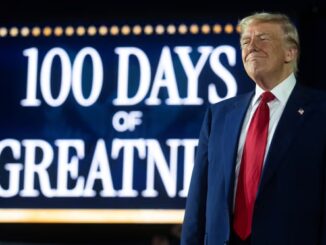
    Which is not to say that the developments of the past few months are unprecedented. In many ways, the first 100 days of Trump’s restoration are much like the first 100 of his initial term, in 2017: they are marked by a dizzying whirlwind of scandals, so numerous and preposterous as to be difficult to keep up with; by a cartoonish incompetence; and by public displays of aggression, cruelty, malice and dominance – be it over the federal workforce, his political rivals, foreign leaders, major institutions or the American people themselves.

    But the second Trump term has also been more reckless, more focused and more frictionless in its work to consolidate power and cut off its political opposition. Long gone are the first-term administration staff members who sought to have some sort of moderating influence on Trump – the bureaucrats and institutionalists who thought they could slow him down with procedure, the more cynical Republican opportunists who thought they could bend his charisma to their own ends. What is left in Trumpworld are only the true believers, or those with the zeal of converts. They are no longer being slowed down from the inside.

    Nor are they being opposed much from without. In 2017, when liberal Americans could still comfort themselves with the notion that Trump’s election was an anomaly, and in the early months of Trump’s first term, an uncharacteristic level of civic engagement and pride sprang up. The Women’s Marches attracted millions, and crowds swarmed the airports to lend support to travelers from the countries that Trump had targeted with his Muslim ban. But while the early resistance movement had tremendous amounts of feeling, it ultimately lacked direction: all that outrage did not find a useful place to go, and eventually it ebbed. It is hard to find hopefulness, now, among American liberals, and the Democratic party is showing few signs of life. On the Sunday talkshows last week, the Senate minority leader Chuck Schumer was asked about the administration’s attacks on institutions of higher education, which have lost federal funding as the regime attempts to restructure their curricula and faculties. Schumer replied that he had sent a strongly worded letter.

    The United States has long been in a state of constitutional erosion. The role of Congress, the most representative of the federal branches, has been dwindling for decades, as gerrymandering and malapportionment have made its two chambers less competitive and more partisan, leading to permanent gridlock and dysfunction. Congress was once endowed with both the power of the purse and the sole power to declare war; it has largely handed the latter off to the executive, endowing the president with broad powers to use the US military abroad even without congressional approval and has not seemed interested in taking that power back.

    Now, the Trump administration seems to have also usurped Congress’s power of the purse for the executive, declaring that the president may refuse to appropriate congressionally allocated funds by personal fiat. This is a profound constitutional change, one that shifts a massive power into the hands of one man; and again, Congress does not seem to be interested in this assault on its own prerogatives, with even many Democratic leaders seemingly preferring to have less power – and, hence, less responsibility.

    For a long time, the decline of Congress meant the ascent of the federal judiciary, which appropriated large swaths of de facto policymaking authority to itself in light of congressional paralysis. This was already a degradation of democracy: the unelected judges came to have far too much influence over federal policy. And the judges were not the neutral, non-ideological referees that they claimed to be: many interpreted the law to be maximally deferential to the whims of the powerful and only minimally respectful to the rights of the less powerful.

    The US supreme court, in particular, seemed to change its doctrine almost as whim based on whatever outcome would best serve conservative priorities. Indeed, the judiciary itself seemed more than willing to share in democratically unaccountable power with the president, so long as that president was a Republican: it declared last year that the executive was immune from almost all criminal prosecution, thereby carving out a category of person – Donald Trump – to whom federal criminal law mostly does not apply. But even this wildly partisan federal judiciary does not seem to be good enough for the restored Trump regime, which wants to eliminate all possibility that its agenda might be checked by the courts: JD Vance, the vice-president, has taken to complaining in public when judges rule against the administration, claiming, falsely, that they do not have the authority to check the executive. But such petulant little demonstrations may not long be necessary: increasingly, the Trump regime is simply ignoring judicial orders that it does not like.

    Critics of the Trump administration have called this state of affairs a constitutional crisis. I have come to think of it more like a constitutional collapse: long vacant, the vestiges of the US’s democracy are crumbling to the ground, falling like an empty tent. We don’t yet know what, exactly, will be erected in its place.

    (The author is a Guardian US columnist)

  • Two Indian-origin students charged in elderly scam case

    Two Indian-origin students charged in elderly scam case

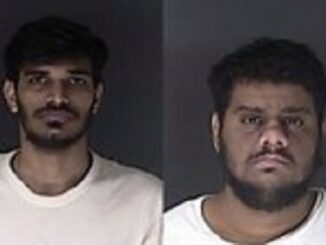
    NEW YORK (TIP): Two Indian citizens on student visas in the US have been arrested for scamming an elderly individual and charged with theft, according to authorities. Mahammadilham Vahora and Hajiali Vahora, both 24 years old, were booked into the El Paso County Jail this month, the El Paso County Sheriff’s Office said in a statement on Monday.

    They are subjects of a continued investigation involving victims across the US, it said.

    The two have been charged with crimes against at-risk people including robbery and theft — as well as money laundering involving illegal investments. Both attend the East-West University in Chicago, Illinois.

    In October 2024, the Regional Communications Center of the sheriff’s office received information from an elderly citizen who stated they had been a victim of a scamming phone call. The victim said the scammer claimed to be a “government agent” and made multiple threats to the victim.

    Consequently, the victim sent money via a cryptocurrency ATM and purchased gold, which was given to the suspects in person.

    Authorities initiated an investigation into the incident, and through cellphone tower record tracing, identified and located Hajiali and Mahammadilham Vahora. “Shame on anyone who defrauds our elderly citizens,” said El Paso County Sheriff Joseph Roybal. “Scammers are around every corner, and it is crucial for families and friends to be talking to their elderly loved ones about the signs of a scam phone call or email.”

    The office said phone scams have recently increased, and scammers often pose as government agents, bank fraud investigators, or IT specialists, claiming the victim must cooperate with an investigation or their assets must be protected.

    Victims have been instructed to deposit money at crypto ATMs, withdraw large amounts of cash from their accounts, and convert their money to gold at local gold distributors

    The victim is then tricked into giving their cash or gold to scammers posing as government agents who meet with them in person. The sheriff’s office urged citizens to be aware of such ongoing schemes and to never give crypto, cash, or gold to someone claiming to be involved in a bank, IT, or government investigation.

  • Indian-origin Canada based student found dead at beach in Canada

    Indian-origin Canada based student found dead at beach in Canada

    OTTAWA (TIP): A 21-year-old girl from Dera Bassi was found dead under mysterious circumstances in Ottawa, Canada, recently.

    Vanshika, a student who was missing since April 22, was found dead near a beach. Her father, Davinder Saini, a resident of Saini Mohalla, Dera Bassi, and local AAP leader, suspects foul play in his daughter’s death. He said he had last talked with his daughter on April 22, after which her phone remained switched off. A missing person report was lodged with the Ottawa police. Vanshika had gone to Canada after completing her Class XII exam around two and a half years ago.

  • Record 22 Punjabis elected to House of Commons in Canada

    Record 22 Punjabis elected to House of Commons in Canada

    OTTAWA (TIP): In Canada’s recent federal elections on April 28, 22 candidates of Punjab origin secured seats in the parliament, a slight increase from previous elections. These representatives, comprising members from both the Liberal and Conservative parties, contested from various regions across Canada.

    The Punjabi-Canadian community, a key part of Canada’s South Asian population, played a particularly prominent role in this election. In 2021, 18 Punjabis had won, while in the 2019 federal polls, 20 of Punjab-origin were elected. This time, 16 sitting Punjab-origin MPs were seeking re-election, with many ridings seeing a direct contest between Punjabi candidates.

    In Brampton, Punjabis won five seats: Liberal Party’s Ruby Sahota defeated Conservative Party’s Amandeep Judge from Brampton North, while Liberal candidate Maninder Sidhu defeated Conservative Party’s Bob Dosanjh from Brampton East and Amandeep Sohi of the Liberal Party defeated Conservative Taran Chahal from Brampton Centre. Sukhdeep Kang of the Conservative Party defeated Liberal candidate Sonia Sidhu from Brampton South and Amarjeet Gill of the Conservative Party defeated sitting minister Kamal Khera from Brampton West. Prominent Liberal Party winners of Punjab origin are: Anita Anand from Oakville East, Bardish Chagger from Waterloo, Anju Dhillon from Dorval Lachine, Sukh Dhaliwal from Surrey Newton, Iqwinder Singh Gaheer from Mississauga Malton, Randeep Sarai from Surrey Centre, Gurbax Saini from Fleetwood Port Kells, Param Bains from Richmond East Steveston.

    Conservative Party winners of Punjab-origin include Jasraj Hallan from Calgary East, Dalwinder Gill from Calgary McKnight, Amanpreet Gill from Calgary Skyview, Arpan Khanna from Oxford, Tim Uppal from Edmonton Gateway, Parm Gill from Milton East, Sukhman Gill from Abbotsford South Langley, Jagsharan Singh Mahal from Edmonton Southeast and Harb Gill from Windsor West.

    Pro-Khalistan leader and New Democratic Party (NDP) candidate Jagmeet Singh, however, suffered a setback as he lost Burnaby Central in British Columbia, finishing third with less than 19% of the vote share, trailing both the Liberal Party’s Wade Chang and the Conservative Party’s James Yan. He also led the NDP to a devastating defeat, with the party on track to win just seven seats — losing 18 compared to the 2021 federal election. It means the party is set to lose its official party status in the House of Commons. The NDP’s support dropped by 12 percentage points, down to just 6% in this federal election.

    Pierre Poilievre’s Conservative Party had been on track to win the vote but US President Donald Trump’s attacks, combined with the departure of unpopular former prime minister Justin Trudeau, transformed the race. Carney, who replaced Trudeau as Canadian PM just last month, convinced voters that his experience in managing economic crises made him the ideal candidate to defy Trump.

    Carney’s Liberals secured control of Canada’s parliament but may fall just short of a majority. That will require making deals with smaller parties but still marks an extraordinary comeback for the Liberals, who earlier this year looked headed for a wipeout.

    Carney led the Bank of Canada through the 2008-09 financial crisis and headed the Bank of England through the turmoil surrounding the 2016 Brexit vote.

    Trudeau’s departure was crucial to the Liberal win, which capped one of the most dramatic turnarounds in Canadian political history.

    On January 6, the day Trudeau announced he would resign, the Conservatives led the Liberals by more than 20 points in most polls, as public anger over soaring costs mounted after Trudeau’s decade in power.

    Carney distanced himself from Trudeau throughout the campaign.

    (Source: PTI)

  • 3 Indian-origin people found dead after shooting at US home

    3 Indian-origin people found dead after shooting at US home

    SEATTLE (TIP): Three Indian-origin people were found dead after a shooting at a home in the US state of Washington, according to local media reports. The incident took place on April 24 in Newcastle City. The dead were identified as Harshavardhana Kikkeri (44), Shwetha Panyam (41) and Dhruva Kikkeri (14), The Seattle Times reported on Tuesday.

    While the deaths of Shwetha and Dhruva were ruled as homicide by the police, Harshavardhana died by suicide, the report quoted the King County medical examiner’s office as saying.

    Neighbors told the KOMO News that a young family lived in the home where the shooting took place.

    On the night of the shooting, authorities were called to the townhouse on 129th Street after receiving a 911 call. The KING 5 television station said its crew saw a child being escorted from the home and comforted by investigators.

    Unconfirmed reports said Harshavardhana, alongside Shwetha, was the owner of an India-based AI tech company Holoworld.

    According to the company’s website, it was founded in 2018 by the two, with Harshavardhana serving as the CEO and CTO, and Shwetha as president. King County sheriff’s spokesperson Brandyn Hull said she could not comment on whether the case was believed to be a murder-suicide.

    “We understand many questions remain about the events that took place in Newcastle on April 24,” Hull was quoted as saying by Renton Reporter. “An investigation such as this takes time, and our detectives are working diligently to try and piece together what led to this incident. Until this work concludes, the Sheriff’s Office won’t have any further updates.”          No sign of the deaths’ motive or relationships among the deceased was released by the Sheriff’s Office, according to the report.

  • AAPI Members Elect New Leadership Team for 2026 and Beyond

    AAPI Members Elect New Leadership Team for 2026 and Beyond

    CHICAGO, IL (TIP):  “We have successfully concluded our elections in a very transparent manner for the year 2025-26 for leadership positions at the American Association of Physicians of Indian Origin (AAPI),” Dr. Satheesh Kathula, President of AAPI, and Dr. Lokesh Edara, AAPI’s Chief Election Officer and Past Chair of AAPI BOT, jointly announced here today. “We thank the election officers and all the members of AAPI for participating in the Election.”

    After months-long elections season, where multiple candidates contested at the annual elections for various offices for AAPI for the year 2025-26 and beyond, preliminary election results were announced on April 12th, 2025, while the results became official after the deadline for possible recounts.

    Dr. Krishan Kumar has been elected Vice President of AAPI, Dr. Seema Arora has been elected as the Secretary, and the new Treasurer elected for 2025-26 is Dr. Soumya Neravetla, a first-ever second-generation Indian American physician elected to the position in the 43-year-old history of AAPI.

    Dr. Anjali Gulati, Dr. Sunitha Polepalle, and Dr. Srini Gokarakonda were elected as members of the Board of Trustees, and the Chair-Elect of the Board of Trustees of AAPI is Dr. Hetal Gor. Dr. Kathula will continue to guide AAPI as the Immediate Past President.

    Dr. Amit Chakrabarty, who serves as the President-Elect of AAPI, and Dr. Meher Medavaram, the current Vice President of AAPI, did not contest the elections, as the current President-Elect will assume charge as the President of AAPI in July 2025, and the current Vice President will become the President-Elect for the year 2025-26.

    Dr. Raj Bhayani, who was in a direct contest with Dr. Krishan Kumar for the office of the Vice President, conceded the election. AAPI Secretary-Elect Dr. Seema Arora won the contest against Dr. Malti Mehta and Dr. Shirish Kumar Patel, while Dr. Leena Gupta conceded the election to Dr. Soumya Neravetla as the Treasurer.

    The following offices for Regional Directors are declared uncontested: NW Central: Dr. Annu Terkonda; SW Central: Dr. Sharma Prabhakar; NE Central I: Dr. Mohan Kesani; NE Central II: Dr. Dharmesh Gandhi; SE Central: Dr. Shashank Ponugoti; New England: Dr. Madhavi Gorusu; Mid-Atlantic I: Dr. Inderpal Chhabra; Mid-Atlantic II: Dr. Avinash C. Gupta; and, South-Atlantic: Dr. Uma Jonnalagadda. The Regional Director positions for the Pacific and Mountain Regions remain open for contests.

    The deadline for filing the nominations was January 31st, 2025. Ballots were mailed/emailed by the AAPI Office by March 7th to all active members of AAPI. All the ballots from AAPI members were to reach the Election Agency by the Second Friday of April 11th, 2025. The ballots were counted, and the election results were announced on April 12th, 2025.

    While thanking the contestants and the thousands of Indian American physicians, who are actively holding membership at the American Association of Physicians of Indian Origin (AAPI), and participated in the election process, Dr. Kathula said, “A heartfelt thank you to all the contestants in AAPI elections — your willingness to volunteer your time and energy speaks volumes about your commitment to our beloved organization, AAPI. Congratulations to all the winners! We’re incredibly proud of your achievements and grateful for your dedication. I know firsthand how much it takes, having run in four elections and won them all. Your passion, effort, and courage are truly commendable, and they continue to inspire our members and future leaders.”

    Dr. Sunil Kaza, AAPI BOT Chair thanked all the candidates for their commitment to the vision and mission of AAPI. He said, “I want to congratulate all the winners of the election, and all the candidates for their passion and dedication to serving AAPI, and regardless of the outcome, we need you as a valuable team member of our beloved AAPI.  I wish them the very best and my wholehearted support.”

    “As the incoming President of AAPI, I would like to congratulate my incoming new team for the year 2025-26,” said Dr. Amit Chakrabarty, who will assume charge as the President of AAPI during the 43rdh annual convention in Cincinnati, OH in July this year. “I’m very honored and consider myself fortunate to be bestowed with the responsibility of leading the four decades old strong organization with the cooperation and collaboration of an excellent team of dedicated, hardworking, and loyal officers and executive committee members who are with me to take AAPI to newer heights,” Dr. Chakrabarty added.

    Dr. Hetal Gor, AAPI BOT Chair-Elect said, “I am looking forward to working with the new leadership  and members of AAPI in strengthening the goals and mission of AAPI and to help make AAPI a healthcare leader in US and globally and work in the best interests of our Physicians and our community here in the US and serve our motherland, India.”

    Dr. Meher Medavaram, President-Elect of AAPI for 2025-26, said, “I want to express my sincere gratitude to all AAPI members for this honor and assure that I will sincerely work for the betterment of our beloved organization, AAPI. Once again, I thank everyone for the opportunity to serve.” She expressed gratitude to the Election Committee, who “successfully organized this election, with great participation from AAPI members.”

    “I stand before you today filled with immense gratitude and humility. Winning this election is not just a personal achievement but a collective victory, and I am deeply honored to have your trust and support,” said Dr. Krishan Kumar. “This victory belongs to all of us. It is a testament to the power of unity, collaboration, and the belief that together, we can achieve great things. Let’s move forward together, with determination and hope, to build a brighter future for our community.”

    Dr. Seema Arora said, “I’m very honored, and consider myself fortunate to be bestowed with the responsibility for serving the four decades old strong organization with the cooperation and collaboration of an excellent team of dedicated, hardworking, and loyal officers and executive committee members who are with me to take AAPI to newer heights.”

    Dr. Soumya Neravetla, the newly elected Treasurer of AAPI, said, “I am honored to be elected as the Treasurer of national AAPI. I appreciate and thank all of you for your trust in me. Your guidance, support, and vote made this possible. This win belongs to all our members for trusting our vision of growth & progress. I hope to receive your continued support and inspiration.”

    The growing influence of physicians of Indian heritage is evident, as increasingly physicians of Indian origin hold critical positions in healthcare, academic, research, and administrative positions across the nation. We the physicians of Indian origin are proud of our great achievements and contributions to our motherland, India, our adopted land, the US, and in a very significant way to the transformation of Indo-US relations.

    Serving 1 in every 7 patients in the US, AAPI members care for millions of patients every day, while several of them have risen to hold high-flying jobs, shaping the policies and programs, and inventions that shape the landscape of healthcare in the US and around the world.

    Since its inception in 1982, AAPI has been at the forefront, representing a conglomeration of more than 125,000 practicing physicians in the United States, seeking to be the united voice for the physicians of Indian origin. For more details about AAPI, please visit: www.aapiusa,org

    (Based on a press release issued by Ajay Ghosh, Media Coordinator AAPI)

  • Canada Freezes US Travel as Major Canadian Airlines Slash Routes to US Cities to Tap the European Market

    Canada Freezes US Travel as Major Canadian Airlines Slash Routes to US Cities to Tap the European Market

    OTTAWA (TIP): Canada is rapidly reshaping its aviation ties with the US as declining travel demand, rising diplomatic tensions, and shifting consumer preferences drive major airlines—Air Canada, WestJet, Porter, and Flair—to slash routes to key U.S. cities including San Francisco, Miami, New York, and Washington. With a significant drop in both leisure and business travel from Canada to the U.S., carriers are now reallocating capacity toward Europe, where demand remains strong and political conditions are more favorable.

    Cross-Border Travel in Decline

    In recent months, both business and leisure travel from Canada to the United States have seen a dramatic downturn. Data from the U.S. Customs and Border Protection (CBP) shows that entries from the northern border fell by 12.5% in February and a further 18% in March, indicating sustained contraction in cross-border movement. This retreat comes amid growing discomfort among Canadian travelers, fueled by strict U.S. border enforcement, electronic device inspections, and political rhetoric painting Canada as “the 51st state.”

    Further compounding this decline, Flight Centre Travel Group Canada reported that Canadian business travel to the United States plummeted by 40% in the early months of 2025. Tourism Economics forecasts a 15.2% decline in international visitors to the U.S. this year alone, a downturn echoed by decreased arrivals from key European markets like Germany and Spain—down 30% and 25%, respectively, in March.

    Political Fallout Behind the Travel Freeze

    The downturn in U.S.-bound travel from Canada coincides with an atmosphere of political friction. While President Donald Trump dismissed concerns in an April 27 media exchange—calling the tourism slowdown “not a big deal”—his rhetoric and policy decisions have sent ripples through bilateral travel flows. Two days after denying the downturn, Trump stated in an ABC interview that “tourism is way up,” a claim that was fact-checked and corrected live on air.

    Meanwhile, Canada has issued updated travel advisories cautioning citizens about “strict enforcement” at U.S. borders and warning of increased scrutiny of electronic devices. Similar advisories have been issued by France, Belgium, Finland, Portugal, and the United Kingdom, reinforcing the perception of heightened tension and risk when entering the United States.

    Air Canada Leads Pullback from the U.S.

    Air Canada has taken the most prominent steps to scale back its U.S. operations. In 2024, the airline had ramped up transborder service, including frequent flights between Montréal–Trudeau International Airport (YUL) and San Francisco International Airport (SFO), with up to three daily rotations during peak summer months. However, facing reduced demand, the airline will now revert to a single daily flight, cutting previously scheduled frequencies.

    These cuts follow earlier reductions to routes linking Vancouver International Airport (YVR) with Miami, Houston, and Washington. Mark Galardo, Air Canada’s Executive Vice President of Revenue and Network Planning, noted that the airline is proactively “moving capacity into other sectors where we see strength,” referring specifically to the European market.

    WestJet Cancels More US Routes

    WestJet, another major Canadian airline, has also made decisive cuts to its U.S. schedule. The airline recently canceled its planned Vancouver–Austin route, which was set to launch in May 2025, citing a “downward shift in demand.” This follows previous cancellations of routes from Calgary to New York-LaGuardia and from Edmonton to Orlando.

    Rather than attempting to revive faltering U.S. services, WestJet is pivoting to Europe. The airline plans to increase its footprint across popular transatlantic destinations, anticipating stronger seasonal demand and more favorable geopolitical conditions.

    Porter Airlines Cuts Frequencies and Refocuses on Canada

    Porter Airlines, a growing player in Canada’s mid-size market, has implemented “targeted frequency reductions” on select U.S. routes due to softening demand. At the same time, the airline is expanding its domestic Canadian network, increasing capacity from 75% to 80%. Interestingly, while still maintaining some Canada–U.S. service, Porter has paused marketing campaigns aimed at promoting U.S. travel, reflecting traveler hesitation and internal reassessment of brand priorities amid current conditions.

    Despite the cuts, Porter’s overall Canada–U.S. capacity remains 25% higher than last year, showing the airline’s continued interest in maintaining strategic corridors even as broader retrenchments occur.

    Flair Airlines Retreats and Reshuffles

    Flair Airlines, Canada’s low-cost carrier, has reduced more than a third of its U.S. flights in response to what executives describe as a significant drop in bookings. The airline is redirecting its operations toward more stable domestic and international markets. While the United States was once a key target for affordable getaway options, Flair now sees better opportunities in intra-Canada routes and possibly new destinations outside North America.

    European Destinations Rise in Priority

    The strategic repositioning of Canadian carriers isn’t just about pulling back from the U.S.—it’s about chasing growth where it exists. Across all four airlines, a clear trend is emerging: growing investment in European routes.

    Air Canada has announced additional frequencies and new seasonal routes to major European destinations, including Paris, Rome, and Frankfurt. WestJet has expanded its transatlantic operations with new service to London Gatwick and Dublin. These routes have historically performed well in the summer months and are viewed as high-potential markets, especially as post-pandemic travel demand rebounds strongly across the continent.

    The trend aligns with what many analysts now call a “transatlantic rebalancing,” where airlines reallocate limited fleet resources to higher-yield, lower-friction travel corridors.

    Economic Costs of the Decline

    The U.S. Travel Association warns that even a 10% drop in Canadian tourism could cost the U.S. economy over $2.1 billion and result in the loss of more than 140,000 jobs. Given the current trajectory, the actual decline may exceed that threshold. Cities like San Francisco, Miami, New York, Orlando, Houston, and Washington—which have traditionally benefited from steady Canadian visitor traffic—are already seeing fewer arrivals, empty hotel rooms, and reduced spending in restaurants, attractions, and retail.

    The impact extends to airlines as well. U.S. carriers that once enjoyed strong demand from Canadian cities are now seeing softer load factors on incoming flights. Codeshare partnerships with Canadian airlines are also being re-evaluated, and some U.S. airlines have begun to reduce marketing campaigns targeting Canadian customers.

    Traveler Sentiment and Safety Concerns

    Beyond economics and schedules, the freeze in travel is also psychological. Canadian travelers increasingly cite discomfort with political instability and unpredictable border interactions as reasons for deferring U.S. trips. The Canadian government’s advisory, which highlights increased scrutiny at ports of entry—including searches of electronic devices—has only amplified these concerns.

    Europe, by contrast, is perceived as safer, more welcoming, and culturally enriching, particularly for leisure travel. The absence of political hostility, coupled with efficient entry policies and strong tourism recovery plans, makes Europe an attractive pivot point for Canadian travel planners and airlines alike.

    Canada is freezing air travel links to the US as Air Canada, WestJet, Porter, and Flair slash routes to major cities like San Francisco, Miami, New York, and Washington in response to political tensions, falling demand, and strict US border scrutiny. Redirecting capacity to Europe, the airlines are capitalizing on rising transatlantic travel interest and more favorable market conditions.

    A Restructured Future for Canada–US Air Travel?

    The sharp reduction in flights from Canada to the U.S. by four major airlines—Air Canada, WestJet, Porter, and Flair—signals a significant shift in travel priorities for 2025. While the move reflects short-term market conditions and geopolitical tensions, it may also indicate long-term structural change. Airlines are proving more agile in capacity planning, ready to pivot to new markets in response to volatility.

    Unless political relations improve and traveler confidence is restored, Canada–U.S. air travel may not return to previous highs anytime soon. In the meantime, Europe stands to benefit from the realignment as Canadian carriers tap into surging demand across the Atlantic.

    Canadian airlines are not just adjusting routes—they are signaling a new era in international air strategy. Faced with declining demand and mounting political tensions, Air Canada, WestJet, Porter, and Flair have opted to freeze expansion into the U.S. and reroute their focus toward the robust, receptive skies of Europe. The ripple effects will be felt across both continents—changing the way Canadians travel, the cities they connect with, and the airlines that shape their global journeys.

    (Source: Travel & Tour World)

  • Thousands of  Sikhs Participate in the 37th  Sikh Day Parade  In New York City

    Thousands of Sikhs Participate in the 37th Sikh Day Parade In New York City

    NEW YORK, NY (TIP): Organized by the Sikh Cultural Society, Richmond Hill,  New York,  with the cooperation of the Sikh Gurudwaras and the  Sikh organizations of the Tri-State area of New York, New Jersey and Connecticut, the 37th Sikh Day Parade on April 26 in Manhattan, New York, attracted, as usual, large crowds of Sikh men, women and children from far and near. Contingents of the Sikhs came from as far as Philadelphia and Maryland.

    Saturday’s dreary weather didn’t stop a full day of traditions, history, food and music at the Sikh Day Parade in Midtown.

    Colorful displays of the Sikh faith made their way down Madison Avenue, ending with free meals for thousands. As the floats made their way down the wet pavement, the sounds of Sikh traditions were heard loud and clear.

    For the 37th Annual Sikh Day Parade, many in their colorful turbans and cultural clothing — most of them wearing rain ponchos — lined up to celebrate Vaisakhi. The day which originally is the celebration of harvest, is also the day when the Tenth Master of the Sikhs, Guru Gobind Singh Ji, created a sect called Khalsa, and gave it a distinct form and appearance. Thus, the day is both a socio-cultural festival and a celebration of the birthday of Khalsa (more popularly known as the Sikhs)

    “Today is  a celebration of Vaisakhi, and also a celebration of the creation of our faith, and we are here celebrating,” paradegoer Baldev Singh Grewal who is founder -publisher of a leading Punjabi newspaper Sher-e-Punjab,  said.

    The parade concluded with a meeting at Madison Square Park, where community leaders made speeches and  free food , called langer in Sikhism, was served.

  • Kamla Persad-Bissessar Returns as Trinidad & Tobago Prime Minister;  Promises Fairness and Hope

    Kamla Persad-Bissessar Returns as Trinidad & Tobago Prime Minister; Promises Fairness and Hope

    • I.S. Saluja

    PORT OF SPAIN (TIP):  Kamla Persad-Bissessar, the head of Trinidad and Tobago’s centrist United National Congress party, took over the reins of the nation as Prime Minister for a second time on Thursday, May 1, 2025, and vowed  to create wealth that would benefit “seven generations” to come, as she was sworn in..

    Persad-Bissessar’s party won an overall majority in elections last month on the twin-island Caribbean nation that is battling an economic slump and a rise in gang violence.

    At a ceremony at the President’s House, she promised to put the country “on the right pathway, where we cease to govern simply to win the next election, and instead govern to create wealth and opportunities for seven generations into the future.”

    “You’ve had prime ministers before me, you will have prime ministers after me. But guess what? You will never have a prime minister who loves you as much as I do,” she said, beginning a five-year term.

    “God bless you,” she added.

    (With inputs from Agencies)

  • US stands strong with India against terrorism, PM Modi has our full support: State Department

    US stands strong with India against terrorism, PM Modi has our full support: State Department

    WASHINGTON, D.C. (TIP): The United States stands strong with India against terrorism and Prime Minister Narendra Modi “has our full support”, the State Department said underlining that Secretary of State Marco Rubio has urged India and Pakistan to work towards a responsible resolution that maintains long-term peace and regional stability in South Asia.

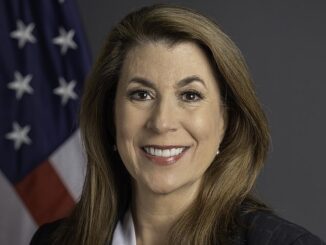
    State Department Spokesperson Tammy Bruce said at a press briefing on Thursday that Washington is “monitoring closely” the situation between India and Pakistan amid rising tensions. Secretary of State Marco Rubio spoke separately with External Affairs Minister S Jaishankar and Pakistani Prime Minister Shehbaz Sharif on Wednesday, April 30.

    “As the President articulated to Prime Minister Modi last week, the United States stands strong with India against terrorism, and Prime Minister Modi has our full support,” Bruce said.

    Rubio “encouraged both countries to work towards a responsible resolution that maintains long-term peace and regional stability in South Asia. We continue to be in touch with the governments of both countries, as I mentioned, at multiple levels,” Bruce added.

    “This government is in constant communication. We are asking for a responsible resolution from both parties. And beyond that, there’s nothing I can give you, any other details,” she said.

    (Source: PTI)

  • Canada’s Liberal Party, led by Mark Carney, wins federal election but falls short of a majority in Parliament

    Canada’s Liberal Party, led by Mark Carney, wins federal election but falls short of a majority in Parliament

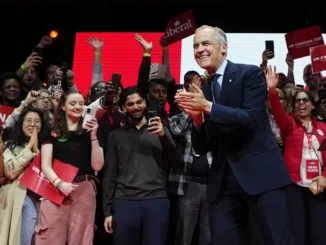
    OTTAWA (TIP): Prime Minister Mark Carney won Canada’s election on April 28, 2025, leading his Liberal Party to a new term in power after convincing voters his experience managing crises had prepared him to confront US President Donald Trump.

    However,  Liberals fell short of winning an outright majority in Parliament on Tuesday, a day after the party scored a stunning comeback victory in a vote widely seen as a rebuke of U.S. President Donald Trump.

    The vote-counting agency Elections Canada finished processing nearly all ballots in an election that could leave the Liberals just three seats shy of a majority, which means they will have to seek help from another, smaller party to pass legislation.

    The Liberal party seemed likely to find the extra votes necessary, but it was not clear whether they would come from the progressive party, which backed the Liberals under former Prime Minister Justin Trudeau, or from a separatist party from French-speaking Quebec.

    Carney’s rival, populist Conservative leader Pierre Poilievre, was in the lead until Trump took aim at Canada with a trade war and threats to annex the country as the 51st state. Poilievre not only lost his bid for prime minister Monday but was voted out of the Parliament seat that he held for 20 years.

    Since he returned to office, however, Trump has enraged Canadians with his behavior toward one of his country’s closest allies. His policies and rhetoric — including imposing steep tariffs on Canadian imports and the “51st state” comments — became the central issue in the Canadian election and helped the Liberals make a remarkable turnaround, closing an almost 20-point gap with the Conservatives in a matter of weeks. The Liberals were also boosted by a candidate, Carney, who may be uniquely positioned to respond to Trump and the global economic uncertainty his tariffs have created.

    Like Trump, Carney had never held elected office before becoming his country’s leader and spent much of his life in the private sector. He became prime minister last month after he was elected leader of the Liberal Party, then quickly called a snap election in the hope of securing a full term.

    Carney, 60, is also a former central banker used to dealing with economic crises, having run the Bank of Canada after the 2008 global financial crisis and the Bank of England during the Brexit process.

    “Mark offers the proven leadership and real plan we need to deliver change for our party and our country, and to build the strongest economy in the G7,” his campaign said, referring to the Group of Seven industrialized nations.

    Poilievre had been on a rising trajectory until earlier this year, with his “Trump light” style embraced by the populist wing of his party. As anger in Canada grew, however, his similarities with Trump began to work against him.

    Poilievre ran on job opportunities and on promises that Gen Z voters would be able to afford housing, leveraging public fatigue with the Liberal government. At a rally Sunday, the CBC quoted him as calling the Trudeau government “the lost Liberal decade of rising crime, chaos, drugs and disorder.”

    Trump continued goading Canada on Monday as voters went to the polls, saying again that it should become the “cherished” 51st U.S. state. “ALL POSITIVES WITH NO NEGATIVES. IT WAS MEANT TO BE!” he said on his Truth Social platform. Both Carney and Poilievre rebuked Trump over such comments and others he has made about the Canadian election.

    “They can become divided and weak,” Carney said in a video on social media Monday, speaking of the U.S. “But this is Canada. And we decide what happens here.”

    Poilievre wrote Monday on X: “President Trump, stay out of our election.”

    “The only people who will decide the future of Canada are Canadians at the ballot box,” he wrote. “Canada will always be proud, sovereign and independent and we will NEVER be the 51st state.”

    Trump did not appear to have publicly commented on the election result as of late Monday, but his predecessor congratulated Carney and the Liberals.

    “I’m confident Mark will be a strong leader for the fundamental values and interests Canadians and Americans share,” former President Joe Biden said in a post on X.

    (Agencies)