Month: May 2025

  • Israeli strikes kill 70 in Gaza, including 22 children, after Netanyahu refuses to halt ‘offensive’

    Israeli strikes kill 70 in Gaza, including 22 children, after Netanyahu refuses to halt ‘offensive’

    DEIR AL-BALAH (tip): Israeli airstrikes pounded northern and southern Gaza on Wednesday, killing at least 70 people, including almost two dozen children, according to hospitals and health officials, a day after Israeli Prime Minister Benjamin Netanyahu said there was “no way” he would halt Israel’s offensive in the Palestinian territory before Hamas is defeated.
    At least 50 people, including 22 children, were killed in strikes around Jabaliya in northern Gaza alone, according to hospitals and Gaza’s Health Ministry.
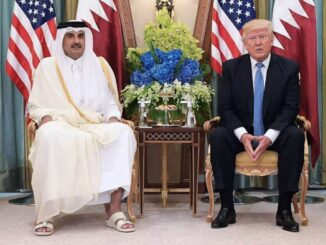
    The strikes came after Hamas on Monday released an Israeli-American hostage, a gesture that some thought could lay the groundwork for a ceasefire, and as US President Donald Trump visited Saudi Arabia during a multi-day trip to Gulf countries.
    Israel’s military refused to comment on the strikes. It warned Jabaliya residents to evacuate late Tuesday, citing militant infrastructure in the area, including rocket launchers.
    In Jabaliya, rescue workers smashed through collapsed concrete slabs using hand tools, lit by the light of cellphones, to remove children’s bodies.
    In comments released by Netanyahu’s office Tuesday, the prime minister said Israeli forces were days away from a promised escalation of force and would enter Gaza “with great strength to complete the mission…It means destroying Hamas.”
    There had been widespread hope that Trump’s visit to the Middle East could usher in a ceasefire deal or renewal of humanitarian aid to Gaza. An Israeli blockade of the territory is now in its third month.
    The war began when Hamas-led militants killed 1,200 people in a 2023 intrusion into southern Israel. Israel’s retaliatory offensive has killed over 52,928 Palestinians, many of them women and children, according to Gaza’s Health Ministry, which does not say how many were combatants. Almost 3,000 have been killed since Israel broke a ceasefire on March 18, the ministry said.
    Israel’s offensive has obliterated vast swathes of Gaza’s urban landscape and displaced 90% of the population, often multiple times.
    Israeli media reported that one target in a strike on a hospital in Khan Younis on Tuesday was Mohammed Sinwar, younger brother of the late Hamas leader Yahya Sinwar, who was killed by Israeli forces last October.
    The military would not comment beyond saying it had targeted a Hamas “command and control center” which it said was located beneath the European Hospital.
    Mohammed Sinwar is believed to be Hamas’ top military leader in Gaza. Israel has tried to assassinate him multiple times over the past decades.
    A senior health official in Gaza said Wednesday that ambulances were no longer able to reach the hospital due to damage from the strike, which had also forced the facility to suspend surgical operations. (AP)

  • Two Indian-origin Students from Cleveland State University Die in Pennsylvania Crash

    Two Indian-origin Students from Cleveland State University Die in Pennsylvania Crash

    CLEVELAND, OH (TIP):  Two Indian students from Cleveland State University tragically lost their lives in a car crash on the Pennsylvania Turnpike in Lancaster County on the morning of Saturday, May 10, 2025. The victims have been identified as 23-year-old Saurav Prabhakar and 20-year-old Manav Patel, both residents of Cleveland, Ohio. According to the Lancaster County Coroner’s Office, the crash occurred around 7:51 a.m. near mile marker 286 eastbound in East Cocalico Township.
    Emergency responders arrived to find the vehicle engulfed in flames. Prabhakar, who was driving, and Patel, the passenger, were pronounced dead at the scene shortly after 8:30 a.m.
    Investigators said the car left the roadway, struck a tree, and then collided with a bridge. Both students lived at the same address on East 13th Street in Cleveland, Ohio.
    Their bodies were transported to the Lancaster County Forensic Center for autopsies, which confirmed they died from multiple traumatic injuries. The coroner’s office ruled both deaths accidental.
    Originally from India, Prabhakar and Patel were pursuing higher education at Cleveland State University. The university and the broader Indian student community have expressed deep grief over the tragic loss.

  • Indian American technology executive Srisu Subrahmanyam named new CEO of Repairify

    Indian American technology executive Srisu Subrahmanyam named new CEO of Repairify

    DALLAS, TX (TIP): Repairify, a Texas-based major automotive technology and intelligence solutions brand working to revolutionize vehicle care, has appointed Indian American Srisu Subrahmanyam as its chief executive officer. Repairify hopes to add value to its services under the stewardship of Subrahmanyam, “a high-impact, customer-focused senior executive with global experience across public and private companies in diverse industries,” according to a company release.
    “He has a proven track record of leading large-scale business transformations, driving operational excellence, and accelerating growth in international markets,” said the company, which made headlines in the field of auto glass and collision repair last year,
    He most recently served as executive vice president of operations and president, services and international markets at Openlane, one of the world’s largest digital, used vehicle marketplaces and technology providers. He focused on achieving growth through the implementation of technology and automation and led the digital transformation of Openlane after the sale of Adesa US to Carvana.

    “As a longtime customer of asTech and BlueDriver, I’ve experienced the real-world value Repairify brings through its advanced diagnostics and calibration solutions,” Subrahmanyam said. “I’m excited to lead this next chapter — through product innovation, operational excellence, and a renewed focus on solving our customers’ problems — to drive growth and deliver even greater value.”
    He previously was the global vice president of engineering at Ingram Micro, chief operating officer of BrightPoint Americas, and leadership positions with Orchard Group and Career Education Corporation. At United Airlines, he rose to vice president of Continuous Improvement, founding the airline’s performance management office and embedding operational excellence company-wide. He began his career at Advanced Process Combinatorics, leading supply chain modeling for the pharmaceutical and chemical industries.
    Subrahmanyam has a PhD in Chemical Engineering from Purdue University and a B.E. (Honors) in Chemical Engineering from the Birla Institute of Technology & Science, India.

  • Indian American Executive Urvashi Shivdasani joins R/GA as Global CFO

    Indian American Executive Urvashi Shivdasani joins R/GA as Global CFO

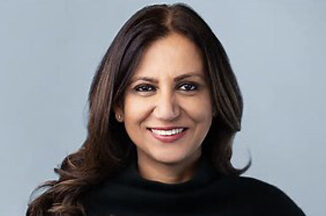
    NEW YORK (TIP): Urvashi Shivdasani, an Indian American finance executive with over two decades of cross-industry expertise has joined creative agency R/GA as its new Global Chief Financial Officer.
    “Exciting news: I’ve joined R/GA as Global Chief Financial Officer. After an unforgettable chapter at Huge, I’m energized to bring my experience and passion to a dynamic and innovative company,” she posted on LinkedIn.
    “The timing couldn’t be better – R/GA is forging a bold path as an independent agency, and I’m thrilled to help shape what comes next in this new intelligence age. Let’s build something extraordinary!”
    Shivdasani will partner closely with Global CEO Robin Forbes and the global leadership team to evolve the agency’s financial strategy and help drive the implementation and success of a more flexible and output-oriented commercial agency model, the agency announced.
    Her appointment marks the first global C-suite hire since R/GA’s return to independence as a privately owned company following the new partnership between R/GA’s management and private equity firm Truelink Capital.
    Shivdasani, the announcement stated, will play a crucial role in strategically implementing R/GA’s newly established $50 million Innovation Fund.
    “Urvashi’s extensive experience and strategic acumen will be invaluable as we chart R/GA’s course as an independent agency and activate a new commercial model based on outcomes and not hours,” said Forbes. “Her track record of driving financial success and operational excellence will be critical as we continue to invest in innovation and new ways of working.”
    “I’m thrilled to join R/GA at this pivotal moment in its history,” said Shivdasani. “The agency’s commitment to innovation and its bold vision for the future was an incredibly compelling opportunity, and one I can’t wait to be involved in. I look forward to partnering with Robin and the leadership team to continue to build a growth organization for the long term that drives creativity and innovation for our clients”
    Shivdasani joins R/GA from Huge, where, as Global CFO, she led all aspects of finance and operations, including accounting, FP&A, real estate, commercial finance, resource management, and information technology, and played a critical role in the successful sale of the company to private equity. Prior to her time at Huge, she held senior finance roles at Ralph Lauren and Discovery Communications.

  • Indian American lawmaker J.J. Singh secures $55 million in tuition relief for Virginia students

    Indian American lawmaker J.J. Singh secures $55 million in tuition relief for Virginia students

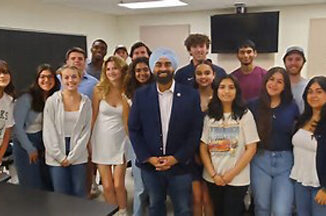
    RICHMOND, VA (TIP): Virginia Assembly’s Indian American Delegate J.J. Singh’s proposal to provide $55 million in tuition relief for students at Virginia’s public universities and community colleges has been signed into law.
    The measure included in the final state budget released last week with bipartisan support is aimed at easing the financial burden on college students and their families.
    “Now, more than ever, we need to invest in our next generation and ensure every Virginia student can achieve the American dream,” Singh, who represents Southeastern Loudoun County, posted on X.
    Singh who was sworn in earlier this year after winning a closely watched special election, pointed to the steep rise in tuition costs as a critical issue facing families across the Commonwealth.
    “When I went to the University of Virginia, tuition, room, and board cost just $15,000 per year; now it’s over $40,000,” Singh wrote. “The rise in tuition is an epidemic plaguing the entire Commonwealth, and the country, for that matter. Students and families can’t afford it. For any parents who can help, they have to choose whether to help their children or fund their own retirement.”
    The $55 million in tuition relief will be directed toward Virginia’s public universities and community colleges, with the aim of reducing student debt and making higher education more accessible.
    “As elected officials, we have a duty to invest in the future of our Commonwealth, and no investment is more important than the education of the next generation,” Singh stated.
    Singh, the son of Indian immigrants and the first turbaned Sikh to serve in the U.S. Peace Corps, previously worked in the Obama administration’s Office of Management and Budget. His focus on affordability and access has resonated with voters and colleagues alike during his first term in office.

  • Indo-Canadian Punjabi businessman  shot dead in Mississauga; assailants fired 15 rounds

    Indo-Canadian Punjabi businessman shot dead in Mississauga; assailants fired 15 rounds

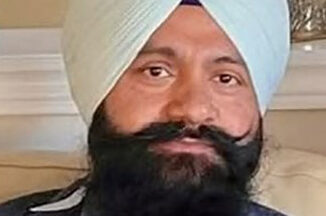
    MISSISSAUGA (TIP) : A 50-year-old Punjabi businessman was shot dead outside his office in Mississauga, Canada, officials said on Thursday, May 15.
    According to sources, Harjit Singh Dhadda was shot dead near the intersection of Telford Way and Derry Road. The incident has sent shockwaves through the local community, marking the sixth murder in the city since the beginning of the year. The Peel Regional Police have yet to officially confirm the victim’s identity.
    According to eyewitness accounts, Dhadda was near his car when unidentified assailants, believed to have been lying in wait, approached and fired 15-16 rounds before fleeing the scene. People in the parking lot ran for cover during the gunfire. An eyewitness said the gunmen exited a parked car, fired several shots at close range, and fled in the same vehicle. A nearby law firm employee reported that a stray bullet entered their office and hit an empty chair—just moments after he had stood up, narrowly avoiding injury.
    Dhadda was rushed to the hospital in critical condition but later succumbed to his injuries.
    Police spokesperson Michael Stafford confirmed that the case has been handed over to investigators and that nearby CCTV footage is being reviewed in an effort to identify the suspects.
    Dhadda, originally from Bajpur district in Uttarakhand, had migrated to Canada nearly 30 years ago. He went on to become a prominent businessman in the trucking services industry.
    Close associates, speaking on condition of anonymity, revealed that Dhadda had recently received threats from Indian phone numbers. The threats had deeply unsettled him, and Peel Police had reportedly issued prior warnings concerning his safety.

  • Indian-origin techie Vishnu Irigireddy among 3 killed in tragic climbing accident in US

    Indian-origin techie Vishnu Irigireddy among 3 killed in tragic climbing accident in US

    NEW YORK (TIP) : Indian-origin techie Vishnu Irigireddy was among the three persons killed in a tragic climbing accident in Washington state’s North Cascades Range of western North America.
    Vishnu, 48, a resident of Seattle, was attempting to climb North Early Winters Spire area of the Cascades along with his three friends, Tim Nguyen, 63, Oleksander Martynenko, 36 and Anton Tselykh, 38, on Saturday when the accident happened, NBC News reported.
    The group noticed a storm coming and started to retreat when at some point during their descent, the team’s anchor point failed and sent the group plunging 200 feet down, Climbing website reported.
    Tselykh, the sole surviving climber, miraculously survived the dangerous fall and drove 64 kilometers to inform the authorities about the accident that killed his three friends.
    Vishnu’s friends and family describe him as an experienced climber “who found joy and purpose in nature.” “Originally from India and a proud member of Seattle’s vibrant tech and cultural community, Vishnu built a life that reflected his values—integrity, compassion, and a relentless pursuit of growth,” a note by family and friends on remembr.com website said.
    According to a notice for his cremation ceremony, to be held on Thursday, his friends and family would be making donations to two non-profits to honor Vishnu, who they said had “developed an intense passion for mountaineering and climbing throughout his life.” They also made an appeal to others to donate to those charitable organizations till May 22.
    Vishnu was working as Vice President of Engineering at Fluke Corporation, a test equipment manufacturing company in the Greater Seattle Area.
    His company described him as an extraordinary leader in a statement released after his death adding that his loss “felt profoundly” across the organization.
    Tselykh is currently in hospital and is being treated for internal bleeding and a traumatic brain injury.
    North Early Winters Spire, a granite peak in the Liberty Bell group of the North Cascades, is popular among experienced climbers.

  • Indian-origin Scholar Badar Khan Suri Released from Immigration Detention

    Indian-origin Scholar Badar Khan Suri Released from Immigration Detention

    WASHINGTON, D.C. (TIP): Badar Khan Suri, an Indian postdoctoral fellow at Georgetown University, has been released from U.S. immigration detention following a ruling by U.S. District Judge Patricia Tolliver Giles that his prolonged detention likely violated constitutional protections. Suri was arrested in March 2025 amid a crackdown on foreign students accused of supporting Hamas or promoting antisemitism.

    Suri’s J-1 visa had been revoked by the Department of Homeland Security, citing pro-Palestinian social media posts and familial connections—specifically, a father-in-law who once served as an advisor to Hamas. Despite no direct evidence linking Suri to any criminal activity, federal agents detained him, sparking outrage among civil rights groups and the academic community.
    Judge Giles ordered Suri’s release on personal recognizance, stating that political speech—even by non-citizens—is protected under the First Amendment. She found the government’s justification for his detention lacking and emphasized that Suri posed no threat to the community.
    Speaking to media after his release, a visibly emotional Suri said, “Justice delayed is justice denied. It took two months, but I’m extremely thankful that finally I’m free.” He described his arrest as “Kafkaesque,” recounting how masked, plainclothed officers apprehended him outside his apartment without explanation.
    “They made a subhuman out of me. They took me from one center to another, not letting my family know, not letting me know that I have attorneys,” he said.
    Suri also expressed empathy for others still in detention: “I feel bad for the students who are still inside.” A scholar of global conflict and religious relations, he added, “I’ve studied conflict around the world and have sympathies for Jews and Arabs. I thank Jewish people and rabbis who came out in support of me,” AP quoted him as saying.
    Suri, who came to the U.S. in 2022 for a fellowship at Georgetown’s Alwaleed Bin Talal Center for Muslim-Christian Understanding, is married to a U.S. citizen and is father to three children. While he is now reunited with his family in Virginia, deportation proceedings against him remain pending.
    His legal team has vowed to fight the case, calling his detention retaliatory and unconstitutional. The outcome may set important precedents for academic freedom and the rights of international scholars in the United States.

  • Indian-origin Student Dies After Falling From Balcony During Bahamas Trip

    Indian-origin Student Dies After Falling From Balcony During Bahamas Trip

    WALTHAM, MA (TIP): A Bentley University senior, Gaurav Jaisingh, tragically died after falling from a hotel balcony during a senior class trip to the Bahamas, just days before his scheduled graduation. Bentley University is a private institution located in Waltham, Massachusetts, approximately 10 miles west of downtown Boston.
    The incident occurred around 10 p.m. local time on Sunday, May 11, at the Atlantis Paradise Island Resort and Casino. Jaisingh was in his hotel room with roommates when he accidentally fell from an upper-level balcony. He was found unresponsive on a lower floor and succumbed to his injuries while being transported to the hospital.
    Originally from Shrewsbury, Massachusetts, Jaisingh was pursuing a bachelor’s degree in finance with a minor in computer information systems. He had recently completed a summer internship at FactSet and was actively involved in various student organizations, including the professional business fraternity Delta Sigma Pi and the South Asian Students Association.
    Bentley University described his death as an “enormous tragedy” and extended its deepest condolences to his family, friends, and loved ones. The university is providing support resources to community members affected by this loss.
    Local authorities in the Bahamas are continuing to investigate the incident, which is believed to have been accidental.
    This heartbreaking event has cast a somber shadow over Bentley University’s upcoming commencement ceremony, scheduled for May 17, 2025. Fellow students have expressed shock and sorrow over the loss of their classmate, remembering him as a bright and ambitious individual.

  • Trump’s Middle East Foray and the Redefinition of U.S. Foreign Policy

    Trump’s Middle East Foray and the Redefinition of U.S. Foreign Policy

    By Prof. Indrajit S Saluja
    By Prof. Indrajit S Saluja

    President Donald Trump’s recent tour of the Middle East in May 2025 has laid bare the contours of a new U.S. foreign policy—one that unapologetically prioritizes economic interests over traditional diplomatic alliances or democratic advocacy. By focusing his attention on Saudi Arabia, Qatar, and the United Arab Emirates (UAE), Trump signaled not only a departure from the post-WWII American posture of promoting liberal values but also a reconfiguration of geopolitical strategies that places commerce, investment, and military sales at the core of Washington’s engagement with the region.

    This shift is neither accidental nor without precedent. It is, in fact, the natural evolution of Trump’s “America First” doctrine—now manifesting itself in the international arena as an aggressive pursuit of economic partnerships designed to bolster domestic growth, secure American industry, and entrench U.S. commercial dominance. But while this transactional approach may yield impressive short-term gains in terms of trade and defense contracts, it also raises critical questions about the ethical and strategic costs of abandoning the values that once underpinned American diplomacy.

    Trump’s visit was not one of symbolic diplomacy or subtle statesmanship; it was a high-stakes business tour dressed in presidential protocol. In Riyadh, the President clinched a staggering $600 billion investment package alongside a $142 billion defense deal—underscoring Saudi Arabia’s continued strategic importance to Washington, particularly in the defense and energy sectors.

    From Qatar came the announcement of a historic order: 210 Boeing jets, the largest in the company’s history, followed by a bold pledge of $1.2 trillion in U.S.-bound investment. The UAE also made its presence felt, committing over $200 billion in agreements that focus heavily on emerging sectors like artificial intelligence and clean energy—sectors where the U.S. sees both economic opportunity and global leadership potential.

    What ties these agreements together is their emphasis on mutual benefit rooted in material exchange. The old model of foreign aid and conditional diplomacy has been replaced by high-value contracts and quid pro quo partnerships, transforming America’s role in the Middle East from that of ideological leader to commercial broker.

    At home, the economic dividends are not insignificant. Trump has made job creation and industrial rejuvenation the cornerstone of his presidency, and these agreements—especially those in aerospace, defense, and tech—may well create or sustain hundreds of thousands of American jobs. The optics of revitalizing U.S. manufacturing through foreign capital inflows play directly into Trump’s political narrative ahead of the 2026 midterms and a likely 2028 successor race.

    But the implications abroad are more complex.
    By cementing deeper economic ties with Saudi Arabia, Qatar, and the UAE, Washington is doubling down on its Gulf alliances, even as its traditional partners—such as Turkey, Egypt, and even Israel—navigate their own recalibrations of foreign policy. This selective partnership risks fragmenting the region’s delicate balance of power. It also signals to allies and adversaries alike that U.S. favor can now be secured through economic alignment, not necessarily shared values.

    Perhaps the most alarming aspect of this strategy is its implicit disinterest in the democratic credentials of America’s partners. Saudi Arabia remains mired in controversy over human rights violations, the silencing of dissent, and the murder of journalist Jamal Khashoggi. Qatar and the UAE have also been scrutinized for labor abuses and restrictions on civil liberties. By rewarding these governments with massive economic deals without demanding reforms, the U.S. undermines its moral authority and sends a chilling message: economic utility now trumps ethical governance.

    The Gulf nations still hold considerable sway over global energy markets. With closer trade integration, the U.S. could find itself increasingly entangled in oil diplomacy that pits short-term pricing stability against long-term climate commitments. Moreover, if economic leverage becomes the primary currency of bilateral relations, these countries may also gain undue influence over U.S. policy decisions—particularly in times of global energy crises or military conflicts.

    There is no denying that Trump’s approach has a clear logic: replace costly foreign entanglements with self-sustaining economic relationships. But such logic may prove short-sighted. Economic partnerships, unlike alliances built on shared democratic ideals or security frameworks, are inherently fragile. They can be renegotiated, revoked, or redirected. Should another global power—say China or Russia—offer more attractive terms to these same Gulf nations, what is to stop them from pivoting away from Washington?

    Moreover, in conflating economic might with diplomatic strength, the U.S. risks alienating parts of the world where democratic aspirations remain unfulfilled or under siege. In these places, America’s past support of free media, judicial independence, and civic rights was seen not only as desirable but essential. The new model offers no such hope. It offers capital, contracts, and arms—but little in the way of moral or ideological solidarity.

    Trump’s Middle East gambit is a clear indicator of where American foreign policy is headed under his renewed leadership: toward a future where financial transactions eclipse political transformations, and where statecraft becomes synonymous with deal-making. It is a bold vision, but it is also a risky one.

    In the immediate term, the optics and economics may favor Trump. With hundreds of billions flowing into U.S. industries, he can rightfully claim to have reinvigorated key sectors of the American economy. But if this economic surge comes at the expense of America’s global credibility, diplomatic trustworthiness, or ethical standing, it may leave a far more dangerous legacy.

    America’s greatest strength has never been merely its GDP or its military—it has been its ideals. Those ideals may not always win wars or balance budgets, but they inspire, they lead, and they endure. In treating foreign policy as a balance sheet, President Trump may be winning deals—but he may also be writing off the very values that once made American leadership worth following.

  • Decoding America’s Sudden Ceasefire Push Between India and Pakistan

    Decoding America’s Sudden Ceasefire Push Between India and Pakistan

    “Ultimately, America’s intervention reflected a pragmatic blend of nuclear risk management, geopolitical rivalry with China, and economic foresight. By acting decisively, the U.S. not only helped stabilize a volatile region but also reinforced its soft power, blocked adversarial diplomatic moves by Beijing or Moscow, and upheld the credibility of its global defense alliances.”

    By Dave Makkar

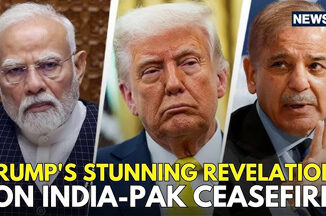
    The Trump administration’s urgency in brokering a ceasefire between India and Pakistan in May 2025 was primarily driven by the imminent threat of nuclear escalation following a major terrorist attack in Indian-administered Kashmir. However, the unexpected performance of Chinese-made J-10C jets against India’s French-made Rafale fighters during the conflict also carried serious strategic implications—particularly for U.S. interests in the Indo-Pacific region.

    Primary Reasons for U.S. Urgency in Securing the Ceasefire

    1. Nuclear Flashpoint: Risk of Escalation

    India and Pakistan are long-standing nuclear-armed rivals. Any military confrontation—such as the 2019 Balakot airstrike and subsequent aerial skirmishes—raises the specter of nuclear war. In April 2025, after a terrorist attack in Kashmir killed 26 civilians, India launched retaliatory airstrikes. Pakistan responded by downing Indian aircraft and conducting its own strikes. Tensions peaked when India targeted Pakistan’s Nur Khan Air Base, located near its nuclear command center—triggering fears of a nuclear exchange. The Trump administration, led by Secretary of State Marco Rubio and Vice President JD Vance, acted swiftly to de-escalate the crisis, leading to a ceasefire announcement on May 10.

    1. Intelligence Warnings of Imminent Crisis

    U.S. intelligence may have detected signs of imminent military escalation—such as troop movements or intelligence chatter about further terrorist plots—necessitating urgent diplomatic intervention to avert full-scale war.

    1. Global Stability and Strategic Interests

    A prolonged conflict between two nuclear powers risked destabilizing the broader South Asian region. Spillover effects could impact Afghanistan, Iran, and even areas within China’s strategic orbit. For the U.S., preventing further destabilization was vital to maintaining global order and protecting its broader security agenda.

    1. Protecting Strategic Partnerships
    • India as a Counterbalance to China: India plays a central role in America’s Indo-Pacific strategy. A protracted war would divert India’s resources away from countering China and could weaken U.S.-India defense and economic cooperation.
    • Pakistan’s Influence in Afghanistan: Despite rocky relations, Pakistan remains influential in regional counterterrorism efforts and Afghanistan’s stability. U.S. diplomacy aimed to preserve leverage with both nations.
    1. Mitigating Global Economic Fallout
    • Energy and Trade Routes: South Asia’s proximity to vital maritime lanes—including the Strait of Hormuz—means regional conflict could disrupt oil supplies, spike prices, and hamper global trade.
    • Economic Interests in India: With significant American investments in India’s tech, defense, and manufacturing sectors (e.g., semiconductors), the U.S. had strong economic incentives to maintain regional stability.
    1. Counterterrorism Concerns
    • Militant Networks in Pakistan: The U.S. has consistently pressured Pakistan to crack down on groups like Lashkar-e-Taiba and Jaish-e-Mohammed. A ceasefire could allow Islamabad to refocus on dismantling these threats.
    • Preventing Radicalization: Escalation could fuel extremism, creating operational spaces for groups like ISIS-K and al-Qaeda.
    1. Countering China’s Expanding Influence
    • Belt and Road Watchdog: China has heavily invested in Pakistan through the China-Pakistan Economic Corridor (CPEC) and is eager to play a larger diplomatic role in South Asia. U.S. mediation helped reassert American diplomatic leadership while countering China’s regional ambitions.
    • Avoiding a China-Russia Mediation Bloc: Allowing China or Russia to step in as peace brokers would have diminished U.S. influence in the region and altered the diplomatic balance.
    1. Broader Geopolitical Priorities
    • Focus on Ukraine and Taiwan: With the U.S. already stretched thin managing tensions in Eastern Europe and East Asia, resolving the South Asian crisis quickly helped avoid a third major theater of conflict.
    • Quad Alliance Stability: A stable India is critical for the continued coherence of the Quad (U.S., India, Japan, Australia), which serves as a counterweight to China in the Indo-Pacific.
    1. Strategic Implications of J-10C Performance

    During the aerial engagements, Pakistan reportedly used Chinese-made J-10C jets equipped with PL-15 long-range air-to-air missiles to down Indian Rafale jets. This marked the first real-world combat use of the J-10C, giving China valuable battlefield data on its weapons platforms. 

    1. Broader Military and Technological Implications
    • Perception of Chinese Military Technology: The success of the J-10C against Western aircraft could reshape global perceptions of Chinese military capabilities, particularly in air power.
    • Impact on Taiwan and Regional Security: Taiwan’s military planners are likely to take note of these developments, especially as China aims to be ready for a possible invasion of Taiwan by 2027.
    • Arms Market Dynamics: The J-10C’s performance could boost Chinese military exports, challenging U.S. dominance in the arms market and raising concerns for U.S. allies who rely on aircraft like the F-16, F/A-18, or F-35.
    1. Preserving U.S. Arms Market Leadership

    The U.S. has vested interests in maintaining the global credibility of its defense technology. The perceived success of the J-10C—and the involvement of Pakistani F-16s (ironically U.S.-supplied)—could influence future arms procurement decisions in countries like Taiwan, Indonesia, and the UAE. A shift toward Chinese systems would weaken U.S. defense partnerships and economic leverage.

    While the immediate trigger for the U.S.-brokered ceasefire was the urgent need to prevent nuclear escalation between India and Pakistan, deeper geopolitical and strategic considerations were at play. The strong battlefield showing of Chinese J-10C fighters added urgency and complexity to Washington’s calculus, as it signaled a possible shift in global military balance and regional security dynamics—especially for Taiwan and U.S. allies in Asia.

    Ultimately, America’s intervention reflected a pragmatic blend of nuclear risk management, geopolitical rivalry with China, and economic foresight. By acting decisively, the U.S. not only helped stabilize a volatile region but also reinforced its soft power, blocked adversarial diplomatic moves by Beijing or Moscow, and upheld the credibility of its global defense alliances.

    (Compiled by Dave Makkar  from various sources across the internet)

  • China reroutes trade while Washington plays catch-up

    China reroutes trade while Washington plays catch-up

    For China, the idea is not to win the trade war by returning to old terms, but to make the war irrelevant by building new coalitions and supply chains that dilute US leverage.

    “While Washington and Beijing pause their economic hostilities, America’s allies are left to reassess their own positions amid a shifting balance of trade power. For allies like Japan and the EU, the tariff rollback offers temporary relief but exposes vulnerabilities in their trade-dependent economies. The reset fails to address China’s growing regional influence via RCEP, which now accounts for 30 per cent of global GDP. The EU, exporting over €500 billion euros to the US annually, faces strain from disrupted Chinese imports. Both remain wary of China’s trade diversion tactics, which bolster ASEAN economies at their expense.”

    By Deepanshu Mohan

    On the face of it, the May 2025 “total reset” in US-China trade relations might appear as a historic de-escalation of one of the most contentious economic confrontations in modern geopolitics. In reality, it may amount to little more than diplomatic show business, as US President Donald Trump often likes to point out. From Beijing’s vantage point, this reset is unlikely to significantly rewire the global trade architecture or alter China’s strategic calculus. If anything, it reinforces a critical trend observed in previous trade conflicts: trade usually finds new channels.

    The 90-day suspension of 24 per cent points worth of US tariffs, bringing the effective rate down from a peak of 245 per cent to 10 per cent, may read like détente. China’s reciprocal moderation of its retaliatory tariffs, previously reaching 125 per cent, adds to the narrative of reconciliation.

    But under the surface, not much has changed. Neither side has abandoned its zero-sum lens. Both are maneuvering within a relationship marked by interdependence and mutual suspicion. Such resets tend to adjust only tactics not objectives.

    To interpret this reset as a fundamental change is to ignore the very structure of US-China trade relations, which have evolved beyond bilateral quirks into a systemic economic interlock.

    Pre-2025, bilateral trade volumes surpassed $600 billion annually, with a US goods trade deficit of $295 billion. Such figures are the outcome of decades of integrated supply chains and comparative advantage. A 90-day tariff rollback does not unwind them, nor does it address core ideological clashes around China’s state capitalism, intellectual property enforcement or industrial subsidies.

    From Beijing’s perspective, the real measure of the “reset” is its marginal utility in reducing near-term economic pain, not a gateway to restored trade normalcy, and even that is debatable. For a while, China has been battered by the cumulative effects of Trump’s tariffs, but the country has proven adept at absorbing external shocks. It has turned to monetary tools, slashed interest rates and funneled liquidity into its banking system, even as exports continued rising in April, driven largely by trade redirection.

    It is difficult to assess the reset without revisiting the Trump-era tariff policy that preceded it. The rationale was to force structural reforms in China’s economic behavior by inflicting economic pain through extreme tariffs. The cost, however, has been largely borne by American households and producers. The Tax Foundation estimates a 1.3-per cent hit to long-run US GDP.

    Moreover, even as the US sought to punish China, its own exporters, especially in agriculture, suffered $27 billion in retaliatory losses between 2018 and 2019 alone. In scaling up these tariffs in 2025, Trump did more than revive a failed strategy; he escalated a cycle that inflicted widespread collateral damage. While the Geneva talks may validate that this pressure forced Beijing to the table, they equally underscore the limitations of using blunt-force tariffs to negotiate complex systemic issues.

    China, for its part, never engaged in a purely retaliatory tit-for-tat. It leaned into diversionary strategies, using third-party states to maintain trade continuity, and deepened regional integration through initiatives like the RCEP.

    Nowhere is this adaptation more evident than in Vietnam. During the 2018-2019 trade war, Vietnamese exports to the US surged from $47.58 billion to $136.6 billion by 2024. A closer inspection reveals a more intricate picture. Roughly 16 per cent of these exports were, in fact, rerouted Chinese goods, using Vietnam as an intermediary to circumvent tariffs. The irony is that China, while ostensibly under siege, leveraged its own regional supply networks to retain market access.

    This pattern has only deepened in the current trade climate. China understood that while direct trade could be throttled, the architecture of global commerce would inevitably recalibrate and, often, to its benefit.

    Also, this diversion does not represent a net loss for global trade. Rather, it reflects its re-routing. When Trump weaponized tariffs to contain China, he did not so much dam the river as force it into new tributaries. And in doing so, he ceded leverage to emerging markets, expanded the influence of China’s supply-side diplomacy and created conditions where bilateral punishment had global spillover effects.

    Despite the tariffs and counter-measures, the basic trade baskets between the US and China have remained relatively intact. China remains the US’ second-largest export market and the US remains China’s top destination. The notion of a “decoupling” is a political fantasy; economically, it is infeasible.

    The Geneva talks did not produce a new framework, nor did they introduce mechanisms for long-term stability. They merely bought time. The temporary tariff suspension is less about reversing policy and more about acknowledging mutual economic pain.

    For China, this is not a strategic retreat. It is a pragmatic pause. Its leadership likely sees this reset as a reprieve to consolidate alternative routes through ASEAN, Africa or the Global South. The idea is not to win the trade war by returning to old terms, but to make the war irrelevant by building new coalitions and supply chains that dilute US leverage.

    While Washington and Beijing pause their economic hostilities, America’s allies are left to reassess their own positions amid a shifting balance of trade power. For allies like Japan and the EU, the tariff rollback offers temporary relief but exposes vulnerabilities in their trade-dependent economies. The reset fails to address China’s growing regional influence via RCEP, which now accounts for 30 per cent of global GDP. The EU, exporting over €500 billion euros to the US annually, faces strain from disrupted Chinese imports. Both remain wary of China’s trade diversion tactics, which bolster ASEAN economies at their expense.

    Conversely, countries hostile to the US seize opportunities amid the chaos. Russia, redirecting 47 per cent of its $62.4 billion in 2024 oil exports to China, leverages Beijing’s pivot to non-Western markets, reducing its reliance on European buyers post-Ukraine sanctions. Iran, with $20 billion in covert trade with China, exploits tariff-driven gaps to funnel oil through proxies like Malaysia, evading US sanctions.

    India, nominally US-aligned but non-aligned in practice, navigates a dual-edged sword. India’s trade deficit with China widened to a record $99.2 billion in 2024-25, underscoring its reliance on Chinese imports for critical components, even as trade dynamics with the US continue to evolve. The reset offers breathing room but leaves it balancing US pressure against China’s economic pull.

    Ultimately, the fiasco amplifies global trade’s fragmentation, forcing allies to hedge and adversaries to exploit, with no clear winners beyond the architects of rerouted commerce.

    The US-China reset of 2025 temporarily halts a downward spiral but fails to resolve the fundamental disconnects that have driven bilateral friction. More crucially, it fails to reshape the broader world trade order in any meaningful way. Trade, once disrupted, simply recalibrates.

    China understands this better than most. Its resilience in the face of tariffs, its ability to reroute trade through Vietnam and Southeast Asia and its structural reliance on interdependence over confrontation — they all point to a state that is less interested in fighting back than in flowing around obstacles.

    So, in the real game of geoeconomics, it’s not about who resets the board, it’s about who learns to play the game differently. From Beijing’s view, it seems the game has already moved beyond Washington’s rules.

    (Deepanshu Mohan is Dean, OP Jindal Global University)

  • Dangerous fallout of Op Sindoor: Social media warriors join ranks of useful idiots

    Dangerous fallout of Op Sindoor: Social media warriors join ranks of useful idiots

    The manner in which social media Frankenstein monsters have trolled Foreign Secretary Vikram Misri and his daughter is beyond the pale of any civilized society.

    “But Operation Sindoor has revealed yet another category of people who have unwittingly joined the ranks of the enemy within and useful idiots. They are social media warriors who flaunt patriotism and nationalism at the drop of a hat. In their minds, their job is to expose the enemy within and the useful idiots and protect “Bharat Mata”. But they themselves have become useful idiots and the enemy within.

    What our adversaries want is a divided and fractured society, rife with mistrust, hate and bigotry. The so-called nationalist social media warriors are doing exactly that.”

    Yashwant DeshmukhSutanu Guru
    By Yashwant Deshmukh and Sutanu Guru

    Unhinged and toxic digital and social media warriors are a menace. Worse, they are unwittingly pushing the agenda of India’s adversaries. The barbaric terror attack at Pahalgam on April 22, 2025 when 26 people, including 25 tourists, were slaughtered in front of their families, the media has gone ballistic with incendiary rhetoric. The outrage and the anger have been genuine. The reaction of citizens in the aftermath of Operation Sindoor has been cathartic.

    But in the entire process, the authors were reminded of two things as they saw madness unfold on social media platforms. The first relates to the “enemy within”. In almost all democracies, there is a fifth column that abuses free speech rights to undermine national interests. The second is the category of “useful idiots”, a term coined by early 20th century Marxists to describe naïve and brainwashed people who undermine national interest while chasing utopia.

    Normally, it is quite easy to identify both the enemy within and the useful idiots. The enemy within habitually blames the Indian state for every problem that confronts India as a nation and society. Many in this category detest India for reasons best known to them. The enemy within blames India and largely absolves Pakistan after every horrific terror attack.

    The useful idiots spring to life every time India exercises its legitimate right to retaliate and punish, as it did with Operation Sindoor. The moment precision strikes destroyed nine terror camps on May 7, these useful idiots (along with the enemy within) started chanting “De-escalate.”

    Democracies have to live with this. And most citizens have enough common sense not to be swayed by this nonsense.

    But Operation Sindoor has revealed yet another category of people who have unwittingly joined the ranks of the enemy within and useful idiots. They are social media warriors who flaunt patriotism and nationalism at the drop of a hat. In their minds, their job is to expose the enemy within and the useful idiots and protect “Bharat Mata”. But they themselves have become useful idiots and the enemy within.

    What our adversaries want is a divided and fractured society, rife with mistrust, hate and bigotry. The so-called nationalist social media warriors are doing exactly that.

    Nothing illustrates this better than how this unhinged gang has treated Himanshi Narwal (widow of Lieutenant Vinay Narwal who was killed by terrorists at Pahalgam) and Vikram Misri, Foreign Secretary of India. So disgraceful has been the manner in which social media Frankenstein monsters have trolled and abused the two is that it is beyond the pale of any civilized society.

    All that Himanshi Narwal, a 22-year-old newly married woman who was tragically widowed, did was ask fellow Indians not to target entire communities in the aftermath of the Pahalgam terror attack. Till she said this, Himanshi had been elevated by these nationalistic social media warriors to the status of Mother India. Suddenly, they started abusing her, questioned her loyalty to India and even spun crazy conspiracy theories about how she had been indoctrinated during her days as a student in JNU.

    People in charge of psychological and information warfare in Islamabad and Beijing must have been chortling with glee with the behavior of these ‘patriots’. They would have been even more pleased when the same bunch pounced upon Foreign Secretary Vikram Misri and his family for no rhyme or reason.

    Some useful idiot made an “earth-shaking” discovery that the daughter of Vikram Misri was a ‘liberal’; and worse, had advocated for Rohingyas in London. That Vikram Misri is a Kashmiri Pandit triggered these unhinged social media warriors even more. His entire family was trashed; his loyalty to India was questioned and the abuses hurled at him and his daughter were sickening.

    All this was happening when Misri was working round the clock behind the scenes and also briefing the media on the positions adopted by India and the actions taken by it. Imagine what he must be going through. Here, he is working round the clock handling the fallout of Operation Sindoor as India’s top diplomat and there he is being swamped by vile abuse, coming in torrents.

    The blokes at the ISI must be praying that more such ‘nationalist’ social media warriors emerge in India.

    This breed has now truly become a Frankenstein monster. There is no way of knowing how many ISI and Chinese intelligence bots have infiltrated these nationalistic groups. There is no way of knowing who the next target will be. All that is known for sure is that such behavior is deepening the fault lines in the Indian society. And, that the only beneficiaries will be adversaries of India.

    The worst part is the herd mentality of these groups and their complete blindness and inability to even consider common sense as an option.

    About a decade and a half ago, these nationalists did play a positive role in exposing the enemy within and the useful idiots on social media when the narrative in India was overwhelmingly dominated by the deracinated “Left-Liberal” ecosystem.

    But that era is gone and the political parties ,which created these ‘IT Cells’ and amassed this army of social media warriors, must urgently do a rethink. This kind of behavior doesn’t help them politically even as it damages India.

    India is on its way to becoming a $5-trillion economy by 2027 and a $10-trillion one by 2034. The most important factor that could derail this process is a potential collapse of trust between the Hindu and Muslim communities. And, this is where the ‘nationalist’ warriors pose the biggest menace.

    Almost all Indians, including Muslims, unhesitatingly blamed Pakistan and its Islamist terrorist after Pahalgam. But our social media warriors were busy blaming Indian Muslims. Sure, there are bigoted Muslims, just as there are bigoted Hindus. But they don’t represent the communities. And, there is no way for India to reach the $10-trillion economy without the active participation of 250 million Muslims.

    How can one be so dangerously and foolishly blind?

    (Yashwant Deshmukh is Founder-Director, CVoter research foundation and Sutanu Guru is the Executive Director)

  • AIA Awards recognize and honor the younger generation of Physicians and Surgeons of Indian descent

    AIA Awards recognize and honor the younger generation of Physicians and Surgeons of Indian descent

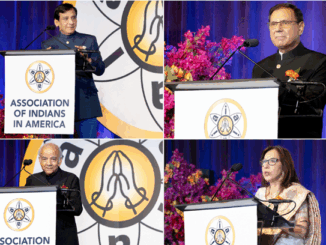
    NEW YORK CITY: The Association of Indians in America (AIA) Medical Council Awards Gala, revived after a gap of 15 years, was held on May 3rd at the iconic Cipriani 42nd Street, an Italian Renaissance-inspired masterpiece with marble columns, soaring ceilings, inlaid floors, and spectacular chandeliers which make it a unique and special event space. An ultimate experience in beauty and elegance, AIA could not have found a better place in New York for its historic event.

    National President Gobind Munjal presenting the Award to Honorees along with the Introducer.
    From Left to Right: Dr Deepak Bhatt, Dr Shuvendu Sen, Dr Chethan Sathya, Dr Latha Chandran

    The purpose of organizing this Medical Council Awards Gala. According to AIA National President Gobind Munjal who has led AIA for the last more than 3 years, is to recognize and honor the second generation of Physicians and Surgeons of Indian descent, who have excelled in their career, academics and profession, as the first generation has already made a mark and earned their recognition”.

    Mr. Munjal, pointing to the unique feature of this gala, said:

    “This AIA Medical Council Awards Gala is of major historical importance, as younger members of AIA are taking leadership roles and organizing this event, while we, the senior members, are supporting them. You will be glad to know that 50% of the people attending this Gala were from the younger generation. This will make young professionals interested in taking leadership roles, thereby expanding its membership and longevity of the organization”.

    Honorees with National President and Medical Council Chair and 4 Vice Chairs.
    From Left to Right: Gala Vice Chair Dr Atul Kukar, Honoree Dr Deepak Bhatt, Gala Chair Dr Dolly Manvar, Honoree Dr Shuvendu Sen, Honoree Dr Chethan Sathya, Honoree Dr Latha Chandran, President Gobind Munjal, Past National President Dr Buddhadev Manvar, and Gala Vice Chairs; Dr Pallavi Manvar-Singh, Dr Pratichi Goenka, Dr Aprajita Mattoo.

    Mr. Munjal continued:

    “This Medical Council Gala’s tremendous success has excited a lot of next generation people and they have expressed interest in getting involved and becoming members. We will be having these Galas every 2 years or so. Our major future plan is to make these next generation people as members and get them involved and slowly prepare them to take over and start leading the organization. For that purpose, we are starting to revamp our website to suit their requirements.

    Lifetime Achievement Award presented to Past National President Dr Nirmal Mattoo.
    From Left to Right: Gala Chair Dr Dolly Manvar, Chair Board of Trustees Dr Samin Sharma, Lifetime Achievement Awardee Dr Nirmal Mattoo, Mrs Tina Mattoo, National President Gobind Munjal.

    AIA (The Association of Indians in America) is growing with new members and more active participation by the next generation. Since the times have changed, so are the needs of the Indian Community. The present leadership of AIA is actively pursuing the next generation’s participation in order to address those changing needs. We are extremely excited that the younger members of AIA are now taking the leadership roles and have worked tirelessly to make this Medical Council Awards Celebrations a sold-out event.

    Honorees with National President Gobind Munjal and Gala Chair Dr Dolly Manvar
    L to R: Gala Chair Dr Dolly Manvar, Honorees; Dr. Deepak Bhatt, Dr. Shuvendu Sen, Dr. Chethan Sathya, Dr. Latha Chandran, and President Gobind Munjal

    “I would like to thank the medical council chair Dr Dolly Manvar and all the 4 vice chairs of next generation; Dr Atul Kukar, Dr Pallavi Manvar Singh, Dr Aprajita Mattoo and Dr Pratichi Goenka for their commitment and hard work in making this Medical Council Awards Gala a huge success.”

    With the banquet room full to capacity, the guests, young and old, dressed in their best, conversed and interacted, with the DJ Kucha music magic filling the air. There was excitement, and an enjoyable feeling of comfort, too.

    National President Gobind Munjal with Past National Presidents and Advisors.
    From L to R: National President Gobind Munjal, Past National Presidents; Dr. Nirmal Mattoo, Dr. Narinder M. Kukar, and Dr. Buddhadev Manvar

    Chair Board of Trustees Dr Samin Sharma in his remarks, said that in his past 15 years of association with AIA, this Gala is the best he has ever seen. He also remarked that for the first time we have seen in any organization so many people from the younger generation attending the Gala, which is remarkable. He mentioned that AIA needs to pick a charity, through which the donations can be channeled in order to reach to the needy people in India. He said he has set aside an amount of $100,000 towards this cause.

    Then came the time to celebrate honorees and a word from Mr. Gobind Munjal, the President of the AIA.

    Medical Council Committee:
    From L to R: Gala Vice Chair Pratichi Goenka, VC Dr Atul Kukar, National President Gobind Munjal, VC Dr. Pallavi Manvar-Singh, Gala Chair Dr Dolly Manvar, and VC Dr. Aparajita Mattoo.

    Mr. Munjal welcomed and thanked everyone for their presence to celebrate the occasion, honoring some of the finest representatives of Indo-American community. “They are role models for everyone and an exceptional source of pride and joy for the Indian American Diaspora worldwide”, said Mr. Munjal.

    AIA Medical Council Honorees included Dr. Deepak Bhatt, Dr. Latha Chandran, Dr. Chethan Sathya, and Dr. Shuvendu Sen. Each Honoree had their own unique quality and from diverse background. Dr Deepak Bhatt is a researcher, Dr Latha Chandran is an Educator, Dr Chethan Sathya is into Public Health and Gun Violence Prevention and Dr Shuvendu Sen is an Author and has written books of acclaim.

    A Section of the gathering at the Medical Council Awards Gala.

    Dr. Nirmal Mattoo, Past National President of the AIA was honored with Lifetime Achievement Award. Dr Mattoo has also been a past Chairman Board of Trustees of AIA and Co Editor of the book Ananya, A Portrait of India published by AIA. Dr. Mattoo is the Chairman of the Indo American Arts Council. He is also the President of the Mattoo Center of India Studies at State University of New York. It is our honor to present the lifetime achievement award to Dr Nirmal Mattoo.

    DJ Kucha regaled the audience with the choicest musical compositions while the guests set ablaze the dance floor with their ecstatic movements. 

    About AIA

    Association of Indians in America (AIA) is the oldest non-profit national organization founded in 1967. At that time, the vision and the purpose of AIA was to help unite, support and preserve rights of the small number of Indian immigrants that came to America (currently over 4.8 million), and assisting them in their transition into American culture while preserving their Indian heritage.

    Dance Floor is set aflame with the ecstatic moves of the dancers and the exciting DJ Kucha music.

    Our motto is:  INDIAN HERITAGE, AMERICAN COMMITMEN

     It was through the efforts of AIA that

    • Indians were enumerated as a separate and distinct category in the US Census in 1980.
    • The First ever Public event of “Diwali” Celebration organized by AIA took place at the Iconic South Street Seaport in New York City in 1987, and has continued since then.
    • In October 2003, Diwali at the behest of AIA was started and celebrated in the white House.
    • Now Diwali is recognized as a holiday in New York and many other States.
    • AIA initiated Honor Banquet in 1973 followed by Medical Council Awards in 1974. Many of our honorees included Nobel Laureates, Leading artists; Physicians and academicians.
    • A unique program called Project India was initiated in 1973. The Association raised more than 15 million dollars fund for disbursements for medical equipment, Midwest floods in 1993 and Florida floods in USA, Latur Earthquake Maharashtra 1993 & Tsunami 2004 in India.
    • AIDS prevention and treatment; Project India is an ongoing activity for more than 50 years.
    • In the Year 1997, on the occasion of the 50th Anniversary of India’s Independence, Association of Indians in America (AIA) published an academic, culturally rich, and scholarly written book, in association with India Study Center of stony Brook University titled “Ananya: A Portrait of India” which has received critical and popular acclaim.
    • In 2018, AIA celebrated its 50th Anniversary in New York at a Gala Dinner in Garden city Hotel
    • During Covid 2020-2022, Association contributed hundreds of Oxygenators to different hospitals in India across the country and renovated and built 2 schools in Kerala and Rajasthan, India.
    • On May 6th 2023, AIA celebrated 75th anniversary of India’s Independence at an Honor Banquet at Terrace on the Park in Flushing Meadow, New York attended by dignitaries like Senate Majority Leader Chuck Schumer and NYC Mayor Eric Adams
    • The above are a few of the initiatives and achievements of the AIA. The Association is planning many more projects, and with the arrival on the scene of our next generation, it is hoped to not only maximize the number of projects but also increase their funding, quality and diversity.
  • MELISSA ERRICO PERFORMS SONDHEIM’S NEW YORK SIGNATURE SONGS

    Melissa Errico (Photo: Courtesy njpac.org)
    • By Mabel Pais

    MELISSA ERRICO is a Tony Award-nominated Broadway actress, singer, and author. Melissa will perform Stephen Sondheim’s greatest New York songs in ‘Sondheim in the City’ for two sensational performances on Saturday May 17th at 6:00 p.m. and 8:30 p.m.  at NJPAC’s Chase Room.

    Relive the songs of Stephen Sondheim as Melissa performs ‘Another Hundred People,’ ‘Everybody Says Don’t,’ ‘Opening Doors,’ ‘Good Thing Going,’ ‘Broadway Baby,’ ‘Being Alive’ and many more.

    “Errico is the finest interpreter of Sondheim’s music in America today”

    — THE NEW YORKER

    “The premier Sondheim interpreter.”

    — BILLBOARD MAGAZINE

    “Her new album ‘Sondheim In The City’ is a New York house tour of thrill and heartbreak.” — THE NEW YORK TIMES

    “A lot of things make a Melissa Errico show exciting – the way she immerses herself in every moment, the technical brilliance of her vocal abilities, the immaculate scripts that create the framework of the show, and the sheer star power that the lady exudes, as well as that intelligence and utter fearlessness. This is a take-no-prisoners performer, and this is a leave-it-all-on-the-floor show.” — BROADWAY WORLD

    THE WALL STREET JOURNAL called Melissa’s first Sondheim album, ‘Sondheim Sublime,’ “the best all-Sondheim album ever recorded.”

    Touring the world with her inimitable thematic concerts, from Singapore to Paris to San Francisco and beyond, she has built a unique niche in the world of theater and jazz.

    Steven Reineke, principal conductor of the New York Pops, introduced her Carnegie Hall debut as “Melissa Errico is a unique force in the musical life of New York City: a Broadway star, a concert artist, and an author who regularly contributes essays to The New York Times. There’s really no one like her!”

    Her concerts in the past year alone have included a Paris duet in 2023 with her frequent singing partner Isabelle Georges, broadcast nationally on Radio France, followed by a sold-out cabaret at the historic Le Bal Blomet. In that same summer, she opened for music icon George Benson at the Montreal Jazz Festival. A writer from London Jazz News wrote that: “Errico was energized, making sure with every breath that she would get the audience in the 3000-seater Pelletier really on her side. Every high note was heroically held, and she got a standing ovation from this audience. Montreal audiences always want to show their warmth, and this one made her deservedly welcome.”

    Melissa Errico (Photo: Courtesy njpac.org)

    A uniquely wide-ranging performer, a specialist in the seemingly very different musics of Stephen Sondheim and Michel Legrand, her 2018 album, ‘Sondheim Sublime,’ was called by The Wall Street Journal “The best all-Sondheim album ever recorded,” and her November Carnegie Hall debut performance included three Sondheim numbers, including ‘Losing My Mind’ and ‘Move On.’ On the other shore of her expertise, in 2019 she wrote the eulogy for Legrand in The New York Times and was the only American performer asked to appear at the now-legendary two-day memorial concert at Paris’ Le Grand Rex.

    First known for her starring roles on Broadway, including ‘My Fair Lady,’ ‘High Society,’ ‘Anna Karenina,’ ‘White Christmas,’ ‘Dracula,’ and ‘Les Misérables,’ Melissa has had a wide-ranging career from television and film to recording. She starred in the CBS show ‘Central Park West’ and played roles on ‘Blue Bloods,’ ‘The Knick,’ and more, as well as ‘Billions’ on Showtime. She has starred in many non-musical roles by Shaw and Oscar Wilde, including ‘Dear Liar’ in the spring of 2023, playing George Bernard Shaw’s original Eliza Doolittle. 

    Though a constant in the New York theater, she has become equally known for her music and concert work worldwide, with sold-out concert dates from Ravinia to Caramoor and Wolf Trap — including the 92nd Street Y, Joe’s Pub, Town Hall, and Lincoln Center’s Allen Room. Errico’s history with Sondheim began when he selected her to star as Dot in ‘Sunday In The Park With George’ at The Kennedy Center, then as Clara in ‘Passion’ at Classic Stage Company; then in the NY City Center Encores! production of ‘Do I Hear A Waltz?’ In 2020, she sang ‘Children and Art’ in the Sondheim 90th Birthday Concert ‘Take Me To The World,’ and was featured on PBS television in a documentary special in which she sang a feminist version of ‘Finishing The Hat’ and joined Adam Gopnik and Raul Esparza to talk Sondheim on ‘Poetry in America.’ She was also featured in The New York Times tribute to Sondheim in November 2021 as one of the top ten interpreters of his work. Her second Sondheim album, ‘Sondheim In The City,’ was released on February 16, 2024, and earned her more praise from the Times as, “one of Sondheim’s deepest-hearted but lightest touch interpreters.”

    In addition to Sondheim, nothing in her work has been more constant than her association with Legrand. Having starred in his sole Broadway show, ‘Amour,’ she went on to collaborate with him on the iconic album ‘Legrand Affair.’ Warner Music/Ghostlight Records also reissued her symphonic album, which Legrand arranged and conducted, as ‘Legrand Affair’ (Deluxe Edition).

    A student of the great American songbook, Melissa’s album ‘Out Of The Dark: The Film Noir Project’ was released by Warner Music/Ghostlight Records, and garnered the 2023 Bistro Award for the best Concept Album. The recording was supported by coast-to-coast noir concerts, including Feinstein’s/54 Below, with the Ronnie Scott’s Band in London, and at NYC’s Birdland Jazz Club for a sold-out 10-performance Valentine’s Week residency. Of her Noir project, The Wall Street Journal opined that: “Melissa Errico’s new album, ‘Out of the Dark: The Film Noir Project’ gives us noir music the way we imagine it…melancholy, bittersweet tales of isolation and loneliness, beauty and betrayal—especially relevant at the height of the Covid-19 pandemic.”

    She is currently working on expanding her collected New York Times essays about a singer’s strange life on the stage and road, gathered under the heading “Scenes From An Acting Life”, into a book.

    New Jersey Performing Arts Center (NJPAC)

    Follow NJPAC Online:

    Website:    njpac.org

    Twitter:     @NJPAC

    Instagram:  @NJPAC

    Hashtag:    #NJPAC

    Facebook:   facebook.com/NJPAC

    YouTube:    NJPACtv

    Follow NJPAC’s Standing in Solidarity Series Online:

    Website: njpac.org/takeastand

    Hashtag: #NJPACTakeAStand

    Youtube: Standing in Solidarity playlist

    Mabel Pais writes on The Arts and Entertainment, Education, Business, Social Issues, Health and Wellness, Spirituality, and Cuisine.

  • NJ SYMPHONY’S XIAN ZHANG CONDUCTS MOZART BACH AND ABELS

    • By Mabel Pais

    New Jersey Symphony presents Music Director Xian Zhang conducting Mozart, Bach and Abels, with the Symphony’s principal violins, Eric Wyrick and Francine Storck, stepping up to perform Bach’s Double Concerto with the orchestra. Schedule of concert locations, dates, and times is below.

    Gregory McDaniel, music conductor

    On Saturday May 17, 2025, at 2 pm at NJPAC in Newark,  Colton Conducting Fellow Gregory McDaniel (njsymphony.org/musicians-orchestra/artist-initiatives/new-jersey-symphony-colton-fellowship) joins Zhang for a special Discover Series performance for families.

    Xian Conducts Mozart

    Music by Mozart, Bach, and Abels

    Princeton – Friday, May 16, 8 pm, Richardson Auditorium

    Newark – Saturday, May 17, 8 pm, NJPAC

    Newark –  Sunday, May 18, 3 pm, NJPAC

    Event page – (njsymphony.org/events/detail/xian-conducts-mozart-1)

    Xian Zhang conductor

    Eric Wyrick violin

    Francine Storck violin

    New Jersey Symphony

    On the program:

    Wolfgang Amadeus Mozart Eine kleine Nachtmusik

    Johann Sebastian Bach Double Concerto for Two Violins

    Michael Abels Delights and Dances

    Wolfgang Amadeus Mozart Symphony No. 35, “Haffner”

    Discover Mozart & Bach

    New Jersey Symphony Family Concert

    Newark – Saturday, May 17, 2 pm, NJPAC

    Event page – (njsymphony.org/events/detail/discover-mozart-bach)

    Xian Zhang conductor

    Gregory D. McDaniel conductor

    Bill Barclay host

    Eric Wyrick violin

    Francine Storck violin

    Annamaria Witek cello

    New Jersey Symphony

    The Symphony’s Discover concerts are inspired by Leonard Bernstein’s masterful way of putting young audiences at the center of music-making. This interactive, one-hour concert will feature inside tips, listening cues, and fun facts that make for the perfect Saturday afternoon family outing! This will also be a Relaxed Performance, designed to accommodate the differing sensory needs of patrons.

    For more information, visit these pages at njsymphony.org.

    For more about Discover Mozart & Bach –  (njsymphony.org/events/detail/discover-mozart-bach)

    For more about Relaxed Performances – (njsymphony.org/visit/accessibility-1/what-is-a-relaxed-performance)

    TICKETS

    For a complete list of concerts and information on tickets, visit  njsymphony.org/events.

    The Artists

    Xian Zhang

    2024–25 marks the GRAMMY and Emmy Award-winning conductor Xian Zhang’s ninth season as music director of the New Jersey Symphony. Starting in 2025–26, Zhang will also hold the role of music director at Seattle Symphony. Zhang holds the position of conductor emeritus of Orchestra Sinfonica di Milano, having previously held the position of music director between 2009–2016.

    The 2024–25 season sees Zhang return to the Metropolitan Opera in New York to conduct David McVicar’s acclaimed production of Puccini’s Tosca.

    Learn more about Xian Zhang at njsymphony.org/musicians-orchestra/musical-leadership/xian-zhang

    Gregory D. McDaniel

    Gregory D. McDaniel is a passionate conductor who is active in many different musical surroundings.

    Praised for his “impeccable musicality and technique” (La Presse – Montreal), McDaniel was recently featured in concert with the Orchestre Métropolitain in Québec, conducting Lili Boulanger’s D’un Matin de printemps. Last summer, as a member of the Orchestral Conducting Academy at the Académie du Domaine Forget de Charlevoix, he worked with the Orchestre Symphonique de Québec under the tutelage of conductors Thomas Rosner and Yannick Nézet-Séguin.

    Learn more about Gregory D. McDaniel, at njsymphony.org/musicians-orchestra/musical-leadership/gregory-d-mcdaniel

    Bill Barclay

    Barclay is a writer, director and composer, described as a “personable polymath” (London Times), Barclay’s original works have been described as “witty and incisive” (The New York Times), “quietly transfixing” (The New Yorker), and “quite simply exquisite” (The Guardian). Venues include The Hollywood Bowl, The Kennedy Center, The Royal Albert Hall, Buckingham Palace, Shakespeare’s Globe, the Barbican, Washington National Cathedral, St Martin-in-the-Fields, and The Southbank Centre. Broadway and West End credits include ‘Farinelli and the King,’ ‘Twelfth Night,’ and ‘Richard III’ all starring Sir Mark Rylance.

    Major tours include ‘The Chevalier’ (London Philharmonic Orchestra, Cleveland Orchestra, Music of the Baroque, 8 others); ‘Secret Byrd’ for The Gesualdo Six and Fretwork (20 cities on tour); ‘Anthony & Cleopatra’ (LA Philharmonic, BBC Symphony Orchestra and others); and ‘Peer Gynt’ (Boston, Cincinnati, St. Louis and Milwaukee Symphony Orchestras). He has been commissioned five times by The Boston Symphony Orchestra, appearing across eight seasons. To learn more about Bill Barclay, visit concerttheatreworks.com/bill-barclay

    Eric Wyrick

    Violinist Eric Wyrick has been concertmaster of the New Jersey Symphony since 1998. Recently retired from the Orpheus Chamber Orchestra, Eric had been a member of the internationally-acclaimed ensemble for 38 years.

    As soloist with the New Jersey Symphony, Wyrick has delighted New Jersey audiences with performances of the great solo violin repertoire ranging from unusual and underperformed works such as the Schumann, Strauss, and Busoni violin concertos to presenting the complete Bach ‘Brandenburg Concertos’ and the Vivaldi ‘Four Seasons’ as soloist and leader. Wyrick has featured collaborations with contemporary local New Jersey composers Darryl Kubian and Steve Mackey in their solo compositions as well as a special revival of Princeton’s legendary Edward T. Cone Violin Concerto. Read more at njsymphony.org/musicians-orchestra/musical-leadership/eric-wyrick.

    Francine Storck

    Francine Storck, violinist (Photo: Courtesy njsymphony.org)

    Francine Storck is principal second violin of the New Jersey Symphony. A native of Princeton, she began playing professionally with the Collegium Musicum of Princeton at the age of 16. She attended the Oberlin College Conservatory of Music, where she was concertmaster of the Orchestra, played with the Toledo Symphony, and was a prizewinner at the Fischoff Chamber Music Competition with her quartet’s performance of Bartók’s String Quartet No. 6 and Beethoven’s  ‘Grosse Fugue.’

    Learn more  at njsymphony.org/musicians/detail/francine-storck.

    Annamaria Witek

    Annamaria Witek is a freshman at The John J. Cali School of Music at Montclair State University as a student of Tomoko Fujita. Witek began playing cello in third grade in the music program of the South Orangetown Central School District. She studied with Madeleine Golz for seven years and has also studied with Karen Poleshuck, Sam Bae, and Nicole Johnson. She was principal cellist of the New Jersey Symphony’s Academy Orchestra and was the winner of the 2024 NJ Symphony Henry Lewis Concerto Competition. Annamaria was cellist of the NJ Symphony Anne Lieberson String Quartet for two years and is also a founding member of BridgeMusik in Rockland County. Learn more at  dropbox.com/scl/fi/ftfeto3h4okn4xsj0pdye/Annamaria-Witek-bio.pdf?rlkey=r791ersg1900x8a5wjygd45f8&e=1&st=g26m9ads&dl=0

    New Jersey Symphony

    New Jersey Symphony is a GRAMMY and Emmy Award-winning orchestra. Under the direction of Music Director Xian Zhang, the Symphony performs more than 55 mainstage concerts across the state at venues in Newark, Princeton, New Brunswick, Red Bank, and Morristown, as well as at schools and public spaces statewide. Programming at the Symphony reflects an unwavering commitment to diverse communities throughout the state, while providing students unparalleled opportunities to achieve musical excellence through its Youth Orchestra and other education programs.

    In 2024, the Symphony announced it would continue to deliver its statewide activities from a new, permanent office, rehearsal, and concert space in Jersey City, set to open in 2026.

    For more information about the New Jersey Symphony, visit the website at njsymphony.org. 

    (Mabel Pais writes on The Arts and Entertainment, Education, Business, Social Issues, Health and Wellness, Spirituality, and Cuisine)

  • Breakthrough in Medical Science

    Breakthrough in Medical Science

    IAF soldier’s arm saved from amputation in Orthopedic surgery in India

    By Dr Yash Goyal
    Special Correspondent, TIP
    The patient’s arm after surgery

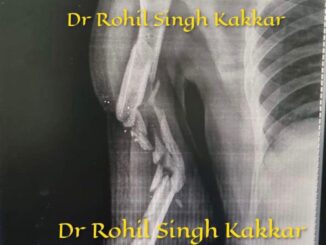
    JAIPUR (TIP): In a remarkable feat of medical breakthrough in India, an Indian Air Force soldier who sustained a gunshot wound in his right humerus (the long bone connecting the shoulder to the elbow) was saved from amputation, and shortening, and his arm was saved through constructive surgery by an orthopedic Ian Jaipur’s Eternal Hospital Sanganer recently.

    Dr. Rohil Singh Kakkar, a Consultant Orthopedic Surgeon at EHS successfully performed a rare and complex arm-saving surgery in Kishangarh on an Indian Air Force personnel who had sustained severe injuries. Kakkar told TIP that the patient, 32-year-old Jitendra Singh Rathore, suffered a critical injury while on duty, sustaining a gunshot wound that shattered his right humerus(the long bone connecting the shoulder to the elbow).The injury resulted in a severely displaced and comminuted humeral shaft fracture, associated with a 22×15 cm wound and a 10 cm segmental bone loss. After receiving initial emergency care at a military hospital, the attending doctors recommended either amputation or shortening of the arm due to the extent of the damage, Kakkar said.

    Seeking alternative solutions, the patient’s family consulted Dr. Kakkar, who, after assessing the case, proposed a highly challenging reconstructive surgery that could potentially save the arm.

    The patient moving his hands after successful constructive surgery.

    Dr. Kakkar explained that detailed preoperative planning, including CT scans and X-rays, was undertaken to accurately assess the extent of bone loss and the fracture pattern. A 12-centimeter fibula bone graft was harvested from the patient’s right leg to bridge the defect in the humerus. The procedure involved the meticulous removal of metal debris and dead bone fragments from the arm—a particularly risky step due to the proximity of major nerves and blood vessels. For reconstruction, a custom-made 100 mm titanium spinal mesh cage was utilized, engrafted with an autologous fibular graft and modified hydroxyapatite blocks, and mechanically stabilized with a long plate and screws.

    Dr Rohil Singh Kakkar, Orthopedic surgeon

    Overwhelmed by the success of the surgery, the surgeon stated that this is the first documented case in the state of Rajasthan and probably in India where a customized 100 mm spinal cage implant, combined with a fibular graft, was used to reconstruct a humerus.

    Dr Samin K Sharma, Chairman of Eternal Hospital

    The surgery was a resounding success, and supportive physiotherapy for the patient’s right arm commenced the very next day. This achievement not only saved Jitendra’s arm but also marked a new milestone in complex orthopedic surgery in the region, he claimed.

    Meanwhile, Dr. Samin K. Sharma, Chairman, Eternal Hospital asserted, “This is an outstanding achievement by Dr. Kakkar and his team. Saving the arm of a young Air Force soldier in such a complex case shows great surgical skill and dedication. We are proud of our doctors who are constantly raising the standards of medical care. ”

  • Saudi Arabia says mediating between India and Pakistan for de-escalation

    Saudi Arabia says mediating between India and Pakistan for de-escalation

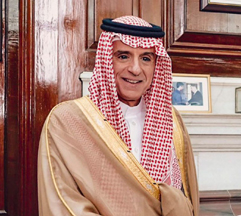
    RIYADH (TIP): Saudi Arabia on Saturday, May 10 morning, confirmed it was working to mediate between India and Pakistan for de-escalation. In a statement, the Ministry of Foreign Affairs said upon the directives of the leadership of the Kingdom of Saudi Arabia, the Minister of State for Foreign Affairs, Member of the Council of Ministers, and Climate Envoy Adel al -Jubeir visited India and Pakistan during the period of May 8–9, 2025. “The visit comes as part of the Kingdom’s efforts towards de-escalation,” Riyadh said. Earlier, the Saudi Arabia Deputy Foreign Minister Adel al-Jubeir had an unscheduled visit to Delhi where he met both Prime Minister Narendra Modi and External Affairs Minister S Jaishankar. He later visited Islamabad and met the top political and military brass there.
    (TNS)

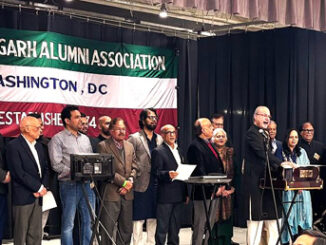
  • AAA-DC Launches Golden Jubilee Celebrations with Grand Eid Milan Event

    AAA-DC Launches Golden Jubilee Celebrations with Grand Eid Milan Event

    WASHINGTON, D.C. (TIP): The Aligarh Alumni Association of Metro Washington (AAA-DC), a leading non-profit organization committed to preserving the legacy of Aligarh Muslim University (AMU), launched its Golden Jubilee year with a vibrant Eid Milan celebration at the Rockville Senior Center in Maryland. This milestone event began a year-long commemoration of five decades of community service, educational support, and cultural enrichment.

    The evening began on a spiritual note with Ezzah Haziq’s soulful recitation of a Qur’anic sura. AAA-DC President Afzal Usmani welcomed the guests, emphasizing the importance of commencing the Jubilee year with Eid Milan—an occasion that beautifully symbolizes unity, gratitude, and renewal. He reiterated AAA-DC’s mission to promote education, cultural heritage, and social harmony in the spirit of AMU’s founding ideals.

    Mohammad Basil’s thoughtful address reflected the vision and enduring impact of Sir Syed Ahmad Khan, AMU’s visionary founder, whose legacy continues to guide generations toward enlightenment and progress.

    Maryam Usmani, Shumaila Imran, and Mohammad Basil conducted an interactive trivia quiz on AMU’s history to engage the younger generation. Children who answered correctly received prizes, adding a festive and educational dimension to the evening.

    A highlight of the event was the presentation of the Sir Syed Lifetime Achievement Awards, recognizing individuals who have made outstanding contributions to education and community service:

    Mr. Tariq Husain, a former World Bank executive and lifelong advocate for educational initiatives, was inspired by his proud AMU alumni parents.

    Dr. Syed Amir has been a guiding force within AAA-DC for over two decades, and his leadership has been instrumental in elevating the association’s educational mission.

    Dr. Razi Raziuddin and Dr. Arati Raziuddin were recognized for their unwavering dedication to AAA-DC’s goals.

    Mr. Mustafa Hashmi (posthumously), a former president and devoted leader, was also honored with a lifetime scholarship established in his name at AMU.

    Accepting his award, Mr. Tariq Husain said, “Sir Syed Ahmad Khan has been a towering figure of inspiration for me since childhood. I’m deeply honored to be recognized by AAA-DC, which has long served as a beacon of education and community upliftment.”

    Dr. Syed Amir reflected on the event’s success, calling it “a glittering celebration entirely orchestrated by the younger generation of Aligarhians—a sign of continuity and renewal.” He acknowledged the pioneering contributions of past leaders, including Drs. Abdullah, Rafat Hussain, Razi Raziuddin, Arati Raziuddin, Tariq Farooqi, Fazal Khan, Aftab Ansari, Hashima Hasan, Ms. Farzana Farooqi, Ms. Shakila Raza, and Ms. Ayesha Khan, who have gracefully passed the torch to new leaders.

    A soulful musical performance by the Montgomery Nawabs, a Gaithersburg-based ensemble of South Asian professionals, elevated the evening. Their renditions of ghazals and songs captured the audience’s imagination and underscored the rich cultural heritage cherished by the AMU community. The group includes Dr. Mohammed Akbar, Khursheed Bigram, Dr. Qazi Hamid, and Mir Karamath Ali, who exemplify intellectual pursuit and artistic expression.

    The event was honored by the presence of distinguished leaders from various community organizations, including Aquil Ahmed (University of Karachi Alumni Association), Arif Mahmood (Harf-e-Sukhan), Mohammed Akbar (Hyderabad Association of Washington Metropolitan Area), Nasir Chippa (Association of Indian Muslims), Nuzaira Azam (Global Beat Foundation), Parvez Uppal (Pakistan Association), Shah Fazal Abbas (Arbab-e-Zauq), and Tahira Aziz (Urdu Academy of Maryland). Notable attendees also included Afshan Nizami, daughter of the late Z. A. Nizami, founder of Sir Syed College of Engineering and Technology in Karachi, as well as Saeeda Huque and Firoza Salahuddin, whose presence was warmly acknowledged.

    Founded in 1975, AAA-DC has grown into one of North America’s most prominent AMU alumni organizations. With a robust calendar of events—including the annual Sir Syed Day Celebration, International Mushaira, Independence Day Mushaira & Kavi Sammelan, and community picnics—the Association fosters Ganga-Jamuni Tehzeeb and strengthens cultural bonds.

    Celebrating Eid American style with cake cutting

    AAA-DC also raises funds for scholarships at AMU and supports community education centers across India. Its partnerships with organizations such as the Association of Indian Muslims (AIMS), the Hyderabad Association of Metro Washington Area (HAWMA), the Federation of Aligarh Alumni Associations, the National Council of Asian Indian Associations (NCAIA), and the Global Organization of People of Indian Origin, Metro-Washington (GOPIO-Metro Washington), have broadened its humanitarian reach and impact.

    As AAA-DC enters its 50th year, it continues to uphold the timeless values of Aligarh—education, enlightenment, and unity. The association invites the community to participate in its upcoming signature events, including the Sir Syed Day Celebration in October, the Annual International Mushaira, and the Independence Day Mushaira & Kavi Sammelan.

    Mohammad Haziq ably coordinated the Eid Milan event and served as the evening’s Master of Ceremonies. Treasurer Salman Shahid concluded the night by extending heartfelt thanks to all volunteers, participants, and guests for their enthusiastic support and contributions to a memorable evening.

    The author thanks Mr. Afzal Usmani and Dr. Mohammad Akbar for the photographs.
    (Based on a press release issued by Zafar Iqbal, PhD)

  • US considers special status for Greenland amid Trump push for control

    US considers special status for Greenland amid Trump push for control

    WASHINGTON, D.C. (TIP): US officials are discussing a plan to pull Greenland into America’s sphere of influence using a type of agreement that the United States has used to keep close ties with several Pacific Island nations, according to two US officials and another person familiar with the discussions.

    Under the plan being considered, the Trump administration would propose to Greenland’s leaders that the island enter into a so-called compact of free association, or Cofa, with the United States.

    While the precise details of Cofa agreements – which have only ever been extended to the small island nations of Micronesia, the Marshall Islands and Palau – vary depending on the signatory, the US government typically provides many essential services, from mail delivery to emergency management to military protection. In exchange, the US military operates freely in Cofa countries and trade with the US is largely duty-free.

    Donald Trump, who during his first administration floated the idea of acquiring Greenland, has pressed even harder since taking office in January, refusing to rule out taking the island by force. Denmark, which governs the island, has sharply rebuffed the idea.

    A Cofa agreement would stop short of Trump’s ambition to make the island of 57,000 people a part of the US. It is not the only Greenland plan on the table, the sources said, and it would face many practical hurdles.

    Some officials at the national security council and the national energy dominance council, which Trump established, are involved in the talks, two of the sources said. The national economic council is also involved, one of those sources added.

    Cofa agreements have previously been inked with independent countries, and Greenland would probably need to separate from Denmark for such a plan to proceed. While polls show Greenlanders are interested in independence, surveys also show most do not want to be part of the US. A Cofa – which cedes significant autonomy to Washington – could be viewed with similar skepticism.

    One of those involved in the discussions is Markus Thomi, the acting senior director for the national security council’s western hemisphere section, according to two sources. David Copley, the key mining official on the NEDC, is also involved in the talks, one of those sources said.

    The White House did not respond to a request for comment, nor did the Danish embassy or Greenland’s representative office in Washington.

    The interior department, which plays a key role in administering Cofa agreements through its office of insular affairs, also did not respond.

    Washington’s existing Cofa agreements with Palau, the Marshall Islands and Micronesia are seen across the US political spectrum as important for countering China’s growing influence in the Asia Pacific region.

    Still, such accords have hit snags in the past.

    Republican lawmakers have at times opposed elements of the budget allotted to fund Cofa agreements, creating deep frustrations in the countries that rely on the funds.
    Signing a Cofa also offers no guarantee that a nation will be immune from influence operations by US rivals.

    Danish leaders have not been approached about the idea and have not had any substantive discussions with the White House about Greenland’s future status, one senior European official said. Danish officials have publicly rejected the idea of the US acquiring Greenland, and insist Greenlanders must determine their future.

    Administration officials argue the island is crucial to the US due to its deposits of minerals that have important hi-tech and military applications, but which remain untapped due to labor shortages, scarce infrastructure and various other challenges.

    An administration official told Reuters the US was helping Greenland diversify its economy and gain greater economic independence from Denmark. The Development Finance Corporation and Export-Import Bank could play a role in that process, the official said.

    The official said a Cofa “could be an elegant way to address some of the concerns that we have when it comes to Greenland security” but did not otherwise comment on the possibility of such an accord.
    (Source: The Guardian)

  • A Night of Verse and Solidarity: Chicago’s Urdu Mushaira Unites Hearts

    A Night of Verse and Solidarity: Chicago’s Urdu Mushaira Unites Hearts

    • Echoes of Peace: Urdu Mushaira Lights Up Chicago with Love and Verse
    • Heartstrings and Ghazals: A Night of Urdu Elegance and Solidarity in United State of America

    CHICAGO, IL (TIP): On the evening of May 3, 2025, the National India Hub in Schaumburg transformed into a vibrant tapestry of poetry, culture, and unity as it hosted An Evening of Unity – Urdu Mushaira & Cultural Night. This soul-stirring event, bought by the host Iftekhar Shareef was organized by Ashfaq Sharief, Khurram Syed, and Mohammed Hafeez, drew a diverse crowd to celebrate the timeless beauty of Urdu poetry while fostering a powerful message of peace and solidarity. From evocative verses to heartfelt tributes, the night resonated with the spirit of community, transcending borders and beliefs.

    The evening was graced by Chief [Host] Guest: Iftekhar Shareef, First Overseas Citizen of India, Guest of honor Ausaf Sayeed, a prominent community leader, and former Consul General of India in Chicago. The event, which commenced at 7:00 PM, was a houseful affair, with attendees eagerly awaiting performances by luminaries such as Imran Pratapgarhi, a celebrated poet and Member of Parliament from India, and Lata Haya, a poetic powerhouse from Bombay. Joining them were international guest Sohail Zarrar from London, UK, Dr Noor Amrohvi from Dallas, Texas, and local Chicago poets, including Nazar Naqvi, Kashif Haidar, Dr. Lateef Saif, Mehboob Ali, and Fahad Khan.

    Amplifying this call for peace, Shareef addressed the persistent scourge of terrorism, particularly India’s enduring struggle. “We’ve gathered to condemn the terrorist act in Kashmir last week,” he declared. “Terrorism has no place in the world, regardless of the country. India has faced this for over 70 years, and we earnestly plead: this must not recur. We urge governments, the global community, and the President of the United States to denounce such acts.” Highlighting Imran Pratapgarhi’s presence, Iftekhar Shareef praised the poet’s dynamic leadership in joining this unified stand against violence, elevating the mushaira’s message to a global stage.

    The event was emceed by Ashfaq Sharief. Dr. Noor Amrohvi and Ashar Mehdi did the Nezamat for the poets.

    The mushaira began with a poignant moment of silence, led by Ashfaq Sharief, to honor the victims of a recent terrorist attack in Pahalgam, Kashmir. Followed by the U.S. and Indian National Anthem. This solemn tribute set the tone for the evening, as poets and attendees united in condemning terrorism and advocating for peace. Iftekhar Shareef emphasized, “Urdu is a language for everyone, irrespective of religion Hindu, Muslim, Christian, Sikh. It bridges hearts through Bollywood songs, poetry, and shared culture.” His words echoed the event’s theme of unity, highlighting Urdu’s universal appeal.

    Imran Pratapgarhi, a star of the night, captivated the audience with his powerful nazms and ghazals. His poem Lab Pe Aati Hai Dua reimagined Allama Iqbal’s classic, weaving a heartfelt prayer for peace in conflict-torn regions like Palestine. “When bullets fly anywhere, it is humanity that dies,” he declared, urging the world to embrace love over hatred. His Lal Qila personifying the Red Fort as a witness to India’s history, stirred patriotic fervor, earning thunderous applause. Pratapgarhi’s ability to blend social commentary with poetic finesse left the audience spellbound.

    Lata Haya’s soulful recitations added a lyrical charm, while Sohail Zarrar brought an international flair, reflecting Urdu’s global resonance. Local poet Fahad Khan opened the mushaira with verses like, “We tried enmity with ourselves again / Tired of life, we tried suicide,” striking a chord with their raw emotion. The performances, moderated by Ashar Mehdi, flowed seamlessly, with each poet contributing to the evening’s rich mosaic of thought and feeling.

    Dr. Ausaf Sayeed, reflecting on his deep connection to Urdu, shared, “My father and uncle were renowned poets in Chicago. Urdu is not just a language; it’s a legacy of unity.” He praised the organizers for creating a platform that celebrates cultural diversity, noting Chicago’s growing prominence as a hub for Urdu literature. The event also acknowledged the contributions of Asian Media USA, whose media coordination ensured widespread coverage, amplifying the mushaira’s message.

    Dr. Noor Amrohvi is A Literary Icon and Community Leader in Dallas. He is a distinguished poet and businessman originally from India, has emerged as one of the most prominent literary figures in the Dallas, Texas area. As the chairman of Al-Noor International, he has made significant contributions to Urdu literature and culture, organizing acclaimed international events like “An Evening for Peace and Unity.” Known for his popular poetry, prestigious awards, and widely attended mushairas, Dr. Noor continues to be a celebrated voice for the Urdu-Hindi speaking community.

    Beyond poetry, the evening was a cultural feast, with delectable food available to complement the soulful ambiance. The audience, a vibrant mix of ages and backgrounds, remained engaged despite a delayed start due to traffic challenges. Organizers apologized for the inconvenience, promising an even grander event in the future to accommodate Pratapgarhi’s massive fan base, which sold out tickets in just days.

    The mushaira concluded with a standing ovation for the poets and organizers, followed by the national anthems of the USA and India, symbolizing the shared values of both nations. Flowers were presented to the guest poets, and Minhaj Akhtar, President of the IOC Committee – Midwest region, joined in honoring the performers. Iftekhar Shareef’s closing remarks reiterated the event’s commitment to fostering peace and cultural harmony, leaving attendees inspired and uplifted.

    This mushaira was more than an evening of poetry; it was a movement of hearts united for peace and humanity. Asian Media USA is proud to support such initiatives that showcase the power of Urdu to bridge communities. Events like these remind us of our shared heritage and the urgent need to stand against division and violence. We congratulate Iftekhar Shareef, the organizers, and the poets for creating a night that will resonate in Chicago’s cultural landscape for years to come.” Mr. Suresh Bodiwala, Chairman and Founder of Asian Media USA.

    This unforgettable evening not only celebrated Urdu’s lyrical legacy but also reinforced its role as a beacon of unity in a fractured world. As attendees left the National India Hub, they carried with them the echoes of verses that spoke of love, resilience, and hope—proof that poetry can indeed change hearts and minds.

    (Photograph and press release by Asian Media USA)


  • Prem Bhandari Congratulates Devendranath Tankoo on Appointment as Finance Minister of Trinidad & Tobago

    Prem Bhandari Congratulates Devendranath Tankoo on Appointment as Finance Minister of Trinidad & Tobago

    Mega Jaipur Foot Camp in the Region soon

    NEW YORK/PORT OF SPAIN (TIP): Prem Bhandari, Chairman of Jaipur Foot USA, extended his heartfelt congratulations to Devendranath Tankoo over the phone on his appointment as the new Finance Minister of Trinidad & Tobago. Bhandari described Tankoo as a great supporter of the Jaipur Foot movement and expressed full confidence in his leadership and vision.

    Bhandari also welcomed the re-election of Kamla Persad-Bissessar as the Prime Minister of Trinidad & Tobago, marking her return to the highest office after a decade. He later sent a formal congratulatory letter to Prime Minister Persad-Bissessar, applauding her leadership and unwavering commitment to public service.

    Indian High Commissioner Dr. Pradeep Singh Rajpurohit, accompanied by his Wife, attends Victory Celebration Dinner with Trinidad & Tobago Prime Minister Kamla Persad-Bissessar.

    He mentioned that a Mega Jaipur Foot Camp will soon be organized in Trinidad & Tobago to benefit hundreds of differently-abled individuals by providing them with free artificial limbs. Bhandari acknowledged the vital role played by Indian High Commissioner Dr. Pradeep Singh Rajpurohit in facilitating this initiative. He also noted that the Ministry of External Affairs, Government of India, has given its in-principle approval for the upcoming camp.

    Newly sworn-in Finance Minister of Trinidad & Tobago Devendranath Tankoo, Indian High Commissioner Dr. Pradeep Singh Rajpurohit, Prem Bhandari, Chairman of Jaipur Foot USA, and other dignitaries. (File Photo)

    Reflecting on past milestones, Bhandari recalled that in 2016, Jaipur Foot USA, through its parent organization Bhagwan Mahaveer Viklang Sahayata Samiti (BMVSS), held a mega camp in Mhow, Indore, to mark the 125th birth anniversary of Bharat Ratna Dr. B.R. Ambedkar. That historic event was inaugurated by Prime Minister Narendra Modi.
    In the year 2018, the Ministry of External Affairs launched the ‘India for Humanity’ initiative as part of the 150th birth anniversary celebrations of Mahatma Gandhi. In collaboration with BMVSS, this initiative has since promoted the spirit of seva (service) through the organization of Jaipur Foot camps around the world.

    Since 2018, under the “India for Humanity” initiative 32 international Jaipur Foot camps have been successfully conducted across Asia, Africa, and Latin America.

    Bhandari emphasized that Prime Minister Narendra Modi strongly believes in the ancient Indian philosophy encapsulated in the Maha Upanishad (Chapter 6, Verse 71): “Vasudhaiva Kutumbakam” — “The world is one family.” Inspired by this timeless ideal, many more humanitarian camps are being planned for the future.

    Finance Minister Devendranath Tankoo and Dr Pradeep Singh Rajpurohit, Indian High Commissioner to Trinidad & Tobago

    Bhandari said that Padma Bhushan D.R. Mehta, Founder and Chief Patron of BMVSS, will personally travel from Jaipur, India, to attend the upcoming camp in Trinidad & Tobago.

    He also shared that since its inception in 1975, by D R Mehta, BMVSS has benefited nearly 2.3 million differently-abled individuals worldwide, including 114 international camps, making it the world’s largest NGO serving the differently-abled.

  • Dr. Avinash Gupta Re-Elected as Regional Director of AAPI Mid-Atlantic II for a Second Consecutive Term

    Dr. Avinash Gupta Re-Elected as Regional Director of AAPI Mid-Atlantic II for a Second Consecutive Term

    NEW JERSEY (TIP): The American Association of Physicians of Indian Origin (AAPI) proudly announces the re-election of Dr. Avinash Gupta as Regional Director of the Mid-Atlantic II region for a second consecutive term. This reappointment reflects Dr. Gupta’s exceptional leadership, steadfast commitment to healthcare excellence, and unwavering dedication to the Indian-American medical community.

    A board-certified cardiologist in Cardiology, Nuclear Cardiology, and Clinical Lipidology, Dr. Gupta has been serving the New Jersey community since 1994. He completed his residency and fellowship at SUNY Downstate Medical Center in Brooklyn and maintains strong ties with his medical alumni networks in the U.S. and Ranchi, India.

    Throughout his career, Dr. Gupta has mentored numerous Indian medical graduates, helping them secure competitive residency positions across the U.S. His mentorship extends beyond medical graduates—he actively encourages high school students to explore careers in medicine, many of whom have gone on to pursue and gain admission to prestigious medical schools.

    Dr. Gupta currently serves as the Chief of Cardiology and is a former President of the Medical Staff at Monmouth Medical Center – Southern Campus. His leadership also extends into community and cultural spheres—he has served as President of the Federation of Indian Associations (FIA) and President of the Bihar-Jharkhand Association of North America (BJANA).

    A lifelong advocate of charitable healthcare, Dr. Gupta is the driving force behind the PRAN-BJANA Charitable Clinics, which deliver critical medical services to underserved populations in both India and the U.S. He has also served as President of MOCAAPI and held key roles on AAPI’s Membership and Liaison Committees. In 2023, he became the first Indian-American appointed to the Ocean County Board of Health.

    During the COVID-19 pandemic, Dr. Gupta led a team of over 50 healthcare professionals to vaccinate 3,500 residents in Ocean County. He also initiated transcontinental telemedicine services, offering free consultations from the U.S. to patients in India and other countries—efforts that drew national recognition, including features on NBC.

    Dr. Gupta’s deep commitment to cultural and spiritual engagement is equally remarkable. He chairs the Executive Boards of Siddhivinayak Temple USA and the Indian Cultural Center in Toms River, NJ.

    His wife, Dr. Geeta Gupta, a practicing internist, and their son, Abhinav Gupta, currently serving as Chief Resident in General Surgery at the University of Southern California (USC), support him in his endeavors.

    Dr. Gupta envisions a future where AAPI continues to grow its membership—particularly among young physicians—while fostering unity in diversity, strengthening CME programs, and advancing advocacy efforts for issues that directly impact physicians’ practices.

    Dr. Gupta has received numerous accolades for his selfless service, including the Humanitarian Gala Award from MMC-SC and the Pravasi Bharatiya Divas Award from the Consulate General of India in New York.

    With his re-election, Dr. Avinash Gupta reaffirms his commitment to uplifting the medical community through mentorship, collaboration, and service, continuing a legacy built on compassion, leadership, and action.

  • Alexandra Badaway of North Brunswick Is Named Middlesex College Class of 2025 Valedictorian

    Alexandra Badaway of North Brunswick Is Named Middlesex College Class of 2025 Valedictorian

    MIDDLESEX COUNTY, NJ – Alexandra Badaway of North Brunswick will speak as class valedictorian at the 2025 Middlesex College Commencement Ceremony on Tuesday, May 13, 2025, at the Jersey Mike’s Arena.

    “When I found out I was named valedictorian, I felt an overwhelming mix of pride, gratitude, and disbelief. It was a full-circle moment,” said Badaway.

    After overcoming a health crisis, financial struggles, and personal loss, beginning her academic journey at Middlesex College offered Badaway a fresh start. She credits programs like the Equal Opportunity Fund for providing her with the resources to not just survive, but thrive.

    “I needed a place to heal and grow. Middlesex College offered me more than academics; it gave me a sense of belonging and a community that believed in me,” said Badaway. “It was here that I found my purpose and started rewriting my story.”

    As Badaway became more comfortable in the college environment, she found herself falling into a “big sister” role for her peers on campus. She led the Juvenile Justice Reform Club, became a Bonner Leader, an ESL tutor, and a resource for students who faced language and academic barriers like she once had.

    “I’ve helped classmates apply for scholarships, navigate college systems, and tap into opportunities,” said Badaway. “The person who represents the student body should be motivated by collective success, not just individual gains. That’s what drives me. We are a team, and I’ve always believed that when one of us wins, we all win.”

    While juggling work, classes, and mentoring fellow students, Badaway continued to maintain her 4.0 GPA. She is also a Phi Theta Kappa Honor Society member, America Needs You Fellow, 2024 Coca-Cola Leaders of Promise Scholar, and recently became a semi-finalist for the prestigious Jack Kent Cooke Foundation Undergraduate Transfer Scholarship.

    The leadership and advocacy opportunities Middlesex College provided confirmed Badaway’s career path. She plans to use her education to become a changemaker in law, public policy, or higher education and advocate for justice-impacted communities.

    “My future is rooted in service, specifically in the fields of law, public policy, or education,” said Badaway. “Middlesex College gave me the tools and the clarity to chase a future where I can shape systems, fight for justice, and empower the next generation.” While she has not finalized where she will transfer, she has quite a remarkable list to choose from. Badaway has already been accepted into Columbia and New York University, but her decision will ultimately depend on funding.

    Though Commencement is approaching, this may not be the last you see of Badaway on campus. As she states, one of her goals is to use her future education to give back to the community.

    “One day, I hope to return to Middlesex College as a mentor or educator, to give back to the institution that played such a pivotal role in transforming my life and dreams,” said Badaway.

    More About Commencement

    To learn more about the 58th Annual Middlesex College Commencement, visit: https://middlesexcollege.edu/commencement/

     MIDDLESEX COLLEGE, NJ

    Middlesex College, established in 1964, is a public, two-year institution of higher education located in the heart of New Jersey. With a main campus in Edison and centers in New Brunswick and Perth Amboy, Middlesex College offers over 85 degree and certificate programs encouraging its more than 10,000 students to explore, grow, and thrive. Middlesex College, through dedicated faculty, state-of-the-art educational facilities, and holistic student supports, is committed to providing a high-quality, affordable college education that provides every student an opportunity for growth and achievement. Middlesex College is Middlesex County’s premier destination for lifelong learning and workforce training. Learn more at middlesexcollege.edu.


  • Anand Marg Hosts Vision and Value Event at Hilton Long Island; Announces Major Wellness Center Project in Connecticut

    Anand Marg Hosts Vision and Value Event at Hilton Long Island; Announces Major Wellness Center Project in Connecticut

    MELVILLE, NY (TIP): In a spiritually uplifting and community-empowering event, Anand  Marg held its “Vision and Value” program at the Hilton in Long Island, New York, on May 4th. The event celebrated the recent acquisition of 101 acres of pristine land in Stafford, Connecticut, where the Anand Kalpataru Health and Wellness Center is now being established.

    The gathering brought together distinguished community leaders, philanthropists, and spiritual seekers to support this noble initiative, which aims to offer holistic healing, spiritual retreat, natural living, and community service for generations to come.

    Mr. Naveen Shah, Chairman of the Navika  Group and the lead sponsor of the event, presented the project’s vision and shared plans for developing a world-class health and wellness center. His leadership was warmly received by all attendees and has sparked meaningful support from the wider East Coast community.

    The program commenced with a devotional performance from the Bhagavad Gita, led by Srimati Purnima Desai, Founder and Chairperson of Sikshayatan and  Sriniketan, setting a serene and spiritual tone for the evening. The event concluded with a cultural song and a community dinner that fostered unity and inspiration.

    Key leaders recognized for their contributions and presence included:

    • Acarya Abhiramananda Avadhuta, Sectorial Secretary of the New York Sector, along with his committed team: Acharya Kovid Brahmacharii, Brother Timir Prabhakar, Sister Sefali, Brother Shukhdev Ji, and Acarya Anudhananda Avadhuta
    • Brother Jasvir Singh (Jasbir Singh Jai), board member and event lead coordinator
    • Esteemed community supporters: Anju Sharma Ji, Sanju Sharma Ji, Shashi Ji, Dilip Ji, Vijay Khanna Ji, Musafir Gulati Ji, Har Govind Ji, Omkar Singh Ji, Arish Sahni Ji, Haridas Ji, Anuj Jain Ji, Gobind Bhatija Ji, and Radhu Ji.
    • Shri Indrajit Saluja Ji, senior journalist and professor, for his honored presence

    The Anand Kalpataru Health and Wellness Center will include:

    • A meditation hall for spiritual practice
    • A holistic health center
    • Dormitories, cottages, and nature-inspired accommodations
    • Space for retreats, yoga, community service, and eco-living

    Anand Marg warmly invites individuals and families across New York, New Jersey, Boston, Connecticut, and the East Coast to join this sacred mission. Contributions, both large and small, will help shape a legacy of wellness, spirituality, and self-realization.

    “This project is a blessing not just for today but for the future of humanity,” said an Anand Marg spokesperson. “We welcome all with open hearts to be part of this divine journey.”

    (Bases on a Press release)