Month: June 2025

  • The Indo American Cultural Association of Edison Celebrates  International Yoga Day 2025

    The Indo American Cultural Association of Edison Celebrates International Yoga Day 2025

    EDISON, NJ (TIP): The Indo American Cultural Association of Edison, expertly coordinated by Nitin Vyas and in collaboration with the Consulate of India in New York, hosted a memorable International Yoga Day event on June 14th at the Sheraton Hotel in Edison. Supported by numerous leading Indo American organizations, the event attracted over 300 yoga enthusiasts, who participated in inspiring sessions led by distinguished yoga instructors, despite heavy rain.

    Mr. Vishal Jayeshbhai Harsh, Deputy Consul General at the Consulate General of India in New York and Mr. Nitin Vyas with others, at the Yoga session.

    Highlights of the Event

    The celebration began with a moment of silence to remember the victims of the Air India plane tragedy that occurred on June 12th in Ahmedabad, India.

    The event commenced with a warm welcome and opening remarks by Nitin Vyas. Deputy Consulate General Vishal Harsh officially inaugurated the event with a ceremonial lamp lighting, emphasizing yoga’s vital role in fostering holistic health and well-being.

    The Yoga Guru leading the Yoga session.

    Participants engaged in enlightening sessions led by certified yoga experts, including:

    1. Guru Dileepji — Inspirational Talk
    2. Mark Becker — Insightful Talk
    3. Poonam Gupta — Laughter Yoga
    4. Radhika Acharya — Dance Yoga (Ananda Marg)
    5. Priti Ji — Functional Yoga (The Yoga Lotus)
    6. Geeta Ji — Physical Yoga (RadiantRays Yoga)
    7. Radhikaji — Physical Yoga (DevisYogaFlow)
    8. Vijay Trivedi — Siddha Samadhi Yoga (Meditation)
    9. Nidhi Pandya — Pranayama (IFM Group)
    10. Raj Kumar Gupta Ji — Dharna (Vihangam Yog)
    11. Suniti Ramanujam — Meditation (Isha Foundation)
    Yoga Guru from Ananda Marg performing Yoga exercises

    Distinguished guests in attendance included Krishnakant Sangani, H.K. Shah, Mukund Thakkar, Uma Swaminathan, Hemant Patel, Suchitra Kamath, Jassi Singh, Bipin Parekh, Subhash Shah, Ajay Gandhi, Dr. Gunjan Shukla, Dr. Mukesh Solanki, Mahesh Wani, Nalin Shah, and Mehul Shah from the Indo American organization, along with Pravin Patel, Mukund Parikh, and Navin Amin9 from Edison Senior.

    Culinary Delights

    Attendees enjoyed a nutritious vegan lunch, while VIP guests were treated to a special breakfast, underscoring the event’s focus on health and wellness.

    Event Coordination

    The event was seamlessly hosted by Rajshree Kotekar from the Isha Foundation and Vijay Ji from Vihangam Yoga. Activities commenced promptly at 10 AM and concluded by 12:30 PM.

    Dedicated volunteers—including Naresh Shah, Manish Parikh, Nina Vyas, Raju, and Haresh Bhai—along with teams from the Isha Foundation and Vihangam Yoga, played a crucial role in ensuring the success of the day’s program.

    The entire International Yoga Day event at the Sheraton Hotel on June 14 was thoughtfully planned and executed by Nitin Vyas.

    For further information, please contact Nitin Vyas of the Indo American Cultural Association of Edison. This celebration once again showcased yoga’s ability to transcend cultural differences, fostering peace and unity.

    (Based on a Press Release issued by Nitin Vyas)

  • India, Canada look back with admiration for each other; To appoint new High Commissioners

    India, Canada look back with admiration for each other; To appoint new High Commissioners

    • G7 summit adopts seven comprehensive resolutions, including transnational crime, countering foreign interference 
    • No comprehensive joint communique  as Donald Trump cuts short his G7 summit attendance
    By Prabhjot Singh

    KANANASKIS (TIP):  The US President, Donald Trump, did it again. For the second time, he left the G7 summit mid-way, putting the Israel-Iran conflict an excuse for his action as the political leadership of the elite G7 nations assembled at Kananaskis in Alberta amid growing splits between the United States over foreign policy and trade, with host Canada striving to avoid clashes with President Donald Trump.

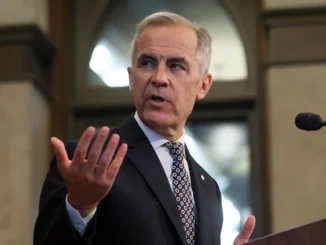
    The summit concluded on a mixed note. Mark Carney, Prime Minister of Canada, had every reason to feel pleased with the Canadian Presidency. “In Kananaskis, Canada’s Presidency showed that we’re ready to create new international partnerships, deepen alliances, and lead member nations into a new era of global co-operation. Canada has the resources the world wants and the values to which others aspire. Canada is meeting this moment with purpose and strength,” said Mark Carney.

    As Mark Carney and Narendra Modi had a one-to-one meeting after the Canadian Prime Minister addressed his G7 Presidency Press Conference, they agreed to appoint new High Commissioners in each other’s country, thus paving the way for the restoration of diplomatic relations that had virtually stood snapped since last year.

    Mark Carney and Narendra Modi reaffirmed the importance of Canada-India ties, based on mutual respect, the rule of law, and a commitment to the principles of sovereignty and territorial integrity. The leaders agreed to designate new high commissioners, with a view to returning to regular services to citizens and businesses in both countries.

    They discussed strong and historic ties between our peoples, partnerships in the Indo-Pacific, and significant commercial links between Canada and India, including partnerships in economic growth, supply chains, and the energy transformation. Prime Minister Carney raised priorities on the G7 agenda, including transnational crime and repression, security, and the rules-based order.

    The leaders also discussed opportunities to deepen engagement in areas such as technology, the digital transition, food security, and critical minerals.

    The last time Canada played host, in 2018, Trump left the summit before denouncing then Canadian Prime Minister Justin Trudeau as “very dishonest and weak” and instructing the U.S. delegation to withdraw its approval of the final communique. This time, when he left after dinner on the second night of the summit, he even sounded positive, saying in case a need arose, he might come back.

    In an increasingly dangerous and divided world, co-operation with reliable partners is more important than ever. With G7 partners, Canada will build a new era of collaboration – one rooted in mutual support and resilient partnerships. Canada is ready to lead.

    Under Canada’s Presidency, this G7 deepened co-operation with joint statements in the areas of securing critical minerals supply chains; adopting, powering, and sharing artificial intelligence; collaborating on quantum innovation; preventing, fighting, and recovering from wildfires; countering foreign interference, including transnational repression (this issue largely addressed the bone of contention between India and Canada in recent years); and fighting transnational crime, such as migrant smuggling.

    Prime Minister Carney also announced various measures in support of Ukraine, including sanction on individuals, entities, and vessels that continue to support Russia’s aggression in Ukraine (Incidentally, President Donald Trump suggested during the summit that Russia should be taken back to make it G8); an additional $2 billion in military assistance this year; disbursement of a $2.3 billion loan to Ukraine through the G7  Extraordinary Revenue Acceleration Loans mechanism; and allocation of $57.4 million in security-related assistance.

    Canada will also be taking action to build stronger economies and international systems.

    As the  Prime Minister Mark Carney started day 2 at the summit by calling on Donald Trump,  holding that his priorities were strengthening peace and security, building critical mineral supply chains and creating jobs, issues such as U.S. tariffs and the conflicts in the Middle East and Ukraine, issues related to global security, economy and foreign trade figured prominently during various sessions of the annual gathering of the big seven. Mark Carney also held a one-to-one meeting with the Indian Prime Minister, Narendra Modi, after addressing his G7 Presidency Press Conference at the end of the summit.

    The summit, which returned to Kananaskis for the second time since 2002, also had its highs and lows as late invitations to the Crown Prince of Saudi Arabia, Mohammed bin Salman and Indian Prime Minister  Narendra Modi,  as leaders of outreach nations, generated huge controversies.  While Narendra Modi attended, the Crown Prince of Saudi Arabia, however, did not show up at the elite gathering. 

    Indian touch to the G7 summit

    India-Canada reset relations.
    “Had an excellent meeting with Prime Minister Mark Carney. Complimented him and the Canadian Government for successfully hosting the G7 Summit. India and Canada are connected by a strong belief in democracy, freedom and rule of law. PM Carney and I look forward to working closely to add momentum to the India-Canada friendship. Areas like trade, energy, space, clean energy, critical minerals, fertilisers and more offer immense potential in this regard”: PM Modi. (Photo : X)

    When the invitees started arriving in Calgary, the capital of Alberta, Mayor of  Calgary, Jyoti Gondek, a UK-born woman of Indian origin,  Premier Danielle Smith and First Nations representatives greeted leaders from the G7 nations and invited non-member countries as they arrived.  Danielle Smith, who has been hawking media headlines for her statements, played host to the visiting leaders at an evening reception in Calgary and held bilateral meetings throughout the summit.

    Another member of the Indian Diaspora, invited to attend the summit, was Ajay Banga, President of the World Bank. One of the top officials entrusted with the security of the summit was Superintendent Joe Brar, also of Indian origin.

    The G7 members include Canada, USA, UK,  France, Germany, Italy, and  Japan

    Also attending at Carney’s invitation are Indian Prime Minister Narendra Modi and Ukrainian President Volodymyr Zelenskyy, along with Australian PM  Anthony Albanese, and the leaders of Brazil, Mexico, South Africa and South Korea.

    It also witnessed a series of protests as throngs of people chanted and waved signs at designated protest zones, many directing their anger at U.S. President Donald Trump and the Indian Prime Minister, Narendra Modi,  and other dignitaries attending the summit an hour away in Kananaskis. Hundreds of Khalistani supporters also held a procession in support of their demand.

    Several organizations held rallies outside Calgary City Hall, including demonstrations for Indigenous water rights, peace in Kashmir and an end to violence in Ethiopia’s Amhara region. Hundreds of pro-Palestine supporters also joined a procession that marched through downtown, blocking traffic on Macleod Trail and prompting additional road closures.

    For Prime Minister Mark Carney, who was elected leader of the Liberal Party and Prime Minister of Canada only in April this year, hosting the US President  Donald Trump and other world leaders like President of France, Prime Ministers of the United Kingdom and Australia bedsides leaders of the world’s biggest democracies for three days for talks at the Pomeroy Kananaskis Mountain Lodge, where the 2002 G8 gathering was held,  was a huge challenge.

    Hectic schedule for Mark Carney

    Prime Minister Mark Carney had a hectic and tight schedule throughout the three days of the summit. Starting with the official reception of the Prime Minister of the United Kingdom, Keir Starmer, on his arrival in Ottawa on June 15, he had a meeting with Keir Starmer,  and the Chief Executive Officer of Cohere, Aidan Gomez, before leaving for Calgary to attend the summit.

    On arriving in Kananaskis, he first met with the  Prime Minister of Australia, Anthony Albanese, followed by his meeting with the President of South Africa, Cyril Ramaphosa. Before the end of day 1, Mark Carney also met  with representatives of the Treaty 7 First Nations and the Chancellor of Germany, Friedrich Merz.

    He started his day 2 by calling on the President of the United States, Donald J. Trump, before he formally welcomed G7 leaders to Kananaskis, Alberta. He participated in the G7 Working Session I on the global economic outlook, before his meetings were held with the President of the European Council, António Costa, and the President of the European Commission, Ursula von der Leyen.

    After participating in the G7 working lunch on economic growth, security, and resilience, Mark Carney met the Prime Minister of Japan, Shigeru Ishiba , besides participated in the G7 Working Session III on making communities safe.

    In the afternoon on Day 2, he called on the President of France, Emmanuel Macron, and also met the Prime Minister of Italy, Giorgia Meloni.

    Then there was the G7 family photo before the working dinner on making the world secure.

    Mark Carney started his third and final day of the summit by welcoming and holding a meeting with the Secretary General of the North Atlantic Treaty Organization, Mark Rutte.

    He later welcomed and met the President of Ukraine, Volodymyr Zelenskyy, and participated in the G7 working breakfast on a strong and sovereign Ukraine with G7 leaders and guests.

    Carney closes summit with promises to forge ‘a new era of cooperation’.

    After participating in the G7 closing session, he welcomed outreach countries and international organizations and joined them in a G7 family photo with outreach countries, international organizations, and guests.

    Mark Carney met the Secretary-General of the United Nations, António Guterres,   President of Brazil, Luiz Inácio Lula da Silva, and attended the G7 working luncheon on energy security with outreach countries and international organizations.

    He addressed his G7 Presidency press conference before holding the much-awaited meeting with the Prime Minister of India, Narendra Modi.

    Mark Carney’s last two meetings of the G7 summit were with the President of the Republic of Korea, Lee Jae Myung, and the President of Mexico, Claudia Sheinbaum.

    Incidentally, seven comprehensive communiques about the deliberations during the three-day sessions were issued at the end of the summit.

    Since the German Chancellor, Friedrich Merz,  had stated before the start of the summit that Israel-Iran conflict  “would be very high on the agenda of the G7 summit”  holding that  his goals were for Iran to not develop or possess nuclear weapons, ensuring Israel’s right to defend itself, avoiding escalation of conflict and creating room for diplomacy,

    The participating G7 leaders issued a joint statement, saying 

    “We, the leaders of the G7, reiterate our commitment to peace and stability in the Middle East. In this context, we affirm that Israel has a right to defend itself. We reiterate our support for the security of Israel.

    “We also affirm the importance of the protection of civilians. Iran is the principal source of regional instability and terror.

    “We have been consistently clear that Iran can never have a nuclear weapon.

    “We urge that the resolution of the Iranian crisis leads to a broader de-escalation of hostilities in the Middle East, including a ceasefire in Gaza.

    “We will remain vigilant to the implications for international energy markets and stand ready to coordinate, including with like-minded partners, to safeguard market stability. A new global conflict, a fresh global summit and an expected spike in global oil prices were the issues on which the participating leaders focused during their deliberations. The leaders of the seven countries also talked about economic growth concerns, including energy security and critical minerals.

    Building energy security was one of the key themes Prime Minister Mark Carney, as G7 host, had set on the summit’s agenda, although it has been a perennial issue discussed by the group over five decades of annual meetings.

    The G7 leaders also talked about the role of critical minerals, which were needed for the energy transition and the development of storage battery technology.

    (Prabhjot Singh, is a Toronto-based award-winning independent journalist, He was celebrated by AIPS, the international body of sports journalists, for covering ten Olympics at its centennial celebrations held at UNESCO Centre in Paris during the 2024 Olympic Games. Besides, he has written extensively about business and the financial markets, the health industry, the public and private sectors, and aviation. He has worked as a political reporter besides covering Sikh and Punjab politics. He is particularly interested in Indian Diaspora,  and Sikh Diaspora in particular. His work has also appeared in various international and national newspapers, magazines and journals.)

  • Prem Bhandari congratulates Ambassador Mohapatra on organizing the world’s largest Yoga gathering, outside India

    Prem Bhandari congratulates Ambassador Mohapatra on organizing the world’s largest Yoga gathering, outside India

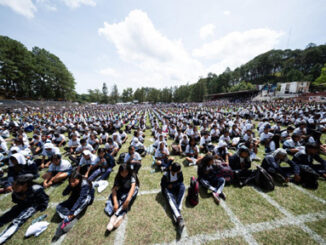
    NEW YORK (TIP): History was made in San Pedro Carchá, Guatemala, with the world’s largest International Day of Yoga (IDY 2025) celebration held outside India, attended by over 10,000 participants. This grand event was organized by the Indian Embassy in Guatemala in collaboration with the Municipality of San Pedro Carchá, the Department of Education, and the Don Bosco Center.

    Prem Bhandari, Chairman of Jaipur Foot USA, extended heartfelt congratulations to Ambassador Dr. Manoj Kumar Mohapatra for leading such a magnificent celebration of wellness, unity, and Indian culture on the global stage. Bhandari, who recently visited Guatemala at the invitation of Ambassador Mahapatra to mark the 53rd anniversary of India–Guatemala diplomatic relations and to coordinate the upcoming Jaipur Foot camp, said:

    Prem Bhandari, Chairman, Jaipur Foot USA with Ambassador Dr. Manoj Kumar Mohapatra on his recent visit to Guatemala.

    “I truly regret missing this historic event. Due to preparations for the UN event held on June 10 and several important meetings that followed—since Padma Bhushan Shri D.R. Mehta, founder of Jaipur Foot USA’s parent organization BMVSS, was visiting the U.S. and was returning on 15th June to India – I was unable to attend.
    However, I witnessed Ambassador Mohapatra working tirelessly during my recent visit, and I wholeheartedly commend him and his entire team for organizing such a spectacular event.”

    The International Day of Yoga was established by the United Nations in 2015 upon the initiative of Indian Prime Minister Shri Narendra Modi, and it is now celebrated worldwide as a symbol of holistic health, harmony, and peace.

    Prem Bhandari handed over, on behalf of the Indian Embassy in Guatemala , and Jaipur Foot, an official confirmation of the Jaipur Foot Camp in Guatemala, to Ms Claudine Ogaldes, Executive Secretary, and Mr. William Oswaldo, Inspector General of the Army, Ministry of Defense. Ambassador Mohapatra is seen on the extreme right.
  • Canada to retaliate against U.S. steel, aluminum tariffs if Carney, Trump can’t reach deal

    Canada to retaliate against U.S. steel, aluminum tariffs if Carney, Trump can’t reach deal

    When the negotiation period has ended, counter-tariffs will be adjusted ‘to levels consistent with progress made in the broader trading agreement with the U.S.,’ Carney said

    OTTAWA (TIP): The Canadian Steel Producers Association and United Steelworkers Union are panning Prime Minister Mark Carney’s response to U.S. President Donald Trump’s punishing tariffs. Their response came hours after Carney announced a tariff countermeasure plan Thursday that includes retaliation against Trump’s steel and aluminum tariffs a month from now — depending on how much progress the two world leaders make in their trade discussions.

    The two steel organizations issued a joint statement late Thursday saying Carney’s plan “falls short of what the industry needs at this most challenging time.”
    “We will continue to review the details of the measures and work constructively with the federal government to get a plan that works for Canadian steel producers and the thousands of workers that make up our sector,” Catherine Cobden of the steel industry association and Marty Warren, the union’s national director, said in the joint statement.

    Carney said that while he and Trump are pursuing a deal to end tariffs within the next 30 days, Canadian counter-tariffs will be adjusted on July 21 to “levels consistent with progress made in the broader trading agreement with the U.S.” “We must reinforce our strength at home and safeguard Canadian workers and businesses from the unjust U.S. tariffs,” Carney told a press conference on Parliament Hill following a federal cabinet meeting.

    The announcement came just a few hours before Canadian steel industry representatives were set to publicly call on the government to take immediate action in response to the U.S. tariffs. The steel producers instead held off and scrubbed their press conference.

    Jean Simard, head of the Aluminium Association of Canada, said in a media statement Thursday that the measures Ottawa announced “strike the right balance.”

    He said the government needs to carefully balance “sending a strong signal towards focused and accelerated negotiations and using a measured approach through adaptive counter-tariffs and reciprocal procurement policies.”

    “In this rapidly evolving situation, with potentially high financial impacts due to uncontrollable market reactions, we will need and seek agility and speed for government interventions should we reach the 30-day deadline without a positive resolve,” Simard added.

    Trump imposed his 25 per cent tariff on all steel and aluminum imports in March and Canada responded with 25 per cent counter-tariffs on U.S. steel and aluminum products in March.

    But Canada has not changed its tariffs yet since Trump increased U.S. tariffs on steel and aluminum to 50 per cent on June 3. The U.S. steel and aluminum tariffs apply to the entire world, not just Canada, which has led to concerns about dumping _ foreign companies flooding the market with products priced far below the prices domestic firms can charge.

    Trump’s escalating tariff war has slammed demand and prices for Canadian steel, prompting layoffs and leaving the industry worried about its future.

    Ottawa also plans to introduce rules on June 30 that will limit federal procurement to using steel and aluminum from Canada and “reliable trading partners.”

    The Carney government will also set new tariff rate quotas of 100 per cent of 2024 levels on imports of steel products from non-free trade agreement partners. NDP Leader Don Davies said in a media statement Thursday that the Liberal government is only taking baby steps to address the crisis. He called for an emergency response plan packed with supports for workers.

    “They’re taking one small step after another, which won’t make a meaningful difference and will ultimately cost many workers their jobs,” Davies said. Two weeks ago, when Trump increased the tariff rate, the Canadian Steel Producers Association — whose members include Algoma Steel, ArcelorMittal, Rio Tinto and Tenaris — immediately called on Carney to hit back with new tariffs and warned that Canada was being edged out of the U.S. market.

    They met with Industry Minister Melanie Joly, who said on June 4 the government “will take a decision but we need a bit more time right now — not too long.”

    Just before the cabinet meeting on Thursday, Joly acknowledged that the U.S. tariffs have left Canada’s steel and aluminum industries in a state of emergency.

    “We know that the Canadian steel and aluminum workers are very anxious and they want us to come up with a solution really, really quickly,” she said.

    The prime minister also announced Thursday the creation of two separate task forces for steel and aluminum that will meet to monitor the situation and advise the government.
    (Source: National Post)

  • On the Brink: Israel-Iran Conflict and the Shadows of a Global Conflagration

    On the Brink: Israel-Iran Conflict and the Shadows of a Global Conflagration

    By Prof. Indrajit S Saluja
    By Prof. Indrajit S Saluja

    By any measure, the world today stands alarmingly close to the precipice of a global war—arguably the closest it has been since the end of World War II. The escalating Israel-Iran conflict, marked by missile exchanges, covert operations, and diplomatic confrontations, is not merely a regional matter anymore. With major powers now visibly drawn into the conflict zone, what once seemed like a distant standoff in the Middle East now bears the hallmarks of a global crisis in the making.

    The recent tit-for-tat attacks between Israel and Iran—culminating in the unprecedented direct missile attack launched by Iran in April 2025 on Israeli territory, followed by Israel’s retaliatory airstrikes deep into Iranian infrastructure—have plunged the region into uncertainty. Israel claims it intercepted 99% of the over 300 drones and missiles launched by Iran, yet the very scale of this attack marks a dangerous escalation. It was the first open Iranian military strike on Israeli soil in history—a sharp departure from the longstanding shadow war the two have fought through proxies.

    The principle of “might is right” is again being used with dangerous abandon. In this contest of egos and ideologies, human suffering is tragically incidental. As both sides harden their positions, the death toll rises. Iran’s retaliatory attacks have so far left at least 15 Israeli civilians and soldiers dead. Israeli air raids have reportedly killed over 70 people in Iran and Syria, many of them civilians, including women and children.

    The humanitarian costs are devastating. According to the UN Office for the Coordination of Humanitarian Affairs, the conflict has displaced over 120,000 people in the region within weeks. Infrastructure—schools, hospitals, water supplies—has been reduced to rubble. Cultural heritage sites in cities like Isfahan and Aleppo are at risk. The ruins of ancient civilizations may be pulverized under the weight of modern militarism.

    Equally troubling is the muted response of the international community. The very countries that once championed the rules-based international order now seem helpless—or indifferent. The U.S. continues its unwavering support for Israel. President Trump’s recent statements warning Iran of “unimaginable consequences” if it harms U.S. assets or allies have only poured fuel on the fire. Iran, already under crushing sanctions, has found a new ally in Russia, which has openly declared its intent to “respond proportionally” if Iran is attacked. China has joined the fray with a sharp condemnation of Israel’s “aggressive actions.”

    This geopolitical polarization echoes the pre-World War II alignment of powers. In 1939, a series of alliances, ultimatums, and retaliatory moves pulled much of the globe into war. Today, a similarly combustible lineup is emerging: on one side, the U.S. and Israel; on the other, Iran, Russia, and China. All it would take is one misfired missile, one misinterpreted radar signal, one reckless provocation—and the world could spiral into chaos.

    India, with its centuries-old philosophy of Vasudhaiva Kutumbakam—the world is one family—finds itself watching from the sidelines, along with much of the Global South. These words, which once inspired global visions of unity and peace, now feel hollow against the background of bombs and bloodshed. Where is the moral leadership of the world? Where are the voices that once rose in defense of peace, of diplomacy, of the sanctity of human life?

    This is not a time for neutrality. It is a time for moral courage. Israel and Iran must be held to account—not for the sake of political point-scoring, but to save what remains of our collective humanity. World leaders must stop enabling belligerent posturing and start enforcing dialogue. The United Nations, long paralyzed by vetoes and political gamesmanship, must assert its relevance or risk becoming a relic of diplomacy.

    At the core of this conflict lie wounded histories, unresolved grievances, and power-hungry leaderships more interested in legacy than life. But even amidst such entrenched hostility, diplomacy is not a dead cause. History has shown that enemies can talk. The U.S. and Vietnam did. South and North Korea came to the table. Even the Cold War ended not with bombs, but with handshakes.

    There is still time—just enough—to prevent this fire from engulfing the world. The global community must speak with one voice: enough is enough. Let Israel and Iran know that the world is watching—not with indifference, but with the desperate hope that reason might prevail over rage.

    For the sake of the children in Tel Aviv and Tehran, for the future of Jerusalem and Isfahan, for the dignity of human life everywhere—let this not be the beginning of World War III. Let it be the end of a dangerous flirtation with annihilation.

  • Blame not the messenger in India’s diplomacy

    Blame not the messenger in India’s diplomacy

    India’s tough message on terrorism and Pakistan will find more takers if it plays to its advantage it being a secular, stable and rule-abiding democracy

    By Suhasini Haidar

    History and literature are replete with references to not ‘shooting the messenger’ for bringing bad news. In Shakespeare’s Antony and Cleopatra, the Egyptian queen assaults a messenger and threatens to have him “whipped with wire and stewed in brine, smarting in ling’ring pickle”, for bringing her the news that the Roman General Mark Antony has married another. “I that do bring the news made not the match,” the messenger replies, before making a hasty exit. Over the past two months, India’s ‘diplomatic messengers’ too have faced an ire that is unprecedented — criticized not for the message they bring, but for failing to convey effectively enough, the message New Delhi has sent out after Operation Sindoor (May 7-10, 2025).

    Criticism of Indian diplomacy

    Public commentary that is critical of the Ministry of External Affairs and its missions has focused broadly on three counts. First, that India received condolences and statements condemning the Pahalgam terror attack from all quarters, but not the kind of unequivocal support, especially from the neighborhood, for retaliatory strikes on Pakistan, of the kind seen in 2016 (post-Uri) and 2019 (post-Pulwama). In 2016, Bangladesh, Bhutan, Afghanistan, Sri Lanka and the Maldives backed India’s decision to stay away from the South Asian Association for Regional Cooperation summit in Pakistan after the Uri attack. In 2019, global solidarity with India forced even China to back a United Nations Security Council (UNSC) terror designation for Jaish-e-Mohammad chief Masood Azhar. Earlier, in 2008, there was international consensus in India’s favor after the Mumbai attacks, when Hafiz Saeed and a number of Lashkar-e-Taiba terrorists were designated by the UNSC, and Pakistan was put on the Financial Action Task Force (FATF) grey list for the first time. Instead, this time, unfavorable comparisons have been made to Pakistan for the lines of support it received from China, Turkiye, Azerbaijan, Malaysia and the Organisation of Islamic Cooperation (OIC).

    Second, the perception is that Pakistan has scored some diplomatic wins, despite widespread global understanding that Pakistan uses terrorists as state proxies. In April, Pakistan, a non-permanent member of the UNSC, managed to amend the resolution on Pahalgam to delete any reference to The Resistance Front (TRF), that claimed responsibility for the heinous attack.

    Earlier this month, Pakistan was chosen as chair of the Taliban Sanctions Committee and vice-Chair of the Counter-Terrorism Committee at the UNSC, and secured loans from the International Monetary Fund and Asian Development Bank despite New Delhi’s opposition. Next was the White House’s lunch invitation to Pakistan Army chief (now Field Marshal) General Asim Munir, despite the belief in India that his “jugular vein” speech was a virtual green signal for the Pahalgam attack. In July, as Security Council President for the month, Pakistan will try to schedule meetings on the India-Pakistan conflict and Kashmir, even as India accelerates efforts to designate the TRF at the UNSC, and place Pakistan on the FATF greylist. India’s diplomats will be tested again.

    The third aspect pertains to United States President Donald Trump, who, despite official denials from India, has chosen to muddy the narrative of how the May 10 ceasefire was achieved, hyphenating India and Pakistan in more than a dozen public statements, and offering to mediate on Kashmir. His latest iteration of the comments this week, just hours after a telephone conversation with Prime Minister Narendra Modi, and just before his meeting with Gen. Munir, was possibly the most blatant. Thus far, Mr. Trump’s statements, post-ceasefire, have not had a single word on the scourge of terrorism itself, showing just far apart the understanding between Delhi and Washington is at this time.

    A flurry of diplomacy does not seem to have moved the needle on these criticisms. After Operation Sindoor, special delegations of Members of Parliament and former diplomats travelled to 32 countries. The most time (six days) was spent in the United States. After the G-7 meet, Mr. Modi has meetings ahead with BRICS leaders. External Affairs Minister S. Jaishankar is visiting the U.S. for the Quad Foreign Ministers Meeting soon, after several visits to European capitals recently. The government had not essayed such a campaign after the 2016 or 2019 actions against Pakistan, indicating that it too feels that diplomatic efforts by the Ministry of External Affairs and missions abroad have been found wanting and need bolstering.

    But much as the messenger in Shakespeare says, India’s diplomats do not decide the message that India wishes to send after Operation Sindoor, and cannot be held responsible for its resonance. It is necessary for the government to study the contents of that message, the shift in geopolitical narratives and in how India is perceived, in order to build a more realistic assessment of how far international diplomacy can ensure the outcomes New Delhi desires vis-à-vis Pakistan.

    The ‘new normal’

    With reference to the content of the message, Mr. Modi’s three-pronged “New Normal” has raised eyebrows in some capitals. The first prong — ‘Any act of terror is an act of war’ — lowers the threshold for future conflicts, passing the trigger for Indian strikes into the hands of any terrorist, acting on orders on their own. The second — ‘India will not bow to nuclear blackmail’ — is not necessarily new, but has been left unarticulated thus far because it gives the appearance of a heightened nuclear risk for the region. The third — India will not distinguish between state and non-state actors henceforth — sends out an escalatory message, indicating that the next terror attack could well invoke ‘Armageddon’, rather than the controlled four day conflict in Operation Sindoor. While India’s partners have not asked for evidence of Pakistan’s links to Pahalgam, they look askance at other aspects — like why India has been unable to trace the terrorists responsible yet.

    Next, it is necessary to note that global shocks in the past few years have changed how the world views India’s tough messaging. Take for example, a growing number of statements by Indian Ministers about “taking back Pakistan occupied Kashmir” by force if necessary. These make many of India’s interlocutors uncomfortable, given the current number of conflicts over territorial aggression underway, from West Asia to Ukraine to the South China Sea. In the light of Israel’s retaliation for the October 7, 2023 terror attacks, few wish to give any state a free hand for “retribution”. New Delhi’s refusal to criticize Russia for its invasion of Ukraine in 2022 and to raise its oil imports from Russia in the face of sanctions, lost it some support in the western world, especially Europe. The Modi government’s silence on Israel’s devastation of Gaza has also been met with disappointment in the Global South.

    India, as Mr. Modi told Mr. Trump this week, views terrorism emanating from Pakistan, “not as a proxy war, but as a war itself”. India’s diplomats have been left explaining why their stock responses that “this is not an era of war” and that “dialogue and diplomacy” are the only way forward do not apply to India and Pakistan. Thus, it may be necessary for New Delhi to rethink how it frames its message in view of these changes, notwithstanding the global double standards inherent in the expectations from India.

    Democracy in decline

    Finally, there is need for introspection over how the Modi government’s image itself has altered in the world since 2019, leading to diplomatic challenges on a number of fronts. These range from concerns abroad over laws such as the Citizenship (Amendment) Act, the amendment of Article 370, Internet bans and summary arrests in different parts of the country, and accusations against Indian government agents of involvement in transnational killings in the U.S. and Canada. Questions over the broader decline in democracy and the status of minorities within India have also increased in the past few years. India’s delegations abroad (Operation Sindoor) had to field some of those questions during their travels.

    India’s right to defend itself from decades of Pakistan-backed, trained and funded terrorists is unassailable. But carrying a tough message on terror is easier for the diplomats tasked with the role, if in a strife-roiled world, the government plays to India’s advantages, and what differentiates it from Pakistan — as a secular, stable, pluralistic, rule-abiding democratic and economic power.

    (The author is an editor with The Hindu. She can be reached at suhasini.h@thehindu.co.in)

  • Resetting the India-U.S. partnership in uncertain times

    Resetting the India-U.S. partnership in uncertain times

    While the structural logic of the partnership remains robust, what is needed is a reset that is marked by clarity and mutual commitment

    By Amitabh Mattoo

    Just a few months ago, India and the United States appeared poised to deepen what had been described as the defining partnership of the 21st century. Prime Minister Modi had met President Donald Trump early in his second term. External Affairs Minister S. Jaishankar was present at the inauguration. There was bipartisan goodwill in Washington and strategic optimism in New Delhi. The relationship seemed to rest not on convenience, but on a grander wager: shared democratic values, converging geopolitical interests, and a mutual ambition to shape the emerging world order.

    A drift that is serious
    Today, however, there is growing unease in New Delhi. Not a rupture, but a perceptible drift; subtle yet serious. A series of tactical and rhetorical signals from Washington suggest a partnership at risk of being undermined by volatility, policy incoherence, and a disconcerting return to older habits of mind. The sense of strategic convergence is dimming. In this context, Mr. Trump’s decision to host a lunch on June 18 for Field Marshal Asim Munir, the chief architect of Pakistan’s praetorian politics and sectarian rhetoric, has sent a disquieting signal to India, not least because it blurs the line between counter-terrorism partnership and political expediency.

    This drift, however, is not irreversible. The structural logic of the partnership remains robust. What is required now is a reset, not of fundamentals, but of tone, clarity, and mutual commitment.

    From warp speed to reset, the state of India-U.S. ties

    Several recent developments have triggered India’s discomfort. Perhaps most jarring has been the return of outdated “hyphenation”: treating India and Pakistan as equivalent strategic concerns. In the aftermath of Operation Sindoor, Mr. Trump spoke of India and Pakistan in the same breath, offered mediation on Kashmir, and warned of nuclear escalation. For Indian policymakers who have invested years in decoupling India’s rise from the India-Pakistan binary, such language was diplomatically regressive.

    On the economic front, signals have been equally disconcerting. Even as Mr. Trump announced that “our deal with China is done”, he reportedly discouraged Apple’s CEO from expanding manufacturing in India; warning that companies that “go to India” may face difficulties in accessing the U.S. market. For Indian officials advancing a “China-plus-one” strategy and projecting India as a manufacturing hub, the message was undermining.

    Immigration policy, too, has become a point of friction. The H-1B visa regime, long a cornerstone of India-U.S. technological cooperation, now appears vulnerable to political posturing and protectionist rhetoric. The consequences risk fraying the connective tissue that binds Silicon Valley to Indian innovation ecosystems.

    Most concerning is the apparent warming in Washington’s approach toward Pakistan. When the United States Central Command (CENTCOM) Commander, General Michael Kurilla, described Pakistan as a “phenomenal partner” in counterterrorism, it represented an extraordinary characterization of an institution long associated with nurturing cross-border terrorism.

    Why is this drift occurring? First, the Trump administration’s transactional approach places short-term gain over long-term alignment. India’s strategic culture — patient, layered, and civilizational — sits uncomfortably with Washington’s preference for the quick deal. The American impulse to monetize diplomacy can often jar with India’s more strategic-based lens on geopolitics. In addition, Mr. Trump’s diplomatic style remains as intriguing as ever: part showman, part salesman, and unpredictable. He may dazzle one moment and denounce the next, making it difficult for partners, even the closest, to navigate the terrain of trust and expectation.
    Second, a segment of the U.S. national security establishment continues to view Pakistan as a familiar, if flawed, partner, especially in the context of Afghanistan and counterterrorism. Despite a history of duplicity, there remains a deep-seated nostalgia for the “known devil”, whose strategic utility, however diminished, is still overstated. Meanwhile, India’s strategic autonomy is often misconstrued as fence-sitting rather than a principled assertion of sovereignty.

    Third, structural asymmetries in influence and communication persist. India’s rise is real, but its institutional footprint in Washington lags behind its ambitions.

    This is reflected in a troubling misunderstanding of India’s strategic intentions. Critics such as Ashley Tellis argue that India suffers from “great-power delusions” and that the relationship falters because India’s ambitions outstrip its capabilities. This diagnosis is flawed. India does not suffer from delusions of grandeur; it suffers from the patient weight of becoming. Its desire to chart an independent course reflects not confusion but strategic clarity shaped by history and sovereignty. The real risk lies not in India’s aspirations but in Washington’s impatience with partners who do not mirror American methods or priorities.

    India must take the lead
    What then must be done? Both countries must act decisively to prevent further drift.

    India should not overreact. Tactical irritants must not obscure deeper strategic alignment. Defense cooperation, Quad initiatives, intelligence sharing, and convergent interests from the Indian Ocean to the Pacific remain strong foundations. But dramatic responses will only exacerbate misunderstanding. Quiet, persistent, and calibrated diplomacy must remain the preferred method. India should broaden and deepen its engagement in Washington beyond traditional diplomacy, leveraging Congress, policy think tanks, and Indian American diaspora as vectors of strategic advocacy.

    Domestically, India must accelerate internal economic reforms, not to satisfy any foreign expectations but to reinforce the logic of investment, manufacturing, and long-term confidence. Regulatory clarity and infrastructure modernization remain the best arguments for India as a global production hub. On the trade front, officials on both sides are cautiously exploring a modest but meaningful bilateral arrangement before the July 9 deadline.

    More ‘mind space’ for India in the American imagination

    Immigration concerns must be reframed as shared opportunities. The H-1B regime is not a concession to India, but an instrument of mutual innovation. The movement of skilled talent, the collaborative ecosystems of tech entrepreneurship, and the potential for co-creating the next generation of frontier technologies should be at the center of the India-U.S. conversation.

    The need to rediscover the basis of ties
    For the U.S., the burden is equally significant. Washington must abandon Cold War framings and recognize that treating Indian manufacturing and talent mobility as threats is self-defeating. If the Indo-Pacific strategy is to endure, it must be matched by concrete investments in India’s regional capacity-building initiatives.

    More fundamentally, both countries must rediscover the moral purpose of their partnership. This is not merely about balancing China or accessing markets. At its best, the India-U.S. relationship is about shaping a democratic, pluralist, and rules-based world order. The arc of India-U.S. relations has never been linear. In 1998, after the Pokhran tests, who could have imagined the level of alignment achieved just a decade later? By 2005, the two countries had stunned the world with the landmark civil nuclear agreement: an audacious act of strategic trust that rewrote the rules of global diplomacy.

    That moment reminds us of what is possible when political courage meets mutual respect. As U.S. President Bush once said, “The world will see what two great democracies can do when they trust each other.” It is precisely that spirit we must summon again today. As this writer wrote in the introduction to Engaged Democracies (co-edited, more than two decades ago), the “real test of the partnership is not how it behaves in moments of celebration, but how it endures in times of stress”.

    The question then is not, as Walter Russell Mead provocatively asked recently, will Trump lose India? The better question is: will both countries squander a generational opportunity to build a democratic concert in Asia? The answer must be no. This turbulence should serve not as an epitaph, but as a summons to renewal. If clarity, commitment, and candor return to the conversation, the arc of the India-U.S. relationship can still bend — not just toward engagement, but toward enduring partnership and, perhaps once again, toward history-making trust.

    (Amitabh Mattoo is Professor and Dean, School of International Studies, Jawaharlal Nehru University. He has served on India’s National Security Council Advisory Board)

  • Hope floats for a thaw in India-Canada relations

    Hope floats for a thaw in India-Canada relations

    The G7 invite to India is an attempt to mend fences and set in motion a quiet reset of relations at the highest level

    “A concrete starting point for restoring economic momentum is the revival of negotiations on the stalled India-Canada Comprehensive Economic Partnership Agreement (CEPA) and the Bilateral Investment Promotion and Protection Agreement (BIPPA). India’s growing interest in bilateral trade agreements — evident in recent deals with UAE, Australia and UK — signals a readiness to engage constructively. For Canada, re-engagement on these fronts would not only signal goodwill but also unlock tangible opportunities across key sectors such as energy, education, agriculture, critical minerals, clean technology and artificial intelligence.”

    By Vikas Swarup

    Prime Minister Narendra Modi set foot on Canadian soil on Monday, June 16, to attend the G7 Summit in Alberta, just over a decade since his last visit to Canada in April 2015, then at the invitation of PM Stephen Harper.

    Much has changed in the intervening years — beginning with Harper’s electoral defeat in October 2015 and the ascent of Justin Trudeau, the rising political traction of Khalistani narratives in Canada, Trudeau’s disastrous visit to India in 2018 and the subsequent attempts to portray India as a malign actor, culminating with the public accusation that “agents of the Indian government” were behind the June 2023 murder of Khalistani activist Hardeep Singh Nijjar. The allegation led to the expulsion of High Commissioners, the suspension of visa services and a deep freeze in diplomatic engagement between the two countries.

    The G7 invite is thus an attempt to mend fences, and set in motion a quiet reset of relations at the highest level, without the optics or political risks of a standalone bilateral visit. This effort is being driven by what may be called the three Ts —Trudeau, Trump and Trade.

    The first T — Trudeau — represents the source of much of the animus. Rarely, if ever, has India’s Ministry of External Affairs publicly rebuked the sitting leader of a Western democracy as harshly as it did Trudeau, not only for his allegations over Nijjar but also for his repeated forays into Indian domestic politics — such as his support for the farmers’ protests. Trudeau’s decision to step down from politics has effectively removed a persistent irritant and the symbolic face of the pro-Khalistan tilt in Canadian governance.

    The second T — Trump — refers to the geopolitical earthquake caused by Donald Trump’s dramatic return to the US presidency and his renewed pressure on America’s closest neighbors. Trump’s threats of tariffs, renegotiation of trade deals and open musings about absorbing Canada as America’s “51st state” upended the Canadian political landscape.

    The result: a decisive victory for former Bank of Canada and Bank of England governor Mark Carney, who became Prime Minister with a near-majority in Parliament. His main challenger, Conservative leader Pierre Poilievre, was seen as too ideologically close to Trump. Meanwhile, Jagmeet Singh — leader of the third-largest party, the NDP, and a vocal supporter of Khalistani causes — suffered a major setback, diminishing yet another source of friction in India-Canada relations.

    The third T — Trade — represents the compelling strategic rationale for Canada to rebuild bridges with India. Trump’s economic nationalism has made it imperative for Canada to diversify its trade relationships, particularly given that 97 per cent of Canadian oil and 75.9 per cent of Canada’s domestic exports are effectively hostage to the US market. India, with its massive and growing consumer base, expanding middle class and appetite for energy, technology and infrastructure investment, offers an obvious counterbalance. Canadian Pension Funds have invested more than $75 billion in India, reflecting confidence in India’s long-term economic prospects and serving as a steady ballast for the relationship during the diplomatic chill.

    The Khalistani issue remains the elephant in the room. While Canada’s Indian diaspora is 2.8 million strong, politically active with 22 MPs in a House of 343, and overwhelmingly law-abiding, a fringe minority of Khalistani sympathizers has managed to hijack the narrative — starting with the tragic bombing of Air India’s Kanishka Flight 182 in June 1985, which claimed 329 lives and remains the deadliest terrorist attack on Canadian soil.

    India has long believed that Canada fails to give sufficient weight to its legitimate security concerns, particularly when Indian diplomats are targeted or intimidated under the guise of protected speech. For its part, Canada views the killing of a Canadian citizen on Canadian soil as a grave breach of sovereignty. India has strongly denied any involvement, calling the charges “absurd and motivated”. With four Indian nationals now on trial for Nijjar’s murder, New Delhi is prepared to let the Canadian legal process run its course. The continuation of the law enforcement and security dialogue offers an institutional forum to address such concerns through established channels.

    That is why Prime Minister Mark Carney does not need to hold his nose while engaging with the leader of the world’s largest democracy. He has a clear template to emulate: that of the United States. Washington, confronted with allegations about a plot to assassinate Khalistani figure Gurpatwant Singh Pannun, did not allow the episode to derail the broader trajectory of its relationship with India. Instead, it pursued the matter through judicial forums while continuing to deepen cooperation on trade, technology and defense. Canada would do well to take a similarly pragmatic approach — firm where needed, but forward-looking where possible.

    A concrete starting point for restoring economic momentum is the revival of negotiations on the stalled India-Canada Comprehensive Economic Partnership Agreement (CEPA) and the Bilateral Investment Promotion and Protection Agreement (BIPPA). India’s growing interest in bilateral trade agreements — evident in recent deals with UAE, Australia and UK — signals a readiness to engage constructively.

    For Canada, re-engagement on these fronts would not only signal goodwill but also unlock tangible opportunities across key sectors such as energy, education, agriculture, critical minerals, clean technology and artificial intelligence.

    Beyond economics, India and Canada share foundational values: multiculturalism, democracy and a commitment to the rules-based international order. This alignment creates opportunities for cooperation in multilateral forums on global challenges — including climate change, food security and digital governance.

    The Modi-Carney meeting at Kananaskis is not a panacea for the tensions that have plagued the relationship in recent years. But it can be the first real step in a much-needed thaw. Strategic convergence, not tactical provocation, must guide the path forward.

    And there is one immediate, symbolic gesture that could catalyze this reset. Today, there are only two countries where India does not have High Commissioners by design. One is Pakistan. The other is Canada. After Kananaskis, it is in both nations’ interest to ensure that Canada no longer belongs in that unfortunate pairing.

    (Vikas Swarup is a former High Commissioner to Canada and a bestselling author)

  • Millions across the US  protest Trump’s policies in ‘No Kings’ demonstrations

    Millions across the US protest Trump’s policies in ‘No Kings’ demonstrations

    Governors across the US had urged calm and vowed no tolerance for violence, while some mobilized the National Guard ahead of marchers’ gathering

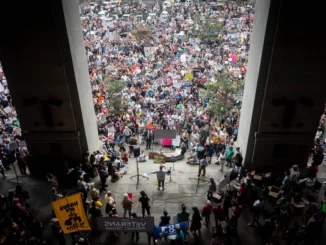
    NEW YORK (TIP): Masses of demonstrators packed into streets, parks and plazas across the US on Saturday to protest President Donald Trump, marching through downtowns and small towns, blaring anti-authoritarian chants mixed with support for protecting democracy and immigrant rights.

    Organizers of the “No Kings” demonstrations said millions had marched in hundreds of events. Governors across the US had urged calm and vowed no tolerance for violence, while some mobilized the National Guard ahead of marchers’ gathering.

    An activist imitates President Trump as a “cowardly lion” during a theatrical performance called “Three Ring Circus”, part of the No Kings Day protests in Fargo, North Dakota. REUTERS
    Confrontations were isolated. But, police in Los Angeles, where protests over federal immigration enforcement raids erupted a week earlier and sparked demonstrations across the country, used tear gas and crowd-control munitions to clear out protesters after the formal event ended. Officers in Portland also fired tear gas and projectiles to disperse a crowd that protested in front of a US Immigration and Customs Enforcement building well into the evening.

    And in Salt Lake City, Utah, police were investigating a shooting during a march downtown that left one person critically injured. Three people were taken into custody, including a man believed to be the shooter, who also suffered a gunshot wound, according to Police Chief Brian Redd.

    Redd said it was too early to tell if the shooting was politically motivated and whether those involved knew each other. The shooter appeared to be walking alongside the group of thousands who were marching, he added. Video feeds showed demonstrators running for safety as gunshots rang out.

    Huge, boisterous crowds marched, danced, drummed, and chanted shoulder-to-shoulder in New York, Denver, Chicago, Austin and Los Angeles, some behind “no kings” banners. Atlanta’s 5,000-capacity event quickly reached its limit, with thousands more gathered outside barriers to hear speakers in front of the state Capitol. Officials in Seattle estimated that more than 70,000 people attended the city’s largest rally downtown, the Seattle Times reported.

    Trump was in Washington for a military parade marking the Army’s 250th anniversary that coincides with the president’s birthday. About 200 protesters assembled in northwest Washington’s Logan Circle and chanted “Trump must go now” before erupting in cheers. A larger-than-life puppet of Trump — a caricature of the president wearing a crown and sitting on a golden toilet — was wheeled through the crowd.

    In some places, organizers handed out little American flags while others flew their flags upside down, a sign of distress. Mexican flags, which have become a fixture of the Los Angeles protests against immigration raids, also made an appearance at some demonstrations Saturday. In Culpepper, Virginia, police said one person was struck by an SUV when a 21-year-old driver intentionally accelerated his SUV into the crowd as protesters were leaving a rally. The driver was charged with reckless driving.

    The demonstrations come on the heels of the protests over the federal immigration enforcement raids that began last week and Trump ordering the National Guard and Marines to Los Angeles, where protesters blocked a freeway and set cars on fire.

    “Today, across red states and blue, rural towns and major cities, Americans stood in peaceful unity and made it clear: we don’t do kings,” the No Kings Coalition said in a statement Saturday afternoon after many events had ended.

    Philadelphia

    Thousands gathered downtown, where organizers handed out small American flags and people carried protest signs saying, “fight oligarchy” and “deport the mini-Mussolinis.”

    Karen Van Trieste, a 61-year-old nurse who drove up from Maryland, said she grew up in Philadelphia and wanted to be with a large group of people showing her support. “I just feel like we need to defend our democracy,” she said. She is concerned about the Trump administration’s layoffs of staff at the US Centers for Disease Control and Prevention, the fate of immigrant communities and Trump trying to rule by executive order, she said.

    A woman wearing a foam Statue of Liberty crown brought a speaker system and led an anti-Trump sing-along, changing the words “young man” in the song “Y.M.C.A.” to “con man.” ”I am what the successful American dream looks like,” said C.C. Téllez, an immigrant from Bolivia who attended the protest. “I’ve enjoyed great success here in the United States, and I’ve also contributed heavily to my community. And if there was space for me, I think there’s a way for everybody else to belong here as well.”

    Los Angeles

    Thousands gathered in front of City Hall, waving signs and listening to a Native American drum circle before marching through the streets. As protesters passed National Guard troops or US Marines stationed at various buildings, most interactions were friendly, with demonstrators giving fist bumps or posing for selfies. But others chanted “shame” or “go home” at the troops.

    Amid signs reading “They fear us don’t back down California” and “We carry dreams not danger, ” one demonstrator carried a 2-foot-tall (60-centimeter) Trump pinata on a stick, with a crown on his head and sombrero hanging off his back. Another hoisted a huge helium-filled orange baby balloon with blond hair styled like Trump’s.

    A few blocks from City Hall, protesters gathered in front of the downtown federal detention center being guarded by a line of Marines and other law enforcement. It was the first time that the Marines, in combat gear and holding rifles, have appeared at a demonstration since they were deployed to city on Friday with the stated mission of defending federal property.

    Peter Varadi, 54, said he voted for Trump last November for “economic reasons.” Now, for the first time in his life, he is protesting, waving a Mexican and US combined flag.

    “I voted for Donald Trump, and now I regret that, because he’s taken this fascism to a new level,” Varadi said. “It’s Latinos now. Who’s next? It’s gays. Blacks after that. They’re coming for everybody.” Even after the formal event ended, the downtown streets were packed with a jubilant crowd as people danced to salsa music and snacked on hot dogs and ice cream bought from vendors, many of whom are Latino immigrants. But the previously calm demonstration turned confrontational as police on horseback moved into the crowd and struck some people with wood rods and batons as they cleared the street in front of the federal building.

    New York City

    Marchers in the crowd that stretched for blocks along Fifth Avenue had diverse reasons for coming, including anger over Trump’s immigration policies, support for the Palestinian people and outrage over what they said was an erosion of free speech rights. But there were patriotic symbols, too. Leah Griswold, 32, and Amber Laree, 59, who marched in suffragette white dresses, brought 250 American flags to hand out to people in the crowd.

    “Our mothers who came out, fought for our rights, and now we’re fighting for future generations as well,” Griswold said. Some protesters held signs denouncing Trump while others banged drums. “We’re here because we’re worried about the existential crisis of this country and the planet and our species,” said Sean Kryston, 28.

    Minnesota

    Governor Tim Walz and law enforcement encouraged people not to attend rallies “out of an abundance of caution” following the shootings of the Democratic state lawmakers.

    Dozens of events were canceled, but tens of thousands still turned out for demonstrations in Duluth, Rochester and St Paul, which included a march to the state Capitol. Walz canceled his scheduled appearance at the St Paul event.

    Authorities said the suspect had “No Kings” flyers in his car and writings mentioning the names of the victims as well as other lawmakers and officials, though they could not say if he had any other specific targets.

    Seda Heng, 29, of Rochester, said she was heartbroken by the shootings, but still wanted to join the rally there. “These people are trying to do what they can for their communities, for the state, for the nation,” Heng told the Minnesota Star-Tribune.

    North Carolina

    Crowds cheered anti-Trump speakers in Charlotte’s First Ward Park before marching, chanting “No kings. No crowns. We will not bow down.” Marchers stretched for blocks, led by a group of people holding a giant Mexican flag and bystanders cheering and clapping along the way.

    Jocelyn Abarca, a 21-year-old college student, said the protest was a chance to “speak for what’s right” after mass deportations and Trump’s deployment of the National Guard in Los Angeles.

    “If we don’t stop it now, it’s just going to keep getting worse,” she said.

    Naomi Mena said she travelled an hour to demonstrate in Charlotte to represent her “friends and family who sadly can’t have a voice out in public now” to stay safe.

    Texas

    A rally at the Texas Capitol in Austin went off as planned despite state police briefly shutting down the building and the surrounding grounds after authorities said they received a “credible threat” to Democratic state lawmakers who were to attend.

    Dozens of state troopers swarmed through the grounds about four hours before the event, but the area was later opened and the rally started on time. The building remained closed.

    The Department of Public Safety later said one person was taken into custody “in connection with the threats made against state lawmakers” after a traffic stop in La Grange, Texas, about 65 miles (105 kilometers) east of Austin. State police did not detail the threat or immediately identify the person, but said there was no additional active threat.

    Mississippi

    A demonstration of hundreds of people opened to “War Pigs” by Black Sabbath playing over a sound system on the state Capitol lawn in Jackson.

    “A lot of stuff that’s going on now is targeting people of color, and to see so many folks out here that aren’t black or brown fighting for the same causes that I’m here for, it makes me very emotional,” said Tony Cropper, who travelled from Tennessee to attend the protest.

    Some people wore tinfoil crowns atop their heads. Others held signs inviting motorists to “Honk if you never text war plans.” Melissa Johnson said she drove an hour-and-a-half to Jackson to protest because “we are losing the thread of democracy in our country.”

    Portland

    Earlier in the day, thousands of protesters lined the streets in downtown Portland for several blocks, waving signs as passing cars honked in support. They marched around the city draped in American flags to the beat of drums and music.

    By late afternoon, a small group of demonstrators amassed across the river to protest in front of an ICE office where three people were arrested Wednesday night after starting a small fire against the building, police said.

    Federal immigration officers fired tear gas, flash bangs and rubber bullets in an effort to clear out the remaining protesters in the evening. Some protesters threw water bottles back and tended to each other’s wounds. The police department wrote on X that the event was declared a riot.

    At least two people were detained and taken inside the federal immigration building.

  • Embassy of India celebrates the 11th International Day of Yoga

    Embassy of India celebrates the 11th International Day of Yoga

    WASHINGTON, D.C. (TIP): The Indian Embassy in Washington, DC, on Thursday, June 19, organized a vibrant Yoga session at the iconic Lincoln Memorial ahead of the International Day of Yoga on June 21. The event saw enthusiastic participation from a large number of people, including members of the Indian diaspora and local residents. Speaking at the event, India’s Ambassador to the US, Vinay Mohan Kwatra, said, “We are all here to celebrate the 11th International Day of Yoga. An enormous, great, fun-filled celebration of India’s ancient civilization heritage in the form of Yoga. A large number of extended Indian families and the Indian diaspora are present with us here, along with the other citizens of the US. It’s a wonderful day, a wonderful experience for us…I want to thank everybody for being here with us this morning to celebrate this heritage from India…”

    Yoga and meditation instructor Acharya Govind Brahmachari, who led the session, highlighted Yoga’s deeper purpose beyond physical fitness.

    “Yoga is widely popular already. We want to bring yoga to every household worldwide because it has many benefits. The deeper aspects of yoga are perhaps not so much known yet. We are here to spread awareness of the original purpose of yoga to actually attain a sense of freedom or oneness with the universe. So that’s a deeper aspect of yoga that’s very much related to meditation. Then the yoga postures, which are known as yoga asanas, are a part of the practice, part of a holistic system to support the mind, to attain freedom from unpleasant feelings and emotions and thoughts,” he said.

    Dr Smita Patel, a participant at the session, praised the initiative and highlighted the health benefits of yoga. “I would like to congratulate Prime Minister Modi for starting this 11 years ago, and I liked today’s theme ‘One Earth, One Health’. As a physician, I believe yoga is as essential as breathing and taking medication. Yoga helps reduce anxiety, improves depression, and for children, it helps their attention span, concentration, ability to focus on a task, and ability to complete a task,” she said. Acharya Madhuvartanand Avdhut from Ananda Marga Yoga and Meditation Centre also shared his thoughts, saying, “The first yogi was Lord Shiva, who came to this earth 7000 years ago. Yoga has three different parts. Yog Asana, Yog Darshan and Yog Sadhana… Yoga is a multi-faceted approach to healthy living. Yoga can bring world peace and it can unite human society…”

    The event reflected the growing global embrace of Yoga not just as a physical discipline but as a holistic path to well-being, inner peace, and universal harmony.

    This year in India, Prime Minister Narendra Modi will lead the national celebrations from Visakhapatnam, where he will participate in the Common Yoga Protocol (CYP) session at the city’s beachfront. Nearly 5 lakh participants are expected to join him in the mass yoga demonstration. Simultaneously, Yoga Sangam events will be held at over 3.5 lakh locations across India, making this one of the largest coordinated Yoga celebrations. In addition, citizen engagement initiatives like ‘Yoga with Family’ and youth-focused campaigns under ‘Yoga Unplugged’ have been launched on digital platforms such as MyGov and MyBharat to promote participation and awareness.

    According to the release from the Prime Minister’s Office (PMO), the 2025 theme — “Yoga for One Earth, One Health” — highlights the interconnectedness of human and planetary health and echoes the global vision of collective wellness, rooted in India’s philosophy of “Sarve Santu Niramaya” (May all be free from disease).

    Since 2015, when the United Nations General Assembly (UNGA) adopted India’s proposal to observe 21st June as IDY, the Prime Minister has led the celebrations from various locations, including New Delhi, Chandigarh, Lucknow, Mysuru, New York (UN Headquarters), and Srinagar. IDY has since evolved into a powerful global health movement.
    (Source: ANI)

  • June 20 New York & Dallas E – Edition

    [vc_row][vc_column][vc_custom_heading text=”E-Edition” font_container=”tag:h2|text_align:center” google_fonts=”font_family:Istok%20Web%3Aregular%2Citalic%2C700%2C700italic|font_style:700%20bold%20regular%3A700%3Anormal” css=”” link=”url:https%3A%2F%2Fwww.theindianpanorama.news%2Fwp-content%2Fuploads%2F2025%2F06%2FTIP-June-20-E-Edition.pdf”][vc_single_image image=”185238″ img_size=”full” alignment=”center” onclick=”custom_link” css=”” link=”https://www.theindianpanorama.news/wp-content/uploads/2025/06/TIP-June-20-E-Edition.pdf”][/vc_column][/vc_row][vc_row][vc_column width=”2/3″][vc_custom_heading text=”Lead Stories This Week” google_fonts=”font_family:Istok%20Web%3Aregular%2Citalic%2C700%2C700italic|font_style:700%20bold%20regular%3A700%3Anormal” css=”” link=”url:https%3A%2F%2Fwww.theindianpanorama.news%2F”][vc_wp_posts number=”5″ show_date=”1″][/vc_column][vc_column width=”1/3″][vc_single_image image=”82828″ img_size=”medium” alignment=”center” onclick=”custom_link” css=”” link=”https://www.theindianpanorama.news/advertising-media-kit-portal-indian-panorama/ “][vc_single_image image=”82829″ img_size=”medium” alignment=”center” onclick=”custom_link” css=”” link=”https://www.theindianpanorama.news/advertising-media-kit-portal-indian-panorama/ “][/vc_column][/vc_row]

  • Improvised multicultural Ram Leela staged in NJ town

    Improvised multicultural Ram Leela staged in NJ town

    Neighbors of diverse backgrounds came together in the backyard of organizer Lakshmi Kant Garg for an evening of rich storytelling, vibrant performances, and shared heritage.

    PLAINSBORO, NJ (TIP): In a celebration that blended ancient Indian epics with modern multiculturalism, a quiet backyard in Plainsboro transformed into a stage of myth, meaning, and magic for the 2025 DIY Multicultural Ram Leela. Attended by over 200 people from across the tri-state area and streamed live to hundreds more, the free event on June 7 served as a powerful testament to the spirit of community, inclusivity, and cultural continuity.

    Neighbors of all backgrounds –  Hindu, Muslim, Sikh, Christian, and beyond – came together for an evening of rich storytelling, vibrant performances, and shared heritage. The event, now in its fifth year, is staged by a family committed to continuing a tradition that began in the 1960s in India, when the organizer’s grandfather staged similar plays.

    “This is not just a play. It’s a prayer, a purpose, and a promise to the next generation,” said Lakshmi Kant Garg, the organizer, who revived his grandfather Master Jyoti Swaroop’s legacy in New Jersey in 2021. “We want to bring world cultures under one roof, and what better way than through timeless stories that teach values we all share.” Mr Garg is the Founder of Master Ji’s Heritage Ram Leela Studio and Managing Director at a Big Four accounting firm in New York City. His community-driven efforts have been recognized at both the national and state levels in the US and India.

    A Community United

    Support came not just from the audience but from the neighborhood itself. Residents opened their backyards for food catering, driveways became parking lots, and speakers echoed across fences with the cooperation of local families. From doctors and engineers to young students and local leaders, the event brought together an extraordinary cross-section of the community.

    “We applaud the work you do to bring our community together through such rich cultural experiences,” said Plainsboro Mayor Ed Yates in an email.

    The event kicked off with a moving multifaith prayer—featuring Gurbani from Sikh tradition, couplets of the Muslim poet Rahim, and a sonnet by Shakespeare, setting the tone for an evening that was as diverse as it was unified.

    A Modern Ram Leela with Ancient Soul

    Sita Haran
    Shoorpanakha 
    Krishna and Arjun

    Key scenes from the Ramayana were creatively interpreted with rich costumes, dramatic effects, and multilingual dialogues. The production also incorporated a story of Sai Baba and even a scene from the Bhagavad Gita, where Krishna imparts wisdom to a conflicted Arjuna aboard a home-made wooden chariot.

    But what made the show extraordinary was its home-grown flair. All costumes and props, ranging from the flower-filled Pushpak Vimaan used in the “Sita Haran” scene to the chariot used in the Mahabharata sequence, were painstakingly handcrafted by the family. One jaw-dropping moment involved Ravana leaping from the stage to kidnap Sita, while the scene depicting Soorpnakha’s transformation had the audience gasping in awe. A live yagna (sacred fire ritual) was conducted on site, symbolizing purification and the continuity of age-old traditions.

    Youth at the Forefront

    This year marked a significant shift, with more high school and college students involved than ever before, serving as actors, backstage crew, and volunteers. “We’ve seen a real generational handoff this year,” said Ajay Rathi, an audience member. “You could feel the passion and sincerity in the youth performers. It gave us hope.”

    Among the core team was organizer Lakshmi Kant’s daughter, Darisi Garg, a recent graduate from Emory University, who led the music direction. His older daughter, Dr. Noemi Garg, currently an internal medicine resident at MedStar Georgetown, and her fiancé, Yatin Tuteja, helped conceptualize the stage, logistics, and more. His wife, Rajni, a homemaker with an eye for detail, made multiple trips to India to source fabrics, jewelry, and ancient script materials, often working late into the night to bring authenticity to the costumes. The efforts of the volunteer team, led by Vedika Maheshwari, helped run the event smoothly.

    National Recognition

    The event is no stranger to praise. In 2022, iconic Indian television actor Arun Govil, who portrayed Ram in the classic Ramayana series, joined virtually from Mumbai to express admiration. That same year, his daughter Sonika Govil attended in person in Plainsboro, further amplifying the event’s credibility and charm.

    (Based on a press release issued by Parveen Chopra.

    Photos:  courtesy www.ramleelastudionj.com)

  • US resumes visas for foreign students; Demands  access to social media accounts

    US resumes visas for foreign students; Demands access to social media accounts

    WASHINGTON, D.C. (TIP): The US State Department said on Wednesday, June 18, it is restarting the suspended process for foreigners applying for student visas but all applicants will now be required to unlock their social media accounts for government review. The department said consular officers will be on the lookout for posts and messages that could be deemed hostile to the United States, its government, culture, institutions or founding principles.

    In a notice made public on Wednesday, the department said it had rescinded its May suspension of student visa processing but said new applicants who refuse to set their social media accounts to “public” and allow them to be reviewed may be rejected. It said a refusal to do so could be a sign they are trying to evade the requirement or hide their online activity.

    The Trump administration last month temporarily halted the scheduling of new visa interviews for foreign students hoping to study in the US while preparing to expand the screening of their activity on social media, officials said.

    Students around the world have been waiting anxiously for US consulates to reopen appointments for visa interviews, as the window left to book their travel and make housing arrangements narrows ahead of the start of the school year. Students from China, India, Mexico and the Philippines have posted on social media sites that they have been monitoring visa booking websites and closely watching press briefings of the State Department to get any indication of when appointment scheduling might resume. In reopening the visa process, the State Department also told consulates to prioritize students hoping to enroll at colleges where foreigners make up less than 15 per cent of the student body, a US official familiar with the matter said.

    The official spoke on condition of anonymity to detail information that has not been made public.

    Foreign students make up more than 15% of the total student body at almost 200 US universities, according to an Associated Press analysis of federal education data from 2023. Most are private universities, including all eight Ivy League schools. But that criteria also includes 26 public universities, including the University of Illinois and Pennsylvania State University. Looking only at undergraduate students, foreign students make up more than 15 per cent of the population at about 100 universities, almost all of them private.

    International students in the US have been facing increased scrutiny on several fronts. In the spring, the Trump administration revoked permission to study in the US for thousands of students, including some involved only in traffic offences, before abruptly reversing course.

    The government also expanded the grounds on which foreign students can have their legal status terminated.

    As part of a pressure campaign targeting Harvard University, the Trump administration has moved to block foreign students from attending the Ivy League school, which counts on international students for tuition dollars and a quarter of its enrolment. Trump has said Harvard should cap its foreign enrolment at 15 per cent.

    This latest move to vet students’ social media, the State Department said on Wednesday, “will ensure we are properly screening every single person attempting to visit our country”.

    In internal guidance sent to consular officers, the department said they should be looking for “any indications of hostility towards the citizens, culture, government, institutions, or founding principles of the United States”.

    Jameel Jaffer, executive director at the Knight First Amendment Institute at Columbia University, said the new policy evokes the ideological vetting of the Cold War, when prominent artists and intellectuals were excluded from the US. “This policy makes a censor of every consular officer, and it will inevitably chill legitimate political speech both inside and outside the United States,” Jaffer said.

    The Trump administration also has called for 36 countries to commit to improving vetting of travelers or face a ban on their citizens visiting the United States. A weekend diplomatic cable sent by the State Department says the countries have 60 days to address US concerns or risk being added to a travel ban that now includes 12 nations.

  • India stands ‘isolated’ over abstention on Gaza ceasefire in the UNGA, says Congress

    India stands ‘isolated’ over abstention on Gaza ceasefire in the UNGA, says Congress

    NEW DELHI (TIP): Expressing concern over the flare-up in West Asia after the escalation of the Israel-Iran conflict, the Congress on Tuesday, June 17, 2025, urged the Union Government to work with partner countries to ensure an immediate ceasefire in the region. “India should work with partners to bring an immediate halt to hostilities as any escalation can destabilize the entire region,” Congress Working Committee member Anand Sharma, who heads the party’s foreign affairs department, told The Hindu.

    Mr. Sharma, who was part of the Narendra Modi government’s diplomatic outreach in Operation Sindoor and the Pahalgam terror attack, mounted a scathing criticism of India’s abstention from a UN vote on a motion for the protection of civilians and upholding legal and humanitarian obligations in Gaza. “It is a humanitarian catastrophe that has unfolded in Gaza, where people are facing collective retribution for their identity. It is indefensible that the land of Mahatma Gandhi doesn’t stand for peace,” Mr. Sharma said.

    As Israel ends ceasefire, India expresses concern over Gaza, humanitarian situation, release of hostages

    In fact, the abstention at the UN was cited as yet another example of “weak diplomacy” by India. Congress general secretary (organization) and Lok Sabha member from Kerala’s Alappuzha seat, K.C. Venugopal, said India stood isolated among multilateral fora such as BRICS — a grouping of Brazil, Russia, India, China and South Africa — and SCO or Shanghai Cooperation Organization because of its stance.

    “India has always stood for peace, justice, and human dignity. But today, India stands alone as the only country in South Asia, BRICS, and SCO to abstain on a UNGA resolution demanding a ceasefire in Gaza,” he said on X last Saturday (June 14, 2025).

    Terming India’s stance “shameful and disappointing” in an X post the same day, Priyanka Gandhi Vadra, Lok Sabha member from Kerala’s Wayanad, said, “60,000 people, mostly women and children, have been killed already, an entire population is being confined and starved to death, and we are refusing to take a stand”.

    “Cold-blooded murder”: Priyanka Gandhi slams Israel, says its actions show humanity means nothing to them

    “This is a tragic reversal of our anti-colonial legacy. In fact, not only are we standing silent as Mr. (Benjamin) Netanyahu annihilates an entire nation, we are cheering on as his government attacks Iran and assassinates its leadership in flagrant violation of its sovereignty and complete contravention of all international norms,” Ms. Vadra added. Pawan Khera, who heads the party’s media and publicity wing, countered criticism from some quarters that Kerala’s politics may determine the position of some of their MPs from the State. “Congress’s position on Israel-Gaza and Iran-Israel stems from our own legacy of anti-colonial solidarity, non-alignment, and a firm commitment to human rights and international law,” Mr. Khera said.

    Stressing on the role India can play in the Iran-Israel conflict, he said, “Instead of seeing this moment as a strategic conundrum, India could see it as an opportunity — to act as a moral bridge between the warring sides, both of which happen to be our allies. That is what our legacy allows us to do, and what global leadership demands.”

  • Kremlin warns US against Iran strike, cautions of major escalation

    Kremlin warns US against Iran strike, cautions of major escalation

    MOSCOW (TIP): Washington would be making a serious mistake by launching an attack on Iran, Kremlin spokesperson Dmitry Peskov said, warning that direct US involvement in the ongoing Israel-Iran conflict would further destabilize the region, as reported by RT.

    Tensions have escalated since last week after Israel launched a large-scale bombing campaign against Iran, alleging that Tehran was on the verge of producing a nuclear bomb. Iran denied the allegations and responded with multiple drone and missile strikes. The exchange of hostilities between the two nations has continued, stoking fears of a wider regional war. Commenting on the possible US strike, Peskov said, “Moscow believes it is a wrong move. This is a step that is bound to lead to further escalation, a major escalation, and would only complicate the situation in the region,” RT reported. He further cautioned, “Such conflicts are capable of setting the entire region on fire.” Peskov reiterated Russia’s willingness to help mediate and resolve the crisis, while calling any notion of regime change in Iran by the US or Israel “unacceptable.”

    When asked about this possibility, Peskov echoed President Vladimir Putin’s long-held position: “We believe that it is unacceptable to have such conversations, and even more so to take such actions,” RT reported.

    Peskov said President Putin has maintained communication with both Tehran and Tel Aviv since the conflict began and has a “complete picture” of the situation. He added that while there is currently “little ground” for talks, Moscow remains actively engaged.

    Putin, addressing a late-night Q&A with journalists on Wednesday, revealed that Moscow had proposed several compromise frameworks to all involved parties — including the US, Israel, and Iran, as reported by RT. He suggested that a possible settlement could include mutual security guarantees that preserve Iran’s right to peaceful nuclear technology and Israel’s right to security.
    (Source: ANI)

  • Dinesh K Patnaik likely to be India’s next high commissioner to Canada

    Dinesh K Patnaik likely to be India’s next high commissioner to Canada

    NEW YORK (TIP): Seasoned diplomat Dinesh K Patnaik is likely to be appointed as India’s new high commissioner to Canada with both sides looking at rebuilding bilateral ties that came under severe strain following the killing of a Sikh separatist in 2023, people familiar with the matter said on Thursday, June 19.

    Patnaik, a 1990-batch Indian Foreign Service officer, is currently serving as India’s ambassador to Spain. Prime Minister Narendra Modi and his Canadian counterpart Mark Carney on Tuesday, June 17, agreed to pursue “constructive” steps to restore stability in India-Canada ties including the early return of envoys to each other’s capitals.

    Ties between India and Canada plummeted to an all-time low following a diplomatic spat over the killing of Khalistani separatist Hardeep Singh Nijjar. The people cited above said Patnaik is likely to be succeeded in Spain by Jayant Khobragade. Khobragade is currently serving as India’s ambassador to the Association of Southeast Asian Nations (ASEAN). In their meeting on the sidelines of G7 Summit in Kananaskis, Modi and Carney focused on repairing the frosty bilateral ties.

    The India-Canada relations hit rock bottom following then Prime Minister Justin Trudeau’s allegations in 2023 of a potential Indian link to the killing of Nijjar.

    In October last year, India recalled its high commissioner and five other diplomats after Ottawa attempted to link them to the Nijjar case.

    India also expelled an equal number of Canadian diplomats.

    However, Liberal Party leader Carney’s victory in the parliamentary election in April triggered hopes for reset of the relationship.

  • Trump opens two-week diplomatic window with Iran, hopes Tehran will ‘drop its uranium enrichment’

    Trump opens two-week diplomatic window with Iran, hopes Tehran will ‘drop its uranium enrichment’

    WASHINGTON, D.C. (TIP): US President Donald Trump has opened a two-week window for diplomacy with Iran before deciding on military action, aiming to restart stalled negotiations amid Israel’s bombing campaign, CNN reported. Trump and advisers hope that Iran — under pressure from Israeli strikes and missile losses — might agree to drop its uranium enrichment, a demand previously rejected, CNN reported. The pause also allows Trump more time to assess the risks of entering a foreign conflict he aimed to avoid.

    White House efforts included proposed deployments of Middle East envoy Steve Witkoff and Vice President JD Vance to the region, though both remained in Washington as no talks were scheduled, as reported by CNN.

    Meanwhile, European foreign ministers from Britain, Germany, and France will meet Iranian representatives in Geneva on Friday to revisit Witkoff’s earlier offer.

    Iran, however, has maintained it will not negotiate with the US until Israel’s bombing of its territory ends–emphasizing that US officials have not pressured Israel to halt the strikes, CNN noted.

    White House Press Secretary Karoline Leavitt affirmed Trump’s stand, stating diplomacy remains viable while emphasizing the strength of the US military: “Iran and the entire world should know that the United States military is the strongest and most lethal fighting force in the world,” she said.

    In a series of Situation Room meetings this week, Trump reviewed options involving bunker-buster bombs targeting Iran’s underground nuclear facility at Fordow, but expressed concern over the risk of a multi-year war. The prospect of a drawn-out engagement troubles many of his advisers, as well as his onetime strategist Steve Bannon.

    US Secretary of State Rubio has also actively engaged with allies, holding conversations with European counterparts on ensuring Iran never develops nuclear weapons. Ahead of Geneva talks, he discussed the matter with British Foreign Secretary David Lammy, who stated, “Iran can never develop or acquire a nuclear weapon.”

    A White House official described the upcoming European-Iran meeting as a “temperature check” to gauge Tehran’s openness to diplomatic settlement amid mutual strikes.

    Special Envoy Witkoff has continued indirect outreach to Iran, and though the administration feels diplomatic options remain viable, Iran’s response to third-party mediators has so far shown no shift.

    Tensions between Israel and Iran escalated on June 13 when Israel launched operation “Rising Lion,” targeting Iran’s nuclear infrastructure. Iran responded with retaliatory strikes.

    The two nations have since then been in a steady confrontation.
    (Source: ANI)

  • Senator Ghazala Hashmi Makes History as First Indian American Nominee for Virginia Lt. Governor

    Senator Ghazala Hashmi Makes History as First Indian American Nominee for Virginia Lt. Governor

    RICHMOND, VA (TIP): Virginia State Senator Ghazala Hashmi has won the Democratic nomination for lieutenant governor, marking a historic moment in the state’s political landscape. Hashmi, who currently represents the 15th District in the Virginia Senate, is the first Indian American and the first Muslim to be nominated for statewide office in Virginia. Hashmi emerged victorious in a crowded six-way primary held on Tuesday, narrowly defeating former Richmond Mayor Levar Stoney by less than one percent of the vote—a margin of about 3,500 votes. Her nomination adds to a diverse Democratic ticket that includes U.S. Representative Abigail Spanberger for governor and former Delegate Jay Jones for attorney general.
    “I am deeply honored by the trust Virginia voters have placed in me,” Hashmi said in a statement following the win. “This is a win for inclusion, equity, and the belief that everyone deserves a seat at the table.”
    Born in Hyderabad, India, Hashmi immigrated to the United States with her family at the age of five. She was raised in Georgia and earned a Ph.D. in English from Emory University before settling in Richmond. Prior to entering politics, she had a long academic career, serving as a professor and as the founding director of the Center for Excellence in Teaching and Learning at J. Sargeant Reynolds Community College.
    Hashmi first made political history in 2019 when she unseated a Republican incumbent to become the first Muslim woman elected to the Virginia Senate. Since then, she has been a prominent voice on education, healthcare, and civil rights. In the General Assembly, she has championed legislation to protect access to contraception, expand Medicaid, and invest in public education.
    In the general election on November 4, 2025, Hashmi will face Republican nominee John Reid, a conservative radio host who would become Virginia’s first openly gay statewide officeholder if elected.
    With the potential to become the first Muslim and South Asian to hold statewide office in Virginia, Hashmi’s candidacy is being closely watched as a barometer of the state’s shifting political dynamics and growing diversity.

  • Punjabi diaspora in the US to make documentary on Ghadar movement and its founder Sohan Singh Bhakna

    Punjabi diaspora in the US to make documentary on Ghadar movement and its founder Sohan Singh Bhakna

    NORTH PORTLAND (TIP): A section of the Punjabi diaspora in the US’s North Portland has announced to film a documentary on the Ghadar movement and its founder Sohan Singh Bhakna, whose image will also appear in the community-painted mural.
    After Amritsar Tribune highlighted the condition of memorial, library set up by Sohan Singh at his native village Bhakna, a release, mailed from the US by the Peninsula Odd Fellows Lodge, stated that it is undertaking the initiative to depict the epoch-making event in the 35’x83’ community-painted mural to honor the diverse and influential figures who have shaped North Portland’s history. Founded in 1895, the Peninsula Odd Fellows Lodge, which also houses a museum depicting local history, has been a cornerstone of the North Portland community, providing support through charitable initiatives and preserving local history.
    The release stated that the artwork will feature prominent individuals whose contributions have left an indelible mark on the community. Among other notable leaders, honorees include Dr Merriman, Oregon’s first Black physician, William Killingsworth, a key figure in the building of numerous North Portland landmarks, Hattie Redmond, a Black suffragist whose leadership was instrumental in securing voting rights for women in Oregon, Thomas Monahan, a trolley car conductor turned civil servant, and Sohan Singh Bhakna who helped found the Ghadar movement after an anti-immigrant mob tried to forcibly expel Punjabi workers from St. Johns.
    Community volunteers will begin painting the mural on July 26 to honor the diverse and influential figures who have shaped North Poland’s history.
    Community volunteers will begin painting the mural on July 26 at the First Annual Unity in the community celebration. Oregon Public Broadcasting will be present at the celebrations, filming for an upcoming documentary on the Ghadar movement and its leader Sohan Singh Bhakna.
    It stated that Navdeep is a writer and professor, and the son of Pashaura Singh Dhillon, who was raised by Sohan Singh Bhakna, will be present to launch the painting of Bhakna’s image.
    It stated that their goal with this mural is to foster community pride and spark interest in North Portland’s rich and diverse history to preserve and celebrate for generations to come.
    The project to make the mural becomes even more special due to its inclusive approach. The project will involve community volunteers, including students, local artists, and residents eager to participate.

  • Indian American entrepreneur Sharran Srivatsaa appointed Acquisition.com president

    Indian American entrepreneur Sharran Srivatsaa appointed Acquisition.com president

    LAS VEGAS (TIP): Indian American entrepreneur Sharran Srivatsaa, with an extensive track record of founding and growing successful businesses across a range of sectors, has been appointed as President of Acquisition.com, a private investment and advisory firm.
    In this role, Srivatsaa will be responsible for helping oversee all aspects of the Acquisition.com business, including the firm’s investment strategy, Las Vegas-based company announced.
    “Sharran is a superstar in the entrepreneur community. He brings a wealth of knowledge, a proven track record of leading and scaling innovative businesses and a genuine passion for helping founders and the companies they build reach their full potential,” said Leila Hormozi, Chief Executive Officer and Managing Partner of Acquisition.com.
    “Having significantly expanded our physical headquarters and doubled the size of our team in the last 12 months, we are better positioned than ever to build on our momentum and bring our tested playbook for driving long-term growth to new partners and founders all over the world. This is an exciting time for Acquisition.com, and Sharran is the perfect fit to step into this role.”
    Srivatsaa is an experienced executive who brings nearly two decades of financial and entrepreneurship experience to Acquisition.com. Most recently, he served as President of The Real Brokerage, a publicly traded real estate brokerage, where he led all aspects of the company’s growth strategy, including agent acquisition and training.
    He previously served as President of Teles Properties, which he built into California’s fastest-growing real estate brokerage prior to its acquisition by Douglas Elliman.
    Earlier in his career, he held roles at Goldman Sachs and Credit Suisse, advising management teams of fast-growing businesses on investment advisory and corporate strategy. Throughout the course of his career, Srivatsaa has been recognized four times as an Inc. 500 Entrepreneur. He also currently hosts the “Business School” podcast and is the creator of the popular 5am Club call for entrepreneurs. “We are thrilled to add an executive and investor of Sharran’s caliber to the Acquisition.com platform as we continue to grow our investment and advisory capabilities,” said Alex Hormozi, Founder and Managing Partner of Acquisition.com.
    “Sharran has all the qualities of the most successful entrepreneurs and investors: vision, boldness and a keen understanding of how to find, reach and maintain customers. I am confident those insights will be invaluable to Acquisition.com, the entrepreneurs we work with and the companies we invest in.”
    “I have long admired Alex and Leila for the way they have built Acquisition.com into an incredible engine of growth for businesses across the country,” said Srivatsaa.
    “Throughout my career, I have had the opportunity to build several businesses from the ground up, and that has given me a unique perspective and understanding of the obstacles founders face in today’s business landscape. I consider it a true privilege to join this world-class team and share its passion for supporting visionary founders leading high-growth businesses.”

  • Indian origin man dies days after Australian cop allegedly knelt on his neck

    Indian origin man dies days after Australian cop allegedly knelt on his neck

    ADELAIDE (TIP) : A 42-year-old Indian-origin man died days after an Australian police officer allegedly knelt on his neck during an attempted arrest, a media report said on Sunday.
    Gaurav Kundi (42) from Modbury North in Adelaide, died on Thursday, June12, after he was hospitalized for an “unrecoverable” brain injury, 7News Australia reported.
    Police attempted to arrest Kundi, alleging that it witnessed an “altercation” between him and a woman. The video footage of the incident showed Kundi being forced by police while he and his wife, Amritpal Kaur, protested.
    “I’ve done nothing wrong,” Kundi shouted while Kaur filmed and cried out that the police were acting unfairly.
    Kundi was rushed to the hospital after his condition declined and he “became unresponsive” during the attempted arrest. Police said he violently resisted the arrest and was intoxicated, adding that the couple was allegedly arguing, and a passing patrol reportedly mistook the incident for domestic violence.
    However, Kaur said his husband was simply drunk and loud, not violent.
    Meanwhile, South Australian (SA) Police Commissioner Grant Stevens told ABC Radio Adelaide it would investigate the incident in addition to a probe by the internal investigation section detectives. The inquiry will review SA Police’s policies, practices, procedures, including training in relation to responding to incidents. SA Police said no one was shot, and no police taser was deployed at the scene. The media have compared the arrest to the George Floyd case in the US in 2020. Floyd was murdered by a Minneapolis police officer, Derek Chauvin, who pressed his knee and the weight of his body against the 46-year-old Black American man’s neck.

  • Two Indian-origin students sentenced in multi-million-dollar fraud schemes targeting elderly Americans

    Two Indian-origin students sentenced in multi-million-dollar fraud schemes targeting elderly Americans

    HOUSTON (TIP): Two Indian -origin studying in the United States have been sentenced to federal prison in separate but similar fraud cases involving elaborate scams that targeted elderly Americans and resulted in millions of dollars in losses.
    Kishan Rajeshkumar Patel, 20, who entered the US on a student visa, was sentenced this week to 63 months (over five years) in prison after pleading guilty to conspiracy to commit money laundering. According to the US Department of Justice (DOJ), Patel participated in an online phishing conspiracy that impersonated US government officials and used fear tactics to extract money and gold from senior citizens.
    “The conspiracy used various online phishing methods and impersonated US government officials, while Patel fraudulently received the cash and gold from victims, conveying a portion to co-conspirators and keeping a percentage for his own benefit,” the DOJ said.
    An investigation determined the scheme defrauded at least 25 elderly victims, with an intended loss of $2,694,156. Patel was arrested on August 24, 2024, in Granite Shoals, Texas, while attempting to collect what he believed was $130,000. He has remained in federal custody since August 29.
    “This defendant took advantage of his visa status in our country and participated in an international fraud scheme,” said US Attorney Justin Simmons, adding, “Patel defrauded vulnerable American citizens out of millions of dollars by impersonating government officials and preying on his victims’ fears of adverse government action.” His co-defendant, Dhruv Rajeshbhai Mangukiya, also an Indian national, pleaded guilty on June 16, 2025, and is awaiting sentencing.
    In a related but separate case, Moinuddin Mohammed, another Indian student, was sentenced earlier this year to eight years in prison for a similar scam that defrauded elderly Americans of nearly $6 million. His case also involved impersonation tactics and international laundering of the stolen funds.While all three were in the US on student visas, US authorities have not disclosed the educational institutions they were enrolled in.
    The US Justice Department and FBI continue to urge caution, particularly among seniors, against unsolicited communications from individuals claiming to represent government or law enforcement agencies.

  • Indian-origin physician, Bobby Mukkamala, sworn in as American Medical Association president

    Indian-origin physician, Bobby Mukkamala, sworn in as American Medical Association president

    MICHIGAN (TIP): Indian-origin physician Bobby Mukkamala has been sworn in as the 180th president of the American Medical Association, becoming the first physician of Indian heritage to lead the organization.
    Mukkamala, an otolaryngologist—an ear, nose, and throat specialist—took the oath on Tuesday, June 10, according to a statement by the association. Mukkamala has been active in the AMA since residency and is chair of the organization’s Substance Use and Pain Care Task Force.
    He was diagnosed with an 8-cm brain tumor last November.
    “A few months ago, I didn’t know if this night would even be possible,” the release quoted him as saying.
    He played a central role in the response to the water crisis in his hometown of Flint, Michigan—where his parents settled after moving from India in the early 1970s.
    “The son of two immigrant physicians, Dr. Mukkamala was inspired to go into medicine and return to his hometown of Flint to serve the community that welcomed his family decades before,” said the statement.
    Mukkamala also served as chair of the Community Foundation of Greater Flint with a focus on funding projects to mitigate the effects of lead on children.
    He is a past recipient of the AMA Foundation’s “Excellence in Medicine” Leadership Award and was elected to the AMA Council on Science and Public Health in 2009. He also served as its chair from 2016 to 2017 before being elected to the AMA Board of Trustees in 2017 and 2021.
    Mukkamala graduated from the University of Michigan Medical School and completed his residency at Loyola University Medical Center in Chicago.

  • Indian American Chennai-born Prof Chandrakasan named as new Provost for Massachusetts Institute of Technology

    Indian American Chennai-born Prof Chandrakasan named as new Provost for Massachusetts Institute of Technology

    CAMBRIDGE, MA (TIP): Prof Anantha Chandrakasan has been named Massachusetts Institute of Technology’s new provost, the first Indian American to serve in this leadership role.
    Chennai-born Chandrakasan, who is MIT’s chief innovation and strategy officer and Dean of Engineering, will begin his new role on July 1.
    MIT president Sally Kornbluth, in making the announcement, said that Chandrakasan was chosen from a group of outstanding internal candidates and brings to this post an exceptional record of shaping and leading important innovations for the Institute.
    The MIT provost is the institute’s chief academic and budget officer, with a wide-ranging portfolio that encompasses everything related to faculty, oversight of the educational enterprise and prime responsibility for MIT’s strategic planning.
    In a statement from MIT, Chandrakasan said he is “deeply honored” to take on the role of provost.
    “Looking ahead, I see myself as a key facilitator, enabling faculty, students, postdocs, and staff to continue making extraordinary contributions to the nation and the world,” he said.
    Kornbluth noted that Chandrakasan steps into the provost’s role at a “perilous” time for MIT when some of its most basic operating assumptions – including MIT’s ability to count on extensive federal support for its mission of research, education and innovation, and to attract and retain superb talent from around the world – are now uncertain.
    “In a time of such intense pressure and potentially historic change, I am particularly grateful that we will be able to draw on Anantha’s depth and breadth of experience; his nimbleness, entrepreneurial spirit and boundless energy; his remarkable record in raising funds from outside sources for important ideas; and his profound commitment to MIT’s mission,” she said.
    The Consulate General of India in New York congratulated Chandrakasan on his appointment as Provost of MIT, noting that he is the first Indian-American to have achieved this feat.
    “A distinguished academic leader, Prof Chandrakasan has remained a strong advocate of India-USA technological & R&D collaboration; has been working with various Indian government and private sector stakeholders towards this objective. We wish him all success in this important responsibility,” the Consulate said.
    “In short, the job truly could not be more central to MIT’s present and future vitality,” Kornbluth said.
    The provost also oversees several affiliated institutes and units and leads a team of vice provosts responsible for the arts; campus space management and planning; faculty; international activities; and Open Learning.
    Chandrakasan has served as the dean of the School of Engineering since 2017 and as MIT’s inaugural chief innovation and strategy officer since 2024.
    Prior to becoming dean, he headed the Department of Electrical Engineering and Computer Science (EECS), MIT’s largest academic department, for six years. Kornbluth said she had chosen him as MIT’s inaugural chief innovation and strategy officer (CISO) because of his “can-do attitude, creativity, enthusiasm, strategic insight, fluency across a wide range of subject areas, and gift for engaging industry allies and donors.” Chandrakasan succeeds Cynthia Barnhart, who announced her decision to step down from the role in February.
    As MIT’s chief academic officer, Chandrakasan will focus on three overarching priorities: understanding institutional needs and strategic financial planning, attracting and retaining top talent, and supporting cross-cutting research, education, and entrepreneurship programming, the MIT statement said.
    “Recognizing that each school and other academic units operate within a unique context, I plan to engage deeply with their leaders to understand their challenges and aspirations. This will help me refine and set the priorities for the Office of the Provost,” Chandrakasan said.
    Chandrakasan also plans to establish a provost faculty advisory group to hear on an ongoing basis from faculty across the five schools and the college, as well as student/postdoc advisory groups and an external provost advisory council, he said adding that his goal is to continue to facilitate excellence at MIT at all levels, it said.
    “There is a tremendous opportunity for MIT to be at the center of the innovations in areas where the United States wants to lead. It’s about AI. It’s about semiconductors. It’s about quantum, biosecurity and biomanufacturing space — but not only that,” Chandrakasan said in the MIT statement.
    “We need students who can do more than just code or design or build. We really need students who understand the human perspective and human insights. This is why collaborations between STEM fields and the humanities, arts and social sciences, such as through the new MIT Human Insights Collaborative, are so important,” Chandrakasan said.
    Chandrakasan earned his BS, MS, and PhD in electrical engineering and computer sciences from the University of California at Berkeley. After joining the MIT faculty, he was director of the Microsystems Technology Laboratories (MTL) from 2006 until he became the head of EECS in 2011.

  • GUATEMALA HOSTS WORLD’S LARGEST YOGA GATHERING OUTSIDE INDIA WITH 10,000 PARTICIPANTS  IN SAN PEDRO CARCHÁ

    GUATEMALA HOSTS WORLD’S LARGEST YOGA GATHERING OUTSIDE INDIA WITH 10,000 PARTICIPANTS IN SAN PEDRO CARCHÁ

    • Indrajit Saluja

    SAN PEDRO CARCHA (TIP): In a landmark moment for India-Guatemala relations and the global Yoga movement, the Embassy of India in Guatemala, on behalf of the Indian Council of Cultural Relations (ICCR), in collaboration with the Municipality of San Pedro Carchá, the Association of Don Bosco Center, and with the strong support of the Governor of Alta Verapaz, Ms. Dilia Margarita Co Coy,  hosted the largest International Day of Yoga celebration in the region, perhaps ever held outside India, on 13 June 2025 in San Pedro Carcha, Coban, Guatemala. This mega event drew an unprecedented gathering of over 10,000 yoga enthusiasts, making it a day of pride for Guatemala and a historic milestone in the global promotion of Yoga. To build momentum ahead of June 13, the Embassy had also organized two separate & well-received Yoga sessions in Izabal (550 participants) and the Municipality of Chalal (1,500 participants) on 11th June, 2025, demonstrating Yoga’s growing reach in Guatemala’s interior regions.

    Harmony in Motion: Ms. Ruth Morales, Embassy Yoga teacher, leads a powerful Yoga session with the theme “Yoga for One Earth, One Health”, with 10,000 participants. (Photo: Courtesy Baldev Singh Grewal)

    The celebration witnessed the full support and partnership of key local institutions, including the Ministry of Education, Ministry of Defense, Municipality of San Pedro Carcha, Associations of Don Bosco Center, Talita Kumu and numerous Indian companies like, HCL Tech, TCS, Grupo Uma, Caplin Point, 24X7 a.i., Lukham Pharma, Krishper Healthcare S.A., Strikar Pharma, Grupo Karims, Lakshmi Capital, Pradilsha, Khushi Enterprizes, Grupo Uma and Sierra Textiles operating in Guatemala. Their involvement was instrumental in ensuring the success of the event, from mobilization to logistics and outreach. Notably, the youth were at the heart of the celebration, with over 10,000 students from educational institutions across the region forming the core of the audience—testament to Yoga’s growing appeal among Guatemala’s next generation.

    This achievement was not a one-off event but the result of sustained efforts over the past four years by the Embassy of India to promote Yoga across Guatemala. Starting with 2,500 participants in 2022 at Mariscal Zavala, the numbers steadily grew to 3,500 in 2023 and reached 5,000 in 2024. With more than 10,000 participants this year in San Pedro Carcha, Guatemala has now entered the elite global league of countries championing Yoga with unmatched enthusiasm and commitment. These celebrations have helped bring Yoga to the remotest corners of the country, particularly through youth-focused outreach programs, free workshops, and community-based events.

    The grand event began with a one-minute silence in memory of the 274 lives lost in the tragic airplane crash in Ahmedabad, India on 12 June 2025. The dignitaries present, including local Guatemalan leaders, expressed their heartfelt condolences and solidarity with the people of India.

    Don Bosco Center Music Band Symphony Orchestra- Music School-Art and Culture, Carcha playing the national anthem of India (Photo: Jay Mandal-on assignment)

    The solemn atmosphere was followed by a moving performance of the national anthems of Guatemala, India, and the Municipality of San Pedro Carchá, performed by Don Bosco Center Music Band Symphony  Orchestra- Music School-Art and Culture,  Carcha.

    The event was officially opened by Mr. Erwin Alfonso Catún Maquin, Mayor of San Pedro Carchá, who warmly welcomed the gathering. Remarks were delivered by Governor of Alta Verapaz, Ms. Dilia Margarita Co Coy,  representatives of the Don Bosco Association and Ambassador of India to Guatemala Dr. Manoj Kumar Mohapatra, who emphasized the significance of Yoga as a universal tool for peace and wellbeing. The Ambassador also ceremoniously presented three busts of Mahatma Gandhi to Don Bosco institutions, symbolizing India’s enduring message of peace and nonviolence. In recognition of outstanding contributions, commemorative plaques were presented to key sponsors, municipal leaders, and Indian companies who helped make the event a reality.

    Ambassador Dr. Manoj Kumar Mohapatra delivers his remarks, thanking all stakeholders , and highlighting Guatemala’s emergence as a global beacon of Yoga. (Photo: Courtesy Embassy of India in Guatemala)

    In his heartfelt address at the International Day of Yoga (IDY2025) celebration in San Pedro Carchá on June 13, 2025, Ambassador Dr. Manoj Kumar Mohapatra expressed profound gratitude to all stakeholders, including ICCR,  for their pivotal role in making the event the largest yoga gathering outside India, with more than 10,000 participants. He extended special thanks to the Municipality of San Pedro Carchá, led by Mayor Lic. Erwin Alfonso Catún Maquín, for their unwavering commitment and logistical support, which ensured the event’s monumental success. He also lauded the Association of Don Bosco for their enthusiastic partnership, noting their dedication to youth engagement, which saw a significant turnout of young participants. Ambassador Mohapatra commended the Ministry of Defense for their exceptional efforts in mobilizing such a massive crowd, ensuring safety and coordination, and acknowledged the invaluable contributions of local vendors who provided seamless transport, nutritious food, and essential logistics, including t-shirts for participants, fostering an inclusive and festive atmosphere.

    On the occasion, Ambassador Dr. Manoj Kumar Mohapatra honored Governor of Alta Verapaz, Ms. Dilia Margarita Co Coy, San Pedro Carchá Mayor Lic. Erwin Alfonso Catún Maquín, and Father Antonio de Groot, General Director of the Don Bosco Center Association for their unwavering commitment and logistical support, which ensured the event’s monumental success. A few others, including sponsors received the Ambassador’s appreciation and gratitude.

    The Indian Panorama Publisher and Editor presents a replica of the Golden Temple to Ambassador Manoj Kumar Mohapatra. Seen in the picture, from L to R: Ms. Carcha, Baby Carcha, Prof. Indrajit Saluja, Governor of Alta Verapaz, Ms. Dilia Margarita Co Coy, San Pedro Mayor Lic. Erwin Alfonso Catún Maquín, Ambassador Dr. Manoj Kumar Mohapatra, and Baldev Singh Grewal (Photo: Jay Mandal-on assignment)

    Prof. Indrajit S Saluja, Publisher and Editor of The Indian Panorama, a premier Digital weekly newspaper published from New York who participated in the Yoga session, honored Ambassador Manoj Kumar Mohapatra for successfully organizing the historic Yoga session,   with the replica of the Golden Temple, the most venerable shrine of the Sikhs who number around 30 million and are all over the world.

    Mr. Erwin Alfonso Catún Maquin, Mayor of San Pedro Carchá expresses his gratitude for being made a part of the historic celebration, and pledges continued support for promoting Yoga in the community. (Photo: Courtesy Embassy of India in Guatemala)

    Mayor Lic. Erwin Alfonso Catún Maquín expressed his gratitude to the Embassy and ICCR for the opportunity to be part of this historic occasion. He stated that the Municipality was honored to support such a meaningful initiative and pledged to continue promoting Yoga as a part of community life in the future. Sponsors and representatives from Indian companies expressed pride in supporting a movement that fosters wellness, inclusivity, and stronger India-Guatemala bonds. Their contributions—ranging from T-shirts, water bottles, yoga mats, and refreshments—played a key role in making the event accessible to all.

    The yoga session, led by Embassy Yoga teacher Ms. Ruth Morales, followed the Common Yoga Protocol, embodying the theme “Yoga for One Earth, One Health.” Participants—from students and teachers to military personnel and civilians—enthusiastically joined in, turning the Juan Ramón Ponce Guay Stadium into a sea of synchronized movement and mindfulness. Ms. Morales guided the participants through a series of asanas, pranayama, and meditation, tailored to promote physical vitality, mental clarity, and ecological awareness, resonating with the theme’s call for holistic well-being. The stadium, bathed in the morning light, became a sea of synchronized movement, with participants from all walks of life, particularly youth, embracing yoga’s universal appeal.

    Mayor Lic. Erwin Alfonso Catún Maquín invited the participants in the Yoga to a dance which he himself led. Prof. Indrajit S Saluja joined the Mayor. (Photo: Jay Mandal-on assignment)

    The immense enthusiasm of the participants was visible from the way they followed the Yoga instructors’ commands. The same vigor was noticeable when  Mayor Lic. Erwin Alfonso Catún Maquín invited them to a dance which he himself led. Young boys and girls were seen dancing enthusiastically in celebration of the event.

    Folk dancers pictured with Ambassador Manoj Kumar Mohapatra and San Pedro Mayor Lic. Erwin Alfonso Catún Maquín (Photo: Jay Mandal-on assignment)

    The folk dancers who were, earlier in the morning  outside the stadium, came in and gave an electrifying dance performance, much to the joy of everyone present. All participants were given refreshment bags while they were on way back home.

    Mayor Lic. Erwin Alfonso Catún Maquín hosted a lunch for the embassy staff and their guests which included me and my friends -Baldev Singh Grewal, a senior journalist and a novelist from New York, and the ace photographer from New York , Jay Mandal

    The Embassy is now scheduled to host IDY 2025 events in San Salvador and Tegucigalpa on 21 June, in partnership with local governments and sponsors. These events are expected to further reinforce India’s message of global well-being through Yoga. India has undoubtedly left a remarkable impression in Guatemala, not just through diplomacy, but through the soft power of Yoga—uniting people in health, peace, and purpose.

    (With inputs from a Press Release issued by Ramesh Khulbey at the Embassy of India in Guatemala)