Month: December 2025

  • Major Visa Appointment Changes for H-1B and H-4 Applicants: What Travelers and Employers Need to Know

    Major Visa Appointment Changes for H-1B and H-4 Applicants: What Travelers and Employers Need to Know

    WASHINGTON, D.C. (TIP): Many H-1B and H-4 visa applicants are seeing their U.S. consular stamping interviews unexpectedly rescheduled. Beginning December 8, 2025, consular posts started moving interviews that were set for mid-December and beyond—often into March 2026, and in some cases as far as June 2026, says a VISASERVE note.

    These shifts appear tied to an expanded online presence review, which may reduce daily interview capacity and push appointments further out. Travelers and employers should plan for potential delays, confirm the latest interview date in the portal, and keep copies of the updated appointment confirmation.

    If you or your family members have any questions about how immigration and nationality laws in the United States may affect you, or if you want to access additional information about immigration and nationality laws in the United States or Canada, please do not hesitate to contact the immigration and nationality lawyers at NPZ Law Group. You can reach us by emailing info@visaserve.com or by calling us at 201-670-0006 extension 104. We also invite you to visit our website at www.visaserve.com for more information.

  • Federal Judge Orders Release of 2019 Jeffrey Epstein Grand Jury Records

    Federal Judge Orders Release of 2019 Jeffrey Epstein Grand Jury Records

    The investigation in 2019 led to Epstein’s arrest before he was found dead in a Manhattan jail cell in August of that year

    NEW YORK (TIP): A federal judge in New York on Wednesday, December 10, ordered the release of grand jury materials of the 2019 federal investigation and case against deceased sex offender Jeffrey Epstein, weeks after the passage of a congressional measure requiring the disclosure of those documents, says an AP report.
    Federal judges in two other cases have already ordered the unsealing of materials related to Ghislaine Maxwell, a former accused Epstein accomplice, and an earlier case against Epstein that was brought against him in Florida in the mid-2000s.

    The 2019 investigation led to sex trafficking charges against Epstein before he was arrested and detained in a New York City jail. In August, 2019, he was found dead in his cell, with the New York City Medical Examiner’s office ruling it a suicide by hanging.

    In his Wednesday order, U.S. District Judge Richard M. Berman said that the November passage of the Epstein Files Transparency Act requires the Department of Justice (DOJ) to release all records related to Epstein, Maxwell, and other individuals who may have been connected to the cases. “The Court hereby grants the Government’s motion in accordance with the Epstein Files Transparency Act and with the unequivocal right of Epstein victims to have their identity and privacy protected,” the judge wrote in a four-page ruling.

    Berman added that he agreed with lawyers of Epstein’s victims who had submitted court documents. The disclosure of the grand jury materials, he wrote, should not “come at the expense of the privacy, safety, and protection of sexual abuse and sex trafficking victims.”

    The judge also cited text from the Epstein transparency measure, signed into law by President Donald Trump in November, regarding the type of personal information and material that should be kept from the public eye. That includes the victims’ medical files and personal information, he said.

    Wednesday’s ruling was issued before a Dec. 19 deadline that was set under the Epstein Act. A judge in Florida earlier this month issued a ruling to unseal and release the 2005 and 2007 grand jury materials related to a sex trafficking case against Epstein that led to him pleading guilty on lesser charges in 2008, while a separate New York judge ruled in favor of unsealing materials pertaining to Maxwell.

    Maxwell was convicted of sex trafficking in 2021 by a federal jury for helping recruit some of Epstein’s underage victims and participating in some of the abuse. She is serving a 20-year prison sentence. Similar requests to the federal judges by the Department of Justice (DOJ) were rejected earlier this year, citing federal rules around grand jury disclosures. However, with the passage of the congressional measure, the judges wrote that the new law overrules DOJ rules.

    A renewed push to unseal the records was made in courts by the DOJ following the passage of the bill, which had received bipartisan support.

    In court filings, the DOJ informed Berman that the only witness to testify before the Epstein grand jury was an FBI agent who, the judge had noted, “had no direct knowledge of the facts of the case and whose testimony was mostly hearsay.”

    The agent testified over two days in 2019, on June 18 and July 2. The rest of the grand jury presentation consisted of a PowerPoint slideshow and a call log. The July 2 session concluded with grand jurors voting to indict Epstein.
    (Source: AP)

  • ICE is using air passenger data for deportation effort

    ICE is using air passenger data for deportation effort

    WASHINGTON, D.C. (TIP): The Trump administration is providing the names of all air travelers to immigration officials, substantially expanding its use of data sharing to expel people under deportation orders, according to a New York Times report.

    Under the previously undisclosed program, the Transportation Security Administration provides a list multiple times a week to Immigration and Customs Enforcement of travelers who will be coming through airports. ICE can then match the list against its own database of people subject to deportation and send agents to the airport to detain those people.

    It’s unclear how many arrests have been made as a result of the collaboration. But documents obtained by The New York Times show that it led to the arrest of Any Lucía López Belloza, the college student picked up at Boston Logan Airport on Nov. 20 and deported to Honduras two days later. A former ICE official said 75 percent of instances in that official’s region where names were flagged by the program yielded arrests.

    ICE has historically avoided interfering with domestic travel. But the partnership between airport security and the immigration agency, which began quietly in March, is the latest way the Trump administration is increasing cooperation and information sharing between federal agencies in service of the president’s goal of carrying out the largest deportation campaign in U.S. history.

    “The message to those in the country illegally is clear: The only reason you should be flying is to self-deport home,” said Tricia McLaughlin, a spokeswoman for the Department of Homeland Security.

    Airline passengers have long been subject to some federal scrutiny. Airlines typically provide passenger information to T.S.A. after a flight is reserved. That information is compared against national security databases, including the Terrorist Screening Dataset, which includes the names of individuals on a watch list of known or suspected terrorists.

    But the T.S.A. previously did not get involved in domestic criminal or immigration matters, said one former agency official, who spoke on the condition of anonymity to discuss the issue freely. Among the concerns, the former official said, has been that enforcement activities at airports could distract from airport security and contribute to longer passenger wait times.

    “If you have more officers conducting arrests at airports, it puts more strain on the system, delays and complications may annoy and frighten some travelers, and those who are unsure about their status will move away from air travel,” said Claire Trickler-McNulty, a senior ICE official during the Biden administration. “It will continue to reduce the space where people feel safe going about their business.”

    The push to ramp up enforcement is pervasive inside the Department of Homeland Security, which houses both ICE and the T.S.A. Earlier this year, Stephen Miller, a top White House official, floated a goal of 3,000 immigration arrests a day and met with top ICE officials about how to increase deportations. Some former ICE officials said the program would be a huge help to an agency struggling to meet the numbers of deportations sought by the Trump administration.

    “The administration has turned routine travel into a force multiplier for removals, potentially identifying thousands who thought they could evade the law simply by boarding a plane,” said Scott Mechkowski, the former deputy head of the ICE office in New York City. “This isn’t about fear; it’s about restoring order and ensuring every American knows their government enforces its laws without apology.”

    Activists blasted the airport deportation program as one intended to frighten immigrants. “This is another attempt to terrorize and punish communities and will make people terrified to ever leave their homes for fear of being unjustly detained and disappeared out of the country before they have a chance to contest the detention,” said Robyn Barnard, senior director of refugee advocacy at Human Rights First, an immigrant advocacy organization.
    (Edited)

  • Dallas jury awards $44 million to family of man killed in 2021 ice storm crash on I-35

    Dallas jury awards $44 million to family of man killed in 2021 ice storm crash on I-35

    DALLAS (TIP): A Dallas County jury this week awarded $44 million in damages to the family of a man killed when his truck was rear-ended by an 18-wheeler during the 2021 winter ice storm that devastated the entire state, according to a report in The Dallas Morning News. The jury ordered Missouri-based trucking company New Prime Inc. to pay $24.1 million in compensatory damages and $20 million in punitive damages for the Feb. 11, 2021, death of Christopher Ray Vardy, according to a statement provided by the family’s attorney, Frank L. Branson. The verdict came at the end of a two-week trial in the 44th District Court, according to a spokesman for Branson.

    Vardy, 49, of Boyd, was stopped on the southbound side of the TEXpress section of Interstate 35 that morning due to other crashes in front of him, the statement said.

    The jury determined that a semi-truck being operated by a New Prime driver was traveling too fast under the weather conditions when it slammed into the back of Vardy’s truck, the statement said.

    “Evidence presented during the trial showed that trucking operator New Prime Inc.’s driver, Steven Ridder, did not receive adequate winter weather driving training and failed to exercise extreme caution in hazardous weather,” Branson said in the statement. “Trucking companies have the obligation to make sure their big rigs are being operated safely, which means taking extra precautions during extreme weather conditions, given the enormous size and weight of these vehicles.”
    (Source: The Dallas Morning News)

  • International Indian Icon (3iii) Season 9- 2025 Successfully Completed

    International Indian Icon (3iii) Season 9- 2025 Successfully Completed

    CHICAGO, IL (TIP): A delayed report from the  3iii Talent Foundation says it successfully completed  the 9th season of INTERNATIONAL INDIAN ICON (3iii)—its most expansive, diverse, and globally celebrated edition to date. Hosted from November 28th to 30th, 2025, at The Matrix Club in Naperville, Illinois, Season-9 brought together extraordinary talent from across the world, reaffirming the platform’s commitment to elevating Indian arts, culture, and performance on a truly international stage.

    Season 9 marked a historic milestone, recording more than 10,000+ global registrations from over 39 countries across North America, Europe, Asia, Africa, the Middle East, and Australia. Participants competed across the multi-tiered structure of online video auditions through video upload and online LIVE auditions, conducted internationally. From these extensive audition rounds, 150 semifinalists advanced to the Chicago Episode Production, each of them bringing dedication, passion, and artistic excellence to the global 3iii stage.

    The on-site episode production of 3iii Season-9 2025 unfolded as a vibrant cinematic and cultural spectacle, spanning three days of multi-camera filming, celebrity mentoring, live performances, and iconic red-carpet moments. The event was honored by the presence of Bollywood legend and Grand Master Jatin Pandit, alongside a distinguished panel of judges representing diverse categories—singing, dancing, fashion, acting, instrumental music, and unique talent formats. Haley Bhardwaj, Director of Simantikos Dance Academy (Chicago), served as the judge for the dance category, while Rami Mital, Miss Universe USA & Mrs. Illinois Bharat 2026, and Director of Ark Medical Revenue Management Group, one of the event’s key sponsors, led the Fashion Category as the primary judge. Anchors Sonia Keshwani, Raahul Jatin and Ajai Kumar brought exceptional energy, charisma, and warmth to the stage, adding a dynamic presence to the 3iii Season-9 journey.

    The contestants

    The 3iii platform continues to stand as a uniquely inclusive movement, open to all age groups, genders, cultures, and backgrounds. Participants compete in categories such as Singing, Dancing, Acting, Instruments, Fashion, Comedy, and IGT (I‑Got‑Talent), with no restrictions on artistic expression. Non‑Indian participants can also compete by showcasing an element of Indian culture through language, dance forms, attire, or musical traditions.

    The 3iii Talent Foundation acknowledges the exceptional leadership and guidance of its Board of Directors, whose collective vision and dedication were pivotal in making 3iii Season-9 (2025) a resounding success. The Board comprising Founder & CEO Sharan Walia, and Executive Board of Directors Brij Sharma, Yogi Bharadwaj, Dileep Shrivastava, Swetalina Ahuja, Dr. Hitesh Bhatt, Vinni Walia, Ishita Walia and Palak Walia played a transformative role in shaping the event’s direction, scale, and execution. Each member contributed strategic insight, organizational stewardship, and unwavering commitment to advancing the Foundation’s mission of providing a global platform for talent and cultural expression. Their combined expertise across business, arts, community leadership, media, and technology created the strong foundation upon which Season-9 achieved its remarkable impact and global reach.

    As 3iii continues to expand each year, Founder & CEO Sharan Walia remains unwavering in his vision of building a global cultural bridge—one that elevates Indian arts and talent, giving them the recognition, visibility, and creative freedom they deserve on international stages. Under his leadership, and with the dedicated support of core team members Rahul Kundu, Naresh Shastri, and Damini Datta, the execution of the world’s first global non-profit talent platform reached a defining milestone.

    The Season-9 production stands as a testament to this mission, showcasing an exceptional blend of scale, quality, and worldwide participation—reflecting 3iii’s continued commitment to empowering talent and celebrating cultural excellence.

    The success of 3iii Season-9 (2025) was strengthened by the valued support and contributions of esteemed sponsors and partners, each bringing remarkable credibility and momentum to the event. The Grand Finale was graced by Darshan Dhaliwal, Director of Dhaliwal Enterprises, who attended as the Chief Guest of Honor, adding distinguished presence through his longstanding legacy in business and philanthropic leadership. The Fashion Category received exceptional endorsement from Sunil Bhatia, Director of MyFashion.com, whose commitment to creativity and industry excellence enhanced the platform for emerging fashion talent. Significant support was also extended by Rami Mital, Director of Ark Medical Revenue Management and a prominent contributor to 3iii Season-9, recognized for championing growth and opportunity for global performers. Brij Sharma, owner of Power Volt Group and Power Gen AI LLC, played an influential role as a driving force for innovation and technology, aligning strongly with the event’s forward-looking vision. Additional recognition goes to RJ Anya Ahuja, owner of Anya International, acknowledged for her dynamic encouragement of cultural and community-focused initiatives. Culinary partnership was led by Rajat Sahani, owner of Shimla Peppers, whose authentic flavors enriched the event’s hospitality experience. Premium accommodation for artists, judges, and production crew was facilitated by Sunny Shah, owner of Holiday Inn, as the official Stay Partner for Season-9. Esteemed mentor Pratibha Phadke, owner of A3P Connections, further contributed through her guidance, expertise, and commitment to nurturing the personal and artistic growth of participants. Together, these distinguished partners elevated 3iii Season-9 with unparalleled support, enabling a truly global celebration of culture, creativity, and talent.

    Below are the official results, presented in individual paragraphs as part of the press release.

    SINGING – JUNIOR CATEGORY RESULTS:

    According to the official results document, the Singing Junior category winner is Nitika Pande from the USA, who earned the top title through her exceptional vocal performance and artistic expression. The first runner‑up is Mishka Kacholiya from the USA, followed by two second runner‑ups: Tharani Somanathan from the UK and Rayyan Ariff from the UK. Judges’ Choice recognitions were awarded to Saanvi Chandna (USA), Renia Ganguly (UK), Prasheeta Mohanty (USA), and Sahithi Yalamanchli (Canada).

    SINGING – SENIOR CATEGORY RESULTS:

    In the Singing Senior category, the Season‑9 winner is Razin Syed from the USA, celebrated for his powerful voice and stage presence. The first runner‑up position was secured by Zain Baig (USA), while the second runner‑up was awarded to Luoyi Pan (USA). Judges’ Choice recognitions were presented to Ranjita Roy (USA), Caren Mempin (USA), Arwyn Anish (UK), Soumya Mahapatra (UK), and Shayan Mukherjee (USA).

    SINGING – SUPER SENIOR CATEGORY RESULTS:

    The Super Senior Singing title was won by Raj Kewalramani (USA), whose performance captivated the judges and audience alike. The first runner‑up was awarded to Murali M. Collur (USA), followed by the second runner‑up, Saigeetha Matta (USA). Judges’ Choice recognitions were extended to Bhavvika Merchant (USA), Rekha Mahbubani (USA), Kuldeep Sethi (USA), and Jayanta Mukherjee (USA).

    DANCING – JUNIOR CATEGORY RESULTS:

    The Dancing Junior winner of 3iii Season‑9 is Thejolakshmi Achari (USA), whose choreography and energy earned the top honor. The first runner‑up title went to Little Angels (USA), and the second runner‑up titles were shared by Saanvi Panda (USA) and Jaanvi Venkatesan (USA). Judges’ Choice recognitions were given to Classical Rhythms Dance Academy (USA), Sunshine Reynoldsburg Dance Group (USA), Reet Jain Parakh (USA), and Sataakshi Joshi (USA).

    DANCING – SENIOR & SUPER SENIOR CATEGORY RESULTS:

    In the Senior category, Classical Rhythms Dance Academy (USA) secured the winner’s title for their exceptional stagecraft and precision. The first runner‑up was Dance Den Senior (USA), while the second runner‑up recognition was shared by Ritu Jain (USA) and Abhilasha Chawdhary Saxena (USA). In the Super Senior segment, the winner was Asha Mehta (USA), recognized for her expressive and graceful performance.

    IGT – JUNIOR CATEGORY RESULTS:

    The Junior IGT category winner is Sai Khusheel Krishna Bayya (USA), whose unique talent act stood out among the strong competition. The first runner‑up title was secured by Sabarish Rajagopal (USA), and the second runner‑up was awarded to Avismit Bhattacharya (USA). A Judges’ Choice honor was given to Shrihaan Mukherjee (USA).

    IGT – SENIOR & SUPER SENIOR CATEGORY RESULTS:

    In the Senior category, the winner was Dinesh Sunar (USA), recognized for his unmatched Parkour performance that stunned audiences and judges. In the Super Senior segment, Judges’ Choice recognitions were awarded to Cris M. (USA) and Rekha Mahbubani (USA), acknowledging their creativity and artistic uniqueness.

    The organizers and the distinguished guests (Photographs : Asian Media USA)

    The 3iii Talent Foundation extends heartfelt congratulations to all winners, runner‑ups, and participants whose dedication made Season 9 an unforgettable celebration of global Indian talent. Each performer contributed to the cultural richness and artistic excellence of the 2025 edition, inspiring audiences worldwide.

    Looking ahead, registrations for 3iii Season‑10 2026 will open in March 2026, with State and Country‑level competitions scheduled through November 2026. The Grand Finale location and production details will be announced soon, as the organization continues its mission to expand globally and bring Indian arts to international audiences.

    (Based on a Press release by Sharan Walia)

  • Embassy of India in Romania Hosts Interactive Session on “New India, New Opportunity” to Promote MSME Collaboration and Sectoral Partnerships with Romania

    Embassy of India in Romania Hosts Interactive Session on “New India, New Opportunity” to Promote MSME Collaboration and Sectoral Partnerships with Romania

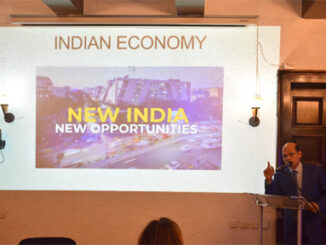
    BUCHAREST (TIP): A belated news report says that the Embassy of India in Bucharest organized a focused interaction titled “New India, New Opportunity” for leading Romanian business journalists and key economic stakeholders on 26 November 2025. The event highlighted India’s dynamic economic transformation, its robust MSME ecosystem, and the expanding avenues for India-Romania collaboration across priority sectors.

    Ambassador Dr. Manoj Kumar Mohapatra delivered the keynote address and underscored the core pillars driving New India’s growth story, wide-ranging economic reforms, rapid digitalization, innovation-led development, strengthened manufacturing capabilities, and a strong commitment to inclusive and sustainable progress. He also highlighted the Government of India’s long-term vision of Viksit Bharat @2047, outlining India’s aspirations to become a developed nation empowered by technology, entrepreneurship, and global partnerships.

    The Ambassador also emphasized the far-reaching labor reforms undertaken by India recently, noting that a comprehensive modernization of labor laws has been implemented through the consolidation of 29 central labor legislations into four simplified and industry-friendly Labor Codes. These reforms aim to create a more predictable and transparent regulatory ecosystem, enhance worker welfare and social security, promote ease of doing business, and support the growth of MSMEs and manufacturing industries. By introducing provisions for flexible work arrangements, streamlined compliance, and stronger protections for gig and platform workers, India is building a labor environment that encourages investment, boosts productivity, and aligns with global best practices. The Ambassador underlined that these reforms open new opportunities for Romanian companies seeking stable, skilled, and future-ready human capital partnerships in India.

    The event was attended by the leading Romanian business journalists and key economic stakeholders.

    A central focus of the interaction was India’s MSME sector, one of the world’s largest and most vibrant networks of micro, small, and medium enterprises. The Ambassador spoke about the sector’s expanding role in manufacturing, exports, innovation, and employment generation. He invited Romanian businesses and investors to explore opportunities in co-production, technology partnerships, trade diversification, supply chain linkages, and digital MSME solutions. He noted that India’s business-friendly reforms, unified digital platforms, and sector-specific incentives under schemes like Make in India, Start-up India, and the Production-Linked Incentive (PLI) framework have made India an increasingly attractive destination for economic engagement.

    During the session, the Ambassador also briefed participants on India’s resilient macroeconomic performance, which continues to make it one of the world’s fastest-growing major economies. He outlined emerging opportunities for bilateral cooperation in areas such as renewable energy, IT & digital technologies, pharmaceuticals, manufacturing, film & creative industries, agriculture, and clean-tech solutions.

    As part of the engagement, he further highlighted two major global events hosted by India:

    (i) 56th International Film Festival of India (IFFI), Goa from 20–28 November 2025: A platform for global filmmakers, including from Romania, to collaborate in co-productions, film technology, content development, and creative partnerships, strengthening cultural and creative industry linkages.

    (ii) India–AI Impact Summit 2026 from 16–20 February 2026: A premier forum bringing together global experts, industry leaders, and innovators to deliberate on AI-driven opportunities in manufacturing, MSMEs, governance, and emerging technologies.

    Group photo : Interactive Session on “New India, New Opportunity” to Promote MSME Collaboration and Sectoral Partnerships with Romania.

    The interaction served as an important platform for forty plus Romanian media representatives and sectoral stakeholders to gain first-hand insights into India’s transformative governance, economic reforms, and rising opportunities for bilateral trade and investment. It reaffirmed India’s commitment to working closely with Romania to deepen cooperation in MSMEs, technology, innovation, culture, and people-to-people ties.

    The event concluded with a dynamic Q&A session featuring thoughtful questions from Romanian business journalists on India’s reform agenda, investment policies, digital economy, and global partnerships. The Embassy appreciates the active participation of all stakeholders and looks forward to continued engagement in advancing India–Romania economic and sectoral collaboration.

    (Based on a Press Release Issued by the Embassy of India in Bucharest)

  • Embassy of India in Romania Hosts Anand Kumar for an Inspiring Interactive Session on the Future of Mathematics and Learning

    Embassy of India in Romania Hosts Anand Kumar for an Inspiring Interactive Session on the Future of Mathematics and Learning

    BUCHAREST (TIP): Embassy of India welcomed renowned mathematician, Educator and founder of the celebrated “Super 30” programme, Shri Anand Kumar, for an engaging and thought-provoking interactive event attended by educators, students, and members of the Indian community.

    In his welcome remarks, Ambassador Manoj Kumar Mohapatra spoke of Shri Anand Kumar’s extraordinary journey and his transformative contributions to expanding access to high-quality mathematics education for underserved students in India. He praised Shri Kumar’s unwavering commitment to empowering youth and nurturing excellence, which has earned him global recognition and admiration.

    Shri Anand Kumar speaks about his journey and the mission of the Super 30 program to empower talented students.

    During the session, Shri Anand Kumar delivered an insightful talk on the future of Mathematics in the age of artificial intelligence. He explored how AI is reshaping learning environments, influencing analytical thinking, and redefining the skills required for future problem-solvers. He noted that AI-enabled tools such as interactive platforms, intelligent tutoring systems, and automated assessment techniques hold immense potential to democratize access to complex concepts.

    Shri Kumar emphasized the urgent need for teachers, professors, and educational institutions to adapt to these evolving technological landscapes. He encouraged educators to make their lessons more interactive, engaging, and aligned with modern learning styles, while ensuring that students continue to develop strong conceptual foundations and critical reasoning abilities.

    Participants actively engaged with Shri Kumar during an energetic Q&A session, seeking advice on nurturing mathematical talent, integrating technology into classroom teaching, and fostering curiosity among young learners. Many attendees appreciated the practical insights he shared, drawn from decades of hands-on experience mentoring students from diverse backgrounds.

    The Embassy expressed gratitude to Shri Anand Kumar for his inspiring visit and extended appreciation to all participants for contributing to an enriching and meaningful dialogue.
    (Based on a Press Release issued by Embassy of India, Bucharest)

  • Embassy of India in Romania Celebrates the Inscription of Deepavali on UNESCO’s Intangible Cultural Heritage List

    Embassy of India in Romania Celebrates the Inscription of Deepavali on UNESCO’s Intangible Cultural Heritage List

    BUCHAREST (TIP): Embassy of India hosted a special and joyous celebration to mark the historic inscription of Deepavali on UNESCO’s Representative List of the Intangible Cultural Heritage of Humanity on Tuesday, 3 December 2025. The momentous recognition reflects global appreciation for one of India’s most cherished festivals symbolizing the triumph of light over darkness, knowledge over ignorance, and hope over despair.

    The event brought together members of the Indian diaspora, friends of India, cultural partners, scholars, and well-wishers, creating a warm and festive atmosphere within the Embassy premises. The gathering reflected not only the pride of the Indian community but also the universal values embodied by Deepavali, which resonate far beyond India’s borders.

    In his remarks, Ambassador Dr. Manoj Kumar Mohapatra highlighted that UNESCO’s recognition of Deepavali as an element of humanity’s shared cultural heritage is a profound milestone for India’s civilizational legacy. He noted that the festival serves as a timeless reminder of harmony, compassion, and collective well-being. Ambassador also acknowledged the efforts of cultural practitioners, diaspora communities, and scholars whose contributions helped bring this global recognition to fruition.

    The celebration featured symbolic lighting of Diya by the participants, reflecting the essence of Deepavali. The Embassy announces that the next celebratory event will be held on 13 December, continuing the spirit of togetherness and offering another opportunity for the diaspora and friends of India to gather in honor of this historic recognition.

    The Embassy expressed gratitude to all participants for making the event memorable and reaffirmed its commitment to promoting India’s rich cultural heritage in the host country.

    (Based on a Press Release Issued by the Embassy of India in Bucharest)

  • India Continues to Demonstrate Strong Economic Momentum with 8.2% GDP Growth in Q2 FY 2025–26

    India Continues to Demonstrate Strong Economic Momentum with 8.2% GDP Growth in Q2 FY 2025–26

    BUCHAREST (TIP): The Embassy of India in Romania hosted a focused briefing on India’s accelerating economic performance, highlighting the country’s continued position as one of the world’s fastest-growing major economies on Tuesday, 3rd December 2025. The session was attended by the economic experts, academics, business leaders and the members of the Indian community. It provided an insightful overview of India’s macroeconomic outlook and structural drivers of growth.

    Addressing the gathering, Ambassador Dr. Manoj Kumar Mohapatra noted that India has recorded an impressive GDP growth rate of 8.2% in the second quarter of FY 2025–26, reflecting robust domestic demand, improved investor confidence, and sustained economic reforms. He emphasized that this performance stands as a testament to the resilience and dynamism of the Indian economy amid global uncertainties. He highlighted that the growth surge is supported by strong fundamentals across key sectors. The manufacturing sector has expanded significantly, propelled by the “Make in India” initiative, rising production capacity, and increased global value chain integration. The services sector, particularly IT, digital services, and financial technologies, continues to drive innovation and export growth.

    Ambassador also underlined India’s remarkable progress in digital infrastructure, with the world-leading Unified Payments Interface (UPI), rapid adoption of digital public goods, and expansion of high-speed broadband networks across urban and rural areas. These developments are boosting entrepreneurship, improving service delivery, and enabling financial inclusion at scale.

    Further, Ambassador noted that sustained government initiatives such as the National Infrastructure Pipeline, Gati Shakti, and policies encouraging foreign direct investment have strengthened India’s position as a reliable global partner in trade and investment. Rising FDI inflows, improved logistics efficiency, and simplified regulatory frameworks continue to elevate India’s competitiveness. Participants at the event expressed keen interest in India’s long-term economic prospects and discussed potential areas for deeper cooperation in trade, technology, and innovation.

    Since India’s economy is experiencing robust growth, positioning it as the world’s fastest-growing major economy, it is expected to fuel rising domestic demand for imports, particularly Romania’s key exports like machinery ($105M in 2024), electrical equipment ($63M), and optical instruments ($26M), which reached $292M total to India last year amid expanding bilateral trade nearing $3B. Consequently, Romanian firms stand to gain greater market access and higher sales volumes in India, while the surge in investment opportunities, bolstered by recent ministerial level talks on supply chains and an India-EU FTA, draws Romanian capital into priority sectors, fostering mutual economic resilience.

    The Embassy reiterated India’s commitment to fostering stronger economic engagement and invited stakeholders to explore the many emerging opportunities in the Indian market.

    (Based on a Press Release issued by Embassy of India in Bucharest)

  • American Punjabi Society honors Philanthropist Harry Singh Bolla with prestigious “Punjabi Ratan” Award at a glittering gala

    American Punjabi Society honors Philanthropist Harry Singh Bolla with prestigious “Punjabi Ratan” Award at a glittering gala

    HICKSVILLE, NY (TIP): In a night marked by celebration, cultural pride, and community spirit, the American Punjabi Society (APS) hosted its annual gala at the Pearl Banquet in Hicksville, Long Island, honoring distinguished businessman and philanthropist Harry Singh Bolla with the coveted Punjabi Ratan (Punjabi Jewel) Award. The event drew a distinguished gathering of political leaders, administrative officials, community stalwarts, and the crème de la crème of the Punjabi-American diaspora, underscoring APS’s standing as one of the most influential Punjabi cultural organizations in the region. The more prominent guests included the Consul General of India, Mr. Binaya Srikanta Pradhan who handed over the award to Mr. Bolla, Sant Singh Chatwal, one of the two Patrons of  the APS, Nassau County Executive Bruce Blakeman, and Nassau County Republican Party Chairman Joseph Cairo.

    Founded with the mission of promoting Punjabi language, culture, and heritage across generations, the APS has spent years cultivating a strong artistic and cultural presence on Long Island. Under the leadership of its President, Gary Sikka, and his committed team of volunteers, the organization has become a vibrant hub for community engagement, cultural programming, youth education, and charitable initiatives. This year’s gala, one of APS’s most successful events to date, reaffirmed the society’s role as a bridge between tradition and the evolving Punjabi-American identity.

    A Fitting Recognition for a Philanthropist of Rare Generosity

    Dignitaries and organizers with the Chief Guest and the Honoree. Seen, among others, from L to R: Gary Sikka, Film actor Neeru Bajwa, Consul General of India, Mr. Pradhan, Nassau County Executive Mr. Blakeman, Honoree Harry Singh Bolla, APS Media Chair Pradeep Tandon (in the back) , and Nassau County Republican Party Chairman Joseph Cairo. 

    The centerpiece of the evening was the conferral of the Punjabi Ratan Award upon Harry Singh Bolla, a self-made entrepreneur whose story has inspired countless immigrants. Rising from modest beginnings to building a thriving chain of businesses in the gas station and retail sector, Mr. Bolla’s journey is often described as a classic American dream narrative. Yet what truly distinguishes him, APS leaders emphasized, is not the scale of his success, but the depth of his philanthropy.

    For years, Mr. Bolla and his wife Kamaljit Kaur—both devout Sikhs—have been major contributors to their local gurdwaras, supporting religious programs and community initiatives generously and consistently. “The first thing Harry did when his business began to grow was open his purse for charity,” said an attendee, noting that his humility remains intact despite his financial accomplishments.

    Mr. Sant Chatwal, Padma Bhushan, one of the two Patrons of APS, addressing the gathering. Seen in the picture are: Neeru Bajwa and Gary Sikka.

    A committed Republican, Mr. Bolla believes strongly in civic responsibility. He frequently asserts that once an immigrant becomes a U.S. citizen, “America becomes your home, and its welfare becomes your primary duty.” This guiding principle informs much of his philanthropic work in the United States. Through the Bolla Charity Foundation, he has supported several American institutions, the most notable being his recent $1 million donation to modernize the Nassau County Police Academy—a contribution praised widely by county officials and community leaders alike.

    A Heart Still Connected to Punjab

    Despite his devotion to America, Mr. Bolla has never turned away from the land of his birth. Over the years, he has funded numerous welfare, educational, and community development projects in his home state of Punjab. His charitable spirit, he often says, is a legacy from his father, who is remembered in Punjab as a man of deep generosity and compassion.

    This year, Punjab faced devastating floods that ravaged entire districts, leaving thousands homeless, jobless, and struggling for basic necessities. Moved by the widespread suffering, Mr. Bolla committed ₹5 crore—over half a million U.S. dollars—as an initial donation to assist displaced families. Speaking to The Indian Panorama, he expressed deep concern about ensuring that his contribution reaches those who genuinely need help. “My only worry is that every rupee benefits the deserving,” he said, adding that he is working with trusted channels to ensure a fair and transparent distribution system.

    APS officials noted that in choosing Mr. Bolla for the Punjabi Ratan Award, the organization was guided not only by his financial success but by his humanity. “Harry Bolla embodies the best of us,” said APS President Gary Sikka. “He represents hard work, humility, success, and the Punjabi tradition of giving from the heart.”

    A Night of Stars, Music, and Celebration

    An internationally famous versatile actor of Punjabi films Neeru Bajwa made a guest appearance and addressed the gathering.

    The gala was a grand affair, marked by elegance and vibrant cultural expressions. Political and administrative dignitaries attended in large numbers, lending the event a stature befitting its purpose. The ballroom resonated with Punjabi pride as community leaders mingled with elected officials and special guests.

    Entertainment for the evening featured an engrossing musical performance by Pooja, a well-known and widely admired singer who enthralled the audience with a blend of classic and contemporary Punjabi melodies. The crowd erupted in applause as cinema star Neeru Bajwa—an international icon of Punjabi film—made a special guest appearance, surprising attendees and delighting fans.

    The artistic program complemented the evening’s larger theme: a celebration not just of individual accomplishment, but of the collective strength of the Punjabi community in America.

    A View of the gathering. TIP photographer reported rigorous security arrangements which prevented her free movement to click more photographs of the gathering.

    APS Continues Its Mission

    In his remarks, APS President Gary Sikka reaffirmed the society’s commitment to cultural promotion, youth engagement, and community solidarity. He praised the volunteers whose tireless efforts ensured the success of the gala and emphasized the importance of sustaining Punjabi language and values among younger generations.

    “This award to Harry Bolla is not just about honoring one man,” Sikka said. “It is about reminding ourselves of what our community stands for—hard work, compassion, family, and pride in our heritage. Tonight, we celebrate all of that.”

    The event concluded with a standing ovation for Mr. Bolla, whose humility shone through as he dedicated the honor to his family, his community, and the values that shaped him. For those in attendance, the evening was a vivid reminder of how cultural pride, service, and generosity continue to define the Punjabi-American spirit.

  • Mike Johnson Reveals GOP Health Care Plan as ACA Subsidies Set to Expire

    Mike Johnson Reveals GOP Health Care Plan as ACA Subsidies Set to Expire

    WASHINGTON, D.C. (TIP): After the Senate failed this week to advance competing health care plans, attention has shifted to the House, where Republicans are making a last-minute push as the clock runs out to prevent higher insurance costs for millions of Americans, says a Newsweek report.

    Speaker Mike Johnson unveiled a sweeping Republican proposal late Friday, December 12,  moving ahead without extending enhanced tax subsidies that help people afford insurance through the Affordable Care Act, also known as Obamacare. Those subsidies, expanded during the COVID-19 pandemic, are set to expire at the end of the year.

    Why It Matters

    President Donald Trump has said he believes Republicans can deliver a better alternative to Obamacare, a promise he has made repeatedly over the years. But he has offered few specifics beyond proposing direct payments to help Americans buy insurance.

    What To Know

    Johnson, a Louisiana Republican, spent much of Friday behind closed doors with GOP lawmakers, as he had earlier in the week, working to assemble the package as the House enters the final days of its 2025 legislative session. The Speaker said in a statement announcing the Lower Health Care Premiums for All Americans Act that the House plans to vote on the package next week.

    Democrats staged the longest federal government shutdown in U.S. history this fall in a failed attempt to force Republicans to negotiate over health care. Despite promises of votes, the Senate this week failed to advance both a Republican-backed health plan and a Democratic bill that would have extended the enhanced ACA tax credits for three years.

    With just days remaining before lawmakers leave Washington, Congress appears poised to adjourn without a consensus solution.

    House Republicans released a package of more than 100 pages that centers on long-standing GOP priorities aimed at reshaping the health insurance market. The plan seeks to expand access to employer-sponsored coverage and increase oversight of pharmacy benefit managers, or PBMs, while leaving the enhanced ACA subsidies to expire.

    A central element of the proposal would expand access to so-called association health plans, allowing small businesses and self-employed individuals to band together to purchase insurance. Supporters argue that pooling coverage gives employers greater bargaining power to negotiate lower premiums.

    Critics, however, warn that association plans often provide fewer benefits and weaker consumer protections than plans sold through the ACA marketplaces.

    The proposal also would require PBMs to provide more detailed data, a move Republicans say could help rein in prescription drug costs. PBMs act as intermediaries between drugmakers, insurers and pharmacies, and critics across party lines have accused them of inflating prices and squeezing independent pharmacists.

    The GOP package also references cost-sharing reductions for some lower-income ACA enrollees, but those changes would not take effect until January 2027.

    Notably absent from the plan is any extension of the enhanced ACA tax credits that millions of Americans rely on to lower their monthly premiums. Those subsidies, enacted during the pandemic, expire Dec. 31. Without congressional action, many families could see their out-of-pocket premiums more than double, and in some cases increase by far more.

    Trump has consistently promoted the idea of sending money directly to individuals rather than extending ACA tax credits. It remains unclear how large such payments would be. A Senate Republican plan that failed this week would have created new health savings accounts funded with $1,000 annually for most adults, or $1,500 for people ages 50 to 64.

    No such health savings accounts appear in the House plan. Johnson’s approach has put politically vulnerable House Republicans in swing districts under mounting pressure as the subsidy deadline nears.

    Frustrated with delays, a group of centrist Republicans has joined Democrats to push alternative proposals to temporarily extend the ACA tax credits to avoid immediate premium hikes.

    Those lawmakers are backing several bills and have begun signing discharge petitions, a rarely successful procedural tactic that can force a vote on legislation if a majority of House members sign on.

    This year, however, discharge petitions have gained unusual traction. Lawmakers recently used one to force a vote on releasing Jeffrey Epstein-related files held by the Justice Department. One petition, sponsored by Rep. Brian Fitzpatrick, R-Pa., had attracted 24 signatures as of Friday, evenly split between Republicans and Democrats. It would compel a vote on a bill extending the subsidies for two years while adding anti-fraud provisions and PBM restrictions.

    Another petition, introduced by Rep. Josh Gottheimer, D-N.J., has drawn 39 bipartisan signatures and would force a vote on a one-year subsidy extension with new income caps.

    Both efforts could succeed if House Democratic leader Hakeem Jeffries urges his caucus to sign on. So far, he has declined to commit. Jeffries is also backing a separate Democratic petition with 214 signatures that would extend the subsidies for three years without changes. No Republicans have joined that effort, and Senate Republicans have made clear such a proposal has no chance of passing their chamber.

    What People Are Saying

    Johnson said in a statement, in part, “Nearly 15 years ago, the Democrats’ Unaffordable Care Act broke the American health care system. Since its inception, premium costs have skyrocketed, networks have shrunk, and the system has become bloated, inefficient, and riddled with waste, fraud, and abuse. While Democrats demand that taxpayers write bigger checks to insurance companies to hide the cost of their failed law, House Republicans are tackling the real drivers of health care costs to provide affordable care, increase access and choice, and restore integrity to our nation’s health care system for all Americans.”

    Trump said late Friday at a White House event, “I want to see the billions of dollars go to people, not to the insurance companies. And I want to see the people go out and buy themselves great healthcare.”

    Jeffries said Friday, “We’re actively reviewing those two discharge petitions and we’ll have more to say about it early next week.”

    What Happens Next

    As Congress nears adjournment, the fate of millions of Americans’ health care costs remains uncertain.

    (Source: Newsweek)

  • India’s Foreign Secy holds talks with top US diplomat on strengthening US-India Strategic Partnership

    India’s Foreign Secy holds talks with top US diplomat on strengthening US-India Strategic Partnership

    WASHINGTON, D.C. / NEW DELHI (TIP): The India – United States Foreign Office Consultations (FOC), co-chaired by India’s Foreign Secretary Vikram Misri and U.S. Under Secretary of State Ms. Allison Hooker were held in New Delhi on December 9, according to a press note issued by the Indian embassy in Washington. The consultations provided an opportunity for a comprehensive review of the India – U.S. Comprehensive Global Strategic Partnership.

    The two sides discussed key bilateral issues, including trade and investment, defense cooperation, the TRUST initiative, energy cooperation including civil nuclear collaboration, technology, critical minerals, and trusted supply chains.

    The discussions also covered regional and global developments of mutual interest, with both sides underscoring their shared commitment to a free and open Indo-Pacific.

    Both sides also welcomed the steady progress across existing dialogue mechanisms and agreed to give momentum to the implementation of “Catalyzing Opportunities for Military Partnership, Accelerated Commerce and Technology (COMPACT) for the 21st Century” to drive transformative cooperation across key pillars of the partnership.

    In a post on X, the US Embassy in India said, “Foreign Secretary Vikram Misri hosted Under Secretary of State for Political Affairs Allison Hooker for consultations on strengthening the U.S.-India strategic partnership, including through defense, technology, and security cooperation that delivers concrete benefits for the American people.”

    According to the US embassy, Hooker conveyed the administration’s intent to advance collaboration in sectors such as defense, energy, technology, space and supply chain resilience. It said, “The meeting was an opportunity to translate President Trump and Prime Minister Modi’s vision from their February meeting into concrete progress that enhances US security, jobs, and competitiveness, while supporting India’s long-term goals.”

  • FIA Taps Sreekanth Akkapalli as President for 2026; First Telugu-Origin to Head Premier Grassroots Nonprofit

    FIA Taps Sreekanth Akkapalli as President for 2026; First Telugu-Origin to Head Premier Grassroots Nonprofit

    NEW YORK (TIP): The Federation of Indian Associations of USA (FIA NY-NJ-CT-NE) has completed its annual internal review and selection process, led by the independently appointed 2026 Election Commission consisting of Alok Kumar, Jayesh Patel and Kenny Desai. The Commission’s recommendations received full board approval, and the newly confirmed 2026 Executive Team will assume office on January 1, 2026.

    Sreekanth Akkapalli was unanimously selected to lead the 2026 Executive Team, succeeding outgoing President Saurin Parikh. Continuing in their roles from the previous team are Vice President Priti Ray Patel and General Secretary Srishti Kaul Narula. As part of this year’s restructuring, the Election Commission and FIA Board streamlined the Executive Team and will expand the Council. Shah Accountants, an independent CPA firm, will serve as the organization’s treasurer.

    FIA Board of Election

    Akkapalli is a distinguished entrepreneur whose portfolio spans real estate development, technology, media, and diaspora engagement in both the United States and India. His business ventures encompass multinational software development, transit technology consulting, life sciences, IT and cloud computing, sports manufacturing, and premium furniture design, demonstrating both strategic vision and strong operational leadership.

    In his remarks as President-Elect, Sreekanth expressed gratitude for the Board of Trustees’ support, noting that he felt “blessed and happy” to receive their confidence. He thanked Chairman Ankur Vaidya for welcoming him into FIA and helping him find “a larger family” within the organization, and extended his appreciation to the Board, Trustees, advisory members, and executive colleagues for their warm reception.

    Recognizing the historic significance of becoming the first individual from his home state to hold this position, he affirmed his commitment to serve with integrity and purpose. Akkapalli assured the Board and the wider FIA community of his dedication to advancing the organization, strengthening its flagship initiatives, and developing programs that foster deeper community engagement.

    Senior leaders and long-time members warmly endorsed his selection, with one veteran member praising Mr. Akkapalli’s honesty, hard work, integrity, and long-standing commitment, and calling his appointment a historic and forward-looking step that reflects FIA’s growing regional diversity in leadership.

  • Immigration, Humanity, and the Idea of America

    By Prof. Indrajit S Saluja
    By Prof. Indrajit S Saluja

    No one can reasonably question the right of a sovereign government to frame, enforce, and regulate its immigration laws. Borders matter, and so does the rule of law. However, immigration policy cannot be reduced to a cold administrative exercise alone. It must also reflect a nation’s moral compass, historical experience, and understanding of human dignity. In the American context, this human dimension is not merely incidental—it is foundational.

    Millions of immigrants have come to the United States over generations not to undermine it, but to build it. They have worked in factories and farms, laboratories and hospitals, classrooms and construction sites. In the process, they have contributed their labor, intellect, taxes, and loyalty, while earning a living for their families. Those who have been accepted, documented, and granted citizenship by the United States are as much a part of the American story as those born on its soil. Citizenship, once conferred by law, is neither conditional nor hierarchical.

    It must also be said that immigrants do not arrive in a vacuum. They respond to America’s own needs—its demand for labor, innovation, and talent. From Silicon Valley to medical research centers, from universities to startups, America’s global leadership has been powered by minds drawn from every corner of the world. This openness transformed the United States into an unparalleled magnet for talent and ambition. To now treat immigrants—especially those of color—as inherently suspect or lesser, even implicitly, is to deny this legacy.

    Yes, the law must act firmly against criminality, regardless of origin. Criminal behavior cannot be shielded by immigration status, just as citizenship cannot excuse it. But policies that appear indiscriminate, sweeping, or guided by racial or cultural anxieties risk punishing the many for the faults of a few. An undeclared but perceptible hostility toward “colored” immigrants sends a chilling message—not just domestically, but globally.

    The world today is not what it was in the early twentieth century. Countries once dismissed as backward are advancing rapidly, offering opportunities, stability, and dignity to their own citizens. Talented individuals now have real choices. If America begins to appear unwelcoming, arbitrary, or hostile, those choices will be exercised elsewhere. Talent, unlike desperation, does not linger where it is not respected.

    America’s greatness has never rested on exclusion. It has thrived because it absorbed diversity and converted it into strength. An extremist view of immigration—one that prioritizes fear over fairness and suspicion over contribution—threatens to erode that strength from within.

    For the sake of America’s future, immigration policy must balance legality with humanity, security with fairness, and national interest with moral responsibility. Curtailing extremism in this debate is not an act of weakness. It is an affirmation of the very ideals that made America great.

  • The Falling Rupee and the Silent Squeeze on India’s Economy

    The Falling Rupee and the Silent Squeeze on India’s Economy

    When the currency of a country weakens sharply, it is never a matter of mere numbers flashing on a trading screen. It is a warning signal—of economic stress, policy failure, or declining confidence. In India’s case, the steady and now alarming fall of the rupee should have triggered serious national debate. Instead, it has been met with an unsettling indifference from those in power.

    There was a time when a slide of the rupee from around 35 to 40 against the US dollar provoked outrage. The then opposition thundered in Parliament and outside it, declaring the fall a national humiliation and a direct assault on the common citizen. Today, that same political formation presides over an economy where Indians must shell out more than 90 rupees to buy a single US dollar. The question that naturally arises is: what does this steep decline denote, and why is the outrage missing now?

    A weakening rupee hurts the Indian economy in multiple and deeply interconnected ways. India is heavily dependent on imports—crude oil, natural gas, fertilizers, electronic components, machinery, and pharmaceuticals. When the rupee falls, every imported commodity becomes costlier. This cost is inevitably passed on to consumers, pushing up prices across the board. Inflation, once unleashed, does not remain confined to fuel or imported goods; it creeps into food prices, transport costs, household essentials, and services, eroding purchasing power and squeezing middle- and lower-income families the hardest.

    The timing could not be worse. With the United States playing the tariff card more aggressively, global trade is becoming more expensive and uncertain. A weaker rupee in such an environment amplifies the pain. Indian consumers pay more, Indian businesses face higher input costs, and the government’s subsidy burden increases. Servicing external debt becomes costlier, and fiscal pressures mount. To argue that a falling rupee automatically boosts exports is a dangerously simplistic narrative, especially when global demand itself is fragile and supply chains are under strain.

    What is most troubling is the apparent lack of urgency in addressing the issue. Parliament finds ample time for debates that may stir emotions but have little bearing on the daily struggles of citizens. Meanwhile, the tormenting fall of the rupee—and its cascading consequences—is neither discussed with seriousness nor addressed with transparent policy measures. Blame games replace accountability, and slogans substitute for strategy.

    If the rupee does not recover, the long-term consequences could be severe. Persistent inflation can dampen consumption, slow growth, discourage investment, and widen inequality. The credibility of economic management suffers, both domestically and internationally. Confidence, once lost, is hard to rebuild.

    The value of a currency ultimately reflects the health of an economy and the trust reposed in its governance. Ignoring the rupee’s fall is not an option. The government must acknowledge the problem, communicate honestly with the nation, and act decisively. Economic realities cannot be wished away by rhetoric. The rupee’s decline is not an abstract statistic—it is a silent tax on every Indian.

  • India must win over neighbors or will lose out

    India must win over neighbors or will lose out

    China has won over these countries by providing timely financial, infrastructural and other material support as required by them

    “We should be proactive first in our neighborhood and with our friends around us. We seem to have hardly any friends in our vicinity. This is not an overnight development but the result of painstaking policy initiatives taken by China in the absence of any meaningful effort by us. Whereas we have sought to live in self-denial, China has played deft hardball and won over these countries by providing timely financial, infrastructural and other material support as required by them. Now they have the capacity to disturb our borders and border states, whether it’s the northeast or northwest. An active diplomatic mission with strategic goals could have avoided this scenario.”

    BY GURBACHAN JAGAT

    To subdue an enemy without fighting is the acme of skill — Sun Tzu, the famous Chinese General, said this around 500 BC; it holds good today as well. The Chinese have been good students of their old military strategist, as can be seen in their ‘String of Pearls’ geopolitical strategy vis-a-vis the Indian sub-continent and the Indian Ocean through which a large percentage of global shipments pass. They have built ports in Gwadar (Pakistan), Hambantota (Sri Lanka), Kyaukpyu (Myanmar) and Djibouti. When tied with their Belt and Road initiative, their domination of the region and ability to project Chinese trade and military strength is apparent. Their economy grew at 9 per cent from 1978 to 2005, propelling them from being one of the poorest countries to the second-largest economy in the world.

    At the same time, a long-term geopolitical strategy was also put into motion. These ports and other infrastructure have been decades in the making. Today, while observing the political map of the sub-continent, one can’t avoid seeing the increasingly isolated environment that we find ourselves in. The entire northwestern border with Pakistan is hostile; to the northeast, China dominates the canvas, with a hostile Bangladesh, a neutral Nepal, rogue Myanmar and a fragile Bhutan. To the south, Sri Lanka finds itself increasingly under Chinese influence. The Tamil-Sinhalese conflict over the years, followed by a misguided IPKF operation, eroded a lot of trust. Nothing much has been done in the following decades to repair this relationship. Maldives, an old ally, barely tolerates us today. We have no meaningful trade agreement with Southeast Asia, so where do we stand?

    The world is caught up in a whirlpool of extreme violence and there are so many more flashpoints which can only lead us to further violence. Three years ago, when war erupted in Ukraine, our Prime Minister gave a call to shed violence — “this is not an era of war” found resonance around the globe. However, since then, the world seems irrevocably drawn towards the vortex of a cataclysmic denouement. Before coming to the catastrophe taking place in the Middle East and Ukraine, let us first see how we are placed in today’s scenario.

    It is true that we have almost never sought war, but when it has come calling at our door, we have always stepped up and defended ourselves. However, the important thing is to deflect war from our borders before it starts to take a toll. For this, deft diplomacy is called for, backed with a very strong defense force. We should be proactive first in our neighborhood and with our friends around us. We seem to have hardly any friends in our vicinity. This is not an overnight development but the result of painstaking policy initiatives taken by China in the absence of any meaningful effort by us. Whereas we have sought to live in self-denial, China has played deft hardball and won over these countries by providing timely financial, infrastructural and other material support as required by them. Now they have the capacity to disturb our borders and border states, whether it’s the northeast or northwest. An active diplomatic mission with strategic goals could have avoided this scenario.

    In Kashmir, where our land was stained by Pakistani agencies in their quest for bloodlust, we stood firm, and our political leadership and armed forces were resolute and decisive in their response. The result of proactive measures was that after four days, the enemy sued for peace, and we generously accepted their plea, although there was a strong lobby in favor of more stringent action. US President Trump did claim credit for the ceasefire, but our PM has categorically told him that India has never and will never accept third-party mediation.

    The US, its President and military leadership have praised Pakistan for its so-called help in containing terrorism. Its military spokesperson conveyed this in very laudatory terms before the US Senate Armed Forces Committee. And Trump hosted the Pakistani Army Chief at the White House on Wednesday.

    In the recent cross-border skirmish, the Chinese, of course, were with the Pakistanis, the Russians not as effusive in their support to us as before and the American tone and tenor were disparaging. Compare this with the Treaty of Peace, Friendship and Cooperation signed between India and the Soviet Union in 1971. The US deployed the 7th Fleet, while the UK sent a carrier group against us. However, the Soviets countered the pincer move with a deployment of nuclear submarines and destroyer groups. The US and the UK retreated, and the rest is history. One might attribute this to Cold War dynamics, but the fact is that when we needed an ally, we had one.

    For long, Indian soft power has helped the country punch way above its weight. India was one of the key organizers of the Bandung Conference (1955) on Asian-African cooperation; India and other NAM countries took the initiative to foster close relationships with Africa, with Nehru naming it a ‘sister’ continent. Since then, subsequent governments kept the effort going in developing closer ties — did something go amiss recently that no one rallied to our cause? Nepal and especially the Nepalese army have had an umbilical relationship with us, with many of their generals having been trained at the NDA. The Indian Gurkha regiment regularly recruited Nepalese citizens — why did this stop? From being the chief supporters and architects of the independence of Bangladesh, why do we find ourselves on the opposite side today?

    Some Western countries did try to play fair; however, the disquieting thing was the silence of our neighbors.

    The conflict in the Middle East threatens to engulf the entire region, with the belligerents bent upon a Machiavellian desire to obliterate the other. Increasingly, technology in the form of drones and missiles gives it an apocalyptic dimension. We see eerie images of the night sky lighting up with the fire trails of missiles and hear haunting sounds of air raid sirens. In Europe, war rages on between Russia supported by its allies and Ukraine backed by NATO. Are there deeper dimensions to these regional wars — of course.

    The US hegemony, both economic and military, is being challenged by a combined Russia and China. The old order of NATO, which held strong in the 20th century, is weakened by an increasingly nationalistic America. There is a need for us to be proactive in the formulation and execution of our foreign policy. We must win over our neighborhood (we cannot choose our neighbors) through shared diplomatic and economic goals.

    On the international scene, maintaining silence or being seemingly neutral are not always good options. Sometimes, it is wise to show your hand while keeping an ace up your sleeve. Whenever the question of a ceasefire has come up in the UN regarding the Ukraine war, we have abstained. Similarly, in respect of Gaza, we have abstained. The result is neither the West is happy with us nor Russia. It is time to make amends and develop strong friendships as well as strong deterrence.

    (Gurbachan Jagat is former Governor, Manipur and ex-DGP, J&K.)

  • BJP takes Hindutva route in TN, Bengal

    BJP takes Hindutva route in TN, Bengal

    Saffron party gears up to overpower strong regional forces in 2026 Assembly elections

    “Undaunted by the not-so-encouraging statistics, Prime Minister Narendra Modi framed the Bengal battle with an image and a metaphor that he believed its voters could relate to. On the day the BJP celebrated the Bihar mandate at its Delhi headquarters, Modi declared, “The Ganga flows from Bihar to Bengal”, as though the mighty river would also deposit a bounty of votes in the BJP’s catchment areas. It was not an oratorical flourish because on cue, Modi’s chief strategist and Union Home Minister Amit Shah formed a team to act on the Bengal blueprint, some elements of which are already visible. On top of the BJP’s playbook is the Hindutva card that has not yet brought in the expected gains in West Bengal and much less in Tamil Nadu, a state abounding in paradoxes that ultimately do not favor Hindu majoritarian politics.”

    By Radhika Ramaseshan

    Having wrapped up Bihar with an impressive win, the BJP’s dream run of electoral wins faces formidable challenges in two states which will vote in April-May 2026: West Bengal and Tamil Nadu. Politics in these states pivots around strong regional forces that have persistently walled out the mainline parties or forced the BJP and the Congress to transact electoral arrangements on their terms.

    These parties — the Dravida Munnetra Kazhagam (DMK) in Tamil Nadu and the Trinamool Congress (TMC) in West Bengal — are again expected to dominate the show.

    While the Congress seems at peace riding on its ally DMK’s back in Tamil Nadu, it finds virtually no purchase in Bengal, not after the disastrous showing in Bihar. Both in the 2024 Lok Sabha polls and the 2021 Assembly elections, the Congress had an alliance with the Left Front (LF) that yielded nothing for both partners, but two LF constituents — the All India Forward Bloc and the Revolutionary Socialist Party — recently raised objections to striking yet another deal with the Congress. The TMC, too, is unlikely to have any truck with the Congress.

    On the other hand, true to its character, the BJP, notwithstanding its endeavor to cement a broad coalition in Tamil Nadu, is determined to put up a fight in both states, particularly Bengal. Buoyed by its success in the 2019 parliamentary elections, the BJP was convinced that it was a matter of time before it ‘conquered’ the eastern state. However, in the 2021 Assembly elections, it came nowhere close to its target of winning 200 of the 294 seats. It won only 77 (the tally fell to around 65 due to defections and by poll losses), but the BJP had the satisfaction of getting 38 per cent of the votes and emerging as the principal Opposition party.

    Undaunted by the not-so-encouraging statistics, Prime Minister Narendra Modi framed the Bengal battle with an image and a metaphor that he believed its voters could relate to. On the day the BJP celebrated the Bihar mandate at its Delhi headquarters, Modi declared, “The Ganga flows from Bihar to Bengal”, as though the mighty river would also deposit a bounty of votes in the BJP’s catchment areas. It was not an oratorical flourish because on cue, Modi’s chief strategist and Union Home Minister Amit Shah formed a team to act on the Bengal blueprint, some elements of which are already visible.

    On top of the BJP’s playbook is the Hindutva card that has not yet brought in the expected gains in West Bengal and much less in Tamil Nadu, a state abounding in paradoxes that ultimately do not favor Hindu majoritarian politics.

    The underlying political irony was reflected in the recent controversy ignited by the lighting of a lamp in the Subramanya Swamy temple at Thiruparankundram Hill in Madurai district. The temple is supposed to be one of the six abodes of Murugan, the second son of Shiva-Parvati and the most revered deity in Tamil Nadu. The Sultan Sikandar Avulia Dargah is located meters away, but barring occasional skirmishes, the lamp-lighting — an old and important ritual performed during the Karthigai Deepam festival to symbolize the triumph of light over darkness — passed off peacefully because of a court order to light the lamp away from an ancient pillar called Deepathoon, which is just 15 meters from the dargah and became a bone of contention.

    This time, a petition filed in the Madurai bench of the Madras High Court sought permission to perform the ritual at the pillar. The BJP and its allies celebrated when the court allowed the petitioner to light the lamp at the spot, but the district administration promptly issued prohibitory orders which were enforced by the police. Armed with a legal sanction, the BJP and its supporters protested vociferously against the cops.

    Mohan Bhagwat, the RSS chief, weighed in on the matter, saying that the “awakening of Hindus was sufficient to achieve the desired outcome” — it sounded like a veiled call for a confrontation if such a situation arose. Congress MP Karti Chidambaram said the BJP’s understanding of Tamil Nadu’s cultural and religious fabric was “fundamentally misplaced”. “The people of Tamil Nadu are most god-fearing, ritualistic, orthodox and temple-going, but faith does not mix with politics,” he added.

    While the ruling DMK has stuck to its position, the ‘dispute’ can gain traction if the BJP and the RSS — which are bereft of strong local networks except in small parts — can sustain the momentum aimed at polarizing a polity largely fed on the ideology of Dravida Kazhagam leader Periyar EV Ramasamy. A key feature of Periyar’s Self-Respect Movement was portraying Muslims as Dalits who converted to Islam to escape the caste oppression inherent in Hinduism. Most Tamil-speaking voters have no problem with Periyar’s postulate.

    In West Bengal, after three successive terms in office, the TMC appears vulnerable over issues such as the alleged corruption by Chief Minister Mamata Banerjee’s trusted lieutenants and the anger that spilled over on the streets after the brutal rape-murder of a young doctor in a Kolkata hospital. Then there are the quotidian experiences of people who have to deal with the ruling party’s musclemen and power-brokers, taking them back to the era of Left Front toughies who made survival possible only on their terms.

    But the BJP has tied itself in knots over the issue of illegal migrants — data suggests that there are more Hindu than Muslim migrants in West Bengal. The Special Intensive Revision (SIR) of electoral rolls by the Election Commission has caused anxiety within the BJP’s own vote bank, along with the affront to the Bangla language, infamously described by the Delhi Police as “Bangladeshi language”.

    Banerjee tried hard to depict herself as a “friend of the Hindus” with measures like the payment of monthly salaries to Hindu priests and organizing the Durga carnival. The experience of other states demonstrates that the Opposition still finds it hard to beat the BJP over Hindutva; so, Banerjee will have to target the BJP’s other shortcomings.

    The politics of Tamil Nadu and West Bengal is centered around a strong regional distinctiveness, unlike the Hindi belt where voters identify themselves seamlessly with the Hindutva narrative because religious identity is overarching. Can the BJP subsume markers of language and culture into the Hindutva theme?
    (Radhika Ramaseshan is a senior journalist)

  • Can India trust the West? UK must answer

    Can India trust the West? UK must answer

    India will not abandon Russia simply to please western partners. It will not accept moral lectures that ignore western hypocrisy

    “The Modi government’s foreign policy reflects a clear doctrine of multi-alignment rather than allegiance. India cooperates with the US in the Quad, buys S-400 systems from Russia, maintains close ties with France, deepens economic engagement with the Gulf and expands participation in BRICS. This is not fence-sitting. It is the behavior of a nation that has learned not to rely on any single power.”

    By Shyam Bhatia

    When The Telegraph splashed its recent headline, “Can the West trust India?”, it captured a sentiment now rippling through much of the British press. Vladimir Putin’s visit to New Delhi has triggered the familiar chorus of western anxiety: India is “hedging”, India is “in Moscow’s orbit”, India is “unreliable”. Commentators warn about discounted Russian oil, defense purchases and diplomatic signaling — as though a sovereign nation pursuing its strategic interests were committing an ideological betrayal.

    What these headlines reveal, however, is not a failure of Indian policy but a failure of western imagination. The question is mis framed. A more honest one in 2025 would be whether India can trust the West to treat it as an equal partner.

    Much of the commentary in London reflects an outdated assumption: that India should align reflexively with western preferences. Only recently, the British High Commissioner in New Delhi co-authored an op-ed urging India to stand firmly with the West on Ukraine and isolate Russia “as a matter of principle.” The tone was unmistakably patronizing, implying that India must assume a subordinate posture.

    But India today is not the India of 1991, let alone 1947. It is a rising economic powerhouse, a central player in the Indo-Pacific and an increasingly indispensable global swing state. It trades widely, hedges openly and maintains multiple strategic options. This is not duplicity; it is statecraft. Western discomfort stems from something simpler: India no longer responds to moral pressure or diplomatic coaxing in the way it once did.

    British commentary often singles out India for continuing to buy crude oil from Russia. What is omitted is equally important. European nations still import significant quantities of Russian LNG. The US remains one of the world’s largest buyers of Russian uranium. Several G7 countries maintain complex, sanctioned-but-exempt trade channels with Russia. Yet only India is asked to justify its purchases, even though they ensure affordable energy for 1.4 billion people and prevent fuel inflation from throttling its economy. The selective outrage is not lost on New Delhi.

    Another routine complaint is that India refuses to distance itself from Russian defense hardware. But Britain, like the US and France, is simultaneously urging deeper strategic and defense cooperation with New Delhi. London wants India on its side but appears unwilling to accept the policy choices that come with strategic autonomy. India’s position is straightforward: it will diversify defense suppliers, but not at the cost of national readiness; it will maintain ties with Moscow as long as those ties serve India’s interests; it will not enter alliances that compromise independent decision-making. This is not duplicity; it is exactly how the West behaves when its own interests are at stake.

    The deeper issue is psychological. British political culture still struggles with the idea of India as a global peer. This discomfort is visible in moralizing editorials that frame Indian choices as ethical lapses rather than strategic calculations, selective double standards that judge India more harshly than western states acting similarly, and a lingering reluctance to confront Britain’s own role in shaping historical mistrust.

    Indian policymakers rarely invoke colonial history in diplomatic meetings. But every serious Indian strategist is aware that trust deficits did not begin in 2022. Parliament debates, commission reports and the historical record all testify to periods of profound injustice during British rule. That past cannot be erased simply because today’s commentators find it inconvenient. India’s skepticism towards western advice is not an emotional legacy of the empire; it is a rational reading of recent behavior.

    Beyond history, there are contemporary reasons why India is cautious. One is inconsistency on Pakistan, where western pressure and indulgence often shift unpredictably. Second, technology and sanctions risks have repeatedly forced India to choose between great-power agendas, not of its own making, and vacillation on immigration and visas. Britain courts Indian talent but simultaneously tightens entry rules, sending mixed signals about partnership.

    The West’s own Asia strategy has also become increasingly variable, asking India simultaneously to be indispensable and to “choose sides”, a contradiction New Delhi refuses to accept. Trust is not built on lectures; it is built on consistency.

    The Modi government’s foreign policy reflects a clear doctrine of multi-alignment rather than allegiance. India cooperates with the US in the Quad, buys S-400 systems from Russia, maintains close ties with France, deepens economic engagement with the Gulf and expands participation in BRICS. This is not fence-sitting. It is the behavior of a nation that has learned not to rely on any single power.

    Western anxiety arises because India refuses to be absorbed into the old western security architecture. It insists on building its own. The debate in London is revealing not of India’s unreliability, but of Britain’s need to adjust to a new geopolitical reality.

    India will not abandon Russia simply to please western partners. It will not accept moral lectures that ignore western hypocrisy. It will not behave as a subordinate power in the international system. And it will not apologize for acting in its own national interest, any more than Britain would.

    So when British commentators ask “Can the West trust India?”, they reveal an outdated assumption that trust means compliance. But partnership in 2025 looks very different from partnership in 1965 or even 2005. The more meaningful question now is whether western governments — and the British press in particular — are prepared to treat India as an equal interlocutor rather than a pupil in need of direction.

    India has demonstrated consistency, transparency and a clear logic in its foreign policy. What it seeks in return is not approval, but respect. If trust is the issue, India has every reason to be the one asking whether the West has earned it.

    (Shyam Bhatia is an Indian-born British journalist, writer and war reporter based in London)

  • Why Do We Rarely See Positive NRI News Updates-Redefining India’s Global Narrative!

    Why Do We Rarely See Positive NRI News Updates-Redefining India’s Global Narrative!

    For decades, the Indian nation has been on an extraordinary trajectory. Emerging from the shadows of its colonial past toward becoming a global powerhouse in technology, education, and human development. Yet, for many Non-Resident Indians (NRIs) and diaspora communities, accessing credible, balanced news about India remains a challenge.

    What tends to dominate international headlines and major publication houses is often a narrative skewed towards negativity-oversimplified stories of conflict, problems, and political unrest. This persistent representation stifles understanding of the nation’s nuanced progress and global aspirations. At this crossroads, it becomes crucial for India-centric news portals like The Indian Panorama to fill the void with सटीक समाचार that highlight India’s achievements and inspire positive engagement.

    The Need for a Positive Image

    India’s progress, reflected in recent strides across technology and human development indices, deserves recognition beyond the typical headlines. The country’s Human Development Index (HDI) improved from 0.676 in 2022 to 0.685 in 2023, placing India at 130th out of 193 countries-a tangible metric signifying rising life expectancy, educational attainment, and income levels. This steady rise marks an over 53% improvement since 1990, outpacing global and South Asian averages, underscoring long-term investments in health, education, and welfare programs. India’s life expectancy has reached its highest at 72 years, while expected and mean years of schooling have also advanced, reflecting a growing emphasis on human capital development.​

    A positive image is not mere propaganda but an authentic portrayal rooted in facts: it means acknowledging challenges such as income and gender disparities that remain significant but amplifying the transformative stories shaping future India’s global stance. It highlights the country’s robust recovery from the pandemic, its expanding digital economy, soaring startup ecosystem, and ambitious social reforms empowering millions.

    For NRIs, a positive news narrative means seeing their country as a land of opportunity and innovation-a home where policies foster entrepreneurship, social reforms uplift millions, and technology empowers digital inclusion. It cultivates pride, fosters investment, and bridges the gap between diaspora aspirations and realities on the ground, creating a shared vision for India’s continual ascent in the global arena.

    India’s Media Landscape and Negative Bias

    Why then does negativity prevail in mainstream coverage? The media business model often incentivizes sensationalism-negative stories attract clicks and views, as studies of international press behavior reveal. Western outlets tend to focus disproportionately on India’s strife or controversies, overlooking success stories that defy stereotypes. This creates a perception gap that the diaspora feels acutely.

    Major Indian media outlets have attempted to balance this narrative, but the sheer scale of diverse and complex issues makes comprehensive coverage difficult. Platforms like The Indian Panorama thus take on the role of delivering nuanced, वास्तविक एवं संतुलित reporting tailored to NRI interests-covering economic growth, scientific achievements, cultural milestones, and policy innovations that signal India’s transforming identity.

    The Power of Soft Influence: Bollywood and Beyond

    India’s soft power is another essential lever in reshaping global perceptions. Bollywood stars like Priyanka Chopra, Shah Rukh Khan, and Aamir Khan are not just entertainers but cultural ambassadors who enhance India’s appeal across continents. Their influence is echoed in Hollywood collaborations and global TV shows that present Indian stories from authentic perspectives. The growing trend of Hollywood movies with Indian themes, actors, and co-productions symbolizes a new era of cinematic diplomacy, strengthening India’s narrative on international platforms. Historic pacts and joint ventures between Hollywood and Bollywood studios now facilitate cross-border storytelling and distribution, increasing India’s cultural footprint worldwide.

    The success of South Korean OTT series and films on platforms like Netflix offers a vivid example. South Korea’s entertainment industry, valued at around $5 billion, has strategically leveraged content to inspire global fandom, boosting its cultural diplomacy and tourism significantly. India’s burgeoning OTT and film sector is poised for similar impact by telling India’s stories on global stages-with an emphasis on values, progress, and diversity.

    Inspiring a New Narrative

    Conversation about India’s image should move beyond polarizing headlines to a rich dialogue embracing progress and potential while acknowledging challenges. This is the type of संवाद that The Indian Panorama fosters-encouraging NRIs and global audiences to engage with India’s journey holistically. Our platform aims to unify readers through प्रामाणिक और विषयगत समाचार that highlight innovations in health tech, education reforms, entrepreneurial successes, and international collaborations.

    India is a country brimming with inspiring stories that rarely make global headlines but are vital in shaping a balanced narrative. For instance, Kerala recently became India’s first fully digitally literate state, achieving nearly 100% digital literacy-a testament to grassroots empowerment. Similarly, innovative healthcare projects leveraging AI for immunization tracking in Uttar Pradesh and grassroots educational reforms across rural districts showcase India’s commitment to inclusive progress. Celebrating entrepreneurs like MBA graduates from Bihar building eco-enterprises using sustainable materials reinforces the spirit of innovation thriving beyond metros.​

    By amplifying these stories, we help rebuild a reservoir of trust and pride that fuels informed perspectives and nurtures the diaspora’s connection to their homeland. This reservoir is essential for bridging emotional and informational gaps between NRIs and India, countering widespread misinformation or negativity. When NRIs receive balanced updates, it strengthens their engagement, encourages investment, drives cultural exchange, and motivates diaspora youth to contribute meaningfully to India’s future.

    Ultimately, this narrative shift nurtures a global community united not just by heritage but by shared optimism for India’s potential and progress-a community The Indian Panorama aspires to serve with commitment and integrity.

    Why Indian Panorama Matters

    At The Indian Panorama, we see ourselves as the focal point where India’s diverse stories converge-bringing credible, compelling, and comprehensive news that serves the diaspora and global readers alike. We understand that balanced information builds bridges-between perceptions and realities, generations and geographies.

    We invite our readers to join us on this journey, to look beyond old narratives, and to witness a vibrant, evolving India through our curated, authentic coverage of NRI news updates. Together, we can foster a positive image that resonates with India’s aspirations and the pride of its global community.

  • Bhavana Reddy’s Students Shine at International Center for Kuchipudi Dance Annual Showcase in Philadelphia

    Bhavana Reddy’s Students Shine at International Center for Kuchipudi Dance Annual Showcase in Philadelphia

    PHILADELPHIA (TIP): West Chester East High School Auditorium was the setting for the Annual Student Showcase of the International Center for Kuchipudi Dance (ICKD) on November 29, 2025. The event showcased Kuchipudi’s grace, skill, and tradition, which are the principal characteristics of this ancient Indian classical dance.

    A captivating performance by Bhavana Reddy’s students

    Piyush Singh, Head of Press and Culture, Indian Consulate in New York, formally opened the event and was accompanied by prominent members of the arts and culture community in the greater Philadelphia area.

    The Guru, Bhavana Reddy, also gave a performance.

    Founded by the world-renowned Kuchipudi virtuoso, Bhavana Reddy, the International Centre for Kuchipudi Dance is an institution, fostering a community for Kuchipudi. As the daughter of Padma Bhushan Awardees Drs. Raja and Radha Reddy, she is continuing the Reddy family’s illustrious legacy. Students from states such as Texas, California, Arizona, Illinois and Pennsylvania showcased their hard work and dedication and delivered an entertaining performance filled with traditional Kuchipudi pieces.

    Through virtual training with Bhavana Reddy over the last few years, her students came together to attend intensive rehearsals with her in Philadelphia this month and create the outstanding show they presented. The works presented during the performance Mandooka Sabdam, Jathiswaram, Annamacharya Keerthana, Jathikattu and Rajashri Sabdam and the institution continues to grow, building upon the teachings of her gurus.

    Bhavana Reddy’s teaching philosophies have nurtured a wide range of students –

    both experienced and beginner, adults and kids

    “Of the several ancient forms of dance and art on this earth, Kuchipudi, which can be interpreted as the essence of India, has the largest number of practitioners worldwide.

    Bhavana Reddy, founder and artistic director of the International Center for Kuchipudi Dance, says, “This production has helped to generate interest in Indian antiquity and dance form through the diligence and commitment of our students. We hope our production encourages stronger interest in and participation in Indian classical arts.”

    Consul Piyush Singh with the performers who were presented certificates.

    International Centre for Kuchipudi Dance (ICKD), founded in 2020, is an institution dedicated to the education and support of a global network of committed devotees, with approximately 30 members located in the USA, Bahamas, Canada, Europe, UAE, and India. Over the past five years, ICKD has been able to host 5 digital showcases and now hosts 4 live showcases and has worldwide reach for Kuchipudi dance.

    The recorded version of the international student showcase will be streamed live on YouTube on 14 December 2025 for the international audience’s enjoyment.

    When: November 29, 2025

    Time: 4:30 PM – 6:00 PM EST

    Venue: West Chester East High School Auditorium, Philadelphia

  • December 5 New York & Dallas E – Edition

    [vc_row][vc_column][vc_custom_heading text=”E-Edition” font_container=”tag:h2|text_align:center” google_fonts=”font_family:Istok%20Web%3Aregular%2Citalic%2C700%2C700italic|font_style:700%20bold%20regular%3A700%3Anormal” css=”” link=”url:https%3A%2F%2Fwww.theindianpanorama.news%2Fwp-content%2Fuploads%2F2025%2F12%2FTIP-December-5-E-Edition-1.pdf”][vc_single_image image=”252995″ img_size=”full” alignment=”center” onclick=”custom_link” css=”” link=”https://www.theindianpanorama.news/wp-content/uploads/2025/12/TIP-December-5-E-Edition-1.pdf”][/vc_column][/vc_row][vc_row][vc_column width=”2/3″][vc_custom_heading text=”Lead Stories This Week” google_fonts=”font_family:Istok%20Web%3Aregular%2Citalic%2C700%2C700italic|font_style:700%20bold%20regular%3A700%3Anormal” css=”” link=”url:https%3A%2F%2Fwww.theindianpanorama.news%2F”][vc_wp_posts number=”5″ show_date=”1″][/vc_column][vc_column width=”1/3″][vc_single_image image=”82828″ img_size=”medium” alignment=”center” onclick=”custom_link” css=”” link=” https://www.theindianpanorama.news/advertising-media-kit-portal-indian-panorama/”][vc_single_image image=”82829″ img_size=”medium” alignment=”center” onclick=”custom_link” css=”” link=” https://www.theindianpanorama.news/advertising-media-kit-portal-indian-panorama/”][/vc_column][/vc_row]

  • USCIS Increases Screening and Vetting by Shortening Some EAD Validity Periods

    USCIS Increases Screening and Vetting by Shortening Some EAD Validity Periods

    WASHINGTON, D.C. (TIP): USCIS announced a Policy Manual update that reduces the maximum validity period for certain Employment Authorization Documents (EADs). USCIS stated the goal is to require more frequent vetting of individuals applying for authorization to work in the United States.

    Under this update, USCIS stated that the maximum validity period for certain initial and renewal EADs will be reduced from 5 years to 18 months for specific categories, including refugees, asylees, individuals granted withholding of removal, and certain applicants with pending cases (such as pending asylum or adjustment of status). USCIS indicated the change affects EAD applications pending or filed on or after December 5, 2025.

    USCIS also stated that, under H.R. 1 (Public Law 119-21, signed July 4, 2025), certain TPS- and parole-related EAD categories may be limited to one year, or to the end date of the authorized parole period or TPS duration—whichever is shorter—depending on the category and filing date. USCIS indicated these requirements apply to Form I-765 applications pending or filed on or after July 22, 2025.

    What this means for EAD applicants

    For many applicants, this may mean shorter EAD cards and more frequent renewals than in prior years. If you rely on an EAD for ongoing employment, it is important to plan ahead to reduce the risk of a work authorization gap.

    What to do now

    Check your current EAD expiration date and plan early for renewal.

    Keep copies of your prior approvals and filing history organized.

    If you are unsure whether your category is impacted, speak with immigration counsel to confirm how the rule applies to your situation.

    Project FAQ under blog

    Q1. Which EAD categories are included in the 18-month maximum?

    USCIS stated the reduced maximum validity period applies to specific categories, including refugees, asylees, individuals granted withholding of removal, and certain applicants with pending cases (such as pending asylum or adjustment of status), for EAD applications pending or filed on or after Dec. 5, 2025.

    Q2. Is USCIS saying all EADs will be only 18 months now?

    No. USCIS described changes for certain categories. Different validity period limits may apply to certain TPS- and parole-related categories under H.R. 1, depending on the category and filing date.

    Q3. Could this lead to more frequent renewals?

    Yes. Shorter validity periods generally mean some applicants may need to renew their EADs more often.

    USCIS link: https://www.uscis.gov/newsroom/news-releases/uscis-increases-screening-vetting-of-aliens-working-in-us

    Contact Information

    If you or your family members have any questions about how immigration and nationality laws in the United States may affect you, or if you want to access additional information about immigration and nationality laws in the United States or Canada, please do not hesitate to contact the immigration and nationality lawyers at NPZ Law Group. You can reach us by emailing info@visaserve.com or by calling 551-276-1864 extension 104. We also invite you to visit our website at www.visaserve.com for more information.

    (Source; Visaserve)

  • Supreme Court hands Trump victory in fight over Texas congressional map

    Supreme Court hands Trump victory in fight over Texas congressional map

    The Supreme Court cleared the way for a voting map in Texas that could allow Republicans to win up to five additional seats in the House

    WASHINGTON, D.C. (TIP): The Supreme Court on Thursday, December 4, handed President Donald Trump and Republicans a major political victory by clearing the way for a new Texas congressional map that was drawn in the hope of flipping up to five House seats to the GOP. “The District Court improperly inserted itself into an active primary campaign, causing much confusion and upsetting the delicate federal-state balance in elections,” the court said in an unsigned order that put a lower court decision on hold.

    Justices Samuel Alito, Clarence Thomas and Neil M. Gorsuch wrote a separate concurrence.

    The court’s three liberal justices strenuously objected. Justice Elena Kagan, writing for the liberals, wrote, that Thursday’s order “disserves the millions of Texans whom the District Court found were assigned to their new districts based on their race.”

    The order marks the latest development in a high-stakes battle between Republican and Democratic states that are seeking partisan advantage ahead of the 2026 midterms. The states are taking the unusual step of redistricting congressional seats at the halfway point between the U.S. Census Bureau’s nationwide surveys of the population, which occur every 10 years.

    Trump sparked the fight when he pushed Texas Republicans to redraw the state’s congressional boundaries as part of a bid to help the GOP maintain its narrow, five-seat advantage in the U.S. House during the contests next year.

    Candidates have until Dec. 8 to file to run in next year’s races in Texas. The legal fight has upended planning about which districts candidates in both parties plan to compete in.

    A divided panel of federal judges found last month that the new map improperly discriminated against Black and Latino residents. It ordered the state to revert to a map drawn in 2021 that is more favorable to Democrats. Republican officials in Texas quickly asked the Supreme Court to overturn that ruling.

    Alito, who is the high court’s representative responsible for addressing emergency cases from the region, placed a temporary pause on the lower-court order Friday to give the justices more time to weigh Texas’s appeal.

    Texas’s recent congressional map battle began during the summer after the Trump administration’s Justice Department sent a letter to the state threatening to sue. It said a handful of congressional districts that paired groups of Black and Latino voters to form a voting majority were unconstitutional.

  • Amiwala Celebrates Evening of Action With Nearly 100 Volunteers

    Amiwala Celebrates Evening of Action With Nearly 100 Volunteers

    SKOKIE, IL (TIP): Congressional candidate Bushra Amiwala welcomed nearly a hundred volunteers into Bushra for Congress headquarters on Tuesday, December 2 night to celebrate the momentum her campaign has built so far.

    It was the largest volunteer gathering any candidate in the district has held to date. “Look around this room. Every age, race, gender, ethnic background and geographic part of the district is represented,” Amiwala, an elected school board member, told the crowd. “Every single person in this room has a story. Everyone here has a direct tie to our district and to our movement. That is the type of people-powered campaign we are running. It is relationship-driven. It is built on policy and solutions. I cannot do this alone, and I’m so grateful that all of you are with me.”

    Amiwala was joined by Miracle Jenkins, a former IL-09 candidate and lead organizer for Bernie Sanders. Jenkins recently endorsed Amiwala for Congress.

    “I’m happy to endorse Bushra,” Jenkins told the attendees. “Bushra understands, much like Zohran Mamdani, that the core issue of our day is affordability. It’s making sure that young Americans like ourselves are able to buy a home. We’re not here to pursue half measures. We’re here to pass aggressive policies that move America forward.”

    Attendees enjoyed dinner from Pita Inn and cupcakes courtesy of Kinza’s Cakes. The event marked the beginning of major phonebanking, textbanking and canvassing drives to engage voters across the district.

    “Bushra understands the challenges of our generation like no other candidate does,” said Evan Arvizu. “Right now we’re facing the worst housing shortage in our nation’s history. We’re on the precipice of climate catastrophe and millions of people are losing their health insurance. No one is better equipped to take on these issues than Bushra.”

    Everyone present at the event had the opportunity to register for volunteering opportunities with the campaign. To view upcoming activities and get involved, click here.

    “There’s not much to be optimistic about in this news cycle. But I feel optimistic today,” said Zayd Islam, a volunteer. “I can’t remember the last time I felt this hopeful about an election. Bushra has a vision to make life better in our home. She’s reminding us that the authoritarian dystopia of this administration does not have to be our future.”

    As an innovative problem solver Bushra made history as the first Gen Z elected official in the United States.
    Bushra has spent the past decade – since Donald Trump’s first campaign for President, working to build bridges across multiple communities. Service is not just a passion, but something written in everything she does – at just 19, while a freshman at DePaul University, she announced her candidacy for County Wide office, challenging a 16-year incumbent, making history by galvanizing thousands of new voters

    In 2019, Bushra was elected to the Skokie School District 73.5 Board of Education, advancing transparency by livestreaming all public board meetings, accessibility, by offering Halal, Kosher and Vegetarian food options for all students, inclusion by offering access to after school programming and curriculum to students free of charge – so cost is never a barrier. She was re-elected in 2023, running unopposed, and continues to serve her community with dedication. Bushra has put herself through college (twice) with an MBA from Kellogg Northwestern’s School of Management (in District, too!), a B.S in Information Systems and a double minor in Community Service Studies and Public Policy Studies from DePaul University, Bushra serves as a shining example of what is possible with hard work, determination, and a little bit of hope.

    And now she’s running for congress: because the rich are getting richer, the middle class is shrinking, special interest groups are plaguing our elections, there are humanitarian crises worldwide: and our taxpayer dollars are paying for it.
    IL-9 Congressional District deserves someone homegrown, and willing to advocate for all of the people who make up the district, not just a select few.

    For further comment, reach out to comms@bushraforcongress.com.

  • Board of Public Works Approves More than $779 Million for Projects Across Maryland

    Board of Public Works Approves More than $779 Million for Projects Across Maryland

    ANNAPOLIS, Md. (TIP): Comptroller Brooke E. Lierman joined Governor Wes Moore and Treasurer Dereck E. Davis in approving more than 70 initiatives representing a total expenditure of more than $779 million during a Board of Public Works meeting on Wednesday.

    The approvals included awarding a five-year contract, at the request of the State Board of Elections, to Tenex Software Solutions of Tampa, Fla., for implementation of a statewide elections pollbook solution. The new, modernized solution will be utilized by Maryland voters starting in 2028, with options to extend through 2034.

    The pollbook solution is one of several major technology modernization initiatives being undertaken by the Board of Elections, along with a new voting system for the 2028 election year, a voter registration database, and a recently-completed campaign finance reporting system. Comptroller Lierman voted against two requests from the Department of General Services for one-year extensions on two Maryland Consolidated Capital Bond Loan projects, citing the ample time agencies had to encumber the money. The measure passed 2-1.

    “As folks know, I have concerns about voting for extensions of funds that should have already been used,” Comptroller Lierman said. “We give people a long time and we give our agencies a long time to encumber the money. They did not in these two circumstances.”

    In all, the Board of Public Works approved 74 items, representing a total State expenditure of $779,499,054.57, including:

    Grant agreements for two recipients for two projects located in two counties with a total value of $758,142.
    Four items awarding $2,404,798.55 to prime certified small business primes
    Four items awarding $10,146,979.76 to certified minority business enterprise primes
    Two items awarding $1,395,743.06 to Employment Works Program providers
    12 items awarded with established participation goals for minority business enterprises.
    One item awarded with an established participation goal for veteran-owned small business enterprises.
    The next meeting of the Board of Public Works will be held on December 17, 2025.