ANNAPOLIS (TIP): Maryland House Speaker Adrienne A. Jones (D-Baltimore County) on Thursday, December 4, said she will step down from her leadership position, marking the end of an era where she made history in 2019 as the state’s first Black woman to serve in the role. “When elected Speaker, I never intended this to be forever,” Jones said in a statement, where she pointed to changing seasons in her life as the reason for her departure. “I wanted to help build the next generation of House leaders and prepare them for the challenges in front of us as a State. Now is that time — and I look forward to seeing this mighty House of Delegates continue to grow.”
Month: December 2025
-

Donald Trump Gets Court Win Over National Guard Deployment in DC
WASHINGTON, D.C. (TIP): A federal appeals court on Thursday, December 4, granted President Donald Trump a temporary victory in his bid to keep National Guard troops stationed in Washington, halting a lower court ruling that would have forced their withdrawal in the coming days, says a Newsweek report.
In a brief order, the U.S. Court of Appeals for the District of Columbia Circuit lifted an injunction requiring the troops to leave the capital by December 11.
The move allows Trump to continue a deployment he launched this summer and expanded after the November 26 shooting of two National Guard members near the White House. The order came in a lawsuit filed by District of Columbia Attorney General Brian Schwalb, who argues the president has overstepped his authority by using the Guard for domestic policing. Newsweek reached out to Schwalb’s office for comment via email and the Department of Justice via its contact form on Thursday afternoon.
Why It Matters
Thursday’s ruling is the latest in a back-and-forth between the courts, the Trump administration, and its critics in recent months over federal deployments to cities around the country. The president has argued that federalizing the National Guard is necessary to tackle rising crime, including in Washington, D.C., despite local leaders insisting figures have been on the decline.Appeals Court Judges Patricia Millett, an Obama appointee, and Trump appointees Gregory Katsas and Neomi Rao, granted the Trump administration’s plea for an administrative stay, pending any further orders by the court. The order said this was not to be taken as a ruling on the merits of Cobb’s motion.
For the Trump administration, this allows the current operation to continue in Washington, D.C., which in part is aiding in its immigration crackdown.
(Source: Newsweek) -

The New York Times sues Pentagon
NEW YORK (TIP): The New York Times sued the Pentagon on Thursday, December 4, accusing the department of infringing on the constitutional rights of journalists with the press restrictions it imposed earlier this year. Those restrictions seek to “restrict journalists’ ability to do what journalists have always done—ask questions of government employees and gather information to report stories that take the public beyond official pronouncements,” the newspaper argued. Most of the Pentagon press corps turned in their badges and walked out two months ago instead of signing on to the new policy, which threatens to revoke the credentials of journalists who seek and report information not approved for public release by the department.
The Pentagon, meanwhile, held a press briefing on Tuesday, September 2, with those who did agree to the restrictions—a group that included far-right influencer Laura Loomer and former Republican lawmaker Matt Gaetz, who withdrew his bid to become Trump’s attorney general last year over sexual misconduct allegations, which he has denied. Gaetz, who now hosts a show on the right-wing One America News Network, wore his old congressional jacket to the press briefing, which had his former title of “representative” stitched on the front above his name.
On Thursday, SitRep spoke with Democratic Sen. Tammy Duckworth, a combat veteran who sits on the Senate Armed Services and Foreign Relations committees. Duckworth is calling for more answers from the administration on the Sept. 2 strikes and access to video of the incident. Adm. Bradley briefed the chairs and ranking members of the Armed Services and Intelligence committees in each chamber, but Duckworth said that information needs to be made available to all members of Congress.
Based on what she’s learned so far, Duckworth said she believes that the Sept. 2 strike was “illegal.” The survivors of the initial strike were “in the water clinging to debris,” she said, dismissing the administration’s reported justification that they were continuing the mission.
That “goes against every international law of warfare” and “even the most basic ethics class you got as a young officer in the military,” Duckworth said. When asked whether Hegseth was likely to be held accountable over this controversy and Signalgate, Duckworth said it depends on how Trump calculates this. “This is all about Donald Trump’s personal self-preservation—deciding whether or not this is now too much and Hegseth needs to go. But Hegseth is also supremely good at sucking up to Donald Trump and throwing other people under the bus, which is what he’s doing with the admiral [Bradley] at this point,” she said.
-

Classical Music Concert at Hindu Center Draws Enthusiastic Response
-
By Staff Reporter
NEW YORK (TIP) : A serene and soulful evening of Indian classical music unfolded at the Hindu Center on Kissena Boulevard, Flushing, on Sunday, November 23, 2025, as the Sriniketan Foundation presented “A Divine Evening of Classical Music and Cultural Legacy.” Organized by the Foundation’s Founder and President, Vidushi Purnima Desai, the concert brought together acclaimed artists and an appreciative audience for a memorable cultural experience.
The event opened with a devotional prayer by young students Parth, Pihu and Sonali, whose disciplined performance set a reverent tone for the evening. This was followed by a stirring rendition of Vande Mataram, the iconic ode to the motherland penned by Bankim Chandra Chatterji. The piece, rendered by Raj Dhingra, moved the audience to rise in collective respect, creating an atmosphere of solemn dignity that paved the way for the classical presentations to follow.
The first major performance of the evening featured noted vocalist Vidushi Kasturi Bandopadhyay, who presented bhajans and semi-classical compositions including thumri and dadra. Drawing from ragas such as Kafi and Khamaj, she offered a delicate blend of grace, emotion and technical finesse. Her evocative interpretation and expressive voice held the audience spellbound.
A highlight of the program was the sitar–sarod jugalbandi by Supratik Sengupta and Soumya Chakravarty. Performing Raag Rageshwari set to the 10-beat Jhaptal, the two instrumentalists engaged in a dynamic musical dialogue. Their interplay—at times competitive, at times complementary—produced a vibrant tapestry of melody, showcasing the depth of Indian classical string traditions.
Providing sensitive support throughout the evening, harmonium artist Anirban Chakraborty lent melodic structure and emotional nuance to each performance, while tabla maestro Mir Naqibul Islam drew admiration for his impeccable rhythm, clarity and expressive accompaniment. His control over tempo and mood gave each composition an added dimension, earning repeated appreciation from the gathering.
The event was conceived and executed under the guidance of Vidushi Purnima Desai, a respected cultural figure hailing from Kolkata, a city renowned for its contributions to Indian arts and literature. Desai organized the program as a free offering to the community, aligning the presentation of classical music with the sanctity of the temple setting—an aspect many attendees described as particularly meaningful.
Time to honor the artists. The Foundation’s cultural mission was also supported by Tejal Desai, daughter of Purnima Desai, whose quiet yet impactful role included coordinating reception arrangements and ensuring a warm and organized welcome for attendees. Volunteers including Devendrabhai and Vidyaben were acknowledged for their dedication and courteous assistance.
Rohit and Meena Pandya, long associated with the cultural initiatives of the Sriniketan Foundation, expressed gratitude for being invited to document and share the significance of the evening. They described the concert as not only a musical event but also a celebration of heritage, devotion and community spirit.
The audience left the Hindu Center with a sense of enrichment, many remarking on the rare opportunity to witness such an array of classical talent within a spiritually charged environment. The concert marked yet another milestone in Sriniketan Foundation’s ongoing efforts to promote and preserve Indian classical arts in the diaspora community.
Thanksgiving by Vidushi Purnima Desai. -
-

WHARTON PERFORMING ARTS SCHOOL’S HOLIDAY CABARET BENEFIT CONCERT CELEBRATES FORTY YEARS OF COMMUNITY THROUGH THE ARTS
-
By Mabel Pais
The Wharton Performing Arts School (PAS) invites the community to its annual Holiday Cabaret, which, for the first time, will be held as a benefit to support PAS’ programs. The festive evening of performances takes place on Friday, December 12, 2025, at 7:00 p.m. at the Wharton Black Box Theater, 60 Locust Avenue, Berkeley Heights, with a pre-concert reception beginning at 6:00 p.m.
This year’s benefit celebrates 40 years of creativity, connection, and impact, featuring dazzling performances by Wharton Arts students and faculty. Guests will enjoy light fare, beer, wine, and soft drinks included with their tickets.
The evening will also include a silent auction and 50/50 raffle, with all proceeds supporting PAS programs. Kids of all ages can enjoy the festive lobby and photo booth, making this a fun and memorable night for the whole family. A silent auction will soon debut, offering a curated collection of local dining, bakery delights, premium wines, and rejuvenating spa packages.

40th Anniversary, PAS musicians. (Credit : whartonarts.org) Debra Joyal, Performing Arts School Director said, “We are thrilled to invite you to our annual Holiday Cabaret, a dazzling evening of song and festive cheer. Come celebrate the season, our history, and the bright future of PAS as we toast to our 40th anniversary.”
“We are excited to mark this milestone year by turning the beloved Holiday Cabaret into a benefit,” said Nancy Tagle, Wharton Arts Director of Development. “We invite the community to join us as we raise our voices, and the curtain, for 40 more years of inspiration, artistic excellence, and growth.”
TICKETS
Single tickets and Family Four-Pack tickets are available. Sponsorships are also available, including premium seating. Proceeds will directly support Wharton Arts’ programs, scholarships, and mission-driven initiatives that provide transformative arts education to students of all ages.
For tickets and sponsorship opportunities, visit holidaycabaret.givesmart.com.
=============================
WHARTON PLAYERS BRING BEETLEJUICE JR TO LIFE IN SPOOKTACULAR HOLIDAY PERFORMANCE
-
By Mabel Pais
The Wharton Performing Arts School (PAS) will present ‘Beetlejuice JR.,’ a frightfully funny musical based on the beloved film-turned-Broadway hit, December 5–7, 2025, at the Wharton Black Box Theater in Berkeley Heights.
Filled with outrageous humor, quirky characters, and high-energy musical numbers, ‘Beetlejuice JR.’ invites audiences into a supernatural comedy where the “ghost-with-the-most” takes center stage. The production is directed by Timothy Maureen Cole, with the show written by Scott Brown and Anthony King.
PERFORMANCE SCHEDULE
Performances will take place on
- Friday, December 5 at 7:00 p.m.
- Saturday, December 6 at 3:00 p.m. and 7:00 p.m.
- Sunday, December 7 at 3:00 p.m.
Location: All performances will be held at the Wharton Black Box Theater, 60 Locust Avenue, Berkeley Heights, NJ.
“Creating Beetlejuice JR. with this cast has been a joyful burst of weirdness and creativity, said Cole. The Wharton Players have embraced the spooky, the silly, and the heartfelt, and we hope you enjoy this wonderfully strange and unusual show.”
TICKETS
Adult tickets are available. Students and seniors get a discount with a valid ID.
Tickets and additional information are available at WhartonArts.org or by calling (908) 790-0700.
The Wharton Arts School (PAS)
PAS is proud to be part of Wharton Arts, New Jersey’s largest independent non-profit community performing arts education center, serving nearly 2,000 students each year through a wide range of programs. PAS has been nurturing artistic excellence and creativity in the community for 40 years. By offering programs in music and performing arts, the school empowers students to develop their talents, confidence, and lifelong appreciation for the arts.
=============================
NJYS PERFORMS AT GALAXIES OF JOY: THE PLANETS IN CONCERT
-
By Mabel Pais
Wharton Arts’ New Jersey Youth Symphony (NJYS) invites the audience to journey across the cosmos at ‘Galaxies of Joy: The Planets in Concert’ on Saturday, December 13, 2025, at 7:00 p.m. on the UCPAC’s Main Stage in Rahway, New Jersey.Led by Artistic Director & Principal Conductor Helen H. Cha-Pyo, this spectacular concert features Gustav Holst’s iconic orchestral suite, ‘The Planets,’ accompanied by stunning, high-definition NASA imagery from the NASA Scientific Visualization Studio (SVS). As the symphony journeys through Mars, Venus, Jupiter, and beyond, vivid visuals drawn from space telescope data and interplanetary missions will illuminate the music’s grandeur — transforming the concert hall into a breathtaking voyage through the solar system. (Video credit: NASA’s Scientific Visualization Studio, svs.gsfc.nasa.gov/12880.)
Adding to the excitement, the program includes the world premiere of ‘PLUTO: The Gatekeeper to the Underworld’ by Oliver Kahng, a senior at Regis High School and a member of the NJYS Youth Symphony. Kahng’s original composition offers a contemporary continuation to Holst’s planetary suite, inspired by Pluto’s mythological and astronomical legacy.
“At this magical time of year, there’s no better gift to share with family and friends than ‘The Planets,’ one of the most beloved works in the symphonic repertoire, brought to life with breathtaking NASA visuals and the remarkable artistry of our NJYS Youth Symphony. This concert celebrates the wonder that connects music and imagination, featuring ‘Pluto,’ a new work by one of our own student composers. I invite you to join us on a truly inspiring journey through sound and creativity,” said Cha-Pyo.“Experiencing Holst’s ‘The Planets’ with NASA’s stunning visuals creates an unforgettable celestial journey,” said Executive Director Gina Caruso. “Premiering a new work by one of our own young composers makes the evening even more special, highlighting the imagination and creativity of our students at the New Jersey Youth Symphony.”
PROGRAM
What: ‘Galaxies of Joy: The Planets in Concert’
Who: NJYS Youth Symphony, conducted by Helen H. Cha-Pyo
When: Saturday, December 13, 2025, at 7:00 p.m.
Where: UCPAC’s Main Stage, Rahway, NJ
TICKETS
Adult tickets are available. Students and seniors get a discount. Purchase tickets at UCPAC.org.
New Jersey Youth Symphony (NJYS)
Founded in 1979, the New Jersey Youth Symphony is the premier instrumental ensemble program of Wharton Arts and a national leader in youth orchestral training. With 15 ensembles and nearly 600 student musicians, NJYS provides unparalleled access to musical excellence and community engagement through concerts, recordings, and international tours.
Mabel Pais writes on The Arts and Entertainment, Spirituality, Social Issues, Education, Business, Health and Wellness, and Cuisine.
-
-

NJPAC TO ENLIVEN DOWNTOWN NEWARK LAUNCHES A PUBLIC ART INITIATIVE CO-OPTING NEW WORKS THAT DEPICT STORIES IN SOUND, MOVEMENT AND COMMUNITY
-
By Mabel Pais
The New Jersey Performing Arts Center (NJPAC) launches a new public art initiative and its plan to commission 13 original artworks for NJPAC’s redeveloped campus in downtown Newark.
On November 20, NJPAC released a Request for Proposals in partnership with local arts nonprofit Project for Empty Space (projectforemptyspace.org) and design firm WeShouldDoItAll (wsdia.com), outlining the vision and scope of the project, and opportunities for artists to contribute.
TRANSFORMING DOWNTOWN NEWARK
As part of a transformative redevelopment project that has redesigned the entirety of the Arts Center’s 12-acre campus, the initiative will bring more works of art to the already-vibrant streets of Newark’s downtown Arts and Education District.
The new neighborhood now under construction around NJPAC’s iconic theaters will include ArtSide, a 350-unit residential and retail development, and the Cooperman Family Arts Education and Community Center, a three-story home for NJPAC’s Arts Education, community programs and rehearsal studios.

NJPAC public art initiative building. (Credit : njpac.org) The new public artworks will enliven all these spaces with installations that reflect the rhythm, resilience and vitality of Newark’s communities. The project, called ‘Stories in Sound, Movement and Community,’ weaves together the three core elements of NJPAC’s efforts to bring communities together through the performing arts. Each new work will be site-specific and will offer an interactive experience that celebrates the city’s artistic legacy and contemporary expression.
“Newark’s art defines our community and serves as a shorthand for where we’ve been, who we are, where we’re going and what we want for ourselves,” says Newark Mayor Ras J. Baraka. “It is a highly valued, cultural priority here, which explains why our city was ranked eighth in the nation in the 2024 Arts Vibrancy Index. NJPAC shares this creative lifeblood with us and continuously embraces each new cohort of artists and creators in its ongoing history. It is one of the many reasons we are so proud to have NJPAC at the heart of our downtown.”
PROCESS
NJPAC identified a number of core themes through community meetings, roundtables and surveys, reflecting widely shared and uniquely local perspectives on Newark’s identity. Each commission will explore how stories of the past, present and future are told through music, dance, spoken word and performance, highlighting Newark as a city that is constantly evolving.
“We want the visual arts to be an integral part of our new campus,” says John Schreiber, President and CEO of NJPAC. “ArtSide and the Cooperman Center were designed to include spaces that would serve as frames for public works of art, like the archway over one of the new streets that crosses through ArtSide. NJPAC has not, until now, had a formal way to engage with the muralists and visual artists who are so vital to Newark, and we look forward to engaging with the city’s larger creative community through this project.”
INVITATION TO ARTISTS
NJPAC invites artists who live or work within its core audience zones (in and around Newark, and the greater New Jersey and New York markets) to submit proposals for these new pieces. The commissioned works will be installed across exterior and interior sites on the NJPAC campus, including in prominent public-facing locations that engage residents, visitors and audiences alike.
INFORMATION SESSION FOR APPLICATION
A virtual artist information session will be held on December 10, 2025, at 3PM to introduce the initiative and guide artists through the application process. Proposals are due by January 19, 2026, with selected works scheduled for installation beginning in summer 2026 and continuing through winter 2027. Full project briefs, submission details and the link to apply are available on NJPAC’s website at njpac.org/publicart.
NEWARK TODAY AND TOMORROW
Through this initiative, NJPAC reaffirms its commitment to contributing to Newark’s vibrant arts scene while creating meaningful opportunities for visual artists and designers to collaborate, imagine and inspire. Stories in Sound, Movement, and Community invites artists to explore how shared histories, familiar rhythms and new voices can combine to tell the story of Newark today, and envision the Newark of the future.
“At Project for Empty Space, we believe in the powerful impact of partnership. Our history of public art is built on collaboration — with peer organizations, culture workers and audiences alike,” says Project for Empty Space Co-Directors Jasmine Wahi and Rebecca Pauline Jampol. “We are honored to partner with NJPAC on this program, which will have a meaningful and lasting impact not only on their new campus but on the broader public art community and the residents of Newark and beyond.”
The New Jersey Performing Arts Center (NJPAC),
NJPAC located in downtown Newark, New Jersey, is an anchor cultural institution for both the city of Newark and the state of New Jersey. It is an artistic, cultural, educational and civic center where great performances and events enhance and transform lives every day.
NJPAC brings communities together both on and off of our campus – on stages, in schools and community settings – providing access to the arts for all and showcasing the state’s and the world’s best artists, while acting as a leading catalyst in the revitalization of its home city.
Through its extensive Social Impact programs, NJPAC leverages the arts to advance positive outcomes in education, health and well-being, civic engagement and community development. NJPAC has attracted more than 12.7 million visitors (including more than two million children) since opening its doors in 1997. Learn more at njpac.org.
Project for Empty Space (PES)
PES (projectforemptyspace.org) is a multifaceted arts organization in Newark, NJ and Chinatown, Manhattan that includes Exhibitions, Artists Residencies, Public Art initiatives, subsidized Artist Studios, and Artist Professional Development/Granting opportunities. PES’s program centers social discourse, including narratives that have been historically and systemically erased. They strive to course-correct historic instances of forced marginality, inequity, and invisibility, supporting socially-oriented artists while maintaining a commitment to both reflecting on the past and envisioning new possibilities for the future. Learn more at projectforemptyspace.org.
WeShouldDoItAll (WSDIA)
WSDIA (wsdia.org) is a New York-based multidisciplinary design studio working across spatial design, branding, environmental graphics, exhibition design, and digital platforms. The studio explicitly rejects specialization, instead focusing on solving problems through whatever disciplinary lens best serves the work. WSDIA’s clients include Nike, Design Within Reach (DWR), Lincoln Center, Samsung, and cultural institutions including the Schomburg Center and Speed Art Museum. Learn more at wsdia.com.
Mabel Pais writes on The Arts and Entertainment, Spirituality, Social Issues, Education, Business, Health and Wellness, and Cuisine.
-
-

NIMBUS DANCE OF JERSEY CITY WELCOMES SPECIAL GUEST APPEARANCES IN ‘JERSEY NUTCRACKER’
- By Mabel Pais
The New Jersey Performing Arts Center (NJPAC) for the festive holiday weekend of December 12-13, 2025 has back-to-back performances of Nimbus Dance’s ‘Jersey Nutcracker.’
Nimbus Dance brings its beloved, distinctly local twist on Tchaikovsky’s classic ballet to audiences in Newark. With dazzling new sets and costumes, an expanded youth cast from across the state, and a statewide tour, this year marks a bold new chapter for Nimbus’ signature holiday production.
In a special guest appearance, Newark’s own Mayor Ras Baraka and his wife, First Lady Linda Baraka, will join the Dec 12th production in cameo roles as “The Boss Mayor” and “Mama Cannoli”.
(Read last week’s article on more information on Nimbus Dance’s 2025 ‘Jersey Nutcracker’)
Mabel Pais writes on The Arts and Entertainment, Spirituality, Social Issues, Education, Business, Health and Wellness, and Cuisine.
-

GET INTO THE SPIRIT WITH NJPAC’S KWANZAA FAMILY FESTIVAL AND HOLIDAY ARTISAN MARKETPLACE
- By Mabel Pais
KWANZAA FAMILY FESTIVAL AND ARTISAN MARKETPLACE returns to the New Jersey Performing Arts Center (NJPAC),the annual gathering of thousands for the Holiday Season. This takes place at 1 Center Street, downtown Newark on Saturday, December 20, 2025, 1-7:30 PM.
The festival, the Arts Center tradition lasting more than 26 years, includes family-friendly activities that embody the seven principles of **Kwanzaa (see below). Programming includes exquisite face painting, interactive storytelling, dance classes for all abilities and arts and crafts.
Get a sneak peek into the Festival – youtu.be/FzGMauXc9Ck
RSVP
RSVP (required) to the Kwanzaa Family Festival @ njpac.org/about/community-engagement/kwanzaa-festival-and-marketplace
“‘The Kwanzaa Family Festival & Artisan Marketplace’ is NJPAC’s annual gift to the community,” says Eyesha Marable, Assistant Vice President, Community Engagement. “In collaboration with our 80 engaged partners, we produce a day of creative, fun and joyous activities so that people of all generations can form meaningful holiday memories at the Arts Center.”
THE MARKETPLACE
The festival coincides with the Kwanzaa Artisan Marketplace, which will cover multiple floors of the Arts Center’s Prudential Lobby on Saturday, December 20, from 1 – 11 PM.
The Kwanzaa Artisan Marketplace is the destination for purchasing one-of-a-kind gifts from more than 20 local artists, designers and crafters. Specialty items for sale include natural beauty products, candles, crystals, African mud cloth, artwork, home decor, pet products and much more!
Returning artisans will include Ashanti Fields (ashantifields.com), a creator of conversation-piece jewelry and clothing sewn from colorful West African fabrics. Philadelphia milliner Suzette Art Couture (suzetteartcouture.com) will sell handcrafted hats and accessories.
FAMILY FESTIVAL & MORE
The weekend of the Kwanzaa Family Festival & Artisan Marketplace will also feature
· Holiday ceremonies such as a Kwanzaa candle-lighting and vibunzi (a tradition of honoring young people with a ear of corn, or fresh fruits and vegetables, to represent hope for the future)
· Kwanzaa-themed cookie decorating by The Cupcake Carriage
· Capoeira, salsa, Jersey club, soul line and West African dance and drumming classes
· A special film screening by the Newark Office of Film & Television
· Hourly performances by local dance troupes in the Prudential Hall Lobby, including a final share performed by participants in the festival’s dance and drumming classes. Dance groups include: Premiere Dance Theatre, Umoja Dance Company and Zawadi African Dance & Drum, Inc., Columbia High School’s Infinite Step team, Najah Riker’s soul line dancers and Solo Expressions.
· Fashion shows presented by Ancient African Formula and New Jersey Kids Fashion Week
· Storytelling led by the Beta Alpha Omega chapter of Alpha Kappa Alpha Sorority, Incorporated; Newark Public Library; Reading Partners and Source of Knowledge
· Arts and crafts workshops led by GlassRoots, The Newark Museum of Art, The North Jersey Alumnae Chapter Delta Sigma Theta Sorority Incorporated,
· Creative Stuff, Children’s Kwanzaa Village, Mansa Arts Education, Trust for Public Land and AARP Chapter 5398 of The Newark University Area
· A Kwanzaa Memory Wall and panel discussion on grief and mourning facilitated by Imagine, A Center for Coping with Loss
· Health screenings offered by Clara Maass Medical Center and Newark Beth Israel Medical Center.
· Vision screenings and vision loss simulations presented by Eyes Like Mine Inc.
· Two GRAMMY-winning artists will present ticketed performances during the festival: gospel star CeCe Winans (njpac.org/event/cece-winans) and the gospel group, the Blind Boys of Alabama (njpac.org/event/blind-boys-of-alabama)
CONCERT TICKETS
‘CeCe Winans’ will perform at two ticketed concerts: on Friday, December 19, and Saturday, December 20, each day at 8PM. Ticket buyers for Winans’ Friday night performance will have exclusive access to a poetry reading before the show at 7PM and to the Kwanzaa Marketplace from 7 – 11 PM.
The ‘Blind Boys of Alabama’ will perform on Sunday, December 21, at 3PM.
Kwanzaa
Kwanzaa was created in 1966 by activist and author Maulana Karenga to offer people of African heritage a holiday that would celebrate their culture. Kwanzaa encompasses seven days dedicated to seven principles, also known as the Nguzo Saba. The **Kwanzaa principles are Umoja (Unity), Kujichagulia (Self-Determination), Ujima (Collective Work and Responsibility), Ujamaa (Cooperative Economics), Nia (Purpose), Kuumba (Creativity) and Imani (Faith). Each activity or event at NJPAC’s Kwanzaa Family Festival embodies one of the seven principles.
The New Jersey Performing Arts Center (NJPAC)
NJPAC, located in downtown Newark, New Jersey, is the most diverse performing arts center in the country, and the anchor cultural institution for both the city of Newark and the state of New Jersey. It is an artistic, cultural, educational and civic center where great performances and events enhance and transform lives every day.

Another Kwanzaa dance. (Credit : njpac.org) NJPAC brings communities together, providing access to all and showcasing the state’s and the world’s best artists, while acting as a leading catalyst in the revitalization of its home city. Through its extensive Arts Education programs, NJPAC is shaping the next generation of artists and arts enthusiasts. NJPAC Arts & Well-Being develops initiatives and programs that amplify the health benefits of the arts and measure the impact of the Arts Center on community health and well-being.
NJPAC has attracted more than 12.7 million visitors (including more than two million children) since opening its doors in 1997, and nurtures meaningful and lasting relationships with each of its constituents. Visit njpac.org for more information.
Mabel Pais writes on The Arts and Entertainment, Spirituality, Social Issues, Education, Business, Health and Wellness, and Cuisine.
-

Indian Economy Update: Resilient Growth Amid Tariff Challenges and Domestic Stability
India’s economy continues to defy global uncertainties and external pressures, showcasing an extraordinary trajectory of growth and stability that is increasingly capturing international attention. Despite tariffs imposed by the Trump administration that targeted key Indian export sectors, and shocks such as the recent terror blast near Delhi’s Red Fort, India’s economic engine remains robust and largely unaffected. As a trusted platform dedicated to the Indian diaspora, The Indian Panorama brings you an on-ground perspective of this remarkable economic resilience and sustained momentum.
Unpacking India’s Robust Economic Growth
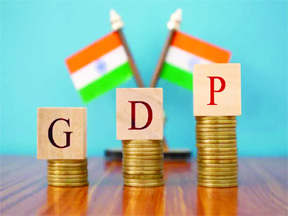
The latest data from Indian economy update highlights India’s impressive GDP growth of 7.3% year-on-year for the July-September quarter of 2025, slightly moderated from the stellar 7.8% growth in the earlier April-June quarter but still well above global averages. This performance underscores a resilient domestic demand powered by robust rural spending, government expenditure, and a recovering manufacturing sector.
The Reserve Bank of India has projected an optimistic GDP growth forecast for fiscal 2026 at around 6.8%, reflecting ongoing policy support such as GST reforms, direct income tax exemptions, and accommodative monetary policy factors. India is also on track to cross the $4 trillion mark in GDP this fiscal year, solidifying its position as the world’s fifth-largest nominal economy and third-largest when adjusted for purchasing power parity.
Impact and Adaptation to Trump Administration Tariffs
While the Trump administration’s tariffs on steel, aluminum, textiles, and other Indian exports posed tangible challenges, the Indian economy has shown strategic adaptability. Tariffs have prompted diversification in export destinations and stimulated India’s “Make in India” initiative, which seeks to boost domestic manufacturing and reduce reliance on global supply chains disrupted by these trade tensions.
Although some sectors like metal production faced margin pressures, India’s economic structure—with significant exemptions in critical sectors like pharmaceuticals and semiconductors—helped mitigate the blow. Furthermore, ongoing bilateral trade negotiations with the United States aim to ease tariff burdens and improve market access, fostering optimism for future economic alignment.
Stability Amid Adversity: Social and Security Dimensions
Economic strength in India is not only measured by GDP figures but also by its capacity to withstand social and geopolitical shocks. The terror blast near the iconic Red Fort, while tragic, did not precipitate a broader economic or social disruption—signifying enhanced security frameworks and societal resilience. Market confidence has held steady, and business continuity in key urban centers remains uninterrupted, highlighting the cohesion between economic policies and national security measures.
Following the incident, security was immediately tightened across the National Capital Region and other major metros, with increased checks and surveillance at crowded locations, places of worship, and public transport hubs. The government quickly convened the Cabinet Committee on Security and launched a comprehensive investigation, deploying the National Security Guard and the National Investigation Agency, which underscored robust emergency response systems and a coordinated approach between central and state authorities. High-level engagement—including site visits by senior officials and prompt support for victims—demonstrated governance that prioritizes both swift justice and public reassurance.
Notably, despite heightened vigilance and operational crackdowns, India’s economic stability was not significantly shaken. Malls, markets, and commercial centers in Delhi and other cities continued operating, while stock markets and major industries displayed resilience, reflecting deep-rooted confidence among investors and the general populace. The situation also brought to the forefront the ongoing challenge of balancing strong counter-terrorism measures with social harmony, as authorities acted to prevent polarization or backlash against vulnerable communities in the aftermath.
Statistical Insights and Forward Outlook
- India’s nominal GDP is projected to exceed $4 trillion in FY26, doubling over the past decade.
- GDP growth rates have averaged above 7% for most quarters in 2025, with rural expenditure significantly bolstering demand.
- Foreign exchange reserves stand strong at over $700 billion, underpinning India’s external economic stability.
- The agricultural sector’s growth accelerated to 4.6% due to favorable monsoon conditions, supporting rural income and consumption.
- The IMF and other global agencies forecast India to remain the fastest-growing major economy globally through 2025-26.
- Consumer inflation remains moderated below 4%, creating space for potential interest rate cuts to further stimulate growth.
Why Indian Panorama Remains Your Essential Source
For the Indian diaspora and global observers alike, staying well-informed about India’s dynamic economy is vital. The Indian Panorama is committed to bringing you comprehensive, fact-checked, and insightful analyses directly from the ground. Our coverage goes beyond numbers, spotlighting the socio-economic narratives that shape India’s growth story. By subscribing, readers gain privileged access to trusted updates, expert perspectives, and the nuanced context necessary to understand the ever-evolving Indian economic landscape.
India’s story today is one of resilience in the face of global trade challenges, steady domestic demand, and a vibrant future fueled by innovation and inclusive growth. The Indian Panorama invites you to join us in witnessing and understanding this remarkable journey.
-

Indian Startup News: From Fortune 500 to Unicorn Success: An Insider’s Tale of India’s Emerging Entrepreneurial Landscape
In an inspiring journey bridging two worlds, Rohit Sharma once thrived as a software engineer in a Fortune 500 company in the United States. Yet, driven by a yearning to make an impact closer to home, he left his coveted career and moved back to India to join an emerging unicorn startup in Bengaluru. Today, Rohit leads a key innovation team, credited with scaling the company’s tech infrastructure and expanding its user base globally. His story encapsulates a larger narrative: India’s startup ecosystem is evolving rapidly, creating pathways for professionals, students, and investors alike to seize unparalleled opportunities.
Two Timelines, One Vision: Life in the US vs. India’s Startup Boom
In the US, Rohit witnessed a mature tech culture with vast resources but often met with rigidity and defined corporate ladders. Access to capital and streamlined processes were advantages, yet the innovation pace was measured, bound by established frameworks. “Opportunities existed, but the thrill was limited by scale and competition,” he reflects.
Contrast this with India, where the startup landscape is vibrant, dynamic, and increasingly supportive. Rohit highlights, “Here, the excitement is palpable. The government’s initiatives, infrastructure improvements, and investor influx have created a fertile ground for innovation.” India now boasts over 159,000 startups recognized by the Department for Promotion of Industry and Internal Trade (DPIIT) as of January 2025, making it the world’s third-largest startup ecosystem after the US and China. With more than 100 unicorns across sectors like fintech, edtech, and healthtech, India’s startup culture thrives on youthful energy and digital transformation.
What Makes the Indian System Work?
Rohit credits several ecosystem enablers that facilitated his transition and growth here:
- Government support: Progressive policies like Startup India, tax benefits, and easier compliance mechanisms help startups scale rapidly.
- Access to capital: Indian startups raised over $12 billion in funding in the first nine months of 2025 alone, reflecting strong investor confidence both domestic and international.
- Talent availability: India’s large pool of tech professionals and engineers actively feeds startups’ talent demands.
- Digital infrastructure: Rapid internet penetration and smartphone adoption fuel a growing consumer base eager for innovative digital solutions.
- Cultural acceptance: Entrepreneurship is increasingly seen as a viable career path, supported by incubators, accelerators, and growing mentorship networks.
Despite these positives, Rohit is candid about the challenges. “Infrastructure outside major metros can be patchy, and regulatory complexities still slow some initiatives,” he admits. Moreover, while consumer-focused startups dominate, deeper investments in hard tech, deep-tech innovations, and global market scaling remain areas for growth.
Ecosystem Progress Despite Setbacks
The Indian startup ecosystem is no stranger to setbacks. The past year has seen a significant correction, reflecting the realities of growth and sustainability. According to corrected data from Tracxn, the number of startups shutting down in 2025 (till October) fell sharply to around 724, compared to nearly 3,903 closures in 2024. This steep decline in shutdowns signals a maturing ecosystem where founders and investors are more cautious about making sustainable choices rather than pursuing fast-paced but unsustainable hypergrowth. It marks a shift from the “growth-at-all-costs” mindset towards a measured approach emphasizing profitability, product differentiation, and validated customer demand.
However, other reports indicate a broader challenge with some data showing over 11,000 startups shutting down in 2025, a 30% increase from 2024, highlighting the complex and evolving nature of risk in the ecosystem. The discrepancy in numbers often stems from definitions of startup activity and closure. What is clear is that sectors that surged during the pandemic, like edtech, fintech, and healthtech, continue to face pressure as normalization affects user engagement and funding availability.
In response to these challenges, regulatory reforms are playing a key role. Changes around data privacy, ESOP taxation, and compliance are creating a more transparent and investor-friendly climate, though they add operational complexities. Government efforts to boost regional inclusivity are transforming the demographic footprint of startups, fostering growth in Tier 2 and Tier 3 cities beyond the traditional hubs of Bengaluru, Mumbai, and Delhi. This decentralization supports a wider innovation base and opens new markets for entrepreneurial ventures.
Overall, while the ecosystem has faced significant turbulence, the reduced number of closures reflects a transition toward greater operational discipline and ecosystem resilience. The system is learning to prioritize sustainable growth, stronger business fundamentals, and efficient capital use, laying the groundwork for a stronger, more mature startup environment in the years ahead.
Numbers Do Tell A Story
- India houses the third-largest startup ecosystem with 159,000+ DPIIT-recognized startups.
- Over 100 unicorns operate in diverse sectors, with total startup funding exceeding $17.5 billion in 2025 to date.
- Government-backed guarantees funded ₹604 crore in loans for startups, including women-led enterprises, boosting inclusivity.
- Startups integrate advanced technologies like AI, reflecting a tech-savvy, mature ecosystem.nextias
- The annual growth rate of India’s startup ecosystem hovers around 12-15%, emphasizing steady momentum.
Looking Forward: The Indian Panorama’s Perspective
At The Indian Panorama, we see India’s startup story as a powerful testament to resilience, innovation, and bold ambition. For the Indian diaspora-students pursuing education, professionals on H1B visas, entrepreneurs, and investors-this ecosystem offers pathways not just to careers, but to leadership in a transforming global economy.
While challenges linger, the foundations laid by government initiatives, private enterprise, and the incredible energy of millions of entrepreneurs signal a future that is not only promising but transformative. We encourage our readers to stay engaged with Indian startup news through our platform to witness firsthand the evolution of new technologies, emerging markets, and inspiring success stories like Rohit’s.
Together, us at The Indian Panorama believe that understanding these shifts empowers the diaspora to make informed decisions, contribute meaningfully, and celebrate India’s ascent on the world stage. Join us as we continue to track this exciting journey and bring you the latest, most insightful coverage.
-

Lucknow: The city of nawabs – A journey into grace and grandeur
Lucknow, the capital of Uttar Pradesh, is not just a destination; it is an experience woven with culture, hospitality and centuries-old elegance. Famous as the City of Nawabs, Lucknow blends the charm of its Mughal-Avadhi heritage with the vibrancy of a modern metropolis. Every street, every aroma, every conversation echoes its legendary tehzeeb—a unique blend of politeness, poetic sensibility and refined living that defines the soul of the city.
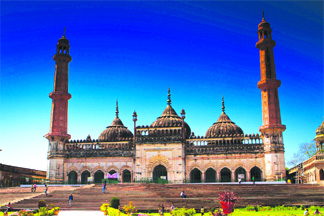
A walk through Lucknow feels like stepping into a living museum. Start your journey at the Bara Imambara, an architectural marvel built by Nawab Asaf-ud-Daula in the 18th century. Famous for its central hall with no supporting beams and the mysterious Bhul Bhulaiya labyrinth, it remains one of India’s most intriguing historical structures. Just nearby stands the Chota Imambara, a shining example of Persian-influenced design, with chandeliers, calligraphy and ornate stucco work that transform the monument into a glowing palace.
The majestic Rumi Darwaza, often called the Gateway of Lucknow, rises like a regal backdrop to the city’s skyline. Modeled after Istanbul’s Sublime Porte, it captures the spirit of the Nawabi era. Further along, the British Residency whispers stories of the 1857 uprising—its quiet ruins standing as a reminder of Lucknow’s pivotal role in India’s freedom struggle.
CONSTANTIA
Now a part of the famous La Martiniere College in Lucknow, the Constantia is a grand creation of a Frenchman called General Claude Martin.Martin started the construction of this structure in 1785, with the intention of building a palatial residence in India. However, he couldn’t live long enough to live in the house and died in the year 1800. The construction could finally be completed only two years of his death. The building was named after the main principle of Martin’s life, which was ‘Labore et Constantia’ (energy and persistence). Before he died, he made a will stating his desire to use the property as a centre of learning and thus, Constantia became an integral part of the college. The architectural grandeur of this majestic building will remind you of the bygone era.
RUMI DARWAZA
An exquisite example of Awadhi architecture, the Rumi Darwaza is a 60-foot-tall gateway located close to historical landmarks such as Bada Imambara and Chota Imambara in the city of Lucknow. The exquisite arch-shaped doorway is as central to Lucknow, as India Gate is to Delhi or Gateway of India is to Mumbai. Built in the 18th century, Rumi Darwaza is famed for its intricate carvings, architectural beauty and the vantage point on its top which offers panoramic views of the city (though entry to the topmost point is restricted mostly). This striking gateway is also known as the Turkish Gate, because of its resemblance with the entrance gate in Istanbul.
BEGUM HAZRAT MAHAL PARK
Situated in the heart of the city, the Begum Hazrat Mahal Park was built in the memory of the beautiful Queen of Awadh, Begum Hazrat Mahal. Though the garden and monument were constructed by the Indian government to commemorate her contribution to the 1857 revolt, it is also immensely popular with couples now. This impressive garden in the Hazratganj region has striking wellsprings, beautiful trees and stone pathways. The greenery and serenity around the garden draws couples in large numbers.
KAISERBAGH PALACE
One of the most-visited tourist attractions in Lucknow, Kaiserbagh Palace complex is truly an architectural marvel. It was built by the Nawab of Awadh Wajid Ali Shah between 1848 and 1850. In the later years, the palace acted as a stronghold of Begum Hazrat Mahal during the 1857 mutiny. A major part of the palace was destroyed by the British forces after the Revolt of 1857. Though the palace is in ruins now, it remains a prime tourist hotspot in the city. Visitors can still see the pediments, lanterns, Moorish minarets and banisters here. Moreover, the tombs of Nawab Saadat Ali Khan (the fifth Nawab Wazir of Awadh) and his beloved wife Khursheed Zadi, rest on the northern terrace of palace’s courtyard, which is another major highlight of the place. With its splendid architectural style, Kaiserbagh Palace is a must see attraction in the city.
JAMA MASJID
Built entirely in sparkling off-white sandstone, Lucknow’s Jama Masjid is considered to be one of the most beautiful mosques in India. Constructed in the 15th century, this architectural wonder will leave you spellbound with the calligraphy on its walls, its picturesque domes and striking minarets. Standing tall with 260 pillars, the mosque has 15 arched domes complete with exquisite carvings and stone work. Still used for daily prayers, the mosque is decorated on special festivals such asId-ul-Fitr and Id-ul-Zuha. Located towards the north-west of Chota Imambara, the mosque is an important landmark in the city of nawabs.
CLOCK TOWER
Also known as Hussainabad Clock Tower, Clock Tower is a 67 m tall structure constructed by Nawab Nasir-ud-din Haider in the year 1881. Displaying the finest works of art, the tower was built to commemorate the arrival of Sir George Couper, the first Lieutenant Governor of United Province of Avadh. Situated close to the famous Rumi Darwaza, the tower is a magnificent example of English architecture, and displays Victorian and Gothic structural designs. The mastermind behind the creation of this gigantic clock tower was none other than the famous royal clock maker, James William Benson. So do make it a point to visit this impressive building while you’re in the city. -

Sri Satyanarayan Puja: A sacred ritual rooted in faith and gratitude
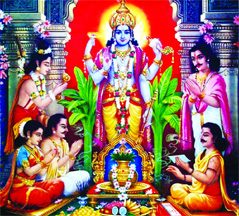
As December 2025 draws closer to the year’s end, millions of Hindu households will perform the auspicious Shri Satyanarayan Puja, a revered ritual dedicated to Lord Vishnu in His benevolent form as Satyanarayan—the embodiment of truth, compassion and fulfilment. Traditionally performed on Purnima (full moon) or during significant life occasions, the December puja holds special emotional significance. It becomes a spiritual closing ceremony to the year gone by, a way of expressing gratitude, seeking forgiveness, and inviting blessings for a peaceful, prosperous and harmonious new year.
The December Satyanarayan Puja often coincides with a sense of reflection. The end of the year naturally encourages families to look back at their achievements, challenges, and personal journeys. Performing the puja in this month symbolizes closing negative cycles, resolving karmic burdens, and turning a fresh page. For many devotees, it becomes the ideal time to thank the Divine for protection, health, and guidance through the year’s ups and downs. The winter season also adds a serene charm—oil lamps, incense and sacred chants create an atmosphere of purity and inner warmth.
The puja begins with the Kalash Sthapana, invoking Lord Vishnu, Goddess Lakshmi and all protective energies. Devotees prepare panchamrit, place sacred tulsi leaves, offer flowers and perform the Satyanarayan Katha—a collection of stories highlighting the importance of truth, devotion and humility. Each chapter narrates how faith in Satyanarayan removes obstacles, heals, and restores harmony. The offering of sheera (halwa) or rava prasadam represents sweetness, purification and the nourishment of both body and soul. The ritual of Aarti at the end signifies surrender—letting the Lord’s light guide one’s path.
Spiritual Essence of Satyanarayan Katha
At the heart of this puja lies the message that truth is the foundation of a meaningful life. The stories in the Katha remind devotees that material success must be balanced with righteousness, gratitude and spiritual awareness. Whether it is the tale of the poor Brahmin blessed with prosperity, the merchant saved from shipwreck, or the humble woodcutter whose devotion transformed his destiny, each narrative inspires faith and reinforces the belief that the Divine responds to sincerity. In December, as people evaluate their life decisions, these teachings feel deeply relevant and grounding.
Family Bonding and Community Harmony
In many regions, December becomes a month of communal and family celebrations. Families gather, children join in singing bhajans, women prepare prasad, and elders lead the Katha. The puja becomes an occasion for unity—healing old misunderstandings, rekindling warmth, and reaffirming shared cultural values. In temples and community halls, mass Satyanarayan Pujas are organised, allowing devotees to collectively pray for global peace, wellness, and prosperity in the coming year.
Devotees perform the puja with the belief that Lord Satyanarayan brings stability, removes hurdles, protects homes from disruptions, and ensures harmony within the family. It is also considered auspicious for beginning new ventures as the year turns—be it a home purchase, business plan, or a personal resolution. Many believe that performing the puja in December clears the pathway for a blessed and prosperous start to the new year.
As life gets increasingly fast-paced, the December Satyanarayan Puja serves as a sacred pause. It allows individuals to reconnect with their inner self, offer gratitude for the blessings already received, and surrender anxieties about the future. The glow of diyas, the chants of Vishnu Sahasranama, and the fragrance of tulsi create a space where the mind feels lighter and the heart feels at peace.As devotees complete the puja and bow before the deity, they carry a renewed sense of hope and clarity into the new year. The blessings of Lord Satyanarayan—whose very name is associated with truth and fulfillment—serve as a guiding light for the months ahead. In December 2025, as another year concludes, this puja will once again become a bridge between the blessings of the past and the promise of the future.
Rituals of Shri Satyanarayan Puja Preparation
Clean the home, set up a neat puja space, wear clean clothes, and arrange all items-kalash, flowers, prasad ingredients, lamp, incense.
Kalash Sthapana
Place a water-filled kalash with mango leaves and a coconut on top. This symbolizes inviting Lord Vishnu into the home.
Ganesh Puja
Begin by praying to Lord Ganesha to remove obstacles and bless the puja.
Sankalp
The performer declares the intention of the puja-asking for peace, prosperity, gratitude and blessings for the family.
Worship of Lord Satyanarayan
Offer kumkum, sandal paste, flowers, tulsi leaves, fruits, and naivedya to Lord Vishnu in His Satyanarayan form.
Satyanarayan Katha
The five chapters of the Katha are read aloud, teaching devotion, truthfulness and gratitude.
Prasad Offering
Prepare and offer sheera/sooji halwa, panchamrit and fruits as prasad.
Aarti
Perform aarti with a ghee lamp, conch blowing, and devotional singing.
Prasad Distribution
Share the prasad with all family members and neighbours, spreading blessings and harmony.
Charity
Conclude with charity or dakshina, symbolising gratitude and completing the puja. -

Indian Politics News: NDA’s Bihar Victory Signals Shifts Ahead in National Landscape
The recent Bihar Assembly elections have sent ripples across the political spectrum, reaffirming the National Democratic Alliance’s (NDA) dominance in one of India’s most politically significant states. The NDA’s decisive win not only cements its supremacy in Bihar but also raises questions and expectations for the upcoming national polls. For the Indian diaspora in the US, closely watching these developments reveals insights into India’s evolving political narrative and its potential impact on India-US relations.
The Political Landscape of Bihar: NDA’s Renewal of Mandate
Bihar, often viewed as a bellwether state, holds immense strategic importance in Indian politics. With 243 assembly seats, the state plays a critical role in shaping national political trends. In the latest election, NDA secured a comfortable majority, breaking opposition hopes of a significant surge. This dominant performance highlights the voter base’s endorsement of the ruling coalition’s policies and governance model.
NDA’s campaign emphasized development, infrastructure growth, and law-and-order, resonating especially with rural voters, where new roads, health facilities, and educational institutions marked tangible progress. The alliance’s cohesive narrative and strong grassroots presence overpowered fragmented opposition forces.
Will there be Any Implications for Upcoming National Elections
The Bihar election results offer a significant glimpse into the political future of India, especially as the country gears up for the upcoming national elections. The National Democratic Alliance’s (NDA) strengthened hold in Bihar is likely to serve as a springboard to consolidate and expand their influence in neighboring states and the broader parliamentary landscape. This victory reaffirms the alliance’s popular appeal and boosts its momentum going forward.
On the other side of the aisle, the opposition faces a challenging road ahead. The Bihar results laid bare their difficulties in uniting disparate parties with varying agendas, ideologies, and ambitions. Persistent infighting, regional rivalries, and the inability to present a cohesive policy platform have fragmented their voter base. Analysts note that without overcoming these internal fractures, the opposition is unlikely to mount an effective challenge to the NDA’s dominance at the national level.
Election Commission data reveal that the NDA commanded over 40% of the vote share in Bihar—a decisive margin ahead of the fragmented opposition. This substantial lead indicates a strong voter endorsement of NDA’s governance and policies. The alliance’s electoral strategy, heavily emphasizing welfare schemes, infrastructural development, and nationalist rhetoric, appears to resonate deeply with the electorate and could set the tone for electoral debates across India’s many states.
In essence, the Bihar outcome is not just a state-level event but a reflection of an evolving national political storyline. The NDA’s consolidated strength may translate into greater parliamentary control, while the opposition is forced into a long, uncertain process of rebuilding unity and relevance. This scenario will shape voter expectations, campaign strategies, and ultimately, the shape of India’s democracy in the near future.
How the Indian Diaspora in the US Views Bihar’s Outcome
Indian Americans, comprising nearly 5 million strong, maintain keen interest in India’s political developments. For many, Bihar’s election outcome confirms trends seen in India’s diaspora voting patterns, where the BJP-led government is widely supported for fostering economic growth and strong India-US ties.
However, concerns about democratic discourse and regional equity also surface within diaspora discussions. Many immigrants look at Bihar’s governance through mixed lenses, weighing developmental achievements against ongoing challenges such as unemployment and social disparities.
The diaspora’s engagement extends beyond observation. Several Indian American organizations actively conduct voter education programs and political awareness campaigns, emphasizing the interconnectedness of Indian politics and international relations. For diaspora members in business, technology, and public service, the election results reinforce expectations for continuity and stability in India-US collaboration.
The Potential Impact on India-US Relations
Indian political shifts invariably affect the bilateral relationship with the US, one of the most crucial partnerships in the 21st century. The NDA’s electoral mandate suggests continuity in policies promoting strategic cooperation, trade, and technology exchange. Recent data from the US Census Bureau highlights Indian Americans as one of the fastest-growing immigrant groups, amplifying the cultural and economic ties that complement diplomatic relations.
Continued political stability in India, shaped by alliances like the NDA, supports policymakers in both nations to pursue joint initiatives in defense, clean energy, and innovation. However, diaspora voices urge greater transparency and inclusive governance to bolster India’s global standing.
Editorial: Indian Panorama’s Perspective
As India moves steadily toward national elections, Bihar’s verdict serves as a vital indicator of current political dynamics and future possibilities. Indian Panorama views the NDA’s victory as a testament to its grassroots connect and governance narrative. However, we also recognize the need for vibrant democratic debate and balanced development that addresses regional and social diversity.
The Indian diaspora in the US will undoubtedly watch this political chapter unfold with keen interest, understanding that India’s domestic politics will influence not just bilateral ties but global perceptions of India’s democratic maturity and growth potential.
Indian Panorama remains committed to delivering nuanced, fact-based coverage of Indian politics news, empowering readers to engage with India’s evolving story with clarity and confidence.
-

Premier League: Arsenal grind out Brentford win, Chelsea suffer shock loss
Brighton (TIP)- Arsenal strengthened their hold at the top of the Premier League table with a 2-0 victory over Brentford, maintaining a five-point advantage over their closest rivals, Manchester City. First-half and stoppage-time goals secured a composed win at home, pushing Arsenal’s unbeaten run across all competitions to 18 matches. Despite not being at their most fluent, Arsenal’s control and resilience, particularly in the face of defensive absences and late pressure from Brentford, kept their title challenge on track.
The Gunners had their lead cut to two points after City’s 5-4 win over Fulham. The match began with Arsenal taking the lead through Mikel Merino in the 11th minute, setting the tone for a professional showing. Bukayo Saka added a crucial second goal in injury time (90+1’), offering relief after a tense second half and ensuring the three points were secured.
While Arsenal controlled possession for significant periods, the match was punctuated by nervy moments. Brentford’s Kevin Schade struck the crossbar, threatening to level the score. Brentford later increased their intensity with long balls and crosses, but Arsenal’s reorganised back line managed these threats, despite suffering injuries to Cristhian Mosquera and later Declan Rice.
Arsenal’s tactical approach involved retaining possession and resisting Brentford’s late physical and direct style.
In contrast, Chelsea suffered a damaging 3-1 defeat at home to Leeds United, hampering their title aspirations. Leeds took an early lead through Jaka Bijol in the sixth minute and extended it with Ao Tanaka’s spectacular goal before half-time. Pedro Neto reduced the deficit for Chelsea after the break, but Dominic Calvert-Lewin capitalised on a defensive error in the 72nd minute to secure Leeds’ win.
The defeat leaves Chelsea on 24 points, now in fourth place and nine points adrift of Arsenal. Leeds’ victory lifted them out of the relegation zone into 17th place with 14 points. Chelsea’s defensive lapses and inability to control Leeds’ intensity and counter-attacks were evident, further damaging their standing in the title race.
Aston Villa moved to the third spot on the table with a thrilling 4-3 comeback win over Brighton. After trailing 0-3, goals from Ollie Watkins, Amadou Onana and Donyell Malen got the win for Unai Emery’s side in the end. -

Kohli, Gaikwad hundreds in vain as SA chase 359 to level ODI series
Raipur (TIP)- Virat Kohli’s 53rd ODI ton and Ruturaj Gaikwad’s maiden century were eclipsed by a collective effort from South Africa in a steep run chase, giving the visitors a series-levelling four wicket-win in the second ODI against India here on Wednesday, Dec 3. Chasing 359, South Africa rode on a brilliant century from Aiden Markram (110), a brutal 34-ball 54 (1×4, 5x6s) from Dewald Brevis and Matthew Breetzke’s 68 to get over the line in another resilient effort with the bat. The series-deciding third and final ODI will be played in Visakhapatnam on Saturday, Dec 6.
India’s job was far from done even after putting a daunting total on board as heavy dew in the second half not only made spinners’ job tougher, but poor returns from Prasidh Krishna (2/79) did not help their cause.
Prasidh, who had broken a second-wicket century partnership earlier by dismissing Temba Bavuma (46), got it right finally to pin Breetzke leg-before late in the game, and soon after, Arshdeep Singh (2/54) removed the dangerous Marco Jansen (2), but Corbin Bosch (29 not out off 15) and Keshav Maharaj (10 not out off 14) took the Proteas over the line with four balls to spare. Markram was in his element utilising a flat deck under lights to notch up his maiden century against India and providing South Africa a heavy contribution from the top to push on.
He took the initiative in the opening partnership and even though he lost Quinton de Kock (8) early with Arshdeep drawing first blood, Markram found a stable partner in Bavuma to put on 101 for the second wicket.
Markram had to remain the aggressor as Bavuma farmed the strike from the other end. Markram pierced gaps at will with brute force as well as some artistry.
He also hit through the line and over the bowlers’ head to clear the ropes while using the feet well against Indian spinners, with heavy dew making their job even more difficult as the innings progressed.
But the opener also had luck favouring him when a powerful hit off Kuldeep Yadav towards long on saw the ball going through Yashasvi Jaiswal’s hands for a six.
Had the catch been taken, Markram’s charge would’ve ended on 53. Markram eventually fell off a short off-cutter from Harshit Rana (1/70) but his dismissal had Brevis and Breetzke teaming up, who waltzed to 92 off the next 64 balls to put South Africa in complete control.
While Brevis fell after his quick fifty which featured some massive sixes, Breetzke made a composed 68 for a second consecutive half-century.
Incidentally, it was only the second occasion where India lost an ODI despite scoring in excess of 350, with the first instance being against Australia in March 2019 when they lost by a similar margin of four wickets despite making 358/9 at Mohali.
Earlier, Kohli’s successive hundred, maiden century from Gaikwad (105) and KL Rahul’s quickfire 66 not out propelled India to a formidable 358 for five.
Kohli (102 off 93 balls, 7x4s, 2x6s) and Gaikwad (105 off 83 balls, 12x4s, 2x6s) reset the record for highest third-wicket stand for India in ODIs against South Africa as their 195-run association built the platform for the hosts to launch themselves into a big score.
And Rahul’s (66 not out off 43 balls, 6x4s, 2x6s) second fifty in a row ensured that, even as India continued to tinker with their batting line-up with the stand-in skipper coming in at No 5 ahead of Washington Sundar, who endured another failure. -
Fit-again Shubman Gill, Hardik Pandya picked for T20I series against SA
Flamboyant all-rounder Hardik Pandya and star batter Shubman Gill on Wednesday, Dec 3, returned to the Indian T20I squad for the upcoming five-match series against South Africa after recovering from their respective injuries.
Gill, who missed a major part of the Test series and the ODIs against South Africa due to a neck injury, has been picked for the T20 games as vice-captain after recovering from his condition.
Gill’s participation, however, is subject to fitness clearance from the BCCI Centre of Excellence, the board said in a statement.
Pandya, who missed the Asia Cup 2025 final and the five-match series in Australia, also made a comeback in India’s setup after proving his fitness on Tuesday during the Syed Mushtaq Ali Trophy match against Punjab in Hyderabad.
Gill, who is India’s Test and ODI skipper, sustained the injury during the opening Test against the Proteas in Kolkata. He was subsequently ruled out of the second Test in Guwahati and the ODI series that followed.
The selection committee meeting to pick the T20 squad took place here on Wednesday.
The five-match series begins December 9 in Cuttack. The other matches are scheduled in Chandigarh (December 11), Dharamsala (December 14), Lucknow (December 17) and Ahmedabad (December 19). -

US plans more stakes in minerals companies, Trump official says
Washington (TIP)- The US government plans to take more equity stakes in critical minerals companies, a White House official said Thursday, Dec 4, calling the once-rare move necessary to counter China’s dominance in the raw materials used in everything from semiconductors to MRI machines.
“I think they’re the norm from our perspective,” said Jarrod Agen, executive director of the National Energy Dominance Council, speaking at a forum in Washington. “There is a broad scope of different companies who are coming to us. They’re making the right case.”
Critical minerals such as gallium and cobalt are used in products ranging from iPhones to industrial magnets. They’re also vital for defense systems including missile guidance, radar and jet engines, as well as batteries and other technologies needed to cut carbon pollution. Over the past year, the Trump administration has spent over $1 billion to take stakes in critical minerals and mining companies, often sending the company’s stock prices soaring.
Among the deals are $400 million in exchange for a 15% stake in MP Materials Corp. which was announced in July, $670 million in exchange for a stake in magnet producer Vulcan Elements Inc. and $35.6 million for a 10% stake in Canadian minerals explorer Trilogy Metals Inc. The Trump administration announced in September it was acquiring a acquiring a stake in Lithium Americas Corp., which is developing the largest lithium deposit in the country, as part of a deal to restructure an existing $2.23 billion loan the Canadian company held with the Energy Department.
Agen, in a brief interview, declined to specify what company could be next.
The strategy of investing taxpayer dollars in companies the administration has deemed essential to national security comes as the US’ reliance on China for the crucial materials has become a flash point in the trade war. Beijing responded to US export restrictions by curbing shipments of rare-earth elements, a move that briefly disrupted global supplies before China eased the limits after Washington lifted its countermeasures.
“We’re literally buying equity, getting equity in companies to give the backing of the US, because that’s the only way we’re going to catch up with China on these things,” Agen said in his remarks at the American Growth Summit, which was sponsored by companies such as Citigroup Inc. and NVIDIA Corporation. “They know the government is backing us. No one wants to mess with President Trump, and so we can actually get the materials.”
Global race to secure critical minerals for weapons threatens climate
The accelerating global arms race is hindering climate action as critical minerals that are key to a sustainable future are being diverted to make the latest military hardware, according to a report
The study from the Transition Security Project – a joint US and UK venture – reveals how the Pentagon is stockpiling huge stores of critical minerals that are needed for a range of climate technologies including solar panels, wind turbines, electric vehicles and battery storage.
It found that since the US president, Donald Trump, passed his “one big beautiful bill” earlier this year, the Pentagon – through its National Defense Stockpile programme – has earmarked billions of dollars to secure a growing list of critical minerals for use in military hardware – from precision-guided weaponry and advanced communication systems to an emerging arsenal of military technologies such as “AI-driven autonomous warfare platforms”. -

Fitch ups India’s FY26 GDP growth forecast to 7.4%
New York (TIP)- Fitch Ratings on Thursday, Dec 4, raised India’s GDP (gross domestic product) growth forecast for the current fiscal to 7.4%, from 6.9%, on increased consumer spending and improved sentiment boosted by GST (goods and services tax) reforms. It said falling inflation gives the Reserve Bank of India (RBI) room for one more policy rate cut in December to 5.25%, following 100 bps of cuts in 2025 so far.
Fitch said that GDP growth accelerated further in the July-September quarter to 8.2%, from 7.8% in the April-June quarter.
“Growth will ease over the remainder of the financial year 2025-26 (to end-March), but we have raised our full-year growth forecast to 7.4%, from 6.9% in September,” Fitch said in its Global Economic Outlook report for December.
Private consumer spending is the main driver of growth this year, supported by strong real income dynamics, increased consumer sentiment, and the impact of recently implemented GST reforms.
Effective September 22, GST on about 375 items has been slashed, making more than 99% of consumption items cheaper.
Fitch expects GDP growth to slow to 6.4% in the financial year 2027.
It projected private investment to pick up in the second half of the next fiscal (2026-27) as financial conditions loosen.
Consumer price inflation fell to an all-time low of 0.3% in October, driven by lower food and drink prices. “We expect falling inflation should give the Reserve Bank of India room for one more policy rate cut in December to 5.25%, following 100 bps of cuts in 2025 so far, and a series of reductions in the cash reserve ratio (from 4% to 3%),” Fitch said.
The central bank’s monetary policy committee is slated to announce its policy review on Friday.
With core inflation recovering and activity projected to remain strong, Fitch said that it expects the RBI to have reached the end of its easing cycle, and that rates will remain at 5.25% over the next two years. -
Rupee hits record low of 90.43 against US dollar, slumps 28 paise
The rupee slumped 28 paise to an all-time low of 90.43 against the US dollar in early trade on Thursday, Dec 3, amid substantial foreign institutional investor outflows and restrained intervention from the Reserve Bank of India.
Forex traders said that restrained central bank intervention ahead of the crucial Monetary Policy Committee (MPC) decision and significant dollar demand from importers have exerted persistent downward pressure on the local currency. At the interbank foreign exchange market, the rupee opened at 90.36. It slipped further to a record low of 90.43 against the greenback in initial deals, registering a loss of 28 paise from its previous closing level.
On Wednesday, the rupee breached the 90-a-dollar level for the first time to settle at a fresh all-time low of 90.15 against the greenback.
Meanwhile, Chief Economic Adviser V Anantha Nageswaran on Wednesday said the falling rupee is not affecting inflation or exports.
A falling rupee helps outward shipment but makes imports costlier.
Import-dependent sectors such as gems and jewellery, petroleum and electronics may see lower benefits due to a rise in input costs, putting pressure on inflationary expectations, he said at an event on Wednesday.
Meanwhile, the dollar index, which gauges the greenback’s strength against a basket of six currencies, was trading 0.14 per cent higher at 98.99.
Brent crude, the global oil benchmark, rose 0.49 per cent to USD 62.98 per barrel in futures trade.
Forex traders believe investors are adopting a cautious stance amid ongoing trade tensions with the US, with expectations of a settlement towards the end of the year. -

Is this comet flying backwards? Nasa spacecraft captures comet 2025 R2 (Swan)
Nasa’s Polarimeter to Unify the Corona and Heliosphere (Punch) mission has provided a detailed look at Comet 2025 R2 (Swan), tracking its movement from August to early October 2025. The spacecraft collected images every few minutes, offering one of the most frequent observation cadences ever achieved for a comet.
The comet, first identified on September 11 by Ukrainian amateur astronomer Vladimir Bezugly in SOHO spacecraft data, was later found in Punch records dating back to August 7, as it journeyed near Mars and the star Spica. Processed videos created from Punch data display Comet Swan moving leftward, away from the Sun, which gives the visual impression that the comet is moving backwards.
This illusion occurs because the solar wind, a continuous stream of charged particles emanating from the Sun, pushes the comet’s tail in the same direction as its orbital motion, reversing the expected appearance.
Punch’s four satellites closely monitored the dynamic changes in the comet’s tail, including its growth, shrinkage, and flickering. These multi-vantage observations enabled researchers to better understand how the solar wind interacts with cometary material.
The SOHO mission, a joint initiative between Nasa and ESA, celebrates its 30th launch anniversary in December 2025. SOHO’s Swan instrument has contributed to the discovery of over 5,000 comets, with many, such as Comet Swan, identified by citizen scientists like Bezugly.
Comet Swan reached its closest point to the Sun, or perihelion, on September 12 at a distance of 0.5 astronomical units. The comet brightened rapidly, increasing from magnitude 11 to 8, and peaked at magnitude 6 during its closest approach to Earth on October 20, when it was just 0.26 astronomical units away. A possible fragmentation event was detected in early November, suggesting shifts in its physical structure.
Punch’s high-frequency imaging, capturing the comet every four minutes through October 5, surpassed the traditional daily observation schedule. Principal investigator Craig DeForest emphasized the advantages of this approach, noting its value in examining the interactions between the solar wind and various objects in the solar system.
Gina DiBraccio, a heliophysicist at Nasa Goddard, commented on the benefits of the multi-vantage observations: “Watching the Sun’s effects from multiple vantage points… gives us a complete picture of the space environment,” she said. These findings help improve models of how solar wind can affect comets, planets, astronauts, and technological systems on Earth. -

OpenAI working on a secret Garlic AI model to challenge Google Gemini 3 and Opus 4.5 in coding and reasoning
The race to build the most powerful artificial intelligence system has entered a new phase, with Microsoft-backed OpenAI quietly developing a large language model called Garlic. The model is being designed to rival Google’s Gemini 3 and Anthropic’s Opus 4.5, particularly in advanced reasoning and coding abilities, according to a report by The Information. Early internal tests suggest Garlic is performing strongly and could debut as GPT-5.2 or GPT-5.5 by early next year.
The Garlic project comes amid growing competition following Google’s success with Gemini 3. According to The Information, OpenAI’s Chief Research Officer, Mark Chen, told colleagues that Garlic had shown “strong performance” across multiple benchmarks, including reasoning and programming, where Google and Anthropic currently hold an edge.
CEO Sam Altman has reportedly declared a “code red” inside the company to improve ChatGPT and reclaim OpenAI’s lead in the AI race. He told staff that OpenAI’s new reasoning model was already “ahead” of Gemini 3 in its own internal evaluations. Although OpenAI has not commented publicly, insiders say the company is fast-tracking Garlic’s release, aiming for an early 2026 rollout.
Garlic reportedly builds on lessons from Shallotpeat, an earlier in-house model that Altman mentioned to employees in October. While Shallotpeat was designed to challenge Gemini 3, Garlic incorporates bug fixes and refinements from that project, particularly in the pretraining phase. This stage teaches a model to recognise relationships in massive datasets drawn from across the internet.
According to Chen, Garlic represents a leap forward in pretraining efficiency. He told colleagues that the team had managed to “infuse a smaller model with the same amount of knowledge” that previously required a much larger one. This advancement means Garlic could deliver GPT-4.5-level performance at lower cost and faster speed.
The breakthrough comes as Google has been touting similar improvements with Gemini 3’s training process. OpenAI’s progress with Garlic could counterbalance that advantage and potentially give the company a more efficient path to future upgrades.
Chen said Garlic had already surpassed OpenAI’s “previous best” pretraining results and resolved key technical bottlenecks that affected GPT-4.5, which launched earlier this year. With these improvements, OpenAI is confident it can now develop smaller yet more capable models without inflating training costs.
Before Garlic launches, it will undergo post-training with specialised datasets, along with safety testing and evaluation. Sources also claim the success of Garlic has already allowed OpenAI to begin working on an even more advanced successor model, building on the lessons learned during its development. -
Putting Pompeii’s pieces together, with the help of a robot
Pompeii’s ancient Roman frescoes, shattered and buried for centuries, could get a second life thanks to a pioneering robotic system designed to support archaeologists in one of their most painstaking tasks: reassembling fragmented artefacts. The technology, developed under an EU-funded project called RePAIR, combines advanced image recognition, AI-driven puzzle-solving, and ultra-precise robotic hands to accelerate traditionally slow and often frustrating restoration work.
Launched in 2021 and coordinated by Venice’s Ca’ Foscari University, the robotic project showcased in Pompeii on Thursday brought together international research teams that have used the archaeological site as their testing ground. The experimental project “actually started from a very concrete necessity to recompose fragments of frescoes that had been destroyed during the Second World War,” said the site’s director Gabriel Zuchtriegel.
Researchers believe the technology could transform restoration practices worldwide.
The robot uses twin arms equipped with flexible hands in two sizes and vision sensors to identify, grip and assemble fragments without damaging their delicate surfaces.
The once-thriving city of Pompeii, near Naples, and its surrounding countryside were submerged by volcanic ash when Mount Vesuvius exploded in AD 79.
Researchers focused on frescoes preserved in a fragmentary state in Pompeii’s storerooms — two large ceiling paintings which were damaged during the initial eruption and later shattered by bombing in World War Two, and frescoes from the so-called ‘House of the Gladiators’ which collapsed in 2010.
Replicas were created during this initial testing phase to avoid risking the original pieces. While the robotics teams worked on designing and building the system, experts in artificial intelligence and machine learning developed algorithms to reconstruct the frescoes, matching colours and patterns that may not be visible to the human eye. Experts say the task is similar to solving a giant jigsaw puzzle, with extra difficulties such as missing pieces and no reference image of the final result.
“It’s like you buy four or five boxes of jigsaw puzzles. You mix everything together, then you throw away the boxes and try to solve four or five puzzles at the same time,” said Marcello Pelillo, the Venice university professor who coordinated the project. -

Air pollution may reduce health benefits of exercise: Study
A new study led by researchers at University College London (UCL) shows that chronic exposure to toxic air can significantly diminish the health benefits of regular physical activity. The study analysed data from more than 1.5 million adults tracked for more than a decade in countries including the UK, Taiwan, China, Denmark and the United States. The team found that the protective effect of regular exercise on people’s risk of dying over a specific period – from any cause and from cancer and heart disease specifically – appeared to be reduced, but not eliminated, for those who lived in high pollution areas.
The researchers looked at levels of fine particulate matter – tiny particles known as PM2.5s with a diameter of less than 2.5 micrometres across. These particles are so small they can get stuck in the lungs and enter the bloodstream.
The health benefits of exercise significantly weakened where the yearly average level of PM2.5s was 25 micrograms per cubic metre (mg/m³) or higher, the team found. Nearly half (46%) of the world’s population live in areas exceeding this threshold.
The lead researcher, Professor Po-Wen Ku of National Chung Hsing University, Taiwan, said, “Our findings emphasise that exercise remains beneficial even in polluted environments. However, improving air quality can greatly enhance these health gains.”
Co-author Professor Andrew Steptoe, from UCL’s Department of Behavioural Science & Health, said: “Our study shows that toxic air can to some extent block the benefits of exercise, although not eliminate them. The findings are further evidence of the damage that fine particle pollution can do to our health.
“We believe clean air and physical activity are both important for healthy ageing and so we encourage greater efforts to curb health-harming pollution levels.” For the study, the research team looked at data from seven existing studies, including three that were unpublished, combining the summary statistics from each study into one overall analysis. For three of these studies, they re-analysed the raw data at the level of individual participants. -

Eating too fast can spike your blood sugar: Here’s why slowing down matters
In our fast-paced lifestyle, eating has become something we squeeze between meetings, commutes and endless to-do lists. But rushing through meals can do more harm than just causing indigestion. Nutritionists warn that eating too quickly can lead to sharp spikes in blood sugar, increasing the risk of insulin resistance, weight gain, and long-term metabolic problems. What feels like a harmless habit may actually disrupt your body’s natural rhythm of hunger, fullness and glucose regulation.
How Fast Eating Affects Blood Sugar
When you eat at speed, the stomach receives large amounts of food in a short time, pushing glucose into the bloodstream faster than your body can handle. Chewing less means food isn’t broken down properly, forcing the digestive system to work harder and absorb glucose more quickly. On top of that, the brain takes around 20 minutes to register fullness. If you finish your meal before this window, you often end up overeating without even realising it – leading to a sudden jump in blood sugar followed by a crash.
Insulin Strain and Metabolic Stress
Eating too fast puts pressure on the pancreas to release insulin at a faster rate. Over time, this constant stress reduces insulin sensitivity, making it harder for cells to use glucose effectively. This is why people who eat quickly are more likely to develop prediabetes, belly fat, high triglycerides and type 2 diabetes. The body simply cannot keep up with the rapid inflow of nutrients, especially refined carbs and sugars.
The Mind-Body Disconnect
Speed eating disconnects you from your natural hunger cues. When you swallow mouthfuls quickly, you’re not giving your senses – smell, taste, texture – enough time to send signals of satisfaction to the brain. This results in feeling full only after you’ve already overeaten. The habit also triggers emotional eating tendencies, making you crave more food even when your body doesn’t need it.
Benefits of Slowing Down Your Meals
Eating slowly is not just about manners; it’s a powerful metabolic tool. When you chew thoroughly, carbohydrates break down gradually, allowing sugar to enter the bloodstream more steadily. This prevents sudden spikes and supports better insulin function. Slowing down also improves digestion, reduces bloating, enhances nutrient absorption, and supports weight loss by helping you naturally consume fewer calories. People who eat mindfully often report improved mood, less stress, and greater satisfaction from food.
Simple Ways to Eat More Mindfully
Small habits can make a big difference. Put your fork down between bites, chew 15-20 times, sip water throughout your meal, and avoid distractions like screens while eating. Start meals with fibrous foods such as salads or vegetables to slow glucose absorption. Even pausing for a few seconds before each bite can help your brain reconnect with the act of eating. -
Persistent chest tightness may be an early lung cancer warning: Expert
Persistent chest tightness and breathing discomfort, often brushed off as stress, acidity or seasonal asthma, may be early warning signs of lung cancer that patients commonly overlook, warns a leading oncologist.
In an interview with Indiatoday.in, Dr Abhijit Das, Sr. Consultant, Radiation Oncology at HCG Cancer Hospital, Kolkata, explained why so many cases continue to be detected late and what symptoms truly merit urgent medical attention.
“Chest discomfort from lung cancer usually feels constant and deep, not the on-and-off tightness you get with anxiety or the burning feeling from acidity,” he says. Unlike stress-related tightness, the pain tends to worsen with time and is often accompanied by red flags such as a persistent cough, unexplained tiredness or weight loss.
“Most importantly, it doesn’t go away with calming down or taking antacids, that steady, lingering pain is what makes it different,” he emphasises.
Health experts add that many patients only seek help once the pain interferes with breathing, sleep, or daily functioning, by which point the disease may have already progressed.
Breathing trouble usually appears late, making lung cancer a ‘silent disease’
Contrary to popular belief, early lung cancer rarely causes noticeable breathing issues.
“Breathing difficulty or chest pressure usually appear later in the disease,” Dr Das explains. “Early tumours are often too small to block airways. Most people have no symptoms at the beginning.”
This “silent progression” is one of the biggest reasons lung cancer continues to be detected at advanced stages in India, where screening rates remain low.THE PAIN PATTERNS THAT SHOULD NOT BE IGNORED
Dr Das says certain types of pain warrant immediate evaluation:
– Pain that worsens with deep breaths, indicates irritation around the lungs
– Pain triggered by coughing or laughing more likely a lung-related issue
– Pain that increases at night or when lying down, suggests pressure changes
– Persistent deep ache that remains in the same area
Pain radiating to the shoulder or upper back
“These patterns don’t always mean cancer, but if they linger or worsen, they definitely need to be checked,” he says.
Senior clinicians note that Indians frequently attribute such pain to acidity, viral infections or gym strain, losing valuable time before diagnosis.