Month: December 2025

  • Operation Gall Stone: Bloodless, Biley coup

    Operation Gall Stone: Bloodless, Biley coup

    By Priti Prakash

    Did you ever pay attention to this small little organ lying unnoticed in the lap of your liver! I always knew my gall bladder was a moody little organ, but I didn’t realize it had been running a full-time jewellery business inside me. If anyone had told me a month ago that I was secretly running a gemstone factory inside my abdomen, I would have laughed. Lol. But destiny — and a highly accomplished and charming GI surgeon — had other plans.

    It began with the dreaded verdict. When the ultrasound indicated I had gallstones, I imagined a polite handful. Maybe two. Three, if my luck was especially rotten, quietly lounging in my tiny gall bladder like freeloaders enjoying a long-term Airbnb stay.

    But twenty plus?

    Each one bigger than the size of a molar, 10 mm?

    In that tiny gall bladder?

    Honestly, if organs had real estate laws, mine would have been evicted decades ago. Nature, however, had set up an entire colony of twenty plus.

    The ultrasound graphically screamed from the roof top declaring the cohabitation. To make it sound easier the rather suave Doctor said it’s just no problem, they will be out in lesser time than you even fly from Delhi to Jaipur. A time and date were fixed.

    Once surgery was scheduled, my first challenge arrived in the form of the mandatory 6-hour fasting. Now, fasting sounds very spiritual and cleansing — until you’re actually doing it. The night before surgery, I heroically declared, “I’m strong. I’ll manage.”

    By hour four, I was making emotional eye contact with the refrigerator. By hour three, I was giving motivational speeches to myself like a stranded explorer in a survival movie. Water never tasted so delicious.

    The real fun began on the day of my surgery. Morning arrived, and off we went to the hospital, me behaving like a brave warrior on the outside and a hungry squirrel on the inside. After completing endless forms and getting my vitals checked, donning the blue tunic and pyjamas, I landed in the pre-operative waiting area — the limbo between normal life and the mysterious world of the OT. Bracing up for another adventure.

    I was wheeled into a waiting hall where other patients were waiting for their turn of getting under the knife some way or the other all pretending not to be nervous.

    Then walked in my Anaesthetist, giving me a rundown of the many aftereffects of anaesthesia on my body as I happened to be with auto immune. ‘It might trigger flareups’ if it does not suit etc. I wondered if I was in the right place. But now I was already committed to throwing out the crystals from the gall so there was no looking back. Half the way into the Operation Theatre, in the ‘Blues,’ fasting of half a dozen hours, there was no looking back.

    Meanwhile, my stomach was auditioning to play thunder in a sound effects studio. Every nurse who walked by probably heard it. My name was eventually called, and a sense of theatrical intensity swept over me. This was it.

    The moment I stepped into the operation theatre, my first chance, I felt like Alice entering Wonderland — only the Wonderland here was brightly lit, spotless, and filled with smiling humans wearing masks and hair caps. A part of me wondered if I should greet them like celebrities.

    The surgeon’s team, however, ran the place like a five-star hotel making the whole scene pretty comfortable. One adjusted my blanket, another asked if I was feeling okay, someone fixing BP monitoring machine, someone ensuring right pulse rate, when one assured me the anaesthesia would kick in soon. At this point, I was convinced they deserved a hospitality award.

    Then came the anaesthesiologist — the magician of the OT.

    “You may feel a little lightheaded,” he said calmly.

    Lightheaded?

    Sir, within three seconds I was floating like a Bollywood heroine in a dream sequence. If anyone had started singing in the OT, I might’ve joined in. Within moments, I was levitating emotionally.

    And then — poof — blackout. Blissful unconsciousness.

    I woke up later in recovery, convinced only five minutes had passed. Meanwhile, my gall bladder had been neatly removed, stitched, packaged, and metaphorically filed in medical history. The internal gemstone factory shut down permanently.

    But the real shock came at home. My family, with the enthusiasm of archaeologists, presented me with a container. Inside were ‘green stones,’ shining like big UNPOLISHED emeralds from a badly run mine. I stared at them in disbelief and they stared back at me.

    “These were inside ‘me’?”

    “Yes,” my family said. “All twenty.”

    I couldn’t decide which emotion was stronger — awe, horror, pride or the urge to post them on OLX as “lightly used crystals.” Even maybe start a side business selling ‘organic internal crystals.’ Honestly, they looked like props from a fantasy movie.

    Frankly, the gall bladder had been running a souvenir shop without my permission. No symptoms, no warning, nothing. Just quietly manufacturing gemstones like a side hustle.

    It’s incredible how such a tiny organ carried so many uninvited guests without once filing a complaint. Not a warning sign, not a protest. Just quietly running an underground mineral enterprise.

    If stones could talk, mine would surely say, “We lived rent-free for years. Thanks for the hospitality.”

    Looking back, the whole experience was a mix of scientific marvel, personal shock, unexpected glamour and a surprisingly smooth OT adventure made possible by a brilliant, charming and highly accomplished Surgeon, Dr Sumesh Kaistha.

    And let’s be real — I have the strangest souvenir collection anyone could ever boast of: Twenty plus crystals, limited edition, handcrafted by my own body.

    I can now add a degree in manufacturing crystals too among the few other that I have.

    Lucky me, right?

    (Priti Prakash is a New Delhi based Senior Independent Journalist. She is a political analyst & blogs on Diplomacy.)


  • Trump administration could strip some naturalized Americans of their citizenship

    Trump administration could strip some naturalized Americans of their citizenship

    WASHINGTON, D.C. (TIP): The Trump administration is looking at plans to strip some naturalized Americans of their citizenship, the latest in a series of efforts undertaken by President Donald Trump to crack down on immigration. A report in the New York Times cited new internal guidance issued on Tuesday, December 16, to US Citizenship and Immigration Services field offices, asking them to “supply Office of Immigration Litigation with 100-200 denaturalization cases per month” in fiscal year 2026.

    While federal law provides for stripping naturalized Americans of their citizenship if they committed fraud while applying for citizenship or in a handful of other situations, the new guidance “would represent a massive escalation of denaturalization in the modern era,” said the report.

    It added that such a move could impact people who had made honest mistakes on their citizenship paperwork and “sow fear among law-abiding Americans.”

    The guidance is the latest in a series of measures announced by Trump in his second term in the White House as part of an intensified crackdown on immigration, both illegal and legal. The NYT report added that there are about 26 million naturalized Americans in the country, citing Census Bureau data. USCIS estimates show that more than 800,000 new citizens were sworn in last year, most of whom were born in Mexico, India, the Philippines, the Dominican Republic or Vietnam.

    “It’s no secret that US Citizenship and Immigration Services’ war on fraud includes prioritizing those who’ve unlawfully obtained US citizenship — especially under the previous administration,” USCIS spokesman Matthew Tragesser said in the NYT report.

    “We will pursue denaturalization proceedings for those individuals lying or misrepresenting themselves during the naturalization process. We look forward to continuing to work with the Department of Justice to restore integrity to America’s immigration system.”

    Former agency officials have voiced concern over such guidelines.
    “Imposing arbitrary numerical targets on denaturalization cases risks politicizing citizenship revocation,” former USCIS official Sarah Pierce said.

    “And requiring monthly quotas that are 10 times higher than the total annual number of denaturalization’s in recent years turns a serious and rare tool into a blunt instrument and fuels unnecessary fear and uncertainty for the millions of naturalized Americans.”

    The NYT report said the new guidance was part of a document outlining USCIS priorities for the 2026 fiscal year, which began in October and listed goals such as “provide employee feedback opportunities”, “strengthen management of high-risk cases” and “pursue denaturalization.”

    The Justice Department has also said it would make denaturalization a priority this year. In a memo earlier this year, officials said they would target individuals in an array of categories beyond committing fraud in obtaining citizenship.

    “Categories of eligible people include gang members, those who committed financial fraud, individuals connected to drug cartels and violent criminals,” the NYT report said.

  • Trump suspends green card lottery programme that let Brown University, MIT shootings suspect into U.S.

    Trump suspends green card lottery programme that let Brown University, MIT shootings suspect into U.S.

    WASHINGTON, D.C. (TIP): President Donald Trump suspended the green card lottery programme on Thursday, December 18, 2025, that allowed the suspect in the Brown University and MIT shootings to come to the United States.

    Homeland Security Secretary Kristi Noem said in a post on the social platform X that at Mr. Trump’s direction she is ordering the United States Citizenship and Immigration Services to pause the programme. “This heinous individual should never have been allowed in our country,” she said. The diversity visa programme makes up to 50,000 green cards available each year by lottery to people from countries that are little represented in the United States, many of them in Africa.

    Nearly 20 million people applied for the 2025 visa lottery, with more than 131,000 selected when including spouses with the winners. After winning, they must undergo vetting to win admission to the United States. Portuguese citizens won only 38 slots.

  • Pope Leo XIV appoints Bishop Ronald Hicks as the Archbishop of New York

    Pope Leo XIV appoints Bishop Ronald Hicks as the Archbishop of New York

    NEW YORK CITY (TIP): Pope Leo XIV has announced fellow Chicagoan, Bishop Ronald Hicks of Joliet, Ill., will serve as the next archbishop of New York, replacing Cardinal Timothy Dolan, who has led the state’s 2.8 million Catholics for more than 15 years, says a New York Daily News report. “I accept this appointment with humility and an open heart,” Hicks said. “I ask for your support and your prayers, and I ask God to support us as always.”

    Born in Harvey, Ill., Hicks grew up in South Holland, not far from the Chicago suburb of Dalton, where the pontiff was raised. They “played in the same parks, went swimming in the same pools, liked the same pizza places” he told WG9 earlier this year, when Leo began his tenure as leader of the Catholic church. Their similarities extend to much of their ideologies as well.

    Like Leo, Hicks has embraced a more welcoming and inclusive vision of Catholicism, in part inspired by the late Pope Francis, with a specific focus on social justice. Hicks has also already shown a willingness to push back against the Trump administration.
    (Source: New York Daily News)

  • Australia’s ‘Bondi Hero’ handed millions collected from fundraising

    Australia’s ‘Bondi Hero’ handed millions collected from fundraising

    SYDNEY (TIP): A man credited with saving lives by wrestling a gun from one of the alleged attackers during a ‍mass shooting at Australia’s Bondi Beach received a cheque for more than ​A$2.5 million ($1.65 million) on Friday , December 19, 2025, after tens of thousands ‌of people contributed to a donation website, says a Reuters report.

    Ahmed al Ahmed ​hid behind parked cars before charging at one of the gunmen from behind, seizing his weapon and knocking him to the ground. Mr. Ahmed suffered gunshot wounds after apparently being fired on by a second perpetrator and remains in hospital after undergoing surgery.

    The Muslim father-of-two was presented with an oversized cheque at his ​St. George hospital bed by Zachery Dereniowski, a social media ⁠influencer and co-organizer of the GoFundMe page, videos posted online showed. More than 43,000 people worldwide contributed to the fundraising, including billionaire hedge fund manager Bill Ackman who ​gave A$99,999 (₹90,02,874) and shared the ⁠fundraiser on his X account. Australia’s Prime Minister and the State Premier have visited Mr. Ahmed in hospital to praise his bravery.

    When handed the cheque, Mr. Ahmed asks, “I deserve it?” to which Mr. Dereniowski says, “Every ‌penny”, the video shows.

    When asked what he would say ‌to the people who donated, Mr. Ahmed said: “To stand with each other, all human beings. And forget everything bad… ‍and keep going to save life.”

    “When I saved the people, I [did it] from the heart because it was a nice day, ‍everyone was enjoying and celebrating with their kids; women, men, teenagers, all. Everyone was happy, and they deserve to enjoy,” Mr. Ahmed said, raising his uninjured fist in the air. “This country [is the] best country in the world. But we’re not going to stand and keep watching. Enough is enough. God protect Australia. Aussie, Aussie, Aussie.”

    The tobacco store owner did not say what ⁠he planned to do with the money. Mr. Ahmed, 43, left his hometown in Syria’s northwest province of Idlib nearly ​20 years ago to seek work in Australia.

    Fifteen people were killed, and dozens were wounded on Sunday (December 14, 2025) after two gunmen opened fire at people celebrating Hanukkah, the Jewish festival of lights, at the famous Bondi Beach. Authorities allege a 50-year-old father, who was shot dead by police, and his 24-year-old son, who was ⁠critically wounded, carried out the attack.
    (Source: Reuters)

  • The worst negative growth of population in Canada in eight decades

    The worst negative growth of population in Canada in eight decades

    By Prabhjot Singh

    TORONTO (TIP): As pleas by various cities and provinces for review of the changes made in the immigration policy have been overlooked by the federal government, Canada has experienced its worst-ever decline in its population over the last eight decades.

    Many businesses in small towns and cities are facing closure due to a lack of workforce. Recently, Canada’s leading news network, CBC, highlighted the plight of a young Indian immigrant who had been running a restaurant in Saskatchewan. The owner, who came as an international student in 2010, says that by early next year, her last two chefs, whose work permits were not renewed, will leave for India, jeopardizing her business.

    Her story is not an isolated case; the shortage of workforce, both skilled and unskilled, has put many employers in a difficult situation.

    According to Statistics Canada, the country witnessed an unprecedented drop in numbers of its population in the third quarter of this year. The total population, which had touched the 40 million mark a couple of years ago, has declined by 76000.

    When the present minority Liberal government headed by Mark Carney presented its first budget, it talked about halving international student permits in coming years. Making clear that it needs brains and not a workforce, the budget said that Ottawa was set to launch an initiative to recruit more than 1,000 top international researchers to Canada, with the budget injecting up to Can $17 billion (US $12 billion) into a suite of recruitment measures. Canada’s Finance Minister Francois Philippe Champagne was quoted as saying that Canada wants to attract the “best and the brightest.”

    Prime Minister Mark Carney had stated that he wanted to restore immigration rates to “sustainable levels” while attracting the “best talent in the world to help build our economy.”

    While the impact of the new immigration policy will take a while to reflect its impact on the Canadian economy, the Liberal government had proposed in its budget that it wants to keep new permanent residents at less than 1 per cent of the population beyond 2027, while reducing the number of temporary residents to less than 5 percent by the end of 2027.

    The latest figures by Statistics Canada indicate that the impact of the new immigration policy has started reflecting the shift in demographic indicators.

    Even the birth rate in Canada has shown a visible decline over the past six decades. It was immigration that had been sustaining population growth. Many economists have warned the government a stagnant or negative population growth could harm some sectors of the economy even if it improves the country’s per capita productivity.

    (Prabhjot Singh is a Toronto-based profusely awarded senior journalist who specializes in Sports and Political reporting)

  • Extortions and transnational organized crime are wreaking havoc with Indian community in Canada

    Extortions and transnational organized crime are wreaking havoc with Indian community in Canada

    Civic authorities raise hands in helplessness amidst escalating threat of extortions and transnational organized crime

    By Prabhjot Singh

    BRAMPTON (TIP): Rapid escalation in threats of extortion and transnational organized crime have been forcing city councils with large and substantial populations of Punjabi immigrants to raise their hands in despair while seeking help from both provincial and federal governments to stem the rot. After provinces like British Columbia, Ontario, and Alberta were rocked by the growing incidence of extortions, now many major regions, cities, and towns in various parts of Canada have started looking out for help “to keep their communities safe.”

    As a wave of extortion-related crime is sweeping Canada, city councils, too, have started joining the bandwagon of protestors. There have been townhall brainstorming sessions with victims, law enforcement, and intelligence agencies with the elected representatives, but the menace refuses to abate.

    The issue has been debated numerous times in the House of Commons but without any respite to those getting threatening telephone calls or their premises, both residential and business, becoming targets of gunfire. Intriguingly, the worst hit by this wave of extortions and transnational crime is the Punjabi community in general and Sikhs in particular.

    The latest to raise a hue and cry is the City of Brampton, one of the most populated cities of Indian immigrants. Its mayor, Patrick Brown, on Tuesday sent out a scathing letter to both the prime minister, Mark Carney, and the federal minister for public safety, Gary Ananadasangaree, saying, “I am writing to you further to a motion adopted by Brampton City Council concerning the escalating threat of extortion and transnational organized crime affecting the City of Brampton and the broader Region of Peel.

    “A copy of this motion has been shared with your offices, as well as with the Premier of Ontario and the Ontario Solicitor General, to underscore the seriousness and urgency of this matter. “Extortion driven by transnational criminal networks has increased at an alarming rate in Peel Region, with small businesses and vulnerable community members being disproportionately targeted through threats of violence, arson, and intimidation. The scale, sophistication, and cross-border nature of these crimes place them well beyond what municipal resources alone can sustainably address.

    “We acknowledge and commend the Government of Canada’s recent actions in British Columbia, including dedicated federal funding for integrated enforcement teams targeting organized crime, as well as investments in victim support, outreach, and safety planning. These measures recognize that extortion and organized crime
    are national public safety issues requiring federal leadership, coordination, and resources.

    “Peel Region’s extortion rates now meet or exceed those that justified federal intervention in British Columbia. As such, equitable treatment demands that federal support follow crime severity rather than geography.

    “Without comparable federal investment, communities such as Brampton are left exposed to criminal networks that operate internationally, exploit digital platforms, and rely on intimidation to silence victims.

    “Following Deputy Mayor Harkirat Singh’s motion, unanimously approved by our Council, we respectfully request that the Government of Canada take the following actions: Extend dedicated extortion and organized-crime task-force funding to the Region of Peel, mirroring the federal funding and operational model established in British Columbia; provide targeted funding for victim support and community outreach, including culturally informed services, safety planning, and initiatives that encourage reporting and protect those who come forward; establish formal intelligence-sharing and coordination frameworks between federal, provincial, and municipal law enforcement agencies to enable the effective disruption of transnational criminal networks operating across borders and jurisdictions.

    “These actions would significantly strengthen public safety, protect vulnerable communities, and ensure a coordinated national response to a threat that is neither local nor isolated. Brampton and Peel Region stand ready to work collaboratively with the federal government and our provincial partners to implement solutions that reflect the seriousness of this challenge,” the mayor said.

    In a similar missive sent to Premier of Ontario Doug Ford, Patrick Brown said, “I am writing further to a motion adopted by Brampton City Council addressing the growing impact of extortion and transnational organized crime on the City of Brampton and the broader Region of Peel.

    “Extortion-related crimes have increased significantly in Peel Region, with small businesses, families, and community members facing threats of violence, property damage, and intimidation. These crimes often go underreported due to fear and lack of access to culturally appropriate and adequately resourced victim support services.
    “The human and economic toll on our communities continues to grow.

    The Government of Canada’s recent collaboration with the Province of British Columbia provides a strong and effective model. In British Columbia, dedicated provincial and federal investments have supported victims of extortion through safety planning, outreach, protective measures, and trauma-informed services. This approach recognizes that victim support is a critical component of any successful strategy to combat organized crime.

    “Given the severity and scale of extortion affecting Peel Region and following Deputy Mayor Harkirat Singh’s motion, unanimously approved by our Council, we respectfully request that the Province of Ontario work in partnership with the Government of Canada to establish a dedicated victim support fund, mirroring the funding model implemented in British Columbia. Such a fund would ensure timely, coordinated, and culturally responsive support for victims, while reinforcing public confidence and encouraging reporting of these crimes.

    “A provincial commitment to victim support would complement law enforcement efforts, reduce long-term social and economic costs, and demonstrate Ontario’s leadership in protecting communities from organized criminal activity that transcends municipal boundaries.

    “The City of Brampton stands ready to collaborate with the Province of Ontario and federal partners to design and implement a funding framework that reflects local needs and delivers meaningful support to those most affected,” he added.

  • Sacrifices – Endurance in the face of tragedy

    Sacrifices – Endurance in the face of tragedy

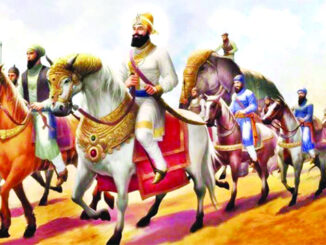
    Guru Gobind Singh Ji, the tenth Sikh Guru, stands as a timeless symbol of courage, resilience, and unwavering faith. While celebrated for his spiritual guidance, poetic genius, and martial prowess, his life was marked by profound personal losses and sacrifices that shaped the Sikh community and its enduring values. His story is one of endurance in the face of tragedy, teaching that true leadership and devotion often demand immense personal cost.
    A Childhood Shadowed by Martyrdom
    Even before assuming the role of Guru, young Gobind Rai experienced the shadow of sacrifice and injustice. His father, Guru Tegh Bahadur Ji, was martyred in 1675 for defending the right of Hindus to practice their faith freely under Mughal oppression. Witnessing his father’s steadfast courage and ultimate sacrifice left an indelible impression on the young Guru. This early encounter with loss instilled in him a deep sense of duty, moral courage, and spiritual fortitude. From this foundation, he would go on to lead the Sikh community through some of its most turbulent periods, blending wisdom, bravery, and compassion.
    A Sacrifice of Comfort for Principle
    In 1699, Guru Gobind Singh initiated the Khalsa, a community of fearless devotees committed to righteousness, equality, and devotion to God. This act required immense moral courage: he challenged his followers to offer their lives in service of truth. The Panj Pyare (Five Beloved Ones) stepped forward, ready to sacrifice everything.
    Through this act, the Guru demonstrated that sacrifice is not merely physical but spiritual and ethical. Establishing the Khalsa meant sacrificing comfort, personal safety, and conventional norms to create a community guided by valor, devotion, and justice.
    Loss of Family – Enduring Personal Tragedy
    Guru Gobind Singh Ji faced devastating personal losses. His four sons, the Sahibzadas, were martyred at young ages while defending the faith and community: Ajit Singh and Jujhar Singh fell in the Battle of Chamkaur (1704). Zorawar Singh and Fateh Singh, his younger sons, were executed in Sirhind under Mughal orders.
    These tragedies were unimaginable, yet the Guru remained steadfast, turning personal grief into inspiration for the Sikh community. He taught that sacrifice in defense of truth and justice is a noble duty, reinforcing the spiritual and moral strength of his followers.
    Exile and Constant Threats – Endurance Amid Adversity
    After repeated battles with Mughal forces and hostile hill rajas, Guru Gobind Singh was forced into constant movement and exile. His home, Anandpur Sahib, was besieged multiple times, his family and followers were threatened, and yet he never abandoned his mission.
    During these years of hardship, he continued to train warriors, compose spiritual poetry, and guide the Khalsa, demonstrating that resilience and perseverance are as crucial as bravery on the battlefield.
    Spiritual Strength Amid Loss
    Despite overwhelming adversity, Guru Gobind Singh Ji maintained a profound spiritual composure. He emphasized that attachment to life should never override devotion to God or commitment to righteousness. His writings, including Bachittar Natak and Zafarnama, reflect a heart grieved yet unbroken, offering lessons in courage, hope, and moral clarity.
    His ability to turn personal grief into collective inspiration solidified his position as a saint-warrior whose life exemplifies endurance, moral fortitude, and fearless faith.
    Lessons from His Sacrifices
    – Courage in Adversity: True leadership requires steadfastness even in the face of personal loss.
    – Moral Integrity: Upholding justice and righteousness may demand the highest personal sacrifices.
    – Spiritual Resilience: Faith in God provides strength to endure tragedy without despair.
    – Inspiration for Others: Transforming personal grief into motivation for a community leaves a lasting legacy.
    Legacy of Endurance
    Guru Gobind Singh’s sacrifices continue to inspire millions around the world. His endurance in the face of immense tragedy became the spiritual and moral backbone of the Khalsa. The values of courage, justice, devotion, and selfless service that he exemplified remain central to Sikh identity and are universally admired as principles of ethical leadership and moral courage.
    Quotes Reflecting His Sacrifices
    “Those who have no faith in their words, have no faith in their soul.”
    “In the midst of darkness, be the flame of courage.”
    “The greatest devotion is to uphold justice and righteousness, even at the cost of life.”
    These sayings encapsulate his belief that sacrifice, faith, and moral courage are inseparable, offering timeless guidance to humanity.
    Guru Gobind Singh Ji’s life teaches that true greatness lies not in comfort or ease but in enduring hardship with courage, faith, and moral clarity. His sacrifices are not just historical events-they are eternal lessons in resilience, devotion, and the transformative power of selflessness.

  • The poet warrior: Guru Gobind Singh’s verse and valor

    The poet warrior: Guru Gobind Singh’s verse and valor

    Guru Gobind Singh Ji, the tenth Sikh Guru, stands as one of history’s rare figures who seamlessly combined saintliness, poetic brilliance, and fearless leadership. While he is widely celebrated for founding the Khalsa and leading Sikhs in defense of righteousness, his literary genius as a poet remains equally remarkable. His poetry reflects a fusion of devotion, heroism, philosophy, and moral guidance, offering inspiration not only to Sikhs but to readers across faiths and generations.
    Early Literary Genius
    From a young age, Guru Gobind Singh demonstrated an extraordinary aptitude for language and literature. Fluent in Persian, Sanskrit, Braj, and Punjabi, he composed verses that were both sophisticated and accessible, conveying spiritual depth and ethical guidance. Even as a child, he combined creative expression with philosophical insight, laying the foundation for a body of work that would inspire courage, devotion, and moral clarity throughout his life. His early exposure to sacred texts, history, and martial training shaped a literary style that merged intellectual rigor with spiritual sensitivity.
    Major Literary Works
    Guru Gobind Singh’s poetic oeuvre is vast and diverse, encompassing hymns, epic poetry, philosophical treatises, and letters. Each work reflects his unique ability to communicate profound truths through lyrical expression.
    – Jaap Sahib is a hymn of divine praise, composed in 199 stanzas, celebrating God’s omnipotence, omnipresence, and justice. It combines metaphysical depth with devotional fervor and is recited daily by Sikhs worldwide to cultivate courage and faith.
    – Akal Ustat focuses on the eternal and all-encompassing nature of God, integrating mystical insight with poetic beauty. It encourages humility and devotion while emphasizing that spiritual realization is inseparable from righteous action.
    – Bachittar Natak blends autobiography, epic narrative, and philosophical reflection. Through this work, Guru Gobind Singh recounts his life, spiritual visions, and heroic endeavors, providing moral and ethical lessons alongside accounts of bravery.
    – The Zafarnama, a poetic letter addressed to Emperor Aurangzeb, exemplifies his ability to use poetry as a tool of moral persuasion and diplomacy. Written in elegant Persian verse, it challenges tyranny with reasoned courage, blending rhetorical brilliance with philosophical depth.
    Other works, such as Chandi di Var, celebrate divine heroism and courage, while selections from Shabad Hazare and Charitropakhyan explore human psychology, ethics, and spirituality. Together, these writings form a rich tapestry of devotion, courage, and wisdom.
    Themes in His Poetry
    Several recurring themes define Guru Gobind Singh’s poetic vision. Devotion and spirituality permeate his work, emphasizing remembrance of God and ethical living. Courage and valor are central, celebrating heroism while reinforcing the moral imperative to act against injustice. Equality and social justice appear throughout, rejecting caste discrimination and advocating for human dignity. Guru Gobind Singh also explores moral philosophy, addressing virtue, honesty, and righteousness, and demonstrates that art can serve as a medium for teaching, inspiring, and guiding communities.
    Literary Style and Craftsmanship
    Guru Gobind Singh’s poetry is remarkable for its multilingual richness, vivid imagery, and rhetorical brilliance. He blends Persian sophistication with Sanskrit and Punjabi clarity, creating verses that are both lyrically beautiful and philosophically profound. His use of metaphor, allegory, and narrative storytelling makes complex spiritual and ethical concepts accessible. Many works, such as Chandi di Var, were intended to be recited or sung, giving them a musical and devotional quality that reinforces their spiritual and motivational impact.
    Influence and Legacy
    The influence of Guru Gobind Singh’s poetry is profound. His compositions provide spiritual inspiration, guiding Sikhs in daily devotion, ethical conduct, and courageous action. They also offer cultural and literary significance, shaping Sikh literature, music, and identity. Beyond Sikhism, his poetry communicates universal values: fearlessness, devotion, equality, self-discipline, and service, offering lessons for leaders, poets, and ordinary individuals alike.
    Famous Quotes from His Poetry
    “In the midst of darkness, be the flame of courage.”
    “Those who have no faith in their words have no faith in their soul.”
    “Through devotion, discipline, and courage, one can conquer fear and live with honor.”
    “Righteous action is the highest form of devotion.”
    These lines encapsulate the fusion of spiritual depth, moral guidance, and heroic inspiration that characterizes his literary legacy.
    Poetry as Leadership
    Guru Gobind Singh used poetry not just for devotion but as a tool of leadership and education. His heroic verses motivated warriors before battle, his philosophical passages guided moral conduct, and his letters, like the Zafarnama, challenged injustice with reasoned argument and poetic elegance. In doing so, he demonstrated that literature can inspire courage, cultivate ethics, and unite communities.
    Guru Gobind Singh Ji, as a poet, exemplifies the integration of art, spirituality, and action. His literary genius complements his roles as a saint and warrior, offering timeless guidance for living with courage, devotion, and ethical integrity. Through his poetry, he continues to inspire generations to be fearless, righteous, and devoted, securing his place not only in Sikh history but in the broader canon of spiritual and literary achievement.
    Legacy – Eternal Light of the Tenth Guru
    Guru Gobind Singh’s life continues to shape Sikh identity and philosophy. He left the Sikhs a spiritual and martial framework, with the Guru Granth Sahib as the eternal Guru and the Khalsa as living embodiment of his ideals.
    Today, Anandpur Sahib, Patna Sahib, and Nanded remain sacred pilgrimage sites, and his writings continue to guide millions toward courage, equality, and devotion. His vision of a fearless, just, and spiritually grounded society remains relevant across generations, making him not only a Sikh leader but a global symbol of integrity, valor, and wisdom.

  • Battles & defense of Faith – Courage against all odds

    Battles & defense of Faith – Courage against all odds

    Guru Gobind Singh’s leadership was not confined to spiritual guidance; he led the Sikhs in multiple defensive battles to protect religious freedom and human dignity. His strategic brilliance was evident in Bhangani (1688), Nadaun (1691), Guler (1696), Chamkaur (1704), and Muktsar (1705).
    These battles were not about conquest, but defense of righteousness, ensuring that the Sikh community could practice its faith freely. The Siege of Chamkaur is particularly legendary: Guru Gobind Singh, with just 40 warriors, faced thousands of Mughal soldiers. His two elder sons sacrificed their lives, yet the Guru held the fort, demonstrating extraordinary valor, resilience, and faith in God.
    Through his leadership, Guru Gobind Singh taught that true courage arises from moral conviction, and that defending the weak and upholding justice is a sacred duty.
    The Saint-Soldier – Merging
    Spirituality and Valor
    Guru Gobind Singh epitomized the Saint-Soldier ideal, integrating deep spirituality with martial prowess. His writings, including Jaap Sahib, Akal Ustat, and Zafarnama, combine poetry, theology, and philosophical insight, encouraging Sikhs to lead righteous lives while being prepared to fight injustice.
    He emphasized Miri-Piri, the balance of temporal and spiritual power, teaching that worldly responsibilities and spiritual growth are intertwined. The Khalsa became the embodiment of this principle, inspiring generations to be both morally upright and courageous defenders of faith.
    Teachings of Guru Gobind Singh: Courage, Devotion, and Righteous Living
    Guru Gobind Singh Ji, the tenth Sikh Guru, was a unique combination of saint, poet, and warrior. His life was a symphony of devotion, courage, moral integrity, and leadership. The principles he articulated were not abstract ideals-they were practical guides for living a purposeful, righteous life. His teachings form the cornerstone of Sikh philosophy, but their universal appeal transcends religion, offering lessons in spirituality, ethics, courage, and service for humanity at large.
    _Fearlessness and Courage – The Foundation of a Saint-Soldier
    Guru Gobind Singh’s vision of the Khalsa was rooted in the principle of fearlessness. He believed that faith without courage is incomplete, and spiritual growth requires the ability to confront injustice and adversity with steadfast resolve.
    The Baisakhi of 1699, when he created the Khalsa, was a powerful manifestation of this principle. The five men who stepped forward for initiation exemplified complete courage, surrendering personal safety for the cause of righteousness.
    The Siege of Chamkaur (1704), where he defended Anandpur with just forty warriors against a massive Mughal army, illustrates his teachings in action: courage, strategic acumen, and unwavering faith.
    His poetry in Jaap Sahib repeatedly exhorts the devotee to “be fearless, like the lion, in the face of tyranny.”
    Fearlessness, according to Guru Gobind Singh, is not recklessness; it is disciplined courage guided by ethics and devotion. Every Sikh is taught to internalize this principle, applying it to life challenges, moral choices, and societal responsibility.
    Equality and Social Justice – Upholding Human Dignity
    A hallmark of Guru Gobind Singh’s teachings was the emphasis on equality and justice. In a society rife with caste discrimination, gender inequality, and religious persecution, he stood for the dignity and rights of all human beings.
    By instituting the Panj Pyare, he rejected caste hierarchies, emphasizing that spiritual worth is not determined by birth but by character and devotion.
    His life exemplified defending the oppressed. He not only led his followers in battles for religious freedom but also advocated for universal respect and fairness.
    His writings encourage Sikhs to actively combat injustice, demonstrating that spirituality and social responsibility are inseparable.
    This teaching resonates even today, emphasizing that true faith must manifest in ethical action and protection of human rights.
    Devotion to God – The Core of Spiritual Life
    At the heart of Guru Gobind Singh’s philosophy is unwavering devotion to God (Waheguru). He taught that spiritual life is not limited to ritual but requires living in constant remembrance of the Divine, cultivating purity of mind, body, and action. His compositions, including Jaap Sahib, Akal Ustat, and Bachittar Natak, are replete with praise for God’s infinite power, wisdom, and justice.
    He emphasized direct, personal connection with the Divine, teaching that faith is not inherited but realized through disciplined practice, meditation, and righteous living. Devotion, in his view, is inseparable from moral courage: true worship requires action in the world.
    Self-Discipline and Moral Integrity – The Backbone of Character
    Guru Gobind Singh believed that self-discipline is essential for spiritual and worldly success. Physical fitness, mental sharpness, and ethical conduct are all intertwined in his teachings.
    Daily discipline included prayer, meditation, physical training, and study.
    He emphasized truthfulness, honesty, humility, and compassion as the foundations of character.
    The Khalsa was trained to live a life of regulated conduct, balancing spiritual practice with the demands of leadership, service, and community defense.
    Self-discipline, for Guru Gobind Singh, was not mere personal restraint; it was preparation for moral and physical responsibility, enabling one to act decisively when confronted with injustice.
    Sacrifice and Service (Seva) – The Measure of Devotion
    Service to humanity, or seva, was central to Guru Gobind Singh’s vision. Spiritual devotion, he taught, is incomplete unless it translates into selfless action for the benefit of others.
    His own life was a model of sacrifice. From witnessing his father’s martyrdom to losing four sons in the struggle for justice, he demonstrated that principle comes before personal gain.
    Seva extends beyond ritual; it includes protecting the oppressed, feeding the hungry, educating the community, and fighting tyranny.
    The Guru emphasized that such service is both a spiritual practice and a civic duty, creating a compassionate, responsible society.
    Education, Knowledge, and Wisdom
    Guru Gobind Singh stressed the importance of knowledge as a companion to valor and faith. An educated mind, he taught, strengthens spiritual insight and enhances leadership.
    He himself was multilingual, proficient in Persian, Sanskrit, Braj, and Punjabi, and composed literary works of immense depth.
    Education was not limited to academic learning; it included understanding scripture, philosophy, history, and martial skills.
    He believed that intellectual growth empowers moral action, ensuring that courage is guided by wisdom rather than impulse.
    The Warrior Ethos – Protecting Justice
    While he preached peace and devotion, Guru Gobind Singh recognized that defending righteousness sometimes requires armed action.
    The Khalsa identity embodies this principle: a disciplined, spiritual community trained to protect truth, freedom, and the weak.
    He distinguished between aggression and defense, teaching that warfare is a duty only in the service of justice.
    His life demonstrates that spirituality and martial skill are complementary, enabling individuals to uphold ethical principles in a hostile world.
    Universal Values – Lessons Beyond Religion
    Guru Gobind Singh’s teachings are timeless and universal: courage, devotion, equality, self-discipline, service, and education are values that transcend faith. Leaders and thinkers across India and the world have recognized his wisdom. His message encourages all individuals to live ethically, act courageously, and serve humanity, offering a framework for personal excellence and societal betterment.
    Quotes Reflecting Guru’s Teachings
    “Fear God, do your duty, and keep your word.”
    “In the midst of darkness, be the flame of courage.”
    “Those who have no faith in their words have no faith in their soul.”
    “True worship lies in righteous action and fearless living.”
    Each quote reflects a fusion of spiritual devotion, ethical responsibility, and moral courage, guiding Sikhs and non-Sikhs alike toward principled living.

  • Guru Gobind Singh: The divine warrior, saint and poet

    Few figures in history embody the rare combination of spiritual depth, poetic brilliance, and fearless courage like Guru Gobind Singh Ji, the tenth Sikh Guru. Born in 1666, he emerged as a saint, a poet, and a warrior, shaping not only the Sikh faith but leaving a legacy that resonates across centuries. From his early days in Patna and Anandpur to the creation of the Khalsa, Guru Gobind Singh’s life was a tapestry of devotion, intellect, valor, and sacrifice.
    As a saint, he exemplified unwavering faith, humility, and moral clarity, guiding his followers toward spiritual growth. As a poet, he expressed profound philosophy, divine praise, and heroic inspiration in works like Jaap Sahib and Bachittar Natak, blending devotion with literary genius. And as a warrior, he led the Sikhs in defense of justice and righteousness, demonstrating that spirituality and courage are inseparable.
    Through his teachings, sacrifices, and indomitable spirit, Guru Gobind Singh remains a beacon of fearless faith, ethical leadership, and eternal wisdom, inspiring generations to live with honor, devotion, and courage.
    Guru Gobind Singh was born on 22 December 1666 in Patna Sahib, at a time when India stood at the crossroads of intense political turmoil and religious persecution. Born as Gobind Rai, he was the only son of Guru Tegh Bahadur, the ninth Sikh Guru, and Mata Gujri, a woman of extraordinary spiritual strength.
    His birth itself was seen as providential—a soul destined to reshape the moral and spiritual destiny of a people.Gobind Rai’s early years were marked not by royal luxury but by discipline, learning, and deep spiritual exposure.
    From a young age, he was trained in classical languages such as Sanskrit, Persian, and Braj, alongside the study of scriptures, philosophy, history, and poetry. Equally important was his martial training—horse riding, archery, swordsmanship, and military strategy—reflecting the Sikh ideal that spirituality and strength must walk together.The defining moment of his childhood came in 1675, when Guru Tegh Bahadur was executed in Delhi by the Mughal emperor Aurangzeb for defending the religious freedom of Kashmiri Pandits. Gobind Rai was only nine years old when he accepted the mantle of Guruship, transforming personal tragedy into spiritual resolve.
    From that moment, the child became a Guru—bearing the weight of sacrifice, truth, and leadership with remarkable maturity.
    Early Life – The Making of a Saint from Patna to Anandpur
    Guru Gobind Singh’s birth was celebrated with immense joy by the Sikh community, who saw divine purpose in this child destined to shape the course of Sikh history. Even as an infant, he was said to have an aura of wisdom and composure, inspiring reverence among elders.
    From an early age, Gobind Rai displayed a keen intellect, spiritual inclination, and extraordinary courage. He was trained in martial skills, archery, swordsmanship, and horse-riding, while also studying Persian, Sanskrit, and local languages, as well as Sikh scriptures. His upbringing emphasized the balance between spiritual learning and physical discipline, reflecting the Sikh ideal of the Saint-Soldier.
    When his father moved the family to Anandpur, young Gobind Rai witnessed first-hand the challenges faced by Sikhs under Mughal rule and hostile hill rajas. These experiences instilled in him a sense of justice, resilience, and leadership that would later define his life. The serene hills of Anandpur became both his classroom and training ground, shaping his mind, body, and spirit for the monumental responsibilities ahead.
    The Making of a Guru – Ascension and Early Leadership
    At the tender age of nine, Gobind Rai ascended to the position of tenth Sikh Guru after the martyrdom of his father, Guru Tegh Bahadur Ji, who sacrificed his life defending the religious freedom of Hindus against Mughal tyranny. Despite his youth, Guru Gobind Singh exhibited exceptional maturity, guiding the Sikh community with wisdom, courage, and clarity. He took immediate steps to strengthen the spiritual and martial foundations of the Sikh community. Under his leadership, Sikhs were trained not only in devotional practices but also in combat, strategy, and governance, preparing them for the challenges posed by oppressive rulers. His early writings, including portions of Bachittar Natak, reveal his poetic brilliance, philosophical depth, and visionary outlook.
    During this period, he traveled extensively, visiting villages and towns to preach moral courage, equality, and devotion to God. These formative years set the stage for his transformative contributions to Sikhism and established him as both a spiritual guide and a leader capable of uniting a diverse and dispersed community.
    Birth of Khalsa – Forging the Sikh Identity
    The creation of the Khalsa on 30 March 1699, during Baisakhi at Anandpur Sahib, remains the defining moment in Sikh history. Guru Gobind Singh envisioned a community of fearless devotees committed to justice, truth, and God. This was a revolutionary step: the Sikh community was now to be identified not just by faith, but also by distinctive symbols, disciplined conduct, and unwavering courage.
    On that historic day, Guru Gobind Singh asked who was willing to give up their life for the service of God. Five brave men, later known as the Panj Pyare (Five Beloved Ones), stepped forward. Each was initiated with Amrit (sweetened water stirred with a double-edged sword), symbolizing spiritual rebirth, courage, and equality. This ritual emphasized sacrifice, devotion, and moral responsibility.
    The Khalsa was given the Five Ks:
    – 1. Kesh (uncut hair) – Acceptance of God’s will.
    – 2. Kangha (wooden comb) – Discipline and cleanliness.
    – 3. Kara (steel bracelet) – Eternal connection to God and moral restraint.
    – 4. Kachera (cotton undergarment) – Self-control and modesty.
    – 5. Kirpan (sword) – Readiness to protect justice and the oppressed.
    This event not only strengthened Sikh identity but also merged spiritual devotion with martial readiness, laying the foundation for centuries of Sikh courage and community resilience.

  • Sikh History This Week- 19th December to 25th December

    Sikh History This Week- 19th December to 25th December

    19th December
    1924 Babbar Sada Singh PinDori accepted shahadat in Jail.
    1967 Punjabi Bill passed by the Punjab Assembly.

    20th December
    1520 Guru Nanak Ji visited Baghdad, Iraq.


    1704 Guru Gobind Singh Ji evacauted Anadpur Sahib.

    1920 Gurudwara Panja Sahib management came under the Panthic controls.

    21st December
    1704 Sikhs blocked the advances of the joint Hindu-Moghul army near Sirsa (Ropar district) so that Guru Gobind Singh Ji could reach some safer zone.
    1838 Ranjit Singh suffered a stroke and severe attack of paralysis. Remained critical for several days. Speech and sight virtually gone.

    22nd December

    1666 Parkash Utsav, Patshahi Tenth, Guru Gobind Singh Ji. Guru Gobind Singh, born as Gobind Das or Gobind Rai, was the tenth Sikh Guru, a spiritual master, warrior, poet and philosopher. When his father, Guru Tegh Bahadur was executed by Aurangzeb, Guru Gobind Singh was formally installed as the leader of the Sikhs at the age of nine, becoming the tenth and final human Sikh Guru. Among his notable contributions to Sikhism are founding the Sikh warrior community called Khalsa in 1699 and introducing the Five Ks, the five articles of faith that Khalsa Sikhs wear at all times. Guru Gobind Singh is credited with the Dasam Granth whose hymns are a sacred part of Sikh prayers and Khalsa rituals.
    1704 SHAHEEDHI, Wadhae Sahibjadhae, Sakka Chamkaur.
    1899 Birth of freedom fighter Sardar Udam Singh.

    23rd December

    1667 Birth of Mata Sudari Ji.
    1704 Martydom of Bhai Jaita.

    24th December
    1805 Fateh Singh Ahluwalia sought understanding between General Lake and Jaswant Rai Hulkar.
    1921 Kishan Singh Garhgaj attended diwans at Chamjkaur Sahib and Sirhind during Dec. 24-28 and delivered fiercy speeches.

    25th December
    1850 Lord Dalhousie visits Fatehgarh to meet Maharaja Dalip Singh.
    1922 First meeting of Babbars is held at Jassowal to decide the reformation of the Jholichuks.
    1922 Special issue of “Babbar Akali Doaba” newspaper on Kalghidhar.

  • Viswanathan Anand to face D Gukesh in January

    Viswanathan Anand to face D Gukesh in January

    Kolkata (TIP)- Viswanathan Anand is set to face D Gukesh next month at the Tata Steel India Chess Tournament in Kolkata. Anand is among the participants in the tournament, which is scheduled to take place from January 7 to 11. Anand will be headlining the open section with Gukesh, Arjun Erigaisi, R Praggnanandhaa, Aravindh Chitambaram, Vidit Gujrathi, Wesley So, Wei Yi, Volodar Murzin and Hans Niemann.
    Speaking in an official press release, Anand said, “I am really very excited to be back at Tata Steel Chess India as a player after a gap of 6 years. Within this period, the world of chess has changed massively with the emergence of talented players across the country specially in India. I am really excited to accept the challenge from the young chess prodigy in this marquee tournament of India.”
    In the women’s section, fans will have the opportunity to see Divya Deshmukh, Vaishali Rameshbabu, Vantika Agarwal, Harika Dronavalli, Rakshitta Ravi, Carissa Yip, Stavroula Tsolakidou, Nana Dzagnidze, Aleksandra Goryachkina, and Kateryna Lagno.
    This will be Gukesh’s second event in India after becoming the youngest-ever world champion. The Indian GM is currently in action at the Global Chess League in India, where he is representing PBG Alaskan Knights.
    Gukesh will be hoping to find his form in 2026 and put in a good show in Kolkata. Since becoming world champion, he has been in the spotlight and has also been in poor form. Recently, Anand weighed in on Gukesh’s 2025 season.
    Speaking to The Indian Express, he said, “He’s been experimenting in lots of formats. He’s willing to travel, he’s willing to go out there and try again and again. He’s not sitting on prestige (of being world champion). These are healthy qualities. His year in classical events, it’s fairly acceptable. I mean, losing a tiebreak (at Wijk aan Zee) doesn’t mean you’ve had a bad tournament. His performance in Norway Chess didn’t fit any mold, but in its own way, it was hopefully satisfactory.”

  • Ishan Kishan stakes claim for Team India comeback

    Jharkhand captain Ishan Kishan smashed a century in the final of the Syed Mushtaq Ali Trophy (SMAT) 2025 against Haryana at the MCA Stadium in Pune on Thursday. With the ton, Ishan Kishan became only the second batter to hit a hundred in a SMAT final.
    After being asked to bat first, Jharkhand lost an early wicket, with Anshul Kamboj dismissing Virat Singh in the very first over. However, Ishan Kishan, alongside Kumar Kushagra, launched a sensational assault on the bowling.
    Kishan brought up his fifty off just 24 balls and then proceeded to reach his sixth T20 century off just 45 balls, hitting a six off Anshul Kamboj to bring up the milestone. In doing so, Kishan equalled Abhishek Sharma’s record for the most centuries in the history of the Syed Mushtaq Ali Trophy, marking his fifth overall. This was also his second century of the current tournament, following an unbeaten 113 off 50 balls against Tripura last month.
    Kishan’s innings eventually ended when he was clean bowled for 101 off 49 balls by Sumit Kumar in the 15th over of Jharkhand’s innings. Kishan hit as many as 10 sixes and six fours in his explosive innings against Haryana.
    Ishan Kishan became only the second batter to score a century in a SMAT final, after Punjab’s Amolpreet Singh (113 against Baroda at Mohali in SMAT 2023-24), and the first captain to achieve the feat. He also set the record for the most sixes by a batter in an SMAT final innings.

  • India look to seal series against plucky Proteas as concerns mount around Suryakumar Yadav and Gill

    India look to seal series against plucky Proteas as concerns mount around Suryakumar Yadav and Gill

    Ahmedabad (TIP)- India would hope that the challenging home assignment against South Africa, which has exposed a few chinks in the armour and thrown up difficult questions on selection, ends on a positive note when the two sides clash in the fifth and final T20 International here on Friday, Dec 19.
    After being blanked 0-2 in the Tests, India bounced back to win the ODI series and now have an unassailable lead 2-1 in the T20Is after the fourth game was abandoned due to poor weather conditions in Lucknow on Wednesday, Dec 17.
    That India cannot lose the series should be comforting to embattled head coach Gautam Gambhir given that the other two leaders in the camp — skipper Suryakumar Yadav and his deputy Shubman Gill — are battling challenges of their own with less than two months to go for the T20 World Cup.
    For someone who was ranked world No.1 not so long ago, Suryakumar’s form has sharply nosedived in the only format he is assured a place in the XI for India.
    Having gone through 18 innings in 20 matches this year without a single half-century while averaging a poor 14.20 for his 213 runs, every failure for Suryakumar is adding to the concerns of the Indian camp. Adding to it is the Gill conundrum. Gill’s return as vice-captain in the T20I format might have been perceived as one which put Suryakumar on notice a few months ago, but the former’s ordinary run with the bat since his comeback and the latest injury setback only hampers the team’s cause.
    A toe injury suffered before the fourth T20I is set to keep Gill out of the final T20I here as India would want to take a cautious route, more so when there is a ready replacement for the top order slot in Sanju Samson.
    Earlier, Gill had missed most of the two-Test affair following an injury to his neck which he suffered in the series-opener in Kolkata, something that also highlighted his busy schedule and growing list of responsibilities in Indian cricket across formats. Samson was never the right fit in the lower order as the lowest he has batted apart from the top slot is at No.5, where the right-handed batter has scored a mere 138 runs in eight matches at an average of 23.
    But each of his three T20I centuries and one half-century have come at the top slot in 14 innings, and in case of Gill’s unavailability for the final game, the Kerala wicketkeeper-batter would be keen to make it count.
    Aside from this, India have a settled unit with both the all-rounders, Hardik Pandya and Shivam Dube, featuring in all three games so far. In the pace attack, Arshdeep Singh is coming into his elements and is also beginning to forge a partnership with Harshit Rana with the ball.
    Meanwhile, Jasprit Bumrah, who missed the third T20I due to personal reasons, joined the team’s camp before the fourth match. A batting-friendly wicket here would pose a challenge to India’s best bowler in the series, Varun Chakravarthy (6 wickets).
    For South Africa, who have blown hot and cold, particularly with the bat in the T20I series, Friday’s contest will be an opportunity to end with the satisfaction of drawing a series against India.

  • Brahma Gauri Punam Fast: A sacred vow for longevity, prosperity and divine grace

    Brahma Gauri Punam Fast: A sacred vow for longevity, prosperity and divine grace

    The Brahma Gauri Punam Fast, observed on the Tritiya of Shukla Paksha in the Pausha month, is a revered women-centric vrat rooted in ancient Hindu belief systems, Puranic symbolism, and oral devotional traditions. Dedicated to Jagjanani Brahma Gauri, this fast is believed to ensure the long life of husband and sons, family prosperity, and spiritual merit that leads to heavenly attainment.
    Scriptural and Puranic References
    While Brahma Gauri Punam is not confined to a single canonical text, its philosophy and rituals draw inspiration from broader Puranic literature, particularly the Skanda Purana, Shiva Purana, and Markandeya Purana, which extensively describe Goddess Gauri as the embodiment of Shakti, fertility, purity, and family protection.
    According to Puranic belief, Goddess Gauri is the sustaining power of creation, revered even by Brahma, the creator himself. Hence, the name Brahma Gauri symbolises the goddess who is worshipped by Brahma and who blesses lineage, continuity, and progeny. Scriptures repeatedly emphasise that worship of Gauri grants saubhagya (marital bliss), putra labh (sons), and ayushya vriddhi (longevity).
    The concept of chiranjeevi-long, protected life-is central to this vrat and finds resonance in various Hindu texts where devotion to the Divine Mother safeguards devotees from untimely death.
    The Sacred Vrat Katha
    A poor husband and wife lived in the village. Woman who believed in God and recited worship. Her husband did not do any work and consumes alcohol. Women used to work in people’s homes and this used to run their household expenses. The husband used to snatch the money that the woman earned from her, if the woman did not give the money, her husband used to beat her. The man used to rob the entire rupee in liquor.
    Once that woman was sitting at home with a sad heart. The woman had nothing, no money and no food. Then a monk came and asked for alms from that woman. The woman said with a very sad heart, Baba ji, I have nothing, what can I give you.
    The monk said to the woman that daughter, you are looking very sad, I may talk to you, maybe I can relieve some of your sorrow. The woman told her whole story to the monk. The woman told the monk that she has been married for 10 years but she has neither got husband happiness nor child happiness.
    The monk asked the woman to observe Brahmagauri fast. By observing this fast, you will also get child happiness and husband will also get happiness. The woman told the monk that when and how to do this fast, please kindly tell the law of this fast.
    This fast is done on Tritiya of Shukla Paksha of Paush month. In this fast one fasts for the whole day and meal is taken at one time.
    The woman performed Brahmagauri Vrat according to the fast and law prescribed by the monk, due to which her husband started working and also stopped drinking alcohol. The woman also got the happiness of children. Now the life of the woman started living happily and peacefully.
    Ritual Observance and Spiritual Discipline
    On Brahma Gauri Punam, women rise before sunrise, cleanse themselves, and observe a nirjal or phalahar fast, depending on family tradition. The idol or image of Goddess Gauri is installed and worshipped through Shodashopachar Puja, the sixteen sacred offerings symbolising complete surrender of body, mind, and soul.
    White and yellow flowers, rice, sweets, fruits, and lamps are offered while chanting Gauri mantras or stotras. The fast is concluded after moonrise or the next morning, as per regional custom.
    Why This Fast Is Important for Women
    In Hindu tradition, women are regarded as the spiritual anchors of the family. The Brahma Gauri Punam Fast strengthens this role, empowering women through devotion and prayer. By observing this vrat, women seek divine protection for their husband’s longevity, sons’ well-being, and family lineage, while also earning spiritual merit for themselves.
    Religious belief holds that women who observe this vrat with sincerity receive:
    – Long life and protection for husband and sons
    – Family harmony and prosperity
    – Freedom from fear of untimely death
    – Accumulation of punya leading to heavenly attainment
    Faith, Discipline and Divine Reward
    The vrat is not merely a ritualistic fast but a spiritual discipline that reinforces patience, devotion, and faith. Scriptures and folk traditions affirm that women who observe this fast with sincerity receive the divine blessings of Goddess Gauri, ensuring protection for their husbands and children from untimely death and misfortune.It is also believed that the merit gained from this fast helps the devotee and her family attain punya, which ultimately leads to moksha or heavenly attainment after death.
    The Brahma Gauri Punam Fast is not merely a ritual but a profound spiritual vow rooted in maternal devotion and divine faith. Through the worship of Jagjanani Brahma Gauri, women reaffirm their role as nurturers and protectors of dharma within the household. Passed down through generations, this vrat continues to illuminate the path of devotion, protection, and spiritual fulfillment.
    Brahma Gauri Punam Fast continues to be observed across various regions of India, especially in traditional households where rituals are passed down through generations. The vrat strengthens familial bonds, reinforces spiritual values, and highlights the revered role of women as carriers of faith and tradition.

  • Bikaner: Where the desert whispers tales of royalty, faith and flavor

    Bikaner: Where the desert whispers tales of royalty, faith and flavor

    Rising from the golden sands of the Thar Desert, Bikaner is one of Rajasthan’s most evocative yet understated destinations-a city where history breathes through sandstone walls, camels still rule the roads on festival days, and food carries the bold, unforgettable taste of the desert. Less crowded than Jaipur or Udaipur but equally rich in heritage, Bikaner offers travelers an immersive experience of Rajput valor, desert culture, spiritual traditions and culinary brilliance.
    Founded in 1488 by Rao Bika, a Rathore prince and son of Rao Jodha of Jodhpur, Bikaner quickly evolved into a powerful desert kingdom due to its strategic location on ancient caravan routes linking Central Asia with Gujarat ports. Today, the city retains its old-world charm, wrapped in a palette of red sandstone, intricately carved jharokhas and narrow lanes echoing with centuries-old stories.
    Junagarh Fort: A Fortress of Grandeur and Intrigue
    Unlike most Rajasthani forts perched on hilltops, Junagarh Fort stands proudly on the plains-an architectural marvel fortified by massive walls and defended by moats. Built in the late 16th century by Raja Rai Singh, one of Emperor Akbar’s most distinguished generals, the fort is a treasure trove of palaces, courtyards and temples. Inside, the Anup Mahal, Phool Mahal and Karan Mahal dazzle visitors with gold leaf work, mirror panels, frescoes and Italian tiles, reflecting the prosperity and artistic refinement of Bikaner’s rulers. The fort’s museum houses royal costumes, weaponry, manuscripts and artefacts that vividly narrate the city’s royal past, making it one of Rajasthan’s best-preserved forts.
    Lalgarh Palace: Colonial Elegance in the Desert
    A striking contrast to Junagarh’s medieval grandeur, Lalgarh Palace showcases Indo-Saracenic architecture infused with European influences. Constructed in red sandstone during the reign of Maharaja Ganga Singh, the palace features latticework balconies, ornate fireplaces and sprawling gardens. Parts of the palace have been converted into a heritage hotel and museum, allowing visitors to experience royal living amidst desert serenity.
    Karni Mata Temple: Faith Beyond Fear
    About 30 kilometres from Bikaner lies the world-famous Karni Mata Temple in Deshnok, often called the “Rat Temple.” Home to thousands of revered rats believed to be sacred manifestations of devotees, the temple is a powerful symbol of unshakeable faith. For believers, spotting a rare white rat is considered highly auspicious. The temple’s silver doors and marble carvings add to its mystique, making it one of India’s most unusual yet spiritually significant shrines.
    Camel Country and Desert Adventures
    Bikaner is synonymous with camels, and a visit to the National Research Centre on Camel offers fascinating insights into the “ships of the desert”-from camel breeding to camel milk products. Desert safaris around Bikaner provide a quieter, more intimate alternative to the crowded dunes of Jaisalmer. Sunset camel rides, jeep safaris, and evenings spent under starlit skies with folk music and traditional cuisine capture the soul of the Thar.
    Temples, Havelis and the Old City Charm
    The old city of Bikaner is a living museum. Ornate havelis such as the Rampuria group display intricate stone carvings and elaborate façades that rival any in Rajasthan. Jain temples like Bhandasar Jain Temple, adorned with vibrant frescoes, gold leaf paintings and mirror work, reflect the city’s mercantile wealth and spiritual diversity.
    Walking through Bikaner’s bazaars-Kote Gate, Station Road and Bhujia Bazaar-reveals colourful textiles, camel leather products, miniature paintings and traditional jewellery.
    A Culinary Capital of the Desert
    Bikaner’s food is legendary. The city is the birthplace of the iconic Bikaneri bhujia, a spicy gram flour snack exported across the world. Local delicacies such as gatte ki sabzi, ker sangri, bajra roti, and sweets like rasgulla and ghewar reflect ingenious desert cooking that balances spice, preservation and flavour. Food walks through the old city are a sensory delight, offering an authentic taste of Rajasthani hospitality.

  • 55,000% rally in Indian AI stock triggers bubble concerns: Report

    55,000% rally in Indian AI stock triggers bubble concerns: Report

    New Delhi (TIP)- The world’s best-performing stock has turned into a warning sign for investors chasing quick gains from the artificial intelligence boom. A little-known Indian company has delivered a stunning 55,000% rise in just under two years, raising serious questions about hype, regulation and investor risk, reported Bloomberg.
    RRP Semiconductor Ltd, which was largely unknown even within India until recently, has become a social media sensation after its shares surged more than 55,000% in the 20 months leading up to December 17. Bloomberg reports that this makes it the biggest stock gainer globally among companies with a market value above $1 billion.
    The scale of the rally looks even more striking when placed against the company’s fundamentals. Bloomberg notes that RRP Semiconductor reported negative revenue in its latest financial results, has just two full-time employees according to its annual report, and only a loose connection to the global semiconductor spending boom.
    The company’s transformation began in early 2024. Bloomberg reports that RRP’s promoter, Rajendra Chodankar, shifted the company away from real estate and renamed it RRP Semiconductor.
    Chodankar, whose earlier business interests included thermal imaging systems and drone camera equipment, took control of the listed company by repaying an Rs 80 million loan owed by G D Trading and Agencies Ltd in exchange for equity.
    On April 23, the board approved issuing shares to Chodankar and others at Rs 12 each, around 40% below the market price at the time. This move gave Chodankar a 74.5% stake and reduced the original founders’ holding to less than 2%, according to Bloomberg.
    Around the same time, Chodankar set up a private company, RRP Electronics Pvt Ltd, with plans to build an outsourced semiconductor assembly and testing unit in Maharashtra. While the listed firm does not own this private company, Bloomberg notes that both are controlled by Chodankar, which may have added to investor excitement.
    Bloomberg points out that the rally was driven by a mix of online hype, a very small free float, and a surge in retail investor participation in India. About 98% of RRP Semiconductor’s shares are held by Chodankar and a small group of associates, leaving very little stock available for public trading.

  • Warner Bros plans to reject Paramount bid for Netflix’s smaller offer

    Warner Bros plans to reject Paramount bid for Netflix’s smaller offer

    New York (TIP)- Warner Bros. Discovery Inc. is planning to reject Paramount Skydance Corp.’s hostile takeover bid due to concerns about financing and other terms, people familiar with the matter said.
    After deliberating and reviewing Paramount’s bid, Warner Bros.’ board will urge shareholders to reject the tender offer, said the people, who asked not to be identified discussing confidential information. The board of directors still views the company’s existing agreement with streaming leader Netflix Inc. as offering greater value, certainty and terms than what Paramount has proposed.
    Warner Bros.’ response to Paramount’s tender offer could be filed as early as Wednesday, the people added. No final decision has been made and the situation remains fluid, they said. Representatives for Warner Bros. and Paramount declined to comment.
    Warner-Paramount deal – The Ellison factor
    One major sticking point is Warner Bros.’ concern about the financing proposed by Paramount, which is led by David Ellison.
    The equity is backstopped by a trust that manages the wealth of his father, software billionaire Larry Ellison. Because it’s a revocable trust, assets can be taken out of it at any time, and Warner Bros. may have no recourse if that happens, the people said.
    One of Paramount’s backers dropped out of the deal Tuesday. Affinity Partners, led by US President Donald Trump’s son-in-law Jared Kushner, told Bloomberg News it was withdrawing from the proposed transaction, citing the involvement of “two strong competitors”.
    Earlier, Trump criticised Paramount, saying on social media that he has been treated “far worse” by the company’s CBS division since the Ellison family took control earlier this year. The Ellisons have touted their friendly ties to the president.
    Warner Bros.’ board is also concerned about the company’s ability to conduct business for the year or more it could take for a sale to win regulatory approval. Paramount isn’t offering the company enough flexibility to run its business or manage its balance sheet, the people said.
    Paramount, in an exchange filing last week, said that it had addressed Warner Bros. concerns about the company’s flexibility in refinancing debt as well as payment of a $5 billion breakup fee that would be backstopped by the Ellisons.
    Paramount has adjusted terms of its bid in response to Warner Bros.’ requests in other ways. Some $1 billion in financing from China’s Tencent Holdings Ltd. was withdrawn over concerns the funding could lead to national security issues with US regulators.

    Netflix vs Paramount offer for Warner Bros.
    Warner Bros. agreed this month to sell its studios, streaming business and HBO to Netflix for $27.75 a share, or about $83 billion including debt, capping off a multi-week bidding war between Netflix, Paramount and Comcast Corp.
    Warner Bros. separately plans to spin off cable networks like CNN and TNT to its shareholders before the Netflix deal closes.
    Paramount, which owns MTV and the Paramount+ streaming service, has offered to buy all of Warner Bros. for $30 a share, or more than $108 billion, including debt. Three days after Netflix and Warner Bros. announced their deal, Paramount took its offer directly to shareholders by launching a public tender offer for Warner Bros. shares.
    Paramount has said that its $30-a-share offer for Warner Bros. isn’t its “best and final”, implying it has room to raise its bid. Shares of Warner Bros. closed at $28.90 in New York, suggesting some investors expect the company to fetch a higher price.
    Warner Bros.’ agreement with Netflix bars it from soliciting proposals from other bidders but it’s allowed to entertain proposals that come in. In the event of a superior proposal, it’s required to give Netflix the opportunity to match the better offer to try to keep their existing deal intact, according to their agreement.

  • Tata Electronics gets Rs 1,500-cr boost as Apple manufacturing expands in India

    The Tatas have invested an additional Rs 1,500 crore in Tata Electronics, according to the company’s latest regulatory filing with the Registrar of Companies, reported The Economic Times.
    The equity infusion in October takes the group holding company’s total investment in Tata Electronics to Rs 4,500 crore over the past one year.
    BACKING CAPACITY EXPANSION
    The fresh funding underlines Tata Group’s continued support for expanding capacity at Tata Electronics, which has emerged as one of Apple’s largest iPhone manufacturing partners in India. A major portion of the company’s iPhone production is exported to the United States and Europe, highlighting India’s growing role in Apple’s global supply chain.
    The filing also shows that Tata Electronics has doubled its authorised share capital to Rs 20,000 crore. This move signals the possibility of further capital infusion from the parent company in the future.
    While Tata Electronics did not specify the exact purpose of the latest investment, it stated that it would require “additional long-term finance by issue of securities/equity shares” to carry on its business, mentioned the report.
    APPLE DEEPENS INDIA PUSH
    The investment comes amid clear signs of Apple strengthening its manufacturing presence in India. As reported by Reuters, Apple has said it plans to manufacture most of the iPhones sold in the United States in India by the end of 2026. The shift is part of Apple’s strategy to reduce its dependence on China, especially in the backdrop of rising trade tariffs.

  • Dhruv64 is India’s first 64-bit 1GHz chip, will help make country self-reliant

    Dhruv64 is India’s first 64-bit 1GHz chip, will help make country self-reliant

    India has announced a major step in the development of indigenous semiconductors, with Dhruv64, its first indigenous 1.0 GHz, 64-bit dual-core microprocessor. This marks a notable step forward in the country’s efforts to become self-reliant in essential industries and defence technology. As the first of its kind developed within the country, Dhruv64 is positioned to strengthen India’s domestic semiconductor and processor pipeline, which has traditionally depended on foreign innovation.
    Dhruv64 was developed by the Centre for Development of Advanced Computing (C-DAC) under the Microprocessor Development Programme (MDP). The microprocessor’s debut arrives amid ongoing government initiatives, such as the Digital India RISC-V program, designed to promote the design, testing, and prototyping of homegrown chips. According to a press release by the Press Information Bureau (PIB), Dhruv64 is a direct result of these support mechanisms, which prioritise building indigenous technology to serve national needs.
    Dhruv64 is said to have both commercial and strategic use. The press release states that Dhruv64 will help reduce dependence on imported processors, particularly for India’s critical infrastructure sectors, especially in defence and high-performance computing. According to the PIB, India consumes 20 per cent of all microprocessors made globally. As such, this new processor provides a homegrown alternative for startups, academia, and industry.
    While India has had smaller-scale chip projects in the past, Dhruv64’s 64-bit architecture and 1.0 GHz dual-core design mark a significant leap in terms of power and applicability. This development could pave the way for more advanced, secure, and efficient hardware tailored to India’s unique requirements. The processor’s increased performance and modern architecture mean it can support a wider range of applications, from embedded systems to high-performance computing tasks, thereby expanding India’s technological horizons.
    Following Dhruv64’s successful development, the next generation of indigenous processors is already in progress. These include the Dhanush and Dhanush+ chips, which are currently under development and expected to further bolster India’s self-reliance in strategic technology sectors. The momentum generated by Dhruv64’s success is anticipated to inspire additional projects and investments in local chip design, further reinforcing India’s ambitions in this domain.

  • 4,000 global glaciers will disappear annually by 2055 as the planet warms

    How quickly the glaciers around the globe will disappear has been quantified by a research team. The approximate prediction of an alarming scenario was done by an international team led by ETH Zurich, the Swiss Federal Institute for Forest, Snow and Landscape Research (WSL), and Vrije Universiteit Brussel.
    The study, published in Nature Climate Change, highlighted that the Alps could reach their peak glacier loss rate between 2033 and 2041, with global peak loss occurring about a decade later.
    Depending on warming levels, the rate could rise from 2,000 to 4,000 glaciers vanishing annually at the global peak.
    The study revealed that the fate of glaciers is closely tied to how much the planet warms.
    If global temperatures rise by 2.7C, projections estimate only about 110 glaciers will remain in Central Europe by 2100, just 3 per cent of current Alpine glaciers. A 4C increase could reduce this number to around 20.
    Even medium-sized glaciers, like the Rhone Glacier, could shrink to remnants, and the Aletsch Glacier could fragment into smaller sections. Researchers have documented more than 1,000 glacier losses in Switzerland from 1973 to 2016.
    Regions with numerous small glaciers at low elevations or near the equator, such as the Alps, Caucasus, Rocky Mountains, Andes, and African mountains, are especially vulnerable.
    “In these regions, more than half of all glaciers are expected to vanish within the next ten to twenty years,” said Van Tricht, a researcher at ETH Zurich’s Chair of Glaciology and the WSL.
    Using three advanced glacier models and several climate scenarios, the researchers provided detailed forecasts for different mountain regions.
    In the Alps, a 1.5C scenario would leave about 430 of today’s 3,000 glaciers by 2100 (12 per cent), while a 2.0C rise leaves around 8 per cent (270 glaciers).
    At a 4C increase, only about 1 per cent of 20 glaciers survive.
    For comparison, the Rocky Mountains could retain 4,400 glaciers at a 1.5C rise; 25 per cent of today’s 18,000.
    The Andes and Central Asia would each lose over 90 per cent of their glaciers in the higher warming scenario. Globally, just 18,000 glaciers would remain at 4C, compared to about 100,000.

  • OpenAI updates its ChatGPT Images for better and faster performance

    OpenAI updates its ChatGPT Images for better and faster performance

    If your AI-generated images have ever taken a little too long to render, or come back with mysterious changes you definitely didn’t ask for, OpenAI thinks it has a fix. The company has announced a major update to ChatGPT Images that promises to make visual creation faster, sharper and far better at following instructions. In short: fewer surprises, more control, and a lot less waiting around. The update, revealed in a blog post on Tuesday, is part of a wider push inside OpenAI to transform ChatGPT from an impressive novelty into a genuinely practical everyday tool. And this time, the company says, the improvements are not subtle.
    According to OpenAI, the revamped image generator offers dramatically improved instruction-following, far more precise editing tools, and image generation speeds that are up to four times faster than before. That combination, it argues, fundamentally changes what users can realistically do with AI-generated visuals.
    “The update includes much stronger instruction following, highly precise editing, and up to 4x faster generation speed, making image creation and iteration much more usable,” the company wrote. “This marks a shift from novelty image generation to practical, high-fidelity visual creation, turning ChatGPT into a fast, flexible creative studio for everyday edits, expressive transformations, and real-world use.”
    One of the biggest frustrations with earlier versions of ChatGPT Images was their tendency to overstep. Ask for a small tweak, and the system might quietly rework half the image. OpenAI says that problem has been a key focus of this update.
    The company claims the new version is much better at making targeted changes without altering other elements, allowing users to refine images rather than repeatedly start from scratch. For designers, marketers and casual creators alike, this could mean smoother workflows and far less trial and error.
    Speed is the other headline change. With generation times now reportedly up to four times faster, OpenAI is positioning ChatGPT Images as something you can iterate with in real time, rather than a tool that interrupts creative momentum.
    The timing of the update is no coincidence. It arrives just weeks after OpenAI chief executive Sam Altman reportedly issued what he described as a “code red” memo inside the company, calling for urgent improvements to ChatGPT’s overall quality.
    In that internal document, Altman said OpenAI still had significant work to do to improve the chatbot’s day-to-day experience, including answering a broader range of questions and boosting speed, reliability and personalisation. The memo was first reported by The Wall Street Journal.
    The urgency reflects growing pressure from rivals. Competitors have been closing the gap on OpenAI’s early lead, with Google last month releasing a new version of its Gemini model that outperformed OpenAI on several industry benchmark tests.

  • Can diabetes be reversed without crash diets, fads or extreme workouts?

    Can diabetes be reversed without crash diets, fads or extreme workouts?

    For a long time, the idea of reversing Type 2 diabetes was met with doubt. This skepticism stemmed largely from the way “reversal” was portrayed-often tied to crash diets, punishing workout regimens, or rapid weight-loss programs that were neither realistic nor sustainable. As a result, many people came to believe that diabetes was an irreversible, lifelong condition that could only be managed with medication. Today, however, growing scientific evidence and clinical experience are challenging this belief and offering a more hopeful, balanced perspective.
    Type 2 diabetes is now increasingly understood as a metabolic condition driven by insulin resistance, excess fat accumulation in key organs such as the liver and pancreas, chronic inflammation, and hormonal imbalance. When these underlying factors are addressed early and consistently, blood sugar levels can return to the non-diabetic range without extreme measures. This state, medically referred to as remission, allows individuals to maintain normal glucose levels without medication, as long as supportive lifestyle habits are sustained.
    One of the biggest reasons crash diets and fad approaches fail is that they focus on quick results rather than metabolic repair. Severe calorie restriction or overly restrictive eating patterns may temporarily lower blood sugar, but they often slow metabolism, reduce muscle mass, increase stress hormones, and lead to rebound weight gain. In contrast, sustainable reversal relies on nourishing the body adequately while reducing insulin spikes and improving insulin sensitivity over time.
    Balanced nutrition plays a central role in this process. Instead of deprivation, the focus shifts to stabilizing blood sugar through regular meals, adequate protein, fiber-rich vegetables, healthy fats, and whole foods, while limiting refined carbohydrates and excess sugars. This approach supports steady energy levels, reduces cravings, and allows the pancreas and insulin pathways to recover gradually.
    Exercise, too, does not need to be extreme to be effective. Consistent, moderate movement-such as daily walking, light strength training, yoga, or cycling-has been shown to significantly improve glucose uptake by muscles, which act as a major storage site for blood sugar. Maintaining muscle mass is particularly important, as it enhances long-term insulin sensitivity far more effectively than sporadic high-intensity workouts.