Month: December 2025

  • Cervical cancer can be prevented: Here’s what every woman should know

    Cervical cancer can be prevented: Here’s what every woman should know

    Cervical cancer is one of the most common cancers affecting women in India. Every year, more than 1.27 lakh new cases are reported, and nearly 79,000 women lose their lives to this disease. What makes cervical cancer particularly dangerous is that it often develops without any noticeable symptoms for years. Yet, unlike many other cancers, it is largely preventable. Modern medicine offers powerful tools such as HPV vaccination, routine screening, and early awareness camaigns that can stop the disease in its tracks.Doctors stress that timely vaccination, regular screening, and breaking myths around the disease are crucial steps in protecting women’s health.
    With the right approach, India can significantly reduce cervical cancer deaths.
    HPV: THE HIDDEN CAUSE OF MOST CERVICAL CANCERS
    Over 80% of cervical cancer cases in India are caused by high-risk strains of HPV, mainly types 16 and 18. HPV is more common than people think and spreads through skin-to-skin contact, not just sexual activity. Awareness about this virus is crucial because preventing HPV infection is the first step toward preventing cervical cancer.
    VACCINATION WORKS BUT MYTHS HOLD WOMEN BACK
    The HPV vaccine can prevent nearly 90% of cervical cancers, yet many girls miss a timely vaccination due to myths about fertility and safety. Scientific studies confirm that the vaccine is safe, has no impact on fertility, and is effective when given to girls between 9 and 14 years old. Open discussions in schools and communities can remove doubts and help families make informed decisions.
    SCREENING SAVES LIVES
    Vaccination alone is not enough. Regular screening through Pap smears or HPV tests can detect changes in cervical cells years before symptoms appear. Experts recommend screening every three to five years for women above 30. Early detection allows treatment before the disease becomes life-threatening.
    HEALTHY HABITS HELP
    Certain lifestyle factors like smoking, poor hygiene, weakened immunity, long-term medication use, and multiple sexual partners can increase susceptibility to HPV. While maintaining good health is important, these habits cannot replace the protective benefits of vaccination and screening.
    COMMUNITY ACTION CAN MAKE A DIFFERENCE
    Hospitals, schools, local organisations, and doctors working together can bring preventive healthcare to more women. Awareness campaigns, free or subsidised vaccination clinics, and open conversations about myths have already improved vaccine uptake in many Indian cities. Community-driven action ensures that girls and women are protected regardless of social or economic barriers.
    Cervical cancer is not just treatable; it is preventable. Every girl vaccinated, every woman screened, and every myth corrected brings India closer to a future where this silent killer no longer claims thousands of lives every year.

  • The morning garlic habit: Small clove, big health benefits

    The morning garlic habit: Small clove, big health benefits

    Garlic has been valued as a powerful natural remedy for centuries, both in traditional medicine systems and modern nutrition science. When consumed on an empty stomach, its health benefits are believed to be even more potent, as the active compounds are absorbed more efficiently. Starting the day with garlic may seem simple, but it can have a profound impact on overall health when practiced regularly and sensibly.
    One of the most significant benefits of eating garlic on an empty stomach is its ability to strengthen immunity. Garlic contains allicin, a sulfur-containing compound with strong antibacterial, antiviral, and antifungal properties. Consuming garlic first thing in the morning helps the body fight infections more effectively and may reduce the frequency of colds, flu, and other common illnesses.
    Garlic is also known to support heart health. Regular intake on an empty stomach may help lower bad cholesterol (LDL) levels, improve good cholesterol (HDL), and reduce blood pressure. By improving blood circulation and preventing plaque buildup in arteries, garlic contributes to a healthier cardiovascular system and lowers the risk of heart disease.
    Another key benefit is its role in blood sugar regulation. Eating garlic in the morning can improve insulin sensitivity and help stabilize blood glucose levels, making it particularly beneficial for people with prediabetes or Type 2 diabetes when included as part of a balanced lifestyle.
    Garlic is widely recognised for its detoxifying properties, especially for the liver. When consumed on an empty stomach, it stimulates liver enzymes that help flush out toxins from the body. This detox action also supports better digestion and improved nutrient absorption throughout the day.
    Digestive health benefits are another advantage. Garlic promotes the growth of healthy gut bacteria and helps reduce harmful bacteria in the digestive tract. It can improve digestion, reduce bloating, and support regular bowel movements when taken in moderation.

  • Glutathione: Nature’s master antioxidant and how to boost it naturally

    Glutathione: Nature’s master antioxidant and how to boost it naturally

    In the growing conversation around immunity, anti-ageing, detoxification, and cellular health, one powerful molecule has quietly taken centre stage—glutathione. Often referred to as the “master antioxidant”, glutathione is produced naturally by the body and plays a vital role in neutralising free radicals, supporting liver detoxification, strengthening immunity, and slowing down cellular ageing. However, modern lifestyles—marked by stress, pollution, poor sleep, processed foods, and chronic inflammation—can significantly deplete glutathione levels. The good news is that nature offers multiple effective ways to restore and enhance this crucial antioxidant without relying solely on supplements.
    Sulfur-Rich Foods
    Sulfur can be found in several amino acids like methionine and cysteine which are necessary for the production of Glutathione. These foods include poultry, grains like rice, bread, pasta, and vegetables like broccoli, brussels sprouts, cauliflower, kale, watercress.
    Foods with Vitamin C
    Our favorite water-soluble vitamin does a fantastic job of protecting cells from oxidative damage, but studies have also shown a link between increased Vitamin C intake and Glutathione levels, since they attack the damaging free radicals first, which prevents Glutathione from getting wasted in the process. Citrus fruits like oranges, kiwis, cauliflower, strawberries, papayas, and potatoes should all do the trick.
    Selenium-Rich Foods
    The best foods for the same include the delicious cottage cheese, beans, sunflower seeds, mushrooms, brown rice, and Brazilian nuts.
    Herbs and Spices
    Commonly found and easy-to-use herbs are the easiest way to add a dose of Glutathione-rich foods to your diet. Milk Thistle, for example, is a great source. Known for its antioxidant properties, it contains three active compounds, collectively known as silymarin, which are beneficial for your body. Then there’s always Turmeric! It’s a common Indian spice used in everyday life, and thankfully for us, studies have shown that turmeric and curcumin extracts help increase Glutathione levels in your body.

  • Mughlai Chicken

    Mughlai Chicken

    Ingredients
    500 gms Chicken1 cup Hung Curd2-3 Green Chillies (Chopped)Salt as per taste2 tbsp Ghee2 small Tomato (Chopped)1 tbsp Ginger-Garlic paste1 tsp Cumin Powder1/2 tsp Garam Masala2 medium Onion (Roughly Sliced)4-5 Soaked Almonds1 tsp Red Chilli Powder1 and 1/2 tsp Coriander Seeds1 tsp Sugar
    Method
    – Start by heating ghee/oil in a handi or a large bottomed pan. Then add roughly chopped onion, fry until they turn golden and brown.
    – Once done, add in the ginger garlic paste and fry again for a few mins or until the raw smell disappears.
    – Now add in the chopped tomatoes, green chillies and continue frying until the tomatoes turn soft and mushy.
    – Then add the dry masalas- chilli powder, turmeric powder, cumin powder, salt and half of the crushed coriander seeds mix and stir fry for 2-3 mins.
    – Add in the chicken pieces and mix everything well with the masala.
    – Continue stirring for 3-4 mins. The chicken will slowly start releasing water. Now cover and cook the chicken for 15-20 minutes on medium heat.
    – When the chicken is almost cooked reduce the heat to low.
    – Add in the whisked hung curd, nut paste, sugar, kasoori methi and the rest of the coriander seeds and mix everything well.
    – Add garam masala powder and give it a good stir. Check the seasoning, add salt and sugar if required. Cook for another 8-10 minutes, stirring frequently.
    – Sprinkle some coriander leaves on the top and serve it hot with rice, roti or any bread of your choice.

  • Firm, fresh, radiant: Timeless ways to tighten your skin

    Firm, fresh, radiant: Timeless ways to tighten your skin

    Firm, radiant skin is often seen as a reflection of youth and vitality, but skin tightening and glow are not solely the domain of cosmetic procedures or expensive products. Skin health is deeply influenced by nutrition, lifestyle, internal balance, and consistent care. As collagen levels decline with age and environmental stressors accelerate skin damage, adopting natural, holistic practices can significantly help maintain elasticity, firmness, and a healthy glow-without harsh interventions.
    Nourish Your Skin From Within
    True skin firmness begins at the cellular level. A diet rich in antioxidants, vitamins, and healthy fats supports collagen production and protects skin from oxidative stress. Vitamin C-rich foods such as amla, citrus fruits, berries, guava, and bell peppers stimulate collagen synthesis, while vitamin E from nuts, seeds, and cold-pressed oils helps preserve skin elasticity. Omega-3 fatty acids from walnuts, flaxseeds, chia seeds, and fatty fish maintain skin suppleness and reduce inflammation that leads to sagging. Adequate protein intake is equally crucial. Collagen is made from amino acids, and without sufficient protein from lentils, paneer, eggs, dairy, tofu, and legumes, skin repair slows down. Including zinc-rich foods like pumpkin seeds and chickpeas further supports tissue renewal.
    Hydration: The Simplest Skin Tightener
    Dehydrated skin appears dull, loose, and tired. Drinking enough water maintains skin turgor and flushes out toxins that contribute to premature ageing. Herbal teas, coconut water, and infused waters with lemon, mint, or cucumber enhance hydration. Applying hydrating ingredients such as aloe vera gel or hyaluronic-acid-rich formulations helps lock moisture into the skin barrier.
    Sun Protection Is Non-Negotiable
    One of the leading causes of skin sagging and pigmentation is UV damage, which breaks down collagen and elastin fibres. Daily use of a broad-spectrum sunscreen, even on cloudy days or indoors near windows, is essential. Wearing protective clothing, sunglasses, and limiting midday sun exposure further preserves skin firmness and glow over time.
    Facial Massage and Yoga for Natural Lift
    Regular facial massage improves blood circulation, stimulates lymphatic drainage, and enhances nutrient delivery to the skin. Techniques using fingertips, jade rollers, or gua sha tools can reduce puffiness and improve skin tone when done consistently. Face yoga, which involves targeted facial muscle exercises, strengthens underlying muscles and helps counteract sagging, particularly around the jawline, cheeks, and neck.
    Exfoliation for Renewal and Radiance
    Gentle exfoliation removes dead skin cells that dull the complexion and hinder product absorption. Natural exfoliants like finely ground oats, rice powder, coffee grounds, or fruit enzymes encourage cell turnover without stripping the skin. Exfoliating once or twice a week reveals smoother, brighter skin and supports collagen renewal.
    Natural Masks That Firm and Glow
    Homemade face packs can be surprisingly effective. Egg white masks temporarily tighten pores and skin, while multani mitti (fuller’s earth) helps firm and cleanse oily skin. Aloe vera, honey, yoghurt, and turmeric-based masks nourish, soothe, and promote glow. Regular use improves texture and elasticity over time.
    Sleep: The Ultimate Beauty Treatment
    During deep sleep, the body repairs skin, produces collagen, and balances hormones. Chronic sleep deprivation increases cortisol, which breaks down collagen and leads to dullness and sagging. Aim for 7-8 hours of quality sleep, preferably before midnight, to allow the skin’s natural regeneration process to function optimally.

  • 3 Indian students among those injured in Australia’s Bondi Beach attack

    3 Indian students among those injured in Australia’s Bondi Beach attack

    MELBOURNE (TIP): Three Indian students were among 40 people injured in the terrorist attack on Sydney’s Bondi Beach in Australia, according to a media report on Tuesday. Two out of these three students are believed to be receiving treatment in the hospital, The Australia Today news portal reported. The names of the Indian students injured during Sunday’s attack have not been disclosed yet.The Indian students sustained injuries during the shooting, and their exact condition has not been formally confirmed yet, it said. Naveed Akram, 24, and his father, 50, opened fire on a gathering during a celebration of the Jewish festival Hanukkah. At least 15 people were killed in the attack, including a 10-year-old child. Five of the injured remain in critical condition, while two injured police officers are in serious but stable condition, it added. New South Wales Police Commissioner Mal Lanyon said the investigation is expanding as new information emerges, including international travel by the alleged attackers and the discovery of extremist material, the report said.
    (Source: PTI)

  • Slain Australia beach shooting suspect native of Hyderabad: Telangana police

    Slain Australia beach shooting suspect native of Hyderabad: Telangana police

    Sajid Akram was a resident of Hyderabad and had completed a Bachelor of Commerce degree in India before migrating to Australia in the late 1980s in search of employment

    HYDERABAD (TIP): One of the two gunmen who carried out the horrific mass shooting at Australia’s Bondi Beach, killing 15 people during a public Hanukkah celebration, was originally from India and had migrated to Australia more than three decades ago, a senior government official told The Tribune on Tuesday, December 16.

    Australian authorities have identified the attackers as Sajid Akram (50) and his son Naveed Akram (24). Sajid was killed during the operation to neutralize the attackers, while investigations into the incident — now being treated as a terrorist attack — are continuing.

    Police and government officials in Australia have said the assault, which took place on Sunday, December 14, was driven by Islamic State (IS) ideology. Two homemade IS flags and improvised explosive devices (IEDs) were recovered from a vehicle registered in Naveed’s name near the beach shortly after the attack.

    According to information shared by Indian agencies, Sajid Akram was a resident of Hyderabad and had completed a Bachelor of Commerce degree in India before migrating to Australia in the late 1980s in search of employment. He later married a woman of European origin and settled permanently in Australia. Naveed and a daughter were born in Australia and are Australian citizens.

    Sajid, however, continued to hold an Indian passport. Sources said he had only limited contact with his family in Hyderabad over the past 27 years and visited India on six occasions, mostly for personal and property-related matters. He is understood not to have returned even at the time of his father’s death. Family members in India have told authorities they were unaware of any radical beliefs or activities and expressed shock at the turn of events. They said they had no knowledge of the circumstances that may have led to Sajid and his son’s radicalization. Indian officials underlined that there is no evidence linking the radicalization of the attackers to India or to any local influence in Telangana. The Telangana Police confirmed that there was no adverse record against Sajid Akram during his stay in India prior to his departure.

    “The factors that led to the radicalization appear to have no connection with India,” an official said, adding that the state police were in touch with central agencies and foreign counterparts and would extend full cooperation as required.

    Australian Prime Minister Anthony Albanese described the massacre as an act of terrorism inspired by Islamic State ideology and said the country would respond with “the full force of the law”.Authorities in both countries have urged restraint, asking the public and the media to avoid speculation or attribution without verified facts as investigations continue into one of Australia’s deadliest terror attacks in recent years. Meanwhile, reports have also surfaced that the alleged gunmen were reported to have travelled to the Philippines last month but the purpose of their trip is still under investigation.

    Following this, the Philippines’ and Australia’s top diplomats have agreed to “keep each other closely informed” of any developments related to the probe into the incident. Foreign Affairs Secretary Ma Theresa Lazaro and Australian Foreign Minister Penny Wong made the agreement during a phone call on Tuesday. “The Philippines stands firmly in solidarity with Australia and underscores strong Philippine-Australia cooperation in security and law enforcement matters. We reaffirm our support for efforts that protect communities from intolerance, hatred, and violence,” Lazaro said over X.
    (Source: Tribune)

  • Sikh man who helped restrain attacker at Sydney’s Bondi Beach says ‘wanted to get attacker down’

    Sikh man who helped restrain attacker at Sydney’s Bondi Beach says ‘wanted to get attacker down’

    Amandeep Singh-Bola, born in New Zealand to Indian and Kiwi parents, helped tackle suspect Sajid Akram

    MELBOURNE (TIP): A 34-year-old Indian-origin man who helped restrain one of the alleged shooters of the Bondi Beach attack in Australia said he wanted to help bring one of the assailants down and assist anyone who needed help, according to a PTI report.

    Fifteen people were killed after a father-son duo launched a gun attack on the occasion of a Jewish festival being celebrated at the beach on December 14. Forty others, including three Indian students, were injured in the attack.

    One of the attackers, Sydney resident Sajid Akram, 50, was shot dead. His 24-year-old Australia-born son, Naveed Akram, was injured.

    Amandeep Singh-Bola, born in New Zealand to Indian and Kiwi parents, helped tackle suspect Sajid Akram, SBS News reported.

    Singh-Bola ran onto the bridge where the alleged shooter was firing at people, pinning him down with the help of a police officer.

    Punjab Government to convene special session over replacement of MGNREGA with VB G RAM G’
    “I jumped on top of [the shooter] and grabbed his arms. The police officer helped me and said not to let him go,” the report quoted him as saying. “I wanted to help get one of [the alleged shooters] down, or just help anybody that needed help,” he said.

    Singh-Bola, who initially dismissed the gunshots as fireworks, was eating a kebab and watching the sunset over the beach when the shooting occurred. “It was almost like tunnel vision — just trying to hide behind things and not be seen, just trying to find out where he was. Once I saw where he was, nothing else really mattered,” the personal trainer said.

    Singh-Bola said police had shot the alleged gunman, and while he lay on top of him, he could feel the shooter dying.

    Asserting that he was not sick from the blood when he got up, Singh-Bola said, “I had just smashed back a kebab with spicy sauce on it, so I was actually sick from the run down.”

    Australia’s federal police commissioner Krissy Barrett has described the shooting as “a terrorist attack inspired by Islamic State”.

    Sajid Akram has been identified as an Indian citizen hailing from Hyderabad, who migrated to Australia 27 years ago. The other suspect Naveed Akram is an Australian citizen.
    (Source: PTI)

  • NRI woman fights for workplace fairness over chronic illness in UK court

    NRI woman fights for workplace fairness over chronic illness in UK court

    Sanju Pal, an NRI from West Bengal, suffers from endometriosis and her case is among the first to challenge disability discrimination in the workplace related to the illness under the UK’s Equality Act, 2010

    LONDON (TIP): A UK-based professional’s six-year battle for workplace fairness for women suffering from a chronic illness and challenging a “cutthroat” corporate culture has progressed to a high court appeal tribunal hearing in London, according to a PTI report. Sanju Pal, a non-resident Indian (NRI) from West Bengal, suffers from endometriosis and her case is among the first to challenge disability discrimination in the workplace related to the illness under the UK’s Equality Act, 2010.

    Represented by law firm Kilgannon & Partners, the 41-year-old is also challenging an “up or out” model used to dismiss consultants for not being ready for promotion as unfair under the UK’s Employment Rights Act, 1996.

    “In everyday life, people aren’t judged on their ability to perform a job at the next level up, they are judged against their ability to do their current job,” said Pal. “With the help of my legal team, I want to challenge the fairness of this cutthroat model, which exists in the consulting sector,” she said.

    An Employment Appeal Tribunal hearing in London last week also heard about the impact of endometriosis, a condition causing pelvic pain that reportedly impacts around 1.5 million women in the UK.

    “Endometriosis is a chronic condition, the symptoms of which I was struggling with prior to my dismissal, yet I was found not to be disabled in law due to this condition. We want to challenge that my endometriosis is a disability. My case could be a turning point in the treatment of women with endometriosis in the workplace,” she said.

    Pal’s case dates back to 2019, when she was dismissed as manager for alleged underperformance after not making promotion to the senior manager level at management consulting firm Accenture (UK) Ltd.

    She went on to challenge her dismissal at an employment tribunal, which upheld her unfair dismissal claim in May 2022 and awarded her 4,275 pounds as a “basic award”.

    “Accenture’s progression-based model in the ‘Client & Market’ career track implies that if an employee isn’t deemed to be ready for promotion within a certain period of time at their level, they might face dismissal.

    “Ms Pal argues that this model is unfair in law on the basis that the Employment Rights Act, 1996, only permits dismissal relating to underperformance in the position the employee held, not on the basis that an employer thinks an employee is not ready for the job at the next level up,” Pal’s legal team from Kilgannon & Partners explain.

    “This is an extremely important argument as it will significantly affect the management consulting industry, where the progression-based model is widely used as a basis to terminate employees,” they claim.

    The employment tribunal in 2022 was informed that Pal was diagnosed with endometriosis in September 2018, when she underwent surgery for the removal of painful large cysts on her ovaries. She claimed that her employment was terminated three months after her phased return to work ended. However, the tribunal held that Pal had not proven that her endometriosis had an ongoing substantial effect on her normal day-to-day activities.

    “Permission to appeal was granted as it is arguable the tribunal made an error of law in this decision on the basis of the evidence in medical reports, the date of the decision to dismiss and that at the time of Ms Pal’s internal appeal to Accenture in September 2019 she had endometriosis for 12 months,” her lawyers submit. Pal launched an online campaign on CrowdJustice to fund the high court appeal hearing, which concluded on December 9 and a judgment is expected within the coming weeks.

    The professional, who has been recognized with the UK Prime Minister’s Points of Light Award as the founder of Rural India Social Enterprise (RISE) – an education charity that aims to improve education in the UK and rural India, is hoping for a successful outcome to her long-drawn legal battle. “It has been such an uphill battle to get to this point and I cannot believe that it’s all over. I have kept going so that unlawful practices in the workplace stop and so that employees with chronic health conditions are better supported and have their rights protected,” she said. Accenture (UK) Ltd, which has maintained that Pal’s treatment was lawful, was approached but is yet to comment.
    (Source: PTI)

  • Indian Origin woman detained by ICE despite approved green card petition

    Indian Origin woman detained by ICE despite approved green card petition

     Babblejit “Bubbly” Kaur had lived in the US for 30 years

    LONG BEACH, CA (TIP): A 60-year-old Long Beach woman was detained by federal immigration authorities earlier this month during a scheduled biometric appointment related to her pending green card application, according to her family.

    Babblejit “Bubbly” Kaur was taken into custody on December 1 while attending a biometrics scan appointment, her daughter Joti Kaur said. The appointment was part of the process to adjust her immigration status through an approved family-based petition.

    According to the family, Kaur has approved petitions filed by her US citizen daughter and her husband, who is a lawful permanent resident. The reason for her detention has not been publicly disclosed.

    Using the Immigration and Customs Enforcement detainee locator system, the family was initially able to locate Kaur at a facility in the Los Angeles area. She was later transferred to the Adelanto ICE Processing Center in San Bernardino County.

    Family members say Kaur has no criminal record. The Department of Homeland Security did not respond to inquiries from local media regarding the circumstances surrounding her detention.

    Kaur and her family have lived in the United States since 1994, according to relatives. She and her husband previously owned and operated Natraj Cuisine of India and Nepal, a restaurant in Belmont Shore, for more than 20 years.

    Kaur also worked for about 25 years at a Rite Aid in the neighborhood until the chain closed its local stores earlier this year.

    The detention has prompted concern from local elected officials. The office of US Rep. Robert Garcia, who represents the area, confirmed it has submitted a request seeking Kaur’s release. The family is also exploring legal options that could allow her release on bond. A GoFundMe campaign organized by family friends has raised more than $26,000 to help cover legal fees, commissary expenses and communication costs while Kaur remains in custody at Adelanto. As of this week, Kaur remains detained. No timeline has been provided for a possible hearing or release.

  • Indian-origin driver accused of raping unconscious passenger while dropping her home

    Indian-origin driver accused of raping unconscious passenger while dropping her home

    The victim, who had been drinking, reportedly fell asleep during the ride

    BAKERSFIELD, CA (TIP): A 35-year-old ride-share driver in Southern California is facing serious criminal charges following an alleged sexual assault involving a young passenger. Authorities in Ventura County report that Simranjit Singh Sekhon, of Bakersfield, is accused of attacking a 21-year-old woman who was reportedly unconscious during the incident. According to law enforcement, Sekhon picked up the victim outside a Thousand Oaks bar at approximately 1:00 am on November 27 to drive her home in Camarillo.

    The victim, who had been drinking, reportedly fell asleep during the ride. After the trip should have ended, Sekhon allegedly continued driving the unconscious woman around Camarillo and sexually assaulted her.

    The Ventura County Sheriff’s Office investigated the case, and Sekhon was arrested in Los Angeles County on December 15, 2025. He has been charged with rape of an unconscious person, with the aggravating factor of the victim being particularly vulnerable.
    Sekhon appeared in court for his arraignment and pleaded not guilty. He remains in custody with bail set at $500,000. His next court appearance, an early disposition conference, is scheduled for December 29 .
    (Source: Tribune)

  • Protests in Bangladesh as India cites security concerns

    Protests in Bangladesh as India cites security concerns

    Dhaka (TIP)- Bangladesh police on Dec 17 stopped protesters from marching towards an Indian diplomatic mission, a day after India’s foreign ministry conveyed its concerns over the “deteriorating” security environment in the country. Ties between the two countries have been frosty since former prime minister Sheikh Hasina fled to India following a student-led uprising last year.
    Dhaka has repeatedly asked for her extradition so that she could stand trial for her alleged crimes, with Delhi responding that it was examining the requests. On Dec 17, dozens of demonstrators began marching towards the assistant Indian high commissioner office in Rajshahi district which borders India. Miftahul Jannat, one of the protesters, said the plan was to carry out a sit-in, demanding the “repatriation of all the killers including Sheikh Hasina”.
    The protest was stalled by the police, who said they “listened to their demands and promised to forward them to the authorities”.
    “We are not aware of any further plans (for demonstrations) and hope the issue will be resolved peacefully,” Nashid Farhad, a senior officer with the Rajshahi Metropolitan Police, told AFP.
    On Wednesday, a group of protesters tried to march towards the Indian High Commission in Dhaka.
    India’s foreign ministry on Wednesday summoned Bangladesh’s top diplomat in New Delhi to convey its concerns about the actions of some “extremist elements”.
    In a statement, the ministry also said it expected the interim government under Muhammad Yunus to “ensure the safety of missions and posts in Bangladesh in keeping with its diplomatic obligations”.
    Hasina, 78, was sentenced to death in absentia by a Bangladesh court last month for crimes against humanity.
    The country of 170 million people goes to the polls on February 12, with Hasina’s former ruling party, the Awami League, banned from running.

  • Asim Munir’s US challenge as Trump pushes Pak to send troops to Gaza

    Asim Munir’s US challenge as Trump pushes Pak to send troops to Gaza

    Islamabad (TIP)- Field Marshal Asim Munir, Pakistan’s all-powerful defence chief, is reportedly looking at the toughest test of his expanding stronghold on Islamabad as the United States pushes the South Asian nation to send troops to Gaza. Munir is facing a two-edged sword, as contributing Pakistani troops to the Gaza stabilisation force could spark a domestic backlash, but backing away from the request could annoy US President Donald Trump, according to experts.
    Munir is expected to fly to Washington to meet with Trump in the coming weeks, news agency Reuters reported. This will be the third meeting between Trump and Munir in six months that will likely focus on the Gaza force, two sources told Reuters, one of whom is closely involved in Munir’s economic outreach to the US.
    Trump’s proposed 20-point Gaza plan calls for troops from Muslim-majority nations to oversee a transition period following the withdrawal of Israeli forces for reconstruction and economic recovery in the war-torn Palestinian territory. Gaza has been devastated by more than two years of war between Israeli forces and Hamas.
    But many nations are wary of the mission to demilitarise Gaza’s Islamist group Hamas, which could drag them into the conflict and enrage their pro-Palestinian and anti-Israeli populations. Experts told Reuters that the move risks pulling foreign troops deeper into the conflict and could inflame pro-Palestinian and anti-Israeli public opinion at home.
    Pressure On Asim Munir
    But the situation is more precarious for Munir, as he has built a close relationship with the mercurial Trump to repair years of mistrust between Washington and Islamabad. In June, he was rewarded with a White House lunch – the first time a US president hosted Pakistan’s army chief alone, without civilian officials – and he couldn’t risk annoying him
    “Not contributing (to the Gaza stabilisation force) could annoy Trump, which is no small matter for a Pakistani state that appears quite keen to remain in his good graces – in great part to secure US investment and security aid,” Michael Kugelman, Senior Fellow, South Asia at the Washington-based Atlantic Council, told Reuters.
    Pakistan is the world’s only Muslim country with nuclear weapons and has a battle-hardened military, having gone to war with its neighbours several times over the years. It has also tackled insurgencies in its far-flung regions and is currently embroiled in a bruising battle with Islamist terrorists who it says are operating from Afghanistan.
    Pakistan’s military strength means “there is a greater pressure on Munir to deliver his capacity,” said author and defence analyst Ayesha Siddiqa.
    Pakistani Foreign Minister Ishaq Dar said last month that Islamabad could consider contributing troops for peacekeeping, but disarming Hamas “is not our job.”
    Asim Munir’s Rise To Power
    Munir was appointed chief of the defence forces earlier this month to head the air force and navy, with a job extension until 2030. He will retain his field marshal title forever, as well as enjoy lifetime immunity from any criminal prosecution under the constitutional amendments that Pakistan’s civilian government pushed through parliament late last month.
    “Few people in Pakistan enjoy the luxury of being able to take risks more than Munir. He has unbridled power, now constitutionally protected,” Kugelman added.
    “Ultimately, it will be Munir’s rules, and his rules only.”

  • Nepal’s ousted PM Oli re-elected as party leader

    Members of ousted Nepali prime minister KP Sharma Oli’s political party voted for him to retain leadership of the organisation on Thursday, meaning he will oversee its preparations for national elections next year.
    Members of the Communist Party of Nepal – Unified Marxist Leninist (CPN-UML) cast their ballots during a two-day general convention in the capital Kathmandu, which Oli won by a landslide.
    The 73-year-old political veteran’s success comes after he stepped down as prime minister during a September youth-led uprising that toppled his government.
    Nepal will hold elections in March with a caretaker administration running the country in the meantime.
    Oli bagged nearly three times more votes than his nearest competitor, Ishwar Pokhrel, securing 1,663 votes compared to Pokhrel’s 564, Rajendra Gautam, the head of the party’s publicity department, told AFP.
    Oli, often known by his initials “KP”, has carefully crafted an image as his party’s supreme leader, with life-size cutouts and banners of “KP Ba (father), we love you” seen at some of his rallies.
    “I am happy he won,” Tara Maya Thapa Magar, 45, who came from Gandaki province in western Nepal to participate in the convention, told AFP.
    The four-time prime minister quit office shortly after angry protesters set fire to his house and hundreds of other buildings, including the parliament and courts, during the September protests.
    Oli wrote in his resignation letter that he hoped him stepping down would help “towards a political solution and resolution of the problems”.
    At least 77 people were killed during the unrest that was triggered by anger over a brief government ban on social media, building on public frustration after years of economic stagnation and allegations of entrenched political corruption.
    “The incident that occurred is due to international interference. It is only through Oli’s leadership that we can overcome this setback and make the country prosperous,” said Magar.
    After Oli’s ouster, 73-year-old former chief justice Sushila Karki was appointed interim prime minister to lead the Himalayan nation until the March 5 elections.
    The government has imposed a travel ban on Oli, as well as several other former top officials, as a government commission investigates his role in the deadly crackdown on protesters.

  • Taliban hiding boom in cross-border narcotics trade behind veil of piety, UN monitors say

    Taliban hiding boom in cross-border narcotics trade behind veil of piety, UN monitors say

    New York (TIP)- Though the Taliban, de-facto rulers of Afghanistan, have managed to keep the ban on opium and narcotics, the “trade continues to dominate informal economy” of the country, United Nations monitors have reported. “This trade sustains a large network of traffickers, criminal organisations, and even some State actors, who derive economic benefits,” a UN report dated 8 December said. The Taliban seized control of Kabul on 15 August, 2021, after Afghan President Ashraf Ghani fled the country, and US and allied forces withdrew following two decades of military presence there.
    Poppy cultivation and opium production have fallen to record lows after Taliban took control, but large parts of the industry moved across the border, “where Afghan narcotics networks are demonstrating resilience by relocating farmers and equipment,” the report noted. Those areas, where the industry is being relocated, could potentially benefit Islamic State of Iraq and Levant (ISIL)-Khurasan, and Tehreek-e-Taliban Pakistan (TTP), it said. Taliban’s ban on opium cultivation in 2022 led to a reduction of heroin being processed and trafficked out of Afghanistan, but it also triggered an increase in prices of dry opium, “roughly four times higher than prices at the time when the ban was announced,” the report said. Dry opium is the main raw product needed for heroin production.
    Farmers in Afghanistan, the report noted, have fought back against Taliban’s ban on opiates. Two people were killed in May in a showdown between the de-facto authorities and opium farmers. A month later, protests erupted again. Subsequently, authorities in Afghanistan’s Badakhshan and Jurm agreed to a 15-day window to allow poppy harvest before the fields were to be destroyed. According to the report, while opium production has dropped, the UN Office on Drugs and Crime has observed an uptick in crops used to make synthetic narcotics such as methamphetamine, particularly in rural areas of Afghanistan, where revenue sources are few. These drugs, UN monitors said, could slowly replace opium in the international market.
    ISIL-K, led by Sanaullah Ghafari, has proved to be resilient in Afghanistan’s North and East, the report said, even though Taliban and Pakistan have inflicted losses on its leadership. The Islamic State draws its rank and file from poor central Asian communities, living on both sides of the Afghan border.
    The outfit, the UN monitoring report noted, staged successful attacks outside Afghanistan last year, striking at a Shia mosque in Iran’s Kerman and at the Crocus City Hall in Moscow, Russia.
    The TTP, led by Noor Wali Mehsud, has conducted increasingly lethal attacks on the Pakistani military, with more than 600 ambushes and bombings reported in 2025 alone. The outfit, the report said, maintains over 6,000 cadres in Afghanistan provinces of Khost, Kunar, Nangarhar, Paktika and Paktiya.

  • Cambodia says Thailand bombed casino hub on border, with no truce in sight

    Cambodia’s defence ministry has accused Thailand’s military of bombing the casino hub of Poipet, a major land crossing between the two nations, which are engaged in renewed clashes along their border.
    The ministry said in a statement on Thursday that Thai forces had “dropped 2 bombs” in the municipality of Poipet, located in the northwestern province of Banteay Meanchey. At the time of reporting, Thailand had not yet confirmed the strike on the bustling casino hub, which is popular with Thai gamblers. The interior ministry said this week that at least four casinos in Cambodia have been damaged by Thai strikes. Renewed fighting between the Southeast Asian neighbours this month has killed at least 21 people in Thailand and 17 in Cambodia, while displacing about 800,000, officials said.
    Thailand said on Tuesday that between 5,000 and 6,000 Thai nationals remained stranded in Poipet after Cambodia closed its land border crossings with its neighbour.
    Cambodia’s interior ministry said the border closures were a “necessary measure” to reduce risks to civilians amid the ongoing combat, adding that air travel remained an option for those seeking to leave.
    Five days of fighting between Cambodia and Thailand in July killed dozens of people before a truce was brokered by the United States, China and Malaysia, and then broken within months. United States President Donald Trump, who has repeatedly intervened in the longstanding conflict this year, claimed last week that the two countries had agreed to a new ceasefire.

  • US announces $11bn weapons sale to Taiwan

    US announces $11bn weapons sale to Taiwan

    Washington (TIP)- The Trump administration has announced a huge arms sale worth around $11bn (£8.2bn) to Taiwan, which includes advanced rocket launchers, self-propelled howitzers and a variety of missiles. This package, which still needs to be approved by the US Congress, will be the second arms sale to Taiwan since Donald Trump returned to the White House in January.
    China, which sees self-governed Taiwan as a breakaway province, condemned the move, saying it “severely undermines China’s sovereignty, security, and territorial integrity”.
    Taiwan’s defence ministry thanked the US and said the deal would help the island in “rapidly building robust deterrence capabilities”.
    The US has formal ties with Beijing rather than Taiwan, and has walked a tight diplomatic rope for decades. But it remains a powerful ally of Taiwan’s and the island’s biggest arms supplier.
    The latest arms sale has angered Beijing, which has in recent years ramped up pressure over Taiwan with military drills and regular incursions into its waters and airspace.
    “The US’s attempt to support independence through force will only backfire, and its attempt to contain China by using Taiwan will absolutely not succeed,” said its foreign ministry spokesman Guo Jiakun.
    “It will only accelerate the push towards a dangerous and violent situation across the Taiwan Strait,” he said.
    The latest package features High Mobility Artillery Rocket Systems (Himars) worth $4bn and self-propelled howitzers worth $4bn, according to the US Defense Security Cooperation Agency, which announced the details late on Wednesday.
    The size of this sale, if it goes through, dwarfs the 19 rounds of arms sales totalling $8.38bn during the previous administration under Joe Biden.
    In his first term, Trump had approved arms sales to Taiwan totalling $18.3bn – the largest package was worth $8bn.
    The US State Department said this deal serves Washington’s interests “by supporting [Taipei’s] continuing efforts to modernise its armed forces and to maintain a credible defensive capability”.
    China has long vowed to “reunify” with Taiwan and has not ruled out the use of force to take it.
    It is a threat that Taiwan is increasingly taking seriously. It plans to boost defence spending to more than 3% of its gross domestic product next year and up to 5% by 2030.
    In October, President Lai Ching-te announced the building of a dome-like air defence system to guard against “hostile threats”, without mentioning China by name.
    China has grown increasingly assertive in the region, often rattling neighbours with unusual moves – in June, Japan protested following an unprecedented naval drill by Chinese aircraft carriers in the Pacific.
    More recently the two countries have been sparring over the Japanese prime minister’s suggestion that Japan could deploy its own self-defence force if China attacks Taiwan.
    Tensions escalated this month as boats from both sides faced off near disputed islands, and Chinese fighter jets locked radar on Japanese aircraft.

  • Saudi, French and US officials push Hezbollah disarmament plan

    Saudi, French and US officials push Hezbollah disarmament plan

    PARIS/BEIRUT (TIP)- French, Saudi Arabian and American officials held talks with the head of the Lebanese army on Thursday in Paris aimed at finalising a roadmap to enable a mechanism for the disarmament of the Hezbollah group, diplomats said. Israel and Lebanon agreed to a U.S.-brokered ceasefire in 2024, ending more than a year of fighting between Israel and Hezbollah that severely weakened the Iran-backed militant group.
    Since then, Israel has carried out hundreds of violations. Without evidence, it has accused the Lebanese army of not making enough efforts to disarm Hezbollah. Israeli warplanes have increasingly targeted Hezbollah in southern Lebanon, and sometimes in the east and in Beirut’s southern suburbs.
    Speaking after the meeting, France’s foreign ministry spokesperson Pascal Confavreux said the talks had agreed to document seriously with evidence the Lebanese army’s efforts to disarm Hezbollah as well as strengthening the existing ceasefire mechanism.
    With growing fear the ceasefire could unravel, the Paris meeting aimed to create more robust conditions to identify, support and verify the disarmament process and dissuade Israel from escalation, four European and Lebanese diplomats and officials told Reuters.
    With legislative elections due in Lebanon in 2026, there are fears political paralysis and party politics will further fuel instability and make President Joseph Aoun less likely to press disarmament, the diplomats and officials said.
    “The situation is extremely precarious, full of contradictions and it won’t take much to light the powder keg,” said one senior official speaking on condition of anonymity. “Aoun doesn’t want to make the disarming process too public because he fears it will antagonise and provoke tensions with the Shia community in the south of the country.”
    With the Lebanese army lacking capacity to disarm Hezbollah, the idea would be to reinforce the existing ceasefire mechanism with French, U.S. and possibly other military experts along with U.N. peacekeeping forces, the diplomats and officials said. The parties agreed to hold a conference in February to reinforce the Lebanese army, Confavreux said.
    Hezbollah has refused to fully disarm, citing the ongoing Israeli attacks. In his latest speech, the group’s leader Naim Qassem doubled down on his stance.

  • EU leaders to agree Ukraine financing in 2026-27, Belgium’s approval key

    EU leaders to agree Ukraine financing in 2026-27, Belgium’s approval key

    BRUSSELS (TIP)- European Union leaders will decide on Thursday, Dec 18, how to finance Ukraine in 2026 and 2027 to keep it fighting Russia’s invasion, with the use of Russian assets frozen in the EU the preferred option, but hinging on Belgium’s uncertain approval. The EU wants to keep Ukraine financed and fighting because it sees Russia’s war as a threat to its own security. EU leaders are also keen to show European countries’ agency and strength after U.S. President Donald Trump last week called them “weak”.
    With U.S. financial help for Kyiv drying up under the Trump administration and EU national budgets already under strain, the EU is looking to use the 210 billion euros of Russian central bank assets frozen in the bloc as a basis for a loan to Ukraine. The stakes are high because without the EU’s financial help Ukraine will run out of money in the second quarter of next year and most likely lose the war to Russia, which the EU fears would bring closer the threat of Russian aggression against the EU.
    “If we do not find an answer to that question (of how to finance Ukraine in 2026 and 2027), we will not enable Ukraine to defend itself,” a senior EU diplomat said. “That would have severe implications … for the security of the rest of Europe.”
    “It would also have severe implications for the credibility of Europe and underline that we are as weak as Trump apparently thinks we are,” the diplomat said.
    REPARATIONS LOAN IS “ONLY GAME IN TOWN”
    One of the financing options could be for the EU to borrow the needed amount against the security of the EU budget and then lend the money on to Ukraine, but such a move would require unanimity among the 27 EU countries and Moscow-friendly Hungary has already said it would veto it.
    Another option would be for each willing EU country itself to raise money on the market and pass it on to Kyiv, but that would mean a rise in the already high debt and deficit levels and a lack of longer-term financing certainty for Ukraine.
    Diplomats said the use of the Russian assets was therefore in practice “the only game in town” and favoured by most countries because it ensured a large sum for Ukraine without increasing national debts or any immediate fiscal effort.
    But to use it, EU leaders first need to convince Belgium, which holds 185 billion euros of the total 210 billion euros frozen in Europe, that they will not leave it alone with the bill if Russia successfully sues in international courts over the plan.
    Most EU countries are willing to give such guarantees. But Belgian Prime Minister Bart de Wever has argued that because damages awarded to Russia in a successful court case could far exceed the amount held by Belgium and the trial could take place many years from now, he effectively needs a blank cheque from other governments for an indefinite period.
    “There are limits to the guarantees member states could give,” another senior EU diplomat said.
    “De Wever seems to want indefinite guarantees, and no EU member state can offer indefinite guarantees. No EU government can go to its own parliament and ask for indefinite guarantees for indefinite amounts of euros. That’s simply not possible,” the senior diplomat said.
    The discussions among leaders on Thursday will therefore focus on narrowing down the scope of the guarantees to a form that would also be acceptable to other EU countries, diplomats said, stressing a financing solution for Ukraine will be found.
    “This is not a European Council where we can part ways on Friday and not have anything,” a third senior EU diplomat said.

  • In a first-of-its-kind attack, underwater drones hit Russian submarine: Ukraine

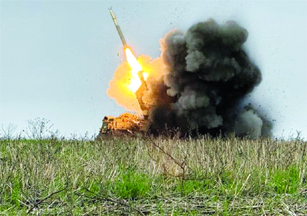
    Ukraine said its naval drones damaged a Russian submarine in the Black Sea port of Novorossiysk, in a special operation it claimed was the first such attack. Underwater drones known as “sub sea baby” struck the Kilo-class submarine, inflicting “critical damage,” the Security Service of Ukraine, or SBU, said Monday in a post on Telegram. The submarine was equipped with four launch systems for Russia’s Kalibr cruise missiles, according to the SBU.
    Moscow denied Ukraine’s claim. “Not a single ship or submarine of the Black Sea fleet stationed in the bay of the Novorossiysk Naval Base, nor their crews, were damaged as a result of the sabotage and are serving as usual,” Russia’s Defense Ministry said in a Telegram post, citing Alexey Rulev, head of the press office of the Russian Black Sea fleet. The SBU posted a video on social media of a large explosion in waters at what it said was the dock in Novorossiysk.
    Bloomberg wasn’t able to independently verify the report.
    Despite lacking a deployable navy, Ukraine has waged a campaign of attacks during the war targeting Russia’s Black Sea fleet using surface water drones. The strikes forced Russia to redeploy most of the fleet from its Sevastopol naval base in occupied Crimea to Novorossisyk on the eastern Black Sea coast. The fleet’s headquarters in Sevastopol were also hit by a Ukrainian missile in September 2024.

  • Christmas : From sacred birth to global celebration

    Christmas : From sacred birth to global celebration

    Christmas, celebrated each year on December 25, is today one of the most widely observed festivals in the world. It is both a deeply sacred religious occasion for Christians and a global cultural event embraced far beyond church walls. Yet the Christmas we recognize today-with decorated trees, gift exchanges, carols, Santa Claus, and festive cheer-is the result of centuries of evolution, shaped by ancient pagan festivals, early Christian theology, medieval customs, literature, and modern commercial culture.
    To understand Christmas fully, one must look beyond the nativity scene and trace the layers of history, belief, and human storytelling that gradually shaped the festival into what it is today.
    How Did Christmas Begin?
    In its earliest centuries, Christianity did not celebrate the birth of Jesus. Early Christians were far more focused on Easter, commemorating the resurrection, which they viewed as the central event of Christian faith. Birthdays, in fact, were not widely celebrated in ancient Jewish and early Christian traditions.
    The first recorded celebration of Christmas as the birth of Christ appears in Rome in the 4th century CE, during a time when Christianity was transitioning from a persecuted faith to the official religion of the Roman Empire. As the Church sought to establish a structured liturgical calendar, the idea of commemorating Jesus’ birth gradually gained importance.
    By the mid-300s CE, December 25 began to be observed as the Feast of the Nativity, laying the foundation for what would eventually become Christmas.
    Saturnalia and the Pagan Influence on Christmas
    One of the most significant influences on Christmas comes from Saturnalia, an ancient Roman festival held in mid-December in honour of Saturn, the god of agriculture. Saturnalia was marked by feasting, gift-giving, role reversals, public merriment, and widespread celebration-a joyful break from social norms.
    During Saturnalia:
    – Homes were decorated with greenery and lights
    – Gifts were exchanged
    – Public revelry was encouraged
    – Masters and servants symbolically reversed roles
    As Christianity spread through the Roman world, Church leaders faced a practical challenge: how to introduce Christian observances without alienating populations deeply attached to existing traditions. Rather than abolish popular festivals, the Church often reframed them, assigning new Christian meaning to familiar customs.
    Placing Christmas in late December allowed Christian leaders to absorb and transform Saturnalia’s celebratory spirit, redirecting attention from pagan gods to the birth of Christ. Many elements now associated with Christmas-festivity, generosity, communal meals-echo these ancient winter celebrations.
    Is Christmas Really the Day Jesus Was Born?
    The short answer is: probably not.
    The Bible does not specify an exact date for Jesus’ birth. In fact, clues within the Gospel narratives-such as shepherds tending flocks outdoors at night-suggest a springtime birth rather than mid-winter, as December nights in Judea would have been too cold for grazing.
    Several alternative dates were proposed by early Christian scholars, including March and September. December 25 appears to have been chosen symbolically rather than historically.
    Some historians believe the date aligned with:
    – The Roman festival of Sol Invictus (the Unconquered Sun)
    – The winter solstice, symbolising light overcoming darkness
    – The belief that Jesus was conceived on March 25, making December 25 nine months later
    Thus, Christmas became less about historical precision and more about theological symbolism-celebrating Christ as the “Light of the World” entering a darkened world.
    The Middle Ages: Christmas
    Becomes a Popular Festival
    By the Middle Ages, Christmas had firmly taken root across Europe. It became a twelve-day festival, running from December 25 to January 6 (Epiphany). Feasts, plays, church services, and community gatherings dominated the season.
    Medieval Christmas traditions included:
    – Mystery plays depicting the Nativity
    – Caroling, originally communal singing
    – Yule logs, inherited from Norse winter customs
    – Lavish feasts for both nobles and commoners
    However, Christmas was not always universally embraced. During the 17th century, Puritans in England and colonial America viewed Christmas as excessive and unbiblical. In some places, celebrations were even banned. It would take time-and cultural transformation-for Christmas to regain its widespread popularity.
    ‘A Christmas Carol’: The Story That Changed Christmas
    Few works have shaped modern Christmas more than Charles Dickens’ *A Christmas Carol*, published in 1843. At a time when industrialisation had deepened social inequality, Dickens reimagined Christmas as a season of compassion, generosity, and moral renewal.
    The story of Ebenezer Scrooge, transformed from miser to benefactor, reframed Christmas not merely as a religious holiday but as a time for:
    – Caring for the poor
    – Strengthening family bonds
    – Practising kindness and forgiveness

    Dickens’ vision deeply influenced Victorian society and helped redefine Christmas as a warm, family-centred festival. Many traditions we associate with Christmas today-festive meals, goodwill, charitable giving-owe much to the moral tone set by ‘A Christmas Carol’.
    Who Invented Santa Claus? The Making of a Global Icon
    Santa Claus, perhaps the most recognisable symbol of Christmas today, did not emerge fully formed. He is the product of centuries of myth-making and cultural blending.
    His origins lie with Saint Nicholas, a 4th-century Christian bishop from Myra (modern-day Turkey), known for secret gift-giving and compassion for children and the poor. Over time, Dutch settlers in America brought stories of Sinterklaas, which gradually merged with local traditions.
    In the 19th century:
    – The poem “A Visit from St. Nicholas” (1823) popularised Santa as a jolly gift-giver arriving by sleigh
    – Illustrator Thomas Nast gave Santa his familiar appearance
    – Coca-Cola advertisements in the 20th century cemented the red-suited, white-bearded image globally
    Thus, Santa Claus evolved from a Christian saint into a universal symbol of generosity and joy.
    The Christmas Tree and Other Traditions
    The Christmas tree, now central to celebrations, has roots in Germanic pagan traditions, where evergreen trees symbolised life during winter. By the 16th century, decorated trees were part of German Christmas customs and later spread across Europe and America.
    Other traditions include:
    – Gift-giving, linked to the Magi and Saturnalia
    – Carols, evolving from medieval hymns
    – Lights, symbolising hope and divine presence
    – Festive meals, reinforcing community and abundance
    Each tradition reflects layers of history rather than a single origin.
    Christmas in the Modern World
    Today, Christmas is celebrated across continents, often adapted to local cultures. In some countries it remains deeply religious; in others it is largely secular. It has also become a major commercial season, prompting debates about materialism versus meaning.
    Yet, at its core, Christmas continues to carry a powerful message-hope, renewal, generosity, and togetherness. Christmas did not begin on a single night in Bethlehem, nor was it shaped by one tradition alone. It is the result of faith meeting history, belief meeting culture, and ancient customs meeting modern life.
    From Saturnalia to Saint Nicholas, from Dickens to Santa Claus, Christmas has continually reinvented itself-while preserving its central spirit. That enduring adaptability may explain why, after two millennia, Christmas remains not just a holiday, but a shared human celebration.
    Christmas Around the World: How Cultures Across Continents Celebrate the Season
    From midnight masses in Europe to beachside festivities in the Southern Hemisphere, from solemn religious observances to vibrant folk customs, Christmas reflects the cultural soul of each society it touches. What unites these varied traditions is a shared emphasis on family, generosity, light, and renewal, even as climate, history, and local customs shape the way the season unfolds.
    Europe: Where Many Christmas Traditions Took Shape
    In the United Kingdom, Christmas is deeply influenced by Victorian-era traditions popularised by Charles Dickens. Homes are decorated with holly, mistletoe, and Christmas trees, while carol singing remains a cherished custom. The traditional Christmas meal includes roast turkey, stuffing, roast potatoes, and Christmas pudding, often served with brandy butter.
    The Queen’s (now King’s) Christmas message, broadcast annually, is a modern tradition that reflects on national life and shared values. Boxing Day, celebrated on December 26, continues the festive spirit with family gatherings and sporting events.
    Germany: Advent, Markets and the Christmas Tree
    Germany is widely regarded as the birthplace of many modern Christmas customs. The Advent calendar and Advent wreath originate here, marking the countdown to Christmas. German towns are famous for their Weihnachtsmärkte (Christmas markets), where stalls sell mulled wine (Glühwein), gingerbread (Lebkuchen), and handcrafted ornaments.
    The tradition of decorating a Christmas tree began in Germany in the 16th century and later spread worldwide. Christmas Eve is often the main celebration, when families exchange gifts and attend church services.
    France: Midnight Mass and Réveillon
    In France, Christmas blends elegance with devotion. Many families attend Midnight Mass before returning home for le réveillon, a long, elaborate late-night feast featuring oysters, foie gras, roast meats, and fine desserts. In Provence, the tradition of thirteen desserts symbolises Jesus and the twelve apostles. Nativity scenes, known as crèches, are common in homes and churches, reflecting France’s strong cultural connection to the story of Christ’s birth.
    Italy: Faith at the Heart of Christmas
    In Italy, Christmas remains deeply religious. Nativity scenes (*presepi*) are central, sometimes more important than Christmas trees. The Vatican’s Midnight Mass, led by the Pope, is watched by millions worldwide.
    Children often receive gifts not from Santa Claus but from La Befana, a folkloric figure who delivers presents on Epiphany (January 6), extending the festive season beyond Christmas Day.
    United States: A Cultural Melting Pot
    Christmas in the United States reflects the country’s diversity. Traditions include decorated trees, gift exchanges, stockings, and Santa Claus, alongside church services and family meals. Popular foods vary by region, but roast turkey, ham, and pies are common.
    Public displays, Christmas movies, and commercial celebrations play a major role, while December 25 has been a federal holiday since 1870. Despite its commercialisation, Christmas remains a time for charity, volunteering, and family gatherings.
    Mexico: Posadas and Community Faith
    In Mexico, Christmas is celebrated through Las Posadas, a nine-day re-enactment of Mary and Joseph’s search for shelter. Each evening involves prayer, songs, and communal feasts. Christmas Eve (Nochebuena) is the main event, marked by midnight Mass and family celebrations. Traditional foods include tamales, bacalao (salted cod), and ponche, a warm fruit drink. Piñatas shaped like stars symbolise the triumph of good over evil.
    Brazil: Christmas in Summer
    In Brazil, Christmas arrives in the height of summer. Celebrations often extend outdoors, with fireworks and open-air feasts. Many families attend Missa do Galo (Rooster’s Mass) at midnight on Christmas Eve.
    Festive meals include tropical fruits alongside traditional dishes. Cities like Rio de Janeiro feature massive floating Christmas trees and elaborate light displays.
    Africa: Faith, Music and Community
    In Ethiopia, Christmas-known as Genna-is celebrated on January 7, following the Orthodox calendar. The day begins with long church services and fasting, followed by communal meals. Traditional white garments and processions highlight the deeply spiritual nature of the celebration.
    Nigeria and Ghana: Joyful Worship and Togetherness
    In many African countries, Christmas is marked by lively church services, music, dance, and extended family gatherings. Urban residents often travel back to their hometowns, making Christmas a major period of reunions.
    Asia: Faith, Festivals and Cultural Adaptation
    The Philippines celebrates Christmas longer than any other country, beginning as early as September. The season peaks with Simbang Gabi, a series of dawn Masses leading up to Christmas Day.
    Festivities centre on family, food, and faith, with colourful parol lanterns symbolising the Star of Bethlehem.
    India: Regional Diversity and Harmony
    In India, Christmas is celebrated by Christian communities across states such as Goa, Kerala, and the Northeast. Churches host midnight Mass, homes are decorated with stars and cribs, and festive foods vary regionally. In many cities, Christmas has also become a broader cultural celebration, marked by markets, decorations, and shared goodwill across communities.
    Japan: A Secular Celebration of Togetherness
    In Japan, Christmas is largely secular and commercial. It is seen as a time for couples rather than families. A uniquely Japanese tradition involves eating fried chicken, popularised by marketing campaigns in the 1970s.
    Australia and NZ: A Summer Christmas
    In Australia and New Zealand, Christmas falls during summer. Celebrations often involve barbecues, beach outings, and outdoor lunches. Traditional Christmas foods are adapted to the climate, with seafood and cold desserts replacing heavy roasts. Carols by Candlelight events reflect the blend of tradition and modern lifestyle. Christmas is celebrated in churches and homes, in snow-covered villages and sunlit beaches, in solemn silence and joyful song. While traditions differ widely, the heart of Christmas remains constant-a celebration of hd human connection.

  • Avatar: Fire and Ash: Sci-fi adventure series is the longest and worst yet

    Avatar: Fire and Ash: Sci-fi adventure series is the longest and worst yet

    Avatar and Avatar: The Way of Water are two of the highest-grossing films ever made, so you can hardly blame James Cameron for keeping his sci-fi adventure series going. But its third episode, Avatar: Fire and Ash, strongly suggests that he should quit while he’s still ahead. Each Avatar so far has been longer and worse than the one before, and this one – a full half-hour longer than the 2009 original – is 197 minutes of screensaver graphics, clunky dialogue, baggy plotting and hippy-dippy new-age spirituality. It’s terrifying to think that Cameron still has two more sequels scheduled. How much longer and more self-indulgent can they possibly get?
    The most insulting part is that even with that preposterous, bladder-testing running time, Avatar: Fire and Ash doesn’t work as a standalone film with a beginning, middle and end. Making no concessions to any viewers who aren’t superfans of the franchise, Cameron assumes that we’re already deeply invested in the characters, their relationships and their surroundings, so that a complete, propulsive story is surplus to requirements.
    It feels as if we’re a zillion light years from the excitement of the first film. The idea of that one was that the human race had made such a mess of the planet Earth that they decided to exploit the mineral resources of an Edenic, unspoilt moon named Pandora. This plan wasn’t popular with Pandora’s blue-skinned humanoid inhabitants, the Na’vi, but a human Marine, Jake Sully (Sam Worthington) had his mind zapped into the body of a Na’vi-human hybrid, so that he could cosy up to the locals. He then fell in love with a Na’vi princess, Neytiri (Zoe Saldaña), and fought alongside her tribespeople against the invaders from Earth. In short, Avatar was Pocahontas meets the Smurfs in space – a scenario ripe with conflicts and environmental issues.
    mistake. Worthington may not be the world’s most charismatic actor, but at least his character was distinctive, whereas it’s sometimes hard to tell which of Jake and Neytiri’s nearly-naked offspring is which – and they’re all equally annoying. Every now and then there will be a big battle, or we’ll see some human scientists who haven’t been in the film for ages. Sometimes we’ll have to sit through long, reverential discussions of the Na’vi’s beliefs. And sometimes we’ll have tantalising glimpses of the hard-edged empire-vs-rebels eco-thriller that the film could have been. But, essentially, Avatar: Fire and Ash is a Californian soap opera in which various forgettable dreadlocked surf dudes ride dragons and shout phrases like, “That was insane, bro,” and, “This is sick, cuz!”

  • Sofia Vergara confirms dating 39-year-old US businessman Douglas Chabbott

    Sofia Vergara confirms dating 39-year-old US businessman Douglas Chabbott

    Actor Sofia Vergara has confirmed her new romantic relationship with US businessman Douglas Chabbott. The announcement comes after several months of speculation fuelled by multiple public sightings. However, a recent social media post ended rumours about her personal life. Vergara, 53, shared a photograph with Chabbott taken at a restaurant. It was accompanied by the message “Te amo (I love you).” The post provided clarity following weeks of public curiosity and media reports linking the two since mid-2025. Chabbott, 39, reportedly serves as vice president at Dasan Inc., a company specialising in luxury jewellery and high-end design. He has maintained a relatively private profile, primarily appearing in business and philanthropic circles. The pair were first linked after several public appearances earlier in the year, including an event in Pasadena and a birthday celebration in Cerdea. These events contributed to increased speculation about the nature of their relationship before Vergara’s public confirmation. The actor’s relationship history has frequently attracted media attention. She married actor Joe Manganiello in 2015, with their marriage lasting nearly a decade before they divorced in 2024.

  • Housemaid first reviews: Critics say Sydney Sweeney film is over the top on purpose

    Housemaid first reviews: Critics say Sydney Sweeney film is over the top on purpose

    Glossy, twisted and unapologetically wild, The Housemaid has arrived, and critics can’t quite agree whether it’s deliciously deranged or cleverly overcooked. The new crime thriller, directed by Paul Feig, released globally on December 17 (In India on January 2, 2026), and has quickly sparked conversation for both its starry cast and its unabashedly pulpy tone.
    The film features a sleek ensemble led by Sydney Sweeney, Amanda Seyfried, Brendon Sklenar and Michele Morrone. While reactions have been mixed, one thing is clear – The Housemaid is not playing safe.
    Several international critics have described the film as indulgently clever, even excessive, while others have embraced its chaotic energy and twist-heavy narrative as part of the fun.
    Writing for The Guardian, critic Peter Bradshaw praised the performances and the film’s audacity. “We get some tastily over-the-top acting and some huge rewind POV shifts to explain what has really been going on – and, of course, the heady whiff of gaslight as Millie (Sweeney) can’t quite be sure she really understands anything that’s happening,” he wrote. Calling it “silly” but effective, Bradshaw added that Feig and his cast deliver the material “with terrific gusto,” labelling it “an innocent holiday treat.”
    Variety described the film as a “movie of diabolical developments,” highlighting the evolving dynamic between Sweeney and Seyfried. The publication noted that their pairing works like a “duet that keeps giving because it keeps evolving.”
    In his review for the publication, critic Owen Gleiberman framed The Housemaid as a knowingly pulpy thriller that thrives amid awards-season seriousness. “The film creates an ideology of male-female relationships that’s at once timely, glibly mythological, and born to be milked by a Hollywood thriller,” he wrote, adding that it is “the kind of stylishly tricky high-trash movie that can steal some of the limelight.”
    Meanwhile, Deadline Hollywood critic Pete Hammond leaned fully into the madness, calling the film a “psychotic screen version of [a] trashy popular novel.” He described it as “on speed,” noting that it is a “heightened operatic ride” where shifting character dynamics keep the audience guessing until the very end.

  • Cocktail 2: It’s fresh take on love, says Kriti as she teams up with Shahid & Rashmika

    Cocktail 2: It’s fresh take on love, says Kriti as she teams up with Shahid & Rashmika

    After leaving a lasting impact with her performance in intense films such as Do Patti (2024) and Tere Ishk Mein, Bollywood beauty Kriti Sanon is now busy shooting for a rom com. We are talking about Homi Adajania’s Cocktail 2, also starring Shahid Kapoor and Rashmika Mandanna. The film will serve as the spiritual sequel to the director’s iconic 2012 film Cocktail, which introduced us to the unforgettable onscreen trio of Deepika Padukone, Saif Ali Khan and Diana Penty. Well, in a new interview, Kriti has now opened up about working with Shahid and Rashmika, and how the sequel is different from Cocktail part 1.
    Talking about how she wanted to do a light film, after the intense and heavy Tere Ishk Mein, Kriti Sanon told Zoom, “I think Cocktail 2 just happened at the right time. I was craving for it. I wanted to go into that really young, urban, fun space of a rom-com. And yes, it’s a sequel, but it’s more of a vibe sequel, I feel. The story is completely different, the characters are completely different, and their backstories are completely different. So everything is different, except for the vibe of Cocktail. And of course, Maddock Films and Homi Adajania. So that remains as is.”
    Kriti shared, “But it’s been fun. We’ve shot about two major schedules. We’re going to start another one right now in Mumbai. It’s got amazing music.” She went on to add, “I think I’m looking so different from what I have ever looked, which I’m very excited about and it’s also very fresh. When you watch Cocktail 1 also, something about it still feels today. It doesn’t make you feel like it’s what, 12 years old or something, you know? And you still feel like it’s today’s film. And I think that’s how even this film is. It’s very refreshing, the visuals are stunning, it’s got a take on modern equations and relationships. Very relevant to what it speaks about. And I’ve had a blast shooting with Shahid and Rashmika, and of course Homi is mad, so his craziness kind of keeps us all going for a fun ride.”
    This project marks Shahid and Kriti’s second film together, after Teri Baaton Mein Aisa Uljha Jiya, where the latter played the role of a robot. When asked about this reunion, Kriti replied, “But finally I’m human!”