MISSISSAUGA (TIP): A 25-year-old Indian-origin man has been taken into custody in Canada after being accused of exposing himself to female staff members including doctors at multiple medical facilities in Mississauga, according to Peel Regional Police (PRP). Investigators allege the suspect, identified as Vaibhav, repeatedly attended clinics after pretending to suffer from medical issues, with the aim of prompting inappropriate physical contact from women doctors. Police say the incidents occurred across several locations over a number of months in 2025.
Confirming the arrest, PRP said, “The 12 Division Criminal Investigations Bureau (CIB) has arrested and charged a Brampton man in relation to an indecent act investigation,” in a statement released on Tuesday.
Authorities further allege that the accused exposed himself to female clinic staff and, on some occasions, used a false identity when interacting with doctors. Detailing the modus operandi, police said, “The accused reportedly faked medical conditions in an attempt to have female physicians touch him inappropriately and, in some instances, used the alias of Akashdeep Singh while doing so,” the statement said.
Vaibhav was arrested on December 4 and remains in custody while awaiting a bail hearing.
He now faces multiple charges, including Indecent Act in a Public Place, Identity Fraud with Intent to Gain Advantage, Possession of an Identity Document, and Identity Theft.
Investigators suspect there may be additional victims who have not yet come forward. Police are urging members of the public with relevant information to assist the investigation. “Anyone with information in relation to this incident is asked to contact the 12 Division CIB at 905-453-2121, ext. 1233,” the statement concluded as saying.
Month: December 2025
-

25-year-old Indian-Origin Arrested in Canada for Flashing Female Doctors in Clinics
-

Another Ludhiana youth behind firing incidents in Kapil Sharma’s cafe in Canada
Sukhwinder Seepu of Brahampur, along with 2 other Punjabi youths, Sharry and Diljot, has been linked to the attacks
VANCOUVER, BC (TIP): The name of another youth from Brahampur village in Raikot has surfaced as the alleged mastermind behind the three firing incidents at comedian Kapil Sharma’s Kap’s Café in Canada.
According to Canadian police and central agencies, Sukhwinder Seepu of Brahampur, along with two other Punjabi youths, Sharry and Diljot, has been linked to the attacks. Their names emerged a fortnight after the Crime Branch of Delhi Police arrested Bandhu Maan Singh Sekhon, an operator of the Goldy Dhillon gang, from Jawaddi village on the outskirts of Ludhiana on November 28.
Though Ludhiana (Rural) police are tight-lipped about the development, senior Raikot police personnel have been advised to keep a close watch on Seepu’s associates, if any.
Investigations revealed that Seepu was already booked in a case at Ahmedgarh City police station in Malerkotla district over six months ago. In that case, he had allegedly threatened a man with dire consequences for insisting on filing a complaint against his brother-in-law. The Malerkotla police were in the process of reinvestigating the case when Seepu’s name surfaced in the Kap’s Café case, prompting senior officials to return the file to Ahmedgarh police.
Probes have revealed that while Seepu and Sekhon were not directly involved in the firing incidents, both played important roles in planning the crime. Seepu is believed to have drafted and monitored the execution of the plans, while Sekhon allegedly provided weapons and vehicles to carry out the firing incidents.
Kap’s Café came under attack on July 10, shortly after its opening, followed by two more shootings on August 7 and October 16. The Lawrence Bishnoi gang had claimed responsibility for all three attacks.
Latest investigations by Canadian authorities and Indian central agencies have revealed that Sharry and Diljot Rehal, both of Punjabi origin, had carried out the shootings at Seepu’s behest. Sekhon, who had reportedly returned to Punjab in panic, was arrested by Delhi Police on November 28. His interrogation led to the identification of the three Punjab youths allegedly involved. Sekhon also admitted to supplying weapons and vehicles for the attacks on Kap’s Café at different times.
-

Indian-Origin Entrepreneur Devesh Mistry Dies in Dubai
DUBAI (TIP): Devesh Mistry, a prominent Indian expat in the UAE and co-founder of Red Blue Blur Ideas, has died in Dubai, Gulf News reported. He was a well-known figure in the Middle East’s digital design scene and a mentor to many university students. Mistry, fondly known as ‘Superman’, played a key role in shaping the region’s digital experience industry with his focus on user-friendly designs. He co-founded Red Blue Blur Ideas with Amol Kadam in 2011, and the company’s name was a nod to Superman’s iconic ‘Red Blue Blur’ imagery.
His company announced his death on Sunday but didn’t disclose the cause. In a LinkedIn post on Sunday, the company announced: “Today, we share news that is deeply painful for all of us at RBBi. Our Co-Founder, Devesh Mistry, passed away.”
“Devesh was a driving force behind RBBi from its earliest days. To many of us, he was our own Superman. He played a defining role in shaping the company, our culture, our thinking, and the way we worked with clients and with each other. This is a moment of grief and reflection for our entire team. We are taking the time and space to support one another through this loss,” the tribute added.
Devesh Mistry, also known as Dev, co-founded Red Blue Blur Ideas (RBBi) in 2011, which became one of the region’s first specialized UX, UI, and digital performance marketing agencies in Dubai. His career started in coding in the late 1990s, but he soon shifted focus to user experience, realizing its importance in design. This led him to establish his own business.
Throughout his career, he worked with major global brands such as Microsoft, IBM, Telstra Australia, Commonwealth Bank of Australia, Mini Cooper, MasterCard, L’Oreal, Emirates NBD, and Cleveland Clinic Abu Dhabi.
Beyond his professional accomplishments, Dev was deeply committed to mentoring and guiding others in their growth. He played multiple roles at the University of Dubai, as a lecturer, mentor, and curriculum developer, where he focused on digital strategy programs. Earlier, while in Australia, he also briefly lectured at the University of Technology Sydney.
Dev held a degree in physics from Mumbai and was a Microsoft Certified Professional. He was also a certified member of the User Experience Professionals Association (UXPA). -

Hong Kong donor contributes Rs 3 lakh to Sarhali College
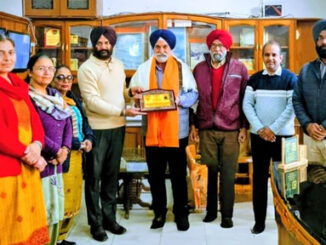
HONG KONG / AMRITSAR (TIP): Gurdev Singh Ghalib, a resident of Hong Kong, donated Rs 3 lakh to Guru Gobind Singh Khalsa College, Sarhali. A function to mark the donation was held on the college campus on Tuesday, December 9, presided over by Dr. Jasbir Singh Gill, principal of the college.
Speaking to attendees, Gurdev Singh Galib praised the achievements of the college in providing better educational facilities to remote and rural areas. He also commended Baba Sukha Singh, head of the Kar Seva section at Sarhali, for his management in running the college and ensuring facilities for needy and deserving students.In his address, Dr. Jasbir Singh Gill discussed the current status of higher education in the region and sports in the state, highlighting challenges faced by Punjab’s youth, such as resource gaps in education and sport, migration and the need to modernize colleges in rural areas with up-to-date equipment.
Gurdev Singh Ghalib pledged to extend maximum cooperation to keep the college up-to-date and ultra-modern. Harjinder Singh Billianwala, honorary secretary of the college management committee, thanked Gurdev Singh Ghalib for the generous gift.
-

Punjab’s Sikh man with Jalandhar roots honored with OBE by Princess Anne
The award recognizes Captain Singh-Sohal’s outstanding services to the commemoration of Commonwealth soldiers who served Great Britain during WWI
LONDON (TIP): A proud moment for Punjab and the Sikh community, Captain Jay (Jagjett) Singh-Sohal, a British Sikh man with roots in Jalandhar, has received an OBE award from Princess Anne, the Princess Royal, at St James’s Palace.
The prestigious award recognizes Captain Singh-Sohal’s outstanding services to the commemoration of Commonwealth soldiers who served Great Britain, particularly for founding the UK’s first memorial to Sikh soldiers who served during World War I.
Established in 2015 at the National Memorial Arboretum in Staffordshire, the WWI Sikh Memorial is a testament to Captain Singh-Sohal’s dedication to ensuring the sacrifices of Sikh soldiers are remembered. Born in Birmingham, Captain Singh-Sohal’s paternal grandparents immigrated to Britain from Sang Dhesian in Phillaur, Jalandhar, while his maternal grandparents came from Kapurthala. Captain Singh-Sohal, an army reservist, said he was humbled by the recognition. This honor is a proud moment for the Sikh community and a celebration of the contributions of Punjab to British history. The 42-year-old from Royal Sutton Coldfield has also served as an Army Reservist for the past 16 years.
-

Australia depth shows up England’s Ashes ‘failures’
SYDNEY (TIP)- A well-drilled Australia are on the cusp of retaining the Ashes after just six days of cricket — not bad for a team lambasted by England great Stuart Broad before the series began as its weakest since 2010. The hosts take a 2-0 lead into the third Test at Adelaide on December 17 needing only a draw to keep the famous urn and pile more humiliation on Ben Stokes’s tourists.
Australia have put themselves on the brink despite missing injured pace spearheads Pat Cummins and Josh Hazlewood, with the performances of stand-ins Michael Neser and Brendan Doggett a reflection of their depth.
“The great and the healthiest thing for Australian cricket right now is that they’ve got almost a second XI or an Australia ‘A’ side that could come in and play some outstanding cricket too,” said former Australia Test quick Brett Lee. “The guys who have had their opportunity, the Doggetts and the Nesers, have stood up. They’ve taken their opportunity and taken it with both hands, which is brilliant.” The strength of the country’s talent pool was driven home by Australia ‘A’ crushing England’s second-tier side by an innings and 127 runs at Allan Border Field while Stokes’s men were being thrashed down the road in the second Test at the Gabba.
Young prospects Fergus O’Neill, Cooper Connolly and Campbell Kellaway stood out, while discarded Test batsman Nathan McSweeney fired a double-century reminder to selectors.
It is a far cry from the pre-Ashes war-of-words where England were hyped as having their best chance in a generation to win a series in Australia, with seamer Broad’s comments coming back to haunt him.
“It’s probably the worst Australian team since 2010 when England last won and it’s the best English team since 2010,” said Broad, who retired in 2023 and is now working as a pundit.
“It’s actually not an opinion, it’s fact.”
At the time, he pointed to questions over the make-up of Australia’s batting line-up and a perceived lack of bowling depth.
Both have been blown out of the water.
Australia went into the first Test in Perth dogged by uncertainty, with the uncapped Jake Weatherald as Usman Khawaja’s sixth opening partner since David Warner retired nearly two years ago.
In a quirk of fate, Khawaja was unable to bat in the first innings because of back spasms with Marnus Labuschagne replacing him.
But it was when he pulled out again in the second innings and Travis Head stepped up that the tide turned on England with his stunning 69-ball match-winning century.
“Ever since Travis Head stuck his hand up to open when Khawaja got hurt in Perth, Australia have looked like a different team,” said Australian legend Glenn McGrath.
Labuschagne said Head and Weatherald’s confidence trickled down to the lower order in Brisbane, where himself, Steve Smith and Alex Carey all blasted quick-fire half centuries.
It leaves selectors with a dilemma for the third Test: recall now-fit 85-Test veteran Khawaja or persist with Weatherald and Head, whose home ground is Adelaide.
Smith, who stood in for Cummins as skipper in the first two Tests, attributed Australia’s success so far to being able to adapt “in real time.” -
Watching World Cup 2026 from stadium just got costlier as FIFA implements another ticket price hike
Catching your favourite team live at the FIFA World Cup 2026 is turning into a costlier dream with every passing month. FIFA has increased ticket prices for the 2026 edition yet again — the third consecutive monthly hike — with several matches now significantly more expensive following the release of the tournament draw and full schedule. The draws are out for the biggest World Cup in football history, with 48 teams participating in it set to be played across the USA, Canada and Mexico. FIFA has sharply pushed up ticket prices for the 2026 World Cup, with some now listed at $700. A lower-tier seat for the final has soared to $8,680 — almost $2,000 higher than what it cost in October. When FIFA first announced prices in September, tickets on its website ranged from $60 for early group matches to $6,730 for the final. However, with dynamic pricing being introduced for the first time at a World Cup, those figures have continued to climb.
FIFA offers tickets in four categories, with Category 1 being the premium seating.
With the draw completed, every nation now knows its group and the potential route it must navigate. One storyline already generating buzz is the possibility of Lionel Messi and Cristiano Ronaldo crossing paths in a quarterfinal showdown in Kansas City—provided Argentina and Portugal finish atop their groups. -

Failed experiments, De Kock carnage: SA level series as India capitulate
CHANDIGARH (TIP)- Quinton de Kock’s blazing knock and a forgettable outing for India’s batters culminated in a crushing 51-run defeat in the second T20I at the Maharaja Yadavindra Singh International Cricket Stadium in Mullanpur on Thursday, Dec 11.
South Africa piled up 213 and followed it up with a disciplined bowling performance to level the five-match series 1-1. What began as a day of celebration in Mullanpur ended on a sour note. This was India’s first international match at the venue, and to mark the occasion, stands were unveiled in honor of Yuvraj Singh and Harmanpreet Kaur. The pitch, however, continued to live up to its reputation for unpredictability.
Mullanpur had seen IPL teams consistently defend 200-plus totals earlier this year, and PBKS had even managed to protect 111 against KKR on this very surface. That’s why it was surprising to see Suryakumar Yadav’s decision opt to bowl first—perhaps swayed by the prospect of dew, with the PCA having sprayed anti-dew solution well before play began.
Most fans expected a high-scoring contest and an entertaining chase, but De Kock flipped the script. After two overs where there was some lateral movement, the South African opener began to dismantle India’s bowling attack. Coming off back-to-back ducks, De Kock looked determined to remind everyone why he remains one of the most dangerous T20 batters, especially with the IPL auction and the T20 World Cup approaching.
He blasted 90 off 46 balls, striking five fours and seven sixes, before Jitesh Sharma produced a spectacular catch to end his assault. While the rest of the top order struggled, a late surge from Donovan Ferreira and David Miller powered South Africa to 213/4. For India, Varun Chakravarthy offered the lone bright spot. He bowled Reeza Hendricks with his very first delivery and kept things tight from one end. But outside of the mystery spinner’s control, the rest of the attack steadily unravelled.
Jasprit Bumrah and Arshdeep Singh leaked 99 runs between them in eight overs. Bumrah, in particular, looked completely off-rhythm, repeatedly dishing out low full tosses that the Proteas punished. It became his third-worst bowling performance in T20Is.
India’s run chase got off to the worst possible start, with Shubman Gill falling off the first ball. Axar Patel was surprisingly promoted to No.3 — a move that puzzled many — but he couldn’t keep up with the scoring rate.
Abhishek Sharma fell for 17 in the second over, and South Africa tightened their grip. Suryakumar Yadav departed after a successful review, and only Tilak Varma offered resistance. By the time Axar was dismissed for 21 (21), India were 67/4 in 7.3 overs, and the writing was on the wall.
Hardik Pandya, the hero from Cuttack, struggled to rotate strike as South Africa bowled with great discipline. Tilak’s fifty off 27 deliveries brought some temporary hope, but with no support at the other end, it was never enough.
Baartman then crushed India’s lower order with three wickets in the 19th over, before Ngidi wrapped up the innings by dismissing Tilak for a valiant 62, sealing a comfortable victory. -

Phawngpui and Aizawl: A journey into Mizoram’s cloud-kissed paradise
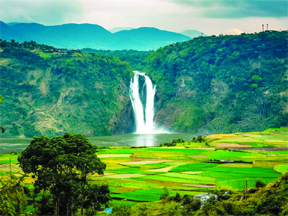
Nestled in the heart of Mizoram, Phawngpui and Aizawl together offer one of Northeast India’s most serene and spiritually uplifting travel experiences. Far away from noisy tourist circuits, this region is a realm of rolling blue hills, whispering pine forests, floating clouds, and tribal legends that make every journey feel like a step into a living postcard. From sacred mountains to vibrant hill city culture, this destination promises peace, adventure, and deep cultural immersion.
Phawngpui – The Blue Mountain of Legends
Known as the Blue Mountain of Mizoram, Phawngpui rises proudly on the southern edge of the state near the Myanmar border. It is the highest peak in Mizoram and holds a deeply spiritual place in Mizo folklore. According to local legends, this mountain is sacred and haunted by spirits, adding a mystical aura to its natural beauty.
Trekking to Phawngpui is an unforgettable experience. As you climb, dense bamboo groves, exotic orchids, wildflowers, and colorful butterflies surround you. The summit offers breathtaking views of endless green valleys, distant villages, and drifting white clouds that make you feel like you are standing at the edge of the sky. Sunrise and sunset from this peak are considered among the most beautiful in all of Northeast India.
Camping at Phawngpui is equally magical. Nights are cold and silent, broken only by the sound of wind and forest life. For nature lovers, photographers, and adventure enthusiasts, this mountain is a dream destination.
Aizawl – The Cultural Heart of Mizoram
Aizawl, the charming capital of Mizoram, is a hill city that feels calm, clean, and culturally rich. Built along steep ridges, the city offers panoramic views of mist-covered valleys and colorful houses stacked beautifully along the slopes. Life here moves at a peaceful pace, and the warmth of the Mizo people makes visitors feel instantly welcome.
One of the highlights of Aizawl is its strong sense of tradition. The city is deeply influenced by Christian culture, and Sunday mornings are filled with harmonized hymns echoing through the hills. Traditional Mizo attire, music, and dance remain an inseparable part of daily life. Popular tourist spots in Aizawl include the Mizoram State Museum, which offers insight into tribal history, costumes, weapons, and folklore. Durtlang Hills provide stunning views of the city, while Reiek Tlang is perfect for short treks and sunrise photography.
Best Time to Visit
The best months to explore Phawngpui and Aizawl are from October to April. During this season, the skies remain clear, temperatures are pleasant, and the mountain views are at their best. The monsoon season, although lush and green, can make trekking difficult due to slippery trails.
Culture, Food, and Local Experiences
Tourism in Mizoram is not just about landscapes; it is also about experiencing a unique culture. Traditional Mizo food is simple, healthy, and flavorful. Dishes primarily consist of rice, boiled vegetables, smoked meat, bamboo shoot preparations, and light spices. Local tea and rice-based beverages are popular among visitors.
Homestays in and around Aizawl offer an authentic experience of Mizo hospitality. Travelers can participate in local festivals, church gatherings, and community meals, gaining a deeper understanding of the state’s lifestyle.
How to Reach
Aizawl is connected by air through Lengpui Airport, which has regular flights from major Indian cities. From Aizawl, travelers can hire local taxis or shared vehicles to reach Lawngtlai and the base villages for the Phawngpui trek.
A Journey of Silence and Soul
Phawngpui and Aizawl together offer a rare kind of tourism — one that does not overwhelm but gently heals. The silence of the mountains, the wisdom of tribal legends, and the simplicity of life here create a spiritual connection with nature. Whether you are seeking adventure, solitude, or cultural richness, this region of Mizoram welcomes you with open skies, green horizons, and a peace that stays long after the journey ends. -

Tirupati Balaji Jayanti: A spiritual journey into the grace of Lord Venkateswara
Tirupati Balaji Jayanti is a deeply sacred occasion that celebrates the divine manifestation of Lord Venkateswara, the form of Lord Vishnu believed to have descended on earth to uplift humanity during the age of Kali. Observed with immense devotion, this auspicious day reminds devotees not only of a divine birth, but of the eternal promise that God walks alongside humankind, ready to guide lost souls back to the path of dharma, surrender, and inner peace.
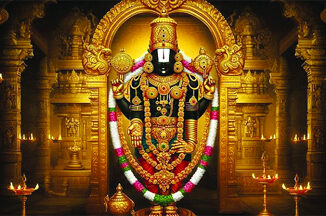
At the heart of this sacred observance is the mystical hill shrine of Tirumala, where Lord Venkateswara is worshipped as the living protector of the world. Known lovingly as Tirupati Balaji, Srinivasa, and Govinda, the Lord is believed to have incarnated here to rescue humanity from the sufferings of the Kali Yuga. Tirupati Balaji Jayanti symbolizes this moment of divine descent — when the infinite chose to take a form accessible to human hearts.
Spiritually, this Jayanti is more than a ritual; it is a reminder of the soul’s eternal relationship with the Divine. Lord Venkateswara is seen as the embodiment of compassion, patience, and divine justice. His eyes, half-closed in eternal meditation and half-open in grace, symbolize a perfect balance between inner stillness and outward mercy. Meditating on this form during the Jayanti is believed to dissolve karmic burdens and awaken the dormant divinity within the devotee’s heart.
Devotees begin this holy day with purification rituals, waking up before dawn to bathe and wear fresh, clean clothes that symbolize spiritual rebirth. Homes and temples glow with oil lamps, representing the light of divine wisdom dispersing the darkness of ignorance. Sacred chants like “Om Namo Venkatesaya” and “Govinda Namavali” fill the air, creating a powerful spiritual vibration that uplifts the consciousness and brings a sense of divine presence into everyday life.
Special prayers are offered at the sacred shrine of Sri Venkateswara Temple, where countless pilgrims gather to seek darshan. The rituals of Suprabhatam, Abhishekam, Alankaram, and Naivedyam on this day are believed to carry multiplied spiritual merit. It is not merely the act of worship that matters, but the surrender of ego, fear, and desire at the sacred feet of the Lord.
The spiritual essence of Tirupati Balaji Jayanti teaches the supreme value of surrender — the act of placing one’s worries, pain, and karmic debts into the hands of the Divine. In Vaishnavite tradition, Lord Venkateswara is worshipped as the giver of both material well-being and spiritual liberation. But spiritually, the greatest blessing He offers is not wealth or success, but inner peace, clarity of purpose, and unwavering faith in the divine plan.
Another profound spiritual belief associated with this Jayanti is the idea that Lord Venkateswara still resides actively on the Tirumala hills, constantly listening to the prayers of devotees. This living presence transforms Tirupati Balaji Jayanti into a bridge between the earthly and the divine realms. It reminds the seeker that God is not distant, but intimately involved in every breath, every step, and every silent prayer.
Observing fasts, performing charity, feeding the poor, and helping the needy on this sacred day are considered powerful spiritual practices. Such acts are believed to purify the heart and align the soul with the higher laws of compassion and selflessness. Service, in this light, becomes a form of worship, and kindness becomes a prayer in action.
Tirupati Balaji Jayanti ultimately teaches that life itself is a pilgrimage. The soul journeys through ignorance, suffering, and illusion, seeking the eternal truth that resides in the heart of Lord Venkateswara. On this holy day, devotees are reminded that true darshan is not just seeing the deity with the eyes, but realizing His presence within one’s own soul.
In its deepest spiritual sense, Tirupati Balaji Jayanti is a call to awaken. It invites every soul to release fear, surrender pride, and walk the path of devotion with humility and love. It is a celebration of divine descent, but also of human ascent — the rising of the soul toward its eternal source, guided by the compassionate grace of Tirupati Balaji.
Festivals at Tirupati Balaji Temple
Tirupati Balaji temple is the most famous religious place in India. This temple is dedicated to Lord Vishnu and is called the Vaikuntha of Kali Yuga. Thousands of devotees come here every day to have darshan of Lord Balaji.
On the occasion of Tirupati Balaji Jayanti, the entire temple complex is decorated with lamps and flowers. On this day, the idol of Lord Balaji is dressed in special clothes and jewelry. Devotees perform Angapradakshina ( circumambulation of the temple) in the temple and express their devotion to the Lord.
The most special thing about the temple is that devotees offer their hair to Lord Balaji when their wishes are fulfilled. This is called “Keshdan”, which symbolizes the renunciation of ego and negativity.
Balaji Jayanti Puja Vidhi and Rituals
Devotees perform special worship on the day of Balaji Jayanti. The day starts with devotees taking a bath at dawn and wearing pure clothes. After this, they go to the temple of Lord Balaji and worship.
Worship Method:
– Bath and Purification: Devotees wake up early in the morning, take a bath and get ready for worship.
– Darshan in the Temple: Long queues are formed to visit Lord Balaji in Tirupati Temple.
– Mantra Chanting: Devotees chant “Om Namo Narayana” and “Govinda Govinda” mantras.
– Mahaarati: A grand aarti is organized in the temple in the evening.
– Prasad Distribution: At the end of the puja, Lord Balaji’s prasad is distributed among the devotees. -

US should sign free trade pact if happy with India’s offer: Goyal
New Delhi (TIP)- Amid ongoing tensions over trade, Commerce and Industry Minister Piyush Goyal said on Thursday, Dec 11, that the US should sign the free trade agreement with India on the “dotted lines” if the Donald Trump administration is satisfied with New Delhi’s proposals. He was responding to comments made by US Trade Representative Jamieson Greer in Washington, who described India’s offer as the “best ever” received by the United States.
He welcomed that assessment but declined to disclose the contours of India’s offer. He also refrained from setting any timeline for the conclusion of the long-discussed free trade agreement between the two nations. “His happiness is very much welcome. And, I do believe that if they are very happy, they should be signing on the dotted lines,” Goyal said. The minister’s comments came as India and the United States concluded two days of trade discussions in New Delhi. According to commerce ministry sources cited by PTI, both sides reviewed progress on the bilateral trade agreement and exchanged views on market access, regulatory issues and investment frameworks.
He said that five rounds of negotiations have taken place so far and emphasised that the ongoing visit of US Deputy Trade Representative Rick Switzer is not centred around negotiations. Switzer’s trip, the first since taking office three months ago, is intended to build familiarity and strengthen working relationships, Goyal added, describing his talks with the visiting official as “substantial”.
As the discussions concluded in New Delhi, the officials said the discussions were “purposeful and positive” and the momentum reflected both governments’ intent to narrow differences that have slowed the negotiations in recent years. The high-level US delegation led by Switzer met Goyal, Commerce Secretary Rajesh Agrawal and senior officials across several ministries. Indian officials said the visit helped reinforce political direction from leaders to accelerate talks.
India and the US are currently working to complete the first tranche of the trade agreement following instructions from their leaders earlier this year. Six negotiation rounds have been held so far. The initial package is expected to tackle tariff rationalisation, access for services, digital trade and a handful of long-standing irritants that have shaped India–US commercial ties. -
With $17.5 billion investment, its largest in Asia, Microsoft wants to make India AI first
In a year that has already seen global tech heavyweights court India’s growing digital ambitions, Microsoft has gone all in. The Redmond-based technology giant has pledged a staggering $17.5 billion to power India’s AI-first future, its largest investment ever in Asia. The announcement came hot on the heels of CEO Satya Nadella’s meeting with Prime Minister Narendra Modi in New Delhi, marking a major milestone in India’s artificial intelligence journey.
“Thank you, PM @narendramodi ji, for an inspiring conversation on India’s AI opportunity. To support the country’s ambitions, Microsoft is committing US$17.5B, our largest investment ever in Asia, to help build the infrastructure, skills, and sovereign capabilities needed for India’s AI-first future,” Nadella posted on X shortly after the meeting.
In a meeting described as “productive” by the Prime Minister, both leaders discussed India’s AI roadmap and growth priorities. Modi later wrote that the country’s youth would “harness the opportunity to innovate and leverage the power of AI for a better planet.”
The discussions set the stage for Microsoft’s most ambitious India play yet, as Nadella’s visit came amid a series of high-level engagements between the government and top global tech CEOs, including Intel’s Lip-Bu Tan and Cognizant’s Ravi Kumar S.
Microsoft said its new investment would span four years, from 2026 to 2029, focusing on three key pillars, scale, skills, and sovereignty. The goal is to build the digital backbone that will make India a “frontier AI nation”, the company said in a post on its website. -

Divided Fed approves third rate cut this year, sees slower pace ahead
New York(TIP)- A Federal Reserve split over where its priorities should lie cut its key interest rate on Dec 10, but signaled a tougher road ahead for further reductions. Fulfilling expectations of a “hawkish cut,” the central bank’s Federal Open Market Committee lowered its key overnight borrowing rate by a quarter percentage point, putting it in a range between 3.5%-3.75%.
However, the move carried caution flags about where policy is headed from here and featured “no” votes from three members, which hasn’t happened since September 2019. The 9-3 vote again featured hawkish and dovish dissents – Governor Stephen Miran favored a steeper half-point reduction while regional Presidents Jeffrey Schmid of Kansas City and Austan Goolsbee of Chicago backed holding the line. In Fed parlance, hawks are generally more concerned about inflation and favor higher rates while doves focus on supporting the labor market and want lower rates.
This was the third consecutive “no” vote from Miran, who leaves the Fed in January, and the second straight from Schmid. The previous three-dissent meeting also featured a 2-1 divide from members conflicted between the need for tighter and looser monetary policy.
The post-meeting rate statement repurposed language from the FOMC meeting a year ago.
“In considering the extent and timing of additional adjustments to the target range for the federal funds rate, the Committee will carefully assess incoming data, the evolving outlook, and the balance of risks,” the statement said.
When the language was used in December 2024, it signaled that the committee likely was done cutting for the time being. The FOMC then did not approve any reductions until the September 2025 meeting.
Fed Chair Jerome Powell, at his post-meeting news conference, said the reduction puts the Fed in a comfortable position as far as rates go.
“We are well positioned to wait and see how the economy evolves,” Powell said.
Stocks rose following the decision, with the Dow Jones Industrial Average adding 500 points. Treasury yields moved mostly lower.
“We’re in the high end of the range of neutral,” Powell added. “It’s so happened that we’ve cut three times. We have we haven’t made any decision about January, but as I said, we think we’re well positioned to wait and see how the economy performs.“
With a third consecutive cut now made, the focus turns to where the FOMC heads from here.
The closely watched “dot plot” of individual officials’ expectations on rates indicated just one cut in 2026 and another in 2027 before the federal funds rate hits a longer-run target around 3%. Those projections were unchanged from the September update, but the plot reflected divisions within the committee about where rates should head.
Along with the two “no” dovish votes on the rate cut, four other nonvoting meeting participants registered “soft dissents” indicating that they did not go along with the decision. Seven officials also indicated they want no cuts next year. FOMC meetings feature 19 participants among the governors and regional presidents, 12 of whom vote.
“The discussions we have are as good as any we’ve had in my 14 years at the Fed, very thoughtful, respectful, and you just have people who have strong views, and we come together and we reach a place where we can make a decision,” Powell said.
On the economy, the committee raised its collective view of gross domestic product growth for 2026, boosting its September projection up by half a percentage point, to 2.3%. The committee continues to expect inflation to hold above its 2% target until 2028.
On inflation, prices remain stubbornly high, with the Fed’s preferred gauge putting the annual rate at 2.8% in September, the most recent month for which data is available. While that’s considerably off the peaks of a few years ago, it’s still well north of the central bank’s 2% target.
In addition to the rate decision, the Fed also announced it will resume buying Treasury securities, following up on an announcement at the October meeting that it would halt its balance sheet runoff this month. The move comes amid concerns about pressures in overnight funding markets.
The central bank will start by buying $40 billion in Treasury bills, beginning Friday. From there, purchases are expected to “remain elevated for a few months” and then likely will be “significantly reduced”. -

Apple iPhone Fold to shake up foldable market in 2026 with huge share and sky high price
Apple is expected to launch its first-ever foldable iPhone in 2026. After years of waiting, the Cupertino giant will likely finally join the foldable race against the likes of Samsung and Google. Now, reports suggest that this device can put Apple at the forefront of the foldable segment, with a market share as high as 34 per cent.
According to International Data Corporation (IDC), the iPhone Fold is expected to capture over 22 per cent of unit sales and 34 per cent of the total market value in its debut year. These estimates come despite the expected price tag of $2,400 (roughly Rs 2,15,000) for the Apple foldable. For context, the Samsung Galaxy Z Fold 7 is priced at Rs 1,74,999 in India.
Apple’s entry in the foldable smartphone segment is seen as a major development that could accelerate growth and competition among established brands. The global foldable smartphone market is forecasted to grow by 30 per cent year-over-year in 2026, a sharp increase from the previous 6 per cent projection.
Multiple high-profile launches are expected to drive this growth, including Samsung’s upcoming Galaxy Z Trifold and new models from Huawei. However, Apple’s arrival at the end of the year is cited as a ‘game changer’ in the foldable category.
The iPhone Fold is expected to debut in fall 2026, likely alongside the iPhone 18 Pro lineup. The first-ever Apple foldable is tipped to feature a book-like, inward-folding design with a 5.5-inch exterior display and a 7.8-inch interior display
Rumoured features for the iPhone Fold also include an under-display selfie camera and a crease-minimising hinge. The device is expected to be powered by the upcoming A20 Pro chipset, the same as the iPhone 18 Pro models. Apple is also rumoured to pack at least a 5,400mAh battery. If true, this would be larger than most foldables, including the Galaxy Z Fold 7 and the Google Pixel 10 Pro Fold. -

Meta updates Facebook so you can see more reels, here’s what is changing
Meta is changing the way your Facebook feed works, focusing on updated design elements and improved access to Reels and other popular features. The company hopes to make it easier for users to see content they are interested in.
The update, which will soon reach users globally, centres on a more immersive feed, streamlined navigation bars. According to Meta, these changes are intended to make the platform easier to use while highlighting trending content.
The overhaul will affect several core areas of the app, including search, navigation, feed, and content creation tools. Now, you will see a grid layout for search results and for posts containing multiple photos. The company states that this will make it easier to browse through the different images.
Meta emphasised its goal to streamline the Facebook experience, with particular attention to visual content. Along with Reels, the platform aims to surface more relevant and engaging media within users’ feeds.
Reels will now be easier to find and watch, thanks to their dedicated tab in the lower navigation bar. Changes to the navigation layout mean the most-used features—including Reels, Friends, Marketplace, and Profile—are immediately accessible.
Additional refinements have been made to the menu and notification tabs, which Meta describes as “refreshed.” Users will also be able to access Meta AI tools and quickly view Stories from friends.
Facebook is also experimenting with new ways for users to engage with content. Search results will soon display as an immersive grid, and Meta confirmed that it is testing a new “full-screen viewer” to allow users to see photo and video results too.
The update also includes enhancements to Facebook’s discovery algorithm, aiming to recommend friends and content based on shared interests, such as music, travel, or favourite shows. Users can choose which interests appear on their profiles and provide feedback on what content they prefer to see, enhancing control and personalisation in their feed.
Content creation has also received a usability boost, with key tools like adding music or tagging friends now easier to access. The changes are designed to help users create and share posts with minimal friction, reflecting ongoing efforts to keep Facebook both familiar and up to date. -
James Webb telescope breaks own record, spots oldest star explosion ever known
The James Webb Space Telescope (JWST)’s recent results have once again shifted the boundaries of what astronomers can observe. Scientists now report identifying the earliest supernova ever found, erupting just 730 million years after the universe’s birth, approximately five percent into cosmic history. This milestone not only redefines astronomical records but clarifies how the universe’s first stars and supermassive black holes came to be.
On March 14, 2025, the French–Chinese Space-based multi-band astronomical Variable Objects Monitor picked up a gamma-ray burst: GRB250314A. Within 24 hours, telescopes in the Canary Islands and Chile, alongside NASA’s Neil Gehrels Swift Observatory, zeroed in on the event.
This event overtakes the space telescope’s previous best: a supernova seen from 1.8 billion years post Big Bang.
Andrew Levan, the main study’s lead author, stated, “With JWST, we were able to immediately demonstrate that this light comes from a supernova—a collapsing massive star. This observation also shows that we can use this space telescope to identify individual stars from a time when the universe was only about 5 per cent of its current age, roughly 0.7 billion years old.”
Despite its immense age, the supernova displays strong similarities to those found in nearby cosmic neighbourhoods. However, the research team emphasises the need for expanded datasets to discern any nuanced differences. These forthcoming insights may clarify what transpired within the universe’s first billion years.
JWST has also pinpointed the supernova’s host galaxy, GS 3073. This galaxy holds a nitrogen-to-oxygen ratio measured at 0.46, a value that far exceeds what usual stellar activity produces. Such a ratio proved pivotal.
JWST has managed to capture light from GS 3073, even from such a remote distance. In JWST’s imagery, the galaxy emerges as a dim red speck, squeezed into only a handful of pixels.
The collaborating international group has now secured approval to use JWST for further observations of additional afterglows from related gamma-ray bursts. -

Why you don’t feel like drinking water in winter
In summer, drinking water feels natural almost effortless. But the moment winter arrives, staying hydrated starts to feel like a chore. You don’t feel thirsty, and even when you do, you take a few reluctant sips and stop. It’s that season when drinking water feels less like a habit and more like something you force yourself to do.
But this simple change in behaviour is exactly what makes winter dehydration so common and so overlooked.
Cold weather tricks the brain
In winter, your blood vessels tighten to conserve heat. This reduces blood flow to the brain’s thirst centre, making you think you’re well-hydrated even when you’re not. Research shows that cold weather can reduce your thirst sensation by nearly 40%.
Dry air leads to invisible water loss
Winter air holds very little moisture. Every breath you take in cold air and release warm air causes your body to lose water vapour a process known as respiratory fluid loss. You don’t notice it, but it adds up.
Layers of clothing cause hidden sweating
Heavy sweaters, jackets and shawls trap heat, causing mild sweating that evaporates quickly in dry air. Because you don’t see the sweat, you underestimate how much fluid you’re losing.
Indoor heating dries out your environment
Heaters and blowers reduce humidity indoors, pulling moisture from your skin, throat and nasal passages. This is why many people wake up with a dry mouth or scratchy throat during winter.
Hot beverages replace water
When it’s cold, a cup of chai or coffee feels more comforting than plain water. But these drinks don’t hydrate you as effectively and caffeine can increase fluid loss when consumed in excess. -

Beyond calcium: Essential nutrients that strengthen your bones
When it comes to strong bones, calcium often gets all the attention. However, bone health depends on a combination of several essential nutrients working together. Without these nutrients, calcium cannot be properly absorbed, utilized, or retained in the bones. To build and maintain strong bones throughout life, it’s important to include these vital nutrients in your daily diet.
Vitamin D
Vitamin D is one of the most critical nutrients for bone health because it helps your body absorb calcium from food. Without enough vitamin D, even a calcium-rich diet won’t be effective. It also helps regulate calcium and phosphorus levels in the blood, which are essential for proper bone mineralization. Sunlight is the best natural source, while foods like fortified milk, mushrooms, and egg yolks also provide this vitamin.
Magnesium
Magnesium plays a key role in converting vitamin D into its active form, allowing better absorption of calcium. It also contributes to bone structure, as a significant portion of the body’s magnesium is stored in the bones. Nuts, seeds, whole grains, bananas, and leafy green vegetables are excellent natural sources of magnesium.
Phosphorus
Phosphorus works closely with calcium to form hydroxyapatite, the mineral compound that gives bones their strength and rigidity. A balanced intake of phosphorus helps improve bone density and durability. It is commonly found in dairy products, meat, fish, lentils, nuts, and whole grains.
Vitamin K
Vitamin K is essential for activating osteocalcin, a protein that binds calcium to the bone matrix. Without sufficient vitamin K, bones may become weak and more prone to fractures. Green leafy vegetables such as spinach, kale, broccoli, and cabbage are rich sources of this important vitamin.
Protein
Protein is a structural component of bones, not just muscles. About one-third of bone mass is made of protein, which forms the framework on which minerals like calcium and phosphorus are deposited. Adequate protein intake from sources such as pulses, dairy, eggs, fish, chicken, tofu, and nuts is crucial for maintaining bone strength.
Zinc
Zinc supports bone tissue growth and repair by stimulating the activity of bone-forming cells called osteoblasts. It also helps reduce the breakdown of bone tissue. Foods rich in zinc include pumpkin seeds, sesame seeds, whole grains, beans, and shellfish. -

Meditation for anger control: Techniques that scientifically reduce the body’s stress response
Here are scientifically grounded techniques based on the ‘Experiment of Stillness’ to help manage anger and reduce stress.
The Breath Bridge: Returning To Safety
When anger strikes, the body enters a state of fight-or-flight. The most immediate way to signal safety to the nervous system is through the breath. In yogic philosophy, this practice leads to samatvam, an evenness of mind where emotions lose their sharp edges.
Technique: When you feel your temperature rise, place one hand on your chest.
Action: Breathe in consciously for four counts and exhale for four counts.
Result: This acts as a bridge between reaction and response. It interrupts the neural loop of anger, reminding the body that it is safe and allowing the “chaos” in the mind to settle so the confusion can clear.
Witnessing The “Thought Ledger”
When we are angry, our mind starts creating a narrative. The key focus is to convince our mind that we are thinking in the right direction. We tell ourselves, “They disrespected me” or “This isn’t fair.” As the text notes, “A single idea, repeated enough times, becomes belief.” To break this cycle, we must create distance between the thinker and the thought.
Technique: Instead of voicing your anger, mentally write it down in a “Thought Ledger.”
Action: Observe the angry thought as a “passer-by” on the street. Do not censor it, but do not become it.
Result: This practice of non-judgmental observation reduces the power of the emotion. You realize that you are not the anger; you are the sky witnessing the passing storm.
Realigning Bhavana (Thought Replacement)
The concept of bhavana suggests that whatever emotion we rehearse, we amplify. If we rehearse grievance, we live in anger. To rewire the brain (neuroplasticity), we must consciously feed the mind a different input.
Technique: When an angry thought spins, consciously replace it with a healing sentence.
Examples: “I choose calm over control” or “Everything I need arrives in its time.”
Result: This is not about ignoring reality, but about training the mind. Over time, new neural pathways form that favor calm over chaos. -

Manage hair fall with these ayurvedic tips
Hair fall is a growing concern for many people today, often triggered by stress, poor nutrition, hormonal changes, pollution, and excessive use of chemical-based hair products. Ayurveda, the ancient Indian system of natural healing, offers a holistic approach to hair care by treating the root causes rather than just the symptoms. By balancing internal energies and nourishing the scalp naturally, Ayurvedic practices help restore healthy, strong, and long-lasting hair.
According to Ayurveda, excessive hair fall is usually linked to an imbalance of the Pitta dosha, which creates excess heat in the body and weakens hair follicles. Cooling the system and strengthening the roots are therefore central to Ayurvedic hair care. One of the most effective ways to control hair fall is regular scalp massage with warm herbal oils. Oils such as Bhringraj oil, Amla oil, and coconut oil infused with curry leaves improve blood circulation, calm the scalp, and deeply nourish the hair roots. Massaging the scalp two to three times a week and leaving the oil overnight can significantly reduce breakage and promote new hair growth.
Ayurveda also emphasizes the use of powerful herbs that work from within to strengthen hair. Amla provides essential vitamin C and antioxidants that prevent hair thinning and premature greying. Brahmi helps reduce stress, which is one of the most common hidden causes of hair fall. Bhringraj stimulates hair follicles and improves hair density, while Neem keeps the scalp free of infections and dandruff that can weaken the roots. These herbs can be taken in the form of powders, juices, or herbal teas, and can also be used in natural hair masks for external care.
Diet plays a vital role in maintaining healthy hair in Ayurveda. A fresh, balanced, and nutrient-rich diet helps nourish hair from the roots. Including green leafy vegetables, seasonal fruits, soaked nuts, seeds, milk, lentils, and iron-rich foods such as spinach, dates, and jaggery strengthens hair naturally. At the same time, limiting spicy, fried, oily, and processed foods helps control excess body heat, which is a major factor behind hair fall.
Another important Ayurvedic principle is detoxification. The buildup of toxins, known as Ama, can block the proper flow of nutrients to the scalp. Simple daily habits like drinking warm water in the morning, taking Triphala at night, and maintaining a healthy digestion help cleanse the system and support hair growth. When the body is free from internal toxins, hair becomes stronger and more resilient.Stress management is equally important in controlling hair fall. Ayurveda encourages practices like yoga, meditation, and pranayama to keep the mind calm and the hormones balanced. A relaxed nervous system directly reflects in better hair health. Adequate sleep also plays a crucial role, as the body repairs and regenerates tissues, including hair follicles, during deep rest.
Natural hair masks made from Ayurvedic ingredients can further strengthen the hair. A traditional mixture of Amla, Reetha, and Shikakai powders mixed with water can be applied to the scalp once a week to cleanse, nourish, and fortify the roots. With regular use, such remedies reduce hair fall, add shine, and improve overall hair texture. -

Radiance revealed: Timeless secrets for naturally glowing skin
Glowing, flawless skin is not just about expensive skincare products or fancy salon treatments; it is the result of consistent care, healthy habits, and mindful living. True beauty begins from within, and when your body, mind, and skin are in harmony, the natural radiance shows effortlessly on your face. Whether you are dealing with dullness, uneven texture, or occasional breakouts, these timeless beauty secrets can help you achieve naturally luminous skin.
One of the most essential secrets to flawless skin is proper hydration. Drinking enough water throughout the day helps flush out toxins, improves blood circulation, and keeps the skin plump and supple. Well-hydrated skin looks fresher, smoother, and more youthful. Starting your day with a glass of warm water, sometimes with a few drops of lemon or a teaspoon of honey, can instantly boost your skin’s natural glow.
Cleansing your skin correctly is equally important. Dirt, pollution, makeup, and excess oil clog pores and make the skin look tired and uneven. Using a gentle cleanser twice a day helps remove impurities without stripping the skin of its natural moisture. Double cleansing at night, especially if you wear makeup or sunscreen, ensures that your skin can breathe and repair itself while you sleep.Exfoliation is another powerful secret that many people underestimate. Dead skin cells accumulate on the surface of the skin, making it look dull and rough. Gentle exfoliation two to three times a week helps remove this dead layer, revealing brighter and smoother skin underneath. Natural exfoliants like sugar, coffee grounds, or finely ground oatmeal mixed with honey or milk can work wonders when used gently.
Face masks and natural packs play a major role in enhancing skin texture and brightness. Ingredients like turmeric, gram flour, sandalwood, aloe vera, and multani mitti have been used for centuries to improve skin clarity and glow. A simple pack made with gram flour, turmeric, milk, and a few drops of rose water can instantly refresh and brighten the skin when applied once or twice a week.Nutrition is one of the biggest contributors to flawless skin.
A balanced diet rich in fresh fruits, green vegetables, healthy fats, and proteins nourishes the skin from within. Foods high in antioxidants, such as berries, citrus fruits, tomatoes, and leafy greens, protect the skin from damage and premature aging. Omega-3 fatty acids found in nuts and seeds help maintain skin elasticity and natural moisture.Sleep is often called the ultimate beauty treatment, and for good reason. When you sleep, your skin repairs itself, regenerates new cells, and heals damage caused during the day. Getting seven to eight hours of quality sleep every night can significantly reduce dark circles, puffiness, and dullness.
A consistent sleep schedule also helps balance hormones that affect skin health.Sun protection is a non-negotiable part of flawless skin. Prolonged sun exposure leads to tanning, pigmentation, fine lines, and early aging. Using sunscreen daily, even on cloudy days or while indoors near windows, protects the skin from harmful UV rays and preserves its natural clarity. Wearing sunglasses and wide-brimmed hats can give your skin extra protection. -

Aloo keema
INGREDIENTS
2 medium onions, chopped, 450 g beef or 450 g ground chicken, 1 teaspoon gingerroot, minced, 1 teaspoon garlic, minced, 1 teaspoon chili powder, 1 teaspoon coriander powder, 1 teaspoon turmeric powder, 1 teaspoon salt, 2 tablespoons yogurt, 2 -3 tomatoes, chopped, 300 g potatoes, peeled and diced, 1 teaspoon garam masala, 2 green chilies, chopped, 3 tablespoons coriander leaves, chopped.
Method
– Fry onions in a heavy based pan over medium heat.
– when onions are soft but not brown, add meat, garlic and ginger and cook over medium heat about 3-5 mins or until all the moisture has dried from the minced meat.
– Add spices + 3 tbsp water and stirring constantly, cook another 2 minutes.
– Add chopped tomatoes and yogurt and cook for about 10 mins, stirring constantly.
– Add potatoes, mix well.
– Add 1 cup of water, cover andcook 30 mins over low heat or until potatoes are tender.
– Add garam masala , chillies and coriander right before serving.
– Mix well.
– Serve hot with naan,chapati or rice. -

Humiliated, sidelined: Bangladesh President Shahabuddin wants to quit mid-term
Dhaka (TIP)- Bangladesh’s President Mohammed Shahabuddin has said he wants to leave office midway through his tenure after the country’s February parliamentary election. In an exclusive interview with Reuters on Thursday, the Bangladesh President said he felt “humiliated” and sidelined by the interim administration led by Nobel laureate Muhammad Yunus.
Mohammed Shahabuddin, 75, holds the role of commander-in-chief of the armed forces, though the presidency remains largely ceremonial in the South Asian nation of 173 million. Executive authority rests with the prime minister and cabinet. His office, however, took on prominence last year when a student-led revolt forced long-serving premier Sheikh Hasina to flee to New Delhi in August 2024, leaving him as the only constitutionally mandated authority after parliament’s dissolution.
The president was elected unopposed in 2023 for a five-year term as the nominee of Hasina’s Awami League, which has since been barred from contesting the 12 February election.
In the interview conducted via WhatsApp from his official residence in Dhaka, Shahabuddin said he no longer wished to continue in office. “I am keen to leave. I am interested to go out,” he said, adding that he would remain only until the election. “Until elections are held, I should continue. I am upholding my position because of the constitutionally held presidency.”
He said he had been marginalised by the Yunus-led interim government. According to him, Yunus had not met him for nearly seven months, his press department had been removed, and portraits of the president were taken down from embassies and consulates worldwide in September.
“There was the portrait of the president, picture of the president in all consulates, embassies and high commissions, and this has been eliminated suddenly in one night,” he said. “A wrong message goes to the people that perhaps the president is going to be eliminated. I felt very much humiliated.”
Shahabuddin said he had written to Yunus over the removal of his portraits but received no response. “My voice has been stifled,” he said. Yunus’ press advisers have not responded to the request for comment, according to Reuters. Shahabuddin said he remains in regular touch with Army Chief General Waker-uz-Zaman, whose forces stayed neutral during last year’s deadly unrest that ended Hasina’s rule. He said the army chief had assured him he had no intention of seizing power, despite Bangladesh’s long history of military interventions. Zaman has publicly stated he wants democratic governance restored.
The president noted that although some student groups had initially demanded his resignation during the uprising, no political party has asked him to step aside in recent months.
Asked whether Hasina attempted to contact him after she fled the country, Shahabuddin refused to answer. He insisted he had acted independently since assuming office and was no longer tied to any political party.
Opinion surveys indicate the Bangladesh Nationalist Party (BNP) led by former prime minister Khaleda Zia and the conservative Jamaat-e-Islami are likely to lead the race for forming the next government. The two parties previously governed in coalition from 2001 to 2006. -
Sentencing of Pakistan’s former ISI chief ‘just the begining’ Report
The sentencing of Pakistan’s former spy chief Faiz Hameed may just be “the beginning”, as it can herald a spate of new cases against politicians and activists for involvement in anti-army riots over two years ago, a report said.
Pakistan’s former spy chief Faiz Hameed was on Thursday sentenced to 14 years in jail by a military court, which found him guilty on multiple charges, including violating the Official Secrets Act and engaging in political activities.
A statement issued by the army on his sentencing focused on his conviction under military laws. However, it was the final paragraph that drew the most attention, according to a Dawn report.
“Involvement of the convict in fomenting vested political agitation and instability in cahoots with political elements and in certain other matters is separately being dealt with,” the statement said, offering no details.
The language implied linking Faiz Hameed and unnamed politicians to a wider effort to engineer unrest, the report said.
The reference marked the latest in a series of military statements since last year, signalling suspicion and hinting at an alleged nexus between him and political elements, opposed to the government, it added.
In a statement issued on August 15, 2024, the ISPR noted that “further investigations of certain retired officers and their accomplices for fomenting instability at the behest of and in collusion with vested political interests are continuing.”
A separate statement released at the time of Hameed’s detention alleged that “multiple instances of violation of Pakistan Army Act post retirement have also been established,” though it did not elaborate.
Days later, the ISPR disclosed that Hameed was being investigated for alleged involvement in the May 9, 2023, riots, during which military buildings and monuments were vandalised.
“During the process, involvement of Lt Gen Faiz Hameed (retd) in events related to creating agitation and unrest, leading to multiple incidents, including, but not limited to May 9, 2023, for fomenting instability at the behest of and in collusion with vested political interests, is also being separately investigated,” the statement had then said.
Senator Faisal Vawda hailed Thursday’s decision, stating that “it was only the beginning” as charges pertaining to May 9 riots still remained to be seen.