
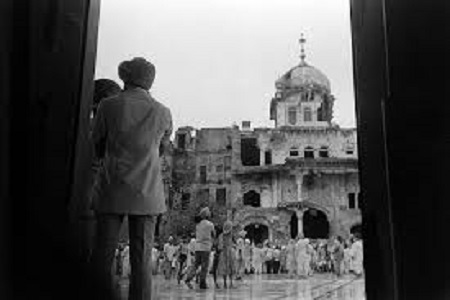


In the summer of 1984, a tragic and defining chapter unfolded in Indian history—Operation Blue Star, a military action ordered by the Indian government under Prime Minister Indira Gandhi, to flush out Sikh militants, including the leader Jarnail Singh Bhindranwale, who had taken refuge in the Golden Temple complex in Amritsar. What was executed as a counterinsurgency operation turned into a national trauma, especially for the Sikh community. Four decades on, its memory remains raw, its pain festering like an open wound.
The operation was launched on June 1, 1984, and reached its devastating peak between June 5 and 8, with the Indian Army storming the holiest shrine of the Sikhs—the Harmandir Sahib, popularly known as the Golden Temple. The timing of the operation—coinciding with the martyrdom anniversary of Guru Arjan Dev, when the temple was thronged with pilgrims—added to the grief and shock experienced by the community.
The Toll: Lives Lost and Sanctity Violated
Official figures of casualties remain controversial. The Indian government at the time claimed around 492 civilian deaths, including militants and pilgrims. However, independent estimates and Sikh organizations argue the number was significantly higher, with figures ranging from 3,000 to 5,000 civilians, many of whom were unarmed worshippers trapped inside the complex. 83 Indian Army personnel also lost their lives, and over 200 were injured.
The damage to the Akal Takht, the highest seat of temporal authority for the Sikhs, was particularly heart-wrenching. The historic structure was reduced to rubble, its walls perforated by bullets, its sanctity desecrated by tanks and artillery fire. Rare manuscripts, scriptures, and artworks were destroyed, a loss that can never be compensated.
The Psychological and Civil Fallout
The immediate aftermath of Operation Blue Star saw Punjab placed under virtual martial law, with strict curfews, mass arrests, and widespread surveillance. Thousands of Sikh youths were detained without charge or trial under preventive detention laws such as the National Security Act and the Armed Forces (Special Powers) Act. Families were broken, civil liberties suspended, and a climate of fear hung over the state for years.
The Sikh community across India and abroad was devastated. The wounds deepened with Operation Woodrose, a lesser-known but equally brutal military campaign in rural Punjab that followed Blue Star, aimed at rooting out “suspected militants.” Thousands of young Sikh men “disappeared” or were extrajudicially killed, their bodies never returned to their families.
Betrayal of a Community
The Sikhs, who make up just about 2% of India’s population, have contributed far beyond their numbers to the defense and development of the nation. They fought valiantly for India’s freedom, and after independence, they stood at the nation’s borders, defending it in every war. Yet in 1984, they were made to feel like outsiders in their own land.
The very sanctum sanctorum of Sikhism was turned into a battlefield by those entrusted with safeguarding the country’s unity and diversity. The barbarity of storming a sacred shrine, especially when peaceful alternatives had not been fully exhausted, felt to many Sikhs like a deliberate provocation, a message that their faith and heritage were dispensable in the pursuit of state power.
Many Sikhs ask, rightly: Would such an operation have been carried out in any other place of worship with similar force and timing? The sense of betrayal remains intense. What compounded the trauma was the lack of accountability, no official apology, and the subsequent anti-Sikh pogroms in November 1984 after Indira Gandhi’s assassination, where thousands more were murdered in cold blood—with state complicity and impunity.
A Memory that Refuses to Fade
For Sikhs around the world, Operation Blue Star is not just history—it is lived memory. It is their Holocaust moment, a violent rupture that has shaped the community’s relationship with the Indian state ever since. Just as the Jewish people have not forgotten the Holocaust, the Sikhs have not forgotten Blue Star. It is their green wound, unhealed and perhaps unhealable.
Memorials in gurdwaras, stories passed from generation to generation, and annual commemorations serve not only as acts of remembrance but as assertions of identity and resistance against forgetting. While governments have changed and political narratives evolved, no amount of time has dulled the pain of watching tanks roll into the most sacred site of Sikhism.
A Call for Justice and Healing
Even today, many Sikhs feel that the state has not adequately acknowledged the enormity of what was done. Truth-telling, accountability, and real justice have been scarce. There is an urgent need for the Indian state to engage in genuine reconciliation, not through token gestures, but through institutional reform, historical honesty, and an apology that truly acknowledges the depth of hurt inflicted.
Operation Blue Star was more than a military operation—it was a violation of trust, a rupture in the secular promise of India. Whether the movement led by Bhindranwale was right or wrong is a debate for historians and political scientists. What is beyond debate is that the handling of the situation was catastrophic, and the brutality inflicted on an entire community has left scars that remain visible even today.
As India celebrates its democratic credentials, it must also confront the ghosts of its past. For the Sikhs, 1984 is not over. It is a continuous echo, a festering sore that demands to be seen, acknowledged, and remembered.


Be the first to comment