

Onam is primarily a harvest festival celebrated with great fervour in Kerala. The festival marks the return of King Mahabali, and its timing is closely linked to Kerala’s agricultural cycle. It signifies the end of the monsoon and the arrival of the harvest season, making it a time of joy and prosperity.
Onam, the most popular cultural festival of Kerala, also recognized as Kerala’s Official State Festival, is being celebrated by the Malyalee community all over the world from August 26 to September 6.
Although the festival has its roots in Kerala, it has spread far beyond the state’s borders. Malayali communities in different parts of the world, especially in countries like the UAE, UK, and the United States, also celebrate Onam with equal passion. For those living outside of Kerala, Onam is a reminder of their cultural heritage, with celebrations including all the traditional elements such as feasts, Pookalam (floral decorations), and performances.
In Kerala, Onam celebrations are widespread and take place in homes, temples, and public spaces. The entire region is decorated with lights and flowers, and many villages and towns host cultural events that showcase Kerala’s unique art forms, dances, and rituals. Onam’s wide reach across the globe is a reflection of its significance in maintaining cultural ties no matter where people live.
This blog will explore the history of Onam, its cultural importance, key celebrations, and the traditional Onam jewellery sets and attire that make the festival even more special.
The Legend of King Mahabali
The heart of Onam is rooted in legend. According to Kerala’s cherished mythology, Onam commemorates the annual homecoming of King Mahabali (Maveli)-a virtuous Asura king whose reign was marked by equality, prosperity, and justice.
As the story goes, Mahabali’s growing power alarmed the Devas (gods), who sought help from Lord Vishnu. Vishnu descended as Vamana, a humble Brahmin dwarf, and requested three paces of land. Mahabali generously agreed, only to see Vamana grow into a cosmic giant: In one step, he covered the earth. In the second, he spanned the heavens. With no space left for the third, Mahabali bowed his head in surrender.
Vishnu, moved by Mahabali’s humility and devotion, granted him a boon: he could visit his beloved people once every year. Onam is this symbolic homecoming-a celebration of a golden age when no one was hungry, sad, or unfairly treated.
The Significance of Onam
The significance of Onam stems from both its mythological and agrarian origins. While the legend of King Mahabali provides a spiritual foundation, the festival is also a time of harvest, marking a season of abundance. For centuries, it has been a festival of gratitude – thanking nature for its bounty and farmers for their hard work. Beyond the agrarian importance, Onam holds social and cultural significance.
When Is Onam Celebrated?
Onam lasts ten days, beginning with Atham and ending with Thiruvonam, the most important day. The festival typically falls in August or September, based on the Malayalam calendar. Public holidays in Kerala are declared on Thiruvonam, but festivities extend well beyond.
Rituals and Celebrations of Onam
– Pookkalam: Floral Carpets of Welcome
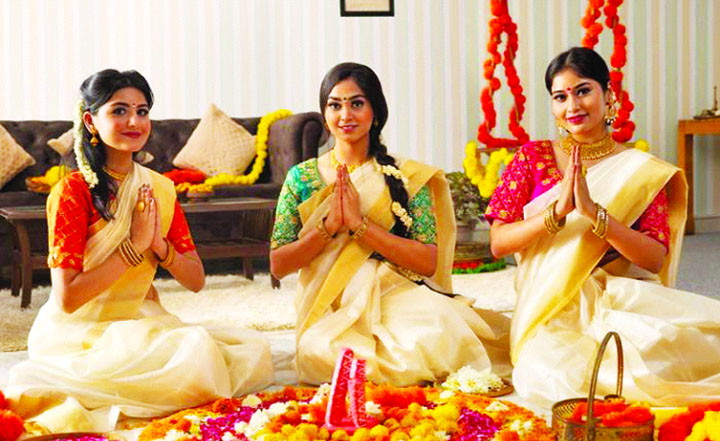
Every morning during Onam, families create intricate pookkalams-circular floral designs laid at the entrance of homes to welcome Mahabali. Starting modestly on Atham and expanding each day with new layers and patterns, these arrangements symbolize unity and harmony.
– Onasadya: The Grand Feast
The highlight of Onam is the Onasadya, an elaborate vegetarian feast served on a banana leaf. A traditional sadya may feature 20-26 dishes, including:
– Parippu (lentils), Sambar, Avial, Kaalan, Olan
– Thoran (stir-fried vegetables with coconut), Pachadi, Kichadi
– Pappadam, banana chips (upperi), and pickles
– Payasam or Pradhaman (sweet milk or jaggery-based dessert)
– The sadya is eaten seated on the floor, reflecting Kerala’s age-old customs of simplicity, hospitality, and shared community.
Vallamkali: The Snake Boat Race
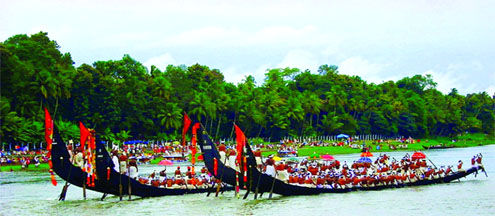
Kerala’s backwaters come alive with the thrilling Vallamkali (snake boat races), particularly at Aranmula and Allepey. Teams of rowers power long, narrow boats to the rhythmic beat of drums and songs, cheered on by thousands of spectators. These races are not just competitive sports-they embody teamwork, discipline, and the spirit of Onam.
Pulikali: The Tiger Dance
Onam streets burst into color with Pulikali, where performers paint themselves as tigers and hunters, dancing to the beat of traditional percussion instruments. This folk art dates back over 200 years and symbolizes courage, energy, and festive cheer.
Cultural Programs and Traditional Games
From Kathakali dance-drama and Thiruvathira dances to Onakalikal (traditional games like tug-of-war, archery, and ball games), Onam showcases Kerala’s artistic and athletic heritage. Temples and cultural institutions host music concerts, dramas, and processions, while villages organize sports and community feasts.
Onam: Beyond Religion and Region
Although rooted in Hindu mythology, Onam transcends religious boundaries. Christians, Muslims, and Hindus in Kerala all celebrate the festival as an expression of Kerala’s cultural identity and communal harmony. In schools, offices, and government buildings, Onam brings people together in shared celebrations, regardless of faith.
Kerala’s diaspora, spread across the world, also observes Onam with equal enthusiasm, organizing cultural programs, competitions, and traditional feasts in places as far away as Dubai, London, New York, and Singapore.
Historical and Economic Significance
– Harvest Festival: Onam coincides with the rice harvest, making it a thanksgiving festival for agrarian Kerala.
– Tourism Boost: The Kerala government organizes Tourism Week during Onam, showcasing local crafts, cuisine, and performing arts to global visitors.
– Economic Activity: Markets bustle with sales of flowers, clothing (especially kasavu saris and mundus), gifts, and festival essentials, giving a significant boost to local economies.


Be the first to comment