

India will not abandon Russia simply to please western partners. It will not accept moral lectures that ignore western hypocrisy
“The Modi government’s foreign policy reflects a clear doctrine of multi-alignment rather than allegiance. India cooperates with the US in the Quad, buys S-400 systems from Russia, maintains close ties with France, deepens economic engagement with the Gulf and expands participation in BRICS. This is not fence-sitting. It is the behavior of a nation that has learned not to rely on any single power.”

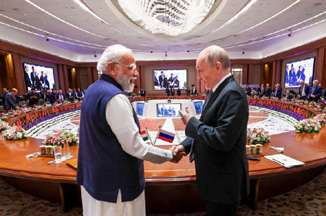
When The Telegraph splashed its recent headline, “Can the West trust India?”, it captured a sentiment now rippling through much of the British press. Vladimir Putin’s visit to New Delhi has triggered the familiar chorus of western anxiety: India is “hedging”, India is “in Moscow’s orbit”, India is “unreliable”. Commentators warn about discounted Russian oil, defense purchases and diplomatic signaling — as though a sovereign nation pursuing its strategic interests were committing an ideological betrayal.
What these headlines reveal, however, is not a failure of Indian policy but a failure of western imagination. The question is mis framed. A more honest one in 2025 would be whether India can trust the West to treat it as an equal partner.
Much of the commentary in London reflects an outdated assumption: that India should align reflexively with western preferences. Only recently, the British High Commissioner in New Delhi co-authored an op-ed urging India to stand firmly with the West on Ukraine and isolate Russia “as a matter of principle.” The tone was unmistakably patronizing, implying that India must assume a subordinate posture.
But India today is not the India of 1991, let alone 1947. It is a rising economic powerhouse, a central player in the Indo-Pacific and an increasingly indispensable global swing state. It trades widely, hedges openly and maintains multiple strategic options. This is not duplicity; it is statecraft. Western discomfort stems from something simpler: India no longer responds to moral pressure or diplomatic coaxing in the way it once did.
British commentary often singles out India for continuing to buy crude oil from Russia. What is omitted is equally important. European nations still import significant quantities of Russian LNG. The US remains one of the world’s largest buyers of Russian uranium. Several G7 countries maintain complex, sanctioned-but-exempt trade channels with Russia. Yet only India is asked to justify its purchases, even though they ensure affordable energy for 1.4 billion people and prevent fuel inflation from throttling its economy. The selective outrage is not lost on New Delhi.
Another routine complaint is that India refuses to distance itself from Russian defense hardware. But Britain, like the US and France, is simultaneously urging deeper strategic and defense cooperation with New Delhi. London wants India on its side but appears unwilling to accept the policy choices that come with strategic autonomy. India’s position is straightforward: it will diversify defense suppliers, but not at the cost of national readiness; it will maintain ties with Moscow as long as those ties serve India’s interests; it will not enter alliances that compromise independent decision-making. This is not duplicity; it is exactly how the West behaves when its own interests are at stake.
The deeper issue is psychological. British political culture still struggles with the idea of India as a global peer. This discomfort is visible in moralizing editorials that frame Indian choices as ethical lapses rather than strategic calculations, selective double standards that judge India more harshly than western states acting similarly, and a lingering reluctance to confront Britain’s own role in shaping historical mistrust.
Indian policymakers rarely invoke colonial history in diplomatic meetings. But every serious Indian strategist is aware that trust deficits did not begin in 2022. Parliament debates, commission reports and the historical record all testify to periods of profound injustice during British rule. That past cannot be erased simply because today’s commentators find it inconvenient. India’s skepticism towards western advice is not an emotional legacy of the empire; it is a rational reading of recent behavior.
Beyond history, there are contemporary reasons why India is cautious. One is inconsistency on Pakistan, where western pressure and indulgence often shift unpredictably. Second, technology and sanctions risks have repeatedly forced India to choose between great-power agendas, not of its own making, and vacillation on immigration and visas. Britain courts Indian talent but simultaneously tightens entry rules, sending mixed signals about partnership.
The West’s own Asia strategy has also become increasingly variable, asking India simultaneously to be indispensable and to “choose sides”, a contradiction New Delhi refuses to accept. Trust is not built on lectures; it is built on consistency.
The Modi government’s foreign policy reflects a clear doctrine of multi-alignment rather than allegiance. India cooperates with the US in the Quad, buys S-400 systems from Russia, maintains close ties with France, deepens economic engagement with the Gulf and expands participation in BRICS. This is not fence-sitting. It is the behavior of a nation that has learned not to rely on any single power.
Western anxiety arises because India refuses to be absorbed into the old western security architecture. It insists on building its own. The debate in London is revealing not of India’s unreliability, but of Britain’s need to adjust to a new geopolitical reality.
India will not abandon Russia simply to please western partners. It will not accept moral lectures that ignore western hypocrisy. It will not behave as a subordinate power in the international system. And it will not apologize for acting in its own national interest, any more than Britain would.
So when British commentators ask “Can the West trust India?”, they reveal an outdated assumption that trust means compliance. But partnership in 2025 looks very different from partnership in 1965 or even 2005. The more meaningful question now is whether western governments — and the British press in particular — are prepared to treat India as an equal interlocutor rather than a pupil in need of direction.
India has demonstrated consistency, transparency and a clear logic in its foreign policy. What it seeks in return is not approval, but respect. If trust is the issue, India has every reason to be the one asking whether the West has earned it.
(Shyam Bhatia is an Indian-born British journalist, writer and war reporter based in London)


Be the first to comment