Tag: Angela Merkel

  • Obama threatens fresh sanctions against Russia

    Obama threatens fresh sanctions against Russia

    WASHINGTON (TIP): US President Barack Obama told German Chancellor Angela Merkel on April 10 that the United States and its allies should prepare new sanctions against Russia if it escalates the crisis over Ukraine.

    “The president underscored the need for the United States, European Union and other global partners to be prepared to meet further Russian escalation with additional sanctions,” the White House said in a statement about the phone call. Pro-Russian separatists in eastern Ukraine, “apparently with support from Moscow, continue an orchestrated campaign of incitement and sabotage to undermine and destabilize the Ukrainian state”, it added.

    “The leaders again called for Russia to move its troops back from the border region.” Earlier in the day at World Bank/IMF meetings in Washington, US treasury secretary Jacob Lew delivered the same warning to his Russian counterpart finance minister Anton Siluanov, ramping up the pressure on Moscow. Ukraine is facing a new secession crisis following its loss of Crimea to Russia, and relations between Moscow and the west have hit new post-Cold War lows.

  • Warning Russia, Biden says US will defend allies

    Warning Russia, Biden says US will defend allies

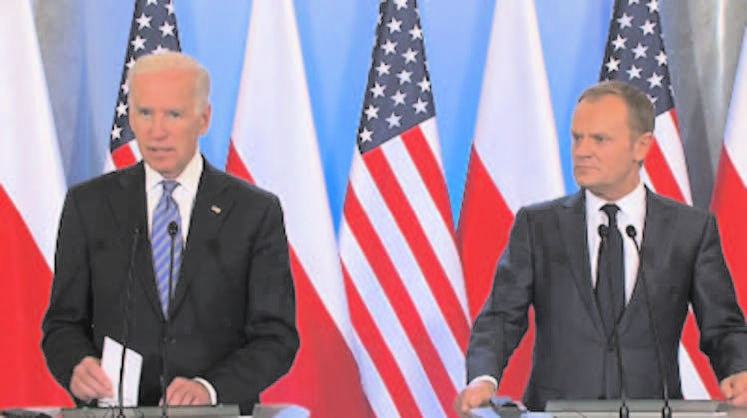
    VILNIUS, LITHUANIA (TIP): Issuing an outright warning to Moscow, Vice President Joe Biden declared Wednesday the United States will respond to any aggression against its Nato allies, as Russia’s neighbors looked warily to the escalating crisis in nearby Ukraine.

    Standing side by side with a pair of Baltic leaders in Vilnius, Lithuania, Biden said the US was “absolutely committed” to defending its allies, adding that President Barack Obama plans to seek concrete commitments from Nato members to ensure the alliance can safeguard its collective security. In a jab at Russia, he said the US stands resolutely with Baltic states in support of the Ukrainian people against Russian aggression.

    “Russia cannot escape the fact that the world is changing and rejecting outright their behavior,” Biden said, after meeting in Vilnius with Lithuanian President Dalia Grybauskaite and Latvian President Andris Berzins. Biden’s comments came at the close of a two-day trip to Lithuania and Poland with a two-pronged theme: Sending a stern message to Russian President Vladimir Putin that the US won’t abide Russian intervention in Ukraine, and reassuring fretful Nato allies that the US and others will come to their defense if necessary. “We’re in this with you, together,” Biden said.

    Amid the tough talk from Biden and the Baltic leaders, Russia’s annexation of Crimea was increasingly looking like a foregone conclusion. At the Ukrainian navy headquarters in Sevastopol, Crimea, militias stormed the base Wednesday, taking it over without resistance. Although senior Ukrainian officials planned to travel to Crimea in hopes of averting an escalation in hostilities, Crimea’s pro-Russian prime minister insisted they weren’t welcome and wouldn’t be allowed to enter. A day earlier, Putin declared Crimea part of Russia in a passionate speech steeped in Russia’s sense of being slighted and marginalized by the West in the years since the Cold War.

    While repeatedly insisting that Russia’s move is illegal and won’t be recognized, the US and other world powers have also turned their attention to eastern Ukraine and other areas with large ethnic Russian populations, lest Putin seek additional territory in what some fear could portend a return to Moscow’s traditional imperialist ambitions. To that end, Western powers were seeking fresh ways to show that Russia would incur real costs unless it changes course.

    Berzins announced that he and Polish President Bronislaw Komorowski had agreed that Poland and Latvia will start coordinating its security activities more closely. France’s foreign minister said leaders of the Group of Eight world powers have suspended Russia’s affiliation with the group over its actions in Ukraine. Obama invited the seven other members to discuss what comes next during an emergency meeting in Europe. Meanwhile, Britain said it was suspending military cooperation with Russia in light of the crisis. And German Chancellor Angela Merkel, in a phone call with Obama on Tuesday, agreed that U.N. and other international monitors must be sent in to other parts of Ukraine without delay.

  • US spied on Merke’s predecessor after he opposed the Iraq war, says report

    US spied on Merke’s predecessor after he opposed the Iraq war, says report

    Snowden’s leaked documents reveal that the US spied on Schroeder for his opposition to the Iraq war.

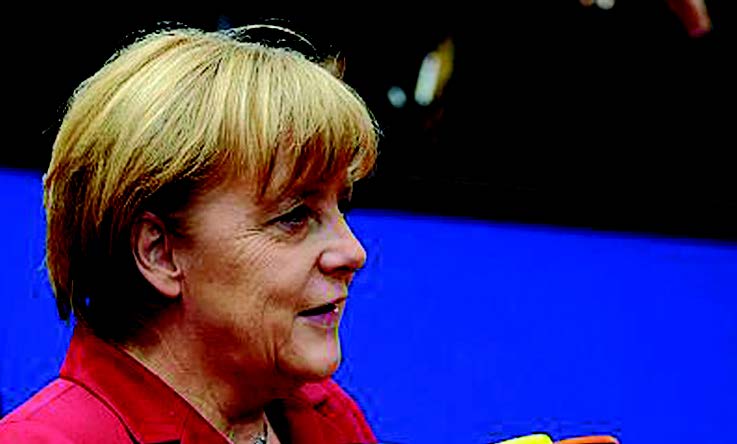
    WASHINGTON (TIP): American intelligence services had not only spied on German Chancellor Angela Merkel, but also monitored her predecessor Gerhard Schroeder after he opposed the US plans to go to war in Iraq, suggest media reports.

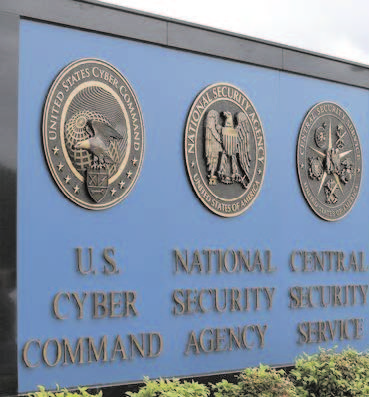
    The Sueddeutsche Zeitung newspaper and the TV channel NDR reported that their investigations based on documents leaked by former National Security Agency (NSA) contractor Edward Snowden showed that Social Democrat (SPD) Chancellor Schroeder was spied on by the NSA at least from 2002. Schroeder, who headed a coalition government with the Green party between 2001 and 2005, was listed under the number 388 in the “National Sigint Requirements List” of the NSA.

    The list contained the names of persons and institutions to be monitored by the spy agency, the reports said. Since a document leaked by Snowden in October revealed that the NSA had eavesdropped on Chancellor Merkel’s mobile phone for several years, there have been speculations that she may not be the only German leader spied on by the NSA.

    The Sueddeutsche Zeitung and NDR said their investigations showed that Schroeder’s phone may have been bugged by the NSA from 2002 and Merkel was spied on by the agency since she began her first term in 2005. US President Barack Obama assured the German chancellor recently that spying on her would not happen again during his presidency and he would not allow US intelligence operations to damage the close friendship and cooperation between the two countries.

    Schroeder’s strong opposition to the Iraq war in 2003 could have made him a target of surveillance by the US intelligence agencies as the US feared a split in the North Atlantic Alliance (NATO), the reports said. Commenting on the revelations, Schroeder said in a statement that when he was in power he “would not have thought about being monitored by American intelligence agencies; now I will not be surprised,” according to the reports.

    Green party parliament member Hans-Christian Stroebele, the only western politician to meet Snowden in Moscow since he was granted a one-year asylum by Russia in August, said he firmly believed that Schroeder and possibly other members of the SPD-Green government were spied on by the NSA. In a TV interview, Stroebele demanded a thorough clarification of the NSA surveillance operations at least since 2002 and an investigation by a German parliamentary inquiry committee, which he expects will be constituted shortly.

  • US spy chief defends spying on allies

    US spy chief defends spying on allies

    WASHINGTON (TIP): Undeterred by the European backlash, US Director of National Intelligence James Clapper has stoutly defended America’s spying on world leaders, including close allies, commenting other nations are doing much the same. At a Congressional hearing on Tuesday, October 29, when asked whether allies also spied on the United States, Clapper asserted: “Absolutely.” Clapper also defended the domestic surveillance that has drawn flak for sweeping up phone records of millions of Americans, saying it was necessary to protect the country against terrorists. Gen. Keith Alexander, Director of the National Security Agency, which has been at the centre of a major international controversy ever since whistleblower Edward Snowden’s sensational revelations, strongly defended the agency’s far-reaching surveillance operations. But Alexander denied that his agency had swept up millions of phone records of French and Spanish citizens, whose Governments have complained over the issue to Washington. Instead, it was NATO which collected and shared the information with the United States. The Europeans have been unmoved with American explanations thus far. A delegation from European Parliament, currently in Washington, was slated to hold a meeting with a senior official of the National Security Council at the White House on later on Wednesday. Germany has sent a separate team of officials as well.

    European Parliament member Jan Philipp Albrecht told the Voice of America (VOA) that the reports about the eavesdropping Chancellor Merkel were the tipping point, commenting: “Now people are really concerned. They see that it is not any longer connected to a terrorist threat, because Angela Merkel is not a terrorist.” Albrecht held out the threat that unless US effected major changes with Congress passing legislation to balance national security needs with the responsibility to protect basic civil rights, Europe could suspend important trans-Atlantic trade talks. At the House Intelligence Committee hearing on Capitol Hill, Clapper sought to play down the complaints of European allies, suggesting that spying of each other’s leaders has been a long-time practice of intelligence agencies across the world. As one who has worked in intelligence for some 50 years, Clapper said it was “a basic tenet” to collect, whether by spying on communications or through other sources, confidential information about foreign leaders to find out “if what they’re saying gels with what’s actually going on”. Alexander, too, commented that one of the first things he learned in intelligence school was that it would be valuable to learn about the intentions of foreign leaders.

  • US monitored the phone calls of 35 world leaders: Report

    US monitored the phone calls of 35 world leaders: Report

    LONDON (TIP): The United States monitored the phone conversations of 35 world leaders according to classified documents leaked by fugitive whistleblower Edward Snowden, Britain’s Guardian newspaper said on Oct 24. Phone numbers were passed on to the US National Security Agency (NSA) by an official in another government department, according to the documents, the Guardian said on its website. It added that staff in the White House, state department and the Pentagon was urged to share the contact details of foreign politicians. The revelations come after Germany demanded answers from Washington over allegations chancellor Angela Merkel’s phone was bugged, the worst spat between the two countries in a decade. The White House did not deny the bugging, saying only it would not happen in future. “In one recent case, a US official provided NSA with 200 phone numbers to 35 world leaders,” reads an excerpt from a confidential memo dated October 2006 which was quoted by the Guardian. The identities of the politicians in question were not revealed. The revelations in the centre-left Guardian suggested that the bugging of world leaders could be more widespread than originally thought, with the issue set to overshadow an EU summit in Brussels. No immediate comment on the report was available from the NSA.

  • GERMANY SUMMONS US AMBASSADOR OVER CLAIM NSA BUGGED MERKEL’S PHONE

    GERMANY SUMMONS US AMBASSADOR OVER CLAIM NSA BUGGED MERKEL’S PHONE

    BERLIN (TIP): Germany’s foreign minister, Guido Westerwelle, has called the US ambassador to a personal meeting to discuss allegations that US secret services bugged Angela Merkel’s mobile phone, reports The Guardian. The decision to call in John B Emerson, who has only been the US representative in Berlin since mid- August, is an unusually drastic measure. During previous upheavals in relations, such as over the Syrian crisis, conversations have taken place between diplomats. Allegations that the US government’s spying had reached the highest level were met with outrage and disappointment in Germany on Thursday, October 24. The country’s defense minister, Thomas de Maiziere, told ARD television it would be bad if the reports turned out to be true. Washington and Berlin could not return to business as usual, he said. Informed sources in Germany said Merkel was livid about the reports that the NSA had bugged her phone and was convinced, on the basis of a German intelligence investigation, that the reports were utterly substantiated. The German news weekly, Der Spiegel, reported an investigation by German intelligence, prompted by research from the magazine, that produced plausible information that the chancellor’s mobile was targeted by the US eavesdropping agency.

    She found the evidence substantial enough to call the White House and demand clarification. The outrage in Berlin came days after the French president, François Hollande, called the White House to confront Barack Obama with reports that the NSA was targeting the private phone calls and text messages of millions of French people. While European leaders have generally been keen to play down the impact of the whistleblowing disclosures in recent months, events in the EU’s two biggest countries this week threatened an increasing lack of trust in transatlantic relations. On Wednesday Merkel’s spokesman, Steffen Seibert, made plain that the chancellor upbraided Obama unusually sharply and also voiced exasperation at the slowness of the Americans to respond to detailed questions about the NSA scandal since the Snowden revelations first appeared in the Guardian in June. Merkel told Obama that “she unmistakably disapproves of and views as completely unacceptable such practices, if the indications are authenticated”, Seifert said. “This would be a serious breach of confidence. Such practices have to be halted immediately.” The sharpness of the German complaint direct to a US president strongly suggested that Berlin had no doubt about the grounds for protest. Seibert voiced irritation that Berlin had waited for months for proper answers from Washington on the NSA operations.

    On Thursday Süddeutsche Zeitung conveyed a strong sense of the depth of disillusionment with the US president in Germany when it wrote that “Barack Obama is not a Nobel peace prize winner, he is a troublemaker”. In a comment piece in the German broadsheet, Robert Rossmann wrote that during his last visit to Germany, “the American president had flamboyantly promised more trusting collaboration between the countries. Even Merkel seems to have lost faith in that promise by now. One doesn’t dare imagine how Obama’s secret services deal with enemy states, when we see how they treat their closest allies.” Die Zeit wrote that Obama’s “half-hearted denial” of the allegations raised more questions than it answered. “Was Merkel’s mobile the target of NSA surveillance in the past? … It is time for Obama and the US Congress to be ruthlessly transparent about the macabre practices of the NSA and restrain them strongly. They promised it months ago, but until recently very little has happened. With each revelation trust is eroded further. If America wants to stop annoying its friends and allies, it only has one option. Get on the front foot and be open.” Criticism was not focused solely on Obama, but was extended to Merkel, whose chief of staff only recently declared that the NSA scandal was finished.

    Many feel Merkel failed to react appropriately to the Snowden revelations, and was only stepping up the rhetoric now that she had been personally affected. Germany’s data protection commissioner, Peter Schaar, said that the reports showed “the absurdity of politicians trying to draw to a close the debate about surveillance of everyday communication here”. He said it had been irresponsible of politicians not to be more upfront in calling for the US to clear up the matter. Anke Domscheit-Berg, of the German Pirate party, told the Guardian: “In the past few months, Chancellor Merkel did very little to make the US government answer all those questions that should have had highest political priority. Now she gets a taste of what it feels like when foreign secret services spy on all your communication. We have stopped trusting empty promises and so should Angela Merkel. It is about time to get all dirty secrets on the table.” The debate in the coming days is likely to focus on how the allegations will affect new data protection regulation at the European level, with some MEPs calling for a Europeonly data cloud. In Frankfurter Allgemeine Zeitung, Georg Mascolo and Ben Scott warned of the creation of a “digital Maginot line” between Europe and the US, and instead called for a “no-spy treaty” between European countries. “Storing data and surveillance would only be allowed for previously agreed goals – the fight against terrorism, the proliferation of weapons of mass destruction as well as grave acts of crime. All forms of political and economic espionage would be banned. The privacy of every EU citizen has to be respected by each EU secret service as if they were their own.”

  • European Union leaders clinch deals on banks, budget

    European Union leaders clinch deals on banks, budget

    BRUSSELS (TIP): European leaders agreed on new steps to fight youth unemployment and promote lending to credit-starved small business on Thursday after deals on banking resolution and the long-term EU budget gave their summit a much needed lift. The 27 leaders resolved to spend 6 billion euros over the next two years to support job creation, training and apprenticeships for young people, and to raid unspent EU budget funds to keep the effort going thereafter.

    Critics say the money is a drop in the ocean with more than 19 million people unemployed in the EU, and more than half of all young people under 25 without a job in Spain and Greece. Leaders also approved plans for the European Investment Bank to lend hundreds of billions of euros to small and medium-sized enterprises (SMEs) particularly in southern EU states where bank finance has largely dried up due to the euro zone’s debt crisis. “The last 24 hours have been a great success,” European Commission President Jose Manuel Barroso told a news conference. “Today we have agreed the money to back up our words.” After late-night talks in Luxembourg, European Union finance ministers agreed how to share the cost of future bank failures among investors and wealthy savers as far as possible. Separately, negotiators for the European Parliament, the European Commission and EU member governments clinched a deal on a 960 billion euro ($1.25 trillion) seven-year budget for the bloc for the period 2014-20, ending months of squabbling.

    The leaders unanimously endorsed the agreement, EU Council President Herman Van Rompuy said, overcoming a last minute snag over Britain’s rebate, which will remain intact. The European Parliament must approve the deal next month so the new budget can take effect next January. The banking resolution agreement designed to shield European taxpayers from having to foot the bill for rescuing troubled banks will be implemented on a national basis from 2018. It lays the ground for a single system to resolve failed banks in the euro zone and the 27-nation EU, the second stage of what policymakers call a European banking union, meant to strengthen supervision and stability of the financial sector.

    The European Commission, the EU’s executive, will put forward proposals for a single resolution mechanism next week, but any deal on it is a long way off because EU paymaster Germany opposes taking any liability for other countries’ banks. German Chancellor Angela Merkel welcomed the EU budget breakthrough, saying it would allow new spending on everything from agriculture to research, roads, bridges and development aid to move ahead, promoting economic growth in Europe.