Tag: Apple News

  • Four Indian Americans Under 40 list in 2021 Fortune 40

    Four Indian Americans Under 40 list in 2021 Fortune 40

    NEW YORK (TIP): Noting “it’s been a monumental year of change in everything from the way we work and travel to how we buy groceries and invest our savings,” the influential business magazine says this year’s list highlights those who “are paving the way for what comes next.”

    Of the four Indian Americans, Young America’s Foundation’s Raj Kannappan, 30, is responsible for promoting conservative free-market principles among college students around the US, according to Fortune.

    The Trevor Project led by Amit Paley, 39, has since 1998 worked to prevent suicide among young queer people via a hotline dedicated just to LGBTQ youth, Fortune notes.

    As COO of Investment Banking Division, Goldman Sachs, Akila Raman, 39, is at the heart of the action in a record year of dealmaking and mergers and acquisitions (M&A).

    Clubhouse Cofounder Rohan Seth, 37, has been going nonstop since early 2020 with his social media startup that’s a cross between talk radio and a group chat, says Fortune.

    As director of the Center for Entrepreneurship & Free Enterprise at Young America’s Foundation, Raj Kannappan is responsible for promoting conservative free-market principles among college students around the US, according to Fortune.

    With a presence on more than 2,000 college and high school campuses, and nearly $100 million in assets, the group has been quietly funding and supporting campus Republican groups, it says.

    They are bringing speakers to colleges and promoting messages of fiscal and social conservatism historically tied to President Ronald Reagan and William F. Buckley.

    Kannappan and YAF are also exerting their influence on the legal system. The group has been filing lawsuits against colleges that bar right-wing speakers from campus.

    A recent lawsuit against the University of Florida, which repeatedly refused to use school funds to pay speaker fees for controversial Republicans, resulted in the university settling with conservative students for $66,000 and changing its free-speech rules.

    Amit Paley, 39, CEO and Executive Director, The Trevor Project

    Lesbian, gay, and bisexual youth are more than four times as likely to consider suicide as their straight peers. Since 1998, the Trevor Project has worked to prevent suicide among young queer people via a hotline dedicated just to LGBTQ youth, Fortune notes.

    And since 2017, when Amit Paley took the reins as CEO of the nonprofit, the organization has dramatically increased the number of young people receiving support.

    Through a focus on innovation, technology, and research in the understudied field of LGBTQ youth mental health, Paley has expanded the number of staff working to help this vulnerable group and quadrupled the number of youth in crisis the organization serves each month.

    Paley also serves on the National Suicide Prevention Lifeline steering committee and the executive committee of the National Action Alliance for Suicide Prevention.

    He told Fortune that being involved in the mental health space at large helps him advocate for LGBTQ youth and their specific needs. The Trevor Project also takes that advocacy seriously at the government level, working to end conversion therapy, oppose anti-transgender legislation, and establish “988” as the number Americans can call (starting next summer) to reach their Suicide Prevention Lifeline.

    Since Covid took hold of the world, Paley took the Trevor Project entirely remote for the first time, while dealing with nearly double the volume of calls pre-pandemic.

    Many LGBTQ youth, who make up a disproportionate 40% of homeless youth, are stuck in situations that worsen their mental health, like living in homeless shelters or spending more time at home with unsupportive or abusive parents.

    During the pandemic, Paley also led the organization in continuing its long-held commitment to intersectional activism, supporting queer Black, Asian American, and Pacific Islander youth during the outrage over George Floyd’s death and racist attacks on those in the AAPI community.

    Akila Raman, 39, COO of Investment Banking Division, Goldman Sachs

    Dealmaking and M&A have had a record year—and Akila Raman is at the heart of the action, notes Fortune. Promoted in early February, Raman runs operational strategy for the global investment bank.

    She’s currently focused on international expansion and growth in new products like ESG. Having started as an intern in 2003, Raman spent most of her time with natural resources companies in sectors such as energy, power, and metals.

    She has also prioritized using technology and automation to streamline the workflow and relieve stress among the Goldman investment bankers she oversees.

    As the daughter of Indian and Korean immigrants, Raman hasn’t seen many people who look like her on Wall Street, and she’s spent years mentoring women and people of color—not just at Goldman but across the industry. “Whenever I leave this place and career, that will be a really cool legacy,” she says.

    Rohan Seth, 37, Cofounder, Clubhouse

    Rohan Seth’s combination of product and tech chops coupled with an entrepreneurial drive helped get him on Fortune’s annual 40 Under 40 list, according top the business magazine

    Since early 2020 when he cofounded Clubhouse, a social media startup that’s a cross between talk radio and a group chat, he’s helping steer one of the most talked-about consumer apps in recent years at a crucial time in its history.

    When the coronavirus pandemic forced people to stay home, the service exploded in popularity. Millions downloaded the app to listen to luminaries like rapper MC Hammer and Tesla CEO Elon Musk.

    As an engineering lead at Clubhouse, Seth is responsible for ensuring the app can handle the huge influx of users, the magazine says.

    In 2019, Seth created the Lydian Accelerator, a health care nonprofit named after his daughter Lydia that is focused on discovering treatments for rare genetic disorders.

    Lydian Accelerator’s goal is to uncover the medical treatments that traditional pharmaceutical giants may ignore because of their rarity.

    Taking cues from the tech industry, the accelerator aims to open-source and make free the genetic data, processes, and protocols necessary to develop potentially game-changing personalized treatments.

  • PM Modi, Mamata Banerjee, Adar Poonawalla on Time’s ‘100 most influential’

    PM Modi, Mamata Banerjee, Adar Poonawalla on Time’s ‘100 most influential’

    PM Modi, Mamata Banerjee, Adar Poonawalla on Time’s ‘100 most influential’

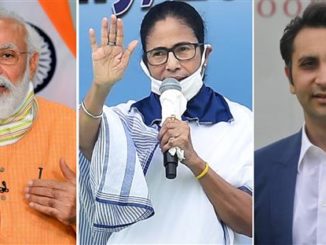
    NEW YORK (TIP): Prime Minister Narendra Modi, West Bengal Chief Minister Mamata Banerjee and Serum Institute of India CEO Adar Poonawalla have been named among the world’s 100 most influential people of 2021 by Time magazine. The magazine on Wednesday, April 15, unveiled its annual list of ‘The 100 Most Influential People of 2021’, a global list that includes US President Joe Biden, Vice-President Kamala Harris, Chinese President Xi Jinping, Duke and Duchess of Sussex Prince Harry and Meghan, former US president Donald Trump and co-founder of the Taliban Mullah Abdul Ghani Baradar. Time’s profile of Modi says India has had three pivotal leaders — Jawaharlal Nehru, Indira Gandhi and Modi. “Narendra Modi is the third, dominating the country’s politics like no one since them.” The profile by CNN journalist Fareed Zakaria accuses the 69-year-old leader of “eroding the rights” of India’s Muslim minority and intimidating journalists. It describes Mamata Banerjee as the face of fierceness in Indian politics. “The street-fighter spirit and self-made life in a patriarchal culture sets her apart,” the profile says. Poonawalla’s Time profile says that from the beginning of the Covid-19 pandemic, the 40-year-old head of the world’s largest vaccine maker “sought to meet the moment.” About Taliban co-founder Baradar, it says: “Baradar represents a more moderate current within the Taliban.”


  • Financial bids received for Air India disinvestment: Tata Sons and Spice Jet among bidders

    Financial bids received for Air India disinvestment: Tata Sons and Spice Jet among bidders

    NEW DELHI (TIP): Government of India said, September 15, that it has received multiple financial bids for buying national carrier Air India. Meanwhile, a Tata Sons spokesperson told PTI that it has put in a bid for the airline. “Financial bids for Air India disinvestment received by Transaction Adviser. Process now moves to concluding stage,” DIPAM Secretary Tuhin Kanta Pandey tweeted. The government is seeking to sell 100% of its stake in the state-owned national airline, including Air India’s 100% shareholding in AI Express Ltd and 50% in Air India SATS Airport Services Private Ltd. The stake sale process, which began on January 2020, faced delays due to the COVID-19 pandemic. In April 2021, the government asked potential bidders to put in financial bids. September 15 was the last day for putting in financial bids. Tata Group was among the multiple entities that had put in initial expression of interest (EoI) in December 2020 for buying the Maharaja. With previous attempts since 2017 failing to get any significant interest and after receiving feedback from potential investors, the government had in October last year sweetened the EoI clause relating to transfer of Air India’s debt to the new investor, giving bidders flexibility to decide on the quantum of humongous debt they want to absorb.

    As per the Air India EoI floated by the Department of Investment and Public Asset Management (DIPAM) in January 2020, of the airline’s total debt of ₹60,074 crore as of March 31, 2019, the buyer would be required to absorb ₹23,286.5 crore. The rest would be transferred to Air India Assets Holding Ltd (AIAHL), a special purpose vehicle.

    Air India has been in losses ever since its merger with domestic operator Indian Airlines in 2007. The airline, which was formed by the Tatas as a mail carrier in 1932, will give the successful bidder control of 4,400 domestic and 1,800 international landing and parking slots at domestic airports, as well as 900 slots at airports overseas.

    Besides, the bidder would get 100% of the low-cost arm Air India Express and 50% of AISATS, which provides cargo and ground-handling services at major Indian airports.

  • Celebrating Constitution Day

    Celebrating Constitution Day

    Constitution Day and Citizenship Day is observed each year on September 17 to commemorate the signing of the Constitution on September 17, 1787, and “recognize all who, by coming of age or by naturalization, have become citizens.”

    On September 17, 1787, the Founding Fathers signed the most influential document in American history, the U.S. Constitution. A scene at the signing of the Constitution Day.

    Citizens of the United States have celebrated Independence Day and Presidents’ Day since the 1870s, and in 2005, the nation began to celebrate Constitution Day. Also known as Citizenship Day, Constitution Day is an American holiday honoring the day 39 delegates to the Constitutional Convention signed the United States Constitution. This historic date was September 17, 1787.

    “I Am an American Day”

    In 1939, the New York City news tycoon William Randolph Hearst suggested the creation of a holiday to celebrate American citizenship. Not only did Hearst have a wide readership of his many daily newspapers, but he had significant political connections, and in 1940, Congress designated the third Sunday in May as “I am an American Day.” President Harry Truman presented the resolution, setting aside this date in honor of the American people, especially those who had recently become citizens of the United States.

    A group of new citizens takes oath of allegiance.

    The holiday quickly gained support and popularity through the efforts of the United States Immigration and Naturalization Service. Additionally, in 1944, Hearst sponsored a 16-minute film titled ‘I Am an American’, which was featured in American theaters, and subsequently became a top news story. It was an immediate hit. Within 5 years, the governors of the existing forty-eight states had issued state proclamations in agreement with the national holiday.

    One of the most significant individuals in the development of the holiday was a Louisville, Ohio resident named Olga T. Weber. In 1952, she petitioned the leaders of the municipality to change the date of the holiday to correspond with the anniversary of the signing of the United States Constitution. Once they agreed to it, she didn’t stop there, and took her requests to the State, who also approved. In 1953, Olga went to United States Congress, and both the Senate and the House of Representatives approved her requests. The original resolution was overturned and a new law took its place. After Dwight D. Eisenhower signed it, the “I am an American Day” observation became “Citizenship Day” and moved to September 17.

    Louisville, Ohio was the first city in the United States to celebrate Citizenship Day on September 17, 1952.

    Louise Leigh and Constitution Day

    Another important figure in the creation of Constitution Day is Louise Leigh. Leigh, after taking a course in Constitutional History with the National Center for Constitutional Studies, was inspired to spread her newfound love of the Constitution throughout the country. In 1997, she founded a nonprofit organization called Constitution Day, Inc. to help encourage recognition of the importance of this national holiday.

    Through her efforts, Constitution Day became an official holiday alongside Citizenship Day in 2004 when, with the help of support from Senator Robert Byrd, the “Constitution Day” amendment to the Omnibus Spending Bill passed. In May 2005, the United States Department of Education backed the law when it announced that it would apply to any school receiving federal funds of any kind.

    The two allowances of the law were that the head of every federal agency provide each employee with educational materials concerning the Constitution on 17th of September and that each educational institution which receives Federal funds should hold a program for students every Constitution Day.

    Constitution Day, along with Independence Day and Presidents’ Day, is an important part of the cultural heritage of the United States of America, because it recognizes the value of the American experiment, and the success of a nation of free people whose rights and liberties are protected by a written Constitution.

    The Indian Panorama wishes its readers a Happy Constitution Day.

  • Authentic Family Engagement in the ‘New Normal’ Education System

    Authentic Family Engagement in the ‘New Normal’ Education System

            By Bidisha Roy

    The article is a research paper the author submitted as part of her Fellowship granted by Newmark Journalism School (New York).

    “If we look at the education system in India in comparison to the one here in America, there is a fundamental difference. In Indian families, there is a great deal of parental involvement in almost every aspect of life and education is no exception. Actually, schools play minor roles in Indian society and it is parents who influence their kids’ future more. In America, it’s perhaps opposite. And hence many Indian families, after migration find it difficult to adjust to the ‘hands-off’ education system here, especially if their child has been in the education system in India before migration.”

    Education is indeed a challenging space now. There are exciting possibilities, however both families and educators definitely have to work together as co-learners and co-developers of their wards to shape future generations. They have to collectively figure out what ‘Authentic Engagement’ should look like.

    In the post pandemic ‘New Normal’ era, undoubtedly, lots of things in our every-day lives are going to change forever.  Amongst them, surely, we can expect to see significant changes in the education system and what would those changes be? Virtual Classrooms, Online Coursework and long periods of physical absence from school campus are some of the things that we are already witnessing. But these are not all. During a conversation with journalists at the Education Writers Association (EWA) National seminar, Education Secretary Miguel Cardona provided a glimpse of other fundamental changes when he said that as the education department hits the reset button on things, amongst other changes, they want to see more of ‘natural authentic engagement of families’ than they do now.

    Expanding on that theme and looking deeper, there is no doubt that the role of families in education has shifted as the pandemic has hit the core of parents’ relationship to their children’s learning and has changed it forever. In America at least, parents have now been forced to engage with children’s classwork and homework much more intensely than before. But is this change similar across all ethnic families? In America, which is a country of immigrants, it’s very crucial to know the cultural background of the family. The upbringing style of kids in aneo–IndianAmerican family, for example, is totally different from a legacy American family.

    If we look at the education system in India in comparison to the one here in America, there is a fundamental difference. In Indian families, there is a great deal of parental involvement in almost every aspect of life and education is no exception. Actually, schools play minor roles in Indian society and it is parents who influence their kids’ future more. In America, it’s perhaps opposite. And hence many Indian families, after migration find it difficult to adjust to the ‘hands-off’ education system here, especially if their child has been in the education system in India before migration.

    Jaskiran Beri, who recently moved to New York from India with her six-year-old son Kabir, feels that for ‘authentic family engagement’ factors such as the environment, the background of parents, lifestyle, financial stability, responsibilities, cultural awareness, language skills and more need to be appropriately assessed by the education system, or schools as the case may be.

    “I feel Indian parents are more anxious when it comes to their child’s education. Even if they don’t find time, they depend upon other community members to help their kids. Indian parents usually are a byproduct of the Indian education system, thus, leading them to be much serious, stricter when it comes to academics”, says Jaskiran.

    But as a new age mother, Jaskiran did not find it hard to get accustomed to the American education system here. “I feel the teachers in US are doing a great job! Ever since my son started his schooling, all the teachers, have always been kind enough to involve me in classroom support activities, craft projects, making those phone calls to talk to me personally in case of if they do not understand something that me or my son would say or do. As a parent, I am always involved with the teacher on emails, so I can communicate freely if need be and vice versa. I believe Covid-19 has taught us all how to take care of anything and everything almost remotely. We have been able to pull it off very well without the engagement on a physical level yet being able to keep in touch via other means. We try to work along on overall skills of my child.”

    But every recently migrated Indian parent is not like Jaskiran. An educator of Indian origin who works with the Edison (New Jersey) school board (she did not want to be named), says that living and working in the same school district gave her an opportunity to observe certain things that may otherwise go unnoticed. “Edison is typically a township where over 50% of students are from immigrant families of India, and other Asian countries. These last two school years under COVID times, gave me a unique perspective into the family dynamics of the students who are virtual learners. There is a lot of parental involvement here. These are hands-on, very invested in their children’s education, type of grown-ups. While students thrive with such tutelage, sometimes it seems that there is more involvement than necessary. It often ends up being the case where the parents help a bit too much. Sure, that improves grades of the students, but how much they are really learning, remains to be seen.”

    “Too much parental involvement might lead to other problems like mental health issues too,”Dr Mousumi Bose, associate professor at Fairfield University and mother of two girls,points out. “Mental health is more mainstream than any of us would want to recognize. Not just in Indian families but in many others, mental health comes in many forms and strengths. And yes, mental and emotional health discussions should be a part of our daily lives just like we discuss food, studies etc.”

    Thus, as we see, depending upon cultural and ethnic background of the families, there are enablers and barriers in the way of effective family-school partnerships that are neededto build uniform family engagement practices throughout the American education system.

    A Carnegie Corporation of New York report by Karen L. Mapp and Eyal Bergman of the Harvard Graduate School of Education outlines how to reach a more liberatory, solidarity-driven, and equity-focused family engagement practice. “Educators should certainly learn about the research and best practices in family engagement, but they also need to engage in dynamic and interactive experiences with families directly”. Interactive forums that promote family voices offer opportunities for unlearning problematic family engagement practices and propagating meaningful dialogue that builds trust and understanding would help, says the report. “By investing in authentic relationships with families and honoring them as children’s first teachers, educators invariably learn about children’s learning styles, strengths, interests, and values. Educators can then use these “funds of knowledge” to enhance curricular and pedagogical strategies”, it adds.

    Education is indeed a challenging space now. There are exciting possibilities, however both families and educators definitely have to work together as co-learners and co-developers of their wards to shape future generations. They have to collectively figure out what ‘Authentic Engagement’ should look like.

    (The author is a journalist. She can be reached at tupuroy@gmail.com)

    This story was reported with support from the William and Flora Hewlett Foundation
  • LAAPFF MARKS 37

    By Mabel Pais

    SHORT FILMS FROM DIRECTORS

    SHARMILA RAY: “DEVOTEE,” “URVASHI PATHANIA: “UNMOTHERED,”

    NIRAV BHAKTA: “THANK YOU, COME AGAIN,” ALISHA TEJPAL: LATA,”

    ”APOORVA GAVARRAJU: “THE DAYS AFTER YOU,” SUSHMA KHADEPAUN: “ANITA,” “SHRUTI PAREKH: “BLOOD MOON,” RAGINI BHASIN: “HIDE AND SEEK,” AMRITA SINGH: “WINNING IN AMERICA”

    Among Others

    “We are all living in a time where anti-Asian hate crimes have risen. It is our hope that this year’s Festival will bring together not only our Asian & Pacific Islander communities, but all of our communities. We invite everyone to come experience art as entertainment, healing, and bridge building,” says Francis Cullado, Executive Director of Visual Communications.

    The Los Angeles Asian Pacific Film Festival (LAAPFF), presented annually by Visual Communications (VC), features its 37th edition, September 23 to October 2, 2021. The Festival screens 139 films during the 10-day Festival. This year’s productions celebrate the creative and nuanced storytelling of Asians & Pacific Islanders in America and around the globe. The largest festival of its kind in Southern California, LAAPFF is also a proud Academy Award®-qualifying film festival for the Short Film Awards. LAAPFF’s programming hopes to mobilize and engage audiences towards social activism and civic engagement, a cornerstone that is part of the Festival’s foundation. This year’s productions by Asian & Pacific Islander artists from around the world amplify themes that include race, immigration, gentrification, economic security, and more.

    FEATURE FILMS

    Feature film highlights include “SILENT RIVER,” “WHO IS LUN*NA MENOH,” “LIST OF A LIFETIME,” “THE BADGER,” “TIONG BAHRU SOCIAL CLUB,” “LUMPIA WITH A VENGEANCE,” “THE RESCUE,” “ASCENSION,” and “SNAKEHEAD.”

    FILIPINX AMERICAN HISTORY MONTH

    On October 1, LAAPFF kicks off Filipinx American History Month with a curated selection of films by Filipinx filmmakers, including “THE GIRL WHO LEFT HOME,” “NO DOGS,” “FABULOUS FILIPINO BROTHERS” and “ISLANDS.”

    SHORT FILMS

    From the short film lineup, select highlights include “F1-100,” “HAWAIIAN SOUL,” “DEVOTEE,” “BLUSH,” “THE GIRL WHO LEFT HOME,” “NO DOGS,” “THE FABULOUS FILIPINO BROTHERS,” and “ISLANDS.” Many more short films and episodics are featured.

    NARRATIVE FEATURES

    Americanish (Narrative Feature) (Photo / festival.vcmedia.org/2021)

    Narrative Features include “A SHOT THROUGH THE WALL,” “AMERICANISH,” “DEFINITION PLEASE,” “I WAS A SIMPLE MAN,” “ISLANDS,” ”LISA MANIA,” “LIST OF A LIFETIME,” ”LUMPIA WITH A VENGEANCE,” “MARVELOUS AND THE BLACK HOLE,” “SILENT RIVER,” “SNAKEHEAD,” “THE BADGER,” “THE DISAPPEARANCE OF MRS. WU” “THE FABULOUS FILIPINO BROTHERS,” “THE GIRL WHO LEFT HOME,” “THE MONSTERS WITHOUT,” “TIONG BAHRU SOCIAL CLUB,” “WATER LIKE FIRE,”

    DOCUMENTARY FEATURES

    Documentary features include “ACCEPTED,” “ASCENSION,” “CANE FIRE,” “FACELESS,” “FANNY: THE RIGHT TO ROCK,” “LIKE A ROLLING STONE: THE LIFE & TIMES OF BEN FONG-TORRES,” “MANZANAR, DIVERTED: WHEN WATER BECOMES DUST,” “OPHIR,” “THE CELINE ARCHIVE,” “THE RESCUE,” “TRY HARDER!,” “WE ARE FROM THERE,” “WHO IS LUN*NA MENOH?,” and “WUHAN WUHAN.”

    LAAPFF debuts the works from Visual Communications’ Digital Histories program, designed for Asian & Pacific Islander older adults to use their unique voices and perspectives to share stories with the generations to come.

    Visual Communications founded the Armed With a Camera (AWC) Fellowship for Emerging Media Artists to develop the next generation of Asian & Pacific Islander artists and connect communities through the power of storytelling. This year, LAAPFF will host encore presentations of the 2020 Armed With a Camera films.

    SCREENING VENUES

    The Festival will screen films at

    • Aratani Theatre @ Japanese American Cultural & Community Center – Little Tokyo (DTLA): 244 S San Pedro Street, Los Angeles, CA 90012
    • Tateuchi Democracy Forum @ Japanese American National Museum: 111 N Central Avenue, Los Angeles, CA 90012
    • Regal L.A. LIVE: A Barco Innovation Center: 1000 W Olympic Boulevard, Los Angeles, CA 90015

    VISUAL COMMUNICATIONS (VC) & THE LOS ANGELES ASIAN PACIFIC FILM FESTIVAL (LAAPFF)

    To learn more, visit festival.vcmedia.org

    —————————————-

    ATLANTA’S OUT ON FILM

    By Mabel Pais

    ‘OUT ON FILM,’ in Atlanta presented by Warner Media has the lineup of films and events for the 34th edition of the Atlanta-based LGBTQIA+ film festival. The Oscar® qualifying film festival returns to theaters this year as part of its hybrid presentation. It takes place September 23-October 3, 2021.

    Out on Film once again offers a rich selection of LGBTQIA+ films curated from around the world. 43 features (25 narrative films, 18 documentaries), 17 shorts programs with 98 films and 2 web series, representing 24 countries will be available this year, as well as a world premiere art installation.

    ‘Out on Film’ Festival Director, Jim Farmer, said, “As one of the few film festivals that are still growing despite all of the challenges present, we are thrilled with this international lineup, including our world premieres and more films we can’t wait to introduce our audiences to.”

    OPENING NIGHT, Sept 23 at Landmark’s Midtown Art Cinema (931 Monroe DR NE)

    DIR: Peeter Rebane l UK l 1h 47m l Southeastern Premiere

    “FIREBIRD,” set during the Cold War is a British drama that follows a forbidden love triangle between a soldier, a fighter pilot and his female comrade amid the dangerous surroundings of a Soviet Air Force Base.

    CLOSING NIGHT, Oct 3 at Out Front Theatre Company (999 Brady Ave NW)

    DIR: William T. Horner & Stacey Woelfel l USA l 1h 38m l World Premiere

    “KEEP THE CAMERAS ROLLING: THE PEDRO ZAMORA WAY” –

    William T. Horner and Stacey Woelfel’s documentary film looks at the life of Pedro Zamora, who gained fame on MTV’s “The Real World,” and utilized that platform to open up his life, his joy, and his influence to the world until his death at the age of 22.

    CENTERPIECE FILMS

    “INVISIBLE: GAY WOMEN IN SOUTHERN MUSIC”

    DIR: T.J. Parsell l USA l 1h 47m

    The film explores a group of gay women songwriters who overcame more than we could imagine to write some of the most familiar and beloved “number one” hits for some of country music’s greatest stars.

    “JUMP DARLING”

    DIR: Phil Connell l Canada l 1h 30m

    Phil Connell’s Canadian drama, features Academy Award-winning legend Chloris Leachman in her final starring role in the story of an actor turned drag queen at a crossroads in his life, who moves in with his grandmother to keep her from having to move into a nursing home.

    “NO STRAIGHT LINES: THE RISE OF QUEER COMICS”   

    DIR: Vivian Kleiman l USA l 1h 18m

    Vivian Kleiman’s documentary looks at the life and career journeys of five scrappy queer comic book artists journey from DIY work and isolation to the cover of Time Magazine and the international stage, offering a fascinating window into everything from the AIDS crisis and workplace discrimination to the search for love and a good haircut.

    For the complete film slate of Narrative & Documentary Features and Shorts, and Special Events, visit 2021ooff.eventive.org/films

     TICKETS

    For information on purchasing passes, tickets, and additional details on ‘Out on Film,’ visit 2021ooff.eventive.org/films

    OUT ON FILM

    Jump, Darling. (Photo : outonfilm.org)

    Since its official inception in 1987, ‘Out On Film’ has grown to become one of the major LGBTQIA+ film festivals in the country. Now an Oscar® qualifying film festival and one of USA Today’s 2020 Readers’ Choice picks as one of the top 20 film festivals in North America, ‘Out On Film’ hosts an eleven-day film festival in September as well as programming throughout the year.

    WARNER MEDIA

    To learn more, visit warnermedia.com/us

    (Mabel Pais writes on Social Issues, The Arts and Entertainment, Spirituality, and Health & Wellness)

  • ‘Sandy desert’ is shifting from Western Rajasthan to Eastern region up to NCR: Scientists warn

    ‘Sandy desert’ is shifting from Western Rajasthan to Eastern region up to NCR: Scientists warn

    An integrated plan and approach are the need of the hour by the respective Development Authority from Central government to the state government to protect the Aravalli range’s green wall by monitoring extensive plantation, curbing mining, developing human resources, irrigation and conventional source of energy for humankind. – Dr. Laxmi Kant Sharma

    Dr. Yash Goyal, TIP Correspondent in Jaipur

    Dr Laxmi Kant Sharma

    JAIPUR (TIP): Environmental Scientists at Central University of Rajasthan (CUR) have warned that ‘Sandy Complex’ (sand dunes in desert) formation is changing its pattern and shifting from Western Rajasthan to Eastern Region in due course of decades due to the climate change, urbanization, and depletion of green wall along Aravalli range.

    The most threat of shifting of sand dunes is from Palanpur (Gujarat) to NCR (National Capital Region) via western Rajasthan due to degradation of Aravalli hills and illegal mining activities, and that is the most threat to human habitat in eastern region including Jaipur, a research paper of CUR scientists appeared in the ‘Journal of Arid Environments’ (Elsevier) recently cautioned.

    In a project under the United Nations Convention to Combating Desertification, the last decade (2008-2018) has caused more harm and destruction to desert ecology and natural green wall over Aravalli spread from Gujarat to Rajasthan, Dr Laxmi Kant Sharma, senior scientist of EnvironmentalScience at CUR who led the research, told TIP while discussing his research paper.

     “It was researched out through scientific parameters that sandy complex has changed its formation pattern from Jodhpur divisions covering Jaisalmer, Barmer and parts of Bikaner district and heading towards Jaipur, and NCR. However, if green wall on Aravalli hills is not protected in near future, the pattern would move further towards other regions”, Dr Sharma said. “Air pollution in NCR (Delhi) is mostly due to suspended particles (sand) and it is occurring due to rise in sand and windstorms in the arid regions of Rajasthan in the last 10 years. The eco-sensitive location of the Thar desert needs attention to prevent its vulnerability, otherwise, sandstorms like ‘gubar’ will be seen in NCR”, Dr Sharma maintained in his claim.

    An integrated plan and approach are the need of the hour by the respective Development Authority from Central government to the state government to protect the Aravalli range’s green wall by monitoring extensive plantation, curbing mining, developing human resources, irrigation and conventional source of energy for humankind, he suggested in his joint paper.

    The Thar Desert is one of the most populous deserts on the globe. It’s spread over a 31.7-million-hectare area in which 75% (Covered: Jodhpur, Barmer, Bikaner, and Jaisalmer) of the area is in India and the rest in Pakistan, according to the research paper.

    Dr Sharma and his two young scientists Alok Raj and Kritika Somawat have explained and warned about the Thar desert’s and its eco-sensitive regions’ recent 50-year status under the UNCCD framework using the MEDALUS approach based on geospatial techniques.

    It used LANDSAT data for vegetation & LULC; socio-economic (literacy rate, population growth rate), climatic (rainfall, temperature, windspeed and aridity index), and analyzed to evaluate eco-sensitivity of the region. Most of the area was under the susceptible category, which covers 38.14 percent of the total area, followed by critical sensitive, moderately sensitive and less critical and least critical areas.

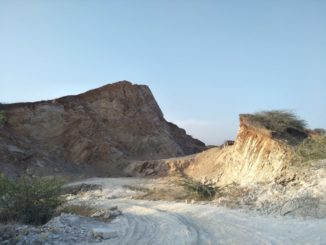
    Khuri Sand dunes. Google picture

  • Canada’s Trudeau, trailing in polls, defends early election call

    Canada’s Trudeau, trailing in polls, defends early election call

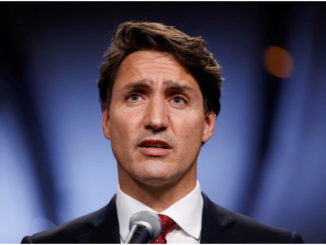
    Hamilton, Ontario (TIP): Canada’s Prime Minister Justin Trudeau, facing possible defeat in a snap September 20 election, on September 10 defended his decision to call the election early and said his main rival would undermine the fight against Covid-19.

    Trudeau, who heads a minority Liberal government that needs opposition support to pass legislation, had hoped Canadians would reward his handling of the coronavirus pandemic with a majority in the House of Commons.

    But polls show voters are unhappy that Trudeau, 49, who has held power for six years, called the vote during a fourth wave of the pandemic. Conservative leader Erin O’Toole, 48, holds a slight lead over the Liberal leader, surveys show.

    Asked whether he regretted the election call, Trudeau told reporters in Hamilton, Ontario: “Absolutely not … What we see is a very clear contrast between all the different parties on how we need to move forward as a country.” Attacked daily by rivals for taking Canadians to the polls this month, Trudeau has struggled to turn the campaign toward policy issues. He is running out of time.

    On September 10, a day after an inconclusive leaders’ debate, Trudeau blasted O’Toole for arguing that Covid-19 vaccinations are a personal choice and should not be mandated.

    Unlike the Conservative leader, Trudeau requires his fellow Liberal candidates be inoculated against the virus and last month his center-left government introduced vaccine mandates for domestic travel.

    “He’s better and quicker to stand up for the rights of those who choose not to get vaccinated than he is for your wife and your kids’ rights to be safe from Covid-19,” Trudeau said.

    The Liberals compete for the same center-left electorate as the smaller New Democrats of Jagmeet Singh. Trudeau, adopting tactics he used in the 2019 election, said O’Toole could become prime minister if the progressive vote splits. “The choice is clear in this election. Don’t let Jagmeet Singh tell you there is no difference between a Liberal government or a Conservative government,” he said.

    Speaking earlier, Singh told reporters that “you do not have to chose between two parties that are arguing about who is worse … better is possible.” (See brief profiles of all candidates: )

    The campaign’s final stretch kicked off after Statistics Canada reported that the national unemployment rate fell to 7.1 per cent in August, its lowest during the pandemic.

    “We have now recovered 95  per cent of the jobs lost during the Covid recession,” Finance Minister Chrystia Freeland said, speaking alongside Trudeau.

    A rolling Nanos Research poll of 1,200 voters on Thursday showed the Conservatives with 33.3 per cent support and the Liberals at 31.3 per cent. The left-leaning New Democrats had 19.2 per cent. Reuters

    Russia summons US envoy over ‘meddling’

    Moscow (TIP): Russia summoned US Ambassador John Sullivan on September 10 over alleged interference by the US in an election, Russian agencies said. Russian news agencies reported earlier that Sullivan had been summoned over an issue with accreditations for Russian journalists working in the US. — Reuters

  • Austria: Man kept mother’s body in basement to draw pension

    Berlin (TIP): Austrian police say a man hid his mother’s body in his basement for over a year in order to continue receiving her pension and nursing allowance.

    Police in Tyrol province said on September 9 that officers paid a visit to the man in the Innsbruck area last weekend because suspicions had arisen that his 89-year-old mother had died in June 2020.

    They said in a statement that the 66-year old admitted in questioning to having kept her body in the basement after she died at home so that he could keep receiving her benefits. Investigations so far suggest that he took in a “mid-five-digit” sum of euros.

    Authorities conducted an autopsy on his mother’s body on Wednesday and found no evidence of foul play. —AP

  • Johnson gets Parliament backing for health and social care tax

    London (TIP): British Parliament has approved Prime Minister Boris Johnson-led government’s new tax plan to fund its National Health Service (NHS) and social care services.

    The House of Commons voted by 319 to 248 on september 8 evening to back the proposed Health and Social Care Levy, a new 1.25 per cent tax on workers and employers across the country, to be effective from April 2022.

    Comes into effect in april next year : The proposed Health and Social Care Levy, a new 1.25 per cent tax on workers and employers, will be effective from April 2022 The PM Boris Johnson-led government’s plan is expected to raise an extra GBP 12 billion a year towards health and care costs

    The dividend rates for companies will also go up by the same amount to cover what Johnson described as “biggest catch-up programme” for the state-funded National Health Service in the wake of the Covid-19 pandemic. It is expected to raise an extra GBP 12 billion a year towards health and care costs.

    As the move breaks one of the ruling Conservative Party’s central election manifesto pledges, it has angered many of Johnson’s backbench Tory MPs. — PTI

  • Chinese woman involved in 7 murders sentenced to death

    Beijing (TIP): A Chinese woman who was allegedly involved in several robberies, abductions and the murder of seven people has been sentenced to death by a local court in the southeastern Jiangxi Province.

    Lao Rongzhi conspired with her then-boyfriend in several robberies, abductions and murders in various provinces during 1996-1999 that led to the death of seven people, Nanchang Intermediate People’s Court said in its judgement on september 9.

    Lao was arrested in November 2019 after absconding for some 20 years using pseudonyms, the state-run Xinhua news agency reported.

    The court also stripped her of her political rights and ordered that all her personal property be confiscated. After hearing the court’s first instance verdict, Lao cried in court and said she would appeal the ruling, the state-run Global Times reported.

    According to the People’s Procuratorate of Nanchang city, between 1996 and 1999, Lao committed four kidnappings, robbery and murder in East China’s Jiangxi, Zhejiang, Jiangsu and Anhui provinces together with her then-boyfriend Fa Ziying.

    The two conspired and divided the work, with Lao working as a hostess in entertainment venues to find rich people to commit crimes. Seven people were killed, and Lao was involved in killing five of them and robbing a large sum of money.

    Fa was captured in Hefei in 1999 and was sentenced to death. Lao then became a fugitive and used fake identities to evade, and was finally captured in Xiamen in 2019 after nearly 20 years on the run.

    During the trial which began in December, Lao repeatedly argued that collusion did not exist and that she was also a victim, saying that she was used and coerced by Fa when she was 21 years old.

    Lao tearfully apologised to the victim’s family and offered to compensate.

    After the trial, the court held that Lao’s behaviour constituted the crime of intentional homicide, robbery and kidnapping. At the same time, because Lao’s criminal methods were particularly cruel, the purpose was extremely vicious, and the circumstances of her offenses were extremely serious.

    Although Lao confessed to the crimes, she couldn’t be leniently punished.

    Zhu Dahong, the widow of Lu Zhongming, one of the victims in the case who observed the sentencing said she felt relieved after the verdict was announced and would take her children to visit Lu’s grave. —PTI

  • Nepal’s iconic Pashupatinath temple opens after nearly 5 months

    Nepal’s iconic Pashupatinath temple opens after nearly 5 months

    Kathmandu (TIP): Nepal’s iconic Pashupatinath temple, the 5th century holy Hindu shrine, opened for devotees on Friday after nearly five months as the number of fresh Covid-19 cases declined in the country.

    Pashupatinath Temple is the largest temple complex in Nepal and stretches on both sides of the Bagmati River and sees thousands of worshippers from Nepal and India daily.

    It was closed on April 23 due to the second wave of the coronavirus pandemic. On the first day, devotees thronged the temple to pay homage since morning, according to the temple’s authorities.

    They said that the temple remained open until 1 pm as the risk of Covid-19 was not fully over though the number of cases has declined of late.

    Devotees were asked to wear face masks and use hand sanitizer, according to the Pashupati Area Development Trust’s (PADT) administrative officer Rewati Raman Adhikari.

    Only 25 devotees, maintaining physical distance, will be allowed to enter the temple premises at a time, he said.

    As the temple remained closed for more than four months, its authorities organised the Chhyama puja (forgiveness worship).

    The PADT has made arrangements for devotees to enter the temple through a single door and exit through the next. PTI

  • Pakistan terrorist gets 7 yrs of rigorous imprisonment for conspiring to carry out attacks in India

    Pakistan terrorist gets 7 yrs of rigorous imprisonment for conspiring to carry out attacks in India

    islamabad (TIP): A special NIA court here on Friday sentenced a Lashkar-e-Taiba militant from Pakistan to seven years of rigorous imprisonment for conspiring to carry out terror attacks at different locations in India on the directions of his handlers from across the border.

    Mohammad Amir of Karachi was sentenced under the Unlawful Activities (Prevention) Act, the Arms Act, the Explosive Substances Act, the Foreigners Act, the Indian Wireless Telegraphy Act and relevant sections of the Indian Penal Code, an official of the premier investigating agency said.

    Amir along with three others had infiltrated into India from Pakistan with weapons, ammunition and other war-like stores with an intention to carry out terror attacks at different locations Of India on the directions of their handlers based across the border, the NIA official said.

    He was arrested in November 2017 from Magam in Jammu and Kashmir’s Handwara, while his three associates were killed in an encounter with security forces the same month, the official said.

    The NIA filed a charge sheet against Amir in May 2018.

    After consideration of evidence brought on record during the probe by the National Investigation Agency, the NIA special court, Patiala House, convicted Amir on April 6.

    Pronouncing the quantum of punishment on Friday, Amir was awarded sentences for seven different offences each ranging from two to seven years of rigorous imprisonment and fine, the NIA official added. — PTI

  • Sri Lankan PM’s Italy visit sparks controversy

    Colombo (TIP): Sri Lankan PM Mahinda Rajapaksa’s visit to Italy has sparked a controversy after the country’s Catholic church Archbishop Malcolm Cardinal Ranjith claimed the trip was an attempt to “mislead” the Vatican about the probe into 2019 Easter Sunday attacks that killed over 270 people, including 11 Indians. Rajapaksa left for Italy on Friday to attend an international event to be held in Bologna. He is scheduled to deliver the keynote address at the opening session of the international symposium to be held at the University of Bologna. The event will also be attended by the prime minister of Italy Mario Draghi. Cardinal Ranjith at a press conference two days ago slammed the visit. He alleged Rajapaksa was due to meet Pope Francis and would try to mislead the Vatican on the ongoing investigations into the attacks. “When there is a deadly pandemic in the country, we’re seeing a conspiracy being attempted to cover up the Easter Sunday attack,” Cardinal Ranjith told a media briefing. — PTI

  • Ex-VP’s brother executed by Taliban, says family

    kabul (TIP): The Taliban have executed the brother of Amrullah Saleh, the former Afghan vice-president who became one of the leaders of anti-Taliban opposition forces in the Panjshir valley, his nephew said on Sept 10             .

    The news that Saleh’s brother Rohullah Azizi was killed came days after Taliban forces took control of the provincial centre of Panjshir, the last province holding out against them. “They executed my uncle,” Ebadullah Saleh said in a text message to a news agency. “They killed him yesterday and would not let us bury him. They kept saying his body should rot,” he said.

    The Urdu language account of the Taliban information service ‘Alemarah’ said “according to reports, Rohullah Saleh was killed during fighting in Panjshir”.

    Saleh, a former head of the National Directorate of Security, the intelligence service of the Western-backed government that collapsed last month, is at large, though his exact location remains unclear.

    The National Resistance Front of Afghanistan, which groups opposition forces loyal to local leader Ahmad Massoud, has pledged to continue opposing the Taliban even after the fall of Panjshir’s provincial capital Bazarak. — Reuters

  • Pakistan rejects reports alluding to its involvement in Panjshir Valley offensive

    Islamabad (TIP): Pakistan has rejected reports that it was aiding the Taliban offensive in Afghanistan’s Panjshir Valley, terming these as a “mischievous propaganda campaign”.

    The Taliban said on Monday that they had seized Panjshir Valley, the last province not in their control after their blitz through Afghanistan last month.

    Some reports quoted a CENTCOM source saying that the Pakistani military was assisting the Taliban offensive in Panjshir with 27 helicopters full of Pakistani Special Forces backed up by drone strikes.

    Foreign Office spokesperson Asim Iftikhar in an overnight statement “categorically rejected these allegations as part of a mischievous propaganda campaign”. “These malicious allegations were part of a desperate attempt to malign Pakistan and to mislead the international community,” read the statement.

    The spokesperson reiterated Pakistan’s abiding commitment to a peaceful, stable, sovereign and prosperous Afghanistan.

    The Taliban insurgents seized control of Afghanistan in mid-August, ousting the previous elected leadership which was backed by the West.

    The takeover comes nearly 20 years after US forces led an invasion to topple the Taliban. Panjshir, a rugged mountain valley, is home to between 150,000 and 200,000 people. It was a centre of resistance when Afghanistan was under Soviet occupation in the 1980s and during the Taliban’s previous period of rule, between 1996 and 2001. PTI

  • World Cup qualifying: England lose perfect record, Spain’s big win

    England’s perfect record in World Cup qualifying vanished after conceding a stoppage-time equalizer in Poland, while Italy, Germany, Spain and Belgium all won to build big leads in their groups on the road to Qatar. Harry Kane’s 41st goal for England — a 30-meter pile driver — was canceled out when Robert Lewandowski crossed for Damian Szymanski to head home in the second minute of injury time in a 1-1 draw in Warsaw. England’s five-match winning run in qualifying ended, leaving Denmark as the only nation with a 100% record so far. Still, England holds a four-point lead with four games remaining and should have no problem getting to next year’s World Cup.

    Italy shouldn’t, either, after dispatching Lithuania in a 5-0 win to open up a six-point lead in its group. The recently crowned European champions extended their record unbeaten run to 37 games.

  • India’s T20 World Cup squad: R Ashwin picked, MS Dhoni named mentor

    Four years after he was discarded from India’s T20I set-up, R Ashwin has forced his way back in, named in the squad of 15 for the 2021 T20 World Cup. In another surprise move, the BCCI has roped in former captain MS Dhoni as the team mentor specifically for this tournament. Dhoni, who retired from international cricket last August, was appointed to “provide support and direction” to the Indian team management led by head coach Ravi Shastri. So said BCCI secretary Jay Shah.

    The main group of 15 comprises six specialist batters, three allrounders, three specialist spinners and three specialist fast bowlers. The selection panel led by former India fast bowler Chetan Sharma also named the trio of Shreyas Iyer, Deepak Chahar and Shardul Thakur as reserves, who will act as injury or Covid-19 replacements.

    Among the notable absentees were Shikhar Dhawan, who captained India in their short limited-overs tour of Sri Lanka recently, and lead legspinner Yuzvendra Chahal. Instead, the selectors opted for mystery spinner Varun Chakravarthy and legspinner Rahul Chahar, who, along with Suryakumar Yadav, Ishan Kishan and Axar Patel are heading into their the first World Cup.

  • Chhattisgarh : The land of temples and waterfalls

    Chhattisgarh : The land of temples and waterfalls

    Chhattisgarh, one of the few landlocked states in central India, is a treasure house of natural beauty. Tourists wanting to experience the raw side of nature will find themselves at home here. It is its rusticity that makes you fall in love with it. Dense forests abound in the state, and in them, reside various tribes, each with their unique customs, traditions and way of life. The points of tourist interest in Chhattisgarh also include ancient temples and towns which have constantly attracted historians and archaeologists. There are plenty of wildlife sanctuaries which house a rich wildlife, with the gaur never ceasing to surprise onlookers. Other must visit tourist attractions include dams, museums and waterfalls.

    Travelling to Chhattisgarh is like planning a trip to ultimate bliss. The state is blessed generously by nature and you come across examples of that every few miles. Its landscape, which is dominated for the most part by dense forests, is dotted with waterfalls, caves and a rich wildlife. Located in central India, it offers its fair share of adventure, sightseeing and exploration. The state is home to many temples and some towns which trace their origin to historical times, thus fascinating tourists, historians and archaeologists constantly. To escape the sweltering heat during summers, nature has gifted it with several hill stations, each as beautiful as the other.

    Barnawapara Wildlife Sanctuary

    One of the most famous tourist attractions in Chhattisgarh, the Barnawapara Wildlife Sanctuary is home to the Bar and Nawapura forest villages. It was established in the year of 1976 and is spread over a vast area of 245 sq. Km. The rich and lush vegetation caters to a broad spectrum of wildlife in this region. The landscape is mostly flat terrain with occasional low and high hillocks.

    Raipur

    The capital of Chhattisgarh, Raipur is the largest city in the state. With more than hundreds of steel mills and six steel plants, Raipur is also one of the largest industrial centres of the country. Besides steel, it is also home to the aluminium and coal industries. A primary business and industrial hub, Raipur is even fast emerging in the tourism sector, attracting tourists from across the world. The city is known for its temples, lakes, factories, educational centres as well as the development of Naya Raipur. Naya Raipur is a newly planned city and is about 17km away from the current town. The Swami Vivekananda Airport lies in between Raipur and Naya Raipur facilitating travel.

    Raipur has a rich history and until 2000 was a part of Madhya Pradesh. After the formation of the new state of Chhattisgarh, Raipur was made its capital, primarily because of its centralised location. Located in the centre of the plains that are also called the ‘rice bowl of India’, Raipur is surrounded by the districts of Durg and Bemetara. The city is a bustling capital city with a multicultural and multi-religious society. With many festivals, shopping outlets and city landscapes Raipur is also an excellent base for venturing into the surrounding attractions. These include the Barnawapara Wildlife Sanctuary, Dandak Caves, Bilaspur, Chitrakoot Falls, Amarkantak, Bhilai, Kanha National Park and the Sitanadi Wildlife Sanctuary.

    Visit Raipur to explore its various natural, wildlife and historical tourist attractions. Chhattisgarh is mostly a forested region. Raipur understands the importance of maintaining its ecological balance, and there is a government proposal under works to construct a micro-forest in the heart of the city. Raipur is also about its various festivals, such as Hareli, Champaran Mela, Pola and Teeja that are celebrated during monsoons. And no city in India is complete without a taste of its unique flavours. Raipur is no different offering its many fascinating cuisines and street food that are an integral part of the city’s cultural and social layout.

    Charre Marre Waterfalls

    Charre Marre Waterfalls is a refreshing and offbeat place to visit in the state of Chattisgarh. The tortuous waterfall is 16 meters high and the clear water falling from such a great height is quite a sight to see. The bountiful and pristine Jogidhara river is the reason behind the birth of this mesmerizing and bubbling waterfall. The water meanders through hills and verdant trees producing ear pleasing sounds. The reservoir that forms at the bottom of the waterfall is perfect to take a dip in. The cool water will rejuvenate your soul and body. You can also dangle your feet into the small pond formed at the bottom and spend some peaceful time enjoying the picturesque beauty of this place.

    Sirpur

    Sirpur is a small village located in the state of Chhattisgarh, situated on the banks of river Mahanadi. It is 35 km away from the Mahasamund district and around 78 km away from the city of Raipur, which is the capital of Chhattisgarh. The village of Sirpur is an archaeological wonder. Inspiration to many architects, this village is rich in its temple culture. A quaint hidden gem, it has a deep connection to the Buddhism world and a treasure for archaeological findings from the 8th century.

    There are numerous temples one can visit, and is generally a hub for passionate historians. A look at the historical artefacts and the deep carvings on the walls of the temples have inspired many architects around the world. The Buddhist monasteries of this village are said to be one of the most important and most significant in India. Apart from the rich historical importance and fascinating findings in these villages, there is more to this village. The Chhattisgarh Tourism Board organises a music and dance festival here to promote the Buddhist sites and celebrate its culture. Offering a rare mix of art and culture with different performance and a deep history and evolution of art, Sirpur is a peaceful village filled with wonders.

    Mainpat

    Mainpat is an underrated hill station with green pastures, deep valleys, breathtaking waterfalls, dense forests and untouched rivulets. The hill station hasn’t been completely commercialised yet and receives a relatively smaller influx of tourists compared to its counterparts. Mainpat is often called as Shimla of Chhattisgarh and Mini Tibet owing to its huge Tibetan population and influence over the area. The Tibetan refugees were rehabilitated in Mainpat after the Chinese invasion of Tibet and have since found a home in Mainpat. That’s another great thing about Mainpat, the confluence of cultures and diverse traditions only add to the picturesque village’s charm.

    Madku Dweep

    Madku dweep is a beautiful island situated near the silent river, Shivnath, in the Bilaspur district of Chhattisgarh. The name Madku stems out from the fact that the island is of the shape of a frog. The beauty of this island is considered to be spell-bounding. The picturesque Madku Dweep has an area of around 24 hectares and is full of greenery. The island is also famous for its ancient temples and their historical and archaeological importance.

    Archaeologists have discovered prehistoric stone tools, epigraphs, and coins on this island. Stone inscriptions have also been found, which are believed to date back to the 3rd century BC. One stone inscription was in Brahmi script and another in Shankha script. Madku Dweep is also home to several ancient and unique idols of Lord Shiva, Ganesha, Shiv-Parvati, Nandi and various other Gods. There are temples, both old and new, that are frequented equally by devotees from across the globe. Madku Dweep is popularly known as Kedar Tirth and Harihar Kshetra Kedar Dweep.

  • Ganesh Chaturthi : The birth of Lord Ganesha

    Ganesh Chaturthi : The birth of Lord Ganesha

    This year, the month of September marks one of the most auspicious festivals for Hindus – Ganesh Chaturthi. The celebrations for the 10-day festival will begin from September 10 this year. It will be marked with much pomp and fervour in Maharashtra, Karnataka, Gujarat, Odisha, Goa, West Bengal, Chhattisgarh, and Uttar Pradesh. The festival will come to an end on September 21.

    To celebrate Ganesh Chaturthi, also known as Vinayaka Chaturthi, devotees bring home idols of Lord Ganesh to worship the deity, eat good food, enjoy with friends and family, and in the end, immerse the idols. Additionally, temples offer prayers and distribute sweets such as modaks because it is Lord Ganesh’s favourite. The festival marks the birth of Lord Ganesh, the god of wisdom and prosperity. It falls in the Bhadrapada month of the Hindu calendar, which falls in August-September.

    Lord Ganesh is considered a symbol of wisdom, writing, travel, commerce and good fortune. He is also called Gajanana, Gajadanta, and Vighnaharta. These are few names among his 108 other titles.

    The Indian mythology tells the legend of Goddess Parvati creating baby Lord Ganesh using sandalwood paste and asking him to guard the entrance while she took a bath. When Lord Shiva arrived at the entrance and told Ganesh that he wanted to visit Goddess Parvati, Ganesh refused to allow him to pass through. This made Lord Shiva angry and enraged he severed the child’s head. When Goddess Parvati realised what had happened, she was heartbroken.

    Seeing Goddess Parvati overwhelmed with grief, Lord Shiva promised to bring baby Ganesh back to life. He instructed his followers to search for the head of the first living creature they could find. However, they could only find a baby elephant’s head. That is how Lord Ganesha came back to life with the head of an elephant.

    Puja Timings

    This year the tithi for the Chaturthi will last from 12:17 am to 10 pm on September 10. The timing for Puja vidhi will begin from 11:03 am and will last till 1:33 pm. Devotees pray to Lord Ganesh on this day, as it is believed that worshipping him removes obstacles from one’s life and brings peace.

    Anant Chaturdashi

    Anant Chaturdashi is the day devotees bid farewell to Lord Ganesh by immersing the diety’s idols in the local water bodies and asking him to return next year. These are the idols that people keep inside their homes for the 10-day Mahotsav. The celebrations marking the festival’s conclusion include playing devotional songs and dancing to their beats during processions.

    PUJA VIDHI

    It is believed that worshiping lord Ganesh duly helps in resolving all the problems. Lord Ganesh’s Idol, Water pot, ‘Panchamrit’, red cloth, ‘roli’, ‘Akshat’, ‘Kalava janeoo’, cardamom, coconut, ‘Chandi ka vark’, ‘supari’, ‘laung’, panchmeva’, ‘ghee kapur’, ‘chaukee’ and ‘gangajal’ need to collected for completing the worshipping.

    As much as people love welcoming Lord Ganesh to their house every year, it also makes them sad when he leaves. But both his welcome and his farewell are done with the same amount of devotion in the heart. Lord Ganesh is very commonly referred as ‘Vighnaharta’ which means the one who removes all obstacles.

    During this 10-day duration of Ganesh Chaturthi, there are 16 rituals performed. Among them we can broadly classify them as 4 key rituals:

    AVAHANA AND PRAN PRATISHTHA

    This is the maiden step after devotees do ‘Deep-Prajwalan’ and ‘Sankalpa’. With mantra recitation, Lord Ganesha is reverentially invited and life is invoked in the idol placed in the pandal or temple or at home. It’s a ritual to consecrate the ‘murti’ or statue.

    SHODASHOPACHARA

    Next step involves the tradition of 16-step puja wherein ‘shodasha’ means 16 and upachara means ‘devoutly offering the lord’, in Sanskrit.

    Having washed Ganesha’s feet, the idol is bathed in milk, ghee, honey, curd, sugar (panchamrit snan) followed by scented oil and then ganga jal. Then new vastra/clothes are offered (vastra, uttariya samarpan); along with flowers, unbroken rice (Akshata), garland, sindoor, and chandan. The idol is decked and worshipped religiously by offering modak, betel leaves, coconut (naivedya) lighting incense sticks, diyas, chanting hymns, mantras.

    UTTARPUJA

    This ritual is performed before visarjan. With great joy and devotion, people of all age groups participate in the festival. Be it in pandals, temples or homes, Ganesha Chaturthi is observed with immense happiness. People sing, dance, and light up fireworks. With the beautiful chant of mantras, aarti, flowers, Ganesha is worshipped to bid farewell. The sequence of steps involved are Niranjan aarti, Pushpanjali arpan, Pradakshina.

    GANPATI VISARJAN

    This is the final closing ritual of the grand festival. Ganesha idol is reverentially immersed in the water bodies wishing for the Lord of wisdom to return next year. People cry out loud “Ganapati Bappa Morya, Purchya Varshi Laukariya” while they head for immersion.

  • Inflows into MFs fall in Aug; SIPs, retail folios at peak

    Inflows into MFs fall in Aug; SIPs, retail folios at peak

    Mumbai (TIP): Even as the stock markets hit record highs, the mutual fund (MF) sector reported a decline in inflows into equity and debt schemes while balanced advantage funds mobilised a higher amount through new fund offers (NFOs). While funds mobilised via SIPs hit a new high of Rs 9,923 crore and folios under retail schemes shot to a peak of 8.95 crore, investors pumped in a net Rs 8,666 crore into equity mutual fund schemes in August, lower than the Rs 22,583 crore invested in July.

    However, the balanced advantage category continued to attract big inflows, as it saw net inflow worth Rs 16,570.97 crore last month , as per Association of Mutual Funds in India (AMFI). Flexi cap funds saw inflows of Rs 4,741 crore, followed by focused funds.

    On the other hand, ELSS and value funds saw outflows.

    New fund offers continued to attract big money from retail investors and mobilised Rs 23,668 crore in August.

    Debt MF schemes saw net inflows worth Rs 1,074 crore in August, The number was much higher at Rs 73,694.04 crore in July.

    Similar to last month’s trends, floater funds attracted the biggest investment. However, overnight and low duration funds saw big withdrawals of Rs 11,807 crore and Rs 7,407 crore respectively.

    AMFI Chief Executive N S Venkatesh said, “Overall positive flows into open-ended MF schemes and all-time high market indices helped Indian MF industry’s net assets under management (AUMs) to breach record Rs 36 lakh crore milestone in August 2021.”

    According to him, retail assets were at Rs 17.15 lakh crore, almost half of total Industry AUMs. SIP AUMs hit a record high of Rs 5.26 lakh crore, which now forms a third of retail AUM. On the other hand, there has been a healthy rise in SIP accounts to a record 4.32 crores and monthly SIP contribution at an all-time high of Rs 9,923 crore, reflecting the rising retail preference towards mutual funds as a long-term wealth creation avenue, he said.

  • Ford to cease local production in India, shut down both plants

    Ford to cease local production in India, shut down both plants

    Ford Motor Co will stop manufacturing in India and take a hit of about $2 billion as it does not see a path to profitability in the country, becoming the latest automaker to leave a major growth market dominated by Asian rivals. The decision by Ford comes after it struggled for years to win over Indian consumers and turn a profit. The carmaker entered India 25 years ago but has a less than 2% share of the passenger vehicles market.

    In its statement, Ford said it accumulated operating losses of more than $2 billion in 10 years in India and demand for its new vehicles had been weak. “Despite (our) efforts, we have not been able to find a sustainable path forward to long-term profitability,” Ford India head Anurag Mehrotra said in the statement. “The decision was reinforced by years of accumulated losses, persistent industry overcapacity and lack of expected growth in India’s car market,” he said.

    Ford follows other U.S. carmakers such as General Motors and Harley Davidson which have already left India, a market that had once promised exponential growth. The country is dominated by mainly low-cost cars made by Suzuki Motor Corp and Hyundai Motor. As part of the plan, Ford India will wind down operations at its plant in Sanand in the western state of Gujarat by the fourth quarter of 2021 and vehicle and engine manufacturing in its southern Indian plant in Chennai by 2022.

    The U.S. automaker will continue to sell some of its cars in India through imports and it will also provide support to dealers to service existing customers, it said. Around 4,000 employees are expected to be affected by its decision.

    The decision to stop production in India comes after Ford and domestic carmaker Mahindra & Mahindra failed to finalise a joint venture partnership that would have allowed Ford to continue producing cars at a lower cost than currently but cease its independent operations. The company said the decision to cease production was made after considering several other options including partnerships, platform sharing, contract manufacturing and the possibility of selling its manufacturing plants, which is still under review.

                    Source: Reuters

  • RBI optimistic about 9.5% GDP growth for current financial year

    RBI Governor Shaktikanta Das on Thursday said many fast indicators are showing an uptick in economic activity and the RBI is quite optimistic about its 9.5% GDP growth estimate for FY2021-22 at present. He said the impact of the second wave of Covid has waned by August, and economic growth will be better from the second quarter onwards on a sequential basis. Speaking at an event in Mumbai, Das said the RBI has decided to give more emphasis on growth because of the pandemic and operate in the 2-6% inflation band set by the government for it.

  • Cairn accepts $1-bn refund offer, to drop cases against India: CEO

    UK-based Cairn Energy PLC on Tuesday said it will drop litigations to seize Indian properties in countries ranging from France to the US, within a couple of days of getting a $1-billion refund resulting from the scrapping of a retrospective tax law. The firm termed “bold” the legislation passed last month to cancel a 2012 policy that gave the tax department power to go back 50 years and slap capital gains levies wherever ownership had changed hands overseas but business assets were in India.The offer to return money seized to enforce retrospective tax demand in lieu of dropping all litigations against the government “is acceptable to us,” Cairn CEO Simon Thomson said in an interview from London

  • China’s factory inflation hits 13-year high as materials costs soar

    China’s factory gate inflation hit a 13-year high in August driven by roaring raw materials prices despite Beijing’s attempts to cool them, putting more pressure on manufacturers in the world’s second-largest economy. The producer price index (PPI) rose 9.5% from a year earlier in August, the National Bureau of Statistics (NBS) said on Thursday, faster than the 9.0% increase tipped in a Reuters poll and the 9.0% reported in July. That was the fastest pace since August 2008.China’s economy has recovered strongly from last year’s coronavirus slump but has been losing steam recently due to domestic Covid-19 outbreaks, high raw material prices, tighter property curbs and a campaign to reduce carbon emissions.