Tag: Arun Jaitley

  • BIKRAM SINGH MAJITHIA PUNISHED FOR ‘SHABAD’ DISTORTION

    BIKRAM SINGH MAJITHIA PUNISHED FOR ‘SHABAD’ DISTORTION

    AMRITSAR (TIP): Handing out tankhah (penance) to Punjab cabinet minister Bikram Singh Majithia for distorting the ‘shabad’ (hymn), “Deh Shiva Bar Mohe Eha”, written by the 10th master of Sikhs, Guru Gobind Singh, while campaigning during Lok Sabha polls, the Akal Takht, on May 1, directed him to perform penance – physical and financial ‘sewa’ as atonement for his blasphemous act.

    The five Sikh high priests held a meeting at the Akal Takht secretariat to discuss the issue where they had summoned Majithia. Later, Akal Takht Jathedar Giani Gurbachan Singh pronounced atonement on Majithia from the rostrum. The Sikh clerics directed Majithia to perform physical and financial ‘sewa’ at Takht Patna Sahib, Takht Anandpur Sahib, Takht Hazur Sahib, Takht Damdama Sahib and then begin Akhand Path at Akal Takht, clean utensils for three days at ‘langar’, listen to ‘gurbani’ (hymns) and also make donation as per his capacity.

    The Sikh high priests also directed Majithia to offer Rs 501 in the Guru’s ‘golak’ (coffer) and perform ‘ardas’ (prayer) seeking apology for his act and offer ‘karah parshad deg’ of Rs 101. Giani Gurbachan Singh said Sikh high priests had not made the atonement time-bound due to unforeseen reasons like delay or cancellation of flights due to which Majithia might not be able to visit the Takhts on a given day. Majithia, who had arrived at Akal Takht around 10am, performed ‘sewa’ at ‘langar’ and listened to ‘gurbani’.

    After pronouncement of atonement, Majithia said he would go to all the Takhts in the near future. Accepting the religious punishment, he said, “It’s for my good and will make me a better human being.” On April 24, Majithia, during an election rally, had distorted a shabad by incorporating SAD-BJP nominee Arun Jaitley’s name in it. Instead of saying “Nischay karr apni jeet karu” at the end of the ‘shabad’, Bikram had said “Nischay kar Arun Jailtey ki jeet karu”.

    A video clip of Majithia altering the ‘shabad’ was released on social media, which went viral within a few minutes and triggered outrage among Sikhs against him, besides giving his political opponents an issue. Majithia rushed to the Akal Takht on April 25 with a written apology. However, before that Takht Hazur Sahib at Nanded had taken note of Majithia distorting the Guru’s hymn for political gains and convened a meeting of five Sikh priests. During the meeting, under the aegis of Jathedar of Takht Hazur Sahib Giani Kulwant Singh, the Sikh priests issued an edict declaring Majithia as ‘tankhayia’ (guilty of religious misconduct) on April 27.

    Following that the minister sent a letter to Takht Hazur Sahib stating that he would appear before them after the Lok Sabha elections in Punjab on April 30. On April 28, the Sikh high priests at Takht Hazur Sahib met once again and the Jathedar issued another edict to pardon Majithia if he carried out ‘sewa’, which would be pronounced on him when he personally appeared before them.

    Giani Gurbachan Singh clarified that Majithia had been directed to perform ‘sewa’ at four Takhts for one hour for a day and at the Akal Takht for one hour a day for three days. He also informed that the Akal Takht secretariat had received numerous complaints against Majithia. He said Majithia had appeared before them with a written apology.

  • US calls for more investment-friendly Indian government

    US calls for more investment-friendly Indian government

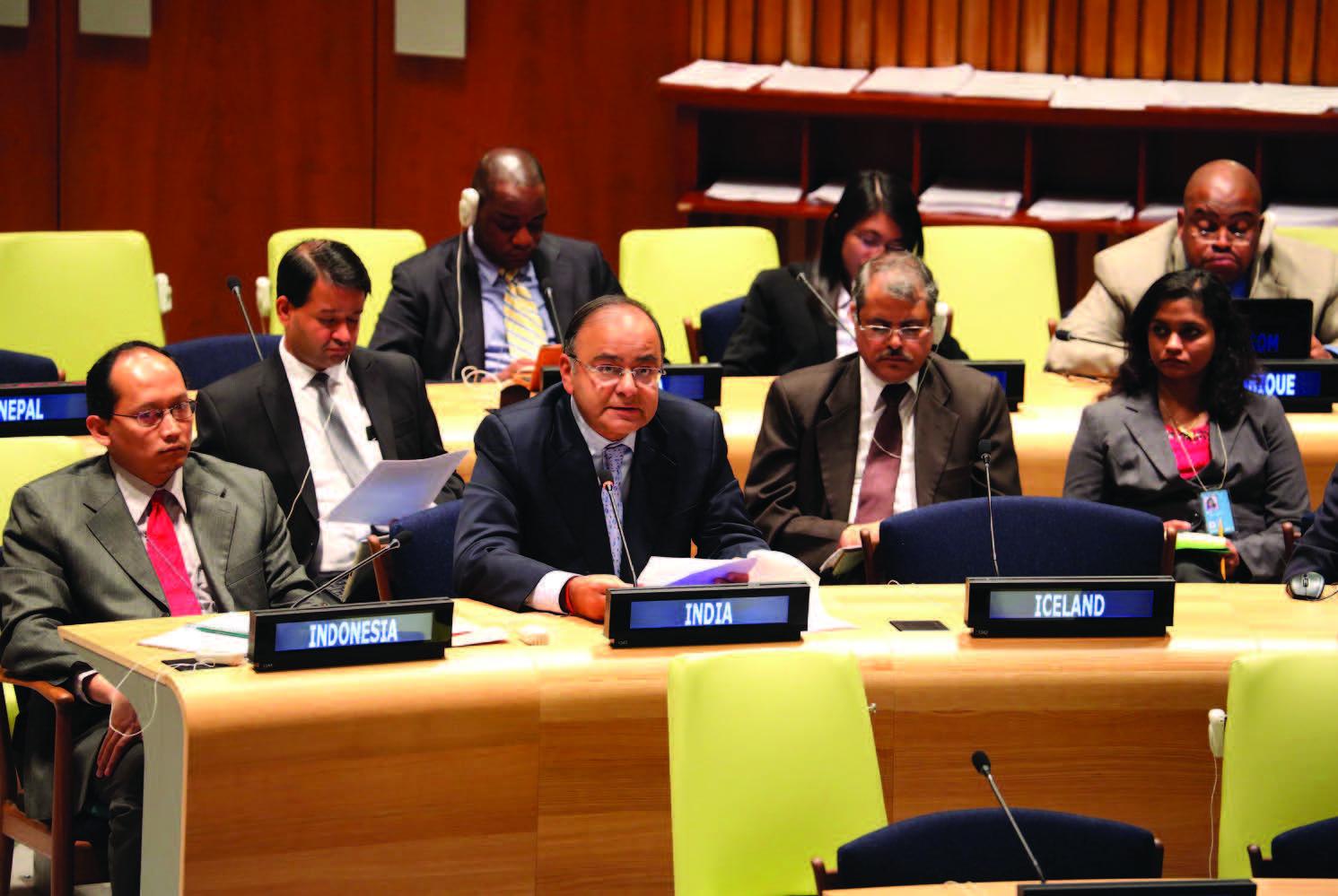
    WASHINGTON (TIP): The United States has urged the Indian government that emerges from ongoing elections to follow economic policies that encourage investment, saying Washington would like to see bilateral trade grow to $500 billion a year. Nisha Biswal, US assistant secretary of state for South and Central Asia, said future economic growth in South Asia hinged on India as the region’s growth engine.

    However, Biswal said that while Indian leaders had targeted $1 trillion in infrastructure investment over five years to close gaps preventing growth in manufacturing, policies still inhibited foreign investment. She said India ranked a poor 134 out of 189 countries as a place to invest and start a business. “India, the world’s largest democracy, must decide its own path to the future,” Biswal said in a speech at Harvard University’s Kennedy School of Government. “Will it make the reforms necessary to attract investment? Will it capitalize on the opportunities that lie in front of it? “Those are the questions that India’s voters are asking as they cast their ballots and those are the questions that we want to see answered,” she said.

    Growth in Asia’s third-largest economy, has almost halved to below 5 per cent in the past two years on weak investment and consumer demand, the worst slowdown since the 1980s. Polls show the nationalist Bharatiya Janata Party (BJP), the main opposition party, is on course to win most seats in the election that began on April 7. In its election manifesto, the BJP said it would welcome foreign direct investment in all sectors that create local jobs, — except for supermarkets, a setback to global chains such as Wal- Mart Stores Inc and Carrefour It remains unclear though whether the BJP will follow through on the supermarket ban or whether its announcement was just pre-election rhetoric.

    BJP policy caution BJP insiders remain cautious about laying out specific plans because the party may need to adjust its policies after the election to win over allies and form a coalition government if it falls short of the parliamentary majority required to rule. Biswal said India had the potential to exceed all expectations economically, but needed to adopt investment and tax policies designed to lure, not deter, capital flows and a system of timely regulatory approvals and contract enforcement.

    It also needed to protect intellectual property rights, she said. “The more integrated India is into global markets and into the economic architecture of Asia, the more India’s economy will grow and benefit the entire global economic system,” she said. Biswal said the United States wanted to see bilateral trade grow to $500 billion a year. It is about $100 billion currently.

    Arun Jaitley, the senior BJP leader tipped to be finance minister in the new government, said in an interview this weekend that the party should give direction in five broad areas: infrastructure, building suburban and new urban townships, massive skill development programmes, tourism, and lowering costs for business. Capital investment contributes nearly 35 per cent to India’s $1.8 trillion economy, but it barely grew in the fiscal year that ended in March as delays in clearances from various ministries and funding issues grounded many major projects.

    In its manifesto, the BJP said it would seek friendly relations with neighbours, but in an apparent reference to the historical troubles India has experienced with its rival Pakistan, vowed to “deal with crossborder terrorism with a firm hand” and take a “strong stand and steps” when required. Biswal said an improved climate between Indian and Pakistan could “pay enormous economic dividends.” “India-Pakistan trade in 2013 was still a paltry $2.5 billion,” she said. “There’s no reason that number can’t quadruple in a few years’ time to $10 billion.” “We have heard some positive murmurings in Islamabad and Delhi that both governments are moving in this direction and we are hopeful that they will make progress after the Indian election.”

  • PM MAY HAVE DELIVERED 1200 SPEECHES, BUT WAS HE IMPACTFUL, ASKS JAITLEY

    PM MAY HAVE DELIVERED 1200 SPEECHES, BUT WAS HE IMPACTFUL, ASKS JAITLEY

    AMRITSAR (TIP): Commenting on the statement released by the Prime Minister’s Office (PMO), which maintained that Prime Minister Manmohan Singh has so far delivered around 1200 speeches and has been very communicative, Bharatiya Janata Party (BJP) leader and the party’s Lok Sabha candidate for Amritsar, Arun Jaitley, said on Saturday that delivering innumerable speeches does not make a prime minister communicative.

    “I read a statement of PMO that PM spoke 1200 times in 10 years and that’s what makes him a communicative PM. I don’t think he became a communicative PM by just reading out speeches and templates,” said Jaitley. “What you say must carry weight and should be inspirational, and people should at least listen to it, but I doubt that those speeches would be remembered, as great speeches or anything of significance except for the routine sentences.

    It’s almost like the PM, having walked on snow, has not left any footprints behind,” he said. Yesterday, the PMO cited economic data to claim “unprecedented development” in the past decade and Prime Minister Manmohan Singh’s current media adviser Pankaj Pachauri said this would not have been possible if the PM was weak, as mentioned in former media advisor of the PM, Sanjay Baru’s book ‘The Accidental Prime Minister.’

    He also refuted Baru’s claim that Singh had been a silent Prime Minister. He said that even though the PM had delivered 1,198 speeches and his office had issued many press releases, they were never highlighted sufficiently in the media, as they were more interested in other fields rather than in issues like the economy, development, agriculture, science and education.

  • JAITLEY’S ADVICE TO CAPTAIN: SHOW DECENCY

    JAITLEY’S ADVICE TO CAPTAIN: SHOW DECENCY

    AMRITSAR (TIP): A day before the arrival of his rival and Congress candidate from Amritsar seat Amarinder Singh, BJP candidate Arun Jaitley advised him to show decency. “Everyone in public life must be honest,” Jaitley wrote in his campaign diary on Thursday. “Most certainly the rulers and Maharajas should display greater probity and transparency than lesser mortals.”

    Jaitley, along with his relatives, arrived here on Thursday to continue his election campaign, which is likely to hot up with Amarinder’s arrival on Friday. Jaitley said Amarinder was a chargesheeted man and was facing prosecution. He said he had gone into details of the chargesheet filed by the vigilance bureau in relation to a 2005 project in Ludhiana where all rules were allegedly flouted by the then government.


    15

    In his Facebook post, Jaitley has mentioned various anomalies in the project, including rigging of bids to favour a particular person. Reacting to Congress vice-president Rahul Gandhi’s remark that BJP’s campaign balloon would burst like the ‘India Shining’ campaign in 2004, Jaitley said: “It’s election time, there is no point in making claims on whose balloon will burst. Congress leaders are not willing to face elections, those who had refused to contest elections have been sent to fight the battle”.

    Jaitley arrived here along with his wife Sangeeta and daughter Sonali to strengthen his campaigning. “There is always a first time,” Sangeeta said. “Earlier he had been organizing elections and now he is himself contesting elections.” Sangeeta said she was born here while their relatives lived in Amritsar. But she is yet to brush up her knowledge about the issues facing the Amritsar parliamentary constituency. “We will see what are the issues here,” she said. She said she visits Amritsar every year to pay obeisance at Durgiana Temple, Golden Temple and Gurdwara Shaheedan Sahib.

  • Will canvass rather than contest: Capt

    Will canvass rather than contest: Capt

    NEW DELHI (TIP): The Congress hunt for a strong candidate for the Amritsar seat is likely to stop at senior leader OP Soni with former Punjab Chief Minister Capt Amarinder Singh learnt to have expressed a desire to canvass for the party rather than contest.

    Though Amarinder on March 20 said he would abide by whatever Congress president Sonia Gandhi decided for him, there were indications that he was more interested in campaigning for the party across Punjab and the country. He is part of the 50-member central campaign committee of the party that Sonia heads.

    Amarinder reportedly met Sonia to apprise her of his views. His stand over his preference for campaigning vis-a-vis contesting remained unchanged since his name was first proposed for the Bathinda Lok Sabha seat by some Punjab Pradesh Election Committee members, including state party chief Partap Singh Bajwa. Bajwa today reiterated that Amarinder was a potential candidate against BJP’s Arun Jaitley, provided he decided to contest. “If Amarinder takes on Jaitley, there will be a mega fight and secular forces will win.

    If a leader of Amarinder’s stature fights, Jaitley will be history,” he said. Amarinder, however, maintained that he had left the decision on Sonia Gandhi and it would be worthwhile to wait for her decision. The comment is being seen as a hint that he is unlikely to be fielded. Senior Punjab Congress leaders said Amarinder’s case could not be equated to that of sitting MPs Bajwa and Manish Tewari, who were seen to be running away from elections till the high command forced them into the contest.

  • 29th STATE JUST A SIGNATURE AWAY

    29th STATE JUST A SIGNATURE AWAY

    Rajya Sabha approves Telangana bill amid din and chaos
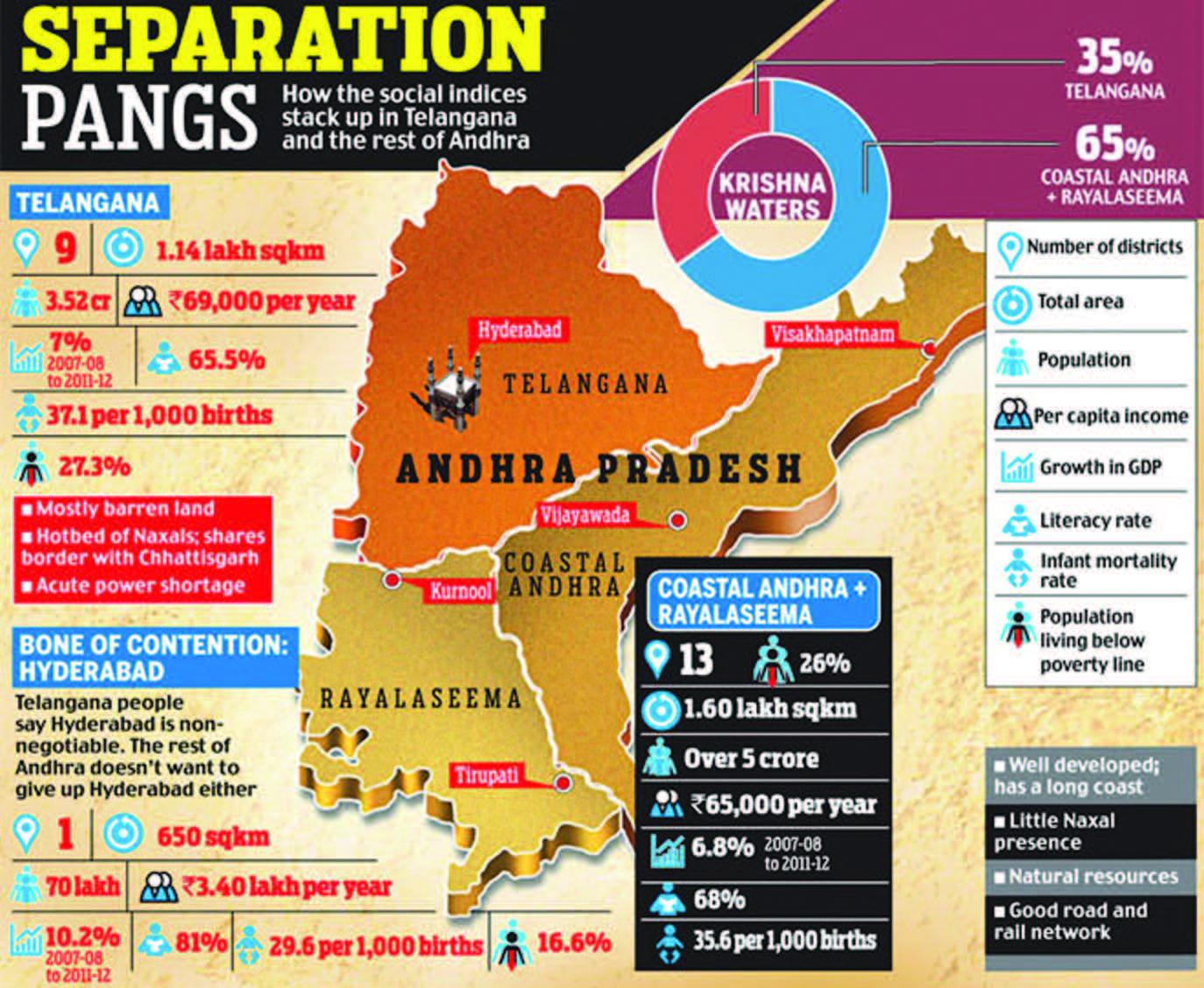
    NEW DELHI (TIP): With the Rajya Sabha putting its seal of approval on the Bill for creating Telangana amid bedlam, the birth of the 29th State of the Union is just a presidential signature away. The historic development was preceded by prolonged “labour pangs” beginning from July 30 last year, the day the Congress Working Committee (CWC) approved a resolution for bifurcation of Andhra Pradesh.

    On Feb 20, there was a great deal of anxiety about the fate of the State as the BJP, which had helped the government push through the Bill in the Lok Sabha on Tuesday, put a spanner in the works by insisting that without a Constitution amendment it faces the danger of being legally challenged. But, thanks to hectic backroom negotiations at the highest level of the government and the BJP, it was smooth sailing in the Upper House despite protests from Seemandhra MPs, who parked themselves in the Well of the House throughout the day with banners and placards.

    Prime Minister Manmohan Singh and his team of Ministers succeeded in persuading top BJP leaders not to press for a Constitution amendment, which would have complicated the process. Mr. Singh’s team convinced the BJP brass that the government was on sound legal footing on giving special powers to the Governor over safety and security of the residents of Hyderabad, which will be the joint capital for a maximum of 10 years. It was the understanding between the government and the BJP which prompted CPI(M) leader Sitaram Yechury and all others who opposed the Bill to describe it as a classic case of “match-fixing.”

    At the meeting, it was agreed that the Prime Minister would announce a package to address the concerns of the Seemandhra people as well as those in the backward regions of Telangana. Intervening in the debate in the Rajya Sabha, the Prime Minister announced that for the purposes of Central assistance, special category status would be extended to the successor state of Andhra Pradesh for five years. He said the Centre would take steps to offer tax incentives to promote industrialisation and economic growth in both States.

    In addition, a special development package for the backward regions of the successor state of Andhra Pradesh, in particular the districts of Rayalaseema and north-coastal Andhra Pradesh, will be given on the lines of the K-B-K (Koraput- Bolangir-Kalahandi) Special Plan in Odisha and the Bundelkhand special package in Madhya Pradesh and Uttar Pradesh. Speaking about the commitment of his party to creating Telangana, Leader of the Opposition Arun Jaitley expressed dismay over the manner in which the UPA had handled the entire issue. Initiating the debate, the BJP’s M. Venkaiah Naidu said: “Telangana and Andhra Pradesh are brothers and are Telugu-speaking. Telangana people want Telangana, we are saying yes… We are not dividing the country; we are only dividing a state for speedy development.” He blamed the Congress for delaying the creation of Telangana and playing “vote bank” and “opportunistic” politics.

  • ANDHRA MAY BE PUT UNDER CENTRAL RULE

    ANDHRA MAY BE PUT UNDER CENTRAL RULE

    NEW DELHI (TIP): Andhra Pradesh is likely to be put under President’s rule amid indications that a decision to this effect may be taken in the next couple of days. The state has been without a full-scale government after CM Kiran Reddy resigned on February 19 to protest against the passage of the Telangana bill in Lok Sabha.

    Sources, however, said it was clear that elections to new assemblies of Telangana and Andhra Pradesh may not be held along with Lok Sabha polls in May. The term of the assembly of undivided Andhra Pradesh runs out with that of the current Lok Sabha. But the fact that the House has now been split into two new assemblies — 175-strong one for Andhra Pradesh and a separate one with 119 for Telangana — may give the Centre and the Election Commission latitude to delay elections.

    The leeway may suit Congress which has to work out the modalities of alliance, even a merger with Telangana Rasthra Samithi. The two parties hope to sweep the 17 Lok Sabha seats in the Telangana region, arguably the sole driver for Centre getting into overdrive to partition AP after years of wavering and shuffling. Political circles estimate that Congress may be able to persuade TRS boss K Chandrasekhar Rao to leave the overwhelming majority of LS seats in exchange for a higher share of assembly seats for the Telangana outfit.

    Congress is still debating the pros and cons of a merger with TRS, with a strong school in the party feeling that the presence of a friendly Chandrasekhar Rao as an independent figure may help splinter the anti-incumbency sentiment. Having been okayed by the two Houses, the bill will be sent by the home ministry to President Pranab Mukherjee for his assent. The presidential go-ahead will clear the way for a notification in the Gazette of India about the birth of Telangana as the 29th state of the Union. The gazette notification will also mention the day on which Telangana will be deemed to be born.

    Cong, BJP sealed Telangana deal on Feb 19
    A deal on the Telangana bill was sealed late on February 19 evening with Congress troubleshooters agreeing to BJP’s demand that the government make a specific commitment on Seemandhra’s postpartition revenue deficit. Congress finalized its Telangana strategy after party managers knocked all unviable options like sending the Andhra Pradesh Reorganization Bill back to Lok Sabha with amendments spelling out guarantees for Seemandhra.

    BJP leader Arun Jaitley’s insistence that investing the AP governor with powers of law and order for Hyderabad needed a constitutional amendment was a key lever in hectic backstage negotiations over the bill. Reluctant to take the bill back to Lok Sabha and aware that a constitutional amendment needs order in the House besides two-thirds majority, Congress proposed that PM Manmohan Singh could spell out the assurances. BJP leaders, too, knew that any brinksmanship would have to stop short of stalling the Telangana bill as that would prove politically unwise given the party’s longstanding commitment to the bifurcation of Andhra Pradesh.

    The saffron party felt it had reasons to feel satisfied over its crucial role in formation of Telangana while its batting for the Seemandhra cause, even at a late stage, could keep the door open for a pact with Telugu Desam Party. The PM’s declaration that Seemandhra would get special category status along with a promise to make provisions for the “successor state” of AP in the 2014-15 budget were the concessions BJP was looking for. Given Congress chief Sonia Gandhi’s backing to Telangana, her political secretary Ahmed Patel, rural development minister Jairam Ramesh and parliamentary affairs ministers Kamal Nath and Rajiv Shukla worked to seal the deal with BJP leader Jaitley and Venkaiah Naidu.

    By February 20 morning, discussions between the government and BJP narrowed to modalities to facilitate functioning of Rajya Sabha with the opposition stressing that concessions to Seemandhra be spelt out unambiguously. By afternoon, home minister Sushil Shinde was able to tell Telangana Rashtra Samithi leader K Chandrasekhar Rao that the bill would be passed despite repeated disruptions in the upper House. Unlike other Telangana MPs, Rao has been quite calm over the past few days, confident that Congress would need to deliver on Sonia’s commitment. He was also clear that BJP, despite some hard bargaining, would not renege on Telangana.

    Lawyersto challenge Telangana formation in Supreme Court
    The Supreme Court now remains the last hope for Seemandhra advocates gunning for a united Andhra Pradesh. After the Telangana Bill was passed by the Parliament on Feb 20, Seemandhra advocates are now headed for New Delhi to challenge the bifurcation decision in the apex court as soon as the Telangana Bill becomes an Act after being signed by President Pranab Mukherjee. The advocates, who will wind up their 206-day relay hunger strike for Samaikyandhra on Friday, are also hopeful of bagging a stay order from the apex court as they feel that the entire process of bifurcation was done in an unconstitutional manner.

    While some of the advocates have already left for Delhi, others are leaving this weekend as they anticipate the President to sign the Bill by early next week. Senior advocate and president of the Forum of Legal Professionals, Kuppili Muralidhar said, “We will be moving the Supreme Court once the President signs the Bill and it becomes an Act to form the state of Telangana. After President Pranab Mukherjee signs it, the government has to issue a gazette notification. Lawyers are looking to the SC as the only saviour and will file a PIL to declare the proposed AP Reorganisation Act illegal and stay further proceedings on the issue.” Meanwhile, members of Vizag Bar Association will be winding up their 206 day-long relay hunger strike on Friday, said Vizag Bar Aassociation secretary N Sanyasi Rao and convener of advocates JAC K S Suresh Kumar.

    Congress faces rout in Andhra Pradesh
    India’s newest state of Telangana is to be carved out of its first linguistically demarcated unit, but the Congress would be obliterated in Andhra Pradesh if the Lok Sabha polls were to be held now. An India Today Group-CVoter opinion poll conducted across Andhra Pradesh earlier this week reveals a near complete wipeout of the Congress. The polarisation of votes across Andhra that has marked the runup to the passage of the Telangana Bill in Parliament is so extreme that the successor states will vote overwhelmingly for one party, Telangana for Telangana Rashtra Samiti (TRS) and Seemandhra for Jaganmohan Reddy’s YSR Congress.

    The Congress, boosted into power in 2009 by the 33 Lok Sabha seats it won of the 42 in Andhra Pradesh, is projected to come up with one seat each in the two successor states. The Bharatiya Janata Party (BJP) is predicted to win one seat in Telangana and the Telugu Desam Party (TDP) is set to take six seats. The 2009 elections were no fluke. Andhra Pradesh, India’s original ricebowl state, has been a favorite hunting ground for the Congress; it took 29 seats in the 2004 elections. In other words, a Congress or Congress-led government at the Centre is more or less predicated on a good show in Andhra Pradesh.

    The India Today Group-CVoter poll has thrown up a range of interesting findings. In Seemandhara, two-thirds of the population blames the Congress for the bifurcation, while in Telangana, the TRS seems to be laughing all the way to the votebank with the credit for facilitating the creation of the new state. The Congress is simply not a major player in the rump state of Seemandhra any more. The possible alliances in to-be divided Andhra Pradesh are beginning to get complicated already. In Seemandhra, Jagan is far ahead of everyone else.

    This is more bad news for the Congress, because Jagan will not join hands with them. In Telangana, TRS is said to be soft on the Congress. In both Seemandhara and Telangana, TRS may go with the Congress. On the leadership front, the divide is as clear as the new state border that is coming up. Jagan reigns supreme in Seemandhara and K. Chandrasekhar Rao in Telangana. Chandrababu Naidu is a distant second in both. The TDP has an existing voter base in both regions but the currently charged environment is not helping its cause.

    In terms of party branding, the BJP comes in second place after the TRS in Telangana while the TDP comes second in Seemandhara. So while the TDP stares at a bleak future in Telangana and the BJP in Seemandhra, they could derive mutual benefit by teaming up. Due to the possibility of split voting at the Assembly and Lok Sabha level, this could just work, particularly in Telangana. In terms of vote share, Congress has less than 10 per cent in both regions. The BJP has a miniscule vote share in Seemandhara but is in second position in Telangana. The TDP has about 30 per cent vote share in Seemandhra.

    If the TDP and BJP join hands, their vote share will almost be 35 per cent and the contests in this region will become much more bipolar. In terms of caste combinations, there is varied polarization in both regions. In Seemandhara, the Reddys are voting for Jagan while the Kammas are for TDP, but a big chunk for Jagan is coming from the Kapus. Kapus voted for Chiranjeevi in the last elections, but even though Chiranjeevi has merged with the Congress, they aren’t voting Congress at all. Jagan is also getting the Brahmin and Yadav votes. The Kamma vote share for the TDP is not good enough.

  • 29th STATE JUST A SIGNATURE AWAY

    29th STATE JUST A SIGNATURE AWAY

    Rajya Sabha approves Telangana bill amid din and chaos

    NEW DELHI (TIP): With the Rajya Sabha putting its seal of approval on the Bill for creating Telangana amid bedlam, the birth of the 29th State of the Union is just a presidential signature away. The historic development was preceded by prolonged “labour pangs” beginning from July 30 last year, the day the Congress Working Committee (CWC) approved a resolution for bifurcation of Andhra Pradesh.

    On Feb 20, there was a great deal of anxiety about the fate of the State as the BJP, which had helped the government push through the Bill in the Lok Sabha on Tuesday, put a spanner in the works by insisting that without a Constitution amendment it faces the danger of being legally challenged. But, thanks to hectic backroom negotiations at the highest level of the government and the BJP, it was smooth sailing in the Upper House despite protests from Seemandhra MPs, who parked themselves in the Well of the House throughout the day with banners and placards.

    Prime Minister Manmohan Singh and his team of Ministers succeeded in persuading top BJP leaders not to press for a Constitution amendment, which would have complicated the process. Mr. Singh’s team convinced the BJP brass that the government was on sound legal footing on giving special powers to the Governor over safety and security of the residents of Hyderabad, which will be the joint capital for a maximum of 10 years. It was the understanding between the government and the BJP which prompted CPI(M) leader Sitaram Yechury and all others who opposed the Bill to describe it as a classic case of “match-fixing.”

    At the meeting, it was agreed that the Prime Minister would announce a package to address the concerns of the Seemandhra people as well as those in the backward regions of Telangana. Intervening in the debate in the Rajya Sabha, the Prime Minister announced that for the purposes of Central assistance, special category status would be extended to the successor state of Andhra Pradesh for five years. He said the Centre would take steps to offer tax incentives to promote industrialisation and economic growth in both States.

    In addition, a special development package for the backward regions of the successor state of Andhra Pradesh, in particular the districts of Rayalaseema and north-coastal Andhra Pradesh, will be given on the lines of the K-B-K (Koraput-Bolangir-Kalahandi) Special Plan in Odisha and the Bundelkhand special package in Madhya Pradesh and Uttar Pradesh. Speaking about the commitment of his party to creating Telangana, Leader of the Opposition Arun Jaitley expressed dismay over the manner in which the UPA had handled the entire issue. Initiating the debate, the BJP’s M. Venkaiah Naidu said: “Telangana and Andhra Pradesh are brothers and are Telugu-speaking. Telangana people want Telangana, we are saying yes…We are not dividing the country; we are only dividing a state for speedy development.” He blamed the Congress for delaying the creation of Telangana and playing “vote bank” and “opportunistic” politics.

  • RAMDEV TWEAKS TAX PROPOSAL, SUGGESTS AMNESTY

    RAMDEV TWEAKS TAX PROPOSAL, SUGGESTS AMNESTY

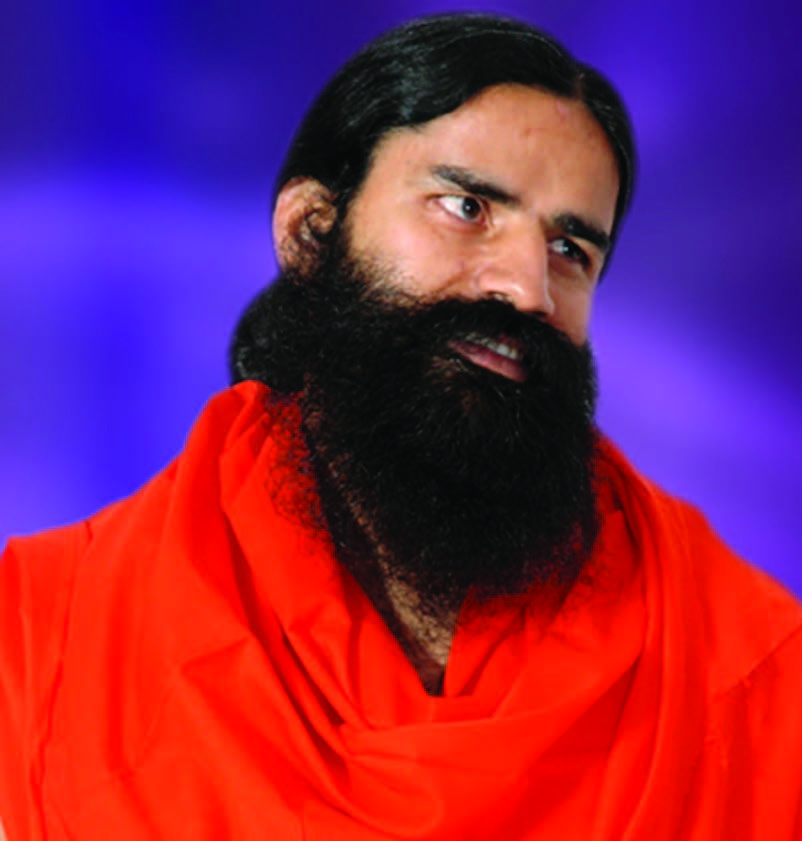
    NEW DELHI (TIP): With mounting criticism over the proposal to introduce a tax on bank deposits and abolish all other levies, yoga guru Baba Ramdev, who is one of the key proponents of the new regime, on Thursday tweaked the plan and suggested separate slabs for salaried as well as industries, while suggesting a tax amnesty scheme as a pre-cursor. Suggesting that the reform proposal will take a year, “provided there is political will”, Ramdev said that in the first phase the government will need to develop banking infrastructure, do away with currency notes of Rs 500 and Rs 1000 and also introduce a tax amnesty scheme, something that the Supreme Court has frowned upon.

    Although he recognized that getting states on board may be a tough task, he suggested that states and the Centre should get 40% each of the mop up, while local bodies will have a share of 18-19% and the rest will go to banks that collect the tax. Ramdev said that his proposal is different from the one being pushed by ArthaKranti, a Pune-based think tank, which has suggested a 2% levy. “You need slabs for it to be successful and equitable. The tax rate can be 0.1 or 0.2% to 30%, with a higher levy on alcohol and tobacco and an exemption for farmers and labourers,” he said in a bid to deal with criticism from BJP leaders like Arun Jaitley. Some BJP leaders had initially backed the proposal to move to a new tax regime, but have now backed out saying that the proposal is flawed.

  • UPA OKAYS PROBE INTO GUJARAT SNOOP CASE

    UPA OKAYS PROBE INTO GUJARAT SNOOP CASE

    The woman was tailed as she visited shopping malls, ice-cream parlours, hospitals and airports, according to the websites’ expose

    NEW DELHI (TIP): Spelling trouble for BJP’s prime ministerial candidate Narendra Modi, the Centre today has ordered the setting up of an inquiry commission to probe into the alleged snooping of a young woman by the Gujarat police, at the behest of then state home minister Amit Shah. The decision was taken according to Section 3 of Commissions of Inquiry Act which enables the government the government to set up such a commission. The committee will be headed by a retired judge and the probe will be completed in three months. The Gujarat government had earlier already ordered a probe into the case. BJP spokesperson Nirmala Sitharaman said: “Congress is trying to hit at the principal opposition party’s prime ministerial candidate.

    It is a clear case of political vindictiveness coming into play.” Flaying the Centre’s decision, senior BJP leader Arun Jaitley tweeted: ‘Cabinet decision to appoint a Commission to probe alleged snooping is violative of the Federal structure.’ He also said that the decision will be challenged in court. Jaitley said: “The Central Government has announced the setting up a Commission of Inquiry to probe the allegations of alleged snooping by the Gujarat Government. This action is politically motivated. The Congress Party has not learnt from the drubbing it got in the elections recently. It has continued with its strategy of fighting Narender Modi not politically but through investigative agencies and now through a Commission of Inquiry.” Two investigative websites – Cobrapost and Gulail – said earlier this month that they had access to 267 audio recordings that had been handed over to the Central Bureau of Investigation.

    They said the recordings contain telephone conversations from 2009 in which Modi’s former junior home minister Amit Shah orders a police officer to track the woman. In the phone recordings, the person alleged to be home minister Shah asks the surveillance to be carried out for his “saheb” – the respectful Hindi word for boss – when giving orders to police officer G L Singhal, who secretly recorded the conversations. Modi is not named. The woman was tailed as she visited shopping malls, ice-cream parlours, hospitals and airports, according to the websites’ expose. It was unclear why the woman was being followed. A letter by the woman’s father last week denied that there had been any unwanted surveillance. The father stated that he had asked Modi to keep a watch on his daughter for her safety. The BJP has dismissed the charges as part of “dirty tricks” in the lead-up to the elections.

  • Lokpal missing from agenda, Anna criticizes Centre

    Lokpal missing from agenda, Anna criticizes Centre

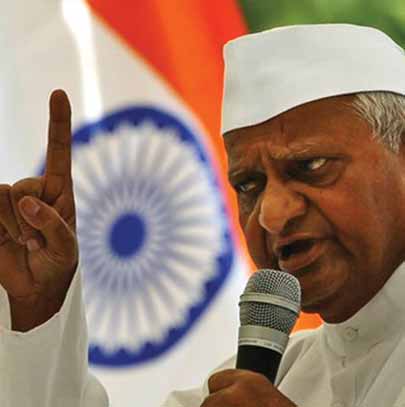
    PUNE (TIP): Social crusader Anna Hazare, who is on an indefinite fast at Ralegan Siddhi, has criticized the Union government for abdicating its responsibility towards the Jan Lokpal bill. He said the bill has not been included in the agenda of the winter session raising doubts about the government’s intention. In a letter written to V Narayanasamy, minister of state in the Prime Minister’s Office, on Thursday, Hazare said when he checked two days prior to the start of the winter session of Parliament, the lokpal bill was not on the agenda. “If it is not on the agenda, how will the government table the bill and discuss it? It is quite clear that the government is cheating me and the people of this country,” he said in the letter.

    Reminding the Congress that it had lost elections in four states recently, Hazare said: “If the Jan Lokpal bill is not passed during the winter session, the people of this country will teach the government and the ruling party a lesson in the forthcoming Lok Sabha elections too,” he said. Hazare said government representatives had told the media on Wednesday that the bill will be passed during this session, yet it has not been included in the agenda. He reiterated that he will not end his fast till the bill is passed. Meanwhile, in another letter sent to BJP leader Arun Jaitley, Hazare said he suspected the party’s intentions as it has failed to put pressure on the Union government to table the bill in the Rajya Sabha. “Your party has taken an aggressive stance regarding many issues both inside and outside the house. But I find that the party has been silent on the issue of Lokpal bill,” he said in the letter. Jaitley had written to Hazare on December 10 stating that his party was committed to passing the bill.

  • LALIT MODI EXPELLED FROM BCCI

    LALIT MODI EXPELLED FROM BCCI

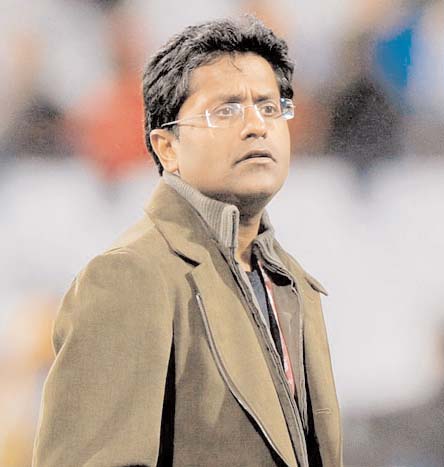
    CHENNAI (TIP) : The decision to ban Lalit Modi from BCCI for life was taken much ahead of the board’s special general meeting (SGM), which started at 2:05 pm on September 25 and was over by 2:20 pm. Modi the maverick became history as his sworn enemy, president-in-exile N Srinivasan, clinically packed him off, gaining a huge advantage ahead of the annual general meeting (AGM) on Sunday. The 29-0 scoreline in an electorate of 30 (the J&K representative was absent) said it all. There was no voice of support for Modi who was desperately trying to prolong his administrative career. All Srinivasan needed was a two-thirds majority (21 votes), but there was no voice of dissent, proving beyond doubt who is the supreme boss in BCCI at the moment. “Modi is guilty of committing acts of misconduct and indiscipline, and therefore, in exercise of powers as per Regulation 32 of the Memorandum of Rules and Regulations of the BCCI, Modi is hereby expelled from the board,” a terse note written by BCCI secretary Sanjay Patel was sent to the media. Modi’s Special Leave Petition in the Supreme Court to stop the SGM was rejected and a letter that he had sent to BCCI urging the members to allow him to present his case or defer the meeting to a date after the Sunday AGM wasn’t paid attention to.

    “Please note that I do intend to appear before the SGM and place my version and the facility that was extended to the BCCI witnesses for the purposes of recording of their evidence, that is by way of video conferencing, may kindly be extended to me as well,” Modi had said in his letter. According to a BCCI member present in the meeting, they were informed about the contents of Modi’s letter but they didn’t feel it important enough to attach importance to it. “He was found guilty by the disciplinary committee and there was no reason to waste too much time on it any longer. And Modi wasn’t available for video conferencing either,” a BCCI member present in the meeting said. “It was a unanimous choice to ban Modi. The proposer was Anirudh Chaudhury from the Haryana Cricket Association and the seconder was Ranjib Biswal from Orissa Cricket Association. There was no voice of opposition,” Rajeev Shukla said. IS Bindra, the president of Punjab Cricket Association and a known Modi sympathizer, didn’t attend the meeting and MP Pandove, who represented the association, went in favour of the motion. The only office-bearer absent from the meeting chaired by Srinivasan was North Zone vice-president Arun Jaitley, who was busy with a BJP rally in Bhopal.

    Officials only interested in themselves: Lalit Modi
    In a video interview to ESPN Cricinfo, Modi said: “Board officials are not interested in doing what is good for cricket. They are only interested in what they are getting out of it.” Modi spoke about how ridiculous it was for Srinivasan to stand for elections in the midst of a burning spot fixing controversy involving his son-inlaw. “There is unanimity in allowing him to continue. You never see a lone ranger standing out because they shut them all up. Only I S Bindra and myself have been lone rangers in the past, “ he said.

  • IPL spot-fixing: Sree, Ankeet Chavan banned for life

    IPL spot-fixing: Sree, Ankeet Chavan banned for life

    NEW DELHI (TIP): Rajasthan Royals’ players S Sreesanth and Ankeet Chavan were on September 13 “banned for life” for their involvement in the IPL spotfixing scandal by the Disciplinary Committee of the Board of Control for Cricket in India (BCCI). “They have been banned for life from playing any representative cricket, or in any way being associated with the activities of the BCCI or its affiliates,” a statement issued by board secretary Sanjay Patel said. The BCCI disciplinary committee, comprising N Srinivasan, Arun Jaitley and Niranjan Shah, met here today to consider the report submitted by Ravi Sawant, appointed by the board to inquire into the scandal. Sawant has held Sreesanth, Chandila and Chavan guilty of conceding a “predetermined number of runs per over in exchange for bribes”.

    The committee took the decision “after considering the evidence on record, and hearing each of the players in person”. Cricketer-turned-bookie Amit Singh was banned for five years while his Royals teammate Siddharth Trivedi got one-year ban for not reporting that he was approached by bookies. The case against Harmeet Singh, 20, who was part of India’s under-19 World Cup winning team in 2012, has been “closed in the absence of evidence against him”. No decision was taken on Ajit Chandila, as his deposition was not complete. He got bail three days ago and would be asked to appear before Sawant for evidence. His case would come up before the disciplinary committee after that.

    Sreesanth was the last to be called in by the committee. The former India player said, “I have never cheated. I gave them my side of the story. I did not argue with anybody. Everybody was very cooperative. Since childhood, I only dreamt of playing for India. I will never cheat the game. I have faith in the judiciary and the BCCI. I hope to play again.” However, the BCCI did not trust his side of the story, and preferred to go by what Ravi Sawant had observed. A minor drama was played out in the Disciplinary Committee room as N Srinivasan reached the venue and chaired the meeting, though it was widely expected that Jaitley would steer the proceedings in the wake of Srinivasan “stepping aside” as the board president following alleged involvement of his son-in-law Raghunath Meiyappan in the fixing scandal. However, a reliable source said it had been decided at the working committee meeting that Srinivasan would discharge his constitutional duties, and, therefore, it was “mandatory” for him to chair today’s meeting.

  • RAJYA SABHA PASSES BILL TO APPOINT JUDGES UNDER NEW SYSTEM

    RAJYA SABHA PASSES BILL TO APPOINT JUDGES UNDER NEW SYSTEM

    NEW DELHI: Government and opposition in Rajya Sabha on September 5 presented a joint front in cornering judiciary on all fronts – ranging from corruption, favouritism and nepotism to compromises due to lust of post-retirement jobs\benefits – while discussing a bill which seeks to scrap the collegium system of appointing judges. The bill, giving executive a crucial role in judges’ appointment, was, however, finally passed without BJP members’ presence as they walked out protesting the government’s refusal to send the proposed legislation to a parliamentary standing committee for wider consultations. As the Upper House took up the bill to amend the Constitution to set up a Judicial Appointments Commission (JAC) replacing the collegium system, law minister Kapil Sibal, leader of opposition Arun Jaitley and several other members were of the view that the present system of appointing judges to Supreme Court and high courts lacked transparency and accountability.

    BJP members said though their party was fully in support of the bill, it wanted a wider consultations before passing of the bill. Jaitley said, “We don’t like the present system. So, we are agreed to change it. We are making a monumental change. Monumental changes are never brought with a knee-jerk reaction”. The bill, which was passed without BJP members participating in voting, seeks to set up a JAC to recommend appointment and transfer of Supreme Court and high court judges. It states that the JAC will make the participants in the selection accountable and introduce “transparency” in the selection process. With the creation of the proposed body, the executive seeks to have a say in appointment of members to the higher judiciary. The bill seeks to set up a panel headed by the Chief Justice of India (CJI) to appoint and transfer senior judges. The other members of the proposed commission would be two senior-most judges of the Supreme Court, the law minister, two eminent persons as members and secretary (justice) in the law ministry as Convener.

    Moving the bill, Sibal earlier said the Supreme Court in 1993 had sought to change the procedure of appointment of judges in higher judiciary by bringing in a collegium system. The judiciary has taken over executive power by rewriting Article 124 (of the Constitution). That balance must be restored. Executive must have a say in appointment.” Sibal said, “It has disturbed the delicate balance of separation of powers. There is very clear division of powers among the executive, legislature and judiciary in our Constitution. Judiciary cannot take over the function of the executive”. Sibal also chose the occasion to flag his concerns over “nepotism” in the judiciary. “We are really worried over the manner in which relatives of judges are practising in high courts. It is very disturbing. It is a matter of sadness that somebody’s maternal uncle, uncle and others practice in court. How long this nepotism will continue,” he asked. Jaitley echoed Sibal’s views as he pressed for reestablishment of the “separation of powers”. He said when other establishments of the democracy do not infringe upon functioning of the judiciary, then why would it ask the government to do this or do that and direct even on the economic policy of the government. “Courts cannot review a policy and say that my policy is better that your policy.

    It cannot say how to be tough on the Naxalites,” he said. Citing the ban on iron ore exports, Jaitley sought to link judicial orders partially to the present state of Current Account Deficit and depreciation of rupee as a result of that. Attacking judiciary, he said no government, irrespective of its complexions, has ever said that since court has three crore cases pending, somebody else would do it for courts. Stating that the present system of appointing judges lacks transparency, Jaitley said the three-member collegium often left out the best of the lot for a promotion and go ahead with their choices. “A collegium is as good as the members of the collegium,” he said as he observed, “Judges appoint themselves and judges are accountable to judges.” Stating that in the existing collegium mechanism the members of the panel of judges go by their own preferences, he said when the collegium meets for appointment of judges, they “have to accommodate the preferences of each other, and those who don’t come in their list of preferences lose out”. Jaitley also spoke against the trend of higher judiciary members seeking post-retirement jobs.

    He said, “I think this whole temptation of continuing to occupy a Lutyens Bungalow (government accommodation in heart of the Capital) is a very serious temptation….The desire of a postretirement job influences pre-retirement judgments. It is a threat to the independence of the judiciary. Once it influences pre-retirement judgments, it adversely impacts the functioning of our jud iciary itself”. The leader of opposition proposed that a judicial commission should not only have powers for appointment of judges but also ensure their accountability. He said in cases of judicial misconduct, falling short of acts that call for impeachment, the judges were accountable only to judges and “this needs to be changed”. Sibal, while moving the bill, said the proposal to set up JAC was also the part of BJP’s national agenda of governance in 1998. “I compliment the leader of opposition who then as the minister introduced the bill to set up the Judicial Commission in 2003.

    All we have done is that we have increased the number of eminent members from one to two who will be appointed in the National Judicial Commission which will appoint the Judges. We are grateful to the leader of opposition that we are only adopting what he had suggested,” he said. Sibal said the Law Commission had said in 2008 that the Supreme Court interpretation of Article 124 (2) is contrary to the letter and spirit of the very article. He recalled that Justice M N Venkatachaliah and Justice J S Verma, who had favoured the collegium system, had later said they regretted their decision and that the system was not working. The minister also recalled that as a counsel, he had in past supported the idea of the judiciary appointing judges. “I also regret…Wise men are always proved right. When we were young, we wanted to change the system and sorry we disregarded your wisdom,” Sibal said as nominated member and former Attorney General of India K Parasaran reminded him that Sibal was opposed to any outside role in judicial appointments. “I am not saying that you should go back to 1993.

    There should be a judicial commission so that a collaborative exercise is there for their appointments. We do not want to impose our decisions in judicial appointments. “That is why we have made provisions for inclusion of two eminent persons in the judicial commission whose names will be decided by the Prime Minister, leader of opposition in the Lok Sabha and Chief Justice of India

  • TOUGH ECONOMIC SITUATION FOR INDIA, SAYS PM

    TOUGH ECONOMIC SITUATION FOR INDIA, SAYS PM

    NEW DELHI (TIP): Under sustained opposition attack in Parliament over rupee’s free fall, Prime Minster Manmohan Singh on August 29 conceded that the country was facing a “difficult” economic situation and had to reckon with the uncertainties triggered by global factors, including US monetary stance. “It cannot be denied that the country is faced with a difficult economic situation. There are several causes. I do not deny that there are some domestic factors but there are also international factors arising out of the changes in US monetary stance,” Singh said in Rajya Sabha. Responding to members’ demand seeking his statement on the issue, the PM said, “There are also problems created by the new tensions that are on the horizon in Syria and they have inevitable consequences for oil prices. So, we have to reckon with all those uncertainties.

    I need some time to reflect on what I have to say. ” Lok Sabha saw repeated adjournments amid opposition demands for an immediate statement from the PM, while the issue created uproar in the Rajya Sabha for some time. As soon as Rajya Sabha met for the day, Leader of the opposition Arun Jaitley raised the issue of rupee’s depreciation, which has fallen 20% against the US dollar this year and already breached the 68 mark, and said there was “panic” as people did not know at what level the slide would stop. “It is a panic situation… we want to know from the Prime Minister what he has in his mind for reviving the situation. In a democracy, the buck stops at the Prime Minister and does not disappear there,” he said, adding, “Prime Minister must take the House and the country into confidence”. CPM member Sitaram Yechury said the country had “come back to square one” after 22 years of reforms under Manmohan Singh as the economy is facing the same crisis as it did in 1991.

  • Justice Sathasivam Sworn In As Chief Justice Of India

    Justice Sathasivam Sworn In As Chief Justice Of India

    NEW DELHI (TIP): Justice P Sathasivam was on July 19 sworn in as the 40th Chief Justice of India (CJI) by President Pranab Mukherjee. He took over the post from Justice Altamas Kabir, who served as the CJI for over nine months. Justice Sathasivam, 64, took oath in the name of God at a brief ceremony at Darbar Hall of Rashtrapati Bhavan.

    Prime Minister Manmohan Singh, Vice President Hamid Ansari, UPA Chairperson Sonia Gandhi, Leader of the Opposition in Lok Sabha Sushma Swaraj, her Rajya Sabha counterpart Arun Jaitley, NDA Working Chairperson L K Advani, CPI leader D Raja, several Union ministers were present at the ceremony.

    Justice Sathasivam was elevated to the Supreme Court in August, 2007 and would demit office on April 26, 2014. Like his predecessor, Justice Sathasivam is opposed to scrapping of the present collegium system for appointment of Supreme Court and high court judges.

  • PRESSURE MOUNTS ON BCCI CHIEF TO GO

    PRESSURE MOUNTS ON BCCI CHIEF TO GO

    NEW DELHI (TIP): Board of Control for Cricket in India (BCCI) president N Srinivasan came under all round attack with the Sports Ministry and Board heavyweights mounting pressure on him to quit. Srinivasan, however, remained unfazed and refused to step down. The Ministry for Sports and Youth Affairs said the BCCI chief should resign to avoid a conflict of interest, four days after the police arrested his son-in-law Gurunath Meiyappan in connection with the IPL scandal.

    “There is a conflict of interest in this inquiry. Therefore, the BCCI president should tender his resignation on moral grounds pending the outcome of the inquiry,” the ministry said in a statement. Pressure mounted on Srinivasan from within the Board too as two key members — Rajeev Shukla, vicepresident, and Arun Jaitley, vice president — asked the BCCI chief to stay away from the top post till investigations into the scandal were completed.

    “Srinivasan is an elected president, but we are of the view that it would be good if he stays away from this procedure (of the inquiry into the fixing scandal). We have made this suggestion. The decision is up to him,” Shukla said after meeting Jaitley. Shukla said he and Jaitley were in touch with all Board members. A three-member BCCI inquiry committee is probing Meiyappan’s role and the spot-fixing allegations against three Rajasthan Royals players and its franchise as well as the Chennai Super Kings.

    Srinivasan, on his part, showed no signs of relenting under pressure. “I saw Rajiv Shukla’s interview. What he says is that this commission has been appointed and I should disassociate myself from the procedure,” he said. “I had said in Kolkata that I will have nothing to do with the commission — its appointment, its terms of reference and its decision. Rajiv Shukla has reiterated this only,” said Srinivasan.

    “I have nothing to do with the commission. It is independent. Under the operational powers, they have powers to sanction and impose punishment. So, we will just await the results,” he said. Pressure has been mounting on Srinivasan to quit ever since his son-in-law was arrested in the fixing scandal, though his own name has not been linked to the scandal. He cannot be forced to quit, unless the Board takes a majority decision.

    He, however, can be prevailed upon to step down on moral grounds. The Sports Ministry, meanwhile, said it was in favour of a law to curb malpractices in all sports, and it will send its comments on the Bill drafted by the Law Ministry to all stakeholders. The ministry also clarified that enacting a law regularising betting in sports was a State subject, and therefore it “cannot be part of a Central Law”. “The ministry has made no recommendations to regularise betting to the Law Ministry or to any other organisation”, the ministry stated.

  • Parties reach consensus on Land Bill

    Parties reach consensus on Land Bill

    NEW DELHI (TIP): The government on April 17 achieved “broad consensus” on the long-pending Land Acquisition Bill, paving the way for the contentious legislation to be taken up for consideration and passage in the Budget Session that resumes on Monday. “We have reached a broad consensus on the Land Acquisition Bill,” Parliamentary Affairs Minister Kamal Nath and Leader of Opposition in Lok Sabha Sushma Swaraj said after the allparty meeting. The Bill proposes to replace the archaic Land Acquisition Act, 1894. The government agreed to a key demand of the BJP, which suggested that instead of acquisition, land could be leased to developers so that its ownership remains with farmers and also provides them with regular income. Sushma said the land mafia had bought huge tracts of land from farmers in the hope for four times compensation from the government. “I gave 12 suggestions and the government agreed to almost all of them.We have told the government that when you acquire land, you should give 50 per cent of the compensation to the original farmer and the government has agreed to that,” she said. Sources said the government would amend the Land Acquisition, Rehabilitation and Resettlement Bill, 2011, to provide the enabling provision for states to enact laws in this regard as leasing of land was a state subject.

    However, Left parties and DMK still have reservations on certain issues. The CPM is demanding consent of all families affected by land acquisition, whereas the Bill currently provides for agreement from at least 80 per cent affected persons. CPM leader Basudeb Acharia said the original Bill had been diluted and the current version was against the interest of farmers. “We will move amendments when the Bill is taken up in Parliament,” he said. DMK leader TR Baalu claimed that the Bill was against the Constitution’s federal structure.

    He has been asked to give suggestions on the issues by tomorrow. The forward movement on the Bill is a big relief for Rural Development Minister Jairam Ramesh. The first all-party meet on the Bill on April 9 had failed to iron out differences between the government and the BJP, SP and the Left Front. Ever since, Ramesh had been reaching out to leaders of various political parties to work out points of disagreement. Over the past one week, he met BJP leaders Sushma Swaraj, Arun Jaitley and CPM’s Sitaram Yechury for their support to the Bill. “The atmosphere was positive. If Parliament functions, we will be able to get this Bill through,” he said today.

    The Land Acquisition Bill has emerged as one of UPA’s flagship projects and is followed keenly by chairperson Sonia Gandhi and Rahul Gandhi. Congress strategists believe that land reforms can do for the UPA II what the job guarantee scheme and loan waiver had for the UPA I. It was Sonia who had vetoed the clause that said consent of 67% landowners would suffice for the government to acquire land.

    The draft legislation provides compensation for owners of acquired land to be four times the market value in rural areas and twice the market value in urban areas. In case of land acquisition for use by private companies or public-private partnerships, consent of 80 per cent displaced people will be required. Considering its far-reaching implications, the Bill has been through various procedural stages. Introduced in Parliament in September 2011, it was subsequently referred to a Parliamentary Standing Committee, which submitted its recommendations in May 2012. Ministries related to infrastructure and commerce insisted on changes to provisions that were perceived as hurdles to investment and industry. The industry felt that terms of compensation and rehabilitation provided by Bill would be detrimental to it.

    THE BREAKTHROUGH

    -The government agreed to a key BJP demand that instead of acquisition, land could be leased to developers

  • Victory Raises Modi’s PM Candidature Prospects

    Victory Raises Modi’s PM Candidature Prospects

    After Modi’s massive victory in Gujarat, some party leaders have said Modi should now be projected as the BJP’s prime ministerial candidate

    NEW DELHI (TIP): Narendra Modi’s third successive victory in the Gujarat assembly polls is expected to pitch him for a more prominent role in the BJP, possibly as head of its campaign for the next general elections, while some party leaders even expressed their preference for him to be projected as the prime ministerial candidate. Modi’s victory, almost on the same scale as in 2007 polls, came as a morale booster for the Bharatiya Janata Party (BJP) which lost the electoral battle in Himachal Pradesh. Some party leaders said Modi should now be projected as the BJP’s prime ministerial candidate.

    BJP MP Tarun Vijay said Modi “is the best suitable candidate” for the post of prime minister on the basis of his performance. Another MP, Smriti Irani said that Modi would be her candidate for the country’s top post on the strength of his governance in Gujarat. BJP sources now say Modi would be given a prominent role to galvanise the party rank and file for the next Lok Sabha elections. ‘He is likely to be appointed chief of the party’s campaign for the 2014 Lok Sabha polls,’ a party leader saids on the condition of anonymity. The appointment could take place in January next year. Modi’s victory has come at a crucial time for the BJP as it has to decide its next party chief over the coming few weeks.

    Nitin Gadkari, who has been party president since December 2009, has faced controversy over alleged financial wrongdoing by a company linked to him and there have been suggestions from some party leaders against giving him a second term. The BJP had kept a final decision on its next president pending in anticipation of results of Gujarat and Himachal Pradesh and is now expected to take a call on the issue. With Modi having emerged as one of BJP’s powerful leaders, his views are likely to matter on crucial issues facing the party. Leader of Opposition in the Rajya Sabha Arun Jaitley said Modi was a very senior leader in the BJP and extremely popular with the party rank and file. ‘His views matter… taken very seriously in BJP,’ Jaitley told a news channel.

    Senior journalist S. Nihal Singh said Modi was expected to win Gujarat and the question was how well he does. ‘After an impressive victory, at least a section will push for him to be prime ministerial candidate,’ Nihal Singh said. ‘I think he (Modi) is a very ambitious man. That is what he wants,’ he said but added that it will increase complications within the BJP as there were other aspirants too for the post. Nihal Singh added there were apprehensions about Modi’s ‘divisive persona whether 2002 or otherwise’ and the BJP would have to take a call on how it will impact its prospects. He said there was doubt about Muslims voting for Modi and the community vote can influence outcome on several seats in states such as Bihar and Uttar Pradesh.

    ‘That is another problem for BJP.’ Janata Dal-United, an ally of the BJP, is not in favour of Modi being projected as a prime ministerial candidate. BJP sources said the party was unlikely to project a prime ministerial candidate before the Lok Sabha polls but Modi’s expected appointment as chief of the campaign committee would send the right message to the party rank and file without upsetting any of the allies. ‘We can tell the allies that a decision on prime ministerial candidate will be taken after the Lok Sabha elections,’ said a party leader, requesting not to be named. He said Modi’s appointment as campaign committee chief would make it a battle between him and Rahul Gandhi, who is heading Congress’s coordination committee for the next Lok Sabha polls. Nisar-ul-Haq of Jamia Millia Islamia’s political science department, however, said that Modi was unlikely to be effective outside Gujarat and added he would not be projected as prime ministerial candidate.

  • Mayawati Now Says she has Respect for Hamid Ansari

    Mayawati Now Says she has Respect for Hamid Ansari

    NEW DELHI (TIP): A day after her criticism of Rajya Sabha chairman Hamid Ansari, BSP chief Mayawati on December 13 changed tune to say that she had “respect” and “full faith” in the Chair and expressed hope that he will find ways for passage of the Bill for quota in promotion. Mayawati’s impromptu remarks were followed by an assurance of “fullest cooperation” of the House by Prime Minister Manmohan Singh as also leader of the opposition Arun Jaitley to Ansari, who on Wednesday had expressed difficulty in continuing in a situation where he is attacked. “I respect you. I respect the Chair…I have full faith in the Chair that he will find a way to get the voice of the downtrodden heard,” Mayawati said.

    The BSP chief, who has been pushing a Bill for providing for reservation to SC/ST in government job promotion, said it was “sad” that the proposed legislation could not be taken up in the last session of Parliament as well as in the current session because of frequent disruptions. “I have full faith in you. I have full confidence that you will be able to find a way out to ensure that the House runs smoothly and the legislation is passed,” she said. Mayawati stunned the House on December 12 by criticising Ansari over disruptions.

    She was peeved over the delay in taking up the bill for quota in promotion, which is being strongly opposed by Samajwadi Party. The BSP chief also requested the government, especially the Prime Minister to find a way out by talking to parties, which are obstructing the measure. “Find a way so that the House runs smoothly and the Chair also does not face problems in running the House. I also request the leader of the opposition and leaders of all other parties to rise over party politics and help in the passage of the bill,” she said.

    The Prime Minister, who is leader of the House, assured Ansari that government has “fullest faith and highest regard” for him. “Respect for the Chairman of the House is respect for maintenance of the dignity of the House. We will work, from all sections of the House, to ensure that the Chair gets all the cooperation, all the respect that is due to you and to this august Chair,” Singh said. The Prime Minister said he agreed that “we must find ways and means of conducting the business of the House smoothly without interruption. So far Government is concerned, you have my fullest assurance in this regard.” Leader of the opposition Arun Jaitley said that he joins the Prime Minister in expressing “full faith” both in Ansari as a person as well as the Chair that he occupies.

    “What we have seen today is really the strength of India’s Parliamentary democracy where we all do believe that the credibility and dignity of the Chair is synonymous with the dignity of the House which in turn reposes popular confidence in India’s democracy,” Jaitley said. He assured Ansari: “This House will speak in one voice in upholding your honour both as an individual and the also the dignity of the Chair that you occupy.” Noting that managing contradictions is the strength of India’s parliamentary democracy, Jaitley said he was sure “we will successfully be able to manage those contradictions”.

    He assured the chairman “this House will speak in one voice, which you represent as the Chair” as far as “credibility and respect of the House” is concerned. Sitaram Yechury (CPM) said he echoed the sentiments expressed by the leader of the opposition. An overwhelmed Ansari profusely thanked the Prime Minister, Jaitley, Mayawati and leaders of all other political parties and members of the House for the sentiments expressed. “The Chair as always seeks the cooperation of the House for running it smoothly,” he said, bringing curtains down on the controversy that had raged in Rajya Sabha on December 12.

  • BJP Sends Gadkari on ‘Exile’

    BJP Sends Gadkari on ‘Exile’

    NEW DELHI: BJP chief Nitin Gadkari has invariably, well almost, addressed a rally in the Capital whenever the party has planned a nationwide campaign during his tenure. However, he will be in Itanagar in Arunachal Pradesh when the party takes to the streets against the government on November 21 over corruption and FDI in retail, a departure which is seen as significant in view of the troubles facing him.

    During the campaign for Himachal Pradesh polls too, Gadkari had chosen to campaign in a remote corner of the state in what was seen as a move to project a business-as-usual impression. However, that was before S Gurumurthy, a Hindutva proponent who is a chartered accountant by training, gave him an “all clear” on the charges against Purti’s funding. As per the duty roster released by the BJP, almost all bigwigs have been assigned the party’s known strongholds. Thus, two of Gadkari’s predecessors — Rajnath Singh and Murli Manohar Joshi — will participate in rallies in New Delhi while Arun Jaitley will lead the protests in Mumbai.

    Ananth Kumar has been assigned Lucknow while Gopinath Munde and Venkaiah Naidu have decided to focus on their home turfs of Maharashtra and Hyderabad. Many in the party feel Gadkari would have led the charge in the capital had it not been for the allegations about Purti’s funding. Party vice-president Mukhtar Abbas Naqvi advised against reading significance into the allocation of protest sites.

    On Gadkari’s choice of Itanagar, he said, “Polls are due in Meghalaya, Nagaland and Tripura and since Itanagar is close to these states, Gadkari is going there.” However, party leaders feel that the Purti episode has undercut Gadkari’s stature to be the bearer of the party’s anti-corruption standard.

  • Nitin Gadkari to continue as BJP president, but second term at risk

    Nitin Gadkari to continue as BJP president, but second term at risk

    New Delhi (TIP): BJP president Nitin Gadkari, confronting corruption charges, will remain in office for now despite corruption charges. He left for Himachal Pradesh today after the party allowed him to proceed with his scheduled campaign trail in the state ahead of next month’s elections.

    Mr Gadkari arrived in Delhi on Friday evening from Nagpur and met privately with the BJP’s senior most leader, LK Advani. He then met with other colleagues like Sushma Swaraj and Arun Jaitley.

    “The party is unanimous in backing him,” said spokesperson Prakash Javadekar late after the meetings ended. Mr Gadkari was praised for his willingness to accept an enquiry into his business dealings. Sources in the party say that he did not offer to resign. His term as president expires in December.

    Over the last week, allegations of financial malpractices by his businesses have engulfed Mr Gadkari. But the BJP has calculated that if he is removed now, it may appear as an admission of guilt or distract voters in the forthcoming elections in states like Himachal Pradesh and Gujarat. Selecting a replacement would also be messy – the party is finding it difficult to decide who to pick as its candidate for prime minister ahead of the general elections in 2014; there are many fractious contenders.

    But while his party is backing him for now, the chances of a second term as president for Mr Gadkari are quickly dissipating.

    He had reportedly been asked by the BJP’s parent body, the Rashtriya Swayamsevak Sangh or RSS to explain the charges against him to senior colleagues.

    In a statement earlier on Friday evening, the RSS suggested its support for Mr Gadkari has ebbed substantially. “It has been an article of faith with the RSS that any individual or organization in any illegal activity must be subjected to impartial probe,” the RSS said in an emailed statement today. “We are saddened with efforts to drag the RSS name into these allegations,” it said, stressing that the charges have not been investigated by an authorized agency.

    By striding away from the controversy, the RSS has reinvigorated its frisson with the BJP. In 2009, the RSS conferred presidency upon Mr Gadkari against the wishes of senior BJP leaders like LK Advani. Just last month, the BJP’s rules were amended, again under considerable pressure from the RSS, to allow Mr Gadkari a second consecutive term as president, a move that may soon be aborted.

    The shadowy credentials of his vast business empire, and the companies that have invested in it, were first reported on NDTV last weekend. Mr Gadkari had appeared in its studio to counter charges of ghost investors in Purti Power and Sugar Limited, co-founded by him in 2000. He quit as its chairman last year and now holds about 200 shares in the company.

    Since then, a series of reports have exhumed other insalubrious details. Some of the companies that have bought equity in Purti share bogus addresses; their directors have included his former driver, an astrologer and a baker. Yesterday, another NDTV expose highlighted that a firm that bought stake in Purti was, a year later, loaned money by Mr Gadkari and his firm, a tactic normally used for money-laundering and round-tripping, which involves selling an asset with the understanding that it will be bought back, often used for tax evasion.