Tag: Banking

  • POWERED BY INDIGENOUS ENGINE, ISRO LAUNCHES HEAVIEST SATELLITE

    BANGALORE (TIP): India’s space agency ISRO crossed another milestone August 27 afternoon, launching its first 2,000-kg-plus satellite on a launch vehicle powered by an indigenous engine.

    The 2,117-kg GSAT-6 communication satellite flew into space on GSLV-D6 launch vehicle from the Satish Dhawan Space Centre at Sriharikota. This was the second successful flight of the GSLV using the indigenous cryogenic engine with which ISRO scientists have had a bitter-sweet experience till now.

    The GSAT-6 satellite is the same one that had been leased out to a private company, Devas Multimedia, four years ago for launching satellite-based mobile communication services. Devas had been authorised by ISRO to use a part of the S-band spectrum to roll out its services.

    The deal had been cancelled by the government in 2012 after allegations of favouritism surfaced, and questions were raised over allotment of S-band that could be used by the security agencies. The GSAT-6 has a six-metre wide unfurlable antenna that can facilitate utilisation of S-band space spectrum for communication and an 80-cm C band antenna that has been reserved for “strategic uses”.

    The launch marks an important step in the deployment of GSLVs in future projects. GSLV, or Geosynchronous Satellite Launch Vehicle, is an advanced launch vehicle that can be used to carry satellites heavier than 2000-kg, even those weighing up to 5000-kg, into space. This is the vehicle that ISRO has been banking on to realise its future projects to explore deep space, far beyond even Mars. GSLV’s higher capabilities, as compared to the PSLV or Polar Satellite Launch Vehicle that has made 28 successful launches in a row, is made possible by a cryogenic part of the three-stage engine. Cryogenics is the science of extremely low temperatures. The cryogenic engine uses liquid engine and liquid hydrogen as propellants.

    The first successful flights of GSLV used Russian-made cryogenic engines, including the GSLF-F04 that carried the heaviest-ever satellite launched from India, the INSAT-4CR that weighed 2130 kg, 13 kg more than GSAT-6. ISRO’s initial attempts to use its own cryogenic engine in the GSLV resulted in failure. It was only in January last year that the first GSLV with an indigenous cryogenic-stage engine made a successful flight.

  • Global Indians – 13 Global CEOs

    Global Indians – 13 Global CEOs

    Prime Minister Narendra Modi has all along been appreciative of the struggles and achievements of NRIs. His close association with a number of NRIs all across the world is well known. There is no country in the world where Modi does not have NRI friends.

    And it is not only Modi who is appreciative of the NRI movers and shakers, the common Indian whether in India or abroad, takes great pride in the achievements of persons of Indian origin. So, here we are sharing with our readers information on the NRIs who are “global CEOs”. We congratulate them and take pride in their achievements which have done the Indian nation and its 1.3 billion people proud. They have made India’s Independence Day a very special one, with the laurels they have won.

    Sundar PichaiSundar Pichai – Pichai is an Indian American computer engineer and Indian Institute of Technology, Kharagpur alumnus. He is the new CEO of Google. The decision came after Google’s founders Larry Page and Sergei Brin decided to re-organize the company by creating a mother company called Alphabet.

    The new mother company will include, besides Google, units such as Calico (which focuses on Longevity), X lab (which incubates new efforts like Wing, Google’s drone delivery effort) and units dealing with life sciences (such as the one working on smart contact lens that detects blood sugar level). Google’s investment arms, Ventures and Capital, will also be part of Alphabet.

    The journey of Sundar Pichai from a student of IIT-Kharagpur to Google CEO has been truly remarkable.

    Satya NadellaSatya Nadella – Satya Narayana Nadella was born in Hyderabad on 19 August 1967. He is the current Chief Executive Officer (CEO) of Microsoft. He was appointed as CEO on 4 February 2014, succeeding Steve Ballmer. Before becoming CEO of Microsoft, Nadella was Executive Vice President of Microsoft’s Cloud and Enterprise group, responsible for building and running the company’s Computing Platforms, Developer Tools and Cloud Computing Services.

    Nikesh Arora Nikesh AroraNikesh Arora – Nikesh Arora is a former Google executive and President & Chief Operating Officer of SoftBank Corp.

    Arora graduated from the IIT, Banaras Hindu University, Varanasi.

    He holds a degree from Boston College and an MBA from Northeastern University. He also holds the CFA designation.

    Ajaypal Singh BangaAjaypal Singh Banga – Ajay Banga is the current president and chief executive officer of MasterCard.MasterCard announced on April 12, 2010 that Ajay Banga, previously MasterCard’s president and chief operating officer, had been named by the Board of Directors to serve as the company’s president and chief executive officer, effective July 1, 2010.

    Banga succeeded Robert W. Selander, who had been MasterCard’s chief executive officer since March 1997.

    Presently, he is also the chairman of the US-India Business Council (USIBC) representing more than three hundred of the largest international companies investing in India.

    Indra NooyiIndra Nooyi – India-born Indra Krishnamurthy Nooyi is the current Chairperson and Chief Executive Officer of PepsiCo, the second largest food and beverage business in the world by net revenue.

    She has consistently ranked among the World’s 100 Most Powerful Women.

    In 2014, she was ranked 13 in the list of Forbes World’s 100 most powerful women.

    Rakesh SachdevRakesh Sachdev – Rakesh Sachdev has been the Chief Executive Officer and President of Sigma-Aldrich Corporation since November 2010.

    He served as the Chief Financial Officer of Sigma- Aldrich Corporation from November 18, 2008 to November 2010 and also served as its Chief Administrative Officer from May 2009 to November 14, 2010 and Senior Vice President from May 2005 to November 2010.

    He is a graduate of the Indian Institute of Technology, New Delhi with a Bachelor’s Degree in Mechanical Engineering. He holds a Master’s Degree in Business Administration in Finance from Indiana University, as well as a Master’s Degree in Mechanical Engineering from the University of Illinois.

    Francisco D'SouzaFrancisco D’Souza  – Francisco D’Souza was born on 23 August 1968. He is the CEO of Cognizant and was part of the team that founded the NASDAQ-100 company in 1994.

    Francisco is Cognizant’s CEO since January 2007.

    Francisco D’Souza is among the youngest Chief Executive Officers in the software services sector. In 2007, at the age of 38, he took over from Lakshmi Narayanan, who was promoted to Vice Chairman.

    Rakesh KapoorRakesh Kapoor – Rakesh Kapoor was born 4 August 1958. He is Chief Executive of Reckitt Benckiser plc, a UK FTSE-listed multinational consumer goods company, a major producer of health, hygiene and home products.

    Anshu JainAnshu Jain – Anshuman Jain was born on 7 January 1963 in Jaipur. He took over as Co-CEO of Deutsche Bank on 1 June 2012 to succeed Management Board Chairman Josef Ackermann.

    He was a co-CEO of the bank between 2012 and July 2015. He is a member of Deutsche Bank’s Management Board.

    Earlier, as head of the Corporate and Investment Bank, he was globally responsible for Deutsche Bank’s corporate finance, sales and trading, and transaction banking business. Jain resigned as co-CEO in July 2015 though he is expected to remain a consultant to the bank until January 2016.

    Vikram PanditVikram Pandit – Vikram Shankar Pandit was born on 14 January 1957. He is the former chief executive of Citigroup, a position he held from December 2007 until he was forced to resign, on 16 October 2012.

    Shantanu NarayenShantanu Narayen – Shantanu Narayen was born on May 27 1963. He is the CEO of Adobe Systems. Prior to this, he was the president and chief operating officer since 2005. He is also the president of the board of the Adobe Foundation.

    Padmasree WarriorPadmasree Warrior – Padmasree Warrior is the former Chief Technology & Strategy Officer (CTO) of Cisco Systems, and the former CTO of Motorola, Inc.

    As of 2014, she is listed as the 71st most powerful woman in the world by Forbes.

    rajeevRajeev Suri – Rajeev Suri headed Nokia Solutions and Networks (NSN) since October 2009, has been credited for “presiding over consistently improving results leading to the successful turnaround and restructuring of the company.” Suri joined Nokia in 1995 and headed the Asia Pacific region for NSN in 2007.

    According to his official profile, Suri has a Bachelor of Engineering degree in Electronics and Telecommunications from Mangalore University. He is based in Espoo, Finland.

  • Consular outreach to Buffalo on August 21-25

    Consular outreach to Buffalo on August 21-25

    NEW YORK (TIP): With an aim to strengthen ties with the local Indian community in Buffalo, Consul General of India, New York, Ambassador Dnyaneshwar M Mulay, would be leading a delegation of high-ranking diplomats, and officials from banking, tourism, and aviation sectors, to Buffalo, New York on August 21-25, for an Outreach Program at The Palms, Tandoori Restaurant, 7740 Transit Road, Williamsville, NY 14221

    The delegation is expected to meet various American dignitaries from Buffalo on August 21, 2105. The two-part event on August 22, 2015 will begin with a Camp for Consular Services from 9:00 am to 2pm; followed by the main Outreach Program and Networking event from 5:00 pm to 8:00 pm.

    Details for both events on August 22, 2015, are listed below:

    Part I: Camp for Consular Services | 9:00 am to 2:00 pm at The Palms, Tandoori Restaurant, 7740 Transit Road, Williamsville, NY 14221

    Cox and Kings Global Services will organize a Camp for Consular Services, which includes collection of application forms for Visa, OCIs, Renunciation Certificates and other Consular Services. Applicants are requested to make online appointments here, and complete their online application forms. Please bring all necessary documents, including passport size photographs for each service. Information about required documents for each service can be found online on our website http://www.in.ckgs.us

    Part II: Outreach Program and Networking | 5:00 pm to 8:00 pm at The Palms, Tandoori Restaurant, 7740 Transit Road, Williamsville, NY 14221

    The second half of the day will begin with an interactive networking session, followed by presentations by the Consulate, Indian Banks, Air India, PSUs, and the Tourist Board. There will also be a Q&A session with the audience, followed by a cultural program, and dinner.

    Upcoming outreach events are scheduled for the following locations: Cleveland, OH (September 2-3), Rhode Island (October 11-12), and Philadelphia, PA (October 25-26).

  • 10 foreign portfolio investors (FPIs) in India hold US$ 28 billion investments

    10 foreign portfolio investors (FPIs) in India hold US$ 28 billion investments

    TIP (Secondary Research): Europacific Growth Fund, the largest foreign portfolio investor (FPI) in India was born seven years before liberalisation ushered foreign investment into Indian equity markets. Today, it holds $131 billion in assets under management; 6.4 per cent of that is invested in Indian equities.

    Prime Database recently carried out an exercise to identify the 10 largest FPIs in India — through an examination of 1,447 listed Indian companies’ disclosure of the names of their foreign investors to stock exchange — and it turned out these FPIs together held Rs 1.79 lakh crore in Indian equities.

    FPIs hold a major chunk of the non-promoter stake in Indian companies but can be notoriously difficult to pin down. Unlike domestic mutual funds, there is no freely available ranking in terms of the size for foreign funds investing in India. Listed entities disclose the names of shareholders owning more than one per cent in them.

    The biggest FPI in terms of disclosed shareholding (above one per cent) is the Europacific Growth Fund. Among others on the list of the 10 biggest are sovereign and pension funds from Singapore and Norway, some familiar names like Franklin Templeton Investment Funds, and Morgan Stanley Asia (Singapore), besides Dodge & Cox International Stock Fund, First State Asia-Pacific Leaders Fund, Aberdeen Global Indian Equity, the Oppenheimer Developing Markets Fund and Copthall Mauritius Investment. These FPIs together hold shares equivalent to half the equity assets of the entire Indian mutual fund sector.

    While the actual number might be significantly higher, Prime’s analysis estimates Europacific’s holding in Indian equities at Rs 42,530 crore. An analysis of the fund’s own documents shows this could be around Rs 54,000 crore.

    So, the top 10 FPIs’ actual holding could be significantly higher than the Rs 1.79 lakh crore disclosed to bourses. This also means the ranking should be considered indicative, since FPIs holding company shares through participatory notes (P-notes) and the cases where holdings are less than one per cent are not required to disclose their names to stock exchanges.

    Europacific Growth Fund belongs to the US-based Capital Research and Management Company. For Europacific, India is the biggest emerging market destination and fourth-largest overall — after Japan, the UK and France — according to its disclosures at the end of June. As much as 87.5 per cent of its investments are outside the US.

    The fund managers’ commentary in Europacific’s annual report released in March this year might explain why they allocated more money to India than China.

    It noted India and China shared similar growth trends, including the rise of the middle-class. However, India’s demographics were better than China’s. The median age in India was 27, noted the report, while United Nations data showed the median age in China was around a decade higher.

    Jonathan Knowles, the Singapore-based fund manager of the Europacific Growth Fund, believes the rising middle class in India would drive consumption, leading to a rise in credit penetration, explaining the fund’s preference for financial stocks, especially private-sector banking names. “These banks have been taking share from public banks in India year after year,” said Knowles.

    Financial stocks are also high on the list of India’s second-largest FPI, the $38-billion Oppenheimer Developing Markets Fund. Led by Justin Leverenz, who has been overseeing the asset management since 2007, the fund invests 14.8 per cent of its total assets in India, second only to China, which received 19.4 per cent of its total investments as of June 2015.

    HDFC Bank, ICICI Bank, and HDFC are among the popular investment names in these funds.
    Pranav Haldea, Managing Director at Prime Database pointed out that the trend towards financials can be seen amongst all foreign investors.

    “Amongst sectors, the maximum exposure as on 30th June, 2015 was in Banks (Rs. 3.44 lakh crore) followed by IT Software (Rs.2.59 lakh crore). The sector which has seen the maximum increase in FII holdings in the last one year was also the Banking sector (from Rs.2.83 lakh crore to Rs.3.44 lakh crore),” he said as part of an emailed statement.

    The third largest fund is the Government of Singapore which invests about Rs 24,192 crore as of June 2015.
    FPIs were net buyers by Rs.1.11 lakh crore in FY15. They have been net buyers by Rs.7927 crore so far this year, shows data from depositories. FPIs held a total of Rs.20.51 lakh crore in Indian equities at the end of June. FPIs with exposure of over one% in Indian equities constitute nearly one-fourth of all FPIs with investments worth Rs 4.69 lakh crore.

  • GANG BEHIND RS 10,000 CRORE HAWALA RING BUSTED

    NEW DELHI (TIP): The Enforcement Directorate has busted a hawala network in Ahmedabad which had allegedly laundered more than Rs 10,000 crore through a private bank in Surat to Dubai and Hong Kong.

    The ED has registered a case under Prevention of Money Laundering Act and arrested five accused. The agency is on the trail of the network’s kingpin who has been evading arrest for the past eight months.

    A Mumbai-based bullion trader has been identified as the kingpin of the hawala network that had deposited Rs 10,000 crore in cash in two Surat branches of a private bank in December 2013 and January 2014.

    This was immediately transferred to a public sector bank’s overseas branch in Dubai and in a Hong Kong branch of a foreign bank. The money was later transferred to several beneficiaries from those foreign accounts.

    The network was busted by the Ahmedabad unit of the ED which is investigating the case. A source said the case was also on the radar of India’s external intelligence agency RAW. The huge cash transfer to foreign accounts is believed to be illicit money of some politicians and bureaucrats.

    The agency has traced one transaction to a Chennai company which was also accused in the 2G spectrum scam and was linked to a former telecom minister.

    A senior officer associated with the probe said the agency discovered forged customs invoices from the accused. “This time, they had forged documents which revealed dates of 2011 and payments made two years later in 2013 and 2014 which alerted us,” he said.

    The probe revealed that two accused based in Gujarat had been running dummy companies and forging documents of customs department and routing cash through the banking channels to Dubai and Hong Kong.

    The trail further led to the kingpin based in Mumbai. The ED arrested two of his nephews — one based in Surat and the other operating dummy companies in Dubai.

    The agency is probing the Mumbai kingpin’s association with some big politicians from Maharashtra and is likely to make some more arrests in the coming weeks.

  • Greek Debt Mess: Uncertainty over Europe

    On Monday, June 29, global stock markets were reeling from the news out of Greece. Dow Jones was down by 350 points. With many global crises like Ukraine, ISIS, Syria, Iran nuclear deal already threatening to tip the world into chaos, the one crisis that could undermine not only the Eurozone itself but international financial structure is Greece and its monstrous debt crisis.

    While the Wall Street collapse of 2008 is supposed to have impacted many economies driving them into recession, the main reason for the Greece debt is the structural imbalance in the Greek economy in the form of high debt to GDP ratio.

    The implosion of the Greek economy in 2009 led to the fear that the Greek government would not be able to service its high debt obligations thus leading to sovereign debt crisis. As a result, Greece was unable to borrow on the international markets and had to turn to International Monetary Fund, European Central Bank and the European Commission to seek the bailout to avoid the impending financial crisis.

    But the bailouts did not come cheaply. Too many strings were attached to it. The Greek government was required to carry out numerous painful reforms: pensions were supposed to be reduced, tax receipts were to be streamlined by curbing tax evasions, steep tax hikes were required to be implemented to generate more revenue, and deep budget cuts were to be put in place.

    The result of all these attached conditions was the absolute impoverishment of the population which was already reeling under the hardships due to ongoing recession.

    This caused resentment among the population and resulted in the resounding victory of anti-austerity Syriza party in January which campaigned on the promise of ending painful bailout agreement.

    The two sides – EU and Syriza – are now at loggerheads. Syriza wants significant reduction in debt and more leeway in how it raises its tax revenues while protecting the pensions and other public obligations while EU is demanding significant reduction in pensions and steep VAT tax hike to increase the revenue. This has led to an impasse.

    The deadline for the loan repayment program that was extended in February has expired on June 30th, and given the fact that Greece is already on the verge of bankruptcy, missing the deadline means Greece would be held in default of IMF loan – a first developed nation to do so. How the dominoes would fall as a result of its default, nobody knows.

    And, this is driving the markets and the central banks all over the world nervous: How to prevent the contagion from spreading if Greek economy and banking system collapses?

    On top of it, Syriza has decided to seek referendum of the people – which will be held on July 5th – whether to accept the bailout agreement or leave euro. As of now, the mood of both Syriza and EU towards each other has become more hardened.

    Even though Greek Prime Minister Tsipras has now sent another letter to EU accepting lenders’ conditions but with modifications, given the fact that the deadline for agreeing to the new debt program has already expired, the letter seems to be too little, too late.

    Since there is no debt deal to talk about, July 5th’s referendum has become moot. It would be seen as nothing but a referendum on whether to stay in EU or not. EU has taken note of the letter submitted by the Greek government but has decided to stick to its guns and is waiting for the outcome of July 5th referendum before commenting on the contents of the letter.

    As of now, the “No” vote to the “troika” proposed bailout deal is in majority. And, if “No” vote wins in the referendum, then it would be anybody’s guess how the resulting scenario would unfold for Eurozone and its banking system.

    Quite a mess and a very big dark cloud over Eurozone and its economy.

  • SEBI’S PUBLIC OFFER NORMS BAT FOR RETAIL INVESTORS

    SEBI’S PUBLIC OFFER NORMS BAT FOR RETAIL INVESTORS

    MUMBAI (TIP): In its endeavour to put retail investors’ interest above that of other shareholders in listed companies, market regulator Sebi had to turn down requests from the divestment department of the government for suspension of trading in the stock of companies going for divestment a day before the secondary offering opened on the bourses. Sebi also turned down requests from brokers to allow their clients to transfer funds into the brokers’ accounts ahead of opening of public offerings through the e-IPO route, Sebi sources said.

    On June 24, Sebi made two significant changes in rules relating to public offerings. It said that for all offers for sale (OFS), divestment as well as by private sector companies, the notice should be given two banking days before the day of the offer. Earlier, such notice had to come two trading days before the day of the offer. The divestment department had asked Sebi to suspend trading in the stock of a company after the notice for OFS is issued. “Under the new rules, a notice for OFS could be issued, after the close of trading on that day and with Saturday being a banking day, the OFS could open on Monday,” a Sebi official said. Usually, after the OFS notice is given, based on the closing price of stock just a day before the offer opens, the price band for the issue is decided.

    There are instances where soon after the OFS notice was issued, the stock was hammered on the bourses. One set of investors argued that such a slide was in anticipation of more supply of stocks of the company post-OFS, while another set argued that it was mostly the handiwork of operators who hammered the stock before the OFS so that that they could buy it in the offer at a lower price. Since promoters want a higher price in the OFS, they do not like the stock price to fall just before the price band is decided. This was the reason the divestment department wanted trading in the stock going for divestment to be suspended after the OFS notice is issued. “But a suspension of trading in the stock will be detrimental to the interest of those non-promoting shareholders who want to exit fearing additional supply of the stock. That’s why Sebi did not agree to the divestment department’s requests,” a Sebi source said.

    In reducing the timeline for maiden offerings through the e-IPO route too, there was pressure from the broking community on the regulator arguing that for faster closure of an offer, applicants in IPOs should transfer funds to brokers who will act as aggregators for them and then apply in the offering. e-IPO is a paperless public offering process that will halve the time for listing of new companies to six days after closure of the IPO. The process will also lower the risks associated with IPOs.

    “It was not acceptable to us. So we went with ASBA,” a Sebi source said. ASBA, or Applications Supported by Blocked Amount, is a process through which the funds equivalent to an applicant’s bid amount in an IPO is blocked but is not debited until the shares are allotted to the investor. “Allowing brokers to be custodians of investor money would have made the system more risky,” the source said.

  • DEUTSCHE BANK FINED RECORD $2.5 BILLION IN RATE RIGGING INQUIRY

    LONDON/NEW YORK (TIP): US and British regulators fined Deutsche Bank$2.5 billion and its British subsidiary pleaded guilty to criminal wire fraud on Thursday as it became the eighth financial group to settle allegations of rigging interest rate benchmarks.

    The record penalty in a seven-year investigation that has shredded the banking industry’s reputation takes the total fines imposed on some of the world’s top financial institutions to more than $8.5 billion. Twenty-one traders and brokers face criminal charges.

    US regulators fined Germany’s largest bank $2.175 billion and British watchdogs imposed a 227 million pound ($341 million) penalty for its role in a scam to manipulate the London Interbank Offered Rate (Libor) and its Euribor cousin – together benchmarks for hundreds of trillions of dollars of financial products and loans worldwide.

    Britain’s Financial Conduct Authority (FCA) said the misconduct involved at least 29 Deutsche Bank individuals including managers, traders and submitters based mainly in London but also in Frankfurt, Tokyo and New York.

    It accused Deutsche Bank of inadequate systems and controls, failing to provide timely, accurate information and misleading the UK watchdog by claiming its German regulator BaFin had prevented it from sharing a report, when this was untrue.The New York State Department of Financial Services regulator said the German lender would from now dismiss and ban employees who engaged in misconduct and install an independent monitor.

    “This case stands out for the seriousness and duration of the breaches by Deutsche Bank – something reflected in the size of today’s fine,” said Georgina Philippou, acting director of enforcement and market oversight at the British regulator. “One division at Deutsche Bank had a culture of generating profits without proper regard to the integrity of the market. This wasn’t limited to a few individuals but, on certain desks, it appeared deeply ingrained.”

  • SEBI STRUGGLES TO SHIELD SAVERS FROM MORE SAHARAS

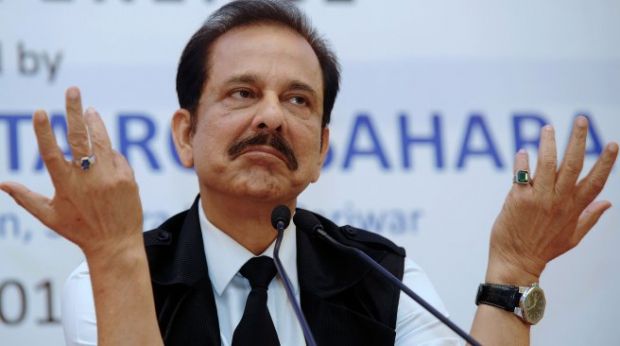
    MUMBAI (TIP): As regulators try to contain one of India’s most spectacular investment scandals, dozens of smaller but similar schemes continue to mushroom, employing tactics similar to the ones that enriched the Sahara group and later brought it to its knees.

    Sahara began as a scheme for small depositors, but it grew over decades with investment plans that critics say were designed to avoid regulatory scrutiny. At its height, it was one of India’s biggest business empires, stretching from Formula One motor racing to New York’s Plaza Hotel.

    Now its boss is in jail for more than a year and some staff say much of its business is threatening to stall, after it raised billions of dollars from investors by selling bonds that were ruled to be illegal.

    Patchy oversight in India means countless illegal investment schemes continue to emerge, however, often in the villages.

    So far this year, the Securities and Exchange Board of India (SEBI) has barred more than 70 firms that raised funds through debentures or collective investment schemes, promising returns from cash put in land, cattle and even holiday homes.

    In most cases, it cited the court order against Sahara in support of its action.

    That is cold comfort for retired Indian army officer KL Sharma. Hoping to raise money for his daughter’s wedding, he placed a third of his savings into an investment scheme run by property developer PACL in 2007.


    The investment matured last year, but there is no trace of the 270,000 rupees ($4,339) he put in, never mind the promised returns that were supposed to double his money.

    “It was hard-earned money that I invested because agents for PACL in my village convinced me I would get good returns. Now I am stuck,” said Sharma, speaking from Rajasthan, western India.

    As late as November, months after PACL was put under investigation and barred by regulators, local media reported that SEBI told the Corporate Affairs Ministry it was still raising funds from depositors.

    SEBI officials say that despite increased monitoring and financial education programmes since the Sahara case and a spate of other scandals, they are still overwhelmed by a backlog of cases, as a financially illiterate adult population, less than half of whom have access to formal banking, continues to put its trust in local agents for such schemes.

    One official said many schemes had operated for decades without oversight, until legal changes last year gave SEBI broader powers.

    “A collective investment scheme in itself is not unlawful, but the way these schemes have been run, by and large as assured-return guarantee schemes, that’s not allowed,” he said.

    “The law is clear; it requires them to come and register with us. But they don’t, because they have operated without any oversight for years. Why will they want any supervision now?” 

    Collective investment schemes, often known locally as chit funds, operated in the regulatory gaps for years by getting licences from state authorities that were ill equipped to monitor them.

    Last year, SEBI was mandated to oversee any investment vehicle that raises more than 1 billion rupees from the public.

    Firms issuing any form of security to more than 49 investors are supposed to register with SEBI, but many flout the rules, and activists say even when caught and barred, companies can simply change their names and get back in the market.

  • RBI ALLOWS BANKS TO FUND TAKEOVERS IN US DOLLARS FROM GIFT

    RBI ALLOWS BANKS TO FUND TAKEOVERS IN US DOLLARS FROM GIFT

    MUMBAI (TIP): Banks operating out of India will now be able to fund takeovers in dollars. They will also be able to allow customers to place bets on exchange and interest rate movements in addition to trading in dollar-denominated securities. RBI’s recognition for bank branches in an international financial services centre (IFSC) as ‘foreign branches’ is expected to open new doors for Indian banks and corporates who had limited access to international banking.

    The new regulation will pave the way for the Gujarat International Finance Tec-City (GIFT) in Gandhinagar to set up its International Financial Services Centre within its premises, considering that it is the only recognized IFSC till date. Many banks are expected to rush in, given that the capital requirement is only $20 million (around Rs 125 crore) and funds raised there will not be subject to reserve requirements and banks will also not be subject to priority sector lending requirement.

    The new avenue to engage in international banking comes at a time when Indian banks are finding rules made by global regulators very strenuous and many are scaling back on foreign operations. ICICI Bank this week brought back Canadian $80 million that it had invested in its operations in that country and $75 million that it had invested in its UK arm as it saw better opportunities to deploy the funds at home.

    In its guidelines for banks opening an IFSC banking unit (IBU), the RBI said that only those banks with a foreign exchange dealer’s licence will be allowed to apply. A majority of the commercial banks (excluding most cooperative banks) have a foreign exchange licence. Each bank will be allowed only one IBU in the IFSC. “It can set up an IBU which will be licensed as a branch in a foreign geography and will have to maintain minimum capital of $20 million in the GIFT IBU. IBUs can deal with the wholly owned subsidiaries /joint ventures of Indian companies registered abroad,” RBI said in its guidelines.

    “IBUs are permitted to undertake transactions in all types of derivatives and structured products with the prior approval of their board of directors. IBUs dealing with such products should have adequate knowledge, understanding, and risk management capability for handling such products,” the RBI guidelines said.

    The guidelines form the last leg of clearance that was needed to kick-start GIFT city near Gandhinagar, Gujarat. In March, the Sebi board had cleared operations by securities firms in an IFSC. Now with the RBI licence opening the doors of international banking within the IFSC, many financial institutions are expected to respond.

    The new norms will pave the way for the Gujarat International Finance Tec-City (GIFT) in Gandhinagar to set up its International Financial Services Centre in its premises.

  • NRIs RETURN HOME TO WORK AS ECONOMY SURGES

    MUMBAI (TIP): The trend of Indians returning from abroad to work here has picked up pace with the recovery in the country’s economy. Counter intuitively this is even as the monetary benefit that these executives could expect to earn has reduced over the last few years. The gap in premium between what the managers would have expected, say, three years back and now has nearly halved, say hiring experts. However, the reasons for the homing pigeons coming back to their lofts are quite similar — family matters and better job prospects.

    Despite halving premiums, the trend is no longer restricted to largely IT as was seen earlier. Recruitment experts say it’s a more broad-based trend now encompassing sectors like banking and finance, pharma, auto, textiles and food processing. “With the recovery of the Indian economy and increase in the number of Indian companies looking to expand globally, there is a definite rise in the number of Indian repatriates,” said Moorthy K Uppaluri, CEO, Randstad India, a leading recruitment and staffing firm.

    The search for top talent coupled with high inflation in India has helped to reduce the difference in compensation between India and the western countries. “About a decade ago, the difference in the junior and middle levels was as much as 75%, and at the top management level it was about 50% to 60%. Today, the difference at the junior and middle levels is about 50%, and at the top it’s just about 30% to 40%,” said Uppaluri.

    According to Nilay Khandelwal, regional director, Michael Page, a recruitment firm, the difference is thinning down on functions which have been in India for a longer time than others, such as analytics, risk, finance and operations in banking. “The gap has been reduced as the early movers had a better advantage than people moving at later stages. So, for example, a 40-50% premium in the past is now reduced to 20- 30%,” said Khandelwal.

    Post the financial crisis of 2008, banks in India started grooming talent from within so that they don’t have to rely on expats and returning Indians. In finance and operations, where the supply is greater than the demand, Khandelwal said the gap in premium salary (pre-2011 levels and now) for returning Indians has reduced. “So if a VP level in finance and operations was earlier coming at Rs 50 lakh, he/she today is ready to take up the assignment for between Rs 35-40 lakh,” said Khandelwal.

    Foreign banks in particular are witness to this reversal of brain drain. “We have seen a lot of interest across the developed markets from managers wanting to relocate to India, whether for personal or professional reasons. In the last 18 months, the trend of returning Indians has gathered momentum,” said Anuranjita Kumar, chief HR officer, Citi South Asia. “The last time around when we witnessed such a trend was a decade ago between 2005-07 when Indian GDP growth was around 8% to 9%. However, following the subsequent uncertainty surrounding the global financial crisis and lower growth in India, the trend plateaued out,” said Kumar.

    At Citi, Indian managers based abroad with varied experience have indicated their interest to come back to India, given the positive market sentiment. As compared to the 9%growth in compensation in the Indian banking sector, developed markets offer around 2%. “More than compensation, the opportunity for these managers is in up-skilling themselves in a growing market like India,” said Kumar.

    With economic growth stalling in the West, leading to slower career growth opportunities, India is a market which appears to be more dynamic, offering better job prospects to NRIs. What’s assisting the process is a change in the standard of living in India and its education system.

    For Akash Kapoor (name changed on request), a senior management official working for a multinational bank, who returned to India after spending over a decade in London, adjusting to the improved quality of life which came at a more affordable rate was clearly a plus point.

    “The standard of living has risen here and international schooling is, in fact, better and more affordable,” said Kapoor, who returned to India so that his children could reconnect with their roots.

  • INDIA TO BOOST LNG IMPORTS TO RAISE POWER GENERATION

    NEW DELHI (TIP): The government said  would boost imports of liquefied natural gas (LNG) to improve electricity generation and revive plants worth billions of dollars to fuel economic expansion.

    India’s plan to import LNG will boost power supply by 79 billion units valued at about 420 billion rupees and could spur spot prices of the super cooled gas trading at about $7.60 per million British thermal units in Asia.

    Nearly a quarter of a century after India embraced economic liberalisation, many businesses still rely on costly back-up generators for round-the-clock power and a third of its 1.2 billion people are still not connected to the grid.

    Prime Minister Narendra Modi, elected in May, has made a commitment to bring order to the chaotic power sector and end the chronic blackouts that impede India’s economic rise.

    The government has charged GAIL (India) Ltd to import LNG for power plants outside Gujarat, where a local state company will import the fuel to revive power plants and improve generation, power minister Piyush Goyal said after a meeting of the union cabinet.

    During the rainy season lasting five months when power demand is less, India would daily import about 10 million cubic meters of gas and this would rise by 80 percent in the remaining seven months, Goyal said.

    To make imported gas affordable to consumers, the union and state government will give tax concessions while the importers will charge less for regassification, transportation and marketing.

    India has about 24,150 megawatt gas-grid linked generation capacity representing about 1 trillion rupees investment. Of this 60 percent is at the threshold of becoming toxic asset while the rest is operating at below capacity due to falling local gas output.

    “Revival of stranded gas based capacity would ameliorate stress on the banking sector. This will kick-start growth and have a multiplier effect on the economy,” a government statement said. It would also restore investors’ confidence in the power sector, it added.

  • Sahara woes continue in the Supreme Court

    Sahara woes continue in the Supreme Court

    Facing tough times in its attempt to get its Chief Subrata Roy out of jail, Sahara Group on Tuesday landed in a soup again as the Supreme Court asked it to explain how it encashed securities, deposited with RBI, and diverted them to pay depositors to the tune of Rs 484 crore without the court’s nod.

    The apex court also allowed Reserve Bank of India (RBI) to initiate action against Sahara India Financial Corporation Ltd (SIFCL), a non-banking financial firm, for allegedly “breaching” the central bank norms by encashing securities and diverting them to Sahara India, a partnership firm, for paying the depositors instead of depositing the amount in the SEBI- Sahara refund account as directed by it.

    A bench headed by Justice T S Thakur, which restrained the Group from further alienating and transferring remaining “directed securities” of SIFCL, sought a response as to how they diverted the money to the tune of Rs 484.67 crore despite a specific direction against it by the court on July 4, 2014.

    “We never allowed you to encash the securities and to pay the amount to the depositors. Rather, you should have deposited them into the SEBI-Sahara account,” the bench, also comprising justices A R Dave and A K Sikri, said.

    This has been specifically mentioned in the auditor’s report of the firm, the court said but senior advocate S Ganesh, appearing for Sahara, disputed the auditors’ findings.

    The bench took serious note of the diversion of funds saying, “how could you sell the identified securities? How can you touch these securities?…You should have come to us seeking permission to pay to the depositors.

    “We had vacated the order to enable you to deposit the money in the SEBI-Sahara account. You should have come clean on that.”

    The court further asked the counsel for Sahara to file an additional affidavit indicating as to how the disbursements of the money to the depositors have been made and what was the mode of payment–cheque or cash–and the company will also disclose the identity of the recipients.

    The details have to provided by the Sahara Group in the form of compact discs to the court, SEBI, RBI and senior advocate Shekhar Naphade who is amicus curiae in the matter.

    The bench, which asked RBI to pass an order after hearing the Sahara Group, however, did not give any relief to Roy for further using Tihar jail’s conference room and facilities for negotiating deals with prospective buyers of the Group’s properties for raising money to the tune of Rs 10,000 crore to ensure his release.

  • Indian American Shajan Kuriakose vies for Alderman’s seat in Chicago

    Indian American Shajan Kuriakose vies for Alderman’s seat in Chicago

    WASHINGTON, DC: Shajan Kuriakose, a financial consultant with Indian roots, has will challenge incumbent Alderman Debra Silverstein for the 50th Ward seat in Chicago.

    In an interview with DNAinfo Chicago, the 36-year-old stated his goal was to help small business flourish while “showcasing” the ward’s distinct ethnic communities.

    “For a business community that’s been over here for well over 30 years, they’re not seeing the type of growth” that some Indian communities are experiencing elsewhere, like in Jackson Heights in New York, he said.

    Kuriakose, who is endorsed by the Chicago Tribune, is running on a platform supported by five pillars: economic development, service to constituents, education, safety, and “50th Ward first.” In order to fortify the five civic areas as outlined on his website, Kuriakose intends to have his office survey his ward for potholes and graffiti on a regular basis, pursue educational grants, and increase the ward’s police presence.

    Kuriakose’s parents immigrated to the United States from India in the 1970s. After graduating from Robert Morris University with a Bachelor’s Degree in Business Administration, he  became a small business owner, and from there launched several investment ventures before eventually becoming a consultant for the banking industry.

    When he isn’t professionally consulting, Kuriakose serves on the Board of Directors for the Indo-American Democratic Organization, a group of leaders committed to engaging South Asians in the political process. He also volunteers for Bombay Teen Challenge, a group in India that helps rescue women and children from human trafficking.

  • SAHARA PLANS TO SUE MIRACH CAP

    NEW DELHI (TIP): Sahara group on Thursday said it plans to initiate civil and criminal proceedings against US-based Mirach Capital for alleged forgery in committing an over $1 billion bailout package in lieu of the group’s three hotels in New York and London.

    The Sahara group, which is in dire need of Rs 10,000 crore to get its chief Subrata Roy and two other directors released from Tihar Jail, was banking on Mirach’s promised bailout package, which turned sour after the Indian entity discovered that Bank of America’s (BofA) letter promising the money was forged.

    Sahara sources said when its counsel were showing the BofA letter to the Supreme Court bench headed by Justice T S Thakur on January 9, Mirach CEO Saransh Sharma was present in the courtroom.

    This comes a day after amicus curiae in the case, senior advocate Shekhar Naphade, informed the SC that the Sahara-Mirach deal didn’t look likely and termed the development “disturbing”, adding that there was “more than what meets the eye”. The bench headed by Justice Thakur had said it would examine alternative ways of recovering money from Sahara and asked the group to inform Naphade about other proposals to raise money to get Roy out on bail.

    Sahara sources also said that though Sharma had promised to return the retention/blocking fee of $2.6 million (Rs 16.5 crore), he has not done so despite the deal getting rescinded. It also rejected Sharma’s purported media statement that BofA refused to be a party to the financial transaction citing “integrity issues with Sahara”.

    “Sharma’s statement and stated reason were childish and unfounded as he had never mentioned in any communication about the alleged inability of BofA to be part of the transaction.

    Instead, he had always defended the letter and said the funds were available at BofA,” sources said.

    “Mirach and its CEO are also guilty of wilfully causing contempt of Supreme Court of India for wilfully providing forged letter to be acted upon by the Supreme Court when they were personally present in the court on January 9,” the sources added.

    Separately, company sources claimed that Roy was not in custody for non-payment of Rs 20,000 crore to its investors but his custody was due to non-compliance of Supreme Court’s order of August 31, 2012. This was related to depositing around Rs 20,000 crore to Sebi for repayment to investors.

    “Out of 3 crore investors, only around 5,000 esteemed investors with an aggregate demand amounting to around Rs 20 crore have applied with Sebi for refund and Sebi had to repay only Rs 2 crore in the last 28 months. Sahara’s money with Sebi is Rs 11,000 crore, including interest earned and post-dated cheques with undertakings,” company sources said.

    “Sahara claims that it is has repaid to more than 93%investors and the balance amount is to be repaid to them at the end of the schemes’ tenure, as decided by these investors,” they added.

  • Internet will ‘disappear’, says Google boss Eric Schmidt

    Internet will ‘disappear’, says Google boss Eric Schmidt

    DAVOS, Switzerland (TIP): Google boss Eric Schmidt predicted on Thursday that the internet will soon be so pervasive in every facet of our lives that it will effectively “disappear” into the background.

    “It will be part of your presence all the time. Imagine you walk into a room and… you are interacting with all the things going on in that room.”

    “A highly personalized, highly interactive and very interesting world emerges.”

    On the sort of high-level panel only found among the ski slopes of Davos, a panel bringing together the heads of Google, Facebook and Microsoft and Vodafone sought to allay fears that the rapid pace of technological advance was killing jobs.

    “Everyone’s worried about jobs,” admitted Sheryl Sandberg, chief operating officer of Facebook.

    With so many changes in the technology world, “the transformation is happening faster than ever before,” she acknowledged.

    “But tech creates jobs not only in the tech space but outside,” she insisted.

    Schmidt quoted statistics he said showed that every tech job created between five and seven jobs in a different area of the economy.

    “If there were a single digital market in Europe, 400 million new and important new jobs would be created in Europe,” which is suffering from stubbornly high levels of unemployment.

    The debate about whether technology is destroying jobs “has been around for hundreds of years,” said the Google boss. What is different is the speed of change.

    “It’s the same that happened to the people who lost their farming jobs when the tractor came… but ultimately a globalize solution means more equality for everyone.”

    With one of the main topics at this year’s World Economic Forum being how to share out the fruits of global growth, the tech barons stressed that the greater connectivity offered by their companies ultimately helps reduce inequalities.

    “Are the spoils of tech being evenly spread? That is an issue that we have to tackle head on,” said Satya Nadella, chief executive of Microsoft.

    “I’m optimistic, there’s no question. If you are in the tech business, you have to be optimistic. Ultimately to me, it’s about human capital. Tech empowers humans to do great things.”

    Facebook boss Sandberg said the internet in its early forms was “all about anonymity” but now and everyone was visible.

    “Now everyone has a voice… now everyone can post, everyone can share and that gives a voice to people who have historically not had it,” she said.

    Schmidt, who said he had recently come back from the reclusive state of North Korea, said he believed that technology forced potentially despotic and hermetic governments to open up as their citizens acquired more knowledge about the outside world.

    “It is no longer possible for a country to step out of basic assumptions in banking, communications, morals and the way people communicate,” the Google boss said.

    “You cannot isolate yourself any more. It simply doesn’t work.” Nevertheless, Sandberg told the assembled elites that even the current pace of change was only the tip of the iceberg.

    “Today, only 40% of people have internet access,” she said, adding: “If we can do all this with 40%, imagine what we can do with 50, 60, 70%.”

    Even two decades into the global spread of the internet, the potential for opening up and growth was tremendous, she stressed.

    “Sixty percent of the internet is in English. If that doesn’t tell you how uninclusive the internet is, then nothing will,” said the tycoon. The World Economic Forum brings together some 2,500 of the top movers and shakers in the worlds of politics, business and finance for a four-day meeting that ends on Saturday.

  • US UNVEILS NEW TRAVEL AND TRADE RULES ON CUBA

    US UNVEILS NEW TRAVEL AND TRADE RULES ON CUBA

    WASHINGTON (TIP): The United States rolled out a sweeping set of measures on January 15 to significantly ease the half-century-old embargo against Cuba, opening up the country to expanded travel, trade and financial activities.

    Defying hardline critics in Congress, President Barack Obama made good on a commitment he made a month ago to begin loosening some US economic sanctions against the communist-ruled island as part of an effort to end decades of hostility.

    The treasury and commerce departments issued a package of new rules that will allow US exports of telecommunications, agricultural and construction equipment, permit expanded travel to Cuba and authorize some kinds of banking relations.

    It was the first tangible US step to implement the changes Obama pledged on December 17 when he and Cuban President Raul Castro announced plans to restore diplomatic relations between the old Cold War foes.

    “Today’s announcement takes us one step closer to replacing out-of-date policies that were not working and puts in place a policy that helps promote political and economic freedom for the Cuban people,” US treasury secretary Jacob Lew said in a statement. The new regulations, which take effect on Friday, will allow Americans to travel to Cuba for any of a dozen specific reasons, including family visits, education and religion, without first obtaining a special license from the US government, as was the case.

    Though general tourism will still be banned, those US travelers who do visit will be allowed to bring back small amounts of the Cuban cigars that are highly rated by aficionados.

  • Texas is in danger of a recession

    Texas is in danger of a recession

    DALLAS (TIP): The shale oil boom has been a blessing to Texas, making the state an economic standout during the past few years of ho-hum U.S. growth. But oil’s dramatic plunge below $55 a barrel is scaring the shale industry. Since some wells are unprofitable at lower prices, shale companies will be forced to dial back capital spending and cut jobs.

    While cheap gas is likely to be a net positive for the U.S., Texas is poised to take a hit because of the pivotal role that oil plays in the state’s economy.

    “We think Texas will, at least, have a rough 2015 ahead, and is at risk of slipping into a regional recession,” Michael Feroli, JPMorgan Chase chief U.S. economist, predicted Thursday, December 18.

    Texas has become a dominant oil producer, boosting its share of U.S. crude production from 25% to more than 40% over the past five years.
    That heavy exposure to crude should go from a big positive to a big negative. Crude oil traded above $100 in June. Now the price is about half that at $54.

    1986 all over again? The current situation has echoes of 1986, when oil prices collapsed and caused a painful recession in Texas but the rest of the country kept humming along.

    “The labor market response was severe and swift,” said Feroli, pointing to a two-percentage point jump in the state’s unemployment rate from January to March of 1986 alone.

    Of course, it’s not entirely the same. As Feroli concedes, natural gas prices aren’t collapsing now like they did in 1986, exacerbating the industry’s problems.Also, the oil industry has undergone dramatic technological changes that have make extraction profitable at lower and lower prices.Real-estate, banking fallout: Still, JPMorgan believes Texas will bear the brunt of the pain caused by the oil meltdown, along with North Dakota, America’s second-largest crude producer. “There are some reasons to think that it may not be as bad this time around, but there are even better reasons not to be complacent about the risk of a regional recession in Texas,” Feroli wrote.

    The fallout of a recession in Texas could throw cold water on the state’s hot real estate market and cause pain for regional banks.

    Home prices shrank 14% from their peak during the 1986 recession and hundreds of banks were forced to shut down, JPMorgan said.

  • RBI ASKS BANKS TO PUSH USE OF MOBILE BANKING

    RBI ASKS BANKS TO PUSH USE OF MOBILE BANKING

    MUMBAI (TIP): In a bid to improve efficiency of banks and to bring down their operational costs, the Reserve Bank of India (RBI) has asked banks to make all possible efforts to enable customers to get onboard the mobile banking platform. Henceforth, mobile banking PIN can be generated from ATMs, mobile phones, internet banking and mailers. RBI has also asked banks to promote mobile banking and go all out to acquire mobile numbers of customers.

    In its new circular detailing mobile banking norms, RBI has sought to standardize procedures across banks. “There are differences in procedures adopted by banks for registering customers for mobile banking as well as in the channels of delivery and authentication process. Lack of awareness as well as standardization of procedures at banks also adds up to the problems, which has led to a slow pickup of mobile banking service despite the high mobile density in the country.” Banking sources said that the RBI has suggested to banks that since mobile banking is one of the cheapest alternate channels, banks could look at incentivizing customers who use this channel.

    New bank account-opening forms will mandatorily include a section that will allow people to opt in for mobile banking. RBI has asked banks to make serious efforts to increase awareness and has said that efforts should be made at every interaction – ATMs, branches and passbook printing counters to obtain customers mobile number. The central bank’s move on mobile banking comes at a time when banks are expected to add 15 crore new customers, most of whom will not have any minimum balance requirement.

    Bankers say that unless there is a heavy use of technology, banks will see their operational costs soar if they use traditional infrastructure to service all customers. “If all customers come on board the mobile banking platform, a significant load will be taken off bank branches if customers use mobile banking for balance enquiry and remittances,” said a bank official. Speaking at FICCI’s annual banking summit FIBAC in September, RBI deputy governor H R Khan had said that while there are over 900 million mobile users in the country, there are only 40 million mobile customers.

    “This underscores the need for active collaboration between banks and telcos irrespective of the platform, whether it is SMS, smartphone applications or USSD,” said Khan. The deputy governor also said that banks need to see mobile banking channel as a cost-saving avenue as it would eventually bring down cash-handling charges rather than as a revenue-generation vertical.

  • Xoom Announces Instant Deposit Service to Kotak Mahindra Bank Accounts in India

    Xoom Announces Instant Deposit Service to Kotak Mahindra Bank Accounts in India

    SAN FRANCISCO, CA (TIP): Xoom Corporation (NASDAQ: XOOM), a leading digital money transfer provider, is now offering instant deposits to Kotak Mahindra Bank accounts in India. This revolutionary service allows Xoom customers to instantly deposit money into their recipients’ Kotak Mahindra Bank accounts, 365 days a year, including bank holidays.

    Instant deposits to Kotak Mahindra Bank are processed through Xoom’s partnership with Punjab National Bank., a press release said. “Through our partnership with Punjab National Bank and the breakthrough IMPS technology, we are thrilled to expand our instant deposit service to Kotak Mahindra Bank,” said Julian King, Senior Vice President of Marketing and Business Development for Xoom. “Instant deposits are available 365 days, including bank holidays, so customers will never have to wait. Speed and convenience are what customers expect from Xoom’s service and we continue to do just that in our mission to provide instant deposit to even more banks in India.”

    In addition to Kotak Mahindra Bank, Xoom also offers instant deposits to ICICI Bank, HDFC Bank, Punjab National Bank, Bank of Baroda, Union Bank of India, Federal Bank and Yes Bank. Xoom provides great locked-in exchange rates for money transfers to India, and there is no fee when customers send more than $1,000 and pay with their U.S.-based bank account. Plus, Xoom continues to provide fast bank deposits within four hours to all other banks in India, including to NRE and NRO accounts, when sent during bank processing hours in India. Customers can also download the Xoom App for Android and iOS mobile devices for free. Visit https://www.xoom.com/india for more information.

    About Xoom

    Xoom is a leading digital money transfer provider that enables consumers to send money to 30 countries in a secure, fast and cost-effective way, using their mobile phone, tablet or computer. During the 12 months ended June 30, 2014, Xoom’s more than 1.1 million active customers sent approximately $6.3 billion to family and friends. The company is headquartered in San Francisco and can be found online at www.xoom.com.

    About Kotak Mahindra Bank

    Established in 1985, the Kotak Mahindra group is one of India’s leading financial services conglomerates. In February 2003, Kotak Mahindra Finance Ltd. (KMFL), the group’s flagship company, received banking license from the Reserve Bank of India (RBI). With this, KMFL became the first nonbanking finance company in India to become a bank – Kotak Mahindra Bank Ltd (KMBL).

    KMBL offers complete retail financial solutions for varied customer requirements. The Savings Bank Account goes beyond the traditional role of savings, and provides range of services through a comprehensive suite of investment services and other transactional conveniences like Online Shopping, Bill Payments, ASBA, Netc@rd, ActivMoney (Automatic TD sweep-in and Sweep-out) etc. Kotak’s Jifi, a first-of-its-kind fully integrated Social Bank Account, redefines digital banking by seamlessly incorporating social networking platforms like Twitter and Facebook with mainstream banking.

    KMBL also offers an Investment Account where Mutual Fund investments are recorded and can be viewed in a consolidated fashion across fund houses & schemes. Further, the Bank offers loan products such as Home Loans, Personal Loans, Commercial Vehicle Loans, etc. Keeping in mind the diverse needs of the business community, KMBL offers comprehensive business solutions that include Current Account, Trade Services, Cash Management Services and Credit facilities.

  • ITAT RULING GIVES A BOOST TO BLACK MONEY FIGHT

    ITAT RULING GIVES A BOOST TO BLACK MONEY FIGHT

    MUMBAI (TIP): In the first ever ruling relating to taxation of black money stashed in overseas tax havens, the Mumbai bench of the Income Tax Appellate Tribunal (ITAT) has given the taxman a lot to cheer. Funds aggregating $2.4 million (Rs 11.73 crore approximately) as of December 31, 2001, held in a Liechtenstein bank account of Ambrunova Trust (a discretionary trust), were held to be undisclosed income of beneficiaries, who are Indian residents. The ITAT held that the funds were taxable in India in the hands of the beneficiaries. The ITAT observed, “Discretionary trusts are created for the benefit of specific persons and those persons need not necessarily control the affairs of the trust.

    However, they remain the sole beneficiaries of the trust. As the beneficiaries had not disclosed the Liechtenstein bank account in their income-tax (I-T) returns, it was their undisclosed or unaccounted income.” Black money typically refers to unaccounted money on which tax has not been paid. The ITAT upheld the additions made by the tax department to the taxable income of the beneficiaries of Ambrunova Trust. The ruling came in the case of Mohan Manoj Dhupelia and two of his relatives who were beneficiaries in the overseas trust.

    Dhupelia had filed a tax return on August 1, 2002, showing a total income of Rs 1.97 lakh. The tax officer, based on documents and information received subsequently by the tax department, reopened the assessment and added Rs 2.34 crore (nearly 25% of the total funds in the trust’s bank account of Rs 11.73 crore) to Dhupelia’s taxable income. The beneficiaries filed an appeal and the matter reached the ITAT. Dhupelia submitted to the ITAT that re-opening of the assessment was bad in law as the principal of natural justice was violated. He claimed the documents based on which his I-T case was re-opened were unauthenticated and unverified.

    Since it was a discretionary trust, no income accrued or was credited to him as the beneficiary, he contended. In fact, his name was not among the beneficiaries of the trust and he was not liable to pay any taxes on the trust funds, he claimed. He also argued that there was no evidence to show that he had made these deposits (stashed money overseas) in the name of the trust. He also contended that if at all tax was to be charged, it could be levied only on $13,500 (Rs 6.58 lakh approximately) earned by the trust and not the entire fund standing in the trust’s Liechtenstein bank account. In the course of the appeal proceedings, the ITAT referred to exhibits from earlier investigations and hearings of a US Senate Sub-Committee in the context of funds held in Liechtenstein banks. Based on facts and evidence submitted by the tax department, the ITAT set aside the arguments of Dhupelia.

    The ITAT also observed that Liechtenstein qualifies as an offshore financial centre due to a very modest tax regime, high standard of secrecy laws, which enables foreign investors to set up trusts under Host Trust regulations. While the trust initially pays a nominal tax, profits made and distributions to the beneficiaries are not subject to any tax at all. Interestingly, in November 2013, Liechtenstein became a signatory to the OECD Multilateral Convention on Mutual Administrative Assistance on tax matters, which allows countries, including India, to gather required banking information of tax evaders.

    Today, India’s domestic tax laws are also more stringent. From fiscal 2012-13, tax authorities have a time period of 17 years (opposed to the earlier seven years) within which they can reopen assessments if assets are held outside India (including overseas bank accounts). From 2012-13 onwards, taxpayers are also required to disclose details of overseas assets in their income tax return.

  • Black money case: Can’t disclose names of foreign account holders: Govt to SC

    Black money case: Can’t disclose names of foreign account holders: Govt to SC

    NEW DELHI (TIP): The Union government on Friday filed an application in the Supreme Court, saying it cannot disclose details of foreign accounts held by Indians which are governed by bilateral double taxation avoidance treaties. Petitioner and senior advocate Ram Jethmalani said this is an attempt by Narendra Modi government to shield those who stashed black money abroad. Jethmalani said such a plea could be made only by crooks who have illegally parked their ill-gotten money abroad and not by a democratically elected government. The apex court agreed to hear Centre’s application on October 28.

    Outside the court, Jethmalani took a strong critical view of the finance minister and attorney general for making such an application to the court and said it could help only the criminals. Jethmalani told the court that he has written a letter to the Prime Minister on this issue conveying his strong views against the application and requesting the PM to take it as his last wishes. Switzerland agrees to help India As India steps up its pursuit of black money stashed abroad, Switzerland on Wednesday agreed to assist Indian authorities on a priority basis and provide requested banking information in a time-bound manner. The Swiss authorities would also “assist in obtaining confirmation on genuineness of bank documents on request by the Indian side and also swiftly provide information on requests related to non-banking information”.

  • RBI TO ISSUE GUIDELINES FOR SMALL FINANCE BANKS SOON

    RBI TO ISSUE GUIDELINES FOR SMALL FINANCE BANKS SOON

    HYDERABAD: The RBI would issue guidelines for small finance banks in a few weeks as it pushed for financial inclusion backed by technolog (TIP)y. “In the next few weeks, we will put out guidelines inviting applications for what we call small finance banks.

    These are banks that will cater to smaller customers across the country. The detailed guidelines will also be put out,” RBI governor Raghuram Rajan said on Wednesday. He was speaking at the 10th IDRBT Banking Technology Excellence Awards here. Referring to payment banks, he said they should tie-up with regular commercial banks to offer different services.

    “My hope is that by licensing payment banks, we would also further cause of bank payments, bank alliances.” Highlighting that technology has an important role to play in financial inclusion, he said certain ‘Ps’, including Products, Price and Protection summaries the aspects which need to be pondered over by bankers. In this context, he said Products that are shaped to the needs of individuals, without taxing their understanding are needed.

    The RBI has put out a consumer code which puts the onus on banks to determine what is suitable for individuals, Rajan said. “Of course, that’s a harder task than just selling the product to the individual. We have to find out what the individual understands, what the needs are, etc.” Technology may help in understanding customer profiles better and to inform the customer better, the Governor said.

  • COAL BLOCK CANCELLATION WILL AFFECT GDP GROWTH ADVERSELY, INDIA RATINGS SAYS

    COAL BLOCK CANCELLATION WILL AFFECT GDP GROWTH ADVERSELY, INDIA RATINGS SAYS

    COIMBATORE (TIP): The Supreme Court’s (SC) decision to cancel all but four coal blocks allocated since 1993 could adversely affect the nascent economic recovery, India Ratings and Research has said. The impact of this ruling will be felt across various channels and lead to a rise in nonperforming assets of the banking sector, an increase in the cost of coal and in turn a rise in power tariffs, the agency said.

    This would also put pressure on current account/currency as coal would have to be imported at higher costs. “Besides impacting economic recovery, this could also pose challenges for macroeconomic stability. While the ruling will have a direct impact on corporates with allocated coal blocks, the tremors will be felt on state governments as well,” India Ratings said.

    The SC ruling on coal blocks is similar to its earlier ruling of cancellation of 2G licences in February 2012, the agency said. “While the SC ruling may help in cleaning the rot and could pave the way forward for a transparent system of selling natural resources, it will have an immediate effect on a number of stakeholders and also the overall economy,” it said. Though there would be some windfall gain for the Central Government in the current fiscal from the additional levy imposed, the finances of six state governments would be affected by this ruling. “West Bengal is likely to be the worst affected, as six operating coal blocks allocated to various state government companies have been cancelled,” India Ratings stated.

    “These companies’ accounts are not consolidated with the state’s balance sheet,” it said. However, in case of stress on the individual balance sheet of these companies, the state governments have to support them for their operations, the agency said. The demand-supply mismatch has increased India’s dependence on import for coal supplies. India imported 171 million tonnes (mt) of coal valued at $16.41 billion in 2013-14 and 145 mt valued at $17.01 billion in the previous fiscal.

    “A halt in domestic production of coal would increase import dependence further,” India Ratings, which is part of the Fitch Group, said. In a situation where Coal India is not able to extract coal from captive coal mines of cancelled coal blocks, India’s dependence on imported coal would increase significantly. The coal import bill is likely to widen by $6.22 billion for 2015-16 exerting pressure on currency and affecting macroeconomic stability, India Ratings stated. Banking and financial institutions’ exposure to these coal blocks is pegged at around Rs. 2.5 lakh crore.

    “The banking sector is already under stress. Apart from commercial banks, Rural Electrification Corporation and Power Finance Corporation will also be impacted by the cancellation of coal blocks,” India Ratings said.

  • Dallas voted ‘Best International Skyline’

    Dallas voted ‘Best International Skyline’

    DALLAS (TIP): Social media was buzzing throughout a USA Today contest as architecture buffs and residents of the various stakeholder cities weighed in with their opinions. But in the end, everything is still bigger in Texas. The highly recognizable Dallas skyline took over 40% of the popular vote. The two experts who nominated Dallas described its worthiness this way: A skyline known around the world with the syndication of the soap opera that bears this City’s name, Dallas has continued to stay flashy.

    Controversially, it has done this not with the height or style of its newest architecture, but rather through an internal race to adorn its existing and new icons with colorful interactive lighting that cannot be ignored. Having become initially identifiable by the opening credits of an infamous ’80s TV show, the contemporary Dallas skyline tells a story of big banking, big oil, big money, and occasionally big bust. On an aesthetic order, the overall skyline presents a fairly balanced height gradient.

    (Source: USA Today)